mirror of
https://github.com/invoke-ai/InvokeAI.git
synced 2026-01-19 23:37:56 -05:00
Compare commits
154 Commits
feat/restr
...
lstein/mod
| Author | SHA1 | Date | |
|---|---|---|---|

|
53e1199902 | ||
|
|
0f9c676fcb | ||
|
|
a51b165a40 | ||
|
|
5f80d4dd07 | ||
|
|
b708aef5cc | ||
|
|
aace679505 | ||
|
|
a2079bdd70 | ||
|
|
0a0412f75f | ||
|
|
e079cc9f07 | ||
|
|
76aa19a0f7 | ||
|
|
71e7e61c0f | ||
|
|
67607f053d | ||
|
|
4bab724288 | ||
|
|
e50a257198 | ||
|
|
4149d357bf | ||
|
|
33d4756c48 | ||
|
|
3962914f7d | ||
|
|
3644d40e04 | ||
|
|
fe1038665c | ||
|
|
a80ff75b52 | ||
|
|
ce2baa36a9 | ||
|
|
bccfe8b3cc | ||
|
|
e5b2bc8532 | ||
|
|
a64a34b49a | ||
|
|
51060543dc | ||
|
|
7f68f58cf7 | ||
|
|
432231ea18 | ||
|
|
44216381cb | ||
|
|
00e85bcd67 | ||
|
|
6303f74616 | ||
|
|
8e06088152 | ||
|
|
9cbc62d8d3 | ||
|
|
cd5d3e30c7 | ||
|
|
cb0fdf3394 | ||
|
|
a180c0f241 | ||
|
|
16ec7a323b | ||
|
|
de90d4068b | ||
|
|
4624de0151 | ||
|
|
459f0238dd | ||
|
|
e3912e8826 | ||
|
|
062a6ed180 | ||
|
|
48c3d926b0 | ||
|
|
63f6c12aa3 | ||
|
|
c91429d4ab | ||
|
|
230ee18536 | ||
|
|
c025c9c4ed | ||
|
|
acaaff4b7e | ||
|
|
807ae821ea | ||
|
|
208d390779 | ||
|
|
cbf0310a2c | ||
|
|
4555aec17c | ||
|
|
3b832f1db2 | ||
|
|
2f16a2c35d | ||
|
|
81fce18c73 | ||
|
|
0b75a4fbb5 | ||
|
|
2e9a7b0454 | ||
|
|
1d6a4e7ee7 | ||
|
|
effced8560 | ||
|
|
ac4634000a | ||
|
|
f9b92ddc12 | ||
|
|
8bc1ca046c | ||
|
|
6edee2d22b | ||
|
|
ab58eb29c5 | ||
|
|
d5d517d2fa | ||
|
|
d2cdbe5c4e | ||
|
|
07ddd601e1 | ||
|
|
c9cd418ed8 | ||
|
|
30aea54f1a | ||
|
|
3199409fd3 | ||
|
|
3402cf6542 | ||
|
|
ed91f48a92 | ||
|
|
de666fd7bc | ||
|
|
73bc088fa7 | ||
|
|
0c8849155e | ||
|
|
d1382f232c | ||
|
|
151ba02022 | ||
|
|
d051c0868e | ||
|
|
238d7fa0ee | ||
|
|
f0ce559d28 | ||
|
|
e880f4bcfb | ||
|
|
539776a15a | ||
|
|
c029534243 | ||
|
|
dc683475d4 | ||
|
|
c090c5f907 | ||
|
|
db7fdc3555 | ||
|
|
b9a90fbd28 | ||
|
|
08952b9aa0 | ||
|
|
b7789bb7bb | ||
|
|
3529925234 | ||
|
|
a033ccc776 | ||
|
|
716a1b6423 | ||
|
|
171d789646 | ||
|
|
ac88863fd2 | ||
|
|
27dcd89c90 | ||
|
|
4b932b275d | ||
|
|
6d8b2a7385 | ||
|
|
7430d87301 | ||
|
|
b583bddeb1 | ||
|
|
f454304c91 | ||
|
|
8052f2eb5d | ||
|
|
8636015d92 | ||
|
|
b7a6a536e6 | ||
|
|
b2892f9068 | ||
|
|
3582cfa267 | ||
|
|
64424c6db0 | ||
|
|
598fe8101e | ||
|
|
b7ca983f9c | ||
|
|
2165d55a67 | ||
|
|
a7aca29765 | ||
|
|
79b2423159 | ||
|
|
b09e012baa | ||
|
|
c9a016f1a2 | ||
|
|
d979c50de3 | ||
|
|
11ead34022 | ||
|
|
82499d4ef0 | ||
|
|
3448edac1a | ||
|
|
626acd5105 | ||
|
|
404cfe0eb9 | ||
|
|
e9074176bd | ||
|
|
ca6d24810c | ||
|
|
57552deab2 | ||
|
|
8f51adc737 | ||
|
|
d1c5990abe | ||
|
|
8fc20925b5 | ||
|
|
869f310ae7 | ||
|
|
e6512e1b9a | ||
|
|
8396bf7c99 | ||
|
|
97f2e778ee | ||
|
|
93cef55964 | ||
|
|
055ad0101d | ||
|
|
9adc897302 | ||
|
|
4b3d54dbc0 | ||
|
|
6f9bf87a7a | ||
|
|
f023e342ef | ||
|
|
1784aeb343 | ||
|
|
0deb3f9e2a | ||
|
|
916cc26193 | ||
|
|
e83d00595d | ||
|
|
1c7d9dbf40 | ||
|
|
7db71ed42e | ||
|
|
c56fb38855 | ||
|
|
155d9fcb13 | ||
|
|
81da3d3b23 | ||
|
|
51e84e6986 | ||
|
|
1ea0ccb7b9 | ||
|
|
5434dcd273 | ||
|
|
0c7430048e | ||
|
|
6c9b9e1787 | ||
|
|
b2894b5270 | ||
|
|
32958db6f6 | ||
|
|
e8815a1676 | ||
|
|
e8edb0d434 | ||
|
|
b5d97b18f1 | ||
|
|
ae56c000fc |
2
.github/workflows/pypi-release.yml
vendored
2
.github/workflows/pypi-release.yml
vendored
@@ -28,7 +28,7 @@ jobs:
|
||||
run: twine check dist/*
|
||||
|
||||
- name: check PyPI versions
|
||||
if: github.ref == 'refs/heads/main' || startsWith(github.ref, 'refs/heads/release/')
|
||||
if: github.ref == 'refs/heads/main' || github.ref == 'refs/heads/v2.3'
|
||||
run: |
|
||||
pip install --upgrade requests
|
||||
python -c "\
|
||||
|
||||
1214
docs/contributing/MODEL_MANAGER.md
Normal file
1214
docs/contributing/MODEL_MANAGER.md
Normal file
File diff suppressed because it is too large
Load Diff
@@ -14,6 +14,7 @@ Once you're setup, for more information, you can review the documentation specif
|
||||
* #### [InvokeAI Architecure](../ARCHITECTURE.md)
|
||||
* #### [Frontend Documentation](./contributingToFrontend.md)
|
||||
* #### [Node Documentation](../INVOCATIONS.md)
|
||||
* #### [InvokeAI Model Manager](../MODEL_MANAGER.md)
|
||||
* #### [Local Development](../LOCAL_DEVELOPMENT.md)
|
||||
|
||||
|
||||
|
||||
@@ -207,11 +207,8 @@ if INVOKEAI_ROOT is `/home/fred/invokeai` and the path is
|
||||
|
||||
| Setting | Default Value | Description |
|
||||
|----------|----------------|--------------|
|
||||
| `autoimport_dir` | `autoimport/main` | At startup time, read and import any main model files found in this directory |
|
||||
| `lora_dir` | `autoimport/lora` | At startup time, read and import any LoRA/LyCORIS models found in this directory |
|
||||
| `embedding_dir` | `autoimport/embedding` | At startup time, read and import any textual inversion (embedding) models found in this directory |
|
||||
| `controlnet_dir` | `autoimport/controlnet` | At startup time, read and import any ControlNet models found in this directory |
|
||||
| `conf_path` | `configs/models.yaml` | Location of the `models.yaml` model configuration file |
|
||||
| `autoimport_dir` | `autoimport/main` | At startup time, read and import any main model files found in this directory (not recommended)|
|
||||
| `model_config_db` | `auto` | Location of the model configuration database. Specify `auto` to use the main invokeai.db database, or specify a `.yaml` or `.db` file to store the data externally.|
|
||||
| `models_dir` | `models` | Location of the directory containing models installed by InvokeAI's model manager |
|
||||
| `legacy_conf_dir` | `configs/stable-diffusion` | Location of the directory containing the .yaml configuration files for legacy checkpoint models |
|
||||
| `db_dir` | `databases` | Location of the directory containing InvokeAI's image, schema and session database |
|
||||
@@ -234,6 +231,18 @@ Paths:
|
||||
# controlnet_dir: null
|
||||
```
|
||||
|
||||
### Model Cache
|
||||
|
||||
These options control the size of various caches that InvokeAI uses
|
||||
during the model loading and conversion process. All units are in GB
|
||||
|
||||
| Setting | Default Value | Description |
|
||||
|----------|----------------|--------------|
|
||||
| `disk` | `20.0` | Before loading a model into memory, InvokeAI converts .ckpt and .safetensors models into diffusers format and saves them to disk. This option controls the maximum size of the directory in which these converted models are stored. If set to zero, then only the most recently-used model will be cached. |
|
||||
| `ram` | `6.0` | After loading a model from disk, it is kept in system RAM until it is needed again. This option controls how much RAM is set aside for this purpose. Larger amounts allow more models to reside in RAM and for InvokeAI to quickly switch between them. |
|
||||
| `vram` | `0.25` | This allows smaller models to remain in VRAM, speeding up execution modestly. It should be a small number. |
|
||||
|
||||
|
||||
### Logging
|
||||
|
||||
These settings control the information, warning, and debugging
|
||||
|
||||
@@ -123,11 +123,20 @@ installation. Examples:
|
||||
# (list all controlnet models)
|
||||
invokeai-model-install --list controlnet
|
||||
|
||||
# (install the model at the indicated URL)
|
||||
# (install the diffusers model using its hugging face repo_id)
|
||||
invokeai-model-install --add stabilityai/stable-diffusion-xl-base-1.0
|
||||
|
||||
# (install a diffusers model that lives in a subfolder)
|
||||
invokeai-model-install --add stabilityai/stable-diffusion-xl-base-1.0:vae
|
||||
|
||||
# (install the checkpoint model at the indicated URL)
|
||||
invokeai-model-install --add https://civitai.com/api/download/models/128713
|
||||
|
||||
# (delete the named model)
|
||||
invokeai-model-install --delete sd-1/main/analog-diffusion
|
||||
# (delete the named model if its name is unique)
|
||||
invokeai-model-install --delete analog-diffusion
|
||||
|
||||
# (delete the named model using its fully qualified name)
|
||||
invokeai-model-install --delete sd-1/main/test_model
|
||||
```
|
||||
|
||||
### Installation via the Web GUI
|
||||
@@ -141,6 +150,24 @@ left-hand panel) and navigate to *Import Models*
|
||||
wish to install. You may use a URL, HuggingFace repo id, or a path on
|
||||
your local disk.
|
||||
|
||||
There is special scanning for CivitAI URLs which lets
|
||||
you cut-and-paste either the URL for a CivitAI model page
|
||||
(e.g. https://civitai.com/models/12345), or the direct download link
|
||||
for a model (e.g. https://civitai.com/api/download/models/12345).
|
||||
|
||||
If the desired model is a HuggingFace diffusers model that is located
|
||||
in a subfolder of the repository (e.g. vae), then append the subfolder
|
||||
to the end of the repo_id like this:
|
||||
|
||||
```
|
||||
# a VAE model located in subfolder "vae"
|
||||
stabilityai/stable-diffusion-xl-base-1.0:vae
|
||||
|
||||
# version 2 of the model located in subfolder "v2"
|
||||
monster-labs/control_v1p_sd15_qrcode_monster:v2
|
||||
|
||||
```
|
||||
|
||||
3. Alternatively, the *Scan for Models* button allows you to paste in
|
||||
the path to a folder somewhere on your machine. It will be scanned for
|
||||
importable models and prompt you to add the ones of your choice.
|
||||
|
||||
@@ -8,42 +8,28 @@ To download a node, simply download the `.py` node file from the link and add it
|
||||
|
||||
To use a community workflow, download the the `.json` node graph file and load it into Invoke AI via the **Load Workflow** button in the Workflow Editor.
|
||||
|
||||
- Community Nodes
|
||||
+ [Depth Map from Wavefront OBJ](#depth-map-from-wavefront-obj)
|
||||
+ [Film Grain](#film-grain)
|
||||
+ [Generative Grammar-Based Prompt Nodes](#generative-grammar-based-prompt-nodes)
|
||||
+ [GPT2RandomPromptMaker](#gpt2randompromptmaker)
|
||||
+ [Grid to Gif](#grid-to-gif)
|
||||
+ [Halftone](#halftone)
|
||||
+ [Ideal Size](#ideal-size)
|
||||
+ [Image and Mask Composition Pack](#image-and-mask-composition-pack)
|
||||
+ [Image to Character Art Image Nodes](#image-to-character-art-image-nodes)
|
||||
+ [Image Picker](#image-picker)
|
||||
+ [Load Video Frame](#load-video-frame)
|
||||
+ [Make 3D](#make-3d)
|
||||
+ [Oobabooga](#oobabooga)
|
||||
+ [Prompt Tools](#prompt-tools)
|
||||
+ [Retroize](#retroize)
|
||||
+ [Size Stepper Nodes](#size-stepper-nodes)
|
||||
+ [Text font to Image](#text-font-to-image)
|
||||
+ [Thresholding](#thresholding)
|
||||
+ [XY Image to Grid and Images to Grids nodes](#xy-image-to-grid-and-images-to-grids-nodes)
|
||||
- [Example Node Template](#example-node-template)
|
||||
- [Disclaimer](#disclaimer)
|
||||
- [Help](#help)
|
||||
|
||||
--------------------------------
|
||||
|
||||
--------------------------------
|
||||
### Depth Map from Wavefront OBJ
|
||||
### Make 3D
|
||||
|
||||
**Description:** Render depth maps from Wavefront .obj files (triangulated) using this simple 3D renderer utilizing numpy and matplotlib to compute and color the scene. There are simple parameters to change the FOV, camera position, and model orientation.
|
||||
**Description:** Create compelling 3D stereo images from 2D originals.
|
||||
|
||||
To be imported, an .obj must use triangulated meshes, so make sure to enable that option if exporting from a 3D modeling program. This renderer makes each triangle a solid color based on its average depth, so it will cause anomalies if your .obj has large triangles. In Blender, the Remesh modifier can be helpful to subdivide a mesh into small pieces that work well given these limitations.
|
||||
**Node Link:** [https://gitlab.com/srcrr/shift3d/-/raw/main/make3d.py](https://gitlab.com/srcrr/shift3d)
|
||||
|
||||
**Node Link:** https://github.com/dwringer/depth-from-obj-node
|
||||
**Example Node Graph:** https://gitlab.com/srcrr/shift3d/-/raw/main/example-workflow.json?ref_type=heads&inline=false
|
||||
|
||||
**Example Usage:**
|
||||
</br><img src="https://raw.githubusercontent.com/dwringer/depth-from-obj-node/main/depth_from_obj_usage.jpg" width="500" />
|
||||
**Output Examples**
|
||||
|
||||
{: style="height:512px;width:512px"}
|
||||
{: style="height:512px;width:512px"}
|
||||
|
||||
--------------------------------
|
||||
### Ideal Size
|
||||
|
||||
**Description:** This node calculates an ideal image size for a first pass of a multi-pass upscaling. The aim is to avoid duplication that results from choosing a size larger than the model is capable of.
|
||||
|
||||
**Node Link:** https://github.com/JPPhoto/ideal-size-node
|
||||
|
||||
--------------------------------
|
||||
### Film Grain
|
||||
@@ -53,46 +39,36 @@ To be imported, an .obj must use triangulated meshes, so make sure to enable tha
|
||||
**Node Link:** https://github.com/JPPhoto/film-grain-node
|
||||
|
||||
--------------------------------
|
||||
### Generative Grammar-Based Prompt Nodes
|
||||
### Image Picker
|
||||
|
||||
**Description:** This set of 3 nodes generates prompts from simple user-defined grammar rules (loaded from custom files - examples provided below). The prompts are made by recursively expanding a special template string, replacing nonterminal "parts-of-speech" until no nonterminal terms remain in the string.
|
||||
**Description:** This InvokeAI node takes in a collection of images and randomly chooses one. This can be useful when you have a number of poses to choose from for a ControlNet node, or a number of input images for another purpose.
|
||||
|
||||
This includes 3 Nodes:
|
||||
- *Lookup Table from File* - loads a YAML file "prompt" section (or of a whole folder of YAML's) into a JSON-ified dictionary (Lookups output)
|
||||
- *Lookups Entry from Prompt* - places a single entry in a new Lookups output under the specified heading
|
||||
- *Prompt from Lookup Table* - uses a Collection of Lookups as grammar rules from which to randomly generate prompts.
|
||||
|
||||
**Node Link:** https://github.com/dwringer/generative-grammar-prompt-nodes
|
||||
|
||||
**Example Usage:**
|
||||
</br><img src="https://raw.githubusercontent.com/dwringer/generative-grammar-prompt-nodes/main/lookuptables_usage.jpg" width="500" />
|
||||
**Node Link:** https://github.com/JPPhoto/image-picker-node
|
||||
|
||||
--------------------------------
|
||||
### GPT2RandomPromptMaker
|
||||
### Thresholding
|
||||
|
||||
**Description:** A node for InvokeAI utilizes the GPT-2 language model to generate random prompts based on a provided seed and context.
|
||||
**Description:** This node generates masks for highlights, midtones, and shadows given an input image. You can optionally specify a blur for the lookup table used in making those masks from the source image.
|
||||
|
||||
**Node Link:** https://github.com/mickr777/GPT2RandomPromptMaker
|
||||
**Node Link:** https://github.com/JPPhoto/thresholding-node
|
||||
|
||||
**Output Examples**
|
||||
**Examples**
|
||||
|
||||
Generated Prompt: An enchanted weapon will be usable by any character regardless of their alignment.
|
||||
Input:
|
||||
|
||||
<img src="https://github.com/mickr777/InvokeAI/assets/115216705/8496ba09-bcdd-4ff7-8076-ff213b6a1e4c" width="200" />
|
||||
{: style="height:512px;width:512px"}
|
||||
|
||||
--------------------------------
|
||||
### Grid to Gif
|
||||
Highlights/Midtones/Shadows:
|
||||
|
||||
**Description:** One node that turns a grid image into an image collection, one node that turns an image collection into a gif.
|
||||
<img src="https://github.com/invoke-ai/InvokeAI/assets/34005131/727021c1-36ff-4ec8-90c8-105e00de986d" style="width: 30%" />
|
||||
<img src="https://github.com/invoke-ai/InvokeAI/assets/34005131/0b721bfc-f051-404e-b905-2f16b824ddfe" style="width: 30%" />
|
||||
<img src="https://github.com/invoke-ai/InvokeAI/assets/34005131/04c1297f-1c88-42b6-a7df-dd090b976286" style="width: 30%" />
|
||||
|
||||
**Node Link:** https://github.com/mildmisery/invokeai-GridToGifNode/blob/main/GridToGif.py
|
||||
Highlights/Midtones/Shadows (with LUT blur enabled):
|
||||
|
||||
**Example Node Graph:** https://github.com/mildmisery/invokeai-GridToGifNode/blob/main/Grid%20to%20Gif%20Example%20Workflow.json
|
||||
|
||||
**Output Examples**
|
||||
|
||||
<img src="https://raw.githubusercontent.com/mildmisery/invokeai-GridToGifNode/main/input.png" width="300" />
|
||||
<img src="https://raw.githubusercontent.com/mildmisery/invokeai-GridToGifNode/main/output.gif" width="300" />
|
||||
<img src="https://github.com/invoke-ai/InvokeAI/assets/34005131/19aa718a-70c1-4668-8169-d68f4bd13771" style="width: 30%" />
|
||||
<img src="https://github.com/invoke-ai/InvokeAI/assets/34005131/0a440e43-697f-4d17-82ee-f287467df0a5" style="width: 30%" />
|
||||
<img src="https://github.com/invoke-ai/InvokeAI/assets/34005131/0701fd0f-2ca7-4fe2-8613-2b52547bafce" style="width: 30%" />
|
||||
|
||||
--------------------------------
|
||||
### Halftone
|
||||
@@ -105,22 +81,108 @@ Generated Prompt: An enchanted weapon will be usable by any character regardless
|
||||
|
||||
Input:
|
||||
|
||||
<img src="https://github.com/invoke-ai/InvokeAI/assets/34005131/fd5efb9f-4355-4409-a1c2-c1ca99e0cab4" width="300" />
|
||||
{: style="height:512px;width:512px"}
|
||||
|
||||
Halftone Output:
|
||||
|
||||
<img src="https://github.com/invoke-ai/InvokeAI/assets/34005131/7e606f29-e68f-4d46-b3d5-97f799a4ec2f" width="300" />
|
||||
{: style="height:512px;width:512px"}
|
||||
|
||||
CMYK Halftone Output:
|
||||
|
||||
<img src="https://github.com/invoke-ai/InvokeAI/assets/34005131/c59c578f-db8e-4d66-8c66-2851752d75ea" width="300" />
|
||||
{: style="height:512px;width:512px"}
|
||||
|
||||
--------------------------------
|
||||
### Ideal Size
|
||||
### Retroize
|
||||
|
||||
**Description:** This node calculates an ideal image size for a first pass of a multi-pass upscaling. The aim is to avoid duplication that results from choosing a size larger than the model is capable of.
|
||||
**Description:** Retroize is a collection of nodes for InvokeAI to "Retroize" images. Any image can be given a fresh coat of retro paint with these nodes, either from your gallery or from within the graph itself. It includes nodes to pixelize, quantize, palettize, and ditherize images; as well as to retrieve palettes from existing images.
|
||||
|
||||
**Node Link:** https://github.com/JPPhoto/ideal-size-node
|
||||
**Node Link:** https://github.com/Ar7ific1al/invokeai-retroizeinode/
|
||||
|
||||
**Retroize Output Examples**
|
||||
|
||||

|
||||
|
||||
--------------------------------
|
||||
### GPT2RandomPromptMaker
|
||||
|
||||
**Description:** A node for InvokeAI utilizes the GPT-2 language model to generate random prompts based on a provided seed and context.
|
||||
|
||||
**Node Link:** https://github.com/mickr777/GPT2RandomPromptMaker
|
||||
|
||||
**Output Examples**
|
||||
|
||||
Generated Prompt: An enchanted weapon will be usable by any character regardless of their alignment.
|
||||
|
||||

|
||||
|
||||
--------------------------------
|
||||
### Load Video Frame
|
||||
|
||||
**Description:** This is a video frame image provider + indexer/video creation nodes for hooking up to iterators and ranges and ControlNets and such for invokeAI node experimentation. Think animation + ControlNet outputs.
|
||||
|
||||
**Node Link:** https://github.com/helix4u/load_video_frame
|
||||
|
||||
**Example Node Graph:** https://github.com/helix4u/load_video_frame/blob/main/Example_Workflow.json
|
||||
|
||||
**Output Example:**
|
||||
|
||||

|
||||
[Full mp4 of Example Output test.mp4](https://github.com/helix4u/load_video_frame/blob/main/test.mp4)
|
||||
|
||||
--------------------------------
|
||||
|
||||
### Oobabooga
|
||||
|
||||
**Description:** asks a local LLM running in Oobabooga's Text-Generation-Webui to write a prompt based on the user input.
|
||||
|
||||
**Link:** https://github.com/sammyf/oobabooga-node
|
||||
|
||||
|
||||
**Example:**
|
||||
|
||||
"describe a new mystical creature in its natural environment"
|
||||
|
||||
*can return*
|
||||
|
||||
"The mystical creature I am describing to you is called the "Glimmerwing". It is a majestic, iridescent being that inhabits the depths of the most enchanted forests and glimmering lakes. Its body is covered in shimmering scales that reflect every color of the rainbow, and it has delicate, translucent wings that sparkle like diamonds in the sunlight. The Glimmerwing's home is a crystal-clear lake, surrounded by towering trees with leaves that shimmer like jewels. In this serene environment, the Glimmerwing spends its days swimming gracefully through the water, chasing schools of glittering fish and playing with the gentle ripples of the lake's surface.
|
||||
As the sun sets, the Glimmerwing perches on a branch of one of the trees, spreading its wings to catch the last rays of light. The creature's scales glow softly, casting a rainbow of colors across the forest floor. The Glimmerwing sings a haunting melody, its voice echoing through the stillness of the night air. Its song is said to have the power to heal the sick and bring peace to troubled souls. Those who are lucky enough to hear the Glimmerwing's song are forever changed by its beauty and grace."
|
||||
|
||||

|
||||
|
||||
**Requirement**
|
||||
|
||||
a Text-Generation-Webui instance (might work remotely too, but I never tried it) and obviously InvokeAI 3.x
|
||||
|
||||
**Note**
|
||||
|
||||
This node works best with SDXL models, especially as the style can be described independantly of the LLM's output.
|
||||
|
||||
--------------------------------
|
||||
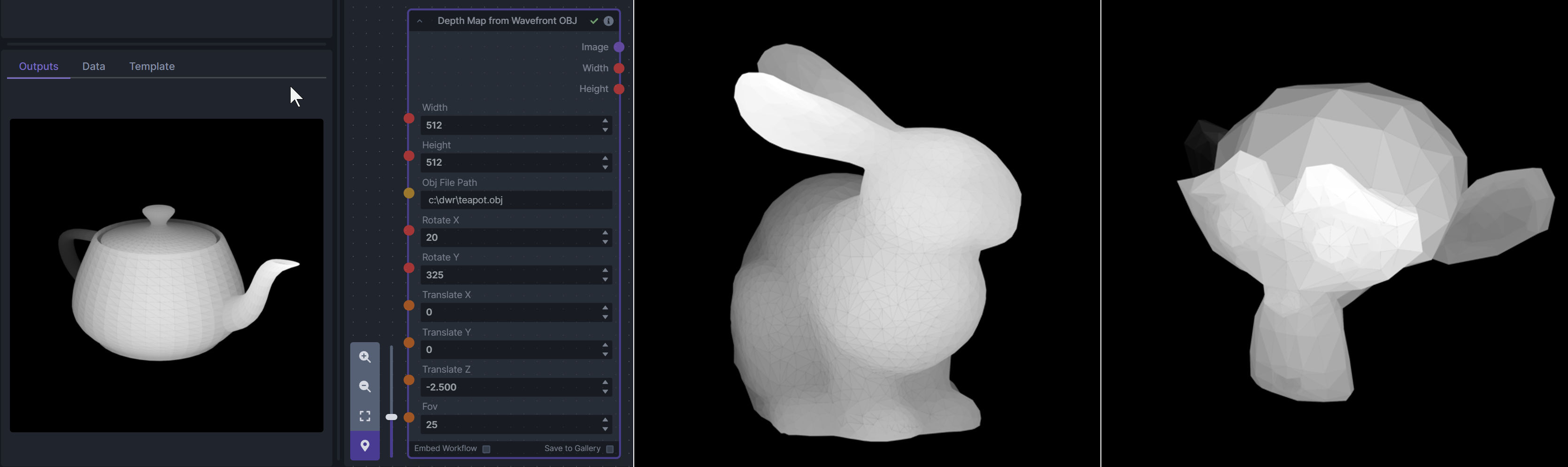
### Depth Map from Wavefront OBJ
|
||||
|
||||
**Description:** Render depth maps from Wavefront .obj files (triangulated) using this simple 3D renderer utilizing numpy and matplotlib to compute and color the scene. There are simple parameters to change the FOV, camera position, and model orientation.
|
||||
|
||||
To be imported, an .obj must use triangulated meshes, so make sure to enable that option if exporting from a 3D modeling program. This renderer makes each triangle a solid color based on its average depth, so it will cause anomalies if your .obj has large triangles. In Blender, the Remesh modifier can be helpful to subdivide a mesh into small pieces that work well given these limitations.
|
||||
|
||||
**Node Link:** https://github.com/dwringer/depth-from-obj-node
|
||||
|
||||
**Example Usage:**
|
||||
|
||||
|
||||
--------------------------------
|
||||
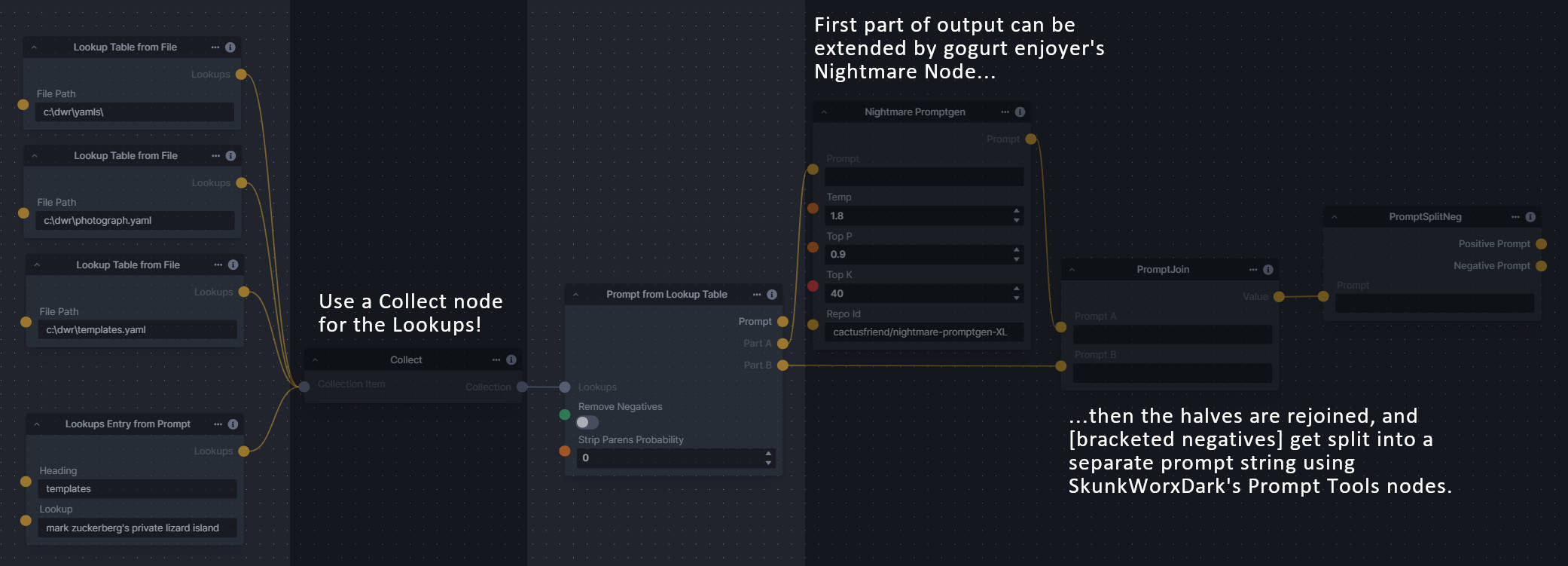
### Generative Grammar-Based Prompt Nodes
|
||||
|
||||
**Description:** This set of 3 nodes generates prompts from simple user-defined grammar rules (loaded from custom files - examples provided below). The prompts are made by recursively expanding a special template string, replacing nonterminal "parts-of-speech" until no more nonterminal terms remain in the string.
|
||||
|
||||
This includes 3 Nodes:
|
||||
- *Lookup Table from File* - loads a YAML file "prompt" section (or of a whole folder of YAML's) into a JSON-ified dictionary (Lookups output)
|
||||
- *Lookups Entry from Prompt* - places a single entry in a new Lookups output under the specified heading
|
||||
- *Prompt from Lookup Table* - uses a Collection of Lookups as grammar rules from which to randomly generate prompts.
|
||||
|
||||
**Node Link:** https://github.com/dwringer/generative-grammar-prompt-nodes
|
||||
|
||||
**Example Usage:**
|
||||
|
||||
|
||||
--------------------------------
|
||||
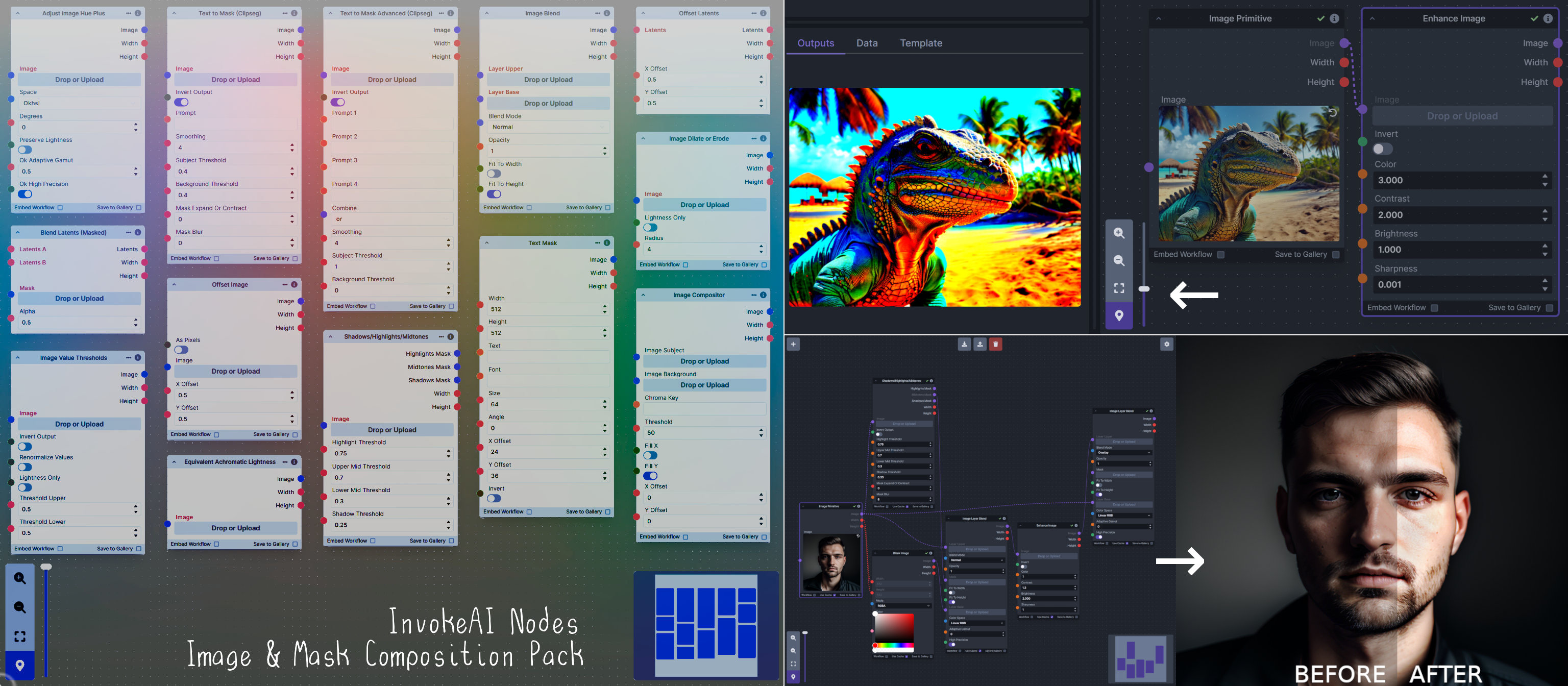
### Image and Mask Composition Pack
|
||||
@@ -146,88 +208,45 @@ This includes 15 Nodes:
|
||||
- *Text Mask (simple 2D)* - create and position a white on black (or black on white) line of text using any font locally available to Invoke.
|
||||
|
||||
**Node Link:** https://github.com/dwringer/composition-nodes
|
||||
|
||||
</br><img src="https://raw.githubusercontent.com/dwringer/composition-nodes/main/composition_pack_overview.jpg" width="500" />
|
||||
|
||||
**Nodes and Output Examples:**
|
||||
|
||||
|
||||
--------------------------------
|
||||
### Image to Character Art Image Nodes
|
||||
### Size Stepper Nodes
|
||||
|
||||
**Description:** Group of nodes to convert an input image into ascii/unicode art Image
|
||||
**Description:** This is a set of nodes for calculating the necessary size increments for doing upscaling workflows. Use the *Final Size & Orientation* node to enter your full size dimensions and orientation (portrait/landscape/random), then plug that and your initial generation dimensions into the *Ideal Size Stepper* and get 1, 2, or 3 intermediate pairs of dimensions for upscaling. Note this does not output the initial size or full size dimensions: the 1, 2, or 3 outputs of this node are only the intermediate sizes.
|
||||
|
||||
**Node Link:** https://github.com/mickr777/imagetoasciiimage
|
||||
A third node is included, *Random Switch (Integers)*, which is just a generic version of Final Size with no orientation selection.
|
||||
|
||||
**Node Link:** https://github.com/dwringer/size-stepper-nodes
|
||||
|
||||
**Example Usage:**
|
||||
|
||||
|
||||
--------------------------------
|
||||
|
||||
### Text font to Image
|
||||
|
||||
**Description:** text font to text image node for InvokeAI, download a font to use (or if in font cache uses it from there), the text is always resized to the image size, but can control that with padding, optional 2nd line
|
||||
|
||||
**Node Link:** https://github.com/mickr777/textfontimage
|
||||
|
||||
**Output Examples**
|
||||
|
||||
<img src="https://user-images.githubusercontent.com/115216705/271817646-8e061fcc-9a2c-4fa9-bcc7-c0f7b01e9056.png" width="300" /><img src="https://github.com/mickr777/imagetoasciiimage/assets/115216705/3c4990eb-2f42-46b9-90f9-0088b939dc6a" width="300" /></br>
|
||||
<img src="https://github.com/mickr777/imagetoasciiimage/assets/115216705/fee7f800-a4a8-41e2-a66b-c66e4343307e" width="300" />
|
||||
<img src="https://github.com/mickr777/imagetoasciiimage/assets/115216705/1d9c1003-a45f-45c2-aac7-46470bb89330" width="300" />
|
||||

|
||||
|
||||
Results after using the depth controlnet
|
||||
|
||||

|
||||

|
||||

|
||||
|
||||
--------------------------------
|
||||
|
||||
### Image Picker
|
||||
|
||||
**Description:** This InvokeAI node takes in a collection of images and randomly chooses one. This can be useful when you have a number of poses to choose from for a ControlNet node, or a number of input images for another purpose.
|
||||
|
||||
**Node Link:** https://github.com/JPPhoto/image-picker-node
|
||||
|
||||
--------------------------------
|
||||
### Load Video Frame
|
||||
|
||||
**Description:** This is a video frame image provider + indexer/video creation nodes for hooking up to iterators and ranges and ControlNets and such for invokeAI node experimentation. Think animation + ControlNet outputs.
|
||||
|
||||
**Node Link:** https://github.com/helix4u/load_video_frame
|
||||
|
||||
**Example Node Graph:** https://github.com/helix4u/load_video_frame/blob/main/Example_Workflow.json
|
||||
|
||||
**Output Example:**
|
||||
|
||||
<img src="https://github.com/helix4u/load_video_frame/blob/main/testmp4_embed_converted.gif" width="500" />
|
||||
[Full mp4 of Example Output test.mp4](https://github.com/helix4u/load_video_frame/blob/main/test.mp4)
|
||||
|
||||
--------------------------------
|
||||
### Make 3D
|
||||
|
||||
**Description:** Create compelling 3D stereo images from 2D originals.
|
||||
|
||||
**Node Link:** [https://gitlab.com/srcrr/shift3d/-/raw/main/make3d.py](https://gitlab.com/srcrr/shift3d)
|
||||
|
||||
**Example Node Graph:** https://gitlab.com/srcrr/shift3d/-/raw/main/example-workflow.json?ref_type=heads&inline=false
|
||||
|
||||
**Output Examples**
|
||||
|
||||
<img src="https://gitlab.com/srcrr/shift3d/-/raw/main/example-1.png" width="300" />
|
||||
<img src="https://gitlab.com/srcrr/shift3d/-/raw/main/example-2.png" width="300" />
|
||||
|
||||
--------------------------------
|
||||
### Oobabooga
|
||||
|
||||
**Description:** asks a local LLM running in Oobabooga's Text-Generation-Webui to write a prompt based on the user input.
|
||||
|
||||
**Link:** https://github.com/sammyf/oobabooga-node
|
||||
|
||||
**Example:**
|
||||
|
||||
"describe a new mystical creature in its natural environment"
|
||||
|
||||
*can return*
|
||||
|
||||
"The mystical creature I am describing to you is called the "Glimmerwing". It is a majestic, iridescent being that inhabits the depths of the most enchanted forests and glimmering lakes. Its body is covered in shimmering scales that reflect every color of the rainbow, and it has delicate, translucent wings that sparkle like diamonds in the sunlight. The Glimmerwing's home is a crystal-clear lake, surrounded by towering trees with leaves that shimmer like jewels. In this serene environment, the Glimmerwing spends its days swimming gracefully through the water, chasing schools of glittering fish and playing with the gentle ripples of the lake's surface.
|
||||
As the sun sets, the Glimmerwing perches on a branch of one of the trees, spreading its wings to catch the last rays of light. The creature's scales glow softly, casting a rainbow of colors across the forest floor. The Glimmerwing sings a haunting melody, its voice echoing through the stillness of the night air. Its song is said to have the power to heal the sick and bring peace to troubled souls. Those who are lucky enough to hear the Glimmerwing's song are forever changed by its beauty and grace."
|
||||
|
||||
<img src="https://github.com/sammyf/oobabooga-node/assets/42468608/cecdd820-93dd-4c35-abbf-607e001fb2ed" width="300" />
|
||||
|
||||
**Requirement**
|
||||
|
||||
a Text-Generation-Webui instance (might work remotely too, but I never tried it) and obviously InvokeAI 3.x
|
||||
|
||||
**Note**
|
||||
|
||||
This node works best with SDXL models, especially as the style can be described independently of the LLM's output.
|
||||
|
||||
--------------------------------
|
||||
### Prompt Tools
|
||||
|
||||
**Description:** A set of InvokeAI nodes that add general prompt manipulation tools. These were written to accompany the PromptsFromFile node and other prompt generation nodes.
|
||||
**Description:** A set of InvokeAI nodes that add general prompt manipulation tools. These where written to accompany the PromptsFromFile node and other prompt generation nodes.
|
||||
|
||||
1. PromptJoin - Joins to prompts into one.
|
||||
2. PromptReplace - performs a search and replace on a prompt. With the option of using regex.
|
||||
@@ -244,83 +263,51 @@ See full docs here: https://github.com/skunkworxdark/Prompt-tools-nodes/edit/mai
|
||||
**Node Link:** https://github.com/skunkworxdark/Prompt-tools-nodes
|
||||
|
||||
--------------------------------
|
||||
### Retroize
|
||||
|
||||
**Description:** Retroize is a collection of nodes for InvokeAI to "Retroize" images. Any image can be given a fresh coat of retro paint with these nodes, either from your gallery or from within the graph itself. It includes nodes to pixelize, quantize, palettize, and ditherize images; as well as to retrieve palettes from existing images.
|
||||
|
||||
**Node Link:** https://github.com/Ar7ific1al/invokeai-retroizeinode/
|
||||
|
||||
**Retroize Output Examples**
|
||||
|
||||
<img src="https://github.com/Ar7ific1al/InvokeAI_nodes_retroize/assets/2306586/de8b4fa6-324c-4c2d-b36c-297600c73974" width="500" />
|
||||
|
||||
--------------------------------
|
||||
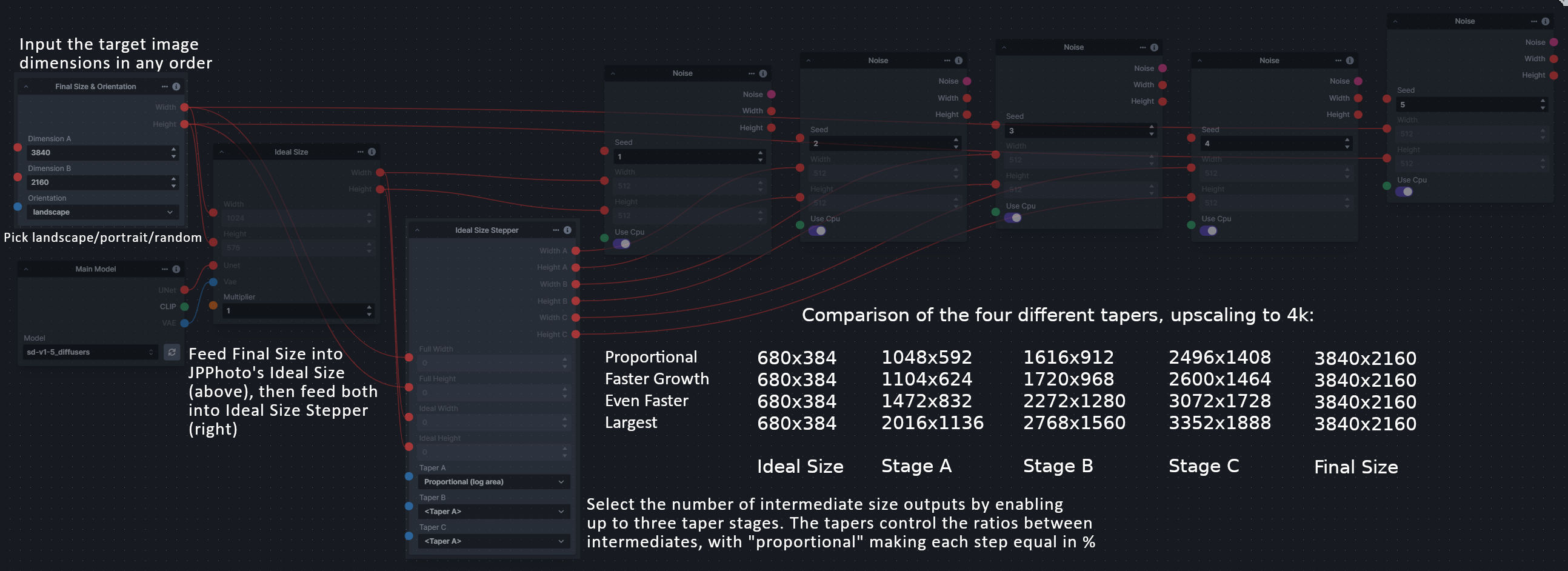
### Size Stepper Nodes
|
||||
|
||||
**Description:** This is a set of nodes for calculating the necessary size increments for doing upscaling workflows. Use the *Final Size & Orientation* node to enter your full size dimensions and orientation (portrait/landscape/random), then plug that and your initial generation dimensions into the *Ideal Size Stepper* and get 1, 2, or 3 intermediate pairs of dimensions for upscaling. Note this does not output the initial size or full size dimensions: the 1, 2, or 3 outputs of this node are only the intermediate sizes.
|
||||
|
||||
A third node is included, *Random Switch (Integers)*, which is just a generic version of Final Size with no orientation selection.
|
||||
|
||||
**Node Link:** https://github.com/dwringer/size-stepper-nodes
|
||||
|
||||
**Example Usage:**
|
||||
</br><img src="https://raw.githubusercontent.com/dwringer/size-stepper-nodes/main/size_nodes_usage.jpg" width="500" />
|
||||
|
||||
--------------------------------
|
||||
### Text font to Image
|
||||
|
||||
**Description:** text font to text image node for InvokeAI, download a font to use (or if in font cache uses it from there), the text is always resized to the image size, but can control that with padding, optional 2nd line
|
||||
|
||||
**Node Link:** https://github.com/mickr777/textfontimage
|
||||
|
||||
**Output Examples**
|
||||
|
||||
<img src="https://github.com/mickr777/InvokeAI/assets/115216705/c21b0af3-d9c6-4c16-9152-846a23effd36" width="300" />
|
||||
|
||||
Results after using the depth controlnet
|
||||
|
||||
<img src="https://github.com/mickr777/InvokeAI/assets/115216705/915f1a53-968e-43eb-aa61-07cd8f1a733a" width="300" />
|
||||
<img src="https://github.com/mickr777/InvokeAI/assets/115216705/821ef89e-8a60-44f5-b94e-471a9d8690cc" width="300" />
|
||||
<img src="https://github.com/mickr777/InvokeAI/assets/115216705/2befcb6d-49f4-4bfd-b5fc-1fee19274f89" width="300" />
|
||||
|
||||
--------------------------------
|
||||
### Thresholding
|
||||
|
||||
**Description:** This node generates masks for highlights, midtones, and shadows given an input image. You can optionally specify a blur for the lookup table used in making those masks from the source image.
|
||||
|
||||
**Node Link:** https://github.com/JPPhoto/thresholding-node
|
||||
|
||||
**Examples**
|
||||
|
||||
Input:
|
||||
|
||||
<img src="https://github.com/invoke-ai/InvokeAI/assets/34005131/c88ada13-fb3d-484c-a4fe-947b44712632" width="300" />
|
||||
|
||||
Highlights/Midtones/Shadows:
|
||||
|
||||
<img src="https://github.com/invoke-ai/InvokeAI/assets/34005131/727021c1-36ff-4ec8-90c8-105e00de986d" width="300" />
|
||||
<img src="https://github.com/invoke-ai/InvokeAI/assets/34005131/0b721bfc-f051-404e-b905-2f16b824ddfe" width="300" />
|
||||
<img src="https://github.com/invoke-ai/InvokeAI/assets/34005131/04c1297f-1c88-42b6-a7df-dd090b976286" width="300" />
|
||||
|
||||
Highlights/Midtones/Shadows (with LUT blur enabled):
|
||||
|
||||
<img src="https://github.com/invoke-ai/InvokeAI/assets/34005131/19aa718a-70c1-4668-8169-d68f4bd13771" width="300" />
|
||||
<img src="https://github.com/invoke-ai/InvokeAI/assets/34005131/0a440e43-697f-4d17-82ee-f287467df0a5" width="300" />
|
||||
<img src="https://github.com/invoke-ai/InvokeAI/assets/34005131/0701fd0f-2ca7-4fe2-8613-2b52547bafce" width="300" />
|
||||
|
||||
--------------------------------
|
||||
### XY Image to Grid and Images to Grids nodes
|
||||
|
||||
**Description:** Image to grid nodes and supporting tools.
|
||||
|
||||
1. "Images To Grids" node - Takes a collection of images and creates a grid(s) of images. If there are more images than the size of a single grid then multiple grids will be created until it runs out of images.
|
||||
2. "XYImage To Grid" node - Converts a collection of XYImages into a labeled Grid of images. The XYImages collection has to be built using the supporting nodes. See example node setups for more details.
|
||||
1. "Images To Grids" node - Takes a collection of images and creates a grid(s) of images. If there are more images than the size of a single grid then mutilple grids will be created until it runs out of images.
|
||||
2. "XYImage To Grid" node - Converts a collection of XYImages into a labeled Grid of images. The XYImages collection has to be built using the supporoting nodes. See example node setups for more details.
|
||||
|
||||
|
||||
See full docs here: https://github.com/skunkworxdark/XYGrid_nodes/edit/main/README.md
|
||||
|
||||
**Node Link:** https://github.com/skunkworxdark/XYGrid_nodes
|
||||
|
||||
--------------------------------
|
||||
|
||||
### Image to Character Art Image Node's
|
||||
|
||||
**Description:** Group of nodes to convert an input image into ascii/unicode art Image
|
||||
|
||||
**Node Link:** https://github.com/mickr777/imagetoasciiimage
|
||||
|
||||
**Output Examples**
|
||||
|
||||
<img src="https://github.com/invoke-ai/InvokeAI/assets/115216705/8e061fcc-9a2c-4fa9-bcc7-c0f7b01e9056" width="300" />
|
||||
<img src="https://github.com/mickr777/imagetoasciiimage/assets/115216705/3c4990eb-2f42-46b9-90f9-0088b939dc6a" width="300" /></br>
|
||||
<img src="https://github.com/mickr777/imagetoasciiimage/assets/115216705/fee7f800-a4a8-41e2-a66b-c66e4343307e" width="300" />
|
||||
<img src="https://github.com/mickr777/imagetoasciiimage/assets/115216705/1d9c1003-a45f-45c2-aac7-46470bb89330" width="300" />
|
||||
|
||||
--------------------------------
|
||||
|
||||
### Grid to Gif
|
||||
|
||||
**Description:** One node that turns a grid image into an image colletion, one node that turns an image collection into a gif
|
||||
|
||||
**Node Link:** https://github.com/mildmisery/invokeai-GridToGifNode/blob/main/GridToGif.py
|
||||
|
||||
**Example Node Graph:** https://github.com/mildmisery/invokeai-GridToGifNode/blob/main/Grid%20to%20Gif%20Example%20Workflow.json
|
||||
|
||||
**Output Examples**
|
||||
|
||||
<img src="https://raw.githubusercontent.com/mildmisery/invokeai-GridToGifNode/main/input.png" width="300" />
|
||||
<img src="https://raw.githubusercontent.com/mildmisery/invokeai-GridToGifNode/main/output.gif" width="300" />
|
||||
|
||||
--------------------------------
|
||||
|
||||
### Example Node Template
|
||||
|
||||
**Description:** This node allows you to do super cool things with InvokeAI.
|
||||
@@ -331,7 +318,7 @@ See full docs here: https://github.com/skunkworxdark/XYGrid_nodes/edit/main/READ
|
||||
|
||||
**Output Examples**
|
||||
|
||||
</br><img src="https://invoke-ai.github.io/InvokeAI/assets/invoke_ai_banner.png" width="500" />
|
||||
{: style="height:115px;width:240px"}
|
||||
|
||||
|
||||
## Disclaimer
|
||||
|
||||
@@ -1,35 +1,38 @@
|
||||
# Copyright (c) 2022 Kyle Schouviller (https://github.com/kyle0654)
|
||||
|
||||
import sqlite3
|
||||
from logging import Logger
|
||||
|
||||
from invokeai.app.services.board_image_record_storage import SqliteBoardImageRecordStorage
|
||||
from invokeai.app.services.board_images import BoardImagesService, BoardImagesServiceDependencies
|
||||
from invokeai.app.services.board_record_storage import SqliteBoardRecordStorage
|
||||
from invokeai.app.services.boards import BoardService, BoardServiceDependencies
|
||||
from invokeai.app.services.config import InvokeAIAppConfig
|
||||
from invokeai.app.services.image_record_storage import SqliteImageRecordStorage
|
||||
from invokeai.app.services.images import ImageService, ImageServiceDependencies
|
||||
from invokeai.app.services.invocation_cache.invocation_cache_memory import MemoryInvocationCache
|
||||
from invokeai.app.services.resource_name import SimpleNameService
|
||||
from invokeai.app.services.session_processor.session_processor_default import DefaultSessionProcessor
|
||||
from invokeai.app.services.session_queue.session_queue_sqlite import SqliteSessionQueue
|
||||
from invokeai.app.services.urls import LocalUrlService
|
||||
from invokeai.backend.util.logging import InvokeAILogger
|
||||
from invokeai.version.invokeai_version import __version__
|
||||
|
||||
from ..services.board_image_records.board_image_records_sqlite import SqliteBoardImageRecordStorage
|
||||
from ..services.board_images.board_images_default import BoardImagesService
|
||||
from ..services.board_records.board_records_sqlite import SqliteBoardRecordStorage
|
||||
from ..services.boards.boards_default import BoardService
|
||||
from ..services.config import InvokeAIAppConfig
|
||||
from ..services.image_files.image_files_disk import DiskImageFileStorage
|
||||
from ..services.image_records.image_records_sqlite import SqliteImageRecordStorage
|
||||
from ..services.images.images_default import ImageService
|
||||
from ..services.invocation_cache.invocation_cache_memory import MemoryInvocationCache
|
||||
from ..services.invocation_processor.invocation_processor_default import DefaultInvocationProcessor
|
||||
from ..services.invocation_queue.invocation_queue_memory import MemoryInvocationQueue
|
||||
from ..services.default_graphs import create_system_graphs
|
||||
from ..services.download_manager import DownloadQueueService
|
||||
from ..services.graph import GraphExecutionState, LibraryGraph
|
||||
from ..services.image_file_storage import DiskImageFileStorage
|
||||
from ..services.invocation_queue import MemoryInvocationQueue
|
||||
from ..services.invocation_services import InvocationServices
|
||||
from ..services.invocation_stats.invocation_stats_default import InvocationStatsService
|
||||
from ..services.invocation_stats import InvocationStatsService
|
||||
from ..services.invoker import Invoker
|
||||
from ..services.item_storage.item_storage_sqlite import SqliteItemStorage
|
||||
from ..services.latents_storage.latents_storage_disk import DiskLatentsStorage
|
||||
from ..services.latents_storage.latents_storage_forward_cache import ForwardCacheLatentsStorage
|
||||
from ..services.model_manager.model_manager_default import ModelManagerService
|
||||
from ..services.names.names_default import SimpleNameService
|
||||
from ..services.session_processor.session_processor_default import DefaultSessionProcessor
|
||||
from ..services.session_queue.session_queue_sqlite import SqliteSessionQueue
|
||||
from ..services.shared.default_graphs import create_system_graphs
|
||||
from ..services.shared.graph import GraphExecutionState, LibraryGraph
|
||||
from ..services.shared.sqlite import SqliteDatabase
|
||||
from ..services.urls.urls_default import LocalUrlService
|
||||
from ..services.latent_storage import DiskLatentsStorage, ForwardCacheLatentsStorage
|
||||
from ..services.model_install_service import ModelInstallService
|
||||
from ..services.model_loader_service import ModelLoadService
|
||||
from ..services.model_record_service import ModelRecordServiceBase
|
||||
from ..services.processor import DefaultInvocationProcessor
|
||||
from ..services.sqlite import SqliteItemStorage
|
||||
from ..services.thread import lock
|
||||
from .events import FastAPIEventService
|
||||
|
||||
|
||||
@@ -63,64 +66,108 @@ class ApiDependencies:
|
||||
logger.info(f"Root directory = {str(config.root_path)}")
|
||||
logger.debug(f"Internet connectivity is {config.internet_available}")
|
||||
|
||||
events = FastAPIEventService(event_handler_id)
|
||||
|
||||
output_folder = config.output_path
|
||||
|
||||
db = SqliteDatabase(config, logger)
|
||||
# TODO: build a file/path manager?
|
||||
if config.use_memory_db:
|
||||
db_location = ":memory:"
|
||||
else:
|
||||
db_path = config.db_path
|
||||
db_path.parent.mkdir(parents=True, exist_ok=True)
|
||||
db_location = str(db_path)
|
||||
|
||||
configuration = config
|
||||
logger = logger
|
||||
logger.info(f"Using database at {db_location}")
|
||||
db_conn = sqlite3.connect(db_location, check_same_thread=False) # TODO: figure out a better threading solution
|
||||
|
||||
if config.log_sql:
|
||||
db_conn.set_trace_callback(print)
|
||||
db_conn.execute("PRAGMA foreign_keys = ON;")
|
||||
|
||||
graph_execution_manager = SqliteItemStorage[GraphExecutionState](
|
||||
conn=db_conn, table_name="graph_executions", lock=lock
|
||||
)
|
||||
|
||||
board_image_records = SqliteBoardImageRecordStorage(db=db)
|
||||
board_images = BoardImagesService()
|
||||
board_records = SqliteBoardRecordStorage(db=db)
|
||||
boards = BoardService()
|
||||
events = FastAPIEventService(event_handler_id)
|
||||
graph_execution_manager = SqliteItemStorage[GraphExecutionState](db=db, table_name="graph_executions")
|
||||
graph_library = SqliteItemStorage[LibraryGraph](db=db, table_name="graphs")
|
||||
image_files = DiskImageFileStorage(f"{output_folder}/images")
|
||||
image_records = SqliteImageRecordStorage(db=db)
|
||||
images = ImageService()
|
||||
invocation_cache = MemoryInvocationCache(max_cache_size=config.node_cache_size)
|
||||
latents = ForwardCacheLatentsStorage(DiskLatentsStorage(f"{output_folder}/latents"))
|
||||
model_manager = ModelManagerService(config, logger)
|
||||
names = SimpleNameService()
|
||||
performance_statistics = InvocationStatsService()
|
||||
processor = DefaultInvocationProcessor()
|
||||
queue = MemoryInvocationQueue()
|
||||
session_processor = DefaultSessionProcessor()
|
||||
session_queue = SqliteSessionQueue(db=db)
|
||||
urls = LocalUrlService()
|
||||
image_record_storage = SqliteImageRecordStorage(conn=db_conn, lock=lock)
|
||||
image_file_storage = DiskImageFileStorage(f"{output_folder}/images")
|
||||
names = SimpleNameService()
|
||||
latents = ForwardCacheLatentsStorage(DiskLatentsStorage(f"{output_folder}/latents"))
|
||||
|
||||
board_record_storage = SqliteBoardRecordStorage(conn=db_conn, lock=lock)
|
||||
board_image_record_storage = SqliteBoardImageRecordStorage(conn=db_conn, lock=lock)
|
||||
|
||||
boards = BoardService(
|
||||
services=BoardServiceDependencies(
|
||||
board_image_record_storage=board_image_record_storage,
|
||||
board_record_storage=board_record_storage,
|
||||
image_record_storage=image_record_storage,
|
||||
url=urls,
|
||||
logger=logger,
|
||||
)
|
||||
)
|
||||
|
||||
board_images = BoardImagesService(
|
||||
services=BoardImagesServiceDependencies(
|
||||
board_image_record_storage=board_image_record_storage,
|
||||
board_record_storage=board_record_storage,
|
||||
image_record_storage=image_record_storage,
|
||||
url=urls,
|
||||
logger=logger,
|
||||
)
|
||||
)
|
||||
|
||||
images = ImageService(
|
||||
services=ImageServiceDependencies(
|
||||
board_image_record_storage=board_image_record_storage,
|
||||
image_record_storage=image_record_storage,
|
||||
image_file_storage=image_file_storage,
|
||||
url=urls,
|
||||
logger=logger,
|
||||
names=names,
|
||||
graph_execution_manager=graph_execution_manager,
|
||||
)
|
||||
)
|
||||
|
||||
download_queue = DownloadQueueService(event_bus=events)
|
||||
model_record_store = ModelRecordServiceBase.open(config, conn=db_conn, lock=lock)
|
||||
model_loader = ModelLoadService(config, model_record_store)
|
||||
model_installer = ModelInstallService(config, queue=download_queue, store=model_record_store, event_bus=events)
|
||||
|
||||
services = InvocationServices(
|
||||
board_image_records=board_image_records,
|
||||
board_images=board_images,
|
||||
board_records=board_records,
|
||||
boards=boards,
|
||||
configuration=configuration,
|
||||
events=events,
|
||||
graph_execution_manager=graph_execution_manager,
|
||||
graph_library=graph_library,
|
||||
image_files=image_files,
|
||||
image_records=image_records,
|
||||
images=images,
|
||||
invocation_cache=invocation_cache,
|
||||
latents=latents,
|
||||
images=images,
|
||||
boards=boards,
|
||||
board_images=board_images,
|
||||
queue=MemoryInvocationQueue(),
|
||||
graph_library=SqliteItemStorage[LibraryGraph](conn=db_conn, lock=lock, table_name="graphs"),
|
||||
graph_execution_manager=graph_execution_manager,
|
||||
processor=DefaultInvocationProcessor(),
|
||||
configuration=config,
|
||||
performance_statistics=InvocationStatsService(graph_execution_manager),
|
||||
logger=logger,
|
||||
model_manager=model_manager,
|
||||
names=names,
|
||||
performance_statistics=performance_statistics,
|
||||
processor=processor,
|
||||
queue=queue,
|
||||
session_processor=session_processor,
|
||||
session_queue=session_queue,
|
||||
urls=urls,
|
||||
download_queue=download_queue,
|
||||
model_record_store=model_record_store,
|
||||
model_loader=model_loader,
|
||||
model_installer=model_installer,
|
||||
session_queue=SqliteSessionQueue(conn=db_conn, lock=lock),
|
||||
session_processor=DefaultSessionProcessor(),
|
||||
invocation_cache=MemoryInvocationCache(max_cache_size=config.node_cache_size),
|
||||
)
|
||||
|
||||
create_system_graphs(services.graph_library)
|
||||
|
||||
ApiDependencies.invoker = Invoker(services)
|
||||
|
||||
db.clean()
|
||||
try:
|
||||
lock.acquire()
|
||||
db_conn.execute("VACUUM;")
|
||||
db_conn.commit()
|
||||
logger.info("Cleaned database")
|
||||
finally:
|
||||
lock.release()
|
||||
|
||||
@staticmethod
|
||||
def shutdown():
|
||||
|
||||
@@ -7,7 +7,7 @@ from typing import Any
|
||||
|
||||
from fastapi_events.dispatcher import dispatch
|
||||
|
||||
from ..services.events.events_base import EventServiceBase
|
||||
from ..services.events import EventServiceBase
|
||||
|
||||
|
||||
class FastAPIEventService(EventServiceBase):
|
||||
|
||||
@@ -4,9 +4,9 @@ from fastapi import Body, HTTPException, Path, Query
|
||||
from fastapi.routing import APIRouter
|
||||
from pydantic import BaseModel, Field
|
||||
|
||||
from invokeai.app.services.board_records.board_records_common import BoardChanges
|
||||
from invokeai.app.services.boards.boards_common import BoardDTO
|
||||
from invokeai.app.services.shared.pagination import OffsetPaginatedResults
|
||||
from invokeai.app.services.board_record_storage import BoardChanges
|
||||
from invokeai.app.services.image_record_storage import OffsetPaginatedResults
|
||||
from invokeai.app.services.models.board_record import BoardDTO
|
||||
|
||||
from ..dependencies import ApiDependencies
|
||||
|
||||
|
||||
@@ -8,9 +8,9 @@ from PIL import Image
|
||||
from pydantic import BaseModel, Field
|
||||
|
||||
from invokeai.app.invocations.metadata import ImageMetadata
|
||||
from invokeai.app.services.image_records.image_records_common import ImageCategory, ImageRecordChanges, ResourceOrigin
|
||||
from invokeai.app.services.images.images_common import ImageDTO, ImageUrlsDTO
|
||||
from invokeai.app.services.shared.pagination import OffsetPaginatedResults
|
||||
from invokeai.app.models.image import ImageCategory, ResourceOrigin
|
||||
from invokeai.app.services.image_record_storage import OffsetPaginatedResults
|
||||
from invokeai.app.services.models.image_record import ImageDTO, ImageRecordChanges, ImageUrlsDTO
|
||||
|
||||
from ..dependencies import ApiDependencies
|
||||
|
||||
@@ -42,7 +42,7 @@ async def upload_image(
|
||||
crop_visible: Optional[bool] = Query(default=False, description="Whether to crop the image"),
|
||||
) -> ImageDTO:
|
||||
"""Uploads an image"""
|
||||
if not file.content_type or not file.content_type.startswith("image"):
|
||||
if not file.content_type.startswith("image"):
|
||||
raise HTTPException(status_code=415, detail="Not an image")
|
||||
|
||||
contents = await file.read()
|
||||
@@ -322,20 +322,3 @@ async def unstar_images_in_list(
|
||||
return ImagesUpdatedFromListResult(updated_image_names=updated_image_names)
|
||||
except Exception:
|
||||
raise HTTPException(status_code=500, detail="Failed to unstar images")
|
||||
|
||||
|
||||
class ImagesDownloaded(BaseModel):
|
||||
response: Optional[str] = Field(
|
||||
description="If defined, the message to display to the user when images begin downloading"
|
||||
)
|
||||
|
||||
|
||||
@images_router.post("/download", operation_id="download_images_from_list", response_model=ImagesDownloaded)
|
||||
async def download_images_from_list(
|
||||
image_names: list[str] = Body(description="The list of names of images to download", embed=True),
|
||||
board_id: Optional[str] = Body(
|
||||
default=None, description="The board from which image should be downloaded from", embed=True
|
||||
),
|
||||
) -> ImagesDownloaded:
|
||||
# return ImagesDownloaded(response="Your images are downloading")
|
||||
raise HTTPException(status_code=501, detail="Endpoint is not yet implemented")
|
||||
|
||||
@@ -2,46 +2,60 @@
|
||||
|
||||
|
||||
import pathlib
|
||||
from typing import Annotated, List, Literal, Optional, Union
|
||||
from enum import Enum
|
||||
from typing import Any, List, Literal, Optional, Union
|
||||
|
||||
from fastapi import Body, Path, Query, Response
|
||||
from fastapi.routing import APIRouter
|
||||
from pydantic import BaseModel, ConfigDict, Field, TypeAdapter
|
||||
from pydantic import BaseModel, parse_obj_as
|
||||
from starlette.exceptions import HTTPException
|
||||
|
||||
from invokeai.app.api.dependencies import ApiDependencies
|
||||
from invokeai.app.services.download_manager import DownloadJobRemoteSource, DownloadJobStatus, UnknownJobIDException
|
||||
from invokeai.app.services.model_convert import MergeInterpolationMethod, ModelConvert
|
||||
from invokeai.app.services.model_install_service import ModelInstallJob
|
||||
from invokeai.backend import BaseModelType, ModelType
|
||||
from invokeai.backend.model_management import MergeInterpolationMethod
|
||||
from invokeai.backend.model_management.models import (
|
||||
from invokeai.backend.model_manager import (
|
||||
OPENAPI_MODEL_CONFIGS,
|
||||
DuplicateModelException,
|
||||
InvalidModelException,
|
||||
ModelNotFoundException,
|
||||
ModelConfigBase,
|
||||
ModelSearch,
|
||||
SchedulerPredictionType,
|
||||
UnknownModelException,
|
||||
)
|
||||
|
||||
from ..dependencies import ApiDependencies
|
||||
|
||||
models_router = APIRouter(prefix="/v1/models", tags=["models"])
|
||||
|
||||
UpdateModelResponse = Union[tuple(OPENAPI_MODEL_CONFIGS)]
|
||||
update_models_response_adapter = TypeAdapter(UpdateModelResponse)
|
||||
# NOTE: The generic configuration classes defined in invokeai.backend.model_manager.config
|
||||
# such as "MainCheckpointConfig" are repackaged by code originally written by Stalker
|
||||
# into base-specific classes such as `abc.StableDiffusion1ModelCheckpointConfig`
|
||||
# This is the reason for the calls to dict() followed by pydantic.parse_obj_as()
|
||||
|
||||
ImportModelResponse = Union[tuple(OPENAPI_MODEL_CONFIGS)]
|
||||
import_models_response_adapter = TypeAdapter(ImportModelResponse)
|
||||
|
||||
ConvertModelResponse = Union[tuple(OPENAPI_MODEL_CONFIGS)]
|
||||
convert_models_response_adapter = TypeAdapter(ConvertModelResponse)
|
||||
|
||||
MergeModelResponse = Union[tuple(OPENAPI_MODEL_CONFIGS)]
|
||||
ImportModelAttributes = Union[tuple(OPENAPI_MODEL_CONFIGS)]
|
||||
# There are still numerous mypy errors here because it does not seem to like this
|
||||
# way of dynamically generating the typing hints below.
|
||||
InvokeAIModelConfig: Any = Union[tuple(OPENAPI_MODEL_CONFIGS)]
|
||||
|
||||
|
||||
class ModelsList(BaseModel):
|
||||
models: list[Union[tuple(OPENAPI_MODEL_CONFIGS)]]
|
||||
|
||||
model_config = ConfigDict(use_enum_values=True)
|
||||
models: List[InvokeAIModelConfig]
|
||||
|
||||
|
||||
models_list_adapter = TypeAdapter(ModelsList)
|
||||
class ModelDownloadStatus(BaseModel):
|
||||
"""Return information about a background installation job."""
|
||||
|
||||
job_id: int
|
||||
source: str
|
||||
priority: int
|
||||
bytes: int
|
||||
total_bytes: int
|
||||
status: DownloadJobStatus
|
||||
|
||||
|
||||
class JobControlOperation(str, Enum):
|
||||
START = "Start"
|
||||
PAUSE = "Pause"
|
||||
CANCEL = "Cancel"
|
||||
|
||||
|
||||
@models_router.get(
|
||||
@@ -53,19 +67,22 @@ async def list_models(
|
||||
base_models: Optional[List[BaseModelType]] = Query(default=None, description="Base models to include"),
|
||||
model_type: Optional[ModelType] = Query(default=None, description="The type of model to get"),
|
||||
) -> ModelsList:
|
||||
"""Gets a list of models"""
|
||||
"""Get a list of models."""
|
||||
record_store = ApiDependencies.invoker.services.model_record_store
|
||||
if base_models and len(base_models) > 0:
|
||||
models_raw = list()
|
||||
for base_model in base_models:
|
||||
models_raw.extend(ApiDependencies.invoker.services.model_manager.list_models(base_model, model_type))
|
||||
models_raw.extend(
|
||||
[x.dict() for x in record_store.search_by_name(base_model=base_model, model_type=model_type)]
|
||||
)
|
||||
else:
|
||||
models_raw = ApiDependencies.invoker.services.model_manager.list_models(None, model_type)
|
||||
models = models_list_adapter.validate_python({"models": models_raw})
|
||||
models_raw = [x.dict() for x in record_store.search_by_name(model_type=model_type)]
|
||||
models = parse_obj_as(ModelsList, {"models": models_raw})
|
||||
return models
|
||||
|
||||
|
||||
@models_router.patch(
|
||||
"/{base_model}/{model_type}/{model_name}",
|
||||
"/i/{key}",
|
||||
operation_id="update_model",
|
||||
responses={
|
||||
200: {"description": "The model was updated successfully"},
|
||||
@@ -74,72 +91,36 @@ async def list_models(
|
||||
409: {"description": "There is already a model corresponding to the new name"},
|
||||
},
|
||||
status_code=200,
|
||||
response_model=UpdateModelResponse,
|
||||
response_model=InvokeAIModelConfig,
|
||||
)
|
||||
async def update_model(
|
||||
base_model: BaseModelType = Path(description="Base model"),
|
||||
model_type: ModelType = Path(description="The type of model"),
|
||||
model_name: str = Path(description="model name"),
|
||||
info: Union[tuple(OPENAPI_MODEL_CONFIGS)] = Body(description="Model configuration"),
|
||||
) -> UpdateModelResponse:
|
||||
key: str = Path(description="Unique key of model"),
|
||||
info: InvokeAIModelConfig = Body(description="Model configuration"),
|
||||
) -> InvokeAIModelConfig:
|
||||
"""Update model contents with a new config. If the model name or base fields are changed, then the model is renamed."""
|
||||
logger = ApiDependencies.invoker.services.logger
|
||||
|
||||
info_dict = info.dict()
|
||||
record_store = ApiDependencies.invoker.services.model_record_store
|
||||
model_install = ApiDependencies.invoker.services.model_installer
|
||||
try:
|
||||
previous_info = ApiDependencies.invoker.services.model_manager.list_model(
|
||||
model_name=model_name,
|
||||
base_model=base_model,
|
||||
model_type=model_type,
|
||||
)
|
||||
|
||||
# rename operation requested
|
||||
if info.model_name != model_name or info.base_model != base_model:
|
||||
ApiDependencies.invoker.services.model_manager.rename_model(
|
||||
base_model=base_model,
|
||||
model_type=model_type,
|
||||
model_name=model_name,
|
||||
new_name=info.model_name,
|
||||
new_base=info.base_model,
|
||||
)
|
||||
logger.info(f"Successfully renamed {base_model.value}/{model_name}=>{info.base_model}/{info.model_name}")
|
||||
# update information to support an update of attributes
|
||||
model_name = info.model_name
|
||||
base_model = info.base_model
|
||||
new_info = ApiDependencies.invoker.services.model_manager.list_model(
|
||||
model_name=model_name,
|
||||
base_model=base_model,
|
||||
model_type=model_type,
|
||||
)
|
||||
if new_info.get("path") != previous_info.get(
|
||||
"path"
|
||||
): # model manager moved model path during rename - don't overwrite it
|
||||
info.path = new_info.get("path")
|
||||
|
||||
# replace empty string values with None/null to avoid phenomenon of vae: ''
|
||||
info_dict = info.model_dump()
|
||||
info_dict = {x: info_dict[x] if info_dict[x] else None for x in info_dict.keys()}
|
||||
|
||||
ApiDependencies.invoker.services.model_manager.update_model(
|
||||
model_name=model_name,
|
||||
base_model=base_model,
|
||||
model_type=model_type,
|
||||
model_attributes=info_dict,
|
||||
)
|
||||
|
||||
model_raw = ApiDependencies.invoker.services.model_manager.list_model(
|
||||
model_name=model_name,
|
||||
base_model=base_model,
|
||||
model_type=model_type,
|
||||
)
|
||||
model_response = update_models_response_adapter.validate_python(model_raw)
|
||||
except ModelNotFoundException as e:
|
||||
new_config = record_store.update_model(key, config=info_dict)
|
||||
except UnknownModelException as e:
|
||||
raise HTTPException(status_code=404, detail=str(e))
|
||||
except ValueError as e:
|
||||
logger.error(str(e))
|
||||
raise HTTPException(status_code=409, detail=str(e))
|
||||
except Exception as e:
|
||||
|
||||
try:
|
||||
# In the event that the model's name, type or base has changed, and the model itself
|
||||
# resides in the invokeai root models directory, then the next statement will move
|
||||
# the model file into its new canonical location.
|
||||
new_config = model_install.sync_model_path(new_config.key)
|
||||
model_response = parse_obj_as(InvokeAIModelConfig, new_config.dict())
|
||||
except UnknownModelException as e:
|
||||
raise HTTPException(status_code=404, detail=str(e))
|
||||
except ValueError as e:
|
||||
logger.error(str(e))
|
||||
raise HTTPException(status_code=400, detail=str(e))
|
||||
raise HTTPException(status_code=409, detail=str(e))
|
||||
|
||||
return model_response
|
||||
|
||||
@@ -155,7 +136,7 @@ async def update_model(
|
||||
409: {"description": "There is already a model corresponding to this path or repo_id"},
|
||||
},
|
||||
status_code=201,
|
||||
response_model=ImportModelResponse,
|
||||
response_model=ModelDownloadStatus,
|
||||
)
|
||||
async def import_model(
|
||||
location: str = Body(description="A model path, repo_id or URL to import"),
|
||||
@@ -163,32 +144,47 @@ async def import_model(
|
||||
description="Prediction type for SDv2 checkpoints and rare SDv1 checkpoints",
|
||||
default=None,
|
||||
),
|
||||
) -> ImportModelResponse:
|
||||
"""Add a model using its local path, repo_id, or remote URL. Model characteristics will be probed and configured automatically"""
|
||||
priority: Optional[int] = Body(
|
||||
description="Which import jobs run first. Lower values run before higher ones.",
|
||||
default=10,
|
||||
),
|
||||
) -> ModelDownloadStatus:
|
||||
"""
|
||||
Add a model using its local path, repo_id, or remote URL.
|
||||
|
||||
location = location.strip("\"' ")
|
||||
items_to_import = {location}
|
||||
prediction_types = {x.value: x for x in SchedulerPredictionType}
|
||||
Models will be downloaded, probed, configured and installed in a
|
||||
series of background threads. The return object has a `job_id` property
|
||||
that can be used to control the download job.
|
||||
|
||||
The priority controls which import jobs run first. Lower values run before
|
||||
higher ones.
|
||||
|
||||
The prediction_type applies to SDv2 models only and can be one of
|
||||
"v_prediction", "epsilon", or "sample". Default if not provided is
|
||||
"v_prediction".
|
||||
|
||||
Listen on the event bus for a series of `model_event` events with an `id`
|
||||
matching the returned job id to get the progress, completion status, errors,
|
||||
and information on the model that was installed.
|
||||
"""
|
||||
logger = ApiDependencies.invoker.services.logger
|
||||
|
||||
try:
|
||||
installed_models = ApiDependencies.invoker.services.model_manager.heuristic_import(
|
||||
items_to_import=items_to_import,
|
||||
prediction_type_helper=lambda x: prediction_types.get(prediction_type),
|
||||
installer = ApiDependencies.invoker.services.model_installer
|
||||
result = installer.install_model(
|
||||
location,
|
||||
probe_override={"prediction_type": SchedulerPredictionType(prediction_type) if prediction_type else None},
|
||||
priority=priority,
|
||||
)
|
||||
info = installed_models.get(location)
|
||||
|
||||
if not info:
|
||||
logger.error("Import failed")
|
||||
raise HTTPException(status_code=415)
|
||||
|
||||
logger.info(f"Successfully imported {location}, got {info}")
|
||||
model_raw = ApiDependencies.invoker.services.model_manager.list_model(
|
||||
model_name=info.name, base_model=info.base_model, model_type=info.model_type
|
||||
return ModelDownloadStatus(
|
||||
job_id=result.id,
|
||||
source=result.source,
|
||||
priority=result.priority,
|
||||
bytes=result.bytes,
|
||||
total_bytes=result.total_bytes,
|
||||
status=result.status,
|
||||
)
|
||||
return import_models_response_adapter.validate_python(model_raw)
|
||||
|
||||
except ModelNotFoundException as e:
|
||||
except UnknownModelException as e:
|
||||
logger.error(str(e))
|
||||
raise HTTPException(status_code=404, detail=str(e))
|
||||
except InvalidModelException as e:
|
||||
@@ -205,34 +201,40 @@ async def import_model(
|
||||
responses={
|
||||
201: {"description": "The model added successfully"},
|
||||
404: {"description": "The model could not be found"},
|
||||
424: {"description": "The model appeared to add successfully, but could not be found in the model manager"},
|
||||
409: {"description": "There is already a model corresponding to this path or repo_id"},
|
||||
415: {"description": "Unrecognized file/folder format"},
|
||||
},
|
||||
status_code=201,
|
||||
response_model=ImportModelResponse,
|
||||
response_model=InvokeAIModelConfig,
|
||||
)
|
||||
async def add_model(
|
||||
info: Union[tuple(OPENAPI_MODEL_CONFIGS)] = Body(description="Model configuration"),
|
||||
) -> ImportModelResponse:
|
||||
"""Add a model using the configuration information appropriate for its type. Only local models can be added by path"""
|
||||
info: InvokeAIModelConfig = Body(description="Model configuration"),
|
||||
) -> InvokeAIModelConfig:
|
||||
"""
|
||||
Add a model using the configuration information appropriate for its type. Only local models can be added by path.
|
||||
This call will block until the model is installed.
|
||||
"""
|
||||
|
||||
logger = ApiDependencies.invoker.services.logger
|
||||
|
||||
path = info.path
|
||||
installer = ApiDependencies.invoker.services.model_installer
|
||||
record_store = ApiDependencies.invoker.services.model_record_store
|
||||
try:
|
||||
ApiDependencies.invoker.services.model_manager.add_model(
|
||||
info.model_name,
|
||||
info.base_model,
|
||||
info.model_type,
|
||||
model_attributes=info.model_dump(),
|
||||
)
|
||||
logger.info(f"Successfully added {info.model_name}")
|
||||
model_raw = ApiDependencies.invoker.services.model_manager.list_model(
|
||||
model_name=info.model_name,
|
||||
base_model=info.base_model,
|
||||
model_type=info.model_type,
|
||||
)
|
||||
return import_models_response_adapter.validate_python(model_raw)
|
||||
except ModelNotFoundException as e:
|
||||
key = installer.install_path(path)
|
||||
logger.info(f"Created model {key} for {path}")
|
||||
except DuplicateModelException as e:
|
||||
logger.error(str(e))
|
||||
raise HTTPException(status_code=409, detail=str(e))
|
||||
except InvalidModelException as e:
|
||||
logger.error(str(e))
|
||||
raise HTTPException(status_code=415)
|
||||
|
||||
# update with the provided info
|
||||
try:
|
||||
info_dict = info.dict()
|
||||
new_config = record_store.update_model(key, new_config=info_dict)
|
||||
return parse_obj_as(InvokeAIModelConfig, new_config.dict())
|
||||
except UnknownModelException as e:
|
||||
logger.error(str(e))
|
||||
raise HTTPException(status_code=404, detail=str(e))
|
||||
except ValueError as e:
|
||||
@@ -241,36 +243,34 @@ async def add_model(
|
||||
|
||||
|
||||
@models_router.delete(
|
||||
"/{base_model}/{model_type}/{model_name}",
|
||||
"/i/{key}",
|
||||
operation_id="del_model",
|
||||
responses={
|
||||
204: {"description": "Model deleted successfully"},
|
||||
404: {"description": "Model not found"},
|
||||
},
|
||||
responses={204: {"description": "Model deleted successfully"}, 404: {"description": "Model not found"}},
|
||||
status_code=204,
|
||||
response_model=None,
|
||||
)
|
||||
async def delete_model(
|
||||
base_model: BaseModelType = Path(description="Base model"),
|
||||
model_type: ModelType = Path(description="The type of model"),
|
||||
model_name: str = Path(description="model name"),
|
||||
key: str = Path(description="Unique key of model to remove from model registry."),
|
||||
delete_files: Optional[bool] = Query(description="Delete underlying files and directories as well.", default=False),
|
||||
) -> Response:
|
||||
"""Delete Model"""
|
||||
logger = ApiDependencies.invoker.services.logger
|
||||
|
||||
try:
|
||||
ApiDependencies.invoker.services.model_manager.del_model(
|
||||
model_name, base_model=base_model, model_type=model_type
|
||||
)
|
||||
logger.info(f"Deleted model: {model_name}")
|
||||
installer = ApiDependencies.invoker.services.model_installer
|
||||
if delete_files:
|
||||
installer.delete(key)
|
||||
else:
|
||||
installer.unregister(key)
|
||||
logger.info(f"Deleted model: {key}")
|
||||
return Response(status_code=204)
|
||||
except ModelNotFoundException as e:
|
||||
except UnknownModelException as e:
|
||||
logger.error(str(e))
|
||||
raise HTTPException(status_code=404, detail=str(e))
|
||||
|
||||
|
||||
@models_router.put(
|
||||
"/convert/{base_model}/{model_type}/{model_name}",
|
||||
"/convert/{key}",
|
||||
operation_id="convert_model",
|
||||
responses={
|
||||
200: {"description": "Model converted successfully"},
|
||||
@@ -278,33 +278,26 @@ async def delete_model(
|
||||
404: {"description": "Model not found"},
|
||||
},
|
||||
status_code=200,
|
||||
response_model=ConvertModelResponse,
|
||||
response_model=InvokeAIModelConfig,
|
||||
)
|
||||
async def convert_model(
|
||||
base_model: BaseModelType = Path(description="Base model"),
|
||||
model_type: ModelType = Path(description="The type of model"),
|
||||
model_name: str = Path(description="model name"),
|
||||
key: str = Path(description="Unique key of model to convert from checkpoint/safetensors to diffusers format."),
|
||||
convert_dest_directory: Optional[str] = Query(
|
||||
default=None, description="Save the converted model to the designated directory"
|
||||
),
|
||||
) -> ConvertModelResponse:
|
||||
) -> InvokeAIModelConfig:
|
||||
"""Convert a checkpoint model into a diffusers model, optionally saving to the indicated destination directory, or `models` if none."""
|
||||
logger = ApiDependencies.invoker.services.logger
|
||||
try:
|
||||
logger.info(f"Converting model: {model_name}")
|
||||
dest = pathlib.Path(convert_dest_directory) if convert_dest_directory else None
|
||||
ApiDependencies.invoker.services.model_manager.convert_model(
|
||||
model_name,
|
||||
base_model=base_model,
|
||||
model_type=model_type,
|
||||
convert_dest_directory=dest,
|
||||
converter = ModelConvert(
|
||||
loader=ApiDependencies.invoker.services.model_loader,
|
||||
installer=ApiDependencies.invoker.services.model_installer,
|
||||
store=ApiDependencies.invoker.services.model_record_store,
|
||||
)
|
||||
model_raw = ApiDependencies.invoker.services.model_manager.list_model(
|
||||
model_name, base_model=base_model, model_type=model_type
|
||||
)
|
||||
response = convert_models_response_adapter.validate_python(model_raw)
|
||||
except ModelNotFoundException as e:
|
||||
raise HTTPException(status_code=404, detail=f"Model '{model_name}' not found: {str(e)}")
|
||||
model_config = converter.convert_model(key, dest_directory=dest)
|
||||
response = parse_obj_as(InvokeAIModelConfig, model_config.dict())
|
||||
except UnknownModelException as e:
|
||||
raise HTTPException(status_code=404, detail=f"Model '{key}' not found: {str(e)}")
|
||||
except ValueError as e:
|
||||
raise HTTPException(status_code=400, detail=str(e))
|
||||
return response
|
||||
@@ -323,12 +316,12 @@ async def convert_model(
|
||||
async def search_for_models(
|
||||
search_path: pathlib.Path = Query(description="Directory path to search for models"),
|
||||
) -> List[pathlib.Path]:
|
||||
"""Search for all models in a server-local path."""
|
||||
if not search_path.is_dir():
|
||||
raise HTTPException(
|
||||
status_code=404,
|
||||
detail=f"The search path '{search_path}' does not exist or is not directory",
|
||||
status_code=404, detail=f"The search path '{search_path}' does not exist or is not directory"
|
||||
)
|
||||
return ApiDependencies.invoker.services.model_manager.search_for_models(search_path)
|
||||
return ModelSearch().search(search_path)
|
||||
|
||||
|
||||
@models_router.get(
|
||||
@@ -342,7 +335,10 @@ async def search_for_models(
|
||||
)
|
||||
async def list_ckpt_configs() -> List[pathlib.Path]:
|
||||
"""Return a list of the legacy checkpoint configuration files stored in `ROOT/configs/stable-diffusion`, relative to ROOT."""
|
||||
return ApiDependencies.invoker.services.model_manager.list_checkpoint_configs()
|
||||
config = ApiDependencies.invoker.services.configuration
|
||||
conf_path = config.legacy_conf_path
|
||||
root_path = config.root_path
|
||||
return [(conf_path / x).relative_to(root_path) for x in conf_path.glob("**/*.yaml")]
|
||||
|
||||
|
||||
@models_router.post(
|
||||
@@ -355,74 +351,182 @@ async def list_ckpt_configs() -> List[pathlib.Path]:
|
||||
response_model=bool,
|
||||
)
|
||||
async def sync_to_config() -> bool:
|
||||
"""Call after making changes to models.yaml, autoimport directories or models directory to synchronize
|
||||
in-memory data structures with disk data structures."""
|
||||
ApiDependencies.invoker.services.model_manager.sync_to_config()
|
||||
"""
|
||||
Synchronize model in-memory data structures with disk.
|
||||
|
||||
Call after making changes to models.yaml, autoimport directories
|
||||
or models directory.
|
||||
"""
|
||||
installer = ApiDependencies.invoker.services.model_installer
|
||||
installer.sync_to_config()
|
||||
return True
|
||||
|
||||
|
||||
# There's some weird pydantic-fastapi behaviour that requires this to be a separate class
|
||||
# TODO: After a few updates, see if it works inside the route operation handler?
|
||||
class MergeModelsBody(BaseModel):
|
||||
model_names: List[str] = Field(description="model name", min_length=2, max_length=3)
|
||||
merged_model_name: Optional[str] = Field(description="Name of destination model")
|
||||
alpha: Optional[float] = Field(description="Alpha weighting strength to apply to 2d and 3d models", default=0.5)
|
||||
interp: Optional[MergeInterpolationMethod] = Field(description="Interpolation method")
|
||||
force: Optional[bool] = Field(
|
||||
description="Force merging of models created with different versions of diffusers",
|
||||
default=False,
|
||||
)
|
||||
|
||||
merge_dest_directory: Optional[str] = Field(
|
||||
description="Save the merged model to the designated directory (with 'merged_model_name' appended)",
|
||||
default=None,
|
||||
)
|
||||
|
||||
model_config = ConfigDict(protected_namespaces=())
|
||||
|
||||
|
||||
@models_router.put(
|
||||
"/merge/{base_model}",
|
||||
"/merge",
|
||||
operation_id="merge_models",
|
||||
responses={
|
||||
200: {"description": "Model converted successfully"},
|
||||
400: {"description": "Incompatible models"},
|
||||
404: {"description": "One or more models not found"},
|
||||
409: {"description": "An identical merged model is already installed"},
|
||||
},
|
||||
status_code=200,
|
||||
response_model=MergeModelResponse,
|
||||
response_model=InvokeAIModelConfig,
|
||||
)
|
||||
async def merge_models(
|
||||
body: Annotated[MergeModelsBody, Body(description="Model configuration", embed=True)],
|
||||
base_model: BaseModelType = Path(description="Base model"),
|
||||
) -> MergeModelResponse:
|
||||
"""Convert a checkpoint model into a diffusers model"""
|
||||
keys: List[str] = Body(description="model name", min_items=2, max_items=3),
|
||||
merged_model_name: Optional[str] = Body(description="Name of destination model", default=None),
|
||||
alpha: Optional[float] = Body(description="Alpha weighting strength to apply to 2d and 3d models", default=0.5),
|
||||
interp: Optional[MergeInterpolationMethod] = Body(description="Interpolation method"),
|
||||
force: Optional[bool] = Body(
|
||||
description="Force merging of models created with different versions of diffusers", default=False
|
||||
),
|
||||
merge_dest_directory: Optional[str] = Body(
|
||||
description="Save the merged model to the designated directory (with 'merged_model_name' appended)",
|
||||
default=None,
|
||||
),
|
||||
) -> InvokeAIModelConfig:
|
||||
"""Merge the indicated diffusers model."""
|
||||
logger = ApiDependencies.invoker.services.logger
|
||||
try:
|
||||
logger.info(
|
||||
f"Merging models: {body.model_names} into {body.merge_dest_directory or '<MODELS>'}/{body.merged_model_name}"
|
||||
logger.info(f"Merging models: {keys} into {merge_dest_directory or '<MODELS>'}/{merged_model_name}")
|
||||
dest = pathlib.Path(merge_dest_directory) if merge_dest_directory else None
|
||||
converter = ModelConvert(
|
||||
loader=ApiDependencies.invoker.services.model_loader,
|
||||
installer=ApiDependencies.invoker.services.model_installer,
|
||||
store=ApiDependencies.invoker.services.model_record_store,
|
||||
)
|
||||
dest = pathlib.Path(body.merge_dest_directory) if body.merge_dest_directory else None
|
||||
result = ApiDependencies.invoker.services.model_manager.merge_models(
|
||||
model_names=body.model_names,
|
||||
base_model=base_model,
|
||||
merged_model_name=body.merged_model_name or "+".join(body.model_names),
|
||||
alpha=body.alpha,
|
||||
interp=body.interp,
|
||||
force=body.force,
|
||||
result: ModelConfigBase = converter.merge_models(
|
||||
model_keys=keys,
|
||||
merged_model_name=merged_model_name,
|
||||
alpha=alpha,
|
||||
interp=interp,
|
||||
force=force,
|
||||
merge_dest_directory=dest,
|
||||
)
|
||||
model_raw = ApiDependencies.invoker.services.model_manager.list_model(
|
||||
result.name,
|
||||
base_model=base_model,
|
||||
model_type=ModelType.Main,
|
||||
)
|
||||
response = convert_models_response_adapter.validate_python(model_raw)
|
||||
except ModelNotFoundException:
|
||||
raise HTTPException(
|
||||
status_code=404,
|
||||
detail=f"One or more of the models '{body.model_names}' not found",
|
||||
)
|
||||
response = parse_obj_as(InvokeAIModelConfig, result.dict())
|
||||
except DuplicateModelException as e:
|
||||
raise HTTPException(status_code=409, detail=str(e))
|
||||
except UnknownModelException:
|
||||
raise HTTPException(status_code=404, detail=f"One or more of the models '{keys}' not found")
|
||||
except ValueError as e:
|
||||
raise HTTPException(status_code=400, detail=str(e))
|
||||
return response
|
||||
|
||||
|
||||
@models_router.get(
|
||||
"/jobs",
|
||||
operation_id="list_install_jobs",
|
||||
responses={
|
||||
200: {"description": "The control job was updated successfully"},
|
||||
400: {"description": "Bad request"},
|
||||
},
|
||||
status_code=200,
|
||||
response_model=List[ModelDownloadStatus],
|
||||
)
|
||||
async def list_install_jobs() -> List[ModelDownloadStatus]:
|
||||
"""List active and pending model installation jobs."""
|
||||
job_mgr = ApiDependencies.invoker.services.download_queue
|
||||
jobs = job_mgr.list_jobs()
|
||||
return [
|
||||
ModelDownloadStatus(
|
||||
job_id=x.id,
|
||||
source=x.source,
|
||||
priority=x.priority,
|
||||
bytes=x.bytes,
|
||||
total_bytes=x.total_bytes,
|
||||
status=x.status,
|
||||
)
|
||||
for x in jobs
|
||||
if isinstance(x, ModelInstallJob)
|
||||
]
|
||||
|
||||
|
||||
@models_router.patch(
|
||||
"/jobs/control/{operation}/{job_id}",
|
||||
operation_id="control_download_jobs",
|
||||
responses={
|
||||
200: {"description": "The control job was updated successfully"},
|
||||
400: {"description": "Bad request"},
|
||||
404: {"description": "The job could not be found"},
|
||||
},
|
||||
status_code=200,
|
||||
response_model=ModelDownloadStatus,
|
||||
)
|
||||
async def control_download_jobs(
|
||||
job_id: int = Path(description="Download/install job_id for start, pause and cancel operations"),
|
||||
operation: JobControlOperation = Path(description="The operation to perform on the job."),
|
||||
priority_delta: Optional[int] = Body(
|
||||
description="Change in job priority for priority operations only. Negative numbers increase priority.",
|
||||
default=None,
|
||||
),
|
||||
) -> ModelDownloadStatus:
|
||||
"""Start, pause, cancel, or change the run priority of a running model install job."""
|
||||
logger = ApiDependencies.invoker.services.logger
|
||||
job_mgr = ApiDependencies.invoker.services.download_queue
|
||||
try:
|
||||
job = job_mgr.id_to_job(job_id)
|
||||
|
||||
if operation == JobControlOperation.START:
|
||||
job_mgr.start_job(job_id)
|
||||
|
||||
elif operation == JobControlOperation.PAUSE:
|
||||
job_mgr.pause_job(job_id)
|
||||
|
||||
elif operation == JobControlOperation.CANCEL:
|
||||
job_mgr.cancel_job(job_id)
|
||||
|
||||
else:
|
||||
raise ValueError("unknown operation {operation}")
|
||||
bytes = 0
|
||||
total_bytes = 0
|
||||
if isinstance(job, DownloadJobRemoteSource):
|
||||
bytes = job.bytes
|
||||
total_bytes = job.total_bytes
|
||||
|
||||
return ModelDownloadStatus(
|
||||
job_id=job_id,
|
||||
source=job.source,
|
||||
priority=job.priority,
|
||||
status=job.status,
|
||||
bytes=bytes,
|
||||
total_bytes=total_bytes,
|
||||
)
|
||||
except UnknownJobIDException as e:
|
||||
raise HTTPException(status_code=404, detail=str(e))
|
||||
except ValueError as e:
|
||||
logger.error(str(e))
|
||||
raise HTTPException(status_code=409, detail=str(e))
|
||||
|
||||
|
||||
@models_router.patch(
|
||||
"/jobs/cancel_all",
|
||||
operation_id="cancel_all_download_jobs",
|
||||
responses={
|
||||
204: {"description": "All jobs cancelled successfully"},
|
||||
400: {"description": "Bad request"},
|
||||
},
|
||||
)
|
||||
async def cancel_all_download_jobs():
|
||||
"""Cancel all model installation jobs."""
|
||||
logger = ApiDependencies.invoker.services.logger
|
||||
job_mgr = ApiDependencies.invoker.services.download_queue
|
||||
logger.info("Cancelling all download jobs.")
|
||||
job_mgr.cancel_all_jobs()
|
||||
return Response(status_code=204)
|
||||
|
||||
|
||||
@models_router.patch(
|
||||
"/jobs/prune",
|
||||
operation_id="prune_jobs",
|
||||
responses={
|
||||
204: {"description": "All completed jobs have been pruned"},
|
||||
400: {"description": "Bad request"},
|
||||
},
|
||||
)
|
||||
async def prune_jobs():
|
||||
"""Prune all completed and errored jobs."""
|
||||
mgr = ApiDependencies.invoker.services.download_queue
|
||||
mgr.prune_jobs()
|
||||
return Response(status_code=204)
|
||||
|
||||
@@ -18,9 +18,9 @@ from invokeai.app.services.session_queue.session_queue_common import (
|
||||
SessionQueueItemDTO,
|
||||
SessionQueueStatus,
|
||||
)
|
||||
from invokeai.app.services.shared.graph import Graph
|
||||
from invokeai.app.services.shared.pagination import CursorPaginatedResults
|
||||
from invokeai.app.services.shared.models import CursorPaginatedResults
|
||||
|
||||
from ...services.graph import Graph
|
||||
from ..dependencies import ApiDependencies
|
||||
|
||||
session_queue_router = APIRouter(prefix="/v1/queue", tags=["queue"])
|
||||
|
||||
@@ -6,12 +6,11 @@ from fastapi import Body, HTTPException, Path, Query, Response
|
||||
from fastapi.routing import APIRouter
|
||||
from pydantic.fields import Field
|
||||
|
||||
from invokeai.app.services.shared.pagination import PaginatedResults
|
||||
|
||||
# Importing * is bad karma but needed here for node detection
|
||||
from ...invocations import * # noqa: F401 F403
|
||||
from ...invocations.baseinvocation import BaseInvocation
|
||||
from ...services.shared.graph import Edge, EdgeConnection, Graph, GraphExecutionState, NodeAlreadyExecutedError
|
||||
from ...services.graph import Edge, EdgeConnection, Graph, GraphExecutionState, NodeAlreadyExecutedError
|
||||
from ...services.item_storage import PaginatedResults
|
||||
from ..dependencies import ApiDependencies
|
||||
|
||||
session_router = APIRouter(prefix="/v1/sessions", tags=["sessions"])
|
||||
|
||||
@@ -1,4 +1,4 @@
|
||||
from typing import Optional, Union
|
||||
from typing import Optional
|
||||
|
||||
from dynamicprompts.generators import CombinatorialPromptGenerator, RandomPromptGenerator
|
||||
from fastapi import Body
|
||||
@@ -27,7 +27,6 @@ async def parse_dynamicprompts(
|
||||
combinatorial: bool = Body(default=True, description="Whether to use the combinatorial generator"),
|
||||
) -> DynamicPromptsResponse:
|
||||
"""Creates a batch process"""
|
||||
generator: Union[RandomPromptGenerator, CombinatorialPromptGenerator]
|
||||
try:
|
||||
error: Optional[str] = None
|
||||
if combinatorial:
|
||||
|
||||
@@ -5,7 +5,7 @@ from fastapi_events.handlers.local import local_handler
|
||||
from fastapi_events.typing import Event
|
||||
from socketio import ASGIApp, AsyncServer
|
||||
|
||||
from ..services.events.events_base import EventServiceBase
|
||||
from ..services.events import EventServiceBase
|
||||
|
||||
|
||||
class SocketIO:
|
||||
@@ -30,8 +30,8 @@ class SocketIO:
|
||||
|
||||
async def _handle_sub_queue(self, sid, data, *args, **kwargs):
|
||||
if "queue_id" in data:
|
||||
await self.__sio.enter_room(sid, data["queue_id"])
|
||||
self.__sio.enter_room(sid, data["queue_id"])
|
||||
|
||||
async def _handle_unsub_queue(self, sid, data, *args, **kwargs):
|
||||
if "queue_id" in data:
|
||||
await self.__sio.enter_room(sid, data["queue_id"])
|
||||
self.__sio.enter_room(sid, data["queue_id"])
|
||||
|
||||
@@ -22,7 +22,7 @@ if True: # hack to make flake8 happy with imports coming after setting up the c
|
||||
from fastapi.staticfiles import StaticFiles
|
||||
from fastapi_events.handlers.local import local_handler
|
||||
from fastapi_events.middleware import EventHandlerASGIMiddleware
|
||||
from pydantic.json_schema import models_json_schema
|
||||
from pydantic.schema import schema
|
||||
|
||||
# noinspection PyUnresolvedReferences
|
||||
import invokeai.backend.util.hotfixes # noqa: F401 (monkeypatching on import)
|
||||
@@ -31,7 +31,7 @@ if True: # hack to make flake8 happy with imports coming after setting up the c
|
||||
|
||||
from ..backend.util.logging import InvokeAILogger
|
||||
from .api.dependencies import ApiDependencies
|
||||
from .api.routers import app_info, board_images, boards, images, models, session_queue, utilities
|
||||
from .api.routers import app_info, board_images, boards, images, models, session_queue, sessions, utilities
|
||||
from .api.sockets import SocketIO
|
||||
from .invocations.baseinvocation import BaseInvocation, UIConfigBase, _InputField, _OutputField
|
||||
|
||||
@@ -51,7 +51,7 @@ mimetypes.add_type("text/css", ".css")
|
||||
|
||||
# Create the app
|
||||
# TODO: create this all in a method so configuration/etc. can be passed in?
|
||||
app = FastAPI(title="Invoke AI", docs_url=None, redoc_url=None, separate_input_output_schemas=False)
|
||||
app = FastAPI(title="Invoke AI", docs_url=None, redoc_url=None)
|
||||
|
||||
# Add event handler
|
||||
event_handler_id: int = id(app)
|
||||
@@ -63,18 +63,18 @@ app.add_middleware(
|
||||
|
||||
socket_io = SocketIO(app)
|
||||
|
||||
app.add_middleware(
|
||||
CORSMiddleware,
|
||||
allow_origins=app_config.allow_origins,
|
||||
allow_credentials=app_config.allow_credentials,
|
||||
allow_methods=app_config.allow_methods,
|
||||
allow_headers=app_config.allow_headers,
|
||||
)
|
||||
|
||||
|
||||
# Add startup event to load dependencies
|
||||
@app.on_event("startup")
|
||||
async def startup_event():
|
||||
app.add_middleware(
|
||||
CORSMiddleware,
|
||||
allow_origins=app_config.allow_origins,
|
||||
allow_credentials=app_config.allow_credentials,
|
||||
allow_methods=app_config.allow_methods,
|
||||
allow_headers=app_config.allow_headers,
|
||||
)
|
||||
|
||||
ApiDependencies.initialize(config=app_config, event_handler_id=event_handler_id, logger=logger)
|
||||
|
||||
|
||||
@@ -85,7 +85,12 @@ async def shutdown_event():
|
||||
|
||||
|
||||
# Include all routers
|
||||
# app.include_router(sessions.session_router, prefix="/api")
|
||||
# TODO: REMOVE
|
||||
# app.include_router(
|
||||
# invocation.invocation_router,
|
||||
# prefix = '/api')
|
||||
|
||||
app.include_router(sessions.session_router, prefix="/api")
|
||||
|
||||
app.include_router(utilities.utilities_router, prefix="/api")
|
||||
|
||||
@@ -112,7 +117,6 @@ def custom_openapi():
|
||||
description="An API for invoking AI image operations",
|
||||
version="1.0.0",
|
||||
routes=app.routes,
|
||||
separate_input_output_schemas=False, # https://fastapi.tiangolo.com/how-to/separate-openapi-schemas/
|
||||
)
|
||||
|
||||
# Add all outputs
|
||||
@@ -123,34 +127,31 @@ def custom_openapi():
|
||||
output_type = signature(invoker.invoke).return_annotation
|
||||
output_types.add(output_type)
|
||||
|
||||
output_schemas = models_json_schema(
|
||||
models=[(o, "serialization") for o in output_types], ref_template="#/components/schemas/{model}"
|
||||
)
|
||||
for schema_key, output_schema in output_schemas[1]["$defs"].items():
|
||||
output_schemas = schema(output_types, ref_prefix="#/components/schemas/")
|
||||
for schema_key, output_schema in output_schemas["definitions"].items():
|
||||
output_schema["class"] = "output"
|
||||
openapi_schema["components"]["schemas"][schema_key] = output_schema
|
||||
|
||||
# TODO: note that we assume the schema_key here is the TYPE.__name__
|
||||
# This could break in some cases, figure out a better way to do it
|
||||
output_type_titles[schema_key] = output_schema["title"]
|
||||
|
||||
# Add Node Editor UI helper schemas
|
||||
ui_config_schemas = models_json_schema(
|
||||
[(UIConfigBase, "serialization"), (_InputField, "serialization"), (_OutputField, "serialization")],
|
||||
ref_template="#/components/schemas/{model}",
|
||||
)
|
||||
for schema_key, ui_config_schema in ui_config_schemas[1]["$defs"].items():
|
||||
ui_config_schemas = schema([UIConfigBase, _InputField, _OutputField], ref_prefix="#/components/schemas/")
|
||||
for schema_key, ui_config_schema in ui_config_schemas["definitions"].items():
|
||||
openapi_schema["components"]["schemas"][schema_key] = ui_config_schema
|
||||
|
||||
# Add a reference to the output type to additionalProperties of the invoker schema
|
||||
for invoker in all_invocations:
|
||||
invoker_name = invoker.__name__
|
||||
output_type = signature(obj=invoker.invoke).return_annotation
|
||||
output_type = signature(invoker.invoke).return_annotation
|
||||
output_type_title = output_type_titles[output_type.__name__]
|
||||
invoker_schema = openapi_schema["components"]["schemas"][f"{invoker_name}"]
|
||||
invoker_schema = openapi_schema["components"]["schemas"][invoker_name]
|
||||
outputs_ref = {"$ref": f"#/components/schemas/{output_type_title}"}
|
||||
invoker_schema["output"] = outputs_ref
|
||||
invoker_schema["class"] = "invocation"
|
||||
openapi_schema["components"]["schemas"][f"{output_type_title}"]["class"] = "output"
|
||||
|
||||
from invokeai.backend.model_management.models import get_model_config_enums
|
||||
from invokeai.backend.model_manager.models import get_model_config_enums
|
||||
|
||||
for model_config_format_enum in set(get_model_config_enums()):
|
||||
name = model_config_format_enum.__qualname__
|
||||
@@ -171,7 +172,7 @@ def custom_openapi():
|
||||
return app.openapi_schema
|
||||
|
||||
|
||||
app.openapi = custom_openapi # type: ignore [method-assign] # this is a valid assignment
|
||||
app.openapi = custom_openapi
|
||||
|
||||
# Override API doc favicons
|
||||
app.mount("/static", StaticFiles(directory=Path(web_dir.__path__[0], "static/dream_web")), name="static")
|
||||
@@ -200,6 +201,10 @@ app.mount("/", StaticFiles(directory=Path(web_dir.__path__[0], "dist"), html=Tru
|
||||
|
||||
|
||||
def invoke_api():
|
||||
if app_config.version:
|
||||
print(f"InvokeAI version {__version__}")
|
||||
return
|
||||
|
||||
def find_port(port: int):
|
||||
"""Find a port not in use starting at given port"""
|
||||
# Taken from https://waylonwalker.com/python-find-available-port/, thanks Waylon!
|
||||
@@ -251,7 +256,4 @@ def invoke_api():
|
||||
|
||||
|
||||
if __name__ == "__main__":
|
||||
if app_config.version:
|
||||
print(f"InvokeAI version {__version__}")
|
||||
else:
|
||||
invoke_api()
|
||||
invoke_api()
|
||||
|
||||
@@ -24,8 +24,8 @@ def add_field_argument(command_parser, name: str, field, default_override=None):
|
||||
if field.default_factory is None
|
||||
else field.default_factory()
|
||||
)
|
||||
if get_origin(field.annotation) == Literal:
|
||||
allowed_values = get_args(field.annotation)
|
||||
if get_origin(field.type_) == Literal:
|
||||
allowed_values = get_args(field.type_)
|
||||
allowed_types = set()
|
||||
for val in allowed_values:
|
||||
allowed_types.add(type(val))
|
||||
@@ -38,15 +38,15 @@ def add_field_argument(command_parser, name: str, field, default_override=None):
|
||||
type=field_type,
|
||||
default=default,
|
||||
choices=allowed_values,
|
||||
help=field.description,
|
||||
help=field.field_info.description,
|
||||
)
|
||||
else:
|
||||
command_parser.add_argument(
|
||||
f"--{name}",
|
||||
dest=name,
|
||||
type=field.annotation,
|
||||
type=field.type_,
|
||||
default=default,
|
||||
help=field.description,
|
||||
help=field.field_info.description,
|
||||
)
|
||||
|
||||
|
||||
@@ -142,6 +142,7 @@ class BaseCommand(ABC, BaseModel):
|
||||
"""A CLI command"""
|
||||
|
||||
# All commands must include a type name like this:
|
||||
# type: Literal['your_command_name'] = 'your_command_name'
|
||||
|
||||
@classmethod
|
||||
def get_all_subclasses(cls):
|
||||
|
||||
@@ -10,10 +10,11 @@ from pathlib import Path
|
||||
from typing import Dict, List, Literal, get_args, get_origin, get_type_hints
|
||||
|
||||
import invokeai.backend.util.logging as logger
|
||||
from invokeai.backend.model_manager import ModelType
|
||||
|
||||
from ...backend import ModelManager
|
||||
from ..invocations.baseinvocation import BaseInvocation
|
||||
from ..services.invocation_services import InvocationServices
|
||||
from ..services.model_record_service import ModelRecordServiceBase
|
||||
from .commands import BaseCommand
|
||||
|
||||
# singleton object, class variable
|
||||
@@ -21,11 +22,11 @@ completer = None
|
||||
|
||||
|
||||
class Completer(object):
|
||||
def __init__(self, model_manager: ModelManager):
|
||||
def __init__(self, model_record_store: ModelRecordServiceBase):
|
||||
self.commands = self.get_commands()
|
||||
self.matches = None
|
||||
self.linebuffer = None
|
||||
self.manager = model_manager
|
||||
self.store = model_record_store
|
||||
return
|
||||
|
||||
def complete(self, text, state):
|
||||
@@ -127,7 +128,7 @@ class Completer(object):
|
||||
if get_origin(typehint) == Literal:
|
||||
return get_args(typehint)
|
||||
if parameter == "model":
|
||||
return self.manager.model_names()
|
||||
return [x.name for x in self.store.model_info_by_name(model_type=ModelType.Main)]
|
||||
|
||||
def _pre_input_hook(self):
|
||||
if self.linebuffer:
|
||||
@@ -142,7 +143,7 @@ def set_autocompleter(services: InvocationServices) -> Completer:
|
||||
if completer:
|
||||
return completer
|
||||
|
||||
completer = Completer(services.model_manager)
|
||||
completer = Completer(services.model_record_store)
|
||||
|
||||
readline.set_completer(completer.complete)
|
||||
try:
|
||||
|
||||
@@ -30,6 +30,8 @@ if True: # hack to make flake8 happy with imports coming after setting up the c
|
||||
from invokeai.app.services.images import ImageService, ImageServiceDependencies
|
||||
from invokeai.app.services.invocation_stats import InvocationStatsService
|
||||
from invokeai.app.services.resource_name import SimpleNameService
|
||||
from invokeai.app.services.session_processor.session_processor_default import DefaultSessionProcessor
|
||||
from invokeai.app.services.session_queue.session_queue_sqlite import SqliteSessionQueue
|
||||
from invokeai.app.services.urls import LocalUrlService
|
||||
from invokeai.backend.util.logging import InvokeAILogger
|
||||
from invokeai.version.invokeai_version import __version__
|
||||
@@ -38,6 +40,7 @@ if True: # hack to make flake8 happy with imports coming after setting up the c
|
||||
from .cli.completer import set_autocompleter
|
||||
from .invocations.baseinvocation import BaseInvocation
|
||||
from .services.default_graphs import create_system_graphs, default_text_to_image_graph_id
|
||||
from .services.download_manager import DownloadQueueService
|
||||
from .services.events import EventServiceBase
|
||||
from .services.graph import (
|
||||
Edge,
|
||||
@@ -52,9 +55,12 @@ if True: # hack to make flake8 happy with imports coming after setting up the c
|
||||
from .services.invocation_services import InvocationServices
|
||||
from .services.invoker import Invoker
|
||||
from .services.latent_storage import DiskLatentsStorage, ForwardCacheLatentsStorage
|
||||
from .services.model_manager_service import ModelManagerService
|
||||
from .services.model_install_service import ModelInstallService
|
||||
from .services.model_loader_service import ModelLoadService
|
||||
from .services.model_record_service import ModelRecordServiceBase
|
||||
from .services.processor import DefaultInvocationProcessor
|
||||
from .services.sqlite import SqliteItemStorage
|
||||
from .services.thread import lock
|
||||
|
||||
if torch.backends.mps.is_available():
|
||||
import invokeai.backend.util.mps_fixes # noqa: F401 (monkeypatching on import)
|
||||
@@ -228,7 +234,12 @@ def invoke_all(context: CliContext):
|
||||
|
||||
|
||||
def invoke_cli():
|
||||
if config.version:
|
||||
print(f"InvokeAI version {__version__}")
|
||||
return
|
||||
|
||||
logger.info(f"InvokeAI version {__version__}")
|
||||
|
||||
# get the optional list of invocations to execute on the command line
|
||||
parser = config.get_parser()
|
||||
parser.add_argument("commands", nargs="*")
|
||||
@@ -239,8 +250,6 @@ def invoke_cli():
|
||||
if infile := config.from_file:
|
||||
sys.stdin = open(infile, "r")
|
||||
|
||||
model_manager = ModelManagerService(config, logger)
|
||||
|
||||
events = EventServiceBase()
|
||||
output_folder = config.output_path
|
||||
|
||||
@@ -254,15 +263,22 @@ def invoke_cli():
|
||||
db_conn = sqlite3.connect(db_location, check_same_thread=False) # TODO: figure out a better threading solution
|
||||
logger.info(f'InvokeAI database location is "{db_location}"')
|
||||
|
||||
graph_execution_manager = SqliteItemStorage[GraphExecutionState](conn=db_conn, table_name="graph_executions")
|
||||
download_queue = DownloadQueueService(event_bus=events)
|
||||
model_record_store = ModelRecordServiceBase.open(config, conn=db_conn, lock=None)
|
||||
model_loader = ModelLoadService(config, model_record_store)
|
||||
model_installer = ModelInstallService(config, queue=download_queue, store=model_record_store, event_bus=events)
|
||||
|
||||
graph_execution_manager = SqliteItemStorage[GraphExecutionState](
|
||||
conn=db_conn, table_name="graph_executions", lock=lock
|
||||
)
|
||||
|
||||
urls = LocalUrlService()
|
||||
image_record_storage = SqliteImageRecordStorage(conn=db_conn)
|
||||
image_record_storage = SqliteImageRecordStorage(conn=db_conn, lock=lock)
|
||||
image_file_storage = DiskImageFileStorage(f"{output_folder}/images")
|
||||
names = SimpleNameService()
|
||||
|
||||
board_record_storage = SqliteBoardRecordStorage(conn=db_conn)
|
||||
board_image_record_storage = SqliteBoardImageRecordStorage(conn=db_conn)
|
||||
board_record_storage = SqliteBoardRecordStorage(conn=db_conn, lock=lock)
|
||||
board_image_record_storage = SqliteBoardImageRecordStorage(conn=db_conn, lock=lock)
|
||||
|
||||
boards = BoardService(
|
||||
services=BoardServiceDependencies(
|
||||
@@ -297,20 +313,25 @@ def invoke_cli():
|
||||
)
|
||||
|
||||
services = InvocationServices(
|
||||
model_manager=model_manager,
|
||||
events=events,
|
||||
latents=ForwardCacheLatentsStorage(DiskLatentsStorage(f"{output_folder}/latents")),
|
||||
images=images,
|
||||
boards=boards,
|
||||
board_images=board_images,
|
||||
queue=MemoryInvocationQueue(),
|
||||
graph_library=SqliteItemStorage[LibraryGraph](conn=db_conn, table_name="graphs"),
|
||||
graph_library=SqliteItemStorage[LibraryGraph](conn=db_conn, table_name="graphs", lock=lock),
|
||||
graph_execution_manager=graph_execution_manager,
|
||||
processor=DefaultInvocationProcessor(),
|
||||
performance_statistics=InvocationStatsService(graph_execution_manager),
|
||||
logger=logger,
|
||||
download_queue=download_queue,
|
||||
model_record_store=model_record_store,
|
||||
model_loader=model_loader,
|
||||
model_installer=model_installer,
|
||||
configuration=config,
|
||||
invocation_cache=MemoryInvocationCache(max_cache_size=config.node_cache_size),
|
||||
session_queue=SqliteSessionQueue(conn=db_conn, lock=lock),
|
||||
session_processor=DefaultSessionProcessor(),
|
||||
)
|
||||
|
||||
system_graphs = create_system_graphs(services.graph_library)
|
||||
@@ -478,7 +499,4 @@ def invoke_cli():
|
||||
|
||||
|
||||
if __name__ == "__main__":
|
||||
if config.version:
|
||||
print(f"InvokeAI version {__version__}")
|
||||
else:
|
||||
invoke_cli()
|
||||
invoke_cli()
|
||||
|
||||
File diff suppressed because it is too large
Load Diff
@@ -2,7 +2,7 @@
|
||||
|
||||
|
||||
import numpy as np
|
||||
from pydantic import ValidationInfo, field_validator
|
||||
from pydantic import validator
|
||||
|
||||
from invokeai.app.invocations.primitives import IntegerCollectionOutput
|
||||
from invokeai.app.util.misc import SEED_MAX, get_random_seed
|
||||
@@ -20,9 +20,9 @@ class RangeInvocation(BaseInvocation):
|
||||
stop: int = InputField(default=10, description="The stop of the range")
|
||||
step: int = InputField(default=1, description="The step of the range")
|
||||
|
||||
@field_validator("stop")
|
||||
def stop_gt_start(cls, v: int, info: ValidationInfo):
|
||||
if "start" in info.data and v <= info.data["start"]:
|
||||
@validator("stop")
|
||||
def stop_gt_start(cls, v, values):
|
||||
if "start" in values and v <= values["start"]:
|
||||
raise ValueError("stop must be greater than start")
|
||||
return v
|
||||
|
||||
|
||||
@@ -1,6 +1,6 @@
|
||||
import re
|
||||
from dataclasses import dataclass
|
||||
from typing import List, Optional, Union
|
||||
from typing import List, Union
|
||||
|
||||
import torch
|
||||
from compel import Compel, ReturnedEmbeddingsType
|
||||
@@ -13,8 +13,8 @@ from invokeai.backend.stable_diffusion.diffusion.conditioning_data import (
|
||||
SDXLConditioningInfo,
|
||||
)
|
||||
|
||||
from ...backend.model_management.lora import ModelPatcher
|
||||
from ...backend.model_management.models import ModelNotFoundException, ModelType
|
||||
from ...backend.model_manager import ModelType, UnknownModelException
|
||||
from ...backend.model_manager.lora import ModelPatcher
|
||||
from ...backend.util.devices import torch_dtype
|
||||
from .baseinvocation import (
|
||||
BaseInvocation,
|
||||
@@ -43,13 +43,7 @@ class ConditioningFieldData:
|
||||
# PerpNeg = "perp_neg"
|
||||
|
||||
|
||||
@invocation(
|
||||
"compel",
|
||||
title="Prompt",
|
||||
tags=["prompt", "compel"],
|
||||
category="conditioning",
|
||||
version="1.0.0",
|
||||
)
|
||||
@invocation("compel", title="Prompt", tags=["prompt", "compel"], category="conditioning", version="1.0.0")
|
||||
class CompelInvocation(BaseInvocation):
|
||||
"""Parse prompt using compel package to conditioning."""
|
||||
|
||||
@@ -66,21 +60,23 @@ class CompelInvocation(BaseInvocation):
|
||||
|
||||
@torch.no_grad()
|
||||
def invoke(self, context: InvocationContext) -> ConditioningOutput:
|
||||
tokenizer_info = context.get_model(
|
||||
**self.clip.tokenizer.model_dump(),
|
||||
tokenizer_info = context.services.model_loader.get_model(
|
||||
**self.clip.tokenizer.dict(),
|
||||
context=context,
|
||||
)
|
||||
text_encoder_info = context.get_model(
|
||||
**self.clip.text_encoder.model_dump(),
|
||||
text_encoder_info = context.services.model_loader.get_model(
|
||||
**self.clip.text_encoder.dict(),
|
||||
context=context,
|
||||
)
|
||||
|
||||
def _lora_loader():
|
||||
for lora in self.clip.loras:
|
||||
lora_info = context.get_model(**lora.model_dump(exclude={"weight"}))
|
||||
lora_info = context.services.model_loader.get_model(**lora.dict(exclude={"weight"}), context=context)
|
||||
yield (lora_info.context.model, lora.weight)
|
||||
del lora_info
|
||||
return
|
||||
|
||||
# loras = [(context.get_model(**lora.dict(exclude={"weight"})).context.model, lora.weight) for lora in self.clip.loras]
|
||||
# loras = [(context.services.model_loader.get_model(**lora.dict(exclude={"weight"})).context.model, lora.weight) for lora in self.clip.loras]
|
||||
|
||||
ti_list = []
|
||||
for trigger in re.findall(r"<[a-zA-Z0-9., _-]+>", self.prompt):
|
||||
@@ -89,14 +85,15 @@ class CompelInvocation(BaseInvocation):
|
||||
ti_list.append(
|
||||
(
|
||||
name,
|
||||
context.get_model(
|
||||
context.services.model_loader.get_model(
|
||||
model_name=name,
|
||||
base_model=self.clip.text_encoder.base_model,
|
||||
model_type=ModelType.TextualInversion,
|
||||
context=context,
|
||||
).context.model,
|
||||
)
|
||||
)
|
||||
except ModelNotFoundException:
|
||||
except UnknownModelException:
|
||||
# print(e)
|
||||
# import traceback
|
||||
# print(traceback.format_exc())
|
||||
@@ -121,7 +118,7 @@ class CompelInvocation(BaseInvocation):
|
||||
|
||||
conjunction = Compel.parse_prompt_string(self.prompt)
|
||||
|
||||
if context.config.log_tokenization:
|
||||
if context.services.configuration.log_tokenization:
|
||||
log_tokenization_for_conjunction(conjunction, tokenizer)
|
||||
|
||||
c, options = compel.build_conditioning_tensor_for_conjunction(conjunction)
|
||||
@@ -142,7 +139,8 @@ class CompelInvocation(BaseInvocation):
|
||||
]
|
||||
)
|
||||
|
||||
conditioning_name = context.save_conditioning(conditioning_data)
|
||||
conditioning_name = f"{context.graph_execution_state_id}_{self.id}_conditioning"
|
||||
context.services.latents.save(conditioning_name, conditioning_data)
|
||||
|
||||
return ConditioningOutput(
|
||||
conditioning=ConditioningField(
|
||||
@@ -161,12 +159,12 @@ class SDXLPromptInvocationBase:
|
||||
lora_prefix: str,
|
||||
zero_on_empty: bool,
|
||||
):
|
||||
tokenizer_info = context.services.model_manager.get_model(
|
||||
**clip_field.tokenizer.model_dump(),
|
||||
tokenizer_info = context.services.model_loader.get_model(
|
||||
**clip_field.tokenizer.dict(),
|
||||
context=context,
|
||||
)
|
||||
text_encoder_info = context.services.model_manager.get_model(
|
||||
**clip_field.text_encoder.model_dump(),
|
||||
text_encoder_info = context.services.model_loader.get_model(
|
||||
**clip_field.text_encoder.dict(),
|
||||
context=context,
|
||||
)
|
||||
|
||||
@@ -174,11 +172,7 @@ class SDXLPromptInvocationBase:
|
||||
if prompt == "" and zero_on_empty:
|
||||
cpu_text_encoder = text_encoder_info.context.model
|
||||
c = torch.zeros(
|
||||
(
|
||||
1,
|
||||
cpu_text_encoder.config.max_position_embeddings,
|
||||
cpu_text_encoder.config.hidden_size,
|
||||
),
|
||||
(1, cpu_text_encoder.config.max_position_embeddings, cpu_text_encoder.config.hidden_size),
|
||||
dtype=text_encoder_info.context.cache.precision,
|
||||
)
|
||||
if get_pooled:
|
||||
@@ -192,14 +186,12 @@ class SDXLPromptInvocationBase:
|
||||
|
||||
def _lora_loader():
|
||||
for lora in clip_field.loras:
|
||||
lora_info = context.services.model_manager.get_model(
|
||||
**lora.model_dump(exclude={"weight"}), context=context
|
||||
)
|
||||
lora_info = context.services.model_loader.get_model(**lora.dict(exclude={"weight"}), context=context)
|
||||
yield (lora_info.context.model, lora.weight)
|
||||
del lora_info
|
||||
return
|
||||
|
||||
# loras = [(context.services.model_manager.get_model(**lora.dict(exclude={"weight"})).context.model, lora.weight) for lora in self.clip.loras]
|
||||
# loras = [(context.services.model_loader.get_model(**lora.dict(exclude={"weight"})).context.model, lora.weight) for lora in self.clip.loras]
|
||||
|
||||
ti_list = []
|
||||
for trigger in re.findall(r"<[a-zA-Z0-9., _-]+>", prompt):
|
||||
@@ -208,7 +200,7 @@ class SDXLPromptInvocationBase:
|
||||
ti_list.append(
|
||||
(
|
||||
name,
|
||||
context.services.model_manager.get_model(
|
||||
context.services.model_loader.get_model(
|
||||
model_name=name,
|
||||
base_model=clip_field.text_encoder.base_model,
|
||||
model_type=ModelType.TextualInversion,
|
||||
@@ -216,7 +208,7 @@ class SDXLPromptInvocationBase:
|
||||
).context.model,
|
||||
)
|
||||
)
|
||||
except ModelNotFoundException:
|
||||
except UnknownModelException:
|
||||
# print(e)
|
||||
# import traceback
|
||||
# print(traceback.format_exc())
|
||||
@@ -281,16 +273,8 @@ class SDXLPromptInvocationBase:
|
||||
class SDXLCompelPromptInvocation(BaseInvocation, SDXLPromptInvocationBase):
|
||||
"""Parse prompt using compel package to conditioning."""
|
||||
|
||||
prompt: str = InputField(
|
||||
default="",
|
||||
description=FieldDescriptions.compel_prompt,
|
||||
ui_component=UIComponent.Textarea,
|
||||
)
|
||||
style: str = InputField(
|
||||
default="",
|
||||
description=FieldDescriptions.compel_prompt,
|
||||
ui_component=UIComponent.Textarea,
|
||||
)
|
||||
prompt: str = InputField(default="", description=FieldDescriptions.compel_prompt, ui_component=UIComponent.Textarea)
|
||||
style: str = InputField(default="", description=FieldDescriptions.compel_prompt, ui_component=UIComponent.Textarea)
|
||||
original_width: int = InputField(default=1024, description="")
|
||||
original_height: int = InputField(default=1024, description="")
|
||||
crop_top: int = InputField(default=0, description="")
|
||||
@@ -326,9 +310,7 @@ class SDXLCompelPromptInvocation(BaseInvocation, SDXLPromptInvocationBase):
|
||||
[
|
||||
c1,
|
||||
torch.zeros(
|
||||
(c1.shape[0], c2.shape[1] - c1.shape[1], c1.shape[2]),
|
||||
device=c1.device,
|
||||
dtype=c1.dtype,
|
||||
(c1.shape[0], c2.shape[1] - c1.shape[1], c1.shape[2]), device=c1.device, dtype=c1.dtype
|
||||
),
|
||||
],
|
||||
dim=1,
|
||||
@@ -339,9 +321,7 @@ class SDXLCompelPromptInvocation(BaseInvocation, SDXLPromptInvocationBase):
|
||||
[
|
||||
c2,
|
||||
torch.zeros(
|
||||
(c2.shape[0], c1.shape[1] - c2.shape[1], c2.shape[2]),
|
||||
device=c2.device,
|
||||
dtype=c2.dtype,
|
||||
(c2.shape[0], c1.shape[1] - c2.shape[1], c2.shape[2]), device=c2.device, dtype=c2.dtype
|
||||
),
|
||||
],
|
||||
dim=1,
|
||||
@@ -379,9 +359,7 @@ class SDXLRefinerCompelPromptInvocation(BaseInvocation, SDXLPromptInvocationBase
|
||||
"""Parse prompt using compel package to conditioning."""
|
||||
|
||||
style: str = InputField(
|
||||
default="",
|
||||
description=FieldDescriptions.compel_prompt,
|
||||
ui_component=UIComponent.Textarea,
|
||||
default="", description=FieldDescriptions.compel_prompt, ui_component=UIComponent.Textarea
|
||||
) # TODO: ?
|
||||
original_width: int = InputField(default=1024, description="")
|
||||
original_height: int = InputField(default=1024, description="")
|
||||
@@ -425,16 +403,10 @@ class SDXLRefinerCompelPromptInvocation(BaseInvocation, SDXLPromptInvocationBase
|
||||
class ClipSkipInvocationOutput(BaseInvocationOutput):
|
||||
"""Clip skip node output"""
|
||||
|
||||
clip: Optional[ClipField] = OutputField(default=None, description=FieldDescriptions.clip, title="CLIP")
|
||||
clip: ClipField = OutputField(default=None, description=FieldDescriptions.clip, title="CLIP")
|
||||
|
||||
|
||||
@invocation(
|
||||
"clip_skip",
|
||||
title="CLIP Skip",
|
||||
tags=["clipskip", "clip", "skip"],
|
||||
category="conditioning",
|
||||
version="1.0.0",
|
||||
)
|
||||
@invocation("clip_skip", title="CLIP Skip", tags=["clipskip", "clip", "skip"], category="conditioning", version="1.0.0")
|
||||
class ClipSkipInvocation(BaseInvocation):
|
||||
"""Skip layers in clip text_encoder model."""
|
||||
|
||||
@@ -449,9 +421,7 @@ class ClipSkipInvocation(BaseInvocation):
|
||||
|
||||
|
||||
def get_max_token_count(
|
||||
tokenizer,
|
||||
prompt: Union[FlattenedPrompt, Blend, Conjunction],
|
||||
truncate_if_too_long=False,
|
||||
tokenizer, prompt: Union[FlattenedPrompt, Blend, Conjunction], truncate_if_too_long=False
|
||||
) -> int:
|
||||
if type(prompt) is Blend:
|
||||
blend: Blend = prompt
|
||||
|
||||
@@ -2,7 +2,7 @@
|
||||
# initial implementation by Gregg Helt, 2023
|
||||
# heavily leverages controlnet_aux package: https://github.com/patrickvonplaten/controlnet_aux
|
||||
from builtins import bool, float
|
||||
from typing import Dict, List, Literal, Union
|
||||
from typing import Dict, List, Literal, Optional, Union
|
||||
|
||||
import cv2
|
||||
import numpy as np
|
||||
@@ -24,12 +24,12 @@ from controlnet_aux import (
|
||||
)
|
||||
from controlnet_aux.util import HWC3, ade_palette
|
||||
from PIL import Image
|
||||
from pydantic import BaseModel, ConfigDict, Field, field_validator
|
||||
from pydantic import BaseModel, Field, validator
|
||||
|
||||
from invokeai.app.invocations.primitives import ImageField, ImageOutput
|
||||
from invokeai.app.services.image_records.image_records_common import ImageCategory, ResourceOrigin
|
||||
|
||||
from ...backend.model_management import BaseModelType
|
||||
from ...backend.model_manager import BaseModelType
|
||||
from ..models.image import ImageCategory, ResourceOrigin
|
||||
from .baseinvocation import (
|
||||
BaseInvocation,
|
||||
BaseInvocationOutput,
|
||||
@@ -57,8 +57,6 @@ class ControlNetModelField(BaseModel):
|
||||
model_name: str = Field(description="Name of the ControlNet model")
|
||||
base_model: BaseModelType = Field(description="Base model")
|
||||
|
||||
model_config = ConfigDict(protected_namespaces=())
|
||||
|
||||
|
||||
class ControlField(BaseModel):
|
||||
image: ImageField = Field(description="The control image")
|
||||
@@ -73,7 +71,7 @@ class ControlField(BaseModel):
|
||||
control_mode: CONTROLNET_MODE_VALUES = Field(default="balanced", description="The control mode to use")
|
||||
resize_mode: CONTROLNET_RESIZE_VALUES = Field(default="just_resize", description="The resize mode to use")
|
||||
|
||||
@field_validator("control_weight")
|
||||
@validator("control_weight")
|
||||
def validate_control_weight(cls, v):
|
||||
"""Validate that all control weights in the valid range"""
|
||||
if isinstance(v, list):
|
||||
@@ -126,7 +124,9 @@ class ControlNetInvocation(BaseInvocation):
|
||||
)
|
||||
|
||||
|
||||
# This invocation exists for other invocations to subclass it - do not register with @invocation!
|
||||
@invocation(
|
||||
"image_processor", title="Base Image Processor", tags=["controlnet"], category="controlnet", version="1.0.0"
|
||||
)
|
||||
class ImageProcessorInvocation(BaseInvocation):
|
||||
"""Base class for invocations that preprocess images for ControlNet"""
|
||||
|
||||
@@ -393,9 +393,9 @@ class ContentShuffleImageProcessorInvocation(ImageProcessorInvocation):
|
||||
|
||||
detect_resolution: int = InputField(default=512, ge=0, description=FieldDescriptions.detect_res)
|
||||
image_resolution: int = InputField(default=512, ge=0, description=FieldDescriptions.image_res)
|
||||
h: int = InputField(default=512, ge=0, description="Content shuffle `h` parameter")
|
||||
w: int = InputField(default=512, ge=0, description="Content shuffle `w` parameter")
|
||||
f: int = InputField(default=256, ge=0, description="Content shuffle `f` parameter")
|
||||
h: Optional[int] = InputField(default=512, ge=0, description="Content shuffle `h` parameter")
|
||||
w: Optional[int] = InputField(default=512, ge=0, description="Content shuffle `w` parameter")
|
||||
f: Optional[int] = InputField(default=256, ge=0, description="Content shuffle `f` parameter")
|
||||
|
||||
def run_processor(self, image):
|
||||
content_shuffle_processor = ContentShuffleDetector()
|
||||
@@ -575,14 +575,14 @@ class ColorMapImageProcessorInvocation(ImageProcessorInvocation):
|
||||
|
||||
def run_processor(self, image: Image.Image):
|
||||
image = image.convert("RGB")
|
||||
np_image = np.array(image, dtype=np.uint8)
|
||||
height, width = np_image.shape[:2]
|
||||
image = np.array(image, dtype=np.uint8)
|
||||
height, width = image.shape[:2]
|
||||
|
||||
width_tile_size = min(self.color_map_tile_size, width)
|
||||
height_tile_size = min(self.color_map_tile_size, height)
|
||||
|
||||
color_map = cv2.resize(
|
||||
np_image,
|
||||
image,
|
||||
(width // width_tile_size, height // height_tile_size),
|
||||
interpolation=cv2.INTER_CUBIC,
|
||||
)
|
||||
|
||||
@@ -6,7 +6,7 @@ import numpy
|
||||
from PIL import Image, ImageOps
|
||||
|
||||
from invokeai.app.invocations.primitives import ImageField, ImageOutput
|
||||
from invokeai.app.services.image_records.image_records_common import ImageCategory, ResourceOrigin
|
||||
from invokeai.app.models.image import ImageCategory, ResourceOrigin
|
||||
|
||||
from .baseinvocation import BaseInvocation, InputField, InvocationContext, invocation
|
||||
|
||||
|
||||
@@ -8,7 +8,7 @@ import numpy as np
|
||||
from mediapipe.python.solutions.face_mesh import FaceMesh # type: ignore[import]
|
||||
from PIL import Image, ImageDraw, ImageFilter, ImageFont, ImageOps
|
||||
from PIL.Image import Image as ImageType
|
||||
from pydantic import field_validator
|
||||
from pydantic import validator
|
||||
|
||||
import invokeai.assets.fonts as font_assets
|
||||
from invokeai.app.invocations.baseinvocation import (
|
||||
@@ -20,7 +20,7 @@ from invokeai.app.invocations.baseinvocation import (
|
||||
invocation_output,
|
||||
)
|
||||
from invokeai.app.invocations.primitives import ImageField, ImageOutput
|
||||
from invokeai.app.services.image_records.image_records_common import ImageCategory, ResourceOrigin
|
||||
from invokeai.app.models.image import ImageCategory, ResourceOrigin
|
||||
|
||||
|
||||
@invocation_output("face_mask_output")
|
||||
@@ -46,8 +46,6 @@ class FaceResultData(TypedDict):
|
||||
y_center: float
|
||||
mesh_width: int
|
||||
mesh_height: int
|
||||
chunk_x_offset: int
|
||||
chunk_y_offset: int
|
||||
|
||||
|
||||
class FaceResultDataWithId(FaceResultData):
|
||||
@@ -80,48 +78,6 @@ FONT_SIZE = 32
|
||||
FONT_STROKE_WIDTH = 4
|
||||
|
||||
|
||||
def coalesce_faces(face1: FaceResultData, face2: FaceResultData) -> FaceResultData:
|
||||
face1_x_offset = face1["chunk_x_offset"] - min(face1["chunk_x_offset"], face2["chunk_x_offset"])
|
||||
face2_x_offset = face2["chunk_x_offset"] - min(face1["chunk_x_offset"], face2["chunk_x_offset"])
|
||||
face1_y_offset = face1["chunk_y_offset"] - min(face1["chunk_y_offset"], face2["chunk_y_offset"])
|
||||
face2_y_offset = face2["chunk_y_offset"] - min(face1["chunk_y_offset"], face2["chunk_y_offset"])
|
||||
|
||||
new_im_width = (
|
||||
max(face1["image"].width, face2["image"].width)
|
||||
+ max(face1["chunk_x_offset"], face2["chunk_x_offset"])
|
||||
- min(face1["chunk_x_offset"], face2["chunk_x_offset"])
|
||||
)
|
||||
new_im_height = (
|
||||
max(face1["image"].height, face2["image"].height)
|
||||
+ max(face1["chunk_y_offset"], face2["chunk_y_offset"])
|
||||
- min(face1["chunk_y_offset"], face2["chunk_y_offset"])
|
||||
)
|
||||
pil_image = Image.new(mode=face1["image"].mode, size=(new_im_width, new_im_height))
|
||||
pil_image.paste(face1["image"], (face1_x_offset, face1_y_offset))
|
||||
pil_image.paste(face2["image"], (face2_x_offset, face2_y_offset))
|
||||
|
||||
# Mask images are always from the origin
|
||||
new_mask_im_width = max(face1["mask"].width, face2["mask"].width)
|
||||
new_mask_im_height = max(face1["mask"].height, face2["mask"].height)
|
||||
mask_pil = create_white_image(new_mask_im_width, new_mask_im_height)
|
||||
black_image = create_black_image(face1["mask"].width, face1["mask"].height)
|
||||
mask_pil.paste(black_image, (0, 0), ImageOps.invert(face1["mask"]))
|
||||
black_image = create_black_image(face2["mask"].width, face2["mask"].height)
|
||||
mask_pil.paste(black_image, (0, 0), ImageOps.invert(face2["mask"]))
|
||||
|
||||
new_face = FaceResultData(
|
||||
image=pil_image,
|
||||
mask=mask_pil,
|
||||
x_center=max(face1["x_center"], face2["x_center"]),
|
||||
y_center=max(face1["y_center"], face2["y_center"]),
|
||||
mesh_width=max(face1["mesh_width"], face2["mesh_width"]),
|
||||
mesh_height=max(face1["mesh_height"], face2["mesh_height"]),
|
||||
chunk_x_offset=max(face1["chunk_x_offset"], face2["chunk_x_offset"]),
|
||||
chunk_y_offset=max(face2["chunk_y_offset"], face2["chunk_y_offset"]),
|
||||
)
|
||||
return new_face
|
||||
|
||||
|
||||
def prepare_faces_list(
|
||||
face_result_list: list[FaceResultData],
|
||||
) -> list[FaceResultDataWithId]:
|
||||
@@ -135,7 +91,7 @@ def prepare_faces_list(
|
||||
should_add = True
|
||||
candidate_x_center = candidate["x_center"]
|
||||
candidate_y_center = candidate["y_center"]
|
||||
for idx, face in enumerate(deduped_faces):
|
||||
for face in deduped_faces:
|
||||
face_center_x = face["x_center"]
|
||||
face_center_y = face["y_center"]
|
||||
face_radius_w = face["mesh_width"] / 2
|
||||
@@ -149,7 +105,6 @@ def prepare_faces_list(
|
||||
)
|
||||
|
||||
if p < 1: # Inside of the already-added face's radius
|
||||
deduped_faces[idx] = coalesce_faces(face, candidate)
|
||||
should_add = False
|
||||
break
|
||||
|
||||
@@ -183,6 +138,7 @@ def generate_face_box_mask(
|
||||
chunk_x_offset: int = 0,
|
||||
chunk_y_offset: int = 0,
|
||||
draw_mesh: bool = True,
|
||||
check_bounds: bool = True,
|
||||
) -> list[FaceResultData]:
|
||||
result = []
|
||||
mask_pil = None
|
||||
@@ -255,20 +211,33 @@ def generate_face_box_mask(
|
||||
mask_pil = create_white_image(w + chunk_x_offset, h + chunk_y_offset)
|
||||
mask_pil.paste(init_mask_pil, (chunk_x_offset, chunk_y_offset))
|
||||
|
||||
x_center = float(x_center)
|
||||
y_center = float(y_center)
|
||||
face = FaceResultData(
|
||||
image=pil_image,
|
||||
mask=mask_pil or create_white_image(*pil_image.size),
|
||||
x_center=x_center + chunk_x_offset,
|
||||
y_center=y_center + chunk_y_offset,
|
||||
mesh_width=mesh_width,
|
||||
mesh_height=mesh_height,
|
||||
chunk_x_offset=chunk_x_offset,
|
||||
chunk_y_offset=chunk_y_offset,
|
||||
)
|
||||
left_side = x_center - mesh_width
|
||||
right_side = x_center + mesh_width
|
||||
top_side = y_center - mesh_height
|
||||
bottom_side = y_center + mesh_height
|
||||
im_width, im_height = pil_image.size
|
||||
over_w = im_width * 0.1
|
||||
over_h = im_height * 0.1
|
||||
if not check_bounds or (
|
||||
(left_side >= -over_w)
|
||||
and (right_side < im_width + over_w)
|
||||
and (top_side >= -over_h)
|
||||
and (bottom_side < im_height + over_h)
|
||||
):
|
||||
x_center = float(x_center)
|
||||
y_center = float(y_center)
|
||||
face = FaceResultData(
|
||||
image=pil_image,
|
||||
mask=mask_pil or create_white_image(*pil_image.size),
|
||||
x_center=x_center + chunk_x_offset,
|
||||
y_center=y_center + chunk_y_offset,
|
||||
mesh_width=mesh_width,
|
||||
mesh_height=mesh_height,
|
||||
)
|
||||
|
||||
result.append(face)
|
||||
result.append(face)
|
||||
else:
|
||||
context.services.logger.info("FaceTools --> Face out of bounds, ignoring.")
|
||||
|
||||
return result
|
||||
|
||||
@@ -377,6 +346,7 @@ def get_faces_list(
|
||||
chunk_x_offset=0,
|
||||
chunk_y_offset=0,
|
||||
draw_mesh=draw_mesh,
|
||||
check_bounds=False,
|
||||
)
|
||||
if should_chunk or len(result) == 0:
|
||||
context.services.logger.info("FaceTools --> Chunking image (chunk toggled on, or no face found in full image).")
|
||||
@@ -390,26 +360,24 @@ def get_faces_list(
|
||||
if width > height:
|
||||
# Landscape - slice the image horizontally
|
||||
fx = 0.0
|
||||
steps = int(width * 2 / height) + 1
|
||||
increment = (width - height) / (steps - 1)
|
||||
steps = int(width * 2 / height)
|
||||
while fx <= (width - height):
|
||||
x = int(fx)
|
||||
image_chunks.append(image.crop((x, 0, x + height, height)))
|
||||
image_chunks.append(image.crop((x, 0, x + height - 1, height - 1)))
|
||||
x_offsets.append(x)
|
||||
y_offsets.append(0)
|
||||
fx += increment
|
||||
fx += (width - height) / steps
|
||||
context.services.logger.info(f"FaceTools --> Chunk starting at x = {x}")
|
||||
elif height > width:
|
||||
# Portrait - slice the image vertically
|
||||
fy = 0.0
|
||||
steps = int(height * 2 / width) + 1
|
||||
increment = (height - width) / (steps - 1)
|
||||
steps = int(height * 2 / width)
|
||||
while fy <= (height - width):
|
||||
y = int(fy)
|
||||
image_chunks.append(image.crop((0, y, width, y + width)))
|
||||
image_chunks.append(image.crop((0, y, width - 1, y + width - 1)))
|
||||
x_offsets.append(0)
|
||||
y_offsets.append(y)
|
||||
fy += increment
|
||||
fy += (height - width) / steps
|
||||
context.services.logger.info(f"FaceTools --> Chunk starting at y = {y}")
|
||||
|
||||
for idx in range(len(image_chunks)):
|
||||
@@ -436,7 +404,7 @@ def get_faces_list(
|
||||
return all_faces
|
||||
|
||||
|
||||
@invocation("face_off", title="FaceOff", tags=["image", "faceoff", "face", "mask"], category="image", version="1.0.2")
|
||||
@invocation("face_off", title="FaceOff", tags=["image", "faceoff", "face", "mask"], category="image", version="1.0.1")
|
||||
class FaceOffInvocation(BaseInvocation):
|
||||
"""Bound, extract, and mask a face from an image using MediaPipe detection"""
|
||||
|
||||
@@ -530,7 +498,7 @@ class FaceOffInvocation(BaseInvocation):
|
||||
return output
|
||||
|
||||
|
||||
@invocation("face_mask_detection", title="FaceMask", tags=["image", "face", "mask"], category="image", version="1.0.2")
|
||||
@invocation("face_mask_detection", title="FaceMask", tags=["image", "face", "mask"], category="image", version="1.0.1")
|
||||
class FaceMaskInvocation(BaseInvocation):
|
||||
"""Face mask creation using mediapipe face detection"""
|
||||
|
||||
@@ -550,7 +518,7 @@ class FaceMaskInvocation(BaseInvocation):
|
||||
)
|
||||
invert_mask: bool = InputField(default=False, description="Toggle to invert the mask")
|
||||
|
||||
@field_validator("face_ids")
|
||||
@validator("face_ids")
|
||||
def validate_comma_separated_ints(cls, v) -> str:
|
||||
comma_separated_ints_regex = re.compile(r"^\d*(,\d+)*$")
|
||||
if comma_separated_ints_regex.match(v) is None:
|
||||
@@ -648,7 +616,7 @@ class FaceMaskInvocation(BaseInvocation):
|
||||
|
||||
|
||||
@invocation(
|
||||
"face_identifier", title="FaceIdentifier", tags=["image", "face", "identifier"], category="image", version="1.0.2"
|
||||
"face_identifier", title="FaceIdentifier", tags=["image", "face", "identifier"], category="image", version="1.0.1"
|
||||
)
|
||||
class FaceIdentifierInvocation(BaseInvocation):
|
||||
"""Outputs an image with detected face IDs printed on each face. For use with other FaceTools."""
|
||||
|
||||
@@ -9,10 +9,10 @@ from PIL import Image, ImageChops, ImageFilter, ImageOps
|
||||
|
||||
from invokeai.app.invocations.metadata import CoreMetadata
|
||||
from invokeai.app.invocations.primitives import BoardField, ColorField, ImageField, ImageOutput
|
||||
from invokeai.app.services.image_records.image_records_common import ImageCategory, ResourceOrigin
|
||||
from invokeai.backend.image_util.invisible_watermark import InvisibleWatermark
|
||||
from invokeai.backend.image_util.safety_checker import SafetyChecker
|
||||
|
||||
from ..models.image import ImageCategory, ResourceOrigin
|
||||
from .baseinvocation import BaseInvocation, FieldDescriptions, Input, InputField, InvocationContext, invocation
|
||||
|
||||
|
||||
@@ -36,13 +36,7 @@ class ShowImageInvocation(BaseInvocation):
|
||||
)
|
||||
|
||||
|
||||
@invocation(
|
||||
"blank_image",
|
||||
title="Blank Image",
|
||||
tags=["image"],
|
||||
category="image",
|
||||
version="1.0.0",
|
||||
)
|
||||
@invocation("blank_image", title="Blank Image", tags=["image"], category="image", version="1.0.0")
|
||||
class BlankImageInvocation(BaseInvocation):
|
||||
"""Creates a blank image and forwards it to the pipeline"""
|
||||
|
||||
@@ -71,13 +65,7 @@ class BlankImageInvocation(BaseInvocation):
|
||||
)
|
||||
|
||||
|
||||
@invocation(
|
||||
"img_crop",
|
||||
title="Crop Image",
|
||||
tags=["image", "crop"],
|
||||
category="image",
|
||||
version="1.0.0",
|
||||
)
|
||||
@invocation("img_crop", title="Crop Image", tags=["image", "crop"], category="image", version="1.0.0")
|
||||
class ImageCropInvocation(BaseInvocation):
|
||||
"""Crops an image to a specified box. The box can be outside of the image."""
|
||||
|
||||
@@ -110,13 +98,7 @@ class ImageCropInvocation(BaseInvocation):
|
||||
)
|
||||
|
||||
|
||||
@invocation(
|
||||
"img_paste",
|
||||
title="Paste Image",
|
||||
tags=["image", "paste"],
|
||||
category="image",
|
||||
version="1.0.1",
|
||||
)
|
||||
@invocation("img_paste", title="Paste Image", tags=["image", "paste"], category="image", version="1.0.1")
|
||||
class ImagePasteInvocation(BaseInvocation):
|
||||
"""Pastes an image into another image."""
|
||||
|
||||
@@ -169,13 +151,7 @@ class ImagePasteInvocation(BaseInvocation):
|
||||
)
|
||||
|
||||
|
||||
@invocation(
|
||||
"tomask",
|
||||
title="Mask from Alpha",
|
||||
tags=["image", "mask"],
|
||||
category="image",
|
||||
version="1.0.0",
|
||||
)
|
||||
@invocation("tomask", title="Mask from Alpha", tags=["image", "mask"], category="image", version="1.0.0")
|
||||
class MaskFromAlphaInvocation(BaseInvocation):
|
||||
"""Extracts the alpha channel of an image as a mask."""
|
||||
|
||||
@@ -206,13 +182,7 @@ class MaskFromAlphaInvocation(BaseInvocation):
|
||||
)
|
||||
|
||||
|
||||
@invocation(
|
||||
"img_mul",
|
||||
title="Multiply Images",
|
||||
tags=["image", "multiply"],
|
||||
category="image",
|
||||
version="1.0.0",
|
||||
)
|
||||
@invocation("img_mul", title="Multiply Images", tags=["image", "multiply"], category="image", version="1.0.0")
|
||||
class ImageMultiplyInvocation(BaseInvocation):
|
||||
"""Multiplies two images together using `PIL.ImageChops.multiply()`."""
|
||||
|
||||
@@ -245,13 +215,7 @@ class ImageMultiplyInvocation(BaseInvocation):
|
||||
IMAGE_CHANNELS = Literal["A", "R", "G", "B"]
|
||||
|
||||
|
||||
@invocation(
|
||||
"img_chan",
|
||||
title="Extract Image Channel",
|
||||
tags=["image", "channel"],
|
||||
category="image",
|
||||
version="1.0.0",
|
||||
)
|
||||
@invocation("img_chan", title="Extract Image Channel", tags=["image", "channel"], category="image", version="1.0.0")
|
||||
class ImageChannelInvocation(BaseInvocation):
|
||||
"""Gets a channel from an image."""
|
||||
|
||||
@@ -283,13 +247,7 @@ class ImageChannelInvocation(BaseInvocation):
|
||||
IMAGE_MODES = Literal["L", "RGB", "RGBA", "CMYK", "YCbCr", "LAB", "HSV", "I", "F"]
|
||||
|
||||
|
||||
@invocation(
|
||||
"img_conv",
|
||||
title="Convert Image Mode",
|
||||
tags=["image", "convert"],
|
||||
category="image",
|
||||
version="1.0.0",
|
||||
)
|
||||
@invocation("img_conv", title="Convert Image Mode", tags=["image", "convert"], category="image", version="1.0.0")
|
||||
class ImageConvertInvocation(BaseInvocation):
|
||||
"""Converts an image to a different mode."""
|
||||
|
||||
@@ -318,13 +276,7 @@ class ImageConvertInvocation(BaseInvocation):
|
||||
)
|
||||
|
||||
|
||||
@invocation(
|
||||
"img_blur",
|
||||
title="Blur Image",
|
||||
tags=["image", "blur"],
|
||||
category="image",
|
||||
version="1.0.0",
|
||||
)
|
||||
@invocation("img_blur", title="Blur Image", tags=["image", "blur"], category="image", version="1.0.0")
|
||||
class ImageBlurInvocation(BaseInvocation):
|
||||
"""Blurs an image"""
|
||||
|
||||
@@ -378,13 +330,7 @@ PIL_RESAMPLING_MAP = {
|
||||
}
|
||||
|
||||
|
||||
@invocation(
|
||||
"img_resize",
|
||||
title="Resize Image",
|
||||
tags=["image", "resize"],
|
||||
category="image",
|
||||
version="1.0.0",
|
||||
)
|
||||
@invocation("img_resize", title="Resize Image", tags=["image", "resize"], category="image", version="1.0.0")
|
||||
class ImageResizeInvocation(BaseInvocation):
|
||||
"""Resizes an image to specific dimensions"""
|
||||
|
||||
@@ -397,7 +343,7 @@ class ImageResizeInvocation(BaseInvocation):
|
||||
)
|
||||
|
||||
def invoke(self, context: InvocationContext) -> ImageOutput:
|
||||
image = context.get_image(self.image.image_name)
|
||||
image = context.services.images.get_pil_image(self.image.image_name)
|
||||
|
||||
resample_mode = PIL_RESAMPLING_MAP[self.resample_mode]
|
||||
|
||||
@@ -406,22 +352,25 @@ class ImageResizeInvocation(BaseInvocation):
|
||||
resample=resample_mode,
|
||||
)
|
||||
|
||||
image_name = context.save_image(image=resize_image)
|
||||
image_dto = context.services.images.create(
|
||||
image=resize_image,
|
||||
image_origin=ResourceOrigin.INTERNAL,
|
||||
image_category=ImageCategory.GENERAL,
|
||||
node_id=self.id,
|
||||
session_id=context.graph_execution_state_id,
|
||||
is_intermediate=self.is_intermediate,
|
||||
metadata=self.metadata.dict() if self.metadata else None,
|
||||
workflow=self.workflow,
|
||||
)
|
||||
|
||||
return ImageOutput(
|
||||
image=ImageField(image_name=image_name),
|
||||
width=resize_image.width,
|
||||
height=resize_image.height,
|
||||
image=ImageField(image_name=image_dto.image_name),
|
||||
width=image_dto.width,
|
||||
height=image_dto.height,
|
||||
)
|
||||
|
||||
|
||||
@invocation(
|
||||
"img_scale",
|
||||
title="Scale Image",
|
||||
tags=["image", "scale"],
|
||||
category="image",
|
||||
version="1.0.0",
|
||||
)
|
||||
@invocation("img_scale", title="Scale Image", tags=["image", "scale"], category="image", version="1.0.0")
|
||||
class ImageScaleInvocation(BaseInvocation):
|
||||
"""Scales an image by a factor"""
|
||||
|
||||
@@ -462,13 +411,7 @@ class ImageScaleInvocation(BaseInvocation):
|
||||
)
|
||||
|
||||
|
||||
@invocation(
|
||||
"img_lerp",
|
||||
title="Lerp Image",
|
||||
tags=["image", "lerp"],
|
||||
category="image",
|
||||
version="1.0.0",
|
||||
)
|
||||
@invocation("img_lerp", title="Lerp Image", tags=["image", "lerp"], category="image", version="1.0.0")
|
||||
class ImageLerpInvocation(BaseInvocation):
|
||||
"""Linear interpolation of all pixels of an image"""
|
||||
|
||||
@@ -501,13 +444,7 @@ class ImageLerpInvocation(BaseInvocation):
|
||||
)
|
||||
|
||||
|
||||
@invocation(
|
||||
"img_ilerp",
|
||||
title="Inverse Lerp Image",
|
||||
tags=["image", "ilerp"],
|
||||
category="image",
|
||||
version="1.0.0",
|
||||
)
|
||||
@invocation("img_ilerp", title="Inverse Lerp Image", tags=["image", "ilerp"], category="image", version="1.0.0")
|
||||
class ImageInverseLerpInvocation(BaseInvocation):
|
||||
"""Inverse linear interpolation of all pixels of an image"""
|
||||
|
||||
@@ -519,7 +456,7 @@ class ImageInverseLerpInvocation(BaseInvocation):
|
||||
image = context.services.images.get_pil_image(self.image.image_name)
|
||||
|
||||
image_arr = numpy.asarray(image, dtype=numpy.float32)
|
||||
image_arr = numpy.minimum(numpy.maximum(image_arr - self.min, 0) / float(self.max - self.min), 1) * 255 # type: ignore [assignment]
|
||||
image_arr = numpy.minimum(numpy.maximum(image_arr - self.min, 0) / float(self.max - self.min), 1) * 255
|
||||
|
||||
ilerp_image = Image.fromarray(numpy.uint8(image_arr))
|
||||
|
||||
@@ -540,13 +477,7 @@ class ImageInverseLerpInvocation(BaseInvocation):
|
||||
)
|
||||
|
||||
|
||||
@invocation(
|
||||
"img_nsfw",
|
||||
title="Blur NSFW Image",
|
||||
tags=["image", "nsfw"],
|
||||
category="image",
|
||||
version="1.0.0",
|
||||
)
|
||||
@invocation("img_nsfw", title="Blur NSFW Image", tags=["image", "nsfw"], category="image", version="1.0.0")
|
||||
class ImageNSFWBlurInvocation(BaseInvocation):
|
||||
"""Add blur to NSFW-flagged images"""
|
||||
|
||||
@@ -574,7 +505,7 @@ class ImageNSFWBlurInvocation(BaseInvocation):
|
||||
node_id=self.id,
|
||||
session_id=context.graph_execution_state_id,
|
||||
is_intermediate=self.is_intermediate,
|
||||
metadata=self.metadata.model_dump() if self.metadata else None,
|
||||
metadata=self.metadata.dict() if self.metadata else None,
|
||||
workflow=self.workflow,
|
||||
)
|
||||
|
||||
@@ -584,7 +515,7 @@ class ImageNSFWBlurInvocation(BaseInvocation):
|
||||
height=image_dto.height,
|
||||
)
|
||||
|
||||
def _get_caution_img(self) -> Image.Image:
|
||||
def _get_caution_img(self) -> Image:
|
||||
import invokeai.app.assets.images as image_assets
|
||||
|
||||
caution = Image.open(Path(image_assets.__path__[0]) / "caution.png")
|
||||
@@ -592,11 +523,7 @@ class ImageNSFWBlurInvocation(BaseInvocation):
|
||||
|
||||
|
||||
@invocation(
|
||||
"img_watermark",
|
||||
title="Add Invisible Watermark",
|
||||
tags=["image", "watermark"],
|
||||
category="image",
|
||||
version="1.0.0",
|
||||
"img_watermark", title="Add Invisible Watermark", tags=["image", "watermark"], category="image", version="1.0.0"
|
||||
)
|
||||
class ImageWatermarkInvocation(BaseInvocation):
|
||||
"""Add an invisible watermark to an image"""
|
||||
@@ -617,7 +544,7 @@ class ImageWatermarkInvocation(BaseInvocation):
|
||||
node_id=self.id,
|
||||
session_id=context.graph_execution_state_id,
|
||||
is_intermediate=self.is_intermediate,
|
||||
metadata=self.metadata.model_dump() if self.metadata else None,
|
||||
metadata=self.metadata.dict() if self.metadata else None,
|
||||
workflow=self.workflow,
|
||||
)
|
||||
|
||||
@@ -628,13 +555,7 @@ class ImageWatermarkInvocation(BaseInvocation):
|
||||
)
|
||||
|
||||
|
||||
@invocation(
|
||||
"mask_edge",
|
||||
title="Mask Edge",
|
||||
tags=["image", "mask", "inpaint"],
|
||||
category="image",
|
||||
version="1.0.0",
|
||||
)
|
||||
@invocation("mask_edge", title="Mask Edge", tags=["image", "mask", "inpaint"], category="image", version="1.0.0")
|
||||
class MaskEdgeInvocation(BaseInvocation):
|
||||
"""Applies an edge mask to an image"""
|
||||
|
||||
@@ -680,11 +601,7 @@ class MaskEdgeInvocation(BaseInvocation):
|
||||
|
||||
|
||||
@invocation(
|
||||
"mask_combine",
|
||||
title="Combine Masks",
|
||||
tags=["image", "mask", "multiply"],
|
||||
category="image",
|
||||
version="1.0.0",
|
||||
"mask_combine", title="Combine Masks", tags=["image", "mask", "multiply"], category="image", version="1.0.0"
|
||||
)
|
||||
class MaskCombineInvocation(BaseInvocation):
|
||||
"""Combine two masks together by multiplying them using `PIL.ImageChops.multiply()`."""
|
||||
@@ -715,13 +632,7 @@ class MaskCombineInvocation(BaseInvocation):
|
||||
)
|
||||
|
||||
|
||||
@invocation(
|
||||
"color_correct",
|
||||
title="Color Correct",
|
||||
tags=["image", "color"],
|
||||
category="image",
|
||||
version="1.0.0",
|
||||
)
|
||||
@invocation("color_correct", title="Color Correct", tags=["image", "color"], category="image", version="1.0.0")
|
||||
class ColorCorrectInvocation(BaseInvocation):
|
||||
"""
|
||||
Shifts the colors of a target image to match the reference image, optionally
|
||||
@@ -831,13 +742,7 @@ class ColorCorrectInvocation(BaseInvocation):
|
||||
)
|
||||
|
||||
|
||||
@invocation(
|
||||
"img_hue_adjust",
|
||||
title="Adjust Image Hue",
|
||||
tags=["image", "hue"],
|
||||
category="image",
|
||||
version="1.0.0",
|
||||
)
|
||||
@invocation("img_hue_adjust", title="Adjust Image Hue", tags=["image", "hue"], category="image", version="1.0.0")
|
||||
class ImageHueAdjustmentInvocation(BaseInvocation):
|
||||
"""Adjusts the Hue of an image."""
|
||||
|
||||
@@ -1075,7 +980,7 @@ class SaveImageInvocation(BaseInvocation):
|
||||
|
||||
image: ImageField = InputField(description=FieldDescriptions.image)
|
||||
board: Optional[BoardField] = InputField(default=None, description=FieldDescriptions.board, input=Input.Direct)
|
||||
metadata: Optional[CoreMetadata] = InputField(
|
||||
metadata: CoreMetadata = InputField(
|
||||
default=None,
|
||||
description=FieldDescriptions.core_metadata,
|
||||
ui_hidden=True,
|
||||
@@ -1092,7 +997,7 @@ class SaveImageInvocation(BaseInvocation):
|
||||
node_id=self.id,
|
||||
session_id=context.graph_execution_state_id,
|
||||
is_intermediate=self.is_intermediate,
|
||||
metadata=self.metadata.model_dump() if self.metadata else None,
|
||||
metadata=self.metadata.dict() if self.metadata else None,
|
||||
workflow=self.workflow,
|
||||
)
|
||||
|
||||
|
||||
@@ -7,12 +7,12 @@ import numpy as np
|
||||
from PIL import Image, ImageOps
|
||||
|
||||
from invokeai.app.invocations.primitives import ColorField, ImageField, ImageOutput
|
||||
from invokeai.app.services.image_records.image_records_common import ImageCategory, ResourceOrigin
|
||||
from invokeai.app.util.misc import SEED_MAX, get_random_seed
|
||||
from invokeai.backend.image_util.cv2_inpaint import cv2_inpaint
|
||||
from invokeai.backend.image_util.lama import LaMA
|
||||
from invokeai.backend.image_util.patchmatch import PatchMatch
|
||||
|
||||
from ..models.image import ImageCategory, ResourceOrigin
|
||||
from .baseinvocation import BaseInvocation, InputField, InvocationContext, invocation
|
||||
from .image import PIL_RESAMPLING_MAP, PIL_RESAMPLING_MODES
|
||||
|
||||
|
||||
@@ -2,7 +2,7 @@ import os
|
||||
from builtins import float
|
||||
from typing import List, Union
|
||||
|
||||
from pydantic import BaseModel, ConfigDict, Field
|
||||
from pydantic import BaseModel, Field
|
||||
|
||||
from invokeai.app.invocations.baseinvocation import (
|
||||
BaseInvocation,
|
||||
@@ -17,23 +17,19 @@ from invokeai.app.invocations.baseinvocation import (
|
||||
invocation_output,
|
||||
)
|
||||
from invokeai.app.invocations.primitives import ImageField
|
||||
from invokeai.backend.model_management.models.base import BaseModelType, ModelType
|
||||
from invokeai.backend.model_management.models.ip_adapter import get_ip_adapter_image_encoder_model_id
|
||||
from invokeai.backend.model_manager import BaseModelType, ModelType
|
||||
from invokeai.backend.model_manager.models.ip_adapter import get_ip_adapter_image_encoder_model_id
|
||||
|
||||
|
||||
class IPAdapterModelField(BaseModel):
|
||||
model_name: str = Field(description="Name of the IP-Adapter model")
|
||||
base_model: BaseModelType = Field(description="Base model")
|
||||
|
||||
model_config = ConfigDict(protected_namespaces=())
|
||||
|
||||
|
||||
class CLIPVisionModelField(BaseModel):
|
||||
model_name: str = Field(description="Name of the CLIP Vision image encoder model")
|
||||
base_model: BaseModelType = Field(description="Base model (usually 'Any')")
|
||||
|
||||
model_config = ConfigDict(protected_namespaces=())
|
||||
|
||||
|
||||
class IPAdapterField(BaseModel):
|
||||
image: ImageField = Field(description="The IP-Adapter image prompt.")
|
||||
|
||||
@@ -19,7 +19,7 @@ from diffusers.models.attention_processor import (
|
||||
)
|
||||
from diffusers.schedulers import DPMSolverSDEScheduler
|
||||
from diffusers.schedulers import SchedulerMixin as Scheduler
|
||||
from pydantic import field_validator
|
||||
from pydantic import validator
|
||||
from torchvision.transforms.functional import resize as tv_resize
|
||||
|
||||
from invokeai.app.invocations.ip_adapter import IPAdapterField
|
||||
@@ -34,16 +34,14 @@ from invokeai.app.invocations.primitives import (
|
||||
build_latents_output,
|
||||
)
|
||||
from invokeai.app.invocations.t2i_adapter import T2IAdapterField
|
||||
from invokeai.app.services.image_records.image_records_common import ImageCategory, ResourceOrigin
|
||||
from invokeai.app.util.controlnet_utils import prepare_control_image
|
||||
from invokeai.app.util.step_callback import stable_diffusion_step_callback
|
||||
from invokeai.backend.ip_adapter.ip_adapter import IPAdapter, IPAdapterPlus
|
||||
from invokeai.backend.model_management.models import ModelType, SilenceWarnings
|
||||
from invokeai.backend.model_manager import BaseModelType, ModelType, SilenceWarnings
|
||||
from invokeai.backend.stable_diffusion.diffusion.conditioning_data import ConditioningData, IPAdapterConditioningInfo
|
||||
|
||||
from ...backend.model_management.lora import ModelPatcher
|
||||
from ...backend.model_management.models import BaseModelType
|
||||
from ...backend.model_management.seamless import set_seamless
|
||||
from ...backend.model_manager.lora import ModelPatcher
|
||||
from ...backend.model_manager.seamless import set_seamless
|
||||
from ...backend.stable_diffusion import PipelineIntermediateState
|
||||
from ...backend.stable_diffusion.diffusers_pipeline import (
|
||||
ControlNetData,
|
||||
@@ -55,6 +53,7 @@ from ...backend.stable_diffusion.diffusers_pipeline import (
|
||||
from ...backend.stable_diffusion.diffusion.shared_invokeai_diffusion import PostprocessingSettings
|
||||
from ...backend.stable_diffusion.schedulers import SCHEDULER_MAP
|
||||
from ...backend.util.devices import choose_precision, choose_torch_device
|
||||
from ..models.image import ImageCategory, ResourceOrigin
|
||||
from .baseinvocation import (
|
||||
BaseInvocation,
|
||||
BaseInvocationOutput,
|
||||
@@ -84,20 +83,12 @@ class SchedulerOutput(BaseInvocationOutput):
|
||||
scheduler: SAMPLER_NAME_VALUES = OutputField(description=FieldDescriptions.scheduler, ui_type=UIType.Scheduler)
|
||||
|
||||
|
||||
@invocation(
|
||||
"scheduler",
|
||||
title="Scheduler",
|
||||
tags=["scheduler"],
|
||||
category="latents",
|
||||
version="1.0.0",
|
||||
)
|
||||
@invocation("scheduler", title="Scheduler", tags=["scheduler"], category="latents", version="1.0.0")
|
||||
class SchedulerInvocation(BaseInvocation):
|
||||
"""Selects a scheduler."""
|
||||
|
||||
scheduler: SAMPLER_NAME_VALUES = InputField(
|
||||
default="euler",
|
||||
description=FieldDescriptions.scheduler,
|
||||
ui_type=UIType.Scheduler,
|
||||
default="euler", description=FieldDescriptions.scheduler, ui_type=UIType.Scheduler
|
||||
)
|
||||
|
||||
def invoke(self, context: InvocationContext) -> SchedulerOutput:
|
||||
@@ -105,11 +96,7 @@ class SchedulerInvocation(BaseInvocation):
|
||||
|
||||
|
||||
@invocation(
|
||||
"create_denoise_mask",
|
||||
title="Create Denoise Mask",
|
||||
tags=["mask", "denoise"],
|
||||
category="latents",
|
||||
version="1.0.0",
|
||||
"create_denoise_mask", title="Create Denoise Mask", tags=["mask", "denoise"], category="latents", version="1.0.0"
|
||||
)
|
||||
class CreateDenoiseMaskInvocation(BaseInvocation):
|
||||
"""Creates mask for denoising model run."""
|
||||
@@ -118,11 +105,7 @@ class CreateDenoiseMaskInvocation(BaseInvocation):
|
||||
image: Optional[ImageField] = InputField(default=None, description="Image which will be masked", ui_order=1)
|
||||
mask: ImageField = InputField(description="The mask to use when pasting", ui_order=2)
|
||||
tiled: bool = InputField(default=False, description=FieldDescriptions.tiled, ui_order=3)
|
||||
fp32: bool = InputField(
|
||||
default=DEFAULT_PRECISION == "float32",
|
||||
description=FieldDescriptions.fp32,
|
||||
ui_order=4,
|
||||
)
|
||||
fp32: bool = InputField(default=DEFAULT_PRECISION == "float32", description=FieldDescriptions.fp32, ui_order=4)
|
||||
|
||||
def prep_mask_tensor(self, mask_image):
|
||||
if mask_image.mode != "L":
|
||||
@@ -149,8 +132,8 @@ class CreateDenoiseMaskInvocation(BaseInvocation):
|
||||
)
|
||||
|
||||
if image is not None:
|
||||
vae_info = context.services.model_manager.get_model(
|
||||
**self.vae.vae.model_dump(),
|
||||
vae_info = context.services.model_loader.get_model(
|
||||
**self.vae.vae.dict(),
|
||||
context=context,
|
||||
)
|
||||
|
||||
@@ -182,8 +165,9 @@ def get_scheduler(
|
||||
seed: int,
|
||||
) -> Scheduler:
|
||||
scheduler_class, scheduler_extra_config = SCHEDULER_MAP.get(scheduler_name, SCHEDULER_MAP["ddim"])
|
||||
orig_scheduler_info = context.get_model(
|
||||
**scheduler_info.model_dump(),
|
||||
orig_scheduler_info = context.services.model_loader.get_model(
|
||||
**scheduler_info.dict(),
|
||||
context=context,
|
||||
)
|
||||
with orig_scheduler_info as orig_scheduler:
|
||||
scheduler_config = orig_scheduler.config
|
||||
@@ -224,64 +208,34 @@ class DenoiseLatentsInvocation(BaseInvocation):
|
||||
negative_conditioning: ConditioningField = InputField(
|
||||
description=FieldDescriptions.negative_cond, input=Input.Connection, ui_order=1
|
||||
)
|
||||
noise: Optional[LatentsField] = InputField(
|
||||
default=None,
|
||||
description=FieldDescriptions.noise,
|
||||
input=Input.Connection,
|
||||
ui_order=3,
|
||||
)
|
||||
noise: Optional[LatentsField] = InputField(description=FieldDescriptions.noise, input=Input.Connection, ui_order=3)
|
||||
steps: int = InputField(default=10, gt=0, description=FieldDescriptions.steps)
|
||||
cfg_scale: Union[float, List[float]] = InputField(
|
||||
default=7.5, ge=1, description=FieldDescriptions.cfg_scale, title="CFG Scale"
|
||||
)
|
||||
denoising_start: float = InputField(
|
||||
default=0.0,
|
||||
ge=0,
|
||||
le=1,
|
||||
description=FieldDescriptions.denoising_start,
|
||||
)
|
||||
denoising_start: float = InputField(default=0.0, ge=0, le=1, description=FieldDescriptions.denoising_start)
|
||||
denoising_end: float = InputField(default=1.0, ge=0, le=1, description=FieldDescriptions.denoising_end)
|
||||
scheduler: SAMPLER_NAME_VALUES = InputField(
|
||||
default="euler",
|
||||
description=FieldDescriptions.scheduler,
|
||||
ui_type=UIType.Scheduler,
|
||||
default="euler", description=FieldDescriptions.scheduler, ui_type=UIType.Scheduler
|
||||
)
|
||||
unet: UNetField = InputField(
|
||||
description=FieldDescriptions.unet,
|
||||
input=Input.Connection,
|
||||
title="UNet",
|
||||
ui_order=2,
|
||||
)
|
||||
control: Optional[Union[ControlField, list[ControlField]]] = InputField(
|
||||
unet: UNetField = InputField(description=FieldDescriptions.unet, input=Input.Connection, title="UNet", ui_order=2)
|
||||
control: Union[ControlField, list[ControlField]] = InputField(
|
||||
default=None,
|
||||
input=Input.Connection,
|
||||
ui_order=5,
|
||||
)
|
||||
ip_adapter: Optional[Union[IPAdapterField, list[IPAdapterField]]] = InputField(
|
||||
description=FieldDescriptions.ip_adapter,
|
||||
title="IP-Adapter",
|
||||
default=None,
|
||||
input=Input.Connection,
|
||||
ui_order=6,
|
||||
description=FieldDescriptions.ip_adapter, title="IP-Adapter", default=None, input=Input.Connection, ui_order=6
|
||||
)
|
||||
t2i_adapter: Optional[Union[T2IAdapterField, list[T2IAdapterField]]] = InputField(
|
||||
description=FieldDescriptions.t2i_adapter,
|
||||
title="T2I-Adapter",
|
||||
default=None,
|
||||
input=Input.Connection,
|
||||
ui_order=7,
|
||||
)
|
||||
latents: Optional[LatentsField] = InputField(
|
||||
default=None, description=FieldDescriptions.latents, input=Input.Connection
|
||||
t2i_adapter: Union[T2IAdapterField, list[T2IAdapterField]] = InputField(
|
||||
description=FieldDescriptions.t2i_adapter, title="T2I-Adapter", default=None, input=Input.Connection, ui_order=7
|
||||
)
|
||||
latents: Optional[LatentsField] = InputField(description=FieldDescriptions.latents, input=Input.Connection)
|
||||
denoise_mask: Optional[DenoiseMaskField] = InputField(
|
||||
default=None,
|
||||
description=FieldDescriptions.mask,
|
||||
input=Input.Connection,
|
||||
ui_order=8,
|
||||
default=None, description=FieldDescriptions.mask, input=Input.Connection, ui_order=8
|
||||
)
|
||||
|
||||
@field_validator("cfg_scale")
|
||||
@validator("cfg_scale")
|
||||
def ge_one(cls, v):
|
||||
"""validate that all cfg_scale values are >= 1"""
|
||||
if isinstance(v, list):
|
||||
@@ -297,12 +251,15 @@ class DenoiseLatentsInvocation(BaseInvocation):
|
||||
def dispatch_progress(
|
||||
self,
|
||||
context: InvocationContext,
|
||||
source_node_id: str,
|
||||
intermediate_state: PipelineIntermediateState,
|
||||
base_model: BaseModelType,
|
||||
) -> None:
|
||||
stable_diffusion_step_callback(
|
||||
context=context,
|
||||
intermediate_state=intermediate_state,
|
||||
node=self.dict(),
|
||||
source_node_id=source_node_id,
|
||||
base_model=base_model,
|
||||
)
|
||||
|
||||
@@ -313,11 +270,11 @@ class DenoiseLatentsInvocation(BaseInvocation):
|
||||
unet,
|
||||
seed,
|
||||
) -> ConditioningData:
|
||||
positive_cond_data = context.get_conditioning(self.positive_conditioning.conditioning_name)
|
||||
positive_cond_data = context.services.latents.get(self.positive_conditioning.conditioning_name)
|
||||
c = positive_cond_data.conditionings[0].to(device=unet.device, dtype=unet.dtype)
|
||||
extra_conditioning_info = c.extra_conditioning
|
||||
|
||||
negative_cond_data = context.get_conditioning(self.negative_conditioning.conditioning_name)
|
||||
negative_cond_data = context.services.latents.get(self.negative_conditioning.conditioning_name)
|
||||
uc = negative_cond_data.conditionings[0].to(device=unet.device, dtype=unet.dtype)
|
||||
|
||||
conditioning_data = ConditioningData(
|
||||
@@ -404,16 +361,17 @@ class DenoiseLatentsInvocation(BaseInvocation):
|
||||
controlnet_data = []
|
||||
for control_info in control_list:
|
||||
control_model = exit_stack.enter_context(
|
||||
context.get_model(
|
||||
context.services.model_loader.get_model(
|
||||
model_name=control_info.control_model.model_name,
|
||||
model_type=ModelType.ControlNet,
|
||||
base_model=control_info.control_model.base_model,
|
||||
context=context,
|
||||
)
|
||||
)
|
||||
|
||||
# control_models.append(control_model)
|
||||
control_image_field = control_info.image
|
||||
input_image = context.get_image(control_image_field.image_name)
|
||||
input_image = context.services.images.get_pil_image(control_image_field.image_name)
|
||||
# self.image.image_type, self.image.image_name
|
||||
# FIXME: still need to test with different widths, heights, devices, dtypes
|
||||
# and add in batch_size, num_images_per_prompt?
|
||||
@@ -471,29 +429,30 @@ class DenoiseLatentsInvocation(BaseInvocation):
|
||||
conditioning_data.ip_adapter_conditioning = []
|
||||
for single_ip_adapter in ip_adapter:
|
||||
ip_adapter_model: Union[IPAdapter, IPAdapterPlus] = exit_stack.enter_context(
|
||||
context.get_model(
|
||||
context.services.model_loader.get_model(
|
||||
model_name=single_ip_adapter.ip_adapter_model.model_name,
|
||||
model_type=ModelType.IPAdapter,
|
||||
base_model=single_ip_adapter.ip_adapter_model.base_model,
|
||||
context=context,
|
||||
)
|
||||
)
|
||||
|
||||
image_encoder_model_info = context.get_model(
|
||||
image_encoder_model_info = context.services.model_loader.get_model(
|
||||
model_name=single_ip_adapter.image_encoder_model.model_name,
|
||||
model_type=ModelType.CLIPVision,
|
||||
base_model=single_ip_adapter.image_encoder_model.base_model,
|
||||
context=context,
|
||||
)
|
||||
|
||||
input_image = context.get_image(single_ip_adapter.image.image_name)
|
||||
input_image = context.services.images.get_pil_image(single_ip_adapter.image.image_name)
|
||||
|
||||
# TODO(ryand): With some effort, the step of running the CLIP Vision encoder could be done before any other
|
||||
# models are needed in memory. This would help to reduce peak memory utilization in low-memory environments.
|
||||
with image_encoder_model_info as image_encoder_model:
|
||||
# Get image embeddings from CLIP and ImageProjModel.
|
||||
(
|
||||
image_prompt_embeds,
|
||||
uncond_image_prompt_embeds,
|
||||
) = ip_adapter_model.get_image_embeds(input_image, image_encoder_model)
|
||||
image_prompt_embeds, uncond_image_prompt_embeds = ip_adapter_model.get_image_embeds(
|
||||
input_image, image_encoder_model
|
||||
)
|
||||
conditioning_data.ip_adapter_conditioning.append(
|
||||
IPAdapterConditioningInfo(image_prompt_embeds, uncond_image_prompt_embeds)
|
||||
)
|
||||
@@ -528,12 +487,13 @@ class DenoiseLatentsInvocation(BaseInvocation):
|
||||
|
||||
t2i_adapter_data = []
|
||||
for t2i_adapter_field in t2i_adapter:
|
||||
t2i_adapter_model_info = context.get_model(
|
||||
t2i_adapter_model_info = context.services.model_loader.get_model(
|
||||
model_name=t2i_adapter_field.t2i_adapter_model.model_name,
|
||||
model_type=ModelType.T2IAdapter,
|
||||
base_model=t2i_adapter_field.t2i_adapter_model.base_model,
|
||||
context=context,
|
||||
)
|
||||
image = context.get_image(t2i_adapter_field.image.image_name)
|
||||
image = context.services.images.get_pil_image(t2i_adapter_field.image.image_name)
|
||||
|
||||
# The max_unet_downscale is the maximum amount that the UNet model downscales the latent image internally.
|
||||
if t2i_adapter_field.t2i_adapter_model.base_model == BaseModelType.StableDiffusion1:
|
||||
@@ -643,11 +603,11 @@ class DenoiseLatentsInvocation(BaseInvocation):
|
||||
seed = None
|
||||
noise = None
|
||||
if self.noise is not None:
|
||||
noise = context.get_latents(self.noise.latents_name)
|
||||
noise = context.services.latents.get(self.noise.latents_name)
|
||||
seed = self.noise.seed
|
||||
|
||||
if self.latents is not None:
|
||||
latents = context.get_latents(self.latents.latents_name)
|
||||
latents = context.services.latents.get(self.latents.latents_name)
|
||||
if seed is None:
|
||||
seed = self.latents.seed
|
||||
|
||||
@@ -667,26 +627,29 @@ class DenoiseLatentsInvocation(BaseInvocation):
|
||||
# TODO(ryand): I have hard-coded `do_classifier_free_guidance=True` to mirror the behaviour of ControlNets,
|
||||
# below. Investigate whether this is appropriate.
|
||||
t2i_adapter_data = self.run_t2i_adapters(
|
||||
context,
|
||||
self.t2i_adapter,
|
||||
latents.shape,
|
||||
do_classifier_free_guidance=True,
|
||||
context, self.t2i_adapter, latents.shape, do_classifier_free_guidance=True
|
||||
)
|
||||
|
||||
# Get the source node id (we are invoking the prepared node)
|
||||
graph_execution_state = context.services.graph_execution_manager.get(context.graph_execution_state_id)
|
||||
source_node_id = graph_execution_state.prepared_source_mapping[self.id]
|
||||
|
||||
def step_callback(state: PipelineIntermediateState):
|
||||
self.dispatch_progress(context, state, self.unet.unet.base_model)
|
||||
self.dispatch_progress(context, source_node_id, state, self.unet.unet.base_model)
|
||||
|
||||
def _lora_loader():
|
||||
for lora in self.unet.loras:
|
||||
lora_info = context.get_model(
|
||||
**lora.model_dump(exclude={"weight"}),
|
||||
lora_info = context.services.model_loader.get_model(
|
||||
**lora.dict(exclude={"weight"}),
|
||||
context=context,
|
||||
)
|
||||
yield (lora_info.context.model, lora.weight)
|
||||
del lora_info
|
||||
return
|
||||
|
||||
unet_info = context.get_model(
|
||||
**self.unet.unet.model_dump(),
|
||||
unet_info = context.services.model_loader.get_model(
|
||||
**self.unet.unet.dict(),
|
||||
context=context,
|
||||
)
|
||||
with (
|
||||
ExitStack() as exit_stack,
|
||||
@@ -736,10 +699,7 @@ class DenoiseLatentsInvocation(BaseInvocation):
|
||||
denoising_end=self.denoising_end,
|
||||
)
|
||||
|
||||
(
|
||||
result_latents,
|
||||
result_attention_map_saver,
|
||||
) = pipeline.latents_from_embeddings(
|
||||
result_latents, result_attention_map_saver = pipeline.latents_from_embeddings(
|
||||
latents=latents,
|
||||
timesteps=timesteps,
|
||||
init_timestep=init_timestep,
|
||||
@@ -761,16 +721,13 @@ class DenoiseLatentsInvocation(BaseInvocation):
|
||||
if choose_torch_device() == torch.device("mps"):
|
||||
mps.empty_cache()
|
||||
|
||||
latents_name = context.save_latents(result_latents)
|
||||
return build_latents_output(latents_name=latents_name, latents=result_latents, seed=seed)
|
||||
name = f"{context.graph_execution_state_id}__{self.id}"
|
||||
context.services.latents.save(name, result_latents)
|
||||
return build_latents_output(latents_name=name, latents=result_latents, seed=seed)
|
||||
|
||||
|
||||
@invocation(
|
||||
"l2i",
|
||||
title="Latents to Image",
|
||||
tags=["latents", "image", "vae", "l2i"],
|
||||
category="latents",
|
||||
version="1.0.0",
|
||||
"l2i", title="Latents to Image", tags=["latents", "image", "vae", "l2i"], category="latents", version="1.0.0"
|
||||
)
|
||||
class LatentsToImageInvocation(BaseInvocation):
|
||||
"""Generates an image from latents."""
|
||||
@@ -785,7 +742,7 @@ class LatentsToImageInvocation(BaseInvocation):
|
||||
)
|
||||
tiled: bool = InputField(default=False, description=FieldDescriptions.tiled)
|
||||
fp32: bool = InputField(default=DEFAULT_PRECISION == "float32", description=FieldDescriptions.fp32)
|
||||
metadata: Optional[CoreMetadata] = InputField(
|
||||
metadata: CoreMetadata = InputField(
|
||||
default=None,
|
||||
description=FieldDescriptions.core_metadata,
|
||||
ui_hidden=True,
|
||||
@@ -793,10 +750,11 @@ class LatentsToImageInvocation(BaseInvocation):
|
||||
|
||||
@torch.no_grad()
|
||||
def invoke(self, context: InvocationContext) -> ImageOutput:
|
||||
latents = context.get_latents(self.latents.latents_name)
|
||||
latents = context.services.latents.get(self.latents.latents_name)
|
||||
|
||||
vae_info = context.get_model(
|
||||
**self.vae.vae.model_dump(),
|
||||
vae_info = context.services.model_loader.get_model(
|
||||
**self.vae.vae.dict(),
|
||||
context=context,
|
||||
)
|
||||
|
||||
with set_seamless(vae_info.context.model, self.vae.seamless_axes), vae_info as vae:
|
||||
@@ -826,7 +784,7 @@ class LatentsToImageInvocation(BaseInvocation):
|
||||
vae.to(dtype=torch.float16)
|
||||
latents = latents.half()
|
||||
|
||||
if self.tiled or context.config.tiled_decode:
|
||||
if self.tiled or context.services.configuration.tiled_decode:
|
||||
vae.enable_tiling()
|
||||
else:
|
||||
vae.disable_tiling()
|
||||
@@ -850,25 +808,28 @@ class LatentsToImageInvocation(BaseInvocation):
|
||||
if choose_torch_device() == torch.device("mps"):
|
||||
mps.empty_cache()
|
||||
|
||||
image_name = context.save_image(image, category=context.categories.GENERAL)
|
||||
image_dto = context.services.images.create(
|
||||
image=image,
|
||||
image_origin=ResourceOrigin.INTERNAL,
|
||||
image_category=ImageCategory.GENERAL,
|
||||
node_id=self.id,
|
||||
session_id=context.graph_execution_state_id,
|
||||
is_intermediate=self.is_intermediate,
|
||||
metadata=self.metadata.dict() if self.metadata else None,
|
||||
workflow=self.workflow,
|
||||
)
|
||||
|
||||
return ImageOutput(
|
||||
image=ImageField(image_name=image_name),
|
||||
width=image.width,
|
||||
height=image.height,
|
||||
image=ImageField(image_name=image_dto.image_name),
|
||||
width=image_dto.width,
|
||||
height=image_dto.height,
|
||||
)
|
||||
|
||||
|
||||
LATENTS_INTERPOLATION_MODE = Literal["nearest", "linear", "bilinear", "bicubic", "trilinear", "area", "nearest-exact"]
|
||||
|
||||
|
||||
@invocation(
|
||||
"lresize",
|
||||
title="Resize Latents",
|
||||
tags=["latents", "resize"],
|
||||
category="latents",
|
||||
version="1.0.0",
|
||||
)
|
||||
@invocation("lresize", title="Resize Latents", tags=["latents", "resize"], category="latents", version="1.0.0")
|
||||
class ResizeLatentsInvocation(BaseInvocation):
|
||||
"""Resizes latents to explicit width/height (in pixels). Provided dimensions are floor-divided by 8."""
|
||||
|
||||
@@ -914,13 +875,7 @@ class ResizeLatentsInvocation(BaseInvocation):
|
||||
return build_latents_output(latents_name=name, latents=resized_latents, seed=self.latents.seed)
|
||||
|
||||
|
||||
@invocation(
|
||||
"lscale",
|
||||
title="Scale Latents",
|
||||
tags=["latents", "resize"],
|
||||
category="latents",
|
||||
version="1.0.0",
|
||||
)
|
||||
@invocation("lscale", title="Scale Latents", tags=["latents", "resize"], category="latents", version="1.0.0")
|
||||
class ScaleLatentsInvocation(BaseInvocation):
|
||||
"""Scales latents by a given factor."""
|
||||
|
||||
@@ -959,11 +914,7 @@ class ScaleLatentsInvocation(BaseInvocation):
|
||||
|
||||
|
||||
@invocation(
|
||||
"i2l",
|
||||
title="Image to Latents",
|
||||
tags=["latents", "image", "vae", "i2l"],
|
||||
category="latents",
|
||||
version="1.0.0",
|
||||
"i2l", title="Image to Latents", tags=["latents", "image", "vae", "i2l"], category="latents", version="1.0.0"
|
||||
)
|
||||
class ImageToLatentsInvocation(BaseInvocation):
|
||||
"""Encodes an image into latents."""
|
||||
@@ -1026,8 +977,8 @@ class ImageToLatentsInvocation(BaseInvocation):
|
||||
def invoke(self, context: InvocationContext) -> LatentsOutput:
|
||||
image = context.services.images.get_pil_image(self.image.image_name)
|
||||
|
||||
vae_info = context.services.model_manager.get_model(
|
||||
**self.vae.vae.model_dump(),
|
||||
vae_info = context.services.model_loader.get_model(
|
||||
**self.vae.vae.dict(),
|
||||
context=context,
|
||||
)
|
||||
|
||||
@@ -1055,13 +1006,7 @@ class ImageToLatentsInvocation(BaseInvocation):
|
||||
return vae.encode(image_tensor).latents
|
||||
|
||||
|
||||
@invocation(
|
||||
"lblend",
|
||||
title="Blend Latents",
|
||||
tags=["latents", "blend"],
|
||||
category="latents",
|
||||
version="1.0.0",
|
||||
)
|
||||
@invocation("lblend", title="Blend Latents", tags=["latents", "blend"], category="latents", version="1.0.0")
|
||||
class BlendLatentsInvocation(BaseInvocation):
|
||||
"""Blend two latents using a given alpha. Latents must have same size."""
|
||||
|
||||
|
||||
@@ -3,7 +3,7 @@
|
||||
from typing import Literal
|
||||
|
||||
import numpy as np
|
||||
from pydantic import field_validator
|
||||
from pydantic import validator
|
||||
|
||||
from invokeai.app.invocations.primitives import FloatOutput, IntegerOutput
|
||||
|
||||
@@ -72,14 +72,7 @@ class RandomIntInvocation(BaseInvocation):
|
||||
return IntegerOutput(value=np.random.randint(self.low, self.high))
|
||||
|
||||
|
||||
@invocation(
|
||||
"rand_float",
|
||||
title="Random Float",
|
||||
tags=["math", "float", "random"],
|
||||
category="math",
|
||||
version="1.0.1",
|
||||
use_cache=False,
|
||||
)
|
||||
@invocation("rand_float", title="Random Float", tags=["math", "float", "random"], category="math", version="1.0.0")
|
||||
class RandomFloatInvocation(BaseInvocation):
|
||||
"""Outputs a single random float"""
|
||||
|
||||
@@ -185,7 +178,7 @@ class IntegerMathInvocation(BaseInvocation):
|
||||
a: int = InputField(default=0, description=FieldDescriptions.num_1)
|
||||
b: int = InputField(default=0, description=FieldDescriptions.num_2)
|
||||
|
||||
@field_validator("b")
|
||||
@validator("b")
|
||||
def no_unrepresentable_results(cls, v, values):
|
||||
if values["operation"] == "DIV" and v == 0:
|
||||
raise ValueError("Cannot divide by zero")
|
||||
@@ -259,7 +252,7 @@ class FloatMathInvocation(BaseInvocation):
|
||||
a: float = InputField(default=0, description=FieldDescriptions.num_1)
|
||||
b: float = InputField(default=0, description=FieldDescriptions.num_2)
|
||||
|
||||
@field_validator("b")
|
||||
@validator("b")
|
||||
def no_unrepresentable_results(cls, v, values):
|
||||
if values["operation"] == "DIV" and v == 0:
|
||||
raise ValueError("Cannot divide by zero")
|
||||
|
||||
@@ -44,31 +44,28 @@ class CoreMetadata(BaseModelExcludeNull):
|
||||
"""Core generation metadata for an image generated in InvokeAI."""
|
||||
|
||||
app_version: str = Field(default=__version__, description="The version of InvokeAI used to generate this image")
|
||||
generation_mode: Optional[str] = Field(
|
||||
default=None,
|
||||
generation_mode: str = Field(
|
||||
description="The generation mode that output this image",
|
||||
)
|
||||
created_by: Optional[str] = Field(description="The name of the creator of the image")
|
||||
positive_prompt: Optional[str] = Field(default=None, description="The positive prompt parameter")
|
||||
negative_prompt: Optional[str] = Field(default=None, description="The negative prompt parameter")
|
||||
width: Optional[int] = Field(default=None, description="The width parameter")
|
||||
height: Optional[int] = Field(default=None, description="The height parameter")
|
||||
seed: Optional[int] = Field(default=None, description="The seed used for noise generation")
|
||||
rand_device: Optional[str] = Field(default=None, description="The device used for random number generation")
|
||||
cfg_scale: Optional[float] = Field(default=None, description="The classifier-free guidance scale parameter")
|
||||
steps: Optional[int] = Field(default=None, description="The number of steps used for inference")
|
||||
scheduler: Optional[str] = Field(default=None, description="The scheduler used for inference")
|
||||
positive_prompt: str = Field(description="The positive prompt parameter")
|
||||
negative_prompt: str = Field(description="The negative prompt parameter")
|
||||
width: int = Field(description="The width parameter")
|
||||
height: int = Field(description="The height parameter")
|
||||
seed: int = Field(description="The seed used for noise generation")
|
||||
rand_device: str = Field(description="The device used for random number generation")
|
||||
cfg_scale: float = Field(description="The classifier-free guidance scale parameter")
|
||||
steps: int = Field(description="The number of steps used for inference")
|
||||
scheduler: str = Field(description="The scheduler used for inference")
|
||||
clip_skip: Optional[int] = Field(
|
||||
default=None,
|
||||
description="The number of skipped CLIP layers",
|
||||
)
|
||||
model: Optional[MainModelField] = Field(default=None, description="The main model used for inference")
|
||||
controlnets: Optional[list[ControlField]] = Field(default=None, description="The ControlNets used for inference")
|
||||
ipAdapters: Optional[list[IPAdapterMetadataField]] = Field(
|
||||
default=None, description="The IP Adapters used for inference"
|
||||
)
|
||||
t2iAdapters: Optional[list[T2IAdapterField]] = Field(default=None, description="The IP Adapters used for inference")
|
||||
loras: Optional[list[LoRAMetadataField]] = Field(default=None, description="The LoRAs used for inference")
|
||||
model: MainModelField = Field(description="The main model used for inference")
|
||||
controlnets: list[ControlField] = Field(description="The ControlNets used for inference")
|
||||
ipAdapters: list[IPAdapterMetadataField] = Field(description="The IP Adapters used for inference")
|
||||
t2iAdapters: list[T2IAdapterField] = Field(description="The IP Adapters used for inference")
|
||||
loras: list[LoRAMetadataField] = Field(description="The LoRAs used for inference")
|
||||
vae: Optional[VAEModelField] = Field(
|
||||
default=None,
|
||||
description="The VAE used for decoding, if the main model's default was not used",
|
||||
@@ -125,34 +122,27 @@ class MetadataAccumulatorOutput(BaseInvocationOutput):
|
||||
class MetadataAccumulatorInvocation(BaseInvocation):
|
||||
"""Outputs a Core Metadata Object"""
|
||||
|
||||
generation_mode: Optional[str] = InputField(
|
||||
default=None,
|
||||
generation_mode: str = InputField(
|
||||
description="The generation mode that output this image",
|
||||
)
|
||||
positive_prompt: Optional[str] = InputField(default=None, description="The positive prompt parameter")
|
||||
negative_prompt: Optional[str] = InputField(default=None, description="The negative prompt parameter")
|
||||
width: Optional[int] = InputField(default=None, description="The width parameter")
|
||||
height: Optional[int] = InputField(default=None, description="The height parameter")
|
||||
seed: Optional[int] = InputField(default=None, description="The seed used for noise generation")
|
||||
rand_device: Optional[str] = InputField(default=None, description="The device used for random number generation")
|
||||
cfg_scale: Optional[float] = InputField(default=None, description="The classifier-free guidance scale parameter")
|
||||
steps: Optional[int] = InputField(default=None, description="The number of steps used for inference")
|
||||
scheduler: Optional[str] = InputField(default=None, description="The scheduler used for inference")
|
||||
clip_skip: Optional[int] = InputField(
|
||||
positive_prompt: str = InputField(description="The positive prompt parameter")
|
||||
negative_prompt: str = InputField(description="The negative prompt parameter")
|
||||
width: int = InputField(description="The width parameter")
|
||||
height: int = InputField(description="The height parameter")
|
||||
seed: int = InputField(description="The seed used for noise generation")
|
||||
rand_device: str = InputField(description="The device used for random number generation")
|
||||
cfg_scale: float = InputField(description="The classifier-free guidance scale parameter")
|
||||
steps: int = InputField(description="The number of steps used for inference")
|
||||
scheduler: str = InputField(description="The scheduler used for inference")
|
||||
clip_skip: Optional[int] = Field(
|
||||
default=None,
|
||||
description="The number of skipped CLIP layers",
|
||||
)
|
||||
model: Optional[MainModelField] = InputField(default=None, description="The main model used for inference")
|
||||
controlnets: Optional[list[ControlField]] = InputField(
|
||||
default=None, description="The ControlNets used for inference"
|
||||
)
|
||||
ipAdapters: Optional[list[IPAdapterMetadataField]] = InputField(
|
||||
default=None, description="The IP Adapters used for inference"
|
||||
)
|
||||
t2iAdapters: Optional[list[T2IAdapterField]] = InputField(
|
||||
default=None, description="The IP Adapters used for inference"
|
||||
)
|
||||
loras: Optional[list[LoRAMetadataField]] = InputField(default=None, description="The LoRAs used for inference")
|
||||
model: MainModelField = InputField(description="The main model used for inference")
|
||||
controlnets: list[ControlField] = InputField(description="The ControlNets used for inference")
|
||||
ipAdapters: list[IPAdapterMetadataField] = InputField(description="The IP Adapters used for inference")
|
||||
t2iAdapters: list[T2IAdapterField] = Field(description="The IP Adapters used for inference")
|
||||
loras: list[LoRAMetadataField] = InputField(description="The LoRAs used for inference")
|
||||
strength: Optional[float] = InputField(
|
||||
default=None,
|
||||
description="The strength used for latents-to-latents",
|
||||
@@ -166,20 +156,6 @@ class MetadataAccumulatorInvocation(BaseInvocation):
|
||||
description="The VAE used for decoding, if the main model's default was not used",
|
||||
)
|
||||
|
||||
# High resolution fix metadata.
|
||||
hrf_width: Optional[int] = InputField(
|
||||
default=None,
|
||||
description="The high resolution fix height and width multipler.",
|
||||
)
|
||||
hrf_height: Optional[int] = InputField(
|
||||
default=None,
|
||||
description="The high resolution fix height and width multipler.",
|
||||
)
|
||||
hrf_strength: Optional[float] = InputField(
|
||||
default=None,
|
||||
description="The high resolution fix img2img strength used in the upscale pass.",
|
||||
)
|
||||
|
||||
# SDXL
|
||||
positive_style_prompt: Optional[str] = InputField(
|
||||
default=None,
|
||||
@@ -223,4 +199,4 @@ class MetadataAccumulatorInvocation(BaseInvocation):
|
||||
def invoke(self, context: InvocationContext) -> MetadataAccumulatorOutput:
|
||||
"""Collects and outputs a CoreMetadata object"""
|
||||
|
||||
return MetadataAccumulatorOutput(metadata=CoreMetadata(**self.model_dump()))
|
||||
return MetadataAccumulatorOutput(metadata=CoreMetadata(**self.dict()))
|
||||
|
||||
@@ -1,9 +1,10 @@
|
||||
import copy
|
||||
from typing import List, Optional
|
||||
|
||||
from pydantic import BaseModel, ConfigDict, Field
|
||||
from pydantic import BaseModel, Field
|
||||
|
||||
from invokeai.backend.model_manager import SubModelType
|
||||
|
||||
from ...backend.model_management import BaseModelType, ModelType, SubModelType
|
||||
from .baseinvocation import (
|
||||
BaseInvocation,
|
||||
BaseInvocationOutput,
|
||||
@@ -19,13 +20,9 @@ from .baseinvocation import (
|
||||
|
||||
|
||||
class ModelInfo(BaseModel):
|
||||
model_name: str = Field(description="Info to load submodel")
|
||||
base_model: BaseModelType = Field(description="Base model")
|
||||
model_type: ModelType = Field(description="Info to load submodel")
|
||||
key: str = Field(description="Unique ID for model")
|
||||
submodel: Optional[SubModelType] = Field(default=None, description="Info to load submodel")
|
||||
|
||||
model_config = ConfigDict(protected_namespaces=())
|
||||
|
||||
|
||||
class LoraInfo(ModelInfo):
|
||||
weight: float = Field(description="Lora's weight which to use when apply to model")
|
||||
@@ -63,29 +60,16 @@ class ModelLoaderOutput(BaseInvocationOutput):
|
||||
class MainModelField(BaseModel):
|
||||
"""Main model field"""
|
||||
|
||||
model_name: str = Field(description="Name of the model")
|
||||
base_model: BaseModelType = Field(description="Base model")
|
||||
model_type: ModelType = Field(description="Model Type")
|
||||
|
||||
model_config = ConfigDict(protected_namespaces=())
|
||||
key: str = Field(description="Unique ID of the model")
|
||||
|
||||
|
||||
class LoRAModelField(BaseModel):
|
||||
"""LoRA model field"""
|
||||
|
||||
model_name: str = Field(description="Name of the LoRA model")
|
||||
base_model: BaseModelType = Field(description="Base model")
|
||||
|
||||
model_config = ConfigDict(protected_namespaces=())
|
||||
key: str = Field(description="Unique ID for model")
|
||||
|
||||
|
||||
@invocation(
|
||||
"main_model_loader",
|
||||
title="Main Model",
|
||||
tags=["model"],
|
||||
category="model",
|
||||
version="1.0.0",
|
||||
)
|
||||
@invocation("main_model_loader", title="Main Model", tags=["model"], category="model", version="1.0.0")
|
||||
class MainModelLoaderInvocation(BaseInvocation):
|
||||
"""Loads a main model, outputting its submodels."""
|
||||
|
||||
@@ -93,20 +77,15 @@ class MainModelLoaderInvocation(BaseInvocation):
|
||||
# TODO: precision?
|
||||
|
||||
def invoke(self, context: InvocationContext) -> ModelLoaderOutput:
|
||||
base_model = self.model.base_model
|
||||
model_name = self.model.model_name
|
||||
model_type = ModelType.Main
|
||||
"""Load a main model, outputting its submodels."""
|
||||
key = self.model.key
|
||||
|
||||
# TODO: not found exceptions
|
||||
if not context.model_exists(
|
||||
model_name=model_name,
|
||||
base_model=base_model,
|
||||
model_type=model_type,
|
||||
):
|
||||
raise Exception(f"Unknown {base_model} {model_type} model: {model_name}")
|
||||
if not context.services.model_record_store.model_exists(key):
|
||||
raise Exception(f"Unknown model {key}")
|
||||
|
||||
"""
|
||||
if not context.services.model_manager.model_exists(
|
||||
if not context.services.model_record_store.model_exists(
|
||||
model_name=self.model_name,
|
||||
model_type=SDModelType.Diffusers,
|
||||
submodel=SDModelType.Tokenizer,
|
||||
@@ -115,7 +94,7 @@ class MainModelLoaderInvocation(BaseInvocation):
|
||||
f"Failed to find tokenizer submodel in {self.model_name}! Check if model corrupted"
|
||||
)
|
||||
|
||||
if not context.services.model_manager.model_exists(
|
||||
if not context.services.model_record_store.model_exists(
|
||||
model_name=self.model_name,
|
||||
model_type=SDModelType.Diffusers,
|
||||
submodel=SDModelType.TextEncoder,
|
||||
@@ -124,7 +103,7 @@ class MainModelLoaderInvocation(BaseInvocation):
|
||||
f"Failed to find text_encoder submodel in {self.model_name}! Check if model corrupted"
|
||||
)
|
||||
|
||||
if not context.services.model_manager.model_exists(
|
||||
if not context.services.model_record_store.model_exists(
|
||||
model_name=self.model_name,
|
||||
model_type=SDModelType.Diffusers,
|
||||
submodel=SDModelType.UNet,
|
||||
@@ -137,30 +116,22 @@ class MainModelLoaderInvocation(BaseInvocation):
|
||||
return ModelLoaderOutput(
|
||||
unet=UNetField(
|
||||
unet=ModelInfo(
|
||||
model_name=model_name,
|
||||
base_model=base_model,
|
||||
model_type=model_type,
|
||||
key=key,
|
||||
submodel=SubModelType.UNet,
|
||||
),
|
||||
scheduler=ModelInfo(
|
||||
model_name=model_name,
|
||||
base_model=base_model,
|
||||
model_type=model_type,
|
||||
key=key,
|
||||
submodel=SubModelType.Scheduler,
|
||||
),
|
||||
loras=[],
|
||||
),
|
||||
clip=ClipField(
|
||||
tokenizer=ModelInfo(
|
||||
model_name=model_name,
|
||||
base_model=base_model,
|
||||
model_type=model_type,
|
||||
key=key,
|
||||
submodel=SubModelType.Tokenizer,
|
||||
),
|
||||
text_encoder=ModelInfo(
|
||||
model_name=model_name,
|
||||
base_model=base_model,
|
||||
model_type=model_type,
|
||||
key=key,
|
||||
submodel=SubModelType.TextEncoder,
|
||||
),
|
||||
loras=[],
|
||||
@@ -168,9 +139,7 @@ class MainModelLoaderInvocation(BaseInvocation):
|
||||
),
|
||||
vae=VaeField(
|
||||
vae=ModelInfo(
|
||||
model_name=model_name,
|
||||
base_model=base_model,
|
||||
model_type=model_type,
|
||||
key=key,
|
||||
submodel=SubModelType.Vae,
|
||||
),
|
||||
),
|
||||
@@ -179,7 +148,7 @@ class MainModelLoaderInvocation(BaseInvocation):
|
||||
|
||||
@invocation_output("lora_loader_output")
|
||||
class LoraLoaderOutput(BaseInvocationOutput):
|
||||
"""Model loader output"""
|
||||
"""Model loader output."""
|
||||
|
||||
unet: Optional[UNetField] = OutputField(default=None, description=FieldDescriptions.unet, title="UNet")
|
||||
clip: Optional[ClipField] = OutputField(default=None, description=FieldDescriptions.clip, title="CLIP")
|
||||
@@ -192,37 +161,27 @@ class LoraLoaderInvocation(BaseInvocation):
|
||||
lora: LoRAModelField = InputField(description=FieldDescriptions.lora_model, input=Input.Direct, title="LoRA")
|
||||
weight: float = InputField(default=0.75, description=FieldDescriptions.lora_weight)
|
||||
unet: Optional[UNetField] = InputField(
|
||||
default=None,
|
||||
description=FieldDescriptions.unet,
|
||||
input=Input.Connection,
|
||||
title="UNet",
|
||||
default=None, description=FieldDescriptions.unet, input=Input.Connection, title="UNet"
|
||||
)
|
||||
clip: Optional[ClipField] = InputField(
|
||||
default=None,
|
||||
description=FieldDescriptions.clip,
|
||||
input=Input.Connection,
|
||||
title="CLIP",
|
||||
default=None, description=FieldDescriptions.clip, input=Input.Connection, title="CLIP"
|
||||
)
|
||||
|
||||
def invoke(self, context: InvocationContext) -> LoraLoaderOutput:
|
||||
"""Load a LoRA model."""
|
||||
if self.lora is None:
|
||||
raise Exception("No LoRA provided")
|
||||
|
||||
base_model = self.lora.base_model
|
||||
lora_name = self.lora.model_name
|
||||
key = self.lora.key
|
||||
|
||||
if not context.services.model_manager.model_exists(
|
||||
base_model=base_model,
|
||||
model_name=lora_name,
|
||||
model_type=ModelType.Lora,
|
||||
):
|
||||
raise Exception(f"Unkown lora name: {lora_name}!")
|
||||
if not context.services.model_record_store.model_exists(key):
|
||||
raise Exception(f"Unknown lora: {key}!")
|
||||
|
||||
if self.unet is not None and any(lora.model_name == lora_name for lora in self.unet.loras):
|
||||
raise Exception(f'Lora "{lora_name}" already applied to unet')
|
||||
if self.unet is not None and any(lora.key == key for lora in self.unet.loras):
|
||||
raise Exception(f'Lora "{key}" already applied to unet')
|
||||
|
||||
if self.clip is not None and any(lora.model_name == lora_name for lora in self.clip.loras):
|
||||
raise Exception(f'Lora "{lora_name}" already applied to clip')
|
||||
if self.clip is not None and any(lora.key == key for lora in self.clip.loras):
|
||||
raise Exception(f'Lora "{key}" already applied to clip')
|
||||
|
||||
output = LoraLoaderOutput()
|
||||
|
||||
@@ -230,9 +189,7 @@ class LoraLoaderInvocation(BaseInvocation):
|
||||
output.unet = copy.deepcopy(self.unet)
|
||||
output.unet.loras.append(
|
||||
LoraInfo(
|
||||
base_model=base_model,
|
||||
model_name=lora_name,
|
||||
model_type=ModelType.Lora,
|
||||
key=key,
|
||||
submodel=None,
|
||||
weight=self.weight,
|
||||
)
|
||||
@@ -242,9 +199,7 @@ class LoraLoaderInvocation(BaseInvocation):
|
||||
output.clip = copy.deepcopy(self.clip)
|
||||
output.clip.loras.append(
|
||||
LoraInfo(
|
||||
base_model=base_model,
|
||||
model_name=lora_name,
|
||||
model_type=ModelType.Lora,
|
||||
key=key,
|
||||
submodel=None,
|
||||
weight=self.weight,
|
||||
)
|
||||
@@ -255,66 +210,46 @@ class LoraLoaderInvocation(BaseInvocation):
|
||||
|
||||
@invocation_output("sdxl_lora_loader_output")
|
||||
class SDXLLoraLoaderOutput(BaseInvocationOutput):
|
||||
"""SDXL LoRA Loader Output"""
|
||||
"""SDXL LoRA Loader Output."""
|
||||
|
||||
unet: Optional[UNetField] = OutputField(default=None, description=FieldDescriptions.unet, title="UNet")
|
||||
clip: Optional[ClipField] = OutputField(default=None, description=FieldDescriptions.clip, title="CLIP 1")
|
||||
clip2: Optional[ClipField] = OutputField(default=None, description=FieldDescriptions.clip, title="CLIP 2")
|
||||
|
||||
|
||||
@invocation(
|
||||
"sdxl_lora_loader",
|
||||
title="SDXL LoRA",
|
||||
tags=["lora", "model"],
|
||||
category="model",
|
||||
version="1.0.0",
|
||||
)
|
||||
@invocation("sdxl_lora_loader", title="SDXL LoRA", tags=["lora", "model"], category="model", version="1.0.0")
|
||||
class SDXLLoraLoaderInvocation(BaseInvocation):
|
||||
"""Apply selected lora to unet and text_encoder."""
|
||||
|
||||
lora: LoRAModelField = InputField(description=FieldDescriptions.lora_model, input=Input.Direct, title="LoRA")
|
||||
weight: float = InputField(default=0.75, description=FieldDescriptions.lora_weight)
|
||||
unet: Optional[UNetField] = InputField(
|
||||
default=None,
|
||||
description=FieldDescriptions.unet,
|
||||
input=Input.Connection,
|
||||
title="UNet",
|
||||
default=None, description=FieldDescriptions.unet, input=Input.Connection, title="UNet"
|
||||
)
|
||||
clip: Optional[ClipField] = InputField(
|
||||
default=None,
|
||||
description=FieldDescriptions.clip,
|
||||
input=Input.Connection,
|
||||
title="CLIP 1",
|
||||
default=None, description=FieldDescriptions.clip, input=Input.Connection, title="CLIP 1"
|
||||
)
|
||||
clip2: Optional[ClipField] = InputField(
|
||||
default=None,
|
||||
description=FieldDescriptions.clip,
|
||||
input=Input.Connection,
|
||||
title="CLIP 2",
|
||||
default=None, description=FieldDescriptions.clip, input=Input.Connection, title="CLIP 2"
|
||||
)
|
||||
|
||||
def invoke(self, context: InvocationContext) -> SDXLLoraLoaderOutput:
|
||||
"""Load an SDXL LoRA."""
|
||||
if self.lora is None:
|
||||
raise Exception("No LoRA provided")
|
||||
|
||||
base_model = self.lora.base_model
|
||||
lora_name = self.lora.model_name
|
||||
key = self.lora.key
|
||||
if not context.services.model_record_store.model_exists(key):
|
||||
raise Exception(f"Unknown lora name: {key}!")
|
||||
|
||||
if not context.services.model_manager.model_exists(
|
||||
base_model=base_model,
|
||||
model_name=lora_name,
|
||||
model_type=ModelType.Lora,
|
||||
):
|
||||
raise Exception(f"Unknown lora name: {lora_name}!")
|
||||
if self.unet is not None and any(lora.key == key for lora in self.unet.loras):
|
||||
raise Exception(f'Lora "{key}" already applied to unet')
|
||||
|
||||
if self.unet is not None and any(lora.model_name == lora_name for lora in self.unet.loras):
|
||||
raise Exception(f'Lora "{lora_name}" already applied to unet')
|
||||
if self.clip is not None and any(lora.key == key for lora in self.clip.loras):
|
||||
raise Exception(f'Lora "{key}" already applied to clip')
|
||||
|
||||
if self.clip is not None and any(lora.model_name == lora_name for lora in self.clip.loras):
|
||||
raise Exception(f'Lora "{lora_name}" already applied to clip')
|
||||
|
||||
if self.clip2 is not None and any(lora.model_name == lora_name for lora in self.clip2.loras):
|
||||
raise Exception(f'Lora "{lora_name}" already applied to clip2')
|
||||
if self.clip2 is not None and any(lora.key == key for lora in self.clip2.loras):
|
||||
raise Exception(f'Lora "{key}" already applied to clip2')
|
||||
|
||||
output = SDXLLoraLoaderOutput()
|
||||
|
||||
@@ -322,9 +257,7 @@ class SDXLLoraLoaderInvocation(BaseInvocation):
|
||||
output.unet = copy.deepcopy(self.unet)
|
||||
output.unet.loras.append(
|
||||
LoraInfo(
|
||||
base_model=base_model,
|
||||
model_name=lora_name,
|
||||
model_type=ModelType.Lora,
|
||||
key=key,
|
||||
submodel=None,
|
||||
weight=self.weight,
|
||||
)
|
||||
@@ -334,9 +267,7 @@ class SDXLLoraLoaderInvocation(BaseInvocation):
|
||||
output.clip = copy.deepcopy(self.clip)
|
||||
output.clip.loras.append(
|
||||
LoraInfo(
|
||||
base_model=base_model,
|
||||
model_name=lora_name,
|
||||
model_type=ModelType.Lora,
|
||||
key=key,
|
||||
submodel=None,
|
||||
weight=self.weight,
|
||||
)
|
||||
@@ -346,9 +277,7 @@ class SDXLLoraLoaderInvocation(BaseInvocation):
|
||||
output.clip2 = copy.deepcopy(self.clip2)
|
||||
output.clip2.loras.append(
|
||||
LoraInfo(
|
||||
base_model=base_model,
|
||||
model_name=lora_name,
|
||||
model_type=ModelType.Lora,
|
||||
key=key,
|
||||
submodel=None,
|
||||
weight=self.weight,
|
||||
)
|
||||
@@ -358,12 +287,9 @@ class SDXLLoraLoaderInvocation(BaseInvocation):
|
||||
|
||||
|
||||
class VAEModelField(BaseModel):
|
||||
"""Vae model field"""
|
||||
"""Vae model field."""
|
||||
|
||||
model_name: str = Field(description="Name of the model")
|
||||
base_model: BaseModelType = Field(description="Base model")
|
||||
|
||||
model_config = ConfigDict(protected_namespaces=())
|
||||
key: str = Field(description="Unique ID for VAE model")
|
||||
|
||||
|
||||
@invocation_output("vae_loader_output")
|
||||
@@ -375,32 +301,22 @@ class VaeLoaderOutput(BaseInvocationOutput):
|
||||
|
||||
@invocation("vae_loader", title="VAE", tags=["vae", "model"], category="model", version="1.0.0")
|
||||
class VaeLoaderInvocation(BaseInvocation):
|
||||
"""Loads a VAE model, outputting a VaeLoaderOutput"""
|
||||
"""Loads a VAE model, outputting a VaeLoaderOutput."""
|
||||
|
||||
vae_model: VAEModelField = InputField(
|
||||
description=FieldDescriptions.vae_model,
|
||||
input=Input.Direct,
|
||||
ui_type=UIType.VaeModel,
|
||||
title="VAE",
|
||||
description=FieldDescriptions.vae_model, input=Input.Direct, ui_type=UIType.VaeModel, title="VAE"
|
||||
)
|
||||
|
||||
def invoke(self, context: InvocationContext) -> VaeLoaderOutput:
|
||||
base_model = self.vae_model.base_model
|
||||
model_name = self.vae_model.model_name
|
||||
model_type = ModelType.Vae
|
||||
"""Load a VAE model."""
|
||||
key = self.vae_model.key
|
||||
|
||||
if not context.services.model_manager.model_exists(
|
||||
base_model=base_model,
|
||||
model_name=model_name,
|
||||
model_type=model_type,
|
||||
):
|
||||
raise Exception(f"Unkown vae name: {model_name}!")
|
||||
if not context.services.model_record_store.model_exists(key):
|
||||
raise Exception(f"Unkown vae name: {key}!")
|
||||
return VaeLoaderOutput(
|
||||
vae=VaeField(
|
||||
vae=ModelInfo(
|
||||
model_name=model_name,
|
||||
base_model=base_model,
|
||||
model_type=model_type,
|
||||
key=key,
|
||||
)
|
||||
)
|
||||
)
|
||||
@@ -408,38 +324,27 @@ class VaeLoaderInvocation(BaseInvocation):
|
||||
|
||||
@invocation_output("seamless_output")
|
||||
class SeamlessModeOutput(BaseInvocationOutput):
|
||||
"""Modified Seamless Model output"""
|
||||
"""Modified Seamless Model output."""
|
||||
|
||||
unet: Optional[UNetField] = OutputField(default=None, description=FieldDescriptions.unet, title="UNet")
|
||||
vae: Optional[VaeField] = OutputField(default=None, description=FieldDescriptions.vae, title="VAE")
|
||||
unet: Optional[UNetField] = OutputField(description=FieldDescriptions.unet, title="UNet")
|
||||
vae: Optional[VaeField] = OutputField(description=FieldDescriptions.vae, title="VAE")
|
||||
|
||||
|
||||
@invocation(
|
||||
"seamless",
|
||||
title="Seamless",
|
||||
tags=["seamless", "model"],
|
||||
category="model",
|
||||
version="1.0.0",
|
||||
)
|
||||
@invocation("seamless", title="Seamless", tags=["seamless", "model"], category="model", version="1.0.0")
|
||||
class SeamlessModeInvocation(BaseInvocation):
|
||||
"""Applies the seamless transformation to the Model UNet and VAE."""
|
||||
|
||||
unet: Optional[UNetField] = InputField(
|
||||
default=None,
|
||||
description=FieldDescriptions.unet,
|
||||
input=Input.Connection,
|
||||
title="UNet",
|
||||
default=None, description=FieldDescriptions.unet, input=Input.Connection, title="UNet"
|
||||
)
|
||||
vae: Optional[VaeField] = InputField(
|
||||
default=None,
|
||||
description=FieldDescriptions.vae_model,
|
||||
input=Input.Connection,
|
||||
title="VAE",
|
||||
default=None, description=FieldDescriptions.vae_model, input=Input.Connection, title="VAE"
|
||||
)
|
||||
seamless_y: bool = InputField(default=True, input=Input.Any, description="Specify whether Y axis is seamless")
|
||||
seamless_x: bool = InputField(default=True, input=Input.Any, description="Specify whether X axis is seamless")
|
||||
|
||||
def invoke(self, context: InvocationContext) -> SeamlessModeOutput:
|
||||
"""Apply seamless transformation."""
|
||||
# Conditionally append 'x' and 'y' based on seamless_x and seamless_y
|
||||
unet = copy.deepcopy(self.unet)
|
||||
vae = copy.deepcopy(self.vae)
|
||||
|
||||
@@ -2,7 +2,7 @@
|
||||
|
||||
|
||||
import torch
|
||||
from pydantic import field_validator
|
||||
from pydantic import validator
|
||||
|
||||
from invokeai.app.invocations.latent import LatentsField
|
||||
from invokeai.app.util.misc import SEED_MAX, get_random_seed
|
||||
@@ -65,7 +65,7 @@ Nodes
|
||||
class NoiseOutput(BaseInvocationOutput):
|
||||
"""Invocation noise output"""
|
||||
|
||||
noise: LatentsField = OutputField(description=FieldDescriptions.noise)
|
||||
noise: LatentsField = OutputField(default=None, description=FieldDescriptions.noise)
|
||||
width: int = OutputField(description=FieldDescriptions.width)
|
||||
height: int = OutputField(description=FieldDescriptions.height)
|
||||
|
||||
@@ -78,13 +78,7 @@ def build_noise_output(latents_name: str, latents: torch.Tensor, seed: int):
|
||||
)
|
||||
|
||||
|
||||
@invocation(
|
||||
"noise",
|
||||
title="Noise",
|
||||
tags=["latents", "noise"],
|
||||
category="latents",
|
||||
version="1.0.0",
|
||||
)
|
||||
@invocation("noise", title="Noise", tags=["latents", "noise"], category="latents", version="1.0.0")
|
||||
class NoiseInvocation(BaseInvocation):
|
||||
"""Generates latent noise."""
|
||||
|
||||
@@ -111,7 +105,7 @@ class NoiseInvocation(BaseInvocation):
|
||||
description="Use CPU for noise generation (for reproducible results across platforms)",
|
||||
)
|
||||
|
||||
@field_validator("seed", mode="before")
|
||||
@validator("seed", pre=True)
|
||||
def modulo_seed(cls, v):
|
||||
"""Returns the seed modulo (SEED_MAX + 1) to ensure it is within the valid range."""
|
||||
return v % (SEED_MAX + 1)
|
||||
@@ -124,5 +118,6 @@ class NoiseInvocation(BaseInvocation):
|
||||
seed=self.seed,
|
||||
use_cpu=self.use_cpu,
|
||||
)
|
||||
latents_name = context.save_latents(noise)
|
||||
return build_noise_output(latents_name=latents_name, latents=noise, seed=self.seed)
|
||||
name = f"{context.graph_execution_state_id}__{self.id}"
|
||||
context.services.latents.save(name, noise)
|
||||
return build_noise_output(latents_name=name, latents=noise, seed=self.seed)
|
||||
|
||||
@@ -9,18 +9,18 @@ from typing import List, Literal, Optional, Union
|
||||
import numpy as np
|
||||
import torch
|
||||
from diffusers.image_processor import VaeImageProcessor
|
||||
from pydantic import BaseModel, ConfigDict, Field, field_validator
|
||||
from pydantic import BaseModel, Field, validator
|
||||
from tqdm import tqdm
|
||||
|
||||
from invokeai.app.invocations.metadata import CoreMetadata
|
||||
from invokeai.app.invocations.primitives import ConditioningField, ConditioningOutput, ImageField, ImageOutput
|
||||
from invokeai.app.services.image_records.image_records_common import ImageCategory, ResourceOrigin
|
||||
from invokeai.app.util.step_callback import stable_diffusion_step_callback
|
||||
from invokeai.backend import BaseModelType, ModelType, SubModelType
|
||||
|
||||
from ...backend.model_management import ONNXModelPatcher
|
||||
from ...backend.model_manager.lora import ONNXModelPatcher
|
||||
from ...backend.stable_diffusion import PipelineIntermediateState
|
||||
from ...backend.util import choose_torch_device
|
||||
from ..models.image import ImageCategory, ResourceOrigin
|
||||
from .baseinvocation import (
|
||||
BaseInvocation,
|
||||
BaseInvocationOutput,
|
||||
@@ -62,18 +62,15 @@ class ONNXPromptInvocation(BaseInvocation):
|
||||
clip: ClipField = InputField(description=FieldDescriptions.clip, input=Input.Connection)
|
||||
|
||||
def invoke(self, context: InvocationContext) -> ConditioningOutput:
|
||||
tokenizer_info = context.services.model_manager.get_model(
|
||||
**self.clip.tokenizer.model_dump(),
|
||||
tokenizer_info = context.services.model_loader.get_model(
|
||||
**self.clip.tokenizer.dict(),
|
||||
)
|
||||
text_encoder_info = context.services.model_manager.get_model(
|
||||
**self.clip.text_encoder.model_dump(),
|
||||
text_encoder_info = context.services.model_loader.get_model(
|
||||
**self.clip.text_encoder.dict(),
|
||||
)
|
||||
with tokenizer_info as orig_tokenizer, text_encoder_info as text_encoder: # , ExitStack() as stack:
|
||||
loras = [
|
||||
(
|
||||
context.services.model_manager.get_model(**lora.model_dump(exclude={"weight"})).context.model,
|
||||
lora.weight,
|
||||
)
|
||||
(context.services.model_loader.get_model(**lora.dict(exclude={"weight"})).context.model, lora.weight)
|
||||
for lora in self.clip.loras
|
||||
]
|
||||
|
||||
@@ -84,7 +81,7 @@ class ONNXPromptInvocation(BaseInvocation):
|
||||
ti_list.append(
|
||||
(
|
||||
name,
|
||||
context.services.model_manager.get_model(
|
||||
context.services.model_loader.get_model(
|
||||
model_name=name,
|
||||
base_model=self.clip.text_encoder.base_model,
|
||||
model_type=ModelType.TextualInversion,
|
||||
@@ -178,14 +175,14 @@ class ONNXTextToLatentsInvocation(BaseInvocation):
|
||||
description=FieldDescriptions.unet,
|
||||
input=Input.Connection,
|
||||
)
|
||||
control: Union[ControlField, list[ControlField]] = InputField(
|
||||
control: Optional[Union[ControlField, list[ControlField]]] = InputField(
|
||||
default=None,
|
||||
description=FieldDescriptions.control,
|
||||
)
|
||||
# seamless: bool = InputField(default=False, description="Whether or not to generate an image that can tile without seams", )
|
||||
# seamless_axes: str = InputField(default="", description="The axes to tile the image on, 'x' and/or 'y'")
|
||||
|
||||
@field_validator("cfg_scale")
|
||||
@validator("cfg_scale")
|
||||
def ge_one(cls, v):
|
||||
"""validate that all cfg_scale values are >= 1"""
|
||||
if isinstance(v, list):
|
||||
@@ -244,7 +241,7 @@ class ONNXTextToLatentsInvocation(BaseInvocation):
|
||||
stable_diffusion_step_callback(
|
||||
context=context,
|
||||
intermediate_state=intermediate_state,
|
||||
node=self.model_dump(),
|
||||
node=self.dict(),
|
||||
source_node_id=source_node_id,
|
||||
)
|
||||
|
||||
@@ -257,15 +254,12 @@ class ONNXTextToLatentsInvocation(BaseInvocation):
|
||||
eta=0.0,
|
||||
)
|
||||
|
||||
unet_info = context.services.model_manager.get_model(**self.unet.unet.model_dump())
|
||||
unet_info = context.services.model_loader.get_model(**self.unet.unet.dict())
|
||||
|
||||
with unet_info as unet: # , ExitStack() as stack:
|
||||
# loras = [(stack.enter_context(context.services.model_manager.get_model(**lora.dict(exclude={"weight"}))), lora.weight) for lora in self.unet.loras]
|
||||
# loras = [(stack.enter_context(context.services.model_loader.get_model(**lora.dict(exclude={"weight"}))), lora.weight) for lora in self.unet.loras]
|
||||
loras = [
|
||||
(
|
||||
context.services.model_manager.get_model(**lora.model_dump(exclude={"weight"})).context.model,
|
||||
lora.weight,
|
||||
)
|
||||
(context.services.model_loader.get_model(**lora.dict(exclude={"weight"})).context.model, lora.weight)
|
||||
for lora in self.unet.loras
|
||||
]
|
||||
|
||||
@@ -351,8 +345,8 @@ class ONNXLatentsToImageInvocation(BaseInvocation):
|
||||
if self.vae.vae.submodel != SubModelType.VaeDecoder:
|
||||
raise Exception(f"Expected vae_decoder, found: {self.vae.vae.model_type}")
|
||||
|
||||
vae_info = context.services.model_manager.get_model(
|
||||
**self.vae.vae.model_dump(),
|
||||
vae_info = context.services.model_loader.get_model(
|
||||
**self.vae.vae.dict(),
|
||||
)
|
||||
|
||||
# clear memory as vae decode can request a lot
|
||||
@@ -381,7 +375,7 @@ class ONNXLatentsToImageInvocation(BaseInvocation):
|
||||
node_id=self.id,
|
||||
session_id=context.graph_execution_state_id,
|
||||
is_intermediate=self.is_intermediate,
|
||||
metadata=self.metadata.model_dump() if self.metadata else None,
|
||||
metadata=self.metadata.dict() if self.metadata else None,
|
||||
workflow=self.workflow,
|
||||
)
|
||||
|
||||
@@ -409,8 +403,6 @@ class OnnxModelField(BaseModel):
|
||||
base_model: BaseModelType = Field(description="Base model")
|
||||
model_type: ModelType = Field(description="Model Type")
|
||||
|
||||
model_config = ConfigDict(protected_namespaces=())
|
||||
|
||||
|
||||
@invocation("onnx_model_loader", title="ONNX Main Model", tags=["onnx", "model"], category="model", version="1.0.0")
|
||||
class OnnxModelLoaderInvocation(BaseInvocation):
|
||||
@@ -426,7 +418,7 @@ class OnnxModelLoaderInvocation(BaseInvocation):
|
||||
model_type = ModelType.ONNX
|
||||
|
||||
# TODO: not found exceptions
|
||||
if not context.services.model_manager.model_exists(
|
||||
if not context.services.model_record_store.model_exists(
|
||||
model_name=model_name,
|
||||
base_model=base_model,
|
||||
model_type=model_type,
|
||||
@@ -434,7 +426,7 @@ class OnnxModelLoaderInvocation(BaseInvocation):
|
||||
raise Exception(f"Unknown {base_model} {model_type} model: {model_name}")
|
||||
|
||||
"""
|
||||
if not context.services.model_manager.model_exists(
|
||||
if not context.services.model_record_store.model_exists(
|
||||
model_name=self.model_name,
|
||||
model_type=SDModelType.Diffusers,
|
||||
submodel=SDModelType.Tokenizer,
|
||||
@@ -443,7 +435,7 @@ class OnnxModelLoaderInvocation(BaseInvocation):
|
||||
f"Failed to find tokenizer submodel in {self.model_name}! Check if model corrupted"
|
||||
)
|
||||
|
||||
if not context.services.model_manager.model_exists(
|
||||
if not context.services.model_record_store.model_exists(
|
||||
model_name=self.model_name,
|
||||
model_type=SDModelType.Diffusers,
|
||||
submodel=SDModelType.TextEncoder,
|
||||
@@ -452,7 +444,7 @@ class OnnxModelLoaderInvocation(BaseInvocation):
|
||||
f"Failed to find text_encoder submodel in {self.model_name}! Check if model corrupted"
|
||||
)
|
||||
|
||||
if not context.services.model_manager.model_exists(
|
||||
if not context.services.model_record_store.model_exists(
|
||||
model_name=self.model_name,
|
||||
model_type=SDModelType.Diffusers,
|
||||
submodel=SDModelType.UNet,
|
||||
|
||||
@@ -44,22 +44,13 @@ from invokeai.app.invocations.primitives import FloatCollectionOutput
|
||||
from .baseinvocation import BaseInvocation, InputField, InvocationContext, invocation
|
||||
|
||||
|
||||
@invocation(
|
||||
"float_range",
|
||||
title="Float Range",
|
||||
tags=["math", "range"],
|
||||
category="math",
|
||||
version="1.0.0",
|
||||
)
|
||||
@invocation("float_range", title="Float Range", tags=["math", "range"], category="math", version="1.0.0")
|
||||
class FloatLinearRangeInvocation(BaseInvocation):
|
||||
"""Creates a range"""
|
||||
|
||||
start: float = InputField(default=5, description="The first value of the range")
|
||||
stop: float = InputField(default=10, description="The last value of the range")
|
||||
steps: int = InputField(
|
||||
default=30,
|
||||
description="number of values to interpolate over (including start and stop)",
|
||||
)
|
||||
steps: int = InputField(default=30, description="number of values to interpolate over (including start and stop)")
|
||||
|
||||
def invoke(self, context: InvocationContext) -> FloatCollectionOutput:
|
||||
param_list = list(np.linspace(self.start, self.stop, self.steps))
|
||||
@@ -104,13 +95,7 @@ EASING_FUNCTION_KEYS = Literal[tuple(list(EASING_FUNCTIONS_MAP.keys()))]
|
||||
|
||||
|
||||
# actually I think for now could just use CollectionOutput (which is list[Any]
|
||||
@invocation(
|
||||
"step_param_easing",
|
||||
title="Step Param Easing",
|
||||
tags=["step", "easing"],
|
||||
category="step",
|
||||
version="1.0.0",
|
||||
)
|
||||
@invocation("step_param_easing", title="Step Param Easing", tags=["step", "easing"], category="step", version="1.0.0")
|
||||
class StepParamEasingInvocation(BaseInvocation):
|
||||
"""Experimental per-step parameter easing for denoising steps"""
|
||||
|
||||
@@ -174,9 +159,7 @@ class StepParamEasingInvocation(BaseInvocation):
|
||||
context.services.logger.debug("base easing duration: " + str(base_easing_duration))
|
||||
even_num_steps = num_easing_steps % 2 == 0 # even number of steps
|
||||
easing_function = easing_class(
|
||||
start=self.start_value,
|
||||
end=self.end_value,
|
||||
duration=base_easing_duration - 1,
|
||||
start=self.start_value, end=self.end_value, duration=base_easing_duration - 1
|
||||
)
|
||||
base_easing_vals = list()
|
||||
for step_index in range(base_easing_duration):
|
||||
@@ -216,11 +199,7 @@ class StepParamEasingInvocation(BaseInvocation):
|
||||
#
|
||||
|
||||
else: # no mirroring (default)
|
||||
easing_function = easing_class(
|
||||
start=self.start_value,
|
||||
end=self.end_value,
|
||||
duration=num_easing_steps - 1,
|
||||
)
|
||||
easing_function = easing_class(start=self.start_value, end=self.end_value, duration=num_easing_steps - 1)
|
||||
for step_index in range(num_easing_steps):
|
||||
step_val = easing_function.ease(step_index)
|
||||
easing_list.append(step_val)
|
||||
|
||||
@@ -3,7 +3,7 @@ from typing import Optional, Union
|
||||
|
||||
import numpy as np
|
||||
from dynamicprompts.generators import CombinatorialPromptGenerator, RandomPromptGenerator
|
||||
from pydantic import field_validator
|
||||
from pydantic import validator
|
||||
|
||||
from invokeai.app.invocations.primitives import StringCollectionOutput
|
||||
|
||||
@@ -21,10 +21,7 @@ from .baseinvocation import BaseInvocation, InputField, InvocationContext, UICom
|
||||
class DynamicPromptInvocation(BaseInvocation):
|
||||
"""Parses a prompt using adieyal/dynamicprompts' random or combinatorial generator"""
|
||||
|
||||
prompt: str = InputField(
|
||||
description="The prompt to parse with dynamicprompts",
|
||||
ui_component=UIComponent.Textarea,
|
||||
)
|
||||
prompt: str = InputField(description="The prompt to parse with dynamicprompts", ui_component=UIComponent.Textarea)
|
||||
max_prompts: int = InputField(default=1, description="The number of prompts to generate")
|
||||
combinatorial: bool = InputField(default=False, description="Whether to use the combinatorial generator")
|
||||
|
||||
@@ -39,31 +36,21 @@ class DynamicPromptInvocation(BaseInvocation):
|
||||
return StringCollectionOutput(collection=prompts)
|
||||
|
||||
|
||||
@invocation(
|
||||
"prompt_from_file",
|
||||
title="Prompts from File",
|
||||
tags=["prompt", "file"],
|
||||
category="prompt",
|
||||
version="1.0.0",
|
||||
)
|
||||
@invocation("prompt_from_file", title="Prompts from File", tags=["prompt", "file"], category="prompt", version="1.0.0")
|
||||
class PromptsFromFileInvocation(BaseInvocation):
|
||||
"""Loads prompts from a text file"""
|
||||
|
||||
file_path: str = InputField(description="Path to prompt text file")
|
||||
pre_prompt: Optional[str] = InputField(
|
||||
default=None,
|
||||
description="String to prepend to each prompt",
|
||||
ui_component=UIComponent.Textarea,
|
||||
default=None, description="String to prepend to each prompt", ui_component=UIComponent.Textarea
|
||||
)
|
||||
post_prompt: Optional[str] = InputField(
|
||||
default=None,
|
||||
description="String to append to each prompt",
|
||||
ui_component=UIComponent.Textarea,
|
||||
default=None, description="String to append to each prompt", ui_component=UIComponent.Textarea
|
||||
)
|
||||
start_line: int = InputField(default=1, ge=1, description="Line in the file to start start from")
|
||||
max_prompts: int = InputField(default=1, ge=0, description="Max lines to read from file (0=all)")
|
||||
|
||||
@field_validator("file_path")
|
||||
@validator("file_path")
|
||||
def file_path_exists(cls, v):
|
||||
if not exists(v):
|
||||
raise ValueError(FileNotFoundError)
|
||||
@@ -92,10 +79,6 @@ class PromptsFromFileInvocation(BaseInvocation):
|
||||
|
||||
def invoke(self, context: InvocationContext) -> StringCollectionOutput:
|
||||
prompts = self.promptsFromFile(
|
||||
self.file_path,
|
||||
self.pre_prompt,
|
||||
self.post_prompt,
|
||||
self.start_line,
|
||||
self.max_prompts,
|
||||
self.file_path, self.pre_prompt, self.post_prompt, self.start_line, self.max_prompts
|
||||
)
|
||||
return StringCollectionOutput(collection=prompts)
|
||||
|
||||
@@ -1,4 +1,4 @@
|
||||
from ...backend.model_management import ModelType, SubModelType
|
||||
from ...backend.model_manager import ModelType, SubModelType
|
||||
from .baseinvocation import (
|
||||
BaseInvocation,
|
||||
BaseInvocationOutput,
|
||||
@@ -48,7 +48,7 @@ class SDXLModelLoaderInvocation(BaseInvocation):
|
||||
model_type = ModelType.Main
|
||||
|
||||
# TODO: not found exceptions
|
||||
if not context.services.model_manager.model_exists(
|
||||
if not context.services.model_record_store.model_exists(
|
||||
model_name=model_name,
|
||||
base_model=base_model,
|
||||
model_type=model_type,
|
||||
@@ -137,7 +137,7 @@ class SDXLRefinerModelLoaderInvocation(BaseInvocation):
|
||||
model_type = ModelType.Main
|
||||
|
||||
# TODO: not found exceptions
|
||||
if not context.services.model_manager.model_exists(
|
||||
if not context.services.model_record_store.model_exists(
|
||||
model_name=model_name,
|
||||
base_model=base_model,
|
||||
model_type=model_type,
|
||||
|
||||
@@ -1,6 +1,6 @@
|
||||
from typing import Union
|
||||
|
||||
from pydantic import BaseModel, ConfigDict, Field
|
||||
from pydantic import BaseModel, Field
|
||||
|
||||
from invokeai.app.invocations.baseinvocation import (
|
||||
BaseInvocation,
|
||||
@@ -16,15 +16,13 @@ from invokeai.app.invocations.baseinvocation import (
|
||||
)
|
||||
from invokeai.app.invocations.controlnet_image_processors import CONTROLNET_RESIZE_VALUES
|
||||
from invokeai.app.invocations.primitives import ImageField
|
||||
from invokeai.backend.model_management.models.base import BaseModelType
|
||||
from invokeai.backend.model_manager import BaseModelType
|
||||
|
||||
|
||||
class T2IAdapterModelField(BaseModel):
|
||||
model_name: str = Field(description="Name of the T2I-Adapter model")
|
||||
base_model: BaseModelType = Field(description="Base model")
|
||||
|
||||
model_config = ConfigDict(protected_namespaces=())
|
||||
|
||||
|
||||
class T2IAdapterField(BaseModel):
|
||||
image: ImageField = Field(description="The T2I-Adapter image prompt.")
|
||||
|
||||
@@ -7,11 +7,10 @@ import numpy as np
|
||||
import torch
|
||||
from basicsr.archs.rrdbnet_arch import RRDBNet
|
||||
from PIL import Image
|
||||
from pydantic import ConfigDict
|
||||
from realesrgan import RealESRGANer
|
||||
|
||||
from invokeai.app.invocations.primitives import ImageField, ImageOutput
|
||||
from invokeai.app.services.image_records.image_records_common import ImageCategory, ResourceOrigin
|
||||
from invokeai.app.models.image import ImageCategory, ResourceOrigin
|
||||
from invokeai.backend.util.devices import choose_torch_device
|
||||
|
||||
from .baseinvocation import BaseInvocation, InputField, InvocationContext, invocation
|
||||
@@ -39,8 +38,6 @@ class ESRGANInvocation(BaseInvocation):
|
||||
default=400, ge=0, description="Tile size for tiled ESRGAN upscaling (0=tiling disabled)"
|
||||
)
|
||||
|
||||
model_config = ConfigDict(protected_namespaces=())
|
||||
|
||||
def invoke(self, context: InvocationContext) -> ImageOutput:
|
||||
image = context.services.images.get_pil_image(self.image.image_name)
|
||||
models_path = context.services.configuration.models_path
|
||||
|
||||
4
invokeai/app/models/exceptions.py
Normal file
4
invokeai/app/models/exceptions.py
Normal file
@@ -0,0 +1,4 @@
|
||||
class CanceledException(Exception):
|
||||
"""Execution canceled by user."""
|
||||
|
||||
pass
|
||||
71
invokeai/app/models/image.py
Normal file
71
invokeai/app/models/image.py
Normal file
@@ -0,0 +1,71 @@
|
||||
from enum import Enum
|
||||
|
||||
from pydantic import BaseModel, Field
|
||||
|
||||
from invokeai.app.util.metaenum import MetaEnum
|
||||
|
||||
|
||||
class ProgressImage(BaseModel):
|
||||
"""The progress image sent intermittently during processing"""
|
||||
|
||||
width: int = Field(description="The effective width of the image in pixels")
|
||||
height: int = Field(description="The effective height of the image in pixels")
|
||||
dataURL: str = Field(description="The image data as a b64 data URL")
|
||||
|
||||
|
||||
class ResourceOrigin(str, Enum, metaclass=MetaEnum):
|
||||
"""The origin of a resource (eg image).
|
||||
|
||||
- INTERNAL: The resource was created by the application.
|
||||
- EXTERNAL: The resource was not created by the application.
|
||||
This may be a user-initiated upload, or an internal application upload (eg Canvas init image).
|
||||
"""
|
||||
|
||||
INTERNAL = "internal"
|
||||
"""The resource was created by the application."""
|
||||
EXTERNAL = "external"
|
||||
"""The resource was not created by the application.
|
||||
This may be a user-initiated upload, or an internal application upload (eg Canvas init image).
|
||||
"""
|
||||
|
||||
|
||||
class InvalidOriginException(ValueError):
|
||||
"""Raised when a provided value is not a valid ResourceOrigin.
|
||||
|
||||
Subclasses `ValueError`.
|
||||
"""
|
||||
|
||||
def __init__(self, message="Invalid resource origin."):
|
||||
super().__init__(message)
|
||||
|
||||
|
||||
class ImageCategory(str, Enum, metaclass=MetaEnum):
|
||||
"""The category of an image.
|
||||
|
||||
- GENERAL: The image is an output, init image, or otherwise an image without a specialized purpose.
|
||||
- MASK: The image is a mask image.
|
||||
- CONTROL: The image is a ControlNet control image.
|
||||
- USER: The image is a user-provide image.
|
||||
- OTHER: The image is some other type of image with a specialized purpose. To be used by external nodes.
|
||||
"""
|
||||
|
||||
GENERAL = "general"
|
||||
"""GENERAL: The image is an output, init image, or otherwise an image without a specialized purpose."""
|
||||
MASK = "mask"
|
||||
"""MASK: The image is a mask image."""
|
||||
CONTROL = "control"
|
||||
"""CONTROL: The image is a ControlNet control image."""
|
||||
USER = "user"
|
||||
"""USER: The image is a user-provide image."""
|
||||
OTHER = "other"
|
||||
"""OTHER: The image is some other type of image with a specialized purpose. To be used by external nodes."""
|
||||
|
||||
|
||||
class InvalidImageCategoryException(ValueError):
|
||||
"""Raised when a provided value is not a valid ImageCategory.
|
||||
|
||||
Subclasses `ValueError`.
|
||||
"""
|
||||
|
||||
def __init__(self, message="Invalid image category."):
|
||||
super().__init__(message)
|
||||
@@ -1,24 +1,69 @@
|
||||
import sqlite3
|
||||
import threading
|
||||
from abc import ABC, abstractmethod
|
||||
from typing import Optional, cast
|
||||
|
||||
from invokeai.app.services.image_records.image_records_common import ImageRecord, deserialize_image_record
|
||||
from invokeai.app.services.shared.pagination import OffsetPaginatedResults
|
||||
from invokeai.app.services.shared.sqlite import SqliteDatabase
|
||||
from invokeai.app.services.image_record_storage import OffsetPaginatedResults
|
||||
from invokeai.app.services.models.image_record import ImageRecord, deserialize_image_record
|
||||
|
||||
from .board_image_records_base import BoardImageRecordStorageBase
|
||||
|
||||
class BoardImageRecordStorageBase(ABC):
|
||||
"""Abstract base class for the one-to-many board-image relationship record storage."""
|
||||
|
||||
@abstractmethod
|
||||
def add_image_to_board(
|
||||
self,
|
||||
board_id: str,
|
||||
image_name: str,
|
||||
) -> None:
|
||||
"""Adds an image to a board."""
|
||||
pass
|
||||
|
||||
@abstractmethod
|
||||
def remove_image_from_board(
|
||||
self,
|
||||
image_name: str,
|
||||
) -> None:
|
||||
"""Removes an image from a board."""
|
||||
pass
|
||||
|
||||
@abstractmethod
|
||||
def get_all_board_image_names_for_board(
|
||||
self,
|
||||
board_id: str,
|
||||
) -> list[str]:
|
||||
"""Gets all board images for a board, as a list of the image names."""
|
||||
pass
|
||||
|
||||
@abstractmethod
|
||||
def get_board_for_image(
|
||||
self,
|
||||
image_name: str,
|
||||
) -> Optional[str]:
|
||||
"""Gets an image's board id, if it has one."""
|
||||
pass
|
||||
|
||||
@abstractmethod
|
||||
def get_image_count_for_board(
|
||||
self,
|
||||
board_id: str,
|
||||
) -> int:
|
||||
"""Gets the number of images for a board."""
|
||||
pass
|
||||
|
||||
|
||||
class SqliteBoardImageRecordStorage(BoardImageRecordStorageBase):
|
||||
_conn: sqlite3.Connection
|
||||
_cursor: sqlite3.Cursor
|
||||
_lock: threading.RLock
|
||||
_lock: threading.Lock
|
||||
|
||||
def __init__(self, db: SqliteDatabase) -> None:
|
||||
def __init__(self, conn: sqlite3.Connection, lock: threading.Lock) -> None:
|
||||
super().__init__()
|
||||
self._lock = db.lock
|
||||
self._conn = db.conn
|
||||
self._conn = conn
|
||||
# Enable row factory to get rows as dictionaries (must be done before making the cursor!)
|
||||
self._conn.row_factory = sqlite3.Row
|
||||
self._cursor = self._conn.cursor()
|
||||
self._lock = lock
|
||||
|
||||
try:
|
||||
self._lock.acquire()
|
||||
@@ -1,47 +0,0 @@
|
||||
from abc import ABC, abstractmethod
|
||||
from typing import Optional
|
||||
|
||||
|
||||
class BoardImageRecordStorageBase(ABC):
|
||||
"""Abstract base class for the one-to-many board-image relationship record storage."""
|
||||
|
||||
@abstractmethod
|
||||
def add_image_to_board(
|
||||
self,
|
||||
board_id: str,
|
||||
image_name: str,
|
||||
) -> None:
|
||||
"""Adds an image to a board."""
|
||||
pass
|
||||
|
||||
@abstractmethod
|
||||
def remove_image_from_board(
|
||||
self,
|
||||
image_name: str,
|
||||
) -> None:
|
||||
"""Removes an image from a board."""
|
||||
pass
|
||||
|
||||
@abstractmethod
|
||||
def get_all_board_image_names_for_board(
|
||||
self,
|
||||
board_id: str,
|
||||
) -> list[str]:
|
||||
"""Gets all board images for a board, as a list of the image names."""
|
||||
pass
|
||||
|
||||
@abstractmethod
|
||||
def get_board_for_image(
|
||||
self,
|
||||
image_name: str,
|
||||
) -> Optional[str]:
|
||||
"""Gets an image's board id, if it has one."""
|
||||
pass
|
||||
|
||||
@abstractmethod
|
||||
def get_image_count_for_board(
|
||||
self,
|
||||
board_id: str,
|
||||
) -> int:
|
||||
"""Gets the number of images for a board."""
|
||||
pass
|
||||
112
invokeai/app/services/board_images.py
Normal file
112
invokeai/app/services/board_images.py
Normal file
@@ -0,0 +1,112 @@
|
||||
from abc import ABC, abstractmethod
|
||||
from logging import Logger
|
||||
from typing import Optional
|
||||
|
||||
from invokeai.app.services.board_image_record_storage import BoardImageRecordStorageBase
|
||||
from invokeai.app.services.board_record_storage import BoardRecord, BoardRecordStorageBase
|
||||
from invokeai.app.services.image_record_storage import ImageRecordStorageBase
|
||||
from invokeai.app.services.models.board_record import BoardDTO
|
||||
from invokeai.app.services.urls import UrlServiceBase
|
||||
|
||||
|
||||
class BoardImagesServiceABC(ABC):
|
||||
"""High-level service for board-image relationship management."""
|
||||
|
||||
@abstractmethod
|
||||
def add_image_to_board(
|
||||
self,
|
||||
board_id: str,
|
||||
image_name: str,
|
||||
) -> None:
|
||||
"""Adds an image to a board."""
|
||||
pass
|
||||
|
||||
@abstractmethod
|
||||
def remove_image_from_board(
|
||||
self,
|
||||
image_name: str,
|
||||
) -> None:
|
||||
"""Removes an image from a board."""
|
||||
pass
|
||||
|
||||
@abstractmethod
|
||||
def get_all_board_image_names_for_board(
|
||||
self,
|
||||
board_id: str,
|
||||
) -> list[str]:
|
||||
"""Gets all board images for a board, as a list of the image names."""
|
||||
pass
|
||||
|
||||
@abstractmethod
|
||||
def get_board_for_image(
|
||||
self,
|
||||
image_name: str,
|
||||
) -> Optional[str]:
|
||||
"""Gets an image's board id, if it has one."""
|
||||
pass
|
||||
|
||||
|
||||
class BoardImagesServiceDependencies:
|
||||
"""Service dependencies for the BoardImagesService."""
|
||||
|
||||
board_image_records: BoardImageRecordStorageBase
|
||||
board_records: BoardRecordStorageBase
|
||||
image_records: ImageRecordStorageBase
|
||||
urls: UrlServiceBase
|
||||
logger: Logger
|
||||
|
||||
def __init__(
|
||||
self,
|
||||
board_image_record_storage: BoardImageRecordStorageBase,
|
||||
image_record_storage: ImageRecordStorageBase,
|
||||
board_record_storage: BoardRecordStorageBase,
|
||||
url: UrlServiceBase,
|
||||
logger: Logger,
|
||||
):
|
||||
self.board_image_records = board_image_record_storage
|
||||
self.image_records = image_record_storage
|
||||
self.board_records = board_record_storage
|
||||
self.urls = url
|
||||
self.logger = logger
|
||||
|
||||
|
||||
class BoardImagesService(BoardImagesServiceABC):
|
||||
_services: BoardImagesServiceDependencies
|
||||
|
||||
def __init__(self, services: BoardImagesServiceDependencies):
|
||||
self._services = services
|
||||
|
||||
def add_image_to_board(
|
||||
self,
|
||||
board_id: str,
|
||||
image_name: str,
|
||||
) -> None:
|
||||
self._services.board_image_records.add_image_to_board(board_id, image_name)
|
||||
|
||||
def remove_image_from_board(
|
||||
self,
|
||||
image_name: str,
|
||||
) -> None:
|
||||
self._services.board_image_records.remove_image_from_board(image_name)
|
||||
|
||||
def get_all_board_image_names_for_board(
|
||||
self,
|
||||
board_id: str,
|
||||
) -> list[str]:
|
||||
return self._services.board_image_records.get_all_board_image_names_for_board(board_id)
|
||||
|
||||
def get_board_for_image(
|
||||
self,
|
||||
image_name: str,
|
||||
) -> Optional[str]:
|
||||
board_id = self._services.board_image_records.get_board_for_image(image_name)
|
||||
return board_id
|
||||
|
||||
|
||||
def board_record_to_dto(board_record: BoardRecord, cover_image_name: Optional[str], image_count: int) -> BoardDTO:
|
||||
"""Converts a board record to a board DTO."""
|
||||
return BoardDTO(
|
||||
**board_record.dict(exclude={"cover_image_name"}),
|
||||
cover_image_name=cover_image_name,
|
||||
image_count=image_count,
|
||||
)
|
||||
@@ -1,39 +0,0 @@
|
||||
from abc import ABC, abstractmethod
|
||||
from typing import Optional
|
||||
|
||||
|
||||
class BoardImagesServiceABC(ABC):
|
||||
"""High-level service for board-image relationship management."""
|
||||
|
||||
@abstractmethod
|
||||
def add_image_to_board(
|
||||
self,
|
||||
board_id: str,
|
||||
image_name: str,
|
||||
) -> None:
|
||||
"""Adds an image to a board."""
|
||||
pass
|
||||
|
||||
@abstractmethod
|
||||
def remove_image_from_board(
|
||||
self,
|
||||
image_name: str,
|
||||
) -> None:
|
||||
"""Removes an image from a board."""
|
||||
pass
|
||||
|
||||
@abstractmethod
|
||||
def get_all_board_image_names_for_board(
|
||||
self,
|
||||
board_id: str,
|
||||
) -> list[str]:
|
||||
"""Gets all board images for a board, as a list of the image names."""
|
||||
pass
|
||||
|
||||
@abstractmethod
|
||||
def get_board_for_image(
|
||||
self,
|
||||
image_name: str,
|
||||
) -> Optional[str]:
|
||||
"""Gets an image's board id, if it has one."""
|
||||
pass
|
||||
@@ -1,38 +0,0 @@
|
||||
from typing import Optional
|
||||
|
||||
from invokeai.app.services.invoker import Invoker
|
||||
|
||||
from .board_images_base import BoardImagesServiceABC
|
||||
|
||||
|
||||
class BoardImagesService(BoardImagesServiceABC):
|
||||
__invoker: Invoker
|
||||
|
||||
def start(self, invoker: Invoker) -> None:
|
||||
self.__invoker = invoker
|
||||
|
||||
def add_image_to_board(
|
||||
self,
|
||||
board_id: str,
|
||||
image_name: str,
|
||||
) -> None:
|
||||
self.__invoker.services.board_image_records.add_image_to_board(board_id, image_name)
|
||||
|
||||
def remove_image_from_board(
|
||||
self,
|
||||
image_name: str,
|
||||
) -> None:
|
||||
self.__invoker.services.board_image_records.remove_image_from_board(image_name)
|
||||
|
||||
def get_all_board_image_names_for_board(
|
||||
self,
|
||||
board_id: str,
|
||||
) -> list[str]:
|
||||
return self.__invoker.services.board_image_records.get_all_board_image_names_for_board(board_id)
|
||||
|
||||
def get_board_for_image(
|
||||
self,
|
||||
image_name: str,
|
||||
) -> Optional[str]:
|
||||
board_id = self.__invoker.services.board_image_records.get_board_for_image(image_name)
|
||||
return board_id
|
||||
@@ -1,32 +1,103 @@
|
||||
import sqlite3
|
||||
import threading
|
||||
from typing import Union, cast
|
||||
from abc import ABC, abstractmethod
|
||||
from typing import Optional, Union, cast
|
||||
|
||||
from invokeai.app.services.shared.pagination import OffsetPaginatedResults
|
||||
from invokeai.app.services.shared.sqlite import SqliteDatabase
|
||||
from pydantic import BaseModel, Extra, Field
|
||||
|
||||
from invokeai.app.services.image_record_storage import OffsetPaginatedResults
|
||||
from invokeai.app.services.models.board_record import BoardRecord, deserialize_board_record
|
||||
from invokeai.app.util.misc import uuid_string
|
||||
|
||||
from .board_records_base import BoardRecordStorageBase
|
||||
from .board_records_common import (
|
||||
BoardChanges,
|
||||
BoardRecord,
|
||||
BoardRecordDeleteException,
|
||||
BoardRecordNotFoundException,
|
||||
BoardRecordSaveException,
|
||||
deserialize_board_record,
|
||||
)
|
||||
|
||||
class BoardChanges(BaseModel, extra=Extra.forbid):
|
||||
board_name: Optional[str] = Field(description="The board's new name.")
|
||||
cover_image_name: Optional[str] = Field(description="The name of the board's new cover image.")
|
||||
|
||||
|
||||
class BoardRecordNotFoundException(Exception):
|
||||
"""Raised when an board record is not found."""
|
||||
|
||||
def __init__(self, message="Board record not found"):
|
||||
super().__init__(message)
|
||||
|
||||
|
||||
class BoardRecordSaveException(Exception):
|
||||
"""Raised when an board record cannot be saved."""
|
||||
|
||||
def __init__(self, message="Board record not saved"):
|
||||
super().__init__(message)
|
||||
|
||||
|
||||
class BoardRecordDeleteException(Exception):
|
||||
"""Raised when an board record cannot be deleted."""
|
||||
|
||||
def __init__(self, message="Board record not deleted"):
|
||||
super().__init__(message)
|
||||
|
||||
|
||||
class BoardRecordStorageBase(ABC):
|
||||
"""Low-level service responsible for interfacing with the board record store."""
|
||||
|
||||
@abstractmethod
|
||||
def delete(self, board_id: str) -> None:
|
||||
"""Deletes a board record."""
|
||||
pass
|
||||
|
||||
@abstractmethod
|
||||
def save(
|
||||
self,
|
||||
board_name: str,
|
||||
) -> BoardRecord:
|
||||
"""Saves a board record."""
|
||||
pass
|
||||
|
||||
@abstractmethod
|
||||
def get(
|
||||
self,
|
||||
board_id: str,
|
||||
) -> BoardRecord:
|
||||
"""Gets a board record."""
|
||||
pass
|
||||
|
||||
@abstractmethod
|
||||
def update(
|
||||
self,
|
||||
board_id: str,
|
||||
changes: BoardChanges,
|
||||
) -> BoardRecord:
|
||||
"""Updates a board record."""
|
||||
pass
|
||||
|
||||
@abstractmethod
|
||||
def get_many(
|
||||
self,
|
||||
offset: int = 0,
|
||||
limit: int = 10,
|
||||
) -> OffsetPaginatedResults[BoardRecord]:
|
||||
"""Gets many board records."""
|
||||
pass
|
||||
|
||||
@abstractmethod
|
||||
def get_all(
|
||||
self,
|
||||
) -> list[BoardRecord]:
|
||||
"""Gets all board records."""
|
||||
pass
|
||||
|
||||
|
||||
class SqliteBoardRecordStorage(BoardRecordStorageBase):
|
||||
_conn: sqlite3.Connection
|
||||
_cursor: sqlite3.Cursor
|
||||
_lock: threading.RLock
|
||||
_lock: threading.Lock
|
||||
|
||||
def __init__(self, db: SqliteDatabase) -> None:
|
||||
def __init__(self, conn: sqlite3.Connection, lock: threading.Lock) -> None:
|
||||
super().__init__()
|
||||
self._lock = db.lock
|
||||
self._conn = db.conn
|
||||
self._conn = conn
|
||||
# Enable row factory to get rows as dictionaries (must be done before making the cursor!)
|
||||
self._conn.row_factory = sqlite3.Row
|
||||
self._cursor = self._conn.cursor()
|
||||
self._lock = lock
|
||||
|
||||
try:
|
||||
self._lock.acquire()
|
||||
@@ -1,55 +0,0 @@
|
||||
from abc import ABC, abstractmethod
|
||||
|
||||
from invokeai.app.services.shared.pagination import OffsetPaginatedResults
|
||||
|
||||
from .board_records_common import BoardChanges, BoardRecord
|
||||
|
||||
|
||||
class BoardRecordStorageBase(ABC):
|
||||
"""Low-level service responsible for interfacing with the board record store."""
|
||||
|
||||
@abstractmethod
|
||||
def delete(self, board_id: str) -> None:
|
||||
"""Deletes a board record."""
|
||||
pass
|
||||
|
||||
@abstractmethod
|
||||
def save(
|
||||
self,
|
||||
board_name: str,
|
||||
) -> BoardRecord:
|
||||
"""Saves a board record."""
|
||||
pass
|
||||
|
||||
@abstractmethod
|
||||
def get(
|
||||
self,
|
||||
board_id: str,
|
||||
) -> BoardRecord:
|
||||
"""Gets a board record."""
|
||||
pass
|
||||
|
||||
@abstractmethod
|
||||
def update(
|
||||
self,
|
||||
board_id: str,
|
||||
changes: BoardChanges,
|
||||
) -> BoardRecord:
|
||||
"""Updates a board record."""
|
||||
pass
|
||||
|
||||
@abstractmethod
|
||||
def get_many(
|
||||
self,
|
||||
offset: int = 0,
|
||||
limit: int = 10,
|
||||
) -> OffsetPaginatedResults[BoardRecord]:
|
||||
"""Gets many board records."""
|
||||
pass
|
||||
|
||||
@abstractmethod
|
||||
def get_all(
|
||||
self,
|
||||
) -> list[BoardRecord]:
|
||||
"""Gets all board records."""
|
||||
pass
|
||||
158
invokeai/app/services/boards.py
Normal file
158
invokeai/app/services/boards.py
Normal file
@@ -0,0 +1,158 @@
|
||||
from abc import ABC, abstractmethod
|
||||
from logging import Logger
|
||||
|
||||
from invokeai.app.services.board_image_record_storage import BoardImageRecordStorageBase
|
||||
from invokeai.app.services.board_images import board_record_to_dto
|
||||
from invokeai.app.services.board_record_storage import BoardChanges, BoardRecordStorageBase
|
||||
from invokeai.app.services.image_record_storage import ImageRecordStorageBase, OffsetPaginatedResults
|
||||
from invokeai.app.services.models.board_record import BoardDTO
|
||||
from invokeai.app.services.urls import UrlServiceBase
|
||||
|
||||
|
||||
class BoardServiceABC(ABC):
|
||||
"""High-level service for board management."""
|
||||
|
||||
@abstractmethod
|
||||
def create(
|
||||
self,
|
||||
board_name: str,
|
||||
) -> BoardDTO:
|
||||
"""Creates a board."""
|
||||
pass
|
||||
|
||||
@abstractmethod
|
||||
def get_dto(
|
||||
self,
|
||||
board_id: str,
|
||||
) -> BoardDTO:
|
||||
"""Gets a board."""
|
||||
pass
|
||||
|
||||
@abstractmethod
|
||||
def update(
|
||||
self,
|
||||
board_id: str,
|
||||
changes: BoardChanges,
|
||||
) -> BoardDTO:
|
||||
"""Updates a board."""
|
||||
pass
|
||||
|
||||
@abstractmethod
|
||||
def delete(
|
||||
self,
|
||||
board_id: str,
|
||||
) -> None:
|
||||
"""Deletes a board."""
|
||||
pass
|
||||
|
||||
@abstractmethod
|
||||
def get_many(
|
||||
self,
|
||||
offset: int = 0,
|
||||
limit: int = 10,
|
||||
) -> OffsetPaginatedResults[BoardDTO]:
|
||||
"""Gets many boards."""
|
||||
pass
|
||||
|
||||
@abstractmethod
|
||||
def get_all(
|
||||
self,
|
||||
) -> list[BoardDTO]:
|
||||
"""Gets all boards."""
|
||||
pass
|
||||
|
||||
|
||||
class BoardServiceDependencies:
|
||||
"""Service dependencies for the BoardService."""
|
||||
|
||||
board_image_records: BoardImageRecordStorageBase
|
||||
board_records: BoardRecordStorageBase
|
||||
image_records: ImageRecordStorageBase
|
||||
urls: UrlServiceBase
|
||||
logger: Logger
|
||||
|
||||
def __init__(
|
||||
self,
|
||||
board_image_record_storage: BoardImageRecordStorageBase,
|
||||
image_record_storage: ImageRecordStorageBase,
|
||||
board_record_storage: BoardRecordStorageBase,
|
||||
url: UrlServiceBase,
|
||||
logger: Logger,
|
||||
):
|
||||
self.board_image_records = board_image_record_storage
|
||||
self.image_records = image_record_storage
|
||||
self.board_records = board_record_storage
|
||||
self.urls = url
|
||||
self.logger = logger
|
||||
|
||||
|
||||
class BoardService(BoardServiceABC):
|
||||
_services: BoardServiceDependencies
|
||||
|
||||
def __init__(self, services: BoardServiceDependencies):
|
||||
self._services = services
|
||||
|
||||
def create(
|
||||
self,
|
||||
board_name: str,
|
||||
) -> BoardDTO:
|
||||
board_record = self._services.board_records.save(board_name)
|
||||
return board_record_to_dto(board_record, None, 0)
|
||||
|
||||
def get_dto(self, board_id: str) -> BoardDTO:
|
||||
board_record = self._services.board_records.get(board_id)
|
||||
cover_image = self._services.image_records.get_most_recent_image_for_board(board_record.board_id)
|
||||
if cover_image:
|
||||
cover_image_name = cover_image.image_name
|
||||
else:
|
||||
cover_image_name = None
|
||||
image_count = self._services.board_image_records.get_image_count_for_board(board_id)
|
||||
return board_record_to_dto(board_record, cover_image_name, image_count)
|
||||
|
||||
def update(
|
||||
self,
|
||||
board_id: str,
|
||||
changes: BoardChanges,
|
||||
) -> BoardDTO:
|
||||
board_record = self._services.board_records.update(board_id, changes)
|
||||
cover_image = self._services.image_records.get_most_recent_image_for_board(board_record.board_id)
|
||||
if cover_image:
|
||||
cover_image_name = cover_image.image_name
|
||||
else:
|
||||
cover_image_name = None
|
||||
|
||||
image_count = self._services.board_image_records.get_image_count_for_board(board_id)
|
||||
return board_record_to_dto(board_record, cover_image_name, image_count)
|
||||
|
||||
def delete(self, board_id: str) -> None:
|
||||
self._services.board_records.delete(board_id)
|
||||
|
||||
def get_many(self, offset: int = 0, limit: int = 10) -> OffsetPaginatedResults[BoardDTO]:
|
||||
board_records = self._services.board_records.get_many(offset, limit)
|
||||
board_dtos = []
|
||||
for r in board_records.items:
|
||||
cover_image = self._services.image_records.get_most_recent_image_for_board(r.board_id)
|
||||
if cover_image:
|
||||
cover_image_name = cover_image.image_name
|
||||
else:
|
||||
cover_image_name = None
|
||||
|
||||
image_count = self._services.board_image_records.get_image_count_for_board(r.board_id)
|
||||
board_dtos.append(board_record_to_dto(r, cover_image_name, image_count))
|
||||
|
||||
return OffsetPaginatedResults[BoardDTO](items=board_dtos, offset=offset, limit=limit, total=len(board_dtos))
|
||||
|
||||
def get_all(self) -> list[BoardDTO]:
|
||||
board_records = self._services.board_records.get_all()
|
||||
board_dtos = []
|
||||
for r in board_records:
|
||||
cover_image = self._services.image_records.get_most_recent_image_for_board(r.board_id)
|
||||
if cover_image:
|
||||
cover_image_name = cover_image.image_name
|
||||
else:
|
||||
cover_image_name = None
|
||||
|
||||
image_count = self._services.board_image_records.get_image_count_for_board(r.board_id)
|
||||
board_dtos.append(board_record_to_dto(r, cover_image_name, image_count))
|
||||
|
||||
return board_dtos
|
||||
@@ -1,59 +0,0 @@
|
||||
from abc import ABC, abstractmethod
|
||||
|
||||
from invokeai.app.services.board_records.board_records_common import BoardChanges
|
||||
from invokeai.app.services.shared.pagination import OffsetPaginatedResults
|
||||
|
||||
from .boards_common import BoardDTO
|
||||
|
||||
|
||||
class BoardServiceABC(ABC):
|
||||
"""High-level service for board management."""
|
||||
|
||||
@abstractmethod
|
||||
def create(
|
||||
self,
|
||||
board_name: str,
|
||||
) -> BoardDTO:
|
||||
"""Creates a board."""
|
||||
pass
|
||||
|
||||
@abstractmethod
|
||||
def get_dto(
|
||||
self,
|
||||
board_id: str,
|
||||
) -> BoardDTO:
|
||||
"""Gets a board."""
|
||||
pass
|
||||
|
||||
@abstractmethod
|
||||
def update(
|
||||
self,
|
||||
board_id: str,
|
||||
changes: BoardChanges,
|
||||
) -> BoardDTO:
|
||||
"""Updates a board."""
|
||||
pass
|
||||
|
||||
@abstractmethod
|
||||
def delete(
|
||||
self,
|
||||
board_id: str,
|
||||
) -> None:
|
||||
"""Deletes a board."""
|
||||
pass
|
||||
|
||||
@abstractmethod
|
||||
def get_many(
|
||||
self,
|
||||
offset: int = 0,
|
||||
limit: int = 10,
|
||||
) -> OffsetPaginatedResults[BoardDTO]:
|
||||
"""Gets many boards."""
|
||||
pass
|
||||
|
||||
@abstractmethod
|
||||
def get_all(
|
||||
self,
|
||||
) -> list[BoardDTO]:
|
||||
"""Gets all boards."""
|
||||
pass
|
||||
@@ -1,23 +0,0 @@
|
||||
from typing import Optional
|
||||
|
||||
from pydantic import Field
|
||||
|
||||
from ..board_records.board_records_common import BoardRecord
|
||||
|
||||
|
||||
class BoardDTO(BoardRecord):
|
||||
"""Deserialized board record with cover image URL and image count."""
|
||||
|
||||
cover_image_name: Optional[str] = Field(description="The name of the board's cover image.")
|
||||
"""The URL of the thumbnail of the most recent image in the board."""
|
||||
image_count: int = Field(description="The number of images in the board.")
|
||||
"""The number of images in the board."""
|
||||
|
||||
|
||||
def board_record_to_dto(board_record: BoardRecord, cover_image_name: Optional[str], image_count: int) -> BoardDTO:
|
||||
"""Converts a board record to a board DTO."""
|
||||
return BoardDTO(
|
||||
**board_record.model_dump(exclude={"cover_image_name"}),
|
||||
cover_image_name=cover_image_name,
|
||||
image_count=image_count,
|
||||
)
|
||||
@@ -1,79 +0,0 @@
|
||||
from invokeai.app.services.board_records.board_records_common import BoardChanges
|
||||
from invokeai.app.services.boards.boards_common import BoardDTO
|
||||
from invokeai.app.services.invoker import Invoker
|
||||
from invokeai.app.services.shared.pagination import OffsetPaginatedResults
|
||||
|
||||
from .boards_base import BoardServiceABC
|
||||
from .boards_common import board_record_to_dto
|
||||
|
||||
|
||||
class BoardService(BoardServiceABC):
|
||||
__invoker: Invoker
|
||||
|
||||
def start(self, invoker: Invoker) -> None:
|
||||
self.__invoker = invoker
|
||||
|
||||
def create(
|
||||
self,
|
||||
board_name: str,
|
||||
) -> BoardDTO:
|
||||
board_record = self.__invoker.services.board_records.save(board_name)
|
||||
return board_record_to_dto(board_record, None, 0)
|
||||
|
||||
def get_dto(self, board_id: str) -> BoardDTO:
|
||||
board_record = self.__invoker.services.board_records.get(board_id)
|
||||
cover_image = self.__invoker.services.image_records.get_most_recent_image_for_board(board_record.board_id)
|
||||
if cover_image:
|
||||
cover_image_name = cover_image.image_name
|
||||
else:
|
||||
cover_image_name = None
|
||||
image_count = self.__invoker.services.board_image_records.get_image_count_for_board(board_id)
|
||||
return board_record_to_dto(board_record, cover_image_name, image_count)
|
||||
|
||||
def update(
|
||||
self,
|
||||
board_id: str,
|
||||
changes: BoardChanges,
|
||||
) -> BoardDTO:
|
||||
board_record = self.__invoker.services.board_records.update(board_id, changes)
|
||||
cover_image = self.__invoker.services.image_records.get_most_recent_image_for_board(board_record.board_id)
|
||||
if cover_image:
|
||||
cover_image_name = cover_image.image_name
|
||||
else:
|
||||
cover_image_name = None
|
||||
|
||||
image_count = self.__invoker.services.board_image_records.get_image_count_for_board(board_id)
|
||||
return board_record_to_dto(board_record, cover_image_name, image_count)
|
||||
|
||||
def delete(self, board_id: str) -> None:
|
||||
self.__invoker.services.board_records.delete(board_id)
|
||||
|
||||
def get_many(self, offset: int = 0, limit: int = 10) -> OffsetPaginatedResults[BoardDTO]:
|
||||
board_records = self.__invoker.services.board_records.get_many(offset, limit)
|
||||
board_dtos = []
|
||||
for r in board_records.items:
|
||||
cover_image = self.__invoker.services.image_records.get_most_recent_image_for_board(r.board_id)
|
||||
if cover_image:
|
||||
cover_image_name = cover_image.image_name
|
||||
else:
|
||||
cover_image_name = None
|
||||
|
||||
image_count = self.__invoker.services.board_image_records.get_image_count_for_board(r.board_id)
|
||||
board_dtos.append(board_record_to_dto(r, cover_image_name, image_count))
|
||||
|
||||
return OffsetPaginatedResults[BoardDTO](items=board_dtos, offset=offset, limit=limit, total=len(board_dtos))
|
||||
|
||||
def get_all(self) -> list[BoardDTO]:
|
||||
board_records = self.__invoker.services.board_records.get_all()
|
||||
board_dtos = []
|
||||
for r in board_records:
|
||||
cover_image = self.__invoker.services.image_records.get_most_recent_image_for_board(r.board_id)
|
||||
if cover_image:
|
||||
cover_image_name = cover_image.image_name
|
||||
else:
|
||||
cover_image_name = None
|
||||
|
||||
image_count = self.__invoker.services.board_image_records.get_image_count_for_board(r.board_id)
|
||||
board_dtos.append(board_record_to_dto(r, cover_image_name, image_count))
|
||||
|
||||
return board_dtos
|
||||
@@ -2,5 +2,5 @@
|
||||
Init file for InvokeAI configure package
|
||||
"""
|
||||
|
||||
from .config_base import PagingArgumentParser # noqa F401
|
||||
from .config_default import InvokeAIAppConfig, get_invokeai_config # noqa F401
|
||||
from .base import PagingArgumentParser # noqa F401
|
||||
from .invokeai_config import InvokeAIAppConfig, get_invokeai_config # noqa F401
|
||||
|
||||
@@ -12,15 +12,26 @@ from __future__ import annotations
|
||||
|
||||
import argparse
|
||||
import os
|
||||
import pydoc
|
||||
import sys
|
||||
from argparse import ArgumentParser
|
||||
from pathlib import Path
|
||||
from typing import ClassVar, Dict, List, Literal, Optional, Union, get_args, get_origin, get_type_hints
|
||||
|
||||
from omegaconf import DictConfig, ListConfig, OmegaConf
|
||||
from pydantic_settings import BaseSettings, SettingsConfigDict
|
||||
from pydantic import BaseSettings
|
||||
|
||||
from invokeai.app.services.config.config_common import PagingArgumentParser, int_or_float_or_str
|
||||
|
||||
class PagingArgumentParser(argparse.ArgumentParser):
|
||||
"""
|
||||
A custom ArgumentParser that uses pydoc to page its output.
|
||||
|
||||
It also supports reading defaults from an init file.
|
||||
"""
|
||||
|
||||
def print_help(self, file=None):
|
||||
text = self.format_help()
|
||||
pydoc.pager(text)
|
||||
|
||||
|
||||
class InvokeAISettings(BaseSettings):
|
||||
@@ -32,14 +43,12 @@ class InvokeAISettings(BaseSettings):
|
||||
initconf: ClassVar[Optional[DictConfig]] = None
|
||||
argparse_groups: ClassVar[Dict] = {}
|
||||
|
||||
model_config = SettingsConfigDict(env_file_encoding="utf-8", arbitrary_types_allowed=True, case_sensitive=True)
|
||||
|
||||
def parse_args(self, argv: Optional[list] = sys.argv[1:]):
|
||||
parser = self.get_parser()
|
||||
opt, unknown_opts = parser.parse_known_args(argv)
|
||||
if len(unknown_opts) > 0:
|
||||
print("Unknown args:", unknown_opts)
|
||||
for name in self.model_fields:
|
||||
for name in self.__fields__:
|
||||
if name not in self._excluded():
|
||||
value = getattr(opt, name)
|
||||
if isinstance(value, ListConfig):
|
||||
@@ -56,12 +65,10 @@ class InvokeAISettings(BaseSettings):
|
||||
cls = self.__class__
|
||||
type = get_args(get_type_hints(cls)["type"])[0]
|
||||
field_dict = dict({type: dict()})
|
||||
for name, field in self.model_fields.items():
|
||||
for name, field in self.__fields__.items():
|
||||
if name in cls._excluded_from_yaml():
|
||||
continue
|
||||
category = (
|
||||
field.json_schema_extra.get("category", "Uncategorized") if field.json_schema_extra else "Uncategorized"
|
||||
)
|
||||
category = field.field_info.extra.get("category") or "Uncategorized"
|
||||
value = getattr(self, name)
|
||||
if category not in field_dict[type]:
|
||||
field_dict[type][category] = dict()
|
||||
@@ -77,7 +84,7 @@ class InvokeAISettings(BaseSettings):
|
||||
else:
|
||||
settings_stanza = "Uncategorized"
|
||||
|
||||
env_prefix = getattr(cls.model_config, "env_prefix", None)
|
||||
env_prefix = getattr(cls.Config, "env_prefix", None)
|
||||
env_prefix = env_prefix if env_prefix is not None else settings_stanza.upper()
|
||||
|
||||
initconf = (
|
||||
@@ -93,18 +100,14 @@ class InvokeAISettings(BaseSettings):
|
||||
for key, value in os.environ.items():
|
||||
upcase_environ[key.upper()] = value
|
||||
|
||||
fields = cls.model_fields
|
||||
fields = cls.__fields__
|
||||
cls.argparse_groups = {}
|
||||
|
||||
for name, field in fields.items():
|
||||
if name not in cls._excluded():
|
||||
current_default = field.default
|
||||
|
||||
category = (
|
||||
field.json_schema_extra.get("category", "Uncategorized")
|
||||
if field.json_schema_extra
|
||||
else "Uncategorized"
|
||||
)
|
||||
category = field.field_info.extra.get("category", "Uncategorized")
|
||||
env_name = env_prefix + "_" + name
|
||||
if category in initconf and name in initconf.get(category):
|
||||
field.default = initconf.get(category).get(name)
|
||||
@@ -142,18 +145,13 @@ class InvokeAISettings(BaseSettings):
|
||||
return [
|
||||
"type",
|
||||
"initconf",
|
||||
"version",
|
||||
"from_file",
|
||||
"model",
|
||||
"root",
|
||||
"max_cache_size",
|
||||
"max_vram_cache_size",
|
||||
"always_use_cpu",
|
||||
"free_gpu_mem",
|
||||
"xformers_enabled",
|
||||
"tiled_decode",
|
||||
]
|
||||
|
||||
class Config:
|
||||
env_file_encoding = "utf-8"
|
||||
arbitrary_types_allowed = True
|
||||
case_sensitive = True
|
||||
|
||||
@classmethod
|
||||
def add_field_argument(cls, command_parser, name: str, field, default_override=None):
|
||||
field_type = get_type_hints(cls).get(name)
|
||||
@@ -164,7 +162,7 @@ class InvokeAISettings(BaseSettings):
|
||||
if field.default_factory is None
|
||||
else field.default_factory()
|
||||
)
|
||||
if category := (field.json_schema_extra.get("category", None) if field.json_schema_extra else None):
|
||||
if category := field.field_info.extra.get("category"):
|
||||
if category not in cls.argparse_groups:
|
||||
cls.argparse_groups[category] = command_parser.add_argument_group(category)
|
||||
argparse_group = cls.argparse_groups[category]
|
||||
@@ -172,7 +170,7 @@ class InvokeAISettings(BaseSettings):
|
||||
argparse_group = command_parser
|
||||
|
||||
if get_origin(field_type) == Literal:
|
||||
allowed_values = get_args(field.annotation)
|
||||
allowed_values = get_args(field.type_)
|
||||
allowed_types = set()
|
||||
for val in allowed_values:
|
||||
allowed_types.add(type(val))
|
||||
@@ -185,7 +183,7 @@ class InvokeAISettings(BaseSettings):
|
||||
type=field_type,
|
||||
default=default,
|
||||
choices=allowed_values,
|
||||
help=field.description,
|
||||
help=field.field_info.description,
|
||||
)
|
||||
|
||||
elif get_origin(field_type) == Union:
|
||||
@@ -194,7 +192,7 @@ class InvokeAISettings(BaseSettings):
|
||||
dest=name,
|
||||
type=int_or_float_or_str,
|
||||
default=default,
|
||||
help=field.description,
|
||||
help=field.field_info.description,
|
||||
)
|
||||
|
||||
elif get_origin(field_type) == list:
|
||||
@@ -202,17 +200,30 @@ class InvokeAISettings(BaseSettings):
|
||||
f"--{name}",
|
||||
dest=name,
|
||||
nargs="*",
|
||||
type=field.annotation,
|
||||
type=field.type_,
|
||||
default=default,
|
||||
action=argparse.BooleanOptionalAction if field.annotation == bool else "store",
|
||||
help=field.description,
|
||||
action=argparse.BooleanOptionalAction if field.type_ == bool else "store",
|
||||
help=field.field_info.description,
|
||||
)
|
||||
else:
|
||||
argparse_group.add_argument(
|
||||
f"--{name}",
|
||||
dest=name,
|
||||
type=field.annotation,
|
||||
type=field.type_,
|
||||
default=default,
|
||||
action=argparse.BooleanOptionalAction if field.annotation == bool else "store",
|
||||
help=field.description,
|
||||
action=argparse.BooleanOptionalAction if field.type_ == bool else "store",
|
||||
help=field.field_info.description,
|
||||
)
|
||||
|
||||
|
||||
def int_or_float_or_str(value: str) -> Union[int, float, str]:
|
||||
"""Workaround for argparse type checking."""
|
||||
try:
|
||||
return int(value)
|
||||
except Exception as e: # noqa F841
|
||||
pass
|
||||
try:
|
||||
return float(value)
|
||||
except Exception as e: # noqa F841
|
||||
pass
|
||||
return str(value)
|
||||
@@ -1,41 +0,0 @@
|
||||
# Copyright (c) 2023 Lincoln Stein (https://github.com/lstein) and the InvokeAI Development Team
|
||||
|
||||
"""
|
||||
Base class for the InvokeAI configuration system.
|
||||
It defines a type of pydantic BaseSettings object that
|
||||
is able to read and write from an omegaconf-based config file,
|
||||
with overriding of settings from environment variables and/or
|
||||
the command line.
|
||||
"""
|
||||
|
||||
from __future__ import annotations
|
||||
|
||||
import argparse
|
||||
import pydoc
|
||||
from typing import Union
|
||||
|
||||
|
||||
class PagingArgumentParser(argparse.ArgumentParser):
|
||||
"""
|
||||
A custom ArgumentParser that uses pydoc to page its output.
|
||||
It also supports reading defaults from an init file.
|
||||
"""
|
||||
|
||||
def print_help(self, file=None):
|
||||
text = self.format_help()
|
||||
pydoc.pager(text)
|
||||
|
||||
|
||||
def int_or_float_or_str(value: str) -> Union[int, float, str]:
|
||||
"""
|
||||
Workaround for argparse type checking.
|
||||
"""
|
||||
try:
|
||||
return int(value)
|
||||
except Exception as e: # noqa F841
|
||||
pass
|
||||
try:
|
||||
return float(value)
|
||||
except Exception as e: # noqa F841
|
||||
pass
|
||||
return str(value)
|
||||
@@ -144,8 +144,8 @@ which is set to the desired top-level name. For example, to create a
|
||||
|
||||
class InvokeBatch(InvokeAISettings):
|
||||
type: Literal["InvokeBatch"] = "InvokeBatch"
|
||||
node_count : int = Field(default=1, description="Number of nodes to run on", json_schema_extra=dict(category='Resources'))
|
||||
cpu_count : int = Field(default=8, description="Number of GPUs to run on per node", json_schema_extra=dict(category='Resources'))
|
||||
node_count : int = Field(default=1, description="Number of nodes to run on", category='Resources')
|
||||
cpu_count : int = Field(default=8, description="Number of GPUs to run on per node", category='Resources')
|
||||
|
||||
This will now read and write from the "InvokeBatch" section of the
|
||||
config file, look for environment variables named INVOKEBATCH_*, and
|
||||
@@ -171,34 +171,21 @@ two configs are kept in separate sections of the config file:
|
||||
from __future__ import annotations
|
||||
|
||||
import os
|
||||
import sys
|
||||
from pathlib import Path
|
||||
from typing import ClassVar, Dict, List, Literal, Optional, Union, get_type_hints
|
||||
|
||||
from omegaconf import DictConfig, OmegaConf
|
||||
from pydantic import Field, TypeAdapter
|
||||
from pydantic_settings import SettingsConfigDict
|
||||
from pydantic import Field, parse_obj_as
|
||||
|
||||
from .config_base import InvokeAISettings
|
||||
from .base import InvokeAISettings
|
||||
|
||||
INIT_FILE = Path("invokeai.yaml")
|
||||
DB_FILE = Path("invokeai.db")
|
||||
LEGACY_INIT_FILE = Path("invokeai.init")
|
||||
DEFAULT_MAX_VRAM = 0.5
|
||||
|
||||
|
||||
class Categories(object):
|
||||
WebServer = dict(category="Web Server")
|
||||
Features = dict(category="Features")
|
||||
Paths = dict(category="Paths")
|
||||
Logging = dict(category="Logging")
|
||||
Development = dict(category="Development")
|
||||
Other = dict(category="Other")
|
||||
ModelCache = dict(category="Model Cache")
|
||||
Device = dict(category="Device")
|
||||
Generation = dict(category="Generation")
|
||||
Queue = dict(category="Queue")
|
||||
Nodes = dict(category="Nodes")
|
||||
MemoryPerformance = dict(category="Memory/Performance")
|
||||
DEFAULT_MAX_DISK_CACHE = 20 # gigs, enough for three sdxl models, or 6 sd-1 models
|
||||
DEFAULT_RAM_CACHE = 7.5
|
||||
DEFAULT_VRAM_CACHE = 0.25
|
||||
|
||||
|
||||
class InvokeAIAppConfig(InvokeAISettings):
|
||||
@@ -217,88 +204,87 @@ class InvokeAIAppConfig(InvokeAISettings):
|
||||
type: Literal["InvokeAI"] = "InvokeAI"
|
||||
|
||||
# WEB
|
||||
host : str = Field(default="127.0.0.1", description="IP address to bind to", json_schema_extra=Categories.WebServer)
|
||||
port : int = Field(default=9090, description="Port to bind to", json_schema_extra=Categories.WebServer)
|
||||
allow_origins : List[str] = Field(default=[], description="Allowed CORS origins", json_schema_extra=Categories.WebServer)
|
||||
allow_credentials : bool = Field(default=True, description="Allow CORS credentials", json_schema_extra=Categories.WebServer)
|
||||
allow_methods : List[str] = Field(default=["*"], description="Methods allowed for CORS", json_schema_extra=Categories.WebServer)
|
||||
allow_headers : List[str] = Field(default=["*"], description="Headers allowed for CORS", json_schema_extra=Categories.WebServer)
|
||||
host : str = Field(default="127.0.0.1", description="IP address to bind to", category='Web Server')
|
||||
port : int = Field(default=9090, description="Port to bind to", category='Web Server')
|
||||
allow_origins : List[str] = Field(default=[], description="Allowed CORS origins", category='Web Server')
|
||||
allow_credentials : bool = Field(default=True, description="Allow CORS credentials", category='Web Server')
|
||||
allow_methods : List[str] = Field(default=["*"], description="Methods allowed for CORS", category='Web Server')
|
||||
allow_headers : List[str] = Field(default=["*"], description="Headers allowed for CORS", category='Web Server')
|
||||
|
||||
# FEATURES
|
||||
esrgan : bool = Field(default=True, description="Enable/disable upscaling code", json_schema_extra=Categories.Features)
|
||||
internet_available : bool = Field(default=True, description="If true, attempt to download models on the fly; otherwise only use local models", json_schema_extra=Categories.Features)
|
||||
log_tokenization : bool = Field(default=False, description="Enable logging of parsed prompt tokens.", json_schema_extra=Categories.Features)
|
||||
patchmatch : bool = Field(default=True, description="Enable/disable patchmatch inpaint code", json_schema_extra=Categories.Features)
|
||||
ignore_missing_core_models : bool = Field(default=False, description='Ignore missing models in models/core/convert', json_schema_extra=Categories.Features)
|
||||
esrgan : bool = Field(default=True, description="Enable/disable upscaling code", category='Features')
|
||||
internet_available : bool = Field(default=True, description="If true, attempt to download models on the fly; otherwise only use local models", category='Features')
|
||||
log_tokenization : bool = Field(default=False, description="Enable logging of parsed prompt tokens.", category='Features')
|
||||
patchmatch : bool = Field(default=True, description="Enable/disable patchmatch inpaint code", category='Features')
|
||||
ignore_missing_core_models : bool = Field(default=False, description='Ignore missing models in models/core/convert', category='Features')
|
||||
|
||||
# PATHS
|
||||
root : Optional[Path] = Field(default=None, description='InvokeAI runtime root directory', json_schema_extra=Categories.Paths)
|
||||
autoimport_dir : Optional[Path] = Field(default=Path('autoimport'), description='Path to a directory of models files to be imported on startup.', json_schema_extra=Categories.Paths)
|
||||
lora_dir : Optional[Path] = Field(default=None, description='Path to a directory of LoRA/LyCORIS models to be imported on startup.', json_schema_extra=Categories.Paths)
|
||||
embedding_dir : Optional[Path] = Field(default=None, description='Path to a directory of Textual Inversion embeddings to be imported on startup.', json_schema_extra=Categories.Paths)
|
||||
controlnet_dir : Optional[Path] = Field(default=None, description='Path to a directory of ControlNet embeddings to be imported on startup.', json_schema_extra=Categories.Paths)
|
||||
conf_path : Optional[Path] = Field(default=Path('configs/models.yaml'), description='Path to models definition file', json_schema_extra=Categories.Paths)
|
||||
models_dir : Optional[Path] = Field(default=Path('models'), description='Path to the models directory', json_schema_extra=Categories.Paths)
|
||||
legacy_conf_dir : Optional[Path] = Field(default=Path('configs/stable-diffusion'), description='Path to directory of legacy checkpoint config files', json_schema_extra=Categories.Paths)
|
||||
db_dir : Optional[Path] = Field(default=Path('databases'), description='Path to InvokeAI databases directory', json_schema_extra=Categories.Paths)
|
||||
outdir : Optional[Path] = Field(default=Path('outputs'), description='Default folder for output images', json_schema_extra=Categories.Paths)
|
||||
use_memory_db : bool = Field(default=False, description='Use in-memory database for storing image metadata', json_schema_extra=Categories.Paths)
|
||||
from_file : Optional[Path] = Field(default=None, description='Take command input from the indicated file (command-line client only)', json_schema_extra=Categories.Paths)
|
||||
root : Path = Field(default=None, description='InvokeAI runtime root directory', category='Paths')
|
||||
autoimport_dir : Optional[Path] = Field(default=None, description='Path to a directory of models files to be imported on startup.', category='Paths')
|
||||
model_config_db : Union[Path, Literal['auto'], None] = Field(default=None, description='Path to a sqlite .db file or .yaml file for storing model config records; "auto" will reuse the main sqlite db', category='Paths')
|
||||
models_dir : Path = Field(default='models', description='Path to the models directory', category='Paths')
|
||||
legacy_conf_dir : Path = Field(default='configs/stable-diffusion', description='Path to directory of legacy checkpoint config files', category='Paths')
|
||||
db_dir : Path = Field(default='databases', description='Path to InvokeAI databases directory', category='Paths')
|
||||
outdir : Path = Field(default='outputs', description='Default folder for output images', category='Paths')
|
||||
use_memory_db : bool = Field(default=False, description='Use in-memory database for storing image metadata', category='Paths')
|
||||
from_file : Path = Field(default=None, description='Take command input from the indicated file (command-line client only)', category='Paths')
|
||||
|
||||
# LOGGING
|
||||
log_handlers : List[str] = Field(default=["console"], description='Log handler. Valid options are "console", "file=<path>", "syslog=path|address:host:port", "http=<url>"', json_schema_extra=Categories.Logging)
|
||||
log_handlers : List[str] = Field(default=["console"], description='Log handler. Valid options are "console", "file=<path>", "syslog=path|address:host:port", "http=<url>"', category="Logging")
|
||||
# note - would be better to read the log_format values from logging.py, but this creates circular dependencies issues
|
||||
log_format : Literal['plain', 'color', 'syslog', 'legacy'] = Field(default="color", description='Log format. Use "plain" for text-only, "color" for colorized output, "legacy" for 2.3-style logging and "syslog" for syslog-style', json_schema_extra=Categories.Logging)
|
||||
log_level : Literal["debug", "info", "warning", "error", "critical"] = Field(default="info", description="Emit logging messages at this level or higher", json_schema_extra=Categories.Logging)
|
||||
log_sql : bool = Field(default=False, description="Log SQL queries", json_schema_extra=Categories.Logging)
|
||||
log_format : Literal['plain', 'color', 'syslog', 'legacy'] = Field(default="color", description='Log format. Use "plain" for text-only, "color" for colorized output, "legacy" for 2.3-style logging and "syslog" for syslog-style', category="Logging")
|
||||
log_level : Literal["debug", "info", "warning", "error", "critical"] = Field(default="info", description="Emit logging messages at this level or higher", category="Logging")
|
||||
log_sql : bool = Field(default=False, description="Log SQL queries", category="Logging")
|
||||
|
||||
dev_reload : bool = Field(default=False, description="Automatically reload when Python sources are changed.", json_schema_extra=Categories.Development)
|
||||
dev_reload : bool = Field(default=False, description="Automatically reload when Python sources are changed.", category="Development")
|
||||
|
||||
version : bool = Field(default=False, description="Show InvokeAI version and exit", json_schema_extra=Categories.Other)
|
||||
version : bool = Field(default=False, description="Show InvokeAI version and exit", category="Other")
|
||||
|
||||
# CACHE
|
||||
ram : float = Field(default=7.5, gt=0, description="Maximum memory amount used by model cache for rapid switching (floating point number, GB)", json_schema_extra=Categories.ModelCache, )
|
||||
vram : float = Field(default=0.25, ge=0, description="Amount of VRAM reserved for model storage (floating point number, GB)", json_schema_extra=Categories.ModelCache, )
|
||||
lazy_offload : bool = Field(default=True, description="Keep models in VRAM until their space is needed", json_schema_extra=Categories.ModelCache, )
|
||||
ram : float = Field(default=DEFAULT_RAM_CACHE, gt=0, description="Maximum memory amount used by model cache for rapid switching", category="Model Cache", )
|
||||
vram : float = Field(default=DEFAULT_VRAM_CACHE, ge=0, description="Amount of VRAM reserved for model storage", category="Model Cache", )
|
||||
disk : float = Field(default=DEFAULT_MAX_DISK_CACHE, ge=0, description="Maximum size (in GB) for the disk-based diffusers model conversion cache", category="Model Cache", )
|
||||
lazy_offload : bool = Field(default=True, description="Keep models in VRAM until their space is needed", category="Model Cache", )
|
||||
|
||||
# DEVICE
|
||||
device : Literal["auto", "cpu", "cuda", "cuda:1", "mps"] = Field(default="auto", description="Generation device", json_schema_extra=Categories.Device)
|
||||
precision : Literal["auto", "float16", "float32", "autocast"] = Field(default="auto", description="Floating point precision", json_schema_extra=Categories.Device)
|
||||
device : Literal["auto", "cpu", "cuda", "cuda:1", "mps"] = Field(default="auto", description="Generation device", category="Device", )
|
||||
precision : Literal["auto", "float16", "float32", "autocast"] = Field(default="auto", description="Floating point precision", category="Device", )
|
||||
|
||||
# GENERATION
|
||||
sequential_guidance : bool = Field(default=False, description="Whether to calculate guidance in serial instead of in parallel, lowering memory requirements", json_schema_extra=Categories.Generation)
|
||||
attention_type : Literal["auto", "normal", "xformers", "sliced", "torch-sdp"] = Field(default="auto", description="Attention type", json_schema_extra=Categories.Generation)
|
||||
attention_slice_size: Literal["auto", "balanced", "max", 1, 2, 3, 4, 5, 6, 7, 8] = Field(default="auto", description='Slice size, valid when attention_type=="sliced"', json_schema_extra=Categories.Generation)
|
||||
force_tiled_decode : bool = Field(default=False, description="Whether to enable tiled VAE decode (reduces memory consumption with some performance penalty)", json_schema_extra=Categories.Generation)
|
||||
png_compress_level : int = Field(default=6, description="The compress_level setting of PIL.Image.save(), used for PNG encoding. All settings are lossless. 0 = fastest, largest filesize, 9 = slowest, smallest filesize", json_schema_extra=Categories.Generation)
|
||||
sequential_guidance : bool = Field(default=False, description="Whether to calculate guidance in serial instead of in parallel, lowering memory requirements", category="Generation", )
|
||||
attention_type : Literal["auto", "normal", "xformers", "sliced", "torch-sdp"] = Field(default="auto", description="Attention type", category="Generation", )
|
||||
attention_slice_size: Literal["auto", "balanced", "max", 1, 2, 3, 4, 5, 6, 7, 8] = Field(default="auto", description='Slice size, valid when attention_type=="sliced"', category="Generation", )
|
||||
force_tiled_decode : bool = Field(default=False, description="Whether to enable tiled VAE decode (reduces memory consumption with some performance penalty)", category="Generation",)
|
||||
png_compress_level : int = Field(default=6, description="The compress_level setting of PIL.Image.save(), used for PNG encoding. All settings are lossless. 0 = fastest, largest filesize, 9 = slowest, smallest filesize", category="Generation", )
|
||||
|
||||
# QUEUE
|
||||
max_queue_size : int = Field(default=10000, gt=0, description="Maximum number of items in the session queue", json_schema_extra=Categories.Queue)
|
||||
max_queue_size : int = Field(default=10000, gt=0, description="Maximum number of items in the session queue", category="Queue", )
|
||||
|
||||
# NODES
|
||||
allow_nodes : Optional[List[str]] = Field(default=None, description="List of nodes to allow. Omit to allow all.", json_schema_extra=Categories.Nodes)
|
||||
deny_nodes : Optional[List[str]] = Field(default=None, description="List of nodes to deny. Omit to deny none.", json_schema_extra=Categories.Nodes)
|
||||
node_cache_size : int = Field(default=512, description="How many cached nodes to keep in memory", json_schema_extra=Categories.Nodes)
|
||||
allow_nodes : Optional[List[str]] = Field(default=None, description="List of nodes to allow. Omit to allow all.", category="Nodes")
|
||||
deny_nodes : Optional[List[str]] = Field(default=None, description="List of nodes to deny. Omit to deny none.", category="Nodes")
|
||||
node_cache_size : int = Field(default=512, description="How many cached nodes to keep in memory", category="Nodes", )
|
||||
|
||||
# DEPRECATED FIELDS - STILL HERE IN ORDER TO OBTAN VALUES FROM PRE-3.1 CONFIG FILES
|
||||
always_use_cpu : bool = Field(default=False, description="If true, use the CPU for rendering even if a GPU is available.", json_schema_extra=Categories.MemoryPerformance)
|
||||
free_gpu_mem : Optional[bool] = Field(default=None, description="If true, purge model from GPU after each generation.", json_schema_extra=Categories.MemoryPerformance)
|
||||
max_cache_size : Optional[float] = Field(default=None, gt=0, description="Maximum memory amount used by model cache for rapid switching", json_schema_extra=Categories.MemoryPerformance)
|
||||
max_vram_cache_size : Optional[float] = Field(default=None, ge=0, description="Amount of VRAM reserved for model storage", json_schema_extra=Categories.MemoryPerformance)
|
||||
xformers_enabled : bool = Field(default=True, description="Enable/disable memory-efficient attention", json_schema_extra=Categories.MemoryPerformance)
|
||||
tiled_decode : bool = Field(default=False, description="Whether to enable tiled VAE decode (reduces memory consumption with some performance penalty)", json_schema_extra=Categories.MemoryPerformance)
|
||||
always_use_cpu : bool = Field(default=False, description="If true, use the CPU for rendering even if a GPU is available.", category='Memory/Performance')
|
||||
free_gpu_mem : Optional[bool] = Field(default=None, description="If true, purge model from GPU after each generation.", category='Memory/Performance')
|
||||
max_cache_size : Optional[float] = Field(default=None, gt=0, description="Maximum memory amount used by model cache for rapid switching", category='Memory/Performance')
|
||||
max_vram_cache_size : Optional[float] = Field(default=None, ge=0, description="Amount of VRAM reserved for model storage", category='Memory/Performance')
|
||||
xformers_enabled : bool = Field(default=True, description="Enable/disable memory-efficient attention", category='Memory/Performance')
|
||||
tiled_decode : bool = Field(default=False, description="Whether to enable tiled VAE decode (reduces memory consumption with some performance penalty)", category='Memory/Performance')
|
||||
conf_path : Path = Field(default='configs/models.yaml', description='Path to models definition file', category='Paths')
|
||||
lora_dir : Path = Field(default=None, description='Path to a directory of LoRA/LyCORIS models to be imported on startup.', category='Paths')
|
||||
embedding_dir : Path = Field(default=None, description='Path to a directory of Textual Inversion embeddings to be imported on startup.', category='Paths')
|
||||
controlnet_dir : Path = Field(default=None, description='Path to a directory of ControlNet embeddings to be imported on startup.', category='Paths')
|
||||
|
||||
# See InvokeAIAppConfig subclass below for CACHE and DEVICE categories
|
||||
# fmt: on
|
||||
|
||||
model_config = SettingsConfigDict(validate_assignment=True, env_prefix="INVOKEAI")
|
||||
class Config:
|
||||
validate_assignment = True
|
||||
env_prefix = "INVOKEAI"
|
||||
|
||||
def parse_args(
|
||||
self,
|
||||
argv: Optional[list[str]] = None,
|
||||
conf: Optional[DictConfig] = None,
|
||||
clobber=False,
|
||||
):
|
||||
def parse_args(self, argv: Optional[list[str]] = None, conf: Optional[DictConfig] = None, clobber=False):
|
||||
"""
|
||||
Update settings with contents of init file, environment, and
|
||||
command-line settings.
|
||||
@@ -326,17 +312,11 @@ class InvokeAIAppConfig(InvokeAISettings):
|
||||
if self.singleton_init and not clobber:
|
||||
hints = get_type_hints(self.__class__)
|
||||
for k in self.singleton_init:
|
||||
setattr(
|
||||
self,
|
||||
k,
|
||||
TypeAdapter(hints[k]).validate_python(self.singleton_init[k]),
|
||||
)
|
||||
setattr(self, k, parse_obj_as(hints[k], self.singleton_init[k]))
|
||||
|
||||
@classmethod
|
||||
def get_config(cls, **kwargs) -> InvokeAIAppConfig:
|
||||
"""
|
||||
This returns a singleton InvokeAIAppConfig configuration object.
|
||||
"""
|
||||
"""This returns a singleton InvokeAIAppConfig configuration object."""
|
||||
if (
|
||||
cls.singleton_config is None
|
||||
or type(cls.singleton_config) is not cls
|
||||
@@ -346,6 +326,29 @@ class InvokeAIAppConfig(InvokeAISettings):
|
||||
cls.singleton_init = kwargs
|
||||
return cls.singleton_config
|
||||
|
||||
@classmethod
|
||||
def _excluded_from_yaml(cls) -> List[str]:
|
||||
el = super()._excluded_from_yaml()
|
||||
el.extend(
|
||||
[
|
||||
"version",
|
||||
"from_file",
|
||||
"model",
|
||||
"root",
|
||||
"max_cache_size",
|
||||
"max_vram_cache_size",
|
||||
"always_use_cpu",
|
||||
"free_gpu_mem",
|
||||
"xformers_enabled",
|
||||
"tiled_decode",
|
||||
"conf_path",
|
||||
"lora_dir",
|
||||
"embedding_dir",
|
||||
"controlnet_dir",
|
||||
]
|
||||
)
|
||||
return el
|
||||
|
||||
@property
|
||||
def root_path(self) -> Path:
|
||||
"""
|
||||
@@ -436,7 +439,11 @@ class InvokeAIAppConfig(InvokeAISettings):
|
||||
return self.max_cache_size or self.ram
|
||||
|
||||
@property
|
||||
def vram_cache_size(self) -> Union[Literal["auto"], float]:
|
||||
def conversion_cache_size(self) -> float:
|
||||
return self.disk
|
||||
|
||||
@property
|
||||
def vram_cache_size(self) -> float:
|
||||
return self.max_vram_cache_size or self.vram
|
||||
|
||||
@property
|
||||
@@ -462,9 +469,7 @@ class InvokeAIAppConfig(InvokeAISettings):
|
||||
|
||||
|
||||
def get_invokeai_config(**kwargs) -> InvokeAIAppConfig:
|
||||
"""
|
||||
Legacy function which returns InvokeAIAppConfig.get_config()
|
||||
"""
|
||||
"""Legacy function which returns InvokeAIAppConfig.get_config()."""
|
||||
return InvokeAIAppConfig.get_config(**kwargs)
|
||||
|
||||
|
||||
@@ -1,11 +1,10 @@
|
||||
from invokeai.app.services.item_storage.item_storage_base import ItemStorageABC
|
||||
|
||||
from ...invocations.compel import CompelInvocation
|
||||
from ...invocations.image import ImageNSFWBlurInvocation
|
||||
from ...invocations.latent import DenoiseLatentsInvocation, LatentsToImageInvocation
|
||||
from ...invocations.noise import NoiseInvocation
|
||||
from ...invocations.primitives import IntegerInvocation
|
||||
from ..invocations.compel import CompelInvocation
|
||||
from ..invocations.image import ImageNSFWBlurInvocation
|
||||
from ..invocations.latent import DenoiseLatentsInvocation, LatentsToImageInvocation
|
||||
from ..invocations.noise import NoiseInvocation
|
||||
from ..invocations.primitives import IntegerInvocation
|
||||
from .graph import Edge, EdgeConnection, ExposedNodeInput, ExposedNodeOutput, Graph, LibraryGraph
|
||||
from .item_storage import ItemStorageABC
|
||||
|
||||
default_text_to_image_graph_id = "539b2af5-2b4d-4d8c-8071-e54a3255fc74"
|
||||
|
||||
@@ -80,10 +79,10 @@ def create_system_graphs(graph_library: ItemStorageABC[LibraryGraph]) -> list[Li
|
||||
# TODO: Uncomment this when we are ready to fix this up to prevent breaking changes
|
||||
graphs: list[LibraryGraph] = list()
|
||||
|
||||
text_to_image = graph_library.get(default_text_to_image_graph_id)
|
||||
# text_to_image = graph_library.get(default_text_to_image_graph_id)
|
||||
|
||||
# TODO: Check if the graph is the same as the default one, and if not, update it
|
||||
# if text_to_image is None:
|
||||
# # TODO: Check if the graph is the same as the default one, and if not, update it
|
||||
# #if text_to_image is None:
|
||||
text_to_image = create_text_to_image()
|
||||
graph_library.set(text_to_image)
|
||||
|
||||
205
invokeai/app/services/download_manager.py
Normal file
205
invokeai/app/services/download_manager.py
Normal file
@@ -0,0 +1,205 @@
|
||||
# Copyright (c) 2023 Lincoln D. Stein and the InvokeAI Development Team
|
||||
"""
|
||||
Model download service.
|
||||
"""
|
||||
|
||||
from abc import ABC, abstractmethod
|
||||
from pathlib import Path
|
||||
from typing import TYPE_CHECKING, Any, List, Optional, Union
|
||||
|
||||
from pydantic.networks import AnyHttpUrl
|
||||
|
||||
from invokeai.backend.model_manager.download import DownloadJobRemoteSource # noqa F401
|
||||
from invokeai.backend.model_manager.download import ( # noqa F401
|
||||
DownloadEventHandler,
|
||||
DownloadJobBase,
|
||||
DownloadJobPath,
|
||||
DownloadJobStatus,
|
||||
DownloadQueueBase,
|
||||
ModelDownloadQueue,
|
||||
ModelSourceMetadata,
|
||||
UnknownJobIDException,
|
||||
)
|
||||
|
||||
if TYPE_CHECKING:
|
||||
from .events import EventServiceBase
|
||||
|
||||
|
||||
class DownloadQueueServiceBase(ABC):
|
||||
"""Multithreaded queue for downloading models via URL or repo_id."""
|
||||
|
||||
@abstractmethod
|
||||
def create_download_job(
|
||||
self,
|
||||
source: Union[str, Path, AnyHttpUrl],
|
||||
destdir: Path,
|
||||
filename: Optional[Path] = None,
|
||||
start: Optional[bool] = True,
|
||||
access_token: Optional[str] = None,
|
||||
event_handlers: Optional[List[DownloadEventHandler]] = None,
|
||||
) -> DownloadJobBase:
|
||||
"""
|
||||
Create a download job.
|
||||
|
||||
:param source: Source of the download - URL, repo_id or local Path
|
||||
:param destdir: Directory to download into.
|
||||
:param filename: Optional name of file, if not provided
|
||||
will use the content-disposition field to assign the name.
|
||||
:param start: Immediately start job [True]
|
||||
:param event_handler: Callable that receives a DownloadJobBase and acts on it.
|
||||
:returns job id: The numeric ID of the DownloadJobBase object for this task.
|
||||
"""
|
||||
pass
|
||||
|
||||
@abstractmethod
|
||||
def submit_download_job(
|
||||
self,
|
||||
job: DownloadJobBase,
|
||||
start: Optional[bool] = True,
|
||||
):
|
||||
"""
|
||||
Submit a download job.
|
||||
|
||||
:param job: A DownloadJobBase
|
||||
:param start: Immediately start job [True]
|
||||
|
||||
After execution, `job.id` will be set to a non-negative value.
|
||||
"""
|
||||
pass
|
||||
|
||||
@abstractmethod
|
||||
def list_jobs(self) -> List[DownloadJobBase]:
|
||||
"""
|
||||
List active DownloadJobBases.
|
||||
|
||||
:returns List[DownloadJobBase]: List of download jobs whose state is not "completed."
|
||||
"""
|
||||
pass
|
||||
|
||||
@abstractmethod
|
||||
def id_to_job(self, id: int) -> DownloadJobBase:
|
||||
"""
|
||||
Return the DownloadJobBase corresponding to the string ID.
|
||||
|
||||
:param id: ID of the DownloadJobBase.
|
||||
|
||||
Exceptions:
|
||||
* UnknownJobIDException
|
||||
"""
|
||||
pass
|
||||
|
||||
@abstractmethod
|
||||
def start_all_jobs(self):
|
||||
"""Enqueue all idle and paused jobs."""
|
||||
pass
|
||||
|
||||
@abstractmethod
|
||||
def pause_all_jobs(self):
|
||||
"""Pause and dequeue all active jobs."""
|
||||
pass
|
||||
|
||||
@abstractmethod
|
||||
def cancel_all_jobs(self):
|
||||
"""Cancel all active and enquedjobs."""
|
||||
pass
|
||||
|
||||
@abstractmethod
|
||||
def prune_jobs(self):
|
||||
"""Prune completed and errored queue items from the job list."""
|
||||
pass
|
||||
|
||||
@abstractmethod
|
||||
def start_job(self, job: DownloadJobBase):
|
||||
"""Start the job putting it into ENQUEUED state."""
|
||||
pass
|
||||
|
||||
@abstractmethod
|
||||
def pause_job(self, job: DownloadJobBase):
|
||||
"""Pause the job, putting it into PAUSED state."""
|
||||
pass
|
||||
|
||||
@abstractmethod
|
||||
def cancel_job(self, job: DownloadJobBase):
|
||||
"""Cancel the job, clearing partial downloads and putting it into ERROR state."""
|
||||
pass
|
||||
|
||||
@abstractmethod
|
||||
def join(self):
|
||||
"""Wait until all jobs are off the queue."""
|
||||
pass
|
||||
|
||||
|
||||
class DownloadQueueService(DownloadQueueServiceBase):
|
||||
"""Multithreaded queue for downloading models via URL or repo_id."""
|
||||
|
||||
_event_bus: Optional["EventServiceBase"] = None
|
||||
_queue: DownloadQueueBase
|
||||
|
||||
def __init__(self, event_bus: Optional["EventServiceBase"] = None, **kwargs):
|
||||
"""
|
||||
Initialize new DownloadQueueService object.
|
||||
|
||||
:param event_bus: EventServiceBase object for reporting progress.
|
||||
:param **kwargs: Any of the arguments taken by invokeai.backend.model_manager.download.DownloadQueue.
|
||||
e.g. `max_parallel_dl`.
|
||||
"""
|
||||
self._event_bus = event_bus
|
||||
self._queue = ModelDownloadQueue(**kwargs)
|
||||
|
||||
def create_download_job(
|
||||
self,
|
||||
source: Union[str, Path, AnyHttpUrl],
|
||||
destdir: Path,
|
||||
filename: Optional[Path] = None,
|
||||
start: Optional[bool] = True,
|
||||
access_token: Optional[str] = None,
|
||||
event_handlers: Optional[List[DownloadEventHandler]] = None,
|
||||
) -> DownloadJobBase: # noqa D102
|
||||
event_handlers = event_handlers or []
|
||||
if self._event_bus:
|
||||
event_handlers = [*event_handlers, self._event_bus.emit_model_event]
|
||||
return self._queue.create_download_job(
|
||||
source=source,
|
||||
destdir=destdir,
|
||||
filename=filename,
|
||||
start=start,
|
||||
access_token=access_token,
|
||||
event_handlers=event_handlers,
|
||||
)
|
||||
|
||||
def submit_download_job(
|
||||
self,
|
||||
job: DownloadJobBase,
|
||||
start: bool = True,
|
||||
):
|
||||
return self._queue.submit_download_job(job, start)
|
||||
|
||||
def list_jobs(self) -> List[DownloadJobBase]: # noqa D102
|
||||
return self._queue.list_jobs()
|
||||
|
||||
def id_to_job(self, id: int) -> DownloadJobBase: # noqa D102
|
||||
return self._queue.id_to_job(id)
|
||||
|
||||
def start_all_jobs(self): # noqa D102
|
||||
return self._queue.start_all_jobs()
|
||||
|
||||
def pause_all_jobs(self): # noqa D102
|
||||
return self._queue.pause_all_jobs()
|
||||
|
||||
def cancel_all_jobs(self): # noqa D102
|
||||
return self._queue.cancel_all_jobs()
|
||||
|
||||
def prune_jobs(self): # noqa D102
|
||||
return self._queue.prune_jobs()
|
||||
|
||||
def start_job(self, job: DownloadJobBase): # noqa D102
|
||||
return self._queue.start_job(job)
|
||||
|
||||
def pause_job(self, job: DownloadJobBase): # noqa D102
|
||||
return self._queue.pause_job(job)
|
||||
|
||||
def cancel_job(self, job: DownloadJobBase): # noqa D102
|
||||
return self._queue.cancel_job(job)
|
||||
|
||||
def join(self): # noqa D102
|
||||
return self._queue.join()
|
||||
@@ -2,7 +2,8 @@
|
||||
|
||||
from typing import Any, Optional
|
||||
|
||||
from invokeai.app.services.invocation_processor.invocation_processor_common import ProgressImage
|
||||
from invokeai.app.models.image import ProgressImage
|
||||
from invokeai.app.services.model_record_service import BaseModelType, ModelType, SubModelType
|
||||
from invokeai.app.services.session_queue.session_queue_common import (
|
||||
BatchStatus,
|
||||
EnqueueBatchResult,
|
||||
@@ -10,16 +11,17 @@ from invokeai.app.services.session_queue.session_queue_common import (
|
||||
SessionQueueStatus,
|
||||
)
|
||||
from invokeai.app.util.misc import get_timestamp
|
||||
from invokeai.backend.model_management.model_manager import ModelInfo
|
||||
from invokeai.backend.model_management.models.base import BaseModelType, ModelType, SubModelType
|
||||
from invokeai.backend.model_manager import SubModelType
|
||||
from invokeai.backend.model_manager.download import DownloadJobBase
|
||||
from invokeai.backend.model_manager.loader import ModelInfo
|
||||
from invokeai.backend.util.logging import InvokeAILogger
|
||||
|
||||
|
||||
class EventServiceBase:
|
||||
queue_event: str = "queue_event"
|
||||
|
||||
"""Basic event bus, to have an empty stand-in when not needed"""
|
||||
|
||||
def dispatch(self, event_name: str, payload: Any) -> None:
|
||||
"""Dispatch an event."""
|
||||
pass
|
||||
|
||||
def __emit_queue_event(self, event_name: str, payload: dict) -> None:
|
||||
@@ -55,7 +57,7 @@ class EventServiceBase:
|
||||
graph_execution_state_id=graph_execution_state_id,
|
||||
node_id=node.get("id"),
|
||||
source_node_id=source_node_id,
|
||||
progress_image=progress_image.model_dump() if progress_image is not None else None,
|
||||
progress_image=progress_image.dict() if progress_image is not None else None,
|
||||
step=step,
|
||||
order=order,
|
||||
total_steps=total_steps,
|
||||
@@ -154,9 +156,7 @@ class EventServiceBase:
|
||||
queue_item_id: int,
|
||||
queue_batch_id: str,
|
||||
graph_execution_state_id: str,
|
||||
model_name: str,
|
||||
base_model: BaseModelType,
|
||||
model_type: ModelType,
|
||||
model_key: str,
|
||||
submodel: SubModelType,
|
||||
) -> None:
|
||||
"""Emitted when a model is requested"""
|
||||
@@ -167,9 +167,7 @@ class EventServiceBase:
|
||||
queue_item_id=queue_item_id,
|
||||
queue_batch_id=queue_batch_id,
|
||||
graph_execution_state_id=graph_execution_state_id,
|
||||
model_name=model_name,
|
||||
base_model=base_model,
|
||||
model_type=model_type,
|
||||
model_key=model_key,
|
||||
submodel=submodel,
|
||||
),
|
||||
)
|
||||
@@ -180,9 +178,7 @@ class EventServiceBase:
|
||||
queue_item_id: int,
|
||||
queue_batch_id: str,
|
||||
graph_execution_state_id: str,
|
||||
model_name: str,
|
||||
base_model: BaseModelType,
|
||||
model_type: ModelType,
|
||||
model_key: str,
|
||||
submodel: SubModelType,
|
||||
model_info: ModelInfo,
|
||||
) -> None:
|
||||
@@ -194,9 +190,7 @@ class EventServiceBase:
|
||||
queue_item_id=queue_item_id,
|
||||
queue_batch_id=queue_batch_id,
|
||||
graph_execution_state_id=graph_execution_state_id,
|
||||
model_name=model_name,
|
||||
base_model=base_model,
|
||||
model_type=model_type,
|
||||
model_key=model_key,
|
||||
submodel=submodel,
|
||||
hash=model_info.hash,
|
||||
location=str(model_info.location),
|
||||
@@ -291,8 +285,8 @@ class EventServiceBase:
|
||||
started_at=str(session_queue_item.started_at) if session_queue_item.started_at else None,
|
||||
completed_at=str(session_queue_item.completed_at) if session_queue_item.completed_at else None,
|
||||
),
|
||||
batch_status=batch_status.model_dump(),
|
||||
queue_status=queue_status.model_dump(),
|
||||
batch_status=batch_status.dict(),
|
||||
queue_status=queue_status.dict(),
|
||||
),
|
||||
)
|
||||
|
||||
@@ -313,3 +307,9 @@ class EventServiceBase:
|
||||
event_name="queue_cleared",
|
||||
payload=dict(queue_id=queue_id),
|
||||
)
|
||||
|
||||
def emit_model_event(self, job: DownloadJobBase) -> None:
|
||||
"""Emit event when the status of a download/install job changes."""
|
||||
self.dispatch( # use dispatch() directly here because we are not a session event.
|
||||
event_name="model_event", payload=dict(job=job)
|
||||
)
|
||||
@@ -5,12 +5,14 @@ import itertools
|
||||
from typing import Annotated, Any, Optional, Union, get_args, get_origin, get_type_hints
|
||||
|
||||
import networkx as nx
|
||||
from pydantic import BaseModel, ConfigDict, field_validator, model_validator
|
||||
from pydantic import BaseModel, root_validator, validator
|
||||
from pydantic.fields import Field
|
||||
|
||||
from invokeai.app.util.misc import uuid_string
|
||||
|
||||
# Importing * is bad karma but needed here for node detection
|
||||
from invokeai.app.invocations import * # noqa: F401 F403
|
||||
from invokeai.app.invocations.baseinvocation import (
|
||||
from ..invocations import * # noqa: F401 F403
|
||||
from ..invocations.baseinvocation import (
|
||||
BaseInvocation,
|
||||
BaseInvocationOutput,
|
||||
Input,
|
||||
@@ -21,7 +23,6 @@ from invokeai.app.invocations.baseinvocation import (
|
||||
invocation,
|
||||
invocation_output,
|
||||
)
|
||||
from invokeai.app.util.misc import uuid_string
|
||||
|
||||
# in 3.10 this would be "from types import NoneType"
|
||||
NoneType = type(None)
|
||||
@@ -235,8 +236,7 @@ class CollectInvocationOutput(BaseInvocationOutput):
|
||||
class CollectInvocation(BaseInvocation):
|
||||
"""Collects values into a collection"""
|
||||
|
||||
item: Optional[Any] = InputField(
|
||||
default=None,
|
||||
item: Any = InputField(
|
||||
description="The item to collect (all inputs must be of the same type)",
|
||||
ui_type=UIType.CollectionItem,
|
||||
title="Collection Item",
|
||||
@@ -251,8 +251,8 @@ class CollectInvocation(BaseInvocation):
|
||||
return CollectInvocationOutput(collection=copy.copy(self.collection))
|
||||
|
||||
|
||||
InvocationsUnion: Any = BaseInvocation.get_invocations_union()
|
||||
InvocationOutputsUnion: Any = BaseInvocationOutput.get_outputs_union()
|
||||
InvocationsUnion = Union[BaseInvocation.get_invocations()] # type: ignore
|
||||
InvocationOutputsUnion = Union[BaseInvocationOutput.get_all_subclasses_tuple()] # type: ignore
|
||||
|
||||
|
||||
class Graph(BaseModel):
|
||||
@@ -379,13 +379,13 @@ class Graph(BaseModel):
|
||||
raise NodeNotFoundError(f"Edge destination node {edge.destination.node_id} does not exist in the graph")
|
||||
|
||||
# output fields are not on the node object directly, they are on the output type
|
||||
if edge.source.field not in source_node.get_output_type().model_fields:
|
||||
if edge.source.field not in source_node.get_output_type().__fields__:
|
||||
raise NodeFieldNotFoundError(
|
||||
f"Edge source field {edge.source.field} does not exist in node {edge.source.node_id}"
|
||||
)
|
||||
|
||||
# input fields are on the node
|
||||
if edge.destination.field not in destination_node.model_fields:
|
||||
if edge.destination.field not in destination_node.__fields__:
|
||||
raise NodeFieldNotFoundError(
|
||||
f"Edge destination field {edge.destination.field} does not exist in node {edge.destination.node_id}"
|
||||
)
|
||||
@@ -396,24 +396,24 @@ class Graph(BaseModel):
|
||||
raise CyclicalGraphError("Graph contains cycles")
|
||||
|
||||
# Validate all edge connections are valid
|
||||
for edge in self.edges:
|
||||
for e in self.edges:
|
||||
if not are_connections_compatible(
|
||||
self.get_node(edge.source.node_id),
|
||||
edge.source.field,
|
||||
self.get_node(edge.destination.node_id),
|
||||
edge.destination.field,
|
||||
self.get_node(e.source.node_id),
|
||||
e.source.field,
|
||||
self.get_node(e.destination.node_id),
|
||||
e.destination.field,
|
||||
):
|
||||
raise InvalidEdgeError(
|
||||
f"Invalid edge from {edge.source.node_id}.{edge.source.field} to {edge.destination.node_id}.{edge.destination.field}"
|
||||
f"Invalid edge from {e.source.node_id}.{e.source.field} to {e.destination.node_id}.{e.destination.field}"
|
||||
)
|
||||
|
||||
# Validate all iterators & collectors
|
||||
# TODO: may need to validate all iterators & collectors in subgraphs so edge connections in parent graphs will be available
|
||||
for node in self.nodes.values():
|
||||
if isinstance(node, IterateInvocation) and not self._is_iterator_connection_valid(node.id):
|
||||
raise InvalidEdgeError(f"Invalid iterator node {node.id}")
|
||||
if isinstance(node, CollectInvocation) and not self._is_collector_connection_valid(node.id):
|
||||
raise InvalidEdgeError(f"Invalid collector node {node.id}")
|
||||
for n in self.nodes.values():
|
||||
if isinstance(n, IterateInvocation) and not self._is_iterator_connection_valid(n.id):
|
||||
raise InvalidEdgeError(f"Invalid iterator node {n.id}")
|
||||
if isinstance(n, CollectInvocation) and not self._is_collector_connection_valid(n.id):
|
||||
raise InvalidEdgeError(f"Invalid collector node {n.id}")
|
||||
|
||||
return None
|
||||
|
||||
@@ -595,7 +595,7 @@ class Graph(BaseModel):
|
||||
|
||||
def _get_input_edges_and_graphs(
|
||||
self, node_path: str, prefix: Optional[str] = None
|
||||
) -> list[tuple["Graph", Union[str, None], Edge]]:
|
||||
) -> list[tuple["Graph", str, Edge]]:
|
||||
"""Gets all input edges for a node along with the graph they are in and the graph's path"""
|
||||
edges = list()
|
||||
|
||||
@@ -637,7 +637,7 @@ class Graph(BaseModel):
|
||||
|
||||
def _get_output_edges_and_graphs(
|
||||
self, node_path: str, prefix: Optional[str] = None
|
||||
) -> list[tuple["Graph", Union[str, None], Edge]]:
|
||||
) -> list[tuple["Graph", str, Edge]]:
|
||||
"""Gets all output edges for a node along with the graph they are in and the graph's path"""
|
||||
edges = list()
|
||||
|
||||
@@ -818,15 +818,15 @@ class GraphExecutionState(BaseModel):
|
||||
default_factory=dict,
|
||||
)
|
||||
|
||||
@field_validator("graph")
|
||||
@validator("graph")
|
||||
def graph_is_valid(cls, v: Graph):
|
||||
"""Validates that the graph is valid"""
|
||||
v.validate_self()
|
||||
return v
|
||||
|
||||
model_config = ConfigDict(
|
||||
json_schema_extra=dict(
|
||||
required=[
|
||||
class Config:
|
||||
schema_extra = {
|
||||
"required": [
|
||||
"id",
|
||||
"graph",
|
||||
"execution_graph",
|
||||
@@ -837,8 +837,7 @@ class GraphExecutionState(BaseModel):
|
||||
"prepared_source_mapping",
|
||||
"source_prepared_mapping",
|
||||
]
|
||||
)
|
||||
)
|
||||
}
|
||||
|
||||
def next(self) -> Optional[BaseInvocation]:
|
||||
"""Gets the next node ready to execute."""
|
||||
@@ -912,7 +911,7 @@ class GraphExecutionState(BaseModel):
|
||||
input_collection = getattr(input_collection_prepared_node_output, input_collection_edge.source.field)
|
||||
self_iteration_count = len(input_collection)
|
||||
|
||||
new_nodes: list[str] = list()
|
||||
new_nodes = list()
|
||||
if self_iteration_count == 0:
|
||||
# TODO: should this raise a warning? It might just happen if an empty collection is input, and should be valid.
|
||||
return new_nodes
|
||||
@@ -922,7 +921,7 @@ class GraphExecutionState(BaseModel):
|
||||
|
||||
# Create new edges for this iteration
|
||||
# For collect nodes, this may contain multiple inputs to the same field
|
||||
new_edges: list[Edge] = list()
|
||||
new_edges = list()
|
||||
for edge in input_edges:
|
||||
for input_node_id in (n[1] for n in iteration_node_map if n[0] == edge.source.node_id):
|
||||
new_edge = Edge(
|
||||
@@ -1181,18 +1180,18 @@ class LibraryGraph(BaseModel):
|
||||
description="The outputs exposed by this graph", default_factory=list
|
||||
)
|
||||
|
||||
@field_validator("exposed_inputs", "exposed_outputs")
|
||||
def validate_exposed_aliases(cls, v: list[Union[ExposedNodeInput, ExposedNodeOutput]]):
|
||||
@validator("exposed_inputs", "exposed_outputs")
|
||||
def validate_exposed_aliases(cls, v):
|
||||
if len(v) != len(set(i.alias for i in v)):
|
||||
raise ValueError("Duplicate exposed alias")
|
||||
return v
|
||||
|
||||
@model_validator(mode="after")
|
||||
@root_validator
|
||||
def validate_exposed_nodes(cls, values):
|
||||
graph = values.graph
|
||||
graph = values["graph"]
|
||||
|
||||
# Validate exposed inputs
|
||||
for exposed_input in values.exposed_inputs:
|
||||
for exposed_input in values["exposed_inputs"]:
|
||||
if not graph.has_node(exposed_input.node_path):
|
||||
raise ValueError(f"Exposed input node {exposed_input.node_path} does not exist")
|
||||
node = graph.get_node(exposed_input.node_path)
|
||||
@@ -1202,7 +1201,7 @@ class LibraryGraph(BaseModel):
|
||||
)
|
||||
|
||||
# Validate exposed outputs
|
||||
for exposed_output in values.exposed_outputs:
|
||||
for exposed_output in values["exposed_outputs"]:
|
||||
if not graph.has_node(exposed_output.node_path):
|
||||
raise ValueError(f"Exposed output node {exposed_output.node_path} does not exist")
|
||||
node = graph.get_node(exposed_output.node_path)
|
||||
@@ -1214,6 +1213,4 @@ class LibraryGraph(BaseModel):
|
||||
return values
|
||||
|
||||
|
||||
GraphInvocation.model_rebuild(force=True)
|
||||
Graph.model_rebuild(force=True)
|
||||
GraphExecutionState.model_rebuild(force=True)
|
||||
GraphInvocation.update_forward_refs()
|
||||
@@ -1,5 +1,6 @@
|
||||
# Copyright (c) 2022 Kyle Schouviller (https://github.com/kyle0654) and the InvokeAI Team
|
||||
import json
|
||||
from abc import ABC, abstractmethod
|
||||
from pathlib import Path
|
||||
from queue import Queue
|
||||
from typing import Dict, Optional, Union
|
||||
@@ -8,11 +9,68 @@ from PIL import Image, PngImagePlugin
|
||||
from PIL.Image import Image as PILImageType
|
||||
from send2trash import send2trash
|
||||
|
||||
from invokeai.app.services.invoker import Invoker
|
||||
from invokeai.app.services.config.invokeai_config import InvokeAIAppConfig
|
||||
from invokeai.app.util.thumbnails import get_thumbnail_name, make_thumbnail
|
||||
|
||||
from .image_files_base import ImageFileStorageBase
|
||||
from .image_files_common import ImageFileDeleteException, ImageFileNotFoundException, ImageFileSaveException
|
||||
|
||||
# TODO: Should these excpetions subclass existing python exceptions?
|
||||
class ImageFileNotFoundException(Exception):
|
||||
"""Raised when an image file is not found in storage."""
|
||||
|
||||
def __init__(self, message="Image file not found"):
|
||||
super().__init__(message)
|
||||
|
||||
|
||||
class ImageFileSaveException(Exception):
|
||||
"""Raised when an image cannot be saved."""
|
||||
|
||||
def __init__(self, message="Image file not saved"):
|
||||
super().__init__(message)
|
||||
|
||||
|
||||
class ImageFileDeleteException(Exception):
|
||||
"""Raised when an image cannot be deleted."""
|
||||
|
||||
def __init__(self, message="Image file not deleted"):
|
||||
super().__init__(message)
|
||||
|
||||
|
||||
class ImageFileStorageBase(ABC):
|
||||
"""Low-level service responsible for storing and retrieving image files."""
|
||||
|
||||
@abstractmethod
|
||||
def get(self, image_name: str) -> PILImageType:
|
||||
"""Retrieves an image as PIL Image."""
|
||||
pass
|
||||
|
||||
@abstractmethod
|
||||
def get_path(self, image_name: str, thumbnail: bool = False) -> str:
|
||||
"""Gets the internal path to an image or thumbnail."""
|
||||
pass
|
||||
|
||||
# TODO: We need to validate paths before starlette makes the FileResponse, else we get a
|
||||
# 500 internal server error. I don't like having this method on the service.
|
||||
@abstractmethod
|
||||
def validate_path(self, path: str) -> bool:
|
||||
"""Validates the path given for an image or thumbnail."""
|
||||
pass
|
||||
|
||||
@abstractmethod
|
||||
def save(
|
||||
self,
|
||||
image: PILImageType,
|
||||
image_name: str,
|
||||
metadata: Optional[dict] = None,
|
||||
workflow: Optional[str] = None,
|
||||
thumbnail_size: int = 256,
|
||||
) -> None:
|
||||
"""Saves an image and a 256x256 WEBP thumbnail. Returns a tuple of the image name, thumbnail name, and created timestamp."""
|
||||
pass
|
||||
|
||||
@abstractmethod
|
||||
def delete(self, image_name: str) -> None:
|
||||
"""Deletes an image and its thumbnail (if one exists)."""
|
||||
pass
|
||||
|
||||
|
||||
class DiskImageFileStorage(ImageFileStorageBase):
|
||||
@@ -22,7 +80,7 @@ class DiskImageFileStorage(ImageFileStorageBase):
|
||||
__cache_ids: Queue # TODO: this is an incredibly naive cache
|
||||
__cache: Dict[Path, PILImageType]
|
||||
__max_cache_size: int
|
||||
__invoker: Invoker
|
||||
__compress_level: int
|
||||
|
||||
def __init__(self, output_folder: Union[str, Path]):
|
||||
self.__cache = dict()
|
||||
@@ -31,12 +89,10 @@ class DiskImageFileStorage(ImageFileStorageBase):
|
||||
|
||||
self.__output_folder: Path = output_folder if isinstance(output_folder, Path) else Path(output_folder)
|
||||
self.__thumbnails_folder = self.__output_folder / "thumbnails"
|
||||
self.__compress_level = InvokeAIAppConfig.get_config().png_compress_level
|
||||
# Validate required output folders at launch
|
||||
self.__validate_storage_folders()
|
||||
|
||||
def start(self, invoker: Invoker) -> None:
|
||||
self.__invoker = invoker
|
||||
|
||||
def get(self, image_name: str) -> PILImageType:
|
||||
try:
|
||||
image_path = self.get_path(image_name)
|
||||
@@ -80,12 +136,7 @@ class DiskImageFileStorage(ImageFileStorageBase):
|
||||
if original_workflow is not None:
|
||||
pnginfo.add_text("invokeai_workflow", original_workflow)
|
||||
|
||||
image.save(
|
||||
image_path,
|
||||
"PNG",
|
||||
pnginfo=pnginfo,
|
||||
compress_level=self.__invoker.services.configuration.png_compress_level,
|
||||
)
|
||||
image.save(image_path, "PNG", pnginfo=pnginfo, compress_level=self.__compress_level)
|
||||
|
||||
thumbnail_name = get_thumbnail_name(image_name)
|
||||
thumbnail_path = self.get_path(thumbnail_name, thumbnail=True)
|
||||
@@ -1,43 +0,0 @@
|
||||
from abc import ABC, abstractmethod
|
||||
from pathlib import Path
|
||||
from typing import Optional
|
||||
|
||||
from PIL.Image import Image as PILImageType
|
||||
|
||||
|
||||
class ImageFileStorageBase(ABC):
|
||||
"""Low-level service responsible for storing and retrieving image files."""
|
||||
|
||||
@abstractmethod
|
||||
def get(self, image_name: str) -> PILImageType:
|
||||
"""Retrieves an image as PIL Image."""
|
||||
pass
|
||||
|
||||
@abstractmethod
|
||||
def get_path(self, image_name: str, thumbnail: bool = False) -> Path:
|
||||
"""Gets the internal path to an image or thumbnail."""
|
||||
pass
|
||||
|
||||
# TODO: We need to validate paths before starlette makes the FileResponse, else we get a
|
||||
# 500 internal server error. I don't like having this method on the service.
|
||||
@abstractmethod
|
||||
def validate_path(self, path: str) -> bool:
|
||||
"""Validates the path given for an image or thumbnail."""
|
||||
pass
|
||||
|
||||
@abstractmethod
|
||||
def save(
|
||||
self,
|
||||
image: PILImageType,
|
||||
image_name: str,
|
||||
metadata: Optional[dict] = None,
|
||||
workflow: Optional[str] = None,
|
||||
thumbnail_size: int = 256,
|
||||
) -> None:
|
||||
"""Saves an image and a 256x256 WEBP thumbnail. Returns a tuple of the image name, thumbnail name, and created timestamp."""
|
||||
pass
|
||||
|
||||
@abstractmethod
|
||||
def delete(self, image_name: str) -> None:
|
||||
"""Deletes an image and its thumbnail (if one exists)."""
|
||||
pass
|
||||
@@ -1,20 +0,0 @@
|
||||
# TODO: Should these excpetions subclass existing python exceptions?
|
||||
class ImageFileNotFoundException(Exception):
|
||||
"""Raised when an image file is not found in storage."""
|
||||
|
||||
def __init__(self, message="Image file not found"):
|
||||
super().__init__(message)
|
||||
|
||||
|
||||
class ImageFileSaveException(Exception):
|
||||
"""Raised when an image cannot be saved."""
|
||||
|
||||
def __init__(self, message="Image file not saved"):
|
||||
super().__init__(message)
|
||||
|
||||
|
||||
class ImageFileDeleteException(Exception):
|
||||
"""Raised when an image cannot be deleted."""
|
||||
|
||||
def __init__(self, message="Image file not deleted"):
|
||||
super().__init__(message)
|
||||
@@ -1,36 +1,164 @@
|
||||
import json
|
||||
import sqlite3
|
||||
import threading
|
||||
from abc import ABC, abstractmethod
|
||||
from datetime import datetime
|
||||
from typing import Optional, Union, cast
|
||||
from typing import Generic, Optional, TypeVar, cast
|
||||
|
||||
from invokeai.app.services.shared.pagination import OffsetPaginatedResults
|
||||
from invokeai.app.services.shared.sqlite import SqliteDatabase
|
||||
from pydantic import BaseModel, Field
|
||||
from pydantic.generics import GenericModel
|
||||
|
||||
from .image_records_base import ImageRecordStorageBase
|
||||
from .image_records_common import (
|
||||
IMAGE_DTO_COLS,
|
||||
ImageCategory,
|
||||
ImageRecord,
|
||||
ImageRecordChanges,
|
||||
ImageRecordDeleteException,
|
||||
ImageRecordNotFoundException,
|
||||
ImageRecordSaveException,
|
||||
ResourceOrigin,
|
||||
deserialize_image_record,
|
||||
from invokeai.app.models.image import ImageCategory, ResourceOrigin
|
||||
from invokeai.app.services.models.image_record import ImageRecord, ImageRecordChanges, deserialize_image_record
|
||||
|
||||
T = TypeVar("T", bound=BaseModel)
|
||||
|
||||
|
||||
class OffsetPaginatedResults(GenericModel, Generic[T]):
|
||||
"""Offset-paginated results"""
|
||||
|
||||
# fmt: off
|
||||
items: list[T] = Field(description="Items")
|
||||
offset: int = Field(description="Offset from which to retrieve items")
|
||||
limit: int = Field(description="Limit of items to get")
|
||||
total: int = Field(description="Total number of items in result")
|
||||
# fmt: on
|
||||
|
||||
|
||||
# TODO: Should these excpetions subclass existing python exceptions?
|
||||
class ImageRecordNotFoundException(Exception):
|
||||
"""Raised when an image record is not found."""
|
||||
|
||||
def __init__(self, message="Image record not found"):
|
||||
super().__init__(message)
|
||||
|
||||
|
||||
class ImageRecordSaveException(Exception):
|
||||
"""Raised when an image record cannot be saved."""
|
||||
|
||||
def __init__(self, message="Image record not saved"):
|
||||
super().__init__(message)
|
||||
|
||||
|
||||
class ImageRecordDeleteException(Exception):
|
||||
"""Raised when an image record cannot be deleted."""
|
||||
|
||||
def __init__(self, message="Image record not deleted"):
|
||||
super().__init__(message)
|
||||
|
||||
|
||||
IMAGE_DTO_COLS = ", ".join(
|
||||
list(
|
||||
map(
|
||||
lambda c: "images." + c,
|
||||
[
|
||||
"image_name",
|
||||
"image_origin",
|
||||
"image_category",
|
||||
"width",
|
||||
"height",
|
||||
"session_id",
|
||||
"node_id",
|
||||
"is_intermediate",
|
||||
"created_at",
|
||||
"updated_at",
|
||||
"deleted_at",
|
||||
"starred",
|
||||
],
|
||||
)
|
||||
)
|
||||
)
|
||||
|
||||
|
||||
class ImageRecordStorageBase(ABC):
|
||||
"""Low-level service responsible for interfacing with the image record store."""
|
||||
|
||||
# TODO: Implement an `update()` method
|
||||
|
||||
@abstractmethod
|
||||
def get(self, image_name: str) -> ImageRecord:
|
||||
"""Gets an image record."""
|
||||
pass
|
||||
|
||||
@abstractmethod
|
||||
def get_metadata(self, image_name: str) -> Optional[dict]:
|
||||
"""Gets an image's metadata'."""
|
||||
pass
|
||||
|
||||
@abstractmethod
|
||||
def update(
|
||||
self,
|
||||
image_name: str,
|
||||
changes: ImageRecordChanges,
|
||||
) -> None:
|
||||
"""Updates an image record."""
|
||||
pass
|
||||
|
||||
@abstractmethod
|
||||
def get_many(
|
||||
self,
|
||||
offset: Optional[int] = None,
|
||||
limit: Optional[int] = None,
|
||||
image_origin: Optional[ResourceOrigin] = None,
|
||||
categories: Optional[list[ImageCategory]] = None,
|
||||
is_intermediate: Optional[bool] = None,
|
||||
board_id: Optional[str] = None,
|
||||
) -> OffsetPaginatedResults[ImageRecord]:
|
||||
"""Gets a page of image records."""
|
||||
pass
|
||||
|
||||
# TODO: The database has a nullable `deleted_at` column, currently unused.
|
||||
# Should we implement soft deletes? Would need coordination with ImageFileStorage.
|
||||
@abstractmethod
|
||||
def delete(self, image_name: str) -> None:
|
||||
"""Deletes an image record."""
|
||||
pass
|
||||
|
||||
@abstractmethod
|
||||
def delete_many(self, image_names: list[str]) -> None:
|
||||
"""Deletes many image records."""
|
||||
pass
|
||||
|
||||
@abstractmethod
|
||||
def delete_intermediates(self) -> list[str]:
|
||||
"""Deletes all intermediate image records, returning a list of deleted image names."""
|
||||
pass
|
||||
|
||||
@abstractmethod
|
||||
def save(
|
||||
self,
|
||||
image_name: str,
|
||||
image_origin: ResourceOrigin,
|
||||
image_category: ImageCategory,
|
||||
width: int,
|
||||
height: int,
|
||||
session_id: Optional[str],
|
||||
node_id: Optional[str],
|
||||
metadata: Optional[dict],
|
||||
is_intermediate: bool = False,
|
||||
starred: bool = False,
|
||||
) -> datetime:
|
||||
"""Saves an image record."""
|
||||
pass
|
||||
|
||||
@abstractmethod
|
||||
def get_most_recent_image_for_board(self, board_id: str) -> Optional[ImageRecord]:
|
||||
"""Gets the most recent image for a board."""
|
||||
pass
|
||||
|
||||
|
||||
class SqliteImageRecordStorage(ImageRecordStorageBase):
|
||||
_conn: sqlite3.Connection
|
||||
_cursor: sqlite3.Cursor
|
||||
_lock: threading.RLock
|
||||
_lock: threading.Lock
|
||||
|
||||
def __init__(self, db: SqliteDatabase) -> None:
|
||||
def __init__(self, conn: sqlite3.Connection, lock: threading.Lock) -> None:
|
||||
super().__init__()
|
||||
self._lock = db.lock
|
||||
self._conn = db.conn
|
||||
self._conn = conn
|
||||
# Enable row factory to get rows as dictionaries (must be done before making the cursor!)
|
||||
self._conn.row_factory = sqlite3.Row
|
||||
self._cursor = self._conn.cursor()
|
||||
self._lock = lock
|
||||
|
||||
try:
|
||||
self._lock.acquire()
|
||||
@@ -117,7 +245,7 @@ class SqliteImageRecordStorage(ImageRecordStorageBase):
|
||||
"""
|
||||
)
|
||||
|
||||
def get(self, image_name: str) -> ImageRecord:
|
||||
def get(self, image_name: str) -> Optional[ImageRecord]:
|
||||
try:
|
||||
self._lock.acquire()
|
||||
|
||||
@@ -223,8 +351,8 @@ class SqliteImageRecordStorage(ImageRecordStorageBase):
|
||||
|
||||
def get_many(
|
||||
self,
|
||||
offset: int = 0,
|
||||
limit: int = 10,
|
||||
offset: Optional[int] = None,
|
||||
limit: Optional[int] = None,
|
||||
image_origin: Optional[ResourceOrigin] = None,
|
||||
categories: Optional[list[ImageCategory]] = None,
|
||||
is_intermediate: Optional[bool] = None,
|
||||
@@ -249,7 +377,7 @@ class SqliteImageRecordStorage(ImageRecordStorageBase):
|
||||
"""
|
||||
|
||||
query_conditions = ""
|
||||
query_params: list[Union[int, str, bool]] = []
|
||||
query_params = []
|
||||
|
||||
if image_origin is not None:
|
||||
query_conditions += """--sql
|
||||
@@ -387,13 +515,13 @@ class SqliteImageRecordStorage(ImageRecordStorageBase):
|
||||
image_name: str,
|
||||
image_origin: ResourceOrigin,
|
||||
image_category: ImageCategory,
|
||||
session_id: Optional[str],
|
||||
width: int,
|
||||
height: int,
|
||||
is_intermediate: Optional[bool] = False,
|
||||
starred: Optional[bool] = False,
|
||||
session_id: Optional[str] = None,
|
||||
node_id: Optional[str] = None,
|
||||
metadata: Optional[dict] = None,
|
||||
node_id: Optional[str],
|
||||
metadata: Optional[dict],
|
||||
is_intermediate: bool = False,
|
||||
starred: bool = False,
|
||||
) -> datetime:
|
||||
try:
|
||||
metadata_json = None if metadata is None else json.dumps(metadata)
|
||||
@@ -1,84 +0,0 @@
|
||||
from abc import ABC, abstractmethod
|
||||
from datetime import datetime
|
||||
from typing import Optional
|
||||
|
||||
from invokeai.app.services.shared.pagination import OffsetPaginatedResults
|
||||
|
||||
from .image_records_common import ImageCategory, ImageRecord, ImageRecordChanges, ResourceOrigin
|
||||
|
||||
|
||||
class ImageRecordStorageBase(ABC):
|
||||
"""Low-level service responsible for interfacing with the image record store."""
|
||||
|
||||
# TODO: Implement an `update()` method
|
||||
|
||||
@abstractmethod
|
||||
def get(self, image_name: str) -> ImageRecord:
|
||||
"""Gets an image record."""
|
||||
pass
|
||||
|
||||
@abstractmethod
|
||||
def get_metadata(self, image_name: str) -> Optional[dict]:
|
||||
"""Gets an image's metadata'."""
|
||||
pass
|
||||
|
||||
@abstractmethod
|
||||
def update(
|
||||
self,
|
||||
image_name: str,
|
||||
changes: ImageRecordChanges,
|
||||
) -> None:
|
||||
"""Updates an image record."""
|
||||
pass
|
||||
|
||||
@abstractmethod
|
||||
def get_many(
|
||||
self,
|
||||
offset: int = 0,
|
||||
limit: int = 10,
|
||||
image_origin: Optional[ResourceOrigin] = None,
|
||||
categories: Optional[list[ImageCategory]] = None,
|
||||
is_intermediate: Optional[bool] = None,
|
||||
board_id: Optional[str] = None,
|
||||
) -> OffsetPaginatedResults[ImageRecord]:
|
||||
"""Gets a page of image records."""
|
||||
pass
|
||||
|
||||
# TODO: The database has a nullable `deleted_at` column, currently unused.
|
||||
# Should we implement soft deletes? Would need coordination with ImageFileStorage.
|
||||
@abstractmethod
|
||||
def delete(self, image_name: str) -> None:
|
||||
"""Deletes an image record."""
|
||||
pass
|
||||
|
||||
@abstractmethod
|
||||
def delete_many(self, image_names: list[str]) -> None:
|
||||
"""Deletes many image records."""
|
||||
pass
|
||||
|
||||
@abstractmethod
|
||||
def delete_intermediates(self) -> list[str]:
|
||||
"""Deletes all intermediate image records, returning a list of deleted image names."""
|
||||
pass
|
||||
|
||||
@abstractmethod
|
||||
def save(
|
||||
self,
|
||||
image_name: str,
|
||||
image_origin: ResourceOrigin,
|
||||
image_category: ImageCategory,
|
||||
width: int,
|
||||
height: int,
|
||||
is_intermediate: Optional[bool] = False,
|
||||
starred: Optional[bool] = False,
|
||||
session_id: Optional[str] = None,
|
||||
node_id: Optional[str] = None,
|
||||
metadata: Optional[dict] = None,
|
||||
) -> datetime:
|
||||
"""Saves an image record."""
|
||||
pass
|
||||
|
||||
@abstractmethod
|
||||
def get_most_recent_image_for_board(self, board_id: str) -> Optional[ImageRecord]:
|
||||
"""Gets the most recent image for a board."""
|
||||
pass
|
||||
449
invokeai/app/services/images.py
Normal file
449
invokeai/app/services/images.py
Normal file
@@ -0,0 +1,449 @@
|
||||
from abc import ABC, abstractmethod
|
||||
from logging import Logger
|
||||
from typing import TYPE_CHECKING, Callable, Optional
|
||||
|
||||
from PIL.Image import Image as PILImageType
|
||||
|
||||
from invokeai.app.invocations.metadata import ImageMetadata
|
||||
from invokeai.app.models.image import (
|
||||
ImageCategory,
|
||||
InvalidImageCategoryException,
|
||||
InvalidOriginException,
|
||||
ResourceOrigin,
|
||||
)
|
||||
from invokeai.app.services.board_image_record_storage import BoardImageRecordStorageBase
|
||||
from invokeai.app.services.image_file_storage import (
|
||||
ImageFileDeleteException,
|
||||
ImageFileNotFoundException,
|
||||
ImageFileSaveException,
|
||||
ImageFileStorageBase,
|
||||
)
|
||||
from invokeai.app.services.image_record_storage import (
|
||||
ImageRecordDeleteException,
|
||||
ImageRecordNotFoundException,
|
||||
ImageRecordSaveException,
|
||||
ImageRecordStorageBase,
|
||||
OffsetPaginatedResults,
|
||||
)
|
||||
from invokeai.app.services.item_storage import ItemStorageABC
|
||||
from invokeai.app.services.models.image_record import ImageDTO, ImageRecord, ImageRecordChanges, image_record_to_dto
|
||||
from invokeai.app.services.resource_name import NameServiceBase
|
||||
from invokeai.app.services.urls import UrlServiceBase
|
||||
from invokeai.app.util.metadata import get_metadata_graph_from_raw_session
|
||||
|
||||
if TYPE_CHECKING:
|
||||
from invokeai.app.services.graph import GraphExecutionState
|
||||
|
||||
|
||||
class ImageServiceABC(ABC):
|
||||
"""High-level service for image management."""
|
||||
|
||||
_on_changed_callbacks: list[Callable[[ImageDTO], None]]
|
||||
_on_deleted_callbacks: list[Callable[[str], None]]
|
||||
|
||||
def __init__(self) -> None:
|
||||
self._on_changed_callbacks = list()
|
||||
self._on_deleted_callbacks = list()
|
||||
|
||||
def on_changed(self, on_changed: Callable[[ImageDTO], None]) -> None:
|
||||
"""Register a callback for when an image is changed"""
|
||||
self._on_changed_callbacks.append(on_changed)
|
||||
|
||||
def on_deleted(self, on_deleted: Callable[[str], None]) -> None:
|
||||
"""Register a callback for when an image is deleted"""
|
||||
self._on_deleted_callbacks.append(on_deleted)
|
||||
|
||||
def _on_changed(self, item: ImageDTO) -> None:
|
||||
for callback in self._on_changed_callbacks:
|
||||
callback(item)
|
||||
|
||||
def _on_deleted(self, item_id: str) -> None:
|
||||
for callback in self._on_deleted_callbacks:
|
||||
callback(item_id)
|
||||
|
||||
@abstractmethod
|
||||
def create(
|
||||
self,
|
||||
image: PILImageType,
|
||||
image_origin: ResourceOrigin,
|
||||
image_category: ImageCategory,
|
||||
node_id: Optional[str] = None,
|
||||
session_id: Optional[str] = None,
|
||||
board_id: Optional[str] = None,
|
||||
is_intermediate: bool = False,
|
||||
metadata: Optional[dict] = None,
|
||||
workflow: Optional[str] = None,
|
||||
) -> ImageDTO:
|
||||
"""Creates an image, storing the file and its metadata."""
|
||||
pass
|
||||
|
||||
@abstractmethod
|
||||
def update(
|
||||
self,
|
||||
image_name: str,
|
||||
changes: ImageRecordChanges,
|
||||
) -> ImageDTO:
|
||||
"""Updates an image."""
|
||||
pass
|
||||
|
||||
@abstractmethod
|
||||
def get_pil_image(self, image_name: str) -> PILImageType:
|
||||
"""Gets an image as a PIL image."""
|
||||
pass
|
||||
|
||||
@abstractmethod
|
||||
def get_record(self, image_name: str) -> ImageRecord:
|
||||
"""Gets an image record."""
|
||||
pass
|
||||
|
||||
@abstractmethod
|
||||
def get_dto(self, image_name: str) -> ImageDTO:
|
||||
"""Gets an image DTO."""
|
||||
pass
|
||||
|
||||
@abstractmethod
|
||||
def get_metadata(self, image_name: str) -> ImageMetadata:
|
||||
"""Gets an image's metadata."""
|
||||
pass
|
||||
|
||||
@abstractmethod
|
||||
def get_path(self, image_name: str, thumbnail: bool = False) -> str:
|
||||
"""Gets an image's path."""
|
||||
pass
|
||||
|
||||
@abstractmethod
|
||||
def validate_path(self, path: str) -> bool:
|
||||
"""Validates an image's path."""
|
||||
pass
|
||||
|
||||
@abstractmethod
|
||||
def get_url(self, image_name: str, thumbnail: bool = False) -> str:
|
||||
"""Gets an image's or thumbnail's URL."""
|
||||
pass
|
||||
|
||||
@abstractmethod
|
||||
def get_many(
|
||||
self,
|
||||
offset: int = 0,
|
||||
limit: int = 10,
|
||||
image_origin: Optional[ResourceOrigin] = None,
|
||||
categories: Optional[list[ImageCategory]] = None,
|
||||
is_intermediate: Optional[bool] = None,
|
||||
board_id: Optional[str] = None,
|
||||
) -> OffsetPaginatedResults[ImageDTO]:
|
||||
"""Gets a paginated list of image DTOs."""
|
||||
pass
|
||||
|
||||
@abstractmethod
|
||||
def delete(self, image_name: str):
|
||||
"""Deletes an image."""
|
||||
pass
|
||||
|
||||
@abstractmethod
|
||||
def delete_intermediates(self) -> int:
|
||||
"""Deletes all intermediate images."""
|
||||
pass
|
||||
|
||||
@abstractmethod
|
||||
def delete_images_on_board(self, board_id: str):
|
||||
"""Deletes all images on a board."""
|
||||
pass
|
||||
|
||||
|
||||
class ImageServiceDependencies:
|
||||
"""Service dependencies for the ImageService."""
|
||||
|
||||
image_records: ImageRecordStorageBase
|
||||
image_files: ImageFileStorageBase
|
||||
board_image_records: BoardImageRecordStorageBase
|
||||
urls: UrlServiceBase
|
||||
logger: Logger
|
||||
names: NameServiceBase
|
||||
graph_execution_manager: ItemStorageABC["GraphExecutionState"]
|
||||
|
||||
def __init__(
|
||||
self,
|
||||
image_record_storage: ImageRecordStorageBase,
|
||||
image_file_storage: ImageFileStorageBase,
|
||||
board_image_record_storage: BoardImageRecordStorageBase,
|
||||
url: UrlServiceBase,
|
||||
logger: Logger,
|
||||
names: NameServiceBase,
|
||||
graph_execution_manager: ItemStorageABC["GraphExecutionState"],
|
||||
):
|
||||
self.image_records = image_record_storage
|
||||
self.image_files = image_file_storage
|
||||
self.board_image_records = board_image_record_storage
|
||||
self.urls = url
|
||||
self.logger = logger
|
||||
self.names = names
|
||||
self.graph_execution_manager = graph_execution_manager
|
||||
|
||||
|
||||
class ImageService(ImageServiceABC):
|
||||
_services: ImageServiceDependencies
|
||||
|
||||
def __init__(self, services: ImageServiceDependencies):
|
||||
super().__init__()
|
||||
self._services = services
|
||||
|
||||
def create(
|
||||
self,
|
||||
image: PILImageType,
|
||||
image_origin: ResourceOrigin,
|
||||
image_category: ImageCategory,
|
||||
node_id: Optional[str] = None,
|
||||
session_id: Optional[str] = None,
|
||||
board_id: Optional[str] = None,
|
||||
is_intermediate: bool = False,
|
||||
metadata: Optional[dict] = None,
|
||||
workflow: Optional[str] = None,
|
||||
) -> ImageDTO:
|
||||
if image_origin not in ResourceOrigin:
|
||||
raise InvalidOriginException
|
||||
|
||||
if image_category not in ImageCategory:
|
||||
raise InvalidImageCategoryException
|
||||
|
||||
image_name = self._services.names.create_image_name()
|
||||
|
||||
# TODO: Do we want to store the graph in the image at all? I don't think so...
|
||||
# graph = None
|
||||
# if session_id is not None:
|
||||
# session_raw = self._services.graph_execution_manager.get_raw(session_id)
|
||||
# if session_raw is not None:
|
||||
# try:
|
||||
# graph = get_metadata_graph_from_raw_session(session_raw)
|
||||
# except Exception as e:
|
||||
# self._services.logger.warn(f"Failed to parse session graph: {e}")
|
||||
# graph = None
|
||||
|
||||
(width, height) = image.size
|
||||
|
||||
try:
|
||||
# TODO: Consider using a transaction here to ensure consistency between storage and database
|
||||
self._services.image_records.save(
|
||||
# Non-nullable fields
|
||||
image_name=image_name,
|
||||
image_origin=image_origin,
|
||||
image_category=image_category,
|
||||
width=width,
|
||||
height=height,
|
||||
# Meta fields
|
||||
is_intermediate=is_intermediate,
|
||||
# Nullable fields
|
||||
node_id=node_id,
|
||||
metadata=metadata,
|
||||
session_id=session_id,
|
||||
)
|
||||
if board_id is not None:
|
||||
self._services.board_image_records.add_image_to_board(board_id=board_id, image_name=image_name)
|
||||
self._services.image_files.save(image_name=image_name, image=image, metadata=metadata, workflow=workflow)
|
||||
image_dto = self.get_dto(image_name)
|
||||
|
||||
self._on_changed(image_dto)
|
||||
return image_dto
|
||||
except ImageRecordSaveException:
|
||||
self._services.logger.error("Failed to save image record")
|
||||
raise
|
||||
except ImageFileSaveException:
|
||||
self._services.logger.error("Failed to save image file")
|
||||
raise
|
||||
except Exception as e:
|
||||
self._services.logger.error(f"Problem saving image record and file: {str(e)}")
|
||||
raise e
|
||||
|
||||
def update(
|
||||
self,
|
||||
image_name: str,
|
||||
changes: ImageRecordChanges,
|
||||
) -> ImageDTO:
|
||||
try:
|
||||
self._services.image_records.update(image_name, changes)
|
||||
image_dto = self.get_dto(image_name)
|
||||
self._on_changed(image_dto)
|
||||
return image_dto
|
||||
except ImageRecordSaveException:
|
||||
self._services.logger.error("Failed to update image record")
|
||||
raise
|
||||
except Exception as e:
|
||||
self._services.logger.error("Problem updating image record")
|
||||
raise e
|
||||
|
||||
def get_pil_image(self, image_name: str) -> PILImageType:
|
||||
try:
|
||||
return self._services.image_files.get(image_name)
|
||||
except ImageFileNotFoundException:
|
||||
self._services.logger.error("Failed to get image file")
|
||||
raise
|
||||
except Exception as e:
|
||||
self._services.logger.error("Problem getting image file")
|
||||
raise e
|
||||
|
||||
def get_record(self, image_name: str) -> ImageRecord:
|
||||
try:
|
||||
return self._services.image_records.get(image_name)
|
||||
except ImageRecordNotFoundException:
|
||||
self._services.logger.error("Image record not found")
|
||||
raise
|
||||
except Exception as e:
|
||||
self._services.logger.error("Problem getting image record")
|
||||
raise e
|
||||
|
||||
def get_dto(self, image_name: str) -> ImageDTO:
|
||||
try:
|
||||
image_record = self._services.image_records.get(image_name)
|
||||
|
||||
image_dto = image_record_to_dto(
|
||||
image_record,
|
||||
self._services.urls.get_image_url(image_name),
|
||||
self._services.urls.get_image_url(image_name, True),
|
||||
self._services.board_image_records.get_board_for_image(image_name),
|
||||
)
|
||||
|
||||
return image_dto
|
||||
except ImageRecordNotFoundException:
|
||||
self._services.logger.error("Image record not found")
|
||||
raise
|
||||
except Exception as e:
|
||||
self._services.logger.error("Problem getting image DTO")
|
||||
raise e
|
||||
|
||||
def get_metadata(self, image_name: str) -> Optional[ImageMetadata]:
|
||||
try:
|
||||
image_record = self._services.image_records.get(image_name)
|
||||
metadata = self._services.image_records.get_metadata(image_name)
|
||||
|
||||
if not image_record.session_id:
|
||||
return ImageMetadata(metadata=metadata)
|
||||
|
||||
session_raw = self._services.graph_execution_manager.get_raw(image_record.session_id)
|
||||
graph = None
|
||||
|
||||
if session_raw:
|
||||
try:
|
||||
graph = get_metadata_graph_from_raw_session(session_raw)
|
||||
except Exception as e:
|
||||
self._services.logger.warn(f"Failed to parse session graph: {e}")
|
||||
graph = None
|
||||
|
||||
return ImageMetadata(graph=graph, metadata=metadata)
|
||||
except ImageRecordNotFoundException:
|
||||
self._services.logger.error("Image record not found")
|
||||
raise
|
||||
except Exception as e:
|
||||
self._services.logger.error("Problem getting image DTO")
|
||||
raise e
|
||||
|
||||
def get_path(self, image_name: str, thumbnail: bool = False) -> str:
|
||||
try:
|
||||
return self._services.image_files.get_path(image_name, thumbnail)
|
||||
except Exception as e:
|
||||
self._services.logger.error("Problem getting image path")
|
||||
raise e
|
||||
|
||||
def validate_path(self, path: str) -> bool:
|
||||
try:
|
||||
return self._services.image_files.validate_path(path)
|
||||
except Exception as e:
|
||||
self._services.logger.error("Problem validating image path")
|
||||
raise e
|
||||
|
||||
def get_url(self, image_name: str, thumbnail: bool = False) -> str:
|
||||
try:
|
||||
return self._services.urls.get_image_url(image_name, thumbnail)
|
||||
except Exception as e:
|
||||
self._services.logger.error("Problem getting image path")
|
||||
raise e
|
||||
|
||||
def get_many(
|
||||
self,
|
||||
offset: int = 0,
|
||||
limit: int = 10,
|
||||
image_origin: Optional[ResourceOrigin] = None,
|
||||
categories: Optional[list[ImageCategory]] = None,
|
||||
is_intermediate: Optional[bool] = None,
|
||||
board_id: Optional[str] = None,
|
||||
) -> OffsetPaginatedResults[ImageDTO]:
|
||||
try:
|
||||
results = self._services.image_records.get_many(
|
||||
offset,
|
||||
limit,
|
||||
image_origin,
|
||||
categories,
|
||||
is_intermediate,
|
||||
board_id,
|
||||
)
|
||||
|
||||
image_dtos = list(
|
||||
map(
|
||||
lambda r: image_record_to_dto(
|
||||
r,
|
||||
self._services.urls.get_image_url(r.image_name),
|
||||
self._services.urls.get_image_url(r.image_name, True),
|
||||
self._services.board_image_records.get_board_for_image(r.image_name),
|
||||
),
|
||||
results.items,
|
||||
)
|
||||
)
|
||||
|
||||
return OffsetPaginatedResults[ImageDTO](
|
||||
items=image_dtos,
|
||||
offset=results.offset,
|
||||
limit=results.limit,
|
||||
total=results.total,
|
||||
)
|
||||
except Exception as e:
|
||||
self._services.logger.error("Problem getting paginated image DTOs")
|
||||
raise e
|
||||
|
||||
def delete(self, image_name: str):
|
||||
try:
|
||||
self._services.image_files.delete(image_name)
|
||||
self._services.image_records.delete(image_name)
|
||||
self._on_deleted(image_name)
|
||||
except ImageRecordDeleteException:
|
||||
self._services.logger.error("Failed to delete image record")
|
||||
raise
|
||||
except ImageFileDeleteException:
|
||||
self._services.logger.error("Failed to delete image file")
|
||||
raise
|
||||
except Exception as e:
|
||||
self._services.logger.error("Problem deleting image record and file")
|
||||
raise e
|
||||
|
||||
def delete_images_on_board(self, board_id: str):
|
||||
try:
|
||||
image_names = self._services.board_image_records.get_all_board_image_names_for_board(board_id)
|
||||
for image_name in image_names:
|
||||
self._services.image_files.delete(image_name)
|
||||
self._services.image_records.delete_many(image_names)
|
||||
for image_name in image_names:
|
||||
self._on_deleted(image_name)
|
||||
except ImageRecordDeleteException:
|
||||
self._services.logger.error("Failed to delete image records")
|
||||
raise
|
||||
except ImageFileDeleteException:
|
||||
self._services.logger.error("Failed to delete image files")
|
||||
raise
|
||||
except Exception as e:
|
||||
self._services.logger.error("Problem deleting image records and files")
|
||||
raise e
|
||||
|
||||
def delete_intermediates(self) -> int:
|
||||
try:
|
||||
image_names = self._services.image_records.delete_intermediates()
|
||||
count = len(image_names)
|
||||
for image_name in image_names:
|
||||
self._services.image_files.delete(image_name)
|
||||
self._on_deleted(image_name)
|
||||
return count
|
||||
except ImageRecordDeleteException:
|
||||
self._services.logger.error("Failed to delete image records")
|
||||
raise
|
||||
except ImageFileDeleteException:
|
||||
self._services.logger.error("Failed to delete image files")
|
||||
raise
|
||||
except Exception as e:
|
||||
self._services.logger.error("Problem deleting image records and files")
|
||||
raise e
|
||||
@@ -1,129 +0,0 @@
|
||||
from abc import ABC, abstractmethod
|
||||
from typing import Callable, Optional
|
||||
|
||||
from PIL.Image import Image as PILImageType
|
||||
|
||||
from invokeai.app.invocations.metadata import ImageMetadata
|
||||
from invokeai.app.services.image_records.image_records_common import (
|
||||
ImageCategory,
|
||||
ImageRecord,
|
||||
ImageRecordChanges,
|
||||
ResourceOrigin,
|
||||
)
|
||||
from invokeai.app.services.images.images_common import ImageDTO
|
||||
from invokeai.app.services.shared.pagination import OffsetPaginatedResults
|
||||
|
||||
|
||||
class ImageServiceABC(ABC):
|
||||
"""High-level service for image management."""
|
||||
|
||||
_on_changed_callbacks: list[Callable[[ImageDTO], None]]
|
||||
_on_deleted_callbacks: list[Callable[[str], None]]
|
||||
|
||||
def __init__(self) -> None:
|
||||
self._on_changed_callbacks = list()
|
||||
self._on_deleted_callbacks = list()
|
||||
|
||||
def on_changed(self, on_changed: Callable[[ImageDTO], None]) -> None:
|
||||
"""Register a callback for when an image is changed"""
|
||||
self._on_changed_callbacks.append(on_changed)
|
||||
|
||||
def on_deleted(self, on_deleted: Callable[[str], None]) -> None:
|
||||
"""Register a callback for when an image is deleted"""
|
||||
self._on_deleted_callbacks.append(on_deleted)
|
||||
|
||||
def _on_changed(self, item: ImageDTO) -> None:
|
||||
for callback in self._on_changed_callbacks:
|
||||
callback(item)
|
||||
|
||||
def _on_deleted(self, item_id: str) -> None:
|
||||
for callback in self._on_deleted_callbacks:
|
||||
callback(item_id)
|
||||
|
||||
@abstractmethod
|
||||
def create(
|
||||
self,
|
||||
image: PILImageType,
|
||||
image_origin: ResourceOrigin,
|
||||
image_category: ImageCategory,
|
||||
node_id: Optional[str] = None,
|
||||
session_id: Optional[str] = None,
|
||||
board_id: Optional[str] = None,
|
||||
is_intermediate: Optional[bool] = False,
|
||||
metadata: Optional[dict] = None,
|
||||
workflow: Optional[str] = None,
|
||||
) -> ImageDTO:
|
||||
"""Creates an image, storing the file and its metadata."""
|
||||
pass
|
||||
|
||||
@abstractmethod
|
||||
def update(
|
||||
self,
|
||||
image_name: str,
|
||||
changes: ImageRecordChanges,
|
||||
) -> ImageDTO:
|
||||
"""Updates an image."""
|
||||
pass
|
||||
|
||||
@abstractmethod
|
||||
def get_pil_image(self, image_name: str) -> PILImageType:
|
||||
"""Gets an image as a PIL image."""
|
||||
pass
|
||||
|
||||
@abstractmethod
|
||||
def get_record(self, image_name: str) -> ImageRecord:
|
||||
"""Gets an image record."""
|
||||
pass
|
||||
|
||||
@abstractmethod
|
||||
def get_dto(self, image_name: str) -> ImageDTO:
|
||||
"""Gets an image DTO."""
|
||||
pass
|
||||
|
||||
@abstractmethod
|
||||
def get_metadata(self, image_name: str) -> ImageMetadata:
|
||||
"""Gets an image's metadata."""
|
||||
pass
|
||||
|
||||
@abstractmethod
|
||||
def get_path(self, image_name: str, thumbnail: bool = False) -> str:
|
||||
"""Gets an image's path."""
|
||||
pass
|
||||
|
||||
@abstractmethod
|
||||
def validate_path(self, path: str) -> bool:
|
||||
"""Validates an image's path."""
|
||||
pass
|
||||
|
||||
@abstractmethod
|
||||
def get_url(self, image_name: str, thumbnail: bool = False) -> str:
|
||||
"""Gets an image's or thumbnail's URL."""
|
||||
pass
|
||||
|
||||
@abstractmethod
|
||||
def get_many(
|
||||
self,
|
||||
offset: int = 0,
|
||||
limit: int = 10,
|
||||
image_origin: Optional[ResourceOrigin] = None,
|
||||
categories: Optional[list[ImageCategory]] = None,
|
||||
is_intermediate: Optional[bool] = None,
|
||||
board_id: Optional[str] = None,
|
||||
) -> OffsetPaginatedResults[ImageDTO]:
|
||||
"""Gets a paginated list of image DTOs."""
|
||||
pass
|
||||
|
||||
@abstractmethod
|
||||
def delete(self, image_name: str):
|
||||
"""Deletes an image."""
|
||||
pass
|
||||
|
||||
@abstractmethod
|
||||
def delete_intermediates(self) -> int:
|
||||
"""Deletes all intermediate images."""
|
||||
pass
|
||||
|
||||
@abstractmethod
|
||||
def delete_images_on_board(self, board_id: str):
|
||||
"""Deletes all images on a board."""
|
||||
pass
|
||||
@@ -1,43 +0,0 @@
|
||||
from typing import Optional
|
||||
|
||||
from pydantic import Field
|
||||
|
||||
from invokeai.app.services.image_records.image_records_common import ImageRecord
|
||||
from invokeai.app.util.model_exclude_null import BaseModelExcludeNull
|
||||
|
||||
|
||||
class ImageUrlsDTO(BaseModelExcludeNull):
|
||||
"""The URLs for an image and its thumbnail."""
|
||||
|
||||
image_name: str = Field(description="The unique name of the image.")
|
||||
"""The unique name of the image."""
|
||||
image_url: str = Field(description="The URL of the image.")
|
||||
"""The URL of the image."""
|
||||
thumbnail_url: str = Field(description="The URL of the image's thumbnail.")
|
||||
"""The URL of the image's thumbnail."""
|
||||
|
||||
|
||||
class ImageDTO(ImageRecord, ImageUrlsDTO):
|
||||
"""Deserialized image record, enriched for the frontend."""
|
||||
|
||||
board_id: Optional[str] = Field(
|
||||
default=None, description="The id of the board the image belongs to, if one exists."
|
||||
)
|
||||
"""The id of the board the image belongs to, if one exists."""
|
||||
|
||||
pass
|
||||
|
||||
|
||||
def image_record_to_dto(
|
||||
image_record: ImageRecord,
|
||||
image_url: str,
|
||||
thumbnail_url: str,
|
||||
board_id: Optional[str],
|
||||
) -> ImageDTO:
|
||||
"""Converts an image record to an image DTO."""
|
||||
return ImageDTO(
|
||||
**image_record.model_dump(),
|
||||
image_url=image_url,
|
||||
thumbnail_url=thumbnail_url,
|
||||
board_id=board_id,
|
||||
)
|
||||
@@ -1,286 +0,0 @@
|
||||
from typing import Optional
|
||||
|
||||
from PIL.Image import Image as PILImageType
|
||||
|
||||
from invokeai.app.invocations.metadata import ImageMetadata
|
||||
from invokeai.app.services.invoker import Invoker
|
||||
from invokeai.app.services.shared.pagination import OffsetPaginatedResults
|
||||
from invokeai.app.util.metadata import get_metadata_graph_from_raw_session
|
||||
|
||||
from ..image_files.image_files_common import (
|
||||
ImageFileDeleteException,
|
||||
ImageFileNotFoundException,
|
||||
ImageFileSaveException,
|
||||
)
|
||||
from ..image_records.image_records_common import (
|
||||
ImageCategory,
|
||||
ImageRecord,
|
||||
ImageRecordChanges,
|
||||
ImageRecordDeleteException,
|
||||
ImageRecordNotFoundException,
|
||||
ImageRecordSaveException,
|
||||
InvalidImageCategoryException,
|
||||
InvalidOriginException,
|
||||
ResourceOrigin,
|
||||
)
|
||||
from .images_base import ImageServiceABC
|
||||
from .images_common import ImageDTO, image_record_to_dto
|
||||
|
||||
|
||||
class ImageService(ImageServiceABC):
|
||||
__invoker: Invoker
|
||||
|
||||
def start(self, invoker: Invoker) -> None:
|
||||
self.__invoker = invoker
|
||||
|
||||
def create(
|
||||
self,
|
||||
image: PILImageType,
|
||||
image_origin: ResourceOrigin,
|
||||
image_category: ImageCategory,
|
||||
node_id: Optional[str] = None,
|
||||
session_id: Optional[str] = None,
|
||||
board_id: Optional[str] = None,
|
||||
is_intermediate: Optional[bool] = False,
|
||||
metadata: Optional[dict] = None,
|
||||
workflow: Optional[str] = None,
|
||||
) -> ImageDTO:
|
||||
if image_origin not in ResourceOrigin:
|
||||
raise InvalidOriginException
|
||||
|
||||
if image_category not in ImageCategory:
|
||||
raise InvalidImageCategoryException
|
||||
|
||||
image_name = self.__invoker.services.names.create_image_name()
|
||||
|
||||
(width, height) = image.size
|
||||
|
||||
try:
|
||||
# TODO: Consider using a transaction here to ensure consistency between storage and database
|
||||
self.__invoker.services.image_records.save(
|
||||
# Non-nullable fields
|
||||
image_name=image_name,
|
||||
image_origin=image_origin,
|
||||
image_category=image_category,
|
||||
width=width,
|
||||
height=height,
|
||||
# Meta fields
|
||||
is_intermediate=is_intermediate,
|
||||
# Nullable fields
|
||||
node_id=node_id,
|
||||
metadata=metadata,
|
||||
session_id=session_id,
|
||||
)
|
||||
if board_id is not None:
|
||||
self.__invoker.services.board_image_records.add_image_to_board(board_id=board_id, image_name=image_name)
|
||||
self.__invoker.services.image_files.save(
|
||||
image_name=image_name, image=image, metadata=metadata, workflow=workflow
|
||||
)
|
||||
image_dto = self.get_dto(image_name)
|
||||
|
||||
self._on_changed(image_dto)
|
||||
return image_dto
|
||||
except ImageRecordSaveException:
|
||||
self.__invoker.services.logger.error("Failed to save image record")
|
||||
raise
|
||||
except ImageFileSaveException:
|
||||
self.__invoker.services.logger.error("Failed to save image file")
|
||||
raise
|
||||
except Exception as e:
|
||||
self.__invoker.services.logger.error(f"Problem saving image record and file: {str(e)}")
|
||||
raise e
|
||||
|
||||
def update(
|
||||
self,
|
||||
image_name: str,
|
||||
changes: ImageRecordChanges,
|
||||
) -> ImageDTO:
|
||||
try:
|
||||
self.__invoker.services.image_records.update(image_name, changes)
|
||||
image_dto = self.get_dto(image_name)
|
||||
self._on_changed(image_dto)
|
||||
return image_dto
|
||||
except ImageRecordSaveException:
|
||||
self.__invoker.services.logger.error("Failed to update image record")
|
||||
raise
|
||||
except Exception as e:
|
||||
self.__invoker.services.logger.error("Problem updating image record")
|
||||
raise e
|
||||
|
||||
def get_pil_image(self, image_name: str) -> PILImageType:
|
||||
try:
|
||||
return self.__invoker.services.image_files.get(image_name)
|
||||
except ImageFileNotFoundException:
|
||||
self.__invoker.services.logger.error("Failed to get image file")
|
||||
raise
|
||||
except Exception as e:
|
||||
self.__invoker.services.logger.error("Problem getting image file")
|
||||
raise e
|
||||
|
||||
def get_record(self, image_name: str) -> ImageRecord:
|
||||
try:
|
||||
return self.__invoker.services.image_records.get(image_name)
|
||||
except ImageRecordNotFoundException:
|
||||
self.__invoker.services.logger.error("Image record not found")
|
||||
raise
|
||||
except Exception as e:
|
||||
self.__invoker.services.logger.error("Problem getting image record")
|
||||
raise e
|
||||
|
||||
def get_dto(self, image_name: str) -> ImageDTO:
|
||||
try:
|
||||
image_record = self.__invoker.services.image_records.get(image_name)
|
||||
|
||||
image_dto = image_record_to_dto(
|
||||
image_record,
|
||||
self.__invoker.services.urls.get_image_url(image_name),
|
||||
self.__invoker.services.urls.get_image_url(image_name, True),
|
||||
self.__invoker.services.board_image_records.get_board_for_image(image_name),
|
||||
)
|
||||
|
||||
return image_dto
|
||||
except ImageRecordNotFoundException:
|
||||
self.__invoker.services.logger.error("Image record not found")
|
||||
raise
|
||||
except Exception as e:
|
||||
self.__invoker.services.logger.error("Problem getting image DTO")
|
||||
raise e
|
||||
|
||||
def get_metadata(self, image_name: str) -> ImageMetadata:
|
||||
try:
|
||||
image_record = self.__invoker.services.image_records.get(image_name)
|
||||
metadata = self.__invoker.services.image_records.get_metadata(image_name)
|
||||
|
||||
if not image_record.session_id:
|
||||
return ImageMetadata(metadata=metadata)
|
||||
|
||||
session_raw = self.__invoker.services.graph_execution_manager.get_raw(image_record.session_id)
|
||||
graph = None
|
||||
|
||||
if session_raw:
|
||||
try:
|
||||
graph = get_metadata_graph_from_raw_session(session_raw)
|
||||
except Exception as e:
|
||||
self.__invoker.services.logger.warn(f"Failed to parse session graph: {e}")
|
||||
graph = None
|
||||
|
||||
return ImageMetadata(graph=graph, metadata=metadata)
|
||||
except ImageRecordNotFoundException:
|
||||
self.__invoker.services.logger.error("Image record not found")
|
||||
raise
|
||||
except Exception as e:
|
||||
self.__invoker.services.logger.error("Problem getting image DTO")
|
||||
raise e
|
||||
|
||||
def get_path(self, image_name: str, thumbnail: bool = False) -> str:
|
||||
try:
|
||||
return str(self.__invoker.services.image_files.get_path(image_name, thumbnail))
|
||||
except Exception as e:
|
||||
self.__invoker.services.logger.error("Problem getting image path")
|
||||
raise e
|
||||
|
||||
def validate_path(self, path: str) -> bool:
|
||||
try:
|
||||
return self.__invoker.services.image_files.validate_path(path)
|
||||
except Exception as e:
|
||||
self.__invoker.services.logger.error("Problem validating image path")
|
||||
raise e
|
||||
|
||||
def get_url(self, image_name: str, thumbnail: bool = False) -> str:
|
||||
try:
|
||||
return self.__invoker.services.urls.get_image_url(image_name, thumbnail)
|
||||
except Exception as e:
|
||||
self.__invoker.services.logger.error("Problem getting image path")
|
||||
raise e
|
||||
|
||||
def get_many(
|
||||
self,
|
||||
offset: int = 0,
|
||||
limit: int = 10,
|
||||
image_origin: Optional[ResourceOrigin] = None,
|
||||
categories: Optional[list[ImageCategory]] = None,
|
||||
is_intermediate: Optional[bool] = None,
|
||||
board_id: Optional[str] = None,
|
||||
) -> OffsetPaginatedResults[ImageDTO]:
|
||||
try:
|
||||
results = self.__invoker.services.image_records.get_many(
|
||||
offset,
|
||||
limit,
|
||||
image_origin,
|
||||
categories,
|
||||
is_intermediate,
|
||||
board_id,
|
||||
)
|
||||
|
||||
image_dtos = list(
|
||||
map(
|
||||
lambda r: image_record_to_dto(
|
||||
r,
|
||||
self.__invoker.services.urls.get_image_url(r.image_name),
|
||||
self.__invoker.services.urls.get_image_url(r.image_name, True),
|
||||
self.__invoker.services.board_image_records.get_board_for_image(r.image_name),
|
||||
),
|
||||
results.items,
|
||||
)
|
||||
)
|
||||
|
||||
return OffsetPaginatedResults[ImageDTO](
|
||||
items=image_dtos,
|
||||
offset=results.offset,
|
||||
limit=results.limit,
|
||||
total=results.total,
|
||||
)
|
||||
except Exception as e:
|
||||
self.__invoker.services.logger.error("Problem getting paginated image DTOs")
|
||||
raise e
|
||||
|
||||
def delete(self, image_name: str):
|
||||
try:
|
||||
self.__invoker.services.image_files.delete(image_name)
|
||||
self.__invoker.services.image_records.delete(image_name)
|
||||
self._on_deleted(image_name)
|
||||
except ImageRecordDeleteException:
|
||||
self.__invoker.services.logger.error("Failed to delete image record")
|
||||
raise
|
||||
except ImageFileDeleteException:
|
||||
self.__invoker.services.logger.error("Failed to delete image file")
|
||||
raise
|
||||
except Exception as e:
|
||||
self.__invoker.services.logger.error("Problem deleting image record and file")
|
||||
raise e
|
||||
|
||||
def delete_images_on_board(self, board_id: str):
|
||||
try:
|
||||
image_names = self.__invoker.services.board_image_records.get_all_board_image_names_for_board(board_id)
|
||||
for image_name in image_names:
|
||||
self.__invoker.services.image_files.delete(image_name)
|
||||
self.__invoker.services.image_records.delete_many(image_names)
|
||||
for image_name in image_names:
|
||||
self._on_deleted(image_name)
|
||||
except ImageRecordDeleteException:
|
||||
self.__invoker.services.logger.error("Failed to delete image records")
|
||||
raise
|
||||
except ImageFileDeleteException:
|
||||
self.__invoker.services.logger.error("Failed to delete image files")
|
||||
raise
|
||||
except Exception as e:
|
||||
self.__invoker.services.logger.error("Problem deleting image records and files")
|
||||
raise e
|
||||
|
||||
def delete_intermediates(self) -> int:
|
||||
try:
|
||||
image_names = self.__invoker.services.image_records.delete_intermediates()
|
||||
count = len(image_names)
|
||||
for image_name in image_names:
|
||||
self.__invoker.services.image_files.delete(image_name)
|
||||
self._on_deleted(image_name)
|
||||
return count
|
||||
except ImageRecordDeleteException:
|
||||
self.__invoker.services.logger.error("Failed to delete image records")
|
||||
raise
|
||||
except ImageFileDeleteException:
|
||||
self.__invoker.services.logger.error("Failed to delete image files")
|
||||
raise
|
||||
except Exception as e:
|
||||
self.__invoker.services.logger.error("Problem deleting image records and files")
|
||||
raise e
|
||||
@@ -58,12 +58,7 @@ class MemoryInvocationCache(InvocationCacheBase):
|
||||
# If the cache is full, we need to remove the least used
|
||||
number_to_delete = len(self._cache) + 1 - self._max_cache_size
|
||||
self._delete_oldest_access(number_to_delete)
|
||||
self._cache[key] = CachedItem(
|
||||
invocation_output,
|
||||
invocation_output.model_dump_json(
|
||||
warnings=False, exclude_defaults=True, exclude_unset=True, include={"type"}
|
||||
),
|
||||
)
|
||||
self._cache[key] = CachedItem(invocation_output, invocation_output.json())
|
||||
|
||||
def _delete_oldest_access(self, number_to_delete: int) -> None:
|
||||
number_to_delete = min(number_to_delete, len(self._cache))
|
||||
@@ -90,7 +85,7 @@ class MemoryInvocationCache(InvocationCacheBase):
|
||||
|
||||
@staticmethod
|
||||
def create_key(invocation: BaseInvocation) -> int:
|
||||
return hash(invocation.model_dump_json(exclude={"id"}, warnings=False))
|
||||
return hash(invocation.json(exclude={"id"}))
|
||||
|
||||
def disable(self) -> None:
|
||||
with self._lock:
|
||||
|
||||
@@ -1,5 +0,0 @@
|
||||
from abc import ABC
|
||||
|
||||
|
||||
class InvocationProcessorABC(ABC):
|
||||
pass
|
||||
@@ -1,15 +0,0 @@
|
||||
from pydantic import BaseModel, Field
|
||||
|
||||
|
||||
class ProgressImage(BaseModel):
|
||||
"""The progress image sent intermittently during processing"""
|
||||
|
||||
width: int = Field(description="The effective width of the image in pixels")
|
||||
height: int = Field(description="The effective height of the image in pixels")
|
||||
dataURL: str = Field(description="The image data as a b64 data URL")
|
||||
|
||||
|
||||
class CanceledException(Exception):
|
||||
"""Execution canceled by user."""
|
||||
|
||||
pass
|
||||
@@ -1,11 +1,45 @@
|
||||
# Copyright (c) 2022 Kyle Schouviller (https://github.com/kyle0654)
|
||||
|
||||
import time
|
||||
from abc import ABC, abstractmethod
|
||||
from queue import Queue
|
||||
from typing import Optional
|
||||
|
||||
from .invocation_queue_base import InvocationQueueABC
|
||||
from .invocation_queue_common import InvocationQueueItem
|
||||
from pydantic import BaseModel, Field
|
||||
|
||||
|
||||
class InvocationQueueItem(BaseModel):
|
||||
graph_execution_state_id: str = Field(description="The ID of the graph execution state")
|
||||
invocation_id: str = Field(description="The ID of the node being invoked")
|
||||
session_queue_id: str = Field(description="The ID of the session queue from which this invocation queue item came")
|
||||
session_queue_item_id: int = Field(
|
||||
description="The ID of session queue item from which this invocation queue item came"
|
||||
)
|
||||
session_queue_batch_id: str = Field(
|
||||
description="The ID of the session batch from which this invocation queue item came"
|
||||
)
|
||||
invoke_all: bool = Field(default=False)
|
||||
timestamp: float = Field(default_factory=time.time)
|
||||
|
||||
|
||||
class InvocationQueueABC(ABC):
|
||||
"""Abstract base class for all invocation queues"""
|
||||
|
||||
@abstractmethod
|
||||
def get(self) -> InvocationQueueItem:
|
||||
pass
|
||||
|
||||
@abstractmethod
|
||||
def put(self, item: Optional[InvocationQueueItem]) -> None:
|
||||
pass
|
||||
|
||||
@abstractmethod
|
||||
def cancel(self, graph_execution_state_id: str) -> None:
|
||||
pass
|
||||
|
||||
@abstractmethod
|
||||
def is_canceled(self, graph_execution_state_id: str) -> bool:
|
||||
pass
|
||||
|
||||
|
||||
class MemoryInvocationQueue(InvocationQueueABC):
|
||||
@@ -1,26 +0,0 @@
|
||||
# Copyright (c) 2022 Kyle Schouviller (https://github.com/kyle0654)
|
||||
|
||||
from abc import ABC, abstractmethod
|
||||
from typing import Optional
|
||||
|
||||
from .invocation_queue_common import InvocationQueueItem
|
||||
|
||||
|
||||
class InvocationQueueABC(ABC):
|
||||
"""Abstract base class for all invocation queues"""
|
||||
|
||||
@abstractmethod
|
||||
def get(self) -> InvocationQueueItem:
|
||||
pass
|
||||
|
||||
@abstractmethod
|
||||
def put(self, item: Optional[InvocationQueueItem]) -> None:
|
||||
pass
|
||||
|
||||
@abstractmethod
|
||||
def cancel(self, graph_execution_state_id: str) -> None:
|
||||
pass
|
||||
|
||||
@abstractmethod
|
||||
def is_canceled(self, graph_execution_state_id: str) -> bool:
|
||||
pass
|
||||
@@ -1,19 +0,0 @@
|
||||
# Copyright (c) 2022 Kyle Schouviller (https://github.com/kyle0654)
|
||||
|
||||
import time
|
||||
|
||||
from pydantic import BaseModel, Field
|
||||
|
||||
|
||||
class InvocationQueueItem(BaseModel):
|
||||
graph_execution_state_id: str = Field(description="The ID of the graph execution state")
|
||||
invocation_id: str = Field(description="The ID of the node being invoked")
|
||||
session_queue_id: str = Field(description="The ID of the session queue from which this invocation queue item came")
|
||||
session_queue_item_id: int = Field(
|
||||
description="The ID of session queue item from which this invocation queue item came"
|
||||
)
|
||||
session_queue_batch_id: str = Field(
|
||||
description="The ID of the session batch from which this invocation queue item came"
|
||||
)
|
||||
invoke_all: bool = Field(default=False)
|
||||
timestamp: float = Field(default_factory=time.time)
|
||||
@@ -6,27 +6,24 @@ from typing import TYPE_CHECKING
|
||||
if TYPE_CHECKING:
|
||||
from logging import Logger
|
||||
|
||||
from .board_image_records.board_image_records_base import BoardImageRecordStorageBase
|
||||
from .board_images.board_images_base import BoardImagesServiceABC
|
||||
from .board_records.board_records_base import BoardRecordStorageBase
|
||||
from .boards.boards_base import BoardServiceABC
|
||||
from .config import InvokeAIAppConfig
|
||||
from .events.events_base import EventServiceBase
|
||||
from .image_files.image_files_base import ImageFileStorageBase
|
||||
from .image_records.image_records_base import ImageRecordStorageBase
|
||||
from .images.images_base import ImageServiceABC
|
||||
from .invocation_cache.invocation_cache_base import InvocationCacheBase
|
||||
from .invocation_processor.invocation_processor_base import InvocationProcessorABC
|
||||
from .invocation_queue.invocation_queue_base import InvocationQueueABC
|
||||
from .invocation_stats.invocation_stats_base import InvocationStatsServiceBase
|
||||
from .item_storage.item_storage_base import ItemStorageABC
|
||||
from .latents_storage.latents_storage_base import LatentsStorageBase
|
||||
from .model_manager.model_manager_base import ModelManagerServiceBase
|
||||
from .names.names_base import NameServiceBase
|
||||
from .session_processor.session_processor_base import SessionProcessorBase
|
||||
from .session_queue.session_queue_base import SessionQueueBase
|
||||
from .shared.graph import GraphExecutionState, LibraryGraph
|
||||
from .urls.urls_base import UrlServiceBase
|
||||
from invokeai.app.services.board_images import BoardImagesServiceABC
|
||||
from invokeai.app.services.boards import BoardServiceABC
|
||||
from invokeai.app.services.config import InvokeAIAppConfig
|
||||
from invokeai.app.services.download_manager import DownloadQueueServiceBase
|
||||
from invokeai.app.services.events import EventServiceBase
|
||||
from invokeai.app.services.graph import GraphExecutionState, LibraryGraph
|
||||
from invokeai.app.services.images import ImageServiceABC
|
||||
from invokeai.app.services.invocation_cache.invocation_cache_base import InvocationCacheBase
|
||||
from invokeai.app.services.invocation_queue import InvocationQueueABC
|
||||
from invokeai.app.services.invocation_stats import InvocationStatsServiceBase
|
||||
from invokeai.app.services.invoker import InvocationProcessorABC
|
||||
from invokeai.app.services.item_storage import ItemStorageABC
|
||||
from invokeai.app.services.latent_storage import LatentsStorageBase
|
||||
from invokeai.app.services.model_install_service import ModelInstallServiceBase
|
||||
from invokeai.app.services.model_loader_service import ModelLoadServiceBase
|
||||
from invokeai.app.services.model_record_service import ModelRecordServiceBase
|
||||
from invokeai.app.services.session_processor.session_processor_base import SessionProcessorBase
|
||||
from invokeai.app.services.session_queue.session_queue_base import SessionQueueBase
|
||||
|
||||
|
||||
class InvocationServices:
|
||||
@@ -34,72 +31,63 @@ class InvocationServices:
|
||||
|
||||
# TODO: Just forward-declared everything due to circular dependencies. Fix structure.
|
||||
board_images: "BoardImagesServiceABC"
|
||||
board_image_record_storage: "BoardImageRecordStorageBase"
|
||||
boards: "BoardServiceABC"
|
||||
board_records: "BoardRecordStorageBase"
|
||||
configuration: "InvokeAIAppConfig"
|
||||
events: "EventServiceBase"
|
||||
graph_execution_manager: "ItemStorageABC[GraphExecutionState]"
|
||||
graph_library: "ItemStorageABC[LibraryGraph]"
|
||||
images: "ImageServiceABC"
|
||||
image_records: "ImageRecordStorageBase"
|
||||
image_files: "ImageFileStorageBase"
|
||||
latents: "LatentsStorageBase"
|
||||
download_queue: "DownloadQueueServiceBase"
|
||||
model_record_store: "ModelRecordServiceBase"
|
||||
model_loader: "ModelLoadServiceBase"
|
||||
model_installer: "ModelInstallServiceBase"
|
||||
logger: "Logger"
|
||||
model_manager: "ModelManagerServiceBase"
|
||||
processor: "InvocationProcessorABC"
|
||||
performance_statistics: "InvocationStatsServiceBase"
|
||||
queue: "InvocationQueueABC"
|
||||
session_queue: "SessionQueueBase"
|
||||
session_processor: "SessionProcessorBase"
|
||||
invocation_cache: "InvocationCacheBase"
|
||||
names: "NameServiceBase"
|
||||
urls: "UrlServiceBase"
|
||||
|
||||
def __init__(
|
||||
self,
|
||||
board_images: "BoardImagesServiceABC",
|
||||
board_image_records: "BoardImageRecordStorageBase",
|
||||
boards: "BoardServiceABC",
|
||||
board_records: "BoardRecordStorageBase",
|
||||
configuration: "InvokeAIAppConfig",
|
||||
events: "EventServiceBase",
|
||||
graph_execution_manager: "ItemStorageABC[GraphExecutionState]",
|
||||
graph_library: "ItemStorageABC[LibraryGraph]",
|
||||
images: "ImageServiceABC",
|
||||
image_files: "ImageFileStorageBase",
|
||||
image_records: "ImageRecordStorageBase",
|
||||
latents: "LatentsStorageBase",
|
||||
logger: "Logger",
|
||||
model_manager: "ModelManagerServiceBase",
|
||||
download_queue: "DownloadQueueServiceBase",
|
||||
model_record_store: "ModelRecordServiceBase",
|
||||
model_loader: "ModelLoadServiceBase",
|
||||
model_installer: "ModelInstallServiceBase",
|
||||
processor: "InvocationProcessorABC",
|
||||
performance_statistics: "InvocationStatsServiceBase",
|
||||
queue: "InvocationQueueABC",
|
||||
session_queue: "SessionQueueBase",
|
||||
session_processor: "SessionProcessorBase",
|
||||
invocation_cache: "InvocationCacheBase",
|
||||
names: "NameServiceBase",
|
||||
urls: "UrlServiceBase",
|
||||
):
|
||||
self.board_images = board_images
|
||||
self.board_image_records = board_image_records
|
||||
self.boards = boards
|
||||
self.board_records = board_records
|
||||
self.configuration = configuration
|
||||
self.events = events
|
||||
self.graph_execution_manager = graph_execution_manager
|
||||
self.graph_library = graph_library
|
||||
self.images = images
|
||||
self.image_files = image_files
|
||||
self.image_records = image_records
|
||||
self.latents = latents
|
||||
self.logger = logger
|
||||
self.model_manager = model_manager
|
||||
self.download_queue = download_queue
|
||||
self.model_record_store = model_record_store
|
||||
self.model_loader = model_loader
|
||||
self.model_installer = model_installer
|
||||
self.processor = processor
|
||||
self.performance_statistics = performance_statistics
|
||||
self.queue = queue
|
||||
self.session_queue = session_queue
|
||||
self.session_processor = session_processor
|
||||
self.invocation_cache = invocation_cache
|
||||
self.names = names
|
||||
self.urls = urls
|
||||
|
||||
304
invokeai/app/services/invocation_stats.py
Normal file
304
invokeai/app/services/invocation_stats.py
Normal file
@@ -0,0 +1,304 @@
|
||||
# Copyright 2023 Lincoln D. Stein <lincoln.stein@gmail.com>
|
||||
"""Utility to collect execution time and GPU usage stats on invocations in flight
|
||||
|
||||
Usage:
|
||||
|
||||
statistics = InvocationStatsService(graph_execution_manager)
|
||||
with statistics.collect_stats(invocation, graph_execution_state.id):
|
||||
... execute graphs...
|
||||
statistics.log_stats()
|
||||
|
||||
Typical output:
|
||||
[2023-08-02 18:03:04,507]::[InvokeAI]::INFO --> Graph stats: c7764585-9c68-4d9d-a199-55e8186790f3
|
||||
[2023-08-02 18:03:04,507]::[InvokeAI]::INFO --> Node Calls Seconds VRAM Used
|
||||
[2023-08-02 18:03:04,507]::[InvokeAI]::INFO --> main_model_loader 1 0.005s 0.01G
|
||||
[2023-08-02 18:03:04,508]::[InvokeAI]::INFO --> clip_skip 1 0.004s 0.01G
|
||||
[2023-08-02 18:03:04,508]::[InvokeAI]::INFO --> compel 2 0.512s 0.26G
|
||||
[2023-08-02 18:03:04,508]::[InvokeAI]::INFO --> rand_int 1 0.001s 0.01G
|
||||
[2023-08-02 18:03:04,508]::[InvokeAI]::INFO --> range_of_size 1 0.001s 0.01G
|
||||
[2023-08-02 18:03:04,508]::[InvokeAI]::INFO --> iterate 1 0.001s 0.01G
|
||||
[2023-08-02 18:03:04,508]::[InvokeAI]::INFO --> metadata_accumulator 1 0.002s 0.01G
|
||||
[2023-08-02 18:03:04,508]::[InvokeAI]::INFO --> noise 1 0.002s 0.01G
|
||||
[2023-08-02 18:03:04,508]::[InvokeAI]::INFO --> t2l 1 3.541s 1.93G
|
||||
[2023-08-02 18:03:04,508]::[InvokeAI]::INFO --> l2i 1 0.679s 0.58G
|
||||
[2023-08-02 18:03:04,508]::[InvokeAI]::INFO --> TOTAL GRAPH EXECUTION TIME: 4.749s
|
||||
[2023-08-02 18:03:04,508]::[InvokeAI]::INFO --> Current VRAM utilization 0.01G
|
||||
|
||||
The abstract base class for this class is InvocationStatsServiceBase. An implementing class which
|
||||
writes to the system log is stored in InvocationServices.performance_statistics.
|
||||
"""
|
||||
|
||||
import time
|
||||
from abc import ABC, abstractmethod
|
||||
from contextlib import AbstractContextManager
|
||||
from dataclasses import dataclass, field
|
||||
from typing import Dict
|
||||
|
||||
import psutil
|
||||
import torch
|
||||
|
||||
import invokeai.backend.util.logging as logger
|
||||
from invokeai.backend.model_manager.cache import CacheStats
|
||||
|
||||
from ..invocations.baseinvocation import BaseInvocation
|
||||
from .graph import GraphExecutionState
|
||||
from .item_storage import ItemStorageABC
|
||||
from .model_loader_service import ModelLoadServiceBase
|
||||
|
||||
# size of GIG in bytes
|
||||
GIG = 1073741824
|
||||
|
||||
|
||||
@dataclass
|
||||
class NodeStats:
|
||||
"""Class for tracking execution stats of an invocation node"""
|
||||
|
||||
calls: int = 0
|
||||
time_used: float = 0.0 # seconds
|
||||
max_vram: float = 0.0 # GB
|
||||
cache_hits: int = 0
|
||||
cache_misses: int = 0
|
||||
cache_high_watermark: int = 0
|
||||
|
||||
|
||||
@dataclass
|
||||
class NodeLog:
|
||||
"""Class for tracking node usage"""
|
||||
|
||||
# {node_type => NodeStats}
|
||||
nodes: Dict[str, NodeStats] = field(default_factory=dict)
|
||||
|
||||
|
||||
class InvocationStatsServiceBase(ABC):
|
||||
"Abstract base class for recording node memory/time performance statistics"
|
||||
|
||||
graph_execution_manager: ItemStorageABC["GraphExecutionState"]
|
||||
# {graph_id => NodeLog}
|
||||
_stats: Dict[str, NodeLog]
|
||||
_cache_stats: Dict[str, CacheStats]
|
||||
ram_used: float
|
||||
ram_changed: float
|
||||
|
||||
@abstractmethod
|
||||
def __init__(self, graph_execution_manager: ItemStorageABC["GraphExecutionState"]):
|
||||
"""
|
||||
Initialize the InvocationStatsService and reset counters to zero
|
||||
:param graph_execution_manager: Graph execution manager for this session
|
||||
"""
|
||||
pass
|
||||
|
||||
@abstractmethod
|
||||
def collect_stats(
|
||||
self,
|
||||
invocation: BaseInvocation,
|
||||
graph_execution_state_id: str,
|
||||
) -> AbstractContextManager:
|
||||
"""
|
||||
Return a context object that will capture the statistics on the execution
|
||||
of invocaation. Use with: to place around the part of the code that executes the invocation.
|
||||
:param invocation: BaseInvocation object from the current graph.
|
||||
:param graph_execution_state: GraphExecutionState object from the current session.
|
||||
"""
|
||||
pass
|
||||
|
||||
@abstractmethod
|
||||
def reset_stats(self, graph_execution_state_id: str):
|
||||
"""
|
||||
Reset all statistics for the indicated graph
|
||||
:param graph_execution_state_id
|
||||
"""
|
||||
pass
|
||||
|
||||
@abstractmethod
|
||||
def reset_all_stats(self):
|
||||
"""Zero all statistics"""
|
||||
pass
|
||||
|
||||
@abstractmethod
|
||||
def update_invocation_stats(
|
||||
self,
|
||||
graph_id: str,
|
||||
invocation_type: str,
|
||||
time_used: float,
|
||||
vram_used: float,
|
||||
):
|
||||
"""
|
||||
Add timing information on execution of a node. Usually
|
||||
used internally.
|
||||
:param graph_id: ID of the graph that is currently executing
|
||||
:param invocation_type: String literal type of the node
|
||||
:param time_used: Time used by node's exection (sec)
|
||||
:param vram_used: Maximum VRAM used during exection (GB)
|
||||
"""
|
||||
pass
|
||||
|
||||
@abstractmethod
|
||||
def log_stats(self):
|
||||
"""
|
||||
Write out the accumulated statistics to the log or somewhere else.
|
||||
"""
|
||||
pass
|
||||
|
||||
@abstractmethod
|
||||
def update_mem_stats(
|
||||
self,
|
||||
ram_used: float,
|
||||
ram_changed: float,
|
||||
):
|
||||
"""
|
||||
Update the collector with RAM memory usage info.
|
||||
|
||||
:param ram_used: How much RAM is currently in use.
|
||||
:param ram_changed: How much RAM changed since last generation.
|
||||
"""
|
||||
pass
|
||||
|
||||
|
||||
class InvocationStatsService(InvocationStatsServiceBase):
|
||||
"""Accumulate performance information about a running graph. Collects time spent in each node,
|
||||
as well as the maximum and current VRAM utilisation for CUDA systems"""
|
||||
|
||||
def __init__(self, graph_execution_manager: ItemStorageABC["GraphExecutionState"]):
|
||||
self.graph_execution_manager = graph_execution_manager
|
||||
# {graph_id => NodeLog}
|
||||
self._stats: Dict[str, NodeLog] = {}
|
||||
self._cache_stats: Dict[str, CacheStats] = {}
|
||||
self.ram_used: float = 0.0
|
||||
self.ram_changed: float = 0.0
|
||||
|
||||
class StatsContext:
|
||||
"""Context manager for collecting statistics."""
|
||||
|
||||
invocation: BaseInvocation
|
||||
collector: "InvocationStatsServiceBase"
|
||||
graph_id: str
|
||||
start_time: float
|
||||
ram_used: int
|
||||
model_loader: ModelLoadServiceBase
|
||||
|
||||
def __init__(
|
||||
self,
|
||||
invocation: BaseInvocation,
|
||||
graph_id: str,
|
||||
model_loader: ModelLoadServiceBase,
|
||||
collector: "InvocationStatsServiceBase",
|
||||
):
|
||||
"""Initialize statistics for this run."""
|
||||
self.invocation = invocation
|
||||
self.collector = collector
|
||||
self.graph_id = graph_id
|
||||
self.start_time = 0.0
|
||||
self.ram_used = 0
|
||||
self.model_loader = model_loader
|
||||
|
||||
def __enter__(self):
|
||||
self.start_time = time.time()
|
||||
if torch.cuda.is_available():
|
||||
torch.cuda.reset_peak_memory_stats()
|
||||
self.ram_used = psutil.Process().memory_info().rss
|
||||
if self.model_loader:
|
||||
self.model_loader.collect_cache_stats(self.collector._cache_stats[self.graph_id])
|
||||
|
||||
def __exit__(self, *args):
|
||||
"""Called on exit from the context."""
|
||||
ram_used = psutil.Process().memory_info().rss
|
||||
self.collector.update_mem_stats(
|
||||
ram_used=ram_used / GIG,
|
||||
ram_changed=(ram_used - self.ram_used) / GIG,
|
||||
)
|
||||
self.collector.update_invocation_stats(
|
||||
graph_id=self.graph_id,
|
||||
invocation_type=self.invocation.type,
|
||||
time_used=time.time() - self.start_time,
|
||||
vram_used=torch.cuda.max_memory_allocated() / GIG if torch.cuda.is_available() else 0.0,
|
||||
)
|
||||
|
||||
def collect_stats(
|
||||
self,
|
||||
invocation: BaseInvocation,
|
||||
graph_execution_state_id: str,
|
||||
model_loader: ModelLoadServiceBase,
|
||||
) -> StatsContext:
|
||||
if not self._stats.get(graph_execution_state_id): # first time we're seeing this
|
||||
self._stats[graph_execution_state_id] = NodeLog()
|
||||
self._cache_stats[graph_execution_state_id] = CacheStats()
|
||||
return self.StatsContext(invocation, graph_execution_state_id, model_loader, self)
|
||||
|
||||
def reset_all_stats(self):
|
||||
"""Zero all statistics"""
|
||||
self._stats = {}
|
||||
|
||||
def reset_stats(self, graph_execution_id: str):
|
||||
try:
|
||||
self._stats.pop(graph_execution_id)
|
||||
except KeyError:
|
||||
logger.warning(f"Attempted to clear statistics for unknown graph {graph_execution_id}")
|
||||
|
||||
def update_mem_stats(
|
||||
self,
|
||||
ram_used: float,
|
||||
ram_changed: float,
|
||||
):
|
||||
self.ram_used = ram_used
|
||||
self.ram_changed = ram_changed
|
||||
|
||||
def update_invocation_stats(
|
||||
self,
|
||||
graph_id: str,
|
||||
invocation_type: str,
|
||||
time_used: float,
|
||||
vram_used: float,
|
||||
):
|
||||
if not self._stats[graph_id].nodes.get(invocation_type):
|
||||
self._stats[graph_id].nodes[invocation_type] = NodeStats()
|
||||
stats = self._stats[graph_id].nodes[invocation_type]
|
||||
stats.calls += 1
|
||||
stats.time_used += time_used
|
||||
stats.max_vram = max(stats.max_vram, vram_used)
|
||||
|
||||
def log_stats(self):
|
||||
completed = set()
|
||||
errored = set()
|
||||
for graph_id, node_log in self._stats.items():
|
||||
try:
|
||||
current_graph_state = self.graph_execution_manager.get(graph_id)
|
||||
except Exception:
|
||||
errored.add(graph_id)
|
||||
continue
|
||||
|
||||
if not current_graph_state.is_complete():
|
||||
continue
|
||||
|
||||
total_time = 0
|
||||
logger.info(f"Graph stats: {graph_id}")
|
||||
logger.info(f"{'Node':>30} {'Calls':>7}{'Seconds':>9} {'VRAM Used':>10}")
|
||||
for node_type, stats in self._stats[graph_id].nodes.items():
|
||||
logger.info(f"{node_type:>30} {stats.calls:>4} {stats.time_used:7.3f}s {stats.max_vram:4.3f}G")
|
||||
total_time += stats.time_used
|
||||
|
||||
cache_stats = self._cache_stats[graph_id]
|
||||
hwm = cache_stats.high_watermark / GIG
|
||||
tot = cache_stats.cache_size / GIG
|
||||
loaded = sum([v for v in cache_stats.loaded_model_sizes.values()]) / GIG
|
||||
|
||||
logger.info(f"TOTAL GRAPH EXECUTION TIME: {total_time:7.3f}s")
|
||||
logger.info("RAM used by InvokeAI process: " + "%4.2fG" % self.ram_used + f" ({self.ram_changed:+5.3f}G)")
|
||||
logger.info(f"RAM used to load models: {loaded:4.2f}G")
|
||||
if torch.cuda.is_available():
|
||||
logger.info("VRAM in use: " + "%4.3fG" % (torch.cuda.memory_allocated() / GIG))
|
||||
logger.info("RAM cache statistics:")
|
||||
logger.info(f" Model cache hits: {cache_stats.hits}")
|
||||
logger.info(f" Model cache misses: {cache_stats.misses}")
|
||||
logger.info(f" Models cached: {cache_stats.in_cache}")
|
||||
logger.info(f" Models cleared from cache: {cache_stats.cleared}")
|
||||
logger.info(f" Cache high water mark: {hwm:4.2f}/{tot:4.2f}G")
|
||||
|
||||
completed.add(graph_id)
|
||||
|
||||
for graph_id in completed:
|
||||
del self._stats[graph_id]
|
||||
del self._cache_stats[graph_id]
|
||||
|
||||
for graph_id in errored:
|
||||
del self._stats[graph_id]
|
||||
del self._cache_stats[graph_id]
|
||||
@@ -1,121 +0,0 @@
|
||||
# Copyright 2023 Lincoln D. Stein <lincoln.stein@gmail.com>
|
||||
"""Utility to collect execution time and GPU usage stats on invocations in flight
|
||||
|
||||
Usage:
|
||||
|
||||
statistics = InvocationStatsService(graph_execution_manager)
|
||||
with statistics.collect_stats(invocation, graph_execution_state.id):
|
||||
... execute graphs...
|
||||
statistics.log_stats()
|
||||
|
||||
Typical output:
|
||||
[2023-08-02 18:03:04,507]::[InvokeAI]::INFO --> Graph stats: c7764585-9c68-4d9d-a199-55e8186790f3
|
||||
[2023-08-02 18:03:04,507]::[InvokeAI]::INFO --> Node Calls Seconds VRAM Used
|
||||
[2023-08-02 18:03:04,507]::[InvokeAI]::INFO --> main_model_loader 1 0.005s 0.01G
|
||||
[2023-08-02 18:03:04,508]::[InvokeAI]::INFO --> clip_skip 1 0.004s 0.01G
|
||||
[2023-08-02 18:03:04,508]::[InvokeAI]::INFO --> compel 2 0.512s 0.26G
|
||||
[2023-08-02 18:03:04,508]::[InvokeAI]::INFO --> rand_int 1 0.001s 0.01G
|
||||
[2023-08-02 18:03:04,508]::[InvokeAI]::INFO --> range_of_size 1 0.001s 0.01G
|
||||
[2023-08-02 18:03:04,508]::[InvokeAI]::INFO --> iterate 1 0.001s 0.01G
|
||||
[2023-08-02 18:03:04,508]::[InvokeAI]::INFO --> metadata_accumulator 1 0.002s 0.01G
|
||||
[2023-08-02 18:03:04,508]::[InvokeAI]::INFO --> noise 1 0.002s 0.01G
|
||||
[2023-08-02 18:03:04,508]::[InvokeAI]::INFO --> t2l 1 3.541s 1.93G
|
||||
[2023-08-02 18:03:04,508]::[InvokeAI]::INFO --> l2i 1 0.679s 0.58G
|
||||
[2023-08-02 18:03:04,508]::[InvokeAI]::INFO --> TOTAL GRAPH EXECUTION TIME: 4.749s
|
||||
[2023-08-02 18:03:04,508]::[InvokeAI]::INFO --> Current VRAM utilization 0.01G
|
||||
|
||||
The abstract base class for this class is InvocationStatsServiceBase. An implementing class which
|
||||
writes to the system log is stored in InvocationServices.performance_statistics.
|
||||
"""
|
||||
|
||||
from abc import ABC, abstractmethod
|
||||
from contextlib import AbstractContextManager
|
||||
from typing import Dict
|
||||
|
||||
from invokeai.app.invocations.baseinvocation import BaseInvocation
|
||||
from invokeai.backend.model_management.model_cache import CacheStats
|
||||
|
||||
from .invocation_stats_common import NodeLog
|
||||
|
||||
|
||||
class InvocationStatsServiceBase(ABC):
|
||||
"Abstract base class for recording node memory/time performance statistics"
|
||||
|
||||
# {graph_id => NodeLog}
|
||||
_stats: Dict[str, NodeLog]
|
||||
_cache_stats: Dict[str, CacheStats]
|
||||
ram_used: float
|
||||
ram_changed: float
|
||||
|
||||
@abstractmethod
|
||||
def __init__(self):
|
||||
"""
|
||||
Initialize the InvocationStatsService and reset counters to zero
|
||||
"""
|
||||
pass
|
||||
|
||||
@abstractmethod
|
||||
def collect_stats(
|
||||
self,
|
||||
invocation: BaseInvocation,
|
||||
graph_execution_state_id: str,
|
||||
) -> AbstractContextManager:
|
||||
"""
|
||||
Return a context object that will capture the statistics on the execution
|
||||
of invocaation. Use with: to place around the part of the code that executes the invocation.
|
||||
:param invocation: BaseInvocation object from the current graph.
|
||||
:param graph_execution_state_id: The id of the current session.
|
||||
"""
|
||||
pass
|
||||
|
||||
@abstractmethod
|
||||
def reset_stats(self, graph_execution_state_id: str):
|
||||
"""
|
||||
Reset all statistics for the indicated graph
|
||||
:param graph_execution_state_id
|
||||
"""
|
||||
pass
|
||||
|
||||
@abstractmethod
|
||||
def reset_all_stats(self):
|
||||
"""Zero all statistics"""
|
||||
pass
|
||||
|
||||
@abstractmethod
|
||||
def update_invocation_stats(
|
||||
self,
|
||||
graph_id: str,
|
||||
invocation_type: str,
|
||||
time_used: float,
|
||||
vram_used: float,
|
||||
):
|
||||
"""
|
||||
Add timing information on execution of a node. Usually
|
||||
used internally.
|
||||
:param graph_id: ID of the graph that is currently executing
|
||||
:param invocation_type: String literal type of the node
|
||||
:param time_used: Time used by node's exection (sec)
|
||||
:param vram_used: Maximum VRAM used during exection (GB)
|
||||
"""
|
||||
pass
|
||||
|
||||
@abstractmethod
|
||||
def log_stats(self):
|
||||
"""
|
||||
Write out the accumulated statistics to the log or somewhere else.
|
||||
"""
|
||||
pass
|
||||
|
||||
@abstractmethod
|
||||
def update_mem_stats(
|
||||
self,
|
||||
ram_used: float,
|
||||
ram_changed: float,
|
||||
):
|
||||
"""
|
||||
Update the collector with RAM memory usage info.
|
||||
|
||||
:param ram_used: How much RAM is currently in use.
|
||||
:param ram_changed: How much RAM changed since last generation.
|
||||
"""
|
||||
pass
|
||||
@@ -1,25 +0,0 @@
|
||||
from dataclasses import dataclass, field
|
||||
from typing import Dict
|
||||
|
||||
# size of GIG in bytes
|
||||
GIG = 1073741824
|
||||
|
||||
|
||||
@dataclass
|
||||
class NodeStats:
|
||||
"""Class for tracking execution stats of an invocation node"""
|
||||
|
||||
calls: int = 0
|
||||
time_used: float = 0.0 # seconds
|
||||
max_vram: float = 0.0 # GB
|
||||
cache_hits: int = 0
|
||||
cache_misses: int = 0
|
||||
cache_high_watermark: int = 0
|
||||
|
||||
|
||||
@dataclass
|
||||
class NodeLog:
|
||||
"""Class for tracking node usage"""
|
||||
|
||||
# {node_type => NodeStats}
|
||||
nodes: Dict[str, NodeStats] = field(default_factory=dict)
|
||||
@@ -1,167 +0,0 @@
|
||||
import time
|
||||
from typing import Dict
|
||||
|
||||
import psutil
|
||||
import torch
|
||||
|
||||
import invokeai.backend.util.logging as logger
|
||||
from invokeai.app.invocations.baseinvocation import BaseInvocation
|
||||
from invokeai.app.services.invoker import Invoker
|
||||
from invokeai.app.services.model_manager.model_manager_base import ModelManagerServiceBase
|
||||
from invokeai.backend.model_management.model_cache import CacheStats
|
||||
|
||||
from .invocation_stats_base import InvocationStatsServiceBase
|
||||
from .invocation_stats_common import GIG, NodeLog, NodeStats
|
||||
|
||||
|
||||
class InvocationStatsService(InvocationStatsServiceBase):
|
||||
"""Accumulate performance information about a running graph. Collects time spent in each node,
|
||||
as well as the maximum and current VRAM utilisation for CUDA systems"""
|
||||
|
||||
_invoker: Invoker
|
||||
|
||||
def __init__(self):
|
||||
# {graph_id => NodeLog}
|
||||
self._stats: Dict[str, NodeLog] = {}
|
||||
self._cache_stats: Dict[str, CacheStats] = {}
|
||||
self.ram_used: float = 0.0
|
||||
self.ram_changed: float = 0.0
|
||||
|
||||
def start(self, invoker: Invoker) -> None:
|
||||
self._invoker = invoker
|
||||
|
||||
class StatsContext:
|
||||
"""Context manager for collecting statistics."""
|
||||
|
||||
invocation: BaseInvocation
|
||||
collector: "InvocationStatsServiceBase"
|
||||
graph_id: str
|
||||
start_time: float
|
||||
ram_used: int
|
||||
model_manager: ModelManagerServiceBase
|
||||
|
||||
def __init__(
|
||||
self,
|
||||
invocation: BaseInvocation,
|
||||
graph_id: str,
|
||||
model_manager: ModelManagerServiceBase,
|
||||
collector: "InvocationStatsServiceBase",
|
||||
):
|
||||
"""Initialize statistics for this run."""
|
||||
self.invocation = invocation
|
||||
self.collector = collector
|
||||
self.graph_id = graph_id
|
||||
self.start_time = 0.0
|
||||
self.ram_used = 0
|
||||
self.model_manager = model_manager
|
||||
|
||||
def __enter__(self):
|
||||
self.start_time = time.time()
|
||||
if torch.cuda.is_available():
|
||||
torch.cuda.reset_peak_memory_stats()
|
||||
self.ram_used = psutil.Process().memory_info().rss
|
||||
if self.model_manager:
|
||||
self.model_manager.collect_cache_stats(self.collector._cache_stats[self.graph_id])
|
||||
|
||||
def __exit__(self, *args):
|
||||
"""Called on exit from the context."""
|
||||
ram_used = psutil.Process().memory_info().rss
|
||||
self.collector.update_mem_stats(
|
||||
ram_used=ram_used / GIG,
|
||||
ram_changed=(ram_used - self.ram_used) / GIG,
|
||||
)
|
||||
self.collector.update_invocation_stats(
|
||||
graph_id=self.graph_id,
|
||||
invocation_type=self.invocation.type, # type: ignore # `type` is not on the `BaseInvocation` model, but *is* on all invocations
|
||||
time_used=time.time() - self.start_time,
|
||||
vram_used=torch.cuda.max_memory_allocated() / GIG if torch.cuda.is_available() else 0.0,
|
||||
)
|
||||
|
||||
def collect_stats(
|
||||
self,
|
||||
invocation: BaseInvocation,
|
||||
graph_execution_state_id: str,
|
||||
) -> StatsContext:
|
||||
if not self._stats.get(graph_execution_state_id): # first time we're seeing this
|
||||
self._stats[graph_execution_state_id] = NodeLog()
|
||||
self._cache_stats[graph_execution_state_id] = CacheStats()
|
||||
return self.StatsContext(invocation, graph_execution_state_id, self._invoker.services.model_manager, self)
|
||||
|
||||
def reset_all_stats(self):
|
||||
"""Zero all statistics"""
|
||||
self._stats = {}
|
||||
|
||||
def reset_stats(self, graph_execution_id: str):
|
||||
try:
|
||||
self._stats.pop(graph_execution_id)
|
||||
except KeyError:
|
||||
logger.warning(f"Attempted to clear statistics for unknown graph {graph_execution_id}")
|
||||
|
||||
def update_mem_stats(
|
||||
self,
|
||||
ram_used: float,
|
||||
ram_changed: float,
|
||||
):
|
||||
self.ram_used = ram_used
|
||||
self.ram_changed = ram_changed
|
||||
|
||||
def update_invocation_stats(
|
||||
self,
|
||||
graph_id: str,
|
||||
invocation_type: str,
|
||||
time_used: float,
|
||||
vram_used: float,
|
||||
):
|
||||
if not self._stats[graph_id].nodes.get(invocation_type):
|
||||
self._stats[graph_id].nodes[invocation_type] = NodeStats()
|
||||
stats = self._stats[graph_id].nodes[invocation_type]
|
||||
stats.calls += 1
|
||||
stats.time_used += time_used
|
||||
stats.max_vram = max(stats.max_vram, vram_used)
|
||||
|
||||
def log_stats(self):
|
||||
completed = set()
|
||||
errored = set()
|
||||
for graph_id, node_log in self._stats.items():
|
||||
try:
|
||||
current_graph_state = self._invoker.services.graph_execution_manager.get(graph_id)
|
||||
except Exception:
|
||||
errored.add(graph_id)
|
||||
continue
|
||||
|
||||
if not current_graph_state.is_complete():
|
||||
continue
|
||||
|
||||
total_time = 0
|
||||
logger.info(f"Graph stats: {graph_id}")
|
||||
logger.info(f"{'Node':>30} {'Calls':>7}{'Seconds':>9} {'VRAM Used':>10}")
|
||||
for node_type, stats in self._stats[graph_id].nodes.items():
|
||||
logger.info(f"{node_type:>30} {stats.calls:>4} {stats.time_used:7.3f}s {stats.max_vram:4.3f}G")
|
||||
total_time += stats.time_used
|
||||
|
||||
cache_stats = self._cache_stats[graph_id]
|
||||
hwm = cache_stats.high_watermark / GIG
|
||||
tot = cache_stats.cache_size / GIG
|
||||
loaded = sum([v for v in cache_stats.loaded_model_sizes.values()]) / GIG
|
||||
|
||||
logger.info(f"TOTAL GRAPH EXECUTION TIME: {total_time:7.3f}s")
|
||||
logger.info("RAM used by InvokeAI process: " + "%4.2fG" % self.ram_used + f" ({self.ram_changed:+5.3f}G)")
|
||||
logger.info(f"RAM used to load models: {loaded:4.2f}G")
|
||||
if torch.cuda.is_available():
|
||||
logger.info("VRAM in use: " + "%4.3fG" % (torch.cuda.memory_allocated() / GIG))
|
||||
logger.info("RAM cache statistics:")
|
||||
logger.info(f" Model cache hits: {cache_stats.hits}")
|
||||
logger.info(f" Model cache misses: {cache_stats.misses}")
|
||||
logger.info(f" Models cached: {cache_stats.in_cache}")
|
||||
logger.info(f" Models cleared from cache: {cache_stats.cleared}")
|
||||
logger.info(f" Cache high water mark: {hwm:4.2f}/{tot:4.2f}G")
|
||||
|
||||
completed.add(graph_id)
|
||||
|
||||
for graph_id in completed:
|
||||
del self._stats[graph_id]
|
||||
del self._cache_stats[graph_id]
|
||||
|
||||
for graph_id in errored:
|
||||
del self._stats[graph_id]
|
||||
del self._cache_stats[graph_id]
|
||||
@@ -1,10 +1,11 @@
|
||||
# Copyright (c) 2022 Kyle Schouviller (https://github.com/kyle0654)
|
||||
|
||||
from abc import ABC
|
||||
from typing import Optional
|
||||
|
||||
from .invocation_queue.invocation_queue_common import InvocationQueueItem
|
||||
from .graph import Graph, GraphExecutionState
|
||||
from .invocation_queue import InvocationQueueItem
|
||||
from .invocation_services import InvocationServices
|
||||
from .shared.graph import Graph, GraphExecutionState
|
||||
|
||||
|
||||
class Invoker:
|
||||
@@ -83,3 +84,7 @@ class Invoker:
|
||||
self.__stop_service(getattr(self.services, service))
|
||||
|
||||
self.services.queue.put(None)
|
||||
|
||||
|
||||
class InvocationProcessorABC(ABC):
|
||||
pass
|
||||
|
||||
@@ -1,16 +1,25 @@
|
||||
from abc import ABC, abstractmethod
|
||||
from typing import Callable, Generic, Optional, TypeVar
|
||||
|
||||
from pydantic import BaseModel
|
||||
|
||||
from invokeai.app.services.shared.pagination import PaginatedResults
|
||||
from pydantic import BaseModel, Field
|
||||
from pydantic.generics import GenericModel
|
||||
|
||||
T = TypeVar("T", bound=BaseModel)
|
||||
|
||||
|
||||
class ItemStorageABC(ABC, Generic[T]):
|
||||
"""Provides storage for a single type of item. The type must be a Pydantic model."""
|
||||
class PaginatedResults(GenericModel, Generic[T]):
|
||||
"""Paginated results"""
|
||||
|
||||
# fmt: off
|
||||
items: list[T] = Field(description="Items")
|
||||
page: int = Field(description="Current Page")
|
||||
pages: int = Field(description="Total number of pages")
|
||||
per_page: int = Field(description="Number of items per page")
|
||||
total: int = Field(description="Total number of items in result")
|
||||
# fmt: on
|
||||
|
||||
|
||||
class ItemStorageABC(ABC, Generic[T]):
|
||||
_on_changed_callbacks: list[Callable[[T], None]]
|
||||
_on_deleted_callbacks: list[Callable[[str], None]]
|
||||
|
||||
119
invokeai/app/services/latent_storage.py
Normal file
119
invokeai/app/services/latent_storage.py
Normal file
@@ -0,0 +1,119 @@
|
||||
# Copyright (c) 2023 Kyle Schouviller (https://github.com/kyle0654)
|
||||
|
||||
from abc import ABC, abstractmethod
|
||||
from pathlib import Path
|
||||
from queue import Queue
|
||||
from typing import Callable, Dict, Optional, Union
|
||||
|
||||
import torch
|
||||
|
||||
|
||||
class LatentsStorageBase(ABC):
|
||||
"""Responsible for storing and retrieving latents."""
|
||||
|
||||
_on_changed_callbacks: list[Callable[[torch.Tensor], None]]
|
||||
_on_deleted_callbacks: list[Callable[[str], None]]
|
||||
|
||||
def __init__(self) -> None:
|
||||
self._on_changed_callbacks = list()
|
||||
self._on_deleted_callbacks = list()
|
||||
|
||||
@abstractmethod
|
||||
def get(self, name: str) -> torch.Tensor:
|
||||
pass
|
||||
|
||||
@abstractmethod
|
||||
def save(self, name: str, data: torch.Tensor) -> None:
|
||||
pass
|
||||
|
||||
@abstractmethod
|
||||
def delete(self, name: str) -> None:
|
||||
pass
|
||||
|
||||
def on_changed(self, on_changed: Callable[[torch.Tensor], None]) -> None:
|
||||
"""Register a callback for when an item is changed"""
|
||||
self._on_changed_callbacks.append(on_changed)
|
||||
|
||||
def on_deleted(self, on_deleted: Callable[[str], None]) -> None:
|
||||
"""Register a callback for when an item is deleted"""
|
||||
self._on_deleted_callbacks.append(on_deleted)
|
||||
|
||||
def _on_changed(self, item: torch.Tensor) -> None:
|
||||
for callback in self._on_changed_callbacks:
|
||||
callback(item)
|
||||
|
||||
def _on_deleted(self, item_id: str) -> None:
|
||||
for callback in self._on_deleted_callbacks:
|
||||
callback(item_id)
|
||||
|
||||
|
||||
class ForwardCacheLatentsStorage(LatentsStorageBase):
|
||||
"""Caches the latest N latents in memory, writing-thorugh to and reading from underlying storage"""
|
||||
|
||||
__cache: Dict[str, torch.Tensor]
|
||||
__cache_ids: Queue
|
||||
__max_cache_size: int
|
||||
__underlying_storage: LatentsStorageBase
|
||||
|
||||
def __init__(self, underlying_storage: LatentsStorageBase, max_cache_size: int = 20):
|
||||
super().__init__()
|
||||
self.__underlying_storage = underlying_storage
|
||||
self.__cache = dict()
|
||||
self.__cache_ids = Queue()
|
||||
self.__max_cache_size = max_cache_size
|
||||
|
||||
def get(self, name: str) -> torch.Tensor:
|
||||
cache_item = self.__get_cache(name)
|
||||
if cache_item is not None:
|
||||
return cache_item
|
||||
|
||||
latent = self.__underlying_storage.get(name)
|
||||
self.__set_cache(name, latent)
|
||||
return latent
|
||||
|
||||
def save(self, name: str, data: torch.Tensor) -> None:
|
||||
self.__underlying_storage.save(name, data)
|
||||
self.__set_cache(name, data)
|
||||
self._on_changed(data)
|
||||
|
||||
def delete(self, name: str) -> None:
|
||||
self.__underlying_storage.delete(name)
|
||||
if name in self.__cache:
|
||||
del self.__cache[name]
|
||||
self._on_deleted(name)
|
||||
|
||||
def __get_cache(self, name: str) -> Optional[torch.Tensor]:
|
||||
return None if name not in self.__cache else self.__cache[name]
|
||||
|
||||
def __set_cache(self, name: str, data: torch.Tensor):
|
||||
if name not in self.__cache:
|
||||
self.__cache[name] = data
|
||||
self.__cache_ids.put(name)
|
||||
if self.__cache_ids.qsize() > self.__max_cache_size:
|
||||
self.__cache.pop(self.__cache_ids.get())
|
||||
|
||||
|
||||
class DiskLatentsStorage(LatentsStorageBase):
|
||||
"""Stores latents in a folder on disk without caching"""
|
||||
|
||||
__output_folder: Union[str, Path]
|
||||
|
||||
def __init__(self, output_folder: Union[str, Path]):
|
||||
self.__output_folder = output_folder if isinstance(output_folder, Path) else Path(output_folder)
|
||||
self.__output_folder.mkdir(parents=True, exist_ok=True)
|
||||
|
||||
def get(self, name: str) -> torch.Tensor:
|
||||
latent_path = self.get_path(name)
|
||||
return torch.load(latent_path)
|
||||
|
||||
def save(self, name: str, data: torch.Tensor) -> None:
|
||||
self.__output_folder.mkdir(parents=True, exist_ok=True)
|
||||
latent_path = self.get_path(name)
|
||||
torch.save(data, latent_path)
|
||||
|
||||
def delete(self, name: str) -> None:
|
||||
latent_path = self.get_path(name)
|
||||
latent_path.unlink()
|
||||
|
||||
def get_path(self, name: str) -> Path:
|
||||
return self.__output_folder / name
|
||||
@@ -1,45 +0,0 @@
|
||||
# Copyright (c) 2023 Kyle Schouviller (https://github.com/kyle0654)
|
||||
|
||||
from abc import ABC, abstractmethod
|
||||
from typing import Callable
|
||||
|
||||
import torch
|
||||
|
||||
|
||||
class LatentsStorageBase(ABC):
|
||||
"""Responsible for storing and retrieving latents."""
|
||||
|
||||
_on_changed_callbacks: list[Callable[[torch.Tensor], None]]
|
||||
_on_deleted_callbacks: list[Callable[[str], None]]
|
||||
|
||||
def __init__(self) -> None:
|
||||
self._on_changed_callbacks = list()
|
||||
self._on_deleted_callbacks = list()
|
||||
|
||||
@abstractmethod
|
||||
def get(self, name: str) -> torch.Tensor:
|
||||
pass
|
||||
|
||||
@abstractmethod
|
||||
def save(self, name: str, data: torch.Tensor) -> None:
|
||||
pass
|
||||
|
||||
@abstractmethod
|
||||
def delete(self, name: str) -> None:
|
||||
pass
|
||||
|
||||
def on_changed(self, on_changed: Callable[[torch.Tensor], None]) -> None:
|
||||
"""Register a callback for when an item is changed"""
|
||||
self._on_changed_callbacks.append(on_changed)
|
||||
|
||||
def on_deleted(self, on_deleted: Callable[[str], None]) -> None:
|
||||
"""Register a callback for when an item is deleted"""
|
||||
self._on_deleted_callbacks.append(on_deleted)
|
||||
|
||||
def _on_changed(self, item: torch.Tensor) -> None:
|
||||
for callback in self._on_changed_callbacks:
|
||||
callback(item)
|
||||
|
||||
def _on_deleted(self, item_id: str) -> None:
|
||||
for callback in self._on_deleted_callbacks:
|
||||
callback(item_id)
|
||||
@@ -1,34 +0,0 @@
|
||||
# Copyright (c) 2023 Kyle Schouviller (https://github.com/kyle0654)
|
||||
|
||||
from pathlib import Path
|
||||
from typing import Union
|
||||
|
||||
import torch
|
||||
|
||||
from .latents_storage_base import LatentsStorageBase
|
||||
|
||||
|
||||
class DiskLatentsStorage(LatentsStorageBase):
|
||||
"""Stores latents in a folder on disk without caching"""
|
||||
|
||||
__output_folder: Path
|
||||
|
||||
def __init__(self, output_folder: Union[str, Path]):
|
||||
self.__output_folder = output_folder if isinstance(output_folder, Path) else Path(output_folder)
|
||||
self.__output_folder.mkdir(parents=True, exist_ok=True)
|
||||
|
||||
def get(self, name: str) -> torch.Tensor:
|
||||
latent_path = self.get_path(name)
|
||||
return torch.load(latent_path)
|
||||
|
||||
def save(self, name: str, data: torch.Tensor) -> None:
|
||||
self.__output_folder.mkdir(parents=True, exist_ok=True)
|
||||
latent_path = self.get_path(name)
|
||||
torch.save(data, latent_path)
|
||||
|
||||
def delete(self, name: str) -> None:
|
||||
latent_path = self.get_path(name)
|
||||
latent_path.unlink()
|
||||
|
||||
def get_path(self, name: str) -> Path:
|
||||
return self.__output_folder / name
|
||||
@@ -1,54 +0,0 @@
|
||||
# Copyright (c) 2023 Kyle Schouviller (https://github.com/kyle0654)
|
||||
|
||||
from queue import Queue
|
||||
from typing import Dict, Optional
|
||||
|
||||
import torch
|
||||
|
||||
from .latents_storage_base import LatentsStorageBase
|
||||
|
||||
|
||||
class ForwardCacheLatentsStorage(LatentsStorageBase):
|
||||
"""Caches the latest N latents in memory, writing-thorugh to and reading from underlying storage"""
|
||||
|
||||
__cache: Dict[str, torch.Tensor]
|
||||
__cache_ids: Queue
|
||||
__max_cache_size: int
|
||||
__underlying_storage: LatentsStorageBase
|
||||
|
||||
def __init__(self, underlying_storage: LatentsStorageBase, max_cache_size: int = 20):
|
||||
super().__init__()
|
||||
self.__underlying_storage = underlying_storage
|
||||
self.__cache = dict()
|
||||
self.__cache_ids = Queue()
|
||||
self.__max_cache_size = max_cache_size
|
||||
|
||||
def get(self, name: str) -> torch.Tensor:
|
||||
cache_item = self.__get_cache(name)
|
||||
if cache_item is not None:
|
||||
return cache_item
|
||||
|
||||
latent = self.__underlying_storage.get(name)
|
||||
self.__set_cache(name, latent)
|
||||
return latent
|
||||
|
||||
def save(self, name: str, data: torch.Tensor) -> None:
|
||||
self.__underlying_storage.save(name, data)
|
||||
self.__set_cache(name, data)
|
||||
self._on_changed(data)
|
||||
|
||||
def delete(self, name: str) -> None:
|
||||
self.__underlying_storage.delete(name)
|
||||
if name in self.__cache:
|
||||
del self.__cache[name]
|
||||
self._on_deleted(name)
|
||||
|
||||
def __get_cache(self, name: str) -> Optional[torch.Tensor]:
|
||||
return None if name not in self.__cache else self.__cache[name]
|
||||
|
||||
def __set_cache(self, name: str, data: torch.Tensor):
|
||||
if name not in self.__cache:
|
||||
self.__cache[name] = data
|
||||
self.__cache_ids.put(name)
|
||||
if self.__cache_ids.qsize() > self.__max_cache_size:
|
||||
self.__cache.pop(self.__cache_ids.get())
|
||||
192
invokeai/app/services/model_convert.py
Normal file
192
invokeai/app/services/model_convert.py
Normal file
@@ -0,0 +1,192 @@
|
||||
# Copyright 2023 Lincoln Stein and the InvokeAI Team
|
||||
|
||||
"""
|
||||
Convert and merge models.
|
||||
"""
|
||||
|
||||
from __future__ import annotations
|
||||
|
||||
from abc import ABC, abstractmethod
|
||||
from pathlib import Path
|
||||
from shutil import move, rmtree
|
||||
from typing import List, Optional
|
||||
|
||||
from pydantic import Field
|
||||
|
||||
from invokeai.backend.model_manager.merge import MergeInterpolationMethod, ModelMerger
|
||||
|
||||
from .config import InvokeAIAppConfig
|
||||
from .model_install_service import ModelInstallServiceBase
|
||||
from .model_loader_service import ModelInfo, ModelLoadServiceBase
|
||||
from .model_record_service import ModelConfigBase, ModelRecordServiceBase, ModelType, SubModelType
|
||||
|
||||
|
||||
class ModelConvertBase(ABC):
|
||||
"""Convert and merge models."""
|
||||
|
||||
@abstractmethod
|
||||
def __init__(
|
||||
cls,
|
||||
loader: ModelLoadServiceBase,
|
||||
installer: ModelInstallServiceBase,
|
||||
store: ModelRecordServiceBase,
|
||||
):
|
||||
"""Initialize ModelConvert with loader, installer and configuration store."""
|
||||
pass
|
||||
|
||||
@abstractmethod
|
||||
def convert_model(
|
||||
self,
|
||||
key: str,
|
||||
dest_directory: Optional[Path] = None,
|
||||
) -> ModelConfigBase:
|
||||
"""
|
||||
Convert a checkpoint file into a diffusers folder.
|
||||
|
||||
It will delete the cached version ans well as the
|
||||
original checkpoint file if it is in the models directory.
|
||||
:param key: Unique key of model.
|
||||
:dest_directory: Optional place to put converted file. If not specified,
|
||||
will be stored in the `models_dir`.
|
||||
|
||||
This will raise a ValueError unless the model is a checkpoint.
|
||||
This will raise an UnknownModelException if key is unknown.
|
||||
"""
|
||||
pass
|
||||
|
||||
def merge_models(
|
||||
self,
|
||||
model_keys: List[str] = Field(
|
||||
default=None, min_items=2, max_items=3, description="List of model keys to merge"
|
||||
),
|
||||
merged_model_name: Optional[str] = Field(default=None, description="Name of destination model after merging"),
|
||||
alpha: Optional[float] = 0.5,
|
||||
interp: Optional[MergeInterpolationMethod] = None,
|
||||
force: Optional[bool] = False,
|
||||
merge_dest_directory: Optional[Path] = None,
|
||||
) -> ModelConfigBase:
|
||||
"""
|
||||
Merge two to three diffusrs pipeline models and save as a new model.
|
||||
|
||||
:param model_keys: List of 2-3 model unique keys to merge
|
||||
:param merged_model_name: Name of destination merged model
|
||||
:param alpha: Alpha strength to apply to 2d and 3d model
|
||||
:param interp: Interpolation method. None (default)
|
||||
:param merge_dest_directory: Save the merged model to the designated directory (with 'merged_model_name' appended)
|
||||
"""
|
||||
pass
|
||||
|
||||
|
||||
class ModelConvert(ModelConvertBase):
|
||||
"""Implementation of ModelConvertBase."""
|
||||
|
||||
def __init__(
|
||||
self,
|
||||
loader: ModelLoadServiceBase,
|
||||
installer: ModelInstallServiceBase,
|
||||
store: ModelRecordServiceBase,
|
||||
):
|
||||
"""Initialize ModelConvert with loader, installer and configuration store."""
|
||||
self.loader = loader
|
||||
self.installer = installer
|
||||
self.store = store
|
||||
|
||||
def convert_model(
|
||||
self,
|
||||
key: str,
|
||||
dest_directory: Optional[Path] = None,
|
||||
) -> ModelConfigBase:
|
||||
"""
|
||||
Convert a checkpoint file into a diffusers folder.
|
||||
|
||||
It will delete the cached version as well as the
|
||||
original checkpoint file if it is in the models directory.
|
||||
:param key: Unique key of model.
|
||||
:dest_directory: Optional place to put converted file. If not specified,
|
||||
will be stored in the `models_dir`.
|
||||
|
||||
This will raise a ValueError unless the model is a checkpoint.
|
||||
This will raise an UnknownModelException if key is unknown.
|
||||
"""
|
||||
new_diffusers_path = None
|
||||
config = InvokeAIAppConfig.get_config()
|
||||
|
||||
try:
|
||||
info: ModelConfigBase = self.store.get_model(key)
|
||||
|
||||
if info.model_format != "checkpoint":
|
||||
raise ValueError(f"not a checkpoint format model: {info.name}")
|
||||
|
||||
# We are taking advantage of a side effect of get_model() that converts check points
|
||||
# into cached diffusers directories stored at `path`. It doesn't matter
|
||||
# what submodel type we request here, so we get the smallest.
|
||||
submodel = {"submodel_type": SubModelType.Scheduler} if info.model_type == ModelType.Main else {}
|
||||
converted_model: ModelInfo = self.loader.get_model(key, **submodel)
|
||||
|
||||
checkpoint_path = config.models_path / info.path
|
||||
old_diffusers_path = config.models_path / converted_model.location
|
||||
|
||||
# new values to write in
|
||||
update = info.dict()
|
||||
update.pop("config")
|
||||
update["model_format"] = "diffusers"
|
||||
update["path"] = str(converted_model.location)
|
||||
|
||||
if dest_directory:
|
||||
new_diffusers_path = Path(dest_directory) / info.name
|
||||
if new_diffusers_path.exists():
|
||||
raise ValueError(f"A diffusers model already exists at {new_diffusers_path}")
|
||||
move(old_diffusers_path, new_diffusers_path)
|
||||
update["path"] = new_diffusers_path.as_posix()
|
||||
|
||||
self.store.update_model(key, update)
|
||||
result = self.installer.sync_model_path(key, ignore_hash_change=True)
|
||||
except Exception as excp:
|
||||
# something went wrong, so don't leave dangling diffusers model in directory or it will cause a duplicate model error!
|
||||
if new_diffusers_path:
|
||||
rmtree(new_diffusers_path)
|
||||
raise excp
|
||||
|
||||
if checkpoint_path.exists() and checkpoint_path.is_relative_to(config.models_path):
|
||||
checkpoint_path.unlink()
|
||||
|
||||
return result
|
||||
|
||||
def merge_models(
|
||||
self,
|
||||
model_keys: List[str] = Field(
|
||||
default=None, min_items=2, max_items=3, description="List of model keys to merge"
|
||||
),
|
||||
merged_model_name: Optional[str] = Field(default=None, description="Name of destination model after merging"),
|
||||
alpha: Optional[float] = 0.5,
|
||||
interp: Optional[MergeInterpolationMethod] = None,
|
||||
force: Optional[bool] = False,
|
||||
merge_dest_directory: Optional[Path] = None,
|
||||
) -> ModelConfigBase:
|
||||
"""
|
||||
Merge two to three diffusrs pipeline models and save as a new model.
|
||||
|
||||
:param model_keys: List of 2-3 model unique keys to merge
|
||||
:param merged_model_name: Name of destination merged model
|
||||
:param alpha: Alpha strength to apply to 2d and 3d model
|
||||
:param interp: Interpolation method. None (default)
|
||||
:param merge_dest_directory: Save the merged model to the designated directory (with 'merged_model_name' appended)
|
||||
"""
|
||||
pass
|
||||
merger = ModelMerger(self.store)
|
||||
try:
|
||||
if not merged_model_name:
|
||||
merged_model_name = "+".join([self.store.get_model(x).name for x in model_keys])
|
||||
raise Exception("not implemented")
|
||||
|
||||
result = merger.merge_diffusion_models_and_save(
|
||||
model_keys=model_keys,
|
||||
merged_model_name=merged_model_name,
|
||||
alpha=alpha,
|
||||
interp=interp,
|
||||
force=force,
|
||||
merge_dest_directory=merge_dest_directory,
|
||||
)
|
||||
except AssertionError as e:
|
||||
raise ValueError(e)
|
||||
return result
|
||||
653
invokeai/app/services/model_install_service.py
Normal file
653
invokeai/app/services/model_install_service.py
Normal file
@@ -0,0 +1,653 @@
|
||||
# Copyright (c) 2023 Lincoln D. Stein and the InvokeAI Development Team
|
||||
|
||||
import re
|
||||
import tempfile
|
||||
from abc import ABC, abstractmethod
|
||||
from pathlib import Path
|
||||
from shutil import move, rmtree
|
||||
from typing import TYPE_CHECKING, Any, Callable, Dict, List, Literal, Optional, Set, Union
|
||||
|
||||
from pydantic import Field
|
||||
from pydantic.networks import AnyHttpUrl
|
||||
|
||||
from invokeai.app.services.config import InvokeAIAppConfig
|
||||
from invokeai.app.services.model_record_service import ModelRecordServiceBase
|
||||
from invokeai.backend import get_precision
|
||||
from invokeai.backend.model_manager.config import (
|
||||
BaseModelType,
|
||||
ModelConfigBase,
|
||||
ModelFormat,
|
||||
ModelType,
|
||||
ModelVariantType,
|
||||
SchedulerPredictionType,
|
||||
SubModelType,
|
||||
)
|
||||
from invokeai.backend.model_manager.download.model_queue import (
|
||||
HTTP_RE,
|
||||
REPO_ID_WITH_OPTIONAL_SUBFOLDER_RE,
|
||||
DownloadJobMetadataURL,
|
||||
DownloadJobRepoID,
|
||||
DownloadJobWithMetadata,
|
||||
)
|
||||
from invokeai.backend.model_manager.hash import FastModelHash
|
||||
from invokeai.backend.model_manager.models import InvalidModelException
|
||||
from invokeai.backend.model_manager.probe import ModelProbe, ModelProbeInfo
|
||||
from invokeai.backend.model_manager.search import ModelSearch
|
||||
from invokeai.backend.model_manager.storage import DuplicateModelException, ModelConfigStore
|
||||
from invokeai.backend.util import Chdir, InvokeAILogger, Logger
|
||||
|
||||
if TYPE_CHECKING:
|
||||
from .events import EventServiceBase
|
||||
|
||||
from .download_manager import (
|
||||
DownloadEventHandler,
|
||||
DownloadJobBase,
|
||||
DownloadJobPath,
|
||||
DownloadQueueService,
|
||||
DownloadQueueServiceBase,
|
||||
ModelSourceMetadata,
|
||||
)
|
||||
|
||||
|
||||
class ModelInstallJob(DownloadJobBase):
|
||||
"""This is a version of DownloadJobBase that has an additional slot for the model key and probe info."""
|
||||
|
||||
model_key: Optional[str] = Field(
|
||||
description="After model installation, this field will hold its primary key", default=None
|
||||
)
|
||||
probe_override: Optional[Dict[str, Any]] = Field(
|
||||
description="Keys in this dict will override like-named attributes in the automatic probe info",
|
||||
default=None,
|
||||
)
|
||||
|
||||
|
||||
class ModelInstallURLJob(DownloadJobMetadataURL, ModelInstallJob):
|
||||
"""Job for installing URLs."""
|
||||
|
||||
|
||||
class ModelInstallRepoIDJob(DownloadJobRepoID, ModelInstallJob):
|
||||
"""Job for installing repo ids."""
|
||||
|
||||
|
||||
class ModelInstallPathJob(DownloadJobPath, ModelInstallJob):
|
||||
"""Job for installing local paths."""
|
||||
|
||||
|
||||
ModelInstallEventHandler = Callable[["ModelInstallJob"], None]
|
||||
|
||||
|
||||
class ModelInstallServiceBase(ABC):
|
||||
"""Abstract base class for InvokeAI model installation."""
|
||||
|
||||
@abstractmethod
|
||||
def __init__(
|
||||
self,
|
||||
config: Optional[InvokeAIAppConfig] = None,
|
||||
queue: Optional[DownloadQueueServiceBase] = None,
|
||||
store: Optional[ModelRecordServiceBase] = None,
|
||||
event_bus: Optional["EventServiceBase"] = None,
|
||||
event_handlers: List[DownloadEventHandler] = [],
|
||||
):
|
||||
"""
|
||||
Create ModelInstallService object.
|
||||
|
||||
:param config: Optional InvokeAIAppConfig. If None passed,
|
||||
uses the system-wide default app config.
|
||||
:param download: Optional DownloadQueueServiceBase object. If None passed,
|
||||
a default queue object will be created.
|
||||
:param store: Optional ModelConfigStore. If None passed,
|
||||
defaults to `configs/models.yaml`.
|
||||
:param event_bus: InvokeAI event bus for reporting events to.
|
||||
:param event_handlers: List of event handlers to pass to the queue object.
|
||||
"""
|
||||
pass
|
||||
|
||||
@property
|
||||
@abstractmethod
|
||||
def queue(self) -> DownloadQueueServiceBase:
|
||||
"""Return the download queue used by the installer."""
|
||||
pass
|
||||
|
||||
@property
|
||||
@abstractmethod
|
||||
def store(self) -> ModelRecordServiceBase:
|
||||
"""Return the storage backend used by the installer."""
|
||||
pass
|
||||
|
||||
@property
|
||||
@abstractmethod
|
||||
def config(self) -> InvokeAIAppConfig:
|
||||
"""Return the app_config used by the installer."""
|
||||
pass
|
||||
|
||||
@abstractmethod
|
||||
def register_path(self, model_path: Union[Path, str], overrides: Optional[Dict[str, Any]]) -> str:
|
||||
"""
|
||||
Probe and register the model at model_path.
|
||||
|
||||
:param model_path: Filesystem Path to the model.
|
||||
:param overrides: Dict of attributes that will override probed values.
|
||||
:returns id: The string ID of the registered model.
|
||||
"""
|
||||
pass
|
||||
|
||||
@abstractmethod
|
||||
def install_path(self, model_path: Union[Path, str], overrides: Optional[Dict[str, Any]] = None) -> str:
|
||||
"""
|
||||
Probe, register and install the model in the models directory.
|
||||
|
||||
This involves moving the model from its current location into
|
||||
the models directory handled by InvokeAI.
|
||||
|
||||
:param model_path: Filesystem Path to the model.
|
||||
:param overrides: Dictionary of model probe info fields that, if present, override probed values.
|
||||
:returns id: The string ID of the installed model.
|
||||
"""
|
||||
pass
|
||||
|
||||
@abstractmethod
|
||||
def install_model(
|
||||
self,
|
||||
source: Union[str, Path, AnyHttpUrl],
|
||||
inplace: bool = True,
|
||||
priority: int = 10,
|
||||
start: Optional[bool] = True,
|
||||
variant: Optional[str] = None,
|
||||
subfolder: Optional[str] = None,
|
||||
probe_override: Optional[Dict[str, Any]] = None,
|
||||
metadata: Optional[ModelSourceMetadata] = None,
|
||||
access_token: Optional[str] = None,
|
||||
) -> ModelInstallJob:
|
||||
"""
|
||||
Download and install the indicated model.
|
||||
|
||||
This will download the model located at `source`,
|
||||
probe it, and install it into the models directory.
|
||||
This call is executed asynchronously in a separate
|
||||
thread, and the returned object is a
|
||||
invokeai.backend.model_manager.download.DownloadJobBase
|
||||
object which can be interrogated to get the status of
|
||||
the download and install process. Call our `wait_for_installs()`
|
||||
method to wait for all downloads and installations to complete.
|
||||
|
||||
:param source: Either a URL or a HuggingFace repo_id.
|
||||
:param inplace: If True, local paths will not be moved into
|
||||
the models directory, but registered in place (the default).
|
||||
:param variant: For HuggingFace models, this optional parameter
|
||||
specifies which variant to download (e.g. 'fp16')
|
||||
:param subfolder: When downloading HF repo_ids this can be used to
|
||||
specify a subfolder of the HF repository to download from.
|
||||
:param probe_override: Optional dict. Any fields in this dict
|
||||
will override corresponding probe fields. Use it to override
|
||||
`base_type`, `model_type`, `format`, `prediction_type` and `image_size`.
|
||||
:param metadata: Use this to override the fields 'description`,
|
||||
`author`, `tags`, `source` and `license`.
|
||||
|
||||
:returns ModelInstallJob object.
|
||||
|
||||
The `inplace` flag does not affect the behavior of downloaded
|
||||
models, which are always moved into the `models` directory.
|
||||
|
||||
Variants recognized by HuggingFace currently are:
|
||||
1. onnx
|
||||
2. openvino
|
||||
3. fp16
|
||||
4. None (usually returns fp32 model)
|
||||
"""
|
||||
pass
|
||||
|
||||
@abstractmethod
|
||||
def wait_for_installs(self) -> Dict[Union[str, Path, AnyHttpUrl], Optional[str]]:
|
||||
"""
|
||||
Wait for all pending installs to complete.
|
||||
|
||||
This will block until all pending downloads have
|
||||
completed, been cancelled, or errored out. It will
|
||||
block indefinitely if one or more jobs are in the
|
||||
paused state.
|
||||
|
||||
It will return a dict that maps the source model
|
||||
path, URL or repo_id to the ID of the installed model.
|
||||
"""
|
||||
pass
|
||||
|
||||
@abstractmethod
|
||||
def scan_directory(self, scan_dir: Path, install: bool = False) -> List[str]:
|
||||
"""
|
||||
Recursively scan directory for new models and register or install them.
|
||||
|
||||
:param scan_dir: Path to the directory to scan.
|
||||
:param install: Install if True, otherwise register in place.
|
||||
:returns list of IDs: Returns list of IDs of models registered/installed
|
||||
"""
|
||||
pass
|
||||
|
||||
@abstractmethod
|
||||
def sync_to_config(self):
|
||||
"""Synchronize models on disk to those in memory."""
|
||||
pass
|
||||
|
||||
@abstractmethod
|
||||
def hash(self, model_path: Union[Path, str]) -> str:
|
||||
"""
|
||||
Compute and return the fast hash of the model.
|
||||
|
||||
:param model_path: Path to the model on disk.
|
||||
:return str: FastHash of the model for use as an ID.
|
||||
"""
|
||||
pass
|
||||
|
||||
|
||||
class ModelInstallService(ModelInstallServiceBase):
|
||||
"""Model installer class handles installation from a local path."""
|
||||
|
||||
_app_config: InvokeAIAppConfig
|
||||
_logger: Logger
|
||||
_store: ModelConfigStore
|
||||
_download_queue: DownloadQueueServiceBase
|
||||
_async_installs: Dict[Union[str, Path, AnyHttpUrl], Optional[str]]
|
||||
_installed: Set[str] = Field(default=set)
|
||||
_tmpdir: Optional[tempfile.TemporaryDirectory] # used for downloads
|
||||
_cached_model_paths: Set[Path] = Field(default=set) # used to speed up directory scanning
|
||||
_precision: Literal["float16", "float32"] = Field(description="Floating point precision, string form")
|
||||
_event_bus: Optional["EventServiceBase"] = Field(description="an event bus to send install events to", default=None)
|
||||
|
||||
_legacy_configs: Dict[BaseModelType, Dict[ModelVariantType, Union[str, dict]]] = {
|
||||
BaseModelType.StableDiffusion1: {
|
||||
ModelVariantType.Normal: "v1-inference.yaml",
|
||||
ModelVariantType.Inpaint: "v1-inpainting-inference.yaml",
|
||||
},
|
||||
BaseModelType.StableDiffusion2: {
|
||||
ModelVariantType.Normal: {
|
||||
SchedulerPredictionType.Epsilon: "v2-inference.yaml",
|
||||
SchedulerPredictionType.VPrediction: "v2-inference-v.yaml",
|
||||
},
|
||||
ModelVariantType.Inpaint: {
|
||||
SchedulerPredictionType.Epsilon: "v2-inpainting-inference.yaml",
|
||||
SchedulerPredictionType.VPrediction: "v2-inpainting-inference-v.yaml",
|
||||
},
|
||||
},
|
||||
BaseModelType.StableDiffusionXL: {
|
||||
ModelVariantType.Normal: "sd_xl_base.yaml",
|
||||
},
|
||||
BaseModelType.StableDiffusionXLRefiner: {
|
||||
ModelVariantType.Normal: "sd_xl_refiner.yaml",
|
||||
},
|
||||
}
|
||||
|
||||
def __init__(
|
||||
self,
|
||||
config: Optional[InvokeAIAppConfig] = None,
|
||||
queue: Optional[DownloadQueueServiceBase] = None,
|
||||
store: Optional[ModelRecordServiceBase] = None,
|
||||
event_bus: Optional["EventServiceBase"] = None,
|
||||
event_handlers: List[DownloadEventHandler] = [],
|
||||
): # noqa D107 - use base class docstrings
|
||||
self._app_config = config or InvokeAIAppConfig.get_config()
|
||||
self._store = store or ModelRecordServiceBase.open(self._app_config)
|
||||
self._logger = InvokeAILogger.get_logger(config=self._app_config)
|
||||
self._event_bus = event_bus
|
||||
self._precision = get_precision()
|
||||
self._handlers = event_handlers
|
||||
if self._event_bus:
|
||||
self._handlers.append(self._event_bus.emit_model_event)
|
||||
|
||||
self._download_queue = queue or DownloadQueueService(event_bus=event_bus)
|
||||
self._async_installs: Dict[Union[str, Path, AnyHttpUrl], Union[str, None]] = dict()
|
||||
self._installed = set()
|
||||
self._tmpdir = None
|
||||
|
||||
def start(self, invoker: Any): # Because .processor is giving circular import errors, declaring invoker an 'Any'
|
||||
"""Call automatically at process start."""
|
||||
self.sync_to_config()
|
||||
|
||||
@property
|
||||
def queue(self) -> DownloadQueueServiceBase:
|
||||
"""Return the queue."""
|
||||
return self._download_queue
|
||||
|
||||
@property
|
||||
def store(self) -> ModelConfigStore:
|
||||
"""Return the storage backend used by the installer."""
|
||||
return self._store
|
||||
|
||||
@property
|
||||
def config(self) -> InvokeAIAppConfig:
|
||||
"""Return the app_config used by the installer."""
|
||||
return self._app_config
|
||||
|
||||
def install_model(
|
||||
self,
|
||||
source: Union[str, Path, AnyHttpUrl],
|
||||
inplace: bool = True,
|
||||
priority: int = 10,
|
||||
start: Optional[bool] = True,
|
||||
variant: Optional[str] = None,
|
||||
subfolder: Optional[str] = None,
|
||||
probe_override: Optional[Dict[str, Any]] = None,
|
||||
metadata: Optional[ModelSourceMetadata] = None,
|
||||
access_token: Optional[str] = None,
|
||||
) -> ModelInstallJob: # noqa D102
|
||||
queue = self._download_queue
|
||||
variant = variant or ("fp16" if self._precision == "float16" else None)
|
||||
|
||||
job = self._make_download_job(
|
||||
source, variant=variant, access_token=access_token, subfolder=subfolder, priority=priority
|
||||
)
|
||||
handler = (
|
||||
self._complete_registration_handler
|
||||
if inplace and Path(source).exists()
|
||||
else self._complete_installation_handler
|
||||
)
|
||||
if isinstance(job, ModelInstallJob):
|
||||
job.probe_override = probe_override
|
||||
if metadata and isinstance(job, DownloadJobWithMetadata):
|
||||
job.metadata = metadata
|
||||
job.add_event_handler(handler)
|
||||
|
||||
self._async_installs[source] = None
|
||||
queue.submit_download_job(job, start=start)
|
||||
return job
|
||||
|
||||
def register_path(
|
||||
self, model_path: Union[Path, str], overrides: Optional[Dict[str, Any]] = None
|
||||
) -> str: # noqa D102
|
||||
model_path = Path(model_path)
|
||||
info: ModelProbeInfo = self._probe_model(model_path, overrides)
|
||||
return self._register(model_path, info)
|
||||
|
||||
def install_path(
|
||||
self,
|
||||
model_path: Union[Path, str],
|
||||
overrides: Optional[Dict[str, Any]] = None,
|
||||
) -> str: # noqa D102
|
||||
model_path = Path(model_path)
|
||||
info: ModelProbeInfo = self._probe_model(model_path, overrides)
|
||||
|
||||
dest_path = self._app_config.models_path / info.base_type.value / info.model_type.value / model_path.name
|
||||
new_path = self._move_model(model_path, dest_path)
|
||||
new_hash = self.hash(new_path)
|
||||
assert new_hash == info.hash, f"{model_path}: Model hash changed during installation, possibly corrupted."
|
||||
return self._register(
|
||||
new_path,
|
||||
info,
|
||||
)
|
||||
|
||||
def unregister(self, key: str): # noqa D102
|
||||
self._store.del_model(key)
|
||||
|
||||
def delete(self, key: str): # noqa D102
|
||||
model = self._store.get_model(key)
|
||||
path = self._app_config.models_path / model.path
|
||||
if path.is_dir():
|
||||
rmtree(path)
|
||||
else:
|
||||
path.unlink()
|
||||
self.unregister(key)
|
||||
|
||||
def conditionally_delete(self, key: str): # noqa D102
|
||||
"""Unregister the model. Delete its files only if they are within our models directory."""
|
||||
model = self._store.get_model(key)
|
||||
models_dir = self._app_config.models_path
|
||||
model_path = models_dir / model.path
|
||||
if model_path.is_relative_to(models_dir):
|
||||
self.delete(key)
|
||||
else:
|
||||
self.unregister(key)
|
||||
|
||||
def _register(self, model_path: Path, info: ModelProbeInfo) -> str:
|
||||
key: str = FastModelHash.hash(model_path)
|
||||
|
||||
model_path = model_path.absolute()
|
||||
if model_path.is_relative_to(self._app_config.models_path):
|
||||
model_path = model_path.relative_to(self._app_config.models_path)
|
||||
|
||||
registration_data = dict(
|
||||
path=model_path.as_posix(),
|
||||
name=model_path.name if model_path.is_dir() else model_path.stem,
|
||||
base_model=info.base_type,
|
||||
model_type=info.model_type,
|
||||
model_format=info.format,
|
||||
hash=key,
|
||||
)
|
||||
# add 'main' specific fields
|
||||
if info.model_type == ModelType.Main:
|
||||
if info.variant_type:
|
||||
registration_data.update(variant=info.variant_type)
|
||||
if info.format == ModelFormat.Checkpoint:
|
||||
try:
|
||||
config_file = self._legacy_configs[info.base_type][info.variant_type]
|
||||
if isinstance(config_file, dict): # need another tier for sd-2.x models
|
||||
if prediction_type := info.prediction_type:
|
||||
config_file = config_file[prediction_type]
|
||||
else:
|
||||
self._logger.warning(
|
||||
f"Could not infer prediction type for {model_path.stem}. Guessing 'v_prediction' for a SD-2 768 pixel model"
|
||||
)
|
||||
config_file = config_file[SchedulerPredictionType.VPrediction]
|
||||
registration_data.update(
|
||||
config=Path(self._app_config.legacy_conf_dir, str(config_file)).as_posix(),
|
||||
)
|
||||
except KeyError as exc:
|
||||
raise InvalidModelException(
|
||||
"Configuration file for this checkpoint could not be determined"
|
||||
) from exc
|
||||
self._store.add_model(key, registration_data)
|
||||
return key
|
||||
|
||||
def _move_model(self, old_path: Path, new_path: Path) -> Path:
|
||||
if old_path == new_path:
|
||||
return old_path
|
||||
|
||||
new_path.parent.mkdir(parents=True, exist_ok=True)
|
||||
|
||||
# if path already exists then we jigger the name to make it unique
|
||||
counter: int = 1
|
||||
while new_path.exists():
|
||||
path = new_path.with_stem(new_path.stem + f"_{counter:02d}")
|
||||
if not path.exists():
|
||||
new_path = path
|
||||
counter += 1
|
||||
return move(old_path, new_path)
|
||||
|
||||
def _probe_model(self, model_path: Union[Path, str], overrides: Optional[Dict[str, Any]] = None) -> ModelProbeInfo:
|
||||
info: ModelProbeInfo = ModelProbe.probe(Path(model_path))
|
||||
if overrides: # used to override probe fields
|
||||
for key, value in overrides.items():
|
||||
try:
|
||||
setattr(info, key, value) # skip validation errors
|
||||
except Exception:
|
||||
pass
|
||||
return info
|
||||
|
||||
def _complete_installation_handler(self, job: DownloadJobBase):
|
||||
assert isinstance(job, ModelInstallJob)
|
||||
if job.status == "completed":
|
||||
self._logger.info(f"{job.source}: Download finished with status {job.status}. Installing.")
|
||||
model_id = self.install_path(job.destination, job.probe_override)
|
||||
info = self._store.get_model(model_id)
|
||||
info.source = str(job.source)
|
||||
if isinstance(job, DownloadJobWithMetadata):
|
||||
metadata: ModelSourceMetadata = job.metadata
|
||||
info.description = metadata.description or f"Imported model {info.name}"
|
||||
info.name = metadata.name or info.name
|
||||
info.author = metadata.author
|
||||
info.tags = metadata.tags
|
||||
info.license = metadata.license
|
||||
info.thumbnail_url = metadata.thumbnail_url
|
||||
self._store.update_model(model_id, info)
|
||||
self._async_installs[job.source] = model_id
|
||||
job.model_key = model_id
|
||||
elif job.status == "error":
|
||||
self._logger.warning(f"{job.source}: Model installation error: {job.error}")
|
||||
elif job.status == "cancelled":
|
||||
self._logger.warning(f"{job.source}: Model installation cancelled at caller's request.")
|
||||
jobs = self._download_queue.list_jobs()
|
||||
if self._tmpdir and len(jobs) <= 1 and job.status in ["completed", "error", "cancelled"]:
|
||||
self._tmpdir.cleanup()
|
||||
self._tmpdir = None
|
||||
|
||||
def _complete_registration_handler(self, job: DownloadJobBase):
|
||||
assert isinstance(job, ModelInstallJob)
|
||||
if job.status == "completed":
|
||||
self._logger.info(f"{job.source}: Installing in place.")
|
||||
model_id = self.register_path(job.destination, job.probe_override)
|
||||
info = self._store.get_model(model_id)
|
||||
info.source = str(job.source)
|
||||
info.description = f"Imported model {info.name}"
|
||||
self._store.update_model(model_id, info)
|
||||
self._async_installs[job.source] = model_id
|
||||
job.model_key = model_id
|
||||
elif job.status == "error":
|
||||
self._logger.warning(f"{job.source}: Model installation error: {job.error}")
|
||||
elif job.status == "cancelled":
|
||||
self._logger.warning(f"{job.source}: Model installation cancelled at caller's request.")
|
||||
|
||||
def sync_model_path(self, key: str, ignore_hash_change: bool = False) -> ModelConfigBase:
|
||||
"""
|
||||
Move model into the location indicated by its basetype, type and name.
|
||||
|
||||
Call this after updating a model's attributes in order to move
|
||||
the model's path into the location indicated by its basetype, type and
|
||||
name. Applies only to models whose paths are within the root `models_dir`
|
||||
directory.
|
||||
|
||||
May raise an UnknownModelException.
|
||||
"""
|
||||
model = self._store.get_model(key)
|
||||
old_path = Path(model.path)
|
||||
models_dir = self._app_config.models_path
|
||||
|
||||
if not old_path.is_relative_to(models_dir):
|
||||
return model
|
||||
|
||||
new_path = models_dir / model.base_model.value / model.model_type.value / model.name
|
||||
self._logger.info(f"Moving {model.name} to {new_path}.")
|
||||
new_path = self._move_model(old_path, new_path)
|
||||
model.hash = self.hash(new_path)
|
||||
model.path = new_path.relative_to(models_dir).as_posix()
|
||||
if model.hash != key:
|
||||
assert (
|
||||
ignore_hash_change
|
||||
), f"{model.name}: Model hash changed during installation, model is possibly corrupted"
|
||||
self._logger.info(f"Model has new hash {model.hash}, but will continue to be identified by {key}")
|
||||
self._store.update_model(key, model)
|
||||
return model
|
||||
|
||||
def _make_download_job(
|
||||
self,
|
||||
source: Union[str, Path, AnyHttpUrl],
|
||||
variant: Optional[str] = None,
|
||||
subfolder: Optional[str] = None,
|
||||
access_token: Optional[str] = None,
|
||||
priority: Optional[int] = 10,
|
||||
) -> ModelInstallJob:
|
||||
# Clean up a common source of error. Doesn't work with Paths.
|
||||
if isinstance(source, str):
|
||||
source = source.strip()
|
||||
|
||||
# In the event that we are being asked to install a path that is already on disk,
|
||||
# we simply probe and register/install it. The job does not actually do anything, but we
|
||||
# create one anyway in order to have similar behavior for local files, URLs and repo_ids.
|
||||
if Path(source).exists(): # a path that is already on disk
|
||||
destdir = source
|
||||
return ModelInstallPathJob(source=source, destination=Path(destdir), event_handlers=self._handlers)
|
||||
|
||||
# choose a temporary directory inside the models directory
|
||||
models_dir = self._app_config.models_path
|
||||
self._tmpdir = self._tmpdir or tempfile.TemporaryDirectory(dir=models_dir)
|
||||
|
||||
cls = ModelInstallJob
|
||||
if match := re.match(REPO_ID_WITH_OPTIONAL_SUBFOLDER_RE, str(source)):
|
||||
cls = ModelInstallRepoIDJob
|
||||
source = match.group(1)
|
||||
subfolder = match.group(2) or subfolder
|
||||
kwargs = dict(variant=variant, subfolder=subfolder)
|
||||
elif re.match(HTTP_RE, str(source)):
|
||||
cls = ModelInstallURLJob
|
||||
kwargs = {}
|
||||
else:
|
||||
raise ValueError(f"'{source}' is not recognized as a local file, directory, repo_id or URL")
|
||||
return cls(
|
||||
source=str(source),
|
||||
destination=Path(self._tmpdir.name),
|
||||
access_token=access_token,
|
||||
priority=priority,
|
||||
event_handlers=self._handlers,
|
||||
**kwargs,
|
||||
)
|
||||
|
||||
def wait_for_installs(self) -> Dict[Union[str, Path, AnyHttpUrl], Optional[str]]:
|
||||
"""Pause until all installation jobs have completed."""
|
||||
self._download_queue.join()
|
||||
id_map = self._async_installs
|
||||
self._async_installs = dict()
|
||||
return id_map
|
||||
|
||||
def scan_directory(self, scan_dir: Path, install: bool = False) -> List[str]: # noqa D102
|
||||
self._cached_model_paths = set([Path(x.path) for x in self._store.all_models()])
|
||||
callback = self._scan_install if install else self._scan_register
|
||||
search = ModelSearch(on_model_found=callback)
|
||||
self._installed = set()
|
||||
search.search(scan_dir)
|
||||
return list(self._installed)
|
||||
|
||||
def scan_models_directory(self):
|
||||
"""
|
||||
Scan the models directory for new and missing models.
|
||||
|
||||
New models will be added to the storage backend. Missing models
|
||||
will be deleted.
|
||||
"""
|
||||
defunct_models = set()
|
||||
installed = set()
|
||||
|
||||
with Chdir(self._app_config.models_path):
|
||||
self._logger.info("Checking for models that have been moved or deleted from disk")
|
||||
for model_config in self._store.all_models():
|
||||
path = Path(model_config.path)
|
||||
if not path.exists():
|
||||
self._logger.info(f"{model_config.name}: path {path.as_posix()} no longer exists. Unregistering")
|
||||
defunct_models.add(model_config.key)
|
||||
for key in defunct_models:
|
||||
self.unregister(key)
|
||||
|
||||
self._logger.info(f"Scanning {self._app_config.models_path} for new models")
|
||||
for cur_base_model in BaseModelType:
|
||||
for cur_model_type in ModelType:
|
||||
models_dir = Path(cur_base_model.value, cur_model_type.value)
|
||||
installed.update(self.scan_directory(models_dir))
|
||||
self._logger.info(f"{len(installed)} new models registered; {len(defunct_models)} unregistered")
|
||||
|
||||
def sync_to_config(self):
|
||||
"""Synchronize models on disk to those in memory."""
|
||||
self.scan_models_directory()
|
||||
if autoimport := self._app_config.autoimport_dir:
|
||||
self._logger.info("Scanning autoimport directory for new models")
|
||||
self.scan_directory(self._app_config.root_path / autoimport)
|
||||
|
||||
def hash(self, model_path: Union[Path, str]) -> str: # noqa D102
|
||||
return FastModelHash.hash(model_path)
|
||||
|
||||
def _scan_register(self, model: Path) -> bool:
|
||||
if model in self._cached_model_paths:
|
||||
return True
|
||||
try:
|
||||
id = self.register_path(model)
|
||||
self.sync_model_path(id) # possibly move it to right place in `models`
|
||||
self._logger.info(f"Registered {model.name} with id {id}")
|
||||
self._installed.add(id)
|
||||
except DuplicateModelException:
|
||||
pass
|
||||
return True
|
||||
|
||||
def _scan_install(self, model: Path) -> bool:
|
||||
if model in self._cached_model_paths:
|
||||
return True
|
||||
try:
|
||||
id = self.install_path(model)
|
||||
self._logger.info(f"Installed {model} with id {id}")
|
||||
self._installed.add(id)
|
||||
except DuplicateModelException:
|
||||
pass
|
||||
return True
|
||||
140
invokeai/app/services/model_loader_service.py
Normal file
140
invokeai/app/services/model_loader_service.py
Normal file
@@ -0,0 +1,140 @@
|
||||
# Copyright (c) 2023 Lincoln D. Stein and the InvokeAI Team
|
||||
|
||||
from __future__ import annotations
|
||||
|
||||
from abc import ABC, abstractmethod
|
||||
from pathlib import Path
|
||||
from typing import TYPE_CHECKING, Any, Dict, Optional, Union
|
||||
|
||||
from pydantic import Field
|
||||
|
||||
from invokeai.app.models.exceptions import CanceledException
|
||||
from invokeai.backend.model_manager import ModelConfigStore, SubModelType
|
||||
from invokeai.backend.model_manager.cache import CacheStats
|
||||
from invokeai.backend.model_manager.loader import ModelConfigBase, ModelInfo, ModelLoad
|
||||
|
||||
from .config import InvokeAIAppConfig
|
||||
from .model_record_service import ModelRecordServiceBase
|
||||
|
||||
if TYPE_CHECKING:
|
||||
from ..invocations.baseinvocation import InvocationContext
|
||||
|
||||
|
||||
class ModelLoadServiceBase(ABC):
|
||||
"""Load models into memory."""
|
||||
|
||||
@abstractmethod
|
||||
def __init__(
|
||||
self,
|
||||
config: InvokeAIAppConfig,
|
||||
store: Union[ModelConfigStore, ModelRecordServiceBase],
|
||||
):
|
||||
"""
|
||||
Initialize a ModelLoadService
|
||||
|
||||
:param config: InvokeAIAppConfig object
|
||||
:param store: ModelConfigStore object for fetching configuration information
|
||||
installation and download events will be sent to the event bus.
|
||||
"""
|
||||
pass
|
||||
|
||||
@abstractmethod
|
||||
def get_model(
|
||||
self,
|
||||
key: str,
|
||||
submodel_type: Optional[SubModelType] = None,
|
||||
context: Optional[InvocationContext] = None,
|
||||
) -> ModelInfo:
|
||||
"""Retrieve the indicated model identified by key.
|
||||
|
||||
:param key: Unique key returned by the ModelConfigStore module.
|
||||
:param submodel_type: Submodel to return (required for main models)
|
||||
:param context" Optional InvocationContext, used in event reporting.
|
||||
"""
|
||||
pass
|
||||
|
||||
@abstractmethod
|
||||
def collect_cache_stats(self, cache_stats: CacheStats):
|
||||
"""Reset model cache statistics for graph with graph_id."""
|
||||
pass
|
||||
|
||||
|
||||
# implementation
|
||||
class ModelLoadService(ModelLoadServiceBase):
|
||||
"""Responsible for managing models on disk and in memory."""
|
||||
|
||||
_loader: ModelLoad
|
||||
|
||||
def __init__(
|
||||
self,
|
||||
config: InvokeAIAppConfig,
|
||||
record_store: Union[ModelConfigStore, ModelRecordServiceBase],
|
||||
):
|
||||
"""
|
||||
Initialize a ModelLoadService.
|
||||
|
||||
:param config: InvokeAIAppConfig object
|
||||
:param store: ModelRecordServiceBase or ModelConfigStore object for fetching configuration information
|
||||
installation and download events will be sent to the event bus.
|
||||
"""
|
||||
self._loader = ModelLoad(config, record_store)
|
||||
|
||||
def get_model(
|
||||
self,
|
||||
key: str,
|
||||
submodel_type: Optional[SubModelType] = None,
|
||||
context: Optional[InvocationContext] = None,
|
||||
) -> ModelInfo:
|
||||
"""
|
||||
Retrieve the indicated model.
|
||||
|
||||
The submodel is required when fetching a main model.
|
||||
"""
|
||||
model_info: ModelInfo = self._loader.get_model(key, submodel_type)
|
||||
|
||||
# we can emit model loading events if we are executing with access to the invocation context
|
||||
if context:
|
||||
self._emit_load_event(
|
||||
context=context,
|
||||
model_key=key,
|
||||
submodel=submodel_type,
|
||||
model_info=model_info,
|
||||
)
|
||||
|
||||
return model_info
|
||||
|
||||
def collect_cache_stats(self, cache_stats: CacheStats):
|
||||
"""
|
||||
Reset model cache statistics. Is this used?
|
||||
"""
|
||||
self._loader.collect_cache_stats(cache_stats)
|
||||
|
||||
def _emit_load_event(
|
||||
self,
|
||||
context: InvocationContext,
|
||||
model_key: str,
|
||||
submodel: Optional[SubModelType] = None,
|
||||
model_info: Optional[ModelInfo] = None,
|
||||
):
|
||||
if context.services.queue.is_canceled(context.graph_execution_state_id):
|
||||
raise CanceledException()
|
||||
|
||||
if model_info:
|
||||
context.services.events.emit_model_load_completed(
|
||||
queue_id=context.queue_id,
|
||||
queue_item_id=context.queue_item_id,
|
||||
queue_batch_id=context.queue_batch_id,
|
||||
graph_execution_state_id=context.graph_execution_state_id,
|
||||
model_key=model_key,
|
||||
submodel=submodel,
|
||||
model_info=model_info,
|
||||
)
|
||||
else:
|
||||
context.services.events.emit_model_load_started(
|
||||
queue_id=context.queue_id,
|
||||
queue_item_id=context.queue_item_id,
|
||||
queue_batch_id=context.queue_batch_id,
|
||||
graph_execution_state_id=context.graph_execution_state_id,
|
||||
model_key=model_key,
|
||||
submodel=submodel,
|
||||
)
|
||||
Some files were not shown because too many files have changed in this diff Show More
Reference in New Issue
Block a user