- Rework hotkey data to include the keys for each hotkey action.
- Add wrapper for `useHotkeys` that accepts a hotkey category and id. Automatically selects the key from the hotkey data.
- Add handling for macOS (cmd vs ctrl, option vs alt).
- Redo all hotkey descriptions, deleting nonexistant ones.
- Some `esc` hotkeys that just close whatever you are currently in are omitted due to their relative simplicity and intuitiveness.
This was caused by allowing the stage to be set to fractional coordinates. For example, the stage might be positioned at `x: 142.22255, y: 488.79`.
When positioned like this, the canvas will be slightly misaligned with its native pixel grid. The browser does its best, but this causes tiny scaling artifacts throughout the image. It's most noticeable where there is a sharp contrast.
This behaviour was introduced while troubleshooting an issue with degraded quality when saving canvas to gallery. Turned out the stage position was unrelated to that issue, but I didn't realize that the change would cause this other type of problem.
The fix is super simple - ensure we floor stage coords when setting the manually. Konva never sets the position to fractional coordinates itself. For example, while dragging the stage, Konva sets the stage coordiantes itself, and they are always integers.
## Summary
This PR adds support for FLUX LoRA models on both quantized and
non-quantized base models.
Supported formats:
- diffusers
- kohya
Full changelist:
- Consolidated LoRA handling code in `invokeai/backend/lora`
- Add support for FLUX kohya and FLUX diffusers LoRA model loading
- Add ability to either patch LoRAs or run as a sidecar model (the
latter enables LoRAs to be applied to a wide range of quantized models).
## QA Instructions
Note to reviewers: I tested everything in this checklist. Feel free to
re-verify any of this, but also test any LoRAs that you have. There are
many small LoRA format variations, and there's a risk of breaking one of
them with this change.
FLUX LoRA
- [x] Import / probe of kohya FLUX LoRA
(https://civitai.com/models/159333/pokemon-trainer-sprite-pixelart?modelVersionId=779247)
- [x] Import / probe of Diffusers FLUX LoRA
(https://civitai.com/models/200255/hands-xl-sd-15-flux1-dev?modelVersionId=781855)
- [x] kohya with non-quantized base model
- [x] kohya with quantized base model (should roughly match the
non-quantized case)
- [x] diffusers with non-quantized base model
- [x] diffusers with quantized base model (should roughly match the
non-quantized case)
- [x] Sidecar LoRA patching speed (<0.1secs after model is loaded)
- [x] Stacking multiple fused LoRA models (i.e. on top on non-quantized
model)
- [x] Stacking multiple sidecar LoRA models (i.e. on top of quantized
model)
Regression Tests
- [x] SD1.5 LoRA (check output, speed and memory)
- [x] SDXL LoRA (check output, speed and memory)
- [x] `USE_MODULAR_DENOISE=1` smoke test with LoRA
Test for output regression with the following LoRA formats:
- [x] LoRA
- [x] LoHA
- [x] LoKr
- [x] IA3
## Checklist
- [x] _The PR has a short but descriptive title, suitable for a
changelog_
- [x] _Tests added / updated (if applicable)_
- [x] _Documentation added / updated (if applicable)_
- Canvas manages its own progress socket event listeners and progress event data.
- Remove cancellations listener jank.
- Dip into low-level redux subscription API to watch for queue status changes, clearing the last "global" progress event when the queue has nothing in progress. Could also do this in a useEffect I guess.
- Had to shuffle some things around to prevent circular imports, so there are a lot of tiny changes here.
- Remove queue front button. Hold shift while clicking `Invoke` button to queue front.
- Restore queue menu actions w/ the reclaimed space.
- Simplify queue interaction hooks.
The lineart model often outputs a lot of almost-black noise. SD1.5 ControlNets seem to be OK with this, but SDXL ControlNets are not - they need a cleaner map. 12 was experimentally determined to be a good threshold, eliminating all the noise while keeping the actual edges. Other approaches to thresholding may be better, for example stretching the contrast or removing noise.
I tried:
- Simple thresholding (as implemented here) - works fine.
- Adaptive thresholding - doesn't work, because the thresholding is done in the context of small blocks, while we want thresholding in the context of the whole image.
- Gamma adjustment - alters the white values too much. Hard to tuen.
- Contrast stretching, with and without pre-simple-thresholding - this allows us to treshold out the noise, then stretch everything above the threshold down to almost-zero. So you have a smoother gradient of lightness near zero. It works but it also stretches contrast near white down a bit, which is probably undesired.
In the end, simple thresholding works fine and is very simple.
The HTML Canvas context has an `imageSmoothingEnabled` property which defaults to `true`. This causes the browser canvas API to, well, apply image smoothing - everything gets antialiased when drawn.
This is, of course, problematic when our goal is to be pixel-perfect. When the same image is drawn multiple times, we get progressive image degradation.
In `CanvasEntityObjectRenderer.cloneObjectGroup()`, where we use Konva's `Node.cache()` method to create a canvas from the entity's objects. Here, we were not setting `imageSmoothingEnabled` to false. This method is used very often by the compositor and we end up feeding back antialiased versions of the image data back into the canvas or generation backend.
Disabling smoothing here appears to fix the issue. I've also disabled image smoothing everywhere else we interact with a canvas rendering context.
The checkerboard background was rendered as a separate DOM element that stretched to fill the canvas container.
While the canvas width and height are always integers, this background element could have non-integer dimensions, depending on panel sizes.As a result, it could be slightly larger than the canvas, introducing a fine border around the canvas.
This is purely a visual issue, but it's very noticeable when you use the bbox overlay. It also can be noticed with masks that extend beyond the edge of the visible canvas.
- Refactor the checkerboard background to be rendered by the canvas instead of as a DOM element, resolving the issue.
- Add a helper method to get the scaled rect of the stage, updating a few places where we need such a rect.
- Rename `CanvasStageModule.getScaledPixels` method to `unscale`, clarifying its purpose.
Track various canvas states:
- Filtering an entity
- Transforming an entity
- Rasterizing an entity
- Compositing
- Busy (derived from all of the above)
Also track individual entity states:
- Locked
- Disabled
- All of type are hidden
- Has objects
- Interactable (derived from all of the above)
These states then gate various actions. For example:
- Cannot invoke while the canvas is busy.
- Cannot transform, filter, duplicate, or delete when the canvas is busy.
Tool interaction restrictions are not yet implemented.
## Summary
This PR splits the lora.py monolith into separate files. The main
motivation for doing this in a standalone PR is to make the diffs more
interpretable in the [upcoming
changes](https://github.com/invoke-ai/InvokeAI/compare/main...ryan/flux-lora-sidecar)
to support LoRAs for FLUX.
This PR does not make any functional changes - it just moves files
around and changes import paths.
## QA Instructions
I smoke tested generation with LoRA, LoHA, LoKr, and IA3.
## Merge Plan
No special instructions. Merge on approval.
## Checklist
- [x] _The PR has a short but descriptive title, suitable for a
changelog_
- [x] _Tests added / updated (if applicable)_
- [x] _Documentation added / updated (if applicable)_
- Add backcompat for cnet model default settings
- Default filter selection based on model type
- Updated UI components to use new filter nodes
- Added handling for failed filter executions, preventing filter from getting stuck in case it failed for some reason
- New translations for all filters & fields
Use a generic to narrow the `type` field from `string` to a literal. Now you can do e.g. `adapter.type === 'control_layer_adapter'` and TS narrows the type.
Similar to the existing node, but without any resizing. The backend logic was consolidated and modified so that it the model loading can be managed by the model manager.
The ONNX Runtime `InferenceSession` class was added to the `AnyModel` union to satisfy the type checker.
Similar to the existing node, but without any resizing and with a revised model loading API that uses the model manager.
All code related to the invocation now lives in the Invoke repo.
Similar to the existing node, but without any resizing and with a revised model loading API that uses the model manager.
All code related to the invocation now lives in the Invoke repo. Unfortunately, this includes a whole git repo for EfficientNet. I believe we could use the package `timm` instead of this, but it's beyond me.
Similar to the existing node, but without any resizing and with a revised model loading API that uses the model manager.
All code related to the invocation now lives in the Invoke repo.
Similar to the existing node, but without any resizing and with a revised model loading API that uses the model manager.
All code related to the invocation now lives in the Invoke repo.
So far, this includes:
- Save Canvas to Gallery
- Save Bbox to Gallery
- Send Bbox to Regional IP Adapter
- Send Bbox to Global IP Adapter
- Send Bbox to Control Layer
- Send Bbox to Raster Layer
To prevent losing all ephemeral canvas stage when switching tabs, we will refrain from destroying the canvas manager instance when its tab unmounts, and use the existing canvas manager instance on mount, if there is one.
One small change required in `CanvasStageModule` - a `setContainer` method to update the konva stage DOM element.
- Add `reset` functionality
- Rename badly named `autoPreviewFilter` to `autoProcessFilter`
- Do not process filter when starting, unless `autoProcessFilter` is enabled
This includes some fixes for the composite number input component's local value handling, resolving an infinite recursion problem when an invalid value is set.
Snap can be any of off, 8px or 64px.
The snap is used when moving and transforming entities.
When transforming and locking aspect ratio, the snap is ignored entirely, because we'd change the aspect ratio if we forced the snap.
Otherwise, if we are not locking aspect ratio (e.g. the user is holding shift), we snap the transform anchors to the grid.
Realized we can use listener middleware to respond to _actions_, as opposed to using the redux store subscription to respond to _state changes_... This might simplify some things.
Using this pattern here.
Only hiccup - there's a TS issue preventing this from being added to the state api module. The `addListener` method has an overloaded type signature and TS cannot extract the overloaded arg type using `Parameters<T>`. As a result, if we try to wrap this, we end up with a broken TS signature for the wrapper method.
There's a race condition where we sometimes get progress events from canceled queue items, depending on the timing of the cancellation request and last event or two from the queue item.
I can't imagine how to resolve this except by tracking all cancellations and ignoring events for cancelled items, which is implemented in this change.
- Add selectors to get the default control adapter and ip adapter with model, preferring controlnet over t2i adapter for model
- Add hooks to add each entity type, using the defaults
- Add hooks to add prompts/ip adapters to a regional guidance layer
- Use the defaults in other places where we add control layers or ip adapters (e.g. dnd-triggered entity creation)
- Each entity gets its own `CanvasEntityFilterer`
- Add auto-preview feature to filter, debounced by 1000ms leading + trailing
- Fix flash when preview updates
When resetting the canvas or staging area, we don't want to cancel generations that are going to the gallery - only those going to the canvas.
Thus the method should not cancel by origin, but instead cancel by destination.
Update the queue method and route.
Use the min of each pixel's alpha value and lightness for the output alpha. This prevents artifacts when using the transparency effect, especially with non-black pixels with low alpha.
- Rely on redux + reselect more
- Remove all nanostores that simply "mirrored" redux state in favor of direct subscriptions to redux store
- Add abstractions for creating redux subs and running selectors
- Add `initialize` method to CanvasModuleBase, for post-instantiation tasks
- Reduce local caching of state in modules to a minimum
Big cleanup. Makes these classes easier to implement, lots of comments and docstrings to clarify how it all works.
- Add default implementations for `destroy`, `repr` and `getLoggingContext`
- Tidy individual module configs
- Update `CanvasManager.buildLogger` to accept a canvas module as the arg
- Add `CanvasManager.buildPath`
TBH not sure exactly why this broke. Fixed by rollback back the use of a render prop in favor of global state. Also revised the API of `useBoolean` and `buildUseBoolean`.
- Canvas generation mode is replace with a boolean `sendToCanvas` flag. When off, images generated on the canvas go to the gallery. When on, they get added to the staging area.
- When an image result is received, if its destination is the canvas, staging is automatically started.
- Updated queue list to show the destination column.
- Added `IconSwitch` component to represent binary choices, used for the new `sendToCanvas` flag and image viewer toggle.
- Remove the queue actions menu in `QueueControls`. Move the queue count badge to the cancel button.
- Redo layout of `QueueControls` to prevent duplicate queue count badges.
- Fix issue where gallery and options panels could show thru transparent regions of queue tab.
- Disable panel hotkeys when on mm/queue tabs.
The frontend needs to know where queue items came from (i.e. which tab), and where results are going to (i.e. send images to gallery or canvas). The `origin` column is not quite enough to represent this cleanly.
A `destination` column provides the frontend what it needs to handle incoming generations.
This hook forcibly updates _all_ portals with `data-hidden=true` when the modal opens - then reverts it when the modal closes. It's intended to help screen readers. Unfortunately, this absolutely tanks performance because we have many portals. React needs to do alot of layout calculations (not re-renders).
IMO this behaviour is a bug in chakra. The modals which generated the portals are hidden by default, so this data attr should really be set by default. Dunno why it isn't.
Previously this badge, floating over the queue menu button next to the invoke button, was rendered within the existing layout. When I initially positioned it, the app layout interfered - it would extend into an area reserved for a flex gap, which cut off the badge.
As a (bad) workaround, I had shifted the whole app down a few pixels to make room for it. What I should have done is what I've done in this commit - render the badge in a portal to take it out of the layout so we don't need that extra vertical padding.
Sleekified some styling a bit too.
The canvas size was dynamic based on the container div's size. When the div was hidden (e.g. when selecting another tab), the container's effective size is 0. This resulted in the preview image canvas being drawn at a scale of 0.
Fixed by using an absolute size for the canvas container.
- Add lock toggle
- Tweak lock and enabled styles
- Update entity list action bar w/ delete & delete all
- Move add layer menu to action bar
- Adjust opacity slider style
- Throttle pushing to history for actions of the same type, starting with 1000ms throttle.
- History has a limit of 64 items, same as workflow editor
- Add clear history button
- Fix an issue where entity transformers would reset the entity state when the entity is fully transparent, resetting the redo stack. This could happen when you undo to the starting state of a layer
I learned that the inline selector syntax recreates the selector function on every render:
```ts
const val = useAppSelector((s) => s.slice.val)
```
Not good! Better is to create a selector outside the function and use it. Doing that for all selectors now, most of the way through now. Feels snappier.
Things like `$lastCursorPos` are now created within the canvas drawing classes. Consumers in react access them via `useCanvasManager`.
For example:
```tsx
const canvasManager = useCanvasManager();
const lastCursorPos = useStore(canvasManager.stateApi.$lastCursorPos);
```
Previously, canvas actions specific to an entity type only needed the id of that entity type. This allowed you to pass in the id of an entity of the wrong type.
All actions for a specific entity now take a full entity identifier, and the entity identifier type can be narrowed.
`selectEntity` and `selectEntityOrThrow` now need a full entity identifier, and narrow their return values to a specific entity type _if_ the entity identifier is narrowed.
The types for canvas entities are updated with optional type parameters for this purpose.
All reducers, actions and components have been updated.
While we lose the benefit of the caches persisting across reloads, this is a much simpler way to handle things. If we need a persistent cache, we can explore it in the future.
- use `stable-hash` to generate stable, non-crypto hashes for cache entries, instead of using deep object comparisons
- use an object to store image name caches
Sequence of events causing the race condition:
- Enqueue batch
- Invalidate `SessionQueueStatus` tag
- Request updated queue status via HTTP - batch still processing at this point
- Batch completes
- Event emitted saying so
- Optimistically update the queue status cache, it is correct
- HTTP request makes it back and overwrites the optimistic update, indicating the batch is still in progress
FIxed by not invalidating the cache.
Download events and invocation status events (including progress images) are very frequent. There's no real need for these to pass through redux. Handling them outside redux is a significant performance win - far fewer store subscription calls, far fewer trips through middleware.
All event handling is moved outside middleware. Cleanup of unused actions and listeners to follow.
- create a context for entity identifiers, massively simplifying UI for each entity int he list
- consolidate common redux actions
- remove now-unused code
The origin is an optional field indicating the queue item's origin. For example, "canvas" when the queue item originated from the canvas or "workflows" when the queue item originated from the workflows tab. If omitted, we assume the queue item originated from the API directly.
- Add migration to add the nullable column to the `session_queue` table.
- Update relevant event payloads with the new field.
- Add `cancel_by_origin` method to `session_queue` service and corresponding route. This is required for the canvas to bail out early when staging images.
- Add `origin` to both `SessionQueueItem` and `Batch` - it needs to be provided initially via the batch and then passed onto the queue item.
-
Instead of chaining konva `find` and `findOne` methods, all konva nodes are added to a mapping object. Finding and manipulating them is much simpler.
Done for regions and layers, wip for control adapters.
Subscribe to redux store directly, skipping all the react overhead.
With react in dev mode, a typical frame while using the brush tool on almost-empty canvas is reduced from ~7.5ms to ~3.5ms. All things considered, this still feels slow, but it's a massive improvement.
- Create separate object types for brush and eraser lines, instead of a single type that has a `tool` field.
- Create new object type for rect shapes.
- Add logic to schemas to migrate old object types to new.
- Update renderers & reducers.
Currently translated at 98.2% (1350 of 1374 strings)
translationBot(ui): update translation (Italian)
Currently translated at 98.2% (1350 of 1374 strings)
translationBot(ui): update translation (Italian)
Currently translated at 98.2% (1350 of 1374 strings)
translationBot(ui): update translation (Italian)
Currently translated at 98.4% (1349 of 1370 strings)
translationBot(ui): update translation (Italian)
Currently translated at 98.4% (1348 of 1369 strings)
Co-authored-by: Riccardo Giovanetti <riccardo.giovanetti@gmail.com>
Translate-URL: https://hosted.weblate.org/projects/invokeai/web-ui/it/
Translation: InvokeAI/Web UI
* [MM] add API routes for getting & setting MM cache sizes, and retrieving MM stats
* Update invokeai/app/api/routers/model_manager.py
Co-authored-by: Ryan Dick <ryanjdick3@gmail.com>
* code cleanup after @ryand review
* Update invokeai/app/api/routers/model_manager.py
Co-authored-by: Ryan Dick <ryanjdick3@gmail.com>
* fix merge conflicts; tested and working
---------
Co-authored-by: Lincoln Stein <lstein@gmail.com>
Co-authored-by: Ryan Dick <ryanjdick3@gmail.com>
## Summary
This PR adds support for Image-to-Image and inpainting workflows with
the FLUX model.
Full changelog:
- Split out `FLUX VAE Encode` and `FLUX VAE Decode` nodes
- Renamed `FLUX Text-to-Image` node to `FLUX Denoise` (since it now
supports image-to-image too). This is a workflow-breaking change.
- Added support for FLUX image-to-image via the `Latents` param on the
FLUX denoising node.
- Added support for FLUX masked inpainting via the `Denoise Mask` param
on the FLUX denoising node.
- Added "Denoise Start" and "Denoise End" params to the "FLUX Denoise"
node.
- Updated the "FLUX Text to Image" default workflow.
- Added a "FLUX Image to Image" default workflow.
### Example
FLUX inpainting workflow
<img width="1282" alt="image"
src="https://github.com/user-attachments/assets/86fc1170-e620-4412-8fd8-e119f875fc2e">
Input image

Mask

Output image

### Callouts for reviewers:
- I renamed FLUXTextToImageInvocation -> FLUXDenoisingInvocation. This
is, of course, a breaking change. It feels like the right move and now
is the right time to do it. Any objection?
- I added new `FLUX VAE Encode` and `FLUX VAE Decode` nodes.
Alternatively, I could have tried to match these names to the
corresponding SD nodes (e.g. `FLUX Image to Latents`, `FLUX Latents to
Image`). Personally, I prefer the current names, but want to hear other
opinions.
### Usage notes:
- With the default dev timestep scheduler, the image structure is
largely determined in the first ~3 steps. A consequence of this is that
the denoise_start parameter provides limited 'granularity' of control.
This will likely be improved in the future as we add more scheduler
options. In the meantime, you will likely want to use small values for
`denoise_start` (e.g. 0.03) to start denoising on step ~1-4 out of ~30.
- Currently, there is no 'noise' parameter on the `FLUX Denoise` node,
so the `denoise_end` parameter has limited utility. This will be added
in the future.
## QA Instructions
Test the following workflows:
- [x] Vanilla FLUX text-to-image behaviour is unchanged
- [x] Image-to-image with FLUX dev, no mask
- [x] Image-to-image with FLUX dev, with mask
- [x] Image-to-image with FLUX schnell, no mask (smoke test, not
expected to work well)
## Merge Plan
No special instructions.
## Checklist
- [x] _The PR has a short but descriptive title, suitable for a
changelog_
- [x] _Tests added / updated (if applicable)_
- [x] _Documentation added / updated (if applicable)_
Allocates the specified amount of VRAM, or allocates enough VRAM such that you have the specified amount of VRAM free.
Useful to simulate an environment with a specific amount of VRAM.
## Summary
This PR contains several improvements to memory management for FLUX
workflows.
It is now possible to achieve better FLUX model caching performance, but
this still requires users to manually configure their `ram`/`vram`
settings. E.g. a `vram` setting of 16.0 should allow for all quantized
FLUX models to be kept in memory on the GPU.
Changes:
- Check the size of a model on disk and free the requisite space in the
model cache before loading it. (This behaviour existed previously, but
was removed in https://github.com/invoke-ai/InvokeAI/pull/6072/files.
The removal did not seem to be intentional).
- Removed the hack to free 24GB of space in the cache before loading the
FLUX model.
- Split the T5 embedding and CLIP embedding steps into separate
functions so that the two models don't both have to be held in RAM at
the same time.
- Fix a bug in `InvokeLinear8bitLt` that was causing some tensors to be
left on the GPU when the model was offloaded to the CPU. (This class is
getting very messy due to the non-standard state_dict handling in
`bnb.nn.Linear8bitLt`. )
- Tidy up some dtype handling in FluxTextToImageInvocation to avoid
situations where we hold references to two copies of the same tensor
unnecessarily.
- (minor) Misc cleanup of ModelCache: improve docs and remove unused
vars.
Future:
We should revisit our default ram/vram configs. The current defaults are
very conservative, and users could see major performance improvements
from tuning these values.
## QA Instructions
I tested the FLUX workflow with the following configurations and
verified that the cache hit rates and memory usage matched the expected
behaviour:
- `ram = 16` and `vram = 16`
- `ram = 16` and `vram = 1`
- `ram = 1` and `vram = 1`
Note that the changes in this PR are not isolated to FLUX. Since we now
check the size of models on disk, we may see slight changes in model
cache offload patterns for other models as well.
## Checklist
- [x] _The PR has a short but descriptive title, suitable for a
changelog_
- [x] _Tests added / updated (if applicable)_
- [x] _Documentation added / updated (if applicable)_
## Summary
- Add selectedStylePreset to app parameters
<!--A description of the changes in this PR. Include the kind of change
(fix, feature, docs, etc), the "why" and the "how". Screenshots or
videos are useful for frontend changes.-->
## Related Issues / Discussions
<!--WHEN APPLICABLE: List any related issues or discussions on github or
discord. If this PR closes an issue, please use the "Closes #1234"
format, so that the issue will be automatically closed when the PR
merges.-->
## QA Instructions
<!--WHEN APPLICABLE: Describe how you have tested the changes in this
PR. Provide enough detail that a reviewer can reproduce your tests.-->
## Merge Plan
<!--WHEN APPLICABLE: Large PRs, or PRs that touch sensitive things like
DB schemas, may need some care when merging. For example, a careful
rebase by the change author, timing to not interfere with a pending
release, or a message to contributors on discord after merging.-->
## Checklist
- [ ] _The PR has a short but descriptive title, suitable for a
changelog_
- [ ] _Tests added / updated (if applicable)_
- [ ] _Documentation added / updated (if applicable)_
These two scripts are broken and can cause data loss. Remove them.
They are not in the launcher script, but _are_ available to users in the terminal/file browser.
Hopefully, when we removing them here, `pip` will delete them on next installation of the package...
The root cause was the active style preset not being reset when it was deleted, or no longer present in the list of style presets.
- Add extra reducer to `stylePresetSlice` to reset the active preset if it is deleted or otherwise unavailable
- Update the dynamic prompts listener to trigger on delete/update/list of style presets
When invoke.sh is executed using a symlink with a working directory outside of InvokeAI's root directory, it will fail.
invoke.sh attempts to cd into the correct directory at the start of the script, but will cd into the directory of the symlink instead. This commit fixes that.
## Summary
Adds option to download all prompt templates to a CSV
## Related Issues / Discussions
<!--WHEN APPLICABLE: List any related issues or discussions on github or
discord. If this PR closes an issue, please use the "Closes #1234"
format, so that the issue will be automatically closed when the PR
merges.-->
## QA Instructions
<!--WHEN APPLICABLE: Describe how you have tested the changes in this
PR. Provide enough detail that a reviewer can reproduce your tests.-->
## Merge Plan
<!--WHEN APPLICABLE: Large PRs, or PRs that touch sensitive things like
DB schemas, may need some care when merging. For example, a careful
rebase by the change author, timing to not interfere with a pending
release, or a message to contributors on discord after merging.-->
## Checklist
- [ ] _The PR has a short but descriptive title, suitable for a
changelog_
- [ ] _Tests added / updated (if applicable)_
- [ ] _Documentation added / updated (if applicable)_
## Summary
added a base prop for selectedWorkflow to allow loading a workflow on
launch
<!--A description of the changes in this PR. Include the kind of change
(fix, feature, docs, etc), the "why" and the "how". Screenshots or
videos are useful for frontend changes.-->
## Related Issues / Discussions
<!--WHEN APPLICABLE: List any related issues or discussions on github or
discord. If this PR closes an issue, please use the "Closes #1234"
format, so that the issue will be automatically closed when the PR
merges.-->
## QA Instructions
can test by loading InvokeAIUI with a selectedWorkflow prop of the
workflow ID
<!--WHEN APPLICABLE: Describe how you have tested the changes in this
PR. Provide enough detail that a reviewer can reproduce your tests.-->
## Merge Plan
<!--WHEN APPLICABLE: Large PRs, or PRs that touch sensitive things like
DB schemas, may need some care when merging. For example, a careful
rebase by the change author, timing to not interfere with a pending
release, or a message to contributors on discord after merging.-->
## Checklist
- [ ] _The PR has a short but descriptive title, suitable for a
changelog_
- [ ] _Tests added / updated (if applicable)_
- [ ] _Documentation added / updated (if applicable)_
- Enforce name is present and not an empty string
- Provide empty string as default for positive and negative prompt
- Add `positive_prompt` as validation alias for `prompt` field
- Strip whitespace automatically
- Create `TypeAdapter` to validate the whole list in one go
Currently translated at 98.5% (1336 of 1355 strings)
translationBot(ui): update translation (Italian)
Currently translated at 98.5% (1302 of 1321 strings)
translationBot(ui): update translation (Italian)
Currently translated at 98.6% (1302 of 1320 strings)
Co-authored-by: Riccardo Giovanetti <riccardo.giovanetti@gmail.com>
Translate-URL: https://hosted.weblate.org/projects/invokeai/web-ui/it/
Translation: InvokeAI/Web UI
## Summary
Adds prompt templates to the UI. Demo video is attached.
* added default prompt templates to seed database on startup (these
cannot be edited or deleted by users via the UI)
* can create fresh prompt template, create from an image in gallery that
has prompt metadata, or copy an existing prompt template and modify
* if a template is active, can view what your prompt will be invoked as
by switching to "view mode"
https://github.com/user-attachments/assets/32d84e0c-b04c-48da-bae5-aa6eb685d209
## Related Issues / Discussions
<!--WHEN APPLICABLE: List any related issues or discussions on github or
discord. If this PR closes an issue, please use the "Closes #1234"
format, so that the issue will be automatically closed when the PR
merges.-->
## QA Instructions
<!--WHEN APPLICABLE: Describe how you have tested the changes in this
PR. Provide enough detail that a reviewer can reproduce your tests.-->
## Merge Plan
<!--WHEN APPLICABLE: Large PRs, or PRs that touch sensitive things like
DB schemas, may need some care when merging. For example, a careful
rebase by the change author, timing to not interfere with a pending
release, or a message to contributors on discord after merging.-->
## Checklist
- [ ] _The PR has a short but descriptive title, suitable for a
changelog_
- [ ] _Tests added / updated (if applicable)_
- [ ] _Documentation added / updated (if applicable)_
Around the time we (I) implemented pydantic events, I noticed a short pause between progress images every 4 or 5 steps when generating with SDXL. It didn't happen with SD1.5, but I did notice that with SD1.5, we'd get 4 or 5 progress events simultaneously. I'd expect one event every ~25ms, matching my it/s with SD1.5. Mysterious!
Digging in, I found an issue is related to our use of a synchronous queue for events. When the event queue is empty, we must call `asyncio.sleep` before checking again. We were sleeping for 100ms.
Said another way, every time we clear the event queue, we have to wait 100ms before another event can be dispatched, even if it is put on the queue immediately after we start waiting. In practice, this means our events get buffered into batches, dispatched once every 100ms.
This explains why I was getting batches of 4 or 5 SD1.5 progress events at once, but not the intermittent SDXL delay.
But this 100ms wait has another effect when the events are put on the queue in intervals that don't perfectly line up with the 100ms wait. This is most noticeable when the time between events is >100ms, and can add up to 100ms delay before the event is dispatched.
For example, say the queue is empty and we start a 100ms wait. Then, immediately after - like 0.01ms later - we push an event on to the queue. We still need to wait another 99.9ms before that event will be dispatched. That's the SDXL delay.
The easy fix is to reduce the sleep to something like 0.01 seconds, but this feels kinda dirty. Can't we just wait on the queue and dispatch every event immediately? Not with the normal synchronous queue - but we can with `asyncio.Queue`.
I switched the events queue to use `asyncio.Queue` (as seen in this commit), which lets us asynchronous wait on the queue in a loop.
Unfortunately, I ran into another issue - events now felt like their timing was inconsistent, but in a different way than with the 100ms sleep. The time between pushing events on the queue and dispatching them was not consistently ~0ms as I'd expect - it was highly variable from ~0ms up to ~100ms.
This is resolved by passing the asyncio loop directly into the events service and using its methods to create the task and interact with the queue. I don't fully understand why this resolved the issue, because either way we are interacting with the same event loop (as shown by `asyncio.get_running_loop()`). I suppose there's some scheduling magic happening.
There's a FastAPI bug that results in the OpenAPI spec outputting the same operation id for each operation when specifying multiple HTTP methods.
- Discussion: https://github.com/tiangolo/fastapi/discussions/8449
- Pending PR to fix: https://github.com/tiangolo/fastapi/pull/10694
In our case, we have a `get_image_full` endpoint that handles GET and HEAD.
This results in an invalid OpenAPI schema. A workaround is to use two route decorators for the operation handler. This works as expected - HEAD requests get the header, and GET requests get the resource. And the OpenAPI schema is valid.
- Updated the previous DepthAnything manual implementation to use the
`transformers` implementation instead. So we can get upstream features.
- Plugged in the DepthAnything models to be handled by Invoke's Model
Manager.
- `small_v2` model will use DepthAnythingV2. This has been added as a
new model option and is now also the default in the Linear UI.

# Merge
Review and merge.
Currently translated at 98.6% (1303 of 1321 strings)
translationBot(ui): update translation (Italian)
Currently translated at 98.6% (1302 of 1320 strings)
translationBot(ui): update translation (Italian)
Currently translated at 98.6% (1294 of 1312 strings)
Co-authored-by: Riccardo Giovanetti <riccardo.giovanetti@gmail.com>
Translate-URL: https://hosted.weblate.org/projects/invokeai/web-ui/it/
Translation: InvokeAI/Web UI
There was a problem w/ this release on windows and the builds were pulled from pypi. When installing invoke on windows, pip attempts to build from source, but most (all?) systems won't have the prerequisites for this and installs fail.
This also affects GH actions.
The simple fix is to exclude version 3.9.1 from our deps.
For more information, see https://github.com/matplotlib/matplotlib/issues/28551
## Summary
This PR enables Grounded SAM workflows
(https://arxiv.org/pdf/2401.14159) via the following:
- `GroundingDinoInvocation` for running a Grounding DINO model.
- `SegmentAnythingModelInvocation` for running a SAM model.
- `MaskTensorToImageInvocation` for convenient visualization.
Other notes:
- Uses the transformers implementation of Grounding DINO and SAM.
- The new models are treated as 'utility models' meaning that they are
not visible in the Models tab, and are downloaded automatically the
first time that they are used.
<img width="874" alt="image"
src="https://github.com/user-attachments/assets/1cbaa97d-0e27-4943-86b1-dc7327ba8675">
## Example
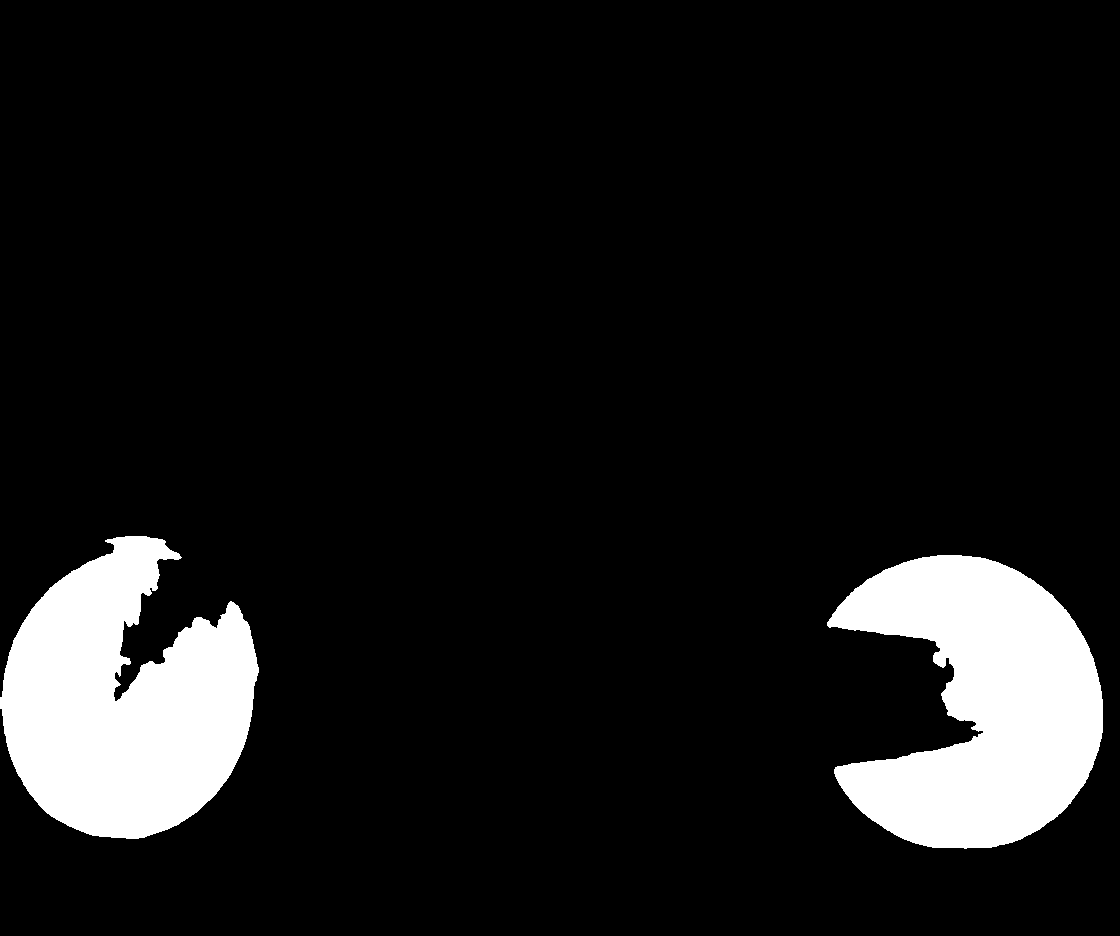
Input image

Prompt: "wheels", all other configs default
Result:
## Related Issues / Discussions
Thanks to @blessedcoolant for the initial draft here:
https://github.com/invoke-ai/InvokeAI/pull/6678
## QA Instructions
Manual tests:
- [ ] Test that default settings work well.
- [ ] Test with / without apply_polygon_refinement
- [ ] Test mask_filter options
- [ ] Test detection_threshold values
- [ ] Test RGB input image
- [ ] Test RGBA input image
- [ ] Test grayscale input image
- [ ] Smoke test that an empty mask is returned when 0 objects are
detected
- [ ] Test on CPU
- [ ] Test on MPS (Works on Mac OS, but had to force both models to run
on CPU instead of MPS)
Performance:
- Peak GPU memory utilization with both Grounding DINO and SAM models
loaded is ~4.5GB. (The models do not need to be loaded at the same time,
so could be offloaded by the MM if needed.)
- On an RTX4090, with the models already cached, node execution takes
~0.6 secs.
- On my CPU, with the models cached, node execution takes ~10secs.
## Merge Plan
No special instructions.
## Checklist
- [x] _The PR has a short but descriptive title, suitable for a
changelog_
- [ ] _Tests added / updated (if applicable)_
- [x] _Documentation added / updated (if applicable)_
## Summary
- we want a way to load the studio while being directed to a specific
tab, introduced a destination prop to achieve that
<!--A description of the changes in this PR. Include the kind of change
(fix, feature, docs, etc), the "why" and the "how". Screenshots or
videos are useful for frontend changes.-->
## Related Issues / Discussions
<!--WHEN APPLICABLE: List any related issues or discussions on github or
discord. If this PR closes an issue, please use the "Closes #1234"
format, so that the issue will be automatically closed when the PR
merges.-->
## QA Instructions
<!--WHEN APPLICABLE: Describe how you have tested the changes in this
PR. Provide enough detail that a reviewer can reproduce your tests.-->
## Merge Plan
<!--WHEN APPLICABLE: Large PRs, or PRs that touch sensitive things like
DB schemas, may need some care when merging. For example, a careful
rebase by the change author, timing to not interfere with a pending
release, or a message to contributors on discord after merging.-->
## Checklist
- [ ] _The PR has a short but descriptive title, suitable for a
changelog_
- [ ] _Tests added / updated (if applicable)_
- [ ] _Documentation added / updated (if applicable)_
## Summary
Code for lora patching from #6577.
Additionally made it the way, that lora can patch not only `weight`, but
also `bias`, because saw some loras which doing it.
## Related Issues / Discussions
#6606https://invokeai.notion.site/Modular-Stable-Diffusion-Backend-Design-Document-e8952daab5d5472faecdc4a72d377b0d
## QA Instructions
Run with and without set `USE_MODULAR_DENOISE` environment.
## Merge Plan
Replace old lora patcher with new after review done.
If you think that there should be some kind of tests - feel free to add.
## Checklist
- [x] _The PR has a short but descriptive title, suitable for a
changelog_
- [ ] _Tests added / updated (if applicable)_
- [ ] _Documentation added / updated (if applicable)_
## Summary
Gradient mask node outputs mask tensor with values in range [-1, 1],
which unexpected range for mask.
It handled in denoise node the way it translates to [0, 2] mask, which
looks even more wrongly)
From discussion with @dunkeroni I understand him as he thought that
negative values will be treated same as 0, so clamping values not change
intended node logic.
## Related Issues / Discussions
#6643
## QA Instructions
\-
## Merge Plan
\-
## Checklist
- [x] _The PR has a short but descriptive title, suitable for a
changelog_
- [ ] _Tests added / updated (if applicable)_
- [ ] _Documentation added / updated (if applicable)_
## Summary
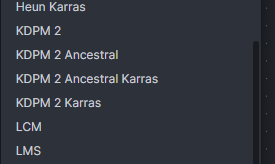
Add karras variants of `deis`, `unipc`, `kdpm2` and `kdpm_2_a`
schedulers.
Also added `dpmpp_3` schedulers, but `dpmpp_3s` currently bugged, so
added only 3m:
https://github.com/huggingface/diffusers/issues/9007
## Related Issues / Discussions
\-
## QA Instructions
\-
## Merge Plan
~@psychedelicious We need to decide what to do with schedulers order, as
it looks a bit broken:~
## Checklist
- [x] _The PR has a short but descriptive title, suitable for a
changelog_
- [ ] _Tests added / updated (if applicable)_
- [ ] _Documentation added / updated (if applicable)_
## Summary
<!--A description of the changes in this PR. Include the kind of change
(fix, feature, docs, etc), the "why" and the "how". Screenshots or
videos are useful for frontend changes.-->
## Related Issues / Discussions
<!--WHEN APPLICABLE: List any related issues or discussions on github or
discord. If this PR closes an issue, please use the "Closes #1234"
format, so that the issue will be automatically closed when the PR
merges.-->
## QA Instructions
<!--WHEN APPLICABLE: Describe how you have tested the changes in this
PR. Provide enough detail that a reviewer can reproduce your tests.-->
## Merge Plan
<!--WHEN APPLICABLE: Large PRs, or PRs that touch sensitive things like
DB schemas, may need some care when merging. For example, a careful
rebase by the change author, timing to not interfere with a pending
release, or a message to contributors on discord after merging.-->
## Checklist
- [ ] _The PR has a short but descriptive title, suitable for a
changelog_
- [ ] _Tests added / updated (if applicable)_
- [ ] _Documentation added / updated (if applicable)_
## Summary
Code for inpainting and inpaint models handling from
https://github.com/invoke-ai/InvokeAI/pull/6577.
Separated in 2 extensions as discussed briefly before, so wait for
discussion about such implementation.
## Related Issues / Discussions
#6606https://invokeai.notion.site/Modular-Stable-Diffusion-Backend-Design-Document-e8952daab5d5472faecdc4a72d377b0d
## QA Instructions
Run with and without set `USE_MODULAR_DENOISE` environment.
Try and compare outputs between backends in cases:
- Normal generation on inpaint model
- Inpainting on inpaint model
- Inpainting on normal model
## Merge Plan
Nope.
If you think that there should be some kind of tests - feel free to add.
## Checklist
- [x] _The PR has a short but descriptive title, suitable for a
changelog_
- [ ] _Tests added / updated (if applicable)_
- [ ] _Documentation added / updated (if applicable)_
We were checking the selected and auto-add board ids against the query cache to see if they still exist. If not, we reset.
This only works if the query cache is updated by the time we do the check - race condition!
We already have the board id from the query args, so there's no need to check the query cache - just compare the deleted board ID directly.
Previously this file's several listeners were all in a single one and I had adapted/split its logic up a bit wonkily, introducing these problems.
The logic was incorrect in two ways:
1. We only ran the logic if we _enable_ showing archived boards. It should be run we we _disable_ showing archived boards.
2. If we couldn't find the selected board in the query cache, we didn't do the reset. This is wrong - if the board isn't in the query cache, we _should_ do the reset. This inverted logic makes more sense before the fix for issue 1.
## Summary
T2I Adapter code from #6577.
## Related Issues / Discussions
#6606https://invokeai.notion.site/Modular-Stable-Diffusion-Backend-Design-Document-e8952daab5d5472faecdc4a72d377b0d
## QA Instructions
Run with and without set `USE_MODULAR_DENOISE` environment.
## Merge Plan
Nope.
If you think that there should be some kind of tests - feel free to add.
## Checklist
- [x] _The PR has a short but descriptive title, suitable for a
changelog_
- [ ] _Tests added / updated (if applicable)_
- [ ] _Documentation added / updated (if applicable)_
## Summary
Seamless code from #6577.
## Related Issues / Discussions
#6606https://invokeai.notion.site/Modular-Stable-Diffusion-Backend-Design-Document-e8952daab5d5472faecdc4a72d377b0d
## QA Instructions
Run with and without set `USE_MODULAR_DENOISE` environment.
## Merge Plan
Nope.
If you think that there should be some kind of tests - feel free to add.
## Checklist
- [x] _The PR has a short but descriptive title, suitable for a
changelog_
- [ ] _Tests added / updated (if applicable)_
- [ ] _Documentation added / updated (if applicable)_
The model edit UI's composition allows for the model edit form to be instantiated before the model's config has been received. This results in the form having no values - all the fields are blank instead of populated by the model config.
Part of the fix is to pass the model config around directly instead of relying on _all_ components to fetch the model directly.
I also fixed a crapload of performance issues related to improper use of redux selectors.
Problems this was causing:
- Deleting an edge was a copy of another edge deletes both edges
- Deleting a node that was a copy-with-edges of another node deletes its edges and it's original edges, leaving what I will call "ghost noodles" behind
Previously you could spam the next/prev buttons and really thrash the server. Throttled to 500ms, which feels like a happy medium between responsive and not-thrash-y.
- Autofocus on popover open
- Autoselect number on popover open
- Enter works to change page when input is focused
- Esc works to close popover when input is focused
It was possible to clear the search term while a debounced setSearchTerm is still pending. This resulted in the gallery getting out of sync w/ the search term.
To fix this, we need to lift the state up a bit and cancel any pending debounced setSearchTerm calls when closing the search or clearing the search term box.
`spandrel_image_to_image` now just runs the model with no changes.
`spandrel_image_to_image_autoscale` runs the model repeatedly until the desired scale is reached. previously, `spandrel_image_to_image` did this.
* [MM2] replace untyped config dict passed to install_model with typed ModelRecordChanges
- adjusted frontend to work with new schema
- used this facility to assign "starter model" names and descriptions to the installed
models.
* documentation fix
* [MM2] replace untyped config dict passed to install_model with typed ModelRecordChanges
- adjusted frontend to work with new schema
- used this facility to assign "starter model" names and descriptions to the installed
models.
* documentation fix
* remove v9 pnpm lockfile
* [MM2] replace untyped config dict passed to install_model with typed ModelRecordChanges
- adjusted frontend to work with new schema
- used this facility to assign "starter model" names and descriptions to the installed
models.
* [MM2] replace untyped config dict passed to install_model with typed ModelRecordChanges
- adjusted frontend to work with new schema
- used this facility to assign "starter model" names and descriptions to the installed
models.
* remove v9 pnpm lockfile
* regenerate schema.ts
* prettified
---------
Co-authored-by: Lincoln Stein <lstein@gmail.com>
## Summary
Update Simple Upscale Button to work with spandrel models, add
UpscaleWarning when models aren't available, clean up ESRGAN logic
<!--A description of the changes in this PR. Include the kind of change
(fix, feature, docs, etc), the "why" and the "how". Screenshots or
videos are useful for frontend changes.-->
## Related Issues / Discussions
<!--WHEN APPLICABLE: List any related issues or discussions on github or
discord. If this PR closes an issue, please use the "Closes #1234"
format, so that the issue will be automatically closed when the PR
merges.-->
## QA Instructions
<!--WHEN APPLICABLE: Describe how you have tested the changes in this
PR. Provide enough detail that a reviewer can reproduce your tests.-->
## Merge Plan
<!--WHEN APPLICABLE: Large PRs, or PRs that touch sensitive things like
DB schemas, may need some care when merging. For example, a careful
rebase by the change author, timing to not interfere with a pending
release, or a message to contributors on discord after merging.-->
## Checklist
- [ ] _The PR has a short but descriptive title, suitable for a
changelog_
- [ ] _Tests added / updated (if applicable)_
- [ ] _Documentation added / updated (if applicable)_
## Summary
ControlNet code from #6577.
## Related Issues / Discussions
#6606https://invokeai.notion.site/Modular-Stable-Diffusion-Backend-Design-Document-e8952daab5d5472faecdc4a72d377b0d
## QA Instructions
Run with and without set `USE_MODULAR_DENOISE` environment.
## Merge Plan
Merge #6641 firstly, to be able see output difference properly.
If you think that there should be some kind of tests - feel free to add.
## Checklist
- [x] _The PR has a short but descriptive title, suitable for a
changelog_
- [ ] _Tests added / updated (if applicable)_
- [ ] _Documentation added / updated (if applicable)_
## Summary
Rescale CFG code from #6577.
## Related Issues / Discussions
#6606https://invokeai.notion.site/Modular-Stable-Diffusion-Backend-Design-Document-e8952daab5d5472faecdc4a72d377b0d
## QA Instructions
Run with and without set `USE_MODULAR_DENOISE` environment.
~~Note: for some reasons there slightly different output from run to
run, but I able sometimes to get same output on main and this branch.~~
Fix presented in #6641.
## Merge Plan
~~Nope.~~ Merge #6641 firstly, to be able see output difference
properly.
If you think that there should be some kind of tests - feel free to add.
## Checklist
- [x] _The PR has a short but descriptive title, suitable for a
changelog_
- [ ] _Tests added / updated (if applicable)_
- [ ] _Documentation added / updated (if applicable)_
## Summary
- currently the total for uncategorized images is not updating when
moving and deleting images, this will update that count when making
those actions
<!--A description of the changes in this PR. Include the kind of change
(fix, feature, docs, etc), the "why" and the "how". Screenshots or
videos are useful for frontend changes.-->
## Related Issues / Discussions
<!--WHEN APPLICABLE: List any related issues or discussions on github or
discord. If this PR closes an issue, please use the "Closes #1234"
format, so that the issue will be automatically closed when the PR
merges.-->
## QA Instructions
<!--WHEN APPLICABLE: Describe how you have tested the changes in this
PR. Provide enough detail that a reviewer can reproduce your tests.-->
## Merge Plan
<!--WHEN APPLICABLE: Large PRs, or PRs that touch sensitive things like
DB schemas, may need some care when merging. For example, a careful
rebase by the change author, timing to not interfere with a pending
release, or a message to contributors on discord after merging.-->
## Checklist
- [ ] _The PR has a short but descriptive title, suitable for a
changelog_
- [ ] _Tests added / updated (if applicable)_
- [ ] _Documentation added / updated (if applicable)_
## Summary
Fix function call that we forgot to update in #6606
## QA Instructions
Run a TiledMultiDiffusionDenoiseLatents invocation and make sure it
doesn't crash.
## Checklist
- [x] _The PR has a short but descriptive title, suitable for a
changelog_
- [x] _Tests added / updated (if applicable)_
- [x] _Documentation added / updated (if applicable)_
## Summary
Base code of new modular backend from #6577.
Contains normal generation and regional prompts support.
Also preview extension included to test if extensions logic works.
## Related Issues / Discussions
https://invokeai.notion.site/Modular-Stable-Diffusion-Backend-Design-Document-e8952daab5d5472faecdc4a72d377b0d
## QA Instructions
Run with and without set `USE_MODULAR_DENOISE` environment.
Currently only normal and regional conditionings supported, so just
generate some images and compare with main output.
## Merge Plan
Discuss a bit more about injection point names?
As if for example in future unet will be overridable, current
`pre_unet`/`post_unet` assumes to name override as `unet` what feels a
bit odd.
Also `apply_cfg` - future implementation could ignore/not use cfg, so in
this case `combine_noise_predictions`/`combine_noise` seems more
suitable.
## Checklist
- [x] _The PR has a short but descriptive title, suitable for a
changelog_
- [x] _Tests added / updated (if applicable)_
- [ ] _Documentation added / updated (if applicable)_
## Summary
This PR adds some spandrel upscale models to the starter model list.
In the future we may also want to add:
- Some DAT models
(https://drive.google.com/drive/folders/1iBdf_-LVZuz_PAbFtuxSKd_11RL1YKxM)
## QA Instructions
I installed the starter models via the model manager UI, and tested that
I could use them in a workflow.
## Merge Plan
- [ ] Merge the preceding Spandrel PRs first, then change the target
branch to `main`.
## Checklist
- [x] _The PR has a short but descriptive title, suitable for a
changelog_
- [x] _Tests added / updated (if applicable)_
- [x] _Documentation added / updated (if applicable)_
## Summary
Add tiling to the `SpandrelImageToImageInvocation` node so that it can
process large images.
Tiling enables this node to run on effectively any input image
dimension. Of course, the computation time increases quadratically with
the image dimension.
Some profiling results on an RTX4090:
- Input 1024x1024, 4x upscale, 4x UltraSharp ESRGAN: `13 secs`, `<4 GB
VRAM`
- Input 4096x4096, 4x upscale, 4x UltraSharop ESRGAN: `46 secs`, `<4 GB
VRAM`
- Input 4096x4096, 2x upscale, SwinIR: `165 secs`, `<5 GB VRAM`
A lot of the time is spent PNG encoding the final image:
- PNG encoding of a 16384x16384 image takes `83secs @
pil_compress_level=7`, `24secs @ pil_compress_level=1`
Callout: If we want to start building workflows that pass large images
between nodes, we are going to have to find a way to avoid the PNG
encode/decode roundtrip that we are currently doing. As is, we will be
incurring a huge penalty for every node that receives/produces a large
image.
## QA Instructions
- [x] Tested with tiling up to 4096x4096 -> 16384x16384.
- [x] Test on images with an alpha channel (the alpha channel is
dropped).
- [x] Test on images with odd dimension.
- [x] Test no tiling (`tile_size=0`)
## Merge Plan
- [x] Merge #6556 first, and change the target branch to `main`.
## Checklist
- [x] _The PR has a short but descriptive title, suitable for a
changelog_
- [ ] _Tests added / updated (if applicable)_
- [x] _Documentation added / updated (if applicable)_
## Summary
- Add support for all
[spandrel](https://github.com/chaiNNer-org/spandrel) image-to-image
models - this is a collection of many popular super-resolution models
(e.g. ESRGAN, Real-ESRGAN, SwinIR, DAT, etc.)
Examples of supported models:
- DAT:
https://drive.google.com/drive/folders/1iBdf_-LVZuz_PAbFtuxSKd_11RL1YKxM
- SwinIR: https://github.com/JingyunLiang/SwinIR/releases
- Any ESRGAN / Real-ESRGAN model
## Related Issues
Closes#6394
## QA Instructions
- [x] Test that unsupported models still fail the probe (i.e. no false
positive spandrel models)
- [x] Test adding a few non-spandrel model types
- [x] Test adding a handful of spandrel model types: ESRGAN,
Real-ESRGAN, SwinIR, DAT
- [x] Verify model size estimation for the model cache
- [x] Test using the spandrel models in a practical image upscaling
workflow
## Merge Plan
- [x] Get approval from @brandonrising and @maryhipp before merging -
this PR has commercial implications.
- [x] Merge #6571 and change the target branch to `main`
## Checklist
- [x] _The PR has a short but descriptive title, suitable for a
changelog_
- [x] _Tests added / updated (if applicable)_
- [x] _Documentation added / updated (if applicable)_
In #6490 we enabled non-blocking torch device transfers throughout the model manager's memory management code. When using this torch feature, torch attempts to wait until the tensor transfer has completed before allowing any access to the tensor. Theoretically, that should make this a safe feature to use.
This provides a small performance improvement but causes race conditions in some situations. Specific platforms/systems are affected, and complicated data dependencies can make this unsafe.
- Intermittent black images on MPS devices - reported on discord and #6545, fixed with special handling in #6549.
- Intermittent OOMs and black images on a P4000 GPU on Windows - reported in #6613, fixed in this commit.
On my system, I haven't experience any issues with generation, but targeted testing of non-blocking ops did expose a race condition when moving tensors from CUDA to CPU.
One workaround is to use torch streams with manual sync points. Our application logic is complicated enough that this would be a lot of work and feels ripe for edge cases and missed spots.
Much safer is to fully revert non-locking - which is what this change does.
Open `http://localhost:9090` in your browser once the container finishes booting, install some models, and generate away!
> [!TIP]
> To persist your data (including downloaded models) outside of the container, add a `--volume/-v` flag to the above command, e.g.: `docker run --volume /some/local/path:/invokeai <...the rest of the command>`
### Data persistence
To persist your generated images and downloaded models outside of the container, add a `--volume/-v` flag to the above command, e.g.:
```bash
docker run --volume /some/local/path:/invokeai {...etc...}
```
`/some/local/path/invokeai` will contain all your data.
It can *usually* be reused between different installs of Invoke. Tread with caution and read the release notes!
## Customize the container
We ship the`run.sh` script, which is a convenient wrapper around `docker compose` for cases where custom image build args are needed. Alternatively, the familiar `docker compose` commands work just as well.
The included`run.sh` script is a convenience wrapper around `docker compose`. It can be helpful for passing additional build arguments to `docker compose`. Alternatively, the familiar `docker compose` commands work just as well.
```bash
cd docker
@@ -38,11 +48,14 @@ cp .env.sample .env
It will take a few minutes to build the image the first time. Once the application starts up, open `http://localhost:9090` in your browser to invoke!
>[!TIP]
>When using the `run.sh` script, the container will continue running after Ctrl+C. To shut it down, use the `docker compose down` command.
## Docker setup in detail
#### Linux
1. Ensure builkit is enabled in the Docker daemon settings (`/etc/docker/daemon.json`)
1. Ensure buildkit is enabled in the Docker daemon settings (`/etc/docker/daemon.json`)
2. Install the `docker compose` plugin using your package manager, or follow a [tutorial](https://docs.docker.com/compose/install/linux/#install-using-the-repository).
- The deprecated `docker-compose` (hyphenated) CLI probably won't work. Update to a recent version.
3. Ensure docker daemon is able to access the GPU.
@@ -98,25 +111,7 @@ GPU_DRIVER=cuda
Any environment variables supported by InvokeAI can be set here. See the [Configuration docs](https://invoke-ai.github.io/InvokeAI/features/CONFIGURATION/) for further detail.
## Even More Customizing!
---
See the `docker-compose.yml` file. The `command` instruction can be uncommented and used to run arbitrary startup commands. Some examples below.
### Reconfigure the runtime directory
Can be used to download additional models from the supported model list
In conjunction with `INVOKEAI_ROOT` can be also used to initialize a runtime directory
@@ -61,11 +60,13 @@ class Classification(str, Enum, metaclass=MetaEnum):
- `Stable`: The invocation, including its inputs/outputs and internal logic, is stable. You may build workflows with it, having confidence that they will not break because of a change in this invocation.
- `Beta`: The invocation is not yet stable, but is planned to be stable in the future. Workflows built around this invocation may break, but we are committed to supporting this invocation long-term.
- `Prototype`: The invocation is not yet stable and may be removed from the application at any time. Workflows built around this invocation may break, and we are *not* committed to supporting this invocation.
- `Deprecated`: The invocation is deprecated and may be removed in a future version.
"""
Stable="stable"
Beta="beta"
Prototype="prototype"
Deprecated="deprecated"
classUIConfigBase(BaseModel):
@@ -80,7 +81,7 @@ class UIConfigBase(BaseModel):
version:str=Field(
description='The node\'s version. Should be a valid semver string e.g. "1.0.0" or "3.8.13".',
)
node_pack:Optional[str]=Field(default=None,description="Whether or not this is a custom node")
node_pack:str=Field(description="The node pack that this node belongs to, will be 'invokeai' for built-in nodes")
lora_weight="The weight at which the LoRA is applied to each model"
compel_prompt="Prompt to be parsed by Compel to create a conditioning tensor"
raw_prompt="Raw prompt text (no parsing)"
@@ -171,7 +181,7 @@ class FieldDescriptions:
)
num_1="The first number"
num_2="The second number"
mask="The mask to use for the operation"
denoise_mask="A mask of the region to apply the denoising process to. Values of 0.0 represent the regions to be fully denoised, and 1.0 represent the regions to be preserved."
board="The board to save the image to"
image="The image to process"
tile_size="Tile size"
@@ -229,6 +239,12 @@ class ColorField(BaseModel):
return(self.r,self.g,self.b,self.a)
classFluxConditioningField(BaseModel):
"""A conditioning tensor primitive value"""
conditioning_name:str=Field(description="The name of conditioning tensor")
classConditioningField(BaseModel):
"""A conditioning tensor primitive value"""
@@ -240,6 +256,31 @@ class ConditioningField(BaseModel):
)
classBoundingBoxField(BaseModel):
"""A bounding box primitive value."""
x_min:int=Field(ge=0,description="The minimum x-coordinate of the bounding box (inclusive).")
x_max:int=Field(ge=0,description="The maximum x-coordinate of the bounding box (exclusive).")
y_min:int=Field(ge=0,description="The minimum y-coordinate of the bounding box (inclusive).")
y_max:int=Field(ge=0,description="The maximum y-coordinate of the bounding box (exclusive).")
score:Optional[float]=Field(
default=None,
ge=0.0,
le=1.0,
description="The score associated with the bounding box. In the range [0, 1]. This value is typically set "
"when the bounding box was produced by a detector and has an associated confidence score.",
)
@model_validator(mode="after")
defcheck_coords(self):
ifself.x_min>self.x_max:
raiseValueError(f"x_min ({self.x_min}) is greater than x_max ({self.x_max}).")
ifself.y_min>self.y_max:
raiseValueError(f"y_min ({self.y_min}) is greater than y_max ({self.y_max}).")
returnself
classMetadataField(RootModel[dict[str,Any]]):
"""
Pydantic model for metadata with custom root of type dict[str, Any].
width:int=InputField(default=1024,multiple_of=16,description="Width of the generated image.")
height:int=InputField(default=1024,multiple_of=16,description="Height of the generated image.")
num_steps:int=InputField(
default=4,description="Number of diffusion steps. Recommended values are schnell: 4, dev: 50."
)
guidance:float=InputField(
default=4.0,
description="The guidance strength. Higher values adhere more strictly to the prompt, and will produce less diverse images. FLUX dev only, ignored for schnell.",
)
seed:int=InputField(default=0,description="Randomness seed for reproducibility.")
model:SegmentAnythingModelKey=InputField(description="The Segment Anything model to use.")
image:ImageField=InputField(description="The image to segment.")
bounding_boxes:list[BoundingBoxField]=InputField(description="The bounding boxes to prompt the SAM model with.")
apply_polygon_refinement:bool=InputField(
description="Whether to apply polygon refinement to the masks. This will smooth the edges of the masks slightly and ensure that each mask consists of a single closed polygon (before merging).",
@@ -91,6 +91,7 @@ class InvokeAIAppConfig(BaseSettings):
db_dir: Path to InvokeAI databases directory.
outputs_dir: Path to directory for outputs.
custom_nodes_dir: Path to directory for custom nodes.
style_presets_dir: Path to directory for style presets.
log_handlers: Log handler. Valid options are "console", "file=<path>", "syslog=path|address:host:port", "http=<url>".
log_format: Log format. Use "plain" for text-only, "color" for colorized output, "legacy" for 2.3-style logging and "syslog" for syslog-style.<br>Valid values: `plain`, `color`, `syslog`, `legacy`
log_level: Emit logging messages at this level or higher.<br>Valid values: `debug`, `info`, `warning`, `error`, `critical`
@@ -153,6 +154,7 @@ class InvokeAIAppConfig(BaseSettings):
db_dir:Path=Field(default=Path("databases"),description="Path to InvokeAI databases directory.")
outputs_dir:Path=Field(default=Path("outputs"),description="Path to directory for outputs.")
custom_nodes_dir:Path=Field(default=Path("nodes"),description="Path to directory for custom nodes.")
style_presets_dir:Path=Field(default=Path("style_presets"),description="Path to directory for style presets.")
# LOGGING
log_handlers:list[str]=Field(default=["console"],description='Log handler. Valid options are "console", "file=<path>", "syslog=path|address:host:port", "http=<url>".')
@@ -300,6 +302,11 @@ class InvokeAIAppConfig(BaseSettings):
"""Path to the models directory, resolved to an absolute path.."""
returnself._resolve(self.models_dir)
@property
defstyle_presets_path(self)->Path:
"""Path to the style presets directory, resolved to an absolute path.."""
returnself._resolve(self.style_presets_dir)
@property
defconvert_cache_path(self)->Path:
"""Path to the converted cache models directory, resolved to an absolute path.."""
"negative_prompt":"painting, digital art. sketch, blurry"
}
},
{
"name":"Photography (Portrait)",
"type":"default",
"preset_data":{
"positive_prompt":"{prompt}. photography. portraiture. catch light in eyes. one flash. rembrandt lighting. Soft box. dark shadows. High contrast. 80mm lens. F2.8.",
"negative_prompt":"painting, digital art. sketch, blurry"
}
},
{
"name":"Photography (Black and White)",
"type":"default",
"preset_data":{
"positive_prompt":"{prompt} photography. natural light. 80mm lens. F1.4. strong contrast, hard light. dark contrast. blurred background. black and white",
"negative_prompt":"painting, digital art. sketch, colour+"
}
},
{
"name":"Architectural Visualization",
"type":"default",
"preset_data":{
"positive_prompt":"{prompt}. architectural photography, f/12, luxury, aesthetically pleasing form and function.",
"negative_prompt":"painting, digital art. sketch, blurry"
}
},
{
"name":"Concept Art (Fantasy)",
"type":"default",
"preset_data":{
"positive_prompt":"concept artwork of a {prompt}. (digital painterly art style)++, mythological, (textured 2d dry media brushpack)++, glazed brushstrokes, otherworldly. painting+, illustration+",
"negative_prompt":"photo. distorted, blurry, out of focus. sketch. (cgi, 3d.)++"
"negative_prompt":"photo. distorted, blurry, out of focus. sketch. (cgi, 3d.)++"
}
},
{
"name":"Concept Art (Character)",
"type":"default",
"preset_data":{
"positive_prompt":"(character concept art)++, stylized painterly digital painting of {prompt}, (painterly, impasto. Dry brush.)++",
"negative_prompt":"photo. distorted, blurry, out of focus. sketch. (cgi, 3d.)++"
}
},
{
"name":"Concept Art (Painterly)",
"type":"default",
"preset_data":{
"positive_prompt":"{prompt} oil painting. high contrast. impasto. sfumato. chiaroscuro. Palette knife.",
"negative_prompt":"photo. smooth. border. frame"
}
},
{
"name":"Environment Art",
"type":"default",
"preset_data":{
"positive_prompt":"{prompt} environment artwork, hyper-realistic digital painting style with cinematic composition, atmospheric, depth and detail, voluminous. textured dry brush 2d media",
"negative_prompt":"photo, distorted, blurry, out of focus. sketch."
}
},
{
"name":"Interior Design (Visualization)",
"type":"default",
"preset_data":{
"positive_prompt":"{prompt} interior design photo, gentle shadows, light mid-tones, dimension, mix of smooth and textured surfaces, focus on negative space and clean lines, focus",
"negative_prompt":"photo, distorted. sketch."
}
},
{
"name":"Product Rendering",
"type":"default",
"preset_data":{
"positive_prompt":"{prompt} high quality product photography, 3d rendering with key lighting, shallow depth of field, simple plain background, studio lighting.",
"positive_prompt":"{prompt} black and white pencil drawing, off-center composition, cross-hatching for shadows, bold strokes, textured paper. sketch+++",
"description":"A simple image-to-image workflow using a FLUX dev model. ",
"version":"1.0.4",
"contact":"",
"tags":"image2image, flux, image-to-image",
"notes":"Prerequisite model downloads: T5 Encoder, CLIP-L Encoder, and FLUX VAE. Quantized and un-quantized versions can be found in the starter models tab within your Model Manager. We recommend using FLUX dev models for image-to-image workflows. The image-to-image performance with FLUX schnell models is poor.",
"description":"A simple text-to-image workflow using FLUX dev or schnell models.",
"version":"1.0.4",
"contact":"",
"tags":"text2image, flux",
"notes":"Prerequisite model downloads: T5 Encoder, CLIP-L Encoder, and FLUX VAE. Quantized and un-quantized versions can be found in the starter models tab within your Model Manager. We recommend 4 steps for FLUX schnell models and 30 steps for FLUX dev models.",
"exposedFields":[
{
"nodeId":"f8d9d7c8-9ed7-4bd7-9e42-ab0e89bfac90",
"fieldName":"model"
},
{
"nodeId":"f8d9d7c8-9ed7-4bd7-9e42-ab0e89bfac90",
"fieldName":"t5_encoder_model"
},
{
"nodeId":"f8d9d7c8-9ed7-4bd7-9e42-ab0e89bfac90",
"fieldName":"clip_embed_model"
},
{
"nodeId":"f8d9d7c8-9ed7-4bd7-9e42-ab0e89bfac90",
"fieldName":"vae_model"
},
{
"nodeId":"01f674f8-b3d1-4df1-acac-6cb8e0bfb63c",
"fieldName":"prompt"
},
{
"nodeId":"4fe24f07-f906-4f55-ab2c-9beee56ef5bd",
"fieldName":"num_steps"
}
],
"meta":{
"version":"3.0.0",
"category":"default"
},
"nodes":[
{
"id":"4fe24f07-f906-4f55-ab2c-9beee56ef5bd",
"type":"invocation",
"data":{
"id":"4fe24f07-f906-4f55-ab2c-9beee56ef5bd",
"type":"flux_denoise",
"version":"1.0.0",
"label":"",
"notes":"",
"isOpen":true,
"isIntermediate":true,
"useCache":true,
"inputs":{
"board":{
"name":"board",
"label":""
},
"metadata":{
"name":"metadata",
"label":""
},
"latents":{
"name":"latents",
"label":""
},
"denoise_mask":{
"name":"denoise_mask",
"label":""
},
"denoising_start":{
"name":"denoising_start",
"label":"",
"value":0
},
"denoising_end":{
"name":"denoising_end",
"label":"",
"value":1
},
"transformer":{
"name":"transformer",
"label":""
},
"positive_text_conditioning":{
"name":"positive_text_conditioning",
"label":""
},
"width":{
"name":"width",
"label":"",
"value":1024
},
"height":{
"name":"height",
"label":"",
"value":1024
},
"num_steps":{
"name":"num_steps",
"label":"Steps (Recommend 30 for Dev, 4 for Schnell)",
Some files were not shown because too many files have changed in this diff
Show More
Reference in New Issue
Block a user
Blocking a user prevents them from interacting with repositories, such as opening or commenting on pull requests or issues. Learn more about blocking a user.