Compare commits
777 Commits
ryan/cloth
...
v4.2.9.dev
| Author | SHA1 | Date | |
|---|---|---|---|

|
434afdd21d | ||
|
|
ea267c0e09 | ||
|
|
35b483b83a | ||
|
|
217b2759c3 | ||
|
|
7d528dc03d | ||
|
|
bc40c1a99f | ||
|
|
a2b508016e | ||
|
|
3ce8294379 | ||
|
|
9c3da8de8e | ||
|
|
ccba597e58 | ||
|
|
8028943cdd | ||
|
|
cdd8b60fd0 | ||
|
|
c624754404 | ||
|
|
0505634296 | ||
|
|
e06ea5d595 | ||
|
|
838a0574a5 | ||
|
|
ed3581c70c | ||
|
|
522cae6a42 | ||
|
|
a9032a34f2 | ||
|
|
6af5a22d3a | ||
|
|
8cf4321010 | ||
|
|
aa7f2b096a | ||
|
|
bf0824b56d | ||
|
|
056c56d322 | ||
|
|
afc6f83d72 | ||
|
|
c776ac3af2 | ||
|
|
b7b3683bef | ||
|
|
fb26b6824a | ||
|
|
63d8ad912f | ||
|
|
bbd7d7fc17 | ||
|
|
6507a78182 | ||
|
|
22f46517f4 | ||
|
|
45596e1f94 | ||
|
|
6de0dbe854 | ||
|
|
011827fa29 | ||
|
|
fc6d244071 | ||
|
|
cd3da886d6 | ||
|
|
c013c55d92 | ||
|
|
cd3dd7db0d | ||
|
|
1fdcce9429 | ||
|
|
181e40926d | ||
|
|
c62ede5878 | ||
|
|
a2ad5f1a9a | ||
|
|
ff74a5356f | ||
|
|
92dc30dace | ||
|
|
3af577b210 | ||
|
|
d0464330f7 | ||
|
|
dd3ef4a80f | ||
|
|
0ced891944 | ||
|
|
10a5452df9 | ||
|
|
cb97969bbc | ||
|
|
71e742e238 | ||
|
|
fadd20fb8e | ||
|
|
01b9ca78e4 | ||
|
|
2baf825f34 | ||
|
|
1fa8048509 | ||
|
|
a000ad75f6 | ||
|
|
aefb2339bb | ||
|
|
a4f8671f86 | ||
|
|
73530ba54f | ||
|
|
685eb9927d | ||
|
|
ee57302fc3 | ||
|
|
c1fb9cdb93 | ||
|
|
aa6d441552 | ||
|
|
25d8d4c2e9 | ||
|
|
427ea6da5c | ||
|
|
d9f4266630 | ||
|
|
96f6e9e683 | ||
|
|
f10248e3f5 | ||
|
|
6a21f5fde1 | ||
|
|
ff20dd509a | ||
|
|
78a59b5b78 | ||
|
|
46bfbbbc87 | ||
|
|
a6d73d0773 | ||
|
|
6578e8bef8 | ||
|
|
0596d25e07 | ||
|
|
86e8ce9139 | ||
|
|
5aa2957da4 | ||
|
|
82f0cb2c8c | ||
|
|
fa48145cbc | ||
|
|
6d1edc330d | ||
|
|
97c0d3f6be | ||
|
|
a79a25ad63 | ||
|
|
6a8ceef404 | ||
|
|
3539670d93 | ||
|
|
c54bc32ef6 | ||
|
|
fee293e289 | ||
|
|
747eef9ccc | ||
|
|
7d2df399ed | ||
|
|
68fad5cdcc | ||
|
|
b4d656c203 | ||
|
|
3136d89d52 | ||
|
|
27e829b955 | ||
|
|
e03e870d5b | ||
|
|
9465ff450b | ||
|
|
92906a9575 | ||
|
|
77f206abe4 | ||
|
|
44a3f61580 | ||
|
|
0a2afed08b | ||
|
|
9b3b961105 | ||
|
|
9b1828e1aa | ||
|
|
5101873f49 | ||
|
|
c612f18114 | ||
|
|
7e400d876f | ||
|
|
677dddcfc9 | ||
|
|
0792b9175e | ||
|
|
e4829f80af | ||
|
|
bb760f3eb4 | ||
|
|
388c65287b | ||
|
|
12cd41e05c | ||
|
|
7765c03949 | ||
|
|
3daa80c57f | ||
|
|
5dbbef4ebd | ||
|
|
db33b3f7b5 | ||
|
|
8ffcf2a6be | ||
|
|
2e7ae6a07e | ||
|
|
fea1711f0c | ||
|
|
2a3546db97 | ||
|
|
285c266612 | ||
|
|
426ad54c53 | ||
|
|
fc75f7919f | ||
|
|
6c6b1aaff6 | ||
|
|
c319d653ac | ||
|
|
d887e474e7 | ||
|
|
da7b52d6ba | ||
|
|
b5aa308593 | ||
|
|
0b7ceb3bb6 | ||
|
|
3a70cefda2 | ||
|
|
4b609251e1 | ||
|
|
0839eac0f7 | ||
|
|
5f2a7feeee | ||
|
|
982535eb92 | ||
|
|
0c2b8edc8d | ||
|
|
f78f4ca25f | ||
|
|
d6b3e6c07d | ||
|
|
071ff8e74a | ||
|
|
1ea8aafca1 | ||
|
|
533dd221f8 | ||
|
|
2b325c6683 | ||
|
|
3845b1b3e6 | ||
|
|
cea7890a67 | ||
|
|
c38fe8025d | ||
|
|
f1de95349c | ||
|
|
2950775fa7 | ||
|
|
cb293fd7ac | ||
|
|
43b3fab6be | ||
|
|
d4b0dbce49 | ||
|
|
137b810669 | ||
|
|
c172657324 | ||
|
|
97c966b04f | ||
|
|
7178fc6253 | ||
|
|
4adb2eabf5 | ||
|
|
9f2c815e13 | ||
|
|
1435557d1d | ||
|
|
96abf687f6 | ||
|
|
636d9a7209 | ||
|
|
3b36eb0223 | ||
|
|
388c97bff0 | ||
|
|
b1cb018695 | ||
|
|
df78dd7953 | ||
|
|
0dc344a22e | ||
|
|
350d7f6f14 | ||
|
|
11059ee2d4 | ||
|
|
c90d3f3bb9 | ||
|
|
7f6d439fd1 | ||
|
|
783a78f069 | ||
|
|
0ff031950d | ||
|
|
d7e8f3d756 | ||
|
|
4668ea449b | ||
|
|
30d318d021 | ||
|
|
de96f97e5f | ||
|
|
57c0a2dfb1 | ||
|
|
cd4e464bde | ||
|
|
49e48c3eb7 | ||
|
|
edd3b3bce9 | ||
|
|
f8bfb66108 | ||
|
|
3b6a76cbf3 | ||
|
|
e0b60e4320 | ||
|
|
2159319035 | ||
|
|
b170fc232e | ||
|
|
594da60f2f | ||
|
|
6a432f6518 | ||
|
|
eb8eacfec6 | ||
|
|
c8d04d42e2 | ||
|
|
d39c9de81e | ||
|
|
a27d39b9ff | ||
|
|
6b385614f0 | ||
|
|
3ae7250ef7 | ||
|
|
a42d0ce1d2 | ||
|
|
d9131f7563 | ||
|
|
bdce958f29 | ||
|
|
3c86f1e979 | ||
|
|
894b8a29b9 | ||
|
|
8436a44973 | ||
|
|
f9f9ec3688 | ||
|
|
5a98d7a1f6 | ||
|
|
f9bc96e497 | ||
|
|
56350ff5dc | ||
|
|
6c1139340c | ||
|
|
641b1a7e6f | ||
|
|
674a3f462f | ||
|
|
2283186d3a | ||
|
|
340af1fe50 | ||
|
|
9378656d78 | ||
|
|
5f0413e222 | ||
|
|
c3e47515b1 | ||
|
|
5dcef6fa0d | ||
|
|
31ac02cd93 | ||
|
|
ab16976084 | ||
|
|
8e2b7845e1 | ||
|
|
3973bce342 | ||
|
|
f63847a504 | ||
|
|
07e3529948 | ||
|
|
03e1c60694 | ||
|
|
d766ed71fc | ||
|
|
ae68ef142a | ||
|
|
20f55768c4 | ||
|
|
c4fad4456e | ||
|
|
78f5ec44ad | ||
|
|
e14ba86942 | ||
|
|
d4e7720f6b | ||
|
|
a3f0e7e1cb | ||
|
|
30a696c476 | ||
|
|
66d6c64e16 | ||
|
|
d15be9b57c | ||
|
|
e5da902fd0 | ||
|
|
fc558094c2 | ||
|
|
ad9312e989 | ||
|
|
8e1a70b008 | ||
|
|
17f88cd5ad | ||
|
|
298f1919fa | ||
|
|
4d20cc11d4 | ||
|
|
14f249a2f0 | ||
|
|
b9746a6c2c | ||
|
|
94f298a6f4 | ||
|
|
8d3a8178da | ||
|
|
cad4212fe8 | ||
|
|
cff28dfaa9 | ||
|
|
70d7509fcc | ||
|
|
cf83af7a27 | ||
|
|
5c5a405c0f | ||
|
|
0208e4b232 | ||
|
|
e940754795 | ||
|
|
dc9fa1a735 | ||
|
|
08591fbf6d | ||
|
|
74db71bb5d | ||
|
|
60dbe798a5 | ||
|
|
0e676605fe | ||
|
|
3f781016f6 | ||
|
|
17cd2f6b02 | ||
|
|
99102a1b34 | ||
|
|
8d72e7d9e8 | ||
|
|
0b6b6f97ad | ||
|
|
fb2f6382b1 | ||
|
|
1ddea87c35 | ||
|
|
ea02323095 | ||
|
|
49733091c7 | ||
|
|
cf833fd6e2 | ||
|
|
ba5cf07ab8 | ||
|
|
d15321a373 | ||
|
|
de597a5eb4 | ||
|
|
e5f5cbdf5c | ||
|
|
7d4342bbff | ||
|
|
7f8a1d8d20 | ||
|
|
65353ac1e1 | ||
|
|
7f9a31ca4a | ||
|
|
592eb2886c | ||
|
|
c220dd8987 | ||
|
|
a263beb0d5 | ||
|
|
46b7c510eb | ||
|
|
f405e472ea | ||
|
|
7bdfd3ef5f | ||
|
|
778ee2c679 | ||
|
|
e70339ff3e | ||
|
|
88c57a9750 | ||
|
|
137252128b | ||
|
|
d4297b1345 | ||
|
|
6059bc7b47 | ||
|
|
c3ff3eb51f | ||
|
|
0b7751c413 | ||
|
|
d7f1c30624 | ||
|
|
3f4d7dbeea | ||
|
|
19b6ae2907 | ||
|
|
769f96ff9f | ||
|
|
fdaf75faa4 | ||
|
|
1380bb7ae6 | ||
|
|
9483c8cc29 | ||
|
|
2ef8a8cf5a | ||
|
|
d296ec1932 | ||
|
|
444ad3dae1 | ||
|
|
8cdcc71378 | ||
|
|
e8bc06cfd3 | ||
|
|
67a0a024e9 | ||
|
|
bd2c46c267 | ||
|
|
5acb27f350 | ||
|
|
7271b12d0f | ||
|
|
4a79467a33 | ||
|
|
5501bb87a3 | ||
|
|
561610e296 | ||
|
|
b76609ef18 | ||
|
|
070b78501b | ||
|
|
50df4f4ab6 | ||
|
|
9bbf430125 | ||
|
|
384a90958a | ||
|
|
0e4a25b029 | ||
|
|
4a44e171fd | ||
|
|
9bc57a6f59 | ||
|
|
4341ed7ab4 | ||
|
|
97ce72c542 | ||
|
|
a2c78a57a7 | ||
|
|
044a713dc9 | ||
|
|
b8479c5fe2 | ||
|
|
4e5d056824 | ||
|
|
118278b372 | ||
|
|
8e8c255f3f | ||
|
|
1575bee401 | ||
|
|
249bbfc883 | ||
|
|
3993ae410f | ||
|
|
edf040e3d2 | ||
|
|
66fd077ee7 | ||
|
|
b93462ebb6 | ||
|
|
aae60d0cdc | ||
|
|
d4da00e607 | ||
|
|
0c539ff00b | ||
|
|
5983cbf26c | ||
|
|
c513d6e3af | ||
|
|
9d57c0e631 | ||
|
|
a1923a8966 | ||
|
|
d988e18731 | ||
|
|
51008da2dd | ||
|
|
6ccc1f5672 | ||
|
|
4a556f84e0 | ||
|
|
2f21a2220d | ||
|
|
91a420b13e | ||
|
|
c27da3581b | ||
|
|
961dfbce93 | ||
|
|
df39c825ae | ||
|
|
3f6ee1b7a4 | ||
|
|
908e504a6f | ||
|
|
f2fa41afc5 | ||
|
|
440ff40ad5 | ||
|
|
5c15458e15 | ||
|
|
be5b474f1e | ||
|
|
cee178c2b6 | ||
|
|
27657f8b7a | ||
|
|
e0cde3815a | ||
|
|
09d0421de4 | ||
|
|
47b94d563c | ||
|
|
0b5d20c9f0 | ||
|
|
80e7e1293a | ||
|
|
3a82b0cbc1 | ||
|
|
a27cbc13b6 | ||
|
|
a8f962eb3f | ||
|
|
7f40d23f19 | ||
|
|
918354cd9d | ||
|
|
eef9278ee6 | ||
|
|
2c32e2e5c1 | ||
|
|
6f05654db5 | ||
|
|
1d31b6902f | ||
|
|
5a7d615e64 | ||
|
|
1dbf9e4ed4 | ||
|
|
5dcc6ee203 | ||
|
|
84a4e6ae3f | ||
|
|
f283bfd68f | ||
|
|
6e5ff7b79c | ||
|
|
7c3800d03f | ||
|
|
941db90518 | ||
|
|
0d9ecf0f90 | ||
|
|
9c77023a11 | ||
|
|
b55378c63c | ||
|
|
946c2a49ab | ||
|
|
b823c31ec6 | ||
|
|
ec6361e5cb | ||
|
|
0c26d28278 | ||
|
|
c5172d4c5a | ||
|
|
89de04775e | ||
|
|
b4c3c940b5 | ||
|
|
aee2aad959 | ||
|
|
5ca48a8a5f | ||
|
|
1806aa187b | ||
|
|
7824cb7a1a | ||
|
|
9807a896f4 | ||
|
|
19866f057d | ||
|
|
ec4eae3c9c | ||
|
|
bea0cba038 | ||
|
|
48ee75af9c | ||
|
|
929c593d2f | ||
|
|
221f32eca7 | ||
|
|
c3acc15e8b | ||
|
|
1b653278fc | ||
|
|
cc9062ee46 | ||
|
|
91c0feb0ad | ||
|
|
ae60292ac8 | ||
|
|
a6ca17b19d | ||
|
|
6a4a5ece74 | ||
|
|
9b81860307 | ||
|
|
5f4a3928d2 | ||
|
|
b703884763 | ||
|
|
32da98ab8f | ||
|
|
bd5a85bf70 | ||
|
|
d045f24014 | ||
|
|
2aad3f89c3 | ||
|
|
dd54d19f00 | ||
|
|
0ed6591d8c | ||
|
|
712e090134 | ||
|
|
8fc2a1d1cf | ||
|
|
cc15c1593e | ||
|
|
9997d3abda | ||
|
|
031471e785 | ||
|
|
2e860c6791 | ||
|
|
d071a9e17d | ||
|
|
ed53d33321 | ||
|
|
382bc6d978 | ||
|
|
dab42e258c | ||
|
|
81556410bb | ||
|
|
1f2dfd473c | ||
|
|
8f0f51be2c | ||
|
|
7179e250ed | ||
|
|
5bec091fd6 | ||
|
|
2c5896cb0c | ||
|
|
93ff252dc0 | ||
|
|
ac52224455 | ||
|
|
4087cad23d | ||
|
|
e936b1ff8f | ||
|
|
b7f9c5e221 | ||
|
|
fc5467150e | ||
|
|
4dcab357a0 | ||
|
|
695e464255 | ||
|
|
9999b60c3b | ||
|
|
e7df53e260 | ||
|
|
844590a571 | ||
|
|
9622beaa0d | ||
|
|
007e2553a8 | ||
|
|
15ad4e3f5e | ||
|
|
be5094fcb4 | ||
|
|
a20a861680 | ||
|
|
396d0a4bc0 | ||
|
|
ca9314e077 | ||
|
|
4b848798e7 | ||
|
|
083bcbc77d | ||
|
|
e8cdc9ae62 | ||
|
|
8abfa759a4 | ||
|
|
f6a324b633 | ||
|
|
f083be9391 | ||
|
|
091e2fb751 | ||
|
|
d8539daf1f | ||
|
|
7ec059f5fa | ||
|
|
4f2ecdefd2 | ||
|
|
e8891a1988 | ||
|
|
37d2607f34 | ||
|
|
0e7b10d3d9 | ||
|
|
1f85888638 | ||
|
|
c1f9a129fa | ||
|
|
7ccc5ba398 | ||
|
|
5e1a6ae334 | ||
|
|
3f6cf638f9 | ||
|
|
46e062a828 | ||
|
|
cc3a0b5d6c | ||
|
|
775479ab7b | ||
|
|
6b9e0e6d63 | ||
|
|
83a5c87f5e | ||
|
|
84fde74331 | ||
|
|
a517e29b39 | ||
|
|
ccceba7565 | ||
|
|
5fc7a03669 | ||
|
|
8864ad1b50 | ||
|
|
f2989885fb | ||
|
|
19c66e5c76 | ||
|
|
8a6690a57c | ||
|
|
2cc60f253a | ||
|
|
cb69872dd3 | ||
|
|
ba66d7c9a6 | ||
|
|
9fe727c9f8 | ||
|
|
58c656224f | ||
|
|
c51253f5f6 | ||
|
|
6c1d1588fc | ||
|
|
95d6183a6c | ||
|
|
f4c9facdaf | ||
|
|
a274e6f165 | ||
|
|
154e3e6f64 | ||
|
|
2c3ac972e5 | ||
|
|
2e2e072b0b | ||
|
|
9d8dd2bf66 | ||
|
|
9047f6db30 | ||
|
|
5ab345ee63 | ||
|
|
d8a83acd3a | ||
|
|
1f58e5756b | ||
|
|
744acb8f07 | ||
|
|
ae7228d821 | ||
|
|
99d8b3a7bf | ||
|
|
3fbe65bbcf | ||
|
|
f5d879d8e7 | ||
|
|
cbc5a4f8e6 | ||
|
|
37ac7d8ed5 | ||
|
|
bee3fa339d | ||
|
|
c171fe2b96 | ||
|
|
1fa8032fdb | ||
|
|
5c0676bcc2 | ||
|
|
cefd9a027c | ||
|
|
1bce156de1 | ||
|
|
cd4f63f2fd | ||
|
|
3c7140cbf3 | ||
|
|
b71ba63b5a | ||
|
|
d540e2c0d3 | ||
|
|
d79fafc5f5 | ||
|
|
9e93fa2092 | ||
|
|
392e9b4882 | ||
|
|
231e5ec94a | ||
|
|
e5bb6f9693 | ||
|
|
da7dee44c6 | ||
|
|
83144f4fe3 | ||
|
|
c451f52ea3 | ||
|
|
8a2c78f2e1 | ||
|
|
bcc78bde9b | ||
|
|
054bb6fe0a | ||
|
|
4f4aa6d92e | ||
|
|
eac51ac6f5 | ||
|
|
9f349a7c0a | ||
|
|
918afa5b15 | ||
|
|
eb1113f95c | ||
|
|
4f4ba7b462 | ||
|
|
2298be0e6b | ||
|
|
63494dfca7 | ||
|
|
36a1d39454 | ||
|
|
a6f6d5c400 | ||
|
|
e85f221aca | ||
|
|
d4797e37dc | ||
|
|
3e7923d072 | ||
|
|
a85d69ce3d | ||
|
|
96db006c99 | ||
|
|
8ca57d03d8 | ||
|
|
6c404ce5f8 | ||
|
|
584e07182b | ||
|
|
f787e9acf6 | ||
|
|
5a24b89e54 | ||
|
|
9b482e2a4f | ||
|
|
df4dbe2d57 | ||
|
|
713bd11177 | ||
|
|
182571df4b | ||
|
|
29bfe492b6 | ||
|
|
3fb4e3050c | ||
|
|
39c7ec3cd9 | ||
|
|
26bfbdec7f | ||
|
|
7a3eaa8da9 | ||
|
|
599db7296f | ||
|
|
042aab4295 | ||
|
|
24f298283f | ||
|
|
68dac6349d | ||
|
|
b675fc19e8 | ||
|
|
659019cfd6 | ||
|
|
dcd61e1f82 | ||
|
|
f5c99b1488 | ||
|
|
810be3e1d4 | ||
|
|
60d754d1df | ||
|
|
bd07c86db9 | ||
|
|
bcbf8b6bd8 | ||
|
|
356661459b | ||
|
|
deb917825e | ||
|
|
15415c6d85 | ||
|
|
76b0380b5f | ||
|
|
2d58754789 | ||
|
|
9cdf1f599c | ||
|
|
268be97ba0 | ||
|
|
a9014673a0 | ||
|
|
d36c43a10f | ||
|
|
54a5c4e482 | ||
|
|
5e09a244e3 | ||
|
|
88648dca1a | ||
|
|
8840df2b00 | ||
|
|
af159acbdf | ||
|
|
471719bbbe | ||
|
|
b126f2ffd5 | ||
|
|
9938f12ef0 | ||
|
|
982c266073 | ||
|
|
5c37391883 | ||
|
|
ddeafc6833 | ||
|
|
41b2d5d013 | ||
|
|
29d6f48901 | ||
|
|
d5c9f4e47f | ||
|
|
24d73387d8 | ||
|
|
e0d3927265 | ||
|
|
e5f7c2a9b7 | ||
|
|
b0760710d5 | ||
|
|
764accc921 | ||
|
|
6a01fce9c1 | ||
|
|
9c732ac3b1 | ||
|
|
b70891c661 | ||
|
|
4dbf851741 | ||
|
|
6c927a9fd4 | ||
|
|
096f001634 | ||
|
|
4837e578b2 | ||
|
|
1e547ef912 | ||
|
|
f6b8970bd1 | ||
|
|
29325a7214 | ||
|
|
8ecf72838d | ||
|
|
c3ab8a6aa8 | ||
|
|
1931aa3e70 | ||
|
|
d3d8055055 | ||
|
|
476b0a0403 | ||
|
|
f66584713c | ||
|
|
33624fc2fa | ||
|
|
41c3e73a3c | ||
|
|
97553a7de2 | ||
|
|
12ba15bfa9 | ||
|
|
09d1e190e7 | ||
|
|
8eb5d08499 | ||
|
|
9be6acde7d | ||
|
|
5f83bb0069 | ||
|
|
b138882abc | ||
|
|
0cd7cdb52e | ||
|
|
1d8b7e2bcf | ||
|
|
6461f4758d | ||
|
|
3189ab6863 | ||
|
|
3f9a674d4b | ||
|
|
587f59b25b | ||
|
|
4952eada87 | ||
|
|
581029ebaa | ||
|
|
42d68780de | ||
|
|
28032a2f80 | ||
|
|
e381e021e9 | ||
|
|
641af64f93 | ||
|
|
a7b83c8b5b | ||
|
|
4cc41e0188 | ||
|
|
442fc02429 | ||
|
|
9a4d075074 | ||
|
|
17ff8196cb | ||
|
|
68f993998a | ||
|
|
7da6120b39 | ||
|
|
6cd40965c4 | ||
|
|
408a1d6dbb | ||
|
|
0b0abfbe8f | ||
|
|
cc96dcf0ed | ||
|
|
2604fd9fde | ||
|
|
140670d00e | ||
|
|
70233fae5d | ||
|
|
6f457a6c4c | ||
|
|
5c319f5356 | ||
|
|
991a04f090 | ||
|
|
c39fa75113 | ||
|
|
f7863e17ce | ||
|
|
7c526390ed | ||
|
|
2cff20f87a | ||
|
|
90ec757802 | ||
|
|
4b85dfcefe | ||
|
|
21deefdc41 | ||
|
|
857d74bbfe | ||
|
|
fd7a635777 | ||
|
|
af9110e964 | ||
|
|
a61209206b | ||
|
|
e05cc62e5f | ||
|
|
4d4f921a4e | ||
|
|
98db8f395b | ||
|
|
f465a956a3 | ||
|
|
9edb02d7ef | ||
|
|
6c4cf58a31 | ||
|
|
08993c0d29 | ||
|
|
4f8a4b0f22 | ||
|
|
a743f3c9b5 | ||
|
|
217fe40d99 | ||
|
|
b76bf50b93 | ||
|
|
571ba87e13 | ||
|
|
f27b6e2b44 | ||
|
|
981475a624 | ||
|
|
27ac61a4fb | ||
|
|
675ffc2757 | ||
|
|
44b21f10f1 | ||
|
|
c6d49e8b1f | ||
|
|
e6a512aa86 | ||
|
|
c3a6a6fb22 | ||
|
|
b9dc3460ba | ||
|
|
63581ec980 | ||
|
|
08b1feeed7 | ||
|
|
f5cfdcf32d | ||
|
|
e78fb428f0 | ||
|
|
31e270e32c | ||
|
|
b5832768dc | ||
|
|
4ce64b69cb | ||
|
|
5a9173f766 | ||
|
|
0bb7ed44f6 | ||
|
|
332bc9da5b | ||
|
|
08def3da95 | ||
|
|
daf899f9c4 | ||
|
|
13fb2d1f49 | ||
|
|
95dde802ea | ||
|
|
fca119773b | ||
|
|
0193267a53 | ||
|
|
b4cf78a95d | ||
|
|
73386826d6 | ||
|
|
9f448fecb7 | ||
|
|
bcd1483a14 | ||
|
|
e206890e25 | ||
|
|
0a7048f650 | ||
|
|
e8ecf5e155 | ||
|
|
33e8604b57 | ||
|
|
cec7399366 | ||
|
|
bdae81e429 | ||
|
|
67c32f3d6c | ||
|
|
94d64b8a78 | ||
|
|
fa3c0c81b3 | ||
|
|
66547b99c1 | ||
|
|
328e58be4c | ||
|
|
18f89ed5ed | ||
|
|
5701c79fab | ||
|
|
2da9f913f3 | ||
|
|
6b10b59abe | ||
|
|
918f77bce0 | ||
|
|
f170697ebe | ||
|
|
556c6a1d84 | ||
|
|
aca2a2fa13 | ||
|
|
ff6398f7d8 | ||
|
|
cf996472b9 | ||
|
|
156d14c349 | ||
|
|
86f705bf48 | ||
|
|
1fd9631f2d | ||
|
|
2227a2357f | ||
|
|
58e7ab157d | ||
|
|
8d16fa6a49 | ||
|
|
55e810efa3 | ||
|
|
2755316021 | ||
|
|
6525f18610 | ||
|
|
2ad13ac7eb | ||
|
|
693a3eaff5 | ||
|
|
ffca792d5b | ||
|
|
86a92bb6b5 | ||
|
|
171a4e6d80 | ||
|
|
e3a75a8adf | ||
|
|
ee7503ce13 | ||
|
|
8500bac3ca | ||
|
|
310719eb4c | ||
|
|
e8e24822ec | ||
|
|
c57a7afb87 | ||
|
|
84d028898c | ||
|
|
ed0174fbc6 | ||
|
|
9e582563eb | ||
|
|
faa88f72bf | ||
|
|
0d69a31df0 | ||
|
|
daa5a88eb2 | ||
|
|
5b84e117b2 | ||
|
|
eb257d2d28 | ||
|
|
5810cee6c9 | ||
|
|
eef88d1f83 | ||
|
|
78f6850fc0 | ||
|
|
bd8890be11 | ||
|
|
adf1a977ea | ||
|
|
e1509bcb45 | ||
|
|
edcaf8287d | ||
|
|
39bd30f2a0 | ||
|
|
102b47190f | ||
|
|
269fe2e3bb | ||
|
|
b32aa1c77f | ||
|
|
6656544ed5 | ||
|
|
4c75b93410 | ||
|
|
5be0de967d | ||
|
|
f8e27b837b | ||
|
|
47414be1e6 | ||
|
|
74cef38bcf | ||
|
|
bb876b8d4e | ||
|
|
e5d9ca013e | ||
|
|
4166c756ce | ||
|
|
4f0dfbd34d | ||
|
|
46c632e7cc | ||
|
|
653f63ae71 | ||
|
|
8a9e2f57a4 | ||
|
|
31949ed2f2 | ||
|
|
0ccb304b8b | ||
|
|
ab0bfa709a | ||
|
|
6af659b1da | ||
|
|
416d29fb83 | ||
|
|
19c00241c6 | ||
|
|
c323a760a5 | ||
|
|
9d1fcba415 | ||
|
|
ca21996a97 | ||
|
|
62aa064e56 | ||
|
|
87eb018380 | ||
|
|
5003e5d763 | ||
|
|
58f3072b91 | ||
|
|
9e7b470189 |
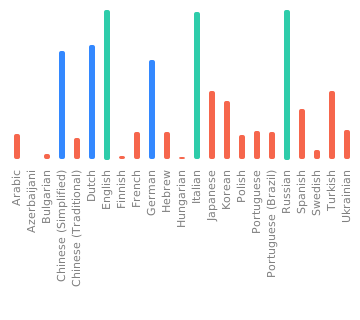
2
.github/workflows/python-checks.yml
vendored
@@ -62,7 +62,7 @@ jobs:
|
||||
|
||||
- name: install ruff
|
||||
if: ${{ steps.changed-files.outputs.python_any_changed == 'true' || inputs.always_run == true }}
|
||||
run: pip install ruff
|
||||
run: pip install ruff==0.6.0
|
||||
shell: bash
|
||||
|
||||
- name: ruff check
|
||||
|
||||
@@ -1,158 +0,0 @@
|
||||
{
|
||||
"cells": [
|
||||
{
|
||||
"cell_type": "code",
|
||||
"execution_count": null,
|
||||
"id": "aeb428d0-0817-462c-b5d8-455a0615d305",
|
||||
"metadata": {},
|
||||
"outputs": [],
|
||||
"source": [
|
||||
"import torch\n",
|
||||
"from PIL import Image\n",
|
||||
"import numpy as np\n",
|
||||
"import cv2\n",
|
||||
"\n",
|
||||
"from invokeai.backend.vto_workflow.overlay_pattern import generate_dress_mask, multiply_images\n",
|
||||
"from invokeai.backend.vto_workflow.extract_channel import extract_channel, ImageChannel\n",
|
||||
"from invokeai.backend.vto_workflow.seamless_mapping import map_seamless_tiles\n",
|
||||
"\n",
|
||||
"\n"
|
||||
]
|
||||
},
|
||||
{
|
||||
"cell_type": "code",
|
||||
"execution_count": null,
|
||||
"id": "6140d4b7-8238-431c-848e-6f6ae27652f5",
|
||||
"metadata": {},
|
||||
"outputs": [],
|
||||
"source": [
|
||||
" # Load the model image.\n",
|
||||
"model_image = Image.open(\"/home/ryan/src/InvokeAI/invokeai/backend/vto_workflow/dress.jpeg\")\n",
|
||||
"\n",
|
||||
"# Load the pattern image.\n",
|
||||
"pattern_image = Image.open(\"/home/ryan/src/InvokeAI/invokeai/backend/vto_workflow/pattern1.jpg\")"
|
||||
]
|
||||
},
|
||||
{
|
||||
"cell_type": "code",
|
||||
"execution_count": null,
|
||||
"id": "fb7186ba-dc0c-4520-ac30-49073a65601a",
|
||||
"metadata": {},
|
||||
"outputs": [],
|
||||
"source": [
|
||||
"mask = generate_dress_mask(model_image)"
|
||||
]
|
||||
},
|
||||
{
|
||||
"cell_type": "code",
|
||||
"execution_count": null,
|
||||
"id": "9b935de4-94c5-4be5-bf8e-a5a6e445c811",
|
||||
"metadata": {},
|
||||
"outputs": [],
|
||||
"source": [
|
||||
"# Visualize mask\n",
|
||||
"model_image_np = np.array(model_image)\n",
|
||||
"masked_model_image = (model_image_np * np.expand_dims(mask, -1).astype(np.float32)).astype(np.uint8)\n",
|
||||
"mask_image = Image.fromarray(masked_model_image)\n",
|
||||
"mask_image"
|
||||
]
|
||||
},
|
||||
{
|
||||
"cell_type": "code",
|
||||
"execution_count": null,
|
||||
"id": "e51bb545",
|
||||
"metadata": {},
|
||||
"outputs": [],
|
||||
"source": [
|
||||
"shadows = extract_channel(np.array(model_image), ImageChannel.LAB_L)"
|
||||
]
|
||||
},
|
||||
{
|
||||
"cell_type": "code",
|
||||
"execution_count": null,
|
||||
"id": "ec43de4a",
|
||||
"metadata": {},
|
||||
"outputs": [],
|
||||
"source": [
|
||||
"# Visualize masked shadows\n",
|
||||
"masked_shadows = (shadows * mask).astype(np.uint8)\n",
|
||||
"masked_shadows_image = Image.fromarray(masked_shadows)\n",
|
||||
"masked_shadows_image"
|
||||
]
|
||||
},
|
||||
{
|
||||
"cell_type": "code",
|
||||
"execution_count": null,
|
||||
"id": "dbb53794",
|
||||
"metadata": {},
|
||||
"outputs": [],
|
||||
"source": [
|
||||
"# Tile the pattern.\n",
|
||||
"expanded_pattern = map_seamless_tiles(seamless_tile=pattern_image, target_hw=(model_image.height, model_image.width), num_repeats_h=10.0)\n"
|
||||
]
|
||||
},
|
||||
{
|
||||
"cell_type": "code",
|
||||
"execution_count": null,
|
||||
"id": "f4f22d02",
|
||||
"metadata": {},
|
||||
"outputs": [],
|
||||
"source": [
|
||||
"# Multiply the pattern by the shadows.\n",
|
||||
"pattern_with_shadows = multiply_images(expanded_pattern, shadows)\n",
|
||||
"pattern_with_shadows"
|
||||
]
|
||||
},
|
||||
{
|
||||
"cell_type": "code",
|
||||
"execution_count": null,
|
||||
"id": "97db42b0",
|
||||
"metadata": {},
|
||||
"outputs": [],
|
||||
"source": []
|
||||
},
|
||||
{
|
||||
"cell_type": "code",
|
||||
"execution_count": null,
|
||||
"id": "de32f7e3",
|
||||
"metadata": {},
|
||||
"outputs": [],
|
||||
"source": [
|
||||
"# Merge the pattern with the model image.\n",
|
||||
"pattern_with_shadows_np = np.array(pattern_with_shadows)\n",
|
||||
"merged_image = np.where(mask[:, :, None], pattern_with_shadows_np,model_image_np)\n",
|
||||
"merged_image = Image.fromarray(merged_image)\n",
|
||||
"merged_image"
|
||||
]
|
||||
},
|
||||
{
|
||||
"cell_type": "code",
|
||||
"execution_count": null,
|
||||
"id": "ff1d4044",
|
||||
"metadata": {},
|
||||
"outputs": [],
|
||||
"source": []
|
||||
}
|
||||
],
|
||||
"metadata": {
|
||||
"kernelspec": {
|
||||
"display_name": "Python 3 (ipykernel)",
|
||||
"language": "python",
|
||||
"name": "python3"
|
||||
},
|
||||
"language_info": {
|
||||
"codemirror_mode": {
|
||||
"name": "ipython",
|
||||
"version": 3
|
||||
},
|
||||
"file_extension": ".py",
|
||||
"mimetype": "text/x-python",
|
||||
"name": "python",
|
||||
"nbconvert_exporter": "python",
|
||||
"pygments_lexer": "ipython3",
|
||||
"version": "3.10.12"
|
||||
}
|
||||
},
|
||||
"nbformat": 4,
|
||||
"nbformat_minor": 5
|
||||
}
|
||||
@@ -55,6 +55,7 @@ RUN --mount=type=cache,target=/root/.cache/pip \
|
||||
FROM node:20-slim AS web-builder
|
||||
ENV PNPM_HOME="/pnpm"
|
||||
ENV PATH="$PNPM_HOME:$PATH"
|
||||
RUN corepack use pnpm@8.x
|
||||
RUN corepack enable
|
||||
|
||||
WORKDIR /build
|
||||
|
||||
@@ -1,20 +1,22 @@
|
||||
# Invoke in Docker
|
||||
|
||||
- Ensure that Docker can use the GPU on your system
|
||||
- This documentation assumes Linux, but should work similarly under Windows with WSL2
|
||||
First things first:
|
||||
|
||||
- Ensure that Docker can use your [NVIDIA][nvidia docker docs] or [AMD][amd docker docs] GPU.
|
||||
- This document assumes a Linux system, but should work similarly under Windows with WSL2.
|
||||
- We don't recommend running Invoke in Docker on macOS at this time. It works, but very slowly.
|
||||
|
||||
## Quickstart :lightning:
|
||||
## Quickstart
|
||||
|
||||
No `docker compose`, no persistence, just a simple one-liner using the official images:
|
||||
No `docker compose`, no persistence, single command, using the official images:
|
||||
|
||||
**CUDA:**
|
||||
**CUDA (NVIDIA GPU):**
|
||||
|
||||
```bash
|
||||
docker run --runtime=nvidia --gpus=all --publish 9090:9090 ghcr.io/invoke-ai/invokeai
|
||||
```
|
||||
|
||||
**ROCm:**
|
||||
**ROCm (AMD GPU):**
|
||||
|
||||
```bash
|
||||
docker run --device /dev/kfd --device /dev/dri --publish 9090:9090 ghcr.io/invoke-ai/invokeai:main-rocm
|
||||
@@ -22,12 +24,20 @@ docker run --device /dev/kfd --device /dev/dri --publish 9090:9090 ghcr.io/invok
|
||||
|
||||
Open `http://localhost:9090` in your browser once the container finishes booting, install some models, and generate away!
|
||||
|
||||
> [!TIP]
|
||||
> To persist your data (including downloaded models) outside of the container, add a `--volume/-v` flag to the above command, e.g.: `docker run --volume /some/local/path:/invokeai <...the rest of the command>`
|
||||
### Data persistence
|
||||
|
||||
To persist your generated images and downloaded models outside of the container, add a `--volume/-v` flag to the above command, e.g.:
|
||||
|
||||
```bash
|
||||
docker run --volume /some/local/path:/invokeai {...etc...}
|
||||
```
|
||||
|
||||
`/some/local/path/invokeai` will contain all your data.
|
||||
It can *usually* be reused between different installs of Invoke. Tread with caution and read the release notes!
|
||||
|
||||
## Customize the container
|
||||
|
||||
We ship the `run.sh` script, which is a convenient wrapper around `docker compose` for cases where custom image build args are needed. Alternatively, the familiar `docker compose` commands work just as well.
|
||||
The included `run.sh` script is a convenience wrapper around `docker compose`. It can be helpful for passing additional build arguments to `docker compose`. Alternatively, the familiar `docker compose` commands work just as well.
|
||||
|
||||
```bash
|
||||
cd docker
|
||||
@@ -38,11 +48,14 @@ cp .env.sample .env
|
||||
|
||||
It will take a few minutes to build the image the first time. Once the application starts up, open `http://localhost:9090` in your browser to invoke!
|
||||
|
||||
>[!TIP]
|
||||
>When using the `run.sh` script, the container will continue running after Ctrl+C. To shut it down, use the `docker compose down` command.
|
||||
|
||||
## Docker setup in detail
|
||||
|
||||
#### Linux
|
||||
|
||||
1. Ensure builkit is enabled in the Docker daemon settings (`/etc/docker/daemon.json`)
|
||||
1. Ensure buildkit is enabled in the Docker daemon settings (`/etc/docker/daemon.json`)
|
||||
2. Install the `docker compose` plugin using your package manager, or follow a [tutorial](https://docs.docker.com/compose/install/linux/#install-using-the-repository).
|
||||
- The deprecated `docker-compose` (hyphenated) CLI probably won't work. Update to a recent version.
|
||||
3. Ensure docker daemon is able to access the GPU.
|
||||
@@ -98,25 +111,7 @@ GPU_DRIVER=cuda
|
||||
|
||||
Any environment variables supported by InvokeAI can be set here. See the [Configuration docs](https://invoke-ai.github.io/InvokeAI/features/CONFIGURATION/) for further detail.
|
||||
|
||||
## Even More Customizing!
|
||||
---
|
||||
|
||||
See the `docker-compose.yml` file. The `command` instruction can be uncommented and used to run arbitrary startup commands. Some examples below.
|
||||
|
||||
### Reconfigure the runtime directory
|
||||
|
||||
Can be used to download additional models from the supported model list
|
||||
|
||||
In conjunction with `INVOKEAI_ROOT` can be also used to initialize a runtime directory
|
||||
|
||||
```yaml
|
||||
command:
|
||||
- invokeai-configure
|
||||
- --yes
|
||||
```
|
||||
|
||||
Or install models:
|
||||
|
||||
```yaml
|
||||
command:
|
||||
- invokeai-model-install
|
||||
```
|
||||
[nvidia docker docs]: https://docs.nvidia.com/datacenter/cloud-native/container-toolkit/latest/install-guide.html
|
||||
[amd docker docs]: https://rocm.docs.amd.com/projects/install-on-linux/en/latest/how-to/docker.html
|
||||
|
||||
@@ -17,7 +17,7 @@
|
||||
set -eu
|
||||
|
||||
# Ensure we're in the correct folder in case user's CWD is somewhere else
|
||||
scriptdir=$(dirname "$0")
|
||||
scriptdir=$(dirname $(readlink -f "$0"))
|
||||
cd "$scriptdir"
|
||||
|
||||
. .venv/bin/activate
|
||||
|
||||
@@ -1,5 +1,6 @@
|
||||
# Copyright (c) 2022 Kyle Schouviller (https://github.com/kyle0654)
|
||||
|
||||
import asyncio
|
||||
from logging import Logger
|
||||
|
||||
import torch
|
||||
@@ -31,6 +32,8 @@ from invokeai.app.services.session_processor.session_processor_default import (
|
||||
)
|
||||
from invokeai.app.services.session_queue.session_queue_sqlite import SqliteSessionQueue
|
||||
from invokeai.app.services.shared.sqlite.sqlite_util import init_db
|
||||
from invokeai.app.services.style_preset_images.style_preset_images_disk import StylePresetImageFileStorageDisk
|
||||
from invokeai.app.services.style_preset_records.style_preset_records_sqlite import SqliteStylePresetRecordsStorage
|
||||
from invokeai.app.services.urls.urls_default import LocalUrlService
|
||||
from invokeai.app.services.workflow_records.workflow_records_sqlite import SqliteWorkflowRecordsStorage
|
||||
from invokeai.backend.stable_diffusion.diffusion.conditioning_data import ConditioningFieldData
|
||||
@@ -63,7 +66,12 @@ class ApiDependencies:
|
||||
invoker: Invoker
|
||||
|
||||
@staticmethod
|
||||
def initialize(config: InvokeAIAppConfig, event_handler_id: int, logger: Logger = logger) -> None:
|
||||
def initialize(
|
||||
config: InvokeAIAppConfig,
|
||||
event_handler_id: int,
|
||||
loop: asyncio.AbstractEventLoop,
|
||||
logger: Logger = logger,
|
||||
) -> None:
|
||||
logger.info(f"InvokeAI version {__version__}")
|
||||
logger.info(f"Root directory = {str(config.root_path)}")
|
||||
|
||||
@@ -74,6 +82,7 @@ class ApiDependencies:
|
||||
image_files = DiskImageFileStorage(f"{output_folder}/images")
|
||||
|
||||
model_images_folder = config.models_path
|
||||
style_presets_folder = config.style_presets_path
|
||||
|
||||
db = init_db(config=config, logger=logger, image_files=image_files)
|
||||
|
||||
@@ -84,7 +93,7 @@ class ApiDependencies:
|
||||
board_images = BoardImagesService()
|
||||
board_records = SqliteBoardRecordStorage(db=db)
|
||||
boards = BoardService()
|
||||
events = FastAPIEventService(event_handler_id)
|
||||
events = FastAPIEventService(event_handler_id, loop=loop)
|
||||
bulk_download = BulkDownloadService()
|
||||
image_records = SqliteImageRecordStorage(db=db)
|
||||
images = ImageService()
|
||||
@@ -109,6 +118,8 @@ class ApiDependencies:
|
||||
session_queue = SqliteSessionQueue(db=db)
|
||||
urls = LocalUrlService()
|
||||
workflow_records = SqliteWorkflowRecordsStorage(db=db)
|
||||
style_preset_records = SqliteStylePresetRecordsStorage(db=db)
|
||||
style_preset_image_files = StylePresetImageFileStorageDisk(style_presets_folder / "images")
|
||||
|
||||
services = InvocationServices(
|
||||
board_image_records=board_image_records,
|
||||
@@ -134,6 +145,8 @@ class ApiDependencies:
|
||||
workflow_records=workflow_records,
|
||||
tensors=tensors,
|
||||
conditioning=conditioning,
|
||||
style_preset_records=style_preset_records,
|
||||
style_preset_image_files=style_preset_image_files,
|
||||
)
|
||||
|
||||
ApiDependencies.invoker = Invoker(services)
|
||||
|
||||
@@ -218,9 +218,8 @@ async def get_image_workflow(
|
||||
raise HTTPException(status_code=404)
|
||||
|
||||
|
||||
@images_router.api_route(
|
||||
@images_router.get(
|
||||
"/i/{image_name}/full",
|
||||
methods=["GET", "HEAD"],
|
||||
operation_id="get_image_full",
|
||||
response_class=Response,
|
||||
responses={
|
||||
@@ -231,6 +230,18 @@ async def get_image_workflow(
|
||||
404: {"description": "Image not found"},
|
||||
},
|
||||
)
|
||||
@images_router.head(
|
||||
"/i/{image_name}/full",
|
||||
operation_id="get_image_full_head",
|
||||
response_class=Response,
|
||||
responses={
|
||||
200: {
|
||||
"description": "Return the full-resolution image",
|
||||
"content": {"image/png": {}},
|
||||
},
|
||||
404: {"description": "Image not found"},
|
||||
},
|
||||
)
|
||||
async def get_image_full(
|
||||
image_name: str = Path(description="The name of full-resolution image file to get"),
|
||||
) -> Response:
|
||||
@@ -242,6 +253,7 @@ async def get_image_full(
|
||||
content = f.read()
|
||||
response = Response(content, media_type="image/png")
|
||||
response.headers["Cache-Control"] = f"max-age={IMAGE_MAX_AGE}"
|
||||
response.headers["Content-Disposition"] = f'inline; filename="{image_name}"'
|
||||
return response
|
||||
except Exception:
|
||||
raise HTTPException(status_code=404)
|
||||
|
||||
@@ -11,6 +11,7 @@ from invokeai.app.services.session_queue.session_queue_common import (
|
||||
Batch,
|
||||
BatchStatus,
|
||||
CancelByBatchIDsResult,
|
||||
CancelByOriginResult,
|
||||
ClearResult,
|
||||
EnqueueBatchResult,
|
||||
PruneResult,
|
||||
@@ -105,6 +106,19 @@ async def cancel_by_batch_ids(
|
||||
return ApiDependencies.invoker.services.session_queue.cancel_by_batch_ids(queue_id=queue_id, batch_ids=batch_ids)
|
||||
|
||||
|
||||
@session_queue_router.put(
|
||||
"/{queue_id}/cancel_by_origin",
|
||||
operation_id="cancel_by_origin",
|
||||
responses={200: {"model": CancelByBatchIDsResult}},
|
||||
)
|
||||
async def cancel_by_origin(
|
||||
queue_id: str = Path(description="The queue id to perform this operation on"),
|
||||
origin: str = Query(description="The origin to cancel all queue items for"),
|
||||
) -> CancelByOriginResult:
|
||||
"""Immediately cancels all queue items with the given origin"""
|
||||
return ApiDependencies.invoker.services.session_queue.cancel_by_origin(queue_id=queue_id, origin=origin)
|
||||
|
||||
|
||||
@session_queue_router.put(
|
||||
"/{queue_id}/clear",
|
||||
operation_id="clear",
|
||||
|
||||
274
invokeai/app/api/routers/style_presets.py
Normal file
@@ -0,0 +1,274 @@
|
||||
import csv
|
||||
import io
|
||||
import json
|
||||
import traceback
|
||||
from typing import Optional
|
||||
|
||||
import pydantic
|
||||
from fastapi import APIRouter, File, Form, HTTPException, Path, Response, UploadFile
|
||||
from fastapi.responses import FileResponse
|
||||
from PIL import Image
|
||||
from pydantic import BaseModel, Field
|
||||
|
||||
from invokeai.app.api.dependencies import ApiDependencies
|
||||
from invokeai.app.api.routers.model_manager import IMAGE_MAX_AGE
|
||||
from invokeai.app.services.style_preset_images.style_preset_images_common import StylePresetImageFileNotFoundException
|
||||
from invokeai.app.services.style_preset_records.style_preset_records_common import (
|
||||
InvalidPresetImportDataError,
|
||||
PresetData,
|
||||
PresetType,
|
||||
StylePresetChanges,
|
||||
StylePresetNotFoundError,
|
||||
StylePresetRecordWithImage,
|
||||
StylePresetWithoutId,
|
||||
UnsupportedFileTypeError,
|
||||
parse_presets_from_file,
|
||||
)
|
||||
|
||||
|
||||
class StylePresetFormData(BaseModel):
|
||||
name: str = Field(description="Preset name")
|
||||
positive_prompt: str = Field(description="Positive prompt")
|
||||
negative_prompt: str = Field(description="Negative prompt")
|
||||
type: PresetType = Field(description="Preset type")
|
||||
|
||||
|
||||
style_presets_router = APIRouter(prefix="/v1/style_presets", tags=["style_presets"])
|
||||
|
||||
|
||||
@style_presets_router.get(
|
||||
"/i/{style_preset_id}",
|
||||
operation_id="get_style_preset",
|
||||
responses={
|
||||
200: {"model": StylePresetRecordWithImage},
|
||||
},
|
||||
)
|
||||
async def get_style_preset(
|
||||
style_preset_id: str = Path(description="The style preset to get"),
|
||||
) -> StylePresetRecordWithImage:
|
||||
"""Gets a style preset"""
|
||||
try:
|
||||
image = ApiDependencies.invoker.services.style_preset_image_files.get_url(style_preset_id)
|
||||
style_preset = ApiDependencies.invoker.services.style_preset_records.get(style_preset_id)
|
||||
return StylePresetRecordWithImage(image=image, **style_preset.model_dump())
|
||||
except StylePresetNotFoundError:
|
||||
raise HTTPException(status_code=404, detail="Style preset not found")
|
||||
|
||||
|
||||
@style_presets_router.patch(
|
||||
"/i/{style_preset_id}",
|
||||
operation_id="update_style_preset",
|
||||
responses={
|
||||
200: {"model": StylePresetRecordWithImage},
|
||||
},
|
||||
)
|
||||
async def update_style_preset(
|
||||
image: Optional[UploadFile] = File(description="The image file to upload", default=None),
|
||||
style_preset_id: str = Path(description="The id of the style preset to update"),
|
||||
data: str = Form(description="The data of the style preset to update"),
|
||||
) -> StylePresetRecordWithImage:
|
||||
"""Updates a style preset"""
|
||||
if image is not None:
|
||||
if not image.content_type or not image.content_type.startswith("image"):
|
||||
raise HTTPException(status_code=415, detail="Not an image")
|
||||
|
||||
contents = await image.read()
|
||||
try:
|
||||
pil_image = Image.open(io.BytesIO(contents))
|
||||
|
||||
except Exception:
|
||||
ApiDependencies.invoker.services.logger.error(traceback.format_exc())
|
||||
raise HTTPException(status_code=415, detail="Failed to read image")
|
||||
|
||||
try:
|
||||
ApiDependencies.invoker.services.style_preset_image_files.save(style_preset_id, pil_image)
|
||||
except ValueError as e:
|
||||
raise HTTPException(status_code=409, detail=str(e))
|
||||
else:
|
||||
try:
|
||||
ApiDependencies.invoker.services.style_preset_image_files.delete(style_preset_id)
|
||||
except StylePresetImageFileNotFoundException:
|
||||
pass
|
||||
|
||||
try:
|
||||
parsed_data = json.loads(data)
|
||||
validated_data = StylePresetFormData(**parsed_data)
|
||||
|
||||
name = validated_data.name
|
||||
type = validated_data.type
|
||||
positive_prompt = validated_data.positive_prompt
|
||||
negative_prompt = validated_data.negative_prompt
|
||||
|
||||
except pydantic.ValidationError:
|
||||
raise HTTPException(status_code=400, detail="Invalid preset data")
|
||||
|
||||
preset_data = PresetData(positive_prompt=positive_prompt, negative_prompt=negative_prompt)
|
||||
changes = StylePresetChanges(name=name, preset_data=preset_data, type=type)
|
||||
|
||||
style_preset_image = ApiDependencies.invoker.services.style_preset_image_files.get_url(style_preset_id)
|
||||
style_preset = ApiDependencies.invoker.services.style_preset_records.update(
|
||||
style_preset_id=style_preset_id, changes=changes
|
||||
)
|
||||
return StylePresetRecordWithImage(image=style_preset_image, **style_preset.model_dump())
|
||||
|
||||
|
||||
@style_presets_router.delete(
|
||||
"/i/{style_preset_id}",
|
||||
operation_id="delete_style_preset",
|
||||
)
|
||||
async def delete_style_preset(
|
||||
style_preset_id: str = Path(description="The style preset to delete"),
|
||||
) -> None:
|
||||
"""Deletes a style preset"""
|
||||
try:
|
||||
ApiDependencies.invoker.services.style_preset_image_files.delete(style_preset_id)
|
||||
except StylePresetImageFileNotFoundException:
|
||||
pass
|
||||
|
||||
ApiDependencies.invoker.services.style_preset_records.delete(style_preset_id)
|
||||
|
||||
|
||||
@style_presets_router.post(
|
||||
"/",
|
||||
operation_id="create_style_preset",
|
||||
responses={
|
||||
200: {"model": StylePresetRecordWithImage},
|
||||
},
|
||||
)
|
||||
async def create_style_preset(
|
||||
image: Optional[UploadFile] = File(description="The image file to upload", default=None),
|
||||
data: str = Form(description="The data of the style preset to create"),
|
||||
) -> StylePresetRecordWithImage:
|
||||
"""Creates a style preset"""
|
||||
|
||||
try:
|
||||
parsed_data = json.loads(data)
|
||||
validated_data = StylePresetFormData(**parsed_data)
|
||||
|
||||
name = validated_data.name
|
||||
type = validated_data.type
|
||||
positive_prompt = validated_data.positive_prompt
|
||||
negative_prompt = validated_data.negative_prompt
|
||||
|
||||
except pydantic.ValidationError:
|
||||
raise HTTPException(status_code=400, detail="Invalid preset data")
|
||||
|
||||
preset_data = PresetData(positive_prompt=positive_prompt, negative_prompt=negative_prompt)
|
||||
style_preset = StylePresetWithoutId(name=name, preset_data=preset_data, type=type)
|
||||
new_style_preset = ApiDependencies.invoker.services.style_preset_records.create(style_preset=style_preset)
|
||||
|
||||
if image is not None:
|
||||
if not image.content_type or not image.content_type.startswith("image"):
|
||||
raise HTTPException(status_code=415, detail="Not an image")
|
||||
|
||||
contents = await image.read()
|
||||
try:
|
||||
pil_image = Image.open(io.BytesIO(contents))
|
||||
|
||||
except Exception:
|
||||
ApiDependencies.invoker.services.logger.error(traceback.format_exc())
|
||||
raise HTTPException(status_code=415, detail="Failed to read image")
|
||||
|
||||
try:
|
||||
ApiDependencies.invoker.services.style_preset_image_files.save(new_style_preset.id, pil_image)
|
||||
except ValueError as e:
|
||||
raise HTTPException(status_code=409, detail=str(e))
|
||||
|
||||
preset_image = ApiDependencies.invoker.services.style_preset_image_files.get_url(new_style_preset.id)
|
||||
return StylePresetRecordWithImage(image=preset_image, **new_style_preset.model_dump())
|
||||
|
||||
|
||||
@style_presets_router.get(
|
||||
"/",
|
||||
operation_id="list_style_presets",
|
||||
responses={
|
||||
200: {"model": list[StylePresetRecordWithImage]},
|
||||
},
|
||||
)
|
||||
async def list_style_presets() -> list[StylePresetRecordWithImage]:
|
||||
"""Gets a page of style presets"""
|
||||
style_presets_with_image: list[StylePresetRecordWithImage] = []
|
||||
style_presets = ApiDependencies.invoker.services.style_preset_records.get_many()
|
||||
for preset in style_presets:
|
||||
image = ApiDependencies.invoker.services.style_preset_image_files.get_url(preset.id)
|
||||
style_preset_with_image = StylePresetRecordWithImage(image=image, **preset.model_dump())
|
||||
style_presets_with_image.append(style_preset_with_image)
|
||||
|
||||
return style_presets_with_image
|
||||
|
||||
|
||||
@style_presets_router.get(
|
||||
"/i/{style_preset_id}/image",
|
||||
operation_id="get_style_preset_image",
|
||||
responses={
|
||||
200: {
|
||||
"description": "The style preset image was fetched successfully",
|
||||
},
|
||||
400: {"description": "Bad request"},
|
||||
404: {"description": "The style preset image could not be found"},
|
||||
},
|
||||
status_code=200,
|
||||
)
|
||||
async def get_style_preset_image(
|
||||
style_preset_id: str = Path(description="The id of the style preset image to get"),
|
||||
) -> FileResponse:
|
||||
"""Gets an image file that previews the model"""
|
||||
|
||||
try:
|
||||
path = ApiDependencies.invoker.services.style_preset_image_files.get_path(style_preset_id)
|
||||
|
||||
response = FileResponse(
|
||||
path,
|
||||
media_type="image/png",
|
||||
filename=style_preset_id + ".png",
|
||||
content_disposition_type="inline",
|
||||
)
|
||||
response.headers["Cache-Control"] = f"max-age={IMAGE_MAX_AGE}"
|
||||
return response
|
||||
except Exception:
|
||||
raise HTTPException(status_code=404)
|
||||
|
||||
|
||||
@style_presets_router.get(
|
||||
"/export",
|
||||
operation_id="export_style_presets",
|
||||
responses={200: {"content": {"text/csv": {}}, "description": "A CSV file with the requested data."}},
|
||||
status_code=200,
|
||||
)
|
||||
async def export_style_presets():
|
||||
# Create an in-memory stream to store the CSV data
|
||||
output = io.StringIO()
|
||||
writer = csv.writer(output)
|
||||
|
||||
# Write the header
|
||||
writer.writerow(["name", "prompt", "negative_prompt"])
|
||||
|
||||
style_presets = ApiDependencies.invoker.services.style_preset_records.get_many(type=PresetType.User)
|
||||
|
||||
for preset in style_presets:
|
||||
writer.writerow([preset.name, preset.preset_data.positive_prompt, preset.preset_data.negative_prompt])
|
||||
|
||||
csv_data = output.getvalue()
|
||||
output.close()
|
||||
|
||||
return Response(
|
||||
content=csv_data,
|
||||
media_type="text/csv",
|
||||
headers={"Content-Disposition": "attachment; filename=prompt_templates.csv"},
|
||||
)
|
||||
|
||||
|
||||
@style_presets_router.post(
|
||||
"/import",
|
||||
operation_id="import_style_presets",
|
||||
)
|
||||
async def import_style_presets(file: UploadFile = File(description="The file to import")):
|
||||
try:
|
||||
style_presets = await parse_presets_from_file(file)
|
||||
ApiDependencies.invoker.services.style_preset_records.create_many(style_presets)
|
||||
except InvalidPresetImportDataError as e:
|
||||
ApiDependencies.invoker.services.logger.error(traceback.format_exc())
|
||||
raise HTTPException(status_code=400, detail=str(e))
|
||||
except UnsupportedFileTypeError as e:
|
||||
ApiDependencies.invoker.services.logger.error(traceback.format_exc())
|
||||
raise HTTPException(status_code=415, detail=str(e))
|
||||
@@ -30,6 +30,7 @@ from invokeai.app.api.routers import (
|
||||
images,
|
||||
model_manager,
|
||||
session_queue,
|
||||
style_presets,
|
||||
utilities,
|
||||
workflows,
|
||||
)
|
||||
@@ -55,11 +56,13 @@ mimetypes.add_type("text/css", ".css")
|
||||
torch_device_name = TorchDevice.get_torch_device_name()
|
||||
logger.info(f"Using torch device: {torch_device_name}")
|
||||
|
||||
loop = asyncio.new_event_loop()
|
||||
|
||||
|
||||
@asynccontextmanager
|
||||
async def lifespan(app: FastAPI):
|
||||
# Add startup event to load dependencies
|
||||
ApiDependencies.initialize(config=app_config, event_handler_id=event_handler_id, logger=logger)
|
||||
ApiDependencies.initialize(config=app_config, event_handler_id=event_handler_id, loop=loop, logger=logger)
|
||||
yield
|
||||
# Shut down threads
|
||||
ApiDependencies.shutdown()
|
||||
@@ -106,6 +109,7 @@ app.include_router(board_images.board_images_router, prefix="/api")
|
||||
app.include_router(app_info.app_router, prefix="/api")
|
||||
app.include_router(session_queue.session_queue_router, prefix="/api")
|
||||
app.include_router(workflows.workflows_router, prefix="/api")
|
||||
app.include_router(style_presets.style_presets_router, prefix="/api")
|
||||
|
||||
app.openapi = get_openapi_func(app)
|
||||
|
||||
@@ -184,8 +188,6 @@ def invoke_api() -> None:
|
||||
|
||||
check_cudnn(logger)
|
||||
|
||||
# Start our own event loop for eventing usage
|
||||
loop = asyncio.new_event_loop()
|
||||
config = uvicorn.Config(
|
||||
app=app,
|
||||
host=app_config.host,
|
||||
|
||||
@@ -80,12 +80,12 @@ class CompelInvocation(BaseInvocation):
|
||||
|
||||
with (
|
||||
# apply all patches while the model is on the target device
|
||||
text_encoder_info.model_on_device() as (model_state_dict, text_encoder),
|
||||
text_encoder_info.model_on_device() as (cached_weights, text_encoder),
|
||||
tokenizer_info as tokenizer,
|
||||
ModelPatcher.apply_lora_text_encoder(
|
||||
text_encoder,
|
||||
loras=_lora_loader(),
|
||||
model_state_dict=model_state_dict,
|
||||
cached_weights=cached_weights,
|
||||
),
|
||||
# Apply CLIP Skip after LoRA to prevent LoRA application from failing on skipped layers.
|
||||
ModelPatcher.apply_clip_skip(text_encoder, self.clip.skipped_layers),
|
||||
@@ -175,13 +175,13 @@ class SDXLPromptInvocationBase:
|
||||
|
||||
with (
|
||||
# apply all patches while the model is on the target device
|
||||
text_encoder_info.model_on_device() as (state_dict, text_encoder),
|
||||
text_encoder_info.model_on_device() as (cached_weights, text_encoder),
|
||||
tokenizer_info as tokenizer,
|
||||
ModelPatcher.apply_lora(
|
||||
text_encoder,
|
||||
loras=_lora_loader(),
|
||||
prefix=lora_prefix,
|
||||
model_state_dict=state_dict,
|
||||
cached_weights=cached_weights,
|
||||
),
|
||||
# Apply CLIP Skip after LoRA to prevent LoRA application from failing on skipped layers.
|
||||
ModelPatcher.apply_clip_skip(text_encoder, clip_field.skipped_layers),
|
||||
|
||||
@@ -21,6 +21,8 @@ from controlnet_aux import (
|
||||
from controlnet_aux.util import HWC3, ade_palette
|
||||
from PIL import Image
|
||||
from pydantic import BaseModel, Field, field_validator, model_validator
|
||||
from transformers import pipeline
|
||||
from transformers.pipelines import DepthEstimationPipeline
|
||||
|
||||
from invokeai.app.invocations.baseinvocation import (
|
||||
BaseInvocation,
|
||||
@@ -44,13 +46,12 @@ from invokeai.app.invocations.util import validate_begin_end_step, validate_weig
|
||||
from invokeai.app.services.shared.invocation_context import InvocationContext
|
||||
from invokeai.app.util.controlnet_utils import CONTROLNET_MODE_VALUES, CONTROLNET_RESIZE_VALUES, heuristic_resize
|
||||
from invokeai.backend.image_util.canny import get_canny_edges
|
||||
from invokeai.backend.image_util.depth_anything import DEPTH_ANYTHING_MODELS, DepthAnythingDetector
|
||||
from invokeai.backend.image_util.depth_anything.depth_anything_pipeline import DepthAnythingPipeline
|
||||
from invokeai.backend.image_util.dw_openpose import DWPOSE_MODELS, DWOpenposeDetector
|
||||
from invokeai.backend.image_util.hed import HEDProcessor
|
||||
from invokeai.backend.image_util.lineart import LineartProcessor
|
||||
from invokeai.backend.image_util.lineart_anime import LineartAnimeProcessor
|
||||
from invokeai.backend.image_util.util import np_to_pil, pil_to_np
|
||||
from invokeai.backend.util.devices import TorchDevice
|
||||
|
||||
|
||||
class ControlField(BaseModel):
|
||||
@@ -592,7 +593,14 @@ class ColorMapImageProcessorInvocation(ImageProcessorInvocation):
|
||||
return color_map
|
||||
|
||||
|
||||
DEPTH_ANYTHING_MODEL_SIZES = Literal["large", "base", "small"]
|
||||
DEPTH_ANYTHING_MODEL_SIZES = Literal["large", "base", "small", "small_v2"]
|
||||
# DepthAnything V2 Small model is licensed under Apache 2.0 but not the base and large models.
|
||||
DEPTH_ANYTHING_MODELS = {
|
||||
"large": "LiheYoung/depth-anything-large-hf",
|
||||
"base": "LiheYoung/depth-anything-base-hf",
|
||||
"small": "LiheYoung/depth-anything-small-hf",
|
||||
"small_v2": "depth-anything/Depth-Anything-V2-Small-hf",
|
||||
}
|
||||
|
||||
|
||||
@invocation(
|
||||
@@ -600,28 +608,33 @@ DEPTH_ANYTHING_MODEL_SIZES = Literal["large", "base", "small"]
|
||||
title="Depth Anything Processor",
|
||||
tags=["controlnet", "depth", "depth anything"],
|
||||
category="controlnet",
|
||||
version="1.1.2",
|
||||
version="1.1.3",
|
||||
)
|
||||
class DepthAnythingImageProcessorInvocation(ImageProcessorInvocation):
|
||||
"""Generates a depth map based on the Depth Anything algorithm"""
|
||||
|
||||
model_size: DEPTH_ANYTHING_MODEL_SIZES = InputField(
|
||||
default="small", description="The size of the depth model to use"
|
||||
default="small_v2", description="The size of the depth model to use"
|
||||
)
|
||||
resolution: int = InputField(default=512, ge=1, description=FieldDescriptions.image_res)
|
||||
|
||||
def run_processor(self, image: Image.Image) -> Image.Image:
|
||||
def loader(model_path: Path):
|
||||
return DepthAnythingDetector.load_model(
|
||||
model_path, model_size=self.model_size, device=TorchDevice.choose_torch_device()
|
||||
)
|
||||
def load_depth_anything(model_path: Path):
|
||||
depth_anything_pipeline = pipeline(model=str(model_path), task="depth-estimation", local_files_only=True)
|
||||
assert isinstance(depth_anything_pipeline, DepthEstimationPipeline)
|
||||
return DepthAnythingPipeline(depth_anything_pipeline)
|
||||
|
||||
with self._context.models.load_remote_model(
|
||||
source=DEPTH_ANYTHING_MODELS[self.model_size], loader=loader
|
||||
) as model:
|
||||
depth_anything_detector = DepthAnythingDetector(model, TorchDevice.choose_torch_device())
|
||||
processed_image = depth_anything_detector(image=image, resolution=self.resolution)
|
||||
return processed_image
|
||||
source=DEPTH_ANYTHING_MODELS[self.model_size], loader=load_depth_anything
|
||||
) as depth_anything_detector:
|
||||
assert isinstance(depth_anything_detector, DepthAnythingPipeline)
|
||||
depth_map = depth_anything_detector.generate_depth(image)
|
||||
|
||||
# Resizing to user target specified size
|
||||
new_height = int(image.size[1] * (self.resolution / image.size[0]))
|
||||
depth_map = depth_map.resize((self.resolution, new_height))
|
||||
|
||||
return depth_map
|
||||
|
||||
|
||||
@invocation(
|
||||
|
||||
@@ -39,7 +39,7 @@ class GradientMaskOutput(BaseInvocationOutput):
|
||||
title="Create Gradient Mask",
|
||||
tags=["mask", "denoise"],
|
||||
category="latents",
|
||||
version="1.1.0",
|
||||
version="1.2.0",
|
||||
)
|
||||
class CreateGradientMaskInvocation(BaseInvocation):
|
||||
"""Creates mask for denoising model run."""
|
||||
@@ -93,6 +93,7 @@ class CreateGradientMaskInvocation(BaseInvocation):
|
||||
|
||||
# redistribute blur so that the original edges are 0 and blur outwards to 1
|
||||
blur_tensor = (blur_tensor - 0.5) * 2
|
||||
blur_tensor[blur_tensor < 0] = 0.0
|
||||
|
||||
threshold = 1 - self.minimum_denoise
|
||||
|
||||
|
||||
@@ -37,9 +37,9 @@ from invokeai.app.services.shared.invocation_context import InvocationContext
|
||||
from invokeai.app.util.controlnet_utils import prepare_control_image
|
||||
from invokeai.backend.ip_adapter.ip_adapter import IPAdapter
|
||||
from invokeai.backend.lora import LoRAModelRaw
|
||||
from invokeai.backend.model_manager import BaseModelType
|
||||
from invokeai.backend.model_manager import BaseModelType, ModelVariantType
|
||||
from invokeai.backend.model_patcher import ModelPatcher
|
||||
from invokeai.backend.stable_diffusion import PipelineIntermediateState, set_seamless
|
||||
from invokeai.backend.stable_diffusion import PipelineIntermediateState
|
||||
from invokeai.backend.stable_diffusion.denoise_context import DenoiseContext, DenoiseInputs
|
||||
from invokeai.backend.stable_diffusion.diffusers_pipeline import (
|
||||
ControlNetData,
|
||||
@@ -60,8 +60,13 @@ from invokeai.backend.stable_diffusion.diffusion_backend import StableDiffusionB
|
||||
from invokeai.backend.stable_diffusion.extension_callback_type import ExtensionCallbackType
|
||||
from invokeai.backend.stable_diffusion.extensions.controlnet import ControlNetExt
|
||||
from invokeai.backend.stable_diffusion.extensions.freeu import FreeUExt
|
||||
from invokeai.backend.stable_diffusion.extensions.inpaint import InpaintExt
|
||||
from invokeai.backend.stable_diffusion.extensions.inpaint_model import InpaintModelExt
|
||||
from invokeai.backend.stable_diffusion.extensions.lora import LoRAExt
|
||||
from invokeai.backend.stable_diffusion.extensions.preview import PreviewExt
|
||||
from invokeai.backend.stable_diffusion.extensions.rescale_cfg import RescaleCFGExt
|
||||
from invokeai.backend.stable_diffusion.extensions.seamless import SeamlessExt
|
||||
from invokeai.backend.stable_diffusion.extensions.t2i_adapter import T2IAdapterExt
|
||||
from invokeai.backend.stable_diffusion.extensions_manager import ExtensionsManager
|
||||
from invokeai.backend.stable_diffusion.schedulers import SCHEDULER_MAP
|
||||
from invokeai.backend.stable_diffusion.schedulers.schedulers import SCHEDULER_NAME_VALUES
|
||||
@@ -498,6 +503,33 @@ class DenoiseLatentsInvocation(BaseInvocation):
|
||||
)
|
||||
)
|
||||
|
||||
@staticmethod
|
||||
def parse_t2i_adapter_field(
|
||||
exit_stack: ExitStack,
|
||||
context: InvocationContext,
|
||||
t2i_adapters: Optional[Union[T2IAdapterField, list[T2IAdapterField]]],
|
||||
ext_manager: ExtensionsManager,
|
||||
) -> None:
|
||||
if t2i_adapters is None:
|
||||
return
|
||||
|
||||
# Handle the possibility that t2i_adapters could be a list or a single T2IAdapterField.
|
||||
if isinstance(t2i_adapters, T2IAdapterField):
|
||||
t2i_adapters = [t2i_adapters]
|
||||
|
||||
for t2i_adapter_field in t2i_adapters:
|
||||
ext_manager.add_extension(
|
||||
T2IAdapterExt(
|
||||
node_context=context,
|
||||
model_id=t2i_adapter_field.t2i_adapter_model,
|
||||
image=context.images.get_pil(t2i_adapter_field.image.image_name),
|
||||
weight=t2i_adapter_field.weight,
|
||||
begin_step_percent=t2i_adapter_field.begin_step_percent,
|
||||
end_step_percent=t2i_adapter_field.end_step_percent,
|
||||
resize_mode=t2i_adapter_field.resize_mode,
|
||||
)
|
||||
)
|
||||
|
||||
def prep_ip_adapter_image_prompts(
|
||||
self,
|
||||
context: InvocationContext,
|
||||
@@ -707,7 +739,7 @@ class DenoiseLatentsInvocation(BaseInvocation):
|
||||
else:
|
||||
masked_latents = torch.where(mask < 0.5, 0.0, latents)
|
||||
|
||||
return 1 - mask, masked_latents, self.denoise_mask.gradient
|
||||
return mask, masked_latents, self.denoise_mask.gradient
|
||||
|
||||
@staticmethod
|
||||
def prepare_noise_and_latents(
|
||||
@@ -765,10 +797,6 @@ class DenoiseLatentsInvocation(BaseInvocation):
|
||||
dtype = TorchDevice.choose_torch_dtype()
|
||||
|
||||
seed, noise, latents = self.prepare_noise_and_latents(context, self.noise, self.latents)
|
||||
latents = latents.to(device=device, dtype=dtype)
|
||||
if noise is not None:
|
||||
noise = noise.to(device=device, dtype=dtype)
|
||||
|
||||
_, _, latent_height, latent_width = latents.shape
|
||||
|
||||
conditioning_data = self.get_conditioning_data(
|
||||
@@ -801,21 +829,6 @@ class DenoiseLatentsInvocation(BaseInvocation):
|
||||
denoising_end=self.denoising_end,
|
||||
)
|
||||
|
||||
denoise_ctx = DenoiseContext(
|
||||
inputs=DenoiseInputs(
|
||||
orig_latents=latents,
|
||||
timesteps=timesteps,
|
||||
init_timestep=init_timestep,
|
||||
noise=noise,
|
||||
seed=seed,
|
||||
scheduler_step_kwargs=scheduler_step_kwargs,
|
||||
conditioning_data=conditioning_data,
|
||||
attention_processor_cls=CustomAttnProcessor2_0,
|
||||
),
|
||||
unet=None,
|
||||
scheduler=scheduler,
|
||||
)
|
||||
|
||||
# get the unet's config so that we can pass the base to sd_step_callback()
|
||||
unet_config = context.models.get_config(self.unet.unet.key)
|
||||
|
||||
@@ -833,6 +846,50 @@ class DenoiseLatentsInvocation(BaseInvocation):
|
||||
if self.unet.freeu_config:
|
||||
ext_manager.add_extension(FreeUExt(self.unet.freeu_config))
|
||||
|
||||
### lora
|
||||
if self.unet.loras:
|
||||
for lora_field in self.unet.loras:
|
||||
ext_manager.add_extension(
|
||||
LoRAExt(
|
||||
node_context=context,
|
||||
model_id=lora_field.lora,
|
||||
weight=lora_field.weight,
|
||||
)
|
||||
)
|
||||
### seamless
|
||||
if self.unet.seamless_axes:
|
||||
ext_manager.add_extension(SeamlessExt(self.unet.seamless_axes))
|
||||
|
||||
### inpaint
|
||||
mask, masked_latents, is_gradient_mask = self.prep_inpaint_mask(context, latents)
|
||||
# NOTE: We used to identify inpainting models by inpecting the shape of the loaded UNet model weights. Now we
|
||||
# use the ModelVariantType config. During testing, there was a report of a user with models that had an
|
||||
# incorrect ModelVariantType value. Re-installing the model fixed the issue. If this issue turns out to be
|
||||
# prevalent, we will have to revisit how we initialize the inpainting extensions.
|
||||
if unet_config.variant == ModelVariantType.Inpaint:
|
||||
ext_manager.add_extension(InpaintModelExt(mask, masked_latents, is_gradient_mask))
|
||||
elif mask is not None:
|
||||
ext_manager.add_extension(InpaintExt(mask, is_gradient_mask))
|
||||
|
||||
# Initialize context for modular denoise
|
||||
latents = latents.to(device=device, dtype=dtype)
|
||||
if noise is not None:
|
||||
noise = noise.to(device=device, dtype=dtype)
|
||||
denoise_ctx = DenoiseContext(
|
||||
inputs=DenoiseInputs(
|
||||
orig_latents=latents,
|
||||
timesteps=timesteps,
|
||||
init_timestep=init_timestep,
|
||||
noise=noise,
|
||||
seed=seed,
|
||||
scheduler_step_kwargs=scheduler_step_kwargs,
|
||||
conditioning_data=conditioning_data,
|
||||
attention_processor_cls=CustomAttnProcessor2_0,
|
||||
),
|
||||
unet=None,
|
||||
scheduler=scheduler,
|
||||
)
|
||||
|
||||
# context for loading additional models
|
||||
with ExitStack() as exit_stack:
|
||||
# later should be smth like:
|
||||
@@ -840,6 +897,7 @@ class DenoiseLatentsInvocation(BaseInvocation):
|
||||
# ext = extension_field.to_extension(exit_stack, context, ext_manager)
|
||||
# ext_manager.add_extension(ext)
|
||||
self.parse_controlnet_field(exit_stack, context, self.control, ext_manager)
|
||||
self.parse_t2i_adapter_field(exit_stack, context, self.t2i_adapter, ext_manager)
|
||||
|
||||
# ext: t2i/ip adapter
|
||||
ext_manager.run_callback(ExtensionCallbackType.SETUP, denoise_ctx)
|
||||
@@ -871,6 +929,10 @@ class DenoiseLatentsInvocation(BaseInvocation):
|
||||
seed, noise, latents = self.prepare_noise_and_latents(context, self.noise, self.latents)
|
||||
|
||||
mask, masked_latents, gradient_mask = self.prep_inpaint_mask(context, latents)
|
||||
# At this point, the mask ranges from 0 (leave unchanged) to 1 (inpaint).
|
||||
# We invert the mask here for compatibility with the old backend implementation.
|
||||
if mask is not None:
|
||||
mask = 1 - mask
|
||||
|
||||
# TODO(ryand): I have hard-coded `do_classifier_free_guidance=True` to mirror the behaviour of ControlNets,
|
||||
# below. Investigate whether this is appropriate.
|
||||
@@ -913,14 +975,14 @@ class DenoiseLatentsInvocation(BaseInvocation):
|
||||
assert isinstance(unet_info.model, UNet2DConditionModel)
|
||||
with (
|
||||
ExitStack() as exit_stack,
|
||||
unet_info.model_on_device() as (model_state_dict, unet),
|
||||
unet_info.model_on_device() as (cached_weights, unet),
|
||||
ModelPatcher.apply_freeu(unet, self.unet.freeu_config),
|
||||
set_seamless(unet, self.unet.seamless_axes), # FIXME
|
||||
SeamlessExt.static_patch_model(unet, self.unet.seamless_axes), # FIXME
|
||||
# Apply the LoRA after unet has been moved to its target device for faster patching.
|
||||
ModelPatcher.apply_lora_unet(
|
||||
unet,
|
||||
loras=_lora_loader(),
|
||||
model_state_dict=model_state_dict,
|
||||
cached_weights=cached_weights,
|
||||
),
|
||||
):
|
||||
assert isinstance(unet, UNet2DConditionModel)
|
||||
|
||||
@@ -1,7 +1,7 @@
|
||||
from enum import Enum
|
||||
from typing import Any, Callable, Optional, Tuple
|
||||
|
||||
from pydantic import BaseModel, ConfigDict, Field, RootModel, TypeAdapter
|
||||
from pydantic import BaseModel, ConfigDict, Field, RootModel, TypeAdapter, model_validator
|
||||
from pydantic.fields import _Unset
|
||||
from pydantic_core import PydanticUndefined
|
||||
|
||||
@@ -242,6 +242,31 @@ class ConditioningField(BaseModel):
|
||||
)
|
||||
|
||||
|
||||
class BoundingBoxField(BaseModel):
|
||||
"""A bounding box primitive value."""
|
||||
|
||||
x_min: int = Field(ge=0, description="The minimum x-coordinate of the bounding box (inclusive).")
|
||||
x_max: int = Field(ge=0, description="The maximum x-coordinate of the bounding box (exclusive).")
|
||||
y_min: int = Field(ge=0, description="The minimum y-coordinate of the bounding box (inclusive).")
|
||||
y_max: int = Field(ge=0, description="The maximum y-coordinate of the bounding box (exclusive).")
|
||||
|
||||
score: Optional[float] = Field(
|
||||
default=None,
|
||||
ge=0.0,
|
||||
le=1.0,
|
||||
description="The score associated with the bounding box. In the range [0, 1]. This value is typically set "
|
||||
"when the bounding box was produced by a detector and has an associated confidence score.",
|
||||
)
|
||||
|
||||
@model_validator(mode="after")
|
||||
def check_coords(self):
|
||||
if self.x_min > self.x_max:
|
||||
raise ValueError(f"x_min ({self.x_min}) is greater than x_max ({self.x_max}).")
|
||||
if self.y_min > self.y_max:
|
||||
raise ValueError(f"y_min ({self.y_min}) is greater than y_max ({self.y_max}).")
|
||||
return self
|
||||
|
||||
|
||||
class MetadataField(RootModel[dict[str, Any]]):
|
||||
"""
|
||||
Pydantic model for metadata with custom root of type dict[str, Any].
|
||||
|
||||
100
invokeai/app/invocations/grounding_dino.py
Normal file
@@ -0,0 +1,100 @@
|
||||
from pathlib import Path
|
||||
from typing import Literal
|
||||
|
||||
import torch
|
||||
from PIL import Image
|
||||
from transformers import pipeline
|
||||
from transformers.pipelines import ZeroShotObjectDetectionPipeline
|
||||
|
||||
from invokeai.app.invocations.baseinvocation import BaseInvocation, invocation
|
||||
from invokeai.app.invocations.fields import BoundingBoxField, ImageField, InputField
|
||||
from invokeai.app.invocations.primitives import BoundingBoxCollectionOutput
|
||||
from invokeai.app.services.shared.invocation_context import InvocationContext
|
||||
from invokeai.backend.image_util.grounding_dino.detection_result import DetectionResult
|
||||
from invokeai.backend.image_util.grounding_dino.grounding_dino_pipeline import GroundingDinoPipeline
|
||||
|
||||
GroundingDinoModelKey = Literal["grounding-dino-tiny", "grounding-dino-base"]
|
||||
GROUNDING_DINO_MODEL_IDS: dict[GroundingDinoModelKey, str] = {
|
||||
"grounding-dino-tiny": "IDEA-Research/grounding-dino-tiny",
|
||||
"grounding-dino-base": "IDEA-Research/grounding-dino-base",
|
||||
}
|
||||
|
||||
|
||||
@invocation(
|
||||
"grounding_dino",
|
||||
title="Grounding DINO (Text Prompt Object Detection)",
|
||||
tags=["prompt", "object detection"],
|
||||
category="image",
|
||||
version="1.0.0",
|
||||
)
|
||||
class GroundingDinoInvocation(BaseInvocation):
|
||||
"""Runs a Grounding DINO model. Performs zero-shot bounding-box object detection from a text prompt."""
|
||||
|
||||
# Reference:
|
||||
# - https://arxiv.org/pdf/2303.05499
|
||||
# - https://huggingface.co/docs/transformers/v4.43.3/en/model_doc/grounding-dino#grounded-sam
|
||||
# - https://github.com/NielsRogge/Transformers-Tutorials/blob/a39f33ac1557b02ebfb191ea7753e332b5ca933f/Grounding%20DINO/GroundingDINO_with_Segment_Anything.ipynb
|
||||
|
||||
model: GroundingDinoModelKey = InputField(description="The Grounding DINO model to use.")
|
||||
prompt: str = InputField(description="The prompt describing the object to segment.")
|
||||
image: ImageField = InputField(description="The image to segment.")
|
||||
detection_threshold: float = InputField(
|
||||
description="The detection threshold for the Grounding DINO model. All detected bounding boxes with scores above this threshold will be returned.",
|
||||
ge=0.0,
|
||||
le=1.0,
|
||||
default=0.3,
|
||||
)
|
||||
|
||||
@torch.no_grad()
|
||||
def invoke(self, context: InvocationContext) -> BoundingBoxCollectionOutput:
|
||||
# The model expects a 3-channel RGB image.
|
||||
image_pil = context.images.get_pil(self.image.image_name, mode="RGB")
|
||||
|
||||
detections = self._detect(
|
||||
context=context, image=image_pil, labels=[self.prompt], threshold=self.detection_threshold
|
||||
)
|
||||
|
||||
# Convert detections to BoundingBoxCollectionOutput.
|
||||
bounding_boxes: list[BoundingBoxField] = []
|
||||
for detection in detections:
|
||||
bounding_boxes.append(
|
||||
BoundingBoxField(
|
||||
x_min=detection.box.xmin,
|
||||
x_max=detection.box.xmax,
|
||||
y_min=detection.box.ymin,
|
||||
y_max=detection.box.ymax,
|
||||
score=detection.score,
|
||||
)
|
||||
)
|
||||
return BoundingBoxCollectionOutput(collection=bounding_boxes)
|
||||
|
||||
@staticmethod
|
||||
def _load_grounding_dino(model_path: Path):
|
||||
grounding_dino_pipeline = pipeline(
|
||||
model=str(model_path),
|
||||
task="zero-shot-object-detection",
|
||||
local_files_only=True,
|
||||
# TODO(ryand): Setting the torch_dtype here doesn't work. Investigate whether fp16 is supported by the
|
||||
# model, and figure out how to make it work in the pipeline.
|
||||
# torch_dtype=TorchDevice.choose_torch_dtype(),
|
||||
)
|
||||
assert isinstance(grounding_dino_pipeline, ZeroShotObjectDetectionPipeline)
|
||||
return GroundingDinoPipeline(grounding_dino_pipeline)
|
||||
|
||||
def _detect(
|
||||
self,
|
||||
context: InvocationContext,
|
||||
image: Image.Image,
|
||||
labels: list[str],
|
||||
threshold: float = 0.3,
|
||||
) -> list[DetectionResult]:
|
||||
"""Use Grounding DINO to detect bounding boxes for a set of labels in an image."""
|
||||
# TODO(ryand): I copied this "."-handling logic from the transformers example code. Test it and see if it
|
||||
# actually makes a difference.
|
||||
labels = [label if label.endswith(".") else label + "." for label in labels]
|
||||
|
||||
with context.models.load_remote_model(
|
||||
source=GROUNDING_DINO_MODEL_IDS[self.model], loader=GroundingDinoInvocation._load_grounding_dino
|
||||
) as detector:
|
||||
assert isinstance(detector, GroundingDinoPipeline)
|
||||
return detector.detect(image=image, candidate_labels=labels, threshold=threshold)
|
||||
@@ -6,13 +6,19 @@ import cv2
|
||||
import numpy
|
||||
from PIL import Image, ImageChops, ImageFilter, ImageOps
|
||||
|
||||
from invokeai.app.invocations.baseinvocation import BaseInvocation, Classification, invocation
|
||||
from invokeai.app.invocations.baseinvocation import (
|
||||
BaseInvocation,
|
||||
Classification,
|
||||
invocation,
|
||||
invocation_output,
|
||||
)
|
||||
from invokeai.app.invocations.constants import IMAGE_MODES
|
||||
from invokeai.app.invocations.fields import (
|
||||
ColorField,
|
||||
FieldDescriptions,
|
||||
ImageField,
|
||||
InputField,
|
||||
OutputField,
|
||||
WithBoard,
|
||||
WithMetadata,
|
||||
)
|
||||
@@ -1007,3 +1013,62 @@ class MaskFromIDInvocation(BaseInvocation, WithMetadata, WithBoard):
|
||||
image_dto = context.images.save(image=mask, image_category=ImageCategory.MASK)
|
||||
|
||||
return ImageOutput.build(image_dto)
|
||||
|
||||
|
||||
@invocation_output("canvas_v2_mask_and_crop_output")
|
||||
class CanvasV2MaskAndCropOutput(ImageOutput):
|
||||
offset_x: int = OutputField(description="The x offset of the image, after cropping")
|
||||
offset_y: int = OutputField(description="The y offset of the image, after cropping")
|
||||
|
||||
|
||||
@invocation(
|
||||
"canvas_v2_mask_and_crop",
|
||||
title="Canvas V2 Mask and Crop",
|
||||
tags=["image", "mask", "id"],
|
||||
category="image",
|
||||
version="1.0.0",
|
||||
classification=Classification.Prototype,
|
||||
)
|
||||
class CanvasV2MaskAndCropInvocation(BaseInvocation, WithMetadata, WithBoard):
|
||||
"""Handles Canvas V2 image output masking and cropping"""
|
||||
|
||||
source_image: ImageField | None = InputField(
|
||||
default=None,
|
||||
description="The source image onto which the masked generated image is pasted. If omitted, the masked generated image is returned with transparency.",
|
||||
)
|
||||
generated_image: ImageField = InputField(description="The image to apply the mask to")
|
||||
mask: ImageField = InputField(description="The mask to apply")
|
||||
mask_blur: int = InputField(default=0, ge=0, description="The amount to blur the mask by")
|
||||
|
||||
def _prepare_mask(self, mask: Image.Image) -> Image.Image:
|
||||
mask_array = numpy.array(mask)
|
||||
kernel = numpy.ones((self.mask_blur, self.mask_blur), numpy.uint8)
|
||||
dilated_mask_array = cv2.erode(mask_array, kernel, iterations=3)
|
||||
dilated_mask = Image.fromarray(dilated_mask_array)
|
||||
if self.mask_blur > 0:
|
||||
mask = dilated_mask.filter(ImageFilter.GaussianBlur(self.mask_blur))
|
||||
return ImageOps.invert(mask.convert("L"))
|
||||
|
||||
def invoke(self, context: InvocationContext) -> CanvasV2MaskAndCropOutput:
|
||||
mask = self._prepare_mask(context.images.get_pil(self.mask.image_name))
|
||||
|
||||
if self.source_image:
|
||||
generated_image = context.images.get_pil(self.generated_image.image_name)
|
||||
source_image = context.images.get_pil(self.source_image.image_name)
|
||||
source_image.paste(generated_image, (0, 0), mask)
|
||||
image_dto = context.images.save(image=source_image)
|
||||
else:
|
||||
generated_image = context.images.get_pil(self.generated_image.image_name)
|
||||
generated_image.putalpha(mask)
|
||||
image_dto = context.images.save(image=generated_image)
|
||||
|
||||
# bbox = image.getbbox()
|
||||
# image = image.crop(bbox)
|
||||
|
||||
return CanvasV2MaskAndCropOutput(
|
||||
image=ImageField(image_name=image_dto.image_name),
|
||||
offset_x=0,
|
||||
offset_y=0,
|
||||
width=image_dto.width,
|
||||
height=image_dto.height,
|
||||
)
|
||||
|
||||
@@ -24,7 +24,7 @@ from invokeai.app.invocations.fields import (
|
||||
from invokeai.app.invocations.model import VAEField
|
||||
from invokeai.app.invocations.primitives import ImageOutput
|
||||
from invokeai.app.services.shared.invocation_context import InvocationContext
|
||||
from invokeai.backend.stable_diffusion import set_seamless
|
||||
from invokeai.backend.stable_diffusion.extensions.seamless import SeamlessExt
|
||||
from invokeai.backend.stable_diffusion.vae_tiling import patch_vae_tiling_params
|
||||
from invokeai.backend.util.devices import TorchDevice
|
||||
|
||||
@@ -59,7 +59,7 @@ class LatentsToImageInvocation(BaseInvocation, WithMetadata, WithBoard):
|
||||
|
||||
vae_info = context.models.load(self.vae.vae)
|
||||
assert isinstance(vae_info.model, (AutoencoderKL, AutoencoderTiny))
|
||||
with set_seamless(vae_info.model, self.vae.seamless_axes), vae_info as vae:
|
||||
with SeamlessExt.static_patch_model(vae_info.model, self.vae.seamless_axes), vae_info as vae:
|
||||
assert isinstance(vae, (AutoencoderKL, AutoencoderTiny))
|
||||
latents = latents.to(vae.device)
|
||||
if self.fp32:
|
||||
|
||||
@@ -1,9 +1,10 @@
|
||||
import numpy as np
|
||||
import torch
|
||||
from PIL import Image
|
||||
|
||||
from invokeai.app.invocations.baseinvocation import BaseInvocation, Classification, InvocationContext, invocation
|
||||
from invokeai.app.invocations.fields import ImageField, InputField, TensorField, WithMetadata
|
||||
from invokeai.app.invocations.primitives import MaskOutput
|
||||
from invokeai.app.invocations.fields import ImageField, InputField, TensorField, WithBoard, WithMetadata
|
||||
from invokeai.app.invocations.primitives import ImageOutput, MaskOutput
|
||||
|
||||
|
||||
@invocation(
|
||||
@@ -118,3 +119,27 @@ class ImageMaskToTensorInvocation(BaseInvocation, WithMetadata):
|
||||
height=mask.shape[1],
|
||||
width=mask.shape[2],
|
||||
)
|
||||
|
||||
|
||||
@invocation(
|
||||
"tensor_mask_to_image",
|
||||
title="Tensor Mask to Image",
|
||||
tags=["mask"],
|
||||
category="mask",
|
||||
version="1.0.0",
|
||||
)
|
||||
class MaskTensorToImageInvocation(BaseInvocation, WithMetadata, WithBoard):
|
||||
"""Convert a mask tensor to an image."""
|
||||
|
||||
mask: TensorField = InputField(description="The mask tensor to convert.")
|
||||
|
||||
def invoke(self, context: InvocationContext) -> ImageOutput:
|
||||
mask = context.tensors.load(self.mask.tensor_name)
|
||||
# Ensure that the mask is binary.
|
||||
if mask.dtype != torch.bool:
|
||||
mask = mask > 0.5
|
||||
mask_np = (mask.float() * 255).byte().cpu().numpy()
|
||||
|
||||
mask_pil = Image.fromarray(mask_np, mode="L")
|
||||
image_dto = context.images.save(image=mask_pil)
|
||||
return ImageOutput.build(image_dto)
|
||||
|
||||
@@ -7,6 +7,7 @@ import torch
|
||||
from invokeai.app.invocations.baseinvocation import BaseInvocation, BaseInvocationOutput, invocation, invocation_output
|
||||
from invokeai.app.invocations.constants import LATENT_SCALE_FACTOR
|
||||
from invokeai.app.invocations.fields import (
|
||||
BoundingBoxField,
|
||||
ColorField,
|
||||
ConditioningField,
|
||||
DenoiseMaskField,
|
||||
@@ -469,3 +470,42 @@ class ConditioningCollectionInvocation(BaseInvocation):
|
||||
|
||||
|
||||
# endregion
|
||||
|
||||
# region BoundingBox
|
||||
|
||||
|
||||
@invocation_output("bounding_box_output")
|
||||
class BoundingBoxOutput(BaseInvocationOutput):
|
||||
"""Base class for nodes that output a single bounding box"""
|
||||
|
||||
bounding_box: BoundingBoxField = OutputField(description="The output bounding box.")
|
||||
|
||||
|
||||
@invocation_output("bounding_box_collection_output")
|
||||
class BoundingBoxCollectionOutput(BaseInvocationOutput):
|
||||
"""Base class for nodes that output a collection of bounding boxes"""
|
||||
|
||||
collection: list[BoundingBoxField] = OutputField(description="The output bounding boxes.", title="Bounding Boxes")
|
||||
|
||||
|
||||
@invocation(
|
||||
"bounding_box",
|
||||
title="Bounding Box",
|
||||
tags=["primitives", "segmentation", "collection", "bounding box"],
|
||||
category="primitives",
|
||||
version="1.0.0",
|
||||
)
|
||||
class BoundingBoxInvocation(BaseInvocation):
|
||||
"""Create a bounding box manually by supplying box coordinates"""
|
||||
|
||||
x_min: int = InputField(default=0, description="x-coordinate of the bounding box's top left vertex")
|
||||
y_min: int = InputField(default=0, description="y-coordinate of the bounding box's top left vertex")
|
||||
x_max: int = InputField(default=0, description="x-coordinate of the bounding box's bottom right vertex")
|
||||
y_max: int = InputField(default=0, description="y-coordinate of the bounding box's bottom right vertex")
|
||||
|
||||
def invoke(self, context: InvocationContext) -> BoundingBoxOutput:
|
||||
bounding_box = BoundingBoxField(x_min=self.x_min, y_min=self.y_min, x_max=self.x_max, y_max=self.y_max)
|
||||
return BoundingBoxOutput(bounding_box=bounding_box)
|
||||
|
||||
|
||||
# endregion
|
||||
|
||||
@@ -1,76 +1,161 @@
|
||||
from typing import Dict, cast
|
||||
from pathlib import Path
|
||||
from typing import Literal
|
||||
|
||||
import numpy as np
|
||||
import torch
|
||||
from PIL import Image
|
||||
from transformers import AutoModelForMaskGeneration, AutoProcessor
|
||||
from transformers.models.sam import SamModel
|
||||
from transformers.models.sam.processing_sam import SamProcessor
|
||||
|
||||
from invokeai.app.invocations.baseinvocation import BaseInvocation, invocation
|
||||
from invokeai.app.invocations.fields import ImageField, InputField
|
||||
from invokeai.app.invocations.primitives import ImageOutput
|
||||
from invokeai.app.invocations.fields import BoundingBoxField, ImageField, InputField, TensorField
|
||||
from invokeai.app.invocations.primitives import MaskOutput
|
||||
from invokeai.app.services.shared.invocation_context import InvocationContext
|
||||
from invokeai.backend.image_util.grounding_segment_anything.gsa import GroundingSegmentAnythingDetector
|
||||
from invokeai.backend.util.devices import TorchDevice
|
||||
from invokeai.backend.image_util.segment_anything.mask_refinement import mask_to_polygon, polygon_to_mask
|
||||
from invokeai.backend.image_util.segment_anything.segment_anything_pipeline import SegmentAnythingPipeline
|
||||
|
||||
GROUNDING_SEGMENT_ANYTHING_MODELS = {
|
||||
"groundingdino_swint_ogc": "https://github.com/IDEA-Research/GroundingDINO/releases/download/v0.1.0-alpha/groundingdino_swint_ogc.pth",
|
||||
"segment_anything_vit_h": "https://dl.fbaipublicfiles.com/segment_anything/sam_vit_h_4b8939.pth",
|
||||
SegmentAnythingModelKey = Literal["segment-anything-base", "segment-anything-large", "segment-anything-huge"]
|
||||
SEGMENT_ANYTHING_MODEL_IDS: dict[SegmentAnythingModelKey, str] = {
|
||||
"segment-anything-base": "facebook/sam-vit-base",
|
||||
"segment-anything-large": "facebook/sam-vit-large",
|
||||
"segment-anything-huge": "facebook/sam-vit-huge",
|
||||
}
|
||||
|
||||
|
||||
@invocation(
|
||||
"segment_anything",
|
||||
title="Segment Anything",
|
||||
tags=["grounding_dino", "segment", "anything"],
|
||||
category="image",
|
||||
tags=["prompt", "segmentation"],
|
||||
category="segmentation",
|
||||
version="1.0.0",
|
||||
)
|
||||
class SegmentAnythingInvocation(BaseInvocation):
|
||||
"""Automatically generate masks from an image using GroundingDINO & Segment Anything"""
|
||||
"""Runs a Segment Anything Model."""
|
||||
|
||||
image: ImageField = InputField(description="The image to process")
|
||||
prompt: str = InputField(default="", description="Keywords to segment", title="Prompt")
|
||||
box_threshold: float = InputField(
|
||||
default=0.5, ge=0, le=1, description="Threshold of box detection", title="Box Threshold"
|
||||
# Reference:
|
||||
# - https://arxiv.org/pdf/2304.02643
|
||||
# - https://huggingface.co/docs/transformers/v4.43.3/en/model_doc/grounding-dino#grounded-sam
|
||||
# - https://github.com/NielsRogge/Transformers-Tutorials/blob/a39f33ac1557b02ebfb191ea7753e332b5ca933f/Grounding%20DINO/GroundingDINO_with_Segment_Anything.ipynb
|
||||
|
||||
model: SegmentAnythingModelKey = InputField(description="The Segment Anything model to use.")
|
||||
image: ImageField = InputField(description="The image to segment.")
|
||||
bounding_boxes: list[BoundingBoxField] = InputField(description="The bounding boxes to prompt the SAM model with.")
|
||||
apply_polygon_refinement: bool = InputField(
|
||||
description="Whether to apply polygon refinement to the masks. This will smooth the edges of the masks slightly and ensure that each mask consists of a single closed polygon (before merging).",
|
||||
default=True,
|
||||
)
|
||||
text_threshold: float = InputField(
|
||||
default=0.5, ge=0, le=1, description="Threshold of text detection", title="Text Threshold"
|
||||
)
|
||||
nms_threshold: float = InputField(
|
||||
default=0.8, ge=0, le=1, description="Threshold of nms detection", title="NMS Threshold"
|
||||
mask_filter: Literal["all", "largest", "highest_box_score"] = InputField(
|
||||
description="The filtering to apply to the detected masks before merging them into a final output.",
|
||||
default="all",
|
||||
)
|
||||
|
||||
def invoke(self, context: InvocationContext) -> ImageOutput:
|
||||
input_image = context.images.get_pil(self.image.image_name)
|
||||
@torch.no_grad()
|
||||
def invoke(self, context: InvocationContext) -> MaskOutput:
|
||||
# The models expect a 3-channel RGB image.
|
||||
image_pil = context.images.get_pil(self.image.image_name, mode="RGB")
|
||||
|
||||
grounding_dino_model = context.models.load_remote_model(
|
||||
GROUNDING_SEGMENT_ANYTHING_MODELS["groundingdino_swint_ogc"]
|
||||
)
|
||||
segment_anything_model = context.models.load_remote_model(
|
||||
GROUNDING_SEGMENT_ANYTHING_MODELS["segment_anything_vit_h"]
|
||||
if len(self.bounding_boxes) == 0:
|
||||
combined_mask = torch.zeros(image_pil.size[::-1], dtype=torch.bool)
|
||||
else:
|
||||
masks = self._segment(context=context, image=image_pil)
|
||||
masks = self._filter_masks(masks=masks, bounding_boxes=self.bounding_boxes)
|
||||
|
||||
# masks contains bool values, so we merge them via max-reduce.
|
||||
combined_mask, _ = torch.stack(masks).max(dim=0)
|
||||
|
||||
mask_tensor_name = context.tensors.save(combined_mask)
|
||||
height, width = combined_mask.shape
|
||||
return MaskOutput(mask=TensorField(tensor_name=mask_tensor_name), width=width, height=height)
|
||||
|
||||
@staticmethod
|
||||
def _load_sam_model(model_path: Path):
|
||||
sam_model = AutoModelForMaskGeneration.from_pretrained(
|
||||
model_path,
|
||||
local_files_only=True,
|
||||
# TODO(ryand): Setting the torch_dtype here doesn't work. Investigate whether fp16 is supported by the
|
||||
# model, and figure out how to make it work in the pipeline.
|
||||
# torch_dtype=TorchDevice.choose_torch_dtype(),
|
||||
)
|
||||
assert isinstance(sam_model, SamModel)
|
||||
|
||||
sam_processor = AutoProcessor.from_pretrained(model_path, local_files_only=True)
|
||||
assert isinstance(sam_processor, SamProcessor)
|
||||
return SegmentAnythingPipeline(sam_model=sam_model, sam_processor=sam_processor)
|
||||
|
||||
def _segment(
|
||||
self,
|
||||
context: InvocationContext,
|
||||
image: Image.Image,
|
||||
) -> list[torch.Tensor]:
|
||||
"""Use Segment Anything (SAM) to generate masks given an image + a set of bounding boxes."""
|
||||
# Convert the bounding boxes to the SAM input format.
|
||||
sam_bounding_boxes = [[bb.x_min, bb.y_min, bb.x_max, bb.y_max] for bb in self.bounding_boxes]
|
||||
|
||||
with (
|
||||
grounding_dino_model.model_on_device() as (_, grounding_dino_state_dict),
|
||||
segment_anything_model.model_on_device() as (_, segment_anything_state_dict),
|
||||
context.models.load_remote_model(
|
||||
source=SEGMENT_ANYTHING_MODEL_IDS[self.model], loader=SegmentAnythingInvocation._load_sam_model
|
||||
) as sam_pipeline,
|
||||
):
|
||||
if not grounding_dino_state_dict or not segment_anything_state_dict:
|
||||
raise RuntimeError("Unable to load segmentation models")
|
||||
assert isinstance(sam_pipeline, SegmentAnythingPipeline)
|
||||
masks = sam_pipeline.segment(image=image, bounding_boxes=sam_bounding_boxes)
|
||||
|
||||
grounding_dino = GroundingSegmentAnythingDetector.build_grounding_dino(
|
||||
cast(Dict[str, torch.Tensor], grounding_dino_state_dict), TorchDevice.choose_torch_device()
|
||||
)
|
||||
segment_anything = GroundingSegmentAnythingDetector.build_segment_anything(
|
||||
cast(Dict[str, torch.Tensor], segment_anything_state_dict), TorchDevice.choose_torch_device()
|
||||
)
|
||||
detector = GroundingSegmentAnythingDetector(grounding_dino, segment_anything)
|
||||
masks = self._process_masks(masks)
|
||||
if self.apply_polygon_refinement:
|
||||
masks = self._apply_polygon_refinement(masks)
|
||||
|
||||
mask = detector.predict(
|
||||
input_image, self.prompt, self.box_threshold, self.text_threshold, self.nms_threshold
|
||||
)
|
||||
image_dto = context.images.save(mask)
|
||||
return masks
|
||||
|
||||
"""Builds an ImageOutput and its ImageField"""
|
||||
processed_image_field = ImageField(image_name=image_dto.image_name)
|
||||
return ImageOutput(
|
||||
image=processed_image_field,
|
||||
width=input_image.width,
|
||||
height=input_image.height,
|
||||
)
|
||||
def _process_masks(self, masks: torch.Tensor) -> list[torch.Tensor]:
|
||||
"""Convert the tensor output from the Segment Anything model from a tensor of shape
|
||||
[num_masks, channels, height, width] to a list of tensors of shape [height, width].
|
||||
"""
|
||||
assert masks.dtype == torch.bool
|
||||
# [num_masks, channels, height, width] -> [num_masks, height, width]
|
||||
masks, _ = masks.max(dim=1)
|
||||
# Split the first dimension into a list of masks.
|
||||
return list(masks.cpu().unbind(dim=0))
|
||||
|
||||
def _apply_polygon_refinement(self, masks: list[torch.Tensor]) -> list[torch.Tensor]:
|
||||
"""Apply polygon refinement to the masks.
|
||||
|
||||
Convert each mask to a polygon, then back to a mask. This has the following effect:
|
||||
- Smooth the edges of the mask slightly.
|
||||
- Ensure that each mask consists of a single closed polygon
|
||||
- Removes small mask pieces.
|
||||
- Removes holes from the mask.
|
||||
"""
|
||||
# Convert tensor masks to np masks.
|
||||
np_masks = [mask.cpu().numpy().astype(np.uint8) for mask in masks]
|
||||
|
||||
# Apply polygon refinement.
|
||||
for idx, mask in enumerate(np_masks):
|
||||
shape = mask.shape
|
||||
assert len(shape) == 2 # Assert length to satisfy type checker.
|
||||
polygon = mask_to_polygon(mask)
|
||||
mask = polygon_to_mask(polygon, shape)
|
||||
np_masks[idx] = mask
|
||||
|
||||
# Convert np masks back to tensor masks.
|
||||
masks = [torch.tensor(mask, dtype=torch.bool) for mask in np_masks]
|
||||
|
||||
return masks
|
||||
|
||||
def _filter_masks(self, masks: list[torch.Tensor], bounding_boxes: list[BoundingBoxField]) -> list[torch.Tensor]:
|
||||
"""Filter the detected masks based on the specified mask filter."""
|
||||
assert len(masks) == len(bounding_boxes)
|
||||
|
||||
if self.mask_filter == "all":
|
||||
return masks
|
||||
elif self.mask_filter == "largest":
|
||||
# Find the largest mask.
|
||||
return [max(masks, key=lambda x: float(x.sum()))]
|
||||
elif self.mask_filter == "highest_box_score":
|
||||
# Find the index of the bounding box with the highest score.
|
||||
# Note that we fallback to -1.0 if the score is None. This is mainly to satisfy the type checker. In most
|
||||
# cases the scores should all be non-None when using this filtering mode. That being said, -1.0 is a
|
||||
# reasonable fallback since the expected score range is [0.0, 1.0].
|
||||
max_score_idx = max(range(len(bounding_boxes)), key=lambda i: bounding_boxes[i].score or -1.0)
|
||||
return [masks[max_score_idx]]
|
||||
else:
|
||||
raise ValueError(f"Invalid mask filter: {self.mask_filter}")
|
||||
|
||||
@@ -1,81 +0,0 @@
|
||||
import cv2
|
||||
import numpy as np
|
||||
from PIL import Image
|
||||
|
||||
from invokeai.app.invocations.baseinvocation import BaseInvocation, invocation
|
||||
from invokeai.app.invocations.fields import ImageField, InputField, WithBoard, WithMetadata
|
||||
from invokeai.app.invocations.primitives import ImageOutput
|
||||
from invokeai.app.services.shared.invocation_context import InvocationContext
|
||||
from invokeai.backend.vto_workflow.extract_channel import ImageChannel, extract_channel
|
||||
from invokeai.backend.vto_workflow.overlay_pattern import multiply_images
|
||||
from invokeai.backend.vto_workflow.seamless_mapping import map_seamless_tiles
|
||||
|
||||
|
||||
@invocation("vto", title="Virtual Try-On", tags=["vto"], category="vto", version="1.1.0")
|
||||
class VTOInvocation(BaseInvocation, WithMetadata, WithBoard):
|
||||
"""Virtual try-on."""
|
||||
|
||||
original_image: ImageField = InputField(description="The input image")
|
||||
clothing_mask: ImageField = InputField(description="Clothing mask.")
|
||||
pattern_image: ImageField = InputField(description="Pattern image.")
|
||||
pattern_vertical_repeats: float = InputField(
|
||||
description="Number of vertical repeats for the pattern.", gt=0.01, default=1.0
|
||||
)
|
||||
|
||||
shading_max: float = InputField(
|
||||
description="The lightness of the light spots on the clothing. Default is 1.0. Typically in the range [0.7, 1.2]. Must be > shading_min",
|
||||
default=1.0,
|
||||
ge=0.0,
|
||||
)
|
||||
shading_min: float = InputField(
|
||||
description="The lightness of the dark spots on the clothing. Default id 0.5. Typically in the range [0.2, 0.7]",
|
||||
default=0.5,
|
||||
ge=0.0,
|
||||
)
|
||||
|
||||
mask_dilation: int = InputField(
|
||||
description="The number of pixels to dilate the mask by. Default is 1.",
|
||||
default=1,
|
||||
ge=0,
|
||||
)
|
||||
|
||||
def invoke(self, context: InvocationContext) -> ImageOutput:
|
||||
# TODO(ryand): Avoid all the unnecessary flip-flopping between PIL and numpy.
|
||||
original_image = context.images.get_pil(self.original_image.image_name)
|
||||
clothing_mask = context.images.get_pil(self.clothing_mask.image_name)
|
||||
pattern_image = context.images.get_pil(self.pattern_image.image_name)
|
||||
|
||||
shadows = extract_channel(np.array(original_image), ImageChannel.LAB_L)
|
||||
|
||||
# Clip the shadows to the 0.05 and 0.95 percentiles to eliminate outliers.
|
||||
shadows = np.clip(shadows, np.percentile(shadows, 5), np.percentile(shadows, 95))
|
||||
|
||||
# Normalize the shadows to the range [shading_min, shading_max].
|
||||
assert self.shading_min < self.shading_max
|
||||
shadows = shadows.astype(np.float32)
|
||||
shadows = (shadows - shadows.min()) / (shadows.max() - shadows.min())
|
||||
shadows = self.shading_min + (self.shading_max - self.shading_min) * shadows
|
||||
shadows = np.clip(shadows, 0.0, 1.0)
|
||||
shadows = (shadows * 255).astype(np.uint8)
|
||||
|
||||
expanded_pattern = map_seamless_tiles(
|
||||
seamless_tile=pattern_image,
|
||||
target_hw=(original_image.height, original_image.width),
|
||||
num_repeats_h=self.pattern_vertical_repeats,
|
||||
)
|
||||
|
||||
pattern_with_shadows = multiply_images(expanded_pattern, Image.fromarray(shadows))
|
||||
|
||||
# Dilate the mask.
|
||||
clothing_mask_np = np.array(clothing_mask)
|
||||
if self.mask_dilation > 0:
|
||||
clothing_mask_np = cv2.dilate(clothing_mask_np, np.ones((3, 3), np.uint8), iterations=self.mask_dilation)
|
||||
|
||||
# Merge the pattern with the model image.
|
||||
pattern_with_shadows_np = np.array(pattern_with_shadows)
|
||||
original_image_np = np.array(original_image)
|
||||
merged_image = np.where(clothing_mask_np[:, :, None], pattern_with_shadows_np, original_image_np)
|
||||
merged_image = Image.fromarray(merged_image)
|
||||
|
||||
image_dto = context.images.save(image=merged_image)
|
||||
return ImageOutput.build(image_dto)
|
||||
@@ -91,6 +91,7 @@ class InvokeAIAppConfig(BaseSettings):
|
||||
db_dir: Path to InvokeAI databases directory.
|
||||
outputs_dir: Path to directory for outputs.
|
||||
custom_nodes_dir: Path to directory for custom nodes.
|
||||
style_presets_dir: Path to directory for style presets.
|
||||
log_handlers: Log handler. Valid options are "console", "file=<path>", "syslog=path|address:host:port", "http=<url>".
|
||||
log_format: Log format. Use "plain" for text-only, "color" for colorized output, "legacy" for 2.3-style logging and "syslog" for syslog-style.<br>Valid values: `plain`, `color`, `syslog`, `legacy`
|
||||
log_level: Emit logging messages at this level or higher.<br>Valid values: `debug`, `info`, `warning`, `error`, `critical`
|
||||
@@ -153,6 +154,7 @@ class InvokeAIAppConfig(BaseSettings):
|
||||
db_dir: Path = Field(default=Path("databases"), description="Path to InvokeAI databases directory.")
|
||||
outputs_dir: Path = Field(default=Path("outputs"), description="Path to directory for outputs.")
|
||||
custom_nodes_dir: Path = Field(default=Path("nodes"), description="Path to directory for custom nodes.")
|
||||
style_presets_dir: Path = Field(default=Path("style_presets"), description="Path to directory for style presets.")
|
||||
|
||||
# LOGGING
|
||||
log_handlers: list[str] = Field(default=["console"], description='Log handler. Valid options are "console", "file=<path>", "syslog=path|address:host:port", "http=<url>".')
|
||||
@@ -300,6 +302,11 @@ class InvokeAIAppConfig(BaseSettings):
|
||||
"""Path to the models directory, resolved to an absolute path.."""
|
||||
return self._resolve(self.models_dir)
|
||||
|
||||
@property
|
||||
def style_presets_path(self) -> Path:
|
||||
"""Path to the style presets directory, resolved to an absolute path.."""
|
||||
return self._resolve(self.style_presets_dir)
|
||||
|
||||
@property
|
||||
def convert_cache_path(self) -> Path:
|
||||
"""Path to the converted cache models directory, resolved to an absolute path.."""
|
||||
|
||||
@@ -88,6 +88,7 @@ class QueueItemEventBase(QueueEventBase):
|
||||
|
||||
item_id: int = Field(description="The ID of the queue item")
|
||||
batch_id: str = Field(description="The ID of the queue batch")
|
||||
origin: str | None = Field(default=None, description="The origin of the batch")
|
||||
|
||||
|
||||
class InvocationEventBase(QueueItemEventBase):
|
||||
@@ -95,8 +96,6 @@ class InvocationEventBase(QueueItemEventBase):
|
||||
|
||||
session_id: str = Field(description="The ID of the session (aka graph execution state)")
|
||||
queue_id: str = Field(description="The ID of the queue")
|
||||
item_id: int = Field(description="The ID of the queue item")
|
||||
batch_id: str = Field(description="The ID of the queue batch")
|
||||
session_id: str = Field(description="The ID of the session (aka graph execution state)")
|
||||
invocation: AnyInvocation = Field(description="The ID of the invocation")
|
||||
invocation_source_id: str = Field(description="The ID of the prepared invocation's source node")
|
||||
@@ -114,6 +113,7 @@ class InvocationStartedEvent(InvocationEventBase):
|
||||
queue_id=queue_item.queue_id,
|
||||
item_id=queue_item.item_id,
|
||||
batch_id=queue_item.batch_id,
|
||||
origin=queue_item.origin,
|
||||
session_id=queue_item.session_id,
|
||||
invocation=invocation,
|
||||
invocation_source_id=queue_item.session.prepared_source_mapping[invocation.id],
|
||||
@@ -147,6 +147,7 @@ class InvocationDenoiseProgressEvent(InvocationEventBase):
|
||||
queue_id=queue_item.queue_id,
|
||||
item_id=queue_item.item_id,
|
||||
batch_id=queue_item.batch_id,
|
||||
origin=queue_item.origin,
|
||||
session_id=queue_item.session_id,
|
||||
invocation=invocation,
|
||||
invocation_source_id=queue_item.session.prepared_source_mapping[invocation.id],
|
||||
@@ -184,6 +185,7 @@ class InvocationCompleteEvent(InvocationEventBase):
|
||||
queue_id=queue_item.queue_id,
|
||||
item_id=queue_item.item_id,
|
||||
batch_id=queue_item.batch_id,
|
||||
origin=queue_item.origin,
|
||||
session_id=queue_item.session_id,
|
||||
invocation=invocation,
|
||||
invocation_source_id=queue_item.session.prepared_source_mapping[invocation.id],
|
||||
@@ -216,6 +218,7 @@ class InvocationErrorEvent(InvocationEventBase):
|
||||
queue_id=queue_item.queue_id,
|
||||
item_id=queue_item.item_id,
|
||||
batch_id=queue_item.batch_id,
|
||||
origin=queue_item.origin,
|
||||
session_id=queue_item.session_id,
|
||||
invocation=invocation,
|
||||
invocation_source_id=queue_item.session.prepared_source_mapping[invocation.id],
|
||||
@@ -253,6 +256,7 @@ class QueueItemStatusChangedEvent(QueueItemEventBase):
|
||||
queue_id=queue_item.queue_id,
|
||||
item_id=queue_item.item_id,
|
||||
batch_id=queue_item.batch_id,
|
||||
origin=queue_item.origin,
|
||||
session_id=queue_item.session_id,
|
||||
status=queue_item.status,
|
||||
error_type=queue_item.error_type,
|
||||
@@ -279,12 +283,14 @@ class BatchEnqueuedEvent(QueueEventBase):
|
||||
description="The number of invocations initially requested to be enqueued (may be less than enqueued if queue was full)"
|
||||
)
|
||||
priority: int = Field(description="The priority of the batch")
|
||||
origin: str | None = Field(default=None, description="The origin of the batch")
|
||||
|
||||
@classmethod
|
||||
def build(cls, enqueue_result: EnqueueBatchResult) -> "BatchEnqueuedEvent":
|
||||
return cls(
|
||||
queue_id=enqueue_result.queue_id,
|
||||
batch_id=enqueue_result.batch.batch_id,
|
||||
origin=enqueue_result.batch.origin,
|
||||
enqueued=enqueue_result.enqueued,
|
||||
requested=enqueue_result.requested,
|
||||
priority=enqueue_result.priority,
|
||||
|
||||
@@ -1,46 +1,44 @@
|
||||
# Copyright (c) 2022 Kyle Schouviller (https://github.com/kyle0654)
|
||||
|
||||
import asyncio
|
||||
import threading
|
||||
from queue import Empty, Queue
|
||||
|
||||
from fastapi_events.dispatcher import dispatch
|
||||
|
||||
from invokeai.app.services.events.events_base import EventServiceBase
|
||||
from invokeai.app.services.events.events_common import (
|
||||
EventBase,
|
||||
)
|
||||
from invokeai.app.services.events.events_common import EventBase
|
||||
|
||||
|
||||
class FastAPIEventService(EventServiceBase):
|
||||
def __init__(self, event_handler_id: int) -> None:
|
||||
def __init__(self, event_handler_id: int, loop: asyncio.AbstractEventLoop) -> None:
|
||||
self.event_handler_id = event_handler_id
|
||||
self._queue = Queue[EventBase | None]()
|
||||
self._queue = asyncio.Queue[EventBase | None]()
|
||||
self._stop_event = threading.Event()
|
||||
asyncio.create_task(self._dispatch_from_queue(stop_event=self._stop_event))
|
||||
self._loop = loop
|
||||
|
||||
# We need to store a reference to the task so it doesn't get GC'd
|
||||
# See: https://docs.python.org/3/library/asyncio-task.html#creating-tasks
|
||||
self._background_tasks: set[asyncio.Task[None]] = set()
|
||||
task = self._loop.create_task(self._dispatch_from_queue(stop_event=self._stop_event))
|
||||
self._background_tasks.add(task)
|
||||
task.add_done_callback(self._background_tasks.remove)
|
||||
|
||||
super().__init__()
|
||||
|
||||
def stop(self, *args, **kwargs):
|
||||
self._stop_event.set()
|
||||
self._queue.put(None)
|
||||
self._loop.call_soon_threadsafe(self._queue.put_nowait, None)
|
||||
|
||||
def dispatch(self, event: EventBase) -> None:
|
||||
self._queue.put(event)
|
||||
self._loop.call_soon_threadsafe(self._queue.put_nowait, event)
|
||||
|
||||
async def _dispatch_from_queue(self, stop_event: threading.Event):
|
||||
"""Get events on from the queue and dispatch them, from the correct thread"""
|
||||
while not stop_event.is_set():
|
||||
try:
|
||||
event = self._queue.get(block=False)
|
||||
event = await self._queue.get()
|
||||
if not event: # Probably stopping
|
||||
continue
|
||||
# Leave the payloads as live pydantic models
|
||||
dispatch(event, middleware_id=self.event_handler_id, payload_schema_dump=False)
|
||||
|
||||
except Empty:
|
||||
await asyncio.sleep(0.1)
|
||||
pass
|
||||
|
||||
except asyncio.CancelledError as e:
|
||||
raise e # Raise a proper error
|
||||
|
||||
@@ -1,11 +1,10 @@
|
||||
# Copyright (c) 2022 Kyle Schouviller (https://github.com/kyle0654) and the InvokeAI Team
|
||||
from pathlib import Path
|
||||
from queue import Queue
|
||||
from typing import Dict, Optional, Union
|
||||
from typing import Optional, Union
|
||||
|
||||
from PIL import Image, PngImagePlugin
|
||||
from PIL.Image import Image as PILImageType
|
||||
from send2trash import send2trash
|
||||
|
||||
from invokeai.app.services.image_files.image_files_base import ImageFileStorageBase
|
||||
from invokeai.app.services.image_files.image_files_common import (
|
||||
@@ -20,18 +19,12 @@ from invokeai.app.util.thumbnails import get_thumbnail_name, make_thumbnail
|
||||
class DiskImageFileStorage(ImageFileStorageBase):
|
||||
"""Stores images on disk"""
|
||||
|
||||
__output_folder: Path
|
||||
__cache_ids: Queue # TODO: this is an incredibly naive cache
|
||||
__cache: Dict[Path, PILImageType]
|
||||
__max_cache_size: int
|
||||
__invoker: Invoker
|
||||
|
||||
def __init__(self, output_folder: Union[str, Path]):
|
||||
self.__cache = {}
|
||||
self.__cache_ids = Queue()
|
||||
self.__cache: dict[Path, PILImageType] = {}
|
||||
self.__cache_ids = Queue[Path]()
|
||||
self.__max_cache_size = 10 # TODO: get this from config
|
||||
|
||||
self.__output_folder: Path = output_folder if isinstance(output_folder, Path) else Path(output_folder)
|
||||
self.__output_folder = output_folder if isinstance(output_folder, Path) else Path(output_folder)
|
||||
self.__thumbnails_folder = self.__output_folder / "thumbnails"
|
||||
# Validate required output folders at launch
|
||||
self.__validate_storage_folders()
|
||||
@@ -103,7 +96,7 @@ class DiskImageFileStorage(ImageFileStorageBase):
|
||||
image_path = self.get_path(image_name)
|
||||
|
||||
if image_path.exists():
|
||||
send2trash(image_path)
|
||||
image_path.unlink()
|
||||
if image_path in self.__cache:
|
||||
del self.__cache[image_path]
|
||||
|
||||
@@ -111,7 +104,7 @@ class DiskImageFileStorage(ImageFileStorageBase):
|
||||
thumbnail_path = self.get_path(thumbnail_name, True)
|
||||
|
||||
if thumbnail_path.exists():
|
||||
send2trash(thumbnail_path)
|
||||
thumbnail_path.unlink()
|
||||
if thumbnail_path in self.__cache:
|
||||
del self.__cache[thumbnail_path]
|
||||
except Exception as e:
|
||||
|
||||
@@ -4,6 +4,8 @@ from __future__ import annotations
|
||||
from typing import TYPE_CHECKING
|
||||
|
||||
from invokeai.app.services.object_serializer.object_serializer_base import ObjectSerializerBase
|
||||
from invokeai.app.services.style_preset_images.style_preset_images_base import StylePresetImageFileStorageBase
|
||||
from invokeai.app.services.style_preset_records.style_preset_records_base import StylePresetRecordsStorageBase
|
||||
|
||||
if TYPE_CHECKING:
|
||||
from logging import Logger
|
||||
@@ -61,6 +63,8 @@ class InvocationServices:
|
||||
workflow_records: "WorkflowRecordsStorageBase",
|
||||
tensors: "ObjectSerializerBase[torch.Tensor]",
|
||||
conditioning: "ObjectSerializerBase[ConditioningFieldData]",
|
||||
style_preset_records: "StylePresetRecordsStorageBase",
|
||||
style_preset_image_files: "StylePresetImageFileStorageBase",
|
||||
):
|
||||
self.board_images = board_images
|
||||
self.board_image_records = board_image_records
|
||||
@@ -85,3 +89,5 @@ class InvocationServices:
|
||||
self.workflow_records = workflow_records
|
||||
self.tensors = tensors
|
||||
self.conditioning = conditioning
|
||||
self.style_preset_records = style_preset_records
|
||||
self.style_preset_image_files = style_preset_image_files
|
||||
|
||||
@@ -2,7 +2,6 @@ from pathlib import Path
|
||||
|
||||
from PIL import Image
|
||||
from PIL.Image import Image as PILImageType
|
||||
from send2trash import send2trash
|
||||
|
||||
from invokeai.app.services.invoker import Invoker
|
||||
from invokeai.app.services.model_images.model_images_base import ModelImageFileStorageBase
|
||||
@@ -70,7 +69,7 @@ class ModelImageFileStorageDisk(ModelImageFileStorageBase):
|
||||
if not self._validate_path(path):
|
||||
raise ModelImageFileNotFoundException
|
||||
|
||||
send2trash(path)
|
||||
path.unlink()
|
||||
|
||||
except Exception as e:
|
||||
raise ModelImageFileDeleteException from e
|
||||
|
||||
@@ -6,6 +6,7 @@ from invokeai.app.services.session_queue.session_queue_common import (
|
||||
Batch,
|
||||
BatchStatus,
|
||||
CancelByBatchIDsResult,
|
||||
CancelByOriginResult,
|
||||
CancelByQueueIDResult,
|
||||
ClearResult,
|
||||
EnqueueBatchResult,
|
||||
@@ -95,6 +96,11 @@ class SessionQueueBase(ABC):
|
||||
"""Cancels all queue items with matching batch IDs"""
|
||||
pass
|
||||
|
||||
@abstractmethod
|
||||
def cancel_by_origin(self, queue_id: str, origin: str) -> CancelByOriginResult:
|
||||
"""Cancels all queue items with the given batch origin"""
|
||||
pass
|
||||
|
||||
@abstractmethod
|
||||
def cancel_by_queue_id(self, queue_id: str) -> CancelByQueueIDResult:
|
||||
"""Cancels all queue items with matching queue ID"""
|
||||
|
||||
@@ -77,6 +77,7 @@ BatchDataCollection: TypeAlias = list[list[BatchDatum]]
|
||||
|
||||
class Batch(BaseModel):
|
||||
batch_id: str = Field(default_factory=uuid_string, description="The ID of the batch")
|
||||
origin: str | None = Field(default=None, description="The origin of this batch.")
|
||||
data: Optional[BatchDataCollection] = Field(default=None, description="The batch data collection.")
|
||||
graph: Graph = Field(description="The graph to initialize the session with")
|
||||
workflow: Optional[WorkflowWithoutID] = Field(
|
||||
@@ -195,6 +196,7 @@ class SessionQueueItemWithoutGraph(BaseModel):
|
||||
status: QUEUE_ITEM_STATUS = Field(default="pending", description="The status of this queue item")
|
||||
priority: int = Field(default=0, description="The priority of this queue item")
|
||||
batch_id: str = Field(description="The ID of the batch associated with this queue item")
|
||||
origin: str | None = Field(default=None, description="The origin of this queue item. ")
|
||||
session_id: str = Field(
|
||||
description="The ID of the session associated with this queue item. The session doesn't exist in graph_executions until the queue item is executed."
|
||||
)
|
||||
@@ -294,6 +296,7 @@ class SessionQueueStatus(BaseModel):
|
||||
class BatchStatus(BaseModel):
|
||||
queue_id: str = Field(..., description="The ID of the queue")
|
||||
batch_id: str = Field(..., description="The ID of the batch")
|
||||
origin: str | None = Field(..., description="The origin of the batch")
|
||||
pending: int = Field(..., description="Number of queue items with status 'pending'")
|
||||
in_progress: int = Field(..., description="Number of queue items with status 'in_progress'")
|
||||
completed: int = Field(..., description="Number of queue items with status 'complete'")
|
||||
@@ -328,6 +331,12 @@ class CancelByBatchIDsResult(BaseModel):
|
||||
canceled: int = Field(..., description="Number of queue items canceled")
|
||||
|
||||
|
||||
class CancelByOriginResult(BaseModel):
|
||||
"""Result of canceling by list of batch ids"""
|
||||
|
||||
canceled: int = Field(..., description="Number of queue items canceled")
|
||||
|
||||
|
||||
class CancelByQueueIDResult(CancelByBatchIDsResult):
|
||||
"""Result of canceling by queue id"""
|
||||
|
||||
@@ -433,6 +442,7 @@ class SessionQueueValueToInsert(NamedTuple):
|
||||
field_values: Optional[str] # field_values json
|
||||
priority: int # priority
|
||||
workflow: Optional[str] # workflow json
|
||||
origin: str | None
|
||||
|
||||
|
||||
ValuesToInsert: TypeAlias = list[SessionQueueValueToInsert]
|
||||
@@ -453,6 +463,7 @@ def prepare_values_to_insert(queue_id: str, batch: Batch, priority: int, max_new
|
||||
json.dumps(field_values, default=to_jsonable_python) if field_values else None, # field_values (json)
|
||||
priority, # priority
|
||||
json.dumps(workflow, default=to_jsonable_python) if workflow else None, # workflow (json)
|
||||
batch.origin, # origin
|
||||
)
|
||||
)
|
||||
return values_to_insert
|
||||
|
||||
@@ -10,6 +10,7 @@ from invokeai.app.services.session_queue.session_queue_common import (
|
||||
Batch,
|
||||
BatchStatus,
|
||||
CancelByBatchIDsResult,
|
||||
CancelByOriginResult,
|
||||
CancelByQueueIDResult,
|
||||
ClearResult,
|
||||
EnqueueBatchResult,
|
||||
@@ -127,8 +128,8 @@ class SqliteSessionQueue(SessionQueueBase):
|
||||
|
||||
self.__cursor.executemany(
|
||||
"""--sql
|
||||
INSERT INTO session_queue (queue_id, session, session_id, batch_id, field_values, priority, workflow)
|
||||
VALUES (?, ?, ?, ?, ?, ?, ?)
|
||||
INSERT INTO session_queue (queue_id, session, session_id, batch_id, field_values, priority, workflow, origin)
|
||||
VALUES (?, ?, ?, ?, ?, ?, ?, ?)
|
||||
""",
|
||||
values_to_insert,
|
||||
)
|
||||
@@ -417,11 +418,7 @@ class SqliteSessionQueue(SessionQueueBase):
|
||||
)
|
||||
self.__conn.commit()
|
||||
if current_queue_item is not None and current_queue_item.batch_id in batch_ids:
|
||||
batch_status = self.get_batch_status(queue_id=queue_id, batch_id=current_queue_item.batch_id)
|
||||
queue_status = self.get_queue_status(queue_id=queue_id)
|
||||
self.__invoker.services.events.emit_queue_item_status_changed(
|
||||
current_queue_item, batch_status, queue_status
|
||||
)
|
||||
self._set_queue_item_status(current_queue_item.item_id, "canceled")
|
||||
except Exception:
|
||||
self.__conn.rollback()
|
||||
raise
|
||||
@@ -429,6 +426,46 @@ class SqliteSessionQueue(SessionQueueBase):
|
||||
self.__lock.release()
|
||||
return CancelByBatchIDsResult(canceled=count)
|
||||
|
||||
def cancel_by_origin(self, queue_id: str, origin: str) -> CancelByOriginResult:
|
||||
try:
|
||||
current_queue_item = self.get_current(queue_id)
|
||||
self.__lock.acquire()
|
||||
where = """--sql
|
||||
WHERE
|
||||
queue_id == ?
|
||||
AND origin == ?
|
||||
AND status != 'canceled'
|
||||
AND status != 'completed'
|
||||
AND status != 'failed'
|
||||
"""
|
||||
params = (queue_id, origin)
|
||||
self.__cursor.execute(
|
||||
f"""--sql
|
||||
SELECT COUNT(*)
|
||||
FROM session_queue
|
||||
{where};
|
||||
""",
|
||||
params,
|
||||
)
|
||||
count = self.__cursor.fetchone()[0]
|
||||
self.__cursor.execute(
|
||||
f"""--sql
|
||||
UPDATE session_queue
|
||||
SET status = 'canceled'
|
||||
{where};
|
||||
""",
|
||||
params,
|
||||
)
|
||||
self.__conn.commit()
|
||||
if current_queue_item is not None and current_queue_item.origin == origin:
|
||||
self._set_queue_item_status(current_queue_item.item_id, "canceled")
|
||||
except Exception:
|
||||
self.__conn.rollback()
|
||||
raise
|
||||
finally:
|
||||
self.__lock.release()
|
||||
return CancelByOriginResult(canceled=count)
|
||||
|
||||
def cancel_by_queue_id(self, queue_id: str) -> CancelByQueueIDResult:
|
||||
try:
|
||||
current_queue_item = self.get_current(queue_id)
|
||||
@@ -541,7 +578,8 @@ class SqliteSessionQueue(SessionQueueBase):
|
||||
started_at,
|
||||
session_id,
|
||||
batch_id,
|
||||
queue_id
|
||||
queue_id,
|
||||
origin
|
||||
FROM session_queue
|
||||
WHERE queue_id = ?
|
||||
"""
|
||||
@@ -621,7 +659,7 @@ class SqliteSessionQueue(SessionQueueBase):
|
||||
self.__lock.acquire()
|
||||
self.__cursor.execute(
|
||||
"""--sql
|
||||
SELECT status, count(*)
|
||||
SELECT status, count(*), origin
|
||||
FROM session_queue
|
||||
WHERE
|
||||
queue_id = ?
|
||||
@@ -633,6 +671,7 @@ class SqliteSessionQueue(SessionQueueBase):
|
||||
result = cast(list[sqlite3.Row], self.__cursor.fetchall())
|
||||
total = sum(row[1] for row in result)
|
||||
counts: dict[str, int] = {row[0]: row[1] for row in result}
|
||||
origin = result[0]["origin"] if result else None
|
||||
except Exception:
|
||||
self.__conn.rollback()
|
||||
raise
|
||||
@@ -641,6 +680,7 @@ class SqliteSessionQueue(SessionQueueBase):
|
||||
|
||||
return BatchStatus(
|
||||
batch_id=batch_id,
|
||||
origin=origin,
|
||||
queue_id=queue_id,
|
||||
pending=counts.get("pending", 0),
|
||||
in_progress=counts.get("in_progress", 0),
|
||||
|
||||
@@ -16,6 +16,8 @@ from invokeai.app.services.shared.sqlite_migrator.migrations.migration_10 import
|
||||
from invokeai.app.services.shared.sqlite_migrator.migrations.migration_11 import build_migration_11
|
||||
from invokeai.app.services.shared.sqlite_migrator.migrations.migration_12 import build_migration_12
|
||||
from invokeai.app.services.shared.sqlite_migrator.migrations.migration_13 import build_migration_13
|
||||
from invokeai.app.services.shared.sqlite_migrator.migrations.migration_14 import build_migration_14
|
||||
from invokeai.app.services.shared.sqlite_migrator.migrations.migration_15 import build_migration_15
|
||||
from invokeai.app.services.shared.sqlite_migrator.sqlite_migrator_impl import SqliteMigrator
|
||||
|
||||
|
||||
@@ -49,6 +51,8 @@ def init_db(config: InvokeAIAppConfig, logger: Logger, image_files: ImageFileSto
|
||||
migrator.register_migration(build_migration_11(app_config=config, logger=logger))
|
||||
migrator.register_migration(build_migration_12(app_config=config))
|
||||
migrator.register_migration(build_migration_13())
|
||||
migrator.register_migration(build_migration_14())
|
||||
migrator.register_migration(build_migration_15())
|
||||
migrator.run_migrations()
|
||||
|
||||
return db
|
||||
|
||||
@@ -0,0 +1,61 @@
|
||||
import sqlite3
|
||||
|
||||
from invokeai.app.services.shared.sqlite_migrator.sqlite_migrator_common import Migration
|
||||
|
||||
|
||||
class Migration14Callback:
|
||||
def __call__(self, cursor: sqlite3.Cursor) -> None:
|
||||
self._create_style_presets(cursor)
|
||||
|
||||
def _create_style_presets(self, cursor: sqlite3.Cursor) -> None:
|
||||
"""Create the table used to store style presets."""
|
||||
tables = [
|
||||
"""--sql
|
||||
CREATE TABLE IF NOT EXISTS style_presets (
|
||||
id TEXT NOT NULL PRIMARY KEY,
|
||||
name TEXT NOT NULL,
|
||||
preset_data TEXT NOT NULL,
|
||||
type TEXT NOT NULL DEFAULT "user",
|
||||
created_at DATETIME NOT NULL DEFAULT(STRFTIME('%Y-%m-%d %H:%M:%f', 'NOW')),
|
||||
-- Updated via trigger
|
||||
updated_at DATETIME NOT NULL DEFAULT(STRFTIME('%Y-%m-%d %H:%M:%f', 'NOW'))
|
||||
);
|
||||
"""
|
||||
]
|
||||
|
||||
# Add trigger for `updated_at`.
|
||||
triggers = [
|
||||
"""--sql
|
||||
CREATE TRIGGER IF NOT EXISTS style_presets
|
||||
AFTER UPDATE
|
||||
ON style_presets FOR EACH ROW
|
||||
BEGIN
|
||||
UPDATE style_presets SET updated_at = STRFTIME('%Y-%m-%d %H:%M:%f', 'NOW')
|
||||
WHERE id = old.id;
|
||||
END;
|
||||
"""
|
||||
]
|
||||
|
||||
# Add indexes for searchable fields
|
||||
indices = [
|
||||
"CREATE INDEX IF NOT EXISTS idx_style_presets_name ON style_presets(name);",
|
||||
]
|
||||
|
||||
for stmt in tables + indices + triggers:
|
||||
cursor.execute(stmt)
|
||||
|
||||
|
||||
def build_migration_14() -> Migration:
|
||||
"""
|
||||
Build the migration from database version 13 to 14..
|
||||
|
||||
This migration does the following:
|
||||
- Create the table used to store style presets.
|
||||
"""
|
||||
migration_14 = Migration(
|
||||
from_version=13,
|
||||
to_version=14,
|
||||
callback=Migration14Callback(),
|
||||
)
|
||||
|
||||
return migration_14
|
||||
@@ -0,0 +1,31 @@
|
||||
import sqlite3
|
||||
|
||||
from invokeai.app.services.shared.sqlite_migrator.sqlite_migrator_common import Migration
|
||||
|
||||
|
||||
class Migration15Callback:
|
||||
def __call__(self, cursor: sqlite3.Cursor) -> None:
|
||||
self._add_origin_col(cursor)
|
||||
|
||||
def _add_origin_col(self, cursor: sqlite3.Cursor) -> None:
|
||||
"""
|
||||
- Adds `origin` column to the session queue table.
|
||||
"""
|
||||
|
||||
cursor.execute("ALTER TABLE session_queue ADD COLUMN origin TEXT;")
|
||||
|
||||
|
||||
def build_migration_15() -> Migration:
|
||||
"""
|
||||
Build the migration from database version 14 to 15.
|
||||
|
||||
This migration does the following:
|
||||
- Adds `origin` column to the session queue table.
|
||||
"""
|
||||
migration_15 = Migration(
|
||||
from_version=14,
|
||||
to_version=15,
|
||||
callback=Migration15Callback(),
|
||||
)
|
||||
|
||||
return migration_15
|
||||

|
After Width: | Height: | Size: 98 KiB |

|
After Width: | Height: | Size: 138 KiB |

|
After Width: | Height: | Size: 122 KiB |

|
After Width: | Height: | Size: 123 KiB |

|
After Width: | Height: | Size: 160 KiB |

|
After Width: | Height: | Size: 146 KiB |

|
After Width: | Height: | Size: 119 KiB |

|
After Width: | Height: | Size: 117 KiB |

|
After Width: | Height: | Size: 110 KiB |

|
After Width: | Height: | Size: 46 KiB |

|
After Width: | Height: | Size: 79 KiB |

|
After Width: | Height: | Size: 156 KiB |

|
After Width: | Height: | Size: 141 KiB |

|
After Width: | Height: | Size: 96 KiB |

|
After Width: | Height: | Size: 91 KiB |

|
After Width: | Height: | Size: 88 KiB |

|
After Width: | Height: | Size: 107 KiB |

|
After Width: | Height: | Size: 132 KiB |
@@ -0,0 +1,33 @@
|
||||
from abc import ABC, abstractmethod
|
||||
from pathlib import Path
|
||||
|
||||
from PIL.Image import Image as PILImageType
|
||||
|
||||
|
||||
class StylePresetImageFileStorageBase(ABC):
|
||||
"""Low-level service responsible for storing and retrieving image files."""
|
||||
|
||||
@abstractmethod
|
||||
def get(self, style_preset_id: str) -> PILImageType:
|
||||
"""Retrieves a style preset image as PIL Image."""
|
||||
pass
|
||||
|
||||
@abstractmethod
|
||||
def get_path(self, style_preset_id: str) -> Path:
|
||||
"""Gets the internal path to a style preset image."""
|
||||
pass
|
||||
|
||||
@abstractmethod
|
||||
def get_url(self, style_preset_id: str) -> str | None:
|
||||
"""Gets the URL to fetch a style preset image."""
|
||||
pass
|
||||
|
||||
@abstractmethod
|
||||
def save(self, style_preset_id: str, image: PILImageType) -> None:
|
||||
"""Saves a style preset image."""
|
||||
pass
|
||||
|
||||
@abstractmethod
|
||||
def delete(self, style_preset_id: str) -> None:
|
||||
"""Deletes a style preset image."""
|
||||
pass
|
||||
@@ -0,0 +1,19 @@
|
||||
class StylePresetImageFileNotFoundException(Exception):
|
||||
"""Raised when an image file is not found in storage."""
|
||||
|
||||
def __init__(self, message: str = "Style preset image file not found"):
|
||||
super().__init__(message)
|
||||
|
||||
|
||||
class StylePresetImageFileSaveException(Exception):
|
||||
"""Raised when an image cannot be saved."""
|
||||
|
||||
def __init__(self, message: str = "Style preset image file not saved"):
|
||||
super().__init__(message)
|
||||
|
||||
|
||||
class StylePresetImageFileDeleteException(Exception):
|
||||
"""Raised when an image cannot be deleted."""
|
||||
|
||||
def __init__(self, message: str = "Style preset image file not deleted"):
|
||||
super().__init__(message)
|
||||
@@ -0,0 +1,88 @@
|
||||
from pathlib import Path
|
||||
|
||||
from PIL import Image
|
||||
from PIL.Image import Image as PILImageType
|
||||
|
||||
from invokeai.app.services.invoker import Invoker
|
||||
from invokeai.app.services.style_preset_images.style_preset_images_base import StylePresetImageFileStorageBase
|
||||
from invokeai.app.services.style_preset_images.style_preset_images_common import (
|
||||
StylePresetImageFileDeleteException,
|
||||
StylePresetImageFileNotFoundException,
|
||||
StylePresetImageFileSaveException,
|
||||
)
|
||||
from invokeai.app.services.style_preset_records.style_preset_records_common import PresetType
|
||||
from invokeai.app.util.misc import uuid_string
|
||||
from invokeai.app.util.thumbnails import make_thumbnail
|
||||
|
||||
|
||||
class StylePresetImageFileStorageDisk(StylePresetImageFileStorageBase):
|
||||
"""Stores images on disk"""
|
||||
|
||||
def __init__(self, style_preset_images_folder: Path):
|
||||
self._style_preset_images_folder = style_preset_images_folder
|
||||
self._validate_storage_folders()
|
||||
|
||||
def start(self, invoker: Invoker) -> None:
|
||||
self._invoker = invoker
|
||||
|
||||
def get(self, style_preset_id: str) -> PILImageType:
|
||||
try:
|
||||
path = self.get_path(style_preset_id)
|
||||
|
||||
return Image.open(path)
|
||||
except FileNotFoundError as e:
|
||||
raise StylePresetImageFileNotFoundException from e
|
||||
|
||||
def save(self, style_preset_id: str, image: PILImageType) -> None:
|
||||
try:
|
||||
self._validate_storage_folders()
|
||||
image_path = self._style_preset_images_folder / (style_preset_id + ".webp")
|
||||
thumbnail = make_thumbnail(image, 256)
|
||||
thumbnail.save(image_path, format="webp")
|
||||
|
||||
except Exception as e:
|
||||
raise StylePresetImageFileSaveException from e
|
||||
|
||||
def get_path(self, style_preset_id: str) -> Path:
|
||||
style_preset = self._invoker.services.style_preset_records.get(style_preset_id)
|
||||
if style_preset.type is PresetType.Default:
|
||||
default_images_dir = Path(__file__).parent / Path("default_style_preset_images")
|
||||
path = default_images_dir / (style_preset.name + ".png")
|
||||
else:
|
||||
path = self._style_preset_images_folder / (style_preset_id + ".webp")
|
||||
|
||||
return path
|
||||
|
||||
def get_url(self, style_preset_id: str) -> str | None:
|
||||
path = self.get_path(style_preset_id)
|
||||
if not self._validate_path(path):
|
||||
return
|
||||
|
||||
url = self._invoker.services.urls.get_style_preset_image_url(style_preset_id)
|
||||
|
||||
# The image URL never changes, so we must add random query string to it to prevent caching
|
||||
url += f"?{uuid_string()}"
|
||||
|
||||
return url
|
||||
|
||||
def delete(self, style_preset_id: str) -> None:
|
||||
try:
|
||||
path = self.get_path(style_preset_id)
|
||||
|
||||
if not self._validate_path(path):
|
||||
raise StylePresetImageFileNotFoundException
|
||||
|
||||
path.unlink()
|
||||
|
||||
except StylePresetImageFileNotFoundException as e:
|
||||
raise StylePresetImageFileNotFoundException from e
|
||||
except Exception as e:
|
||||
raise StylePresetImageFileDeleteException from e
|
||||
|
||||
def _validate_path(self, path: Path) -> bool:
|
||||
"""Validates the path given for an image."""
|
||||
return path.exists()
|
||||
|
||||
def _validate_storage_folders(self) -> None:
|
||||
"""Checks if the required folders exist and create them if they don't"""
|
||||
self._style_preset_images_folder.mkdir(parents=True, exist_ok=True)
|
||||
@@ -0,0 +1,146 @@
|
||||
[
|
||||
{
|
||||
"name": "Photography (General)",
|
||||
"type": "default",
|
||||
"preset_data": {
|
||||
"positive_prompt": "{prompt}. photography. f/2.8 macro photo, bokeh, photorealism",
|
||||
"negative_prompt": "painting, digital art. sketch, blurry"
|
||||
}
|
||||
},
|
||||
{
|
||||
"name": "Photography (Studio Lighting)",
|
||||
"type": "default",
|
||||
"preset_data": {
|
||||
"positive_prompt": "{prompt}, photography. f/8 photo. centered subject, studio lighting.",
|
||||
"negative_prompt": "painting, digital art. sketch, blurry"
|
||||
}
|
||||
},
|
||||
{
|
||||
"name": "Photography (Landscape)",
|
||||
"type": "default",
|
||||
"preset_data": {
|
||||
"positive_prompt": "{prompt}, landscape photograph, f/12, lifelike, highly detailed.",
|
||||
"negative_prompt": "painting, digital art. sketch, blurry"
|
||||
}
|
||||
},
|
||||
{
|
||||
"name": "Photography (Portrait)",
|
||||
"type": "default",
|
||||
"preset_data": {
|
||||
"positive_prompt": "{prompt}. photography. portraiture. catch light in eyes. one flash. rembrandt lighting. Soft box. dark shadows. High contrast. 80mm lens. F2.8.",
|
||||
"negative_prompt": "painting, digital art. sketch, blurry"
|
||||
}
|
||||
},
|
||||
{
|
||||
"name": "Photography (Black and White)",
|
||||
"type": "default",
|
||||
"preset_data": {
|
||||
"positive_prompt": "{prompt} photography. natural light. 80mm lens. F1.4. strong contrast, hard light. dark contrast. blurred background. black and white",
|
||||
"negative_prompt": "painting, digital art. sketch, colour+"
|
||||
}
|
||||
},
|
||||
{
|
||||
"name": "Architectural Visualization",
|
||||
"type": "default",
|
||||
"preset_data": {
|
||||
"positive_prompt": "{prompt}. architectural photography, f/12, luxury, aesthetically pleasing form and function.",
|
||||
"negative_prompt": "painting, digital art. sketch, blurry"
|
||||
}
|
||||
},
|
||||
{
|
||||
"name": "Concept Art (Fantasy)",
|
||||
"type": "default",
|
||||
"preset_data": {
|
||||
"positive_prompt": "concept artwork of a {prompt}. (digital painterly art style)++, mythological, (textured 2d dry media brushpack)++, glazed brushstrokes, otherworldly. painting+, illustration+",
|
||||
"negative_prompt": "photo. distorted, blurry, out of focus. sketch. (cgi, 3d.)++"
|
||||
}
|
||||
},
|
||||
{
|
||||
"name": "Concept Art (Sci-Fi)",
|
||||
"type": "default",
|
||||
"preset_data": {
|
||||
"positive_prompt": "(concept art)++, {prompt}, (sleek futurism)++, (textured 2d dry media)++, metallic highlights, digital painting style",
|
||||
"negative_prompt": "photo. distorted, blurry, out of focus. sketch. (cgi, 3d.)++"
|
||||
}
|
||||
},
|
||||
{
|
||||
"name": "Concept Art (Character)",
|
||||
"type": "default",
|
||||
"preset_data": {
|
||||
"positive_prompt": "(character concept art)++, stylized painterly digital painting of {prompt}, (painterly, impasto. Dry brush.)++",
|
||||
"negative_prompt": "photo. distorted, blurry, out of focus. sketch. (cgi, 3d.)++"
|
||||
}
|
||||
},
|
||||
{
|
||||
"name": "Concept Art (Painterly)",
|
||||
"type": "default",
|
||||
"preset_data": {
|
||||
"positive_prompt": "{prompt} oil painting. high contrast. impasto. sfumato. chiaroscuro. Palette knife.",
|
||||
"negative_prompt": "photo. smooth. border. frame"
|
||||
}
|
||||
},
|
||||
{
|
||||
"name": "Environment Art",
|
||||
"type": "default",
|
||||
"preset_data": {
|
||||
"positive_prompt": "{prompt} environment artwork, hyper-realistic digital painting style with cinematic composition, atmospheric, depth and detail, voluminous. textured dry brush 2d media",
|
||||
"negative_prompt": "photo, distorted, blurry, out of focus. sketch."
|
||||
}
|
||||
},
|
||||
{
|
||||
"name": "Interior Design (Visualization)",
|
||||
"type": "default",
|
||||
"preset_data": {
|
||||
"positive_prompt": "{prompt} interior design photo, gentle shadows, light mid-tones, dimension, mix of smooth and textured surfaces, focus on negative space and clean lines, focus",
|
||||
"negative_prompt": "photo, distorted. sketch."
|
||||
}
|
||||
},
|
||||
{
|
||||
"name": "Product Rendering",
|
||||
"type": "default",
|
||||
"preset_data": {
|
||||
"positive_prompt": "{prompt} high quality product photography, 3d rendering with key lighting, shallow depth of field, simple plain background, studio lighting.",
|
||||
"negative_prompt": "blurry, sketch, messy, dirty. unfinished."
|
||||
}
|
||||
},
|
||||
{
|
||||
"name": "Sketch",
|
||||
"type": "default",
|
||||
"preset_data": {
|
||||
"positive_prompt": "{prompt} black and white pencil drawing, off-center composition, cross-hatching for shadows, bold strokes, textured paper. sketch+++",
|
||||
"negative_prompt": "blurry, photo, painting, color. messy, dirty. unfinished. frame, borders."
|
||||
}
|
||||
},
|
||||
{
|
||||
"name": "Line Art",
|
||||
"type": "default",
|
||||
"preset_data": {
|
||||
"positive_prompt": "{prompt} Line art. bold outline. simplistic. white background. 2d",
|
||||
"negative_prompt": "photo. digital art. greyscale. solid black. painting"
|
||||
}
|
||||
},
|
||||
{
|
||||
"name": "Anime",
|
||||
"type": "default",
|
||||
"preset_data": {
|
||||
"positive_prompt": "{prompt} anime++, bold outline, cel-shaded coloring, shounen, seinen",
|
||||
"negative_prompt": "(photo)+++. greyscale. solid black. painting"
|
||||
}
|
||||
},
|
||||
{
|
||||
"name": "Illustration",
|
||||
"type": "default",
|
||||
"preset_data": {
|
||||
"positive_prompt": "{prompt} illustration, bold linework, illustrative details, vector art style, flat coloring",
|
||||
"negative_prompt": "(photo)+++. greyscale. painting, black and white."
|
||||
}
|
||||
},
|
||||
{
|
||||
"name": "Vehicles",
|
||||
"type": "default",
|
||||
"preset_data": {
|
||||
"positive_prompt": "A weird futuristic normal auto, {prompt} elegant design, nice color, nice wheels",
|
||||
"negative_prompt": "sketch. digital art. greyscale. painting"
|
||||
}
|
||||
}
|
||||
]
|
||||
@@ -0,0 +1,42 @@
|
||||
from abc import ABC, abstractmethod
|
||||
|
||||
from invokeai.app.services.style_preset_records.style_preset_records_common import (
|
||||
PresetType,
|
||||
StylePresetChanges,
|
||||
StylePresetRecordDTO,
|
||||
StylePresetWithoutId,
|
||||
)
|
||||
|
||||
|
||||
class StylePresetRecordsStorageBase(ABC):
|
||||
"""Base class for style preset storage services."""
|
||||
|
||||
@abstractmethod
|
||||
def get(self, style_preset_id: str) -> StylePresetRecordDTO:
|
||||
"""Get style preset by id."""
|
||||
pass
|
||||
|
||||
@abstractmethod
|
||||
def create(self, style_preset: StylePresetWithoutId) -> StylePresetRecordDTO:
|
||||
"""Creates a style preset."""
|
||||
pass
|
||||
|
||||
@abstractmethod
|
||||
def create_many(self, style_presets: list[StylePresetWithoutId]) -> None:
|
||||
"""Creates many style presets."""
|
||||
pass
|
||||
|
||||
@abstractmethod
|
||||
def update(self, style_preset_id: str, changes: StylePresetChanges) -> StylePresetRecordDTO:
|
||||
"""Updates a style preset."""
|
||||
pass
|
||||
|
||||
@abstractmethod
|
||||
def delete(self, style_preset_id: str) -> None:
|
||||
"""Deletes a style preset."""
|
||||
pass
|
||||
|
||||
@abstractmethod
|
||||
def get_many(self, type: PresetType | None = None) -> list[StylePresetRecordDTO]:
|
||||
"""Gets many workflows."""
|
||||
pass
|
||||
@@ -0,0 +1,139 @@
|
||||
import codecs
|
||||
import csv
|
||||
import json
|
||||
from enum import Enum
|
||||
from typing import Any, Optional
|
||||
|
||||
import pydantic
|
||||
from fastapi import UploadFile
|
||||
from pydantic import AliasChoices, BaseModel, ConfigDict, Field, TypeAdapter
|
||||
|
||||
from invokeai.app.util.metaenum import MetaEnum
|
||||
|
||||
|
||||
class StylePresetNotFoundError(Exception):
|
||||
"""Raised when a style preset is not found"""
|
||||
|
||||
|
||||
class PresetData(BaseModel, extra="forbid"):
|
||||
positive_prompt: str = Field(description="Positive prompt")
|
||||
negative_prompt: str = Field(description="Negative prompt")
|
||||
|
||||
|
||||
PresetDataValidator = TypeAdapter(PresetData)
|
||||
|
||||
|
||||
class PresetType(str, Enum, metaclass=MetaEnum):
|
||||
User = "user"
|
||||
Default = "default"
|
||||
Project = "project"
|
||||
|
||||
|
||||
class StylePresetChanges(BaseModel, extra="forbid"):
|
||||
name: Optional[str] = Field(default=None, description="The style preset's new name.")
|
||||
preset_data: Optional[PresetData] = Field(default=None, description="The updated data for style preset.")
|
||||
type: Optional[PresetType] = Field(description="The updated type of the style preset")
|
||||
|
||||
|
||||
class StylePresetWithoutId(BaseModel):
|
||||
name: str = Field(description="The name of the style preset.")
|
||||
preset_data: PresetData = Field(description="The preset data")
|
||||
type: PresetType = Field(description="The type of style preset")
|
||||
|
||||
|
||||
class StylePresetRecordDTO(StylePresetWithoutId):
|
||||
id: str = Field(description="The style preset ID.")
|
||||
|
||||
@classmethod
|
||||
def from_dict(cls, data: dict[str, Any]) -> "StylePresetRecordDTO":
|
||||
data["preset_data"] = PresetDataValidator.validate_json(data.get("preset_data", ""))
|
||||
return StylePresetRecordDTOValidator.validate_python(data)
|
||||
|
||||
|
||||
StylePresetRecordDTOValidator = TypeAdapter(StylePresetRecordDTO)
|
||||
|
||||
|
||||
class StylePresetRecordWithImage(StylePresetRecordDTO):
|
||||
image: Optional[str] = Field(description="The path for image")
|
||||
|
||||
|
||||
class StylePresetImportRow(BaseModel):
|
||||
name: str = Field(min_length=1, description="The name of the preset.")
|
||||
positive_prompt: str = Field(
|
||||
default="",
|
||||
description="The positive prompt for the preset.",
|
||||
validation_alias=AliasChoices("positive_prompt", "prompt"),
|
||||
)
|
||||
negative_prompt: str = Field(default="", description="The negative prompt for the preset.")
|
||||
|
||||
model_config = ConfigDict(str_strip_whitespace=True, extra="forbid")
|
||||
|
||||
|
||||
StylePresetImportList = list[StylePresetImportRow]
|
||||
StylePresetImportListTypeAdapter = TypeAdapter(StylePresetImportList)
|
||||
|
||||
|
||||
class UnsupportedFileTypeError(ValueError):
|
||||
"""Raised when an unsupported file type is encountered"""
|
||||
|
||||
pass
|
||||
|
||||
|
||||
class InvalidPresetImportDataError(ValueError):
|
||||
"""Raised when invalid preset import data is encountered"""
|
||||
|
||||
pass
|
||||
|
||||
|
||||
async def parse_presets_from_file(file: UploadFile) -> list[StylePresetWithoutId]:
|
||||
"""Parses style presets from a file. The file must be a CSV or JSON file.
|
||||
|
||||
If CSV, the file must have the following columns:
|
||||
- name
|
||||
- prompt (or positive_prompt)
|
||||
- negative_prompt
|
||||
|
||||
If JSON, the file must be a list of objects with the following keys:
|
||||
- name
|
||||
- prompt (or positive_prompt)
|
||||
- negative_prompt
|
||||
|
||||
Args:
|
||||
file (UploadFile): The file to parse.
|
||||
|
||||
Returns:
|
||||
list[StylePresetWithoutId]: The parsed style presets.
|
||||
|
||||
Raises:
|
||||
UnsupportedFileTypeError: If the file type is not supported.
|
||||
InvalidPresetImportDataError: If the data in the file is invalid.
|
||||
"""
|
||||
if file.content_type not in ["text/csv", "application/json"]:
|
||||
raise UnsupportedFileTypeError()
|
||||
|
||||
if file.content_type == "text/csv":
|
||||
csv_reader = csv.DictReader(codecs.iterdecode(file.file, "utf-8"))
|
||||
data = list(csv_reader)
|
||||
else: # file.content_type == "application/json":
|
||||
json_data = await file.read()
|
||||
data = json.loads(json_data)
|
||||
|
||||
try:
|
||||
imported_presets = StylePresetImportListTypeAdapter.validate_python(data)
|
||||
|
||||
style_presets: list[StylePresetWithoutId] = []
|
||||
|
||||
for imported in imported_presets:
|
||||
preset_data = PresetData(positive_prompt=imported.positive_prompt, negative_prompt=imported.negative_prompt)
|
||||
style_preset = StylePresetWithoutId(name=imported.name, preset_data=preset_data, type=PresetType.User)
|
||||
style_presets.append(style_preset)
|
||||
except pydantic.ValidationError as e:
|
||||
if file.content_type == "text/csv":
|
||||
msg = "Invalid CSV format: must include columns 'name', 'prompt', and 'negative_prompt' and name cannot be blank"
|
||||
else: # file.content_type == "application/json":
|
||||
msg = "Invalid JSON format: must be a list of objects with keys 'name', 'prompt', and 'negative_prompt' and name cannot be blank"
|
||||
raise InvalidPresetImportDataError(msg) from e
|
||||
finally:
|
||||
file.file.close()
|
||||
|
||||
return style_presets
|
||||
@@ -0,0 +1,215 @@
|
||||
import json
|
||||
from pathlib import Path
|
||||
|
||||
from invokeai.app.services.invoker import Invoker
|
||||
from invokeai.app.services.shared.sqlite.sqlite_database import SqliteDatabase
|
||||
from invokeai.app.services.style_preset_records.style_preset_records_base import StylePresetRecordsStorageBase
|
||||
from invokeai.app.services.style_preset_records.style_preset_records_common import (
|
||||
PresetType,
|
||||
StylePresetChanges,
|
||||
StylePresetNotFoundError,
|
||||
StylePresetRecordDTO,
|
||||
StylePresetWithoutId,
|
||||
)
|
||||
from invokeai.app.util.misc import uuid_string
|
||||
|
||||
|
||||
class SqliteStylePresetRecordsStorage(StylePresetRecordsStorageBase):
|
||||
def __init__(self, db: SqliteDatabase) -> None:
|
||||
super().__init__()
|
||||
self._lock = db.lock
|
||||
self._conn = db.conn
|
||||
self._cursor = self._conn.cursor()
|
||||
|
||||
def start(self, invoker: Invoker) -> None:
|
||||
self._invoker = invoker
|
||||
self._sync_default_style_presets()
|
||||
|
||||
def get(self, style_preset_id: str) -> StylePresetRecordDTO:
|
||||
"""Gets a style preset by ID."""
|
||||
try:
|
||||
self._lock.acquire()
|
||||
self._cursor.execute(
|
||||
"""--sql
|
||||
SELECT *
|
||||
FROM style_presets
|
||||
WHERE id = ?;
|
||||
""",
|
||||
(style_preset_id,),
|
||||
)
|
||||
row = self._cursor.fetchone()
|
||||
if row is None:
|
||||
raise StylePresetNotFoundError(f"Style preset with id {style_preset_id} not found")
|
||||
return StylePresetRecordDTO.from_dict(dict(row))
|
||||
except Exception:
|
||||
self._conn.rollback()
|
||||
raise
|
||||
finally:
|
||||
self._lock.release()
|
||||
|
||||
def create(self, style_preset: StylePresetWithoutId) -> StylePresetRecordDTO:
|
||||
style_preset_id = uuid_string()
|
||||
try:
|
||||
self._lock.acquire()
|
||||
self._cursor.execute(
|
||||
"""--sql
|
||||
INSERT OR IGNORE INTO style_presets (
|
||||
id,
|
||||
name,
|
||||
preset_data,
|
||||
type
|
||||
)
|
||||
VALUES (?, ?, ?, ?);
|
||||
""",
|
||||
(
|
||||
style_preset_id,
|
||||
style_preset.name,
|
||||
style_preset.preset_data.model_dump_json(),
|
||||
style_preset.type,
|
||||
),
|
||||
)
|
||||
self._conn.commit()
|
||||
except Exception:
|
||||
self._conn.rollback()
|
||||
raise
|
||||
finally:
|
||||
self._lock.release()
|
||||
return self.get(style_preset_id)
|
||||
|
||||
def create_many(self, style_presets: list[StylePresetWithoutId]) -> None:
|
||||
style_preset_ids = []
|
||||
try:
|
||||
self._lock.acquire()
|
||||
for style_preset in style_presets:
|
||||
style_preset_id = uuid_string()
|
||||
style_preset_ids.append(style_preset_id)
|
||||
self._cursor.execute(
|
||||
"""--sql
|
||||
INSERT OR IGNORE INTO style_presets (
|
||||
id,
|
||||
name,
|
||||
preset_data,
|
||||
type
|
||||
)
|
||||
VALUES (?, ?, ?, ?);
|
||||
""",
|
||||
(
|
||||
style_preset_id,
|
||||
style_preset.name,
|
||||
style_preset.preset_data.model_dump_json(),
|
||||
style_preset.type,
|
||||
),
|
||||
)
|
||||
self._conn.commit()
|
||||
except Exception:
|
||||
self._conn.rollback()
|
||||
raise
|
||||
finally:
|
||||
self._lock.release()
|
||||
|
||||
return None
|
||||
|
||||
def update(self, style_preset_id: str, changes: StylePresetChanges) -> StylePresetRecordDTO:
|
||||
try:
|
||||
self._lock.acquire()
|
||||
# Change the name of a style preset
|
||||
if changes.name is not None:
|
||||
self._cursor.execute(
|
||||
"""--sql
|
||||
UPDATE style_presets
|
||||
SET name = ?
|
||||
WHERE id = ?;
|
||||
""",
|
||||
(changes.name, style_preset_id),
|
||||
)
|
||||
|
||||
# Change the preset data for a style preset
|
||||
if changes.preset_data is not None:
|
||||
self._cursor.execute(
|
||||
"""--sql
|
||||
UPDATE style_presets
|
||||
SET preset_data = ?
|
||||
WHERE id = ?;
|
||||
""",
|
||||
(changes.preset_data.model_dump_json(), style_preset_id),
|
||||
)
|
||||
|
||||
self._conn.commit()
|
||||
except Exception:
|
||||
self._conn.rollback()
|
||||
raise
|
||||
finally:
|
||||
self._lock.release()
|
||||
return self.get(style_preset_id)
|
||||
|
||||
def delete(self, style_preset_id: str) -> None:
|
||||
try:
|
||||
self._lock.acquire()
|
||||
self._cursor.execute(
|
||||
"""--sql
|
||||
DELETE from style_presets
|
||||
WHERE id = ?;
|
||||
""",
|
||||
(style_preset_id,),
|
||||
)
|
||||
self._conn.commit()
|
||||
except Exception:
|
||||
self._conn.rollback()
|
||||
raise
|
||||
finally:
|
||||
self._lock.release()
|
||||
return None
|
||||
|
||||
def get_many(self, type: PresetType | None = None) -> list[StylePresetRecordDTO]:
|
||||
try:
|
||||
self._lock.acquire()
|
||||
main_query = """
|
||||
SELECT
|
||||
*
|
||||
FROM style_presets
|
||||
"""
|
||||
|
||||
if type is not None:
|
||||
main_query += "WHERE type = ? "
|
||||
|
||||
main_query += "ORDER BY LOWER(name) ASC"
|
||||
|
||||
if type is not None:
|
||||
self._cursor.execute(main_query, (type,))
|
||||
else:
|
||||
self._cursor.execute(main_query)
|
||||
|
||||
rows = self._cursor.fetchall()
|
||||
style_presets = [StylePresetRecordDTO.from_dict(dict(row)) for row in rows]
|
||||
|
||||
return style_presets
|
||||
except Exception:
|
||||
self._conn.rollback()
|
||||
raise
|
||||
finally:
|
||||
self._lock.release()
|
||||
|
||||
def _sync_default_style_presets(self) -> None:
|
||||
"""Syncs default style presets to the database. Internal use only."""
|
||||
|
||||
# First delete all existing default style presets
|
||||
try:
|
||||
self._lock.acquire()
|
||||
self._cursor.execute(
|
||||
"""--sql
|
||||
DELETE FROM style_presets
|
||||
WHERE type = "default";
|
||||
"""
|
||||
)
|
||||
self._conn.commit()
|
||||
except Exception:
|
||||
self._conn.rollback()
|
||||
raise
|
||||
finally:
|
||||
self._lock.release()
|
||||
# Next, parse and create the default style presets
|
||||
with self._lock, open(Path(__file__).parent / Path("default_style_presets.json"), "r") as file:
|
||||
presets = json.load(file)
|
||||
for preset in presets:
|
||||
style_preset = StylePresetWithoutId.model_validate(preset)
|
||||
self.create(style_preset)
|
||||
@@ -13,3 +13,8 @@ class UrlServiceBase(ABC):
|
||||
def get_model_image_url(self, model_key: str) -> str:
|
||||
"""Gets the URL for a model image"""
|
||||
pass
|
||||
|
||||
@abstractmethod
|
||||
def get_style_preset_image_url(self, style_preset_id: str) -> str:
|
||||
"""Gets the URL for a style preset image"""
|
||||
pass
|
||||
|
||||
@@ -19,3 +19,6 @@ class LocalUrlService(UrlServiceBase):
|
||||
|
||||
def get_model_image_url(self, model_key: str) -> str:
|
||||
return f"{self._base_url_v2}/models/i/{model_key}/image"
|
||||
|
||||
def get_style_preset_image_url(self, style_preset_id: str) -> str:
|
||||
return f"{self._base_url}/style_presets/i/{style_preset_id}/image"
|
||||
|
||||
@@ -81,7 +81,7 @@ def get_openapi_func(
|
||||
# Add the output map to the schema
|
||||
openapi_schema["components"]["schemas"]["InvocationOutputMap"] = {
|
||||
"type": "object",
|
||||
"properties": invocation_output_map_properties,
|
||||
"properties": dict(sorted(invocation_output_map_properties.items())),
|
||||
"required": invocation_output_map_required,
|
||||
}
|
||||
|
||||
|
||||
@@ -1,90 +0,0 @@
|
||||
from pathlib import Path
|
||||
from typing import Literal
|
||||
|
||||
import cv2
|
||||
import numpy as np
|
||||
import torch
|
||||
import torch.nn.functional as F
|
||||
from einops import repeat
|
||||
from PIL import Image
|
||||
from torchvision.transforms import Compose
|
||||
|
||||
from invokeai.app.services.config.config_default import get_config
|
||||
from invokeai.backend.image_util.depth_anything.model.dpt import DPT_DINOv2
|
||||
from invokeai.backend.image_util.depth_anything.utilities.util import NormalizeImage, PrepareForNet, Resize
|
||||
from invokeai.backend.util.logging import InvokeAILogger
|
||||
|
||||
config = get_config()
|
||||
logger = InvokeAILogger.get_logger(config=config)
|
||||
|
||||
DEPTH_ANYTHING_MODELS = {
|
||||
"large": "https://huggingface.co/spaces/LiheYoung/Depth-Anything/resolve/main/checkpoints/depth_anything_vitl14.pth?download=true",
|
||||
"base": "https://huggingface.co/spaces/LiheYoung/Depth-Anything/resolve/main/checkpoints/depth_anything_vitb14.pth?download=true",
|
||||
"small": "https://huggingface.co/spaces/LiheYoung/Depth-Anything/resolve/main/checkpoints/depth_anything_vits14.pth?download=true",
|
||||
}
|
||||
|
||||
|
||||
transform = Compose(
|
||||
[
|
||||
Resize(
|
||||
width=518,
|
||||
height=518,
|
||||
resize_target=False,
|
||||
keep_aspect_ratio=True,
|
||||
ensure_multiple_of=14,
|
||||
resize_method="lower_bound",
|
||||
image_interpolation_method=cv2.INTER_CUBIC,
|
||||
),
|
||||
NormalizeImage(mean=[0.485, 0.456, 0.406], std=[0.229, 0.224, 0.225]),
|
||||
PrepareForNet(),
|
||||
]
|
||||
)
|
||||
|
||||
|
||||
class DepthAnythingDetector:
|
||||
def __init__(self, model: DPT_DINOv2, device: torch.device) -> None:
|
||||
self.model = model
|
||||
self.device = device
|
||||
|
||||
@staticmethod
|
||||
def load_model(
|
||||
model_path: Path, device: torch.device, model_size: Literal["large", "base", "small"] = "small"
|
||||
) -> DPT_DINOv2:
|
||||
match model_size:
|
||||
case "small":
|
||||
model = DPT_DINOv2(encoder="vits", features=64, out_channels=[48, 96, 192, 384])
|
||||
case "base":
|
||||
model = DPT_DINOv2(encoder="vitb", features=128, out_channels=[96, 192, 384, 768])
|
||||
case "large":
|
||||
model = DPT_DINOv2(encoder="vitl", features=256, out_channels=[256, 512, 1024, 1024])
|
||||
|
||||
model.load_state_dict(torch.load(model_path.as_posix(), map_location="cpu"))
|
||||
model.eval()
|
||||
|
||||
model.to(device)
|
||||
return model
|
||||
|
||||
def __call__(self, image: Image.Image, resolution: int = 512) -> Image.Image:
|
||||
if not self.model:
|
||||
logger.warn("DepthAnything model was not loaded. Returning original image")
|
||||
return image
|
||||
|
||||
np_image = np.array(image, dtype=np.uint8)
|
||||
np_image = np_image[:, :, ::-1] / 255.0
|
||||
|
||||
image_height, image_width = np_image.shape[:2]
|
||||
np_image = transform({"image": np_image})["image"]
|
||||
tensor_image = torch.from_numpy(np_image).unsqueeze(0).to(self.device)
|
||||
|
||||
with torch.no_grad():
|
||||
depth = self.model(tensor_image)
|
||||
depth = F.interpolate(depth[None], (image_height, image_width), mode="bilinear", align_corners=False)[0, 0]
|
||||
depth = (depth - depth.min()) / (depth.max() - depth.min()) * 255.0
|
||||
|
||||
depth_map = repeat(depth, "h w -> h w 3").cpu().numpy().astype(np.uint8)
|
||||
depth_map = Image.fromarray(depth_map)
|
||||
|
||||
new_height = int(image_height * (resolution / image_width))
|
||||
depth_map = depth_map.resize((resolution, new_height))
|
||||
|
||||
return depth_map
|
||||
@@ -0,0 +1,31 @@
|
||||
from typing import Optional
|
||||
|
||||
import torch
|
||||
from PIL import Image
|
||||
from transformers.pipelines import DepthEstimationPipeline
|
||||
|
||||
from invokeai.backend.raw_model import RawModel
|
||||
|
||||
|
||||
class DepthAnythingPipeline(RawModel):
|
||||
"""Custom wrapper for the Depth Estimation pipeline from transformers adding compatibility
|
||||
for Invoke's Model Management System"""
|
||||
|
||||
def __init__(self, pipeline: DepthEstimationPipeline) -> None:
|
||||
self._pipeline = pipeline
|
||||
|
||||
def generate_depth(self, image: Image.Image) -> Image.Image:
|
||||
depth_map = self._pipeline(image)["depth"]
|
||||
assert isinstance(depth_map, Image.Image)
|
||||
return depth_map
|
||||
|
||||
def to(self, device: Optional[torch.device] = None, dtype: Optional[torch.dtype] = None):
|
||||
if device is not None and device.type not in {"cpu", "cuda"}:
|
||||
device = None
|
||||
self._pipeline.model.to(device=device, dtype=dtype)
|
||||
self._pipeline.device = self._pipeline.model.device
|
||||
|
||||
def calc_size(self) -> int:
|
||||
from invokeai.backend.model_manager.load.model_util import calc_module_size
|
||||
|
||||
return calc_module_size(self._pipeline.model)
|
||||
@@ -1,145 +0,0 @@
|
||||
import torch.nn as nn
|
||||
|
||||
|
||||
def _make_scratch(in_shape, out_shape, groups=1, expand=False):
|
||||
scratch = nn.Module()
|
||||
|
||||
out_shape1 = out_shape
|
||||
out_shape2 = out_shape
|
||||
out_shape3 = out_shape
|
||||
if len(in_shape) >= 4:
|
||||
out_shape4 = out_shape
|
||||
|
||||
if expand:
|
||||
out_shape1 = out_shape
|
||||
out_shape2 = out_shape * 2
|
||||
out_shape3 = out_shape * 4
|
||||
if len(in_shape) >= 4:
|
||||
out_shape4 = out_shape * 8
|
||||
|
||||
scratch.layer1_rn = nn.Conv2d(
|
||||
in_shape[0], out_shape1, kernel_size=3, stride=1, padding=1, bias=False, groups=groups
|
||||
)
|
||||
scratch.layer2_rn = nn.Conv2d(
|
||||
in_shape[1], out_shape2, kernel_size=3, stride=1, padding=1, bias=False, groups=groups
|
||||
)
|
||||
scratch.layer3_rn = nn.Conv2d(
|
||||
in_shape[2], out_shape3, kernel_size=3, stride=1, padding=1, bias=False, groups=groups
|
||||
)
|
||||
if len(in_shape) >= 4:
|
||||
scratch.layer4_rn = nn.Conv2d(
|
||||
in_shape[3], out_shape4, kernel_size=3, stride=1, padding=1, bias=False, groups=groups
|
||||
)
|
||||
|
||||
return scratch
|
||||
|
||||
|
||||
class ResidualConvUnit(nn.Module):
|
||||
"""Residual convolution module."""
|
||||
|
||||
def __init__(self, features, activation, bn):
|
||||
"""Init.
|
||||
|
||||
Args:
|
||||
features (int): number of features
|
||||
"""
|
||||
super().__init__()
|
||||
|
||||
self.bn = bn
|
||||
|
||||
self.groups = 1
|
||||
|
||||
self.conv1 = nn.Conv2d(features, features, kernel_size=3, stride=1, padding=1, bias=True, groups=self.groups)
|
||||
|
||||
self.conv2 = nn.Conv2d(features, features, kernel_size=3, stride=1, padding=1, bias=True, groups=self.groups)
|
||||
|
||||
if self.bn:
|
||||
self.bn1 = nn.BatchNorm2d(features)
|
||||
self.bn2 = nn.BatchNorm2d(features)
|
||||
|
||||
self.activation = activation
|
||||
|
||||
self.skip_add = nn.quantized.FloatFunctional()
|
||||
|
||||
def forward(self, x):
|
||||
"""Forward pass.
|
||||
|
||||
Args:
|
||||
x (tensor): input
|
||||
|
||||
Returns:
|
||||
tensor: output
|
||||
"""
|
||||
|
||||
out = self.activation(x)
|
||||
out = self.conv1(out)
|
||||
if self.bn:
|
||||
out = self.bn1(out)
|
||||
|
||||
out = self.activation(out)
|
||||
out = self.conv2(out)
|
||||
if self.bn:
|
||||
out = self.bn2(out)
|
||||
|
||||
if self.groups > 1:
|
||||
out = self.conv_merge(out)
|
||||
|
||||
return self.skip_add.add(out, x)
|
||||
|
||||
|
||||
class FeatureFusionBlock(nn.Module):
|
||||
"""Feature fusion block."""
|
||||
|
||||
def __init__(self, features, activation, deconv=False, bn=False, expand=False, align_corners=True, size=None):
|
||||
"""Init.
|
||||
|
||||
Args:
|
||||
features (int): number of features
|
||||
"""
|
||||
super(FeatureFusionBlock, self).__init__()
|
||||
|
||||
self.deconv = deconv
|
||||
self.align_corners = align_corners
|
||||
|
||||
self.groups = 1
|
||||
|
||||
self.expand = expand
|
||||
out_features = features
|
||||
if self.expand:
|
||||
out_features = features // 2
|
||||
|
||||
self.out_conv = nn.Conv2d(features, out_features, kernel_size=1, stride=1, padding=0, bias=True, groups=1)
|
||||
|
||||
self.resConfUnit1 = ResidualConvUnit(features, activation, bn)
|
||||
self.resConfUnit2 = ResidualConvUnit(features, activation, bn)
|
||||
|
||||
self.skip_add = nn.quantized.FloatFunctional()
|
||||
|
||||
self.size = size
|
||||
|
||||
def forward(self, *xs, size=None):
|
||||
"""Forward pass.
|
||||
|
||||
Returns:
|
||||
tensor: output
|
||||
"""
|
||||
output = xs[0]
|
||||
|
||||
if len(xs) == 2:
|
||||
res = self.resConfUnit1(xs[1])
|
||||
output = self.skip_add.add(output, res)
|
||||
|
||||
output = self.resConfUnit2(output)
|
||||
|
||||
if (size is None) and (self.size is None):
|
||||
modifier = {"scale_factor": 2}
|
||||
elif size is None:
|
||||
modifier = {"size": self.size}
|
||||
else:
|
||||
modifier = {"size": size}
|
||||
|
||||
output = nn.functional.interpolate(output, **modifier, mode="bilinear", align_corners=self.align_corners)
|
||||
|
||||
output = self.out_conv(output)
|
||||
|
||||
return output
|
||||
@@ -1,183 +0,0 @@
|
||||
from pathlib import Path
|
||||
|
||||
import torch
|
||||
import torch.nn as nn
|
||||
import torch.nn.functional as F
|
||||
|
||||
from invokeai.backend.image_util.depth_anything.model.blocks import FeatureFusionBlock, _make_scratch
|
||||
|
||||
torchhub_path = Path(__file__).parent.parent / "torchhub"
|
||||
|
||||
|
||||
def _make_fusion_block(features, use_bn, size=None):
|
||||
return FeatureFusionBlock(
|
||||
features,
|
||||
nn.ReLU(False),
|
||||
deconv=False,
|
||||
bn=use_bn,
|
||||
expand=False,
|
||||
align_corners=True,
|
||||
size=size,
|
||||
)
|
||||
|
||||
|
||||
class DPTHead(nn.Module):
|
||||
def __init__(self, nclass, in_channels, features, out_channels, use_bn=False, use_clstoken=False):
|
||||
super(DPTHead, self).__init__()
|
||||
|
||||
self.nclass = nclass
|
||||
self.use_clstoken = use_clstoken
|
||||
|
||||
self.projects = nn.ModuleList(
|
||||
[
|
||||
nn.Conv2d(
|
||||
in_channels=in_channels,
|
||||
out_channels=out_channel,
|
||||
kernel_size=1,
|
||||
stride=1,
|
||||
padding=0,
|
||||
)
|
||||
for out_channel in out_channels
|
||||
]
|
||||
)
|
||||
|
||||
self.resize_layers = nn.ModuleList(
|
||||
[
|
||||
nn.ConvTranspose2d(
|
||||
in_channels=out_channels[0], out_channels=out_channels[0], kernel_size=4, stride=4, padding=0
|
||||
),
|
||||
nn.ConvTranspose2d(
|
||||
in_channels=out_channels[1], out_channels=out_channels[1], kernel_size=2, stride=2, padding=0
|
||||
),
|
||||
nn.Identity(),
|
||||
nn.Conv2d(
|
||||
in_channels=out_channels[3], out_channels=out_channels[3], kernel_size=3, stride=2, padding=1
|
||||
),
|
||||
]
|
||||
)
|
||||
|
||||
if use_clstoken:
|
||||
self.readout_projects = nn.ModuleList()
|
||||
for _ in range(len(self.projects)):
|
||||
self.readout_projects.append(nn.Sequential(nn.Linear(2 * in_channels, in_channels), nn.GELU()))
|
||||
|
||||
self.scratch = _make_scratch(
|
||||
out_channels,
|
||||
features,
|
||||
groups=1,
|
||||
expand=False,
|
||||
)
|
||||
|
||||
self.scratch.stem_transpose = None
|
||||
|
||||
self.scratch.refinenet1 = _make_fusion_block(features, use_bn)
|
||||
self.scratch.refinenet2 = _make_fusion_block(features, use_bn)
|
||||
self.scratch.refinenet3 = _make_fusion_block(features, use_bn)
|
||||
self.scratch.refinenet4 = _make_fusion_block(features, use_bn)
|
||||
|
||||
head_features_1 = features
|
||||
head_features_2 = 32
|
||||
|
||||
if nclass > 1:
|
||||
self.scratch.output_conv = nn.Sequential(
|
||||
nn.Conv2d(head_features_1, head_features_1, kernel_size=3, stride=1, padding=1),
|
||||
nn.ReLU(True),
|
||||
nn.Conv2d(head_features_1, nclass, kernel_size=1, stride=1, padding=0),
|
||||
)
|
||||
else:
|
||||
self.scratch.output_conv1 = nn.Conv2d(
|
||||
head_features_1, head_features_1 // 2, kernel_size=3, stride=1, padding=1
|
||||
)
|
||||
|
||||
self.scratch.output_conv2 = nn.Sequential(
|
||||
nn.Conv2d(head_features_1 // 2, head_features_2, kernel_size=3, stride=1, padding=1),
|
||||
nn.ReLU(True),
|
||||
nn.Conv2d(head_features_2, 1, kernel_size=1, stride=1, padding=0),
|
||||
nn.ReLU(True),
|
||||
nn.Identity(),
|
||||
)
|
||||
|
||||
def forward(self, out_features, patch_h, patch_w):
|
||||
out = []
|
||||
for i, x in enumerate(out_features):
|
||||
if self.use_clstoken:
|
||||
x, cls_token = x[0], x[1]
|
||||
readout = cls_token.unsqueeze(1).expand_as(x)
|
||||
x = self.readout_projects[i](torch.cat((x, readout), -1))
|
||||
else:
|
||||
x = x[0]
|
||||
|
||||
x = x.permute(0, 2, 1).reshape((x.shape[0], x.shape[-1], patch_h, patch_w))
|
||||
|
||||
x = self.projects[i](x)
|
||||
x = self.resize_layers[i](x)
|
||||
|
||||
out.append(x)
|
||||
|
||||
layer_1, layer_2, layer_3, layer_4 = out
|
||||
|
||||
layer_1_rn = self.scratch.layer1_rn(layer_1)
|
||||
layer_2_rn = self.scratch.layer2_rn(layer_2)
|
||||
layer_3_rn = self.scratch.layer3_rn(layer_3)
|
||||
layer_4_rn = self.scratch.layer4_rn(layer_4)
|
||||
|
||||
path_4 = self.scratch.refinenet4(layer_4_rn, size=layer_3_rn.shape[2:])
|
||||
path_3 = self.scratch.refinenet3(path_4, layer_3_rn, size=layer_2_rn.shape[2:])
|
||||
path_2 = self.scratch.refinenet2(path_3, layer_2_rn, size=layer_1_rn.shape[2:])
|
||||
path_1 = self.scratch.refinenet1(path_2, layer_1_rn)
|
||||
|
||||
out = self.scratch.output_conv1(path_1)
|
||||
out = F.interpolate(out, (int(patch_h * 14), int(patch_w * 14)), mode="bilinear", align_corners=True)
|
||||
out = self.scratch.output_conv2(out)
|
||||
|
||||
return out
|
||||
|
||||
|
||||
class DPT_DINOv2(nn.Module):
|
||||
def __init__(
|
||||
self,
|
||||
features,
|
||||
out_channels,
|
||||
encoder="vitl",
|
||||
use_bn=False,
|
||||
use_clstoken=False,
|
||||
):
|
||||
super(DPT_DINOv2, self).__init__()
|
||||
|
||||
assert encoder in ["vits", "vitb", "vitl"]
|
||||
|
||||
# # in case the Internet connection is not stable, please load the DINOv2 locally
|
||||
# if use_local:
|
||||
# self.pretrained = torch.hub.load(
|
||||
# torchhub_path / "facebookresearch_dinov2_main",
|
||||
# "dinov2_{:}14".format(encoder),
|
||||
# source="local",
|
||||
# pretrained=False,
|
||||
# )
|
||||
# else:
|
||||
# self.pretrained = torch.hub.load(
|
||||
# "facebookresearch/dinov2",
|
||||
# "dinov2_{:}14".format(encoder),
|
||||
# )
|
||||
|
||||
self.pretrained = torch.hub.load(
|
||||
"facebookresearch/dinov2",
|
||||
"dinov2_{:}14".format(encoder),
|
||||
)
|
||||
|
||||
dim = self.pretrained.blocks[0].attn.qkv.in_features
|
||||
|
||||
self.depth_head = DPTHead(1, dim, features, out_channels=out_channels, use_bn=use_bn, use_clstoken=use_clstoken)
|
||||
|
||||
def forward(self, x):
|
||||
h, w = x.shape[-2:]
|
||||
|
||||
features = self.pretrained.get_intermediate_layers(x, 4, return_class_token=True)
|
||||
|
||||
patch_h, patch_w = h // 14, w // 14
|
||||
|
||||
depth = self.depth_head(features, patch_h, patch_w)
|
||||
depth = F.interpolate(depth, size=(h, w), mode="bilinear", align_corners=True)
|
||||
depth = F.relu(depth)
|
||||
|
||||
return depth.squeeze(1)
|
||||
@@ -1,227 +0,0 @@
|
||||
import math
|
||||
|
||||
import cv2
|
||||
import numpy as np
|
||||
import torch
|
||||
import torch.nn.functional as F
|
||||
|
||||
|
||||
def apply_min_size(sample, size, image_interpolation_method=cv2.INTER_AREA):
|
||||
"""Rezise the sample to ensure the given size. Keeps aspect ratio.
|
||||
|
||||
Args:
|
||||
sample (dict): sample
|
||||
size (tuple): image size
|
||||
|
||||
Returns:
|
||||
tuple: new size
|
||||
"""
|
||||
shape = list(sample["disparity"].shape)
|
||||
|
||||
if shape[0] >= size[0] and shape[1] >= size[1]:
|
||||
return sample
|
||||
|
||||
scale = [0, 0]
|
||||
scale[0] = size[0] / shape[0]
|
||||
scale[1] = size[1] / shape[1]
|
||||
|
||||
scale = max(scale)
|
||||
|
||||
shape[0] = math.ceil(scale * shape[0])
|
||||
shape[1] = math.ceil(scale * shape[1])
|
||||
|
||||
# resize
|
||||
sample["image"] = cv2.resize(sample["image"], tuple(shape[::-1]), interpolation=image_interpolation_method)
|
||||
|
||||
sample["disparity"] = cv2.resize(sample["disparity"], tuple(shape[::-1]), interpolation=cv2.INTER_NEAREST)
|
||||
sample["mask"] = cv2.resize(
|
||||
sample["mask"].astype(np.float32),
|
||||
tuple(shape[::-1]),
|
||||
interpolation=cv2.INTER_NEAREST,
|
||||
)
|
||||
sample["mask"] = sample["mask"].astype(bool)
|
||||
|
||||
return tuple(shape)
|
||||
|
||||
|
||||
class Resize(object):
|
||||
"""Resize sample to given size (width, height)."""
|
||||
|
||||
def __init__(
|
||||
self,
|
||||
width,
|
||||
height,
|
||||
resize_target=True,
|
||||
keep_aspect_ratio=False,
|
||||
ensure_multiple_of=1,
|
||||
resize_method="lower_bound",
|
||||
image_interpolation_method=cv2.INTER_AREA,
|
||||
):
|
||||
"""Init.
|
||||
|
||||
Args:
|
||||
width (int): desired output width
|
||||
height (int): desired output height
|
||||
resize_target (bool, optional):
|
||||
True: Resize the full sample (image, mask, target).
|
||||
False: Resize image only.
|
||||
Defaults to True.
|
||||
keep_aspect_ratio (bool, optional):
|
||||
True: Keep the aspect ratio of the input sample.
|
||||
Output sample might not have the given width and height, and
|
||||
resize behaviour depends on the parameter 'resize_method'.
|
||||
Defaults to False.
|
||||
ensure_multiple_of (int, optional):
|
||||
Output width and height is constrained to be multiple of this parameter.
|
||||
Defaults to 1.
|
||||
resize_method (str, optional):
|
||||
"lower_bound": Output will be at least as large as the given size.
|
||||
"upper_bound": Output will be at max as large as the given size. (Output size might be smaller
|
||||
than given size.)
|
||||
"minimal": Scale as least as possible. (Output size might be smaller than given size.)
|
||||
Defaults to "lower_bound".
|
||||
"""
|
||||
self.__width = width
|
||||
self.__height = height
|
||||
|
||||
self.__resize_target = resize_target
|
||||
self.__keep_aspect_ratio = keep_aspect_ratio
|
||||
self.__multiple_of = ensure_multiple_of
|
||||
self.__resize_method = resize_method
|
||||
self.__image_interpolation_method = image_interpolation_method
|
||||
|
||||
def constrain_to_multiple_of(self, x, min_val=0, max_val=None):
|
||||
y = (np.round(x / self.__multiple_of) * self.__multiple_of).astype(int)
|
||||
|
||||
if max_val is not None and y > max_val:
|
||||
y = (np.floor(x / self.__multiple_of) * self.__multiple_of).astype(int)
|
||||
|
||||
if y < min_val:
|
||||
y = (np.ceil(x / self.__multiple_of) * self.__multiple_of).astype(int)
|
||||
|
||||
return y
|
||||
|
||||
def get_size(self, width, height):
|
||||
# determine new height and width
|
||||
scale_height = self.__height / height
|
||||
scale_width = self.__width / width
|
||||
|
||||
if self.__keep_aspect_ratio:
|
||||
if self.__resize_method == "lower_bound":
|
||||
# scale such that output size is lower bound
|
||||
if scale_width > scale_height:
|
||||
# fit width
|
||||
scale_height = scale_width
|
||||
else:
|
||||
# fit height
|
||||
scale_width = scale_height
|
||||
elif self.__resize_method == "upper_bound":
|
||||
# scale such that output size is upper bound
|
||||
if scale_width < scale_height:
|
||||
# fit width
|
||||
scale_height = scale_width
|
||||
else:
|
||||
# fit height
|
||||
scale_width = scale_height
|
||||
elif self.__resize_method == "minimal":
|
||||
# scale as least as possbile
|
||||
if abs(1 - scale_width) < abs(1 - scale_height):
|
||||
# fit width
|
||||
scale_height = scale_width
|
||||
else:
|
||||
# fit height
|
||||
scale_width = scale_height
|
||||
else:
|
||||
raise ValueError(f"resize_method {self.__resize_method} not implemented")
|
||||
|
||||
if self.__resize_method == "lower_bound":
|
||||
new_height = self.constrain_to_multiple_of(scale_height * height, min_val=self.__height)
|
||||
new_width = self.constrain_to_multiple_of(scale_width * width, min_val=self.__width)
|
||||
elif self.__resize_method == "upper_bound":
|
||||
new_height = self.constrain_to_multiple_of(scale_height * height, max_val=self.__height)
|
||||
new_width = self.constrain_to_multiple_of(scale_width * width, max_val=self.__width)
|
||||
elif self.__resize_method == "minimal":
|
||||
new_height = self.constrain_to_multiple_of(scale_height * height)
|
||||
new_width = self.constrain_to_multiple_of(scale_width * width)
|
||||
else:
|
||||
raise ValueError(f"resize_method {self.__resize_method} not implemented")
|
||||
|
||||
return (new_width, new_height)
|
||||
|
||||
def __call__(self, sample):
|
||||
width, height = self.get_size(sample["image"].shape[1], sample["image"].shape[0])
|
||||
|
||||
# resize sample
|
||||
sample["image"] = cv2.resize(
|
||||
sample["image"],
|
||||
(width, height),
|
||||
interpolation=self.__image_interpolation_method,
|
||||
)
|
||||
|
||||
if self.__resize_target:
|
||||
if "disparity" in sample:
|
||||
sample["disparity"] = cv2.resize(
|
||||
sample["disparity"],
|
||||
(width, height),
|
||||
interpolation=cv2.INTER_NEAREST,
|
||||
)
|
||||
|
||||
if "depth" in sample:
|
||||
sample["depth"] = cv2.resize(sample["depth"], (width, height), interpolation=cv2.INTER_NEAREST)
|
||||
|
||||
if "semseg_mask" in sample:
|
||||
# sample["semseg_mask"] = cv2.resize(
|
||||
# sample["semseg_mask"], (width, height), interpolation=cv2.INTER_NEAREST
|
||||
# )
|
||||
sample["semseg_mask"] = F.interpolate(
|
||||
torch.from_numpy(sample["semseg_mask"]).float()[None, None, ...], (height, width), mode="nearest"
|
||||
).numpy()[0, 0]
|
||||
|
||||
if "mask" in sample:
|
||||
sample["mask"] = cv2.resize(
|
||||
sample["mask"].astype(np.float32),
|
||||
(width, height),
|
||||
interpolation=cv2.INTER_NEAREST,
|
||||
)
|
||||
# sample["mask"] = sample["mask"].astype(bool)
|
||||
|
||||
# print(sample['image'].shape, sample['depth'].shape)
|
||||
return sample
|
||||
|
||||
|
||||
class NormalizeImage(object):
|
||||
"""Normlize image by given mean and std."""
|
||||
|
||||
def __init__(self, mean, std):
|
||||
self.__mean = mean
|
||||
self.__std = std
|
||||
|
||||
def __call__(self, sample):
|
||||
sample["image"] = (sample["image"] - self.__mean) / self.__std
|
||||
|
||||
return sample
|
||||
|
||||
|
||||
class PrepareForNet(object):
|
||||
"""Prepare sample for usage as network input."""
|
||||
|
||||
def __init__(self):
|
||||
pass
|
||||
|
||||
def __call__(self, sample):
|
||||
image = np.transpose(sample["image"], (2, 0, 1))
|
||||
sample["image"] = np.ascontiguousarray(image).astype(np.float32)
|
||||
|
||||
if "mask" in sample:
|
||||
sample["mask"] = sample["mask"].astype(np.float32)
|
||||
sample["mask"] = np.ascontiguousarray(sample["mask"])
|
||||
|
||||
if "depth" in sample:
|
||||
depth = sample["depth"].astype(np.float32)
|
||||
sample["depth"] = np.ascontiguousarray(depth)
|
||||
|
||||
if "semseg_mask" in sample:
|
||||
sample["semseg_mask"] = sample["semseg_mask"].astype(np.float32)
|
||||
sample["semseg_mask"] = np.ascontiguousarray(sample["semseg_mask"])
|
||||
|
||||
return sample
|
||||
@@ -0,0 +1,22 @@
|
||||
from pydantic import BaseModel, ConfigDict
|
||||
|
||||
|
||||
class BoundingBox(BaseModel):
|
||||
"""Bounding box helper class."""
|
||||
|
||||
xmin: int
|
||||
ymin: int
|
||||
xmax: int
|
||||
ymax: int
|
||||
|
||||
|
||||
class DetectionResult(BaseModel):
|
||||
"""Detection result from Grounding DINO."""
|
||||
|
||||
score: float
|
||||
label: str
|
||||
box: BoundingBox
|
||||
model_config = ConfigDict(
|
||||
# Allow arbitrary types for mask, since it will be a numpy array.
|
||||
arbitrary_types_allowed=True
|
||||
)
|
||||
@@ -0,0 +1,37 @@
|
||||
from typing import Optional
|
||||
|
||||
import torch
|
||||
from PIL import Image
|
||||
from transformers.pipelines import ZeroShotObjectDetectionPipeline
|
||||
|
||||
from invokeai.backend.image_util.grounding_dino.detection_result import DetectionResult
|
||||
from invokeai.backend.raw_model import RawModel
|
||||
|
||||
|
||||
class GroundingDinoPipeline(RawModel):
|
||||
"""A wrapper class for a ZeroShotObjectDetectionPipeline that makes it compatible with the model manager's memory
|
||||
management system.
|
||||
"""
|
||||
|
||||
def __init__(self, pipeline: ZeroShotObjectDetectionPipeline):
|
||||
self._pipeline = pipeline
|
||||
|
||||
def detect(self, image: Image.Image, candidate_labels: list[str], threshold: float = 0.1) -> list[DetectionResult]:
|
||||
results = self._pipeline(image=image, candidate_labels=candidate_labels, threshold=threshold)
|
||||
assert results is not None
|
||||
results = [DetectionResult.model_validate(result) for result in results]
|
||||
return results
|
||||
|
||||
def to(self, device: Optional[torch.device] = None, dtype: Optional[torch.dtype] = None):
|
||||
# HACK(ryand): The GroundingDinoPipeline does not work on MPS devices. We only allow it to be moved to CPU or
|
||||
# CUDA.
|
||||
if device is not None and device.type not in {"cpu", "cuda"}:
|
||||
device = None
|
||||
self._pipeline.model.to(device=device, dtype=dtype)
|
||||
self._pipeline.device = self._pipeline.model.device
|
||||
|
||||
def calc_size(self) -> int:
|
||||
# HACK(ryand): Fix the circular import issue.
|
||||
from invokeai.backend.model_manager.load.model_util import calc_module_size
|
||||
|
||||
return calc_module_size(self._pipeline.model)
|
||||
@@ -1,43 +0,0 @@
|
||||
batch_size = 1
|
||||
modelname = "groundingdino"
|
||||
backbone = "swin_B_384_22k"
|
||||
position_embedding = "sine"
|
||||
pe_temperatureH = 20
|
||||
pe_temperatureW = 20
|
||||
return_interm_indices = [1, 2, 3]
|
||||
backbone_freeze_keywords = None
|
||||
enc_layers = 6
|
||||
dec_layers = 6
|
||||
pre_norm = False
|
||||
dim_feedforward = 2048
|
||||
hidden_dim = 256
|
||||
dropout = 0.0
|
||||
nheads = 8
|
||||
num_queries = 900
|
||||
query_dim = 4
|
||||
num_patterns = 0
|
||||
num_feature_levels = 4
|
||||
enc_n_points = 4
|
||||
dec_n_points = 4
|
||||
two_stage_type = "standard"
|
||||
two_stage_bbox_embed_share = False
|
||||
two_stage_class_embed_share = False
|
||||
transformer_activation = "relu"
|
||||
dec_pred_bbox_embed_share = True
|
||||
dn_box_noise_scale = 1.0
|
||||
dn_label_noise_ratio = 0.5
|
||||
dn_label_coef = 1.0
|
||||
dn_bbox_coef = 1.0
|
||||
embed_init_tgt = True
|
||||
dn_labelbook_size = 2000
|
||||
max_text_len = 256
|
||||
text_encoder_type = "bert-base-uncased"
|
||||
use_text_enhancer = True
|
||||
use_fusion_layer = True
|
||||
use_checkpoint = True
|
||||
use_transformer_ckpt = True
|
||||
use_text_cross_attention = True
|
||||
text_dropout = 0.0
|
||||
fusion_dropout = 0.0
|
||||
fusion_droppath = 0.1
|
||||
sub_sentence_present = True
|
||||
@@ -1,43 +0,0 @@
|
||||
batch_size = 1
|
||||
modelname = "groundingdino"
|
||||
backbone = "swin_T_224_1k"
|
||||
position_embedding = "sine"
|
||||
pe_temperatureH = 20
|
||||
pe_temperatureW = 20
|
||||
return_interm_indices = [1, 2, 3]
|
||||
backbone_freeze_keywords = None
|
||||
enc_layers = 6
|
||||
dec_layers = 6
|
||||
pre_norm = False
|
||||
dim_feedforward = 2048
|
||||
hidden_dim = 256
|
||||
dropout = 0.0
|
||||
nheads = 8
|
||||
num_queries = 900
|
||||
query_dim = 4
|
||||
num_patterns = 0
|
||||
num_feature_levels = 4
|
||||
enc_n_points = 4
|
||||
dec_n_points = 4
|
||||
two_stage_type = "standard"
|
||||
two_stage_bbox_embed_share = False
|
||||
two_stage_class_embed_share = False
|
||||
transformer_activation = "relu"
|
||||
dec_pred_bbox_embed_share = True
|
||||
dn_box_noise_scale = 1.0
|
||||
dn_label_noise_ratio = 0.5
|
||||
dn_label_coef = 1.0
|
||||
dn_bbox_coef = 1.0
|
||||
embed_init_tgt = True
|
||||
dn_labelbook_size = 2000
|
||||
max_text_len = 256
|
||||
text_encoder_type = "bert-base-uncased"
|
||||
use_text_enhancer = True
|
||||
use_fusion_layer = True
|
||||
use_checkpoint = True
|
||||
use_transformer_ckpt = True
|
||||
use_text_cross_attention = True
|
||||
text_dropout = 0.0
|
||||
fusion_dropout = 0.0
|
||||
fusion_droppath = 0.1
|
||||
sub_sentence_present = True
|
||||
@@ -1,299 +0,0 @@
|
||||
# Copyright (c) Facebook, Inc. and its affiliates. All Rights Reserved
|
||||
"""
|
||||
Transforms and data augmentation for both image + bbox.
|
||||
"""
|
||||
import os
|
||||
import random
|
||||
|
||||
import PIL
|
||||
import torch
|
||||
import torchvision.transforms as T
|
||||
import torchvision.transforms.functional as F
|
||||
|
||||
from invokeai.backend.image_util.grounding_segment_anything.groundingdino.util.box_ops import box_xyxy_to_cxcywh
|
||||
from invokeai.backend.image_util.grounding_segment_anything.groundingdino.util.misc import interpolate
|
||||
|
||||
|
||||
def crop(image, target, region):
|
||||
cropped_image = F.crop(image, *region)
|
||||
|
||||
target = target.copy()
|
||||
i, j, h, w = region
|
||||
|
||||
# should we do something wrt the original size?
|
||||
target["size"] = torch.tensor([h, w])
|
||||
|
||||
fields = ["labels", "area", "iscrowd", "positive_map"]
|
||||
|
||||
if "boxes" in target:
|
||||
boxes = target["boxes"]
|
||||
max_size = torch.as_tensor([w, h], dtype=torch.float32)
|
||||
cropped_boxes = boxes - torch.as_tensor([j, i, j, i])
|
||||
cropped_boxes = torch.min(cropped_boxes.reshape(-1, 2, 2), max_size)
|
||||
cropped_boxes = cropped_boxes.clamp(min=0)
|
||||
area = (cropped_boxes[:, 1, :] - cropped_boxes[:, 0, :]).prod(dim=1)
|
||||
target["boxes"] = cropped_boxes.reshape(-1, 4)
|
||||
target["area"] = area
|
||||
fields.append("boxes")
|
||||
|
||||
if "masks" in target:
|
||||
# FIXME should we update the area here if there are no boxes?
|
||||
target["masks"] = target["masks"][:, i : i + h, j : j + w]
|
||||
fields.append("masks")
|
||||
|
||||
# remove elements for which the boxes or masks that have zero area
|
||||
if "boxes" in target or "masks" in target:
|
||||
# favor boxes selection when defining which elements to keep
|
||||
# this is compatible with previous implementation
|
||||
if "boxes" in target:
|
||||
cropped_boxes = target["boxes"].reshape(-1, 2, 2)
|
||||
keep = torch.all(cropped_boxes[:, 1, :] > cropped_boxes[:, 0, :], dim=1)
|
||||
else:
|
||||
keep = target["masks"].flatten(1).any(1)
|
||||
|
||||
for field in fields:
|
||||
if field in target:
|
||||
target[field] = target[field][keep]
|
||||
|
||||
if os.environ.get("IPDB_SHILONG_DEBUG", None) == "INFO":
|
||||
# for debug and visualization only.
|
||||
if "strings_positive" in target:
|
||||
target["strings_positive"] = [_i for _i, _j in zip(target["strings_positive"], keep, strict=False) if _j]
|
||||
|
||||
return cropped_image, target
|
||||
|
||||
|
||||
def hflip(image, target):
|
||||
flipped_image = F.hflip(image)
|
||||
|
||||
w, h = image.size
|
||||
|
||||
target = target.copy()
|
||||
if "boxes" in target:
|
||||
boxes = target["boxes"]
|
||||
boxes = boxes[:, [2, 1, 0, 3]] * torch.as_tensor([-1, 1, -1, 1]) + torch.as_tensor([w, 0, w, 0])
|
||||
target["boxes"] = boxes
|
||||
|
||||
if "masks" in target:
|
||||
target["masks"] = target["masks"].flip(-1)
|
||||
|
||||
return flipped_image, target
|
||||
|
||||
|
||||
def resize(image, target, size, max_size=None):
|
||||
# size can be min_size (scalar) or (w, h) tuple
|
||||
|
||||
def get_size_with_aspect_ratio(image_size, size, max_size=None):
|
||||
w, h = image_size
|
||||
if max_size is not None:
|
||||
min_original_size = float(min((w, h)))
|
||||
max_original_size = float(max((w, h)))
|
||||
if max_original_size / min_original_size * size > max_size:
|
||||
size = int(round(max_size * min_original_size / max_original_size))
|
||||
|
||||
if (w <= h and w == size) or (h <= w and h == size):
|
||||
return (h, w)
|
||||
|
||||
if w < h:
|
||||
ow = size
|
||||
oh = int(size * h / w)
|
||||
else:
|
||||
oh = size
|
||||
ow = int(size * w / h)
|
||||
|
||||
return (oh, ow)
|
||||
|
||||
def get_size(image_size, size, max_size=None):
|
||||
if isinstance(size, (list, tuple)):
|
||||
return size[::-1]
|
||||
else:
|
||||
return get_size_with_aspect_ratio(image_size, size, max_size)
|
||||
|
||||
size = get_size(image.size, size, max_size)
|
||||
rescaled_image = F.resize(image, size)
|
||||
|
||||
if target is None:
|
||||
return rescaled_image, None
|
||||
|
||||
ratios = tuple(float(s) / float(s_orig) for s, s_orig in zip(rescaled_image.size, image.size, strict=False))
|
||||
ratio_width, ratio_height = ratios
|
||||
|
||||
target = target.copy()
|
||||
if "boxes" in target:
|
||||
boxes = target["boxes"]
|
||||
scaled_boxes = boxes * torch.as_tensor([ratio_width, ratio_height, ratio_width, ratio_height])
|
||||
target["boxes"] = scaled_boxes
|
||||
|
||||
if "area" in target:
|
||||
area = target["area"]
|
||||
scaled_area = area * (ratio_width * ratio_height)
|
||||
target["area"] = scaled_area
|
||||
|
||||
h, w = size
|
||||
target["size"] = torch.tensor([h, w])
|
||||
|
||||
if "masks" in target:
|
||||
target["masks"] = interpolate(target["masks"][:, None].float(), size, mode="nearest")[:, 0] > 0.5
|
||||
|
||||
return rescaled_image, target
|
||||
|
||||
|
||||
def pad(image, target, padding):
|
||||
# assumes that we only pad on the bottom right corners
|
||||
padded_image = F.pad(image, (0, 0, padding[0], padding[1]))
|
||||
if target is None:
|
||||
return padded_image, None
|
||||
target = target.copy()
|
||||
# should we do something wrt the original size?
|
||||
target["size"] = torch.tensor(padded_image.size[::-1])
|
||||
if "masks" in target:
|
||||
target["masks"] = torch.nn.functional.pad(target["masks"], (0, padding[0], 0, padding[1]))
|
||||
return padded_image, target
|
||||
|
||||
|
||||
class ResizeDebug(object):
|
||||
def __init__(self, size):
|
||||
self.size = size
|
||||
|
||||
def __call__(self, img, target):
|
||||
return resize(img, target, self.size)
|
||||
|
||||
|
||||
class RandomCrop(object):
|
||||
def __init__(self, size):
|
||||
self.size = size
|
||||
|
||||
def __call__(self, img, target):
|
||||
region = T.RandomCrop.get_params(img, self.size)
|
||||
return crop(img, target, region)
|
||||
|
||||
|
||||
class RandomSizeCrop(object):
|
||||
def __init__(self, min_size: int, max_size: int, respect_boxes: bool = False):
|
||||
# respect_boxes: True to keep all boxes
|
||||
# False to tolerence box filter
|
||||
self.min_size = min_size
|
||||
self.max_size = max_size
|
||||
self.respect_boxes = respect_boxes
|
||||
|
||||
def __call__(self, img: PIL.Image.Image, target: dict):
|
||||
init_boxes = len(target["boxes"])
|
||||
max_patience = 10
|
||||
for i in range(max_patience):
|
||||
w = random.randint(self.min_size, min(img.width, self.max_size))
|
||||
h = random.randint(self.min_size, min(img.height, self.max_size))
|
||||
region = T.RandomCrop.get_params(img, [h, w])
|
||||
result_img, result_target = crop(img, target, region)
|
||||
if not self.respect_boxes or len(result_target["boxes"]) == init_boxes or i == max_patience - 1:
|
||||
return result_img, result_target
|
||||
return result_img, result_target
|
||||
|
||||
|
||||
class CenterCrop(object):
|
||||
def __init__(self, size):
|
||||
self.size = size
|
||||
|
||||
def __call__(self, img, target):
|
||||
image_width, image_height = img.size
|
||||
crop_height, crop_width = self.size
|
||||
crop_top = int(round((image_height - crop_height) / 2.0))
|
||||
crop_left = int(round((image_width - crop_width) / 2.0))
|
||||
return crop(img, target, (crop_top, crop_left, crop_height, crop_width))
|
||||
|
||||
|
||||
class RandomHorizontalFlip(object):
|
||||
def __init__(self, p=0.5):
|
||||
self.p = p
|
||||
|
||||
def __call__(self, img, target):
|
||||
if random.random() < self.p:
|
||||
return hflip(img, target)
|
||||
return img, target
|
||||
|
||||
|
||||
class RandomResize(object):
|
||||
def __init__(self, sizes, max_size=None):
|
||||
assert isinstance(sizes, (list, tuple))
|
||||
self.sizes = sizes
|
||||
self.max_size = max_size
|
||||
|
||||
def __call__(self, img, target=None):
|
||||
size = random.choice(self.sizes)
|
||||
return resize(img, target, size, self.max_size)
|
||||
|
||||
|
||||
class RandomPad(object):
|
||||
def __init__(self, max_pad):
|
||||
self.max_pad = max_pad
|
||||
|
||||
def __call__(self, img, target):
|
||||
pad_x = random.randint(0, self.max_pad)
|
||||
pad_y = random.randint(0, self.max_pad)
|
||||
return pad(img, target, (pad_x, pad_y))
|
||||
|
||||
|
||||
class RandomSelect(object):
|
||||
"""
|
||||
Randomly selects between transforms1 and transforms2,
|
||||
with probability p for transforms1 and (1 - p) for transforms2
|
||||
"""
|
||||
|
||||
def __init__(self, transforms1, transforms2, p=0.5):
|
||||
self.transforms1 = transforms1
|
||||
self.transforms2 = transforms2
|
||||
self.p = p
|
||||
|
||||
def __call__(self, img, target):
|
||||
if random.random() < self.p:
|
||||
return self.transforms1(img, target)
|
||||
return self.transforms2(img, target)
|
||||
|
||||
|
||||
class ToTensor(object):
|
||||
def __call__(self, img, target):
|
||||
return F.to_tensor(img), target
|
||||
|
||||
|
||||
class RandomErasing(object):
|
||||
def __init__(self, *args, **kwargs):
|
||||
self.eraser = T.RandomErasing(*args, **kwargs)
|
||||
|
||||
def __call__(self, img, target):
|
||||
return self.eraser(img), target
|
||||
|
||||
|
||||
class Normalize(object):
|
||||
def __init__(self, mean, std):
|
||||
self.mean = mean
|
||||
self.std = std
|
||||
|
||||
def __call__(self, image, target=None):
|
||||
image = F.normalize(image, mean=self.mean, std=self.std)
|
||||
if target is None:
|
||||
return image, None
|
||||
target = target.copy()
|
||||
h, w = image.shape[-2:]
|
||||
if "boxes" in target:
|
||||
boxes = target["boxes"]
|
||||
boxes = box_xyxy_to_cxcywh(boxes)
|
||||
boxes = boxes / torch.tensor([w, h, w, h], dtype=torch.float32)
|
||||
target["boxes"] = boxes
|
||||
return image, target
|
||||
|
||||
|
||||
class Compose(object):
|
||||
def __init__(self, transforms):
|
||||
self.transforms = transforms
|
||||
|
||||
def __call__(self, image, target):
|
||||
for t in self.transforms:
|
||||
image, target = t(image, target)
|
||||
return image, target
|
||||
|
||||
def __repr__(self):
|
||||
format_string = self.__class__.__name__ + "("
|
||||
for t in self.transforms:
|
||||
format_string += "\n"
|
||||
format_string += " {0}".format(t)
|
||||
format_string += "\n)"
|
||||
return format_string
|
||||
@@ -1,17 +0,0 @@
|
||||
# ------------------------------------------------------------------------
|
||||
# Grounding DINO
|
||||
# url: https://github.com/IDEA-Research/GroundingDINO
|
||||
# Copyright (c) 2023 IDEA. All Rights Reserved.
|
||||
# Licensed under the Apache License, Version 2.0 [see LICENSE for details]
|
||||
# ------------------------------------------------------------------------
|
||||
# Conditional DETR
|
||||
# Copyright (c) 2021 Microsoft. All Rights Reserved.
|
||||
# Licensed under the Apache License, Version 2.0 [see LICENSE for details]
|
||||
# ------------------------------------------------------------------------
|
||||
# Copied from DETR (https://github.com/facebookresearch/detr)
|
||||
# Copyright (c) Facebook, Inc. and its affiliates. All Rights Reserved.
|
||||
# ------------------------------------------------------------------------
|
||||
|
||||
from invokeai.backend.image_util.grounding_segment_anything.groundingdino.models.GroundingDINO.groundingdino import (
|
||||
build_groundingdino,
|
||||
)
|
||||
@@ -1 +0,0 @@
|
||||
from .backbone import build_backbone
|
||||
@@ -1,217 +0,0 @@
|
||||
# ------------------------------------------------------------------------
|
||||
# Grounding DINO
|
||||
# url: https://github.com/IDEA-Research/GroundingDINO
|
||||
# Copyright (c) 2023 IDEA. All Rights Reserved.
|
||||
# Licensed under the Apache License, Version 2.0 [see LICENSE for details]
|
||||
# ------------------------------------------------------------------------
|
||||
# Conditional DETR
|
||||
# Copyright (c) 2021 Microsoft. All Rights Reserved.
|
||||
# Licensed under the Apache License, Version 2.0 [see LICENSE for details]
|
||||
# ------------------------------------------------------------------------
|
||||
# Copied from DETR (https://github.com/facebookresearch/detr)
|
||||
# Copyright (c) Facebook, Inc. and its affiliates. All Rights Reserved.
|
||||
# ------------------------------------------------------------------------
|
||||
|
||||
"""
|
||||
Backbone modules.
|
||||
"""
|
||||
|
||||
from typing import Dict, List
|
||||
|
||||
import torch
|
||||
import torch.nn.functional as F
|
||||
import torchvision
|
||||
from torch import nn
|
||||
from torchvision.models._utils import IntermediateLayerGetter
|
||||
|
||||
from invokeai.backend.image_util.grounding_segment_anything.groundingdino.models.GroundingDINO.backbone.position_encoding import (
|
||||
build_position_encoding,
|
||||
)
|
||||
from invokeai.backend.image_util.grounding_segment_anything.groundingdino.models.GroundingDINO.backbone.swin_transformer import (
|
||||
build_swin_transformer,
|
||||
)
|
||||
from invokeai.backend.image_util.grounding_segment_anything.groundingdino.util.misc import NestedTensor, is_main_process
|
||||
|
||||
|
||||
class FrozenBatchNorm2d(torch.nn.Module):
|
||||
"""
|
||||
BatchNorm2d where the batch statistics and the affine parameters are fixed.
|
||||
|
||||
Copy-paste from torchvision.misc.ops with added eps before rqsrt,
|
||||
without which any other models than torchvision.models.resnet[18,34,50,101]
|
||||
produce nans.
|
||||
"""
|
||||
|
||||
def __init__(self, n):
|
||||
super(FrozenBatchNorm2d, self).__init__()
|
||||
self.register_buffer("weight", torch.ones(n))
|
||||
self.register_buffer("bias", torch.zeros(n))
|
||||
self.register_buffer("running_mean", torch.zeros(n))
|
||||
self.register_buffer("running_var", torch.ones(n))
|
||||
|
||||
def _load_from_state_dict(
|
||||
self, state_dict, prefix, local_metadata, strict, missing_keys, unexpected_keys, error_msgs
|
||||
):
|
||||
num_batches_tracked_key = prefix + "num_batches_tracked"
|
||||
if num_batches_tracked_key in state_dict:
|
||||
del state_dict[num_batches_tracked_key]
|
||||
|
||||
super(FrozenBatchNorm2d, self)._load_from_state_dict(
|
||||
state_dict, prefix, local_metadata, strict, missing_keys, unexpected_keys, error_msgs
|
||||
)
|
||||
|
||||
def forward(self, x):
|
||||
# move reshapes to the beginning
|
||||
# to make it fuser-friendly
|
||||
w = self.weight.reshape(1, -1, 1, 1)
|
||||
b = self.bias.reshape(1, -1, 1, 1)
|
||||
rv = self.running_var.reshape(1, -1, 1, 1)
|
||||
rm = self.running_mean.reshape(1, -1, 1, 1)
|
||||
eps = 1e-5
|
||||
scale = w * (rv + eps).rsqrt()
|
||||
bias = b - rm * scale
|
||||
return x * scale + bias
|
||||
|
||||
|
||||
class BackboneBase(nn.Module):
|
||||
def __init__(
|
||||
self,
|
||||
backbone: nn.Module,
|
||||
train_backbone: bool,
|
||||
num_channels: int,
|
||||
return_interm_indices: list,
|
||||
):
|
||||
super().__init__()
|
||||
for name, parameter in backbone.named_parameters():
|
||||
if not train_backbone or "layer2" not in name and "layer3" not in name and "layer4" not in name:
|
||||
parameter.requires_grad_(False)
|
||||
|
||||
return_layers = {}
|
||||
for idx, layer_index in enumerate(return_interm_indices):
|
||||
return_layers.update({"layer{}".format(5 - len(return_interm_indices) + idx): "{}".format(layer_index)})
|
||||
|
||||
# if len:
|
||||
# if use_stage1_feature:
|
||||
# return_layers = {"layer1": "0", "layer2": "1", "layer3": "2", "layer4": "3"}
|
||||
# else:
|
||||
# return_layers = {"layer2": "0", "layer3": "1", "layer4": "2"}
|
||||
# else:
|
||||
# return_layers = {'layer4': "0"}
|
||||
self.body = IntermediateLayerGetter(backbone, return_layers=return_layers)
|
||||
self.num_channels = num_channels
|
||||
|
||||
def forward(self, tensor_list: NestedTensor):
|
||||
xs = self.body(tensor_list.tensors)
|
||||
out: Dict[str, NestedTensor] = {}
|
||||
for name, x in xs.items():
|
||||
m = tensor_list.mask
|
||||
assert m is not None
|
||||
mask = F.interpolate(m[None].float(), size=x.shape[-2:]).to(torch.bool)[0]
|
||||
out[name] = NestedTensor(x, mask)
|
||||
# import ipdb; ipdb.set_trace()
|
||||
return out
|
||||
|
||||
|
||||
class Backbone(BackboneBase):
|
||||
"""ResNet backbone with frozen BatchNorm."""
|
||||
|
||||
def __init__(
|
||||
self,
|
||||
name: str,
|
||||
train_backbone: bool,
|
||||
dilation: bool,
|
||||
return_interm_indices: list,
|
||||
batch_norm=FrozenBatchNorm2d,
|
||||
):
|
||||
if name in ["resnet18", "resnet34", "resnet50", "resnet101"]:
|
||||
backbone = getattr(torchvision.models, name)(
|
||||
replace_stride_with_dilation=[False, False, dilation],
|
||||
pretrained=is_main_process(),
|
||||
norm_layer=batch_norm,
|
||||
)
|
||||
else:
|
||||
raise NotImplementedError("Why you can get here with name {}".format(name))
|
||||
# num_channels = 512 if name in ('resnet18', 'resnet34') else 2048
|
||||
assert name not in ("resnet18", "resnet34"), "Only resnet50 and resnet101 are available."
|
||||
assert return_interm_indices in [[0, 1, 2, 3], [1, 2, 3], [3]]
|
||||
num_channels_all = [256, 512, 1024, 2048]
|
||||
num_channels = num_channels_all[4 - len(return_interm_indices) :]
|
||||
super().__init__(backbone, train_backbone, num_channels, return_interm_indices)
|
||||
|
||||
|
||||
class Joiner(nn.Sequential):
|
||||
def __init__(self, backbone, position_embedding):
|
||||
super().__init__(backbone, position_embedding)
|
||||
|
||||
def forward(self, tensor_list: NestedTensor):
|
||||
xs = self[0](tensor_list)
|
||||
out: List[NestedTensor] = []
|
||||
pos = []
|
||||
for name, x in xs.items():
|
||||
out.append(x)
|
||||
# position encoding
|
||||
pos.append(self[1](x).to(x.tensors.dtype))
|
||||
|
||||
return out, pos
|
||||
|
||||
|
||||
def build_backbone(args):
|
||||
"""
|
||||
Useful args:
|
||||
- backbone: backbone name
|
||||
- lr_backbone:
|
||||
- dilation
|
||||
- return_interm_indices: available: [0,1,2,3], [1,2,3], [3]
|
||||
- backbone_freeze_keywords:
|
||||
- use_checkpoint: for swin only for now
|
||||
|
||||
"""
|
||||
position_embedding = build_position_encoding(args)
|
||||
train_backbone = True
|
||||
if not train_backbone:
|
||||
raise ValueError("Please set lr_backbone > 0")
|
||||
return_interm_indices = args.return_interm_indices
|
||||
assert return_interm_indices in [[0, 1, 2, 3], [1, 2, 3], [3]]
|
||||
args.backbone_freeze_keywords
|
||||
use_checkpoint = getattr(args, "use_checkpoint", False)
|
||||
|
||||
if args.backbone in ["resnet50", "resnet101"]:
|
||||
backbone = Backbone(
|
||||
args.backbone,
|
||||
train_backbone,
|
||||
args.dilation,
|
||||
return_interm_indices,
|
||||
batch_norm=FrozenBatchNorm2d,
|
||||
)
|
||||
bb_num_channels = backbone.num_channels
|
||||
elif args.backbone in [
|
||||
"swin_T_224_1k",
|
||||
"swin_B_224_22k",
|
||||
"swin_B_384_22k",
|
||||
"swin_L_224_22k",
|
||||
"swin_L_384_22k",
|
||||
]:
|
||||
pretrain_img_size = int(args.backbone.split("_")[-2])
|
||||
backbone = build_swin_transformer(
|
||||
args.backbone,
|
||||
pretrain_img_size=pretrain_img_size,
|
||||
out_indices=tuple(return_interm_indices),
|
||||
dilation=False,
|
||||
use_checkpoint=use_checkpoint,
|
||||
)
|
||||
|
||||
bb_num_channels = backbone.num_features[4 - len(return_interm_indices) :]
|
||||
else:
|
||||
raise NotImplementedError("Unknown backbone {}".format(args.backbone))
|
||||
|
||||
assert len(bb_num_channels) == len(
|
||||
return_interm_indices
|
||||
), f"len(bb_num_channels) {len(bb_num_channels)} != len(return_interm_indices) {len(return_interm_indices)}"
|
||||
|
||||
model = Joiner(backbone, position_embedding)
|
||||
model.num_channels = bb_num_channels
|
||||
assert isinstance(bb_num_channels, List), "bb_num_channels is expected to be a List but {}".format(
|
||||
type(bb_num_channels)
|
||||
)
|
||||
# import ipdb; ipdb.set_trace()
|
||||
return model
|
||||
@@ -1,176 +0,0 @@
|
||||
# ------------------------------------------------------------------------
|
||||
# Grounding DINO
|
||||
# url: https://github.com/IDEA-Research/GroundingDINO
|
||||
# Copyright (c) 2023 IDEA. All Rights Reserved.
|
||||
# Licensed under the Apache License, Version 2.0 [see LICENSE for details]
|
||||
# ------------------------------------------------------------------------
|
||||
# DINO
|
||||
# Copyright (c) 2022 IDEA. All Rights Reserved.
|
||||
# Licensed under the Apache License, Version 2.0 [see LICENSE for details]
|
||||
# ------------------------------------------------------------------------
|
||||
# Conditional DETR
|
||||
# Copyright (c) 2021 Microsoft. All Rights Reserved.
|
||||
# Licensed under the Apache License, Version 2.0 [see LICENSE for details]
|
||||
# ------------------------------------------------------------------------
|
||||
# Copied from DETR (https://github.com/facebookresearch/detr)
|
||||
# Copyright (c) Facebook, Inc. and its affiliates. All Rights Reserved.
|
||||
# ------------------------------------------------------------------------
|
||||
|
||||
"""
|
||||
Various positional encodings for the transformer.
|
||||
"""
|
||||
import math
|
||||
|
||||
import torch
|
||||
from torch import nn
|
||||
|
||||
from invokeai.backend.image_util.grounding_segment_anything.groundingdino.util.misc import NestedTensor
|
||||
|
||||
|
||||
class PositionEmbeddingSine(nn.Module):
|
||||
"""
|
||||
This is a more standard version of the position embedding, very similar to the one
|
||||
used by the Attention is all you need paper, generalized to work on images.
|
||||
"""
|
||||
|
||||
def __init__(self, num_pos_feats=64, temperature=10000, normalize=False, scale=None):
|
||||
super().__init__()
|
||||
self.num_pos_feats = num_pos_feats
|
||||
self.temperature = temperature
|
||||
self.normalize = normalize
|
||||
if scale is not None and normalize is False:
|
||||
raise ValueError("normalize should be True if scale is passed")
|
||||
if scale is None:
|
||||
scale = 2 * math.pi
|
||||
self.scale = scale
|
||||
|
||||
def forward(self, tensor_list: NestedTensor):
|
||||
x = tensor_list.tensors
|
||||
mask = tensor_list.mask
|
||||
assert mask is not None
|
||||
not_mask = ~mask
|
||||
y_embed = not_mask.cumsum(1, dtype=torch.float32)
|
||||
x_embed = not_mask.cumsum(2, dtype=torch.float32)
|
||||
if self.normalize:
|
||||
eps = 1e-6
|
||||
# if os.environ.get("SHILONG_AMP", None) == '1':
|
||||
# eps = 1e-4
|
||||
# else:
|
||||
# eps = 1e-6
|
||||
y_embed = y_embed / (y_embed[:, -1:, :] + eps) * self.scale
|
||||
x_embed = x_embed / (x_embed[:, :, -1:] + eps) * self.scale
|
||||
|
||||
dim_t = torch.arange(self.num_pos_feats, dtype=torch.float32, device=x.device)
|
||||
dim_t = self.temperature ** (2 * (dim_t // 2) / self.num_pos_feats)
|
||||
|
||||
pos_x = x_embed[:, :, :, None] / dim_t
|
||||
pos_y = y_embed[:, :, :, None] / dim_t
|
||||
pos_x = torch.stack((pos_x[:, :, :, 0::2].sin(), pos_x[:, :, :, 1::2].cos()), dim=4).flatten(3)
|
||||
pos_y = torch.stack((pos_y[:, :, :, 0::2].sin(), pos_y[:, :, :, 1::2].cos()), dim=4).flatten(3)
|
||||
pos = torch.cat((pos_y, pos_x), dim=3).permute(0, 3, 1, 2)
|
||||
return pos
|
||||
|
||||
|
||||
class PositionEmbeddingSineHW(nn.Module):
|
||||
"""
|
||||
This is a more standard version of the position embedding, very similar to the one
|
||||
used by the Attention is all you need paper, generalized to work on images.
|
||||
"""
|
||||
|
||||
def __init__(self, num_pos_feats=64, temperatureH=10000, temperatureW=10000, normalize=False, scale=None):
|
||||
super().__init__()
|
||||
self.num_pos_feats = num_pos_feats
|
||||
self.temperatureH = temperatureH
|
||||
self.temperatureW = temperatureW
|
||||
self.normalize = normalize
|
||||
if scale is not None and normalize is False:
|
||||
raise ValueError("normalize should be True if scale is passed")
|
||||
if scale is None:
|
||||
scale = 2 * math.pi
|
||||
self.scale = scale
|
||||
|
||||
def forward(self, tensor_list: NestedTensor):
|
||||
x = tensor_list.tensors
|
||||
mask = tensor_list.mask
|
||||
assert mask is not None
|
||||
not_mask = ~mask
|
||||
y_embed = not_mask.cumsum(1, dtype=torch.float32)
|
||||
x_embed = not_mask.cumsum(2, dtype=torch.float32)
|
||||
|
||||
# import ipdb; ipdb.set_trace()
|
||||
|
||||
if self.normalize:
|
||||
eps = 1e-6
|
||||
y_embed = y_embed / (y_embed[:, -1:, :] + eps) * self.scale
|
||||
x_embed = x_embed / (x_embed[:, :, -1:] + eps) * self.scale
|
||||
|
||||
dim_tx = torch.arange(self.num_pos_feats, dtype=torch.float32, device=x.device)
|
||||
dim_tx = self.temperatureW ** (2 * (torch.div(dim_tx, 2, rounding_mode="floor")) / self.num_pos_feats)
|
||||
pos_x = x_embed[:, :, :, None] / dim_tx
|
||||
|
||||
dim_ty = torch.arange(self.num_pos_feats, dtype=torch.float32, device=x.device)
|
||||
dim_ty = self.temperatureH ** (2 * (torch.div(dim_ty, 2, rounding_mode="floor")) / self.num_pos_feats)
|
||||
pos_y = y_embed[:, :, :, None] / dim_ty
|
||||
|
||||
pos_x = torch.stack((pos_x[:, :, :, 0::2].sin(), pos_x[:, :, :, 1::2].cos()), dim=4).flatten(3)
|
||||
pos_y = torch.stack((pos_y[:, :, :, 0::2].sin(), pos_y[:, :, :, 1::2].cos()), dim=4).flatten(3)
|
||||
pos = torch.cat((pos_y, pos_x), dim=3).permute(0, 3, 1, 2)
|
||||
|
||||
# import ipdb; ipdb.set_trace()
|
||||
|
||||
return pos
|
||||
|
||||
|
||||
class PositionEmbeddingLearned(nn.Module):
|
||||
"""
|
||||
Absolute pos embedding, learned.
|
||||
"""
|
||||
|
||||
def __init__(self, num_pos_feats=256):
|
||||
super().__init__()
|
||||
self.row_embed = nn.Embedding(50, num_pos_feats)
|
||||
self.col_embed = nn.Embedding(50, num_pos_feats)
|
||||
self.reset_parameters()
|
||||
|
||||
def reset_parameters(self):
|
||||
nn.init.uniform_(self.row_embed.weight)
|
||||
nn.init.uniform_(self.col_embed.weight)
|
||||
|
||||
def forward(self, tensor_list: NestedTensor):
|
||||
x = tensor_list.tensors
|
||||
h, w = x.shape[-2:]
|
||||
i = torch.arange(w, device=x.device)
|
||||
j = torch.arange(h, device=x.device)
|
||||
x_emb = self.col_embed(i)
|
||||
y_emb = self.row_embed(j)
|
||||
pos = (
|
||||
torch.cat(
|
||||
[
|
||||
x_emb.unsqueeze(0).repeat(h, 1, 1),
|
||||
y_emb.unsqueeze(1).repeat(1, w, 1),
|
||||
],
|
||||
dim=-1,
|
||||
)
|
||||
.permute(2, 0, 1)
|
||||
.unsqueeze(0)
|
||||
.repeat(x.shape[0], 1, 1, 1)
|
||||
)
|
||||
return pos
|
||||
|
||||
|
||||
def build_position_encoding(args):
|
||||
N_steps = args.hidden_dim // 2
|
||||
if args.position_embedding in ("v2", "sine"):
|
||||
# TODO find a better way of exposing other arguments
|
||||
position_embedding = PositionEmbeddingSineHW(
|
||||
N_steps,
|
||||
temperatureH=args.pe_temperatureH,
|
||||
temperatureW=args.pe_temperatureW,
|
||||
normalize=True,
|
||||
)
|
||||
elif args.position_embedding in ("v3", "learned"):
|
||||
position_embedding = PositionEmbeddingLearned(N_steps)
|
||||
else:
|
||||
raise ValueError(f"not supported {args.position_embedding}")
|
||||
|
||||
return position_embedding
|
||||
@@ -1,766 +0,0 @@
|
||||
# ------------------------------------------------------------------------
|
||||
# Grounding DINO
|
||||
# url: https://github.com/IDEA-Research/GroundingDINO
|
||||
# Copyright (c) 2023 IDEA. All Rights Reserved.
|
||||
# Licensed under the Apache License, Version 2.0 [see LICENSE for details]
|
||||
# ------------------------------------------------------------------------
|
||||
# DINO
|
||||
# Copyright (c) 2022 IDEA. All Rights Reserved.
|
||||
# Licensed under the Apache License, Version 2.0 [see LICENSE for details]
|
||||
# --------------------------------------------------------
|
||||
# modified from https://github.com/SwinTransformer/Swin-Transformer-Object-Detection/blob/master/mmdet/models/backbones/swin_transformer.py
|
||||
# --------------------------------------------------------
|
||||
|
||||
import numpy as np
|
||||
import torch
|
||||
import torch.nn as nn
|
||||
import torch.nn.functional as F
|
||||
import torch.utils.checkpoint as checkpoint
|
||||
from timm.models.layers import DropPath, to_2tuple, trunc_normal_
|
||||
|
||||
from invokeai.backend.image_util.grounding_segment_anything.groundingdino.util.misc import NestedTensor
|
||||
|
||||
|
||||
class Mlp(nn.Module):
|
||||
"""Multilayer perceptron."""
|
||||
|
||||
def __init__(self, in_features, hidden_features=None, out_features=None, act_layer=nn.GELU, drop=0.0):
|
||||
super().__init__()
|
||||
out_features = out_features or in_features
|
||||
hidden_features = hidden_features or in_features
|
||||
self.fc1 = nn.Linear(in_features, hidden_features)
|
||||
self.act = act_layer()
|
||||
self.fc2 = nn.Linear(hidden_features, out_features)
|
||||
self.drop = nn.Dropout(drop)
|
||||
|
||||
def forward(self, x):
|
||||
x = self.fc1(x)
|
||||
x = self.act(x)
|
||||
x = self.drop(x)
|
||||
x = self.fc2(x)
|
||||
x = self.drop(x)
|
||||
return x
|
||||
|
||||
|
||||
def window_partition(x, window_size):
|
||||
"""
|
||||
Args:
|
||||
x: (B, H, W, C)
|
||||
window_size (int): window size
|
||||
Returns:
|
||||
windows: (num_windows*B, window_size, window_size, C)
|
||||
"""
|
||||
B, H, W, C = x.shape
|
||||
x = x.view(B, H // window_size, window_size, W // window_size, window_size, C)
|
||||
windows = x.permute(0, 1, 3, 2, 4, 5).contiguous().view(-1, window_size, window_size, C)
|
||||
return windows
|
||||
|
||||
|
||||
def window_reverse(windows, window_size, H, W):
|
||||
"""
|
||||
Args:
|
||||
windows: (num_windows*B, window_size, window_size, C)
|
||||
window_size (int): Window size
|
||||
H (int): Height of image
|
||||
W (int): Width of image
|
||||
Returns:
|
||||
x: (B, H, W, C)
|
||||
"""
|
||||
B = int(windows.shape[0] / (H * W / window_size / window_size))
|
||||
x = windows.view(B, H // window_size, W // window_size, window_size, window_size, -1)
|
||||
x = x.permute(0, 1, 3, 2, 4, 5).contiguous().view(B, H, W, -1)
|
||||
return x
|
||||
|
||||
|
||||
class WindowAttention(nn.Module):
|
||||
"""Window based multi-head self attention (W-MSA) module with relative position bias.
|
||||
It supports both of shifted and non-shifted window.
|
||||
Args:
|
||||
dim (int): Number of input channels.
|
||||
window_size (tuple[int]): The height and width of the window.
|
||||
num_heads (int): Number of attention heads.
|
||||
qkv_bias (bool, optional): If True, add a learnable bias to query, key, value. Default: True
|
||||
qk_scale (float | None, optional): Override default qk scale of head_dim ** -0.5 if set
|
||||
attn_drop (float, optional): Dropout ratio of attention weight. Default: 0.0
|
||||
proj_drop (float, optional): Dropout ratio of output. Default: 0.0
|
||||
"""
|
||||
|
||||
def __init__(
|
||||
self,
|
||||
dim,
|
||||
window_size,
|
||||
num_heads,
|
||||
qkv_bias=True,
|
||||
qk_scale=None,
|
||||
attn_drop=0.0,
|
||||
proj_drop=0.0,
|
||||
):
|
||||
|
||||
super().__init__()
|
||||
self.dim = dim
|
||||
self.window_size = window_size # Wh, Ww
|
||||
self.num_heads = num_heads
|
||||
head_dim = dim // num_heads
|
||||
self.scale = qk_scale or head_dim**-0.5
|
||||
|
||||
# define a parameter table of relative position bias
|
||||
self.relative_position_bias_table = nn.Parameter(
|
||||
torch.zeros((2 * window_size[0] - 1) * (2 * window_size[1] - 1), num_heads)
|
||||
) # 2*Wh-1 * 2*Ww-1, nH
|
||||
|
||||
# get pair-wise relative position index for each token inside the window
|
||||
coords_h = torch.arange(self.window_size[0])
|
||||
coords_w = torch.arange(self.window_size[1])
|
||||
coords = torch.stack(torch.meshgrid([coords_h, coords_w])) # 2, Wh, Ww
|
||||
coords_flatten = torch.flatten(coords, 1) # 2, Wh*Ww
|
||||
relative_coords = coords_flatten[:, :, None] - coords_flatten[:, None, :] # 2, Wh*Ww, Wh*Ww
|
||||
relative_coords = relative_coords.permute(1, 2, 0).contiguous() # Wh*Ww, Wh*Ww, 2
|
||||
relative_coords[:, :, 0] += self.window_size[0] - 1 # shift to start from 0
|
||||
relative_coords[:, :, 1] += self.window_size[1] - 1
|
||||
relative_coords[:, :, 0] *= 2 * self.window_size[1] - 1
|
||||
relative_position_index = relative_coords.sum(-1) # Wh*Ww, Wh*Ww
|
||||
self.register_buffer("relative_position_index", relative_position_index)
|
||||
|
||||
self.qkv = nn.Linear(dim, dim * 3, bias=qkv_bias)
|
||||
self.attn_drop = nn.Dropout(attn_drop)
|
||||
self.proj = nn.Linear(dim, dim)
|
||||
self.proj_drop = nn.Dropout(proj_drop)
|
||||
|
||||
trunc_normal_(self.relative_position_bias_table, std=0.02)
|
||||
self.softmax = nn.Softmax(dim=-1)
|
||||
|
||||
def forward(self, x, mask=None):
|
||||
"""Forward function.
|
||||
Args:
|
||||
x: input features with shape of (num_windows*B, N, C)
|
||||
mask: (0/-inf) mask with shape of (num_windows, Wh*Ww, Wh*Ww) or None
|
||||
"""
|
||||
B_, N, C = x.shape
|
||||
qkv = self.qkv(x).reshape(B_, N, 3, self.num_heads, C // self.num_heads).permute(2, 0, 3, 1, 4)
|
||||
q, k, v = qkv[0], qkv[1], qkv[2] # make torchscript happy (cannot use tensor as tuple)
|
||||
|
||||
q = q * self.scale
|
||||
attn = q @ k.transpose(-2, -1)
|
||||
|
||||
relative_position_bias = self.relative_position_bias_table[self.relative_position_index.view(-1)].view(
|
||||
self.window_size[0] * self.window_size[1], self.window_size[0] * self.window_size[1], -1
|
||||
) # Wh*Ww,Wh*Ww,nH
|
||||
relative_position_bias = relative_position_bias.permute(2, 0, 1).contiguous() # nH, Wh*Ww, Wh*Ww
|
||||
attn = attn + relative_position_bias.unsqueeze(0)
|
||||
|
||||
if mask is not None:
|
||||
nW = mask.shape[0]
|
||||
attn = attn.view(B_ // nW, nW, self.num_heads, N, N) + mask.unsqueeze(1).unsqueeze(0)
|
||||
attn = attn.view(-1, self.num_heads, N, N)
|
||||
attn = self.softmax(attn)
|
||||
else:
|
||||
attn = self.softmax(attn)
|
||||
|
||||
attn = self.attn_drop(attn)
|
||||
|
||||
x = (attn @ v).transpose(1, 2).reshape(B_, N, C)
|
||||
x = self.proj(x)
|
||||
x = self.proj_drop(x)
|
||||
return x
|
||||
|
||||
|
||||
class SwinTransformerBlock(nn.Module):
|
||||
"""Swin Transformer Block.
|
||||
Args:
|
||||
dim (int): Number of input channels.
|
||||
num_heads (int): Number of attention heads.
|
||||
window_size (int): Window size.
|
||||
shift_size (int): Shift size for SW-MSA.
|
||||
mlp_ratio (float): Ratio of mlp hidden dim to embedding dim.
|
||||
qkv_bias (bool, optional): If True, add a learnable bias to query, key, value. Default: True
|
||||
qk_scale (float | None, optional): Override default qk scale of head_dim ** -0.5 if set.
|
||||
drop (float, optional): Dropout rate. Default: 0.0
|
||||
attn_drop (float, optional): Attention dropout rate. Default: 0.0
|
||||
drop_path (float, optional): Stochastic depth rate. Default: 0.0
|
||||
act_layer (nn.Module, optional): Activation layer. Default: nn.GELU
|
||||
norm_layer (nn.Module, optional): Normalization layer. Default: nn.LayerNorm
|
||||
"""
|
||||
|
||||
def __init__(
|
||||
self,
|
||||
dim,
|
||||
num_heads,
|
||||
window_size=7,
|
||||
shift_size=0,
|
||||
mlp_ratio=4.0,
|
||||
qkv_bias=True,
|
||||
qk_scale=None,
|
||||
drop=0.0,
|
||||
attn_drop=0.0,
|
||||
drop_path=0.0,
|
||||
act_layer=nn.GELU,
|
||||
norm_layer=nn.LayerNorm,
|
||||
):
|
||||
super().__init__()
|
||||
self.dim = dim
|
||||
self.num_heads = num_heads
|
||||
self.window_size = window_size
|
||||
self.shift_size = shift_size
|
||||
self.mlp_ratio = mlp_ratio
|
||||
assert 0 <= self.shift_size < self.window_size, "shift_size must in 0-window_size"
|
||||
|
||||
self.norm1 = norm_layer(dim)
|
||||
self.attn = WindowAttention(
|
||||
dim,
|
||||
window_size=to_2tuple(self.window_size),
|
||||
num_heads=num_heads,
|
||||
qkv_bias=qkv_bias,
|
||||
qk_scale=qk_scale,
|
||||
attn_drop=attn_drop,
|
||||
proj_drop=drop,
|
||||
)
|
||||
|
||||
self.drop_path = DropPath(drop_path) if drop_path > 0.0 else nn.Identity()
|
||||
self.norm2 = norm_layer(dim)
|
||||
mlp_hidden_dim = int(dim * mlp_ratio)
|
||||
self.mlp = Mlp(in_features=dim, hidden_features=mlp_hidden_dim, act_layer=act_layer, drop=drop)
|
||||
|
||||
self.H = None
|
||||
self.W = None
|
||||
|
||||
def forward(self, x, mask_matrix):
|
||||
"""Forward function.
|
||||
Args:
|
||||
x: Input feature, tensor size (B, H*W, C).
|
||||
H, W: Spatial resolution of the input feature.
|
||||
mask_matrix: Attention mask for cyclic shift.
|
||||
"""
|
||||
B, L, C = x.shape
|
||||
H, W = self.H, self.W
|
||||
assert L == H * W, "input feature has wrong size"
|
||||
|
||||
shortcut = x
|
||||
x = self.norm1(x)
|
||||
x = x.view(B, H, W, C)
|
||||
|
||||
# pad feature maps to multiples of window size
|
||||
pad_l = pad_t = 0
|
||||
pad_r = (self.window_size - W % self.window_size) % self.window_size
|
||||
pad_b = (self.window_size - H % self.window_size) % self.window_size
|
||||
x = F.pad(x, (0, 0, pad_l, pad_r, pad_t, pad_b))
|
||||
_, Hp, Wp, _ = x.shape
|
||||
|
||||
# cyclic shift
|
||||
if self.shift_size > 0:
|
||||
shifted_x = torch.roll(x, shifts=(-self.shift_size, -self.shift_size), dims=(1, 2))
|
||||
attn_mask = mask_matrix
|
||||
else:
|
||||
shifted_x = x
|
||||
attn_mask = None
|
||||
|
||||
# partition windows
|
||||
x_windows = window_partition(shifted_x, self.window_size) # nW*B, window_size, window_size, C
|
||||
x_windows = x_windows.view(-1, self.window_size * self.window_size, C) # nW*B, window_size*window_size, C
|
||||
|
||||
# W-MSA/SW-MSA
|
||||
attn_windows = self.attn(x_windows, mask=attn_mask) # nW*B, window_size*window_size, C
|
||||
|
||||
# merge windows
|
||||
attn_windows = attn_windows.view(-1, self.window_size, self.window_size, C)
|
||||
shifted_x = window_reverse(attn_windows, self.window_size, Hp, Wp) # B H' W' C
|
||||
|
||||
# reverse cyclic shift
|
||||
if self.shift_size > 0:
|
||||
x = torch.roll(shifted_x, shifts=(self.shift_size, self.shift_size), dims=(1, 2))
|
||||
else:
|
||||
x = shifted_x
|
||||
|
||||
if pad_r > 0 or pad_b > 0:
|
||||
x = x[:, :H, :W, :].contiguous()
|
||||
|
||||
x = x.view(B, H * W, C)
|
||||
|
||||
# FFN
|
||||
x = shortcut + self.drop_path(x)
|
||||
x = x + self.drop_path(self.mlp(self.norm2(x)))
|
||||
|
||||
return x
|
||||
|
||||
|
||||
class PatchMerging(nn.Module):
|
||||
"""Patch Merging Layer
|
||||
Args:
|
||||
dim (int): Number of input channels.
|
||||
norm_layer (nn.Module, optional): Normalization layer. Default: nn.LayerNorm
|
||||
"""
|
||||
|
||||
def __init__(self, dim, norm_layer=nn.LayerNorm):
|
||||
super().__init__()
|
||||
self.dim = dim
|
||||
self.reduction = nn.Linear(4 * dim, 2 * dim, bias=False)
|
||||
self.norm = norm_layer(4 * dim)
|
||||
|
||||
def forward(self, x, H, W):
|
||||
"""Forward function.
|
||||
Args:
|
||||
x: Input feature, tensor size (B, H*W, C).
|
||||
H, W: Spatial resolution of the input feature.
|
||||
"""
|
||||
B, L, C = x.shape
|
||||
assert L == H * W, "input feature has wrong size"
|
||||
|
||||
x = x.view(B, H, W, C)
|
||||
|
||||
# padding
|
||||
pad_input = (H % 2 == 1) or (W % 2 == 1)
|
||||
if pad_input:
|
||||
x = F.pad(x, (0, 0, 0, W % 2, 0, H % 2))
|
||||
|
||||
x0 = x[:, 0::2, 0::2, :] # B H/2 W/2 C
|
||||
x1 = x[:, 1::2, 0::2, :] # B H/2 W/2 C
|
||||
x2 = x[:, 0::2, 1::2, :] # B H/2 W/2 C
|
||||
x3 = x[:, 1::2, 1::2, :] # B H/2 W/2 C
|
||||
x = torch.cat([x0, x1, x2, x3], -1) # B H/2 W/2 4*C
|
||||
x = x.view(B, -1, 4 * C) # B H/2*W/2 4*C
|
||||
|
||||
x = self.norm(x)
|
||||
x = self.reduction(x)
|
||||
|
||||
return x
|
||||
|
||||
|
||||
class BasicLayer(nn.Module):
|
||||
"""A basic Swin Transformer layer for one stage.
|
||||
Args:
|
||||
dim (int): Number of feature channels
|
||||
depth (int): Depths of this stage.
|
||||
num_heads (int): Number of attention head.
|
||||
window_size (int): Local window size. Default: 7.
|
||||
mlp_ratio (float): Ratio of mlp hidden dim to embedding dim. Default: 4.
|
||||
qkv_bias (bool, optional): If True, add a learnable bias to query, key, value. Default: True
|
||||
qk_scale (float | None, optional): Override default qk scale of head_dim ** -0.5 if set.
|
||||
drop (float, optional): Dropout rate. Default: 0.0
|
||||
attn_drop (float, optional): Attention dropout rate. Default: 0.0
|
||||
drop_path (float | tuple[float], optional): Stochastic depth rate. Default: 0.0
|
||||
norm_layer (nn.Module, optional): Normalization layer. Default: nn.LayerNorm
|
||||
downsample (nn.Module | None, optional): Downsample layer at the end of the layer. Default: None
|
||||
use_checkpoint (bool): Whether to use checkpointing to save memory. Default: False.
|
||||
"""
|
||||
|
||||
def __init__(
|
||||
self,
|
||||
dim,
|
||||
depth,
|
||||
num_heads,
|
||||
window_size=7,
|
||||
mlp_ratio=4.0,
|
||||
qkv_bias=True,
|
||||
qk_scale=None,
|
||||
drop=0.0,
|
||||
attn_drop=0.0,
|
||||
drop_path=0.0,
|
||||
norm_layer=nn.LayerNorm,
|
||||
downsample=None,
|
||||
use_checkpoint=False,
|
||||
):
|
||||
super().__init__()
|
||||
self.window_size = window_size
|
||||
self.shift_size = window_size // 2
|
||||
self.depth = depth
|
||||
self.use_checkpoint = use_checkpoint
|
||||
|
||||
# build blocks
|
||||
self.blocks = nn.ModuleList(
|
||||
[
|
||||
SwinTransformerBlock(
|
||||
dim=dim,
|
||||
num_heads=num_heads,
|
||||
window_size=window_size,
|
||||
shift_size=0 if (i % 2 == 0) else window_size // 2,
|
||||
mlp_ratio=mlp_ratio,
|
||||
qkv_bias=qkv_bias,
|
||||
qk_scale=qk_scale,
|
||||
drop=drop,
|
||||
attn_drop=attn_drop,
|
||||
drop_path=drop_path[i] if isinstance(drop_path, list) else drop_path,
|
||||
norm_layer=norm_layer,
|
||||
)
|
||||
for i in range(depth)
|
||||
]
|
||||
)
|
||||
|
||||
# patch merging layer
|
||||
if downsample is not None:
|
||||
self.downsample = downsample(dim=dim, norm_layer=norm_layer)
|
||||
else:
|
||||
self.downsample = None
|
||||
|
||||
def forward(self, x, H, W):
|
||||
"""Forward function.
|
||||
Args:
|
||||
x: Input feature, tensor size (B, H*W, C).
|
||||
H, W: Spatial resolution of the input feature.
|
||||
"""
|
||||
|
||||
# calculate attention mask for SW-MSA
|
||||
Hp = int(np.ceil(H / self.window_size)) * self.window_size
|
||||
Wp = int(np.ceil(W / self.window_size)) * self.window_size
|
||||
img_mask = torch.zeros((1, Hp, Wp, 1), device=x.device, dtype=x.dtype) # 1 Hp Wp 1
|
||||
h_slices = (
|
||||
slice(0, -self.window_size),
|
||||
slice(-self.window_size, -self.shift_size),
|
||||
slice(-self.shift_size, None),
|
||||
)
|
||||
w_slices = (
|
||||
slice(0, -self.window_size),
|
||||
slice(-self.window_size, -self.shift_size),
|
||||
slice(-self.shift_size, None),
|
||||
)
|
||||
cnt = 0
|
||||
for h in h_slices:
|
||||
for w in w_slices:
|
||||
img_mask[:, h, w, :] = cnt
|
||||
cnt += 1
|
||||
|
||||
mask_windows = window_partition(img_mask, self.window_size) # nW, window_size, window_size, 1
|
||||
mask_windows = mask_windows.view(-1, self.window_size * self.window_size)
|
||||
attn_mask = mask_windows.unsqueeze(1) - mask_windows.unsqueeze(2)
|
||||
attn_mask = attn_mask.masked_fill(attn_mask != 0, float(-100.0)).masked_fill(attn_mask == 0, float(0.0))
|
||||
|
||||
for blk in self.blocks:
|
||||
blk.H, blk.W = H, W
|
||||
if self.use_checkpoint:
|
||||
x = checkpoint.checkpoint(blk, x, attn_mask)
|
||||
else:
|
||||
x = blk(x, attn_mask)
|
||||
if self.downsample is not None:
|
||||
x_down = self.downsample(x, H, W)
|
||||
Wh, Ww = (H + 1) // 2, (W + 1) // 2
|
||||
return x, H, W, x_down, Wh, Ww
|
||||
else:
|
||||
return x, H, W, x, H, W
|
||||
|
||||
|
||||
class PatchEmbed(nn.Module):
|
||||
"""Image to Patch Embedding
|
||||
Args:
|
||||
patch_size (int): Patch token size. Default: 4.
|
||||
in_chans (int): Number of input image channels. Default: 3.
|
||||
embed_dim (int): Number of linear projection output channels. Default: 96.
|
||||
norm_layer (nn.Module, optional): Normalization layer. Default: None
|
||||
"""
|
||||
|
||||
def __init__(self, patch_size=4, in_chans=3, embed_dim=96, norm_layer=None):
|
||||
super().__init__()
|
||||
patch_size = to_2tuple(patch_size)
|
||||
self.patch_size = patch_size
|
||||
|
||||
self.in_chans = in_chans
|
||||
self.embed_dim = embed_dim
|
||||
|
||||
self.proj = nn.Conv2d(in_chans, embed_dim, kernel_size=patch_size, stride=patch_size)
|
||||
if norm_layer is not None:
|
||||
self.norm = norm_layer(embed_dim)
|
||||
else:
|
||||
self.norm = None
|
||||
|
||||
def forward(self, x):
|
||||
"""Forward function."""
|
||||
# padding
|
||||
_, _, H, W = x.size()
|
||||
if W % self.patch_size[1] != 0:
|
||||
x = F.pad(x, (0, self.patch_size[1] - W % self.patch_size[1]))
|
||||
if H % self.patch_size[0] != 0:
|
||||
x = F.pad(x, (0, 0, 0, self.patch_size[0] - H % self.patch_size[0]))
|
||||
|
||||
x = self.proj(x) # B C Wh Ww
|
||||
if self.norm is not None:
|
||||
Wh, Ww = x.size(2), x.size(3)
|
||||
x = x.flatten(2).transpose(1, 2)
|
||||
x = self.norm(x)
|
||||
x = x.transpose(1, 2).view(-1, self.embed_dim, Wh, Ww)
|
||||
|
||||
return x
|
||||
|
||||
|
||||
class SwinTransformer(nn.Module):
|
||||
"""Swin Transformer backbone.
|
||||
A PyTorch impl of : `Swin Transformer: Hierarchical Vision Transformer using Shifted Windows` -
|
||||
https://arxiv.org/pdf/2103.14030
|
||||
Args:
|
||||
pretrain_img_size (int): Input image size for training the pretrained model,
|
||||
used in absolute postion embedding. Default 224.
|
||||
patch_size (int | tuple(int)): Patch size. Default: 4.
|
||||
in_chans (int): Number of input image channels. Default: 3.
|
||||
embed_dim (int): Number of linear projection output channels. Default: 96.
|
||||
depths (tuple[int]): Depths of each Swin Transformer stage.
|
||||
num_heads (tuple[int]): Number of attention head of each stage.
|
||||
window_size (int): Window size. Default: 7.
|
||||
mlp_ratio (float): Ratio of mlp hidden dim to embedding dim. Default: 4.
|
||||
qkv_bias (bool): If True, add a learnable bias to query, key, value. Default: True
|
||||
qk_scale (float): Override default qk scale of head_dim ** -0.5 if set.
|
||||
drop_rate (float): Dropout rate.
|
||||
attn_drop_rate (float): Attention dropout rate. Default: 0.
|
||||
drop_path_rate (float): Stochastic depth rate. Default: 0.2.
|
||||
norm_layer (nn.Module): Normalization layer. Default: nn.LayerNorm.
|
||||
ape (bool): If True, add absolute position embedding to the patch embedding. Default: False.
|
||||
patch_norm (bool): If True, add normalization after patch embedding. Default: True.
|
||||
out_indices (Sequence[int]): Output from which stages.
|
||||
frozen_stages (int): Stages to be frozen (stop grad and set eval mode).
|
||||
-1 means not freezing any parameters.
|
||||
use_checkpoint (bool): Whether to use checkpointing to save memory. Default: False.
|
||||
dilation (bool): if True, the output size if 16x downsample, ow 32x downsample.
|
||||
"""
|
||||
|
||||
def __init__(
|
||||
self,
|
||||
pretrain_img_size=224,
|
||||
patch_size=4,
|
||||
in_chans=3,
|
||||
embed_dim=96,
|
||||
depths=[2, 2, 6, 2],
|
||||
num_heads=[3, 6, 12, 24],
|
||||
window_size=7,
|
||||
mlp_ratio=4.0,
|
||||
qkv_bias=True,
|
||||
qk_scale=None,
|
||||
drop_rate=0.0,
|
||||
attn_drop_rate=0.0,
|
||||
drop_path_rate=0.2,
|
||||
norm_layer=nn.LayerNorm,
|
||||
ape=False,
|
||||
patch_norm=True,
|
||||
out_indices=(0, 1, 2, 3),
|
||||
frozen_stages=-1,
|
||||
dilation=False,
|
||||
use_checkpoint=False,
|
||||
):
|
||||
super().__init__()
|
||||
|
||||
self.pretrain_img_size = pretrain_img_size
|
||||
self.num_layers = len(depths)
|
||||
self.embed_dim = embed_dim
|
||||
self.ape = ape
|
||||
self.patch_norm = patch_norm
|
||||
self.out_indices = out_indices
|
||||
self.frozen_stages = frozen_stages
|
||||
self.dilation = dilation
|
||||
|
||||
# if use_checkpoint:
|
||||
# print("use_checkpoint!!!!!!!!!!!!!!!!!!!!!!!!")
|
||||
|
||||
# split image into non-overlapping patches
|
||||
self.patch_embed = PatchEmbed(
|
||||
patch_size=patch_size,
|
||||
in_chans=in_chans,
|
||||
embed_dim=embed_dim,
|
||||
norm_layer=norm_layer if self.patch_norm else None,
|
||||
)
|
||||
|
||||
# absolute position embedding
|
||||
if self.ape:
|
||||
pretrain_img_size = to_2tuple(pretrain_img_size)
|
||||
patch_size = to_2tuple(patch_size)
|
||||
patches_resolution = [
|
||||
pretrain_img_size[0] // patch_size[0],
|
||||
pretrain_img_size[1] // patch_size[1],
|
||||
]
|
||||
|
||||
self.absolute_pos_embed = nn.Parameter(
|
||||
torch.zeros(1, embed_dim, patches_resolution[0], patches_resolution[1])
|
||||
)
|
||||
trunc_normal_(self.absolute_pos_embed, std=0.02)
|
||||
|
||||
self.pos_drop = nn.Dropout(p=drop_rate)
|
||||
|
||||
# stochastic depth
|
||||
dpr = [x.item() for x in torch.linspace(0, drop_path_rate, sum(depths))] # stochastic depth decay rule
|
||||
|
||||
# build layers
|
||||
self.layers = nn.ModuleList()
|
||||
# prepare downsample list
|
||||
downsamplelist = [PatchMerging for i in range(self.num_layers)]
|
||||
downsamplelist[-1] = None
|
||||
num_features = [int(embed_dim * 2**i) for i in range(self.num_layers)]
|
||||
if self.dilation:
|
||||
downsamplelist[-2] = None
|
||||
num_features[-1] = int(embed_dim * 2 ** (self.num_layers - 1)) // 2
|
||||
for i_layer in range(self.num_layers):
|
||||
layer = BasicLayer(
|
||||
# dim=int(embed_dim * 2 ** i_layer),
|
||||
dim=num_features[i_layer],
|
||||
depth=depths[i_layer],
|
||||
num_heads=num_heads[i_layer],
|
||||
window_size=window_size,
|
||||
mlp_ratio=mlp_ratio,
|
||||
qkv_bias=qkv_bias,
|
||||
qk_scale=qk_scale,
|
||||
drop=drop_rate,
|
||||
attn_drop=attn_drop_rate,
|
||||
drop_path=dpr[sum(depths[:i_layer]) : sum(depths[: i_layer + 1])],
|
||||
norm_layer=norm_layer,
|
||||
# downsample=PatchMerging if (i_layer < self.num_layers - 1) else None,
|
||||
downsample=downsamplelist[i_layer],
|
||||
use_checkpoint=use_checkpoint,
|
||||
)
|
||||
self.layers.append(layer)
|
||||
|
||||
# num_features = [int(embed_dim * 2 ** i) for i in range(self.num_layers)]
|
||||
self.num_features = num_features
|
||||
|
||||
# add a norm layer for each output
|
||||
for i_layer in out_indices:
|
||||
layer = norm_layer(num_features[i_layer])
|
||||
layer_name = f"norm{i_layer}"
|
||||
self.add_module(layer_name, layer)
|
||||
|
||||
self._freeze_stages()
|
||||
|
||||
def _freeze_stages(self):
|
||||
if self.frozen_stages >= 0:
|
||||
self.patch_embed.eval()
|
||||
for param in self.patch_embed.parameters():
|
||||
param.requires_grad = False
|
||||
|
||||
if self.frozen_stages >= 1 and self.ape:
|
||||
self.absolute_pos_embed.requires_grad = False
|
||||
|
||||
if self.frozen_stages >= 2:
|
||||
self.pos_drop.eval()
|
||||
for i in range(0, self.frozen_stages - 1):
|
||||
m = self.layers[i]
|
||||
m.eval()
|
||||
for param in m.parameters():
|
||||
param.requires_grad = False
|
||||
|
||||
# def init_weights(self, pretrained=None):
|
||||
# """Initialize the weights in backbone.
|
||||
# Args:
|
||||
# pretrained (str, optional): Path to pre-trained weights.
|
||||
# Defaults to None.
|
||||
# """
|
||||
|
||||
# def _init_weights(m):
|
||||
# if isinstance(m, nn.Linear):
|
||||
# trunc_normal_(m.weight, std=.02)
|
||||
# if isinstance(m, nn.Linear) and m.bias is not None:
|
||||
# nn.init.constant_(m.bias, 0)
|
||||
# elif isinstance(m, nn.LayerNorm):
|
||||
# nn.init.constant_(m.bias, 0)
|
||||
# nn.init.constant_(m.weight, 1.0)
|
||||
|
||||
# if isinstance(pretrained, str):
|
||||
# self.apply(_init_weights)
|
||||
# logger = get_root_logger()
|
||||
# load_checkpoint(self, pretrained, strict=False, logger=logger)
|
||||
# elif pretrained is None:
|
||||
# self.apply(_init_weights)
|
||||
# else:
|
||||
# raise TypeError('pretrained must be a str or None')
|
||||
|
||||
def forward_raw(self, x):
|
||||
"""Forward function."""
|
||||
x = self.patch_embed(x)
|
||||
|
||||
Wh, Ww = x.size(2), x.size(3)
|
||||
if self.ape:
|
||||
# interpolate the position embedding to the corresponding size
|
||||
absolute_pos_embed = F.interpolate(self.absolute_pos_embed, size=(Wh, Ww), mode="bicubic")
|
||||
x = (x + absolute_pos_embed).flatten(2).transpose(1, 2) # B Wh*Ww C
|
||||
else:
|
||||
x = x.flatten(2).transpose(1, 2)
|
||||
x = self.pos_drop(x)
|
||||
|
||||
outs = []
|
||||
for i in range(self.num_layers):
|
||||
layer = self.layers[i]
|
||||
x_out, H, W, x, Wh, Ww = layer(x, Wh, Ww)
|
||||
# import ipdb; ipdb.set_trace()
|
||||
|
||||
if i in self.out_indices:
|
||||
norm_layer = getattr(self, f"norm{i}")
|
||||
x_out = norm_layer(x_out)
|
||||
|
||||
out = x_out.view(-1, H, W, self.num_features[i]).permute(0, 3, 1, 2).contiguous()
|
||||
outs.append(out)
|
||||
# in:
|
||||
# torch.Size([2, 3, 1024, 1024])
|
||||
# outs:
|
||||
# [torch.Size([2, 192, 256, 256]), torch.Size([2, 384, 128, 128]), \
|
||||
# torch.Size([2, 768, 64, 64]), torch.Size([2, 1536, 32, 32])]
|
||||
return tuple(outs)
|
||||
|
||||
def forward(self, tensor_list: NestedTensor):
|
||||
x = tensor_list.tensors
|
||||
|
||||
"""Forward function."""
|
||||
x = self.patch_embed(x)
|
||||
|
||||
Wh, Ww = x.size(2), x.size(3)
|
||||
if self.ape:
|
||||
# interpolate the position embedding to the corresponding size
|
||||
absolute_pos_embed = F.interpolate(self.absolute_pos_embed, size=(Wh, Ww), mode="bicubic")
|
||||
x = (x + absolute_pos_embed).flatten(2).transpose(1, 2) # B Wh*Ww C
|
||||
else:
|
||||
x = x.flatten(2).transpose(1, 2)
|
||||
x = self.pos_drop(x)
|
||||
|
||||
outs = []
|
||||
for i in range(self.num_layers):
|
||||
layer = self.layers[i]
|
||||
x_out, H, W, x, Wh, Ww = layer(x, Wh, Ww)
|
||||
|
||||
if i in self.out_indices:
|
||||
norm_layer = getattr(self, f"norm{i}")
|
||||
x_out = norm_layer(x_out)
|
||||
|
||||
out = x_out.view(-1, H, W, self.num_features[i]).permute(0, 3, 1, 2).contiguous()
|
||||
outs.append(out)
|
||||
# in:
|
||||
# torch.Size([2, 3, 1024, 1024])
|
||||
# out:
|
||||
# [torch.Size([2, 192, 256, 256]), torch.Size([2, 384, 128, 128]), \
|
||||
# torch.Size([2, 768, 64, 64]), torch.Size([2, 1536, 32, 32])]
|
||||
|
||||
# collect for nesttensors
|
||||
outs_dict = {}
|
||||
for idx, out_i in enumerate(outs):
|
||||
m = tensor_list.mask
|
||||
assert m is not None
|
||||
mask = F.interpolate(m[None].float(), size=out_i.shape[-2:]).to(torch.bool)[0]
|
||||
outs_dict[idx] = NestedTensor(out_i, mask)
|
||||
|
||||
return outs_dict
|
||||
|
||||
def train(self, mode=True):
|
||||
"""Convert the model into training mode while keep layers freezed."""
|
||||
super(SwinTransformer, self).train(mode)
|
||||
self._freeze_stages()
|
||||
|
||||
|
||||
def build_swin_transformer(modelname, pretrain_img_size, **kw):
|
||||
assert modelname in [
|
||||
"swin_T_224_1k",
|
||||
"swin_B_224_22k",
|
||||
"swin_B_384_22k",
|
||||
"swin_L_224_22k",
|
||||
"swin_L_384_22k",
|
||||
]
|
||||
|
||||
model_para_dict = {
|
||||
"swin_T_224_1k": dict(embed_dim=96, depths=[2, 2, 6, 2], num_heads=[3, 6, 12, 24], window_size=7),
|
||||
"swin_B_224_22k": dict(embed_dim=128, depths=[2, 2, 18, 2], num_heads=[4, 8, 16, 32], window_size=7),
|
||||
"swin_B_384_22k": dict(embed_dim=128, depths=[2, 2, 18, 2], num_heads=[4, 8, 16, 32], window_size=12),
|
||||
"swin_L_224_22k": dict(embed_dim=192, depths=[2, 2, 18, 2], num_heads=[6, 12, 24, 48], window_size=7),
|
||||
"swin_L_384_22k": dict(embed_dim=192, depths=[2, 2, 18, 2], num_heads=[6, 12, 24, 48], window_size=12),
|
||||
}
|
||||
kw_cgf = model_para_dict[modelname]
|
||||
kw_cgf.update(kw)
|
||||
model = SwinTransformer(pretrain_img_size=pretrain_img_size, **kw_cgf)
|
||||
return model
|
||||
|
||||
|
||||
if __name__ == "__main__":
|
||||
model = build_swin_transformer("swin_L_384_22k", 384, dilation=True)
|
||||
x = torch.rand(2, 3, 1024, 1024)
|
||||
y = model.forward_raw(x)
|
||||
import ipdb
|
||||
|
||||
ipdb.set_trace()
|
||||
x = torch.rand(2, 3, 384, 384)
|
||||
y = model.forward_raw(x)
|
||||
@@ -1,250 +0,0 @@
|
||||
# ------------------------------------------------------------------------
|
||||
# Grounding DINO
|
||||
# url: https://github.com/IDEA-Research/GroundingDINO
|
||||
# Copyright (c) 2023 IDEA. All Rights Reserved.
|
||||
# Licensed under the Apache License, Version 2.0 [see LICENSE for details]
|
||||
# ------------------------------------------------------------------------
|
||||
|
||||
import torch
|
||||
from torch import nn
|
||||
from transformers.modeling_outputs import BaseModelOutputWithPoolingAndCrossAttentions
|
||||
|
||||
|
||||
class BertModelWarper(nn.Module):
|
||||
def __init__(self, bert_model):
|
||||
super().__init__()
|
||||
# self.bert = bert_modelc
|
||||
|
||||
self.config = bert_model.config
|
||||
self.embeddings = bert_model.embeddings
|
||||
self.encoder = bert_model.encoder
|
||||
self.pooler = bert_model.pooler
|
||||
|
||||
self.get_extended_attention_mask = bert_model.get_extended_attention_mask
|
||||
self.invert_attention_mask = bert_model.invert_attention_mask
|
||||
self.get_head_mask = bert_model.get_head_mask
|
||||
|
||||
def forward(
|
||||
self,
|
||||
input_ids=None,
|
||||
attention_mask=None,
|
||||
token_type_ids=None,
|
||||
position_ids=None,
|
||||
head_mask=None,
|
||||
inputs_embeds=None,
|
||||
encoder_hidden_states=None,
|
||||
encoder_attention_mask=None,
|
||||
past_key_values=None,
|
||||
use_cache=None,
|
||||
output_attentions=None,
|
||||
output_hidden_states=None,
|
||||
return_dict=None,
|
||||
):
|
||||
r"""
|
||||
encoder_hidden_states (:obj:`torch.FloatTensor` of shape :obj:`(batch_size, sequence_length, hidden_size)`, `optional`):
|
||||
Sequence of hidden-states at the output of the last layer of the encoder. Used in the cross-attention if
|
||||
the model is configured as a decoder.
|
||||
encoder_attention_mask (:obj:`torch.FloatTensor` of shape :obj:`(batch_size, sequence_length)`, `optional`):
|
||||
Mask to avoid performing attention on the padding token indices of the encoder input. This mask is used in
|
||||
the cross-attention if the model is configured as a decoder. Mask values selected in ``[0, 1]``:
|
||||
|
||||
- 1 for tokens that are **not masked**,
|
||||
- 0 for tokens that are **masked**.
|
||||
past_key_values (:obj:`tuple(tuple(torch.FloatTensor))` of length :obj:`config.n_layers` with each tuple having 4 tensors of shape :obj:`(batch_size, num_heads, sequence_length - 1, embed_size_per_head)`):
|
||||
Contains precomputed key and value hidden states of the attention blocks. Can be used to speed up decoding.
|
||||
|
||||
If :obj:`past_key_values` are used, the user can optionally input only the last :obj:`decoder_input_ids`
|
||||
(those that don't have their past key value states given to this model) of shape :obj:`(batch_size, 1)`
|
||||
instead of all :obj:`decoder_input_ids` of shape :obj:`(batch_size, sequence_length)`.
|
||||
use_cache (:obj:`bool`, `optional`):
|
||||
If set to :obj:`True`, :obj:`past_key_values` key value states are returned and can be used to speed up
|
||||
decoding (see :obj:`past_key_values`).
|
||||
"""
|
||||
output_attentions = output_attentions if output_attentions is not None else self.config.output_attentions
|
||||
output_hidden_states = (
|
||||
output_hidden_states if output_hidden_states is not None else self.config.output_hidden_states
|
||||
)
|
||||
return_dict = return_dict if return_dict is not None else self.config.use_return_dict
|
||||
|
||||
if self.config.is_decoder:
|
||||
use_cache = use_cache if use_cache is not None else self.config.use_cache
|
||||
else:
|
||||
use_cache = False
|
||||
|
||||
if input_ids is not None and inputs_embeds is not None:
|
||||
raise ValueError("You cannot specify both input_ids and inputs_embeds at the same time")
|
||||
elif input_ids is not None:
|
||||
input_shape = input_ids.size()
|
||||
batch_size, seq_length = input_shape
|
||||
elif inputs_embeds is not None:
|
||||
input_shape = inputs_embeds.size()[:-1]
|
||||
batch_size, seq_length = input_shape
|
||||
else:
|
||||
raise ValueError("You have to specify either input_ids or inputs_embeds")
|
||||
|
||||
device = input_ids.device if input_ids is not None else inputs_embeds.device
|
||||
|
||||
# past_key_values_length
|
||||
past_key_values_length = past_key_values[0][0].shape[2] if past_key_values is not None else 0
|
||||
|
||||
if attention_mask is None:
|
||||
attention_mask = torch.ones(((batch_size, seq_length + past_key_values_length)), device=device)
|
||||
if token_type_ids is None:
|
||||
token_type_ids = torch.zeros(input_shape, dtype=torch.long, device=device)
|
||||
|
||||
# We can provide a self-attention mask of dimensions [batch_size, from_seq_length, to_seq_length]
|
||||
# ourselves in which case we just need to make it broadcastable to all heads.
|
||||
extended_attention_mask: torch.Tensor = self.get_extended_attention_mask(attention_mask, input_shape, device)
|
||||
|
||||
# If a 2D or 3D attention mask is provided for the cross-attention
|
||||
# we need to make broadcastable to [batch_size, num_heads, seq_length, seq_length]
|
||||
if self.config.is_decoder and encoder_hidden_states is not None:
|
||||
encoder_batch_size, encoder_sequence_length, _ = encoder_hidden_states.size()
|
||||
encoder_hidden_shape = (encoder_batch_size, encoder_sequence_length)
|
||||
if encoder_attention_mask is None:
|
||||
encoder_attention_mask = torch.ones(encoder_hidden_shape, device=device)
|
||||
encoder_extended_attention_mask = self.invert_attention_mask(encoder_attention_mask)
|
||||
else:
|
||||
encoder_extended_attention_mask = None
|
||||
# if os.environ.get('IPDB_SHILONG_DEBUG', None) == 'INFO':
|
||||
# import ipdb; ipdb.set_trace()
|
||||
|
||||
# Prepare head mask if needed
|
||||
# 1.0 in head_mask indicate we keep the head
|
||||
# attention_probs has shape bsz x n_heads x N x N
|
||||
# input head_mask has shape [num_heads] or [num_hidden_layers x num_heads]
|
||||
# and head_mask is converted to shape [num_hidden_layers x batch x num_heads x seq_length x seq_length]
|
||||
head_mask = self.get_head_mask(head_mask, self.config.num_hidden_layers)
|
||||
|
||||
embedding_output = self.embeddings(
|
||||
input_ids=input_ids,
|
||||
position_ids=position_ids,
|
||||
token_type_ids=token_type_ids,
|
||||
inputs_embeds=inputs_embeds,
|
||||
past_key_values_length=past_key_values_length,
|
||||
)
|
||||
|
||||
encoder_outputs = self.encoder(
|
||||
embedding_output,
|
||||
attention_mask=extended_attention_mask,
|
||||
head_mask=head_mask,
|
||||
encoder_hidden_states=encoder_hidden_states,
|
||||
encoder_attention_mask=encoder_extended_attention_mask,
|
||||
past_key_values=past_key_values,
|
||||
use_cache=use_cache,
|
||||
output_attentions=output_attentions,
|
||||
output_hidden_states=output_hidden_states,
|
||||
return_dict=return_dict,
|
||||
)
|
||||
sequence_output = encoder_outputs[0]
|
||||
pooled_output = self.pooler(sequence_output) if self.pooler is not None else None
|
||||
|
||||
if not return_dict:
|
||||
return (sequence_output, pooled_output) + encoder_outputs[1:]
|
||||
|
||||
return BaseModelOutputWithPoolingAndCrossAttentions(
|
||||
last_hidden_state=sequence_output,
|
||||
pooler_output=pooled_output,
|
||||
past_key_values=encoder_outputs.past_key_values,
|
||||
hidden_states=encoder_outputs.hidden_states,
|
||||
attentions=encoder_outputs.attentions,
|
||||
cross_attentions=encoder_outputs.cross_attentions,
|
||||
)
|
||||
|
||||
|
||||
class TextEncoderShell(nn.Module):
|
||||
def __init__(self, text_encoder):
|
||||
super().__init__()
|
||||
self.text_encoder = text_encoder
|
||||
self.config = self.text_encoder.config
|
||||
|
||||
def forward(self, **kw):
|
||||
# feed into text encoder
|
||||
return self.text_encoder(**kw)
|
||||
|
||||
|
||||
def generate_masks_with_special_tokens(tokenized, special_tokens_list, tokenizer):
|
||||
"""Generate attention mask between each pair of special tokens
|
||||
Args:
|
||||
input_ids (torch.Tensor): input ids. Shape: [bs, num_token]
|
||||
special_tokens_mask (list): special tokens mask.
|
||||
Returns:
|
||||
torch.Tensor: attention mask between each special tokens.
|
||||
"""
|
||||
input_ids = tokenized["input_ids"]
|
||||
bs, num_token = input_ids.shape
|
||||
# special_tokens_mask: bs, num_token. 1 for special tokens. 0 for normal tokens
|
||||
special_tokens_mask = torch.zeros((bs, num_token), device=input_ids.device).bool()
|
||||
for special_token in special_tokens_list:
|
||||
special_tokens_mask |= input_ids == special_token
|
||||
|
||||
# idxs: each row is a list of indices of special tokens
|
||||
idxs = torch.nonzero(special_tokens_mask)
|
||||
|
||||
# generate attention mask and positional ids
|
||||
attention_mask = torch.eye(num_token, device=input_ids.device).bool().unsqueeze(0).repeat(bs, 1, 1)
|
||||
position_ids = torch.zeros((bs, num_token), device=input_ids.device)
|
||||
previous_col = 0
|
||||
for i in range(idxs.shape[0]):
|
||||
row, col = idxs[i]
|
||||
if (col == 0) or (col == num_token - 1):
|
||||
attention_mask[row, col, col] = True
|
||||
position_ids[row, col] = 0
|
||||
else:
|
||||
attention_mask[row, previous_col + 1 : col + 1, previous_col + 1 : col + 1] = True
|
||||
position_ids[row, previous_col + 1 : col + 1] = torch.arange(0, col - previous_col, device=input_ids.device)
|
||||
|
||||
previous_col = col
|
||||
|
||||
# # padding mask
|
||||
# padding_mask = tokenized['attention_mask']
|
||||
# attention_mask = attention_mask & padding_mask.unsqueeze(1).bool() & padding_mask.unsqueeze(2).bool()
|
||||
|
||||
return attention_mask, position_ids.to(torch.long)
|
||||
|
||||
|
||||
def generate_masks_with_special_tokens_and_transfer_map(tokenized, special_tokens_list, tokenizer):
|
||||
"""Generate attention mask between each pair of special tokens
|
||||
Args:
|
||||
input_ids (torch.Tensor): input ids. Shape: [bs, num_token]
|
||||
special_tokens_mask (list): special tokens mask.
|
||||
Returns:
|
||||
torch.Tensor: attention mask between each special tokens.
|
||||
"""
|
||||
input_ids = tokenized["input_ids"]
|
||||
bs, num_token = input_ids.shape
|
||||
# special_tokens_mask: bs, num_token. 1 for special tokens. 0 for normal tokens
|
||||
special_tokens_mask = torch.zeros((bs, num_token), device=input_ids.device).bool()
|
||||
for special_token in special_tokens_list:
|
||||
special_tokens_mask |= input_ids == special_token
|
||||
|
||||
# idxs: each row is a list of indices of special tokens
|
||||
idxs = torch.nonzero(special_tokens_mask)
|
||||
|
||||
# generate attention mask and positional ids
|
||||
attention_mask = torch.eye(num_token, device=input_ids.device).bool().unsqueeze(0).repeat(bs, 1, 1)
|
||||
position_ids = torch.zeros((bs, num_token), device=input_ids.device)
|
||||
cate_to_token_mask_list = [[] for _ in range(bs)]
|
||||
previous_col = 0
|
||||
for i in range(idxs.shape[0]):
|
||||
row, col = idxs[i]
|
||||
if (col == 0) or (col == num_token - 1):
|
||||
attention_mask[row, col, col] = True
|
||||
position_ids[row, col] = 0
|
||||
else:
|
||||
attention_mask[row, previous_col + 1 : col + 1, previous_col + 1 : col + 1] = True
|
||||
position_ids[row, previous_col + 1 : col + 1] = torch.arange(0, col - previous_col, device=input_ids.device)
|
||||
c2t_maski = torch.zeros((num_token), device=input_ids.device).bool()
|
||||
c2t_maski[previous_col + 1 : col] = True
|
||||
cate_to_token_mask_list[row].append(c2t_maski)
|
||||
previous_col = col
|
||||
|
||||
cate_to_token_mask_list = [
|
||||
torch.stack(cate_to_token_mask_listi, dim=0) for cate_to_token_mask_listi in cate_to_token_mask_list
|
||||
]
|
||||
|
||||
# # padding mask
|
||||
# padding_mask = tokenized['attention_mask']
|
||||
# attention_mask = attention_mask & padding_mask.unsqueeze(1).bool() & padding_mask.unsqueeze(2).bool()
|
||||
|
||||
return attention_mask, position_ids.to(torch.long), cate_to_token_mask_list
|
||||
@@ -1,295 +0,0 @@
|
||||
# ------------------------------------------------------------------------
|
||||
# Grounding DINO
|
||||
# url: https://github.com/IDEA-Research/GroundingDINO
|
||||
# Copyright (c) 2023 IDEA. All Rights Reserved.
|
||||
# Licensed under the Apache License, Version 2.0 [see LICENSE for details]
|
||||
# ------------------------------------------------------------------------
|
||||
|
||||
import torch
|
||||
import torch.nn as nn
|
||||
import torch.nn.functional as F
|
||||
from timm.models.layers import DropPath
|
||||
|
||||
|
||||
class FeatureResizer(nn.Module):
|
||||
"""
|
||||
This class takes as input a set of embeddings of dimension C1 and outputs a set of
|
||||
embedding of dimension C2, after a linear transformation, dropout and normalization (LN).
|
||||
"""
|
||||
|
||||
def __init__(self, input_feat_size, output_feat_size, dropout, do_ln=True):
|
||||
super().__init__()
|
||||
self.do_ln = do_ln
|
||||
# Object feature encoding
|
||||
self.fc = nn.Linear(input_feat_size, output_feat_size, bias=True)
|
||||
self.layer_norm = nn.LayerNorm(output_feat_size, eps=1e-12)
|
||||
self.dropout = nn.Dropout(dropout)
|
||||
|
||||
def forward(self, encoder_features):
|
||||
x = self.fc(encoder_features)
|
||||
if self.do_ln:
|
||||
x = self.layer_norm(x)
|
||||
output = self.dropout(x)
|
||||
return output
|
||||
|
||||
|
||||
def l1norm(X, dim, eps=1e-8):
|
||||
"""L1-normalize columns of X"""
|
||||
norm = torch.abs(X).sum(dim=dim, keepdim=True) + eps
|
||||
X = torch.div(X, norm)
|
||||
return X
|
||||
|
||||
|
||||
def l2norm(X, dim, eps=1e-8):
|
||||
"""L2-normalize columns of X"""
|
||||
norm = torch.pow(X, 2).sum(dim=dim, keepdim=True).sqrt() + eps
|
||||
X = torch.div(X, norm)
|
||||
return X
|
||||
|
||||
|
||||
def func_attention(query, context, smooth=1, raw_feature_norm="softmax", eps=1e-8):
|
||||
"""
|
||||
query: (n_context, queryL, d)
|
||||
context: (n_context, sourceL, d)
|
||||
"""
|
||||
_, queryL = query.size(0), query.size(1)
|
||||
batch_size, sourceL = context.size(0), context.size(1)
|
||||
|
||||
# Get attention
|
||||
# --> (batch, d, queryL)
|
||||
queryT = torch.transpose(query, 1, 2)
|
||||
|
||||
# (batch, sourceL, d)(batch, d, queryL)
|
||||
# --> (batch, sourceL, queryL)
|
||||
attn = torch.bmm(context, queryT)
|
||||
if raw_feature_norm == "softmax":
|
||||
# --> (batch*sourceL, queryL)
|
||||
attn = attn.view(batch_size * sourceL, queryL)
|
||||
attn = nn.Softmax()(attn)
|
||||
# --> (batch, sourceL, queryL)
|
||||
attn = attn.view(batch_size, sourceL, queryL)
|
||||
elif raw_feature_norm == "l2norm":
|
||||
attn = l2norm(attn, 2)
|
||||
elif raw_feature_norm == "clipped_l2norm":
|
||||
attn = nn.LeakyReLU(0.1)(attn)
|
||||
attn = l2norm(attn, 2)
|
||||
else:
|
||||
raise ValueError("unknown first norm type:", raw_feature_norm)
|
||||
# --> (batch, queryL, sourceL)
|
||||
attn = torch.transpose(attn, 1, 2).contiguous()
|
||||
# --> (batch*queryL, sourceL)
|
||||
attn = attn.view(batch_size * queryL, sourceL)
|
||||
attn = nn.Softmax()(attn * smooth)
|
||||
# --> (batch, queryL, sourceL)
|
||||
attn = attn.view(batch_size, queryL, sourceL)
|
||||
# --> (batch, sourceL, queryL)
|
||||
attnT = torch.transpose(attn, 1, 2).contiguous()
|
||||
|
||||
# --> (batch, d, sourceL)
|
||||
contextT = torch.transpose(context, 1, 2)
|
||||
# (batch x d x sourceL)(batch x sourceL x queryL)
|
||||
# --> (batch, d, queryL)
|
||||
weightedContext = torch.bmm(contextT, attnT)
|
||||
# --> (batch, queryL, d)
|
||||
weightedContext = torch.transpose(weightedContext, 1, 2)
|
||||
|
||||
return weightedContext, attnT
|
||||
|
||||
|
||||
class BiMultiHeadAttention(nn.Module):
|
||||
def __init__(self, v_dim, l_dim, embed_dim, num_heads, dropout=0.1, cfg=None):
|
||||
super(BiMultiHeadAttention, self).__init__()
|
||||
|
||||
self.embed_dim = embed_dim
|
||||
self.num_heads = num_heads
|
||||
self.head_dim = embed_dim // num_heads
|
||||
self.v_dim = v_dim
|
||||
self.l_dim = l_dim
|
||||
|
||||
assert (
|
||||
self.head_dim * self.num_heads == self.embed_dim
|
||||
), f"embed_dim must be divisible by num_heads (got `embed_dim`: {self.embed_dim} and \
|
||||
`num_heads`: {self.num_heads})."
|
||||
self.scale = self.head_dim ** (-0.5)
|
||||
self.dropout = dropout
|
||||
|
||||
self.v_proj = nn.Linear(self.v_dim, self.embed_dim)
|
||||
self.l_proj = nn.Linear(self.l_dim, self.embed_dim)
|
||||
self.values_v_proj = nn.Linear(self.v_dim, self.embed_dim)
|
||||
self.values_l_proj = nn.Linear(self.l_dim, self.embed_dim)
|
||||
|
||||
self.out_v_proj = nn.Linear(self.embed_dim, self.v_dim)
|
||||
self.out_l_proj = nn.Linear(self.embed_dim, self.l_dim)
|
||||
|
||||
self.stable_softmax_2d = True
|
||||
self.clamp_min_for_underflow = True
|
||||
self.clamp_max_for_overflow = True
|
||||
|
||||
self._reset_parameters()
|
||||
|
||||
def _shape(self, tensor: torch.Tensor, seq_len: int, bsz: int):
|
||||
return tensor.view(bsz, seq_len, self.num_heads, self.head_dim).transpose(1, 2).contiguous()
|
||||
|
||||
def _reset_parameters(self):
|
||||
nn.init.xavier_uniform_(self.v_proj.weight)
|
||||
self.v_proj.bias.data.fill_(0)
|
||||
nn.init.xavier_uniform_(self.l_proj.weight)
|
||||
self.l_proj.bias.data.fill_(0)
|
||||
nn.init.xavier_uniform_(self.values_v_proj.weight)
|
||||
self.values_v_proj.bias.data.fill_(0)
|
||||
nn.init.xavier_uniform_(self.values_l_proj.weight)
|
||||
self.values_l_proj.bias.data.fill_(0)
|
||||
nn.init.xavier_uniform_(self.out_v_proj.weight)
|
||||
self.out_v_proj.bias.data.fill_(0)
|
||||
nn.init.xavier_uniform_(self.out_l_proj.weight)
|
||||
self.out_l_proj.bias.data.fill_(0)
|
||||
|
||||
def forward(self, v, l, attention_mask_v=None, attention_mask_l=None):
|
||||
"""_summary_
|
||||
|
||||
Args:
|
||||
v (_type_): bs, n_img, dim
|
||||
l (_type_): bs, n_text, dim
|
||||
attention_mask_v (_type_, optional): _description_. bs, n_img
|
||||
attention_mask_l (_type_, optional): _description_. bs, n_text
|
||||
|
||||
Returns:
|
||||
_type_: _description_
|
||||
"""
|
||||
# if os.environ.get('IPDB_SHILONG_DEBUG', None) == 'INFO':
|
||||
# import ipdb; ipdb.set_trace()
|
||||
bsz, tgt_len, _ = v.size()
|
||||
|
||||
query_states = self.v_proj(v) * self.scale
|
||||
key_states = self._shape(self.l_proj(l), -1, bsz)
|
||||
value_v_states = self._shape(self.values_v_proj(v), -1, bsz)
|
||||
value_l_states = self._shape(self.values_l_proj(l), -1, bsz)
|
||||
|
||||
proj_shape = (bsz * self.num_heads, -1, self.head_dim)
|
||||
query_states = self._shape(query_states, tgt_len, bsz).view(*proj_shape)
|
||||
key_states = key_states.view(*proj_shape)
|
||||
value_v_states = value_v_states.view(*proj_shape)
|
||||
value_l_states = value_l_states.view(*proj_shape)
|
||||
|
||||
src_len = key_states.size(1)
|
||||
attn_weights = torch.bmm(query_states, key_states.transpose(1, 2)) # bs*nhead, nimg, ntxt
|
||||
|
||||
if attn_weights.size() != (bsz * self.num_heads, tgt_len, src_len):
|
||||
raise ValueError(
|
||||
f"Attention weights should be of size {(bsz * self.num_heads, tgt_len, src_len)}, \
|
||||
but is {attn_weights.size()}"
|
||||
)
|
||||
|
||||
if self.stable_softmax_2d:
|
||||
attn_weights = attn_weights - attn_weights.max()
|
||||
|
||||
if self.clamp_min_for_underflow:
|
||||
attn_weights = torch.clamp(
|
||||
attn_weights, min=-50000
|
||||
) # Do not increase -50000, data type half has quite limited range
|
||||
if self.clamp_max_for_overflow:
|
||||
attn_weights = torch.clamp(
|
||||
attn_weights, max=50000
|
||||
) # Do not increase 50000, data type half has quite limited range
|
||||
|
||||
attn_weights_T = attn_weights.transpose(1, 2)
|
||||
attn_weights_l = attn_weights_T - torch.max(attn_weights_T, dim=-1, keepdim=True)[0]
|
||||
if self.clamp_min_for_underflow:
|
||||
attn_weights_l = torch.clamp(
|
||||
attn_weights_l, min=-50000
|
||||
) # Do not increase -50000, data type half has quite limited range
|
||||
if self.clamp_max_for_overflow:
|
||||
attn_weights_l = torch.clamp(
|
||||
attn_weights_l, max=50000
|
||||
) # Do not increase 50000, data type half has quite limited range
|
||||
|
||||
# mask vison for language
|
||||
if attention_mask_v is not None:
|
||||
attention_mask_v = attention_mask_v[:, None, None, :].repeat(1, self.num_heads, 1, 1).flatten(0, 1)
|
||||
attn_weights_l.masked_fill_(attention_mask_v, float("-inf"))
|
||||
|
||||
attn_weights_l = attn_weights_l.softmax(dim=-1)
|
||||
|
||||
# mask language for vision
|
||||
if attention_mask_l is not None:
|
||||
attention_mask_l = attention_mask_l[:, None, None, :].repeat(1, self.num_heads, 1, 1).flatten(0, 1)
|
||||
attn_weights.masked_fill_(attention_mask_l, float("-inf"))
|
||||
attn_weights_v = attn_weights.softmax(dim=-1)
|
||||
|
||||
attn_probs_v = F.dropout(attn_weights_v, p=self.dropout, training=self.training)
|
||||
attn_probs_l = F.dropout(attn_weights_l, p=self.dropout, training=self.training)
|
||||
|
||||
attn_output_v = torch.bmm(attn_probs_v, value_l_states)
|
||||
attn_output_l = torch.bmm(attn_probs_l, value_v_states)
|
||||
|
||||
if attn_output_v.size() != (bsz * self.num_heads, tgt_len, self.head_dim):
|
||||
raise ValueError(
|
||||
f"`attn_output_v` should be of size {(bsz, self.num_heads, tgt_len, self.head_dim)}, \
|
||||
but is {attn_output_v.size()}"
|
||||
)
|
||||
|
||||
if attn_output_l.size() != (bsz * self.num_heads, src_len, self.head_dim):
|
||||
raise ValueError(
|
||||
f"`attn_output_l` should be of size {(bsz, self.num_heads, src_len, self.head_dim)}, \
|
||||
but is {attn_output_l.size()}"
|
||||
)
|
||||
|
||||
attn_output_v = attn_output_v.view(bsz, self.num_heads, tgt_len, self.head_dim)
|
||||
attn_output_v = attn_output_v.transpose(1, 2)
|
||||
attn_output_v = attn_output_v.reshape(bsz, tgt_len, self.embed_dim)
|
||||
|
||||
attn_output_l = attn_output_l.view(bsz, self.num_heads, src_len, self.head_dim)
|
||||
attn_output_l = attn_output_l.transpose(1, 2)
|
||||
attn_output_l = attn_output_l.reshape(bsz, src_len, self.embed_dim)
|
||||
|
||||
attn_output_v = self.out_v_proj(attn_output_v)
|
||||
attn_output_l = self.out_l_proj(attn_output_l)
|
||||
|
||||
return attn_output_v, attn_output_l
|
||||
|
||||
|
||||
# Bi-Direction MHA (text->image, image->text)
|
||||
class BiAttentionBlock(nn.Module):
|
||||
def __init__(
|
||||
self,
|
||||
v_dim,
|
||||
l_dim,
|
||||
embed_dim,
|
||||
num_heads,
|
||||
dropout=0.1,
|
||||
drop_path=0.0,
|
||||
init_values=1e-4,
|
||||
cfg=None,
|
||||
):
|
||||
"""
|
||||
Inputs:
|
||||
embed_dim - Dimensionality of input and attention feature vectors
|
||||
hidden_dim - Dimensionality of hidden layer in feed-forward network
|
||||
(usually 2-4x larger than embed_dim)
|
||||
num_heads - Number of heads to use in the Multi-Head Attention block
|
||||
dropout - Amount of dropout to apply in the feed-forward network
|
||||
"""
|
||||
super(BiAttentionBlock, self).__init__()
|
||||
|
||||
# pre layer norm
|
||||
self.layer_norm_v = nn.LayerNorm(v_dim)
|
||||
self.layer_norm_l = nn.LayerNorm(l_dim)
|
||||
self.attn = BiMultiHeadAttention(
|
||||
v_dim=v_dim, l_dim=l_dim, embed_dim=embed_dim, num_heads=num_heads, dropout=dropout
|
||||
)
|
||||
|
||||
# add layer scale for training stability
|
||||
self.drop_path = DropPath(drop_path) if drop_path > 0.0 else nn.Identity()
|
||||
self.gamma_v = nn.Parameter(init_values * torch.ones((v_dim)), requires_grad=True)
|
||||
self.gamma_l = nn.Parameter(init_values * torch.ones((l_dim)), requires_grad=True)
|
||||
|
||||
def forward(self, v, l, attention_mask_v=None, attention_mask_l=None):
|
||||
v = self.layer_norm_v(v)
|
||||
l = self.layer_norm_l(l)
|
||||
delta_v, delta_l = self.attn(v, l, attention_mask_v=attention_mask_v, attention_mask_l=attention_mask_l)
|
||||
# v, l = v + delta_v, l + delta_l
|
||||
v = v + self.drop_path(self.gamma_v * delta_v)
|
||||
l = l + self.drop_path(self.gamma_l * delta_l)
|
||||
return v, l
|
||||
|
||||
# def forward(self, v:List[torch.Tensor], l, attention_mask_v=None, attention_mask_l=None)
|
||||
@@ -1,362 +0,0 @@
|
||||
# ------------------------------------------------------------------------
|
||||
# Grounding DINO
|
||||
# url: https://github.com/IDEA-Research/GroundingDINO
|
||||
# Copyright (c) 2023 IDEA. All Rights Reserved.
|
||||
# Licensed under the Apache License, Version 2.0 [see LICENSE for details]
|
||||
# ------------------------------------------------------------------------
|
||||
# Conditional DETR model and criterion classes.
|
||||
# Copyright (c) 2021 Microsoft. All Rights Reserved.
|
||||
# Licensed under the Apache License, Version 2.0 [see LICENSE for details]
|
||||
# ------------------------------------------------------------------------
|
||||
# Modified from DETR (https://github.com/facebookresearch/detr)
|
||||
# Copyright (c) Facebook, Inc. and its affiliates. All Rights Reserved.
|
||||
# ------------------------------------------------------------------------
|
||||
# Modified from Deformable DETR (https://github.com/fundamentalvision/Deformable-DETR)
|
||||
# Copyright (c) 2020 SenseTime. All Rights Reserved.
|
||||
# ------------------------------------------------------------------------
|
||||
import copy
|
||||
from typing import List
|
||||
|
||||
import torch
|
||||
import torch.nn.functional as F
|
||||
from torch import nn
|
||||
|
||||
from invokeai.backend.image_util.grounding_segment_anything.groundingdino.util import get_tokenlizer
|
||||
from invokeai.backend.image_util.grounding_segment_anything.groundingdino.util.misc import (
|
||||
NestedTensor,
|
||||
inverse_sigmoid,
|
||||
nested_tensor_from_tensor_list,
|
||||
)
|
||||
|
||||
from ..registry import MODULE_BUILD_FUNCS
|
||||
from .backbone import build_backbone
|
||||
from .bertwarper import BertModelWarper, generate_masks_with_special_tokens_and_transfer_map
|
||||
from .transformer import build_transformer
|
||||
from .utils import MLP, ContrastiveEmbed
|
||||
|
||||
|
||||
class GroundingDINO(nn.Module):
|
||||
"""This is the Cross-Attention Detector module that performs object detection"""
|
||||
|
||||
def __init__(
|
||||
self,
|
||||
backbone,
|
||||
transformer,
|
||||
num_queries,
|
||||
aux_loss=False,
|
||||
iter_update=False,
|
||||
query_dim=2,
|
||||
num_feature_levels=1,
|
||||
nheads=8,
|
||||
# two stage
|
||||
two_stage_type="no", # ['no', 'standard']
|
||||
dec_pred_bbox_embed_share=True,
|
||||
two_stage_class_embed_share=True,
|
||||
two_stage_bbox_embed_share=True,
|
||||
num_patterns=0,
|
||||
dn_number=100,
|
||||
dn_box_noise_scale=0.4,
|
||||
dn_label_noise_ratio=0.5,
|
||||
dn_labelbook_size=100,
|
||||
text_encoder_type="bert-base-uncased",
|
||||
sub_sentence_present=True,
|
||||
max_text_len=256,
|
||||
):
|
||||
"""Initializes the model.
|
||||
Parameters:
|
||||
backbone: torch module of the backbone to be used. See backbone.py
|
||||
transformer: torch module of the transformer architecture. See transformer.py
|
||||
num_queries: number of object queries, ie detection slot. This is the maximal number of objects
|
||||
Conditional DETR can detect in a single image. For COCO, we recommend 100 queries.
|
||||
aux_loss: True if auxiliary decoding losses (loss at each decoder layer) are to be used.
|
||||
"""
|
||||
super().__init__()
|
||||
self.num_queries = num_queries
|
||||
self.transformer = transformer
|
||||
self.hidden_dim = hidden_dim = transformer.d_model
|
||||
self.num_feature_levels = num_feature_levels
|
||||
self.nheads = nheads
|
||||
self.max_text_len = 256
|
||||
self.sub_sentence_present = sub_sentence_present
|
||||
|
||||
# setting query dim
|
||||
self.query_dim = query_dim
|
||||
assert query_dim == 4
|
||||
|
||||
# for dn training
|
||||
self.num_patterns = num_patterns
|
||||
self.dn_number = dn_number
|
||||
self.dn_box_noise_scale = dn_box_noise_scale
|
||||
self.dn_label_noise_ratio = dn_label_noise_ratio
|
||||
self.dn_labelbook_size = dn_labelbook_size
|
||||
|
||||
# bert
|
||||
self.tokenizer = get_tokenlizer.get_tokenlizer(text_encoder_type)
|
||||
self.bert = get_tokenlizer.get_pretrained_language_model(text_encoder_type)
|
||||
self.bert.pooler.dense.weight.requires_grad_(False)
|
||||
self.bert.pooler.dense.bias.requires_grad_(False)
|
||||
self.bert = BertModelWarper(bert_model=self.bert)
|
||||
|
||||
self.feat_map = nn.Linear(self.bert.config.hidden_size, self.hidden_dim, bias=True)
|
||||
nn.init.constant_(self.feat_map.bias.data, 0)
|
||||
nn.init.xavier_uniform_(self.feat_map.weight.data)
|
||||
# freeze
|
||||
|
||||
# special tokens
|
||||
self.specical_tokens = self.tokenizer.convert_tokens_to_ids(["[CLS]", "[SEP]", ".", "?"])
|
||||
|
||||
# prepare input projection layers
|
||||
if num_feature_levels > 1:
|
||||
num_backbone_outs = len(backbone.num_channels)
|
||||
input_proj_list = []
|
||||
for _ in range(num_backbone_outs):
|
||||
in_channels = backbone.num_channels[_]
|
||||
input_proj_list.append(
|
||||
nn.Sequential(
|
||||
nn.Conv2d(in_channels, hidden_dim, kernel_size=1),
|
||||
nn.GroupNorm(32, hidden_dim),
|
||||
)
|
||||
)
|
||||
for _ in range(num_feature_levels - num_backbone_outs):
|
||||
input_proj_list.append(
|
||||
nn.Sequential(
|
||||
nn.Conv2d(in_channels, hidden_dim, kernel_size=3, stride=2, padding=1),
|
||||
nn.GroupNorm(32, hidden_dim),
|
||||
)
|
||||
)
|
||||
in_channels = hidden_dim
|
||||
self.input_proj = nn.ModuleList(input_proj_list)
|
||||
else:
|
||||
assert two_stage_type == "no", "two_stage_type should be no if num_feature_levels=1 !!!"
|
||||
self.input_proj = nn.ModuleList(
|
||||
[
|
||||
nn.Sequential(
|
||||
nn.Conv2d(backbone.num_channels[-1], hidden_dim, kernel_size=1),
|
||||
nn.GroupNorm(32, hidden_dim),
|
||||
)
|
||||
]
|
||||
)
|
||||
|
||||
self.backbone = backbone
|
||||
self.aux_loss = aux_loss
|
||||
self.box_pred_damping = None
|
||||
|
||||
self.iter_update = iter_update
|
||||
assert iter_update, "Why not iter_update?"
|
||||
|
||||
# prepare pred layers
|
||||
self.dec_pred_bbox_embed_share = dec_pred_bbox_embed_share
|
||||
# prepare class & box embed
|
||||
_class_embed = ContrastiveEmbed()
|
||||
|
||||
_bbox_embed = MLP(hidden_dim, hidden_dim, 4, 3)
|
||||
nn.init.constant_(_bbox_embed.layers[-1].weight.data, 0)
|
||||
nn.init.constant_(_bbox_embed.layers[-1].bias.data, 0)
|
||||
|
||||
if dec_pred_bbox_embed_share:
|
||||
box_embed_layerlist = [_bbox_embed for i in range(transformer.num_decoder_layers)]
|
||||
else:
|
||||
box_embed_layerlist = [copy.deepcopy(_bbox_embed) for i in range(transformer.num_decoder_layers)]
|
||||
class_embed_layerlist = [_class_embed for i in range(transformer.num_decoder_layers)]
|
||||
self.bbox_embed = nn.ModuleList(box_embed_layerlist)
|
||||
self.class_embed = nn.ModuleList(class_embed_layerlist)
|
||||
self.transformer.decoder.bbox_embed = self.bbox_embed
|
||||
self.transformer.decoder.class_embed = self.class_embed
|
||||
|
||||
# two stage
|
||||
self.two_stage_type = two_stage_type
|
||||
assert two_stage_type in ["no", "standard"], "unknown param {} of two_stage_type".format(two_stage_type)
|
||||
if two_stage_type != "no":
|
||||
if two_stage_bbox_embed_share:
|
||||
assert dec_pred_bbox_embed_share
|
||||
self.transformer.enc_out_bbox_embed = _bbox_embed
|
||||
else:
|
||||
self.transformer.enc_out_bbox_embed = copy.deepcopy(_bbox_embed)
|
||||
|
||||
if two_stage_class_embed_share:
|
||||
assert dec_pred_bbox_embed_share
|
||||
self.transformer.enc_out_class_embed = _class_embed
|
||||
else:
|
||||
self.transformer.enc_out_class_embed = copy.deepcopy(_class_embed)
|
||||
|
||||
self.refpoint_embed = None
|
||||
|
||||
self._reset_parameters()
|
||||
|
||||
def _reset_parameters(self):
|
||||
# init input_proj
|
||||
for proj in self.input_proj:
|
||||
nn.init.xavier_uniform_(proj[0].weight, gain=1)
|
||||
nn.init.constant_(proj[0].bias, 0)
|
||||
|
||||
def init_ref_points(self, use_num_queries):
|
||||
self.refpoint_embed = nn.Embedding(use_num_queries, self.query_dim)
|
||||
|
||||
def forward(self, samples: NestedTensor, targets: List = None, **kw):
|
||||
"""The forward expects a NestedTensor, which consists of:
|
||||
- samples.tensor: batched images, of shape [batch_size x 3 x H x W]
|
||||
- samples.mask: a binary mask of shape [batch_size x H x W], containing 1 on padded pixels
|
||||
|
||||
It returns a dict with the following elements:
|
||||
- "pred_logits": the classification logits (including no-object) for all queries.
|
||||
Shape= [batch_size x num_queries x num_classes]
|
||||
- "pred_boxes": The normalized boxes coordinates for all queries, represented as
|
||||
(center_x, center_y, width, height). These values are normalized in [0, 1],
|
||||
relative to the size of each individual image (disregarding possible padding).
|
||||
See PostProcess for information on how to retrieve the unnormalized bounding box.
|
||||
- "aux_outputs": Optional, only returned when auxilary losses are activated. It is a list of
|
||||
dictionnaries containing the two above keys for each decoder layer.
|
||||
"""
|
||||
if targets is None:
|
||||
captions = kw["captions"]
|
||||
else:
|
||||
captions = [t["caption"] for t in targets]
|
||||
len(captions)
|
||||
|
||||
# encoder texts
|
||||
tokenized = self.tokenizer(captions, padding="longest", return_tensors="pt").to(samples.device)
|
||||
(
|
||||
text_self_attention_masks,
|
||||
position_ids,
|
||||
cate_to_token_mask_list,
|
||||
) = generate_masks_with_special_tokens_and_transfer_map(tokenized, self.specical_tokens, self.tokenizer)
|
||||
|
||||
if text_self_attention_masks.shape[1] > self.max_text_len:
|
||||
text_self_attention_masks = text_self_attention_masks[:, : self.max_text_len, : self.max_text_len]
|
||||
position_ids = position_ids[:, : self.max_text_len]
|
||||
tokenized["input_ids"] = tokenized["input_ids"][:, : self.max_text_len]
|
||||
tokenized["attention_mask"] = tokenized["attention_mask"][:, : self.max_text_len]
|
||||
tokenized["token_type_ids"] = tokenized["token_type_ids"][:, : self.max_text_len]
|
||||
|
||||
# extract text embeddings
|
||||
if self.sub_sentence_present:
|
||||
tokenized_for_encoder = {k: v for k, v in tokenized.items() if k != "attention_mask"}
|
||||
tokenized_for_encoder["attention_mask"] = text_self_attention_masks
|
||||
tokenized_for_encoder["position_ids"] = position_ids
|
||||
else:
|
||||
# import ipdb; ipdb.set_trace()
|
||||
tokenized_for_encoder = tokenized
|
||||
|
||||
bert_output = self.bert(**tokenized_for_encoder) # bs, 195, 768
|
||||
|
||||
encoded_text = self.feat_map(bert_output["last_hidden_state"]) # bs, 195, d_model
|
||||
text_token_mask = tokenized.attention_mask.bool() # bs, 195
|
||||
# text_token_mask: True for nomask, False for mask
|
||||
# text_self_attention_masks: True for nomask, False for mask
|
||||
|
||||
if encoded_text.shape[1] > self.max_text_len:
|
||||
encoded_text = encoded_text[:, : self.max_text_len, :]
|
||||
text_token_mask = text_token_mask[:, : self.max_text_len]
|
||||
position_ids = position_ids[:, : self.max_text_len]
|
||||
text_self_attention_masks = text_self_attention_masks[:, : self.max_text_len, : self.max_text_len]
|
||||
|
||||
text_dict = {
|
||||
"encoded_text": encoded_text, # bs, 195, d_model
|
||||
"text_token_mask": text_token_mask, # bs, 195
|
||||
"position_ids": position_ids, # bs, 195
|
||||
"text_self_attention_masks": text_self_attention_masks, # bs, 195,195
|
||||
}
|
||||
|
||||
# import ipdb; ipdb.set_trace()
|
||||
|
||||
if isinstance(samples, (list, torch.Tensor)):
|
||||
samples = nested_tensor_from_tensor_list(samples)
|
||||
features, poss = self.backbone(samples)
|
||||
|
||||
srcs = []
|
||||
masks = []
|
||||
for l, feat in enumerate(features):
|
||||
src, mask = feat.decompose()
|
||||
srcs.append(self.input_proj[l](src))
|
||||
masks.append(mask)
|
||||
assert mask is not None
|
||||
if self.num_feature_levels > len(srcs):
|
||||
_len_srcs = len(srcs)
|
||||
for l in range(_len_srcs, self.num_feature_levels):
|
||||
if l == _len_srcs:
|
||||
src = self.input_proj[l](features[-1].tensors)
|
||||
else:
|
||||
src = self.input_proj[l](srcs[-1])
|
||||
m = samples.mask
|
||||
mask = F.interpolate(m[None].float(), size=src.shape[-2:]).to(torch.bool)[0]
|
||||
pos_l = self.backbone[1](NestedTensor(src, mask)).to(src.dtype)
|
||||
srcs.append(src)
|
||||
masks.append(mask)
|
||||
poss.append(pos_l)
|
||||
|
||||
input_query_bbox = input_query_label = attn_mask = None
|
||||
hs, reference, hs_enc, ref_enc, init_box_proposal = self.transformer(
|
||||
srcs, masks, input_query_bbox, poss, input_query_label, attn_mask, text_dict
|
||||
)
|
||||
|
||||
# deformable-detr-like anchor update
|
||||
outputs_coord_list = []
|
||||
for dec_lid, (layer_ref_sig, layer_bbox_embed, layer_hs) in enumerate(zip(reference[:-1], self.bbox_embed, hs)):
|
||||
layer_delta_unsig = layer_bbox_embed(layer_hs)
|
||||
layer_outputs_unsig = layer_delta_unsig + inverse_sigmoid(layer_ref_sig)
|
||||
layer_outputs_unsig = layer_outputs_unsig.sigmoid()
|
||||
outputs_coord_list.append(layer_outputs_unsig)
|
||||
outputs_coord_list = torch.stack(outputs_coord_list)
|
||||
|
||||
# output
|
||||
outputs_class = torch.stack(
|
||||
[layer_cls_embed(layer_hs, text_dict) for layer_cls_embed, layer_hs in zip(self.class_embed, hs)]
|
||||
)
|
||||
out = {"pred_logits": outputs_class[-1], "pred_boxes": outputs_coord_list[-1]}
|
||||
|
||||
# # for intermediate outputs
|
||||
# if self.aux_loss:
|
||||
# out['aux_outputs'] = self._set_aux_loss(outputs_class, outputs_coord_list)
|
||||
|
||||
# # for encoder output
|
||||
# if hs_enc is not None:
|
||||
# # prepare intermediate outputs
|
||||
# interm_coord = ref_enc[-1]
|
||||
# interm_class = self.transformer.enc_out_class_embed(hs_enc[-1], text_dict)
|
||||
# out['interm_outputs'] = {'pred_logits': interm_class, 'pred_boxes': interm_coord}
|
||||
# out['interm_outputs_for_matching_pre'] = {'pred_logits': interm_class, 'pred_boxes': init_box_proposal}
|
||||
|
||||
return out
|
||||
|
||||
@torch.jit.unused
|
||||
def _set_aux_loss(self, outputs_class, outputs_coord):
|
||||
# this is a workaround to make torchscript happy, as torchscript
|
||||
# doesn't support dictionary with non-homogeneous values, such
|
||||
# as a dict having both a Tensor and a list.
|
||||
return [{"pred_logits": a, "pred_boxes": b} for a, b in zip(outputs_class[:-1], outputs_coord[:-1])]
|
||||
|
||||
|
||||
@MODULE_BUILD_FUNCS.registe_with_name(module_name="groundingdino")
|
||||
def build_groundingdino(args):
|
||||
|
||||
backbone = build_backbone(args)
|
||||
transformer = build_transformer(args)
|
||||
|
||||
dn_labelbook_size = args.dn_labelbook_size
|
||||
dec_pred_bbox_embed_share = args.dec_pred_bbox_embed_share
|
||||
sub_sentence_present = args.sub_sentence_present
|
||||
|
||||
model = GroundingDINO(
|
||||
backbone,
|
||||
transformer,
|
||||
num_queries=args.num_queries,
|
||||
aux_loss=True,
|
||||
iter_update=True,
|
||||
query_dim=4,
|
||||
num_feature_levels=args.num_feature_levels,
|
||||
nheads=args.nheads,
|
||||
dec_pred_bbox_embed_share=dec_pred_bbox_embed_share,
|
||||
two_stage_type=args.two_stage_type,
|
||||
two_stage_bbox_embed_share=args.two_stage_bbox_embed_share,
|
||||
two_stage_class_embed_share=args.two_stage_class_embed_share,
|
||||
num_patterns=args.num_patterns,
|
||||
dn_number=0,
|
||||
dn_box_noise_scale=args.dn_box_noise_scale,
|
||||
dn_label_noise_ratio=args.dn_label_noise_ratio,
|
||||
dn_labelbook_size=dn_labelbook_size,
|
||||
text_encoder_type=args.text_encoder_type,
|
||||
sub_sentence_present=sub_sentence_present,
|
||||
max_text_len=args.max_text_len,
|
||||
)
|
||||
|
||||
return model
|
||||
@@ -1,340 +0,0 @@
|
||||
# ------------------------------------------------------------------------
|
||||
# Grounding DINO
|
||||
# url: https://github.com/IDEA-Research/GroundingDINO
|
||||
# Copyright (c) 2023 IDEA. All Rights Reserved.
|
||||
# Licensed under the Apache License, Version 2.0 [see LICENSE for details]
|
||||
# ------------------------------------------------------------------------
|
||||
# Deformable DETR
|
||||
# Copyright (c) 2020 SenseTime. All Rights Reserved.
|
||||
# Licensed under the Apache License, Version 2.0 [see LICENSE for details]
|
||||
# ------------------------------------------------------------------------------------------------
|
||||
# Modified from:
|
||||
# https://github.com/fundamentalvision/Deformable-DETR/blob/main/models/ops/functions/ms_deform_attn_func.py
|
||||
# https://github.com/fundamentalvision/Deformable-DETR/blob/main/models/ops/modules/ms_deform_attn.py
|
||||
# https://github.com/open-mmlab/mmcv/blob/master/mmcv/ops/multi_scale_deform_attn.py
|
||||
# ------------------------------------------------------------------------------------------------
|
||||
|
||||
import math
|
||||
import warnings
|
||||
from typing import Optional
|
||||
|
||||
import torch
|
||||
import torch.nn as nn
|
||||
import torch.nn.functional as F
|
||||
from torch.nn.init import constant_, xavier_uniform_
|
||||
|
||||
|
||||
# helpers
|
||||
def _is_power_of_2(n):
|
||||
if (not isinstance(n, int)) or (n < 0):
|
||||
raise ValueError("invalid input for _is_power_of_2: {} (type: {})".format(n, type(n)))
|
||||
return (n & (n - 1) == 0) and n != 0
|
||||
|
||||
|
||||
def multi_scale_deformable_attn_pytorch(
|
||||
value: torch.Tensor,
|
||||
value_spatial_shapes: torch.Tensor,
|
||||
sampling_locations: torch.Tensor,
|
||||
attention_weights: torch.Tensor,
|
||||
) -> torch.Tensor:
|
||||
|
||||
bs, _, num_heads, embed_dims = value.shape
|
||||
_, num_queries, num_heads, num_levels, num_points, _ = sampling_locations.shape
|
||||
value_list = value.split([H_ * W_ for H_, W_ in value_spatial_shapes], dim=1)
|
||||
sampling_grids = 2 * sampling_locations - 1
|
||||
sampling_value_list = []
|
||||
for level, (H_, W_) in enumerate(value_spatial_shapes):
|
||||
# bs, H_*W_, num_heads, embed_dims ->
|
||||
# bs, H_*W_, num_heads*embed_dims ->
|
||||
# bs, num_heads*embed_dims, H_*W_ ->
|
||||
# bs*num_heads, embed_dims, H_, W_
|
||||
value_l_ = value_list[level].flatten(2).transpose(1, 2).reshape(bs * num_heads, embed_dims, H_, W_)
|
||||
# bs, num_queries, num_heads, num_points, 2 ->
|
||||
# bs, num_heads, num_queries, num_points, 2 ->
|
||||
# bs*num_heads, num_queries, num_points, 2
|
||||
sampling_grid_l_ = sampling_grids[:, :, :, level].transpose(1, 2).flatten(0, 1)
|
||||
# bs*num_heads, embed_dims, num_queries, num_points
|
||||
sampling_value_l_ = F.grid_sample(
|
||||
value_l_, sampling_grid_l_, mode="bilinear", padding_mode="zeros", align_corners=False
|
||||
)
|
||||
sampling_value_list.append(sampling_value_l_)
|
||||
# (bs, num_queries, num_heads, num_levels, num_points) ->
|
||||
# (bs, num_heads, num_queries, num_levels, num_points) ->
|
||||
# (bs, num_heads, 1, num_queries, num_levels*num_points)
|
||||
attention_weights = attention_weights.transpose(1, 2).reshape(
|
||||
bs * num_heads, 1, num_queries, num_levels * num_points
|
||||
)
|
||||
output = (
|
||||
(torch.stack(sampling_value_list, dim=-2).flatten(-2) * attention_weights)
|
||||
.sum(-1)
|
||||
.view(bs, num_heads * embed_dims, num_queries)
|
||||
)
|
||||
return output.transpose(1, 2).contiguous()
|
||||
|
||||
|
||||
class MultiScaleDeformableAttention(nn.Module):
|
||||
"""Multi-Scale Deformable Attention Module used in Deformable-DETR
|
||||
|
||||
`Deformable DETR: Deformable Transformers for End-to-End Object Detection.
|
||||
<https://arxiv.org/pdf/2010.04159.pdf>`_.
|
||||
|
||||
Args:
|
||||
embed_dim (int): The embedding dimension of Attention. Default: 256.
|
||||
num_heads (int): The number of attention heads. Default: 8.
|
||||
num_levels (int): The number of feature map used in Attention. Default: 4.
|
||||
num_points (int): The number of sampling points for each query
|
||||
in each head. Default: 4.
|
||||
img2col_steps (int): The step used in image_to_column. Defualt: 64.
|
||||
dropout (float): Dropout layer used in output. Default: 0.1.
|
||||
batch_first (bool): if ``True``, then the input and output tensor will be
|
||||
provided as `(bs, n, embed_dim)`. Default: False. `(n, bs, embed_dim)`
|
||||
"""
|
||||
|
||||
def __init__(
|
||||
self,
|
||||
embed_dim: int = 256,
|
||||
num_heads: int = 8,
|
||||
num_levels: int = 4,
|
||||
num_points: int = 4,
|
||||
img2col_step: int = 64,
|
||||
batch_first: bool = False,
|
||||
):
|
||||
super().__init__()
|
||||
if embed_dim % num_heads != 0:
|
||||
raise ValueError("embed_dim must be divisible by num_heads, but got {} and {}".format(embed_dim, num_heads))
|
||||
head_dim = embed_dim // num_heads
|
||||
|
||||
self.batch_first = batch_first
|
||||
|
||||
if not _is_power_of_2(head_dim):
|
||||
warnings.warn(
|
||||
"""
|
||||
You'd better set d_model in MSDeformAttn to make sure that
|
||||
each dim of the attention head a power of 2, which is more efficient.
|
||||
"""
|
||||
)
|
||||
|
||||
self.im2col_step = img2col_step
|
||||
self.embed_dim = embed_dim
|
||||
self.num_heads = num_heads
|
||||
self.num_levels = num_levels
|
||||
self.num_points = num_points
|
||||
self.sampling_offsets = nn.Linear(embed_dim, num_heads * num_levels * num_points * 2)
|
||||
self.attention_weights = nn.Linear(embed_dim, num_heads * num_levels * num_points)
|
||||
self.value_proj = nn.Linear(embed_dim, embed_dim)
|
||||
self.output_proj = nn.Linear(embed_dim, embed_dim)
|
||||
|
||||
self.init_weights()
|
||||
|
||||
def _reset_parameters(self):
|
||||
return self.init_weights()
|
||||
|
||||
def init_weights(self):
|
||||
"""
|
||||
Default initialization for Parameters of Module.
|
||||
"""
|
||||
constant_(self.sampling_offsets.weight.data, 0.0)
|
||||
thetas = torch.arange(self.num_heads, dtype=torch.float32) * (2.0 * math.pi / self.num_heads)
|
||||
grid_init = torch.stack([thetas.cos(), thetas.sin()], -1)
|
||||
grid_init = (
|
||||
(grid_init / grid_init.abs().max(-1, keepdim=True)[0])
|
||||
.view(self.num_heads, 1, 1, 2)
|
||||
.repeat(1, self.num_levels, self.num_points, 1)
|
||||
)
|
||||
for i in range(self.num_points):
|
||||
grid_init[:, :, i, :] *= i + 1
|
||||
with torch.no_grad():
|
||||
self.sampling_offsets.bias = nn.Parameter(grid_init.view(-1))
|
||||
constant_(self.attention_weights.weight.data, 0.0)
|
||||
constant_(self.attention_weights.bias.data, 0.0)
|
||||
xavier_uniform_(self.value_proj.weight.data)
|
||||
constant_(self.value_proj.bias.data, 0.0)
|
||||
xavier_uniform_(self.output_proj.weight.data)
|
||||
constant_(self.output_proj.bias.data, 0.0)
|
||||
|
||||
def freeze_sampling_offsets(self):
|
||||
print("Freeze sampling offsets")
|
||||
self.sampling_offsets.weight.requires_grad = False
|
||||
self.sampling_offsets.bias.requires_grad = False
|
||||
|
||||
def freeze_attention_weights(self):
|
||||
print("Freeze attention weights")
|
||||
self.attention_weights.weight.requires_grad = False
|
||||
self.attention_weights.bias.requires_grad = False
|
||||
|
||||
def forward(
|
||||
self,
|
||||
query: torch.Tensor,
|
||||
key: Optional[torch.Tensor] = None,
|
||||
value: Optional[torch.Tensor] = None,
|
||||
query_pos: Optional[torch.Tensor] = None,
|
||||
key_padding_mask: Optional[torch.Tensor] = None,
|
||||
reference_points: Optional[torch.Tensor] = None,
|
||||
spatial_shapes: Optional[torch.Tensor] = None,
|
||||
level_start_index: Optional[torch.Tensor] = None,
|
||||
**kwargs
|
||||
) -> torch.Tensor:
|
||||
"""Forward Function of MultiScaleDeformableAttention
|
||||
|
||||
Args:
|
||||
query (torch.Tensor): Query embeddings with shape
|
||||
`(num_query, bs, embed_dim)`
|
||||
key (torch.Tensor): Key embeddings with shape
|
||||
`(num_key, bs, embed_dim)`
|
||||
value (torch.Tensor): Value embeddings with shape
|
||||
`(num_key, bs, embed_dim)`
|
||||
query_pos (torch.Tensor): The position embedding for `query`. Default: None.
|
||||
key_padding_mask (torch.Tensor): ByteTensor for `query`, with shape `(bs, num_key)`,
|
||||
indicating which elements within `key` to be ignored in attention.
|
||||
reference_points (torch.Tensor): The normalized reference points
|
||||
with shape `(bs, num_query, num_levels, 2)`,
|
||||
all elements is range in [0, 1], top-left (0, 0),
|
||||
bottom-right (1, 1), including padding are.
|
||||
or `(N, Length_{query}, num_levels, 4)`, add additional
|
||||
two dimensions `(h, w)` to form reference boxes.
|
||||
spatial_shapes (torch.Tensor): Spatial shape of features in different levels.
|
||||
With shape `(num_levels, 2)`, last dimension represents `(h, w)`.
|
||||
level_start_index (torch.Tensor): The start index of each level. A tensor with
|
||||
shape `(num_levels, )` which can be represented as
|
||||
`[0, h_0 * w_0, h_0 * w_0 + h_1 * w_1, ...]`.
|
||||
|
||||
Returns:
|
||||
torch.Tensor: forward results with shape `(num_query, bs, embed_dim)`
|
||||
"""
|
||||
|
||||
if value is None:
|
||||
value = query
|
||||
|
||||
if query_pos is not None:
|
||||
query = query + query_pos
|
||||
|
||||
if not self.batch_first:
|
||||
# change to (bs, num_query ,embed_dims)
|
||||
query = query.permute(1, 0, 2)
|
||||
value = value.permute(1, 0, 2)
|
||||
|
||||
bs, num_query, _ = query.shape
|
||||
bs, num_value, _ = value.shape
|
||||
|
||||
assert (spatial_shapes[:, 0] * spatial_shapes[:, 1]).sum() == num_value
|
||||
|
||||
value = self.value_proj(value)
|
||||
if key_padding_mask is not None:
|
||||
value = value.masked_fill(key_padding_mask[..., None], float(0))
|
||||
value = value.view(bs, num_value, self.num_heads, -1)
|
||||
sampling_offsets = self.sampling_offsets(query).view(
|
||||
bs, num_query, self.num_heads, self.num_levels, self.num_points, 2
|
||||
)
|
||||
attention_weights = self.attention_weights(query).view(
|
||||
bs, num_query, self.num_heads, self.num_levels * self.num_points
|
||||
)
|
||||
attention_weights = attention_weights.softmax(-1)
|
||||
attention_weights = attention_weights.view(
|
||||
bs,
|
||||
num_query,
|
||||
self.num_heads,
|
||||
self.num_levels,
|
||||
self.num_points,
|
||||
)
|
||||
|
||||
# bs, num_query, num_heads, num_levels, num_points, 2
|
||||
if reference_points.shape[-1] == 2:
|
||||
offset_normalizer = torch.stack([spatial_shapes[..., 1], spatial_shapes[..., 0]], -1)
|
||||
sampling_locations = (
|
||||
reference_points[:, :, None, :, None, :]
|
||||
+ sampling_offsets / offset_normalizer[None, None, None, :, None, :]
|
||||
)
|
||||
elif reference_points.shape[-1] == 4:
|
||||
sampling_locations = (
|
||||
reference_points[:, :, None, :, None, :2]
|
||||
+ sampling_offsets / self.num_points * reference_points[:, :, None, :, None, 2:] * 0.5
|
||||
)
|
||||
else:
|
||||
raise ValueError(
|
||||
"Last dim of reference_points must be 2 or 4, but get {} instead.".format(reference_points.shape[-1])
|
||||
)
|
||||
|
||||
# if torch.cuda.is_available() and value.is_cuda:
|
||||
# halffloat = False
|
||||
# if value.dtype == torch.float16:
|
||||
# halffloat = True
|
||||
# value = value.float()
|
||||
# sampling_locations = sampling_locations.float()
|
||||
# attention_weights = attention_weights.float()
|
||||
|
||||
# output = MultiScaleDeformableAttnFunction.apply(
|
||||
# value,
|
||||
# spatial_shapes,
|
||||
# level_start_index,
|
||||
# sampling_locations,
|
||||
# attention_weights,
|
||||
# self.im2col_step,
|
||||
# )
|
||||
|
||||
# if halffloat:
|
||||
# output = output.half()
|
||||
# else:
|
||||
# output = multi_scale_deformable_attn_pytorch(value, spatial_shapes, sampling_locations, attention_weights)
|
||||
|
||||
output = multi_scale_deformable_attn_pytorch(value, spatial_shapes, sampling_locations, attention_weights)
|
||||
|
||||
output = self.output_proj(output)
|
||||
|
||||
if not self.batch_first:
|
||||
output = output.permute(1, 0, 2)
|
||||
|
||||
return output
|
||||
|
||||
|
||||
def create_dummy_class(klass, dependency, message=""):
|
||||
"""
|
||||
When a dependency of a class is not available, create a dummy class which throws ImportError
|
||||
when used.
|
||||
|
||||
Args:
|
||||
klass (str): name of the class.
|
||||
dependency (str): name of the dependency.
|
||||
message: extra message to print
|
||||
Returns:
|
||||
class: a class object
|
||||
"""
|
||||
err = "Cannot import '{}', therefore '{}' is not available.".format(dependency, klass)
|
||||
if message:
|
||||
err = err + " " + message
|
||||
|
||||
class _DummyMetaClass(type):
|
||||
# throw error on class attribute access
|
||||
def __getattr__(_, __): # noqa: B902
|
||||
raise ImportError(err)
|
||||
|
||||
class _Dummy(object, metaclass=_DummyMetaClass):
|
||||
# throw error on constructor
|
||||
def __init__(self, *args, **kwargs):
|
||||
raise ImportError(err)
|
||||
|
||||
return _Dummy
|
||||
|
||||
|
||||
def create_dummy_func(func, dependency, message=""):
|
||||
"""
|
||||
When a dependency of a function is not available, create a dummy function which throws
|
||||
ImportError when used.
|
||||
|
||||
Args:
|
||||
func (str): name of the function.
|
||||
dependency (str or list[str]): name(s) of the dependency.
|
||||
message: extra message to print
|
||||
Returns:
|
||||
function: a function object
|
||||
"""
|
||||
err = "Cannot import '{}', therefore '{}' is not available.".format(dependency, func)
|
||||
if message:
|
||||
err = err + " " + message
|
||||
|
||||
if isinstance(dependency, (list, tuple)):
|
||||
dependency = ",".join(dependency)
|
||||
|
||||
def _dummy(*args, **kwargs):
|
||||
raise ImportError(err)
|
||||
|
||||
return _dummy
|
||||
@@ -1,927 +0,0 @@
|
||||
# ------------------------------------------------------------------------
|
||||
# Grounding DINO
|
||||
# url: https://github.com/IDEA-Research/GroundingDINO
|
||||
# Copyright (c) 2023 IDEA. All Rights Reserved.
|
||||
# Licensed under the Apache License, Version 2.0 [see LICENSE for details]
|
||||
# ------------------------------------------------------------------------
|
||||
# DINO
|
||||
# Copyright (c) 2022 IDEA. All Rights Reserved.
|
||||
# Licensed under the Apache License, Version 2.0 [see LICENSE for details]
|
||||
# ------------------------------------------------------------------------
|
||||
# Conditional DETR Transformer class.
|
||||
# Copyright (c) 2021 Microsoft. All Rights Reserved.
|
||||
# Licensed under the Apache License, Version 2.0 [see LICENSE for details]
|
||||
# ------------------------------------------------------------------------
|
||||
# Modified from DETR (https://github.com/facebookresearch/detr)
|
||||
# Copyright (c) Facebook, Inc. and its affiliates. All Rights Reserved.
|
||||
# ------------------------------------------------------------------------
|
||||
|
||||
from typing import Optional
|
||||
|
||||
import torch
|
||||
import torch.utils.checkpoint as checkpoint
|
||||
from torch import Tensor, nn
|
||||
|
||||
from invokeai.backend.image_util.grounding_segment_anything.groundingdino.util.misc import inverse_sigmoid
|
||||
|
||||
from .fuse_modules import BiAttentionBlock
|
||||
from .ms_deform_attn import MultiScaleDeformableAttention as MSDeformAttn
|
||||
from .transformer_vanilla import TransformerEncoderLayer
|
||||
from .utils import (
|
||||
MLP,
|
||||
_get_activation_fn,
|
||||
_get_clones,
|
||||
gen_encoder_output_proposals,
|
||||
gen_sineembed_for_position,
|
||||
get_sine_pos_embed,
|
||||
)
|
||||
|
||||
|
||||
class Transformer(nn.Module):
|
||||
def __init__(
|
||||
self,
|
||||
d_model=256,
|
||||
nhead=8,
|
||||
num_queries=300,
|
||||
num_encoder_layers=6,
|
||||
num_unicoder_layers=0,
|
||||
num_decoder_layers=6,
|
||||
dim_feedforward=2048,
|
||||
dropout=0.0,
|
||||
activation="relu",
|
||||
normalize_before=False,
|
||||
return_intermediate_dec=False,
|
||||
query_dim=4,
|
||||
num_patterns=0,
|
||||
# for deformable encoder
|
||||
num_feature_levels=1,
|
||||
enc_n_points=4,
|
||||
dec_n_points=4,
|
||||
# init query
|
||||
learnable_tgt_init=False,
|
||||
# two stage
|
||||
two_stage_type="no", # ['no', 'standard', 'early', 'combine', 'enceachlayer', 'enclayer1']
|
||||
embed_init_tgt=False,
|
||||
# for text
|
||||
use_text_enhancer=False,
|
||||
use_fusion_layer=False,
|
||||
use_checkpoint=False,
|
||||
use_transformer_ckpt=False,
|
||||
use_text_cross_attention=False,
|
||||
text_dropout=0.1,
|
||||
fusion_dropout=0.1,
|
||||
fusion_droppath=0.0,
|
||||
):
|
||||
super().__init__()
|
||||
self.num_feature_levels = num_feature_levels
|
||||
self.num_encoder_layers = num_encoder_layers
|
||||
self.num_unicoder_layers = num_unicoder_layers
|
||||
self.num_decoder_layers = num_decoder_layers
|
||||
self.num_queries = num_queries
|
||||
assert query_dim == 4
|
||||
|
||||
# choose encoder layer type
|
||||
encoder_layer = DeformableTransformerEncoderLayer(
|
||||
d_model, dim_feedforward, dropout, activation, num_feature_levels, nhead, enc_n_points
|
||||
)
|
||||
|
||||
if use_text_enhancer:
|
||||
text_enhance_layer = TransformerEncoderLayer(
|
||||
d_model=d_model,
|
||||
nhead=nhead // 2,
|
||||
dim_feedforward=dim_feedforward // 2,
|
||||
dropout=text_dropout,
|
||||
)
|
||||
else:
|
||||
text_enhance_layer = None
|
||||
|
||||
if use_fusion_layer:
|
||||
feature_fusion_layer = BiAttentionBlock(
|
||||
v_dim=d_model,
|
||||
l_dim=d_model,
|
||||
embed_dim=dim_feedforward // 2,
|
||||
num_heads=nhead // 2,
|
||||
dropout=fusion_dropout,
|
||||
drop_path=fusion_droppath,
|
||||
)
|
||||
else:
|
||||
feature_fusion_layer = None
|
||||
|
||||
encoder_norm = nn.LayerNorm(d_model) if normalize_before else None
|
||||
assert encoder_norm is None
|
||||
self.encoder = TransformerEncoder(
|
||||
encoder_layer,
|
||||
num_encoder_layers,
|
||||
d_model=d_model,
|
||||
num_queries=num_queries,
|
||||
text_enhance_layer=text_enhance_layer,
|
||||
feature_fusion_layer=feature_fusion_layer,
|
||||
use_checkpoint=use_checkpoint,
|
||||
use_transformer_ckpt=use_transformer_ckpt,
|
||||
)
|
||||
|
||||
# choose decoder layer type
|
||||
decoder_layer = DeformableTransformerDecoderLayer(
|
||||
d_model,
|
||||
dim_feedforward,
|
||||
dropout,
|
||||
activation,
|
||||
num_feature_levels,
|
||||
nhead,
|
||||
dec_n_points,
|
||||
use_text_cross_attention=use_text_cross_attention,
|
||||
)
|
||||
|
||||
decoder_norm = nn.LayerNorm(d_model)
|
||||
self.decoder = TransformerDecoder(
|
||||
decoder_layer,
|
||||
num_decoder_layers,
|
||||
decoder_norm,
|
||||
return_intermediate=return_intermediate_dec,
|
||||
d_model=d_model,
|
||||
query_dim=query_dim,
|
||||
num_feature_levels=num_feature_levels,
|
||||
)
|
||||
|
||||
self.d_model = d_model
|
||||
self.nhead = nhead
|
||||
self.dec_layers = num_decoder_layers
|
||||
self.num_queries = num_queries # useful for single stage model only
|
||||
self.num_patterns = num_patterns
|
||||
if not isinstance(num_patterns, int):
|
||||
Warning("num_patterns should be int but {}".format(type(num_patterns)))
|
||||
self.num_patterns = 0
|
||||
|
||||
if num_feature_levels > 1:
|
||||
if self.num_encoder_layers > 0:
|
||||
self.level_embed = nn.Parameter(torch.Tensor(num_feature_levels, d_model))
|
||||
else:
|
||||
self.level_embed = None
|
||||
|
||||
self.learnable_tgt_init = learnable_tgt_init
|
||||
assert learnable_tgt_init, "why not learnable_tgt_init"
|
||||
self.embed_init_tgt = embed_init_tgt
|
||||
if (two_stage_type != "no" and embed_init_tgt) or (two_stage_type == "no"):
|
||||
self.tgt_embed = nn.Embedding(self.num_queries, d_model)
|
||||
nn.init.normal_(self.tgt_embed.weight.data)
|
||||
else:
|
||||
self.tgt_embed = None
|
||||
|
||||
# for two stage
|
||||
self.two_stage_type = two_stage_type
|
||||
assert two_stage_type in ["no", "standard"], "unknown param {} of two_stage_type".format(two_stage_type)
|
||||
if two_stage_type == "standard":
|
||||
# anchor selection at the output of encoder
|
||||
self.enc_output = nn.Linear(d_model, d_model)
|
||||
self.enc_output_norm = nn.LayerNorm(d_model)
|
||||
self.two_stage_wh_embedding = None
|
||||
|
||||
if two_stage_type == "no":
|
||||
self.init_ref_points(num_queries) # init self.refpoint_embed
|
||||
|
||||
self.enc_out_class_embed = None
|
||||
self.enc_out_bbox_embed = None
|
||||
|
||||
self._reset_parameters()
|
||||
|
||||
def _reset_parameters(self):
|
||||
for p in self.parameters():
|
||||
if p.dim() > 1:
|
||||
nn.init.xavier_uniform_(p)
|
||||
for m in self.modules():
|
||||
if isinstance(m, MSDeformAttn):
|
||||
m._reset_parameters()
|
||||
if self.num_feature_levels > 1 and self.level_embed is not None:
|
||||
nn.init.normal_(self.level_embed)
|
||||
|
||||
def get_valid_ratio(self, mask):
|
||||
_, H, W = mask.shape
|
||||
valid_H = torch.sum(~mask[:, :, 0], 1)
|
||||
valid_W = torch.sum(~mask[:, 0, :], 1)
|
||||
valid_ratio_h = valid_H.float() / H
|
||||
valid_ratio_w = valid_W.float() / W
|
||||
valid_ratio = torch.stack([valid_ratio_w, valid_ratio_h], -1)
|
||||
return valid_ratio
|
||||
|
||||
def init_ref_points(self, use_num_queries):
|
||||
self.refpoint_embed = nn.Embedding(use_num_queries, 4)
|
||||
|
||||
def forward(self, srcs, masks, refpoint_embed, pos_embeds, tgt, attn_mask=None, text_dict=None):
|
||||
"""
|
||||
Input:
|
||||
- srcs: List of multi features [bs, ci, hi, wi]
|
||||
- masks: List of multi masks [bs, hi, wi]
|
||||
- refpoint_embed: [bs, num_dn, 4]. None in infer
|
||||
- pos_embeds: List of multi pos embeds [bs, ci, hi, wi]
|
||||
- tgt: [bs, num_dn, d_model]. None in infer
|
||||
|
||||
"""
|
||||
# prepare input for encoder
|
||||
src_flatten = []
|
||||
mask_flatten = []
|
||||
lvl_pos_embed_flatten = []
|
||||
spatial_shapes = []
|
||||
for lvl, (src, mask, pos_embed) in enumerate(zip(srcs, masks, pos_embeds)):
|
||||
bs, c, h, w = src.shape
|
||||
spatial_shape = (h, w)
|
||||
spatial_shapes.append(spatial_shape)
|
||||
|
||||
src = src.flatten(2).transpose(1, 2) # bs, hw, c
|
||||
mask = mask.flatten(1) # bs, hw
|
||||
pos_embed = pos_embed.flatten(2).transpose(1, 2) # bs, hw, c
|
||||
if self.num_feature_levels > 1 and self.level_embed is not None:
|
||||
lvl_pos_embed = pos_embed + self.level_embed[lvl].view(1, 1, -1)
|
||||
else:
|
||||
lvl_pos_embed = pos_embed
|
||||
lvl_pos_embed_flatten.append(lvl_pos_embed)
|
||||
src_flatten.append(src)
|
||||
mask_flatten.append(mask)
|
||||
src_flatten = torch.cat(src_flatten, 1) # bs, \sum{hxw}, c
|
||||
mask_flatten = torch.cat(mask_flatten, 1) # bs, \sum{hxw}
|
||||
lvl_pos_embed_flatten = torch.cat(lvl_pos_embed_flatten, 1) # bs, \sum{hxw}, c
|
||||
spatial_shapes = torch.as_tensor(spatial_shapes, dtype=torch.long, device=src_flatten.device)
|
||||
level_start_index = torch.cat((spatial_shapes.new_zeros((1,)), spatial_shapes.prod(1).cumsum(0)[:-1]))
|
||||
valid_ratios = torch.stack([self.get_valid_ratio(m) for m in masks], 1).to(src.dtype)
|
||||
|
||||
# two stage
|
||||
# enc_topk_proposals = enc_refpoint_embed = None
|
||||
|
||||
#########################################################
|
||||
# Begin Encoder
|
||||
#########################################################
|
||||
memory, memory_text = self.encoder(
|
||||
src_flatten,
|
||||
pos=lvl_pos_embed_flatten,
|
||||
level_start_index=level_start_index,
|
||||
spatial_shapes=spatial_shapes,
|
||||
valid_ratios=valid_ratios,
|
||||
key_padding_mask=mask_flatten,
|
||||
memory_text=text_dict["encoded_text"],
|
||||
text_attention_mask=~text_dict["text_token_mask"],
|
||||
# we ~ the mask . False means use the token; True means pad the token
|
||||
position_ids=text_dict["position_ids"],
|
||||
text_self_attention_masks=text_dict["text_self_attention_masks"],
|
||||
)
|
||||
#########################################################
|
||||
# End Encoder
|
||||
# - memory: bs, \sum{hw}, c
|
||||
# - mask_flatten: bs, \sum{hw}
|
||||
# - lvl_pos_embed_flatten: bs, \sum{hw}, c
|
||||
# - enc_intermediate_output: None or (nenc+1, bs, nq, c) or (nenc, bs, nq, c)
|
||||
# - enc_intermediate_refpoints: None or (nenc+1, bs, nq, c) or (nenc, bs, nq, c)
|
||||
#########################################################
|
||||
text_dict["encoded_text"] = memory_text
|
||||
# if os.environ.get("SHILONG_AMP_INFNAN_DEBUG") == '1':
|
||||
# if memory.isnan().any() | memory.isinf().any():
|
||||
# import ipdb; ipdb.set_trace()
|
||||
|
||||
if self.two_stage_type == "standard":
|
||||
output_memory, output_proposals = gen_encoder_output_proposals(memory, mask_flatten, spatial_shapes)
|
||||
output_memory = self.enc_output_norm(self.enc_output(output_memory))
|
||||
|
||||
if text_dict is not None:
|
||||
enc_outputs_class_unselected = self.enc_out_class_embed(output_memory, text_dict)
|
||||
else:
|
||||
enc_outputs_class_unselected = self.enc_out_class_embed(output_memory)
|
||||
|
||||
topk_logits = enc_outputs_class_unselected.max(-1)[0]
|
||||
enc_outputs_coord_unselected = (
|
||||
self.enc_out_bbox_embed(output_memory) + output_proposals
|
||||
) # (bs, \sum{hw}, 4) unsigmoid
|
||||
topk = self.num_queries
|
||||
|
||||
topk_proposals = torch.topk(topk_logits, topk, dim=1)[1] # bs, nq
|
||||
|
||||
# gather boxes
|
||||
refpoint_embed_undetach = torch.gather(
|
||||
enc_outputs_coord_unselected, 1, topk_proposals.unsqueeze(-1).repeat(1, 1, 4)
|
||||
) # unsigmoid
|
||||
refpoint_embed_ = refpoint_embed_undetach.detach()
|
||||
init_box_proposal = torch.gather(
|
||||
output_proposals, 1, topk_proposals.unsqueeze(-1).repeat(1, 1, 4)
|
||||
).sigmoid() # sigmoid
|
||||
|
||||
# gather tgt
|
||||
tgt_undetach = torch.gather(output_memory, 1, topk_proposals.unsqueeze(-1).repeat(1, 1, self.d_model))
|
||||
if self.embed_init_tgt:
|
||||
tgt_ = self.tgt_embed.weight[:, None, :].repeat(1, bs, 1).transpose(0, 1) # nq, bs, d_model
|
||||
else:
|
||||
tgt_ = tgt_undetach.detach()
|
||||
|
||||
if refpoint_embed is not None:
|
||||
refpoint_embed = torch.cat([refpoint_embed, refpoint_embed_], dim=1)
|
||||
tgt = torch.cat([tgt, tgt_], dim=1)
|
||||
else:
|
||||
refpoint_embed, tgt = refpoint_embed_, tgt_
|
||||
|
||||
elif self.two_stage_type == "no":
|
||||
tgt_ = self.tgt_embed.weight[:, None, :].repeat(1, bs, 1).transpose(0, 1) # nq, bs, d_model
|
||||
refpoint_embed_ = self.refpoint_embed.weight[:, None, :].repeat(1, bs, 1).transpose(0, 1) # nq, bs, 4
|
||||
|
||||
if refpoint_embed is not None:
|
||||
refpoint_embed = torch.cat([refpoint_embed, refpoint_embed_], dim=1)
|
||||
tgt = torch.cat([tgt, tgt_], dim=1)
|
||||
else:
|
||||
refpoint_embed, tgt = refpoint_embed_, tgt_
|
||||
|
||||
if self.num_patterns > 0:
|
||||
tgt_embed = tgt.repeat(1, self.num_patterns, 1)
|
||||
refpoint_embed = refpoint_embed.repeat(1, self.num_patterns, 1)
|
||||
tgt_pat = self.patterns.weight[None, :, :].repeat_interleave(
|
||||
self.num_queries, 1
|
||||
) # 1, n_q*n_pat, d_model
|
||||
tgt = tgt_embed + tgt_pat
|
||||
|
||||
init_box_proposal = refpoint_embed_.sigmoid()
|
||||
|
||||
else:
|
||||
raise NotImplementedError("unknown two_stage_type {}".format(self.two_stage_type))
|
||||
#########################################################
|
||||
# End preparing tgt
|
||||
# - tgt: bs, NQ, d_model
|
||||
# - refpoint_embed(unsigmoid): bs, NQ, d_model
|
||||
#########################################################
|
||||
|
||||
#########################################################
|
||||
# Begin Decoder
|
||||
#########################################################
|
||||
hs, references = self.decoder(
|
||||
tgt=tgt.transpose(0, 1),
|
||||
memory=memory.transpose(0, 1),
|
||||
memory_key_padding_mask=mask_flatten,
|
||||
pos=lvl_pos_embed_flatten.transpose(0, 1),
|
||||
refpoints_unsigmoid=refpoint_embed.transpose(0, 1),
|
||||
level_start_index=level_start_index,
|
||||
spatial_shapes=spatial_shapes,
|
||||
valid_ratios=valid_ratios,
|
||||
tgt_mask=attn_mask,
|
||||
memory_text=text_dict["encoded_text"],
|
||||
text_attention_mask=~text_dict["text_token_mask"],
|
||||
# we ~ the mask . False means use the token; True means pad the token
|
||||
)
|
||||
#########################################################
|
||||
# End Decoder
|
||||
# hs: n_dec, bs, nq, d_model
|
||||
# references: n_dec+1, bs, nq, query_dim
|
||||
#########################################################
|
||||
|
||||
#########################################################
|
||||
# Begin postprocess
|
||||
#########################################################
|
||||
if self.two_stage_type == "standard":
|
||||
hs_enc = tgt_undetach.unsqueeze(0)
|
||||
ref_enc = refpoint_embed_undetach.sigmoid().unsqueeze(0)
|
||||
else:
|
||||
hs_enc = ref_enc = None
|
||||
#########################################################
|
||||
# End postprocess
|
||||
# hs_enc: (n_enc+1, bs, nq, d_model) or (1, bs, nq, d_model) or (n_enc, bs, nq, d_model) or None
|
||||
# ref_enc: (n_enc+1, bs, nq, query_dim) or (1, bs, nq, query_dim) or (n_enc, bs, nq, d_model) or None
|
||||
#########################################################
|
||||
|
||||
return hs, references, hs_enc, ref_enc, init_box_proposal
|
||||
# hs: (n_dec, bs, nq, d_model)
|
||||
# references: sigmoid coordinates. (n_dec+1, bs, bq, 4)
|
||||
# hs_enc: (n_enc+1, bs, nq, d_model) or (1, bs, nq, d_model) or None
|
||||
# ref_enc: sigmoid coordinates. \
|
||||
# (n_enc+1, bs, nq, query_dim) or (1, bs, nq, query_dim) or None
|
||||
|
||||
|
||||
class TransformerEncoder(nn.Module):
|
||||
def __init__(
|
||||
self,
|
||||
encoder_layer,
|
||||
num_layers,
|
||||
d_model=256,
|
||||
num_queries=300,
|
||||
enc_layer_share=False,
|
||||
text_enhance_layer=None,
|
||||
feature_fusion_layer=None,
|
||||
use_checkpoint=False,
|
||||
use_transformer_ckpt=False,
|
||||
):
|
||||
"""_summary_
|
||||
|
||||
Args:
|
||||
encoder_layer (_type_): _description_
|
||||
num_layers (_type_): _description_
|
||||
norm (_type_, optional): _description_. Defaults to None.
|
||||
d_model (int, optional): _description_. Defaults to 256.
|
||||
num_queries (int, optional): _description_. Defaults to 300.
|
||||
enc_layer_share (bool, optional): _description_. Defaults to False.
|
||||
|
||||
"""
|
||||
super().__init__()
|
||||
# prepare layers
|
||||
self.layers = []
|
||||
self.text_layers = []
|
||||
self.fusion_layers = []
|
||||
if num_layers > 0:
|
||||
self.layers = _get_clones(encoder_layer, num_layers, layer_share=enc_layer_share)
|
||||
|
||||
if text_enhance_layer is not None:
|
||||
self.text_layers = _get_clones(text_enhance_layer, num_layers, layer_share=enc_layer_share)
|
||||
if feature_fusion_layer is not None:
|
||||
self.fusion_layers = _get_clones(feature_fusion_layer, num_layers, layer_share=enc_layer_share)
|
||||
else:
|
||||
self.layers = []
|
||||
del encoder_layer
|
||||
|
||||
if text_enhance_layer is not None:
|
||||
self.text_layers = []
|
||||
del text_enhance_layer
|
||||
if feature_fusion_layer is not None:
|
||||
self.fusion_layers = []
|
||||
del feature_fusion_layer
|
||||
|
||||
self.query_scale = None
|
||||
self.num_queries = num_queries
|
||||
self.num_layers = num_layers
|
||||
self.d_model = d_model
|
||||
|
||||
self.use_checkpoint = use_checkpoint
|
||||
self.use_transformer_ckpt = use_transformer_ckpt
|
||||
|
||||
@staticmethod
|
||||
def get_reference_points(spatial_shapes, valid_ratios, device):
|
||||
reference_points_list = []
|
||||
for lvl, (H_, W_) in enumerate(spatial_shapes):
|
||||
|
||||
ref_y, ref_x = torch.meshgrid(
|
||||
torch.linspace(0.5, H_ - 0.5, H_, dtype=torch.float32, device=device),
|
||||
torch.linspace(0.5, W_ - 0.5, W_, dtype=torch.float32, device=device),
|
||||
)
|
||||
ref_y = ref_y.reshape(-1)[None] / (valid_ratios[:, None, lvl, 1] * H_)
|
||||
ref_x = ref_x.reshape(-1)[None] / (valid_ratios[:, None, lvl, 0] * W_)
|
||||
ref = torch.stack((ref_x, ref_y), -1)
|
||||
reference_points_list.append(ref)
|
||||
reference_points = torch.cat(reference_points_list, 1)
|
||||
reference_points = reference_points[:, :, None] * valid_ratios[:, None]
|
||||
return reference_points
|
||||
|
||||
def forward(
|
||||
self,
|
||||
# for images
|
||||
src: Tensor,
|
||||
pos: Tensor,
|
||||
spatial_shapes: Tensor,
|
||||
level_start_index: Tensor,
|
||||
valid_ratios: Tensor,
|
||||
key_padding_mask: Tensor,
|
||||
# for texts
|
||||
memory_text: Tensor = None,
|
||||
text_attention_mask: Tensor = None,
|
||||
pos_text: Tensor = None,
|
||||
text_self_attention_masks: Tensor = None,
|
||||
position_ids: Tensor = None,
|
||||
):
|
||||
"""
|
||||
Input:
|
||||
- src: [bs, sum(hi*wi), 256]
|
||||
- pos: pos embed for src. [bs, sum(hi*wi), 256]
|
||||
- spatial_shapes: h,w of each level [num_level, 2]
|
||||
- level_start_index: [num_level] start point of level in sum(hi*wi).
|
||||
- valid_ratios: [bs, num_level, 2]
|
||||
- key_padding_mask: [bs, sum(hi*wi)]
|
||||
|
||||
- memory_text: bs, n_text, 256
|
||||
- text_attention_mask: bs, n_text
|
||||
False for no padding; True for padding
|
||||
- pos_text: bs, n_text, 256
|
||||
|
||||
- position_ids: bs, n_text
|
||||
Intermedia:
|
||||
- reference_points: [bs, sum(hi*wi), num_level, 2]
|
||||
Outpus:
|
||||
- output: [bs, sum(hi*wi), 256]
|
||||
"""
|
||||
|
||||
output = src
|
||||
|
||||
# preparation and reshape
|
||||
if self.num_layers > 0:
|
||||
reference_points = self.get_reference_points(spatial_shapes, valid_ratios, device=src.device)
|
||||
|
||||
if self.text_layers:
|
||||
# generate pos_text
|
||||
bs, n_text, text_dim = memory_text.shape
|
||||
if pos_text is None and position_ids is None:
|
||||
pos_text = (
|
||||
torch.arange(n_text, device=memory_text.device).float().unsqueeze(0).unsqueeze(-1).repeat(bs, 1, 1)
|
||||
)
|
||||
pos_text = get_sine_pos_embed(pos_text, num_pos_feats=256, exchange_xy=False)
|
||||
if position_ids is not None:
|
||||
pos_text = get_sine_pos_embed(position_ids[..., None], num_pos_feats=256, exchange_xy=False)
|
||||
pos_text = pos_text.to(src.dtype)
|
||||
|
||||
# main process
|
||||
for layer_id, layer in enumerate(self.layers):
|
||||
# if output.isnan().any() or memory_text.isnan().any():
|
||||
# if os.environ.get('IPDB_SHILONG_DEBUG', None) == 'INFO':
|
||||
# import ipdb; ipdb.set_trace()
|
||||
if self.fusion_layers:
|
||||
if self.use_checkpoint:
|
||||
output, memory_text = checkpoint.checkpoint(
|
||||
self.fusion_layers[layer_id],
|
||||
output,
|
||||
memory_text,
|
||||
key_padding_mask,
|
||||
text_attention_mask,
|
||||
)
|
||||
else:
|
||||
output, memory_text = self.fusion_layers[layer_id](
|
||||
v=output,
|
||||
l=memory_text,
|
||||
attention_mask_v=key_padding_mask,
|
||||
attention_mask_l=text_attention_mask,
|
||||
)
|
||||
|
||||
if self.text_layers:
|
||||
memory_text = self.text_layers[layer_id](
|
||||
src=memory_text.transpose(0, 1),
|
||||
src_mask=~text_self_attention_masks, # note we use ~ for mask here
|
||||
src_key_padding_mask=text_attention_mask,
|
||||
pos=(pos_text.transpose(0, 1) if pos_text is not None else None),
|
||||
).transpose(0, 1)
|
||||
|
||||
# main process
|
||||
if self.use_transformer_ckpt:
|
||||
output = checkpoint.checkpoint(
|
||||
layer,
|
||||
output,
|
||||
pos,
|
||||
reference_points,
|
||||
spatial_shapes,
|
||||
level_start_index,
|
||||
key_padding_mask,
|
||||
)
|
||||
else:
|
||||
output = layer(
|
||||
src=output,
|
||||
pos=pos,
|
||||
reference_points=reference_points,
|
||||
spatial_shapes=spatial_shapes,
|
||||
level_start_index=level_start_index,
|
||||
key_padding_mask=key_padding_mask,
|
||||
)
|
||||
|
||||
return output, memory_text
|
||||
|
||||
|
||||
class TransformerDecoder(nn.Module):
|
||||
def __init__(
|
||||
self,
|
||||
decoder_layer,
|
||||
num_layers,
|
||||
norm=None,
|
||||
return_intermediate=False,
|
||||
d_model=256,
|
||||
query_dim=4,
|
||||
num_feature_levels=1,
|
||||
):
|
||||
super().__init__()
|
||||
if num_layers > 0:
|
||||
self.layers = _get_clones(decoder_layer, num_layers)
|
||||
else:
|
||||
self.layers = []
|
||||
self.num_layers = num_layers
|
||||
self.norm = norm
|
||||
self.return_intermediate = return_intermediate
|
||||
assert return_intermediate, "support return_intermediate only"
|
||||
self.query_dim = query_dim
|
||||
assert query_dim in [2, 4], "query_dim should be 2/4 but {}".format(query_dim)
|
||||
self.num_feature_levels = num_feature_levels
|
||||
|
||||
self.ref_point_head = MLP(query_dim // 2 * d_model, d_model, d_model, 2)
|
||||
self.query_pos_sine_scale = None
|
||||
|
||||
self.query_scale = None
|
||||
self.bbox_embed = None
|
||||
self.class_embed = None
|
||||
|
||||
self.d_model = d_model
|
||||
|
||||
self.ref_anchor_head = None
|
||||
|
||||
def forward(
|
||||
self,
|
||||
tgt,
|
||||
memory,
|
||||
tgt_mask: Optional[Tensor] = None,
|
||||
memory_mask: Optional[Tensor] = None,
|
||||
tgt_key_padding_mask: Optional[Tensor] = None,
|
||||
memory_key_padding_mask: Optional[Tensor] = None,
|
||||
pos: Optional[Tensor] = None,
|
||||
refpoints_unsigmoid: Optional[Tensor] = None, # num_queries, bs, 2
|
||||
# for memory
|
||||
level_start_index: Optional[Tensor] = None, # num_levels
|
||||
spatial_shapes: Optional[Tensor] = None, # bs, num_levels, 2
|
||||
valid_ratios: Optional[Tensor] = None,
|
||||
# for text
|
||||
memory_text: Optional[Tensor] = None,
|
||||
text_attention_mask: Optional[Tensor] = None,
|
||||
):
|
||||
"""
|
||||
Input:
|
||||
- tgt: nq, bs, d_model
|
||||
- memory: hw, bs, d_model
|
||||
- pos: hw, bs, d_model
|
||||
- refpoints_unsigmoid: nq, bs, 2/4
|
||||
- valid_ratios/spatial_shapes: bs, nlevel, 2
|
||||
"""
|
||||
output = tgt
|
||||
|
||||
intermediate = []
|
||||
reference_points = refpoints_unsigmoid.sigmoid()
|
||||
ref_points = [reference_points]
|
||||
|
||||
for layer_id, layer in enumerate(self.layers):
|
||||
|
||||
if reference_points.shape[-1] == 4:
|
||||
reference_points_input = (
|
||||
reference_points[:, :, None] * torch.cat([valid_ratios, valid_ratios], -1)[None, :]
|
||||
) # nq, bs, nlevel, 4
|
||||
else:
|
||||
assert reference_points.shape[-1] == 2
|
||||
reference_points_input = reference_points[:, :, None] * valid_ratios[None, :]
|
||||
query_sine_embed = gen_sineembed_for_position(reference_points_input[:, :, 0, :]) # nq, bs, 256*2
|
||||
|
||||
# conditional query
|
||||
raw_query_pos = self.ref_point_head(query_sine_embed) # nq, bs, 256
|
||||
pos_scale = self.query_scale(output) if self.query_scale is not None else 1
|
||||
query_pos = pos_scale * raw_query_pos
|
||||
# if os.environ.get("SHILONG_AMP_INFNAN_DEBUG") == '1':
|
||||
# if query_pos.isnan().any() | query_pos.isinf().any():
|
||||
# import ipdb; ipdb.set_trace()
|
||||
|
||||
# main process
|
||||
output = layer(
|
||||
tgt=output,
|
||||
tgt_query_pos=query_pos,
|
||||
tgt_query_sine_embed=query_sine_embed,
|
||||
tgt_key_padding_mask=tgt_key_padding_mask,
|
||||
tgt_reference_points=reference_points_input,
|
||||
memory_text=memory_text,
|
||||
text_attention_mask=text_attention_mask,
|
||||
memory=memory,
|
||||
memory_key_padding_mask=memory_key_padding_mask,
|
||||
memory_level_start_index=level_start_index,
|
||||
memory_spatial_shapes=spatial_shapes,
|
||||
memory_pos=pos,
|
||||
self_attn_mask=tgt_mask,
|
||||
cross_attn_mask=memory_mask,
|
||||
)
|
||||
if output.isnan().any() | output.isinf().any():
|
||||
print(f"output layer_id {layer_id} is nan")
|
||||
try:
|
||||
num_nan = output.isnan().sum().item()
|
||||
num_inf = output.isinf().sum().item()
|
||||
print(f"num_nan {num_nan}, num_inf {num_inf}")
|
||||
except Exception as e:
|
||||
print(e)
|
||||
# if os.environ.get("SHILONG_AMP_INFNAN_DEBUG") == '1':
|
||||
# import ipdb; ipdb.set_trace()
|
||||
|
||||
# iter update
|
||||
if self.bbox_embed is not None:
|
||||
# box_holder = self.bbox_embed(output)
|
||||
# box_holder[..., :self.query_dim] += inverse_sigmoid(reference_points)
|
||||
# new_reference_points = box_holder[..., :self.query_dim].sigmoid()
|
||||
|
||||
reference_before_sigmoid = inverse_sigmoid(reference_points)
|
||||
delta_unsig = self.bbox_embed[layer_id](output)
|
||||
outputs_unsig = delta_unsig + reference_before_sigmoid
|
||||
new_reference_points = outputs_unsig.sigmoid()
|
||||
|
||||
reference_points = new_reference_points.detach()
|
||||
# if layer_id != self.num_layers - 1:
|
||||
ref_points.append(new_reference_points)
|
||||
|
||||
intermediate.append(self.norm(output))
|
||||
|
||||
return [
|
||||
[itm_out.transpose(0, 1) for itm_out in intermediate],
|
||||
[itm_refpoint.transpose(0, 1) for itm_refpoint in ref_points],
|
||||
]
|
||||
|
||||
|
||||
class DeformableTransformerEncoderLayer(nn.Module):
|
||||
def __init__(
|
||||
self,
|
||||
d_model=256,
|
||||
d_ffn=1024,
|
||||
dropout=0.1,
|
||||
activation="relu",
|
||||
n_levels=4,
|
||||
n_heads=8,
|
||||
n_points=4,
|
||||
):
|
||||
super().__init__()
|
||||
|
||||
# self attention
|
||||
self.self_attn = MSDeformAttn(
|
||||
embed_dim=d_model,
|
||||
num_levels=n_levels,
|
||||
num_heads=n_heads,
|
||||
num_points=n_points,
|
||||
batch_first=True,
|
||||
)
|
||||
self.dropout1 = nn.Dropout(dropout)
|
||||
self.norm1 = nn.LayerNorm(d_model)
|
||||
|
||||
# ffn
|
||||
self.linear1 = nn.Linear(d_model, d_ffn)
|
||||
self.activation = _get_activation_fn(activation, d_model=d_ffn)
|
||||
self.dropout2 = nn.Dropout(dropout)
|
||||
self.linear2 = nn.Linear(d_ffn, d_model)
|
||||
self.dropout3 = nn.Dropout(dropout)
|
||||
self.norm2 = nn.LayerNorm(d_model)
|
||||
|
||||
@staticmethod
|
||||
def with_pos_embed(tensor, pos):
|
||||
return tensor if pos is None else tensor + pos
|
||||
|
||||
def forward_ffn(self, src):
|
||||
src2 = self.linear2(self.dropout2(self.activation(self.linear1(src))))
|
||||
src = src + self.dropout3(src2)
|
||||
src = self.norm2(src)
|
||||
return src
|
||||
|
||||
def forward(self, src, pos, reference_points, spatial_shapes, level_start_index, key_padding_mask=None):
|
||||
# self attention
|
||||
# import ipdb; ipdb.set_trace()
|
||||
src2 = self.self_attn(
|
||||
query=self.with_pos_embed(src, pos),
|
||||
reference_points=reference_points,
|
||||
value=src,
|
||||
spatial_shapes=spatial_shapes,
|
||||
level_start_index=level_start_index,
|
||||
key_padding_mask=key_padding_mask,
|
||||
)
|
||||
src = src + self.dropout1(src2)
|
||||
src = self.norm1(src)
|
||||
|
||||
# ffn
|
||||
src = self.forward_ffn(src)
|
||||
|
||||
return src
|
||||
|
||||
|
||||
class DeformableTransformerDecoderLayer(nn.Module):
|
||||
def __init__(
|
||||
self,
|
||||
d_model=256,
|
||||
d_ffn=1024,
|
||||
dropout=0.1,
|
||||
activation="relu",
|
||||
n_levels=4,
|
||||
n_heads=8,
|
||||
n_points=4,
|
||||
use_text_feat_guide=False,
|
||||
use_text_cross_attention=False,
|
||||
):
|
||||
super().__init__()
|
||||
|
||||
# cross attention
|
||||
self.cross_attn = MSDeformAttn(
|
||||
embed_dim=d_model,
|
||||
num_levels=n_levels,
|
||||
num_heads=n_heads,
|
||||
num_points=n_points,
|
||||
batch_first=True,
|
||||
)
|
||||
self.dropout1 = nn.Dropout(dropout) if dropout > 0 else nn.Identity()
|
||||
self.norm1 = nn.LayerNorm(d_model)
|
||||
|
||||
# cross attention text
|
||||
if use_text_cross_attention:
|
||||
self.ca_text = nn.MultiheadAttention(d_model, n_heads, dropout=dropout)
|
||||
self.catext_dropout = nn.Dropout(dropout) if dropout > 0 else nn.Identity()
|
||||
self.catext_norm = nn.LayerNorm(d_model)
|
||||
|
||||
# self attention
|
||||
self.self_attn = nn.MultiheadAttention(d_model, n_heads, dropout=dropout)
|
||||
self.dropout2 = nn.Dropout(dropout) if dropout > 0 else nn.Identity()
|
||||
self.norm2 = nn.LayerNorm(d_model)
|
||||
|
||||
# ffn
|
||||
self.linear1 = nn.Linear(d_model, d_ffn)
|
||||
self.activation = _get_activation_fn(activation, d_model=d_ffn, batch_dim=1)
|
||||
self.dropout3 = nn.Dropout(dropout) if dropout > 0 else nn.Identity()
|
||||
self.linear2 = nn.Linear(d_ffn, d_model)
|
||||
self.dropout4 = nn.Dropout(dropout) if dropout > 0 else nn.Identity()
|
||||
self.norm3 = nn.LayerNorm(d_model)
|
||||
|
||||
self.key_aware_proj = None
|
||||
self.use_text_feat_guide = use_text_feat_guide
|
||||
assert not use_text_feat_guide
|
||||
self.use_text_cross_attention = use_text_cross_attention
|
||||
|
||||
def rm_self_attn_modules(self):
|
||||
self.self_attn = None
|
||||
self.dropout2 = None
|
||||
self.norm2 = None
|
||||
|
||||
@staticmethod
|
||||
def with_pos_embed(tensor, pos):
|
||||
return tensor if pos is None else tensor + pos
|
||||
|
||||
def forward_ffn(self, tgt):
|
||||
with torch.cuda.amp.autocast(enabled=False):
|
||||
tgt2 = self.linear2(self.dropout3(self.activation(self.linear1(tgt))))
|
||||
tgt = tgt + self.dropout4(tgt2)
|
||||
tgt = self.norm3(tgt)
|
||||
return tgt
|
||||
|
||||
def forward(
|
||||
self,
|
||||
# for tgt
|
||||
tgt: Optional[Tensor], # nq, bs, d_model
|
||||
tgt_query_pos: Optional[Tensor] = None, # pos for query. MLP(Sine(pos))
|
||||
tgt_query_sine_embed: Optional[Tensor] = None, # pos for query. Sine(pos)
|
||||
tgt_key_padding_mask: Optional[Tensor] = None,
|
||||
tgt_reference_points: Optional[Tensor] = None, # nq, bs, 4
|
||||
memory_text: Optional[Tensor] = None, # bs, num_token, d_model
|
||||
text_attention_mask: Optional[Tensor] = None, # bs, num_token
|
||||
# for memory
|
||||
memory: Optional[Tensor] = None, # hw, bs, d_model
|
||||
memory_key_padding_mask: Optional[Tensor] = None,
|
||||
memory_level_start_index: Optional[Tensor] = None, # num_levels
|
||||
memory_spatial_shapes: Optional[Tensor] = None, # bs, num_levels, 2
|
||||
memory_pos: Optional[Tensor] = None, # pos for memory
|
||||
# sa
|
||||
self_attn_mask: Optional[Tensor] = None, # mask used for self-attention
|
||||
cross_attn_mask: Optional[Tensor] = None, # mask used for cross-attention
|
||||
):
|
||||
"""
|
||||
Input:
|
||||
- tgt/tgt_query_pos: nq, bs, d_model
|
||||
-
|
||||
"""
|
||||
assert cross_attn_mask is None
|
||||
|
||||
# self attention
|
||||
if self.self_attn is not None:
|
||||
# import ipdb; ipdb.set_trace()
|
||||
q = k = self.with_pos_embed(tgt, tgt_query_pos)
|
||||
tgt2 = self.self_attn(q, k, tgt, attn_mask=self_attn_mask)[0]
|
||||
tgt = tgt + self.dropout2(tgt2)
|
||||
tgt = self.norm2(tgt)
|
||||
|
||||
if self.use_text_cross_attention:
|
||||
tgt2 = self.ca_text(
|
||||
self.with_pos_embed(tgt, tgt_query_pos),
|
||||
memory_text.transpose(0, 1),
|
||||
memory_text.transpose(0, 1),
|
||||
key_padding_mask=text_attention_mask,
|
||||
)[0]
|
||||
tgt = tgt + self.catext_dropout(tgt2)
|
||||
tgt = self.catext_norm(tgt)
|
||||
|
||||
tgt2 = self.cross_attn(
|
||||
query=self.with_pos_embed(tgt, tgt_query_pos).transpose(0, 1),
|
||||
reference_points=tgt_reference_points.transpose(0, 1).contiguous(),
|
||||
value=memory.transpose(0, 1),
|
||||
spatial_shapes=memory_spatial_shapes,
|
||||
level_start_index=memory_level_start_index,
|
||||
key_padding_mask=memory_key_padding_mask,
|
||||
).transpose(0, 1)
|
||||
tgt = tgt + self.dropout1(tgt2)
|
||||
tgt = self.norm1(tgt)
|
||||
|
||||
# ffn
|
||||
tgt = self.forward_ffn(tgt)
|
||||
|
||||
return tgt
|
||||
|
||||
|
||||
def build_transformer(args):
|
||||
return Transformer(
|
||||
d_model=args.hidden_dim,
|
||||
dropout=args.dropout,
|
||||
nhead=args.nheads,
|
||||
num_queries=args.num_queries,
|
||||
dim_feedforward=args.dim_feedforward,
|
||||
num_encoder_layers=args.enc_layers,
|
||||
num_decoder_layers=args.dec_layers,
|
||||
normalize_before=args.pre_norm,
|
||||
return_intermediate_dec=True,
|
||||
query_dim=args.query_dim,
|
||||
activation=args.transformer_activation,
|
||||
num_patterns=args.num_patterns,
|
||||
num_feature_levels=args.num_feature_levels,
|
||||
enc_n_points=args.enc_n_points,
|
||||
dec_n_points=args.dec_n_points,
|
||||
learnable_tgt_init=True,
|
||||
# two stage
|
||||
two_stage_type=args.two_stage_type, # ['no', 'standard', 'early']
|
||||
embed_init_tgt=args.embed_init_tgt,
|
||||
use_text_enhancer=args.use_text_enhancer,
|
||||
use_fusion_layer=args.use_fusion_layer,
|
||||
use_checkpoint=args.use_checkpoint,
|
||||
use_transformer_ckpt=args.use_transformer_ckpt,
|
||||
use_text_cross_attention=args.use_text_cross_attention,
|
||||
text_dropout=args.text_dropout,
|
||||
fusion_dropout=args.fusion_dropout,
|
||||
fusion_droppath=args.fusion_droppath,
|
||||
)
|
||||
@@ -1,115 +0,0 @@
|
||||
# ------------------------------------------------------------------------
|
||||
# Grounding DINO
|
||||
# url: https://github.com/IDEA-Research/GroundingDINO
|
||||
# Copyright (c) 2023 IDEA. All Rights Reserved.
|
||||
# Licensed under the Apache License, Version 2.0 [see LICENSE for details]
|
||||
# ------------------------------------------------------------------------
|
||||
# Copyright (c) Aishwarya Kamath & Nicolas Carion. Licensed under the Apache License 2.0. All Rights Reserved
|
||||
# Copyright (c) Facebook, Inc. and its affiliates. All Rights Reserved
|
||||
"""
|
||||
DETR Transformer class.
|
||||
|
||||
Copy-paste from torch.nn.Transformer with modifications:
|
||||
* positional encodings are passed in MHattention
|
||||
* extra LN at the end of encoder is removed
|
||||
* decoder returns a stack of activations from all decoding layers
|
||||
"""
|
||||
from typing import Optional
|
||||
|
||||
import torch
|
||||
from torch import Tensor, nn
|
||||
|
||||
from .utils import _get_activation_fn, _get_clones
|
||||
|
||||
|
||||
class TextTransformer(nn.Module):
|
||||
def __init__(self, num_layers, d_model=256, nheads=8, dim_feedforward=2048, dropout=0.1):
|
||||
super().__init__()
|
||||
self.num_layers = num_layers
|
||||
self.d_model = d_model
|
||||
self.nheads = nheads
|
||||
self.dim_feedforward = dim_feedforward
|
||||
self.norm = None
|
||||
|
||||
single_encoder_layer = TransformerEncoderLayer(
|
||||
d_model=d_model, nhead=nheads, dim_feedforward=dim_feedforward, dropout=dropout
|
||||
)
|
||||
self.layers = _get_clones(single_encoder_layer, num_layers)
|
||||
|
||||
def forward(self, memory_text: torch.Tensor, text_attention_mask: torch.Tensor):
|
||||
"""
|
||||
|
||||
Args:
|
||||
text_attention_mask: bs, num_token
|
||||
memory_text: bs, num_token, d_model
|
||||
|
||||
Raises:
|
||||
RuntimeError: _description_
|
||||
|
||||
Returns:
|
||||
output: bs, num_token, d_model
|
||||
"""
|
||||
|
||||
output = memory_text.transpose(0, 1)
|
||||
|
||||
for layer in self.layers:
|
||||
output = layer(output, src_key_padding_mask=text_attention_mask)
|
||||
|
||||
if self.norm is not None:
|
||||
output = self.norm(output)
|
||||
|
||||
return output.transpose(0, 1)
|
||||
|
||||
|
||||
class TransformerEncoderLayer(nn.Module):
|
||||
def __init__(
|
||||
self,
|
||||
d_model,
|
||||
nhead,
|
||||
dim_feedforward=2048,
|
||||
dropout=0.1,
|
||||
activation="relu",
|
||||
normalize_before=False,
|
||||
):
|
||||
super().__init__()
|
||||
self.self_attn = nn.MultiheadAttention(d_model, nhead, dropout=dropout)
|
||||
# Implementation of Feedforward model
|
||||
self.linear1 = nn.Linear(d_model, dim_feedforward)
|
||||
self.dropout = nn.Dropout(dropout)
|
||||
self.linear2 = nn.Linear(dim_feedforward, d_model)
|
||||
|
||||
self.norm1 = nn.LayerNorm(d_model)
|
||||
self.norm2 = nn.LayerNorm(d_model)
|
||||
self.dropout1 = nn.Dropout(dropout)
|
||||
self.dropout2 = nn.Dropout(dropout)
|
||||
|
||||
self.activation = _get_activation_fn(activation)
|
||||
self.normalize_before = normalize_before
|
||||
self.nhead = nhead
|
||||
|
||||
def with_pos_embed(self, tensor, pos: Optional[Tensor]):
|
||||
return tensor if pos is None else tensor + pos
|
||||
|
||||
def forward(
|
||||
self,
|
||||
src,
|
||||
src_mask: Optional[Tensor] = None,
|
||||
src_key_padding_mask: Optional[Tensor] = None,
|
||||
pos: Optional[Tensor] = None,
|
||||
):
|
||||
# repeat attn mask
|
||||
if src_mask.dim() == 3 and src_mask.shape[0] == src.shape[1]:
|
||||
# bs, num_q, num_k
|
||||
src_mask = src_mask.repeat(self.nhead, 1, 1)
|
||||
|
||||
q = k = self.with_pos_embed(src, pos)
|
||||
|
||||
src2 = self.self_attn(q, k, value=src, attn_mask=src_mask)[0]
|
||||
|
||||
# src2 = self.self_attn(q, k, value=src, attn_mask=src_mask, key_padding_mask=src_key_padding_mask)[0]
|
||||
src = src + self.dropout1(src2)
|
||||
src = self.norm1(src)
|
||||
src2 = self.linear2(self.dropout(self.activation(self.linear1(src))))
|
||||
src = src + self.dropout2(src2)
|
||||
src = self.norm2(src)
|
||||
return src
|
||||
@@ -1,258 +0,0 @@
|
||||
# ------------------------------------------------------------------------
|
||||
# Grounding DINO
|
||||
# url: https://github.com/IDEA-Research/GroundingDINO
|
||||
# Copyright (c) 2023 IDEA. All Rights Reserved.
|
||||
# Licensed under the Apache License, Version 2.0 [see LICENSE for details]
|
||||
# ------------------------------------------------------------------------
|
||||
|
||||
import copy
|
||||
import math
|
||||
|
||||
import torch
|
||||
import torch.nn.functional as F
|
||||
from torch import Tensor, nn
|
||||
|
||||
|
||||
def _get_clones(module, N, layer_share=False):
|
||||
# import ipdb; ipdb.set_trace()
|
||||
if layer_share:
|
||||
return nn.ModuleList([module for i in range(N)])
|
||||
else:
|
||||
return nn.ModuleList([copy.deepcopy(module) for i in range(N)])
|
||||
|
||||
|
||||
def get_sine_pos_embed(
|
||||
pos_tensor: torch.Tensor,
|
||||
num_pos_feats: int = 128,
|
||||
temperature: int = 10000,
|
||||
exchange_xy: bool = True,
|
||||
):
|
||||
"""generate sine position embedding from a position tensor
|
||||
Args:
|
||||
pos_tensor (torch.Tensor): shape: [..., n].
|
||||
num_pos_feats (int): projected shape for each float in the tensor.
|
||||
temperature (int): temperature in the sine/cosine function.
|
||||
exchange_xy (bool, optional): exchange pos x and pos y. \
|
||||
For example, input tensor is [x,y], the results will be [pos(y), pos(x)]. Defaults to True.
|
||||
Returns:
|
||||
pos_embed (torch.Tensor): shape: [..., n*num_pos_feats].
|
||||
"""
|
||||
scale = 2 * math.pi
|
||||
dim_t = torch.arange(num_pos_feats, dtype=torch.float32, device=pos_tensor.device)
|
||||
dim_t = temperature ** (2 * torch.div(dim_t, 2, rounding_mode="floor") / num_pos_feats)
|
||||
|
||||
def sine_func(x: torch.Tensor):
|
||||
sin_x = x * scale / dim_t
|
||||
sin_x = torch.stack((sin_x[..., 0::2].sin(), sin_x[..., 1::2].cos()), dim=3).flatten(2)
|
||||
return sin_x
|
||||
|
||||
pos_res = [sine_func(x) for x in pos_tensor.split([1] * pos_tensor.shape[-1], dim=-1)]
|
||||
if exchange_xy:
|
||||
pos_res[0], pos_res[1] = pos_res[1], pos_res[0]
|
||||
pos_res = torch.cat(pos_res, dim=-1)
|
||||
return pos_res
|
||||
|
||||
|
||||
def gen_encoder_output_proposals(memory: Tensor, memory_padding_mask: Tensor, spatial_shapes: Tensor, learnedwh=None):
|
||||
"""
|
||||
Input:
|
||||
- memory: bs, \sum{hw}, d_model
|
||||
- memory_padding_mask: bs, \sum{hw}
|
||||
- spatial_shapes: nlevel, 2
|
||||
- learnedwh: 2
|
||||
Output:
|
||||
- output_memory: bs, \sum{hw}, d_model
|
||||
- output_proposals: bs, \sum{hw}, 4
|
||||
"""
|
||||
N_, S_, C_ = memory.shape
|
||||
proposals = []
|
||||
_cur = 0
|
||||
for lvl, (H_, W_) in enumerate(spatial_shapes):
|
||||
mask_flatten_ = memory_padding_mask[:, _cur : (_cur + H_ * W_)].view(N_, H_, W_, 1)
|
||||
valid_H = torch.sum(~mask_flatten_[:, :, 0, 0], 1)
|
||||
valid_W = torch.sum(~mask_flatten_[:, 0, :, 0], 1)
|
||||
|
||||
# import ipdb; ipdb.set_trace()
|
||||
|
||||
grid_y, grid_x = torch.meshgrid(
|
||||
torch.linspace(0, H_ - 1, H_, dtype=torch.float32, device=memory.device),
|
||||
torch.linspace(0, W_ - 1, W_, dtype=torch.float32, device=memory.device),
|
||||
)
|
||||
grid = torch.cat([grid_x.unsqueeze(-1), grid_y.unsqueeze(-1)], -1) # H_, W_, 2
|
||||
|
||||
scale = torch.cat([valid_W.unsqueeze(-1), valid_H.unsqueeze(-1)], 1).view(N_, 1, 1, 2)
|
||||
grid = (grid.unsqueeze(0).expand(N_, -1, -1, -1) + 0.5) / scale
|
||||
|
||||
if learnedwh is not None:
|
||||
# import ipdb; ipdb.set_trace()
|
||||
wh = torch.ones_like(grid) * learnedwh.sigmoid() * (2.0**lvl)
|
||||
else:
|
||||
wh = torch.ones_like(grid) * 0.05 * (2.0**lvl)
|
||||
|
||||
# scale = torch.cat([W_[None].unsqueeze(-1), H_[None].unsqueeze(-1)], 1).view(1, 1, 1, 2).repeat(N_, 1, 1, 1)
|
||||
# grid = (grid.unsqueeze(0).expand(N_, -1, -1, -1) + 0.5) / scale
|
||||
# wh = torch.ones_like(grid) / scale
|
||||
proposal = torch.cat((grid, wh), -1).view(N_, -1, 4)
|
||||
proposals.append(proposal)
|
||||
_cur += H_ * W_
|
||||
# import ipdb; ipdb.set_trace()
|
||||
output_proposals = torch.cat(proposals, 1)
|
||||
output_proposals_valid = ((output_proposals > 0.01) & (output_proposals < 0.99)).all(-1, keepdim=True)
|
||||
output_proposals = torch.log(output_proposals / (1 - output_proposals)) # unsigmoid
|
||||
output_proposals = output_proposals.masked_fill(memory_padding_mask.unsqueeze(-1), float("inf"))
|
||||
output_proposals = output_proposals.masked_fill(~output_proposals_valid, float("inf"))
|
||||
|
||||
output_memory = memory
|
||||
output_memory = output_memory.masked_fill(memory_padding_mask.unsqueeze(-1), float(0))
|
||||
output_memory = output_memory.masked_fill(~output_proposals_valid, float(0))
|
||||
|
||||
# output_memory = output_memory.masked_fill(memory_padding_mask.unsqueeze(-1), float('inf'))
|
||||
# output_memory = output_memory.masked_fill(~output_proposals_valid, float('inf'))
|
||||
|
||||
output_proposals = output_proposals.to(output_memory.dtype)
|
||||
return output_memory, output_proposals
|
||||
|
||||
|
||||
class RandomBoxPerturber:
|
||||
def __init__(self, x_noise_scale=0.2, y_noise_scale=0.2, w_noise_scale=0.2, h_noise_scale=0.2) -> None:
|
||||
self.noise_scale = torch.Tensor([x_noise_scale, y_noise_scale, w_noise_scale, h_noise_scale])
|
||||
|
||||
def __call__(self, refanchors: Tensor) -> Tensor:
|
||||
nq, bs, query_dim = refanchors.shape
|
||||
device = refanchors.device
|
||||
|
||||
noise_raw = torch.rand_like(refanchors)
|
||||
noise_scale = self.noise_scale.to(device)[:query_dim]
|
||||
|
||||
new_refanchors = refanchors * (1 + (noise_raw - 0.5) * noise_scale)
|
||||
return new_refanchors.clamp_(0, 1)
|
||||
|
||||
|
||||
def sigmoid_focal_loss(inputs, targets, num_boxes, alpha: float = 0.25, gamma: float = 2, no_reduction=False):
|
||||
"""
|
||||
Loss used in RetinaNet for dense detection: https://arxiv.org/abs/1708.02002.
|
||||
Args:
|
||||
inputs: A float tensor of arbitrary shape.
|
||||
The predictions for each example.
|
||||
targets: A float tensor with the same shape as inputs. Stores the binary
|
||||
classification label for each element in inputs
|
||||
(0 for the negative class and 1 for the positive class).
|
||||
alpha: (optional) Weighting factor in range (0,1) to balance
|
||||
positive vs negative examples. Default = -1 (no weighting).
|
||||
gamma: Exponent of the modulating factor (1 - p_t) to
|
||||
balance easy vs hard examples.
|
||||
Returns:
|
||||
Loss tensor
|
||||
"""
|
||||
prob = inputs.sigmoid()
|
||||
ce_loss = F.binary_cross_entropy_with_logits(inputs, targets, reduction="none")
|
||||
p_t = prob * targets + (1 - prob) * (1 - targets)
|
||||
loss = ce_loss * ((1 - p_t) ** gamma)
|
||||
|
||||
if alpha >= 0:
|
||||
alpha_t = alpha * targets + (1 - alpha) * (1 - targets)
|
||||
loss = alpha_t * loss
|
||||
|
||||
if no_reduction:
|
||||
return loss
|
||||
|
||||
return loss.mean(1).sum() / num_boxes
|
||||
|
||||
|
||||
class MLP(nn.Module):
|
||||
"""Very simple multi-layer perceptron (also called FFN)"""
|
||||
|
||||
def __init__(self, input_dim, hidden_dim, output_dim, num_layers):
|
||||
super().__init__()
|
||||
self.num_layers = num_layers
|
||||
h = [hidden_dim] * (num_layers - 1)
|
||||
self.layers = nn.ModuleList(nn.Linear(n, k) for n, k in zip([input_dim] + h, h + [output_dim]))
|
||||
|
||||
def forward(self, x):
|
||||
for i, layer in enumerate(self.layers):
|
||||
x = F.relu(layer(x)) if i < self.num_layers - 1 else layer(x)
|
||||
return x
|
||||
|
||||
|
||||
def _get_activation_fn(activation, d_model=256, batch_dim=0):
|
||||
"""Return an activation function given a string"""
|
||||
if activation == "relu":
|
||||
return F.relu
|
||||
if activation == "gelu":
|
||||
return F.gelu
|
||||
if activation == "glu":
|
||||
return F.glu
|
||||
if activation == "prelu":
|
||||
return nn.PReLU()
|
||||
if activation == "selu":
|
||||
return F.selu
|
||||
|
||||
raise RuntimeError(f"activation should be relu/gelu, not {activation}.")
|
||||
|
||||
|
||||
def gen_sineembed_for_position(pos_tensor):
|
||||
# n_query, bs, _ = pos_tensor.size()
|
||||
# sineembed_tensor = torch.zeros(n_query, bs, 256)
|
||||
scale = 2 * math.pi
|
||||
dim_t = torch.arange(128, dtype=torch.float32, device=pos_tensor.device)
|
||||
dim_t = 10000 ** (2 * (torch.div(dim_t, 2, rounding_mode="floor")) / 128)
|
||||
x_embed = pos_tensor[:, :, 0] * scale
|
||||
y_embed = pos_tensor[:, :, 1] * scale
|
||||
pos_x = x_embed[:, :, None] / dim_t
|
||||
pos_y = y_embed[:, :, None] / dim_t
|
||||
pos_x = torch.stack((pos_x[:, :, 0::2].sin(), pos_x[:, :, 1::2].cos()), dim=3).flatten(2)
|
||||
pos_y = torch.stack((pos_y[:, :, 0::2].sin(), pos_y[:, :, 1::2].cos()), dim=3).flatten(2)
|
||||
if pos_tensor.size(-1) == 2:
|
||||
pos = torch.cat((pos_y, pos_x), dim=2)
|
||||
elif pos_tensor.size(-1) == 4:
|
||||
w_embed = pos_tensor[:, :, 2] * scale
|
||||
pos_w = w_embed[:, :, None] / dim_t
|
||||
pos_w = torch.stack((pos_w[:, :, 0::2].sin(), pos_w[:, :, 1::2].cos()), dim=3).flatten(2)
|
||||
|
||||
h_embed = pos_tensor[:, :, 3] * scale
|
||||
pos_h = h_embed[:, :, None] / dim_t
|
||||
pos_h = torch.stack((pos_h[:, :, 0::2].sin(), pos_h[:, :, 1::2].cos()), dim=3).flatten(2)
|
||||
|
||||
pos = torch.cat((pos_y, pos_x, pos_w, pos_h), dim=2)
|
||||
else:
|
||||
raise ValueError("Unknown pos_tensor shape(-1):{}".format(pos_tensor.size(-1)))
|
||||
pos = pos.to(pos_tensor.dtype)
|
||||
return pos
|
||||
|
||||
|
||||
class ContrastiveEmbed(nn.Module):
|
||||
def __init__(self, max_text_len=256):
|
||||
"""
|
||||
Args:
|
||||
max_text_len: max length of text.
|
||||
"""
|
||||
super().__init__()
|
||||
self.max_text_len = max_text_len
|
||||
|
||||
def forward(self, x, text_dict):
|
||||
"""_summary_
|
||||
|
||||
Args:
|
||||
x (_type_): _description_
|
||||
text_dict (_type_): _description_
|
||||
{
|
||||
'encoded_text': encoded_text, # bs, 195, d_model
|
||||
'text_token_mask': text_token_mask, # bs, 195
|
||||
# True for used tokens. False for padding tokens
|
||||
}
|
||||
Returns:
|
||||
_type_: _description_
|
||||
"""
|
||||
assert isinstance(text_dict, dict)
|
||||
|
||||
y = text_dict["encoded_text"]
|
||||
text_token_mask = text_dict["text_token_mask"]
|
||||
|
||||
res = x @ y.transpose(-1, -2)
|
||||
res.masked_fill_(~text_token_mask[:, None, :], float("-inf"))
|
||||
|
||||
# padding to max_text_len
|
||||
new_res = torch.full((*res.shape[:-1], self.max_text_len), float("-inf"), device=res.device, dtype=res.dtype)
|
||||
new_res[..., : res.shape[-1]] = res
|
||||
|
||||
return new_res
|
||||
@@ -1,18 +0,0 @@
|
||||
# ------------------------------------------------------------------------
|
||||
# Grounding DINO
|
||||
# url: https://github.com/IDEA-Research/GroundingDINO
|
||||
# Copyright (c) 2023 IDEA. All Rights Reserved.
|
||||
# Licensed under the Apache License, Version 2.0 [see LICENSE for details]
|
||||
# ------------------------------------------------------------------------
|
||||
# Copyright (c) Facebook, Inc. and its affiliates. All Rights Reserved
|
||||
from .GroundingDINO import build_groundingdino # noqa
|
||||
|
||||
|
||||
def build_model(args):
|
||||
# we use register to maintain models from catdet6 on.
|
||||
from .registry import MODULE_BUILD_FUNCS
|
||||
|
||||
assert args.modelname in MODULE_BUILD_FUNCS._module_dict
|
||||
build_func = MODULE_BUILD_FUNCS.get(args.modelname)
|
||||
model = build_func(args)
|
||||
return model
|
||||
@@ -1,60 +0,0 @@
|
||||
# ------------------------------------------------------------------------
|
||||
# Grounding DINO
|
||||
# url: https://github.com/IDEA-Research/GroundingDINO
|
||||
# Copyright (c) 2023 IDEA. All Rights Reserved.
|
||||
# Licensed under the Apache License, Version 2.0 [see LICENSE for details]
|
||||
# ------------------------------------------------------------------------
|
||||
# -*- coding: utf-8 -*-
|
||||
# @Author: Yihao Chen
|
||||
# @Date: 2021-08-16 16:03:17
|
||||
# @Last Modified by: Shilong Liu
|
||||
# @Last Modified time: 2022-01-23 15:26
|
||||
# modified from mmcv
|
||||
|
||||
import inspect
|
||||
from functools import partial
|
||||
|
||||
|
||||
class Registry(object):
|
||||
def __init__(self, name):
|
||||
self._name = name
|
||||
self._module_dict = dict()
|
||||
|
||||
def __repr__(self):
|
||||
format_str = self.__class__.__name__ + "(name={}, items={})".format(self._name, list(self._module_dict.keys()))
|
||||
return format_str
|
||||
|
||||
def __len__(self):
|
||||
return len(self._module_dict)
|
||||
|
||||
@property
|
||||
def name(self):
|
||||
return self._name
|
||||
|
||||
@property
|
||||
def module_dict(self):
|
||||
return self._module_dict
|
||||
|
||||
def get(self, key):
|
||||
return self._module_dict.get(key, None)
|
||||
|
||||
def registe_with_name(self, module_name=None, force=False):
|
||||
return partial(self.register, module_name=module_name, force=force)
|
||||
|
||||
def register(self, module_build_function, module_name=None, force=False):
|
||||
"""Register a module build function.
|
||||
Args:
|
||||
module (:obj:`nn.Module`): Module to be registered.
|
||||
"""
|
||||
if not inspect.isfunction(module_build_function):
|
||||
raise TypeError("module_build_function must be a function, but got {}".format(type(module_build_function)))
|
||||
if module_name is None:
|
||||
module_name = module_build_function.__name__
|
||||
if not force and module_name in self._module_dict:
|
||||
raise KeyError("{} is already registered in {}".format(module_name, self.name))
|
||||
self._module_dict[module_name] = module_build_function
|
||||
|
||||
return module_build_function
|
||||
|
||||
|
||||
MODULE_BUILD_FUNCS = Registry("model build functions")
|
||||
@@ -1 +0,0 @@
|
||||
# Copyright (c) Facebook, Inc. and its affiliates. All Rights Reserved
|
||||
@@ -1,140 +0,0 @@
|
||||
# Copyright (c) Facebook, Inc. and its affiliates. All Rights Reserved
|
||||
"""
|
||||
Utilities for bounding box manipulation and GIoU.
|
||||
"""
|
||||
import torch
|
||||
from torchvision.ops.boxes import box_area
|
||||
|
||||
|
||||
def box_cxcywh_to_xyxy(x):
|
||||
x_c, y_c, w, h = x.unbind(-1)
|
||||
b = [(x_c - 0.5 * w), (y_c - 0.5 * h), (x_c + 0.5 * w), (y_c + 0.5 * h)]
|
||||
return torch.stack(b, dim=-1)
|
||||
|
||||
|
||||
def box_xyxy_to_cxcywh(x):
|
||||
x0, y0, x1, y1 = x.unbind(-1)
|
||||
b = [(x0 + x1) / 2, (y0 + y1) / 2, (x1 - x0), (y1 - y0)]
|
||||
return torch.stack(b, dim=-1)
|
||||
|
||||
|
||||
# modified from torchvision to also return the union
|
||||
def box_iou(boxes1, boxes2):
|
||||
area1 = box_area(boxes1)
|
||||
area2 = box_area(boxes2)
|
||||
|
||||
# import ipdb; ipdb.set_trace()
|
||||
lt = torch.max(boxes1[:, None, :2], boxes2[:, :2]) # [N,M,2]
|
||||
rb = torch.min(boxes1[:, None, 2:], boxes2[:, 2:]) # [N,M,2]
|
||||
|
||||
wh = (rb - lt).clamp(min=0) # [N,M,2]
|
||||
inter = wh[:, :, 0] * wh[:, :, 1] # [N,M]
|
||||
|
||||
union = area1[:, None] + area2 - inter
|
||||
|
||||
iou = inter / (union + 1e-6)
|
||||
return iou, union
|
||||
|
||||
|
||||
def generalized_box_iou(boxes1, boxes2):
|
||||
"""
|
||||
Generalized IoU from https://giou.stanford.edu/
|
||||
|
||||
The boxes should be in [x0, y0, x1, y1] format
|
||||
|
||||
Returns a [N, M] pairwise matrix, where N = len(boxes1)
|
||||
and M = len(boxes2)
|
||||
"""
|
||||
# degenerate boxes gives inf / nan results
|
||||
# so do an early check
|
||||
assert (boxes1[:, 2:] >= boxes1[:, :2]).all()
|
||||
assert (boxes2[:, 2:] >= boxes2[:, :2]).all()
|
||||
# except:
|
||||
# import ipdb; ipdb.set_trace()
|
||||
iou, union = box_iou(boxes1, boxes2)
|
||||
|
||||
lt = torch.min(boxes1[:, None, :2], boxes2[:, :2])
|
||||
rb = torch.max(boxes1[:, None, 2:], boxes2[:, 2:])
|
||||
|
||||
wh = (rb - lt).clamp(min=0) # [N,M,2]
|
||||
area = wh[:, :, 0] * wh[:, :, 1]
|
||||
|
||||
return iou - (area - union) / (area + 1e-6)
|
||||
|
||||
|
||||
# modified from torchvision to also return the union
|
||||
def box_iou_pairwise(boxes1, boxes2):
|
||||
area1 = box_area(boxes1)
|
||||
area2 = box_area(boxes2)
|
||||
|
||||
lt = torch.max(boxes1[:, :2], boxes2[:, :2]) # [N,2]
|
||||
rb = torch.min(boxes1[:, 2:], boxes2[:, 2:]) # [N,2]
|
||||
|
||||
wh = (rb - lt).clamp(min=0) # [N,2]
|
||||
inter = wh[:, 0] * wh[:, 1] # [N]
|
||||
|
||||
union = area1 + area2 - inter
|
||||
|
||||
iou = inter / union
|
||||
return iou, union
|
||||
|
||||
|
||||
def generalized_box_iou_pairwise(boxes1, boxes2):
|
||||
"""
|
||||
Generalized IoU from https://giou.stanford.edu/
|
||||
|
||||
Input:
|
||||
- boxes1, boxes2: N,4
|
||||
Output:
|
||||
- giou: N, 4
|
||||
"""
|
||||
# degenerate boxes gives inf / nan results
|
||||
# so do an early check
|
||||
assert (boxes1[:, 2:] >= boxes1[:, :2]).all()
|
||||
assert (boxes2[:, 2:] >= boxes2[:, :2]).all()
|
||||
assert boxes1.shape == boxes2.shape
|
||||
iou, union = box_iou_pairwise(boxes1, boxes2) # N, 4
|
||||
|
||||
lt = torch.min(boxes1[:, :2], boxes2[:, :2])
|
||||
rb = torch.max(boxes1[:, 2:], boxes2[:, 2:])
|
||||
|
||||
wh = (rb - lt).clamp(min=0) # [N,2]
|
||||
area = wh[:, 0] * wh[:, 1]
|
||||
|
||||
return iou - (area - union) / area
|
||||
|
||||
|
||||
def masks_to_boxes(masks):
|
||||
"""Compute the bounding boxes around the provided masks
|
||||
|
||||
The masks should be in format [N, H, W] where N is the number of masks, (H, W) are the spatial dimensions.
|
||||
|
||||
Returns a [N, 4] tensors, with the boxes in xyxy format
|
||||
"""
|
||||
if masks.numel() == 0:
|
||||
return torch.zeros((0, 4), device=masks.device)
|
||||
|
||||
h, w = masks.shape[-2:]
|
||||
|
||||
y = torch.arange(0, h, dtype=torch.float)
|
||||
x = torch.arange(0, w, dtype=torch.float)
|
||||
y, x = torch.meshgrid(y, x)
|
||||
|
||||
x_mask = masks * x.unsqueeze(0)
|
||||
x_max = x_mask.flatten(1).max(-1)[0]
|
||||
x_min = x_mask.masked_fill(~(masks.bool()), 1e8).flatten(1).min(-1)[0]
|
||||
|
||||
y_mask = masks * y.unsqueeze(0)
|
||||
y_max = y_mask.flatten(1).max(-1)[0]
|
||||
y_min = y_mask.masked_fill(~(masks.bool()), 1e8).flatten(1).min(-1)[0]
|
||||
|
||||
return torch.stack([x_min, y_min, x_max, y_max], 1)
|
||||
|
||||
|
||||
if __name__ == "__main__":
|
||||
x = torch.rand(5, 4)
|
||||
y = torch.rand(3, 4)
|
||||
iou, union = box_iou(x, y)
|
||||
import ipdb
|
||||
|
||||
ipdb.set_trace()
|
||||
@@ -1,24 +0,0 @@
|
||||
from transformers import AutoTokenizer, BertModel, RobertaModel
|
||||
|
||||
|
||||
def get_tokenlizer(text_encoder_type):
|
||||
if not isinstance(text_encoder_type, str):
|
||||
# print("text_encoder_type is not a str")
|
||||
if hasattr(text_encoder_type, "text_encoder_type"):
|
||||
text_encoder_type = text_encoder_type.text_encoder_type
|
||||
elif text_encoder_type.get("text_encoder_type", False):
|
||||
text_encoder_type = text_encoder_type.get("text_encoder_type")
|
||||
else:
|
||||
raise ValueError("Unknown type of text_encoder_type: {}".format(type(text_encoder_type)))
|
||||
print("final text_encoder_type: {}".format(text_encoder_type))
|
||||
|
||||
tokenizer = AutoTokenizer.from_pretrained(text_encoder_type)
|
||||
return tokenizer
|
||||
|
||||
|
||||
def get_pretrained_language_model(text_encoder_type):
|
||||
if text_encoder_type == "bert-base-uncased":
|
||||
return BertModel.from_pretrained(text_encoder_type)
|
||||
if text_encoder_type == "roberta-base":
|
||||
return RobertaModel.from_pretrained(text_encoder_type)
|
||||
raise ValueError("Unknown text_encoder_type {}".format(text_encoder_type))
|
||||
@@ -1,221 +0,0 @@
|
||||
from typing import Dict, List, Tuple
|
||||
|
||||
import cv2
|
||||
import numpy as np
|
||||
import supervision as sv
|
||||
import torch
|
||||
from PIL import Image
|
||||
from torchvision.ops import box_convert
|
||||
|
||||
import invokeai.backend.image_util.grounding_segment_anything.groundingdino.datasets.transforms as T
|
||||
from invokeai.backend.image_util.grounding_segment_anything.groundingdino.models import build_model
|
||||
from invokeai.backend.image_util.grounding_segment_anything.groundingdino.util.misc import clean_state_dict
|
||||
from invokeai.backend.image_util.grounding_segment_anything.groundingdino.util.slconfig import SLConfig
|
||||
from invokeai.backend.image_util.grounding_segment_anything.groundingdino.util.utils import get_phrases_from_posmap
|
||||
|
||||
# ----------------------------------------------------------------------------------------------------------------------
|
||||
# OLD API
|
||||
# ----------------------------------------------------------------------------------------------------------------------
|
||||
|
||||
|
||||
def preprocess_caption(caption: str) -> str:
|
||||
result = caption.lower().strip()
|
||||
if result.endswith("."):
|
||||
return result
|
||||
return result + "."
|
||||
|
||||
|
||||
def load_model(model_config_path: str, model_state_dict: Dict[str, torch.Tensor], device: str = "cuda"):
|
||||
args = SLConfig.fromfile(model_config_path)
|
||||
args.device = device
|
||||
model = build_model(args)
|
||||
model.load_state_dict(clean_state_dict(model_state_dict["model"]), strict=False)
|
||||
model.eval()
|
||||
return model
|
||||
|
||||
|
||||
def load_image(image_path: str) -> Tuple[np.array, torch.Tensor]:
|
||||
transform = T.Compose(
|
||||
[
|
||||
T.RandomResize([800], max_size=1333),
|
||||
T.ToTensor(),
|
||||
T.Normalize([0.485, 0.456, 0.406], [0.229, 0.224, 0.225]),
|
||||
]
|
||||
)
|
||||
image_source = Image.open(image_path).convert("RGB")
|
||||
image = np.asarray(image_source)
|
||||
image_transformed, _ = transform(image_source, None)
|
||||
return image, image_transformed
|
||||
|
||||
|
||||
def predict(
|
||||
model, image: torch.Tensor, caption: str, box_threshold: float, text_threshold: float, device: str = "cuda"
|
||||
) -> Tuple[torch.Tensor, torch.Tensor, List[str]]:
|
||||
caption = preprocess_caption(caption=caption)
|
||||
|
||||
model = model.to(device)
|
||||
image = image.to(device)
|
||||
|
||||
with torch.no_grad():
|
||||
outputs = model(image[None], captions=[caption])
|
||||
|
||||
prediction_logits = outputs["pred_logits"].cpu().sigmoid()[0] # prediction_logits.shape = (nq, 256)
|
||||
prediction_boxes = outputs["pred_boxes"].cpu()[0] # prediction_boxes.shape = (nq, 4)
|
||||
|
||||
mask = prediction_logits.max(dim=1)[0] > box_threshold
|
||||
logits = prediction_logits[mask] # logits.shape = (n, 256)
|
||||
boxes = prediction_boxes[mask] # boxes.shape = (n, 4)
|
||||
|
||||
tokenizer = model.tokenizer
|
||||
tokenized = tokenizer(caption)
|
||||
|
||||
phrases = [
|
||||
get_phrases_from_posmap(logit > text_threshold, tokenized, tokenizer).replace(".", "") for logit in logits
|
||||
]
|
||||
|
||||
return boxes, logits.max(dim=1)[0], phrases
|
||||
|
||||
|
||||
def annotate(image_source: np.ndarray, boxes: torch.Tensor, logits: torch.Tensor, phrases: List[str]) -> np.ndarray:
|
||||
h, w, _ = image_source.shape
|
||||
boxes = boxes * torch.Tensor([w, h, w, h])
|
||||
xyxy = box_convert(boxes=boxes, in_fmt="cxcywh", out_fmt="xyxy").numpy()
|
||||
detections = sv.Detections(xyxy=xyxy)
|
||||
|
||||
labels = [f"{phrase} {logit:.2f}" for phrase, logit in zip(phrases, logits)]
|
||||
|
||||
box_annotator = sv.BoxAnnotator()
|
||||
annotated_frame = cv2.cvtColor(image_source, cv2.COLOR_RGB2BGR)
|
||||
annotated_frame = box_annotator.annotate(scene=annotated_frame, detections=detections, labels=labels)
|
||||
return annotated_frame
|
||||
|
||||
|
||||
# ----------------------------------------------------------------------------------------------------------------------
|
||||
# NEW API
|
||||
# ----------------------------------------------------------------------------------------------------------------------
|
||||
|
||||
|
||||
class Model:
|
||||
|
||||
def __init__(self, model_config_path: str, model_state_dict: Dict[str, torch.Tensor], device: str = "cuda"):
|
||||
self.model = load_model(
|
||||
model_config_path=model_config_path, model_state_dict=model_state_dict, device=device
|
||||
).to(device)
|
||||
self.device = device
|
||||
|
||||
def predict_with_caption(
|
||||
self, image: np.ndarray, caption: str, box_threshold: float = 0.35, text_threshold: float = 0.25
|
||||
) -> Tuple[sv.Detections, List[str]]:
|
||||
"""
|
||||
import cv2
|
||||
|
||||
image = cv2.imread(IMAGE_PATH)
|
||||
|
||||
model = Model(model_config_path=CONFIG_PATH, model_checkpoint_path=WEIGHTS_PATH)
|
||||
detections, labels = model.predict_with_caption(
|
||||
image=image,
|
||||
caption=caption,
|
||||
box_threshold=BOX_THRESHOLD,
|
||||
text_threshold=TEXT_THRESHOLD
|
||||
)
|
||||
|
||||
import supervision as sv
|
||||
|
||||
box_annotator = sv.BoxAnnotator()
|
||||
annotated_image = box_annotator.annotate(scene=image, detections=detections, labels=labels)
|
||||
"""
|
||||
processed_image = Model.preprocess_image(image_bgr=image).to(self.device)
|
||||
boxes, logits, phrases = predict(
|
||||
model=self.model,
|
||||
image=processed_image,
|
||||
caption=caption,
|
||||
box_threshold=box_threshold,
|
||||
text_threshold=text_threshold,
|
||||
device=self.device,
|
||||
)
|
||||
source_h, source_w, _ = image.shape
|
||||
detections = Model.post_process_result(source_h=source_h, source_w=source_w, boxes=boxes, logits=logits)
|
||||
return detections, phrases
|
||||
|
||||
def predict_with_classes(
|
||||
self, image: np.ndarray, classes: List[str], box_threshold: float, text_threshold: float
|
||||
) -> sv.Detections:
|
||||
"""
|
||||
import cv2
|
||||
|
||||
image = cv2.imread(IMAGE_PATH)
|
||||
|
||||
model = Model(model_config_path=CONFIG_PATH, model_checkpoint_path=WEIGHTS_PATH)
|
||||
detections = model.predict_with_classes(
|
||||
image=image,
|
||||
classes=CLASSES,
|
||||
box_threshold=BOX_THRESHOLD,
|
||||
text_threshold=TEXT_THRESHOLD
|
||||
)
|
||||
|
||||
|
||||
import supervision as sv
|
||||
|
||||
box_annotator = sv.BoxAnnotator()
|
||||
annotated_image = box_annotator.annotate(scene=image, detections=detections)
|
||||
"""
|
||||
caption = ". ".join(classes)
|
||||
processed_image = Model.preprocess_image(image_bgr=image).to(self.device)
|
||||
boxes, logits, phrases = predict(
|
||||
model=self.model,
|
||||
image=processed_image,
|
||||
caption=caption,
|
||||
box_threshold=box_threshold,
|
||||
text_threshold=text_threshold,
|
||||
device=self.device,
|
||||
)
|
||||
source_h, source_w, _ = image.shape
|
||||
detections = Model.post_process_result(source_h=source_h, source_w=source_w, boxes=boxes, logits=logits)
|
||||
class_id = Model.phrases2classes(phrases=phrases, classes=classes)
|
||||
detections.class_id = class_id
|
||||
return detections
|
||||
|
||||
@staticmethod
|
||||
def preprocess_image(image_bgr: np.ndarray) -> torch.Tensor:
|
||||
transform = T.Compose(
|
||||
[
|
||||
T.RandomResize([800], max_size=1333),
|
||||
T.ToTensor(),
|
||||
T.Normalize([0.485, 0.456, 0.406], [0.229, 0.224, 0.225]),
|
||||
]
|
||||
)
|
||||
image_pillow = Image.fromarray(cv2.cvtColor(image_bgr, cv2.COLOR_BGR2RGB))
|
||||
image_transformed, _ = transform(image_pillow, None)
|
||||
return image_transformed
|
||||
|
||||
@staticmethod
|
||||
def post_process_result(source_h: int, source_w: int, boxes: torch.Tensor, logits: torch.Tensor) -> sv.Detections:
|
||||
boxes = boxes * torch.Tensor([source_w, source_h, source_w, source_h])
|
||||
xyxy = box_convert(boxes=boxes, in_fmt="cxcywh", out_fmt="xyxy").numpy()
|
||||
confidence = logits.numpy()
|
||||
return sv.Detections(xyxy=xyxy, confidence=confidence)
|
||||
|
||||
@staticmethod
|
||||
def phrases2classes(phrases: List[str], classes: List[str]) -> np.ndarray:
|
||||
class_ids = []
|
||||
for phrase in phrases:
|
||||
try:
|
||||
# class_ids.append(classes.index(phrase))
|
||||
class_ids.append(Model.find_index(phrase, classes))
|
||||
except ValueError:
|
||||
class_ids.append(None)
|
||||
return np.array(class_ids)
|
||||
|
||||
@staticmethod
|
||||
def find_index(string, lst):
|
||||
# if meet string like "lake river" will only keep "lake"
|
||||
# this is an hack implementation for visualization which will be updated in the future
|
||||
string = string.lower().split()[0]
|
||||
for i, s in enumerate(lst):
|
||||
if string in s.lower():
|
||||
return i
|
||||
print(
|
||||
"There's a wrong phrase happen, this is because of our post-process merged wrong tokens, which will be \
|
||||
modified in the future. We will assign it with a random label at this time."
|
||||
)
|
||||
return 0
|
||||
@@ -1,701 +0,0 @@
|
||||
# Copyright (c) Facebook, Inc. and its affiliates. All Rights Reserved
|
||||
"""
|
||||
Misc functions, including distributed helpers.
|
||||
|
||||
Mostly copy-paste from torchvision references.
|
||||
"""
|
||||
import colorsys
|
||||
import datetime
|
||||
import functools
|
||||
import io
|
||||
import json
|
||||
import os
|
||||
import pickle
|
||||
import subprocess
|
||||
import time
|
||||
from collections import OrderedDict, defaultdict, deque
|
||||
from typing import List, Optional
|
||||
|
||||
import numpy as np
|
||||
import torch
|
||||
import torch.distributed as dist
|
||||
|
||||
# needed due to empty tensor bug in pytorch and torchvision 0.5
|
||||
import torchvision
|
||||
from torch import Tensor
|
||||
|
||||
__torchvision_need_compat_flag = float(torchvision.__version__.split(".")[1]) < 7
|
||||
if __torchvision_need_compat_flag:
|
||||
from torchvision.ops import _new_empty_tensor
|
||||
from torchvision.ops.misc import _output_size
|
||||
|
||||
|
||||
class SmoothedValue(object):
|
||||
"""Track a series of values and provide access to smoothed values over a
|
||||
window or the global series average.
|
||||
"""
|
||||
|
||||
def __init__(self, window_size=20, fmt=None):
|
||||
if fmt is None:
|
||||
fmt = "{median:.4f} ({global_avg:.4f})"
|
||||
self.deque = deque(maxlen=window_size)
|
||||
self.total = 0.0
|
||||
self.count = 0
|
||||
self.fmt = fmt
|
||||
|
||||
def update(self, value, n=1):
|
||||
self.deque.append(value)
|
||||
self.count += n
|
||||
self.total += value * n
|
||||
|
||||
def synchronize_between_processes(self):
|
||||
"""
|
||||
Warning: does not synchronize the deque!
|
||||
"""
|
||||
if not is_dist_avail_and_initialized():
|
||||
return
|
||||
t = torch.tensor([self.count, self.total], dtype=torch.float64, device="cuda")
|
||||
dist.barrier()
|
||||
dist.all_reduce(t)
|
||||
t = t.tolist()
|
||||
self.count = int(t[0])
|
||||
self.total = t[1]
|
||||
|
||||
@property
|
||||
def median(self):
|
||||
d = torch.tensor(list(self.deque))
|
||||
if d.shape[0] == 0:
|
||||
return 0
|
||||
return d.median().item()
|
||||
|
||||
@property
|
||||
def avg(self):
|
||||
d = torch.tensor(list(self.deque), dtype=torch.float32)
|
||||
return d.mean().item()
|
||||
|
||||
@property
|
||||
def global_avg(self):
|
||||
if os.environ.get("SHILONG_AMP", None) == "1":
|
||||
eps = 1e-4
|
||||
else:
|
||||
eps = 1e-6
|
||||
return self.total / (self.count + eps)
|
||||
|
||||
@property
|
||||
def max(self):
|
||||
return max(self.deque)
|
||||
|
||||
@property
|
||||
def value(self):
|
||||
return self.deque[-1]
|
||||
|
||||
def __str__(self):
|
||||
return self.fmt.format(
|
||||
median=self.median,
|
||||
avg=self.avg,
|
||||
global_avg=self.global_avg,
|
||||
max=self.max,
|
||||
value=self.value,
|
||||
)
|
||||
|
||||
|
||||
@functools.lru_cache()
|
||||
def _get_global_gloo_group():
|
||||
"""
|
||||
Return a process group based on gloo backend, containing all the ranks
|
||||
The result is cached.
|
||||
"""
|
||||
|
||||
if dist.get_backend() == "nccl":
|
||||
return dist.new_group(backend="gloo")
|
||||
|
||||
return dist.group.WORLD
|
||||
|
||||
|
||||
def all_gather_cpu(data):
|
||||
"""
|
||||
Run all_gather on arbitrary picklable data (not necessarily tensors)
|
||||
Args:
|
||||
data: any picklable object
|
||||
Returns:
|
||||
list[data]: list of data gathered from each rank
|
||||
"""
|
||||
|
||||
world_size = get_world_size()
|
||||
if world_size == 1:
|
||||
return [data]
|
||||
|
||||
cpu_group = _get_global_gloo_group()
|
||||
|
||||
buffer = io.BytesIO()
|
||||
torch.save(data, buffer)
|
||||
data_view = buffer.getbuffer()
|
||||
device = "cuda" if cpu_group is None else "cpu"
|
||||
tensor = torch.ByteTensor(data_view).to(device)
|
||||
|
||||
# obtain Tensor size of each rank
|
||||
local_size = torch.tensor([tensor.numel()], device=device, dtype=torch.long)
|
||||
size_list = [torch.tensor([0], device=device, dtype=torch.long) for _ in range(world_size)]
|
||||
if cpu_group is None:
|
||||
dist.all_gather(size_list, local_size)
|
||||
else:
|
||||
print("gathering on cpu")
|
||||
dist.all_gather(size_list, local_size, group=cpu_group)
|
||||
size_list = [int(size.item()) for size in size_list]
|
||||
max_size = max(size_list)
|
||||
assert isinstance(local_size.item(), int)
|
||||
local_size = int(local_size.item())
|
||||
|
||||
# receiving Tensor from all ranks
|
||||
# we pad the tensor because torch all_gather does not support
|
||||
# gathering tensors of different shapes
|
||||
tensor_list = []
|
||||
for _ in size_list:
|
||||
tensor_list.append(torch.empty((max_size,), dtype=torch.uint8, device=device))
|
||||
if local_size != max_size:
|
||||
padding = torch.empty(size=(max_size - local_size,), dtype=torch.uint8, device=device)
|
||||
tensor = torch.cat((tensor, padding), dim=0)
|
||||
if cpu_group is None:
|
||||
dist.all_gather(tensor_list, tensor)
|
||||
else:
|
||||
dist.all_gather(tensor_list, tensor, group=cpu_group)
|
||||
|
||||
data_list = []
|
||||
for size, tensor in zip(size_list, tensor_list, strict=False):
|
||||
tensor = torch.split(tensor, [size, max_size - size], dim=0)[0]
|
||||
buffer = io.BytesIO(tensor.cpu().numpy())
|
||||
obj = torch.load(buffer)
|
||||
data_list.append(obj)
|
||||
|
||||
return data_list
|
||||
|
||||
|
||||
def all_gather(data):
|
||||
"""
|
||||
Run all_gather on arbitrary picklable data (not necessarily tensors)
|
||||
Args:
|
||||
data: any picklable object
|
||||
Returns:
|
||||
list[data]: list of data gathered from each rank
|
||||
"""
|
||||
|
||||
if os.getenv("CPU_REDUCE") == "1":
|
||||
return all_gather_cpu(data)
|
||||
|
||||
world_size = get_world_size()
|
||||
if world_size == 1:
|
||||
return [data]
|
||||
|
||||
# serialized to a Tensor
|
||||
buffer = pickle.dumps(data)
|
||||
storage = torch.ByteStorage.from_buffer(buffer)
|
||||
tensor = torch.ByteTensor(storage).to("cuda")
|
||||
|
||||
# obtain Tensor size of each rank
|
||||
local_size = torch.tensor([tensor.numel()], device="cuda")
|
||||
size_list = [torch.tensor([0], device="cuda") for _ in range(world_size)]
|
||||
dist.all_gather(size_list, local_size)
|
||||
size_list = [int(size.item()) for size in size_list]
|
||||
max_size = max(size_list)
|
||||
|
||||
# receiving Tensor from all ranks
|
||||
# we pad the tensor because torch all_gather does not support
|
||||
# gathering tensors of different shapes
|
||||
tensor_list = []
|
||||
for _ in size_list:
|
||||
tensor_list.append(torch.empty((max_size,), dtype=torch.uint8, device="cuda"))
|
||||
if local_size != max_size:
|
||||
padding = torch.empty(size=(max_size - local_size,), dtype=torch.uint8, device="cuda")
|
||||
tensor = torch.cat((tensor, padding), dim=0)
|
||||
dist.all_gather(tensor_list, tensor)
|
||||
|
||||
data_list = []
|
||||
for size, tensor in zip(size_list, tensor_list, strict=False):
|
||||
buffer = tensor.cpu().numpy().tobytes()[:size]
|
||||
data_list.append(pickle.loads(buffer))
|
||||
|
||||
return data_list
|
||||
|
||||
|
||||
def reduce_dict(input_dict, average=True):
|
||||
"""
|
||||
Args:
|
||||
input_dict (dict): all the values will be reduced
|
||||
average (bool): whether to do average or sum
|
||||
Reduce the values in the dictionary from all processes so that all processes
|
||||
have the averaged results. Returns a dict with the same fields as
|
||||
input_dict, after reduction.
|
||||
"""
|
||||
world_size = get_world_size()
|
||||
if world_size < 2:
|
||||
return input_dict
|
||||
with torch.no_grad():
|
||||
names = []
|
||||
values = []
|
||||
# sort the keys so that they are consistent across processes
|
||||
for k in sorted(input_dict.keys()):
|
||||
names.append(k)
|
||||
values.append(input_dict[k])
|
||||
values = torch.stack(values, dim=0)
|
||||
dist.all_reduce(values)
|
||||
if average:
|
||||
values /= world_size
|
||||
reduced_dict = {k: v for k, v in zip(names, values, strict=False)}
|
||||
return reduced_dict
|
||||
|
||||
|
||||
class MetricLogger(object):
|
||||
def __init__(self, delimiter="\t"):
|
||||
self.meters = defaultdict(SmoothedValue)
|
||||
self.delimiter = delimiter
|
||||
|
||||
def update(self, **kwargs):
|
||||
for k, v in kwargs.items():
|
||||
if isinstance(v, torch.Tensor):
|
||||
v = v.item()
|
||||
assert isinstance(v, (float, int))
|
||||
self.meters[k].update(v)
|
||||
|
||||
def __getattr__(self, attr):
|
||||
if attr in self.meters:
|
||||
return self.meters[attr]
|
||||
if attr in self.__dict__:
|
||||
return self.__dict__[attr]
|
||||
raise AttributeError("'{}' object has no attribute '{}'".format(type(self).__name__, attr))
|
||||
|
||||
def __str__(self):
|
||||
loss_str = []
|
||||
for name, meter in self.meters.items():
|
||||
# print(name, str(meter))
|
||||
# import ipdb;ipdb.set_trace()
|
||||
if meter.count > 0:
|
||||
loss_str.append("{}: {}".format(name, str(meter)))
|
||||
return self.delimiter.join(loss_str)
|
||||
|
||||
def synchronize_between_processes(self):
|
||||
for meter in self.meters.values():
|
||||
meter.synchronize_between_processes()
|
||||
|
||||
def add_meter(self, name, meter):
|
||||
self.meters[name] = meter
|
||||
|
||||
def log_every(self, iterable, print_freq, header=None, logger=None):
|
||||
if logger is None:
|
||||
print_func = print
|
||||
else:
|
||||
print_func = logger.info
|
||||
|
||||
i = 0
|
||||
if not header:
|
||||
header = ""
|
||||
start_time = time.time()
|
||||
end = time.time()
|
||||
iter_time = SmoothedValue(fmt="{avg:.4f}")
|
||||
data_time = SmoothedValue(fmt="{avg:.4f}")
|
||||
space_fmt = ":" + str(len(str(len(iterable)))) + "d"
|
||||
if torch.cuda.is_available():
|
||||
log_msg = self.delimiter.join(
|
||||
[
|
||||
header,
|
||||
"[{0" + space_fmt + "}/{1}]",
|
||||
"eta: {eta}",
|
||||
"{meters}",
|
||||
"time: {time}",
|
||||
"data: {data}",
|
||||
"max mem: {memory:.0f}",
|
||||
]
|
||||
)
|
||||
else:
|
||||
log_msg = self.delimiter.join(
|
||||
[
|
||||
header,
|
||||
"[{0" + space_fmt + "}/{1}]",
|
||||
"eta: {eta}",
|
||||
"{meters}",
|
||||
"time: {time}",
|
||||
"data: {data}",
|
||||
]
|
||||
)
|
||||
MB = 1024.0 * 1024.0
|
||||
for obj in iterable:
|
||||
data_time.update(time.time() - end)
|
||||
yield obj
|
||||
# import ipdb; ipdb.set_trace()
|
||||
iter_time.update(time.time() - end)
|
||||
if i % print_freq == 0 or i == len(iterable) - 1:
|
||||
eta_seconds = iter_time.global_avg * (len(iterable) - i)
|
||||
eta_string = str(datetime.timedelta(seconds=int(eta_seconds)))
|
||||
if torch.cuda.is_available():
|
||||
print_func(
|
||||
log_msg.format(
|
||||
i,
|
||||
len(iterable),
|
||||
eta=eta_string,
|
||||
meters=str(self),
|
||||
time=str(iter_time),
|
||||
data=str(data_time),
|
||||
memory=torch.cuda.max_memory_allocated() / MB,
|
||||
)
|
||||
)
|
||||
else:
|
||||
print_func(
|
||||
log_msg.format(
|
||||
i,
|
||||
len(iterable),
|
||||
eta=eta_string,
|
||||
meters=str(self),
|
||||
time=str(iter_time),
|
||||
data=str(data_time),
|
||||
)
|
||||
)
|
||||
i += 1
|
||||
end = time.time()
|
||||
total_time = time.time() - start_time
|
||||
total_time_str = str(datetime.timedelta(seconds=int(total_time)))
|
||||
print_func("{} Total time: {} ({:.4f} s / it)".format(header, total_time_str, total_time / len(iterable)))
|
||||
|
||||
|
||||
def get_sha():
|
||||
cwd = os.path.dirname(os.path.abspath(__file__))
|
||||
|
||||
def _run(command):
|
||||
return subprocess.check_output(command, cwd=cwd).decode("ascii").strip()
|
||||
|
||||
sha = "N/A"
|
||||
diff = "clean"
|
||||
branch = "N/A"
|
||||
try:
|
||||
sha = _run(["git", "rev-parse", "HEAD"])
|
||||
subprocess.check_output(["git", "diff"], cwd=cwd)
|
||||
diff = _run(["git", "diff-index", "HEAD"])
|
||||
diff = "has uncommited changes" if diff else "clean"
|
||||
branch = _run(["git", "rev-parse", "--abbrev-ref", "HEAD"])
|
||||
except Exception:
|
||||
pass
|
||||
message = f"sha: {sha}, status: {diff}, branch: {branch}"
|
||||
return message
|
||||
|
||||
|
||||
def collate_fn(batch):
|
||||
# import ipdb; ipdb.set_trace()
|
||||
batch = list(zip(*batch, strict=False))
|
||||
batch[0] = nested_tensor_from_tensor_list(batch[0])
|
||||
return tuple(batch)
|
||||
|
||||
|
||||
def _max_by_axis(the_list):
|
||||
# type: (List[List[int]]) -> List[int]
|
||||
maxes = the_list[0]
|
||||
for sublist in the_list[1:]:
|
||||
for index, item in enumerate(sublist):
|
||||
maxes[index] = max(maxes[index], item)
|
||||
return maxes
|
||||
|
||||
|
||||
class NestedTensor(object):
|
||||
def __init__(self, tensors, mask: Optional[Tensor]):
|
||||
self.tensors = tensors
|
||||
self.mask = mask
|
||||
if mask == "auto":
|
||||
self.mask = torch.zeros_like(tensors).to(tensors.device)
|
||||
if self.mask.dim() == 3:
|
||||
self.mask = self.mask.sum(0).to(bool)
|
||||
elif self.mask.dim() == 4:
|
||||
self.mask = self.mask.sum(1).to(bool)
|
||||
else:
|
||||
raise ValueError("tensors dim must be 3 or 4 but {}({})".format(self.tensors.dim(), self.tensors.shape))
|
||||
|
||||
def imgsize(self):
|
||||
res = []
|
||||
for i in range(self.tensors.shape[0]):
|
||||
mask = self.mask[i]
|
||||
maxH = (~mask).sum(0).max()
|
||||
maxW = (~mask).sum(1).max()
|
||||
res.append(torch.Tensor([maxH, maxW]))
|
||||
return res
|
||||
|
||||
def to(self, device):
|
||||
# type: (Device) -> NestedTensor # noqa
|
||||
cast_tensor = self.tensors.to(device)
|
||||
mask = self.mask
|
||||
if mask is not None:
|
||||
assert mask is not None
|
||||
cast_mask = mask.to(device)
|
||||
else:
|
||||
cast_mask = None
|
||||
return NestedTensor(cast_tensor, cast_mask)
|
||||
|
||||
def to_img_list_single(self, tensor, mask):
|
||||
assert tensor.dim() == 3, "dim of tensor should be 3 but {}".format(tensor.dim())
|
||||
maxH = (~mask).sum(0).max()
|
||||
maxW = (~mask).sum(1).max()
|
||||
img = tensor[:, :maxH, :maxW]
|
||||
return img
|
||||
|
||||
def to_img_list(self):
|
||||
"""remove the padding and convert to img list
|
||||
|
||||
Returns:
|
||||
[type]: [description]
|
||||
"""
|
||||
if self.tensors.dim() == 3:
|
||||
return self.to_img_list_single(self.tensors, self.mask)
|
||||
else:
|
||||
res = []
|
||||
for i in range(self.tensors.shape[0]):
|
||||
tensor_i = self.tensors[i]
|
||||
mask_i = self.mask[i]
|
||||
res.append(self.to_img_list_single(tensor_i, mask_i))
|
||||
return res
|
||||
|
||||
@property
|
||||
def device(self):
|
||||
return self.tensors.device
|
||||
|
||||
def decompose(self):
|
||||
return self.tensors, self.mask
|
||||
|
||||
def __repr__(self):
|
||||
return str(self.tensors)
|
||||
|
||||
@property
|
||||
def shape(self):
|
||||
return {"tensors.shape": self.tensors.shape, "mask.shape": self.mask.shape}
|
||||
|
||||
|
||||
def nested_tensor_from_tensor_list(tensor_list: List[Tensor]):
|
||||
# TODO make this more general
|
||||
if tensor_list[0].ndim == 3:
|
||||
if torchvision._is_tracing():
|
||||
# nested_tensor_from_tensor_list() does not export well to ONNX
|
||||
# call _onnx_nested_tensor_from_tensor_list() instead
|
||||
return _onnx_nested_tensor_from_tensor_list(tensor_list)
|
||||
|
||||
# TODO make it support different-sized images
|
||||
max_size = _max_by_axis([list(img.shape) for img in tensor_list])
|
||||
# min_size = tuple(min(s) for s in zip(*[img.shape for img in tensor_list]))
|
||||
batch_shape = [len(tensor_list)] + max_size
|
||||
b, c, h, w = batch_shape
|
||||
dtype = tensor_list[0].dtype
|
||||
device = tensor_list[0].device
|
||||
tensor = torch.zeros(batch_shape, dtype=dtype, device=device)
|
||||
mask = torch.ones((b, h, w), dtype=torch.bool, device=device)
|
||||
for img, pad_img, m in zip(tensor_list, tensor, mask, strict=False):
|
||||
pad_img[: img.shape[0], : img.shape[1], : img.shape[2]].copy_(img)
|
||||
m[: img.shape[1], : img.shape[2]] = False
|
||||
else:
|
||||
raise ValueError("not supported")
|
||||
return NestedTensor(tensor, mask)
|
||||
|
||||
|
||||
# _onnx_nested_tensor_from_tensor_list() is an implementation of
|
||||
# nested_tensor_from_tensor_list() that is supported by ONNX tracing.
|
||||
@torch.jit.unused
|
||||
def _onnx_nested_tensor_from_tensor_list(tensor_list: List[Tensor]) -> NestedTensor:
|
||||
max_size = []
|
||||
for i in range(tensor_list[0].dim()):
|
||||
max_size_i = torch.max(torch.stack([img.shape[i] for img in tensor_list]).to(torch.float32)).to(torch.int64)
|
||||
max_size.append(max_size_i)
|
||||
max_size = tuple(max_size)
|
||||
|
||||
# work around for
|
||||
# pad_img[: img.shape[0], : img.shape[1], : img.shape[2]].copy_(img)
|
||||
# m[: img.shape[1], :img.shape[2]] = False
|
||||
# which is not yet supported in onnx
|
||||
padded_imgs = []
|
||||
padded_masks = []
|
||||
for img in tensor_list:
|
||||
padding = [(s1 - s2) for s1, s2 in zip(max_size, tuple(img.shape), strict=False)]
|
||||
padded_img = torch.nn.functional.pad(img, (0, padding[2], 0, padding[1], 0, padding[0]))
|
||||
padded_imgs.append(padded_img)
|
||||
|
||||
m = torch.zeros_like(img[0], dtype=torch.int, device=img.device)
|
||||
padded_mask = torch.nn.functional.pad(m, (0, padding[2], 0, padding[1]), "constant", 1)
|
||||
padded_masks.append(padded_mask.to(torch.bool))
|
||||
|
||||
tensor = torch.stack(padded_imgs)
|
||||
mask = torch.stack(padded_masks)
|
||||
|
||||
return NestedTensor(tensor, mask=mask)
|
||||
|
||||
|
||||
def setup_for_distributed(is_master):
|
||||
"""
|
||||
This function disables printing when not in master process
|
||||
"""
|
||||
import builtins as __builtin__
|
||||
|
||||
builtin_print = __builtin__.print
|
||||
|
||||
def print(*args, **kwargs):
|
||||
force = kwargs.pop("force", False)
|
||||
if is_master or force:
|
||||
builtin_print(*args, **kwargs)
|
||||
|
||||
__builtin__.print = print
|
||||
|
||||
|
||||
def is_dist_avail_and_initialized():
|
||||
if not dist.is_available():
|
||||
return False
|
||||
if not dist.is_initialized():
|
||||
return False
|
||||
return True
|
||||
|
||||
|
||||
def get_world_size():
|
||||
if not is_dist_avail_and_initialized():
|
||||
return 1
|
||||
return dist.get_world_size()
|
||||
|
||||
|
||||
def get_rank():
|
||||
if not is_dist_avail_and_initialized():
|
||||
return 0
|
||||
return dist.get_rank()
|
||||
|
||||
|
||||
def is_main_process():
|
||||
return get_rank() == 0
|
||||
|
||||
|
||||
def save_on_master(*args, **kwargs):
|
||||
if is_main_process():
|
||||
torch.save(*args, **kwargs)
|
||||
|
||||
|
||||
def init_distributed_mode(args):
|
||||
if "WORLD_SIZE" in os.environ and os.environ["WORLD_SIZE"] != "": # 'RANK' in os.environ and
|
||||
args.rank = int(os.environ["RANK"])
|
||||
args.world_size = int(os.environ["WORLD_SIZE"])
|
||||
args.gpu = args.local_rank = int(os.environ["LOCAL_RANK"])
|
||||
|
||||
# launch by torch.distributed.launch
|
||||
# Single node
|
||||
# python -m torch.distributed.launch --nproc_per_node=8 main.py --world-size 1 --rank 0 ...
|
||||
# Multi nodes
|
||||
# python -m torch.distributed.launch --nproc_per_node=8 main.py --world-size 2 --rank 0 --dist-url 'tcp://IP_OF_NODE0:FREEPORT' ...
|
||||
# python -m torch.distributed.launch --nproc_per_node=8 main.py --world-size 2 --rank 1 --dist-url 'tcp://IP_OF_NODE0:FREEPORT' ...
|
||||
# args.rank = int(os.environ.get('OMPI_COMM_WORLD_RANK'))
|
||||
# local_world_size = int(os.environ['GPU_PER_NODE_COUNT'])
|
||||
# args.world_size = args.world_size * local_world_size
|
||||
# args.gpu = args.local_rank = int(os.environ['LOCAL_RANK'])
|
||||
# args.rank = args.rank * local_world_size + args.local_rank
|
||||
print("world size: {}, rank: {}, local rank: {}".format(args.world_size, args.rank, args.local_rank))
|
||||
print(json.dumps(dict(os.environ), indent=2))
|
||||
elif "SLURM_PROCID" in os.environ:
|
||||
args.rank = int(os.environ["SLURM_PROCID"])
|
||||
args.gpu = args.local_rank = int(os.environ["SLURM_LOCALID"])
|
||||
args.world_size = int(os.environ["SLURM_NPROCS"])
|
||||
|
||||
print(
|
||||
"world size: {}, world rank: {}, local rank: {}, device_count: {}".format(
|
||||
args.world_size, args.rank, args.local_rank, torch.cuda.device_count()
|
||||
)
|
||||
)
|
||||
else:
|
||||
print("Not using distributed mode")
|
||||
args.distributed = False
|
||||
args.world_size = 1
|
||||
args.rank = 0
|
||||
args.local_rank = 0
|
||||
return
|
||||
|
||||
print("world_size:{} rank:{} local_rank:{}".format(args.world_size, args.rank, args.local_rank))
|
||||
args.distributed = True
|
||||
torch.cuda.set_device(args.local_rank)
|
||||
args.dist_backend = "nccl"
|
||||
print("| distributed init (rank {}): {}".format(args.rank, args.dist_url), flush=True)
|
||||
|
||||
torch.distributed.init_process_group(
|
||||
backend=args.dist_backend,
|
||||
world_size=args.world_size,
|
||||
rank=args.rank,
|
||||
init_method=args.dist_url,
|
||||
)
|
||||
|
||||
print("Before torch.distributed.barrier()")
|
||||
torch.distributed.barrier()
|
||||
print("End torch.distributed.barrier()")
|
||||
setup_for_distributed(args.rank == 0)
|
||||
|
||||
|
||||
@torch.no_grad()
|
||||
def accuracy(output, target, topk=(1,)):
|
||||
"""Computes the precision@k for the specified values of k"""
|
||||
if target.numel() == 0:
|
||||
return [torch.zeros([], device=output.device)]
|
||||
maxk = max(topk)
|
||||
batch_size = target.size(0)
|
||||
|
||||
_, pred = output.topk(maxk, 1, True, True)
|
||||
pred = pred.t()
|
||||
correct = pred.eq(target.view(1, -1).expand_as(pred))
|
||||
|
||||
res = []
|
||||
for k in topk:
|
||||
correct_k = correct[:k].view(-1).float().sum(0)
|
||||
res.append(correct_k.mul_(100.0 / batch_size))
|
||||
return res
|
||||
|
||||
|
||||
@torch.no_grad()
|
||||
def accuracy_onehot(pred, gt):
|
||||
"""_summary_
|
||||
|
||||
Args:
|
||||
pred (_type_): n, c
|
||||
gt (_type_): n, c
|
||||
"""
|
||||
tp = ((pred - gt).abs().sum(-1) < 1e-4).float().sum()
|
||||
acc = tp / gt.shape[0] * 100
|
||||
return acc
|
||||
|
||||
|
||||
def interpolate(input, size=None, scale_factor=None, mode="nearest", align_corners=None):
|
||||
# type: (Tensor, Optional[List[int]], Optional[float], str, Optional[bool]) -> Tensor
|
||||
"""
|
||||
Equivalent to nn.functional.interpolate, but with support for empty batch sizes.
|
||||
This will eventually be supported natively by PyTorch, and this
|
||||
class can go away.
|
||||
"""
|
||||
if __torchvision_need_compat_flag < 0.7:
|
||||
if input.numel() > 0:
|
||||
return torch.nn.functional.interpolate(input, size, scale_factor, mode, align_corners)
|
||||
|
||||
output_shape = _output_size(2, input, size, scale_factor)
|
||||
output_shape = list(input.shape[:-2]) + list(output_shape)
|
||||
return _new_empty_tensor(input, output_shape)
|
||||
else:
|
||||
return torchvision.ops.misc.interpolate(input, size, scale_factor, mode, align_corners)
|
||||
|
||||
|
||||
class color_sys:
|
||||
def __init__(self, num_colors) -> None:
|
||||
self.num_colors = num_colors
|
||||
colors = []
|
||||
for i in np.arange(0.0, 360.0, 360.0 / num_colors):
|
||||
hue = i / 360.0
|
||||
lightness = (50 + np.random.rand() * 10) / 100.0
|
||||
saturation = (90 + np.random.rand() * 10) / 100.0
|
||||
colors.append(tuple([int(j * 255) for j in colorsys.hls_to_rgb(hue, lightness, saturation)]))
|
||||
self.colors = colors
|
||||
|
||||
def __call__(self, idx):
|
||||
return self.colors[idx]
|
||||
|
||||
|
||||
def inverse_sigmoid(x, eps=1e-3):
|
||||
x = x.clamp(min=0, max=1)
|
||||
x1 = x.clamp(min=eps)
|
||||
x2 = (1 - x).clamp(min=eps)
|
||||
return torch.log(x1 / x2)
|
||||
|
||||
|
||||
def clean_state_dict(state_dict):
|
||||
new_state_dict = OrderedDict()
|
||||
for k, v in state_dict.items():
|
||||
if k[:7] == "module.":
|
||||
k = k[7:] # remove `module.`
|
||||
new_state_dict[k] = v
|
||||
return new_state_dict
|
||||
@@ -1,419 +0,0 @@
|
||||
# ==========================================================
|
||||
# Modified from mmcv
|
||||
# ==========================================================
|
||||
import ast
|
||||
import os.path as osp
|
||||
import platform
|
||||
import shutil
|
||||
import sys
|
||||
import tempfile
|
||||
from argparse import Action
|
||||
from importlib import import_module
|
||||
|
||||
from addict import Dict
|
||||
from yapf.yapflib.yapf_api import FormatCode
|
||||
|
||||
BASE_KEY = "_base_"
|
||||
DELETE_KEY = "_delete_"
|
||||
RESERVED_KEYS = ["filename", "text", "pretty_text", "get", "dump", "merge_from_dict"]
|
||||
|
||||
|
||||
def check_file_exist(filename, msg_tmpl='file "{}" does not exist'):
|
||||
if not osp.isfile(filename):
|
||||
raise FileNotFoundError(msg_tmpl.format(filename))
|
||||
|
||||
|
||||
class ConfigDict(Dict):
|
||||
def __missing__(self, name):
|
||||
raise KeyError(name)
|
||||
|
||||
def __getattr__(self, name):
|
||||
try:
|
||||
value = super(ConfigDict, self).__getattr__(name)
|
||||
except KeyError:
|
||||
ex = AttributeError(f"'{self.__class__.__name__}' object has no " f"attribute '{name}'")
|
||||
except Exception as e:
|
||||
ex = e
|
||||
else:
|
||||
return value
|
||||
raise ex
|
||||
|
||||
|
||||
class SLConfig(object):
|
||||
"""
|
||||
config files.
|
||||
only support .py file as config now.
|
||||
|
||||
ref: mmcv.utils.config
|
||||
|
||||
Example:
|
||||
>>> cfg = Config(dict(a=1, b=dict(b1=[0, 1])))
|
||||
>>> cfg.a
|
||||
1
|
||||
>>> cfg.b
|
||||
{'b1': [0, 1]}
|
||||
>>> cfg.b.b1
|
||||
[0, 1]
|
||||
>>> cfg = Config.fromfile('tests/data/config/a.py')
|
||||
>>> cfg.filename
|
||||
"/home/kchen/projects/mmcv/tests/data/config/a.py"
|
||||
>>> cfg.item4
|
||||
'test'
|
||||
>>> cfg
|
||||
"Config [path: /home/kchen/projects/mmcv/tests/data/config/a.py]: "
|
||||
"{'item1': [1, 2], 'item2': {'a': 0}, 'item3': True, 'item4': 'test'}"
|
||||
"""
|
||||
|
||||
@staticmethod
|
||||
def _validate_py_syntax(filename):
|
||||
with open(filename) as f:
|
||||
content = f.read()
|
||||
try:
|
||||
ast.parse(content)
|
||||
except SyntaxError:
|
||||
raise SyntaxError("There are syntax errors in config " f"file {filename}")
|
||||
|
||||
@staticmethod
|
||||
def _file2dict(filename):
|
||||
filename = osp.abspath(osp.expanduser(filename))
|
||||
check_file_exist(filename)
|
||||
if filename.lower().endswith(".py"):
|
||||
with tempfile.TemporaryDirectory() as temp_config_dir:
|
||||
temp_config_file = tempfile.NamedTemporaryFile(dir=temp_config_dir, suffix=".py")
|
||||
temp_config_name = osp.basename(temp_config_file.name)
|
||||
if platform.system() == "Windows":
|
||||
temp_config_file.close()
|
||||
shutil.copyfile(filename, osp.join(temp_config_dir, temp_config_name))
|
||||
temp_module_name = osp.splitext(temp_config_name)[0]
|
||||
sys.path.insert(0, temp_config_dir)
|
||||
SLConfig._validate_py_syntax(filename)
|
||||
mod = import_module(temp_module_name)
|
||||
sys.path.pop(0)
|
||||
cfg_dict = {name: value for name, value in mod.__dict__.items() if not name.startswith("__")}
|
||||
# delete imported module
|
||||
del sys.modules[temp_module_name]
|
||||
# close temp file
|
||||
temp_config_file.close()
|
||||
elif filename.lower().endswith((".yml", ".yaml", ".json")):
|
||||
from .slio import slload
|
||||
|
||||
cfg_dict = slload(filename)
|
||||
else:
|
||||
raise IOError("Only py/yml/yaml/json type are supported now!")
|
||||
|
||||
cfg_text = filename + "\n"
|
||||
with open(filename, "r") as f:
|
||||
cfg_text += f.read()
|
||||
|
||||
# parse the base file
|
||||
if BASE_KEY in cfg_dict:
|
||||
cfg_dir = osp.dirname(filename)
|
||||
base_filename = cfg_dict.pop(BASE_KEY)
|
||||
base_filename = base_filename if isinstance(base_filename, list) else [base_filename]
|
||||
|
||||
cfg_dict_list = list()
|
||||
cfg_text_list = list()
|
||||
for f in base_filename:
|
||||
_cfg_dict, _cfg_text = SLConfig._file2dict(osp.join(cfg_dir, f))
|
||||
cfg_dict_list.append(_cfg_dict)
|
||||
cfg_text_list.append(_cfg_text)
|
||||
|
||||
base_cfg_dict = dict()
|
||||
for c in cfg_dict_list:
|
||||
if len(base_cfg_dict.keys() & c.keys()) > 0:
|
||||
raise KeyError("Duplicate key is not allowed among bases")
|
||||
# TODO Allow the duplicate key while warnning user
|
||||
base_cfg_dict.update(c)
|
||||
|
||||
base_cfg_dict = SLConfig._merge_a_into_b(cfg_dict, base_cfg_dict)
|
||||
cfg_dict = base_cfg_dict
|
||||
|
||||
# merge cfg_text
|
||||
cfg_text_list.append(cfg_text)
|
||||
cfg_text = "\n".join(cfg_text_list)
|
||||
|
||||
return cfg_dict, cfg_text
|
||||
|
||||
@staticmethod
|
||||
def _merge_a_into_b(a, b):
|
||||
"""merge dict `a` into dict `b` (non-inplace).
|
||||
values in `a` will overwrite `b`.
|
||||
copy first to avoid inplace modification
|
||||
|
||||
Args:
|
||||
a ([type]): [description]
|
||||
b ([type]): [description]
|
||||
|
||||
Returns:
|
||||
[dict]: [description]
|
||||
"""
|
||||
# import ipdb; ipdb.set_trace()
|
||||
if not isinstance(a, dict):
|
||||
return a
|
||||
|
||||
b = b.copy()
|
||||
for k, v in a.items():
|
||||
if isinstance(v, dict) and k in b and not v.pop(DELETE_KEY, False):
|
||||
|
||||
if not isinstance(b[k], dict) and not isinstance(b[k], list):
|
||||
# if :
|
||||
# import ipdb; ipdb.set_trace()
|
||||
raise TypeError(
|
||||
f"{k}={v} in child config cannot inherit from base "
|
||||
f"because {k} is a dict in the child config but is of "
|
||||
f"type {type(b[k])} in base config. You may set "
|
||||
f"`{DELETE_KEY}=True` to ignore the base config"
|
||||
)
|
||||
b[k] = SLConfig._merge_a_into_b(v, b[k])
|
||||
elif isinstance(b, list):
|
||||
try:
|
||||
_ = int(k)
|
||||
except:
|
||||
raise TypeError(f"b is a list, " f"index {k} should be an int when input but {type(k)}")
|
||||
b[int(k)] = SLConfig._merge_a_into_b(v, b[int(k)])
|
||||
else:
|
||||
b[k] = v
|
||||
|
||||
return b
|
||||
|
||||
@staticmethod
|
||||
def fromfile(filename):
|
||||
cfg_dict, cfg_text = SLConfig._file2dict(filename)
|
||||
return SLConfig(cfg_dict, cfg_text=cfg_text, filename=filename)
|
||||
|
||||
def __init__(self, cfg_dict=None, cfg_text=None, filename=None):
|
||||
if cfg_dict is None:
|
||||
cfg_dict = dict()
|
||||
elif not isinstance(cfg_dict, dict):
|
||||
raise TypeError("cfg_dict must be a dict, but " f"got {type(cfg_dict)}")
|
||||
for key in cfg_dict:
|
||||
if key in RESERVED_KEYS:
|
||||
raise KeyError(f"{key} is reserved for config file")
|
||||
|
||||
super(SLConfig, self).__setattr__("_cfg_dict", ConfigDict(cfg_dict))
|
||||
super(SLConfig, self).__setattr__("_filename", filename)
|
||||
if cfg_text:
|
||||
text = cfg_text
|
||||
elif filename:
|
||||
with open(filename, "r") as f:
|
||||
text = f.read()
|
||||
else:
|
||||
text = ""
|
||||
super(SLConfig, self).__setattr__("_text", text)
|
||||
|
||||
@property
|
||||
def filename(self):
|
||||
return self._filename
|
||||
|
||||
@property
|
||||
def text(self):
|
||||
return self._text
|
||||
|
||||
@property
|
||||
def pretty_text(self):
|
||||
|
||||
indent = 4
|
||||
|
||||
def _indent(s_, num_spaces):
|
||||
s = s_.split("\n")
|
||||
if len(s) == 1:
|
||||
return s_
|
||||
first = s.pop(0)
|
||||
s = [(num_spaces * " ") + line for line in s]
|
||||
s = "\n".join(s)
|
||||
s = first + "\n" + s
|
||||
return s
|
||||
|
||||
def _format_basic_types(k, v, use_mapping=False):
|
||||
if isinstance(v, str):
|
||||
v_str = f"'{v}'"
|
||||
else:
|
||||
v_str = str(v)
|
||||
|
||||
if use_mapping:
|
||||
k_str = f"'{k}'" if isinstance(k, str) else str(k)
|
||||
attr_str = f"{k_str}: {v_str}"
|
||||
else:
|
||||
attr_str = f"{str(k)}={v_str}"
|
||||
attr_str = _indent(attr_str, indent)
|
||||
|
||||
return attr_str
|
||||
|
||||
def _format_list(k, v, use_mapping=False):
|
||||
# check if all items in the list are dict
|
||||
if all(isinstance(_, dict) for _ in v):
|
||||
v_str = "[\n"
|
||||
v_str += "\n".join(f"dict({_indent(_format_dict(v_), indent)})," for v_ in v).rstrip(",")
|
||||
if use_mapping:
|
||||
k_str = f"'{k}'" if isinstance(k, str) else str(k)
|
||||
attr_str = f"{k_str}: {v_str}"
|
||||
else:
|
||||
attr_str = f"{str(k)}={v_str}"
|
||||
attr_str = _indent(attr_str, indent) + "]"
|
||||
else:
|
||||
attr_str = _format_basic_types(k, v, use_mapping)
|
||||
return attr_str
|
||||
|
||||
def _contain_invalid_identifier(dict_str):
|
||||
contain_invalid_identifier = False
|
||||
for key_name in dict_str:
|
||||
contain_invalid_identifier |= not str(key_name).isidentifier()
|
||||
return contain_invalid_identifier
|
||||
|
||||
def _format_dict(input_dict, outest_level=False):
|
||||
r = ""
|
||||
s = []
|
||||
|
||||
use_mapping = _contain_invalid_identifier(input_dict)
|
||||
if use_mapping:
|
||||
r += "{"
|
||||
for idx, (k, v) in enumerate(input_dict.items()):
|
||||
is_last = idx >= len(input_dict) - 1
|
||||
end = "" if outest_level or is_last else ","
|
||||
if isinstance(v, dict):
|
||||
v_str = "\n" + _format_dict(v)
|
||||
if use_mapping:
|
||||
k_str = f"'{k}'" if isinstance(k, str) else str(k)
|
||||
attr_str = f"{k_str}: dict({v_str}"
|
||||
else:
|
||||
attr_str = f"{str(k)}=dict({v_str}"
|
||||
attr_str = _indent(attr_str, indent) + ")" + end
|
||||
elif isinstance(v, list):
|
||||
attr_str = _format_list(k, v, use_mapping) + end
|
||||
else:
|
||||
attr_str = _format_basic_types(k, v, use_mapping) + end
|
||||
|
||||
s.append(attr_str)
|
||||
r += "\n".join(s)
|
||||
if use_mapping:
|
||||
r += "}"
|
||||
return r
|
||||
|
||||
cfg_dict = self._cfg_dict.to_dict()
|
||||
text = _format_dict(cfg_dict, outest_level=True)
|
||||
# copied from setup.cfg
|
||||
yapf_style = dict(
|
||||
based_on_style="pep8",
|
||||
blank_line_before_nested_class_or_def=True,
|
||||
split_before_expression_after_opening_paren=True,
|
||||
)
|
||||
text, _ = FormatCode(text, style_config=yapf_style, verify=True)
|
||||
|
||||
return text
|
||||
|
||||
def __repr__(self):
|
||||
return f"Config (path: {self.filename}): {self._cfg_dict.__repr__()}"
|
||||
|
||||
def __len__(self):
|
||||
return len(self._cfg_dict)
|
||||
|
||||
def __getattr__(self, name):
|
||||
# # debug
|
||||
# print('+'*15)
|
||||
# print('name=%s' % name)
|
||||
# print("addr:", id(self))
|
||||
# # print('type(self):', type(self))
|
||||
# print(self.__dict__)
|
||||
# print('+'*15)
|
||||
# if self.__dict__ == {}:
|
||||
# raise ValueError
|
||||
|
||||
return getattr(self._cfg_dict, name)
|
||||
|
||||
def __getitem__(self, name):
|
||||
return self._cfg_dict.__getitem__(name)
|
||||
|
||||
def __setattr__(self, name, value):
|
||||
if isinstance(value, dict):
|
||||
value = ConfigDict(value)
|
||||
self._cfg_dict.__setattr__(name, value)
|
||||
|
||||
def __setitem__(self, name, value):
|
||||
if isinstance(value, dict):
|
||||
value = ConfigDict(value)
|
||||
self._cfg_dict.__setitem__(name, value)
|
||||
|
||||
def __iter__(self):
|
||||
return iter(self._cfg_dict)
|
||||
|
||||
def dump(self, file=None):
|
||||
# import ipdb; ipdb.set_trace()
|
||||
if file is None:
|
||||
return self.pretty_text
|
||||
else:
|
||||
with open(file, "w") as f:
|
||||
f.write(self.pretty_text)
|
||||
|
||||
def merge_from_dict(self, options):
|
||||
"""Merge list into cfg_dict
|
||||
|
||||
Merge the dict parsed by MultipleKVAction into this cfg.
|
||||
|
||||
Examples:
|
||||
>>> options = {'model.backbone.depth': 50,
|
||||
... 'model.backbone.with_cp':True}
|
||||
>>> cfg = Config(dict(model=dict(backbone=dict(type='ResNet'))))
|
||||
>>> cfg.merge_from_dict(options)
|
||||
>>> cfg_dict = super(Config, self).__getattribute__('_cfg_dict')
|
||||
>>> assert cfg_dict == dict(
|
||||
... model=dict(backbone=dict(depth=50, with_cp=True)))
|
||||
|
||||
Args:
|
||||
options (dict): dict of configs to merge from.
|
||||
"""
|
||||
option_cfg_dict = {}
|
||||
for full_key, v in options.items():
|
||||
d = option_cfg_dict
|
||||
key_list = full_key.split(".")
|
||||
for subkey in key_list[:-1]:
|
||||
d.setdefault(subkey, ConfigDict())
|
||||
d = d[subkey]
|
||||
subkey = key_list[-1]
|
||||
d[subkey] = v
|
||||
|
||||
cfg_dict = super(SLConfig, self).__getattribute__("_cfg_dict")
|
||||
super(SLConfig, self).__setattr__("_cfg_dict", SLConfig._merge_a_into_b(option_cfg_dict, cfg_dict))
|
||||
|
||||
# for multiprocess
|
||||
def __setstate__(self, state):
|
||||
self.__init__(state)
|
||||
|
||||
def copy(self):
|
||||
return SLConfig(self._cfg_dict.copy())
|
||||
|
||||
def deepcopy(self):
|
||||
return SLConfig(self._cfg_dict.deepcopy())
|
||||
|
||||
|
||||
class DictAction(Action):
|
||||
"""
|
||||
argparse action to split an argument into KEY=VALUE form
|
||||
on the first = and append to a dictionary. List options should
|
||||
be passed as comma separated values, i.e KEY=V1,V2,V3
|
||||
"""
|
||||
|
||||
@staticmethod
|
||||
def _parse_int_float_bool(val):
|
||||
try:
|
||||
return int(val)
|
||||
except ValueError:
|
||||
pass
|
||||
try:
|
||||
return float(val)
|
||||
except ValueError:
|
||||
pass
|
||||
if val.lower() in ["true", "false"]:
|
||||
return True if val.lower() == "true" else False
|
||||
if val.lower() in ["none", "null"]:
|
||||
return None
|
||||
return val
|
||||
|
||||
def __call__(self, parser, namespace, values, option_string=None):
|
||||
options = {}
|
||||
for kv in values:
|
||||
key, val = kv.split("=", maxsplit=1)
|
||||
val = [self._parse_int_float_bool(v) for v in val.split(",")]
|
||||
if len(val) == 1:
|
||||
val = val[0]
|
||||
options[key] = val
|
||||
setattr(namespace, self.dest, options)
|
||||
@@ -1,178 +0,0 @@
|
||||
# ==========================================================
|
||||
# Modified from mmcv
|
||||
# ==========================================================
|
||||
|
||||
import json
|
||||
import pickle
|
||||
from abc import ABCMeta, abstractmethod
|
||||
from pathlib import Path
|
||||
|
||||
import yaml
|
||||
|
||||
try:
|
||||
from yaml import CDumper as Dumper
|
||||
from yaml import CLoader as Loader
|
||||
except ImportError:
|
||||
from yaml import Dumper, Loader
|
||||
|
||||
|
||||
# ===========================
|
||||
# Rigister handler
|
||||
# ===========================
|
||||
|
||||
|
||||
class BaseFileHandler(metaclass=ABCMeta):
|
||||
@abstractmethod
|
||||
def load_from_fileobj(self, file, **kwargs):
|
||||
pass
|
||||
|
||||
@abstractmethod
|
||||
def dump_to_fileobj(self, obj, file, **kwargs):
|
||||
pass
|
||||
|
||||
@abstractmethod
|
||||
def dump_to_str(self, obj, **kwargs):
|
||||
pass
|
||||
|
||||
def load_from_path(self, filepath, mode="r", **kwargs):
|
||||
with open(filepath, mode) as f:
|
||||
return self.load_from_fileobj(f, **kwargs)
|
||||
|
||||
def dump_to_path(self, obj, filepath, mode="w", **kwargs):
|
||||
with open(filepath, mode) as f:
|
||||
self.dump_to_fileobj(obj, f, **kwargs)
|
||||
|
||||
|
||||
class JsonHandler(BaseFileHandler):
|
||||
def load_from_fileobj(self, file):
|
||||
return json.load(file)
|
||||
|
||||
def dump_to_fileobj(self, obj, file, **kwargs):
|
||||
json.dump(obj, file, **kwargs)
|
||||
|
||||
def dump_to_str(self, obj, **kwargs):
|
||||
return json.dumps(obj, **kwargs)
|
||||
|
||||
|
||||
class PickleHandler(BaseFileHandler):
|
||||
def load_from_fileobj(self, file, **kwargs):
|
||||
return pickle.load(file, **kwargs)
|
||||
|
||||
def load_from_path(self, filepath, **kwargs):
|
||||
return super(PickleHandler, self).load_from_path(filepath, mode="rb", **kwargs)
|
||||
|
||||
def dump_to_str(self, obj, **kwargs):
|
||||
kwargs.setdefault("protocol", 2)
|
||||
return pickle.dumps(obj, **kwargs)
|
||||
|
||||
def dump_to_fileobj(self, obj, file, **kwargs):
|
||||
kwargs.setdefault("protocol", 2)
|
||||
pickle.dump(obj, file, **kwargs)
|
||||
|
||||
def dump_to_path(self, obj, filepath, **kwargs):
|
||||
super(PickleHandler, self).dump_to_path(obj, filepath, mode="wb", **kwargs)
|
||||
|
||||
|
||||
class YamlHandler(BaseFileHandler):
|
||||
def load_from_fileobj(self, file, **kwargs):
|
||||
kwargs.setdefault("Loader", Loader)
|
||||
return yaml.load(file, **kwargs)
|
||||
|
||||
def dump_to_fileobj(self, obj, file, **kwargs):
|
||||
kwargs.setdefault("Dumper", Dumper)
|
||||
yaml.dump(obj, file, **kwargs)
|
||||
|
||||
def dump_to_str(self, obj, **kwargs):
|
||||
kwargs.setdefault("Dumper", Dumper)
|
||||
return yaml.dump(obj, **kwargs)
|
||||
|
||||
|
||||
file_handlers = {
|
||||
"json": JsonHandler(),
|
||||
"yaml": YamlHandler(),
|
||||
"yml": YamlHandler(),
|
||||
"pickle": PickleHandler(),
|
||||
"pkl": PickleHandler(),
|
||||
}
|
||||
|
||||
# ===========================
|
||||
# load and dump
|
||||
# ===========================
|
||||
|
||||
|
||||
def is_str(x):
|
||||
"""Whether the input is an string instance.
|
||||
|
||||
Note: This method is deprecated since python 2 is no longer supported.
|
||||
"""
|
||||
return isinstance(x, str)
|
||||
|
||||
|
||||
def slload(file, file_format=None, **kwargs):
|
||||
"""Load data from json/yaml/pickle files.
|
||||
|
||||
This method provides a unified api for loading data from serialized files.
|
||||
|
||||
Args:
|
||||
file (str or :obj:`Path` or file-like object): Filename or a file-like
|
||||
object.
|
||||
file_format (str, optional): If not specified, the file format will be
|
||||
inferred from the file extension, otherwise use the specified one.
|
||||
Currently supported formats include "json", "yaml/yml" and
|
||||
"pickle/pkl".
|
||||
|
||||
Returns:
|
||||
The content from the file.
|
||||
"""
|
||||
if isinstance(file, Path):
|
||||
file = str(file)
|
||||
if file_format is None and is_str(file):
|
||||
file_format = file.split(".")[-1]
|
||||
if file_format not in file_handlers:
|
||||
raise TypeError(f"Unsupported format: {file_format}")
|
||||
|
||||
handler = file_handlers[file_format]
|
||||
if is_str(file):
|
||||
obj = handler.load_from_path(file, **kwargs)
|
||||
elif hasattr(file, "read"):
|
||||
obj = handler.load_from_fileobj(file, **kwargs)
|
||||
else:
|
||||
raise TypeError('"file" must be a filepath str or a file-object')
|
||||
return obj
|
||||
|
||||
|
||||
def sldump(obj, file=None, file_format=None, **kwargs):
|
||||
"""Dump data to json/yaml/pickle strings or files.
|
||||
|
||||
This method provides a unified api for dumping data as strings or to files,
|
||||
and also supports custom arguments for each file format.
|
||||
|
||||
Args:
|
||||
obj (any): The python object to be dumped.
|
||||
file (str or :obj:`Path` or file-like object, optional): If not
|
||||
specified, then the object is dump to a str, otherwise to a file
|
||||
specified by the filename or file-like object.
|
||||
file_format (str, optional): Same as :func:`load`.
|
||||
|
||||
Returns:
|
||||
bool: True for success, False otherwise.
|
||||
"""
|
||||
if isinstance(file, Path):
|
||||
file = str(file)
|
||||
if file_format is None:
|
||||
if is_str(file):
|
||||
file_format = file.split(".")[-1]
|
||||
elif file is None:
|
||||
raise ValueError("file_format must be specified since file is None")
|
||||
if file_format not in file_handlers:
|
||||
raise TypeError(f"Unsupported format: {file_format}")
|
||||
|
||||
handler = file_handlers[file_format]
|
||||
if file is None:
|
||||
return handler.dump_to_str(obj, **kwargs)
|
||||
elif is_str(file):
|
||||
handler.dump_to_path(obj, file, **kwargs)
|
||||
elif hasattr(file, "write"):
|
||||
handler.dump_to_fileobj(obj, file, **kwargs)
|
||||
else:
|
||||
raise TypeError('"file" must be a filename str or a file-object')
|
||||
@@ -1,62 +0,0 @@
|
||||
import json
|
||||
import time
|
||||
|
||||
|
||||
class TimeCounter:
|
||||
def __init__(self) -> None:
|
||||
pass
|
||||
|
||||
def clear(self):
|
||||
self.timedict = {}
|
||||
self.basetime = time.perf_counter()
|
||||
|
||||
def timeit(self, name):
|
||||
nowtime = time.perf_counter() - self.basetime
|
||||
self.timedict[name] = nowtime
|
||||
self.basetime = time.perf_counter()
|
||||
|
||||
|
||||
class TimeHolder:
|
||||
def __init__(self) -> None:
|
||||
self.timedict = {}
|
||||
|
||||
def update(self, _timedict: dict):
|
||||
for k, v in _timedict.items():
|
||||
if k not in self.timedict:
|
||||
self.timedict[k] = AverageMeter(name=k, val_only=True)
|
||||
self.timedict[k].update(val=v)
|
||||
|
||||
def final_res(self):
|
||||
return {k: v.avg for k, v in self.timedict.items()}
|
||||
|
||||
def __str__(self):
|
||||
return json.dumps(self.final_res(), indent=2)
|
||||
|
||||
|
||||
class AverageMeter(object):
|
||||
"""Computes and stores the average and current value"""
|
||||
|
||||
def __init__(self, name, fmt=":f", val_only=False):
|
||||
self.name = name
|
||||
self.fmt = fmt
|
||||
self.val_only = val_only
|
||||
self.reset()
|
||||
|
||||
def reset(self):
|
||||
self.val = 0
|
||||
self.avg = 0
|
||||
self.sum = 0
|
||||
self.count = 0
|
||||
|
||||
def update(self, val, n=1):
|
||||
self.val = val
|
||||
self.sum += val * n
|
||||
self.count += n
|
||||
self.avg = self.sum / self.count
|
||||
|
||||
def __str__(self):
|
||||
if self.val_only:
|
||||
fmtstr = "{name} {val" + self.fmt + "}"
|
||||
else:
|
||||
fmtstr = "{name} {val" + self.fmt + "} ({avg" + self.fmt + "})"
|
||||
return fmtstr.format(**self.__dict__)
|
||||
@@ -1,598 +0,0 @@
|
||||
import argparse
|
||||
import json
|
||||
import warnings
|
||||
from collections import OrderedDict
|
||||
from copy import deepcopy
|
||||
from typing import Any, Dict, List
|
||||
|
||||
import numpy as np
|
||||
import torch
|
||||
from transformers import AutoTokenizer
|
||||
|
||||
from invokeai.backend.image_util.grounding_segment_anything.groundingdino.util.slconfig import SLConfig
|
||||
|
||||
|
||||
def slprint(x, name="x"):
|
||||
if isinstance(x, (torch.Tensor, np.ndarray)):
|
||||
print(f"{name}.shape:", x.shape)
|
||||
elif isinstance(x, (tuple, list)):
|
||||
print("type x:", type(x))
|
||||
for i in range(min(10, len(x))):
|
||||
slprint(x[i], f"{name}[{i}]")
|
||||
elif isinstance(x, dict):
|
||||
for k, v in x.items():
|
||||
slprint(v, f"{name}[{k}]")
|
||||
else:
|
||||
print(f"{name}.type:", type(x))
|
||||
|
||||
|
||||
def clean_state_dict(state_dict):
|
||||
new_state_dict = OrderedDict()
|
||||
for k, v in state_dict.items():
|
||||
if k[:7] == "module.":
|
||||
k = k[7:] # remove `module.`
|
||||
new_state_dict[k] = v
|
||||
return new_state_dict
|
||||
|
||||
|
||||
def renorm(img: torch.FloatTensor, mean=[0.485, 0.456, 0.406], std=[0.229, 0.224, 0.225]) -> torch.FloatTensor:
|
||||
# img: tensor(3,H,W) or tensor(B,3,H,W)
|
||||
# return: same as img
|
||||
assert img.dim() == 3 or img.dim() == 4, "img.dim() should be 3 or 4 but %d" % img.dim()
|
||||
if img.dim() == 3:
|
||||
assert img.size(0) == 3, 'img.size(0) shoule be 3 but "%d". (%s)' % (
|
||||
img.size(0),
|
||||
str(img.size()),
|
||||
)
|
||||
img_perm = img.permute(1, 2, 0)
|
||||
mean = torch.Tensor(mean)
|
||||
std = torch.Tensor(std)
|
||||
img_res = img_perm * std + mean
|
||||
return img_res.permute(2, 0, 1)
|
||||
else: # img.dim() == 4
|
||||
assert img.size(1) == 3, 'img.size(1) shoule be 3 but "%d". (%s)' % (
|
||||
img.size(1),
|
||||
str(img.size()),
|
||||
)
|
||||
img_perm = img.permute(0, 2, 3, 1)
|
||||
mean = torch.Tensor(mean)
|
||||
std = torch.Tensor(std)
|
||||
img_res = img_perm * std + mean
|
||||
return img_res.permute(0, 3, 1, 2)
|
||||
|
||||
|
||||
class CocoClassMapper:
|
||||
def __init__(self) -> None:
|
||||
self.category_map_str = {
|
||||
"1": 1,
|
||||
"2": 2,
|
||||
"3": 3,
|
||||
"4": 4,
|
||||
"5": 5,
|
||||
"6": 6,
|
||||
"7": 7,
|
||||
"8": 8,
|
||||
"9": 9,
|
||||
"10": 10,
|
||||
"11": 11,
|
||||
"13": 12,
|
||||
"14": 13,
|
||||
"15": 14,
|
||||
"16": 15,
|
||||
"17": 16,
|
||||
"18": 17,
|
||||
"19": 18,
|
||||
"20": 19,
|
||||
"21": 20,
|
||||
"22": 21,
|
||||
"23": 22,
|
||||
"24": 23,
|
||||
"25": 24,
|
||||
"27": 25,
|
||||
"28": 26,
|
||||
"31": 27,
|
||||
"32": 28,
|
||||
"33": 29,
|
||||
"34": 30,
|
||||
"35": 31,
|
||||
"36": 32,
|
||||
"37": 33,
|
||||
"38": 34,
|
||||
"39": 35,
|
||||
"40": 36,
|
||||
"41": 37,
|
||||
"42": 38,
|
||||
"43": 39,
|
||||
"44": 40,
|
||||
"46": 41,
|
||||
"47": 42,
|
||||
"48": 43,
|
||||
"49": 44,
|
||||
"50": 45,
|
||||
"51": 46,
|
||||
"52": 47,
|
||||
"53": 48,
|
||||
"54": 49,
|
||||
"55": 50,
|
||||
"56": 51,
|
||||
"57": 52,
|
||||
"58": 53,
|
||||
"59": 54,
|
||||
"60": 55,
|
||||
"61": 56,
|
||||
"62": 57,
|
||||
"63": 58,
|
||||
"64": 59,
|
||||
"65": 60,
|
||||
"67": 61,
|
||||
"70": 62,
|
||||
"72": 63,
|
||||
"73": 64,
|
||||
"74": 65,
|
||||
"75": 66,
|
||||
"76": 67,
|
||||
"77": 68,
|
||||
"78": 69,
|
||||
"79": 70,
|
||||
"80": 71,
|
||||
"81": 72,
|
||||
"82": 73,
|
||||
"84": 74,
|
||||
"85": 75,
|
||||
"86": 76,
|
||||
"87": 77,
|
||||
"88": 78,
|
||||
"89": 79,
|
||||
"90": 80,
|
||||
}
|
||||
self.origin2compact_mapper = {int(k): v - 1 for k, v in self.category_map_str.items()}
|
||||
self.compact2origin_mapper = {int(v - 1): int(k) for k, v in self.category_map_str.items()}
|
||||
|
||||
def origin2compact(self, idx):
|
||||
return self.origin2compact_mapper[int(idx)]
|
||||
|
||||
def compact2origin(self, idx):
|
||||
return self.compact2origin_mapper[int(idx)]
|
||||
|
||||
|
||||
def to_device(item, device):
|
||||
if isinstance(item, torch.Tensor):
|
||||
return item.to(device)
|
||||
elif isinstance(item, list):
|
||||
return [to_device(i, device) for i in item]
|
||||
elif isinstance(item, dict):
|
||||
return {k: to_device(v, device) for k, v in item.items()}
|
||||
else:
|
||||
raise NotImplementedError("Call Shilong if you use other containers! type: {}".format(type(item)))
|
||||
|
||||
|
||||
#
|
||||
def get_gaussian_mean(x, axis, other_axis, softmax=True):
|
||||
"""
|
||||
|
||||
Args:
|
||||
x (float): Input images(BxCxHxW)
|
||||
axis (int): The index for weighted mean
|
||||
other_axis (int): The other index
|
||||
|
||||
Returns: weighted index for axis, BxC
|
||||
|
||||
"""
|
||||
mat2line = torch.sum(x, axis=other_axis)
|
||||
# mat2line = mat2line / mat2line.mean() * 10
|
||||
if softmax:
|
||||
u = torch.softmax(mat2line, axis=2)
|
||||
else:
|
||||
u = mat2line / (mat2line.sum(2, keepdim=True) + 1e-6)
|
||||
size = x.shape[axis]
|
||||
ind = torch.linspace(0, 1, size).to(x.device)
|
||||
batch = x.shape[0]
|
||||
channel = x.shape[1]
|
||||
index = ind.repeat([batch, channel, 1])
|
||||
mean_position = torch.sum(index * u, dim=2)
|
||||
return mean_position
|
||||
|
||||
|
||||
def get_expected_points_from_map(hm, softmax=True):
|
||||
"""get_gaussian_map_from_points
|
||||
B,C,H,W -> B,N,2 float(0, 1) float(0, 1)
|
||||
softargmax function
|
||||
|
||||
Args:
|
||||
hm (float): Input images(BxCxHxW)
|
||||
|
||||
Returns:
|
||||
weighted index for axis, BxCx2. float between 0 and 1.
|
||||
|
||||
"""
|
||||
# hm = 10*hm
|
||||
B, C, H, W = hm.shape
|
||||
y_mean = get_gaussian_mean(hm, 2, 3, softmax=softmax) # B,C
|
||||
x_mean = get_gaussian_mean(hm, 3, 2, softmax=softmax) # B,C
|
||||
# return torch.cat((x_mean.unsqueeze(-1), y_mean.unsqueeze(-1)), 2)
|
||||
return torch.stack([x_mean, y_mean], dim=2)
|
||||
|
||||
|
||||
# Positional encoding (section 5.1)
|
||||
# borrow from nerf
|
||||
class Embedder:
|
||||
def __init__(self, **kwargs):
|
||||
self.kwargs = kwargs
|
||||
self.create_embedding_fn()
|
||||
|
||||
def create_embedding_fn(self):
|
||||
embed_fns = []
|
||||
d = self.kwargs["input_dims"]
|
||||
out_dim = 0
|
||||
if self.kwargs["include_input"]:
|
||||
embed_fns.append(lambda x: x)
|
||||
out_dim += d
|
||||
|
||||
max_freq = self.kwargs["max_freq_log2"]
|
||||
N_freqs = self.kwargs["num_freqs"]
|
||||
|
||||
if self.kwargs["log_sampling"]:
|
||||
freq_bands = 2.0 ** torch.linspace(0.0, max_freq, steps=N_freqs)
|
||||
else:
|
||||
freq_bands = torch.linspace(2.0**0.0, 2.0**max_freq, steps=N_freqs)
|
||||
|
||||
for freq in freq_bands:
|
||||
for p_fn in self.kwargs["periodic_fns"]:
|
||||
embed_fns.append(lambda x, p_fn=p_fn, freq=freq: p_fn(x * freq))
|
||||
out_dim += d
|
||||
|
||||
self.embed_fns = embed_fns
|
||||
self.out_dim = out_dim
|
||||
|
||||
def embed(self, inputs):
|
||||
return torch.cat([fn(inputs) for fn in self.embed_fns], -1)
|
||||
|
||||
|
||||
def get_embedder(multires, i=0):
|
||||
import torch.nn as nn
|
||||
|
||||
if i == -1:
|
||||
return nn.Identity(), 3
|
||||
|
||||
embed_kwargs = {
|
||||
"include_input": True,
|
||||
"input_dims": 3,
|
||||
"max_freq_log2": multires - 1,
|
||||
"num_freqs": multires,
|
||||
"log_sampling": True,
|
||||
"periodic_fns": [torch.sin, torch.cos],
|
||||
}
|
||||
|
||||
embedder_obj = Embedder(**embed_kwargs)
|
||||
embed = lambda x, eo=embedder_obj: eo.embed(x)
|
||||
return embed, embedder_obj.out_dim
|
||||
|
||||
|
||||
class APOPMeter:
|
||||
def __init__(self) -> None:
|
||||
self.tp = 0
|
||||
self.fp = 0
|
||||
self.tn = 0
|
||||
self.fn = 0
|
||||
|
||||
def update(self, pred, gt):
|
||||
"""
|
||||
Input:
|
||||
pred, gt: Tensor()
|
||||
"""
|
||||
assert pred.shape == gt.shape
|
||||
self.tp += torch.logical_and(pred == 1, gt == 1).sum().item()
|
||||
self.fp += torch.logical_and(pred == 1, gt == 0).sum().item()
|
||||
self.tn += torch.logical_and(pred == 0, gt == 0).sum().item()
|
||||
self.tn += torch.logical_and(pred == 1, gt == 0).sum().item()
|
||||
|
||||
def update_cm(self, tp, fp, tn, fn):
|
||||
self.tp += tp
|
||||
self.fp += fp
|
||||
self.tn += tn
|
||||
self.tn += fn
|
||||
|
||||
|
||||
def inverse_sigmoid(x, eps=1e-5):
|
||||
x = x.clamp(min=0, max=1)
|
||||
x1 = x.clamp(min=eps)
|
||||
x2 = (1 - x).clamp(min=eps)
|
||||
return torch.log(x1 / x2)
|
||||
|
||||
|
||||
def get_raw_dict(args):
|
||||
"""
|
||||
return the dicf contained in args.
|
||||
|
||||
e.g:
|
||||
>>> with open(path, 'w') as f:
|
||||
json.dump(get_raw_dict(args), f, indent=2)
|
||||
"""
|
||||
if isinstance(args, argparse.Namespace):
|
||||
return vars(args)
|
||||
elif isinstance(args, dict):
|
||||
return args
|
||||
elif isinstance(args, SLConfig):
|
||||
return args._cfg_dict
|
||||
else:
|
||||
raise NotImplementedError("Unknown type {}".format(type(args)))
|
||||
|
||||
|
||||
def stat_tensors(tensor):
|
||||
assert tensor.dim() == 1
|
||||
tensor_sm = tensor.softmax(0)
|
||||
entropy = (tensor_sm * torch.log(tensor_sm + 1e-9)).sum()
|
||||
|
||||
return {
|
||||
"max": tensor.max(),
|
||||
"min": tensor.min(),
|
||||
"mean": tensor.mean(),
|
||||
"var": tensor.var(),
|
||||
"std": tensor.var() ** 0.5,
|
||||
"entropy": entropy,
|
||||
}
|
||||
|
||||
|
||||
class NiceRepr:
|
||||
"""Inherit from this class and define ``__nice__`` to "nicely" print your
|
||||
objects.
|
||||
|
||||
Defines ``__str__`` and ``__repr__`` in terms of ``__nice__`` function
|
||||
Classes that inherit from :class:`NiceRepr` should redefine ``__nice__``.
|
||||
If the inheriting class has a ``__len__``, method then the default
|
||||
``__nice__`` method will return its length.
|
||||
|
||||
Example:
|
||||
>>> class Foo(NiceRepr):
|
||||
... def __nice__(self):
|
||||
... return 'info'
|
||||
>>> foo = Foo()
|
||||
>>> assert str(foo) == '<Foo(info)>'
|
||||
>>> assert repr(foo).startswith('<Foo(info) at ')
|
||||
|
||||
Example:
|
||||
>>> class Bar(NiceRepr):
|
||||
... pass
|
||||
>>> bar = Bar()
|
||||
>>> import pytest
|
||||
>>> with pytest.warns(None) as record:
|
||||
>>> assert 'object at' in str(bar)
|
||||
>>> assert 'object at' in repr(bar)
|
||||
|
||||
Example:
|
||||
>>> class Baz(NiceRepr):
|
||||
... def __len__(self):
|
||||
... return 5
|
||||
>>> baz = Baz()
|
||||
>>> assert str(baz) == '<Baz(5)>'
|
||||
"""
|
||||
|
||||
def __nice__(self):
|
||||
"""str: a "nice" summary string describing this module"""
|
||||
if hasattr(self, "__len__"):
|
||||
# It is a common pattern for objects to use __len__ in __nice__
|
||||
# As a convenience we define a default __nice__ for these objects
|
||||
return str(len(self))
|
||||
else:
|
||||
# In all other cases force the subclass to overload __nice__
|
||||
raise NotImplementedError(f"Define the __nice__ method for {self.__class__!r}")
|
||||
|
||||
def __repr__(self):
|
||||
"""str: the string of the module"""
|
||||
try:
|
||||
nice = self.__nice__()
|
||||
classname = self.__class__.__name__
|
||||
return f"<{classname}({nice}) at {hex(id(self))}>"
|
||||
except NotImplementedError as ex:
|
||||
warnings.warn(str(ex), category=RuntimeWarning)
|
||||
return object.__repr__(self)
|
||||
|
||||
def __str__(self):
|
||||
"""str: the string of the module"""
|
||||
try:
|
||||
classname = self.__class__.__name__
|
||||
nice = self.__nice__()
|
||||
return f"<{classname}({nice})>"
|
||||
except NotImplementedError as ex:
|
||||
warnings.warn(str(ex), category=RuntimeWarning)
|
||||
return object.__repr__(self)
|
||||
|
||||
|
||||
def ensure_rng(rng=None):
|
||||
"""Coerces input into a random number generator.
|
||||
|
||||
If the input is None, then a global random state is returned.
|
||||
|
||||
If the input is a numeric value, then that is used as a seed to construct a
|
||||
random state. Otherwise the input is returned as-is.
|
||||
|
||||
Adapted from [1]_.
|
||||
|
||||
Args:
|
||||
rng (int | numpy.random.RandomState | None):
|
||||
if None, then defaults to the global rng. Otherwise this can be an
|
||||
integer or a RandomState class
|
||||
Returns:
|
||||
(numpy.random.RandomState) : rng -
|
||||
a numpy random number generator
|
||||
|
||||
References:
|
||||
.. [1] https://gitlab.kitware.com/computer-vision/kwarray/blob/master/kwarray/util_random.py#L270 # noqa: E501
|
||||
"""
|
||||
|
||||
if rng is None:
|
||||
rng = np.random.mtrand._rand
|
||||
elif isinstance(rng, int):
|
||||
rng = np.random.RandomState(rng)
|
||||
else:
|
||||
rng = rng
|
||||
return rng
|
||||
|
||||
|
||||
def random_boxes(num=1, scale=1, rng=None):
|
||||
"""Simple version of ``kwimage.Boxes.random``
|
||||
|
||||
Returns:
|
||||
Tensor: shape (n, 4) in x1, y1, x2, y2 format.
|
||||
|
||||
References:
|
||||
https://gitlab.kitware.com/computer-vision/kwimage/blob/master/kwimage/structs/boxes.py#L1390
|
||||
|
||||
Example:
|
||||
>>> num = 3
|
||||
>>> scale = 512
|
||||
>>> rng = 0
|
||||
>>> boxes = random_boxes(num, scale, rng)
|
||||
>>> print(boxes)
|
||||
tensor([[280.9925, 278.9802, 308.6148, 366.1769],
|
||||
[216.9113, 330.6978, 224.0446, 456.5878],
|
||||
[405.3632, 196.3221, 493.3953, 270.7942]])
|
||||
"""
|
||||
rng = ensure_rng(rng)
|
||||
|
||||
tlbr = rng.rand(num, 4).astype(np.float32)
|
||||
|
||||
tl_x = np.minimum(tlbr[:, 0], tlbr[:, 2])
|
||||
tl_y = np.minimum(tlbr[:, 1], tlbr[:, 3])
|
||||
br_x = np.maximum(tlbr[:, 0], tlbr[:, 2])
|
||||
br_y = np.maximum(tlbr[:, 1], tlbr[:, 3])
|
||||
|
||||
tlbr[:, 0] = tl_x * scale
|
||||
tlbr[:, 1] = tl_y * scale
|
||||
tlbr[:, 2] = br_x * scale
|
||||
tlbr[:, 3] = br_y * scale
|
||||
|
||||
boxes = torch.from_numpy(tlbr)
|
||||
return boxes
|
||||
|
||||
|
||||
class ModelEma(torch.nn.Module):
|
||||
def __init__(self, model, decay=0.9997, device=None):
|
||||
super(ModelEma, self).__init__()
|
||||
# make a copy of the model for accumulating moving average of weights
|
||||
self.module = deepcopy(model)
|
||||
self.module.eval()
|
||||
|
||||
# import ipdb; ipdb.set_trace()
|
||||
|
||||
self.decay = decay
|
||||
self.device = device # perform ema on different device from model if set
|
||||
if self.device is not None:
|
||||
self.module.to(device=device)
|
||||
|
||||
def _update(self, model, update_fn):
|
||||
with torch.no_grad():
|
||||
for ema_v, model_v in zip(self.module.state_dict().values(), model.state_dict().values()):
|
||||
if self.device is not None:
|
||||
model_v = model_v.to(device=self.device)
|
||||
ema_v.copy_(update_fn(ema_v, model_v))
|
||||
|
||||
def update(self, model):
|
||||
self._update(model, update_fn=lambda e, m: self.decay * e + (1.0 - self.decay) * m)
|
||||
|
||||
def set(self, model):
|
||||
self._update(model, update_fn=lambda e, m: m)
|
||||
|
||||
|
||||
class BestMetricSingle:
|
||||
def __init__(self, init_res=0.0, better="large") -> None:
|
||||
self.init_res = init_res
|
||||
self.best_res = init_res
|
||||
self.best_ep = -1
|
||||
|
||||
self.better = better
|
||||
assert better in ["large", "small"]
|
||||
|
||||
def isbetter(self, new_res, old_res):
|
||||
if self.better == "large":
|
||||
return new_res > old_res
|
||||
if self.better == "small":
|
||||
return new_res < old_res
|
||||
|
||||
def update(self, new_res, ep):
|
||||
if self.isbetter(new_res, self.best_res):
|
||||
self.best_res = new_res
|
||||
self.best_ep = ep
|
||||
return True
|
||||
return False
|
||||
|
||||
def __str__(self) -> str:
|
||||
return "best_res: {}\t best_ep: {}".format(self.best_res, self.best_ep)
|
||||
|
||||
def __repr__(self) -> str:
|
||||
return self.__str__()
|
||||
|
||||
def summary(self) -> dict:
|
||||
return {
|
||||
"best_res": self.best_res,
|
||||
"best_ep": self.best_ep,
|
||||
}
|
||||
|
||||
|
||||
class BestMetricHolder:
|
||||
def __init__(self, init_res=0.0, better="large", use_ema=False) -> None:
|
||||
self.best_all = BestMetricSingle(init_res, better)
|
||||
self.use_ema = use_ema
|
||||
if use_ema:
|
||||
self.best_ema = BestMetricSingle(init_res, better)
|
||||
self.best_regular = BestMetricSingle(init_res, better)
|
||||
|
||||
def update(self, new_res, epoch, is_ema=False):
|
||||
"""
|
||||
return if the results is the best.
|
||||
"""
|
||||
if not self.use_ema:
|
||||
return self.best_all.update(new_res, epoch)
|
||||
else:
|
||||
if is_ema:
|
||||
self.best_ema.update(new_res, epoch)
|
||||
return self.best_all.update(new_res, epoch)
|
||||
else:
|
||||
self.best_regular.update(new_res, epoch)
|
||||
return self.best_all.update(new_res, epoch)
|
||||
|
||||
def summary(self):
|
||||
if not self.use_ema:
|
||||
return self.best_all.summary()
|
||||
|
||||
res = {}
|
||||
res.update({f"all_{k}": v for k, v in self.best_all.summary().items()})
|
||||
res.update({f"regular_{k}": v for k, v in self.best_regular.summary().items()})
|
||||
res.update({f"ema_{k}": v for k, v in self.best_ema.summary().items()})
|
||||
return res
|
||||
|
||||
def __repr__(self) -> str:
|
||||
return json.dumps(self.summary(), indent=2)
|
||||
|
||||
def __str__(self) -> str:
|
||||
return self.__repr__()
|
||||
|
||||
|
||||
def targets_to(targets: List[Dict[str, Any]], device):
|
||||
"""Moves the target dicts to the given device."""
|
||||
excluded_keys = [
|
||||
"questionId",
|
||||
"tokens_positive",
|
||||
"strings_positive",
|
||||
"tokens",
|
||||
"dataset_name",
|
||||
"sentence_id",
|
||||
"original_img_id",
|
||||
"nb_eval",
|
||||
"task_id",
|
||||
"original_id",
|
||||
"token_span",
|
||||
"caption",
|
||||
"dataset_type",
|
||||
]
|
||||
return [{k: v.to(device) if k not in excluded_keys else v for k, v in t.items()} for t in targets]
|
||||
|
||||
|
||||
def get_phrases_from_posmap(posmap: torch.BoolTensor, tokenized: Dict, tokenizer: AutoTokenizer):
|
||||
assert isinstance(posmap, torch.Tensor), "posmap must be torch.Tensor"
|
||||
if posmap.dim() == 1:
|
||||
non_zero_idx = posmap.nonzero(as_tuple=True)[0].tolist()
|
||||
token_ids = [tokenized["input_ids"][i] for i in non_zero_idx]
|
||||
return tokenizer.decode(token_ids)
|
||||
else:
|
||||
raise NotImplementedError("posmap must be 1-dim")
|
||||