mirror of
https://github.com/All-Hands-AI/OpenHands.git
synced 2026-04-29 03:00:45 -04:00
Compare commits
934 Commits
neubig/err
...
rb/github-
| Author | SHA1 | Date | |
|---|---|---|---|

|
8ac8a35811 | ||
|
|
9d3c6d87fb | ||
|
|
7df7f43e3c | ||
|
|
4c935a84e7 | ||
|
|
2ad0831560 | ||
|
|
a45aba512a | ||
|
|
d865f1e4a7 | ||
|
|
a1a9d2f175 | ||
|
|
79492b6551 | ||
|
|
80fdb9a2f4 | ||
|
|
a38c45cf75 | ||
|
|
975e75531d | ||
|
|
1b5f5bcdad | ||
|
|
8c00d96024 | ||
|
|
bf8ccc8fc3 | ||
|
|
037d770f66 | ||
|
|
dd50246672 | ||
|
|
090771674c | ||
|
|
d8ab0208ba | ||
|
|
a07e8272da | ||
|
|
be82832eb1 | ||
|
|
67c8915d51 | ||
|
|
40b3ccb17c | ||
|
|
35c68863dc | ||
|
|
8bfee87bcf | ||
|
|
e1383afbc3 | ||
|
|
4ce3b9094a | ||
|
|
0a4e196670 | ||
|
|
8d32a59f55 | ||
|
|
38b92f4251 | ||
|
|
88dbe85594 | ||
|
|
f5003a7449 | ||
|
|
a6810fa6ad | ||
|
|
fc05d8d4eb | ||
|
|
1d6ef0e18e | ||
|
|
dc0e223d1a | ||
|
|
932de79154 | ||
|
|
fa625fed70 | ||
|
|
f9fa1d95cb | ||
|
|
5615d54f81 | ||
|
|
8166bf768a | ||
|
|
c3991c870d | ||
|
|
1a27619b39 | ||
|
|
cc15aee405 | ||
|
|
53390d9885 | ||
|
|
0335b1a634 | ||
|
|
bb362cd377 | ||
|
|
4405b109e3 | ||
|
|
47464a9cfa | ||
|
|
2b3fd94540 | ||
|
|
1bd46f3832 | ||
|
|
8a063fdf6a | ||
|
|
025dac5d8f | ||
|
|
0e5e754420 | ||
|
|
7a8e207985 | ||
|
|
a4de0f2142 | ||
|
|
27716171bf | ||
|
|
e5d7735d75 | ||
|
|
83ccb74d36 | ||
|
|
118957235d | ||
|
|
4a6406ed71 | ||
|
|
4bef974a89 | ||
|
|
e497438085 | ||
|
|
74b3335b7d | ||
|
|
55c41212c8 | ||
|
|
4374ea08d3 | ||
|
|
436ecb80a3 | ||
|
|
df9e9fca5a | ||
|
|
add0e7d05c | ||
|
|
145194c87b | ||
|
|
6eafe0d2a8 | ||
|
|
eeb2342509 | ||
|
|
edfba4618a | ||
|
|
98751a3ee2 | ||
|
|
24117143ae | ||
|
|
78f4712080 | ||
|
|
1d2a616be7 | ||
|
|
ba25b02978 | ||
|
|
966da7b7c8 | ||
|
|
f0af90bff3 | ||
|
|
1638968509 | ||
|
|
250fcbe62c | ||
|
|
0595d2336a | ||
|
|
387c8f1df3 | ||
|
|
f6c2b287bc | ||
|
|
ab188d026d | ||
|
|
316fc260f6 | ||
|
|
aab7fa483b | ||
|
|
496364ce53 | ||
|
|
4446d3180f | ||
|
|
7b8241e424 | ||
|
|
8857f02083 | ||
|
|
1747b3d6b2 | ||
|
|
36623a16da | ||
|
|
9d3b77bffc | ||
|
|
2682518d0e | ||
|
|
b27fabe504 | ||
|
|
adf7ab5849 | ||
|
|
456998175f | ||
|
|
b4afd9f170 | ||
|
|
73c7375b92 | ||
|
|
6414b1af6e | ||
|
|
dd55290f4e | ||
|
|
be77baea31 | ||
|
|
a812e2b5f1 | ||
|
|
4ebff5aaf3 | ||
|
|
0687608feb | ||
|
|
db4e1dbbec | ||
|
|
9442e4f9e3 | ||
|
|
e17f7b22a6 | ||
|
|
ce6939fc0d | ||
|
|
4705ef9ec2 | ||
|
|
9c2b48ff5d | ||
|
|
87906b96a7 | ||
|
|
c0a0d46eb2 | ||
|
|
0ea5dcc781 | ||
|
|
d9e0344619 | ||
|
|
1c9cdaf1a2 | ||
|
|
bde978cf0f | ||
|
|
2587220b12 | ||
|
|
87bc35d2c8 | ||
|
|
866ba6e3b2 | ||
|
|
2b0eada176 | ||
|
|
2e50a5bef5 | ||
|
|
3ae4bc0f8e | ||
|
|
faf774cdbd | ||
|
|
05645d1bbd | ||
|
|
e21abce786 | ||
|
|
75ee54bbc5 | ||
|
|
89406bac44 | ||
|
|
572b3ad682 | ||
|
|
981b05fc2b | ||
|
|
997dc80d18 | ||
|
|
e231776be8 | ||
|
|
d50425865a | ||
|
|
6d19c93d19 | ||
|
|
30eeaa641c | ||
|
|
ae13171194 | ||
|
|
421b4c108a | ||
|
|
affb2123d9 | ||
|
|
fdb385ab93 | ||
|
|
13d101e092 | ||
|
|
6cf3728247 | ||
|
|
ae188458ef | ||
|
|
a20da54e3a | ||
|
|
2a6740f4ba | ||
|
|
5ba7bc6be1 | ||
|
|
98d4884ced | ||
|
|
be3cbb045e | ||
|
|
8bfd2fcf4f | ||
|
|
d4e3982a6b | ||
|
|
1f23dc89b6 | ||
|
|
7340b78962 | ||
|
|
c3da25febc | ||
|
|
8d2b2d4318 | ||
|
|
c4f5c07be1 | ||
|
|
349e2dbe50 | ||
|
|
dcd4b04f57 | ||
|
|
78eacc4489 | ||
|
|
60990c128a | ||
|
|
c4c25ea229 | ||
|
|
930726f4e8 | ||
|
|
ee2c2ff2b8 | ||
|
|
8c064fe3df | ||
|
|
e878741ae7 | ||
|
|
90e2bf4883 | ||
|
|
615b94cf2f | ||
|
|
ce2430180f | ||
|
|
eaea94cc1b | ||
|
|
385cc8f512 | ||
|
|
2d5b360505 | ||
|
|
9b6fd239d0 | ||
|
|
dd15845b91 | ||
|
|
64adb64fef | ||
|
|
6573304014 | ||
|
|
29ddcdaf46 | ||
|
|
d0bbad8eda | ||
|
|
7b81df2a94 | ||
|
|
550044454c | ||
|
|
3927fc3616 | ||
|
|
864f81bc71 | ||
|
|
54250e3fe2 | ||
|
|
da548d308c | ||
|
|
6fe5482b20 | ||
|
|
520586a89c | ||
|
|
263798584e | ||
|
|
a9a593bb21 | ||
|
|
6471d0f94d | ||
|
|
5cc16cb82a | ||
|
|
cc68756b26 | ||
|
|
126bf316bc | ||
|
|
91308ba4dc | ||
|
|
b660aa99b8 | ||
|
|
cf793582a7 | ||
|
|
56fe905241 | ||
|
|
02abf60433 | ||
|
|
e6a5e39047 | ||
|
|
feee509de7 | ||
|
|
fd6facbf03 | ||
|
|
1ea3087eec | ||
|
|
2e09b4f95e | ||
|
|
d2d55f5ea2 | ||
|
|
0e467b1429 | ||
|
|
ec3152b6e1 | ||
|
|
642e01b673 | ||
|
|
6cb174b7d1 | ||
|
|
154854bbe3 | ||
|
|
678630c5bd | ||
|
|
ad800bf373 | ||
|
|
206788a0e8 | ||
|
|
ca3fbb2a80 | ||
|
|
cc500a622a | ||
|
|
5fb3dece93 | ||
|
|
83c096b974 | ||
|
|
015df47e53 | ||
|
|
c1b323a076 | ||
|
|
84a578ad20 | ||
|
|
8e5db345b2 | ||
|
|
f61266841c | ||
|
|
277d991b37 | ||
|
|
20aa66d5e2 | ||
|
|
9bc6252967 | ||
|
|
bb416009c5 | ||
|
|
226ea545fa | ||
|
|
e12bff5189 | ||
|
|
23d3becf1d | ||
|
|
be79ccdb39 | ||
|
|
2277897f86 | ||
|
|
be9619be3a | ||
|
|
cb58dab82b | ||
|
|
8ab293a667 | ||
|
|
8a93da51be | ||
|
|
6f2e678028 | ||
|
|
da23189e4c | ||
|
|
2cf77e2589 | ||
|
|
58e9b31d08 | ||
|
|
53c2932fa5 | ||
|
|
ad4e5b3851 | ||
|
|
a56850a4e3 | ||
|
|
173018eb58 | ||
|
|
6bbd75c6e7 | ||
|
|
50c13aad98 | ||
|
|
15df12cf15 | ||
|
|
9862d93cfb | ||
|
|
9566ca4a3c | ||
|
|
0ca66beac9 | ||
|
|
0d93c5914d | ||
|
|
d47f3e854b | ||
|
|
f60652dc5a | ||
|
|
746e6595d5 | ||
|
|
7c95fd6038 | ||
|
|
78cf9d5dec | ||
|
|
5eae10d1e2 | ||
|
|
8fa3591073 | ||
|
|
70bd710e82 | ||
|
|
63ff69fd97 | ||
|
|
640ce0f60d | ||
|
|
25f9413965 | ||
|
|
4e8cfb0d60 | ||
|
|
4dfc7a7ef0 | ||
|
|
7186224899 | ||
|
|
343cc8710f | ||
|
|
20455cea3e | ||
|
|
df23168c10 | ||
|
|
ff8a9a1a56 | ||
|
|
edcc391768 | ||
|
|
87021bd78f | ||
|
|
2692c0c8fd | ||
|
|
81d455a33b | ||
|
|
495fc47c28 | ||
|
|
6a7abcc7c9 | ||
|
|
4c5e2a339f | ||
|
|
caa77cf7a6 | ||
|
|
a3c49538fc | ||
|
|
c3764a7422 | ||
|
|
36e304b3da | ||
|
|
62a58ea5d3 | ||
|
|
33a74e2792 | ||
|
|
f867fda2f9 | ||
|
|
2d2d3ccfa5 | ||
|
|
b23c7aab5a | ||
|
|
a6993b7bf5 | ||
|
|
77772b6954 | ||
|
|
ea883d4d18 | ||
|
|
3f36338d19 | ||
|
|
ae6c489423 | ||
|
|
8937c2ff12 | ||
|
|
45fb4fb9bc | ||
|
|
aae9b5ba5d | ||
|
|
f2321dbfae | ||
|
|
5ec3cb0ac9 | ||
|
|
217eb5dee2 | ||
|
|
f47afa9ebc | ||
|
|
72db908251 | ||
|
|
45a9d0ba9a | ||
|
|
1a65094377 | ||
|
|
2d4c79f181 | ||
|
|
d5fc8bc65f | ||
|
|
51387a52c1 | ||
|
|
fe084b4b16 | ||
|
|
5097c4fe71 | ||
|
|
be5f9772e6 | ||
|
|
39798e9758 | ||
|
|
d81a330a13 | ||
|
|
81d3a2881a | ||
|
|
59fbc11afe | ||
|
|
1db912aed3 | ||
|
|
e459069941 | ||
|
|
411e66395d | ||
|
|
bf61bcb34a | ||
|
|
69f2bf93c1 | ||
|
|
3661893161 | ||
|
|
ebeda8bcfb | ||
|
|
ce18792b12 | ||
|
|
ef3e106543 | ||
|
|
9d6c1e569d | ||
|
|
cdd05a98db | ||
|
|
568c8ce993 | ||
|
|
9296cedbed | ||
|
|
98b39023f4 | ||
|
|
e6847e9e61 | ||
|
|
a3571ec510 | ||
|
|
0809d26f4d | ||
|
|
9c07370559 | ||
|
|
bfdd7fd620 | ||
|
|
0186674352 | ||
|
|
d4666cdc7d | ||
|
|
3886fa8b04 | ||
|
|
46299301f2 | ||
|
|
7be224e595 | ||
|
|
11ea248b41 | ||
|
|
097de51be2 | ||
|
|
cd0198b87f | ||
|
|
01ae54a69d | ||
|
|
93f95d85de | ||
|
|
6b1f23a20a | ||
|
|
09243eba07 | ||
|
|
e3450bb8c9 | ||
|
|
583b54c854 | ||
|
|
8c32ef2234 | ||
|
|
9d0e6a24bc | ||
|
|
40d2935911 | ||
|
|
42c118f4b4 | ||
|
|
e60eaf9a52 | ||
|
|
1354675ce3 | ||
|
|
2eb42cb4f4 | ||
|
|
00f961822a | ||
|
|
62c39def7c | ||
|
|
e986e78b31 | ||
|
|
6d461a4934 | ||
|
|
25462ae394 | ||
|
|
ad60ef11ad | ||
|
|
ceebbcac2a | ||
|
|
245334e89d | ||
|
|
80a631361b | ||
|
|
9cc9b19958 | ||
|
|
0c2a35b256 | ||
|
|
641a15356f | ||
|
|
42649745bd | ||
|
|
4678ae4ebd | ||
|
|
2f310d9338 | ||
|
|
ee6a1cf334 | ||
|
|
152f99c64f | ||
|
|
909e332207 | ||
|
|
053e2f90d5 | ||
|
|
bd4640924c | ||
|
|
f26861aa93 | ||
|
|
cf9f980a22 | ||
|
|
16a2cf37da | ||
|
|
9c95d0ff58 | ||
|
|
9641bfbd3e | ||
|
|
5c31fd9357 | ||
|
|
1abfd3b808 | ||
|
|
e0594432e2 | ||
|
|
e81c5597d6 | ||
|
|
c8a933590a | ||
|
|
dd228c07e0 | ||
|
|
e0f8a5d508 | ||
|
|
e93db80769 | ||
|
|
14a4e1018a | ||
|
|
bb151655cc | ||
|
|
471867859f | ||
|
|
a1d09c4437 | ||
|
|
240b500acf | ||
|
|
d518ca08b7 | ||
|
|
52e0630af8 | ||
|
|
178dbfaf4a | ||
|
|
240a470a1d | ||
|
|
dd2cb4399a | ||
|
|
4eaf28d7b1 | ||
|
|
5a45c648a8 | ||
|
|
3cf794faef | ||
|
|
04643d6f3c | ||
|
|
53a015f718 | ||
|
|
148d22e1af | ||
|
|
31b2e4b5b2 | ||
|
|
1d6633164f | ||
|
|
dd89cfba2a | ||
|
|
0144caaf1f | ||
|
|
ec1a86f150 | ||
|
|
926af7f5fd | ||
|
|
cc55c6dbe5 | ||
|
|
c777cfeacf | ||
|
|
823966c24e | ||
|
|
adba7dad96 | ||
|
|
1109637efb | ||
|
|
71adfeebab | ||
|
|
8059e8e298 | ||
|
|
54ac340e0b | ||
|
|
13901b4b5a | ||
|
|
0b27d51135 | ||
|
|
f0ce682fa0 | ||
|
|
3567911da8 | ||
|
|
215d227e5a | ||
|
|
50e6cc6156 | ||
|
|
8d6eda3623 | ||
|
|
d5f965b474 | ||
|
|
c3bbe604eb | ||
|
|
c7fe39998c | ||
|
|
ec6e07647f | ||
|
|
e744eadb8b | ||
|
|
e582806004 | ||
|
|
f427f9d8d4 | ||
|
|
d669c7b60d | ||
|
|
42be4ee5bc | ||
|
|
f994277d0f | ||
|
|
5ccee7c8a7 | ||
|
|
575a829d94 | ||
|
|
2bed3a424c | ||
|
|
a4cc010110 | ||
|
|
9651368e6a | ||
|
|
c5025fb66e | ||
|
|
3f9111c615 | ||
|
|
89e95f2671 | ||
|
|
5bfa0c2f8d | ||
|
|
84141f656d | ||
|
|
6ff7506581 | ||
|
|
41dc7f0256 | ||
|
|
34f3b61536 | ||
|
|
4533c47595 | ||
|
|
47774e60b0 | ||
|
|
b78f646b65 | ||
|
|
3e5c01dfc8 | ||
|
|
29c34e0b6a | ||
|
|
c919086e25 | ||
|
|
0a03c802f5 | ||
|
|
081ebdbdd8 | ||
|
|
572c7b726d | ||
|
|
cfc5bb70c1 | ||
|
|
008b866a38 | ||
|
|
676ad3e140 | ||
|
|
19278de5d0 | ||
|
|
891e4a8d34 | ||
|
|
85be8607e0 | ||
|
|
49b244610c | ||
|
|
b347b1d06f | ||
|
|
0c86a60b35 | ||
|
|
01317138e2 | ||
|
|
e03855cd7f | ||
|
|
757c9593f1 | ||
|
|
266e8ff951 | ||
|
|
3e79cd12a6 | ||
|
|
2cc1c3ef42 | ||
|
|
ef0b08a46e | ||
|
|
f1d5202884 | ||
|
|
11cedfb854 | ||
|
|
6d103a0db2 | ||
|
|
798aaeaef6 | ||
|
|
0df4b97e5b | ||
|
|
81b3cd71b3 | ||
|
|
9241ae2148 | ||
|
|
d3f86e052a | ||
|
|
e0c65f8f9c | ||
|
|
394ab360a8 | ||
|
|
8a146d5ced | ||
|
|
1d052818ae | ||
|
|
ee284bae8f | ||
|
|
1b1d8f0b02 | ||
|
|
c32cec7f89 | ||
|
|
7b2b1eff57 | ||
|
|
2f1b537471 | ||
|
|
f2a71eb388 | ||
|
|
63c5d74169 | ||
|
|
5d77aec90b | ||
|
|
a66e738957 | ||
|
|
582f07f9c9 | ||
|
|
83b7fcc3ed | ||
|
|
dc418e7b71 | ||
|
|
dd3d1497f6 | ||
|
|
8ea2d61ff2 | ||
|
|
73ded7de10 | ||
|
|
3f6aa0d1f1 | ||
|
|
2556767ccb | ||
|
|
fbef93b762 | ||
|
|
3a93fd4c64 | ||
|
|
a12e8cf06a | ||
|
|
69479852ff | ||
|
|
7024e973d4 | ||
|
|
a260cc8dc8 | ||
|
|
7e53c96b14 | ||
|
|
96b23d2e4c | ||
|
|
b97aa10b66 | ||
|
|
b61455042f | ||
|
|
c84495830e | ||
|
|
3435f1e5d8 | ||
|
|
714e46f29a | ||
|
|
e0608af0b3 | ||
|
|
402a03cb9a | ||
|
|
01462e11d7 | ||
|
|
ebd93977cd | ||
|
|
ef189d52a5 | ||
|
|
3c77cc80dc | ||
|
|
31b189c9af | ||
|
|
a7630c399a | ||
|
|
86521c971b | ||
|
|
6682e0f1dd | ||
|
|
031b91457a | ||
|
|
b13ed017d8 | ||
|
|
72ca1690a7 | ||
|
|
45066f19dc | ||
|
|
809903bad4 | ||
|
|
071f1f0e13 | ||
|
|
08a505406b | ||
|
|
1756b85675 | ||
|
|
e8ab8f1146 | ||
|
|
a6ea4c2a60 | ||
|
|
1e7f398376 | ||
|
|
0f6fb0f80e | ||
|
|
bd1f0f1671 | ||
|
|
2842efa0e8 | ||
|
|
620526b8b4 | ||
|
|
31dbd3d02e | ||
|
|
dd7174e559 | ||
|
|
8fdfece059 | ||
|
|
ad0b549d8b | ||
|
|
47f60b8275 | ||
|
|
5d7f2fd4ae | ||
|
|
22e885736b | ||
|
|
f9589a552e | ||
|
|
043fb2771d | ||
|
|
b95740cc55 | ||
|
|
c864715b43 | ||
|
|
a7f1bca586 | ||
|
|
b4408b41c9 | ||
|
|
e3be71f523 | ||
|
|
dbe767325f | ||
|
|
ec0fe35d48 | ||
|
|
883f36b005 | ||
|
|
dc6b4b7296 | ||
|
|
fe0a8eb036 | ||
|
|
c3117e8c39 | ||
|
|
f7ebc1cf1f | ||
|
|
8a419b5c45 | ||
|
|
9787a31ba1 | ||
|
|
31296624d1 | ||
|
|
656222f416 | ||
|
|
a4e61faf56 | ||
|
|
f4657edc48 | ||
|
|
ef09f0fe37 | ||
|
|
f996b31d64 | ||
|
|
fa0d9cfa42 | ||
|
|
07a094e701 | ||
|
|
52c5abccbf | ||
|
|
29b0e62cd7 | ||
|
|
2a10ff1374 | ||
|
|
592c9580d2 | ||
|
|
804674bb9f | ||
|
|
41a54378dc | ||
|
|
9d4eb7d19d | ||
|
|
d886bf7e2b | ||
|
|
dcede97f68 | ||
|
|
531aec404a | ||
|
|
b7e050eaf6 | ||
|
|
1cc1016768 | ||
|
|
d3c2a022b3 | ||
|
|
88abf1b5d8 | ||
|
|
834296f7b4 | ||
|
|
243cb492aa | ||
|
|
f11e767eb5 | ||
|
|
0db664986d | ||
|
|
a33f61c025 | ||
|
|
a45b20a406 | ||
|
|
f6709d08ef | ||
|
|
2b3925278d | ||
|
|
ecf4aed28b | ||
|
|
a97ef34139 | ||
|
|
554636cf2a | ||
|
|
57390eb26b | ||
|
|
379f2b6f23 | ||
|
|
26cc1670ad | ||
|
|
cbeae3e612 | ||
|
|
434951af23 | ||
|
|
900d819394 | ||
|
|
3a1b8c093b | ||
|
|
cea6b6e30e | ||
|
|
0233cd7848 | ||
|
|
95edc1b5cf | ||
|
|
6111f530c2 | ||
|
|
78c5f58adc | ||
|
|
7506b20087 | ||
|
|
bff9296d68 | ||
|
|
4b5240cdf7 | ||
|
|
9ef79cbe22 | ||
|
|
1f13d80ddc | ||
|
|
58de5221f5 | ||
|
|
9bbb35ec18 | ||
|
|
797f02ff6f | ||
|
|
47d9621742 | ||
|
|
8c12f5b67d | ||
|
|
6132a58367 | ||
|
|
2fe2f4c530 | ||
|
|
4d8f812f88 | ||
|
|
e5cb80d59d | ||
|
|
ee9bea393f | ||
|
|
940de86caa | ||
|
|
fe5ecb6da8 | ||
|
|
41b8f3e4a7 | ||
|
|
93ecd82e61 | ||
|
|
052149ccf3 | ||
|
|
3aba722a59 | ||
|
|
4738640f4e | ||
|
|
bf6f7b9943 | ||
|
|
0f20965999 | ||
|
|
e6034b301b | ||
|
|
9e50b88f9f | ||
|
|
fd0ecdd4e0 | ||
|
|
c6105f264f | ||
|
|
93f271579c | ||
|
|
1976763152 | ||
|
|
516ca701d4 | ||
|
|
f3b2085f9b | ||
|
|
97a03faf33 | ||
|
|
06ed142191 | ||
|
|
dbd0786345 | ||
|
|
3bc9a485b8 | ||
|
|
2b845d9568 | ||
|
|
d7e0db0b35 | ||
|
|
508681691a | ||
|
|
1c9b4ad78a | ||
|
|
ecb1b9b2a0 | ||
|
|
e4f8708656 | ||
|
|
822de89394 | ||
|
|
c5e89be6de | ||
|
|
386688da5f | ||
|
|
6c01d25976 | ||
|
|
05e2b0c352 | ||
|
|
5066468c36 | ||
|
|
9349009074 | ||
|
|
5ffff742de | ||
|
|
50dc17c65c | ||
|
|
f4d6b3262d | ||
|
|
cb3168da12 | ||
|
|
2b7517e542 | ||
|
|
dadada18ce | ||
|
|
ab3851593d | ||
|
|
5100d12cea | ||
|
|
a9cf7e6ee6 | ||
|
|
8392a3fb6b | ||
|
|
c376b81505 | ||
|
|
8440604dd1 | ||
|
|
a4d75cd190 | ||
|
|
4db929b986 | ||
|
|
b6b38fcd37 | ||
|
|
d619be96d1 | ||
|
|
6f44ea0115 | ||
|
|
0f118df910 | ||
|
|
43c4a7fff4 | ||
|
|
57187417b7 | ||
|
|
03b5b03bb2 | ||
|
|
681276f27c | ||
|
|
82a154f7e7 | ||
|
|
5b7ab28511 | ||
|
|
ca3f39e918 | ||
|
|
6c2630e506 | ||
|
|
260e41486e | ||
|
|
9b0fb8f81a | ||
|
|
cd360ef6aa | ||
|
|
5bb46525a4 | ||
|
|
f80e4a9e5d | ||
|
|
60c5fd41ec | ||
|
|
688068a44e | ||
|
|
ee158feb15 | ||
|
|
ec25abd98b | ||
|
|
bb28dea51f | ||
|
|
2a99aa6679 | ||
|
|
add4653335 | ||
|
|
2557c18fb1 | ||
|
|
bc31fb15fe | ||
|
|
1b66f2e777 | ||
|
|
d1a741792f | ||
|
|
2bc3e8d584 | ||
|
|
0bb0903a22 | ||
|
|
dd3a701b93 | ||
|
|
d4e6ea5e49 | ||
|
|
510a82a039 | ||
|
|
d8a87d7ccb | ||
|
|
ff64085042 | ||
|
|
31a2dbb372 | ||
|
|
7df3ca4ac8 | ||
|
|
0a9369df5e | ||
|
|
327393670a | ||
|
|
d283420ac2 | ||
|
|
57ad0583b7 | ||
|
|
2f359b4f29 | ||
|
|
5f3ee286bf | ||
|
|
f979d612ec | ||
|
|
75d5591816 | ||
|
|
7068a73ae7 | ||
|
|
15a32e973e | ||
|
|
6fcc4ca052 | ||
|
|
c83fab8a00 | ||
|
|
1e2796e168 | ||
|
|
e5bff4bca8 | ||
|
|
72a705f9a5 | ||
|
|
6b8adde7bc | ||
|
|
a130367ec7 | ||
|
|
52cc0977ca | ||
|
|
1955fba2ca | ||
|
|
46dae57cf2 | ||
|
|
dbb671a8a5 | ||
|
|
99139e9c72 | ||
|
|
c0a5cc0ba8 | ||
|
|
5956349a94 | ||
|
|
89e1c4f29c | ||
|
|
1ef83a8554 | ||
|
|
090c911a50 | ||
|
|
b0e52f121c | ||
|
|
ece8fef739 | ||
|
|
09cfcfbee9 | ||
|
|
37e6fa442e | ||
|
|
8b1f207d39 | ||
|
|
296fa8182a | ||
|
|
a2d94c9cb1 | ||
|
|
ae153aa8ab | ||
|
|
fd0fad7362 | ||
|
|
8fca5a5354 | ||
|
|
c875a5fb77 | ||
|
|
717929b5d4 | ||
|
|
216d624705 | ||
|
|
813b5a2c62 | ||
|
|
0a41e6c0cb | ||
|
|
70c638a885 | ||
|
|
da19b2c297 | ||
|
|
6284f3c63a | ||
|
|
20efbc1bfb | ||
|
|
0b8ae460ac | ||
|
|
daeff3dfaf | ||
|
|
978951ef88 | ||
|
|
94d1239155 | ||
|
|
c6ba0e8339 | ||
|
|
f8c4d1df45 | ||
|
|
9c39f07430 | ||
|
|
4ed45c7c9c | ||
|
|
d9a8b53bc2 | ||
|
|
653bc4ef6d | ||
|
|
98081b9b1b | ||
|
|
0b8779447a | ||
|
|
097fbd6362 | ||
|
|
0cdeb83b17 | ||
|
|
292148826e | ||
|
|
045c8367b7 | ||
|
|
0b391e09b5 | ||
|
|
1fddc77247 | ||
|
|
212a78c703 | ||
|
|
789f15a5db | ||
|
|
a1bdbd0aaf | ||
|
|
0f5561509d | ||
|
|
e96649decd | ||
|
|
47afd1b141 | ||
|
|
809a6632b1 | ||
|
|
7a856c9e68 | ||
|
|
8344be3996 | ||
|
|
5bb931e4d6 | ||
|
|
e72dc96d13 | ||
|
|
3a1c547c8c | ||
|
|
8f6410603c | ||
|
|
8fcf0817d4 | ||
|
|
8c4c3b18b5 | ||
|
|
f1882ba886 | ||
|
|
eaf8e5c8a7 | ||
|
|
c444aa801a | ||
|
|
6ce77e157b | ||
|
|
f9088766e8 | ||
|
|
356d9b34be | ||
|
|
7589be671e | ||
|
|
36d1745b5e | ||
|
|
07e750f038 | ||
|
|
b63dec4b2e | ||
|
|
bf534a90b7 | ||
|
|
54640fb959 | ||
|
|
fc5f026942 | ||
|
|
8d47cebde9 | ||
|
|
6180483fac | ||
|
|
11d8d05b1a | ||
|
|
9642f8d4be | ||
|
|
87cc28beca | ||
|
|
e523e25e38 | ||
|
|
760811e998 | ||
|
|
590f31e39f | ||
|
|
b4b231bf10 | ||
|
|
eae272b0f8 | ||
|
|
ba0d1a9c76 | ||
|
|
12de9f7a78 | ||
|
|
dc0a1f3940 | ||
|
|
f8e8365caa | ||
|
|
9b30f0c21b | ||
|
|
174f48f5b3 | ||
|
|
b19b724eae | ||
|
|
54546b1e29 | ||
|
|
c7886168e1 | ||
|
|
81bb918ea0 | ||
|
|
80f88e14cd | ||
|
|
b7b4556433 | ||
|
|
9dcad7877b | ||
|
|
4172f8530f | ||
|
|
a24779fdb8 | ||
|
|
63d2ae8625 | ||
|
|
751e420710 | ||
|
|
4124e861f6 | ||
|
|
dec8f85f0d | ||
|
|
70723581ac | ||
|
|
426f3b5fc0 | ||
|
|
3fe7894966 | ||
|
|
944d21f34a | ||
|
|
5e1d55f2a0 | ||
|
|
7ef5a2d1ff | ||
|
|
af14dea7c6 | ||
|
|
7d85cacf9b | ||
|
|
a444aaf17f | ||
|
|
e60ec328d4 | ||
|
|
8aa282dda6 | ||
|
|
6487175a31 | ||
|
|
d0df95ac62 | ||
|
|
c8452f5813 | ||
|
|
a7dfd5b9fa | ||
|
|
f5aa111ba6 | ||
|
|
0a3d46a90b | ||
|
|
dc4f017b80 | ||
|
|
7cc0b2827a | ||
|
|
435688be51 | ||
|
|
981c46cb61 | ||
|
|
d45b7208f9 | ||
|
|
3d9a38d755 | ||
|
|
d4ba7f53f9 | ||
|
|
94590aad35 | ||
|
|
058dd5a025 | ||
|
|
02845a611b | ||
|
|
8f0f764a85 | ||
|
|
d1d2fb9aca | ||
|
|
ea6dcd8ac8 | ||
|
|
8f8931dd5a | ||
|
|
ac21733b1e | ||
|
|
f8a0f936e5 | ||
|
|
1b0d083edb | ||
|
|
840d2b2aba | ||
|
|
356cbe0adf | ||
|
|
01ae22ef57 | ||
|
|
83f36c1d66 | ||
|
|
4f285c8e0f | ||
|
|
14a4e45cbb | ||
|
|
d1b9787751 | ||
|
|
49bde1a760 | ||
|
|
733bf2b38c | ||
|
|
537fb7d985 | ||
|
|
a2ea17909d | ||
|
|
ac80f20473 | ||
|
|
c3f62c3ce9 | ||
|
|
b8ec420ccd | ||
|
|
7b6ae3638e | ||
|
|
84a814c447 | ||
|
|
2b1e73365b | ||
|
|
944f934475 | ||
|
|
9cb0bf97c1 | ||
|
|
8d7bf83224 | ||
|
|
3d04bd90e1 | ||
|
|
b2221f135f | ||
|
|
92b1a2da5c | ||
|
|
629b47400d | ||
|
|
0583609531 | ||
|
|
6e70f79bf4 | ||
|
|
1cf44ef854 | ||
|
|
5d920489fc | ||
|
|
3f20e4edc6 | ||
|
|
f8b129da43 | ||
|
|
23608be974 | ||
|
|
df2bdc2ae9 | ||
|
|
3c0a61666b | ||
|
|
db5d120c2c | ||
|
|
340fe0de18 | ||
|
|
f9f96dd429 | ||
|
|
ae5f130881 | ||
|
|
eab7ea3d37 | ||
|
|
c67df47c10 | ||
|
|
4629f3d984 | ||
|
|
6129ffbf77 | ||
|
|
1c0f71a857 | ||
|
|
17c360c891 | ||
|
|
3a77af8a22 | ||
|
|
5dab07094d | ||
|
|
50b1256c49 | ||
|
|
b6243bb96b | ||
|
|
be2ea6ab35 | ||
|
|
463c66a372 | ||
|
|
4095a7d5c9 | ||
|
|
09e67d90a4 | ||
|
|
3fc8f5d4fa | ||
|
|
a263d5b9c8 | ||
|
|
072a4a1f8c | ||
|
|
0efc25e009 | ||
|
|
edbaa42137 | ||
|
|
7d331acffa | ||
|
|
19bc06198d | ||
|
|
92b19ed1fb | ||
|
|
e33b3560df | ||
|
|
98e6756641 | ||
|
|
bf5e08f203 | ||
|
|
57cddd5223 | ||
|
|
f239522a79 | ||
|
|
7259a46ace | ||
|
|
8105bb199e | ||
|
|
a737d49f54 | ||
|
|
71099ea14f | ||
|
|
7f0cbf144a | ||
|
|
8bbcf1613c | ||
|
|
e0b67ad2f1 | ||
|
|
7ce4f9c4da | ||
|
|
568e6cdb40 | ||
|
|
9ad665a996 | ||
|
|
20a35c59f6 | ||
|
|
ea8397ff89 | ||
|
|
c73016c551 | ||
|
|
86d933f1b0 | ||
|
|
930ee27037 | ||
|
|
e2b2f74737 |
@@ -1 +1 @@
|
||||
The files in this directory configure a development container for GitHub Codespaces.
|
||||
The files in this directory configure a development container for GitHub Codespaces.
|
||||
|
||||
@@ -1,5 +1,5 @@
|
||||
{
|
||||
"name": "OpenDevin Codespaces",
|
||||
"name": "OpenHands Codespaces",
|
||||
"image": "mcr.microsoft.com/devcontainers/universal",
|
||||
"customizations":{
|
||||
"vscode":{
|
||||
|
||||
@@ -2,7 +2,5 @@
|
||||
sudo apt update
|
||||
sudo apt install -y netcat
|
||||
sudo add-apt-repository -y ppa:deadsnakes/ppa
|
||||
sudo apt install -y python3.11
|
||||
curl -sSL https://install.python-poetry.org | python3.11 -
|
||||
# chromadb requires SQLite > 3.35 but SQLite in Python3.11.9 comes with 3.31.1
|
||||
sudo cp /opt/conda/lib/libsqlite3.so.0 /lib/x86_64-linux-gnu/libsqlite3.so.0
|
||||
sudo apt install -y python3.12
|
||||
curl -sSL https://install.python-poetry.org | python3.12 -
|
||||
|
||||
72
.github/ISSUE_TEMPLATE/bug_template.yml
vendored
72
.github/ISSUE_TEMPLATE/bug_template.yml
vendored
@@ -1,75 +1,61 @@
|
||||
name: Bug
|
||||
description: Report a problem with OpenDevin
|
||||
description: Report a problem with OpenHands
|
||||
title: '[Bug]: '
|
||||
labels: ['bug']
|
||||
body:
|
||||
- type: markdown
|
||||
attributes:
|
||||
value: Thank you for taking the time to fill out this bug report. We greatly appreciate your effort to complete this template fully. Please provide as much information as possible to help us understand and address the issue effectively.
|
||||
value: Thank you for taking the time to fill out this bug report. Please provide as much information as possible to help us understand and address the issue effectively.
|
||||
|
||||
- type: checkboxes
|
||||
attributes:
|
||||
label: Is there an existing issue for the same bug?
|
||||
description: Please check if an issue already exists for the bug you encountered.
|
||||
options:
|
||||
- label: I have checked the troubleshooting document at https://docs.all-hands.dev/modules/usage/troubleshooting
|
||||
required: true
|
||||
- label: I have checked the existing issues.
|
||||
required: true
|
||||
|
||||
- type: textarea
|
||||
id: bug-description
|
||||
attributes:
|
||||
label: Describe the bug
|
||||
description: Provide a short description of the problem.
|
||||
label: Describe the bug and reproduction steps
|
||||
description: Provide a description of the issue along with any reproduction steps.
|
||||
validations:
|
||||
required: true
|
||||
|
||||
- type: textarea
|
||||
id: current-version
|
||||
- type: dropdown
|
||||
id: installation
|
||||
attributes:
|
||||
label: Current OpenDevin version
|
||||
description: What version of OpenDevin are you using? If you're running in docker, tell us the tag you're using (e.g. ghcr.io/opendevin/opendevin:0.3.1).
|
||||
render: bash
|
||||
validations:
|
||||
required: true
|
||||
label: OpenHands Installation
|
||||
description: How are you running OpenHands?
|
||||
options:
|
||||
- Docker command in README
|
||||
- Development workflow
|
||||
- app.all-hands.dev
|
||||
- Other
|
||||
default: 0
|
||||
|
||||
- type: textarea
|
||||
id: config
|
||||
- type: input
|
||||
id: openhands-version
|
||||
attributes:
|
||||
label: Installation and Configuration
|
||||
description: Please provide any commands you ran and any configuration (redacting API keys)
|
||||
render: bash
|
||||
validations:
|
||||
required: true
|
||||
label: OpenHands Version
|
||||
description: What version of OpenHands are you using?
|
||||
placeholder: ex. 0.9.8, main, etc.
|
||||
|
||||
- type: textarea
|
||||
id: model-agent
|
||||
attributes:
|
||||
label: Model and Agent
|
||||
description: What model and agent are you using? You can see these settings in the UI by clicking the settings wheel.
|
||||
placeholder: |
|
||||
- Model:
|
||||
- Agent:
|
||||
|
||||
- type: textarea
|
||||
id: os-version
|
||||
- type: dropdown
|
||||
id: os
|
||||
attributes:
|
||||
label: Operating System
|
||||
description: What Operating System are you using? Linux, Mac OS, WSL on Windows
|
||||
|
||||
- type: textarea
|
||||
id: repro-steps
|
||||
attributes:
|
||||
label: Reproduction Steps
|
||||
description: Please list the steps to reproduce the issue.
|
||||
placeholder: |
|
||||
1.
|
||||
2.
|
||||
3.
|
||||
options:
|
||||
- MacOS
|
||||
- Linux
|
||||
- WSL on Windows
|
||||
|
||||
- type: textarea
|
||||
id: additional-context
|
||||
attributes:
|
||||
label: Logs, Errors, Screenshots, and Additional Context
|
||||
description: If you want to share the chat history you can click the thumbs-down (👎) button above the input field and you will get a shareable link (you can also click thumbs up when things are going well of course!). LLM logs will be stored in the `logs/llm/default` folder. Please add any additional context about the problem here.
|
||||
description: Please provide any additional information you think might help. If you want to share the chat history
|
||||
you can click the thumbs-down (👎) button above the input field and you will get a shareable link
|
||||
(you can also click thumbs up when things are going well of course!). LLM logs will be stored in the
|
||||
`logs/llm/default` folder. Please add any additional context about the problem here.
|
||||
|
||||
2
.github/ISSUE_TEMPLATE/feature_request.md
vendored
2
.github/ISSUE_TEMPLATE/feature_request.md
vendored
@@ -1,6 +1,6 @@
|
||||
---
|
||||
name: Feature Request
|
||||
about: Suggest an idea for OpenDevin features
|
||||
about: Suggest an idea for OpenHands features
|
||||
title: ''
|
||||
labels: 'enhancement'
|
||||
assignees: ''
|
||||
|
||||
77
.github/dependabot.yml
vendored
77
.github/dependabot.yml
vendored
@@ -1,22 +1,69 @@
|
||||
# To get started with Dependabot version updates, you'll need to specify which
|
||||
# package ecosystems to update and where the package manifests are located.
|
||||
# Please see the documentation for all configuration options:
|
||||
# https://docs.github.com/code-security/dependabot/dependabot-version-updates/configuration-options-for-the-dependabot.yml-file
|
||||
|
||||
version: 2
|
||||
updates:
|
||||
- package-ecosystem: "pip" # See documentation for possible values
|
||||
directory: "/" # Location of package manifests
|
||||
- package-ecosystem: "pip"
|
||||
directory: "/"
|
||||
schedule:
|
||||
interval: "daily"
|
||||
open-pull-requests-limit: 20
|
||||
- package-ecosystem: "npm" # See documentation for possible values
|
||||
directory: "/frontend" # Location of package manifests
|
||||
open-pull-requests-limit: 1
|
||||
groups:
|
||||
# put packages in their own group if they have a history of breaking the build or needing to be reverted
|
||||
pre-commit:
|
||||
patterns:
|
||||
- "pre-commit"
|
||||
llama:
|
||||
patterns:
|
||||
- "llama*"
|
||||
chromadb:
|
||||
patterns:
|
||||
- "chromadb"
|
||||
security-all:
|
||||
applies-to: "security-updates"
|
||||
patterns:
|
||||
- "*"
|
||||
version-all:
|
||||
applies-to: "version-updates"
|
||||
patterns:
|
||||
- "*"
|
||||
|
||||
- package-ecosystem: "npm"
|
||||
directory: "/frontend"
|
||||
schedule:
|
||||
interval: "daily"
|
||||
open-pull-requests-limit: 20
|
||||
- package-ecosystem: "npm" # See documentation for possible values
|
||||
directory: "/docs" # Location of package manifests
|
||||
open-pull-requests-limit: 1
|
||||
groups:
|
||||
docusaurus:
|
||||
patterns:
|
||||
- "*docusaurus*"
|
||||
eslint:
|
||||
patterns:
|
||||
- "*eslint*"
|
||||
security-all:
|
||||
applies-to: "security-updates"
|
||||
patterns:
|
||||
- "*"
|
||||
version-all:
|
||||
applies-to: "version-updates"
|
||||
patterns:
|
||||
- "*"
|
||||
|
||||
- package-ecosystem: "npm"
|
||||
directory: "/docs"
|
||||
schedule:
|
||||
interval: "daily"
|
||||
open-pull-requests-limit: 20
|
||||
interval: "weekly"
|
||||
day: "wednesday"
|
||||
open-pull-requests-limit: 1
|
||||
groups:
|
||||
docusaurus:
|
||||
patterns:
|
||||
- "*docusaurus*"
|
||||
eslint:
|
||||
patterns:
|
||||
- "*eslint*"
|
||||
security-all:
|
||||
applies-to: "security-updates"
|
||||
patterns:
|
||||
- "*"
|
||||
version-all:
|
||||
applies-to: "version-updates"
|
||||
patterns:
|
||||
- "*"
|
||||
|
||||
6
.github/pull_request_template.md
vendored
6
.github/pull_request_template.md
vendored
@@ -1,6 +1,6 @@
|
||||
**What is the problem that this fixes or functionality that this introduces? Does it fix any open issues?**
|
||||
|
||||
**End-user friendly description of the problem this fixes or functionality that this introduces**
|
||||
|
||||
- [ ] Include this change in the Release Notes. If checked, you must provide an **end-user friendly** description for your change below
|
||||
|
||||
---
|
||||
**Give a summary of what the PR does, explaining any non-trivial design decisions**
|
||||
@@ -8,4 +8,4 @@
|
||||
|
||||
|
||||
---
|
||||
**Other references**
|
||||
**Link of any specific issues this addresses**
|
||||
|
||||
1
.github/workflows/clean-up.yml
vendored
1
.github/workflows/clean-up.yml
vendored
@@ -1,6 +1,7 @@
|
||||
# Workflow that cleans up outdated and old workflows to prevent out of disk issues
|
||||
name: Delete old workflow runs
|
||||
|
||||
# This workflow is currently only triggered manually
|
||||
on:
|
||||
workflow_dispatch:
|
||||
inputs:
|
||||
|
||||
18
.github/workflows/deploy-docs.yml
vendored
18
.github/workflows/deploy-docs.yml
vendored
@@ -1,6 +1,8 @@
|
||||
# Workflow that builds and deploys the documentation website
|
||||
name: Deploy Docs to GitHub Pages
|
||||
|
||||
# * Always run on "main"
|
||||
# * Run on PRs that target the "main" branch and have changes in the "docs" folder or this workflow
|
||||
on:
|
||||
push:
|
||||
branches:
|
||||
@@ -8,15 +10,21 @@ on:
|
||||
pull_request:
|
||||
paths:
|
||||
- 'docs/**'
|
||||
- '.github/workflows/deploy-docs.yml'
|
||||
branches:
|
||||
- main
|
||||
|
||||
# If triggered by a PR, it will be in the same group. However, each commit on main will be in its own unique group
|
||||
concurrency:
|
||||
group: ${{ github.workflow }}-${{ (github.head_ref && github.ref) || github.run_id }}
|
||||
cancel-in-progress: true
|
||||
|
||||
jobs:
|
||||
# Build the documentation website
|
||||
build:
|
||||
if: github.repository == 'All-Hands-AI/OpenHands'
|
||||
name: Build Docusaurus
|
||||
runs-on: ubuntu-latest
|
||||
if: github.repository == 'OpenDevin/OpenDevin'
|
||||
steps:
|
||||
- uses: actions/checkout@v4
|
||||
with:
|
||||
@@ -29,7 +37,7 @@ jobs:
|
||||
- name: Set up Python
|
||||
uses: actions/setup-python@v5
|
||||
with:
|
||||
python-version: '3.11'
|
||||
python-version: '3.12'
|
||||
- name: Generate Python Docs
|
||||
run: rm -rf docs/modules/python && pip install pydoc-markdown && pydoc-markdown
|
||||
- name: Install dependencies
|
||||
@@ -44,10 +52,14 @@ jobs:
|
||||
|
||||
# Deploy the documentation website
|
||||
deploy:
|
||||
if: github.ref == 'refs/heads/main' && github.repository == 'All-Hands-AI/OpenHands'
|
||||
name: Deploy to GitHub Pages
|
||||
runs-on: ubuntu-latest
|
||||
# This job only runs on "main" so only run one of these jobs at a time
|
||||
# otherwise it will fail if one is already running
|
||||
concurrency:
|
||||
group: ${{ github.workflow }}-${{ github.ref }}
|
||||
needs: build
|
||||
if: github.ref == 'refs/heads/main' && github.repository == 'OpenDevin/OpenDevin'
|
||||
# Grant GITHUB_TOKEN the permissions required to make a Pages deployment
|
||||
permissions:
|
||||
pages: write # to deploy to Pages
|
||||
|
||||
45
.github/workflows/dummy-agent-test.yml
vendored
45
.github/workflows/dummy-agent-test.yml
vendored
@@ -1,35 +1,56 @@
|
||||
# Workflow that uses the DummyAgent to run a simple task
|
||||
name: Run E2E test with dummy agent
|
||||
|
||||
concurrency:
|
||||
group: ${{ github.workflow }}-${{ github.ref }}
|
||||
cancel-in-progress: ${{ github.ref != 'refs/heads/main' }}
|
||||
|
||||
# Always run on "main"
|
||||
# Always run on PRs
|
||||
on:
|
||||
push:
|
||||
branches:
|
||||
- main
|
||||
pull_request:
|
||||
|
||||
# If triggered by a PR, it will be in the same group. However, each commit on main will be in its own unique group
|
||||
concurrency:
|
||||
group: ${{ github.workflow }}-${{ (github.head_ref && github.ref) || github.run_id }}
|
||||
cancel-in-progress: true
|
||||
|
||||
jobs:
|
||||
test:
|
||||
runs-on: ubuntu-latest
|
||||
steps:
|
||||
- uses: actions/checkout@v4
|
||||
- name: Free Disk Space (Ubuntu)
|
||||
uses: jlumbroso/free-disk-space@main
|
||||
with:
|
||||
# this might remove tools that are actually needed,
|
||||
# if set to "true" but frees about 6 GB
|
||||
tool-cache: true
|
||||
# all of these default to true, but feel free to set to
|
||||
# "false" if necessary for your workflow
|
||||
android: true
|
||||
dotnet: true
|
||||
haskell: true
|
||||
large-packages: true
|
||||
docker-images: false
|
||||
swap-storage: true
|
||||
- name: Set up Docker Buildx
|
||||
id: buildx
|
||||
uses: docker/setup-buildx-action@v3
|
||||
- name: Install poetry via pipx
|
||||
run: pipx install poetry
|
||||
- name: Set up Python
|
||||
uses: actions/setup-python@v5
|
||||
with:
|
||||
python-version: '3.11'
|
||||
- name: Set up environment
|
||||
run: |
|
||||
curl -sSL https://install.python-poetry.org | python3 -
|
||||
poetry install --without evaluation,llama-index
|
||||
poetry run playwright install --with-deps chromium
|
||||
wget https://huggingface.co/BAAI/bge-small-en-v1.5/raw/main/1_Pooling/config.json -P /tmp/llama_index/models--BAAI--bge-small-en-v1.5/snapshots/5c38ec7c405ec4b44b94cc5a9bb96e735b38267a/1_Pooling/
|
||||
python-version: '3.12'
|
||||
cache: 'poetry'
|
||||
- name: Install Python dependencies using Poetry
|
||||
run: poetry install --without evaluation,llama-index
|
||||
- name: Build Environment
|
||||
run: make build
|
||||
- name: Run tests
|
||||
run: |
|
||||
set -e
|
||||
poetry run python opendevin/core/main.py -t "do a flip" -d ./workspace/ -c DummyAgent
|
||||
SANDBOX_FORCE_REBUILD_RUNTIME=True poetry run python3 openhands/core/main.py -t "do a flip" -d ./workspace/ -c DummyAgent
|
||||
- name: Check exit code
|
||||
run: |
|
||||
if [ $? -ne 0 ]; then
|
||||
|
||||
160
.github/workflows/eval-runner.yml
vendored
Normal file
160
.github/workflows/eval-runner.yml
vendored
Normal file
@@ -0,0 +1,160 @@
|
||||
name: Run Evaluation
|
||||
|
||||
on:
|
||||
pull_request:
|
||||
types: [labeled]
|
||||
schedule:
|
||||
- cron: "0 1 * * *" # Run daily at 1 AM UTC
|
||||
workflow_dispatch:
|
||||
inputs:
|
||||
reason:
|
||||
description: "Reason for manual trigger"
|
||||
required: true
|
||||
default: ""
|
||||
|
||||
env:
|
||||
N_PROCESSES: 32 # Global configuration for number of parallel processes for evaluation
|
||||
|
||||
jobs:
|
||||
run-evaluation:
|
||||
if: github.event.label.name == 'eval-this' || github.event_name != 'pull_request'
|
||||
runs-on: ubuntu-latest
|
||||
permissions:
|
||||
contents: "read"
|
||||
id-token: "write"
|
||||
pull-requests: "write"
|
||||
issues: "write"
|
||||
strategy:
|
||||
matrix:
|
||||
python-version: ["3.12"]
|
||||
steps:
|
||||
- name: Checkout repository
|
||||
uses: actions/checkout@v4
|
||||
|
||||
- name: Install poetry via pipx
|
||||
run: pipx install poetry
|
||||
|
||||
- name: Set up Python
|
||||
uses: actions/setup-python@v5
|
||||
with:
|
||||
python-version: ${{ matrix.python-version }}
|
||||
cache: "poetry"
|
||||
|
||||
- name: Comment on PR if 'eval-this' label is present
|
||||
if: github.event_name == 'pull_request' && github.event.label.name == 'eval-this'
|
||||
uses: KeisukeYamashita/create-comment@v1
|
||||
with:
|
||||
unique: false
|
||||
comment: |
|
||||
Hi! I started running the evaluation on your PR. You will receive a comment with the results shortly.
|
||||
|
||||
- name: Install Python dependencies using Poetry
|
||||
run: poetry install
|
||||
|
||||
- name: Configure config.toml for evaluation
|
||||
env:
|
||||
DEEPSEEK_API_KEY: ${{ secrets.DEEPSEEK_LLM_API_KEY }}
|
||||
run: |
|
||||
echo "[llm.eval]" > config.toml
|
||||
echo "model = \"deepseek/deepseek-chat\"" >> config.toml
|
||||
echo "api_key = \"$DEEPSEEK_API_KEY\"" >> config.toml
|
||||
echo "temperature = 0.0" >> config.toml
|
||||
|
||||
- name: Run integration test evaluation
|
||||
env:
|
||||
ALLHANDS_API_KEY: ${{ secrets.ALLHANDS_EVAL_RUNTIME_API_KEY }}
|
||||
RUNTIME: remote
|
||||
SANDBOX_REMOTE_RUNTIME_API_URL: https://runtime.eval.all-hands.dev
|
||||
EVAL_DOCKER_IMAGE_PREFIX: us-central1-docker.pkg.dev/evaluation-092424/swe-bench-images
|
||||
|
||||
run: |
|
||||
poetry run ./evaluation/integration_tests/scripts/run_infer.sh llm.eval HEAD CodeActAgent '' $N_PROCESSES
|
||||
|
||||
# get evaluation report
|
||||
REPORT_FILE=$(find evaluation/evaluation_outputs/outputs/integration_tests/CodeActAgent/deepseek-chat_maxiter_10_N* -name "report.md" -type f | head -n 1)
|
||||
echo "REPORT_FILE: $REPORT_FILE"
|
||||
echo "INTEGRATION_TEST_REPORT<<EOF" >> $GITHUB_ENV
|
||||
cat $REPORT_FILE >> $GITHUB_ENV
|
||||
echo >> $GITHUB_ENV
|
||||
echo "EOF" >> $GITHUB_ENV
|
||||
|
||||
- name: Run SWE-Bench evaluation
|
||||
env:
|
||||
ALLHANDS_API_KEY: ${{ secrets.ALLHANDS_EVAL_RUNTIME_API_KEY }}
|
||||
RUNTIME: remote
|
||||
SANDBOX_REMOTE_RUNTIME_API_URL: https://runtime.eval.all-hands.dev
|
||||
EVAL_DOCKER_IMAGE_PREFIX: us-central1-docker.pkg.dev/evaluation-092424/swe-bench-images
|
||||
|
||||
run: |
|
||||
poetry run ./evaluation/swe_bench/scripts/run_infer.sh llm.eval HEAD CodeActAgent 300 30 $N_PROCESSES "princeton-nlp/SWE-bench_Lite" test
|
||||
OUTPUT_FOLDER=$(find evaluation/evaluation_outputs/outputs/princeton-nlp__SWE-bench_Lite-test/CodeActAgent -name "deepseek-chat_maxiter_50_N_*-no-hint-run_1" -type d | head -n 1)
|
||||
echo "OUTPUT_FOLDER for SWE-bench evaluation: $OUTPUT_FOLDER"
|
||||
poetry run ./evaluation/swe_bench/scripts/eval_infer_remote.sh $OUTPUT_FOLDER/output.jsonl $N_PROCESSES "princeton-nlp/SWE-bench_Lite" test
|
||||
|
||||
poetry run ./evaluation/swe_bench/scripts/eval/summarize_outputs.py $OUTPUT_FOLDER/output.jsonl > summarize_outputs.log 2>&1
|
||||
echo "SWEBENCH_REPORT<<EOF" >> $GITHUB_ENV
|
||||
cat summarize_outputs.log >> $GITHUB_ENV
|
||||
echo "EOF" >> $GITHUB_ENV
|
||||
|
||||
- name: Create tar.gz of evaluation outputs
|
||||
run: |
|
||||
TIMESTAMP=$(date +'%y-%m-%d-%H-%M')
|
||||
tar -czvf evaluation_outputs_${TIMESTAMP}.tar.gz evaluation/evaluation_outputs/outputs
|
||||
|
||||
- name: Upload evaluation results as artifact
|
||||
uses: actions/upload-artifact@v4
|
||||
id: upload_results_artifact
|
||||
with:
|
||||
name: evaluation-outputs
|
||||
path: evaluation_outputs_*.tar.gz
|
||||
|
||||
- name: Get artifact URL
|
||||
run: echo "ARTIFACT_URL=${{ steps.upload_results_artifact.outputs.artifact-url }}" >> $GITHUB_ENV
|
||||
|
||||
- name: Authenticate to Google Cloud
|
||||
uses: 'google-github-actions/auth@v2'
|
||||
with:
|
||||
credentials_json: ${{ secrets.GCP_RESEARCH_OBJECT_CREATOR_SA_KEY }}
|
||||
|
||||
- name: Set timestamp and trigger reason
|
||||
run: |
|
||||
echo "TIMESTAMP=$(date +'%Y-%m-%d-%H-%M')" >> $GITHUB_ENV
|
||||
if [[ "${{ github.event_name }}" == "pull_request" ]]; then
|
||||
echo "TRIGGER_REASON=pr-${{ github.event.pull_request.number }}" >> $GITHUB_ENV
|
||||
elif [[ "${{ github.event_name }}" == "schedule" ]]; then
|
||||
echo "TRIGGER_REASON=schedule" >> $GITHUB_ENV
|
||||
else
|
||||
echo "TRIGGER_REASON=manual-${{ github.event.inputs.reason }}" >> $GITHUB_ENV
|
||||
fi
|
||||
|
||||
- name: Upload evaluation results to Google Cloud Storage
|
||||
uses: 'google-github-actions/upload-cloud-storage@v2'
|
||||
with:
|
||||
path: 'evaluation/evaluation_outputs/outputs'
|
||||
destination: 'openhands-oss-eval-results/${{ env.TIMESTAMP }}-${{ env.TRIGGER_REASON }}'
|
||||
|
||||
- name: Comment with evaluation results and artifact link
|
||||
id: create_comment
|
||||
uses: KeisukeYamashita/create-comment@v1
|
||||
with:
|
||||
number: ${{ github.event_name == 'pull_request' && github.event.pull_request.number || 4504 }}
|
||||
unique: false
|
||||
comment: |
|
||||
Trigger by: ${{ github.event_name == 'pull_request' && format('Pull Request (eval-this label on PR #{0})', github.event.pull_request.number) || github.event_name == 'schedule' && 'Daily Schedule' || format('Manual Trigger: {0}', github.event.inputs.reason) }}
|
||||
Commit: ${{ github.sha }}
|
||||
**SWE-Bench Evaluation Report**
|
||||
${{ env.SWEBENCH_REPORT }}
|
||||
---
|
||||
**Integration Tests Evaluation Report**
|
||||
${{ env.INTEGRATION_TEST_REPORT }}
|
||||
---
|
||||
You can download the full evaluation outputs [here](${{ env.ARTIFACT_URL }}).
|
||||
|
||||
- name: Post to a Slack channel
|
||||
id: slack
|
||||
uses: slackapi/slack-github-action@v1.27.0
|
||||
with:
|
||||
channel-id: 'C07SVQSCR6F'
|
||||
slack-message: "*Evaluation Trigger:* ${{ github.event_name == 'pull_request' && format('Pull Request (eval-this label on PR #{0})', github.event.pull_request.number) || github.event_name == 'schedule' && 'Daily Schedule' || format('Manual Trigger: {0}', github.event.inputs.reason) }}\n\nLink to summary: [here](https://github.com/${{ github.repository }}/issues/${{ github.event_name == 'pull_request' && github.event.pull_request.number || 4504 }}#issuecomment-${{ steps.create_comment.outputs.comment-id }})"
|
||||
env:
|
||||
SLACK_BOT_TOKEN: ${{ secrets.EVAL_NOTIF_SLACK_BOT_TOKEN }}
|
||||
44
.github/workflows/fe-unit-tests.yml
vendored
Normal file
44
.github/workflows/fe-unit-tests.yml
vendored
Normal file
@@ -0,0 +1,44 @@
|
||||
# Workflow that runs frontend unit tests
|
||||
name: Run Frontend Unit Tests
|
||||
|
||||
# * Always run on "main"
|
||||
# * Run on PRs that have changes in the "frontend" folder or this workflow
|
||||
on:
|
||||
push:
|
||||
branches:
|
||||
- main
|
||||
pull_request:
|
||||
paths:
|
||||
- 'frontend/**'
|
||||
- '.github/workflows/fe-unit-tests.yml'
|
||||
|
||||
# If triggered by a PR, it will be in the same group. However, each commit on main will be in its own unique group
|
||||
concurrency:
|
||||
group: ${{ github.workflow }}-${{ (github.head_ref && github.ref) || github.run_id }}
|
||||
cancel-in-progress: true
|
||||
|
||||
jobs:
|
||||
# Run frontend unit tests
|
||||
fe-test:
|
||||
name: FE Unit Tests
|
||||
runs-on: ubuntu-latest
|
||||
strategy:
|
||||
matrix:
|
||||
node-version: [20]
|
||||
steps:
|
||||
- name: Checkout
|
||||
uses: actions/checkout@v4
|
||||
- name: Set up Node.js
|
||||
uses: actions/setup-node@v4
|
||||
with:
|
||||
node-version: ${{ matrix.node-version }}
|
||||
- name: Install dependencies
|
||||
working-directory: ./frontend
|
||||
run: npm ci
|
||||
- name: Run tests and collect coverage
|
||||
working-directory: ./frontend
|
||||
run: npm run test:coverage
|
||||
- name: Upload coverage to Codecov
|
||||
uses: codecov/codecov-action@v4
|
||||
env:
|
||||
CODECOV_TOKEN: ${{ secrets.CODECOV_TOKEN }}
|
||||
447
.github/workflows/ghcr-build.yml
vendored
Normal file
447
.github/workflows/ghcr-build.yml
vendored
Normal file
@@ -0,0 +1,447 @@
|
||||
# Workflow that builds, tests and then pushes the OpenHands and runtime docker images to the ghcr.io repository
|
||||
name: Docker
|
||||
|
||||
# Always run on "main"
|
||||
# Always run on tags
|
||||
# Always run on PRs
|
||||
# Can also be triggered manually
|
||||
on:
|
||||
push:
|
||||
branches:
|
||||
- main
|
||||
tags:
|
||||
- '*'
|
||||
pull_request:
|
||||
workflow_dispatch:
|
||||
inputs:
|
||||
reason:
|
||||
description: 'Reason for manual trigger'
|
||||
required: true
|
||||
default: ''
|
||||
|
||||
# If triggered by a PR, it will be in the same group. However, each commit on main will be in its own unique group
|
||||
concurrency:
|
||||
group: ${{ github.workflow }}-${{ (github.head_ref && github.ref) || github.run_id }}
|
||||
cancel-in-progress: true
|
||||
|
||||
env:
|
||||
BASE_IMAGE_FOR_HASH_EQUIVALENCE_TEST: nikolaik/python-nodejs:python3.12-nodejs22
|
||||
RELEVANT_SHA: ${{ github.event.pull_request.head.sha || github.sha }}
|
||||
|
||||
jobs:
|
||||
# Builds the OpenHands Docker images
|
||||
ghcr_build_app:
|
||||
name: Build App Image
|
||||
runs-on: ubuntu-latest
|
||||
permissions:
|
||||
contents: read
|
||||
packages: write
|
||||
outputs:
|
||||
hash_from_app_image: ${{ steps.get_hash_in_app_image.outputs.hash_from_app_image }}
|
||||
steps:
|
||||
- name: Checkout
|
||||
uses: actions/checkout@v4
|
||||
- name: Free Disk Space (Ubuntu)
|
||||
uses: jlumbroso/free-disk-space@main
|
||||
with:
|
||||
# this might remove tools that are actually needed,
|
||||
# if set to "true" but frees about 6 GB
|
||||
tool-cache: true
|
||||
# all of these default to true, but feel free to set to
|
||||
# "false" if necessary for your workflow
|
||||
android: true
|
||||
dotnet: true
|
||||
haskell: true
|
||||
large-packages: true
|
||||
docker-images: false
|
||||
swap-storage: true
|
||||
- name: Set up QEMU
|
||||
uses: docker/setup-qemu-action@v3.0.0
|
||||
with:
|
||||
image: tonistiigi/binfmt:latest
|
||||
- name: Login to GHCR
|
||||
uses: docker/login-action@v3
|
||||
with:
|
||||
registry: ghcr.io
|
||||
username: ${{ github.repository_owner }}
|
||||
password: ${{ secrets.GITHUB_TOKEN }}
|
||||
- name: Set up Docker Buildx
|
||||
id: buildx
|
||||
uses: docker/setup-buildx-action@v3
|
||||
- name: Build and push app image
|
||||
if: "!github.event.pull_request.head.repo.fork"
|
||||
run: |
|
||||
./containers/build.sh -i openhands -o ${{ github.repository_owner }} --push
|
||||
- name: Build app image
|
||||
if: "github.event.pull_request.head.repo.fork"
|
||||
run: |
|
||||
./containers/build.sh -i openhands -o ${{ github.repository_owner }} --load
|
||||
- name: Get hash in App Image
|
||||
id: get_hash_in_app_image
|
||||
run: |
|
||||
# Lowercase the repository owner
|
||||
export REPO_OWNER=${{ github.repository_owner }}
|
||||
REPO_OWNER=$(echo $REPO_OWNER | tr '[:upper:]' '[:lower:]')
|
||||
# Run the build script in the app image
|
||||
docker run -e SANDBOX_USER_ID=0 -v /var/run/docker.sock:/var/run/docker.sock ghcr.io/${REPO_OWNER}/openhands:${{ env.RELEVANT_SHA }} /bin/bash -c "mkdir -p containers/runtime; python3 openhands/runtime/utils/runtime_build.py --base_image ${{ env.BASE_IMAGE_FOR_HASH_EQUIVALENCE_TEST }} --build_folder containers/runtime --force_rebuild" 2>&1 | tee docker-outputs.txt
|
||||
# Get the hash from the build script
|
||||
hash_from_app_image=$(cat docker-outputs.txt | grep "Hash for docker build directory" | awk -F "): " '{print $2}' | uniq | head -n1)
|
||||
echo "hash_from_app_image=$hash_from_app_image" >> $GITHUB_OUTPUT
|
||||
echo "Hash from app image: $hash_from_app_image"
|
||||
|
||||
# Builds the runtime Docker images
|
||||
ghcr_build_runtime:
|
||||
name: Build Image
|
||||
runs-on: ubuntu-latest
|
||||
permissions:
|
||||
contents: read
|
||||
packages: write
|
||||
strategy:
|
||||
matrix:
|
||||
base_image:
|
||||
- image: 'nikolaik/python-nodejs:python3.12-nodejs22'
|
||||
tag: nikolaik
|
||||
steps:
|
||||
- name: Checkout
|
||||
uses: actions/checkout@v4
|
||||
- name: Free Disk Space (Ubuntu)
|
||||
uses: jlumbroso/free-disk-space@main
|
||||
with:
|
||||
# this might remove tools that are actually needed,
|
||||
# if set to "true" but frees about 6 GB
|
||||
tool-cache: true
|
||||
# all of these default to true, but feel free to set to
|
||||
# "false" if necessary for your workflow
|
||||
android: true
|
||||
dotnet: true
|
||||
haskell: true
|
||||
large-packages: true
|
||||
docker-images: false
|
||||
swap-storage: true
|
||||
- name: Set up QEMU
|
||||
uses: docker/setup-qemu-action@v3.0.0
|
||||
with:
|
||||
image: tonistiigi/binfmt:latest
|
||||
- name: Login to GHCR
|
||||
uses: docker/login-action@v3
|
||||
with:
|
||||
registry: ghcr.io
|
||||
username: ${{ github.repository_owner }}
|
||||
password: ${{ secrets.GITHUB_TOKEN }}
|
||||
- name: Set up Docker Buildx
|
||||
id: buildx
|
||||
uses: docker/setup-buildx-action@v3
|
||||
- name: Set up Python
|
||||
uses: actions/setup-python@v5
|
||||
with:
|
||||
python-version: '3.12'
|
||||
- name: Cache Poetry dependencies
|
||||
uses: actions/cache@v4
|
||||
with:
|
||||
path: |
|
||||
~/.cache/pypoetry
|
||||
~/.virtualenvs
|
||||
key: ${{ runner.os }}-poetry-${{ hashFiles('**/poetry.lock') }}
|
||||
restore-keys: |
|
||||
${{ runner.os }}-poetry-
|
||||
- name: Install poetry via pipx
|
||||
run: pipx install poetry
|
||||
- name: Install Python dependencies using Poetry
|
||||
run: make install-python-dependencies
|
||||
- name: Create source distribution and Dockerfile
|
||||
run: poetry run python3 openhands/runtime/utils/runtime_build.py --base_image ${{ matrix.base_image.image }} --build_folder containers/runtime --force_rebuild
|
||||
- name: Build and push runtime image ${{ matrix.base_image.image }}
|
||||
if: github.event.pull_request.head.repo.fork != true
|
||||
run: |
|
||||
./containers/build.sh -i runtime -o ${{ github.repository_owner }} --push -t ${{ matrix.base_image.tag }}
|
||||
# Forked repos can't push to GHCR, so we need to upload the image as an artifact
|
||||
- name: Build runtime image ${{ matrix.base_image.image }} for fork
|
||||
if: github.event.pull_request.head.repo.fork
|
||||
uses: docker/build-push-action@v6
|
||||
with:
|
||||
tags: ghcr.io/all-hands-ai/runtime:${{ env.RELEVANT_SHA }}-${{ matrix.base_image.tag }}
|
||||
outputs: type=docker,dest=/tmp/runtime-${{ matrix.base_image.tag }}.tar
|
||||
context: containers/runtime
|
||||
- name: Upload runtime image for fork
|
||||
if: github.event.pull_request.head.repo.fork
|
||||
uses: actions/upload-artifact@v4
|
||||
with:
|
||||
name: runtime-${{ matrix.base_image.tag }}
|
||||
path: /tmp/runtime-${{ matrix.base_image.tag }}.tar
|
||||
|
||||
verify_hash_equivalence_in_runtime_and_app:
|
||||
name: Verify Hash Equivalence in Runtime and Docker images
|
||||
runs-on: ubuntu-latest
|
||||
needs: [ghcr_build_runtime, ghcr_build_app]
|
||||
strategy:
|
||||
fail-fast: false
|
||||
matrix:
|
||||
base_image: ['nikolaik']
|
||||
steps:
|
||||
- uses: actions/checkout@v4
|
||||
- name: Cache Poetry dependencies
|
||||
uses: actions/cache@v4
|
||||
with:
|
||||
path: |
|
||||
~/.cache/pypoetry
|
||||
~/.virtualenvs
|
||||
key: ${{ runner.os }}-poetry-${{ hashFiles('**/poetry.lock') }}
|
||||
restore-keys: |
|
||||
${{ runner.os }}-poetry-
|
||||
- name: Set up Python
|
||||
uses: actions/setup-python@v5
|
||||
with:
|
||||
python-version: '3.12'
|
||||
- name: Install poetry via pipx
|
||||
run: pipx install poetry
|
||||
- name: Install Python dependencies using Poetry
|
||||
run: make install-python-dependencies
|
||||
- name: Get hash in App Image
|
||||
run: |
|
||||
echo "Hash from app image: ${{ needs.ghcr_build_app.outputs.hash_from_app_image }}"
|
||||
echo "hash_from_app_image=${{ needs.ghcr_build_app.outputs.hash_from_app_image }}" >> $GITHUB_ENV
|
||||
|
||||
- name: Get hash using code (development mode)
|
||||
run: |
|
||||
mkdir -p containers/runtime
|
||||
poetry run python3 openhands/runtime/utils/runtime_build.py --base_image ${{ env.BASE_IMAGE_FOR_HASH_EQUIVALENCE_TEST }} --build_folder containers/runtime --force_rebuild > output.txt 2>&1
|
||||
hash_from_code=$(cat output.txt | grep "Hash for docker build directory" | awk -F "): " '{print $2}' | uniq | head -n1)
|
||||
echo "hash_from_code=$hash_from_code" >> $GITHUB_ENV
|
||||
|
||||
- name: Compare hashes
|
||||
run: |
|
||||
echo "Hash from App Image: ${{ env.hash_from_app_image }}"
|
||||
echo "Hash from Code: ${{ env.hash_from_code }}"
|
||||
if [ "${{ env.hash_from_app_image }}" = "${{ env.hash_from_code }}" ]; then
|
||||
echo "Hashes match!"
|
||||
else
|
||||
echo "Hashes do not match!"
|
||||
exit 1
|
||||
fi
|
||||
|
||||
# Run unit tests with the EventStream runtime Docker images as root
|
||||
test_runtime_root:
|
||||
name: RT Unit Tests (Root)
|
||||
needs: [ghcr_build_runtime]
|
||||
runs-on: ubuntu-latest
|
||||
strategy:
|
||||
fail-fast: false
|
||||
matrix:
|
||||
base_image: ['nikolaik']
|
||||
steps:
|
||||
- uses: actions/checkout@v4
|
||||
- name: Free Disk Space (Ubuntu)
|
||||
uses: jlumbroso/free-disk-space@main
|
||||
with:
|
||||
# this might remove tools that are actually needed,
|
||||
# if set to "true" but frees about 6 GB
|
||||
tool-cache: true
|
||||
# all of these default to true, but feel free to set to
|
||||
# "false" if necessary for your workflow
|
||||
android: true
|
||||
dotnet: true
|
||||
haskell: true
|
||||
large-packages: true
|
||||
docker-images: false
|
||||
swap-storage: true
|
||||
- name: Set up Docker Buildx
|
||||
id: buildx
|
||||
uses: docker/setup-buildx-action@v3
|
||||
# Forked repos can't push to GHCR, so we need to download the image as an artifact
|
||||
- name: Download runtime image for fork
|
||||
if: github.event.pull_request.head.repo.fork
|
||||
uses: actions/download-artifact@v4
|
||||
with:
|
||||
name: runtime-${{ matrix.base_image }}
|
||||
path: /tmp
|
||||
- name: Load runtime image for fork
|
||||
if: github.event.pull_request.head.repo.fork
|
||||
run: |
|
||||
docker load --input /tmp/runtime-${{ matrix.base_image }}.tar
|
||||
- name: Cache Poetry dependencies
|
||||
uses: actions/cache@v4
|
||||
with:
|
||||
path: |
|
||||
~/.cache/pypoetry
|
||||
~/.virtualenvs
|
||||
key: ${{ runner.os }}-poetry-${{ hashFiles('**/poetry.lock') }}
|
||||
restore-keys: |
|
||||
${{ runner.os }}-poetry-
|
||||
- name: Set up Python
|
||||
uses: actions/setup-python@v5
|
||||
with:
|
||||
python-version: '3.12'
|
||||
- name: Install poetry via pipx
|
||||
run: pipx install poetry
|
||||
- name: Install Python dependencies using Poetry
|
||||
run: make install-python-dependencies
|
||||
- name: Run runtime tests
|
||||
run: |
|
||||
# We install pytest-xdist in order to run tests across CPUs
|
||||
poetry run pip install pytest-xdist
|
||||
|
||||
# Install to be able to retry on failures for flaky tests
|
||||
poetry run pip install pytest-rerunfailures
|
||||
|
||||
image_name=ghcr.io/${{ github.repository_owner }}/runtime:${{ env.RELEVANT_SHA }}-${{ matrix.base_image }}
|
||||
image_name=$(echo $image_name | tr '[:upper:]' '[:lower:]')
|
||||
|
||||
SKIP_CONTAINER_LOGS=true \
|
||||
TEST_RUNTIME=eventstream \
|
||||
SANDBOX_USER_ID=$(id -u) \
|
||||
SANDBOX_RUNTIME_CONTAINER_IMAGE=$image_name \
|
||||
TEST_IN_CI=true \
|
||||
RUN_AS_OPENHANDS=false \
|
||||
poetry run pytest -n 3 -raRs --reruns 2 --reruns-delay 5 --cov=openhands --cov-report=xml -s ./tests/runtime
|
||||
- name: Upload coverage to Codecov
|
||||
uses: codecov/codecov-action@v4
|
||||
env:
|
||||
CODECOV_TOKEN: ${{ secrets.CODECOV_TOKEN }}
|
||||
|
||||
# Run unit tests with the EventStream runtime Docker images as openhands user
|
||||
test_runtime_oh:
|
||||
name: RT Unit Tests (openhands)
|
||||
runs-on: ubuntu-latest
|
||||
needs: [ghcr_build_runtime]
|
||||
strategy:
|
||||
matrix:
|
||||
base_image: ['nikolaik']
|
||||
steps:
|
||||
- uses: actions/checkout@v4
|
||||
- name: Free Disk Space (Ubuntu)
|
||||
uses: jlumbroso/free-disk-space@main
|
||||
with:
|
||||
# this might remove tools that are actually needed,
|
||||
# if set to "true" but frees about 6 GB
|
||||
tool-cache: true
|
||||
# all of these default to true, but feel free to set to
|
||||
# "false" if necessary for your workflow
|
||||
android: true
|
||||
dotnet: true
|
||||
haskell: true
|
||||
large-packages: true
|
||||
docker-images: false
|
||||
swap-storage: true
|
||||
- name: Set up Docker Buildx
|
||||
id: buildx
|
||||
uses: docker/setup-buildx-action@v3
|
||||
# Forked repos can't push to GHCR, so we need to download the image as an artifact
|
||||
- name: Download runtime image for fork
|
||||
if: github.event.pull_request.head.repo.fork
|
||||
uses: actions/download-artifact@v4
|
||||
with:
|
||||
name: runtime-${{ matrix.base_image }}
|
||||
path: /tmp
|
||||
- name: Load runtime image for fork
|
||||
if: github.event.pull_request.head.repo.fork
|
||||
run: |
|
||||
docker load --input /tmp/runtime-${{ matrix.base_image }}.tar
|
||||
- name: Cache Poetry dependencies
|
||||
uses: actions/cache@v4
|
||||
with:
|
||||
path: |
|
||||
~/.cache/pypoetry
|
||||
~/.virtualenvs
|
||||
key: ${{ runner.os }}-poetry-${{ hashFiles('**/poetry.lock') }}
|
||||
restore-keys: |
|
||||
${{ runner.os }}-poetry-
|
||||
- name: Set up Python
|
||||
uses: actions/setup-python@v5
|
||||
with:
|
||||
python-version: '3.12'
|
||||
- name: Install poetry via pipx
|
||||
run: pipx install poetry
|
||||
- name: Install Python dependencies using Poetry
|
||||
run: make install-python-dependencies
|
||||
- name: Run runtime tests
|
||||
run: |
|
||||
# We install pytest-xdist in order to run tests across CPUs
|
||||
poetry run pip install pytest-xdist
|
||||
|
||||
# Install to be able to retry on failures for flaky tests
|
||||
poetry run pip install pytest-rerunfailures
|
||||
|
||||
image_name=ghcr.io/${{ github.repository_owner }}/runtime:${{ env.RELEVANT_SHA }}-${{ matrix.base_image }}
|
||||
image_name=$(echo $image_name | tr '[:upper:]' '[:lower:]')
|
||||
|
||||
SKIP_CONTAINER_LOGS=true \
|
||||
TEST_RUNTIME=eventstream \
|
||||
SANDBOX_USER_ID=$(id -u) \
|
||||
SANDBOX_RUNTIME_CONTAINER_IMAGE=$image_name \
|
||||
TEST_IN_CI=true \
|
||||
RUN_AS_OPENHANDS=true \
|
||||
poetry run pytest -n 3 -raRs --reruns 2 --reruns-delay 5 --cov=openhands --cov-report=xml -s ./tests/runtime
|
||||
- name: Upload coverage to Codecov
|
||||
uses: codecov/codecov-action@v4
|
||||
env:
|
||||
CODECOV_TOKEN: ${{ secrets.CODECOV_TOKEN }}
|
||||
|
||||
# The two following jobs (named identically) are to check whether all the runtime tests have passed as the
|
||||
# "All Runtime Tests Passed" is a required job for PRs to merge
|
||||
# Due to this bug: https://github.com/actions/runner/issues/2566, we want to create a job that runs when the
|
||||
# prerequisites have been cancelled or failed so merging is disallowed, otherwise Github considers "skipped" as "success"
|
||||
runtime_tests_check_success:
|
||||
name: All Runtime Tests Passed
|
||||
if: ${{ !cancelled() && !contains(needs.*.result, 'failure') && !contains(needs.*.result, 'cancelled') }}
|
||||
runs-on: ubuntu-latest
|
||||
needs: [test_runtime_root, test_runtime_oh, verify_hash_equivalence_in_runtime_and_app]
|
||||
steps:
|
||||
- name: All tests passed
|
||||
run: echo "All runtime tests have passed successfully!"
|
||||
|
||||
runtime_tests_check_fail:
|
||||
name: All Runtime Tests Passed
|
||||
if: ${{ cancelled() || contains(needs.*.result, 'failure') || contains(needs.*.result, 'cancelled') }}
|
||||
runs-on: ubuntu-latest
|
||||
needs: [test_runtime_root, test_runtime_oh, verify_hash_equivalence_in_runtime_and_app]
|
||||
steps:
|
||||
- name: Some tests failed
|
||||
run: |
|
||||
echo "Some runtime tests failed or were cancelled"
|
||||
exit 1
|
||||
update_pr_description:
|
||||
name: Update PR Description
|
||||
if: github.event_name == 'pull_request' && !github.event.pull_request.head.repo.fork && github.actor != 'dependabot[bot]'
|
||||
needs: [ghcr_build_runtime]
|
||||
runs-on: ubuntu-latest
|
||||
steps:
|
||||
- name: Checkout
|
||||
uses: actions/checkout@v4
|
||||
|
||||
- name: Get short SHA
|
||||
id: short_sha
|
||||
run: echo "SHORT_SHA=$(echo ${{ github.event.pull_request.head.sha }} | cut -c1-7)" >> $GITHUB_OUTPUT
|
||||
|
||||
- name: Update PR Description
|
||||
env:
|
||||
GH_TOKEN: ${{ secrets.GITHUB_TOKEN }}
|
||||
PR_NUMBER: ${{ github.event.pull_request.number }}
|
||||
REPO: ${{ github.repository }}
|
||||
SHORT_SHA: ${{ steps.short_sha.outputs.SHORT_SHA }}
|
||||
run: |
|
||||
echo "updating PR description"
|
||||
DOCKER_RUN_COMMAND="docker run -it --rm \
|
||||
-p 3000:3000 \
|
||||
-v /var/run/docker.sock:/var/run/docker.sock \
|
||||
--add-host host.docker.internal:host-gateway \
|
||||
-e SANDBOX_RUNTIME_CONTAINER_IMAGE=docker.all-hands.dev/all-hands-ai/runtime:$SHORT_SHA-nikolaik \
|
||||
--name openhands-app-$SHORT_SHA \
|
||||
docker.all-hands.dev/all-hands-ai/openhands:$SHORT_SHA"
|
||||
|
||||
PR_BODY=$(gh pr view $PR_NUMBER --json body --jq .body)
|
||||
|
||||
if echo "$PR_BODY" | grep -q "To run this PR locally, use the following command:"; then
|
||||
UPDATED_PR_BODY=$(echo "${PR_BODY}" | sed -E "s|docker run -it --rm.*|$DOCKER_RUN_COMMAND|")
|
||||
else
|
||||
UPDATED_PR_BODY="${PR_BODY}
|
||||
|
||||
---
|
||||
|
||||
To run this PR locally, use the following command:
|
||||
\`\`\`
|
||||
$DOCKER_RUN_COMMAND
|
||||
\`\`\`"
|
||||
fi
|
||||
|
||||
echo "updated body: $UPDATED_PR_BODY"
|
||||
gh pr edit $PR_NUMBER --body "$UPDATED_PR_BODY"
|
||||
430
.github/workflows/ghcr.yml
vendored
430
.github/workflows/ghcr.yml
vendored
@@ -1,430 +0,0 @@
|
||||
# Workflow that builds, tests and then pushes the docker images to the ghcr.io repository
|
||||
name: Build Publish and Test Runtime Image
|
||||
|
||||
concurrency:
|
||||
group: ${{ github.workflow }}-${{ github.ref }}
|
||||
cancel-in-progress: ${{ github.ref != 'refs/heads/main' }}
|
||||
|
||||
on:
|
||||
push:
|
||||
branches:
|
||||
- main
|
||||
tags:
|
||||
- '*'
|
||||
pull_request:
|
||||
workflow_dispatch:
|
||||
inputs:
|
||||
reason:
|
||||
description: 'Reason for manual trigger'
|
||||
required: true
|
||||
default: ''
|
||||
|
||||
jobs:
|
||||
# Builds the OpenDevin Docker images
|
||||
ghcr_build:
|
||||
runs-on: ubuntu-latest
|
||||
outputs:
|
||||
tags: ${{ steps.capture-tags.outputs.tags }}
|
||||
permissions:
|
||||
contents: read
|
||||
packages: write
|
||||
strategy:
|
||||
matrix:
|
||||
image: ['opendevin']
|
||||
platform: ['amd64', 'arm64']
|
||||
steps:
|
||||
- name: Checkout
|
||||
uses: actions/checkout@v4
|
||||
- name: Free Disk Space (Ubuntu)
|
||||
uses: jlumbroso/free-disk-space@main
|
||||
with:
|
||||
# this might remove tools that are actually needed,
|
||||
# if set to "true" but frees about 6 GB
|
||||
tool-cache: true
|
||||
# all of these default to true, but feel free to set to
|
||||
# "false" if necessary for your workflow
|
||||
android: true
|
||||
dotnet: true
|
||||
haskell: true
|
||||
large-packages: true
|
||||
docker-images: false
|
||||
swap-storage: true
|
||||
- name: Set up QEMU
|
||||
uses: docker/setup-qemu-action@v3
|
||||
- name: Set up Docker Buildx
|
||||
id: buildx
|
||||
uses: docker/setup-buildx-action@v3
|
||||
- name: Build and export image
|
||||
id: build
|
||||
run: ./containers/build.sh ${{ matrix.image }} ${{ github.repository_owner }} ${{ matrix.platform }}
|
||||
- name: Capture tags
|
||||
id: capture-tags
|
||||
run: |
|
||||
tags=$(cat tags.txt)
|
||||
echo "tags=$tags"
|
||||
echo "tags=$tags" >> $GITHUB_OUTPUT
|
||||
- name: Upload Docker image as artifact
|
||||
uses: actions/upload-artifact@v4
|
||||
with:
|
||||
name: ${{ matrix.image }}-docker-image-${{ matrix.platform }}
|
||||
path: /tmp/${{ matrix.image }}_image_${{ matrix.platform }}.tar
|
||||
retention-days: 14
|
||||
|
||||
# Builds the runtime Docker images
|
||||
ghcr_build_runtime:
|
||||
runs-on: ubuntu-latest
|
||||
outputs:
|
||||
tags: ${{ steps.capture-tags.outputs.tags }}
|
||||
permissions:
|
||||
contents: read
|
||||
packages: write
|
||||
strategy:
|
||||
matrix:
|
||||
image: ['od_runtime']
|
||||
base_image: ['nikolaik/python-nodejs:python3.11-nodejs22']
|
||||
platform: ['amd64', 'arm64']
|
||||
steps:
|
||||
- name: Checkout
|
||||
uses: actions/checkout@v4
|
||||
- name: Free Disk Space (Ubuntu)
|
||||
uses: jlumbroso/free-disk-space@main
|
||||
with:
|
||||
# this might remove tools that are actually needed,
|
||||
# if set to "true" but frees about 6 GB
|
||||
tool-cache: true
|
||||
# all of these default to true, but feel free to set to
|
||||
# "false" if necessary for your workflow
|
||||
android: true
|
||||
dotnet: true
|
||||
haskell: true
|
||||
large-packages: true
|
||||
docker-images: false
|
||||
swap-storage: true
|
||||
- name: Set up QEMU
|
||||
uses: docker/setup-qemu-action@v3
|
||||
- name: Set up Docker Buildx
|
||||
id: buildx
|
||||
uses: docker/setup-buildx-action@v3
|
||||
- name: Install poetry via pipx
|
||||
run: pipx install poetry
|
||||
- name: Set up Python
|
||||
uses: actions/setup-python@v5
|
||||
with:
|
||||
python-version: '3.11'
|
||||
cache: 'poetry'
|
||||
- name: Install Python dependencies using Poetry
|
||||
run: make install-python-dependencies
|
||||
- name: Create source distribution and Dockerfile
|
||||
run: poetry run python3 opendevin/runtime/utils/runtime_build.py --base_image ${{ matrix.base_image }} --build_folder containers/runtime --force_rebuild
|
||||
- name: Build and export image
|
||||
id: build
|
||||
run: |
|
||||
if [ -f 'containers/runtime/Dockerfile' ]; then
|
||||
echo 'Dockerfile detected, building runtime image...'
|
||||
./containers/build.sh ${{ matrix.image }} ${{ github.repository_owner }} ${{ matrix.platform }}
|
||||
else
|
||||
echo 'No Dockerfile detected which means an exact image is already built. Pulling the image and saving it to a tar file...'
|
||||
source containers/runtime/config.sh
|
||||
echo "$DOCKER_IMAGE_TAG $DOCKER_IMAGE_HASH_TAG" >> tags.txt
|
||||
echo "Pulling image $DOCKER_IMAGE/$DOCKER_IMAGE_HASH_TAG to /tmp/${{ matrix.image }}_image_${{ matrix.platform }}.tar"
|
||||
docker pull $DOCKER_IMAGE:$DOCKER_IMAGE_HASH_TAG
|
||||
docker save $DOCKER_IMAGE:$DOCKER_IMAGE_HASH_TAG -o /tmp/${{ matrix.image }}_image_${{ matrix.platform }}.tar
|
||||
fi
|
||||
- name: Capture tags
|
||||
id: capture-tags
|
||||
run: |
|
||||
tags=$(cat tags.txt)
|
||||
echo "tags=$tags"
|
||||
echo "tags=$tags" >> $GITHUB_OUTPUT
|
||||
- name: Upload Docker image as artifact
|
||||
uses: actions/upload-artifact@v4
|
||||
with:
|
||||
name: ${{ matrix.image }}-docker-image-${{ matrix.platform }}
|
||||
path: /tmp/${{ matrix.image }}_image_${{ matrix.platform }}.tar
|
||||
retention-days: 14
|
||||
|
||||
# Run unit tests with the EventStream and Server runtime Docker images
|
||||
test_runtime:
|
||||
name: Test Runtime
|
||||
runs-on: ubuntu-latest
|
||||
needs: [ghcr_build_runtime, ghcr_build]
|
||||
strategy:
|
||||
matrix:
|
||||
runtime_type: ['eventstream']
|
||||
steps:
|
||||
- uses: actions/checkout@v4
|
||||
- name: Free Disk Space (Ubuntu)
|
||||
uses: jlumbroso/free-disk-space@main
|
||||
with:
|
||||
# this might remove tools that are actually needed,
|
||||
# when set to "true" but frees about 6 GB
|
||||
tool-cache: true
|
||||
# all of these default to true, but feel free to set to
|
||||
# "false" if necessary for your workflow
|
||||
android: true
|
||||
dotnet: true
|
||||
haskell: true
|
||||
large-packages: true
|
||||
swap-storage: true
|
||||
- name: Install poetry via pipx
|
||||
run: pipx install poetry
|
||||
- name: Set up Python
|
||||
uses: actions/setup-python@v5
|
||||
with:
|
||||
python-version: '3.11'
|
||||
cache: 'poetry'
|
||||
- name: Install Python dependencies using Poetry
|
||||
run: make install-python-dependencies
|
||||
- name: Download Runtime Docker image
|
||||
if: matrix.runtime_type == 'eventstream'
|
||||
uses: actions/download-artifact@v4
|
||||
with:
|
||||
name: od_runtime-docker-image-amd64
|
||||
path: /tmp/
|
||||
- name: Download Sandbox Docker image
|
||||
if: matrix.runtime_type == 'server'
|
||||
uses: actions/download-artifact@v4
|
||||
with:
|
||||
name: sandbox-docker-image-amd64
|
||||
path: /tmp/
|
||||
- name: Load Runtime image and run runtime tests
|
||||
run: |
|
||||
# Load the Docker image and capture the output
|
||||
if [ "${{ matrix.runtime_type }}" == "eventstream" ]; then
|
||||
output=$(docker load -i /tmp/od_runtime_image_amd64.tar)
|
||||
else
|
||||
output=$(docker load -i /tmp/sandbox_image_amd64.tar)
|
||||
fi
|
||||
|
||||
# Extract the first image name from the output
|
||||
image_name=$(echo "$output" | grep -oP 'Loaded image: \K.*' | head -n 1)
|
||||
|
||||
# Print the full name of the image
|
||||
echo "Loaded Docker image: $image_name"
|
||||
|
||||
TEST_RUNTIME=${{ matrix.runtime_type }} SANDBOX_USER_ID=$(id -u) SANDBOX_CONTAINER_IMAGE=$image_name TEST_IN_CI=true poetry run pytest --cov=agenthub --cov=opendevin --cov-report=xml -s ./tests/unit/test_runtime.py
|
||||
- name: Upload coverage to Codecov
|
||||
uses: codecov/codecov-action@v4
|
||||
env:
|
||||
CODECOV_TOKEN: ${{ secrets.CODECOV_TOKEN }}
|
||||
|
||||
# Run integration tests with the eventstream runtime Docker image
|
||||
runtime_integration_tests_on_linux:
|
||||
name: Runtime Integration Tests on Linux
|
||||
runs-on: ubuntu-latest
|
||||
needs: [ghcr_build_runtime]
|
||||
strategy:
|
||||
fail-fast: false
|
||||
matrix:
|
||||
python-version: ['3.11']
|
||||
# server is tested in a separate workflow
|
||||
runtime_type: ['eventstream']
|
||||
steps:
|
||||
- uses: actions/checkout@v4
|
||||
- name: Install poetry via pipx
|
||||
run: pipx install poetry
|
||||
- name: Set up Python
|
||||
uses: actions/setup-python@v5
|
||||
with:
|
||||
python-version: ${{ matrix.python-version }}
|
||||
cache: 'poetry'
|
||||
- name: Install Python dependencies using Poetry
|
||||
run: make install-python-dependencies
|
||||
- name: Download Runtime Docker image
|
||||
uses: actions/download-artifact@v4
|
||||
with:
|
||||
name: od_runtime-docker-image-amd64
|
||||
path: /tmp/
|
||||
- name: Load runtime image and run integration tests
|
||||
run: |
|
||||
# Load the Docker image and capture the output
|
||||
if [ "${{ matrix.runtime_type }}" == "eventstream" ]; then
|
||||
output=$(docker load -i /tmp/od_runtime_image_amd64.tar)
|
||||
else
|
||||
echo "No Runtime Docker image to load"
|
||||
exit 1
|
||||
fi
|
||||
|
||||
# Extract the first image name from the output
|
||||
image_name=$(echo "$output" | grep -oP 'Loaded image: \K.*' | head -n 1)
|
||||
|
||||
# Print the full name of the image
|
||||
echo "Loaded Docker image: $image_name"
|
||||
|
||||
TEST_RUNTIME=${{ matrix.runtime_type }} SANDBOX_USER_ID=$(id -u) SANDBOX_CONTAINER_IMAGE=$image_name TEST_IN_CI=true TEST_ONLY=true ./tests/integration/regenerate.sh
|
||||
- name: Upload coverage to Codecov
|
||||
uses: codecov/codecov-action@v4
|
||||
env:
|
||||
CODECOV_TOKEN: ${{ secrets.CODECOV_TOKEN }}
|
||||
|
||||
# Push the OpenDevin and sandbox Docker images to the ghcr.io repository
|
||||
ghcr_push:
|
||||
runs-on: ubuntu-latest
|
||||
needs: [ghcr_build]
|
||||
if: github.ref == 'refs/heads/main' || startsWith(github.ref, 'refs/tags/')
|
||||
env:
|
||||
tags: ${{ needs.ghcr_build.outputs.tags }}
|
||||
permissions:
|
||||
contents: read
|
||||
packages: write
|
||||
strategy:
|
||||
matrix:
|
||||
image: ['opendevin']
|
||||
platform: ['amd64', 'arm64']
|
||||
steps:
|
||||
- name: Checkout code
|
||||
uses: actions/checkout@v4
|
||||
- name: Login to GHCR
|
||||
uses: docker/login-action@v2
|
||||
with:
|
||||
registry: ghcr.io
|
||||
username: ${{ github.repository_owner }}
|
||||
password: ${{ secrets.GITHUB_TOKEN }}
|
||||
- name: Download Docker images
|
||||
uses: actions/download-artifact@v4
|
||||
with:
|
||||
name: ${{ matrix.image }}-docker-image-${{ matrix.platform }}
|
||||
path: /tmp/${{ matrix.platform }}
|
||||
- name: Load images and push to registry
|
||||
run: |
|
||||
mv /tmp/${{ matrix.platform }}/${{ matrix.image }}_image_${{ matrix.platform }}.tar .
|
||||
loaded_image=$(docker load -i ${{ matrix.image }}_image_${{ matrix.platform }}.tar | grep "Loaded image:" | head -n 1 | awk '{print $3}')
|
||||
echo "loaded image = $loaded_image"
|
||||
tags=$(echo ${tags} | tr ' ' '\n')
|
||||
image_name=$(echo "ghcr.io/${{ github.repository_owner }}/${{ matrix.image }}" | tr '[:upper:]' '[:lower:]')
|
||||
echo "image name = $image_name"
|
||||
for tag in $tags; do
|
||||
echo "tag = $tag"
|
||||
docker tag $loaded_image $image_name:${tag}_${{ matrix.platform }}
|
||||
docker push $image_name:${tag}_${{ matrix.platform }}
|
||||
done
|
||||
|
||||
# Push the runtime Docker images to the ghcr.io repository
|
||||
ghcr_push_runtime:
|
||||
runs-on: ubuntu-latest
|
||||
needs: [ghcr_build_runtime, test_runtime, runtime_integration_tests_on_linux]
|
||||
if: github.ref == 'refs/heads/main' || startsWith(github.ref, 'refs/tags/')
|
||||
env:
|
||||
RUNTIME_TAGS: ${{ needs.ghcr_build_runtime.outputs.tags }}
|
||||
permissions:
|
||||
contents: read
|
||||
packages: write
|
||||
strategy:
|
||||
matrix:
|
||||
image: ['od_runtime']
|
||||
platform: ['amd64', 'arm64']
|
||||
steps:
|
||||
- name: Checkout code
|
||||
uses: actions/checkout@v4
|
||||
- name: Free Disk Space (Ubuntu)
|
||||
uses: jlumbroso/free-disk-space@main
|
||||
with:
|
||||
tool-cache: true
|
||||
android: true
|
||||
dotnet: true
|
||||
haskell: true
|
||||
large-packages: true
|
||||
docker-images: false
|
||||
swap-storage: true
|
||||
- name: Login to GHCR
|
||||
uses: docker/login-action@v2
|
||||
with:
|
||||
registry: ghcr.io
|
||||
username: ${{ github.repository_owner }}
|
||||
password: ${{ secrets.GITHUB_TOKEN }}
|
||||
- name: Download Docker images
|
||||
uses: actions/download-artifact@v4
|
||||
with:
|
||||
name: ${{ matrix.image }}-docker-image-${{ matrix.platform }}
|
||||
path: /tmp/${{ matrix.platform }}
|
||||
- name: List downloaded files
|
||||
run: |
|
||||
ls -la /tmp/${{ matrix.platform }}
|
||||
file /tmp/${{ matrix.platform }}/*
|
||||
- name: Load images and push to registry
|
||||
run: |
|
||||
mv /tmp/${{ matrix.platform }}/${{ matrix.image }}_image_${{ matrix.platform }}.tar ./${{ matrix.image }}_image_${{ matrix.platform }}.tar
|
||||
if ! loaded_image=$(docker load -i ${{ matrix.image }}_image_${{ matrix.platform }}.tar | grep "Loaded image:" | head -n 1 | awk '{print $3}'); then
|
||||
echo "Failed to load Docker image"
|
||||
exit 1
|
||||
fi
|
||||
echo "loaded image = $loaded_image"
|
||||
image_name=$(echo "ghcr.io/${{ github.repository_owner }}/${{ matrix.image }}" | tr '[:upper:]' '[:lower:]')
|
||||
echo "image name = $image_name"
|
||||
echo "$RUNTIME_TAGS" | tr ' ' '\n' | while read -r tag; do
|
||||
echo "tag = $tag"
|
||||
if [ -n "$image_name" ] && [ -n "$tag" ]; then
|
||||
docker tag $loaded_image $image_name:${tag}_${{ matrix.platform }}
|
||||
docker push $image_name:${tag}_${{ matrix.platform }}
|
||||
else
|
||||
echo "Skipping tag and push due to empty image_name or tag"
|
||||
fi
|
||||
done
|
||||
|
||||
# Creates and pushes the OpenDevin and sandbox Docker image manifests
|
||||
create_manifest:
|
||||
runs-on: ubuntu-latest
|
||||
needs: [ghcr_build, ghcr_push]
|
||||
if: github.ref == 'refs/heads/main' || startsWith(github.ref, 'refs/tags/')
|
||||
env:
|
||||
tags: ${{ needs.ghcr_build.outputs.tags }}
|
||||
strategy:
|
||||
matrix:
|
||||
image: ['opendevin']
|
||||
permissions:
|
||||
contents: read
|
||||
packages: write
|
||||
steps:
|
||||
- name: Checkout code
|
||||
uses: actions/checkout@v4
|
||||
- name: Login to GHCR
|
||||
uses: docker/login-action@v2
|
||||
with:
|
||||
registry: ghcr.io
|
||||
username: ${{ github.repository_owner }}
|
||||
password: ${{ secrets.GITHUB_TOKEN }}
|
||||
- name: Create and push multi-platform manifest
|
||||
run: |
|
||||
image_name=$(echo "ghcr.io/${{ github.repository_owner }}/${{ matrix.image }}" | tr '[:upper:]' '[:lower:]')
|
||||
echo "image name = $image_name"
|
||||
tags=$(echo ${tags} | tr ' ' '\n')
|
||||
for tag in $tags; do
|
||||
echo 'tag = $tag'
|
||||
docker buildx imagetools create --tag $image_name:$tag \
|
||||
$image_name:${tag}_amd64 \
|
||||
$image_name:${tag}_arm64
|
||||
done
|
||||
|
||||
# Creates and pushes the runtime Docker image manifest
|
||||
create_manifest_runtime:
|
||||
runs-on: ubuntu-latest
|
||||
needs: [ghcr_build_runtime, ghcr_push_runtime]
|
||||
if: github.ref == 'refs/heads/main' || startsWith(github.ref, 'refs/tags/')
|
||||
env:
|
||||
tags: ${{ needs.ghcr_build_runtime.outputs.tags }}
|
||||
strategy:
|
||||
matrix:
|
||||
image: ['od_runtime']
|
||||
permissions:
|
||||
contents: read
|
||||
packages: write
|
||||
steps:
|
||||
- name: Checkout code
|
||||
uses: actions/checkout@v4
|
||||
- name: Login to GHCR
|
||||
uses: docker/login-action@v2
|
||||
with:
|
||||
registry: ghcr.io
|
||||
username: ${{ github.repository_owner }}
|
||||
password: ${{ secrets.GITHUB_TOKEN }}
|
||||
- name: Create and push multi-platform manifest
|
||||
run: |
|
||||
image_name=$(echo "ghcr.io/${{ github.repository_owner }}/${{ matrix.image }}" | tr '[:upper:]' '[:lower:]')
|
||||
echo "image name = $image_name"
|
||||
tags=$(echo ${tags} | tr ' ' '\n')
|
||||
for tag in $tags; do
|
||||
echo 'tag = $tag'
|
||||
docker buildx imagetools create --tag $image_name:$tag \
|
||||
$image_name:${tag}_amd64 \
|
||||
$image_name:${tag}_arm64
|
||||
done
|
||||
16
.github/workflows/lint.yml
vendored
16
.github/workflows/lint.yml
vendored
@@ -1,16 +1,20 @@
|
||||
# Workflow that runs lint on the frontend and python code
|
||||
name: Lint
|
||||
|
||||
concurrency:
|
||||
group: ${{ github.workflow }}-${{ github.ref }}
|
||||
cancel-in-progress: ${{ github.ref != 'refs/heads/main' }}
|
||||
|
||||
# The jobs in this workflow are required, so they must run at all times
|
||||
# Always run on "main"
|
||||
# Always run on PRs
|
||||
on:
|
||||
push:
|
||||
branches:
|
||||
- main
|
||||
pull_request:
|
||||
|
||||
# If triggered by a PR, it will be in the same group. However, each commit on main will be in its own unique group
|
||||
concurrency:
|
||||
group: ${{ github.workflow }}-${{ (github.head_ref && github.ref) || github.run_id }}
|
||||
cancel-in-progress: true
|
||||
|
||||
jobs:
|
||||
# Run lint on the frontend code
|
||||
lint-frontend:
|
||||
@@ -42,9 +46,9 @@ jobs:
|
||||
- name: Set up python
|
||||
uses: actions/setup-python@v5
|
||||
with:
|
||||
python-version: 3.11
|
||||
python-version: 3.12
|
||||
cache: 'pip'
|
||||
- name: Install pre-commit
|
||||
run: pip install pre-commit==3.7.0
|
||||
- name: Run pre-commit hooks
|
||||
run: pre-commit run --files opendevin/**/* agenthub/**/* evaluation/**/* tests/**/* --show-diff-on-failure --config ./dev_config/python/.pre-commit-config.yaml
|
||||
run: pre-commit run --files openhands/**/* evaluation/**/* tests/**/* --show-diff-on-failure --config ./dev_config/python/.pre-commit-config.yaml
|
||||
|
||||
15
.github/workflows/openhands-resolver.yml
vendored
Normal file
15
.github/workflows/openhands-resolver.yml
vendored
Normal file
@@ -0,0 +1,15 @@
|
||||
name: Resolve Issues with OpenHands
|
||||
|
||||
on:
|
||||
issues:
|
||||
types: [labeled]
|
||||
pull_request:
|
||||
types: [labeled]
|
||||
|
||||
jobs:
|
||||
call-openhands-resolver:
|
||||
uses: All-Hands-AI/openhands-resolver/.github/workflows/openhands-resolver.yml@main
|
||||
if: github.event.label.name == 'fix-me'
|
||||
with:
|
||||
max_iterations: 50
|
||||
secrets: inherit
|
||||
@@ -1,65 +1,38 @@
|
||||
# Workflow that runs frontend and python unit tests
|
||||
name: Run Unit Tests
|
||||
|
||||
concurrency:
|
||||
group: ${{ github.workflow }}-${{ github.ref }}
|
||||
cancel-in-progress: ${{ github.ref != 'refs/heads/main' }}
|
||||
# Workflow that runs python unit tests on mac
|
||||
name: Run Python Unit Tests Mac
|
||||
|
||||
# This job is flaky so only run it nightly
|
||||
on:
|
||||
push:
|
||||
branches:
|
||||
- main
|
||||
paths-ignore:
|
||||
- '**/*.md'
|
||||
- 'frontend/**'
|
||||
- 'docs/**'
|
||||
- 'evaluation/**'
|
||||
pull_request:
|
||||
|
||||
schedule:
|
||||
- cron: '0 0 * * *'
|
||||
|
||||
jobs:
|
||||
# Run frontend unit tests
|
||||
fe-test:
|
||||
runs-on: ubuntu-latest
|
||||
strategy:
|
||||
matrix:
|
||||
node-version: [20]
|
||||
steps:
|
||||
- name: Checkout
|
||||
uses: actions/checkout@v4
|
||||
- name: Set up Node.js
|
||||
uses: actions/setup-node@v4
|
||||
with:
|
||||
node-version: ${{ matrix.node-version }}
|
||||
- name: Install dependencies
|
||||
working-directory: ./frontend
|
||||
run: npm ci
|
||||
- name: Run tests and collect coverage
|
||||
working-directory: ./frontend
|
||||
run: npm run test:coverage
|
||||
- name: Upload coverage to Codecov
|
||||
uses: codecov/codecov-action@v4
|
||||
env:
|
||||
CODECOV_TOKEN: ${{ secrets.CODECOV_TOKEN }}
|
||||
|
||||
# Run python unit tests on macOS
|
||||
test-on-macos:
|
||||
name: Test on macOS
|
||||
runs-on: macos-12
|
||||
name: Python Unit Tests on macOS
|
||||
runs-on: macos-14
|
||||
env:
|
||||
INSTALL_DOCKER: '1' # Set to '0' to skip Docker installation
|
||||
strategy:
|
||||
matrix:
|
||||
python-version: ['3.11']
|
||||
python-version: ['3.12']
|
||||
steps:
|
||||
- uses: actions/checkout@v4
|
||||
- name: Install poetry via pipx
|
||||
run: pipx install poetry
|
||||
- name: Set up Python ${{ matrix.python-version }}
|
||||
uses: actions/setup-python@v5
|
||||
with:
|
||||
python-version: ${{ matrix.python-version }}
|
||||
cache: 'poetry'
|
||||
- name: Cache Poetry dependencies
|
||||
uses: actions/cache@v4
|
||||
with:
|
||||
path: |
|
||||
~/.cache/pypoetry
|
||||
~/.virtualenvs
|
||||
key: ${{ runner.os }}-poetry-${{ hashFiles('**/poetry.lock') }}
|
||||
restore-keys: |
|
||||
${{ runner.os }}-poetry-
|
||||
- name: Install poetry via pipx
|
||||
run: pipx install poetry
|
||||
- name: Install Python dependencies using Poetry
|
||||
run: poetry install --without evaluation,llama-index
|
||||
- name: Install & Start Docker
|
||||
@@ -112,37 +85,11 @@ jobs:
|
||||
sudo ln -sf $HOME/.colima/default/docker.sock /var/run/docker.sock
|
||||
- name: Build Environment
|
||||
run: make build
|
||||
- name: Set up Docker Buildx
|
||||
id: buildx
|
||||
uses: docker/setup-buildx-action@v3
|
||||
- name: Run Tests
|
||||
run: poetry run pytest --forked --cov=agenthub --cov=opendevin --cov-report=xml ./tests/unit -k "not test_runtime.py"
|
||||
- name: Upload coverage to Codecov
|
||||
uses: codecov/codecov-action@v4
|
||||
env:
|
||||
CODECOV_TOKEN: ${{ secrets.CODECOV_TOKEN }}
|
||||
|
||||
# Run python unit tests on Linux
|
||||
test-on-linux:
|
||||
name: Test on Linux
|
||||
runs-on: ubuntu-latest
|
||||
env:
|
||||
INSTALL_DOCKER: '0' # Set to '0' to skip Docker installation
|
||||
strategy:
|
||||
matrix:
|
||||
python-version: ['3.11']
|
||||
steps:
|
||||
- uses: actions/checkout@v4
|
||||
- name: Install poetry via pipx
|
||||
run: pipx install poetry
|
||||
- name: Set up Python
|
||||
uses: actions/setup-python@v5
|
||||
with:
|
||||
python-version: ${{ matrix.python-version }}
|
||||
cache: 'poetry'
|
||||
- name: Install Python dependencies using Poetry
|
||||
run: poetry install --without evaluation,llama-index
|
||||
- name: Build Environment
|
||||
run: make build
|
||||
- name: Run Tests
|
||||
run: poetry run pytest --forked --cov=agenthub --cov=opendevin --cov-report=xml ./tests/unit -k "not test_runtime.py"
|
||||
run: poetry run pytest --forked --cov=openhands --cov-report=xml ./tests/unit --ignore=tests/unit/test_memory.py
|
||||
- name: Upload coverage to Codecov
|
||||
uses: codecov/codecov-action@v4
|
||||
env:
|
||||
49
.github/workflows/py-unit-tests.yml
vendored
Normal file
49
.github/workflows/py-unit-tests.yml
vendored
Normal file
@@ -0,0 +1,49 @@
|
||||
# Workflow that runs python unit tests
|
||||
name: Run Python Unit Tests
|
||||
|
||||
# The jobs in this workflow are required, so they must run at all times
|
||||
# * Always run on "main"
|
||||
# * Always run on PRs
|
||||
on:
|
||||
push:
|
||||
branches:
|
||||
- main
|
||||
pull_request:
|
||||
|
||||
# If triggered by a PR, it will be in the same group. However, each commit on main will be in its own unique group
|
||||
concurrency:
|
||||
group: ${{ github.workflow }}-${{ (github.head_ref && github.ref) || github.run_id }}
|
||||
cancel-in-progress: true
|
||||
|
||||
jobs:
|
||||
# Run python unit tests on Linux
|
||||
test-on-linux:
|
||||
name: Python Unit Tests on Linux
|
||||
runs-on: ubuntu-latest
|
||||
env:
|
||||
INSTALL_DOCKER: '0' # Set to '0' to skip Docker installation
|
||||
strategy:
|
||||
matrix:
|
||||
python-version: ['3.12']
|
||||
steps:
|
||||
- uses: actions/checkout@v4
|
||||
- name: Set up Docker Buildx
|
||||
id: buildx
|
||||
uses: docker/setup-buildx-action@v3
|
||||
- name: Install poetry via pipx
|
||||
run: pipx install poetry
|
||||
- name: Set up Python
|
||||
uses: actions/setup-python@v5
|
||||
with:
|
||||
python-version: ${{ matrix.python-version }}
|
||||
cache: 'poetry'
|
||||
- name: Install Python dependencies using Poetry
|
||||
run: poetry install --without evaluation,llama-index
|
||||
- name: Build Environment
|
||||
run: make build
|
||||
- name: Run Tests
|
||||
run: poetry run pytest --forked --cov=openhands --cov-report=xml -svv ./tests/unit --ignore=tests/unit/test_memory.py
|
||||
- name: Upload coverage to Codecov
|
||||
uses: codecov/codecov-action@v4
|
||||
env:
|
||||
CODECOV_TOKEN: ${{ secrets.CODECOV_TOKEN }}
|
||||
31
.github/workflows/pypi-release.yml
vendored
Normal file
31
.github/workflows/pypi-release.yml
vendored
Normal file
@@ -0,0 +1,31 @@
|
||||
# Publishes the OpenHands PyPi package
|
||||
name: Publish PyPi Package
|
||||
|
||||
# Triggered manually
|
||||
on:
|
||||
workflow_dispatch:
|
||||
inputs:
|
||||
reason:
|
||||
description: 'Reason for manual trigger'
|
||||
required: true
|
||||
default: ''
|
||||
|
||||
jobs:
|
||||
release:
|
||||
runs-on: ubuntu-latest
|
||||
steps:
|
||||
- uses: actions/checkout@v4
|
||||
- uses: actions/setup-python@v5
|
||||
with:
|
||||
python-version: 3.12
|
||||
- name: Install Poetry
|
||||
uses: snok/install-poetry@v1.4.1
|
||||
with:
|
||||
virtualenvs-in-project: true
|
||||
virtualenvs-path: ~/.virtualenvs
|
||||
- name: Install Poetry Dependencies
|
||||
run: poetry install --no-interaction --no-root
|
||||
- name: Build poetry project
|
||||
run: ./build.sh
|
||||
- name: publish
|
||||
run: poetry publish -u __token__ -p ${{ secrets.PYPI_TOKEN }}
|
||||
13
.github/workflows/review-pr.yml
vendored
13
.github/workflows/review-pr.yml
vendored
@@ -1,5 +1,5 @@
|
||||
# Workflow that uses OpenDevin to review a pull request. PR must be labeled 'review-this'
|
||||
name: Use OpenDevin to Review Pull Request
|
||||
# Workflow that uses OpenHands to review a pull request. PR must be labeled 'review-this'
|
||||
name: Use OpenHands to Review Pull Request
|
||||
|
||||
on:
|
||||
pull_request:
|
||||
@@ -15,10 +15,13 @@ jobs:
|
||||
runs-on: ubuntu-latest
|
||||
steps:
|
||||
- uses: actions/checkout@v4
|
||||
- name: Set up Docker Buildx
|
||||
id: buildx
|
||||
uses: docker/setup-buildx-action@v3
|
||||
- name: Set up Python
|
||||
uses: actions/setup-python@v5
|
||||
with:
|
||||
python-version: '3.11'
|
||||
python-version: '3.12'
|
||||
- name: install git, github cli
|
||||
run: |
|
||||
sudo apt-get install -y git gh
|
||||
@@ -49,7 +52,7 @@ jobs:
|
||||
export PATH="/github/home/.local/bin:$PATH"
|
||||
poetry install --without evaluation,llama-index
|
||||
poetry run playwright install --with-deps chromium
|
||||
- name: Run OpenDevin
|
||||
- name: Run OpenHands
|
||||
env:
|
||||
LLM_API_KEY: ${{ secrets.LLM_API_KEY }}
|
||||
LLM_MODEL: ${{ vars.LLM_MODEL }}
|
||||
@@ -60,7 +63,7 @@ jobs:
|
||||
export PYTHONPATH=$(pwd):$PYTHONPATH
|
||||
export WORKSPACE_MOUNT_PATH=$GITHUB_WORKSPACE
|
||||
export WORKSPACE_BASE=$GITHUB_WORKSPACE
|
||||
echo -e "/exit\n" | poetry run python opendevin/core/main.py -i 50 -f task.txt
|
||||
echo -e "/exit\n" | poetry run python openhands/core/main.py -i 50 -f task.txt
|
||||
rm task.txt
|
||||
- name: Check if review file is non-empty
|
||||
id: check_file
|
||||
|
||||
113
.github/workflows/solve-issue.yml
vendored
113
.github/workflows/solve-issue.yml
vendored
@@ -1,113 +0,0 @@
|
||||
# Workflow that uses OpenDevin to resolve a GitHub issue. Issue must be labeled 'solve-this'
|
||||
name: Use OpenDevin to Resolve GitHub Issue
|
||||
|
||||
on:
|
||||
issues:
|
||||
types: [labeled]
|
||||
|
||||
permissions:
|
||||
contents: write
|
||||
pull-requests: write
|
||||
issues: write
|
||||
|
||||
jobs:
|
||||
dogfood:
|
||||
if: github.event.label.name == 'solve-this'
|
||||
runs-on: ubuntu-latest
|
||||
container:
|
||||
image: ghcr.io/opendevin/opendevin
|
||||
volumes:
|
||||
- /var/run/docker.sock:/var/run/docker.sock
|
||||
steps:
|
||||
- name: install git, github cli
|
||||
run: apt-get install -y git gh
|
||||
- name: Checkout Repository
|
||||
uses: actions/checkout@v4
|
||||
- name: Write Task File
|
||||
env:
|
||||
ISSUE_TITLE: ${{ github.event.issue.title }}
|
||||
ISSUE_BODY: ${{ github.event.issue.body }}
|
||||
run: |
|
||||
echo "TITLE:" > task.txt
|
||||
echo "${ISSUE_TITLE}" >> task.txt
|
||||
echo "" >> task.txt
|
||||
echo "BODY:" >> task.txt
|
||||
echo "${ISSUE_BODY}" >> task.txt
|
||||
- name: Set up environment
|
||||
run: |
|
||||
curl -sSL https://install.python-poetry.org | python3 -
|
||||
export PATH="/github/home/.local/bin:$PATH"
|
||||
poetry install --without evaluation,llama-index
|
||||
poetry run playwright install --with-deps chromium
|
||||
- name: Run OpenDevin
|
||||
env:
|
||||
ISSUE_TITLE: ${{ github.event.issue.title }}
|
||||
ISSUE_BODY: ${{ github.event.issue.body }}
|
||||
LLM_API_KEY: ${{ secrets.OPENAI_API_KEY }}
|
||||
OPENAI_API_KEY: ${{ secrets.OPENAI_API_KEY }}
|
||||
run: |
|
||||
# Append path to launch poetry
|
||||
export PATH="/github/home/.local/bin:$PATH"
|
||||
# Append path to correctly import package, note: must set pwd at first
|
||||
export PYTHONPATH=$(pwd):$PYTHONPATH
|
||||
WORKSPACE_MOUNT_PATH=$GITHUB_WORKSPACE poetry run python ./opendevin/core/main.py -i 50 -f task.txt -d $GITHUB_WORKSPACE
|
||||
rm task.txt
|
||||
- name: Setup Git, Create Branch, and Commit Changes
|
||||
run: |
|
||||
# Setup Git configuration
|
||||
git config --global --add safe.directory $PWD
|
||||
git config --global user.name 'OpenDevin'
|
||||
git config --global user.email 'OpenDevin@users.noreply.github.com'
|
||||
|
||||
# Create a unique branch name with a timestamp
|
||||
BRANCH_NAME="fix/${{ github.event.issue.number }}-$(date +%Y%m%d%H%M%S)"
|
||||
|
||||
# Checkout new branch
|
||||
git checkout -b $BRANCH_NAME
|
||||
|
||||
# Add all changes to staging, except task.txt
|
||||
git add --all -- ':!task.txt'
|
||||
|
||||
# Commit the changes, if any
|
||||
git commit -m "OpenDevin: Resolve Issue #${{ github.event.issue.number }}"
|
||||
if [ $? -ne 0 ]; then
|
||||
echo "No changes to commit."
|
||||
exit 0
|
||||
fi
|
||||
|
||||
# Push changes
|
||||
git push --set-upstream origin $BRANCH_NAME
|
||||
- name: Fetch Default Branch
|
||||
env:
|
||||
GH_TOKEN: ${{ github.token }}
|
||||
run: |
|
||||
# Fetch the default branch using gh cli
|
||||
DEFAULT_BRANCH=$(gh repo view --json defaultBranchRef --jq .defaultBranchRef.name)
|
||||
echo "Default branch is $DEFAULT_BRANCH"
|
||||
echo "DEFAULT_BRANCH=$DEFAULT_BRANCH" >> $GITHUB_ENV
|
||||
- name: Generate PR
|
||||
env:
|
||||
GH_TOKEN: ${{ github.token }}
|
||||
run: |
|
||||
# Create PR and capture URL
|
||||
PR_URL=$(gh pr create \
|
||||
--title "OpenDevin: Resolve Issue #2" \
|
||||
--body "This PR was generated by OpenDevin to resolve issue #2" \
|
||||
--repo "foragerr/OpenDevin" \
|
||||
--head "${{ github.head_ref }}" \
|
||||
--base "${{ env.DEFAULT_BRANCH }}" \
|
||||
| grep -o 'https://github.com/[^ ]*')
|
||||
|
||||
# Extract PR number from URL
|
||||
PR_NUMBER=$(echo "$PR_URL" | grep -o '[0-9]\+$')
|
||||
|
||||
# Set environment vars
|
||||
echo "PR_URL=$PR_URL" >> $GITHUB_ENV
|
||||
echo "PR_NUMBER=$PR_NUMBER" >> $GITHUB_ENV
|
||||
|
||||
- name: Post Comment
|
||||
env:
|
||||
GH_TOKEN: ${{ github.token }}
|
||||
run: |
|
||||
gh issue comment ${{ github.event.issue.number }} \
|
||||
-b "OpenDevin raised [PR #${{ env.PR_NUMBER }}](${{ env.PR_URL }}) to resolve this issue."
|
||||
2
.github/workflows/stale.yml
vendored
2
.github/workflows/stale.yml
vendored
@@ -1,6 +1,7 @@
|
||||
# Workflow that marks issues and PRs with no activity for 30 days with "Stale" and closes them after 7 more days of no activity
|
||||
name: 'Close stale issues'
|
||||
|
||||
# Runs every day at 01:30
|
||||
on:
|
||||
schedule:
|
||||
- cron: '30 1 * * *'
|
||||
@@ -14,6 +15,7 @@ jobs:
|
||||
stale-issue-message: 'This issue is stale because it has been open for 30 days with no activity. Remove stale label or comment or this will be closed in 7 days.'
|
||||
stale-pr-message: 'This PR is stale because it has been open for 30 days with no activity. Remove stale label or comment or this will be closed in 7 days.'
|
||||
days-before-stale: 30
|
||||
exempt-issue-labels: 'tracked'
|
||||
close-issue-message: 'This issue was closed because it has been stalled for over 30 days with no activity.'
|
||||
close-pr-message: 'This PR was closed because it has been stalled for over 30 days with no activity.'
|
||||
days-before-close: 7
|
||||
|
||||
9
.gitignore
vendored
9
.gitignore
vendored
@@ -121,6 +121,7 @@ celerybeat.pid
|
||||
|
||||
# Environments
|
||||
.env
|
||||
frontend/.env
|
||||
.venv
|
||||
env/
|
||||
venv/
|
||||
@@ -173,11 +174,11 @@ evaluation/bird/data
|
||||
evaluation/gaia/data
|
||||
evaluation/gorilla/data
|
||||
evaluation/toolqa/data
|
||||
evaluation/scienceagentbench/benchmark
|
||||
|
||||
# frontend
|
||||
|
||||
# dependencies
|
||||
frontend/node_modules
|
||||
frontend/.pnp
|
||||
frontend/bun.lockb
|
||||
frontend/yarn.lock
|
||||
@@ -217,14 +218,14 @@ config.toml
|
||||
config.toml_
|
||||
config.toml.bak
|
||||
|
||||
containers/agnostic_sandbox
|
||||
|
||||
# swe-bench-eval
|
||||
image_build_logs
|
||||
run_instance_logs
|
||||
|
||||
od_runtime_*.tar
|
||||
runtime_*.tar
|
||||
|
||||
# docker build
|
||||
containers/runtime/Dockerfile
|
||||
containers/runtime/project.tar.gz
|
||||
containers/runtime/code
|
||||
**/node_modules/
|
||||
|
||||
28
.openhands_instructions
Normal file
28
.openhands_instructions
Normal file
@@ -0,0 +1,28 @@
|
||||
OpenHands is an automated AI software engineer. It is a repo with a Python backend
|
||||
(in the `openhands` directory) and TypeScript frontend (in the `frontend` directory).
|
||||
|
||||
General Setup:
|
||||
- To set up the entire repo, including frontend and backend, run `make build`
|
||||
- To run linting and type-checking before finishing the job, run `poetry run pre-commit run --all-files --config ./dev_config/python/.pre-commit-config.yaml`
|
||||
|
||||
Backend:
|
||||
- Located in the `openhands` directory
|
||||
- Testing:
|
||||
- All tests are in `tests/unit/test_*.py`
|
||||
- To test new code, run `poetry run pytest tests/unit/test_xxx.py` where `xxx` is the appropriate file for the current functionality
|
||||
- Write all tests with pytest
|
||||
|
||||
Frontend:
|
||||
- Located in the `frontend` directory
|
||||
- Prerequisites: A recent version of NodeJS / NPM
|
||||
- Setup: Run `npm install` in the frontend directory
|
||||
- Testing:
|
||||
- Run tests: `npm run test`
|
||||
- To run specific tests: `npm run test -- -t "TestName"`
|
||||
- Building:
|
||||
- Build for production: `npm run build`
|
||||
- Environment Variables:
|
||||
- Set in `frontend/.env` or as environment variables
|
||||
- Available variables: VITE_BACKEND_HOST, VITE_USE_TLS, VITE_INSECURE_SKIP_VERIFY, VITE_FRONTEND_PORT
|
||||
- Internationalization:
|
||||
- Generate i18n declaration file: `npm run make-i18n`
|
||||
142
CONTRIBUTING.md
142
CONTRIBUTING.md
@@ -1,96 +1,71 @@
|
||||
# Contributing
|
||||
|
||||
Thanks for your interest in contributing to OpenDevin! We welcome and appreciate contributions.
|
||||
Thanks for your interest in contributing to OpenHands! We welcome and appreciate contributions.
|
||||
|
||||
## How Can I Contribute?
|
||||
|
||||
There are many ways that you can contribute:
|
||||
|
||||
1. **Download and use** OpenDevin, and send [issues](https://github.com/OpenDevin/OpenDevin/issues) when you encounter something that isn't working or a feature that you'd like to see.
|
||||
2. **Send feedback** after each session by [clicking the thumbs-up thumbs-down buttons](https://docs.all-hands.dev/modules/usage/feedback), so we can see where things are working and failing, and also build an open dataset for training code agents.
|
||||
3. **Improve the Codebase** by sending PRs (see details below). In particular, we have some [good first issue](https://github.com/OpenDevin/OpenDevin/labels/good%20first%20issue) issues that may be ones to start on.
|
||||
|
||||
## Understanding OpenDevin's CodeBase
|
||||
## Understanding OpenHands's CodeBase
|
||||
|
||||
To understand the codebase, please refer to the README in each module:
|
||||
- [frontend](./frontend/README.md)
|
||||
- [agenthub](./agenthub/README.md)
|
||||
- [evaluation](./evaluation/README.md)
|
||||
- [opendevin](./opendevin/README.md)
|
||||
- [server](./opendevin/server/README.md)
|
||||
- [openhands](./openhands/README.md)
|
||||
- [agenthub](./openhands/agenthub/README.md)
|
||||
- [server](./openhands/server/README.md)
|
||||
|
||||
## Setting up your development environment
|
||||
|
||||
We have a separate doc [Development.md](https://github.com/All-Hands-AI/OpenHands/blob/main/Development.md) that tells you how to set up a development workflow.
|
||||
|
||||
## How can I contribute?
|
||||
|
||||
There are many ways that you can contribute:
|
||||
|
||||
1. **Download and use** OpenHands, and send [issues](https://github.com/All-Hands-AI/OpenHands/issues) when you encounter something that isn't working or a feature that you'd like to see.
|
||||
2. **Send feedback** after each session by [clicking the thumbs-up thumbs-down buttons](https://docs.all-hands.dev/modules/usage/feedback), so we can see where things are working and failing, and also build an open dataset for training code agents.
|
||||
3. **Improve the Codebase** by sending PRs (see details below). In particular, we have some [good first issues](https://github.com/All-Hands-AI/OpenHands/labels/good%20first%20issue) that may be ones to start on.
|
||||
|
||||
## What can I build?
|
||||
Here are a few ways you can help improve the codebase.
|
||||
|
||||
#### UI/UX
|
||||
We're always looking to improve the look and feel of the application. If you've got a small fix
|
||||
for something that's bugging you, feel free to open up a PR that changes the `./frontend` directory.
|
||||
|
||||
If you're looking to make a bigger change, add a new UI element, or significantly alter the style
|
||||
of the application, please open an issue first, or better, join the #frontend channel in our Slack
|
||||
to gather consensus from our design team first.
|
||||
|
||||
#### Improving the agent
|
||||
Our main agent is the CodeAct agent. You can [see its prompts here](https://github.com/All-Hands-AI/OpenHands/tree/main/openhands/agenthub/codeact_agent)
|
||||
|
||||
Changes to these prompts, and to the underlying behavior in Python, can have a huge impact on user experience.
|
||||
You can try modifying the prompts to see how they change the behavior of the agent as you use the app
|
||||
locally, but we will need to do an end-to-end evaluation of any changes here to ensure that the agent
|
||||
is getting better over time.
|
||||
|
||||
We use the [SWE-bench](https://www.swebench.com/) benchmark to test our agent. You can join the #evaluation
|
||||
channel in Slack to learn more.
|
||||
|
||||
#### Adding a new agent
|
||||
You may want to experiment with building new types of agents. You can add an agent to `openhands/agenthub`
|
||||
to help expand the capabilities of OpenHands.
|
||||
|
||||
#### Adding a new runtime
|
||||
The agent needs a place to run code and commands. When you run OpenHands on your laptop, it uses a Docker container
|
||||
to do this by default. But there are other ways of creating a sandbox for the agent.
|
||||
|
||||
If you work for a company that provides a cloud-based runtime, you could help us add support for that runtime
|
||||
by implementing the [interface specified here](https://github.com/All-Hands-AI/OpenHands/blob/main/openhands/runtime/runtime.py).
|
||||
|
||||
#### Testing
|
||||
When you write code, it is also good to write tests. Please navigate to the `tests` folder to see existing test suites.
|
||||
At the moment, we have two kinds of tests: `unit` and `integration`. Please refer to the README for each test suite. These tests also run on GitHub's continuous integration to ensure quality of the project.
|
||||
|
||||
## Sending Pull Requests to OpenDevin
|
||||
## Sending Pull Requests to OpenHands
|
||||
|
||||
### 1. Fork the Official Repository
|
||||
Fork the [OpenDevin repository](https://github.com/OpenDevin/OpenDevin) into your own account.
|
||||
Clone your own forked repository into your local environment:
|
||||
You'll need to fork our repository to send us a Pull Request. You can learn more
|
||||
about how to fork a GitHub repo and open a PR with your changes in [this article](https://medium.com/swlh/forks-and-pull-requests-how-to-contribute-to-github-repos-8843fac34ce8)
|
||||
|
||||
```shell
|
||||
git clone git@github.com:<YOUR-USERNAME>/OpenDevin.git
|
||||
```
|
||||
|
||||
### 2. Configure Git
|
||||
|
||||
Set the official repository as your [upstream](https://www.atlassian.com/git/tutorials/git-forks-and-upstreams) to synchronize with the latest update in the official repository.
|
||||
Add the original repository as upstream:
|
||||
|
||||
```shell
|
||||
cd OpenDevin
|
||||
git remote add upstream git@github.com:OpenDevin/OpenDevin.git
|
||||
```
|
||||
|
||||
Verify that the remote is set:
|
||||
|
||||
```shell
|
||||
git remote -v
|
||||
```
|
||||
|
||||
You should see both `origin` and `upstream` in the output.
|
||||
|
||||
### 3. Synchronize with Official Repository
|
||||
Synchronize latest commit with official repository before coding:
|
||||
|
||||
```shell
|
||||
git fetch upstream
|
||||
git checkout main
|
||||
git merge upstream/main
|
||||
git push origin main
|
||||
```
|
||||
|
||||
### 4. Set up the Development Environment
|
||||
|
||||
We have a separate doc [Development.md](https://github.com/OpenDevin/OpenDevin/blob/main/Development.md) that tells you how to set up a development workflow.
|
||||
|
||||
### 5. Write Code and Commit It
|
||||
|
||||
Once you have done this, you can write code, test it, and commit it to a branch (replace `my_branch` with an appropriate name):
|
||||
|
||||
```shell
|
||||
git checkout -b my_branch
|
||||
git add .
|
||||
git commit
|
||||
git push origin my_branch
|
||||
```
|
||||
|
||||
### 6. Open a Pull Request
|
||||
|
||||
* On GitHub, go to the page of your forked repository, and create a Pull Request:
|
||||
- Click on `Branches`
|
||||
- Click on the `...` beside your branch and click on `New pull request`
|
||||
- Set `base repository` to `OpenDevin/OpenDevin`
|
||||
- Set `base` to `main`
|
||||
- Click `Create pull request`
|
||||
|
||||
The PR should appear in [OpenDevin PRs](https://github.com/OpenDevin/OpenDevin/pulls).
|
||||
|
||||
Then the OpenDevin team will review your code.
|
||||
|
||||
## PR Rules
|
||||
|
||||
### 1. Pull Request title
|
||||
### Pull Request title
|
||||
As described [here](https://github.com/commitizen/conventional-commit-types/blob/master/index.json), a valid PR title should begin with one of the following prefixes:
|
||||
|
||||
- `feat`: A new feature
|
||||
@@ -109,8 +84,11 @@ For example, a PR title could be:
|
||||
- `refactor: modify package path`
|
||||
- `feat(frontend): xxxx`, where `(frontend)` means that this PR mainly focuses on the frontend component.
|
||||
|
||||
You may also check out previous PRs in the [PR list](https://github.com/OpenDevin/OpenDevin/pulls).
|
||||
You may also check out previous PRs in the [PR list](https://github.com/All-Hands-AI/OpenHands/pulls).
|
||||
|
||||
### 2. Pull Request description
|
||||
### Pull Request description
|
||||
- If your PR is small (such as a typo fix), you can go brief.
|
||||
- If it contains a lot of changes, it's better to write more details.
|
||||
|
||||
If your changes are user-facing (e.g. a new feature in the UI, a change in behavior, or a bugfix)
|
||||
please include a short message that we can add to our changelog.
|
||||
|
||||
@@ -1,3 +1,82 @@
|
||||
# Credits
|
||||
|
||||
## Contributors
|
||||
|
||||
We would like to thank all the [contributors](https://github.com/All-Hands-AI/OpenHands/graphs/contributors) who have helped make OpenHands possible. We greatly appreciate your dedication and hard work.
|
||||
|
||||
## Open Source Projects
|
||||
|
||||
OpenHands includes and adapts the following open source projects. We are grateful for their contributions to the open source community:
|
||||
|
||||
#### [SWE Agent](https://github.com/princeton-nlp/swe-agent)
|
||||
- License: MIT License
|
||||
- Description: Adapted for use in OpenHands's agent hub
|
||||
|
||||
#### [Aider](https://github.com/paul-gauthier/aider)
|
||||
- License: Apache License 2.0
|
||||
- Description: AI pair programming tool. OpenHands has adapted and integrated its linter module for code-related tasks in [`agentskills utilities`](https://github.com/All-Hands-AI/OpenHands/tree/main/openhands/runtime/plugins/agent_skills/utils/aider)
|
||||
|
||||
#### [BrowserGym](https://github.com/ServiceNow/BrowserGym)
|
||||
- License: Apache License 2.0
|
||||
- Description: Adapted in implementing the browsing agent
|
||||
|
||||
|
||||
### Reference Implementations for Evaluation Benchmarks
|
||||
OpenHands integrates code of the reference implementations for the following agent evaluation benchmarks:
|
||||
|
||||
#### [HumanEval](https://github.com/openai/human-eval)
|
||||
- License: MIT License
|
||||
|
||||
#### [DSP](https://github.com/microsoft/DataScienceProblems)
|
||||
- License: MIT License
|
||||
|
||||
#### [HumanEvalPack](https://github.com/bigcode-project/bigcode-evaluation-harness)
|
||||
- License: Apache License 2.0
|
||||
|
||||
#### [AgentBench](https://github.com/THUDM/AgentBench)
|
||||
- License: Apache License 2.0
|
||||
|
||||
#### [SWE-Bench](https://github.com/princeton-nlp/SWE-bench)
|
||||
- License: MIT License
|
||||
|
||||
#### [BIRD](https://bird-bench.github.io/)
|
||||
- License: MIT License
|
||||
- Dataset: CC-BY-SA 4.0
|
||||
|
||||
#### [Gorilla APIBench](https://github.com/ShishirPatil/gorilla)
|
||||
- License: Apache License 2.0
|
||||
|
||||
#### [GPQA](https://github.com/idavidrein/gpqa)
|
||||
- License: MIT License
|
||||
|
||||
#### [ProntoQA](https://github.com/asaparov/prontoqa)
|
||||
- License: Apache License 2.0
|
||||
|
||||
|
||||
## Open Source licenses
|
||||
|
||||
### MIT License
|
||||
|
||||
Permission is hereby granted, free of charge, to any person obtaining a copy of this software and associated documentation files (the "Software"), to deal in the Software without restriction, including without limitation the rights to use, copy, modify, merge, publish, distribute, sublicense, and/or sell copies of the Software, and to permit persons to whom the Software is furnished to do so, subject to the following conditions:
|
||||
|
||||
The above copyright notice and this permission notice shall be included in all copies or substantial portions of the Software.
|
||||
|
||||
THE SOFTWARE IS PROVIDED "AS IS", WITHOUT WARRANTY OF ANY KIND, EXPRESS OR IMPLIED, INCLUDING BUT NOT LIMITED TO THE WARRANTIES OF MERCHANTABILITY, FITNESS FOR A PARTICULAR PURPOSE AND NONINFRINGEMENT. IN NO EVENT SHALL THE AUTHORS OR COPYRIGHT HOLDERS BE LIABLE FOR ANY CLAIM, DAMAGES OR OTHER LIABILITY, WHETHER IN AN ACTION OF CONTRACT, TORT OR OTHERWISE, ARISING FROM, OUT OF OR IN CONNECTION WITH THE SOFTWARE OR THE USE OR OTHER DEALINGS IN THE SOFTWARE.
|
||||
|
||||
### BSD 3-Clause License
|
||||
|
||||
Redistribution and use in source and binary forms, with or without modification, are permitted provided that the following conditions are met:
|
||||
|
||||
1. Redistributions of source code must retain the above copyright notice, this list of conditions and the following disclaimer.
|
||||
|
||||
2. Redistributions in binary form must reproduce the above copyright notice, this list of conditions and the following disclaimer in the documentation and/or other materials provided with the distribution.
|
||||
|
||||
3. Neither the name of the copyright holder nor the names of its contributors may be used to endorse or promote products derived from this software without specific prior written permission.
|
||||
|
||||
THIS SOFTWARE IS PROVIDED BY THE COPYRIGHT HOLDERS AND CONTRIBUTORS "AS IS" AND ANY EXPRESS OR IMPLIED WARRANTIES, INCLUDING, BUT NOT LIMITED TO, THE IMPLIED WARRANTIES OF MERCHANTABILITY AND FITNESS FOR A PARTICULAR PURPOSE ARE DISCLAIMED. IN NO EVENT SHALL THE COPYRIGHT HOLDER OR CONTRIBUTORS BE LIABLE FOR ANY DIRECT, INDIRECT, INCIDENTAL, SPECIAL, EXEMPLARY, OR CONSEQUENTIAL DAMAGES (INCLUDING, BUT NOT LIMITED TO, PROCUREMENT OF SUBSTITUTE GOODS OR SERVICES; LOSS OF USE, DATA, OR PROFITS; OR BUSINESS INTERRUPTION) HOWEVER CAUSED AND ON ANY THEORY OF LIABILITY, WHETHER IN CONTRACT, STRICT LIABILITY, OR TORT (INCLUDING NEGLIGENCE OR OTHERWISE) ARISING IN ANY WAY OUT OF THE USE OF THIS SOFTWARE, EVEN IF ADVISED OF THE POSSIBILITY OF SUCH DAMAGE.
|
||||
|
||||
### Apache License 2.0
|
||||
|
||||
|
||||
Apache License
|
||||
Version 2.0, January 2004
|
||||
@@ -189,14 +268,45 @@
|
||||
|
||||
Copyright [yyyy] [name of copyright owner]
|
||||
|
||||
Licensed under the Apache License, Version 2.0 (the "License");
|
||||
you may not use this file except in compliance with the License.
|
||||
You may obtain a copy of the License at
|
||||
|
||||
http://www.apache.org/licenses/LICENSE-2.0
|
||||
|
||||
Unless required by applicable law or agreed to in writing, software
|
||||
distributed under the License is distributed on an "AS IS" BASIS,
|
||||
WITHOUT WARRANTIES OR CONDITIONS OF ANY KIND, either express or implied.
|
||||
See the License for the specific language governing permissions and
|
||||
limitations under the License.
|
||||
### Non-Open Source Reference Implementations:
|
||||
|
||||
#### [MultiPL-E](https://github.com/nuprl/MultiPL-E)
|
||||
- License: BSD 3-Clause License with Machine Learning Restriction
|
||||
|
||||
BSD 3-Clause License with Machine Learning Restriction
|
||||
|
||||
Copyright (c) 2022, Northeastern University, Oberlin College, Roblox Inc,
|
||||
Stevens Institute of Technology, University of Massachusetts Amherst, and
|
||||
Wellesley College.
|
||||
|
||||
All rights reserved.
|
||||
|
||||
Redistribution and use in source and binary forms, with or without
|
||||
modification, are permitted provided that the following conditions are met:
|
||||
|
||||
1. Redistributions of source code must retain the above copyright notice, this
|
||||
list of conditions and the following disclaimer.
|
||||
|
||||
2. Redistributions in binary form must reproduce the above copyright notice,
|
||||
this list of conditions and the following disclaimer in the documentation
|
||||
and/or other materials provided with the distribution.
|
||||
|
||||
3. Neither the name of the copyright holder nor the names of its
|
||||
contributors may be used to endorse or promote products derived from
|
||||
this software without specific prior written permission.
|
||||
|
||||
4. The contents of this repository may not be used as training data for any
|
||||
machine learning model, including but not limited to neural networks.
|
||||
|
||||
THIS SOFTWARE IS PROVIDED BY THE COPYRIGHT HOLDERS AND CONTRIBUTORS "AS IS"
|
||||
AND ANY EXPRESS OR IMPLIED WARRANTIES, INCLUDING, BUT NOT LIMITED TO, THE
|
||||
IMPLIED WARRANTIES OF MERCHANTABILITY AND FITNESS FOR A PARTICULAR PURPOSE ARE
|
||||
DISCLAIMED. IN NO EVENT SHALL THE COPYRIGHT HOLDER OR CONTRIBUTORS BE LIABLE
|
||||
FOR ANY DIRECT, INDIRECT, INCIDENTAL, SPECIAL, EXEMPLARY, OR CONSEQUENTIAL
|
||||
DAMAGES (INCLUDING, BUT NOT LIMITED TO, PROCUREMENT OF SUBSTITUTE GOODS OR
|
||||
SERVICES; LOSS OF USE, DATA, OR PROFITS; OR BUSINESS INTERRUPTION) HOWEVER
|
||||
CAUSED AND ON ANY THEORY OF LIABILITY, WHETHER IN CONTRACT, STRICT LIABILITY,
|
||||
OR TORT (INCLUDING NEGLIGENCE OR OTHERWISE) ARISING IN ANY WAY OUT OF THE USE
|
||||
OF THIS SOFTWARE, EVEN IF ADVISED OF THE POSSIBILITY OF SUCH DAMAGE.
|
||||
@@ -1,16 +1,18 @@
|
||||
# Development Guide
|
||||
This guide is for people working on OpenDevin and editing the source code.
|
||||
If you wish to contribute your changes, check out the [CONTRIBUTING.md](https://github.com/OpenDevin/OpenDevin/blob/main/CONTRIBUTING.md) on how to clone and setup the project initially before moving on.
|
||||
Otherwise, you can clone the OpenDevin project directly.
|
||||
This guide is for people working on OpenHands and editing the source code.
|
||||
If you wish to contribute your changes, check out the [CONTRIBUTING.md](https://github.com/All-Hands-AI/OpenHands/blob/main/CONTRIBUTING.md) on how to clone and setup the project initially before moving on.
|
||||
Otherwise, you can clone the OpenHands project directly.
|
||||
|
||||
## Start the server for development
|
||||
### 1. Requirements
|
||||
* Linux, Mac OS, or [WSL on Windows](https://learn.microsoft.com/en-us/windows/wsl/install) [ Ubuntu <= 22.04]
|
||||
* Linux, Mac OS, or [WSL on Windows](https://learn.microsoft.com/en-us/windows/wsl/install) [Ubuntu <= 22.04]
|
||||
* [Docker](https://docs.docker.com/engine/install/) (For those on MacOS, make sure to allow the default Docker socket to be used from advanced settings!)
|
||||
* [Python](https://www.python.org/downloads/) = 3.11
|
||||
* [Python](https://www.python.org/downloads/) = 3.12
|
||||
* [NodeJS](https://nodejs.org/en/download/package-manager) >= 18.17.1
|
||||
* [Poetry](https://python-poetry.org/docs/#installing-with-the-official-installer) >= 1.8
|
||||
* netcat => sudo apt-get install netcat
|
||||
* OS-specific dependencies:
|
||||
- Ubuntu: build-essential => `sudo apt-get install build-essential`
|
||||
- WSL: netcat => `sudo apt-get install netcat`
|
||||
|
||||
Make sure you have all these dependencies installed before moving on to `make build`.
|
||||
|
||||
@@ -22,21 +24,21 @@ If you want to develop without system admin/sudo access to upgrade/install `Pyth
|
||||
curl -L -O "https://github.com/conda-forge/miniforge/releases/latest/download/Miniforge3-$(uname)-$(uname -m).sh"
|
||||
bash Miniforge3-$(uname)-$(uname -m).sh
|
||||
|
||||
# Install Python 3.11, nodejs, and poetry
|
||||
mamba install python=3.11
|
||||
# Install Python 3.12, nodejs, and poetry
|
||||
mamba install python=3.12
|
||||
mamba install conda-forge::nodejs
|
||||
mamba install conda-forge::poetry
|
||||
```
|
||||
|
||||
### 2. Build and Setup The Environment
|
||||
Begin by building the project which includes setting up the environment and installing dependencies. This step ensures that OpenDevin is ready to run on your system:
|
||||
Begin by building the project which includes setting up the environment and installing dependencies. This step ensures that OpenHands is ready to run on your system:
|
||||
|
||||
```bash
|
||||
make build
|
||||
```
|
||||
|
||||
### 3. Configuring the Language Model
|
||||
OpenDevin supports a diverse array of Language Models (LMs) through the powerful [litellm](https://docs.litellm.ai) library. By default, we've chosen the mighty GPT-4 from OpenAI as our go-to model, but the world is your oyster! You can unleash the potential of Anthropic's suave Claude, the enigmatic Llama, or any other LM that piques your interest.
|
||||
OpenHands supports a diverse array of Language Models (LMs) through the powerful [litellm](https://docs.litellm.ai) library. By default, we've chosen the mighty GPT-4 from OpenAI as our go-to model, but the world is your oyster! You can unleash the potential of Anthropic's suave Claude, the enigmatic Llama, or any other LM that piques your interest.
|
||||
|
||||
To configure the LM of your choice, run:
|
||||
|
||||
@@ -44,20 +46,20 @@ To configure the LM of your choice, run:
|
||||
make setup-config
|
||||
```
|
||||
|
||||
This command will prompt you to enter the LLM API key, model name, and other variables ensuring that OpenDevin is tailored to your specific needs. Note that the model name will apply only when you run headless. If you use the UI, please set the model in the UI.
|
||||
This command will prompt you to enter the LLM API key, model name, and other variables ensuring that OpenHands is tailored to your specific needs. Note that the model name will apply only when you run headless. If you use the UI, please set the model in the UI.
|
||||
|
||||
Note: If you have previously run OpenDevin using the docker command, you may have already set some environmental variables in your terminal. The final configurations are set from highest to lowest priority:
|
||||
Note: If you have previously run OpenHands using the docker command, you may have already set some environmental variables in your terminal. The final configurations are set from highest to lowest priority:
|
||||
Environment variables > config.toml variables > default variables
|
||||
|
||||
**Note on Alternative Models:**
|
||||
Some alternative models may prove more challenging to tame than others. Fear not, brave adventurer! We shall soon unveil LLM-specific documentation to guide you on your quest.
|
||||
And if you've already mastered the art of wielding a model other than OpenAI's GPT, we encourage you to share your setup instructions with us by creating instructions and adding it [to our documentation](https://github.com/OpenDevin/OpenDevin/tree/main/docs/modules/usage/llms).
|
||||
And if you've already mastered the art of wielding a model other than OpenAI's GPT, we encourage you to share your setup instructions with us by creating instructions and adding it [to our documentation](https://github.com/All-Hands-AI/OpenHands/tree/main/docs/modules/usage/llms).
|
||||
|
||||
For a full list of the LM providers and models available, please consult the [litellm documentation](https://docs.litellm.ai/docs/providers).
|
||||
|
||||
### 4. Running the application
|
||||
#### Option A: Run the Full Application
|
||||
Once the setup is complete, launching OpenDevin is as simple as running a single command. This command starts both the backend and frontend servers seamlessly, allowing you to interact with OpenDevin:
|
||||
Once the setup is complete, launching OpenHands is as simple as running a single command. This command starts both the backend and frontend servers seamlessly, allowing you to interact with OpenHands:
|
||||
```bash
|
||||
make run
|
||||
```
|
||||
@@ -75,10 +77,10 @@ make run
|
||||
|
||||
### 6. LLM Debugging
|
||||
If you encounter any issues with the Language Model (LM) or you're simply curious, you can inspect the actual LLM prompts and responses. To do so, export DEBUG=1 in the environment and restart the backend.
|
||||
OpenDevin will then log the prompts and responses in the logs/llm/CURRENT_DATE directory, allowing you to identify the causes.
|
||||
OpenHands will then log the prompts and responses in the logs/llm/CURRENT_DATE directory, allowing you to identify the causes.
|
||||
|
||||
### 7. Help
|
||||
Need assistance or information on available targets and commands? The help command provides all the necessary guidance to ensure a smooth experience with OpenDevin.
|
||||
Need assistance or information on available targets and commands? The help command provides all the necessary guidance to ensure a smooth experience with OpenHands.
|
||||
```bash
|
||||
make help
|
||||
```
|
||||
@@ -91,9 +93,36 @@ To run tests, refer to the following:
|
||||
poetry run pytest ./tests/unit/test_*.py
|
||||
```
|
||||
|
||||
#### Integration tests
|
||||
Please refer to [this README](./tests/integration/README.md) for details.
|
||||
|
||||
### 9. Add or update dependency
|
||||
1. Add your dependency in `pyproject.toml` or use `poetry add xxx`
|
||||
2. Update the poetry.lock file via `poetry lock --no-update`
|
||||
|
||||
### 9. Use existing Docker image
|
||||
To reduce build time (e.g., if no changes were made to the client-runtime component), you can use an existing Docker container image. Follow these steps:
|
||||
1. Set the SANDBOX_RUNTIME_CONTAINER_IMAGE environment variable to the desired Docker image.
|
||||
2. Example: export SANDBOX_RUNTIME_CONTAINER_IMAGE=ghcr.io/all-hands-ai/runtime:0.13-nikolaik
|
||||
|
||||
## Develop inside Docker container
|
||||
|
||||
TL;DR
|
||||
|
||||
```bash
|
||||
make docker-dev
|
||||
```
|
||||
|
||||
See more details [here](./containers/dev/README.md)
|
||||
|
||||
If you are just interested in running `OpenHands` without installing all the required tools on your host.
|
||||
|
||||
```bash
|
||||
make docker-run
|
||||
```
|
||||
|
||||
If you do not have `make` on your host, run:
|
||||
|
||||
```bash
|
||||
cd ./containers/dev
|
||||
./dev.sh
|
||||
```
|
||||
|
||||
You do need [Docker](https://docs.docker.com/engine/install/) installed on your host though.
|
||||
|
||||
5
MANIFEST.in
Normal file
5
MANIFEST.in
Normal file
@@ -0,0 +1,5 @@
|
||||
# Exclude all Python bytecode files
|
||||
global-exclude *.pyc
|
||||
|
||||
# Exclude Python cache directories
|
||||
global-exclude __pycache__
|
||||
59
Makefile
59
Makefile
@@ -1,16 +1,16 @@
|
||||
SHELL=/bin/bash
|
||||
# Makefile for OpenDevin project
|
||||
# Makefile for OpenHands project
|
||||
|
||||
# Variables
|
||||
DOCKER_IMAGE = ghcr.io/opendevin/sandbox:main
|
||||
BACKEND_HOST ?= "127.0.0.1"
|
||||
BACKEND_PORT = 3000
|
||||
BACKEND_HOST = "127.0.0.1:$(BACKEND_PORT)"
|
||||
BACKEND_HOST_PORT = "$(BACKEND_HOST):$(BACKEND_PORT)"
|
||||
FRONTEND_PORT = 3001
|
||||
DEFAULT_WORKSPACE_DIR = "./workspace"
|
||||
DEFAULT_MODEL = "gpt-4o"
|
||||
CONFIG_FILE = config.toml
|
||||
PRE_COMMIT_CONFIG_PATH = "./dev_config/python/.pre-commit-config.yaml"
|
||||
PYTHON_VERSION = 3.11
|
||||
PYTHON_VERSION = 3.12
|
||||
|
||||
# ANSI color codes
|
||||
GREEN=$(shell tput -Txterm setaf 2)
|
||||
@@ -166,7 +166,7 @@ install-pre-commit-hooks:
|
||||
|
||||
lint-backend:
|
||||
@echo "$(YELLOW)Running linters...$(RESET)"
|
||||
@poetry run pre-commit run --files opendevin/**/* agenthub/**/* evaluation/**/* --show-diff-on-failure --config $(PRE_COMMIT_CONFIG_PATH)
|
||||
@poetry run pre-commit run --files openhands/**/* agenthub/**/* evaluation/**/* --show-diff-on-failure --config $(PRE_COMMIT_CONFIG_PATH)
|
||||
|
||||
lint-frontend:
|
||||
@echo "$(YELLOW)Running linters for frontend...$(RESET)"
|
||||
@@ -190,12 +190,12 @@ build-frontend:
|
||||
# Start backend
|
||||
start-backend:
|
||||
@echo "$(YELLOW)Starting backend...$(RESET)"
|
||||
@poetry run uvicorn opendevin.server.listen:app --port $(BACKEND_PORT) --reload --reload-exclude "workspace/*"
|
||||
@poetry run uvicorn openhands.server.listen:app --host $(BACKEND_HOST) --port $(BACKEND_PORT) --reload --reload-exclude "$(shell pwd)/workspace"
|
||||
|
||||
# Start frontend
|
||||
start-frontend:
|
||||
@echo "$(YELLOW)Starting frontend...$(RESET)"
|
||||
@cd frontend && VITE_BACKEND_HOST=$(BACKEND_HOST) VITE_FRONTEND_PORT=$(FRONTEND_PORT) npm run start
|
||||
@cd frontend && VITE_BACKEND_HOST=$(BACKEND_HOST_PORT) VITE_FRONTEND_PORT=$(FRONTEND_PORT) npm run dev -- --port $(FRONTEND_PORT) --host $(BACKEND_HOST)
|
||||
|
||||
# Common setup for running the app (non-callable)
|
||||
_run_setup:
|
||||
@@ -205,7 +205,7 @@ _run_setup:
|
||||
fi
|
||||
@mkdir -p logs
|
||||
@echo "$(YELLOW)Starting backend server...$(RESET)"
|
||||
@poetry run uvicorn opendevin.server.listen:app --port $(BACKEND_PORT) &
|
||||
@poetry run uvicorn openhands.server.listen:app --host $(BACKEND_HOST) --port $(BACKEND_PORT) &
|
||||
@echo "$(YELLOW)Waiting for the backend to start...$(RESET)"
|
||||
@until nc -z localhost $(BACKEND_PORT); do sleep 0.1; done
|
||||
@echo "$(GREEN)Backend started successfully.$(RESET)"
|
||||
@@ -214,9 +214,23 @@ _run_setup:
|
||||
run:
|
||||
@echo "$(YELLOW)Running the app...$(RESET)"
|
||||
@$(MAKE) -s _run_setup
|
||||
@cd frontend && echo "$(BLUE)Starting frontend with npm...$(RESET)" && npm run start -- --port $(FRONTEND_PORT)
|
||||
@$(MAKE) -s start-frontend
|
||||
@echo "$(GREEN)Application started successfully.$(RESET)"
|
||||
|
||||
# Run the app (in docker)
|
||||
docker-run: WORKSPACE_BASE ?= $(PWD)/workspace
|
||||
docker-run:
|
||||
@if [ -f /.dockerenv ]; then \
|
||||
echo "Running inside a Docker container. Exiting..."; \
|
||||
exit 0; \
|
||||
else \
|
||||
echo "$(YELLOW)Running the app in Docker $(OPTIONS)...$(RESET)"; \
|
||||
export WORKSPACE_BASE=${WORKSPACE_BASE}; \
|
||||
export SANDBOX_USER_ID=$(shell id -u); \
|
||||
export DATE=$(shell date +%Y%m%d%H%M%S); \
|
||||
docker compose up $(OPTIONS); \
|
||||
fi
|
||||
|
||||
# Run the app (WSL mode)
|
||||
run-wsl:
|
||||
@echo "$(YELLOW)Running the app in WSL mode...$(RESET)"
|
||||
@@ -261,6 +275,10 @@ setup-config-prompts:
|
||||
echo " - nomic-embed-text"; \
|
||||
echo " - all-minilm"; \
|
||||
echo " - stable-code"; \
|
||||
echo " - bge-m3"; \
|
||||
echo " - bge-large"; \
|
||||
echo " - paraphrase-multilingual"; \
|
||||
echo " - snowflake-arctic-embed"; \
|
||||
echo " - Leave blank to default to 'BAAI/bge-small-en-v1.5' via huggingface"; \
|
||||
read -p "> " llm_embedding_model; \
|
||||
echo "embedding_model=\"$$llm_embedding_model\"" >> $(CONFIG_FILE).tmp; \
|
||||
@@ -277,10 +295,20 @@ setup-config-prompts:
|
||||
fi
|
||||
|
||||
|
||||
# Develop in container
|
||||
docker-dev:
|
||||
@if [ -f /.dockerenv ]; then \
|
||||
echo "Running inside a Docker container. Exiting..."; \
|
||||
exit 0; \
|
||||
else \
|
||||
echo "$(YELLOW)Build and run in Docker $(OPTIONS)...$(RESET)"; \
|
||||
./containers/dev/dev.sh $(OPTIONS); \
|
||||
fi
|
||||
|
||||
# Clean up all caches
|
||||
clean:
|
||||
@echo "$(YELLOW)Cleaning up caches...$(RESET)"
|
||||
@rm -rf opendevin/.cache
|
||||
@rm -rf openhands/.cache
|
||||
@echo "$(GREEN)Caches cleaned up successfully.$(RESET)"
|
||||
|
||||
# Help
|
||||
@@ -289,13 +317,16 @@ help:
|
||||
@echo "Targets:"
|
||||
@echo " $(GREEN)build$(RESET) - Build project, including environment setup and dependencies."
|
||||
@echo " $(GREEN)lint$(RESET) - Run linters on the project."
|
||||
@echo " $(GREEN)setup-config$(RESET) - Setup the configuration for OpenDevin by providing LLM API key,"
|
||||
@echo " $(GREEN)setup-config$(RESET) - Setup the configuration for OpenHands by providing LLM API key,"
|
||||
@echo " LLM Model name, and workspace directory."
|
||||
@echo " $(GREEN)start-backend$(RESET) - Start the backend server for the OpenDevin project."
|
||||
@echo " $(GREEN)start-frontend$(RESET) - Start the frontend server for the OpenDevin project."
|
||||
@echo " $(GREEN)run$(RESET) - Run the OpenDevin application, starting both backend and frontend servers."
|
||||
@echo " $(GREEN)start-backend$(RESET) - Start the backend server for the OpenHands project."
|
||||
@echo " $(GREEN)start-frontend$(RESET) - Start the frontend server for the OpenHands project."
|
||||
@echo " $(GREEN)run$(RESET) - Run the OpenHands application, starting both backend and frontend servers."
|
||||
@echo " Backend Log file will be stored in the 'logs' directory."
|
||||
@echo " $(GREEN)docker-dev$(RESET) - Build and run the OpenHands application in Docker."
|
||||
@echo " $(GREEN)docker-run$(RESET) - Run the OpenHands application, starting both backend and frontend servers in Docker."
|
||||
@echo " $(GREEN)help$(RESET) - Display this help message, providing information on available targets."
|
||||
|
||||
# Phony targets
|
||||
.PHONY: build check-dependencies check-python check-npm check-docker check-poetry install-python-dependencies install-frontend-dependencies install-pre-commit-hooks lint start-backend start-frontend run run-wsl setup-config setup-config-prompts help
|
||||
.PHONY: docker-dev docker-run
|
||||
|
||||
144
README.md
144
README.md
@@ -1,124 +1,107 @@
|
||||
<a name="readme-top"></a>
|
||||
|
||||
<!--
|
||||
*** Thanks for checking out the Best-README-Template. If you have a suggestion
|
||||
*** that would make this better, please fork the repo and create a pull request
|
||||
*** or simply open an issue with the tag "enhancement".
|
||||
*** Don't forget to give the project a star!
|
||||
*** Thanks again! Now go create something AMAZING! :D
|
||||
-->
|
||||
<div align="center">
|
||||
<img src="./docs/static/img/logo.png" alt="Logo" width="200">
|
||||
<h1 align="center">OpenHands: Code Less, Make More</h1>
|
||||
</div>
|
||||
|
||||
<!-- PROJECT SHIELDS -->
|
||||
<!--
|
||||
*** I'm using markdown "reference style" links for readability.
|
||||
*** Reference links are enclosed in brackets [ ] instead of parentheses ( ).
|
||||
*** See the bottom of this document for the declaration of the reference variables
|
||||
*** for contributors-url, forks-url, etc. This is an optional, concise syntax you may use.
|
||||
*** https://www.markdownguide.org/basic-syntax/#reference-style-links
|
||||
-->
|
||||
|
||||
<div align="center">
|
||||
<a href="https://github.com/OpenDevin/OpenDevin/graphs/contributors"><img src="https://img.shields.io/github/contributors/opendevin/opendevin?style=for-the-badge&color=blue" alt="Contributors"></a>
|
||||
<a href="https://github.com/OpenDevin/OpenDevin/network/members"><img src="https://img.shields.io/github/forks/opendevin/opendevin?style=for-the-badge&color=blue" alt="Forks"></a>
|
||||
<a href="https://github.com/OpenDevin/OpenDevin/stargazers"><img src="https://img.shields.io/github/stars/opendevin/opendevin?style=for-the-badge&color=blue" alt="Stargazers"></a>
|
||||
<a href="https://github.com/OpenDevin/OpenDevin/issues"><img src="https://img.shields.io/github/issues/opendevin/opendevin?style=for-the-badge&color=blue" alt="Issues"></a>
|
||||
<a href="https://github.com/OpenDevin/OpenDevin/blob/main/LICENSE"><img src="https://img.shields.io/github/license/opendevin/opendevin?style=for-the-badge&color=blue" alt="MIT License"></a>
|
||||
<a href="https://github.com/All-Hands-AI/OpenHands/graphs/contributors"><img src="https://img.shields.io/github/contributors/All-Hands-AI/OpenHands?style=for-the-badge&color=blue" alt="Contributors"></a>
|
||||
<a href="https://github.com/All-Hands-AI/OpenHands/stargazers"><img src="https://img.shields.io/github/stars/All-Hands-AI/OpenHands?style=for-the-badge&color=blue" alt="Stargazers"></a>
|
||||
<a href="https://codecov.io/github/All-Hands-AI/OpenHands?branch=main"><img alt="CodeCov" src="https://img.shields.io/codecov/c/github/All-Hands-AI/OpenHands?style=for-the-badge&color=blue"></a>
|
||||
<a href="https://github.com/All-Hands-AI/OpenHands/blob/main/LICENSE"><img src="https://img.shields.io/github/license/All-Hands-AI/OpenHands?style=for-the-badge&color=blue" alt="MIT License"></a>
|
||||
<br/>
|
||||
<a href="https://join.slack.com/t/opendevin/shared_invite/zt-2ngejmfw6-9gW4APWOC9XUp1n~SiQ6iw"><img src="https://img.shields.io/badge/Slack-Join%20Us-red?logo=slack&logoColor=white&style=for-the-badge" alt="Join our Slack community"></a>
|
||||
<a href="https://join.slack.com/t/openhands-ai/shared_invite/zt-2tom0er4l-JeNUGHt_AxpEfIBstbLPiw"><img src="https://img.shields.io/badge/Slack-Join%20Us-red?logo=slack&logoColor=white&style=for-the-badge" alt="Join our Slack community"></a>
|
||||
<a href="https://discord.gg/ESHStjSjD4"><img src="https://img.shields.io/badge/Discord-Join%20Us-purple?logo=discord&logoColor=white&style=for-the-badge" alt="Join our Discord community"></a>
|
||||
<a href="https://codecov.io/github/opendevin/opendevin?branch=main"><img alt="CodeCov" src="https://img.shields.io/codecov/c/github/opendevin/opendevin?style=for-the-badge"></a>
|
||||
</div>
|
||||
|
||||
<!-- PROJECT LOGO -->
|
||||
<div align="center">
|
||||
<img src="./docs/static/img/logo.png" alt="Logo" width="200" height="200">
|
||||
<h1 align="center">OpenDevin: Code Less, Make More</h1>
|
||||
<a href="https://docs.all-hands.dev/modules/usage/intro"><img src="https://img.shields.io/badge/Documentation-OpenDevin-blue?logo=googledocs&logoColor=white&style=for-the-badge" alt="Check out the documentation"></a>
|
||||
<a href="https://arxiv.org/abs/2407.16741"><img src="https://img.shields.io/badge/Paper-%20on%20Arxiv-red?logo=arxiv&style=for-the-badge" alt="Paper on Arxiv"></a>
|
||||
<a href="https://github.com/All-Hands-AI/OpenHands/blob/main/CREDITS.md"><img src="https://img.shields.io/badge/Project-Credits-blue?style=for-the-badge&color=FFE165&logo=github&logoColor=white" alt="Credits"></a>
|
||||
<br/>
|
||||
<a href="https://huggingface.co/spaces/OpenDevin/evaluation"><img src="https://img.shields.io/badge/Evaluation-Benchmark%20on%20HF%20Space-green?logo=huggingface&style=for-the-badge" alt="Evaluation Benchmark"></a>
|
||||
<a href="https://docs.all-hands.dev/modules/usage/getting-started"><img src="https://img.shields.io/badge/Documentation-000?logo=googledocs&logoColor=FFE165&style=for-the-badge" alt="Check out the documentation"></a>
|
||||
<a href="https://arxiv.org/abs/2407.16741"><img src="https://img.shields.io/badge/Paper%20on%20Arxiv-000?logoColor=FFE165&logo=arxiv&style=for-the-badge" alt="Paper on Arxiv"></a>
|
||||
<a href="https://huggingface.co/spaces/OpenHands/evaluation"><img src="https://img.shields.io/badge/Benchmark%20score-000?logoColor=FFE165&logo=huggingface&style=for-the-badge" alt="Evaluation Benchmark Score"></a>
|
||||
<hr>
|
||||
</div>
|
||||
<hr>
|
||||
|
||||
Welcome to OpenDevin, a platform for autonomous software engineers, powered by AI and LLMs.
|
||||
Welcome to OpenHands (formerly OpenDevin), a platform for software development agents powered by AI.
|
||||
|
||||
OpenDevin agents collaborate with human developers to write code, fix bugs, and ship features.
|
||||
OpenHands agents can do anything a human developer can: modify code, run commands, browse the web,
|
||||
call APIs, and yes—even copy code snippets from StackOverflow.
|
||||
|
||||
Learn more at [docs.all-hands.dev](https://docs.all-hands.dev), or jump to the [Quick Start](#-quick-start).
|
||||
|
||||

|
||||
|
||||
## ⚡ Getting Started
|
||||
OpenDevin works best with Docker version 26.0.0+ (Docker Desktop 4.31.0+).
|
||||
You must be using Linux, Mac OS, or WSL on Windows.
|
||||
## ⚡ Quick Start
|
||||
|
||||
To start OpenDevin in a docker container, run the following commands in your terminal:
|
||||
|
||||
> [!WARNING]
|
||||
> When you run the following command, files in `./workspace` may be modified or deleted.
|
||||
The easiest way to run OpenHands is in Docker.
|
||||
See the [Installation](https://docs.all-hands.dev/modules/usage/installation) guide for
|
||||
system requirements and more information.
|
||||
|
||||
```bash
|
||||
WORKSPACE_BASE=$(pwd)/workspace
|
||||
docker run -it \
|
||||
--pull=always \
|
||||
-e SANDBOX_USER_ID=$(id -u) \
|
||||
-e WORKSPACE_MOUNT_PATH=$WORKSPACE_BASE \
|
||||
-v $WORKSPACE_BASE:/opt/workspace_base \
|
||||
docker pull docker.all-hands.dev/all-hands-ai/runtime:0.13-nikolaik
|
||||
|
||||
docker run -it --pull=always \
|
||||
-e SANDBOX_RUNTIME_CONTAINER_IMAGE=docker.all-hands.dev/all-hands-ai/runtime:0.13-nikolaik \
|
||||
-v /var/run/docker.sock:/var/run/docker.sock \
|
||||
-p 3000:3000 \
|
||||
-e LOG_ALL_EVENTS=true \
|
||||
--add-host host.docker.internal:host-gateway \
|
||||
--name opendevin-app-$(date +%Y%m%d%H%M%S) \
|
||||
ghcr.io/opendevin/opendevin:0.8
|
||||
--name openhands-app \
|
||||
docker.all-hands.dev/all-hands-ai/openhands:0.13
|
||||
```
|
||||
|
||||
> [!NOTE]
|
||||
> By default, this command pulls the `latest` tag, which represents the most recent release of OpenDevin. You have other options as well:
|
||||
> - For a specific release version, use `ghcr.io/opendevin/opendevin:<OpenDevin_version>` (replace <OpenDevin_version> with the desired version number).
|
||||
> - For the most up-to-date development version, use `ghcr.io/opendevin/opendevin:main`. This version may be **(unstable!)** and is recommended for testing or development purposes only.
|
||||
>
|
||||
> Choose the tag that best suits your needs based on stability requirements and desired features.
|
||||
You'll find OpenHands running at [http://localhost:3000](http://localhost:3000)!
|
||||
|
||||
You'll find OpenDevin running at [http://localhost:3000](http://localhost:3000) with access to `./workspace`. To have OpenDevin operate on your code, place it in `./workspace`.
|
||||
OpenDevin will only have access to this workspace folder. The rest of your system will not be affected as it runs in a secured docker sandbox.
|
||||
Finally, you'll need a model provider and API key.
|
||||
[Anthropic's Claude 3.5 Sonnet](https://www.anthropic.com/api) (`anthropic/claude-3-5-sonnet-20241022`)
|
||||
works best, but you have [many options](https://docs.all-hands.dev/modules/usage/llms).
|
||||
|
||||
Upon opening OpenDevin, you must select the appropriate `Model` and enter the `API Key` within the settings that should pop up automatically. These can be set at any time by selecting
|
||||
the `Settings` button (gear icon) in the UI. If the required `Model` does not exist in the list, you can manually enter it in the text box.
|
||||
---
|
||||
|
||||
For the development workflow, see [Development.md](https://github.com/OpenDevin/OpenDevin/blob/main/Development.md).
|
||||
You can also [connect OpenHands to your local filesystem](https://docs.all-hands.dev/modules/usage/runtimes),
|
||||
run OpenHands in a scriptable [headless mode](https://docs.all-hands.dev/modules/usage/how-to/headless-mode),
|
||||
interact with it via a [friendly CLI](https://docs.all-hands.dev/modules/usage/how-to/cli-mode),
|
||||
or run it on tagged issues with [a github action](https://github.com/All-Hands-AI/OpenHands-resolver).
|
||||
|
||||
Are you having trouble? Check out our [Troubleshooting Guide](https://docs.all-hands.dev/modules/usage/troubleshooting).
|
||||
Visit [Installation](https://docs.all-hands.dev/modules/usage/installation) for more information and setup instructions.
|
||||
|
||||
## 🚀 Documentation
|
||||
If you want to modify the OpenHands source code, check out [Development.md](https://github.com/All-Hands-AI/OpenHands/blob/main/Development.md).
|
||||
|
||||
To learn more about the project, and for tips on using OpenDevin,
|
||||
**check out our [documentation](https://docs.all-hands.dev/modules/usage/intro)**.
|
||||
Having issues? The [Troubleshooting Guide](https://docs.all-hands.dev/modules/usage/troubleshooting) can help.
|
||||
|
||||
There you'll find resources on how to use different LLM providers (like ollama and Anthropic's Claude),
|
||||
## 📖 Documentation
|
||||
|
||||
To learn more about the project, and for tips on using OpenHands,
|
||||
**check out our [documentation](https://docs.all-hands.dev/modules/usage/getting-started)**.
|
||||
|
||||
There you'll find resources on how to use different LLM providers,
|
||||
troubleshooting resources, and advanced configuration options.
|
||||
|
||||
## 🤝 How to Contribute
|
||||
|
||||
OpenDevin is a community-driven project, and we welcome contributions from everyone.
|
||||
OpenHands is a community-driven project, and we welcome contributions from everyone.
|
||||
Whether you're a developer, a researcher, or simply enthusiastic about advancing the field of
|
||||
software engineering with AI, there are many ways to get involved:
|
||||
|
||||
- **Code Contributions:** Help us develop new agents, core functionality, the frontend and other interfaces, or sandboxing solutions.
|
||||
- **Research and Evaluation:** Contribute to our understanding of LLMs in software engineering, participate in evaluating the models, or suggest improvements.
|
||||
- **Feedback and Testing:** Use the OpenDevin toolset, report bugs, suggest features, or provide feedback on usability.
|
||||
- **Feedback and Testing:** Use the OpenHands toolset, report bugs, suggest features, or provide feedback on usability.
|
||||
|
||||
For details, please check [CONTRIBUTING.md](./CONTRIBUTING.md).
|
||||
|
||||
## 🤖 Join Our Community
|
||||
|
||||
Whether you're a developer, a researcher, or simply enthusiastic about OpenDevin, we'd love to have you in our community.
|
||||
Whether you're a developer, a researcher, or simply enthusiastic about OpenHands, we'd love to have you in our community.
|
||||
Let's make software engineering better together!
|
||||
|
||||
- [Slack workspace](https://join.slack.com/t/opendevin/shared_invite/zt-2ngejmfw6-9gW4APWOC9XUp1n~SiQ6iw) - Here we talk about research, architecture, and future development.
|
||||
- [Slack workspace](https://join.slack.com/t/openhands-ai/shared_invite/zt-2tom0er4l-JeNUGHt_AxpEfIBstbLPiw) - Here we talk about research, architecture, and future development.
|
||||
- [Discord server](https://discord.gg/ESHStjSjD4) - This is a community-run server for general discussion, questions, and feedback.
|
||||
|
||||
## 📈 Progress
|
||||
|
||||
<p align="center">
|
||||
<a href="https://star-history.com/#OpenDevin/OpenDevin&Date">
|
||||
<img src="https://api.star-history.com/svg?repos=OpenDevin/OpenDevin&type=Date" width="500" alt="Star History Chart">
|
||||
<a href="https://star-history.com/#All-Hands-AI/OpenHands&Date">
|
||||
<img src="https://api.star-history.com/svg?repos=All-Hands-AI/OpenHands&type=Date" width="500" alt="Star History Chart">
|
||||
</a>
|
||||
</p>
|
||||
|
||||
@@ -126,22 +109,17 @@ Let's make software engineering better together!
|
||||
|
||||
Distributed under the MIT License. See [`LICENSE`](./LICENSE) for more information.
|
||||
|
||||
[contributors-shield]: https://img.shields.io/github/contributors/opendevin/opendevin?style=for-the-badge
|
||||
[contributors-url]: https://github.com/OpenDevin/OpenDevin/graphs/contributors
|
||||
[forks-shield]: https://img.shields.io/github/forks/opendevin/opendevin?style=for-the-badge
|
||||
[forks-url]: https://github.com/OpenDevin/OpenDevin/network/members
|
||||
[stars-shield]: https://img.shields.io/github/stars/opendevin/opendevin?style=for-the-badge
|
||||
[stars-url]: https://github.com/OpenDevin/OpenDevin/stargazers
|
||||
[issues-shield]: https://img.shields.io/github/issues/opendevin/opendevin?style=for-the-badge
|
||||
[issues-url]: https://github.com/OpenDevin/OpenDevin/issues
|
||||
[license-shield]: https://img.shields.io/github/license/opendevin/opendevin?style=for-the-badge
|
||||
[license-url]: https://github.com/OpenDevin/OpenDevin/blob/main/LICENSE
|
||||
## 🙏 Acknowledgements
|
||||
|
||||
OpenHands is built by a large number of contributors, and every contribution is greatly appreciated! We also build upon other open source projects, and we are deeply thankful for their work.
|
||||
|
||||
For a list of open source projects and licenses used in OpenHands, please see our [CREDITS.md](./CREDITS.md) file.
|
||||
|
||||
## 📚 Cite
|
||||
|
||||
```
|
||||
@misc{opendevin,
|
||||
title={{OpenDevin: An Open Platform for AI Software Developers as Generalist Agents}},
|
||||
@misc{openhands,
|
||||
title={{OpenHands: An Open Platform for AI Software Developers as Generalist Agents}},
|
||||
author={Xingyao Wang and Boxuan Li and Yufan Song and Frank F. Xu and Xiangru Tang and Mingchen Zhuge and Jiayi Pan and Yueqi Song and Bowen Li and Jaskirat Singh and Hoang H. Tran and Fuqiang Li and Ren Ma and Mingzhang Zheng and Bill Qian and Yanjun Shao and Niklas Muennighoff and Yizhe Zhang and Binyuan Hui and Junyang Lin and Robert Brennan and Hao Peng and Heng Ji and Graham Neubig},
|
||||
year={2024},
|
||||
eprint={2407.16741},
|
||||
|
||||
@@ -1,72 +0,0 @@
|
||||
# Agent Hub
|
||||
|
||||
In this folder, there may exist multiple implementations of `Agent` that will be used by the framework.
|
||||
|
||||
For example, `agenthub/codeact_agent`, etc.
|
||||
Contributors from different backgrounds and interests can choose to contribute to any (or all!) of these directions.
|
||||
|
||||
## Constructing an Agent
|
||||
|
||||
The abstraction for an agent can be found [here](../opendevin/controller/agent.py).
|
||||
|
||||
Agents are run inside of a loop. At each iteration, `agent.step()` is called with a
|
||||
[State](../opendevin/controller/state/state.py) input, and the agent must output an [Action](../opendevin/events/action).
|
||||
|
||||
Every agent also has a `self.llm` which it can use to interact with the LLM configured by the user.
|
||||
See the [LiteLLM docs for `self.llm.completion`](https://docs.litellm.ai/docs/completion).
|
||||
|
||||
## State
|
||||
|
||||
The `state` contains:
|
||||
|
||||
- A history of actions taken by the agent, as well as any observations (e.g. file content, command output) from those actions
|
||||
- A list of actions/observations that have happened since the most recent step
|
||||
- A [`root_task`](https://github.com/OpenDevin/OpenDevin/blob/main/opendevin/controller/state/task.py), which contains a plan of action
|
||||
- The agent can add and modify subtasks through the `AddTaskAction` and `ModifyTaskAction`
|
||||
|
||||
## Actions
|
||||
|
||||
Here is a list of available Actions, which can be returned by `agent.step()`:
|
||||
|
||||
- [`CmdRunAction`](../opendevin/events/action/commands.py) - Runs a command inside a sandboxed terminal
|
||||
- [`IPythonRunCellAction`](../opendevin/events/action/commands.py) - Execute a block of Python code interactively (in Jupyter notebook) and receives `CmdOutputObservation`. Requires setting up `jupyter` [plugin](../opendevin/runtime/plugins) as a requirement.
|
||||
- [`FileReadAction`](../opendevin/events/action/files.py) - Reads the content of a file
|
||||
- [`FileWriteAction`](../opendevin/events/action/files.py) - Writes new content to a file
|
||||
- [`BrowseURLAction`](../opendevin/events/action/browse.py) - Gets the content of a URL
|
||||
- [`AddTaskAction`](../opendevin/events/action/tasks.py) - Adds a subtask to the plan
|
||||
- [`ModifyTaskAction`](../opendevin/events/action/tasks.py) - Changes the state of a subtask.
|
||||
- [`AgentFinishAction`](../opendevin/events/action/agent.py) - Stops the control loop, allowing the user/delegator agent to enter a new task
|
||||
- [`AgentRejectAction`](../opendevin/events/action/agent.py) - Stops the control loop, allowing the user/delegator agent to enter a new task
|
||||
- [`AgentFinishAction`](../opendevin/events/action/agent.py) - Stops the control loop, allowing the user to enter a new task
|
||||
- [`MessageAction`](../opendevin/events/action/message.py) - Represents a message from an agent or the user
|
||||
|
||||
You can use `action.to_dict()` and `action_from_dict` to serialize and deserialize actions.
|
||||
|
||||
## Observations
|
||||
|
||||
There are also several types of Observations. These are typically available in the step following the corresponding Action.
|
||||
But they may also appear as a result of asynchronous events (e.g. a message from the user).
|
||||
|
||||
Here is a list of available Observations:
|
||||
|
||||
- [`CmdOutputObservation`](../opendevin/events/observation/commands.py)
|
||||
- [`BrowserOutputObservation`](../opendevin/events/observation/browse.py)
|
||||
- [`FileReadObservation`](../opendevin/events/observation/files.py)
|
||||
- [`FileWriteObservation`](../opendevin/events/observation/files.py)
|
||||
- [`ErrorObservation`](../opendevin/events/observation/error.py)
|
||||
- [`SuccessObservation`](../opendevin/events/observation/success.py)
|
||||
|
||||
You can use `observation.to_dict()` and `observation_from_dict` to serialize and deserialize observations.
|
||||
|
||||
## Interface
|
||||
|
||||
Every agent must implement the following methods:
|
||||
|
||||
### `step`
|
||||
|
||||
```
|
||||
def step(self, state: "State") -> "Action"
|
||||
```
|
||||
|
||||
`step` moves the agent forward one step towards its goal. This probably means
|
||||
sending a prompt to the LLM, then parsing the response into an `Action`.
|
||||
@@ -1,5 +0,0 @@
|
||||
from opendevin.controller.agent import Agent
|
||||
|
||||
from .browsing_agent import BrowsingAgent
|
||||
|
||||
Agent.register('BrowsingAgent', BrowsingAgent)
|
||||
@@ -1,88 +0,0 @@
|
||||
import ast
|
||||
|
||||
from opendevin.controller.action_parser import ActionParser, ResponseParser
|
||||
from opendevin.core.logger import opendevin_logger as logger
|
||||
from opendevin.events.action import (
|
||||
Action,
|
||||
BrowseInteractiveAction,
|
||||
)
|
||||
|
||||
|
||||
class BrowsingResponseParser(ResponseParser):
|
||||
def __init__(self):
|
||||
# Need to pay attention to the item order in self.action_parsers
|
||||
super().__init__()
|
||||
self.action_parsers = [BrowsingActionParserMessage()]
|
||||
self.default_parser = BrowsingActionParserBrowseInteractive()
|
||||
|
||||
def parse(self, response: str) -> Action:
|
||||
action_str = self.parse_response(response)
|
||||
return self.parse_action(action_str)
|
||||
|
||||
def parse_response(self, response) -> str:
|
||||
action_str = response['choices'][0]['message']['content']
|
||||
if action_str is None:
|
||||
return ''
|
||||
action_str = action_str.strip()
|
||||
if not action_str.endswith('```'):
|
||||
action_str = action_str + ')```'
|
||||
logger.info(action_str)
|
||||
return action_str
|
||||
|
||||
def parse_action(self, action_str: str) -> Action:
|
||||
for action_parser in self.action_parsers:
|
||||
if action_parser.check_condition(action_str):
|
||||
return action_parser.parse(action_str)
|
||||
return self.default_parser.parse(action_str)
|
||||
|
||||
|
||||
class BrowsingActionParserMessage(ActionParser):
|
||||
"""Parser action:
|
||||
- BrowseInteractiveAction(browser_actions) - unexpected response format, message back to user
|
||||
"""
|
||||
|
||||
def __init__(
|
||||
self,
|
||||
):
|
||||
pass
|
||||
|
||||
def check_condition(self, action_str: str) -> bool:
|
||||
return '```' not in action_str
|
||||
|
||||
def parse(self, action_str: str) -> Action:
|
||||
msg = f'send_msg_to_user("""{action_str}""")'
|
||||
return BrowseInteractiveAction(
|
||||
browser_actions=msg,
|
||||
thought=action_str,
|
||||
browsergym_send_msg_to_user=action_str,
|
||||
)
|
||||
|
||||
|
||||
class BrowsingActionParserBrowseInteractive(ActionParser):
|
||||
"""Parser action:
|
||||
- BrowseInteractiveAction(browser_actions) - handle send message to user function call in BrowserGym
|
||||
"""
|
||||
|
||||
def __init__(
|
||||
self,
|
||||
):
|
||||
pass
|
||||
|
||||
def check_condition(self, action_str: str) -> bool:
|
||||
return True
|
||||
|
||||
def parse(self, action_str: str) -> Action:
|
||||
thought = action_str.split('```')[0].strip()
|
||||
action_str = action_str.split('```')[1].strip()
|
||||
msg_content = ''
|
||||
for sub_action in action_str.split('\n'):
|
||||
if 'send_msg_to_user(' in sub_action:
|
||||
tree = ast.parse(sub_action)
|
||||
args = tree.body[0].value.args # type: ignore
|
||||
msg_content = args[0].value
|
||||
|
||||
return BrowseInteractiveAction(
|
||||
browser_actions=action_str,
|
||||
thought=thought,
|
||||
browsergym_send_msg_to_user=msg_content,
|
||||
)
|
||||
@@ -1,29 +0,0 @@
|
||||
# CodeAct Agent Framework
|
||||
|
||||
This folder implements the CodeAct idea ([paper](https://arxiv.org/abs/2402.01030), [tweet](https://twitter.com/xingyaow_/status/1754556835703751087)) that consolidates LLM agents’ **act**ions into a unified **code** action space for both *simplicity* and *performance* (see paper for more details).
|
||||
|
||||
The conceptual idea is illustrated below. At each turn, the agent can:
|
||||
|
||||
1. **Converse**: Communicate with humans in natural language to ask for clarification, confirmation, etc.
|
||||
2. **CodeAct**: Choose to perform the task by executing code
|
||||
- Execute any valid Linux `bash` command
|
||||
- Execute any valid `Python` code with [an interactive Python interpreter](https://ipython.org/). This is simulated through `bash` command, see plugin system below for more details.
|
||||
|
||||

|
||||
|
||||
## Plugin System
|
||||
|
||||
To make the CodeAct agent more powerful with only access to `bash` action space, CodeAct agent leverages OpenDevin's plugin system:
|
||||
- [Jupyter plugin](https://github.com/OpenDevin/OpenDevin/tree/main/opendevin/runtime/plugins/jupyter): for IPython execution via bash command
|
||||
- [SWE-agent tool plugin](https://github.com/OpenDevin/OpenDevin/tree/main/opendevin/runtime/plugins/swe_agent_commands): Powerful bash command line tools for software development tasks introduced by [swe-agent](https://github.com/princeton-nlp/swe-agent).
|
||||
|
||||
## Demo
|
||||
|
||||
https://github.com/OpenDevin/OpenDevin/assets/38853559/f592a192-e86c-4f48-ad31-d69282d5f6ac
|
||||
|
||||
*Example of CodeActAgent with `gpt-4-turbo-2024-04-09` performing a data science task (linear regression)*
|
||||
|
||||
## Work-in-progress & Next step
|
||||
|
||||
[] Support web-browsing
|
||||
[] Complete the workflow for CodeAct agent to submit Github PRs
|
||||
@@ -1,5 +0,0 @@
|
||||
from opendevin.controller.agent import Agent
|
||||
|
||||
from .codeact_agent import CodeActAgent
|
||||
|
||||
Agent.register('CodeActAgent', CodeActAgent)
|
||||
@@ -1,268 +0,0 @@
|
||||
from agenthub.codeact_agent.action_parser import CodeActResponseParser
|
||||
from agenthub.codeact_agent.prompt import (
|
||||
COMMAND_DOCS,
|
||||
EXAMPLES,
|
||||
GITHUB_MESSAGE,
|
||||
SYSTEM_PREFIX,
|
||||
SYSTEM_SUFFIX,
|
||||
)
|
||||
from opendevin.controller.agent import Agent
|
||||
from opendevin.controller.state.state import State
|
||||
from opendevin.core.message import ImageContent, Message, TextContent
|
||||
from opendevin.events.action import (
|
||||
Action,
|
||||
AgentDelegateAction,
|
||||
AgentFinishAction,
|
||||
CmdRunAction,
|
||||
IPythonRunCellAction,
|
||||
MessageAction,
|
||||
)
|
||||
from opendevin.events.observation import (
|
||||
AgentDelegateObservation,
|
||||
CmdOutputObservation,
|
||||
IPythonRunCellObservation,
|
||||
)
|
||||
from opendevin.events.observation.observation import Observation
|
||||
from opendevin.events.serialization.event import truncate_content
|
||||
from opendevin.llm.llm import LLM
|
||||
from opendevin.runtime.plugins import (
|
||||
AgentSkillsRequirement,
|
||||
JupyterRequirement,
|
||||
PluginRequirement,
|
||||
)
|
||||
from opendevin.runtime.tools import RuntimeTool
|
||||
|
||||
ENABLE_GITHUB = True
|
||||
|
||||
|
||||
# FIXME: We can tweak these two settings to create MicroAgents specialized toward different area
|
||||
def get_system_message() -> str:
|
||||
if ENABLE_GITHUB:
|
||||
return f'{SYSTEM_PREFIX}\n{GITHUB_MESSAGE}\n\n{COMMAND_DOCS}\n\n{SYSTEM_SUFFIX}'
|
||||
else:
|
||||
return f'{SYSTEM_PREFIX}\n\n{COMMAND_DOCS}\n\n{SYSTEM_SUFFIX}'
|
||||
|
||||
|
||||
def get_in_context_example() -> str:
|
||||
return EXAMPLES
|
||||
|
||||
|
||||
class CodeActAgent(Agent):
|
||||
VERSION = '1.8'
|
||||
"""
|
||||
The Code Act Agent is a minimalist agent.
|
||||
The agent works by passing the model a list of action-observation pairs and prompting the model to take the next step.
|
||||
|
||||
### Overview
|
||||
|
||||
This agent implements the CodeAct idea ([paper](https://arxiv.org/abs/2402.01030), [tweet](https://twitter.com/xingyaow_/status/1754556835703751087)) that consolidates LLM agents’ **act**ions into a unified **code** action space for both *simplicity* and *performance* (see paper for more details).
|
||||
|
||||
The conceptual idea is illustrated below. At each turn, the agent can:
|
||||
|
||||
1. **Converse**: Communicate with humans in natural language to ask for clarification, confirmation, etc.
|
||||
2. **CodeAct**: Choose to perform the task by executing code
|
||||
- Execute any valid Linux `bash` command
|
||||
- Execute any valid `Python` code with [an interactive Python interpreter](https://ipython.org/). This is simulated through `bash` command, see plugin system below for more details.
|
||||
|
||||

|
||||
|
||||
### Plugin System
|
||||
|
||||
To make the CodeAct agent more powerful with only access to `bash` action space, CodeAct agent leverages OpenDevin's plugin system:
|
||||
- [Jupyter plugin](https://github.com/OpenDevin/OpenDevin/tree/main/opendevin/runtime/plugins/jupyter): for IPython execution via bash command
|
||||
- [SWE-agent tool plugin](https://github.com/OpenDevin/OpenDevin/tree/main/opendevin/runtime/plugins/swe_agent_commands): Powerful bash command line tools for software development tasks introduced by [swe-agent](https://github.com/princeton-nlp/swe-agent).
|
||||
|
||||
### Demo
|
||||
|
||||
https://github.com/OpenDevin/OpenDevin/assets/38853559/f592a192-e86c-4f48-ad31-d69282d5f6ac
|
||||
|
||||
*Example of CodeActAgent with `gpt-4-turbo-2024-04-09` performing a data science task (linear regression)*
|
||||
|
||||
### Work-in-progress & Next step
|
||||
|
||||
[] Support web-browsing
|
||||
[] Complete the workflow for CodeAct agent to submit Github PRs
|
||||
|
||||
"""
|
||||
|
||||
sandbox_plugins: list[PluginRequirement] = [
|
||||
# NOTE: AgentSkillsRequirement need to go before JupyterRequirement, since
|
||||
# AgentSkillsRequirement provides a lot of Python functions,
|
||||
# and it needs to be initialized before Jupyter for Jupyter to use those functions.
|
||||
AgentSkillsRequirement(),
|
||||
JupyterRequirement(),
|
||||
]
|
||||
runtime_tools: list[RuntimeTool] = [RuntimeTool.BROWSER]
|
||||
|
||||
system_message: str = get_system_message()
|
||||
in_context_example: str = f"Here is an example of how you can interact with the environment for task solving:\n{get_in_context_example()}\n\nNOW, LET'S START!"
|
||||
|
||||
action_parser = CodeActResponseParser()
|
||||
|
||||
def __init__(
|
||||
self,
|
||||
llm: LLM,
|
||||
) -> None:
|
||||
"""Initializes a new instance of the CodeActAgent class.
|
||||
|
||||
Parameters:
|
||||
- llm (LLM): The llm to be used by this agent
|
||||
"""
|
||||
super().__init__(llm)
|
||||
self.reset()
|
||||
|
||||
def action_to_str(self, action: Action) -> str:
|
||||
if isinstance(action, CmdRunAction):
|
||||
return (
|
||||
f'{action.thought}\n<execute_bash>\n{action.command}\n</execute_bash>'
|
||||
)
|
||||
elif isinstance(action, IPythonRunCellAction):
|
||||
return f'{action.thought}\n<execute_ipython>\n{action.code}\n</execute_ipython>'
|
||||
elif isinstance(action, AgentDelegateAction):
|
||||
return f'{action.thought}\n<execute_browse>\n{action.inputs["task"]}\n</execute_browse>'
|
||||
elif isinstance(action, MessageAction):
|
||||
return action.content
|
||||
elif isinstance(action, AgentFinishAction) and action.source == 'agent':
|
||||
return action.thought
|
||||
return ''
|
||||
|
||||
def get_action_message(self, action: Action) -> Message | None:
|
||||
if (
|
||||
isinstance(action, AgentDelegateAction)
|
||||
or isinstance(action, CmdRunAction)
|
||||
or isinstance(action, IPythonRunCellAction)
|
||||
or isinstance(action, MessageAction)
|
||||
or (isinstance(action, AgentFinishAction) and action.source == 'agent')
|
||||
):
|
||||
content = [TextContent(text=self.action_to_str(action))]
|
||||
|
||||
if isinstance(action, MessageAction) and action.images_urls:
|
||||
content.append(ImageContent(image_urls=action.images_urls))
|
||||
|
||||
return Message(
|
||||
role='user' if action.source == 'user' else 'assistant', content=content
|
||||
)
|
||||
return None
|
||||
|
||||
def get_observation_message(self, obs: Observation) -> Message | None:
|
||||
max_message_chars = self.llm.config.max_message_chars
|
||||
if isinstance(obs, CmdOutputObservation):
|
||||
text = 'OBSERVATION:\n' + truncate_content(obs.content, max_message_chars)
|
||||
text += (
|
||||
f'\n[Command {obs.command_id} finished with exit code {obs.exit_code}]'
|
||||
)
|
||||
return Message(role='user', content=[TextContent(text=text)])
|
||||
elif isinstance(obs, IPythonRunCellObservation):
|
||||
text = 'OBSERVATION:\n' + obs.content
|
||||
# replace base64 images with a placeholder
|
||||
splitted = text.split('\n')
|
||||
for i, line in enumerate(splitted):
|
||||
if ' already displayed to user'
|
||||
)
|
||||
text = '\n'.join(splitted)
|
||||
text = truncate_content(text, max_message_chars)
|
||||
return Message(role='user', content=[TextContent(text=text)])
|
||||
elif isinstance(obs, AgentDelegateObservation):
|
||||
text = 'OBSERVATION:\n' + truncate_content(
|
||||
str(obs.outputs), max_message_chars
|
||||
)
|
||||
return Message(role='user', content=[TextContent(text=text)])
|
||||
return None
|
||||
|
||||
def reset(self) -> None:
|
||||
"""Resets the CodeAct Agent."""
|
||||
super().reset()
|
||||
|
||||
def step(self, state: State) -> Action:
|
||||
"""Performs one step using the CodeAct Agent.
|
||||
This includes gathering info on previous steps and prompting the model to make a command to execute.
|
||||
|
||||
Parameters:
|
||||
- state (State): used to get updated info
|
||||
|
||||
Returns:
|
||||
- CmdRunAction(command) - bash command to run
|
||||
- IPythonRunCellAction(code) - IPython code to run
|
||||
- AgentDelegateAction(agent, inputs) - delegate action for (sub)task
|
||||
- MessageAction(content) - Message action to run (e.g. ask for clarification)
|
||||
- AgentFinishAction() - end the interaction
|
||||
"""
|
||||
# if we're done, go back
|
||||
latest_user_message = state.history.get_last_user_message()
|
||||
if latest_user_message and latest_user_message.strip() == '/exit':
|
||||
return AgentFinishAction()
|
||||
|
||||
# prepare what we want to send to the LLM
|
||||
messages = self._get_messages(state)
|
||||
|
||||
response = self.llm.completion(
|
||||
messages=[message.model_dump() for message in messages],
|
||||
stop=[
|
||||
'</execute_ipython>',
|
||||
'</execute_bash>',
|
||||
'</execute_browse>',
|
||||
],
|
||||
temperature=0.0,
|
||||
)
|
||||
return self.action_parser.parse(response)
|
||||
|
||||
def _get_messages(self, state: State) -> list[Message]:
|
||||
messages: list[Message] = [
|
||||
Message(role='system', content=[TextContent(text=self.system_message)]),
|
||||
Message(role='user', content=[TextContent(text=self.in_context_example)]),
|
||||
]
|
||||
|
||||
for event in state.history.get_events():
|
||||
# create a regular message from an event
|
||||
if isinstance(event, Action):
|
||||
message = self.get_action_message(event)
|
||||
elif isinstance(event, Observation):
|
||||
message = self.get_observation_message(event)
|
||||
else:
|
||||
raise ValueError(f'Unknown event type: {type(event)}')
|
||||
|
||||
# add regular message
|
||||
if message:
|
||||
# handle error if the message is the SAME role as the previous message
|
||||
# litellm.exceptions.BadRequestError: litellm.BadRequestError: OpenAIException - Error code: 400 - {'detail': 'Only supports u/a/u/a/u...'}
|
||||
# there should not have two consecutive messages from the same role
|
||||
if messages and messages[-1].role == message.role:
|
||||
messages[-1].content.extend(message.content)
|
||||
else:
|
||||
messages.append(message)
|
||||
|
||||
# the latest user message is important:
|
||||
# we want to remind the agent of the environment constraints
|
||||
latest_user_message = next(
|
||||
(
|
||||
m
|
||||
for m in reversed(messages)
|
||||
if m.role == 'user'
|
||||
and any(isinstance(c, TextContent) for c in m.content)
|
||||
),
|
||||
None,
|
||||
)
|
||||
|
||||
# Get the last user text inside content
|
||||
if latest_user_message:
|
||||
latest_user_message_text = next(
|
||||
(
|
||||
t
|
||||
for t in reversed(latest_user_message.content)
|
||||
if isinstance(t, TextContent)
|
||||
)
|
||||
)
|
||||
# add a reminder to the prompt
|
||||
reminder_text = f'\n\nENVIRONMENT REMINDER: You have {state.max_iterations - state.iteration} turns left to complete the task. When finished reply with <finish></finish>.'
|
||||
|
||||
if latest_user_message_text:
|
||||
latest_user_message_text.text = (
|
||||
latest_user_message_text.text + reminder_text
|
||||
)
|
||||
else:
|
||||
latest_user_message_text = TextContent(text=reminder_text)
|
||||
latest_user_message.content.append(latest_user_message_text)
|
||||
|
||||
return messages
|
||||
@@ -1,275 +0,0 @@
|
||||
from opendevin.runtime.plugins import AgentSkillsRequirement
|
||||
|
||||
_AGENT_SKILLS_DOCS = AgentSkillsRequirement.documentation
|
||||
|
||||
COMMAND_DOCS = (
|
||||
'\nApart from the standard Python library, the assistant can also use the following functions (already imported) in <execute_ipython> environment:\n'
|
||||
f'{_AGENT_SKILLS_DOCS}'
|
||||
"Please note that THE `edit_file_by_replace`, `append_file` and `insert_content_at_line` FUNCTIONS REQUIRE PROPER INDENTATION. If the assistant would like to add the line ' print(x)', it must fully write that out, with all those spaces before the code! Indentation is important and code that is not indented correctly will fail and require fixing before it can be run."
|
||||
)
|
||||
|
||||
# ======= SYSTEM MESSAGE =======
|
||||
MINIMAL_SYSTEM_PREFIX = """A chat between a curious user and an artificial intelligence assistant. The assistant gives helpful, detailed, and polite answers to the user's questions.
|
||||
The assistant can use an interactive Python (Jupyter Notebook) environment, executing code with <execute_ipython>.
|
||||
<execute_ipython>
|
||||
print("Hello World!")
|
||||
</execute_ipython>
|
||||
The assistant can execute bash commands on behalf of the user by wrapping them with <execute_bash> and </execute_bash>.
|
||||
|
||||
For example, you can list the files in the current directory by <execute_bash> ls </execute_bash>.
|
||||
Important, however: do not run interactive commands. You do not have access to stdin.
|
||||
Also, you need to handle commands that may run indefinitely and not return a result. For such cases, you should redirect the output to a file and run the command in the background to avoid blocking the execution.
|
||||
For example, to run a Python script that might run indefinitely without returning immediately, you can use the following format: <execute_bash> python3 app.py > server.log 2>&1 & </execute_bash>
|
||||
Also, if a command execution result saying like: Command: "npm start" timed out. Sending SIGINT to the process, you should also retry with running the command in the background.
|
||||
"""
|
||||
|
||||
BROWSING_PREFIX = """The assistant can browse the Internet with <execute_browse> and </execute_browse>.
|
||||
For example, <execute_browse> Tell me the usa's president using google search </execute_browse>.
|
||||
Or <execute_browse> Tell me what is in http://example.com </execute_browse>.
|
||||
"""
|
||||
PIP_INSTALL_PREFIX = """The assistant can install Python packages using the %pip magic command in an IPython environment by using the following syntax: <execute_ipython> %pip install [package needed] </execute_ipython> and should always import packages and define variables before starting to use them."""
|
||||
|
||||
SYSTEM_PREFIX = MINIMAL_SYSTEM_PREFIX + BROWSING_PREFIX + PIP_INSTALL_PREFIX
|
||||
|
||||
GITHUB_MESSAGE = """To interact with GitHub, use the $GITHUB_TOKEN environment variable.
|
||||
For example, to push a branch `my_branch` to the GitHub repo `owner/repo`:
|
||||
<execute_bash> git push https://$GITHUB_TOKEN@github.com/owner/repo.git my_branch </execute_bash>
|
||||
If $GITHUB_TOKEN is not set, ask the user to set it."""
|
||||
|
||||
SYSTEM_SUFFIX = """Responses should be concise.
|
||||
The assistant should attempt fewer things at a time instead of putting too many commands OR too much code in one "execute" block.
|
||||
Include ONLY ONE <execute_ipython>, <execute_bash>, or <execute_browse> per response, unless the assistant is finished with the task or needs more input or action from the user in order to proceed.
|
||||
If the assistant is finished with the task you MUST include <finish></finish> in your response.
|
||||
IMPORTANT: Execute code using <execute_ipython>, <execute_bash>, or <execute_browse> whenever possible.
|
||||
When handling files, try to use full paths and pwd to avoid errors.
|
||||
"""
|
||||
|
||||
|
||||
# ======= EXAMPLE MESSAGE =======
|
||||
EXAMPLES = """
|
||||
--- START OF EXAMPLE ---
|
||||
|
||||
USER: Create a list of numbers from 1 to 10, and display them in a web page at port 5000.
|
||||
|
||||
ASSISTANT:
|
||||
Sure! Let me create a Python file `app.py`:
|
||||
<execute_ipython>
|
||||
create_file('app.py')
|
||||
</execute_ipython>
|
||||
|
||||
USER:
|
||||
OBSERVATION:
|
||||
[File: /workspace/app.py (1 lines total)]
|
||||
(this is the beginning of the file)
|
||||
1|
|
||||
(this is the end of the file)
|
||||
[File app.py created.]
|
||||
|
||||
ASSISTANT:
|
||||
Now I will write the Python code for starting a web server and save it to the file `app.py`:
|
||||
<execute_ipython>
|
||||
EDITED_CODE=\"\"\"from flask import Flask
|
||||
app = Flask(__name__)
|
||||
|
||||
@app.route('/')
|
||||
def index():
|
||||
numbers = list(range(1, 11))
|
||||
return str(numbers)
|
||||
|
||||
if __name__ == '__main__':
|
||||
app.run(port=5000)\"\"\"
|
||||
|
||||
insert_content_at_line(
|
||||
'app.py',
|
||||
1,
|
||||
EDITED_CODE,
|
||||
)
|
||||
</execute_ipython>
|
||||
|
||||
USER:
|
||||
OBSERVATION:
|
||||
(this is the beginning of the file)
|
||||
1|from flask import Flask
|
||||
2|app = Flask(__name__)
|
||||
3|
|
||||
4|@app.route('/')
|
||||
5|def index():
|
||||
6| numbers = list(range(1, 11))
|
||||
7| return str(numbers)
|
||||
8|
|
||||
9|if __name__ == '__main__':
|
||||
10| app.run(port=5000)
|
||||
(this is the end of the file)
|
||||
[File updated (edited at line 1). Please review the changes and make sure they are correct (correct indentation, no duplicate lines, etc). Edit the file again if necessary.]
|
||||
|
||||
ASSISTANT:
|
||||
I have created a Python file `app.py` that will display a list of numbers from 1 to 10 when you run it. Let me run the Python file for you:
|
||||
<execute_bash>
|
||||
python3 app.py > server.log 2>&1 &
|
||||
</execute_bash>
|
||||
|
||||
USER:
|
||||
OBSERVATION:
|
||||
[1] 121[1]+ Exit 1 python3 app.py > server.log 2>&1
|
||||
|
||||
ASSISTANT: Looks like the server is running with PID 121 then crashed. Let me check the server log:
|
||||
<execute_bash>
|
||||
cat server.log
|
||||
</execute_bash>
|
||||
|
||||
USER:
|
||||
OBSERVATION:
|
||||
Traceback (most recent call last):
|
||||
File "/workspace/app.py", line 2, in <module>
|
||||
from flask import Flask
|
||||
ModuleNotFoundError: No module named 'flask'
|
||||
|
||||
ASSISTANT:
|
||||
It seems that Flask is not installed. Let me install Flask for you:
|
||||
<execute_bash>
|
||||
pip install flask
|
||||
</execute_bash>
|
||||
|
||||
USER:
|
||||
OBSERVATION:
|
||||
Defaulting to user installation because normal site-packages is not writeable
|
||||
Collecting flask
|
||||
Using cached flask-3.0.3-py3-none-any.whl (101 kB)
|
||||
Collecting blinker>=1.6.2
|
||||
Using cached blinker-1.7.0-py3-none-any.whl (13 kB)
|
||||
Collecting Werkzeug>=3.0.0
|
||||
Using cached werkzeug-3.0.2-py3-none-any.whl (226 kB)
|
||||
Collecting click>=8.1.3
|
||||
Using cached click-8.1.7-py3-none-any.whl (97 kB)
|
||||
Collecting itsdangerous>=2.1.2
|
||||
Using cached itsdangerous-2.2.0-py3-none-any.whl (16 kB)
|
||||
Requirement already satisfied: Jinja2>=3.1.2 in /home/opendevin/.local/lib/python3.10/site-packages (from flask) (3.1.3)
|
||||
Requirement already satisfied: MarkupSafe>=2.0 in /home/opendevin/.local/lib/python3.10/site-packages (from Jinja2>=3.1.2->flask) (2.1.5)
|
||||
Installing collected packages: Werkzeug, itsdangerous, click, blinker, flask
|
||||
Successfully installed Werkzeug-3.0.2 blinker-1.7.0 click-8.1.7 flask-3.0.3 itsdangerous-2.2.0
|
||||
|
||||
ASSISTANT:
|
||||
Now that Flask is installed, let me run the Python file again:
|
||||
<execute_bash>
|
||||
python3 app.py > server.log 2>&1 &
|
||||
</execute_bash>
|
||||
|
||||
USER:
|
||||
OBSERVATION:
|
||||
[1] 124
|
||||
|
||||
ASSISTANT:
|
||||
Let me check the server log again:
|
||||
<execute_bash>
|
||||
cat server.log
|
||||
</execute_bash>
|
||||
|
||||
USER:
|
||||
OBSERVATION:
|
||||
* Serving Flask app 'app'
|
||||
* Debug mode: off
|
||||
WARNING: This is a development server. Do not use it in a production deployment. Use a production WSGI server instead.
|
||||
* Running on http://127.0.0.1:5000
|
||||
Press CTRL+C to quit
|
||||
|
||||
ASSISTANT:
|
||||
The server is running on port 5000 with PID 124. You can access the list of numbers by visiting http://127.0.0.1:5000. If you have any further questions, feel free to ask!
|
||||
|
||||
USER: Now browse the newly started server's homepage and show me the content.
|
||||
|
||||
ASSISTANT:
|
||||
Sure! Let me browse the server's homepage at http://127.0.0.1:5000:
|
||||
<execute_browse>
|
||||
Get the content on "http://127.0.0.1:5000"
|
||||
</execute_browse>
|
||||
|
||||
USER:
|
||||
OBSERVATION:
|
||||
[1, 2, 3, 4, 5, 6, 7, 8, 9, 10]
|
||||
|
||||
ASSISTANT:
|
||||
The content of the server's homepage is "[1, 2, 3, 4, 5, 6, 7, 8, 9, 10]". If you have any further questions, feel free to ask!
|
||||
|
||||
USER: Now kill the server, make it display the numbers in a table format.
|
||||
|
||||
ASSISTANT:
|
||||
Sure! Let me stop the server first:
|
||||
<execute_bash>
|
||||
kill 124
|
||||
</execute_bash>
|
||||
|
||||
USER:
|
||||
OBSERVATION:
|
||||
[1]+ Terminated python3 app.py > server.log 2>&1
|
||||
|
||||
ASSISTANT:
|
||||
The server has been stopped. Let me open the Python file and modify it.
|
||||
<execute_ipython>
|
||||
open_file('app.py')
|
||||
</execute_ipython>
|
||||
|
||||
USER:
|
||||
[File: /workspace/app.py (10 lines total)]
|
||||
(this is the beginning of the file)
|
||||
1|from flask import Flask
|
||||
2|app = Flask(__name__)
|
||||
3|
|
||||
4|@app.route('/')
|
||||
5|def index():
|
||||
6| numbers = list(range(1, 11))
|
||||
7| return str(numbers)
|
||||
8|
|
||||
9|if __name__ == '__main__':
|
||||
10| app.run(port=5000)
|
||||
(this is the end of the file)
|
||||
|
||||
ASSISTANT:
|
||||
I should edit the file to display the numbers in a table format. I should include correct indentation. Let me update the file:
|
||||
<execute_ipython>
|
||||
edit_file_by_replace(
|
||||
'app.py',
|
||||
to_replace=" return str(numbers)",
|
||||
new_content=" return '<table>' + ''.join([f'<tr><td>{i}</td></tr>' for i in numbers]) + '</table>'",
|
||||
)
|
||||
</execute_ipython>
|
||||
|
||||
USER:
|
||||
Observation:
|
||||
[File: /workspace/app.py (10 lines total after edit)]
|
||||
(this is the beginning of the file)
|
||||
1|from flask import Flask
|
||||
2|app = Flask(__name__)
|
||||
3|
|
||||
4|@app.route('/')
|
||||
5|def index():
|
||||
6| numbers = list(range(1, 11))
|
||||
7| return '<table>' + ''.join([f'<tr><td>{i}</td></tr>' for i in numbers]) + '</table>'
|
||||
8|
|
||||
9|if __name__ == '__main__':
|
||||
10| app.run(port=5000)
|
||||
(this is the end of the file)
|
||||
[File updated (edited at line 7). Please review the changes and make sure they are correct (correct indentation, no duplicate lines, etc). Edit the file again if necessary.]
|
||||
|
||||
ASSISTANT:
|
||||
Running the updated file:
|
||||
<execute_bash>
|
||||
python3 app.py > server.log 2>&1 &
|
||||
</execute_bash>
|
||||
|
||||
USER:
|
||||
Observation:
|
||||
[1] 126
|
||||
|
||||
ASSISTANT:
|
||||
The server is running on port 5000 with PID 126. You can access the list of numbers in a table format by visiting http://127.0.0.1:5000. Let me know if you have any further requests!
|
||||
<finish></finish>
|
||||
|
||||
--- END OF EXAMPLE ---
|
||||
"""
|
||||
|
||||
INVALID_INPUT_MESSAGE = (
|
||||
"I don't understand your input. \n"
|
||||
'For bash commands, use <execute_bash> YOUR_COMMAND </execute_bash>.\n'
|
||||
'For Python code, use <execute_ipython> YOUR_CODE </execute_ipython>.\n'
|
||||
'For browsing, use <execute_browse> YOUR_COMMAND </execute_browse>.\n'
|
||||
)
|
||||
@@ -1,5 +0,0 @@
|
||||
from opendevin.controller.agent import Agent
|
||||
|
||||
from .codeact_swe_agent import CodeActSWEAgent
|
||||
|
||||
Agent.register('CodeActSWEAgent', CodeActSWEAgent)
|
||||
@@ -1,5 +0,0 @@
|
||||
from opendevin.controller.agent import Agent
|
||||
|
||||
from .agent import DelegatorAgent
|
||||
|
||||
Agent.register('DelegatorAgent', DelegatorAgent)
|
||||
@@ -1,5 +0,0 @@
|
||||
from opendevin.controller.agent import Agent
|
||||
|
||||
from .agent import DummyAgent
|
||||
|
||||
Agent.register('DummyAgent', DummyAgent)
|
||||
@@ -1,5 +0,0 @@
|
||||
from opendevin.controller.agent import Agent
|
||||
|
||||
from .agent import PlannerAgent
|
||||
|
||||
Agent.register('PlannerAgent', PlannerAgent)
|
||||
5
build.sh
Executable file
5
build.sh
Executable file
@@ -0,0 +1,5 @@
|
||||
#!/bin/bash
|
||||
set -e
|
||||
|
||||
cp pyproject.toml poetry.lock openhands
|
||||
poetry build -v
|
||||
22
compose.yml
Normal file
22
compose.yml
Normal file
@@ -0,0 +1,22 @@
|
||||
#
|
||||
services:
|
||||
openhands:
|
||||
build:
|
||||
context: ./
|
||||
dockerfile: ./containers/app/Dockerfile
|
||||
image: openhands:latest
|
||||
container_name: openhands-app-${DATE:-}
|
||||
environment:
|
||||
- SANDBOX_RUNTIME_CONTAINER_IMAGE=${SANDBOX_RUNTIME_CONTAINER_IMAGE:-ghcr.io/all-hands-ai/runtime:0.13-nikolaik}
|
||||
- SANDBOX_USER_ID=${SANDBOX_USER_ID:-1234}
|
||||
- WORKSPACE_MOUNT_PATH=${WORKSPACE_BASE:-$PWD/workspace}
|
||||
ports:
|
||||
- "3000:3000"
|
||||
extra_hosts:
|
||||
- "host.docker.internal:host-gateway"
|
||||
volumes:
|
||||
- /var/run/docker.sock:/var/run/docker.sock
|
||||
- ${WORKSPACE_BASE:-$PWD/workspace}:/opt/workspace_base
|
||||
pull_policy: build
|
||||
stdin_open: true
|
||||
tty: true
|
||||
@@ -1,4 +1,4 @@
|
||||
###################### OpenDevin Configuration Example ######################
|
||||
###################### OpenHands Configuration Example ######################
|
||||
#
|
||||
# All settings have default values, so you only need to uncomment and
|
||||
# modify what you want to change
|
||||
@@ -13,6 +13,10 @@
|
||||
# API key for E2B
|
||||
#e2b_api_key = ""
|
||||
|
||||
# API key for Modal
|
||||
#modal_api_token_id = ""
|
||||
#modal_api_token_secret = ""
|
||||
|
||||
# Base path for the workspace
|
||||
workspace_base = "./workspace"
|
||||
|
||||
@@ -28,6 +32,10 @@ workspace_base = "./workspace"
|
||||
# Enable saving and restoring the session when run from CLI
|
||||
#enable_cli_session = false
|
||||
|
||||
# Path to store trajectories, can be a folder or a file
|
||||
# If it's a folder, the session id will be used as the file name
|
||||
#trajectories_path="./trajectories"
|
||||
|
||||
# File store path
|
||||
#file_store_path = "/tmp/file_store"
|
||||
|
||||
@@ -55,8 +63,8 @@ workspace_base = "./workspace"
|
||||
# Path to rewrite the workspace mount path to
|
||||
#workspace_mount_rewrite = ""
|
||||
|
||||
# Run as devin
|
||||
#run_as_devin = true
|
||||
# Run as openhands
|
||||
#run_as_openhands = true
|
||||
|
||||
# Runtime environment
|
||||
#runtime = "eventstream"
|
||||
@@ -64,6 +72,15 @@ workspace_base = "./workspace"
|
||||
# Name of the default agent
|
||||
#default_agent = "CodeActAgent"
|
||||
|
||||
# JWT secret for authentication
|
||||
#jwt_secret = ""
|
||||
|
||||
# Restrict file types for file uploads
|
||||
#file_uploads_restrict_file_types = false
|
||||
|
||||
# List of allowed file extensions for uploads
|
||||
#file_uploads_allowed_extensions = [".*"]
|
||||
|
||||
#################################### LLM #####################################
|
||||
# Configuration for LLM models (group name starts with 'llm')
|
||||
# use 'llm' for the default LLM config
|
||||
@@ -103,7 +120,7 @@ api_key = "your-api-key"
|
||||
#embedding_deployment_name = ""
|
||||
|
||||
# Embedding model to use
|
||||
embedding_model = ""
|
||||
embedding_model = "local"
|
||||
|
||||
# Maximum number of characters in an observation's content
|
||||
#max_message_chars = 10000
|
||||
@@ -117,14 +134,31 @@ embedding_model = ""
|
||||
# Model to use
|
||||
model = "gpt-4o"
|
||||
|
||||
# Number of retries to attempt
|
||||
#num_retries = 5
|
||||
# Number of retries to attempt when an operation fails with the LLM.
|
||||
# Increase this value to allow more attempts before giving up
|
||||
#num_retries = 8
|
||||
|
||||
# Retry maximum wait time
|
||||
#retry_max_wait = 60
|
||||
# Maximum wait time (in seconds) between retry attempts
|
||||
# This caps the exponential backoff to prevent excessively long
|
||||
#retry_max_wait = 120
|
||||
|
||||
# Retry minimum wait time
|
||||
#retry_min_wait = 3
|
||||
# Minimum wait time (in seconds) between retry attempts
|
||||
# This sets the initial delay before the first retry
|
||||
#retry_min_wait = 15
|
||||
|
||||
# Multiplier for exponential backoff calculation
|
||||
# The wait time increases by this factor after each failed attempt
|
||||
# A value of 2.0 means each retry waits twice as long as the previous one
|
||||
#retry_multiplier = 2.0
|
||||
|
||||
# Drop any unmapped (unsupported) params without causing an exception
|
||||
#drop_params = false
|
||||
|
||||
# Using the prompt caching feature if provided by the LLM and supported
|
||||
#caching_prompt = true
|
||||
|
||||
# Base URL for the OLLAMA API
|
||||
#ollama_base_url = ""
|
||||
|
||||
# Temperature for the API
|
||||
#temperature = 0.0
|
||||
@@ -133,14 +167,15 @@ model = "gpt-4o"
|
||||
#timeout = 0
|
||||
|
||||
# Top p for the API
|
||||
#top_p = 0.5
|
||||
#top_p = 1.0
|
||||
|
||||
[llm.gpt3]
|
||||
# API key to use
|
||||
# If model is vision capable, this option allows to disable image processing (useful for cost reduction).
|
||||
#disable_vision = true
|
||||
|
||||
[llm.gpt4o-mini]
|
||||
api_key = "your-api-key"
|
||||
model = "gpt-4o"
|
||||
|
||||
# Model to use
|
||||
model = "gpt-3.5"
|
||||
|
||||
#################################### Agent ###################################
|
||||
# Configuration for agents (group name starts with 'agent')
|
||||
@@ -149,14 +184,17 @@ model = "gpt-3.5"
|
||||
# agent.CodeActAgent
|
||||
##############################################################################
|
||||
[agent]
|
||||
# Name of the micro agent to use for this agent
|
||||
#micro_agent_name = ""
|
||||
|
||||
# Memory enabled
|
||||
#memory_enabled = false
|
||||
|
||||
# Memory maximum threads
|
||||
#memory_max_threads = 2
|
||||
#memory_max_threads = 3
|
||||
|
||||
# LLM config group to use
|
||||
#llm_config = 'llm'
|
||||
#llm_config = 'your-llm-config-group'
|
||||
|
||||
[agent.RepoExplorerAgent]
|
||||
# Example: use a cheaper model for RepoExplorerAgent to reduce cost, especially
|
||||
@@ -174,7 +212,7 @@ llm_config = 'gpt3'
|
||||
#user_id = 1000
|
||||
|
||||
# Container image to use for the sandbox
|
||||
#container_image = "nikolaik/python-nodejs:python3.11-nodejs22"
|
||||
#base_container_image = "nikolaik/python-nodejs:python3.12-nodejs22"
|
||||
|
||||
# Use host network
|
||||
#use_host_network = false
|
||||
@@ -182,6 +220,29 @@ llm_config = 'gpt3'
|
||||
# Enable auto linting after editing
|
||||
#enable_auto_lint = false
|
||||
|
||||
# Whether to initialize plugins
|
||||
#initialize_plugins = true
|
||||
|
||||
# Extra dependencies to install in the runtime image
|
||||
#runtime_extra_deps = ""
|
||||
|
||||
# Environment variables to set at the launch of the runtime
|
||||
#runtime_startup_env_vars = {}
|
||||
|
||||
# BrowserGym environment to use for evaluation
|
||||
#browsergym_eval_env = ""
|
||||
|
||||
#################################### Security ###################################
|
||||
# Configuration for security features
|
||||
##############################################################################
|
||||
[security]
|
||||
|
||||
# Enable confirmation mode
|
||||
#confirmation_mode = false
|
||||
|
||||
# The security analyzer to use
|
||||
#security_analyzer = ""
|
||||
|
||||
#################################### Eval ####################################
|
||||
# Configuration for the evaluation, please refer to the specific evaluation
|
||||
# plugin for the available options
|
||||
|
||||
@@ -7,6 +7,6 @@ by the `ghcr.yml` workflow.
|
||||
## Building Manually
|
||||
|
||||
```bash
|
||||
docker build -f containers/app/Dockerfile -t opendevin .
|
||||
docker build -f containers/app/Dockerfile -t openhands .
|
||||
docker build -f containers/sandbox/Dockerfile -t sandbox .
|
||||
```
|
||||
|
||||
@@ -1,4 +1,4 @@
|
||||
ARG OPEN_DEVIN_BUILD_VERSION=dev
|
||||
ARG OPENHANDS_BUILD_VERSION=dev
|
||||
FROM node:21.7.2-bookworm-slim AS frontend-builder
|
||||
|
||||
WORKDIR /app
|
||||
@@ -8,7 +8,7 @@ RUN npm install -g npm@10.5.1
|
||||
RUN npm ci
|
||||
|
||||
COPY ./frontend ./
|
||||
RUN npm run make-i18n && npm run build
|
||||
RUN npm run build
|
||||
|
||||
FROM python:3.12.3-slim AS backend-builder
|
||||
|
||||
@@ -28,19 +28,20 @@ COPY ./pyproject.toml ./poetry.lock ./
|
||||
RUN touch README.md
|
||||
RUN export POETRY_CACHE_DIR && poetry install --without evaluation,llama-index --no-root && rm -rf $POETRY_CACHE_DIR
|
||||
|
||||
FROM python:3.12.3-slim AS runtime
|
||||
FROM python:3.12.3-slim AS openhands-app
|
||||
|
||||
WORKDIR /app
|
||||
|
||||
ARG OPEN_DEVIN_BUILD_VERSION #re-declare for this section
|
||||
ARG OPENHANDS_BUILD_VERSION #re-declare for this section
|
||||
|
||||
ENV RUN_AS_DEVIN=true
|
||||
ENV RUN_AS_OPENHANDS=true
|
||||
# A random number--we need this to be different from the user's UID on the host machine
|
||||
ENV OPENDEVIN_USER_ID=42420
|
||||
ENV SANDBOX_API_HOSTNAME=host.docker.internal
|
||||
ENV OPENHANDS_USER_ID=42420
|
||||
ENV SANDBOX_LOCAL_RUNTIME_URL=http://host.docker.internal
|
||||
ENV USE_HOST_NETWORK=false
|
||||
ENV WORKSPACE_BASE=/opt/workspace_base
|
||||
ENV OPEN_DEVIN_BUILD_VERSION=$OPEN_DEVIN_BUILD_VERSION
|
||||
ENV OPENHANDS_BUILD_VERSION=$OPENHANDS_BUILD_VERSION
|
||||
ENV SANDBOX_USER_ID=0
|
||||
RUN mkdir -p $WORKSPACE_BASE
|
||||
|
||||
RUN apt-get update -y \
|
||||
@@ -52,38 +53,42 @@ RUN sed -i 's/^UID_MIN.*/UID_MIN 499/' /etc/login.defs
|
||||
RUN sed -i 's/^UID_MAX.*/UID_MAX 1000000/' /etc/login.defs
|
||||
|
||||
RUN groupadd app
|
||||
RUN useradd -l -m -u $OPENDEVIN_USER_ID -s /bin/bash opendevin && \
|
||||
usermod -aG app opendevin && \
|
||||
usermod -aG sudo opendevin && \
|
||||
RUN useradd -l -m -u $OPENHANDS_USER_ID -s /bin/bash openhands && \
|
||||
usermod -aG app openhands && \
|
||||
usermod -aG sudo openhands && \
|
||||
echo '%sudo ALL=(ALL) NOPASSWD:ALL' >> /etc/sudoers
|
||||
RUN chown -R opendevin:app /app && chmod -R 770 /app
|
||||
RUN sudo chown -R opendevin:app $WORKSPACE_BASE && sudo chmod -R 770 $WORKSPACE_BASE
|
||||
USER opendevin
|
||||
RUN chown -R openhands:app /app && chmod -R 770 /app
|
||||
RUN sudo chown -R openhands:app $WORKSPACE_BASE && sudo chmod -R 770 $WORKSPACE_BASE
|
||||
USER openhands
|
||||
|
||||
ENV VIRTUAL_ENV=/app/.venv \
|
||||
PATH="/app/.venv/bin:$PATH" \
|
||||
PYTHONPATH='/app'
|
||||
|
||||
COPY --chown=opendevin:app --chmod=770 --from=backend-builder ${VIRTUAL_ENV} ${VIRTUAL_ENV}
|
||||
COPY --chown=openhands:app --chmod=770 --from=backend-builder ${VIRTUAL_ENV} ${VIRTUAL_ENV}
|
||||
RUN playwright install --with-deps chromium
|
||||
|
||||
COPY --chown=opendevin:app --chmod=770 ./opendevin ./opendevin
|
||||
COPY --chown=opendevin:app --chmod=777 ./opendevin/runtime/plugins ./opendevin/runtime/plugins
|
||||
COPY --chown=opendevin:app --chmod=770 ./agenthub ./agenthub
|
||||
COPY --chown=opendevin:app --chmod=770 ./pyproject.toml ./pyproject.toml
|
||||
COPY --chown=opendevin:app --chmod=770 ./poetry.lock ./poetry.lock
|
||||
COPY --chown=opendevin:app --chmod=770 ./README.md ./README.md
|
||||
COPY --chown=openhands:app --chmod=770 ./openhands ./openhands
|
||||
COPY --chown=openhands:app --chmod=777 ./openhands/runtime/plugins ./openhands/runtime/plugins
|
||||
COPY --chown=openhands:app --chmod=770 ./openhands/agenthub ./openhands/agenthub
|
||||
COPY --chown=openhands:app ./pyproject.toml ./pyproject.toml
|
||||
COPY --chown=openhands:app ./poetry.lock ./poetry.lock
|
||||
COPY --chown=openhands:app ./README.md ./README.md
|
||||
COPY --chown=openhands:app ./MANIFEST.in ./MANIFEST.in
|
||||
COPY --chown=openhands:app ./LICENSE ./LICENSE
|
||||
|
||||
RUN python opendevin/core/download.py # No-op to download assets
|
||||
RUN chown -R opendevin:app /app/logs && chmod -R 770 /app/logs # This gets created by the download.py script
|
||||
# This is run as "openhands" user, and will create __pycache__ with openhands:openhands ownership
|
||||
RUN python openhands/core/download.py # No-op to download assets
|
||||
# Add this line to set group ownership of all files/directories not already in "app" group
|
||||
# openhands:openhands -> openhands:app
|
||||
RUN find /app \! -group app -exec chgrp app {} +
|
||||
|
||||
|
||||
COPY --chown=opendevin:app --chmod=770 --from=frontend-builder /app/dist ./frontend/dist
|
||||
COPY --chown=opendevin:app --chmod=770 ./containers/app/entrypoint.sh /app/entrypoint.sh
|
||||
COPY --chown=openhands:app --chmod=770 --from=frontend-builder /app/build ./frontend/build
|
||||
COPY --chown=openhands:app --chmod=770 ./containers/app/entrypoint.sh /app/entrypoint.sh
|
||||
|
||||
USER root
|
||||
|
||||
WORKDIR /app
|
||||
|
||||
ENTRYPOINT ["/app/entrypoint.sh"]
|
||||
CMD ["uvicorn", "opendevin.server.listen:app", "--host", "0.0.0.0", "--port", "3000"]
|
||||
CMD ["uvicorn", "openhands.server.listen:app", "--host", "0.0.0.0", "--port", "3000"]
|
||||
|
||||
@@ -1,4 +1,4 @@
|
||||
DOCKER_REGISTRY=ghcr.io
|
||||
DOCKER_ORG=opendevin
|
||||
DOCKER_IMAGE=opendevin
|
||||
DOCKER_ORG=all-hands-ai
|
||||
DOCKER_IMAGE=openhands
|
||||
DOCKER_BASE_DIR="."
|
||||
|
||||
@@ -1,7 +1,7 @@
|
||||
#!/bin/bash
|
||||
set -eo pipefail
|
||||
|
||||
echo "Starting OpenDevin..."
|
||||
echo "Starting OpenHands..."
|
||||
if [[ $NO_SETUP == "true" ]]; then
|
||||
echo "Skipping setup, running as $(whoami)"
|
||||
"$@"
|
||||
@@ -9,7 +9,7 @@ if [[ $NO_SETUP == "true" ]]; then
|
||||
fi
|
||||
|
||||
if [ "$(id -u)" -ne 0 ]; then
|
||||
echo "The OpenDevin entrypoint.sh must run as root"
|
||||
echo "The OpenHands entrypoint.sh must run as root"
|
||||
exit 1
|
||||
fi
|
||||
|
||||
@@ -18,12 +18,17 @@ if [ -z "$SANDBOX_USER_ID" ]; then
|
||||
exit 1
|
||||
fi
|
||||
|
||||
if [ -z "$WORKSPACE_MOUNT_PATH" ]; then
|
||||
# This is set to /opt/workspace in the Dockerfile. But if the user isn't mounting, we want to unset it so that OpenHands doesn't mount at all
|
||||
unset WORKSPACE_BASE
|
||||
fi
|
||||
|
||||
if [[ "$SANDBOX_USER_ID" -eq 0 ]]; then
|
||||
echo "Running OpenDevin as root"
|
||||
export RUN_AS_DEVIN=false
|
||||
echo "Running OpenHands as root"
|
||||
export RUN_AS_OPENHANDS=false
|
||||
mkdir -p /root/.cache/ms-playwright/
|
||||
if [ -d "/home/opendevin/.cache/ms-playwright/" ]; then
|
||||
mv /home/opendevin/.cache/ms-playwright/ /root/.cache/
|
||||
if [ -d "/home/openhands/.cache/ms-playwright/" ]; then
|
||||
mv /home/openhands/.cache/ms-playwright/ /root/.cache/
|
||||
fi
|
||||
"$@"
|
||||
else
|
||||
@@ -32,9 +37,9 @@ else
|
||||
echo "User enduser already exists. Skipping creation."
|
||||
else
|
||||
if ! useradd -l -m -u $SANDBOX_USER_ID -s /bin/bash enduser; then
|
||||
echo "Failed to create user enduser with id $SANDBOX_USER_ID. Moving opendevin user."
|
||||
echo "Failed to create user enduser with id $SANDBOX_USER_ID. Moving openhands user."
|
||||
incremented_id=$(($SANDBOX_USER_ID + 1))
|
||||
usermod -u $incremented_id opendevin
|
||||
usermod -u $incremented_id openhands
|
||||
if ! useradd -l -m -u $SANDBOX_USER_ID -s /bin/bash enduser; then
|
||||
echo "Failed to create user enduser with id $SANDBOX_USER_ID for a second time. Exiting."
|
||||
exit 1
|
||||
@@ -42,7 +47,7 @@ else
|
||||
fi
|
||||
fi
|
||||
usermod -aG app enduser
|
||||
# get the user group of /var/run/docker.sock and set opendevin to that group
|
||||
# get the user group of /var/run/docker.sock and set openhands to that group
|
||||
DOCKER_SOCKET_GID=$(stat -c '%g' /var/run/docker.sock)
|
||||
echo "Docker socket group id: $DOCKER_SOCKET_GID"
|
||||
if getent group $DOCKER_SOCKET_GID; then
|
||||
@@ -54,11 +59,11 @@ else
|
||||
|
||||
mkdir -p /home/enduser/.cache/huggingface/hub/
|
||||
mkdir -p /home/enduser/.cache/ms-playwright/
|
||||
if [ -d "/home/opendevin/.cache/ms-playwright/" ]; then
|
||||
mv /home/opendevin/.cache/ms-playwright/ /home/enduser/.cache/
|
||||
if [ -d "/home/openhands/.cache/ms-playwright/" ]; then
|
||||
mv /home/openhands/.cache/ms-playwright/ /home/enduser/.cache/
|
||||
fi
|
||||
|
||||
usermod -aG $DOCKER_SOCKET_GID enduser
|
||||
echo "Running as enduser"
|
||||
su enduser /bin/bash -c "$*"
|
||||
su enduser /bin/bash -c "${*@Q}" # This magically runs any arguments passed to the script as a command
|
||||
fi
|
||||
|
||||
@@ -1,14 +1,54 @@
|
||||
#!/bin/bash
|
||||
set -eo pipefail
|
||||
|
||||
image_name=$1
|
||||
org_name=$2
|
||||
platform=$3
|
||||
# Initialize variables with default values
|
||||
image_name=""
|
||||
org_name=""
|
||||
push=0
|
||||
load=0
|
||||
tag_suffix=""
|
||||
|
||||
echo "Building: $image_name for platform: $platform"
|
||||
# Function to display usage information
|
||||
usage() {
|
||||
echo "Usage: $0 -i <image_name> [-o <org_name>] [--push] [--load] [-t <tag_suffix>]"
|
||||
echo " -i: Image name (required)"
|
||||
echo " -o: Organization name"
|
||||
echo " --push: Push the image"
|
||||
echo " --load: Load the image"
|
||||
echo " -t: Tag suffix"
|
||||
exit 1
|
||||
}
|
||||
|
||||
# Parse command-line options
|
||||
while [[ $# -gt 0 ]]; do
|
||||
case $1 in
|
||||
-i) image_name="$2"; shift 2 ;;
|
||||
-o) org_name="$2"; shift 2 ;;
|
||||
--push) push=1; shift ;;
|
||||
--load) load=1; shift ;;
|
||||
-t) tag_suffix="$2"; shift 2 ;;
|
||||
*) usage ;;
|
||||
esac
|
||||
done
|
||||
# Check if required arguments are provided
|
||||
if [[ -z "$image_name" ]]; then
|
||||
echo "Error: Image name is required."
|
||||
usage
|
||||
fi
|
||||
|
||||
echo "Building: $image_name"
|
||||
tags=()
|
||||
|
||||
OPEN_DEVIN_BUILD_VERSION="dev"
|
||||
OPENHANDS_BUILD_VERSION="dev"
|
||||
|
||||
cache_tag_base="buildcache"
|
||||
cache_tag="$cache_tag_base"
|
||||
|
||||
if [[ -n $RELEVANT_SHA ]]; then
|
||||
git_hash=$(git rev-parse --short "$RELEVANT_SHA")
|
||||
tags+=("$git_hash")
|
||||
tags+=("$RELEVANT_SHA")
|
||||
fi
|
||||
|
||||
if [[ -n $GITHUB_REF_NAME ]]; then
|
||||
# check if ref name is a version number
|
||||
@@ -18,22 +58,31 @@ if [[ -n $GITHUB_REF_NAME ]]; then
|
||||
tags+=("$major_version" "$minor_version")
|
||||
tags+=("latest")
|
||||
fi
|
||||
sanitized=$(echo "$GITHUB_REF_NAME" | sed 's/[^a-zA-Z0-9.-]\+/-/g')
|
||||
OPEN_DEVIN_BUILD_VERSION=$sanitized
|
||||
tag=$(echo "$sanitized" | tr '[:upper:]' '[:lower:]') # lower case is required in tagging
|
||||
tags+=("$tag")
|
||||
sanitized_ref_name=$(echo "$GITHUB_REF_NAME" | sed 's/[^a-zA-Z0-9.-]\+/-/g')
|
||||
OPENHANDS_BUILD_VERSION=$sanitized_ref_name
|
||||
sanitized_ref_name=$(echo "$sanitized_ref_name" | tr '[:upper:]' '[:lower:]') # lower case is required in tagging
|
||||
tags+=("$sanitized_ref_name")
|
||||
cache_tag+="-${sanitized_ref_name}"
|
||||
fi
|
||||
|
||||
if [[ -n $tag_suffix ]]; then
|
||||
cache_tag+="-${tag_suffix}"
|
||||
for i in "${!tags[@]}"; do
|
||||
tags[$i]="${tags[$i]}-$tag_suffix"
|
||||
done
|
||||
fi
|
||||
|
||||
echo "Tags: ${tags[@]}"
|
||||
|
||||
if [[ "$image_name" == "opendevin" ]]; then
|
||||
if [[ "$image_name" == "openhands" ]]; then
|
||||
dir="./containers/app"
|
||||
elif [[ "$image_name" == "od_runtime" ]]; then
|
||||
elif [[ "$image_name" == "runtime" ]]; then
|
||||
dir="./containers/runtime"
|
||||
else
|
||||
dir="./containers/$image_name"
|
||||
fi
|
||||
|
||||
if [[ (! -f "$dir/Dockerfile") && "$image_name" != "od_runtime" ]]; then
|
||||
if [[ (! -f "$dir/Dockerfile") && "$image_name" != "runtime" ]]; then
|
||||
# Allow runtime to be built without a Dockerfile
|
||||
echo "No Dockerfile found"
|
||||
exit 1
|
||||
@@ -49,15 +98,14 @@ if [[ -n "$org_name" ]]; then
|
||||
DOCKER_ORG="$org_name"
|
||||
fi
|
||||
|
||||
# If $DOCKER_IMAGE_SOURCE_TAG is set, add it to the tags
|
||||
if [[ -n "$DOCKER_IMAGE_SOURCE_TAG" ]]; then
|
||||
tags+=("$DOCKER_IMAGE_SOURCE_TAG")
|
||||
fi
|
||||
# If $DOCKER_IMAGE_TAG is set, add it to the tags
|
||||
if [[ -n "$DOCKER_IMAGE_TAG" ]]; then
|
||||
tags+=("$DOCKER_IMAGE_TAG")
|
||||
fi
|
||||
# If $DOCKER_IMAGE_HASH_TAG is set, add it to the tags
|
||||
if [[ -n "$DOCKER_IMAGE_HASH_TAG" ]]; then
|
||||
tags+=("$DOCKER_IMAGE_HASH_TAG")
|
||||
fi
|
||||
|
||||
|
||||
DOCKER_REPOSITORY="$DOCKER_REGISTRY/$DOCKER_ORG/$DOCKER_IMAGE"
|
||||
DOCKER_REPOSITORY=${DOCKER_REPOSITORY,,} # lowercase
|
||||
@@ -69,15 +117,40 @@ for tag in "${tags[@]}"; do
|
||||
args+=" -t $DOCKER_REPOSITORY:$tag"
|
||||
done
|
||||
|
||||
output_image="/tmp/${image_name}_image_${platform}.tar"
|
||||
if [[ $push -eq 1 ]]; then
|
||||
args+=" --push"
|
||||
args+=" --cache-to=type=registry,ref=$DOCKER_REPOSITORY:$cache_tag,mode=max"
|
||||
fi
|
||||
|
||||
if [[ $load -eq 1 ]]; then
|
||||
args+=" --load"
|
||||
fi
|
||||
|
||||
echo "Args: $args"
|
||||
|
||||
# Modify the platform selection based on --load flag
|
||||
if [[ $load -eq 1 ]]; then
|
||||
# When loading, build only for the current platform
|
||||
platform=$(docker version -f '{{.Server.Os}}/{{.Server.Arch}}')
|
||||
else
|
||||
# For push or without load, build for multiple platforms
|
||||
platform="linux/amd64,linux/arm64"
|
||||
fi
|
||||
|
||||
echo "Building for platform(s): $platform"
|
||||
|
||||
docker buildx build \
|
||||
$args \
|
||||
--build-arg OPEN_DEVIN_BUILD_VERSION="$OPEN_DEVIN_BUILD_VERSION" \
|
||||
--platform linux/$platform \
|
||||
--build-arg OPENHANDS_BUILD_VERSION="$OPENHANDS_BUILD_VERSION" \
|
||||
--cache-from=type=registry,ref=$DOCKER_REPOSITORY:$cache_tag \
|
||||
--cache-from=type=registry,ref=$DOCKER_REPOSITORY:$cache_tag_base-main \
|
||||
--platform $platform \
|
||||
--provenance=false \
|
||||
-f "$dir/Dockerfile" \
|
||||
--output type=docker,dest="$output_image" \
|
||||
"$DOCKER_BASE_DIR"
|
||||
|
||||
echo "${tags[*]}" > tags.txt
|
||||
# If load was requested, print the loaded images
|
||||
if [[ $load -eq 1 ]]; then
|
||||
echo "Local images built:"
|
||||
docker images "$DOCKER_REPOSITORY" --format "{{.Repository}}:{{.Tag}}"
|
||||
fi
|
||||
|
||||
124
containers/dev/Dockerfile
Normal file
124
containers/dev/Dockerfile
Normal file
@@ -0,0 +1,124 @@
|
||||
# syntax=docker/dockerfile:1
|
||||
|
||||
###
|
||||
FROM ubuntu:22.04 AS dind
|
||||
|
||||
# https://docs.docker.com/engine/install/ubuntu/
|
||||
RUN apt-get update && apt-get install -y \
|
||||
ca-certificates \
|
||||
curl \
|
||||
&& install -m 0755 -d /etc/apt/keyrings \
|
||||
&& curl -fsSL https://download.docker.com/linux/ubuntu/gpg -o /etc/apt/keyrings/docker.asc \
|
||||
&& chmod a+r /etc/apt/keyrings/docker.asc \
|
||||
&& echo \
|
||||
"deb [arch=$(dpkg --print-architecture) signed-by=/etc/apt/keyrings/docker.asc] https://download.docker.com/linux/ubuntu \
|
||||
$(. /etc/os-release && echo "$VERSION_CODENAME") stable" | tee /etc/apt/sources.list.d/docker.list > /dev/null
|
||||
|
||||
RUN apt-get update && apt-get install -y \
|
||||
docker-ce \
|
||||
docker-ce-cli \
|
||||
containerd.io \
|
||||
docker-buildx-plugin \
|
||||
docker-compose-plugin \
|
||||
&& rm -rf /var/lib/apt/lists/* \
|
||||
&& apt-get clean \
|
||||
&& apt-get autoremove -y
|
||||
|
||||
###
|
||||
FROM dind AS openhands
|
||||
|
||||
ENV DEBIAN_FRONTEND=noninteractive
|
||||
|
||||
#
|
||||
RUN apt-get update && apt-get install -y \
|
||||
bash \
|
||||
build-essential \
|
||||
curl \
|
||||
git \
|
||||
git-lfs \
|
||||
software-properties-common \
|
||||
make \
|
||||
netcat \
|
||||
sudo \
|
||||
wget \
|
||||
&& rm -rf /var/lib/apt/lists/* \
|
||||
&& apt-get clean \
|
||||
&& apt-get autoremove -y
|
||||
|
||||
# https://github.com/cli/cli/blob/trunk/docs/install_linux.md
|
||||
RUN curl -fsSL https://cli.github.com/packages/githubcli-archive-keyring.gpg | dd of=/usr/share/keyrings/githubcli-archive-keyring.gpg \
|
||||
&& chmod go+r /usr/share/keyrings/githubcli-archive-keyring.gpg \
|
||||
&& echo "deb [arch=$(dpkg --print-architecture) signed-by=/usr/share/keyrings/githubcli-archive-keyring.gpg] https://cli.github.com/packages stable main" | tee /etc/apt/sources.list.d/github-cli.list > /dev/null \
|
||||
&& apt-get update && apt-get -y install \
|
||||
gh \
|
||||
&& rm -rf /var/lib/apt/lists/* \
|
||||
&& apt-get clean \
|
||||
&& apt-get autoremove -y
|
||||
|
||||
# Python 3.12
|
||||
RUN add-apt-repository ppa:deadsnakes/ppa \
|
||||
&& apt-get update \
|
||||
&& apt-get install -y python3.12 python3.12-venv python3.12-dev python3-pip \
|
||||
&& ln -s /usr/bin/python3.12 /usr/bin/python
|
||||
|
||||
# NodeJS >= 18.17.1
|
||||
RUN curl -fsSL https://deb.nodesource.com/setup_18.x | bash - \
|
||||
&& apt-get install -y nodejs
|
||||
|
||||
# Poetry >= 1.8
|
||||
RUN curl -fsSL https://install.python-poetry.org | python3.12 - \
|
||||
&& ln -s ~/.local/bin/poetry /usr/local/bin/poetry
|
||||
|
||||
#
|
||||
RUN <<EOF
|
||||
#!/bin/bash
|
||||
printf "#!/bin/bash
|
||||
set +x
|
||||
uname -a
|
||||
docker --version
|
||||
gh --version | head -n 1
|
||||
git --version
|
||||
#
|
||||
python --version
|
||||
echo node `node --version`
|
||||
echo npm `npm --version`
|
||||
poetry --version
|
||||
netcat -h 2>&1 | head -n 1
|
||||
" > /version.sh
|
||||
chmod a+x /version.sh
|
||||
EOF
|
||||
|
||||
###
|
||||
FROM openhands AS dev
|
||||
|
||||
RUN apt-get update && apt-get install -y \
|
||||
dnsutils \
|
||||
file \
|
||||
iproute2 \
|
||||
jq \
|
||||
lsof \
|
||||
ripgrep \
|
||||
silversearcher-ag \
|
||||
vim \
|
||||
&& rm -rf /var/lib/apt/lists/* \
|
||||
&& apt-get clean \
|
||||
&& apt-get autoremove -y
|
||||
|
||||
WORKDIR /app
|
||||
|
||||
# cache build dependencies
|
||||
RUN \
|
||||
--mount=type=bind,source=./,target=/app/ \
|
||||
<<EOF
|
||||
#!/bin/bash
|
||||
make -s clean
|
||||
make -s check-dependencies
|
||||
make -s install-python-dependencies
|
||||
|
||||
# NOTE
|
||||
# node_modules are .dockerignore-d therefore not mountable
|
||||
# make -s install-frontend-dependencies
|
||||
EOF
|
||||
|
||||
#
|
||||
CMD ["bash"]
|
||||
54
containers/dev/README.md
Normal file
54
containers/dev/README.md
Normal file
@@ -0,0 +1,54 @@
|
||||
# Develop in Docker
|
||||
|
||||
Install [Docker](https://docs.docker.com/engine/install/) on your host machine and run:
|
||||
|
||||
```bash
|
||||
make docker-dev
|
||||
# same as:
|
||||
cd ./containers/dev
|
||||
./dev.sh
|
||||
```
|
||||
|
||||
It could take some time if you are running for the first time as Docker will pull all the tools required for building OpenHands. The next time you run again, it should be instant.
|
||||
|
||||
## Build and run
|
||||
|
||||
If everything goes well, you should be inside a container after Docker finishes building the `openhands:dev` image similar to the following:
|
||||
|
||||
```bash
|
||||
Build and run in Docker ...
|
||||
root@93fc0005fcd2:/app#
|
||||
```
|
||||
|
||||
You may now proceed with the normal [build and run](../../Development.md) workflow as if you were on the host.
|
||||
|
||||
## Make changes
|
||||
|
||||
The source code on the host is mounted as `/app` inside docker. You may edit the files as usual either inside the Docker container or on your host with your favorite IDE/editors.
|
||||
|
||||
The following are also mapped as readonly from your host:
|
||||
|
||||
```yaml
|
||||
# host credentials
|
||||
- $HOME/.git-credentials:/root/.git-credentials:ro
|
||||
- $HOME/.gitconfig:/root/.gitconfig:ro
|
||||
- $HOME/.npmrc:/root/.npmrc:ro
|
||||
```
|
||||
|
||||
## VSCode
|
||||
|
||||
Alternatively, if you use VSCode, you could also [attach to the running container](https://code.visualstudio.com/docs/devcontainers/attach-container).
|
||||
|
||||
See details for [developing in docker](https://code.visualstudio.com/docs/devcontainers/containers) or simply ask `OpenHands` ;-)
|
||||
|
||||
## Rebuild dev image
|
||||
|
||||
You could optionally pass additional options to the build script.
|
||||
|
||||
```bash
|
||||
make docker-dev OPTIONS="--build"
|
||||
# or
|
||||
./containers/dev/dev.sh --build
|
||||
```
|
||||
|
||||
See [docker compose run](https://docs.docker.com/reference/cli/docker/compose/run/) for more options.
|
||||
38
containers/dev/compose.yml
Normal file
38
containers/dev/compose.yml
Normal file
@@ -0,0 +1,38 @@
|
||||
#
|
||||
services:
|
||||
dev:
|
||||
privileged: true
|
||||
build:
|
||||
context: ${OPENHANDS_WORKSPACE:-../../}
|
||||
dockerfile: ./containers/dev/Dockerfile
|
||||
image: openhands:dev
|
||||
container_name: openhands-dev
|
||||
environment:
|
||||
- BACKEND_HOST=${BACKEND_HOST:-"0.0.0.0"}
|
||||
- SANDBOX_API_HOSTNAME=host.docker.internal
|
||||
#
|
||||
- SANDBOX_RUNTIME_CONTAINER_IMAGE=${SANDBOX_RUNTIME_CONTAINER_IMAGE:-ghcr.io/all-hands-ai/runtime:0.13-nikolaik}
|
||||
- SANDBOX_USER_ID=${SANDBOX_USER_ID:-1234}
|
||||
- WORKSPACE_MOUNT_PATH=${WORKSPACE_BASE:-$PWD/workspace}
|
||||
ports:
|
||||
- "3000:3000"
|
||||
extra_hosts:
|
||||
- "host.docker.internal:host-gateway"
|
||||
volumes:
|
||||
- /var/run/docker.sock:/var/run/docker.sock
|
||||
- ${WORKSPACE_BASE:-$PWD/workspace}:/opt/workspace_base
|
||||
# source code
|
||||
- ${OPENHANDS_WORKSPACE:-../../}:/app
|
||||
# host credentials
|
||||
- $HOME/.git-credentials:/root/.git-credentials:ro
|
||||
- $HOME/.gitconfig:/root/.gitconfig:ro
|
||||
- $HOME/.npmrc:/root/.npmrc:ro
|
||||
# cache
|
||||
- cache-data:/root/.cache
|
||||
pull_policy: never
|
||||
stdin_open: true
|
||||
tty: true
|
||||
|
||||
##
|
||||
volumes:
|
||||
cache-data:
|
||||
39
containers/dev/dev.sh
Executable file
39
containers/dev/dev.sh
Executable file
@@ -0,0 +1,39 @@
|
||||
#!/bin/bash
|
||||
set -o pipefail
|
||||
|
||||
function get_docker() {
|
||||
echo "Docker is required to build and run OpenHands."
|
||||
echo "https://docs.docker.com/get-started/get-docker/"
|
||||
exit 1
|
||||
}
|
||||
|
||||
function check_tools() {
|
||||
command -v docker &>/dev/null || get_docker
|
||||
}
|
||||
|
||||
function exit_if_indocker() {
|
||||
if [ -f /.dockerenv ]; then
|
||||
echo "Running inside a Docker container. Exiting..."
|
||||
exit 1
|
||||
fi
|
||||
}
|
||||
|
||||
#
|
||||
exit_if_indocker
|
||||
|
||||
check_tools
|
||||
|
||||
##
|
||||
OPENHANDS_WORKSPACE=$(git rev-parse --show-toplevel)
|
||||
|
||||
cd "$OPENHANDS_WORKSPACE/containers/dev/" || exit 1
|
||||
|
||||
##
|
||||
export BACKEND_HOST="0.0.0.0"
|
||||
#
|
||||
export SANDBOX_USER_ID=$(id -u)
|
||||
export WORKSPACE_BASE=${WORKSPACE_BASE:-$OPENHANDS_WORKSPACE/workspace}
|
||||
|
||||
docker compose run --rm --service-ports "$@" dev
|
||||
|
||||
##
|
||||
@@ -1,4 +1,4 @@
|
||||
# How to build custom E2B sandbox for OpenDevin
|
||||
# How to build custom E2B sandbox for OpenHands
|
||||
|
||||
[E2B](https://e2b.dev) is an [open-source](https://github.com/e2b-dev/e2b) secure cloud environment (sandbox) made for running AI-generated code and agents. E2B offers [Python](https://pypi.org/project/e2b/) and [JS/TS](https://www.npmjs.com/package/e2b) SDK to spawn and control these sandboxes.
|
||||
|
||||
@@ -11,5 +11,5 @@
|
||||
|
||||
1. Build the sandbox
|
||||
```sh
|
||||
e2b template build --dockerfile ./Dockerfile --name "open-devin"
|
||||
e2b template build --dockerfile ./Dockerfile --name "openhands"
|
||||
```
|
||||
|
||||
@@ -1,14 +1,14 @@
|
||||
# This is a config for E2B sandbox template.
|
||||
# You can use 'template_id' (785n69crgahmz0lkdw9h) or 'template_name (open-devin) from this config to spawn a sandbox:
|
||||
# You can use 'template_id' (785n69crgahmz0lkdw9h) or 'template_name (openhands) from this config to spawn a sandbox:
|
||||
|
||||
# Python SDK
|
||||
# from e2b import Sandbox
|
||||
# sandbox = Sandbox(template='open-devin')
|
||||
# sandbox = Sandbox(template='openhands')
|
||||
|
||||
# JS SDK
|
||||
# import { Sandbox } from 'e2b'
|
||||
# const sandbox = await Sandbox.create({ template: 'open-devin' })
|
||||
# const sandbox = await Sandbox.create({ template: 'openhands' })
|
||||
|
||||
dockerfile = "Dockerfile"
|
||||
template_name = "open-devin"
|
||||
template_name = "openhands"
|
||||
template_id = "785n69crgahmz0lkdw9h"
|
||||
|
||||
@@ -1,11 +1,12 @@
|
||||
# Dynamic constructed Dockerfile
|
||||
# Dynamically constructed Dockerfile
|
||||
|
||||
This folder builds runtime image (sandbox), which will use a `Dockerfile` that is dynamically generated depends on the `base_image` AND a [Python source distribution](https://docs.python.org/3.10/distutils/sourcedist.html) that's based on the current commit of `opendevin`.
|
||||
This folder builds a runtime image (sandbox), which will use a dynamically generated `Dockerfile`
|
||||
that depends on the `base_image` **AND** a [Python source distribution](https://docs.python.org/3.10/distutils/sourcedist.html) that is based on the current commit of `openhands`.
|
||||
|
||||
The following command will generate Dockerfile for `ubuntu:22.04` and the source distribution `.tar` into `containers/runtime`.
|
||||
The following command will generate a `Dockerfile` file for `nikolaik/python-nodejs:python3.12-nodejs22` (the default base image), an updated `config.sh` and the runtime source distribution files/folders into `containers/runtime`:
|
||||
|
||||
```bash
|
||||
poetry run python3 opendevin/runtime/utils/runtime_build.py \
|
||||
--base_image ubuntu:22.04 \
|
||||
poetry run python3 openhands/runtime/utils/runtime_build.py \
|
||||
--base_image nikolaik/python-nodejs:python3.12-nodejs22 \
|
||||
--build_folder containers/runtime
|
||||
```
|
||||
|
||||
@@ -1,6 +1,7 @@
|
||||
DOCKER_REGISTRY=ghcr.io
|
||||
DOCKER_ORG=opendevin
|
||||
DOCKER_ORG=all-hands-ai
|
||||
DOCKER_BASE_DIR="./containers/runtime"
|
||||
# These two variables will be appended by the runtime_build.py script
|
||||
# DOCKER_IMAGE=
|
||||
DOCKER_IMAGE=runtime
|
||||
# These variables will be appended by the runtime_build.py script
|
||||
# DOCKER_IMAGE_TAG=
|
||||
# DOCKER_IMAGE_SOURCE_TAG=
|
||||
|
||||
@@ -1,44 +0,0 @@
|
||||
FROM ubuntu:22.04
|
||||
|
||||
# install basic packages
|
||||
RUN apt-get update && apt-get install -y \
|
||||
curl \
|
||||
wget \
|
||||
git \
|
||||
vim \
|
||||
nano \
|
||||
unzip \
|
||||
zip \
|
||||
python3 \
|
||||
python3-pip \
|
||||
python3-venv \
|
||||
python3-dev \
|
||||
build-essential \
|
||||
openssh-server \
|
||||
sudo \
|
||||
gcc \
|
||||
jq \
|
||||
g++ \
|
||||
make \
|
||||
iproute2 \
|
||||
&& rm -rf /var/lib/apt/lists/*
|
||||
|
||||
RUN mkdir -p -m0755 /var/run/sshd
|
||||
|
||||
# symlink python3 to python
|
||||
RUN ln -s /usr/bin/python3 /usr/bin/python
|
||||
|
||||
# ==== OpenDevin Runtime Client ====
|
||||
RUN mkdir -p /opendevin && mkdir -p /opendevin/logs && chmod 777 /opendevin/logs
|
||||
RUN wget --progress=bar:force -O Miniforge3.sh "https://github.com/conda-forge/miniforge/releases/latest/download/Miniforge3-$(uname)-$(uname -m).sh"
|
||||
RUN bash Miniforge3.sh -b -p /opendevin/miniforge3
|
||||
RUN chmod -R g+w /opendevin/miniforge3
|
||||
RUN bash -c ". /opendevin/miniforge3/etc/profile.d/conda.sh && conda config --set changeps1 False && conda config --append channels conda-forge"
|
||||
RUN echo "" > /opendevin/bash.bashrc
|
||||
RUN rm -f Miniforge3.sh
|
||||
|
||||
# - agentskills dependencies
|
||||
RUN /opendevin/miniforge3/bin/pip install --upgrade pip
|
||||
RUN /opendevin/miniforge3/bin/pip install jupyterlab notebook jupyter_kernel_gateway flake8
|
||||
RUN /opendevin/miniforge3/bin/pip install python-docx PyPDF2 python-pptx pylatexenc openai
|
||||
RUN /opendevin/miniforge3/bin/pip install python-dotenv toml termcolor pydantic python-docx pyyaml docker pexpect tenacity e2b browsergym minio
|
||||
@@ -1,4 +0,0 @@
|
||||
DOCKER_REGISTRY=ghcr.io
|
||||
DOCKER_ORG=opendevin
|
||||
DOCKER_IMAGE=sandbox
|
||||
DOCKER_BASE_DIR="."
|
||||
@@ -38,6 +38,6 @@ repos:
|
||||
- id: mypy
|
||||
additional_dependencies:
|
||||
[types-requests, types-setuptools, types-pyyaml, types-toml]
|
||||
entry: mypy --config-file dev_config/python/mypy.ini opendevin/ agenthub/
|
||||
entry: mypy --config-file dev_config/python/mypy.ini openhands/
|
||||
always_run: true
|
||||
pass_filenames: false
|
||||
|
||||
@@ -3,17 +3,17 @@ import type { Config } from "@docusaurus/types";
|
||||
import { themes as prismThemes } from "prism-react-renderer";
|
||||
|
||||
const config: Config = {
|
||||
title: "OpenDevin",
|
||||
tagline: "An Open Platform for AI Software Developers as Generalist Agents",
|
||||
favicon: "img/logo.png",
|
||||
title: "OpenHands",
|
||||
tagline: "Code Less, Make More",
|
||||
favicon: "img/logo-square.png",
|
||||
|
||||
// Set the production url of your site here
|
||||
url: "https://docs.all-hands.dev",
|
||||
baseUrl: "/",
|
||||
|
||||
// GitHub pages deployment config.
|
||||
organizationName: "OpenDevin",
|
||||
projectName: "OpenDevin",
|
||||
organizationName: "All-Hands-AI",
|
||||
projectName: "OpenHands",
|
||||
trailingSlash: false,
|
||||
|
||||
onBrokenLinks: "throw",
|
||||
@@ -63,9 +63,9 @@ const config: Config = {
|
||||
themeConfig: {
|
||||
image: "img/docusaurus.png",
|
||||
navbar: {
|
||||
title: "OpenDevin",
|
||||
title: "OpenHands",
|
||||
logo: {
|
||||
alt: "OpenDevin",
|
||||
alt: "OpenHands",
|
||||
src: "img/logo.png",
|
||||
},
|
||||
items: [
|
||||
@@ -73,23 +73,28 @@ const config: Config = {
|
||||
type: "docSidebar",
|
||||
sidebarId: "docsSidebar",
|
||||
position: "left",
|
||||
label: "Docs",
|
||||
label: "User Guides",
|
||||
},
|
||||
{
|
||||
type: "docSidebar",
|
||||
sidebarId: "apiSidebar",
|
||||
position: "left",
|
||||
label: "Codebase",
|
||||
},
|
||||
{
|
||||
href: "https://github.com/OpenDevin/OpenDevin",
|
||||
label: "GitHub",
|
||||
position: "right",
|
||||
label: "Python API",
|
||||
},
|
||||
{
|
||||
type: 'localeDropdown',
|
||||
position: 'left',
|
||||
},
|
||||
{
|
||||
href: "https://all-hands.dev",
|
||||
label: "Company",
|
||||
position: "right",
|
||||
},
|
||||
{
|
||||
href: "https://github.com/All-Hands-AI/OpenHands",
|
||||
label: "GitHub",
|
||||
position: "right",
|
||||
},
|
||||
],
|
||||
},
|
||||
prism: {
|
||||
|
||||
@@ -1,6 +1,6 @@
|
||||
{
|
||||
"footer.title": {
|
||||
"message": "OpenDevin"
|
||||
"message": "OpenHands"
|
||||
},
|
||||
"footer.docs": {
|
||||
"message": "Documents"
|
||||
@@ -9,7 +9,7 @@
|
||||
"message": "Communauté"
|
||||
},
|
||||
"footer.copyright": {
|
||||
"message": "© {year} OpenDevin"
|
||||
"message": "© {year} OpenHands"
|
||||
},
|
||||
"faq.title": {
|
||||
"message": "Questions Fréquemment Posées",
|
||||
@@ -19,20 +19,20 @@
|
||||
"message": "Questions Fréquemment Posées"
|
||||
},
|
||||
"faq.section.title.1": {
|
||||
"message": "Qu'est-ce qu'OpenDevin ?",
|
||||
"message": "Qu'est-ce qu'OpenHands ?",
|
||||
"description": "First Section Title"
|
||||
},
|
||||
"faq.section.highlight": {
|
||||
"message": "OpenDevin",
|
||||
"message": "OpenHands",
|
||||
"description": "Highlight Text"
|
||||
},
|
||||
"faq.section.description.1": {
|
||||
"message": "est un ingénieur logiciel autonome qui peut résoudre des tâches d'ingénierie logicielle et de navigation web à tout moment. Il peut exécuter des requêtes en sciences des données, telles que \"Trouver le nombre de demandes de pull à l'repository OpenDevin dans les derniers mois\", et des tâches d'ingénierie logicielle, comme \"Veuillez ajouter des tests à ce fichier et vérifier si tous les tests passent. Si ce n'est pas le cas, réparez le fichier.\"",
|
||||
"description": "Description for OpenDevin"
|
||||
"message": "est un ingénieur logiciel autonome qui peut résoudre des tâches d'ingénierie logicielle et de navigation web à tout moment. Il peut exécuter des requêtes en sciences des données, telles que \"Trouver le nombre de demandes de pull à l'repository OpenHands dans les derniers mois\", et des tâches d'ingénierie logicielle, comme \"Veuillez ajouter des tests à ce fichier et vérifier si tous les tests passent. Si ce n'est pas le cas, réparez le fichier.\"",
|
||||
"description": "Description for OpenHands"
|
||||
},
|
||||
"faq.section.description.2": {
|
||||
"message": "De plus, OpenDevin est une plateforme et communauté pour les développeurs d'agents qui souhaitent tester et évaluer de nouveaux agents.",
|
||||
"description": "Further Description for OpenDevin"
|
||||
"message": "De plus, OpenHands est une plateforme et communauté pour les développeurs d'agents qui souhaitent tester et évaluer de nouveaux agents.",
|
||||
"description": "Further Description for OpenHands"
|
||||
},
|
||||
"faq.section.title.2": {
|
||||
"message": "Support",
|
||||
@@ -43,15 +43,15 @@
|
||||
"description": "Support Answer"
|
||||
},
|
||||
"faq.section.title.3": {
|
||||
"message": "Comment résoudre un problème sur GitHub avec OpenDevin ?",
|
||||
"message": "Comment résoudre un problème sur GitHub avec OpenHands ?",
|
||||
"description": "GitHub Issue Section Title"
|
||||
},
|
||||
"faq.section.github.steps.intro": {
|
||||
"message": "Pour résoudre un problème sur GitHub en utilisant OpenDevin, envoyez une commande à OpenDevin demandant qu'il suit des étapes comme les suivantes :",
|
||||
"message": "Pour résoudre un problème sur GitHub en utilisant OpenHands, envoyez une commande à OpenHands demandant qu'il suit des étapes comme les suivantes :",
|
||||
"description": "GitHub Steps Introduction"
|
||||
},
|
||||
"faq.section.github.step1": {
|
||||
"message": "Lisez l'issue https://github.com/OpenDevin/OpenDevin/issues/1611",
|
||||
"message": "Lisez l'issue https://github.com/All-Hands-AI/OpenHands/issues/1611",
|
||||
"description": "GitHub Step 1"
|
||||
},
|
||||
"faq.section.github.step2": {
|
||||
@@ -71,11 +71,11 @@
|
||||
"description": "GitHub Step 5"
|
||||
},
|
||||
"faq.section.github.steps.preRun": {
|
||||
"message": "Avant de lancer OpenDevin, vous pouvez faire :",
|
||||
"message": "Avant de lancer OpenHands, vous pouvez faire :",
|
||||
"description": "GitHub Steps Pre-Run"
|
||||
},
|
||||
"faq.section.github.steps.tokenInfo": {
|
||||
"message": "où XXX est un jeton GitHub que vous avez créé et qui a les autorisations pour pousser dans le dépôt OpenDevin. Si vous n'avez pas d'autorisations de modification du dépôt OpenDevin, vous devrez peut-être changer cela en :",
|
||||
"message": "où XXX est un jeton GitHub que vous avez créé et qui a les autorisations pour pousser dans le dépôt OpenHands. Si vous n'avez pas d'autorisations de modification du dépôt OpenHands, vous devrez peut-être changer cela en :",
|
||||
"description": "GitHub Steps Token Info"
|
||||
},
|
||||
"faq.section.github.steps.usernameInfo": {
|
||||
@@ -83,23 +83,23 @@
|
||||
"description": "GitHub Steps Username Info"
|
||||
},
|
||||
"faq.section.title.4": {
|
||||
"message": "Comment OpenDevin est-il différent de Devin ?",
|
||||
"message": "Comment OpenHands est-il différent de Devin ?",
|
||||
"description": "Devin Section Title"
|
||||
},
|
||||
"faq.section.devin.linkText": {
|
||||
"faq.section.openhands.linkText": {
|
||||
"message": "Devin",
|
||||
"description": "Devin Link Text"
|
||||
},
|
||||
"faq.section.devin.description": {
|
||||
"message": "est un produit commercial par Cognition Inc., qui a servi d'inspiration initiale pour OpenDevin. Les deux visent à bien faire le travail d'ingénierie logicielle, mais vous pouvez télécharger, utiliser et modifier OpenDevin, tandis que Devin peut être utilisé uniquement via le site de Cognition. De plus, OpenDevin a évolué au-delà de l'inspiration initiale, et est maintenant un écosystème communautaire pour le développement d'agents en général, et nous serions ravis de vous voir rejoindre et",
|
||||
"faq.section.openhands.description": {
|
||||
"message": "est un produit commercial par Cognition Inc., qui a servi d'inspiration initiale pour OpenHands. Les deux visent à bien faire le travail d'ingénierie logicielle, mais vous pouvez télécharger, utiliser et modifier OpenHands, tandis que Devin peut être utilisé uniquement via le site de Cognition. De plus, OpenHands a évolué au-delà de l'inspiration initiale, et est maintenant un écosystème communautaire pour le développement d'agents en général, et nous serions ravis de vous voir rejoindre et",
|
||||
"description": "Devin Description"
|
||||
},
|
||||
"faq.section.devin.contribute": {
|
||||
"faq.section.openhands.contribute": {
|
||||
"message": "contribuer",
|
||||
"description": "Contribute Link"
|
||||
},
|
||||
"faq.section.title.5": {
|
||||
"message": "Comment OpenDevin est-il différent de ChatGPT ?",
|
||||
"message": "Comment OpenHands est-il différent de ChatGPT ?",
|
||||
"description": "ChatGPT Section Title"
|
||||
},
|
||||
"faq.section.chatgpt.description": {
|
||||
@@ -114,7 +114,7 @@
|
||||
"message": "Commencer"
|
||||
},
|
||||
"welcome.message": {
|
||||
"message": "Bienvenue à OpenDevin, un système d'IA autonome ingénieur logiciel capable d'exécuter des tâches d'ingénierie complexes et de collaborer activement avec les utilisateurs sur les projets de développement logiciel."
|
||||
"message": "Bienvenue à OpenHands, un système d'IA autonome ingénieur logiciel capable d'exécuter des tâches d'ingénierie complexes et de collaborer activement avec les utilisateurs sur les projets de développement logiciel."
|
||||
},
|
||||
"theme.ErrorPageContent.title": {
|
||||
"message": "Cette page a planté.",
|
||||
|
||||
@@ -1,3 +1,5 @@
|
||||
|
||||
|
||||
# Documentation Python
|
||||
|
||||
Les documents apparaîtront ici après le déploiement.
|
||||
La documentation apparaîtra ici après le déploiement.
|
||||
|
||||
@@ -1,53 +1,49 @@
|
||||
---
|
||||
sidebar_position: 7
|
||||
---
|
||||
# 📚 Divers
|
||||
|
||||
# 📚 Divers {#misc}
|
||||
## ⭐️ Stratégie de recherche
|
||||
|
||||
## ⭐️ Stratégie de Recherche {#research-strategy}
|
||||
La réplication complète d'applications de niveau production avec des LLM est une entreprise complexe. Notre stratégie implique :
|
||||
|
||||
La réalisation d'une réplication complète des applications de production avec les LLM est une entreprise complexe. Notre stratégie implique :
|
||||
1. **Recherche technique fondamentale :** Se concentrer sur la recherche fondamentale pour comprendre et améliorer les aspects techniques de la génération et de la gestion de code
|
||||
2. **Capacités spécialisées :** Améliorer l'efficacité des composants de base grâce à la curation de données, aux méthodes d'entraînement, etc.
|
||||
3. **Planification des tâches :** Développer des capacités de détection de bugs, de gestion de base de code et d'optimisation
|
||||
4. **Évaluation :** Établir des métriques d'évaluation complètes pour mieux comprendre et améliorer nos modèles
|
||||
|
||||
1. **Recherche Technique de Base :** Se concentrer sur la recherche fondamentale pour comprendre et améliorer les aspects techniques de la génération et de la gestion de code.
|
||||
2. **Compétences Spécialisées :** Améliorer l'efficacité des composants de base grâce à la curation des données, aux méthodes de formation, et plus encore.
|
||||
3. **Planification des Tâches :** Développer des capacités pour la détection de bogues, la gestion du code source et l'optimisation.
|
||||
4. **Évaluation :** Établir des métriques d'évaluation complètes pour mieux comprendre et améliorer nos modèles.
|
||||
## 🚧 Agent par défaut
|
||||
|
||||
## 🚧 Agent Par Défaut {#default-agent}
|
||||
Notre Agent par défaut est actuellement le [CodeActAgent](agents), qui est capable de générer du code et de gérer des fichiers.
|
||||
|
||||
- Notre agent par défaut est actuellement le CodeActAgent, capable de générer du code et de gérer des fichiers. Nous travaillons sur d'autres implémentations d'agents, y compris [SWE Agent](https://swe-agent.com/). Vous pouvez [lire à propos de notre ensemble actuel d'agents ici](./agents).
|
||||
## 🤝 Comment contribuer
|
||||
|
||||
## 🤝 Comment Contribuer {#how-to-contribute}
|
||||
OpenHands est un projet communautaire et nous accueillons les contributions de tous. Que vous soyez développeur, chercheur ou simplement enthousiaste à l'idée de faire progresser le domaine de l'ingénierie logicielle avec l'IA, il existe de nombreuses façons de s'impliquer :
|
||||
|
||||
OpenDevin est un projet communautaire, et nous accueillons les contributions de tout le monde. Que vous soyez développeur, chercheur, ou simplement enthousiaste à l'idée de faire progresser le domaine de l'ingénierie logicielle avec l'IA, il existe de nombreuses façons de vous impliquer :
|
||||
- **Contributions de code :** Aidez-nous à développer les fonctionnalités de base, l'interface frontend ou les solutions de sandboxing
|
||||
- **Recherche et évaluation :** Contribuez à notre compréhension des LLM dans l'ingénierie logicielle, participez à l'évaluation des modèles ou suggérez des améliorations
|
||||
- **Retours et tests :** Utilisez la boîte à outils OpenHands, signalez des bugs, suggérez des fonctionnalités ou donnez votre avis sur la facilité d'utilisation
|
||||
|
||||
- **Contributions de Code :** Aidez-nous à développer les fonctionnalités de base, l'interface frontend ou les solutions de sandboxing.
|
||||
- **Recherche et Évaluation :** Contribuez à notre compréhension des LLM en ingénierie logicielle, participez à l'évaluation des modèles ou suggérez des améliorations.
|
||||
- **Retour d'Information et Tests :** Utilisez l'ensemble d'outils OpenDevin, signalez des bogues, suggérez des fonctionnalités ou fournissez des retours sur l'ergonomie.
|
||||
Pour plus de détails, veuillez consulter [ce document](https://github.com/All-Hands-AI/OpenHands/blob/main/CONTRIBUTING.md).
|
||||
|
||||
Pour plus de détails, veuillez consulter [ce document](https://github.com/OpenDevin/OpenDevin/blob/main/CONTRIBUTING.md).
|
||||
## 🤖 Rejoignez notre communauté
|
||||
|
||||
## 🤖 Rejoignez Notre Communauté {#join-our-community}
|
||||
Nous avons à la fois un espace de travail Slack pour la collaboration sur la construction d'OpenHands et un serveur Discord pour discuter de tout ce qui est lié, par exemple, à ce projet, LLM, agent, etc.
|
||||
|
||||
Nous avons maintenant à la fois un espace de travail Slack pour la collaboration sur la construction d'OpenDevin et un serveur Discord pour discuter de tout ce qui est lié, par exemple, à ce projet, aux LLM, aux agents, etc.
|
||||
|
||||
- [Espace de travail Slack](https://join.slack.com/t/opendevin/shared_invite/zt-2ngejmfw6-9gW4APWOC9XUp1n~SiQ6iw)
|
||||
- [Espace de travail Slack](https://join.slack.com/t/opendevin/shared_invite/zt-2oikve2hu-UDxHeo8nsE69y6T7yFX_BA)
|
||||
- [Serveur Discord](https://discord.gg/ESHStjSjD4)
|
||||
|
||||
Si vous souhaitez contribuer, n'hésitez pas à rejoindre notre communauté. Simplifions l'ingénierie logicielle ensemble !
|
||||
Si vous souhaitez contribuer, n'hésitez pas à rejoindre notre communauté. Simplifions ensemble l'ingénierie logicielle !
|
||||
|
||||
🐚 **Codez moins, créez plus avec OpenDevin.**
|
||||
🐚 **Codez moins, faites plus avec OpenHands.**
|
||||
|
||||
[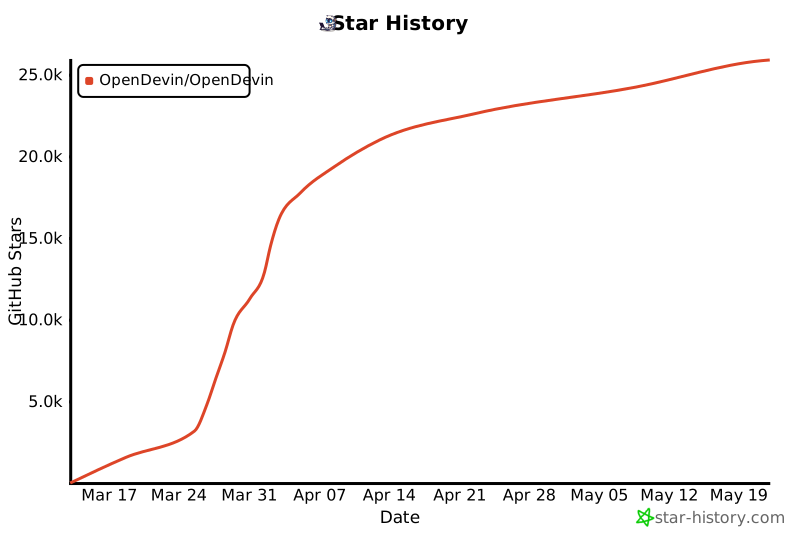](https://star-history.com/#OpenDevin/OpenDevin&Date)
|
||||
[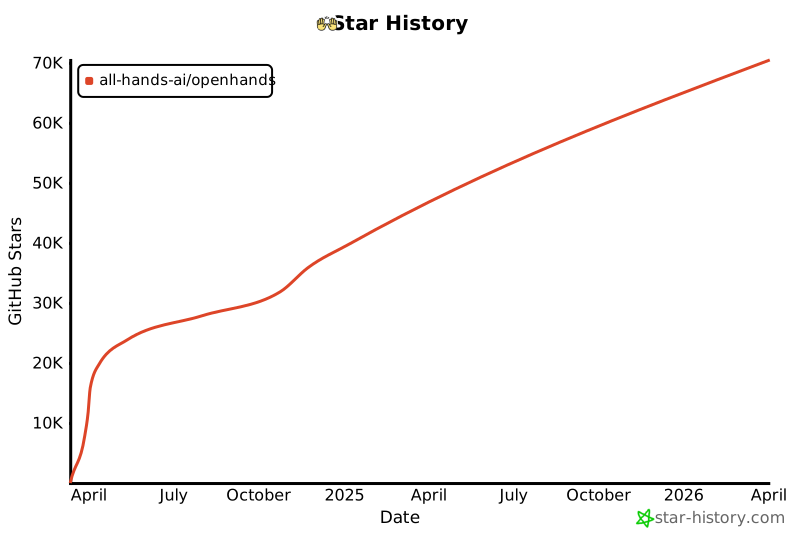](https://star-history.com/#All-Hands-AI/OpenHands&Date)
|
||||
|
||||
## 🛠️ Construit Avec {#built-with}
|
||||
## 🛠️ Construit avec
|
||||
|
||||
OpenDevin est construit en utilisant une combinaison de cadres et de bibliothèques puissants, offrant une base robuste pour son développement. Voici les technologies clés utilisées dans le projet :
|
||||
OpenHands est construit en utilisant une combinaison de frameworks et de bibliothèques puissants, fournissant une base solide pour son développement. Voici les principales technologies utilisées dans le projet :
|
||||
|
||||
       
|
||||
|
||||
Veuillez noter que la sélection de ces technologies est en cours, et que des technologies supplémentaires peuvent être ajoutées ou des existantes supprimées au fur et à mesure de l'évolution du projet. Nous nous efforçons d'adopter les outils les plus adaptés et efficaces pour améliorer les capacités d'OpenDevin.
|
||||
Veuillez noter que la sélection de ces technologies est en cours et que des technologies supplémentaires peuvent être ajoutées ou des technologies existantes peuvent être supprimées à mesure que le projet évolue. Nous nous efforçons d'adopter les outils les plus appropriés et les plus efficaces pour améliorer les capacités d'OpenHands.
|
||||
|
||||
## 📜 Licence {#license}
|
||||
## 📜 Licence
|
||||
|
||||
Distribué sous la licence MIT. Voir [notre licence](https://github.com/OpenDevin/OpenDevin/blob/main/LICENSE) pour plus d'informations.
|
||||
Distribué sous la licence MIT. Voir [notre licence](https://github.com/All-Hands-AI/OpenHands/blob/main/LICENSE) pour plus d'informations.
|
||||
|
||||
@@ -1,98 +1,25 @@
|
||||
---
|
||||
sidebar_position: 3
|
||||
---
|
||||
|
||||
# 🧠 Agents et Capacités
|
||||
|
||||
## Agent CodeAct
|
||||
# 🧠 Agent Principal et Capacités
|
||||
|
||||
## CodeActAgent
|
||||
|
||||
### Description
|
||||
|
||||
Cet agent implémente l'idée CodeAct ([article](https://arxiv.org/abs/2402.01030), [tweet](https://twitter.com/xingyaow_/status/1754556835703751087)) qui consolide les **act**ions des agents LLM en un espace d'action **code** unifié pour à la fois la _simplicité_ et la _performance_ (voir article pour plus de détails).
|
||||
Cet agent implémente l'idée de CodeAct ([article](https://arxiv.org/abs/2402.01030), [tweet](https://twitter.com/xingyaow_/status/1754556835703751087)) qui consolide les **act**ions des agents LLM dans un espace d'action de **code** unifié à la fois pour la _simplicité_ et la _performance_.
|
||||
|
||||
L'idée conceptuelle est illustrée ci-dessous. À chaque tour, l'agent peut :
|
||||
|
||||
1. **Converse** : Communiquer avec les humains en langage naturel pour demander des clarifications, des confirmations, etc.
|
||||
2. **CodeAct** : Choisir d'accomplir la tâche en exécutant du code
|
||||
1. **Converser** : Communiquer avec les humains en langage naturel pour demander des clarifications, des confirmations, etc.
|
||||
2. **CodeAct** : Choisir d'effectuer la tâche en exécutant du code
|
||||
|
||||
- Exécuter toute commande `bash` Linux valide
|
||||
- Exécuter tout code `Python` valide avec [un interpréteur Python interactif](https://ipython.org/). Cela est simulé à travers la commande `bash`, voir le système de plugin ci-dessous pour plus de détails.
|
||||
- Exécuter n'importe quelle commande Linux `bash` valide
|
||||
- Exécuter n'importe quel code `Python` valide avec [un interpréteur Python interactif](https://ipython.org/). Ceci est simulé via une commande `bash`, voir le système de plugin ci-dessous pour plus de détails.
|
||||
|
||||

|
||||

|
||||
|
||||
### Système de Plugin
|
||||
### Démo
|
||||
|
||||
Pour rendre l'agent CodeAct plus puissant avec seulement l'accès à l'espace d'action `bash`, l'agent CodeAct exploite le système de plugins d'OpenDevin:
|
||||
https://github.com/All-Hands-AI/OpenHands/assets/38853559/f592a192-e86c-4f48-ad31-d69282d5f6ac
|
||||
|
||||
- [Plugin Jupyter](https://github.com/OpenDevin/OpenDevin/tree/main/opendevin/runtime/plugins/jupyter) : pour l'exécution d'IPython via la commande bash
|
||||
- [Plugin outil agent SWE](https://github.com/OpenDevin/OpenDevin/tree/main/opendevin/runtime/plugins/swe_agent_commands) : Outils de ligne de commande bash puissants pour les tâches de développement logiciel introduits par [swe-agent](https://github.com/princeton-nlp/swe-agent).
|
||||
|
||||
### Démonstration
|
||||
|
||||
https://github.com/OpenDevin/OpenDevin/assets/38853559/f592a192-e86c-4f48-ad31-d69282d5f6ac
|
||||
|
||||
_Exemple de CodeActAgent avec `gpt-4-turbo-2024-04-09` effectuant une tâche de science des données (régression linéaire)_
|
||||
|
||||
### Actions
|
||||
|
||||
`Action`,
|
||||
`CmdRunAction`,
|
||||
`IPythonRunCellAction`,
|
||||
`AgentEchoAction`,
|
||||
`AgentFinishAction`,
|
||||
`AgentTalkAction`
|
||||
|
||||
### Observations
|
||||
|
||||
`CmdOutputObservation`,
|
||||
`IPythonRunCellObservation`,
|
||||
`AgentMessageObservation`,
|
||||
`UserMessageObservation`
|
||||
|
||||
### Méthodes
|
||||
|
||||
| Méthode | Description |
|
||||
| ---------------- | ----------------------------------------------------------------------------------------------------------------------------------------------- |
|
||||
| `__init__` | Initialise un agent avec `llm` et une liste de messages `list[Mapping[str, str]]` |
|
||||
| `step` | Effectue une étape en utilisant l'agent CodeAct. Cela inclut la collecte d'informations sur les étapes précédentes et invite le modèle à exécuter une commande. |
|
||||
|
||||
### En cours de réalisation & prochaine étape
|
||||
|
||||
[] Support de la navigation sur le web
|
||||
[] Compléter le workflow pour l'agent CodeAct afin de soumettre des PRs Github
|
||||
|
||||
## Agent Planificateur
|
||||
|
||||
### Description
|
||||
|
||||
L'agent planificateur utilise une stratégie d'incitation spéciale pour créer des plans à long terme pour résoudre les problèmes.
|
||||
L'agent reçoit ses paires action-observation précédentes, la tâche actuelle, et un indice basé sur la dernière action effectuée à chaque étape.
|
||||
|
||||
### Actions
|
||||
|
||||
`NullAction`,
|
||||
`CmdRunAction`,
|
||||
`BrowseURLAction`,
|
||||
`GithubPushAction`,
|
||||
`FileReadAction`,
|
||||
`FileWriteAction`,
|
||||
`AgentThinkAction`,
|
||||
`AgentFinishAction`,
|
||||
`AgentSummarizeAction`,
|
||||
`AddTaskAction`,
|
||||
`ModifyTaskAction`,
|
||||
|
||||
### Observations
|
||||
|
||||
`Observation`,
|
||||
`NullObservation`,
|
||||
`CmdOutputObservation`,
|
||||
`FileReadObservation`,
|
||||
`BrowserOutputObservation`
|
||||
|
||||
### Méthodes
|
||||
|
||||
| Méthode | Description |
|
||||
| ---------------- | ----------------------------------------------------------------------------------------------------------------------------------------------------------------------------------------- |
|
||||
| `__init__` | Initialise un agent avec `llm` |
|
||||
| `step` | Vérifie si l'étape actuelle est terminée, retourne `AgentFinishAction` si oui. Sinon, crée une incitation de planification et l'envoie au modèle pour inférence, en ajoutant le résultat comme prochaine action. |
|
||||
_Exemple de CodeActAgent avec `gpt-4-turbo-2024-04-09` effectuant une tâche de science des données (régression linéaire)_.
|
||||
|
||||
@@ -25,14 +25,14 @@ _**Avertissement**: L'architecture du backend est en cours de développement et
|
||||
|
||||
## Prérequis
|
||||
|
||||
- Un environnement Python dans lequel opendevin est exécutable
|
||||
- Un environnement Python dans lequel openhands est exécutable
|
||||
(selon les instructions du fichier README.md à la racine du dépôt)
|
||||
- [py2puml](https://github.com/lucsorel/py2puml) installé
|
||||
|
||||
## Étapes
|
||||
|
||||
1. Générez automatiquement le schéma en exécutant la commande suivante depuis la racine du dépôt :
|
||||
`py2puml opendevin opendevin > docs/architecture/backend_architecture.puml`
|
||||
`py2puml openhands openhands > docs/architecture/backend_architecture.puml`
|
||||
|
||||
2. Ouvrez le fichier généré dans un éditeur PlantUML, par exemple Visual Studio Code avec l'extension PlantUML ou [PlantText](https://www.planttext.com/)
|
||||
|
||||
|
||||
@@ -0,0 +1,54 @@
|
||||
|
||||
|
||||
# 🏛️ Architecture du Système
|
||||
|
||||
<div style={{ textAlign: 'center' }}>
|
||||
<img src="https://github.com/All-Hands-AI/OpenHands/assets/16201837/97d747e3-29d8-4ccb-8d34-6ad1adb17f38" alt="OpenHands System Architecture Diagram Jul 4 2024" />
|
||||
<p><em>Diagramme de l'Architecture du Système OpenHands (4 juillet 2024)</em></p>
|
||||
</div>
|
||||
|
||||
Ceci est une vue d'ensemble de haut niveau de l'architecture du système. Le système est divisé en deux composants principaux : le frontend et le backend. Le frontend est responsable de la gestion des interactions utilisateur et de l'affichage des résultats. Le backend est responsable de la gestion de la logique métier et de l'exécution des agents.
|
||||
|
||||
# Architecture du Frontend {#frontend-architecture-fr}
|
||||
|
||||

|
||||
|
||||
Cette vue d'ensemble est simplifiée pour montrer les principaux composants et leurs interactions. Pour une vue plus détaillée de l'architecture du backend, voir la section Architecture du Backend ci-dessous.
|
||||
|
||||
# Architecture du Backend {#backend-architecture-fr}
|
||||
|
||||
_**Avertissement** : L'architecture du backend est en cours de développement et est sujette à changement. Le diagramme suivant montre l'architecture actuelle du backend basée sur le commit indiqué dans le pied de page du diagramme._
|
||||
|
||||

|
||||
|
||||
<details>
|
||||
<summary>Mise à jour de ce Diagramme</summary>
|
||||
<div>
|
||||
La génération du diagramme d'architecture du backend est partiellement automatisée.
|
||||
Le diagramme est généré à partir des indications de type dans le code en utilisant l'outil py2puml. Le diagramme est ensuite manuellement revu, ajusté et exporté en PNG et SVG.
|
||||
|
||||
## Prérequis
|
||||
|
||||
- Environnement python fonctionnel dans lequel openhands est exécutable
|
||||
(selon les instructions du fichier README.md à la racine du dépôt)
|
||||
- [py2puml](https://github.com/lucsorel/py2puml) installé
|
||||
|
||||
## Étapes
|
||||
|
||||
1. Générer automatiquement le diagramme en exécutant la commande suivante depuis la racine du dépôt :
|
||||
`py2puml openhands openhands > docs/architecture/backend_architecture.puml`
|
||||
|
||||
2. Ouvrir le fichier généré dans un éditeur PlantUML, par ex. Visual Studio Code avec l'extension PlantUML ou [PlantText](https://www.planttext.com/)
|
||||
|
||||
3. Revoir le PUML généré et effectuer tous les ajustements nécessaires au diagramme (ajouter les parties manquantes, corriger les erreurs, améliorer le positionnement).
|
||||
_py2puml crée le diagramme en se basant sur les indications de type dans le code, donc des indications manquantes ou incorrectes peuvent entraîner un diagramme incomplet ou incorrect._
|
||||
|
||||
4. Revoir la différence entre le nouveau diagramme et le précédent et vérifier manuellement si les changements sont corrects.
|
||||
_S'assurer de ne pas supprimer des parties qui ont été ajoutées manuellement au diagramme par le passé et qui sont toujours pertinentes._
|
||||
|
||||
5. Ajouter le hash du commit qui a été utilisé pour générer le diagramme dans le pied de page du diagramme.
|
||||
|
||||
6. Exporter le diagramme sous forme de fichiers PNG et SVG et remplacer les diagrammes existants dans le répertoire `docs/architecture`. Cela peut être fait avec (par ex. [PlantText](https://www.planttext.com/))
|
||||
|
||||
</div>
|
||||
</details>
|
||||
@@ -0,0 +1,138 @@
|
||||
|
||||
|
||||
# 📦 Runtime EventStream
|
||||
|
||||
Le Runtime EventStream d'OpenHands est le composant principal qui permet l'exécution sécurisée et flexible des actions des agents d'IA.
|
||||
Il crée un environnement en bac à sable (sandbox) en utilisant Docker, où du code arbitraire peut être exécuté en toute sécurité sans risquer le système hôte.
|
||||
|
||||
## Pourquoi avons-nous besoin d'un runtime en bac à sable ?
|
||||
|
||||
OpenHands doit exécuter du code arbitraire dans un environnement sécurisé et isolé pour plusieurs raisons :
|
||||
|
||||
1. Sécurité : L'exécution de code non fiable peut poser des risques importants pour le système hôte. Un environnement en bac à sable empêche le code malveillant d'accéder ou de modifier les ressources du système hôte
|
||||
2. Cohérence : Un environnement en bac à sable garantit que l'exécution du code est cohérente sur différentes machines et configurations, éliminant les problèmes du type "ça fonctionne sur ma machine"
|
||||
3. Contrôle des ressources : Le bac à sable permet un meilleur contrôle de l'allocation et de l'utilisation des ressources, empêchant les processus incontrôlés d'affecter le système hôte
|
||||
4. Isolation : Différents projets ou utilisateurs peuvent travailler dans des environnements isolés sans interférer les uns avec les autres ou avec le système hôte
|
||||
5. Reproductibilité : Les environnements en bac à sable facilitent la reproduction des bugs et des problèmes, car l'environnement d'exécution est cohérent et contrôlable
|
||||
|
||||
## Comment fonctionne le Runtime ?
|
||||
|
||||
Le système Runtime d'OpenHands utilise une architecture client-serveur implémentée avec des conteneurs Docker. Voici un aperçu de son fonctionnement :
|
||||
|
||||
```mermaid
|
||||
graph TD
|
||||
A[Image Docker personnalisée fournie par l'utilisateur] --> B[Backend OpenHands]
|
||||
B -->|Construit| C[Image OH Runtime]
|
||||
C -->|Lance| D[Exécuteur d'actions]
|
||||
D -->|Initialise| E[Navigateur]
|
||||
D -->|Initialise| F[Shell Bash]
|
||||
D -->|Initialise| G[Plugins]
|
||||
G -->|Initialise| L[Serveur Jupyter]
|
||||
|
||||
B -->|Génère| H[Agent]
|
||||
B -->|Génère| I[EventStream]
|
||||
I <--->|Exécute l'action pour
|
||||
obtenir l'observation
|
||||
via l'API REST
|
||||
| D
|
||||
|
||||
H -->|Génère l'action| I
|
||||
I -->|Obtient l'observation| H
|
||||
|
||||
subgraph "Conteneur Docker"
|
||||
D
|
||||
E
|
||||
F
|
||||
G
|
||||
L
|
||||
end
|
||||
```
|
||||
|
||||
1. Entrée utilisateur : L'utilisateur fournit une image Docker de base personnalisée
|
||||
2. Construction de l'image : OpenHands construit une nouvelle image Docker (l'"image OH runtime") basée sur l'image fournie par l'utilisateur. Cette nouvelle image inclut le code spécifique à OpenHands, principalement le "client runtime"
|
||||
3. Lancement du conteneur : Lorsqu'OpenHands démarre, il lance un conteneur Docker en utilisant l'image OH runtime
|
||||
4. Initialisation du serveur d'exécution des actions : Le serveur d'exécution des actions initialise un `ActionExecutor` à l'intérieur du conteneur, mettant en place les composants nécessaires comme un shell bash et chargeant les plugins spécifiés
|
||||
5. Communication : Le backend OpenHands (`openhands/runtime/impl/eventstream/eventstream_runtime.py`) communique avec le serveur d'exécution des actions via une API RESTful, envoyant des actions et recevant des observations
|
||||
6. Exécution des actions : Le client runtime reçoit les actions du backend, les exécute dans l'environnement en bac à sable et renvoie les observations
|
||||
7. Retour des observations : Le serveur d'exécution des actions renvoie les résultats d'exécution au backend OpenHands sous forme d'observations
|
||||
|
||||
|
||||
Le rôle du client :
|
||||
- Il agit comme un intermédiaire entre le backend OpenHands et l'environnement en bac à sable
|
||||
- Il exécute différents types d'actions (commandes shell, opérations sur les fichiers, code Python, etc.) en toute sécurité dans le conteneur
|
||||
- Il gère l'état de l'environnement en bac à sable, y compris le répertoire de travail courant et les plugins chargés
|
||||
- Il formate et renvoie les observations au backend, assurant une interface cohérente pour le traitement des résultats
|
||||
|
||||
|
||||
## Comment OpenHands construit et maintient les images OH Runtime
|
||||
|
||||
L'approche d'OpenHands pour la construction et la gestion des images runtime assure l'efficacité, la cohérence et la flexibilité dans la création et la maintenance des images Docker pour les environnements de production et de développement.
|
||||
|
||||
Consultez le [code pertinent](https://github.com/All-Hands-AI/OpenHands/blob/main/openhands/runtime/utils/runtime_build.py) si vous souhaitez plus de détails.
|
||||
|
||||
### Système de balises d'images
|
||||
|
||||
OpenHands utilise un système à trois balises pour ses images runtime afin d'équilibrer la reproductibilité et la flexibilité.
|
||||
Les balises peuvent être dans l'un des 2 formats suivants :
|
||||
|
||||
- **Balise versionnée** : `oh_v{openhands_version}_{base_image}` (ex : `oh_v0.9.9_nikolaik_s_python-nodejs_t_python3.12-nodejs22`)
|
||||
- **Balise de verrouillage** : `oh_v{openhands_version}_{16_digit_lock_hash}` (ex : `oh_v0.9.9_1234567890abcdef`)
|
||||
- **Balise source** : `oh_v{openhands_version}_{16_digit_lock_hash}_{16_digit_source_hash}`
|
||||
(ex : `oh_v0.9.9_1234567890abcdef_1234567890abcdef`)
|
||||
|
||||
|
||||
#### Balise source - La plus spécifique
|
||||
|
||||
Il s'agit des 16 premiers chiffres du MD5 du hash du répertoire pour le répertoire source. Cela donne un hash
|
||||
uniquement pour la source d'openhands
|
||||
|
||||
|
||||
#### Balise de verrouillage
|
||||
|
||||
Ce hash est construit à partir des 16 premiers chiffres du MD5 de :
|
||||
- Le nom de l'image de base sur laquelle l'image a été construite (ex : `nikolaik/python-nodejs:python3.12-nodejs22`)
|
||||
- Le contenu du `pyproject.toml` inclus dans l'image.
|
||||
- Le contenu du `poetry.lock` inclus dans l'image.
|
||||
|
||||
Cela donne effectivement un hash pour les dépendances d'Openhands indépendamment du code source.
|
||||
|
||||
#### Balise versionnée - La plus générique
|
||||
|
||||
Cette balise est une concaténation de la version d'openhands et du nom de l'image de base (transformé pour s'adapter au standard des balises).
|
||||
|
||||
#### Processus de construction
|
||||
|
||||
Lors de la génération d'une image...
|
||||
|
||||
- **Pas de reconstruction** : OpenHands vérifie d'abord si une image avec la même **balise source la plus spécifique** existe. S'il existe une telle image,
|
||||
aucune construction n'est effectuée - l'image existante est utilisée.
|
||||
- **Reconstruction la plus rapide** : OpenHands vérifie ensuite si une image avec la **balise de verrouillage générique** existe. S'il existe une telle image,
|
||||
OpenHands construit une nouvelle image basée sur celle-ci, en contournant toutes les étapes d'installation (comme `poetry install` et
|
||||
`apt-get`) sauf une opération finale pour copier le code source actuel. La nouvelle image est balisée avec une
|
||||
balise **source** uniquement.
|
||||
- **Reconstruction correcte** : Si ni une balise **source** ni une balise **de verrouillage** n'existe, une image sera construite sur la base de l'image avec la balise **versionnée**.
|
||||
Dans l'image avec la balise versionnée, la plupart des dépendances devraient déjà être installées, ce qui permet de gagner du temps.
|
||||
- **Reconstruction la plus lente** : Si les trois balises n'existent pas, une toute nouvelle image est construite à partir de
|
||||
l'image de base (ce qui est une opération plus lente). Cette nouvelle image est balisée avec toutes les balises **source**, **de verrouillage** et **versionnée**.
|
||||
|
||||
Cette approche de balisage permet à OpenHands de gérer efficacement les environnements de développement et de production.
|
||||
|
||||
1. Un code source et un Dockerfile identiques produisent toujours la même image (via des balises basées sur des hashs)
|
||||
2. Le système peut reconstruire rapidement les images lorsque des changements mineurs se produisent (en s'appuyant sur des images compatibles récentes)
|
||||
3. La balise **de verrouillage** (ex : `runtime:oh_v0.9.3_1234567890abcdef`) pointe toujours vers la dernière version pour une combinaison particulière d'image de base, de dépendances et de version d'OpenHands
|
||||
|
||||
## Système de plugins du Runtime
|
||||
|
||||
Le Runtime d'OpenHands prend en charge un système de plugins qui permet d'étendre les fonctionnalités et de personnaliser l'environnement d'exécution. Les plugins sont initialisés lorsque le client runtime démarre.
|
||||
|
||||
Consultez [un exemple de plugin Jupyter ici](https://github.com/All-Hands-AI/OpenHands/blob/ecf4aed28b0cf7c18d4d8ff554883ba182fc6bdd/openhands/runtime/plugins/jupyter/__init__.py#L21-L55) si vous souhaitez implémenter votre propre plugin.
|
||||
|
||||
*Plus de détails sur le système de plugins sont encore en construction - les contributions sont les bienvenues !*
|
||||
|
||||
Aspects clés du système de plugins :
|
||||
|
||||
1. Définition des plugins : Les plugins sont définis comme des classes Python qui héritent d'une classe de base `Plugin`
|
||||
2. Enregistrement des plugins : Les plugins disponibles sont enregistrés dans un dictionnaire `ALL_PLUGINS`
|
||||
3. Spécification des plugins : Les plugins sont associés à `Agent.sandbox_plugins: list[PluginRequirement]`. Les utilisateurs peuvent spécifier quels plugins charger lors de l'initialisation du runtime
|
||||
4. Initialisation : Les plugins sont initialisés de manière asynchrone lorsque le client runtime démarre
|
||||
5. Utilisation : Le client runtime peut utiliser les plugins initialisés pour étendre ses capacités (par exemple, le JupyterPlugin pour exécuter des cellules IPython)
|
||||
@@ -1,14 +1,14 @@
|
||||
# 💿 Comment Créer un Soutien Docker sur Mesure
|
||||
|
||||
Le sandbox par défaut OpenDevin est équipé d'une configuration ubuntu minimaliste. Votre cas d'utilisation pourrait nécessiter des logiciels installés par défaut. Cet article vous enseignera comment réaliser cela en utilisant une image docker personnalisée.
|
||||
Le sandbox par défaut OpenHands est équipé d'une configuration ubuntu minimaliste. Votre cas d'utilisation pourrait nécessiter des logiciels installés par défaut. Cet article vous enseignera comment réaliser cela en utilisant une image docker personnalisée.
|
||||
|
||||
## Configuration
|
||||
|
||||
Assurez-vous de pouvoir utiliser OpenDevin en suivant la documentation [Development.md](https://github.com/OpenDevin/OpenDevin/blob/main/Development.md).
|
||||
Assurez-vous de pouvoir utiliser OpenHands en suivant la documentation [Development.md](https://github.com/All-Hands-AI/OpenHands/blob/main/Development.md).
|
||||
|
||||
## Créer Votre Image Docker
|
||||
|
||||
Ensuite, vous devez créer votre image docker personnalisée qui doit être basée sur debian/ubuntu. Par exemple, si nous souhaitons que OpenDevin ait accès au "node" binaire, nous utiliserions ce Dockerfile:
|
||||
Ensuite, vous devez créer votre image docker personnalisée qui doit être basée sur debian/ubuntu. Par exemple, si nous souhaitons que OpenHands ait accès au "node" binaire, nous utiliserions ce Dockerfile:
|
||||
|
||||
```bash
|
||||
# Commencez avec l'image ubuntu la plus récente
|
||||
@@ -29,27 +29,27 @@ docker build -t image_personnalisée .
|
||||
|
||||
Cela produira une nouvelle image appelée ```image_personnalisée``` qui sera disponible dans Docker Engine.
|
||||
|
||||
> Remarque: Dans la configuration décrite ici, OpenDevin va fonctionner en tant que utilisateur "opendevin" à l'intérieur du sandbox et donc tous les packages installés via le Dockerfile seront disponibles pour tous les utilisateurs sur le système, pas seulement root.
|
||||
> Remarque: Dans la configuration décrite ici, OpenHands va fonctionner en tant que utilisateur "openhands" à l'intérieur du sandbox et donc tous les packages installés via le Dockerfile seront disponibles pour tous les utilisateurs sur le système, pas seulement root.
|
||||
>
|
||||
> L'installation avec apt-get ci-dessus installe nodejs pour tous les utilisateurs.
|
||||
|
||||
## Spécifiez votre image personnalisée dans le fichier config.toml
|
||||
|
||||
La configuration OpenDevin se fait via le fichier de niveau supérieur ```config.toml``` .
|
||||
Créez un fichier ```config.toml``` dans le répertoire OpenDevin et entrez ces contenus:
|
||||
La configuration OpenHands se fait via le fichier de niveau supérieur ```config.toml``` .
|
||||
Créez un fichier ```config.toml``` dans le répertoire OpenHands et entrez ces contenus:
|
||||
|
||||
```toml
|
||||
[core]
|
||||
workspace_base="./workspace"
|
||||
run_as_devin=true
|
||||
sandbox_container_image="image_personnalisée"
|
||||
run_as_openhands=true
|
||||
sandbox_base_container_image="image_personnalisée"
|
||||
```
|
||||
|
||||
> Assurez-vous que ```sandbox_container_image``` est défini sur le nom de votre image personnalisée précédente.
|
||||
> Assurez-vous que ```sandbox_base_container_image``` est défini sur le nom de votre image personnalisée précédente.
|
||||
|
||||
## Exécution
|
||||
|
||||
Exécutez OpenDevin en exécutant ```make run``` dans le répertoire racine.
|
||||
Exécutez OpenHands en exécutant ```make run``` dans le répertoire racine.
|
||||
|
||||
Naviguez vers ```localhost:3001``` et vérifiez si vos dépendances souhaitées sont disponibles.
|
||||
|
||||
@@ -59,40 +59,36 @@ Félicitations !
|
||||
|
||||
## Explication technique
|
||||
|
||||
Le code pertinent est défini dans [ssh_box.py](https://github.com/OpenDevin/OpenDevin/blob/main/opendevin/runtime/docker/ssh_box.py) et [image_agnostic_util.py](https://github.com/OpenDevin/OpenDevin/blob/main/opendevin/runtime/docker/image_agnostic_util.py).
|
||||
|
||||
En particulier, ssh_box.py vérifie l'objet config pour ```config.sandbox_container_image``` et ensuite tente de récupérer l'image à l'aide de [get_od_sandbox_image](https://github.com/OpenDevin/OpenDevin/blob/main/opendevin/runtime/docker/image_agnostic_util.py#L72), qui est défini dans image_agnostic_util.py.
|
||||
|
||||
Lorsqu'une image personnalisée est utilisée pour la première fois, elle ne sera pas trouvée et donc elle sera construite (à l'exécution ultérieure, l'image construite sera trouvée et renvoyée).
|
||||
|
||||
L'image personnalisée est construite avec [_build_sandbox_image()](https://github.com/OpenDevin/OpenDevin/blob/main/opendevin/runtime/docker/image_agnostic_util.py#L29), qui crée un fichier docker en utilisant votre image personnalisée comme base et configure ensuite l'environnement pour OpenDevin, comme ceci:
|
||||
L'image personnalisée est construite avec [_build_sandbox_image()](https://github.com/All-Hands-AI/OpenHands/blob/main/openhands/runtime/docker/image_agnostic_util.py#L29), qui crée un fichier docker en utilisant votre image personnalisée comme base et configure ensuite l'environnement pour OpenHands, comme ceci:
|
||||
|
||||
```python
|
||||
dockerfile_content = (
|
||||
f'FROM {base_image}\n'
|
||||
'RUN apt update && apt install -y openssh-server wget sudo\n'
|
||||
'RUN mkdir -p -m0755 /var/run/sshd\n'
|
||||
'RUN mkdir -p /opendevin && mkdir -p /opendevin/logs && chmod 777 /opendevin/logs\n'
|
||||
'RUN mkdir -p /openhands && mkdir -p /openhands/logs && chmod 777 /openhands/logs\n'
|
||||
'RUN wget "https://github.com/conda-forge/miniforge/releases/latest/download/Miniforge3-$(uname)-$(uname -m).sh"\n'
|
||||
'RUN bash Miniforge3-$(uname)-$(uname -m).sh -b -p /opendevin/miniforge3\n'
|
||||
'RUN bash -c ". /opendevin/miniforge3/etc/profile.d/conda.sh && conda config --set changeps1 False && conda config --append channels conda-forge"\n'
|
||||
'RUN echo "export PATH=/opendevin/miniforge3/bin:$PATH" >> ~/.bashrc\n'
|
||||
'RUN echo "export PATH=/opendevin/miniforge3/bin:$PATH" >> /opendevin/bash.bashrc\n'
|
||||
'RUN bash Miniforge3-$(uname)-$(uname -m).sh -b -p /openhands/miniforge3\n'
|
||||
'RUN bash -c ". /openhands/miniforge3/etc/profile.d/conda.sh && conda config --set changeps1 False && conda config --append channels conda-forge"\n'
|
||||
'RUN echo "export PATH=/openhands/miniforge3/bin:$PATH" >> ~/.bashrc\n'
|
||||
'RUN echo "export PATH=/openhands/miniforge3/bin:$PATH" >> /openhands/bash.bashrc\n'
|
||||
).strip()
|
||||
```
|
||||
|
||||
> Remarque: Le nom de l'image est modifié via [_get_new_image_name()](https://github.com/OpenDevin/OpenDevin/blob/main/opendevin/runtime/docker/image_agnostic_util.py#L63) et c'est ce nom modifié qui sera recherché lors des exécutions ultérieures.
|
||||
> Remarque: Le nom de l'image est modifié via [_get_new_image_name()](https://github.com/All-Hands-AI/OpenHands/blob/main/openhands/runtime/docker/image_agnostic_util.py#L63) et c'est ce nom modifié qui sera recherché lors des exécutions ultérieures.
|
||||
|
||||
## Dépannage / Erreurs
|
||||
|
||||
### Erreur: ```useradd: UID 1000 est non unique```
|
||||
Si vous voyez cette erreur dans la sortie de la console, il s'agit du fait que OpenDevin essaie de créer le utilisateur opendevin dans le sandbox avec un ID d'utilisateur de 1000, cependant cet ID d'utilisateur est déjà utilisé dans l'image (pour une raison inconnue). Pour résoudre ce problème, changez la valeur du champ sandbox_user_id dans le fichier config.toml en une valeur différente:
|
||||
Si vous voyez cette erreur dans la sortie de la console, il s'agit du fait que OpenHands essaie de créer le utilisateur openhands dans le sandbox avec un ID d'utilisateur de 1000, cependant cet ID d'utilisateur est déjà utilisé dans l'image (pour une raison inconnue). Pour résoudre ce problème, changez la valeur du champ sandbox_user_id dans le fichier config.toml en une valeur différente:
|
||||
|
||||
```toml
|
||||
[core]
|
||||
workspace_base="./workspace"
|
||||
run_as_devin=true
|
||||
sandbox_container_image="image_personnalisée"
|
||||
run_as_openhands=true
|
||||
sandbox_base_container_image="image_personnalisée"
|
||||
sandbox_user_id="1001"
|
||||
```
|
||||
|
||||
@@ -102,4 +98,4 @@ Si vous voyez un message d'erreur indiquant que le port est utilisé ou indispon
|
||||
|
||||
## Discuter
|
||||
|
||||
Pour d'autres problèmes ou questions rejoignez le [Slack](https://join.slack.com/t/opendevin/shared_invite/zt-2ngejmfw6-9gW4APWOC9XUp1n~SiQ6iw) ou le [Discord](https://discord.gg/ESHStjSjD4) et demandez!
|
||||
Pour d'autres problèmes ou questions rejoignez le [Slack](https://join.slack.com/t/opendevin/shared_invite/zt-2oikve2hu-UDxHeo8nsE69y6T7yFX_BA) ou le [Discord](https://discord.gg/ESHStjSjD4) et demandez!
|
||||
|
||||
@@ -1,18 +1,41 @@
|
||||
---
|
||||
sidebar_position: 6
|
||||
---
|
||||
|
||||
# ✅ Fournir des Commentaires
|
||||
|
||||
Lorsque vous utilisez OpenDevin, vous rencontrerez sans aucun doute des cas où les choses fonctionnent bien et d'autres où elles ne fonctionnent pas. Nous vous encourageons à fournir des commentaires lorsque vous utilisez OpenDevin pour aider l'équipe de développement et, peut-être plus important encore, créer un corpus ouvert d'exemples de formation pour les agents de codage -- Partagez-OpenDevin !
|
||||
# ✅ Fournir des commentaires
|
||||
|
||||
## 📝 Comment Fournir des Commentaires
|
||||
Lorsque vous utilisez OpenHands, vous rencontrerez des cas où les choses fonctionnent bien, et d'autres où elles ne fonctionnent pas. Nous vous encourageons à fournir des commentaires lorsque vous utilisez OpenHands pour aider à donner des retours à l'équipe de développement, et peut-être plus important encore, créer un corpus ouvert d'exemples d'entraînement d'agents de codage -- Share-OpenHands !
|
||||
|
||||
Fournir des commentaires est simple ! Lorsque vous utilisez OpenDevin, vous pouvez appuyer sur le bouton de pouce vers le haut ou vers le bas à n'importe quel moment de votre interaction. Vous serez invité à fournir votre adresse email (par exemple, afin que nous puissions vous contacter si nous voulons poser des questions de suivi), et vous pouvez choisir si vous souhaitez fournir des commentaires publiquement ou en privé.
|
||||
## 📝 Comment fournir des commentaires
|
||||
|
||||
<iframe width="560" height="315" src="https://www.youtube.com/embed/5rFx-StMVV0?si=svo7xzp6LhGK_GXr" title="Lecteur vidéo YouTube" frameborder="0" allow="accelerometer; autoplay; clipboard-write; encrypted-media; gyroscope; picture-in-picture; web-share" referrerpolicy="strict-origin-when-cross-origin" allowfullscreen></iframe>
|
||||
Fournir des commentaires est facile ! Lorsque vous utilisez OpenHands, vous pouvez appuyer sur le bouton pouce vers le haut ou pouce vers le bas à tout moment pendant votre interaction. Vous serez invité à fournir votre adresse e-mail (par exemple, afin que nous puissions vous contacter si nous voulons poser des questions de suivi), et vous pouvez choisir si vous souhaitez fournir des commentaires publiquement ou en privé.
|
||||
|
||||
## 📜 Licence de Données et Confidentialité
|
||||
<iframe width="560" height="315" src="https://www.youtube.com/embed/5rFx-StMVV0?si=svo7xzp6LhGK_GXr" title="YouTube video player" frameborder="0" allow="accelerometer; autoplay; clipboard-write; encrypted-media; gyroscope; picture-in-picture; web-share" referrerpolicy="strict-origin-when-cross-origin" allowfullscreen></iframe>
|
||||
|
||||
* Les données **publiques** seront distribuées sous la licence MIT, comme OpenDevin lui-même, et pourront être utilisées par la communauté pour former et tester des modèles. Évidemment, les commentaires que vous pouvez rendre publics seront plus précieux pour la communauté dans son ensemble, donc lorsque vous ne traitez pas d'informations sensibles, nous vous encourageons à choisir cette option !
|
||||
* Les données **privées** ne seront partagées qu'avec l'équipe OpenDevin dans le but d'améliorer OpenDevin.
|
||||
## 📜 Utilisation des données et confidentialité
|
||||
|
||||
### Paramètres de partage des données
|
||||
|
||||
Lorsque vous soumettez des données, vous pouvez les soumettre publiquement ou en privé.
|
||||
|
||||
* Les données **publiques** seront distribuées sous la licence MIT, comme OpenHands lui-même, et pourront être utilisées par la communauté pour entraîner et tester des modèles. Évidemment, les commentaires que vous pouvez rendre publics seront plus précieux pour la communauté dans son ensemble, donc lorsque vous ne traitez pas d'informations sensibles, nous vous encourageons à choisir cette option !
|
||||
* Les données **privées** ne seront partagées qu'avec l'équipe OpenHands dans le but d'améliorer OpenHands.
|
||||
|
||||
### Qui collecte et stocke les données ?
|
||||
|
||||
Les données sont collectées et stockées par [All Hands AI](https://all-hands.dev), une entreprise fondée par les mainteneurs d'OpenHands pour soutenir et améliorer OpenHands.
|
||||
|
||||
### Comment les données publiques seront-elles publiées ?
|
||||
|
||||
Les données publiques seront publiées lorsque nous atteindrons des jalons fixes, tels que 1 000 exemples publics, 10 000 exemples publics, etc.
|
||||
À ce moment-là, nous suivrons le processus de publication suivant :
|
||||
|
||||
1. Toutes les personnes qui ont contribué à des commentaires publics recevront un e-mail décrivant la publication des données et auront la possibilité de se retirer.
|
||||
2. La ou les personnes en charge de la publication des données effectueront un contrôle de la qualité des données, en supprimant les commentaires de mauvaise qualité, en supprimant les adresses e-mail des soumissionnaires et en essayant de supprimer toute information sensible.
|
||||
3. Les données seront publiées publiquement sous la licence MIT via des sites couramment utilisés tels que GitHub ou Hugging Face.
|
||||
|
||||
### Que faire si je veux que mes données soient supprimées ?
|
||||
|
||||
Pour les données sur les serveurs d'All Hands AI, nous sommes heureux de les supprimer sur demande :
|
||||
|
||||
**Une pièce de données :** Si vous souhaitez supprimer une pièce de données, nous ajouterons prochainement un mécanisme pour supprimer les pièces de données en utilisant le lien et le mot de passe qui s'affichent sur l'interface lorsque vous soumettez des données.
|
||||
|
||||
**Toutes les données :** Si vous souhaitez que toutes vos données soient supprimées, ou si vous n'avez pas l'ID et le mot de passe que vous avez reçus lors de la soumission des données, veuillez contacter `contact@all-hands.dev` à partir de l'adresse e-mail que vous avez enregistrée lorsque vous avez initialement soumis les données.
|
||||
|
||||
@@ -0,0 +1,113 @@
|
||||
|
||||
|
||||
# Démarrer avec OpenHands
|
||||
|
||||
Vous avez donc [installé OpenHands](./installation) et avez
|
||||
[configuré votre LLM](./installation#setup). Et maintenant ?
|
||||
|
||||
OpenHands peut vous aider à vous attaquer à une grande variété de tâches d'ingénierie. Mais la technologie
|
||||
est encore nouvelle, et nous sommes loin d'avoir des agents capables de prendre en charge des tâches
|
||||
d'ingénierie vastes et compliquées sans aucune aide. Il est donc important de se faire une idée de ce que l'agent
|
||||
fait bien, et où il pourrait avoir besoin d'un coup de main.
|
||||
|
||||
## Hello World
|
||||
|
||||
La première chose que vous voudrez peut-être essayer est un simple exemple "hello world".
|
||||
Cela peut être plus compliqué qu'il n'y paraît !
|
||||
|
||||
Essayez de demander à l'agent :
|
||||
> Please write a bash script hello.sh that prints "hello world!"
|
||||
|
||||
Vous devriez constater que l'agent non seulement écrit le script, mais définit également les
|
||||
permissions correctes et exécute le script pour vérifier la sortie.
|
||||
|
||||
Vous pouvez continuer à demander à l'agent d'affiner votre code. C'est une excellente façon de
|
||||
travailler avec les agents. Commencez simplement, et itérez.
|
||||
|
||||
> Please modify hello.sh so that it accepts a name as the first argument, but defaults to "world"
|
||||
|
||||
Vous pouvez également travailler dans n'importe quel langage dont vous avez besoin, bien que l'agent puisse avoir besoin de passer un peu de
|
||||
temps à configurer son environnement !
|
||||
|
||||
> Please convert hello.sh to a Ruby script, and run it
|
||||
|
||||
## Construire à partir de zéro
|
||||
|
||||
Les agents se débrouillent exceptionnellement bien pour les tâches "greenfield" (tâches où ils n'ont pas besoin
|
||||
de contexte sur une base de code existante) et ils peuvent simplement commencer à partir de zéro.
|
||||
|
||||
Il est préférable de commencer par une tâche simple, puis d'itérer. Il est également préférable d'être
|
||||
aussi précis que possible sur ce que vous voulez, sur la pile technologique à utiliser, etc.
|
||||
|
||||
Par exemple, nous pourrions construire une application TODO :
|
||||
|
||||
> Please build a basic TODO list app in React. It should be frontend-only, and all state
|
||||
> should be kept in localStorage.
|
||||
|
||||
Nous pouvons continuer à itérer sur l'application une fois le squelette en place :
|
||||
|
||||
> Please allow adding an optional due date to every task
|
||||
|
||||
Tout comme avec le développement normal, il est bon de commiter et de pousser votre code fréquemment.
|
||||
De cette façon, vous pouvez toujours revenir à un ancien état si l'agent dévie.
|
||||
Vous pouvez demander à l'agent de commiter et de pousser pour vous :
|
||||
|
||||
> Please commit the changes and push them to a new branch called "feature/due-dates"
|
||||
|
||||
|
||||
## Ajouter du nouveau code
|
||||
|
||||
OpenHands peut également faire un excellent travail en ajoutant du nouveau code à une base de code existante.
|
||||
|
||||
Par exemple, vous pouvez demander à OpenHands d'ajouter une nouvelle action GitHub à votre projet
|
||||
qui analyse votre code. OpenHands peut jeter un coup d'œil à votre base de code pour voir quel langage
|
||||
il doit utiliser, mais ensuite il peut simplement déposer un nouveau fichier dans `./github/workflows/lint.yml`.
|
||||
|
||||
> Please add a GitHub action that lints the code in this repository
|
||||
|
||||
Certaines tâches peuvent nécessiter un peu plus de contexte. Bien qu'OpenHands puisse utiliser `ls` et `grep`
|
||||
pour rechercher dans votre base de code, fournir le contexte à l'avance lui permet d'aller plus vite,
|
||||
et plus précisément. Et cela vous coûtera moins de tokens !
|
||||
|
||||
> Please modify ./backend/api/routes.js to add a new route that returns a list of all tasks
|
||||
|
||||
> Please add a new React component that displays a list of Widgets to the ./frontend/components
|
||||
> directory. It should use the existing Widget component.
|
||||
|
||||
## Refactoring
|
||||
|
||||
OpenHands est excellent pour refactoriser du code existant, surtout par petits morceaux.
|
||||
Vous ne voulez probablement pas essayer de réarchitecturer toute votre base de code, mais diviser
|
||||
les longs fichiers et fonctions, renommer les variables, etc. ont tendance à très bien fonctionner.
|
||||
|
||||
> Please rename all the single-letter variables in ./app.go
|
||||
|
||||
> Please break the function `build_and_deploy_widgets` into two functions, `build_widgets` and `deploy_widgets` in widget.php
|
||||
|
||||
> Please break ./api/routes.js into separate files for each route
|
||||
|
||||
## Corrections de bugs
|
||||
|
||||
OpenHands peut également vous aider à traquer et corriger des bugs dans votre code. Mais, comme tout
|
||||
développeur le sait, la correction de bugs peut être extrêmement délicate, et souvent OpenHands aura besoin de plus de contexte.
|
||||
Cela aide si vous avez diagnostiqué le bug, mais que vous voulez qu'OpenHands trouve la logique.
|
||||
|
||||
> Currently the email field in the `/subscribe` endpoint is rejecting .io domains. Please fix this.
|
||||
|
||||
> The `search_widgets` function in ./app.py is doing a case-sensitive search. Please make it case-insensitive.
|
||||
|
||||
Il est souvent utile de faire du développement piloté par les tests lors de la correction de bugs avec un agent.
|
||||
Vous pouvez demander à l'agent d'écrire un nouveau test, puis d'itérer jusqu'à ce qu'il corrige le bug :
|
||||
|
||||
> The `hello` function crashes on the empty string. Please write a test that reproduces this bug, then fix the code so it passes.
|
||||
|
||||
## Plus
|
||||
|
||||
OpenHands est capable d'aider sur à peu près n'importe quelle tâche de codage. Mais il faut un peu de pratique
|
||||
pour en tirer le meilleur parti. N'oubliez pas de :
|
||||
* Garder vos tâches petites
|
||||
* Être aussi précis que possible
|
||||
* Fournir autant de contexte que possible
|
||||
* Commiter et pousser fréquemment
|
||||
|
||||
Voir [Bonnes pratiques de prompting](./prompting-best-practices) pour plus de conseils sur la façon de tirer le meilleur parti d'OpenHands.
|
||||
@@ -0,0 +1,110 @@
|
||||
|
||||
|
||||
# Mode CLI
|
||||
|
||||
OpenHands peut être exécuté en mode CLI interactif, ce qui permet aux utilisateurs de démarrer une session interactive via la ligne de commande.
|
||||
|
||||
Ce mode est différent du [mode headless](headless-mode), qui est non interactif et mieux adapté aux scripts.
|
||||
|
||||
## Avec Python
|
||||
|
||||
Pour démarrer une session OpenHands interactive via la ligne de commande, suivez ces étapes :
|
||||
|
||||
1. Assurez-vous d'avoir suivi les [instructions de configuration de développement](https://github.com/All-Hands-AI/OpenHands/blob/main/Development.md).
|
||||
|
||||
2. Exécutez la commande suivante :
|
||||
|
||||
```bash
|
||||
poetry run python -m openhands.core.cli
|
||||
```
|
||||
|
||||
Cette commande démarrera une session interactive où vous pourrez saisir des tâches et recevoir des réponses d'OpenHands.
|
||||
|
||||
Vous devrez vous assurer de définir votre modèle, votre clé API et d'autres paramètres via des variables d'environnement
|
||||
[ou le fichier `config.toml`](https://github.com/All-Hands-AI/OpenHands/blob/main/config.template.toml).
|
||||
|
||||
|
||||
## Avec Docker
|
||||
|
||||
Pour exécuter OpenHands en mode CLI avec Docker, suivez ces étapes :
|
||||
|
||||
1. Définissez `WORKSPACE_BASE` sur le répertoire que vous souhaitez qu'OpenHands modifie :
|
||||
|
||||
```bash
|
||||
WORKSPACE_BASE=$(pwd)/workspace
|
||||
```
|
||||
|
||||
2. Définissez `LLM_MODEL` sur le modèle que vous souhaitez utiliser :
|
||||
|
||||
```bash
|
||||
LLM_MODEL="anthropic/claude-3-5-sonnet-20241022"
|
||||
```
|
||||
|
||||
3. Définissez `LLM_API_KEY` sur votre clé API :
|
||||
|
||||
```bash
|
||||
LLM_API_KEY="sk_test_12345"
|
||||
```
|
||||
|
||||
4. Exécutez la commande Docker suivante :
|
||||
|
||||
```bash
|
||||
docker run -it \
|
||||
--pull=always \
|
||||
-e SANDBOX_USER_ID=$(id -u) \
|
||||
-e WORKSPACE_MOUNT_PATH=$WORKSPACE_BASE \
|
||||
-e LLM_API_KEY=$LLM_API_KEY \
|
||||
-e LLM_MODEL=$LLM_MODEL \
|
||||
-v $WORKSPACE_BASE:/opt/workspace_base \
|
||||
-v /var/run/docker.sock:/var/run/docker.sock \
|
||||
--add-host host.docker.internal:host-gateway \
|
||||
--name openhands-app-$(date +%Y%m%d%H%M%S) \
|
||||
ghcr.io/all-hands-ai/openhands:0.11 \
|
||||
python -m openhands.core.cli
|
||||
```
|
||||
|
||||
Cette commande démarrera une session interactive dans Docker où vous pourrez saisir des tâches et recevoir des réponses d'OpenHands.
|
||||
|
||||
## Exemples de commandes CLI et de sorties attendues
|
||||
|
||||
Voici quelques exemples de commandes CLI et leurs sorties attendues :
|
||||
|
||||
### Exemple 1 : Tâche simple
|
||||
|
||||
```bash
|
||||
Comment puis-je vous aider ? >> Écrivez un script Python qui affiche "Hello, World!"
|
||||
```
|
||||
|
||||
Sortie attendue :
|
||||
|
||||
```bash
|
||||
🤖 Bien sûr ! Voici un script Python qui affiche "Hello, World!" :
|
||||
|
||||
❯ print("Hello, World!")
|
||||
```
|
||||
|
||||
### Exemple 2 : Commande Bash
|
||||
|
||||
```bash
|
||||
Comment puis-je vous aider ? >> Créez un répertoire nommé "test_dir"
|
||||
```
|
||||
|
||||
Sortie attendue :
|
||||
|
||||
```bash
|
||||
🤖 Création d'un répertoire nommé "test_dir" :
|
||||
|
||||
❯ mkdir test_dir
|
||||
```
|
||||
|
||||
### Exemple 3 : Gestion des erreurs
|
||||
|
||||
```bash
|
||||
Comment puis-je vous aider ? >> Supprimez un fichier inexistant
|
||||
```
|
||||
|
||||
Sortie attendue :
|
||||
|
||||
```bash
|
||||
🤖 Une erreur s'est produite. Veuillez réessayer.
|
||||
```
|
||||
@@ -0,0 +1,83 @@
|
||||
|
||||
|
||||
# Sandbox Personnalisé
|
||||
|
||||
Le sandbox est l'endroit où l'agent effectue ses tâches. Au lieu d'exécuter des commandes directement sur votre ordinateur (ce qui pourrait être risqué), l'agent les exécute à l'intérieur d'un conteneur Docker.
|
||||
|
||||
Le sandbox OpenHands par défaut (`python-nodejs:python3.12-nodejs22` de [nikolaik/python-nodejs](https://hub.docker.com/r/nikolaik/python-nodejs)) est livré avec certains paquets installés tels que Python et Node.js, mais peut nécessiter l'installation d'autres logiciels par défaut.
|
||||
|
||||
Vous avez deux options pour la personnalisation :
|
||||
|
||||
1. Utiliser une image existante avec les logiciels requis.
|
||||
2. Créer votre propre image Docker personnalisée.
|
||||
|
||||
Si vous choisissez la première option, vous pouvez passer la section `Créer Votre Image Docker`.
|
||||
|
||||
## Créer Votre Image Docker
|
||||
|
||||
Pour créer une image Docker personnalisée, elle doit être basée sur Debian.
|
||||
|
||||
Par exemple, si vous voulez qu'OpenHands ait `ruby` installé, créez un `Dockerfile` avec le contenu suivant :
|
||||
|
||||
```dockerfile
|
||||
FROM debian:latest
|
||||
|
||||
# Installer les paquets requis
|
||||
RUN apt-get update && apt-get install -y ruby
|
||||
```
|
||||
|
||||
Enregistrez ce fichier dans un dossier. Ensuite, construisez votre image Docker (par exemple, nommée custom-image) en naviguant vers le dossier dans le terminal et en exécutant :
|
||||
|
||||
```bash
|
||||
docker build -t custom-image .
|
||||
```
|
||||
|
||||
Cela produira une nouvelle image appelée `custom-image`, qui sera disponible dans Docker.
|
||||
|
||||
> Notez que dans la configuration décrite dans ce document, OpenHands s'exécutera en tant qu'utilisateur "openhands" à l'intérieur du sandbox et donc tous les paquets installés via le docker file devraient être disponibles pour tous les utilisateurs du système, pas seulement root.
|
||||
|
||||
## Utiliser le Workflow de Développement
|
||||
|
||||
### Configuration
|
||||
|
||||
Tout d'abord, assurez-vous de pouvoir exécuter OpenHands en suivant les instructions dans [Development.md](https://github.com/All-Hands-AI/OpenHands/blob/main/Development.md).
|
||||
|
||||
### Spécifier l'Image de Base du Sandbox
|
||||
|
||||
Dans le fichier `config.toml` dans le répertoire OpenHands, définissez `sandbox_base_container_image` sur l'image que vous souhaitez utiliser. Cela peut être une image que vous avez déjà extraite ou une que vous avez construite :
|
||||
|
||||
```bash
|
||||
[core]
|
||||
...
|
||||
sandbox_base_container_image="custom-image"
|
||||
```
|
||||
|
||||
### Exécuter
|
||||
|
||||
Exécutez OpenHands en exécutant ```make run``` dans le répertoire de niveau supérieur.
|
||||
|
||||
## Explication Technique
|
||||
|
||||
Veuillez vous référer à la [section image docker personnalisée de la documentation d'exécution](https://docs.all-hands.dev/modules/usage/architecture/runtime#advanced-how-openhands-builds-and-maintains-od-runtime-images) pour plus de détails.
|
||||
|
||||
## Dépannage / Erreurs
|
||||
|
||||
### Erreur : ```useradd: UID 1000 is not unique```
|
||||
|
||||
Si vous voyez cette erreur dans la sortie de la console, c'est parce qu'OpenHands essaie de créer l'utilisateur openhands dans le sandbox avec un UID de 1000, mais cet UID est déjà utilisé dans l'image (pour une raison quelconque). Pour corriger cela, changez le champ sandbox_user_id dans le fichier config.toml à une valeur différente :
|
||||
|
||||
```toml
|
||||
[core]
|
||||
workspace_base="./workspace"
|
||||
run_as_openhands=true
|
||||
sandbox_base_container_image="custom_image"
|
||||
sandbox_user_id="1001"
|
||||
```
|
||||
|
||||
### Erreurs d'utilisation de port
|
||||
|
||||
Si vous voyez une erreur concernant un port déjà utilisé ou indisponible, essayez de supprimer tous les conteneurs Docker en cours d'exécution (exécutez `docker ps` et `docker rm` sur les conteneurs pertinents) puis réexécutez ```make run```.
|
||||
|
||||
## Discuter
|
||||
|
||||
Pour d'autres problèmes ou questions, rejoignez le [Slack](https://join.slack.com/t/opendevin/shared_invite/zt-2oikve2hu-UDxHeo8nsE69y6T7yFX_BA) ou le [Discord](https://discord.gg/ESHStjSjD4) et demandez !
|
||||
@@ -0,0 +1,73 @@
|
||||
|
||||
|
||||
# Débogage
|
||||
|
||||
Ce qui suit est destiné à servir d'introduction au débogage d'OpenHands à des fins de développement.
|
||||
|
||||
## Serveur / VSCode
|
||||
|
||||
Le `launch.json` suivant permettra de déboguer les éléments agent, contrôleur et serveur, mais pas le bac à sable (qui s'exécute dans docker). Il ignorera toutes les modifications à l'intérieur du répertoire `workspace/` :
|
||||
|
||||
```
|
||||
{
|
||||
"version": "0.2.0",
|
||||
"configurations": [
|
||||
{
|
||||
"name": "OpenHands CLI",
|
||||
"type": "debugpy",
|
||||
"request": "launch",
|
||||
"module": "openhands.core.cli",
|
||||
"justMyCode": false
|
||||
},
|
||||
{
|
||||
"name": "OpenHands WebApp",
|
||||
"type": "debugpy",
|
||||
"request": "launch",
|
||||
"module": "uvicorn",
|
||||
"args": [
|
||||
"openhands.server.listen:app",
|
||||
"--reload",
|
||||
"--reload-exclude",
|
||||
"${workspaceFolder}/workspace",
|
||||
"--port",
|
||||
"3000"
|
||||
],
|
||||
"justMyCode": false
|
||||
}
|
||||
]
|
||||
}
|
||||
```
|
||||
|
||||
Des configurations de débogage plus spécifiques qui incluent plus de paramètres peuvent être spécifiées :
|
||||
|
||||
```
|
||||
...
|
||||
{
|
||||
"name": "Debug CodeAct",
|
||||
"type": "debugpy",
|
||||
"request": "launch",
|
||||
"module": "openhands.core.main",
|
||||
"args": [
|
||||
"-t",
|
||||
"Demandez-moi quelle est votre tâche.",
|
||||
"-d",
|
||||
"${workspaceFolder}/workspace",
|
||||
"-c",
|
||||
"CodeActAgent",
|
||||
"-l",
|
||||
"llm.o1",
|
||||
"-n",
|
||||
"prompts"
|
||||
],
|
||||
"justMyCode": false
|
||||
}
|
||||
...
|
||||
```
|
||||
|
||||
Les valeurs dans l'extrait ci-dessus peuvent être mises à jour de telle sorte que :
|
||||
|
||||
* *t* : la tâche
|
||||
* *d* : le répertoire de l'espace de travail openhands
|
||||
* *c* : l'agent
|
||||
* *l* : la configuration LLM (prédéfinie dans config.toml)
|
||||
* *n* : le nom de la session (par exemple, le nom du flux d'événements)
|
||||
@@ -0,0 +1,281 @@
|
||||
|
||||
|
||||
# Évaluation
|
||||
|
||||
Ce guide fournit un aperçu de la façon d'intégrer votre propre benchmark d'évaluation dans le framework OpenHands.
|
||||
|
||||
## Configuration de l'environnement et de la configuration LLM
|
||||
|
||||
Veuillez suivre les instructions [ici](https://github.com/All-Hands-AI/OpenHands/blob/main/Development.md) pour configurer votre environnement de développement local.
|
||||
OpenHands en mode développement utilise `config.toml` pour garder une trace de la plupart des configurations.
|
||||
|
||||
Voici un exemple de fichier de configuration que vous pouvez utiliser pour définir et utiliser plusieurs LLMs :
|
||||
|
||||
```toml
|
||||
[llm]
|
||||
# IMPORTANT : ajoutez votre clé API ici et définissez le modèle que vous souhaitez évaluer
|
||||
model = "claude-3-5-sonnet-20241022"
|
||||
|
||||
api_key = "sk-XXX"
|
||||
|
||||
[llm.eval_gpt4_1106_preview_llm]
|
||||
model = "gpt-4-1106-preview"
|
||||
api_key = "XXX"
|
||||
temperature = 0.0
|
||||
|
||||
[llm.eval_some_openai_compatible_model_llm]
|
||||
model = "openai/MODEL_NAME"
|
||||
base_url = "https://OPENAI_COMPATIBLE_URL/v1"
|
||||
api_key = "XXX"
|
||||
temperature = 0.0
|
||||
```
|
||||
|
||||
|
||||
## Comment utiliser OpenHands en ligne de commande
|
||||
|
||||
OpenHands peut être exécuté depuis la ligne de commande en utilisant le format suivant :
|
||||
|
||||
```bash
|
||||
poetry run python ./openhands/core/main.py \
|
||||
-i <max_iterations> \
|
||||
-t "<task_description>" \
|
||||
-c <agent_class> \
|
||||
-l <llm_config>
|
||||
```
|
||||
|
||||
Par exemple :
|
||||
|
||||
```bash
|
||||
poetry run python ./openhands/core/main.py \
|
||||
-i 10 \
|
||||
-t "Écrivez-moi un script bash qui affiche hello world." \
|
||||
-c CodeActAgent \
|
||||
-l llm
|
||||
```
|
||||
|
||||
Cette commande exécute OpenHands avec :
|
||||
- Un maximum de 10 itérations
|
||||
- La description de tâche spécifiée
|
||||
- En utilisant CodeActAgent
|
||||
- Avec la configuration LLM définie dans la section `llm` de votre fichier `config.toml`
|
||||
|
||||
## Comment fonctionne OpenHands
|
||||
|
||||
Le point d'entrée principal d'OpenHands se trouve dans `openhands/core/main.py`. Voici un flux simplifié de son fonctionnement :
|
||||
|
||||
1. Analyse des arguments de ligne de commande et chargement de la configuration
|
||||
2. Création d'un environnement d'exécution à l'aide de `create_runtime()`
|
||||
3. Initialisation de l'agent spécifié
|
||||
4. Exécution du contrôleur à l'aide de `run_controller()`, qui :
|
||||
- Attache l'environnement d'exécution à l'agent
|
||||
- Exécute la tâche de l'agent
|
||||
- Renvoie un état final une fois terminé
|
||||
|
||||
La fonction `run_controller()` est le cœur de l'exécution d'OpenHands. Elle gère l'interaction entre l'agent, l'environnement d'exécution et la tâche, en gérant des choses comme la simulation d'entrée utilisateur et le traitement des événements.
|
||||
|
||||
|
||||
## Le moyen le plus simple de commencer : Explorer les benchmarks existants
|
||||
|
||||
Nous vous encourageons à examiner les différents benchmarks d'évaluation disponibles dans le [répertoire `evaluation/`](https://github.com/All-Hands-AI/OpenHands/blob/main/evaluation) de notre dépôt.
|
||||
|
||||
Pour intégrer votre propre benchmark, nous vous suggérons de commencer par celui qui ressemble le plus à vos besoins. Cette approche peut considérablement rationaliser votre processus d'intégration, vous permettant de vous appuyer sur les structures existantes et de les adapter à vos exigences spécifiques.
|
||||
|
||||
## Comment créer un workflow d'évaluation
|
||||
|
||||
|
||||
Pour créer un workflow d'évaluation pour votre benchmark, suivez ces étapes :
|
||||
|
||||
1. Importez les utilitaires OpenHands pertinents :
|
||||
```python
|
||||
import openhands.agenthub
|
||||
from evaluation.utils.shared import (
|
||||
EvalMetadata,
|
||||
EvalOutput,
|
||||
make_metadata,
|
||||
prepare_dataset,
|
||||
reset_logger_for_multiprocessing,
|
||||
run_evaluation,
|
||||
)
|
||||
from openhands.controller.state.state import State
|
||||
from openhands.core.config import (
|
||||
AppConfig,
|
||||
SandboxConfig,
|
||||
get_llm_config_arg,
|
||||
parse_arguments,
|
||||
)
|
||||
from openhands.core.logger import openhands_logger as logger
|
||||
from openhands.core.main import create_runtime, run_controller
|
||||
from openhands.events.action import CmdRunAction
|
||||
from openhands.events.observation import CmdOutputObservation, ErrorObservation
|
||||
from openhands.runtime.runtime import Runtime
|
||||
```
|
||||
|
||||
2. Créez une configuration :
|
||||
```python
|
||||
def get_config(instance: pd.Series, metadata: EvalMetadata) -> AppConfig:
|
||||
config = AppConfig(
|
||||
default_agent=metadata.agent_class,
|
||||
runtime='eventstream',
|
||||
max_iterations=metadata.max_iterations,
|
||||
sandbox=SandboxConfig(
|
||||
base_container_image='your_container_image',
|
||||
enable_auto_lint=True,
|
||||
timeout=300,
|
||||
),
|
||||
)
|
||||
config.set_llm_config(metadata.llm_config)
|
||||
return config
|
||||
```
|
||||
|
||||
3. Initialisez l'environnement d'exécution et configurez l'environnement d'évaluation :
|
||||
```python
|
||||
def initialize_runtime(runtime: Runtime, instance: pd.Series):
|
||||
# Configurez votre environnement d'évaluation ici
|
||||
# Par exemple, définir des variables d'environnement, préparer des fichiers, etc.
|
||||
pass
|
||||
```
|
||||
|
||||
4. Créez une fonction pour traiter chaque instance :
|
||||
```python
|
||||
from openhands.utils.async_utils import call_async_from_sync
|
||||
def process_instance(instance: pd.Series, metadata: EvalMetadata) -> EvalOutput:
|
||||
config = get_config(instance, metadata)
|
||||
runtime = create_runtime(config)
|
||||
call_async_from_sync(runtime.connect)
|
||||
initialize_runtime(runtime, instance)
|
||||
|
||||
instruction = get_instruction(instance, metadata)
|
||||
|
||||
state = run_controller(
|
||||
config=config,
|
||||
task_str=instruction,
|
||||
runtime=runtime,
|
||||
fake_user_response_fn=your_user_response_function,
|
||||
)
|
||||
|
||||
# Évaluez les actions de l'agent
|
||||
evaluation_result = await evaluate_agent_actions(runtime, instance)
|
||||
|
||||
return EvalOutput(
|
||||
instance_id=instance.instance_id,
|
||||
instruction=instruction,
|
||||
test_result=evaluation_result,
|
||||
metadata=metadata,
|
||||
history=compatibility_for_eval_history_pairs(state.history),
|
||||
metrics=state.metrics.get() if state.metrics else None,
|
||||
error=state.last_error if state and state.last_error else None,
|
||||
)
|
||||
```
|
||||
|
||||
5. Exécutez l'évaluation :
|
||||
```python
|
||||
metadata = make_metadata(llm_config, dataset_name, agent_class, max_iterations, eval_note, eval_output_dir)
|
||||
output_file = os.path.join(metadata.eval_output_dir, 'output.jsonl')
|
||||
instances = prepare_dataset(your_dataset, output_file, eval_n_limit)
|
||||
|
||||
await run_evaluation(
|
||||
instances,
|
||||
metadata,
|
||||
output_file,
|
||||
num_workers,
|
||||
process_instance
|
||||
)
|
||||
```
|
||||
|
||||
Ce workflow configure la configuration, initialise l'environnement d'exécution, traite chaque instance en exécutant l'agent et en évaluant ses actions, puis collecte les résultats dans un objet `EvalOutput`. La fonction `run_evaluation` gère la parallélisation et le suivi de la progression.
|
||||
|
||||
N'oubliez pas de personnaliser les fonctions `get_instruction`, `your_user_response_function` et `evaluate_agent_actions` en fonction des exigences spécifiques de votre benchmark.
|
||||
|
||||
En suivant cette structure, vous pouvez créer un workflow d'évaluation robuste pour votre benchmark dans le framework OpenHands.
|
||||
|
||||
|
||||
## Comprendre la `user_response_fn`
|
||||
|
||||
La `user_response_fn` est un composant crucial dans le workflow d'évaluation d'OpenHands. Elle simule l'interaction de l'utilisateur avec l'agent, permettant des réponses automatisées pendant le processus d'évaluation. Cette fonction est particulièrement utile lorsque vous souhaitez fournir des réponses cohérentes et prédéfinies aux requêtes ou actions de l'agent.
|
||||
|
||||
|
||||
### Workflow et interaction
|
||||
|
||||
Le workflow correct pour gérer les actions et la `user_response_fn` est le suivant :
|
||||
|
||||
1. L'agent reçoit une tâche et commence à la traiter
|
||||
2. L'agent émet une Action
|
||||
3. Si l'Action est exécutable (par exemple, CmdRunAction, IPythonRunCellAction) :
|
||||
- Le Runtime traite l'Action
|
||||
- Le Runtime renvoie une Observation
|
||||
4. Si l'Action n'est pas exécutable (généralement une MessageAction) :
|
||||
- La `user_response_fn` est appelée
|
||||
- Elle renvoie une réponse utilisateur simulée
|
||||
5. L'agent reçoit soit l'Observation, soit la réponse simulée
|
||||
6. Les étapes 2 à 5 se répètent jusqu'à ce que la tâche soit terminée ou que le nombre maximum d'itérations soit atteint
|
||||
|
||||
Voici une représentation visuelle plus précise :
|
||||
|
||||
```
|
||||
[Agent]
|
||||
|
|
||||
v
|
||||
[Émettre une Action]
|
||||
|
|
||||
v
|
||||
[L'Action est-elle exécutable ?]
|
||||
/ \
|
||||
Oui Non
|
||||
| |
|
||||
v v
|
||||
[Runtime] [user_response_fn]
|
||||
| |
|
||||
v v
|
||||
[Renvoyer une Observation] [Réponse simulée]
|
||||
\ /
|
||||
\ /
|
||||
v v
|
||||
[L'agent reçoit le feedback]
|
||||
|
|
||||
v
|
||||
[Continuer ou terminer la tâche]
|
||||
```
|
||||
|
||||
Dans ce workflow :
|
||||
|
||||
- Les actions exécutables (comme l'exécution de commandes ou de code) sont gérées directement par le Runtime
|
||||
- Les actions non exécutables (généralement lorsque l'agent veut communiquer ou demander des clarifications) sont gérées par la `user_response_fn`
|
||||
- L'agent traite ensuite le feedback, qu'il s'agisse d'une Observation du Runtime ou d'une réponse simulée de la `user_response_fn`
|
||||
|
||||
Cette approche permet une gestion automatisée des actions concrètes et des interactions utilisateur simulées, ce qui la rend adaptée aux scénarios d'évaluation où vous souhaitez tester la capacité de l'agent à effectuer des tâches avec une intervention humaine minimale.
|
||||
|
||||
### Exemple d'implémentation
|
||||
|
||||
Voici un exemple de `user_response_fn` utilisée dans l'évaluation SWE-Bench :
|
||||
|
||||
```python
|
||||
def codeact_user_response(state: State | None) -> str:
|
||||
msg = (
|
||||
'Veuillez continuer à travailler sur la tâche avec l\'approche que vous jugez appropriée.\n'
|
||||
'Si vous pensez avoir résolu la tâche, veuillez d\'abord envoyer votre réponse à l\'utilisateur via un message, puis <execute_bash> exit </execute_bash>.\n'
|
||||
'IMPORTANT : VOUS NE DEVEZ JAMAIS DEMANDER DE L\'AIDE HUMAINE.\n'
|
||||
)
|
||||
|
||||
if state and state.history:
|
||||
# vérifier si l'agent a essayé de parler à l'utilisateur 3 fois, si oui, faire savoir à l'agent qu'il peut abandonner
|
||||
user_msgs = [
|
||||
event
|
||||
for event in state.history
|
||||
if isinstance(event, MessageAction) and event.source == 'user'
|
||||
]
|
||||
if len(user_msgs) >= 2:
|
||||
# faire savoir à l'agent qu'il peut abandonner lorsqu'il a essayé 3 fois
|
||||
return (
|
||||
msg
|
||||
+ 'Si vous voulez abandonner, exécutez : <execute_bash> exit </execute_bash>.\n'
|
||||
)
|
||||
return msg
|
||||
```
|
||||
|
||||
Cette fonction fait ce qui suit :
|
||||
|
||||
1. Fournit un message standard encourageant l'agent à continuer à travailler
|
||||
2. Vérifie combien de fois l'agent a tenté de communiquer avec l'utilisateur
|
||||
3. Si l'agent a fait plusieurs tentatives, il lui donne la possibilité d'abandonner
|
||||
|
||||
En utilisant cette fonction, vous pouvez garantir un comportement cohérent sur plusieurs exécutions d'évaluation et empêcher l'agent de rester bloqué en attendant une entrée humaine.
|
||||
@@ -0,0 +1,17 @@
|
||||
|
||||
|
||||
# Utilisation de l'Action GitHub OpenHands
|
||||
|
||||
Ce guide explique comment utiliser l'Action GitHub OpenHands, à la fois dans le dépôt OpenHands et dans vos propres projets.
|
||||
|
||||
## Utilisation de l'Action dans le dépôt OpenHands
|
||||
|
||||
Pour utiliser l'Action GitHub OpenHands dans le dépôt OpenHands, un mainteneur OpenHands peut :
|
||||
|
||||
1. Créer une issue dans le dépôt.
|
||||
2. Ajouter le label `fix-me` à l'issue.
|
||||
3. L'action se déclenchera automatiquement et tentera de résoudre l'issue.
|
||||
|
||||
## Installation de l'Action dans un nouveau dépôt
|
||||
|
||||
Pour installer l'Action GitHub OpenHands dans votre propre dépôt, suivez les [instructions dans le dépôt OpenHands Resolver](https://github.com/All-Hands-AI/OpenHands-resolver?tab=readme-ov-file#using-the-github-actions-workflow).
|
||||
@@ -0,0 +1,53 @@
|
||||
|
||||
|
||||
# Mode Interface Graphique
|
||||
|
||||
## Introduction
|
||||
|
||||
OpenHands fournit un mode Interface Graphique (GUI) convivial pour interagir avec l'assistant IA. Ce mode offre une façon intuitive de configurer l'environnement, gérer les paramètres et communiquer avec l'IA.
|
||||
|
||||
## Installation et Configuration
|
||||
|
||||
1. Suivez les instructions du guide d'[Installation](../installation) pour installer OpenHands.
|
||||
|
||||
2. Après avoir exécuté la commande, accédez à OpenHands à l'adresse [http://localhost:3000](http://localhost:3000).
|
||||
|
||||
## Interagir avec l'Interface Graphique
|
||||
|
||||
### Configuration Initiale
|
||||
|
||||
1. Lors du premier lancement, vous verrez une fenêtre modale de paramètres.
|
||||
2. Sélectionnez un `Fournisseur LLM` et un `Modèle LLM` dans les menus déroulants.
|
||||
3. Entrez la `Clé API` correspondante pour le fournisseur choisi.
|
||||
4. Cliquez sur "Enregistrer" pour appliquer les paramètres.
|
||||
|
||||
### Paramètres Avancés
|
||||
|
||||
1. Activez `Options Avancées` pour accéder aux paramètres supplémentaires.
|
||||
2. Utilisez la zone de texte `Modèle Personnalisé` pour entrer manuellement un modèle s'il n'est pas dans la liste.
|
||||
3. Spécifiez une `URL de Base` si requise par votre fournisseur LLM.
|
||||
|
||||
### Interface Principale
|
||||
|
||||
L'interface principale se compose de plusieurs éléments clés :
|
||||
|
||||
1. **Fenêtre de Chat** : La zone centrale où vous pouvez voir l'historique de conversation avec l'assistant IA.
|
||||
2. **Zone de Saisie** : Située en bas de l'écran, utilisez-la pour taper vos messages ou commandes à l'IA.
|
||||
3. **Bouton Envoyer** : Cliquez dessus pour envoyer votre message à l'IA.
|
||||
4. **Bouton Paramètres** : Une icône d'engrenage qui ouvre la fenêtre modale des paramètres, vous permettant d'ajuster votre configuration à tout moment.
|
||||
5. **Panneau Espace de Travail** : Affiche les fichiers et dossiers de votre espace de travail, vous permettant de naviguer et visualiser les fichiers, ou l'historique des commandes passées de l'agent ou de navigation web.
|
||||
|
||||
### Interagir avec l'IA
|
||||
|
||||
1. Tapez votre question, requête ou description de tâche dans la zone de saisie.
|
||||
2. Cliquez sur le bouton envoyer ou appuyez sur Entrée pour soumettre votre message.
|
||||
3. L'IA traitera votre saisie et fournira une réponse dans la fenêtre de chat.
|
||||
4. Vous pouvez poursuivre la conversation en posant des questions de suivi ou en fournissant des informations supplémentaires.
|
||||
|
||||
## Conseils pour une Utilisation Efficace
|
||||
|
||||
1. Soyez spécifique dans vos requêtes pour obtenir les réponses les plus précises et utiles, comme décrit dans les [meilleures pratiques d'invite](../prompting-best-practices).
|
||||
2. Utilisez le panneau d'espace de travail pour explorer la structure de votre projet.
|
||||
3. Utilisez l'un des modèles recommandés, comme décrit dans la section [LLMs](usage/llms/llms.md).
|
||||
|
||||
N'oubliez pas, le mode Interface Graphique d'OpenHands est conçu pour rendre votre interaction avec l'assistant IA aussi fluide et intuitive que possible. N'hésitez pas à explorer ses fonctionnalités pour maximiser votre productivité.
|
||||
@@ -0,0 +1,58 @@
|
||||
|
||||
|
||||
# Mode sans interface
|
||||
|
||||
Vous pouvez exécuter OpenHands avec une seule commande, sans démarrer l'application web.
|
||||
Cela facilite l'écriture de scripts et l'automatisation des tâches avec OpenHands.
|
||||
|
||||
Ceci est différent du [Mode CLI](cli-mode), qui est interactif et plus adapté au développement actif.
|
||||
|
||||
## Avec Python
|
||||
|
||||
Pour exécuter OpenHands en mode sans interface avec Python,
|
||||
[suivez les instructions de configuration de développement](https://github.com/All-Hands-AI/OpenHands/blob/main/Development.md),
|
||||
puis exécutez :
|
||||
|
||||
```bash
|
||||
poetry run python -m openhands.core.main -t "write a bash script that prints hi"
|
||||
```
|
||||
|
||||
Vous devrez vous assurer de définir votre modèle, votre clé API et d'autres paramètres via des variables d'environnement
|
||||
[ou le fichier `config.toml`](https://github.com/All-Hands-AI/OpenHands/blob/main/config.template.toml).
|
||||
|
||||
## Avec Docker
|
||||
|
||||
1. Définissez `WORKSPACE_BASE` sur le répertoire que vous voulez qu'OpenHands modifie :
|
||||
|
||||
```bash
|
||||
WORKSPACE_BASE=$(pwd)/workspace
|
||||
```
|
||||
|
||||
2. Définissez `LLM_MODEL` sur le modèle que vous voulez utiliser :
|
||||
|
||||
```bash
|
||||
LLM_MODEL="anthropic/claude-3-5-sonnet-20241022"
|
||||
```
|
||||
|
||||
3. Définissez `LLM_API_KEY` sur votre clé API :
|
||||
|
||||
```bash
|
||||
LLM_API_KEY="sk_test_12345"
|
||||
```
|
||||
|
||||
4. Exécutez la commande Docker suivante :
|
||||
|
||||
```bash
|
||||
docker run -it \
|
||||
--pull=always \
|
||||
-e SANDBOX_USER_ID=$(id -u) \
|
||||
-e WORKSPACE_MOUNT_PATH=$WORKSPACE_BASE \
|
||||
-e LLM_API_KEY=$LLM_API_KEY \
|
||||
-e LLM_MODEL=$LLM_MODEL \
|
||||
-v $WORKSPACE_BASE:/opt/workspace_base \
|
||||
-v /var/run/docker.sock:/var/run/docker.sock \
|
||||
--add-host host.docker.internal:host-gateway \
|
||||
--name openhands-app-$(date +%Y%m%d%H%M%S) \
|
||||
ghcr.io/all-hands-ai/openhands:0.11 \
|
||||
python -m openhands.core.main -t "write a bash script that prints hi"
|
||||
```
|
||||
@@ -0,0 +1,338 @@
|
||||
|
||||
|
||||
# Kubernetes
|
||||
|
||||
Il existe différentes façons d'exécuter OpenHands sur Kubernetes ou OpenShift. Ce guide présente une façon possible :
|
||||
1. Créer un PV "en tant qu'administrateur du cluster" pour mapper les données workspace_base et le répertoire docker au pod via le nœud worker
|
||||
2. Créer un PVC pour pouvoir monter ces PV sur le pod
|
||||
3. Créer un pod qui contient deux conteneurs : les conteneurs OpenHands et Sandbox
|
||||
|
||||
## Étapes détaillées pour l'exemple ci-dessus
|
||||
|
||||
> Remarque : Assurez-vous d'être connecté au cluster avec le compte approprié pour chaque étape. La création de PV nécessite un administrateur de cluster !
|
||||
|
||||
> Assurez-vous d'avoir les autorisations de lecture/écriture sur le hostPath utilisé ci-dessous (c'est-à-dire /tmp/workspace)
|
||||
|
||||
1. Créer le PV :
|
||||
Le fichier yaml d'exemple ci-dessous peut être utilisé par un administrateur de cluster pour créer le PV.
|
||||
- workspace-pv.yaml
|
||||
|
||||
```yamlfile
|
||||
apiVersion: v1
|
||||
kind: PersistentVolume
|
||||
metadata:
|
||||
name: workspace-pv
|
||||
spec:
|
||||
capacity:
|
||||
storage: 2Gi
|
||||
accessModes:
|
||||
- ReadWriteOnce
|
||||
persistentVolumeReclaimPolicy: Retain
|
||||
hostPath:
|
||||
path: /tmp/workspace
|
||||
```
|
||||
|
||||
```bash
|
||||
# appliquer le fichier yaml
|
||||
$ oc create -f workspace-pv.yaml
|
||||
persistentvolume/workspace-pv created
|
||||
|
||||
# vérifier :
|
||||
$ oc get pv
|
||||
NAME CAPACITY ACCESS MODES RECLAIM POLICY STATUS CLAIM STORAGECLASS REASON AGE
|
||||
workspace-pv 2Gi RWO Retain Available 7m23s
|
||||
```
|
||||
|
||||
- docker-pv.yaml
|
||||
|
||||
```yamlfile
|
||||
apiVersion: v1
|
||||
kind: PersistentVolume
|
||||
metadata:
|
||||
name: docker-pv
|
||||
spec:
|
||||
capacity:
|
||||
storage: 2Gi
|
||||
accessModes:
|
||||
- ReadWriteOnce
|
||||
persistentVolumeReclaimPolicy: Retain
|
||||
hostPath:
|
||||
path: /var/run/docker.sock
|
||||
```
|
||||
|
||||
```bash
|
||||
# appliquer le fichier yaml
|
||||
$ oc create -f docker-pv.yaml
|
||||
persistentvolume/docker-pv created
|
||||
|
||||
# vérifier :
|
||||
oc get pv
|
||||
NAME CAPACITY ACCESS MODES RECLAIM POLICY STATUS CLAIM STORAGECLASS REASON AGE
|
||||
docker-pv 2Gi RWO Retain Available 6m55s
|
||||
workspace-pv 2Gi RWO Retain Available 7m23s
|
||||
```
|
||||
|
||||
2. Créer le PVC :
|
||||
Exemple de fichier yaml PVC ci-dessous :
|
||||
|
||||
- workspace-pvc.yaml
|
||||
|
||||
```yamlfile
|
||||
apiVersion: v1
|
||||
kind: PersistentVolumeClaim
|
||||
metadata:
|
||||
name: workspace-pvc
|
||||
spec:
|
||||
accessModes:
|
||||
- ReadWriteOnce
|
||||
resources:
|
||||
requests:
|
||||
storage: 1Gi
|
||||
```
|
||||
|
||||
```bash
|
||||
# créer le pvc
|
||||
$ oc create -f workspace-pvc.yaml
|
||||
persistentvolumeclaim/workspace-pvc created
|
||||
|
||||
# vérifier
|
||||
$ oc get pvc
|
||||
NAME STATUS VOLUME CAPACITY ACCESS MODES STORAGECLASS AGE
|
||||
workspace-pvc Pending hcloud-volumes 4s
|
||||
|
||||
$ oc get events
|
||||
LAST SEEN TYPE REASON OBJECT MESSAGE
|
||||
8s Normal WaitForFirstConsumer persistentvolumeclaim/workspace-pvc waiting for first consumer to be created before binding
|
||||
```
|
||||
|
||||
- docker-pvc.yaml
|
||||
|
||||
```yamlfile
|
||||
apiVersion: v1
|
||||
kind: PersistentVolumeClaim
|
||||
metadata:
|
||||
name: docker-pvc
|
||||
spec:
|
||||
accessModes:
|
||||
- ReadWriteOnce
|
||||
resources:
|
||||
requests:
|
||||
storage: 1Gi
|
||||
```
|
||||
|
||||
```bash
|
||||
# créer le pvc
|
||||
$ oc create -f docker-pvc.yaml
|
||||
persistentvolumeclaim/docker-pvc created
|
||||
|
||||
# vérifier
|
||||
$ oc get pvc
|
||||
NAME STATUS VOLUME CAPACITY ACCESS MODES STORAGECLASS AGE
|
||||
docker-pvc Pending hcloud-volumes 4s
|
||||
workspace-pvc Pending hcloud-volumes 2m53s
|
||||
|
||||
$ oc get events
|
||||
LAST SEEN TYPE REASON OBJECT MESSAGE
|
||||
10s Normal WaitForFirstConsumer persistentvolumeclaim/docker-pvc waiting for first consumer to be created before binding
|
||||
10s Normal WaitForFirstConsumer persistentvolumeclaim/workspace-pvc waiting for first consumer to be created before binding
|
||||
```
|
||||
|
||||
3. Créer le fichier yaml du pod :
|
||||
Exemple de fichier yaml de pod ci-dessous :
|
||||
|
||||
- pod.yaml
|
||||
|
||||
```yamlfile
|
||||
apiVersion: v1
|
||||
kind: Pod
|
||||
metadata:
|
||||
name: openhands-app-2024
|
||||
labels:
|
||||
app: openhands-app-2024
|
||||
spec:
|
||||
containers:
|
||||
- name: openhands-app-2024
|
||||
image: ghcr.io/all-hands-ai/openhands:main
|
||||
env:
|
||||
- name: SANDBOX_USER_ID
|
||||
value: "1000"
|
||||
- name: WORKSPACE_MOUNT_PATH
|
||||
value: "/opt/workspace_base"
|
||||
volumeMounts:
|
||||
- name: workspace-volume
|
||||
mountPath: /opt/workspace_base
|
||||
- name: docker-sock
|
||||
mountPath: /var/run/docker.sock
|
||||
ports:
|
||||
- containerPort: 3000
|
||||
- name: openhands-sandbox-2024
|
||||
image: ghcr.io/all-hands-ai/sandbox:main
|
||||
ports:
|
||||
- containerPort: 51963
|
||||
command: ["/usr/sbin/sshd", "-D", "-p 51963", "-o", "PermitRootLogin=yes"]
|
||||
volumes:
|
||||
- name: workspace-volume
|
||||
persistentVolumeClaim:
|
||||
claimName: workspace-pvc
|
||||
- name: docker-sock
|
||||
persistentVolumeClaim:
|
||||
claimName: docker-pvc
|
||||
```
|
||||
|
||||
|
||||
```bash
|
||||
# créer le pod
|
||||
$ oc create -f pod.yaml
|
||||
W0716 11:22:07.776271 107626 warnings.go:70] would violate PodSecurity "restricted:v1.24": allowPrivilegeEscalation != false (containers "openhands-app-2024", "openhands-sandbox-2024" must set securityContext.allowPrivilegeEscalation=false), unrestricted capabilities (containers "openhands-app-2024", "openhands-sandbox-2024" must set securityContext.capabilities.drop=["ALL"]), runAsNonRoot != true (pod or containers "openhands-app-2024", "openhands-sandbox-2024" must set securityContext.runAsNonRoot=true), seccompProfile (pod or containers "openhands-app-2024", "openhands-sandbox-2024" must set securityContext.seccompProfile.type to "RuntimeDefault" or "Localhost")
|
||||
pod/openhands-app-2024 created
|
||||
|
||||
# L'avertissement ci-dessus peut être ignoré pour l'instant car nous ne modifierons pas les restrictions SCC.
|
||||
|
||||
# vérifier
|
||||
$ oc get pods
|
||||
NAME READY STATUS RESTARTS AGE
|
||||
openhands-app-2024 0/2 Pending 0 5s
|
||||
|
||||
$ oc get pods
|
||||
NAME READY STATUS RESTARTS AGE
|
||||
openhands-app-2024 0/2 ContainerCreating 0 15s
|
||||
|
||||
$ oc get events
|
||||
LAST SEEN TYPE REASON OBJECT MESSAGE
|
||||
38s Normal WaitForFirstConsumer persistentvolumeclaim/docker-pvc waiting for first consumer to be created before binding
|
||||
23s Normal ExternalProvisioning persistentvolumeclaim/docker-pvc waiting for a volume to be created, either by external provisioner "csi.hetzner.cloud" or manually created by system administrator
|
||||
27s Normal Provisioning persistentvolumeclaim/docker-pvc External provisioner is provisioning volume for claim "openhands/docker-pvc"
|
||||
17s Normal ProvisioningSucceeded persistentvolumeclaim/docker-pvc Successfully provisioned volume pvc-2b1d223a-1c8f-4990-8e3d-68061a9ae252
|
||||
16s Normal Scheduled pod/openhands-app-2024 Successfully assigned All-Hands-AI/OpenHands-app-2024 to worker1.hub.internal.blakane.com
|
||||
9s Normal SuccessfulAttachVolume pod/openhands-app-2024 AttachVolume.Attach succeeded for volume "pvc-2b1d223a-1c8f-4990-8e3d-68061a9ae252"
|
||||
9s Normal SuccessfulAttachVolume pod/openhands-app-2024 AttachVolume.Attach succeeded for volume "pvc-31f15b25-faad-4665-a25f-201a530379af"
|
||||
6s Normal AddedInterface pod/openhands-app-2024 Add eth0 [10.128.2.48/23] from openshift-sdn
|
||||
6s Normal Pulled pod/openhands-app-2024 Container image "ghcr.io/all-hands-ai/openhands:main" already present on machine
|
||||
6s Normal Created pod/openhands-app-2024 Created container openhands-app-2024
|
||||
6s Normal Started pod/openhands-app-2024 Started container openhands-app-2024
|
||||
6s Normal Pulled pod/openhands-app-2024 Container image "ghcr.io/all-hands-ai/sandbox:main" already present on machine
|
||||
5s Normal Created pod/openhands-app-2024 Created container openhands-sandbox-2024
|
||||
5s Normal Started pod/openhands-app-2024 Started container openhands-sandbox-2024
|
||||
83s Normal WaitForFirstConsumer persistentvolumeclaim/workspace-pvc waiting for first consumer to be created before binding
|
||||
27s Normal Provisioning persistentvolumeclaim/workspace-pvc External provisioner is provisioning volume for claim "openhands/workspace-pvc"
|
||||
17s Normal ProvisioningSucceeded persistentvolumeclaim/workspace-pvc Successfully provisioned volume pvc-31f15b25-faad-4665-a25f-201a530379af
|
||||
|
||||
$ oc get pods
|
||||
NAME READY STATUS RESTARTS AGE
|
||||
openhands-app-2024 2/2 Running 0 23s
|
||||
|
||||
$ oc get pvc
|
||||
NAME STATUS VOLUME CAPACITY ACCESS MODES STORAGECLASS AGE
|
||||
docker-pvc Bound pvc-2b1d223a-1c8f-4990-8e3d-68061a9ae252 10Gi RWO hcloud-volumes 10m
|
||||
workspace-pvc Bound pvc-31f15b25-faad-4665-a25f-201a530379af 10Gi RWO hcloud-volumes 13m
|
||||
|
||||
```
|
||||
|
||||
4. Créer un service NodePort.
|
||||
Exemple de commande de création de service ci-dessous :
|
||||
|
||||
```bash
|
||||
# créer le service de type NodePort
|
||||
$ oc create svc nodeport openhands-app-2024 --tcp=3000:3000
|
||||
service/openhands-app-2024 created
|
||||
|
||||
# vérifier
|
||||
|
||||
$ oc get svc
|
||||
NAME TYPE CLUSTER-IP EXTERNAL-IP PORT(S) AGE
|
||||
openhands-app-2024 NodePort 172.30.225.42 <none> 3000:30495/TCP 4s
|
||||
|
||||
$ oc describe svc openhands-app-2024
|
||||
Name: openhands-app-2024
|
||||
Namespace: openhands
|
||||
Labels: app=openhands-app-2024
|
||||
Annotations: <none>
|
||||
Selector: app=openhands-app-2024
|
||||
Type: NodePort
|
||||
IP Family Policy: SingleStack
|
||||
IP Families: IPv4
|
||||
IP: 172.30.225.42
|
||||
IPs: 172.30.225.42
|
||||
Port: 3000-3000 3000/TCP
|
||||
TargetPort: 3000/TCP
|
||||
NodePort: 3000-3000 30495/TCP
|
||||
Endpoints: 10.128.2.48:3000
|
||||
Session Affinity: None
|
||||
External Traffic Policy: Cluster
|
||||
Events: <none>
|
||||
```
|
||||
|
||||
6. Se connecter à l'interface utilisateur d'OpenHands, configurer l'Agent, puis tester :
|
||||
|
||||

|
||||
|
||||
|
||||
|
||||
## Déploiement d'Openhands sur GCP GKE
|
||||
|
||||
**Avertissement** : ce déploiement accorde à l'application OpenHands l'accès au socket docker de Kubernetes, ce qui crée un risque de sécurité. Utilisez à vos propres risques.
|
||||
1- Créer une politique pour l'accès privilégié
|
||||
2- Créer des informations d'identification gke (facultatif)
|
||||
3- Créer le déploiement openhands
|
||||
4- Commandes de vérification et d'accès à l'interface utilisateur
|
||||
5- Dépanner le pod pour vérifier le conteneur interne
|
||||
|
||||
1. créer une politique pour l'accès privilégié
|
||||
```bash
|
||||
apiVersion: rbac.authorization.k8s.io/v1
|
||||
kind: ClusterRole
|
||||
metadata:
|
||||
name: privileged-role
|
||||
rules:
|
||||
- apiGroups: [""]
|
||||
resources: ["pods"]
|
||||
verbs: ["create", "get", "list", "watch", "delete"]
|
||||
- apiGroups: ["apps"]
|
||||
resources: ["deployments"]
|
||||
verbs: ["create", "get", "list", "watch", "delete"]
|
||||
- apiGroups: [""]
|
||||
resources: ["pods/exec"]
|
||||
verbs: ["create"]
|
||||
- apiGroups: [""]
|
||||
resources: ["pods/log"]
|
||||
verbs: ["get"]
|
||||
---
|
||||
apiVersion: rbac.authorization.k8s.io/v1
|
||||
kind: ClusterRoleBinding
|
||||
metadata:
|
||||
name: privileged-role-binding
|
||||
roleRef:
|
||||
apiGroup: rbac.authorization.k8s.io
|
||||
kind: ClusterRole
|
||||
name: privileged-role
|
||||
subjects:
|
||||
- kind: ServiceAccount
|
||||
name: default # Remplacez par le nom de votre compte de service
|
||||
namespace: default
|
||||
```
|
||||
2. créer des informations d'identification gke (facultatif)
|
||||
```bash
|
||||
kubectl create secret generic google-cloud-key \
|
||||
--from-file=key.json=/path/to/your/google-cloud-key.json
|
||||
```
|
||||
3. créer le déploiement openhands
|
||||
## comme cela est testé pour le nœud worker unique, si vous en avez plusieurs, spécifiez l'indicateur pour le worker unique
|
||||
|
||||
```bash
|
||||
kind: Deployment
|
||||
metadata:
|
||||
name: openhands-app-2024
|
||||
labels:
|
||||
app: openhands-app-2024
|
||||
spec:
|
||||
replicas: 1 # Vous pouvez augmenter ce nombre pour plusieurs réplicas
|
||||
selector:
|
||||
matchLabels:
|
||||
app: openhands-app-2024
|
||||
template:
|
||||
metadata:
|
||||
labels:
|
||||
app: openhands-app-2024
|
||||
spec:
|
||||
containers:
|
||||
-
|
||||
@@ -0,0 +1,65 @@
|
||||
|
||||
|
||||
# Installation
|
||||
|
||||
## Configuration requise
|
||||
|
||||
* Docker version 26.0.0+ ou Docker Desktop 4.31.0+.
|
||||
* Vous devez utiliser Linux ou Mac OS.
|
||||
* Si vous êtes sous Windows, vous devez utiliser [WSL](https://learn.microsoft.com/en-us/windows/wsl/install).
|
||||
|
||||
## Démarrer l'application
|
||||
|
||||
La façon la plus simple d'exécuter OpenHands est avec Docker. Vous pouvez modifier `WORKSPACE_BASE` ci-dessous pour pointer OpenHands vers
|
||||
du code existant que vous souhaitez modifier.
|
||||
|
||||
```bash
|
||||
export WORKSPACE_BASE=$(pwd)/workspace
|
||||
|
||||
docker pull ghcr.io/all-hands-ai/runtime:0.11-nikolaik
|
||||
|
||||
docker run -it --pull=always \
|
||||
-e SANDBOX_RUNTIME_CONTAINER_IMAGE=ghcr.io/all-hands-ai/runtime:0.11-nikolaik \
|
||||
-e SANDBOX_USER_ID=$(id -u) \
|
||||
-e WORKSPACE_MOUNT_PATH=$WORKSPACE_BASE \
|
||||
-v $WORKSPACE_BASE:/opt/workspace_base \
|
||||
-v /var/run/docker.sock:/var/run/docker.sock \
|
||||
-p 3000:3000 \
|
||||
--add-host host.docker.internal:host-gateway \
|
||||
--name openhands-app-$(date +%Y%m%d%H%M%S) \
|
||||
ghcr.io/all-hands-ai/openhands:0.11
|
||||
```
|
||||
|
||||
Vous pouvez également exécuter OpenHands en mode [headless scriptable](https://docs.all-hands.dev/modules/usage/how-to/headless-mode), comme un [CLI interactif](https://docs.all-hands.dev/modules/usage/how-to/cli-mode), ou en utilisant l'[Action GitHub OpenHands](https://docs.all-hands.dev/modules/usage/how-to/github-action).
|
||||
|
||||
## Configuration
|
||||
|
||||
Après avoir exécuté la commande ci-dessus, vous trouverez OpenHands en cours d'exécution à l'adresse [http://localhost:3000](http://localhost:3000).
|
||||
|
||||
L'agent aura accès au dossier `./workspace` pour effectuer son travail. Vous pouvez copier du code existant ici, ou modifier `WORKSPACE_BASE` dans la
|
||||
commande pour pointer vers un dossier existant.
|
||||
|
||||
Au lancement d'OpenHands, vous verrez une fenêtre modale de paramètres. Vous **devez** sélectionner un `Fournisseur LLM` et un `Modèle LLM` et entrer une `Clé API` correspondante.
|
||||
Ceux-ci peuvent être modifiés à tout moment en sélectionnant le bouton `Paramètres` (icône d'engrenage) dans l'interface utilisateur.
|
||||
|
||||
Si le `Modèle LLM` requis n'existe pas dans la liste, vous pouvez activer les `Options avancées` et le saisir manuellement avec le préfixe correct
|
||||
dans la zone de texte `Modèle personnalisé`.
|
||||
Les `Options avancées` vous permettent également de spécifier une `URL de base` si nécessaire.
|
||||
|
||||
<div style={{ display: 'flex', justifyContent: 'center', gap: '20px' }}>
|
||||
<img src="/img/settings-screenshot.png" alt="settings-modal" width="340" />
|
||||
<img src="/img/settings-advanced.png" alt="settings-modal" width="335" />
|
||||
</div>
|
||||
|
||||
## Versions
|
||||
|
||||
La commande ci-dessus récupère la version stable la plus récente d'OpenHands. Vous avez également d'autres options :
|
||||
- Pour une version spécifique, utilisez `ghcr.io/all-hands-ai/openhands:$VERSION`, en remplaçant $VERSION par le numéro de version.
|
||||
- Nous utilisons semver et publions des tags majeurs, mineurs et de correctifs. Ainsi, `0.9` pointera automatiquement vers la dernière version `0.9.x`, et `0` pointera vers la dernière version `0.x.x`.
|
||||
- Pour la version de développement la plus à jour, vous pouvez utiliser `ghcr.io/all-hands-ai/openhands:main`. Cette version est instable et n'est recommandée qu'à des fins de test ou de développement.
|
||||
|
||||
Vous pouvez choisir le tag qui correspond le mieux à vos besoins en fonction des exigences de stabilité et des fonctionnalités souhaitées.
|
||||
|
||||
Pour le workflow de développement, consultez [Development.md](https://github.com/All-Hands-AI/OpenHands/blob/main/Development.md).
|
||||
|
||||
Vous rencontrez des problèmes ? Consultez notre [Guide de dépannage](https://docs.all-hands.dev/modules/usage/troubleshooting).
|
||||
@@ -2,47 +2,47 @@
|
||||
sidebar_position: 1
|
||||
---
|
||||
|
||||
# 💻 OpenDevin
|
||||
# 💻 OpenHands
|
||||
|
||||
OpenDevin est un **ingénieur logiciel IA autonome** capable d'exécuter des tâches d'ingénierie complexes et de collaborer activement avec les utilisateurs sur des projets de développement logiciel.
|
||||
OpenHands est un **ingénieur logiciel IA autonome** capable d'exécuter des tâches d'ingénierie complexes et de collaborer activement avec les utilisateurs sur des projets de développement logiciel.
|
||||
Ce projet est entièrement open-source, vous pouvez donc l'utiliser et le modifier comme bon vous semble.
|
||||
|
||||
:::tip
|
||||
Explorez le code source d'OpenDevin sur [GitHub](https://github.com/OpenDevin/OpenDevin) ou rejoignez l'une de nos communautés !
|
||||
Explorez le code source d'OpenHands sur [GitHub](https://github.com/All-Hands-AI/OpenHands) ou rejoignez l'une de nos communautés !
|
||||
|
||||
<a href="https://github.com/OpenDevin/OpenDevin/graphs/contributors">
|
||||
<a href="https://github.com/All-Hands-AI/OpenHands/graphs/contributors">
|
||||
<img
|
||||
src="https://img.shields.io/github/contributors/opendevin/opendevin?style=for-the-badge"
|
||||
src="https://img.shields.io/github/contributors/All-Hands-AI/OpenHands?style=for-the-badge"
|
||||
alt="Contributors"
|
||||
/>
|
||||
</a>
|
||||
<a href="https://github.com/OpenDevin/OpenDevin/network/members">
|
||||
<a href="https://github.com/All-Hands-AI/OpenHands/network/members">
|
||||
<img
|
||||
src="https://img.shields.io/github/forks/opendevin/opendevin?style=for-the-badge"
|
||||
src="https://img.shields.io/github/forks/All-Hands-AI/OpenHands?style=for-the-badge"
|
||||
alt="Forks"
|
||||
/>
|
||||
</a>
|
||||
<a href="https://github.com/OpenDevin/OpenDevin/stargazers">
|
||||
<a href="https://github.com/All-Hands-AI/OpenHands/stargazers">
|
||||
<img
|
||||
src="https://img.shields.io/github/stars/opendevin/opendevin?style=for-the-badge"
|
||||
src="https://img.shields.io/github/stars/All-Hands-AI/OpenHands?style=for-the-badge"
|
||||
alt="Stargazers"
|
||||
/>
|
||||
</a>
|
||||
<a href="https://github.com/OpenDevin/OpenDevin/issues">
|
||||
<a href="https://github.com/All-Hands-AI/OpenHands/issues">
|
||||
<img
|
||||
src="https://img.shields.io/github/issues/opendevin/opendevin?style=for-the-badge"
|
||||
src="https://img.shields.io/github/issues/All-Hands-AI/OpenHands?style=for-the-badge"
|
||||
alt="Issues"
|
||||
/>
|
||||
</a>
|
||||
<br></br>
|
||||
<a href="https://github.com/OpenDevin/OpenDevin/blob/main/LICENSE">
|
||||
<a href="https://github.com/All-Hands-AI/OpenHands/blob/main/LICENSE">
|
||||
<img
|
||||
src="https://img.shields.io/github/license/opendevin/opendevin?style=for-the-badge"
|
||||
src="https://img.shields.io/github/license/All-Hands-AI/OpenHands?style=for-the-badge"
|
||||
alt="MIT License"
|
||||
/>
|
||||
</a>
|
||||
<br></br>
|
||||
<a href="https://join.slack.com/t/opendevin/shared_invite/zt-2ngejmfw6-9gW4APWOC9XUp1n~SiQ6iw">
|
||||
<a href="https://join.slack.com/t/opendevin/shared_invite/zt-2oikve2hu-UDxHeo8nsE69y6T7yFX_BA">
|
||||
<img
|
||||
src="https://img.shields.io/badge/Slack-Join%20Us-red?logo=slack&logoColor=white&style=for-the-badge"
|
||||
alt="Join our Slack community"
|
||||
@@ -58,10 +58,10 @@ Explorez le code source d'OpenDevin sur [GitHub](https://github.com/OpenDevin/Op
|
||||
|
||||
## 🛠️ Pour commencer
|
||||
|
||||
La manière la plus simple d'exécuter OpenDevin est à l'intérieur d'un conteneur Docker. Il fonctionne mieux avec la version la plus récente de Docker, `26.0.0`.
|
||||
La manière la plus simple d'exécuter OpenHands est à l'intérieur d'un conteneur Docker. Il fonctionne mieux avec la version la plus récente de Docker, `26.0.0`.
|
||||
Vous devez utiliser Linux, Mac OS ou WSL sur Windows.
|
||||
|
||||
Pour démarrer OpenDevin dans un conteneur docker, exécutez les commandes suivantes dans votre terminal :
|
||||
Pour démarrer OpenHands dans un conteneur docker, exécutez les commandes suivantes dans votre terminal :
|
||||
|
||||
:::warning
|
||||
Lorsque vous exécutez la commande suivante, les fichiers dans `./workspace` peuvent être modifiés ou supprimés.
|
||||
@@ -77,33 +77,33 @@ docker run -it \
|
||||
-v /var/run/docker.sock:/var/run/docker.sock \
|
||||
-p 3000:3000 \
|
||||
--add-host host.docker.internal:host-gateway \
|
||||
--name opendevin-app-$(date +%Y%m%d%H%M%S) \
|
||||
ghcr.io/opendevin/opendevin:0.6
|
||||
--name openhands-app-$(date +%Y%m%d%H%M%S) \
|
||||
ghcr.io/all-hands-ai/openhands:main
|
||||
```
|
||||
|
||||
Vous trouverez OpenDevin fonctionnant à l'adresse [http://localhost:3000](http://localhost:3000) avec accès à `./workspace`. Pour qu'OpenDevin fonctionne sur votre code, placez-le dans `./workspace`.
|
||||
Vous trouverez OpenHands fonctionnant à l'adresse [http://localhost:3000](http://localhost:3000) avec accès à `./workspace`. Pour qu'OpenHands fonctionne sur votre code, placez-le dans `./workspace`.
|
||||
|
||||
OpenDevin n'aura accès qu'à ce dossier de workspace. Le reste de votre système ne sera pas affecté car il s'exécute dans un bac à sable sécurisé de docker.
|
||||
OpenHands n'aura accès qu'à ce dossier de workspace. Le reste de votre système ne sera pas affecté car il s'exécute dans un bac à sable sécurisé de docker.
|
||||
|
||||
:::tip
|
||||
Si vous souhaitez utiliser la version **(instable !)** la plus récente, vous pouvez utiliser `ghcr.io/opendevin/opendevin:main` comme image (dernière ligne).
|
||||
Si vous souhaitez utiliser la version **(instable !)** la plus récente, vous pouvez utiliser `ghcr.io/all-hands-ai/openhands:main` comme image (dernière ligne).
|
||||
:::
|
||||
|
||||
Pour le workflow de développement, consultez [Development.md](https://github.com/OpenDevin/OpenDevin/blob/main/Development.md).
|
||||
Pour le workflow de développement, consultez [Development.md](https://github.com/All-Hands-AI/OpenHands/blob/main/Development.md).
|
||||
|
||||
Avez-vous des problèmes ? Consultez notre [Guide de dépannage](https://docs.all-hands.dev/modules/usage/troubleshooting).
|
||||
|
||||
:::warning
|
||||
OpenDevin est actuellement en cours de développement, mais vous pouvez déjà exécuter la version alpha pour voir le système de bout en bout en action.
|
||||
OpenHands est actuellement en cours de développement, mais vous pouvez déjà exécuter la version alpha pour voir le système de bout en bout en action.
|
||||
:::
|
||||
|
||||
[contributors-shield]: https://img.shields.io/github/contributors/opendevin/opendevin?style=for-the-badge
|
||||
[contributors-url]: https://github.com/OpenDevin/OpenDevin/graphs/contributors
|
||||
[forks-shield]: https://img.shields.io/github/forks/opendevin/opendevin?style=for-the-badge
|
||||
[forks-url]: https://github.com/OpenDevin/OpenDevin/network/members
|
||||
[stars-shield]: https://img.shields.io/github/stars/opendevin/opendevin?style=for-the-badge
|
||||
[stars-url]: https://github.com/OpenDevin/OpenDevin/stargazers
|
||||
[issues-shield]: https://img.shields.io/github/issues/opendevin/opendevin?style=for-the-badge
|
||||
[issues-url]: https://github.com/OpenDevin/OpenDevin/issues
|
||||
[license-shield]: https://img.shields.io/github/license/opendevin/opendevin?style=for-the-badge
|
||||
[license-url]: https://github.com/OpenDevin/OpenDevin/blob/main/LICENSE
|
||||
[contributors-shield]: https://img.shields.io/github/contributors/All-Hands-AI/OpenHands?style=for-the-badge
|
||||
[contributors-url]: https://github.com/All-Hands-AI/OpenHands/graphs/contributors
|
||||
[forks-shield]: https://img.shields.io/github/forks/All-Hands-AI/OpenHands?style=for-the-badge
|
||||
[forks-url]: https://github.com/All-Hands-AI/OpenHands/network/members
|
||||
[stars-shield]: https://img.shields.io/github/stars/All-Hands-AI/OpenHands?style=for-the-badge
|
||||
[stars-url]: https://github.com/All-Hands-AI/OpenHands/stargazers
|
||||
[issues-shield]: https://img.shields.io/github/issues/All-Hands-AI/OpenHands?style=for-the-badge
|
||||
[issues-url]: https://github.com/All-Hands-AI/OpenHands/issues
|
||||
[license-shield]: https://img.shields.io/github/license/All-Hands-AI/OpenHands?style=for-the-badge
|
||||
[license-url]: https://github.com/All-Hands-AI/OpenHands/blob/main/LICENSE
|
||||
|
||||
@@ -0,0 +1,48 @@
|
||||
|
||||
|
||||
# Azure
|
||||
|
||||
OpenHands utilise LiteLLM pour faire des appels aux modèles de chat d'Azure. Vous pouvez trouver leur documentation sur l'utilisation d'Azure comme fournisseur [ici](https://docs.litellm.ai/docs/providers/azure).
|
||||
|
||||
## Configuration d'Azure OpenAI
|
||||
|
||||
Lorsque vous exécutez OpenHands, vous devrez définir la variable d'environnement suivante en utilisant `-e` dans la
|
||||
[commande docker run](/modules/usage/installation#start-the-app) :
|
||||
|
||||
```
|
||||
LLM_API_VERSION="<api-version>" # par exemple "2023-05-15"
|
||||
```
|
||||
|
||||
Exemple :
|
||||
```bash
|
||||
docker run -it --pull=always \
|
||||
-e LLM_API_VERSION="2023-05-15"
|
||||
...
|
||||
```
|
||||
|
||||
Ensuite, définissez les éléments suivants dans l'interface utilisateur d'OpenHands via les paramètres :
|
||||
|
||||
:::note
|
||||
Vous aurez besoin du nom de votre déploiement ChatGPT qui peut être trouvé sur la page des déploiements dans Azure. Il est référencé comme
|
||||
<deployment-name> ci-dessous.
|
||||
:::
|
||||
|
||||
* Activez `Advanced Options`
|
||||
* `Custom Model` à azure/<deployment-name>
|
||||
* `Base URL` à votre URL de base de l'API Azure (par exemple `https://example-endpoint.openai.azure.com`)
|
||||
* `API Key` à votre clé API Azure
|
||||
|
||||
## Embeddings
|
||||
|
||||
OpenHands utilise llama-index pour les embeddings. Vous pouvez trouver leur documentation sur Azure [ici](https://docs.llamaindex.ai/en/stable/api_reference/embeddings/azure_openai/).
|
||||
|
||||
### Configuration d'Azure OpenAI
|
||||
|
||||
Lorsque vous exécutez OpenHands, définissez les variables d'environnement suivantes en utilisant `-e` dans la
|
||||
[commande docker run](/modules/usage/installation#start-the-app) :
|
||||
|
||||
```
|
||||
LLM_EMBEDDING_MODEL="azureopenai"
|
||||
LLM_EMBEDDING_DEPLOYMENT_NAME="<your-embedding-deployment-name>" # par exemple "TextEmbedding...<etc>"
|
||||
LLM_API_VERSION="<api-version>" # par exemple "2024-02-15-preview"
|
||||
```
|
||||
@@ -2,11 +2,11 @@
|
||||
|
||||
## Complétion
|
||||
|
||||
OpenDevin utilise LiteLLM pour les appels de complétion. Vous pouvez trouver leur documentation sur Azure [ici](https://docs.litellm.ai/docs/providers/azure)
|
||||
OpenHands utilise LiteLLM pour les appels de complétion. Vous pouvez trouver leur documentation sur Azure [ici](https://docs.litellm.ai/docs/providers/azure)
|
||||
|
||||
### Configurations openai Azure
|
||||
|
||||
Lors de l'exécution de l'image Docker OpenDevin, vous devrez définir les variables d'environnement suivantes en utilisant `-e` :
|
||||
Lors de l'exécution de l'image Docker OpenHands, vous devrez définir les variables d'environnement suivantes en utilisant `-e` :
|
||||
|
||||
```
|
||||
LLM_BASE_URL="<azure-api-base-url>" # e.g. "https://openai-gpt-4-test-v-1.openai.azure.com/"
|
||||
@@ -16,19 +16,19 @@ LLM_API_VERSION = "<api-version>" # e.g. "2024-02-15-preview"
|
||||
```
|
||||
|
||||
:::note
|
||||
Vous pouvez trouver le nom de votre déploiement ChatGPT sur la page des déploiements sur Azure. Par défaut ou initialement, il pourrait être le même que le nom du modèle de chat (par exemple 'GPT4-1106-preview'), mais il n'est pas obligé de l'être. Exécutez OpenDevin, et une fois chargé dans le navigateur, allez dans Paramètres et définissez le modèle comme suit : "azure/<your-actual-gpt-deployment-name>". Si ce n'est pas dans la liste, entrez votre propre texte et enregistrez-le.
|
||||
Vous pouvez trouver le nom de votre déploiement ChatGPT sur la page des déploiements sur Azure. Par défaut ou initialement, il pourrait être le même que le nom du modèle de chat (par exemple 'GPT4-1106-preview'), mais il n'est pas obligé de l'être. Exécutez OpenHands, et une fois chargé dans le navigateur, allez dans Paramètres et définissez le modèle comme suit : "azure/<your-actual-gpt-deployment-name>". Si ce n'est pas dans la liste, entrez votre propre texte et enregistrez-le.
|
||||
:::
|
||||
|
||||
## Embeddings
|
||||
|
||||
OpenDevin utilise llama-index pour les embeddings. Vous pouvez trouver leur documentation sur Azure [ici](https://docs.llamaindex.ai/en/stable/api_reference/embeddings/azure_openai/)
|
||||
OpenHands utilise llama-index pour les embeddings. Vous pouvez trouver leur documentation sur Azure [ici](https://docs.llamaindex.ai/en/stable/api_reference/embeddings/azure_openai/)
|
||||
|
||||
### Configurations openai Azure
|
||||
|
||||
Le modèle utilisé pour les embeddings Azure OpenAI est "text-embedding-ada-002".
|
||||
Vous avez besoin du nom de déploiement correct pour ce modèle dans votre compte Azure.
|
||||
|
||||
Lors de l'exécution d'OpenDevin dans Docker, définissez les variables d'environnement suivantes en utilisant `-e` :
|
||||
Lors de l'exécution d'OpenHands dans Docker, définissez les variables d'environnement suivantes en utilisant `-e` :
|
||||
|
||||
```
|
||||
LLM_EMBEDDING_MODEL="azureopenai"
|
||||
|
||||
@@ -0,0 +1,31 @@
|
||||
|
||||
|
||||
# Google Gemini/Vertex
|
||||
|
||||
OpenHands utilise LiteLLM pour faire des appels aux modèles de chat de Google. Vous pouvez trouver leur documentation sur l'utilisation de Google comme fournisseur :
|
||||
|
||||
- [Gemini - Google AI Studio](https://docs.litellm.ai/docs/providers/gemini)
|
||||
- [VertexAI - Google Cloud Platform](https://docs.litellm.ai/docs/providers/vertex)
|
||||
|
||||
## Configurations de Gemini - Google AI Studio
|
||||
|
||||
Lors de l'exécution d'OpenHands, vous devrez définir les éléments suivants dans l'interface utilisateur d'OpenHands via les paramètres :
|
||||
* `LLM Provider` à `Gemini`
|
||||
* `LLM Model` au modèle que vous utiliserez.
|
||||
Si le modèle ne figure pas dans la liste, activez `Advanced Options` et entrez-le dans `Custom Model` (par exemple, gemini/<model-name> comme `gemini/gemini-1.5-pro`).
|
||||
* `API Key` à votre clé API Gemini
|
||||
|
||||
## Configurations de VertexAI - Google Cloud Platform
|
||||
|
||||
Pour utiliser Vertex AI via Google Cloud Platform lors de l'exécution d'OpenHands, vous devrez définir les variables d'environnement suivantes en utilisant `-e` dans la [commande docker run](/modules/usage/installation#start-the-app) :
|
||||
|
||||
```
|
||||
GOOGLE_APPLICATION_CREDENTIALS="<json-dump-of-gcp-service-account-json>"
|
||||
VERTEXAI_PROJECT="<your-gcp-project-id>"
|
||||
VERTEXAI_LOCATION="<your-gcp-location>"
|
||||
```
|
||||
|
||||
Ensuite, définissez les éléments suivants dans l'interface utilisateur d'OpenHands via les paramètres :
|
||||
* `LLM Provider` à `VertexAI`
|
||||
* `LLM Model` au modèle que vous utiliserez.
|
||||
Si le modèle ne figure pas dans la liste, activez `Advanced Options` et entrez-le dans `Custom Model` (par exemple, vertex_ai/<model-name>).
|
||||
@@ -2,14 +2,14 @@
|
||||
|
||||
## Complétion
|
||||
|
||||
OpenDevin utilise LiteLLM pour les appels de complétion. Les ressources suivantes sont pertinentes pour utiliser OpenDevin avec les LLMs de Google :
|
||||
OpenHands utilise LiteLLM pour les appels de complétion. Les ressources suivantes sont pertinentes pour utiliser OpenHands avec les LLMs de Google :
|
||||
|
||||
- [Gemini - Google AI Studio](https://docs.litellm.ai/docs/providers/gemini)
|
||||
- [VertexAI - Google Cloud Platform](https://docs.litellm.ai/docs/providers/vertex)
|
||||
|
||||
### Configurations de Gemini - Google AI Studio
|
||||
|
||||
Pour utiliser Gemini via Google AI Studio lors de l'exécution de l'image Docker d'OpenDevin, vous devez définir les variables d'environnement suivantes en utilisant `-e` :
|
||||
Pour utiliser Gemini via Google AI Studio lors de l'exécution de l'image Docker d'OpenHands, vous devez définir les variables d'environnement suivantes en utilisant `-e` :
|
||||
|
||||
```
|
||||
GEMINI_API_KEY="<votre-cle-api-google>"
|
||||
@@ -18,7 +18,7 @@ LLM_MODEL="gemini/gemini-1.5-pro"
|
||||
|
||||
### Configurations de Vertex AI - Google Cloud Platform
|
||||
|
||||
Pour utiliser Vertex AI via Google Cloud Platform lors de l'exécution de l'image Docker d'OpenDevin, vous devez définir les variables d'environnement suivantes en utilisant `-e` :
|
||||
Pour utiliser Vertex AI via Google Cloud Platform lors de l'exécution de l'image Docker d'OpenHands, vous devez définir les variables d'environnement suivantes en utilisant `-e` :
|
||||
|
||||
```
|
||||
GOOGLE_APPLICATION_CREDENTIALS="<dump-json-du-compte-de-service-gcp-json>"
|
||||
|
||||
@@ -0,0 +1,22 @@
|
||||
|
||||
|
||||
# Groq
|
||||
|
||||
OpenHands utilise LiteLLM pour faire des appels aux modèles de chat sur Groq. Vous pouvez trouver leur documentation sur l'utilisation de Groq comme fournisseur [ici](https://docs.litellm.ai/docs/providers/groq).
|
||||
|
||||
## Configuration
|
||||
|
||||
Lorsque vous exécutez OpenHands, vous devrez définir les éléments suivants dans l'interface utilisateur d'OpenHands via les paramètres :
|
||||
* `LLM Provider` à `Groq`
|
||||
* `LLM Model` au modèle que vous utiliserez. [Visitez ici pour voir la liste des modèles hébergés par Groq](https://console.groq.com/docs/models). Si le modèle n'est pas dans la liste, activez les `Advanced Options` et entrez-le dans `Custom Model` (par exemple, groq/<model-name> comme `groq/llama3-70b-8192`).
|
||||
* `API key` à votre clé API Groq. Pour trouver ou créer votre clé API Groq, [voir ici](https://console.groq.com/keys).
|
||||
|
||||
|
||||
|
||||
## Utilisation de Groq comme point de terminaison compatible OpenAI
|
||||
|
||||
Le point de terminaison Groq pour la complétion de chat est [principalement compatible OpenAI](https://console.groq.com/docs/openai). Par conséquent, vous pouvez accéder aux modèles Groq comme vous le feriez pour n'importe quel point de terminaison compatible OpenAI. Vous pouvez définir les éléments suivants dans l'interface utilisateur d'OpenHands via les paramètres :
|
||||
* Activer les `Advanced Options`
|
||||
* `Custom Model` au préfixe `openai/` + le modèle que vous utiliserez (par exemple, `openai/llama3-70b-8192`)
|
||||
* `Base URL` à `https://api.groq.com/openai/v1`
|
||||
* `API Key` à votre clé API Groq
|
||||
@@ -1,44 +1,83 @@
|
||||
---
|
||||
sidebar_position: 2
|
||||
---
|
||||
|
||||
|
||||
# 🤖 Backends LLM
|
||||
|
||||
OpenDevin peut fonctionner avec n'importe quel backend LLM.
|
||||
Pour une liste complète des fournisseurs et des modèles LM disponibles, veuillez consulter la
|
||||
[documentation litellm](https://docs.litellm.ai/docs/providers).
|
||||
OpenHands peut se connecter à n'importe quel LLM pris en charge par LiteLLM. Cependant, il nécessite un modèle puissant pour fonctionner.
|
||||
|
||||
## Recommandations de modèles
|
||||
|
||||
Sur la base d'une évaluation récente des modèles de langage pour les tâches de codage (en utilisant le jeu de données SWE-bench), nous pouvons fournir quelques recommandations pour la sélection des modèles. L'analyse complète se trouve dans [cet article de blog](https://www.all-hands.dev/blog/evaluation-of-llms-as-coding-agents-on-swe-bench-at-30x-speed).
|
||||
|
||||
Lors du choix d'un modèle, tenez compte à la fois de la qualité des sorties et des coûts associés. Voici un résumé des résultats :
|
||||
|
||||
- Claude 3.5 Sonnet est le meilleur d'une bonne marge, atteignant un taux de résolution de 27% avec l'agent par défaut dans OpenHands.
|
||||
- GPT-4o est à la traîne, et o1-mini a en fait obtenu des résultats légèrement inférieurs à ceux de GPT-4o. Nous avons analysé les résultats un peu, et brièvement, il semblait que o1 "réfléchissait trop" parfois, effectuant des tâches de configuration d'environnement supplémentaires alors qu'il aurait pu simplement aller de l'avant et terminer la tâche.
|
||||
- Enfin, les modèles ouverts les plus puissants étaient Llama 3.1 405 B et deepseek-v2.5, et ils ont obtenu des résultats raisonnables, surpassant même certains des modèles fermés.
|
||||
|
||||
Veuillez vous référer à [l'article complet](https://www.all-hands.dev/blog/evaluation-of-llms-as-coding-agents-on-swe-bench-at-30x-speed) pour plus de détails.
|
||||
|
||||
Sur la base de ces résultats et des commentaires de la communauté, il a été vérifié que les modèles suivants fonctionnent raisonnablement bien avec OpenHands :
|
||||
|
||||
- claude-3-5-sonnet (recommandé)
|
||||
- gpt-4 / gpt-4o
|
||||
- llama-3.1-405b
|
||||
- deepseek-v2.5
|
||||
|
||||
:::warning
|
||||
OpenDevin émettra de nombreuses invitations au LLM que vous configurez. La plupart de ces LLM coûtent de l'argent -- assurez-vous de définir des limites de dépenses et de surveiller l'utilisation.
|
||||
OpenHands enverra de nombreuses invites au LLM que vous configurez. La plupart de ces LLM sont payants, alors assurez-vous de définir des limites de dépenses et de surveiller l'utilisation.
|
||||
:::
|
||||
|
||||
La variable d'environnement `LLM_MODEL` contrôle le modèle utilisé dans les interactions programmatiques.
|
||||
Mais en utilisant l'interface utilisateur OpenDevin, vous devrez choisir votre modèle dans la fenêtre des paramètres (la roue dentée en bas à gauche).
|
||||
Si vous avez réussi à exécuter OpenHands avec des LLM spécifiques qui ne figurent pas dans la liste, veuillez les ajouter à la liste vérifiée. Nous vous encourageons également à ouvrir une PR pour partager votre processus de configuration afin d'aider les autres utilisant le même fournisseur et LLM !
|
||||
|
||||
Les variables d'environnement suivantes peuvent être nécessaires pour certains LLM :
|
||||
Pour une liste complète des fournisseurs et des modèles disponibles, veuillez consulter la [documentation litellm](https://docs.litellm.ai/docs/providers).
|
||||
|
||||
- `LLM_API_KEY`
|
||||
- `LLM_BASE_URL`
|
||||
:::note
|
||||
La plupart des modèles locaux et open source actuels ne sont pas aussi puissants. Lorsque vous utilisez de tels modèles, vous pouvez constater de longs temps d'attente entre les messages, des réponses médiocres ou des erreurs concernant du JSON malformé. OpenHands ne peut être aussi puissant que les modèles qui le pilotent. Cependant, si vous en trouvez qui fonctionnent, veuillez les ajouter à la liste vérifiée ci-dessus.
|
||||
:::
|
||||
|
||||
## Configuration LLM
|
||||
|
||||
Les éléments suivants peuvent être définis dans l'interface utilisateur d'OpenHands via les paramètres :
|
||||
|
||||
- `Fournisseur LLM`
|
||||
- `Modèle LLM`
|
||||
- `Clé API`
|
||||
- `URL de base` (via `Paramètres avancés`)
|
||||
|
||||
Certains paramètres peuvent être nécessaires pour certains LLM/fournisseurs qui ne peuvent pas être définis via l'interface utilisateur. Au lieu de cela, ceux-ci peuvent être définis via des variables d'environnement passées à la [commande docker run](/modules/usage/installation#start-the-app) en utilisant `-e` :
|
||||
|
||||
- `LLM_API_VERSION`
|
||||
- `LLM_EMBEDDING_MODEL`
|
||||
- `LLM_EMBEDDING_DEPLOYMENT_NAME`
|
||||
- `LLM_API_VERSION`
|
||||
- `LLM_DROP_PARAMS`
|
||||
- `LLM_DISABLE_VISION`
|
||||
- `LLM_CACHING_PROMPT`
|
||||
|
||||
Nous avons quelques guides pour exécuter OpenDevin avec des fournisseurs de modèles spécifiques :
|
||||
Nous avons quelques guides pour exécuter OpenHands avec des fournisseurs de modèles spécifiques :
|
||||
|
||||
- [ollama](llms/localLLMs)
|
||||
- [Azure](llms/azureLLMs)
|
||||
- [Azure](llms/azure-llms)
|
||||
- [Google](llms/google-llms)
|
||||
- [Groq](llms/groq)
|
||||
- [OpenAI](llms/openai-llms)
|
||||
- [OpenRouter](llms/openrouter)
|
||||
|
||||
Si vous utilisez un autre fournisseur, nous vous encourageons à ouvrir une PR pour partager votre configuration !
|
||||
### Nouvelles tentatives d'API et limites de débit
|
||||
|
||||
## Remarque sur les modèles alternatifs
|
||||
Les fournisseurs de LLM ont généralement des limites de débit, parfois très basses, et peuvent nécessiter de nouvelles tentatives. OpenHands réessaiera automatiquement les requêtes s'il reçoit une erreur de limite de débit (code d'erreur 429), une erreur de connexion API ou d'autres erreurs transitoires.
|
||||
|
||||
Les meilleurs modèles sont GPT-4 et Claude 3. Les modèles locaux et open source actuels ne sont pas aussi puissants.
|
||||
Lors de l'utilisation d'un modèle alternatif, vous pouvez constater des temps d'attente prolongés entre les messages,
|
||||
des réponses de mauvaise qualité ou des erreurs sur des JSON mal formés. OpenDevin
|
||||
ne peut être aussi puissant que les modèles qui le pilotent -- heureusement, les membres de notre équipe travaillent activement à la construction de meilleurs modèles open source !
|
||||
Vous pouvez personnaliser ces options selon vos besoins pour le fournisseur que vous utilisez. Consultez leur documentation et définissez les variables d'environnement suivantes pour contrôler le nombre de nouvelles tentatives et le temps entre les tentatives :
|
||||
|
||||
## Réessais d'API et limites de taux
|
||||
- `LLM_NUM_RETRIES` (Par défaut 8)
|
||||
- `LLM_RETRY_MIN_WAIT` (Par défaut 15 secondes)
|
||||
- `LLM_RETRY_MAX_WAIT` (Par défaut 120 secondes)
|
||||
- `LLM_RETRY_MULTIPLIER` (Par défaut 2)
|
||||
|
||||
Certains LLM ont des limites de taux et peuvent nécessiter des réessais. OpenDevin réessaiera automatiquement les demandes s'il reçoit une erreur 429 ou une erreur de connexion API.
|
||||
Vous pouvez définir les variables d'environnement `LLM_NUM_RETRIES`, `LLM_RETRY_MIN_WAIT`, `LLM_RETRY_MAX_WAIT` pour contrôler le nombre de réessais et le temps entre les réessais.
|
||||
Par défaut, `LLM_NUM_RETRIES` est 5 et `LLM_RETRY_MIN_WAIT`, `LLM_RETRY_MAX_WAIT` sont respectivement de 3 secondes et 60 secondes.
|
||||
Si vous exécutez OpenHands en mode développement, vous pouvez également définir ces options dans le fichier `config.toml` :
|
||||
|
||||
```toml
|
||||
[llm]
|
||||
num_retries = 8
|
||||
retry_min_wait = 15
|
||||
retry_max_wait = 120
|
||||
retry_multiplier = 2
|
||||
```
|
||||
|
||||
@@ -0,0 +1,217 @@
|
||||
|
||||
|
||||
# LLM local avec Ollama
|
||||
|
||||
:::warning
|
||||
Lors de l'utilisation d'un LLM local, OpenHands peut avoir des fonctionnalités limitées.
|
||||
:::
|
||||
|
||||
Assurez-vous que le serveur Ollama est opérationnel.
|
||||
Pour des instructions détaillées sur le démarrage, référez-vous à [ici](https://github.com/ollama/ollama).
|
||||
|
||||
Ce guide suppose que vous avez démarré ollama avec `ollama serve`. Si vous exécutez ollama différemment (par exemple, à l'intérieur de docker), les instructions peuvent nécessiter des modifications. Veuillez noter que si vous utilisez WSL, la configuration par défaut d'ollama bloque les requêtes provenant des conteneurs docker. Voir [ici](#configuring-ollama-service-wsl-fr).
|
||||
|
||||
## Récupérer les modèles
|
||||
|
||||
Les noms des modèles Ollama peuvent être trouvés [ici](https://ollama.com/library). Pour un petit exemple, vous pouvez utiliser le modèle `codellama:7b`. Les modèles plus grands auront généralement de meilleures performances.
|
||||
|
||||
```bash
|
||||
ollama pull codellama:7b
|
||||
```
|
||||
|
||||
Vous pouvez vérifier quels modèles vous avez téléchargés comme ceci :
|
||||
|
||||
```bash
|
||||
~$ ollama list
|
||||
NAME ID SIZE MODIFIED
|
||||
codellama:7b 8fdf8f752f6e 3.8 GB 6 weeks ago
|
||||
mistral:7b-instruct-v0.2-q4_K_M eb14864c7427 4.4 GB 2 weeks ago
|
||||
starcoder2:latest f67ae0f64584 1.7 GB 19 hours ago
|
||||
```
|
||||
|
||||
## Exécuter OpenHands avec Docker
|
||||
|
||||
### Démarrer OpenHands
|
||||
Utilisez les instructions [ici](../getting-started) pour démarrer OpenHands en utilisant Docker.
|
||||
Mais lorsque vous exécutez `docker run`, vous devrez ajouter quelques arguments supplémentaires :
|
||||
|
||||
```bash
|
||||
--add-host host.docker.internal:host-gateway \
|
||||
-e LLM_OLLAMA_BASE_URL="http://host.docker.internal:11434" \
|
||||
```
|
||||
|
||||
LLM_OLLAMA_BASE_URL est facultatif. Si vous le définissez, il sera utilisé pour afficher les modèles installés disponibles dans l'interface utilisateur.
|
||||
|
||||
Exemple :
|
||||
|
||||
```bash
|
||||
# Le répertoire que vous voulez qu'OpenHands modifie. DOIT être un chemin absolu !
|
||||
export WORKSPACE_BASE=$(pwd)/workspace
|
||||
|
||||
docker run \
|
||||
-it \
|
||||
--pull=always \
|
||||
--add-host host.docker.internal:host-gateway \
|
||||
-e SANDBOX_USER_ID=$(id -u) \
|
||||
-e LLM_OLLAMA_BASE_URL="http://host.docker.internal:11434" \
|
||||
-e WORKSPACE_MOUNT_PATH=$WORKSPACE_BASE \
|
||||
-v $WORKSPACE_BASE:/opt/workspace_base \
|
||||
-v /var/run/docker.sock:/var/run/docker.sock \
|
||||
-p 3000:3000 \
|
||||
ghcr.io/all-hands-ai/openhands:main
|
||||
```
|
||||
|
||||
Vous devriez maintenant pouvoir vous connecter à `http://localhost:3000/`
|
||||
|
||||
### Configurer l'application Web
|
||||
|
||||
Lors de l'exécution d'`openhands`, vous devrez définir les éléments suivants dans l'interface utilisateur d'OpenHands via les paramètres :
|
||||
- le modèle à "ollama/<nom-du-modèle>"
|
||||
- l'URL de base à `http://host.docker.internal:11434`
|
||||
- la clé API est facultative, vous pouvez utiliser n'importe quelle chaîne, comme `ollama`.
|
||||
|
||||
|
||||
## Exécuter OpenHands en mode développement
|
||||
|
||||
### Construire à partir de la source
|
||||
|
||||
Utilisez les instructions dans [Development.md](https://github.com/All-Hands-AI/OpenHands/blob/main/Development.md) pour construire OpenHands.
|
||||
Assurez-vous que `config.toml` est présent en exécutant `make setup-config` qui en créera un pour vous. Dans `config.toml`, entrez ce qui suit :
|
||||
|
||||
```
|
||||
[core]
|
||||
workspace_base="./workspace"
|
||||
|
||||
[llm]
|
||||
embedding_model="local"
|
||||
ollama_base_url="http://localhost:11434"
|
||||
|
||||
```
|
||||
|
||||
Terminé ! Vous pouvez maintenant démarrer OpenHands avec : `make run`. Vous devriez maintenant pouvoir vous connecter à `http://localhost:3000/`
|
||||
|
||||
### Configurer l'application Web
|
||||
|
||||
Dans l'interface utilisateur d'OpenHands, cliquez sur la roue des paramètres dans le coin inférieur gauche.
|
||||
Ensuite, dans le champ `Model`, entrez `ollama/codellama:7b`, ou le nom du modèle que vous avez récupéré précédemment.
|
||||
S'il n'apparaît pas dans le menu déroulant, activez `Advanced Settings` et tapez-le. Veuillez noter : vous avez besoin du nom du modèle tel qu'il est listé par `ollama list`, avec le préfixe `ollama/`.
|
||||
|
||||
Dans le champ API Key, entrez `ollama` ou n'importe quelle valeur, puisque vous n'avez pas besoin d'une clé particulière.
|
||||
|
||||
Dans le champ Base URL, entrez `http://localhost:11434`.
|
||||
|
||||
Et maintenant vous êtes prêt à démarrer !
|
||||
|
||||
## Configurer le service ollama (WSL) {#configuring-ollama-service-wsl-fr}
|
||||
|
||||
La configuration par défaut pour ollama dans WSL ne sert que localhost. Cela signifie que vous ne pouvez pas y accéder depuis un conteneur docker. Par ex. cela ne fonctionnera pas avec OpenHands. Testons d'abord qu'ollama fonctionne correctement.
|
||||
|
||||
```bash
|
||||
ollama list # obtenir la liste des modèles installés
|
||||
curl http://localhost:11434/api/generate -d '{"model":"[NOM]","prompt":"hi"}'
|
||||
#ex. curl http://localhost:11434/api/generate -d '{"model":"codellama:7b","prompt":"hi"}'
|
||||
#ex. curl http://localhost:11434/api/generate -d '{"model":"codellama","prompt":"hi"}' #le tag est facultatif s'il n'y en a qu'un seul
|
||||
```
|
||||
|
||||
Une fois cela fait, testez qu'il autorise les requêtes "extérieures", comme celles provenant d'un conteneur docker.
|
||||
|
||||
```bash
|
||||
docker ps # obtenir la liste des conteneurs docker en cours d'exécution, pour un test plus précis, choisissez le conteneur sandbox OpenHands.
|
||||
docker exec [ID CONTENEUR] curl http://host.docker.internal:11434/api/generate -d '{"model":"[NOM]","prompt":"hi"}'
|
||||
#ex. docker exec cd9cc82f7a11 curl http://host.docker.internal:11434/api/generate -d '{"model":"codellama","prompt":"hi"}'
|
||||
```
|
||||
|
||||
## Le réparer
|
||||
|
||||
Maintenant, faisons en sorte que cela fonctionne. Modifiez /etc/systemd/system/ollama.service avec des privilèges sudo. (Le chemin peut varier selon la distribution Linux)
|
||||
|
||||
```bash
|
||||
sudo vi /etc/systemd/system/ollama.service
|
||||
```
|
||||
|
||||
ou
|
||||
|
||||
```bash
|
||||
sudo nano /etc/systemd/system/ollama.service
|
||||
```
|
||||
|
||||
Dans le crochet [Service], ajoutez ces lignes
|
||||
|
||||
```
|
||||
Environment="OLLAMA_HOST=0.0.0.0:11434"
|
||||
Environment="OLLAMA_ORIGINS=*"
|
||||
```
|
||||
|
||||
Ensuite, enregistrez, rechargez la configuration et redémarrez le service.
|
||||
|
||||
```bash
|
||||
sudo systemctl daemon-reload
|
||||
sudo systemctl restart ollama
|
||||
```
|
||||
|
||||
Enfin, testez qu'ollama est accessible depuis le conteneur
|
||||
|
||||
```bash
|
||||
ollama list # obtenir la liste des modèles installés
|
||||
docker ps # obtenir la liste des conteneurs docker en cours d'exécution, pour un test plus précis, choisissez le conteneur sandbox OpenHands.
|
||||
docker exec [ID CONTENEUR] curl http://host.docker.internal:11434/api/generate -d '{"model":"[NOM]","prompt":"hi"}'
|
||||
```
|
||||
|
||||
|
||||
# LLM local avec LM Studio
|
||||
|
||||
Étapes pour configurer LM Studio :
|
||||
1. Ouvrez LM Studio
|
||||
2. Allez dans l'onglet Serveur local.
|
||||
3. Cliquez sur le bouton "Démarrer le serveur".
|
||||
4. Sélectionnez le modèle que vous souhaitez utiliser dans le menu déroulant.
|
||||
|
||||
|
||||
Définissez les configurations suivantes :
|
||||
```bash
|
||||
LLM_MODEL="openai/lmstudio"
|
||||
LLM_BASE_URL="http://localhost:1234/v1"
|
||||
CUSTOM_LLM_PROVIDER="openai"
|
||||
```
|
||||
|
||||
### Docker
|
||||
|
||||
```bash
|
||||
docker run \
|
||||
-it \
|
||||
--pull=always \
|
||||
-e SANDBOX_USER_ID=$(id -u) \
|
||||
-e LLM_MODEL="openai/lmstudio" \
|
||||
-e LLM_BASE_URL="http://host.docker.internal:1234/v1" \
|
||||
-e CUSTOM_LLM_PROVIDER="openai" \
|
||||
-e WORKSPACE_MOUNT_PATH=$WORKSPACE_BASE \
|
||||
-v $WORKSPACE_BASE:/opt/workspace_base \
|
||||
-v /var/run/docker.sock:/var/run/docker.sock \
|
||||
-p 3000:3000 \
|
||||
ghcr.io/all-hands-ai/openhands:main
|
||||
```
|
||||
|
||||
Vous devriez maintenant pouvoir vous connecter à `http://localhost:3000/`
|
||||
|
||||
Dans l'environnement de développement, vous pouvez définir les configurations suivantes dans le fichier `config.toml` :
|
||||
|
||||
```
|
||||
[core]
|
||||
workspace_base="./workspace"
|
||||
|
||||
[llm]
|
||||
model="openai/lmstudio"
|
||||
base_url="http://localhost:1234/v1"
|
||||
custom_llm_provider="openai"
|
||||
```
|
||||
|
||||
Terminé ! Vous pouvez maintenant démarrer OpenHands avec : `make run` sans Docker. Vous devriez maintenant pouvoir vous connecter à `http://localhost:3000/`
|
||||
|
||||
# Note
|
||||
|
||||
Pour WSL, exécutez les commandes suivantes dans cmd pour configurer le mode réseau en mode miroir :
|
||||
|
||||
```
|
||||
python -c "print('[wsl2]\nnetworkingMode=mirrored',file=open(r'%UserProfile%\.wslconfig','w'))"
|
||||
wsl --shutdown
|
||||
```
|
||||
@@ -24,11 +24,11 @@ mistral:7b-instruct-v0.2-q4_K_M eb14864c7427 4.4 GB 2 weeks ago
|
||||
starcoder2:latest f67ae0f64584 1.7 GB 19 hours ago
|
||||
```
|
||||
|
||||
## Démarrer OpenDevin
|
||||
## Démarrer OpenHands
|
||||
|
||||
### Docker
|
||||
|
||||
Utilisez les instructions [ici](../intro) pour démarrer OpenDevin en utilisant Docker.
|
||||
Utilisez les instructions [ici](../intro) pour démarrer OpenHands en utilisant Docker.
|
||||
Mais lors de l'exécution de `docker run`, vous devrez ajouter quelques arguments supplémentaires :
|
||||
|
||||
```bash
|
||||
@@ -40,7 +40,7 @@ Mais lors de l'exécution de `docker run`, vous devrez ajouter quelques argument
|
||||
Par exemple :
|
||||
|
||||
```bash
|
||||
# Le répertoire que vous souhaitez qu'OpenDevin modifie. DOIT être un chemin absolu !
|
||||
# Le répertoire que vous souhaitez qu'OpenHands modifie. DOIT être un chemin absolu !
|
||||
export WORKSPACE_BASE=$(pwd)/workspace
|
||||
|
||||
docker run \
|
||||
@@ -54,14 +54,14 @@ docker run \
|
||||
-v $WORKSPACE_BASE:/opt/workspace_base \
|
||||
-v /var/run/docker.sock:/var/run/docker.sock \
|
||||
-p 3000:3000 \
|
||||
ghcr.io/opendevin/opendevin:main
|
||||
ghcr.io/all-hands-ai/openhands:main
|
||||
```
|
||||
|
||||
Vous devriez maintenant pouvoir vous connecter à `http://localhost:3000/`
|
||||
|
||||
### Compiler à partir des sources
|
||||
|
||||
Utilisez les instructions dans [Development.md](https://github.com/OpenDevin/OpenDevin/blob/main/Development.md) pour compiler OpenDevin.
|
||||
Utilisez les instructions dans [Development.md](https://github.com/All-Hands-AI/OpenHands/blob/main/Development.md) pour compiler OpenHands.
|
||||
Assurez-vous que `config.toml` soit présent en exécutant `make setup-config` qui en créera un pour vous. Dans `config.toml`, saisissez les éléments suivants :
|
||||
|
||||
```
|
||||
@@ -75,11 +75,11 @@ WORKSPACE_DIR="$(pwd)/workspace"
|
||||
|
||||
Remplacez `LLM_MODEL` par celui de votre choix si nécessaire.
|
||||
|
||||
Fini ! Vous pouvez maintenant démarrer Devin avec : `make run` sans Docker. Vous devriez maintenant pouvoir vous connecter à `http://localhost:3000/`
|
||||
Fini ! Vous pouvez maintenant démarrer OpenHands avec : `make run` sans Docker. Vous devriez maintenant pouvoir vous connecter à `http://localhost:3000/`
|
||||
|
||||
## Sélection de votre modèle
|
||||
|
||||
Dans l'interface OpenDevin, cliquez sur l'icône des paramètres en bas à gauche.
|
||||
Dans l'interface OpenHands, cliquez sur l'icône des paramètres en bas à gauche.
|
||||
Ensuite, dans l'entrée `Model`, saisissez `ollama/codellama:7b`, ou le nom du modèle que vous avez téléchargé précédemment.
|
||||
S'il n'apparaît pas dans un menu déroulant, ce n'est pas grave, tapez-le simplement. Cliquez sur Enregistrer lorsque vous avez terminé.
|
||||
|
||||
@@ -87,7 +87,7 @@ Et maintenant, vous êtes prêt à démarrer !
|
||||
|
||||
## Configuration du service ollama (WSL){#configuring-ollama-service-fr}
|
||||
|
||||
La configuration par défaut pour ollama sous WSL ne sert que localhost. Cela signifie que vous ne pouvez pas l'atteindre depuis un conteneur docker, par exemple, il ne fonctionnera pas avec OpenDevin. Testons d'abord que ollama est en cours d'exécution correctement.
|
||||
La configuration par défaut pour ollama sous WSL ne sert que localhost. Cela signifie que vous ne pouvez pas l'atteindre depuis un conteneur docker, par exemple, il ne fonctionnera pas avec OpenHands. Testons d'abord que ollama est en cours d'exécution correctement.
|
||||
|
||||
```bash
|
||||
ollama list # obtenir la liste des modèles installés
|
||||
@@ -99,7 +99,7 @@ curl http://localhost:11434/api/generate -d '{"model":"[NAME]","prompt":"hi"}'
|
||||
Une fois cela fait, testez qu'il accepte les requêtes "externes", comme celles provenant d'un conteneur docker.
|
||||
|
||||
```bash
|
||||
docker ps # obtenir la liste des conteneurs docker en cours d'exécution, pour un test le plus précis choisissez le conteneur de sandbox open devin.
|
||||
docker ps # obtenir la liste des conteneurs docker en cours d'exécution, pour un test le plus précis choisissez le conteneur de sandbox OpenHands.
|
||||
docker exec [CONTAINER ID] curl http://host.docker.internal:11434/api/generate -d '{"model":"[NAME]","prompt":"hi"}'
|
||||
#ex. docker exec cd9cc82f7a11 curl http://host.docker.internal:11434/api/generate -d '{"model":"codellama","prompt":"hi"}'
|
||||
```
|
||||
@@ -136,6 +136,6 @@ Enfin, testez que ollama est accessible depuis le conteneur
|
||||
|
||||
```bash
|
||||
ollama list # obtenir la liste des modèles installés
|
||||
docker ps # obtenir la liste des conteneurs docker en cours d'exécution, pour un test le plus précis choisissez le conteneur de sandbox open devin.
|
||||
docker ps # obtenir la liste des conteneurs docker en cours d'exécution, pour un test le plus précis choisissez le conteneur de sandbox OpenHands.
|
||||
docker exec [CONTAINER ID] curl http://host.docker.internal:11434/api/generate -d '{"model":"[NAME]","prompt":"hi"}'
|
||||
```
|
||||
|
||||
@@ -0,0 +1,26 @@
|
||||
|
||||
|
||||
# OpenAI
|
||||
|
||||
OpenHands utilise LiteLLM pour effectuer des appels aux modèles de chat d'OpenAI. Vous pouvez trouver leur documentation sur l'utilisation d'OpenAI en tant que fournisseur [ici](https://docs.litellm.ai/docs/providers/openai).
|
||||
|
||||
## Configuration
|
||||
|
||||
Lors de l'exécution d'OpenHands, vous devrez définir les éléments suivants dans l'interface utilisateur d'OpenHands via les paramètres :
|
||||
* `LLM Provider` à `OpenAI`
|
||||
* `LLM Model` au modèle que vous utiliserez.
|
||||
[Visitez ce lien pour voir une liste complète des modèles OpenAI pris en charge par LiteLLM.](https://docs.litellm.ai/docs/providers/openai#openai-chat-completion-models)
|
||||
Si le modèle ne figure pas dans la liste, activez les `Advanced Options` et entrez-le dans `Custom Model` (par exemple, openai/<model-name> comme `openai/gpt-4o`).
|
||||
* `API Key` à votre clé API OpenAI. Pour trouver ou créer votre clé API de projet OpenAI, [voir ici](https://platform.openai.com/api-keys).
|
||||
|
||||
## Utilisation des endpoints compatibles OpenAI
|
||||
|
||||
Tout comme pour les chat completions OpenAI, nous utilisons LiteLLM pour les endpoints compatibles OpenAI. Vous pouvez trouver leur documentation complète sur ce sujet [ici](https://docs.litellm.ai/docs/providers/openai_compatible).
|
||||
|
||||
## Utilisation d'un proxy OpenAI
|
||||
|
||||
Si vous utilisez un proxy OpenAI, vous devrez définir les éléments suivants dans l'interface utilisateur d'OpenHands via les paramètres :
|
||||
* Activer les `Advanced Options`
|
||||
* `Custom Model` à openai/<model-name> (par exemple, `openai/gpt-4o` ou openai/<proxy-prefix>/<model-name>)
|
||||
* `Base URL` à l'URL de votre proxy OpenAI
|
||||
* `API Key` à votre clé API OpenAI
|
||||
@@ -0,0 +1,14 @@
|
||||
|
||||
|
||||
# OpenRouter
|
||||
|
||||
OpenHands utilise LiteLLM pour effectuer des appels aux modèles de chat sur OpenRouter. Vous pouvez trouver leur documentation sur l'utilisation d'OpenRouter en tant que fournisseur [ici](https://docs.litellm.ai/docs/providers/openrouter).
|
||||
|
||||
## Configuration
|
||||
|
||||
Lors de l'exécution d'OpenHands, vous devrez définir les éléments suivants dans l'interface utilisateur d'OpenHands via les paramètres :
|
||||
* `LLM Provider` à `OpenRouter`
|
||||
* `LLM Model` au modèle que vous utiliserez.
|
||||
[Visitez ici pour voir une liste complète des modèles OpenRouter](https://openrouter.ai/models).
|
||||
Si le modèle ne figure pas dans la liste, activez `Advanced Options`, et entrez-le dans `Custom Model` (par exemple openrouter/<model-name> comme `openrouter/anthropic/claude-3.5-sonnet`).
|
||||
* `API Key` à votre clé API OpenRouter.
|
||||
@@ -0,0 +1,43 @@
|
||||
|
||||
|
||||
# Meilleures pratiques pour les prompts
|
||||
|
||||
Lorsque vous travaillez avec le développeur de logiciels OpenHands AI, il est crucial de fournir des prompts clairs et efficaces. Ce guide décrit les meilleures pratiques pour créer des prompts qui produiront les réponses les plus précises et utiles.
|
||||
|
||||
## Caractéristiques des bons prompts
|
||||
|
||||
Les bons prompts sont :
|
||||
|
||||
1. **Concrets** : Ils expliquent exactement quelle fonctionnalité doit être ajoutée ou quelle erreur doit être corrigée.
|
||||
2. **Spécifiques à l'emplacement** : Si connu, ils expliquent les emplacements dans la base de code qui doivent être modifiés.
|
||||
3. **Correctement dimensionnés** : Ils doivent avoir la taille d'une seule fonctionnalité, ne dépassant généralement pas 100 lignes de code.
|
||||
|
||||
## Exemples
|
||||
|
||||
### Exemples de bons prompts
|
||||
|
||||
1. "Ajoutez une fonction `calculate_average` dans `utils/math_operations.py` qui prend une liste de nombres en entrée et renvoie leur moyenne."
|
||||
|
||||
2. "Corrigez le TypeError dans `frontend/src/components/UserProfile.tsx` se produisant à la ligne 42. L'erreur suggère que nous essayons d'accéder à une propriété de undefined."
|
||||
|
||||
3. "Implémentez la validation des entrées pour le champ email dans le formulaire d'inscription. Mettez à jour `frontend/src/components/RegistrationForm.tsx` pour vérifier si l'email est dans un format valide avant la soumission."
|
||||
|
||||
### Exemples de mauvais prompts
|
||||
|
||||
1. "Améliorez le code." (Trop vague, pas concret)
|
||||
|
||||
2. "Réécrivez tout le backend pour utiliser un framework différent." (Pas correctement dimensionné)
|
||||
|
||||
3. "Il y a un bug quelque part dans l'authentification des utilisateurs. Pouvez-vous le trouver et le corriger ?" (Manque de spécificité et d'informations de localisation)
|
||||
|
||||
## Conseils pour des prompts efficaces
|
||||
|
||||
1. Soyez aussi précis que possible sur le résultat souhaité ou le problème à résoudre.
|
||||
2. Fournissez du contexte, y compris les chemins de fichiers et les numéros de ligne pertinents si disponibles.
|
||||
3. Décomposez les grandes tâches en prompts plus petits et gérables.
|
||||
4. Incluez tous les messages d'erreur ou logs pertinents.
|
||||
5. Spécifiez le langage de programmation ou le framework s'il n'est pas évident d'après le contexte.
|
||||
|
||||
N'oubliez pas, plus votre prompt est précis et informatif, mieux l'IA pourra vous aider à développer ou à modifier le logiciel OpenHands.
|
||||
|
||||
Voir [Getting Started with OpenHands](./getting-started) pour plus d'exemples de prompts utiles.
|
||||
@@ -1,101 +1,53 @@
|
||||
---
|
||||
sidebar_position: 5
|
||||
---
|
||||
|
||||
|
||||
# 🚧 Dépannage
|
||||
|
||||
Il existe certains messages d'erreur qui sont souvent signalés par les utilisateurs.
|
||||
|
||||
Nous essaierons de rendre le processus d'installation plus facile et ces messages d'erreur
|
||||
mieux à l'avenir. Mais pour l'instant, vous pouvez rechercher votre message d'erreur ci-dessous et voir s'il existe des solutions de contournement.
|
||||
|
||||
Pour chacun de ces messages d'erreur, **il existe un problème existant**. Veuillez ne pas
|
||||
ouvrir un nouveau problème - commentez simplement dessus.
|
||||
|
||||
Si vous trouvez plus d'informations ou une solution de contournement pour l'un de ces problèmes, veuillez ouvrir un *PR* pour ajouter des détails à ce fichier.
|
||||
Il y a certains messages d'erreur qui sont fréquemment signalés par les utilisateurs.
|
||||
Nous allons essayer de rendre le processus d'installation plus facile, mais pour l'instant vous pouvez rechercher votre message d'erreur ci-dessous et voir s'il y a des solutions de contournement.
|
||||
Si vous trouvez plus d'informations ou une solution de contournement pour l'un de ces problèmes, veuillez ouvrir une *PR* pour ajouter des détails à ce fichier.
|
||||
|
||||
:::tip
|
||||
Si vous utilisez Windows et que vous rencontrez des problèmes, consultez notre [guide pour les utilisateurs de Windows (WSL)](troubleshooting/windows).
|
||||
OpenHands ne prend en charge Windows que via [WSL](https://learn.microsoft.com/en-us/windows/wsl/install).
|
||||
Veuillez vous assurer d'exécuter toutes les commandes à l'intérieur de votre terminal WSL.
|
||||
Consultez les [Notes pour les utilisateurs de WSL sur Windows](troubleshooting/windows) pour des guides de dépannage.
|
||||
:::
|
||||
|
||||
## Impossible de se connecter à Docker
|
||||
## Problèmes courants
|
||||
|
||||
[Problème GitHub](https://github.com/OpenDevin/OpenDevin/issues/1226)
|
||||
* [Impossible de se connecter à Docker](#impossible-de-se-connecter-à-docker)
|
||||
* [404 Ressource introuvable](#404-ressource-introuvable)
|
||||
* [`make build` bloqué sur les installations de paquets](#make-build-bloqué-sur-les-installations-de-paquets)
|
||||
* [Les sessions ne sont pas restaurées](#les-sessions-ne-sont-pas-restaurées)
|
||||
|
||||
### Symptômes
|
||||
### Impossible de se connecter à Docker
|
||||
|
||||
[GitHub Issue](https://github.com/All-Hands-AI/OpenHands/issues/1226)
|
||||
|
||||
**Symptômes**
|
||||
|
||||
```bash
|
||||
Erreur lors de la création du contrôleur. Veuillez vérifier que Docker est en cours d'exécution et visitez `https://docs.all-hands.dev/modules/usage/troubleshooting` pour plus d'informations sur le débogage.
|
||||
Error creating controller. Please check Docker is running and visit `https://docs.all-hands.dev/modules/usage/troubleshooting` for more debugging information.
|
||||
```
|
||||
|
||||
```bash
|
||||
docker.errors.DockerException: Erreur lors de la récupération de la version de l'API du serveur : ('Connection aborted.', FileNotFoundError(2, 'Aucun fichier ou répertoire de ce type'))
|
||||
docker.errors.DockerException: Error while fetching server API version: ('Connection aborted.', FileNotFoundError(2, 'No such file or directory'))
|
||||
```
|
||||
|
||||
### Détails
|
||||
**Détails**
|
||||
|
||||
OpenDevin utilise un conteneur Docker pour effectuer son travail en toute sécurité, sans risquer de briser votre machine.
|
||||
OpenHands utilise un conteneur Docker pour faire son travail en toute sécurité, sans risquer de casser votre machine.
|
||||
|
||||
### Solutions de contournement
|
||||
**Solutions de contournement**
|
||||
|
||||
* Exécutez `docker ps` pour vous assurer que docker est en cours d'exécution
|
||||
* Assurez-vous que vous n'avez pas besoin de `sudo` pour exécuter docker [voir ici](https://www.baeldung.com/linux/docker-run-without-sudo)
|
||||
* Si vous êtes sur un Mac, vérifiez les [exigences en matière d'autorisations](https://docs.docker.com/desktop/mac/permission-requirements/) et envisagez particulièrement d'activer l'option `Allow the default Docker socket to be used` sous `Settings > Advanced` dans Docker Desktop.
|
||||
* De plus, mettez à jour Docker vers la dernière version sous `Check for Updates`
|
||||
* Si vous êtes sur un Mac, vérifiez les [exigences d'autorisation](https://docs.docker.com/desktop/mac/permission-requirements/) et en particulier envisagez d'activer `Allow the default Docker socket to be used` sous `Settings > Advanced` dans Docker Desktop.
|
||||
* De plus, mettez à niveau votre Docker vers la dernière version sous `Check for Updates`
|
||||
|
||||
## Impossible de se connecter à la boîte SSH
|
||||
---
|
||||
### `404 Ressource introuvable`
|
||||
|
||||
[Problème GitHub](https://github.com/OpenDevin/OpenDevin/issues/1156)
|
||||
|
||||
### Symptômes
|
||||
|
||||
```python
|
||||
self.shell = DockerSSHBox(
|
||||
...
|
||||
pexpect.pxssh.ExceptionPxssh: Impossible d'établir une connexion avec l'hôte
|
||||
```
|
||||
|
||||
### Détails
|
||||
|
||||
Par défaut, OpenDevin se connecte à un conteneur en cours d'exécution via SSH. Sur certaines machines,
|
||||
en particulier Windows, cela semble échouer.
|
||||
|
||||
### Solutions de contournement
|
||||
|
||||
* Redémarrez votre ordinateur (parfois cela fonctionne)
|
||||
* Assurez-vous d'avoir les dernières versions de WSL et Docker
|
||||
* Vérifiez que votre distribution dans WSL est également à jour
|
||||
* Essayez [ce guide de réinstallation](https://github.com/OpenDevin/OpenDevin/issues/1156#issuecomment-2064549427)
|
||||
|
||||
## Impossible de se connecter à LLM
|
||||
|
||||
[Problème GitHub](https://github.com/OpenDevin/OpenDevin/issues/1208)
|
||||
|
||||
### Symptômes
|
||||
|
||||
```python
|
||||
File "/app/.venv/lib/python3.12/site-packages/openai/_exceptions.py", line 81, in __init__
|
||||
super().__init__(message, response.request, body=body)
|
||||
^^^^^^^^^^^^^^^^
|
||||
AttributeError: 'NoneType' object has no attribute 'request'
|
||||
```
|
||||
|
||||
### Détails
|
||||
|
||||
[Problèmes GitHub](https://github.com/OpenDevin/OpenDevin/issues?q=is%3Aissue+is%3Aopen+404)
|
||||
|
||||
Cela se produit généralement avec les configurations de LLM *locales*, lorsque OpenDevin ne parvient pas à se connecter au serveur LLM.
|
||||
Consultez notre guide pour [LLMs locaux](llms/localLLMs) pour plus d'informations.
|
||||
|
||||
### Solutions de contournement
|
||||
|
||||
* Vérifiez votre `base_url` dans votre config.toml (si elle existe) sous la section "llm"
|
||||
* Vérifiez que ollama (ou tout autre LLM que vous utilisez) fonctionne correctement
|
||||
* Assurez-vous d'utiliser `--add-host host.docker.internal:host-gateway` lorsque vous utilisez Docker
|
||||
|
||||
## `404 Ressource non trouvée`
|
||||
|
||||
### Symptômes
|
||||
**Symptômes**
|
||||
|
||||
```python
|
||||
Traceback (most recent call last):
|
||||
@@ -118,89 +70,81 @@ Traceback (most recent call last):
|
||||
^^^^^^^^^^^^^^
|
||||
File "/app/.venv/lib/python3.12/site-packages/openai/_base_client.py", line 1012, in _request
|
||||
raise self._make_status_error_from_response(err.response) from None
|
||||
openai.NotFoundError: Code d'erreur : 404 - {'error': {'code': '404', 'message': 'Ressource non trouvée'}}
|
||||
openai.NotFoundError: Error code: 404 - {'error': {'code': '404', 'message': 'Resource not found'}}
|
||||
```
|
||||
|
||||
### Détails
|
||||
**Détails**
|
||||
|
||||
Cela se produit lorsque LiteLLM (notre bibliothèque pour se connecter à différents fournisseurs de LLM) ne parvient pas à trouver
|
||||
le point de terminaison API avec lequel vous essayez de vous connecter. Cela arrive le plus souvent aux utilisateurs de Azure ou ollama.
|
||||
Cela se produit lorsque LiteLLM (notre bibliothèque pour se connecter à différents fournisseurs de LLM) ne peut pas trouver le point de terminaison d'API auquel vous essayez de vous connecter. Le plus souvent, cela se produit pour les utilisateurs d'Azure ou d'ollama.
|
||||
|
||||
### Solutions de contournement
|
||||
**Solutions de contournement**
|
||||
|
||||
* Vérifiez que vous avez correctement défini `LLM_BASE_URL`
|
||||
* Vérifiez que le modèle est correctement défini, en fonction des [docs de LiteLLM](https://docs.litellm.ai/docs/providers)
|
||||
* Si vous êtes en cours d'exécution dans l'interface utilisateur, assurez-vous de définir le `model` dans le modal des paramètres
|
||||
* Si vous êtes en cours d'exécution sans interface (via main.py), assurez-vous de définir `LLM_MODEL` dans votre env/config
|
||||
* Assurez-vous de suivre les instructions spéciales de votre fournisseur de LLM
|
||||
* [ollama](/fr/modules/usage/llms/localLLMs)
|
||||
* [Azure](/fr/modules/usage/llms/azureLLMs)
|
||||
* [Google](/fr/modules/usage/llms/googleLLMs)
|
||||
* Vérifiez que le modèle est correctement défini, en fonction de la [documentation de LiteLLM](https://docs.litellm.ai/docs/providers)
|
||||
* Si vous exécutez dans l'interface utilisateur, assurez-vous de définir le `model` dans la fenêtre modale des paramètres
|
||||
* Si vous exécutez en mode headless (via main.py), assurez-vous de définir `LLM_MODEL` dans votre env/config
|
||||
* Assurez-vous d'avoir suivi toutes les instructions spéciales pour votre fournisseur de LLM
|
||||
* [Azure](/modules/usage/llms/azure-llms)
|
||||
* [Google](/modules/usage/llms/google-llms)
|
||||
* Assurez-vous que votre clé API est correcte
|
||||
* Voyez si vous pouvez vous connecter au LLM en utilisant `curl`
|
||||
* Essayez de [vous connecter via LiteLLM directement](https://github.com/BerriAI/litellm) pour tester votre configuration
|
||||
* Essayez de [vous connecter directement via LiteLLM](https://github.com/BerriAI/litellm) pour tester votre configuration
|
||||
|
||||
## `make build` bloqué sur les installations de packages
|
||||
---
|
||||
### `make build` bloqué sur les installations de paquets
|
||||
|
||||
### Symptômes
|
||||
**Symptômes**
|
||||
|
||||
Installation de package bloquée sur `En attente...` sans aucun message d'erreur :
|
||||
L'installation des paquets est bloquée sur `Pending...` sans aucun message d'erreur :
|
||||
|
||||
```bash
|
||||
Opérations de package : 286 installations, 0 mises à jour, 0 suppressions
|
||||
Package operations: 286 installs, 0 updates, 0 removals
|
||||
|
||||
- Installation de certifi (2024.2.2) : En attente...
|
||||
- Installation de h11 (0.14.0) : En attente...
|
||||
- Installation de idna (3.7) : En attente...
|
||||
- Installation de sniffio (1.3.1) : En attente...
|
||||
- Installation de typing-extensions (4.11.0) : En attente...
|
||||
- Installing certifi (2024.2.2): Pending...
|
||||
- Installing h11 (0.14.0): Pending...
|
||||
- Installing idna (3.7): Pending...
|
||||
- Installing sniffio (1.3.1): Pending...
|
||||
- Installing typing-extensions (4.11.0): Pending...
|
||||
```
|
||||
|
||||
### Détails
|
||||
**Détails**
|
||||
|
||||
Dans de rares cas, `make build` peut sembler bloqué sur les installations de packages
|
||||
sans aucun message d'erreur.
|
||||
Dans de rares cas, `make build` peut sembler se bloquer sur les installations de paquets sans aucun message d'erreur.
|
||||
|
||||
### Solutions de contournement
|
||||
**Solutions de contournement**
|
||||
|
||||
* Le gestionnaire de packages Poetry peut manquer d'un paramètre de configuration concernant
|
||||
l'emplacement où doivent être recherchées les informations d'identification (keyring).
|
||||
L'installateur de paquets Poetry peut manquer un paramètre de configuration pour savoir où rechercher les informations d'identification (keyring).
|
||||
|
||||
### Solution de contournement
|
||||
|
||||
Tout d'abord, vérifiez avec `env` si une valeur pour `PYTHON_KEYRING_BACKEND` existe.
|
||||
Sinon, exécutez la commande ci-dessous pour la définir à une valeur connue et réessayez la construction :
|
||||
Vérifiez d'abord avec `env` si une valeur pour `PYTHON_KEYRING_BACKEND` existe.
|
||||
Si ce n'est pas le cas, exécutez la commande ci-dessous pour la définir sur une valeur connue et réessayez la construction :
|
||||
|
||||
```bash
|
||||
export PYTHON_KEYRING_BACKEND=keyring.backends.null.Keyring
|
||||
```
|
||||
|
||||
## Les sessions ne sont pas restaurées
|
||||
---
|
||||
### Les sessions ne sont pas restaurées
|
||||
|
||||
### Symptômes
|
||||
**Symptômes**
|
||||
|
||||
OpenDevin demande généralement s'il faut reprendre ou commencer une nouvelle session lors de l'ouverture de l'interface utilisateur.
|
||||
Mais cliquer sur "Reprendre" démarre toujours une toute nouvelle discussion.
|
||||
OpenHands demande généralement s'il faut reprendre ou démarrer une nouvelle session lors de l'ouverture de l'interface utilisateur.
|
||||
Mais cliquer sur "Reprendre" démarre quand même un nouveau chat.
|
||||
|
||||
### Détails
|
||||
**Détails**
|
||||
|
||||
Avec une installation standard à ce jour, les données de session sont stockées en mémoire.
|
||||
Actuellement, si le service OpenDevin est redémarré, les sessions précédentes deviennent
|
||||
invalides (un nouveau secret est généré) et donc non récupérables.
|
||||
Actuellement, si le service OpenHands est redémarré, les sessions précédentes deviennent invalides (un nouveau secret est généré) et donc non récupérables.
|
||||
|
||||
### Solutions de contournement
|
||||
**Solutions de contournement**
|
||||
|
||||
* Modifiez la configuration pour rendre les sessions persistantes en éditant le fichier `config.toml`
|
||||
(dans le dossier racine d'OpenDevin) en spécifiant un `file_store` et un
|
||||
`file_store_path` absolu :
|
||||
* Modifiez la configuration pour rendre les sessions persistantes en éditant le fichier `config.toml` (dans le dossier racine d'OpenHands) en spécifiant un `file_store` et un `file_store_path` absolu :
|
||||
|
||||
```toml
|
||||
file_store="local"
|
||||
file_store_path="/absolute/path/to/opendevin/cache/directory"
|
||||
file_store_path="/absolute/path/to/openhands/cache/directory"
|
||||
```
|
||||
|
||||
* Ajoutez un secret jwt fixe dans votre .bashrc, comme ci-dessous, afin que les id de session précédents
|
||||
restent acceptés.
|
||||
* Ajoutez un secret jwt fixe dans votre .bashrc, comme ci-dessous, afin que les ID de session précédents restent acceptés.
|
||||
|
||||
```bash
|
||||
EXPORT JWT_SECRET=A_CONST_VALUE
|
||||
|
||||
@@ -1,49 +1,38 @@
|
||||
# Notes pour les utilisateurs de Windows et WSL
|
||||
|
||||
OpenDevin ne supporte Windows que via [WSL](https://learn.microsoft.com/en-us/windows/wsl/install).
|
||||
Veuillez vous assurer de lancer toutes les commandes à l'intérieur de votre terminal WSL.
|
||||
|
||||
# Notes pour les utilisateurs de WSL sur Windows
|
||||
|
||||
OpenHands ne prend en charge Windows que via [WSL](https://learn.microsoft.com/en-us/windows/wsl/install).
|
||||
Veuillez vous assurer d'exécuter toutes les commandes dans votre terminal WSL.
|
||||
|
||||
## Dépannage
|
||||
|
||||
### Erreur : 'docker' n'a pas pu être trouvé dans cette distribution WSL 2.
|
||||
|
||||
Si vous utilisez Docker Desktop, assurez-vous de le démarrer avant d'exécuter toute commande docker depuis l'intérieur de WSL.
|
||||
Docker doit également avoir l'option d'intégration WSL activée.
|
||||
|
||||
### Recommandation : Ne pas exécuter en tant qu'utilisateur root
|
||||
|
||||
Pour des raisons de sécurité, il est fortement recommandé de ne pas exécuter OpenDevin en tant qu'utilisateur root, mais en tant qu'utilisateur avec un UID non nul.
|
||||
De plus, les sandboxes persistants ne seront pas pris en charge lors de l'exécution en tant que root et un message approprié pourrait apparaître lors du démarrage d'OpenDevin.
|
||||
Pour des raisons de sécurité, il est fortement recommandé de ne pas exécuter OpenHands en tant qu'utilisateur root, mais en tant qu'utilisateur avec un UID non nul.
|
||||
|
||||
Références :
|
||||
|
||||
* [Pourquoi il est mauvais de se connecter en tant que root](https://askubuntu.com/questions/16178/why-is-it-bad-to-log-in-as-root)
|
||||
* [Définir l'utilisateur par défaut dans WSL](https://www.tenforums.com/tutorials/128152-set-default-user-windows-subsystem-linux-distro-windows-10-a.html#option2)
|
||||
Astuce pour la 2e référence : pour les utilisateurs d'Ubuntu, la commande pourrait en fait être "ubuntupreview" au lieu de "ubuntu".
|
||||
Astuce concernant la 2ème référence : pour les utilisateurs d'Ubuntu, la commande pourrait en fait être "ubuntupreview" au lieu de "ubuntu".
|
||||
|
||||
### Échec de la création de l'utilisateur opendevin
|
||||
---
|
||||
### Erreur : 'docker' n'a pas pu être trouvé dans cette distribution WSL 2.
|
||||
|
||||
Si vous rencontrez l'erreur suivante lors de l'installation :
|
||||
|
||||
```sh
|
||||
Exception: Failed to create opendevin user in sandbox: 'useradd: UID 0 is not unique'
|
||||
```
|
||||
|
||||
Vous pouvez la résoudre en exécutant :
|
||||
|
||||
```sh
|
||||
export SANDBOX_USER_ID=1000
|
||||
```
|
||||
Si vous utilisez Docker Desktop, assurez-vous de le démarrer avant d'appeler toute commande docker depuis WSL.
|
||||
Docker doit également avoir l'option d'intégration WSL activée.
|
||||
|
||||
---
|
||||
### Installation de Poetry
|
||||
|
||||
* Si vous rencontrez des problèmes pour exécuter Poetry même après l'avoir installé pendant le processus de construction, il peut être nécessaire d'ajouter son chemin binaire à votre environnement :
|
||||
* Si vous rencontrez des problèmes pour exécuter Poetry même après l'avoir installé pendant le processus de build, vous devrez peut-être ajouter son chemin binaire à votre environnement :
|
||||
|
||||
```sh
|
||||
export PATH="$HOME/.local/bin:$PATH"
|
||||
```
|
||||
|
||||
* Si `make build` s'arrête avec une erreur telle que :
|
||||
* Si make build s'arrête sur une erreur comme celle-ci :
|
||||
|
||||
```sh
|
||||
ModuleNotFoundError: no module named <module-name>
|
||||
@@ -57,9 +46,10 @@ rm -r ~/.cache/pypoetry
|
||||
make build
|
||||
```
|
||||
|
||||
---
|
||||
### L'objet NoneType n'a pas d'attribut 'request'
|
||||
|
||||
Si vous rencontrez des problèmes liés au réseau, tels que `NoneType object has no attribute 'request'` lors de l'exécution de `make run`, il peut être nécessaire de configurer vos paramètres réseau WSL2. Suivez ces étapes :
|
||||
Si vous rencontrez des problèmes liés au réseau, tels que `NoneType object has no attribute 'request'` lors de l'exécution de `make run`, vous devrez peut-être configurer les paramètres réseau de WSL2. Suivez ces étapes :
|
||||
|
||||
* Ouvrez ou créez le fichier `.wslconfig` situé à `C:\Users\%username%\.wslconfig` sur votre machine hôte Windows.
|
||||
* Ajoutez la configuration suivante au fichier `.wslconfig` :
|
||||
@@ -71,6 +61,6 @@ localhostForwarding=true
|
||||
```
|
||||
|
||||
* Enregistrez le fichier `.wslconfig`.
|
||||
* Redémarrez WSL2 complètement en quittant toute instance WSL2 en cours d'exécution et en exécutant la commande `wsl --shutdown` dans votre invite de commande ou terminal.
|
||||
* Après avoir redémarré WSL, essayez d'exécuter `make run` à nouveau.
|
||||
Le problème réseau devrait être résolu.
|
||||
* Redémarrez complètement WSL2 en quittant toutes les instances WSL2 en cours d'exécution et en exécutant la commande `wsl --shutdown` dans votre invite de commande ou terminal.
|
||||
* Après avoir redémarré WSL, essayez d'exécuter à nouveau `make run`.
|
||||
Le problème de réseau devrait être résolu.
|
||||
|
||||
@@ -0,0 +1,72 @@
|
||||
|
||||
|
||||
# ⬆️ Guide de mise à niveau
|
||||
|
||||
## 0.8.0 (2024-07-13)
|
||||
|
||||
### Changements de configuration importants
|
||||
|
||||
Dans cette version, nous avons introduit quelques changements importants dans les configurations backend.
|
||||
Si vous avez uniquement utilisé OpenHands via l'interface frontend (interface web), aucune action n'est nécessaire.
|
||||
|
||||
Voici une liste des changements importants dans les configurations. Ils ne s'appliquent qu'aux utilisateurs qui
|
||||
utilisent OpenHands CLI via `main.py`. Pour plus de détails, voir [#2756](https://github.com/All-Hands-AI/OpenHands/pull/2756).
|
||||
|
||||
#### Suppression de l'option --model-name de main.py
|
||||
|
||||
Veuillez noter que l'option `--model-name`, ou `-m`, n'existe plus. Vous devez configurer les
|
||||
configurations LLM dans `config.toml` ou via des variables d'environnement.
|
||||
|
||||
#### Les groupes de configuration LLM doivent être des sous-groupes de 'llm'
|
||||
|
||||
Avant la version 0.8, vous pouviez utiliser un nom arbitraire pour la configuration LLM dans `config.toml`, par exemple :
|
||||
|
||||
```toml
|
||||
[gpt-4o]
|
||||
model="gpt-4o"
|
||||
api_key="<your_api_key>"
|
||||
```
|
||||
|
||||
puis utiliser l'argument CLI `--llm-config` pour spécifier le groupe de configuration LLM souhaité
|
||||
par nom. Cela ne fonctionne plus. Au lieu de cela, le groupe de configuration doit être sous le groupe `llm`,
|
||||
par exemple :
|
||||
|
||||
```toml
|
||||
[llm.gpt-4o]
|
||||
model="gpt-4o"
|
||||
api_key="<your_api_key>"
|
||||
```
|
||||
|
||||
Si vous avez un groupe de configuration nommé `llm`, il n'est pas nécessaire de le modifier, il sera utilisé
|
||||
comme groupe de configuration LLM par défaut.
|
||||
|
||||
#### Le groupe 'agent' ne contient plus le champ 'name'
|
||||
|
||||
Avant la version 0.8, vous pouviez avoir ou non un groupe de configuration nommé `agent` qui
|
||||
ressemblait à ceci :
|
||||
|
||||
```toml
|
||||
[agent]
|
||||
name="CodeActAgent"
|
||||
memory_max_threads=2
|
||||
```
|
||||
|
||||
Notez que le champ `name` est maintenant supprimé. Au lieu de cela, vous devez mettre le champ `default_agent`
|
||||
sous le groupe `core`, par exemple :
|
||||
|
||||
```toml
|
||||
[core]
|
||||
# autres configurations
|
||||
default_agent='CodeActAgent'
|
||||
|
||||
[agent]
|
||||
llm_config='llm'
|
||||
memory_max_threads=2
|
||||
|
||||
[agent.CodeActAgent]
|
||||
llm_config='gpt-4o'
|
||||
```
|
||||
|
||||
Notez que, comme pour les sous-groupes `llm`, vous pouvez également définir des sous-groupes `agent`.
|
||||
De plus, un agent peut être associé à un groupe de configuration LLM spécifique. Pour plus
|
||||
de détails, voir les exemples dans `config.template.toml`.
|
||||
@@ -1,10 +1,10 @@
|
||||
{
|
||||
"title": {
|
||||
"message": "OpenDevin",
|
||||
"message": "OpenHands",
|
||||
"description": "The title in the navbar"
|
||||
},
|
||||
"logo.alt": {
|
||||
"message": "OpenDevin",
|
||||
"message": "OpenHands",
|
||||
"description": "The alt text of navbar logo"
|
||||
},
|
||||
"item.label.Docs": {
|
||||
|
||||
@@ -1,6 +1,6 @@
|
||||
{
|
||||
"footer.title": {
|
||||
"message": "OpenDevin"
|
||||
"message": "OpenHands"
|
||||
},
|
||||
"footer.docs": {
|
||||
"message": "文档"
|
||||
@@ -9,7 +9,7 @@
|
||||
"message": "社区"
|
||||
},
|
||||
"footer.copyright": {
|
||||
"message": "版权所有 © {year} OpenDevin"
|
||||
"message": "版权所有 © {year} OpenHands"
|
||||
},
|
||||
"faq.title": {
|
||||
"message": "常见问题解答",
|
||||
@@ -19,20 +19,20 @@
|
||||
"message": "常见问题解答"
|
||||
},
|
||||
"faq.section.title.1": {
|
||||
"message": "什么是OpenDevin?",
|
||||
"message": "什么是OpenHands?",
|
||||
"description": "First Section Title"
|
||||
},
|
||||
"faq.section.highlight": {
|
||||
"message": "OpenDevin",
|
||||
"message": "OpenHands",
|
||||
"description": "Highlight Text"
|
||||
},
|
||||
"faq.section.description.1": {
|
||||
"message": "是一个自主的软件工程师,能够端到端地解决软件工程和网页浏览任务。它能执行数据科学查询,如 \"查找上个月OpenDevin仓库中的拉取请求数量\",还能处理软件工程任务,例如 \"请为这个文件添加测试并验证所有测试都通过,如果没有修复该文件\"。",
|
||||
"description": "Description for OpenDevin"
|
||||
"message": "是一个自主的软件工程师,能够端到端地解决软件工程和网页浏览任务。它能执行数据科学查询,如 \"查找上个月OpenHands仓库中的拉取请求数量\",还能处理软件工程任务,例如 \"请为这个文件添加测试并验证所有测试都通过,如果没有修复该文件\"。",
|
||||
"description": "Description for OpenHands"
|
||||
},
|
||||
"faq.section.description.2": {
|
||||
"message": "同时,OpenDevin是一个代理开发者平台和社区,用于测试和评估新代理的环境。",
|
||||
"description": "Further Description for OpenDevin"
|
||||
"message": "同时,OpenHands是一个代理开发者平台和社区,用于测试和评估新代理的环境。",
|
||||
"description": "Further Description for OpenHands"
|
||||
},
|
||||
"faq.section.title.2": {
|
||||
"message": "支持",
|
||||
@@ -43,15 +43,15 @@
|
||||
"description": "Support Answer"
|
||||
},
|
||||
"faq.section.title.3": {
|
||||
"message": "如何使用OpenDevin解决GitHub上的问题?",
|
||||
"message": "如何使用OpenHands解决GitHub上的问题?",
|
||||
"description": "GitHub Issue Section Title"
|
||||
},
|
||||
"faq.section.github.steps.intro": {
|
||||
"message": "要通过OpenDevin解决GitHub上的问题,您可以发送一个提示给OpenDevin,请它按照以下步骤操作:",
|
||||
"message": "要通过OpenHands解决GitHub上的问题,您可以发送一个提示给OpenHands,请它按照以下步骤操作:",
|
||||
"description": "GitHub Steps Introduction"
|
||||
},
|
||||
"faq.section.github.step1": {
|
||||
"message": "阅读问题 https://github.com/OpenDevin/OpenDevin/issues/1611",
|
||||
"message": "阅读问题 https://github.com/All-Hands-AI/OpenHands/issues/1611",
|
||||
"description": "GitHub Step 1"
|
||||
},
|
||||
"faq.section.github.step2": {
|
||||
@@ -71,11 +71,11 @@
|
||||
"description": "GitHub Step 5"
|
||||
},
|
||||
"faq.section.github.steps.preRun": {
|
||||
"message": "在运行OpenDevin之前,您可以:",
|
||||
"message": "在运行OpenHands之前,您可以:",
|
||||
"description": "GitHub Steps Pre-Run"
|
||||
},
|
||||
"faq.section.github.steps.tokenInfo": {
|
||||
"message": "其中XXX是您创建的一个具有对OpenDevin仓库写权限的GitHub令牌。如果您的写入权限不足,请将其更改为:",
|
||||
"message": "其中XXX是您创建的一个具有对OpenHands仓库写权限的GitHub令牌。如果您的写入权限不足,请将其更改为:",
|
||||
"description": "GitHub Steps Token Info"
|
||||
},
|
||||
"faq.section.github.steps.usernameInfo": {
|
||||
@@ -83,23 +83,23 @@
|
||||
"description": "GitHub Steps Username Info"
|
||||
},
|
||||
"faq.section.title.4": {
|
||||
"message": "OpenDevin与Devin有何不同?",
|
||||
"message": "OpenHands与Devin有何不同?",
|
||||
"description": "Devin Section Title"
|
||||
},
|
||||
"faq.section.devin.linkText": {
|
||||
"faq.section.openhands.linkText": {
|
||||
"message": "Devin",
|
||||
"description": "Devin Link Text"
|
||||
},
|
||||
"faq.section.devin.description": {
|
||||
"message": "是由Cognition Inc.开发的商业产品,它最初为OpenDevin提供了灵感。它们都旨在擅长解决软件工程任务,但您可以下载、使用和修改OpenDevin,而Devin只能通过Cognition网站进行访问。此外,OpenDevin已超越最初的灵感,并成为一个面向代理开发者的社区驱动生态系统,在这里我们欢迎您加入并",
|
||||
"faq.section.openhands.description": {
|
||||
"message": "是由Cognition Inc.开发的商业产品,它最初为OpenHands提供了灵感。它们都旨在擅长解决软件工程任务,但您可以下载、使用和修改OpenHands,而Devin只能通过Cognition网站进行访问。此外,OpenHands已超越最初的灵感,并成为一个面向代理开发者的社区驱动生态系统,在这里我们欢迎您加入并",
|
||||
"description": "Devin Description"
|
||||
},
|
||||
"faq.section.devin.contribute": {
|
||||
"faq.section.openhands.contribute": {
|
||||
"message": "贡献",
|
||||
"description": "Contribute Link"
|
||||
},
|
||||
"faq.section.title.5": {
|
||||
"message": "OpenDevin与ChatGPT有何不同?",
|
||||
"message": "OpenHands与ChatGPT有何不同?",
|
||||
"description": "ChatGPT Section Title"
|
||||
},
|
||||
"faq.section.chatgpt.description": {
|
||||
@@ -114,7 +114,7 @@
|
||||
"message": "开始使用"
|
||||
},
|
||||
"welcome.message": {
|
||||
"message": "欢迎来到OpenDevin,这是一个开源自主AI软件工程师,能够执行复杂的工程任务,并积极参与用户在软件开发项目中的协作。"
|
||||
"message": "欢迎来到OpenHands,这是一个开源自主AI软件工程师,能够执行复杂的工程任务,并积极参与用户在软件开发项目中的协作。"
|
||||
},
|
||||
"theme.ErrorPageContent.title": {
|
||||
"message": "页面已崩溃。",
|
||||
|
||||
@@ -1,3 +1,3 @@
|
||||
# Python 文档
|
||||
|
||||
部署后文档将会显示在这里。
|
||||
部署后文档将显示在此处。
|
||||
|
||||
@@ -1,53 +1,49 @@
|
||||
---
|
||||
sidebar_position: 7
|
||||
---
|
||||
|
||||
# 📚 杂项
|
||||
# 📚 其他
|
||||
|
||||
## ⭐️ 研究策略
|
||||
|
||||
通过 LLM 完全复制生产级应用程序是一个复杂的任务。我们的策略包含以下几个方面:
|
||||
使用大语言模型完全复制生产级应用程序是一项复杂的工作。我们的策略包括:
|
||||
|
||||
1. **核心技术研究:** 专注于基础研究,以理解和改进代码生成和处理的技术方面。
|
||||
2. **专家能力:** 通过数据策划、训练方法等方式增强核心组件的有效性。
|
||||
3. **任务规划:** 开发错误检测、代码库管理和优化的能力。
|
||||
4. **评价:** 建立全面的评价指标,以更好地理解和改进我们的模型。
|
||||
1. **核心技术研究:** 专注于基础研究,以理解和改进代码生成和处理的技术方面
|
||||
2. **专业能力:** 通过数据管理、训练方法等提高核心组件的效率
|
||||
3. **任务规划:** 开发错误检测、代码库管理和优化的能力
|
||||
4. **评估:** 建立全面的评估指标,以更好地理解和改进我们的模型
|
||||
|
||||
## 🚧 默认代理
|
||||
|
||||
- 我们当前的默认代理是 CodeActAgent,具备生成代码和处理文件的能力。我们正在开发其他代理实现,包括 [SWE Agent](https://swe-agent.com/)。您可以[在这里阅读我们当前的代理集合](./agents)。
|
||||
我们当前的默认代理是 [CodeActAgent](agents),它能够生成代码并处理文件。
|
||||
|
||||
## 🤝 如何贡献
|
||||
|
||||
OpenDevin 是一个社区驱动的项目,我们欢迎每个人的贡献。无论您是开发人员、研究人员,还是对用 AI 提升软件工程领域有兴趣,只要您愿意参与,我们都有很多方式可供选择:
|
||||
OpenHands 是一个社区驱动的项目,我们欢迎每个人的贡献。无论你是开发人员、研究人员,还是只是对用 AI 推进软件工程领域感兴趣,都有很多方式可以参与:
|
||||
|
||||
- **代码贡献:** 帮助我们开发核心功能、前端界面或沙箱解决方案。
|
||||
- **研究和评价:** 贡献您对 LLM 在软件工程领域理解的见解,参与评估模型,或提出改进建议。
|
||||
- **反馈和测试:** 使用 OpenDevin 工具集,报告错误,建议功能,或提供可用性方面的反馈。
|
||||
- **代码贡献:** 帮助我们开发核心功能、前端界面或沙盒解决方案
|
||||
- **研究和评估:** 为我们对大语言模型在软件工程中的应用的理解做出贡献,参与模型评估或提出改进建议
|
||||
- **反馈和测试:** 使用 OpenHands 工具集,报告错误,提出功能建议或提供可用性反馈
|
||||
|
||||
详情请查阅[此文件](https://github.com/OpenDevin/OpenDevin/blob/main/CONTRIBUTING.md)。
|
||||
有关详细信息,请查看[此文档](https://github.com/All-Hands-AI/OpenHands/blob/main/CONTRIBUTING.md)。
|
||||
|
||||
## 🤖 加入我们的社区
|
||||
|
||||
我们现在有一个 Slack 工作区,用于合作建设 OpenDevin,还设有一个 Discord 服务器,用于讨论与该项目、LLM、代理等相关的任何事情。
|
||||
我们有 Slack 工作区用于协作构建 OpenHands,也有 Discord 服务器用于讨论任何相关的内容,例如此项目、大语言模型、代理等。
|
||||
|
||||
- [Slack 工作区](https://join.slack.com/t/opendevin/shared_invite/zt-2ngejmfw6-9gW4APWOC9XUp1n~SiQ6iw)
|
||||
- [Slack 工作区](https://join.slack.com/t/opendevin/shared_invite/zt-2oikve2hu-UDxHeo8nsE69y6T7yFX_BA)
|
||||
- [Discord 服务器](https://discord.gg/ESHStjSjD4)
|
||||
|
||||
如果您愿意贡献,请随时加入我们的社区。让我们一起简化软件工程!
|
||||
如果你想做出贡献,欢迎加入我们的社区。让我们一起简化软件工程!
|
||||
|
||||
🐚 **少写代码,用 OpenDevin 做更多的事情。**
|
||||
🐚 **用 OpenHands 写更少的代码,做更多的事。**
|
||||
|
||||
[](https://star-history.com/#OpenDevin/OpenDevin&Date)
|
||||
[](https://star-history.com/#All-Hands-AI/OpenHands&Date)
|
||||
|
||||
## 🛠️ 技术选型
|
||||
## 🛠️ 构建技术
|
||||
|
||||
OpenDevin 使用了一系列强大的框架和库,提供了坚实的开发基础。以下是项目中使用的关键技术:
|
||||
OpenHands 使用强大的框架和库组合构建,为其开发提供了坚实的基础。以下是项目中使用的关键技术:
|
||||
|
||||
       
|
||||
|
||||
请注意,这些技术选型仍在进行中,随着项目的发展,可能会添加新的技术或移除现有的技术。我们努力采用最适合、最高效的工具,以增强 OpenDevin 的能力。
|
||||
请注意,这些技术的选择正在进行中,随着项目的发展,可能会添加其他技术或删除现有技术。我们努力采用最合适和最有效的工具来增强 OpenHands 的功能。
|
||||
|
||||
## 📜 许可证
|
||||
|
||||
根据 MIT 许可证分发。详见[我们的许可证](https://github.com/OpenDevin/OpenDevin/blob/main/LICENSE)了解更多信息。
|
||||
根据 MIT 许可证分发。有关更多信息,请参阅[我们的许可证](https://github.com/All-Hands-AI/OpenHands/blob/main/LICENSE)。
|
||||
|
||||
@@ -1,98 +1,23 @@
|
||||
---
|
||||
sidebar_position: 3
|
||||
---
|
||||
# 🧠 主代理和能力
|
||||
|
||||
# 🧠 Agents and Capabilities
|
||||
|
||||
## CodeAct Agent
|
||||
## CodeActAgent
|
||||
|
||||
### 描述
|
||||
|
||||
该Agent实现了CodeAct的思想([论文](https://arxiv.org/abs/2402.01030),[推特](https://twitter.com/xingyaow_/status/1754556835703751087)),将LLM agents的**行为**合并到一个统一的**代码**动作空间中,以实现_简化_和_性能_(详情见论文)。
|
||||
这个代理实现了 CodeAct 的思想([论文](https://arxiv.org/abs/2402.01030),[推文](https://twitter.com/xingyaow_/status/1754556835703751087)),将 LLM 代理的**行动**整合到一个统一的**代码**行动空间中,以实现_简单性_和_性能_。
|
||||
|
||||
概念理念如下图所示。在每个回合,Agent可以:
|
||||
概念思想如下图所示。在每一轮中,代理可以:
|
||||
|
||||
1. **对话**:用自然语言与人类交流,进行澄清、确认等。
|
||||
2. **CodeAct**:选择通过执行代码来完成任务
|
||||
1. **对话**:用自然语言与人类交流,以寻求澄清、确认等。
|
||||
2. **CodeAct**:选择通过执行代码来执行任务
|
||||
|
||||
- 执行任何有效的Linux `bash`命令
|
||||
- 使用[交互式Python解释器](https://ipython.org/)执行任何有效的 `Python`代码。这是通过`bash`命令模拟的,详细信息请参见插件系统。
|
||||
- 执行任何有效的 Linux `bash` 命令
|
||||
- 使用 [交互式 Python 解释器](https://ipython.org/) 执行任何有效的 `Python` 代码。这是通过 `bash` 命令模拟的,有关更多详细信息,请参阅下面的插件系统。
|
||||
|
||||

|
||||
|
||||
### 插件系统
|
||||
|
||||
为了使CodeAct agent在仅能访问`bash`动作空间时更强大,CodeAct agent利用了OpenDevin的插件系统:
|
||||
|
||||
- [Jupyter插件](https://github.com/OpenDevin/OpenDevin/tree/main/opendevin/runtime/plugins/jupyter):通过bash命令实现IPython执行
|
||||
- [SWE-agent工具插件](https://github.com/OpenDevin/OpenDevin/tree/main/opendevin/runtime/plugins/swe_agent_commands):为软件开发任务引入的强大bash命令行工具,由[swe-agent](https://github.com/princeton-nlp/swe-agent)提供。
|
||||

|
||||
|
||||
### 演示
|
||||
|
||||
https://github.com/OpenDevin/OpenDevin/assets/38853559/f592a192-e86c-4f48-ad31-d69282d5f6ac
|
||||
https://github.com/All-Hands-AI/OpenHands/assets/38853559/f592a192-e86c-4f48-ad31-d69282d5f6ac
|
||||
|
||||
_CodeActAgent使用`gpt-4-turbo-2024-04-09`执行数据科学任务(线性回归)的示例_
|
||||
|
||||
### 动作
|
||||
|
||||
`Action`,
|
||||
`CmdRunAction`,
|
||||
`IPythonRunCellAction`,
|
||||
`AgentEchoAction`,
|
||||
`AgentFinishAction`,
|
||||
`AgentTalkAction`
|
||||
|
||||
### 观测
|
||||
|
||||
`CmdOutputObservation`,
|
||||
`IPythonRunCellObservation`,
|
||||
`AgentMessageObservation`,
|
||||
`UserMessageObservation`
|
||||
|
||||
### 方法
|
||||
|
||||
| 方法 | 描述 |
|
||||
| -------------- | ------------------------------------------------------------------------------------------------------------------------------------------ |
|
||||
| `__init__` | 使用`llm`和一系列信息`list[Mapping[str, str]]`初始化Agent |
|
||||
| `step` | 使用CodeAct Agent执行一步操作,包括收集前一步的信息并提示模型执行命令。 |
|
||||
|
||||
### 进行中的工作 & 下一步
|
||||
|
||||
[] 支持Web浏览
|
||||
[] 完成CodeAct agent提交Github PR的工作流程
|
||||
|
||||
## Planner Agent
|
||||
|
||||
### 描述
|
||||
|
||||
Planner agent利用特殊的提示策略为解决问题创建长期计划。
|
||||
在每一步中,Agent会获得其先前的动作-观测对、当前任务以及基于上一次操作提供的提示。
|
||||
|
||||
### 动作
|
||||
|
||||
`NullAction`,
|
||||
`CmdRunAction`,
|
||||
`BrowseURLAction`,
|
||||
`GithubPushAction`,
|
||||
`FileReadAction`,
|
||||
`FileWriteAction`,
|
||||
`AgentThinkAction`,
|
||||
`AgentFinishAction`,
|
||||
`AgentSummarizeAction`,
|
||||
`AddTaskAction`,
|
||||
`ModifyTaskAction`
|
||||
|
||||
### 观测
|
||||
|
||||
`Observation`,
|
||||
`NullObservation`,
|
||||
`CmdOutputObservation`,
|
||||
`FileReadObservation`,
|
||||
`BrowserOutputObservation`
|
||||
|
||||
### 方法
|
||||
|
||||
| 方法 | 描述 |
|
||||
| -------------- | -------------------------------------------------------------------------------------------------------------------------------------------------------------------------------------- |
|
||||
| `__init__` | 使用`llm`初始化Agent |
|
||||
| `step` | 检查当前步骤是否完成,如果是则返回`AgentFinishAction`。否则,创建计划提示并发送给模型进行推理,将结果作为下一步动作。 |
|
||||
_使用 `gpt-4-turbo-2024-04-09` 的 CodeActAgent 执行数据科学任务(线性回归)的示例_。
|
||||
|
||||
Some files were not shown because too many files have changed in this diff Show More
Reference in New Issue
Block a user