mirror of
https://github.com/nod-ai/SHARK-Studio.git
synced 2026-04-20 03:00:34 -04:00
Compare commits
5 Commits
20230316.6
...
rdna
| Author | SHA1 | Date | |
|---|---|---|---|

|
4b1a0b43ff | ||
|
|
099f2160c3 | ||
|
|
9d2d62dedf | ||
|
|
15ed05b221 | ||
|
|
7c825fc288 |
5
.flake8
5
.flake8
@@ -1,5 +0,0 @@
|
||||
[flake8]
|
||||
count = 1
|
||||
show-source = 1
|
||||
select = E9,F63,F7,F82
|
||||
exclude = lit.cfg.py
|
||||
137
.github/workflows/nightly.yml
vendored
137
.github/workflows/nightly.yml
vendored
@@ -9,93 +9,13 @@ on:
|
||||
workflow_dispatch:
|
||||
|
||||
jobs:
|
||||
windows-build:
|
||||
runs-on: 7950X
|
||||
strategy:
|
||||
fail-fast: false
|
||||
matrix:
|
||||
python-version: ["3.11"]
|
||||
|
||||
steps:
|
||||
- uses: actions/checkout@v2
|
||||
- name: Set up Python ${{ matrix.python-version }}
|
||||
uses: actions/setup-python@v3
|
||||
with:
|
||||
python-version: ${{ matrix.python-version }}
|
||||
|
||||
- name: Compute version
|
||||
shell: powershell
|
||||
run: |
|
||||
$package_version = $(Get-Date -UFormat "%Y%m%d")+"."+${{ github.run_number }}
|
||||
$package_version_ = $(Get-Date -UFormat "%Y%m%d")+"_"+${{ github.run_number }}
|
||||
$tag_name=$package_version
|
||||
echo "package_version=$package_version" | Out-File -FilePath $Env:GITHUB_ENV -Encoding utf8 -Append
|
||||
echo "package_version_=$package_version_" | Out-File -FilePath $Env:GITHUB_ENV -Encoding utf8 -Append
|
||||
echo "tag_name=$tag_name" | Out-File -FilePath $Env:GITHUB_ENV -Encoding utf8 -Append
|
||||
|
||||
- name: Create Release
|
||||
id: create_release
|
||||
uses: actions/create-release@v1
|
||||
env:
|
||||
GITHUB_TOKEN: ${{ secrets.NODAI_INVOCATION_TOKEN }}
|
||||
with:
|
||||
tag_name: ${{ env.tag_name }}
|
||||
release_name: nod.ai SHARK ${{ env.tag_name }}
|
||||
body: |
|
||||
Automatic snapshot release of nod.ai SHARK.
|
||||
draft: true
|
||||
prerelease: true
|
||||
|
||||
- name: Build Package
|
||||
shell: powershell
|
||||
run: |
|
||||
./setup_venv.ps1
|
||||
python process_skipfiles.py
|
||||
pyinstaller .\apps\stable_diffusion\shark_sd.spec
|
||||
mv ./dist/shark_sd.exe ./dist/shark_sd_${{ env.package_version_ }}.exe
|
||||
signtool sign /f c:\g\shark_02152023.cer /csp "eToken Base Cryptographic Provider" /k "${{ secrets.CI_CERT }}" ./dist/shark_sd_${{ env.package_version_ }}.exe
|
||||
pyinstaller .\apps\stable_diffusion\shark_sd_cli.spec
|
||||
python process_skipfiles.py
|
||||
mv ./dist/shark_sd_cli.exe ./dist/shark_sd_cli_${{ env.package_version_ }}.exe
|
||||
signtool sign /f c:\g\shark_02152023.cer /csp "eToken Base Cryptographic Provider" /k "${{ secrets.CI_CERT }}" ./dist/shark_sd_cli_${{ env.package_version_ }}.exe
|
||||
|
||||
|
||||
# GHA windows VM OOMs so disable for now
|
||||
#- name: Build and validate the SHARK Runtime package
|
||||
# shell: powershell
|
||||
# run: |
|
||||
# $env:SHARK_PACKAGE_VERSION=${{ env.package_version }}
|
||||
# pip wheel -v -w dist . --pre -f https://download.pytorch.org/whl/nightly/torch -f https://llvm.github.io/torch-mlir/package-index/ -f https://nod-ai.github.io/SHARK-Runtime/pip-release-links.html
|
||||
|
||||
#- uses: actions/upload-artifact@v2
|
||||
# with:
|
||||
# path: dist/*
|
||||
|
||||
- name: Upload Release Assets
|
||||
id: upload-release-assets
|
||||
uses: dwenegar/upload-release-assets@v1
|
||||
env:
|
||||
GITHUB_TOKEN: ${{ secrets.NODAI_INVOCATION_TOKEN }}
|
||||
with:
|
||||
release_id: ${{ steps.create_release.outputs.id }}
|
||||
assets_path: ./dist/*
|
||||
#asset_content_type: application/vnd.microsoft.portable-executable
|
||||
|
||||
- name: Publish Release
|
||||
id: publish_release
|
||||
uses: eregon/publish-release@v1
|
||||
env:
|
||||
GITHUB_TOKEN: ${{ secrets.NODAI_INVOCATION_TOKEN }}
|
||||
with:
|
||||
release_id: ${{ steps.create_release.outputs.id }}
|
||||
|
||||
linux-build:
|
||||
build:
|
||||
|
||||
runs-on: a100
|
||||
strategy:
|
||||
fail-fast: false
|
||||
matrix:
|
||||
python-version: ["3.11"]
|
||||
python-version: ["3.10"]
|
||||
backend: [IREE, SHARK]
|
||||
|
||||
steps:
|
||||
@@ -112,10 +32,31 @@ jobs:
|
||||
key: ${{ runner.os }}-pip-${{ hashFiles('**/requirements.txt') }}
|
||||
restore-keys: |
|
||||
${{ runner.os }}-pip-
|
||||
|
||||
|
||||
- name: Compute version
|
||||
run: |
|
||||
package_version="$(printf '%(%Y%m%d)T.${{ github.run_number }}')"
|
||||
tag_name="${package_version}"
|
||||
echo "package_version=${package_version}" >> $GITHUB_ENV
|
||||
echo "tag_name=${tag_name}" >> $GITHUB_ENV
|
||||
- name: Set Environment Variables
|
||||
run: |
|
||||
echo "SHORT_SHA=`git rev-parse --short=4 HEAD`" >> $GITHUB_ENV
|
||||
echo "DATE=$(date +'%Y-%m-%d')" >> $GITHUB_ENV
|
||||
- name: Create Release
|
||||
id: create_release
|
||||
uses: actions/create-release@v1
|
||||
env:
|
||||
GITHUB_TOKEN: ${{ secrets.NODAI_INVOCATION_TOKEN }}
|
||||
with:
|
||||
tag_name: ${{ env.tag_name }}
|
||||
release_name: nod.ai SHARK ${{ env.tag_name }}
|
||||
body: |
|
||||
Automatic snapshot release of nod.ai SHARK.
|
||||
draft: true
|
||||
prerelease: false
|
||||
- name: Install dependencies
|
||||
run: |
|
||||
echo "DATE=$(date +'%Y-%m-%d')" >> $GITHUB_ENV
|
||||
python -m pip install --upgrade pip
|
||||
python -m pip install flake8 pytest toml
|
||||
if [ -f requirements.txt ]; then pip install -r requirements.txt -f https://llvm.github.io/torch-mlir/package-index/ -f https://nod-ai.github.io/SHARK-Runtime/pip-release-links.html; fi
|
||||
@@ -127,26 +68,25 @@ jobs:
|
||||
flake8 . --count --exit-zero --max-complexity=10 --max-line-length=127 --statistics --exclude shark.venv,lit.cfg.py
|
||||
- name: Build and validate the IREE package
|
||||
if: ${{ matrix.backend == 'IREE' }}
|
||||
continue-on-error: true
|
||||
run: |
|
||||
cd $GITHUB_WORKSPACE
|
||||
USE_IREE=1 VENV_DIR=iree.venv ./setup_venv.sh
|
||||
source iree.venv/bin/activate
|
||||
package_version="$(printf '%(%Y%m%d)T.${{ github.run_number }}')"
|
||||
SHARK_PACKAGE_VERSION=${package_version} \
|
||||
pip wheel -v -w wheelhouse . --pre -f https://download.pytorch.org/whl/nightly/torch -f https://llvm.github.io/torch-mlir/package-index/ -f https://openxla.github.io/iree/pip-release-links.html
|
||||
pip wheel -v -w wheelhouse . --pre -f https://download.pytorch.org/whl/nightly/torch -f https://llvm.github.io/torch-mlir/package-index/ -f https://iree-org.github.io/iree/pip-release-links.html
|
||||
# Install the built wheel
|
||||
pip install ./wheelhouse/nodai*
|
||||
# Validate the Models
|
||||
/bin/bash "$GITHUB_WORKSPACE/build_tools/populate_sharktank_ci.sh"
|
||||
pytest --ci --ci_sha=${SHORT_SHA} --local_tank_cache="./gen_shark_tank/" -k "not metal" |
|
||||
pytest --ci --ci_sha=${SHORT_SHA} --local_tank_cache="./gen_shark_tank/" tank/test_models.py |
|
||||
tail -n 1 |
|
||||
tee -a pytest_results.txt
|
||||
if !(grep -Fxq " failed" pytest_results.txt)
|
||||
then
|
||||
export SHA=$(git log -1 --format='%h')
|
||||
gsutil -m cp -r $GITHUB_WORKSPACE/gen_shark_tank/* gs://shark_tank/${DATE}_$SHA
|
||||
gsutil -m cp -r gs://shark_tank/${DATE}_$SHA/* gs://shark_tank/nightly/
|
||||
gsutil -m cp -r gs://shark_tank/${DATE}_$SHA/* gs://shark_tank/latest/
|
||||
fi
|
||||
rm -rf ./wheelhouse/nodai*
|
||||
|
||||
@@ -162,6 +102,25 @@ jobs:
|
||||
# Install the built wheel
|
||||
pip install ./wheelhouse/nodai*
|
||||
# Validate the Models
|
||||
pytest --ci --ci_sha=${SHORT_SHA} -k "not metal" |
|
||||
pytest --ci --ci_sha=${SHORT_SHA} tank/test_models.py |
|
||||
tail -n 1 |
|
||||
tee -a pytest_results.txt
|
||||
|
||||
- name: Upload Release Assets
|
||||
if: ${{ matrix.backend == 'SHARK' }}
|
||||
id: upload-release-assets
|
||||
uses: dwenegar/upload-release-assets@v1
|
||||
env:
|
||||
GITHUB_TOKEN: ${{ secrets.NODAI_INVOCATION_TOKEN }}
|
||||
with:
|
||||
release_id: ${{ steps.create_release.outputs.id }}
|
||||
assets_path: ./wheelhouse/nodai_*.whl
|
||||
|
||||
- name: Publish Release
|
||||
if: ${{ matrix.backend == 'SHARK' }}
|
||||
id: publish_release
|
||||
uses: eregon/publish-release@v1
|
||||
env:
|
||||
GITHUB_TOKEN: ${{ secrets.NODAI_INVOCATION_TOKEN }}
|
||||
with:
|
||||
release_id: ${{ steps.create_release.outputs.id }}
|
||||
|
||||
65
.github/workflows/test-models.yml
vendored
65
.github/workflows/test-models.yml
vendored
@@ -6,14 +6,8 @@ name: Validate Models on Shark Runtime
|
||||
on:
|
||||
push:
|
||||
branches: [ main ]
|
||||
paths-ignore:
|
||||
- '**.md'
|
||||
- 'shark/examples/**'
|
||||
pull_request:
|
||||
branches: [ main ]
|
||||
paths-ignore:
|
||||
- '**.md'
|
||||
- 'shark/examples/**'
|
||||
workflow_dispatch:
|
||||
|
||||
# Ensure that only a single job or workflow using the same
|
||||
@@ -29,9 +23,9 @@ jobs:
|
||||
strategy:
|
||||
fail-fast: true
|
||||
matrix:
|
||||
os: [7950x, icelake, a100, MacStudio, ubuntu-latest]
|
||||
os: [icelake, a100, MacStudio, ubuntu-latest]
|
||||
suite: [cpu,cuda,vulkan]
|
||||
python-version: ["3.11"]
|
||||
python-version: ["3.10"]
|
||||
include:
|
||||
- os: ubuntu-latest
|
||||
suite: lint
|
||||
@@ -42,6 +36,8 @@ jobs:
|
||||
suite: cuda
|
||||
- os: ubuntu-latest
|
||||
suite: cpu
|
||||
- os: MacStudio
|
||||
suite: vulkan
|
||||
- os: MacStudio
|
||||
suite: cuda
|
||||
- os: MacStudio
|
||||
@@ -52,19 +48,13 @@ jobs:
|
||||
suite: cuda
|
||||
- os: a100
|
||||
suite: cpu
|
||||
- os: 7950x
|
||||
suite: cpu
|
||||
- os: 7950x
|
||||
suite: cuda
|
||||
|
||||
runs-on: ${{ matrix.os }}
|
||||
|
||||
steps:
|
||||
- uses: actions/checkout@v3
|
||||
if: matrix.os != '7950x'
|
||||
|
||||
- name: Set Environment Variables
|
||||
if: matrix.os != '7950x'
|
||||
run: |
|
||||
echo "SHORT_SHA=`git rev-parse --short=4 HEAD`" >> $GITHUB_ENV
|
||||
echo "DATE=$(date +'%Y-%m-%d')" >> $GITHUB_ENV
|
||||
@@ -84,9 +74,6 @@ jobs:
|
||||
#cache-dependency-path: |
|
||||
# **/requirements-importer.txt
|
||||
# **/requirements.txt
|
||||
|
||||
- uses: actions/checkout@v2
|
||||
if: matrix.os == '7950x'
|
||||
|
||||
- name: Install dependencies
|
||||
if: matrix.suite == 'lint'
|
||||
@@ -99,20 +86,19 @@ jobs:
|
||||
run: |
|
||||
# black format check
|
||||
black --version
|
||||
black --check .
|
||||
black --line-length 79 --check .
|
||||
# stop the build if there are Python syntax errors or undefined names
|
||||
flake8 . --statistics
|
||||
flake8 . --count --select=E9,F63,F7,F82 --show-source --statistics --exclude lit.cfg.py
|
||||
# exit-zero treats all errors as warnings. The GitHub editor is 127 chars wide
|
||||
flake8 . --isolated --count --exit-zero --max-complexity=10 --max-line-length=127 \
|
||||
--statistics --exclude lit.cfg.py
|
||||
flake8 . --count --exit-zero --max-complexity=10 --max-line-length=127 --statistics --exclude lit.cfg.py
|
||||
|
||||
- name: Validate Models on CPU
|
||||
if: matrix.suite == 'cpu'
|
||||
run: |
|
||||
cd $GITHUB_WORKSPACE
|
||||
PYTHON=python${{ matrix.python-version }} IMPORTER=1 ./setup_venv.sh
|
||||
PYTHON=python${{ matrix.python-version }} BENCHMARK=1 IMPORTER=1 ./setup_venv.sh
|
||||
source shark.venv/bin/activate
|
||||
pytest --forked --benchmark --ci --ci_sha=${SHORT_SHA} --update_tank --tank_url="gs://shark_tank/nightly/" -k cpu
|
||||
pytest --benchmark --ci --ci_sha=${SHORT_SHA} -s --local_tank_cache="/data/anush/shark_cache" tank/test_models.py -k cpu --update_tank
|
||||
gsutil cp ./bench_results.csv gs://shark-public/builder/bench_results/${DATE}/bench_results_cpu_${SHORT_SHA}.csv
|
||||
gsutil cp gs://shark-public/builder/bench_results/${DATE}/bench_results_cpu_${SHORT_SHA}.csv gs://shark-public/builder/bench_results/latest/bench_results_cpu_latest.csv
|
||||
|
||||
@@ -122,40 +108,29 @@ jobs:
|
||||
cd $GITHUB_WORKSPACE
|
||||
PYTHON=python${{ matrix.python-version }} BENCHMARK=1 IMPORTER=1 ./setup_venv.sh
|
||||
source shark.venv/bin/activate
|
||||
pytest --forked --benchmark --ci --ci_sha=${SHORT_SHA} --update_tank --tank_url="gs://shark_tank/nightly/" -k cuda
|
||||
pytest --benchmark --ci --ci_sha=${SHORT_SHA} -s --local_tank_cache="/data/anush/shark_cache" tank/test_models.py -k cuda --update_tank
|
||||
gsutil cp ./bench_results.csv gs://shark-public/builder/bench_results/${DATE}/bench_results_cuda_${SHORT_SHA}.csv
|
||||
gsutil cp gs://shark-public/builder/bench_results/${DATE}/bench_results_cuda_${SHORT_SHA}.csv gs://shark-public/builder/bench_results/latest/bench_results_cuda_latest.csv
|
||||
# Disabled due to black image bug
|
||||
# python build_tools/stable_diffusion_testing.py --device=cuda
|
||||
|
||||
- name: Validate Vulkan Models (MacOS)
|
||||
if: matrix.suite == 'vulkan' && matrix.os == 'MacStudio'
|
||||
run: |
|
||||
cd $GITHUB_WORKSPACE
|
||||
PYTHON=python${{ matrix.python-version }} ./setup_venv.sh
|
||||
PYTHON=python${{ matrix.python-version }} IMPORTER=1 ./setup_venv.sh
|
||||
source shark.venv/bin/activate
|
||||
export DYLD_LIBRARY_PATH=/usr/local/lib/
|
||||
echo "VULKAN SDK PATH wo setup: $VULKAN_SDK"
|
||||
cd /Users/anush/VulkanSDK/1.3.224.1/
|
||||
source setup-env.sh
|
||||
cd $GITHUB_WORKSPACE
|
||||
echo "VULKAN SDK PATH with setup: $VULKAN_SDK"
|
||||
echo $PATH
|
||||
pip list | grep -E "torch|iree"
|
||||
pytest --ci --ci_sha=${SHORT_SHA} --local_tank_cache="/Volumes/builder/anush/shark_cache" --tank_url="gs://shark_tank/nightly/" -k vulkan --update_tank
|
||||
pytest --ci --ci_sha=${SHORT_SHA} --local_tank_cache="/Volumes/builder/anush/shark_cache" tank/test_models.py -k vulkan --update_tank
|
||||
|
||||
- name: Validate Vulkan Models (a100)
|
||||
if: matrix.suite == 'vulkan' && matrix.os == 'a100'
|
||||
if: matrix.suite == 'vulkan' && matrix.os != 'MacStudio'
|
||||
run: |
|
||||
cd $GITHUB_WORKSPACE
|
||||
PYTHON=python${{ matrix.python-version }} ./setup_venv.sh
|
||||
PYTHON=python${{ matrix.python-version }} BENCHMARK=1 IMPORTER=1 ./setup_venv.sh
|
||||
source shark.venv/bin/activate
|
||||
pytest --forked --benchmark --ci --ci_sha=${SHORT_SHA} --update_tank --tank_url="gs://shark_tank/nightly/" -k vulkan
|
||||
python build_tools/stable_diffusion_testing.py --device=vulkan
|
||||
|
||||
- name: Validate Vulkan Models (Windows)
|
||||
if: matrix.suite == 'vulkan' && matrix.os == '7950x'
|
||||
run: |
|
||||
./setup_venv.ps1
|
||||
pytest -k vulkan -s
|
||||
|
||||
- name: Validate Stable Diffusion Models (Windows)
|
||||
if: matrix.suite == 'vulkan' && matrix.os == '7950x'
|
||||
run: |
|
||||
./setup_venv.ps1
|
||||
python build_tools/stable_diffusion_testing.py --device=vulkan
|
||||
pytest --ci --ci_sha=${SHORT_SHA} -s --local_tank_cache="/data/anush/shark_cache" tank/test_models.py -k vulkan --update_tank
|
||||
|
||||
24
.gitignore
vendored
24
.gitignore
vendored
@@ -31,6 +31,7 @@ MANIFEST
|
||||
# Usually these files are written by a python script from a template
|
||||
# before PyInstaller builds the exe, so as to inject date/other infos into it.
|
||||
*.manifest
|
||||
*.spec
|
||||
|
||||
# Installer logs
|
||||
pip-log.txt
|
||||
@@ -159,31 +160,14 @@ cython_debug/
|
||||
# option (not recommended) you can uncomment the following to ignore the entire idea folder.
|
||||
#.idea/
|
||||
|
||||
# vscode related
|
||||
.vscode
|
||||
|
||||
# Shark related artefacts
|
||||
*venv/
|
||||
shark_tmp/
|
||||
*.vmfb
|
||||
.use-iree
|
||||
tank/dict_configs.py
|
||||
*.csv
|
||||
reproducers/
|
||||
|
||||
# ORT related artefacts
|
||||
cache_models/
|
||||
onnx_models/
|
||||
|
||||
# Generated images
|
||||
generated_imgs/
|
||||
|
||||
# Custom model related artefacts
|
||||
variants.json
|
||||
models/
|
||||
|
||||
# models folder
|
||||
apps/stable_diffusion/web/models/
|
||||
|
||||
# Stencil annotators.
|
||||
stencil_annotator/
|
||||
#web logging
|
||||
web/logs/
|
||||
web/stored_results/stable_diffusion/
|
||||
|
||||
3
.style.yapf
Normal file
3
.style.yapf
Normal file
@@ -0,0 +1,3 @@
|
||||
[style]
|
||||
based_on_style = google
|
||||
column_limit = 80
|
||||
221
README.md
221
README.md
@@ -1,159 +1,27 @@
|
||||
# SHARK
|
||||
|
||||
High Performance Machine Learning Distribution
|
||||
High Performance Machine Learning and Data Analytics for CPUs, GPUs, Accelerators and Heterogeneous Clusters
|
||||
|
||||
[](https://github.com/nod-ai/SHARK/actions/workflows/nightly.yml)
|
||||
[](https://github.com/nod-ai/SHARK/actions/workflows/test-models.yml)
|
||||
|
||||
## Communication Channels
|
||||
|
||||
* [SHARK Discord server](https://discord.gg/RUqY2h2s9u): Real time discussions with the SHARK team and other users
|
||||
* [GitHub issues](https://github.com/nod-ai/SHARK/issues): Feature requests, bugs etc
|
||||
|
||||
|
||||
## Installation
|
||||
|
||||
<details>
|
||||
<summary>Prerequisites - Drivers </summary>
|
||||
|
||||
#### Install your Windows hardware drivers
|
||||
* [AMD RDNA Users] Download the latest driver [here](https://www.amd.com/en/support/kb/release-notes/rn-rad-win-23-2-1).
|
||||
* [macOS Users] Download and install the 1.3.216 Vulkan SDK from [here](https://sdk.lunarg.com/sdk/download/1.3.216.0/mac/vulkansdk-macos-1.3.216.0.dmg). Newer versions of the SDK will not work.
|
||||
* [Nvidia Users] Download and install the latest CUDA / Vulkan drivers from [here](https://developer.nvidia.com/cuda-downloads)
|
||||
|
||||
#### Linux Drivers
|
||||
* MESA / RADV drivers wont work with FP16. Please use the latest AMGPU-PRO drivers (non-pro OSS drivers also wont work) or the latest NVidia Linux Drivers.
|
||||
|
||||
Other users please ensure you have your latest vendor drivers and Vulkan SDK from [here](https://vulkan.lunarg.com/sdk/home) and if you are using vulkan check `vulkaninfo` works in a terminal window
|
||||
|
||||
</details>
|
||||
|
||||
|
||||
|
||||
### Quick Start for SHARK Stable Diffusion for Windows 10/11 Users
|
||||
|
||||
Install the Driver from [Prerequisites](https://github.com/nod-ai/SHARK#install-your-hardware-drivers) above
|
||||
|
||||
Download the [stable release](https://github.com/nod-ai/shark/releases/latest)
|
||||
|
||||
Double click the .exe and you should have the [UI](http://localhost:8080/) in the browser.
|
||||
|
||||
If you have custom models put them in a `models/` directory where the .exe is.
|
||||
|
||||
Enjoy.
|
||||
|
||||
<details>
|
||||
<summary>More installation notes</summary>
|
||||
* We recommend that you download EXE in a new folder, whenever you download a new EXE version. If you download it in the same folder as a previous install, you must delete the old `*.vmfb` files with `rm *.vmfb`. You can also use `--clear_all` flag once to clean all the old files.
|
||||
* If you recently updated the driver or this binary (EXE file), we recommend you clear all the local artifacts with `--clear_all`
|
||||
|
||||
## Running
|
||||
|
||||
* Open a Command Prompt or Powershell terminal, change folder (`cd`) to the .exe folder. Then run the EXE from the command prompt. That way, if an error occurs, you'll be able to cut-and-paste it to ask for help. (if it always works for you without error, you may simply double-click the EXE)
|
||||
* The first run may take few minutes when the models are downloaded and compiled. Your patience is appreciated. The download could be about 5GB.
|
||||
* You will likely see a Windows Defender message asking you to give permission to open a web server port. Accept it.
|
||||
* Open a browser to access the Stable Diffusion web server. By default, the port is 8080, so you can go to http://localhost:8080/.
|
||||
|
||||
## Stopping
|
||||
|
||||
* Select the command prompt that's running the EXE. Press CTRL-C and wait a moment or close the terminal.
|
||||
</details>
|
||||
|
||||
<details>
|
||||
<summary>Advanced Installation (Only for developers)</summary>
|
||||
|
||||
## Advanced Installation (Windows, Linux and macOS) for developers
|
||||
|
||||
## Check out the code
|
||||
|
||||
```shell
|
||||
git clone https://github.com/nod-ai/SHARK.git
|
||||
cd SHARK
|
||||
```
|
||||
|
||||
## Setup your Python VirtualEnvironment and Dependencies
|
||||
|
||||
### Windows 10/11 Users
|
||||
|
||||
* Install the latest Python 3.11.x version from [here](https://www.python.org/downloads/windows/)
|
||||
|
||||
* Install Git for Windows from [here](https://git-scm.com/download/win)
|
||||
|
||||
#### Allow the install script to run in Powershell
|
||||
```powershell
|
||||
set-executionpolicy remotesigned
|
||||
```
|
||||
|
||||
#### Setup venv and install necessary packages (torch-mlir, nodLabs/Shark, ...)
|
||||
```powershell
|
||||
./setup_venv.ps1 #You can re-run this script to get the latest version
|
||||
```
|
||||
|
||||
### Linux / macOS Users
|
||||
|
||||
```shell
|
||||
./setup_venv.sh
|
||||
source shark.venv/bin/activate
|
||||
```
|
||||
|
||||
|
||||
### Run Stable Diffusion on your device - WebUI
|
||||
|
||||
#### Windows 10/11 Users
|
||||
```powershell
|
||||
(shark.venv) PS C:\g\shark> cd .\apps\stable_diffusion\web\
|
||||
(shark.venv) PS C:\g\shark\apps\stable_diffusion\web> python .\index.py
|
||||
```
|
||||
#### Linux / macOS Users
|
||||
```shell
|
||||
(shark.venv) > cd apps/stable_diffusion/web
|
||||
(shark.venv) > python index.py
|
||||
```
|
||||
|
||||
#### Access Stable Diffusion on http://localhost:8080/?__theme=dark
|
||||
|
||||
|
||||
<img width="1607" alt="webui" src="https://user-images.githubusercontent.com/74956/204939260-b8308bc2-8dc4-47f6-9ac0-f60b66edab99.png">
|
||||
|
||||
|
||||
|
||||
### Run Stable Diffusion on your device - Commandline
|
||||
|
||||
#### Windows 10/11 Users
|
||||
```powershell
|
||||
(shark.venv) PS C:\g\shark> python .\apps\stable_diffusion\scripts\txt2img.py --precision="fp16" --prompt="tajmahal, snow, sunflowers, oil on canvas" --device="vulkan"
|
||||
```
|
||||
|
||||
#### Linux / macOS Users
|
||||
```shell
|
||||
python3.11 apps/stable_diffusion/scripts/txt2img.py --precision=fp16 --device=vulkan --prompt="tajmahal, oil on canvas, sunflowers, 4k, uhd"
|
||||
```
|
||||
|
||||
You can replace `vulkan` with `cpu` to run on your CPU or with `cuda` to run on CUDA devices. If you have multiple vulkan devices you can address them with `--device=vulkan://1` etc
|
||||
</details>
|
||||
|
||||
The output on a AMD 7900XTX would look something like:
|
||||
|
||||
```shell
|
||||
Average step time: 47.19188690185547ms/it
|
||||
Clip Inference time (ms) = 109.531
|
||||
VAE Inference time (ms): 78.590
|
||||
|
||||
Total image generation time: 2.5788655281066895sec
|
||||
```
|
||||
|
||||
Here are some samples generated:
|
||||
|
||||

|
||||
|
||||

|
||||
|
||||
|
||||
Find us on [SHARK Discord server](https://discord.gg/RUqY2h2s9u) if you have any trouble with running it on your hardware.
|
||||
|
||||
|
||||
<details>
|
||||
<summary>Binary Installation</summary>
|
||||
<summary>Installation (Linux, macOS and Windows)</summary>
|
||||
|
||||
### Setup a new pip Virtual Environment
|
||||
|
||||
This step sets up a new VirtualEnv for Python
|
||||
|
||||
```shell
|
||||
python --version #Check you have 3.11 on Linux, macOS or Windows Powershell
|
||||
python --version #Check you have 3.10 on Linux, macOS or Windows Powershell
|
||||
python -m venv shark_venv
|
||||
source shark_venv/bin/activate # Use shark_venv/Scripts/activate on Windows
|
||||
|
||||
@@ -167,7 +35,7 @@ python -m pip install --upgrade pip
|
||||
|
||||
### Install SHARK
|
||||
|
||||
This step pip installs SHARK and related packages on Linux Python 3.8, 3.10 and 3.11 and macOS / Windows Python 3.11
|
||||
This step pip installs SHARK and related packages on Linux Python 3.7, 3.8, 3.9, 3.10 and macOS Python 3.10
|
||||
|
||||
```shell
|
||||
pip install nodai-shark -f https://nod-ai.github.io/SHARK/package-index/ -f https://llvm.github.io/torch-mlir/package-index/ -f https://nod-ai.github.io/SHARK-Runtime/pip-release-links.html --extra-index-url https://download.pytorch.org/whl/nightly/cpu
|
||||
@@ -198,31 +66,60 @@ python ./minilm_jit.py --device="cpu" #use cuda or vulkan or metal
|
||||
</details>
|
||||
|
||||
|
||||
|
||||
<details>
|
||||
<summary>Development, Testing and Benchmarks</summary>
|
||||
<summary>Source Installation</summary>
|
||||
|
||||
If you want to use Python3.11 and with TF Import tools you can use the environment variables like:
|
||||
Set `USE_IREE=1` to use upstream IREE
|
||||
```
|
||||
# PYTHON=python3.11 VENV_DIR=0617_venv IMPORTER=1 ./setup_venv.sh
|
||||
## Check out the code
|
||||
|
||||
```shell
|
||||
git clone https://github.com/nod-ai/SHARK.git
|
||||
```
|
||||
|
||||
### Run any of the hundreds of SHARK tank models via the test framework
|
||||
## Setup your Python VirtualEnvironment and Dependencies
|
||||
|
||||
### Windows Users
|
||||
|
||||
```shell
|
||||
# Setup venv and install necessary packages (torch-mlir, nodLabs/Shark, ...).
|
||||
# Requires Python 3.10 and Powershell
|
||||
./setup_venv.ps1
|
||||
shark.venv/Scripts/activate
|
||||
```
|
||||
|
||||
### Linux / macOS Users
|
||||
|
||||
```shell
|
||||
# Setup venv and install necessary packages (torch-mlir, nodLabs/Shark, ...).
|
||||
./setup_venv.sh
|
||||
source shark.venv/bin/activate
|
||||
```
|
||||
|
||||
|
||||
### Run a demo script
|
||||
```shell
|
||||
python -m shark.examples.shark_inference.resnet50_script --device="cpu" # Use gpu | vulkan
|
||||
# Or a pytest
|
||||
pytest tank/test_models.py -k "MiniLM"
|
||||
```
|
||||
|
||||
### How to use your locally built IREE / Torch-MLIR with SHARK
|
||||
|
||||
</details>
|
||||
|
||||
<details>
|
||||
<summary>Development, Testing and Benchmarks</summary>
|
||||
|
||||
If you want to use Python3.10 and with TF Import tools you can use the environment variables like:
|
||||
Set `USE_IREE=1` to use upstream IREE
|
||||
```
|
||||
# PYTHON=python3.10 VENV_DIR=0617_venv IMPORTER=1 ./setup_venv.sh
|
||||
```
|
||||
|
||||
If you are a *Torch-mlir developer or an IREE developer* and want to test local changes you can uninstall
|
||||
the provided packages with `pip uninstall torch-mlir` and / or `pip uninstall iree-compiler iree-runtime` and build locally
|
||||
with Python bindings and set your PYTHONPATH as mentioned [here](https://github.com/iree-org/iree/tree/main/docs/api_docs/python#install-iree-binaries)
|
||||
with Python bindings and set your PYTHONPATH as mentioned [here](https://google.github.io/iree/bindings/python/)
|
||||
for IREE and [here](https://github.com/llvm/torch-mlir/blob/main/development.md#setup-python-environment-to-export-the-built-python-packages)
|
||||
for Torch-MLIR.
|
||||
|
||||
How to use your locally built Torch-MLIR with SHARK:
|
||||
### How to use your locally built Torch-MLIR with SHARK
|
||||
```shell
|
||||
1.) Run `./setup_venv.sh in SHARK` and activate `shark.venv` virtual env.
|
||||
2.) Run `pip uninstall torch-mlir`.
|
||||
@@ -240,15 +137,9 @@ Now the SHARK will use your locally build Torch-MLIR repo.
|
||||
|
||||
## Benchmarking Dispatches
|
||||
|
||||
To produce benchmarks of individual dispatches, you can add `--dispatch_benchmarks=All --dispatch_benchmarks_dir=<output_dir>` to your pytest command line argument.
|
||||
To produce benchmarks of individual dispatches, you can add `--dispatch_benchmarks=All --dispatch_benchmarks_dir=<output_dir>` to your command line argument.
|
||||
If you only want to compile specific dispatches, you can specify them with a space seperated string instead of `"All"`. E.G. `--dispatch_benchmarks="0 1 2 10"`
|
||||
|
||||
For example, to generate and run dispatch benchmarks for MiniLM on CUDA:
|
||||
```
|
||||
pytest -k "MiniLM and torch and static and cuda" --benchmark_dispatches=All -s --dispatch_benchmarks_dir=./my_dispatch_benchmarks
|
||||
```
|
||||
The given command will populate `<dispatch_benchmarks_dir>/<model_name>/` with an `ordered_dispatches.txt` that lists and orders the dispatches and their latencies, as well as folders for each dispatch that contain .mlir, .vmfb, and results of the benchmark for that dispatch.
|
||||
|
||||
if you want to instead incorporate this into a python script, you can pass the `dispatch_benchmarks` and `dispatch_benchmarks_dir` commands when initializing `SharkInference`, and the benchmarks will be generated when compiled. E.G:
|
||||
|
||||
```
|
||||
@@ -263,7 +154,6 @@ shark_module = SharkInference(
|
||||
```
|
||||
|
||||
Output will include:
|
||||
- An ordered list ordered-dispatches.txt of all the dispatches with their runtime
|
||||
- Inside the specified directory, there will be a directory for each dispatch (there will be mlir files for all dispatches, but only compiled binaries and benchmark data for the specified dispatches)
|
||||
- An .mlir file containing the dispatch benchmark
|
||||
- A compiled .vmfb file containing the dispatch benchmark
|
||||
@@ -272,7 +162,7 @@ Output will include:
|
||||
- A .txt file containing benchmark output
|
||||
|
||||
|
||||
See tank/README.md for further instructions on how to run model tests and benchmarks from the SHARK tank.
|
||||
See tank/README.md for instructions on how to run model tests and benchmarks from the SHARK tank.
|
||||
|
||||
</details>
|
||||
|
||||
@@ -342,11 +232,6 @@ SHARK is maintained to support the latest innovations in ML Models:
|
||||
|
||||
For a complete list of the models supported in SHARK, please refer to [tank/README.md](https://github.com/nod-ai/SHARK/blob/main/tank/README.md).
|
||||
|
||||
## Communication Channels
|
||||
|
||||
* [SHARK Discord server](https://discord.gg/RUqY2h2s9u): Real time discussions with the SHARK team and other users
|
||||
* [GitHub issues](https://github.com/nod-ai/SHARK/issues): Feature requests, bugs etc
|
||||
|
||||
## Related Projects
|
||||
|
||||
<details>
|
||||
|
||||
@@ -1,87 +0,0 @@
|
||||
Compile / Run Instructions:
|
||||
|
||||
To compile .vmfb for SD (vae, unet, CLIP), run the following commands with the .mlir in your local shark_tank cache (default location for Linux users is `~/.local/shark_tank`). These will be available once the script from [this README](https://github.com/nod-ai/SHARK/blob/main/shark/examples/shark_inference/stable_diffusion/README.md) is run once.
|
||||
Running the script mentioned above with the `--save_vmfb` flag will also save the .vmfb in your SHARK base directory if you want to skip straight to benchmarks.
|
||||
|
||||
Compile Commands FP32/FP16:
|
||||
|
||||
```shell
|
||||
Vulkan AMD:
|
||||
iree-compile --iree-input-type=none --iree-hal-target-backends=vulkan --iree-vulkan-target-triple=rdna2-unknown-linux --iree-stream-resource-index-bits=64 --iree-vm-target-index-bits=64 /path/to/input/mlir -o /path/to/output/vmfb
|
||||
|
||||
# add --mlir-print-debuginfo --mlir-print-op-on-diagnostic=true for debug
|
||||
# use –iree-input-type=mhlo for tf models
|
||||
|
||||
CUDA NVIDIA:
|
||||
iree-compile --iree-input-type=none --iree-hal-target-backends=cuda --iree-stream-resource-index-bits=64 --iree-vm-target-index-bits=64 /path/to/input/mlir -o /path/to/output/vmfb
|
||||
|
||||
CPU:
|
||||
iree-compile --iree-input-type=none --iree-hal-target-backends=llvm-cpu --iree-stream-resource-index-bits=64 --iree-vm-target-index-bits=64 /path/to/input/mlir -o /path/to/output/vmfb
|
||||
```
|
||||
|
||||
|
||||
|
||||
Run / Benchmark Command (FP32 - NCHW):
|
||||
(NEED to use BS=2 since we do two forward passes to unet as a result of classifier free guidance.)
|
||||
|
||||
```shell
|
||||
## Vulkan AMD:
|
||||
iree-benchmark-module --module=/path/to/output/vmfb --function=forward --device=vulkan --input=1x4x64x64xf32 --input=1xf32 --input=2x77x768xf32 --input=f32=1.0 --input=f32=1.0
|
||||
|
||||
## CUDA:
|
||||
iree-benchmark-module --module=/path/to/vmfb --function=forward --device=cuda --input=1x4x64x64xf32 --input=1xf32 --input=2x77x768xf32 --input=f32=1.0 --input=f32=1.0
|
||||
|
||||
## CPU:
|
||||
iree-benchmark-module --module=/path/to/vmfb --function=forward --device=local-task --input=1x4x64x64xf32 --input=1xf32 --input=2x77x768xf32 --input=f32=1.0 --input=f32=1.0
|
||||
|
||||
```
|
||||
|
||||
Run via vulkan_gui for RGP Profiling:
|
||||
|
||||
To build the vulkan app for profiling UNet follow the instructions [here](https://github.com/nod-ai/SHARK/tree/main/cpp) and then run the following command from the cpp directory with your compiled stable_diff.vmfb
|
||||
```shell
|
||||
./build/vulkan_gui/iree-vulkan-gui --module=/path/to/unet.vmfb --input=1x4x64x64xf32 --input=1xf32 --input=2x77x768xf32 --input=f32=1.0 --input=f32=1.0
|
||||
```
|
||||
|
||||
</details>
|
||||
<details>
|
||||
<summary>Debug Commands</summary>
|
||||
|
||||
## Debug commands and other advanced usage follows.
|
||||
|
||||
```shell
|
||||
python txt2img.py --precision="fp32"|"fp16" --device="cpu"|"cuda"|"vulkan" --import_mlir|--no-import_mlir --prompt "enter the text"
|
||||
```
|
||||
|
||||
## dump all dispatch .spv and isa using amdllpc
|
||||
|
||||
```shell
|
||||
python txt2img.py --precision="fp16" --device="vulkan" --iree-vulkan-target-triple=rdna3-unknown-linux --no-load_vmfb --dispatch_benchmarks="all" --dispatch_benchmarks_dir="SD_dispatches" --dump_isa
|
||||
```
|
||||
|
||||
## Compile and save the .vmfb (using vulkan fp16 as an example):
|
||||
|
||||
```shell
|
||||
python txt2img.py --precision=fp16 --device=vulkan --steps=50 --save_vmfb
|
||||
```
|
||||
|
||||
## Capture an RGP trace
|
||||
|
||||
```shell
|
||||
python txt2img.py --precision=fp16 --device=vulkan --steps=50 --save_vmfb --enable_rgp
|
||||
```
|
||||
|
||||
## Run the vae module with iree-benchmark-module (NCHW, fp16, vulkan, for example):
|
||||
|
||||
```shell
|
||||
iree-benchmark-module --module=/path/to/output/vmfb --function=forward --device=vulkan --input=1x4x64x64xf16
|
||||
```
|
||||
|
||||
## Run the unet module with iree-benchmark-module (same config as above):
|
||||
```shell
|
||||
##if you want to use .npz inputs:
|
||||
unzip ~/.local/shark_tank/<your unet>/inputs.npz
|
||||
iree-benchmark-module --module=/path/to/output/vmfb --function=forward --input=@arr_0.npy --input=1xf16 --input=@arr_2.npy --input=@arr_3.npy --input=@arr_4.npy
|
||||
```
|
||||
|
||||
</details>
|
||||
@@ -1,5 +0,0 @@
|
||||
from apps.stable_diffusion.scripts.txt2img import txt2img_inf
|
||||
from apps.stable_diffusion.scripts.img2img import img2img_inf
|
||||
from apps.stable_diffusion.scripts.inpaint import inpaint_inf
|
||||
from apps.stable_diffusion.scripts.outpaint import outpaint_inf
|
||||
from apps.stable_diffusion.scripts.upscaler import upscaler_inf
|
||||
@@ -1,364 +0,0 @@
|
||||
import sys
|
||||
import torch
|
||||
import time
|
||||
from PIL import Image
|
||||
from apps.stable_diffusion.src import (
|
||||
args,
|
||||
Image2ImagePipeline,
|
||||
StencilPipeline,
|
||||
get_schedulers,
|
||||
set_init_device_flags,
|
||||
utils,
|
||||
clear_all,
|
||||
save_output_img,
|
||||
)
|
||||
|
||||
|
||||
schedulers = None
|
||||
|
||||
# set initial values of iree_vulkan_target_triple, use_tuned and import_mlir.
|
||||
init_iree_vulkan_target_triple = args.iree_vulkan_target_triple
|
||||
init_use_tuned = args.use_tuned
|
||||
init_import_mlir = args.import_mlir
|
||||
|
||||
|
||||
# For stencil, the input image can be of any size but we need to ensure that
|
||||
# it conforms with our model contraints :-
|
||||
# Both width and height should be > 384 and multiple of 8.
|
||||
# This utility function performs the transformation on the input image while
|
||||
# also maintaining the aspect ratio before sending it to the stencil pipeline.
|
||||
def resize_stencil(image: Image.Image):
|
||||
width, height = image.size
|
||||
aspect_ratio = width / height
|
||||
min_size = min(width, height)
|
||||
if min_size < 384:
|
||||
n_size = 384
|
||||
if width == min_size:
|
||||
width = n_size
|
||||
height = n_size / aspect_ratio
|
||||
else:
|
||||
height = n_size
|
||||
width = n_size * aspect_ratio
|
||||
width = int(width)
|
||||
height = int(height)
|
||||
n_width = width // 8
|
||||
n_height = height // 8
|
||||
n_width *= 8
|
||||
n_height *= 8
|
||||
new_image = image.resize((n_width, n_height))
|
||||
return new_image, n_width, n_height
|
||||
|
||||
|
||||
# Exposed to UI.
|
||||
def img2img_inf(
|
||||
prompt: str,
|
||||
negative_prompt: str,
|
||||
init_image,
|
||||
height: int,
|
||||
width: int,
|
||||
steps: int,
|
||||
strength: float,
|
||||
guidance_scale: float,
|
||||
seed: int,
|
||||
batch_count: int,
|
||||
batch_size: int,
|
||||
scheduler: str,
|
||||
custom_model: str,
|
||||
hf_model_id: str,
|
||||
precision: str,
|
||||
device: str,
|
||||
max_length: int,
|
||||
use_stencil: str,
|
||||
save_metadata_to_json: bool,
|
||||
save_metadata_to_png: bool,
|
||||
):
|
||||
from apps.stable_diffusion.web.ui.utils import (
|
||||
get_custom_model_pathfile,
|
||||
Config,
|
||||
)
|
||||
import apps.stable_diffusion.web.utils.global_obj as global_obj
|
||||
|
||||
global schedulers
|
||||
|
||||
args.prompts = [prompt]
|
||||
args.negative_prompts = [negative_prompt]
|
||||
args.guidance_scale = guidance_scale
|
||||
args.seed = seed
|
||||
args.steps = steps
|
||||
args.strength = strength
|
||||
args.scheduler = scheduler
|
||||
args.img_path = "not none"
|
||||
|
||||
if init_image is None:
|
||||
return None, "An Initial Image is required"
|
||||
image = init_image.convert("RGB")
|
||||
|
||||
# set ckpt_loc and hf_model_id.
|
||||
types = (
|
||||
".ckpt",
|
||||
".safetensors",
|
||||
) # the tuple of file types
|
||||
args.ckpt_loc = ""
|
||||
args.hf_model_id = ""
|
||||
if custom_model == "None":
|
||||
if not hf_model_id:
|
||||
return (
|
||||
None,
|
||||
"Please provide either custom model or huggingface model ID, both must not be empty",
|
||||
)
|
||||
args.hf_model_id = hf_model_id
|
||||
elif ".ckpt" in custom_model or ".safetensors" in custom_model:
|
||||
args.ckpt_loc = get_custom_model_pathfile(custom_model)
|
||||
else:
|
||||
args.hf_model_id = custom_model
|
||||
|
||||
args.save_metadata_to_json = save_metadata_to_json
|
||||
args.write_metadata_to_png = save_metadata_to_png
|
||||
|
||||
use_stencil = None if use_stencil == "None" else use_stencil
|
||||
args.use_stencil = use_stencil
|
||||
if use_stencil is not None:
|
||||
args.scheduler = "DDIM"
|
||||
args.hf_model_id = "runwayml/stable-diffusion-v1-5"
|
||||
image, width, height = resize_stencil(image)
|
||||
elif args.scheduler != "PNDM":
|
||||
if "Shark" in args.scheduler:
|
||||
print(
|
||||
f"SharkEulerDiscrete scheduler not supported. Switching to PNDM scheduler"
|
||||
)
|
||||
args.scheduler = "PNDM"
|
||||
else:
|
||||
sys.exit(
|
||||
"Img2Img works best with PNDM scheduler. Other schedulers are not supported yet."
|
||||
)
|
||||
cpu_scheduling = not args.scheduler.startswith("Shark")
|
||||
args.precision = precision
|
||||
dtype = torch.float32 if precision == "fp32" else torch.half
|
||||
new_config_obj = Config(
|
||||
"img2img",
|
||||
args.hf_model_id,
|
||||
args.ckpt_loc,
|
||||
precision,
|
||||
batch_size,
|
||||
max_length,
|
||||
height,
|
||||
width,
|
||||
device,
|
||||
use_lora=None,
|
||||
use_stencil=use_stencil,
|
||||
)
|
||||
if (
|
||||
not global_obj.get_sd_obj()
|
||||
or global_obj.get_cfg_obj() != new_config_obj
|
||||
):
|
||||
global_obj.clear_cache()
|
||||
global_obj.set_cfg_obj(new_config_obj)
|
||||
args.batch_size = batch_size
|
||||
args.max_length = max_length
|
||||
args.height = height
|
||||
args.width = width
|
||||
args.device = device.split("=>", 1)[1].strip()
|
||||
args.iree_vulkan_target_triple = init_iree_vulkan_target_triple
|
||||
args.use_tuned = init_use_tuned
|
||||
args.import_mlir = init_import_mlir
|
||||
set_init_device_flags()
|
||||
model_id = (
|
||||
args.hf_model_id
|
||||
if args.hf_model_id
|
||||
else "stabilityai/stable-diffusion-2-1-base"
|
||||
)
|
||||
schedulers = get_schedulers(model_id)
|
||||
scheduler_obj = schedulers[scheduler]
|
||||
|
||||
if use_stencil is not None:
|
||||
args.use_tuned = False
|
||||
global_obj.set_sd_obj(
|
||||
StencilPipeline.from_pretrained(
|
||||
scheduler_obj,
|
||||
args.import_mlir,
|
||||
args.hf_model_id,
|
||||
args.ckpt_loc,
|
||||
args.custom_vae,
|
||||
args.precision,
|
||||
args.max_length,
|
||||
args.batch_size,
|
||||
args.height,
|
||||
args.width,
|
||||
args.use_base_vae,
|
||||
args.use_tuned,
|
||||
low_cpu_mem_usage=args.low_cpu_mem_usage,
|
||||
use_stencil=use_stencil,
|
||||
debug=args.import_debug if args.import_mlir else False,
|
||||
)
|
||||
)
|
||||
else:
|
||||
global_obj.set_sd_obj(
|
||||
Image2ImagePipeline.from_pretrained(
|
||||
scheduler_obj,
|
||||
args.import_mlir,
|
||||
args.hf_model_id,
|
||||
args.ckpt_loc,
|
||||
args.custom_vae,
|
||||
args.precision,
|
||||
args.max_length,
|
||||
args.batch_size,
|
||||
args.height,
|
||||
args.width,
|
||||
args.use_base_vae,
|
||||
args.use_tuned,
|
||||
low_cpu_mem_usage=args.low_cpu_mem_usage,
|
||||
debug=args.import_debug if args.import_mlir else False,
|
||||
)
|
||||
)
|
||||
|
||||
global_obj.set_schedulers(schedulers[scheduler])
|
||||
|
||||
start_time = time.time()
|
||||
global_obj.get_sd_obj().log = ""
|
||||
generated_imgs = []
|
||||
seeds = []
|
||||
img_seed = utils.sanitize_seed(seed)
|
||||
extra_info = {"STRENGTH": strength}
|
||||
for current_batch in range(batch_count):
|
||||
if current_batch > 0:
|
||||
img_seed = utils.sanitize_seed(-1)
|
||||
out_imgs = global_obj.get_sd_obj().generate_images(
|
||||
prompt,
|
||||
negative_prompt,
|
||||
image,
|
||||
batch_size,
|
||||
height,
|
||||
width,
|
||||
steps,
|
||||
strength,
|
||||
guidance_scale,
|
||||
img_seed,
|
||||
args.max_length,
|
||||
dtype,
|
||||
args.use_base_vae,
|
||||
cpu_scheduling,
|
||||
use_stencil=use_stencil,
|
||||
)
|
||||
save_output_img(out_imgs[0], img_seed, extra_info)
|
||||
generated_imgs.extend(out_imgs)
|
||||
seeds.append(img_seed)
|
||||
global_obj.get_sd_obj().log += "\n"
|
||||
yield generated_imgs, global_obj.get_sd_obj().log
|
||||
|
||||
total_time = time.time() - start_time
|
||||
text_output = f"prompt={args.prompts}"
|
||||
text_output += f"\nnegative prompt={args.negative_prompts}"
|
||||
text_output += f"\nmodel_id={args.hf_model_id}, ckpt_loc={args.ckpt_loc}"
|
||||
text_output += f"\nscheduler={args.scheduler}, device={device}"
|
||||
text_output += f"\nsteps={steps}, strength={args.strength}, guidance_scale={guidance_scale}, seed={seeds}"
|
||||
text_output += f"\nsize={height}x{width}, batch_count={batch_count}, batch_size={batch_size}, max_length={args.max_length}"
|
||||
text_output += global_obj.get_sd_obj().log
|
||||
text_output += f"\nTotal image generation time: {total_time:.4f}sec"
|
||||
|
||||
yield generated_imgs, text_output
|
||||
|
||||
|
||||
if __name__ == "__main__":
|
||||
if args.clear_all:
|
||||
clear_all()
|
||||
|
||||
if args.img_path is None:
|
||||
print("Flag --img_path is required.")
|
||||
exit()
|
||||
|
||||
image = Image.open(args.img_path).convert("RGB")
|
||||
# When the models get uploaded, it should be default to False.
|
||||
args.import_mlir = True
|
||||
|
||||
use_stencil = args.use_stencil
|
||||
if use_stencil:
|
||||
args.scheduler = "DDIM"
|
||||
args.hf_model_id = "runwayml/stable-diffusion-v1-5"
|
||||
image, args.width, args.height = resize_stencil(image)
|
||||
elif args.scheduler != "PNDM":
|
||||
if "Shark" in args.scheduler:
|
||||
print(
|
||||
f"SharkEulerDiscrete scheduler not supported. Switching to PNDM scheduler"
|
||||
)
|
||||
args.scheduler = "PNDM"
|
||||
else:
|
||||
sys.exit(
|
||||
"Img2Img works best with PNDM scheduler. Other schedulers are not supported yet."
|
||||
)
|
||||
cpu_scheduling = not args.scheduler.startswith("Shark")
|
||||
dtype = torch.float32 if args.precision == "fp32" else torch.half
|
||||
set_init_device_flags()
|
||||
schedulers = get_schedulers(args.hf_model_id)
|
||||
scheduler_obj = schedulers[args.scheduler]
|
||||
seed = utils.sanitize_seed(args.seed)
|
||||
# Adjust for height and width based on model
|
||||
|
||||
if use_stencil:
|
||||
img2img_obj = StencilPipeline.from_pretrained(
|
||||
scheduler_obj,
|
||||
args.import_mlir,
|
||||
args.hf_model_id,
|
||||
args.ckpt_loc,
|
||||
args.custom_vae,
|
||||
args.precision,
|
||||
args.max_length,
|
||||
args.batch_size,
|
||||
args.height,
|
||||
args.width,
|
||||
args.use_base_vae,
|
||||
args.use_tuned,
|
||||
low_cpu_mem_usage=args.low_cpu_mem_usage,
|
||||
use_stencil=use_stencil,
|
||||
debug=args.import_debug if args.import_mlir else False,
|
||||
)
|
||||
else:
|
||||
img2img_obj = Image2ImagePipeline.from_pretrained(
|
||||
scheduler_obj,
|
||||
args.import_mlir,
|
||||
args.hf_model_id,
|
||||
args.ckpt_loc,
|
||||
args.custom_vae,
|
||||
args.precision,
|
||||
args.max_length,
|
||||
args.batch_size,
|
||||
args.height,
|
||||
args.width,
|
||||
args.use_base_vae,
|
||||
args.use_tuned,
|
||||
low_cpu_mem_usage=args.low_cpu_mem_usage,
|
||||
debug=args.import_debug if args.import_mlir else False,
|
||||
)
|
||||
|
||||
start_time = time.time()
|
||||
generated_imgs = img2img_obj.generate_images(
|
||||
args.prompts,
|
||||
args.negative_prompts,
|
||||
image,
|
||||
args.batch_size,
|
||||
args.height,
|
||||
args.width,
|
||||
args.steps,
|
||||
args.strength,
|
||||
args.guidance_scale,
|
||||
seed,
|
||||
args.max_length,
|
||||
dtype,
|
||||
args.use_base_vae,
|
||||
cpu_scheduling,
|
||||
use_stencil=use_stencil,
|
||||
)
|
||||
total_time = time.time() - start_time
|
||||
text_output = f"prompt={args.prompts}"
|
||||
text_output += f"\nnegative prompt={args.negative_prompts}"
|
||||
text_output += f"\nmodel_id={args.hf_model_id}, ckpt_loc={args.ckpt_loc}"
|
||||
text_output += f"\nscheduler={args.scheduler}, device={args.device}"
|
||||
text_output += f"\nsteps={args.steps}, strength={args.strength}, guidance_scale={args.guidance_scale}, seed={seed}, size={args.height}x{args.width}"
|
||||
text_output += (
|
||||
f", batch size={args.batch_size}, max_length={args.max_length}"
|
||||
)
|
||||
text_output += img2img_obj.log
|
||||
text_output += f"\nTotal image generation time: {total_time:.4f}sec"
|
||||
|
||||
extra_info = {"STRENGTH": args.strength}
|
||||
save_output_img(generated_imgs[0], seed, extra_info)
|
||||
print(text_output)
|
||||
@@ -1,271 +0,0 @@
|
||||
import torch
|
||||
import time
|
||||
from PIL import Image
|
||||
from apps.stable_diffusion.src import (
|
||||
args,
|
||||
InpaintPipeline,
|
||||
get_schedulers,
|
||||
set_init_device_flags,
|
||||
utils,
|
||||
clear_all,
|
||||
save_output_img,
|
||||
)
|
||||
|
||||
|
||||
schedulers = None
|
||||
|
||||
# set initial values of iree_vulkan_target_triple, use_tuned and import_mlir.
|
||||
init_iree_vulkan_target_triple = args.iree_vulkan_target_triple
|
||||
init_use_tuned = args.use_tuned
|
||||
init_import_mlir = args.import_mlir
|
||||
|
||||
|
||||
# Exposed to UI.
|
||||
def inpaint_inf(
|
||||
prompt: str,
|
||||
negative_prompt: str,
|
||||
image_dict,
|
||||
height: int,
|
||||
width: int,
|
||||
inpaint_full_res: bool,
|
||||
inpaint_full_res_padding: int,
|
||||
steps: int,
|
||||
guidance_scale: float,
|
||||
seed: int,
|
||||
batch_count: int,
|
||||
batch_size: int,
|
||||
scheduler: str,
|
||||
custom_model: str,
|
||||
hf_model_id: str,
|
||||
precision: str,
|
||||
device: str,
|
||||
max_length: int,
|
||||
save_metadata_to_json: bool,
|
||||
save_metadata_to_png: bool,
|
||||
):
|
||||
from apps.stable_diffusion.web.ui.utils import (
|
||||
get_custom_model_pathfile,
|
||||
Config,
|
||||
)
|
||||
import apps.stable_diffusion.web.utils.global_obj as global_obj
|
||||
|
||||
global schedulers
|
||||
|
||||
args.prompts = [prompt]
|
||||
args.negative_prompts = [negative_prompt]
|
||||
args.guidance_scale = guidance_scale
|
||||
args.steps = steps
|
||||
args.scheduler = scheduler
|
||||
args.img_path = "not none"
|
||||
args.mask_path = "not none"
|
||||
|
||||
# set ckpt_loc and hf_model_id.
|
||||
types = (
|
||||
".ckpt",
|
||||
".safetensors",
|
||||
) # the tuple of file types
|
||||
args.ckpt_loc = ""
|
||||
args.hf_model_id = ""
|
||||
if custom_model == "None":
|
||||
if not hf_model_id:
|
||||
return (
|
||||
None,
|
||||
"Please provide either custom model or huggingface model ID, both must not be empty",
|
||||
)
|
||||
args.hf_model_id = hf_model_id
|
||||
elif ".ckpt" in custom_model or ".safetensors" in custom_model:
|
||||
args.ckpt_loc = get_custom_model_pathfile(custom_model)
|
||||
else:
|
||||
args.hf_model_id = custom_model
|
||||
|
||||
args.save_metadata_to_json = save_metadata_to_json
|
||||
args.write_metadata_to_png = save_metadata_to_png
|
||||
|
||||
dtype = torch.float32 if precision == "fp32" else torch.half
|
||||
cpu_scheduling = not scheduler.startswith("Shark")
|
||||
new_config_obj = Config(
|
||||
"inpaint",
|
||||
args.hf_model_id,
|
||||
args.ckpt_loc,
|
||||
precision,
|
||||
batch_size,
|
||||
max_length,
|
||||
height,
|
||||
width,
|
||||
device,
|
||||
use_lora=None,
|
||||
use_stencil=None,
|
||||
)
|
||||
if (
|
||||
not global_obj.get_sd_obj()
|
||||
or global_obj.get_cfg_obj() != new_config_obj
|
||||
):
|
||||
global_obj.clear_cache()
|
||||
global_obj.set_cfg_obj(new_config_obj)
|
||||
args.precision = precision
|
||||
args.batch_size = batch_size
|
||||
args.max_length = max_length
|
||||
args.height = height
|
||||
args.width = width
|
||||
args.device = device.split("=>", 1)[1].strip()
|
||||
args.iree_vulkan_target_triple = init_iree_vulkan_target_triple
|
||||
args.use_tuned = init_use_tuned
|
||||
args.import_mlir = init_import_mlir
|
||||
set_init_device_flags()
|
||||
model_id = (
|
||||
args.hf_model_id
|
||||
if args.hf_model_id
|
||||
else "stabilityai/stable-diffusion-2-inpainting"
|
||||
)
|
||||
schedulers = get_schedulers(model_id)
|
||||
scheduler_obj = schedulers[scheduler]
|
||||
global_obj.set_sd_obj(
|
||||
InpaintPipeline.from_pretrained(
|
||||
scheduler=scheduler_obj,
|
||||
import_mlir=args.import_mlir,
|
||||
model_id=args.hf_model_id,
|
||||
ckpt_loc=args.ckpt_loc,
|
||||
precision=args.precision,
|
||||
max_length=args.max_length,
|
||||
batch_size=args.batch_size,
|
||||
height=args.height,
|
||||
width=args.width,
|
||||
use_base_vae=args.use_base_vae,
|
||||
use_tuned=args.use_tuned,
|
||||
custom_vae=args.custom_vae,
|
||||
low_cpu_mem_usage=args.low_cpu_mem_usage,
|
||||
debug=args.import_debug if args.import_mlir else False,
|
||||
)
|
||||
)
|
||||
|
||||
global_obj.set_schedulers(schedulers[scheduler])
|
||||
|
||||
start_time = time.time()
|
||||
global_obj.get_sd_obj().log = ""
|
||||
generated_imgs = []
|
||||
seeds = []
|
||||
img_seed = utils.sanitize_seed(seed)
|
||||
image = image_dict["image"]
|
||||
mask_image = image_dict["mask"]
|
||||
for i in range(batch_count):
|
||||
if i > 0:
|
||||
img_seed = utils.sanitize_seed(-1)
|
||||
out_imgs = global_obj.get_sd_obj().generate_images(
|
||||
prompt,
|
||||
negative_prompt,
|
||||
image,
|
||||
mask_image,
|
||||
batch_size,
|
||||
height,
|
||||
width,
|
||||
inpaint_full_res,
|
||||
inpaint_full_res_padding,
|
||||
steps,
|
||||
guidance_scale,
|
||||
img_seed,
|
||||
args.max_length,
|
||||
dtype,
|
||||
args.use_base_vae,
|
||||
cpu_scheduling,
|
||||
)
|
||||
save_output_img(out_imgs[0], img_seed)
|
||||
generated_imgs.extend(out_imgs)
|
||||
seeds.append(img_seed)
|
||||
global_obj.get_sd_obj().log += "\n"
|
||||
yield generated_imgs, global_obj.get_sd_obj().log
|
||||
|
||||
total_time = time.time() - start_time
|
||||
text_output = f"prompt={args.prompts}"
|
||||
text_output += f"\nnegative prompt={args.negative_prompts}"
|
||||
text_output += f"\nmodel_id={args.hf_model_id}, ckpt_loc={args.ckpt_loc}"
|
||||
text_output += f"\nscheduler={args.scheduler}, device={device}"
|
||||
text_output += f"\nsteps={args.steps}, guidance_scale={args.guidance_scale}, seed={seeds}"
|
||||
text_output += f"\nsize={args.height}x{args.width}, batch-count={batch_count}, batch-size={args.batch_size}, max_length={args.max_length}"
|
||||
text_output += global_obj.get_sd_obj().log
|
||||
text_output += f"\nTotal image generation time: {total_time:.4f}sec"
|
||||
|
||||
yield generated_imgs, text_output
|
||||
|
||||
|
||||
if __name__ == "__main__":
|
||||
if args.clear_all:
|
||||
clear_all()
|
||||
|
||||
if args.img_path is None:
|
||||
print("Flag --img_path is required.")
|
||||
exit()
|
||||
if args.mask_path is None:
|
||||
print("Flag --mask_path is required.")
|
||||
exit()
|
||||
|
||||
dtype = torch.float32 if args.precision == "fp32" else torch.half
|
||||
cpu_scheduling = not args.scheduler.startswith("Shark")
|
||||
set_init_device_flags()
|
||||
model_id = (
|
||||
args.hf_model_id
|
||||
if "inpaint" in args.hf_model_id
|
||||
else "stabilityai/stable-diffusion-2-inpainting"
|
||||
)
|
||||
schedulers = get_schedulers(model_id)
|
||||
scheduler_obj = schedulers[args.scheduler]
|
||||
seed = args.seed
|
||||
image = Image.open(args.img_path)
|
||||
mask_image = Image.open(args.mask_path)
|
||||
|
||||
inpaint_obj = InpaintPipeline.from_pretrained(
|
||||
scheduler=scheduler_obj,
|
||||
import_mlir=args.import_mlir,
|
||||
model_id=args.hf_model_id,
|
||||
ckpt_loc=args.ckpt_loc,
|
||||
precision=args.precision,
|
||||
max_length=args.max_length,
|
||||
batch_size=args.batch_size,
|
||||
height=args.height,
|
||||
width=args.width,
|
||||
use_base_vae=args.use_base_vae,
|
||||
use_tuned=args.use_tuned,
|
||||
custom_vae=args.custom_vae,
|
||||
low_cpu_mem_usage=args.low_cpu_mem_usage,
|
||||
debug=args.import_debug if args.import_mlir else False,
|
||||
)
|
||||
|
||||
for current_batch in range(args.batch_count):
|
||||
if current_batch > 0:
|
||||
seed = -1
|
||||
seed = utils.sanitize_seed(seed)
|
||||
|
||||
start_time = time.time()
|
||||
generated_imgs = inpaint_obj.generate_images(
|
||||
args.prompts,
|
||||
args.negative_prompts,
|
||||
image,
|
||||
mask_image,
|
||||
args.batch_size,
|
||||
args.height,
|
||||
args.width,
|
||||
args.inpaint_full_res,
|
||||
args.inpaint_full_res_padding,
|
||||
args.steps,
|
||||
args.guidance_scale,
|
||||
seed,
|
||||
args.max_length,
|
||||
dtype,
|
||||
args.use_base_vae,
|
||||
cpu_scheduling,
|
||||
)
|
||||
total_time = time.time() - start_time
|
||||
text_output = f"prompt={args.prompts}"
|
||||
text_output += f"\nnegative prompt={args.negative_prompts}"
|
||||
text_output += (
|
||||
f"\nmodel_id={args.hf_model_id}, ckpt_loc={args.ckpt_loc}"
|
||||
)
|
||||
text_output += f"\nscheduler={args.scheduler}, device={args.device}"
|
||||
text_output += f"\nsteps={args.steps}, guidance_scale={args.guidance_scale}, seed={seed}, size={args.height}x{args.width}"
|
||||
text_output += (
|
||||
f", batch size={args.batch_size}, max_length={args.max_length}"
|
||||
)
|
||||
text_output += inpaint_obj.log
|
||||
text_output += f"\nTotal image generation time: {total_time:.4f}sec"
|
||||
|
||||
save_output_img(generated_imgs[0], seed)
|
||||
print(text_output)
|
||||
@@ -1,296 +0,0 @@
|
||||
import torch
|
||||
import time
|
||||
from PIL import Image
|
||||
from apps.stable_diffusion.src import (
|
||||
args,
|
||||
OutpaintPipeline,
|
||||
get_schedulers,
|
||||
set_init_device_flags,
|
||||
utils,
|
||||
clear_all,
|
||||
save_output_img,
|
||||
)
|
||||
|
||||
|
||||
schedulers = None
|
||||
|
||||
# set initial values of iree_vulkan_target_triple, use_tuned and import_mlir.
|
||||
init_iree_vulkan_target_triple = args.iree_vulkan_target_triple
|
||||
init_use_tuned = args.use_tuned
|
||||
init_import_mlir = args.import_mlir
|
||||
|
||||
|
||||
# Exposed to UI.
|
||||
def outpaint_inf(
|
||||
prompt: str,
|
||||
negative_prompt: str,
|
||||
init_image,
|
||||
pixels: int,
|
||||
mask_blur: int,
|
||||
directions: list,
|
||||
noise_q: float,
|
||||
color_variation: float,
|
||||
height: int,
|
||||
width: int,
|
||||
steps: int,
|
||||
guidance_scale: float,
|
||||
seed: int,
|
||||
batch_count: int,
|
||||
batch_size: int,
|
||||
scheduler: str,
|
||||
custom_model: str,
|
||||
hf_model_id: str,
|
||||
precision: str,
|
||||
device: str,
|
||||
max_length: int,
|
||||
save_metadata_to_json: bool,
|
||||
save_metadata_to_png: bool,
|
||||
):
|
||||
from apps.stable_diffusion.web.ui.utils import (
|
||||
get_custom_model_pathfile,
|
||||
Config,
|
||||
)
|
||||
import apps.stable_diffusion.web.utils.global_obj as global_obj
|
||||
|
||||
global schedulers
|
||||
|
||||
args.prompts = [prompt]
|
||||
args.negative_prompts = [negative_prompt]
|
||||
args.guidance_scale = guidance_scale
|
||||
args.steps = steps
|
||||
args.scheduler = scheduler
|
||||
args.img_path = "not none"
|
||||
|
||||
# set ckpt_loc and hf_model_id.
|
||||
types = (
|
||||
".ckpt",
|
||||
".safetensors",
|
||||
) # the tuple of file types
|
||||
args.ckpt_loc = ""
|
||||
args.hf_model_id = ""
|
||||
if custom_model == "None":
|
||||
if not hf_model_id:
|
||||
return (
|
||||
None,
|
||||
"Please provide either custom model or huggingface model ID, both must not be empty",
|
||||
)
|
||||
args.hf_model_id = hf_model_id
|
||||
elif ".ckpt" in custom_model or ".safetensors" in custom_model:
|
||||
args.ckpt_loc = get_custom_model_pathfile(custom_model)
|
||||
else:
|
||||
args.hf_model_id = custom_model
|
||||
|
||||
args.save_metadata_to_json = save_metadata_to_json
|
||||
args.write_metadata_to_png = save_metadata_to_png
|
||||
|
||||
dtype = torch.float32 if precision == "fp32" else torch.half
|
||||
cpu_scheduling = not scheduler.startswith("Shark")
|
||||
new_config_obj = Config(
|
||||
"outpaint",
|
||||
args.hf_model_id,
|
||||
args.ckpt_loc,
|
||||
precision,
|
||||
batch_size,
|
||||
max_length,
|
||||
height,
|
||||
width,
|
||||
device,
|
||||
use_lora=None,
|
||||
use_stencil=None,
|
||||
)
|
||||
if (
|
||||
not global_obj.get_sd_obj()
|
||||
or global_obj.get_cfg_obj() != new_config_obj
|
||||
):
|
||||
global_obj.clear_cache()
|
||||
global_obj.set_cfg_obj(new_config_obj)
|
||||
args.precision = precision
|
||||
args.batch_size = batch_size
|
||||
args.max_length = max_length
|
||||
args.height = height
|
||||
args.width = width
|
||||
args.device = device.split("=>", 1)[1].strip()
|
||||
args.iree_vulkan_target_triple = init_iree_vulkan_target_triple
|
||||
args.use_tuned = init_use_tuned
|
||||
args.import_mlir = init_import_mlir
|
||||
set_init_device_flags()
|
||||
model_id = (
|
||||
args.hf_model_id
|
||||
if args.hf_model_id
|
||||
else "stabilityai/stable-diffusion-2-inpainting"
|
||||
)
|
||||
schedulers = get_schedulers(model_id)
|
||||
scheduler_obj = schedulers[scheduler]
|
||||
global_obj.set_sd_obj(
|
||||
OutpaintPipeline.from_pretrained(
|
||||
scheduler_obj,
|
||||
args.import_mlir,
|
||||
args.hf_model_id,
|
||||
args.ckpt_loc,
|
||||
args.custom_vae,
|
||||
args.precision,
|
||||
args.max_length,
|
||||
args.batch_size,
|
||||
args.height,
|
||||
args.width,
|
||||
args.use_base_vae,
|
||||
args.use_tuned,
|
||||
)
|
||||
)
|
||||
|
||||
global_obj.set_schedulers(schedulers[scheduler])
|
||||
|
||||
start_time = time.time()
|
||||
global_obj.get_sd_obj().log = ""
|
||||
generated_imgs = []
|
||||
seeds = []
|
||||
img_seed = utils.sanitize_seed(seed)
|
||||
|
||||
left = True if "left" in directions else False
|
||||
right = True if "right" in directions else False
|
||||
top = True if "up" in directions else False
|
||||
bottom = True if "down" in directions else False
|
||||
|
||||
for i in range(batch_count):
|
||||
if i > 0:
|
||||
img_seed = utils.sanitize_seed(-1)
|
||||
out_imgs = global_obj.get_sd_obj().generate_images(
|
||||
prompt,
|
||||
negative_prompt,
|
||||
init_image,
|
||||
pixels,
|
||||
mask_blur,
|
||||
left,
|
||||
right,
|
||||
top,
|
||||
bottom,
|
||||
noise_q,
|
||||
color_variation,
|
||||
batch_size,
|
||||
height,
|
||||
width,
|
||||
steps,
|
||||
guidance_scale,
|
||||
img_seed,
|
||||
args.max_length,
|
||||
dtype,
|
||||
args.use_base_vae,
|
||||
cpu_scheduling,
|
||||
)
|
||||
save_output_img(out_imgs[0], img_seed)
|
||||
generated_imgs.extend(out_imgs)
|
||||
seeds.append(img_seed)
|
||||
global_obj.get_sd_obj().log += "\n"
|
||||
yield generated_imgs, global_obj.get_sd_obj().log
|
||||
|
||||
total_time = time.time() - start_time
|
||||
text_output = f"prompt={args.prompts}"
|
||||
text_output += f"\nnegative prompt={args.negative_prompts}"
|
||||
text_output += f"\nmodel_id={args.hf_model_id}, ckpt_loc={args.ckpt_loc}"
|
||||
text_output += f"\nscheduler={args.scheduler}, device={device}"
|
||||
text_output += f"\nsteps={args.steps}, guidance_scale={args.guidance_scale}, seed={seeds}"
|
||||
text_output += f"\nsize={args.height}x{args.width}, batch-count={batch_count}, batch-size={args.batch_size}, max_length={args.max_length}"
|
||||
text_output += global_obj.get_sd_obj().log
|
||||
text_output += f"\nTotal image generation time: {total_time:.4f}sec"
|
||||
|
||||
yield generated_imgs, text_output
|
||||
|
||||
|
||||
if __name__ == "__main__":
|
||||
if args.clear_all:
|
||||
clear_all()
|
||||
|
||||
if args.img_path is None:
|
||||
print("Flag --img_path is required.")
|
||||
exit()
|
||||
|
||||
dtype = torch.float32 if args.precision == "fp32" else torch.half
|
||||
cpu_scheduling = not args.scheduler.startswith("Shark")
|
||||
set_init_device_flags()
|
||||
model_id = (
|
||||
args.hf_model_id
|
||||
if "inpaint" in args.hf_model_id
|
||||
else "stabilityai/stable-diffusion-2-inpainting"
|
||||
)
|
||||
schedulers = get_schedulers(model_id)
|
||||
scheduler_obj = schedulers[args.scheduler]
|
||||
seed = args.seed
|
||||
image = Image.open(args.img_path)
|
||||
|
||||
outpaint_obj = OutpaintPipeline.from_pretrained(
|
||||
scheduler_obj,
|
||||
args.import_mlir,
|
||||
args.hf_model_id,
|
||||
args.ckpt_loc,
|
||||
args.custom_vae,
|
||||
args.precision,
|
||||
args.max_length,
|
||||
args.batch_size,
|
||||
args.height,
|
||||
args.width,
|
||||
args.use_base_vae,
|
||||
args.use_tuned,
|
||||
)
|
||||
|
||||
for current_batch in range(args.batch_count):
|
||||
if current_batch > 0:
|
||||
seed = -1
|
||||
seed = utils.sanitize_seed(seed)
|
||||
|
||||
start_time = time.time()
|
||||
generated_imgs = outpaint_obj.generate_images(
|
||||
args.prompts,
|
||||
args.negative_prompts,
|
||||
image,
|
||||
args.pixels,
|
||||
args.mask_blur,
|
||||
args.left,
|
||||
args.right,
|
||||
args.top,
|
||||
args.bottom,
|
||||
args.noise_q,
|
||||
args.color_variation,
|
||||
args.batch_size,
|
||||
args.height,
|
||||
args.width,
|
||||
args.steps,
|
||||
args.guidance_scale,
|
||||
seed,
|
||||
args.max_length,
|
||||
dtype,
|
||||
args.use_base_vae,
|
||||
cpu_scheduling,
|
||||
)
|
||||
total_time = time.time() - start_time
|
||||
text_output = f"prompt={args.prompts}"
|
||||
text_output += f"\nnegative prompt={args.negative_prompts}"
|
||||
text_output += (
|
||||
f"\nmodel_id={args.hf_model_id}, ckpt_loc={args.ckpt_loc}"
|
||||
)
|
||||
text_output += f"\nscheduler={args.scheduler}, device={args.device}"
|
||||
text_output += f"\nsteps={args.steps}, guidance_scale={args.guidance_scale}, seed={seed}, size={args.height}x{args.width}"
|
||||
text_output += (
|
||||
f", batch size={args.batch_size}, max_length={args.max_length}"
|
||||
)
|
||||
text_output += outpaint_obj.log
|
||||
text_output += f"\nTotal image generation time: {total_time:.4f}sec"
|
||||
|
||||
# save this information as metadata of output generated image.
|
||||
directions = []
|
||||
if args.left:
|
||||
directions.append("left")
|
||||
if args.right:
|
||||
directions.append("right")
|
||||
if args.top:
|
||||
directions.append("up")
|
||||
if args.bottom:
|
||||
directions.append("down")
|
||||
extra_info = {
|
||||
"PIXELS": args.pixels,
|
||||
"MASK_BLUR": args.mask_blur,
|
||||
"DIRECTIONS": directions,
|
||||
"NOISE_Q": args.noise_q,
|
||||
"COLOR_VARIATION": args.color_variation,
|
||||
}
|
||||
save_output_img(generated_imgs[0], seed, extra_info)
|
||||
print(text_output)
|
||||
@@ -1,240 +0,0 @@
|
||||
import logging
|
||||
import os
|
||||
from models.stable_diffusion.main import stable_diff_inf
|
||||
from models.stable_diffusion.utils import get_available_devices
|
||||
from dotenv import load_dotenv
|
||||
from telegram import Update, InlineKeyboardButton, InlineKeyboardMarkup
|
||||
from telegram import BotCommand
|
||||
from telegram.ext import Application, ApplicationBuilder, CallbackQueryHandler
|
||||
from telegram.ext import ContextTypes, MessageHandler, CommandHandler, filters
|
||||
from io import BytesIO
|
||||
import random
|
||||
|
||||
log = logging.getLogger("TG.Bot")
|
||||
logging.basicConfig()
|
||||
log.warning("Start")
|
||||
load_dotenv()
|
||||
os.environ["AMD_ENABLE_LLPC"] = "0"
|
||||
TG_TOKEN = os.getenv("TG_TOKEN")
|
||||
SELECTED_MODEL = "stablediffusion"
|
||||
SELECTED_SCHEDULER = "EulerAncestralDiscrete"
|
||||
STEPS = 30
|
||||
NEGATIVE_PROMPT = (
|
||||
"Ugly,Morbid,Extra fingers,Poorly drawn hands,Mutation,Blurry,Extra"
|
||||
" limbs,Gross proportions,Missing arms,Mutated hands,Long"
|
||||
" neck,Duplicate,Mutilated,Mutilated hands,Poorly drawn face,Deformed,Bad"
|
||||
" anatomy,Cloned face,Malformed limbs,Missing legs,Too many"
|
||||
" fingers,blurry, lowres, text, error, cropped, worst quality, low"
|
||||
" quality, jpeg artifacts, out of frame, extra fingers, mutated hands,"
|
||||
" poorly drawn hands, poorly drawn face, bad anatomy, extra limbs, cloned"
|
||||
" face, malformed limbs, missing arms, missing legs, extra arms, extra"
|
||||
" legs, fused fingers, too many fingers"
|
||||
)
|
||||
GUIDANCE_SCALE = 6
|
||||
available_devices = get_available_devices()
|
||||
models_list = [
|
||||
"stablediffusion",
|
||||
"anythingv3",
|
||||
"analogdiffusion",
|
||||
"openjourney",
|
||||
"dreamlike",
|
||||
]
|
||||
sheds_list = [
|
||||
"DDIM",
|
||||
"PNDM",
|
||||
"LMSDiscrete",
|
||||
"DPMSolverMultistep",
|
||||
"EulerDiscrete",
|
||||
"EulerAncestralDiscrete",
|
||||
"SharkEulerDiscrete",
|
||||
]
|
||||
|
||||
|
||||
def image_to_bytes(image):
|
||||
bio = BytesIO()
|
||||
bio.name = "image.jpeg"
|
||||
image.save(bio, "JPEG")
|
||||
bio.seek(0)
|
||||
return bio
|
||||
|
||||
|
||||
def get_try_again_markup():
|
||||
keyboard = [[InlineKeyboardButton("Try again", callback_data="TRYAGAIN")]]
|
||||
reply_markup = InlineKeyboardMarkup(keyboard)
|
||||
return reply_markup
|
||||
|
||||
|
||||
def generate_image(prompt):
|
||||
seed = random.randint(1, 10000)
|
||||
log.warning(SELECTED_MODEL)
|
||||
log.warning(STEPS)
|
||||
image, text = stable_diff_inf(
|
||||
prompt=prompt,
|
||||
negative_prompt=NEGATIVE_PROMPT,
|
||||
steps=STEPS,
|
||||
guidance_scale=GUIDANCE_SCALE,
|
||||
seed=seed,
|
||||
scheduler_key=SELECTED_SCHEDULER,
|
||||
variant=SELECTED_MODEL,
|
||||
device_key=available_devices[0],
|
||||
)
|
||||
|
||||
return image, seed
|
||||
|
||||
|
||||
async def generate_and_send_photo(
|
||||
update: Update, context: ContextTypes.DEFAULT_TYPE
|
||||
) -> None:
|
||||
progress_msg = await update.message.reply_text(
|
||||
"Generating image...", reply_to_message_id=update.message.message_id
|
||||
)
|
||||
im, seed = generate_image(prompt=update.message.text)
|
||||
await context.bot.delete_message(
|
||||
chat_id=progress_msg.chat_id, message_id=progress_msg.message_id
|
||||
)
|
||||
await context.bot.send_photo(
|
||||
update.effective_user.id,
|
||||
image_to_bytes(im),
|
||||
caption=f'"{update.message.text}" (Seed: {seed})',
|
||||
reply_markup=get_try_again_markup(),
|
||||
reply_to_message_id=update.message.message_id,
|
||||
)
|
||||
|
||||
|
||||
async def button(update: Update, context: ContextTypes.DEFAULT_TYPE) -> None:
|
||||
query = update.callback_query
|
||||
if query.data in models_list:
|
||||
global SELECTED_MODEL
|
||||
SELECTED_MODEL = query.data
|
||||
await query.answer()
|
||||
await query.edit_message_text(text=f"Selected model: {query.data}")
|
||||
return
|
||||
if query.data in sheds_list:
|
||||
global SELECTED_SCHEDULER
|
||||
SELECTED_SCHEDULER = query.data
|
||||
await query.answer()
|
||||
await query.edit_message_text(text=f"Selected scheduler: {query.data}")
|
||||
return
|
||||
replied_message = query.message.reply_to_message
|
||||
await query.answer()
|
||||
progress_msg = await query.message.reply_text(
|
||||
"Generating image...", reply_to_message_id=replied_message.message_id
|
||||
)
|
||||
|
||||
if query.data == "TRYAGAIN":
|
||||
prompt = replied_message.text
|
||||
im, seed = generate_image(prompt)
|
||||
|
||||
await context.bot.delete_message(
|
||||
chat_id=progress_msg.chat_id, message_id=progress_msg.message_id
|
||||
)
|
||||
await context.bot.send_photo(
|
||||
update.effective_user.id,
|
||||
image_to_bytes(im),
|
||||
caption=f'"{prompt}" (Seed: {seed})',
|
||||
reply_markup=get_try_again_markup(),
|
||||
reply_to_message_id=replied_message.message_id,
|
||||
)
|
||||
|
||||
|
||||
async def select_model_handler(update, context):
|
||||
text = "Select model"
|
||||
keyboard = []
|
||||
for model in models_list:
|
||||
keyboard.append(
|
||||
[
|
||||
InlineKeyboardButton(text=model, callback_data=model),
|
||||
]
|
||||
)
|
||||
markup = InlineKeyboardMarkup(keyboard)
|
||||
await update.message.reply_text(text=text, reply_markup=markup)
|
||||
|
||||
|
||||
async def select_scheduler_handler(update, context):
|
||||
text = "Select schedule"
|
||||
keyboard = []
|
||||
for shed in sheds_list:
|
||||
keyboard.append(
|
||||
[
|
||||
InlineKeyboardButton(text=shed, callback_data=shed),
|
||||
]
|
||||
)
|
||||
markup = InlineKeyboardMarkup(keyboard)
|
||||
await update.message.reply_text(text=text, reply_markup=markup)
|
||||
|
||||
|
||||
async def set_steps_handler(update, context):
|
||||
input_mex = update.message.text
|
||||
log.warning(input_mex)
|
||||
try:
|
||||
input_args = input_mex.split("/set_steps ")[1]
|
||||
global STEPS
|
||||
STEPS = int(input_args)
|
||||
except Exception:
|
||||
input_args = (
|
||||
"Invalid parameter for command. Correct command looks like\n"
|
||||
" /set_steps 30"
|
||||
)
|
||||
await update.message.reply_text(input_args)
|
||||
|
||||
|
||||
async def set_negative_prompt_handler(update, context):
|
||||
input_mex = update.message.text
|
||||
log.warning(input_mex)
|
||||
try:
|
||||
input_args = input_mex.split("/set_negative_prompt ")[1]
|
||||
global NEGATIVE_PROMPT
|
||||
NEGATIVE_PROMPT = input_args
|
||||
except Exception:
|
||||
input_args = (
|
||||
"Invalid parameter for command. Correct command looks like\n"
|
||||
" /set_negative_prompt ugly, bad art, mutated"
|
||||
)
|
||||
await update.message.reply_text(input_args)
|
||||
|
||||
|
||||
async def set_guidance_scale_handler(update, context):
|
||||
input_mex = update.message.text
|
||||
log.warning(input_mex)
|
||||
try:
|
||||
input_args = input_mex.split("/set_guidance_scale ")[1]
|
||||
global GUIDANCE_SCALE
|
||||
GUIDANCE_SCALE = int(input_args)
|
||||
except Exception:
|
||||
input_args = (
|
||||
"Invalid parameter for command. Correct command looks like\n"
|
||||
" /set_guidance_scale 7"
|
||||
)
|
||||
await update.message.reply_text(input_args)
|
||||
|
||||
|
||||
async def setup_bot_commands(application: Application) -> None:
|
||||
await application.bot.set_my_commands(
|
||||
[
|
||||
BotCommand("select_model", "to select model"),
|
||||
BotCommand("select_scheduler", "to select scheduler"),
|
||||
BotCommand("set_steps", "to set steps"),
|
||||
BotCommand("set_guidance_scale", "to set guidance scale"),
|
||||
BotCommand("set_negative_prompt", "to set negative prompt"),
|
||||
]
|
||||
)
|
||||
|
||||
|
||||
app = (
|
||||
ApplicationBuilder().token(TG_TOKEN).post_init(setup_bot_commands).build()
|
||||
)
|
||||
app.add_handler(CommandHandler("select_model", select_model_handler))
|
||||
app.add_handler(CommandHandler("select_scheduler", select_scheduler_handler))
|
||||
app.add_handler(CommandHandler("set_steps", set_steps_handler))
|
||||
app.add_handler(
|
||||
CommandHandler("set_guidance_scale", set_guidance_scale_handler)
|
||||
)
|
||||
app.add_handler(
|
||||
CommandHandler("set_negative_prompt", set_negative_prompt_handler)
|
||||
)
|
||||
app.add_handler(
|
||||
MessageHandler(filters.TEXT & ~filters.COMMAND, generate_and_send_photo)
|
||||
)
|
||||
app.add_handler(CallbackQueryHandler(button))
|
||||
log.warning("Start bot")
|
||||
app.run_polling()
|
||||
@@ -1,258 +0,0 @@
|
||||
import torch
|
||||
import time
|
||||
from apps.stable_diffusion.src import (
|
||||
args,
|
||||
Text2ImagePipeline,
|
||||
get_schedulers,
|
||||
set_init_device_flags,
|
||||
utils,
|
||||
clear_all,
|
||||
save_output_img,
|
||||
)
|
||||
|
||||
|
||||
schedulers = None
|
||||
|
||||
# set initial values of iree_vulkan_target_triple, use_tuned and import_mlir.
|
||||
init_iree_vulkan_target_triple = args.iree_vulkan_target_triple
|
||||
init_use_tuned = args.use_tuned
|
||||
init_import_mlir = args.import_mlir
|
||||
|
||||
|
||||
# Exposed to UI.
|
||||
def txt2img_inf(
|
||||
prompt: str,
|
||||
negative_prompt: str,
|
||||
height: int,
|
||||
width: int,
|
||||
steps: int,
|
||||
guidance_scale: float,
|
||||
seed: int,
|
||||
batch_count: int,
|
||||
batch_size: int,
|
||||
scheduler: str,
|
||||
custom_model: str,
|
||||
hf_model_id: str,
|
||||
precision: str,
|
||||
device: str,
|
||||
max_length: int,
|
||||
save_metadata_to_json: bool,
|
||||
save_metadata_to_png: bool,
|
||||
lora_weights: str,
|
||||
lora_hf_id: str,
|
||||
):
|
||||
from apps.stable_diffusion.web.ui.utils import (
|
||||
get_custom_model_pathfile,
|
||||
Config,
|
||||
)
|
||||
import apps.stable_diffusion.web.utils.global_obj as global_obj
|
||||
|
||||
global schedulers
|
||||
|
||||
args.prompts = [prompt]
|
||||
args.negative_prompts = [negative_prompt]
|
||||
args.guidance_scale = guidance_scale
|
||||
args.steps = steps
|
||||
args.scheduler = scheduler
|
||||
|
||||
# set ckpt_loc and hf_model_id.
|
||||
types = (
|
||||
".ckpt",
|
||||
".safetensors",
|
||||
) # the tuple of file types
|
||||
args.ckpt_loc = ""
|
||||
args.hf_model_id = ""
|
||||
if custom_model == "None":
|
||||
if not hf_model_id:
|
||||
return (
|
||||
None,
|
||||
"Please provide either custom model or huggingface model ID, both must not be empty",
|
||||
)
|
||||
args.hf_model_id = hf_model_id
|
||||
elif ".ckpt" in custom_model or ".safetensors" in custom_model:
|
||||
args.ckpt_loc = get_custom_model_pathfile(custom_model)
|
||||
else:
|
||||
args.hf_model_id = custom_model
|
||||
|
||||
args.save_metadata_to_json = save_metadata_to_json
|
||||
args.write_metadata_to_png = save_metadata_to_png
|
||||
|
||||
use_lora = ""
|
||||
if lora_weights == "None" and not lora_hf_id:
|
||||
use_lora = ""
|
||||
elif not lora_hf_id:
|
||||
use_lora = lora_weights
|
||||
else:
|
||||
use_lora = lora_hf_id
|
||||
args.use_lora = use_lora
|
||||
|
||||
dtype = torch.float32 if precision == "fp32" else torch.half
|
||||
cpu_scheduling = not scheduler.startswith("Shark")
|
||||
new_config_obj = Config(
|
||||
"txt2img",
|
||||
args.hf_model_id,
|
||||
args.ckpt_loc,
|
||||
precision,
|
||||
batch_size,
|
||||
max_length,
|
||||
height,
|
||||
width,
|
||||
device,
|
||||
use_lora=use_lora,
|
||||
use_stencil=None,
|
||||
)
|
||||
if (
|
||||
not global_obj.get_sd_obj()
|
||||
or global_obj.get_cfg_obj() != new_config_obj
|
||||
):
|
||||
global_obj.clear_cache()
|
||||
global_obj.set_cfg_obj(new_config_obj)
|
||||
args.precision = precision
|
||||
args.batch_size = batch_size
|
||||
args.max_length = max_length
|
||||
args.height = height
|
||||
args.width = width
|
||||
args.device = device.split("=>", 1)[1].strip()
|
||||
args.iree_vulkan_target_triple = init_iree_vulkan_target_triple
|
||||
args.use_tuned = init_use_tuned
|
||||
args.import_mlir = init_import_mlir
|
||||
args.img_path = None
|
||||
set_init_device_flags()
|
||||
model_id = (
|
||||
args.hf_model_id
|
||||
if args.hf_model_id
|
||||
else "stabilityai/stable-diffusion-2-1-base"
|
||||
)
|
||||
schedulers = get_schedulers(model_id)
|
||||
scheduler_obj = schedulers[scheduler]
|
||||
global_obj.set_sd_obj(
|
||||
Text2ImagePipeline.from_pretrained(
|
||||
scheduler=scheduler_obj,
|
||||
import_mlir=args.import_mlir,
|
||||
model_id=args.hf_model_id,
|
||||
ckpt_loc=args.ckpt_loc,
|
||||
precision=args.precision,
|
||||
max_length=args.max_length,
|
||||
batch_size=args.batch_size,
|
||||
height=args.height,
|
||||
width=args.width,
|
||||
use_base_vae=args.use_base_vae,
|
||||
use_tuned=args.use_tuned,
|
||||
custom_vae=args.custom_vae,
|
||||
low_cpu_mem_usage=args.low_cpu_mem_usage,
|
||||
debug=args.import_debug if args.import_mlir else False,
|
||||
use_lora=use_lora,
|
||||
)
|
||||
)
|
||||
|
||||
global_obj.set_schedulers(schedulers[scheduler])
|
||||
|
||||
start_time = time.time()
|
||||
global_obj.get_sd_obj().log = ""
|
||||
generated_imgs = []
|
||||
seeds = []
|
||||
img_seed = utils.sanitize_seed(seed)
|
||||
for i in range(batch_count):
|
||||
if i > 0:
|
||||
img_seed = utils.sanitize_seed(-1)
|
||||
out_imgs = global_obj.get_sd_obj().generate_images(
|
||||
prompt,
|
||||
negative_prompt,
|
||||
batch_size,
|
||||
height,
|
||||
width,
|
||||
steps,
|
||||
guidance_scale,
|
||||
img_seed,
|
||||
args.max_length,
|
||||
dtype,
|
||||
args.use_base_vae,
|
||||
cpu_scheduling,
|
||||
)
|
||||
save_output_img(out_imgs[0], img_seed)
|
||||
generated_imgs.extend(out_imgs)
|
||||
seeds.append(img_seed)
|
||||
global_obj.get_sd_obj().log += "\n"
|
||||
yield generated_imgs, global_obj.get_sd_obj().log
|
||||
|
||||
total_time = time.time() - start_time
|
||||
text_output = f"prompt={args.prompts}"
|
||||
text_output += f"\nnegative prompt={args.negative_prompts}"
|
||||
text_output += f"\nmodel_id={args.hf_model_id}, ckpt_loc={args.ckpt_loc}"
|
||||
text_output += f"\nscheduler={args.scheduler}, device={device}"
|
||||
text_output += (
|
||||
f"\nsteps={steps}, guidance_scale={guidance_scale}, seed={seeds}"
|
||||
)
|
||||
text_output += f"\nsize={height}x{width}, batch_count={batch_count}, batch_size={batch_size}, max_length={args.max_length}"
|
||||
# text_output += txt2img_obj.log
|
||||
text_output += f"\nTotal image generation time: {total_time:.4f}sec"
|
||||
|
||||
yield generated_imgs, text_output
|
||||
|
||||
|
||||
if __name__ == "__main__":
|
||||
if args.clear_all:
|
||||
clear_all()
|
||||
|
||||
dtype = torch.float32 if args.precision == "fp32" else torch.half
|
||||
cpu_scheduling = not args.scheduler.startswith("Shark")
|
||||
set_init_device_flags()
|
||||
schedulers = get_schedulers(args.hf_model_id)
|
||||
scheduler_obj = schedulers[args.scheduler]
|
||||
seed = args.seed
|
||||
use_lora = args.use_lora
|
||||
txt2img_obj = Text2ImagePipeline.from_pretrained(
|
||||
scheduler=scheduler_obj,
|
||||
import_mlir=args.import_mlir,
|
||||
model_id=args.hf_model_id,
|
||||
ckpt_loc=args.ckpt_loc,
|
||||
precision=args.precision,
|
||||
max_length=args.max_length,
|
||||
batch_size=args.batch_size,
|
||||
height=args.height,
|
||||
width=args.width,
|
||||
use_base_vae=args.use_base_vae,
|
||||
use_tuned=args.use_tuned,
|
||||
custom_vae=args.custom_vae,
|
||||
low_cpu_mem_usage=args.low_cpu_mem_usage,
|
||||
debug=args.import_debug if args.import_mlir else False,
|
||||
use_lora=use_lora,
|
||||
)
|
||||
|
||||
for current_batch in range(args.batch_count):
|
||||
if current_batch > 0:
|
||||
seed = -1
|
||||
seed = utils.sanitize_seed(seed)
|
||||
|
||||
start_time = time.time()
|
||||
generated_imgs = txt2img_obj.generate_images(
|
||||
args.prompts,
|
||||
args.negative_prompts,
|
||||
args.batch_size,
|
||||
args.height,
|
||||
args.width,
|
||||
args.steps,
|
||||
args.guidance_scale,
|
||||
seed,
|
||||
args.max_length,
|
||||
dtype,
|
||||
args.use_base_vae,
|
||||
cpu_scheduling,
|
||||
)
|
||||
total_time = time.time() - start_time
|
||||
text_output = f"prompt={args.prompts}"
|
||||
text_output += f"\nnegative prompt={args.negative_prompts}"
|
||||
text_output += (
|
||||
f"\nmodel_id={args.hf_model_id}, ckpt_loc={args.ckpt_loc}"
|
||||
)
|
||||
text_output += f"\nscheduler={args.scheduler}, device={args.device}"
|
||||
text_output += f"\nsteps={args.steps}, guidance_scale={args.guidance_scale}, seed={seed}, size={args.height}x{args.width}"
|
||||
text_output += (
|
||||
f", batch size={args.batch_size}, max_length={args.max_length}"
|
||||
)
|
||||
# TODO: if using --batch_count=x txt2img_obj.log will output on each display every iteration infos from the start
|
||||
text_output += txt2img_obj.log
|
||||
text_output += f"\nTotal image generation time: {total_time:.4f}sec"
|
||||
|
||||
save_output_img(generated_imgs[0], seed)
|
||||
print(text_output)
|
||||
@@ -1,261 +0,0 @@
|
||||
import torch
|
||||
import time
|
||||
from PIL import Image
|
||||
from apps.stable_diffusion.src import (
|
||||
args,
|
||||
UpscalerPipeline,
|
||||
get_schedulers,
|
||||
set_init_device_flags,
|
||||
utils,
|
||||
clear_all,
|
||||
save_output_img,
|
||||
)
|
||||
|
||||
|
||||
schedulers = None
|
||||
|
||||
# set initial values of iree_vulkan_target_triple, use_tuned and import_mlir.
|
||||
init_iree_vulkan_target_triple = args.iree_vulkan_target_triple
|
||||
init_use_tuned = args.use_tuned
|
||||
init_import_mlir = args.import_mlir
|
||||
|
||||
|
||||
# Exposed to UI.
|
||||
def upscaler_inf(
|
||||
prompt: str,
|
||||
negative_prompt: str,
|
||||
init_image,
|
||||
height: int,
|
||||
width: int,
|
||||
steps: int,
|
||||
noise_level: int,
|
||||
guidance_scale: float,
|
||||
seed: int,
|
||||
batch_count: int,
|
||||
batch_size: int,
|
||||
scheduler: str,
|
||||
custom_model: str,
|
||||
hf_model_id: str,
|
||||
precision: str,
|
||||
device: str,
|
||||
max_length: int,
|
||||
save_metadata_to_json: bool,
|
||||
save_metadata_to_png: bool,
|
||||
):
|
||||
from apps.stable_diffusion.web.ui.utils import (
|
||||
get_custom_model_pathfile,
|
||||
Config,
|
||||
)
|
||||
import apps.stable_diffusion.web.utils.global_obj as global_obj
|
||||
|
||||
global schedulers
|
||||
|
||||
args.prompts = [prompt]
|
||||
args.negative_prompts = [negative_prompt]
|
||||
args.guidance_scale = guidance_scale
|
||||
args.seed = seed
|
||||
args.steps = steps
|
||||
args.scheduler = scheduler
|
||||
args.height = height
|
||||
args.width = width
|
||||
|
||||
if init_image is None:
|
||||
return None, "An Initial Image is required"
|
||||
image = init_image.convert("RGB").resize((args.height, args.width))
|
||||
|
||||
# set ckpt_loc and hf_model_id.
|
||||
types = (
|
||||
".ckpt",
|
||||
".safetensors",
|
||||
) # the tuple of file types
|
||||
args.ckpt_loc = ""
|
||||
args.hf_model_id = ""
|
||||
if custom_model == "None":
|
||||
if not hf_model_id:
|
||||
return (
|
||||
None,
|
||||
"Please provide either custom model or huggingface model ID, both must not be empty",
|
||||
)
|
||||
args.hf_model_id = hf_model_id
|
||||
elif ".ckpt" in custom_model or ".safetensors" in custom_model:
|
||||
args.ckpt_loc = get_custom_model_pathfile(custom_model)
|
||||
else:
|
||||
args.hf_model_id = custom_model
|
||||
|
||||
args.save_metadata_to_json = save_metadata_to_json
|
||||
args.write_metadata_to_png = save_metadata_to_png
|
||||
|
||||
dtype = torch.float32 if precision == "fp32" else torch.half
|
||||
cpu_scheduling = not scheduler.startswith("Shark")
|
||||
new_config_obj = Config(
|
||||
"upscaler",
|
||||
args.hf_model_id,
|
||||
args.ckpt_loc,
|
||||
precision,
|
||||
batch_size,
|
||||
max_length,
|
||||
height,
|
||||
width,
|
||||
device,
|
||||
use_lora=None,
|
||||
use_stencil=None,
|
||||
)
|
||||
if (
|
||||
not global_obj.get_sd_obj()
|
||||
or global_obj.get_cfg_obj() != new_config_obj
|
||||
):
|
||||
global_obj.clear_cache()
|
||||
global_obj.set_cfg_obj(new_config_obj)
|
||||
args.batch_size = batch_size
|
||||
args.max_length = max_length
|
||||
args.device = device.split("=>", 1)[1].strip()
|
||||
args.iree_vulkan_target_triple = init_iree_vulkan_target_triple
|
||||
args.use_tuned = init_use_tuned
|
||||
args.import_mlir = init_import_mlir
|
||||
set_init_device_flags()
|
||||
model_id = (
|
||||
args.hf_model_id
|
||||
if args.hf_model_id
|
||||
else "stabilityai/stable-diffusion-2-1-base"
|
||||
)
|
||||
schedulers = get_schedulers(model_id)
|
||||
scheduler_obj = schedulers[scheduler]
|
||||
global_obj.set_sd_obj(
|
||||
UpscalerPipeline.from_pretrained(
|
||||
scheduler_obj,
|
||||
args.import_mlir,
|
||||
args.hf_model_id,
|
||||
args.ckpt_loc,
|
||||
args.custom_vae,
|
||||
args.precision,
|
||||
args.max_length,
|
||||
args.batch_size,
|
||||
args.height,
|
||||
args.width,
|
||||
args.use_base_vae,
|
||||
args.use_tuned,
|
||||
low_cpu_mem_usage=args.low_cpu_mem_usage,
|
||||
)
|
||||
)
|
||||
|
||||
global_obj.set_schedulers(schedulers[scheduler])
|
||||
global_obj.get_sd_obj().low_res_scheduler = schedulers["DDPM"]
|
||||
|
||||
start_time = time.time()
|
||||
global_obj.get_sd_obj().log = ""
|
||||
generated_imgs = []
|
||||
seeds = []
|
||||
img_seed = utils.sanitize_seed(seed)
|
||||
extra_info = {"NOISE LEVEL": noise_level}
|
||||
for current_batch in range(batch_count):
|
||||
if current_batch > 0:
|
||||
img_seed = utils.sanitize_seed(-1)
|
||||
out_imgs = global_obj.get_sd_obj().generate_images(
|
||||
prompt,
|
||||
negative_prompt,
|
||||
image,
|
||||
batch_size,
|
||||
height,
|
||||
width,
|
||||
steps,
|
||||
noise_level,
|
||||
guidance_scale,
|
||||
img_seed,
|
||||
args.max_length,
|
||||
dtype,
|
||||
args.use_base_vae,
|
||||
cpu_scheduling,
|
||||
)
|
||||
save_output_img(out_imgs[0], img_seed, extra_info)
|
||||
generated_imgs.extend(out_imgs)
|
||||
seeds.append(img_seed)
|
||||
global_obj.get_sd_obj().log += "\n"
|
||||
yield generated_imgs, global_obj.get_sd_obj().log
|
||||
|
||||
total_time = time.time() - start_time
|
||||
text_output = f"prompt={args.prompts}"
|
||||
text_output += f"\nnegative prompt={args.negative_prompts}"
|
||||
text_output += f"\nmodel_id={args.hf_model_id}, ckpt_loc={args.ckpt_loc}"
|
||||
text_output += f"\nscheduler={args.scheduler}, device={device}"
|
||||
text_output += f"\nsteps={steps}, noise_level={noise_level}, guidance_scale={guidance_scale}, seed={seeds}"
|
||||
text_output += f"\nsize={height}x{width}, batch_count={batch_count}, batch_size={batch_size}, max_length={args.max_length}"
|
||||
text_output += global_obj.get_sd_obj().log
|
||||
text_output += f"\nTotal image generation time: {total_time:.4f}sec"
|
||||
|
||||
yield generated_imgs, text_output
|
||||
|
||||
|
||||
if __name__ == "__main__":
|
||||
if args.clear_all:
|
||||
clear_all()
|
||||
|
||||
if args.img_path is None:
|
||||
print("Flag --img_path is required.")
|
||||
exit()
|
||||
|
||||
# When the models get uploaded, it should be default to False.
|
||||
args.import_mlir = True
|
||||
|
||||
cpu_scheduling = not args.scheduler.startswith("Shark")
|
||||
dtype = torch.float32 if args.precision == "fp32" else torch.half
|
||||
set_init_device_flags()
|
||||
schedulers = get_schedulers(args.hf_model_id)
|
||||
|
||||
scheduler_obj = schedulers[args.scheduler]
|
||||
image = (
|
||||
Image.open(args.img_path)
|
||||
.convert("RGB")
|
||||
.resize((args.height, args.width))
|
||||
)
|
||||
seed = utils.sanitize_seed(args.seed)
|
||||
# Adjust for height and width based on model
|
||||
|
||||
upscaler_obj = UpscalerPipeline.from_pretrained(
|
||||
scheduler_obj,
|
||||
args.import_mlir,
|
||||
args.hf_model_id,
|
||||
args.ckpt_loc,
|
||||
args.custom_vae,
|
||||
args.precision,
|
||||
args.max_length,
|
||||
args.batch_size,
|
||||
args.height,
|
||||
args.width,
|
||||
args.use_base_vae,
|
||||
args.use_tuned,
|
||||
low_cpu_mem_usage=args.low_cpu_mem_usage,
|
||||
ddpm_scheduler=schedulers["DDPM"],
|
||||
)
|
||||
|
||||
start_time = time.time()
|
||||
generated_imgs = upscaler_obj.generate_images(
|
||||
args.prompts,
|
||||
args.negative_prompts,
|
||||
image,
|
||||
args.batch_size,
|
||||
args.height,
|
||||
args.width,
|
||||
args.steps,
|
||||
args.noise_level,
|
||||
args.guidance_scale,
|
||||
seed,
|
||||
args.max_length,
|
||||
dtype,
|
||||
args.use_base_vae,
|
||||
cpu_scheduling,
|
||||
)
|
||||
total_time = time.time() - start_time
|
||||
text_output = f"prompt={args.prompts}"
|
||||
text_output += f"\nnegative prompt={args.negative_prompts}"
|
||||
text_output += f"\nmodel_id={args.hf_model_id}, ckpt_loc={args.ckpt_loc}"
|
||||
text_output += f"\nscheduler={args.scheduler}, device={args.device}"
|
||||
text_output += f"\nsteps={args.steps}, noise_level={args.noise_level}, guidance_scale={args.guidance_scale}, seed={seed}, size={args.height}x{args.width}"
|
||||
text_output += (
|
||||
f", batch size={args.batch_size}, max_length={args.max_length}"
|
||||
)
|
||||
text_output += upscaler_obj.log
|
||||
text_output += f"\nTotal image generation time: {total_time:.4f}sec"
|
||||
|
||||
extra_info = {"NOISE LEVEL": args.noise_level}
|
||||
save_output_img(generated_imgs[0], seed, extra_info)
|
||||
print(text_output)
|
||||
@@ -1,83 +0,0 @@
|
||||
# -*- mode: python ; coding: utf-8 -*-
|
||||
from PyInstaller.utils.hooks import collect_data_files
|
||||
from PyInstaller.utils.hooks import copy_metadata
|
||||
from PyInstaller.utils.hooks import collect_submodules
|
||||
|
||||
import sys ; sys.setrecursionlimit(sys.getrecursionlimit() * 5)
|
||||
|
||||
datas = []
|
||||
datas += collect_data_files('torch')
|
||||
datas += copy_metadata('torch')
|
||||
datas += copy_metadata('tqdm')
|
||||
datas += copy_metadata('regex')
|
||||
datas += copy_metadata('requests')
|
||||
datas += copy_metadata('packaging')
|
||||
datas += copy_metadata('filelock')
|
||||
datas += copy_metadata('numpy')
|
||||
datas += copy_metadata('tokenizers')
|
||||
datas += copy_metadata('importlib_metadata')
|
||||
datas += copy_metadata('torch-mlir')
|
||||
datas += copy_metadata('omegaconf')
|
||||
datas += copy_metadata('safetensors')
|
||||
datas += collect_data_files('diffusers')
|
||||
datas += collect_data_files('transformers')
|
||||
datas += collect_data_files('opencv-python')
|
||||
datas += collect_data_files('skimage')
|
||||
datas += collect_data_files('gradio')
|
||||
datas += collect_data_files('iree')
|
||||
datas += collect_data_files('google-cloud-storage')
|
||||
datas += collect_data_files('shark')
|
||||
datas += [
|
||||
( 'src/utils/resources/prompts.json', 'resources' ),
|
||||
( 'src/utils/resources/model_db.json', 'resources' ),
|
||||
( 'src/utils/resources/opt_flags.json', 'resources' ),
|
||||
( 'src/utils/resources/base_model.json', 'resources' ),
|
||||
( 'web/ui/css/*', 'ui/css' ),
|
||||
( 'web/ui/logos/*', 'logos' )
|
||||
]
|
||||
|
||||
binaries = []
|
||||
|
||||
block_cipher = None
|
||||
|
||||
hiddenimports = ['shark', 'shark.shark_inference', 'apps']
|
||||
hiddenimports += [x for x in collect_submodules("skimage") if "tests" not in x]
|
||||
|
||||
a = Analysis(
|
||||
['web/index.py'],
|
||||
pathex=['.'],
|
||||
binaries=binaries,
|
||||
datas=datas,
|
||||
hiddenimports=hiddenimports,
|
||||
hookspath=[],
|
||||
hooksconfig={},
|
||||
runtime_hooks=[],
|
||||
excludes=[],
|
||||
win_no_prefer_redirects=False,
|
||||
win_private_assemblies=False,
|
||||
cipher=block_cipher,
|
||||
noarchive=False,
|
||||
)
|
||||
pyz = PYZ(a.pure, a.zipped_data, cipher=block_cipher)
|
||||
|
||||
exe = EXE(
|
||||
pyz,
|
||||
a.scripts,
|
||||
a.binaries,
|
||||
a.zipfiles,
|
||||
a.datas,
|
||||
[],
|
||||
name='shark_sd',
|
||||
debug=False,
|
||||
bootloader_ignore_signals=False,
|
||||
strip=False,
|
||||
upx=True,
|
||||
upx_exclude=[],
|
||||
runtime_tmpdir=None,
|
||||
console=True,
|
||||
disable_windowed_traceback=False,
|
||||
argv_emulation=False,
|
||||
target_arch=None,
|
||||
codesign_identity=None,
|
||||
entitlements_file=None,
|
||||
)
|
||||
@@ -1,81 +0,0 @@
|
||||
# -*- mode: python ; coding: utf-8 -*-
|
||||
from PyInstaller.utils.hooks import collect_data_files
|
||||
from PyInstaller.utils.hooks import collect_submodules
|
||||
from PyInstaller.utils.hooks import copy_metadata
|
||||
|
||||
import sys ; sys.setrecursionlimit(sys.getrecursionlimit() * 5)
|
||||
|
||||
datas = []
|
||||
datas += collect_data_files('torch')
|
||||
datas += copy_metadata('torch')
|
||||
datas += copy_metadata('tqdm')
|
||||
datas += copy_metadata('regex')
|
||||
datas += copy_metadata('requests')
|
||||
datas += copy_metadata('packaging')
|
||||
datas += copy_metadata('filelock')
|
||||
datas += copy_metadata('numpy')
|
||||
datas += copy_metadata('tokenizers')
|
||||
datas += copy_metadata('importlib_metadata')
|
||||
datas += copy_metadata('torch-mlir')
|
||||
datas += copy_metadata('omegaconf')
|
||||
datas += copy_metadata('safetensors')
|
||||
datas += collect_data_files('diffusers')
|
||||
datas += collect_data_files('transformers')
|
||||
datas += collect_data_files('opencv-python')
|
||||
datas += collect_data_files('skimage')
|
||||
datas += collect_data_files('gradio')
|
||||
datas += collect_data_files('iree')
|
||||
datas += collect_data_files('google-cloud-storage')
|
||||
datas += collect_data_files('shark')
|
||||
datas += [
|
||||
( 'src/utils/resources/prompts.json', 'resources' ),
|
||||
( 'src/utils/resources/model_db.json', 'resources' ),
|
||||
( 'src/utils/resources/opt_flags.json', 'resources' ),
|
||||
( 'src/utils/resources/base_model.json', 'resources' ),
|
||||
]
|
||||
|
||||
binaries = []
|
||||
|
||||
block_cipher = None
|
||||
|
||||
hiddenimports = ['shark', 'shark.shark_inference', 'apps']
|
||||
hiddenimports += [x for x in collect_submodules("skimage") if "tests" not in x]
|
||||
|
||||
a = Analysis(
|
||||
['scripts/txt2img.py'],
|
||||
pathex=['.'],
|
||||
binaries=binaries,
|
||||
datas=datas,
|
||||
hiddenimports=hiddenimports,
|
||||
hookspath=[],
|
||||
hooksconfig={},
|
||||
runtime_hooks=[],
|
||||
excludes=[],
|
||||
win_no_prefer_redirects=False,
|
||||
win_private_assemblies=False,
|
||||
cipher=block_cipher,
|
||||
noarchive=False,
|
||||
)
|
||||
pyz = PYZ(a.pure, a.zipped_data, cipher=block_cipher)
|
||||
|
||||
exe = EXE(
|
||||
pyz,
|
||||
a.scripts,
|
||||
a.binaries,
|
||||
a.zipfiles,
|
||||
a.datas,
|
||||
[],
|
||||
name='shark_sd_cli',
|
||||
debug=False,
|
||||
bootloader_ignore_signals=False,
|
||||
strip=False,
|
||||
upx=True,
|
||||
upx_exclude=[],
|
||||
runtime_tmpdir=None,
|
||||
console=True,
|
||||
disable_windowed_traceback=False,
|
||||
argv_emulation=False,
|
||||
target_arch=None,
|
||||
codesign_identity=None,
|
||||
entitlements_file=None,
|
||||
)
|
||||
@@ -1,17 +0,0 @@
|
||||
from apps.stable_diffusion.src.utils import (
|
||||
args,
|
||||
set_init_device_flags,
|
||||
prompt_examples,
|
||||
get_available_devices,
|
||||
clear_all,
|
||||
save_output_img,
|
||||
)
|
||||
from apps.stable_diffusion.src.pipelines import (
|
||||
Text2ImagePipeline,
|
||||
Image2ImagePipeline,
|
||||
InpaintPipeline,
|
||||
OutpaintPipeline,
|
||||
StencilPipeline,
|
||||
UpscalerPipeline,
|
||||
)
|
||||
from apps.stable_diffusion.src.schedulers import get_schedulers
|
||||
@@ -1,12 +0,0 @@
|
||||
from apps.stable_diffusion.src.models.model_wrappers import (
|
||||
SharkifyStableDiffusionModel,
|
||||
)
|
||||
from apps.stable_diffusion.src.models.opt_params import (
|
||||
get_vae_encode,
|
||||
get_vae,
|
||||
get_unet,
|
||||
get_clip,
|
||||
get_tokenizer,
|
||||
get_params,
|
||||
get_variant_version,
|
||||
)
|
||||
@@ -1,665 +0,0 @@
|
||||
from diffusers import AutoencoderKL, UNet2DConditionModel, ControlNetModel
|
||||
from transformers import CLIPTextModel
|
||||
from collections import defaultdict
|
||||
import torch
|
||||
import safetensors.torch
|
||||
import traceback
|
||||
import sys
|
||||
import os
|
||||
from apps.stable_diffusion.src.utils import (
|
||||
compile_through_fx,
|
||||
get_opt_flags,
|
||||
base_models,
|
||||
args,
|
||||
fetch_or_delete_vmfbs,
|
||||
preprocessCKPT,
|
||||
get_path_to_diffusers_checkpoint,
|
||||
fetch_and_update_base_model_id,
|
||||
get_path_stem,
|
||||
get_extended_name,
|
||||
get_stencil_model_id,
|
||||
)
|
||||
|
||||
|
||||
# These shapes are parameter dependent.
|
||||
def replace_shape_str(shape, max_len, width, height, batch_size):
|
||||
new_shape = []
|
||||
for i in range(len(shape)):
|
||||
if shape[i] == "max_len":
|
||||
new_shape.append(max_len)
|
||||
elif shape[i] == "height":
|
||||
new_shape.append(height)
|
||||
elif shape[i] == "width":
|
||||
new_shape.append(width)
|
||||
elif isinstance(shape[i], str):
|
||||
if "*" in shape[i]:
|
||||
mul_val = int(shape[i].split("*")[0])
|
||||
if "batch_size" in shape[i]:
|
||||
new_shape.append(batch_size * mul_val)
|
||||
elif "height" in shape[i]:
|
||||
new_shape.append(height * mul_val)
|
||||
elif "width" in shape[i]:
|
||||
new_shape.append(width * mul_val)
|
||||
elif "/" in shape[i]:
|
||||
import math
|
||||
div_val = int(shape[i].split("/")[1])
|
||||
if "batch_size" in shape[i]:
|
||||
new_shape.append(math.ceil(batch_size / div_val))
|
||||
elif "height" in shape[i]:
|
||||
new_shape.append(math.ceil(height / div_val))
|
||||
elif "width" in shape[i]:
|
||||
new_shape.append(math.ceil(width / div_val))
|
||||
else:
|
||||
new_shape.append(shape[i])
|
||||
return new_shape
|
||||
|
||||
|
||||
# Get the input info for various models i.e. "unet", "clip", "vae", "vae_encode".
|
||||
def get_input_info(model_info, max_len, width, height, batch_size):
|
||||
dtype_config = {"f32": torch.float32, "i64": torch.int64}
|
||||
input_map = defaultdict(list)
|
||||
for k in model_info:
|
||||
for inp in model_info[k]:
|
||||
shape = model_info[k][inp]["shape"]
|
||||
dtype = dtype_config[model_info[k][inp]["dtype"]]
|
||||
tensor = None
|
||||
if isinstance(shape, list):
|
||||
clean_shape = replace_shape_str(
|
||||
shape, max_len, width, height, batch_size
|
||||
)
|
||||
if dtype == torch.int64:
|
||||
tensor = torch.randint(1, 3, tuple(clean_shape))
|
||||
else:
|
||||
tensor = torch.randn(*clean_shape).to(dtype)
|
||||
elif isinstance(shape, int):
|
||||
tensor = torch.tensor(shape).to(dtype)
|
||||
else:
|
||||
sys.exit("shape isn't specified correctly.")
|
||||
input_map[k].append(tensor)
|
||||
return input_map
|
||||
|
||||
|
||||
class SharkifyStableDiffusionModel:
|
||||
def __init__(
|
||||
self,
|
||||
model_id: str,
|
||||
custom_weights: str,
|
||||
custom_vae: str,
|
||||
precision: str,
|
||||
max_len: int = 64,
|
||||
width: int = 512,
|
||||
height: int = 512,
|
||||
batch_size: int = 1,
|
||||
use_base_vae: bool = False,
|
||||
use_tuned: bool = False,
|
||||
low_cpu_mem_usage: bool = False,
|
||||
debug: bool = False,
|
||||
sharktank_dir: str = "",
|
||||
generate_vmfb: bool = True,
|
||||
is_inpaint: bool = False,
|
||||
is_upscaler: bool = False,
|
||||
use_stencil: str = None,
|
||||
use_lora: str = ""
|
||||
):
|
||||
self.check_params(max_len, width, height)
|
||||
self.max_len = max_len
|
||||
self.height = height // 8
|
||||
self.width = width // 8
|
||||
self.batch_size = batch_size
|
||||
self.custom_weights = custom_weights
|
||||
if custom_weights != "":
|
||||
assert custom_weights.lower().endswith(
|
||||
(".ckpt", ".safetensors")
|
||||
), "checkpoint files supported can be any of [.ckpt, .safetensors] type"
|
||||
custom_weights = get_path_to_diffusers_checkpoint(custom_weights)
|
||||
self.model_id = model_id if custom_weights == "" else custom_weights
|
||||
# TODO: remove the following line when stable-diffusion-2-1 works
|
||||
if self.model_id == "stabilityai/stable-diffusion-2-1":
|
||||
self.model_id = "stabilityai/stable-diffusion-2-1-base"
|
||||
self.custom_vae = custom_vae
|
||||
self.precision = precision
|
||||
self.base_vae = use_base_vae
|
||||
self.model_name = (
|
||||
"_"
|
||||
+ str(batch_size)
|
||||
+ "_"
|
||||
+ str(max_len)
|
||||
+ "_"
|
||||
+ str(height)
|
||||
+ "_"
|
||||
+ str(width)
|
||||
+ "_"
|
||||
+ precision
|
||||
)
|
||||
print(f'use_tuned? sharkify: {use_tuned}')
|
||||
self.use_tuned = use_tuned
|
||||
if use_tuned:
|
||||
self.model_name = self.model_name + "_tuned"
|
||||
self.model_name = self.model_name + "_" + get_path_stem(self.model_id)
|
||||
self.low_cpu_mem_usage = low_cpu_mem_usage
|
||||
self.is_inpaint = is_inpaint
|
||||
self.is_upscaler = is_upscaler
|
||||
self.use_stencil = get_stencil_model_id(use_stencil)
|
||||
if use_lora != "":
|
||||
self.model_name = self.model_name + "_" + get_path_stem(use_lora)
|
||||
self.use_lora = use_lora
|
||||
|
||||
print(self.model_name)
|
||||
self.debug = debug
|
||||
self.sharktank_dir = sharktank_dir
|
||||
self.generate_vmfb = generate_vmfb
|
||||
|
||||
def get_extended_name_for_all_model(self, mask_to_fetch):
|
||||
model_name = {}
|
||||
sub_model_list = ["clip", "unet", "stencil_unet", "vae", "vae_encode", "stencil_adaptor"]
|
||||
index = 0
|
||||
for model in sub_model_list:
|
||||
if mask_to_fetch[index] == False:
|
||||
index += 1
|
||||
continue
|
||||
sub_model = model
|
||||
model_config = self.model_name
|
||||
if "vae" == model:
|
||||
if self.custom_vae != "":
|
||||
model_config = model_config + get_path_stem(self.custom_vae)
|
||||
if self.base_vae:
|
||||
sub_model = "base_vae"
|
||||
model_name[model] = get_extended_name(sub_model + model_config)
|
||||
index += 1
|
||||
return model_name
|
||||
|
||||
def check_params(self, max_len, width, height):
|
||||
if not (max_len >= 32 and max_len <= 77):
|
||||
sys.exit("please specify max_len in the range [32, 77].")
|
||||
if not (width % 8 == 0 and width >= 128):
|
||||
sys.exit("width should be greater than 128 and multiple of 8")
|
||||
if not (height % 8 == 0 and height >= 128):
|
||||
sys.exit("height should be greater than 128 and multiple of 8")
|
||||
|
||||
def get_vae_encode(self):
|
||||
class VaeEncodeModel(torch.nn.Module):
|
||||
def __init__(self, model_id=self.model_id, low_cpu_mem_usage=False):
|
||||
super().__init__()
|
||||
self.vae = AutoencoderKL.from_pretrained(
|
||||
model_id,
|
||||
subfolder="vae",
|
||||
low_cpu_mem_usage=low_cpu_mem_usage,
|
||||
)
|
||||
|
||||
def forward(self, input):
|
||||
latents = self.vae.encode(input).latent_dist.sample()
|
||||
return 0.18215 * latents
|
||||
|
||||
vae_encode = VaeEncodeModel()
|
||||
inputs = tuple(self.inputs["vae_encode"])
|
||||
is_f16 = True if self.precision == "fp16" else False
|
||||
shark_vae_encode = compile_through_fx(
|
||||
vae_encode,
|
||||
inputs,
|
||||
is_f16=is_f16,
|
||||
use_tuned=self.use_tuned,
|
||||
model_name=self.model_name["vae_encode"],
|
||||
extra_args=get_opt_flags("vae", precision=self.precision),
|
||||
)
|
||||
return shark_vae_encode
|
||||
|
||||
def get_vae(self):
|
||||
class VaeModel(torch.nn.Module):
|
||||
def __init__(self, model_id=self.model_id, base_vae=self.base_vae, custom_vae=self.custom_vae, low_cpu_mem_usage=False):
|
||||
super().__init__()
|
||||
self.vae = None
|
||||
if custom_vae == "":
|
||||
self.vae = AutoencoderKL.from_pretrained(
|
||||
model_id,
|
||||
subfolder="vae",
|
||||
low_cpu_mem_usage=low_cpu_mem_usage,
|
||||
)
|
||||
elif not isinstance(custom_vae, dict):
|
||||
self.vae = AutoencoderKL.from_pretrained(
|
||||
custom_vae,
|
||||
subfolder="vae",
|
||||
low_cpu_mem_usage=low_cpu_mem_usage,
|
||||
)
|
||||
else:
|
||||
self.vae = AutoencoderKL.from_pretrained(
|
||||
model_id,
|
||||
subfolder="vae",
|
||||
low_cpu_mem_usage=low_cpu_mem_usage,
|
||||
)
|
||||
self.vae.load_state_dict(custom_vae)
|
||||
self.base_vae = base_vae
|
||||
|
||||
def forward(self, input):
|
||||
if not self.base_vae:
|
||||
input = 1 / 0.18215 * input
|
||||
x = self.vae.decode(input, return_dict=False)[0]
|
||||
x = (x / 2 + 0.5).clamp(0, 1)
|
||||
if self.base_vae:
|
||||
return x
|
||||
x = x * 255.0
|
||||
return x.round()
|
||||
|
||||
vae = VaeModel(low_cpu_mem_usage=self.low_cpu_mem_usage)
|
||||
inputs = tuple(self.inputs["vae"])
|
||||
is_f16 = True if self.precision == "fp16" else False
|
||||
save_dir = os.path.join(self.sharktank_dir, self.model_name["vae"])
|
||||
if self.debug:
|
||||
os.makedirs(save_dir, exist_ok=True)
|
||||
shark_vae = compile_through_fx(
|
||||
vae,
|
||||
inputs,
|
||||
is_f16=is_f16,
|
||||
use_tuned=self.use_tuned,
|
||||
model_name=self.model_name["vae"],
|
||||
debug=self.debug,
|
||||
generate_vmfb=self.generate_vmfb,
|
||||
save_dir=save_dir,
|
||||
extra_args=get_opt_flags("vae", precision=self.precision),
|
||||
)
|
||||
return shark_vae
|
||||
|
||||
def get_vae_upscaler(self):
|
||||
class VaeModel(torch.nn.Module):
|
||||
def __init__(self, model_id=self.model_id, low_cpu_mem_usage=False):
|
||||
super().__init__()
|
||||
self.vae = AutoencoderKL.from_pretrained(
|
||||
model_id,
|
||||
subfolder="vae",
|
||||
low_cpu_mem_usage=low_cpu_mem_usage,
|
||||
)
|
||||
|
||||
def forward(self, input):
|
||||
x = self.vae.decode(input, return_dict=False)[0]
|
||||
x = (x / 2 + 0.5).clamp(0, 1)
|
||||
return x
|
||||
|
||||
vae = VaeModel(low_cpu_mem_usage=self.low_cpu_mem_usage)
|
||||
inputs = tuple(self.inputs["vae"])
|
||||
shark_vae = compile_through_fx(
|
||||
vae,
|
||||
inputs,
|
||||
use_tuned=self.use_tuned,
|
||||
model_name=self.model_name["vae"],
|
||||
extra_args=get_opt_flags("vae", precision="fp32"),
|
||||
)
|
||||
return shark_vae
|
||||
|
||||
def get_controlled_unet(self):
|
||||
class ControlledUnetModel(torch.nn.Module):
|
||||
def __init__(
|
||||
self, model_id=self.model_id, low_cpu_mem_usage=False
|
||||
):
|
||||
super().__init__()
|
||||
self.unet = UNet2DConditionModel.from_pretrained(
|
||||
model_id,
|
||||
subfolder="unet",
|
||||
low_cpu_mem_usage=low_cpu_mem_usage,
|
||||
)
|
||||
self.in_channels = self.unet.in_channels
|
||||
self.train(False)
|
||||
|
||||
def forward( self, latent, timestep, text_embedding, guidance_scale, control1,
|
||||
control2, control3, control4, control5, control6, control7,
|
||||
control8, control9, control10, control11, control12, control13,
|
||||
):
|
||||
# expand the latents if we are doing classifier-free guidance to avoid doing two forward passes.
|
||||
db_res_samples = tuple([ control1, control2, control3, control4, control5, control6, control7, control8, control9, control10, control11, control12,])
|
||||
mb_res_samples = control13
|
||||
latents = torch.cat([latent] * 2)
|
||||
unet_out = self.unet.forward(
|
||||
latents,
|
||||
timestep,
|
||||
encoder_hidden_states=text_embedding,
|
||||
down_block_additional_residuals=db_res_samples,
|
||||
mid_block_additional_residual=mb_res_samples,
|
||||
return_dict=False,
|
||||
)[0]
|
||||
noise_pred_uncond, noise_pred_text = unet_out.chunk(2)
|
||||
noise_pred = noise_pred_uncond + guidance_scale * (
|
||||
noise_pred_text - noise_pred_uncond
|
||||
)
|
||||
return noise_pred
|
||||
|
||||
unet = ControlledUnetModel(low_cpu_mem_usage=self.low_cpu_mem_usage)
|
||||
is_f16 = True if self.precision == "fp16" else False
|
||||
|
||||
inputs = tuple(self.inputs["stencil_unet"])
|
||||
input_mask = [True, True, True, False, True, True, True, True, True, True, True, True, True, True, True, True, True,]
|
||||
shark_controlled_unet = compile_through_fx(
|
||||
unet,
|
||||
inputs,
|
||||
model_name=self.model_name["stencil_unet"],
|
||||
is_f16=is_f16,
|
||||
f16_input_mask=input_mask,
|
||||
use_tuned=self.use_tuned,
|
||||
extra_args=get_opt_flags("unet", precision=self.precision),
|
||||
)
|
||||
return shark_controlled_unet
|
||||
|
||||
def get_control_net(self):
|
||||
class StencilControlNetModel(torch.nn.Module):
|
||||
def __init__(
|
||||
self, model_id=self.use_stencil, low_cpu_mem_usage=False
|
||||
):
|
||||
super().__init__()
|
||||
self.cnet = ControlNetModel.from_pretrained(
|
||||
model_id,
|
||||
low_cpu_mem_usage=low_cpu_mem_usage,
|
||||
)
|
||||
self.in_channels = self.cnet.in_channels
|
||||
self.train(False)
|
||||
|
||||
def forward(
|
||||
self,
|
||||
latent,
|
||||
timestep,
|
||||
text_embedding,
|
||||
stencil_image_input,
|
||||
):
|
||||
# expand the latents if we are doing classifier-free guidance to avoid doing two forward passes.
|
||||
# TODO: guidance NOT NEEDED change in `get_input_info` later
|
||||
latents = torch.cat(
|
||||
[latent] * 2
|
||||
) # needs to be same as controlledUNET latents
|
||||
stencil_image = torch.cat(
|
||||
[stencil_image_input] * 2
|
||||
) # needs to be same as controlledUNET latents
|
||||
down_block_res_samples, mid_block_res_sample = self.cnet.forward(
|
||||
latents,
|
||||
timestep,
|
||||
encoder_hidden_states=text_embedding,
|
||||
controlnet_cond=stencil_image,
|
||||
return_dict=False,
|
||||
)
|
||||
return tuple(list(down_block_res_samples) + [mid_block_res_sample])
|
||||
|
||||
scnet = StencilControlNetModel(low_cpu_mem_usage=self.low_cpu_mem_usage)
|
||||
is_f16 = True if self.precision == "fp16" else False
|
||||
|
||||
inputs = tuple(self.inputs["stencil_adaptor"])
|
||||
input_mask = [True, True, True, True]
|
||||
shark_cnet = compile_through_fx(
|
||||
scnet,
|
||||
inputs,
|
||||
model_name=self.model_name["stencil_adaptor"],
|
||||
is_f16=is_f16,
|
||||
f16_input_mask=input_mask,
|
||||
use_tuned=self.use_tuned,
|
||||
extra_args=get_opt_flags("unet", precision=self.precision),
|
||||
)
|
||||
return shark_cnet
|
||||
|
||||
def get_unet(self):
|
||||
class UnetModel(torch.nn.Module):
|
||||
def __init__(self, model_id=self.model_id, low_cpu_mem_usage=False, use_lora=self.use_lora):
|
||||
super().__init__()
|
||||
self.unet = UNet2DConditionModel.from_pretrained(
|
||||
model_id,
|
||||
subfolder="unet",
|
||||
low_cpu_mem_usage=low_cpu_mem_usage,
|
||||
)
|
||||
if use_lora != "":
|
||||
self.unet.load_attn_procs(use_lora)
|
||||
self.in_channels = self.unet.in_channels
|
||||
self.train(False)
|
||||
if(args.attention_slicing is not None and args.attention_slicing != "none"):
|
||||
if(args.attention_slicing.isdigit()):
|
||||
self.unet.set_attention_slice(int(args.attention_slicing))
|
||||
else:
|
||||
self.unet.set_attention_slice(args.attention_slicing)
|
||||
|
||||
# TODO: Instead of flattening the `control` try to use the list.
|
||||
def forward(
|
||||
self, latent, timestep, text_embedding, guidance_scale,
|
||||
):
|
||||
# expand the latents if we are doing classifier-free guidance to avoid doing two forward passes.
|
||||
latents = torch.cat([latent] * 2)
|
||||
unet_out = self.unet.forward(
|
||||
latents, timestep, text_embedding, return_dict=False
|
||||
)[0]
|
||||
noise_pred_uncond, noise_pred_text = unet_out.chunk(2)
|
||||
noise_pred = noise_pred_uncond + guidance_scale * (
|
||||
noise_pred_text - noise_pred_uncond
|
||||
)
|
||||
return noise_pred
|
||||
|
||||
unet = UnetModel(low_cpu_mem_usage=self.low_cpu_mem_usage)
|
||||
is_f16 = True if self.precision == "fp16" else False
|
||||
inputs = tuple(self.inputs["unet"])
|
||||
input_mask = [True, True, True, False]
|
||||
save_dir = os.path.join(self.sharktank_dir, self.model_name["unet"])
|
||||
if self.debug:
|
||||
os.makedirs(
|
||||
save_dir,
|
||||
exist_ok=True,
|
||||
)
|
||||
shark_unet = compile_through_fx(
|
||||
unet,
|
||||
inputs,
|
||||
model_name=self.model_name["unet"],
|
||||
is_f16=is_f16,
|
||||
f16_input_mask=input_mask,
|
||||
use_tuned=self.use_tuned,
|
||||
debug=self.debug,
|
||||
generate_vmfb=self.generate_vmfb,
|
||||
save_dir=save_dir,
|
||||
extra_args=get_opt_flags("unet", precision=self.precision),
|
||||
)
|
||||
return shark_unet
|
||||
|
||||
def get_unet_upscaler(self):
|
||||
class UnetModel(torch.nn.Module):
|
||||
def __init__(self, model_id=self.model_id, low_cpu_mem_usage=False):
|
||||
super().__init__()
|
||||
self.unet = UNet2DConditionModel.from_pretrained(
|
||||
model_id,
|
||||
subfolder="unet",
|
||||
low_cpu_mem_usage=low_cpu_mem_usage,
|
||||
)
|
||||
self.in_channels = self.unet.in_channels
|
||||
self.train(False)
|
||||
|
||||
def forward(self, latent, timestep, text_embedding, noise_level):
|
||||
unet_out = self.unet.forward(
|
||||
latent,
|
||||
timestep,
|
||||
text_embedding,
|
||||
noise_level,
|
||||
return_dict=False,
|
||||
)[0]
|
||||
return unet_out
|
||||
|
||||
unet = UnetModel(low_cpu_mem_usage=self.low_cpu_mem_usage)
|
||||
is_f16 = True if self.precision == "fp16" else False
|
||||
inputs = tuple(self.inputs["unet"])
|
||||
input_mask = [True, True, True, False]
|
||||
shark_unet = compile_through_fx(
|
||||
unet,
|
||||
inputs,
|
||||
model_name=self.model_name["unet"],
|
||||
is_f16=is_f16,
|
||||
f16_input_mask=input_mask,
|
||||
use_tuned=self.use_tuned,
|
||||
extra_args=get_opt_flags("unet", precision=self.precision),
|
||||
)
|
||||
return shark_unet
|
||||
|
||||
def get_clip(self):
|
||||
class CLIPText(torch.nn.Module):
|
||||
def __init__(self, model_id=self.model_id, low_cpu_mem_usage=False):
|
||||
super().__init__()
|
||||
self.text_encoder = CLIPTextModel.from_pretrained(
|
||||
model_id,
|
||||
subfolder="text_encoder",
|
||||
low_cpu_mem_usage=low_cpu_mem_usage,
|
||||
)
|
||||
|
||||
def forward(self, input):
|
||||
return self.text_encoder(input)[0]
|
||||
|
||||
clip_model = CLIPText(low_cpu_mem_usage=self.low_cpu_mem_usage)
|
||||
save_dir = os.path.join(self.sharktank_dir, self.model_name["clip"])
|
||||
if self.debug:
|
||||
os.makedirs(
|
||||
save_dir,
|
||||
exist_ok=True,
|
||||
)
|
||||
shark_clip = compile_through_fx(
|
||||
clip_model,
|
||||
tuple(self.inputs["clip"]),
|
||||
model_name=self.model_name["clip"],
|
||||
debug=self.debug,
|
||||
generate_vmfb=self.generate_vmfb,
|
||||
save_dir=save_dir,
|
||||
extra_args=get_opt_flags("clip", precision="fp32"),
|
||||
)
|
||||
return shark_clip
|
||||
|
||||
def process_custom_vae(self):
|
||||
custom_vae = self.custom_vae.lower()
|
||||
if not custom_vae.endswith((".ckpt", ".safetensors")):
|
||||
return self.custom_vae
|
||||
try:
|
||||
preprocessCKPT(self.custom_vae)
|
||||
return get_path_to_diffusers_checkpoint(self.custom_vae)
|
||||
except:
|
||||
print("Processing standalone Vae checkpoint")
|
||||
vae_checkpoint = None
|
||||
vae_ignore_keys = {"model_ema.decay", "model_ema.num_updates"}
|
||||
if custom_vae.endswith(".ckpt"):
|
||||
vae_checkpoint = torch.load(self.custom_vae, map_location="cpu")
|
||||
else:
|
||||
vae_checkpoint = safetensors.torch.load_file(self.custom_vae, device="cpu")
|
||||
if "state_dict" in vae_checkpoint:
|
||||
vae_checkpoint = vae_checkpoint["state_dict"]
|
||||
vae_dict = {k: v for k, v in vae_checkpoint.items() if k[0:4] != "loss" and k not in vae_ignore_keys}
|
||||
return vae_dict
|
||||
|
||||
|
||||
# Compiles Clip, Unet and Vae with `base_model_id` as defining their input
|
||||
# configiration.
|
||||
def compile_all(self, base_model_id, need_vae_encode, need_stencil):
|
||||
self.inputs = get_input_info(
|
||||
base_models[base_model_id],
|
||||
self.max_len,
|
||||
self.width,
|
||||
self.height,
|
||||
self.batch_size,
|
||||
)
|
||||
if self.is_upscaler:
|
||||
return self.get_clip(), self.get_unet_upscaler(), self.get_vae_upscaler()
|
||||
|
||||
compiled_controlnet = None
|
||||
compiled_controlled_unet = None
|
||||
compiled_unet = None
|
||||
if need_stencil:
|
||||
compiled_controlnet = self.get_control_net()
|
||||
compiled_controlled_unet = self.get_controlled_unet()
|
||||
else:
|
||||
compiled_unet = self.get_unet()
|
||||
if self.custom_vae != "":
|
||||
print("Plugging in custom Vae")
|
||||
compiled_vae = self.get_vae()
|
||||
compiled_clip = self.get_clip()
|
||||
|
||||
if need_stencil:
|
||||
return compiled_clip, compiled_controlled_unet, compiled_vae, compiled_controlnet
|
||||
if need_vae_encode:
|
||||
compiled_vae_encode = self.get_vae_encode()
|
||||
return compiled_clip, compiled_unet, compiled_vae, compiled_vae_encode
|
||||
|
||||
return compiled_clip, compiled_unet, compiled_vae
|
||||
|
||||
def __call__(self):
|
||||
# Step 1:
|
||||
# -- Fetch all vmfbs for the model, if present, else delete the lot.
|
||||
need_vae_encode, need_stencil = False, False
|
||||
if not self.is_upscaler and args.img_path is not None:
|
||||
if self.use_stencil is not None:
|
||||
need_stencil = True
|
||||
else:
|
||||
need_vae_encode = True
|
||||
# `mask_to_fetch` prepares a mask to pick a combination out of :-
|
||||
# ["clip", "unet", "stencil_unet", "vae", "vae_encode", "stencil_adaptor"]
|
||||
mask_to_fetch = [True, True, False, True, False, False]
|
||||
if need_vae_encode:
|
||||
mask_to_fetch = [True, True, False, True, True, False]
|
||||
elif need_stencil:
|
||||
mask_to_fetch = [True, False, True, True, False, True]
|
||||
self.model_name = self.get_extended_name_for_all_model(mask_to_fetch)
|
||||
vmfbs = fetch_or_delete_vmfbs(self.model_name, self.precision)
|
||||
if vmfbs[0]:
|
||||
# -- If all vmfbs are indeed present, we also try and fetch the base
|
||||
# model configuration for running SD with custom checkpoints.
|
||||
if self.custom_weights != "":
|
||||
args.hf_model_id = fetch_and_update_base_model_id(self.custom_weights)
|
||||
if args.hf_model_id == "":
|
||||
sys.exit("Base model configuration for the custom model is missing. Use `--clear_all` and re-run.")
|
||||
print("Loaded vmfbs from cache and successfully fetched base model configuration.")
|
||||
return vmfbs
|
||||
|
||||
# Step 2:
|
||||
# -- If vmfbs weren't found, we try to see if the base model configuration
|
||||
# for the required SD run is known to us and bypass the retry mechanism.
|
||||
model_to_run = ""
|
||||
if self.custom_weights != "":
|
||||
model_to_run = self.custom_weights
|
||||
assert self.custom_weights.lower().endswith(
|
||||
(".ckpt", ".safetensors")
|
||||
), "checkpoint files supported can be any of [.ckpt, .safetensors] type"
|
||||
preprocessCKPT(self.custom_weights, self.is_inpaint)
|
||||
else:
|
||||
model_to_run = args.hf_model_id
|
||||
# For custom Vae user can provide either the repo-id or a checkpoint file,
|
||||
# and for a checkpoint file we'd need to process it via Diffusers' script.
|
||||
self.custom_vae = self.process_custom_vae()
|
||||
base_model_fetched = fetch_and_update_base_model_id(model_to_run)
|
||||
if base_model_fetched != "":
|
||||
print("Compiling all the models with the fetched base model configuration.")
|
||||
if args.ckpt_loc != "":
|
||||
args.hf_model_id = base_model_fetched
|
||||
return self.compile_all(base_model_fetched, need_vae_encode, need_stencil)
|
||||
|
||||
# Step 3:
|
||||
# -- This is the retry mechanism where the base model's configuration is not
|
||||
# known to us and figure that out by trial and error.
|
||||
print("Inferring base model configuration.")
|
||||
for model_id in base_models:
|
||||
try:
|
||||
if need_vae_encode:
|
||||
compiled_clip, compiled_unet, compiled_vae, compiled_vae_encode = self.compile_all(model_id, need_vae_encode, need_stencil)
|
||||
elif need_stencil:
|
||||
compiled_clip, compiled_unet, compiled_vae, compiled_controlnet = self.compile_all(model_id, need_vae_encode, need_stencil)
|
||||
else:
|
||||
compiled_clip, compiled_unet, compiled_vae = self.compile_all(model_id, need_vae_encode, need_stencil)
|
||||
except Exception as e:
|
||||
print(e)
|
||||
print("Retrying with a different base model configuration")
|
||||
continue
|
||||
# -- Once a successful compilation has taken place we'd want to store
|
||||
# the base model's configuration inferred.
|
||||
fetch_and_update_base_model_id(model_to_run, model_id)
|
||||
# This is done just because in main.py we are basing the choice of tokenizer and scheduler
|
||||
# on `args.hf_model_id`. Since now, we don't maintain 1:1 mapping of variants and the base
|
||||
# model and rely on retrying method to find the input configuration, we should also update
|
||||
# the knowledge of base model id accordingly into `args.hf_model_id`.
|
||||
if args.ckpt_loc != "":
|
||||
args.hf_model_id = model_id
|
||||
if need_vae_encode:
|
||||
return (
|
||||
compiled_clip,
|
||||
compiled_unet,
|
||||
compiled_vae,
|
||||
compiled_vae_encode,
|
||||
)
|
||||
if need_stencil:
|
||||
return (
|
||||
compiled_clip,
|
||||
compiled_unet,
|
||||
compiled_vae,
|
||||
compiled_controlnet,
|
||||
)
|
||||
return compiled_clip, compiled_unet, compiled_vae
|
||||
sys.exit(
|
||||
"Cannot compile the model. Please create an issue with the detailed log at https://github.com/nod-ai/SHARK/issues"
|
||||
)
|
||||
@@ -1,108 +0,0 @@
|
||||
import sys
|
||||
from transformers import CLIPTokenizer
|
||||
from apps.stable_diffusion.src.utils import (
|
||||
models_db,
|
||||
args,
|
||||
get_shark_model,
|
||||
get_opt_flags,
|
||||
)
|
||||
|
||||
|
||||
hf_model_variant_map = {
|
||||
"Linaqruf/anything-v3.0": ["anythingv3", "v1_4"],
|
||||
"dreamlike-art/dreamlike-diffusion-1.0": ["dreamlike", "v1_4"],
|
||||
"prompthero/openjourney": ["openjourney", "v1_4"],
|
||||
"wavymulder/Analog-Diffusion": ["analogdiffusion", "v1_4"],
|
||||
"stabilityai/stable-diffusion-2-1": ["stablediffusion", "v2_1base"],
|
||||
"stabilityai/stable-diffusion-2-1-base": ["stablediffusion", "v2_1base"],
|
||||
"CompVis/stable-diffusion-v1-4": ["stablediffusion", "v1_4"],
|
||||
"runwayml/stable-diffusion-inpainting": ["stablediffusion", "inpaint_v1"],
|
||||
"stabilityai/stable-diffusion-2-inpainting": ["stablediffusion", "inpaint_v2"],
|
||||
}
|
||||
|
||||
|
||||
def get_variant_version(hf_model_id):
|
||||
return hf_model_variant_map[hf_model_id]
|
||||
|
||||
|
||||
def get_params(bucket_key, model_key, model, is_tuned, precision):
|
||||
try:
|
||||
bucket = models_db[0][bucket_key]
|
||||
model_name = models_db[1][model_key]
|
||||
except KeyError:
|
||||
raise Exception(
|
||||
f"{bucket_key}/{model_key} is not present in the models database"
|
||||
)
|
||||
iree_flags = get_opt_flags(model, precision="fp16")
|
||||
return bucket, model_name, iree_flags
|
||||
|
||||
|
||||
def get_unet():
|
||||
variant, version = get_variant_version(args.hf_model_id)
|
||||
# Tuned model is present only for `fp16` precision.
|
||||
is_tuned = "tuned" if args.use_tuned else "untuned"
|
||||
if "vulkan" not in args.device and args.use_tuned:
|
||||
bucket_key = f"{variant}/{is_tuned}/{args.device}"
|
||||
model_key = f"{variant}/{version}/unet/{args.precision}/length_{args.max_length}/{is_tuned}/{args.device}"
|
||||
else:
|
||||
bucket_key = f"{variant}/{is_tuned}"
|
||||
model_key = f"{variant}/{version}/unet/{args.precision}/length_{args.max_length}/{is_tuned}"
|
||||
|
||||
bucket, model_name, iree_flags = get_params(
|
||||
bucket_key, model_key, "unet", is_tuned, args.precision
|
||||
)
|
||||
return get_shark_model(bucket, model_name, iree_flags)
|
||||
|
||||
|
||||
def get_vae_encode():
|
||||
variant, version = get_variant_version(args.hf_model_id)
|
||||
# Tuned model is present only for `fp16` precision.
|
||||
is_tuned = "tuned" if args.use_tuned else "untuned"
|
||||
if "vulkan" not in args.device and args.use_tuned:
|
||||
bucket_key = f"{variant}/{is_tuned}/{args.device}"
|
||||
model_key = f"{variant}/{version}/vae_encode/{args.precision}/length_77/{is_tuned}/{args.device}"
|
||||
else:
|
||||
bucket_key = f"{variant}/{is_tuned}"
|
||||
model_key = f"{variant}/{version}/vae_encode/{args.precision}/length_77/{is_tuned}"
|
||||
|
||||
bucket, model_name, iree_flags = get_params(
|
||||
bucket_key, model_key, "vae", is_tuned, args.precision
|
||||
)
|
||||
return get_shark_model(bucket, model_name, iree_flags)
|
||||
|
||||
|
||||
def get_vae():
|
||||
variant, version = get_variant_version(args.hf_model_id)
|
||||
# Tuned model is present only for `fp16` precision.
|
||||
is_tuned = "tuned" if args.use_tuned else "untuned"
|
||||
is_base = "/base" if args.use_base_vae else ""
|
||||
if "vulkan" not in args.device and args.use_tuned:
|
||||
bucket_key = f"{variant}/{is_tuned}/{args.device}"
|
||||
model_key = f"{variant}/{version}/vae/{args.precision}/length_77/{is_tuned}{is_base}/{args.device}"
|
||||
else:
|
||||
bucket_key = f"{variant}/{is_tuned}"
|
||||
model_key = f"{variant}/{version}/vae/{args.precision}/length_77/{is_tuned}{is_base}"
|
||||
|
||||
bucket, model_name, iree_flags = get_params(
|
||||
bucket_key, model_key, "vae", is_tuned, args.precision
|
||||
)
|
||||
return get_shark_model(bucket, model_name, iree_flags)
|
||||
|
||||
|
||||
def get_clip():
|
||||
variant, version = get_variant_version(args.hf_model_id)
|
||||
bucket_key = f"{variant}/untuned"
|
||||
model_key = (
|
||||
f"{variant}/{version}/clip/fp32/length_{args.max_length}/untuned"
|
||||
)
|
||||
bucket, model_name, iree_flags = get_params(
|
||||
bucket_key, model_key, "clip", "untuned", "fp32"
|
||||
)
|
||||
return get_shark_model(bucket, model_name, iree_flags)
|
||||
|
||||
|
||||
def get_tokenizer():
|
||||
tokenizer = CLIPTokenizer.from_pretrained(
|
||||
args.hf_model_id, subfolder="tokenizer"
|
||||
)
|
||||
return tokenizer
|
||||
@@ -1,18 +0,0 @@
|
||||
from apps.stable_diffusion.src.pipelines.pipeline_shark_stable_diffusion_txt2img import (
|
||||
Text2ImagePipeline,
|
||||
)
|
||||
from apps.stable_diffusion.src.pipelines.pipeline_shark_stable_diffusion_img2img import (
|
||||
Image2ImagePipeline,
|
||||
)
|
||||
from apps.stable_diffusion.src.pipelines.pipeline_shark_stable_diffusion_inpaint import (
|
||||
InpaintPipeline,
|
||||
)
|
||||
from apps.stable_diffusion.src.pipelines.pipeline_shark_stable_diffusion_outpaint import (
|
||||
OutpaintPipeline,
|
||||
)
|
||||
from apps.stable_diffusion.src.pipelines.pipeline_shark_stable_diffusion_stencil import (
|
||||
StencilPipeline,
|
||||
)
|
||||
from apps.stable_diffusion.src.pipelines.pipeline_shark_stable_diffusion_upscaler import (
|
||||
UpscalerPipeline,
|
||||
)
|
||||
@@ -1,172 +0,0 @@
|
||||
import torch
|
||||
import time
|
||||
import numpy as np
|
||||
from tqdm.auto import tqdm
|
||||
from random import randint
|
||||
from PIL import Image
|
||||
from transformers import CLIPTokenizer
|
||||
from typing import Union
|
||||
from shark.shark_inference import SharkInference
|
||||
from diffusers import (
|
||||
DDIMScheduler,
|
||||
PNDMScheduler,
|
||||
LMSDiscreteScheduler,
|
||||
EulerDiscreteScheduler,
|
||||
EulerAncestralDiscreteScheduler,
|
||||
DPMSolverMultistepScheduler,
|
||||
DEISMultistepScheduler,
|
||||
)
|
||||
from apps.stable_diffusion.src.schedulers import SharkEulerDiscreteScheduler
|
||||
from apps.stable_diffusion.src.pipelines.pipeline_shark_stable_diffusion_utils import (
|
||||
StableDiffusionPipeline,
|
||||
)
|
||||
|
||||
|
||||
class Image2ImagePipeline(StableDiffusionPipeline):
|
||||
def __init__(
|
||||
self,
|
||||
vae_encode: SharkInference,
|
||||
vae: SharkInference,
|
||||
text_encoder: SharkInference,
|
||||
tokenizer: CLIPTokenizer,
|
||||
unet: SharkInference,
|
||||
scheduler: Union[
|
||||
DDIMScheduler,
|
||||
PNDMScheduler,
|
||||
LMSDiscreteScheduler,
|
||||
EulerDiscreteScheduler,
|
||||
EulerAncestralDiscreteScheduler,
|
||||
DPMSolverMultistepScheduler,
|
||||
SharkEulerDiscreteScheduler,
|
||||
DEISMultistepScheduler,
|
||||
],
|
||||
):
|
||||
super().__init__(vae, text_encoder, tokenizer, unet, scheduler)
|
||||
self.vae_encode = vae_encode
|
||||
|
||||
def prepare_image_latents(
|
||||
self,
|
||||
image,
|
||||
batch_size,
|
||||
height,
|
||||
width,
|
||||
generator,
|
||||
num_inference_steps,
|
||||
strength,
|
||||
dtype,
|
||||
):
|
||||
# Pre process image -> get image encoded -> process latents
|
||||
|
||||
# TODO: process with variable HxW combos
|
||||
|
||||
# Pre process image
|
||||
image = image.resize((width, height))
|
||||
image_arr = np.stack([np.array(i) for i in (image,)], axis=0)
|
||||
image_arr = image_arr / 255.0
|
||||
image_arr = torch.from_numpy(image_arr).permute(0, 3, 1, 2).to(dtype)
|
||||
image_arr = 2 * (image_arr - 0.5)
|
||||
|
||||
# set scheduler steps
|
||||
self.scheduler.set_timesteps(num_inference_steps)
|
||||
init_timestep = min(
|
||||
int(num_inference_steps * strength), num_inference_steps
|
||||
)
|
||||
t_start = max(num_inference_steps - init_timestep, 0)
|
||||
# timesteps reduced as per strength
|
||||
timesteps = self.scheduler.timesteps[t_start:]
|
||||
# new number of steps to be used as per strength will be
|
||||
# num_inference_steps = num_inference_steps - t_start
|
||||
|
||||
# image encode
|
||||
latents = self.encode_image((image_arr,))
|
||||
latents = torch.from_numpy(latents).to(dtype)
|
||||
# add noise to data
|
||||
noise = torch.randn(latents.shape, generator=generator, dtype=dtype)
|
||||
latents = self.scheduler.add_noise(
|
||||
latents, noise, timesteps[0].repeat(1)
|
||||
)
|
||||
|
||||
return latents, timesteps
|
||||
|
||||
def encode_image(self, input_image):
|
||||
vae_encode_start = time.time()
|
||||
latents = self.vae_encode("forward", input_image)
|
||||
vae_inf_time = (time.time() - vae_encode_start) * 1000
|
||||
self.log += f"\nVAE Encode Inference time (ms): {vae_inf_time:.3f}"
|
||||
|
||||
return latents
|
||||
|
||||
def generate_images(
|
||||
self,
|
||||
prompts,
|
||||
neg_prompts,
|
||||
image,
|
||||
batch_size,
|
||||
height,
|
||||
width,
|
||||
num_inference_steps,
|
||||
strength,
|
||||
guidance_scale,
|
||||
seed,
|
||||
max_length,
|
||||
dtype,
|
||||
use_base_vae,
|
||||
cpu_scheduling,
|
||||
use_stencil,
|
||||
):
|
||||
# prompts and negative prompts must be a list.
|
||||
if isinstance(prompts, str):
|
||||
prompts = [prompts]
|
||||
|
||||
if isinstance(neg_prompts, str):
|
||||
neg_prompts = [neg_prompts]
|
||||
|
||||
prompts = prompts * batch_size
|
||||
neg_prompts = neg_prompts * batch_size
|
||||
|
||||
# seed generator to create the inital latent noise. Also handle out of range seeds.
|
||||
uint32_info = np.iinfo(np.uint32)
|
||||
uint32_min, uint32_max = uint32_info.min, uint32_info.max
|
||||
if seed < uint32_min or seed >= uint32_max:
|
||||
seed = randint(uint32_min, uint32_max)
|
||||
generator = torch.manual_seed(seed)
|
||||
|
||||
# Get text embeddings from prompts
|
||||
text_embeddings = self.encode_prompts(prompts, neg_prompts, max_length)
|
||||
|
||||
# guidance scale as a float32 tensor.
|
||||
guidance_scale = torch.tensor(guidance_scale).to(torch.float32)
|
||||
|
||||
# Prepare input image latent
|
||||
image_latents, final_timesteps = self.prepare_image_latents(
|
||||
image=image,
|
||||
batch_size=batch_size,
|
||||
height=height,
|
||||
width=width,
|
||||
generator=generator,
|
||||
num_inference_steps=num_inference_steps,
|
||||
strength=strength,
|
||||
dtype=dtype,
|
||||
)
|
||||
|
||||
# Get Image latents
|
||||
latents = self.produce_img_latents(
|
||||
latents=image_latents,
|
||||
text_embeddings=text_embeddings,
|
||||
guidance_scale=guidance_scale,
|
||||
total_timesteps=final_timesteps,
|
||||
dtype=dtype,
|
||||
cpu_scheduling=cpu_scheduling,
|
||||
)
|
||||
|
||||
# Img latents -> PIL images
|
||||
all_imgs = []
|
||||
for i in tqdm(range(0, latents.shape[0], batch_size)):
|
||||
imgs = self.decode_latents(
|
||||
latents=latents[i : i + batch_size],
|
||||
use_base_vae=use_base_vae,
|
||||
cpu_scheduling=cpu_scheduling,
|
||||
)
|
||||
all_imgs.extend(imgs)
|
||||
|
||||
return all_imgs
|
||||
@@ -1,445 +0,0 @@
|
||||
import torch
|
||||
from tqdm.auto import tqdm
|
||||
import numpy as np
|
||||
from random import randint
|
||||
from PIL import Image, ImageOps
|
||||
from transformers import CLIPTokenizer
|
||||
from typing import Union
|
||||
from shark.shark_inference import SharkInference
|
||||
from diffusers import (
|
||||
DDIMScheduler,
|
||||
PNDMScheduler,
|
||||
LMSDiscreteScheduler,
|
||||
EulerDiscreteScheduler,
|
||||
EulerAncestralDiscreteScheduler,
|
||||
DPMSolverMultistepScheduler,
|
||||
DEISMultistepScheduler,
|
||||
)
|
||||
from apps.stable_diffusion.src.schedulers import SharkEulerDiscreteScheduler
|
||||
from apps.stable_diffusion.src.pipelines.pipeline_shark_stable_diffusion_utils import (
|
||||
StableDiffusionPipeline,
|
||||
)
|
||||
|
||||
|
||||
class InpaintPipeline(StableDiffusionPipeline):
|
||||
def __init__(
|
||||
self,
|
||||
vae_encode: SharkInference,
|
||||
vae: SharkInference,
|
||||
text_encoder: SharkInference,
|
||||
tokenizer: CLIPTokenizer,
|
||||
unet: SharkInference,
|
||||
scheduler: Union[
|
||||
DDIMScheduler,
|
||||
PNDMScheduler,
|
||||
LMSDiscreteScheduler,
|
||||
EulerDiscreteScheduler,
|
||||
EulerAncestralDiscreteScheduler,
|
||||
DPMSolverMultistepScheduler,
|
||||
SharkEulerDiscreteScheduler,
|
||||
DEISMultistepScheduler,
|
||||
],
|
||||
):
|
||||
super().__init__(vae, text_encoder, tokenizer, unet, scheduler)
|
||||
self.vae_encode = vae_encode
|
||||
|
||||
def prepare_latents(
|
||||
self,
|
||||
batch_size,
|
||||
height,
|
||||
width,
|
||||
generator,
|
||||
num_inference_steps,
|
||||
dtype,
|
||||
):
|
||||
latents = torch.randn(
|
||||
(
|
||||
batch_size,
|
||||
4,
|
||||
height // 8,
|
||||
width // 8,
|
||||
),
|
||||
generator=generator,
|
||||
dtype=torch.float32,
|
||||
).to(dtype)
|
||||
|
||||
self.scheduler.set_timesteps(num_inference_steps)
|
||||
latents = latents * self.scheduler.init_noise_sigma
|
||||
return latents
|
||||
|
||||
def get_crop_region(self, mask, pad=0):
|
||||
h, w = mask.shape
|
||||
|
||||
crop_left = 0
|
||||
for i in range(w):
|
||||
if not (mask[:, i] == 0).all():
|
||||
break
|
||||
crop_left += 1
|
||||
|
||||
crop_right = 0
|
||||
for i in reversed(range(w)):
|
||||
if not (mask[:, i] == 0).all():
|
||||
break
|
||||
crop_right += 1
|
||||
|
||||
crop_top = 0
|
||||
for i in range(h):
|
||||
if not (mask[i] == 0).all():
|
||||
break
|
||||
crop_top += 1
|
||||
|
||||
crop_bottom = 0
|
||||
for i in reversed(range(h)):
|
||||
if not (mask[i] == 0).all():
|
||||
break
|
||||
crop_bottom += 1
|
||||
|
||||
return (
|
||||
int(max(crop_left - pad, 0)),
|
||||
int(max(crop_top - pad, 0)),
|
||||
int(min(w - crop_right + pad, w)),
|
||||
int(min(h - crop_bottom + pad, h)),
|
||||
)
|
||||
|
||||
def expand_crop_region(
|
||||
self,
|
||||
crop_region,
|
||||
processing_width,
|
||||
processing_height,
|
||||
image_width,
|
||||
image_height,
|
||||
):
|
||||
x1, y1, x2, y2 = crop_region
|
||||
|
||||
ratio_crop_region = (x2 - x1) / (y2 - y1)
|
||||
ratio_processing = processing_width / processing_height
|
||||
|
||||
if ratio_crop_region > ratio_processing:
|
||||
desired_height = (x2 - x1) / ratio_processing
|
||||
desired_height_diff = int(desired_height - (y2 - y1))
|
||||
y1 -= desired_height_diff // 2
|
||||
y2 += desired_height_diff - desired_height_diff // 2
|
||||
if y2 >= image_height:
|
||||
diff = y2 - image_height
|
||||
y2 -= diff
|
||||
y1 -= diff
|
||||
if y1 < 0:
|
||||
y2 -= y1
|
||||
y1 -= y1
|
||||
if y2 >= image_height:
|
||||
y2 = image_height
|
||||
else:
|
||||
desired_width = (y2 - y1) * ratio_processing
|
||||
desired_width_diff = int(desired_width - (x2 - x1))
|
||||
x1 -= desired_width_diff // 2
|
||||
x2 += desired_width_diff - desired_width_diff // 2
|
||||
if x2 >= image_width:
|
||||
diff = x2 - image_width
|
||||
x2 -= diff
|
||||
x1 -= diff
|
||||
if x1 < 0:
|
||||
x2 -= x1
|
||||
x1 -= x1
|
||||
if x2 >= image_width:
|
||||
x2 = image_width
|
||||
|
||||
return x1, y1, x2, y2
|
||||
|
||||
def resize_image(self, resize_mode, im, width, height):
|
||||
"""
|
||||
resize_mode:
|
||||
0: Resize the image to fill the specified width and height, maintaining the aspect ratio, and then center the image within the dimensions, cropping the excess.
|
||||
1: Resize the image to fit within the specified width and height, maintaining the aspect ratio, and then center the image within the dimensions, filling empty with data from image.
|
||||
"""
|
||||
|
||||
if resize_mode == 0:
|
||||
ratio = width / height
|
||||
src_ratio = im.width / im.height
|
||||
|
||||
src_w = (
|
||||
width if ratio > src_ratio else im.width * height // im.height
|
||||
)
|
||||
src_h = (
|
||||
height if ratio <= src_ratio else im.height * width // im.width
|
||||
)
|
||||
|
||||
resized = im.resize((src_w, src_h), resample=Image.LANCZOS)
|
||||
res = Image.new("RGB", (width, height))
|
||||
res.paste(
|
||||
resized,
|
||||
box=(width // 2 - src_w // 2, height // 2 - src_h // 2),
|
||||
)
|
||||
|
||||
else:
|
||||
ratio = width / height
|
||||
src_ratio = im.width / im.height
|
||||
|
||||
src_w = (
|
||||
width if ratio < src_ratio else im.width * height // im.height
|
||||
)
|
||||
src_h = (
|
||||
height if ratio >= src_ratio else im.height * width // im.width
|
||||
)
|
||||
|
||||
resized = im.resize((src_w, src_h), resample=Image.LANCZOS)
|
||||
res = Image.new("RGB", (width, height))
|
||||
res.paste(
|
||||
resized,
|
||||
box=(width // 2 - src_w // 2, height // 2 - src_h // 2),
|
||||
)
|
||||
|
||||
if ratio < src_ratio:
|
||||
fill_height = height // 2 - src_h // 2
|
||||
res.paste(
|
||||
resized.resize((width, fill_height), box=(0, 0, width, 0)),
|
||||
box=(0, 0),
|
||||
)
|
||||
res.paste(
|
||||
resized.resize(
|
||||
(width, fill_height),
|
||||
box=(0, resized.height, width, resized.height),
|
||||
),
|
||||
box=(0, fill_height + src_h),
|
||||
)
|
||||
elif ratio > src_ratio:
|
||||
fill_width = width // 2 - src_w // 2
|
||||
res.paste(
|
||||
resized.resize(
|
||||
(fill_width, height), box=(0, 0, 0, height)
|
||||
),
|
||||
box=(0, 0),
|
||||
)
|
||||
res.paste(
|
||||
resized.resize(
|
||||
(fill_width, height),
|
||||
box=(resized.width, 0, resized.width, height),
|
||||
),
|
||||
box=(fill_width + src_w, 0),
|
||||
)
|
||||
|
||||
return res
|
||||
|
||||
def prepare_mask_and_masked_image(
|
||||
self,
|
||||
image,
|
||||
mask,
|
||||
height,
|
||||
width,
|
||||
inpaint_full_res,
|
||||
inpaint_full_res_padding,
|
||||
):
|
||||
# preprocess image
|
||||
image = image.resize((width, height))
|
||||
mask = mask.resize((width, height))
|
||||
|
||||
paste_to = ()
|
||||
overlay_image = None
|
||||
if inpaint_full_res:
|
||||
# prepare overlay image
|
||||
overlay_image = Image.new("RGB", (image.width, image.height))
|
||||
overlay_image.paste(
|
||||
image.convert("RGB"),
|
||||
mask=ImageOps.invert(mask.convert("L")),
|
||||
)
|
||||
|
||||
# prepare mask
|
||||
mask = mask.convert("L")
|
||||
crop_region = self.get_crop_region(
|
||||
np.array(mask), inpaint_full_res_padding
|
||||
)
|
||||
crop_region = self.expand_crop_region(
|
||||
crop_region, width, height, mask.width, mask.height
|
||||
)
|
||||
x1, y1, x2, y2 = crop_region
|
||||
mask = mask.crop(crop_region)
|
||||
mask = self.resize_image(1, mask, width, height)
|
||||
paste_to = (x1, y1, x2 - x1, y2 - y1)
|
||||
|
||||
# prepare image
|
||||
image = image.crop(crop_region)
|
||||
image = self.resize_image(1, image, width, height)
|
||||
|
||||
if isinstance(image, (Image.Image, np.ndarray)):
|
||||
image = [image]
|
||||
|
||||
if isinstance(image, list) and isinstance(image[0], Image.Image):
|
||||
image = [np.array(i.convert("RGB"))[None, :] for i in image]
|
||||
image = np.concatenate(image, axis=0)
|
||||
elif isinstance(image, list) and isinstance(image[0], np.ndarray):
|
||||
image = np.concatenate([i[None, :] for i in image], axis=0)
|
||||
|
||||
image = image.transpose(0, 3, 1, 2)
|
||||
image = torch.from_numpy(image).to(dtype=torch.float32) / 127.5 - 1.0
|
||||
|
||||
# preprocess mask
|
||||
if isinstance(mask, (Image.Image, np.ndarray)):
|
||||
mask = [mask]
|
||||
|
||||
if isinstance(mask, list) and isinstance(mask[0], Image.Image):
|
||||
mask = np.concatenate(
|
||||
[np.array(m.convert("L"))[None, None, :] for m in mask], axis=0
|
||||
)
|
||||
mask = mask.astype(np.float32) / 255.0
|
||||
elif isinstance(mask, list) and isinstance(mask[0], np.ndarray):
|
||||
mask = np.concatenate([m[None, None, :] for m in mask], axis=0)
|
||||
|
||||
mask[mask < 0.5] = 0
|
||||
mask[mask >= 0.5] = 1
|
||||
mask = torch.from_numpy(mask)
|
||||
|
||||
masked_image = image * (mask < 0.5)
|
||||
|
||||
return mask, masked_image, paste_to, overlay_image
|
||||
|
||||
def prepare_mask_latents(
|
||||
self,
|
||||
mask,
|
||||
masked_image,
|
||||
batch_size,
|
||||
height,
|
||||
width,
|
||||
dtype,
|
||||
):
|
||||
mask = torch.nn.functional.interpolate(
|
||||
mask, size=(height // 8, width // 8)
|
||||
)
|
||||
mask = mask.to(dtype)
|
||||
|
||||
masked_image = masked_image.to(dtype)
|
||||
masked_image_latents = self.vae_encode("forward", (masked_image,))
|
||||
masked_image_latents = torch.from_numpy(masked_image_latents)
|
||||
|
||||
# duplicate mask and masked_image_latents for each generation per prompt, using mps friendly method
|
||||
if mask.shape[0] < batch_size:
|
||||
if not batch_size % mask.shape[0] == 0:
|
||||
raise ValueError(
|
||||
"The passed mask and the required batch size don't match. Masks are supposed to be duplicated to"
|
||||
f" a total batch size of {batch_size}, but {mask.shape[0]} masks were passed. Make sure the number"
|
||||
" of masks that you pass is divisible by the total requested batch size."
|
||||
)
|
||||
mask = mask.repeat(batch_size // mask.shape[0], 1, 1, 1)
|
||||
if masked_image_latents.shape[0] < batch_size:
|
||||
if not batch_size % masked_image_latents.shape[0] == 0:
|
||||
raise ValueError(
|
||||
"The passed images and the required batch size don't match. Images are supposed to be duplicated"
|
||||
f" to a total batch size of {batch_size}, but {masked_image_latents.shape[0]} images were passed."
|
||||
" Make sure the number of images that you pass is divisible by the total requested batch size."
|
||||
)
|
||||
masked_image_latents = masked_image_latents.repeat(
|
||||
batch_size // masked_image_latents.shape[0], 1, 1, 1
|
||||
)
|
||||
return mask, masked_image_latents
|
||||
|
||||
def apply_overlay(self, image, paste_loc, overlay):
|
||||
x, y, w, h = paste_loc
|
||||
image = self.resize_image(0, image, w, h)
|
||||
overlay.paste(image, (x, y))
|
||||
|
||||
return overlay
|
||||
|
||||
def generate_images(
|
||||
self,
|
||||
prompts,
|
||||
neg_prompts,
|
||||
image,
|
||||
mask_image,
|
||||
batch_size,
|
||||
height,
|
||||
width,
|
||||
inpaint_full_res,
|
||||
inpaint_full_res_padding,
|
||||
num_inference_steps,
|
||||
guidance_scale,
|
||||
seed,
|
||||
max_length,
|
||||
dtype,
|
||||
use_base_vae,
|
||||
cpu_scheduling,
|
||||
):
|
||||
# prompts and negative prompts must be a list.
|
||||
if isinstance(prompts, str):
|
||||
prompts = [prompts]
|
||||
|
||||
if isinstance(neg_prompts, str):
|
||||
neg_prompts = [neg_prompts]
|
||||
|
||||
prompts = prompts * batch_size
|
||||
neg_prompts = neg_prompts * batch_size
|
||||
|
||||
# seed generator to create the inital latent noise. Also handle out of range seeds.
|
||||
uint32_info = np.iinfo(np.uint32)
|
||||
uint32_min, uint32_max = uint32_info.min, uint32_info.max
|
||||
if seed < uint32_min or seed >= uint32_max:
|
||||
seed = randint(uint32_min, uint32_max)
|
||||
generator = torch.manual_seed(seed)
|
||||
|
||||
# Get initial latents
|
||||
init_latents = self.prepare_latents(
|
||||
batch_size=batch_size,
|
||||
height=height,
|
||||
width=width,
|
||||
generator=generator,
|
||||
num_inference_steps=num_inference_steps,
|
||||
dtype=dtype,
|
||||
)
|
||||
|
||||
# Get text embeddings from prompts
|
||||
text_embeddings = self.encode_prompts(prompts, neg_prompts, max_length)
|
||||
|
||||
# guidance scale as a float32 tensor.
|
||||
guidance_scale = torch.tensor(guidance_scale).to(torch.float32)
|
||||
|
||||
# Preprocess mask and image
|
||||
(
|
||||
mask,
|
||||
masked_image,
|
||||
paste_to,
|
||||
overlay_image,
|
||||
) = self.prepare_mask_and_masked_image(
|
||||
image,
|
||||
mask_image,
|
||||
height,
|
||||
width,
|
||||
inpaint_full_res,
|
||||
inpaint_full_res_padding,
|
||||
)
|
||||
|
||||
# Prepare mask latent variables
|
||||
mask, masked_image_latents = self.prepare_mask_latents(
|
||||
mask=mask,
|
||||
masked_image=masked_image,
|
||||
batch_size=batch_size,
|
||||
height=height,
|
||||
width=width,
|
||||
dtype=dtype,
|
||||
)
|
||||
|
||||
# Get Image latents
|
||||
latents = self.produce_img_latents(
|
||||
latents=init_latents,
|
||||
text_embeddings=text_embeddings,
|
||||
guidance_scale=guidance_scale,
|
||||
total_timesteps=self.scheduler.timesteps,
|
||||
dtype=dtype,
|
||||
cpu_scheduling=cpu_scheduling,
|
||||
mask=mask,
|
||||
masked_image_latents=masked_image_latents,
|
||||
)
|
||||
|
||||
# Img latents -> PIL images
|
||||
all_imgs = []
|
||||
for i in tqdm(range(0, latents.shape[0], batch_size)):
|
||||
imgs = self.decode_latents(
|
||||
latents=latents[i : i + batch_size],
|
||||
use_base_vae=use_base_vae,
|
||||
cpu_scheduling=cpu_scheduling,
|
||||
)
|
||||
all_imgs.extend(imgs)
|
||||
|
||||
if inpaint_full_res:
|
||||
output_image = self.apply_overlay(
|
||||
all_imgs[0], paste_to, overlay_image
|
||||
)
|
||||
return [output_image]
|
||||
|
||||
return all_imgs
|
||||
@@ -1,541 +0,0 @@
|
||||
import torch
|
||||
from tqdm.auto import tqdm
|
||||
import numpy as np
|
||||
from random import randint
|
||||
from PIL import Image, ImageDraw, ImageFilter
|
||||
from transformers import CLIPTokenizer
|
||||
from typing import Union
|
||||
from shark.shark_inference import SharkInference
|
||||
from diffusers import (
|
||||
DDIMScheduler,
|
||||
PNDMScheduler,
|
||||
LMSDiscreteScheduler,
|
||||
EulerDiscreteScheduler,
|
||||
EulerAncestralDiscreteScheduler,
|
||||
DPMSolverMultistepScheduler,
|
||||
DEISMultistepScheduler,
|
||||
)
|
||||
from apps.stable_diffusion.src.schedulers import SharkEulerDiscreteScheduler
|
||||
from apps.stable_diffusion.src.pipelines.pipeline_shark_stable_diffusion_utils import (
|
||||
StableDiffusionPipeline,
|
||||
)
|
||||
import math
|
||||
|
||||
|
||||
class OutpaintPipeline(StableDiffusionPipeline):
|
||||
def __init__(
|
||||
self,
|
||||
vae_encode: SharkInference,
|
||||
vae: SharkInference,
|
||||
text_encoder: SharkInference,
|
||||
tokenizer: CLIPTokenizer,
|
||||
unet: SharkInference,
|
||||
scheduler: Union[
|
||||
DDIMScheduler,
|
||||
PNDMScheduler,
|
||||
LMSDiscreteScheduler,
|
||||
EulerDiscreteScheduler,
|
||||
EulerAncestralDiscreteScheduler,
|
||||
DPMSolverMultistepScheduler,
|
||||
SharkEulerDiscreteScheduler,
|
||||
DEISMultistepScheduler,
|
||||
],
|
||||
):
|
||||
super().__init__(vae, text_encoder, tokenizer, unet, scheduler)
|
||||
self.vae_encode = vae_encode
|
||||
|
||||
def prepare_latents(
|
||||
self,
|
||||
batch_size,
|
||||
height,
|
||||
width,
|
||||
generator,
|
||||
num_inference_steps,
|
||||
dtype,
|
||||
):
|
||||
latents = torch.randn(
|
||||
(
|
||||
batch_size,
|
||||
4,
|
||||
height // 8,
|
||||
width // 8,
|
||||
),
|
||||
generator=generator,
|
||||
dtype=torch.float32,
|
||||
).to(dtype)
|
||||
|
||||
self.scheduler.set_timesteps(num_inference_steps)
|
||||
latents = latents * self.scheduler.init_noise_sigma
|
||||
return latents
|
||||
|
||||
def prepare_mask_and_masked_image(
|
||||
self, image, mask, mask_blur, width, height
|
||||
):
|
||||
if mask_blur > 0:
|
||||
mask = mask.filter(ImageFilter.GaussianBlur(mask_blur))
|
||||
image = image.resize((width, height))
|
||||
mask = mask.resize((width, height))
|
||||
|
||||
# preprocess image
|
||||
if isinstance(image, (Image.Image, np.ndarray)):
|
||||
image = [image]
|
||||
|
||||
if isinstance(image, list) and isinstance(image[0], Image.Image):
|
||||
image = [np.array(i.convert("RGB"))[None, :] for i in image]
|
||||
image = np.concatenate(image, axis=0)
|
||||
elif isinstance(image, list) and isinstance(image[0], np.ndarray):
|
||||
image = np.concatenate([i[None, :] for i in image], axis=0)
|
||||
|
||||
image = image.transpose(0, 3, 1, 2)
|
||||
image = torch.from_numpy(image).to(dtype=torch.float32) / 127.5 - 1.0
|
||||
|
||||
# preprocess mask
|
||||
if isinstance(mask, (Image.Image, np.ndarray)):
|
||||
mask = [mask]
|
||||
|
||||
if isinstance(mask, list) and isinstance(mask[0], Image.Image):
|
||||
mask = np.concatenate(
|
||||
[np.array(m.convert("L"))[None, None, :] for m in mask], axis=0
|
||||
)
|
||||
mask = mask.astype(np.float32) / 255.0
|
||||
elif isinstance(mask, list) and isinstance(mask[0], np.ndarray):
|
||||
mask = np.concatenate([m[None, None, :] for m in mask], axis=0)
|
||||
|
||||
mask[mask < 0.5] = 0
|
||||
mask[mask >= 0.5] = 1
|
||||
mask = torch.from_numpy(mask)
|
||||
|
||||
masked_image = image * (mask < 0.5)
|
||||
|
||||
return mask, masked_image
|
||||
|
||||
def prepare_mask_latents(
|
||||
self,
|
||||
mask,
|
||||
masked_image,
|
||||
batch_size,
|
||||
height,
|
||||
width,
|
||||
dtype,
|
||||
):
|
||||
mask = torch.nn.functional.interpolate(
|
||||
mask, size=(height // 8, width // 8)
|
||||
)
|
||||
mask = mask.to(dtype)
|
||||
|
||||
masked_image = masked_image.to(dtype)
|
||||
masked_image_latents = self.vae_encode("forward", (masked_image,))
|
||||
masked_image_latents = torch.from_numpy(masked_image_latents)
|
||||
|
||||
# duplicate mask and masked_image_latents for each generation per prompt, using mps friendly method
|
||||
if mask.shape[0] < batch_size:
|
||||
if not batch_size % mask.shape[0] == 0:
|
||||
raise ValueError(
|
||||
"The passed mask and the required batch size don't match. Masks are supposed to be duplicated to"
|
||||
f" a total batch size of {batch_size}, but {mask.shape[0]} masks were passed. Make sure the number"
|
||||
" of masks that you pass is divisible by the total requested batch size."
|
||||
)
|
||||
mask = mask.repeat(batch_size // mask.shape[0], 1, 1, 1)
|
||||
if masked_image_latents.shape[0] < batch_size:
|
||||
if not batch_size % masked_image_latents.shape[0] == 0:
|
||||
raise ValueError(
|
||||
"The passed images and the required batch size don't match. Images are supposed to be duplicated"
|
||||
f" to a total batch size of {batch_size}, but {masked_image_latents.shape[0]} images were passed."
|
||||
" Make sure the number of images that you pass is divisible by the total requested batch size."
|
||||
)
|
||||
masked_image_latents = masked_image_latents.repeat(
|
||||
batch_size // masked_image_latents.shape[0], 1, 1, 1
|
||||
)
|
||||
return mask, masked_image_latents
|
||||
|
||||
def get_matched_noise(
|
||||
self, _np_src_image, np_mask_rgb, noise_q=1, color_variation=0.05
|
||||
):
|
||||
# helper fft routines that keep ortho normalization and auto-shift before and after fft
|
||||
def _fft2(data):
|
||||
if data.ndim > 2: # has channels
|
||||
out_fft = np.zeros(
|
||||
(data.shape[0], data.shape[1], data.shape[2]),
|
||||
dtype=np.complex128,
|
||||
)
|
||||
for c in range(data.shape[2]):
|
||||
c_data = data[:, :, c]
|
||||
out_fft[:, :, c] = np.fft.fft2(
|
||||
np.fft.fftshift(c_data), norm="ortho"
|
||||
)
|
||||
out_fft[:, :, c] = np.fft.ifftshift(out_fft[:, :, c])
|
||||
else: # one channel
|
||||
out_fft = np.zeros(
|
||||
(data.shape[0], data.shape[1]), dtype=np.complex128
|
||||
)
|
||||
out_fft[:, :] = np.fft.fft2(
|
||||
np.fft.fftshift(data), norm="ortho"
|
||||
)
|
||||
out_fft[:, :] = np.fft.ifftshift(out_fft[:, :])
|
||||
|
||||
return out_fft
|
||||
|
||||
def _ifft2(data):
|
||||
if data.ndim > 2: # has channels
|
||||
out_ifft = np.zeros(
|
||||
(data.shape[0], data.shape[1], data.shape[2]),
|
||||
dtype=np.complex128,
|
||||
)
|
||||
for c in range(data.shape[2]):
|
||||
c_data = data[:, :, c]
|
||||
out_ifft[:, :, c] = np.fft.ifft2(
|
||||
np.fft.fftshift(c_data), norm="ortho"
|
||||
)
|
||||
out_ifft[:, :, c] = np.fft.ifftshift(out_ifft[:, :, c])
|
||||
else: # one channel
|
||||
out_ifft = np.zeros(
|
||||
(data.shape[0], data.shape[1]), dtype=np.complex128
|
||||
)
|
||||
out_ifft[:, :] = np.fft.ifft2(
|
||||
np.fft.fftshift(data), norm="ortho"
|
||||
)
|
||||
out_ifft[:, :] = np.fft.ifftshift(out_ifft[:, :])
|
||||
|
||||
return out_ifft
|
||||
|
||||
def _get_gaussian_window(width, height, std=3.14, mode=0):
|
||||
window_scale_x = float(width / min(width, height))
|
||||
window_scale_y = float(height / min(width, height))
|
||||
|
||||
window = np.zeros((width, height))
|
||||
x = (np.arange(width) / width * 2.0 - 1.0) * window_scale_x
|
||||
for y in range(height):
|
||||
fy = (y / height * 2.0 - 1.0) * window_scale_y
|
||||
if mode == 0:
|
||||
window[:, y] = np.exp(-(x**2 + fy**2) * std)
|
||||
else:
|
||||
window[:, y] = (
|
||||
1 / ((x**2 + 1.0) * (fy**2 + 1.0))
|
||||
) ** (std / 3.14)
|
||||
|
||||
return window
|
||||
|
||||
def _get_masked_window_rgb(np_mask_grey, hardness=1.0):
|
||||
np_mask_rgb = np.zeros(
|
||||
(np_mask_grey.shape[0], np_mask_grey.shape[1], 3)
|
||||
)
|
||||
if hardness != 1.0:
|
||||
hardened = np_mask_grey[:] ** hardness
|
||||
else:
|
||||
hardened = np_mask_grey[:]
|
||||
for c in range(3):
|
||||
np_mask_rgb[:, :, c] = hardened[:]
|
||||
return np_mask_rgb
|
||||
|
||||
def _match_cumulative_cdf(source, template):
|
||||
src_values, src_unique_indices, src_counts = np.unique(
|
||||
source.ravel(), return_inverse=True, return_counts=True
|
||||
)
|
||||
tmpl_values, tmpl_counts = np.unique(
|
||||
template.ravel(), return_counts=True
|
||||
)
|
||||
|
||||
# calculate normalized quantiles for each array
|
||||
src_quantiles = np.cumsum(src_counts) / source.size
|
||||
tmpl_quantiles = np.cumsum(tmpl_counts) / template.size
|
||||
|
||||
interp_a_values = np.interp(
|
||||
src_quantiles, tmpl_quantiles, tmpl_values
|
||||
)
|
||||
return interp_a_values[src_unique_indices].reshape(source.shape)
|
||||
|
||||
def _match_histograms(image, reference):
|
||||
if image.ndim != reference.ndim:
|
||||
raise ValueError(
|
||||
"Image and reference must have the same number of channels."
|
||||
)
|
||||
|
||||
if image.shape[-1] != reference.shape[-1]:
|
||||
raise ValueError(
|
||||
"Number of channels in the input image and reference image must match!"
|
||||
)
|
||||
|
||||
matched = np.empty(image.shape, dtype=image.dtype)
|
||||
for channel in range(image.shape[-1]):
|
||||
matched_channel = _match_cumulative_cdf(
|
||||
image[..., channel], reference[..., channel]
|
||||
)
|
||||
matched[..., channel] = matched_channel
|
||||
|
||||
matched = matched.astype(np.float64, copy=False)
|
||||
return matched
|
||||
|
||||
width = _np_src_image.shape[0]
|
||||
height = _np_src_image.shape[1]
|
||||
num_channels = _np_src_image.shape[2]
|
||||
|
||||
np_src_image = _np_src_image[:] * (1.0 - np_mask_rgb)
|
||||
np_mask_grey = np.sum(np_mask_rgb, axis=2) / 3.0
|
||||
img_mask = np_mask_grey > 1e-6
|
||||
ref_mask = np_mask_grey < 1e-3
|
||||
|
||||
# rather than leave the masked area black, we get better results from fft by filling the average unmasked color
|
||||
windowed_image = _np_src_image * (
|
||||
1.0 - _get_masked_window_rgb(np_mask_grey)
|
||||
)
|
||||
windowed_image /= np.max(windowed_image)
|
||||
windowed_image += np.average(_np_src_image) * np_mask_rgb
|
||||
|
||||
src_fft = _fft2(
|
||||
windowed_image
|
||||
) # get feature statistics from masked src img
|
||||
src_dist = np.absolute(src_fft)
|
||||
src_phase = src_fft / src_dist
|
||||
|
||||
# create a generator with a static seed to make outpainting deterministic / only follow global seed
|
||||
rng = np.random.default_rng(0)
|
||||
|
||||
noise_window = _get_gaussian_window(
|
||||
width, height, mode=1
|
||||
) # start with simple gaussian noise
|
||||
noise_rgb = rng.random((width, height, num_channels))
|
||||
noise_grey = np.sum(noise_rgb, axis=2) / 3.0
|
||||
# the colorfulness of the starting noise is blended to greyscale with a parameter
|
||||
noise_rgb *= color_variation
|
||||
for c in range(num_channels):
|
||||
noise_rgb[:, :, c] += (1.0 - color_variation) * noise_grey
|
||||
|
||||
noise_fft = _fft2(noise_rgb)
|
||||
for c in range(num_channels):
|
||||
noise_fft[:, :, c] *= noise_window
|
||||
noise_rgb = np.real(_ifft2(noise_fft))
|
||||
shaped_noise_fft = _fft2(noise_rgb)
|
||||
shaped_noise_fft[:, :, :] = (
|
||||
np.absolute(shaped_noise_fft[:, :, :]) ** 2
|
||||
* (src_dist**noise_q)
|
||||
* src_phase
|
||||
) # perform the actual shaping
|
||||
|
||||
# color_variation
|
||||
brightness_variation = 0.0
|
||||
contrast_adjusted_np_src = (
|
||||
_np_src_image[:] * (brightness_variation + 1.0)
|
||||
- brightness_variation * 2.0
|
||||
)
|
||||
|
||||
shaped_noise = np.real(_ifft2(shaped_noise_fft))
|
||||
shaped_noise -= np.min(shaped_noise)
|
||||
shaped_noise /= np.max(shaped_noise)
|
||||
shaped_noise[img_mask, :] = _match_histograms(
|
||||
shaped_noise[img_mask, :] ** 1.0,
|
||||
contrast_adjusted_np_src[ref_mask, :],
|
||||
)
|
||||
shaped_noise = (
|
||||
_np_src_image[:] * (1.0 - np_mask_rgb) + shaped_noise * np_mask_rgb
|
||||
)
|
||||
|
||||
matched_noise = shaped_noise[:]
|
||||
|
||||
return np.clip(matched_noise, 0.0, 1.0)
|
||||
|
||||
def generate_images(
|
||||
self,
|
||||
prompts,
|
||||
neg_prompts,
|
||||
image,
|
||||
pixels,
|
||||
mask_blur,
|
||||
is_left,
|
||||
is_right,
|
||||
is_top,
|
||||
is_bottom,
|
||||
noise_q,
|
||||
color_variation,
|
||||
batch_size,
|
||||
height,
|
||||
width,
|
||||
num_inference_steps,
|
||||
guidance_scale,
|
||||
seed,
|
||||
max_length,
|
||||
dtype,
|
||||
use_base_vae,
|
||||
cpu_scheduling,
|
||||
):
|
||||
# prompts and negative prompts must be a list.
|
||||
if isinstance(prompts, str):
|
||||
prompts = [prompts]
|
||||
|
||||
if isinstance(neg_prompts, str):
|
||||
neg_prompts = [neg_prompts]
|
||||
|
||||
prompts = prompts * batch_size
|
||||
neg_prompts = neg_prompts * batch_size
|
||||
|
||||
# seed generator to create the inital latent noise. Also handle out of range seeds.
|
||||
uint32_info = np.iinfo(np.uint32)
|
||||
uint32_min, uint32_max = uint32_info.min, uint32_info.max
|
||||
if seed < uint32_min or seed >= uint32_max:
|
||||
seed = randint(uint32_min, uint32_max)
|
||||
generator = torch.manual_seed(seed)
|
||||
|
||||
# Get initial latents
|
||||
init_latents = self.prepare_latents(
|
||||
batch_size=batch_size,
|
||||
height=height,
|
||||
width=width,
|
||||
generator=generator,
|
||||
num_inference_steps=num_inference_steps,
|
||||
dtype=dtype,
|
||||
)
|
||||
|
||||
# Get text embeddings from prompts
|
||||
text_embeddings = self.encode_prompts(prompts, neg_prompts, max_length)
|
||||
|
||||
# guidance scale as a float32 tensor.
|
||||
guidance_scale = torch.tensor(guidance_scale).to(torch.float32)
|
||||
|
||||
process_width = width
|
||||
process_height = height
|
||||
left = pixels if is_left else 0
|
||||
right = pixels if is_right else 0
|
||||
up = pixels if is_top else 0
|
||||
down = pixels if is_bottom else 0
|
||||
target_w = math.ceil((image.width + left + right) / 64) * 64
|
||||
target_h = math.ceil((image.height + up + down) / 64) * 64
|
||||
|
||||
if left > 0:
|
||||
left = left * (target_w - image.width) // (left + right)
|
||||
if right > 0:
|
||||
right = target_w - image.width - left
|
||||
if up > 0:
|
||||
up = up * (target_h - image.height) // (up + down)
|
||||
if down > 0:
|
||||
down = target_h - image.height - up
|
||||
|
||||
def expand(
|
||||
init_img,
|
||||
expand_pixels,
|
||||
is_left=False,
|
||||
is_right=False,
|
||||
is_top=False,
|
||||
is_bottom=False,
|
||||
):
|
||||
is_horiz = is_left or is_right
|
||||
is_vert = is_top or is_bottom
|
||||
pixels_horiz = expand_pixels if is_horiz else 0
|
||||
pixels_vert = expand_pixels if is_vert else 0
|
||||
|
||||
res_w = init_img.width + pixels_horiz
|
||||
res_h = init_img.height + pixels_vert
|
||||
process_res_w = math.ceil(res_w / 64) * 64
|
||||
process_res_h = math.ceil(res_h / 64) * 64
|
||||
|
||||
img = Image.new("RGB", (process_res_w, process_res_h))
|
||||
img.paste(
|
||||
init_img,
|
||||
(pixels_horiz if is_left else 0, pixels_vert if is_top else 0),
|
||||
)
|
||||
|
||||
msk = Image.new("RGB", (process_res_w, process_res_h), "white")
|
||||
draw = ImageDraw.Draw(msk)
|
||||
draw.rectangle(
|
||||
(
|
||||
expand_pixels + mask_blur if is_left else 0,
|
||||
expand_pixels + mask_blur if is_top else 0,
|
||||
msk.width - expand_pixels - mask_blur
|
||||
if is_right
|
||||
else res_w,
|
||||
msk.height - expand_pixels - mask_blur
|
||||
if is_bottom
|
||||
else res_h,
|
||||
),
|
||||
fill="black",
|
||||
)
|
||||
|
||||
np_image = (np.asarray(img) / 255.0).astype(np.float64)
|
||||
np_mask = (np.asarray(msk) / 255.0).astype(np.float64)
|
||||
noised = self.get_matched_noise(
|
||||
np_image, np_mask, noise_q, color_variation
|
||||
)
|
||||
output_image = Image.fromarray(
|
||||
np.clip(noised * 255.0, 0.0, 255.0).astype(np.uint8),
|
||||
mode="RGB",
|
||||
)
|
||||
|
||||
target_width = (
|
||||
min(width, init_img.width + pixels_horiz)
|
||||
if is_horiz
|
||||
else img.width
|
||||
)
|
||||
target_height = (
|
||||
min(height, init_img.height + pixels_vert)
|
||||
if is_vert
|
||||
else img.height
|
||||
)
|
||||
crop_region = (
|
||||
0 if is_left else output_image.width - target_width,
|
||||
0 if is_top else output_image.height - target_height,
|
||||
target_width if is_left else output_image.width,
|
||||
target_height if is_top else output_image.height,
|
||||
)
|
||||
mask_to_process = msk.crop(crop_region)
|
||||
image_to_process = output_image.crop(crop_region)
|
||||
|
||||
# Preprocess mask and image
|
||||
mask, masked_image = self.prepare_mask_and_masked_image(
|
||||
image_to_process, mask_to_process, mask_blur, width, height
|
||||
)
|
||||
|
||||
# Prepare mask latent variables
|
||||
mask, masked_image_latents = self.prepare_mask_latents(
|
||||
mask=mask,
|
||||
masked_image=masked_image,
|
||||
batch_size=batch_size,
|
||||
height=height,
|
||||
width=width,
|
||||
dtype=dtype,
|
||||
)
|
||||
|
||||
# Get Image latents
|
||||
latents = self.produce_img_latents(
|
||||
latents=init_latents,
|
||||
text_embeddings=text_embeddings,
|
||||
guidance_scale=guidance_scale,
|
||||
total_timesteps=self.scheduler.timesteps,
|
||||
dtype=dtype,
|
||||
cpu_scheduling=cpu_scheduling,
|
||||
mask=mask,
|
||||
masked_image_latents=masked_image_latents,
|
||||
)
|
||||
|
||||
# Img latents -> PIL images
|
||||
all_imgs = []
|
||||
for i in tqdm(range(0, latents.shape[0], batch_size)):
|
||||
imgs = self.decode_latents(
|
||||
latents=latents[i : i + batch_size],
|
||||
use_base_vae=use_base_vae,
|
||||
cpu_scheduling=cpu_scheduling,
|
||||
)
|
||||
all_imgs.extend(imgs)
|
||||
|
||||
res_img = all_imgs[0].resize(
|
||||
(image_to_process.width, image_to_process.height)
|
||||
)
|
||||
output_image.paste(
|
||||
res_img,
|
||||
(
|
||||
0 if is_left else output_image.width - res_img.width,
|
||||
0 if is_top else output_image.height - res_img.height,
|
||||
),
|
||||
)
|
||||
output_image = output_image.crop((0, 0, res_w, res_h))
|
||||
|
||||
return output_image
|
||||
|
||||
img = image.resize((width, height))
|
||||
if left > 0:
|
||||
img = expand(img, left, is_left=True)
|
||||
if right > 0:
|
||||
img = expand(img, right, is_right=True)
|
||||
if up > 0:
|
||||
img = expand(img, up, is_top=True)
|
||||
if down > 0:
|
||||
img = expand(img, down, is_bottom=True)
|
||||
|
||||
return [img]
|
||||
@@ -1,150 +0,0 @@
|
||||
import torch
|
||||
import time
|
||||
import numpy as np
|
||||
from tqdm.auto import tqdm
|
||||
from random import randint
|
||||
from PIL import Image
|
||||
from transformers import CLIPTokenizer
|
||||
from typing import Union
|
||||
from shark.shark_inference import SharkInference
|
||||
from diffusers import (
|
||||
DDIMScheduler,
|
||||
PNDMScheduler,
|
||||
LMSDiscreteScheduler,
|
||||
EulerDiscreteScheduler,
|
||||
EulerAncestralDiscreteScheduler,
|
||||
DPMSolverMultistepScheduler,
|
||||
)
|
||||
from apps.stable_diffusion.src.schedulers import SharkEulerDiscreteScheduler
|
||||
from apps.stable_diffusion.src.pipelines.pipeline_shark_stable_diffusion_utils import (
|
||||
StableDiffusionPipeline,
|
||||
)
|
||||
from apps.stable_diffusion.src.utils import controlnet_hint_conversion
|
||||
|
||||
|
||||
class StencilPipeline(StableDiffusionPipeline):
|
||||
def __init__(
|
||||
self,
|
||||
controlnet: SharkInference,
|
||||
vae: SharkInference,
|
||||
text_encoder: SharkInference,
|
||||
tokenizer: CLIPTokenizer,
|
||||
unet: SharkInference,
|
||||
scheduler: Union[
|
||||
DDIMScheduler,
|
||||
PNDMScheduler,
|
||||
LMSDiscreteScheduler,
|
||||
EulerDiscreteScheduler,
|
||||
EulerAncestralDiscreteScheduler,
|
||||
DPMSolverMultistepScheduler,
|
||||
SharkEulerDiscreteScheduler,
|
||||
],
|
||||
):
|
||||
super().__init__(vae, text_encoder, tokenizer, unet, scheduler)
|
||||
self.controlnet = controlnet
|
||||
|
||||
def prepare_latents(
|
||||
self,
|
||||
batch_size,
|
||||
height,
|
||||
width,
|
||||
generator,
|
||||
num_inference_steps,
|
||||
dtype,
|
||||
):
|
||||
latents = torch.randn(
|
||||
(
|
||||
batch_size,
|
||||
4,
|
||||
height // 8,
|
||||
width // 8,
|
||||
),
|
||||
generator=generator,
|
||||
dtype=torch.float32,
|
||||
).to(dtype)
|
||||
|
||||
self.scheduler.set_timesteps(num_inference_steps)
|
||||
self.scheduler.is_scale_input_called = True
|
||||
latents = latents * self.scheduler.init_noise_sigma
|
||||
return latents
|
||||
|
||||
def generate_images(
|
||||
self,
|
||||
prompts,
|
||||
neg_prompts,
|
||||
image,
|
||||
batch_size,
|
||||
height,
|
||||
width,
|
||||
num_inference_steps,
|
||||
strength,
|
||||
guidance_scale,
|
||||
seed,
|
||||
max_length,
|
||||
dtype,
|
||||
use_base_vae,
|
||||
cpu_scheduling,
|
||||
use_stencil,
|
||||
):
|
||||
# Control Embedding check & conversion
|
||||
# TODO: 1. Change `num_images_per_prompt`.
|
||||
controlnet_hint = controlnet_hint_conversion(
|
||||
image, use_stencil, height, width, dtype, num_images_per_prompt=1
|
||||
)
|
||||
# prompts and negative prompts must be a list.
|
||||
if isinstance(prompts, str):
|
||||
prompts = [prompts]
|
||||
|
||||
if isinstance(neg_prompts, str):
|
||||
neg_prompts = [neg_prompts]
|
||||
|
||||
prompts = prompts * batch_size
|
||||
neg_prompts = neg_prompts * batch_size
|
||||
|
||||
# seed generator to create the inital latent noise. Also handle out of range seeds.
|
||||
uint32_info = np.iinfo(np.uint32)
|
||||
uint32_min, uint32_max = uint32_info.min, uint32_info.max
|
||||
if seed < uint32_min or seed >= uint32_max:
|
||||
seed = randint(uint32_min, uint32_max)
|
||||
generator = torch.manual_seed(seed)
|
||||
|
||||
# Get text embeddings from prompts
|
||||
text_embeddings = self.encode_prompts(prompts, neg_prompts, max_length)
|
||||
|
||||
# guidance scale as a float32 tensor.
|
||||
guidance_scale = torch.tensor(guidance_scale).to(torch.float32)
|
||||
|
||||
# Prepare initial latent.
|
||||
init_latents = self.prepare_latents(
|
||||
batch_size=batch_size,
|
||||
height=height,
|
||||
width=width,
|
||||
generator=generator,
|
||||
num_inference_steps=num_inference_steps,
|
||||
dtype=dtype,
|
||||
)
|
||||
final_timesteps = self.scheduler.timesteps
|
||||
|
||||
# Get Image latents
|
||||
latents = self.produce_stencil_latents(
|
||||
latents=init_latents,
|
||||
text_embeddings=text_embeddings,
|
||||
guidance_scale=guidance_scale,
|
||||
total_timesteps=final_timesteps,
|
||||
dtype=dtype,
|
||||
cpu_scheduling=cpu_scheduling,
|
||||
controlnet_hint=controlnet_hint,
|
||||
controlnet=self.controlnet,
|
||||
)
|
||||
|
||||
# Img latents -> PIL images
|
||||
all_imgs = []
|
||||
for i in tqdm(range(0, latents.shape[0], batch_size)):
|
||||
imgs = self.decode_latents(
|
||||
latents=latents[i : i + batch_size],
|
||||
use_base_vae=use_base_vae,
|
||||
cpu_scheduling=cpu_scheduling,
|
||||
)
|
||||
all_imgs.extend(imgs)
|
||||
|
||||
return all_imgs
|
||||
@@ -1,139 +0,0 @@
|
||||
import torch
|
||||
from tqdm.auto import tqdm
|
||||
import numpy as np
|
||||
from random import randint
|
||||
from transformers import CLIPTokenizer
|
||||
from typing import Union
|
||||
from shark.shark_inference import SharkInference
|
||||
from diffusers import (
|
||||
DDIMScheduler,
|
||||
PNDMScheduler,
|
||||
LMSDiscreteScheduler,
|
||||
KDPM2DiscreteScheduler,
|
||||
EulerDiscreteScheduler,
|
||||
EulerAncestralDiscreteScheduler,
|
||||
DPMSolverMultistepScheduler,
|
||||
DEISMultistepScheduler,
|
||||
)
|
||||
from apps.stable_diffusion.src.schedulers import SharkEulerDiscreteScheduler
|
||||
from apps.stable_diffusion.src.pipelines.pipeline_shark_stable_diffusion_utils import (
|
||||
StableDiffusionPipeline,
|
||||
)
|
||||
|
||||
|
||||
class Text2ImagePipeline(StableDiffusionPipeline):
|
||||
def __init__(
|
||||
self,
|
||||
vae: SharkInference,
|
||||
text_encoder: SharkInference,
|
||||
tokenizer: CLIPTokenizer,
|
||||
unet: SharkInference,
|
||||
scheduler: Union[
|
||||
DDIMScheduler,
|
||||
PNDMScheduler,
|
||||
LMSDiscreteScheduler,
|
||||
KDPM2DiscreteScheduler,
|
||||
EulerDiscreteScheduler,
|
||||
EulerAncestralDiscreteScheduler,
|
||||
DPMSolverMultistepScheduler,
|
||||
SharkEulerDiscreteScheduler,
|
||||
DEISMultistepScheduler,
|
||||
],
|
||||
):
|
||||
super().__init__(vae, text_encoder, tokenizer, unet, scheduler)
|
||||
|
||||
def prepare_latents(
|
||||
self,
|
||||
batch_size,
|
||||
height,
|
||||
width,
|
||||
generator,
|
||||
num_inference_steps,
|
||||
dtype,
|
||||
):
|
||||
latents = torch.randn(
|
||||
(
|
||||
batch_size,
|
||||
4,
|
||||
height // 8,
|
||||
width // 8,
|
||||
),
|
||||
generator=generator,
|
||||
dtype=torch.float32,
|
||||
).to(dtype)
|
||||
|
||||
self.scheduler.set_timesteps(num_inference_steps)
|
||||
self.scheduler.is_scale_input_called = True
|
||||
latents = latents * self.scheduler.init_noise_sigma
|
||||
return latents
|
||||
|
||||
def generate_images(
|
||||
self,
|
||||
prompts,
|
||||
neg_prompts,
|
||||
batch_size,
|
||||
height,
|
||||
width,
|
||||
num_inference_steps,
|
||||
guidance_scale,
|
||||
seed,
|
||||
max_length,
|
||||
dtype,
|
||||
use_base_vae,
|
||||
cpu_scheduling,
|
||||
):
|
||||
# prompts and negative prompts must be a list.
|
||||
if isinstance(prompts, str):
|
||||
prompts = [prompts]
|
||||
|
||||
if isinstance(neg_prompts, str):
|
||||
neg_prompts = [neg_prompts]
|
||||
|
||||
prompts = prompts * batch_size
|
||||
neg_prompts = neg_prompts * batch_size
|
||||
|
||||
# seed generator to create the inital latent noise. Also handle out of range seeds.
|
||||
# TODO: Wouldn't it be preferable to just report an error instead of modifying the seed on the fly?
|
||||
uint32_info = np.iinfo(np.uint32)
|
||||
uint32_min, uint32_max = uint32_info.min, uint32_info.max
|
||||
if seed < uint32_min or seed >= uint32_max:
|
||||
seed = randint(uint32_min, uint32_max)
|
||||
generator = torch.manual_seed(seed)
|
||||
|
||||
# Get initial latents
|
||||
init_latents = self.prepare_latents(
|
||||
batch_size=batch_size,
|
||||
height=height,
|
||||
width=width,
|
||||
generator=generator,
|
||||
num_inference_steps=num_inference_steps,
|
||||
dtype=dtype,
|
||||
)
|
||||
|
||||
# Get text embeddings from prompts
|
||||
text_embeddings = self.encode_prompts(prompts, neg_prompts, max_length)
|
||||
|
||||
# guidance scale as a float32 tensor.
|
||||
guidance_scale = torch.tensor(guidance_scale).to(torch.float32)
|
||||
|
||||
# Get Image latents
|
||||
latents = self.produce_img_latents(
|
||||
latents=init_latents,
|
||||
text_embeddings=text_embeddings,
|
||||
guidance_scale=guidance_scale,
|
||||
total_timesteps=self.scheduler.timesteps,
|
||||
dtype=dtype,
|
||||
cpu_scheduling=cpu_scheduling,
|
||||
)
|
||||
|
||||
# Img latents -> PIL images
|
||||
all_imgs = []
|
||||
for i in tqdm(range(0, latents.shape[0], batch_size)):
|
||||
imgs = self.decode_latents(
|
||||
latents=latents[i : i + batch_size],
|
||||
use_base_vae=use_base_vae,
|
||||
cpu_scheduling=cpu_scheduling,
|
||||
)
|
||||
all_imgs.extend(imgs)
|
||||
|
||||
return all_imgs
|
||||
@@ -1,310 +0,0 @@
|
||||
import inspect
|
||||
import torch
|
||||
import time
|
||||
from tqdm.auto import tqdm
|
||||
import numpy as np
|
||||
from random import randint
|
||||
from transformers import CLIPTokenizer
|
||||
from typing import Union
|
||||
from shark.shark_inference import SharkInference
|
||||
from diffusers import (
|
||||
DDIMScheduler,
|
||||
DDPMScheduler,
|
||||
PNDMScheduler,
|
||||
LMSDiscreteScheduler,
|
||||
KDPM2DiscreteScheduler,
|
||||
EulerDiscreteScheduler,
|
||||
EulerAncestralDiscreteScheduler,
|
||||
DPMSolverMultistepScheduler,
|
||||
DEISMultistepScheduler,
|
||||
)
|
||||
from apps.stable_diffusion.src.schedulers import SharkEulerDiscreteScheduler
|
||||
from apps.stable_diffusion.src.pipelines.pipeline_shark_stable_diffusion_utils import (
|
||||
StableDiffusionPipeline,
|
||||
)
|
||||
from apps.stable_diffusion.src.utils import (
|
||||
start_profiling,
|
||||
end_profiling,
|
||||
)
|
||||
from PIL import Image
|
||||
|
||||
|
||||
def preprocess(image):
|
||||
if isinstance(image, torch.Tensor):
|
||||
return image
|
||||
elif isinstance(image, Image.Image):
|
||||
image = [image]
|
||||
|
||||
if isinstance(image[0], Image.Image):
|
||||
w, h = image[0].size
|
||||
w, h = map(
|
||||
lambda x: x - x % 64, (w, h)
|
||||
) # resize to integer multiple of 64
|
||||
|
||||
image = [np.array(i.resize((w, h)))[None, :] for i in image]
|
||||
image = np.concatenate(image, axis=0)
|
||||
image = np.array(image).astype(np.float32) / 255.0
|
||||
image = image.transpose(0, 3, 1, 2)
|
||||
image = 2.0 * image - 1.0
|
||||
image = torch.from_numpy(image)
|
||||
elif isinstance(image[0], torch.Tensor):
|
||||
image = torch.cat(image, dim=0)
|
||||
return image
|
||||
|
||||
|
||||
class UpscalerPipeline(StableDiffusionPipeline):
|
||||
def __init__(
|
||||
self,
|
||||
vae: SharkInference,
|
||||
text_encoder: SharkInference,
|
||||
tokenizer: CLIPTokenizer,
|
||||
unet: SharkInference,
|
||||
scheduler: Union[
|
||||
DDIMScheduler,
|
||||
PNDMScheduler,
|
||||
LMSDiscreteScheduler,
|
||||
EulerDiscreteScheduler,
|
||||
EulerAncestralDiscreteScheduler,
|
||||
DPMSolverMultistepScheduler,
|
||||
SharkEulerDiscreteScheduler,
|
||||
DEISMultistepScheduler,
|
||||
],
|
||||
low_res_scheduler: Union[
|
||||
DDIMScheduler,
|
||||
DDPMScheduler,
|
||||
PNDMScheduler,
|
||||
LMSDiscreteScheduler,
|
||||
EulerDiscreteScheduler,
|
||||
EulerAncestralDiscreteScheduler,
|
||||
DPMSolverMultistepScheduler,
|
||||
SharkEulerDiscreteScheduler,
|
||||
DEISMultistepScheduler,
|
||||
],
|
||||
):
|
||||
super().__init__(vae, text_encoder, tokenizer, unet, scheduler)
|
||||
self.low_res_scheduler = low_res_scheduler
|
||||
|
||||
def prepare_extra_step_kwargs(self, generator, eta):
|
||||
accepts_eta = "eta" in set(
|
||||
inspect.signature(self.scheduler.step).parameters.keys()
|
||||
)
|
||||
extra_step_kwargs = {}
|
||||
if accepts_eta:
|
||||
extra_step_kwargs["eta"] = eta
|
||||
|
||||
# check if the scheduler accepts generator
|
||||
accepts_generator = "generator" in set(
|
||||
inspect.signature(self.scheduler.step).parameters.keys()
|
||||
)
|
||||
if accepts_generator:
|
||||
extra_step_kwargs["generator"] = generator
|
||||
return extra_step_kwargs
|
||||
|
||||
def decode_latents(self, latents, use_base_vae, cpu_scheduling):
|
||||
latents = 1 / 0.08333 * (latents.float())
|
||||
latents_numpy = latents
|
||||
if cpu_scheduling:
|
||||
latents_numpy = latents.detach().numpy()
|
||||
|
||||
profile_device = start_profiling(file_path="vae.rdc")
|
||||
vae_start = time.time()
|
||||
images = self.vae("forward", (latents_numpy,))
|
||||
vae_inf_time = (time.time() - vae_start) * 1000
|
||||
end_profiling(profile_device)
|
||||
self.log += f"\nVAE Inference time (ms): {vae_inf_time:.3f}"
|
||||
|
||||
images = torch.from_numpy(images)
|
||||
images = (images.detach().cpu() * 255.0).numpy()
|
||||
images = images.round()
|
||||
|
||||
images = torch.from_numpy(images).to(torch.uint8).permute(0, 2, 3, 1)
|
||||
pil_images = [Image.fromarray(image) for image in images.numpy()]
|
||||
return pil_images
|
||||
|
||||
def prepare_latents(
|
||||
self,
|
||||
batch_size,
|
||||
height,
|
||||
width,
|
||||
generator,
|
||||
num_inference_steps,
|
||||
dtype,
|
||||
):
|
||||
latents = torch.randn(
|
||||
(
|
||||
batch_size,
|
||||
4,
|
||||
height,
|
||||
width,
|
||||
),
|
||||
generator=generator,
|
||||
dtype=torch.float32,
|
||||
).to(dtype)
|
||||
|
||||
self.scheduler.set_timesteps(num_inference_steps)
|
||||
self.scheduler.is_scale_input_called = True
|
||||
latents = latents * self.scheduler.init_noise_sigma
|
||||
return latents
|
||||
|
||||
def produce_img_latents(
|
||||
self,
|
||||
latents,
|
||||
image,
|
||||
text_embeddings,
|
||||
guidance_scale,
|
||||
noise_level,
|
||||
total_timesteps,
|
||||
dtype,
|
||||
cpu_scheduling,
|
||||
extra_step_kwargs,
|
||||
return_all_latents=False,
|
||||
):
|
||||
step_time_sum = 0
|
||||
latent_history = [latents]
|
||||
text_embeddings = torch.from_numpy(text_embeddings).to(dtype)
|
||||
text_embeddings_numpy = text_embeddings.detach().numpy()
|
||||
for i, t in tqdm(enumerate(total_timesteps)):
|
||||
step_start_time = time.time()
|
||||
latent_model_input = torch.cat([latents] * 2)
|
||||
latent_model_input = self.scheduler.scale_model_input(
|
||||
latent_model_input, t
|
||||
)
|
||||
latent_model_input = torch.cat([latent_model_input, image], dim=1)
|
||||
timestep = torch.tensor([t]).to(dtype).detach().numpy()
|
||||
if cpu_scheduling:
|
||||
latent_model_input = latent_model_input.detach().numpy()
|
||||
|
||||
# Profiling Unet.
|
||||
profile_device = start_profiling(file_path="unet.rdc")
|
||||
noise_pred = self.unet(
|
||||
"forward",
|
||||
(
|
||||
latent_model_input,
|
||||
timestep,
|
||||
text_embeddings_numpy,
|
||||
noise_level,
|
||||
),
|
||||
)
|
||||
end_profiling(profile_device)
|
||||
noise_pred = torch.from_numpy(noise_pred)
|
||||
noise_pred_uncond, noise_pred_text = noise_pred.chunk(2)
|
||||
noise_pred = noise_pred_uncond + guidance_scale * (
|
||||
noise_pred_text - noise_pred_uncond
|
||||
)
|
||||
|
||||
if cpu_scheduling:
|
||||
latents = self.scheduler.step(
|
||||
noise_pred, t, latents, **extra_step_kwargs
|
||||
).prev_sample
|
||||
else:
|
||||
latents = self.scheduler.step(
|
||||
noise_pred, t, latents, **extra_step_kwargs
|
||||
)
|
||||
|
||||
latent_history.append(latents)
|
||||
step_time = (time.time() - step_start_time) * 1000
|
||||
# self.log += (
|
||||
# f"\nstep = {i} | timestep = {t} | time = {step_time:.2f}ms"
|
||||
# )
|
||||
step_time_sum += step_time
|
||||
|
||||
avg_step_time = step_time_sum / len(total_timesteps)
|
||||
self.log += f"\nAverage step time: {avg_step_time}ms/it"
|
||||
|
||||
if not return_all_latents:
|
||||
return latents
|
||||
all_latents = torch.cat(latent_history, dim=0)
|
||||
return all_latents
|
||||
|
||||
def generate_images(
|
||||
self,
|
||||
prompts,
|
||||
neg_prompts,
|
||||
image,
|
||||
batch_size,
|
||||
height,
|
||||
width,
|
||||
num_inference_steps,
|
||||
noise_level,
|
||||
guidance_scale,
|
||||
seed,
|
||||
max_length,
|
||||
dtype,
|
||||
use_base_vae,
|
||||
cpu_scheduling,
|
||||
):
|
||||
# prompts and negative prompts must be a list.
|
||||
if isinstance(prompts, str):
|
||||
prompts = [prompts]
|
||||
|
||||
if isinstance(neg_prompts, str):
|
||||
neg_prompts = [neg_prompts]
|
||||
|
||||
prompts = prompts * batch_size
|
||||
neg_prompts = neg_prompts * batch_size
|
||||
|
||||
# seed generator to create the inital latent noise. Also handle out of range seeds.
|
||||
# TODO: Wouldn't it be preferable to just report an error instead of modifying the seed on the fly?
|
||||
uint32_info = np.iinfo(np.uint32)
|
||||
uint32_min, uint32_max = uint32_info.min, uint32_info.max
|
||||
if seed < uint32_min or seed >= uint32_max:
|
||||
seed = randint(uint32_min, uint32_max)
|
||||
generator = torch.manual_seed(seed)
|
||||
|
||||
# Get text embeddings from prompts
|
||||
text_embeddings = self.encode_prompts(prompts, neg_prompts, max_length)
|
||||
|
||||
# 4. Preprocess image
|
||||
image = preprocess(image).to(dtype)
|
||||
|
||||
# 5. Add noise to image
|
||||
noise_level = torch.tensor([noise_level], dtype=torch.long)
|
||||
noise = torch.randn(
|
||||
image.shape,
|
||||
generator=generator,
|
||||
).to(dtype)
|
||||
image = self.low_res_scheduler.add_noise(image, noise, noise_level)
|
||||
image = torch.cat([image] * 2)
|
||||
noise_level = torch.cat([noise_level] * image.shape[0])
|
||||
|
||||
height, width = image.shape[2:]
|
||||
# Get initial latents
|
||||
init_latents = self.prepare_latents(
|
||||
batch_size=batch_size,
|
||||
height=height,
|
||||
width=width,
|
||||
generator=generator,
|
||||
num_inference_steps=num_inference_steps,
|
||||
dtype=dtype,
|
||||
)
|
||||
|
||||
eta = 0.0
|
||||
extra_step_kwargs = self.prepare_extra_step_kwargs(generator, eta)
|
||||
|
||||
# guidance scale as a float32 tensor.
|
||||
# guidance_scale = torch.tensor(guidance_scale).to(torch.float32)
|
||||
|
||||
# Get Image latents
|
||||
latents = self.produce_img_latents(
|
||||
latents=init_latents,
|
||||
image=image,
|
||||
text_embeddings=text_embeddings,
|
||||
guidance_scale=guidance_scale,
|
||||
noise_level=noise_level,
|
||||
total_timesteps=self.scheduler.timesteps,
|
||||
dtype=dtype,
|
||||
cpu_scheduling=cpu_scheduling,
|
||||
extra_step_kwargs=extra_step_kwargs,
|
||||
)
|
||||
|
||||
# Img latents -> PIL images
|
||||
all_imgs = []
|
||||
for i in tqdm(range(0, latents.shape[0], batch_size)):
|
||||
imgs = self.decode_latents(
|
||||
latents=latents[i : i + batch_size],
|
||||
use_base_vae=use_base_vae,
|
||||
cpu_scheduling=cpu_scheduling,
|
||||
)
|
||||
all_imgs.extend(imgs)
|
||||
|
||||
return all_imgs
|
||||
@@ -1,418 +0,0 @@
|
||||
import torch
|
||||
import numpy as np
|
||||
from transformers import CLIPTokenizer
|
||||
from PIL import Image
|
||||
from tqdm.auto import tqdm
|
||||
import time
|
||||
from typing import Union
|
||||
from diffusers import (
|
||||
DDIMScheduler,
|
||||
DDPMScheduler,
|
||||
PNDMScheduler,
|
||||
LMSDiscreteScheduler,
|
||||
KDPM2DiscreteScheduler,
|
||||
EulerDiscreteScheduler,
|
||||
EulerAncestralDiscreteScheduler,
|
||||
DPMSolverMultistepScheduler,
|
||||
DEISMultistepScheduler,
|
||||
)
|
||||
from shark.shark_inference import SharkInference
|
||||
from apps.stable_diffusion.src.schedulers import SharkEulerDiscreteScheduler
|
||||
from apps.stable_diffusion.src.models import (
|
||||
SharkifyStableDiffusionModel,
|
||||
get_vae_encode,
|
||||
get_vae,
|
||||
get_clip,
|
||||
get_unet,
|
||||
get_tokenizer,
|
||||
)
|
||||
from apps.stable_diffusion.src.utils import (
|
||||
start_profiling,
|
||||
end_profiling,
|
||||
)
|
||||
|
||||
|
||||
class StableDiffusionPipeline:
|
||||
def __init__(
|
||||
self,
|
||||
vae: SharkInference,
|
||||
text_encoder: SharkInference,
|
||||
tokenizer: CLIPTokenizer,
|
||||
unet: SharkInference,
|
||||
scheduler: Union[
|
||||
DDIMScheduler,
|
||||
PNDMScheduler,
|
||||
LMSDiscreteScheduler,
|
||||
KDPM2DiscreteScheduler,
|
||||
EulerDiscreteScheduler,
|
||||
EulerAncestralDiscreteScheduler,
|
||||
DPMSolverMultistepScheduler,
|
||||
SharkEulerDiscreteScheduler,
|
||||
DEISMultistepScheduler,
|
||||
],
|
||||
):
|
||||
self.vae = vae
|
||||
self.text_encoder = text_encoder
|
||||
self.tokenizer = tokenizer
|
||||
self.unet = unet
|
||||
self.scheduler = scheduler
|
||||
# TODO: Implement using logging python utility.
|
||||
self.log = ""
|
||||
|
||||
def encode_prompts(self, prompts, neg_prompts, max_length):
|
||||
# Tokenize text and get embeddings
|
||||
text_input = self.tokenizer(
|
||||
prompts,
|
||||
padding="max_length",
|
||||
max_length=max_length,
|
||||
truncation=True,
|
||||
return_tensors="pt",
|
||||
)
|
||||
|
||||
# Get unconditional embeddings as well
|
||||
uncond_input = self.tokenizer(
|
||||
neg_prompts,
|
||||
padding="max_length",
|
||||
max_length=max_length,
|
||||
truncation=True,
|
||||
return_tensors="pt",
|
||||
)
|
||||
|
||||
text_input = torch.cat([uncond_input.input_ids, text_input.input_ids])
|
||||
|
||||
clip_inf_start = time.time()
|
||||
text_embeddings = self.text_encoder("forward", (text_input,))
|
||||
clip_inf_time = (time.time() - clip_inf_start) * 1000
|
||||
self.log += f"\nClip Inference time (ms) = {clip_inf_time:.3f}"
|
||||
|
||||
return text_embeddings
|
||||
|
||||
def decode_latents(self, latents, use_base_vae, cpu_scheduling):
|
||||
if use_base_vae:
|
||||
latents = 1 / 0.18215 * latents
|
||||
|
||||
latents_numpy = latents
|
||||
if cpu_scheduling:
|
||||
latents_numpy = latents.detach().numpy()
|
||||
|
||||
profile_device = start_profiling(file_path="vae.rdc")
|
||||
vae_start = time.time()
|
||||
images = self.vae("forward", (latents_numpy,))
|
||||
vae_inf_time = (time.time() - vae_start) * 1000
|
||||
end_profiling(profile_device)
|
||||
self.log += f"\nVAE Inference time (ms): {vae_inf_time:.3f}"
|
||||
|
||||
if use_base_vae:
|
||||
images = torch.from_numpy(images)
|
||||
images = (images.detach().cpu() * 255.0).numpy()
|
||||
images = images.round()
|
||||
|
||||
images = torch.from_numpy(images).to(torch.uint8).permute(0, 2, 3, 1)
|
||||
pil_images = [Image.fromarray(image) for image in images.numpy()]
|
||||
return pil_images
|
||||
|
||||
def produce_stencil_latents(
|
||||
self,
|
||||
latents,
|
||||
text_embeddings,
|
||||
guidance_scale,
|
||||
total_timesteps,
|
||||
dtype,
|
||||
cpu_scheduling,
|
||||
controlnet_hint=None,
|
||||
controlnet=None,
|
||||
controlnet_conditioning_scale: float = 1.0,
|
||||
mask=None,
|
||||
masked_image_latents=None,
|
||||
return_all_latents=False,
|
||||
):
|
||||
step_time_sum = 0
|
||||
latent_history = [latents]
|
||||
text_embeddings = torch.from_numpy(text_embeddings).to(dtype)
|
||||
text_embeddings_numpy = text_embeddings.detach().numpy()
|
||||
for i, t in tqdm(enumerate(total_timesteps)):
|
||||
step_start_time = time.time()
|
||||
timestep = torch.tensor([t]).to(dtype)
|
||||
latent_model_input = self.scheduler.scale_model_input(latents, t)
|
||||
if mask is not None and masked_image_latents is not None:
|
||||
latent_model_input = torch.cat(
|
||||
[
|
||||
torch.from_numpy(np.asarray(latent_model_input)),
|
||||
mask,
|
||||
masked_image_latents,
|
||||
],
|
||||
dim=1,
|
||||
).to(dtype)
|
||||
if cpu_scheduling:
|
||||
latent_model_input = latent_model_input.detach().numpy()
|
||||
|
||||
if not torch.is_tensor(latent_model_input):
|
||||
latent_model_input_1 = torch.from_numpy(
|
||||
np.asarray(latent_model_input)
|
||||
).to(dtype)
|
||||
else:
|
||||
latent_model_input_1 = latent_model_input
|
||||
control = controlnet(
|
||||
"forward",
|
||||
(
|
||||
latent_model_input_1,
|
||||
timestep,
|
||||
text_embeddings,
|
||||
controlnet_hint,
|
||||
),
|
||||
send_to_host=False,
|
||||
)
|
||||
timestep = timestep.detach().numpy()
|
||||
# Profiling Unet.
|
||||
profile_device = start_profiling(file_path="unet.rdc")
|
||||
# TODO: Pass `control` as it is to Unet. Same as TODO mentioned in model_wrappers.py.
|
||||
noise_pred = self.unet(
|
||||
"forward",
|
||||
(
|
||||
latent_model_input,
|
||||
timestep,
|
||||
text_embeddings_numpy,
|
||||
guidance_scale,
|
||||
control[0],
|
||||
control[1],
|
||||
control[2],
|
||||
control[3],
|
||||
control[4],
|
||||
control[5],
|
||||
control[6],
|
||||
control[7],
|
||||
control[8],
|
||||
control[9],
|
||||
control[10],
|
||||
control[11],
|
||||
control[12],
|
||||
),
|
||||
send_to_host=False,
|
||||
)
|
||||
end_profiling(profile_device)
|
||||
|
||||
if cpu_scheduling:
|
||||
noise_pred = torch.from_numpy(noise_pred.to_host())
|
||||
latents = self.scheduler.step(
|
||||
noise_pred, t, latents
|
||||
).prev_sample
|
||||
else:
|
||||
latents = self.scheduler.step(noise_pred, t, latents)
|
||||
|
||||
latent_history.append(latents)
|
||||
step_time = (time.time() - step_start_time) * 1000
|
||||
# self.log += (
|
||||
# f"\nstep = {i} | timestep = {t} | time = {step_time:.2f}ms"
|
||||
# )
|
||||
step_time_sum += step_time
|
||||
|
||||
avg_step_time = step_time_sum / len(total_timesteps)
|
||||
self.log += f"\nAverage step time: {avg_step_time}ms/it"
|
||||
|
||||
if not return_all_latents:
|
||||
return latents
|
||||
all_latents = torch.cat(latent_history, dim=0)
|
||||
return all_latents
|
||||
|
||||
def produce_img_latents(
|
||||
self,
|
||||
latents,
|
||||
text_embeddings,
|
||||
guidance_scale,
|
||||
total_timesteps,
|
||||
dtype,
|
||||
cpu_scheduling,
|
||||
mask=None,
|
||||
masked_image_latents=None,
|
||||
return_all_latents=False,
|
||||
):
|
||||
step_time_sum = 0
|
||||
latent_history = [latents]
|
||||
text_embeddings = torch.from_numpy(text_embeddings).to(dtype)
|
||||
text_embeddings_numpy = text_embeddings.detach().numpy()
|
||||
for i, t in tqdm(enumerate(total_timesteps)):
|
||||
step_start_time = time.time()
|
||||
timestep = torch.tensor([t]).to(dtype).detach().numpy()
|
||||
latent_model_input = self.scheduler.scale_model_input(latents, t)
|
||||
if mask is not None and masked_image_latents is not None:
|
||||
latent_model_input = torch.cat(
|
||||
[
|
||||
torch.from_numpy(np.asarray(latent_model_input)),
|
||||
mask,
|
||||
masked_image_latents,
|
||||
],
|
||||
dim=1,
|
||||
).to(dtype)
|
||||
if cpu_scheduling:
|
||||
latent_model_input = latent_model_input.detach().numpy()
|
||||
|
||||
# Profiling Unet.
|
||||
profile_device = start_profiling(file_path="unet.rdc")
|
||||
noise_pred = self.unet(
|
||||
"forward",
|
||||
(
|
||||
latent_model_input,
|
||||
timestep,
|
||||
text_embeddings_numpy,
|
||||
guidance_scale,
|
||||
),
|
||||
send_to_host=False,
|
||||
)
|
||||
end_profiling(profile_device)
|
||||
|
||||
if cpu_scheduling:
|
||||
noise_pred = torch.from_numpy(noise_pred.to_host())
|
||||
latents = self.scheduler.step(
|
||||
noise_pred, t, latents
|
||||
).prev_sample
|
||||
else:
|
||||
latents = self.scheduler.step(noise_pred, t, latents)
|
||||
|
||||
latent_history.append(latents)
|
||||
step_time = (time.time() - step_start_time) * 1000
|
||||
# self.log += (
|
||||
# f"\nstep = {i} | timestep = {t} | time = {step_time:.2f}ms"
|
||||
# )
|
||||
step_time_sum += step_time
|
||||
|
||||
avg_step_time = step_time_sum / len(total_timesteps)
|
||||
self.log += f"\nAverage step time: {avg_step_time}ms/it"
|
||||
|
||||
if not return_all_latents:
|
||||
return latents
|
||||
all_latents = torch.cat(latent_history, dim=0)
|
||||
return all_latents
|
||||
|
||||
@classmethod
|
||||
def from_pretrained(
|
||||
cls,
|
||||
scheduler: Union[
|
||||
DDIMScheduler,
|
||||
PNDMScheduler,
|
||||
LMSDiscreteScheduler,
|
||||
KDPM2DiscreteScheduler,
|
||||
EulerDiscreteScheduler,
|
||||
EulerAncestralDiscreteScheduler,
|
||||
DPMSolverMultistepScheduler,
|
||||
SharkEulerDiscreteScheduler,
|
||||
DEISMultistepScheduler,
|
||||
],
|
||||
import_mlir: bool,
|
||||
model_id: str,
|
||||
ckpt_loc: str,
|
||||
custom_vae: str,
|
||||
precision: str,
|
||||
max_length: int,
|
||||
batch_size: int,
|
||||
height: int,
|
||||
width: int,
|
||||
use_base_vae: bool,
|
||||
use_tuned: bool,
|
||||
low_cpu_mem_usage: bool = False,
|
||||
debug: bool = False,
|
||||
use_stencil: str = None,
|
||||
use_lora: str = "",
|
||||
ddpm_scheduler: DDPMScheduler = None,
|
||||
):
|
||||
is_inpaint = cls.__name__ in [
|
||||
"InpaintPipeline",
|
||||
"OutpaintPipeline",
|
||||
]
|
||||
is_upscaler = cls.__name__ in ["UpscalerPipeline"]
|
||||
if import_mlir:
|
||||
mlir_import = SharkifyStableDiffusionModel(
|
||||
model_id,
|
||||
ckpt_loc,
|
||||
custom_vae,
|
||||
precision,
|
||||
max_len=max_length,
|
||||
batch_size=batch_size,
|
||||
height=height,
|
||||
width=width,
|
||||
use_base_vae=use_base_vae,
|
||||
use_tuned=use_tuned,
|
||||
low_cpu_mem_usage=low_cpu_mem_usage,
|
||||
debug=debug,
|
||||
is_inpaint=is_inpaint,
|
||||
is_upscaler=is_upscaler,
|
||||
use_stencil=use_stencil,
|
||||
use_lora=use_lora,
|
||||
)
|
||||
if cls.__name__ in [
|
||||
"Image2ImagePipeline",
|
||||
"InpaintPipeline",
|
||||
"OutpaintPipeline",
|
||||
]:
|
||||
clip, unet, vae, vae_encode = mlir_import()
|
||||
return cls(
|
||||
vae_encode, vae, clip, get_tokenizer(), unet, scheduler
|
||||
)
|
||||
if cls.__name__ in ["StencilPipeline"]:
|
||||
clip, unet, vae, controlnet = mlir_import()
|
||||
return cls(
|
||||
controlnet, vae, clip, get_tokenizer(), unet, scheduler
|
||||
)
|
||||
if cls.__name__ in ["UpscalerPipeline"]:
|
||||
clip, unet, vae = mlir_import()
|
||||
return cls(
|
||||
vae, clip, get_tokenizer(), unet, scheduler, ddpm_scheduler
|
||||
)
|
||||
|
||||
clip, unet, vae = mlir_import()
|
||||
return cls(vae, clip, get_tokenizer(), unet, scheduler)
|
||||
try:
|
||||
if cls.__name__ in [
|
||||
"Image2ImagePipeline",
|
||||
"InpaintPipeline",
|
||||
"OutpaintPipeline",
|
||||
]:
|
||||
return cls(
|
||||
get_vae_encode(),
|
||||
get_vae(),
|
||||
get_clip(),
|
||||
get_tokenizer(),
|
||||
get_unet(),
|
||||
scheduler,
|
||||
)
|
||||
if cls.__name__ == "StencilPipeline":
|
||||
import sys
|
||||
|
||||
sys.exit(
|
||||
"StencilPipeline not supported with SharkTank currently."
|
||||
)
|
||||
return cls(
|
||||
get_vae(), get_clip(), get_tokenizer(), get_unet(), scheduler
|
||||
)
|
||||
except:
|
||||
print("download pipeline failed, falling back to import_mlir")
|
||||
mlir_import = SharkifyStableDiffusionModel(
|
||||
model_id,
|
||||
ckpt_loc,
|
||||
custom_vae,
|
||||
precision,
|
||||
max_len=max_length,
|
||||
batch_size=batch_size,
|
||||
height=height,
|
||||
width=width,
|
||||
use_base_vae=use_base_vae,
|
||||
use_tuned=use_tuned,
|
||||
low_cpu_mem_usage=low_cpu_mem_usage,
|
||||
is_inpaint=is_inpaint,
|
||||
is_upscaler=is_upscaler,
|
||||
)
|
||||
if cls.__name__ in [
|
||||
"Image2ImagePipeline",
|
||||
"InpaintPipeline",
|
||||
"OutpaintPipeline",
|
||||
]:
|
||||
clip, unet, vae, vae_encode = mlir_import()
|
||||
return cls(
|
||||
vae_encode, vae, clip, get_tokenizer(), unet, scheduler
|
||||
)
|
||||
if cls.__name__ == "StencilPipeline":
|
||||
clip, unet, vae, controlnet = mlir_import()
|
||||
return cls(
|
||||
controlnet, vae, clip, get_tokenizer(), unet, scheduler
|
||||
)
|
||||
clip, unet, vae = mlir_import()
|
||||
return cls(vae, clip, get_tokenizer(), unet, scheduler)
|
||||
@@ -1,4 +0,0 @@
|
||||
from apps.stable_diffusion.src.schedulers.sd_schedulers import get_schedulers
|
||||
from apps.stable_diffusion.src.schedulers.shark_eulerdiscrete import (
|
||||
SharkEulerDiscreteScheduler,
|
||||
)
|
||||
@@ -1,66 +0,0 @@
|
||||
from diffusers import (
|
||||
LMSDiscreteScheduler,
|
||||
PNDMScheduler,
|
||||
DDPMScheduler,
|
||||
DDIMScheduler,
|
||||
DPMSolverMultistepScheduler,
|
||||
KDPM2DiscreteScheduler,
|
||||
EulerDiscreteScheduler,
|
||||
EulerAncestralDiscreteScheduler,
|
||||
DEISMultistepScheduler,
|
||||
)
|
||||
from apps.stable_diffusion.src.schedulers.shark_eulerdiscrete import (
|
||||
SharkEulerDiscreteScheduler,
|
||||
)
|
||||
|
||||
|
||||
def get_schedulers(model_id):
|
||||
schedulers = dict()
|
||||
schedulers["PNDM"] = PNDMScheduler.from_pretrained(
|
||||
model_id,
|
||||
subfolder="scheduler",
|
||||
)
|
||||
schedulers["DDPM"] = DDPMScheduler.from_pretrained(
|
||||
model_id,
|
||||
subfolder="scheduler",
|
||||
)
|
||||
schedulers["KDPM2Discrete"] = KDPM2DiscreteScheduler.from_pretrained(
|
||||
model_id,
|
||||
subfolder="scheduler",
|
||||
)
|
||||
schedulers["LMSDiscrete"] = LMSDiscreteScheduler.from_pretrained(
|
||||
model_id,
|
||||
subfolder="scheduler",
|
||||
)
|
||||
schedulers["DDIM"] = DDIMScheduler.from_pretrained(
|
||||
model_id,
|
||||
subfolder="scheduler",
|
||||
)
|
||||
schedulers[
|
||||
"DPMSolverMultistep"
|
||||
] = DPMSolverMultistepScheduler.from_pretrained(
|
||||
model_id,
|
||||
subfolder="scheduler",
|
||||
)
|
||||
schedulers["EulerDiscrete"] = EulerDiscreteScheduler.from_pretrained(
|
||||
model_id,
|
||||
subfolder="scheduler",
|
||||
)
|
||||
schedulers[
|
||||
"EulerAncestralDiscrete"
|
||||
] = EulerAncestralDiscreteScheduler.from_pretrained(
|
||||
model_id,
|
||||
subfolder="scheduler",
|
||||
)
|
||||
schedulers["DEISMultistep"] = DEISMultistepScheduler.from_pretrained(
|
||||
model_id,
|
||||
subfolder="scheduler",
|
||||
)
|
||||
schedulers[
|
||||
"SharkEulerDiscrete"
|
||||
] = SharkEulerDiscreteScheduler.from_pretrained(
|
||||
model_id,
|
||||
subfolder="scheduler",
|
||||
)
|
||||
schedulers["SharkEulerDiscrete"].compile()
|
||||
return schedulers
|
||||
@@ -1,156 +0,0 @@
|
||||
import sys
|
||||
import numpy as np
|
||||
from typing import List, Optional, Tuple, Union
|
||||
from diffusers import (
|
||||
LMSDiscreteScheduler,
|
||||
PNDMScheduler,
|
||||
DDIMScheduler,
|
||||
DPMSolverMultistepScheduler,
|
||||
EulerDiscreteScheduler,
|
||||
)
|
||||
from diffusers.configuration_utils import register_to_config
|
||||
from apps.stable_diffusion.src.utils import (
|
||||
compile_through_fx,
|
||||
get_shark_model,
|
||||
args,
|
||||
)
|
||||
import torch
|
||||
|
||||
|
||||
class SharkEulerDiscreteScheduler(EulerDiscreteScheduler):
|
||||
@register_to_config
|
||||
def __init__(
|
||||
self,
|
||||
num_train_timesteps: int = 1000,
|
||||
beta_start: float = 0.0001,
|
||||
beta_end: float = 0.02,
|
||||
beta_schedule: str = "linear",
|
||||
trained_betas: Optional[Union[np.ndarray, List[float]]] = None,
|
||||
prediction_type: str = "epsilon",
|
||||
):
|
||||
super().__init__(
|
||||
num_train_timesteps,
|
||||
beta_start,
|
||||
beta_end,
|
||||
beta_schedule,
|
||||
trained_betas,
|
||||
prediction_type,
|
||||
)
|
||||
|
||||
def compile(self):
|
||||
SCHEDULER_BUCKET = "gs://shark_tank/stable_diffusion/schedulers"
|
||||
BATCH_SIZE = args.batch_size
|
||||
|
||||
model_input = {
|
||||
"euler": {
|
||||
"latent": torch.randn(
|
||||
BATCH_SIZE, 4, args.height // 8, args.width // 8
|
||||
),
|
||||
"output": torch.randn(
|
||||
BATCH_SIZE, 4, args.height // 8, args.width // 8
|
||||
),
|
||||
"sigma": torch.tensor(1).to(torch.float32),
|
||||
"dt": torch.tensor(1).to(torch.float32),
|
||||
},
|
||||
}
|
||||
|
||||
example_latent = model_input["euler"]["latent"]
|
||||
example_output = model_input["euler"]["output"]
|
||||
if args.precision == "fp16":
|
||||
example_latent = example_latent.half()
|
||||
example_output = example_output.half()
|
||||
example_sigma = model_input["euler"]["sigma"]
|
||||
example_dt = model_input["euler"]["dt"]
|
||||
|
||||
class ScalingModel(torch.nn.Module):
|
||||
def __init__(self):
|
||||
super().__init__()
|
||||
|
||||
def forward(self, latent, sigma):
|
||||
return latent / ((sigma**2 + 1) ** 0.5)
|
||||
|
||||
class SchedulerStepModel(torch.nn.Module):
|
||||
def __init__(self):
|
||||
super().__init__()
|
||||
|
||||
def forward(self, noise_pred, sigma, latent, dt):
|
||||
pred_original_sample = latent - sigma * noise_pred
|
||||
derivative = (latent - pred_original_sample) / sigma
|
||||
return latent + derivative * dt
|
||||
|
||||
iree_flags = []
|
||||
if len(args.iree_vulkan_target_triple) > 0:
|
||||
iree_flags.append(
|
||||
f"-iree-vulkan-target-triple={args.iree_vulkan_target_triple}"
|
||||
)
|
||||
# Disable bindings fusion to work with moltenVK.
|
||||
if sys.platform == "darwin":
|
||||
iree_flags.append("-iree-stream-fuse-binding=false")
|
||||
|
||||
def _import(self):
|
||||
scaling_model = ScalingModel()
|
||||
self.scaling_model = compile_through_fx(
|
||||
model=scaling_model,
|
||||
inputs=(example_latent, example_sigma),
|
||||
model_name=f"euler_scale_model_input_{BATCH_SIZE}_{args.height}_{args.width}"
|
||||
+ args.precision,
|
||||
extra_args=iree_flags,
|
||||
)
|
||||
|
||||
step_model = SchedulerStepModel()
|
||||
self.step_model = compile_through_fx(
|
||||
step_model,
|
||||
(example_output, example_sigma, example_latent, example_dt),
|
||||
model_name=f"euler_step_{BATCH_SIZE}_{args.height}_{args.width}"
|
||||
+ args.precision,
|
||||
extra_args=iree_flags,
|
||||
)
|
||||
|
||||
if args.import_mlir:
|
||||
_import(self)
|
||||
|
||||
else:
|
||||
try:
|
||||
self.scaling_model = get_shark_model(
|
||||
SCHEDULER_BUCKET,
|
||||
"euler_scale_model_input_" + args.precision,
|
||||
iree_flags,
|
||||
)
|
||||
self.step_model = get_shark_model(
|
||||
SCHEDULER_BUCKET,
|
||||
"euler_step_" + args.precision,
|
||||
iree_flags,
|
||||
)
|
||||
except:
|
||||
print(
|
||||
"failed to download model, falling back and using import_mlir"
|
||||
)
|
||||
args.import_mlir = True
|
||||
_import(self)
|
||||
|
||||
def scale_model_input(self, sample, timestep):
|
||||
step_index = (self.timesteps == timestep).nonzero().item()
|
||||
sigma = self.sigmas[step_index]
|
||||
return self.scaling_model(
|
||||
"forward",
|
||||
(
|
||||
sample,
|
||||
sigma,
|
||||
),
|
||||
send_to_host=False,
|
||||
)
|
||||
|
||||
def step(self, noise_pred, timestep, latent):
|
||||
step_index = (self.timesteps == timestep).nonzero().item()
|
||||
sigma = self.sigmas[step_index]
|
||||
dt = self.sigmas[step_index + 1] - sigma
|
||||
return self.step_model(
|
||||
"forward",
|
||||
(
|
||||
noise_pred,
|
||||
sigma,
|
||||
latent,
|
||||
dt,
|
||||
),
|
||||
send_to_host=False,
|
||||
)
|
||||
@@ -1,35 +0,0 @@
|
||||
from apps.stable_diffusion.src.utils.profiler import (
|
||||
start_profiling,
|
||||
end_profiling,
|
||||
)
|
||||
from apps.stable_diffusion.src.utils.resources import (
|
||||
prompt_examples,
|
||||
models_db,
|
||||
base_models,
|
||||
opt_flags,
|
||||
resource_path,
|
||||
)
|
||||
from apps.stable_diffusion.src.utils.sd_annotation import sd_model_annotation
|
||||
from apps.stable_diffusion.src.utils.stable_args import args
|
||||
from apps.stable_diffusion.src.utils.stencils.stencil_utils import (
|
||||
controlnet_hint_conversion,
|
||||
get_stencil_model_id,
|
||||
)
|
||||
from apps.stable_diffusion.src.utils.utils import (
|
||||
get_shark_model,
|
||||
compile_through_fx,
|
||||
set_iree_runtime_flags,
|
||||
map_device_to_name_path,
|
||||
set_init_device_flags,
|
||||
get_available_devices,
|
||||
get_opt_flags,
|
||||
preprocessCKPT,
|
||||
fetch_or_delete_vmfbs,
|
||||
fetch_and_update_base_model_id,
|
||||
get_path_to_diffusers_checkpoint,
|
||||
sanitize_seed,
|
||||
get_path_stem,
|
||||
get_extended_name,
|
||||
clear_all,
|
||||
save_output_img,
|
||||
)
|
||||
@@ -1,18 +0,0 @@
|
||||
from apps.stable_diffusion.src.utils.stable_args import args
|
||||
|
||||
|
||||
# Helper function to profile the vulkan device.
|
||||
def start_profiling(file_path="foo.rdc", profiling_mode="queue"):
|
||||
if args.vulkan_debug_utils and "vulkan" in args.device:
|
||||
import iree
|
||||
|
||||
print(f"Profiling and saving to {file_path}.")
|
||||
vulkan_device = iree.runtime.get_device(args.device)
|
||||
vulkan_device.begin_profiling(mode=profiling_mode, file_path=file_path)
|
||||
return vulkan_device
|
||||
return None
|
||||
|
||||
|
||||
def end_profiling(device):
|
||||
if device:
|
||||
return device.end_profiling()
|
||||
@@ -1,37 +0,0 @@
|
||||
import os
|
||||
import json
|
||||
import sys
|
||||
|
||||
|
||||
def resource_path(relative_path):
|
||||
"""Get absolute path to resource, works for dev and for PyInstaller"""
|
||||
base_path = getattr(
|
||||
sys, "_MEIPASS", os.path.dirname(os.path.abspath(__file__))
|
||||
)
|
||||
return os.path.join(base_path, relative_path)
|
||||
|
||||
|
||||
def get_json_file(path):
|
||||
json_var = []
|
||||
loc_json = resource_path(path)
|
||||
if os.path.exists(loc_json):
|
||||
with open(loc_json, encoding="utf-8") as fopen:
|
||||
json_var = json.load(fopen)
|
||||
|
||||
if not json_var:
|
||||
print(f"Unable to fetch {path}")
|
||||
|
||||
return json_var
|
||||
|
||||
|
||||
# TODO: This shouldn't be called from here, every time the file imports
|
||||
# it will run all the global vars.
|
||||
prompt_examples = get_json_file("resources/prompts.json")
|
||||
models_db = get_json_file("resources/model_db.json")
|
||||
|
||||
# The base_model contains the input configuration for the different
|
||||
# models and also helps in providing information for the variants.
|
||||
base_models = get_json_file("resources/base_model.json")
|
||||
|
||||
# Contains optimization flags for different models.
|
||||
opt_flags = get_json_file("resources/opt_flags.json")
|
||||
@@ -1,384 +0,0 @@
|
||||
{
|
||||
"stabilityai/stable-diffusion-x4-upscaler": {
|
||||
"unet": {
|
||||
"latents": {
|
||||
"shape": [
|
||||
"2*batch_size",
|
||||
7,
|
||||
"8*height",
|
||||
"8*width"
|
||||
],
|
||||
"dtype": "f32"
|
||||
},
|
||||
"timesteps": {
|
||||
"shape": [
|
||||
1
|
||||
],
|
||||
"dtype": "f32"
|
||||
},
|
||||
"embedding": {
|
||||
"shape": [
|
||||
"2*batch_size",
|
||||
"max_len",
|
||||
1024
|
||||
],
|
||||
"dtype": "f32"
|
||||
},
|
||||
"noise_level": {
|
||||
"shape": [2],
|
||||
"dtype": "i64"
|
||||
}
|
||||
},
|
||||
"vae": {
|
||||
"latents" : {
|
||||
"shape" : [
|
||||
"1*batch_size",4,"8*height","8*width"
|
||||
],
|
||||
"dtype":"f32"
|
||||
}
|
||||
},
|
||||
"clip": {
|
||||
"token" : {
|
||||
"shape" : [
|
||||
"2*batch_size",
|
||||
"max_len"
|
||||
],
|
||||
"dtype":"i64"
|
||||
}
|
||||
}
|
||||
},
|
||||
"stabilityai/stable-diffusion-2-1": {
|
||||
"unet": {
|
||||
"latents": {
|
||||
"shape": [
|
||||
"1*batch_size",
|
||||
4,
|
||||
"height",
|
||||
"width"
|
||||
],
|
||||
"dtype": "f32"
|
||||
},
|
||||
"timesteps": {
|
||||
"shape": [
|
||||
1
|
||||
],
|
||||
"dtype": "f32"
|
||||
},
|
||||
"embedding": {
|
||||
"shape": [
|
||||
"2*batch_size",
|
||||
"max_len",
|
||||
1024
|
||||
],
|
||||
"dtype": "f32"
|
||||
},
|
||||
"guidance_scale": {
|
||||
"shape": 2,
|
||||
"dtype": "f32"
|
||||
}
|
||||
},
|
||||
"vae_encode": {
|
||||
"image" : {
|
||||
"shape" : [
|
||||
"1*batch_size",3,"8*height","8*width"
|
||||
],
|
||||
"dtype":"f32"
|
||||
}
|
||||
},
|
||||
"vae": {
|
||||
"latents" : {
|
||||
"shape" : [
|
||||
"1*batch_size",4,"height","width"
|
||||
],
|
||||
"dtype":"f32"
|
||||
}
|
||||
},
|
||||
"clip": {
|
||||
"token" : {
|
||||
"shape" : [
|
||||
"2*batch_size",
|
||||
"max_len"
|
||||
],
|
||||
"dtype":"i64"
|
||||
}
|
||||
}
|
||||
},
|
||||
"CompVis/stable-diffusion-v1-4": {
|
||||
"unet": {
|
||||
"latents": {
|
||||
"shape": [
|
||||
"1*batch_size",
|
||||
4,
|
||||
"height",
|
||||
"width"
|
||||
],
|
||||
"dtype": "f32"
|
||||
},
|
||||
"timesteps": {
|
||||
"shape": [
|
||||
1
|
||||
],
|
||||
"dtype": "f32"
|
||||
},
|
||||
"embedding": {
|
||||
"shape": [
|
||||
"2*batch_size",
|
||||
"max_len",
|
||||
768
|
||||
],
|
||||
"dtype": "f32"
|
||||
},
|
||||
"guidance_scale": {
|
||||
"shape": 2,
|
||||
"dtype": "f32"
|
||||
}
|
||||
},
|
||||
"stencil_adaptor": {
|
||||
"latents": {
|
||||
"shape": [
|
||||
"1*batch_size",
|
||||
4,
|
||||
"height",
|
||||
"width"
|
||||
],
|
||||
"dtype": "f32"
|
||||
},
|
||||
"timesteps": {
|
||||
"shape": [
|
||||
1
|
||||
],
|
||||
"dtype": "f32"
|
||||
},
|
||||
"embedding": {
|
||||
"shape": [
|
||||
"2*batch_size",
|
||||
"max_len",
|
||||
768
|
||||
],
|
||||
"dtype": "f32"
|
||||
},
|
||||
"controlnet_hint": {
|
||||
"shape": [1, 3, "8*height", "8*width"],
|
||||
"dtype": "f32"
|
||||
}
|
||||
},
|
||||
"stencil_unet": {
|
||||
"latents": {
|
||||
"shape": [
|
||||
"1*batch_size",
|
||||
4,
|
||||
"height",
|
||||
"width"
|
||||
],
|
||||
"dtype": "f32"
|
||||
},
|
||||
"timesteps": {
|
||||
"shape": [
|
||||
1
|
||||
],
|
||||
"dtype": "f32"
|
||||
},
|
||||
"embedding": {
|
||||
"shape": [
|
||||
"2*batch_size",
|
||||
"max_len",
|
||||
768
|
||||
],
|
||||
"dtype": "f32"
|
||||
},
|
||||
"guidance_scale": {
|
||||
"shape": 2,
|
||||
"dtype": "f32"
|
||||
},
|
||||
"control1": {
|
||||
"shape": [2, 320, "height", "width"],
|
||||
"dtype": "f32"
|
||||
},
|
||||
"control2": {
|
||||
"shape": [2, 320, "height", "width"],
|
||||
"dtype": "f32"
|
||||
},
|
||||
"control3": {
|
||||
"shape": [2, 320, "height", "width"],
|
||||
"dtype": "f32"
|
||||
},
|
||||
"control4": {
|
||||
"shape": [2, 320, "height/2", "width/2"],
|
||||
"dtype": "f32"
|
||||
},
|
||||
"control5": {
|
||||
"shape": [2, 640, "height/2", "width/2"],
|
||||
"dtype": "f32"
|
||||
},
|
||||
"control6": {
|
||||
"shape": [2, 640, "height/2", "width/2"],
|
||||
"dtype": "f32"
|
||||
},
|
||||
"control7": {
|
||||
"shape": [2, 640, "height/4", "width/4"],
|
||||
"dtype": "f32"
|
||||
},
|
||||
"control8": {
|
||||
"shape": [2, 1280, "height/4", "width/4"],
|
||||
"dtype": "f32"
|
||||
},
|
||||
"control9": {
|
||||
"shape": [2, 1280, "height/4", "width/4"],
|
||||
"dtype": "f32"
|
||||
},
|
||||
"control10": {
|
||||
"shape": [2, 1280, "height/8", "width/8"],
|
||||
"dtype": "f32"
|
||||
},
|
||||
"control11": {
|
||||
"shape": [2, 1280, "height/8", "width/8"],
|
||||
"dtype": "f32"
|
||||
},
|
||||
"control12": {
|
||||
"shape": [2, 1280, "height/8", "width/8"],
|
||||
"dtype": "f32"
|
||||
},
|
||||
"control13": {
|
||||
"shape": [2, 1280, "height/8", "width/8"],
|
||||
"dtype": "f32"
|
||||
}
|
||||
},
|
||||
"vae_encode": {
|
||||
"image" : {
|
||||
"shape" : [
|
||||
"1*batch_size",3,"8*height","8*width"
|
||||
],
|
||||
"dtype":"f32"
|
||||
}
|
||||
},
|
||||
"vae": {
|
||||
"latents" : {
|
||||
"shape" : [
|
||||
"1*batch_size",4,"height","width"
|
||||
],
|
||||
"dtype":"f32"
|
||||
}
|
||||
},
|
||||
"clip": {
|
||||
"token" : {
|
||||
"shape" : [
|
||||
"2*batch_size",
|
||||
"max_len"
|
||||
],
|
||||
"dtype":"i64"
|
||||
}
|
||||
}
|
||||
},
|
||||
"stabilityai/stable-diffusion-2-inpainting": {
|
||||
"unet": {
|
||||
"latents": {
|
||||
"shape": [
|
||||
"1*batch_size",
|
||||
9,
|
||||
"height",
|
||||
"width"
|
||||
],
|
||||
"dtype": "f32"
|
||||
},
|
||||
"timesteps": {
|
||||
"shape": [
|
||||
1
|
||||
],
|
||||
"dtype": "f32"
|
||||
},
|
||||
"embedding": {
|
||||
"shape": [
|
||||
"2*batch_size",
|
||||
"max_len",
|
||||
1024
|
||||
],
|
||||
"dtype": "f32"
|
||||
},
|
||||
"guidance_scale": {
|
||||
"shape": 2,
|
||||
"dtype": "f32"
|
||||
}
|
||||
},
|
||||
"vae_encode": {
|
||||
"image" : {
|
||||
"shape" : [
|
||||
"1*batch_size",3,"8*height","8*width"
|
||||
],
|
||||
"dtype":"f32"
|
||||
}
|
||||
},
|
||||
"vae": {
|
||||
"latents" : {
|
||||
"shape" : [
|
||||
"1*batch_size",4,"height","width"
|
||||
],
|
||||
"dtype":"f32"
|
||||
}
|
||||
},
|
||||
"clip": {
|
||||
"token" : {
|
||||
"shape" : [
|
||||
"2*batch_size",
|
||||
"max_len"
|
||||
],
|
||||
"dtype":"i64"
|
||||
}
|
||||
}
|
||||
},
|
||||
"runwayml/stable-diffusion-inpainting": {
|
||||
"unet": {
|
||||
"latents": {
|
||||
"shape": [
|
||||
"1*batch_size",
|
||||
9,
|
||||
"height",
|
||||
"width"
|
||||
],
|
||||
"dtype": "f32"
|
||||
},
|
||||
"timesteps": {
|
||||
"shape": [
|
||||
1
|
||||
],
|
||||
"dtype": "f32"
|
||||
},
|
||||
"embedding": {
|
||||
"shape": [
|
||||
"2*batch_size",
|
||||
"max_len",
|
||||
768
|
||||
],
|
||||
"dtype": "f32"
|
||||
},
|
||||
"guidance_scale": {
|
||||
"shape": 2,
|
||||
"dtype": "f32"
|
||||
}
|
||||
},
|
||||
"vae_encode": {
|
||||
"image" : {
|
||||
"shape" : [
|
||||
"1*batch_size",3,"8*height","8*width"
|
||||
],
|
||||
"dtype":"f32"
|
||||
}
|
||||
},
|
||||
"vae": {
|
||||
"latents" : {
|
||||
"shape" : [
|
||||
"1*batch_size",4,"height","width"
|
||||
],
|
||||
"dtype":"f32"
|
||||
}
|
||||
},
|
||||
"clip": {
|
||||
"token" : {
|
||||
"shape" : [
|
||||
"2*batch_size",
|
||||
"max_len"
|
||||
],
|
||||
"dtype":"i64"
|
||||
}
|
||||
}
|
||||
}
|
||||
}
|
||||
@@ -1,23 +0,0 @@
|
||||
[
|
||||
{
|
||||
"stablediffusion/v1_4":"CompVis/stable-diffusion-v1-4",
|
||||
"stablediffusion/v2_1base":"stabilityai/stable-diffusion-2-1-base",
|
||||
"stablediffusion/v2_1":"stabilityai/stable-diffusion-2-1",
|
||||
"stablediffusion/inpaint_v1":"runwayml/stable-diffusion-inpainting",
|
||||
"stablediffusion/inpaint_v2":"stabilityai/stable-diffusion-2-inpainting",
|
||||
"anythingv3/v1_4":"Linaqruf/anything-v3.0",
|
||||
"analogdiffusion/v1_4":"wavymulder/Analog-Diffusion",
|
||||
"openjourney/v1_4":"prompthero/openjourney",
|
||||
"dreamlike/v1_4":"dreamlike-art/dreamlike-diffusion-1.0"
|
||||
},
|
||||
{
|
||||
"stablediffusion/fp16":"fp16",
|
||||
"stablediffusion/fp32":"main",
|
||||
"anythingv3/fp16":"diffusers",
|
||||
"anythingv3/fp32":"diffusers",
|
||||
"analogdiffusion/fp16":"main",
|
||||
"analogdiffusion/fp32":"main",
|
||||
"openjourney/fp16":"main",
|
||||
"openjourney/fp32":"main"
|
||||
}
|
||||
]
|
||||
@@ -1,85 +0,0 @@
|
||||
[
|
||||
{
|
||||
"stablediffusion/untuned":"gs://shark_tank/sd_untuned",
|
||||
"stablediffusion/tuned":"gs://shark_tank/sd_tuned",
|
||||
"stablediffusion/tuned/cuda":"gs://shark_tank/sd_tuned/cuda",
|
||||
"anythingv3/untuned":"gs://shark_tank/sd_anythingv3",
|
||||
"anythingv3/tuned":"gs://shark_tank/sd_tuned",
|
||||
"anythingv3/tuned/cuda":"gs://shark_tank/sd_tuned/cuda",
|
||||
"analogdiffusion/untuned":"gs://shark_tank/sd_analog_diffusion",
|
||||
"analogdiffusion/tuned":"gs://shark_tank/sd_tuned",
|
||||
"analogdiffusion/tuned/cuda":"gs://shark_tank/sd_tuned/cuda",
|
||||
"openjourney/untuned":"gs://shark_tank/sd_openjourney",
|
||||
"openjourney/tuned":"gs://shark_tank/sd_tuned",
|
||||
"dreamlike/untuned":"gs://shark_tank/sd_dreamlike_diffusion"
|
||||
},
|
||||
{
|
||||
"stablediffusion/v1_4/unet/fp16/length_77/untuned":"unet_8dec_fp16",
|
||||
"stablediffusion/v1_4/unet/fp16/length_77/tuned":"unet_8dec_fp16_tuned",
|
||||
"stablediffusion/v1_4/unet/fp16/length_77/tuned/cuda":"unet_8dec_fp16_cuda_tuned",
|
||||
"stablediffusion/v1_4/unet/fp32/length_77/untuned":"unet_1dec_fp32",
|
||||
"stablediffusion/v1_4/unet/fp32/length_64/untuned":"unet_1_64_512_512_fp32_CompVis_stable_diffusion_v1_4",
|
||||
"stablediffusion/v1_4/vae/fp16/length_77/untuned":"vae_19dec_fp16",
|
||||
"stablediffusion/v1_4/vae/fp16/length_77/tuned":"vae_19dec_fp16_tuned",
|
||||
"stablediffusion/v1_4/vae/fp16/length_77/tuned/cuda":"vae_19dec_fp16_cuda_tuned",
|
||||
"stablediffusion/v1_4/vae/fp16/length_77/untuned/base":"vae_8dec_fp16",
|
||||
"stablediffusion/v1_4/vae/fp32/length_77/untuned":"vae_1_64_512_512_fp32_CompVis_stable_diffusion_v1_4",
|
||||
"stablediffusion/v1_4/vae/fp32/length_64/untuned":"vae_1_64_512_512_fp32_CompVis_stable_diffusion_v1_4",
|
||||
"stablediffusion/v1_4/clip/fp32/length_77/untuned":"clip_18dec_fp32",
|
||||
"stablediffusion/v1_4/clip/fp32/length_64/untuned":"clip_1_64_512_512_fp32_CompVis_stable_diffusion_v1_4",
|
||||
"stablediffusion/v2_1base/unet/fp16/length_77/untuned":"unet77_512_512_fp16_stabilityai_stable_diffusion_2_1_base",
|
||||
"stablediffusion/v2_1base/unet/fp16/length_77/tuned":"unet2base_8dec_fp16_tuned_v2",
|
||||
"stablediffusion/v2_1base/unet/fp16/length_77/tuned/cuda":"unet2base_8dec_fp16_cuda_tuned",
|
||||
"stablediffusion/v2_1base/unet/fp16/length_64/untuned":"unet64_512_512_fp16_stabilityai_stable_diffusion_2_1_base",
|
||||
"stablediffusion/v2_1base/unet/fp16/length_64/tuned":"unet_19dec_v2p1base_fp16_64_tuned",
|
||||
"stablediffusion/v2_1base/unet/fp16/length_64/tuned/cuda":"unet_19dec_v2p1base_fp16_64_cuda_tuned",
|
||||
"stablediffusion/v2_1base/vae/fp16/length_77/untuned":"vae77_512_512_fp16_stabilityai_stable_diffusion_2_1_base",
|
||||
"stablediffusion/v2_1base/vae/fp16/length_77/tuned":"vae2base_19dec_fp16_tuned",
|
||||
"stablediffusion/v2_1base/vae/fp16/length_77/tuned/cuda":"vae2base_19dec_fp16_cuda_tuned",
|
||||
"stablediffusion/v2_1base/vae/fp16/length_77/untuned/base":"vae2base_8dec_fp16",
|
||||
"stablediffusion/v2_1base/vae/fp16/length_77/tuned/base":"vae2base_8dec_fp16_tuned",
|
||||
"stablediffusion/v2_1base/vae/fp16/length_77/tuned/base/cuda":"vae2base_8dec_fp16_cuda_tuned",
|
||||
"stablediffusion/v2_1base/clip/fp32/length_77/untuned":"clip77_512_512_fp16_stabilityai_stable_diffusion_2_1_base",
|
||||
"stablediffusion/v2_1base/clip/fp32/length_64/untuned":"clip64_512_512_fp16_stabilityai_stable_diffusion_2_1_base",
|
||||
"stablediffusion/v2_1/unet/fp16/length_77/untuned":"unet77_512_512_fp16_stabilityai_stable_diffusion_2_1_base",
|
||||
"stablediffusion/v2_1/vae/fp16/length_77/untuned":"vae77_512_512_fp16_stabilityai_stable_diffusion_2_1_base",
|
||||
"stablediffusion/v2_1/vae/fp16/length_77/untuned/base":"vae2_8dec_fp16",
|
||||
"stablediffusion/v2_1/clip/fp32/length_77/untuned":"clip77_512_512_fp16_stabilityai_stable_diffusion_2_1_base",
|
||||
"anythingv3/v1_4/unet/fp16/length_77/untuned":"av3_unet_19dec_fp16",
|
||||
"anythingv3/v1_4/unet/fp16/length_77/tuned":"av3_unet_19dec_fp16_tuned",
|
||||
"anythingv3/v1_4/unet/fp16/length_77/tuned/cuda":"av3_unet_19dec_fp16_cuda_tuned",
|
||||
"anythingv3/v1_4/unet/fp32/length_77/untuned":"av3_unet_19dec_fp32",
|
||||
"anythingv3/v1_4/vae/fp16/length_77/untuned":"av3_vae_19dec_fp16",
|
||||
"anythingv3/v1_4/vae/fp16/length_77/tuned":"av3_vae_19dec_fp16_tuned",
|
||||
"anythingv3/v1_4/vae/fp16/length_77/tuned/cuda":"av3_vae_19dec_fp16_cuda_tuned",
|
||||
"anythingv3/v1_4/vae/fp16/length_77/untuned/base":"av3_vaebase_22dec_fp16",
|
||||
"anythingv3/v1_4/vae/fp32/length_77/untuned":"av3_vae_19dec_fp32",
|
||||
"anythingv3/v1_4/vae/fp32/length_77/untuned/base":"av3_vaebase_22dec_fp32",
|
||||
"anythingv3/v1_4/clip/fp32/length_77/untuned":"av3_clip_19dec_fp32",
|
||||
"analogdiffusion/v1_4/unet/fp16/length_77/untuned":"ad_unet_19dec_fp16",
|
||||
"analogdiffusion/v1_4/unet/fp16/length_77/tuned":"ad_unet_19dec_fp16_tuned",
|
||||
"analogdiffusion/v1_4/unet/fp16/length_77/tuned/cuda":"ad_unet_19dec_fp16_cuda_tuned",
|
||||
"analogdiffusion/v1_4/unet/fp32/length_77/untuned":"ad_unet_19dec_fp32",
|
||||
"analogdiffusion/v1_4/vae/fp16/length_77/untuned":"ad_vae_19dec_fp16",
|
||||
"analogdiffusion/v1_4/vae/fp16/length_77/tuned":"ad_vae_19dec_fp16_tuned",
|
||||
"analogdiffusion/v1_4/vae/fp16/length_77/tuned/cuda":"ad_vae_19dec_fp16_cuda_tuned",
|
||||
"analogdiffusion/v1_4/vae/fp16/length_77/untuned/base":"ad_vaebase_22dec_fp16",
|
||||
"analogdiffusion/v1_4/vae/fp32/length_77/untuned":"ad_vae_19dec_fp32",
|
||||
"analogdiffusion/v1_4/vae/fp32/length_77/untuned/base":"ad_vaebase_22dec_fp32",
|
||||
"analogdiffusion/v1_4/clip/fp32/length_77/untuned":"ad_clip_19dec_fp32",
|
||||
"openjourney/v1_4/unet/fp16/length_64/untuned":"oj_unet_22dec_fp16_64",
|
||||
"openjourney/v1_4/unet/fp32/length_64/untuned":"oj_unet_22dec_fp32_64",
|
||||
"openjourney/v1_4/vae/fp16/length_77/untuned":"oj_vae_22dec_fp16",
|
||||
"openjourney/v1_4/vae/fp16/length_77/untuned/base":"oj_vaebase_22dec_fp16",
|
||||
"openjourney/v1_4/vae/fp32/length_77/untuned":"oj_vae_22dec_fp32",
|
||||
"openjourney/v1_4/vae/fp32/length_77/untuned/base":"oj_vaebase_22dec_fp32",
|
||||
"openjourney/v1_4/clip/fp32/length_64/untuned":"oj_clip_22dec_fp32_64",
|
||||
"dreamlike/v1_4/unet/fp16/length_77/untuned":"dl_unet_23dec_fp16_77",
|
||||
"dreamlike/v1_4/unet/fp32/length_77/untuned":"dl_unet_23dec_fp32_77",
|
||||
"dreamlike/v1_4/vae/fp16/length_77/untuned":"dl_vae_23dec_fp16",
|
||||
"dreamlike/v1_4/vae/fp16/length_77/untuned/base":"dl_vaebase_23dec_fp16",
|
||||
"dreamlike/v1_4/vae/fp32/length_77/untuned":"dl_vae_23dec_fp32",
|
||||
"dreamlike/v1_4/vae/fp32/length_77/untuned/base":"dl_vaebase_23dec_fp32",
|
||||
"dreamlike/v1_4/clip/fp32/length_77/untuned":"dl_clip_23dec_fp32_77"
|
||||
}
|
||||
]
|
||||
@@ -1,84 +0,0 @@
|
||||
{
|
||||
"unet": {
|
||||
"tuned": {
|
||||
"fp16": {
|
||||
"default_compilation_flags": []
|
||||
},
|
||||
"fp32": {
|
||||
"default_compilation_flags": []
|
||||
}
|
||||
},
|
||||
"untuned": {
|
||||
"fp16": {
|
||||
"default_compilation_flags": [
|
||||
"--iree-preprocessing-pass-pipeline=builtin.module(func.func(iree-flow-detach-elementwise-from-named-ops,iree-flow-convert-1x1-filter-conv2d-to-matmul,iree-preprocessing-convert-conv2d-to-img2col,iree-preprocessing-pad-linalg-ops{pad-size=32}))"
|
||||
]
|
||||
},
|
||||
"fp32": {
|
||||
"default_compilation_flags": [
|
||||
"--iree-preprocessing-pass-pipeline=builtin.module(func.func(iree-flow-detach-elementwise-from-named-ops,iree-flow-convert-1x1-filter-conv2d-to-matmul,iree-preprocessing-convert-conv2d-to-img2col,iree-preprocessing-pad-linalg-ops{pad-size=16}))"
|
||||
]
|
||||
}
|
||||
}
|
||||
},
|
||||
"vae": {
|
||||
"tuned": {
|
||||
"fp16": {
|
||||
"default_compilation_flags": [],
|
||||
"specified_compilation_flags": {
|
||||
"cuda": [],
|
||||
"default_device": [
|
||||
"--iree-preprocessing-pass-pipeline=builtin.module(func.func(iree-flow-detach-elementwise-from-named-ops,iree-flow-convert-1x1-filter-conv2d-to-matmul,iree-preprocessing-convert-conv2d-to-img2col,iree-preprocessing-pad-linalg-ops{pad-size=32},iree-linalg-ext-convert-conv2d-to-winograd))"
|
||||
]
|
||||
}
|
||||
},
|
||||
"fp32": {
|
||||
"default_compilation_flags": [],
|
||||
"specified_compilation_flags": {
|
||||
"cuda": [],
|
||||
"default_device": [
|
||||
"--iree-preprocessing-pass-pipeline=builtin.module(func.func(iree-flow-detach-elementwise-from-named-ops,iree-flow-convert-1x1-filter-conv2d-to-matmul,iree-preprocessing-convert-conv2d-to-img2col,iree-preprocessing-pad-linalg-ops{pad-size=16},iree-linalg-ext-convert-conv2d-to-winograd))"
|
||||
]
|
||||
}
|
||||
}
|
||||
},
|
||||
"untuned": {
|
||||
"fp16": {
|
||||
"default_compilation_flags": [
|
||||
"--iree-preprocessing-pass-pipeline=builtin.module(func.func(iree-flow-detach-elementwise-from-named-ops,iree-preprocessing-pad-linalg-ops{pad-size=32}))"
|
||||
]
|
||||
},
|
||||
"fp32": {
|
||||
"default_compilation_flags": [
|
||||
"--iree-preprocessing-pass-pipeline=builtin.module(func.func(iree-flow-detach-elementwise-from-named-ops,iree-preprocessing-pad-linalg-ops{pad-size=16}))"
|
||||
]
|
||||
}
|
||||
}
|
||||
},
|
||||
"clip": {
|
||||
"tuned": {
|
||||
"fp16": {
|
||||
"default_compilation_flags": [
|
||||
"--iree-preprocessing-pass-pipeline=builtin.module(func.func(iree-preprocessing-pad-linalg-ops{pad-size=16}))"
|
||||
]
|
||||
},
|
||||
"fp32": {
|
||||
"default_compilation_flags": [
|
||||
"--iree-preprocessing-pass-pipeline=builtin.module(func.func(iree-preprocessing-pad-linalg-ops{pad-size=16}))"
|
||||
]
|
||||
}
|
||||
},
|
||||
"untuned": {
|
||||
"fp16": {
|
||||
"default_compilation_flags": [
|
||||
"--iree-preprocessing-pass-pipeline=builtin.module(func.func(iree-preprocessing-pad-linalg-ops{pad-size=16}))"
|
||||
]
|
||||
},
|
||||
"fp32": {
|
||||
"default_compilation_flags": [
|
||||
"--iree-preprocessing-pass-pipeline=builtin.module(func.func(iree-preprocessing-pad-linalg-ops{pad-size=16}))"
|
||||
]
|
||||
}
|
||||
}
|
||||
}
|
||||
}
|
||||
@@ -1,244 +0,0 @@
|
||||
import os
|
||||
import io
|
||||
from shark.model_annotation import model_annotation, create_context
|
||||
from shark.iree_utils._common import iree_target_map, run_cmd
|
||||
from shark.shark_downloader import (
|
||||
download_model,
|
||||
download_public_file,
|
||||
WORKDIR,
|
||||
)
|
||||
from shark.parser import shark_args
|
||||
from apps.stable_diffusion.src.utils.stable_args import args
|
||||
|
||||
|
||||
def get_device():
|
||||
device = (
|
||||
args.device
|
||||
if "://" not in args.device
|
||||
else args.device.split("://")[0]
|
||||
)
|
||||
return device
|
||||
|
||||
|
||||
def get_device_args():
|
||||
device = get_device()
|
||||
device_spec_args = []
|
||||
if device == "cuda":
|
||||
from shark.iree_utils.gpu_utils import get_iree_gpu_args
|
||||
|
||||
gpu_flags = get_iree_gpu_args()
|
||||
for flag in gpu_flags:
|
||||
device_spec_args.append(flag)
|
||||
elif device == "vulkan":
|
||||
device_spec_args.append(
|
||||
f"--iree-vulkan-target-triple={args.iree_vulkan_target_triple} "
|
||||
)
|
||||
return device, device_spec_args
|
||||
|
||||
|
||||
# Download the model (Unet or VAE fp16) from shark_tank
|
||||
def load_model_from_tank():
|
||||
from apps.stable_diffusion.src.models import (
|
||||
get_params,
|
||||
get_variant_version,
|
||||
)
|
||||
|
||||
variant, version = get_variant_version(args.hf_model_id)
|
||||
|
||||
shark_args.local_tank_cache = args.local_tank_cache
|
||||
bucket_key = f"{variant}/untuned"
|
||||
if args.annotation_model == "unet":
|
||||
model_key = f"{variant}/{version}/unet/{args.precision}/length_{args.max_length}/untuned"
|
||||
elif args.annotation_model == "vae":
|
||||
is_base = "/base" if args.use_base_vae else ""
|
||||
model_key = f"{variant}/{version}/vae/{args.precision}/length_77/untuned{is_base}"
|
||||
|
||||
bucket, model_name, iree_flags = get_params(
|
||||
bucket_key, model_key, args.annotation_model, "untuned", args.precision
|
||||
)
|
||||
mlir_model, func_name, inputs, golden_out = download_model(
|
||||
model_name,
|
||||
tank_url=bucket,
|
||||
frontend="torch",
|
||||
)
|
||||
return mlir_model, model_name
|
||||
|
||||
|
||||
# Download the tuned config files from shark_tank
|
||||
def load_winograd_configs():
|
||||
device = get_device()
|
||||
config_bucket = "gs://shark_tank/sd_tuned/configs/"
|
||||
config_name = f"{args.annotation_model}_winograd_{device}.json"
|
||||
full_gs_url = config_bucket + config_name
|
||||
winograd_config_dir = os.path.join(WORKDIR, "configs", config_name)
|
||||
print("Loading Winograd config file from ", winograd_config_dir)
|
||||
download_public_file(full_gs_url, winograd_config_dir, True)
|
||||
return winograd_config_dir
|
||||
|
||||
|
||||
def load_lower_configs():
|
||||
from apps.stable_diffusion.src.models import get_variant_version
|
||||
from apps.stable_diffusion.src.utils.utils import (
|
||||
fetch_and_update_base_model_id,
|
||||
)
|
||||
|
||||
if args.ckpt_loc != "":
|
||||
base_model_id = fetch_and_update_base_model_id(args.ckpt_loc)
|
||||
else:
|
||||
base_model_id = fetch_and_update_base_model_id(args.hf_model_id)
|
||||
if base_model_id == "":
|
||||
base_model_id = args.hf_model_id
|
||||
|
||||
variant, version = get_variant_version(base_model_id)
|
||||
|
||||
if version == "inpaint_v1":
|
||||
version = "v1_4"
|
||||
elif version == "inpaint_v2":
|
||||
version = "v2_1base"
|
||||
|
||||
config_bucket = "gs://shark_tank/sd_tuned_configs/"
|
||||
|
||||
device, device_spec_args = get_device_args()
|
||||
spec = ""
|
||||
if device_spec_args:
|
||||
spec = device_spec_args[-1].split("=")[-1].strip()
|
||||
if device == "vulkan":
|
||||
spec = spec.split("-")[0]
|
||||
|
||||
if args.annotation_model == "vae":
|
||||
if not spec or spec in ["rdna3", "sm_80"]:
|
||||
config_name = (
|
||||
f"{args.annotation_model}_{args.precision}_{device}.json"
|
||||
)
|
||||
else:
|
||||
config_name = f"{args.annotation_model}_{args.precision}_{device}_{spec}.json"
|
||||
else:
|
||||
if not spec or spec in ["rdna3", "sm_80"]:
|
||||
config_name = f"{args.annotation_model}_{version}_{args.precision}_{device}.json"
|
||||
else:
|
||||
config_name = f"{args.annotation_model}_{version}_{args.precision}_{device}_{spec}.json"
|
||||
|
||||
full_gs_url = config_bucket + config_name
|
||||
lowering_config_dir = os.path.join(WORKDIR, "configs", config_name)
|
||||
print("Loading lowering config file from ", lowering_config_dir)
|
||||
download_public_file(full_gs_url, lowering_config_dir, True)
|
||||
return lowering_config_dir
|
||||
|
||||
|
||||
# Annotate the model with Winograd attribute on selected conv ops
|
||||
def annotate_with_winograd(input_mlir, winograd_config_dir, model_name):
|
||||
with create_context() as ctx:
|
||||
winograd_model = model_annotation(
|
||||
ctx,
|
||||
input_contents=input_mlir,
|
||||
config_path=winograd_config_dir,
|
||||
search_op="conv",
|
||||
winograd=True,
|
||||
)
|
||||
|
||||
bytecode_stream = io.BytesIO()
|
||||
winograd_model.operation.write_bytecode(bytecode_stream)
|
||||
bytecode = bytecode_stream.getvalue()
|
||||
|
||||
if args.save_annotation:
|
||||
if model_name.split("_")[-1] != "tuned":
|
||||
out_file_path = os.path.join(
|
||||
args.annotation_output, model_name + "_tuned_torch.mlir"
|
||||
)
|
||||
else:
|
||||
out_file_path = os.path.join(
|
||||
args.annotation_output, model_name + "_torch.mlir"
|
||||
)
|
||||
with open(out_file_path, "w") as f:
|
||||
f.write(str(winograd_model))
|
||||
f.close()
|
||||
|
||||
return bytecode
|
||||
|
||||
|
||||
def dump_after_mlir(input_mlir, use_winograd):
|
||||
import iree.compiler as ireec
|
||||
|
||||
device, device_spec_args = get_device_args()
|
||||
if use_winograd:
|
||||
preprocess_flag = "--iree-preprocessing-pass-pipeline=builtin.module(func.func(iree-flow-detach-elementwise-from-named-ops,iree-flow-convert-1x1-filter-conv2d-to-matmul,iree-preprocessing-convert-conv2d-to-img2col,iree-preprocessing-pad-linalg-ops{pad-size=32},iree-linalg-ext-convert-conv2d-to-winograd))"
|
||||
else:
|
||||
preprocess_flag = "--iree-preprocessing-pass-pipeline=builtin.module(func.func(iree-flow-detach-elementwise-from-named-ops,iree-flow-convert-1x1-filter-conv2d-to-matmul,iree-preprocessing-convert-conv2d-to-img2col,iree-preprocessing-pad-linalg-ops{pad-size=32}))"
|
||||
|
||||
dump_module = ireec.compile_str(
|
||||
input_mlir,
|
||||
target_backends=[iree_target_map(device)],
|
||||
extra_args=device_spec_args
|
||||
+ [
|
||||
preprocess_flag,
|
||||
"--compile-to=preprocessing",
|
||||
],
|
||||
)
|
||||
return dump_module
|
||||
|
||||
|
||||
# For Unet annotate the model with tuned lowering configs
|
||||
def annotate_with_lower_configs(
|
||||
input_mlir, lowering_config_dir, model_name, use_winograd
|
||||
):
|
||||
# Dump IR after padding/img2col/winograd passes
|
||||
dump_module = dump_after_mlir(input_mlir, use_winograd)
|
||||
print("Applying tuned configs on", model_name)
|
||||
|
||||
# Annotate the model with lowering configs in the config file
|
||||
with create_context() as ctx:
|
||||
tuned_model = model_annotation(
|
||||
ctx,
|
||||
input_contents=dump_module,
|
||||
config_path=lowering_config_dir,
|
||||
search_op="all",
|
||||
)
|
||||
|
||||
bytecode_stream = io.BytesIO()
|
||||
tuned_model.operation.write_bytecode(bytecode_stream)
|
||||
bytecode = bytecode_stream.getvalue()
|
||||
|
||||
if args.save_annotation:
|
||||
if model_name.split("_")[-1] != "tuned":
|
||||
out_file_path = (
|
||||
f"{args.annotation_output}/{model_name}_tuned_torch.mlir"
|
||||
)
|
||||
else:
|
||||
out_file_path = f"{args.annotation_output}/{model_name}_torch.mlir"
|
||||
with open(out_file_path, "w") as f:
|
||||
f.write(str(tuned_model))
|
||||
f.close()
|
||||
|
||||
return bytecode
|
||||
|
||||
|
||||
def sd_model_annotation(mlir_model, model_name):
|
||||
device = get_device()
|
||||
if args.annotation_model == "unet" and device == "vulkan":
|
||||
use_winograd = True
|
||||
winograd_config_dir = load_winograd_configs()
|
||||
winograd_model = annotate_with_winograd(
|
||||
mlir_model, winograd_config_dir, model_name
|
||||
)
|
||||
lowering_config_dir = load_lower_configs()
|
||||
tuned_model = annotate_with_lower_configs(
|
||||
winograd_model, lowering_config_dir, model_name, use_winograd
|
||||
)
|
||||
elif args.annotation_model == "vae" and device == "vulkan":
|
||||
use_winograd = True
|
||||
winograd_config_dir = load_winograd_configs()
|
||||
tuned_model = annotate_with_winograd(
|
||||
mlir_model, winograd_config_dir, model_name
|
||||
)
|
||||
else:
|
||||
use_winograd = False
|
||||
lowering_config_dir = load_lower_configs()
|
||||
tuned_model = annotate_with_lower_configs(
|
||||
mlir_model, lowering_config_dir, model_name, use_winograd
|
||||
)
|
||||
return tuned_model
|
||||
|
||||
|
||||
if __name__ == "__main__":
|
||||
mlir_model, model_name = load_model_from_tank()
|
||||
sd_model_annotation(mlir_model, model_name)
|
||||
@@ -1,495 +0,0 @@
|
||||
import argparse
|
||||
import os
|
||||
from pathlib import Path
|
||||
|
||||
|
||||
def path_expand(s):
|
||||
return Path(s).expanduser().resolve()
|
||||
|
||||
|
||||
def is_valid_file(arg):
|
||||
if not os.path.exists(arg):
|
||||
return None
|
||||
else:
|
||||
return arg
|
||||
|
||||
|
||||
p = argparse.ArgumentParser(
|
||||
description=__doc__, formatter_class=argparse.ArgumentDefaultsHelpFormatter
|
||||
)
|
||||
|
||||
##############################################################################
|
||||
### Stable Diffusion Params
|
||||
##############################################################################
|
||||
|
||||
p.add_argument(
|
||||
"-p",
|
||||
"--prompts",
|
||||
nargs="+",
|
||||
default=["cyberpunk forest by Salvador Dali"],
|
||||
help="text of which images to be generated.",
|
||||
)
|
||||
|
||||
p.add_argument(
|
||||
"--negative_prompts",
|
||||
nargs="+",
|
||||
default=["trees, green"],
|
||||
help="text you don't want to see in the generated image.",
|
||||
)
|
||||
|
||||
p.add_argument(
|
||||
"--img_path",
|
||||
type=str,
|
||||
help="Path to the image input for img2img/inpainting",
|
||||
)
|
||||
|
||||
p.add_argument(
|
||||
"--steps",
|
||||
type=int,
|
||||
default=50,
|
||||
help="the no. of steps to do the sampling.",
|
||||
)
|
||||
|
||||
p.add_argument(
|
||||
"--seed",
|
||||
type=int,
|
||||
default=-1,
|
||||
help="the seed to use. -1 for a random one.",
|
||||
)
|
||||
|
||||
p.add_argument(
|
||||
"--batch_size",
|
||||
type=int,
|
||||
default=1,
|
||||
choices=range(1, 4),
|
||||
help="the number of inferences to be made in a single `batch_count`.",
|
||||
)
|
||||
|
||||
p.add_argument(
|
||||
"--height",
|
||||
type=int,
|
||||
default=512,
|
||||
choices=range(128, 769, 8),
|
||||
help="the height of the output image.",
|
||||
)
|
||||
|
||||
p.add_argument(
|
||||
"--width",
|
||||
type=int,
|
||||
default=512,
|
||||
choices=range(128, 769, 8),
|
||||
help="the width of the output image.",
|
||||
)
|
||||
|
||||
p.add_argument(
|
||||
"--guidance_scale",
|
||||
type=float,
|
||||
default=7.5,
|
||||
help="the value to be used for guidance scaling.",
|
||||
)
|
||||
|
||||
p.add_argument(
|
||||
"--noise_level",
|
||||
type=int,
|
||||
default=20,
|
||||
help="the value to be used for noise level of upscaler.",
|
||||
)
|
||||
|
||||
p.add_argument(
|
||||
"--max_length",
|
||||
type=int,
|
||||
default=64,
|
||||
help="max length of the tokenizer output, options are 64 and 77.",
|
||||
)
|
||||
|
||||
p.add_argument(
|
||||
"--strength",
|
||||
type=float,
|
||||
default=0.8,
|
||||
help="the strength of change applied on the given input image for img2img",
|
||||
)
|
||||
|
||||
##############################################################################
|
||||
### Inpainting and Outpainting Params
|
||||
##############################################################################
|
||||
|
||||
p.add_argument(
|
||||
"--mask_path",
|
||||
type=str,
|
||||
help="Path to the mask image input for inpainting",
|
||||
)
|
||||
|
||||
p.add_argument(
|
||||
"--inpaint_full_res",
|
||||
default=False,
|
||||
action=argparse.BooleanOptionalAction,
|
||||
help="If inpaint only masked area or whole picture",
|
||||
)
|
||||
|
||||
p.add_argument(
|
||||
"--inpaint_full_res_padding",
|
||||
type=int,
|
||||
default=32,
|
||||
choices=range(0, 257, 4),
|
||||
help="Number of pixels for only masked padding",
|
||||
)
|
||||
|
||||
p.add_argument(
|
||||
"--pixels",
|
||||
type=int,
|
||||
default=128,
|
||||
choices=range(8, 257, 8),
|
||||
help="Number of expended pixels for one direction for outpainting",
|
||||
)
|
||||
|
||||
p.add_argument(
|
||||
"--mask_blur",
|
||||
type=int,
|
||||
default=8,
|
||||
choices=range(0, 65),
|
||||
help="Number of blur pixels for outpainting",
|
||||
)
|
||||
|
||||
p.add_argument(
|
||||
"--left",
|
||||
default=False,
|
||||
action=argparse.BooleanOptionalAction,
|
||||
help="If expend left for outpainting",
|
||||
)
|
||||
|
||||
p.add_argument(
|
||||
"--right",
|
||||
default=False,
|
||||
action=argparse.BooleanOptionalAction,
|
||||
help="If expend right for outpainting",
|
||||
)
|
||||
|
||||
p.add_argument(
|
||||
"--top",
|
||||
default=False,
|
||||
action=argparse.BooleanOptionalAction,
|
||||
help="If expend top for outpainting",
|
||||
)
|
||||
|
||||
p.add_argument(
|
||||
"--bottom",
|
||||
default=False,
|
||||
action=argparse.BooleanOptionalAction,
|
||||
help="If expend bottom for outpainting",
|
||||
)
|
||||
|
||||
p.add_argument(
|
||||
"--noise_q",
|
||||
type=float,
|
||||
default=1.0,
|
||||
help="Fall-off exponent for outpainting (lower=higher detail) (min=0.0, max=4.0)",
|
||||
)
|
||||
|
||||
p.add_argument(
|
||||
"--color_variation",
|
||||
type=float,
|
||||
default=0.05,
|
||||
help="Color variation for outpainting (min=0.0, max=1.0)",
|
||||
)
|
||||
|
||||
##############################################################################
|
||||
### Model Config and Usage Params
|
||||
##############################################################################
|
||||
|
||||
p.add_argument(
|
||||
"--device", type=str, default="vulkan", help="device to run the model."
|
||||
)
|
||||
|
||||
p.add_argument(
|
||||
"--precision", type=str, default="fp16", help="precision to run the model."
|
||||
)
|
||||
|
||||
p.add_argument(
|
||||
"--import_mlir",
|
||||
default=False,
|
||||
action=argparse.BooleanOptionalAction,
|
||||
help="imports the model from torch module to shark_module otherwise downloads the model from shark_tank.",
|
||||
)
|
||||
|
||||
p.add_argument(
|
||||
"--load_vmfb",
|
||||
default=True,
|
||||
action=argparse.BooleanOptionalAction,
|
||||
help="attempts to load the model from a precompiled flatbuffer and compiles + saves it if not found.",
|
||||
)
|
||||
|
||||
p.add_argument(
|
||||
"--save_vmfb",
|
||||
default=False,
|
||||
action=argparse.BooleanOptionalAction,
|
||||
help="saves the compiled flatbuffer to the local directory",
|
||||
)
|
||||
|
||||
p.add_argument(
|
||||
"--use_tuned",
|
||||
default=True,
|
||||
action=argparse.BooleanOptionalAction,
|
||||
help="Download and use the tuned version of the model if available",
|
||||
)
|
||||
|
||||
p.add_argument(
|
||||
"--use_base_vae",
|
||||
default=False,
|
||||
action=argparse.BooleanOptionalAction,
|
||||
help="Do conversion from the VAE output to pixel space on cpu.",
|
||||
)
|
||||
|
||||
p.add_argument(
|
||||
"--scheduler",
|
||||
type=str,
|
||||
default="SharkEulerDiscrete",
|
||||
help="other supported schedulers are [PNDM, DDIM, LMSDiscrete, EulerDiscrete, DPMSolverMultistep]",
|
||||
)
|
||||
|
||||
p.add_argument(
|
||||
"--output_img_format",
|
||||
type=str,
|
||||
default="png",
|
||||
help="specify the format in which output image is save. Supported options: jpg / png",
|
||||
)
|
||||
|
||||
p.add_argument(
|
||||
"--output_dir",
|
||||
type=str,
|
||||
default=None,
|
||||
help="Directory path to save the output images and json",
|
||||
)
|
||||
|
||||
p.add_argument(
|
||||
"--batch_count",
|
||||
type=int,
|
||||
default=1,
|
||||
help="number of batch to be generated with random seeds in single execution",
|
||||
)
|
||||
|
||||
p.add_argument(
|
||||
"--ckpt_loc",
|
||||
type=str,
|
||||
default="",
|
||||
help="Path to SD's .ckpt file.",
|
||||
)
|
||||
|
||||
p.add_argument(
|
||||
"--custom_vae",
|
||||
type=str,
|
||||
default="",
|
||||
help="HuggingFace repo-id or path to SD model's checkpoint whose Vae needs to be plugged in.",
|
||||
)
|
||||
|
||||
p.add_argument(
|
||||
"--hf_model_id",
|
||||
type=str,
|
||||
default="stabilityai/stable-diffusion-2-1-base",
|
||||
help="The repo-id of hugging face.",
|
||||
)
|
||||
|
||||
p.add_argument(
|
||||
"--low_cpu_mem_usage",
|
||||
default=False,
|
||||
action=argparse.BooleanOptionalAction,
|
||||
help="Use the accelerate package to reduce cpu memory consumption",
|
||||
)
|
||||
|
||||
p.add_argument(
|
||||
"--attention_slicing",
|
||||
type=str,
|
||||
default="none",
|
||||
help="Amount of attention slicing to use (one of 'max', 'auto', 'none', or an integer)",
|
||||
)
|
||||
|
||||
p.add_argument(
|
||||
"--use_stencil",
|
||||
choices=["canny", "openpose", "scribble"],
|
||||
help="Enable the stencil feature.",
|
||||
)
|
||||
|
||||
p.add_argument(
|
||||
"--use_lora",
|
||||
type=str,
|
||||
default="",
|
||||
help="Use standalone LoRA weight using a HF ID or a checkpoint file (~3 MB)",
|
||||
)
|
||||
|
||||
##############################################################################
|
||||
### IREE - Vulkan supported flags
|
||||
##############################################################################
|
||||
|
||||
p.add_argument(
|
||||
"--iree_vulkan_target_triple",
|
||||
type=str,
|
||||
default="",
|
||||
help="Specify target triple for vulkan",
|
||||
)
|
||||
|
||||
p.add_argument(
|
||||
"--vulkan_debug_utils",
|
||||
default=False,
|
||||
action=argparse.BooleanOptionalAction,
|
||||
help="Profiles vulkan device and collects the .rdc info",
|
||||
)
|
||||
|
||||
p.add_argument(
|
||||
"--vulkan_large_heap_block_size",
|
||||
default="4147483648",
|
||||
help="flag for setting VMA preferredLargeHeapBlockSize for vulkan device, default is 4G",
|
||||
)
|
||||
|
||||
p.add_argument(
|
||||
"--vulkan_validation_layers",
|
||||
default=False,
|
||||
action=argparse.BooleanOptionalAction,
|
||||
help="flag for disabling vulkan validation layers when benchmarking",
|
||||
)
|
||||
|
||||
##############################################################################
|
||||
### Misc. Debug and Optimization flags
|
||||
##############################################################################
|
||||
|
||||
p.add_argument(
|
||||
"--use_compiled_scheduler",
|
||||
default=True,
|
||||
action=argparse.BooleanOptionalAction,
|
||||
help="use the default scheduler precompiled into the model if available",
|
||||
)
|
||||
|
||||
p.add_argument(
|
||||
"--local_tank_cache",
|
||||
default="",
|
||||
help="Specify where to save downloaded shark_tank artifacts. If this is not set, the default is ~/.local/shark_tank/.",
|
||||
)
|
||||
|
||||
p.add_argument(
|
||||
"--dump_isa",
|
||||
default=False,
|
||||
action="store_true",
|
||||
help="When enabled call amdllpc to get ISA dumps. use with dispatch benchmarks.",
|
||||
)
|
||||
|
||||
p.add_argument(
|
||||
"--dispatch_benchmarks",
|
||||
default=None,
|
||||
help='dispatches to return benchamrk data on. use "All" for all, and None for none.',
|
||||
)
|
||||
|
||||
p.add_argument(
|
||||
"--dispatch_benchmarks_dir",
|
||||
default="temp_dispatch_benchmarks",
|
||||
help='directory where you want to store dispatch data generated with "--dispatch_benchmarks"',
|
||||
)
|
||||
|
||||
p.add_argument(
|
||||
"--enable_rgp",
|
||||
default=False,
|
||||
action=argparse.BooleanOptionalAction,
|
||||
help="flag for inserting debug frames between iterations for use with rgp.",
|
||||
)
|
||||
|
||||
p.add_argument(
|
||||
"--hide_steps",
|
||||
default=True,
|
||||
action=argparse.BooleanOptionalAction,
|
||||
help="flag for hiding the details of iteration/sec for each step.",
|
||||
)
|
||||
|
||||
p.add_argument(
|
||||
"--warmup_count",
|
||||
type=int,
|
||||
default=0,
|
||||
help="flag setting warmup count for clip and vae [>= 0].",
|
||||
)
|
||||
|
||||
p.add_argument(
|
||||
"--clear_all",
|
||||
default=False,
|
||||
action=argparse.BooleanOptionalAction,
|
||||
help="flag to clear all mlir and vmfb from common locations. Recompiling will take several minutes",
|
||||
)
|
||||
|
||||
p.add_argument(
|
||||
"--save_metadata_to_json",
|
||||
default=False,
|
||||
action=argparse.BooleanOptionalAction,
|
||||
help="flag for whether or not to save a generation information json file with the image.",
|
||||
)
|
||||
|
||||
p.add_argument(
|
||||
"--write_metadata_to_png",
|
||||
default=True,
|
||||
action=argparse.BooleanOptionalAction,
|
||||
help="flag for whether or not to save generation information in PNG chunk text to generated images.",
|
||||
)
|
||||
|
||||
p.add_argument(
|
||||
"--import_debug",
|
||||
default=False,
|
||||
action=argparse.BooleanOptionalAction,
|
||||
help="if import_mlir is True, saves mlir via the debug option in shark importer. Does nothing if import_mlir is false (the default)",
|
||||
)
|
||||
##############################################################################
|
||||
### Web UI flags
|
||||
##############################################################################
|
||||
|
||||
p.add_argument(
|
||||
"--progress_bar",
|
||||
default=True,
|
||||
action=argparse.BooleanOptionalAction,
|
||||
help="flag for removing the progress bar animation during image generation",
|
||||
)
|
||||
|
||||
p.add_argument(
|
||||
"--ckpt_dir",
|
||||
type=str,
|
||||
default="",
|
||||
help="Path to directory where all .ckpts are stored in order to populate them in the web UI",
|
||||
)
|
||||
|
||||
|
||||
p.add_argument(
|
||||
"--share",
|
||||
default=False,
|
||||
action=argparse.BooleanOptionalAction,
|
||||
help="flag for generating a public URL",
|
||||
)
|
||||
|
||||
p.add_argument(
|
||||
"--server_port",
|
||||
type=int,
|
||||
default=8080,
|
||||
help="flag for setting server port",
|
||||
)
|
||||
|
||||
##############################################################################
|
||||
### SD model auto-annotation flags
|
||||
##############################################################################
|
||||
|
||||
p.add_argument(
|
||||
"--annotation_output",
|
||||
type=path_expand,
|
||||
default="./",
|
||||
help="Directory to save the annotated mlir file",
|
||||
)
|
||||
|
||||
p.add_argument(
|
||||
"--annotation_model",
|
||||
type=str,
|
||||
default="unet",
|
||||
help="Options are unet and vae.",
|
||||
)
|
||||
|
||||
p.add_argument(
|
||||
"--save_annotation",
|
||||
default=False,
|
||||
action=argparse.BooleanOptionalAction,
|
||||
help="Save annotated mlir file",
|
||||
)
|
||||
|
||||
args, unknown = p.parse_known_args()
|
||||
if args.import_debug:
|
||||
os.environ["IREE_SAVE_TEMPS"] = os.path.join(
|
||||
os.getcwd(), args.hf_model_id.replace("/", "_")
|
||||
)
|
||||
@@ -1,2 +0,0 @@
|
||||
from apps.stable_diffusion.src.utils.stencils.canny import CannyDetector
|
||||
from apps.stable_diffusion.src.utils.stencils.openpose import OpenposeDetector
|
||||
@@ -1,6 +0,0 @@
|
||||
import cv2
|
||||
|
||||
|
||||
class CannyDetector:
|
||||
def __call__(self, img, low_threshold, high_threshold):
|
||||
return cv2.Canny(img, low_threshold, high_threshold)
|
||||
@@ -1,62 +0,0 @@
|
||||
import requests
|
||||
from pathlib import Path
|
||||
|
||||
import torch
|
||||
import numpy as np
|
||||
|
||||
# from annotator.util import annotator_ckpts_path
|
||||
from apps.stable_diffusion.src.utils.stencils.openpose.body import Body
|
||||
from apps.stable_diffusion.src.utils.stencils.openpose.hand import Hand
|
||||
from apps.stable_diffusion.src.utils.stencils.openpose.openpose_util import (
|
||||
draw_bodypose,
|
||||
draw_handpose,
|
||||
handDetect,
|
||||
)
|
||||
|
||||
|
||||
body_model_path = "https://huggingface.co/lllyasviel/ControlNet/resolve/main/annotator/ckpts/body_pose_model.pth"
|
||||
hand_model_path = "https://huggingface.co/lllyasviel/ControlNet/resolve/main/annotator/ckpts/hand_pose_model.pth"
|
||||
|
||||
|
||||
class OpenposeDetector:
|
||||
def __init__(self):
|
||||
cwd = Path.cwd()
|
||||
ckpt_path = Path(cwd, "stencil_annotator")
|
||||
ckpt_path.mkdir(parents=True, exist_ok=True)
|
||||
body_modelpath = ckpt_path / "body_pose_model.pth"
|
||||
hand_modelpath = ckpt_path / "hand_pose_model.pth"
|
||||
|
||||
if not body_modelpath.is_file():
|
||||
r = requests.get(body_model_path, allow_redirects=True)
|
||||
open(body_modelpath, "wb").write(r.content)
|
||||
if not hand_modelpath.is_file():
|
||||
r = requests.get(hand_model_path, allow_redirects=True)
|
||||
open(hand_modelpath, "wb").write(r.content)
|
||||
|
||||
self.body_estimation = Body(body_modelpath)
|
||||
self.hand_estimation = Hand(hand_modelpath)
|
||||
|
||||
def __call__(self, oriImg, hand=False):
|
||||
oriImg = oriImg[:, :, ::-1].copy()
|
||||
with torch.no_grad():
|
||||
candidate, subset = self.body_estimation(oriImg)
|
||||
canvas = np.zeros_like(oriImg)
|
||||
canvas = draw_bodypose(canvas, candidate, subset)
|
||||
if hand:
|
||||
hands_list = handDetect(candidate, subset, oriImg)
|
||||
all_hand_peaks = []
|
||||
for x, y, w, is_left in hands_list:
|
||||
peaks = self.hand_estimation(
|
||||
oriImg[y : y + w, x : x + w, :]
|
||||
)
|
||||
peaks[:, 0] = np.where(
|
||||
peaks[:, 0] == 0, peaks[:, 0], peaks[:, 0] + x
|
||||
)
|
||||
peaks[:, 1] = np.where(
|
||||
peaks[:, 1] == 0, peaks[:, 1], peaks[:, 1] + y
|
||||
)
|
||||
all_hand_peaks.append(peaks)
|
||||
canvas = draw_handpose(canvas, all_hand_peaks)
|
||||
return canvas, dict(
|
||||
candidate=candidate.tolist(), subset=subset.tolist()
|
||||
)
|
||||
@@ -1,499 +0,0 @@
|
||||
import cv2
|
||||
import numpy as np
|
||||
import math
|
||||
from scipy.ndimage.filters import gaussian_filter
|
||||
import torch
|
||||
import torch.nn as nn
|
||||
from collections import OrderedDict
|
||||
from apps.stable_diffusion.src.utils.stencils.openpose.openpose_util import (
|
||||
make_layers,
|
||||
transfer,
|
||||
padRightDownCorner,
|
||||
)
|
||||
|
||||
|
||||
class BodyPoseModel(nn.Module):
|
||||
def __init__(self):
|
||||
super(BodyPoseModel, self).__init__()
|
||||
|
||||
# these layers have no relu layer
|
||||
no_relu_layers = [
|
||||
"conv5_5_CPM_L1",
|
||||
"conv5_5_CPM_L2",
|
||||
"Mconv7_stage2_L1",
|
||||
"Mconv7_stage2_L2",
|
||||
"Mconv7_stage3_L1",
|
||||
"Mconv7_stage3_L2",
|
||||
"Mconv7_stage4_L1",
|
||||
"Mconv7_stage4_L2",
|
||||
"Mconv7_stage5_L1",
|
||||
"Mconv7_stage5_L2",
|
||||
"Mconv7_stage6_L1",
|
||||
"Mconv7_stage6_L1",
|
||||
]
|
||||
blocks = {}
|
||||
block0 = OrderedDict(
|
||||
[
|
||||
("conv1_1", [3, 64, 3, 1, 1]),
|
||||
("conv1_2", [64, 64, 3, 1, 1]),
|
||||
("pool1_stage1", [2, 2, 0]),
|
||||
("conv2_1", [64, 128, 3, 1, 1]),
|
||||
("conv2_2", [128, 128, 3, 1, 1]),
|
||||
("pool2_stage1", [2, 2, 0]),
|
||||
("conv3_1", [128, 256, 3, 1, 1]),
|
||||
("conv3_2", [256, 256, 3, 1, 1]),
|
||||
("conv3_3", [256, 256, 3, 1, 1]),
|
||||
("conv3_4", [256, 256, 3, 1, 1]),
|
||||
("pool3_stage1", [2, 2, 0]),
|
||||
("conv4_1", [256, 512, 3, 1, 1]),
|
||||
("conv4_2", [512, 512, 3, 1, 1]),
|
||||
("conv4_3_CPM", [512, 256, 3, 1, 1]),
|
||||
("conv4_4_CPM", [256, 128, 3, 1, 1]),
|
||||
]
|
||||
)
|
||||
|
||||
# Stage 1
|
||||
block1_1 = OrderedDict(
|
||||
[
|
||||
("conv5_1_CPM_L1", [128, 128, 3, 1, 1]),
|
||||
("conv5_2_CPM_L1", [128, 128, 3, 1, 1]),
|
||||
("conv5_3_CPM_L1", [128, 128, 3, 1, 1]),
|
||||
("conv5_4_CPM_L1", [128, 512, 1, 1, 0]),
|
||||
("conv5_5_CPM_L1", [512, 38, 1, 1, 0]),
|
||||
]
|
||||
)
|
||||
|
||||
block1_2 = OrderedDict(
|
||||
[
|
||||
("conv5_1_CPM_L2", [128, 128, 3, 1, 1]),
|
||||
("conv5_2_CPM_L2", [128, 128, 3, 1, 1]),
|
||||
("conv5_3_CPM_L2", [128, 128, 3, 1, 1]),
|
||||
("conv5_4_CPM_L2", [128, 512, 1, 1, 0]),
|
||||
("conv5_5_CPM_L2", [512, 19, 1, 1, 0]),
|
||||
]
|
||||
)
|
||||
blocks["block1_1"] = block1_1
|
||||
blocks["block1_2"] = block1_2
|
||||
|
||||
self.model0 = make_layers(block0, no_relu_layers)
|
||||
|
||||
# Stages 2 - 6
|
||||
for i in range(2, 7):
|
||||
blocks["block%d_1" % i] = OrderedDict(
|
||||
[
|
||||
("Mconv1_stage%d_L1" % i, [185, 128, 7, 1, 3]),
|
||||
("Mconv2_stage%d_L1" % i, [128, 128, 7, 1, 3]),
|
||||
("Mconv3_stage%d_L1" % i, [128, 128, 7, 1, 3]),
|
||||
("Mconv4_stage%d_L1" % i, [128, 128, 7, 1, 3]),
|
||||
("Mconv5_stage%d_L1" % i, [128, 128, 7, 1, 3]),
|
||||
("Mconv6_stage%d_L1" % i, [128, 128, 1, 1, 0]),
|
||||
("Mconv7_stage%d_L1" % i, [128, 38, 1, 1, 0]),
|
||||
]
|
||||
)
|
||||
|
||||
blocks["block%d_2" % i] = OrderedDict(
|
||||
[
|
||||
("Mconv1_stage%d_L2" % i, [185, 128, 7, 1, 3]),
|
||||
("Mconv2_stage%d_L2" % i, [128, 128, 7, 1, 3]),
|
||||
("Mconv3_stage%d_L2" % i, [128, 128, 7, 1, 3]),
|
||||
("Mconv4_stage%d_L2" % i, [128, 128, 7, 1, 3]),
|
||||
("Mconv5_stage%d_L2" % i, [128, 128, 7, 1, 3]),
|
||||
("Mconv6_stage%d_L2" % i, [128, 128, 1, 1, 0]),
|
||||
("Mconv7_stage%d_L2" % i, [128, 19, 1, 1, 0]),
|
||||
]
|
||||
)
|
||||
|
||||
for k in blocks.keys():
|
||||
blocks[k] = make_layers(blocks[k], no_relu_layers)
|
||||
|
||||
self.model1_1 = blocks["block1_1"]
|
||||
self.model2_1 = blocks["block2_1"]
|
||||
self.model3_1 = blocks["block3_1"]
|
||||
self.model4_1 = blocks["block4_1"]
|
||||
self.model5_1 = blocks["block5_1"]
|
||||
self.model6_1 = blocks["block6_1"]
|
||||
|
||||
self.model1_2 = blocks["block1_2"]
|
||||
self.model2_2 = blocks["block2_2"]
|
||||
self.model3_2 = blocks["block3_2"]
|
||||
self.model4_2 = blocks["block4_2"]
|
||||
self.model5_2 = blocks["block5_2"]
|
||||
self.model6_2 = blocks["block6_2"]
|
||||
|
||||
def forward(self, x):
|
||||
out1 = self.model0(x)
|
||||
|
||||
out1_1 = self.model1_1(out1)
|
||||
out1_2 = self.model1_2(out1)
|
||||
out2 = torch.cat([out1_1, out1_2, out1], 1)
|
||||
|
||||
out2_1 = self.model2_1(out2)
|
||||
out2_2 = self.model2_2(out2)
|
||||
out3 = torch.cat([out2_1, out2_2, out1], 1)
|
||||
|
||||
out3_1 = self.model3_1(out3)
|
||||
out3_2 = self.model3_2(out3)
|
||||
out4 = torch.cat([out3_1, out3_2, out1], 1)
|
||||
|
||||
out4_1 = self.model4_1(out4)
|
||||
out4_2 = self.model4_2(out4)
|
||||
out5 = torch.cat([out4_1, out4_2, out1], 1)
|
||||
|
||||
out5_1 = self.model5_1(out5)
|
||||
out5_2 = self.model5_2(out5)
|
||||
out6 = torch.cat([out5_1, out5_2, out1], 1)
|
||||
|
||||
out6_1 = self.model6_1(out6)
|
||||
out6_2 = self.model6_2(out6)
|
||||
|
||||
return out6_1, out6_2
|
||||
|
||||
|
||||
class Body(object):
|
||||
def __init__(self, model_path):
|
||||
self.model = BodyPoseModel()
|
||||
if torch.cuda.is_available():
|
||||
self.model = self.model.cuda()
|
||||
model_dict = transfer(self.model, torch.load(model_path))
|
||||
self.model.load_state_dict(model_dict)
|
||||
self.model.eval()
|
||||
|
||||
def __call__(self, oriImg):
|
||||
scale_search = [0.5]
|
||||
boxsize = 368
|
||||
stride = 8
|
||||
padValue = 128
|
||||
thre1 = 0.1
|
||||
thre2 = 0.05
|
||||
multiplier = [x * boxsize / oriImg.shape[0] for x in scale_search]
|
||||
heatmap_avg = np.zeros((oriImg.shape[0], oriImg.shape[1], 19))
|
||||
paf_avg = np.zeros((oriImg.shape[0], oriImg.shape[1], 38))
|
||||
|
||||
for m in range(len(multiplier)):
|
||||
scale = multiplier[m]
|
||||
imageToTest = cv2.resize(
|
||||
oriImg,
|
||||
(0, 0),
|
||||
fx=scale,
|
||||
fy=scale,
|
||||
interpolation=cv2.INTER_CUBIC,
|
||||
)
|
||||
imageToTest_padded, pad = padRightDownCorner(
|
||||
imageToTest, stride, padValue
|
||||
)
|
||||
im = (
|
||||
np.transpose(
|
||||
np.float32(imageToTest_padded[:, :, :, np.newaxis]),
|
||||
(3, 2, 0, 1),
|
||||
)
|
||||
/ 256
|
||||
- 0.5
|
||||
)
|
||||
im = np.ascontiguousarray(im)
|
||||
|
||||
data = torch.from_numpy(im).float()
|
||||
if torch.cuda.is_available():
|
||||
data = data.cuda()
|
||||
with torch.no_grad():
|
||||
Mconv7_stage6_L1, Mconv7_stage6_L2 = self.model(data)
|
||||
Mconv7_stage6_L1 = Mconv7_stage6_L1.cpu().numpy()
|
||||
Mconv7_stage6_L2 = Mconv7_stage6_L2.cpu().numpy()
|
||||
|
||||
# extract outputs, resize, and remove padding
|
||||
heatmap = np.transpose(
|
||||
np.squeeze(Mconv7_stage6_L2), (1, 2, 0)
|
||||
) # output 1 is heatmaps
|
||||
heatmap = cv2.resize(
|
||||
heatmap,
|
||||
(0, 0),
|
||||
fx=stride,
|
||||
fy=stride,
|
||||
interpolation=cv2.INTER_CUBIC,
|
||||
)
|
||||
heatmap = heatmap[
|
||||
: imageToTest_padded.shape[0] - pad[2],
|
||||
: imageToTest_padded.shape[1] - pad[3],
|
||||
:,
|
||||
]
|
||||
heatmap = cv2.resize(
|
||||
heatmap,
|
||||
(oriImg.shape[1], oriImg.shape[0]),
|
||||
interpolation=cv2.INTER_CUBIC,
|
||||
)
|
||||
|
||||
# paf = np.transpose(np.squeeze(net.blobs[output_blobs.keys()[0]].data), (1, 2, 0)) # output 0 is PAFs
|
||||
paf = np.transpose(
|
||||
np.squeeze(Mconv7_stage6_L1), (1, 2, 0)
|
||||
) # output 0 is PAFs
|
||||
paf = cv2.resize(
|
||||
paf,
|
||||
(0, 0),
|
||||
fx=stride,
|
||||
fy=stride,
|
||||
interpolation=cv2.INTER_CUBIC,
|
||||
)
|
||||
paf = paf[
|
||||
: imageToTest_padded.shape[0] - pad[2],
|
||||
: imageToTest_padded.shape[1] - pad[3],
|
||||
:,
|
||||
]
|
||||
paf = cv2.resize(
|
||||
paf,
|
||||
(oriImg.shape[1], oriImg.shape[0]),
|
||||
interpolation=cv2.INTER_CUBIC,
|
||||
)
|
||||
|
||||
heatmap_avg += heatmap_avg + heatmap / len(multiplier)
|
||||
paf_avg += +paf / len(multiplier)
|
||||
|
||||
all_peaks = []
|
||||
peak_counter = 0
|
||||
|
||||
for part in range(18):
|
||||
map_ori = heatmap_avg[:, :, part]
|
||||
one_heatmap = gaussian_filter(map_ori, sigma=3)
|
||||
|
||||
map_left = np.zeros(one_heatmap.shape)
|
||||
map_left[1:, :] = one_heatmap[:-1, :]
|
||||
map_right = np.zeros(one_heatmap.shape)
|
||||
map_right[:-1, :] = one_heatmap[1:, :]
|
||||
map_up = np.zeros(one_heatmap.shape)
|
||||
map_up[:, 1:] = one_heatmap[:, :-1]
|
||||
map_down = np.zeros(one_heatmap.shape)
|
||||
map_down[:, :-1] = one_heatmap[:, 1:]
|
||||
|
||||
peaks_binary = np.logical_and.reduce(
|
||||
(
|
||||
one_heatmap >= map_left,
|
||||
one_heatmap >= map_right,
|
||||
one_heatmap >= map_up,
|
||||
one_heatmap >= map_down,
|
||||
one_heatmap > thre1,
|
||||
)
|
||||
)
|
||||
peaks = list(
|
||||
zip(np.nonzero(peaks_binary)[1], np.nonzero(peaks_binary)[0])
|
||||
) # note reverse
|
||||
peaks_with_score = [x + (map_ori[x[1], x[0]],) for x in peaks]
|
||||
peak_id = range(peak_counter, peak_counter + len(peaks))
|
||||
peaks_with_score_and_id = [
|
||||
peaks_with_score[i] + (peak_id[i],)
|
||||
for i in range(len(peak_id))
|
||||
]
|
||||
|
||||
all_peaks.append(peaks_with_score_and_id)
|
||||
peak_counter += len(peaks)
|
||||
|
||||
# find connection in the specified sequence, center 29 is in the position 15
|
||||
limbSeq = [
|
||||
[2, 3],
|
||||
[2, 6],
|
||||
[3, 4],
|
||||
[4, 5],
|
||||
[6, 7],
|
||||
[7, 8],
|
||||
[2, 9],
|
||||
[9, 10],
|
||||
[10, 11],
|
||||
[2, 12],
|
||||
[12, 13],
|
||||
[13, 14],
|
||||
[2, 1],
|
||||
[1, 15],
|
||||
[15, 17],
|
||||
[1, 16],
|
||||
[16, 18],
|
||||
[3, 17],
|
||||
[6, 18],
|
||||
]
|
||||
# the middle joints heatmap correpondence
|
||||
mapIdx = [
|
||||
[31, 32],
|
||||
[39, 40],
|
||||
[33, 34],
|
||||
[35, 36],
|
||||
[41, 42],
|
||||
[43, 44],
|
||||
[19, 20],
|
||||
[21, 22],
|
||||
[23, 24],
|
||||
[25, 26],
|
||||
[27, 28],
|
||||
[29, 30],
|
||||
[47, 48],
|
||||
[49, 50],
|
||||
[53, 54],
|
||||
[51, 52],
|
||||
[55, 56],
|
||||
[37, 38],
|
||||
[45, 46],
|
||||
]
|
||||
|
||||
connection_all = []
|
||||
special_k = []
|
||||
mid_num = 10
|
||||
|
||||
for k in range(len(mapIdx)):
|
||||
score_mid = paf_avg[:, :, [x - 19 for x in mapIdx[k]]]
|
||||
candA = all_peaks[limbSeq[k][0] - 1]
|
||||
candB = all_peaks[limbSeq[k][1] - 1]
|
||||
nA = len(candA)
|
||||
nB = len(candB)
|
||||
indexA, indexB = limbSeq[k]
|
||||
if nA != 0 and nB != 0:
|
||||
connection_candidate = []
|
||||
for i in range(nA):
|
||||
for j in range(nB):
|
||||
vec = np.subtract(candB[j][:2], candA[i][:2])
|
||||
norm = math.sqrt(vec[0] * vec[0] + vec[1] * vec[1])
|
||||
norm = max(0.001, norm)
|
||||
vec = np.divide(vec, norm)
|
||||
|
||||
startend = list(
|
||||
zip(
|
||||
np.linspace(
|
||||
candA[i][0], candB[j][0], num=mid_num
|
||||
),
|
||||
np.linspace(
|
||||
candA[i][1], candB[j][1], num=mid_num
|
||||
),
|
||||
)
|
||||
)
|
||||
|
||||
vec_x = np.array(
|
||||
[
|
||||
score_mid[
|
||||
int(round(startend[I][1])),
|
||||
int(round(startend[I][0])),
|
||||
0,
|
||||
]
|
||||
for I in range(len(startend))
|
||||
]
|
||||
)
|
||||
vec_y = np.array(
|
||||
[
|
||||
score_mid[
|
||||
int(round(startend[I][1])),
|
||||
int(round(startend[I][0])),
|
||||
1,
|
||||
]
|
||||
for I in range(len(startend))
|
||||
]
|
||||
)
|
||||
|
||||
score_midpts = np.multiply(
|
||||
vec_x, vec[0]
|
||||
) + np.multiply(vec_y, vec[1])
|
||||
score_with_dist_prior = sum(score_midpts) / len(
|
||||
score_midpts
|
||||
) + min(0.5 * oriImg.shape[0] / norm - 1, 0)
|
||||
criterion1 = len(
|
||||
np.nonzero(score_midpts > thre2)[0]
|
||||
) > 0.8 * len(score_midpts)
|
||||
criterion2 = score_with_dist_prior > 0
|
||||
if criterion1 and criterion2:
|
||||
connection_candidate.append(
|
||||
[
|
||||
i,
|
||||
j,
|
||||
score_with_dist_prior,
|
||||
score_with_dist_prior
|
||||
+ candA[i][2]
|
||||
+ candB[j][2],
|
||||
]
|
||||
)
|
||||
|
||||
connection_candidate = sorted(
|
||||
connection_candidate, key=lambda x: x[2], reverse=True
|
||||
)
|
||||
connection = np.zeros((0, 5))
|
||||
for c in range(len(connection_candidate)):
|
||||
i, j, s = connection_candidate[c][0:3]
|
||||
if i not in connection[:, 3] and j not in connection[:, 4]:
|
||||
connection = np.vstack(
|
||||
[connection, [candA[i][3], candB[j][3], s, i, j]]
|
||||
)
|
||||
if len(connection) >= min(nA, nB):
|
||||
break
|
||||
|
||||
connection_all.append(connection)
|
||||
else:
|
||||
special_k.append(k)
|
||||
connection_all.append([])
|
||||
|
||||
# last number in each row is the total parts number of that person
|
||||
# the second last number in each row is the score of the overall configuration
|
||||
subset = -1 * np.ones((0, 20))
|
||||
candidate = np.array(
|
||||
[item for sublist in all_peaks for item in sublist]
|
||||
)
|
||||
|
||||
for k in range(len(mapIdx)):
|
||||
if k not in special_k:
|
||||
partAs = connection_all[k][:, 0]
|
||||
partBs = connection_all[k][:, 1]
|
||||
indexA, indexB = np.array(limbSeq[k]) - 1
|
||||
|
||||
for i in range(len(connection_all[k])): # = 1:size(temp,1)
|
||||
found = 0
|
||||
subset_idx = [-1, -1]
|
||||
for j in range(len(subset)): # 1:size(subset,1):
|
||||
if (
|
||||
subset[j][indexA] == partAs[i]
|
||||
or subset[j][indexB] == partBs[i]
|
||||
):
|
||||
subset_idx[found] = j
|
||||
found += 1
|
||||
|
||||
if found == 1:
|
||||
j = subset_idx[0]
|
||||
if subset[j][indexB] != partBs[i]:
|
||||
subset[j][indexB] = partBs[i]
|
||||
subset[j][-1] += 1
|
||||
subset[j][-2] += (
|
||||
candidate[partBs[i].astype(int), 2]
|
||||
+ connection_all[k][i][2]
|
||||
)
|
||||
elif found == 2: # if found 2 and disjoint, merge them
|
||||
j1, j2 = subset_idx
|
||||
membership = (
|
||||
(subset[j1] >= 0).astype(int)
|
||||
+ (subset[j2] >= 0).astype(int)
|
||||
)[:-2]
|
||||
if len(np.nonzero(membership == 2)[0]) == 0: # merge
|
||||
subset[j1][:-2] += subset[j2][:-2] + 1
|
||||
subset[j1][-2:] += subset[j2][-2:]
|
||||
subset[j1][-2] += connection_all[k][i][2]
|
||||
subset = np.delete(subset, j2, 0)
|
||||
else: # as like found == 1
|
||||
subset[j1][indexB] = partBs[i]
|
||||
subset[j1][-1] += 1
|
||||
subset[j1][-2] += (
|
||||
candidate[partBs[i].astype(int), 2]
|
||||
+ connection_all[k][i][2]
|
||||
)
|
||||
|
||||
# if find no partA in the subset, create a new subset
|
||||
elif not found and k < 17:
|
||||
row = -1 * np.ones(20)
|
||||
row[indexA] = partAs[i]
|
||||
row[indexB] = partBs[i]
|
||||
row[-1] = 2
|
||||
row[-2] = (
|
||||
sum(
|
||||
candidate[
|
||||
connection_all[k][i, :2].astype(int), 2
|
||||
]
|
||||
)
|
||||
+ connection_all[k][i][2]
|
||||
)
|
||||
subset = np.vstack([subset, row])
|
||||
# delete some rows of subset which has few parts occur
|
||||
deleteIdx = []
|
||||
for i in range(len(subset)):
|
||||
if subset[i][-1] < 4 or subset[i][-2] / subset[i][-1] < 0.4:
|
||||
deleteIdx.append(i)
|
||||
subset = np.delete(subset, deleteIdx, axis=0)
|
||||
|
||||
# candidate: x, y, score, id
|
||||
return candidate, subset
|
||||
@@ -1,205 +0,0 @@
|
||||
import cv2
|
||||
import numpy as np
|
||||
from scipy.ndimage.filters import gaussian_filter
|
||||
import torch
|
||||
import torch.nn as nn
|
||||
from skimage.measure import label
|
||||
from collections import OrderedDict
|
||||
from apps.stable_diffusion.src.utils.stencils.openpose.openpose_util import (
|
||||
make_layers,
|
||||
transfer,
|
||||
padRightDownCorner,
|
||||
npmax,
|
||||
)
|
||||
|
||||
|
||||
class HandPoseModel(nn.Module):
|
||||
def __init__(self):
|
||||
super(HandPoseModel, self).__init__()
|
||||
|
||||
# these layers have no relu layer
|
||||
no_relu_layers = [
|
||||
"conv6_2_CPM",
|
||||
"Mconv7_stage2",
|
||||
"Mconv7_stage3",
|
||||
"Mconv7_stage4",
|
||||
"Mconv7_stage5",
|
||||
"Mconv7_stage6",
|
||||
]
|
||||
# stage 1
|
||||
block1_0 = OrderedDict(
|
||||
[
|
||||
("conv1_1", [3, 64, 3, 1, 1]),
|
||||
("conv1_2", [64, 64, 3, 1, 1]),
|
||||
("pool1_stage1", [2, 2, 0]),
|
||||
("conv2_1", [64, 128, 3, 1, 1]),
|
||||
("conv2_2", [128, 128, 3, 1, 1]),
|
||||
("pool2_stage1", [2, 2, 0]),
|
||||
("conv3_1", [128, 256, 3, 1, 1]),
|
||||
("conv3_2", [256, 256, 3, 1, 1]),
|
||||
("conv3_3", [256, 256, 3, 1, 1]),
|
||||
("conv3_4", [256, 256, 3, 1, 1]),
|
||||
("pool3_stage1", [2, 2, 0]),
|
||||
("conv4_1", [256, 512, 3, 1, 1]),
|
||||
("conv4_2", [512, 512, 3, 1, 1]),
|
||||
("conv4_3", [512, 512, 3, 1, 1]),
|
||||
("conv4_4", [512, 512, 3, 1, 1]),
|
||||
("conv5_1", [512, 512, 3, 1, 1]),
|
||||
("conv5_2", [512, 512, 3, 1, 1]),
|
||||
("conv5_3_CPM", [512, 128, 3, 1, 1]),
|
||||
]
|
||||
)
|
||||
|
||||
block1_1 = OrderedDict(
|
||||
[
|
||||
("conv6_1_CPM", [128, 512, 1, 1, 0]),
|
||||
("conv6_2_CPM", [512, 22, 1, 1, 0]),
|
||||
]
|
||||
)
|
||||
|
||||
blocks = {}
|
||||
blocks["block1_0"] = block1_0
|
||||
blocks["block1_1"] = block1_1
|
||||
|
||||
# stage 2-6
|
||||
for i in range(2, 7):
|
||||
blocks["block%d" % i] = OrderedDict(
|
||||
[
|
||||
("Mconv1_stage%d" % i, [150, 128, 7, 1, 3]),
|
||||
("Mconv2_stage%d" % i, [128, 128, 7, 1, 3]),
|
||||
("Mconv3_stage%d" % i, [128, 128, 7, 1, 3]),
|
||||
("Mconv4_stage%d" % i, [128, 128, 7, 1, 3]),
|
||||
("Mconv5_stage%d" % i, [128, 128, 7, 1, 3]),
|
||||
("Mconv6_stage%d" % i, [128, 128, 1, 1, 0]),
|
||||
("Mconv7_stage%d" % i, [128, 22, 1, 1, 0]),
|
||||
]
|
||||
)
|
||||
|
||||
for k in blocks.keys():
|
||||
blocks[k] = make_layers(blocks[k], no_relu_layers)
|
||||
|
||||
self.model1_0 = blocks["block1_0"]
|
||||
self.model1_1 = blocks["block1_1"]
|
||||
self.model2 = blocks["block2"]
|
||||
self.model3 = blocks["block3"]
|
||||
self.model4 = blocks["block4"]
|
||||
self.model5 = blocks["block5"]
|
||||
self.model6 = blocks["block6"]
|
||||
|
||||
def forward(self, x):
|
||||
out1_0 = self.model1_0(x)
|
||||
out1_1 = self.model1_1(out1_0)
|
||||
concat_stage2 = torch.cat([out1_1, out1_0], 1)
|
||||
out_stage2 = self.model2(concat_stage2)
|
||||
concat_stage3 = torch.cat([out_stage2, out1_0], 1)
|
||||
out_stage3 = self.model3(concat_stage3)
|
||||
concat_stage4 = torch.cat([out_stage3, out1_0], 1)
|
||||
out_stage4 = self.model4(concat_stage4)
|
||||
concat_stage5 = torch.cat([out_stage4, out1_0], 1)
|
||||
out_stage5 = self.model5(concat_stage5)
|
||||
concat_stage6 = torch.cat([out_stage5, out1_0], 1)
|
||||
out_stage6 = self.model6(concat_stage6)
|
||||
return out_stage6
|
||||
|
||||
|
||||
class Hand(object):
|
||||
def __init__(self, model_path):
|
||||
self.model = HandPoseModel()
|
||||
if torch.cuda.is_available():
|
||||
self.model = self.model.cuda()
|
||||
model_dict = transfer(self.model, torch.load(model_path))
|
||||
self.model.load_state_dict(model_dict)
|
||||
self.model.eval()
|
||||
|
||||
def __call__(self, oriImg):
|
||||
scale_search = [0.5, 1.0, 1.5, 2.0]
|
||||
# scale_search = [0.5]
|
||||
boxsize = 368
|
||||
stride = 8
|
||||
padValue = 128
|
||||
thre = 0.05
|
||||
multiplier = [x * boxsize / oriImg.shape[0] for x in scale_search]
|
||||
heatmap_avg = np.zeros((oriImg.shape[0], oriImg.shape[1], 22))
|
||||
# paf_avg = np.zeros((oriImg.shape[0], oriImg.shape[1], 38))
|
||||
|
||||
for m in range(len(multiplier)):
|
||||
scale = multiplier[m]
|
||||
imageToTest = cv2.resize(
|
||||
oriImg,
|
||||
(0, 0),
|
||||
fx=scale,
|
||||
fy=scale,
|
||||
interpolation=cv2.INTER_CUBIC,
|
||||
)
|
||||
imageToTest_padded, pad = padRightDownCorner(
|
||||
imageToTest, stride, padValue
|
||||
)
|
||||
im = (
|
||||
np.transpose(
|
||||
np.float32(imageToTest_padded[:, :, :, np.newaxis]),
|
||||
(3, 2, 0, 1),
|
||||
)
|
||||
/ 256
|
||||
- 0.5
|
||||
)
|
||||
im = np.ascontiguousarray(im)
|
||||
|
||||
data = torch.from_numpy(im).float()
|
||||
if torch.cuda.is_available():
|
||||
data = data.cuda()
|
||||
# data = data.permute([2, 0, 1]).unsqueeze(0).float()
|
||||
with torch.no_grad():
|
||||
output = self.model(data).cpu().numpy()
|
||||
# output = self.model(data).numpy()q
|
||||
|
||||
# extract outputs, resize, and remove padding
|
||||
heatmap = np.transpose(
|
||||
np.squeeze(output), (1, 2, 0)
|
||||
) # output 1 is heatmaps
|
||||
heatmap = cv2.resize(
|
||||
heatmap,
|
||||
(0, 0),
|
||||
fx=stride,
|
||||
fy=stride,
|
||||
interpolation=cv2.INTER_CUBIC,
|
||||
)
|
||||
heatmap = heatmap[
|
||||
: imageToTest_padded.shape[0] - pad[2],
|
||||
: imageToTest_padded.shape[1] - pad[3],
|
||||
:,
|
||||
]
|
||||
heatmap = cv2.resize(
|
||||
heatmap,
|
||||
(oriImg.shape[1], oriImg.shape[0]),
|
||||
interpolation=cv2.INTER_CUBIC,
|
||||
)
|
||||
|
||||
heatmap_avg += heatmap / len(multiplier)
|
||||
|
||||
all_peaks = []
|
||||
for part in range(21):
|
||||
map_ori = heatmap_avg[:, :, part]
|
||||
one_heatmap = gaussian_filter(map_ori, sigma=3)
|
||||
binary = np.ascontiguousarray(one_heatmap > thre, dtype=np.uint8)
|
||||
# 全部小于阈值
|
||||
if np.sum(binary) == 0:
|
||||
all_peaks.append([0, 0])
|
||||
continue
|
||||
label_img, label_numbers = label(
|
||||
binary, return_num=True, connectivity=binary.ndim
|
||||
)
|
||||
max_index = (
|
||||
np.argmax(
|
||||
[
|
||||
np.sum(map_ori[label_img == i])
|
||||
for i in range(1, label_numbers + 1)
|
||||
]
|
||||
)
|
||||
+ 1
|
||||
)
|
||||
label_img[label_img != max_index] = 0
|
||||
map_ori[label_img == 0] = 0
|
||||
|
||||
y, x = npmax(map_ori)
|
||||
all_peaks.append([x, y])
|
||||
return np.array(all_peaks)
|
||||
@@ -1,272 +0,0 @@
|
||||
import math
|
||||
import numpy as np
|
||||
import matplotlib
|
||||
import cv2
|
||||
from collections import OrderedDict
|
||||
import torch.nn as nn
|
||||
|
||||
|
||||
def make_layers(block, no_relu_layers):
|
||||
layers = []
|
||||
for layer_name, v in block.items():
|
||||
if "pool" in layer_name:
|
||||
layer = nn.MaxPool2d(kernel_size=v[0], stride=v[1], padding=v[2])
|
||||
layers.append((layer_name, layer))
|
||||
else:
|
||||
conv2d = nn.Conv2d(
|
||||
in_channels=v[0],
|
||||
out_channels=v[1],
|
||||
kernel_size=v[2],
|
||||
stride=v[3],
|
||||
padding=v[4],
|
||||
)
|
||||
layers.append((layer_name, conv2d))
|
||||
if layer_name not in no_relu_layers:
|
||||
layers.append(("relu_" + layer_name, nn.ReLU(inplace=True)))
|
||||
|
||||
return nn.Sequential(OrderedDict(layers))
|
||||
|
||||
|
||||
def padRightDownCorner(img, stride, padValue):
|
||||
h = img.shape[0]
|
||||
w = img.shape[1]
|
||||
|
||||
pad = 4 * [None]
|
||||
pad[0] = 0 # up
|
||||
pad[1] = 0 # left
|
||||
pad[2] = 0 if (h % stride == 0) else stride - (h % stride) # down
|
||||
pad[3] = 0 if (w % stride == 0) else stride - (w % stride) # right
|
||||
|
||||
img_padded = img
|
||||
pad_up = np.tile(img_padded[0:1, :, :] * 0 + padValue, (pad[0], 1, 1))
|
||||
img_padded = np.concatenate((pad_up, img_padded), axis=0)
|
||||
pad_left = np.tile(img_padded[:, 0:1, :] * 0 + padValue, (1, pad[1], 1))
|
||||
img_padded = np.concatenate((pad_left, img_padded), axis=1)
|
||||
pad_down = np.tile(img_padded[-2:-1, :, :] * 0 + padValue, (pad[2], 1, 1))
|
||||
img_padded = np.concatenate((img_padded, pad_down), axis=0)
|
||||
pad_right = np.tile(img_padded[:, -2:-1, :] * 0 + padValue, (1, pad[3], 1))
|
||||
img_padded = np.concatenate((img_padded, pad_right), axis=1)
|
||||
|
||||
return img_padded, pad
|
||||
|
||||
|
||||
# transfer caffe model to pytorch which will match the layer name
|
||||
def transfer(model, model_weights):
|
||||
transfered_model_weights = {}
|
||||
for weights_name in model.state_dict().keys():
|
||||
transfered_model_weights[weights_name] = model_weights[
|
||||
".".join(weights_name.split(".")[1:])
|
||||
]
|
||||
return transfered_model_weights
|
||||
|
||||
|
||||
# draw the body keypoint and lims
|
||||
def draw_bodypose(canvas, candidate, subset):
|
||||
stickwidth = 4
|
||||
limbSeq = [
|
||||
[2, 3],
|
||||
[2, 6],
|
||||
[3, 4],
|
||||
[4, 5],
|
||||
[6, 7],
|
||||
[7, 8],
|
||||
[2, 9],
|
||||
[9, 10],
|
||||
[10, 11],
|
||||
[2, 12],
|
||||
[12, 13],
|
||||
[13, 14],
|
||||
[2, 1],
|
||||
[1, 15],
|
||||
[15, 17],
|
||||
[1, 16],
|
||||
[16, 18],
|
||||
[3, 17],
|
||||
[6, 18],
|
||||
]
|
||||
|
||||
colors = [
|
||||
[255, 0, 0],
|
||||
[255, 85, 0],
|
||||
[255, 170, 0],
|
||||
[255, 255, 0],
|
||||
[170, 255, 0],
|
||||
[85, 255, 0],
|
||||
[0, 255, 0],
|
||||
[0, 255, 85],
|
||||
[0, 255, 170],
|
||||
[0, 255, 255],
|
||||
[0, 170, 255],
|
||||
[0, 85, 255],
|
||||
[0, 0, 255],
|
||||
[85, 0, 255],
|
||||
[170, 0, 255],
|
||||
[255, 0, 255],
|
||||
[255, 0, 170],
|
||||
[255, 0, 85],
|
||||
]
|
||||
for i in range(18):
|
||||
for n in range(len(subset)):
|
||||
index = int(subset[n][i])
|
||||
if index == -1:
|
||||
continue
|
||||
x, y = candidate[index][0:2]
|
||||
cv2.circle(canvas, (int(x), int(y)), 4, colors[i], thickness=-1)
|
||||
for i in range(17):
|
||||
for n in range(len(subset)):
|
||||
index = subset[n][np.array(limbSeq[i]) - 1]
|
||||
if -1 in index:
|
||||
continue
|
||||
cur_canvas = canvas.copy()
|
||||
Y = candidate[index.astype(int), 0]
|
||||
X = candidate[index.astype(int), 1]
|
||||
mX = np.mean(X)
|
||||
mY = np.mean(Y)
|
||||
length = ((X[0] - X[1]) ** 2 + (Y[0] - Y[1]) ** 2) ** 0.5
|
||||
angle = math.degrees(math.atan2(X[0] - X[1], Y[0] - Y[1]))
|
||||
polygon = cv2.ellipse2Poly(
|
||||
(int(mY), int(mX)),
|
||||
(int(length / 2), stickwidth),
|
||||
int(angle),
|
||||
0,
|
||||
360,
|
||||
1,
|
||||
)
|
||||
cv2.fillConvexPoly(cur_canvas, polygon, colors[i])
|
||||
canvas = cv2.addWeighted(canvas, 0.4, cur_canvas, 0.6, 0)
|
||||
return canvas
|
||||
|
||||
|
||||
# image drawed by opencv is not good.
|
||||
def draw_handpose(canvas, all_hand_peaks, show_number=False):
|
||||
edges = [
|
||||
[0, 1],
|
||||
[1, 2],
|
||||
[2, 3],
|
||||
[3, 4],
|
||||
[0, 5],
|
||||
[5, 6],
|
||||
[6, 7],
|
||||
[7, 8],
|
||||
[0, 9],
|
||||
[9, 10],
|
||||
[10, 11],
|
||||
[11, 12],
|
||||
[0, 13],
|
||||
[13, 14],
|
||||
[14, 15],
|
||||
[15, 16],
|
||||
[0, 17],
|
||||
[17, 18],
|
||||
[18, 19],
|
||||
[19, 20],
|
||||
]
|
||||
|
||||
for peaks in all_hand_peaks:
|
||||
for ie, e in enumerate(edges):
|
||||
if np.sum(np.all(peaks[e], axis=1) == 0) == 0:
|
||||
x1, y1 = peaks[e[0]]
|
||||
x2, y2 = peaks[e[1]]
|
||||
cv2.line(
|
||||
canvas,
|
||||
(x1, y1),
|
||||
(x2, y2),
|
||||
matplotlib.colors.hsv_to_rgb(
|
||||
[ie / float(len(edges)), 1.0, 1.0]
|
||||
)
|
||||
* 255,
|
||||
thickness=2,
|
||||
)
|
||||
|
||||
for i, keyponit in enumerate(peaks):
|
||||
x, y = keyponit
|
||||
cv2.circle(canvas, (x, y), 4, (0, 0, 255), thickness=-1)
|
||||
if show_number:
|
||||
cv2.putText(
|
||||
canvas,
|
||||
str(i),
|
||||
(x, y),
|
||||
cv2.FONT_HERSHEY_SIMPLEX,
|
||||
0.3,
|
||||
(0, 0, 0),
|
||||
lineType=cv2.LINE_AA,
|
||||
)
|
||||
return canvas
|
||||
|
||||
|
||||
# detect hand according to body pose keypoints
|
||||
# please refer to https://github.com/CMU-Perceptual-Computing-Lab/openpose/blob/master/src/openpose/hand/handDetector.cpp
|
||||
def handDetect(candidate, subset, oriImg):
|
||||
# right hand: wrist 4, elbow 3, shoulder 2
|
||||
# left hand: wrist 7, elbow 6, shoulder 5
|
||||
ratioWristElbow = 0.33
|
||||
detect_result = []
|
||||
image_height, image_width = oriImg.shape[0:2]
|
||||
for person in subset.astype(int):
|
||||
# if any of three not detected
|
||||
has_left = np.sum(person[[5, 6, 7]] == -1) == 0
|
||||
has_right = np.sum(person[[2, 3, 4]] == -1) == 0
|
||||
if not (has_left or has_right):
|
||||
continue
|
||||
hands = []
|
||||
# left hand
|
||||
if has_left:
|
||||
left_shoulder_index, left_elbow_index, left_wrist_index = person[
|
||||
[5, 6, 7]
|
||||
]
|
||||
x1, y1 = candidate[left_shoulder_index][:2]
|
||||
x2, y2 = candidate[left_elbow_index][:2]
|
||||
x3, y3 = candidate[left_wrist_index][:2]
|
||||
hands.append([x1, y1, x2, y2, x3, y3, True])
|
||||
# right hand
|
||||
if has_right:
|
||||
(
|
||||
right_shoulder_index,
|
||||
right_elbow_index,
|
||||
right_wrist_index,
|
||||
) = person[[2, 3, 4]]
|
||||
x1, y1 = candidate[right_shoulder_index][:2]
|
||||
x2, y2 = candidate[right_elbow_index][:2]
|
||||
x3, y3 = candidate[right_wrist_index][:2]
|
||||
hands.append([x1, y1, x2, y2, x3, y3, False])
|
||||
|
||||
for x1, y1, x2, y2, x3, y3, is_left in hands:
|
||||
x = x3 + ratioWristElbow * (x3 - x2)
|
||||
y = y3 + ratioWristElbow * (y3 - y2)
|
||||
distanceWristElbow = math.sqrt((x3 - x2) ** 2 + (y3 - y2) ** 2)
|
||||
distanceElbowShoulder = math.sqrt((x2 - x1) ** 2 + (y2 - y1) ** 2)
|
||||
width = 1.5 * max(distanceWristElbow, 0.9 * distanceElbowShoulder)
|
||||
# x-y refers to the center --> offset to topLeft point
|
||||
x -= width / 2
|
||||
y -= width / 2 # width = height
|
||||
# overflow the image
|
||||
if x < 0:
|
||||
x = 0
|
||||
if y < 0:
|
||||
y = 0
|
||||
width1 = width
|
||||
width2 = width
|
||||
if x + width > image_width:
|
||||
width1 = image_width - x
|
||||
if y + width > image_height:
|
||||
width2 = image_height - y
|
||||
width = min(width1, width2)
|
||||
# the max hand box value is 20 pixels
|
||||
if width >= 20:
|
||||
detect_result.append([int(x), int(y), int(width), is_left])
|
||||
|
||||
"""
|
||||
return value: [[x, y, w, True if left hand else False]].
|
||||
width=height since the network require squared input.
|
||||
x, y is the coordinate of top left
|
||||
"""
|
||||
return detect_result
|
||||
|
||||
|
||||
# get max index of 2d array
|
||||
def npmax(array):
|
||||
arrayindex = array.argmax(1)
|
||||
arrayvalue = array.max(1)
|
||||
i = arrayvalue.argmax()
|
||||
j = arrayindex[i]
|
||||
return (i,)
|
||||
@@ -1,186 +0,0 @@
|
||||
import numpy as np
|
||||
from PIL import Image
|
||||
import torch
|
||||
from apps.stable_diffusion.src.utils.stencils import (
|
||||
CannyDetector,
|
||||
OpenposeDetector,
|
||||
)
|
||||
|
||||
stencil = {}
|
||||
|
||||
|
||||
def HWC3(x):
|
||||
assert x.dtype == np.uint8
|
||||
if x.ndim == 2:
|
||||
x = x[:, :, None]
|
||||
assert x.ndim == 3
|
||||
H, W, C = x.shape
|
||||
assert C == 1 or C == 3 or C == 4
|
||||
if C == 3:
|
||||
return x
|
||||
if C == 1:
|
||||
return np.concatenate([x, x, x], axis=2)
|
||||
if C == 4:
|
||||
color = x[:, :, 0:3].astype(np.float32)
|
||||
alpha = x[:, :, 3:4].astype(np.float32) / 255.0
|
||||
y = color * alpha + 255.0 * (1.0 - alpha)
|
||||
y = y.clip(0, 255).astype(np.uint8)
|
||||
return y
|
||||
|
||||
|
||||
def controlnet_hint_shaping(
|
||||
controlnet_hint, height, width, dtype, num_images_per_prompt=1
|
||||
):
|
||||
channels = 3
|
||||
if isinstance(controlnet_hint, torch.Tensor):
|
||||
# torch.Tensor: acceptble shape are any of chw, bchw(b==1) or bchw(b==num_images_per_prompt)
|
||||
shape_chw = (channels, height, width)
|
||||
shape_bchw = (1, channels, height, width)
|
||||
shape_nchw = (num_images_per_prompt, channels, height, width)
|
||||
if controlnet_hint.shape in [shape_chw, shape_bchw, shape_nchw]:
|
||||
controlnet_hint = controlnet_hint.to(
|
||||
dtype=dtype, device=torch.device("cpu")
|
||||
)
|
||||
if controlnet_hint.shape != shape_nchw:
|
||||
controlnet_hint = controlnet_hint.repeat(
|
||||
num_images_per_prompt, 1, 1, 1
|
||||
)
|
||||
return controlnet_hint
|
||||
else:
|
||||
raise ValueError(
|
||||
f"Acceptble shape of `stencil` are any of ({channels}, {height}, {width}),"
|
||||
+ f" (1, {channels}, {height}, {width}) or ({num_images_per_prompt}, "
|
||||
+ f"{channels}, {height}, {width}) but is {controlnet_hint.shape}"
|
||||
)
|
||||
elif isinstance(controlnet_hint, np.ndarray):
|
||||
# np.ndarray: acceptable shape is any of hw, hwc, bhwc(b==1) or bhwc(b==num_images_per_promot)
|
||||
# hwc is opencv compatible image format. Color channel must be BGR Format.
|
||||
if controlnet_hint.shape == (height, width):
|
||||
controlnet_hint = np.repeat(
|
||||
controlnet_hint[:, :, np.newaxis], channels, axis=2
|
||||
) # hw -> hwc(c==3)
|
||||
shape_hwc = (height, width, channels)
|
||||
shape_bhwc = (1, height, width, channels)
|
||||
shape_nhwc = (num_images_per_prompt, height, width, channels)
|
||||
if controlnet_hint.shape in [shape_hwc, shape_bhwc, shape_nhwc]:
|
||||
controlnet_hint = torch.from_numpy(controlnet_hint.copy())
|
||||
controlnet_hint = controlnet_hint.to(
|
||||
dtype=dtype, device=torch.device("cpu")
|
||||
)
|
||||
controlnet_hint /= 255.0
|
||||
if controlnet_hint.shape != shape_nhwc:
|
||||
controlnet_hint = controlnet_hint.repeat(
|
||||
num_images_per_prompt, 1, 1, 1
|
||||
)
|
||||
controlnet_hint = controlnet_hint.permute(
|
||||
0, 3, 1, 2
|
||||
) # b h w c -> b c h w
|
||||
return controlnet_hint
|
||||
else:
|
||||
raise ValueError(
|
||||
f"Acceptble shape of `stencil` are any of ({width}, {channels}), "
|
||||
+ f"({height}, {width}, {channels}), "
|
||||
+ f"(1, {height}, {width}, {channels}) or "
|
||||
+ f"({num_images_per_prompt}, {channels}, {height}, {width}) but is {controlnet_hint.shape}"
|
||||
)
|
||||
elif isinstance(controlnet_hint, Image.Image):
|
||||
if controlnet_hint.size == (width, height):
|
||||
controlnet_hint = controlnet_hint.convert(
|
||||
"RGB"
|
||||
) # make sure 3 channel RGB format
|
||||
controlnet_hint = np.array(controlnet_hint) # to numpy
|
||||
controlnet_hint = controlnet_hint[:, :, ::-1] # RGB -> BGR
|
||||
return controlnet_hint_shaping(
|
||||
controlnet_hint, height, width, num_images_per_prompt
|
||||
)
|
||||
else:
|
||||
raise ValueError(
|
||||
f"Acceptable image size of `stencil` is ({width}, {height}) but is {controlnet_hint.size}"
|
||||
)
|
||||
else:
|
||||
raise ValueError(
|
||||
f"Acceptable type of `stencil` are any of torch.Tensor, np.ndarray, PIL.Image.Image but is {type(controlnet_hint)}"
|
||||
)
|
||||
|
||||
|
||||
def controlnet_hint_conversion(
|
||||
image, use_stencil, height, width, dtype, num_images_per_prompt=1
|
||||
):
|
||||
controlnet_hint = None
|
||||
match use_stencil:
|
||||
case "canny":
|
||||
print("Detecting edge with canny")
|
||||
controlnet_hint = hint_canny(image)
|
||||
case "openpose":
|
||||
print("Detecting human pose")
|
||||
controlnet_hint = hint_openpose(image)
|
||||
case "scribble":
|
||||
print("Working with scribble")
|
||||
controlnet_hint = hint_scribble(image)
|
||||
case _:
|
||||
return None
|
||||
controlnet_hint = controlnet_hint_shaping(
|
||||
controlnet_hint, height, width, dtype, num_images_per_prompt
|
||||
)
|
||||
return controlnet_hint
|
||||
|
||||
|
||||
stencil_to_model_id_map = {
|
||||
"canny": "lllyasviel/sd-controlnet-canny",
|
||||
"depth": "lllyasviel/sd-controlnet-depth",
|
||||
"hed": "lllyasviel/sd-controlnet-hed",
|
||||
"mlsd": "lllyasviel/sd-controlnet-mlsd",
|
||||
"normal": "lllyasviel/sd-controlnet-normal",
|
||||
"openpose": "lllyasviel/sd-controlnet-openpose",
|
||||
"scribble": "lllyasviel/sd-controlnet-scribble",
|
||||
"seg": "lllyasviel/sd-controlnet-seg",
|
||||
}
|
||||
|
||||
|
||||
def get_stencil_model_id(use_stencil):
|
||||
if use_stencil in stencil_to_model_id_map:
|
||||
return stencil_to_model_id_map[use_stencil]
|
||||
return None
|
||||
|
||||
|
||||
# Stencil 1. Canny
|
||||
def hint_canny(
|
||||
image: Image.Image,
|
||||
low_threshold=100,
|
||||
high_threshold=200,
|
||||
):
|
||||
with torch.no_grad():
|
||||
input_image = np.array(image)
|
||||
|
||||
if not "canny" in stencil:
|
||||
stencil["canny"] = CannyDetector()
|
||||
detected_map = stencil["canny"](
|
||||
input_image, low_threshold, high_threshold
|
||||
)
|
||||
detected_map = HWC3(detected_map)
|
||||
return detected_map
|
||||
|
||||
|
||||
# Stencil 2. OpenPose.
|
||||
def hint_openpose(
|
||||
image: Image.Image,
|
||||
):
|
||||
with torch.no_grad():
|
||||
input_image = np.array(image)
|
||||
|
||||
if not "openpose" in stencil:
|
||||
stencil["openpose"] = OpenposeDetector()
|
||||
|
||||
detected_map, _ = stencil["openpose"](input_image)
|
||||
detected_map = HWC3(detected_map)
|
||||
return detected_map
|
||||
|
||||
|
||||
# Stencil 3. Scribble.
|
||||
def hint_scribble(image: Image.Image):
|
||||
with torch.no_grad():
|
||||
input_image = np.array(image)
|
||||
|
||||
detected_map = np.zeros_like(input_image, dtype=np.uint8)
|
||||
detected_map[np.min(input_image, axis=2) < 127] = 255
|
||||
return detected_map
|
||||
@@ -1,631 +0,0 @@
|
||||
import os
|
||||
import gc
|
||||
import json
|
||||
import re
|
||||
from PIL import PngImagePlugin
|
||||
from datetime import datetime as dt
|
||||
from csv import DictWriter
|
||||
from pathlib import Path
|
||||
import numpy as np
|
||||
from random import randint
|
||||
import tempfile
|
||||
from shark.shark_inference import SharkInference
|
||||
from shark.shark_importer import import_with_fx
|
||||
from shark.iree_utils.vulkan_utils import (
|
||||
set_iree_vulkan_runtime_flags,
|
||||
get_vulkan_target_triple,
|
||||
)
|
||||
from shark.iree_utils.gpu_utils import get_cuda_sm_cc
|
||||
from apps.stable_diffusion.src.utils.stable_args import args
|
||||
from apps.stable_diffusion.src.utils.resources import opt_flags
|
||||
from apps.stable_diffusion.src.utils.sd_annotation import sd_model_annotation
|
||||
import sys
|
||||
from diffusers.pipelines.stable_diffusion.convert_from_ckpt import (
|
||||
load_pipeline_from_original_stable_diffusion_ckpt,
|
||||
)
|
||||
|
||||
|
||||
def get_extended_name(model_name):
|
||||
device = args.device.split("://", 1)[0]
|
||||
extended_name = "{}_{}".format(model_name, device)
|
||||
return extended_name
|
||||
|
||||
|
||||
def get_vmfb_path_name(model_name):
|
||||
vmfb_path = os.path.join(os.getcwd(), model_name + ".vmfb")
|
||||
return vmfb_path
|
||||
|
||||
|
||||
def _compile_module(shark_module, model_name, extra_args=[]):
|
||||
if args.load_vmfb or args.save_vmfb:
|
||||
vmfb_path = get_vmfb_path_name(model_name)
|
||||
if args.load_vmfb and os.path.isfile(vmfb_path) and not args.save_vmfb:
|
||||
print(f"loading existing vmfb from: {vmfb_path}")
|
||||
shark_module.load_module(vmfb_path, extra_args=extra_args)
|
||||
else:
|
||||
if args.save_vmfb:
|
||||
print("Saving to {}".format(vmfb_path))
|
||||
else:
|
||||
print(
|
||||
"No vmfb found. Compiling and saving to {}".format(
|
||||
vmfb_path
|
||||
)
|
||||
)
|
||||
path = shark_module.save_module(
|
||||
os.getcwd(), model_name, extra_args
|
||||
)
|
||||
shark_module.load_module(path, extra_args=extra_args)
|
||||
else:
|
||||
shark_module.compile(extra_args)
|
||||
return shark_module
|
||||
|
||||
|
||||
# Downloads the model from shark_tank and returns the shark_module.
|
||||
def get_shark_model(tank_url, model_name, extra_args=[]):
|
||||
from shark.parser import shark_args
|
||||
|
||||
# Set local shark_tank cache directory.
|
||||
shark_args.local_tank_cache = args.local_tank_cache
|
||||
|
||||
from shark.shark_downloader import download_model
|
||||
|
||||
if "cuda" in args.device:
|
||||
shark_args.enable_tf32 = True
|
||||
|
||||
mlir_model, func_name, inputs, golden_out = download_model(
|
||||
model_name,
|
||||
tank_url=tank_url,
|
||||
frontend="torch",
|
||||
)
|
||||
shark_module = SharkInference(
|
||||
mlir_model, device=args.device, mlir_dialect="linalg"
|
||||
)
|
||||
return _compile_module(shark_module, model_name, extra_args)
|
||||
|
||||
|
||||
# Converts the torch-module into a shark_module.
|
||||
def compile_through_fx(
|
||||
model,
|
||||
inputs,
|
||||
model_name,
|
||||
is_f16=False,
|
||||
f16_input_mask=None,
|
||||
use_tuned=False,
|
||||
save_dir=tempfile.gettempdir(),
|
||||
debug=False,
|
||||
generate_vmfb=True,
|
||||
extra_args=[],
|
||||
):
|
||||
from shark.parser import shark_args
|
||||
|
||||
if "cuda" in args.device:
|
||||
shark_args.enable_tf32 = True
|
||||
|
||||
(
|
||||
mlir_module,
|
||||
func_name,
|
||||
) = import_with_fx(
|
||||
model=model,
|
||||
inputs=inputs,
|
||||
is_f16=is_f16,
|
||||
f16_input_mask=f16_input_mask,
|
||||
debug=debug,
|
||||
model_name=model_name,
|
||||
save_dir=save_dir,
|
||||
)
|
||||
if use_tuned:
|
||||
if "vae" in model_name.split("_")[0]:
|
||||
args.annotation_model = "vae"
|
||||
mlir_module = sd_model_annotation(mlir_module, model_name)
|
||||
|
||||
shark_module = SharkInference(
|
||||
mlir_module,
|
||||
device=args.device,
|
||||
mlir_dialect="linalg",
|
||||
)
|
||||
|
||||
if generate_vmfb:
|
||||
shark_module = SharkInference(
|
||||
mlir_module,
|
||||
device=args.device,
|
||||
mlir_dialect="linalg",
|
||||
)
|
||||
del mlir_module
|
||||
gc.collect()
|
||||
return _compile_module(shark_module, model_name, extra_args)
|
||||
|
||||
del mlir_module
|
||||
gc.collect()
|
||||
|
||||
|
||||
def set_iree_runtime_flags():
|
||||
vulkan_runtime_flags = [
|
||||
f"--vulkan_large_heap_block_size={args.vulkan_large_heap_block_size}",
|
||||
f"--vulkan_validation_layers={'true' if args.vulkan_validation_layers else 'false'}",
|
||||
]
|
||||
if args.enable_rgp:
|
||||
vulkan_runtime_flags += [
|
||||
f"--enable_rgp=true",
|
||||
f"--vulkan_debug_utils=true",
|
||||
]
|
||||
set_iree_vulkan_runtime_flags(flags=vulkan_runtime_flags)
|
||||
|
||||
|
||||
def get_all_devices(driver_name):
|
||||
"""
|
||||
Inputs: driver_name
|
||||
Returns a list of all the available devices for a given driver sorted by
|
||||
the iree path names of the device as in --list_devices option in iree.
|
||||
"""
|
||||
from iree.runtime import get_driver
|
||||
|
||||
driver = get_driver(driver_name)
|
||||
device_list_src = driver.query_available_devices()
|
||||
device_list_src.sort(key=lambda d: d["path"])
|
||||
return device_list_src
|
||||
|
||||
|
||||
def get_device_mapping(driver, key_combination=3):
|
||||
"""This method ensures consistent device ordering when choosing
|
||||
specific devices for execution
|
||||
Args:
|
||||
driver (str): execution driver (vulkan, cuda, rocm, etc)
|
||||
key_combination (int, optional): choice for mapping value for device name.
|
||||
1 : path
|
||||
2 : name
|
||||
3 : (name, path)
|
||||
Defaults to 3.
|
||||
Returns:
|
||||
dict: map to possible device names user can input mapped to desired combination of name/path.
|
||||
"""
|
||||
from shark.iree_utils._common import iree_device_map
|
||||
|
||||
driver = iree_device_map(driver)
|
||||
device_list = get_all_devices(driver)
|
||||
device_map = dict()
|
||||
|
||||
def get_output_value(dev_dict):
|
||||
if key_combination == 1:
|
||||
return f"{driver}://{dev_dict['path']}"
|
||||
if key_combination == 2:
|
||||
return dev_dict["name"]
|
||||
if key_combination == 3:
|
||||
return (dev_dict["name"], f"{driver}://{dev_dict['path']}")
|
||||
|
||||
# mapping driver name to default device (driver://0)
|
||||
device_map[f"{driver}"] = get_output_value(device_list[0])
|
||||
for i, device in enumerate(device_list):
|
||||
# mapping with index
|
||||
device_map[f"{driver}://{i}"] = get_output_value(device)
|
||||
# mapping with full path
|
||||
device_map[f"{driver}://{device['path']}"] = get_output_value(device)
|
||||
return device_map
|
||||
|
||||
|
||||
def map_device_to_name_path(device, key_combination=3):
|
||||
"""Gives the appropriate device data (supported name/path) for user selected execution device
|
||||
Args:
|
||||
device (str): user
|
||||
key_combination (int, optional): choice for mapping value for device name.
|
||||
1 : path
|
||||
2 : name
|
||||
3 : (name, path)
|
||||
Defaults to 3.
|
||||
Raises:
|
||||
ValueError:
|
||||
Returns:
|
||||
str / tuple: returns the mapping str or tuple of mapping str for the device depending on key_combination value
|
||||
"""
|
||||
driver = device.split("://")[0]
|
||||
device_map = get_device_mapping(driver, key_combination)
|
||||
try:
|
||||
device_mapping = device_map[device]
|
||||
except KeyError:
|
||||
raise ValueError(f"Device '{device}' is not a valid device.")
|
||||
return device_mapping
|
||||
|
||||
|
||||
def set_init_device_flags():
|
||||
if "vulkan" in args.device:
|
||||
# set runtime flags for vulkan.
|
||||
set_iree_runtime_flags()
|
||||
|
||||
# set triple flag to avoid multiple calls to get_vulkan_triple_flag
|
||||
device_name, args.device = map_device_to_name_path(args.device)
|
||||
if not args.iree_vulkan_target_triple:
|
||||
triple = get_vulkan_target_triple(device_name)
|
||||
if triple is not None:
|
||||
args.iree_vulkan_target_triple = triple
|
||||
print(
|
||||
f"Found device {device_name}. Using target triple {args.iree_vulkan_target_triple}."
|
||||
)
|
||||
elif "cuda" in args.device:
|
||||
args.device = "cuda"
|
||||
elif "cpu" in args.device:
|
||||
args.device = "cpu"
|
||||
|
||||
# set max_length based on availability.
|
||||
if args.hf_model_id in [
|
||||
"Linaqruf/anything-v3.0",
|
||||
"wavymulder/Analog-Diffusion",
|
||||
"dreamlike-art/dreamlike-diffusion-1.0",
|
||||
]:
|
||||
args.max_length = 77
|
||||
elif args.hf_model_id == "prompthero/openjourney":
|
||||
args.max_length = 64
|
||||
|
||||
# Use tuned models in the case of fp16, vulkan rdna3 or cuda sm devices.
|
||||
if args.ckpt_loc != "":
|
||||
base_model_id = fetch_and_update_base_model_id(args.ckpt_loc)
|
||||
else:
|
||||
base_model_id = fetch_and_update_base_model_id(args.hf_model_id)
|
||||
if base_model_id == "":
|
||||
base_model_id = args.hf_model_id
|
||||
|
||||
if (
|
||||
args.precision != "fp16"
|
||||
or args.height != 512
|
||||
or args.width != 512
|
||||
or args.batch_size != 1
|
||||
or ("vulkan" not in args.device and "cuda" not in args.device)
|
||||
):
|
||||
args.use_tuned = False
|
||||
|
||||
elif base_model_id not in [
|
||||
"Linaqruf/anything-v3.0",
|
||||
"dreamlike-art/dreamlike-diffusion-1.0",
|
||||
"prompthero/openjourney",
|
||||
"wavymulder/Analog-Diffusion",
|
||||
"stabilityai/stable-diffusion-2-1",
|
||||
"stabilityai/stable-diffusion-2-1-base",
|
||||
"CompVis/stable-diffusion-v1-4",
|
||||
"runwayml/stable-diffusion-v1-5",
|
||||
"runwayml/stable-diffusion-inpainting",
|
||||
"stabilityai/stable-diffusion-2-inpainting",
|
||||
]:
|
||||
args.use_tuned = False
|
||||
|
||||
elif "vulkan" in args.device and not any(
|
||||
x in args.iree_vulkan_target_triple for x in ["rdna2", "rdna3"]
|
||||
):
|
||||
args.use_tuned = False
|
||||
|
||||
elif "cuda" in args.device and get_cuda_sm_cc() not in ["sm_80", "sm_89"]:
|
||||
args.use_tuned = False
|
||||
|
||||
elif args.use_base_vae and args.hf_model_id not in [
|
||||
"stabilityai/stable-diffusion-2-1-base",
|
||||
"CompVis/stable-diffusion-v1-4",
|
||||
]:
|
||||
args.use_tuned = False
|
||||
|
||||
if args.use_tuned:
|
||||
print(f"Using tuned models for {base_model_id}/fp16/{args.device}.")
|
||||
else:
|
||||
print("Tuned models are currently not supported for this setting.")
|
||||
|
||||
# set import_mlir to True for unuploaded models.
|
||||
if args.ckpt_loc != "":
|
||||
args.import_mlir = True
|
||||
|
||||
elif args.hf_model_id not in [
|
||||
"Linaqruf/anything-v3.0",
|
||||
"dreamlike-art/dreamlike-diffusion-1.0",
|
||||
"prompthero/openjourney",
|
||||
"wavymulder/Analog-Diffusion",
|
||||
"stabilityai/stable-diffusion-2-1",
|
||||
"stabilityai/stable-diffusion-2-1-base",
|
||||
"CompVis/stable-diffusion-v1-4",
|
||||
]:
|
||||
args.import_mlir = True
|
||||
|
||||
elif args.height != 512 or args.width != 512 or args.batch_size != 1:
|
||||
args.import_mlir = True
|
||||
|
||||
elif args.use_tuned and args.hf_model_id in [
|
||||
"dreamlike-art/dreamlike-diffusion-1.0",
|
||||
"prompthero/openjourney",
|
||||
"stabilityai/stable-diffusion-2-1",
|
||||
]:
|
||||
args.import_mlir = True
|
||||
|
||||
elif (
|
||||
args.use_tuned
|
||||
and "vulkan" in args.device
|
||||
and "rdna2" in args.iree_vulkan_target_triple
|
||||
):
|
||||
args.import_mlir = True
|
||||
|
||||
elif (
|
||||
args.use_tuned
|
||||
and "cuda" in args.device
|
||||
and get_cuda_sm_cc() == "sm_89"
|
||||
):
|
||||
args.import_mlir = True
|
||||
|
||||
|
||||
# Utility to get list of devices available.
|
||||
def get_available_devices():
|
||||
def get_devices_by_name(driver_name):
|
||||
from shark.iree_utils._common import iree_device_map
|
||||
|
||||
device_list = []
|
||||
try:
|
||||
driver_name = iree_device_map(driver_name)
|
||||
device_list_dict = get_all_devices(driver_name)
|
||||
print(f"{driver_name} devices are available.")
|
||||
except:
|
||||
print(f"{driver_name} devices are not available.")
|
||||
else:
|
||||
for i, device in enumerate(device_list_dict):
|
||||
device_list.append(f"{device['name']} => {driver_name}://{i}")
|
||||
return device_list
|
||||
|
||||
set_iree_runtime_flags()
|
||||
|
||||
available_devices = []
|
||||
vulkan_devices = get_devices_by_name("vulkan")
|
||||
available_devices.extend(vulkan_devices)
|
||||
cuda_devices = get_devices_by_name("cuda")
|
||||
available_devices.extend(cuda_devices)
|
||||
available_devices.append("cpu")
|
||||
return available_devices
|
||||
|
||||
|
||||
def disk_space_check(path, lim=20):
|
||||
from shutil import disk_usage
|
||||
|
||||
du = disk_usage(path)
|
||||
free = du.free / (1024 * 1024 * 1024)
|
||||
if free <= lim:
|
||||
print(f"[WARNING] Only {free:.2f}GB space available in {path}.")
|
||||
|
||||
|
||||
def get_opt_flags(model, precision="fp16"):
|
||||
iree_flags = []
|
||||
is_tuned = "tuned" if args.use_tuned else "untuned"
|
||||
if len(args.iree_vulkan_target_triple) > 0:
|
||||
iree_flags.append(
|
||||
f"-iree-vulkan-target-triple={args.iree_vulkan_target_triple}"
|
||||
)
|
||||
|
||||
# Disable bindings fusion to work with moltenVK.
|
||||
if sys.platform == "darwin":
|
||||
iree_flags.append("-iree-stream-fuse-binding=false")
|
||||
|
||||
if "default_compilation_flags" in opt_flags[model][is_tuned][precision]:
|
||||
iree_flags += opt_flags[model][is_tuned][precision][
|
||||
"default_compilation_flags"
|
||||
]
|
||||
|
||||
if "specified_compilation_flags" in opt_flags[model][is_tuned][precision]:
|
||||
device = (
|
||||
args.device
|
||||
if "://" not in args.device
|
||||
else args.device.split("://")[0]
|
||||
)
|
||||
if (
|
||||
device
|
||||
not in opt_flags[model][is_tuned][precision][
|
||||
"specified_compilation_flags"
|
||||
]
|
||||
):
|
||||
device = "default_device"
|
||||
iree_flags += opt_flags[model][is_tuned][precision][
|
||||
"specified_compilation_flags"
|
||||
][device]
|
||||
return iree_flags
|
||||
|
||||
|
||||
def get_path_stem(path):
|
||||
path = Path(path)
|
||||
return path.stem
|
||||
|
||||
|
||||
def get_path_to_diffusers_checkpoint(custom_weights):
|
||||
path = Path(custom_weights)
|
||||
diffusers_path = path.parent.absolute()
|
||||
diffusers_directory_name = path.stem
|
||||
complete_path_to_diffusers = diffusers_path / diffusers_directory_name
|
||||
complete_path_to_diffusers.mkdir(parents=True, exist_ok=True)
|
||||
path_to_diffusers = complete_path_to_diffusers.as_posix()
|
||||
return path_to_diffusers
|
||||
|
||||
|
||||
def preprocessCKPT(custom_weights, is_inpaint=False):
|
||||
path_to_diffusers = get_path_to_diffusers_checkpoint(custom_weights)
|
||||
if next(Path(path_to_diffusers).iterdir(), None):
|
||||
print("Checkpoint already loaded at : ", path_to_diffusers)
|
||||
return
|
||||
else:
|
||||
print(
|
||||
"Diffusers' checkpoint will be identified here : ",
|
||||
path_to_diffusers,
|
||||
)
|
||||
from_safetensors = (
|
||||
True if custom_weights.lower().endswith(".safetensors") else False
|
||||
)
|
||||
# EMA weights usually yield higher quality images for inference but non-EMA weights have
|
||||
# been yielding better results in our case.
|
||||
# TODO: Add an option `--ema` (`--no-ema`) for users to specify if they want to go for EMA
|
||||
# weight extraction or not.
|
||||
extract_ema = False
|
||||
print(
|
||||
"Loading diffusers' pipeline from original stable diffusion checkpoint"
|
||||
)
|
||||
num_in_channels = 9 if is_inpaint else 4
|
||||
pipe = load_pipeline_from_original_stable_diffusion_ckpt(
|
||||
checkpoint_path=custom_weights,
|
||||
extract_ema=extract_ema,
|
||||
from_safetensors=from_safetensors,
|
||||
num_in_channels=num_in_channels,
|
||||
)
|
||||
pipe.save_pretrained(path_to_diffusers)
|
||||
print("Loading complete")
|
||||
|
||||
|
||||
def load_vmfb(vmfb_path, model, precision):
|
||||
model = "vae" if "base_vae" in model or "vae_encode" in model else model
|
||||
model = "unet" if "stencil" in model else model
|
||||
precision = "fp32" if "clip" in model else precision
|
||||
extra_args = get_opt_flags(model, precision)
|
||||
shark_module = SharkInference(mlir_module=None, device=args.device)
|
||||
shark_module.load_module(vmfb_path, extra_args=extra_args)
|
||||
return shark_module
|
||||
|
||||
|
||||
# This utility returns vmfbs of Clip, Unet, Vae and Vae_encode, in case all of them
|
||||
# are present; deletes them otherwise.
|
||||
def fetch_or_delete_vmfbs(extended_model_name, precision="fp32"):
|
||||
vmfb_path = [
|
||||
get_vmfb_path_name(extended_model_name[model])
|
||||
for model in extended_model_name
|
||||
]
|
||||
number_of_vmfbs = len(vmfb_path)
|
||||
vmfb_present = [os.path.isfile(vmfb) for vmfb in vmfb_path]
|
||||
all_vmfb_present = True
|
||||
compiled_models = [None] * number_of_vmfbs
|
||||
|
||||
for i in range(number_of_vmfbs):
|
||||
all_vmfb_present = all_vmfb_present and vmfb_present[i]
|
||||
|
||||
# We need to delete vmfbs only if some of the models were compiled.
|
||||
if not all_vmfb_present:
|
||||
for i in range(number_of_vmfbs):
|
||||
if vmfb_present[i]:
|
||||
os.remove(vmfb_path[i])
|
||||
print("Deleted: ", vmfb_path[i])
|
||||
else:
|
||||
model_name = [model for model in extended_model_name.keys()]
|
||||
for i in range(number_of_vmfbs):
|
||||
compiled_models[i] = load_vmfb(
|
||||
vmfb_path[i], model_name[i], precision
|
||||
)
|
||||
return compiled_models
|
||||
|
||||
|
||||
# `fetch_and_update_base_model_id` is a resource utility function which
|
||||
# helps maintaining mapping of the model to run with its base model.
|
||||
# If `base_model` is "", then this function tries to fetch the base model
|
||||
# info for the `model_to_run`.
|
||||
def fetch_and_update_base_model_id(model_to_run, base_model=""):
|
||||
variants_path = os.path.join(os.getcwd(), "variants.json")
|
||||
data = {model_to_run: base_model}
|
||||
json_data = {}
|
||||
if os.path.exists(variants_path):
|
||||
with open(variants_path, "r", encoding="utf-8") as jsonFile:
|
||||
json_data = json.load(jsonFile)
|
||||
# Return with base_model's info if base_model is "".
|
||||
if base_model == "":
|
||||
if model_to_run in json_data:
|
||||
base_model = json_data[model_to_run]
|
||||
return base_model
|
||||
elif base_model == "":
|
||||
return base_model
|
||||
# Update JSON data to contain an entry mapping model_to_run with base_model.
|
||||
json_data.update(data)
|
||||
with open(variants_path, "w", encoding="utf-8") as jsonFile:
|
||||
json.dump(json_data, jsonFile)
|
||||
|
||||
|
||||
# Generate and return a new seed if the provided one is not in the supported range (including -1)
|
||||
def sanitize_seed(seed):
|
||||
uint32_info = np.iinfo(np.uint32)
|
||||
uint32_min, uint32_max = uint32_info.min, uint32_info.max
|
||||
if seed < uint32_min or seed >= uint32_max:
|
||||
seed = randint(uint32_min, uint32_max)
|
||||
return seed
|
||||
|
||||
|
||||
# clear all the cached objects to recompile cleanly.
|
||||
def clear_all():
|
||||
print("CLEARING ALL, EXPECT SEVERAL MINUTES TO RECOMPILE")
|
||||
from glob import glob
|
||||
import shutil
|
||||
|
||||
vmfbs = glob(os.path.join(os.getcwd(), "*.vmfb"))
|
||||
for vmfb in vmfbs:
|
||||
if os.path.exists(vmfb):
|
||||
os.remove(vmfb)
|
||||
# Temporary workaround of deleting yaml files to incorporate diffusers' pipeline.
|
||||
# TODO: Remove this once we have better weight updation logic.
|
||||
inference_yaml = ["v2-inference-v.yaml", "v1-inference.yaml"]
|
||||
for yaml in inference_yaml:
|
||||
if os.path.exists(yaml):
|
||||
os.remove(yaml)
|
||||
home = os.path.expanduser("~")
|
||||
if os.name == "nt": # Windows
|
||||
appdata = os.getenv("LOCALAPPDATA")
|
||||
shutil.rmtree(os.path.join(appdata, "AMD/VkCache"), ignore_errors=True)
|
||||
shutil.rmtree(os.path.join(home, "shark_tank"), ignore_errors=True)
|
||||
elif os.name == "unix":
|
||||
shutil.rmtree(os.path.join(home, ".cache/AMD/VkCache"))
|
||||
shutil.rmtree(os.path.join(home, ".local/shark_tank"))
|
||||
|
||||
|
||||
# save output images and the inputs corresponding to it.
|
||||
def save_output_img(output_img, img_seed, extra_info={}):
|
||||
output_path = args.output_dir if args.output_dir else Path.cwd()
|
||||
generated_imgs_path = Path(
|
||||
output_path, "generated_imgs", dt.now().strftime("%Y%m%d")
|
||||
)
|
||||
generated_imgs_path.mkdir(parents=True, exist_ok=True)
|
||||
csv_path = Path(generated_imgs_path, "imgs_details.csv")
|
||||
|
||||
prompt_slice = re.sub("[^a-zA-Z0-9]", "_", args.prompts[0][:15])
|
||||
out_img_name = (
|
||||
f"{prompt_slice}_{img_seed}_{dt.now().strftime('%y%m%d_%H%M%S')}"
|
||||
)
|
||||
|
||||
img_model = args.hf_model_id
|
||||
if args.ckpt_loc:
|
||||
img_model = Path(os.path.basename(args.ckpt_loc)).stem
|
||||
|
||||
if args.output_img_format == "jpg":
|
||||
out_img_path = Path(generated_imgs_path, f"{out_img_name}.jpg")
|
||||
output_img.save(out_img_path, quality=95, subsampling=0)
|
||||
else:
|
||||
out_img_path = Path(generated_imgs_path, f"{out_img_name}.png")
|
||||
pngInfo = PngImagePlugin.PngInfo()
|
||||
|
||||
if args.write_metadata_to_png:
|
||||
pngInfo.add_text(
|
||||
"parameters",
|
||||
f"{args.prompts[0]}\nNegative prompt: {args.negative_prompts[0]}\nSteps:{args.steps}, Sampler: {args.scheduler}, CFG scale: {args.guidance_scale}, Seed: {img_seed}, Size: {args.width}x{args.height}, Model: {img_model}",
|
||||
)
|
||||
|
||||
output_img.save(out_img_path, "PNG", pnginfo=pngInfo)
|
||||
|
||||
if args.output_img_format not in ["png", "jpg"]:
|
||||
print(
|
||||
f"[ERROR] Format {args.output_img_format} is not supported yet."
|
||||
"Image saved as png instead. Supported formats: png / jpg"
|
||||
)
|
||||
|
||||
new_entry = {
|
||||
"VARIANT": img_model,
|
||||
"SCHEDULER": args.scheduler,
|
||||
"PROMPT": args.prompts[0],
|
||||
"NEG_PROMPT": args.negative_prompts[0],
|
||||
"SEED": img_seed,
|
||||
"CFG_SCALE": args.guidance_scale,
|
||||
"PRECISION": args.precision,
|
||||
"STEPS": args.steps,
|
||||
"HEIGHT": args.height,
|
||||
"WIDTH": args.width,
|
||||
"MAX_LENGTH": args.max_length,
|
||||
"OUTPUT": out_img_path,
|
||||
}
|
||||
|
||||
new_entry.update(extra_info)
|
||||
|
||||
with open(csv_path, "a", encoding="utf-8") as csv_obj:
|
||||
dictwriter_obj = DictWriter(csv_obj, fieldnames=list(new_entry.keys()))
|
||||
dictwriter_obj.writerow(new_entry)
|
||||
csv_obj.close()
|
||||
|
||||
if args.save_metadata_to_json:
|
||||
del new_entry["OUTPUT"]
|
||||
json_path = Path(generated_imgs_path, f"{out_img_name}.json")
|
||||
with open(json_path, "w") as f:
|
||||
json.dump(new_entry, f, indent=4)
|
||||
@@ -1,15 +0,0 @@
|
||||
You need to pre-create your bot (https://core.telegram.org/bots#how-do-i-create-a-bot)
|
||||
Then create in the directory web file .env
|
||||
In it the record:
|
||||
TG_TOKEN="your_token"
|
||||
specifying your bot's token from previous step.
|
||||
Then run telegram_bot.py with the same parameters that you use when running index.py, for example:
|
||||
python telegram_bot.py --max_length=77 --vulkan_large_heap_block_size=0 --use_base_vae --local_tank_cache h:\shark\TEMP
|
||||
|
||||
Bot commands:
|
||||
/select_model
|
||||
/select_scheduler
|
||||
/set_steps "integer number of steps"
|
||||
/set_guidance_scale "integer number"
|
||||
/set_negative_prompt "negative text"
|
||||
Any other text triggers the creation of an image based on it.
|
||||
@@ -1,201 +0,0 @@
|
||||
import os
|
||||
import sys
|
||||
|
||||
if sys.platform == "darwin":
|
||||
os.environ["DYLD_LIBRARY_PATH"] = "/usr/local/lib"
|
||||
|
||||
import gradio as gr
|
||||
import apps.stable_diffusion.web.utils.global_obj as global_obj
|
||||
from apps.stable_diffusion.src import args, clear_all
|
||||
from apps.stable_diffusion.web.utils.gradio_configs import (
|
||||
clear_gradio_tmp_imgs_folder,
|
||||
)
|
||||
from apps.stable_diffusion.web.ui.utils import get_custom_model_path
|
||||
|
||||
# Clear all gradio tmp images from the last session
|
||||
clear_gradio_tmp_imgs_folder()
|
||||
# Create the custom model folder if it doesn't already exist
|
||||
get_custom_model_path().mkdir(parents=True, exist_ok=True)
|
||||
|
||||
if args.clear_all:
|
||||
clear_all()
|
||||
|
||||
|
||||
def resource_path(relative_path):
|
||||
"""Get absolute path to resource, works for dev and for PyInstaller"""
|
||||
base_path = getattr(
|
||||
sys, "_MEIPASS", os.path.dirname(os.path.abspath(__file__))
|
||||
)
|
||||
return os.path.join(base_path, relative_path)
|
||||
|
||||
|
||||
dark_theme = resource_path("ui/css/sd_dark_theme.css")
|
||||
|
||||
from apps.stable_diffusion.web.ui import (
|
||||
txt2img_web,
|
||||
txt2img_gallery,
|
||||
txt2img_sendto_img2img,
|
||||
txt2img_sendto_inpaint,
|
||||
txt2img_sendto_outpaint,
|
||||
txt2img_sendto_upscaler,
|
||||
img2img_web,
|
||||
img2img_gallery,
|
||||
img2img_init_image,
|
||||
img2img_sendto_inpaint,
|
||||
img2img_sendto_outpaint,
|
||||
img2img_sendto_upscaler,
|
||||
inpaint_web,
|
||||
inpaint_gallery,
|
||||
inpaint_init_image,
|
||||
inpaint_sendto_img2img,
|
||||
inpaint_sendto_outpaint,
|
||||
inpaint_sendto_upscaler,
|
||||
outpaint_web,
|
||||
outpaint_gallery,
|
||||
outpaint_init_image,
|
||||
outpaint_sendto_img2img,
|
||||
outpaint_sendto_inpaint,
|
||||
outpaint_sendto_upscaler,
|
||||
upscaler_web,
|
||||
upscaler_gallery,
|
||||
upscaler_init_image,
|
||||
upscaler_sendto_img2img,
|
||||
upscaler_sendto_inpaint,
|
||||
upscaler_sendto_outpaint,
|
||||
)
|
||||
|
||||
# init global sd pipeline and config
|
||||
global_obj.init()
|
||||
|
||||
|
||||
def register_button_click(button, selectedid, inputs, outputs):
|
||||
button.click(
|
||||
lambda x: (
|
||||
x[0]["name"] if len(x) != 0 else None,
|
||||
gr.Tabs.update(selected=selectedid),
|
||||
),
|
||||
inputs,
|
||||
outputs,
|
||||
)
|
||||
|
||||
|
||||
with gr.Blocks(
|
||||
css=dark_theme, analytics_enabled=False, title="Stable Diffusion"
|
||||
) as sd_web:
|
||||
with gr.Tabs() as tabs:
|
||||
with gr.TabItem(label="Text-to-Image", id=0):
|
||||
txt2img_web.render()
|
||||
with gr.TabItem(label="Image-to-Image", id=1):
|
||||
img2img_web.render()
|
||||
with gr.TabItem(label="Inpainting", id=2):
|
||||
inpaint_web.render()
|
||||
with gr.TabItem(label="Outpainting", id=3):
|
||||
outpaint_web.render()
|
||||
with gr.TabItem(label="Upscaler", id=4):
|
||||
upscaler_web.render()
|
||||
|
||||
register_button_click(
|
||||
txt2img_sendto_img2img,
|
||||
1,
|
||||
[txt2img_gallery],
|
||||
[img2img_init_image, tabs],
|
||||
)
|
||||
register_button_click(
|
||||
txt2img_sendto_inpaint,
|
||||
2,
|
||||
[txt2img_gallery],
|
||||
[inpaint_init_image, tabs],
|
||||
)
|
||||
register_button_click(
|
||||
txt2img_sendto_outpaint,
|
||||
3,
|
||||
[txt2img_gallery],
|
||||
[outpaint_init_image, tabs],
|
||||
)
|
||||
register_button_click(
|
||||
txt2img_sendto_upscaler,
|
||||
4,
|
||||
[txt2img_gallery],
|
||||
[upscaler_init_image, tabs],
|
||||
)
|
||||
register_button_click(
|
||||
img2img_sendto_inpaint,
|
||||
2,
|
||||
[img2img_gallery],
|
||||
[inpaint_init_image, tabs],
|
||||
)
|
||||
register_button_click(
|
||||
img2img_sendto_outpaint,
|
||||
3,
|
||||
[img2img_gallery],
|
||||
[outpaint_init_image, tabs],
|
||||
)
|
||||
register_button_click(
|
||||
img2img_sendto_upscaler,
|
||||
4,
|
||||
[img2img_gallery],
|
||||
[upscaler_init_image, tabs],
|
||||
)
|
||||
register_button_click(
|
||||
inpaint_sendto_img2img,
|
||||
1,
|
||||
[inpaint_gallery],
|
||||
[img2img_init_image, tabs],
|
||||
)
|
||||
register_button_click(
|
||||
inpaint_sendto_outpaint,
|
||||
3,
|
||||
[inpaint_gallery],
|
||||
[outpaint_init_image, tabs],
|
||||
)
|
||||
register_button_click(
|
||||
inpaint_sendto_upscaler,
|
||||
4,
|
||||
[inpaint_gallery],
|
||||
[upscaler_init_image, tabs],
|
||||
)
|
||||
register_button_click(
|
||||
outpaint_sendto_img2img,
|
||||
1,
|
||||
[outpaint_gallery],
|
||||
[img2img_init_image, tabs],
|
||||
)
|
||||
register_button_click(
|
||||
outpaint_sendto_inpaint,
|
||||
2,
|
||||
[outpaint_gallery],
|
||||
[inpaint_init_image, tabs],
|
||||
)
|
||||
register_button_click(
|
||||
outpaint_sendto_upscaler,
|
||||
4,
|
||||
[outpaint_gallery],
|
||||
[upscaler_init_image, tabs],
|
||||
)
|
||||
register_button_click(
|
||||
upscaler_sendto_img2img,
|
||||
1,
|
||||
[upscaler_gallery],
|
||||
[img2img_init_image, tabs],
|
||||
)
|
||||
register_button_click(
|
||||
upscaler_sendto_inpaint,
|
||||
2,
|
||||
[upscaler_gallery],
|
||||
[inpaint_init_image, tabs],
|
||||
)
|
||||
register_button_click(
|
||||
upscaler_sendto_outpaint,
|
||||
3,
|
||||
[upscaler_gallery],
|
||||
[outpaint_init_image, tabs],
|
||||
)
|
||||
|
||||
|
||||
sd_web.queue()
|
||||
sd_web.launch(
|
||||
share=args.share,
|
||||
inbrowser=True,
|
||||
server_name="0.0.0.0",
|
||||
server_port=args.server_port,
|
||||
)
|
||||
@@ -1,40 +0,0 @@
|
||||
from apps.stable_diffusion.web.ui.txt2img_ui import (
|
||||
txt2img_web,
|
||||
txt2img_gallery,
|
||||
txt2img_sendto_img2img,
|
||||
txt2img_sendto_inpaint,
|
||||
txt2img_sendto_outpaint,
|
||||
txt2img_sendto_upscaler,
|
||||
)
|
||||
from apps.stable_diffusion.web.ui.img2img_ui import (
|
||||
img2img_web,
|
||||
img2img_gallery,
|
||||
img2img_init_image,
|
||||
img2img_sendto_inpaint,
|
||||
img2img_sendto_outpaint,
|
||||
img2img_sendto_upscaler,
|
||||
)
|
||||
from apps.stable_diffusion.web.ui.inpaint_ui import (
|
||||
inpaint_web,
|
||||
inpaint_gallery,
|
||||
inpaint_init_image,
|
||||
inpaint_sendto_img2img,
|
||||
inpaint_sendto_outpaint,
|
||||
inpaint_sendto_upscaler,
|
||||
)
|
||||
from apps.stable_diffusion.web.ui.outpaint_ui import (
|
||||
outpaint_web,
|
||||
outpaint_gallery,
|
||||
outpaint_init_image,
|
||||
outpaint_sendto_img2img,
|
||||
outpaint_sendto_inpaint,
|
||||
outpaint_sendto_upscaler,
|
||||
)
|
||||
from apps.stable_diffusion.web.ui.upscaler_ui import (
|
||||
upscaler_web,
|
||||
upscaler_gallery,
|
||||
upscaler_init_image,
|
||||
upscaler_sendto_img2img,
|
||||
upscaler_sendto_inpaint,
|
||||
upscaler_sendto_outpaint,
|
||||
)
|
||||
@@ -1,192 +0,0 @@
|
||||
/*
|
||||
Apply Gradio dark theme to the default Gradio theme.
|
||||
Procedure to upgrade the dark theme:
|
||||
- Using your browser, visit http://localhost:8080/?__theme=dark
|
||||
- Open your browser inspector, search for the .dark css class
|
||||
- Copy .dark class declarations, apply them here into :root
|
||||
*/
|
||||
|
||||
:root {
|
||||
--color-accent-soft: var(--neutral-700);
|
||||
--color-background-primary: var(--neutral-950);
|
||||
--color-background-secondary: var(--neutral-900);
|
||||
--color-border-accent: var(--neutral-600);
|
||||
--color-border-primary: var(--neutral-700);
|
||||
--text-color-code-background: var(--neutral-800);
|
||||
--text-color-link-active: var(--secondary-500);
|
||||
--text-color-link: var(--secondary-500);
|
||||
--text-color-link-hover: var(--secondary-400);
|
||||
--text-color-link-visited: var(--secondary-600);
|
||||
--text-color-subdued: var(--neutral-400);
|
||||
--body-background-color: var(--color-background-primary);
|
||||
--body-text-color: var(--neutral-100);
|
||||
--shadow-spread: 1px;
|
||||
--block-background: var(--neutral-800);
|
||||
--block-border-color: var(--color-border-primary);
|
||||
--block-border-width: 1px;
|
||||
--block-info-color: var(--text-color-subdued);
|
||||
--block-label-background: var(--color-background-secondary);
|
||||
--block-label-border-color: var(--color-border-primary);
|
||||
--block-label-border-width: 1px;
|
||||
--block-label-color: var(--neutral-200);
|
||||
--block-shadow: none;
|
||||
--block-title-background: none;
|
||||
--block-title-border-color: none;
|
||||
--block-title-border-width: 0px;
|
||||
--block-title-color: var(--neutral-200);
|
||||
--panel-background: var(--color-background-secondary);
|
||||
--panel-border-color: var(--color-border-primary);
|
||||
--checkbox-background: var(--neutral-800);
|
||||
--checkbox-background-focus: var(--checkbox-background);
|
||||
--checkbox-background-hover: var(--checkbox-background);
|
||||
--checkbox-background-selected: var(--secondary-600);
|
||||
--checkbox-border-color: var(--neutral-700);
|
||||
--checkbox-border-color-focus: var(--secondary-500);
|
||||
--checkbox-border-color-hover: var(--neutral-600);
|
||||
--checkbox-border-color-selected: var(--secondary-600);
|
||||
--checkbox-label-background: linear-gradient(to top, var(--neutral-900), var(--neutral-800));
|
||||
--checkbox-label-background-hover: linear-gradient(to top, var(--neutral-900), var(--neutral-800));
|
||||
--checkbox-label-background-selected: var(--checkbox-label-background);
|
||||
--checkbox-label-border-color: var(--color-border-primary);
|
||||
--checkbox-label-border-color-hover: var(--color-border-primary);
|
||||
--checkbox-text-color: var(--body-text-color);
|
||||
--checkbox-text-color-selected: var(--checkbox-text-color);
|
||||
--error-background: var(--color-background-primary);
|
||||
--error-border-color: var(--color-border-primary);
|
||||
--error-border-width: var(--error-border-width);
|
||||
--error-color: #ef4444;
|
||||
--input-background: var(--neutral-800);
|
||||
--input-background-focus: var(--secondary-600);
|
||||
--input-background-hover: var(--input-background);
|
||||
--input-border-color: var(--color-border-primary);
|
||||
--input-border-color-focus: var(--neutral-700);
|
||||
--input-border-color-hover: var(--color-border-primary);
|
||||
--input-placeholder-color: var(--neutral-500);
|
||||
--input-shadow: var(--input-shadow);
|
||||
--input-shadow-focus: 0 0 0 var(--shadow-spread) var(--neutral-700), var(--shadow-inset);
|
||||
--loader-color: var(--color-accent);
|
||||
--stat-color-background: linear-gradient(to right, var(--primary-400), var(--primary-600));
|
||||
--table-border-color: var(--neutral-700);
|
||||
--table-even-background: var(--neutral-950);
|
||||
--table-odd-background: var(--neutral-900);
|
||||
--table-row-focus: var(--color-accent-soft);
|
||||
--button-cancel-background: linear-gradient(to bottom right, #dc2626, #b91c1c);
|
||||
--button-cancel-background-hover: linear-gradient(to bottom right, #dc2626, #dc2626);
|
||||
--button-cancel-border-color: #dc2626;
|
||||
--button-cancel-border-color-hover: var(--button-cancel-border-color);
|
||||
--button-cancel-text-color: white;
|
||||
--button-cancel-text-color-hover: var(--button-cancel-text-color);
|
||||
--button-primary-background: linear-gradient(to bottom right, var(--primary-600), var(--primary-700));
|
||||
--button-primary-background-hover: linear-gradient(to bottom right, var(--primary-600), var(--primary-600));
|
||||
--button-primary-border-color: var(--primary-600);
|
||||
--button-primary-border-color-hover: var(--button-primary-border-color);
|
||||
--button-primary-text-color: white;
|
||||
--button-primary-text-color-hover: var(--button-primary-text-color);
|
||||
--button-secondary-background: linear-gradient(to bottom right, var(--neutral-600), var(--neutral-700));
|
||||
--button-secondary-background-hover: linear-gradient(to bottom right, var(--neutral-600), var(--neutral-600));
|
||||
--button-secondary-border-color: var(--neutral-600);
|
||||
--button-secondary-border-color-hover: var(--button-secondary-border-color);
|
||||
--button-secondary-text-color: white;
|
||||
--button-secondary-text-color-hover: var(--button-secondary-text-color);
|
||||
}
|
||||
|
||||
/* SHARK theme */
|
||||
body {
|
||||
background-color: var(--color-background-primary);
|
||||
}
|
||||
|
||||
/* display in full width for desktop devices */
|
||||
@media (min-width: 1536px)
|
||||
{
|
||||
.gradio-container {
|
||||
max-width: var(--size-full) !important;
|
||||
}
|
||||
}
|
||||
|
||||
.gradio-container .contain {
|
||||
padding: 0 var(--size-4) !important;
|
||||
}
|
||||
|
||||
.container {
|
||||
background-color: black !important;
|
||||
padding-top: var(--size-5) !important;
|
||||
}
|
||||
|
||||
#ui_title {
|
||||
padding: var(--size-2) 0 0 var(--size-1);
|
||||
}
|
||||
|
||||
#top_logo {
|
||||
background-color: transparent;
|
||||
border-radius: 0 !important;
|
||||
border: 0;
|
||||
}
|
||||
|
||||
#demo_title_outer {
|
||||
border-radius: 0;
|
||||
}
|
||||
|
||||
#prompt_box_outer div:first-child {
|
||||
border-radius: 0 !important
|
||||
}
|
||||
|
||||
#prompt_box textarea, #negative_prompt_box textarea {
|
||||
background-color: var(--color-background-primary) !important;
|
||||
}
|
||||
|
||||
#prompt_examples {
|
||||
margin: 0 !important;
|
||||
}
|
||||
|
||||
#prompt_examples svg {
|
||||
display: none !important;
|
||||
}
|
||||
|
||||
#ui_body {
|
||||
background-color: var(--color-background-secondary) !important;
|
||||
padding: var(--size-2) !important;
|
||||
border-radius: 0.5em !important;
|
||||
}
|
||||
|
||||
#img_result+div {
|
||||
display: none !important;
|
||||
}
|
||||
|
||||
footer {
|
||||
display: none !important;
|
||||
}
|
||||
|
||||
#gallery + div {
|
||||
border-radius: 0 !important;
|
||||
}
|
||||
|
||||
/* Prevent progress bar to block gallery navigation while building images (Gradio V3.19.0) */
|
||||
#gallery .wrap.default {
|
||||
pointer-events: none;
|
||||
}
|
||||
|
||||
/* Import Png info box */
|
||||
#txt2img_prompt_image .fixed-height {
|
||||
height: var(--size-32);
|
||||
}
|
||||
|
||||
/* Hide "remove buttons" from ui dropdowns */
|
||||
#custom_model .token-remove.remove-all,
|
||||
#scheduler .token-remove.remove-all,
|
||||
#device .token-remove.remove-all,
|
||||
#stencil_model .token-remove.remove-all {
|
||||
display: none;
|
||||
}
|
||||
|
||||
/* Hide selected items from ui dropdowns */
|
||||
#custom_model .options .item .inner-item,
|
||||
#scheduler .options .item .inner-item,
|
||||
#device .options .item .inner-item,
|
||||
#stencil_model .options .item .inner-item {
|
||||
display:none;
|
||||
}
|
||||
|
||||
/* Hide the download icon from the nod logo */
|
||||
#top_logo .download {
|
||||
display: none;
|
||||
}
|
||||
@@ -1,241 +0,0 @@
|
||||
from pathlib import Path
|
||||
import os
|
||||
import gradio as gr
|
||||
from PIL import Image
|
||||
from apps.stable_diffusion.scripts import img2img_inf
|
||||
from apps.stable_diffusion.src import args
|
||||
from apps.stable_diffusion.web.ui.utils import (
|
||||
available_devices,
|
||||
nodlogo_loc,
|
||||
get_custom_model_path,
|
||||
get_custom_model_files,
|
||||
scheduler_list,
|
||||
predefined_models,
|
||||
)
|
||||
|
||||
|
||||
with gr.Blocks(title="Image-to-Image") as img2img_web:
|
||||
with gr.Row(elem_id="ui_title"):
|
||||
nod_logo = Image.open(nodlogo_loc)
|
||||
with gr.Row():
|
||||
with gr.Column(scale=1, elem_id="demo_title_outer"):
|
||||
gr.Image(
|
||||
value=nod_logo,
|
||||
show_label=False,
|
||||
interactive=False,
|
||||
elem_id="top_logo",
|
||||
).style(width=150, height=50)
|
||||
with gr.Row(elem_id="ui_body"):
|
||||
with gr.Row():
|
||||
with gr.Column(scale=1, min_width=600):
|
||||
with gr.Row():
|
||||
custom_model = gr.Dropdown(
|
||||
label=f"Models (Custom Model path: {get_custom_model_path()})",
|
||||
elem_id="custom_model",
|
||||
value=os.path.basename(args.ckpt_loc)
|
||||
if args.ckpt_loc
|
||||
else "None",
|
||||
choices=["None"]
|
||||
+ get_custom_model_files()
|
||||
+ predefined_models,
|
||||
)
|
||||
hf_model_id = gr.Textbox(
|
||||
elem_id="hf_model_id",
|
||||
placeholder="Select 'None' in the Models dropdown on the left and enter model ID here e.g: SG161222/Realistic_Vision_V1.3",
|
||||
value="",
|
||||
label="HuggingFace Model ID",
|
||||
lines=3,
|
||||
)
|
||||
|
||||
with gr.Group(elem_id="prompt_box_outer"):
|
||||
prompt = gr.Textbox(
|
||||
label="Prompt",
|
||||
value=args.prompts[0],
|
||||
lines=1,
|
||||
elem_id="prompt_box",
|
||||
)
|
||||
negative_prompt = gr.Textbox(
|
||||
label="Negative Prompt",
|
||||
value=args.negative_prompts[0],
|
||||
lines=1,
|
||||
elem_id="negative_prompt_box",
|
||||
)
|
||||
|
||||
img2img_init_image = gr.Image(
|
||||
label="Input Image", type="pil"
|
||||
).style(height=300)
|
||||
|
||||
with gr.Accordion(label="Stencil Options", open=False):
|
||||
with gr.Row():
|
||||
use_stencil = gr.Dropdown(
|
||||
elem_id="stencil_model",
|
||||
label="Stencil model",
|
||||
value="None",
|
||||
choices=["None", "canny", "openpose", "scribble"],
|
||||
)
|
||||
with gr.Accordion(label="Advanced Options", open=False):
|
||||
with gr.Row():
|
||||
scheduler = gr.Dropdown(
|
||||
elem_id="scheduler",
|
||||
label="Scheduler",
|
||||
value="PNDM",
|
||||
choices=scheduler_list,
|
||||
)
|
||||
with gr.Group():
|
||||
save_metadata_to_png = gr.Checkbox(
|
||||
label="Save prompt information to PNG",
|
||||
value=args.write_metadata_to_png,
|
||||
interactive=True,
|
||||
)
|
||||
save_metadata_to_json = gr.Checkbox(
|
||||
label="Save prompt information to JSON file",
|
||||
value=args.save_metadata_to_json,
|
||||
interactive=True,
|
||||
)
|
||||
with gr.Row():
|
||||
height = gr.Slider(
|
||||
384, 768, value=args.height, step=8, label="Height"
|
||||
)
|
||||
width = gr.Slider(
|
||||
384, 768, value=args.width, step=8, label="Width"
|
||||
)
|
||||
precision = gr.Radio(
|
||||
label="Precision",
|
||||
value=args.precision,
|
||||
choices=[
|
||||
"fp16",
|
||||
"fp32",
|
||||
],
|
||||
visible=True,
|
||||
)
|
||||
max_length = gr.Radio(
|
||||
label="Max Length",
|
||||
value=args.max_length,
|
||||
choices=[
|
||||
64,
|
||||
77,
|
||||
],
|
||||
visible=False,
|
||||
)
|
||||
with gr.Row():
|
||||
steps = gr.Slider(
|
||||
1, 100, value=args.steps, step=1, label="Steps"
|
||||
)
|
||||
strength = gr.Slider(
|
||||
0,
|
||||
1,
|
||||
value=args.strength,
|
||||
step=0.01,
|
||||
label="Denoising Strength",
|
||||
)
|
||||
with gr.Row():
|
||||
guidance_scale = gr.Slider(
|
||||
0,
|
||||
50,
|
||||
value=args.guidance_scale,
|
||||
step=0.1,
|
||||
label="CFG Scale",
|
||||
)
|
||||
batch_count = gr.Slider(
|
||||
1,
|
||||
100,
|
||||
value=args.batch_count,
|
||||
step=1,
|
||||
label="Batch Count",
|
||||
interactive=True,
|
||||
)
|
||||
batch_size = gr.Slider(
|
||||
1,
|
||||
4,
|
||||
value=args.batch_size,
|
||||
step=1,
|
||||
label="Batch Size",
|
||||
interactive=False,
|
||||
visible=False,
|
||||
)
|
||||
with gr.Row():
|
||||
seed = gr.Number(
|
||||
value=args.seed, precision=0, label="Seed"
|
||||
)
|
||||
device = gr.Dropdown(
|
||||
elem_id="device",
|
||||
label="Device",
|
||||
value=available_devices[0],
|
||||
choices=available_devices,
|
||||
)
|
||||
with gr.Row():
|
||||
with gr.Column(scale=2):
|
||||
random_seed = gr.Button("Randomize Seed")
|
||||
random_seed.click(
|
||||
None,
|
||||
inputs=[],
|
||||
outputs=[seed],
|
||||
_js="() => -1",
|
||||
)
|
||||
with gr.Column(scale=6):
|
||||
stable_diffusion = gr.Button("Generate Image(s)")
|
||||
with gr.Column(scale=1, min_width=150):
|
||||
clear_queue = gr.Button("Clear Queue")
|
||||
|
||||
with gr.Column(scale=1, min_width=600):
|
||||
with gr.Group():
|
||||
img2img_gallery = gr.Gallery(
|
||||
label="Generated images",
|
||||
show_label=False,
|
||||
elem_id="gallery",
|
||||
).style(grid=[2])
|
||||
std_output = gr.Textbox(
|
||||
value="Nothing to show.",
|
||||
lines=1,
|
||||
show_label=False,
|
||||
)
|
||||
output_dir = args.output_dir if args.output_dir else Path.cwd()
|
||||
output_dir = Path(output_dir, "generated_imgs")
|
||||
output_loc = gr.Textbox(
|
||||
label="Saving Images at",
|
||||
value=output_dir,
|
||||
interactive=False,
|
||||
)
|
||||
with gr.Row():
|
||||
img2img_sendto_inpaint = gr.Button(value="SendTo Inpaint")
|
||||
img2img_sendto_outpaint = gr.Button(
|
||||
value="SendTo Outpaint"
|
||||
)
|
||||
img2img_sendto_upscaler = gr.Button(
|
||||
value="SendTo Upscaler"
|
||||
)
|
||||
|
||||
kwargs = dict(
|
||||
fn=img2img_inf,
|
||||
inputs=[
|
||||
prompt,
|
||||
negative_prompt,
|
||||
img2img_init_image,
|
||||
height,
|
||||
width,
|
||||
steps,
|
||||
strength,
|
||||
guidance_scale,
|
||||
seed,
|
||||
batch_count,
|
||||
batch_size,
|
||||
scheduler,
|
||||
custom_model,
|
||||
hf_model_id,
|
||||
precision,
|
||||
device,
|
||||
max_length,
|
||||
use_stencil,
|
||||
save_metadata_to_json,
|
||||
save_metadata_to_png,
|
||||
],
|
||||
outputs=[img2img_gallery, std_output],
|
||||
show_progress=args.progress_bar,
|
||||
)
|
||||
|
||||
prompt_submit = prompt.submit(**kwargs)
|
||||
neg_prompt_submit = negative_prompt.submit(**kwargs)
|
||||
generate_click = stable_diffusion.click(**kwargs)
|
||||
clear_queue.click(
|
||||
fn=None, cancels=[prompt_submit, neg_prompt_submit, generate_click]
|
||||
)
|
||||
@@ -1,243 +0,0 @@
|
||||
from pathlib import Path
|
||||
import os
|
||||
import gradio as gr
|
||||
from PIL import Image
|
||||
from apps.stable_diffusion.scripts import inpaint_inf
|
||||
from apps.stable_diffusion.src import args
|
||||
from apps.stable_diffusion.web.ui.utils import (
|
||||
available_devices,
|
||||
nodlogo_loc,
|
||||
get_custom_model_path,
|
||||
get_custom_model_files,
|
||||
scheduler_list,
|
||||
predefined_paint_models,
|
||||
)
|
||||
|
||||
|
||||
with gr.Blocks(title="Inpainting") as inpaint_web:
|
||||
with gr.Row(elem_id="ui_title"):
|
||||
nod_logo = Image.open(nodlogo_loc)
|
||||
with gr.Row():
|
||||
with gr.Column(scale=1, elem_id="demo_title_outer"):
|
||||
gr.Image(
|
||||
value=nod_logo,
|
||||
show_label=False,
|
||||
interactive=False,
|
||||
elem_id="top_logo",
|
||||
).style(width=150, height=50)
|
||||
with gr.Row(elem_id="ui_body"):
|
||||
with gr.Row():
|
||||
with gr.Column(scale=1, min_width=600):
|
||||
with gr.Row():
|
||||
custom_model = gr.Dropdown(
|
||||
label=f"Models (Custom Model path: {get_custom_model_path()})",
|
||||
elem_id="custom_model",
|
||||
value=os.path.basename(args.ckpt_loc)
|
||||
if args.ckpt_loc
|
||||
else "None",
|
||||
choices=["None"]
|
||||
+ get_custom_model_files()
|
||||
+ predefined_paint_models,
|
||||
)
|
||||
hf_model_id = gr.Textbox(
|
||||
elem_id="hf_model_id",
|
||||
placeholder="Select 'None' in the Models dropdown on the left and enter model ID here e.g: ghunkins/stable-diffusion-liberty-inpainting",
|
||||
value="",
|
||||
label="HuggingFace Model ID",
|
||||
lines=3,
|
||||
)
|
||||
|
||||
with gr.Group(elem_id="prompt_box_outer"):
|
||||
prompt = gr.Textbox(
|
||||
label="Prompt",
|
||||
value=args.prompts[0],
|
||||
lines=1,
|
||||
elem_id="prompt_box",
|
||||
)
|
||||
negative_prompt = gr.Textbox(
|
||||
label="Negative Prompt",
|
||||
value=args.negative_prompts[0],
|
||||
lines=1,
|
||||
elem_id="negative_prompt_box",
|
||||
)
|
||||
|
||||
inpaint_init_image = gr.Image(
|
||||
label="Masked Image",
|
||||
source="upload",
|
||||
tool="sketch",
|
||||
type="pil",
|
||||
).style(height=350)
|
||||
|
||||
with gr.Accordion(label="Advanced Options", open=False):
|
||||
with gr.Row():
|
||||
scheduler = gr.Dropdown(
|
||||
elem_id="scheduler",
|
||||
label="Scheduler",
|
||||
value="PNDM",
|
||||
choices=scheduler_list,
|
||||
)
|
||||
with gr.Group():
|
||||
save_metadata_to_png = gr.Checkbox(
|
||||
label="Save prompt information to PNG",
|
||||
value=args.write_metadata_to_png,
|
||||
interactive=True,
|
||||
)
|
||||
save_metadata_to_json = gr.Checkbox(
|
||||
label="Save prompt information to JSON file",
|
||||
value=args.save_metadata_to_json,
|
||||
interactive=True,
|
||||
)
|
||||
with gr.Row():
|
||||
height = gr.Slider(
|
||||
384, 768, value=args.height, step=8, label="Height"
|
||||
)
|
||||
width = gr.Slider(
|
||||
384, 768, value=args.width, step=8, label="Width"
|
||||
)
|
||||
precision = gr.Radio(
|
||||
label="Precision",
|
||||
value=args.precision,
|
||||
choices=[
|
||||
"fp16",
|
||||
"fp32",
|
||||
],
|
||||
visible=False,
|
||||
)
|
||||
max_length = gr.Radio(
|
||||
label="Max Length",
|
||||
value=args.max_length,
|
||||
choices=[
|
||||
64,
|
||||
77,
|
||||
],
|
||||
visible=False,
|
||||
)
|
||||
with gr.Row():
|
||||
inpaint_full_res = gr.Radio(
|
||||
choices=["Whole picture", "Only masked"],
|
||||
type="index",
|
||||
value="Whole picture",
|
||||
label="Inpaint area",
|
||||
)
|
||||
inpaint_full_res_padding = gr.Slider(
|
||||
minimum=0,
|
||||
maximum=256,
|
||||
step=4,
|
||||
value=32,
|
||||
label="Only masked padding, pixels",
|
||||
)
|
||||
with gr.Row():
|
||||
steps = gr.Slider(
|
||||
1, 100, value=args.steps, step=1, label="Steps"
|
||||
)
|
||||
with gr.Row():
|
||||
guidance_scale = gr.Slider(
|
||||
0,
|
||||
50,
|
||||
value=args.guidance_scale,
|
||||
step=0.1,
|
||||
label="CFG Scale",
|
||||
)
|
||||
batch_count = gr.Slider(
|
||||
1,
|
||||
100,
|
||||
value=args.batch_count,
|
||||
step=1,
|
||||
label="Batch Count",
|
||||
interactive=True,
|
||||
)
|
||||
batch_size = gr.Slider(
|
||||
1,
|
||||
4,
|
||||
value=args.batch_size,
|
||||
step=1,
|
||||
label="Batch Size",
|
||||
interactive=False,
|
||||
visible=False,
|
||||
)
|
||||
with gr.Row():
|
||||
seed = gr.Number(
|
||||
value=args.seed, precision=0, label="Seed"
|
||||
)
|
||||
device = gr.Dropdown(
|
||||
elem_id="device",
|
||||
label="Device",
|
||||
value=available_devices[0],
|
||||
choices=available_devices,
|
||||
)
|
||||
with gr.Row():
|
||||
with gr.Column(scale=2):
|
||||
random_seed = gr.Button("Randomize Seed")
|
||||
random_seed.click(
|
||||
None,
|
||||
inputs=[],
|
||||
outputs=[seed],
|
||||
_js="() => -1",
|
||||
)
|
||||
with gr.Column(scale=6):
|
||||
stable_diffusion = gr.Button("Generate Image(s)")
|
||||
with gr.Column(scale=1, min_width=150):
|
||||
clear_queue = gr.Button("Clear Queue")
|
||||
|
||||
with gr.Column(scale=1, min_width=600):
|
||||
with gr.Group():
|
||||
inpaint_gallery = gr.Gallery(
|
||||
label="Generated images",
|
||||
show_label=False,
|
||||
elem_id="gallery",
|
||||
).style(grid=[2])
|
||||
std_output = gr.Textbox(
|
||||
value="Nothing to show.",
|
||||
lines=1,
|
||||
show_label=False,
|
||||
)
|
||||
output_dir = args.output_dir if args.output_dir else Path.cwd()
|
||||
output_dir = Path(output_dir, "generated_imgs")
|
||||
output_loc = gr.Textbox(
|
||||
label="Saving Images at",
|
||||
value=output_dir,
|
||||
interactive=False,
|
||||
)
|
||||
with gr.Row():
|
||||
inpaint_sendto_img2img = gr.Button(value="SendTo Img2Img")
|
||||
inpaint_sendto_outpaint = gr.Button(
|
||||
value="SendTo Outpaint"
|
||||
)
|
||||
inpaint_sendto_upscaler = gr.Button(
|
||||
value="SendTo Upscaler"
|
||||
)
|
||||
|
||||
kwargs = dict(
|
||||
fn=inpaint_inf,
|
||||
inputs=[
|
||||
prompt,
|
||||
negative_prompt,
|
||||
inpaint_init_image,
|
||||
height,
|
||||
width,
|
||||
inpaint_full_res,
|
||||
inpaint_full_res_padding,
|
||||
steps,
|
||||
guidance_scale,
|
||||
seed,
|
||||
batch_count,
|
||||
batch_size,
|
||||
scheduler,
|
||||
custom_model,
|
||||
hf_model_id,
|
||||
precision,
|
||||
device,
|
||||
max_length,
|
||||
save_metadata_to_json,
|
||||
save_metadata_to_png,
|
||||
],
|
||||
outputs=[inpaint_gallery, std_output],
|
||||
show_progress=args.progress_bar,
|
||||
)
|
||||
|
||||
prompt_submit = prompt.submit(**kwargs)
|
||||
neg_prompt_submit = negative_prompt.submit(**kwargs)
|
||||
generate_click = stable_diffusion.click(**kwargs)
|
||||
clear_queue.click(
|
||||
fn=None, cancels=[prompt_submit, neg_prompt_submit, generate_click]
|
||||
)
|
||||

Binary file not shown.
|
Before Width: | Height: | Size: 10 KiB |
@@ -1,263 +0,0 @@
|
||||
from pathlib import Path
|
||||
import os
|
||||
import gradio as gr
|
||||
from PIL import Image
|
||||
from apps.stable_diffusion.scripts import outpaint_inf
|
||||
from apps.stable_diffusion.src import args
|
||||
from apps.stable_diffusion.web.ui.utils import (
|
||||
available_devices,
|
||||
nodlogo_loc,
|
||||
get_custom_model_path,
|
||||
get_custom_model_files,
|
||||
scheduler_list,
|
||||
predefined_paint_models,
|
||||
)
|
||||
|
||||
|
||||
with gr.Blocks(title="Outpainting") as outpaint_web:
|
||||
with gr.Row(elem_id="ui_title"):
|
||||
nod_logo = Image.open(nodlogo_loc)
|
||||
with gr.Row():
|
||||
with gr.Column(scale=1, elem_id="demo_title_outer"):
|
||||
gr.Image(
|
||||
value=nod_logo,
|
||||
show_label=False,
|
||||
interactive=False,
|
||||
elem_id="top_logo",
|
||||
).style(width=150, height=50)
|
||||
with gr.Row(elem_id="ui_body"):
|
||||
with gr.Row():
|
||||
with gr.Column(scale=1, min_width=600):
|
||||
with gr.Row():
|
||||
custom_model = gr.Dropdown(
|
||||
label=f"Models (Custom Model path: {get_custom_model_path()})",
|
||||
elem_id="custom_model",
|
||||
value=os.path.basename(args.ckpt_loc)
|
||||
if args.ckpt_loc
|
||||
else "None",
|
||||
choices=["None"]
|
||||
+ get_custom_model_files()
|
||||
+ predefined_paint_models,
|
||||
)
|
||||
hf_model_id = gr.Textbox(
|
||||
elem_id="hf_model_id",
|
||||
placeholder="Select 'None' in the Models dropdown on the left and enter model ID here e.g: ghunkins/stable-diffusion-liberty-inpainting",
|
||||
value="",
|
||||
label="HuggingFace Model ID",
|
||||
lines=3,
|
||||
)
|
||||
|
||||
with gr.Group(elem_id="prompt_box_outer"):
|
||||
prompt = gr.Textbox(
|
||||
label="Prompt",
|
||||
value=args.prompts[0],
|
||||
lines=1,
|
||||
elem_id="prompt_box",
|
||||
)
|
||||
negative_prompt = gr.Textbox(
|
||||
label="Negative Prompt",
|
||||
value=args.negative_prompts[0],
|
||||
lines=1,
|
||||
elem_id="negative_prompt_box",
|
||||
)
|
||||
|
||||
outpaint_init_image = gr.Image(
|
||||
label="Input Image", type="pil"
|
||||
).style(height=300)
|
||||
|
||||
with gr.Accordion(label="Advanced Options", open=False):
|
||||
with gr.Row():
|
||||
scheduler = gr.Dropdown(
|
||||
elem_id="scheduler",
|
||||
label="Scheduler",
|
||||
value="PNDM",
|
||||
choices=scheduler_list,
|
||||
)
|
||||
with gr.Group():
|
||||
save_metadata_to_png = gr.Checkbox(
|
||||
label="Save prompt information to PNG",
|
||||
value=args.write_metadata_to_png,
|
||||
interactive=True,
|
||||
)
|
||||
save_metadata_to_json = gr.Checkbox(
|
||||
label="Save prompt information to JSON file",
|
||||
value=args.save_metadata_to_json,
|
||||
interactive=True,
|
||||
)
|
||||
with gr.Row():
|
||||
pixels = gr.Slider(
|
||||
8,
|
||||
256,
|
||||
value=args.pixels,
|
||||
step=8,
|
||||
label="Pixels to expand",
|
||||
)
|
||||
mask_blur = gr.Slider(
|
||||
0,
|
||||
64,
|
||||
value=args.mask_blur,
|
||||
step=1,
|
||||
label="Mask blur",
|
||||
)
|
||||
with gr.Row():
|
||||
directions = gr.CheckboxGroup(
|
||||
label="Outpainting direction",
|
||||
choices=["left", "right", "up", "down"],
|
||||
value=["left", "right", "up", "down"],
|
||||
)
|
||||
with gr.Row():
|
||||
noise_q = gr.Slider(
|
||||
0.0,
|
||||
4.0,
|
||||
value=1.0,
|
||||
step=0.01,
|
||||
label="Fall-off exponent (lower=higher detail)",
|
||||
)
|
||||
color_variation = gr.Slider(
|
||||
0.0,
|
||||
1.0,
|
||||
value=0.05,
|
||||
step=0.01,
|
||||
label="Color variation",
|
||||
)
|
||||
with gr.Row():
|
||||
height = gr.Slider(
|
||||
384, 768, value=args.height, step=8, label="Height"
|
||||
)
|
||||
width = gr.Slider(
|
||||
384, 768, value=args.width, step=8, label="Width"
|
||||
)
|
||||
precision = gr.Radio(
|
||||
label="Precision",
|
||||
value=args.precision,
|
||||
choices=[
|
||||
"fp16",
|
||||
"fp32",
|
||||
],
|
||||
visible=False,
|
||||
)
|
||||
max_length = gr.Radio(
|
||||
label="Max Length",
|
||||
value=args.max_length,
|
||||
choices=[
|
||||
64,
|
||||
77,
|
||||
],
|
||||
visible=False,
|
||||
)
|
||||
with gr.Row():
|
||||
steps = gr.Slider(
|
||||
1, 100, value=20, step=1, label="Steps"
|
||||
)
|
||||
with gr.Row():
|
||||
guidance_scale = gr.Slider(
|
||||
0,
|
||||
50,
|
||||
value=args.guidance_scale,
|
||||
step=0.1,
|
||||
label="CFG Scale",
|
||||
)
|
||||
batch_count = gr.Slider(
|
||||
1,
|
||||
100,
|
||||
value=args.batch_count,
|
||||
step=1,
|
||||
label="Batch Count",
|
||||
interactive=True,
|
||||
)
|
||||
batch_size = gr.Slider(
|
||||
1,
|
||||
4,
|
||||
value=args.batch_size,
|
||||
step=1,
|
||||
label="Batch Size",
|
||||
interactive=False,
|
||||
visible=False,
|
||||
)
|
||||
with gr.Row():
|
||||
seed = gr.Number(
|
||||
value=args.seed, precision=0, label="Seed"
|
||||
)
|
||||
device = gr.Dropdown(
|
||||
elem_id="device",
|
||||
label="Device",
|
||||
value=available_devices[0],
|
||||
choices=available_devices,
|
||||
)
|
||||
with gr.Row():
|
||||
with gr.Column(scale=2):
|
||||
random_seed = gr.Button("Randomize Seed")
|
||||
random_seed.click(
|
||||
None,
|
||||
inputs=[],
|
||||
outputs=[seed],
|
||||
_js="() => -1",
|
||||
)
|
||||
with gr.Column(scale=6):
|
||||
stable_diffusion = gr.Button("Generate Image(s)")
|
||||
with gr.Column(scale=1, min_width=150):
|
||||
clear_queue = gr.Button("Clear Queue")
|
||||
|
||||
with gr.Column(scale=1, min_width=600):
|
||||
with gr.Group():
|
||||
outpaint_gallery = gr.Gallery(
|
||||
label="Generated images",
|
||||
show_label=False,
|
||||
elem_id="gallery",
|
||||
).style(grid=[2])
|
||||
std_output = gr.Textbox(
|
||||
value="Nothing to show.",
|
||||
lines=1,
|
||||
show_label=False,
|
||||
)
|
||||
output_dir = args.output_dir if args.output_dir else Path.cwd()
|
||||
output_dir = Path(output_dir, "generated_imgs")
|
||||
output_loc = gr.Textbox(
|
||||
label="Saving Images at",
|
||||
value=output_dir,
|
||||
interactive=False,
|
||||
)
|
||||
with gr.Row():
|
||||
outpaint_sendto_img2img = gr.Button(value="SendTo Img2Img")
|
||||
outpaint_sendto_inpaint = gr.Button(value="SendTo Inpaint")
|
||||
outpaint_sendto_upscaler = gr.Button(
|
||||
value="SendTo Upscaler"
|
||||
)
|
||||
|
||||
kwargs = dict(
|
||||
fn=outpaint_inf,
|
||||
inputs=[
|
||||
prompt,
|
||||
negative_prompt,
|
||||
outpaint_init_image,
|
||||
pixels,
|
||||
mask_blur,
|
||||
directions,
|
||||
noise_q,
|
||||
color_variation,
|
||||
height,
|
||||
width,
|
||||
steps,
|
||||
guidance_scale,
|
||||
seed,
|
||||
batch_count,
|
||||
batch_size,
|
||||
scheduler,
|
||||
custom_model,
|
||||
hf_model_id,
|
||||
precision,
|
||||
device,
|
||||
max_length,
|
||||
save_metadata_to_json,
|
||||
save_metadata_to_png,
|
||||
],
|
||||
outputs=[outpaint_gallery, std_output],
|
||||
show_progress=args.progress_bar,
|
||||
)
|
||||
|
||||
prompt_submit = prompt.submit(**kwargs)
|
||||
neg_prompt_submit = negative_prompt.submit(**kwargs)
|
||||
generate_click = stable_diffusion.click(**kwargs)
|
||||
clear_queue.click(
|
||||
fn=None, cancels=[prompt_submit, neg_prompt_submit, generate_click]
|
||||
)
|
||||
@@ -1,278 +0,0 @@
|
||||
from pathlib import Path
|
||||
import os
|
||||
import gradio as gr
|
||||
from PIL import Image
|
||||
from apps.stable_diffusion.scripts import txt2img_inf
|
||||
from apps.stable_diffusion.src import prompt_examples, args
|
||||
from apps.stable_diffusion.web.ui.utils import (
|
||||
available_devices,
|
||||
nodlogo_loc,
|
||||
get_custom_model_path,
|
||||
get_custom_model_files,
|
||||
scheduler_list_txt2img,
|
||||
predefined_models,
|
||||
)
|
||||
|
||||
with gr.Blocks(title="Text-to-Image") as txt2img_web:
|
||||
with gr.Row(elem_id="ui_title"):
|
||||
nod_logo = Image.open(nodlogo_loc)
|
||||
with gr.Row():
|
||||
with gr.Column(scale=1, elem_id="demo_title_outer"):
|
||||
gr.Image(
|
||||
value=nod_logo,
|
||||
show_label=False,
|
||||
interactive=False,
|
||||
elem_id="top_logo",
|
||||
).style(width=150, height=50)
|
||||
with gr.Row(elem_id="ui_body"):
|
||||
with gr.Row():
|
||||
with gr.Column(scale=1, min_width=600):
|
||||
with gr.Row():
|
||||
with gr.Column(scale=10):
|
||||
with gr.Row():
|
||||
custom_model = gr.Dropdown(
|
||||
label=f"Models (Custom Model path: {get_custom_model_path()})",
|
||||
elem_id="custom_model",
|
||||
value=os.path.basename(args.ckpt_loc)
|
||||
if args.ckpt_loc
|
||||
else "None",
|
||||
choices=["None"]
|
||||
+ get_custom_model_files()
|
||||
+ predefined_models,
|
||||
)
|
||||
hf_model_id = gr.Textbox(
|
||||
elem_id="hf_model_id",
|
||||
placeholder="Select 'None' in the Models dropdown on the left and enter model ID here e.g: SG161222/Realistic_Vision_V1.3",
|
||||
value="",
|
||||
label="HuggingFace Model ID",
|
||||
lines=3,
|
||||
)
|
||||
with gr.Column(scale=1, min_width=170):
|
||||
png_info_img = gr.Image(
|
||||
label="Import PNG info",
|
||||
elem_id="txt2img_prompt_image",
|
||||
type="pil",
|
||||
tool="None",
|
||||
visible=True,
|
||||
)
|
||||
|
||||
with gr.Group(elem_id="prompt_box_outer"):
|
||||
prompt = gr.Textbox(
|
||||
label="Prompt",
|
||||
value=args.prompts[0],
|
||||
lines=1,
|
||||
elem_id="prompt_box",
|
||||
)
|
||||
negative_prompt = gr.Textbox(
|
||||
label="Negative Prompt",
|
||||
value=args.negative_prompts[0],
|
||||
lines=1,
|
||||
elem_id="negative_prompt_box",
|
||||
)
|
||||
with gr.Accordion(
|
||||
label="Lora based inference option", open=False
|
||||
):
|
||||
with gr.Row():
|
||||
lora_weights = gr.Dropdown(
|
||||
label=f"Standlone LoRA weights (Path: {get_custom_model_path()})",
|
||||
elem_id="lora_weights",
|
||||
value="None",
|
||||
choices=["None"] + get_custom_model_files(),
|
||||
)
|
||||
lora_hf_id = gr.Textbox(
|
||||
elem_id="lora_hf_id",
|
||||
placeholder="Select 'None' in the Standlone LoRA weights dropdown on the left if you want to use a standalone HuggingFace model ID for LoRA here e.g: sayakpaul/sd-model-finetuned-lora-t4",
|
||||
value="",
|
||||
label="HuggingFace Model ID",
|
||||
lines=3,
|
||||
)
|
||||
with gr.Accordion(label="Advanced Options", open=False):
|
||||
with gr.Row():
|
||||
scheduler = gr.Dropdown(
|
||||
elem_id="scheduler",
|
||||
label="Scheduler",
|
||||
value=args.scheduler,
|
||||
choices=scheduler_list_txt2img,
|
||||
)
|
||||
with gr.Group():
|
||||
save_metadata_to_png = gr.Checkbox(
|
||||
label="Save prompt information to PNG",
|
||||
value=args.write_metadata_to_png,
|
||||
interactive=True,
|
||||
)
|
||||
save_metadata_to_json = gr.Checkbox(
|
||||
label="Save prompt information to JSON file",
|
||||
value=args.save_metadata_to_json,
|
||||
interactive=True,
|
||||
)
|
||||
with gr.Row():
|
||||
height = gr.Slider(
|
||||
384, 768, value=args.height, step=8, label="Height"
|
||||
)
|
||||
width = gr.Slider(
|
||||
384, 768, value=args.width, step=8, label="Width"
|
||||
)
|
||||
precision = gr.Radio(
|
||||
label="Precision",
|
||||
value=args.precision,
|
||||
choices=[
|
||||
"fp16",
|
||||
"fp32",
|
||||
],
|
||||
visible=False,
|
||||
)
|
||||
max_length = gr.Radio(
|
||||
label="Max Length",
|
||||
value=args.max_length,
|
||||
choices=[
|
||||
64,
|
||||
77,
|
||||
],
|
||||
visible=False,
|
||||
)
|
||||
with gr.Row():
|
||||
steps = gr.Slider(
|
||||
1, 100, value=args.steps, step=1, label="Steps"
|
||||
)
|
||||
guidance_scale = gr.Slider(
|
||||
0,
|
||||
50,
|
||||
value=args.guidance_scale,
|
||||
step=0.1,
|
||||
label="CFG Scale",
|
||||
)
|
||||
with gr.Row():
|
||||
batch_count = gr.Slider(
|
||||
1,
|
||||
100,
|
||||
value=args.batch_count,
|
||||
step=1,
|
||||
label="Batch Count",
|
||||
interactive=True,
|
||||
)
|
||||
batch_size = gr.Slider(
|
||||
1,
|
||||
4,
|
||||
value=args.batch_size,
|
||||
step=1,
|
||||
label="Batch Size",
|
||||
interactive=True,
|
||||
)
|
||||
with gr.Row():
|
||||
seed = gr.Number(
|
||||
value=args.seed, precision=0, label="Seed"
|
||||
)
|
||||
device = gr.Dropdown(
|
||||
elem_id="device",
|
||||
label="Device",
|
||||
value=available_devices[0],
|
||||
choices=available_devices,
|
||||
)
|
||||
with gr.Row():
|
||||
with gr.Column(scale=2):
|
||||
random_seed = gr.Button("Randomize Seed")
|
||||
random_seed.click(
|
||||
None,
|
||||
inputs=[],
|
||||
outputs=[seed],
|
||||
_js="() => -1",
|
||||
)
|
||||
with gr.Column(scale=6):
|
||||
stable_diffusion = gr.Button("Generate Image(s)")
|
||||
with gr.Column(scale=1, min_width=150):
|
||||
clear_queue = gr.Button("Clear Queue")
|
||||
|
||||
with gr.Accordion(label="Prompt Examples!", open=False):
|
||||
ex = gr.Examples(
|
||||
examples=prompt_examples,
|
||||
inputs=prompt,
|
||||
cache_examples=False,
|
||||
elem_id="prompt_examples",
|
||||
)
|
||||
|
||||
with gr.Column(scale=1, min_width=600):
|
||||
with gr.Group():
|
||||
txt2img_gallery = gr.Gallery(
|
||||
label="Generated images",
|
||||
show_label=False,
|
||||
elem_id="gallery",
|
||||
).style(grid=[2])
|
||||
std_output = gr.Textbox(
|
||||
value="Nothing to show.",
|
||||
lines=1,
|
||||
show_label=False,
|
||||
)
|
||||
output_dir = args.output_dir if args.output_dir else Path.cwd()
|
||||
output_dir = Path(output_dir, "generated_imgs")
|
||||
output_loc = gr.Textbox(
|
||||
label="Saving Images at",
|
||||
value=output_dir,
|
||||
interactive=False,
|
||||
)
|
||||
with gr.Row():
|
||||
txt2img_sendto_img2img = gr.Button(value="SendTo Img2Img")
|
||||
txt2img_sendto_inpaint = gr.Button(value="SendTo Inpaint")
|
||||
txt2img_sendto_outpaint = gr.Button(
|
||||
value="SendTo Outpaint"
|
||||
)
|
||||
txt2img_sendto_upscaler = gr.Button(
|
||||
value="SendTo Upscaler"
|
||||
)
|
||||
|
||||
kwargs = dict(
|
||||
fn=txt2img_inf,
|
||||
inputs=[
|
||||
prompt,
|
||||
negative_prompt,
|
||||
height,
|
||||
width,
|
||||
steps,
|
||||
guidance_scale,
|
||||
seed,
|
||||
batch_count,
|
||||
batch_size,
|
||||
scheduler,
|
||||
custom_model,
|
||||
hf_model_id,
|
||||
precision,
|
||||
device,
|
||||
max_length,
|
||||
save_metadata_to_json,
|
||||
save_metadata_to_png,
|
||||
lora_weights,
|
||||
lora_hf_id,
|
||||
],
|
||||
outputs=[txt2img_gallery, std_output],
|
||||
show_progress=args.progress_bar,
|
||||
)
|
||||
|
||||
prompt_submit = prompt.submit(**kwargs)
|
||||
neg_prompt_submit = negative_prompt.submit(**kwargs)
|
||||
generate_click = stable_diffusion.click(**kwargs)
|
||||
clear_queue.click(
|
||||
fn=None, cancels=[prompt_submit, neg_prompt_submit, generate_click]
|
||||
)
|
||||
|
||||
from apps.stable_diffusion.web.utils.png_metadata import (
|
||||
import_png_metadata,
|
||||
)
|
||||
|
||||
png_info_img.change(
|
||||
fn=import_png_metadata,
|
||||
inputs=[
|
||||
png_info_img,
|
||||
],
|
||||
outputs=[
|
||||
png_info_img,
|
||||
prompt,
|
||||
negative_prompt,
|
||||
steps,
|
||||
scheduler,
|
||||
guidance_scale,
|
||||
seed,
|
||||
width,
|
||||
height,
|
||||
custom_model,
|
||||
hf_model_id,
|
||||
],
|
||||
)
|
||||
@@ -1,241 +0,0 @@
|
||||
from pathlib import Path
|
||||
import os
|
||||
import gradio as gr
|
||||
from PIL import Image
|
||||
from apps.stable_diffusion.scripts import upscaler_inf
|
||||
from apps.stable_diffusion.src import args
|
||||
from apps.stable_diffusion.web.ui.utils import (
|
||||
available_devices,
|
||||
nodlogo_loc,
|
||||
get_custom_model_path,
|
||||
get_custom_model_files,
|
||||
scheduler_list,
|
||||
predefined_upscaler_models,
|
||||
)
|
||||
|
||||
|
||||
with gr.Blocks(title="Upscaler") as upscaler_web:
|
||||
with gr.Row(elem_id="ui_title"):
|
||||
nod_logo = Image.open(nodlogo_loc)
|
||||
with gr.Row():
|
||||
with gr.Column(scale=1, elem_id="demo_title_outer"):
|
||||
gr.Image(
|
||||
value=nod_logo,
|
||||
show_label=False,
|
||||
interactive=False,
|
||||
elem_id="top_logo",
|
||||
).style(width=150, height=50)
|
||||
with gr.Row(elem_id="ui_body"):
|
||||
with gr.Row():
|
||||
with gr.Column(scale=1, min_width=600):
|
||||
with gr.Row():
|
||||
custom_model = gr.Dropdown(
|
||||
label=f"Models (Custom Model path: {get_custom_model_path()})",
|
||||
elem_id="custom_model",
|
||||
value=os.path.basename(args.ckpt_loc)
|
||||
if args.ckpt_loc
|
||||
else "None",
|
||||
choices=["None"]
|
||||
+ get_custom_model_files()
|
||||
+ predefined_upscaler_models,
|
||||
)
|
||||
hf_model_id = gr.Textbox(
|
||||
elem_id="hf_model_id",
|
||||
placeholder="Select 'None' in the Models dropdown on the left and enter model ID here e.g: SG161222/Realistic_Vision_V1.3",
|
||||
value="",
|
||||
label="HuggingFace Model ID",
|
||||
lines=3,
|
||||
)
|
||||
|
||||
with gr.Group(elem_id="prompt_box_outer"):
|
||||
prompt = gr.Textbox(
|
||||
label="Prompt",
|
||||
value=args.prompts[0],
|
||||
lines=1,
|
||||
elem_id="prompt_box",
|
||||
)
|
||||
negative_prompt = gr.Textbox(
|
||||
label="Negative Prompt",
|
||||
value=args.negative_prompts[0],
|
||||
lines=1,
|
||||
elem_id="negative_prompt_box",
|
||||
)
|
||||
|
||||
upscaler_init_image = gr.Image(
|
||||
label="Input Image", type="pil"
|
||||
).style(height=300)
|
||||
|
||||
with gr.Accordion(label="Advanced Options", open=False):
|
||||
with gr.Row():
|
||||
scheduler = gr.Dropdown(
|
||||
elem_id="scheduler",
|
||||
label="Scheduler",
|
||||
value="DDIM",
|
||||
choices=scheduler_list,
|
||||
)
|
||||
with gr.Group():
|
||||
save_metadata_to_png = gr.Checkbox(
|
||||
label="Save prompt information to PNG",
|
||||
value=args.write_metadata_to_png,
|
||||
interactive=True,
|
||||
)
|
||||
save_metadata_to_json = gr.Checkbox(
|
||||
label="Save prompt information to JSON file",
|
||||
value=args.save_metadata_to_json,
|
||||
interactive=True,
|
||||
)
|
||||
with gr.Row():
|
||||
height = gr.Slider(
|
||||
128,
|
||||
512,
|
||||
value=128,
|
||||
step=128,
|
||||
label="Height",
|
||||
interactive=False,
|
||||
)
|
||||
width = gr.Slider(
|
||||
128,
|
||||
512,
|
||||
value=128,
|
||||
step=128,
|
||||
label="Width",
|
||||
interactive=False,
|
||||
)
|
||||
precision = gr.Radio(
|
||||
label="Precision",
|
||||
value=args.precision,
|
||||
choices=[
|
||||
"fp16",
|
||||
"fp32",
|
||||
],
|
||||
visible=True,
|
||||
interactive=False,
|
||||
)
|
||||
max_length = gr.Radio(
|
||||
label="Max Length",
|
||||
value=args.max_length,
|
||||
choices=[
|
||||
64,
|
||||
77,
|
||||
],
|
||||
visible=False,
|
||||
)
|
||||
with gr.Row():
|
||||
steps = gr.Slider(
|
||||
1, 100, value=args.steps, step=1, label="Steps"
|
||||
)
|
||||
noise_level = gr.Slider(
|
||||
0,
|
||||
100,
|
||||
value=args.noise_level,
|
||||
step=1,
|
||||
label="Noise Level",
|
||||
)
|
||||
with gr.Row():
|
||||
guidance_scale = gr.Slider(
|
||||
0,
|
||||
50,
|
||||
value=args.guidance_scale,
|
||||
step=0.1,
|
||||
label="CFG Scale",
|
||||
)
|
||||
batch_count = gr.Slider(
|
||||
1,
|
||||
100,
|
||||
value=args.batch_count,
|
||||
step=1,
|
||||
label="Batch Count",
|
||||
interactive=True,
|
||||
)
|
||||
batch_size = gr.Slider(
|
||||
1,
|
||||
4,
|
||||
value=args.batch_size,
|
||||
step=1,
|
||||
label="Batch Size",
|
||||
interactive=False,
|
||||
visible=False,
|
||||
)
|
||||
with gr.Row():
|
||||
seed = gr.Number(
|
||||
value=args.seed, precision=0, label="Seed"
|
||||
)
|
||||
device = gr.Dropdown(
|
||||
elem_id="device",
|
||||
label="Device",
|
||||
value=available_devices[0],
|
||||
choices=available_devices,
|
||||
)
|
||||
with gr.Row():
|
||||
with gr.Column(scale=2):
|
||||
random_seed = gr.Button("Randomize Seed")
|
||||
random_seed.click(
|
||||
None,
|
||||
inputs=[],
|
||||
outputs=[seed],
|
||||
_js="() => -1",
|
||||
)
|
||||
with gr.Column(scale=6):
|
||||
stable_diffusion = gr.Button("Generate Image(s)")
|
||||
with gr.Column(scale=1, min_width=150):
|
||||
clear_queue = gr.Button("Clear Queue")
|
||||
|
||||
with gr.Column(scale=1, min_width=600):
|
||||
with gr.Group():
|
||||
upscaler_gallery = gr.Gallery(
|
||||
label="Generated images",
|
||||
show_label=False,
|
||||
elem_id="gallery",
|
||||
).style(grid=[2])
|
||||
std_output = gr.Textbox(
|
||||
value="Nothing to show.",
|
||||
lines=1,
|
||||
show_label=False,
|
||||
)
|
||||
output_dir = args.output_dir if args.output_dir else Path.cwd()
|
||||
output_dir = Path(output_dir, "generated_imgs")
|
||||
output_loc = gr.Textbox(
|
||||
label="Saving Images at",
|
||||
value=output_dir,
|
||||
interactive=False,
|
||||
)
|
||||
with gr.Row():
|
||||
upscaler_sendto_img2img = gr.Button(value="SendTo Img2Img")
|
||||
upscaler_sendto_inpaint = gr.Button(value="SendTo Inpaint")
|
||||
upscaler_sendto_outpaint = gr.Button(
|
||||
value="SendTo Outpaint"
|
||||
)
|
||||
|
||||
kwargs = dict(
|
||||
fn=upscaler_inf,
|
||||
inputs=[
|
||||
prompt,
|
||||
negative_prompt,
|
||||
upscaler_init_image,
|
||||
height,
|
||||
width,
|
||||
steps,
|
||||
noise_level,
|
||||
guidance_scale,
|
||||
seed,
|
||||
batch_count,
|
||||
batch_size,
|
||||
scheduler,
|
||||
custom_model,
|
||||
hf_model_id,
|
||||
precision,
|
||||
device,
|
||||
max_length,
|
||||
save_metadata_to_json,
|
||||
save_metadata_to_png,
|
||||
],
|
||||
outputs=[upscaler_gallery, std_output],
|
||||
show_progress=args.progress_bar,
|
||||
)
|
||||
|
||||
prompt_submit = prompt.submit(**kwargs)
|
||||
neg_prompt_submit = negative_prompt.submit(**kwargs)
|
||||
generate_click = stable_diffusion.click(**kwargs)
|
||||
clear_queue.click(
|
||||
fn=None, cancels=[prompt_submit, neg_prompt_submit, generate_click]
|
||||
)
|
||||
@@ -1,93 +0,0 @@
|
||||
import os
|
||||
import sys
|
||||
from apps.stable_diffusion.src import get_available_devices
|
||||
import glob
|
||||
from pathlib import Path
|
||||
from apps.stable_diffusion.src import args
|
||||
from dataclasses import dataclass
|
||||
|
||||
|
||||
@dataclass
|
||||
class Config:
|
||||
mode: str
|
||||
model_id: str
|
||||
ckpt_loc: str
|
||||
precision: str
|
||||
batch_size: int
|
||||
max_length: int
|
||||
height: int
|
||||
width: int
|
||||
device: str
|
||||
use_lora: str
|
||||
use_stencil: str
|
||||
|
||||
|
||||
custom_model_filetypes = (
|
||||
"*.ckpt",
|
||||
"*.safetensors",
|
||||
) # the tuple of file types
|
||||
|
||||
scheduler_list = [
|
||||
"DDIM",
|
||||
"PNDM",
|
||||
"DPMSolverMultistep",
|
||||
"EulerAncestralDiscrete",
|
||||
]
|
||||
scheduler_list_txt2img = [
|
||||
"DDIM",
|
||||
"PNDM",
|
||||
"LMSDiscrete",
|
||||
"KDPM2Discrete",
|
||||
"DPMSolverMultistep",
|
||||
"EulerDiscrete",
|
||||
"EulerAncestralDiscrete",
|
||||
"SharkEulerDiscrete",
|
||||
]
|
||||
|
||||
predefined_models = [
|
||||
"Linaqruf/anything-v3.0",
|
||||
"prompthero/openjourney",
|
||||
"wavymulder/Analog-Diffusion",
|
||||
"stabilityai/stable-diffusion-2-1",
|
||||
"stabilityai/stable-diffusion-2-1-base",
|
||||
"CompVis/stable-diffusion-v1-4",
|
||||
]
|
||||
|
||||
predefined_paint_models = [
|
||||
"runwayml/stable-diffusion-inpainting",
|
||||
"stabilityai/stable-diffusion-2-inpainting",
|
||||
]
|
||||
predefined_upscaler_models = [
|
||||
"stabilityai/stable-diffusion-x4-upscaler",
|
||||
]
|
||||
|
||||
|
||||
def resource_path(relative_path):
|
||||
"""Get absolute path to resource, works for dev and for PyInstaller"""
|
||||
base_path = getattr(
|
||||
sys, "_MEIPASS", os.path.dirname(os.path.abspath(__file__))
|
||||
)
|
||||
return os.path.join(base_path, relative_path)
|
||||
|
||||
|
||||
def get_custom_model_path():
|
||||
return Path(args.ckpt_dir) if args.ckpt_dir else Path(Path.cwd(), "models")
|
||||
|
||||
|
||||
def get_custom_model_pathfile(custom_model_name):
|
||||
return os.path.join(get_custom_model_path(), custom_model_name)
|
||||
|
||||
|
||||
def get_custom_model_files():
|
||||
ckpt_files = []
|
||||
for extn in custom_model_filetypes:
|
||||
files = [
|
||||
os.path.basename(x)
|
||||
for x in glob.glob(os.path.join(get_custom_model_path(), extn))
|
||||
]
|
||||
ckpt_files.extend(files)
|
||||
return sorted(ckpt_files, key=str.casefold)
|
||||
|
||||
|
||||
nodlogo_loc = resource_path("logos/nod-logo.png")
|
||||
available_devices = get_available_devices()
|
||||
@@ -1,46 +0,0 @@
|
||||
import gc
|
||||
|
||||
|
||||
"""
|
||||
The global objects include SD pipeline and config.
|
||||
Maintaining the global objects would avoid creating extra pipeline objects when switching modes.
|
||||
Also we could avoid memory leak when switching models by clearing the cache.
|
||||
"""
|
||||
|
||||
|
||||
def init():
|
||||
global sd_obj
|
||||
global config_obj
|
||||
sd_obj = None
|
||||
config_obj = None
|
||||
|
||||
|
||||
def set_sd_obj(value):
|
||||
global sd_obj
|
||||
sd_obj = value
|
||||
|
||||
|
||||
def set_cfg_obj(value):
|
||||
global config_obj
|
||||
config_obj = value
|
||||
|
||||
|
||||
def set_schedulers(value):
|
||||
global sd_obj
|
||||
sd_obj.scheduler = value
|
||||
|
||||
|
||||
def get_sd_obj():
|
||||
return sd_obj
|
||||
|
||||
|
||||
def get_cfg_obj():
|
||||
return config_obj
|
||||
|
||||
|
||||
def clear_cache():
|
||||
global sd_obj
|
||||
global config_obj
|
||||
del sd_obj
|
||||
del config_obj
|
||||
gc.collect()
|
||||
@@ -1,31 +0,0 @@
|
||||
import os
|
||||
import tempfile
|
||||
import gradio
|
||||
from os import listdir
|
||||
|
||||
gradio_tmp_imgs_folder = os.path.join(os.getcwd(), "shark_tmp/")
|
||||
|
||||
|
||||
# Clear all gradio tmp images
|
||||
def clear_gradio_tmp_imgs_folder():
|
||||
if not os.path.exists(gradio_tmp_imgs_folder):
|
||||
return
|
||||
for fileName in listdir(gradio_tmp_imgs_folder):
|
||||
# Delete tmp png files
|
||||
if fileName.startswith("tmp") and fileName.endswith(".png"):
|
||||
os.remove(gradio_tmp_imgs_folder + fileName)
|
||||
|
||||
|
||||
# Overwrite save_pil_to_file from gradio to save tmp images generated by gradio into our own tmp folder
|
||||
def save_pil_to_file(pil_image, dir=None):
|
||||
if not os.path.exists(gradio_tmp_imgs_folder):
|
||||
os.mkdir(gradio_tmp_imgs_folder)
|
||||
file_obj = tempfile.NamedTemporaryFile(
|
||||
delete=False, suffix=".png", dir=gradio_tmp_imgs_folder
|
||||
)
|
||||
pil_image.save(file_obj)
|
||||
return file_obj
|
||||
|
||||
|
||||
# Register save_pil_to_file override
|
||||
gradio.processing_utils.save_pil_to_file = save_pil_to_file
|
||||
@@ -1,148 +0,0 @@
|
||||
import re
|
||||
from pathlib import Path
|
||||
from apps.stable_diffusion.web.ui.txt2img_ui import (
|
||||
png_info_img,
|
||||
prompt,
|
||||
negative_prompt,
|
||||
steps,
|
||||
scheduler,
|
||||
guidance_scale,
|
||||
seed,
|
||||
width,
|
||||
height,
|
||||
custom_model,
|
||||
hf_model_id,
|
||||
)
|
||||
from apps.stable_diffusion.web.ui.utils import (
|
||||
get_custom_model_pathfile,
|
||||
scheduler_list_txt2img,
|
||||
predefined_models,
|
||||
)
|
||||
|
||||
re_param_code = r'\s*([\w ]+):\s*("(?:\\"[^,]|\\"|\\|[^\"])+"|[^,]*)(?:,|$)'
|
||||
re_param = re.compile(re_param_code)
|
||||
re_imagesize = re.compile(r"^(\d+)x(\d+)$")
|
||||
|
||||
|
||||
def parse_generation_parameters(x: str):
|
||||
res = {}
|
||||
prompt = ""
|
||||
negative_prompt = ""
|
||||
done_with_prompt = False
|
||||
|
||||
*lines, lastline = x.strip().split("\n")
|
||||
if len(re_param.findall(lastline)) < 3:
|
||||
lines.append(lastline)
|
||||
lastline = ""
|
||||
|
||||
for i, line in enumerate(lines):
|
||||
line = line.strip()
|
||||
if line.startswith("Negative prompt:"):
|
||||
done_with_prompt = True
|
||||
line = line[16:].strip()
|
||||
|
||||
if done_with_prompt:
|
||||
negative_prompt += ("" if negative_prompt == "" else "\n") + line
|
||||
else:
|
||||
prompt += ("" if prompt == "" else "\n") + line
|
||||
|
||||
res["Prompt"] = prompt
|
||||
res["Negative prompt"] = negative_prompt
|
||||
|
||||
for k, v in re_param.findall(lastline):
|
||||
v = v[1:-1] if v[0] == '"' and v[-1] == '"' else v
|
||||
m = re_imagesize.match(v)
|
||||
if m is not None:
|
||||
res[k + "-1"] = m.group(1)
|
||||
res[k + "-2"] = m.group(2)
|
||||
else:
|
||||
res[k] = v
|
||||
|
||||
# Missing CLIP skip means it was set to 1 (the default)
|
||||
if "Clip skip" not in res:
|
||||
res["Clip skip"] = "1"
|
||||
|
||||
hypernet = res.get("Hypernet", None)
|
||||
if hypernet is not None:
|
||||
res[
|
||||
"Prompt"
|
||||
] += f"""<hypernet:{hypernet}:{res.get("Hypernet strength", "1.0")}>"""
|
||||
|
||||
if "Hires resize-1" not in res:
|
||||
res["Hires resize-1"] = 0
|
||||
res["Hires resize-2"] = 0
|
||||
|
||||
return res
|
||||
|
||||
|
||||
def import_png_metadata(pil_data):
|
||||
try:
|
||||
png_info = pil_data.info["parameters"]
|
||||
metadata = parse_generation_parameters(png_info)
|
||||
png_hf_model_id = ""
|
||||
png_custom_model = ""
|
||||
|
||||
if "Model" in metadata:
|
||||
# Remove extension from model info
|
||||
if metadata["Model"].endswith(".safetensors") or metadata[
|
||||
"Model"
|
||||
].endswith(".ckpt"):
|
||||
metadata["Model"] = Path(metadata["Model"]).stem
|
||||
# Check for the model name match with one of the local ckpt or safetensors files
|
||||
if Path(
|
||||
get_custom_model_pathfile(metadata["Model"] + ".ckpt")
|
||||
).is_file():
|
||||
png_custom_model = metadata["Model"] + ".ckpt"
|
||||
if Path(
|
||||
get_custom_model_pathfile(metadata["Model"] + ".safetensors")
|
||||
).is_file():
|
||||
png_custom_model = metadata["Model"] + ".safetensors"
|
||||
# Check for a model match with one of the default model list (ex: "Linaqruf/anything-v3.0")
|
||||
if metadata["Model"] in predefined_models:
|
||||
png_custom_model = metadata["Model"]
|
||||
# If nothing had matched, check vendor/hf_model_id
|
||||
if not png_custom_model and metadata["Model"].count("/"):
|
||||
png_hf_model_id = metadata["Model"]
|
||||
# No matching model was found
|
||||
if not png_custom_model and not png_hf_model_id:
|
||||
print(
|
||||
"Import PNG info: Unable to find a matching model for %s"
|
||||
% metadata["Model"]
|
||||
)
|
||||
|
||||
outputs = {
|
||||
png_info_img: None,
|
||||
negative_prompt: metadata["Negative prompt"],
|
||||
steps: int(metadata["Steps"]),
|
||||
guidance_scale: float(metadata["CFG scale"]),
|
||||
seed: int(metadata["Seed"]),
|
||||
width: float(metadata["Size-1"]),
|
||||
height: float(metadata["Size-2"]),
|
||||
}
|
||||
if "Model" in metadata and png_custom_model:
|
||||
outputs[custom_model] = png_custom_model
|
||||
outputs[hf_model_id] = ""
|
||||
if "Model" in metadata and png_hf_model_id:
|
||||
outputs[custom_model] = "None"
|
||||
outputs[hf_model_id] = png_hf_model_id
|
||||
if "Prompt" in metadata:
|
||||
outputs[prompt] = metadata["Prompt"]
|
||||
if "Sampler" in metadata:
|
||||
if metadata["Sampler"] in scheduler_list_txt2img:
|
||||
outputs[scheduler] = metadata["Sampler"]
|
||||
else:
|
||||
print(
|
||||
"Import PNG info: Unable to find a scheduler for %s"
|
||||
% metadata["Sampler"]
|
||||
)
|
||||
|
||||
return outputs
|
||||
|
||||
except Exception as ex:
|
||||
if pil_data and pil_data.info.get("parameters"):
|
||||
print("import_png_metadata failed with %s" % ex)
|
||||
pass
|
||||
|
||||
return {
|
||||
png_info_img: None,
|
||||
}
|
||||
@@ -42,7 +42,7 @@ class TFHuggingFaceLanguage(tf.Module):
|
||||
input_ids=x, attention_mask=y, token_type_ids=z, training=False
|
||||
)
|
||||
|
||||
@tf.function(input_signature=tf_bert_input, jit_compile=True)
|
||||
@tf.function(input_signature=tf_bert_input)
|
||||
def forward(self, input_ids, attention_mask, token_type_ids):
|
||||
return self.m.predict(input_ids, attention_mask, token_type_ids)
|
||||
|
||||
|
||||
@@ -1,51 +0,0 @@
|
||||
import argparse
|
||||
from PIL import Image
|
||||
import numpy as np
|
||||
|
||||
import requests
|
||||
import shutil
|
||||
import os
|
||||
import subprocess
|
||||
|
||||
parser = argparse.ArgumentParser()
|
||||
|
||||
parser.add_argument("-n", "--newfile")
|
||||
parser.add_argument(
|
||||
"-g",
|
||||
"--golden_url",
|
||||
default="https://storage.googleapis.com/shark_tank/testdata/cyberpunk_fores_42_0_230119_021148.png",
|
||||
)
|
||||
|
||||
|
||||
def get_image(url, local_filename):
|
||||
res = requests.get(url, stream=True)
|
||||
if res.status_code == 200:
|
||||
with open(local_filename, "wb") as f:
|
||||
shutil.copyfileobj(res.raw, f)
|
||||
|
||||
|
||||
def compare_images(new_filename, golden_filename):
|
||||
new = np.array(Image.open(new_filename)) / 255.0
|
||||
golden = np.array(Image.open(golden_filename)) / 255.0
|
||||
diff = np.abs(new - golden)
|
||||
mean = np.mean(diff)
|
||||
if mean > 0.1:
|
||||
if os.name != "nt":
|
||||
subprocess.run(
|
||||
[
|
||||
"gsutil",
|
||||
"cp",
|
||||
new_filename,
|
||||
"gs://shark_tank/testdata/builder/",
|
||||
]
|
||||
)
|
||||
raise SystemExit("new and golden not close")
|
||||
else:
|
||||
print("SUCCESS")
|
||||
|
||||
|
||||
if __name__ == "__main__":
|
||||
args = parser.parse_args()
|
||||
tempfile_name = os.path.join(os.getcwd(), "golden.png")
|
||||
get_image(args.golden_url, tempfile_name)
|
||||
compare_images(args.newfile, tempfile_name)
|
||||
@@ -1,5 +1,5 @@
|
||||
#!/bin/bash
|
||||
|
||||
IMPORTER=1 BENCHMARK=1 ./setup_venv.sh
|
||||
IMPORTER=1 ./setup_venv.sh
|
||||
source $GITHUB_WORKSPACE/shark.venv/bin/activate
|
||||
python generate_sharktank.py
|
||||
python generate_sharktank.py --upload=False --ci_tank_dir=True
|
||||
|
||||
@@ -1,209 +0,0 @@
|
||||
import os
|
||||
from sys import executable
|
||||
import subprocess
|
||||
from apps.stable_diffusion.src.utils.resources import (
|
||||
get_json_file,
|
||||
)
|
||||
from datetime import datetime as dt
|
||||
from shark.shark_downloader import download_public_file
|
||||
from image_comparison import compare_images
|
||||
import argparse
|
||||
from glob import glob
|
||||
import shutil
|
||||
import requests
|
||||
|
||||
model_config_dicts = get_json_file(
|
||||
os.path.join(
|
||||
os.getcwd(),
|
||||
"apps/stable_diffusion/src/utils/resources/model_config.json",
|
||||
)
|
||||
)
|
||||
|
||||
|
||||
def parse_sd_out(filename, command, device, use_tune, model_name, import_mlir):
|
||||
with open(filename, "r+") as f:
|
||||
lines = f.readlines()
|
||||
metrics = {}
|
||||
vals_to_read = [
|
||||
"Clip Inference time",
|
||||
"Average step",
|
||||
"VAE Inference time",
|
||||
"Total image generation",
|
||||
]
|
||||
for line in lines:
|
||||
for val in vals_to_read:
|
||||
if val in line:
|
||||
metrics[val] = line.split(" ")[-1].strip("\n")
|
||||
|
||||
metrics["Average step"] = metrics["Average step"].strip("ms/it")
|
||||
metrics["Total image generation"] = metrics[
|
||||
"Total image generation"
|
||||
].strip("sec")
|
||||
metrics["device"] = device
|
||||
metrics["use_tune"] = use_tune
|
||||
metrics["model_name"] = model_name
|
||||
metrics["import_mlir"] = import_mlir
|
||||
metrics["command"] = command
|
||||
return metrics
|
||||
|
||||
|
||||
def get_inpaint_inputs():
|
||||
os.mkdir("./test_images/inputs")
|
||||
img_url = (
|
||||
"https://huggingface.co/datasets/diffusers/test-arrays/resolve"
|
||||
"/main/stable_diffusion_inpaint/input_bench_image.png"
|
||||
)
|
||||
mask_url = (
|
||||
"https://huggingface.co/datasets/diffusers/test-arrays/resolve"
|
||||
"/main/stable_diffusion_inpaint/input_bench_mask.png"
|
||||
)
|
||||
img = requests.get(img_url)
|
||||
mask = requests.get(mask_url)
|
||||
open("./test_images/inputs/image.png", "wb").write(img.content)
|
||||
open("./test_images/inputs/mask.png", "wb").write(mask.content)
|
||||
|
||||
|
||||
def test_loop(device="vulkan", beta=False, extra_flags=[]):
|
||||
# Get golden values from tank
|
||||
shutil.rmtree("./test_images", ignore_errors=True)
|
||||
model_metrics = []
|
||||
os.mkdir("./test_images")
|
||||
os.mkdir("./test_images/golden")
|
||||
get_inpaint_inputs()
|
||||
hf_model_names = model_config_dicts[0].values()
|
||||
tuned_options = ["--no-use_tuned", "--use_tuned"]
|
||||
import_options = ["--import_mlir", "--no-import_mlir"]
|
||||
prompt_text = "--prompt=cyberpunk forest by Salvador Dali"
|
||||
inpaint_prompt_text = "--prompt=Face of a yellow cat, high resolution, sitting on a park bench"
|
||||
if os.name == "nt":
|
||||
prompt_text = '--prompt="cyberpunk forest by Salvador Dali"'
|
||||
inpaint_prompt_text = '--prompt="Face of a yellow cat, high resolution, sitting on a park bench"'
|
||||
if beta:
|
||||
extra_flags.append("--beta_models=True")
|
||||
extra_flags.append("--no-progress_bar")
|
||||
to_skip = [
|
||||
"Linaqruf/anything-v3.0",
|
||||
"prompthero/openjourney",
|
||||
"wavymulder/Analog-Diffusion",
|
||||
"dreamlike-art/dreamlike-diffusion-1.0",
|
||||
]
|
||||
for import_opt in import_options:
|
||||
for model_name in hf_model_names:
|
||||
if model_name in to_skip:
|
||||
continue
|
||||
for use_tune in tuned_options:
|
||||
command = (
|
||||
[
|
||||
executable, # executable is the python from the venv used to run this
|
||||
"apps/stable_diffusion/scripts/txt2img.py",
|
||||
"--device=" + device,
|
||||
prompt_text,
|
||||
"--negative_prompts=" + '""',
|
||||
"--seed=42",
|
||||
import_opt,
|
||||
"--output_dir="
|
||||
+ os.path.join(os.getcwd(), "test_images", model_name),
|
||||
"--hf_model_id=" + model_name,
|
||||
use_tune,
|
||||
]
|
||||
if "inpainting" not in model_name
|
||||
else [
|
||||
executable,
|
||||
"apps/stable_diffusion/scripts/inpaint.py",
|
||||
"--device=" + device,
|
||||
inpaint_prompt_text,
|
||||
"--negative_prompts=" + '""',
|
||||
"--img_path=./test_images/inputs/image.png",
|
||||
"--mask_path=./test_images/inputs/mask.png",
|
||||
"--seed=42",
|
||||
"--import_mlir",
|
||||
"--output_dir="
|
||||
+ os.path.join(os.getcwd(), "test_images", model_name),
|
||||
"--hf_model_id=" + model_name,
|
||||
use_tune,
|
||||
]
|
||||
)
|
||||
command += extra_flags
|
||||
if os.name == "nt":
|
||||
command = " ".join(command)
|
||||
dumpfile_name = "_".join(model_name.split("/")) + ".txt"
|
||||
dumpfile_name = os.path.join(os.getcwd(), dumpfile_name)
|
||||
with open(dumpfile_name, "w+") as f:
|
||||
generated_image = not subprocess.call(
|
||||
command,
|
||||
stdout=f,
|
||||
stderr=f,
|
||||
)
|
||||
if os.name != "nt":
|
||||
command = " ".join(command)
|
||||
if generated_image:
|
||||
model_metrics.append(
|
||||
parse_sd_out(
|
||||
dumpfile_name,
|
||||
command,
|
||||
device,
|
||||
use_tune,
|
||||
model_name,
|
||||
import_opt,
|
||||
)
|
||||
)
|
||||
print(command)
|
||||
print("Successfully generated image")
|
||||
os.makedirs(
|
||||
"./test_images/golden/" + model_name, exist_ok=True
|
||||
)
|
||||
download_public_file(
|
||||
"gs://shark_tank/testdata/golden/" + model_name,
|
||||
"./test_images/golden/" + model_name,
|
||||
)
|
||||
test_file_path = os.path.join(
|
||||
os.getcwd(),
|
||||
"test_images",
|
||||
model_name,
|
||||
"generated_imgs",
|
||||
dt.now().strftime("%Y%m%d"),
|
||||
"*.png",
|
||||
)
|
||||
test_file = glob(test_file_path)[0]
|
||||
|
||||
golden_path = (
|
||||
"./test_images/golden/" + model_name + "/*.png"
|
||||
)
|
||||
golden_file = glob(golden_path)[0]
|
||||
compare_images(test_file, golden_file)
|
||||
else:
|
||||
print(command)
|
||||
print("failed to generate image for this configuration")
|
||||
if "2_1_base" in model_name:
|
||||
print("failed a known successful model.")
|
||||
exit(1)
|
||||
with open(os.path.join(os.getcwd(), "sd_testing_metrics.csv"), "w+") as f:
|
||||
header = "model_name;device;use_tune;import_opt;Clip Inference time(ms);Average Step (ms/it);VAE Inference time(ms);total image generation(s);command\n"
|
||||
f.write(header)
|
||||
for metric in model_metrics:
|
||||
output = [
|
||||
metric["model_name"],
|
||||
metric["device"],
|
||||
metric["use_tune"],
|
||||
metric["import_mlir"],
|
||||
metric["Clip Inference time"],
|
||||
metric["Average step"],
|
||||
metric["VAE Inference time"],
|
||||
metric["Total image generation"],
|
||||
metric["command"],
|
||||
]
|
||||
f.write(";".join(output) + "\n")
|
||||
|
||||
|
||||
parser = argparse.ArgumentParser()
|
||||
|
||||
parser.add_argument("-d", "--device", default="vulkan")
|
||||
parser.add_argument(
|
||||
"-b", "--beta", action=argparse.BooleanOptionalAction, default=False
|
||||
)
|
||||
|
||||
|
||||
if __name__ == "__main__":
|
||||
args = parser.parse_args()
|
||||
print(args)
|
||||
test_loop(args.device, args.beta, [])
|
||||
10
conftest.py
10
conftest.py
@@ -60,13 +60,3 @@ def pytest_addoption(parser):
|
||||
default="gs://shark_tank/latest",
|
||||
help="URL to bucket from which to download SHARK tank artifacts. Default is gs://shark_tank/latest",
|
||||
)
|
||||
parser.addoption(
|
||||
"--benchmark_dispatches",
|
||||
default=None,
|
||||
help="Benchmark individual dispatch kernels produced by IREE compiler. Use 'All' for all, or specific dispatches e.g. '0 1 2 10'",
|
||||
)
|
||||
parser.addoption(
|
||||
"--dispatch_benchmarks_dir",
|
||||
default="./temp_dispatch_benchmarks",
|
||||
help="Directory in which dispatch benchmarks are saved.",
|
||||
)
|
||||
|
||||
@@ -40,7 +40,7 @@ cmake --build build/
|
||||
*Prepare the model*
|
||||
```bash
|
||||
wget https://storage.googleapis.com/shark_tank/latest/resnet50_tf/resnet50_tf.mlir
|
||||
iree-compile --iree-input-type=mhlo --iree-vm-bytecode-module-output-format=flatbuffer-binary --iree-hal-target-backends=vulkan --iree-llvmcpu-embedded-linker-path=`python3 -c 'import sysconfig; print(sysconfig.get_paths()["purelib"])'`/iree/compiler/tools/../_mlir_libs/iree-lld --mlir-print-debuginfo --mlir-print-op-on-diagnostic=false --mlir-pass-pipeline-crash-reproducer=ist/core-reproducer.mlir --iree-llvmcpu-target-cpu-features=host -iree-vulkan-target-triple=rdna2-unknown-linux --iree-stream-resource-index-bits=64 --iree-vm-target-index-bits=64 resnet50_tf.mlir -o resnet50_tf.vmfb
|
||||
iree-compile --iree-input-type=mhlo --iree-vm-bytecode-module-output-format=flatbuffer-binary --iree-hal-target-backends=vulkan --iree-llvm-embedded-linker-path=`python3 -c 'import sysconfig; print(sysconfig.get_paths()["purelib"])'`/iree/compiler/tools/../_mlir_libs/iree-lld --mlir-print-debuginfo --mlir-print-op-on-diagnostic=false --mlir-pass-pipeline-crash-reproducer=ist/core-reproducer.mlir --iree-llvm-target-cpu-features=host -iree-vulkan-target-triple=rdna2-unknown-linux --iree-stream-resource-index-bits=64 --iree-vm-target-index-bits=64 resnet50_tf.mlir -o resnet50_tf.vmfb
|
||||
```
|
||||
*Prepare the input*
|
||||
|
||||
@@ -65,18 +65,18 @@ A tool for benchmarking other models is built and can be invoked with a command
|
||||
see `./build/vulkan_gui/iree-vulkan-gui --help` for an explanation on the function input. For example, stable diffusion unet can be tested with the following commands:
|
||||
```bash
|
||||
wget https://storage.googleapis.com/shark_tank/quinn/stable_diff_tf/stable_diff_tf.mlir
|
||||
iree-compile --iree-input-type=mhlo --iree-vm-bytecode-module-output-format=flatbuffer-binary --iree-hal-target-backends=vulkan --mlir-print-debuginfo --mlir-print-op-on-diagnostic=false --iree-llvmcpu-target-cpu-features=host -iree-vulkan-target-triple=rdna2-unknown-linux --iree-stream-resource-index-bits=64 --iree-vm-target-index-bits=64 stable_diff_tf.mlir -o stable_diff_tf.vmfb
|
||||
iree-compile --iree-input-type=mhlo --iree-vm-bytecode-module-output-format=flatbuffer-binary --iree-hal-target-backends=vulkan --mlir-print-debuginfo --mlir-print-op-on-diagnostic=false --iree-llvm-target-cpu-features=host -iree-vulkan-target-triple=rdna2-unknown-linux --iree-stream-resource-index-bits=64 --iree-vm-target-index-bits=64 stable_diff_tf.mlir -o stable_diff_tf.vmfb
|
||||
./build/vulkan_gui/iree-vulkan-gui --module-file=stable_diff_tf.vmfb --function_input=2x4x64x64xf32 --function_input=1xf32 --function_input=2x77x768xf32
|
||||
```
|
||||
VAE and Autoencoder are also available
|
||||
```bash
|
||||
# VAE
|
||||
wget https://storage.googleapis.com/shark_tank/quinn/stable_diff_tf/vae_tf/vae.mlir
|
||||
iree-compile --iree-input-type=mhlo --iree-vm-bytecode-module-output-format=flatbuffer-binary --iree-hal-target-backends=vulkan --mlir-print-debuginfo --mlir-print-op-on-diagnostic=false --iree-llvmcpu-target-cpu-features=host -iree-vulkan-target-triple=rdna2-unknown-linux --iree-stream-resource-index-bits=64 --iree-vm-target-index-bits=64 vae.mlir -o vae.vmfb
|
||||
iree-compile --iree-input-type=mhlo --iree-vm-bytecode-module-output-format=flatbuffer-binary --iree-hal-target-backends=vulkan --mlir-print-debuginfo --mlir-print-op-on-diagnostic=false --iree-llvm-target-cpu-features=host -iree-vulkan-target-triple=rdna2-unknown-linux --iree-stream-resource-index-bits=64 --iree-vm-target-index-bits=64 vae.mlir -o vae.vmfb
|
||||
./build/vulkan_gui/iree-vulkan-gui --module-file=stable_diff_tf.vmfb --function_input=1x4x64x64xf32
|
||||
|
||||
# CLIP Autoencoder
|
||||
wget https://storage.googleapis.com/shark_tank/quinn/stable_diff_tf/clip_tf/clip_autoencoder.mlir
|
||||
iree-compile --iree-input-type=mhlo --iree-vm-bytecode-module-output-format=flatbuffer-binary --iree-hal-target-backends=vulkan --mlir-print-debuginfo --mlir-print-op-on-diagnostic=false --iree-llvmcpu-target-cpu-features=host -iree-vulkan-target-triple=rdna2-unknown-linux --iree-stream-resource-index-bits=64 --iree-vm-target-index-bits=64 clip_autoencoder.mlir -o clip_autoencoder.vmfb
|
||||
iree-compile --iree-input-type=mhlo --iree-vm-bytecode-module-output-format=flatbuffer-binary --iree-hal-target-backends=vulkan --mlir-print-debuginfo --mlir-print-op-on-diagnostic=false --iree-llvm-target-cpu-features=host -iree-vulkan-target-triple=rdna2-unknown-linux --iree-stream-resource-index-bits=64 --iree-vm-target-index-bits=64 clip_autoencoder.mlir -o clip_autoencoder.vmfb
|
||||
./build/vulkan_gui/iree-vulkan-gui --module-file=stable_diff_tf.vmfb --function_input=1x77xi32 --function_input=1x77xi32
|
||||
```
|
||||
|
||||
@@ -1,6 +1,7 @@
|
||||
import numpy as np
|
||||
import tensorflow as tf
|
||||
from shark.shark_inference import SharkInference
|
||||
from shark.shark_downloader import download_tf_model
|
||||
|
||||
|
||||
def load_and_preprocess_image(fname: str):
|
||||
|
||||
@@ -1,27 +0,0 @@
|
||||
# Dataset annotation tool
|
||||
|
||||
SHARK annotator for adding or modifying prompts of dataset images
|
||||
|
||||
## Set up
|
||||
|
||||
Activate SHARK Python virtual environment and install additional packages
|
||||
```shell
|
||||
source ../shark.venv/bin/activate
|
||||
pip install -r requirements.txt
|
||||
```
|
||||
|
||||
## Run annotator
|
||||
|
||||
```shell
|
||||
python annotation_tool.py
|
||||
```
|
||||
|
||||
<img width="1280" alt="annotator" src="https://user-images.githubusercontent.com/49575973/214521137-7ef6ae10-7cd8-46e6-b270-b6c0445157f1.png">
|
||||
|
||||
* Select a dataset from `Dataset` dropdown list
|
||||
* Select an image from `Image` dropdown list
|
||||
* Image and the existing prompt will be loaded
|
||||
* Select a prompt from `Prompt` dropdown list to modify or "Add new" to add a prompt
|
||||
* Click `Save` to save changes, click `Delete` to delete prompt
|
||||
* Click `Back` or `Next` to switch image, you could also select other images from `Image`
|
||||
* Click `Finish` when finishing annotation or before switching dataset
|
||||
@@ -1,247 +0,0 @@
|
||||
import gradio as gr
|
||||
import json
|
||||
import jsonlines
|
||||
import os
|
||||
from args import args
|
||||
from pathlib import Path
|
||||
from PIL import Image
|
||||
from utils import get_datasets
|
||||
|
||||
|
||||
shark_root = Path(__file__).parent.parent
|
||||
demo_css = shark_root.joinpath("web/demo.css").resolve()
|
||||
nodlogo_loc = shark_root.joinpath(
|
||||
"web/models/stable_diffusion/logos/nod-logo.png"
|
||||
)
|
||||
|
||||
|
||||
with gr.Blocks(title="Dataset Annotation Tool", css=demo_css) as shark_web:
|
||||
with gr.Row(elem_id="ui_title"):
|
||||
nod_logo = Image.open(nodlogo_loc)
|
||||
with gr.Column(scale=1, elem_id="demo_title_outer"):
|
||||
gr.Image(
|
||||
value=nod_logo,
|
||||
show_label=False,
|
||||
interactive=False,
|
||||
elem_id="top_logo",
|
||||
).style(width=150, height=100)
|
||||
|
||||
datasets, images, ds_w_prompts = get_datasets(args.gs_url)
|
||||
prompt_data = dict()
|
||||
|
||||
with gr.Row(elem_id="ui_body"):
|
||||
# TODO: add multiselect dataset, there is a gradio version conflict
|
||||
dataset = gr.Dropdown(label="Dataset", choices=datasets)
|
||||
image_name = gr.Dropdown(label="Image", choices=[])
|
||||
|
||||
with gr.Row(elem_id="ui_body"):
|
||||
# TODO: add ability to search image by typing
|
||||
with gr.Column(scale=1, min_width=600):
|
||||
image = gr.Image(type="filepath").style(height=512)
|
||||
|
||||
with gr.Column(scale=1, min_width=600):
|
||||
prompts = gr.Dropdown(
|
||||
label="Prompts",
|
||||
choices=[],
|
||||
)
|
||||
prompt = gr.Textbox(
|
||||
label="Editor",
|
||||
lines=3,
|
||||
)
|
||||
with gr.Row():
|
||||
save = gr.Button("Save")
|
||||
delete = gr.Button("Delete")
|
||||
with gr.Row():
|
||||
back_image = gr.Button("Back")
|
||||
next_image = gr.Button("Next")
|
||||
finish = gr.Button("Finish")
|
||||
|
||||
def filter_datasets(dataset):
|
||||
if dataset is None:
|
||||
return gr.Dropdown.update(value=None, choices=[])
|
||||
|
||||
# create the dataset dir if doesn't exist and download prompt file
|
||||
dataset_path = str(shark_root) + "/dataset/" + dataset
|
||||
if not os.path.exists(dataset_path):
|
||||
os.mkdir(dataset_path)
|
||||
|
||||
# read prompt jsonlines file
|
||||
prompt_data.clear()
|
||||
if dataset in ds_w_prompts:
|
||||
prompt_gs_path = args.gs_url + "/" + dataset + "/metadata.jsonl"
|
||||
os.system(f'gsutil cp "{prompt_gs_path}" "{dataset_path}"/')
|
||||
with jsonlines.open(dataset_path + "/metadata.jsonl") as reader:
|
||||
for line in reader.iter(type=dict, skip_invalid=True):
|
||||
prompt_data[line["file_name"]] = (
|
||||
[line["text"]]
|
||||
if type(line["text"]) is str
|
||||
else line["text"]
|
||||
)
|
||||
|
||||
return gr.Dropdown.update(choices=images[dataset])
|
||||
|
||||
dataset.change(fn=filter_datasets, inputs=dataset, outputs=image_name)
|
||||
|
||||
def display_image(dataset, image_name):
|
||||
if dataset is None or image_name is None:
|
||||
return gr.Image.update(value=None), gr.Dropdown.update(value=None)
|
||||
|
||||
# download and load the image
|
||||
img_gs_path = args.gs_url + "/" + dataset + "/" + image_name
|
||||
img_sub_path = "/".join(image_name.split("/")[:-1])
|
||||
img_dst_path = (
|
||||
str(shark_root) + "/dataset/" + dataset + "/" + img_sub_path + "/"
|
||||
)
|
||||
if not os.path.exists(img_dst_path):
|
||||
os.mkdir(img_dst_path)
|
||||
os.system(f'gsutil cp "{img_gs_path}" "{img_dst_path}"')
|
||||
img = Image.open(img_dst_path + image_name.split("/")[-1])
|
||||
|
||||
if image_name not in prompt_data.keys():
|
||||
prompt_data[image_name] = []
|
||||
prompt_choices = ["Add new"]
|
||||
prompt_choices += prompt_data[image_name]
|
||||
return gr.Image.update(value=img), gr.Dropdown.update(
|
||||
choices=prompt_choices
|
||||
)
|
||||
|
||||
image_name.change(
|
||||
fn=display_image,
|
||||
inputs=[dataset, image_name],
|
||||
outputs=[image, prompts],
|
||||
)
|
||||
|
||||
def edit_prompt(prompts):
|
||||
if prompts == "Add new":
|
||||
return gr.Textbox.update(value=None)
|
||||
|
||||
return gr.Textbox.update(value=prompts)
|
||||
|
||||
prompts.change(fn=edit_prompt, inputs=prompts, outputs=prompt)
|
||||
|
||||
def save_prompt(dataset, image_name, prompts, prompt):
|
||||
if (
|
||||
dataset is None
|
||||
or image_name is None
|
||||
or prompts is None
|
||||
or prompt is None
|
||||
):
|
||||
return
|
||||
|
||||
if prompts == "Add new":
|
||||
prompt_data[image_name].append(prompt)
|
||||
else:
|
||||
idx = prompt_data[image_name].index(prompts)
|
||||
prompt_data[image_name][idx] = prompt
|
||||
|
||||
prompt_path = (
|
||||
str(shark_root) + "/dataset/" + dataset + "/metadata.jsonl"
|
||||
)
|
||||
# write prompt jsonlines file
|
||||
with open(prompt_path, "w") as f:
|
||||
for key, value in prompt_data.items():
|
||||
if not value:
|
||||
continue
|
||||
v = value if len(value) > 1 else value[0]
|
||||
f.write(json.dumps({"file_name": key, "text": v}))
|
||||
f.write("\n")
|
||||
|
||||
prompt_choices = ["Add new"]
|
||||
prompt_choices += prompt_data[image_name]
|
||||
return gr.Dropdown.update(choices=prompt_choices, value=None)
|
||||
|
||||
save.click(
|
||||
fn=save_prompt,
|
||||
inputs=[dataset, image_name, prompts, prompt],
|
||||
outputs=prompts,
|
||||
)
|
||||
|
||||
def delete_prompt(dataset, image_name, prompts):
|
||||
if dataset is None or image_name is None or prompts is None:
|
||||
return
|
||||
if prompts == "Add new":
|
||||
return
|
||||
|
||||
prompt_data[image_name].remove(prompts)
|
||||
prompt_path = (
|
||||
str(shark_root) + "/dataset/" + dataset + "/metadata.jsonl"
|
||||
)
|
||||
# write prompt jsonlines file
|
||||
with open(prompt_path, "w") as f:
|
||||
for key, value in prompt_data.items():
|
||||
if not value:
|
||||
continue
|
||||
v = value if len(value) > 1 else value[0]
|
||||
f.write(json.dumps({"file_name": key, "text": v}))
|
||||
f.write("\n")
|
||||
|
||||
prompt_choices = ["Add new"]
|
||||
prompt_choices += prompt_data[image_name]
|
||||
return gr.Dropdown.update(choices=prompt_choices, value=None)
|
||||
|
||||
delete.click(
|
||||
fn=delete_prompt,
|
||||
inputs=[dataset, image_name, prompts],
|
||||
outputs=prompts,
|
||||
)
|
||||
|
||||
def get_back_image(dataset, image_name):
|
||||
if dataset is None or image_name is None:
|
||||
return
|
||||
|
||||
# remove local image
|
||||
img_path = str(shark_root) + "/dataset/" + dataset + "/" + image_name
|
||||
os.system(f'rm "{img_path}"')
|
||||
# get the index for the back image
|
||||
idx = images[dataset].index(image_name)
|
||||
if idx == 0:
|
||||
return gr.Dropdown.update(value=None)
|
||||
|
||||
return gr.Dropdown.update(value=images[dataset][idx - 1])
|
||||
|
||||
back_image.click(
|
||||
fn=get_back_image, inputs=[dataset, image_name], outputs=image_name
|
||||
)
|
||||
|
||||
def get_next_image(dataset, image_name):
|
||||
if dataset is None or image_name is None:
|
||||
return
|
||||
|
||||
# remove local image
|
||||
img_path = str(shark_root) + "/dataset/" + dataset + "/" + image_name
|
||||
os.system(f'rm "{img_path}"')
|
||||
# get the index for the next image
|
||||
idx = images[dataset].index(image_name)
|
||||
if idx == len(images[dataset]) - 1:
|
||||
return gr.Dropdown.update(value=None)
|
||||
|
||||
return gr.Dropdown.update(value=images[dataset][idx + 1])
|
||||
|
||||
next_image.click(
|
||||
fn=get_next_image, inputs=[dataset, image_name], outputs=image_name
|
||||
)
|
||||
|
||||
def finish_annotation(dataset):
|
||||
if dataset is None:
|
||||
return
|
||||
|
||||
# upload prompt and remove local data
|
||||
dataset_path = str(shark_root) + "/dataset/" + dataset
|
||||
dataset_gs_path = args.gs_url + "/" + dataset + "/"
|
||||
os.system(
|
||||
f'gsutil cp "{dataset_path}/metadata.jsonl" "{dataset_gs_path}"'
|
||||
)
|
||||
os.system(f'rm -rf "{dataset_path}"')
|
||||
|
||||
return gr.Dropdown.update(value=None)
|
||||
|
||||
finish.click(fn=finish_annotation, inputs=dataset, outputs=dataset)
|
||||
|
||||
|
||||
if __name__ == "__main__":
|
||||
shark_web.launch(
|
||||
share=args.share,
|
||||
inbrowser=True,
|
||||
server_name="0.0.0.0",
|
||||
server_port=args.server_port,
|
||||
)
|
||||
@@ -1,34 +0,0 @@
|
||||
import argparse
|
||||
|
||||
p = argparse.ArgumentParser(
|
||||
description=__doc__, formatter_class=argparse.ArgumentDefaultsHelpFormatter
|
||||
)
|
||||
|
||||
##############################################################################
|
||||
### Dataset Annotator flags
|
||||
##############################################################################
|
||||
|
||||
p.add_argument(
|
||||
"--gs_url",
|
||||
type=str,
|
||||
required=True,
|
||||
help="URL to datasets in GS bucket",
|
||||
)
|
||||
|
||||
p.add_argument(
|
||||
"--share",
|
||||
default=False,
|
||||
action=argparse.BooleanOptionalAction,
|
||||
help="flag for generating a public URL",
|
||||
)
|
||||
|
||||
p.add_argument(
|
||||
"--server_port",
|
||||
type=int,
|
||||
default=8080,
|
||||
help="flag for setting server port",
|
||||
)
|
||||
|
||||
##############################################################################
|
||||
|
||||
args = p.parse_args()
|
||||
@@ -1,3 +0,0 @@
|
||||
# SHARK Annotator
|
||||
gradio==3.15.0
|
||||
jsonlines
|
||||
@@ -1,29 +0,0 @@
|
||||
from google.cloud import storage
|
||||
|
||||
|
||||
def get_datasets(gs_url):
|
||||
datasets = set()
|
||||
images = dict()
|
||||
ds_w_prompts = []
|
||||
|
||||
storage_client = storage.Client()
|
||||
bucket_name = gs_url.split("/")[2]
|
||||
source_blob_name = "/".join(gs_url.split("/")[3:])
|
||||
blobs = storage_client.list_blobs(bucket_name, prefix=source_blob_name)
|
||||
|
||||
for blob in blobs:
|
||||
dataset_name = blob.name.split("/")[1]
|
||||
if dataset_name == "":
|
||||
continue
|
||||
datasets.add(dataset_name)
|
||||
if dataset_name not in images.keys():
|
||||
images[dataset_name] = []
|
||||
|
||||
# check if image or jsonl
|
||||
file_sub_path = "/".join(blob.name.split("/")[2:])
|
||||
if "/" in file_sub_path:
|
||||
images[dataset_name] += [file_sub_path]
|
||||
elif "metadata.jsonl" in file_sub_path:
|
||||
ds_w_prompts.append(dataset_name)
|
||||
|
||||
return list(datasets), images, ds_w_prompts
|
||||
@@ -1,118 +0,0 @@
|
||||
# Overview
|
||||
|
||||
This document is intended to provide a starting point for profiling with SHARK/IREE. At it's core
|
||||
[SHARK](https://github.com/nod-ai/SHARK/tree/main/tank) is a python API that links the MLIR lowerings from various
|
||||
frameworks + frontends (e.g. PyTorch -> Torch-MLIR) with the compiler + runtime offered by IREE. More information
|
||||
on model coverage and framework support can be found [here](https://github.com/nod-ai/SHARK/tree/main/tank). The intended
|
||||
use case for SHARK is for compilation and deployment of performant state of the art AI models.
|
||||
|
||||
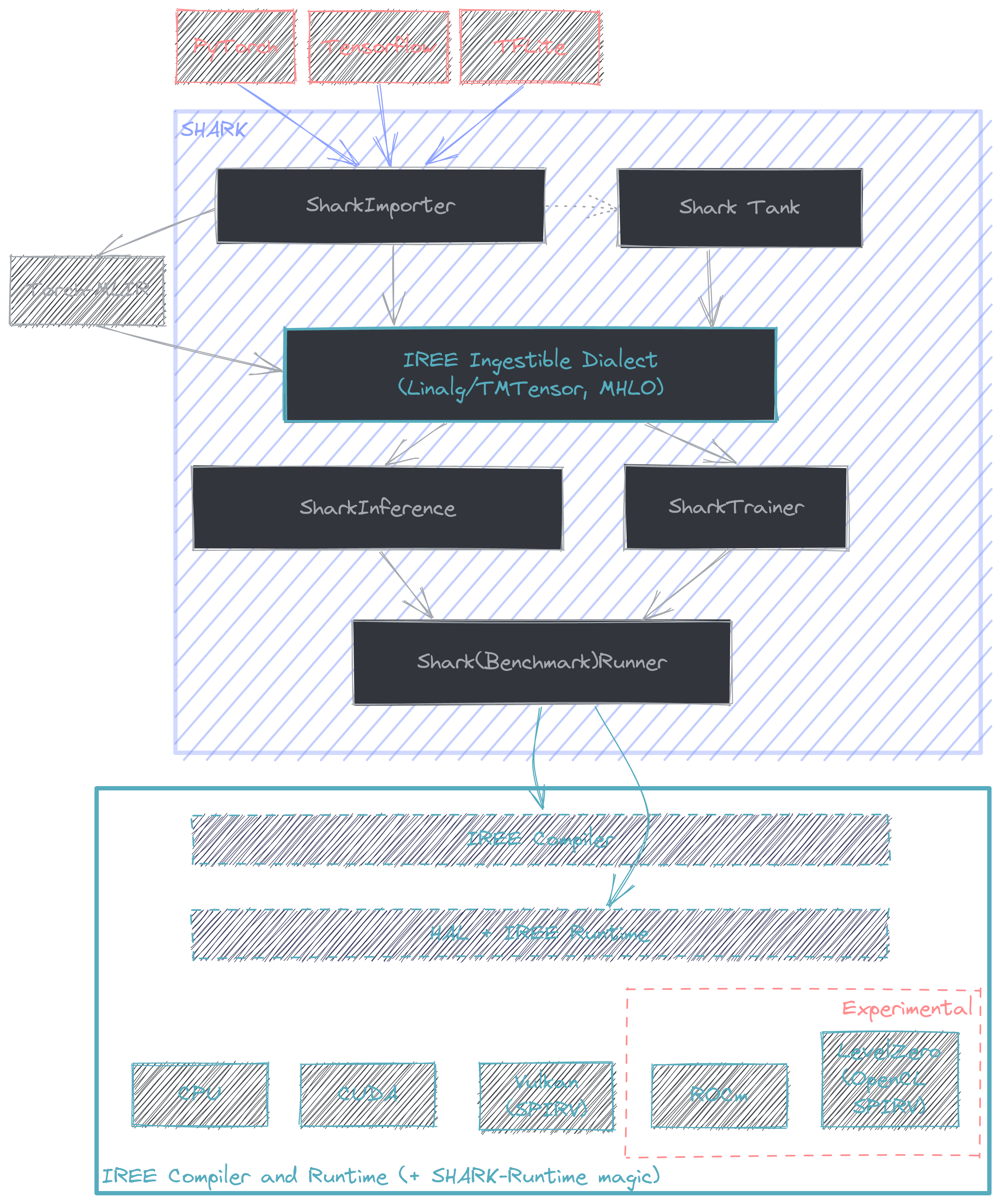
|
||||
|
||||
## Benchmarking with SHARK
|
||||
|
||||
TODO: Expand this section.
|
||||
|
||||
SHARK offers native benchmarking support, although because it is model focused, fine grain profiling is
|
||||
hidden when compared against the common "model benchmarking suite" use case SHARK is good at.
|
||||
|
||||
### SharkBenchmarkRunner
|
||||
|
||||
SharkBenchmarkRunner is a class designed for benchmarking models against other runtimes.
|
||||
TODO: List supported runtimes for comparison + example on how to benchmark with it.
|
||||
|
||||
## Directly profiling IREE
|
||||
|
||||
A number of excellent developer resources on profiling with IREE can be
|
||||
found [here](https://github.com/iree-org/iree/tree/main/docs/developers/developing_iree). As a result this section will
|
||||
focus on the bridging the gap between the two.
|
||||
- https://github.com/iree-org/iree/blob/main/docs/developers/developing_iree/profiling.md
|
||||
- https://github.com/iree-org/iree/blob/main/docs/developers/developing_iree/profiling_with_tracy.md
|
||||
- https://github.com/iree-org/iree/blob/main/docs/developers/developing_iree/profiling_vulkan_gpu.md
|
||||
- https://github.com/iree-org/iree/blob/main/docs/developers/developing_iree/profiling_cpu_events.md
|
||||
|
||||
Internally, SHARK builds a pair of IREE commands to compile + run a model. At a high level the flow starts with the
|
||||
model represented with a high level dialect (commonly Linalg) and is compiled to a flatbuffer (.vmfb) that
|
||||
the runtime is capable of ingesting. At this point (with potentially a few runtime flags) the compiled model is then run
|
||||
through the IREE runtime. This is all facilitated with the IREE python bindings, which offers a convenient method
|
||||
to capture the compile command SHARK comes up with. This is done by setting the environment variable
|
||||
`IREE_SAVE_TEMPS` to point to a directory of choice, e.g. for stable diffusion
|
||||
```
|
||||
# Linux
|
||||
$ export IREE_SAVE_TEMPS=/path/to/some/directory
|
||||
# Windows
|
||||
$ $env:IREE_SAVE_TEMPS="C:\path\to\some\directory"
|
||||
$ python apps/stable_diffusion/scripts/txt2img.py -p "a photograph of an astronaut riding a horse" --save_vmfb
|
||||
```
|
||||
NOTE: Currently this will only save the compile command + input MLIR for a single model if run in a pipeline.
|
||||
In the case of stable diffusion this (should) be UNet so to get examples for other models in the pipeline they
|
||||
need to be extracted and tested individually.
|
||||
|
||||
The save temps directory should contain three files: `core-command-line.txt`, `core-input.mlir`, and `core-output.bin`.
|
||||
The command line for compilation will start something like this, where the `-` needs to be replaced with the path to `core-input.mlir`.
|
||||
```
|
||||
/home/quinn/nod/iree-build/compiler/bindings/python/iree/compiler/tools/../_mlir_libs/iree-compile - --iree-input-type=none ...
|
||||
```
|
||||
The `-o output_filename.vmfb` flag can be used to specify the location to save the compiled vmfb. Note that a dump of the
|
||||
dispatches that can be compiled + run in isolation can be generated by adding `--iree-hal-dump-executable-benchmarks-to=/some/directory`. Say, if they are in the `benchmarks` directory, the following compile/run commands would work for Vulkan on RDNA3.
|
||||
```
|
||||
iree-compile --iree-input-type=none --iree-hal-target-backends=vulkan --iree-vulkan-target-triple=rdna3-unknown-linux --iree-stream-resource-index-bits=64 --iree-vm-target-index-bits=64 benchmarks/module_forward_dispatch_${NUM}_vulkan_spirv_fb.mlir -o benchmarks/module_forward_dispatch_${NUM}_vulkan_spirv_fb.vmfb
|
||||
|
||||
iree-benchmark-module --module=benchmarks/module_forward_dispatch_${NUM}_vulkan_spirv_fb.vmfb --function=forward --device=vulkan
|
||||
```
|
||||
Where `${NUM}` is the dispatch number that you want to benchmark/profile in isolation.
|
||||
|
||||
### Enabling Tracy for Vulkan profiling
|
||||
|
||||
To begin profiling with Tracy, a build of IREE runtime with tracing enabled is needed. SHARK-Runtime builds an
|
||||
instrumented version alongside the normal version nightly (.whls typically found [here](https://github.com/nod-ai/SHARK-Runtime/releases)), however this is only available for Linux. For Windows, tracing can be enabled by enabling a CMake flag.
|
||||
```
|
||||
$env:IREE_ENABLE_RUNTIME_TRACING="ON"
|
||||
```
|
||||
Getting a trace can then be done by setting environment variable `TRACY_NO_EXIT=1` and running the program that is to be
|
||||
traced. Then, to actually capture the trace, use the `iree-tracy-capture` tool in a different terminal. Note that to get
|
||||
the capture and profiler tools the `IREE_BUILD_TRACY=ON` CMake flag needs to be set.
|
||||
```
|
||||
TRACY_NO_EXIT=1 python apps/stable_diffusion/scripts/txt2img.py -p "a photograph of an astronaut riding a horse"
|
||||
|
||||
# (in another terminal, either on the same machine or through ssh with a tunnel through port 8086)
|
||||
iree-tracy-capture -o trace_filename.tracy
|
||||
```
|
||||
To do it over ssh, the flow looks like this
|
||||
```
|
||||
# From terminal 1 on local machine
|
||||
ssh -L 8086:localhost:8086 <remote_server_name>
|
||||
TRACY_NO_EXIT=1 python apps/stable_diffusion/scripts/txt2img.py -p "a photograph of an astronaut riding a horse"
|
||||
|
||||
# From terminal 2 on local machine. Requires having built IREE with the CMake flag `IREE_BUILD_TRACY=ON` to build the required tooling.
|
||||
iree-tracy-capture -o /path/to/trace.tracy
|
||||
```
|
||||
|
||||
The trace can then be viewed with
|
||||
```
|
||||
iree-tracy-profiler /path/to/trace.tracy
|
||||
```
|
||||
Capturing a runtime trace will work with any IREE tooling that uses the runtime. For example, `iree-benchmark-module`
|
||||
can be used for benchmarking an individual module. Importantly this means that any SHARK script can be profiled with tracy.
|
||||
|
||||
NOTE: Not all backends have the same tracy support. This writeup is focused on CPU/Vulkan backends but there is recently added support for tracing on CUDA (requires the `--cuda_tracing` flag).
|
||||
|
||||
## Experimental RGP support
|
||||
|
||||
TODO: This section is temporary until proper RGP support is added.
|
||||
|
||||
Currently, for stable diffusion there is a flag for enabling UNet to be visible to RGP with `--enable_rgp`. To get a proper capture though, the `DevModeSqttPrepareFrameCount=1` flag needs to be set for the driver (done with `VkPanel` on Windows).
|
||||
With these two settings, a single iteration of UNet can be captured.
|
||||
|
||||
(AMD only) To get a dump of the pipelines (result of compiled SPIR-V) the `EnablePipelineDump=1` driver flag can be set. The
|
||||
files will typically be dumped to a directory called `spvPipeline` (on Linux `/var/tmp/spvPipeline`. The dumped files will
|
||||
include header information that can be used to map back to the source dispatch/SPIR-V, e.g.
|
||||
```
|
||||
[Version]
|
||||
version = 57
|
||||
|
||||
[CsSpvFile]
|
||||
fileName = Shader_0x946C08DFD0C10D9A.spv
|
||||
|
||||
[CsInfo]
|
||||
entryPoint = forward_dispatch_193_matmul_256x65536x2304
|
||||
```
|
||||
@@ -2,26 +2,33 @@
|
||||
"""SHARK Tank"""
|
||||
# python generate_sharktank.py, you have to give a csv tile with [model_name, model_download_url]
|
||||
# will generate local shark tank folder like this:
|
||||
# /SHARK
|
||||
# /gen_shark_tank
|
||||
# /albert_lite_base
|
||||
# /...model_name...
|
||||
# HOME
|
||||
# /.local
|
||||
# /shark_tank
|
||||
# /albert_lite_base
|
||||
# /...model_name...
|
||||
#
|
||||
|
||||
import os
|
||||
import csv
|
||||
import argparse
|
||||
from shark.shark_importer import SharkImporter
|
||||
from shark.parser import shark_args
|
||||
import tensorflow as tf
|
||||
import subprocess as sp
|
||||
import hashlib
|
||||
import numpy as np
|
||||
from pathlib import Path
|
||||
from apps.stable_diffusion.src.models import (
|
||||
model_wrappers as mw,
|
||||
)
|
||||
from apps.stable_diffusion.src.utils.stable_args import (
|
||||
args,
|
||||
)
|
||||
|
||||
visible_default = tf.config.list_physical_devices("GPU")
|
||||
try:
|
||||
tf.config.set_visible_devices([], "GPU")
|
||||
visible_devices = tf.config.get_visible_devices()
|
||||
for device in visible_devices:
|
||||
assert device.device_type != "GPU"
|
||||
except:
|
||||
# Invalid device or cannot modify virtual devices once initialized.
|
||||
pass
|
||||
|
||||
|
||||
def create_hash(file_name):
|
||||
@@ -34,12 +41,9 @@ def create_hash(file_name):
|
||||
|
||||
|
||||
def save_torch_model(torch_model_list):
|
||||
from tank.model_utils import (
|
||||
get_hf_model,
|
||||
get_vision_model,
|
||||
get_hf_img_cls_model,
|
||||
get_fp16_model,
|
||||
)
|
||||
from tank.model_utils import get_hf_model
|
||||
from tank.model_utils import get_vision_model
|
||||
from tank.model_utils import get_hf_img_cls_model
|
||||
|
||||
with open(torch_model_list) as csvfile:
|
||||
torch_reader = csv.reader(csvfile, delimiter=",")
|
||||
@@ -52,42 +56,16 @@ def save_torch_model(torch_model_list):
|
||||
|
||||
tracing_required = False if tracing_required == "False" else True
|
||||
is_dynamic = False if is_dynamic == "False" else True
|
||||
print("generating artifacts for: " + torch_model_name)
|
||||
|
||||
model = None
|
||||
input = None
|
||||
if model_type == "stable_diffusion":
|
||||
args.use_tuned = False
|
||||
args.import_mlir = True
|
||||
args.use_tuned = False
|
||||
args.local_tank_cache = WORKDIR
|
||||
|
||||
precision_values = ["fp16"]
|
||||
seq_lengths = [64, 77]
|
||||
for precision_value in precision_values:
|
||||
args.precision = precision_value
|
||||
for length in seq_lengths:
|
||||
model = mw.SharkifyStableDiffusionModel(
|
||||
model_id=torch_model_name,
|
||||
custom_weights="",
|
||||
precision=precision_value,
|
||||
max_len=length,
|
||||
width=512,
|
||||
height=512,
|
||||
use_base_vae=False,
|
||||
debug=True,
|
||||
sharktank_dir=WORKDIR,
|
||||
generate_vmfb=False,
|
||||
)
|
||||
model()
|
||||
continue
|
||||
if model_type == "vision":
|
||||
model, input, _ = get_vision_model(torch_model_name)
|
||||
elif model_type == "hf":
|
||||
model, input, _ = get_hf_model(torch_model_name)
|
||||
elif model_type == "hf_img_cls":
|
||||
model, input, _ = get_hf_img_cls_model(torch_model_name)
|
||||
elif model_type == "fp16":
|
||||
model, input, _ = get_fp16_model(torch_model_name)
|
||||
|
||||
torch_model_name = torch_model_name.replace("/", "_")
|
||||
torch_model_dir = os.path.join(
|
||||
WORKDIR, str(torch_model_name) + "_torch"
|
||||
@@ -105,6 +83,12 @@ def save_torch_model(torch_model_list):
|
||||
dir=torch_model_dir,
|
||||
model_name=torch_model_name,
|
||||
)
|
||||
mlir_hash = create_hash(
|
||||
os.path.join(
|
||||
torch_model_dir, torch_model_name + "_torch" + ".mlir"
|
||||
)
|
||||
)
|
||||
np.save(os.path.join(torch_model_dir, "hash"), np.array(mlir_hash))
|
||||
# Generate torch dynamic models.
|
||||
if is_dynamic:
|
||||
mlir_importer.import_debug(
|
||||
@@ -122,17 +106,6 @@ def save_tf_model(tf_model_list):
|
||||
get_keras_model,
|
||||
get_TFhf_model,
|
||||
)
|
||||
import tensorflow as tf
|
||||
|
||||
visible_default = tf.config.list_physical_devices("GPU")
|
||||
try:
|
||||
tf.config.set_visible_devices([], "GPU")
|
||||
visible_devices = tf.config.get_visible_devices()
|
||||
for device in visible_devices:
|
||||
assert device.device_type != "GPU"
|
||||
except:
|
||||
# Invalid device or cannot modify virtual devices once initialized.
|
||||
pass
|
||||
|
||||
with open(tf_model_list) as csvfile:
|
||||
tf_reader = csv.reader(csvfile, delimiter=",")
|
||||
@@ -156,13 +129,13 @@ def save_tf_model(tf_model_list):
|
||||
tf_model_name = tf_model_name.replace("/", "_")
|
||||
tf_model_dir = os.path.join(WORKDIR, str(tf_model_name) + "_tf")
|
||||
os.makedirs(tf_model_dir, exist_ok=True)
|
||||
|
||||
mlir_importer = SharkImporter(
|
||||
model,
|
||||
inputs=input,
|
||||
input,
|
||||
frontend="tf",
|
||||
)
|
||||
mlir_importer.import_debug(
|
||||
is_dynamic=False,
|
||||
dir=tf_model_dir,
|
||||
model_name=tf_model_name,
|
||||
)
|
||||
@@ -228,51 +201,51 @@ def is_valid_file(arg):
|
||||
|
||||
|
||||
if __name__ == "__main__":
|
||||
# Note, all of these flags are overridden by the import of args from stable_args.py, flags are duplicated temporarily to preserve functionality
|
||||
# parser = argparse.ArgumentParser()
|
||||
# parser.add_argument(
|
||||
# "--torch_model_csv",
|
||||
# type=lambda x: is_valid_file(x),
|
||||
# default="./tank/torch_model_list.csv",
|
||||
# help="""Contains the file with torch_model name and args.
|
||||
# Please see: https://github.com/nod-ai/SHARK/blob/main/tank/torch_model_list.csv""",
|
||||
# )
|
||||
# parser.add_argument(
|
||||
# "--tf_model_csv",
|
||||
# type=lambda x: is_valid_file(x),
|
||||
# default="./tank/tf_model_list.csv",
|
||||
# help="Contains the file with tf model name and args.",
|
||||
# )
|
||||
# parser.add_argument(
|
||||
# "--tflite_model_csv",
|
||||
# type=lambda x: is_valid_file(x),
|
||||
# default="./tank/tflite/tflite_model_list.csv",
|
||||
# help="Contains the file with tf model name and args.",
|
||||
# )
|
||||
# parser.add_argument(
|
||||
# "--ci_tank_dir",
|
||||
# type=bool,
|
||||
# default=False,
|
||||
# )
|
||||
# parser.add_argument("--upload", type=bool, default=False)
|
||||
parser = argparse.ArgumentParser()
|
||||
parser.add_argument(
|
||||
"--torch_model_csv",
|
||||
type=lambda x: is_valid_file(x),
|
||||
default="./tank/torch_model_list.csv",
|
||||
help="""Contains the file with torch_model name and args.
|
||||
Please see: https://github.com/nod-ai/SHARK/blob/main/tank/torch_model_list.csv""",
|
||||
)
|
||||
parser.add_argument(
|
||||
"--tf_model_csv",
|
||||
type=lambda x: is_valid_file(x),
|
||||
default="./tank/tf_model_list.csv",
|
||||
help="Contains the file with tf model name and args.",
|
||||
)
|
||||
parser.add_argument(
|
||||
"--tflite_model_csv",
|
||||
type=lambda x: is_valid_file(x),
|
||||
default="./tank/tflite/tflite_model_list.csv",
|
||||
help="Contains the file with tf model name and args.",
|
||||
)
|
||||
parser.add_argument(
|
||||
"--ci_tank_dir",
|
||||
type=bool,
|
||||
default=False,
|
||||
)
|
||||
parser.add_argument("--upload", type=bool, default=False)
|
||||
|
||||
# old_args = parser.parse_args()
|
||||
args = parser.parse_args()
|
||||
|
||||
home = str(Path.home())
|
||||
WORKDIR = os.path.join(os.path.dirname(__file__), "gen_shark_tank")
|
||||
torch_model_csv = os.path.join(
|
||||
os.path.dirname(__file__), "tank", "torch_model_list.csv"
|
||||
)
|
||||
tf_model_csv = os.path.join(
|
||||
os.path.dirname(__file__), "tank", "tf_model_list.csv"
|
||||
)
|
||||
tflite_model_csv = os.path.join(
|
||||
os.path.dirname(__file__), "tank", "tflite", "tflite_model_list.csv"
|
||||
)
|
||||
if args.ci_tank_dir == True:
|
||||
WORKDIR = os.path.join(os.path.dirname(__file__), "gen_shark_tank")
|
||||
else:
|
||||
WORKDIR = os.path.join(home, ".local/shark_tank/")
|
||||
|
||||
save_torch_model(
|
||||
os.path.join(os.path.dirname(__file__), "tank", "torch_sd_list.csv")
|
||||
)
|
||||
save_torch_model(torch_model_csv)
|
||||
save_tf_model(tf_model_csv)
|
||||
save_tflite_model(tflite_model_csv)
|
||||
if args.torch_model_csv:
|
||||
save_torch_model(args.torch_model_csv)
|
||||
|
||||
if args.tf_model_csv:
|
||||
save_tf_model(args.tf_model_csv)
|
||||
|
||||
if args.tflite_model_csv:
|
||||
save_tflite_model(args.tflite_model_csv)
|
||||
|
||||
if args.upload:
|
||||
git_hash = sp.getoutput("git log -1 --format='%h'") + "/"
|
||||
print("uploading files to gs://shark_tank/" + git_hash)
|
||||
os.system(f"gsutil cp -r {WORKDIR}* gs://shark_tank/" + git_hash)
|
||||
|
||||
@@ -1,78 +0,0 @@
|
||||
# This script will toggle the comment/uncommenting aspect for dealing
|
||||
# with __file__ AttributeError arising in case of a few modules in
|
||||
# `torch/_dynamo/skipfiles.py` (within shark.venv)
|
||||
|
||||
from distutils.sysconfig import get_python_lib
|
||||
import fileinput
|
||||
from pathlib import Path
|
||||
|
||||
# Diffusers 0.13.1 fails with transformers __init.py errros in BLIP. So remove it for now until we fork it
|
||||
pix2pix_init = Path(get_python_lib() + "/diffusers/__init__.py")
|
||||
for line in fileinput.input(pix2pix_init, inplace=True):
|
||||
if "Pix2Pix" in line:
|
||||
if not line.startswith("#"):
|
||||
print(f"#{line}", end="")
|
||||
else:
|
||||
print(f"{line[1:]}", end="")
|
||||
else:
|
||||
print(line, end="")
|
||||
pix2pix_init = Path(get_python_lib() + "/diffusers/pipelines/__init__.py")
|
||||
for line in fileinput.input(pix2pix_init, inplace=True):
|
||||
if "Pix2Pix" in line:
|
||||
if not line.startswith("#"):
|
||||
print(f"#{line}", end="")
|
||||
else:
|
||||
print(f"{line[1:]}", end="")
|
||||
else:
|
||||
print(line, end="")
|
||||
pix2pix_init = Path(
|
||||
get_python_lib() + "/diffusers/pipelines/stable_diffusion/__init__.py"
|
||||
)
|
||||
for line in fileinput.input(pix2pix_init, inplace=True):
|
||||
if "StableDiffusionPix2PixZeroPipeline" in line:
|
||||
if not line.startswith("#"):
|
||||
print(f"#{line}", end="")
|
||||
else:
|
||||
print(f"{line[1:]}", end="")
|
||||
else:
|
||||
print(line, end="")
|
||||
|
||||
path_to_skipfiles = Path(get_python_lib() + "/torch/_dynamo/skipfiles.py")
|
||||
|
||||
modules_to_comment = ["abc,", "os,", "posixpath,", "_collections_abc,"]
|
||||
startMonitoring = 0
|
||||
for line in fileinput.input(path_to_skipfiles, inplace=True):
|
||||
if "SKIP_DIRS = " in line:
|
||||
startMonitoring = 1
|
||||
print(line, end="")
|
||||
elif startMonitoring in [1, 2]:
|
||||
if "]" in line:
|
||||
startMonitoring += 1
|
||||
print(line, end="")
|
||||
else:
|
||||
flag = True
|
||||
for module in modules_to_comment:
|
||||
if module in line:
|
||||
if not line.startswith("#"):
|
||||
print(f"#{line}", end="")
|
||||
else:
|
||||
print(f"{line[1:]}", end="")
|
||||
flag = False
|
||||
break
|
||||
if flag:
|
||||
print(line, end="")
|
||||
else:
|
||||
print(line, end="")
|
||||
|
||||
# For getting around scikit-image's packaging, laze_loader has had a patch merged but yet to be released.
|
||||
# Refer: https://github.com/scientific-python/lazy_loader
|
||||
path_to_lazy_loader = Path(get_python_lib() + "/lazy_loader/__init__.py")
|
||||
|
||||
for line in fileinput.input(path_to_lazy_loader, inplace=True):
|
||||
if 'stubfile = filename if filename.endswith("i")' in line:
|
||||
print(
|
||||
' stubfile = (filename if filename.endswith("i") else f"{os.path.splitext(filename)[0]}.pyi")',
|
||||
end="",
|
||||
)
|
||||
else:
|
||||
print(line, end="")
|
||||
@@ -10,8 +10,3 @@ requires = [
|
||||
"iree-runtime>=20221022.190",
|
||||
]
|
||||
build-backend = "setuptools.build_meta"
|
||||
|
||||
[tool.black]
|
||||
line-length = 79
|
||||
include = '\.pyi?$'
|
||||
|
||||
|
||||
@@ -1,3 +1,3 @@
|
||||
[pytest]
|
||||
addopts = --verbose -p no:warnings
|
||||
norecursedirs = inference tank/tflite examples benchmarks shark
|
||||
norecursedirs = inference tank/tflite
|
||||
|
||||
@@ -2,7 +2,7 @@
|
||||
--pre
|
||||
|
||||
numpy
|
||||
torch
|
||||
torch==1.14.0.dev20221021
|
||||
torchvision
|
||||
|
||||
tqdm
|
||||
@@ -28,7 +28,6 @@ Pillow
|
||||
|
||||
# web dependecies.
|
||||
gradio
|
||||
altair
|
||||
|
||||
# Testing and support.
|
||||
#lit
|
||||
|
||||
@@ -1,10 +1,9 @@
|
||||
-f https://download.pytorch.org/whl/nightly/cpu/torch_nightly.html
|
||||
--pre
|
||||
|
||||
numpy>1.22.4
|
||||
numpy==1.22.4
|
||||
torch
|
||||
torchvision
|
||||
pytorch-triton
|
||||
tabulate
|
||||
|
||||
tqdm
|
||||
|
||||
@@ -15,8 +14,8 @@ iree-tools-tf
|
||||
|
||||
# TensorFlow and JAX.
|
||||
gin-config
|
||||
tf-nightly
|
||||
keras>=2.10
|
||||
tensorflow==2.10
|
||||
keras==2.10
|
||||
#tf-models-nightly
|
||||
#tensorflow-text-nightly
|
||||
transformers
|
||||
@@ -36,7 +35,6 @@ sacremoses
|
||||
|
||||
# web dependecies.
|
||||
gradio
|
||||
altair
|
||||
scipy
|
||||
|
||||
#ONNX and ORT for benchmarking
|
||||
|
||||
@@ -5,27 +5,10 @@ wheel
|
||||
tqdm
|
||||
|
||||
# SHARK Downloader
|
||||
google-cloud-storage
|
||||
gsutil
|
||||
|
||||
# Testing
|
||||
pytest
|
||||
pytest-xdist
|
||||
pytest-forked
|
||||
Pillow
|
||||
parameterized
|
||||
|
||||
# Add transformers, diffusers and scipy since it most commonly used
|
||||
transformers
|
||||
diffusers
|
||||
scipy
|
||||
ftfy
|
||||
gradio
|
||||
altair
|
||||
omegaconf
|
||||
safetensors
|
||||
opencv-python
|
||||
scikit-image
|
||||
|
||||
# Keep PyInstaller at the end. Sometimes Windows Defender flags it but most folks can continue even if it errors
|
||||
pefile
|
||||
pyinstaller
|
||||
|
||||
4
setup.py
4
setup.py
@@ -2,12 +2,11 @@ from setuptools import find_packages
|
||||
from setuptools import setup
|
||||
|
||||
import os
|
||||
import glob
|
||||
|
||||
with open("README.md", "r", encoding="utf-8") as fh:
|
||||
long_description = fh.read()
|
||||
|
||||
PACKAGE_VERSION = os.environ.get("SHARK_PACKAGE_VERSION") or "0.0.5"
|
||||
PACKAGE_VERSION = os.environ.get("SHARK_PACKAGE_VERSION") or "0.0.4"
|
||||
backend_deps = []
|
||||
if "NO_BACKEND" in os.environ.keys():
|
||||
backend_deps = [
|
||||
@@ -35,7 +34,6 @@ setup(
|
||||
],
|
||||
packages=find_packages(exclude=("examples")),
|
||||
python_requires=">=3.9",
|
||||
data_files=glob.glob("apps/stable_diffusion/resources/**"),
|
||||
install_requires=[
|
||||
"numpy",
|
||||
"PyYAML",
|
||||
|
||||
@@ -1,54 +1,13 @@
|
||||
<#
|
||||
.SYNOPSIS
|
||||
A script to update and install the SHARK runtime and its dependencies.
|
||||
#Write-Host "Installing python"
|
||||
|
||||
.DESCRIPTION
|
||||
This script updates and installs the SHARK runtime and its dependencies.
|
||||
It checks the Python version installed and installs any required build
|
||||
dependencies into a Python virtual environment.
|
||||
If that environment does not exist, it creates it.
|
||||
|
||||
.PARAMETER update-src
|
||||
git pulls latest version
|
||||
#Start-Process winget install Python.Python.3.10 '/quiet InstallAllUsers=1 PrependPath=1' -wait -NoNewWindow
|
||||
|
||||
.PARAMETER force
|
||||
removes and recreates venv to force update of all dependencies
|
||||
|
||||
.EXAMPLE
|
||||
.\setup_venv.ps1 --force
|
||||
#Write-Host "python installation completed successfully"
|
||||
|
||||
.EXAMPLE
|
||||
.\setup_venv.ps1 --update-src
|
||||
#Write-Host "Reload environment variables"
|
||||
#$env:Path = [System.Environment]::GetEnvironmentVariable("Path","Machine") + ";" + [System.Environment]::GetEnvironmentVariable("Path","User")
|
||||
#Write-Host "Reloaded environment variables"
|
||||
|
||||
.INPUTS
|
||||
None
|
||||
|
||||
.OUTPUTS
|
||||
None
|
||||
|
||||
#>
|
||||
|
||||
param([string]$arguments)
|
||||
|
||||
if ($arguments -eq "--update-src"){
|
||||
git pull
|
||||
}
|
||||
|
||||
if ($arguments -eq "--force"){
|
||||
if (Test-Path env:VIRTUAL_ENV) {
|
||||
Write-Host "deactivating..."
|
||||
Deactivate
|
||||
}
|
||||
|
||||
if (Test-Path .\shark.venv\) {
|
||||
Write-Host "removing and recreating venv..."
|
||||
Remove-Item .\shark.venv -Force -Recurse
|
||||
if (Test-Path .\shark.venv\) {
|
||||
Write-Host 'could not remove .\shark-venv - please try running ".\setup_venv.ps1 --force" again!'
|
||||
break
|
||||
}
|
||||
}
|
||||
}
|
||||
|
||||
# redirect stderr into stdout
|
||||
$p = &{python -V} 2>&1
|
||||
@@ -60,38 +19,22 @@ $version = if($p -is [System.Management.Automation.ErrorRecord])
|
||||
}
|
||||
else
|
||||
{
|
||||
# otherwise return complete Python list
|
||||
$ErrorActionPreference = 'SilentlyContinue'
|
||||
$PyVer = py --list
|
||||
# otherwise return as is
|
||||
$p
|
||||
}
|
||||
|
||||
# deactivate any activated venvs
|
||||
if ($PyVer -like "*venv*")
|
||||
{
|
||||
deactivate # make sure we don't update the wrong venv
|
||||
$PyVer = py --list # update list
|
||||
}
|
||||
Write-Host "Python version found is"
|
||||
Write-Host $p
|
||||
|
||||
Write-Host "Python versions found are"
|
||||
Write-Host ($PyVer | Out-String) # formatted output with line breaks
|
||||
if (!($PyVer.length -ne 0)) {$p} # return Python --version String if py.exe is unavailable
|
||||
if (!($PyVer -like "*3.11*") -and !($p -like "*3.11*")) # if 3.11 is not in any list
|
||||
{
|
||||
Write-Host "Please install Python 3.11 and try again"
|
||||
break
|
||||
}
|
||||
|
||||
Write-Host "Installing Build Dependencies"
|
||||
# make sure we really use 3.11 from list, even if it's not the default.
|
||||
if (!($PyVer.length -ne 0)) {py -3.11 -m venv .\shark.venv\}
|
||||
else {python -m venv .\shark.venv\}
|
||||
python -m venv .\shark.venv\
|
||||
.\shark.venv\Scripts\activate
|
||||
python -m pip install --upgrade pip
|
||||
pip install wheel
|
||||
pip install -r requirements.txt
|
||||
pip install --pre torch-mlir torch --extra-index-url https://download.pytorch.org/whl/nightly/cpu -f https://llvm.github.io/torch-mlir/package-index/
|
||||
pip install --pre torch-mlir torch torchvision --extra-index-url https://download.pytorch.org/whl/nightly/cu116 -f https://llvm.github.io/torch-mlir/package-index/
|
||||
pip install --upgrade -f https://nod-ai.github.io/SHARK-Runtime/pip-release-links.html iree-compiler iree-runtime
|
||||
Write-Host "Building SHARK..."
|
||||
pip install -e . -f https://llvm.github.io/torch-mlir/package-index/ -f https://nod-ai.github.io/SHARK-Runtime/pip-release-links.html
|
||||
pip install diffusers transformers scipy pillow gradio
|
||||
Write-Host "Build and installation completed successfully"
|
||||
Write-Host "Source your venv with ./shark.venv/Scripts/activate"
|
||||
|
||||
@@ -42,7 +42,7 @@ Green=`tput setaf 2`
|
||||
Yellow=`tput setaf 3`
|
||||
|
||||
# Assume no binary torch-mlir.
|
||||
# Currently available for macOS m1&intel (3.11) and Linux(3.8,3.10,3.11)
|
||||
# Currently available for macOS m1&intel (3.10) and Linux(3.7,3.8,3.9,3.10)
|
||||
torch_mlir_bin=false
|
||||
if [[ $(uname -s) = 'Darwin' ]]; then
|
||||
echo "${Yellow}Apple macOS detected"
|
||||
@@ -60,12 +60,12 @@ if [[ $(uname -s) = 'Darwin' ]]; then
|
||||
fi
|
||||
echo "${Yellow}Run the following commands to setup your SSL certs for your Python version if you see SSL errors with tests"
|
||||
echo "${Yellow}/Applications/Python\ 3.XX/Install\ Certificates.command"
|
||||
if [ "$PYTHON_VERSION_X_Y" == "3.11" ]; then
|
||||
if [ "$PYTHON_VERSION_X_Y" == "3.10" ]; then
|
||||
torch_mlir_bin=true
|
||||
fi
|
||||
elif [[ $(uname -s) = 'Linux' ]]; then
|
||||
echo "${Yellow}Linux detected"
|
||||
if [ "$PYTHON_VERSION_X_Y" == "3.8" ] || [ "$PYTHON_VERSION_X_Y" == "3.10" ] || [ "$PYTHON_VERSION_X_Y" == "3.11" ] ; then
|
||||
if [ "$PYTHON_VERSION_X_Y" == "3.7" ] || [ "$PYTHON_VERSION_X_Y" == "3.8" ] || [ "$PYTHON_VERSION_X_Y" == "3.9" ] || [ "$PYTHON_VERSION_X_Y" == "3.10" ] ; then
|
||||
torch_mlir_bin=true
|
||||
fi
|
||||
else
|
||||
@@ -77,8 +77,7 @@ $PYTHON -m pip install --upgrade pip || die "Could not upgrade pip"
|
||||
$PYTHON -m pip install --upgrade -r "$TD/requirements.txt"
|
||||
if [ "$torch_mlir_bin" = true ]; then
|
||||
if [[ $(uname -s) = 'Darwin' ]]; then
|
||||
echo "MacOS detected. Installing torch-mlir from .whl, to avoid dependency problems with torch."
|
||||
$PYTHON -m pip install --pre --no-cache-dir torch-mlir -f https://llvm.github.io/torch-mlir/package-index/ -f https://download.pytorch.org/whl/nightly/torch/
|
||||
echo "MacOS detected. Please install torch-mlir from source or .whl, as dependency problems may occur otherwise."
|
||||
else
|
||||
$PYTHON -m pip install --pre torch-mlir -f https://llvm.github.io/torch-mlir/package-index/
|
||||
if [ $? -eq 0 ];then
|
||||
@@ -89,51 +88,44 @@ if [ "$torch_mlir_bin" = true ]; then
|
||||
fi
|
||||
else
|
||||
echo "${Red}No binaries found for Python $PYTHON_VERSION_X_Y on $(uname -s)"
|
||||
echo "${Yello}Python 3.11 supported on macOS and 3.8,3.10 and 3.11 on Linux"
|
||||
echo "${Yello}Python 3.10 supported on macOS and 3.7,3.8,3.9 and 3.10 on Linux"
|
||||
echo "${Red}Please build torch-mlir from source in your environment"
|
||||
exit 1
|
||||
fi
|
||||
if [[ -z "${USE_IREE}" ]]; then
|
||||
rm .use-iree
|
||||
RUNTIME="https://nod-ai.github.io/SHARK-Runtime/pip-release-links.html"
|
||||
else
|
||||
touch ./.use-iree
|
||||
RUNTIME="https://openxla.github.io/iree/pip-release-links.html"
|
||||
RUNTIME="https://iree-org.github.io/iree/pip-release-links.html"
|
||||
fi
|
||||
if [[ -z "${NO_BACKEND}" ]]; then
|
||||
echo "Installing ${RUNTIME}..."
|
||||
$PYTHON -m pip install --pre --upgrade --find-links ${RUNTIME} iree-compiler iree-runtime
|
||||
$PYTHON -m pip install --upgrade --find-links ${RUNTIME} iree-compiler iree-runtime
|
||||
else
|
||||
echo "Not installing a backend, please make sure to add your backend to PYTHONPATH"
|
||||
fi
|
||||
|
||||
if [[ ! -z "${IMPORTER}" ]]; then
|
||||
echo "${Yellow}Installing importer tools.."
|
||||
if [[ $(uname -s) = 'Linux' ]]; then
|
||||
echo "${Yellow}Linux detected.. installing Linux importer tools"
|
||||
#Always get the importer tools from upstream IREE
|
||||
$PYTHON -m pip install --no-warn-conflicts --upgrade -r "$TD/requirements-importer.txt" -f https://openxla.github.io/iree/pip-release-links.html --extra-index-url https://download.pytorch.org/whl/nightly/cpu
|
||||
$PYTHON -m pip install --upgrade -r "$TD/requirements-importer.txt" -f https://iree-org.github.io/iree/pip-release-links.html --extra-index-url https://download.pytorch.org/whl/nightly/cpu
|
||||
elif [[ $(uname -s) = 'Darwin' ]]; then
|
||||
echo "${Yellow}macOS detected.. installing macOS importer tools"
|
||||
#Conda seems to have some problems installing these packages and hope they get resolved upstream.
|
||||
$PYTHON -m pip install --no-warn-conflicts --upgrade -r "$TD/requirements-importer-macos.txt" -f ${RUNTIME} --extra-index-url https://download.pytorch.org/whl/nightly/cpu
|
||||
$PYTHON -m pip install --upgrade -r "$TD/requirements-importer-macos.txt" -f ${RUNTIME} --extra-index-url https://download.pytorch.org/whl/nightly/cpu
|
||||
$PYTHON -m pip install https://github.com/llvm/torch-mlir/releases/download/snapshot-20221024.636/torch_mlir-20221024.636-cp310-cp310-macosx_11_0_universal2.whl
|
||||
fi
|
||||
fi
|
||||
|
||||
$PYTHON -m pip install --no-warn-conflicts -e . -f https://llvm.github.io/torch-mlir/package-index/ -f ${RUNTIME} -f https://download.pytorch.org/whl/nightly/torch/
|
||||
$PYTHON -m pip install -e . -f https://llvm.github.io/torch-mlir/package-index/ -f ${RUNTIME}
|
||||
|
||||
if [[ $(uname -s) = 'Linux' && ! -z "${BENCHMARK}" ]]; then
|
||||
T_VER=$($PYTHON -m pip show torch | grep Version)
|
||||
TORCH_VERSION=${T_VER:9:17}
|
||||
TV_VER=$($PYTHON -m pip show torchvision | grep Version)
|
||||
TV_VERSION=${TV_VER:9:18}
|
||||
$PYTHON -m pip uninstall -y torch torchvision
|
||||
$PYTHON -m pip install -U --pre --no-warn-conflicts triton
|
||||
$PYTHON -m pip install --no-deps https://download.pytorch.org/whl/nightly/cu117/torch-${TORCH_VERSION}%2Bcu117-cp311-cp311-linux_x86_64.whl https://download.pytorch.org/whl/nightly/cu117/torchvision-${TV_VERSION}%2Bcu117-cp311-cp311-linux_x86_64.whl
|
||||
$PYTHON -m pip install --pre torch torchvision --extra-index-url https://download.pytorch.org/whl/nightly/cu116
|
||||
if [ $? -eq 0 ];then
|
||||
echo "Successfully Installed torch + cu117."
|
||||
echo "Successfully Installed torch + cu116."
|
||||
else
|
||||
echo "Could not install torch + cu117." >&2
|
||||
echo "Could not install torch + cu116." >&2
|
||||
fi
|
||||
fi
|
||||
|
||||
|
||||
@@ -1,6 +1,6 @@
|
||||
import torchdynamo
|
||||
import torch
|
||||
import torch_mlir
|
||||
import torch._dynamo as torchdynamo
|
||||
from shark.sharkdynamo.utils import make_shark_compiler
|
||||
|
||||
|
||||
|
||||
@@ -36,9 +36,7 @@
|
||||
" from torchdynamo.optimizations.backends import create_backend\n",
|
||||
" from torchdynamo.optimizations.subgraph import SubGraph\n",
|
||||
"except ModuleNotFoundError:\n",
|
||||
" print(\n",
|
||||
" \"Please install TorchDynamo using pip install git+https://github.com/pytorch/torchdynamo\"\n",
|
||||
" )\n",
|
||||
" print(\"Please install TorchDynamo using pip install git+https://github.com/pytorch/torchdynamo\")\n",
|
||||
" exit()\n",
|
||||
"\n",
|
||||
"# torch-mlir imports for compiling\n",
|
||||
@@ -99,9 +97,7 @@
|
||||
"\n",
|
||||
" for node in fx_g.graph.nodes:\n",
|
||||
" if node.op == \"output\":\n",
|
||||
" assert (\n",
|
||||
" len(node.args) == 1\n",
|
||||
" ), \"Output node must have a single argument\"\n",
|
||||
" assert len(node.args) == 1, \"Output node must have a single argument\"\n",
|
||||
" node_arg = node.args[0]\n",
|
||||
" if isinstance(node_arg, tuple) and len(node_arg) == 1:\n",
|
||||
" node.args = (node_arg[0],)\n",
|
||||
@@ -120,12 +116,8 @@
|
||||
" if len(args) == 1 and isinstance(args[0], list):\n",
|
||||
" args = args[0]\n",
|
||||
"\n",
|
||||
" linalg_module = compile(\n",
|
||||
" ts_graph, args, output_type=OutputType.LINALG_ON_TENSORS\n",
|
||||
" )\n",
|
||||
" callable, _ = get_iree_compiled_module(\n",
|
||||
" linalg_module, \"cuda\", func_name=\"forward\"\n",
|
||||
" )\n",
|
||||
" linalg_module = compile(ts_graph, args, output_type=OutputType.LINALG_ON_TENSORS)\n",
|
||||
" callable, _ = get_iree_compiled_module(linalg_module, \"cuda\", func_name=\"forward\")\n",
|
||||
"\n",
|
||||
" def forward(*inputs):\n",
|
||||
" return callable(*inputs)\n",
|
||||
@@ -220,7 +212,6 @@
|
||||
" assert isinstance(subgraph, SubGraph), \"Model must be a dynamo SubGraph.\"\n",
|
||||
" return __torch_mlir(subgraph.model, *list(subgraph.example_inputs))\n",
|
||||
"\n",
|
||||
"\n",
|
||||
"@torchdynamo.optimize(\"torch_mlir\")\n",
|
||||
"def toy_example2(*args):\n",
|
||||
" a, b = args\n",
|
||||
|
||||
@@ -22,7 +22,7 @@ class CLIPModule(tf.Module):
|
||||
input_ids=x, attention_mask=y, pixel_values=z
|
||||
)
|
||||
|
||||
@tf.function(input_signature=clip_vit_inputs, jit_compile=True)
|
||||
@tf.function(input_signature=clip_vit_inputs)
|
||||
def forward(self, input_ids, attention_mask, pixel_values):
|
||||
return self.m.predict(
|
||||
input_ids, attention_mask, pixel_values
|
||||
|
||||
@@ -1,15 +0,0 @@
|
||||
## Running ESRGAN
|
||||
|
||||
```
|
||||
1. pip install numpy opencv-python
|
||||
2. mkdir InputImages
|
||||
(this is where all the input images will reside in)
|
||||
3. mkdir OutputImages
|
||||
(this is where the model will generate all the images)
|
||||
4. mkdir models
|
||||
(save the .pth checkpoint file here)
|
||||
5. python esrgan.py
|
||||
```
|
||||
|
||||
- Download [RRDB_ESRGAN_x4.pth](https://drive.google.com/drive/u/0/folders/17VYV_SoZZesU6mbxz2dMAIccSSlqLecY) and place it in the `models` directory as mentioned above in step 4.
|
||||
- Credits : [ESRGAN](https://github.com/xinntao/ESRGAN)
|
||||
@@ -1,239 +0,0 @@
|
||||
from ast import arg
|
||||
import os.path as osp
|
||||
import glob
|
||||
import cv2
|
||||
import numpy as np
|
||||
import torch
|
||||
|
||||
from torch.fx.experimental.proxy_tensor import make_fx
|
||||
from torch._decomp import get_decompositions
|
||||
from shark.shark_inference import SharkInference
|
||||
import torch_mlir
|
||||
import tempfile
|
||||
import functools
|
||||
import torch
|
||||
import torch.nn as nn
|
||||
import torch.nn.functional as F
|
||||
|
||||
|
||||
def make_layer(block, n_layers):
|
||||
layers = []
|
||||
for _ in range(n_layers):
|
||||
layers.append(block())
|
||||
return nn.Sequential(*layers)
|
||||
|
||||
|
||||
class ResidualDenseBlock_5C(nn.Module):
|
||||
def __init__(self, nf=64, gc=32, bias=True):
|
||||
super(ResidualDenseBlock_5C, self).__init__()
|
||||
# gc: growth channel, i.e. intermediate channels
|
||||
self.conv1 = nn.Conv2d(nf, gc, 3, 1, 1, bias=bias)
|
||||
self.conv2 = nn.Conv2d(nf + gc, gc, 3, 1, 1, bias=bias)
|
||||
self.conv3 = nn.Conv2d(nf + 2 * gc, gc, 3, 1, 1, bias=bias)
|
||||
self.conv4 = nn.Conv2d(nf + 3 * gc, gc, 3, 1, 1, bias=bias)
|
||||
self.conv5 = nn.Conv2d(nf + 4 * gc, nf, 3, 1, 1, bias=bias)
|
||||
self.lrelu = nn.LeakyReLU(negative_slope=0.2, inplace=True)
|
||||
|
||||
# initialization
|
||||
# mutil.initialize_weights([self.conv1, self.conv2, self.conv3, self.conv4, self.conv5], 0.1)
|
||||
|
||||
def forward(self, x):
|
||||
x1 = self.lrelu(self.conv1(x))
|
||||
x2 = self.lrelu(self.conv2(torch.cat((x, x1), 1)))
|
||||
x3 = self.lrelu(self.conv3(torch.cat((x, x1, x2), 1)))
|
||||
x4 = self.lrelu(self.conv4(torch.cat((x, x1, x2, x3), 1)))
|
||||
x5 = self.conv5(torch.cat((x, x1, x2, x3, x4), 1))
|
||||
return x5 * 0.2 + x
|
||||
|
||||
|
||||
class RRDB(nn.Module):
|
||||
"""Residual in Residual Dense Block"""
|
||||
|
||||
def __init__(self, nf, gc=32):
|
||||
super(RRDB, self).__init__()
|
||||
self.RDB1 = ResidualDenseBlock_5C(nf, gc)
|
||||
self.RDB2 = ResidualDenseBlock_5C(nf, gc)
|
||||
self.RDB3 = ResidualDenseBlock_5C(nf, gc)
|
||||
|
||||
def forward(self, x):
|
||||
out = self.RDB1(x)
|
||||
out = self.RDB2(out)
|
||||
out = self.RDB3(out)
|
||||
return out * 0.2 + x
|
||||
|
||||
|
||||
class RRDBNet(nn.Module):
|
||||
def __init__(self, in_nc, out_nc, nf, nb, gc=32):
|
||||
super(RRDBNet, self).__init__()
|
||||
RRDB_block_f = functools.partial(RRDB, nf=nf, gc=gc)
|
||||
|
||||
self.conv_first = nn.Conv2d(in_nc, nf, 3, 1, 1, bias=True)
|
||||
self.RRDB_trunk = make_layer(RRDB_block_f, nb)
|
||||
self.trunk_conv = nn.Conv2d(nf, nf, 3, 1, 1, bias=True)
|
||||
#### upsampling
|
||||
self.upconv1 = nn.Conv2d(nf, nf, 3, 1, 1, bias=True)
|
||||
self.upconv2 = nn.Conv2d(nf, nf, 3, 1, 1, bias=True)
|
||||
self.HRconv = nn.Conv2d(nf, nf, 3, 1, 1, bias=True)
|
||||
self.conv_last = nn.Conv2d(nf, out_nc, 3, 1, 1, bias=True)
|
||||
|
||||
self.lrelu = nn.LeakyReLU(negative_slope=0.2, inplace=True)
|
||||
|
||||
def forward(self, x):
|
||||
fea = self.conv_first(x)
|
||||
trunk = self.trunk_conv(self.RRDB_trunk(fea))
|
||||
fea = fea + trunk
|
||||
|
||||
fea = self.lrelu(
|
||||
self.upconv1(F.interpolate(fea, scale_factor=2, mode="nearest"))
|
||||
)
|
||||
fea = self.lrelu(
|
||||
self.upconv2(F.interpolate(fea, scale_factor=2, mode="nearest"))
|
||||
)
|
||||
out = self.conv_last(self.lrelu(self.HRconv(fea)))
|
||||
|
||||
return out
|
||||
|
||||
|
||||
############### Parsing args #####################
|
||||
import argparse
|
||||
|
||||
p = argparse.ArgumentParser(
|
||||
description=__doc__, formatter_class=argparse.ArgumentDefaultsHelpFormatter
|
||||
)
|
||||
|
||||
p.add_argument("--device", type=str, default="cpu", help="the device to use")
|
||||
p.add_argument(
|
||||
"--mlir_loc",
|
||||
type=str,
|
||||
default=None,
|
||||
help="location of the model's mlir file",
|
||||
)
|
||||
args = p.parse_args()
|
||||
###################################################
|
||||
|
||||
|
||||
def inference(input_m):
|
||||
return model(input_m)
|
||||
|
||||
|
||||
def load_mlir(mlir_loc):
|
||||
import os
|
||||
|
||||
if mlir_loc == None:
|
||||
return None
|
||||
print(f"Trying to load the model from {mlir_loc}.")
|
||||
with open(os.path.join(mlir_loc)) as f:
|
||||
mlir_module = f.read()
|
||||
return mlir_module
|
||||
|
||||
|
||||
def compile_through_fx(model, inputs, mlir_loc=None):
|
||||
module = load_mlir(mlir_loc)
|
||||
if module == None:
|
||||
fx_g = make_fx(
|
||||
model,
|
||||
decomposition_table=get_decompositions(
|
||||
[
|
||||
torch.ops.aten.embedding_dense_backward,
|
||||
torch.ops.aten.native_layer_norm_backward,
|
||||
torch.ops.aten.slice_backward,
|
||||
torch.ops.aten.select_backward,
|
||||
torch.ops.aten.norm.ScalarOpt_dim,
|
||||
torch.ops.aten.native_group_norm,
|
||||
torch.ops.aten.upsample_bilinear2d.vec,
|
||||
torch.ops.aten.split.Tensor,
|
||||
torch.ops.aten.split_with_sizes,
|
||||
]
|
||||
),
|
||||
)(inputs)
|
||||
|
||||
fx_g.graph.set_codegen(torch.fx.graph.CodeGen())
|
||||
fx_g.recompile()
|
||||
|
||||
def strip_overloads(gm):
|
||||
"""
|
||||
Modifies the target of graph nodes in :attr:`gm` to strip overloads.
|
||||
Args:
|
||||
gm(fx.GraphModule): The input Fx graph module to be modified
|
||||
"""
|
||||
for node in gm.graph.nodes:
|
||||
if isinstance(node.target, torch._ops.OpOverload):
|
||||
node.target = node.target.overloadpacket
|
||||
gm.recompile()
|
||||
|
||||
strip_overloads(fx_g)
|
||||
|
||||
ts_g = torch.jit.script(fx_g)
|
||||
|
||||
print("Torchscript graph generated successfully")
|
||||
module = torch_mlir.compile(
|
||||
ts_g,
|
||||
inputs,
|
||||
torch_mlir.OutputType.LINALG_ON_TENSORS,
|
||||
use_tracing=False,
|
||||
verbose=False,
|
||||
)
|
||||
|
||||
mlir_model = str(module)
|
||||
func_name = "forward"
|
||||
shark_module = SharkInference(
|
||||
mlir_model, func_name, device=args.device, mlir_dialect="linalg"
|
||||
)
|
||||
shark_module.compile()
|
||||
|
||||
return shark_module
|
||||
|
||||
|
||||
model_path = "models/RRDB_ESRGAN_x4.pth" # models/RRDB_ESRGAN_x4.pth OR models/RRDB_PSNR_x4.pth
|
||||
# device = torch.device('cuda') # if you want to run on CPU, change 'cuda' -> cpu
|
||||
device = torch.device("cpu")
|
||||
|
||||
test_img_folder = "InputImages/*"
|
||||
|
||||
model = RRDBNet(3, 3, 64, 23, gc=32)
|
||||
model.load_state_dict(torch.load(model_path), strict=True)
|
||||
model.eval()
|
||||
model = model.to(device)
|
||||
|
||||
print("Model path {:s}. \nTesting...".format(model_path))
|
||||
|
||||
if __name__ == "__main__":
|
||||
idx = 0
|
||||
for path in glob.glob(test_img_folder):
|
||||
idx += 1
|
||||
base = osp.splitext(osp.basename(path))[0]
|
||||
print(idx, base)
|
||||
# read images
|
||||
img = cv2.imread(path, cv2.IMREAD_COLOR)
|
||||
img = img * 1.0 / 255
|
||||
img = torch.from_numpy(
|
||||
np.transpose(img[:, :, [2, 1, 0]], (2, 0, 1))
|
||||
).float()
|
||||
img_LR = img.unsqueeze(0)
|
||||
img_LR = img_LR.to(device)
|
||||
|
||||
with torch.no_grad():
|
||||
shark_module = compile_through_fx(inference, img_LR)
|
||||
shark_output = shark_module.forward((img_LR,))
|
||||
shark_output = torch.from_numpy(shark_output)
|
||||
shark_output = (
|
||||
shark_output.data.squeeze().float().cpu().clamp_(0, 1).numpy()
|
||||
)
|
||||
esrgan_output = (
|
||||
model(img_LR).data.squeeze().float().cpu().clamp_(0, 1).numpy()
|
||||
)
|
||||
# SHARK OUTPUT
|
||||
shark_output = np.transpose(shark_output[[2, 1, 0], :, :], (1, 2, 0))
|
||||
shark_output = (shark_output * 255.0).round()
|
||||
cv2.imwrite(
|
||||
"OutputImages/{:s}_rlt_shark_output.png".format(base), shark_output
|
||||
)
|
||||
print("Generated SHARK's output")
|
||||
# ESRGAN OUTPUT
|
||||
esrgan_output = np.transpose(esrgan_output[[2, 1, 0], :, :], (1, 2, 0))
|
||||
esrgan_output = (esrgan_output * 255.0).round()
|
||||
cv2.imwrite(
|
||||
"OutputImages/{:s}_rlt_esrgan_output.png".format(base),
|
||||
esrgan_output,
|
||||
)
|
||||
print("Generated ESRGAN's output")
|
||||
@@ -28,7 +28,7 @@ class AlbertModule(tf.Module):
|
||||
self.m = TFAutoModelForMaskedLM.from_pretrained("albert-base-v2")
|
||||
self.m.predict = lambda x, y: self.m(input_ids=x, attention_mask=y)
|
||||
|
||||
@tf.function(input_signature=t5_inputs, jit_compile=True)
|
||||
@tf.function(input_signature=t5_inputs)
|
||||
def forward(self, input_ids, attention_mask):
|
||||
return self.m.predict(input_ids, attention_mask)
|
||||
|
||||
|
||||
@@ -1,9 +1,7 @@
|
||||
from shark.shark_inference import SharkInference
|
||||
from shark.shark_downloader import download_model
|
||||
from shark.shark_downloader import download_torch_model
|
||||
|
||||
mlir_model, func_name, inputs, golden_out = download_model(
|
||||
"bloom", frontend="torch"
|
||||
)
|
||||
mlir_model, func_name, inputs, golden_out = download_torch_model("bloom")
|
||||
|
||||
shark_module = SharkInference(
|
||||
mlir_model, func_name, device="cpu", mlir_dialect="tm_tensor"
|
||||
|
||||
@@ -19,7 +19,7 @@ class GPT2Module(tf.Module):
|
||||
|
||||
self.m.predict = lambda x, y: self.m(input_ids=x, attention_mask=y)
|
||||
|
||||
@tf.function(input_signature=gpt2_inputs, jit_compile=True)
|
||||
@tf.function(input_signature=gpt2_inputs)
|
||||
def forward(self, input_ids, attention_mask):
|
||||
return self.m.predict(input_ids, attention_mask)
|
||||
|
||||
|
||||
@@ -1,18 +0,0 @@
|
||||
# SHARK LLaMA
|
||||
|
||||
## TORCH-MLIR Version
|
||||
|
||||
```
|
||||
https://github.com/nod-ai/torch-mlir.git
|
||||
```
|
||||
Then check out the `complex` branch and `git submodule update --init` and then build with `.\build_tools\python_deploy\build_windows.ps1`
|
||||
|
||||
### Setup & Run
|
||||
```
|
||||
git clone https://github.com/nod-ai/llama.git
|
||||
```
|
||||
Then in this repository
|
||||
```
|
||||
pip install -e .
|
||||
python llama/shark_model.py
|
||||
```
|
||||
@@ -26,7 +26,7 @@ class BertModule(tf.Module):
|
||||
input_ids=x, attention_mask=y, token_type_ids=z, training=False
|
||||
)
|
||||
|
||||
@tf.function(input_signature=bert_input, jit_compile=True)
|
||||
@tf.function(input_signature=bert_input)
|
||||
def forward(self, input_ids, attention_mask, token_type_ids):
|
||||
return self.m.predict(input_ids, attention_mask, token_type_ids)
|
||||
|
||||
|
||||
@@ -1,10 +1,9 @@
|
||||
from shark.shark_inference import SharkInference
|
||||
from shark.shark_downloader import download_model
|
||||
from shark.shark_downloader import download_torch_model
|
||||
|
||||
|
||||
mlir_model, func_name, inputs, golden_out = download_model(
|
||||
"microsoft/MiniLM-L12-H384-uncased",
|
||||
frontend="torch",
|
||||
mlir_model, func_name, inputs, golden_out = download_torch_model(
|
||||
"microsoft/MiniLM-L12-H384-uncased"
|
||||
)
|
||||
|
||||
|
||||
|
||||
@@ -26,7 +26,7 @@ class BertModule(tf.Module):
|
||||
input_ids=x, attention_mask=y, token_type_ids=z, training=False
|
||||
)
|
||||
|
||||
@tf.function(input_signature=bert_input, jit_compile=True)
|
||||
@tf.function(input_signature=bert_input)
|
||||
def forward(self, input_ids, attention_mask, token_type_ids):
|
||||
return self.m.predict(input_ids, attention_mask, token_type_ids)
|
||||
|
||||
|
||||
@@ -5,7 +5,7 @@ import torchvision.models as models
|
||||
from torchvision import transforms
|
||||
import sys
|
||||
from shark.shark_inference import SharkInference
|
||||
from shark.shark_downloader import download_model
|
||||
from shark.shark_downloader import download_torch_model
|
||||
|
||||
|
||||
################################## Preprocessing inputs and model ############
|
||||
@@ -66,9 +66,7 @@ labels = load_labels()
|
||||
|
||||
|
||||
## Can pass any img or input to the forward module.
|
||||
mlir_model, func_name, inputs, golden_out = download_model(
|
||||
"resnet50", frontend="torch"
|
||||
)
|
||||
mlir_model, func_name, inputs, golden_out = download_torch_model("resnet50")
|
||||
|
||||
shark_module = SharkInference(mlir_model, func_name, mlir_dialect="linalg")
|
||||
shark_module.compile()
|
||||
|
||||
@@ -1,842 +0,0 @@
|
||||
####################################################################################
|
||||
# Please make sure you have transformers 4.21.2 installed before running this demo
|
||||
#
|
||||
# -p --model_path: the directory in which you want to store the bloom files.
|
||||
# -dl --device_list: the list of device indices you want to use. if you want to only use the first device, or you are running on cpu leave this blank.
|
||||
# Otherwise, please give this argument in this format: "[0, 1, 2]"
|
||||
# -de --device: the device you want to run bloom on. E.G. cpu, cuda
|
||||
# -c, --recompile: set to true if you want to recompile to vmfb.
|
||||
# -d, --download: set to true if you want to redownload the mlir files
|
||||
# -cm, --create_mlirs: set to true if you want to create the mlir files from scratch. please make sure you have transformers 4.21.2 before using this option
|
||||
# -t --token_count: the number of tokens you want to generate
|
||||
# -pr --prompt: the prompt you want to feed to the model
|
||||
# -m --model_name: the name of the model, e.g. bloom-560m
|
||||
#
|
||||
# If you don't specify a prompt when you run this example, you will be able to give prompts through the terminal. Run the
|
||||
# example in this way if you want to run multiple examples without reinitializing the model
|
||||
#####################################################################################
|
||||
|
||||
import os
|
||||
import io
|
||||
import torch
|
||||
import torch.nn as nn
|
||||
from collections import OrderedDict
|
||||
import torch_mlir
|
||||
from torch_mlir import TensorPlaceholder
|
||||
import re
|
||||
from transformers.models.bloom.configuration_bloom import BloomConfig
|
||||
import json
|
||||
import sys
|
||||
import argparse
|
||||
import json
|
||||
import urllib.request
|
||||
import subprocess
|
||||
|
||||
from torch.fx.experimental.proxy_tensor import make_fx
|
||||
from torch._decomp import get_decompositions
|
||||
from shark.shark_inference import SharkInference
|
||||
from shark.shark_downloader import download_public_file
|
||||
from transformers import (
|
||||
BloomTokenizerFast,
|
||||
BloomForSequenceClassification,
|
||||
BloomForCausalLM,
|
||||
)
|
||||
from transformers.models.bloom.modeling_bloom import (
|
||||
BloomBlock,
|
||||
build_alibi_tensor,
|
||||
)
|
||||
|
||||
IS_CUDA = False
|
||||
|
||||
|
||||
class ShardedBloom:
|
||||
def __init__(self, src_folder):
|
||||
f = open(f"{src_folder}/config.json")
|
||||
config = json.load(f)
|
||||
f.close()
|
||||
|
||||
self.layers_initialized = False
|
||||
|
||||
self.src_folder = src_folder
|
||||
try:
|
||||
self.n_embed = config["n_embed"]
|
||||
except KeyError:
|
||||
self.n_embed = config["hidden_size"]
|
||||
self.vocab_size = config["vocab_size"]
|
||||
self.n_layer = config["n_layer"]
|
||||
try:
|
||||
self.n_head = config["num_attention_heads"]
|
||||
except KeyError:
|
||||
self.n_head = config["n_head"]
|
||||
|
||||
def _init_layer(self, layer_name, device, replace, device_idx):
|
||||
if replace or not os.path.exists(
|
||||
f"{self.src_folder}/{layer_name}.vmfb"
|
||||
):
|
||||
f_ = open(f"{self.src_folder}/{layer_name}.mlir", encoding="utf-8")
|
||||
module = f_.read()
|
||||
f_.close()
|
||||
module = bytes(module, "utf-8")
|
||||
shark_module = SharkInference(
|
||||
module,
|
||||
device=device,
|
||||
mlir_dialect="tm_tensor",
|
||||
device_idx=device_idx,
|
||||
)
|
||||
shark_module.save_module(
|
||||
module_name=f"{self.src_folder}/{layer_name}",
|
||||
extra_args=[
|
||||
"--iree-vm-bytecode-module-output-format=flatbuffer-binary",
|
||||
"--iree-stream-resource-max-allocation-size=1000000000",
|
||||
"--iree-codegen-check-ir-before-llvm-conversion=false",
|
||||
],
|
||||
)
|
||||
else:
|
||||
shark_module = SharkInference(
|
||||
"",
|
||||
device=device,
|
||||
mlir_dialect="tm_tensor",
|
||||
device_idx=device_idx,
|
||||
)
|
||||
|
||||
return shark_module
|
||||
|
||||
def init_layers(self, device, replace=False, device_idx=[0]):
|
||||
if device_idx is not None:
|
||||
n_devices = len(device_idx)
|
||||
|
||||
self.word_embeddings_module = self._init_layer(
|
||||
"word_embeddings",
|
||||
device,
|
||||
replace,
|
||||
device_idx if device_idx is None else device_idx[0 % n_devices],
|
||||
)
|
||||
self.word_embeddings_layernorm_module = self._init_layer(
|
||||
"word_embeddings_layernorm",
|
||||
device,
|
||||
replace,
|
||||
device_idx if device_idx is None else device_idx[1 % n_devices],
|
||||
)
|
||||
self.ln_f_module = self._init_layer(
|
||||
"ln_f",
|
||||
device,
|
||||
replace,
|
||||
device_idx if device_idx is None else device_idx[2 % n_devices],
|
||||
)
|
||||
self.lm_head_module = self._init_layer(
|
||||
"lm_head",
|
||||
device,
|
||||
replace,
|
||||
device_idx if device_idx is None else device_idx[3 % n_devices],
|
||||
)
|
||||
self.block_modules = [
|
||||
self._init_layer(
|
||||
f"bloom_block_{i}",
|
||||
device,
|
||||
replace,
|
||||
device_idx
|
||||
if device_idx is None
|
||||
else device_idx[(i + 4) % n_devices],
|
||||
)
|
||||
for i in range(self.n_layer)
|
||||
]
|
||||
|
||||
self.layers_initialized = True
|
||||
|
||||
def load_layers(self):
|
||||
assert self.layers_initialized
|
||||
|
||||
self.word_embeddings_module.load_module(
|
||||
f"{self.src_folder}/word_embeddings.vmfb"
|
||||
)
|
||||
self.word_embeddings_layernorm_module.load_module(
|
||||
f"{self.src_folder}/word_embeddings_layernorm.vmfb"
|
||||
)
|
||||
for block_module, i in zip(self.block_modules, range(self.n_layer)):
|
||||
block_module.load_module(f"{self.src_folder}/bloom_block_{i}.vmfb")
|
||||
self.ln_f_module.load_module(f"{self.src_folder}/ln_f.vmfb")
|
||||
self.lm_head_module.load_module(f"{self.src_folder}/lm_head.vmfb")
|
||||
|
||||
def forward_pass(self, input_ids, device):
|
||||
if IS_CUDA:
|
||||
cudaSetDevice(self.word_embeddings_module.device_idx)
|
||||
|
||||
input_embeds = self.word_embeddings_module(
|
||||
inputs=(input_ids,), function_name="forward"
|
||||
)
|
||||
|
||||
input_embeds = torch.tensor(input_embeds).float()
|
||||
if IS_CUDA:
|
||||
cudaSetDevice(self.word_embeddings_layernorm_module.device_idx)
|
||||
hidden_states = self.word_embeddings_layernorm_module(
|
||||
inputs=(input_embeds,), function_name="forward"
|
||||
)
|
||||
|
||||
hidden_states = torch.tensor(hidden_states).float()
|
||||
|
||||
attention_mask = torch.ones(
|
||||
[hidden_states.shape[0], len(input_ids[0])]
|
||||
)
|
||||
alibi = build_alibi_tensor(
|
||||
attention_mask,
|
||||
self.n_head,
|
||||
hidden_states.dtype,
|
||||
hidden_states.device,
|
||||
)
|
||||
|
||||
causal_mask = _prepare_attn_mask(
|
||||
attention_mask, input_ids.size(), input_embeds, 0
|
||||
)
|
||||
causal_mask = torch.tensor(causal_mask).float()
|
||||
|
||||
presents = ()
|
||||
all_hidden_states = tuple(hidden_states)
|
||||
|
||||
for block_module, i in zip(self.block_modules, range(self.n_layer)):
|
||||
if IS_CUDA:
|
||||
cudaSetDevice(block_module.device_idx)
|
||||
|
||||
output = block_module(
|
||||
inputs=(
|
||||
hidden_states.detach().numpy(),
|
||||
alibi.detach().numpy(),
|
||||
causal_mask.detach().numpy(),
|
||||
),
|
||||
function_name="forward",
|
||||
)
|
||||
hidden_states = torch.tensor(output[0]).float()
|
||||
all_hidden_states = all_hidden_states + (hidden_states,)
|
||||
presents = presents + (
|
||||
tuple(
|
||||
(
|
||||
output[1],
|
||||
output[2],
|
||||
)
|
||||
),
|
||||
)
|
||||
if IS_CUDA:
|
||||
cudaSetDevice(self.ln_f_module.device_idx)
|
||||
|
||||
hidden_states = self.ln_f_module(
|
||||
inputs=(hidden_states,), function_name="forward"
|
||||
)
|
||||
if IS_CUDA:
|
||||
cudaSetDevice(self.lm_head_module.device_idx)
|
||||
|
||||
logits = self.lm_head_module(
|
||||
inputs=(hidden_states,), function_name="forward"
|
||||
)
|
||||
logits = torch.tensor(logits).float()
|
||||
|
||||
return torch.argmax(logits[:, -1, :], dim=-1)
|
||||
|
||||
|
||||
def _make_causal_mask(
|
||||
input_ids_shape: torch.Size,
|
||||
dtype: torch.dtype,
|
||||
past_key_values_length: int = 0,
|
||||
):
|
||||
"""
|
||||
Make causal mask used for bi-directional self-attention.
|
||||
"""
|
||||
batch_size, target_length = input_ids_shape
|
||||
mask = torch.full((target_length, target_length), torch.finfo(dtype).min)
|
||||
mask_cond = torch.arange(mask.size(-1))
|
||||
intermediate_mask = mask_cond < (mask_cond + 1).view(mask.size(-1), 1)
|
||||
mask.masked_fill_(intermediate_mask, 0)
|
||||
mask = mask.to(dtype)
|
||||
|
||||
if past_key_values_length > 0:
|
||||
mask = torch.cat(
|
||||
[
|
||||
torch.zeros(
|
||||
target_length, past_key_values_length, dtype=dtype
|
||||
),
|
||||
mask,
|
||||
],
|
||||
dim=-1,
|
||||
)
|
||||
expanded_mask = mask[None, None, :, :].expand(
|
||||
batch_size, 1, target_length, target_length + past_key_values_length
|
||||
)
|
||||
return expanded_mask
|
||||
|
||||
|
||||
def _expand_mask(mask: torch.Tensor, dtype: torch.dtype, tgt_len: int = None):
|
||||
"""
|
||||
Expands attention_mask from `[bsz, seq_len]` to `[bsz, 1, tgt_seq_len, src_seq_len]`.
|
||||
"""
|
||||
batch_size, source_length = mask.size()
|
||||
tgt_len = tgt_len if tgt_len is not None else source_length
|
||||
|
||||
expanded_mask = (
|
||||
mask[:, None, None, :]
|
||||
.expand(batch_size, 1, tgt_len, source_length)
|
||||
.to(dtype)
|
||||
)
|
||||
|
||||
inverted_mask = 1.0 - expanded_mask
|
||||
|
||||
return inverted_mask.masked_fill(
|
||||
inverted_mask.to(torch.bool), torch.finfo(dtype).min
|
||||
)
|
||||
|
||||
|
||||
def _prepare_attn_mask(
|
||||
attention_mask, input_shape, inputs_embeds, past_key_values_length
|
||||
):
|
||||
# create causal mask
|
||||
# [bsz, seq_len] -> [bsz, 1, tgt_seq_len, src_seq_len]
|
||||
combined_attention_mask = None
|
||||
if input_shape[-1] > 1:
|
||||
combined_attention_mask = _make_causal_mask(
|
||||
input_shape,
|
||||
inputs_embeds.dtype,
|
||||
past_key_values_length=past_key_values_length,
|
||||
).to(attention_mask.device)
|
||||
|
||||
if attention_mask is not None:
|
||||
# [bsz, seq_len] -> [bsz, 1, tgt_seq_len, src_seq_len]
|
||||
expanded_attn_mask = _expand_mask(
|
||||
attention_mask, inputs_embeds.dtype, tgt_len=input_shape[-1]
|
||||
)
|
||||
combined_attention_mask = (
|
||||
expanded_attn_mask
|
||||
if combined_attention_mask is None
|
||||
else expanded_attn_mask + combined_attention_mask
|
||||
)
|
||||
|
||||
return combined_attention_mask
|
||||
|
||||
|
||||
def download_model(destination_folder, model_name):
|
||||
download_public_file(
|
||||
f"gs://shark_tank/sharded_bloom/{model_name}/", destination_folder
|
||||
)
|
||||
|
||||
|
||||
def compile_embeddings(embeddings_layer, input_ids, path):
|
||||
input_ids_placeholder = torch_mlir.TensorPlaceholder.like(
|
||||
input_ids, dynamic_axes=[1]
|
||||
)
|
||||
module = torch_mlir.compile(
|
||||
embeddings_layer,
|
||||
(input_ids_placeholder),
|
||||
torch_mlir.OutputType.LINALG_ON_TENSORS,
|
||||
use_tracing=False,
|
||||
verbose=False,
|
||||
)
|
||||
|
||||
bytecode_stream = io.BytesIO()
|
||||
module.operation.write_bytecode(bytecode_stream)
|
||||
bytecode = bytecode_stream.getvalue()
|
||||
|
||||
f_ = open(path, "w+")
|
||||
f_.write(str(module))
|
||||
f_.close()
|
||||
return
|
||||
|
||||
|
||||
def compile_word_embeddings_layernorm(
|
||||
embeddings_layer_layernorm, embeds, path
|
||||
):
|
||||
embeds_placeholder = torch_mlir.TensorPlaceholder.like(
|
||||
embeds, dynamic_axes=[1]
|
||||
)
|
||||
module = torch_mlir.compile(
|
||||
embeddings_layer_layernorm,
|
||||
(embeds_placeholder),
|
||||
torch_mlir.OutputType.LINALG_ON_TENSORS,
|
||||
use_tracing=False,
|
||||
verbose=False,
|
||||
)
|
||||
|
||||
bytecode_stream = io.BytesIO()
|
||||
module.operation.write_bytecode(bytecode_stream)
|
||||
bytecode = bytecode_stream.getvalue()
|
||||
|
||||
f_ = open(path, "w+")
|
||||
f_.write(str(module))
|
||||
f_.close()
|
||||
return
|
||||
|
||||
|
||||
def strip_overloads(gm):
|
||||
"""
|
||||
Modifies the target of graph nodes in :attr:`gm` to strip overloads.
|
||||
Args:
|
||||
gm(fx.GraphModule): The input Fx graph module to be modified
|
||||
"""
|
||||
for node in gm.graph.nodes:
|
||||
if isinstance(node.target, torch._ops.OpOverload):
|
||||
node.target = node.target.overloadpacket
|
||||
gm.recompile()
|
||||
|
||||
|
||||
def compile_to_mlir(
|
||||
bblock,
|
||||
hidden_states,
|
||||
layer_past=None,
|
||||
attention_mask=None,
|
||||
head_mask=None,
|
||||
use_cache=None,
|
||||
output_attentions=False,
|
||||
alibi=None,
|
||||
block_index=0,
|
||||
path=".",
|
||||
):
|
||||
fx_g = make_fx(
|
||||
bblock,
|
||||
decomposition_table=get_decompositions(
|
||||
[
|
||||
torch.ops.aten.split.Tensor,
|
||||
torch.ops.aten.split_with_sizes,
|
||||
]
|
||||
),
|
||||
tracing_mode="real",
|
||||
_allow_non_fake_inputs=False,
|
||||
)(hidden_states, alibi, attention_mask)
|
||||
|
||||
fx_g.graph.set_codegen(torch.fx.graph.CodeGen())
|
||||
fx_g.recompile()
|
||||
|
||||
strip_overloads(fx_g)
|
||||
|
||||
hidden_states_placeholder = TensorPlaceholder.like(
|
||||
hidden_states, dynamic_axes=[1]
|
||||
)
|
||||
attention_mask_placeholder = TensorPlaceholder.like(
|
||||
attention_mask, dynamic_axes=[2, 3]
|
||||
)
|
||||
alibi_placeholder = TensorPlaceholder.like(alibi, dynamic_axes=[2])
|
||||
|
||||
ts_g = torch.jit.script(fx_g)
|
||||
|
||||
module = torch_mlir.compile(
|
||||
ts_g,
|
||||
(
|
||||
hidden_states_placeholder,
|
||||
alibi_placeholder,
|
||||
attention_mask_placeholder,
|
||||
),
|
||||
torch_mlir.OutputType.LINALG_ON_TENSORS,
|
||||
use_tracing=False,
|
||||
verbose=False,
|
||||
)
|
||||
|
||||
module_placeholder = module
|
||||
module_context = module_placeholder.context
|
||||
|
||||
def check_valid_line(line, line_n, mlir_file_len):
|
||||
if "private" in line:
|
||||
return False
|
||||
if "attributes" in line:
|
||||
return False
|
||||
if mlir_file_len - line_n == 2:
|
||||
return False
|
||||
|
||||
return True
|
||||
|
||||
mlir_file_len = len(str(module).split("\n"))
|
||||
|
||||
def remove_constant_dim(line):
|
||||
if "17x" in line:
|
||||
line = re.sub("17x", "?x", line)
|
||||
line = re.sub("tensor.empty\(\)", "tensor.empty(%dim)", line)
|
||||
if "tensor.empty" in line and "?x?" in line:
|
||||
line = re.sub(
|
||||
"tensor.empty\(%dim\)", "tensor.empty(%dim, %dim)", line
|
||||
)
|
||||
if "arith.cmpi eq" in line:
|
||||
line = re.sub("c17", "dim", line)
|
||||
if " 17," in line:
|
||||
line = re.sub(" 17,", " %dim,", line)
|
||||
return line
|
||||
|
||||
module = "\n".join(
|
||||
[
|
||||
remove_constant_dim(line)
|
||||
for line, line_n in zip(
|
||||
str(module).split("\n"), range(mlir_file_len)
|
||||
)
|
||||
if check_valid_line(line, line_n, mlir_file_len)
|
||||
]
|
||||
)
|
||||
|
||||
module = module_placeholder.parse(module, context=module_context)
|
||||
bytecode_stream = io.BytesIO()
|
||||
module.operation.write_bytecode(bytecode_stream)
|
||||
bytecode = bytecode_stream.getvalue()
|
||||
|
||||
f_ = open(path, "w+")
|
||||
f_.write(str(module))
|
||||
f_.close()
|
||||
return
|
||||
|
||||
|
||||
def compile_ln_f(ln_f, hidden_layers, path):
|
||||
hidden_layers_placeholder = torch_mlir.TensorPlaceholder.like(
|
||||
hidden_layers, dynamic_axes=[1]
|
||||
)
|
||||
module = torch_mlir.compile(
|
||||
ln_f,
|
||||
(hidden_layers_placeholder),
|
||||
torch_mlir.OutputType.LINALG_ON_TENSORS,
|
||||
use_tracing=False,
|
||||
verbose=False,
|
||||
)
|
||||
|
||||
bytecode_stream = io.BytesIO()
|
||||
module.operation.write_bytecode(bytecode_stream)
|
||||
bytecode = bytecode_stream.getvalue()
|
||||
|
||||
f_ = open(path, "w+")
|
||||
f_.write(str(module))
|
||||
f_.close()
|
||||
return
|
||||
|
||||
|
||||
def compile_lm_head(lm_head, hidden_layers, path):
|
||||
hidden_layers_placeholder = torch_mlir.TensorPlaceholder.like(
|
||||
hidden_layers, dynamic_axes=[1]
|
||||
)
|
||||
module = torch_mlir.compile(
|
||||
lm_head,
|
||||
(hidden_layers_placeholder),
|
||||
torch_mlir.OutputType.LINALG_ON_TENSORS,
|
||||
use_tracing=False,
|
||||
verbose=False,
|
||||
)
|
||||
|
||||
bytecode_stream = io.BytesIO()
|
||||
module.operation.write_bytecode(bytecode_stream)
|
||||
bytecode = bytecode_stream.getvalue()
|
||||
|
||||
f_ = open(path, "w+")
|
||||
f_.write(str(module))
|
||||
f_.close()
|
||||
return
|
||||
|
||||
|
||||
def create_mlirs(destination_folder, model_name):
|
||||
model_config = "bigscience/" + model_name
|
||||
sample_input_ids = torch.ones([1, 17], dtype=torch.int64)
|
||||
|
||||
urllib.request.urlretrieve(
|
||||
f"https://huggingface.co/bigscience/{model_name}/resolve/main/config.json",
|
||||
filename=f"{destination_folder}/config.json",
|
||||
)
|
||||
urllib.request.urlretrieve(
|
||||
f"https://huggingface.co/bigscience/bloom/resolve/main/tokenizer.json",
|
||||
filename=f"{destination_folder}/tokenizer.json",
|
||||
)
|
||||
|
||||
class HuggingFaceLanguage(torch.nn.Module):
|
||||
def __init__(self):
|
||||
super().__init__()
|
||||
self.model = BloomForCausalLM.from_pretrained(model_config)
|
||||
|
||||
def forward(self, tokens):
|
||||
return self.model.forward(tokens)[0]
|
||||
|
||||
class HuggingFaceBlock(torch.nn.Module):
|
||||
def __init__(self, block):
|
||||
super().__init__()
|
||||
self.model = block
|
||||
|
||||
def forward(self, tokens, alibi, attention_mask):
|
||||
output = self.model(
|
||||
hidden_states=tokens,
|
||||
alibi=alibi,
|
||||
attention_mask=attention_mask,
|
||||
use_cache=True,
|
||||
output_attentions=False,
|
||||
)
|
||||
return (output[0], output[1][0], output[1][1])
|
||||
|
||||
model = HuggingFaceLanguage()
|
||||
|
||||
compile_embeddings(
|
||||
model.model.transformer.word_embeddings,
|
||||
sample_input_ids,
|
||||
f"{destination_folder}/word_embeddings.mlir",
|
||||
)
|
||||
|
||||
inputs_embeds = model.model.transformer.word_embeddings(sample_input_ids)
|
||||
|
||||
compile_word_embeddings_layernorm(
|
||||
model.model.transformer.word_embeddings_layernorm,
|
||||
inputs_embeds,
|
||||
f"{destination_folder}/word_embeddings_layernorm.mlir",
|
||||
)
|
||||
|
||||
hidden_states = model.model.transformer.word_embeddings_layernorm(
|
||||
inputs_embeds
|
||||
)
|
||||
|
||||
input_shape = sample_input_ids.size()
|
||||
|
||||
current_sequence_length = hidden_states.shape[1]
|
||||
past_key_values_length = 0
|
||||
past_key_values = tuple([None] * len(model.model.transformer.h))
|
||||
|
||||
attention_mask = torch.ones(
|
||||
(hidden_states.shape[0], current_sequence_length), device="cpu"
|
||||
)
|
||||
|
||||
alibi = build_alibi_tensor(
|
||||
attention_mask,
|
||||
model.model.transformer.n_head,
|
||||
hidden_states.dtype,
|
||||
"cpu",
|
||||
)
|
||||
|
||||
causal_mask = _prepare_attn_mask(
|
||||
attention_mask, input_shape, inputs_embeds, past_key_values_length
|
||||
)
|
||||
|
||||
head_mask = model.model.transformer.get_head_mask(
|
||||
None, model.model.transformer.config.n_layer
|
||||
)
|
||||
output_attentions = model.model.transformer.config.output_attentions
|
||||
|
||||
all_hidden_states = ()
|
||||
|
||||
for i, (block, layer_past) in enumerate(
|
||||
zip(model.model.transformer.h, past_key_values)
|
||||
):
|
||||
all_hidden_states = all_hidden_states + (hidden_states,)
|
||||
|
||||
proxy_model = HuggingFaceBlock(block)
|
||||
|
||||
compile_to_mlir(
|
||||
proxy_model,
|
||||
hidden_states,
|
||||
layer_past=layer_past,
|
||||
attention_mask=causal_mask,
|
||||
head_mask=head_mask[i],
|
||||
use_cache=True,
|
||||
output_attentions=output_attentions,
|
||||
alibi=alibi,
|
||||
block_index=i,
|
||||
path=f"{destination_folder}/bloom_block_{i}.mlir",
|
||||
)
|
||||
|
||||
compile_ln_f(
|
||||
model.model.transformer.ln_f,
|
||||
hidden_states,
|
||||
f"{destination_folder}/ln_f.mlir",
|
||||
)
|
||||
hidden_states = model.model.transformer.ln_f(hidden_states)
|
||||
compile_lm_head(
|
||||
model.model.lm_head,
|
||||
hidden_states,
|
||||
f"{destination_folder}/lm_head.mlir",
|
||||
)
|
||||
|
||||
|
||||
def run_large_model(
|
||||
token_count,
|
||||
recompile,
|
||||
model_path,
|
||||
prompt,
|
||||
device_list,
|
||||
script_path,
|
||||
device,
|
||||
):
|
||||
f = open(f"{model_path}/prompt.txt", "w+")
|
||||
f.write(prompt)
|
||||
f.close()
|
||||
for i in range(token_count):
|
||||
if i == 0:
|
||||
will_compile = recompile
|
||||
else:
|
||||
will_compile = False
|
||||
f = open(f"{model_path}/prompt.txt", "r")
|
||||
prompt = f.read()
|
||||
f.close()
|
||||
|
||||
subprocess.run(
|
||||
[
|
||||
"python",
|
||||
script_path,
|
||||
model_path,
|
||||
"start",
|
||||
str(will_compile),
|
||||
"cpu",
|
||||
"None",
|
||||
prompt,
|
||||
]
|
||||
)
|
||||
for i in range(config["n_layer"]):
|
||||
if device_list is not None:
|
||||
device_idx = str(device_list[i % len(device_list)])
|
||||
else:
|
||||
device_idx = "None"
|
||||
subprocess.run(
|
||||
[
|
||||
"python",
|
||||
script_path,
|
||||
model_path,
|
||||
str(i),
|
||||
str(will_compile),
|
||||
device,
|
||||
device_idx,
|
||||
prompt,
|
||||
]
|
||||
)
|
||||
subprocess.run(
|
||||
[
|
||||
"python",
|
||||
script_path,
|
||||
model_path,
|
||||
"end",
|
||||
str(will_compile),
|
||||
"cpu",
|
||||
"None",
|
||||
prompt,
|
||||
]
|
||||
)
|
||||
|
||||
f = open(f"{model_path}/prompt.txt", "r")
|
||||
output = f.read()
|
||||
f.close()
|
||||
print(output)
|
||||
|
||||
|
||||
if __name__ == "__main__":
|
||||
parser = argparse.ArgumentParser(prog="Bloom-560m")
|
||||
parser.add_argument("-p", "--model_path")
|
||||
parser.add_argument("-dl", "--device_list", default=None)
|
||||
parser.add_argument("-de", "--device", default="cpu")
|
||||
parser.add_argument("-c", "--recompile", default=False, type=bool)
|
||||
parser.add_argument("-d", "--download", default=False, type=bool)
|
||||
parser.add_argument("-t", "--token_count", default=10, type=int)
|
||||
parser.add_argument("-m", "--model_name", default="bloom-560m")
|
||||
parser.add_argument("-cm", "--create_mlirs", default=False, type=bool)
|
||||
|
||||
parser.add_argument(
|
||||
"-lm", "--large_model_memory_efficient", default=False, type=bool
|
||||
)
|
||||
|
||||
parser.add_argument(
|
||||
"-pr",
|
||||
"--prompt",
|
||||
default=None,
|
||||
)
|
||||
args = parser.parse_args()
|
||||
|
||||
if args.create_mlirs and args.large_model_memory_efficient:
|
||||
print(
|
||||
"Warning: If you need to use memory efficient mode, you probably want to use 'download' instead"
|
||||
)
|
||||
|
||||
if not os.path.isdir(args.model_path):
|
||||
os.mkdir(args.model_path)
|
||||
|
||||
if args.device_list is not None:
|
||||
args.device_list = json.loads(args.device_list)
|
||||
|
||||
if args.device == "cuda" and args.device_list is not None:
|
||||
IS_CUDA = True
|
||||
from cuda.cudart import cudaSetDevice
|
||||
if args.download and args.create_mlirs:
|
||||
print(
|
||||
"WARNING: It is not advised to turn on both download and create_mlirs"
|
||||
)
|
||||
if args.download:
|
||||
download_model(args.model_path, args.model_name)
|
||||
if args.create_mlirs:
|
||||
create_mlirs(args.model_path, args.model_name)
|
||||
from transformers import AutoTokenizer, AutoModelForCausalLM, BloomConfig
|
||||
|
||||
tokenizer = AutoTokenizer.from_pretrained(args.model_path)
|
||||
if args.prompt is not None:
|
||||
input_ids = tokenizer.encode(args.prompt, return_tensors="pt")
|
||||
|
||||
if args.large_model_memory_efficient:
|
||||
f = open(f"{args.model_path}/config.json")
|
||||
config = json.load(f)
|
||||
f.close()
|
||||
|
||||
self_path = os.path.dirname(os.path.abspath(__file__))
|
||||
script_path = os.path.join(self_path, "sharded_bloom_large_models.py")
|
||||
|
||||
if args.prompt is not None:
|
||||
run_large_model(
|
||||
args.token_count,
|
||||
args.recompile,
|
||||
args.model_path,
|
||||
args.prompt,
|
||||
args.device_list,
|
||||
script_path,
|
||||
args.device,
|
||||
)
|
||||
|
||||
else:
|
||||
while True:
|
||||
prompt = input("Enter Prompt: ")
|
||||
try:
|
||||
token_count = int(
|
||||
input("Enter number of tokens you want to generate: ")
|
||||
)
|
||||
except:
|
||||
print(
|
||||
"Invalid integer entered. Using default value of 10"
|
||||
)
|
||||
token_count = 10
|
||||
|
||||
run_large_model(
|
||||
token_count,
|
||||
args.recompile,
|
||||
args.model_path,
|
||||
prompt,
|
||||
args.device_list,
|
||||
script_path,
|
||||
args.device,
|
||||
)
|
||||
|
||||
else:
|
||||
shardedbloom = ShardedBloom(args.model_path)
|
||||
shardedbloom.init_layers(
|
||||
device=args.device,
|
||||
replace=args.recompile,
|
||||
device_idx=args.device_list,
|
||||
)
|
||||
shardedbloom.load_layers()
|
||||
|
||||
if args.prompt is not None:
|
||||
for _ in range(args.token_count):
|
||||
next_token = shardedbloom.forward_pass(
|
||||
torch.tensor(input_ids), device=args.device
|
||||
)
|
||||
input_ids = torch.cat(
|
||||
[input_ids, next_token.unsqueeze(-1)], dim=-1
|
||||
)
|
||||
|
||||
print(tokenizer.decode(input_ids.squeeze()))
|
||||
|
||||
else:
|
||||
while True:
|
||||
prompt = input("Enter Prompt: ")
|
||||
try:
|
||||
token_count = int(
|
||||
input("Enter number of tokens you want to generate: ")
|
||||
)
|
||||
except:
|
||||
print(
|
||||
"Invalid integer entered. Using default value of 10"
|
||||
)
|
||||
token_count = 10
|
||||
|
||||
input_ids = tokenizer.encode(prompt, return_tensors="pt")
|
||||
|
||||
for _ in range(token_count):
|
||||
next_token = shardedbloom.forward_pass(
|
||||
torch.tensor(input_ids), device=args.device
|
||||
)
|
||||
input_ids = torch.cat(
|
||||
[input_ids, next_token.unsqueeze(-1)], dim=-1
|
||||
)
|
||||
|
||||
print(tokenizer.decode(input_ids.squeeze()))
|
||||
@@ -1,381 +0,0 @@
|
||||
import sys
|
||||
import os
|
||||
from transformers import AutoTokenizer, AutoModelForCausalLM, BloomConfig
|
||||
import re
|
||||
from shark.shark_inference import SharkInference
|
||||
import torch
|
||||
import torch.nn as nn
|
||||
from collections import OrderedDict
|
||||
from transformers.models.bloom.modeling_bloom import (
|
||||
BloomBlock,
|
||||
build_alibi_tensor,
|
||||
)
|
||||
import time
|
||||
import json
|
||||
|
||||
|
||||
def _expand_mask(mask: torch.Tensor, dtype: torch.dtype, tgt_len: int = None):
|
||||
"""
|
||||
Expands attention_mask from `[bsz, seq_len]` to `[bsz, 1, tgt_seq_len, src_seq_len]`.
|
||||
"""
|
||||
batch_size, source_length = mask.size()
|
||||
tgt_len = tgt_len if tgt_len is not None else source_length
|
||||
|
||||
expanded_mask = (
|
||||
mask[:, None, None, :]
|
||||
.expand(batch_size, 1, tgt_len, source_length)
|
||||
.to(dtype)
|
||||
)
|
||||
|
||||
inverted_mask = 1.0 - expanded_mask
|
||||
|
||||
return inverted_mask.masked_fill(
|
||||
inverted_mask.to(torch.bool), torch.finfo(dtype).min
|
||||
)
|
||||
|
||||
|
||||
def _prepare_attn_mask(
|
||||
attention_mask, input_shape, inputs_embeds, past_key_values_length
|
||||
):
|
||||
# create causal mask
|
||||
# [bsz, seq_len] -> [bsz, 1, tgt_seq_len, src_seq_len]
|
||||
combined_attention_mask = None
|
||||
if input_shape[-1] > 1:
|
||||
combined_attention_mask = _make_causal_mask(
|
||||
input_shape,
|
||||
inputs_embeds.dtype,
|
||||
past_key_values_length=past_key_values_length,
|
||||
).to(attention_mask.device)
|
||||
|
||||
if attention_mask is not None:
|
||||
# [bsz, seq_len] -> [bsz, 1, tgt_seq_len, src_seq_len]
|
||||
expanded_attn_mask = _expand_mask(
|
||||
attention_mask, inputs_embeds.dtype, tgt_len=input_shape[-1]
|
||||
)
|
||||
combined_attention_mask = (
|
||||
expanded_attn_mask
|
||||
if combined_attention_mask is None
|
||||
else expanded_attn_mask + combined_attention_mask
|
||||
)
|
||||
|
||||
return combined_attention_mask
|
||||
|
||||
|
||||
def _make_causal_mask(
|
||||
input_ids_shape: torch.Size,
|
||||
dtype: torch.dtype,
|
||||
past_key_values_length: int = 0,
|
||||
):
|
||||
"""
|
||||
Make causal mask used for bi-directional self-attention.
|
||||
"""
|
||||
batch_size, target_length = input_ids_shape
|
||||
mask = torch.full((target_length, target_length), torch.finfo(dtype).min)
|
||||
mask_cond = torch.arange(mask.size(-1))
|
||||
intermediate_mask = mask_cond < (mask_cond + 1).view(mask.size(-1), 1)
|
||||
mask.masked_fill_(intermediate_mask, 0)
|
||||
mask = mask.to(dtype)
|
||||
|
||||
if past_key_values_length > 0:
|
||||
mask = torch.cat(
|
||||
[
|
||||
torch.zeros(
|
||||
target_length, past_key_values_length, dtype=dtype
|
||||
),
|
||||
mask,
|
||||
],
|
||||
dim=-1,
|
||||
)
|
||||
expanded_mask = mask[None, None, :, :].expand(
|
||||
batch_size, 1, target_length, target_length + past_key_values_length
|
||||
)
|
||||
return expanded_mask
|
||||
|
||||
|
||||
if __name__ == "__main__":
|
||||
working_dir = sys.argv[1]
|
||||
layer_name = sys.argv[2]
|
||||
will_compile = sys.argv[3]
|
||||
device = sys.argv[4]
|
||||
device_idx = sys.argv[5]
|
||||
prompt = sys.argv[6]
|
||||
|
||||
if device_idx.lower().strip() == "none":
|
||||
device_idx = None
|
||||
else:
|
||||
device_idx = int(device_idx)
|
||||
|
||||
if will_compile.lower().strip() == "true":
|
||||
will_compile = True
|
||||
else:
|
||||
will_compile = False
|
||||
|
||||
f = open(f"{working_dir}/config.json")
|
||||
config = json.load(f)
|
||||
f.close()
|
||||
|
||||
layers_initialized = False
|
||||
try:
|
||||
n_embed = config["n_embed"]
|
||||
except KeyError:
|
||||
n_embed = config["hidden_size"]
|
||||
vocab_size = config["vocab_size"]
|
||||
n_layer = config["n_layer"]
|
||||
try:
|
||||
n_head = config["num_attention_heads"]
|
||||
except KeyError:
|
||||
n_head = config["n_head"]
|
||||
|
||||
if not os.path.isdir(working_dir):
|
||||
os.mkdir(working_dir)
|
||||
|
||||
if layer_name == "start":
|
||||
tokenizer = AutoTokenizer.from_pretrained(working_dir)
|
||||
input_ids = tokenizer.encode(prompt, return_tensors="pt")
|
||||
|
||||
mlir_str = ""
|
||||
|
||||
if will_compile:
|
||||
f = open(f"{working_dir}/word_embeddings.mlir", encoding="utf-8")
|
||||
mlir_str = f.read()
|
||||
f.close()
|
||||
|
||||
mlir_str = bytes(mlir_str, "utf-8")
|
||||
|
||||
shark_module = SharkInference(
|
||||
mlir_str,
|
||||
device="cpu",
|
||||
mlir_dialect="tm_tensor",
|
||||
device_idx=None,
|
||||
)
|
||||
|
||||
if will_compile:
|
||||
shark_module.save_module(
|
||||
module_name=f"{working_dir}/word_embeddings",
|
||||
extra_args=[
|
||||
"--iree-vm-bytecode-module-output-format=flatbuffer-binary",
|
||||
"--iree-stream-resource-max-allocation-size=1000000000",
|
||||
"--iree-codegen-check-ir-before-llvm-conversion=false",
|
||||
],
|
||||
)
|
||||
|
||||
shark_module.load_module(f"{working_dir}/word_embeddings.vmfb")
|
||||
input_embeds = shark_module(
|
||||
inputs=(input_ids,), function_name="forward"
|
||||
)
|
||||
input_embeds = torch.tensor(input_embeds).float()
|
||||
|
||||
mlir_str = ""
|
||||
|
||||
if will_compile:
|
||||
f = open(
|
||||
f"{working_dir}/word_embeddings_layernorm.mlir",
|
||||
encoding="utf-8",
|
||||
)
|
||||
mlir_str = f.read()
|
||||
f.close()
|
||||
|
||||
shark_module = SharkInference(
|
||||
mlir_str,
|
||||
device="cpu",
|
||||
mlir_dialect="tm_tensor",
|
||||
device_idx=None,
|
||||
)
|
||||
|
||||
if will_compile:
|
||||
shark_module.save_module(
|
||||
module_name=f"{working_dir}/word_embeddings_layernorm",
|
||||
extra_args=[
|
||||
"--iree-vm-bytecode-module-output-format=flatbuffer-binary",
|
||||
"--iree-stream-resource-max-allocation-size=1000000000",
|
||||
"--iree-codegen-check-ir-before-llvm-conversion=false",
|
||||
],
|
||||
)
|
||||
|
||||
shark_module.load_module(
|
||||
f"{working_dir}/word_embeddings_layernorm.vmfb"
|
||||
)
|
||||
hidden_states = shark_module(
|
||||
inputs=(input_embeds,), function_name="forward"
|
||||
)
|
||||
hidden_states = torch.tensor(hidden_states).float()
|
||||
|
||||
torch.save(hidden_states, f"{working_dir}/hidden_states_0.pt")
|
||||
|
||||
attention_mask = torch.ones(
|
||||
[hidden_states.shape[0], len(input_ids[0])]
|
||||
)
|
||||
|
||||
attention_mask = torch.tensor(attention_mask).float()
|
||||
|
||||
alibi = build_alibi_tensor(
|
||||
attention_mask,
|
||||
n_head,
|
||||
hidden_states.dtype,
|
||||
device="cpu",
|
||||
)
|
||||
|
||||
torch.save(alibi, f"{working_dir}/alibi.pt")
|
||||
|
||||
causal_mask = _prepare_attn_mask(
|
||||
attention_mask, input_ids.size(), input_embeds, 0
|
||||
)
|
||||
causal_mask = torch.tensor(causal_mask).float()
|
||||
|
||||
torch.save(causal_mask, f"{working_dir}/causal_mask.pt")
|
||||
|
||||
elif layer_name in [str(x) for x in range(n_layer)]:
|
||||
hidden_states = torch.load(
|
||||
f"{working_dir}/hidden_states_{layer_name}.pt"
|
||||
)
|
||||
alibi = torch.load(f"{working_dir}/alibi.pt")
|
||||
causal_mask = torch.load(f"{working_dir}/causal_mask.pt")
|
||||
|
||||
mlir_str = ""
|
||||
|
||||
if will_compile:
|
||||
f = open(
|
||||
f"{working_dir}/bloom_block_{layer_name}.mlir",
|
||||
encoding="utf-8",
|
||||
)
|
||||
mlir_str = f.read()
|
||||
f.close()
|
||||
|
||||
mlir_str = bytes(mlir_str, "utf-8")
|
||||
|
||||
shark_module = SharkInference(
|
||||
mlir_str,
|
||||
device=device,
|
||||
mlir_dialect="tm_tensor",
|
||||
device_idx=device_idx,
|
||||
)
|
||||
|
||||
if will_compile:
|
||||
shark_module.save_module(
|
||||
module_name=f"{working_dir}/bloom_block_{layer_name}",
|
||||
extra_args=[
|
||||
"--iree-vm-bytecode-module-output-format=flatbuffer-binary",
|
||||
"--iree-stream-resource-max-allocation-size=1000000000",
|
||||
"--iree-codegen-check-ir-before-llvm-conversion=false",
|
||||
],
|
||||
)
|
||||
|
||||
shark_module.load_module(
|
||||
f"{working_dir}/bloom_block_{layer_name}.vmfb"
|
||||
)
|
||||
|
||||
output = shark_module(
|
||||
inputs=(
|
||||
hidden_states.detach().numpy(),
|
||||
alibi.detach().numpy(),
|
||||
causal_mask.detach().numpy(),
|
||||
),
|
||||
function_name="forward",
|
||||
)
|
||||
|
||||
hidden_states = torch.tensor(output[0]).float()
|
||||
|
||||
torch.save(
|
||||
hidden_states,
|
||||
f"{working_dir}/hidden_states_{int(layer_name) + 1}.pt",
|
||||
)
|
||||
|
||||
elif layer_name == "end":
|
||||
mlir_str = ""
|
||||
|
||||
if will_compile:
|
||||
f = open(f"{working_dir}/ln_f.mlir", encoding="utf-8")
|
||||
mlir_str = f.read()
|
||||
f.close()
|
||||
|
||||
mlir_str = bytes(mlir_str, "utf-8")
|
||||
|
||||
shark_module = SharkInference(
|
||||
mlir_str,
|
||||
device="cpu",
|
||||
mlir_dialect="tm_tensor",
|
||||
device_idx=None,
|
||||
)
|
||||
|
||||
if will_compile:
|
||||
shark_module.save_module(
|
||||
module_name=f"{working_dir}/ln_f",
|
||||
extra_args=[
|
||||
"--iree-vm-bytecode-module-output-format=flatbuffer-binary",
|
||||
"--iree-stream-resource-max-allocation-size=1000000000",
|
||||
"--iree-codegen-check-ir-before-llvm-conversion=false",
|
||||
],
|
||||
)
|
||||
|
||||
shark_module.load_module(f"{working_dir}/ln_f.vmfb")
|
||||
|
||||
hidden_states = torch.load(f"{working_dir}/hidden_states_{n_layer}.pt")
|
||||
|
||||
hidden_states = shark_module(
|
||||
inputs=(hidden_states,), function_name="forward"
|
||||
)
|
||||
|
||||
mlir_str = ""
|
||||
|
||||
if will_compile:
|
||||
f = open(f"{working_dir}/lm_head.mlir", encoding="utf-8")
|
||||
mlir_str = f.read()
|
||||
f.close()
|
||||
|
||||
mlir_str = bytes(mlir_str, "utf-8")
|
||||
|
||||
if config["n_embed"] == 14336:
|
||||
|
||||
def get_state_dict():
|
||||
d = torch.load(
|
||||
f"{working_dir}/pytorch_model_00001-of-00072.bin"
|
||||
)
|
||||
return OrderedDict(
|
||||
(k.replace("word_embeddings.", ""), v)
|
||||
for k, v in d.items()
|
||||
)
|
||||
|
||||
def load_causal_lm_head():
|
||||
linear = nn.utils.skip_init(
|
||||
nn.Linear, 14336, 250880, bias=False, dtype=torch.float
|
||||
)
|
||||
linear.load_state_dict(get_state_dict(), strict=False)
|
||||
return linear.float()
|
||||
|
||||
lm_head = load_causal_lm_head()
|
||||
|
||||
logits = lm_head(torch.tensor(hidden_states).float())
|
||||
|
||||
else:
|
||||
shark_module = SharkInference(
|
||||
mlir_str,
|
||||
device="cpu",
|
||||
mlir_dialect="tm_tensor",
|
||||
device_idx=None,
|
||||
)
|
||||
|
||||
if will_compile:
|
||||
shark_module.save_module(
|
||||
module_name=f"{working_dir}/lm_head",
|
||||
extra_args=[
|
||||
"--iree-vm-bytecode-module-output-format=flatbuffer-binary",
|
||||
"--iree-stream-resource-max-allocation-size=1000000000",
|
||||
"--iree-codegen-check-ir-before-llvm-conversion=false",
|
||||
],
|
||||
)
|
||||
|
||||
shark_module.load_module(f"{working_dir}/lm_head.vmfb")
|
||||
|
||||
logits = shark_module(
|
||||
inputs=(hidden_states,), function_name="forward"
|
||||
)
|
||||
|
||||
logits = torch.tensor(logits).float()
|
||||
|
||||
tokenizer = AutoTokenizer.from_pretrained(working_dir)
|
||||
|
||||
next_token = tokenizer.decode(torch.argmax(logits[:, -1, :], dim=-1))
|
||||
|
||||
f = open(f"{working_dir}/prompt.txt", "w+")
|
||||
f.write(prompt + next_token)
|
||||
f.close()
|
||||
Some files were not shown because too many files have changed in this diff Show More
Reference in New Issue
Block a user