mirror of
https://github.com/nod-ai/SHARK-Studio.git
synced 2026-01-12 07:18:27 -05:00
Compare commits
1 Commits
main
...
nightly-fi
| Author | SHA1 | Date | |
|---|---|---|---|

|
e4499cb472 |
8
.github/workflows/gh-pages-releases.yml
vendored
8
.github/workflows/gh-pages-releases.yml
vendored
@@ -10,15 +10,15 @@ jobs:
|
||||
runs-on: ubuntu-latest
|
||||
|
||||
# Don't run this in everyone's forks.
|
||||
if: github.repository == 'nod-ai/AMD-SHARK-Studio'
|
||||
if: github.repository == 'nod-ai/SHARK'
|
||||
|
||||
steps:
|
||||
- name: Checking out repository
|
||||
uses: actions/checkout@11bd71901bbe5b1630ceea73d27597364c9af683 # v4.2.2
|
||||
uses: actions/checkout@v2
|
||||
with:
|
||||
token: ${{ secrets.NODAI_INVOCATION_TOKEN }}
|
||||
- name: Run scrape releases script
|
||||
run: python ./build_tools/scrape_releases.py nod-ai AMD-SHARK-Studio > /tmp/index.html
|
||||
run: python ./build_tools/scrape_releases.py nod-ai SHARK > /tmp/index.html
|
||||
shell: bash
|
||||
- run: git fetch --all
|
||||
- run: git switch github-pages
|
||||
@@ -31,7 +31,7 @@ jobs:
|
||||
- run: git diff --cached --exit-code || git commit -m "Update releases."
|
||||
|
||||
- name: GitHub Push
|
||||
uses: ad-m/github-push-action@d91a481090679876dfc4178fef17f286781251df # v0.8.0
|
||||
uses: ad-m/github-push-action@v0.6.0
|
||||
with:
|
||||
github_token: ${{ secrets.NODAI_INVOCATION_TOKEN }}
|
||||
branch: github-pages
|
||||
|
||||
24
.github/workflows/nightly.yml
vendored
24
.github/workflows/nightly.yml
vendored
@@ -17,9 +17,9 @@ jobs:
|
||||
python-version: ["3.11"]
|
||||
|
||||
steps:
|
||||
- uses: actions/checkout@11bd71901bbe5b1630ceea73d27597364c9af683 # v4.2.2
|
||||
- uses: actions/checkout@v2
|
||||
- name: Set up Python ${{ matrix.python-version }}
|
||||
uses: actions/setup-python@42375524e23c412d93fb67b49958b491fce71c38 # v5.4.0
|
||||
uses: actions/setup-python@v3
|
||||
with:
|
||||
python-version: ${{ matrix.python-version }}
|
||||
|
||||
@@ -35,14 +35,14 @@ jobs:
|
||||
|
||||
- name: Create Release
|
||||
id: create_release
|
||||
uses: ncipollo/release-action@440c8c1cb0ed28b9f43e4d1d670870f059653174 # v1.16.0
|
||||
uses: actions/create-release@v1
|
||||
env:
|
||||
GITHUB_TOKEN: ${{ secrets.NODAI_INVOCATION_TOKEN }}
|
||||
with:
|
||||
tag: ${{ env.tag_name }}
|
||||
name: nod.ai AMDSHARK ${{ env.tag_name }}
|
||||
tag_name: ${{ env.tag_name }}
|
||||
release_name: nod.ai SHARK ${{ env.tag_name }}
|
||||
body: |
|
||||
Automatic snapshot release of nod.ai AMDSHARK.
|
||||
Automatic snapshot release of nod.ai SHARK.
|
||||
draft: true
|
||||
prerelease: true
|
||||
|
||||
@@ -51,16 +51,16 @@ jobs:
|
||||
run: |
|
||||
./setup_venv.ps1
|
||||
python process_skipfiles.py
|
||||
$env:AMDSHARK_PACKAGE_VERSION=${{ env.package_version }}
|
||||
$env:SHARK_PACKAGE_VERSION=${{ env.package_version }}
|
||||
pip install -e .
|
||||
pip freeze -l
|
||||
pyinstaller .\apps\amdshark_studio\amdshark_studio.spec
|
||||
mv ./dist/nodai_amdshark_studio.exe ./dist/nodai_amdshark_studio_${{ env.package_version_ }}.exe
|
||||
signtool sign /f c:\g\amdshark_02152023.cer /fd certHash /csp "eToken Base Cryptographic Provider" /k "${{ secrets.CI_CERT }}" ./dist/nodai_amdshark_studio_${{ env.package_version_ }}.exe
|
||||
pyinstaller .\apps\shark_studio\shark_studio.spec
|
||||
mv ./dist/nodai_shark_studio.exe ./dist/nodai_shark_studio_${{ env.package_version_ }}.exe
|
||||
#signtool sign /f c:\g\shark_02152023.cer /fd certHash /csp "eToken Base Cryptographic Provider" /k "${{ secrets.CI_CERT }}" ./dist/nodai_shark_studio_${{ env.package_version_ }}.exe
|
||||
|
||||
- name: Upload Release Assets
|
||||
id: upload-release-assets
|
||||
uses: dwenegar/upload-release-assets@fe47e06814723c7b1bea3a7e46cf93d5f020d0c3 # v3
|
||||
uses: dwenegar/upload-release-assets@v1
|
||||
env:
|
||||
GITHUB_TOKEN: ${{ secrets.NODAI_INVOCATION_TOKEN }}
|
||||
with:
|
||||
@@ -70,7 +70,7 @@ jobs:
|
||||
|
||||
- name: Publish Release
|
||||
id: publish_release
|
||||
uses: eregon/publish-release@01df127f5e9a3c26935118e22e738d95b59d10ce # v1.0.6
|
||||
uses: eregon/publish-release@v1
|
||||
env:
|
||||
GITHUB_TOKEN: ${{ secrets.NODAI_INVOCATION_TOKEN }}
|
||||
with:
|
||||
|
||||
21
.github/workflows/test-studio.yml
vendored
21
.github/workflows/test-studio.yml
vendored
@@ -1,19 +1,19 @@
|
||||
# This workflow will install Python dependencies, run tests and lint with a variety of Python versions
|
||||
# For more information see: https://help.github.com/actions/language-and-framework-guides/using-python-with-github-actions
|
||||
|
||||
name: Validate AMDShark Studio
|
||||
name: Validate Shark Studio
|
||||
|
||||
on:
|
||||
push:
|
||||
branches: [ main ]
|
||||
paths-ignore:
|
||||
- '**.md'
|
||||
- 'amdshark/examples/**'
|
||||
- 'shark/examples/**'
|
||||
pull_request:
|
||||
branches: [ main ]
|
||||
paths-ignore:
|
||||
- '**.md'
|
||||
- 'amdshark/examples/**'
|
||||
- 'shark/examples/**'
|
||||
workflow_dispatch:
|
||||
|
||||
# Ensure that only a single job or workflow using the same
|
||||
@@ -39,7 +39,7 @@ jobs:
|
||||
runs-on: ${{ matrix.os }}
|
||||
|
||||
steps:
|
||||
- uses: actions/checkout@11bd71901bbe5b1630ceea73d27597364c9af683 # v4.2.2
|
||||
- uses: actions/checkout@v3
|
||||
|
||||
- name: Set Environment Variables
|
||||
run: |
|
||||
@@ -51,7 +51,7 @@ jobs:
|
||||
echo ${{ matrix.python-version }} >> $GITHUB_WORKSPACE/.python-version
|
||||
|
||||
- name: Set up Python ${{ matrix.python-version }}
|
||||
uses: actions/setup-python@42375524e23c412d93fb67b49958b491fce71c38 # v5.4.0
|
||||
uses: actions/setup-python@v4
|
||||
with:
|
||||
python-version: '${{ matrix.python-version }}'
|
||||
|
||||
@@ -66,7 +66,7 @@ jobs:
|
||||
run: |
|
||||
# black format check
|
||||
black --version
|
||||
black --check apps/amdshark_studio
|
||||
black --check apps/shark_studio
|
||||
# stop the build if there are Python syntax errors or undefined names
|
||||
flake8 . --statistics
|
||||
# exit-zero treats all errors as warnings. The GitHub editor is 127 chars wide
|
||||
@@ -77,9 +77,10 @@ jobs:
|
||||
if: matrix.suite == 'cpu'
|
||||
run: |
|
||||
cd $GITHUB_WORKSPACE
|
||||
python${{ matrix.python-version }} -m venv amdshark.venv
|
||||
source amdshark.venv/bin/activate
|
||||
python${{ matrix.python-version }} -m venv shark.venv
|
||||
source shark.venv/bin/activate
|
||||
pip install -r requirements.txt --no-cache-dir
|
||||
pip install -e .
|
||||
# Disabled due to hang when exporting test llama2
|
||||
# python apps/amdshark_studio/tests/api_test.py
|
||||
pip uninstall -y torch
|
||||
pip install torch==2.1.0+cpu -f https://download.pytorch.org/whl/torch_stable.html
|
||||
python apps/shark_studio/tests/api_test.py
|
||||
|
||||
10
.gitignore
vendored
10
.gitignore
vendored
@@ -164,15 +164,14 @@ cython_debug/
|
||||
# vscode related
|
||||
.vscode
|
||||
|
||||
# AMDShark related artifacts
|
||||
# Shark related artefacts
|
||||
*venv/
|
||||
amdshark_tmp/
|
||||
shark_tmp/
|
||||
*.vmfb
|
||||
.use-iree
|
||||
tank/dict_configs.py
|
||||
*.csv
|
||||
reproducers/
|
||||
apps/amdshark_studio/web/configs
|
||||
|
||||
# ORT related artefacts
|
||||
cache_models/
|
||||
@@ -189,11 +188,6 @@ variants.json
|
||||
# models folder
|
||||
apps/stable_diffusion/web/models/
|
||||
|
||||
# model artifacts (AMDSHARK)
|
||||
*.tempfile
|
||||
*.mlir
|
||||
*.vmfb
|
||||
|
||||
# Stencil annotators.
|
||||
stencil_annotator/
|
||||
|
||||
|
||||
4
.gitmodules
vendored
4
.gitmodules
vendored
@@ -1,4 +1,4 @@
|
||||
[submodule "inference/thirdparty/amdshark-runtime"]
|
||||
path = inference/thirdparty/amdshark-runtime
|
||||
[submodule "inference/thirdparty/shark-runtime"]
|
||||
path = inference/thirdparty/shark-runtime
|
||||
url =https://github.com/nod-ai/SRT.git
|
||||
branch = shark-06032022
|
||||
|
||||
120
README.md
120
README.md
@@ -1,12 +1,12 @@
|
||||
# AMDSHARK
|
||||
# SHARK
|
||||
|
||||
High Performance Machine Learning Distribution
|
||||
|
||||
<h2>NOTE: This project is not currently maintained.</h2>
|
||||
*We are currently rebuilding SHARK to take advantage of [Turbine](https://github.com/nod-ai/SHARK-Turbine). Until that is complete make sure you use an .exe release or a checkout of the `SHARK-1.0` branch, for a working SHARK*
|
||||
|
||||
*The latest versions of this project are developments towards a refactor on top of IREE-Turbine. Until further notice, make sure you use an .exe release or a checkout of the `AMDSHARK-1.0` branch, for a working AMDSHARK-Studio*
|
||||
[](https://github.com/nod-ai/SHARK/actions/workflows/nightly.yml)
|
||||
[](https://github.com/nod-ai/SHARK/actions/workflows/test-models.yml)
|
||||
|
||||
[](https://github.com/nod-ai/AMD-SHARK-Studio/actions/workflows/nightly.yml)
|
||||
|
||||
<details>
|
||||
<summary>Prerequisites - Drivers </summary>
|
||||
@@ -25,11 +25,11 @@ Other users please ensure you have your latest vendor drivers and Vulkan SDK fro
|
||||
|
||||
|
||||
|
||||
### Quick Start for AMDSHARK Stable Diffusion for Windows 10/11 Users
|
||||
### Quick Start for SHARK Stable Diffusion for Windows 10/11 Users
|
||||
|
||||
Install the Driver from [Prerequisites](https://github.com/nod-ai/AMD-SHARK-Studio#install-your-hardware-drivers) above
|
||||
Install the Driver from (Prerequisites)[https://github.com/nod-ai/SHARK#install-your-hardware-drivers] above
|
||||
|
||||
Download the [stable release](https://github.com/nod-ai/AMD-SHARK-Studio/releases/latest) or the most recent [AMDSHARK 1.0 pre-release](https://github.com/nod-ai/AMD-SHARK-Studio/releases).
|
||||
Download the [stable release](https://github.com/nod-ai/shark/releases/latest) or the most recent [SHARK 1.0 pre-release](https://github.com/nod-ai/shark/releases).
|
||||
|
||||
Double click the .exe, or [run from the command line](#running) (recommended), and you should have the [UI](http://localhost:8080/) in the browser.
|
||||
|
||||
@@ -67,16 +67,16 @@ Enjoy.
|
||||
## Check out the code
|
||||
|
||||
```shell
|
||||
git clone https://github.com/nod-ai/AMD-SHARK-Studio.git
|
||||
cd AMD-SHARK-Studio
|
||||
git clone https://github.com/nod-ai/SHARK.git
|
||||
cd SHARK
|
||||
```
|
||||
|
||||
## Switch to the Correct Branch (IMPORTANT!)
|
||||
|
||||
Currently AMDSHARK is being rebuilt for [Turbine](https://github.com/iree-org/iree-turbine) on the `main` branch. For now you are strongly discouraged from using `main` unless you are working on the rebuild effort, and should not expect the code there to produce a working application for Image Generation, So for now you'll need switch over to the `AMDSHARK-1.0` branch and use the stable code.
|
||||
Currently SHARK is being rebuilt for [Turbine](https://github.com/nod-ai/SHARK-Turbine) on the `main` branch. For now you are strongly discouraged from using `main` unless you are working on the rebuild effort, and should not expect the code there to produce a working application for Image Generation, So for now you'll need switch over to the `SHARK-1.0` branch and use the stable code.
|
||||
|
||||
```shell
|
||||
git checkout AMDSHARK-1.0
|
||||
git checkout SHARK-1.0
|
||||
```
|
||||
|
||||
The following setup instructions assume you are on this branch.
|
||||
@@ -92,7 +92,7 @@ The following setup instructions assume you are on this branch.
|
||||
set-executionpolicy remotesigned
|
||||
```
|
||||
|
||||
#### Setup venv and install necessary packages (torch-mlir, nodLabs/AMDShark, ...)
|
||||
#### Setup venv and install necessary packages (torch-mlir, nodLabs/Shark, ...)
|
||||
```powershell
|
||||
./setup_venv.ps1 #You can re-run this script to get the latest version
|
||||
```
|
||||
@@ -101,20 +101,20 @@ set-executionpolicy remotesigned
|
||||
|
||||
```shell
|
||||
./setup_venv.sh
|
||||
source amdshark1.venv/bin/activate
|
||||
source shark1.venv/bin/activate
|
||||
```
|
||||
|
||||
### Run Stable Diffusion on your device - WebUI
|
||||
|
||||
#### Windows 10/11 Users
|
||||
```powershell
|
||||
(amdshark1.venv) PS C:\g\amdshark> cd .\apps\stable_diffusion\web\
|
||||
(amdshark1.venv) PS C:\g\amdshark\apps\stable_diffusion\web> python .\index.py
|
||||
(shark1.venv) PS C:\g\shark> cd .\apps\stable_diffusion\web\
|
||||
(shark1.venv) PS C:\g\shark\apps\stable_diffusion\web> python .\index.py
|
||||
```
|
||||
#### Linux / macOS Users
|
||||
```shell
|
||||
(amdshark1.venv) > cd apps/stable_diffusion/web
|
||||
(amdshark1.venv) > python index.py
|
||||
(shark1.venv) > cd apps/stable_diffusion/web
|
||||
(shark1.venv) > python index.py
|
||||
```
|
||||
|
||||
#### Access Stable Diffusion on http://localhost:8080/?__theme=dark
|
||||
@@ -128,7 +128,7 @@ source amdshark1.venv/bin/activate
|
||||
|
||||
#### Windows 10/11 Users
|
||||
```powershell
|
||||
(amdshark1.venv) PS C:\g\amdshark> python .\apps\stable_diffusion\scripts\main.py --app="txt2img" --precision="fp16" --prompt="tajmahal, snow, sunflowers, oil on canvas" --device="vulkan"
|
||||
(shark1.venv) PS C:\g\shark> python .\apps\stable_diffusion\scripts\main.py --app="txt2img" --precision="fp16" --prompt="tajmahal, snow, sunflowers, oil on canvas" --device="vulkan"
|
||||
```
|
||||
|
||||
#### Linux / macOS Users
|
||||
@@ -156,7 +156,7 @@ Here are some samples generated:
|
||||

|
||||
|
||||
|
||||
Find us on [AMDSHARK Discord server](https://discord.gg/RUqY2h2s9u) if you have any trouble with running it on your hardware.
|
||||
Find us on [SHARK Discord server](https://discord.gg/RUqY2h2s9u) if you have any trouble with running it on your hardware.
|
||||
|
||||
|
||||
<details>
|
||||
@@ -168,8 +168,8 @@ This step sets up a new VirtualEnv for Python
|
||||
|
||||
```shell
|
||||
python --version #Check you have 3.11 on Linux, macOS or Windows Powershell
|
||||
python -m venv amdshark_venv
|
||||
source amdshark_venv/bin/activate # Use amdshark_venv/Scripts/activate on Windows
|
||||
python -m venv shark_venv
|
||||
source shark_venv/bin/activate # Use shark_venv/Scripts/activate on Windows
|
||||
|
||||
# If you are using conda create and activate a new conda env
|
||||
|
||||
@@ -179,15 +179,15 @@ python -m pip install --upgrade pip
|
||||
|
||||
*macOS Metal* users please install https://sdk.lunarg.com/sdk/download/latest/mac/vulkan-sdk.dmg and enable "System wide install"
|
||||
|
||||
### Install AMD-SHARK
|
||||
### Install SHARK
|
||||
|
||||
This step pip installs AMD-SHARK and related packages on Linux Python 3.8, 3.10 and 3.11 and macOS / Windows Python 3.11
|
||||
This step pip installs SHARK and related packages on Linux Python 3.8, 3.10 and 3.11 and macOS / Windows Python 3.11
|
||||
|
||||
```shell
|
||||
pip install nodai-amdshark -f https://nod-ai.github.io/AMD-SHARK-Studio/package-index/ -f https://llvm.github.io/torch-mlir/package-index/ -f https://nod-ai.github.io/SRT/pip-release-links.html --extra-index-url https://download.pytorch.org/whl/nightly/cpu
|
||||
pip install nodai-shark -f https://nod-ai.github.io/SHARK/package-index/ -f https://llvm.github.io/torch-mlir/package-index/ -f https://nod-ai.github.io/SRT/pip-release-links.html --extra-index-url https://download.pytorch.org/whl/nightly/cpu
|
||||
```
|
||||
|
||||
### Run amdshark tank model tests.
|
||||
### Run shark tank model tests.
|
||||
```shell
|
||||
pytest tank/test_models.py
|
||||
```
|
||||
@@ -196,7 +196,7 @@ See tank/README.md for a more detailed walkthrough of our pytest suite and CLI.
|
||||
### Download and run Resnet50 sample
|
||||
|
||||
```shell
|
||||
curl -O https://raw.githubusercontent.com/nod-ai/AMD-SHARK-Studio/main/amdshark/examples/amdshark_inference/resnet50_script.py
|
||||
curl -O https://raw.githubusercontent.com/nod-ai/SHARK/main/shark/examples/shark_inference/resnet50_script.py
|
||||
#Install deps for test script
|
||||
pip install --pre torch torchvision torchaudio tqdm pillow gsutil --extra-index-url https://download.pytorch.org/whl/nightly/cpu
|
||||
python ./resnet50_script.py --device="cpu" #use cuda or vulkan or metal
|
||||
@@ -204,7 +204,7 @@ python ./resnet50_script.py --device="cpu" #use cuda or vulkan or metal
|
||||
|
||||
### Download and run BERT (MiniLM) sample
|
||||
```shell
|
||||
curl -O https://raw.githubusercontent.com/nod-ai/AMD-SHARK-Studio/main/amdshark/examples/amdshark_inference/minilm_jit.py
|
||||
curl -O https://raw.githubusercontent.com/nod-ai/SHARK/main/shark/examples/shark_inference/minilm_jit.py
|
||||
#Install deps for test script
|
||||
pip install transformers torch --extra-index-url https://download.pytorch.org/whl/nightly/cpu
|
||||
python ./minilm_jit.py --device="cpu" #use cuda or vulkan or metal
|
||||
@@ -222,34 +222,34 @@ Set `USE_IREE=1` to use upstream IREE
|
||||
# PYTHON=python3.11 VENV_DIR=0617_venv IMPORTER=1 ./setup_venv.sh
|
||||
```
|
||||
|
||||
### Run any of the hundreds of AMDSHARK tank models via the test framework
|
||||
### Run any of the hundreds of SHARK tank models via the test framework
|
||||
```shell
|
||||
python -m amdshark.examples.amdshark_inference.resnet50_script --device="cpu" # Use gpu | vulkan
|
||||
python -m shark.examples.shark_inference.resnet50_script --device="cpu" # Use gpu | vulkan
|
||||
# Or a pytest
|
||||
pytest tank/test_models.py -k "MiniLM"
|
||||
```
|
||||
|
||||
### How to use your locally built IREE / Torch-MLIR with AMDSHARK
|
||||
### How to use your locally built IREE / Torch-MLIR with SHARK
|
||||
If you are a *Torch-mlir developer or an IREE developer* and want to test local changes you can uninstall
|
||||
the provided packages with `pip uninstall torch-mlir` and / or `pip uninstall iree-compiler iree-runtime` and build locally
|
||||
with Python bindings and set your PYTHONPATH as mentioned [here](https://github.com/iree-org/iree/tree/main/docs/api_docs/python#install-iree-binaries)
|
||||
for IREE and [here](https://github.com/llvm/torch-mlir/blob/main/development.md#setup-python-environment-to-export-the-built-python-packages)
|
||||
for Torch-MLIR.
|
||||
|
||||
How to use your locally built Torch-MLIR with AMDSHARK:
|
||||
How to use your locally built Torch-MLIR with SHARK:
|
||||
```shell
|
||||
1.) Run `./setup_venv.sh in AMDSHARK` and activate `amdshark.venv` virtual env.
|
||||
1.) Run `./setup_venv.sh in SHARK` and activate `shark.venv` virtual env.
|
||||
2.) Run `pip uninstall torch-mlir`.
|
||||
3.) Go to your local Torch-MLIR directory.
|
||||
4.) Activate mlir_venv virtual envirnoment.
|
||||
5.) Run `pip uninstall -r requirements.txt`.
|
||||
6.) Run `pip install -r requirements.txt`.
|
||||
7.) Build Torch-MLIR.
|
||||
8.) Activate amdshark.venv virtual environment from the Torch-MLIR directory.
|
||||
8.) Activate shark.venv virtual environment from the Torch-MLIR directory.
|
||||
8.) Run `export PYTHONPATH=`pwd`/build/tools/torch-mlir/python_packages/torch_mlir:`pwd`/examples` in the Torch-MLIR directory.
|
||||
9.) Go to the AMDSHARK directory.
|
||||
9.) Go to the SHARK directory.
|
||||
```
|
||||
Now the AMDSHARK will use your locally build Torch-MLIR repo.
|
||||
Now the SHARK will use your locally build Torch-MLIR repo.
|
||||
|
||||
|
||||
## Benchmarking Dispatches
|
||||
@@ -263,10 +263,10 @@ pytest -k "MiniLM and torch and static and cuda" --benchmark_dispatches=All -s -
|
||||
```
|
||||
The given command will populate `<dispatch_benchmarks_dir>/<model_name>/` with an `ordered_dispatches.txt` that lists and orders the dispatches and their latencies, as well as folders for each dispatch that contain .mlir, .vmfb, and results of the benchmark for that dispatch.
|
||||
|
||||
if you want to instead incorporate this into a python script, you can pass the `dispatch_benchmarks` and `dispatch_benchmarks_dir` commands when initializing `AMDSharkInference`, and the benchmarks will be generated when compiled. E.G:
|
||||
if you want to instead incorporate this into a python script, you can pass the `dispatch_benchmarks` and `dispatch_benchmarks_dir` commands when initializing `SharkInference`, and the benchmarks will be generated when compiled. E.G:
|
||||
|
||||
```
|
||||
amdshark_module = AMDSharkInference(
|
||||
shark_module = SharkInference(
|
||||
mlir_model,
|
||||
device=args.device,
|
||||
mlir_dialect="tm_tensor",
|
||||
@@ -285,34 +285,34 @@ Output will include:
|
||||
- A .txt file containing benchmark output
|
||||
|
||||
|
||||
See tank/README.md for further instructions on how to run model tests and benchmarks from the AMDSHARK tank.
|
||||
See tank/README.md for further instructions on how to run model tests and benchmarks from the SHARK tank.
|
||||
|
||||
</details>
|
||||
|
||||
<details>
|
||||
<summary>API Reference</summary>
|
||||
|
||||
### AMDShark Inference API
|
||||
### Shark Inference API
|
||||
|
||||
```
|
||||
|
||||
from amdshark.amdshark_importer import AMDSharkImporter
|
||||
from shark.shark_importer import SharkImporter
|
||||
|
||||
# AMDSharkImporter imports mlir file from the torch, tensorflow or tf-lite module.
|
||||
# SharkImporter imports mlir file from the torch, tensorflow or tf-lite module.
|
||||
|
||||
mlir_importer = AMDSharkImporter(
|
||||
mlir_importer = SharkImporter(
|
||||
torch_module,
|
||||
(input),
|
||||
frontend="torch", #tf, #tf-lite
|
||||
)
|
||||
torch_mlir, func_name = mlir_importer.import_mlir(tracing_required=True)
|
||||
|
||||
# AMDSharkInference accepts mlir in linalg, mhlo, and tosa dialect.
|
||||
# SharkInference accepts mlir in linalg, mhlo, and tosa dialect.
|
||||
|
||||
from amdshark.amdshark_inference import AMDSharkInference
|
||||
amdshark_module = AMDSharkInference(torch_mlir, device="cpu", mlir_dialect="linalg")
|
||||
amdshark_module.compile()
|
||||
result = amdshark_module.forward((input))
|
||||
from shark.shark_inference import SharkInference
|
||||
shark_module = SharkInference(torch_mlir, device="cpu", mlir_dialect="linalg")
|
||||
shark_module.compile()
|
||||
result = shark_module.forward((input))
|
||||
|
||||
```
|
||||
|
||||
@@ -320,7 +320,7 @@ result = amdshark_module.forward((input))
|
||||
### Example demonstrating running MHLO IR.
|
||||
|
||||
```
|
||||
from amdshark.amdshark_inference import AMDSharkInference
|
||||
from shark.shark_inference import SharkInference
|
||||
import numpy as np
|
||||
|
||||
mhlo_ir = r"""builtin.module {
|
||||
@@ -333,22 +333,22 @@ mhlo_ir = r"""builtin.module {
|
||||
|
||||
arg0 = np.ones((1, 4)).astype(np.float32)
|
||||
arg1 = np.ones((4, 1)).astype(np.float32)
|
||||
amdshark_module = AMDSharkInference(mhlo_ir, device="cpu", mlir_dialect="mhlo")
|
||||
amdshark_module.compile()
|
||||
result = amdshark_module.forward((arg0, arg1))
|
||||
shark_module = SharkInference(mhlo_ir, device="cpu", mlir_dialect="mhlo")
|
||||
shark_module.compile()
|
||||
result = shark_module.forward((arg0, arg1))
|
||||
```
|
||||
</details>
|
||||
|
||||
## Examples Using the REST API
|
||||
|
||||
* [Setting up AMDSHARK for use with Blender](./docs/amdshark_sd_blender.md)
|
||||
* [Setting up AMDSHARK for use with Koboldcpp](./docs/amdshark_sd_koboldcpp.md)
|
||||
* [Setting up SHARK for use with Blender](./docs/shark_sd_blender.md)
|
||||
* [Setting up SHARK for use with Koboldcpp](./docs/shark_sd_koboldcpp.md)
|
||||
|
||||
## Supported and Validated Models
|
||||
|
||||
AMDSHARK is maintained to support the latest innovations in ML Models:
|
||||
SHARK is maintained to support the latest innovations in ML Models:
|
||||
|
||||
| TF HuggingFace Models | AMDSHARK-CPU | AMDSHARK-CUDA | AMDSHARK-METAL |
|
||||
| TF HuggingFace Models | SHARK-CPU | SHARK-CUDA | SHARK-METAL |
|
||||
|---------------------|----------|----------|-------------|
|
||||
| BERT | :green_heart: | :green_heart: | :green_heart: |
|
||||
| DistilBERT | :green_heart: | :green_heart: | :green_heart: |
|
||||
@@ -358,12 +358,12 @@ AMDSHARK is maintained to support the latest innovations in ML Models:
|
||||
| Vision Transformer | :green_heart: | :green_heart: | :green_heart: |
|
||||
| ResNet50 | :green_heart: | :green_heart: | :green_heart: |
|
||||
|
||||
For a complete list of the models supported in AMDSHARK, please refer to [tank/README.md](https://github.com/nod-ai/AMD-SHARK-Studio/blob/main/tank/README.md).
|
||||
For a complete list of the models supported in SHARK, please refer to [tank/README.md](https://github.com/nod-ai/SHARK/blob/main/tank/README.md).
|
||||
|
||||
## Communication Channels
|
||||
|
||||
* [AMDSHARK Discord server](https://discord.gg/RUqY2h2s9u): Real time discussions with the AMDSHARK team and other users
|
||||
* [GitHub issues](https://github.com/nod-ai/AMD-SHARK-Studio/issues): Feature requests, bugs etc
|
||||
* [SHARK Discord server](https://discord.gg/RUqY2h2s9u): Real time discussions with the SHARK team and other users
|
||||
* [GitHub issues](https://github.com/nod-ai/SHARK/issues): Feature requests, bugs etc
|
||||
|
||||
## Related Projects
|
||||
|
||||
@@ -385,10 +385,10 @@ For a complete list of the models supported in AMDSHARK, please refer to [tank/R
|
||||
* Torch-MLIR Github issues [here](https://github.com/llvm/torch-mlir/issues)
|
||||
* [`torch-mlir` section](https://llvm.discourse.group/c/projects-that-want-to-become-official-llvm-projects/torch-mlir/41) of LLVM Discourse
|
||||
* Weekly meetings on Mondays 9AM PST. See [here](https://discourse.llvm.org/t/community-meeting-developer-hour-refactoring-recurring-meetings/62575) for more information.
|
||||
* [MLIR topic within LLVM Discourse](https://llvm.discourse.group/c/llvm-project/mlir/31) AMDSHARK and IREE is enabled by and heavily relies on [MLIR](https://mlir.llvm.org).
|
||||
* [MLIR topic within LLVM Discourse](https://llvm.discourse.group/c/llvm-project/mlir/31) SHARK and IREE is enabled by and heavily relies on [MLIR](https://mlir.llvm.org).
|
||||
</details>
|
||||
|
||||
## License
|
||||
|
||||
nod.ai AMDSHARK is licensed under the terms of the Apache 2.0 License with LLVM Exceptions.
|
||||
nod.ai SHARK is licensed under the terms of the Apache 2.0 License with LLVM Exceptions.
|
||||
See [LICENSE](LICENSE) for more information.
|
||||
|
||||
@@ -1,28 +0,0 @@
|
||||
import importlib
|
||||
import logging
|
||||
|
||||
from torch._dynamo import register_backend
|
||||
|
||||
log = logging.getLogger(__name__)
|
||||
|
||||
|
||||
@register_backend
|
||||
def amdshark(model, inputs, *, options):
|
||||
try:
|
||||
from amdshark.dynamo_backend.utils import AMDSharkBackend
|
||||
except ImportError:
|
||||
log.exception(
|
||||
"Unable to import AMDSHARK - High Performance Machine Learning Distribution"
|
||||
"Please install the right version of AMDSHARK that matches the PyTorch version being used. "
|
||||
"Refer to https://github.com/nod-ai/AMD-SHARK-Studio/ for details."
|
||||
)
|
||||
raise
|
||||
return AMDSharkBackend(model, inputs, options)
|
||||
|
||||
|
||||
def has_amdshark():
|
||||
try:
|
||||
importlib.import_module("amdshark")
|
||||
return True
|
||||
except ImportError:
|
||||
return False
|
||||
@@ -1,14 +0,0 @@
|
||||
from amdshark.amdshark_inference import AMDSharkInference
|
||||
from amdshark.amdshark_downloader import download_model
|
||||
|
||||
mlir_model, func_name, inputs, golden_out = download_model(
|
||||
"bloom", frontend="torch"
|
||||
)
|
||||
|
||||
amdshark_module = AMDSharkInference(
|
||||
mlir_model, device="cpu", mlir_dialect="tm_tensor"
|
||||
)
|
||||
amdshark_module.compile()
|
||||
result = amdshark_module.forward(inputs)
|
||||
print("The obtained result via amdshark is: ", result)
|
||||
print("The golden result is:", golden_out)
|
||||
@@ -1,31 +0,0 @@
|
||||
from amdshark.amdshark_inference import AMDSharkInference
|
||||
import numpy as np
|
||||
|
||||
mhlo_ir = r"""builtin.module {
|
||||
func.func @forward(%arg0: tensor<1x4xf32>, %arg1: tensor<4x1xf32>) -> tensor<4x4xf32> {
|
||||
%0 = chlo.broadcast_add %arg0, %arg1 : (tensor<1x4xf32>, tensor<4x1xf32>) -> tensor<4x4xf32>
|
||||
%1 = "mhlo.abs"(%0) : (tensor<4x4xf32>) -> tensor<4x4xf32>
|
||||
return %1 : tensor<4x4xf32>
|
||||
}
|
||||
}"""
|
||||
|
||||
arg0 = np.ones((1, 4)).astype(np.float32)
|
||||
arg1 = np.ones((4, 1)).astype(np.float32)
|
||||
|
||||
print("Running amdshark on cpu backend")
|
||||
amdshark_module = AMDSharkInference(mhlo_ir, device="cpu", mlir_dialect="mhlo")
|
||||
|
||||
# Generate the random inputs and feed into the graph.
|
||||
x = amdshark_module.generate_random_inputs()
|
||||
amdshark_module.compile()
|
||||
print(amdshark_module.forward(x))
|
||||
|
||||
print("Running amdshark on cuda backend")
|
||||
amdshark_module = AMDSharkInference(mhlo_ir, device="cuda", mlir_dialect="mhlo")
|
||||
amdshark_module.compile()
|
||||
print(amdshark_module.forward(x))
|
||||
|
||||
print("Running amdshark on vulkan backend")
|
||||
amdshark_module = AMDSharkInference(mhlo_ir, device="vulkan", mlir_dialect="mhlo")
|
||||
amdshark_module.compile()
|
||||
print(amdshark_module.forward(x))
|
||||
@@ -1,23 +0,0 @@
|
||||
from amdshark.amdshark_inference import AMDSharkInference
|
||||
from amdshark.amdshark_downloader import download_model
|
||||
|
||||
|
||||
mlir_model, func_name, inputs, golden_out = download_model(
|
||||
"microsoft/MiniLM-L12-H384-uncased",
|
||||
frontend="torch",
|
||||
)
|
||||
|
||||
|
||||
amdshark_module = AMDSharkInference(mlir_model, device="cpu", mlir_dialect="linalg")
|
||||
amdshark_module.compile()
|
||||
result = amdshark_module.forward(inputs)
|
||||
print("The obtained result via amdshark is: ", result)
|
||||
print("The golden result is:", golden_out)
|
||||
|
||||
|
||||
# Let's generate random inputs, currently supported
|
||||
# for static models.
|
||||
rand_inputs = amdshark_module.generate_random_inputs()
|
||||
rand_results = amdshark_module.forward(rand_inputs)
|
||||
|
||||
print("Running amdshark_module with random_inputs is: ", rand_results)
|
||||
@@ -1,15 +0,0 @@
|
||||
from amdshark.amdshark_inference import AMDSharkInference
|
||||
from amdshark.amdshark_downloader import download_model
|
||||
|
||||
|
||||
mlir_model, func_name, inputs, golden_out = download_model(
|
||||
"v_diffusion", frontend="torch"
|
||||
)
|
||||
|
||||
amdshark_module = AMDSharkInference(
|
||||
mlir_model, device="vulkan", mlir_dialect="linalg"
|
||||
)
|
||||
amdshark_module.compile()
|
||||
result = amdshark_module.forward(inputs)
|
||||
print("The obtained result via amdshark is: ", result)
|
||||
print("The golden result is:", golden_out)
|
||||
@@ -1,505 +0,0 @@
|
||||
import gc
|
||||
import torch
|
||||
import gradio as gr
|
||||
import time
|
||||
import os
|
||||
import json
|
||||
import numpy as np
|
||||
import copy
|
||||
import importlib.util
|
||||
import sys
|
||||
from tqdm.auto import tqdm
|
||||
|
||||
from pathlib import Path
|
||||
from random import randint
|
||||
from turbine_models.custom_models.sd_inference.sd_pipeline import AMDSharkSDPipeline
|
||||
from turbine_models.custom_models.sdxl_inference.sdxl_compiled_pipeline import (
|
||||
AMDSharkSDXLPipeline,
|
||||
)
|
||||
|
||||
|
||||
from apps.amdshark_studio.api.controlnet import control_adapter_map
|
||||
from apps.amdshark_studio.api.utils import parse_device
|
||||
from apps.amdshark_studio.web.utils.state import status_label
|
||||
from apps.amdshark_studio.web.utils.file_utils import (
|
||||
safe_name,
|
||||
get_resource_path,
|
||||
get_checkpoints_path,
|
||||
)
|
||||
|
||||
from apps.amdshark_studio.modules.img_processing import (
|
||||
save_output_img,
|
||||
)
|
||||
|
||||
from apps.amdshark_studio.modules.ckpt_processing import (
|
||||
preprocessCKPT,
|
||||
save_irpa,
|
||||
)
|
||||
|
||||
EMPTY_SD_MAP = {
|
||||
"clip": None,
|
||||
"scheduler": None,
|
||||
"unet": None,
|
||||
"vae_decode": None,
|
||||
}
|
||||
|
||||
EMPTY_SDXL_MAP = {
|
||||
"prompt_encoder": None,
|
||||
"scheduled_unet": None,
|
||||
"vae_decode": None,
|
||||
"pipeline": None,
|
||||
"full_pipeline": None,
|
||||
}
|
||||
|
||||
EMPTY_FLAGS = {
|
||||
"clip": None,
|
||||
"unet": None,
|
||||
"vae": None,
|
||||
"pipeline": None,
|
||||
}
|
||||
|
||||
|
||||
def load_script(source, module_name):
|
||||
"""
|
||||
reads file source and loads it as a module
|
||||
|
||||
:param source: file to load
|
||||
:param module_name: name of module to register in sys.modules
|
||||
:return: loaded module
|
||||
"""
|
||||
|
||||
spec = importlib.util.spec_from_file_location(module_name, source)
|
||||
module = importlib.util.module_from_spec(spec)
|
||||
sys.modules[module_name] = module
|
||||
spec.loader.exec_module(module)
|
||||
|
||||
return module
|
||||
|
||||
|
||||
class StableDiffusion:
|
||||
# This class is responsible for executing image generation and creating
|
||||
# /managing a set of compiled modules to run Stable Diffusion. The init
|
||||
# aims to be as general as possible, and the class will infer and compile
|
||||
# a list of necessary modules or a combined "pipeline module" for a
|
||||
# specified job based on the inference task.
|
||||
|
||||
def __init__(
|
||||
self,
|
||||
base_model_id,
|
||||
height: int,
|
||||
width: int,
|
||||
batch_size: int,
|
||||
steps: int,
|
||||
scheduler: str,
|
||||
precision: str,
|
||||
device: str,
|
||||
target_triple: str = None,
|
||||
custom_vae: str = None,
|
||||
num_loras: int = 0,
|
||||
import_ir: bool = True,
|
||||
is_controlled: bool = False,
|
||||
external_weights: str = "safetensors",
|
||||
):
|
||||
self.precision = precision
|
||||
self.compiled_pipeline = False
|
||||
self.base_model_id = base_model_id
|
||||
self.custom_vae = custom_vae
|
||||
self.is_sdxl = "xl" in self.base_model_id.lower()
|
||||
self.is_custom = ".py" in self.base_model_id.lower()
|
||||
if self.is_custom:
|
||||
custom_module = load_script(
|
||||
os.path.join(get_checkpoints_path("scripts"), self.base_model_id),
|
||||
"custom_pipeline",
|
||||
)
|
||||
self.turbine_pipe = custom_module.StudioPipeline
|
||||
self.model_map = custom_module.MODEL_MAP
|
||||
elif self.is_sdxl:
|
||||
self.turbine_pipe = AMDSharkSDXLPipeline
|
||||
self.model_map = EMPTY_SDXL_MAP
|
||||
else:
|
||||
self.turbine_pipe = AMDSharkSDPipeline
|
||||
self.model_map = EMPTY_SD_MAP
|
||||
max_length = 64
|
||||
target_backend, self.rt_device, triple = parse_device(device, target_triple)
|
||||
pipe_id_list = [
|
||||
safe_name(base_model_id),
|
||||
str(batch_size),
|
||||
str(max_length),
|
||||
f"{str(height)}x{str(width)}",
|
||||
precision,
|
||||
triple,
|
||||
]
|
||||
if num_loras > 0:
|
||||
pipe_id_list.append(str(num_loras) + "lora")
|
||||
if is_controlled:
|
||||
pipe_id_list.append("controlled")
|
||||
if custom_vae:
|
||||
pipe_id_list.append(custom_vae)
|
||||
self.pipe_id = "_".join(pipe_id_list)
|
||||
self.pipeline_dir = Path(os.path.join(get_checkpoints_path(), self.pipe_id))
|
||||
self.weights_path = Path(
|
||||
os.path.join(
|
||||
get_checkpoints_path(), safe_name(self.base_model_id + "_" + precision)
|
||||
)
|
||||
)
|
||||
if not os.path.exists(self.weights_path):
|
||||
os.mkdir(self.weights_path)
|
||||
|
||||
decomp_attn = True
|
||||
attn_spec = None
|
||||
if triple in ["gfx940", "gfx942", "gfx90a"]:
|
||||
decomp_attn = False
|
||||
attn_spec = "mfma"
|
||||
elif triple in ["gfx1100", "gfx1103", "gfx1150"]:
|
||||
decomp_attn = False
|
||||
attn_spec = "wmma"
|
||||
if triple in ["gfx1103", "gfx1150"]:
|
||||
# external weights have issues on igpu
|
||||
external_weights = None
|
||||
elif target_backend == "llvm-cpu":
|
||||
decomp_attn = False
|
||||
|
||||
self.sd_pipe = self.turbine_pipe(
|
||||
hf_model_name=base_model_id,
|
||||
scheduler_id=scheduler,
|
||||
height=height,
|
||||
width=width,
|
||||
precision=precision,
|
||||
max_length=max_length,
|
||||
batch_size=batch_size,
|
||||
num_inference_steps=steps,
|
||||
device=target_backend,
|
||||
iree_target_triple=triple,
|
||||
ireec_flags=EMPTY_FLAGS,
|
||||
attn_spec=attn_spec,
|
||||
decomp_attn=decomp_attn,
|
||||
pipeline_dir=self.pipeline_dir,
|
||||
external_weights_dir=self.weights_path,
|
||||
external_weights=external_weights,
|
||||
custom_vae=custom_vae,
|
||||
)
|
||||
print(f"\n[LOG] Pipeline initialized with pipe_id: {self.pipe_id}.")
|
||||
gc.collect()
|
||||
|
||||
def prepare_pipe(
|
||||
self, custom_weights, adapters, embeddings, is_img2img, compiled_pipeline
|
||||
):
|
||||
print(f"\n[LOG] Preparing pipeline...")
|
||||
self.is_img2img = False
|
||||
mlirs = copy.deepcopy(self.model_map)
|
||||
vmfbs = copy.deepcopy(self.model_map)
|
||||
weights = copy.deepcopy(self.model_map)
|
||||
if not self.is_sdxl:
|
||||
compiled_pipeline = False
|
||||
self.compiled_pipeline = compiled_pipeline
|
||||
|
||||
if custom_weights:
|
||||
custom_weights = os.path.join(
|
||||
get_checkpoints_path("checkpoints"),
|
||||
safe_name(self.base_model_id.split("/")[-1]),
|
||||
custom_weights,
|
||||
)
|
||||
diffusers_weights_path = preprocessCKPT(custom_weights, self.precision)
|
||||
for key in weights:
|
||||
if key in ["scheduled_unet", "unet"]:
|
||||
unet_weights_path = os.path.join(
|
||||
diffusers_weights_path,
|
||||
"unet",
|
||||
"diffusion_pytorch_model.safetensors",
|
||||
)
|
||||
weights[key] = save_irpa(unet_weights_path, "unet.")
|
||||
|
||||
elif key in ["clip", "prompt_encoder"]:
|
||||
if not self.is_sdxl:
|
||||
sd1_path = os.path.join(
|
||||
diffusers_weights_path, "text_encoder", "model.safetensors"
|
||||
)
|
||||
weights[key] = save_irpa(sd1_path, "text_encoder_model.")
|
||||
else:
|
||||
clip_1_path = os.path.join(
|
||||
diffusers_weights_path, "text_encoder", "model.safetensors"
|
||||
)
|
||||
clip_2_path = os.path.join(
|
||||
diffusers_weights_path,
|
||||
"text_encoder_2",
|
||||
"model.safetensors",
|
||||
)
|
||||
weights[key] = [
|
||||
save_irpa(clip_1_path, "text_encoder_model_1."),
|
||||
save_irpa(clip_2_path, "text_encoder_model_2."),
|
||||
]
|
||||
|
||||
elif key in ["vae_decode"] and weights[key] is None:
|
||||
vae_weights_path = os.path.join(
|
||||
diffusers_weights_path,
|
||||
"vae",
|
||||
"diffusion_pytorch_model.safetensors",
|
||||
)
|
||||
weights[key] = save_irpa(vae_weights_path, "vae.")
|
||||
|
||||
vmfbs, weights = self.sd_pipe.check_prepared(
|
||||
mlirs, vmfbs, weights, interactive=False
|
||||
)
|
||||
print(f"\n[LOG] Loading pipeline to device {self.rt_device}.")
|
||||
self.sd_pipe.load_pipeline(
|
||||
vmfbs, weights, self.rt_device, self.compiled_pipeline
|
||||
)
|
||||
print(
|
||||
"\n[LOG] Pipeline successfully prepared for runtime. Generating images..."
|
||||
)
|
||||
return
|
||||
|
||||
def generate_images(
|
||||
self,
|
||||
prompt,
|
||||
negative_prompt,
|
||||
image,
|
||||
strength,
|
||||
guidance_scale,
|
||||
seed,
|
||||
ondemand,
|
||||
resample_type,
|
||||
control_mode,
|
||||
hints,
|
||||
):
|
||||
img = self.sd_pipe.generate_images(
|
||||
prompt,
|
||||
negative_prompt,
|
||||
1,
|
||||
guidance_scale,
|
||||
seed,
|
||||
return_imgs=True,
|
||||
)
|
||||
return img
|
||||
|
||||
|
||||
def amdshark_sd_fn_dict_input(
|
||||
sd_kwargs: dict,
|
||||
):
|
||||
print("\n[LOG] Submitting Request...")
|
||||
|
||||
for key in sd_kwargs:
|
||||
if sd_kwargs[key] in [None, []]:
|
||||
sd_kwargs[key] = None
|
||||
if sd_kwargs[key] in ["None"]:
|
||||
sd_kwargs[key] = ""
|
||||
if key == "seed":
|
||||
sd_kwargs[key] = int(sd_kwargs[key])
|
||||
|
||||
# TODO: move these checks into the UI code so we don't have gradio warnings in a generalized dict input function.
|
||||
if not sd_kwargs["device"]:
|
||||
gr.Warning("No device specified. Please specify a device.")
|
||||
return None, ""
|
||||
if sd_kwargs["height"] not in [512, 1024]:
|
||||
gr.Warning("Height must be 512 or 1024. This is a temporary limitation.")
|
||||
return None, ""
|
||||
if sd_kwargs["height"] != sd_kwargs["width"]:
|
||||
gr.Warning("Height and width must be the same. This is a temporary limitation.")
|
||||
return None, ""
|
||||
if sd_kwargs["base_model_id"] == "stabilityai/sdxl-turbo":
|
||||
if sd_kwargs["steps"] > 10:
|
||||
gr.Warning("Max steps for sdxl-turbo is 10. 1 to 4 steps are recommended.")
|
||||
return None, ""
|
||||
if sd_kwargs["guidance_scale"] > 3:
|
||||
gr.Warning(
|
||||
"sdxl-turbo CFG scale should be less than 2.0 if using negative prompt, 0 otherwise."
|
||||
)
|
||||
return None, ""
|
||||
if sd_kwargs["target_triple"] == "":
|
||||
if parse_device(sd_kwargs["device"], sd_kwargs["target_triple"])[2] == "":
|
||||
gr.Warning(
|
||||
"Target device architecture could not be inferred. Please specify a target triple, e.g. 'gfx1100' for a Radeon 7900xtx."
|
||||
)
|
||||
return None, ""
|
||||
|
||||
generated_imgs = yield from amdshark_sd_fn(**sd_kwargs)
|
||||
return generated_imgs
|
||||
|
||||
|
||||
def amdshark_sd_fn(
|
||||
prompt,
|
||||
negative_prompt,
|
||||
sd_init_image: list,
|
||||
height: int,
|
||||
width: int,
|
||||
steps: int,
|
||||
strength: float,
|
||||
guidance_scale: float,
|
||||
seed: list,
|
||||
batch_count: int,
|
||||
batch_size: int,
|
||||
scheduler: str,
|
||||
base_model_id: str,
|
||||
custom_weights: str,
|
||||
custom_vae: str,
|
||||
precision: str,
|
||||
device: str,
|
||||
target_triple: str,
|
||||
ondemand: bool,
|
||||
compiled_pipeline: bool,
|
||||
resample_type: str,
|
||||
controlnets: dict,
|
||||
embeddings: dict,
|
||||
):
|
||||
sd_kwargs = locals()
|
||||
if not isinstance(sd_init_image, list):
|
||||
sd_init_image = [sd_init_image]
|
||||
is_img2img = True if sd_init_image[0] is not None else False
|
||||
|
||||
from apps.amdshark_studio.modules.shared_cmd_opts import cmd_opts
|
||||
import apps.amdshark_studio.web.utils.globals as global_obj
|
||||
|
||||
adapters = {}
|
||||
is_controlled = False
|
||||
control_mode = None
|
||||
hints = []
|
||||
num_loras = 0
|
||||
import_ir = True
|
||||
for i in embeddings:
|
||||
num_loras += 1 if embeddings[i] else 0
|
||||
if "model" in controlnets:
|
||||
for i, model in enumerate(controlnets["model"]):
|
||||
if "xl" not in base_model_id.lower():
|
||||
adapters[f"control_adapter_{model}"] = {
|
||||
"hf_id": control_adapter_map["runwayml/stable-diffusion-v1-5"][
|
||||
model
|
||||
],
|
||||
"strength": controlnets["strength"][i],
|
||||
}
|
||||
else:
|
||||
adapters[f"control_adapter_{model}"] = {
|
||||
"hf_id": control_adapter_map["stabilityai/stable-diffusion-xl-1.0"][
|
||||
model
|
||||
],
|
||||
"strength": controlnets["strength"][i],
|
||||
}
|
||||
if model is not None:
|
||||
is_controlled = True
|
||||
control_mode = controlnets["control_mode"]
|
||||
for i in controlnets["hint"]:
|
||||
hints.append[i]
|
||||
|
||||
submit_pipe_kwargs = {
|
||||
"base_model_id": base_model_id,
|
||||
"height": height,
|
||||
"width": width,
|
||||
"batch_size": batch_size,
|
||||
"precision": precision,
|
||||
"device": device,
|
||||
"target_triple": target_triple,
|
||||
"custom_vae": custom_vae,
|
||||
"num_loras": num_loras,
|
||||
"import_ir": import_ir,
|
||||
"is_controlled": is_controlled,
|
||||
"steps": steps,
|
||||
"scheduler": scheduler,
|
||||
}
|
||||
submit_prep_kwargs = {
|
||||
"custom_weights": custom_weights,
|
||||
"adapters": adapters,
|
||||
"embeddings": embeddings,
|
||||
"is_img2img": is_img2img,
|
||||
"compiled_pipeline": compiled_pipeline,
|
||||
}
|
||||
submit_run_kwargs = {
|
||||
"prompt": prompt,
|
||||
"negative_prompt": negative_prompt,
|
||||
"image": sd_init_image,
|
||||
"strength": strength,
|
||||
"guidance_scale": guidance_scale,
|
||||
"seed": seed,
|
||||
"ondemand": ondemand,
|
||||
"resample_type": resample_type,
|
||||
"control_mode": control_mode,
|
||||
"hints": hints,
|
||||
}
|
||||
if (
|
||||
not global_obj.get_sd_obj()
|
||||
or global_obj.get_pipe_kwargs() != submit_pipe_kwargs
|
||||
):
|
||||
print("\n[LOG] Initializing new pipeline...")
|
||||
global_obj.clear_cache()
|
||||
gc.collect()
|
||||
|
||||
# Initializes the pipeline and retrieves IR based on all
|
||||
# parameters that are static in the turbine output format,
|
||||
# which is currently MLIR in the torch dialect.
|
||||
|
||||
sd_pipe = StableDiffusion(
|
||||
**submit_pipe_kwargs,
|
||||
)
|
||||
global_obj.set_sd_obj(sd_pipe)
|
||||
global_obj.set_pipe_kwargs(submit_pipe_kwargs)
|
||||
if (
|
||||
not global_obj.get_prep_kwargs()
|
||||
or global_obj.get_prep_kwargs() != submit_prep_kwargs
|
||||
):
|
||||
global_obj.set_prep_kwargs(submit_prep_kwargs)
|
||||
global_obj.get_sd_obj().prepare_pipe(**submit_prep_kwargs)
|
||||
|
||||
generated_imgs = []
|
||||
for current_batch in range(batch_count):
|
||||
start_time = time.time()
|
||||
out_imgs = global_obj.get_sd_obj().generate_images(**submit_run_kwargs)
|
||||
if not isinstance(out_imgs, list):
|
||||
out_imgs = [out_imgs]
|
||||
# total_time = time.time() - start_time
|
||||
# text_output = f"Total image(s) generation time: {total_time:.4f}sec"
|
||||
# print(f"\n[LOG] {text_output}")
|
||||
# if global_obj.get_sd_status() == SD_STATE_CANCEL:
|
||||
# break
|
||||
# else:
|
||||
for batch in range(batch_size):
|
||||
save_output_img(
|
||||
out_imgs[batch],
|
||||
seed,
|
||||
sd_kwargs,
|
||||
)
|
||||
generated_imgs.extend(out_imgs)
|
||||
# TODO: make seed changes over batch counts more configurable.
|
||||
submit_run_kwargs["seed"] = submit_run_kwargs["seed"] + 1
|
||||
yield generated_imgs, status_label(
|
||||
"Stable Diffusion", current_batch + 1, batch_count, batch_size
|
||||
)
|
||||
return (generated_imgs, "")
|
||||
|
||||
|
||||
def unload_sd():
|
||||
print("Unloading models.")
|
||||
import apps.amdshark_studio.web.utils.globals as global_obj
|
||||
|
||||
global_obj.clear_cache()
|
||||
gc.collect()
|
||||
|
||||
|
||||
def cancel_sd():
|
||||
print("Inject call to cancel longer API calls.")
|
||||
return
|
||||
|
||||
|
||||
def view_json_file(file_path):
|
||||
content = ""
|
||||
with open(file_path, "r") as fopen:
|
||||
content = fopen.read()
|
||||
return content
|
||||
|
||||
|
||||
def safe_name(name):
|
||||
return name.replace("/", "_").replace("\\", "_").replace(".", "_")
|
||||
|
||||
|
||||
if __name__ == "__main__":
|
||||
from apps.amdshark_studio.modules.shared_cmd_opts import cmd_opts
|
||||
import apps.amdshark_studio.web.utils.globals as global_obj
|
||||
|
||||
global_obj._init()
|
||||
|
||||
sd_json = view_json_file(
|
||||
get_resource_path(os.path.join(cmd_opts.config_dir, "default_sd_config.json"))
|
||||
)
|
||||
sd_kwargs = json.loads(sd_json)
|
||||
for arg in vars(cmd_opts):
|
||||
if arg in sd_kwargs:
|
||||
sd_kwargs[arg] = getattr(cmd_opts, arg)
|
||||
for i in amdshark_sd_fn_dict_input(sd_kwargs):
|
||||
print(i)
|
||||
@@ -1,118 +0,0 @@
|
||||
# from amdshark_turbine.turbine_models.schedulers import export_scheduler_model
|
||||
from diffusers import (
|
||||
LCMScheduler,
|
||||
LMSDiscreteScheduler,
|
||||
PNDMScheduler,
|
||||
DDPMScheduler,
|
||||
DDIMScheduler,
|
||||
DPMSolverMultistepScheduler,
|
||||
KDPM2DiscreteScheduler,
|
||||
EulerDiscreteScheduler,
|
||||
EulerAncestralDiscreteScheduler,
|
||||
DEISMultistepScheduler,
|
||||
DPMSolverSinglestepScheduler,
|
||||
KDPM2AncestralDiscreteScheduler,
|
||||
HeunDiscreteScheduler,
|
||||
)
|
||||
|
||||
|
||||
def get_schedulers(model_id):
|
||||
# TODO: switch over to turbine and run all on GPU
|
||||
print(f"\n[LOG] Initializing schedulers from model id: {model_id}")
|
||||
schedulers = dict()
|
||||
schedulers["PNDM"] = PNDMScheduler.from_pretrained(
|
||||
model_id,
|
||||
subfolder="scheduler",
|
||||
)
|
||||
# schedulers["DDPM"] = DDPMScheduler.from_pretrained(
|
||||
# model_id,
|
||||
# subfolder="scheduler",
|
||||
# )
|
||||
# schedulers["KDPM2Discrete"] = KDPM2DiscreteScheduler.from_pretrained(
|
||||
# model_id,
|
||||
# subfolder="scheduler",
|
||||
# )
|
||||
# schedulers["LMSDiscrete"] = LMSDiscreteScheduler.from_pretrained(
|
||||
# model_id,
|
||||
# subfolder="scheduler",
|
||||
# )
|
||||
# schedulers["DDIM"] = DDIMScheduler.from_pretrained(
|
||||
# model_id,
|
||||
# subfolder="scheduler",
|
||||
# )
|
||||
# schedulers["LCMScheduler"] = LCMScheduler.from_pretrained(
|
||||
# model_id,
|
||||
# subfolder="scheduler",
|
||||
# )
|
||||
# schedulers["DPMSolverMultistep"] = DPMSolverMultistepScheduler.from_pretrained(
|
||||
# model_id, subfolder="scheduler", algorithm_type="dpmsolver"
|
||||
# )
|
||||
# schedulers["DPMSolverMultistep++"] = DPMSolverMultistepScheduler.from_pretrained(
|
||||
# model_id, subfolder="scheduler", algorithm_type="dpmsolver++"
|
||||
# )
|
||||
# schedulers["DPMSolverMultistepKarras"] = (
|
||||
# DPMSolverMultistepScheduler.from_pretrained(
|
||||
# model_id,
|
||||
# subfolder="scheduler",
|
||||
# use_karras_sigmas=True,
|
||||
# )
|
||||
# )
|
||||
# schedulers["DPMSolverMultistepKarras++"] = (
|
||||
# DPMSolverMultistepScheduler.from_pretrained(
|
||||
# model_id,
|
||||
# subfolder="scheduler",
|
||||
# algorithm_type="dpmsolver++",
|
||||
# use_karras_sigmas=True,
|
||||
# )
|
||||
# )
|
||||
schedulers["EulerDiscrete"] = EulerDiscreteScheduler.from_pretrained(
|
||||
model_id,
|
||||
subfolder="scheduler",
|
||||
)
|
||||
schedulers["EulerAncestralDiscrete"] = (
|
||||
EulerAncestralDiscreteScheduler.from_pretrained(
|
||||
model_id,
|
||||
subfolder="scheduler",
|
||||
)
|
||||
)
|
||||
# schedulers["DEISMultistep"] = DEISMultistepScheduler.from_pretrained(
|
||||
# model_id,
|
||||
# subfolder="scheduler",
|
||||
# )
|
||||
# schedulers["DPMSolverSinglestep"] = DPMSolverSinglestepScheduler.from_pretrained(
|
||||
# model_id,
|
||||
# subfolder="scheduler",
|
||||
# )
|
||||
# schedulers["KDPM2AncestralDiscrete"] = (
|
||||
# KDPM2AncestralDiscreteScheduler.from_pretrained(
|
||||
# model_id,
|
||||
# subfolder="scheduler",
|
||||
# )
|
||||
# )
|
||||
# schedulers["HeunDiscrete"] = HeunDiscreteScheduler.from_pretrained(
|
||||
# model_id,
|
||||
# subfolder="scheduler",
|
||||
# )
|
||||
return schedulers
|
||||
|
||||
|
||||
def export_scheduler_model(model):
|
||||
return "None", "None"
|
||||
|
||||
|
||||
scheduler_model_map = {
|
||||
"PNDM": export_scheduler_model("PNDMScheduler"),
|
||||
# "DPMSolverSDE": export_scheduler_model("DpmSolverSDEScheduler"),
|
||||
"EulerDiscrete": export_scheduler_model("EulerDiscreteScheduler"),
|
||||
"EulerAncestralDiscrete": export_scheduler_model("EulerAncestralDiscreteScheduler"),
|
||||
# "LCM": export_scheduler_model("LCMScheduler"),
|
||||
# "LMSDiscrete": export_scheduler_model("LMSDiscreteScheduler"),
|
||||
# "DDPM": export_scheduler_model("DDPMScheduler"),
|
||||
# "DDIM": export_scheduler_model("DDIMScheduler"),
|
||||
# "DPMSolverMultistep": export_scheduler_model("DPMSolverMultistepScheduler"),
|
||||
# "KDPM2Discrete": export_scheduler_model("KDPM2DiscreteScheduler"),
|
||||
# "DEISMultistep": export_scheduler_model("DEISMultistepScheduler"),
|
||||
# "DPMSolverSinglestep": export_scheduler_model("DPMSolverSingleStepScheduler"),
|
||||
# "KDPM2AncestralDiscrete": export_scheduler_model("KDPM2AncestralDiscreteScheduler"),
|
||||
# "HeunDiscrete": export_scheduler_model("HeunDiscreteScheduler"),
|
||||
}
|
||||

Binary file not shown.
|
Before Width: | Height: | Size: 7.1 KiB |

Binary file not shown.
|
Before Width: | Height: | Size: 7.4 KiB |
@@ -1,95 +0,0 @@
|
||||
default_sd_config = r"""{
|
||||
"prompt": [
|
||||
"a photo taken of the front of a super-car drifting on a road near mountains at high speeds with smoke coming off the tires, front angle, front point of view, trees in the mountains of the background, ((sharp focus))"
|
||||
],
|
||||
"negative_prompt": [
|
||||
"watermark, signature, logo, text, lowres, ((monochrome, grayscale)), blurry, ugly, blur, oversaturated, cropped"
|
||||
],
|
||||
"sd_init_image": [null],
|
||||
"height": 512,
|
||||
"width": 512,
|
||||
"steps": 50,
|
||||
"strength": 0.8,
|
||||
"guidance_scale": 7.5,
|
||||
"seed": "-1",
|
||||
"batch_count": 1,
|
||||
"batch_size": 1,
|
||||
"scheduler": "EulerDiscrete",
|
||||
"base_model_id": "stabilityai/stable-diffusion-2-1-base",
|
||||
"custom_weights": null,
|
||||
"custom_vae": null,
|
||||
"precision": "fp16",
|
||||
"device": "",
|
||||
"target_triple": "",
|
||||
"ondemand": false,
|
||||
"compiled_pipeline": false,
|
||||
"resample_type": "Nearest Neighbor",
|
||||
"controlnets": {},
|
||||
"embeddings": {}
|
||||
}"""
|
||||
|
||||
sdxl_30steps = r"""{
|
||||
"prompt": [
|
||||
"a cat under the snow with blue eyes, covered by snow, cinematic style, medium shot, professional photo, animal"
|
||||
],
|
||||
"negative_prompt": [
|
||||
"watermark, signature, logo, text, lowres, ((monochrome, grayscale)), blurry, ugly, blur, oversaturated, cropped"
|
||||
],
|
||||
"sd_init_image": [null],
|
||||
"height": 1024,
|
||||
"width": 1024,
|
||||
"steps": 30,
|
||||
"strength": 0.8,
|
||||
"guidance_scale": 7.5,
|
||||
"seed": "-1",
|
||||
"batch_count": 1,
|
||||
"batch_size": 1,
|
||||
"scheduler": "EulerDiscrete",
|
||||
"base_model_id": "stabilityai/stable-diffusion-xl-base-1.0",
|
||||
"custom_weights": null,
|
||||
"custom_vae": null,
|
||||
"precision": "fp16",
|
||||
"device": "",
|
||||
"target_triple": "",
|
||||
"ondemand": false,
|
||||
"compiled_pipeline": true,
|
||||
"resample_type": "Nearest Neighbor",
|
||||
"controlnets": {},
|
||||
"embeddings": {}
|
||||
}"""
|
||||
|
||||
sdxl_turbo = r"""{
|
||||
"prompt": [
|
||||
"A cat wearing a hat that says 'TURBO' on it. The cat is sitting on a skateboard."
|
||||
],
|
||||
"negative_prompt": [
|
||||
""
|
||||
],
|
||||
"sd_init_image": [null],
|
||||
"height": 512,
|
||||
"width": 512,
|
||||
"steps": 2,
|
||||
"strength": 0.8,
|
||||
"guidance_scale": 0,
|
||||
"seed": "-1",
|
||||
"batch_count": 1,
|
||||
"batch_size": 1,
|
||||
"scheduler": "EulerAncestralDiscrete",
|
||||
"base_model_id": "stabilityai/sdxl-turbo",
|
||||
"custom_weights": null,
|
||||
"custom_vae": null,
|
||||
"precision": "fp16",
|
||||
"device": "",
|
||||
"target_triple": "",
|
||||
"ondemand": false,
|
||||
"compiled_pipeline": true,
|
||||
"resample_type": "Nearest Neighbor",
|
||||
"controlnets": {},
|
||||
"embeddings": {}
|
||||
}"""
|
||||
|
||||
default_sd_configs = {
|
||||
"default_sd_config.json": default_sd_config,
|
||||
"sdxl-30steps.json": sdxl_30steps,
|
||||
"sdxl-turbo.json": sdxl_turbo,
|
||||
}
|
||||
@@ -2,7 +2,7 @@
|
||||
import os
|
||||
import PIL
|
||||
import numpy as np
|
||||
from apps.amdshark_studio.web.utils.file_utils import (
|
||||
from apps.shark_studio.web.utils.file_utils import (
|
||||
get_generated_imgs_path,
|
||||
)
|
||||
from datetime import datetime
|
||||
@@ -6,13 +6,13 @@ import warnings
|
||||
import json
|
||||
from threading import Thread
|
||||
|
||||
from apps.amdshark_studio.modules.timer import startup_timer
|
||||
from apps.shark_studio.modules.timer import startup_timer
|
||||
|
||||
from apps.amdshark_studio.web.utils.tmp_configs import (
|
||||
from apps.shark_studio.web.utils.tmp_configs import (
|
||||
config_tmp,
|
||||
clear_tmp_mlir,
|
||||
clear_tmp_imgs,
|
||||
amdshark_tmp,
|
||||
shark_tmp,
|
||||
)
|
||||
|
||||
|
||||
@@ -30,12 +30,12 @@ def imports():
|
||||
|
||||
startup_timer.record("import gradio")
|
||||
|
||||
import apps.amdshark_studio.web.utils.globals as global_obj
|
||||
import apps.shark_studio.web.utils.globals as global_obj
|
||||
|
||||
global_obj._init()
|
||||
startup_timer.record("initialize globals")
|
||||
|
||||
from apps.amdshark_studio.modules import (
|
||||
from apps.shark_studio.modules import (
|
||||
img_processing,
|
||||
) # noqa: F401
|
||||
|
||||
@@ -44,7 +44,7 @@ def imports():
|
||||
|
||||
def initialize():
|
||||
configure_sigint_handler()
|
||||
# Setup to use amdshark_tmp for gradio's temporary image files and clear any
|
||||
# Setup to use shark_tmp for gradio's temporary image files and clear any
|
||||
# existing temporary images there if they exist. Then we can import gradio.
|
||||
# It has to be in this order or gradio ignores what we've set up.
|
||||
|
||||
@@ -52,7 +52,7 @@ def initialize():
|
||||
# clear_tmp_mlir()
|
||||
clear_tmp_imgs()
|
||||
|
||||
from apps.amdshark_studio.web.utils.file_utils import (
|
||||
from apps.shark_studio.web.utils.file_utils import (
|
||||
create_model_folders,
|
||||
)
|
||||
|
||||
@@ -83,7 +83,7 @@ def dumpstacks():
|
||||
code.append(f"""File: "{filename}", line {lineno}, in {name}""")
|
||||
if line:
|
||||
code.append(" " + line.strip())
|
||||
with open(os.path.join(amdshark_tmp, "stack_dump.log"), "w") as f:
|
||||
with open(os.path.join(shark_tmp, "stack_dump.log"), "w") as f:
|
||||
f.write("\n".join(code))
|
||||
|
||||
|
||||
@@ -100,7 +100,7 @@ def setup_middleware(app):
|
||||
|
||||
def configure_cors_middleware(app):
|
||||
from starlette.middleware.cors import CORSMiddleware
|
||||
from apps.amdshark_studio.modules.shared_cmd_opts import cmd_opts
|
||||
from apps.shark_studio.modules.shared_cmd_opts import cmd_opts
|
||||
|
||||
cors_options = {
|
||||
"allow_methods": ["*"],
|
||||
@@ -2,14 +2,9 @@ from turbine_models.custom_models import stateless_llama
|
||||
from turbine_models.model_runner import vmfbRunner
|
||||
from turbine_models.gen_external_params.gen_external_params import gen_external_params
|
||||
import time
|
||||
from amdshark.iree_utils.compile_utils import compile_module_to_flatbuffer
|
||||
from apps.amdshark_studio.web.utils.file_utils import (
|
||||
get_resource_path,
|
||||
get_checkpoints_path,
|
||||
)
|
||||
from apps.amdshark_studio.modules.shared_cmd_opts import cmd_opts
|
||||
from apps.amdshark_studio.api.utils import parse_device
|
||||
from urllib.request import urlopen
|
||||
from shark.iree_utils.compile_utils import compile_module_to_flatbuffer
|
||||
from apps.shark_studio.web.utils.file_utils import get_resource_path
|
||||
from apps.shark_studio.modules.shared_cmd_opts import cmd_opts
|
||||
import iree.runtime as ireert
|
||||
from itertools import chain
|
||||
import gc
|
||||
@@ -70,7 +65,6 @@ class LanguageModel:
|
||||
use_system_prompt=True,
|
||||
streaming_llm=False,
|
||||
):
|
||||
_, _, self.triple = parse_device(device)
|
||||
self.hf_model_name = llm_model_map[model_name]["hf_model_name"]
|
||||
self.device = device.split("=>")[-1].strip()
|
||||
self.backend = self.device.split("://")[0]
|
||||
@@ -161,9 +155,7 @@ class LanguageModel:
|
||||
use_auth_token=hf_auth_token,
|
||||
)
|
||||
elif not os.path.exists(self.tempfile_name):
|
||||
self.torch_ir, self.tokenizer = llm_model_map[self.hf_model_name][
|
||||
"initializer"
|
||||
](
|
||||
self.torch_ir, self.tokenizer = llm_model_map[model_name]["initializer"](
|
||||
self.hf_model_name,
|
||||
hf_auth_token,
|
||||
compile_to="torch",
|
||||
@@ -171,7 +163,6 @@ class LanguageModel:
|
||||
precision=self.precision,
|
||||
quantization=self.quantization,
|
||||
streaming_llm=self.streaming_llm,
|
||||
decomp_attn=True,
|
||||
)
|
||||
with open(self.tempfile_name, "w+") as f:
|
||||
f.write(self.torch_ir)
|
||||
@@ -201,27 +192,11 @@ class LanguageModel:
|
||||
)
|
||||
elif self.backend == "vulkan":
|
||||
flags.extend(["--iree-stream-resource-max-allocation-size=4294967296"])
|
||||
elif self.backend == "rocm":
|
||||
flags.extend(
|
||||
[
|
||||
"--iree-codegen-llvmgpu-enable-transform-dialect-jit=false",
|
||||
"--iree-llvmgpu-enable-prefetch=true",
|
||||
"--iree-opt-outer-dim-concat=true",
|
||||
"--iree-flow-enable-aggressive-fusion",
|
||||
]
|
||||
)
|
||||
if "gfx9" in self.triple:
|
||||
flags.extend(
|
||||
[
|
||||
f"--iree-codegen-transform-dialect-library={get_mfma_spec_path(self.triple, get_checkpoints_path())}",
|
||||
"--iree-codegen-llvmgpu-use-vector-distribution=true",
|
||||
]
|
||||
)
|
||||
flags.extend(llm_model_map[self.hf_model_name]["compile_flags"])
|
||||
flatbuffer_blob = compile_module_to_flatbuffer(
|
||||
self.tempfile_name,
|
||||
device=self.device,
|
||||
frontend="auto",
|
||||
frontend="torch",
|
||||
model_config_path=None,
|
||||
extra_args=flags,
|
||||
write_to=self.vmfb_name,
|
||||
@@ -283,7 +258,8 @@ class LanguageModel:
|
||||
|
||||
history.append(format_out(token))
|
||||
while (
|
||||
format_out(token) != llm_model_map[self.hf_model_name]["stop_token"]
|
||||
format_out(token)
|
||||
!= llm_model_map["meta-llama/Llama-2-7b-chat-hf"]["stop_token"]
|
||||
and len(history) < self.max_tokens
|
||||
):
|
||||
dec_time = time.time()
|
||||
@@ -297,7 +273,10 @@ class LanguageModel:
|
||||
|
||||
self.prev_token_len = token_len + len(history)
|
||||
|
||||
if format_out(token) == llm_model_map[self.hf_model_name]["stop_token"]:
|
||||
if (
|
||||
format_out(token)
|
||||
== llm_model_map["meta-llama/Llama-2-7b-chat-hf"]["stop_token"]
|
||||
):
|
||||
break
|
||||
|
||||
for i in range(len(history)):
|
||||
@@ -331,7 +310,7 @@ class LanguageModel:
|
||||
self.first_input = False
|
||||
|
||||
history.append(int(token))
|
||||
while token != llm_model_map[self.hf_model_name]["stop_token"]:
|
||||
while token != llm_model_map["meta-llama/Llama-2-7b-chat-hf"]["stop_token"]:
|
||||
dec_time = time.time()
|
||||
result = self.hf_mod(token.reshape([1, 1]), past_key_values=pkv)
|
||||
history.append(int(token))
|
||||
@@ -342,7 +321,7 @@ class LanguageModel:
|
||||
|
||||
self.prev_token_len = token_len + len(history)
|
||||
|
||||
if token == llm_model_map[self.hf_model_name]["stop_token"]:
|
||||
if token == llm_model_map["meta-llama/Llama-2-7b-chat-hf"]["stop_token"]:
|
||||
break
|
||||
for i in range(len(history)):
|
||||
if type(history[i]) != int:
|
||||
@@ -352,21 +331,10 @@ class LanguageModel:
|
||||
return result_output, total_time
|
||||
|
||||
|
||||
def get_mfma_spec_path(target_chip, save_dir):
|
||||
url = "https://raw.githubusercontent.com/iree-org/iree/main/build_tools/pkgci/external_test_suite/attention_and_matmul_spec.mlir"
|
||||
attn_spec = urlopen(url).read().decode("utf-8")
|
||||
spec_path = os.path.join(save_dir, "attention_and_matmul_spec_mfma.mlir")
|
||||
if os.path.exists(spec_path):
|
||||
return spec_path
|
||||
with open(spec_path, "w") as f:
|
||||
f.write(attn_spec)
|
||||
return spec_path
|
||||
|
||||
|
||||
def llm_chat_api(InputData: dict):
|
||||
from datetime import datetime as dt
|
||||
|
||||
import apps.amdshark_studio.web.utils.globals as global_obj
|
||||
import apps.shark_studio.web.utils.globals as global_obj
|
||||
|
||||
print(f"Input keys : {InputData.keys()}")
|
||||
|
||||
613
apps/shark_studio/api/sd.py
Normal file
613
apps/shark_studio/api/sd.py
Normal file
@@ -0,0 +1,613 @@
|
||||
import gc
|
||||
import torch
|
||||
import time
|
||||
import os
|
||||
import json
|
||||
import numpy as np
|
||||
from tqdm.auto import tqdm
|
||||
|
||||
from pathlib import Path
|
||||
from random import randint
|
||||
from turbine_models.custom_models.sd_inference import clip, unet, vae
|
||||
from apps.shark_studio.api.controlnet import control_adapter_map
|
||||
from apps.shark_studio.web.utils.state import status_label
|
||||
from apps.shark_studio.web.utils.file_utils import (
|
||||
safe_name,
|
||||
get_resource_path,
|
||||
get_checkpoints_path,
|
||||
)
|
||||
from apps.shark_studio.modules.pipeline import SharkPipelineBase
|
||||
from apps.shark_studio.modules.schedulers import get_schedulers
|
||||
from apps.shark_studio.modules.prompt_encoding import (
|
||||
get_weighted_text_embeddings,
|
||||
)
|
||||
from apps.shark_studio.modules.img_processing import (
|
||||
resize_stencil,
|
||||
save_output_img,
|
||||
resamplers,
|
||||
resampler_list,
|
||||
)
|
||||
|
||||
from apps.shark_studio.modules.ckpt_processing import (
|
||||
preprocessCKPT,
|
||||
process_custom_pipe_weights,
|
||||
)
|
||||
from transformers import CLIPTokenizer
|
||||
from diffusers.image_processor import VaeImageProcessor
|
||||
|
||||
sd_model_map = {
|
||||
"clip": {
|
||||
"initializer": clip.export_clip_model,
|
||||
},
|
||||
"unet": {
|
||||
"initializer": unet.export_unet_model,
|
||||
},
|
||||
"vae_decode": {
|
||||
"initializer": vae.export_vae_model,
|
||||
},
|
||||
}
|
||||
|
||||
|
||||
class StableDiffusion(SharkPipelineBase):
|
||||
# This class is responsible for executing image generation and creating
|
||||
# /managing a set of compiled modules to run Stable Diffusion. The init
|
||||
# aims to be as general as possible, and the class will infer and compile
|
||||
# a list of necessary modules or a combined "pipeline module" for a
|
||||
# specified job based on the inference task.
|
||||
|
||||
def __init__(
|
||||
self,
|
||||
base_model_id,
|
||||
height: int,
|
||||
width: int,
|
||||
batch_size: int,
|
||||
precision: str,
|
||||
device: str,
|
||||
custom_vae: str = None,
|
||||
num_loras: int = 0,
|
||||
import_ir: bool = True,
|
||||
is_controlled: bool = False,
|
||||
hf_auth_token=None,
|
||||
):
|
||||
self.model_max_length = 77
|
||||
self.batch_size = batch_size
|
||||
self.precision = precision
|
||||
self.dtype = torch.float16 if precision == "fp16" else torch.float32
|
||||
self.height = height
|
||||
self.width = width
|
||||
self.scheduler_obj = {}
|
||||
static_kwargs = {
|
||||
"pipe": {
|
||||
"external_weights": "safetensors",
|
||||
},
|
||||
"clip": {"hf_model_name": base_model_id},
|
||||
"unet": {
|
||||
"hf_model_name": base_model_id,
|
||||
"unet_model": unet.UnetModel(hf_model_name=base_model_id),
|
||||
"batch_size": batch_size,
|
||||
# "is_controlled": is_controlled,
|
||||
# "num_loras": num_loras,
|
||||
"height": height,
|
||||
"width": width,
|
||||
"precision": precision,
|
||||
"max_length": self.model_max_length,
|
||||
},
|
||||
"vae_encode": {
|
||||
"hf_model_name": base_model_id,
|
||||
"vae_model": vae.VaeModel(
|
||||
hf_model_name=custom_vae if custom_vae else base_model_id,
|
||||
),
|
||||
"batch_size": batch_size,
|
||||
"height": height,
|
||||
"width": width,
|
||||
"precision": precision,
|
||||
},
|
||||
"vae_decode": {
|
||||
"hf_model_name": base_model_id,
|
||||
"vae_model": vae.VaeModel(
|
||||
hf_model_name=custom_vae if custom_vae else base_model_id,
|
||||
),
|
||||
"batch_size": batch_size,
|
||||
"height": height,
|
||||
"width": width,
|
||||
"precision": precision,
|
||||
},
|
||||
}
|
||||
super().__init__(sd_model_map, base_model_id, static_kwargs, device, import_ir)
|
||||
pipe_id_list = [
|
||||
safe_name(base_model_id),
|
||||
str(batch_size),
|
||||
str(self.model_max_length),
|
||||
f"{str(height)}x{str(width)}",
|
||||
precision,
|
||||
self.device,
|
||||
]
|
||||
if num_loras > 0:
|
||||
pipe_id_list.append(str(num_loras) + "lora")
|
||||
if is_controlled:
|
||||
pipe_id_list.append("controlled")
|
||||
if custom_vae:
|
||||
pipe_id_list.append(custom_vae)
|
||||
self.pipe_id = "_".join(pipe_id_list)
|
||||
print(f"\n[LOG] Pipeline initialized with pipe_id: {self.pipe_id}.")
|
||||
del static_kwargs
|
||||
gc.collect()
|
||||
|
||||
def prepare_pipe(self, custom_weights, adapters, embeddings, is_img2img):
|
||||
print(f"\n[LOG] Preparing pipeline...")
|
||||
self.is_img2img = is_img2img
|
||||
self.schedulers = get_schedulers(self.base_model_id)
|
||||
|
||||
self.weights_path = os.path.join(
|
||||
get_checkpoints_path(), self.safe_name(self.base_model_id)
|
||||
)
|
||||
if not os.path.exists(self.weights_path):
|
||||
os.mkdir(self.weights_path)
|
||||
|
||||
for model in adapters:
|
||||
self.model_map[model] = adapters[model]
|
||||
|
||||
for submodel in self.static_kwargs:
|
||||
if custom_weights:
|
||||
custom_weights_params, _ = process_custom_pipe_weights(custom_weights)
|
||||
if submodel not in ["clip", "clip2"]:
|
||||
self.static_kwargs[submodel][
|
||||
"external_weights"
|
||||
] = custom_weights_params
|
||||
else:
|
||||
self.static_kwargs[submodel]["external_weight_path"] = os.path.join(
|
||||
self.weights_path, submodel + ".safetensors"
|
||||
)
|
||||
else:
|
||||
self.static_kwargs[submodel]["external_weight_path"] = os.path.join(
|
||||
self.weights_path, submodel + ".safetensors"
|
||||
)
|
||||
|
||||
self.get_compiled_map(pipe_id=self.pipe_id)
|
||||
print("\n[LOG] Pipeline successfully prepared for runtime.")
|
||||
return
|
||||
|
||||
def encode_prompts_weight(
|
||||
self,
|
||||
prompt,
|
||||
negative_prompt,
|
||||
do_classifier_free_guidance=True,
|
||||
):
|
||||
# Encodes the prompt into text encoder hidden states.
|
||||
self.load_submodels(["clip"])
|
||||
self.tokenizer = CLIPTokenizer.from_pretrained(
|
||||
self.base_model_id,
|
||||
subfolder="tokenizer",
|
||||
)
|
||||
clip_inf_start = time.time()
|
||||
|
||||
text_embeddings, uncond_embeddings = get_weighted_text_embeddings(
|
||||
pipe=self,
|
||||
prompt=prompt,
|
||||
uncond_prompt=negative_prompt if do_classifier_free_guidance else None,
|
||||
)
|
||||
|
||||
if do_classifier_free_guidance:
|
||||
text_embeddings = torch.cat([uncond_embeddings, text_embeddings])
|
||||
|
||||
pad = (0, 0) * (len(text_embeddings.shape) - 2)
|
||||
pad = pad + (
|
||||
0,
|
||||
self.static_kwargs["unet"]["max_length"] - text_embeddings.shape[1],
|
||||
)
|
||||
text_embeddings = torch.nn.functional.pad(text_embeddings, pad)
|
||||
|
||||
# SHARK: Report clip inference time
|
||||
clip_inf_time = (time.time() - clip_inf_start) * 1000
|
||||
if self.ondemand:
|
||||
self.unload_submodels(["clip"])
|
||||
gc.collect()
|
||||
print(f"\n[LOG] Clip Inference time (ms) = {clip_inf_time:.3f}")
|
||||
|
||||
return text_embeddings.numpy().astype(np.float16)
|
||||
|
||||
def prepare_latents(
|
||||
self,
|
||||
generator,
|
||||
num_inference_steps,
|
||||
image,
|
||||
strength,
|
||||
):
|
||||
noise = torch.randn(
|
||||
(
|
||||
self.batch_size,
|
||||
4,
|
||||
self.height // 8,
|
||||
self.width // 8,
|
||||
),
|
||||
generator=generator,
|
||||
dtype=self.dtype,
|
||||
).to("cpu")
|
||||
|
||||
self.scheduler.set_timesteps(num_inference_steps)
|
||||
if self.is_img2img:
|
||||
init_timestep = min(
|
||||
int(num_inference_steps * strength), num_inference_steps
|
||||
)
|
||||
t_start = max(num_inference_steps - init_timestep, 0)
|
||||
timesteps = self.scheduler.timesteps[t_start:]
|
||||
latents = self.encode_image(image)
|
||||
latents = self.scheduler.add_noise(latents, noise, timesteps[0].repeat(1))
|
||||
return latents, [timesteps]
|
||||
else:
|
||||
self.scheduler.is_scale_input_called = True
|
||||
latents = noise * self.scheduler.init_noise_sigma
|
||||
return latents, self.scheduler.timesteps
|
||||
|
||||
def encode_image(self, input_image):
|
||||
self.load_submodels(["vae_encode"])
|
||||
vae_encode_start = time.time()
|
||||
latents = self.run("vae_encode", input_image)
|
||||
vae_inf_time = (time.time() - vae_encode_start) * 1000
|
||||
if self.ondemand:
|
||||
self.unload_submodels(["vae_encode"])
|
||||
print(f"\n[LOG] VAE Encode Inference time (ms): {vae_inf_time:.3f}")
|
||||
|
||||
return latents
|
||||
|
||||
def produce_img_latents(
|
||||
self,
|
||||
latents,
|
||||
text_embeddings,
|
||||
guidance_scale,
|
||||
total_timesteps,
|
||||
cpu_scheduling,
|
||||
mask=None,
|
||||
masked_image_latents=None,
|
||||
return_all_latents=False,
|
||||
):
|
||||
# self.status = SD_STATE_IDLE
|
||||
step_time_sum = 0
|
||||
latent_history = [latents]
|
||||
text_embeddings = torch.from_numpy(text_embeddings).to(self.dtype)
|
||||
text_embeddings_numpy = text_embeddings.detach().numpy()
|
||||
guidance_scale = torch.Tensor([guidance_scale]).to(self.dtype)
|
||||
self.load_submodels(["unet"])
|
||||
for i, t in tqdm(enumerate(total_timesteps)):
|
||||
step_start_time = time.time()
|
||||
timestep = torch.tensor([t]).to(self.dtype).detach().numpy()
|
||||
latent_model_input = self.scheduler.scale_model_input(latents, t).to(
|
||||
self.dtype
|
||||
)
|
||||
if mask is not None and masked_image_latents is not None:
|
||||
latent_model_input = torch.cat(
|
||||
[
|
||||
torch.from_numpy(np.asarray(latent_model_input)).to(self.dtype),
|
||||
mask,
|
||||
masked_image_latents,
|
||||
],
|
||||
dim=1,
|
||||
).to(self.dtype)
|
||||
if cpu_scheduling:
|
||||
latent_model_input = latent_model_input.detach().numpy()
|
||||
|
||||
# Profiling Unet.
|
||||
# profile_device = start_profiling(file_path="unet.rdc")
|
||||
noise_pred = self.run(
|
||||
"unet",
|
||||
[
|
||||
latent_model_input,
|
||||
timestep,
|
||||
text_embeddings_numpy,
|
||||
guidance_scale,
|
||||
],
|
||||
)
|
||||
# end_profiling(profile_device)
|
||||
|
||||
if cpu_scheduling:
|
||||
noise_pred = torch.from_numpy(noise_pred.to_host())
|
||||
latents = self.scheduler.step(noise_pred, t, latents).prev_sample
|
||||
else:
|
||||
latents = self.run("scheduler_step", (noise_pred, t, latents))
|
||||
|
||||
latent_history.append(latents)
|
||||
step_time = (time.time() - step_start_time) * 1000
|
||||
# print(
|
||||
# f"\n [LOG] step = {i} | timestep = {t} | time = {step_time:.2f}ms"
|
||||
# )
|
||||
step_time_sum += step_time
|
||||
|
||||
# if self.status == SD_STATE_CANCEL:
|
||||
# break
|
||||
|
||||
if self.ondemand:
|
||||
self.unload_submodels(["unet"])
|
||||
gc.collect()
|
||||
|
||||
avg_step_time = step_time_sum / len(total_timesteps)
|
||||
print(f"\n[LOG] Average step time: {avg_step_time}ms/it")
|
||||
|
||||
if not return_all_latents:
|
||||
return latents
|
||||
all_latents = torch.cat(latent_history, dim=0)
|
||||
return all_latents
|
||||
|
||||
def decode_latents(self, latents, cpu_scheduling=True):
|
||||
latents_numpy = latents.to(self.dtype)
|
||||
if cpu_scheduling:
|
||||
latents_numpy = latents.detach().numpy()
|
||||
|
||||
# profile_device = start_profiling(file_path="vae.rdc")
|
||||
vae_start = time.time()
|
||||
images = self.run("vae_decode", latents_numpy).to_host()
|
||||
vae_inf_time = (time.time() - vae_start) * 1000
|
||||
# end_profiling(profile_device)
|
||||
print(f"\n[LOG] VAE Inference time (ms): {vae_inf_time:.3f}")
|
||||
|
||||
images = torch.from_numpy(images).permute(0, 2, 3, 1).float().numpy()
|
||||
pil_images = self.image_processor.numpy_to_pil(images)
|
||||
return pil_images
|
||||
|
||||
def generate_images(
|
||||
self,
|
||||
prompt,
|
||||
negative_prompt,
|
||||
image,
|
||||
scheduler,
|
||||
steps,
|
||||
strength,
|
||||
guidance_scale,
|
||||
seed,
|
||||
ondemand,
|
||||
repeatable_seeds,
|
||||
resample_type,
|
||||
control_mode,
|
||||
hints,
|
||||
):
|
||||
# TODO: Batched args
|
||||
self.image_processor = VaeImageProcessor(do_convert_rgb=True)
|
||||
self.scheduler = self.schedulers[scheduler]
|
||||
self.ondemand = ondemand
|
||||
if self.is_img2img:
|
||||
image, _ = self.image_processor.preprocess(image, resample_type)
|
||||
else:
|
||||
image = None
|
||||
|
||||
print("\n[LOG] Generating images...")
|
||||
batched_args = [
|
||||
prompt,
|
||||
negative_prompt,
|
||||
image,
|
||||
]
|
||||
for arg in batched_args:
|
||||
if not isinstance(arg, list):
|
||||
arg = [arg] * self.batch_size
|
||||
if len(arg) < self.batch_size:
|
||||
arg = arg * self.batch_size
|
||||
else:
|
||||
arg = [arg[i] for i in range(self.batch_size)]
|
||||
|
||||
text_embeddings = self.encode_prompts_weight(
|
||||
prompt,
|
||||
negative_prompt,
|
||||
)
|
||||
|
||||
uint32_info = np.iinfo(np.uint32)
|
||||
uint32_min, uint32_max = uint32_info.min, uint32_info.max
|
||||
if seed < uint32_min or seed >= uint32_max:
|
||||
seed = randint(uint32_min, uint32_max)
|
||||
|
||||
generator = torch.manual_seed(seed)
|
||||
|
||||
init_latents, final_timesteps = self.prepare_latents(
|
||||
generator=generator,
|
||||
num_inference_steps=steps,
|
||||
image=image,
|
||||
strength=strength,
|
||||
)
|
||||
|
||||
latents = self.produce_img_latents(
|
||||
latents=init_latents,
|
||||
text_embeddings=text_embeddings,
|
||||
guidance_scale=guidance_scale,
|
||||
total_timesteps=final_timesteps,
|
||||
cpu_scheduling=True, # until we have schedulers through Turbine
|
||||
)
|
||||
|
||||
# Img latents -> PIL images
|
||||
all_imgs = []
|
||||
self.load_submodels(["vae_decode"])
|
||||
for i in tqdm(range(0, latents.shape[0], self.batch_size)):
|
||||
imgs = self.decode_latents(
|
||||
latents=latents[i : i + self.batch_size],
|
||||
cpu_scheduling=True,
|
||||
)
|
||||
all_imgs.extend(imgs)
|
||||
if self.ondemand:
|
||||
self.unload_submodels(["vae_decode"])
|
||||
|
||||
return all_imgs
|
||||
|
||||
|
||||
def shark_sd_fn_dict_input(
|
||||
sd_kwargs: dict,
|
||||
):
|
||||
print("[LOG] Submitting Request...")
|
||||
|
||||
for key in sd_kwargs:
|
||||
if sd_kwargs[key] in [None, []]:
|
||||
sd_kwargs[key] = None
|
||||
if sd_kwargs[key] in ["None"]:
|
||||
sd_kwargs[key] = ""
|
||||
if key == "seed":
|
||||
sd_kwargs[key] = int(sd_kwargs[key])
|
||||
|
||||
for i in range(1):
|
||||
generated_imgs = yield from shark_sd_fn(**sd_kwargs)
|
||||
yield generated_imgs
|
||||
|
||||
|
||||
def shark_sd_fn(
|
||||
prompt,
|
||||
negative_prompt,
|
||||
sd_init_image: list,
|
||||
height: int,
|
||||
width: int,
|
||||
steps: int,
|
||||
strength: float,
|
||||
guidance_scale: float,
|
||||
seed: list,
|
||||
batch_count: int,
|
||||
batch_size: int,
|
||||
scheduler: str,
|
||||
base_model_id: str,
|
||||
custom_weights: str,
|
||||
custom_vae: str,
|
||||
precision: str,
|
||||
device: str,
|
||||
ondemand: bool,
|
||||
repeatable_seeds: bool,
|
||||
resample_type: str,
|
||||
controlnets: dict,
|
||||
embeddings: dict,
|
||||
):
|
||||
sd_kwargs = locals()
|
||||
if not isinstance(sd_init_image, list):
|
||||
sd_init_image = [sd_init_image]
|
||||
is_img2img = True if sd_init_image[0] is not None else False
|
||||
|
||||
print("\n[LOG] Performing Stable Diffusion Pipeline setup...")
|
||||
|
||||
from apps.shark_studio.modules.shared_cmd_opts import cmd_opts
|
||||
import apps.shark_studio.web.utils.globals as global_obj
|
||||
|
||||
adapters = {}
|
||||
is_controlled = False
|
||||
control_mode = None
|
||||
hints = []
|
||||
num_loras = 0
|
||||
for i in embeddings:
|
||||
num_loras += 1 if embeddings[i] else 0
|
||||
if "model" in controlnets:
|
||||
for i, model in enumerate(controlnets["model"]):
|
||||
if "xl" not in base_model_id.lower():
|
||||
adapters[f"control_adapter_{model}"] = {
|
||||
"hf_id": control_adapter_map["runwayml/stable-diffusion-v1-5"][
|
||||
model
|
||||
],
|
||||
"strength": controlnets["strength"][i],
|
||||
}
|
||||
else:
|
||||
adapters[f"control_adapter_{model}"] = {
|
||||
"hf_id": control_adapter_map["stabilityai/stable-diffusion-xl-1.0"][
|
||||
model
|
||||
],
|
||||
"strength": controlnets["strength"][i],
|
||||
}
|
||||
if model is not None:
|
||||
is_controlled = True
|
||||
control_mode = controlnets["control_mode"]
|
||||
for i in controlnets["hint"]:
|
||||
hints.append[i]
|
||||
|
||||
submit_pipe_kwargs = {
|
||||
"base_model_id": base_model_id,
|
||||
"height": height,
|
||||
"width": width,
|
||||
"batch_size": batch_size,
|
||||
"precision": precision,
|
||||
"device": device,
|
||||
"custom_vae": custom_vae,
|
||||
"num_loras": num_loras,
|
||||
"import_ir": cmd_opts.import_mlir,
|
||||
"is_controlled": is_controlled,
|
||||
}
|
||||
submit_prep_kwargs = {
|
||||
"custom_weights": custom_weights,
|
||||
"adapters": adapters,
|
||||
"embeddings": embeddings,
|
||||
"is_img2img": is_img2img,
|
||||
}
|
||||
submit_run_kwargs = {
|
||||
"prompt": prompt,
|
||||
"negative_prompt": negative_prompt,
|
||||
"image": sd_init_image,
|
||||
"steps": steps,
|
||||
"scheduler": scheduler,
|
||||
"strength": strength,
|
||||
"guidance_scale": guidance_scale,
|
||||
"seed": seed,
|
||||
"ondemand": ondemand,
|
||||
"repeatable_seeds": repeatable_seeds,
|
||||
"resample_type": resample_type,
|
||||
"control_mode": control_mode,
|
||||
"hints": hints,
|
||||
}
|
||||
if (
|
||||
not global_obj.get_sd_obj()
|
||||
or global_obj.get_pipe_kwargs() != submit_pipe_kwargs
|
||||
):
|
||||
print("\n[LOG] Initializing new pipeline...")
|
||||
global_obj.clear_cache()
|
||||
gc.collect()
|
||||
|
||||
# Initializes the pipeline and retrieves IR based on all
|
||||
# parameters that are static in the turbine output format,
|
||||
# which is currently MLIR in the torch dialect.
|
||||
|
||||
sd_pipe = StableDiffusion(
|
||||
**submit_pipe_kwargs,
|
||||
)
|
||||
global_obj.set_sd_obj(sd_pipe)
|
||||
global_obj.set_pipe_kwargs(submit_pipe_kwargs)
|
||||
if (
|
||||
not global_obj.get_prep_kwargs()
|
||||
or global_obj.get_prep_kwargs() != submit_prep_kwargs
|
||||
):
|
||||
global_obj.set_prep_kwargs(submit_prep_kwargs)
|
||||
global_obj.get_sd_obj().prepare_pipe(**submit_prep_kwargs)
|
||||
|
||||
generated_imgs = []
|
||||
for current_batch in range(batch_count):
|
||||
start_time = time.time()
|
||||
out_imgs = global_obj.get_sd_obj().generate_images(**submit_run_kwargs)
|
||||
total_time = time.time() - start_time
|
||||
text_output = f"Total image(s) generation time: {total_time:.4f}sec"
|
||||
print(f"\n[LOG] {text_output}")
|
||||
# if global_obj.get_sd_status() == SD_STATE_CANCEL:
|
||||
# break
|
||||
# else:
|
||||
save_output_img(
|
||||
out_imgs[current_batch],
|
||||
seed,
|
||||
sd_kwargs,
|
||||
)
|
||||
generated_imgs.extend(out_imgs)
|
||||
yield generated_imgs, status_label(
|
||||
"Stable Diffusion", current_batch + 1, batch_count, batch_size
|
||||
)
|
||||
return generated_imgs, ""
|
||||
|
||||
|
||||
def cancel_sd():
|
||||
print("Inject call to cancel longer API calls.")
|
||||
return
|
||||
|
||||
|
||||
def view_json_file(file_path):
|
||||
content = ""
|
||||
with open(file_path, "r") as fopen:
|
||||
content = fopen.read()
|
||||
return content
|
||||
|
||||
|
||||
if __name__ == "__main__":
|
||||
from apps.shark_studio.modules.shared_cmd_opts import cmd_opts
|
||||
import apps.shark_studio.web.utils.globals as global_obj
|
||||
|
||||
global_obj._init()
|
||||
|
||||
sd_json = view_json_file(
|
||||
get_resource_path(os.path.join(cmd_opts.config_dir, "default_sd_config.json"))
|
||||
)
|
||||
sd_kwargs = json.loads(sd_json)
|
||||
for arg in vars(cmd_opts):
|
||||
if arg in sd_kwargs:
|
||||
sd_kwargs[arg] = getattr(cmd_opts, arg)
|
||||
for i in shark_sd_fn_dict_input(sd_kwargs):
|
||||
print(i)
|
||||
@@ -8,11 +8,11 @@ from random import (
|
||||
)
|
||||
|
||||
from pathlib import Path
|
||||
from apps.amdshark_studio.modules.shared_cmd_opts import cmd_opts
|
||||
from apps.shark_studio.modules.shared_cmd_opts import cmd_opts
|
||||
from cpuinfo import get_cpu_info
|
||||
|
||||
# TODO: migrate these utils to studio
|
||||
from amdshark.iree_utils.vulkan_utils import (
|
||||
from shark.iree_utils.vulkan_utils import (
|
||||
set_iree_vulkan_runtime_flags,
|
||||
get_vulkan_target_triple,
|
||||
get_iree_vulkan_runtime_flags,
|
||||
@@ -21,7 +21,7 @@ from amdshark.iree_utils.vulkan_utils import (
|
||||
|
||||
def get_available_devices():
|
||||
def get_devices_by_name(driver_name):
|
||||
from amdshark.iree_utils._common import iree_device_map
|
||||
from shark.iree_utils._common import iree_device_map
|
||||
|
||||
device_list = []
|
||||
try:
|
||||
@@ -52,14 +52,7 @@ def get_available_devices():
|
||||
set_iree_runtime_flags()
|
||||
|
||||
available_devices = []
|
||||
rocm_devices = get_devices_by_name("rocm")
|
||||
available_devices.extend(rocm_devices)
|
||||
cpu_device = get_devices_by_name("cpu-sync")
|
||||
available_devices.extend(cpu_device)
|
||||
cpu_device = get_devices_by_name("cpu-task")
|
||||
available_devices.extend(cpu_device)
|
||||
|
||||
from amdshark.iree_utils.vulkan_utils import (
|
||||
from shark.iree_utils.vulkan_utils import (
|
||||
get_all_vulkan_devices,
|
||||
)
|
||||
|
||||
@@ -71,28 +64,17 @@ def get_available_devices():
|
||||
id += 1
|
||||
if id != 0:
|
||||
print(f"vulkan devices are available.")
|
||||
|
||||
available_devices.extend(vulkan_devices)
|
||||
metal_devices = get_devices_by_name("metal")
|
||||
available_devices.extend(metal_devices)
|
||||
cuda_devices = get_devices_by_name("cuda")
|
||||
available_devices.extend(cuda_devices)
|
||||
hip_devices = get_devices_by_name("hip")
|
||||
available_devices.extend(hip_devices)
|
||||
|
||||
for idx, device_str in enumerate(available_devices):
|
||||
if "AMD Radeon(TM) Graphics =>" in device_str:
|
||||
igpu_id_candidates = [
|
||||
x.split("w/")[-1].split("=>")[0]
|
||||
for x in available_devices
|
||||
if "M Graphics" in x
|
||||
]
|
||||
for igpu_name in igpu_id_candidates:
|
||||
if igpu_name:
|
||||
available_devices[idx] = device_str.replace(
|
||||
"AMD Radeon(TM) Graphics", igpu_name
|
||||
)
|
||||
break
|
||||
rocm_devices = get_devices_by_name("rocm")
|
||||
available_devices.extend(rocm_devices)
|
||||
cpu_device = get_devices_by_name("cpu-sync")
|
||||
available_devices.extend(cpu_device)
|
||||
cpu_device = get_devices_by_name("cpu-task")
|
||||
available_devices.extend(cpu_device)
|
||||
return available_devices
|
||||
|
||||
|
||||
@@ -116,7 +98,7 @@ def set_init_device_flags():
|
||||
elif "metal" in cmd_opts.device:
|
||||
device_name, cmd_opts.device = map_device_to_name_path(cmd_opts.device)
|
||||
if not cmd_opts.iree_metal_target_platform:
|
||||
from amdshark.iree_utils.metal_utils import get_metal_target_triple
|
||||
from shark.iree_utils.metal_utils import get_metal_target_triple
|
||||
|
||||
triple = get_metal_target_triple(device_name)
|
||||
if triple is not None:
|
||||
@@ -145,57 +127,6 @@ def set_iree_runtime_flags():
|
||||
set_iree_vulkan_runtime_flags(flags=vulkan_runtime_flags)
|
||||
|
||||
|
||||
def parse_device(device_str, target_override=""):
|
||||
from amdshark.iree_utils.compile_utils import (
|
||||
clean_device_info,
|
||||
get_iree_target_triple,
|
||||
iree_target_map,
|
||||
)
|
||||
|
||||
rt_driver, device_id = clean_device_info(device_str)
|
||||
target_backend = iree_target_map(rt_driver)
|
||||
if device_id:
|
||||
rt_device = f"{rt_driver}://{device_id}"
|
||||
else:
|
||||
rt_device = rt_driver
|
||||
|
||||
if target_override:
|
||||
return target_backend, rt_device, target_override
|
||||
match target_backend:
|
||||
case "vulkan-spirv":
|
||||
triple = get_iree_target_triple(device_str)
|
||||
return target_backend, rt_device, triple
|
||||
case "rocm":
|
||||
triple = get_rocm_target_chip(device_str)
|
||||
return target_backend, rt_device, triple
|
||||
case "llvm-cpu":
|
||||
return "llvm-cpu", "local-task", "x86_64-linux-gnu"
|
||||
|
||||
|
||||
def get_rocm_target_chip(device_str):
|
||||
# TODO: Use a data file to map device_str to target chip.
|
||||
rocm_chip_map = {
|
||||
"6700": "gfx1031",
|
||||
"6800": "gfx1030",
|
||||
"6900": "gfx1030",
|
||||
"7900": "gfx1100",
|
||||
"MI300X": "gfx942",
|
||||
"MI300A": "gfx940",
|
||||
"MI210": "gfx90a",
|
||||
"MI250": "gfx90a",
|
||||
"MI100": "gfx908",
|
||||
"MI50": "gfx906",
|
||||
"MI60": "gfx906",
|
||||
"780M": "gfx1103",
|
||||
}
|
||||
for key in rocm_chip_map:
|
||||
if key in device_str:
|
||||
return rocm_chip_map[key]
|
||||
raise AssertionError(
|
||||
f"Device {device_str} not recognized. Please file an issue at https://github.com/nod-ai/AMD-SHARK-Studio/issues."
|
||||
)
|
||||
|
||||
|
||||
def get_all_devices(driver_name):
|
||||
"""
|
||||
Inputs: driver_name
|
||||
@@ -225,7 +156,7 @@ def get_device_mapping(driver, key_combination=3):
|
||||
dict: map to possible device names user can input mapped to desired
|
||||
combination of name/path.
|
||||
"""
|
||||
from amdshark.iree_utils._common import iree_device_map
|
||||
from shark.iree_utils._common import iree_device_map
|
||||
|
||||
driver = iree_device_map(driver)
|
||||
device_list = get_all_devices(driver)
|
||||
@@ -256,7 +187,7 @@ def get_opt_flags(model, precision="fp16"):
|
||||
f"-iree-vulkan-target-triple={cmd_opts.iree_vulkan_target_triple}"
|
||||
)
|
||||
if "rocm" in cmd_opts.device:
|
||||
from amdshark.iree_utils.gpu_utils import get_iree_rocm_args
|
||||
from shark.iree_utils.gpu_utils import get_iree_rocm_args
|
||||
|
||||
rocm_args = get_iree_rocm_args()
|
||||
iree_flags.extend(rocm_args)
|
||||
@@ -301,7 +232,7 @@ def map_device_to_name_path(device, key_combination=3):
|
||||
return device_mapping
|
||||
|
||||
def get_devices_by_name(driver_name):
|
||||
from amdshark.iree_utils._common import iree_device_map
|
||||
from shark.iree_utils._common import iree_device_map
|
||||
|
||||
device_list = []
|
||||
try:
|
||||
@@ -332,7 +263,7 @@ def map_device_to_name_path(device, key_combination=3):
|
||||
set_iree_runtime_flags()
|
||||
|
||||
available_devices = []
|
||||
from amdshark.iree_utils.vulkan_utils import (
|
||||
from shark.iree_utils.vulkan_utils import (
|
||||
get_all_vulkan_devices,
|
||||
)
|
||||
|
||||
@@ -2,17 +2,12 @@ import os
|
||||
import json
|
||||
import re
|
||||
import requests
|
||||
import torch
|
||||
import safetensors
|
||||
from iree.turbine.aot.params import (
|
||||
ParameterArchiveBuilder,
|
||||
)
|
||||
from io import BytesIO
|
||||
from pathlib import Path
|
||||
from tqdm import tqdm
|
||||
from omegaconf import OmegaConf
|
||||
from diffusers import StableDiffusionPipeline
|
||||
from apps.amdshark_studio.modules.shared_cmd_opts import cmd_opts
|
||||
from apps.shark_studio.modules.shared_cmd_opts import cmd_opts
|
||||
from diffusers.pipelines.stable_diffusion.convert_from_ckpt import (
|
||||
download_from_original_stable_diffusion_ckpt,
|
||||
create_vae_diffusers_config,
|
||||
@@ -20,21 +15,21 @@ from diffusers.pipelines.stable_diffusion.convert_from_ckpt import (
|
||||
)
|
||||
|
||||
|
||||
def get_path_to_diffusers_checkpoint(custom_weights, precision="fp16"):
|
||||
def get_path_to_diffusers_checkpoint(custom_weights):
|
||||
path = Path(custom_weights)
|
||||
diffusers_path = path.parent.absolute()
|
||||
diffusers_directory_name = os.path.join("diffusers", path.stem + f"_{precision}")
|
||||
diffusers_directory_name = os.path.join("diffusers", path.stem)
|
||||
complete_path_to_diffusers = diffusers_path / diffusers_directory_name
|
||||
complete_path_to_diffusers.mkdir(parents=True, exist_ok=True)
|
||||
path_to_diffusers = complete_path_to_diffusers.as_posix()
|
||||
return path_to_diffusers
|
||||
|
||||
|
||||
def preprocessCKPT(custom_weights, precision="fp16", is_inpaint=False):
|
||||
path_to_diffusers = get_path_to_diffusers_checkpoint(custom_weights, precision)
|
||||
def preprocessCKPT(custom_weights, is_inpaint=False):
|
||||
path_to_diffusers = get_path_to_diffusers_checkpoint(custom_weights)
|
||||
if next(Path(path_to_diffusers).iterdir(), None):
|
||||
print("Checkpoint already loaded at : ", path_to_diffusers)
|
||||
return path_to_diffusers
|
||||
return
|
||||
else:
|
||||
print(
|
||||
"Diffusers' checkpoint will be identified here : ",
|
||||
@@ -56,24 +51,8 @@ def preprocessCKPT(custom_weights, precision="fp16", is_inpaint=False):
|
||||
from_safetensors=from_safetensors,
|
||||
num_in_channels=num_in_channels,
|
||||
)
|
||||
if precision == "fp16":
|
||||
pipe.to(dtype=torch.float16)
|
||||
pipe.save_pretrained(path_to_diffusers)
|
||||
del pipe
|
||||
print("Loading complete")
|
||||
return path_to_diffusers
|
||||
|
||||
|
||||
def save_irpa(weights_path, prepend_str):
|
||||
weights = safetensors.torch.load_file(weights_path)
|
||||
archive = ParameterArchiveBuilder()
|
||||
for key in weights.keys():
|
||||
new_key = prepend_str + key
|
||||
archive.add_tensor(new_key, weights[key])
|
||||
|
||||
irpa_file = weights_path.replace(".safetensors", ".irpa")
|
||||
archive.save(irpa_file)
|
||||
return irpa_file
|
||||
|
||||
|
||||
def convert_original_vae(vae_checkpoint):
|
||||
@@ -5,7 +5,7 @@ import json
|
||||
import safetensors
|
||||
from dataclasses import dataclass
|
||||
from safetensors.torch import load_file
|
||||
from apps.amdshark_studio.web.utils.file_utils import (
|
||||
from apps.shark_studio.web.utils.file_utils import (
|
||||
get_checkpoint_pathfile,
|
||||
get_path_stem,
|
||||
)
|
||||
@@ -25,11 +25,11 @@ resampler_list = resamplers.keys()
|
||||
|
||||
# save output images and the inputs corresponding to it.
|
||||
def save_output_img(output_img, img_seed, extra_info=None):
|
||||
from apps.amdshark_studio.web.utils.file_utils import (
|
||||
from apps.shark_studio.web.utils.file_utils import (
|
||||
get_generated_imgs_path,
|
||||
get_generated_imgs_todays_subdir,
|
||||
)
|
||||
from apps.amdshark_studio.modules.shared_cmd_opts import cmd_opts
|
||||
from apps.shark_studio.modules.shared_cmd_opts import cmd_opts
|
||||
|
||||
if extra_info is None:
|
||||
extra_info = {}
|
||||
@@ -30,8 +30,8 @@ def logger_test(x):
|
||||
|
||||
def read_sd_logs():
|
||||
sys.stdout.flush()
|
||||
with open("amdshark_tmp/sd.log", "r") as f:
|
||||
with open("shark_tmp/sd.log", "r") as f:
|
||||
return f.read()
|
||||
|
||||
|
||||
sys.stdout = Logger("amdshark_tmp/sd.log", filter="[LOG]")
|
||||
sys.stdout = Logger("shark_tmp/sd.log", filter="[LOG]")
|
||||
@@ -1,14 +1,14 @@
|
||||
from amdshark.iree_utils.compile_utils import (
|
||||
from shark.iree_utils.compile_utils import (
|
||||
get_iree_compiled_module,
|
||||
load_vmfb_using_mmap,
|
||||
clean_device_info,
|
||||
get_iree_target_triple,
|
||||
)
|
||||
from apps.amdshark_studio.web.utils.file_utils import (
|
||||
from apps.shark_studio.web.utils.file_utils import (
|
||||
get_checkpoints_path,
|
||||
get_resource_path,
|
||||
)
|
||||
from apps.amdshark_studio.modules.shared_cmd_opts import (
|
||||
from apps.shark_studio.modules.shared_cmd_opts import (
|
||||
cmd_opts,
|
||||
)
|
||||
from iree import runtime as ireert
|
||||
@@ -17,7 +17,7 @@ import gc
|
||||
import os
|
||||
|
||||
|
||||
class AMDSharkPipelineBase:
|
||||
class SharkPipelineBase:
|
||||
# This class is a lightweight base for managing an
|
||||
# inference API class. It should provide methods for:
|
||||
# - compiling a set (model map) of torch IR modules
|
||||
@@ -224,7 +224,7 @@ def get_unweighted_text_embeddings(
|
||||
text_embedding = text_embedding[:, 1:-1]
|
||||
|
||||
text_embeddings.append(text_embedding)
|
||||
# AMDSHARK: Convert the result to tensor
|
||||
# SHARK: Convert the result to tensor
|
||||
# text_embeddings = torch.concat(text_embeddings, axis=1)
|
||||
text_embeddings_np = np.concatenate(np.array(text_embeddings))
|
||||
text_embeddings = torch.from_numpy(text_embeddings_np)
|
||||
117
apps/shark_studio/modules/schedulers.py
Normal file
117
apps/shark_studio/modules/schedulers.py
Normal file
@@ -0,0 +1,117 @@
|
||||
# from shark_turbine.turbine_models.schedulers import export_scheduler_model
|
||||
from diffusers import (
|
||||
LCMScheduler,
|
||||
LMSDiscreteScheduler,
|
||||
PNDMScheduler,
|
||||
DDPMScheduler,
|
||||
DDIMScheduler,
|
||||
DPMSolverMultistepScheduler,
|
||||
KDPM2DiscreteScheduler,
|
||||
EulerDiscreteScheduler,
|
||||
EulerAncestralDiscreteScheduler,
|
||||
DEISMultistepScheduler,
|
||||
DPMSolverSinglestepScheduler,
|
||||
KDPM2AncestralDiscreteScheduler,
|
||||
HeunDiscreteScheduler,
|
||||
)
|
||||
|
||||
|
||||
def get_schedulers(model_id):
|
||||
# TODO: switch over to turbine and run all on GPU
|
||||
print(f"\n[LOG] Initializing schedulers from model id: {model_id}")
|
||||
schedulers = dict()
|
||||
schedulers["PNDM"] = PNDMScheduler.from_pretrained(
|
||||
model_id,
|
||||
subfolder="scheduler",
|
||||
)
|
||||
schedulers["DDPM"] = DDPMScheduler.from_pretrained(
|
||||
model_id,
|
||||
subfolder="scheduler",
|
||||
)
|
||||
schedulers["KDPM2Discrete"] = KDPM2DiscreteScheduler.from_pretrained(
|
||||
model_id,
|
||||
subfolder="scheduler",
|
||||
)
|
||||
schedulers["LMSDiscrete"] = LMSDiscreteScheduler.from_pretrained(
|
||||
model_id,
|
||||
subfolder="scheduler",
|
||||
)
|
||||
schedulers["DDIM"] = DDIMScheduler.from_pretrained(
|
||||
model_id,
|
||||
subfolder="scheduler",
|
||||
)
|
||||
schedulers["LCMScheduler"] = LCMScheduler.from_pretrained(
|
||||
model_id,
|
||||
subfolder="scheduler",
|
||||
)
|
||||
schedulers["DPMSolverMultistep"] = DPMSolverMultistepScheduler.from_pretrained(
|
||||
model_id, subfolder="scheduler", algorithm_type="dpmsolver"
|
||||
)
|
||||
schedulers["DPMSolverMultistep++"] = DPMSolverMultistepScheduler.from_pretrained(
|
||||
model_id, subfolder="scheduler", algorithm_type="dpmsolver++"
|
||||
)
|
||||
schedulers["DPMSolverMultistepKarras"] = (
|
||||
DPMSolverMultistepScheduler.from_pretrained(
|
||||
model_id,
|
||||
subfolder="scheduler",
|
||||
use_karras_sigmas=True,
|
||||
)
|
||||
)
|
||||
schedulers["DPMSolverMultistepKarras++"] = (
|
||||
DPMSolverMultistepScheduler.from_pretrained(
|
||||
model_id,
|
||||
subfolder="scheduler",
|
||||
algorithm_type="dpmsolver++",
|
||||
use_karras_sigmas=True,
|
||||
)
|
||||
)
|
||||
schedulers["EulerDiscrete"] = EulerDiscreteScheduler.from_pretrained(
|
||||
model_id,
|
||||
subfolder="scheduler",
|
||||
)
|
||||
schedulers["EulerAncestralDiscrete"] = (
|
||||
EulerAncestralDiscreteScheduler.from_pretrained(
|
||||
model_id,
|
||||
subfolder="scheduler",
|
||||
)
|
||||
)
|
||||
schedulers["DEISMultistep"] = DEISMultistepScheduler.from_pretrained(
|
||||
model_id,
|
||||
subfolder="scheduler",
|
||||
)
|
||||
schedulers["DPMSolverSinglestep"] = DPMSolverSinglestepScheduler.from_pretrained(
|
||||
model_id,
|
||||
subfolder="scheduler",
|
||||
)
|
||||
schedulers["KDPM2AncestralDiscrete"] = (
|
||||
KDPM2AncestralDiscreteScheduler.from_pretrained(
|
||||
model_id,
|
||||
subfolder="scheduler",
|
||||
)
|
||||
)
|
||||
schedulers["HeunDiscrete"] = HeunDiscreteScheduler.from_pretrained(
|
||||
model_id,
|
||||
subfolder="scheduler",
|
||||
)
|
||||
return schedulers
|
||||
|
||||
|
||||
def export_scheduler_model(model):
|
||||
return "None", "None"
|
||||
|
||||
|
||||
scheduler_model_map = {
|
||||
"EulerDiscrete": export_scheduler_model("EulerDiscreteScheduler"),
|
||||
"EulerAncestralDiscrete": export_scheduler_model("EulerAncestralDiscreteScheduler"),
|
||||
"LCM": export_scheduler_model("LCMScheduler"),
|
||||
"LMSDiscrete": export_scheduler_model("LMSDiscreteScheduler"),
|
||||
"PNDM": export_scheduler_model("PNDMScheduler"),
|
||||
"DDPM": export_scheduler_model("DDPMScheduler"),
|
||||
"DDIM": export_scheduler_model("DDIMScheduler"),
|
||||
"DPMSolverMultistep": export_scheduler_model("DPMSolverMultistepScheduler"),
|
||||
"KDPM2Discrete": export_scheduler_model("KDPM2DiscreteScheduler"),
|
||||
"DEISMultistep": export_scheduler_model("DEISMultistepScheduler"),
|
||||
"DPMSolverSinglestep": export_scheduler_model("DPMSolverSingleStepScheduler"),
|
||||
"KDPM2AncestralDiscrete": export_scheduler_model("KDPM2AncestralDiscreteScheduler"),
|
||||
"HeunDiscrete": export_scheduler_model("HeunDiscreteScheduler"),
|
||||
}
|
||||
@@ -2,7 +2,7 @@ import argparse
|
||||
import os
|
||||
from pathlib import Path
|
||||
|
||||
from apps.amdshark_studio.modules.img_processing import resampler_list
|
||||
from apps.shark_studio.modules.img_processing import resampler_list
|
||||
|
||||
|
||||
def path_expand(s):
|
||||
@@ -299,8 +299,8 @@ p.add_argument(
|
||||
"--import_mlir",
|
||||
default=True,
|
||||
action=argparse.BooleanOptionalAction,
|
||||
help="Imports the model from torch module to amdshark_module otherwise "
|
||||
"downloads the model from amdshark_tank.",
|
||||
help="Imports the model from torch module to shark_module otherwise "
|
||||
"downloads the model from shark_tank.",
|
||||
)
|
||||
|
||||
p.add_argument(
|
||||
@@ -487,8 +487,8 @@ p.add_argument(
|
||||
p.add_argument(
|
||||
"--local_tank_cache",
|
||||
default="",
|
||||
help="Specify where to save downloaded amdshark_tank artifacts. "
|
||||
"If this is not set, the default is ~/.local/amdshark_tank/.",
|
||||
help="Specify where to save downloaded shark_tank artifacts. "
|
||||
"If this is not set, the default is ~/.local/shark_tank/.",
|
||||
)
|
||||
|
||||
p.add_argument(
|
||||
@@ -562,7 +562,7 @@ p.add_argument(
|
||||
default=False,
|
||||
action=argparse.BooleanOptionalAction,
|
||||
help="If import_mlir is True, saves mlir via the debug option "
|
||||
"in amdshark importer. Does nothing if import_mlir is false (the default).",
|
||||
"in shark importer. Does nothing if import_mlir is false (the default).",
|
||||
)
|
||||
|
||||
p.add_argument(
|
||||
@@ -615,7 +615,7 @@ p.add_argument(
|
||||
p.add_argument(
|
||||
"--tmp_dir",
|
||||
type=str,
|
||||
default=os.path.join(os.getcwd(), "amdshark_tmp"),
|
||||
default=os.path.join(os.getcwd(), "shark_tmp"),
|
||||
help="Path to tmp directory",
|
||||
)
|
||||
|
||||
@@ -1,5 +1,5 @@
|
||||
# -*- mode: python ; coding: utf-8 -*-
|
||||
from apps.amdshark_studio.studio_imports import pathex, datas, hiddenimports
|
||||
from apps.shark_studio.studio_imports import pathex, datas, hiddenimports
|
||||
|
||||
binaries = []
|
||||
|
||||
@@ -32,7 +32,7 @@ exe = EXE(
|
||||
a.zipfiles,
|
||||
a.datas,
|
||||
[],
|
||||
name='nodai_amdshark_studio',
|
||||
name='nodai_shark_studio',
|
||||
debug=False,
|
||||
bootloader_ignore_signals=False,
|
||||
strip=False,
|
||||
@@ -38,7 +38,7 @@ datas += collect_data_files("transformers")
|
||||
datas += collect_data_files("gradio")
|
||||
datas += collect_data_files("gradio_client")
|
||||
datas += collect_data_files("iree", include_py_files=True)
|
||||
datas += collect_data_files("amdshark", include_py_files=True)
|
||||
datas += collect_data_files("shark", include_py_files=True)
|
||||
datas += collect_data_files("tqdm")
|
||||
datas += collect_data_files("tkinter")
|
||||
datas += collect_data_files("sentencepiece")
|
||||
@@ -54,7 +54,7 @@ datas += [
|
||||
|
||||
|
||||
# hidden imports for pyinstaller
|
||||
hiddenimports = ["amdshark", "apps"]
|
||||
hiddenimports = ["shark", "apps"]
|
||||
hiddenimports += [x for x in collect_submodules("gradio") if "tests" not in x]
|
||||
hiddenimports += [x for x in collect_submodules("diffusers") if "tests" not in x]
|
||||
blacklist = ["tests", "convert"]
|
||||
@@ -8,14 +8,14 @@ import logging
|
||||
import unittest
|
||||
import json
|
||||
import gc
|
||||
from apps.amdshark_studio.api.llm import LanguageModel, llm_chat_api
|
||||
from apps.amdshark_studio.api.sd import amdshark_sd_fn_dict_input, view_json_file
|
||||
from apps.amdshark_studio.web.utils.file_utils import get_resource_path
|
||||
from apps.shark_studio.api.llm import LanguageModel, llm_chat_api
|
||||
from apps.shark_studio.api.sd import shark_sd_fn_dict_input, view_json_file
|
||||
from apps.shark_studio.web.utils.file_utils import get_resource_path
|
||||
|
||||
# class SDAPITest(unittest.TestCase):
|
||||
# def testSDSimple(self):
|
||||
# from apps.amdshark_studio.modules.shared_cmd_opts import cmd_opts
|
||||
# import apps.amdshark_studio.web.utils.globals as global_obj
|
||||
# from apps.shark_studio.modules.shared_cmd_opts import cmd_opts
|
||||
# import apps.shark_studio.web.utils.globals as global_obj
|
||||
|
||||
# global_obj._init()
|
||||
|
||||
@@ -24,7 +24,7 @@ from apps.amdshark_studio.web.utils.file_utils import get_resource_path
|
||||
# for arg in vars(cmd_opts):
|
||||
# if arg in sd_kwargs:
|
||||
# sd_kwargs[arg] = getattr(cmd_opts, arg)
|
||||
# for i in amdshark_sd_fn_dict_input(sd_kwargs):
|
||||
# for i in shark_sd_fn_dict_input(sd_kwargs):
|
||||
# print(i)
|
||||
|
||||
|
||||
@@ -36,7 +36,6 @@ class LLMAPITest(unittest.TestCase):
|
||||
device="cpu",
|
||||
precision="fp32",
|
||||
quantization="None",
|
||||
streaming_llm=True,
|
||||
)
|
||||
count = 0
|
||||
label = "Turkishoure Turkish"
|
||||

|
Before Width: | Height: | Size: 347 KiB After Width: | Height: | Size: 347 KiB |
@@ -38,8 +38,8 @@ def llm_chat_test(verbose=False):
|
||||
|
||||
|
||||
if __name__ == "__main__":
|
||||
# "Exercises the chatbot REST API of AMDShark. Make sure "
|
||||
# "AMDShark is running in API mode on 127.0.0.1:8080 before running"
|
||||
# "Exercises the chatbot REST API of Shark. Make sure "
|
||||
# "Shark is running in API mode on 127.0.0.1:8080 before running"
|
||||
# "this script."
|
||||
|
||||
llm_chat_test(verbose=True)
|
||||
@@ -18,10 +18,10 @@ from fastapi.exceptions import HTTPException
|
||||
from fastapi.responses import JSONResponse
|
||||
from fastapi.encoders import jsonable_encoder
|
||||
|
||||
from apps.amdshark_studio.modules.shared_cmd_opts import cmd_opts
|
||||
from apps.shark_studio.modules.shared_cmd_opts import cmd_opts
|
||||
|
||||
# from sdapi_v1 import amdshark_sd_api
|
||||
from apps.amdshark_studio.api.llm import llm_chat_api
|
||||
# from sdapi_v1 import shark_sd_api
|
||||
from apps.shark_studio.api.llm import llm_chat_api
|
||||
|
||||
|
||||
def decode_base64_to_image(encoding):
|
||||
@@ -183,8 +183,8 @@ class ApiCompat:
|
||||
self.app = app
|
||||
self.queue_lock = queue_lock
|
||||
api_middleware(self.app)
|
||||
# self.add_api_route("/sdapi/v1/txt2img", amdshark_sd_api, methods=["POST"])
|
||||
# self.add_api_route("/sdapi/v1/img2img", amdshark_sd_api, methods=["POST"])
|
||||
# self.add_api_route("/sdapi/v1/txt2img", shark_sd_api, methods=["POST"])
|
||||
# self.add_api_route("/sdapi/v1/img2img", shark_sd_api, methods=["POST"])
|
||||
# self.add_api_route("/sdapi/v1/upscaler", self.upscaler_api, methods=["POST"])
|
||||
# self.add_api_route("/sdapi/v1/extra-single-image", self.extras_single_image_api, methods=["POST"], response_model=models.ExtrasSingleImageResponse)
|
||||
# self.add_api_route("/sdapi/v1/extra-batch-images", self.extras_batch_images_api, methods=["POST"], response_model=models.ExtrasBatchImagesResponse)
|
||||
28
apps/shark_studio/web/configs/default_sd_config.json
Normal file
28
apps/shark_studio/web/configs/default_sd_config.json
Normal file
@@ -0,0 +1,28 @@
|
||||
{
|
||||
"prompt": [
|
||||
"a photo taken of the front of a super-car drifting on a road near mountains at high speeds with smoke coming off the tires, front angle, front point of view, trees in the mountains of the background, ((sharp focus))"
|
||||
],
|
||||
"negative_prompt": [
|
||||
"watermark, signature, logo, text, lowres, ((monochrome, grayscale)), blurry, ugly, blur, oversaturated, cropped"
|
||||
],
|
||||
"sd_init_image": [null],
|
||||
"height": 512,
|
||||
"width": 512,
|
||||
"steps": 50,
|
||||
"strength": 0.8,
|
||||
"guidance_scale": 7.5,
|
||||
"seed": "-1",
|
||||
"batch_count": 1,
|
||||
"batch_size": 1,
|
||||
"scheduler": "EulerDiscrete",
|
||||
"base_model_id": "stabilityai/stable-diffusion-2-1-base",
|
||||
"custom_weights": null,
|
||||
"custom_vae": null,
|
||||
"precision": "fp16",
|
||||
"device": "AMD Radeon RX 7900 XTX => vulkan://0",
|
||||
"ondemand": false,
|
||||
"repeatable_seeds": false,
|
||||
"resample_type": "Nearest Neighbor",
|
||||
"controlnets": {},
|
||||
"embeddings": {}
|
||||
}
|
||||
@@ -7,10 +7,10 @@ import os
|
||||
import time
|
||||
import sys
|
||||
import logging
|
||||
import apps.amdshark_studio.api.initializers as initialize
|
||||
import apps.shark_studio.api.initializers as initialize
|
||||
|
||||
|
||||
from apps.amdshark_studio.modules import timer
|
||||
from apps.shark_studio.modules import timer
|
||||
|
||||
startup_timer = timer.startup_timer
|
||||
startup_timer.record("launcher")
|
||||
@@ -24,7 +24,7 @@ if sys.platform == "darwin":
|
||||
|
||||
|
||||
def create_api(app):
|
||||
from apps.amdshark_studio.web.api.compat import ApiCompat, FIFOLock
|
||||
from apps.shark_studio.web.api.compat import ApiCompat, FIFOLock
|
||||
|
||||
queue_lock = FIFOLock()
|
||||
api = ApiCompat(app, queue_lock)
|
||||
@@ -33,7 +33,7 @@ def create_api(app):
|
||||
|
||||
def api_only():
|
||||
from fastapi import FastAPI
|
||||
from apps.amdshark_studio.modules.shared_cmd_opts import cmd_opts
|
||||
from apps.shark_studio.modules.shared_cmd_opts import cmd_opts
|
||||
|
||||
initialize.initialize()
|
||||
|
||||
@@ -64,7 +64,7 @@ def launch_webui(address):
|
||||
width = int(window.winfo_screenwidth() * 0.81)
|
||||
height = int(window.winfo_screenheight() * 0.91)
|
||||
webview.create_window(
|
||||
"AMDSHARK AI Studio",
|
||||
"SHARK AI Studio",
|
||||
url=address,
|
||||
width=width,
|
||||
height=height,
|
||||
@@ -74,10 +74,10 @@ def launch_webui(address):
|
||||
|
||||
|
||||
def webui():
|
||||
from apps.amdshark_studio.modules.shared_cmd_opts import cmd_opts
|
||||
from apps.amdshark_studio.web.ui.utils import (
|
||||
amdicon_loc,
|
||||
amdlogo_loc,
|
||||
from apps.shark_studio.modules.shared_cmd_opts import cmd_opts
|
||||
from apps.shark_studio.web.ui.utils import (
|
||||
nodicon_loc,
|
||||
nodlogo_loc,
|
||||
)
|
||||
|
||||
launch_api = cmd_opts.api
|
||||
@@ -91,10 +91,10 @@ def webui():
|
||||
freeze_support()
|
||||
|
||||
# if args.api or "api" in args.ui.split(","):
|
||||
# from apps.amdshark_studio.api.llm import (
|
||||
# from apps.shark_studio.api.llm import (
|
||||
# chat,
|
||||
# )
|
||||
# from apps.amdshark_studio.web.api import sdapi
|
||||
# from apps.shark_studio.web.api import sdapi
|
||||
#
|
||||
# from fastapi import FastAPI, APIRouter
|
||||
# from fastapi.middleware.cors import CORSMiddleware
|
||||
@@ -144,7 +144,7 @@ def webui():
|
||||
dark_theme = resource_path("ui/css/sd_dark_theme.css")
|
||||
gradio_workarounds = resource_path("ui/js/sd_gradio_workarounds.js")
|
||||
|
||||
# from apps.amdshark_studio.web.ui import load_ui_from_script
|
||||
# from apps.shark_studio.web.ui import load_ui_from_script
|
||||
|
||||
def register_button_click(button, selectedid, inputs, outputs):
|
||||
button.click(
|
||||
@@ -170,11 +170,11 @@ def webui():
|
||||
css=dark_theme,
|
||||
js=gradio_workarounds,
|
||||
analytics_enabled=False,
|
||||
title="AMDShark Studio 2.0 Beta",
|
||||
title="Shark Studio 2.0 Beta",
|
||||
) as studio_web:
|
||||
amd_logo = Image.open(amdlogo_loc)
|
||||
nod_logo = Image.open(nodlogo_loc)
|
||||
gr.Image(
|
||||
value=amd_logo,
|
||||
value=nod_logo,
|
||||
show_label=False,
|
||||
interactive=False,
|
||||
elem_id="tab_bar_logo",
|
||||
@@ -209,12 +209,12 @@ def webui():
|
||||
inbrowser=True,
|
||||
server_name="0.0.0.0",
|
||||
server_port=cmd_opts.server_port,
|
||||
favicon_path=amdicon_loc,
|
||||
favicon_path=nodicon_loc,
|
||||
)
|
||||
|
||||
|
||||
if __name__ == "__main__":
|
||||
from apps.amdshark_studio.modules.shared_cmd_opts import cmd_opts
|
||||
from apps.shark_studio.modules.shared_cmd_opts import cmd_opts
|
||||
|
||||
if cmd_opts.webui == False:
|
||||
api_only()
|
||||
@@ -5,12 +5,12 @@ from pathlib import Path
|
||||
from datetime import datetime as dt
|
||||
import json
|
||||
import sys
|
||||
from apps.amdshark_studio.api.llm import (
|
||||
from apps.shark_studio.api.llm import (
|
||||
llm_model_map,
|
||||
LanguageModel,
|
||||
)
|
||||
from apps.amdshark_studio.modules.shared_cmd_opts import cmd_opts
|
||||
import apps.amdshark_studio.web.utils.globals as global_obj
|
||||
from apps.shark_studio.modules.shared_cmd_opts import cmd_opts
|
||||
import apps.shark_studio.web.utils.globals as global_obj
|
||||
|
||||
B_SYS, E_SYS = "<s>", "</s>"
|
||||
|
||||
@@ -129,7 +129,7 @@ with gr.Blocks(title="Chat") as chat_element:
|
||||
tokens_time = gr.Textbox(label="Tokens generated per second")
|
||||
with gr.Column():
|
||||
download_vmfb = gr.Checkbox(
|
||||
label="Download vmfb from AMDShark tank if available",
|
||||
label="Download vmfb from Shark tank if available",
|
||||
value=False,
|
||||
interactive=True,
|
||||
visible=False,
|
||||
@@ -137,8 +137,7 @@ with gr.Blocks(title="Chat") as chat_element:
|
||||
streaming_llm = gr.Checkbox(
|
||||
label="Run in streaming mode (requires recompilation)",
|
||||
value=True,
|
||||
interactive=False,
|
||||
visible=False,
|
||||
interactive=True,
|
||||
)
|
||||
prompt_prefix = gr.Checkbox(
|
||||
label="Add System Prompt",
|
||||
@@ -1,8 +1,8 @@
|
||||
from apps.amdshark_studio.web.ui.utils import (
|
||||
from apps.shark_studio.web.ui.utils import (
|
||||
HSLHue,
|
||||
hsl_color,
|
||||
)
|
||||
from apps.amdshark_studio.modules.embeddings import get_lora_metadata
|
||||
from apps.shark_studio.modules.embeddings import get_lora_metadata
|
||||
|
||||
|
||||
# Answers HTML to show the most frequent tags used when a LoRA was trained,
|
||||
@@ -100,7 +100,7 @@ Procedure to upgrade the dark theme:
|
||||
--input-border-width: 1px;
|
||||
}
|
||||
|
||||
/* AMDSHARK theme */
|
||||
/* SHARK theme */
|
||||
body {
|
||||
background-color: var(--background-fill-primary);
|
||||
}
|
||||
@@ -367,7 +367,7 @@ footer {
|
||||
#tab_bar_logo .image-container {
|
||||
object-fit: scale-down;
|
||||
position: absolute !important;
|
||||
top: 10px;
|
||||
top: 14px;
|
||||
right: 0px;
|
||||
height: 36px;
|
||||
}
|
||||
}
|
||||
BIN
apps/shark_studio/web/ui/logos/nod-icon.png
Normal file
BIN
apps/shark_studio/web/ui/logos/nod-icon.png
Normal file

Binary file not shown.
|
After Width: | Height: | Size: 16 KiB |
BIN
apps/shark_studio/web/ui/logos/nod-logo.png
Normal file
BIN
apps/shark_studio/web/ui/logos/nod-logo.png
Normal file

Binary file not shown.
|
After Width: | Height: | Size: 10 KiB |
@@ -5,13 +5,13 @@ import subprocess
|
||||
import sys
|
||||
from PIL import Image
|
||||
|
||||
from apps.amdshark_studio.modules.shared_cmd_opts import cmd_opts
|
||||
from apps.amdshark_studio.web.utils.file_utils import (
|
||||
from apps.shark_studio.modules.shared_cmd_opts import cmd_opts
|
||||
from apps.shark_studio.web.utils.file_utils import (
|
||||
get_generated_imgs_path,
|
||||
get_generated_imgs_todays_subdir,
|
||||
)
|
||||
from apps.amdshark_studio.web.ui.utils import amdlogo_loc
|
||||
from apps.amdshark_studio.web.utils.metadata import displayable_metadata
|
||||
from apps.shark_studio.web.ui.utils import nodlogo_loc
|
||||
from apps.shark_studio.web.utils.metadata import displayable_metadata
|
||||
|
||||
# -- Functions for file, directory and image info querying
|
||||
|
||||
@@ -60,7 +60,7 @@ def output_subdirs() -> list[str]:
|
||||
# --- Define UI layout for Gradio
|
||||
|
||||
with gr.Blocks() as outputgallery_element:
|
||||
amd_logo = Image.open(amdlogo_loc)
|
||||
nod_logo = Image.open(nodlogo_loc)
|
||||
|
||||
with gr.Row(elem_id="outputgallery_gallery"):
|
||||
# needed to workaround gradio issue:
|
||||
@@ -73,7 +73,7 @@ with gr.Blocks() as outputgallery_element:
|
||||
with gr.Column(scale=6):
|
||||
logo = gr.Image(
|
||||
label="Getting subdirectories...",
|
||||
value=amd_logo,
|
||||
value=nod_logo,
|
||||
interactive=False,
|
||||
visible=True,
|
||||
show_label=True,
|
||||
@@ -9,46 +9,47 @@ from datetime import datetime as dt
|
||||
from gradio.components.image_editor import (
|
||||
EditorValue,
|
||||
)
|
||||
from apps.amdshark_studio.web.utils.file_utils import (
|
||||
from apps.shark_studio.web.utils.file_utils import (
|
||||
get_generated_imgs_path,
|
||||
get_checkpoints_path,
|
||||
get_checkpoints,
|
||||
get_configs_path,
|
||||
write_default_sd_configs,
|
||||
write_default_sd_config,
|
||||
)
|
||||
from apps.amdshark_studio.api.sd import (
|
||||
amdshark_sd_fn_dict_input,
|
||||
from apps.shark_studio.api.sd import (
|
||||
sd_model_map,
|
||||
shark_sd_fn_dict_input,
|
||||
cancel_sd,
|
||||
unload_sd,
|
||||
)
|
||||
from apps.amdshark_studio.api.controlnet import (
|
||||
from apps.shark_studio.api.controlnet import (
|
||||
cnet_preview,
|
||||
)
|
||||
from apps.amdshark_studio.modules.schedulers import (
|
||||
from apps.shark_studio.modules.schedulers import (
|
||||
scheduler_model_map,
|
||||
)
|
||||
from apps.amdshark_studio.modules.img_processing import (
|
||||
from apps.shark_studio.modules.img_processing import (
|
||||
resampler_list,
|
||||
resize_stencil,
|
||||
)
|
||||
from apps.amdshark_studio.modules.shared_cmd_opts import cmd_opts
|
||||
from apps.amdshark_studio.web.ui.utils import (
|
||||
amdlogo_loc,
|
||||
from apps.shark_studio.modules.shared_cmd_opts import cmd_opts
|
||||
from apps.shark_studio.web.ui.utils import (
|
||||
nodlogo_loc,
|
||||
none_to_str_none,
|
||||
str_none_to_none,
|
||||
)
|
||||
from apps.amdshark_studio.web.utils.state import (
|
||||
from apps.shark_studio.web.utils.state import (
|
||||
status_label,
|
||||
)
|
||||
from apps.amdshark_studio.web.ui.common_events import lora_changed
|
||||
from apps.amdshark_studio.modules import logger
|
||||
import apps.amdshark_studio.web.utils.globals as global_obj
|
||||
from apps.shark_studio.web.ui.common_events import lora_changed
|
||||
from apps.shark_studio.modules import logger
|
||||
import apps.shark_studio.web.utils.globals as global_obj
|
||||
|
||||
sd_default_models = [
|
||||
"CompVis/stable-diffusion-v1-4",
|
||||
"runwayml/stable-diffusion-v1-5",
|
||||
"stabilityai/stable-diffusion-2-1-base",
|
||||
"stabilityai/stable-diffusion-2-1",
|
||||
"stabilityai/stable-diffusion-xl-base-1.0",
|
||||
"stabilityai/stable-diffusion-xl-1.0",
|
||||
"stabilityai/sdxl-turbo",
|
||||
]
|
||||
|
||||
@@ -118,9 +119,8 @@ def pull_sd_configs(
|
||||
custom_vae,
|
||||
precision,
|
||||
device,
|
||||
target_triple,
|
||||
ondemand,
|
||||
compiled_pipeline,
|
||||
repeatable_seeds,
|
||||
resample_type,
|
||||
controlnets,
|
||||
embeddings,
|
||||
@@ -177,9 +177,8 @@ def load_sd_cfg(sd_json: dict, load_sd_config: str):
|
||||
sd_json["custom_vae"],
|
||||
sd_json["precision"],
|
||||
sd_json["device"],
|
||||
sd_json["target_triple"],
|
||||
sd_json["ondemand"],
|
||||
sd_json["compiled_pipeline"],
|
||||
sd_json["repeatable_seeds"],
|
||||
sd_json["resample_type"],
|
||||
sd_json["controlnets"],
|
||||
sd_json["embeddings"],
|
||||
@@ -232,9 +231,14 @@ def import_original(original_img, width, height):
|
||||
|
||||
|
||||
def base_model_changed(base_model_id):
|
||||
new_choices = get_checkpoints(
|
||||
os.path.join("checkpoints", os.path.basename(str(base_model_id)))
|
||||
) + get_checkpoints(model_type="checkpoints")
|
||||
ckpt_path = Path(
|
||||
os.path.join(
|
||||
cmd_opts.model_dir, "checkpoints", os.path.basename(str(base_model_id))
|
||||
)
|
||||
)
|
||||
ckpt_path.mkdir(parents=True, exist_ok=True)
|
||||
|
||||
new_choices = get_checkpoints(ckpt_path) + get_checkpoints(model_type="checkpoints")
|
||||
|
||||
return gr.Dropdown(
|
||||
value=new_choices[0] if len(new_choices) > 0 else "None",
|
||||
@@ -256,11 +260,6 @@ with gr.Blocks(title="Stable Diffusion") as sd_element:
|
||||
choices=global_obj.get_device_list(),
|
||||
allow_custom_value=False,
|
||||
)
|
||||
target_triple = gr.Textbox(
|
||||
elem_id="target_triple",
|
||||
label="Architecture",
|
||||
value="",
|
||||
)
|
||||
with gr.Row():
|
||||
ondemand = gr.Checkbox(
|
||||
value=cmd_opts.lowvram,
|
||||
@@ -283,19 +282,18 @@ with gr.Blocks(title="Stable Diffusion") as sd_element:
|
||||
elem_id="custom_model",
|
||||
value="stabilityai/stable-diffusion-2-1-base",
|
||||
choices=sd_default_models,
|
||||
allow_custom_value=True,
|
||||
) # base_model_id
|
||||
with gr.Row():
|
||||
height = gr.Slider(
|
||||
384,
|
||||
1024,
|
||||
768,
|
||||
value=cmd_opts.height,
|
||||
step=8,
|
||||
label="\U00002195\U0000FE0F Height",
|
||||
)
|
||||
width = gr.Slider(
|
||||
384,
|
||||
1024,
|
||||
768,
|
||||
value=cmd_opts.width,
|
||||
step=8,
|
||||
label="\U00002194\U0000FE0F Width",
|
||||
@@ -606,34 +604,35 @@ with gr.Blocks(title="Stable Diffusion") as sd_element:
|
||||
interactive=True,
|
||||
visible=True,
|
||||
)
|
||||
compiled_pipeline = gr.Checkbox(
|
||||
False,
|
||||
label="Faster txt2img (SDXL only)",
|
||||
repeatable_seeds = gr.Checkbox(
|
||||
cmd_opts.repeatable_seeds,
|
||||
label="Use Repeatable Seeds for Batches",
|
||||
)
|
||||
with gr.Row():
|
||||
stable_diffusion = gr.Button("Start")
|
||||
unload = gr.Button("Unload Models")
|
||||
unload.click(
|
||||
fn=unload_sd,
|
||||
random_seed = gr.Button("Randomize Seed")
|
||||
random_seed.click(
|
||||
lambda: -1,
|
||||
inputs=[],
|
||||
outputs=[seed],
|
||||
queue=False,
|
||||
show_progress=False,
|
||||
)
|
||||
stop_batch = gr.Button("Stop")
|
||||
with gr.Tab(label="Config", id=102) as sd_tab_config:
|
||||
with gr.Column(elem_classes=["sd-right-panel"]):
|
||||
with gr.Row(elem_classes=["fill"]):
|
||||
Path(get_configs_path()).mkdir(
|
||||
parents=True, exist_ok=True
|
||||
)
|
||||
default_config_file = os.path.join(
|
||||
get_configs_path(),
|
||||
"default_sd_config.json",
|
||||
)
|
||||
write_default_sd_configs(get_configs_path())
|
||||
sd_json = gr.JSON(
|
||||
elem_classes=["fill"],
|
||||
value=view_json_file(default_config_file),
|
||||
)
|
||||
Path(get_configs_path()).mkdir(parents=True, exist_ok=True)
|
||||
default_config_file = os.path.join(
|
||||
get_configs_path(),
|
||||
"default_sd_config.json",
|
||||
)
|
||||
write_default_sd_config(default_config_file)
|
||||
sd_json = gr.JSON(
|
||||
label="SD Config",
|
||||
elem_classes=["fill"],
|
||||
value=view_json_file(default_config_file),
|
||||
render=False,
|
||||
)
|
||||
with gr.Row():
|
||||
with gr.Column(scale=3):
|
||||
load_sd_config = gr.FileExplorer(
|
||||
@@ -683,9 +682,8 @@ with gr.Blocks(title="Stable Diffusion") as sd_element:
|
||||
custom_vae,
|
||||
precision,
|
||||
device,
|
||||
target_triple,
|
||||
ondemand,
|
||||
compiled_pipeline,
|
||||
repeatable_seeds,
|
||||
resample_type,
|
||||
cnet_config,
|
||||
embeddings_config,
|
||||
@@ -697,6 +695,8 @@ with gr.Blocks(title="Stable Diffusion") as sd_element:
|
||||
inputs=[sd_json, sd_config_name],
|
||||
outputs=[sd_config_name],
|
||||
)
|
||||
with gr.Row(elem_classes=["fill"]):
|
||||
sd_json.render()
|
||||
save_sd_config.click(
|
||||
fn=save_sd_cfg,
|
||||
inputs=[sd_json, sd_config_name],
|
||||
@@ -708,7 +708,6 @@ with gr.Blocks(title="Stable Diffusion") as sd_element:
|
||||
value=f"{sd_model_info}\n"
|
||||
f"Images will be saved at "
|
||||
f"{get_generated_imgs_path()}",
|
||||
lines=2,
|
||||
elem_id="std_output",
|
||||
show_label=True,
|
||||
label="Log",
|
||||
@@ -718,6 +717,8 @@ with gr.Blocks(title="Stable Diffusion") as sd_element:
|
||||
logger.read_sd_logs, None, std_output, every=1
|
||||
)
|
||||
sd_status = gr.Textbox(visible=False)
|
||||
with gr.Tab(label="Automation", id=104) as sd_tab_automation:
|
||||
pass
|
||||
|
||||
pull_kwargs = dict(
|
||||
fn=pull_sd_configs,
|
||||
@@ -739,9 +740,8 @@ with gr.Blocks(title="Stable Diffusion") as sd_element:
|
||||
custom_vae,
|
||||
precision,
|
||||
device,
|
||||
target_triple,
|
||||
ondemand,
|
||||
compiled_pipeline,
|
||||
repeatable_seeds,
|
||||
resample_type,
|
||||
cnet_config,
|
||||
embeddings_config,
|
||||
@@ -758,7 +758,7 @@ with gr.Blocks(title="Stable Diffusion") as sd_element:
|
||||
)
|
||||
|
||||
gen_kwargs = dict(
|
||||
fn=amdshark_sd_fn_dict_input,
|
||||
fn=shark_sd_fn_dict_input,
|
||||
inputs=[sd_json],
|
||||
outputs=[
|
||||
sd_gallery,
|
||||
@@ -10,8 +10,8 @@ def resource_path(relative_path):
|
||||
return os.path.join(base_path, relative_path)
|
||||
|
||||
|
||||
amdlogo_loc = resource_path("logos/amd-logo.jpg")
|
||||
amdicon_loc = resource_path("logos/amd-icon.jpg")
|
||||
nodlogo_loc = resource_path("logos/nod-logo.png")
|
||||
nodicon_loc = resource_path("logos/nod-icon.png")
|
||||
|
||||
|
||||
class HSLHue(IntEnum):
|
||||
@@ -4,25 +4,50 @@ import glob
|
||||
from datetime import datetime as dt
|
||||
from pathlib import Path
|
||||
|
||||
from apps.amdshark_studio.modules.shared_cmd_opts import cmd_opts
|
||||
from apps.shark_studio.modules.shared_cmd_opts import cmd_opts
|
||||
|
||||
checkpoints_filetypes = (
|
||||
"*.ckpt",
|
||||
"*.safetensors",
|
||||
)
|
||||
|
||||
from apps.amdshark_studio.web.utils.default_configs import default_sd_configs
|
||||
default_sd_config = r"""{
|
||||
"prompt": [
|
||||
"a photo taken of the front of a super-car drifting on a road near mountains at high speeds with smoke coming off the tires, front angle, front point of view, trees in the mountains of the background, ((sharp focus))"
|
||||
],
|
||||
"negative_prompt": [
|
||||
"watermark, signature, logo, text, lowres, ((monochrome, grayscale)), blurry, ugly, blur, oversaturated, cropped"
|
||||
],
|
||||
"sd_init_image": [null],
|
||||
"height": 512,
|
||||
"width": 512,
|
||||
"steps": 50,
|
||||
"strength": 0.8,
|
||||
"guidance_scale": 7.5,
|
||||
"seed": "-1",
|
||||
"batch_count": 1,
|
||||
"batch_size": 1,
|
||||
"scheduler": "EulerDiscrete",
|
||||
"base_model_id": "stabilityai/stable-diffusion-2-1-base",
|
||||
"custom_weights": null,
|
||||
"custom_vae": null,
|
||||
"precision": "fp16",
|
||||
"device": "AMD Radeon RX 7900 XTX => vulkan://0",
|
||||
"ondemand": false,
|
||||
"repeatable_seeds": false,
|
||||
"resample_type": "Nearest Neighbor",
|
||||
"controlnets": {},
|
||||
"embeddings": {}
|
||||
}"""
|
||||
|
||||
|
||||
def write_default_sd_configs(path):
|
||||
for key in default_sd_configs.keys():
|
||||
config_fpath = os.path.join(path, key)
|
||||
with open(config_fpath, "w") as f:
|
||||
f.write(default_sd_configs[key])
|
||||
def write_default_sd_config(path):
|
||||
with open(path, "w") as f:
|
||||
f.write(default_sd_config)
|
||||
|
||||
|
||||
def safe_name(name):
|
||||
return name.split("/")[-1].replace("-", "_")
|
||||
return name.replace("/", "_").replace("-", "_")
|
||||
|
||||
|
||||
def get_path_stem(path):
|
||||
@@ -1,4 +1,4 @@
|
||||
# As AMDSHARK has evolved more columns have been added to images_details.csv. However, since
|
||||
# As SHARK has evolved more columns have been added to images_details.csv. However, since
|
||||
# no version of the CSV has any headers (yet) we don't actually have anything within the
|
||||
# file that tells us which parameter each column is for. So this is a list of known patterns
|
||||
# indexed by length which is what we're going to have to use to guess which columns are the
|
||||
@@ -1,11 +1,12 @@
|
||||
import re
|
||||
from pathlib import Path
|
||||
from apps.amdshark_studio.web.utils.file_utils import (
|
||||
from apps.shark_studio.web.utils.file_utils import (
|
||||
get_checkpoint_pathfile,
|
||||
)
|
||||
from apps.amdshark_studio.api.sd import EMPTY_SD_MAP as sd_model_map
|
||||
|
||||
from apps.amdshark_studio.modules.schedulers import (
|
||||
from apps.shark_studio.api.sd import (
|
||||
sd_model_map,
|
||||
)
|
||||
from apps.shark_studio.modules.schedulers import (
|
||||
scheduler_model_map,
|
||||
)
|
||||
|
||||
@@ -1,4 +1,4 @@
|
||||
import apps.amdshark_studio.web.utils.globals as global_obj
|
||||
import apps.shark_studio.web.utils.globals as global_obj
|
||||
import gc
|
||||
|
||||
|
||||
@@ -2,9 +2,9 @@ import os
|
||||
import shutil
|
||||
from time import time
|
||||
|
||||
from apps.amdshark_studio.modules.shared_cmd_opts import cmd_opts
|
||||
from apps.shark_studio.modules.shared_cmd_opts import cmd_opts
|
||||
|
||||
amdshark_tmp = cmd_opts.tmp_dir # os.path.join(os.getcwd(), "amdshark_tmp/")
|
||||
shark_tmp = cmd_opts.tmp_dir # os.path.join(os.getcwd(), "shark_tmp/")
|
||||
|
||||
|
||||
def clear_tmp_mlir():
|
||||
@@ -12,20 +12,20 @@ def clear_tmp_mlir():
|
||||
print("Clearing .mlir temporary files from a prior run. This may take some time...")
|
||||
mlir_files = [
|
||||
filename
|
||||
for filename in os.listdir(amdshark_tmp)
|
||||
if os.path.isfile(os.path.join(amdshark_tmp, filename))
|
||||
for filename in os.listdir(shark_tmp)
|
||||
if os.path.isfile(os.path.join(shark_tmp, filename))
|
||||
and filename.endswith(".mlir")
|
||||
]
|
||||
for filename in mlir_files:
|
||||
os.remove(os.path.join(amdshark_tmp, filename))
|
||||
os.remove(shark_tmp + filename)
|
||||
print(f"Clearing .mlir temporary files took {time() - cleanup_start:.4f} seconds.")
|
||||
|
||||
|
||||
def clear_tmp_imgs():
|
||||
# tell gradio to use a directory under amdshark_tmp for its temporary
|
||||
# tell gradio to use a directory under shark_tmp for its temporary
|
||||
# image files unless somewhere else has been set
|
||||
if "GRADIO_TEMP_DIR" not in os.environ:
|
||||
os.environ["GRADIO_TEMP_DIR"] = os.path.join(amdshark_tmp, "gradio")
|
||||
os.environ["GRADIO_TEMP_DIR"] = os.path.join(shark_tmp, "gradio")
|
||||
|
||||
print(
|
||||
f"gradio temporary image cache located at {os.environ['GRADIO_TEMP_DIR']}. "
|
||||
@@ -43,22 +43,22 @@ def clear_tmp_imgs():
|
||||
f"Clearing gradio UI temporary image files took {time() - cleanup_start:.4f} seconds."
|
||||
)
|
||||
|
||||
# older AMDSHARK versions had to workaround gradio bugs and stored things differently
|
||||
# older SHARK versions had to workaround gradio bugs and stored things differently
|
||||
else:
|
||||
image_files = [
|
||||
filename
|
||||
for filename in os.listdir(amdshark_tmp)
|
||||
if os.path.isfile(os.path.join(amdshark_tmp, filename))
|
||||
for filename in os.listdir(shark_tmp)
|
||||
if os.path.isfile(os.path.join(shark_tmp, filename))
|
||||
and filename.startswith("tmp")
|
||||
and filename.endswith(".png")
|
||||
]
|
||||
if len(image_files) > 0:
|
||||
print(
|
||||
"Clearing temporary image files of a prior run of a previous AMDSHARK version. This may take some time..."
|
||||
"Clearing temporary image files of a prior run of a previous SHARK version. This may take some time..."
|
||||
)
|
||||
cleanup_start = time()
|
||||
for filename in image_files:
|
||||
os.remove(amdshark_tmp + filename)
|
||||
os.remove(shark_tmp + filename)
|
||||
print(
|
||||
f"Clearing temporary image files took {time() - cleanup_start:.4f} seconds."
|
||||
)
|
||||
@@ -67,9 +67,9 @@ def clear_tmp_imgs():
|
||||
|
||||
|
||||
def config_tmp():
|
||||
# create amdshark_tmp if it does not exist
|
||||
if not os.path.exists(amdshark_tmp):
|
||||
os.mkdir(amdshark_tmp)
|
||||
# create shark_tmp if it does not exist
|
||||
if not os.path.exists(shark_tmp):
|
||||
os.mkdir(shark_tmp)
|
||||
|
||||
clear_tmp_mlir()
|
||||
clear_tmp_imgs()
|
||||
@@ -1,6 +1,6 @@
|
||||
import torch
|
||||
from amdshark.parser import parser
|
||||
from benchmarks.hf_transformer import AMDSharkHFBenchmarkRunner
|
||||
from shark.parser import parser
|
||||
from benchmarks.hf_transformer import SharkHFBenchmarkRunner
|
||||
|
||||
parser.add_argument(
|
||||
"--model_name",
|
||||
@@ -13,10 +13,10 @@ load_args, unknown = parser.parse_known_args()
|
||||
if __name__ == "__main__":
|
||||
model_name = load_args.model_name
|
||||
test_input = torch.randint(2, (1, 128))
|
||||
amdshark_module = AMDSharkHFBenchmarkRunner(
|
||||
shark_module = SharkHFBenchmarkRunner(
|
||||
model_name, (test_input,), jit_trace=True
|
||||
)
|
||||
amdshark_module.benchmark_c()
|
||||
amdshark_module.benchmark_python((test_input,))
|
||||
amdshark_module.benchmark_torch(test_input)
|
||||
amdshark_module.benchmark_onnx(test_input)
|
||||
shark_module.benchmark_c()
|
||||
shark_module.benchmark_python((test_input,))
|
||||
shark_module.benchmark_torch(test_input)
|
||||
shark_module.benchmark_onnx(test_input)
|
||||
|
||||
@@ -1,6 +1,6 @@
|
||||
import torch
|
||||
from amdshark.amdshark_benchmark_runner import AMDSharkBenchmarkRunner
|
||||
from amdshark.parser import amdshark_args
|
||||
from shark.shark_benchmark_runner import SharkBenchmarkRunner
|
||||
from shark.parser import shark_args
|
||||
from transformers import AutoTokenizer, AutoModelForSequenceClassification
|
||||
from onnxruntime.transformers.benchmark import (
|
||||
run_pytorch,
|
||||
@@ -42,8 +42,8 @@ class HuggingFaceLanguage(torch.nn.Module):
|
||||
return self.model.forward(tokens)[0]
|
||||
|
||||
|
||||
class AMDSharkHFBenchmarkRunner(AMDSharkBenchmarkRunner):
|
||||
# AMDSharkRunner derived class with Benchmarking capabilities.
|
||||
class SharkHFBenchmarkRunner(SharkBenchmarkRunner):
|
||||
# SharkRunner derived class with Benchmarking capabilities.
|
||||
def __init__(
|
||||
self,
|
||||
model_name: str,
|
||||
@@ -54,14 +54,14 @@ class AMDSharkHFBenchmarkRunner(AMDSharkBenchmarkRunner):
|
||||
from_aot: bool = False,
|
||||
frontend: str = "torch",
|
||||
):
|
||||
self.device = device if device is not None else amdshark_args.device
|
||||
self.device = device if device is not None else shark_args.device
|
||||
if self.device == "gpu":
|
||||
raise ValueError(
|
||||
"Currently GPU Benchmarking is not supported due to OOM from ORT."
|
||||
)
|
||||
self.model_name = model_name
|
||||
model = HuggingFaceLanguage(model_name)
|
||||
AMDSharkBenchmarkRunner.__init__(
|
||||
SharkBenchmarkRunner.__init__(
|
||||
self,
|
||||
model,
|
||||
input,
|
||||
@@ -90,13 +90,13 @@ class AMDSharkHFBenchmarkRunner(AMDSharkBenchmarkRunner):
|
||||
num_threads,
|
||||
batch_sizes,
|
||||
sequence_lengths,
|
||||
amdshark_args.num_iterations,
|
||||
shark_args.num_iterations,
|
||||
False,
|
||||
cache_dir,
|
||||
verbose,
|
||||
)
|
||||
print(
|
||||
f"ONNX Pytorch-benchmark:{result[0]['QPS']} iter/second, Total Iterations:{amdshark_args.num_iterations}"
|
||||
f"ONNX Pytorch-benchmark:{result[0]['QPS']} iter/second, Total Iterations:{shark_args.num_iterations}"
|
||||
)
|
||||
|
||||
# TODO: Currently non-functional due to TF runtime error. There might be some issue with, initializing TF.
|
||||
@@ -118,12 +118,12 @@ class AMDSharkHFBenchmarkRunner(AMDSharkBenchmarkRunner):
|
||||
num_threads,
|
||||
batch_sizes,
|
||||
sequence_lengths,
|
||||
amdshark_args.num_iterations,
|
||||
shark_args.num_iterations,
|
||||
cache_dir,
|
||||
verbose,
|
||||
)
|
||||
print(
|
||||
f"ONNX TF-benchmark:{result[0]['QPS']} iter/second, Total Iterations:{amdshark_args.num_iterations}"
|
||||
f"ONNX TF-benchmark:{result[0]['QPS']} iter/second, Total Iterations:{shark_args.num_iterations}"
|
||||
)
|
||||
|
||||
def benchmark_onnx(self, inputs):
|
||||
@@ -162,7 +162,7 @@ for currently supported models. Exiting benchmark ONNX."
|
||||
num_threads,
|
||||
batch_sizes,
|
||||
sequence_lengths,
|
||||
amdshark_args.num_iterations,
|
||||
shark_args.num_iterations,
|
||||
input_counts,
|
||||
optimize_onnx,
|
||||
validate_onnx,
|
||||
@@ -177,5 +177,5 @@ for currently supported models. Exiting benchmark ONNX."
|
||||
onnx_args,
|
||||
)
|
||||
print(
|
||||
f"ONNX ORT-benchmark:{result[0]['QPS']} iter/second, Total Iterations:{amdshark_args.num_iterations}"
|
||||
f"ONNX ORT-benchmark:{result[0]['QPS']} iter/second, Total Iterations:{shark_args.num_iterations}"
|
||||
)
|
||||
|
||||
@@ -1,5 +1,5 @@
|
||||
from amdshark.amdshark_inference import AMDSharkInference
|
||||
from amdshark.iree_utils._common import check_device_drivers
|
||||
from shark.shark_inference import SharkInference
|
||||
from shark.iree_utils._common import check_device_drivers
|
||||
|
||||
import torch
|
||||
import tensorflow as tf
|
||||
@@ -164,7 +164,7 @@ def test_bench_minilm_torch(dynamic, device):
|
||||
model, test_input, act_out = get_hf_model(
|
||||
"microsoft/MiniLM-L12-H384-uncased"
|
||||
)
|
||||
amdshark_module = AMDSharkInference(
|
||||
shark_module = SharkInference(
|
||||
model,
|
||||
(test_input,),
|
||||
device=device,
|
||||
@@ -174,8 +174,8 @@ def test_bench_minilm_torch(dynamic, device):
|
||||
)
|
||||
try:
|
||||
# If becnhmarking succesful, assert success/True.
|
||||
amdshark_module.compile()
|
||||
amdshark_module.benchmark_all((test_input,))
|
||||
shark_module.compile()
|
||||
shark_module.benchmark_all((test_input,))
|
||||
assert True
|
||||
except Exception as e:
|
||||
# If anything happen during benchmarking, assert False/failure.
|
||||
@@ -189,7 +189,7 @@ def test_bench_minilm_torch(dynamic, device):
|
||||
@pytest_benchmark_param
|
||||
def test_bench_distilbert(dynamic, device):
|
||||
model, test_input, act_out = get_TFhf_model("distilbert-base-uncased")
|
||||
amdshark_module = AMDSharkInference(
|
||||
shark_module = SharkInference(
|
||||
model,
|
||||
test_input,
|
||||
device=device,
|
||||
@@ -199,9 +199,9 @@ def test_bench_distilbert(dynamic, device):
|
||||
)
|
||||
try:
|
||||
# If becnhmarking succesful, assert success/True.
|
||||
amdshark_module.set_frontend("tensorflow")
|
||||
amdshark_module.compile()
|
||||
amdshark_module.benchmark_all(test_input)
|
||||
shark_module.set_frontend("tensorflow")
|
||||
shark_module.compile()
|
||||
shark_module.benchmark_all(test_input)
|
||||
assert True
|
||||
except Exception as e:
|
||||
# If anything happen during benchmarking, assert False/failure.
|
||||
@@ -212,7 +212,7 @@ def test_bench_distilbert(dynamic, device):
|
||||
@pytest_benchmark_param
|
||||
def test_bench_xlm_roberta(dynamic, device):
|
||||
model, test_input, act_out = get_TFhf_model("xlm-roberta-base")
|
||||
amdshark_module = AMDSharkInference(
|
||||
shark_module = SharkInference(
|
||||
model,
|
||||
test_input,
|
||||
device=device,
|
||||
@@ -222,9 +222,9 @@ def test_bench_xlm_roberta(dynamic, device):
|
||||
)
|
||||
try:
|
||||
# If becnhmarking succesful, assert success/True.
|
||||
amdshark_module.set_frontend("tensorflow")
|
||||
amdshark_module.compile()
|
||||
amdshark_module.benchmark_all(test_input)
|
||||
shark_module.set_frontend("tensorflow")
|
||||
shark_module.compile()
|
||||
shark_module.benchmark_all(test_input)
|
||||
assert True
|
||||
except Exception as e:
|
||||
# If anything happen during benchmarking, assert False/failure.
|
||||
|
||||
@@ -1,5 +1,5 @@
|
||||
import torch
|
||||
from benchmarks.hf_transformer import AMDSharkHFBenchmarkRunner
|
||||
from benchmarks.hf_transformer import SharkHFBenchmarkRunner
|
||||
import importlib
|
||||
import pytest
|
||||
|
||||
@@ -27,17 +27,17 @@ def test_HFbench_minilm_torch(dynamic, device):
|
||||
model_name = "bert-base-uncased"
|
||||
test_input = torch.randint(2, (1, 128))
|
||||
try:
|
||||
amdshark_module = AMDSharkHFBenchmarkRunner(
|
||||
shark_module = SharkHFBenchmarkRunner(
|
||||
model_name,
|
||||
(test_input,),
|
||||
jit_trace=True,
|
||||
dynamic=dynamic,
|
||||
device=device,
|
||||
)
|
||||
amdshark_module.benchmark_c()
|
||||
amdshark_module.benchmark_python((test_input,))
|
||||
amdshark_module.benchmark_torch(test_input)
|
||||
amdshark_module.benchmark_onnx(test_input)
|
||||
shark_module.benchmark_c()
|
||||
shark_module.benchmark_python((test_input,))
|
||||
shark_module.benchmark_torch(test_input)
|
||||
shark_module.benchmark_onnx(test_input)
|
||||
# If becnhmarking succesful, assert success/True.
|
||||
assert True
|
||||
except Exception as e:
|
||||
|
||||
@@ -39,7 +39,7 @@ FROM base-${TARGETARCH}
|
||||
|
||||
ARG TARGETARCH
|
||||
|
||||
LABEL maintainer "AMDSHARK<stdin@nod.com>"
|
||||
LABEL maintainer "SHARK<stdin@nod.com>"
|
||||
|
||||
# Register the ROCM package repository, and install rocm-dev package
|
||||
ARG ROCM_VERSION=5.6
|
||||
|
||||
@@ -15,7 +15,7 @@ Install Nvidia [Container and register it](https://docs.nvidia.com/datacenter/cl
|
||||
Build docker with :
|
||||
|
||||
```
|
||||
docker build . -f Dockerfile-ubuntu-22.04 -t amdshark/dev-22.04:5.6 --build-arg=ROCM_VERSION=5.6 --build-arg=AMDGPU_VERSION=5.6 --build-arg=APT_PREF="Package: *\nPin: release o=repo.radeon.com\nPin-Priority: 600" --build-arg=IMAGE_NAME=nvidia/cuda --build-arg=TARGETARCH=amd64
|
||||
docker build . -f Dockerfile-ubuntu-22.04 -t shark/dev-22.04:5.6 --build-arg=ROCM_VERSION=5.6 --build-arg=AMDGPU_VERSION=5.6 --build-arg=APT_PREF="Package: *\nPin: release o=repo.radeon.com\nPin-Priority: 600" --build-arg=IMAGE_NAME=nvidia/cuda --build-arg=TARGETARCH=amd64
|
||||
```
|
||||
|
||||
Run with:
|
||||
@@ -23,19 +23,19 @@ Run with:
|
||||
*CPU*
|
||||
|
||||
```
|
||||
docker run -it docker.io/amdshark/dev-22.04:5.6
|
||||
docker run -it docker.io/shark/dev-22.04:5.6
|
||||
```
|
||||
|
||||
*Nvidia GPU*
|
||||
|
||||
```
|
||||
docker run --rm -it --gpus all docker.io/amdshark/dev-22.04:5.6
|
||||
docker run --rm -it --gpus all docker.io/shark/dev-22.04:5.6
|
||||
```
|
||||
|
||||
*AMD GPUs*
|
||||
|
||||
```
|
||||
docker run --device /dev/kfd --device /dev/dri docker.io/amdshark/dev-22.04:5.6
|
||||
docker run --device /dev/kfd --device /dev/dri docker.io/shark/dev-22.04:5.6
|
||||
```
|
||||
|
||||
More AMD instructions are [here](https://docs.amd.com/en/latest/deploy/docker.html)
|
||||
|
||||
@@ -13,7 +13,7 @@ parser.add_argument("-n", "--newfile")
|
||||
parser.add_argument(
|
||||
"-g",
|
||||
"--golden_url",
|
||||
default="https://storage.googleapis.com/amdshark_tank/testdata/cyberpunk_fores_42_0_230119_021148.png",
|
||||
default="https://storage.googleapis.com/shark_tank/testdata/cyberpunk_fores_42_0_230119_021148.png",
|
||||
)
|
||||
|
||||
|
||||
@@ -36,7 +36,7 @@ def compare_images(new_filename, golden_filename, upload=False):
|
||||
"gsutil",
|
||||
"cp",
|
||||
new_filename,
|
||||
"gs://amdshark_tank/testdata/builder/",
|
||||
"gs://shark_tank/testdata/builder/",
|
||||
]
|
||||
)
|
||||
raise AssertionError("new and golden not close")
|
||||
|
||||
@@ -1,6 +1,6 @@
|
||||
#!/bin/bash
|
||||
|
||||
IMPORTER=1 BENCHMARK=1 NO_BREVITAS=1 ./setup_venv.sh
|
||||
source $GITHUB_WORKSPACE/amdshark.venv/bin/activate
|
||||
source $GITHUB_WORKSPACE/shark.venv/bin/activate
|
||||
python build_tools/stable_diffusion_testing.py --gen
|
||||
python tank/generate_amdsharktank.py
|
||||
python tank/generate_sharktank.py
|
||||
@@ -5,7 +5,7 @@ from apps.stable_diffusion.src.utils.resources import (
|
||||
get_json_file,
|
||||
)
|
||||
from datetime import datetime as dt
|
||||
from amdshark.amdshark_downloader import download_public_file
|
||||
from shark.shark_downloader import download_public_file
|
||||
from image_comparison import compare_images
|
||||
import argparse
|
||||
from glob import glob
|
||||
@@ -178,7 +178,7 @@ def test_loop(
|
||||
print("Successfully generated image")
|
||||
os.makedirs("./test_images/golden/" + model_name, exist_ok=True)
|
||||
download_public_file(
|
||||
"gs://amdshark_tank/testdata/golden/" + model_name,
|
||||
"gs://shark_tank/testdata/golden/" + model_name,
|
||||
"./test_images/golden/" + model_name,
|
||||
)
|
||||
test_file_path = os.path.join(
|
||||
@@ -239,7 +239,7 @@ def test_loop(
|
||||
|
||||
|
||||
def prepare_artifacts():
|
||||
gen_path = os.path.join(os.getcwd(), "gen_amdshark_tank")
|
||||
gen_path = os.path.join(os.getcwd(), "gen_shark_tank")
|
||||
if not os.path.isdir(gen_path):
|
||||
os.mkdir(gen_path)
|
||||
for dirname in os.listdir(os.getcwd()):
|
||||
|
||||
16
conftest.py
16
conftest.py
@@ -1,5 +1,5 @@
|
||||
def pytest_addoption(parser):
|
||||
# Attaches AMDSHARK command-line arguments to the pytest machinery.
|
||||
# Attaches SHARK command-line arguments to the pytest machinery.
|
||||
parser.addoption(
|
||||
"--benchmark",
|
||||
action="store",
|
||||
@@ -24,7 +24,7 @@ def pytest_addoption(parser):
|
||||
"--save_repro",
|
||||
action="store_true",
|
||||
default="False",
|
||||
help="Pass option to save reproduction artifacts to AMDSHARK/amdshark_tmp/test_case/",
|
||||
help="Pass option to save reproduction artifacts to SHARK/shark_tmp/test_case/",
|
||||
)
|
||||
parser.addoption(
|
||||
"--save_fails",
|
||||
@@ -42,13 +42,13 @@ def pytest_addoption(parser):
|
||||
"--update_tank",
|
||||
action="store_true",
|
||||
default="False",
|
||||
help="Update local amdshark tank with latest artifacts if model artifact hash mismatched.",
|
||||
help="Update local shark tank with latest artifacts if model artifact hash mismatched.",
|
||||
)
|
||||
parser.addoption(
|
||||
"--force_update_tank",
|
||||
action="store_true",
|
||||
default="False",
|
||||
help="Force-update local amdshark tank with artifacts from specified amdshark_tank URL (defaults to nightly).",
|
||||
help="Force-update local shark tank with artifacts from specified shark_tank URL (defaults to nightly).",
|
||||
)
|
||||
parser.addoption(
|
||||
"--ci_sha",
|
||||
@@ -60,19 +60,19 @@ def pytest_addoption(parser):
|
||||
"--local_tank_cache",
|
||||
action="store",
|
||||
default=None,
|
||||
help="Specify the directory in which all downloaded amdshark_tank artifacts will be cached.",
|
||||
help="Specify the directory in which all downloaded shark_tank artifacts will be cached.",
|
||||
)
|
||||
parser.addoption(
|
||||
"--tank_url",
|
||||
type=str,
|
||||
default="gs://amdshark_tank/nightly",
|
||||
help="URL to bucket from which to download AMDSHARK tank artifacts. Default is gs://amdshark_tank/latest",
|
||||
default="gs://shark_tank/nightly",
|
||||
help="URL to bucket from which to download SHARK tank artifacts. Default is gs://shark_tank/latest",
|
||||
)
|
||||
parser.addoption(
|
||||
"--tank_prefix",
|
||||
type=str,
|
||||
default=None,
|
||||
help="Prefix to gs://amdshark_tank/ model directories from which to download AMDSHARK tank artifacts. Default is nightly.",
|
||||
help="Prefix to gs://shark_tank/ model directories from which to download SHARK tank artifacts. Default is nightly.",
|
||||
)
|
||||
parser.addoption(
|
||||
"--benchmark_dispatches",
|
||||
|
||||
@@ -28,7 +28,7 @@ include(FetchContent)
|
||||
FetchContent_Declare(
|
||||
iree
|
||||
GIT_REPOSITORY https://github.com/nod-ai/srt.git
|
||||
GIT_TAG amdshark
|
||||
GIT_TAG shark
|
||||
GIT_SUBMODULES_RECURSE OFF
|
||||
GIT_SHALLOW OFF
|
||||
GIT_PROGRESS ON
|
||||
|
||||
@@ -1,7 +1,7 @@
|
||||
# AMDSHARK C/C++ Samples
|
||||
# SHARK C/C++ Samples
|
||||
|
||||
These C/C++ samples can be built using CMake. The samples depend on the main
|
||||
AMDSHARK-Runtime project's C/C++ sources, including both the runtime and the compiler.
|
||||
SHARK-Runtime project's C/C++ sources, including both the runtime and the compiler.
|
||||
|
||||
Individual samples may require additional dependencies. Watch CMake's output
|
||||
for information about which you are missing for individual samples.
|
||||
@@ -9,10 +9,10 @@ for information about which you are missing for individual samples.
|
||||
On Windows we recommend using https://github.com/microsoft/vcpkg to download packages for
|
||||
your system. The general setup flow looks like
|
||||
|
||||
*Install and activate AMDSHARK*
|
||||
*Install and activate SHARK*
|
||||
|
||||
```bash
|
||||
source amdshark.venv/bin/activate #follow main repo instructions to setup your venv
|
||||
source shark.venv/bin/activate #follow main repo instructions to setup your venv
|
||||
```
|
||||
|
||||
*Install Dependencies*
|
||||
@@ -39,7 +39,7 @@ cmake --build build/
|
||||
|
||||
*Prepare the model*
|
||||
```bash
|
||||
wget https://storage.googleapis.com/amdshark_tank/latest/resnet50_tf/resnet50_tf.mlir
|
||||
wget https://storage.googleapis.com/shark_tank/latest/resnet50_tf/resnet50_tf.mlir
|
||||
iree-compile --iree-input-type=auto --iree-vm-bytecode-module-output-format=flatbuffer-binary --iree-hal-target-backends=vulkan --iree-llvmcpu-embedded-linker-path=`python3 -c 'import sysconfig; print(sysconfig.get_paths()["purelib"])'`/iree/compiler/tools/../_mlir_libs/iree-lld --mlir-print-debuginfo --mlir-print-op-on-diagnostic=false --mlir-pass-pipeline-crash-reproducer=ist/core-reproducer.mlir --iree-llvmcpu-target-cpu-features=host -iree-vulkan-target-triple=rdna2-unknown-linux resnet50_tf.mlir -o resnet50_tf.vmfb
|
||||
```
|
||||
*Prepare the input*
|
||||
@@ -64,19 +64,19 @@ A tool for benchmarking other models is built and can be invoked with a command
|
||||
```
|
||||
see `./build/vulkan_gui/iree-vulkan-gui --help` for an explanation on the function input. For example, stable diffusion unet can be tested with the following commands:
|
||||
```bash
|
||||
wget https://storage.googleapis.com/amdshark_tank/quinn/stable_diff_tf/stable_diff_tf.mlir
|
||||
wget https://storage.googleapis.com/shark_tank/quinn/stable_diff_tf/stable_diff_tf.mlir
|
||||
iree-compile --iree-input-type=auto --iree-vm-bytecode-module-output-format=flatbuffer-binary --iree-hal-target-backends=vulkan --mlir-print-debuginfo --mlir-print-op-on-diagnostic=false --iree-llvmcpu-target-cpu-features=host -iree-vulkan-target-triple=rdna2-unknown-linux stable_diff_tf.mlir -o stable_diff_tf.vmfb
|
||||
./build/vulkan_gui/iree-vulkan-gui --module-file=stable_diff_tf.vmfb --function_input=2x4x64x64xf32 --function_input=1xf32 --function_input=2x77x768xf32
|
||||
```
|
||||
VAE and Autoencoder are also available
|
||||
```bash
|
||||
# VAE
|
||||
wget https://storage.googleapis.com/amdshark_tank/quinn/stable_diff_tf/vae_tf/vae.mlir
|
||||
wget https://storage.googleapis.com/shark_tank/quinn/stable_diff_tf/vae_tf/vae.mlir
|
||||
iree-compile --iree-input-type=auto --iree-vm-bytecode-module-output-format=flatbuffer-binary --iree-hal-target-backends=vulkan --mlir-print-debuginfo --mlir-print-op-on-diagnostic=false --iree-llvmcpu-target-cpu-features=host -iree-vulkan-target-triple=rdna2-unknown-linux vae.mlir -o vae.vmfb
|
||||
./build/vulkan_gui/iree-vulkan-gui --module-file=stable_diff_tf.vmfb --function_input=1x4x64x64xf32
|
||||
|
||||
# CLIP Autoencoder
|
||||
wget https://storage.googleapis.com/amdshark_tank/quinn/stable_diff_tf/clip_tf/clip_autoencoder.mlir
|
||||
wget https://storage.googleapis.com/shark_tank/quinn/stable_diff_tf/clip_tf/clip_autoencoder.mlir
|
||||
iree-compile --iree-input-type=auto --iree-vm-bytecode-module-output-format=flatbuffer-binary --iree-hal-target-backends=vulkan --mlir-print-debuginfo --mlir-print-op-on-diagnostic=false --iree-llvmcpu-target-cpu-features=host -iree-vulkan-target-triple=rdna2-unknown-linux clip_autoencoder.mlir -o clip_autoencoder.vmfb
|
||||
./build/vulkan_gui/iree-vulkan-gui --module-file=stable_diff_tf.vmfb --function_input=1x77xi32 --function_input=1x77xi32
|
||||
```
|
||||
|
||||
@@ -1,6 +1,6 @@
|
||||
import numpy as np
|
||||
import tensorflow as tf
|
||||
from amdshark.amdshark_inference import AMDSharkInference
|
||||
from shark.shark_inference import SharkInference
|
||||
|
||||
|
||||
def load_and_preprocess_image(fname: str):
|
||||
|
||||
@@ -1,12 +1,12 @@
|
||||
# Dataset annotation tool
|
||||
|
||||
AMDSHARK annotator for adding or modifying prompts of dataset images
|
||||
SHARK annotator for adding or modifying prompts of dataset images
|
||||
|
||||
## Set up
|
||||
|
||||
Activate AMDSHARK Python virtual environment and install additional packages
|
||||
Activate SHARK Python virtual environment and install additional packages
|
||||
```shell
|
||||
source ../amdshark.venv/bin/activate
|
||||
source ../shark.venv/bin/activate
|
||||
pip install -r requirements.txt
|
||||
```
|
||||
|
||||
|
||||
@@ -8,12 +8,12 @@ from PIL import Image
|
||||
from utils import get_datasets
|
||||
|
||||
|
||||
amdshark_root = Path(__file__).parent.parent
|
||||
demo_css = amdshark_root.joinpath("web/demo.css").resolve()
|
||||
nodlogo_loc = amdshark_root.joinpath("web/models/stable_diffusion/logos/amd-logo.jpg")
|
||||
shark_root = Path(__file__).parent.parent
|
||||
demo_css = shark_root.joinpath("web/demo.css").resolve()
|
||||
nodlogo_loc = shark_root.joinpath("web/models/stable_diffusion/logos/nod-logo.png")
|
||||
|
||||
|
||||
with gr.Blocks(title="Dataset Annotation Tool", css=demo_css) as amdshark_web:
|
||||
with gr.Blocks(title="Dataset Annotation Tool", css=demo_css) as shark_web:
|
||||
with gr.Row(elem_id="ui_title"):
|
||||
nod_logo = Image.open(nodlogo_loc)
|
||||
with gr.Column(scale=1, elem_id="demo_title_outer"):
|
||||
@@ -62,7 +62,7 @@ with gr.Blocks(title="Dataset Annotation Tool", css=demo_css) as amdshark_web:
|
||||
return gr.Dropdown.update(value=None, choices=[])
|
||||
|
||||
# create the dataset dir if doesn't exist and download prompt file
|
||||
dataset_path = str(amdshark_root) + "/dataset/" + dataset
|
||||
dataset_path = str(shark_root) + "/dataset/" + dataset
|
||||
if not os.path.exists(dataset_path):
|
||||
os.mkdir(dataset_path)
|
||||
|
||||
@@ -89,7 +89,7 @@ with gr.Blocks(title="Dataset Annotation Tool", css=demo_css) as amdshark_web:
|
||||
img_gs_path = args.gs_url + "/" + dataset + "/" + image_name
|
||||
img_sub_path = "/".join(image_name.split("/")[:-1])
|
||||
img_dst_path = (
|
||||
str(amdshark_root) + "/dataset/" + dataset + "/" + img_sub_path + "/"
|
||||
str(shark_root) + "/dataset/" + dataset + "/" + img_sub_path + "/"
|
||||
)
|
||||
if not os.path.exists(img_dst_path):
|
||||
os.mkdir(img_dst_path)
|
||||
@@ -126,7 +126,7 @@ with gr.Blocks(title="Dataset Annotation Tool", css=demo_css) as amdshark_web:
|
||||
idx = prompt_data[image_name].index(prompts)
|
||||
prompt_data[image_name][idx] = prompt
|
||||
|
||||
prompt_path = str(amdshark_root) + "/dataset/" + dataset + "/metadata.jsonl"
|
||||
prompt_path = str(shark_root) + "/dataset/" + dataset + "/metadata.jsonl"
|
||||
# write prompt jsonlines file
|
||||
with open(prompt_path, "w") as f:
|
||||
for key, value in prompt_data.items():
|
||||
@@ -153,7 +153,7 @@ with gr.Blocks(title="Dataset Annotation Tool", css=demo_css) as amdshark_web:
|
||||
return
|
||||
|
||||
prompt_data[image_name].remove(prompts)
|
||||
prompt_path = str(amdshark_root) + "/dataset/" + dataset + "/metadata.jsonl"
|
||||
prompt_path = str(shark_root) + "/dataset/" + dataset + "/metadata.jsonl"
|
||||
# write prompt jsonlines file
|
||||
with open(prompt_path, "w") as f:
|
||||
for key, value in prompt_data.items():
|
||||
@@ -178,7 +178,7 @@ with gr.Blocks(title="Dataset Annotation Tool", css=demo_css) as amdshark_web:
|
||||
return
|
||||
|
||||
# remove local image
|
||||
img_path = str(amdshark_root) + "/dataset/" + dataset + "/" + image_name
|
||||
img_path = str(shark_root) + "/dataset/" + dataset + "/" + image_name
|
||||
os.system(f'rm "{img_path}"')
|
||||
# get the index for the back image
|
||||
idx = images[dataset].index(image_name)
|
||||
@@ -196,7 +196,7 @@ with gr.Blocks(title="Dataset Annotation Tool", css=demo_css) as amdshark_web:
|
||||
return
|
||||
|
||||
# remove local image
|
||||
img_path = str(amdshark_root) + "/dataset/" + dataset + "/" + image_name
|
||||
img_path = str(shark_root) + "/dataset/" + dataset + "/" + image_name
|
||||
os.system(f'rm "{img_path}"')
|
||||
# get the index for the next image
|
||||
idx = images[dataset].index(image_name)
|
||||
@@ -214,7 +214,7 @@ with gr.Blocks(title="Dataset Annotation Tool", css=demo_css) as amdshark_web:
|
||||
return
|
||||
|
||||
# upload prompt and remove local data
|
||||
dataset_path = str(amdshark_root) + "/dataset/" + dataset
|
||||
dataset_path = str(shark_root) + "/dataset/" + dataset
|
||||
dataset_gs_path = args.gs_url + "/" + dataset + "/"
|
||||
os.system(f'gsutil cp "{dataset_path}/metadata.jsonl" "{dataset_gs_path}"')
|
||||
os.system(f'rm -rf "{dataset_path}"')
|
||||
@@ -225,7 +225,7 @@ with gr.Blocks(title="Dataset Annotation Tool", css=demo_css) as amdshark_web:
|
||||
|
||||
|
||||
if __name__ == "__main__":
|
||||
amdshark_web.launch(
|
||||
shark_web.launch(
|
||||
share=args.share,
|
||||
inbrowser=True,
|
||||
server_name="0.0.0.0",
|
||||
|
||||
@@ -1,3 +1,3 @@
|
||||
# AMDSHARK Annotator
|
||||
# SHARK Annotator
|
||||
gradio==4.19.2
|
||||
jsonlines
|
||||
|
||||
@@ -1,23 +1,23 @@
|
||||
# Overview
|
||||
|
||||
This document is intended to provide a starting point for profiling with AMDSHARK/IREE. At it's core
|
||||
[AMDSHARK](https://github.com/nod-ai/AMD-SHARK-Studio/tree/main/tank) is a python API that links the MLIR lowerings from various
|
||||
This document is intended to provide a starting point for profiling with SHARK/IREE. At it's core
|
||||
[SHARK](https://github.com/nod-ai/SHARK/tree/main/tank) is a python API that links the MLIR lowerings from various
|
||||
frameworks + frontends (e.g. PyTorch -> Torch-MLIR) with the compiler + runtime offered by IREE. More information
|
||||
on model coverage and framework support can be found [here](https://github.com/nod-ai/AMD-SHARK-Studio/tree/main/tank). The intended
|
||||
use case for AMDSHARK is for compilation and deployment of performant state of the art AI models.
|
||||
on model coverage and framework support can be found [here](https://github.com/nod-ai/SHARK/tree/main/tank). The intended
|
||||
use case for SHARK is for compilation and deployment of performant state of the art AI models.
|
||||
|
||||
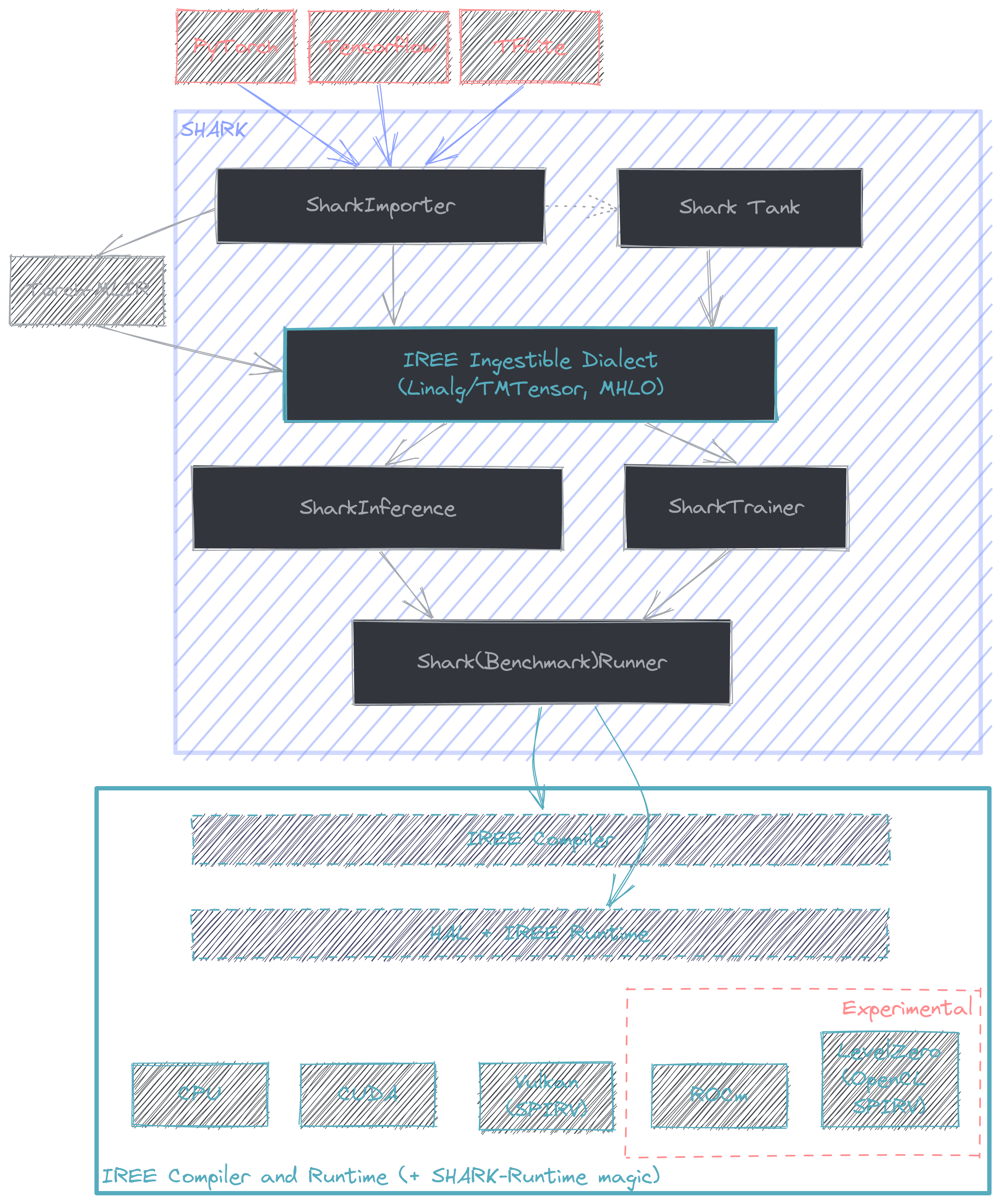
|
||||
|
||||
## Benchmarking with AMDSHARK
|
||||
## Benchmarking with SHARK
|
||||
|
||||
TODO: Expand this section.
|
||||
|
||||
AMDSHARK offers native benchmarking support, although because it is model focused, fine grain profiling is
|
||||
hidden when compared against the common "model benchmarking suite" use case AMDSHARK is good at.
|
||||
SHARK offers native benchmarking support, although because it is model focused, fine grain profiling is
|
||||
hidden when compared against the common "model benchmarking suite" use case SHARK is good at.
|
||||
|
||||
### AMDSharkBenchmarkRunner
|
||||
### SharkBenchmarkRunner
|
||||
|
||||
AMDSharkBenchmarkRunner is a class designed for benchmarking models against other runtimes.
|
||||
SharkBenchmarkRunner is a class designed for benchmarking models against other runtimes.
|
||||
TODO: List supported runtimes for comparison + example on how to benchmark with it.
|
||||
|
||||
## Directly profiling IREE
|
||||
@@ -30,11 +30,11 @@ focus on the bridging the gap between the two.
|
||||
- https://github.com/iree-org/iree/blob/main/docs/developers/developing_iree/profiling_vulkan_gpu.md
|
||||
- https://github.com/iree-org/iree/blob/main/docs/developers/developing_iree/profiling_cpu_events.md
|
||||
|
||||
Internally, AMDSHARK builds a pair of IREE commands to compile + run a model. At a high level the flow starts with the
|
||||
Internally, SHARK builds a pair of IREE commands to compile + run a model. At a high level the flow starts with the
|
||||
model represented with a high level dialect (commonly Linalg) and is compiled to a flatbuffer (.vmfb) that
|
||||
the runtime is capable of ingesting. At this point (with potentially a few runtime flags) the compiled model is then run
|
||||
through the IREE runtime. This is all facilitated with the IREE python bindings, which offers a convenient method
|
||||
to capture the compile command AMDSHARK comes up with. This is done by setting the environment variable
|
||||
to capture the compile command SHARK comes up with. This is done by setting the environment variable
|
||||
`IREE_SAVE_TEMPS` to point to a directory of choice, e.g. for stable diffusion
|
||||
```
|
||||
# Linux
|
||||
@@ -63,7 +63,7 @@ Where `${NUM}` is the dispatch number that you want to benchmark/profile in isol
|
||||
|
||||
### Enabling Tracy for Vulkan profiling
|
||||
|
||||
To begin profiling with Tracy, a build of IREE runtime with tracing enabled is needed. AMDSHARK-Runtime (SRT) builds an
|
||||
To begin profiling with Tracy, a build of IREE runtime with tracing enabled is needed. SHARK-Runtime (SRT) builds an
|
||||
instrumented version alongside the normal version nightly (.whls typically found [here](https://github.com/nod-ai/SRT/releases)), however this is only available for Linux. For Windows, tracing can be enabled by enabling a CMake flag.
|
||||
```
|
||||
$env:IREE_ENABLE_RUNTIME_TRACING="ON"
|
||||
@@ -92,7 +92,7 @@ The trace can then be viewed with
|
||||
iree-tracy-profiler /path/to/trace.tracy
|
||||
```
|
||||
Capturing a runtime trace will work with any IREE tooling that uses the runtime. For example, `iree-benchmark-module`
|
||||
can be used for benchmarking an individual module. Importantly this means that any AMDSHARK script can be profiled with tracy.
|
||||
can be used for benchmarking an individual module. Importantly this means that any SHARK script can be profiled with tracy.
|
||||
|
||||
NOTE: Not all backends have the same tracy support. This writeup is focused on CPU/Vulkan backends but there is recently added support for tracing on CUDA (requires the `--cuda_tracing` flag).
|
||||
|
||||
@@ -1,21 +1,21 @@
|
||||
# Overview
|
||||
|
||||
This document is intended to provide a starting point for using AMDSHARK stable diffusion with Blender.
|
||||
This document is intended to provide a starting point for using SHARK stable diffusion with Blender.
|
||||
|
||||
We currently make use of the [AI-Render Plugin](https://github.com/benrugg/AI-Render) to integrate with Blender.
|
||||
|
||||
## Setup AMDSHARK and prerequisites:
|
||||
## Setup SHARK and prerequisites:
|
||||
|
||||
* Download the latest AMDSHARK SD webui .exe from [here](https://github.com/nod-ai/AMD-SHARK-Studio/releases) or follow instructions on the [README](https://github.com/nod-ai/AMD-SHARK-Studio#readme)
|
||||
* Once you have the .exe where you would like AMDSHARK to install, run the .exe from terminal/PowerShell with the `--api` flag:
|
||||
* Download the latest SHARK SD webui .exe from [here](https://github.com/nod-ai/SHARK/releases) or follow instructions on the [README](https://github.com/nod-ai/SHARK#readme)
|
||||
* Once you have the .exe where you would like SHARK to install, run the .exe from terminal/PowerShell with the `--api` flag:
|
||||
```
|
||||
## Run the .exe in API mode:
|
||||
.\amdshark_sd_<date>_<ver>.exe --api
|
||||
.\shark_sd_<date>_<ver>.exe --api
|
||||
|
||||
## For example:
|
||||
.\amdshark_sd_20230411_671.exe --api --server_port=8082
|
||||
.\shark_sd_20230411_671.exe --api --server_port=8082
|
||||
|
||||
## From a the base directory of a source clone of AMDSHARK:
|
||||
## From a the base directory of a source clone of SHARK:
|
||||
./setup_venv.ps1
|
||||
python apps\stable_diffusion\web\index.py --api
|
||||
|
||||
@@ -38,7 +38,7 @@ Your AI-Render preferences should be configured as shown; the highlighted part s
|
||||
|
||||
The [AI-Render README](https://github.com/benrugg/AI-Render/blob/main/README.md) has more details on installation and usage, as well as video tutorials.
|
||||
|
||||
## Using AI-Render + AMDSHARK in your Blender project
|
||||
## Using AI-Render + SHARK in your Blender project
|
||||
|
||||
- In the Render Properties tab, in the AI-Render dropdown, enable AI-Render.
|
||||
|
||||
@@ -48,7 +48,7 @@ The [AI-Render README](https://github.com/benrugg/AI-Render/blob/main/README.md)
|
||||
|
||||

|
||||
|
||||
- From here, you can enter a prompt and configure img2img Stable Diffusion parameters, and AI-Render will run AMDSHARK SD img2img on the rendered scene.
|
||||
- From here, you can enter a prompt and configure img2img Stable Diffusion parameters, and AI-Render will run SHARK SD img2img on the rendered scene.
|
||||
- AI-Render has useful presets for aesthetic styles, so you should be able to keep your subject prompt simple and focus on creating a decent Blender scene to start from.
|
||||
|
||||

|
||||
@@ -1,6 +1,6 @@
|
||||
# Overview
|
||||
|
||||
In [1.47.2](https://github.com/LostRuins/koboldcpp/releases/tag/v1.47.2) [Koboldcpp](https://github.com/LostRuins/koboldcpp) added AUTOMATIC1111 integration for image generation. Since AMDSHARK implements a small subset of the A1111 REST api, you can also use AMDSHARK for this. This document gives a starting point for how to get this working.
|
||||
In [1.47.2](https://github.com/LostRuins/koboldcpp/releases/tag/v1.47.2) [Koboldcpp](https://github.com/LostRuins/koboldcpp) added AUTOMATIC1111 integration for image generation. Since SHARK implements a small subset of the A1111 REST api, you can also use SHARK for this. This document gives a starting point for how to get this working.
|
||||
|
||||
## In Action
|
||||
|
||||
@@ -8,52 +8,52 @@ In [1.47.2](https://github.com/LostRuins/koboldcpp/releases/tag/v1.47.2) [Kobold
|
||||
|
||||
## Memory considerations
|
||||
|
||||
Since both Koboldcpp and AMDSHARK will use VRAM on your graphic card(s) running both at the same time using the same card will impose extra limitations on the model size you can fully offload to the video card in Koboldcpp. For me, on a RX 7900 XTX on Windows with 24 GiB of VRAM, the limit was about a 13 Billion parameter model with Q5_K_M quantisation.
|
||||
Since both Koboldcpp and SHARK will use VRAM on your graphic card(s) running both at the same time using the same card will impose extra limitations on the model size you can fully offload to the video card in Koboldcpp. For me, on a RX 7900 XTX on Windows with 24 GiB of VRAM, the limit was about a 13 Billion parameter model with Q5_K_M quantisation.
|
||||
|
||||
## Performance Considerations
|
||||
|
||||
When using AMDSHARK for image generation, especially with Koboldcpp, you need to be aware that it is currently designed to pay a large upfront cost in time compiling and tuning the model you select, to get an optimal individual image generation time. You need to be the judge as to whether this trade-off is going to be worth it for your OS and hardware combination.
|
||||
When using SHARK for image generation, especially with Koboldcpp, you need to be aware that it is currently designed to pay a large upfront cost in time compiling and tuning the model you select, to get an optimal individual image generation time. You need to be the judge as to whether this trade-off is going to be worth it for your OS and hardware combination.
|
||||
|
||||
It means that the first time you run a particular Stable Diffusion model for a particular combination of image size, LoRA, and VAE, AMDSHARK will spend *many minutes* - even on a beefy machaine with very fast graphics card with lots of memory - building that model combination just so it can save it to disk. It may even have to go away and download the model if it doesn't already have it locally. Once it has done its build of a model combination for your hardware once, it shouldn't need to do it again until you upgrade to a newer AMDSHARK version, install different drivers or change your graphics hardware. It will just upload the files it generated the first time to your graphics card and proceed from there.
|
||||
It means that the first time you run a particular Stable Diffusion model for a particular combination of image size, LoRA, and VAE, SHARK will spend *many minutes* - even on a beefy machaine with very fast graphics card with lots of memory - building that model combination just so it can save it to disk. It may even have to go away and download the model if it doesn't already have it locally. Once it has done its build of a model combination for your hardware once, it shouldn't need to do it again until you upgrade to a newer SHARK version, install different drivers or change your graphics hardware. It will just upload the files it generated the first time to your graphics card and proceed from there.
|
||||
|
||||
This does mean however, that on a brand new fresh install of AMDSHARK that has not generated any images on a model you haven't selected before, the first image Koboldcpp requests may look like it is *never* going finish and that the whole process has broken. Be forewarned, make yourself a cup of coffee, and expect a lot of messages about compilation and tuning from AMDSHARK in the terminal you ran it from.
|
||||
This does mean however, that on a brand new fresh install of SHARK that has not generated any images on a model you haven't selected before, the first image Koboldcpp requests may look like it is *never* going finish and that the whole process has broken. Be forewarned, make yourself a cup of coffee, and expect a lot of messages about compilation and tuning from SHARK in the terminal you ran it from.
|
||||
|
||||
## Setup AMDSHARK and prerequisites:
|
||||
## Setup SHARK and prerequisites:
|
||||
|
||||
* Make sure you have suitable drivers for your graphics card installed. See the prerequisties section of the [README](https://github.com/nod-ai/AMD-SHARK-Studio#readme).
|
||||
* Download the latest AMDSHARK studio .exe from [here](https://github.com/nod-ai/AMD-SHARK-Studio/releases) or follow the instructions in the [README](https://github.com/nod-ai/AMD-SHARK-Studio#readme) for an advanced, Linux or Mac install.
|
||||
* Run AMDSHARK from terminal/PowerShell with the `--api` flag. Since koboldcpp also expects both CORS support and the image generator to be running on port `7860` rather than AMDSHARK default of `8080`, also include both the `--api_accept_origin` flag with a suitable origin (use `="*"` to enable all origins) and `--server_port=7860` on the command line. (See the if you want to run AMDSHARK on a different port)
|
||||
* Make sure you have suitable drivers for your graphics card installed. See the prerequisties section of the [README](https://github.com/nod-ai/SHARK#readme).
|
||||
* Download the latest SHARK studio .exe from [here](https://github.com/nod-ai/SHARK/releases) or follow the instructions in the [README](https://github.com/nod-ai/SHARK#readme) for an advanced, Linux or Mac install.
|
||||
* Run SHARK from terminal/PowerShell with the `--api` flag. Since koboldcpp also expects both CORS support and the image generator to be running on port `7860` rather than SHARK default of `8080`, also include both the `--api_accept_origin` flag with a suitable origin (use `="*"` to enable all origins) and `--server_port=7860` on the command line. (See the if you want to run SHARK on a different port)
|
||||
|
||||
```powershell
|
||||
## Run the .exe in API mode, with CORS support, on the A1111 endpoint port:
|
||||
.\node_ai_amdshark_studio_<date>_<ver>.exe --api --api_accept_origin="*" --server_port=7860
|
||||
.\node_ai_shark_studio_<date>_<ver>.exe --api --api_accept_origin="*" --server_port=7860
|
||||
|
||||
## Run trom the base directory of a source clone of AMDSHARK on Windows:
|
||||
## Run trom the base directory of a source clone of SHARK on Windows:
|
||||
.\setup_venv.ps1
|
||||
python .\apps\stable_diffusion\web\index.py --api --api_accept_origin="*" --server_port=7860
|
||||
|
||||
## Run a the base directory of a source clone of AMDSHARK on Linux:
|
||||
## Run a the base directory of a source clone of SHARK on Linux:
|
||||
./setup_venv.sh
|
||||
source amdshark.venv/bin/activate
|
||||
source shark.venv/bin/activate
|
||||
python ./apps/stable_diffusion/web/index.py --api --api_accept_origin="*" --server_port=7860
|
||||
|
||||
## An example giving improved performance on AMD cards using vulkan, that runs on the same port as A1111
|
||||
.\node_ai_amdshark_studio_20320901_2525.exe --api --api_accept_origin="*" --device_allocator="caching" --server_port=7860
|
||||
.\node_ai_shark_studio_20320901_2525.exe --api --api_accept_origin="*" --device_allocator="caching" --server_port=7860
|
||||
|
||||
## Since the api respects most applicable AMDSHARK command line arguments for options not specified,
|
||||
## Since the api respects most applicable SHARK command line arguments for options not specified,
|
||||
## or currently unimplemented by API, there might be some you want to set, as listed in `--help`
|
||||
.\node_ai_amdshark_studio_20320901_2525.exe --help
|
||||
.\node_ai_shark_studio_20320901_2525.exe --help
|
||||
|
||||
## For instance, the example above, but with a a custom VAE specified
|
||||
.\node_ai_amdshark_studio_20320901_2525.exe --api --api_accept_origin="*" --device_allocator="caching" --server_port=7860 --custom_vae="clearvae_v23.safetensors"
|
||||
.\node_ai_shark_studio_20320901_2525.exe --api --api_accept_origin="*" --device_allocator="caching" --server_port=7860 --custom_vae="clearvae_v23.safetensors"
|
||||
|
||||
## An example with multiple specific CORS origins
|
||||
python apps/stable_diffusion/web/index.py --api --api_accept_origin="koboldcpp.example.com:7001" --api_accept_origin="koboldcpp.example.com:7002" --server_port=7860
|
||||
```
|
||||
|
||||
AMDSHARK should start in server mode, and you should see something like this:
|
||||
SHARK should start in server mode, and you should see something like this:
|
||||
|
||||

|
||||

|
||||
|
||||
* Note: When running in api mode with `--api`, the .exe will not function as a webUI. Thus, the address or port shown in the terminal output will only be useful for API requests.
|
||||
|
||||
@@ -68,9 +68,9 @@ AMDSHARK should start in server mode, and you should see something like this:
|
||||
|
||||

|
||||
|
||||
*if you get an error here, see the next section [below](#connecting-to-amdshark-on-a-different-address-or-port)*
|
||||
*if you get an error here, see the next section [below](#connecting-to-shark-on-a-different-address-or-port)*
|
||||
|
||||
* A list of Stable Diffusion models available to your AMDSHARK instance should now be listed in the box below *generate images*. The default value will usually be set to `stabilityai/stable-diffusion-2-1-base`. Choose the model you want to use for image generation from the list (but see [performance considerations](#performance-considerations)).
|
||||
* A list of Stable Diffusion models available to your SHARK instance should now be listed in the box below *generate images*. The default value will usually be set to `stabilityai/stable-diffusion-2-1-base`. Choose the model you want to use for image generation from the list (but see [performance considerations](#performance-considerations)).
|
||||
* You should now be ready to generate images, either by clicking the 'Add Img' button above the text entry box:
|
||||
|
||||

|
||||
@@ -85,18 +85,18 @@ AMDSHARK should start in server mode, and you should see something like this:
|
||||
|
||||

|
||||
|
||||
This will bring up a dialog box where you can enter a short text that will sent as a prefix to the Prompt sent to AMDSHARK:
|
||||
This will bring up a dialog box where you can enter a short text that will sent as a prefix to the Prompt sent to SHARK:
|
||||
|
||||

|
||||
|
||||
|
||||
## Connecting to AMDSHARK on a different address or port
|
||||
## Connecting to SHARK on a different address or port
|
||||
|
||||
If you didn't set the port to `--server_port=7860` when starting AMDSHARK, or you are running it on different machine on your network than you are running Koboldcpp, or to where you are running the koboldcpp's kdlite client frontend, then you very likely got the following error:
|
||||
If you didn't set the port to `--server_port=7860` when starting SHARK, or you are running it on different machine on your network than you are running Koboldcpp, or to where you are running the koboldcpp's kdlite client frontend, then you very likely got the following error:
|
||||
|
||||

|
||||
|
||||
As long as AMDSHARK is running correctly, this means you need to set the url and port to the correct values in Koboldcpp. For instance. to set the port that Koboldcpp looks for an image generator to AMDSHARK's default port of 8080:
|
||||
As long as SHARK is running correctly, this means you need to set the url and port to the correct values in Koboldcpp. For instance. to set the port that Koboldcpp looks for an image generator to SHARK's default port of 8080:
|
||||
|
||||
* Select the cog icon the Generate Images section of Advanced settings:
|
||||
|
||||
@@ -106,7 +106,7 @@ As long as AMDSHARK is running correctly, this means you need to set the url and
|
||||
|
||||

|
||||
|
||||
* Similarly, when running AMDSHARK on a different machine you will need to change host part of the endpoint url to the hostname or ip address where AMDSHARK is running, similarly:
|
||||
* Similarly, when running SHARK on a different machine you will need to change host part of the endpoint url to the hostname or ip address where SHARK is running, similarly:
|
||||
|
||||

|
||||
|
||||
@@ -125,16 +125,16 @@ And the same image when clicked on:
|
||||

|
||||
|
||||
|
||||
## Where to find the images in AMDSHARK
|
||||
## Where to find the images in SHARK
|
||||
|
||||
Even though Koboldcpp requests images at a size of 512x512, it resizes then to 256x256, converts them to `.jpeg`, and only shows them at 200x200 in the main text window. It does this so it can save them compactly embedded in your story as a `data://` uri.
|
||||
|
||||
However the images at the original size are saved by AMDSHARK in its `output_dir` which is usually a folder named for the current date. inside `generated_imgs` folder in the AMDSHARK installation directory.
|
||||
However the images at the original size are saved by SHARK in its `output_dir` which is usually a folder named for the current date. inside `generated_imgs` folder in the SHARK installation directory.
|
||||
|
||||
You can browse these, either using the Output Gallery tab from within the AMDSHARK web ui:
|
||||
You can browse these, either using the Output Gallery tab from within the SHARK web ui:
|
||||
|
||||

|
||||

|
||||
|
||||
...or by browsing to the `output_dir` in your operating system's file manager:
|
||||
|
||||

|
||||

|
||||
@@ -1,6 +1,6 @@
|
||||
# This script will toggle the comment/uncommenting aspect for dealing
|
||||
# with __file__ AttributeError arising in case of a few modules in
|
||||
# `torch/_dynamo/skipfiles.py` (within amdshark.venv)
|
||||
# `torch/_dynamo/skipfiles.py` (within shark.venv)
|
||||
|
||||
from distutils.sysconfig import get_python_lib
|
||||
import fileinput
|
||||
|
||||
@@ -17,12 +17,12 @@ exclude = '''
|
||||
/(
|
||||
| apps/stable_diffusion
|
||||
| apps/language_models
|
||||
| amdshark
|
||||
| shark
|
||||
| benchmarks
|
||||
| tank
|
||||
| build
|
||||
| generated_imgs
|
||||
| amdshark.venv
|
||||
| shark.venv
|
||||
)/
|
||||
| setup.py
|
||||
)
|
||||
|
||||
@@ -1,3 +1,3 @@
|
||||
[pytest]
|
||||
addopts = --verbose -s -p no:warnings
|
||||
norecursedirs = inference tank/tflite examples benchmarks amdshark apps/amdshark_studio
|
||||
norecursedirs = inference tank/tflite examples benchmarks shark apps/shark_studio
|
||||
|
||||
@@ -1,25 +1,24 @@
|
||||
-f https://download.pytorch.org/whl/nightly/cpu
|
||||
-f https://download.pytorch.org/whl/nightly/cpu/torch_nightly.html
|
||||
-f https://iree.dev/pip-release-links.html
|
||||
--pre
|
||||
|
||||
setuptools
|
||||
wheel
|
||||
|
||||
|
||||
torch==2.3.0
|
||||
iree-turbine @ git+https://github.com/iree-org/iree-turbine.git@main
|
||||
turbine-models @ git+https://github.com/nod-ai/AMD-SHARK-ModelDev.git@main#subdirectory=models
|
||||
diffusers @ git+https://github.com/nod-ai/diffusers@0.29.0.dev0-amdshark
|
||||
brevitas @ git+https://github.com/Xilinx/brevitas.git@6695e8df7f6a2c7715b9ed69c4b78157376bb60b
|
||||
shark-turbine @ git+https://github.com/iree-org/iree-turbine.git@main
|
||||
turbine-models @ git+https://github.com/nod-ai/SHARK-Turbine.git@main#subdirectory=models
|
||||
|
||||
# AMDSHARK Runner
|
||||
# SHARK Runner
|
||||
tqdm
|
||||
|
||||
# AMDSHARK Downloader
|
||||
# SHARK Downloader
|
||||
google-cloud-storage
|
||||
|
||||
# Testing
|
||||
pytest
|
||||
pytest-xdist
|
||||
pytest-forked
|
||||
Pillow
|
||||
parameterized
|
||||
|
||||
@@ -27,10 +26,8 @@ parameterized
|
||||
#accelerate is now required for diffusers import from ckpt.
|
||||
accelerate
|
||||
scipy
|
||||
transformers==4.37.1
|
||||
torchsde # Required for Stable Diffusion SDE schedulers.
|
||||
ftfy
|
||||
gradio==4.29.0
|
||||
gradio==4.19.2
|
||||
altair
|
||||
omegaconf
|
||||
# 0.3.2 doesn't have binaries for arm64
|
||||
|
||||
@@ -321,8 +321,8 @@ if __name__ == "__main__":
|
||||
|
||||
parser = argparse.ArgumentParser(
|
||||
description=(
|
||||
"Exercises the Stable Diffusion REST API of AMDShark. Make sure "
|
||||
"AMDShark is running in API mode on 127.0.0.1:8080 before running"
|
||||
"Exercises the Stable Diffusion REST API of Shark. Make sure "
|
||||
"Shark is running in API mode on 127.0.0.1:8080 before running"
|
||||
"this script."
|
||||
),
|
||||
)
|
||||
|
||||
10
setup.py
10
setup.py
@@ -7,21 +7,21 @@ import glob
|
||||
with open("README.md", "r", encoding="utf-8") as fh:
|
||||
long_description = fh.read()
|
||||
|
||||
PACKAGE_VERSION = os.environ.get("AMDSHARK_PACKAGE_VERSION") or "2.0.0"
|
||||
PACKAGE_VERSION = os.environ.get("SHARK_PACKAGE_VERSION") or "2.0.0"
|
||||
backend_deps = []
|
||||
|
||||
setup(
|
||||
name="nodai-AMDSHARK",
|
||||
name="nodai-SHARK",
|
||||
version=f"{PACKAGE_VERSION}",
|
||||
description="AMDSHARK provides a High Performance Machine Learning Framework",
|
||||
description="SHARK provides a High Performance Machine Learning Framework",
|
||||
author="nod.ai",
|
||||
author_email="stdin@nod.ai",
|
||||
url="https://nod.ai",
|
||||
long_description=long_description,
|
||||
long_description_content_type="text/markdown",
|
||||
project_urls={
|
||||
"Code": "https://github.com/nod-ai/AMD-SHARK-Studio",
|
||||
"Bug Tracker": "https://github.com/nod-ai/AMD-SHARK-Studio/issues",
|
||||
"Code": "https://github.com/nod-ai/SHARK",
|
||||
"Bug Tracker": "https://github.com/nod-ai/SHARK/issues",
|
||||
},
|
||||
classifiers=[
|
||||
"Programming Language :: Python :: 3",
|
||||
|
||||
@@ -1,9 +1,9 @@
|
||||
<#
|
||||
.SYNOPSIS
|
||||
A script to update and install the AMDSHARK runtime and its dependencies.
|
||||
A script to update and install the SHARK runtime and its dependencies.
|
||||
|
||||
.DESCRIPTION
|
||||
This script updates and installs the AMDSHARK runtime and its dependencies.
|
||||
This script updates and installs the SHARK runtime and its dependencies.
|
||||
It checks the Python version installed and installs any required build
|
||||
dependencies into a Python virtual environment.
|
||||
If that environment does not exist, it creates it.
|
||||
@@ -40,11 +40,11 @@ if ($arguments -eq "--force"){
|
||||
Deactivate
|
||||
}
|
||||
|
||||
if (Test-Path .\amdshark.venv\) {
|
||||
if (Test-Path .\shark.venv\) {
|
||||
Write-Host "removing and recreating venv..."
|
||||
Remove-Item .\amdshark.venv -Force -Recurse
|
||||
if (Test-Path .\amdshark.venv\) {
|
||||
Write-Host 'could not remove .\amdshark-venv - please try running ".\setup_venv.ps1 --force" again!'
|
||||
Remove-Item .\shark.venv -Force -Recurse
|
||||
if (Test-Path .\shark.venv\) {
|
||||
Write-Host 'could not remove .\shark-venv - please try running ".\setup_venv.ps1 --force" again!'
|
||||
exit 1
|
||||
}
|
||||
}
|
||||
@@ -83,13 +83,10 @@ if (!($PyVer -like "*3.11*") -and !($p -like "*3.11*")) # if 3.11 is not in any
|
||||
|
||||
Write-Host "Installing Build Dependencies"
|
||||
# make sure we really use 3.11 from list, even if it's not the default.
|
||||
if ($NULL -ne $PyVer) {py -3.11 -m venv .\amdshark.venv\}
|
||||
else {python -m venv .\amdshark.venv\}
|
||||
.\amdshark.venv\Scripts\activate
|
||||
if ($NULL -ne $PyVer) {py -3.11 -m venv .\shark.venv\}
|
||||
else {python -m venv .\shark.venv\}
|
||||
.\shark.venv\Scripts\activate
|
||||
python -m pip install --upgrade pip
|
||||
pip install wheel
|
||||
pip install --pre -r requirements.txt
|
||||
pip install --force-reinstall https://github.com/nod-ai/SRT/releases/download/candidate-20240528.279/iree_compiler-20240528.279-cp311-cp311-win_amd64.whl https://github.com/nod-ai/SRT/releases/download/candidate-20240528.279/iree_runtime-20240528.279-cp311-cp311-win_amd64.whl
|
||||
pip install -e .
|
||||
|
||||
Write-Host "Source your venv with ./amdshark.venv/Scripts/activate"
|
||||
pip install -r requirements.txt
|
||||
Write-Host "Source your venv with ./shark.venv/Scripts/activate"
|
||||
|
||||
@@ -1,15 +1,15 @@
|
||||
#!/bin/bash
|
||||
# Sets up a venv suitable for running samples.
|
||||
# e.g:
|
||||
# ./setup_venv.sh #setup a default $PYTHON3 amdshark.venv
|
||||
# ./setup_venv.sh #setup a default $PYTHON3 shark.venv
|
||||
# Environment variables used by the script.
|
||||
# PYTHON=$PYTHON3.10 ./setup_venv.sh #pass a version of $PYTHON to use
|
||||
# VENV_DIR=myamdshark.venv #create a venv called myamdshark.venv
|
||||
# VENV_DIR=myshark.venv #create a venv called myshark.venv
|
||||
# SKIP_VENV=1 #Don't create and activate a Python venv. Use the current environment.
|
||||
# USE_IREE=1 #use stock IREE instead of Nod.ai's AMDSHARK build
|
||||
# USE_IREE=1 #use stock IREE instead of Nod.ai's SHARK build
|
||||
# IMPORTER=1 #Install importer deps
|
||||
# BENCHMARK=1 #Install benchmark deps
|
||||
# NO_BACKEND=1 #Don't install iree or amdshark backend
|
||||
# NO_BACKEND=1 #Don't install iree or shark backend
|
||||
# if you run the script from a conda env it will install in your conda env
|
||||
|
||||
TD="$(cd $(dirname $0) && pwd)"
|
||||
@@ -35,7 +35,7 @@ fi
|
||||
if [[ "$SKIP_VENV" != "1" ]]; then
|
||||
if [[ -z "${CONDA_PREFIX}" ]]; then
|
||||
# Not a conda env. So create a new VENV dir
|
||||
VENV_DIR=${VENV_DIR:-amdshark.venv}
|
||||
VENV_DIR=${VENV_DIR:-shark.venv}
|
||||
echo "Using pip venv.. Setting up venv dir: $VENV_DIR"
|
||||
$PYTHON -m venv "$VENV_DIR" || die "Could not create venv."
|
||||
source "$VENV_DIR/bin/activate" || die "Could not activate venv"
|
||||
@@ -84,7 +84,21 @@ else
|
||||
PYTORCH_URL=https://download.pytorch.org/whl/nightly/cpu/
|
||||
fi
|
||||
|
||||
$PYTHON -m pip install --no-warn-conflicts -e . -f ${RUNTIME} -f ${PYTORCH_URL}
|
||||
$PYTHON -m pip install --no-warn-conflicts -e . -f https://llvm.github.io/torch-mlir/package-index/ -f ${RUNTIME} -f ${PYTORCH_URL}
|
||||
|
||||
if [[ $(uname -s) = 'Linux' && ! -z "${IMPORTER}" ]]; then
|
||||
T_VER=$($PYTHON -m pip show torch | grep Version)
|
||||
T_VER_MIN=${T_VER:14:12}
|
||||
TV_VER=$($PYTHON -m pip show torchvision | grep Version)
|
||||
TV_VER_MAJ=${TV_VER:9:6}
|
||||
$PYTHON -m pip uninstall -y torchvision
|
||||
$PYTHON -m pip install torchvision==${TV_VER_MAJ}${T_VER_MIN} --no-deps -f https://download.pytorch.org/whl/nightly/cpu/torchvision/
|
||||
if [ $? -eq 0 ];then
|
||||
echo "Successfully Installed torch + cu118."
|
||||
else
|
||||
echo "Could not install torch + cu118." >&2
|
||||
fi
|
||||
fi
|
||||
|
||||
if [[ -z "${NO_BREVITAS}" ]]; then
|
||||
$PYTHON -m pip install git+https://github.com/Xilinx/brevitas.git@dev
|
||||
|
||||
28
shark/__init__.py
Normal file
28
shark/__init__.py
Normal file
@@ -0,0 +1,28 @@
|
||||
import importlib
|
||||
import logging
|
||||
|
||||
from torch._dynamo import register_backend
|
||||
|
||||
log = logging.getLogger(__name__)
|
||||
|
||||
|
||||
@register_backend
|
||||
def shark(model, inputs, *, options):
|
||||
try:
|
||||
from shark.dynamo_backend.utils import SharkBackend
|
||||
except ImportError:
|
||||
log.exception(
|
||||
"Unable to import SHARK - High Performance Machine Learning Distribution"
|
||||
"Please install the right version of SHARK that matches the PyTorch version being used. "
|
||||
"Refer to https://github.com/nod-ai/SHARK/ for details."
|
||||
)
|
||||
raise
|
||||
return SharkBackend(model, inputs, options)
|
||||
|
||||
|
||||
def has_shark():
|
||||
try:
|
||||
importlib.import_module("shark")
|
||||
return True
|
||||
except ImportError:
|
||||
return False
|
||||
@@ -71,7 +71,7 @@ class MakeFxModule:
|
||||
fx_g = self.change_fx_graph_return_to_tuple(fx_g)
|
||||
ts_g = torch.jit.script(fx_g)
|
||||
temp = tempfile.NamedTemporaryFile(
|
||||
suffix="_amdshark_ts", prefix="temp_ts_"
|
||||
suffix="_shark_ts", prefix="temp_ts_"
|
||||
)
|
||||
ts_g.save(temp.name)
|
||||
new_ts = torch.jit.load(temp.name)
|
||||
@@ -3,7 +3,7 @@ from typing import List, Optional
|
||||
import torch
|
||||
from torch.fx.experimental.proxy_tensor import make_fx
|
||||
from torch._functorch.compile_utils import strip_overloads
|
||||
from amdshark.amdshark_inference import AMDSharkInference
|
||||
from shark.shark_inference import SharkInference
|
||||
from torch._decomp import get_decompositions
|
||||
from torch.func import functionalize
|
||||
import io
|
||||
@@ -93,13 +93,13 @@ def _unwrap_single_tuple_return(fx_g: torch.fx.GraphModule) -> bool:
|
||||
return unwrapped_tuple
|
||||
|
||||
|
||||
class AMDSharkBackend:
|
||||
class SharkBackend:
|
||||
def __init__(
|
||||
self, fx_g: torch.fx.GraphModule, inputs: tuple, options: dict
|
||||
):
|
||||
self.fx_g = fx_g
|
||||
self.inputs = inputs
|
||||
self.amdshark_module = None
|
||||
self.shark_module = None
|
||||
self.device: str = options.get("device", "cpu")
|
||||
self.was_unwrapped: bool = False
|
||||
self.none_indices: list = []
|
||||
@@ -125,19 +125,19 @@ class AMDSharkBackend:
|
||||
bytecode_stream = io.BytesIO()
|
||||
mlir_module.operation.write_bytecode(bytecode_stream)
|
||||
bytecode = bytecode_stream.getvalue()
|
||||
from amdshark.amdshark_inference import AMDSharkInference
|
||||
from shark.shark_inference import SharkInference
|
||||
|
||||
amdshark_module = AMDSharkInference(
|
||||
shark_module = SharkInference(
|
||||
mlir_module=bytecode,
|
||||
device=self.device,
|
||||
mlir_dialect="tm_tensor",
|
||||
)
|
||||
amdshark_module.compile(extra_args=[])
|
||||
self.amdshark_module = amdshark_module
|
||||
shark_module.compile(extra_args=[])
|
||||
self.shark_module = shark_module
|
||||
|
||||
def __call__(self, *inputs):
|
||||
np_inputs = [x.contiguous().detach().cpu().numpy() for x in inputs]
|
||||
np_outs = self.amdshark_module("forward", np_inputs)
|
||||
np_outs = self.shark_module("forward", np_inputs)
|
||||
if self.was_unwrapped:
|
||||
np_outs = [
|
||||
np_outs,
|
||||
@@ -1,5 +1,5 @@
|
||||
import torch
|
||||
import amdshark
|
||||
import shark
|
||||
|
||||
|
||||
def foo(x, a):
|
||||
@@ -9,8 +9,8 @@ def foo(x, a):
|
||||
return x + 3
|
||||
|
||||
|
||||
amdshark_options = {"device": "cpu"}
|
||||
compiled = torch.compile(foo, backend="amdshark", options=amdshark_options)
|
||||
shark_options = {"device": "cpu"}
|
||||
compiled = torch.compile(foo, backend="shark", options=shark_options)
|
||||
|
||||
input = torch.ones(4)
|
||||
|
||||
@@ -22,7 +22,7 @@
|
||||
"source": [
|
||||
"# standard imports\n",
|
||||
"import torch\n",
|
||||
"from amdshark.iree_utils import get_iree_compiled_module"
|
||||
"from shark.iree_utils import get_iree_compiled_module"
|
||||
]
|
||||
},
|
||||
{
|
||||
@@ -1,7 +1,7 @@
|
||||
import torch
|
||||
from torch_mlir import compile, OutputType
|
||||
|
||||
from amdshark.iree_utils import get_iree_compiled_module
|
||||
from shark.iree_utils import get_iree_compiled_module
|
||||
|
||||
try:
|
||||
import torchdynamo
|
||||
@@ -32,7 +32,7 @@
|
||||
"source": [
|
||||
"# eager mode imports\n",
|
||||
"from torch_mlir.eager_mode.torch_mlir_tensor import TorchMLIRTensor\n",
|
||||
"from amdshark.iree_eager_backend import EagerModeIREELinalgOnTensorsBackend"
|
||||
"from shark.iree_eager_backend import EagerModeIREELinalgOnTensorsBackend"
|
||||
],
|
||||
"metadata": {
|
||||
"collapsed": false,
|
||||
@@ -440,7 +440,7 @@
|
||||
{
|
||||
"cell_type": "markdown",
|
||||
"source": [
|
||||
"There is a convenience class `AMDSharkEagerMode` that will handle both the installation of the backend and the wrapping of `torch.Tensor`s:"
|
||||
"There is a convenience class `SharkEagerMode` that will handle both the installation of the backend and the wrapping of `torch.Tensor`s:"
|
||||
],
|
||||
"metadata": {
|
||||
"collapsed": false,
|
||||
@@ -684,9 +684,9 @@
|
||||
],
|
||||
"source": [
|
||||
"# eager mode RAII\n",
|
||||
"from amdshark.amdshark_runner import AMDSharkEagerMode\n",
|
||||
"from shark.shark_runner import SharkEagerMode\n",
|
||||
"\n",
|
||||
"amdshark_eager_mode = AMDSharkEagerMode(\"cpu\")\n",
|
||||
"shark_eager_mode = SharkEagerMode(\"cpu\")\n",
|
||||
"\n",
|
||||
"t = torch.ones((10, 10))\n",
|
||||
"u = torch.ones((10, 10))\n",
|
||||
@@ -712,7 +712,7 @@
|
||||
{
|
||||
"cell_type": "markdown",
|
||||
"source": [
|
||||
"The `AMDSharkEagerMode` class is a hacky take on [RAII](https://en.wikipedia.org/wiki/Resource_acquisition_is_initialization) that defines a \"deleter\" that runs when an instantiation (of `AMDSharkEagerMode`) is garbage collected. Takeaway is that if you want to turn off `AMDSharkEagerMode`, or switch backends, you need to `del` the instance:"
|
||||
"The `SharkEagerMode` class is a hacky take on [RAII](https://en.wikipedia.org/wiki/Resource_acquisition_is_initialization) that defines a \"deleter\" that runs when an instantiation (of `SharkEagerMode`) is garbage collected. Takeaway is that if you want to turn off `SharkEagerMode`, or switch backends, you need to `del` the instance:"
|
||||
],
|
||||
"metadata": {
|
||||
"collapsed": false,
|
||||
@@ -757,8 +757,8 @@
|
||||
}
|
||||
],
|
||||
"source": [
|
||||
"del amdshark_eager_mode\n",
|
||||
"amdshark_eager_mode = AMDSharkEagerMode(\"cuda\")\n",
|
||||
"del shark_eager_mode\n",
|
||||
"shark_eager_mode = SharkEagerMode(\"cuda\")\n",
|
||||
"\n",
|
||||
"t = torch.ones((10, 10))\n",
|
||||
"u = torch.ones((10, 10))\n",
|
||||
@@ -17,8 +17,8 @@ from torch.utils.cpp_extension import load_inline, include_paths
|
||||
from torch_mlir.eager_mode import torch_mlir_tensor
|
||||
from torch_mlir.eager_mode.torch_mlir_tensor import TorchMLIRTensor
|
||||
|
||||
from amdshark.iree_eager_backend import EagerModeIREELinalgOnTensorsBackend
|
||||
from amdshark.amdshark_runner import AMDSharkEagerMode
|
||||
from shark.iree_eager_backend import EagerModeIREELinalgOnTensorsBackend
|
||||
from shark.shark_runner import SharkEagerMode
|
||||
|
||||
|
||||
def test_cpu():
|
||||
@@ -85,7 +85,7 @@ def test_gpu():
|
||||
|
||||
def test_python_mode_ref_backend():
|
||||
# hide this wherever you want?
|
||||
_ = AMDSharkEagerMode("refbackend")
|
||||
_ = SharkEagerMode("refbackend")
|
||||
|
||||
t = torch.ones((10, 10), device="cpu")
|
||||
u = torch.ones((10, 10), device="cpu")
|
||||
@@ -103,7 +103,7 @@ def test_python_mode_ref_backend():
|
||||
|
||||
def test_python_mode_iree_cpu():
|
||||
# hide this wherever you want?
|
||||
_ = AMDSharkEagerMode("cpu")
|
||||
_ = SharkEagerMode("cpu")
|
||||
|
||||
t = torch.ones((10, 10), device="cpu")
|
||||
u = torch.ones((10, 10), device="cpu")
|
||||
@@ -121,7 +121,7 @@ def test_python_mode_iree_cpu():
|
||||
|
||||
|
||||
def test_python_mode_iree_gpu():
|
||||
_ = AMDSharkEagerMode("gpu")
|
||||
_ = SharkEagerMode("gpu")
|
||||
|
||||
t = torch.ones((10, 10), device="cpu")
|
||||
u = torch.ones((10, 10), device="cpu")
|
||||
@@ -47,7 +47,7 @@ golden_probabilities = torch.nn.functional.softmax(
|
||||
|
||||
golden_confidences = golden_confidences.numpy()
|
||||
|
||||
from amdshark.torch_mlir_lockstep_tensor import TorchMLIRLockstepTensor
|
||||
from shark.torch_mlir_lockstep_tensor import TorchMLIRLockstepTensor
|
||||
|
||||
input_detached_clone = input_batch.clone()
|
||||
eager_input_batch = TorchMLIRLockstepTensor(input_detached_clone)
|
||||
@@ -62,7 +62,7 @@ probabilities = torch.nn.functional.softmax(
|
||||
torch.from_numpy(confidences), dim=0
|
||||
).numpy()
|
||||
|
||||
print("The obtained result via amdshark is: ", confidences)
|
||||
print("The obtained result via shark is: ", confidences)
|
||||
print("The golden result is:", golden_confidences)
|
||||
|
||||
np.testing.assert_allclose(
|
||||
Some files were not shown because too many files have changed in this diff Show More
Reference in New Issue
Block a user