mirror of
https://github.com/All-Hands-AI/OpenHands.git
synced 2026-04-29 03:00:45 -04:00
Compare commits
3 Commits
| Author | SHA1 | Date | |
|---|---|---|---|
 Alex Bäuerle Alex Bäuerle
|
a2b49525ae | ||
|
Alex Bäuerle
|
478ebedd41 | ||
|
Alex Bäuerle
|
016a56a3d9 |
@@ -1,14 +0,0 @@
|
||||
codecov:
|
||||
notify:
|
||||
wait_for_ci: true
|
||||
|
||||
coverage:
|
||||
status:
|
||||
patch:
|
||||
default:
|
||||
threshold: 10% # allow patch coverage to be lower than project coverage by at most 10%
|
||||
project:
|
||||
default:
|
||||
threshold: 5% # allow project coverage to drop at most 5%
|
||||
|
||||
comment: false
|
||||
@@ -66,4 +66,4 @@ body:
|
||||
id: additional-context
|
||||
attributes:
|
||||
label: Logs, Errors, Screenshots, and Additional Context
|
||||
description: LLM logs will be stored in the `logs/llm/default` folder. Please add any additional context about the problem here.
|
||||
description: Please add any additional context about the problem here.
|
||||
|
||||
@@ -12,7 +12,9 @@ jobs:
|
||||
build:
|
||||
name: Build Docusaurus
|
||||
runs-on: ubuntu-latest
|
||||
if: github.repository == 'OpenDevin/OpenDevin'
|
||||
defaults:
|
||||
run:
|
||||
working-directory: docs
|
||||
steps:
|
||||
- uses: actions/checkout@v4
|
||||
with:
|
||||
@@ -22,17 +24,11 @@ jobs:
|
||||
node-version: 18
|
||||
cache: npm
|
||||
cache-dependency-path: docs/package-lock.json
|
||||
- name: Set up Python
|
||||
uses: actions/setup-python@v5
|
||||
with:
|
||||
python-version: "3.11"
|
||||
|
||||
- name: Generate Python Docs
|
||||
run: rm -rf docs/modules/python && pip install pydoc-markdown && pydoc-markdown
|
||||
- name: Install dependencies
|
||||
run: cd docs && npm ci
|
||||
run: npm ci
|
||||
- name: Build website
|
||||
run: cd docs && npm run build
|
||||
run: npm run build
|
||||
|
||||
- name: Upload Build Artifact
|
||||
if: github.ref == 'refs/heads/main'
|
||||
@@ -43,7 +39,7 @@ jobs:
|
||||
deploy:
|
||||
name: Deploy to GitHub Pages
|
||||
needs: build
|
||||
if: github.ref == 'refs/heads/main' && github.repository == 'OpenDevin/OpenDevin'
|
||||
if: github.ref == 'refs/heads/main'
|
||||
# Grant GITHUB_TOKEN the permissions required to make a Pages deployment
|
||||
permissions:
|
||||
pages: write # to deploy to Pages
|
||||
|
||||
@@ -1,14 +1,6 @@
|
||||
name: Run e2e test with dummy agent
|
||||
|
||||
concurrency:
|
||||
group: ${{ github.workflow }}-${{ github.ref }}
|
||||
cancel-in-progress: ${{ github.ref != 'refs/heads/main' }}
|
||||
|
||||
on:
|
||||
push:
|
||||
branches:
|
||||
- main
|
||||
pull_request:
|
||||
on: [push]
|
||||
|
||||
jobs:
|
||||
test:
|
||||
@@ -23,8 +15,7 @@ jobs:
|
||||
run: |
|
||||
curl -sSL https://install.python-poetry.org | python3 -
|
||||
poetry install --without evaluation
|
||||
poetry run playwright install --with-deps chromium
|
||||
wget https://huggingface.co/BAAI/bge-small-en-v1.5/raw/main/1_Pooling/config.json -P /tmp/llama_index/models--BAAI--bge-small-en-v1.5/snapshots/5c38ec7c405ec4b44b94cc5a9bb96e735b38267a/1_Pooling/
|
||||
- name: Run tests
|
||||
run: |
|
||||
poetry run python opendevin/core/main.py -t "do a flip" -m ollama/not-a-model -d ./workspace/ -c DummyAgent
|
||||
poetry run python opendevin/main.py -t "do a flip" -m ollama/not-a-model -d ./workspace/ -c DummyAgent
|
||||
|
||||
+17
-23
@@ -1,15 +1,9 @@
|
||||
name: Publish Docker Image
|
||||
|
||||
concurrency:
|
||||
group: ${{ github.workflow }}-${{ github.ref }}
|
||||
cancel-in-progress: ${{ github.ref != 'refs/heads/main' }}
|
||||
|
||||
on:
|
||||
push:
|
||||
branches:
|
||||
- main
|
||||
tags:
|
||||
- '*'
|
||||
pull_request:
|
||||
workflow_dispatch:
|
||||
inputs:
|
||||
@@ -28,12 +22,26 @@ jobs:
|
||||
|
||||
strategy:
|
||||
matrix:
|
||||
image: ["app", "sandbox"]
|
||||
image: ["app", "evaluation", "sandbox"]
|
||||
|
||||
steps:
|
||||
- name: checkout
|
||||
uses: actions/checkout@v4
|
||||
|
||||
- name: Set up QEMU
|
||||
uses: docker/setup-qemu-action@v3
|
||||
|
||||
- name: Set up Docker Buildx
|
||||
id: buildx
|
||||
uses: docker/setup-buildx-action@v3
|
||||
|
||||
- name: Login to ghcr
|
||||
uses: docker/login-action@v1
|
||||
with:
|
||||
registry: ghcr.io
|
||||
username: ${{ github.repository_owner }}
|
||||
password: ${{ secrets.GITHUB_TOKEN }}
|
||||
|
||||
- name: Free Disk Space (Ubuntu)
|
||||
uses: jlumbroso/free-disk-space@main
|
||||
with:
|
||||
@@ -50,27 +58,13 @@ jobs:
|
||||
docker-images: false
|
||||
swap-storage: true
|
||||
|
||||
- name: Set up QEMU
|
||||
uses: docker/setup-qemu-action@v3
|
||||
|
||||
- name: Set up Docker Buildx
|
||||
id: buildx
|
||||
uses: docker/setup-buildx-action@v3
|
||||
|
||||
- name: Login to ghcr
|
||||
uses: docker/login-action@v1
|
||||
with:
|
||||
registry: ghcr.io
|
||||
username: ${{ github.repository_owner }}
|
||||
password: ${{ secrets.GITHUB_TOKEN }}
|
||||
|
||||
- name: Build and push ${{ matrix.image }}
|
||||
if: "!github.event.pull_request.head.repo.fork"
|
||||
if: github.event.pull_request.head.repo.full_name == github.repository
|
||||
run: |
|
||||
./containers/build.sh ${{ matrix.image }} ${{ github.repository_owner }} --push
|
||||
|
||||
- name: Build ${{ matrix.image }}
|
||||
if: "github.event.pull_request.head.repo.fork"
|
||||
if: github.event.pull_request.head.repo.full_name != github.repository
|
||||
run: |
|
||||
./containers/build.sh ${{ matrix.image }} ${{ github.repository_owner }}
|
||||
|
||||
|
||||
@@ -1,9 +1,5 @@
|
||||
name: Lint
|
||||
|
||||
concurrency:
|
||||
group: ${{ github.workflow }}-${{ github.ref }}
|
||||
cancel-in-progress: ${{ github.ref != 'refs/heads/main' }}
|
||||
|
||||
on:
|
||||
push:
|
||||
branches:
|
||||
@@ -37,8 +33,6 @@ jobs:
|
||||
runs-on: ubuntu-latest
|
||||
steps:
|
||||
- uses: actions/checkout@v4
|
||||
with:
|
||||
fetch-depth: 0
|
||||
- name: Set up python
|
||||
uses: actions/setup-python@v5
|
||||
with:
|
||||
@@ -47,11 +41,8 @@ jobs:
|
||||
- name: Install pre-commit
|
||||
run: pip install pre-commit==3.7.0
|
||||
- name: Run pre-commit hooks
|
||||
if: github.ref != 'refs/heads/main'
|
||||
run: |
|
||||
git fetch https://github.com/OpenDevin/OpenDevin.git main:main && \
|
||||
pre-commit run \
|
||||
--files \
|
||||
$(git diff --name-only $(git merge-base main $(git branch --show-current)) $(git branch --show-current) | tr '\n' ' ') \
|
||||
--all-files \
|
||||
--show-diff-on-failure \
|
||||
--config ./dev_config/python/.pre-commit-config.yaml
|
||||
|
||||
@@ -49,7 +49,7 @@ jobs:
|
||||
LLM_API_KEY: ${{ secrets.OPENAI_API_KEY }}
|
||||
SANDBOX_TYPE: exec
|
||||
run: |
|
||||
WORKSPACE_MOUNT_PATH=$GITHUB_WORKSPACE python ./opendevin/core/main.py -i 50 -f task.txt -d $GITHUB_WORKSPACE
|
||||
WORKSPACE_MOUNT_PATH=$GITHUB_WORKSPACE python ./opendevin/main.py -i 50 -f task.txt -d $GITHUB_WORKSPACE
|
||||
rm task.txt
|
||||
|
||||
- name: Check if review file is non-empty
|
||||
|
||||
@@ -1,9 +1,5 @@
|
||||
name: Run Integration Tests
|
||||
|
||||
concurrency:
|
||||
group: ${{ github.workflow }}-${{ github.ref }}
|
||||
cancel-in-progress: ${{ github.ref != 'refs/heads/main' }}
|
||||
|
||||
on:
|
||||
push:
|
||||
branches:
|
||||
|
||||
@@ -1,9 +1,5 @@
|
||||
name: Run Unit Tests
|
||||
|
||||
concurrency:
|
||||
group: ${{ github.workflow }}-${{ github.ref }}
|
||||
cancel-in-progress: ${{ github.ref != 'refs/heads/main' }}
|
||||
|
||||
on:
|
||||
push:
|
||||
branches:
|
||||
@@ -14,8 +10,6 @@ jobs:
|
||||
test-on-macos:
|
||||
name: Test on macOS
|
||||
runs-on: macos-13
|
||||
env:
|
||||
INSTALL_DOCKER: '0' # Set to '0' to skip Docker installation
|
||||
strategy:
|
||||
matrix:
|
||||
python-version: ["3.11"]
|
||||
@@ -36,7 +30,6 @@ jobs:
|
||||
run: poetry install
|
||||
|
||||
- name: Install & Start Docker
|
||||
if: env.INSTALL_DOCKER == '1'
|
||||
run: |
|
||||
brew install colima docker
|
||||
colima start
|
||||
@@ -49,7 +42,7 @@ jobs:
|
||||
run: make build
|
||||
|
||||
- name: Run Tests
|
||||
run: poetry run pytest --cov=agenthub --cov=opendevin --cov-report=xml ./tests/unit -k "not test_sandbox"
|
||||
run: poetry run pytest --cov=agenthub --cov=opendevin --cov-report=xml ./tests/unit
|
||||
|
||||
- name: Upload coverage to Codecov
|
||||
uses: codecov/codecov-action@v4
|
||||
@@ -58,8 +51,6 @@ jobs:
|
||||
test-on-linux:
|
||||
name: Test on Linux
|
||||
runs-on: ubuntu-latest
|
||||
env:
|
||||
INSTALL_DOCKER: '0' # Set to '0' to skip Docker installation
|
||||
strategy:
|
||||
matrix:
|
||||
python-version: ["3.11"]
|
||||
@@ -83,37 +74,7 @@ jobs:
|
||||
run: make build
|
||||
|
||||
- name: Run Tests
|
||||
run: poetry run pytest --cov=agenthub --cov=opendevin --cov-report=xml ./tests/unit -k "not test_sandbox"
|
||||
|
||||
- name: Upload coverage to Codecov
|
||||
uses: codecov/codecov-action@v4
|
||||
env:
|
||||
CODECOV_TOKEN: ${{ secrets.CODECOV_TOKEN }}
|
||||
|
||||
test-for-sandbox:
|
||||
name: Test for Sandbox
|
||||
runs-on: ubuntu-latest
|
||||
steps:
|
||||
- uses: actions/checkout@v4
|
||||
|
||||
- name: Install poetry via pipx
|
||||
run: pipx install poetry
|
||||
|
||||
- name: Set up Python
|
||||
uses: actions/setup-python@v5
|
||||
with:
|
||||
python-version: '3.11'
|
||||
cache: 'poetry'
|
||||
|
||||
- name: Install Python dependencies using Poetry
|
||||
run: poetry install
|
||||
|
||||
- name: Build Environment
|
||||
run: make build
|
||||
|
||||
- name: Run Integration Test for Sandbox
|
||||
run: |
|
||||
poetry run pytest --cov=agenthub --cov=opendevin --cov-report=xml -s ./tests/unit/test_sandbox.py
|
||||
run: poetry run pytest --cov=agenthub --cov=opendevin --cov-report=xml ./tests/unit
|
||||
|
||||
- name: Upload coverage to Codecov
|
||||
uses: codecov/codecov-action@v4
|
||||
@@ -122,6 +83,6 @@ jobs:
|
||||
test_matrix_success:
|
||||
name: All Mac/Linux Tests Passed
|
||||
runs-on: ubuntu-latest
|
||||
needs: [test-on-macos, test-on-linux, test-for-sandbox]
|
||||
needs: [test-on-macos, test-on-linux]
|
||||
steps:
|
||||
- run: echo Done!
|
||||
|
||||
@@ -43,7 +43,7 @@ jobs:
|
||||
LLM_API_KEY: ${{ secrets.OPENAI_API_KEY }}
|
||||
SANDBOX_TYPE: exec
|
||||
run: |
|
||||
WORKSPACE_MOUNT_PATH=$GITHUB_WORKSPACE python ./opendevin/core/main.py -i 50 -f task.txt -d $GITHUB_WORKSPACE
|
||||
WORKSPACE_MOUNT_PATH=$GITHUB_WORKSPACE python ./opendevin/main.py -i 50 -f task.txt -d $GITHUB_WORKSPACE
|
||||
rm task.txt
|
||||
|
||||
- name: Setup Git, Create Branch, and Commit Changes
|
||||
|
||||
@@ -196,14 +196,8 @@ logs
|
||||
# agent
|
||||
.envrc
|
||||
/workspace
|
||||
/_test_workspace
|
||||
/debug
|
||||
cache
|
||||
|
||||
# configuration
|
||||
config.toml
|
||||
evaluation/swe_bench/eval_workspace
|
||||
evaluation/outputs
|
||||
evaluation/evaluation_outputs
|
||||
test_results*
|
||||
/_test_files_tmp/
|
||||
|
||||
@@ -7,7 +7,7 @@ BACKEND_PORT = 3000
|
||||
BACKEND_HOST = "127.0.0.1:$(BACKEND_PORT)"
|
||||
FRONTEND_PORT = 3001
|
||||
DEFAULT_WORKSPACE_DIR = "./workspace"
|
||||
DEFAULT_MODEL = "gpt-3.5-turbo"
|
||||
DEFAULT_MODEL = "gpt-3.5-turbo-1106"
|
||||
CONFIG_FILE = config.toml
|
||||
PRECOMMIT_CONFIG_PATH = "./dev_config/python/.pre-commit-config.yaml"
|
||||
|
||||
@@ -22,9 +22,7 @@ RESET=$(shell tput -Txterm sgr0)
|
||||
build:
|
||||
@echo "$(GREEN)Building project...$(RESET)"
|
||||
@$(MAKE) -s check-dependencies
|
||||
ifeq ($(INSTALL_DOCKER),)
|
||||
@$(MAKE) -s pull-docker-image
|
||||
endif
|
||||
@$(MAKE) -s install-python-dependencies
|
||||
@$(MAKE) -s install-frontend-dependencies
|
||||
@$(MAKE) -s install-precommit-hooks
|
||||
@@ -37,9 +35,7 @@ check-dependencies:
|
||||
@$(MAKE) -s check-python
|
||||
@$(MAKE) -s check-npm
|
||||
@$(MAKE) -s check-nodejs
|
||||
ifeq ($(INSTALL_DOCKER),)
|
||||
@$(MAKE) -s check-docker
|
||||
endif
|
||||
@$(MAKE) -s check-poetry
|
||||
@echo "$(GREEN)Dependencies checked successfully.$(RESET)"
|
||||
|
||||
@@ -48,11 +44,7 @@ check-system:
|
||||
@if [ "$(shell uname)" = "Darwin" ]; then \
|
||||
echo "$(BLUE)macOS detected.$(RESET)"; \
|
||||
elif [ "$(shell uname)" = "Linux" ]; then \
|
||||
if [ -f "/etc/manjaro-release" ]; then \
|
||||
echo "$(BLUE)Manjaro Linux detected.$(RESET)"; \
|
||||
else \
|
||||
echo "$(BLUE)Linux detected.$(RESET)"; \
|
||||
fi; \
|
||||
echo "$(BLUE)Linux detected.$(RESET)"; \
|
||||
elif [ "$$(uname -r | grep -i microsoft)" ]; then \
|
||||
echo "$(BLUE)Windows Subsystem for Linux detected.$(RESET)"; \
|
||||
else \
|
||||
@@ -135,14 +127,8 @@ install-python-dependencies:
|
||||
export HNSWLIB_NO_NATIVE=1; \
|
||||
poetry run pip install chroma-hnswlib; \
|
||||
fi
|
||||
@poetry install
|
||||
@if [ -f "/etc/manjaro-release" ]; then \
|
||||
echo "$(BLUE)Detected Manjaro Linux. Installing Playwright dependencies...$(RESET)"; \
|
||||
poetry run pip install playwright; \
|
||||
poetry run playwright install chromium; \
|
||||
else \
|
||||
poetry run playwright install --with-deps chromium; \
|
||||
fi
|
||||
@poetry install --without evaluation
|
||||
@poetry run playwright install --with-deps chromium
|
||||
@echo "$(GREEN)Python dependencies installed successfully.$(RESET)"
|
||||
|
||||
install-frontend-dependencies:
|
||||
@@ -162,24 +148,9 @@ install-precommit-hooks:
|
||||
@poetry run pre-commit install --config $(PRECOMMIT_CONFIG_PATH)
|
||||
@echo "$(GREEN)Pre-commit hooks installed successfully.$(RESET)"
|
||||
|
||||
lint-backend:
|
||||
@echo "$(YELLOW)Running linters...$(RESET)"
|
||||
@poetry run pre-commit run --files $$(git diff --name-only $$(git merge-base main $$(git branch --show-current)) $$(git branch --show-current) | tr '\n' ' ') --show-diff-on-failure --config $(PRECOMMIT_CONFIG_PATH)
|
||||
|
||||
lint-frontend:
|
||||
@echo "$(YELLOW)Running linters for frontend...$(RESET)"
|
||||
@cd frontend && npm run lint
|
||||
|
||||
lint:
|
||||
@$(MAKE) -s lint-frontend
|
||||
@$(MAKE) -s lint-backend
|
||||
|
||||
test-frontend:
|
||||
@echo "$(YELLOW)Running tests for frontend...$(RESET)"
|
||||
@cd frontend && npm run test
|
||||
|
||||
test:
|
||||
@$(MAKE) -s test-frontend
|
||||
@echo "$(YELLOW)Running linters...$(RESET)"
|
||||
@poetry run pre-commit run --all-files --show-diff-on-failure --config $(PRECOMMIT_CONFIG_PATH)
|
||||
|
||||
build-frontend:
|
||||
@echo "$(YELLOW)Building frontend...$(RESET)"
|
||||
@@ -188,7 +159,7 @@ build-frontend:
|
||||
# Start backend
|
||||
start-backend:
|
||||
@echo "$(YELLOW)Starting backend...$(RESET)"
|
||||
@poetry run uvicorn opendevin.server.listen:app --port $(BACKEND_PORT) --reload --reload-exclude "workspace/*"
|
||||
@poetry run uvicorn opendevin.server.listen:app --port $(BACKEND_PORT) --reload --reload-exclude workspace/*
|
||||
|
||||
# Start frontend
|
||||
start-frontend:
|
||||
@@ -219,24 +190,15 @@ setup-config:
|
||||
@echo "$(GREEN)Config.toml setup completed.$(RESET)"
|
||||
|
||||
setup-config-prompts:
|
||||
@echo "[core]" > $(CONFIG_FILE).tmp
|
||||
|
||||
@read -p "Enter your workspace directory [default: $(DEFAULT_WORKSPACE_DIR)]: " workspace_dir; \
|
||||
workspace_dir=$${workspace_dir:-$(DEFAULT_WORKSPACE_DIR)}; \
|
||||
echo "workspace_base=\"$$workspace_dir\"" >> $(CONFIG_FILE).tmp
|
||||
|
||||
@echo "" >> $(CONFIG_FILE).tmp
|
||||
|
||||
@echo "[llm]" >> $(CONFIG_FILE).tmp
|
||||
@read -p "Enter your LLM model name, used for running without UI. Set the model in the UI after you start the app. (see https://docs.litellm.ai/docs/providers for full list) [default: $(DEFAULT_MODEL)]: " llm_model; \
|
||||
@read -p "Enter your LLM Model name, used for running without UI. Set the model in the UI after you start the app. (see https://docs.litellm.ai/docs/providers for full list) [default: $(DEFAULT_MODEL)]: " llm_model; \
|
||||
llm_model=$${llm_model:-$(DEFAULT_MODEL)}; \
|
||||
echo "model=\"$$llm_model\"" >> $(CONFIG_FILE).tmp
|
||||
echo "LLM_MODEL=\"$$llm_model\"" > $(CONFIG_FILE).tmp
|
||||
|
||||
@read -p "Enter your LLM api key: " llm_api_key; \
|
||||
echo "api_key=\"$$llm_api_key\"" >> $(CONFIG_FILE).tmp
|
||||
@read -p "Enter your LLM API key: " llm_api_key; \
|
||||
echo "LLM_API_KEY=\"$$llm_api_key\"" >> $(CONFIG_FILE).tmp
|
||||
|
||||
@read -p "Enter your LLM base URL [mostly used for local LLMs, leave blank if not needed - example: http://localhost:5001/v1/]: " llm_base_url; \
|
||||
if [[ ! -z "$$llm_base_url" ]]; then echo "base_url=\"$$llm_base_url\"" >> $(CONFIG_FILE).tmp; fi
|
||||
@read -p "Enter your LLM Base URL [mostly used for local LLMs, leave blank if not needed - example: http://localhost:5001/v1/]: " llm_base_url; \
|
||||
if [[ ! -z "$$llm_base_url" ]]; then echo "LLM_BASE_URL=\"$$llm_base_url\"" >> $(CONFIG_FILE).tmp; fi
|
||||
|
||||
@echo "Enter your LLM Embedding Model"; \
|
||||
echo "Choices are:"; \
|
||||
@@ -250,19 +212,22 @@ setup-config-prompts:
|
||||
echo " - stable-code"; \
|
||||
echo " - Leave blank to default to 'BAAI/bge-small-en-v1.5' via huggingface"; \
|
||||
read -p "> " llm_embedding_model; \
|
||||
echo "embedding_model=\"$$llm_embedding_model\"" >> $(CONFIG_FILE).tmp; \
|
||||
echo "LLM_EMBEDDING_MODEL=\"$$llm_embedding_model\"" >> $(CONFIG_FILE).tmp; \
|
||||
if [ "$$llm_embedding_model" = "llama2" ] || [ "$$llm_embedding_model" = "mxbai-embed-large" ] || [ "$$llm_embedding_model" = "nomic-embed-text" ] || [ "$$llm_embedding_model" = "all-minilm" ] || [ "$$llm_embedding_model" = "stable-code" ]; then \
|
||||
read -p "Enter the local model URL for the embedding model (will set llm.embedding_base_url): " llm_embedding_base_url; \
|
||||
echo "embedding_base_url=\"$$llm_embedding_base_url\"" >> $(CONFIG_FILE).tmp; \
|
||||
read -p "Enter the local model URL for the embedding model (will set LLM_EMBEDDING_BASE_URL): " llm_embedding_base_url; \
|
||||
echo "LLM_EMBEDDING_BASE_URL=\"$$llm_embedding_base_url\"" >> $(CONFIG_FILE).tmp; \
|
||||
elif [ "$$llm_embedding_model" = "azureopenai" ]; then \
|
||||
read -p "Enter the Azure endpoint URL (will overwrite llm.base_url): " llm_base_url; \
|
||||
echo "base_url=\"$$llm_base_url\"" >> $(CONFIG_FILE).tmp; \
|
||||
read -p "Enter the Azure endpoint URL (will overwrite LLM_BASE_URL): " llm_base_url; \
|
||||
echo "LLM_BASE_URL=\"$$llm_base_url\"" >> $(CONFIG_FILE).tmp; \
|
||||
read -p "Enter the Azure LLM Embedding Deployment Name: " llm_embedding_deployment_name; \
|
||||
echo "embedding_deployment_name=\"$$llm_embedding_deployment_name\"" >> $(CONFIG_FILE).tmp; \
|
||||
echo "LLM_EMBEDDING_DEPLOYMENT_NAME=\"$$llm_embedding_deployment_name\"" >> $(CONFIG_FILE).tmp; \
|
||||
read -p "Enter the Azure API Version: " llm_api_version; \
|
||||
echo "api_version=\"$$llm_api_version\"" >> $(CONFIG_FILE).tmp; \
|
||||
echo "LLM_API_VERSION=\"$$llm_api_version\"" >> $(CONFIG_FILE).tmp; \
|
||||
fi
|
||||
|
||||
@read -p "Enter your workspace directory [default: $(DEFAULT_WORKSPACE_DIR)]: " workspace_dir; \
|
||||
workspace_dir=$${workspace_dir:-$(DEFAULT_WORKSPACE_DIR)}; \
|
||||
echo "WORKSPACE_BASE=\"$$workspace_dir\"" >> $(CONFIG_FILE).tmp
|
||||
|
||||
# Clean up all caches
|
||||
clean:
|
||||
@@ -270,6 +235,12 @@ clean:
|
||||
@rm -rf opendevin/.cache
|
||||
@echo "$(GREEN)Caches cleaned up successfully.$(RESET)"
|
||||
|
||||
python-docs:
|
||||
@echo "$(YELLOW)Generating documentation...$(RESET)"
|
||||
@rm -rf docs/modules/python
|
||||
@pydoc-markdown
|
||||
@echo "$(GREEN)Documentation generated successfully.$(RESET)"
|
||||
|
||||
# Help
|
||||
help:
|
||||
@echo "$(BLUE)Usage: make [target]$(RESET)"
|
||||
|
||||
@@ -18,97 +18,79 @@
|
||||
-->
|
||||
|
||||
<div align="center">
|
||||
<a href="https://github.com/OpenDevin/OpenDevin/graphs/contributors"><img src="https://img.shields.io/github/contributors/opendevin/opendevin?style=for-the-badge&color=blue" alt="Contributors"></a>
|
||||
<a href="https://github.com/OpenDevin/OpenDevin/network/members"><img src="https://img.shields.io/github/forks/opendevin/opendevin?style=for-the-badge&color=blue" alt="Forks"></a>
|
||||
<a href="https://github.com/OpenDevin/OpenDevin/stargazers"><img src="https://img.shields.io/github/stars/opendevin/opendevin?style=for-the-badge&color=blue" alt="Stargazers"></a>
|
||||
<a href="https://github.com/OpenDevin/OpenDevin/issues"><img src="https://img.shields.io/github/issues/opendevin/opendevin?style=for-the-badge&color=blue" alt="Issues"></a>
|
||||
<a href="https://github.com/OpenDevin/OpenDevin/blob/main/LICENSE"><img src="https://img.shields.io/github/license/opendevin/opendevin?style=for-the-badge&color=blue" alt="MIT License"></a>
|
||||
<br/>
|
||||
<a href="https://join.slack.com/t/opendevin/shared_invite/zt-2i1iqdag6-bVmvamiPA9EZUu7oCO6KhA"><img src="https://img.shields.io/badge/Slack-Join%20Us-red?logo=slack&logoColor=white&style=for-the-badge" alt="Join our Slack community"></a>
|
||||
<a href="https://discord.gg/ESHStjSjD4"><img src="https://img.shields.io/badge/Discord-Join%20Us-purple?logo=discord&logoColor=white&style=for-the-badge" alt="Join our Discord community"></a>
|
||||
<br/>
|
||||
<a href="https://xwang.dev/blog/2024/opendevin-codeact-1.0-swebench/"><img src="https://img.shields.io/badge/SWE--bench%20Lite-21.0%25-green?style=for-the-badge" alt="SWE-bench "></a>
|
||||
<a href="https://github.com/OpenDevin/OpenDevin/graphs/contributors"><img src="https://img.shields.io/github/contributors/opendevin/opendevin?style=for-the-badge" alt="Contributors"></a>
|
||||
<a href="https://github.com/OpenDevin/OpenDevin/network/members"><img src="https://img.shields.io/github/forks/opendevin/opendevin?style=for-the-badge" alt="Forks"></a>
|
||||
<a href="https://github.com/OpenDevin/OpenDevin/stargazers"><img src="https://img.shields.io/github/stars/opendevin/opendevin?style=for-the-badge" alt="Stargazers"></a>
|
||||
<a href="https://github.com/OpenDevin/OpenDevin/issues"><img src="https://img.shields.io/github/issues/opendevin/opendevin?style=for-the-badge" alt="Issues"></a>
|
||||
<a href="https://github.com/OpenDevin/OpenDevin/blob/main/LICENSE"><img src="https://img.shields.io/github/license/opendevin/opendevin?style=for-the-badge" alt="MIT License"></a>
|
||||
</br>
|
||||
<a href="https://join.slack.com/t/opendevin/shared_invite/zt-2etftj1dd-X1fDL2PYIVpsmJZkqEYANw"><img src="https://img.shields.io/badge/Slack-Join%20Us-red?logo=slack&logoColor=white&style=for-the-badge" alt="Join our Slack community"></a>
|
||||
<a href="https://discord.gg/mBuDGRzzES"><img src="https://img.shields.io/badge/Discord-Join%20Us-purple?logo=discord&logoColor=white&style=for-the-badge" alt="Join our Discord community"></a>
|
||||
</div>
|
||||
|
||||
<!-- PROJECT LOGO -->
|
||||
<div align="center">
|
||||
<img src="./docs/static/img/logo.png" alt="Logo" width="200" height="200">
|
||||
<h1 align="center">OpenDevin: Code Less, Make More</h1>
|
||||
<a href="https://opendevin.github.io/OpenDevin/"><img src="https://img.shields.io/badge/Documenation-OpenDevin-blue?logo=googledocs&logoColor=white&style=for-the-badge" alt="Check out the documentation"></a>
|
||||
</div>
|
||||
<hr>
|
||||
|
||||
Welcome to OpenDevin, a platform for autonomous software engineers, powered by AI and LLMs.
|
||||
## 🎯 Mission
|
||||
|
||||
OpenDevin agents collaborate with human developers to write code, fix bugs, and ship features.
|
||||
Welcome to OpenDevin, an open-source project aiming to replicate Devin, an autonomous AI software engineer who is capable of executing complex engineering tasks and collaborating actively with users on software development projects. This project aspires to replicate, enhance, and innovate upon Devin through the power of the open-source community.
|
||||
|
||||

|
||||
To learn more and to use OpenDevin, check out our [documentation](https://opendevin.github.io/OpenDevin/).
|
||||
|
||||
## ⚡ Quick Start
|
||||
You can run OpenDevin with Docker. It works best with the most recent
|
||||
version of Docker, `26.0.0`.
|
||||
|
||||
```bash
|
||||
#The directory you want OpenDevin to modify. MUST be an absolute path!
|
||||
export WORKSPACE_BASE=$(pwd)/workspace;
|
||||
|
||||
docker run \
|
||||
-it \
|
||||
--pull=always \
|
||||
-e SANDBOX_USER_ID=$(id -u) \
|
||||
-e WORKSPACE_MOUNT_PATH=$WORKSPACE_BASE \
|
||||
-v $WORKSPACE_BASE:/opt/workspace_base \
|
||||
-v /var/run/docker.sock:/var/run/docker.sock \
|
||||
-p 3000:3000 \
|
||||
--add-host host.docker.internal:host-gateway \
|
||||
ghcr.io/opendevin/opendevin:0.5
|
||||
```
|
||||
|
||||
## 🚀 Documentation
|
||||
|
||||
To learn more about the project, and for tips on using OpenDevin,
|
||||
**check out our [documentation](https://opendevin.github.io/OpenDevin/)**.
|
||||
|
||||
There you'll find resources on how to use different LLM providers (like ollama and Anthropic's Claude),
|
||||
troubleshooting resources, and advanced configuration options.
|
||||
|
||||
## 🤝 How to Contribute
|
||||
|
||||
OpenDevin is a community-driven project, and we welcome contributions from everyone.
|
||||
Whether you're a developer, a researcher, or simply enthusiastic about advancing the field of
|
||||
software engineering with AI, there are many ways to get involved:
|
||||
|
||||
- **Code Contributions:** Help us develop new agents, core functionality, the frontend and other interfaces, or sandboxing solutions.
|
||||
- **Research and Evaluation:** Contribute to our understanding of LLMs in software engineering, participate in evaluating the models, or suggest improvements.
|
||||
- **Feedback and Testing:** Use the OpenDevin toolset, report bugs, suggest features, or provide feedback on usability.
|
||||
|
||||
For details, please check [CONTRIBUTING.md](./CONTRIBUTING.md).
|
||||
|
||||
## 🤖 Join Our Community
|
||||
|
||||
Whether you're a developer, a researcher, or simply enthusiastic about OpenDevin, we'd love to have you in our community.
|
||||
Let's make software engineering better together!
|
||||
|
||||
- [Slack workspace](https://join.slack.com/t/opendevin/shared_invite/zt-2ggtwn3k5-PvAA2LUmqGHVZ~XzGq~ILw) - Here we talk about research, architecture, and future development.
|
||||
- [Discord server](https://discord.gg/ESHStjSjD4) - This is a community-run server for general discussion, questions, and feedback.
|
||||
|
||||
## 📈 Progress
|
||||
<p align="center">
|
||||
<a href="https://www.swebench.com/lite.html">
|
||||
<img src="/docs/static/img/results.png" alt="SWE-Bench Lite Score" width="500" height="auto">
|
||||
<p align="right" style="font-size: 14px; color: #555; margin-top: 20px;">
|
||||
<a href="#readme-top" style="text-decoration: none; color: #007bff; font-weight: bold;">
|
||||
↑ Back to Top ↑
|
||||
</a>
|
||||
</p>
|
||||
|
||||
<p align="center">
|
||||
<a href="https://star-history.com/#OpenDevin/OpenDevin&Date">
|
||||
<img src="https://api.star-history.com/svg?repos=OpenDevin/OpenDevin&type=Date" width="500" alt="Star History Chart">
|
||||
</a>
|
||||
## 🤝 How to Contribute
|
||||
|
||||
OpenDevin is a community-driven project, and we welcome contributions from everyone. Whether you're a developer, a researcher, or simply enthusiastic about advancing the field of software engineering with AI, there are many ways to get involved:
|
||||
|
||||
- **Code Contributions:** Help us develop the core functionalities, frontend interface, or sandboxing solutions.
|
||||
- **Research and Evaluation:** Contribute to our understanding of LLMs in software engineering, participate in evaluating the models, or suggest improvements.
|
||||
- **Feedback and Testing:** Use the OpenDevin toolset, report bugs, suggest features, or provide feedback on usability.
|
||||
|
||||
For details, please check [this document](./CONTRIBUTING.md).
|
||||
|
||||
<p align="right" style="font-size: 14px; color: #555; margin-top: 20px;">
|
||||
<a href="#readme-top" style="text-decoration: none; color: #007bff; font-weight: bold;">
|
||||
↑ Back to Top ↑
|
||||
</a>
|
||||
</p>
|
||||
|
||||
## 🤖 Join Our Community
|
||||
|
||||
Now we have both Slack workspace for the collaboration on building OpenDevin and Discord server for discussion about anything related, e.g., this project, LLM, agent, etc.
|
||||
|
||||
- [Slack workspace](https://join.slack.com/t/opendevin/shared_invite/zt-2etftj1dd-X1fDL2PYIVpsmJZkqEYANw)
|
||||
- [Discord server](https://discord.gg/mBuDGRzzES)
|
||||
|
||||
If you would love to contribute, feel free to join our community (note that now there is no need to fill in the [form](https://forms.gle/758d5p6Ve8r2nxxq6)). Let's simplify software engineering together!
|
||||
|
||||
🐚 **Code less, make more with OpenDevin.**
|
||||
|
||||
[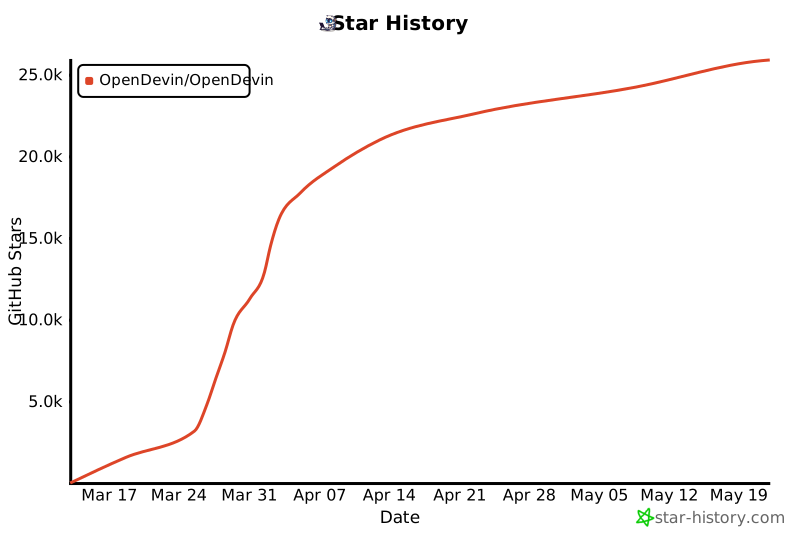](https://star-history.com/#OpenDevin/OpenDevin&Date)
|
||||
|
||||
<p align="right" style="font-size: 14px; color: #555; margin-top: 20px;">
|
||||
<a href="#readme-top" style="text-decoration: none; color: #007bff; font-weight: bold;">
|
||||
↑ Back to Top ↑
|
||||
</a>
|
||||
</p>
|
||||
|
||||
## 📜 License
|
||||
|
||||
Distributed under the MIT License. See [`LICENSE`](./LICENSE) for more information.
|
||||
|
||||
<p align="right" style="font-size: 14px; color: #555; margin-top: 20px;">
|
||||
<a href="#readme-top" style="text-decoration: none; color: #007bff; font-weight: bold;">
|
||||
↑ Back to Top ↑
|
||||
</a>
|
||||
</p>
|
||||
|
||||
[contributors-shield]: https://img.shields.io/github/contributors/opendevin/opendevin?style=for-the-badge
|
||||
[contributors-url]: https://github.com/OpenDevin/OpenDevin/graphs/contributors
|
||||
[forks-shield]: https://img.shields.io/github/forks/opendevin/opendevin?style=for-the-badge
|
||||
|
||||
+7
-21
@@ -16,18 +16,14 @@ Every agent also has a `self.llm` which it can use to interact with the LLM conf
|
||||
See the [LiteLLM docs for `self.llm.completion`](https://docs.litellm.ai/docs/completion).
|
||||
|
||||
## State
|
||||
|
||||
The `state` contains:
|
||||
|
||||
- A history of actions taken by the agent, as well as any observations (e.g. file content, command output) from those actions
|
||||
- A list of actions/observations that have happened since the most recent step
|
||||
- A [`root_task`](https://github.com/OpenDevin/OpenDevin/blob/main/opendevin/controller/state/task.py), which contains a plan of action
|
||||
- The agent can add and modify subtasks through the `AddTaskAction` and `ModifyTaskAction`
|
||||
* A history of actions taken by the agent, as well as any observations (e.g. file content, command output) from those actions
|
||||
* A list of actions/observations that have happened since the most recent step
|
||||
* A [`plan`](https://github.com/OpenDevin/OpenDevin/blob/main/opendevin/plan.py), which contains the main goal
|
||||
* The agent can add and modify subtasks through the `AddTaskAction` and `ModifyTaskAction`
|
||||
|
||||
## Actions
|
||||
|
||||
Here is a list of available Actions, which can be returned by `agent.step()`:
|
||||
|
||||
- [`CmdRunAction`](../opendevin/action/bash.py) - Runs a command inside a sandboxed terminal
|
||||
- [`CmdKillAction`](../opendevin/action/bash.py) - Kills a background command
|
||||
- [`IPythonRunCellAction`](../opendevin/action/bash.py) - Execute a block of Python code interactively (in Jupyter notebook) and receives `CmdOutputObservation`. Requires setting up `jupyter` [plugin](../opendevin/sandbox/plugins) as a requirement.
|
||||
@@ -39,50 +35,40 @@ Here is a list of available Actions, which can be returned by `agent.step()`:
|
||||
- [`ModifyTaskAction`](../opendevin/action/tasks.py) - Changes the state of a subtask
|
||||
- [`AgentThinkAction`](../opendevin/action/agent.py) - A no-op that allows the agent to add plaintext to the history (as well as the chat log)
|
||||
- [`AgentTalkAction`](../opendevin/action/agent.py) - A no-op that allows the agent to add plaintext to the history and talk to the user.
|
||||
- [`AgentFinishAction`](../opendevin/action/agent.py) - Stops the control loop, allowing the user/delegator agent to enter a new task
|
||||
- [`AgentRejectAction`](../opendevin/action/agent.py) - Stops the control loop, allowing the user/delegator agent to enter a new task
|
||||
- [`AgentFinishAction`](../opendevin/action/agent.py) - Stops the control loop, allowing the user to enter a new task
|
||||
- [`MessageAction`](../opendevin/action/message.py) - Represents a message from an agent or the user
|
||||
|
||||
You can use `action.to_dict()` and `action_from_dict` to serialize and deserialize actions.
|
||||
|
||||
## Observations
|
||||
|
||||
There are also several types of Observations. These are typically available in the step following the corresponding Action.
|
||||
But they may also appear as a result of asynchronous events (e.g. a message from the user, logs from a command running
|
||||
in the background).
|
||||
|
||||
Here is a list of available Observations:
|
||||
|
||||
- [`CmdOutputObservation`](../opendevin/observation/run.py)
|
||||
- [`BrowserOutputObservation`](../opendevin/observation/browse.py)
|
||||
- [`FileReadObservation`](../opendevin/observation/files.py)
|
||||
- [`FileWriteObservation`](../opendevin/observation/files.py)
|
||||
- [`UserMessageObservation`](../opendevin/observation/)
|
||||
- [`AgentRecallObservation`](../opendevin/observation/recall.py)
|
||||
- [`ErrorObservation`](../opendevin/observation/error.py)
|
||||
- [`SuccessObservation`](../opendevin/observation/success.py)
|
||||
- [`AgentErrorObservation`](../opendevin/observation/error.py)
|
||||
|
||||
You can use `observation.to_dict()` and `observation_from_dict` to serialize and deserialize observations.
|
||||
|
||||
## Interface
|
||||
|
||||
Every agent must implement the following methods:
|
||||
|
||||
### `step`
|
||||
|
||||
```
|
||||
def step(self, state: "State") -> "Action"
|
||||
```
|
||||
|
||||
`step` moves the agent forward one step towards its goal. This probably means
|
||||
sending a prompt to the LLM, then parsing the response into an `Action`.
|
||||
|
||||
### `search_memory`
|
||||
|
||||
```
|
||||
def search_memory(self, query: str) -> list[str]:
|
||||
def search_memory(self, query: str) -> List[str]:
|
||||
```
|
||||
|
||||
`search_memory` should return a list of events that match the query. This will be used
|
||||
for the `recall` action.
|
||||
|
||||
|
||||
@@ -1,4 +1,4 @@
|
||||
from opendevin.controller.agent import Agent
|
||||
from opendevin.agent import Agent
|
||||
|
||||
from .agent import SWEAgent
|
||||
|
||||
|
||||
+25
-21
@@ -1,14 +1,15 @@
|
||||
from opendevin.controller.agent import Agent
|
||||
from opendevin.controller.state.state import State
|
||||
from opendevin.events.action import (
|
||||
from typing import List
|
||||
|
||||
from opendevin.action import (
|
||||
Action,
|
||||
AgentThinkAction,
|
||||
FileReadAction,
|
||||
FileWriteAction,
|
||||
MessageAction,
|
||||
)
|
||||
from opendevin.events.observation import Observation
|
||||
from opendevin.events.serialization.event import event_to_memory
|
||||
from opendevin.agent import Agent
|
||||
from opendevin.llm.llm import LLM
|
||||
from opendevin.observation import Observation
|
||||
from opendevin.state import State
|
||||
|
||||
from .parser import parse_command
|
||||
from .prompts import (
|
||||
@@ -31,28 +32,25 @@ class SWEAgent(Agent):
|
||||
super().__init__(llm)
|
||||
self.memory_window = 4
|
||||
self.max_retries = 2
|
||||
self.running_memory: list[str] = []
|
||||
self.running_memory: List[str] = []
|
||||
self.cur_file: str = ''
|
||||
self.cur_line: int = 0
|
||||
|
||||
def _remember(self, action: Action, observation: Observation) -> None:
|
||||
"""Agent has a limited memory of the few steps implemented as a queue"""
|
||||
memory = MEMORY_FORMAT(event_to_memory(action), event_to_memory(observation))
|
||||
memory = MEMORY_FORMAT(action.to_memory(), observation.to_memory())
|
||||
self.running_memory.append(memory)
|
||||
|
||||
def _think_act(self, messages: list[dict]) -> tuple[Action, str]:
|
||||
def _think_act(self, messages: List[dict]) -> tuple[Action, str]:
|
||||
resp = self.llm.completion(
|
||||
messages=messages,
|
||||
temperature=0.05,
|
||||
)
|
||||
action_resp = resp['choices'][0]['message']['content']
|
||||
print(f"\033[1m\033[91m{resp['usage']}\033[0m")
|
||||
print(
|
||||
'\n==== RAW OUTPUT ====',
|
||||
f'\033[96m{action_resp}\033[0m',
|
||||
'==== END RAW ====\n',
|
||||
sep='\n',
|
||||
)
|
||||
print('\n==== RAW OUTPUT ====',
|
||||
f'\033[96m{action_resp}\033[0m',
|
||||
'==== END RAW ====\n', sep='\n')
|
||||
return parse_command(action_resp, self.cur_file, self.cur_line)
|
||||
|
||||
def _update(self, action: Action) -> None:
|
||||
@@ -70,16 +68,22 @@ class SWEAgent(Agent):
|
||||
for prev_action, obs in state.updated_info:
|
||||
self._remember(prev_action, obs)
|
||||
|
||||
goal = state.get_current_user_intent()
|
||||
prompt = STEP_PROMPT(goal, self.cur_file, self.cur_line)
|
||||
prompt = STEP_PROMPT(
|
||||
state.plan.main_goal,
|
||||
self.cur_file,
|
||||
self.cur_line
|
||||
)
|
||||
|
||||
msgs = [
|
||||
{'content': SYSTEM_MESSAGE, 'role': 'system'},
|
||||
{'content': prompt, 'role': 'user'},
|
||||
{'content': prompt, 'role': 'user'}
|
||||
]
|
||||
|
||||
if len(self.running_memory) > 0:
|
||||
context = CONTEXT_PROMPT(self.running_memory, self.memory_window)
|
||||
context = CONTEXT_PROMPT(
|
||||
self.running_memory,
|
||||
self.memory_window
|
||||
)
|
||||
msgs.insert(1, {'content': context, 'role': 'user'})
|
||||
# clrs = [''] * (len(msgs)-2) + ['\033[0;36m', '\033[0;35m']
|
||||
# print('\n\n'.join([c+m['content']+'\033[0m' for c, m in zip(clrs, msgs)]))
|
||||
@@ -93,13 +97,13 @@ class SWEAgent(Agent):
|
||||
action, thought = self._think_act(messages=msgs)
|
||||
|
||||
if not action:
|
||||
action = MessageAction(thought)
|
||||
action = AgentThinkAction(thought)
|
||||
|
||||
self._update(action)
|
||||
self.latest_action = action
|
||||
return action
|
||||
|
||||
def search_memory(self, query: str) -> list[str]:
|
||||
def search_memory(self, query: str) -> List[str]:
|
||||
return [item for item in self.running_memory if query in item]
|
||||
|
||||
def reset(self) -> None:
|
||||
|
||||
@@ -1,22 +1,22 @@
|
||||
import re
|
||||
|
||||
from opendevin.events.action import (
|
||||
from opendevin.action import (
|
||||
Action,
|
||||
AgentEchoAction,
|
||||
AgentFinishAction,
|
||||
AgentThinkAction,
|
||||
BrowseURLAction,
|
||||
CmdRunAction,
|
||||
FileReadAction,
|
||||
FileWriteAction,
|
||||
MessageAction,
|
||||
)
|
||||
|
||||
from .prompts import COMMAND_USAGE, CUSTOM_DOCS
|
||||
|
||||
# commands: exit, read, write, browse, kill, search_file, search_dir
|
||||
|
||||
no_open_file_error = MessageAction(
|
||||
'You are not currently in a file. You can use the read command to open a file and then use goto to navigate through it.'
|
||||
)
|
||||
no_open_file_error = AgentEchoAction(
|
||||
'You are not currently in a file. You can use the read command to open a file and then use goto to navigate through it.')
|
||||
|
||||
|
||||
def invalid_error(cmd, docs):
|
||||
@@ -33,9 +33,7 @@ Try again using this format:
|
||||
"""
|
||||
|
||||
|
||||
def get_action_from_string(
|
||||
command_string: str, path: str, line: int, thoughts: str = ''
|
||||
) -> Action | None:
|
||||
def get_action_from_string(command_string: str, path: str, line: int, thoughts: str = '') -> Action | None:
|
||||
"""
|
||||
Parses the command string to find which command the agent wants to run
|
||||
Converts the command into a proper Action and returns
|
||||
@@ -48,7 +46,7 @@ def get_action_from_string(
|
||||
return AgentFinishAction()
|
||||
|
||||
elif 'think' == cmd:
|
||||
return MessageAction(' '.join(args))
|
||||
return AgentThinkAction(' '.join(args))
|
||||
|
||||
elif 'scroll_up' == cmd:
|
||||
if not path:
|
||||
@@ -70,7 +68,7 @@ def get_action_from_string(
|
||||
end = start + 100
|
||||
return FileReadAction(path, start, end, thoughts)
|
||||
else:
|
||||
return MessageAction(invalid_error(command_string, 'goto'))
|
||||
return AgentEchoAction(invalid_error(command_string, 'goto'))
|
||||
|
||||
elif 'edit' == cmd:
|
||||
if not path:
|
||||
@@ -85,7 +83,7 @@ def get_action_from_string(
|
||||
change = change[1:-1]
|
||||
return FileWriteAction(path, change, start, end, thoughts)
|
||||
else:
|
||||
return MessageAction(invalid_error(command_string, 'edit'))
|
||||
return AgentEchoAction(invalid_error(command_string, 'edit'))
|
||||
|
||||
elif 'read' == cmd:
|
||||
rex = r'^read\s+(\S+)(?:\s+(\d+))?(?:\s+(-?\d+))?$'
|
||||
@@ -100,7 +98,7 @@ def get_action_from_string(
|
||||
|
||||
return FileReadAction(file, start, end, thoughts)
|
||||
else:
|
||||
return MessageAction(invalid_error(command_string, 'read'))
|
||||
return AgentEchoAction(invalid_error(command_string, 'read'))
|
||||
|
||||
elif 'write' == cmd:
|
||||
rex = r'^write\s+(\S+)\s+(.*?)\s*(\d+)?\s*(-?\d+)?$'
|
||||
@@ -120,7 +118,7 @@ def get_action_from_string(
|
||||
|
||||
return FileWriteAction(file, content, start, end, thoughts)
|
||||
else:
|
||||
return MessageAction(invalid_error(command_string, 'write'))
|
||||
return AgentEchoAction(invalid_error(command_string, 'write'))
|
||||
|
||||
elif 'browse' == cmd:
|
||||
return BrowseURLAction(args[0].strip())
|
||||
@@ -131,15 +129,13 @@ def get_action_from_string(
|
||||
if valid:
|
||||
return CmdRunAction(command_string)
|
||||
else:
|
||||
return MessageAction(
|
||||
f'Invalid command structure for\n ```\n{command_string}\n```.\nTry again using this format:\n{CUSTOM_DOCS}'
|
||||
)
|
||||
return AgentEchoAction(f'Invalid command structure for\n ```\n{command_string}\n```.\nTry again using this format:\n{CUSTOM_DOCS}')
|
||||
else:
|
||||
# check bash command
|
||||
obs = str(CmdRunAction(f'type {cmd}'))
|
||||
if obs.split(':')[-1].strip() == 'not found':
|
||||
# echo not found error for llm
|
||||
return MessageAction(content=obs)
|
||||
return AgentEchoAction(content=obs)
|
||||
else:
|
||||
# run valid command
|
||||
return CmdRunAction(command_string)
|
||||
@@ -161,7 +157,8 @@ def parse_command(input_str: str, path: str, line: int):
|
||||
command_str = parts[1].strip()
|
||||
ind = 2 if len(parts) > 2 else 1
|
||||
accompanying_text = ''.join(parts[:-ind]).strip()
|
||||
action = get_action_from_string(command_str, path, line, accompanying_text)
|
||||
action = get_action_from_string(
|
||||
command_str, path, line, accompanying_text)
|
||||
if action:
|
||||
return action, accompanying_text
|
||||
return None, input_str # used for retry
|
||||
|
||||
@@ -1,3 +1,4 @@
|
||||
|
||||
DEFAULT_COMMANDS_DICT = {
|
||||
'exit': 'Executed when task is complete',
|
||||
'read <file_name> [<start_line>] [<end_line>]': "Shows a given file's contents starting from <start_line> up to <end_line>. Default: start_line = 0, end_line = -1. By default the whole file will be read.",
|
||||
@@ -5,12 +6,12 @@ DEFAULT_COMMANDS_DICT = {
|
||||
'browse <url>': 'Returns the text version of any url, this can be useful to look up documentation or finding issues on github',
|
||||
'scroll_up': 'Takes no arguments. This will scroll up and show you the 100 lines above your current lines',
|
||||
'scroll_down': 'Takes no arguments. This will scroll down and show you the 100 lines below your current lines',
|
||||
'edit <start_line> <end_line> <changes>': 'This will modify lines in the currently open file. use start_line and end_line to designate which lines to change and then write the multiline changes. Set end_line to -1 to denote the end of the file',
|
||||
'edit <start_line> <end_line> <changes>': 'This will modify lines in the currently open file. use start_line and end_line to designate which lines to change and then write the multiline changes',
|
||||
'goto <line_num>': 'This will take you directly to a line and show you the 100 lines below it.',
|
||||
'<bash_command> <args>': 'You can use any bash command you need (cd, ls, rm, grep, dir, mv, wget, git, zip, etc.) with their arguments included',
|
||||
'pip install <package>': 'You can use this to import python packages. Make sure you include the correct package name when using this command.',
|
||||
'ls': 'Use the ls command to view all the files in your current directory, this is a good starting point.',
|
||||
'NOT ALLOWED': 'You cannot use interactive commands like python or node',
|
||||
'NOT ALLOWED': 'You cannot use interactive commands like python or node'
|
||||
}
|
||||
|
||||
COMMAND_USAGE = {
|
||||
@@ -24,7 +25,8 @@ COMMAND_USAGE = {
|
||||
'browse': 'Args:\n<url>\nUsage:\n```\nbrowse https://github.com/OpenDevin/OpenDevin\n```\nThis will fetch the Text elements from the given url and show them to you.',
|
||||
}
|
||||
|
||||
DEFAULT_COMMANDS = '\n'.join([k + ' - ' + v for k, v in DEFAULT_COMMANDS_DICT.items()])
|
||||
DEFAULT_COMMANDS = '\n'.join(
|
||||
[k + ' - ' + v for k, v in DEFAULT_COMMANDS_DICT.items()])
|
||||
|
||||
# from opendevin.parse_commands import parse_command_file
|
||||
# USE parse_command_file(filepath) to get the custom commands
|
||||
@@ -124,8 +126,7 @@ You have access to a variety of tools and commands that you can use to help you
|
||||
""".strip()
|
||||
|
||||
|
||||
def NO_ACTION(latest):
|
||||
return f"""
|
||||
def NO_ACTION(latest): return f"""
|
||||
You did not include any action to take in your most recent output:
|
||||
|
||||
===== Output ======
|
||||
@@ -153,8 +154,7 @@ def file_info(file: str, line: int):
|
||||
"""
|
||||
|
||||
|
||||
def STEP_PROMPT(task, file, line_num):
|
||||
return f"""
|
||||
def STEP_PROMPT(task, file, line_num): return f"""
|
||||
{RESPONSE_FORMAT}
|
||||
You are currently trying to complete this task:
|
||||
{task}
|
||||
@@ -185,8 +185,7 @@ def unpack_dict(data: dict, restrict: list[str] = []):
|
||||
return '\n'.join(lines)
|
||||
|
||||
|
||||
def MEMORY_FORMAT(act, obs):
|
||||
return f"""
|
||||
def MEMORY_FORMAT(act, obs): return f"""
|
||||
Previous Action:
|
||||
{unpack_dict(act, ["content"])}
|
||||
|
||||
|
||||
+10
-17
@@ -1,6 +1,6 @@
|
||||
from dotenv import load_dotenv
|
||||
|
||||
from opendevin.controller.agent import Agent
|
||||
from opendevin.agent import Agent
|
||||
|
||||
from .micro.agent import MicroAgent
|
||||
from .micro.registry import all_microagents
|
||||
@@ -8,6 +8,7 @@ from .micro.registry import all_microagents
|
||||
load_dotenv()
|
||||
|
||||
|
||||
|
||||
from . import ( # noqa: E402
|
||||
SWE_agent,
|
||||
codeact_agent,
|
||||
@@ -17,26 +18,18 @@ from . import ( # noqa: E402
|
||||
planner_agent,
|
||||
)
|
||||
|
||||
__all__ = [
|
||||
'monologue_agent',
|
||||
'codeact_agent',
|
||||
'planner_agent',
|
||||
'SWE_agent',
|
||||
'delegator_agent',
|
||||
'dummy_agent',
|
||||
]
|
||||
__all__ = ['monologue_agent', 'codeact_agent',
|
||||
'planner_agent', 'SWE_agent',
|
||||
'delegator_agent',
|
||||
'dummy_agent']
|
||||
|
||||
for agent in all_microagents.values():
|
||||
name = agent['name']
|
||||
prompt = agent['prompt']
|
||||
|
||||
anon_class = type(
|
||||
name,
|
||||
(MicroAgent,),
|
||||
{
|
||||
'prompt': prompt,
|
||||
'agent_definition': agent,
|
||||
},
|
||||
)
|
||||
anon_class = type(name, (MicroAgent,), {
|
||||
'prompt': prompt,
|
||||
'agent_definition': agent,
|
||||
})
|
||||
|
||||
Agent.register(name, anon_class)
|
||||
|
||||
@@ -1,29 +1,23 @@
|
||||
# CodeAct Agent Framework
|
||||
# CodeAct-based Agent Framework
|
||||
|
||||
This folder implements the CodeAct idea ([paper](https://arxiv.org/abs/2402.13463), [tweet](https://twitter.com/xingyaow_/status/1754556835703751087)) that consolidates LLM agents’ **act**ions into a unified **code** action space for both *simplicity* and *performance* (see paper for more details).
|
||||
This folder implements the [CodeAct idea](https://arxiv.org/abs/2402.13463) that relies on LLM to autonomously perform actions in a Bash shell. It requires more from the LLM itself: LLM needs to be capable enough to do all the stuff autonomously, instead of stuck in an infinite loop.
|
||||
|
||||
The conceptual idea is illustrated below. At each turn, the agent can:
|
||||
**NOTE: This agent is still highly experimental and under active development to reach the capability described in the original paper & [repo](https://github.com/xingyaoww/code-act).**
|
||||
|
||||
1. **Converse**: Communicate with humans in natural language to ask for clarification, confirmation, etc.
|
||||
2. **CodeAct**: Choose to perform the task by executing code
|
||||
- Execute any valid Linux `bash` command
|
||||
- Execute any valid `Python` code with [an interactive Python interpreter](https://ipython.org/). This is simulated through `bash` command, see plugin system below for more details.
|
||||
<video src="https://github.com/xingyaoww/code-act/assets/38853559/62c80ada-62ce-447e-811c-fc801dd4beac"> </video>
|
||||
*Demo of the expected capability - work-in-progress.*
|
||||
|
||||

|
||||
```bash
|
||||
mkdir workspace
|
||||
PYTHONPATH=`pwd`:$PYTHONPATH python3 opendevin/main.py -d ./workspace -c CodeActAgent -t "Please write a flask app that returns 'Hello, World\!' at the root URL, then start the app on port 5000. python3 has already been installed for you."
|
||||
```
|
||||
|
||||
## Plugin System
|
||||
Example: prompts `gpt-4-0125-preview` to write a flask server, install `flask` library, and start the server.
|
||||
|
||||
To make the CodeAct agent more powerful with only access to `bash` action space, CodeAct agent leverages OpenDevin's plugin system:
|
||||
- [Jupyter plugin](https://github.com/OpenDevin/OpenDevin/tree/main/opendevin/runtime/plugins/jupyter): for IPython execution via bash command
|
||||
- [SWE-agent tool plugin](https://github.com/OpenDevin/OpenDevin/tree/main/opendevin/runtime/plugins/swe_agent_commands): Powerful bash command line tools for software development tasks introduced by [swe-agent](https://github.com/princeton-nlp/swe-agent).
|
||||
<img width="951" alt="image" src="https://github.com/OpenDevin/OpenDevin/assets/38853559/325c3115-a343-4cc5-a92b-f1e5d552a077">
|
||||
|
||||
## Demo
|
||||
<img width="957" alt="image" src="https://github.com/OpenDevin/OpenDevin/assets/38853559/68ad10c1-744a-4e9d-bb29-0f163d665a0a">
|
||||
|
||||
https://github.com/OpenDevin/OpenDevin/assets/38853559/f592a192-e86c-4f48-ad31-d69282d5f6ac
|
||||
Most of the things are working as expected, except at the end, the model did not follow the instruction to stop the interaction by outputting `<execute> exit </execute>` as instructed.
|
||||
|
||||
*Example of CodeActAgent with `gpt-4-turbo-2024-04-09` performing a data science task (linear regression)*
|
||||
|
||||
## Work-in-progress & Next step
|
||||
|
||||
[] Support web-browsing
|
||||
[] Complete the workflow for CodeAct agent to submit Github PRs
|
||||
**TODO**: This should be fixable by either (1) including a complete in-context example like [this](https://github.com/xingyaoww/mint-bench/blob/main/mint/tasks/in_context_examples/reasoning/with_tool.txt), OR (2) collect some interaction data like this and fine-tune a model (like [this](https://github.com/xingyaoww/code-act), a more complex route).
|
||||
|
||||
@@ -1,4 +1,4 @@
|
||||
from opendevin.controller.agent import Agent
|
||||
from opendevin.agent import Agent
|
||||
|
||||
from .codeact_agent import CodeActAgent
|
||||
|
||||
|
||||
@@ -1,138 +1,59 @@
|
||||
import re
|
||||
from typing import List, Mapping
|
||||
|
||||
from agenthub.codeact_agent.prompt import (
|
||||
COMMAND_DOCS,
|
||||
EXAMPLES,
|
||||
GITHUB_MESSAGE,
|
||||
SYSTEM_PREFIX,
|
||||
SYSTEM_SUFFIX,
|
||||
)
|
||||
from opendevin.controller.agent import Agent
|
||||
from opendevin.controller.state.state import State
|
||||
from opendevin.core.logger import opendevin_logger as logger
|
||||
from opendevin.events.action import (
|
||||
from agenthub.codeact_agent.prompt import EXAMPLES, SYSTEM_MESSAGE
|
||||
from opendevin.action import (
|
||||
Action,
|
||||
AgentEchoAction,
|
||||
AgentFinishAction,
|
||||
BrowseInteractiveAction,
|
||||
AgentTalkAction,
|
||||
CmdRunAction,
|
||||
IPythonRunCellAction,
|
||||
MessageAction,
|
||||
NullAction,
|
||||
)
|
||||
from opendevin.events.observation import (
|
||||
BrowserOutputObservation,
|
||||
from opendevin.agent import Agent
|
||||
from opendevin.llm.llm import LLM
|
||||
from opendevin.observation import (
|
||||
AgentMessageObservation,
|
||||
CmdOutputObservation,
|
||||
IPythonRunCellObservation,
|
||||
UserMessageObservation,
|
||||
)
|
||||
from opendevin.llm.llm import LLM
|
||||
from opendevin.runtime.plugins import (
|
||||
from opendevin.sandbox.plugins import (
|
||||
JupyterRequirement,
|
||||
PluginRequirement,
|
||||
SWEAgentCommandsRequirement,
|
||||
)
|
||||
|
||||
ENABLE_GITHUB = True
|
||||
from opendevin.state import State
|
||||
|
||||
|
||||
def parse_response(response) -> str:
|
||||
action = response.choices[0].message.content
|
||||
for lang in ['bash', 'ipython', 'browse']:
|
||||
for lang in ['bash', 'ipython']:
|
||||
if f'<execute_{lang}>' in action and f'</execute_{lang}>' not in action:
|
||||
action += f'</execute_{lang}>'
|
||||
return action
|
||||
|
||||
|
||||
def truncate_observation(observation: str, max_chars: int = 10_000) -> str:
|
||||
"""
|
||||
Truncate the middle of the observation if it is too long.
|
||||
"""
|
||||
if len(observation) <= max_chars:
|
||||
return observation
|
||||
half = max_chars // 2
|
||||
return (
|
||||
observation[:half]
|
||||
+ '\n[... Observation truncated due to length ...]\n'
|
||||
+ observation[-half:]
|
||||
)
|
||||
|
||||
|
||||
def swe_agent_edit_hack(bash_command: str) -> str:
|
||||
"""
|
||||
Hack to handle the SWE-agent edit command. The vanilla edit command will hang the SSHBox.
|
||||
|
||||
REPLACE THIS:
|
||||
edit 683:693
|
||||
try:
|
||||
return list(urlsplit(url))
|
||||
except ValueError:
|
||||
raise ValidationError(self.error_messages['invalid'], code='invalid')
|
||||
end_of_edit
|
||||
|
||||
WITH THIS:
|
||||
edit 683:693 <<EOF
|
||||
try:
|
||||
return list(urlsplit(url))
|
||||
except ValueError:
|
||||
raise ValidationError(self.error_messages['invalid'], code='invalid')
|
||||
EOF
|
||||
"""
|
||||
if 'edit' in bash_command:
|
||||
# edit\s(\d+):(\d+)([\s\S]*)end_of_edit
|
||||
# replace
|
||||
bash_command = re.sub(
|
||||
r'edit\s(\d+):(\d+)([\s\S]*?)end_of_edit',
|
||||
r'edit \1:\2 <<EOF\3EOF',
|
||||
bash_command,
|
||||
)
|
||||
return bash_command
|
||||
|
||||
|
||||
class CodeActAgent(Agent):
|
||||
VERSION = '1.3'
|
||||
"""
|
||||
The Code Act Agent is a minimalist agent.
|
||||
The agent works by passing the model a list of action-observation pairs and prompting the model to take the next step.
|
||||
|
||||
### Overview
|
||||
|
||||
This agent implements the CodeAct idea ([paper](https://arxiv.org/abs/2402.13463), [tweet](https://twitter.com/xingyaow_/status/1754556835703751087)) that consolidates LLM agents’ **act**ions into a unified **code** action space for both *simplicity* and *performance* (see paper for more details).
|
||||
|
||||
The conceptual idea is illustrated below. At each turn, the agent can:
|
||||
|
||||
1. **Converse**: Communicate with humans in natural language to ask for clarification, confirmation, etc.
|
||||
2. **CodeAct**: Choose to perform the task by executing code
|
||||
- Execute any valid Linux `bash` command
|
||||
- Execute any valid `Python` code with [an interactive Python interpreter](https://ipython.org/). This is simulated through `bash` command, see plugin system below for more details.
|
||||
|
||||

|
||||
|
||||
### Plugin System
|
||||
|
||||
To make the CodeAct agent more powerful with only access to `bash` action space, CodeAct agent leverages OpenDevin's plugin system:
|
||||
- [Jupyter plugin](https://github.com/OpenDevin/OpenDevin/tree/main/opendevin/runtime/plugins/jupyter): for IPython execution via bash command
|
||||
- [SWE-agent tool plugin](https://github.com/OpenDevin/OpenDevin/tree/main/opendevin/runtime/plugins/swe_agent_commands): Powerful bash command line tools for software development tasks introduced by [swe-agent](https://github.com/princeton-nlp/swe-agent).
|
||||
|
||||
### Demo
|
||||
|
||||
https://github.com/OpenDevin/OpenDevin/assets/38853559/f592a192-e86c-4f48-ad31-d69282d5f6ac
|
||||
|
||||
*Example of CodeActAgent with `gpt-4-turbo-2024-04-09` performing a data science task (linear regression)*
|
||||
|
||||
### Work-in-progress & Next step
|
||||
|
||||
[] Support web-browsing
|
||||
[] Complete the workflow for CodeAct agent to submit Github PRs
|
||||
|
||||
"""
|
||||
|
||||
sandbox_plugins: list[PluginRequirement] = [
|
||||
JupyterRequirement(),
|
||||
SWEAgentCommandsRequirement(),
|
||||
]
|
||||
|
||||
system_message: str = (
|
||||
f'{SYSTEM_PREFIX}\n{GITHUB_MESSAGE}\n\n{COMMAND_DOCS}\n\n{SYSTEM_SUFFIX}'
|
||||
if ENABLE_GITHUB
|
||||
else f'{SYSTEM_PREFIX}\n\n{COMMAND_DOCS}\n\n{SYSTEM_SUFFIX}'
|
||||
sandbox_plugins: List[PluginRequirement] = [JupyterRequirement(), SWEAgentCommandsRequirement()]
|
||||
SUPPORTED_ACTIONS = (
|
||||
CmdRunAction,
|
||||
IPythonRunCellAction,
|
||||
AgentEchoAction,
|
||||
AgentTalkAction,
|
||||
NullAction
|
||||
)
|
||||
SUPPORTED_OBSERVATIONS = (
|
||||
AgentMessageObservation,
|
||||
UserMessageObservation,
|
||||
CmdOutputObservation,
|
||||
IPythonRunCellObservation
|
||||
)
|
||||
|
||||
def __init__(
|
||||
@@ -146,143 +67,104 @@ class CodeActAgent(Agent):
|
||||
- llm (LLM): The llm to be used by this agent
|
||||
"""
|
||||
super().__init__(llm)
|
||||
self.reset()
|
||||
|
||||
def reset(self) -> None:
|
||||
"""
|
||||
Resets the CodeAct Agent.
|
||||
"""
|
||||
super().reset()
|
||||
self.messages: list[dict[str, str]] = [
|
||||
{'role': 'system', 'content': self.system_message},
|
||||
{
|
||||
'role': 'user',
|
||||
'content': f"Here is an example of how you can interact with the environment for task solving:\n{EXAMPLES}\n\nNOW, LET'S START!",
|
||||
},
|
||||
]
|
||||
self.cost_accumulator = 0
|
||||
self.messages: List[Mapping[str, str]] = []
|
||||
|
||||
def step(self, state: State) -> Action:
|
||||
"""
|
||||
Performs one step using the CodeAct Agent.
|
||||
Performs one step using the Code Act Agent.
|
||||
This includes gathering info on previous steps and prompting the model to make a command to execute.
|
||||
|
||||
Parameters:
|
||||
- state (State): used to get updated info and background commands
|
||||
|
||||
Returns:
|
||||
- CmdRunAction(command) - bash command to run
|
||||
- IPythonRunCellAction(code) - IPython code to run
|
||||
- BrowseInteractiveAction(browsergym_command) - BrowserGym commands to run
|
||||
- MessageAction(content) - Message action to run (e.g. ask for clarification)
|
||||
- AgentFinishAction() - end the interaction
|
||||
- CmdRunAction(command) - command action to run
|
||||
- AgentEchoAction(content=INVALID_INPUT_MESSAGE) - invalid command output
|
||||
|
||||
Raises:
|
||||
- NotImplementedError - for actions other than CmdOutputObservation or AgentMessageObservation
|
||||
"""
|
||||
|
||||
if len(self.messages) == 0:
|
||||
assert state.plan.main_goal, 'Expecting instruction to be set'
|
||||
self.messages = [
|
||||
{'role': 'system', 'content': SYSTEM_MESSAGE},
|
||||
{
|
||||
'role': 'user',
|
||||
'content': (
|
||||
f'Here is an example of how you can interact with the environment for task solving:\n{EXAMPLES}\n\n'
|
||||
f"NOW, LET'S START!\n\n{state.plan.main_goal}"
|
||||
)
|
||||
},
|
||||
]
|
||||
updated_info = state.updated_info
|
||||
if updated_info:
|
||||
for prev_action, obs in updated_info:
|
||||
if (
|
||||
isinstance(prev_action, MessageAction)
|
||||
and prev_action.source == 'user'
|
||||
):
|
||||
self.messages.append(
|
||||
{'role': 'user', 'content': prev_action.content}
|
||||
)
|
||||
if prev_action.content.strip() == '/exit':
|
||||
# User wants to exit
|
||||
return AgentFinishAction()
|
||||
assert isinstance(
|
||||
prev_action, self.SUPPORTED_ACTIONS
|
||||
), f'{prev_action.__class__} is not supported (supported: {self.SUPPORTED_ACTIONS})'
|
||||
# prev_action is already added to self.messages when returned
|
||||
|
||||
if isinstance(obs, CmdOutputObservation):
|
||||
content = 'OBSERVATION:\n' + truncate_observation(obs.content)
|
||||
# handle observations
|
||||
assert isinstance(
|
||||
obs, self.SUPPORTED_OBSERVATIONS
|
||||
), f'{obs.__class__} is not supported (supported: {self.SUPPORTED_OBSERVATIONS})'
|
||||
if isinstance(obs, (AgentMessageObservation, UserMessageObservation)):
|
||||
self.messages.append(
|
||||
{'role': 'user', 'content': obs.content})
|
||||
|
||||
# User wants to exit
|
||||
if obs.content.strip() == '/exit':
|
||||
return AgentFinishAction()
|
||||
elif isinstance(obs, CmdOutputObservation):
|
||||
content = 'OBSERVATION:\n' + obs.content
|
||||
content += f'\n[Command {obs.command_id} finished with exit code {obs.exit_code}]]'
|
||||
self.messages.append({'role': 'user', 'content': content})
|
||||
elif isinstance(obs, IPythonRunCellObservation):
|
||||
content = 'OBSERVATION:\n' + obs.content
|
||||
# replace base64 images with a placeholder
|
||||
splitted = content.split('\n')
|
||||
for i, line in enumerate(splitted):
|
||||
splited = content.split('\n')
|
||||
for i, line in enumerate(splited):
|
||||
if ' already displayed to user'
|
||||
)
|
||||
content = '\n'.join(splitted)
|
||||
content = truncate_observation(content)
|
||||
splited[i] = ' already displayed to user'
|
||||
content = '\n'.join(splited)
|
||||
self.messages.append({'role': 'user', 'content': content})
|
||||
elif isinstance(obs, BrowserOutputObservation):
|
||||
content = 'OBSERVATION:\n' + truncate_observation(obs.content)
|
||||
self.messages.append({'role': 'user', 'content': content})
|
||||
|
||||
latest_user_message = [m for m in self.messages if m['role'] == 'user'][-1]
|
||||
if latest_user_message:
|
||||
latest_user_message['content'] += (
|
||||
f'\n\nENVIRONMENT REMINDER: You have {state.max_iterations - state.iteration} turns left to complete the task.'
|
||||
)
|
||||
else:
|
||||
raise NotImplementedError(
|
||||
f'Unknown observation type: {obs.__class__}'
|
||||
)
|
||||
|
||||
response = self.llm.completion(
|
||||
messages=self.messages,
|
||||
stop=[
|
||||
'</execute_ipython>',
|
||||
'</execute_bash>',
|
||||
'</execute_browse>',
|
||||
],
|
||||
temperature=0.0,
|
||||
temperature=0.0
|
||||
)
|
||||
|
||||
self.log_cost(response)
|
||||
|
||||
action_str: str = parse_response(response)
|
||||
state.num_of_chars += sum(
|
||||
len(message['content']) for message in self.messages
|
||||
) + len(action_str)
|
||||
self.messages.append({'role': 'assistant', 'content': action_str})
|
||||
|
||||
if finish_command := re.search(r'<finish>.*</finish>', action_str, re.DOTALL):
|
||||
thought = action_str.replace(finish_command.group(0), '').strip()
|
||||
return AgentFinishAction(thought=thought)
|
||||
if bash_command := re.search(
|
||||
r'<execute_bash>(.*)</execute_bash>', action_str, re.DOTALL
|
||||
):
|
||||
if bash_command := re.search(r'<execute_bash>(.*)</execute_bash>', action_str, re.DOTALL):
|
||||
# remove the command from the action string to get thought
|
||||
thought = action_str.replace(bash_command.group(0), '').strip()
|
||||
# a command was found
|
||||
command_group = bash_command.group(1).strip()
|
||||
command_group = swe_agent_edit_hack(command_group)
|
||||
|
||||
if command_group.strip() == 'exit':
|
||||
return AgentFinishAction()
|
||||
return CmdRunAction(command=command_group, thought=thought)
|
||||
elif python_code := re.search(
|
||||
r'<execute_ipython>(.*)</execute_ipython>', action_str, re.DOTALL
|
||||
):
|
||||
elif python_code := re.search(r'<execute_ipython>(.*)</execute_ipython>', action_str, re.DOTALL):
|
||||
# a code block was found
|
||||
code_group = python_code.group(1).strip()
|
||||
thought = action_str.replace(python_code.group(0), '').strip()
|
||||
return IPythonRunCellAction(code=code_group, thought=thought)
|
||||
elif browse_command := re.search(
|
||||
r'<execute_browse>(.*)</execute_browse>', action_str, re.DOTALL
|
||||
):
|
||||
# BrowserGym actions was found
|
||||
browse_actions = browse_command.group(1).strip()
|
||||
thought = action_str.replace(browse_command.group(0), '').strip()
|
||||
return BrowseInteractiveAction(
|
||||
browser_actions=browse_actions, thought=thought
|
||||
)
|
||||
else:
|
||||
# We assume the LLM is GOOD enough that when it returns pure natural language
|
||||
# it want to talk to the user
|
||||
return MessageAction(content=action_str, wait_for_response=True)
|
||||
return AgentTalkAction(content=action_str)
|
||||
|
||||
def search_memory(self, query: str) -> list[str]:
|
||||
def search_memory(self, query: str) -> List[str]:
|
||||
raise NotImplementedError('Implement this abstract method')
|
||||
|
||||
def log_cost(self, response):
|
||||
try:
|
||||
cur_cost = self.llm.completion_cost(response)
|
||||
except Exception:
|
||||
cur_cost = 0
|
||||
self.cost_accumulator += cur_cost
|
||||
logger.info(
|
||||
'Cost: %.2f USD | Accumulated Cost: %.2f USD',
|
||||
cur_cost,
|
||||
self.cost_accumulator,
|
||||
)
|
||||
|
||||
@@ -1,9 +1,9 @@
|
||||
from opendevin.runtime.plugins import SWEAgentCommandsRequirement
|
||||
from opendevin.sandbox.plugins import SWEAgentCommandsRequirement
|
||||
|
||||
_SWEAGENT_BASH_DOCS = '\n'.join(
|
||||
filter(
|
||||
lambda x: not x.startswith('submit'),
|
||||
SWEAgentCommandsRequirement.documentation.split('\n'),
|
||||
SWEAgentCommandsRequirement.documentation.split('\n')
|
||||
)
|
||||
)
|
||||
# _SWEAGENT_BASH_DOCS content below:
|
||||
@@ -18,41 +18,31 @@ search_file <search_term> [<file>] - searches for search_term in file. If file i
|
||||
find_file <file_name> [<dir>] - finds all files with the given name in dir. If dir is not provided, searches in the current directory
|
||||
edit <start_line>:<end_line>
|
||||
<replacement_text>
|
||||
end_of_edit - replaces lines <start_line> through <end_line> (inclusive) with the given text in the open file. The replacement text is terminated by a line with only end_of_edit on it. All of the <replacement text> will be entered, so make sure your indentation is formatted properly. Python files will be checked for syntax errors after the edit. If the system detects a syntax error, the edit will not be executed. Simply try to edit the file again, but make sure to read the error message and modify the edit command you issue accordingly. Issuing the same command a second time will just lead to the same error message again. Remember, the file must be open before editing.
|
||||
end_of_edit - replaces lines <start_line> through <end_line> (inclusive) with the given text in the open file. The replacement text is terminated by a line with only end_of_edit on it. All of the <replacement text> will be entered, so make sure your indentation is formatted properly. Python files will be checked for syntax errors after the edit. If the system detects a syntax error, the edit will not be executed. Simply try to edit the file again, but make sure to read the error message and modify the edit command you issue accordingly. Issuing the same command a second time will just lead to the same error message again.
|
||||
"""
|
||||
|
||||
COMMAND_DOCS = (
|
||||
_COMMAND_DOCS = (
|
||||
'\nApart from the standard bash commands, you can also use the following special commands in <execute_bash> environment:\n'
|
||||
f'{_SWEAGENT_BASH_DOCS}'
|
||||
"Please note that THE EDIT COMMAND REQUIRES PROPER INDENTATION. If you'd like to add the line ' print(x)' you must fully write that out, with all those spaces before the code! Indentation is important and code that is not indented correctly will fail and require fixing before it can be run."
|
||||
)
|
||||
|
||||
SYSTEM_PREFIX = """A chat between a curious user and an artificial intelligence assistant. The assistant gives helpful, detailed, and polite answers to the user's questions.
|
||||
SYSTEM_MESSAGE = f"""A chat between a curious user and an artificial intelligence assistant. The assistant gives helpful, detailed, and polite answers to the user's questions.
|
||||
The assistant can interact with an interactive Python (Jupyter Notebook) environment and receive the corresponding output when needed. The code should be enclosed using "<execute_ipython>" tag, for example:
|
||||
<execute_ipython>
|
||||
print("Hello World!")
|
||||
</execute_ipython>
|
||||
The assistant can execute bash commands on behalf of the user by wrapping them with <execute_bash> and </execute_bash>.
|
||||
For example, you can list the files in the current directory by <execute_bash> ls </execute_bash>.
|
||||
The assistant can browse the Internet with commands on behalf of the user by wrapping them with <execute_browse> and </execute_browse>.
|
||||
For example, you can browse a given URL by <execute_browse> goto("<URL>") </execute_browse>.
|
||||
The assistant should attempt fewer things at a time instead of putting too much commands OR code in one "execute" block.
|
||||
The assistant can install Python packages through bash by <execute_bash> pip install [package needed] </execute_bash> and should always import packages and define variables before starting to use them.
|
||||
The assistant should stop <execute> and provide an answer when they have already obtained the answer from the execution result.
|
||||
If the assistant encounters an import error in IPython for a newly installed package, they should try to restart the kernel and import the package again. IPython kernel can be re-started by:
|
||||
<execute_ipython>
|
||||
import IPython
|
||||
IPython.Application.instance().kernel.do_shutdown(True) # Restart the kernel
|
||||
</execute_ipython>"""
|
||||
|
||||
GITHUB_MESSAGE = """To do any activities on GitHub, you should use the token in the $GITHUB_TOKEN environment variable.
|
||||
For instance, to push a local branch `my_branch` to the github repo `owner/repo`, you can use the following four commands:
|
||||
<execute_bash> git push https://$GITHUB_TOKEN@github.com/owner/repo.git my_branch </execute_bash>
|
||||
If you require access to GitHub but $GITHUB_TOKEN is not set, ask the user to set it for you."""
|
||||
{_COMMAND_DOCS}
|
||||
|
||||
SYSTEM_SUFFIX = """The assistant's response should be concise.
|
||||
You should include <execute_ipython> or <execute_bash> or <execute_browse> in every one of your responses, unless you are finished with the task or need more input or action from the user in order to proceed.
|
||||
IMPORTANT: Whenever possible, execute the code for the user using <execute_ipython> or <execute_bash> or <execute_browse> instead of providing it.
|
||||
Whenever possible, execute the code for the user using <execute_ipython> or <execute_bash> instead of providing it.
|
||||
The assistant's response should be concise, but do express their thoughts.
|
||||
Try to include one of <execute_ipython> or <execute_bash> in each of your responses, unless it is a direct answer to a question OR a message to the user.
|
||||
"""
|
||||
|
||||
EXAMPLES = """
|
||||
@@ -156,21 +146,6 @@ Press CTRL+C to quit
|
||||
ASSISTANT:
|
||||
The server is running on port 5000 with PID 124. You can access the list of numbers by visiting http://127.0.0.1:5000. If you have any further questions, feel free to ask!
|
||||
|
||||
USER: Now browse the newly started server's homepage and show me the content.
|
||||
|
||||
ASSISTANT:
|
||||
Sure! Let me browse the server's homepage at http://127.0.0.1:5000:
|
||||
<execute_browse>
|
||||
goto("http://127.0.0.1:5000")
|
||||
</execute_browse>
|
||||
|
||||
USER:
|
||||
Observation:
|
||||
[1, 2, 3, 4, 5, 6, 7, 8, 9, 10]
|
||||
|
||||
ASSISTANT:
|
||||
The content of the server's homepage is "[1, 2, 3, 4, 5, 6, 7, 8, 9, 10]". If you have any further questions, feel free to ask!
|
||||
|
||||
USER: Now kill the server, make it display the numbers in a table format.
|
||||
|
||||
ASSISTANT:
|
||||
@@ -204,11 +179,12 @@ USER:
|
||||
11: app.run(port=5000)
|
||||
|
||||
ASSISTANT:
|
||||
I should edit the file to display the numbers in a table format. I should include correct indentation. Let me update the file:
|
||||
I should edit the file to display the numbers in a table format. Let me do that for you:
|
||||
|
||||
<execute_bash>
|
||||
edit 8:8
|
||||
edit 8:8 <<EOF
|
||||
return '<table>' + ''.join([f'<tr><td>{i}</td></tr>' for i in numbers]) + '</table>'
|
||||
end_of_edit
|
||||
EOF
|
||||
</execute_bash>
|
||||
|
||||
USER:
|
||||
@@ -247,5 +223,4 @@ INVALID_INPUT_MESSAGE = (
|
||||
"I don't understand your input. \n"
|
||||
'If you want to execute a bash command, please use <execute_bash> YOUR_COMMAND_HERE </execute_bash>.\n'
|
||||
'If you want to execute a block of Python code, please use <execute_ipython> YOUR_COMMAND_HERE </execute_ipython>.\n'
|
||||
'If you want to browse the Internet, please use <execute_browse> YOUR_COMMAND_HERE </execute_browse>.\n'
|
||||
)
|
||||
|
||||
@@ -1,4 +1,4 @@
|
||||
from opendevin.controller.agent import Agent
|
||||
from opendevin.agent import Agent
|
||||
|
||||
from .agent import DelegatorAgent
|
||||
|
||||
|
||||
@@ -1,8 +1,10 @@
|
||||
from opendevin.controller.agent import Agent
|
||||
from opendevin.controller.state.state import State
|
||||
from opendevin.events.action import Action, AgentDelegateAction, AgentFinishAction
|
||||
from opendevin.events.observation import AgentDelegateObservation
|
||||
from typing import List
|
||||
|
||||
from opendevin.action import Action, AgentDelegateAction, AgentFinishAction
|
||||
from opendevin.agent import Agent
|
||||
from opendevin.llm.llm import LLM
|
||||
from opendevin.observation import AgentDelegateObservation
|
||||
from opendevin.state import State
|
||||
|
||||
|
||||
class DelegatorAgent(Agent):
|
||||
@@ -10,7 +12,6 @@ class DelegatorAgent(Agent):
|
||||
The planner agent utilizes a special prompting strategy to create long term plans for solving problems.
|
||||
The agent is given its previous action-observation pairs, current task, and hint based on last action taken at every step.
|
||||
"""
|
||||
|
||||
current_delegate: str = ''
|
||||
|
||||
def __init__(self, llm: LLM):
|
||||
@@ -36,50 +37,36 @@ class DelegatorAgent(Agent):
|
||||
"""
|
||||
if self.current_delegate == '':
|
||||
self.current_delegate = 'study'
|
||||
task = state.get_current_user_intent()
|
||||
return AgentDelegateAction(
|
||||
agent='StudyRepoForTaskAgent', inputs={'task': task}
|
||||
)
|
||||
return AgentDelegateAction(agent='StudyRepoForTaskAgent', inputs={
|
||||
'task': state.plan.main_goal
|
||||
})
|
||||
|
||||
last_observation = state.history[-1][1]
|
||||
if not isinstance(last_observation, AgentDelegateObservation):
|
||||
lastObservation = state.history[-1][1]
|
||||
if not isinstance(lastObservation, AgentDelegateObservation):
|
||||
raise Exception('Last observation is not an AgentDelegateObservation')
|
||||
|
||||
goal = state.get_current_user_intent()
|
||||
if self.current_delegate == 'study':
|
||||
self.current_delegate = 'coder'
|
||||
return AgentDelegateAction(
|
||||
agent='CoderAgent',
|
||||
inputs={
|
||||
'task': goal,
|
||||
'summary': last_observation.outputs['summary'],
|
||||
},
|
||||
)
|
||||
return AgentDelegateAction(agent='Coder', inputs={
|
||||
'task': state.plan.main_goal,
|
||||
'summary': lastObservation.outputs['summary'],
|
||||
})
|
||||
elif self.current_delegate == 'coder':
|
||||
self.current_delegate = 'verifier'
|
||||
return AgentDelegateAction(
|
||||
agent='VerifierAgent',
|
||||
inputs={
|
||||
'task': goal,
|
||||
},
|
||||
)
|
||||
return AgentDelegateAction(agent='Verifier', inputs={
|
||||
'task': state.plan.main_goal,
|
||||
})
|
||||
elif self.current_delegate == 'verifier':
|
||||
if (
|
||||
'completed' in last_observation.outputs
|
||||
and last_observation.outputs['completed']
|
||||
):
|
||||
if 'completed' in lastObservation.outputs and lastObservation.outputs['completed']:
|
||||
return AgentFinishAction()
|
||||
else:
|
||||
self.current_delegate = 'coder'
|
||||
return AgentDelegateAction(
|
||||
agent='CoderAgent',
|
||||
inputs={
|
||||
'task': goal,
|
||||
'summary': last_observation.outputs['summary'],
|
||||
},
|
||||
)
|
||||
return AgentDelegateAction(agent='Coder', inputs={
|
||||
'task': state.plan.main_goal,
|
||||
'summary': lastObservation.outputs['summary'],
|
||||
})
|
||||
else:
|
||||
raise Exception('Invalid delegate state')
|
||||
|
||||
def search_memory(self, query: str) -> list[str]:
|
||||
def search_memory(self, query: str) -> List[str]:
|
||||
return []
|
||||
|
||||
@@ -1,4 +1,4 @@
|
||||
from opendevin.controller.agent import Agent
|
||||
from opendevin.agent import Agent
|
||||
|
||||
from .agent import DummyAgent
|
||||
|
||||
|
||||
+59
-106
@@ -1,22 +1,21 @@
|
||||
import time
|
||||
from typing import TypedDict
|
||||
from typing import List, TypedDict
|
||||
|
||||
from opendevin.controller.agent import Agent
|
||||
from opendevin.controller.state.state import State
|
||||
from opendevin.events.action import (
|
||||
from opendevin.action import (
|
||||
Action,
|
||||
AddTaskAction,
|
||||
AgentFinishAction,
|
||||
AgentRecallAction,
|
||||
AgentRejectAction,
|
||||
AgentThinkAction,
|
||||
BrowseURLAction,
|
||||
CmdRunAction,
|
||||
FileReadAction,
|
||||
FileWriteAction,
|
||||
MessageAction,
|
||||
ModifyTaskAction,
|
||||
)
|
||||
from opendevin.events.observation import (
|
||||
from opendevin.agent import Agent
|
||||
from opendevin.llm.llm import LLM
|
||||
from opendevin.observation import (
|
||||
AgentRecallObservation,
|
||||
CmdOutputObservation,
|
||||
FileReadObservation,
|
||||
@@ -24,8 +23,7 @@ from opendevin.events.observation import (
|
||||
NullObservation,
|
||||
Observation,
|
||||
)
|
||||
from opendevin.events.serialization.event import event_to_dict
|
||||
from opendevin.llm.llm import LLM
|
||||
from opendevin.state import State
|
||||
|
||||
"""
|
||||
FIXME: There are a few problems this surfaced
|
||||
@@ -35,9 +33,7 @@ FIXME: There are a few problems this surfaced
|
||||
* Browser not working
|
||||
"""
|
||||
|
||||
ActionObs = TypedDict(
|
||||
'ActionObs', {'action': Action, 'observations': list[Observation]}
|
||||
)
|
||||
ActionObs = TypedDict('ActionObs', {'action': Action, 'observations': List[Observation]})
|
||||
|
||||
BACKGROUND_CMD = 'echo "This is in the background" && sleep .1 && echo "This too"'
|
||||
|
||||
@@ -50,86 +46,51 @@ class DummyAgent(Agent):
|
||||
|
||||
def __init__(self, llm: LLM):
|
||||
super().__init__(llm)
|
||||
self.steps: list[ActionObs] = [
|
||||
{
|
||||
'action': AddTaskAction(parent='0', goal='check the current directory'),
|
||||
'observations': [NullObservation('')],
|
||||
},
|
||||
{
|
||||
'action': AddTaskAction(parent='0.0', goal='run ls'),
|
||||
'observations': [NullObservation('')],
|
||||
},
|
||||
{
|
||||
'action': ModifyTaskAction(task_id='0.0', state='in_progress'),
|
||||
'observations': [NullObservation('')],
|
||||
},
|
||||
{
|
||||
'action': MessageAction('Time to get started!'),
|
||||
'observations': [NullObservation('')],
|
||||
},
|
||||
{
|
||||
'action': CmdRunAction(command='echo "foo"'),
|
||||
'observations': [
|
||||
CmdOutputObservation('foo', command_id=-1, command='echo "foo"')
|
||||
],
|
||||
},
|
||||
{
|
||||
'action': FileWriteAction(
|
||||
content='echo "Hello, World!"', path='hello.sh'
|
||||
),
|
||||
'observations': [FileWriteObservation('', path='hello.sh')],
|
||||
},
|
||||
{
|
||||
'action': FileReadAction(path='hello.sh'),
|
||||
'observations': [
|
||||
FileReadObservation('echo "Hello, World!"\n', path='hello.sh')
|
||||
],
|
||||
},
|
||||
{
|
||||
'action': CmdRunAction(command='bash hello.sh'),
|
||||
'observations': [
|
||||
CmdOutputObservation(
|
||||
'Hello, World!', command_id=-1, command='bash hello.sh'
|
||||
)
|
||||
],
|
||||
},
|
||||
{
|
||||
'action': CmdRunAction(command=BACKGROUND_CMD, background=True),
|
||||
'observations': [
|
||||
CmdOutputObservation(
|
||||
'Background command started. To stop it, send a `kill` action with command_id 42',
|
||||
command_id='42', # type: ignore[arg-type]
|
||||
command=BACKGROUND_CMD,
|
||||
),
|
||||
CmdOutputObservation(
|
||||
'This is in the background\nThis too\n',
|
||||
command_id='42', # type: ignore[arg-type]
|
||||
command=BACKGROUND_CMD,
|
||||
),
|
||||
],
|
||||
},
|
||||
{
|
||||
'action': AgentRecallAction(query='who am I?'),
|
||||
'observations': [
|
||||
AgentRecallObservation('', memories=['I am a computer.']),
|
||||
# CmdOutputObservation('This too\n', command_id='42', command=BACKGROUND_CMD),
|
||||
],
|
||||
},
|
||||
{
|
||||
'action': BrowseURLAction(url='https://google.com'),
|
||||
'observations': [
|
||||
# BrowserOutputObservation('<html></html>', url='https://google.com', screenshot=""),
|
||||
],
|
||||
},
|
||||
{
|
||||
'action': AgentFinishAction(),
|
||||
'observations': [],
|
||||
},
|
||||
{
|
||||
'action': AgentRejectAction(),
|
||||
'observations': [],
|
||||
},
|
||||
]
|
||||
self.steps: List[ActionObs] = [{
|
||||
'action': AddTaskAction(parent='0', goal='check the current directory'),
|
||||
'observations': [NullObservation('')],
|
||||
}, {
|
||||
'action': AddTaskAction(parent='0.0', goal='run ls'),
|
||||
'observations': [NullObservation('')],
|
||||
}, {
|
||||
'action': ModifyTaskAction(id='0.0', state='in_progress'),
|
||||
'observations': [NullObservation('')],
|
||||
}, {
|
||||
'action': AgentThinkAction(thought='Time to get started!'),
|
||||
'observations': [NullObservation('')],
|
||||
}, {
|
||||
'action': CmdRunAction(command='echo "foo"'),
|
||||
'observations': [CmdOutputObservation('foo', command_id=-1, command='echo "foo"')],
|
||||
}, {
|
||||
'action': FileWriteAction(content='echo "Hello, World!"', path='hello.sh'),
|
||||
'observations': [FileWriteObservation('', path='hello.sh')],
|
||||
}, {
|
||||
'action': FileReadAction(path='hello.sh'),
|
||||
'observations': [FileReadObservation('echo "Hello, World!"\n', path='hello.sh')],
|
||||
}, {
|
||||
'action': CmdRunAction(command='bash hello.sh'),
|
||||
'observations': [CmdOutputObservation('Hello, World!', command_id=-1, command='bash hello.sh')],
|
||||
}, {
|
||||
'action': CmdRunAction(command=BACKGROUND_CMD, background=True),
|
||||
'observations': [
|
||||
CmdOutputObservation('Background command started. To stop it, send a `kill` action with id 42', command_id='42', command=BACKGROUND_CMD), # type: ignore[arg-type]
|
||||
CmdOutputObservation('This is in the background\nThis too\n', command_id='42', command=BACKGROUND_CMD), # type: ignore[arg-type]
|
||||
]
|
||||
}, {
|
||||
'action': AgentRecallAction(query='who am I?'),
|
||||
'observations': [
|
||||
AgentRecallObservation('', memories=['I am a computer.']),
|
||||
# CmdOutputObservation('This too\n', command_id='42', command=BACKGROUND_CMD),
|
||||
],
|
||||
}, {
|
||||
'action': BrowseURLAction(url='https://google.com'),
|
||||
'observations': [
|
||||
# BrowserOutputObservation('<html></html>', url='https://google.com', screenshot=""),
|
||||
],
|
||||
}, {
|
||||
'action': AgentFinishAction(),
|
||||
'observations': [],
|
||||
}]
|
||||
|
||||
def step(self, state: State) -> Action:
|
||||
time.sleep(0.1)
|
||||
@@ -139,27 +100,19 @@ class DummyAgent(Agent):
|
||||
expected_observations = prev_step['observations']
|
||||
hist_start = len(state.history) - len(expected_observations)
|
||||
for i in range(len(expected_observations)):
|
||||
hist_obs = event_to_dict(state.history[hist_start + i][1])
|
||||
expected_obs = event_to_dict(expected_observations[i])
|
||||
if (
|
||||
'command_id' in hist_obs['extras']
|
||||
and hist_obs['extras']['command_id'] != -1
|
||||
):
|
||||
hist_obs = state.history[hist_start + i][1].to_dict()
|
||||
expected_obs = expected_observations[i].to_dict()
|
||||
if 'command_id' in hist_obs['extras'] and hist_obs['extras']['command_id'] != -1:
|
||||
del hist_obs['extras']['command_id']
|
||||
hist_obs['content'] = ''
|
||||
if (
|
||||
'command_id' in expected_obs['extras']
|
||||
and expected_obs['extras']['command_id'] != -1
|
||||
):
|
||||
if 'command_id' in expected_obs['extras'] and expected_obs['extras']['command_id'] != -1:
|
||||
del expected_obs['extras']['command_id']
|
||||
expected_obs['content'] = ''
|
||||
if hist_obs != expected_obs:
|
||||
print('\nactual', hist_obs)
|
||||
print('\nexpect', expected_obs)
|
||||
assert (
|
||||
hist_obs == expected_obs
|
||||
), f'Expected observation {expected_obs}, got {hist_obs}'
|
||||
assert hist_obs == expected_obs, f'Expected observation {expected_obs}, got {hist_obs}'
|
||||
return self.steps[state.iteration]['action']
|
||||
|
||||
def search_memory(self, query: str) -> list[str]:
|
||||
def search_memory(self, query: str) -> List[str]:
|
||||
return ['I am a computer.']
|
||||
|
||||
@@ -0,0 +1,4 @@
|
||||
* `add_task` - add a task to your plan. Arguments:
|
||||
* `parent` - the ID of the parent task
|
||||
* `goal` - the goal of the task
|
||||
* `subtasks` - a list of subtasks, each of which is a map with a `goal` key.
|
||||
@@ -1,2 +1,2 @@
|
||||
* `finish` - if you're absolutely certain that you've completed your task and have tested your work, use the finish action to stop working. Arguments:
|
||||
* `finish` - if ALL of your tasks and subtasks have been verified or abandoned, and you're absolutely certain that you've completed your task and have tested your work, use the finish action to stop working. Arguments:
|
||||
* `outputs` - a dictionary representing the outputs of your task, if any
|
||||
|
||||
@@ -1,2 +1,2 @@
|
||||
* `kill` - kills a background command
|
||||
* `command_id` - the ID of the background command to kill
|
||||
* `id` - the ID of the background command to kill
|
||||
|
||||
@@ -1,3 +0,0 @@
|
||||
* `message` - make a plan, set a goal, record your thoughts, or ask for more input from the user. Arguments:
|
||||
* `content` - the thought to record
|
||||
* `wait_for_response` - set to `true` to wait for the user to respond before proceeding
|
||||
@@ -0,0 +1,3 @@
|
||||
* `modify_task` - close a task. Arguments:
|
||||
* `id` - the ID of the task to close
|
||||
* `state` - set to 'in_progress' to start the task, 'completed' to finish it, 'verified' to assert that it was successful, 'abandoned' to give up on it permanently, or `open` to stop working on it for now.
|
||||
@@ -1,2 +0,0 @@
|
||||
* `reject` - reject the task. Arguments:
|
||||
* `outputs` - a dictionary representing the outputs of your task, if any
|
||||
@@ -0,0 +1,2 @@
|
||||
* `think` - make a plan, set a goal, or record your thoughts. Arguments:
|
||||
* `thought` - the thought to record
|
||||
+35
-30
@@ -1,47 +1,56 @@
|
||||
import json
|
||||
from typing import Dict, List
|
||||
|
||||
from jinja2 import BaseLoader, Environment
|
||||
|
||||
from opendevin.controller.agent import Agent
|
||||
from opendevin.controller.state.state import State
|
||||
from opendevin.core.utils import json
|
||||
from opendevin.events.action import Action
|
||||
from opendevin.events.serialization.action import action_from_dict
|
||||
from opendevin.events.serialization.event import event_to_memory
|
||||
from opendevin.action import Action, action_from_dict
|
||||
from opendevin.agent import Agent
|
||||
from opendevin.exceptions import LLMOutputError
|
||||
from opendevin.llm.llm import LLM
|
||||
from opendevin.state import State
|
||||
|
||||
from .instructions import instructions
|
||||
from .registry import all_microagents
|
||||
|
||||
|
||||
def parse_response(orig_response: str) -> Action:
|
||||
# attempt to load the JSON dict from the response
|
||||
action_dict = json.loads(orig_response)
|
||||
json_start = orig_response.find('{')
|
||||
json_end = orig_response.rfind('}') + 1
|
||||
response = orig_response[json_start:json_end]
|
||||
try:
|
||||
action_dict = json.loads(response)
|
||||
except json.JSONDecodeError as e:
|
||||
raise LLMOutputError(
|
||||
'Invalid JSON in response. Please make sure the response is a valid JSON object'
|
||||
) from e
|
||||
action = action_from_dict(action_dict)
|
||||
return action
|
||||
|
||||
# load the action from the dict
|
||||
return action_from_dict(action_dict)
|
||||
|
||||
def my_encoder(obj):
|
||||
"""
|
||||
Encodes objects as dictionaries
|
||||
|
||||
Parameters:
|
||||
- obj (Object): An object that will be converted
|
||||
|
||||
Returns:
|
||||
- dict: If the object can be converted it is returned in dict format
|
||||
"""
|
||||
if hasattr(obj, 'to_dict'):
|
||||
return obj.to_dict()
|
||||
|
||||
|
||||
def to_json(obj, **kwargs):
|
||||
"""
|
||||
Serialize an object to str format
|
||||
"""
|
||||
return json.dumps(obj, **kwargs)
|
||||
|
||||
|
||||
def history_to_json(obj, **kwargs):
|
||||
"""
|
||||
Serialize and simplify history to str format
|
||||
"""
|
||||
if isinstance(obj, list):
|
||||
# process history, make it simpler.
|
||||
processed_history = []
|
||||
for action, observation in obj:
|
||||
processed_history.append((event_to_memory(action), event_to_memory(observation)))
|
||||
return json.dumps(processed_history, **kwargs)
|
||||
return json.dumps(obj, default=my_encoder, **kwargs)
|
||||
|
||||
|
||||
class MicroAgent(Agent):
|
||||
prompt = ''
|
||||
agent_definition: dict = {}
|
||||
agent_definition: Dict = {}
|
||||
|
||||
def __init__(self, llm: LLM):
|
||||
super().__init__(llm)
|
||||
@@ -52,15 +61,11 @@ class MicroAgent(Agent):
|
||||
del self.delegates[self.agent_definition['name']]
|
||||
|
||||
def step(self, state: State) -> Action:
|
||||
latest_user_message = state.get_current_user_intent()
|
||||
prompt = self.prompt_template.render(
|
||||
state=state,
|
||||
instructions=instructions,
|
||||
to_json=to_json,
|
||||
history_to_json=history_to_json,
|
||||
delegates=self.delegates,
|
||||
latest_user_message=latest_user_message,
|
||||
)
|
||||
delegates=self.delegates)
|
||||
messages = [{'content': prompt, 'role': 'user'}]
|
||||
resp = self.llm.completion(messages=messages)
|
||||
action_resp = resp['choices'][0]['message']['content']
|
||||
@@ -68,5 +73,5 @@ class MicroAgent(Agent):
|
||||
action = parse_response(action_resp)
|
||||
return action
|
||||
|
||||
def search_memory(self, query: str) -> list[str]:
|
||||
def search_memory(self, query: str) -> List[str]:
|
||||
return []
|
||||
|
||||
@@ -2,7 +2,7 @@
|
||||
You are a software engineer. You've inherited an existing codebase, which you
|
||||
need to modify to complete this task:
|
||||
|
||||
{{ latest_user_message }}
|
||||
{{ state.plan.main_goal }}
|
||||
|
||||
{% if state.inputs.summary %}
|
||||
Here's a summary of the codebase, as it relates to this task:
|
||||
@@ -14,14 +14,14 @@ Here's a summary of the codebase, as it relates to this task:
|
||||
{{ instructions.actions.run }}
|
||||
{{ instructions.actions.write }}
|
||||
{{ instructions.actions.read }}
|
||||
{{ instructions.actions.message }}
|
||||
{{ instructions.actions.think }}
|
||||
{{ instructions.actions.finish }}
|
||||
|
||||
Do NOT finish until you have completed the tasks.
|
||||
|
||||
## History
|
||||
{{ instructions.history_truncated }}
|
||||
{{ history_to_json(state.history[-10:]) }}
|
||||
{{ to_json(state.history[-10:]) }}
|
||||
|
||||
## Format
|
||||
{{ instructions.format.action }}
|
||||
|
||||
@@ -1,25 +0,0 @@
|
||||
## Introduction
|
||||
|
||||
CommitWriterAgent can help write git commit message. Example:
|
||||
|
||||
```bash
|
||||
WORKSPACE_MOUNT_PATH="`PWD`" SANDBOX_TYPE="exec" \
|
||||
poetry run python opendevin/core/main.py -t "dummy task" -c CommitWriterAgent -d ./
|
||||
```
|
||||
|
||||
This agent is special in the sense that it doesn't need a task. Once called,
|
||||
it attempts to read all diff in the git staging area and write a good commit
|
||||
message.
|
||||
|
||||
## Future work
|
||||
|
||||
### Feedback loop
|
||||
|
||||
The commit message could be (optionally) shown to the customer or
|
||||
other agents, so that CommitWriterAgent could gather feedback to further
|
||||
improve the commit message.
|
||||
|
||||
### Task rejection
|
||||
|
||||
When the agent cannot compile a commit message (e.g. not git repository), it
|
||||
should reject the task with an explanation.
|
||||
@@ -1,5 +0,0 @@
|
||||
name: CommitWriterAgent
|
||||
description: "Write a git commit message for files in the git staging area"
|
||||
inputs: {}
|
||||
outputs:
|
||||
answer: string
|
||||
@@ -1,31 +0,0 @@
|
||||
# Task
|
||||
You are a responsible software engineer and always write good commit messages.
|
||||
|
||||
Please analyze the diff in the staging area, understand the context and content
|
||||
of the updates from the diff only. Identify key elements like:
|
||||
- Which files are affected?
|
||||
- What types of changes were made (e.g., new features, bug fixes, refactoring, documentation, testing)?
|
||||
|
||||
Then you should generate a commit message that succinctly summarizes the staged
|
||||
changes. The commit message should include:
|
||||
- A summary line that clearly states the purpose of the changes.
|
||||
- Optionally, a detailed description if the changes are complex or need further explanation.
|
||||
|
||||
You should find the diff using `git diff --cached`, compile a commit message,
|
||||
and call the `finish` action with `outputs.answer` set to the answer. If current
|
||||
repo is not a valid git repo, or there is no diff in the staging area, please call
|
||||
the `reject` action with `outputs.answer` set to the reason.
|
||||
|
||||
## History
|
||||
{{ instructions.history_truncated }}
|
||||
{{ history_to_json(state.history[-10:]) }}
|
||||
|
||||
If the last item in the history is an error, you should try to fix it.
|
||||
|
||||
## Available Actions
|
||||
{{ instructions.actions.run }}
|
||||
{{ instructions.actions.reject }}
|
||||
{{ instructions.actions.finish }}
|
||||
|
||||
## Format
|
||||
{{ instructions.format.action }}
|
||||
@@ -1,21 +1,19 @@
|
||||
import os
|
||||
from typing import Dict
|
||||
|
||||
instructions: dict = {}
|
||||
instructions: Dict = {}
|
||||
|
||||
base_dir = os.path.dirname(os.path.abspath(__file__)) + '/_instructions'
|
||||
for root, dirs, files in os.walk(base_dir):
|
||||
if len(files) == 0:
|
||||
continue
|
||||
if root == base_dir:
|
||||
obj = instructions
|
||||
else:
|
||||
rel_base = os.path.relpath(root, base_dir)
|
||||
keys = rel_base.split('/')
|
||||
obj = instructions
|
||||
for key in keys:
|
||||
if key not in obj:
|
||||
obj[key] = {}
|
||||
obj = obj[key]
|
||||
rel_base = os.path.relpath(root, base_dir)
|
||||
keys = rel_base.split('/')
|
||||
obj = instructions
|
||||
for key in keys:
|
||||
if key not in obj:
|
||||
obj[key] = {}
|
||||
obj = obj[key]
|
||||
for file in files:
|
||||
without_ext = os.path.splitext(file)[0]
|
||||
with open(os.path.join(root, file), 'r') as f:
|
||||
|
||||
@@ -1,6 +1,6 @@
|
||||
# Task
|
||||
You are in charge of accomplishing the following task:
|
||||
{{ latest_user_message }}
|
||||
{{ state.plan.main_goal }}
|
||||
|
||||
In order to accomplish this goal, you must delegate tasks to one or more agents, who
|
||||
can do the actual work. A description of each agent is provided below. You MUST
|
||||
@@ -17,7 +17,7 @@ provide the correct inputs for the delegate you select.
|
||||
|
||||
## History
|
||||
{{ instructions.history_truncated }}
|
||||
{{ history_to_json(state.history[-10:]) }}
|
||||
{{ to_json(state.history[-10:]) }}
|
||||
|
||||
## Available Actions
|
||||
{{ instructions.actions.delegate }}
|
||||
|
||||
@@ -1,5 +1,6 @@
|
||||
name: MathAgent
|
||||
description: "Solves simple and complex math problems using python"
|
||||
generates: Action
|
||||
container: python:3.12.3-bookworm
|
||||
inputs:
|
||||
task: string
|
||||
|
||||
@@ -1,7 +1,7 @@
|
||||
# Task
|
||||
You are a brilliant mathematician and programmer. You've been given the following problem to solve:
|
||||
You are a brilliant mathematician and programmer. You've been given the follwoing problem to solve:
|
||||
|
||||
{{ latest_user_message }}
|
||||
{{ state.plan.main_goal }}
|
||||
|
||||
Please write a python script that solves this problem, and prints the answer to stdout.
|
||||
ONLY print the answer to stdout, nothing else.
|
||||
@@ -10,7 +10,7 @@ and call the `finish` action with `outputs.answer` set to the answer.
|
||||
|
||||
## History
|
||||
{{ instructions.history_truncated }}
|
||||
{{ history_to_json(state.history[-10:]) }}
|
||||
{{ to_json(state.history[-10:]) }}
|
||||
|
||||
If the last item in the history is an error, you should try to fix it.
|
||||
|
||||
|
||||
@@ -1,5 +1,6 @@
|
||||
name: PostgresAgent
|
||||
description: Writes and maintains PostgreSQL migrations
|
||||
generates: Action
|
||||
inputs:
|
||||
task: string
|
||||
outputs: {}
|
||||
|
||||
@@ -2,7 +2,7 @@
|
||||
You are a database engineer. You are working on an existing Postgres project, and have been given
|
||||
the following task:
|
||||
|
||||
{{ latest_user_message }}
|
||||
{{ state.plan.main_goal }}
|
||||
|
||||
You must:
|
||||
* Investigate the existing migrations to understand the current schema
|
||||
@@ -11,14 +11,14 @@ You must:
|
||||
|
||||
## Actions
|
||||
You may take any of the following actions:
|
||||
{{ instructions.actions.message }}
|
||||
{{ instructions.actions.think }}
|
||||
{{ instructions.actions.read }}
|
||||
{{ instructions.actions.write }}
|
||||
{{ instructions.actions.run }}
|
||||
|
||||
## History
|
||||
{{ instructions.history_truncated }}
|
||||
{{ history_to_json(state.history[-10:]) }}
|
||||
{{ to_json(state.history[-10:]) }}
|
||||
|
||||
## Format
|
||||
{{ instructions.format.action }}
|
||||
|
||||
@@ -10,7 +10,7 @@ of the codebase, including:
|
||||
## Available Actions
|
||||
{{ instructions.actions.run }}
|
||||
{{ instructions.actions.read }}
|
||||
{{ instructions.actions.message }}
|
||||
{{ instructions.actions.think }}
|
||||
{{ instructions.actions.finish }}
|
||||
|
||||
You should ONLY `run` commands that have no side-effects, like `ls` and `grep`.
|
||||
@@ -20,7 +20,7 @@ When you're done, put your summary into the output of the `finish` action.
|
||||
|
||||
## History
|
||||
{{ instructions.history_truncated }}
|
||||
{{ history_to_json(state.history[-10:]) }}
|
||||
{{ to_json(state.history[-10:]) }}
|
||||
|
||||
## Format
|
||||
{{ instructions.format.action }}
|
||||
|
||||
@@ -3,23 +3,23 @@ You are a software engineer. You've inherited an existing codebase, which you're
|
||||
learning about for the first time. You need to study the codebase to find all
|
||||
the information needed to complete this task:
|
||||
|
||||
{{ latest_user_message }}
|
||||
{{ state.plan.main_goal }}
|
||||
|
||||
## Available Actions
|
||||
{{ instructions.actions.run }}
|
||||
{{ instructions.actions.read }}
|
||||
{{ instructions.actions.message }}
|
||||
{{ instructions.actions.think }}
|
||||
{{ instructions.actions.finish }}
|
||||
|
||||
You must ONLY `run` commands that have no side-effects, like `ls` and `grep`.
|
||||
|
||||
Do NOT finish until you have a complete understanding of which parts of the
|
||||
codebase are relevant to the task, including particular files, functions, and classes.
|
||||
codebase are relevant to the task, including particular files, function, functions, and classes.
|
||||
When you're done, put your summary in `outputs.summary` in the `finish` action.
|
||||
|
||||
## History
|
||||
{{ instructions.history_truncated }}
|
||||
{{ history_to_json(state.history[-10:]) }}
|
||||
{{ to_json(state.history[-10:]) }}
|
||||
|
||||
## Format
|
||||
{{ instructions.format.action }}
|
||||
|
||||
@@ -1,5 +0,0 @@
|
||||
name: TypoFixerAgent
|
||||
description: Fixes typos in files in the current working directory
|
||||
inputs: {}
|
||||
outputs:
|
||||
summary: string
|
||||
@@ -1,46 +0,0 @@
|
||||
# Task
|
||||
You are a proofreader tasked with fixing typos in the files in your current working directory. Your goal is to:
|
||||
1. Scan the files for typos
|
||||
2. Overwrite the files with the typos fixed
|
||||
3. Provide a summary of the typos fixed
|
||||
|
||||
## Available Actions
|
||||
{{ instructions.actions.read }}
|
||||
{{ instructions.actions.write }}
|
||||
{{ instructions.actions.run }}
|
||||
{{ instructions.actions.message }}
|
||||
{{ instructions.actions.finish }}
|
||||
|
||||
To complete this task:
|
||||
1. Use the `read` action to read the contents of the files in your current working directory. Make sure to provide the file path in the format `'./file_name.ext'`.
|
||||
2. Use the `think` action to analyze the contents and identify typos.
|
||||
3. Use the `write` action to create new versions of the files with the typos fixed.
|
||||
- Overwrite the original files with the corrected content. Make sure to provide the file path in the format `'./file_name.ext'`.
|
||||
4. Use the `think` action to generate a summary of the typos fixed, including the original and fixed versions of each typo, and the file(s) they were found in.
|
||||
5. Use the `finish` action to return the summary in the `outputs.summary` field.
|
||||
|
||||
Do NOT finish until you have fixed all the typos and generated a summary.
|
||||
|
||||
## History
|
||||
{{ instructions.history_truncated }}
|
||||
{{ history_to_json(state.history[-5:]) }}
|
||||
|
||||
## Format
|
||||
{{ instructions.format.action }}
|
||||
|
||||
For example, if you want to use the read action to read the contents of a file named example.txt, your response should look like this:
|
||||
{
|
||||
"action": "read",
|
||||
"args": {
|
||||
"path": "./example.txt"
|
||||
}
|
||||
}
|
||||
|
||||
Similarly, if you want to use the write action to write content to a file named output.txt, your response should look like this:
|
||||
{
|
||||
"action": "write",
|
||||
"args": {
|
||||
"path": "./output.txt",
|
||||
"content": "This is the content to be written to the file."
|
||||
}
|
||||
}
|
||||
@@ -2,14 +2,14 @@
|
||||
You are a quality assurance engineer. Another engineer has made changes to the
|
||||
codebase which are supposed to solve this task:
|
||||
|
||||
{{ latest_user_message }}
|
||||
{{ state.plan.main_goal }}
|
||||
|
||||
Your goal is to verify that the changes are correct and bug-free.
|
||||
|
||||
## Available Actions
|
||||
{{ instructions.actions.run }}
|
||||
{{ instructions.actions.read }}
|
||||
{{ instructions.actions.message }}
|
||||
{{ instructions.actions.think }}
|
||||
{{ instructions.actions.finish }}
|
||||
|
||||
You must ONLY `run` commands that have no side-effects, like `ls`, `grep`, and test scripts.
|
||||
@@ -21,7 +21,7 @@ explaining what the problem is.
|
||||
|
||||
## History
|
||||
{{ instructions.history_truncated }}
|
||||
{{ history_to_json(state.history[-10:]) }}
|
||||
{{ to_json(state.history[-10:]) }}
|
||||
|
||||
## Format
|
||||
{{ instructions.format.action }}
|
||||
|
||||
@@ -1,4 +1,4 @@
|
||||
from opendevin.controller.agent import Agent
|
||||
from opendevin.agent import Agent
|
||||
|
||||
from .agent import MonologueAgent
|
||||
|
||||
|
||||
@@ -1,20 +1,23 @@
|
||||
from typing import List
|
||||
|
||||
import agenthub.monologue_agent.utils.prompts as prompts
|
||||
from opendevin.controller.agent import Agent
|
||||
from opendevin.controller.state.state import State
|
||||
from opendevin.core.config import config
|
||||
from opendevin.core.exceptions import AgentNoInstructionError
|
||||
from opendevin.core.schema import ActionType
|
||||
from opendevin.events.action import (
|
||||
from agenthub.monologue_agent.utils.monologue import Monologue
|
||||
from opendevin import config
|
||||
from opendevin.action import (
|
||||
Action,
|
||||
AgentRecallAction,
|
||||
AgentThinkAction,
|
||||
BrowseURLAction,
|
||||
CmdRunAction,
|
||||
FileReadAction,
|
||||
FileWriteAction,
|
||||
MessageAction,
|
||||
GitHubPushAction,
|
||||
NullAction,
|
||||
)
|
||||
from opendevin.events.observation import (
|
||||
from opendevin.agent import Agent
|
||||
from opendevin.exceptions import AgentNoInstructionError
|
||||
from opendevin.llm.llm import LLM
|
||||
from opendevin.observation import (
|
||||
AgentRecallObservation,
|
||||
BrowserOutputObservation,
|
||||
CmdOutputObservation,
|
||||
@@ -22,15 +25,14 @@ from opendevin.events.observation import (
|
||||
NullObservation,
|
||||
Observation,
|
||||
)
|
||||
from opendevin.events.serialization.event import event_to_memory
|
||||
from opendevin.llm.llm import LLM
|
||||
from opendevin.memory.condenser import MemoryCondenser
|
||||
from opendevin.memory.history import ShortTermHistory
|
||||
from opendevin.schema import ActionType
|
||||
from opendevin.schema.config import ConfigType
|
||||
from opendevin.state import State
|
||||
|
||||
if config.agent.memory_enabled:
|
||||
from opendevin.memory.memory import LongTermMemory
|
||||
if config.get(ConfigType.AGENT_MEMORY_ENABLED):
|
||||
from agenthub.monologue_agent.utils.memory import LongTermMemory
|
||||
|
||||
MAX_TOKEN_COUNT_PADDING = 512
|
||||
MAX_MONOLOGUE_LENGTH = 20000
|
||||
MAX_OUTPUT_LENGTH = 5000
|
||||
|
||||
INITIAL_THOUGHTS = [
|
||||
@@ -54,7 +56,7 @@ INITIAL_THOUGHTS = [
|
||||
'RUN echo "hello world"',
|
||||
'hello world',
|
||||
'Cool! I bet I can write files too using the write action.',
|
||||
'WRITE echo "console.log(\'hello world\')" > test.js',
|
||||
"WRITE echo \"console.log('hello world')\" > test.js",
|
||||
'',
|
||||
"I just created test.js. I'll try and run it now.",
|
||||
'RUN node test.js',
|
||||
@@ -69,6 +71,10 @@ INITIAL_THOUGHTS = [
|
||||
'BROWSE google.com',
|
||||
'<form><input type="text"></input><button type="submit"></button></form>',
|
||||
'I can browse the web too!',
|
||||
'If I have done some work and I want to push it to github, I can do that also!',
|
||||
"Let's do it.",
|
||||
'PUSH owner/repo branch',
|
||||
'The repo was successfully pushed to https://github.com/owner/repo/branch',
|
||||
'And once I have completed my task, I can use the finish action to stop working.',
|
||||
"But I should only use the finish action when I'm absolutely certain that I've completed my task and have tested my work.",
|
||||
'Very cool. Now to accomplish my task.',
|
||||
@@ -87,9 +93,8 @@ class MonologueAgent(Agent):
|
||||
"""
|
||||
|
||||
_initialized = False
|
||||
monologue: ShortTermHistory
|
||||
monologue: Monologue
|
||||
memory: 'LongTermMemory | None'
|
||||
memory_condenser: MemoryCondenser
|
||||
|
||||
def __init__(self, llm: LLM):
|
||||
"""
|
||||
@@ -100,7 +105,7 @@ class MonologueAgent(Agent):
|
||||
"""
|
||||
super().__init__(llm)
|
||||
|
||||
def _add_event(self, event_dict: dict):
|
||||
def _add_event(self, event: dict):
|
||||
"""
|
||||
Adds a new event to the agent's monologue and memory.
|
||||
Monologue automatically condenses when it gets too large.
|
||||
@@ -109,38 +114,26 @@ class MonologueAgent(Agent):
|
||||
- event (dict): The event that will be added to monologue and memory
|
||||
"""
|
||||
|
||||
if 'extras' in event and 'screenshot' in event['extras']:
|
||||
del event['extras']['screenshot']
|
||||
if (
|
||||
'args' in event_dict
|
||||
and 'output' in event_dict['args']
|
||||
and len(event_dict['args']['output']) > MAX_OUTPUT_LENGTH
|
||||
'args' in event
|
||||
and 'output' in event['args']
|
||||
and len(event['args']['output']) > MAX_OUTPUT_LENGTH
|
||||
):
|
||||
event_dict['args']['output'] = (
|
||||
event_dict['args']['output'][:MAX_OUTPUT_LENGTH] + '...'
|
||||
event['args']['output'] = (
|
||||
event['args']['output'][:MAX_OUTPUT_LENGTH] + '...'
|
||||
)
|
||||
|
||||
self.monologue.add_event(event_dict)
|
||||
self.monologue.add_event(event)
|
||||
if self.memory is not None:
|
||||
self.memory.add_event(event_dict)
|
||||
|
||||
# Test monologue token length
|
||||
prompt = prompts.get_request_action_prompt(
|
||||
'',
|
||||
self.monologue.get_events(),
|
||||
[],
|
||||
)
|
||||
messages = [{'content': prompt, 'role': 'user'}]
|
||||
token_count = self.llm.get_token_count(messages)
|
||||
|
||||
if token_count + MAX_TOKEN_COUNT_PADDING > self.llm.max_input_tokens:
|
||||
prompt = prompts.get_summarize_monologue_prompt(self.monologue.events)
|
||||
summary_response = self.memory_condenser.condense(
|
||||
summarize_prompt=prompt, llm=self.llm
|
||||
)
|
||||
self.monologue.events = prompts.parse_summary_response(summary_response)
|
||||
self.memory.add_event(event)
|
||||
if self.monologue.get_total_length() > MAX_MONOLOGUE_LENGTH:
|
||||
self.monologue.condense(self.llm)
|
||||
|
||||
def _initialize(self, task: str):
|
||||
"""
|
||||
Utilizes the INITIAL_THOUGHTS list to give the agent a context for its capabilities
|
||||
Utilizes the INITIAL_THOUGHTS list to give the agent a context for it's capabilities
|
||||
and how to navigate the WORKSPACE_MOUNT_PATH_IN_SANDBOX in `config` (e.g., /workspace by default).
|
||||
Short circuited to return when already initialized.
|
||||
Will execute again when called after reset.
|
||||
@@ -158,14 +151,12 @@ class MonologueAgent(Agent):
|
||||
if task is None or task == '':
|
||||
raise AgentNoInstructionError()
|
||||
|
||||
self.monologue = ShortTermHistory()
|
||||
if config.agent.memory_enabled:
|
||||
self.monologue = Monologue()
|
||||
if config.get(ConfigType.AGENT_MEMORY_ENABLED):
|
||||
self.memory = LongTermMemory()
|
||||
else:
|
||||
self.memory = None
|
||||
|
||||
self.memory_condenser = MemoryCondenser()
|
||||
|
||||
self._add_initial_thoughts(task)
|
||||
self._initialized = True
|
||||
|
||||
@@ -182,12 +173,13 @@ class MonologueAgent(Agent):
|
||||
elif previous_action == ActionType.READ:
|
||||
observation = FileReadObservation(content=thought, path='')
|
||||
elif previous_action == ActionType.RECALL:
|
||||
observation = AgentRecallObservation(content=thought, memories=[])
|
||||
observation = AgentRecallObservation(
|
||||
content=thought, memories=[])
|
||||
elif previous_action == ActionType.BROWSE:
|
||||
observation = BrowserOutputObservation(
|
||||
content=thought, url='', screenshot=''
|
||||
)
|
||||
self._add_event(event_to_memory(observation))
|
||||
self._add_event(observation.to_memory())
|
||||
previous_action = ''
|
||||
else:
|
||||
action: Action = NullAction()
|
||||
@@ -212,9 +204,14 @@ class MonologueAgent(Agent):
|
||||
url = thought.split('BROWSE ')[1]
|
||||
action = BrowseURLAction(url=url)
|
||||
previous_action = ActionType.BROWSE
|
||||
elif thought.startswith('PUSH'):
|
||||
owner_repo, branch = thought.split('PUSH ')[1].split(' ')
|
||||
owner, repo = owner_repo.split('/')
|
||||
action = GitHubPushAction(owner=owner, repo=repo, branch=branch)
|
||||
previous_action = ActionType.PUSH
|
||||
else:
|
||||
action = MessageAction(thought)
|
||||
self._add_event(event_to_memory(action))
|
||||
action = AgentThinkAction(thought=thought)
|
||||
self._add_event(action.to_memory())
|
||||
|
||||
def step(self, state: State) -> Action:
|
||||
"""
|
||||
@@ -226,18 +223,16 @@ class MonologueAgent(Agent):
|
||||
Returns:
|
||||
- Action: The next action to take based on LLM response
|
||||
"""
|
||||
|
||||
goal = state.get_current_user_intent()
|
||||
self._initialize(goal)
|
||||
self._initialize(state.plan.main_goal)
|
||||
for prev_action, obs in state.updated_info:
|
||||
self._add_event(event_to_memory(prev_action))
|
||||
self._add_event(event_to_memory(obs))
|
||||
self._add_event(prev_action.to_memory())
|
||||
self._add_event(obs.to_memory())
|
||||
|
||||
state.updated_info = []
|
||||
|
||||
prompt = prompts.get_request_action_prompt(
|
||||
goal,
|
||||
self.monologue.get_events(),
|
||||
state.plan.main_goal,
|
||||
self.monologue.get_thoughts(),
|
||||
state.background_commands_obs,
|
||||
)
|
||||
messages = [{'content': prompt, 'role': 'user'}]
|
||||
@@ -248,7 +243,7 @@ class MonologueAgent(Agent):
|
||||
self.latest_action = action
|
||||
return action
|
||||
|
||||
def search_memory(self, query: str) -> list[str]:
|
||||
def search_memory(self, query: str) -> List[str]:
|
||||
"""
|
||||
Uses VectorIndexRetriever to find related memories within the long term memory.
|
||||
Uses search to produce top 10 results.
|
||||
@@ -257,7 +252,7 @@ class MonologueAgent(Agent):
|
||||
- query (str): The query that we want to find related memories for
|
||||
|
||||
Returns:
|
||||
- list[str]: A list of top 10 text results that matched the query
|
||||
- List[str]: A list of top 10 text results that matched the query
|
||||
"""
|
||||
if self.memory is None:
|
||||
return []
|
||||
|
||||
@@ -0,0 +1,38 @@
|
||||
import json
|
||||
|
||||
from json_repair import repair_json
|
||||
|
||||
|
||||
def my_encoder(obj):
|
||||
"""
|
||||
Encodes objects as dictionaries
|
||||
|
||||
Parameters:
|
||||
- obj (Object): An object that will be converted
|
||||
|
||||
Returns:
|
||||
- dict: If the object can be converted it is returned in dict format
|
||||
"""
|
||||
if hasattr(obj, 'to_dict'):
|
||||
return obj.to_dict()
|
||||
|
||||
|
||||
def dumps(obj, **kwargs):
|
||||
"""
|
||||
Serialize an object to str format
|
||||
"""
|
||||
|
||||
return json.dumps(obj, default=my_encoder, **kwargs)
|
||||
|
||||
|
||||
def loads(s, **kwargs):
|
||||
"""
|
||||
Create a JSON object from str
|
||||
"""
|
||||
json_start = s.find('{')
|
||||
json_end = s.rfind('}') + 1
|
||||
if json_start == -1 or json_end == -1:
|
||||
raise ValueError('Invalid response: no JSON found')
|
||||
s = s[json_start:json_end]
|
||||
s = repair_json(s)
|
||||
return json.loads(s, **kwargs)
|
||||
@@ -13,13 +13,15 @@ from tenacity import (
|
||||
wait_random_exponential,
|
||||
)
|
||||
|
||||
from opendevin.core.config import config
|
||||
from opendevin.core.logger import opendevin_logger as logger
|
||||
from opendevin.core.utils import json
|
||||
from opendevin import config
|
||||
from opendevin.logger import opendevin_logger as logger
|
||||
from opendevin.schema.config import ConfigType
|
||||
|
||||
num_retries = config.llm.num_retries
|
||||
retry_min_wait = config.llm.retry_min_wait
|
||||
retry_max_wait = config.llm.retry_max_wait
|
||||
from . import json
|
||||
|
||||
num_retries = config.get(ConfigType.LLM_NUM_RETRIES)
|
||||
retry_min_wait = config.get(ConfigType.LLM_RETRY_MIN_WAIT)
|
||||
retry_max_wait = config.get(ConfigType.LLM_RETRY_MAX_WAIT)
|
||||
|
||||
# llama-index includes a retry decorator around openai.get_embeddings() function
|
||||
# it is initialized with hard-coded values and errors
|
||||
@@ -29,101 +31,85 @@ retry_max_wait = config.llm.retry_max_wait
|
||||
if hasattr(llama_openai.get_embeddings, '__wrapped__'):
|
||||
original_get_embeddings = llama_openai.get_embeddings.__wrapped__
|
||||
else:
|
||||
logger.warning('Cannot set custom retry limits.')
|
||||
logger.warning('Cannot set custom retry limits.') # warn
|
||||
num_retries = 1
|
||||
original_get_embeddings = llama_openai.get_embeddings
|
||||
|
||||
|
||||
def attempt_on_error(retry_state):
|
||||
logger.error(
|
||||
f'{retry_state.outcome.exception()}. Attempt #{retry_state.attempt_number} | You can customize these settings in the configuration.',
|
||||
exc_info=False,
|
||||
)
|
||||
logger.error(f'{retry_state.outcome.exception()}. Attempt #{retry_state.attempt_number} | You can customize these settings in the configuration.', exc_info=False)
|
||||
return True
|
||||
|
||||
|
||||
@retry(
|
||||
reraise=True,
|
||||
stop=stop_after_attempt(num_retries),
|
||||
wait=wait_random_exponential(min=retry_min_wait, max=retry_max_wait),
|
||||
retry=retry_if_exception_type(
|
||||
(RateLimitError, APIConnectionError, InternalServerError)
|
||||
),
|
||||
after=attempt_on_error,
|
||||
)
|
||||
@retry(reraise=True,
|
||||
stop=stop_after_attempt(num_retries),
|
||||
wait=wait_random_exponential(min=retry_min_wait, max=retry_max_wait),
|
||||
retry=retry_if_exception_type((RateLimitError, APIConnectionError, InternalServerError)),
|
||||
after=attempt_on_error)
|
||||
def wrapper_get_embeddings(*args, **kwargs):
|
||||
return original_get_embeddings(*args, **kwargs)
|
||||
|
||||
|
||||
llama_openai.get_embeddings = wrapper_get_embeddings
|
||||
|
||||
embedding_strategy = config.get(ConfigType.LLM_EMBEDDING_MODEL)
|
||||
|
||||
class EmbeddingsLoader:
|
||||
"""Loader for embedding model initialization."""
|
||||
|
||||
@staticmethod
|
||||
def get_embedding_model(strategy: str):
|
||||
supported_ollama_embed_models = [
|
||||
'llama2',
|
||||
'mxbai-embed-large',
|
||||
'nomic-embed-text',
|
||||
'all-minilm',
|
||||
'stable-code',
|
||||
]
|
||||
if strategy in supported_ollama_embed_models:
|
||||
from llama_index.embeddings.ollama import OllamaEmbedding
|
||||
|
||||
return OllamaEmbedding(
|
||||
model_name=strategy,
|
||||
base_url=config.llm.embedding_base_url,
|
||||
ollama_additional_kwargs={'mirostat': 0},
|
||||
)
|
||||
elif strategy == 'openai':
|
||||
from llama_index.embeddings.openai import OpenAIEmbedding
|
||||
|
||||
return OpenAIEmbedding(
|
||||
model='text-embedding-ada-002',
|
||||
api_key=config.llm.api_key,
|
||||
)
|
||||
elif strategy == 'azureopenai':
|
||||
from llama_index.embeddings.azure_openai import AzureOpenAIEmbedding
|
||||
|
||||
return AzureOpenAIEmbedding(
|
||||
model='text-embedding-ada-002',
|
||||
deployment_name=config.llm.embedding_deployment_name,
|
||||
api_key=config.llm.api_key,
|
||||
azure_endpoint=config.llm.base_url,
|
||||
api_version=config.llm.api_version,
|
||||
)
|
||||
elif (strategy is not None) and (strategy.lower() == 'none'):
|
||||
# TODO: this works but is not elegant enough. The incentive is when
|
||||
# monologue agent is not used, there is no reason we need to initialize an
|
||||
# embedding model
|
||||
return None
|
||||
else:
|
||||
from llama_index.embeddings.huggingface import HuggingFaceEmbedding
|
||||
|
||||
return HuggingFaceEmbedding(model_name='BAAI/bge-small-en-v1.5')
|
||||
# TODO: More embeddings: https://docs.llamaindex.ai/en/stable/examples/embeddings/OpenAI/
|
||||
# There's probably a more programmatic way to do this.
|
||||
supported_ollama_embed_models = ['llama2', 'mxbai-embed-large', 'nomic-embed-text', 'all-minilm', 'stable-code']
|
||||
if embedding_strategy in supported_ollama_embed_models:
|
||||
from llama_index.embeddings.ollama import OllamaEmbedding
|
||||
embed_model = OllamaEmbedding(
|
||||
model_name=embedding_strategy,
|
||||
base_url=config.get(ConfigType.LLM_EMBEDDING_BASE_URL, required=True),
|
||||
ollama_additional_kwargs={'mirostat': 0},
|
||||
)
|
||||
elif embedding_strategy == 'openai':
|
||||
from llama_index.embeddings.openai import OpenAIEmbedding
|
||||
embed_model = OpenAIEmbedding(
|
||||
model='text-embedding-ada-002',
|
||||
api_key=config.get(ConfigType.LLM_API_KEY, required=True)
|
||||
)
|
||||
elif embedding_strategy == 'azureopenai':
|
||||
# Need to instruct to set these env variables in documentation
|
||||
from llama_index.embeddings.azure_openai import AzureOpenAIEmbedding
|
||||
embed_model = AzureOpenAIEmbedding(
|
||||
model='text-embedding-ada-002',
|
||||
deployment_name=config.get(ConfigType.LLM_EMBEDDING_DEPLOYMENT_NAME, required=True),
|
||||
api_key=config.get(ConfigType.LLM_API_KEY, required=True),
|
||||
azure_endpoint=config.get(ConfigType.LLM_BASE_URL, required=True),
|
||||
api_version=config.get(ConfigType.LLM_API_VERSION, required=True),
|
||||
)
|
||||
elif (embedding_strategy is not None) and (embedding_strategy.lower() == 'none'):
|
||||
# TODO: this works but is not elegant enough. The incentive is when
|
||||
# monologue agent is not used, there is no reason we need to initialize an
|
||||
# embedding model
|
||||
embed_model = None
|
||||
else:
|
||||
from llama_index.embeddings.huggingface import HuggingFaceEmbedding
|
||||
embed_model = HuggingFaceEmbedding(
|
||||
model_name='BAAI/bge-small-en-v1.5'
|
||||
)
|
||||
|
||||
|
||||
sema = threading.Semaphore(value=config.agent.memory_max_threads)
|
||||
sema = threading.Semaphore(value=config.get(ConfigType.AGENT_MEMORY_MAX_THREADS))
|
||||
|
||||
|
||||
class LongTermMemory:
|
||||
"""
|
||||
Handles storing information for the agent to access later, using chromadb.
|
||||
Responsible for storing information that the agent can call on later for better insights and context.
|
||||
Uses chromadb to store and search through memories.
|
||||
"""
|
||||
|
||||
def __init__(self):
|
||||
"""
|
||||
Initialize the chromadb and set up ChromaVectorStore for later use.
|
||||
"""
|
||||
db = chromadb.Client(chromadb.Settings(anonymized_telemetry=False))
|
||||
db = chromadb.Client()
|
||||
self.collection = db.get_or_create_collection(name='memories')
|
||||
vector_store = ChromaVectorStore(chroma_collection=self.collection)
|
||||
embedding_strategy = config.llm.embedding_model
|
||||
embed_model = EmbeddingsLoader.get_embedding_model(embedding_strategy)
|
||||
self.index = VectorStoreIndex.from_vector_store(vector_store, embed_model)
|
||||
self.index = VectorStoreIndex.from_vector_store(
|
||||
vector_store, embed_model=embed_model)
|
||||
self.thought_idx = 0
|
||||
self._add_threads = []
|
||||
|
||||
@@ -170,7 +156,7 @@ class LongTermMemory:
|
||||
- k (int): Number of top results to return
|
||||
|
||||
Returns:
|
||||
- list[str]: list of top k results found in current memory
|
||||
- List[str]: List of top k results found in current memory
|
||||
"""
|
||||
retriever = VectorIndexRetriever(
|
||||
index=self.index,
|
||||
@@ -0,0 +1,80 @@
|
||||
|
||||
import agenthub.monologue_agent.utils.json as json
|
||||
import agenthub.monologue_agent.utils.prompts as prompts
|
||||
from opendevin.exceptions import AgentEventTypeError
|
||||
from opendevin.llm.llm import LLM
|
||||
from opendevin.logger import opendevin_logger as logger
|
||||
|
||||
|
||||
class Monologue:
|
||||
"""
|
||||
The monologue is a representation for the agent's internal monologue where it can think.
|
||||
The agent has the capability of using this monologue for whatever it wants.
|
||||
"""
|
||||
|
||||
def __init__(self):
|
||||
"""
|
||||
Initialize the empty list of thoughts
|
||||
"""
|
||||
self.thoughts = []
|
||||
|
||||
def add_event(self, t: dict):
|
||||
"""
|
||||
Adds an event to memory if it is a valid event.
|
||||
|
||||
Parameters:
|
||||
- t (dict): The thought that we want to add to memory
|
||||
|
||||
Raises:
|
||||
- AgentEventTypeError: If t is not a dict
|
||||
"""
|
||||
if not isinstance(t, dict):
|
||||
raise AgentEventTypeError()
|
||||
self.thoughts.append(t)
|
||||
|
||||
def get_thoughts(self):
|
||||
"""
|
||||
Get the current thoughts of the agent.
|
||||
|
||||
Returns:
|
||||
- List: The list of thoughts that the agent has.
|
||||
"""
|
||||
return self.thoughts
|
||||
|
||||
def get_total_length(self):
|
||||
"""
|
||||
Gives the total number of characters in all thoughts
|
||||
|
||||
Returns:
|
||||
- Int: Total number of chars in thoughts.
|
||||
"""
|
||||
total_length = 0
|
||||
for t in self.thoughts:
|
||||
try:
|
||||
total_length += len(json.dumps(t))
|
||||
except TypeError as e:
|
||||
logger.error('Error serializing thought: %s', str(e), exc_info=False)
|
||||
return total_length
|
||||
|
||||
def condense(self, llm: LLM):
|
||||
"""
|
||||
Attempts to condense the monologue by using the llm
|
||||
|
||||
Parameters:
|
||||
- llm (LLM): llm to be used for summarization
|
||||
|
||||
Raises:
|
||||
- Exception: the same exception as it got from the llm or processing the response
|
||||
"""
|
||||
|
||||
try:
|
||||
prompt = prompts.get_summarize_monologue_prompt(self.thoughts)
|
||||
messages = [{'content': prompt, 'role': 'user'}]
|
||||
resp = llm.completion(messages=messages)
|
||||
summary_resp = resp['choices'][0]['message']['content']
|
||||
self.thoughts = prompts.parse_summary_response(summary_resp)
|
||||
except Exception as e:
|
||||
logger.error('Error condensing thoughts: %s', str(e), exc_info=False)
|
||||
|
||||
# TODO If the llm fails with ContextWindowExceededError, we can try to condense the monologue chunk by chunk
|
||||
raise
|
||||
@@ -1,12 +1,19 @@
|
||||
from opendevin.core.config import config
|
||||
from opendevin.core.utils import json
|
||||
from opendevin.events.action import (
|
||||
import re
|
||||
from json import JSONDecodeError
|
||||
from typing import List
|
||||
|
||||
from opendevin import config
|
||||
from opendevin.action import (
|
||||
Action,
|
||||
action_from_dict,
|
||||
)
|
||||
from opendevin.events.observation import (
|
||||
from opendevin.exceptions import LLMOutputError
|
||||
from opendevin.observation import (
|
||||
CmdOutputObservation,
|
||||
)
|
||||
from opendevin.events.serialization.action import action_from_dict
|
||||
from opendevin.schema.config import ConfigType
|
||||
|
||||
from . import json
|
||||
|
||||
ACTION_PROMPT = """
|
||||
You're a thoughtful robot. Your main task is this:
|
||||
@@ -35,7 +42,7 @@ Here are the possible actions:
|
||||
* `command` - the command to run
|
||||
* `background` - if true, run the command in the background, so that other commands can be run concurrently. Useful for e.g. starting a server. You won't be able to see the logs. You don't need to end the command with `&`, just set this to true.
|
||||
* `kill` - kills a background command
|
||||
* `command_id` - the ID of the background command to kill
|
||||
* `id` - the ID of the background command to kill
|
||||
* `browse` - opens a web page. Arguments:
|
||||
* `url` - the URL to open
|
||||
* `push` - Push a branch from the current repo to github:
|
||||
@@ -44,16 +51,15 @@ Here are the possible actions:
|
||||
* `branch` - the name of the branch to push
|
||||
* `recall` - recalls a past memory. Arguments:
|
||||
* `query` - the query to search for
|
||||
* `message` - make a plan, set a goal, record your thoughts, or ask for more input from the user. Arguments:
|
||||
* `content` - the message to record
|
||||
* `wait_for_response` - set to `true` to wait for the user to respond before proceeding
|
||||
* `think` - make a plan, set a goal, or record your thoughts. Arguments:
|
||||
* `thought` - the thought to record
|
||||
* `finish` - if you're absolutely certain that you've completed your task and have tested your work, use the finish action to stop working.
|
||||
|
||||
%(background_commands)s
|
||||
|
||||
You MUST take time to think in between read, write, run, browse, push, and recall actions--do this with the `message` action.
|
||||
You MUST take time to think in between read, write, run, browse, push, and recall actions.
|
||||
You should never act twice in a row without thinking. But if your last several
|
||||
actions are all `message` actions, you should consider taking a different action.
|
||||
actions are all "think" actions, you should consider taking a different action.
|
||||
|
||||
Notes:
|
||||
* you are logged in as %(user)s, but sudo will always work without a password.
|
||||
@@ -62,7 +68,7 @@ Notes:
|
||||
* don't run interactive commands, or commands that don't return (e.g. `node server.js`). You may run commands in the background (e.g. `node server.js &`)
|
||||
* don't run interactive text editors (e.g. `nano` or 'vim'), instead use the 'write' or 'read' action.
|
||||
* don't run gui applications (e.g. software IDEs (like vs code or codium), web browsers (like firefox or chromium), or other complex software packages). Use non-interactive cli applications, or special actions instead.
|
||||
* whenever an action fails, always send a `message` about why it may have happened before acting again.
|
||||
* whenever an action fails, always `think` about why it may have happened before acting again.
|
||||
|
||||
What is your next single thought or action? Again, you must reply with JSON, and only with JSON. You must respond with exactly one 'action' object.
|
||||
|
||||
@@ -93,7 +99,7 @@ You can also use the same action and args from the source monologue.
|
||||
"""
|
||||
|
||||
|
||||
def get_summarize_monologue_prompt(thoughts: list[dict]):
|
||||
def get_summarize_monologue_prompt(thoughts: List[dict]):
|
||||
"""
|
||||
Gets the prompt for summarizing the monologue
|
||||
|
||||
@@ -107,16 +113,16 @@ def get_summarize_monologue_prompt(thoughts: list[dict]):
|
||||
|
||||
def get_request_action_prompt(
|
||||
task: str,
|
||||
thoughts: list[dict],
|
||||
background_commands_obs: list[CmdOutputObservation] = [],
|
||||
thoughts: List[dict],
|
||||
background_commands_obs: List[CmdOutputObservation] = [],
|
||||
):
|
||||
"""
|
||||
Gets the action prompt formatted with appropriate values.
|
||||
|
||||
Parameters:
|
||||
- task (str): The current task the agent is trying to accomplish
|
||||
- thoughts (list[dict]): The agent's current thoughts
|
||||
- background_commands_obs (list[CmdOutputObservation]): list of all observed background commands running
|
||||
- thoughts (List[dict]): The agent's current thoughts
|
||||
- background_commands_obs (List[CmdOutputObservation]): List of all observed background commands running
|
||||
|
||||
Returns:
|
||||
- str: Formatted prompt string with hint, task, monologue, and background included
|
||||
@@ -126,8 +132,8 @@ def get_request_action_prompt(
|
||||
if len(thoughts) > 0:
|
||||
latest_thought = thoughts[-1]
|
||||
if 'action' in latest_thought:
|
||||
if latest_thought['action'] == 'message':
|
||||
if latest_thought['args']['content'].startswith('OK so my task is'):
|
||||
if latest_thought['action'] == 'think':
|
||||
if latest_thought['args']['thought'].startswith('OK so my task is'):
|
||||
hint = "You're just getting started! What should you do first?"
|
||||
else:
|
||||
hint = "You've been thinking a lot lately. Maybe it's time to take action?"
|
||||
@@ -141,9 +147,9 @@ def get_request_action_prompt(
|
||||
bg_commands_message += (
|
||||
f'\n`{command_obs.command_id}`: {command_obs.command}'
|
||||
)
|
||||
bg_commands_message += '\nYou can end any process by sending a `kill` action with the numerical `command_id` above.'
|
||||
bg_commands_message += '\nYou can end any process by sending a `kill` action with the numerical `id` above.'
|
||||
|
||||
user = 'opendevin' if config.run_as_devin else 'root'
|
||||
user = 'opendevin' if config.get(ConfigType.RUN_AS_DEVIN) else 'root'
|
||||
|
||||
return ACTION_PROMPT % {
|
||||
'task': task,
|
||||
@@ -151,12 +157,12 @@ def get_request_action_prompt(
|
||||
'background_commands': bg_commands_message,
|
||||
'hint': hint,
|
||||
'user': user,
|
||||
'timeout': config.sandbox_timeout,
|
||||
'WORKSPACE_MOUNT_PATH_IN_SANDBOX': config.workspace_mount_path_in_sandbox,
|
||||
'timeout': config.get(ConfigType.SANDBOX_TIMEOUT),
|
||||
'WORKSPACE_MOUNT_PATH_IN_SANDBOX': config.get(ConfigType.WORKSPACE_MOUNT_PATH_IN_SANDBOX),
|
||||
}
|
||||
|
||||
|
||||
def parse_action_response(orig_response: str) -> Action:
|
||||
def parse_action_response(response: str) -> Action:
|
||||
"""
|
||||
Parses a string to find an action within it
|
||||
|
||||
@@ -166,17 +172,33 @@ def parse_action_response(orig_response: str) -> Action:
|
||||
Returns:
|
||||
- Action: The action that was found in the response string
|
||||
"""
|
||||
# attempt to load the JSON dict from the response
|
||||
action_dict = json.loads(orig_response)
|
||||
try:
|
||||
action_dict = json.loads(response)
|
||||
except JSONDecodeError:
|
||||
# Find response-looking json in the output and use the more promising one. Helps with weak llms
|
||||
response_json_matches = re.finditer(
|
||||
r"""{\s*\"action\":\s?\"(\w+)\"(?:,?|,\s*\"args\":\s?{((?:.|\s)*?)})\s*}""",
|
||||
response) # Find all response-looking strings
|
||||
|
||||
def rank(match):
|
||||
return len(match[2]) if match[1] == 'think' else 130 # Crudely rank multiple responses by length
|
||||
try:
|
||||
action_dict = json.loads(max(response_json_matches, key=rank)[0]) # Use the highest ranked response
|
||||
except (ValueError, JSONDecodeError):
|
||||
raise LLMOutputError(
|
||||
'Invalid JSON, the response must be well-formed JSON as specified in the prompt.'
|
||||
)
|
||||
except (ValueError, TypeError):
|
||||
raise LLMOutputError(
|
||||
'Invalid JSON, the response must be well-formed JSON as specified in the prompt.'
|
||||
)
|
||||
if 'content' in action_dict:
|
||||
# The LLM gets confused here. Might as well be robust
|
||||
action_dict['contents'] = action_dict.pop('content')
|
||||
|
||||
return action_from_dict(action_dict)
|
||||
|
||||
|
||||
def parse_summary_response(response: str) -> list[dict]:
|
||||
def parse_summary_response(response: str) -> List[dict]:
|
||||
"""
|
||||
Parses a summary of the monologue
|
||||
|
||||
@@ -184,7 +206,7 @@ def parse_summary_response(response: str) -> list[dict]:
|
||||
- response (str): The response string to be parsed
|
||||
|
||||
Returns:
|
||||
- list[dict]: The list of summaries output by the model
|
||||
- List[dict]: The list of summaries output by the model
|
||||
"""
|
||||
parsed = json.loads(response)
|
||||
return parsed['new_monologue']
|
||||
|
||||
@@ -1,4 +1,4 @@
|
||||
from opendevin.controller.agent import Agent
|
||||
from opendevin.agent import Agent
|
||||
|
||||
from .agent import PlannerAgent
|
||||
|
||||
|
||||
@@ -1,7 +1,9 @@
|
||||
from opendevin.controller.agent import Agent
|
||||
from opendevin.controller.state.state import State
|
||||
from opendevin.events.action import Action, AgentFinishAction
|
||||
from typing import List
|
||||
|
||||
from opendevin.action import Action, AgentFinishAction
|
||||
from opendevin.agent import Agent
|
||||
from opendevin.llm.llm import LLM
|
||||
from opendevin.state import State
|
||||
|
||||
from .prompt import get_prompt, parse_response
|
||||
|
||||
@@ -34,13 +36,9 @@ class PlannerAgent(Agent):
|
||||
- Action: The next action to take based on llm response
|
||||
"""
|
||||
|
||||
if state.root_task.state in [
|
||||
'completed',
|
||||
'verified',
|
||||
'abandoned',
|
||||
]:
|
||||
if state.plan.task.state in ['completed', 'verified', 'abandoned']:
|
||||
return AgentFinishAction()
|
||||
prompt = get_prompt(state)
|
||||
prompt = get_prompt(state.plan, state.history)
|
||||
messages = [{'content': prompt, 'role': 'user'}]
|
||||
resp = self.llm.completion(messages=messages)
|
||||
action_resp = resp['choices'][0]['message']['content']
|
||||
@@ -48,5 +46,5 @@ class PlannerAgent(Agent):
|
||||
action = parse_response(action_resp)
|
||||
return action
|
||||
|
||||
def search_memory(self, query: str) -> list[str]:
|
||||
def search_memory(self, query: str) -> List[str]:
|
||||
return []
|
||||
|
||||
@@ -1,16 +1,43 @@
|
||||
from opendevin.controller.state.state import State
|
||||
from opendevin.core.logger import opendevin_logger as logger
|
||||
from opendevin.core.schema import ActionType
|
||||
from opendevin.core.utils import json
|
||||
from opendevin.events.action import (
|
||||
import json
|
||||
from typing import Dict, List, Tuple, Type
|
||||
|
||||
from opendevin.action import (
|
||||
Action,
|
||||
AddTaskAction,
|
||||
AgentFinishAction,
|
||||
AgentRecallAction,
|
||||
AgentSummarizeAction,
|
||||
AgentThinkAction,
|
||||
BrowseURLAction,
|
||||
CmdKillAction,
|
||||
CmdRunAction,
|
||||
FileReadAction,
|
||||
FileWriteAction,
|
||||
ModifyTaskAction,
|
||||
NullAction,
|
||||
action_from_dict,
|
||||
)
|
||||
from opendevin.events.observation import (
|
||||
from opendevin.logger import opendevin_logger as logger
|
||||
from opendevin.observation import (
|
||||
NullObservation,
|
||||
Observation,
|
||||
)
|
||||
from opendevin.events.serialization.action import action_from_dict
|
||||
from opendevin.events.serialization.event import event_to_memory
|
||||
from opendevin.plan import Plan
|
||||
from opendevin.schema import ActionType
|
||||
|
||||
ACTION_TYPE_TO_CLASS: Dict[str, Type[Action]] = {
|
||||
ActionType.RUN: CmdRunAction,
|
||||
ActionType.KILL: CmdKillAction,
|
||||
ActionType.BROWSE: BrowseURLAction,
|
||||
ActionType.READ: FileReadAction,
|
||||
ActionType.WRITE: FileWriteAction,
|
||||
ActionType.RECALL: AgentRecallAction,
|
||||
ActionType.THINK: AgentThinkAction,
|
||||
ActionType.SUMMARIZE: AgentSummarizeAction,
|
||||
ActionType.FINISH: AgentFinishAction,
|
||||
ActionType.ADD_TASK: AddTaskAction,
|
||||
ActionType.MODIFY_TASK: ModifyTaskAction,
|
||||
}
|
||||
|
||||
HISTORY_SIZE = 10
|
||||
|
||||
@@ -79,24 +106,23 @@ It must be an object, and it must contain two fields:
|
||||
* `command` - the command to run
|
||||
* `background` - if true, run the command in the background, so that other commands can be run concurrently. Useful for e.g. starting a server. You won't be able to see the logs. You don't need to end the command with `&`, just set this to true.
|
||||
* `kill` - kills a background command
|
||||
* `command_id` - the ID of the background command to kill
|
||||
* `id` - the ID of the background command to kill
|
||||
* `browse` - opens a web page. Arguments:
|
||||
* `url` - the URL to open
|
||||
* `message` - make a plan, set a goal, record your thoughts, or ask for more input from the user. Arguments:
|
||||
* `content` - the message to record
|
||||
* `wait_for_response` - set to `true` to wait for the user to respond before proceeding
|
||||
* `think` - make a plan, set a goal, or record your thoughts. Arguments:
|
||||
* `thought` - the thought to record
|
||||
* `add_task` - add a task to your plan. Arguments:
|
||||
* `parent` - the ID of the parent task (leave empty if it should go at the top level)
|
||||
* `parent` - the ID of the parent task
|
||||
* `goal` - the goal of the task
|
||||
* `subtasks` - a list of subtasks, each of which is a map with a `goal` key.
|
||||
* `modify_task` - close a task. Arguments:
|
||||
* `task_id` - the ID of the task to close
|
||||
* `id` - the ID of the task to close
|
||||
* `state` - set to 'in_progress' to start the task, 'completed' to finish it, 'verified' to assert that it was successful, 'abandoned' to give up on it permanently, or `open` to stop working on it for now.
|
||||
* `finish` - if ALL of your tasks and subtasks have been verified or abandoned, and you're absolutely certain that you've completed your task and have tested your work, use the finish action to stop working.
|
||||
|
||||
You MUST take time to think in between read, write, run, browse, and recall actions--do this with the `message` action.
|
||||
You MUST take time to think in between read, write, run, browse, and recall actions.
|
||||
You should never act twice in a row without thinking. But if your last several
|
||||
actions are all `message` actions, you should consider taking a different action.
|
||||
actions are all `think` actions, you should consider taking a different action.
|
||||
|
||||
What is your next thought or action? Again, you must reply with JSON, and only with JSON.
|
||||
|
||||
@@ -105,7 +131,7 @@ What is your next thought or action? Again, you must reply with JSON, and only w
|
||||
|
||||
|
||||
def get_hint(latest_action_id: str) -> str:
|
||||
"""Returns action type hint based on given action_id"""
|
||||
""" Returns action type hint based on given action_id """
|
||||
|
||||
hints = {
|
||||
'': "You haven't taken any actions yet. Start by using `ls` to check out what files you're working with.",
|
||||
@@ -113,7 +139,7 @@ def get_hint(latest_action_id: str) -> str:
|
||||
ActionType.READ: 'You should think about the file you just read, what you learned from it, and how that affects your plan.',
|
||||
ActionType.WRITE: 'You just changed a file. You should think about how it affects your plan.',
|
||||
ActionType.BROWSE: 'You should think about the page you just visited, and what you learned from it.',
|
||||
ActionType.MESSAGE: "Look at your last thought in the history above. What does it suggest? Don't think anymore--take action.",
|
||||
ActionType.THINK: "Look at your last thought in the history above. What does it suggest? Don't think anymore--take action.",
|
||||
ActionType.RECALL: 'You should think about the information you just recalled, and how it should affect your plan.',
|
||||
ActionType.ADD_TASK: 'You should think about the next action to take.',
|
||||
ActionType.MODIFY_TASK: 'You should think about the next action to take.',
|
||||
@@ -123,42 +149,47 @@ def get_hint(latest_action_id: str) -> str:
|
||||
return hints.get(latest_action_id, '')
|
||||
|
||||
|
||||
def get_prompt(state: State) -> str:
|
||||
def get_prompt(plan: Plan, history: List[Tuple[Action, Observation]]) -> str:
|
||||
"""
|
||||
Gets the prompt for the planner agent.
|
||||
Formatted with the most recent action-observation pairs, current task, and hint based on last action
|
||||
|
||||
Parameters:
|
||||
- state (State): The state of the current agent
|
||||
- plan (Plan): The original plan outlined by the user with LLM defined tasks
|
||||
- history (List[Tuple[Action, Observation]]): List of corresponding action-observation pairs
|
||||
|
||||
Returns:
|
||||
- str: The formatted string prompt with historical values
|
||||
"""
|
||||
|
||||
plan_str = json.dumps(state.root_task.to_dict(), indent=2)
|
||||
sub_history = state.history[-HISTORY_SIZE:]
|
||||
plan_str = json.dumps(plan.task.to_dict(), indent=2)
|
||||
sub_history = history[-HISTORY_SIZE:]
|
||||
history_dicts = []
|
||||
latest_action: Action = NullAction()
|
||||
for action, observation in sub_history:
|
||||
if not isinstance(action, NullAction):
|
||||
history_dicts.append(event_to_memory(action))
|
||||
history_dicts.append(action.to_memory())
|
||||
latest_action = action
|
||||
if not isinstance(observation, NullObservation):
|
||||
observation_dict = event_to_memory(observation)
|
||||
observation_dict = observation.to_memory()
|
||||
if (
|
||||
'extras' in observation_dict
|
||||
and 'screenshot' in observation_dict['extras']
|
||||
):
|
||||
del observation_dict['extras']['screenshot']
|
||||
history_dicts.append(observation_dict)
|
||||
history_str = json.dumps(history_dicts, indent=2)
|
||||
current_task = state.root_task.get_current_task()
|
||||
current_task = plan.get_current_task()
|
||||
if current_task is not None:
|
||||
plan_status = f"You're currently working on this task:\n{current_task.goal}."
|
||||
if len(current_task.subtasks) == 0:
|
||||
plan_status += "\nIf it's not achievable AND verifiable with a SINGLE action, you MUST break it down into subtasks NOW."
|
||||
else:
|
||||
plan_status = "You're not currently working on any tasks. Your next action MUST be to mark a task as in_progress."
|
||||
hint = get_hint(event_to_memory(latest_action).get('action', ''))
|
||||
hint = get_hint(latest_action.to_dict()['action'])
|
||||
logger.info('HINT:\n' + hint, extra={'msg_type': 'INFO'})
|
||||
task = state.get_current_user_intent()
|
||||
return prompt % {
|
||||
'task': task,
|
||||
'task': plan.main_goal,
|
||||
'plan': plan_str,
|
||||
'history': history_str,
|
||||
'hint': hint,
|
||||
@@ -176,6 +207,9 @@ def parse_response(response: str) -> Action:
|
||||
Returns:
|
||||
- Action: A valid next action to perform from model output
|
||||
"""
|
||||
json_start = response.find('{')
|
||||
json_end = response.rfind('}') + 1
|
||||
response = response[json_start:json_end]
|
||||
action_dict = json.loads(response)
|
||||
if 'contents' in action_dict:
|
||||
# The LLM gets confused here. Might as well be robust
|
||||
|
||||
@@ -8,4 +8,6 @@ by the `ghcr.yml` workflow.
|
||||
```
|
||||
docker build -f containers/app/Dockerfile -t opendevin .
|
||||
docker build -f containers/sandbox/Dockerfile -t sandbox .
|
||||
docker build -f containers/evaluation/Dockerfile -t evaluation evaluation/SWE-bench/
|
||||
|
||||
```
|
||||
|
||||
+25
-24
@@ -5,7 +5,7 @@ WORKDIR /app
|
||||
|
||||
COPY ./frontend/package.json frontend/package-lock.json ./
|
||||
RUN npm install -g npm@10.5.1
|
||||
RUN npm ci
|
||||
RUN npm install
|
||||
|
||||
COPY ./frontend ./
|
||||
RUN npm run make-i18n && npm run build
|
||||
@@ -33,8 +33,7 @@ FROM python:3.12-slim as runtime
|
||||
WORKDIR /app
|
||||
|
||||
ENV RUN_AS_DEVIN=true
|
||||
# A random number--we need this to be different from the user's UID on the host machine
|
||||
ENV OPENDEVIN_USER_ID=42420
|
||||
ENV SANDBOX_USER_ID=1000
|
||||
ENV USE_HOST_NETWORK=false
|
||||
ENV SSH_HOSTNAME=host.docker.internal
|
||||
ENV WORKSPACE_BASE=/opt/workspace_base
|
||||
@@ -44,38 +43,40 @@ RUN mkdir -p $WORKSPACE_BASE
|
||||
RUN apt-get update -y \
|
||||
&& apt-get install -y curl ssh sudo
|
||||
|
||||
RUN sed -i 's/^UID_MIN.*/UID_MIN 499/' /etc/login.defs # Default is 1000, but OSX is often 501
|
||||
RUN sed -i 's/^UID_MAX.*/UID_MAX 1000000/' /etc/login.defs # Default is 60000, but we've seen up to 200000
|
||||
|
||||
RUN groupadd app
|
||||
RUN useradd -l -m -u $OPENDEVIN_USER_ID -s /bin/bash opendevin && \
|
||||
usermod -aG app opendevin && \
|
||||
RUN useradd -m -u $SANDBOX_USER_ID -s /bin/bash opendevin && \
|
||||
usermod -aG sudo opendevin && \
|
||||
echo '%sudo ALL=(ALL) NOPASSWD:ALL' >> /etc/sudoers
|
||||
RUN chown -R opendevin:app /app && chmod -R 770 /app
|
||||
RUN chown -R opendevin:opendevin /app
|
||||
USER opendevin
|
||||
|
||||
ENV VIRTUAL_ENV=/app/.venv \
|
||||
PATH="/app/.venv/bin:$PATH" \
|
||||
PYTHONPATH='/app'
|
||||
|
||||
COPY --chown=opendevin:app --chmod=770 --from=backend-builder ${VIRTUAL_ENV} ${VIRTUAL_ENV}
|
||||
COPY --from=backend-builder ${VIRTUAL_ENV} ${VIRTUAL_ENV}
|
||||
# change ownership of the virtual environment to the sandbox user
|
||||
USER root
|
||||
RUN chown -R opendevin:opendevin ${VIRTUAL_ENV}
|
||||
USER opendevin
|
||||
|
||||
COPY ./opendevin ./opendevin
|
||||
COPY ./agenthub ./agenthub
|
||||
RUN python opendevin/download.py # No-op to download assets
|
||||
RUN playwright install --with-deps chromium
|
||||
|
||||
COPY --chown=opendevin:app --chmod=770 ./opendevin ./opendevin
|
||||
COPY --chown=opendevin:app --chmod=777 ./opendevin/runtime/plugins ./opendevin/runtime/plugins
|
||||
COPY --chown=opendevin:app --chmod=770 ./agenthub ./agenthub
|
||||
|
||||
RUN python opendevin/core/download.py # No-op to download assets
|
||||
RUN chown -R opendevin:app /app/logs && chmod -R 770 /app/logs # This gets created by the download.py script
|
||||
|
||||
|
||||
COPY --chown=opendevin:app --chmod=770 --from=frontend-builder /app/dist ./frontend/dist
|
||||
COPY --chown=opendevin:app --chmod=770 ./containers/app/entrypoint.sh /app/entrypoint.sh
|
||||
COPY --from=frontend-builder /app/dist ./frontend/dist
|
||||
|
||||
USER root
|
||||
RUN chown -R opendevin:opendevin /app
|
||||
# make group permissions the same as user permissions
|
||||
RUN chmod -R g=u /app
|
||||
USER opendevin
|
||||
|
||||
WORKDIR /app
|
||||
# change ownership of the app directory to the sandbox user
|
||||
COPY ./containers/app/entrypoint.sh /app/entrypoint.sh
|
||||
|
||||
ENTRYPOINT ["/app/entrypoint.sh"]
|
||||
CMD ["uvicorn", "opendevin.server.listen:app", "--host", "0.0.0.0", "--port", "3000"]
|
||||
# run the script as root
|
||||
USER root
|
||||
RUN chown opendevin:opendevin /app/entrypoint.sh
|
||||
RUN chmod 777 /app/entrypoint.sh
|
||||
CMD ["/app/entrypoint.sh"]
|
||||
|
||||
@@ -1,15 +1,7 @@
|
||||
#!/bin/bash
|
||||
set -eo pipefail
|
||||
|
||||
echo "Starting OpenDevin..."
|
||||
if [[ $NO_SETUP == "true" ]]; then
|
||||
echo "Skipping setup, running as $(whoami)"
|
||||
"$@"
|
||||
exit 0
|
||||
fi
|
||||
|
||||
# check user is root
|
||||
if [ "$(id -u)" -ne 0 ]; then
|
||||
echo "The OpenDevin entrypoint.sh must run as root"
|
||||
echo "Please run as root"
|
||||
exit 1
|
||||
fi
|
||||
|
||||
@@ -18,38 +10,14 @@ if [ -z "$SANDBOX_USER_ID" ]; then
|
||||
exit 1
|
||||
fi
|
||||
|
||||
if [[ "$SANDBOX_USER_ID" -eq 0 ]]; then
|
||||
echo "Running OpenDevin as root"
|
||||
export RUN_AS_DEVIN=false
|
||||
mkdir -p /root/.cache/ms-playwright/
|
||||
mv /home/opendevin/.cache/ms-playwright/ /root/.cache/
|
||||
"$@"
|
||||
else
|
||||
echo "Setting up enduser with id $SANDBOX_USER_ID"
|
||||
if ! useradd -l -m -u $SANDBOX_USER_ID -s /bin/bash enduser; then
|
||||
echo "Failed to create user enduser with id $SANDBOX_USER_ID. Moving opendevin user."
|
||||
incremented_id=$(($SANDBOX_USER_ID + 1))
|
||||
usermod -u $incremented_id opendevin
|
||||
if ! useradd -l -m -u $SANDBOX_USER_ID -s /bin/bash enduser; then
|
||||
echo "Failed to create user enduser with id $SANDBOX_USER_ID for a second time. Exiting."
|
||||
exit 1
|
||||
fi
|
||||
fi
|
||||
usermod -aG app enduser
|
||||
# get the user group of /var/run/docker.sock and set opendevin to that group
|
||||
DOCKER_SOCKET_GID=$(stat -c '%g' /var/run/docker.sock)
|
||||
echo "Docker socket group id: $DOCKER_SOCKET_GID"
|
||||
if getent group $DOCKER_SOCKET_GID; then
|
||||
echo "Group with id $DOCKER_SOCKET_GID already exists"
|
||||
else
|
||||
echo "Creating group with id $DOCKER_SOCKET_GID"
|
||||
groupadd -g $DOCKER_SOCKET_GID docker
|
||||
fi
|
||||
# change uid of opendevin user to match the host user
|
||||
# but the group id is not changed, so the user can still access everything under /app
|
||||
usermod -u $SANDBOX_USER_ID opendevin
|
||||
|
||||
mkdir -p /home/enduser/.cache/ms-playwright/
|
||||
mv /home/opendevin/.cache/ms-playwright/ /home/enduser/.cache/
|
||||
# get the user group of /var/run/docker.sock and set opendevin to that group
|
||||
DOCKER_SOCKET_GID=$(stat -c '%g' /var/run/docker.sock)
|
||||
echo "Docker socket group id: $DOCKER_SOCKET_GID"
|
||||
usermod -aG $DOCKER_SOCKET_GID opendevin
|
||||
|
||||
usermod -aG $DOCKER_SOCKET_GID enduser
|
||||
echo "Running as enduser"
|
||||
su enduser /bin/bash -c "$*"
|
||||
fi
|
||||
# switch to the user and start the server
|
||||
su opendevin -c "cd /app && uvicorn opendevin.server.listen:app --host 0.0.0.0 --port 3000"
|
||||
|
||||
+1
-1
@@ -18,7 +18,7 @@ cache_tag="$cache_tag_base"
|
||||
|
||||
if [[ -n $GITHUB_REF_NAME ]]; then
|
||||
# check if ref name is a version number
|
||||
if [[ $GITHUB_REF_NAME =~ ^[0-9]+\.[0-9]+\.[0-9]+$ ]]; then
|
||||
if [[ $GITHUB_REF_NAME =~ ^v[0-9]+\.[0-9]+\.[0-9]+$ ]]; then
|
||||
major_version=$(echo $GITHUB_REF_NAME | cut -d. -f1)
|
||||
minor_version=$(echo $GITHUB_REF_NAME | cut -d. -f1,2)
|
||||
tags+=($major_version $minor_version)
|
||||
|
||||
@@ -0,0 +1,41 @@
|
||||
FROM ubuntu:20.04
|
||||
|
||||
# https://github.com/princeton-nlp/SWE-bench/issues/15#issuecomment-1815392192
|
||||
RUN apt-get update && \
|
||||
apt-get install -y bash gcc git jq wget && \
|
||||
apt-get clean && \
|
||||
rm -rf /var/lib/apt/lists/*
|
||||
|
||||
RUN git config --global user.email "swebench@pnlp.org"
|
||||
RUN git config --global user.name "swebench"
|
||||
|
||||
RUN apt update && apt install -y build-essential
|
||||
|
||||
# Create new user
|
||||
RUN useradd -ms /bin/bash swe-bench
|
||||
USER swe-bench
|
||||
WORKDIR /home/swe-bench
|
||||
|
||||
# Setup Conda
|
||||
ENV PATH="/home/swe-bench/miniconda3/bin:${PATH}"
|
||||
ARG PATH="/home/swe-bench/miniconda3/bin:${PATH}"
|
||||
RUN wget https://repo.anaconda.com/miniconda/Miniconda3-latest-Linux-`uname -m`.sh -O miniconda.sh \
|
||||
&& mkdir ~/.conda \
|
||||
&& bash miniconda.sh -b \
|
||||
&& rm -f miniconda.sh
|
||||
RUN conda --version
|
||||
|
||||
# Setup SWE-Bench Env
|
||||
COPY environment.yml .
|
||||
RUN conda env create -f environment.yml
|
||||
|
||||
# Add commands
|
||||
COPY ./commands.sh .
|
||||
RUN . ./commands.sh
|
||||
|
||||
# Some missing packages
|
||||
RUN pip install datasets python-dotenv gitpython
|
||||
|
||||
RUN conda init bash
|
||||
|
||||
CMD ["/bin/bash"]
|
||||
@@ -0,0 +1,4 @@
|
||||
DOCKER_REGISTRY=ghcr.io
|
||||
DOCKER_ORG=opendevin
|
||||
DOCKER_IMAGE=eval-swe-bench
|
||||
DOCKER_BASE_DIR=evaluation/SWE-bench
|
||||
@@ -20,16 +20,16 @@ repos:
|
||||
|
||||
- repo: https://github.com/astral-sh/ruff-pre-commit
|
||||
# Ruff version.
|
||||
rev: v0.4.1
|
||||
rev: v0.3.7
|
||||
hooks:
|
||||
# Run the linter.
|
||||
- id: ruff
|
||||
entry: ruff check --config dev_config/python/ruff.toml
|
||||
entry: ruff check --config dev_config/python/ruff.toml opendevin/ agenthub/
|
||||
types_or: [python, pyi, jupyter]
|
||||
args: [--fix]
|
||||
# Run the formatter.
|
||||
- id: ruff-format
|
||||
entry: ruff format --config dev_config/python/ruff.toml
|
||||
entry: ruff check --config dev_config/python/ruff.toml opendevin/ agenthub/
|
||||
types_or: [python, pyi, jupyter]
|
||||
|
||||
- repo: https://github.com/pre-commit/mirrors-mypy
|
||||
@@ -41,3 +41,12 @@ repos:
|
||||
entry: mypy --config-file dev_config/python/mypy.ini opendevin/ agenthub/
|
||||
always_run: true
|
||||
pass_filenames: false
|
||||
|
||||
- repo: local
|
||||
hooks:
|
||||
- id: pydoc
|
||||
name: pydoc
|
||||
entry: ./dev_config/python/pydoc.sh
|
||||
language: script
|
||||
types: [python]
|
||||
pass_filenames: false
|
||||
|
||||
Executable
+2
@@ -0,0 +1,2 @@
|
||||
#!/bin/bash
|
||||
pip install pydoc-markdown && rm -rf ./docs/modules/python && pydoc-markdown
|
||||
@@ -15,9 +15,7 @@ ignore = [
|
||||
"E501",
|
||||
]
|
||||
|
||||
[lint.flake8-quotes]
|
||||
docstring-quotes = "double"
|
||||
inline-quotes = "single"
|
||||
flake8-quotes = {inline-quotes = "single"}
|
||||
|
||||
[format]
|
||||
quote-style = "single"
|
||||
|
||||
@@ -98,11 +98,11 @@ const config: Config = {
|
||||
items: [
|
||||
{
|
||||
label: "Slack",
|
||||
href: "https://join.slack.com/t/opendevin/shared_invite/zt-2ggtwn3k5-PvAA2LUmqGHVZ~XzGq~ILw"
|
||||
href: "https://join.slack.com/t/opendevin/shared_invite/zt-2etftj1dd-X1fDL2PYIVpsmJZkqEYANw",
|
||||
},
|
||||
{
|
||||
label: "Discord",
|
||||
href: "https://discord.gg/ESHStjSjD4",
|
||||
href: "https://discord.gg/mBuDGRzzES",
|
||||
},
|
||||
],
|
||||
},
|
||||
|
||||
@@ -0,0 +1,34 @@
|
||||
---
|
||||
sidebar_label: agent
|
||||
title: agenthub.SWE_agent.agent
|
||||
---
|
||||
|
||||
## SWEAgent Objects
|
||||
|
||||
```python
|
||||
class SWEAgent(Agent)
|
||||
```
|
||||
|
||||
An attempt to recreate swe_agent with output parsing, prompting style, and Application Computer Interface (ACI).
|
||||
|
||||
SWE-agent includes ACI functions like 'goto', 'search_for', 'edit', 'scroll', 'run'
|
||||
|
||||
#### step
|
||||
|
||||
```python
|
||||
def step(state: State) -> Action
|
||||
```
|
||||
|
||||
SWE-Agent step:
|
||||
1. Get context - past actions, custom commands, current step
|
||||
2. Perform think-act - prompt model for action and reasoning
|
||||
3. Catch errors - ensure model takes action (5 attempts max)
|
||||
|
||||
#### reset
|
||||
|
||||
```python
|
||||
def reset() -> None
|
||||
```
|
||||
|
||||
Used to reset the agent
|
||||
|
||||
@@ -0,0 +1,34 @@
|
||||
---
|
||||
sidebar_label: parser
|
||||
title: agenthub.SWE_agent.parser
|
||||
---
|
||||
|
||||
#### get\_action\_from\_string
|
||||
|
||||
```python
|
||||
def get_action_from_string(command_string: str,
|
||||
path: str,
|
||||
line: int,
|
||||
thoughts: str = '') -> Action | None
|
||||
```
|
||||
|
||||
Parses the command string to find which command the agent wants to run
|
||||
Converts the command into a proper Action and returns
|
||||
|
||||
#### parse\_command
|
||||
|
||||
```python
|
||||
def parse_command(input_str: str, path: str, line: int)
|
||||
```
|
||||
|
||||
Parses a given string and separates the command (enclosed in triple backticks) from any accompanying text.
|
||||
|
||||
**Arguments**:
|
||||
|
||||
- `input_str` _str_ - The input string to be parsed.
|
||||
|
||||
|
||||
**Returns**:
|
||||
|
||||
- `tuple` - A tuple containing the command and the accompanying text (if any).
|
||||
|
||||
@@ -0,0 +1,50 @@
|
||||
---
|
||||
sidebar_label: codeact_agent
|
||||
title: agenthub.codeact_agent.codeact_agent
|
||||
---
|
||||
|
||||
## CodeActAgent Objects
|
||||
|
||||
```python
|
||||
class CodeActAgent(Agent)
|
||||
```
|
||||
|
||||
The Code Act Agent is a minimalist agent.
|
||||
The agent works by passing the model a list of action-observation pairs and prompting the model to take the next step.
|
||||
|
||||
#### \_\_init\_\_
|
||||
|
||||
```python
|
||||
def __init__(llm: LLM) -> None
|
||||
```
|
||||
|
||||
Initializes a new instance of the CodeActAgent class.
|
||||
|
||||
**Arguments**:
|
||||
|
||||
- llm (LLM): The llm to be used by this agent
|
||||
|
||||
#### step
|
||||
|
||||
```python
|
||||
def step(state: State) -> Action
|
||||
```
|
||||
|
||||
Performs one step using the Code Act Agent.
|
||||
This includes gathering info on previous steps and prompting the model to make a command to execute.
|
||||
|
||||
**Arguments**:
|
||||
|
||||
- state (State): used to get updated info and background commands
|
||||
|
||||
|
||||
**Returns**:
|
||||
|
||||
- CmdRunAction(command) - command action to run
|
||||
- AgentEchoAction(content=INVALID_INPUT_MESSAGE) - invalid command output
|
||||
|
||||
|
||||
**Raises**:
|
||||
|
||||
- NotImplementedError - for actions other than CmdOutputObservation or AgentMessageObservation
|
||||
|
||||
@@ -0,0 +1,45 @@
|
||||
---
|
||||
sidebar_label: agent
|
||||
title: agenthub.delegator_agent.agent
|
||||
---
|
||||
|
||||
## DelegatorAgent Objects
|
||||
|
||||
```python
|
||||
class DelegatorAgent(Agent)
|
||||
```
|
||||
|
||||
The planner agent utilizes a special prompting strategy to create long term plans for solving problems.
|
||||
The agent is given its previous action-observation pairs, current task, and hint based on last action taken at every step.
|
||||
|
||||
#### \_\_init\_\_
|
||||
|
||||
```python
|
||||
def __init__(llm: LLM)
|
||||
```
|
||||
|
||||
Initialize the Delegator Agent with an LLM
|
||||
|
||||
**Arguments**:
|
||||
|
||||
- llm (LLM): The llm to be used by this agent
|
||||
|
||||
#### step
|
||||
|
||||
```python
|
||||
def step(state: State) -> Action
|
||||
```
|
||||
|
||||
Checks to see if current step is completed, returns AgentFinishAction if True.
|
||||
Otherwise, creates a plan prompt and sends to model for inference, returning the result as the next action.
|
||||
|
||||
**Arguments**:
|
||||
|
||||
- state (State): The current state given the previous actions and observations
|
||||
|
||||
|
||||
**Returns**:
|
||||
|
||||
- AgentFinishAction: If the last state was 'completed', 'verified', or 'abandoned'
|
||||
- Action: The next action to take based on llm response
|
||||
|
||||
@@ -0,0 +1,14 @@
|
||||
---
|
||||
sidebar_label: agent
|
||||
title: agenthub.dummy_agent.agent
|
||||
---
|
||||
|
||||
## DummyAgent Objects
|
||||
|
||||
```python
|
||||
class DummyAgent(Agent)
|
||||
```
|
||||
|
||||
The DummyAgent is used for e2e testing. It just sends the same set of actions deterministically,
|
||||
without making any LLM calls.
|
||||
|
||||
@@ -0,0 +1,30 @@
|
||||
---
|
||||
sidebar_label: agent
|
||||
title: agenthub.micro.agent
|
||||
---
|
||||
|
||||
#### my\_encoder
|
||||
|
||||
```python
|
||||
def my_encoder(obj)
|
||||
```
|
||||
|
||||
Encodes objects as dictionaries
|
||||
|
||||
**Arguments**:
|
||||
|
||||
- obj (Object): An object that will be converted
|
||||
|
||||
|
||||
**Returns**:
|
||||
|
||||
- dict: If the object can be converted it is returned in dict format
|
||||
|
||||
#### to\_json
|
||||
|
||||
```python
|
||||
def to_json(obj, **kwargs)
|
||||
```
|
||||
|
||||
Serialize an object to str format
|
||||
|
||||
@@ -0,0 +1,62 @@
|
||||
---
|
||||
sidebar_label: agent
|
||||
title: agenthub.monologue_agent.agent
|
||||
---
|
||||
|
||||
## MonologueAgent Objects
|
||||
|
||||
```python
|
||||
class MonologueAgent(Agent)
|
||||
```
|
||||
|
||||
The Monologue Agent utilizes long and short term memory to complete tasks.
|
||||
Long term memory is stored as a LongTermMemory object and the model uses it to search for examples from the past.
|
||||
Short term memory is stored as a Monologue object and the model can condense it as necessary.
|
||||
|
||||
#### \_\_init\_\_
|
||||
|
||||
```python
|
||||
def __init__(llm: LLM)
|
||||
```
|
||||
|
||||
Initializes the Monologue Agent with an llm, monologue, and memory.
|
||||
|
||||
**Arguments**:
|
||||
|
||||
- llm (LLM): The llm to be used by this agent
|
||||
|
||||
#### step
|
||||
|
||||
```python
|
||||
def step(state: State) -> Action
|
||||
```
|
||||
|
||||
Modifies the current state by adding the most recent actions and observations, then prompts the model to think about it's next action to take using monologue, memory, and hint.
|
||||
|
||||
**Arguments**:
|
||||
|
||||
- state (State): The current state based on previous steps taken
|
||||
|
||||
|
||||
**Returns**:
|
||||
|
||||
- Action: The next action to take based on LLM response
|
||||
|
||||
#### search\_memory
|
||||
|
||||
```python
|
||||
def search_memory(query: str) -> List[str]
|
||||
```
|
||||
|
||||
Uses VectorIndexRetriever to find related memories within the long term memory.
|
||||
Uses search to produce top 10 results.
|
||||
|
||||
**Arguments**:
|
||||
|
||||
- query (str): The query that we want to find related memories for
|
||||
|
||||
|
||||
**Returns**:
|
||||
|
||||
- List[str]: A list of top 10 text results that matched the query
|
||||
|
||||
@@ -0,0 +1,38 @@
|
||||
---
|
||||
sidebar_label: json
|
||||
title: agenthub.monologue_agent.utils.json
|
||||
---
|
||||
|
||||
#### my\_encoder
|
||||
|
||||
```python
|
||||
def my_encoder(obj)
|
||||
```
|
||||
|
||||
Encodes objects as dictionaries
|
||||
|
||||
**Arguments**:
|
||||
|
||||
- obj (Object): An object that will be converted
|
||||
|
||||
|
||||
**Returns**:
|
||||
|
||||
- dict: If the object can be converted it is returned in dict format
|
||||
|
||||
#### dumps
|
||||
|
||||
```python
|
||||
def dumps(obj, **kwargs)
|
||||
```
|
||||
|
||||
Serialize an object to str format
|
||||
|
||||
#### loads
|
||||
|
||||
```python
|
||||
def loads(s, **kwargs)
|
||||
```
|
||||
|
||||
Create a JSON object from str
|
||||
|
||||
@@ -0,0 +1,52 @@
|
||||
---
|
||||
sidebar_label: memory
|
||||
title: agenthub.monologue_agent.utils.memory
|
||||
---
|
||||
|
||||
## LongTermMemory Objects
|
||||
|
||||
```python
|
||||
class LongTermMemory()
|
||||
```
|
||||
|
||||
Responsible for storing information that the agent can call on later for better insights and context.
|
||||
Uses chromadb to store and search through memories.
|
||||
|
||||
#### \_\_init\_\_
|
||||
|
||||
```python
|
||||
def __init__()
|
||||
```
|
||||
|
||||
Initialize the chromadb and set up ChromaVectorStore for later use.
|
||||
|
||||
#### add\_event
|
||||
|
||||
```python
|
||||
def add_event(event: dict)
|
||||
```
|
||||
|
||||
Adds a new event to the long term memory with a unique id.
|
||||
|
||||
**Arguments**:
|
||||
|
||||
- event (dict): The new event to be added to memory
|
||||
|
||||
#### search
|
||||
|
||||
```python
|
||||
def search(query: str, k: int = 10)
|
||||
```
|
||||
|
||||
Searches through the current memory using VectorIndexRetriever
|
||||
|
||||
**Arguments**:
|
||||
|
||||
- query (str): A query to match search results to
|
||||
- k (int): Number of top results to return
|
||||
|
||||
|
||||
**Returns**:
|
||||
|
||||
- List[str]: List of top k results found in current memory
|
||||
|
||||
@@ -0,0 +1,80 @@
|
||||
---
|
||||
sidebar_label: monologue
|
||||
title: agenthub.monologue_agent.utils.monologue
|
||||
---
|
||||
|
||||
## Monologue Objects
|
||||
|
||||
```python
|
||||
class Monologue()
|
||||
```
|
||||
|
||||
The monologue is a representation for the agent's internal monologue where it can think.
|
||||
The agent has the capability of using this monologue for whatever it wants.
|
||||
|
||||
#### \_\_init\_\_
|
||||
|
||||
```python
|
||||
def __init__()
|
||||
```
|
||||
|
||||
Initialize the empty list of thoughts
|
||||
|
||||
#### add\_event
|
||||
|
||||
```python
|
||||
def add_event(t: dict)
|
||||
```
|
||||
|
||||
Adds an event to memory if it is a valid event.
|
||||
|
||||
**Arguments**:
|
||||
|
||||
- t (dict): The thought that we want to add to memory
|
||||
|
||||
|
||||
**Raises**:
|
||||
|
||||
- AgentEventTypeError: If t is not a dict
|
||||
|
||||
#### get\_thoughts
|
||||
|
||||
```python
|
||||
def get_thoughts()
|
||||
```
|
||||
|
||||
Get the current thoughts of the agent.
|
||||
|
||||
**Returns**:
|
||||
|
||||
- List: The list of thoughts that the agent has.
|
||||
|
||||
#### get\_total\_length
|
||||
|
||||
```python
|
||||
def get_total_length()
|
||||
```
|
||||
|
||||
Gives the total number of characters in all thoughts
|
||||
|
||||
**Returns**:
|
||||
|
||||
- Int: Total number of chars in thoughts.
|
||||
|
||||
#### condense
|
||||
|
||||
```python
|
||||
def condense(llm: LLM)
|
||||
```
|
||||
|
||||
Attempts to condense the monologue by using the llm
|
||||
|
||||
**Arguments**:
|
||||
|
||||
- llm (LLM): llm to be used for summarization
|
||||
|
||||
|
||||
**Raises**:
|
||||
|
||||
- Exception: the same exception as it got from the llm or processing the response
|
||||
|
||||
@@ -0,0 +1,73 @@
|
||||
---
|
||||
sidebar_label: prompts
|
||||
title: agenthub.monologue_agent.utils.prompts
|
||||
---
|
||||
|
||||
#### get\_summarize\_monologue\_prompt
|
||||
|
||||
```python
|
||||
def get_summarize_monologue_prompt(thoughts: List[dict])
|
||||
```
|
||||
|
||||
Gets the prompt for summarizing the monologue
|
||||
|
||||
**Returns**:
|
||||
|
||||
- str: A formatted string with the current monologue within the prompt
|
||||
|
||||
#### get\_request\_action\_prompt
|
||||
|
||||
```python
|
||||
def get_request_action_prompt(
|
||||
task: str,
|
||||
thoughts: List[dict],
|
||||
background_commands_obs: List[CmdOutputObservation] = [])
|
||||
```
|
||||
|
||||
Gets the action prompt formatted with appropriate values.
|
||||
|
||||
**Arguments**:
|
||||
|
||||
- task (str): The current task the agent is trying to accomplish
|
||||
- thoughts (List[dict]): The agent's current thoughts
|
||||
- background_commands_obs (List[CmdOutputObservation]): List of all observed background commands running
|
||||
|
||||
|
||||
**Returns**:
|
||||
|
||||
- str: Formatted prompt string with hint, task, monologue, and background included
|
||||
|
||||
#### parse\_action\_response
|
||||
|
||||
```python
|
||||
def parse_action_response(response: str) -> Action
|
||||
```
|
||||
|
||||
Parses a string to find an action within it
|
||||
|
||||
**Arguments**:
|
||||
|
||||
- response (str): The string to be parsed
|
||||
|
||||
|
||||
**Returns**:
|
||||
|
||||
- Action: The action that was found in the response string
|
||||
|
||||
#### parse\_summary\_response
|
||||
|
||||
```python
|
||||
def parse_summary_response(response: str) -> List[dict]
|
||||
```
|
||||
|
||||
Parses a summary of the monologue
|
||||
|
||||
**Arguments**:
|
||||
|
||||
- response (str): The response string to be parsed
|
||||
|
||||
|
||||
**Returns**:
|
||||
|
||||
- List[dict]: The list of summaries output by the model
|
||||
|
||||
@@ -0,0 +1,45 @@
|
||||
---
|
||||
sidebar_label: agent
|
||||
title: agenthub.planner_agent.agent
|
||||
---
|
||||
|
||||
## PlannerAgent Objects
|
||||
|
||||
```python
|
||||
class PlannerAgent(Agent)
|
||||
```
|
||||
|
||||
The planner agent utilizes a special prompting strategy to create long term plans for solving problems.
|
||||
The agent is given its previous action-observation pairs, current task, and hint based on last action taken at every step.
|
||||
|
||||
#### \_\_init\_\_
|
||||
|
||||
```python
|
||||
def __init__(llm: LLM)
|
||||
```
|
||||
|
||||
Initialize the Planner Agent with an LLM
|
||||
|
||||
**Arguments**:
|
||||
|
||||
- llm (LLM): The llm to be used by this agent
|
||||
|
||||
#### step
|
||||
|
||||
```python
|
||||
def step(state: State) -> Action
|
||||
```
|
||||
|
||||
Checks to see if current step is completed, returns AgentFinishAction if True.
|
||||
Otherwise, creates a plan prompt and sends to model for inference, returning the result as the next action.
|
||||
|
||||
**Arguments**:
|
||||
|
||||
- state (State): The current state given the previous actions and observations
|
||||
|
||||
|
||||
**Returns**:
|
||||
|
||||
- AgentFinishAction: If the last state was 'completed', 'verified', or 'abandoned'
|
||||
- Action: The next action to take based on llm response
|
||||
|
||||
@@ -0,0 +1,49 @@
|
||||
---
|
||||
sidebar_label: prompt
|
||||
title: agenthub.planner_agent.prompt
|
||||
---
|
||||
|
||||
#### get\_hint
|
||||
|
||||
```python
|
||||
def get_hint(latest_action_id: str) -> str
|
||||
```
|
||||
|
||||
Returns action type hint based on given action_id
|
||||
|
||||
#### get\_prompt
|
||||
|
||||
```python
|
||||
def get_prompt(plan: Plan, history: List[Tuple[Action, Observation]]) -> str
|
||||
```
|
||||
|
||||
Gets the prompt for the planner agent.
|
||||
Formatted with the most recent action-observation pairs, current task, and hint based on last action
|
||||
|
||||
**Arguments**:
|
||||
|
||||
- plan (Plan): The original plan outlined by the user with LLM defined tasks
|
||||
- history (List[Tuple[Action, Observation]]): List of corresponding action-observation pairs
|
||||
|
||||
|
||||
**Returns**:
|
||||
|
||||
- str: The formatted string prompt with historical values
|
||||
|
||||
#### parse\_response
|
||||
|
||||
```python
|
||||
def parse_response(response: str) -> Action
|
||||
```
|
||||
|
||||
Parses the model output to find a valid action to take
|
||||
|
||||
**Arguments**:
|
||||
|
||||
- response (str): A response from the model that potentially contains an Action.
|
||||
|
||||
|
||||
**Returns**:
|
||||
|
||||
- Action: A valid next action to perform from model output
|
||||
|
||||
@@ -0,0 +1,9 @@
|
||||
---
|
||||
sidebar_label: action
|
||||
title: opendevin.action
|
||||
---
|
||||
|
||||
#### ACTION\_TYPE\_TO\_CLASS
|
||||
|
||||
type: ignore[attr-defined]
|
||||
|
||||
@@ -0,0 +1,14 @@
|
||||
---
|
||||
sidebar_label: base
|
||||
title: opendevin.action.base
|
||||
---
|
||||
|
||||
## NullAction Objects
|
||||
|
||||
```python
|
||||
@dataclass
|
||||
class NullAction(NotExecutableAction)
|
||||
```
|
||||
|
||||
An action that does nothing.
|
||||
|
||||
@@ -0,0 +1,16 @@
|
||||
---
|
||||
sidebar_label: fileop
|
||||
title: opendevin.action.fileop
|
||||
---
|
||||
|
||||
## FileReadAction Objects
|
||||
|
||||
```python
|
||||
@dataclass
|
||||
class FileReadAction(ExecutableAction)
|
||||
```
|
||||
|
||||
Reads a file from a given path.
|
||||
Can be set to read specific lines using start and end
|
||||
Default lines 0:-1 (whole file)
|
||||
|
||||
@@ -0,0 +1,46 @@
|
||||
---
|
||||
sidebar_label: github
|
||||
title: opendevin.action.github
|
||||
---
|
||||
|
||||
## GitHubPushAction Objects
|
||||
|
||||
```python
|
||||
@dataclass
|
||||
class GitHubPushAction(ExecutableAction)
|
||||
```
|
||||
|
||||
This pushes the current branch to github.
|
||||
|
||||
To use this, you need to set the GITHUB_TOKEN environment variable.
|
||||
The agent will return a message with a URL that you can click to make a pull
|
||||
request.
|
||||
|
||||
**Attributes**:
|
||||
|
||||
- `owner` - The owner of the source repo
|
||||
- `repo` - The name of the source repo
|
||||
- `branch` - The branch to push
|
||||
- `action` - The action identifier
|
||||
|
||||
## GitHubSendPRAction Objects
|
||||
|
||||
```python
|
||||
@dataclass
|
||||
class GitHubSendPRAction(ExecutableAction)
|
||||
```
|
||||
|
||||
An action to send a github PR.
|
||||
|
||||
To use this, you need to set the GITHUB_TOKEN environment variable.
|
||||
|
||||
**Attributes**:
|
||||
|
||||
- `owner` - The owner of the source repo
|
||||
- `repo` - The name of the source repo
|
||||
- `title` - The title of the PR
|
||||
- `head` - The branch to send the PR from
|
||||
- `head_repo` - The repo to send the PR from
|
||||
- `base` - The branch to send the PR to
|
||||
- `body` - The body of the PR
|
||||
|
||||
@@ -0,0 +1,14 @@
|
||||
---
|
||||
sidebar_label: tasks
|
||||
title: opendevin.action.tasks
|
||||
---
|
||||
|
||||
## TaskStateChangedAction Objects
|
||||
|
||||
```python
|
||||
@dataclass
|
||||
class TaskStateChangedAction(NotExecutableAction)
|
||||
```
|
||||
|
||||
Fake action, just to notify the client that a task state has changed.
|
||||
|
||||
@@ -0,0 +1,121 @@
|
||||
---
|
||||
sidebar_label: agent
|
||||
title: opendevin.agent
|
||||
---
|
||||
|
||||
## Agent Objects
|
||||
|
||||
```python
|
||||
class Agent(ABC)
|
||||
```
|
||||
|
||||
This abstract base class is an general interface for an agent dedicated to
|
||||
executing a specific instruction and allowing human interaction with the
|
||||
agent during execution.
|
||||
It tracks the execution status and maintains a history of interactions.
|
||||
|
||||
#### complete
|
||||
|
||||
```python
|
||||
@property
|
||||
def complete() -> bool
|
||||
```
|
||||
|
||||
Indicates whether the current instruction execution is complete.
|
||||
|
||||
**Returns**:
|
||||
|
||||
- complete (bool): True if execution is complete; False otherwise.
|
||||
|
||||
#### step
|
||||
|
||||
```python
|
||||
@abstractmethod
|
||||
def step(state: 'State') -> 'Action'
|
||||
```
|
||||
|
||||
Starts the execution of the assigned instruction. This method should
|
||||
be implemented by subclasses to define the specific execution logic.
|
||||
|
||||
#### search\_memory
|
||||
|
||||
```python
|
||||
@abstractmethod
|
||||
def search_memory(query: str) -> List[str]
|
||||
```
|
||||
|
||||
Searches the agent's memory for information relevant to the given query.
|
||||
|
||||
**Arguments**:
|
||||
|
||||
- query (str): The query to search for in the agent's memory.
|
||||
|
||||
|
||||
**Returns**:
|
||||
|
||||
- response (str): The response to the query.
|
||||
|
||||
#### reset
|
||||
|
||||
```python
|
||||
def reset() -> None
|
||||
```
|
||||
|
||||
Resets the agent's execution status and clears the history. This method can be used
|
||||
to prepare the agent for restarting the instruction or cleaning up before destruction.
|
||||
|
||||
#### register
|
||||
|
||||
```python
|
||||
@classmethod
|
||||
def register(cls, name: str, agent_cls: Type['Agent'])
|
||||
```
|
||||
|
||||
Registers an agent class in the registry.
|
||||
|
||||
**Arguments**:
|
||||
|
||||
- name (str): The name to register the class under.
|
||||
- agent_cls (Type['Agent']): The class to register.
|
||||
|
||||
|
||||
**Raises**:
|
||||
|
||||
- AgentAlreadyRegisteredError: If name already registered
|
||||
|
||||
#### get\_cls
|
||||
|
||||
```python
|
||||
@classmethod
|
||||
def get_cls(cls, name: str) -> Type['Agent']
|
||||
```
|
||||
|
||||
Retrieves an agent class from the registry.
|
||||
|
||||
**Arguments**:
|
||||
|
||||
- name (str): The name of the class to retrieve
|
||||
|
||||
|
||||
**Returns**:
|
||||
|
||||
- agent_cls (Type['Agent']): The class registered under the specified name.
|
||||
|
||||
|
||||
**Raises**:
|
||||
|
||||
- AgentNotRegisteredError: If name not registered
|
||||
|
||||
#### list\_agents
|
||||
|
||||
```python
|
||||
@classmethod
|
||||
def list_agents(cls) -> list[str]
|
||||
```
|
||||
|
||||
Retrieves the list of all agent names from the registry.
|
||||
|
||||
**Raises**:
|
||||
|
||||
- AgentNotRegisteredError: If no agent is registered
|
||||
|
||||
@@ -0,0 +1,13 @@
|
||||
---
|
||||
sidebar_label: config
|
||||
title: opendevin.config
|
||||
---
|
||||
|
||||
#### get
|
||||
|
||||
```python
|
||||
def get(key: ConfigType, required: bool = False)
|
||||
```
|
||||
|
||||
Get a key from the environment variables or config.toml or default configs.
|
||||
|
||||
@@ -0,0 +1,36 @@
|
||||
---
|
||||
sidebar_label: agent_controller
|
||||
title: opendevin.controller.agent_controller
|
||||
---
|
||||
|
||||
## AgentController Objects
|
||||
|
||||
```python
|
||||
class AgentController()
|
||||
```
|
||||
|
||||
#### setup\_task
|
||||
|
||||
```python
|
||||
async def setup_task(task: str, inputs: dict = {})
|
||||
```
|
||||
|
||||
Sets up the agent controller with a task.
|
||||
|
||||
#### start
|
||||
|
||||
```python
|
||||
async def start(task: str)
|
||||
```
|
||||
|
||||
Starts the agent controller with a task.
|
||||
If task already run before, it will continue from the last step.
|
||||
|
||||
#### get\_task\_state
|
||||
|
||||
```python
|
||||
def get_task_state()
|
||||
```
|
||||
|
||||
Returns the current state of the agent task.
|
||||
|
||||
@@ -0,0 +1,40 @@
|
||||
---
|
||||
sidebar_label: files
|
||||
title: opendevin.files
|
||||
---
|
||||
|
||||
## WorkspaceFile Objects
|
||||
|
||||
```python
|
||||
class WorkspaceFile()
|
||||
```
|
||||
|
||||
#### to\_dict
|
||||
|
||||
```python
|
||||
def to_dict() -> Dict[str, Any]
|
||||
```
|
||||
|
||||
Converts the File object to a dictionary.
|
||||
|
||||
**Returns**:
|
||||
|
||||
The dictionary representation of the File object.
|
||||
|
||||
#### get\_folder\_structure
|
||||
|
||||
```python
|
||||
def get_folder_structure(workdir: Path) -> WorkspaceFile
|
||||
```
|
||||
|
||||
Gets the folder structure of a directory.
|
||||
|
||||
**Arguments**:
|
||||
|
||||
- `workdir` - The directory path.
|
||||
|
||||
|
||||
**Returns**:
|
||||
|
||||
The folder structure.
|
||||
|
||||
@@ -0,0 +1,56 @@
|
||||
---
|
||||
sidebar_label: llm
|
||||
title: opendevin.llm.llm
|
||||
---
|
||||
|
||||
## LLM Objects
|
||||
|
||||
```python
|
||||
class LLM()
|
||||
```
|
||||
|
||||
The LLM class represents a Language Model instance.
|
||||
|
||||
#### \_\_init\_\_
|
||||
|
||||
```python
|
||||
def __init__(model=DEFAULT_MODEL_NAME,
|
||||
api_key=DEFAULT_API_KEY,
|
||||
base_url=DEFAULT_BASE_URL,
|
||||
api_version=DEFAULT_API_VERSION,
|
||||
num_retries=LLM_NUM_RETRIES,
|
||||
retry_min_wait=LLM_RETRY_MIN_WAIT,
|
||||
retry_max_wait=LLM_RETRY_MAX_WAIT,
|
||||
llm_timeout=LLM_TIMEOUT,
|
||||
llm_max_return_tokens=LLM_MAX_RETURN_TOKENS)
|
||||
```
|
||||
|
||||
**Arguments**:
|
||||
|
||||
- `model` _str, optional_ - The name of the language model. Defaults to LLM_MODEL.
|
||||
- `api_key` _str, optional_ - The API key for accessing the language model. Defaults to LLM_API_KEY.
|
||||
- `base_url` _str, optional_ - The base URL for the language model API. Defaults to LLM_BASE_URL. Not necessary for OpenAI.
|
||||
- `api_version` _str, optional_ - The version of the API to use. Defaults to LLM_API_VERSION. Not necessary for OpenAI.
|
||||
- `num_retries` _int, optional_ - The number of retries for API calls. Defaults to LLM_NUM_RETRIES.
|
||||
- `retry_min_wait` _int, optional_ - The minimum time to wait between retries in seconds. Defaults to LLM_RETRY_MIN_TIME.
|
||||
- `retry_max_wait` _int, optional_ - The maximum time to wait between retries in seconds. Defaults to LLM_RETRY_MAX_TIME.
|
||||
- `llm_timeout` _int, optional_ - The maximum time to wait for a response in seconds. Defaults to LLM_TIMEOUT.
|
||||
- `llm_max_return_tokens` _int, optional_ - The maximum number of tokens to return. Defaults to LLM_MAX_RETURN_TOKENS.
|
||||
|
||||
|
||||
**Attributes**:
|
||||
|
||||
- `model_name` _str_ - The name of the language model.
|
||||
- `api_key` _str_ - The API key for accessing the language model.
|
||||
- `base_url` _str_ - The base URL for the language model API.
|
||||
- `api_version` _str_ - The version of the API to use.
|
||||
|
||||
#### completion
|
||||
|
||||
```python
|
||||
@property
|
||||
def completion()
|
||||
```
|
||||
|
||||
Decorator for the litellm completion function.
|
||||
|
||||
@@ -0,0 +1,92 @@
|
||||
---
|
||||
sidebar_label: logger
|
||||
title: opendevin.logger
|
||||
---
|
||||
|
||||
#### get\_console\_handler
|
||||
|
||||
```python
|
||||
def get_console_handler()
|
||||
```
|
||||
|
||||
Returns a console handler for logging.
|
||||
|
||||
#### get\_file\_handler
|
||||
|
||||
```python
|
||||
def get_file_handler()
|
||||
```
|
||||
|
||||
Returns a file handler for logging.
|
||||
|
||||
#### log\_uncaught\_exceptions
|
||||
|
||||
```python
|
||||
def log_uncaught_exceptions(ex_cls, ex, tb)
|
||||
```
|
||||
|
||||
Logs uncaught exceptions along with the traceback.
|
||||
|
||||
**Arguments**:
|
||||
|
||||
- `ex_cls` _type_ - The type of the exception.
|
||||
- `ex` _Exception_ - The exception instance.
|
||||
- `tb` _traceback_ - The traceback object.
|
||||
|
||||
|
||||
**Returns**:
|
||||
|
||||
None
|
||||
|
||||
## LlmFileHandler Objects
|
||||
|
||||
```python
|
||||
class LlmFileHandler(logging.FileHandler)
|
||||
```
|
||||
|
||||
__LLM prompt and response logging__
|
||||
|
||||
|
||||
#### \_\_init\_\_
|
||||
|
||||
```python
|
||||
def __init__(filename, mode='a', encoding='utf-8', delay=False)
|
||||
```
|
||||
|
||||
Initializes an instance of LlmFileHandler.
|
||||
|
||||
**Arguments**:
|
||||
|
||||
- `filename` _str_ - The name of the log file.
|
||||
- `mode` _str, optional_ - The file mode. Defaults to 'a'.
|
||||
- `encoding` _str, optional_ - The file encoding. Defaults to None.
|
||||
- `delay` _bool, optional_ - Whether to delay file opening. Defaults to False.
|
||||
|
||||
#### emit
|
||||
|
||||
```python
|
||||
def emit(record)
|
||||
```
|
||||
|
||||
Emits a log record.
|
||||
|
||||
**Arguments**:
|
||||
|
||||
- `record` _logging.LogRecord_ - The log record to emit.
|
||||
|
||||
#### get\_llm\_prompt\_file\_handler
|
||||
|
||||
```python
|
||||
def get_llm_prompt_file_handler()
|
||||
```
|
||||
|
||||
Returns a file handler for LLM prompt logging.
|
||||
|
||||
#### get\_llm\_response\_file\_handler
|
||||
|
||||
```python
|
||||
def get_llm_response_file_handler()
|
||||
```
|
||||
|
||||
Returns a file handler for LLM response logging.
|
||||
|
||||
@@ -0,0 +1,29 @@
|
||||
---
|
||||
sidebar_label: main
|
||||
title: opendevin.main
|
||||
---
|
||||
|
||||
#### read\_task\_from\_file
|
||||
|
||||
```python
|
||||
def read_task_from_file(file_path: str) -> str
|
||||
```
|
||||
|
||||
Read task from the specified file.
|
||||
|
||||
#### read\_task\_from\_stdin
|
||||
|
||||
```python
|
||||
def read_task_from_stdin() -> str
|
||||
```
|
||||
|
||||
Read task from stdin.
|
||||
|
||||
#### main
|
||||
|
||||
```python
|
||||
async def main(task_str: str = '')
|
||||
```
|
||||
|
||||
Main coroutine to run the agent controller with task input flexibility.
|
||||
|
||||
@@ -0,0 +1,9 @@
|
||||
---
|
||||
sidebar_label: observation
|
||||
title: opendevin.observation
|
||||
---
|
||||
|
||||
#### OBSERVATION\_TYPE\_TO\_CLASS
|
||||
|
||||
type: ignore[attr-defined]
|
||||
|
||||
@@ -0,0 +1,49 @@
|
||||
---
|
||||
sidebar_label: base
|
||||
title: opendevin.observation.base
|
||||
---
|
||||
|
||||
## Observation Objects
|
||||
|
||||
```python
|
||||
@dataclass
|
||||
class Observation()
|
||||
```
|
||||
|
||||
This data class represents an observation of the environment.
|
||||
|
||||
#### to\_dict
|
||||
|
||||
```python
|
||||
def to_dict() -> dict
|
||||
```
|
||||
|
||||
Converts the observation to a dictionary and adds user message.
|
||||
|
||||
#### to\_memory
|
||||
|
||||
```python
|
||||
def to_memory() -> dict
|
||||
```
|
||||
|
||||
Converts the observation to a dictionary.
|
||||
|
||||
#### message
|
||||
|
||||
```python
|
||||
@property
|
||||
def message() -> str
|
||||
```
|
||||
|
||||
Returns a message describing the observation.
|
||||
|
||||
## NullObservation Objects
|
||||
|
||||
```python
|
||||
@dataclass
|
||||
class NullObservation(Observation)
|
||||
```
|
||||
|
||||
This data class represents a null observation.
|
||||
This is used when the produced action is NOT executable.
|
||||
|
||||
@@ -0,0 +1,14 @@
|
||||
---
|
||||
sidebar_label: browse
|
||||
title: opendevin.observation.browse
|
||||
---
|
||||
|
||||
## BrowserOutputObservation Objects
|
||||
|
||||
```python
|
||||
@dataclass
|
||||
class BrowserOutputObservation(Observation)
|
||||
```
|
||||
|
||||
This data class represents the output of a browser.
|
||||
|
||||
@@ -0,0 +1,15 @@
|
||||
---
|
||||
sidebar_label: delegate
|
||||
title: opendevin.observation.delegate
|
||||
---
|
||||
|
||||
## AgentDelegateObservation Objects
|
||||
|
||||
```python
|
||||
@dataclass
|
||||
class AgentDelegateObservation(Observation)
|
||||
```
|
||||
|
||||
This data class represents a delegate observation.
|
||||
This is used when the produced action is NOT executable.
|
||||
|
||||
@@ -0,0 +1,14 @@
|
||||
---
|
||||
sidebar_label: error
|
||||
title: opendevin.observation.error
|
||||
---
|
||||
|
||||
## AgentErrorObservation Objects
|
||||
|
||||
```python
|
||||
@dataclass
|
||||
class AgentErrorObservation(Observation)
|
||||
```
|
||||
|
||||
This data class represents an error encountered by the agent.
|
||||
|
||||
Some files were not shown because too many files have changed in this diff Show More
Reference in New Issue
Block a user