Compare commits
1 Commits
move-githu
...
binyuan/fi
| Author | SHA1 | Date | |
|---|---|---|---|

|
31ba53f9fe |
@@ -1,5 +0,0 @@
|
||||
frontend/node_modules
|
||||
config.toml
|
||||
.envrc
|
||||
.env
|
||||
.git
|
||||
2
.gitattributes
vendored
@@ -1 +1 @@
|
||||
*.ipynb linguist-vendored
|
||||
*.ipynb linguist-vendored
|
||||
19
.github/.codecov.yml
vendored
@@ -1,19 +0,0 @@
|
||||
codecov:
|
||||
notify:
|
||||
wait_for_ci: true
|
||||
# our project is large, so 6 builds are typically uploaded. this waits till 5/6
|
||||
# See https://docs.codecov.com/docs/notifications#section-preventing-notifications-until-after-n-builds
|
||||
after_n_builds: 5
|
||||
|
||||
coverage:
|
||||
status:
|
||||
patch:
|
||||
default:
|
||||
threshold: 100% # allow patch coverage to be lower than project coverage by any amount
|
||||
project:
|
||||
default:
|
||||
threshold: 5% # allow project coverage to drop at most 5%
|
||||
|
||||
comment: false
|
||||
github_checks:
|
||||
annotations: false
|
||||
40
.github/ISSUE_TEMPLATE/bug_report.md
vendored
Normal file
@@ -0,0 +1,40 @@
|
||||
---
|
||||
name: Bug Report
|
||||
about: Report a problem with OpenDevin
|
||||
title: ''
|
||||
labels: 'bug'
|
||||
assignees: ''
|
||||
|
||||
---
|
||||
<!-- You MUST fill out this template. We will close issues that don't include enough information to reproduce -->
|
||||
#### Describe the bug
|
||||
<!-- a short description of the problem -->
|
||||
|
||||
#### Setup and configuration
|
||||
**Current version**:
|
||||
<!-- run `git log -n 1` to see this -->
|
||||
```bash
|
||||
```
|
||||
|
||||
<!-- tell us everything about your environment -->
|
||||
**My config.toml and environment vars** (be sure to redact API keys):
|
||||
```toml
|
||||
```
|
||||
|
||||
**My model and agent** (you can see these settings in the UI):
|
||||
* Model:
|
||||
* Agent:
|
||||
|
||||
**Commands I ran to install and run OpenDevin**:
|
||||
```
|
||||
```
|
||||
|
||||
**Steps to Reproduce**:
|
||||
1.
|
||||
2.
|
||||
3.
|
||||
|
||||
**Logs, error messages, and screenshots**:
|
||||
|
||||
#### Additional Context
|
||||
|
||||
61
.github/ISSUE_TEMPLATE/bug_template.yml
vendored
@@ -1,61 +0,0 @@
|
||||
name: Bug
|
||||
description: Report a problem with OpenHands
|
||||
title: '[Bug]: '
|
||||
labels: ['bug']
|
||||
body:
|
||||
- type: markdown
|
||||
attributes:
|
||||
value: Thank you for taking the time to fill out this bug report. Please provide as much information as possible to help us understand and address the issue effectively.
|
||||
|
||||
- type: checkboxes
|
||||
attributes:
|
||||
label: Is there an existing issue for the same bug?
|
||||
description: Please check if an issue already exists for the bug you encountered.
|
||||
options:
|
||||
- label: I have checked the existing issues.
|
||||
required: true
|
||||
|
||||
- type: textarea
|
||||
id: bug-description
|
||||
attributes:
|
||||
label: Describe the bug and reproduction steps
|
||||
description: Provide a description of the issue along with any reproduction steps.
|
||||
validations:
|
||||
required: true
|
||||
|
||||
- type: dropdown
|
||||
id: installation
|
||||
attributes:
|
||||
label: OpenHands Installation
|
||||
description: How are you running OpenHands?
|
||||
options:
|
||||
- Docker command in README
|
||||
- Development workflow
|
||||
- app.all-hands.dev
|
||||
- Other
|
||||
default: 0
|
||||
|
||||
- type: input
|
||||
id: openhands-version
|
||||
attributes:
|
||||
label: OpenHands Version
|
||||
description: What version of OpenHands are you using?
|
||||
placeholder: ex. 0.9.8, main, etc.
|
||||
|
||||
- type: dropdown
|
||||
id: os
|
||||
attributes:
|
||||
label: Operating System
|
||||
options:
|
||||
- MacOS
|
||||
- Linux
|
||||
- WSL on Windows
|
||||
|
||||
- type: textarea
|
||||
id: additional-context
|
||||
attributes:
|
||||
label: Logs, Errors, Screenshots, and Additional Context
|
||||
description: Please provide any additional information you think might help. If you want to share the chat history
|
||||
you can click the thumbs-down (👎) button above the input field and you will get a shareable link
|
||||
(you can also click thumbs up when things are going well of course!). LLM logs will be stored in the
|
||||
`logs/llm/default` folder. Please add any additional context about the problem here.
|
||||
2
.github/ISSUE_TEMPLATE/feature_request.md
vendored
@@ -1,6 +1,6 @@
|
||||
---
|
||||
name: Feature Request
|
||||
about: Suggest an idea for OpenHands features
|
||||
about: Suggest an idea for OpenDevin features
|
||||
title: ''
|
||||
labels: 'enhancement'
|
||||
assignees: ''
|
||||
|
||||
77
.github/dependabot.yml
vendored
@@ -1,77 +0,0 @@
|
||||
version: 2
|
||||
updates:
|
||||
- package-ecosystem: "pip"
|
||||
directory: "/"
|
||||
schedule:
|
||||
interval: "daily"
|
||||
open-pull-requests-limit: 1
|
||||
groups:
|
||||
# put packages in their own group if they have a history of breaking the build or needing to be reverted
|
||||
pre-commit:
|
||||
patterns:
|
||||
- "pre-commit"
|
||||
llama:
|
||||
patterns:
|
||||
- "llama*"
|
||||
chromadb:
|
||||
patterns:
|
||||
- "chromadb"
|
||||
browsergym:
|
||||
patterns:
|
||||
- "browsergym*"
|
||||
security-all:
|
||||
applies-to: "security-updates"
|
||||
patterns:
|
||||
- "*"
|
||||
version-all:
|
||||
applies-to: "version-updates"
|
||||
patterns:
|
||||
- "*"
|
||||
|
||||
- package-ecosystem: "npm"
|
||||
directory: "/frontend"
|
||||
schedule:
|
||||
interval: "daily"
|
||||
open-pull-requests-limit: 1
|
||||
groups:
|
||||
docusaurus:
|
||||
patterns:
|
||||
- "*docusaurus*"
|
||||
eslint:
|
||||
patterns:
|
||||
- "*eslint*"
|
||||
security-all:
|
||||
applies-to: "security-updates"
|
||||
patterns:
|
||||
- "*"
|
||||
version-all:
|
||||
applies-to: "version-updates"
|
||||
patterns:
|
||||
- "*"
|
||||
|
||||
- package-ecosystem: "npm"
|
||||
directory: "/docs"
|
||||
schedule:
|
||||
interval: "weekly"
|
||||
day: "wednesday"
|
||||
open-pull-requests-limit: 1
|
||||
groups:
|
||||
docusaurus:
|
||||
patterns:
|
||||
- "*docusaurus*"
|
||||
eslint:
|
||||
patterns:
|
||||
- "*eslint*"
|
||||
security-all:
|
||||
applies-to: "security-updates"
|
||||
patterns:
|
||||
- "*"
|
||||
version-all:
|
||||
applies-to: "version-updates"
|
||||
patterns:
|
||||
- "*"
|
||||
|
||||
- package-ecosystem: "github-actions"
|
||||
directory: "/"
|
||||
schedule:
|
||||
interval: "weekly"
|
||||
11
.github/pull_request_template.md
vendored
@@ -1,11 +0,0 @@
|
||||
**End-user friendly description of the problem this fixes or functionality that this introduces**
|
||||
|
||||
- [ ] Include this change in the Release Notes. If checked, you must provide an **end-user friendly** description for your change below
|
||||
|
||||
---
|
||||
**Give a summary of what the PR does, explaining any non-trivial design decisions**
|
||||
|
||||
|
||||
|
||||
---
|
||||
**Link of any specific issues this addresses**
|
||||
66
.github/scripts/check_version_consistency.py
vendored
@@ -1,66 +0,0 @@
|
||||
#!/usr/bin/env python3
|
||||
import os
|
||||
import re
|
||||
import sys
|
||||
from typing import Set, Tuple
|
||||
|
||||
|
||||
def find_version_references(directory: str) -> Tuple[Set[str], Set[str]]:
|
||||
openhands_versions = set()
|
||||
runtime_versions = set()
|
||||
|
||||
version_pattern_openhands = re.compile(r'openhands:(\d{1})\.(\d{2})')
|
||||
version_pattern_runtime = re.compile(r'runtime:(\d{1})\.(\d{2})')
|
||||
|
||||
for root, _, files in os.walk(directory):
|
||||
# Skip .git directory
|
||||
if '.git' in root:
|
||||
continue
|
||||
|
||||
for file in files:
|
||||
if file.endswith(
|
||||
('.md', '.yml', '.yaml', '.txt', '.html', '.py', '.js', '.ts')
|
||||
):
|
||||
file_path = os.path.join(root, file)
|
||||
try:
|
||||
with open(file_path, 'r', encoding='utf-8') as f:
|
||||
content = f.read()
|
||||
|
||||
# Find all openhands version references
|
||||
matches = version_pattern_openhands.findall(content)
|
||||
openhands_versions.update(matches)
|
||||
|
||||
# Find all runtime version references
|
||||
matches = version_pattern_runtime.findall(content)
|
||||
runtime_versions.update(matches)
|
||||
except Exception as e:
|
||||
print(f'Error reading {file_path}: {e}', file=sys.stderr)
|
||||
|
||||
return openhands_versions, runtime_versions
|
||||
|
||||
|
||||
def main():
|
||||
repo_root = os.path.abspath(os.path.join(os.path.dirname(__file__), '..', '..'))
|
||||
openhands_versions, runtime_versions = find_version_references(repo_root)
|
||||
|
||||
exit_code = 0
|
||||
|
||||
if len(openhands_versions) > 1:
|
||||
print('Error: Multiple openhands versions found:', file=sys.stderr)
|
||||
print('Found versions:', sorted(openhands_versions), file=sys.stderr)
|
||||
exit_code = 1
|
||||
elif len(openhands_versions) == 0:
|
||||
print('Warning: No openhands version references found', file=sys.stderr)
|
||||
|
||||
if len(runtime_versions) > 1:
|
||||
print('Error: Multiple runtime versions found:', file=sys.stderr)
|
||||
print('Found versions:', sorted(runtime_versions), file=sys.stderr)
|
||||
exit_code = 1
|
||||
elif len(runtime_versions) == 0:
|
||||
print('Warning: No runtime version references found', file=sys.stderr)
|
||||
|
||||
sys.exit(exit_code)
|
||||
|
||||
|
||||
if __name__ == '__main__':
|
||||
main()
|
||||
17
.github/workflows/build_run-tests.yml
vendored
Normal file
@@ -0,0 +1,17 @@
|
||||
name: Build & Run Tests
|
||||
|
||||
on: [push, pull_request]
|
||||
|
||||
jobs:
|
||||
test:
|
||||
runs-on: ubuntu-latest
|
||||
steps:
|
||||
- uses: actions/checkout@v4
|
||||
- name: Set up Python
|
||||
uses: actions/setup-python@v2
|
||||
with:
|
||||
python-version: '3.11'
|
||||
- name: Run tests
|
||||
run: |
|
||||
make build
|
||||
poetry run pytest ./tests
|
||||
69
.github/workflows/clean-up.yml
vendored
@@ -1,69 +0,0 @@
|
||||
# Workflow that cleans up outdated and old workflows to prevent out of disk issues
|
||||
name: Delete old workflow runs
|
||||
|
||||
# This workflow is currently only triggered manually
|
||||
on:
|
||||
workflow_dispatch:
|
||||
inputs:
|
||||
days:
|
||||
description: 'Days-worth of runs to keep for each workflow'
|
||||
required: true
|
||||
default: '30'
|
||||
minimum_runs:
|
||||
description: 'Minimum runs to keep for each workflow'
|
||||
required: true
|
||||
default: '10'
|
||||
delete_workflow_pattern:
|
||||
description: 'Name or filename of the workflow (if not set, all workflows are targeted)'
|
||||
required: false
|
||||
delete_workflow_by_state_pattern:
|
||||
description: 'Filter workflows by state: active, deleted, disabled_fork, disabled_inactivity, disabled_manually'
|
||||
required: true
|
||||
default: "ALL"
|
||||
type: choice
|
||||
options:
|
||||
- "ALL"
|
||||
- active
|
||||
- deleted
|
||||
- disabled_inactivity
|
||||
- disabled_manually
|
||||
delete_run_by_conclusion_pattern:
|
||||
description: 'Remove runs based on conclusion: action_required, cancelled, failure, skipped, success'
|
||||
required: true
|
||||
default: 'ALL'
|
||||
type: choice
|
||||
options:
|
||||
- 'ALL'
|
||||
- 'Unsuccessful: action_required,cancelled,failure,skipped'
|
||||
- action_required
|
||||
- cancelled
|
||||
- failure
|
||||
- skipped
|
||||
- success
|
||||
dry_run:
|
||||
description: 'Logs simulated changes, no deletions are performed'
|
||||
required: false
|
||||
|
||||
jobs:
|
||||
del_runs:
|
||||
runs-on: ubuntu-latest
|
||||
permissions:
|
||||
actions: write
|
||||
contents: read
|
||||
steps:
|
||||
- name: Delete workflow runs
|
||||
uses: Mattraks/delete-workflow-runs@v2
|
||||
with:
|
||||
token: ${{ github.token }}
|
||||
repository: ${{ github.repository }}
|
||||
retain_days: ${{ github.event.inputs.days }}
|
||||
keep_minimum_runs: ${{ github.event.inputs.minimum_runs }}
|
||||
delete_workflow_pattern: ${{ github.event.inputs.delete_workflow_pattern }}
|
||||
delete_workflow_by_state_pattern: ${{ github.event.inputs.delete_workflow_by_state_pattern }}
|
||||
delete_run_by_conclusion_pattern: >-
|
||||
${{
|
||||
startsWith(github.event.inputs.delete_run_by_conclusion_pattern, 'Unsuccessful:')
|
||||
&& 'action_required,cancelled,failure,skipped'
|
||||
|| github.event.inputs.delete_run_by_conclusion_pattern
|
||||
}}
|
||||
dry_run: ${{ github.event.inputs.dry_run }}
|
||||
74
.github/workflows/deploy-docs.yml
vendored
@@ -1,74 +0,0 @@
|
||||
# Workflow that builds and deploys the documentation website
|
||||
name: Deploy Docs to GitHub Pages
|
||||
|
||||
# * Always run on "main"
|
||||
# * Run on PRs that target the "main" branch and have changes in the "docs" folder or this workflow
|
||||
on:
|
||||
push:
|
||||
branches:
|
||||
- main
|
||||
pull_request:
|
||||
paths:
|
||||
- 'docs/**'
|
||||
- '.github/workflows/deploy-docs.yml'
|
||||
branches:
|
||||
- main
|
||||
|
||||
# If triggered by a PR, it will be in the same group. However, each commit on main will be in its own unique group
|
||||
concurrency:
|
||||
group: ${{ github.workflow }}-${{ (github.head_ref && github.ref) || github.run_id }}
|
||||
cancel-in-progress: true
|
||||
|
||||
jobs:
|
||||
# Build the documentation website
|
||||
build:
|
||||
if: github.repository == 'All-Hands-AI/OpenHands'
|
||||
name: Build Docusaurus
|
||||
runs-on: ubuntu-latest
|
||||
steps:
|
||||
- uses: actions/checkout@v4
|
||||
with:
|
||||
fetch-depth: 0
|
||||
- uses: actions/setup-node@v4
|
||||
with:
|
||||
node-version: 18
|
||||
cache: npm
|
||||
cache-dependency-path: docs/package-lock.json
|
||||
- name: Set up Python
|
||||
uses: actions/setup-python@v5
|
||||
with:
|
||||
python-version: '3.12'
|
||||
- name: Generate Python Docs
|
||||
run: rm -rf docs/modules/python && pip install pydoc-markdown && pydoc-markdown
|
||||
- name: Install dependencies
|
||||
run: cd docs && npm ci
|
||||
- name: Build website
|
||||
run: cd docs && npm run build
|
||||
- name: Upload Build Artifact
|
||||
if: github.ref == 'refs/heads/main'
|
||||
uses: actions/upload-pages-artifact@v3
|
||||
with:
|
||||
path: docs/build
|
||||
|
||||
# Deploy the documentation website
|
||||
deploy:
|
||||
if: github.ref == 'refs/heads/main' && github.repository == 'All-Hands-AI/OpenHands'
|
||||
name: Deploy to GitHub Pages
|
||||
runs-on: ubuntu-latest
|
||||
# This job only runs on "main" so only run one of these jobs at a time
|
||||
# otherwise it will fail if one is already running
|
||||
concurrency:
|
||||
group: ${{ github.workflow }}-${{ github.ref }}
|
||||
needs: build
|
||||
# Grant GITHUB_TOKEN the permissions required to make a Pages deployment
|
||||
permissions:
|
||||
pages: write # to deploy to Pages
|
||||
id-token: write # to verify the deployment originates from an appropriate source
|
||||
# Deploy to the github-pages environment
|
||||
environment:
|
||||
name: github-pages
|
||||
url: ${{ steps.deployment.outputs.page_url }}
|
||||
steps:
|
||||
- name: Deploy to GitHub Pages
|
||||
id: deployment
|
||||
uses: actions/deploy-pages@v4
|
||||
63
.github/workflows/dummy-agent-test.yml
vendored
@@ -1,63 +0,0 @@
|
||||
# Workflow that uses the DummyAgent to run a simple task
|
||||
name: Run E2E test with dummy agent
|
||||
|
||||
# Always run on "main"
|
||||
# Always run on PRs
|
||||
on:
|
||||
push:
|
||||
branches:
|
||||
- main
|
||||
pull_request:
|
||||
|
||||
# If triggered by a PR, it will be in the same group. However, each commit on main will be in its own unique group
|
||||
concurrency:
|
||||
group: ${{ github.workflow }}-${{ (github.head_ref && github.ref) || github.run_id }}
|
||||
cancel-in-progress: true
|
||||
|
||||
jobs:
|
||||
test:
|
||||
runs-on: ubuntu-latest
|
||||
steps:
|
||||
- uses: actions/checkout@v4
|
||||
- name: Free Disk Space (Ubuntu)
|
||||
uses: jlumbroso/free-disk-space@main
|
||||
with:
|
||||
# this might remove tools that are actually needed,
|
||||
# if set to "true" but frees about 6 GB
|
||||
tool-cache: true
|
||||
# all of these default to true, but feel free to set to
|
||||
# "false" if necessary for your workflow
|
||||
android: true
|
||||
dotnet: true
|
||||
haskell: true
|
||||
large-packages: true
|
||||
docker-images: false
|
||||
swap-storage: true
|
||||
- name: Set up Docker Buildx
|
||||
id: buildx
|
||||
uses: docker/setup-buildx-action@v3
|
||||
- name: Install tmux
|
||||
run: sudo apt-get update && sudo apt-get install -y tmux
|
||||
- name: Install poetry via pipx
|
||||
run: pipx install poetry
|
||||
- name: Set up Python
|
||||
uses: actions/setup-python@v5
|
||||
with:
|
||||
python-version: '3.12'
|
||||
cache: 'poetry'
|
||||
- name: Install Python dependencies using Poetry
|
||||
run: poetry install --without evaluation,llama-index
|
||||
- name: Build Environment
|
||||
run: make build
|
||||
- name: Run tests
|
||||
run: |
|
||||
set -e
|
||||
SANDBOX_FORCE_REBUILD_RUNTIME=True poetry run python3 openhands/core/main.py -t "do a flip" -d ./workspace/ -c DummyAgent
|
||||
- name: Check exit code
|
||||
run: |
|
||||
if [ $? -ne 0 ]; then
|
||||
echo "Test failed"
|
||||
exit 1
|
||||
else
|
||||
echo "Test passed"
|
||||
fi
|
||||
139
.github/workflows/eval-runner.yml
vendored
@@ -1,139 +0,0 @@
|
||||
name: Run SWE-Bench Evaluation
|
||||
|
||||
on:
|
||||
pull_request:
|
||||
types: [labeled]
|
||||
workflow_dispatch:
|
||||
inputs:
|
||||
reason:
|
||||
description: "Reason for manual trigger"
|
||||
required: true
|
||||
default: ""
|
||||
|
||||
env:
|
||||
N_PROCESSES: 32 # Global configuration for number of parallel processes for evaluation
|
||||
|
||||
jobs:
|
||||
run-evaluation:
|
||||
if: github.event.label.name == 'eval-this' || github.event_name != 'pull_request'
|
||||
runs-on: ubuntu-latest
|
||||
permissions:
|
||||
contents: "read"
|
||||
id-token: "write"
|
||||
pull-requests: "write"
|
||||
issues: "write"
|
||||
strategy:
|
||||
matrix:
|
||||
python-version: ["3.12"]
|
||||
steps:
|
||||
- name: Checkout repository
|
||||
uses: actions/checkout@v4
|
||||
|
||||
- name: Install tmux
|
||||
run: sudo apt-get update && sudo apt-get install -y tmux
|
||||
- name: Install poetry via pipx
|
||||
run: pipx install poetry
|
||||
|
||||
- name: Set up Python
|
||||
uses: actions/setup-python@v5
|
||||
with:
|
||||
python-version: ${{ matrix.python-version }}
|
||||
cache: "poetry"
|
||||
|
||||
- name: Comment on PR if 'eval-this' label is present
|
||||
if: github.event_name == 'pull_request' && github.event.label.name == 'eval-this'
|
||||
uses: KeisukeYamashita/create-comment@v1
|
||||
with:
|
||||
unique: false
|
||||
comment: |
|
||||
Hi! I started running the evaluation on your PR. You will receive a comment with the results shortly.
|
||||
|
||||
- name: Install Python dependencies using Poetry
|
||||
run: poetry install
|
||||
|
||||
- name: Configure config.toml for evaluation
|
||||
env:
|
||||
DEEPSEEK_API_KEY: ${{ secrets.DEEPSEEK_LLM_API_KEY }}
|
||||
run: |
|
||||
echo "[llm.eval]" > config.toml
|
||||
echo "model = \"deepseek/deepseek-chat\"" >> config.toml
|
||||
echo "api_key = \"$DEEPSEEK_API_KEY\"" >> config.toml
|
||||
echo "temperature = 0.0" >> config.toml
|
||||
|
||||
- name: Run SWE-Bench evaluation
|
||||
env:
|
||||
ALLHANDS_API_KEY: ${{ secrets.ALLHANDS_EVAL_RUNTIME_API_KEY }}
|
||||
RUNTIME: remote
|
||||
SANDBOX_REMOTE_RUNTIME_API_URL: https://runtime.eval.all-hands.dev
|
||||
EVAL_DOCKER_IMAGE_PREFIX: us-central1-docker.pkg.dev/evaluation-092424/swe-bench-images
|
||||
|
||||
run: |
|
||||
poetry run ./evaluation/benchmarks/swe_bench/scripts/run_infer.sh llm.eval HEAD CodeActAgent 300 30 $N_PROCESSES "princeton-nlp/SWE-bench_Lite" test
|
||||
OUTPUT_FOLDER=$(find evaluation/evaluation_outputs/outputs/princeton-nlp__SWE-bench_Lite-test/CodeActAgent -name "deepseek-chat_maxiter_50_N_*-no-hint-run_1" -type d | head -n 1)
|
||||
echo "OUTPUT_FOLDER for SWE-bench evaluation: $OUTPUT_FOLDER"
|
||||
poetry run ./evaluation/benchmarks/swe_bench/scripts/eval_infer_remote.sh $OUTPUT_FOLDER/output.jsonl $N_PROCESSES "princeton-nlp/SWE-bench_Lite" test
|
||||
|
||||
poetry run ./evaluation/benchmarks/swe_bench/scripts/eval/summarize_outputs.py $OUTPUT_FOLDER/output.jsonl > summarize_outputs.log 2>&1
|
||||
echo "SWEBENCH_REPORT<<EOF" >> $GITHUB_ENV
|
||||
cat summarize_outputs.log >> $GITHUB_ENV
|
||||
echo "EOF" >> $GITHUB_ENV
|
||||
|
||||
- name: Create tar.gz of evaluation outputs
|
||||
run: |
|
||||
TIMESTAMP=$(date +'%y-%m-%d-%H-%M')
|
||||
tar -czvf evaluation_outputs_${TIMESTAMP}.tar.gz evaluation/evaluation_outputs/outputs
|
||||
|
||||
- name: Upload evaluation results as artifact
|
||||
uses: actions/upload-artifact@v4
|
||||
id: upload_results_artifact
|
||||
with:
|
||||
name: evaluation-outputs
|
||||
path: evaluation_outputs_*.tar.gz
|
||||
|
||||
- name: Get artifact URL
|
||||
run: echo "ARTIFACT_URL=${{ steps.upload_results_artifact.outputs.artifact-url }}" >> $GITHUB_ENV
|
||||
|
||||
- name: Authenticate to Google Cloud
|
||||
uses: 'google-github-actions/auth@v2'
|
||||
with:
|
||||
credentials_json: ${{ secrets.GCP_RESEARCH_OBJECT_CREATOR_SA_KEY }}
|
||||
|
||||
- name: Set timestamp and trigger reason
|
||||
run: |
|
||||
echo "TIMESTAMP=$(date +'%Y-%m-%d-%H-%M')" >> $GITHUB_ENV
|
||||
if [[ "${{ github.event_name }}" == "pull_request" ]]; then
|
||||
echo "TRIGGER_REASON=pr-${{ github.event.pull_request.number }}" >> $GITHUB_ENV
|
||||
elif [[ "${{ github.event_name }}" == "schedule" ]]; then
|
||||
echo "TRIGGER_REASON=schedule" >> $GITHUB_ENV
|
||||
else
|
||||
echo "TRIGGER_REASON=manual-${{ github.event.inputs.reason }}" >> $GITHUB_ENV
|
||||
fi
|
||||
|
||||
- name: Upload evaluation results to Google Cloud Storage
|
||||
uses: 'google-github-actions/upload-cloud-storage@v2'
|
||||
with:
|
||||
path: 'evaluation/evaluation_outputs/outputs'
|
||||
destination: 'openhands-oss-eval-results/${{ env.TIMESTAMP }}-${{ env.TRIGGER_REASON }}'
|
||||
|
||||
- name: Comment with evaluation results and artifact link
|
||||
id: create_comment
|
||||
uses: KeisukeYamashita/create-comment@v1
|
||||
with:
|
||||
number: ${{ github.event_name == 'pull_request' && github.event.pull_request.number || 4504 }}
|
||||
unique: false
|
||||
comment: |
|
||||
Trigger by: ${{ github.event_name == 'pull_request' && format('Pull Request (eval-this label on PR #{0})', github.event.pull_request.number) || github.event_name == 'schedule' && 'Daily Schedule' || format('Manual Trigger: {0}', github.event.inputs.reason) }}
|
||||
Commit: ${{ github.sha }}
|
||||
**SWE-Bench Evaluation Report**
|
||||
${{ env.SWEBENCH_REPORT }}
|
||||
---
|
||||
You can download the full evaluation outputs [here](${{ env.ARTIFACT_URL }}).
|
||||
|
||||
- name: Post to a Slack channel
|
||||
id: slack
|
||||
uses: slackapi/slack-github-action@v2.0.0
|
||||
with:
|
||||
channel-id: 'C07SVQSCR6F'
|
||||
slack-message: "*Evaluation Trigger:* ${{ github.event_name == 'pull_request' && format('Pull Request (eval-this label on PR #{0})', github.event.pull_request.number) || github.event_name == 'schedule' && 'Daily Schedule' || format('Manual Trigger: {0}', github.event.inputs.reason) }}\n\nLink to summary: [here](https://github.com/${{ github.repository }}/issues/${{ github.event_name == 'pull_request' && github.event.pull_request.number || 4504 }}#issuecomment-${{ steps.create_comment.outputs.comment-id }})"
|
||||
env:
|
||||
SLACK_BOT_TOKEN: ${{ secrets.EVAL_NOTIF_SLACK_BOT_TOKEN }}
|
||||
48
.github/workflows/fe-unit-tests.yml
vendored
@@ -1,48 +0,0 @@
|
||||
# Workflow that runs frontend unit tests
|
||||
name: Run Frontend Unit Tests
|
||||
|
||||
# * Always run on "main"
|
||||
# * Run on PRs that have changes in the "frontend" folder or this workflow
|
||||
on:
|
||||
push:
|
||||
branches:
|
||||
- main
|
||||
pull_request:
|
||||
paths:
|
||||
- 'frontend/**'
|
||||
- '.github/workflows/fe-unit-tests.yml'
|
||||
|
||||
# If triggered by a PR, it will be in the same group. However, each commit on main will be in its own unique group
|
||||
concurrency:
|
||||
group: ${{ github.workflow }}-${{ (github.head_ref && github.ref) || github.run_id }}
|
||||
cancel-in-progress: true
|
||||
|
||||
jobs:
|
||||
# Run frontend unit tests
|
||||
fe-test:
|
||||
name: FE Unit Tests
|
||||
runs-on: ubuntu-latest
|
||||
strategy:
|
||||
matrix:
|
||||
node-version: [20, 22]
|
||||
fail-fast: true
|
||||
steps:
|
||||
- name: Checkout
|
||||
uses: actions/checkout@v4
|
||||
- name: Set up Node.js
|
||||
uses: actions/setup-node@v4
|
||||
with:
|
||||
node-version: ${{ matrix.node-version }}
|
||||
- name: Install dependencies
|
||||
working-directory: ./frontend
|
||||
run: npm ci
|
||||
- name: Run TypeScript compilation
|
||||
working-directory: ./frontend
|
||||
run: npm run make-i18n && tsc
|
||||
- name: Run tests and collect coverage
|
||||
working-directory: ./frontend
|
||||
run: npm run test:coverage
|
||||
- name: Upload coverage to Codecov
|
||||
uses: codecov/codecov-action@v5
|
||||
env:
|
||||
CODECOV_TOKEN: ${{ secrets.CODECOV_TOKEN }}
|
||||
445
.github/workflows/ghcr-build.yml
vendored
@@ -1,445 +0,0 @@
|
||||
# Workflow that builds, tests and then pushes the OpenHands and runtime docker images to the ghcr.io repository
|
||||
name: Docker
|
||||
|
||||
# Always run on "main"
|
||||
# Always run on tags
|
||||
# Always run on PRs
|
||||
# Can also be triggered manually
|
||||
on:
|
||||
push:
|
||||
branches:
|
||||
- main
|
||||
tags:
|
||||
- '*'
|
||||
pull_request:
|
||||
workflow_dispatch:
|
||||
inputs:
|
||||
reason:
|
||||
description: 'Reason for manual trigger'
|
||||
required: true
|
||||
default: ''
|
||||
|
||||
# If triggered by a PR, it will be in the same group. However, each commit on main will be in its own unique group
|
||||
concurrency:
|
||||
group: ${{ github.workflow }}-${{ (github.head_ref && github.ref) || github.run_id }}
|
||||
cancel-in-progress: true
|
||||
|
||||
env:
|
||||
BASE_IMAGE_FOR_HASH_EQUIVALENCE_TEST: nikolaik/python-nodejs:python3.12-nodejs22
|
||||
RELEVANT_SHA: ${{ github.event.pull_request.head.sha || github.sha }}
|
||||
|
||||
jobs:
|
||||
# Builds the OpenHands Docker images
|
||||
ghcr_build_app:
|
||||
name: Build App Image
|
||||
runs-on: ubuntu-latest
|
||||
permissions:
|
||||
contents: read
|
||||
packages: write
|
||||
outputs:
|
||||
hash_from_app_image: ${{ steps.get_hash_in_app_image.outputs.hash_from_app_image }}
|
||||
steps:
|
||||
- name: Checkout
|
||||
uses: actions/checkout@v4
|
||||
- name: Free Disk Space (Ubuntu)
|
||||
uses: jlumbroso/free-disk-space@main
|
||||
with:
|
||||
# this might remove tools that are actually needed,
|
||||
# if set to "true" but frees about 6 GB
|
||||
tool-cache: true
|
||||
# all of these default to true, but feel free to set to
|
||||
# "false" if necessary for your workflow
|
||||
android: true
|
||||
dotnet: true
|
||||
haskell: true
|
||||
large-packages: true
|
||||
docker-images: false
|
||||
swap-storage: true
|
||||
- name: Set up QEMU
|
||||
uses: docker/setup-qemu-action@v3.2.0
|
||||
with:
|
||||
image: tonistiigi/binfmt:latest
|
||||
- name: Login to GHCR
|
||||
uses: docker/login-action@v3
|
||||
with:
|
||||
registry: ghcr.io
|
||||
username: ${{ github.repository_owner }}
|
||||
password: ${{ secrets.GITHUB_TOKEN }}
|
||||
- name: Set up Docker Buildx
|
||||
id: buildx
|
||||
uses: docker/setup-buildx-action@v3
|
||||
- name: Build and push app image
|
||||
if: "!github.event.pull_request.head.repo.fork"
|
||||
run: |
|
||||
./containers/build.sh -i openhands -o ${{ github.repository_owner }} --push
|
||||
- name: Build app image
|
||||
if: "github.event.pull_request.head.repo.fork"
|
||||
run: |
|
||||
./containers/build.sh -i openhands -o ${{ github.repository_owner }} --load
|
||||
- name: Get hash in App Image
|
||||
id: get_hash_in_app_image
|
||||
run: |
|
||||
# Lowercase the repository owner
|
||||
export REPO_OWNER=${{ github.repository_owner }}
|
||||
REPO_OWNER=$(echo $REPO_OWNER | tr '[:upper:]' '[:lower:]')
|
||||
# Run the build script in the app image
|
||||
docker run -e SANDBOX_USER_ID=0 -v /var/run/docker.sock:/var/run/docker.sock ghcr.io/${REPO_OWNER}/openhands:${{ env.RELEVANT_SHA }} /bin/bash -c "mkdir -p containers/runtime; python3 openhands/runtime/utils/runtime_build.py --base_image ${{ env.BASE_IMAGE_FOR_HASH_EQUIVALENCE_TEST }} --build_folder containers/runtime --force_rebuild" 2>&1 | tee docker-outputs.txt
|
||||
# Get the hash from the build script
|
||||
hash_from_app_image=$(cat docker-outputs.txt | grep "Hash for docker build directory" | awk -F "): " '{print $2}' | uniq | head -n1)
|
||||
echo "hash_from_app_image=$hash_from_app_image" >> $GITHUB_OUTPUT
|
||||
echo "Hash from app image: $hash_from_app_image"
|
||||
|
||||
# Builds the runtime Docker images
|
||||
ghcr_build_runtime:
|
||||
name: Build Image
|
||||
runs-on: ubuntu-latest
|
||||
permissions:
|
||||
contents: read
|
||||
packages: write
|
||||
strategy:
|
||||
matrix:
|
||||
base_image:
|
||||
- image: 'nikolaik/python-nodejs:python3.12-nodejs22'
|
||||
tag: nikolaik
|
||||
steps:
|
||||
- name: Checkout
|
||||
uses: actions/checkout@v4
|
||||
- name: Free Disk Space (Ubuntu)
|
||||
uses: jlumbroso/free-disk-space@main
|
||||
with:
|
||||
# this might remove tools that are actually needed,
|
||||
# if set to "true" but frees about 6 GB
|
||||
tool-cache: true
|
||||
# all of these default to true, but feel free to set to
|
||||
# "false" if necessary for your workflow
|
||||
android: true
|
||||
dotnet: true
|
||||
haskell: true
|
||||
large-packages: true
|
||||
docker-images: false
|
||||
swap-storage: true
|
||||
- name: Set up QEMU
|
||||
uses: docker/setup-qemu-action@v3.2.0
|
||||
with:
|
||||
image: tonistiigi/binfmt:latest
|
||||
- name: Login to GHCR
|
||||
uses: docker/login-action@v3
|
||||
with:
|
||||
registry: ghcr.io
|
||||
username: ${{ github.repository_owner }}
|
||||
password: ${{ secrets.GITHUB_TOKEN }}
|
||||
- name: Set up Docker Buildx
|
||||
id: buildx
|
||||
uses: docker/setup-buildx-action@v3
|
||||
- name: Set up Python
|
||||
uses: actions/setup-python@v5
|
||||
with:
|
||||
python-version: '3.12'
|
||||
- name: Cache Poetry dependencies
|
||||
uses: actions/cache@v4
|
||||
with:
|
||||
path: |
|
||||
~/.cache/pypoetry
|
||||
~/.virtualenvs
|
||||
key: ${{ runner.os }}-poetry-${{ hashFiles('**/poetry.lock') }}
|
||||
restore-keys: |
|
||||
${{ runner.os }}-poetry-
|
||||
- name: Install poetry via pipx
|
||||
run: pipx install poetry
|
||||
- name: Install Python dependencies using Poetry
|
||||
run: make install-python-dependencies
|
||||
- name: Create source distribution and Dockerfile
|
||||
run: poetry run python3 openhands/runtime/utils/runtime_build.py --base_image ${{ matrix.base_image.image }} --build_folder containers/runtime --force_rebuild
|
||||
- name: Build and push runtime image ${{ matrix.base_image.image }}
|
||||
if: github.event.pull_request.head.repo.fork != true
|
||||
run: |
|
||||
./containers/build.sh -i runtime -o ${{ github.repository_owner }} --push -t ${{ matrix.base_image.tag }}
|
||||
# Forked repos can't push to GHCR, so we need to upload the image as an artifact
|
||||
- name: Build runtime image ${{ matrix.base_image.image }} for fork
|
||||
if: github.event.pull_request.head.repo.fork
|
||||
uses: docker/build-push-action@v6
|
||||
with:
|
||||
tags: ghcr.io/all-hands-ai/runtime:${{ env.RELEVANT_SHA }}-${{ matrix.base_image.tag }}
|
||||
outputs: type=docker,dest=/tmp/runtime-${{ matrix.base_image.tag }}.tar
|
||||
context: containers/runtime
|
||||
- name: Upload runtime image for fork
|
||||
if: github.event.pull_request.head.repo.fork
|
||||
uses: actions/upload-artifact@v4
|
||||
with:
|
||||
name: runtime-${{ matrix.base_image.tag }}
|
||||
path: /tmp/runtime-${{ matrix.base_image.tag }}.tar
|
||||
|
||||
verify_hash_equivalence_in_runtime_and_app:
|
||||
name: Verify Hash Equivalence in Runtime and Docker images
|
||||
runs-on: ubuntu-latest
|
||||
needs: [ghcr_build_runtime, ghcr_build_app]
|
||||
strategy:
|
||||
fail-fast: false
|
||||
matrix:
|
||||
base_image: ['nikolaik']
|
||||
steps:
|
||||
- uses: actions/checkout@v4
|
||||
- name: Cache Poetry dependencies
|
||||
uses: actions/cache@v4
|
||||
with:
|
||||
path: |
|
||||
~/.cache/pypoetry
|
||||
~/.virtualenvs
|
||||
key: ${{ runner.os }}-poetry-${{ hashFiles('**/poetry.lock') }}
|
||||
restore-keys: |
|
||||
${{ runner.os }}-poetry-
|
||||
- name: Set up Python
|
||||
uses: actions/setup-python@v5
|
||||
with:
|
||||
python-version: '3.12'
|
||||
- name: Install poetry via pipx
|
||||
run: pipx install poetry
|
||||
- name: Install Python dependencies using Poetry
|
||||
run: make install-python-dependencies
|
||||
- name: Get hash in App Image
|
||||
run: |
|
||||
echo "Hash from app image: ${{ needs.ghcr_build_app.outputs.hash_from_app_image }}"
|
||||
echo "hash_from_app_image=${{ needs.ghcr_build_app.outputs.hash_from_app_image }}" >> $GITHUB_ENV
|
||||
|
||||
- name: Get hash using code (development mode)
|
||||
run: |
|
||||
mkdir -p containers/runtime
|
||||
poetry run python3 openhands/runtime/utils/runtime_build.py --base_image ${{ env.BASE_IMAGE_FOR_HASH_EQUIVALENCE_TEST }} --build_folder containers/runtime --force_rebuild > output.txt 2>&1
|
||||
hash_from_code=$(cat output.txt | grep "Hash for docker build directory" | awk -F "): " '{print $2}' | uniq | head -n1)
|
||||
echo "hash_from_code=$hash_from_code" >> $GITHUB_ENV
|
||||
|
||||
- name: Compare hashes
|
||||
run: |
|
||||
echo "Hash from App Image: ${{ env.hash_from_app_image }}"
|
||||
echo "Hash from Code: ${{ env.hash_from_code }}"
|
||||
if [ "${{ env.hash_from_app_image }}" = "${{ env.hash_from_code }}" ]; then
|
||||
echo "Hashes match!"
|
||||
else
|
||||
echo "Hashes do not match!"
|
||||
exit 1
|
||||
fi
|
||||
|
||||
# Run unit tests with the EventStream runtime Docker images as root
|
||||
test_runtime_root:
|
||||
name: RT Unit Tests (Root)
|
||||
needs: [ghcr_build_runtime]
|
||||
runs-on: ubuntu-latest
|
||||
strategy:
|
||||
fail-fast: false
|
||||
matrix:
|
||||
base_image: ['nikolaik']
|
||||
steps:
|
||||
- uses: actions/checkout@v4
|
||||
- name: Free Disk Space (Ubuntu)
|
||||
uses: jlumbroso/free-disk-space@main
|
||||
with:
|
||||
# this might remove tools that are actually needed,
|
||||
# if set to "true" but frees about 6 GB
|
||||
tool-cache: true
|
||||
# all of these default to true, but feel free to set to
|
||||
# "false" if necessary for your workflow
|
||||
android: true
|
||||
dotnet: true
|
||||
haskell: true
|
||||
large-packages: true
|
||||
docker-images: false
|
||||
swap-storage: true
|
||||
- name: Set up Docker Buildx
|
||||
id: buildx
|
||||
uses: docker/setup-buildx-action@v3
|
||||
# Forked repos can't push to GHCR, so we need to download the image as an artifact
|
||||
- name: Download runtime image for fork
|
||||
if: github.event.pull_request.head.repo.fork
|
||||
uses: actions/download-artifact@v4
|
||||
with:
|
||||
name: runtime-${{ matrix.base_image }}
|
||||
path: /tmp
|
||||
- name: Load runtime image for fork
|
||||
if: github.event.pull_request.head.repo.fork
|
||||
run: |
|
||||
docker load --input /tmp/runtime-${{ matrix.base_image }}.tar
|
||||
- name: Cache Poetry dependencies
|
||||
uses: actions/cache@v4
|
||||
with:
|
||||
path: |
|
||||
~/.cache/pypoetry
|
||||
~/.virtualenvs
|
||||
key: ${{ runner.os }}-poetry-${{ hashFiles('**/poetry.lock') }}
|
||||
restore-keys: |
|
||||
${{ runner.os }}-poetry-
|
||||
- name: Set up Python
|
||||
uses: actions/setup-python@v5
|
||||
with:
|
||||
python-version: '3.12'
|
||||
- name: Install poetry via pipx
|
||||
run: pipx install poetry
|
||||
- name: Install Python dependencies using Poetry
|
||||
run: make install-python-dependencies
|
||||
- name: Run runtime tests
|
||||
run: |
|
||||
# We install pytest-xdist in order to run tests across CPUs
|
||||
poetry run pip install pytest-xdist
|
||||
|
||||
# Install to be able to retry on failures for flaky tests
|
||||
poetry run pip install pytest-rerunfailures
|
||||
|
||||
image_name=ghcr.io/${{ github.repository_owner }}/runtime:${{ env.RELEVANT_SHA }}-${{ matrix.base_image }}
|
||||
image_name=$(echo $image_name | tr '[:upper:]' '[:lower:]')
|
||||
|
||||
TEST_RUNTIME=eventstream \
|
||||
SANDBOX_USER_ID=$(id -u) \
|
||||
SANDBOX_RUNTIME_CONTAINER_IMAGE=$image_name \
|
||||
TEST_IN_CI=true \
|
||||
RUN_AS_OPENHANDS=false \
|
||||
poetry run pytest -n 3 -raRs --reruns 2 --reruns-delay 5 --cov=openhands --cov-report=xml -s ./tests/runtime --ignore=tests/runtime/test_browsergym_envs.py
|
||||
- name: Upload coverage to Codecov
|
||||
uses: codecov/codecov-action@v5
|
||||
env:
|
||||
CODECOV_TOKEN: ${{ secrets.CODECOV_TOKEN }}
|
||||
|
||||
# Run unit tests with the EventStream runtime Docker images as openhands user
|
||||
test_runtime_oh:
|
||||
name: RT Unit Tests (openhands)
|
||||
runs-on: ubuntu-latest
|
||||
needs: [ghcr_build_runtime]
|
||||
strategy:
|
||||
matrix:
|
||||
base_image: ['nikolaik']
|
||||
steps:
|
||||
- uses: actions/checkout@v4
|
||||
- name: Free Disk Space (Ubuntu)
|
||||
uses: jlumbroso/free-disk-space@main
|
||||
with:
|
||||
# this might remove tools that are actually needed,
|
||||
# if set to "true" but frees about 6 GB
|
||||
tool-cache: true
|
||||
# all of these default to true, but feel free to set to
|
||||
# "false" if necessary for your workflow
|
||||
android: true
|
||||
dotnet: true
|
||||
haskell: true
|
||||
large-packages: true
|
||||
docker-images: false
|
||||
swap-storage: true
|
||||
- name: Set up Docker Buildx
|
||||
id: buildx
|
||||
uses: docker/setup-buildx-action@v3
|
||||
# Forked repos can't push to GHCR, so we need to download the image as an artifact
|
||||
- name: Download runtime image for fork
|
||||
if: github.event.pull_request.head.repo.fork
|
||||
uses: actions/download-artifact@v4
|
||||
with:
|
||||
name: runtime-${{ matrix.base_image }}
|
||||
path: /tmp
|
||||
- name: Load runtime image for fork
|
||||
if: github.event.pull_request.head.repo.fork
|
||||
run: |
|
||||
docker load --input /tmp/runtime-${{ matrix.base_image }}.tar
|
||||
- name: Cache Poetry dependencies
|
||||
uses: actions/cache@v4
|
||||
with:
|
||||
path: |
|
||||
~/.cache/pypoetry
|
||||
~/.virtualenvs
|
||||
key: ${{ runner.os }}-poetry-${{ hashFiles('**/poetry.lock') }}
|
||||
restore-keys: |
|
||||
${{ runner.os }}-poetry-
|
||||
- name: Set up Python
|
||||
uses: actions/setup-python@v5
|
||||
with:
|
||||
python-version: '3.12'
|
||||
- name: Install poetry via pipx
|
||||
run: pipx install poetry
|
||||
- name: Install Python dependencies using Poetry
|
||||
run: make install-python-dependencies
|
||||
- name: Run runtime tests
|
||||
run: |
|
||||
# We install pytest-xdist in order to run tests across CPUs
|
||||
poetry run pip install pytest-xdist
|
||||
|
||||
# Install to be able to retry on failures for flaky tests
|
||||
poetry run pip install pytest-rerunfailures
|
||||
|
||||
image_name=ghcr.io/${{ github.repository_owner }}/runtime:${{ env.RELEVANT_SHA }}-${{ matrix.base_image }}
|
||||
image_name=$(echo $image_name | tr '[:upper:]' '[:lower:]')
|
||||
|
||||
TEST_RUNTIME=eventstream \
|
||||
SANDBOX_USER_ID=$(id -u) \
|
||||
SANDBOX_RUNTIME_CONTAINER_IMAGE=$image_name \
|
||||
TEST_IN_CI=true \
|
||||
RUN_AS_OPENHANDS=true \
|
||||
poetry run pytest -n 3 -raRs --reruns 2 --reruns-delay 5 --cov=openhands --cov-report=xml -s ./tests/runtime --ignore=tests/runtime/test_browsergym_envs.py
|
||||
- name: Upload coverage to Codecov
|
||||
uses: codecov/codecov-action@v5
|
||||
env:
|
||||
CODECOV_TOKEN: ${{ secrets.CODECOV_TOKEN }}
|
||||
|
||||
# The two following jobs (named identically) are to check whether all the runtime tests have passed as the
|
||||
# "All Runtime Tests Passed" is a required job for PRs to merge
|
||||
# Due to this bug: https://github.com/actions/runner/issues/2566, we want to create a job that runs when the
|
||||
# prerequisites have been cancelled or failed so merging is disallowed, otherwise Github considers "skipped" as "success"
|
||||
runtime_tests_check_success:
|
||||
name: All Runtime Tests Passed
|
||||
if: ${{ !cancelled() && !contains(needs.*.result, 'failure') && !contains(needs.*.result, 'cancelled') }}
|
||||
runs-on: ubuntu-latest
|
||||
needs: [test_runtime_root, test_runtime_oh, verify_hash_equivalence_in_runtime_and_app]
|
||||
steps:
|
||||
- name: All tests passed
|
||||
run: echo "All runtime tests have passed successfully!"
|
||||
|
||||
runtime_tests_check_fail:
|
||||
name: All Runtime Tests Passed
|
||||
if: ${{ cancelled() || contains(needs.*.result, 'failure') || contains(needs.*.result, 'cancelled') }}
|
||||
runs-on: ubuntu-latest
|
||||
needs: [test_runtime_root, test_runtime_oh, verify_hash_equivalence_in_runtime_and_app]
|
||||
steps:
|
||||
- name: Some tests failed
|
||||
run: |
|
||||
echo "Some runtime tests failed or were cancelled"
|
||||
exit 1
|
||||
update_pr_description:
|
||||
name: Update PR Description
|
||||
if: github.event_name == 'pull_request' && !github.event.pull_request.head.repo.fork && github.actor != 'dependabot[bot]'
|
||||
needs: [ghcr_build_runtime]
|
||||
runs-on: ubuntu-latest
|
||||
steps:
|
||||
- name: Checkout
|
||||
uses: actions/checkout@v4
|
||||
|
||||
- name: Get short SHA
|
||||
id: short_sha
|
||||
run: echo "SHORT_SHA=$(echo ${{ github.event.pull_request.head.sha }} | cut -c1-7)" >> $GITHUB_OUTPUT
|
||||
|
||||
- name: Update PR Description
|
||||
env:
|
||||
GH_TOKEN: ${{ secrets.GITHUB_TOKEN }}
|
||||
PR_NUMBER: ${{ github.event.pull_request.number }}
|
||||
REPO: ${{ github.repository }}
|
||||
SHORT_SHA: ${{ steps.short_sha.outputs.SHORT_SHA }}
|
||||
run: |
|
||||
echo "updating PR description"
|
||||
DOCKER_RUN_COMMAND="docker run -it --rm \
|
||||
-p 3000:3000 \
|
||||
-v /var/run/docker.sock:/var/run/docker.sock \
|
||||
--add-host host.docker.internal:host-gateway \
|
||||
-e SANDBOX_RUNTIME_CONTAINER_IMAGE=docker.all-hands.dev/all-hands-ai/runtime:$SHORT_SHA-nikolaik \
|
||||
--name openhands-app-$SHORT_SHA \
|
||||
docker.all-hands.dev/all-hands-ai/openhands:$SHORT_SHA"
|
||||
|
||||
PR_BODY=$(gh pr view $PR_NUMBER --json body --jq .body)
|
||||
|
||||
if echo "$PR_BODY" | grep -q "To run this PR locally, use the following command:"; then
|
||||
UPDATED_PR_BODY=$(echo "${PR_BODY}" | sed -E "s|docker run -it --rm.*|$DOCKER_RUN_COMMAND|")
|
||||
else
|
||||
UPDATED_PR_BODY="${PR_BODY}
|
||||
|
||||
---
|
||||
|
||||
To run this PR locally, use the following command:
|
||||
\`\`\`
|
||||
$DOCKER_RUN_COMMAND
|
||||
\`\`\`"
|
||||
fi
|
||||
|
||||
echo "updated body: $UPDATED_PR_BODY"
|
||||
gh pr edit $PR_NUMBER --body "$UPDATED_PR_BODY"
|
||||
59
.github/workflows/ghcr.yml
vendored
Normal file
@@ -0,0 +1,59 @@
|
||||
name: Build and publish multi-arch container images
|
||||
|
||||
on:
|
||||
push:
|
||||
branches: [ main ]
|
||||
workflow_dispatch:
|
||||
inputs:
|
||||
reason:
|
||||
description: 'Reason for manual trigger'
|
||||
required: true
|
||||
default: ''
|
||||
|
||||
jobs:
|
||||
ghcr_build_and_push:
|
||||
runs-on: ubuntu-latest
|
||||
if: github.event_name == 'push' || github.event.inputs.reason != ''
|
||||
|
||||
steps:
|
||||
- name: checkout
|
||||
uses: actions/checkout@v4
|
||||
|
||||
- name: Set up QEMU
|
||||
uses: docker/setup-qemu-action@v3
|
||||
|
||||
- name: Set up Docker Buildx
|
||||
id: buildx
|
||||
uses: docker/setup-buildx-action@v3
|
||||
|
||||
- name: Log-in to ghcr.io
|
||||
run: echo "${{ secrets.GITHUB_TOKEN }}" | docker login ghcr.io -u ${{ github.actor }} --password-stdin
|
||||
|
||||
- name: Build and push multi-arch container images
|
||||
run: |
|
||||
# set env for fork repo
|
||||
DOCKER_BUILD_ORG=$(echo "${{ github.repository }}" | tr '[A-Z]' '[a-z]' | cut -d '/' -f 1)
|
||||
# Find directories containing Dockerfile but not containing .dockerfileignore
|
||||
while IFS= read -r dockerfile_dir; do
|
||||
|
||||
# Check if .dockerfileignore exists in the directory
|
||||
if [ -f "$dockerfile_dir/.dockerfileignore" ]; then
|
||||
echo "$dockerfile_dir/.dockerfileignore exists, skipping build and push"
|
||||
continue
|
||||
fi
|
||||
|
||||
# Check if image was already exist in ghcr.io
|
||||
pushd "$dockerfile_dir" > /dev/null
|
||||
FULL_IMAGE=$(make get-full-image DOCKER_BUILD_ORG=$DOCKER_BUILD_ORG)
|
||||
popd > /dev/null
|
||||
EXISTS=$(docker manifest inspect "$FULL_IMAGE" > /dev/null 2>&1 && echo "true" || echo "false")
|
||||
if [ "$EXISTS" == "true" ]; then
|
||||
echo "Image $FULL_IMAGE already exists in ghcr.io, skipping build and push"
|
||||
continue
|
||||
fi
|
||||
|
||||
# Build and push the image to ghcr.io
|
||||
pushd "$dockerfile_dir" > /dev/null
|
||||
make all DOCKER_BUILD_ORG=$DOCKER_BUILD_ORG
|
||||
popd > /dev/null
|
||||
done < <(find . -type f -name Dockerfile -exec dirname {} \; | sort -u)
|
||||
158
.github/workflows/integration-runner.yml
vendored
@@ -1,158 +0,0 @@
|
||||
name: Run Integration Tests
|
||||
|
||||
on:
|
||||
pull_request:
|
||||
types: [labeled]
|
||||
workflow_dispatch:
|
||||
inputs:
|
||||
reason:
|
||||
description: 'Reason for manual trigger'
|
||||
required: true
|
||||
default: ''
|
||||
schedule:
|
||||
- cron: '30 22 * * *' # Runs at 10:30pm UTC every day
|
||||
|
||||
env:
|
||||
N_PROCESSES: 10 # Global configuration for number of parallel processes for evaluation
|
||||
|
||||
jobs:
|
||||
run-integration-tests:
|
||||
if: github.event.label.name == 'integration-test' || github.event_name == 'workflow_dispatch' || github.event_name == 'schedule'
|
||||
runs-on: ubuntu-latest
|
||||
permissions:
|
||||
contents: "read"
|
||||
id-token: "write"
|
||||
pull-requests: "write"
|
||||
issues: "write"
|
||||
strategy:
|
||||
matrix:
|
||||
python-version: ["3.12"]
|
||||
steps:
|
||||
- name: Checkout repository
|
||||
uses: actions/checkout@v4
|
||||
|
||||
- name: Install poetry via pipx
|
||||
run: pipx install poetry
|
||||
|
||||
- name: Set up Python
|
||||
uses: actions/setup-python@v5
|
||||
with:
|
||||
python-version: ${{ matrix.python-version }}
|
||||
cache: "poetry"
|
||||
|
||||
- name: Comment on PR if 'integration-test' label is present
|
||||
if: github.event_name == 'pull_request' && github.event.label.name == 'integration-test'
|
||||
uses: KeisukeYamashita/create-comment@v1
|
||||
with:
|
||||
unique: false
|
||||
comment: |
|
||||
Hi! I started running the integration tests on your PR. You will receive a comment with the results shortly.
|
||||
|
||||
- name: Install Python dependencies using Poetry
|
||||
run: poetry install --without evaluation,llama-index
|
||||
|
||||
- name: Configure config.toml for testing with Haiku
|
||||
env:
|
||||
LLM_MODEL: "litellm_proxy/claude-3-5-haiku-20241022"
|
||||
LLM_API_KEY: ${{ secrets.LLM_API_KEY }}
|
||||
LLM_BASE_URL: ${{ secrets.LLM_BASE_URL }}
|
||||
run: |
|
||||
echo "[llm.eval]" > config.toml
|
||||
echo "model = \"$LLM_MODEL\"" >> config.toml
|
||||
echo "api_key = \"$LLM_API_KEY\"" >> config.toml
|
||||
echo "base_url = \"$LLM_BASE_URL\"" >> config.toml
|
||||
echo "temperature = 0.0" >> config.toml
|
||||
|
||||
- name: Build environment
|
||||
run: make build
|
||||
|
||||
- name: Run integration test evaluation for Haiku
|
||||
env:
|
||||
SANDBOX_FORCE_REBUILD_RUNTIME: True
|
||||
run: |
|
||||
poetry run ./evaluation/integration_tests/scripts/run_infer.sh llm.eval HEAD CodeActAgent '' $N_PROCESSES '' 'haiku_run'
|
||||
|
||||
# get integration tests report
|
||||
REPORT_FILE_HAIKU=$(find evaluation/evaluation_outputs/outputs/integration_tests/CodeActAgent/*haiku*_maxiter_10_N* -name "report.md" -type f | head -n 1)
|
||||
echo "REPORT_FILE: $REPORT_FILE_HAIKU"
|
||||
echo "INTEGRATION_TEST_REPORT_HAIKU<<EOF" >> $GITHUB_ENV
|
||||
cat $REPORT_FILE_HAIKU >> $GITHUB_ENV
|
||||
echo >> $GITHUB_ENV
|
||||
echo "EOF" >> $GITHUB_ENV
|
||||
|
||||
- name: Wait a little bit
|
||||
run: sleep 10
|
||||
|
||||
- name: Configure config.toml for testing with DeepSeek
|
||||
env:
|
||||
LLM_MODEL: "litellm_proxy/deepseek-chat"
|
||||
LLM_API_KEY: ${{ secrets.LLM_API_KEY }}
|
||||
LLM_BASE_URL: ${{ secrets.LLM_BASE_URL }}
|
||||
run: |
|
||||
echo "[llm.eval]" > config.toml
|
||||
echo "model = \"$LLM_MODEL\"" >> config.toml
|
||||
echo "api_key = \"$LLM_API_KEY\"" >> config.toml
|
||||
echo "base_url = \"$LLM_BASE_URL\"" >> config.toml
|
||||
echo "temperature = 0.0" >> config.toml
|
||||
|
||||
- name: Run integration test evaluation for DeepSeek
|
||||
env:
|
||||
SANDBOX_FORCE_REBUILD_RUNTIME: True
|
||||
run: |
|
||||
poetry run ./evaluation/integration_tests/scripts/run_infer.sh llm.eval HEAD CodeActAgent '' $N_PROCESSES '' 'deepseek_run'
|
||||
|
||||
# get integration tests report
|
||||
REPORT_FILE_DEEPSEEK=$(find evaluation/evaluation_outputs/outputs/integration_tests/CodeActAgent/deepseek*_maxiter_10_N* -name "report.md" -type f | head -n 1)
|
||||
echo "REPORT_FILE: $REPORT_FILE_DEEPSEEK"
|
||||
echo "INTEGRATION_TEST_REPORT_DEEPSEEK<<EOF" >> $GITHUB_ENV
|
||||
cat $REPORT_FILE_DEEPSEEK >> $GITHUB_ENV
|
||||
echo >> $GITHUB_ENV
|
||||
echo "EOF" >> $GITHUB_ENV
|
||||
|
||||
- name: Create archive of evaluation outputs
|
||||
run: |
|
||||
TIMESTAMP=$(date +'%y-%m-%d-%H-%M')
|
||||
cd evaluation/evaluation_outputs/outputs # Change to the outputs directory
|
||||
tar -czvf ../../../integration_tests_${TIMESTAMP}.tar.gz integration_tests/CodeActAgent/* # Only include the actual result directories
|
||||
|
||||
- name: Upload evaluation results as artifact
|
||||
uses: actions/upload-artifact@v4
|
||||
id: upload_results_artifact
|
||||
with:
|
||||
name: integration-test-outputs-${{ github.run_id }}-${{ github.run_attempt }}
|
||||
path: integration_tests_*.tar.gz
|
||||
|
||||
- name: Get artifact URLs
|
||||
run: |
|
||||
echo "ARTIFACT_URL=${{ steps.upload_results_artifact.outputs.artifact-url }}" >> $GITHUB_ENV
|
||||
|
||||
- name: Set timestamp and trigger reason
|
||||
run: |
|
||||
echo "TIMESTAMP=$(date +'%Y-%m-%d-%H-%M')" >> $GITHUB_ENV
|
||||
if [[ "${{ github.event_name }}" == "pull_request" ]]; then
|
||||
echo "TRIGGER_REASON=pr-${{ github.event.pull_request.number }}" >> $GITHUB_ENV
|
||||
elif [[ "${{ github.event_name }}" == "workflow_dispatch" ]]; then
|
||||
echo "TRIGGER_REASON=manual-${{ github.event.inputs.reason }}" >> $GITHUB_ENV
|
||||
else
|
||||
echo "TRIGGER_REASON=nightly-scheduled" >> $GITHUB_ENV
|
||||
fi
|
||||
|
||||
- name: Comment with results and artifact link
|
||||
id: create_comment
|
||||
uses: KeisukeYamashita/create-comment@v1
|
||||
with:
|
||||
# if triggered by PR, use PR number, otherwise use 5318 as fallback issue number for manual triggers
|
||||
number: ${{ github.event_name == 'pull_request' && github.event.pull_request.number || 5318 }}
|
||||
unique: false
|
||||
comment: |
|
||||
Trigger by: ${{ github.event_name == 'pull_request' && format('Pull Request (integration-test label on PR #{0})', github.event.pull_request.number) || (github.event_name == 'workflow_dispatch' && format('Manual Trigger: {0}', github.event.inputs.reason)) || 'Nightly Scheduled Run' }}
|
||||
Commit: ${{ github.sha }}
|
||||
**Integration Tests Report (Haiku)**
|
||||
Haiku LLM Test Results:
|
||||
${{ env.INTEGRATION_TEST_REPORT_HAIKU }}
|
||||
---
|
||||
**Integration Tests Report (DeepSeek)**
|
||||
DeepSeek LLM Test Results:
|
||||
${{ env.INTEGRATION_TEST_REPORT_DEEPSEEK }}
|
||||
---
|
||||
Download testing outputs (includes both Haiku and DeepSeek results): [Download](${{ steps.upload_results_artifact.outputs.artifact-url }})
|
||||
91
.github/workflows/lint-fix.yml
vendored
@@ -1,91 +0,0 @@
|
||||
name: Lint Fix
|
||||
|
||||
on:
|
||||
pull_request:
|
||||
types: [labeled]
|
||||
|
||||
jobs:
|
||||
# Frontend lint fixes
|
||||
lint-fix-frontend:
|
||||
if: github.event.label.name == 'lint-fix'
|
||||
name: Fix frontend linting issues
|
||||
runs-on: ubuntu-latest
|
||||
permissions:
|
||||
contents: write
|
||||
pull-requests: write
|
||||
steps:
|
||||
- uses: actions/checkout@v4
|
||||
with:
|
||||
ref: ${{ github.head_ref }}
|
||||
repository: ${{ github.event.pull_request.head.repo.full_name }}
|
||||
fetch-depth: 0
|
||||
token: ${{ secrets.GITHUB_TOKEN }}
|
||||
|
||||
- name: Install Node.js 20
|
||||
uses: actions/setup-node@v4
|
||||
with:
|
||||
node-version: 20
|
||||
- name: Install frontend dependencies
|
||||
run: |
|
||||
cd frontend
|
||||
npm install --frozen-lockfile
|
||||
- name: Fix frontend lint issues
|
||||
run: |
|
||||
cd frontend
|
||||
npm run lint:fix
|
||||
|
||||
# Commit and push changes if any
|
||||
- name: Check for changes
|
||||
id: git-check
|
||||
run: |
|
||||
git diff --quiet || echo "changes=true" >> $GITHUB_OUTPUT
|
||||
- name: Commit and push if there are changes
|
||||
if: steps.git-check.outputs.changes == 'true'
|
||||
run: |
|
||||
git config --local user.email "openhands@all-hands.dev"
|
||||
git config --local user.name "OpenHands Bot"
|
||||
git add -A
|
||||
git commit -m "🤖 Auto-fix frontend linting issues"
|
||||
git push
|
||||
|
||||
# Python lint fixes
|
||||
lint-fix-python:
|
||||
if: github.event.label.name == 'lint-fix'
|
||||
name: Fix Python linting issues
|
||||
runs-on: ubuntu-latest
|
||||
permissions:
|
||||
contents: write
|
||||
pull-requests: write
|
||||
steps:
|
||||
- uses: actions/checkout@v4
|
||||
with:
|
||||
ref: ${{ github.head_ref }}
|
||||
repository: ${{ github.event.pull_request.head.repo.full_name }}
|
||||
fetch-depth: 0
|
||||
token: ${{ secrets.GITHUB_TOKEN }}
|
||||
|
||||
- name: Set up python
|
||||
uses: actions/setup-python@v5
|
||||
with:
|
||||
python-version: 3.12
|
||||
cache: 'pip'
|
||||
- name: Install pre-commit
|
||||
run: pip install pre-commit==3.7.0
|
||||
- name: Fix python lint issues
|
||||
run: |
|
||||
# Run all pre-commit hooks and continue even if they modify files (exit code 1)
|
||||
pre-commit run --config ./dev_config/python/.pre-commit-config.yaml --files openhands/**/* evaluation/**/* tests/**/* || true
|
||||
|
||||
# Commit and push changes if any
|
||||
- name: Check for changes
|
||||
id: git-check
|
||||
run: |
|
||||
git diff --quiet || echo "changes=true" >> $GITHUB_OUTPUT
|
||||
- name: Commit and push if there are changes
|
||||
if: steps.git-check.outputs.changes == 'true'
|
||||
run: |
|
||||
git config --local user.email "openhands@all-hands.dev"
|
||||
git config --local user.name "OpenHands Bot"
|
||||
git add -A
|
||||
git commit -m "🤖 Auto-fix Python linting issues"
|
||||
git push
|
||||
71
.github/workflows/lint.yml
vendored
@@ -1,68 +1,47 @@
|
||||
# Workflow that runs lint on the frontend and python code
|
||||
name: Lint
|
||||
|
||||
# The jobs in this workflow are required, so they must run at all times
|
||||
# Always run on "main"
|
||||
# Always run on PRs
|
||||
on:
|
||||
push:
|
||||
branches:
|
||||
- main
|
||||
pull_request:
|
||||
|
||||
# If triggered by a PR, it will be in the same group. However, each commit on main will be in its own unique group
|
||||
concurrency:
|
||||
group: ${{ github.workflow }}-${{ (github.head_ref && github.ref) || github.run_id }}
|
||||
cancel-in-progress: true
|
||||
on: [push, pull_request]
|
||||
|
||||
jobs:
|
||||
# Run lint on the frontend code
|
||||
lint-frontend:
|
||||
name: Lint frontend
|
||||
runs-on: ubuntu-latest
|
||||
steps:
|
||||
- uses: actions/checkout@v4
|
||||
- uses: actions/checkout@v2
|
||||
|
||||
- name: Install PNPM
|
||||
uses: pnpm/action-setup@v2
|
||||
with:
|
||||
package_json_file: frontend/package.json
|
||||
|
||||
- name: Install Node.js 20
|
||||
uses: actions/setup-node@v4
|
||||
uses: actions/setup-node@v2
|
||||
with:
|
||||
node-version: 20
|
||||
cache: 'pnpm'
|
||||
cache-dependency-path: 'frontend/pnpm-lock.yaml'
|
||||
|
||||
- name: Install dependencies
|
||||
run: |
|
||||
cd frontend
|
||||
npm install --frozen-lockfile
|
||||
- name: Lint and TypeScript compilation
|
||||
pnpm install --frozen-lockfile
|
||||
|
||||
- name: Lint
|
||||
run: |
|
||||
cd frontend
|
||||
npm run lint
|
||||
npm run make-i18n && tsc
|
||||
pnpm run lint
|
||||
|
||||
# Run lint on the python code
|
||||
lint-python:
|
||||
name: Lint python
|
||||
runs-on: ubuntu-latest
|
||||
steps:
|
||||
- uses: actions/checkout@v4
|
||||
with:
|
||||
fetch-depth: 0
|
||||
- uses: actions/checkout@v2
|
||||
- name: Set up python
|
||||
uses: actions/setup-python@v5
|
||||
uses: actions/setup-python@v2
|
||||
with:
|
||||
python-version: 3.12
|
||||
cache: 'pip'
|
||||
- name: Install pre-commit
|
||||
run: pip install pre-commit==3.7.0
|
||||
- name: Run pre-commit hooks
|
||||
run: pre-commit run --files openhands/**/* evaluation/**/* tests/**/* --show-diff-on-failure --config ./dev_config/python/.pre-commit-config.yaml
|
||||
|
||||
# Check version consistency across documentation
|
||||
check-version-consistency:
|
||||
name: Check version consistency
|
||||
runs-on: ubuntu-latest
|
||||
steps:
|
||||
- uses: actions/checkout@v4
|
||||
- name: Set up python
|
||||
uses: actions/setup-python@v5
|
||||
with:
|
||||
python-version: 3.12
|
||||
- name: Run version consistency check
|
||||
run: .github/scripts/check_version_consistency.py
|
||||
python-version: 3.11
|
||||
- name: Install dependencies
|
||||
run: pip install ruff mypy
|
||||
- name: Run ruff
|
||||
run: ruff check --config dev_config/python/ruff.toml opendevin/ agenthub/
|
||||
- name: Run mypy
|
||||
run: mypy --install-types --non-interactive --config-file dev_config/python/mypy.ini opendevin/ agenthub/
|
||||
|
||||
398
.github/workflows/openhands-resolver.yml
vendored
@@ -1,398 +0,0 @@
|
||||
name: Auto-Fix Tagged Issue with OpenHands
|
||||
|
||||
on:
|
||||
workflow_call:
|
||||
inputs:
|
||||
max_iterations:
|
||||
required: false
|
||||
type: number
|
||||
default: 50
|
||||
macro:
|
||||
required: false
|
||||
type: string
|
||||
default: "@openhands-agent"
|
||||
target_branch:
|
||||
required: false
|
||||
type: string
|
||||
default: "main"
|
||||
description: "Target branch to pull and create PR against"
|
||||
LLM_MODEL:
|
||||
required: false
|
||||
type: string
|
||||
default: "anthropic/claude-3-5-sonnet-20241022"
|
||||
base_container_image:
|
||||
required: false
|
||||
type: string
|
||||
default: ""
|
||||
description: "Custom sandbox env"
|
||||
secrets:
|
||||
LLM_MODEL:
|
||||
required: false
|
||||
LLM_API_KEY:
|
||||
required: true
|
||||
LLM_BASE_URL:
|
||||
required: false
|
||||
PAT_TOKEN:
|
||||
required: false
|
||||
PAT_USERNAME:
|
||||
required: false
|
||||
|
||||
issues:
|
||||
types: [labeled]
|
||||
pull_request:
|
||||
types: [labeled]
|
||||
issue_comment:
|
||||
types: [created]
|
||||
pull_request_review_comment:
|
||||
types: [created]
|
||||
pull_request_review:
|
||||
types: [submitted]
|
||||
|
||||
permissions:
|
||||
contents: write
|
||||
pull-requests: write
|
||||
issues: write
|
||||
|
||||
jobs:
|
||||
auto-fix:
|
||||
if: |
|
||||
github.event_name == 'workflow_call' ||
|
||||
github.event.label.name == 'fix-me' ||
|
||||
github.event.label.name == 'fix-me-experimental' ||
|
||||
(
|
||||
((github.event_name == 'issue_comment' || github.event_name == 'pull_request_review_comment') &&
|
||||
contains(github.event.comment.body, inputs.macro || '@openhands-agent') &&
|
||||
(github.event.comment.author_association == 'OWNER' || github.event.comment.author_association == 'COLLABORATOR' || github.event.comment.author_association == 'MEMBER')
|
||||
) ||
|
||||
|
||||
(github.event_name == 'pull_request_review' &&
|
||||
contains(github.event.review.body, inputs.macro || '@openhands-agent') &&
|
||||
(github.event.review.author_association == 'OWNER' || github.event.review.author_association == 'COLLABORATOR' || github.event.review.author_association == 'MEMBER')
|
||||
)
|
||||
)
|
||||
runs-on: ubuntu-latest
|
||||
steps:
|
||||
- name: Checkout repository
|
||||
uses: actions/checkout@v4
|
||||
|
||||
- name: Set up Python
|
||||
uses: actions/setup-python@v5
|
||||
with:
|
||||
python-version: "3.12"
|
||||
|
||||
- name: Get latest versions and create requirements.txt
|
||||
run: |
|
||||
python -m pip index versions openhands-ai > openhands_versions.txt
|
||||
OPENHANDS_VERSION=$(head -n 1 openhands_versions.txt | awk '{print $2}' | tr -d '()')
|
||||
echo "openhands-ai==${OPENHANDS_VERSION}" >> requirements.txt
|
||||
cat requirements.txt
|
||||
|
||||
- name: Cache pip dependencies
|
||||
if: |
|
||||
!(
|
||||
github.event.label.name == 'fix-me-experimental' ||
|
||||
(
|
||||
(github.event_name == 'issue_comment' || github.event_name == 'pull_request_review_comment') &&
|
||||
contains(github.event.comment.body, '@openhands-agent-exp')
|
||||
) ||
|
||||
(
|
||||
github.event_name == 'pull_request_review' &&
|
||||
contains(github.event.review.body, '@openhands-agent-exp')
|
||||
)
|
||||
)
|
||||
uses: actions/cache@v4
|
||||
with:
|
||||
path: ${{ env.pythonLocation }}/lib/python3.12/site-packages/*
|
||||
key: ${{ runner.os }}-pip-openhands-resolver-${{ hashFiles('requirements.txt') }}
|
||||
restore-keys: |
|
||||
${{ runner.os }}-pip-openhands-resolver-${{ hashFiles('requirements.txt') }}
|
||||
|
||||
- name: Check required environment variables
|
||||
env:
|
||||
LLM_MODEL: ${{ secrets.LLM_MODEL || inputs.LLM_MODEL }}
|
||||
LLM_API_KEY: ${{ secrets.LLM_API_KEY }}
|
||||
LLM_BASE_URL: ${{ secrets.LLM_BASE_URL }}
|
||||
PAT_TOKEN: ${{ secrets.PAT_TOKEN }}
|
||||
PAT_USERNAME: ${{ secrets.PAT_USERNAME }}
|
||||
GITHUB_TOKEN: ${{ github.token }}
|
||||
run: |
|
||||
required_vars=("LLM_API_KEY")
|
||||
for var in "${required_vars[@]}"; do
|
||||
if [ -z "${!var}" ]; then
|
||||
echo "Error: Required environment variable $var is not set."
|
||||
exit 1
|
||||
fi
|
||||
done
|
||||
|
||||
# Check optional variables and warn about fallbacks
|
||||
if [ -z "$LLM_BASE_URL" ]; then
|
||||
echo "Warning: LLM_BASE_URL is not set, will use default API endpoint"
|
||||
fi
|
||||
|
||||
if [ -z "$PAT_TOKEN" ]; then
|
||||
echo "Warning: PAT_TOKEN is not set, falling back to GITHUB_TOKEN"
|
||||
fi
|
||||
|
||||
if [ -z "$PAT_USERNAME" ]; then
|
||||
echo "Warning: PAT_USERNAME is not set, will use openhands-agent"
|
||||
fi
|
||||
|
||||
- name: Set environment variables
|
||||
run: |
|
||||
# Handle pull request events first
|
||||
if [ -n "${{ github.event.pull_request.number }}" ]; then
|
||||
echo "ISSUE_NUMBER=${{ github.event.pull_request.number }}" >> $GITHUB_ENV
|
||||
echo "ISSUE_TYPE=pr" >> $GITHUB_ENV
|
||||
# Handle pull request review events
|
||||
elif [ -n "${{ github.event.review.body }}" ]; then
|
||||
echo "ISSUE_NUMBER=${{ github.event.pull_request.number }}" >> $GITHUB_ENV
|
||||
echo "ISSUE_TYPE=pr" >> $GITHUB_ENV
|
||||
# Handle issue comment events that reference a PR
|
||||
elif [ -n "${{ github.event.issue.pull_request }}" ]; then
|
||||
echo "ISSUE_NUMBER=${{ github.event.issue.number }}" >> $GITHUB_ENV
|
||||
echo "ISSUE_TYPE=pr" >> $GITHUB_ENV
|
||||
# Handle regular issue events
|
||||
else
|
||||
echo "ISSUE_NUMBER=${{ github.event.issue.number }}" >> $GITHUB_ENV
|
||||
echo "ISSUE_TYPE=issue" >> $GITHUB_ENV
|
||||
fi
|
||||
|
||||
if [ -n "${{ github.event.review.body }}" ]; then
|
||||
echo "COMMENT_ID=${{ github.event.review.id || 'None' }}" >> $GITHUB_ENV
|
||||
else
|
||||
echo "COMMENT_ID=${{ github.event.comment.id || 'None' }}" >> $GITHUB_ENV
|
||||
fi
|
||||
|
||||
echo "MAX_ITERATIONS=${{ inputs.max_iterations || 50 }}" >> $GITHUB_ENV
|
||||
echo "SANDBOX_ENV_GITHUB_TOKEN=${{ secrets.PAT_TOKEN || github.token }}" >> $GITHUB_ENV
|
||||
echo "SANDBOX_ENV_BASE_CONTAINER_IMAGE=${{ inputs.base_container_image }}" >> $GITHUB_ENV
|
||||
|
||||
# Set branch variables
|
||||
echo "TARGET_BRANCH=${{ inputs.target_branch }}" >> $GITHUB_ENV
|
||||
|
||||
- name: Comment on issue with start message
|
||||
uses: actions/github-script@v7
|
||||
with:
|
||||
github-token: ${{ secrets.PAT_TOKEN || github.token }}
|
||||
script: |
|
||||
const issueType = process.env.ISSUE_TYPE;
|
||||
github.rest.issues.createComment({
|
||||
issue_number: ${{ env.ISSUE_NUMBER }},
|
||||
owner: context.repo.owner,
|
||||
repo: context.repo.repo,
|
||||
body: `[OpenHands](https://github.com/All-Hands-AI/OpenHands) started fixing the ${issueType}! You can monitor the progress [here](https://github.com/${context.repo.owner}/${context.repo.repo}/actions/runs/${context.runId}).`
|
||||
});
|
||||
|
||||
- name: Install OpenHands
|
||||
uses: actions/github-script@v7
|
||||
env:
|
||||
COMMENT_BODY: ${{ github.event.comment.body || '' }}
|
||||
REVIEW_BODY: ${{ github.event.review.body || '' }}
|
||||
LABEL_NAME: ${{ github.event.label.name || '' }}
|
||||
EVENT_NAME: ${{ github.event_name }}
|
||||
with:
|
||||
script: |
|
||||
const commentBody = process.env.COMMENT_BODY.trim();
|
||||
const reviewBody = process.env.REVIEW_BODY.trim();
|
||||
const labelName = process.env.LABEL_NAME.trim();
|
||||
const eventName = process.env.EVENT_NAME.trim();
|
||||
|
||||
// Check conditions
|
||||
const isExperimentalLabel = labelName === "fix-me-experimental";
|
||||
const isIssueCommentExperimental =
|
||||
(eventName === "issue_comment" || eventName === "pull_request_review_comment") &&
|
||||
commentBody.includes("@openhands-agent-exp");
|
||||
const isReviewCommentExperimental =
|
||||
eventName === "pull_request_review" && reviewBody.includes("@openhands-agent-exp");
|
||||
|
||||
// Perform package installation
|
||||
if (isExperimentalLabel || isIssueCommentExperimental || isReviewCommentExperimental) {
|
||||
console.log("Installing experimental OpenHands...");
|
||||
await exec.exec("python -m pip install --upgrade pip");
|
||||
await exec.exec("pip install git+https://github.com/all-hands-ai/openhands.git");
|
||||
} else {
|
||||
console.log("Installing from requirements.txt...");
|
||||
await exec.exec("python -m pip install --upgrade pip");
|
||||
await exec.exec("pip install -r requirements.txt");
|
||||
}
|
||||
|
||||
- name: Attempt to resolve issue
|
||||
env:
|
||||
GITHUB_TOKEN: ${{ secrets.PAT_TOKEN || github.token }}
|
||||
GITHUB_USERNAME: ${{ secrets.PAT_USERNAME || 'openhands-agent' }}
|
||||
LLM_MODEL: ${{ secrets.LLM_MODEL || inputs.LLM_MODEL }}
|
||||
LLM_API_KEY: ${{ secrets.LLM_API_KEY }}
|
||||
LLM_BASE_URL: ${{ secrets.LLM_BASE_URL }}
|
||||
PYTHONPATH: ""
|
||||
run: |
|
||||
cd /tmp && python -m openhands.resolver.resolve_issue \
|
||||
--repo ${{ github.repository }} \
|
||||
--issue-number ${{ env.ISSUE_NUMBER }} \
|
||||
--issue-type ${{ env.ISSUE_TYPE }} \
|
||||
--max-iterations ${{ env.MAX_ITERATIONS }} \
|
||||
--comment-id ${{ env.COMMENT_ID }}
|
||||
|
||||
- name: Check resolution result
|
||||
id: check_result
|
||||
run: |
|
||||
if cd /tmp && grep -q '"success":true' output/output.jsonl; then
|
||||
echo "RESOLUTION_SUCCESS=true" >> $GITHUB_OUTPUT
|
||||
else
|
||||
echo "RESOLUTION_SUCCESS=false" >> $GITHUB_OUTPUT
|
||||
fi
|
||||
|
||||
- name: Upload output.jsonl as artifact
|
||||
uses: actions/upload-artifact@v4
|
||||
if: always() # Upload even if the previous steps fail
|
||||
with:
|
||||
name: resolver-output
|
||||
path: /tmp/output/output.jsonl
|
||||
retention-days: 30 # Keep the artifact for 30 days
|
||||
|
||||
- name: Create draft PR or push branch
|
||||
if: always() # Create PR or branch even if the previous steps fail
|
||||
env:
|
||||
GITHUB_TOKEN: ${{ secrets.PAT_TOKEN || github.token }}
|
||||
GITHUB_USERNAME: ${{ secrets.PAT_USERNAME || 'openhands-agent' }}
|
||||
LLM_MODEL: ${{ secrets.LLM_MODEL || inputs.LLM_MODEL }}
|
||||
LLM_API_KEY: ${{ secrets.LLM_API_KEY }}
|
||||
LLM_BASE_URL: ${{ secrets.LLM_BASE_URL }}
|
||||
PYTHONPATH: ""
|
||||
run: |
|
||||
if [ "${{ steps.check_result.outputs.RESOLUTION_SUCCESS }}" == "true" ]; then
|
||||
cd /tmp && python -m openhands.resolver.send_pull_request \
|
||||
--issue-number ${{ env.ISSUE_NUMBER }} \
|
||||
--pr-type draft \
|
||||
--reviewer ${{ github.actor }} | tee pr_result.txt && \
|
||||
grep "draft created" pr_result.txt | sed 's/.*\///g' > pr_number.txt
|
||||
else
|
||||
cd /tmp && python -m openhands.resolver.send_pull_request \
|
||||
--issue-number ${{ env.ISSUE_NUMBER }} \
|
||||
--pr-type branch \
|
||||
--send-on-failure | tee branch_result.txt && \
|
||||
grep "branch created" branch_result.txt | sed 's/.*\///g; s/.expand=1//g' > branch_name.txt
|
||||
fi
|
||||
|
||||
# Step leaves comment for when agent is invoked on PR
|
||||
- name: Analyze Push Logs (Updated PR or No Changes) # Skip comment if PR update was successful OR leave comment if the agent made no code changes
|
||||
uses: actions/github-script@v7
|
||||
if: always()
|
||||
env:
|
||||
AGENT_RESPONDED: ${{ env.AGENT_RESPONDED || 'false' }}
|
||||
with:
|
||||
github-token: ${{ secrets.PAT_TOKEN || github.token }}
|
||||
script: |
|
||||
const fs = require('fs');
|
||||
const issueNumber = ${{ env.ISSUE_NUMBER }};
|
||||
let logContent = '';
|
||||
|
||||
try {
|
||||
logContent = fs.readFileSync('/tmp/pr_result.txt', 'utf8').trim();
|
||||
} catch (error) {
|
||||
console.error('Error reading pr_result.txt file:', error);
|
||||
}
|
||||
|
||||
const noChangesMessage = `No changes to commit for issue #${issueNumber}. Skipping commit.`;
|
||||
|
||||
// Check logs from send_pull_request.py (pushes code to GitHub)
|
||||
if (logContent.includes("Updated pull request")) {
|
||||
console.log("Updated pull request found. Skipping comment.");
|
||||
process.env.AGENT_RESPONDED = 'true';
|
||||
} else if (logContent.includes(noChangesMessage)) {
|
||||
github.rest.issues.createComment({
|
||||
issue_number: issueNumber,
|
||||
owner: context.repo.owner,
|
||||
repo: context.repo.repo,
|
||||
body: `The workflow to fix this issue encountered an error. Openhands failed to create any code changes.`
|
||||
});
|
||||
process.env.AGENT_RESPONDED = 'true';
|
||||
}
|
||||
|
||||
# Step leaves comment for when agent is invoked on issue
|
||||
- name: Comment on issue # Comment link to either PR or branch created by agent
|
||||
uses: actions/github-script@v7
|
||||
if: always() # Comment on issue even if the previous steps fail
|
||||
env:
|
||||
AGENT_RESPONDED: ${{ env.AGENT_RESPONDED || 'false' }}
|
||||
with:
|
||||
github-token: ${{ secrets.PAT_TOKEN || github.token }}
|
||||
script: |
|
||||
const fs = require('fs');
|
||||
const path = require('path');
|
||||
const issueNumber = ${{ env.ISSUE_NUMBER }};
|
||||
const success = ${{ steps.check_result.outputs.RESOLUTION_SUCCESS }};
|
||||
|
||||
let prNumber = '';
|
||||
let branchName = '';
|
||||
let resultExplanation = '';
|
||||
|
||||
try {
|
||||
if (success) {
|
||||
prNumber = fs.readFileSync('/tmp/pr_number.txt', 'utf8').trim();
|
||||
} else {
|
||||
branchName = fs.readFileSync('/tmp/branch_name.txt', 'utf8').trim();
|
||||
}
|
||||
} catch (error) {
|
||||
console.error('Error reading file:', error);
|
||||
}
|
||||
|
||||
|
||||
try {
|
||||
if (!success){
|
||||
// Read result_explanation from JSON file for failed resolution
|
||||
const outputFilePath = path.resolve('/tmp/output/output.jsonl');
|
||||
if (fs.existsSync(outputFilePath)) {
|
||||
const outputContent = fs.readFileSync(outputFilePath, 'utf8');
|
||||
const jsonLines = outputContent.split('\n').filter(line => line.trim() !== '');
|
||||
|
||||
if (jsonLines.length > 0) {
|
||||
// First entry in JSON lines has the key 'result_explanation'
|
||||
const firstEntry = JSON.parse(jsonLines[0]);
|
||||
resultExplanation = firstEntry.result_explanation || '';
|
||||
}
|
||||
}
|
||||
}
|
||||
} catch (error){
|
||||
console.error('Error reading file:', error);
|
||||
}
|
||||
|
||||
// Check "success" log from resolver output
|
||||
if (success && prNumber) {
|
||||
github.rest.issues.createComment({
|
||||
issue_number: issueNumber,
|
||||
owner: context.repo.owner,
|
||||
repo: context.repo.repo,
|
||||
body: `A potential fix has been generated and a draft PR #${prNumber} has been created. Please review the changes.`
|
||||
});
|
||||
process.env.AGENT_RESPONDED = 'true';
|
||||
} else if (!success && branchName) {
|
||||
let commentBody = `An attempt was made to automatically fix this issue, but it was unsuccessful. A branch named '${branchName}' has been created with the attempted changes. You can view the branch [here](https://github.com/${context.repo.owner}/${context.repo.repo}/tree/${branchName}). Manual intervention may be required.`;
|
||||
|
||||
if (resultExplanation) {
|
||||
commentBody += `\n\nAdditional details about the failure:\n${resultExplanation}`;
|
||||
}
|
||||
|
||||
github.rest.issues.createComment({
|
||||
issue_number: issueNumber,
|
||||
owner: context.repo.owner,
|
||||
repo: context.repo.repo,
|
||||
body: commentBody
|
||||
});
|
||||
process.env.AGENT_RESPONDED = 'true';
|
||||
}
|
||||
|
||||
# Leave error comment when both PR/Issue comment handling fail
|
||||
- name: Fallback Error Comment
|
||||
uses: actions/github-script@v7
|
||||
if: ${{ env.AGENT_RESPONDED == 'false' }} # Only run if no conditions were met in previous steps
|
||||
with:
|
||||
github-token: ${{ secrets.PAT_TOKEN || github.token }}
|
||||
script: |
|
||||
const issueNumber = ${{ env.ISSUE_NUMBER }};
|
||||
|
||||
github.rest.issues.createComment({
|
||||
issue_number: issueNumber,
|
||||
owner: context.repo.owner,
|
||||
repo: context.repo.repo,
|
||||
body: `The workflow to fix this issue encountered an error. Please check the [workflow logs](https://github.com/${context.repo.owner}/${context.repo.repo}/actions/runs/${context.runId}) for more information.`
|
||||
});
|
||||
98
.github/workflows/py-unit-tests-mac.yml
vendored
@@ -1,98 +0,0 @@
|
||||
# Workflow that runs python unit tests on mac
|
||||
name: Run Python Unit Tests Mac
|
||||
|
||||
# This job is flaky so only run it nightly
|
||||
on:
|
||||
schedule:
|
||||
- cron: '0 0 * * *'
|
||||
|
||||
jobs:
|
||||
# Run python unit tests on macOS
|
||||
test-on-macos:
|
||||
name: Python Unit Tests on macOS
|
||||
runs-on: macos-14
|
||||
env:
|
||||
INSTALL_DOCKER: '1' # Set to '0' to skip Docker installation
|
||||
strategy:
|
||||
matrix:
|
||||
python-version: ['3.12']
|
||||
steps:
|
||||
- uses: actions/checkout@v4
|
||||
- name: Set up Python ${{ matrix.python-version }}
|
||||
uses: actions/setup-python@v5
|
||||
with:
|
||||
python-version: ${{ matrix.python-version }}
|
||||
- name: Cache Poetry dependencies
|
||||
uses: actions/cache@v4
|
||||
with:
|
||||
path: |
|
||||
~/.cache/pypoetry
|
||||
~/.virtualenvs
|
||||
key: ${{ runner.os }}-poetry-${{ hashFiles('**/poetry.lock') }}
|
||||
restore-keys: |
|
||||
${{ runner.os }}-poetry-
|
||||
- name: Install tmux
|
||||
run: brew install tmux
|
||||
- name: Install poetry via pipx
|
||||
run: pipx install poetry
|
||||
- name: Install Python dependencies using Poetry
|
||||
run: poetry install --without evaluation,llama-index
|
||||
- name: Install & Start Docker
|
||||
if: env.INSTALL_DOCKER == '1'
|
||||
run: |
|
||||
INSTANCE_NAME="colima-${GITHUB_RUN_ID}"
|
||||
|
||||
# Uninstall colima to upgrade to the latest version
|
||||
if brew list colima &>/dev/null; then
|
||||
brew uninstall colima
|
||||
# unlinking colima dependency: go
|
||||
brew uninstall go@1.21
|
||||
fi
|
||||
rm -rf ~/.colima ~/.lima
|
||||
brew install --HEAD colima
|
||||
brew install docker
|
||||
|
||||
start_colima() {
|
||||
# Find a free port in the range 10000-20000
|
||||
RANDOM_PORT=$((RANDOM % 10001 + 10000))
|
||||
|
||||
# Original line:
|
||||
if ! colima start --network-address --arch x86_64 --cpu=1 --memory=1 --verbose --ssh-port $RANDOM_PORT; then
|
||||
echo "Failed to start Colima."
|
||||
return 1
|
||||
fi
|
||||
return 0
|
||||
}
|
||||
|
||||
# Attempt to start Colima for 5 total attempts:
|
||||
ATTEMPT_LIMIT=5
|
||||
for ((i=1; i<=ATTEMPT_LIMIT; i++)); do
|
||||
|
||||
if start_colima; then
|
||||
echo "Colima started successfully."
|
||||
break
|
||||
else
|
||||
colima stop -f
|
||||
sleep 10
|
||||
colima delete -f
|
||||
if [ $i -eq $ATTEMPT_LIMIT ]; then
|
||||
exit 1
|
||||
fi
|
||||
sleep 10
|
||||
fi
|
||||
done
|
||||
|
||||
# For testcontainers to find the Colima socket
|
||||
# https://github.com/abiosoft/colima/blob/main/docs/FAQ.md#cannot-connect-to-the-docker-daemon-at-unixvarrundockersock-is-the-docker-daemon-running
|
||||
sudo ln -sf $HOME/.colima/default/docker.sock /var/run/docker.sock
|
||||
- name: Build Environment
|
||||
run: make build
|
||||
- name: Set up Docker Buildx
|
||||
id: buildx
|
||||
uses: docker/setup-buildx-action@v3
|
||||
- name: Run Tests
|
||||
run: poetry run pytest --forked --cov=openhands --cov-report=xml ./tests/unit --ignore=tests/unit/test_memory.py
|
||||
- name: Upload coverage to Codecov
|
||||
uses: codecov/codecov-action@v5
|
||||
env:
|
||||
CODECOV_TOKEN: ${{ secrets.CODECOV_TOKEN }}
|
||||
51
.github/workflows/py-unit-tests.yml
vendored
@@ -1,51 +0,0 @@
|
||||
# Workflow that runs python unit tests
|
||||
name: Run Python Unit Tests
|
||||
|
||||
# The jobs in this workflow are required, so they must run at all times
|
||||
# * Always run on "main"
|
||||
# * Always run on PRs
|
||||
on:
|
||||
push:
|
||||
branches:
|
||||
- main
|
||||
pull_request:
|
||||
|
||||
# If triggered by a PR, it will be in the same group. However, each commit on main will be in its own unique group
|
||||
concurrency:
|
||||
group: ${{ github.workflow }}-${{ (github.head_ref && github.ref) || github.run_id }}
|
||||
cancel-in-progress: true
|
||||
|
||||
jobs:
|
||||
# Run python unit tests on Linux
|
||||
test-on-linux:
|
||||
name: Python Unit Tests on Linux
|
||||
runs-on: ubuntu-latest
|
||||
env:
|
||||
INSTALL_DOCKER: '0' # Set to '0' to skip Docker installation
|
||||
strategy:
|
||||
matrix:
|
||||
python-version: ['3.12']
|
||||
steps:
|
||||
- uses: actions/checkout@v4
|
||||
- name: Set up Docker Buildx
|
||||
id: buildx
|
||||
uses: docker/setup-buildx-action@v3
|
||||
- name: Install tmux
|
||||
run: sudo apt-get update && sudo apt-get install -y tmux
|
||||
- name: Install poetry via pipx
|
||||
run: pipx install poetry
|
||||
- name: Set up Python
|
||||
uses: actions/setup-python@v5
|
||||
with:
|
||||
python-version: ${{ matrix.python-version }}
|
||||
cache: 'poetry'
|
||||
- name: Install Python dependencies using Poetry
|
||||
run: poetry install --without evaluation,llama-index
|
||||
- name: Build Environment
|
||||
run: make build
|
||||
- name: Run Tests
|
||||
run: poetry run pytest --forked -n auto --cov=openhands --cov-report=xml -svv ./tests/unit --ignore=tests/unit/test_memory.py
|
||||
- name: Upload coverage to Codecov
|
||||
uses: codecov/codecov-action@v5
|
||||
env:
|
||||
CODECOV_TOKEN: ${{ secrets.CODECOV_TOKEN }}
|
||||
31
.github/workflows/pypi-release.yml
vendored
@@ -1,31 +0,0 @@
|
||||
# Publishes the OpenHands PyPi package
|
||||
name: Publish PyPi Package
|
||||
|
||||
# Triggered manually
|
||||
on:
|
||||
workflow_dispatch:
|
||||
inputs:
|
||||
reason:
|
||||
description: 'Reason for manual trigger'
|
||||
required: true
|
||||
default: ''
|
||||
|
||||
jobs:
|
||||
release:
|
||||
runs-on: ubuntu-latest
|
||||
steps:
|
||||
- uses: actions/checkout@v4
|
||||
- uses: actions/setup-python@v5
|
||||
with:
|
||||
python-version: 3.12
|
||||
- name: Install Poetry
|
||||
uses: snok/install-poetry@v1.4.1
|
||||
with:
|
||||
virtualenvs-in-project: true
|
||||
virtualenvs-path: ~/.virtualenvs
|
||||
- name: Install Poetry Dependencies
|
||||
run: poetry install --no-interaction --no-root
|
||||
- name: Build poetry project
|
||||
run: ./build.sh
|
||||
- name: publish
|
||||
run: poetry publish -u __token__ -p ${{ secrets.PYPI_TOKEN }}
|
||||
53
.github/workflows/run-eval.yml
vendored
@@ -1,53 +0,0 @@
|
||||
# Run evaluation on a PR
|
||||
name: Run Eval
|
||||
|
||||
# Runs when a PR is labeled with one of the "run-eval-" labels
|
||||
on:
|
||||
pull_request:
|
||||
types: [labeled]
|
||||
|
||||
jobs:
|
||||
trigger-job:
|
||||
name: Trigger remote eval job
|
||||
if: ${{ github.event.label.name == 'run-eval-xs' || github.event.label.name == 'run-eval-s' || github.event.label.name == 'run-eval-m' }}
|
||||
runs-on: ubuntu-latest
|
||||
|
||||
steps:
|
||||
- name: Checkout PR branch
|
||||
uses: actions/checkout@v4
|
||||
with:
|
||||
ref: ${{ github.head_ref }}
|
||||
|
||||
- name: Trigger remote job
|
||||
run: |
|
||||
REPO_URL="https://github.com/${{ github.repository }}"
|
||||
PR_BRANCH="${{ github.head_ref }}"
|
||||
echo "Repository URL: $REPO_URL"
|
||||
echo "PR Branch: $PR_BRANCH"
|
||||
|
||||
if [[ "${{ github.event.label.name }}" == "run-eval-xs" ]]; then
|
||||
EVAL_INSTANCES="1"
|
||||
elif [[ "${{ github.event.label.name }}" == "run-eval-s" ]]; then
|
||||
EVAL_INSTANCES="5"
|
||||
elif [[ "${{ github.event.label.name }}" == "run-eval-m" ]]; then
|
||||
EVAL_INSTANCES="30"
|
||||
fi
|
||||
|
||||
curl -X POST \
|
||||
-H "Authorization: Bearer ${{ secrets.PAT_TOKEN }}" \
|
||||
-H "Accept: application/vnd.github+json" \
|
||||
-d "{\"ref\": \"main\", \"inputs\": {\"github-repo\": \"${REPO_URL}\", \"github-branch\": \"${PR_BRANCH}\", \"pr-number\": \"${{ github.event.pull_request.number }}\", \"eval-instances\": \"${EVAL_INSTANCES}\"}}" \
|
||||
https://api.github.com/repos/All-Hands-AI/evaluation/actions/workflows/create-branch.yml/dispatches
|
||||
|
||||
# Send Slack message
|
||||
PR_URL="https://github.com/${{ github.repository }}/pull/${{ github.event.pull_request.number }}"
|
||||
slack_text="PR $PR_URL has triggered evaluation on $EVAL_INSTANCES instances..."
|
||||
curl -X POST -H 'Content-type: application/json' --data '{"text":"'"$slack_text"'"}' \
|
||||
https://hooks.slack.com/services/${{ secrets.SLACK_TOKEN }}
|
||||
|
||||
- name: Comment on PR
|
||||
uses: KeisukeYamashita/create-comment@v1
|
||||
with:
|
||||
unique: false
|
||||
comment: |
|
||||
Running evaluation on the PR. Once eval is done, the results will be posted.
|
||||
21
.github/workflows/stale.yml
vendored
@@ -1,21 +0,0 @@
|
||||
# Workflow that marks issues and PRs with no activity for 30 days with "Stale" and closes them after 7 more days of no activity
|
||||
name: 'Close stale issues'
|
||||
|
||||
# Runs every day at 01:30
|
||||
on:
|
||||
schedule:
|
||||
- cron: '30 1 * * *'
|
||||
|
||||
jobs:
|
||||
stale:
|
||||
runs-on: ubuntu-latest
|
||||
steps:
|
||||
- uses: actions/stale@v9
|
||||
with:
|
||||
stale-issue-message: 'This issue is stale because it has been open for 30 days with no activity. Remove stale label or comment or this will be closed in 7 days.'
|
||||
stale-pr-message: 'This PR is stale because it has been open for 30 days with no activity. Remove stale label or comment or this will be closed in 7 days.'
|
||||
days-before-stale: 30
|
||||
exempt-issue-labels: 'tracked'
|
||||
close-issue-message: 'This issue was closed because it has been stalled for over 30 days with no activity.'
|
||||
close-pr-message: 'This PR was closed because it has been stalled for over 30 days with no activity.'
|
||||
days-before-close: 7
|
||||
36
.gitignore
vendored
@@ -57,6 +57,7 @@ cover/
|
||||
*.pot
|
||||
|
||||
# Django stuff:
|
||||
*.log
|
||||
local_settings.py
|
||||
db.sqlite3
|
||||
db.sqlite3-journal
|
||||
@@ -121,13 +122,11 @@ celerybeat.pid
|
||||
|
||||
# Environments
|
||||
.env
|
||||
frontend/.env
|
||||
.venv
|
||||
env/
|
||||
venv/
|
||||
ENV/
|
||||
env.bak/
|
||||
.env.bak
|
||||
venv.bak/
|
||||
*venv/
|
||||
|
||||
@@ -162,27 +161,14 @@ cython_debug/
|
||||
# option (not recommended) you can uncomment the following to ignore the entire idea folder.
|
||||
.idea/
|
||||
.vscode/
|
||||
.cursorignore
|
||||
|
||||
# evaluation
|
||||
evaluation/evaluation_outputs
|
||||
evaluation/outputs
|
||||
evaluation/swe_bench/eval_workspace*
|
||||
evaluation/SWE-bench/data
|
||||
evaluation/webarena/scripts/webarena_env.sh
|
||||
evaluation/bird/data
|
||||
evaluation/gaia/data
|
||||
evaluation/gorilla/data
|
||||
evaluation/toolqa/data
|
||||
evaluation/scienceagentbench/benchmark
|
||||
evaluation/commit0_bench/repos
|
||||
|
||||
# openhands resolver
|
||||
output/
|
||||
|
||||
# frontend
|
||||
|
||||
# dependencies
|
||||
frontend/node_modules
|
||||
frontend/.pnp
|
||||
frontend/bun.lockb
|
||||
frontend/yarn.lock
|
||||
@@ -190,8 +176,6 @@ frontend/yarn.lock
|
||||
|
||||
# testing
|
||||
frontend/coverage
|
||||
test_results*
|
||||
/_test_files_tmp/
|
||||
|
||||
# production
|
||||
frontend/build
|
||||
@@ -213,23 +197,7 @@ logs
|
||||
# agent
|
||||
.envrc
|
||||
/workspace
|
||||
/_test_workspace
|
||||
/debug
|
||||
cache
|
||||
|
||||
# configuration
|
||||
config.toml
|
||||
config.toml_
|
||||
config.toml.bak
|
||||
|
||||
# swe-bench-eval
|
||||
image_build_logs
|
||||
run_instance_logs
|
||||
|
||||
runtime_*.tar
|
||||
|
||||
# docker build
|
||||
containers/runtime/Dockerfile
|
||||
containers/runtime/project.tar.gz
|
||||
containers/runtime/code
|
||||
**/node_modules/
|
||||
|
||||
@@ -1,42 +0,0 @@
|
||||
---
|
||||
name: repo
|
||||
type: repo
|
||||
agent: CodeActAgent
|
||||
---
|
||||
This repository contains the code for OpenHands, an automated AI software engineer. It has a Python backend
|
||||
(in the `openhands` directory) and React frontend (in the `frontend` directory).
|
||||
|
||||
## General Setup:
|
||||
To set up the entire repo, including frontend and backend, run `make build`.
|
||||
You don't need to do this unless the user asks you to, or if you're trying to run the entire application.
|
||||
|
||||
Before pushing any changes, you should ensure that any lint errors or simple test errors have been fixed.
|
||||
|
||||
* If you've made changes to the backend, you should run `pre-commit run --all-files --config ./dev_config/python/.pre-commit-config.yaml`
|
||||
* If you've made changes to the frontend, you should run `cd frontend && npm run lint:fix && npm run build ; cd ..`
|
||||
|
||||
If either command fails, it may have automatically fixed some issues. You should fix any issues that weren't automatically fixed,
|
||||
then re-run the command to ensure it passes.
|
||||
|
||||
## Repository Structure
|
||||
Backend:
|
||||
- Located in the `openhands` directory
|
||||
- Testing:
|
||||
- All tests are in `tests/unit/test_*.py`
|
||||
- To test new code, run `poetry run pytest tests/unit/test_xxx.py` where `xxx` is the appropriate file for the current functionality
|
||||
- Write all tests with pytest
|
||||
|
||||
Frontend:
|
||||
- Located in the `frontend` directory
|
||||
- Prerequisites: A recent version of NodeJS / NPM
|
||||
- Setup: Run `npm install` in the frontend directory
|
||||
- Testing:
|
||||
- Run tests: `npm run test`
|
||||
- To run specific tests: `npm run test -- -t "TestName"`
|
||||
- Building:
|
||||
- Build for production: `npm run build`
|
||||
- Environment Variables:
|
||||
- Set in `frontend/.env` or as environment variables
|
||||
- Available variables: VITE_BACKEND_HOST, VITE_USE_TLS, VITE_INSECURE_SKIP_VERIFY, VITE_FRONTEND_PORT
|
||||
- Internationalization:
|
||||
- Generate i18n declaration file: `npm run make-i18n`
|
||||
@@ -1,133 +0,0 @@
|
||||
|
||||
# Contributor Covenant Code of Conduct
|
||||
|
||||
## Our Pledge
|
||||
|
||||
We as members, contributors, and leaders pledge to make participation in our
|
||||
community a harassment-free experience for everyone, regardless of age, body
|
||||
size, visible or invisible disability, ethnicity, sex characteristics, gender
|
||||
identity and expression, level of experience, education, socio-economic status,
|
||||
nationality, personal appearance, race, caste, color, religion, or sexual
|
||||
identity and orientation.
|
||||
|
||||
We pledge to act and interact in ways that contribute to an open, welcoming,
|
||||
diverse, inclusive, and healthy community.
|
||||
|
||||
## Our Standards
|
||||
|
||||
Examples of behavior that contributes to a positive environment for our
|
||||
community include:
|
||||
|
||||
* Demonstrating empathy and kindness toward other people.
|
||||
* Being respectful of differing opinions, viewpoints, and experiences.
|
||||
* Giving and gracefully accepting constructive feedback.
|
||||
* Accepting responsibility and apologizing to those affected by our mistakes,
|
||||
and learning from the experience.
|
||||
* Focusing on what is best not just for us as individuals, but for the overall
|
||||
community.
|
||||
|
||||
Examples of unacceptable behavior include:
|
||||
|
||||
* The use of sexualized language or imagery, and sexual attention or advances of
|
||||
any kind.
|
||||
* Trolling, insulting or derogatory comments, and personal or political attacks.
|
||||
* Public or private harassment.
|
||||
* Publishing others' private information, such as a physical or email address,
|
||||
without their explicit permission.
|
||||
* Other conduct which could reasonably be considered inappropriate in a
|
||||
professional setting.
|
||||
|
||||
## Enforcement Responsibilities
|
||||
|
||||
Community leaders are responsible for clarifying and enforcing our standards of
|
||||
acceptable behavior and will take appropriate and fair corrective action in
|
||||
response to any behavior that they deem inappropriate, threatening, offensive,
|
||||
or harmful.
|
||||
|
||||
Community leaders have the right and responsibility to remove, edit, or reject
|
||||
comments, commits, code, wiki edits, issues, and other contributions that are
|
||||
not aligned to this Code of Conduct, and will communicate reasons for moderation
|
||||
decisions when appropriate.
|
||||
|
||||
## Scope
|
||||
|
||||
This Code of Conduct applies within all community spaces, and also applies when
|
||||
an individual is officially representing the community in public spaces.
|
||||
Examples of representing our community include using an official email address,
|
||||
posting via an official social media account, or acting as an appointed
|
||||
representative at an online or offline event.
|
||||
|
||||
## Enforcement
|
||||
|
||||
Instances of abusive, harassing, or otherwise unacceptable behavior may be
|
||||
reported to the community leaders responsible for enforcement at
|
||||
contact@all-hands.dev.
|
||||
All complaints will be reviewed and investigated promptly and fairly.
|
||||
|
||||
All community leaders are obligated to respect the privacy and security of the
|
||||
reporter of any incident.
|
||||
|
||||
## Enforcement Guidelines
|
||||
|
||||
Community leaders will follow these Community Impact Guidelines in determining
|
||||
the consequences for any action they deem in violation of this Code of Conduct:
|
||||
|
||||
### 1. Correction
|
||||
|
||||
**Community Impact**: Use of inappropriate language or other behavior deemed
|
||||
unprofessional or unwelcome in the community.
|
||||
|
||||
**Consequence**: A private, written warning from community leaders, providing
|
||||
clarity around the nature of the violation and an explanation of why the
|
||||
behavior was inappropriate. A public apology may be requested.
|
||||
|
||||
### 2. Warning
|
||||
|
||||
**Community Impact**: A violation through a single incident or series of
|
||||
actions.
|
||||
|
||||
**Consequence**: A warning with consequences for continued behavior. No
|
||||
interaction with the people involved, including unsolicited interaction with
|
||||
those enforcing the Code of Conduct, for a specified period of time. This
|
||||
includes avoiding interactions in community spaces as well as external channels
|
||||
like social media. Violating these terms may lead to a temporary or permanent
|
||||
ban.
|
||||
|
||||
### 3. Temporary Ban
|
||||
|
||||
**Community Impact**: A serious violation of community standards, including
|
||||
sustained inappropriate behavior.
|
||||
|
||||
**Consequence**: A temporary ban from any sort of interaction or public
|
||||
communication with the community for a specified period of time. No public or
|
||||
private interaction with the people involved, including unsolicited interaction
|
||||
with those enforcing the Code of Conduct, is allowed during this period.
|
||||
Violating these terms may lead to a permanent ban.
|
||||
|
||||
### 4. Permanent Ban
|
||||
|
||||
**Community Impact**: Demonstrating a pattern of violation of community
|
||||
standards, including sustained inappropriate behavior, harassment of an
|
||||
individual, or aggression toward or disparagement of classes of individuals.
|
||||
|
||||
**Consequence**: A permanent ban from any sort of public interaction within the
|
||||
community.
|
||||
|
||||
## Attribution
|
||||
|
||||
This Code of Conduct is adapted from the [Contributor Covenant][homepage],
|
||||
version 2.1, available at
|
||||
[https://www.contributor-covenant.org/version/2/1/code_of_conduct.html][v2.1].
|
||||
|
||||
Community Impact Guidelines were inspired by
|
||||
[Mozilla's code of conduct enforcement ladder][Mozilla CoC].
|
||||
|
||||
For answers to common questions about this code of conduct, see the FAQ at
|
||||
[https://www.contributor-covenant.org/faq][FAQ]. Translations are available at
|
||||
[https://www.contributor-covenant.org/translations][translations].
|
||||
|
||||
[homepage]: https://www.contributor-covenant.org
|
||||
[v2.1]: https://www.contributor-covenant.org/version/2/1/code_of_conduct.html
|
||||
[Mozilla CoC]: https://github.com/mozilla/diversity
|
||||
[FAQ]: https://www.contributor-covenant.org/faq
|
||||
[translations]: https://www.contributor-covenant.org/translations
|
||||
43
COMMUNITY.md
@@ -1,43 +0,0 @@
|
||||
# 🙌 The OpenHands Community
|
||||
|
||||
The OpenHands community is built around the belief that (1) AI and AI agents are going to fundamentally change the way
|
||||
we build software, and (2) if this is true, we should do everything we can to make sure that the benefits provided by
|
||||
such powerful technology are accessible to everyone.
|
||||
|
||||
If this resonates with you, we'd love to have you join us in our quest!
|
||||
|
||||
## 🤝 How to Join
|
||||
|
||||
Check out our [How to Join the Community section.](https://github.com/All-Hands-AI/OpenHands?tab=readme-ov-file#-how-to-join-the-community)
|
||||
|
||||
## 💪 Becoming a Contributor
|
||||
|
||||
We welcome contributions from everyone! Whether you're a developer, a researcher, or simply enthusiastic about advancing
|
||||
the field of software engineering with AI, there are many ways to get involved:
|
||||
|
||||
- **Code Contributions:** Help us develop new core functionality, improve our agents, improve the frontend and other
|
||||
interfaces, or anything else that would help make OpenHands better.
|
||||
- **Research and Evaluation:** Contribute to our understanding of LLMs in software engineering, participate in
|
||||
evaluating the models, or suggest improvements.
|
||||
- **Feedback and Testing:** Use the OpenHands toolset, report bugs, suggest features, or provide feedback on usability.
|
||||
|
||||
For details, please check [CONTRIBUTING.md](./CONTRIBUTING.md).
|
||||
|
||||
## Code of Conduct
|
||||
|
||||
We have a [Code of Conduct](./CODE_OF_CONDUCT.md) that we expect all contributors to adhere to.
|
||||
Long story short, we are aiming for an open, welcoming, diverse, inclusive, and healthy community.
|
||||
All contributors are expected to contribute to building this sort of community.
|
||||
|
||||
## 🛠️ Becoming a Maintainer
|
||||
|
||||
For contributors who have made significant and sustained contributions to the project, there is a possibility of joining
|
||||
the maintainer team. The process for this is as follows:
|
||||
|
||||
1. Any contributor who has made sustained and high-quality contributions to the codebase can be nominated by any
|
||||
maintainer. If you feel that you may qualify you can reach out to any of the maintainers that have reviewed your PRs and ask if you can be nominated.
|
||||
2. Once a maintainer nominates a new maintainer, there will be a discussion period among the maintainers for at least 3 days.
|
||||
3. If no concerns are raised the nomination will be accepted by acclamation, and if concerns are raised there will be a discussion and possible vote.
|
||||
|
||||
Note that just making many PRs does not immediately imply that you will become a maintainer. We will be looking
|
||||
at sustained high-quality contributions over a period of time, as well as good teamwork and adherence to our [Code of Conduct](./CODE_OF_CONDUCT.md).
|
||||
142
CONTRIBUTING.md
@@ -1,82 +1,63 @@
|
||||
# Contributing
|
||||
|
||||
Thanks for your interest in contributing to OpenHands! We welcome and appreciate contributions.
|
||||
Thanks for your interest in contributing to OpenDevin! We welcome and appreciate contributions.
|
||||
To report bugs, create a [GitHub issue](https://github.com/OpenDevin/OpenDevin/issues/new/choose).
|
||||
|
||||
## Understanding OpenHands's CodeBase
|
||||
## Contribution Guide
|
||||
### 1. Fork the Official Repository
|
||||
|
||||
To understand the codebase, please refer to the README in each module:
|
||||
- [frontend](./frontend/README.md)
|
||||
- [evaluation](./evaluation/README.md)
|
||||
- [openhands](./openhands/README.md)
|
||||
- [agenthub](./openhands/agenthub/README.md)
|
||||
- [server](./openhands/server/README.md)
|
||||
Fork [OpenDevin repository](https://github.com/OpenDevin/OpenDevin) into your own account.
|
||||
Clone your own forked repository into your local environment.
|
||||
|
||||
## Setting up Your Development Environment
|
||||
```shell
|
||||
git clone git@github.com:<YOUR-USERNAME>/OpenDevin.git
|
||||
```
|
||||
|
||||
We have a separate doc [Development.md](https://github.com/All-Hands-AI/OpenHands/blob/main/Development.md) that tells you how to set up a development workflow.
|
||||
### 2. Configure Git
|
||||
|
||||
## How Can I Contribute?
|
||||
Set the official repository as your [upstream](https://www.atlassian.com/git/tutorials/git-forks-and-upstreams) to synchronize with the latest update in the official repository.
|
||||
Add the original repository as upstream
|
||||
|
||||
There are many ways that you can contribute:
|
||||
```shell
|
||||
cd OpenDevin
|
||||
git remote add upstream git@github.com:OpenDevin/OpenDevin.git
|
||||
```
|
||||
|
||||
1. **Download and use** OpenHands, and send [issues](https://github.com/All-Hands-AI/OpenHands/issues) when you encounter something that isn't working or a feature that you'd like to see.
|
||||
2. **Send feedback** after each session by [clicking the thumbs-up thumbs-down buttons](https://docs.all-hands.dev/modules/usage/feedback), so we can see where things are working and failing, and also build an open dataset for training code agents.
|
||||
3. **Improve the Codebase** by sending [PRs](#sending-pull-requests-to-openhands) (see details below). In particular, we have some [good first issues](https://github.com/All-Hands-AI/OpenHands/labels/good%20first%20issue) that may be ones to start on.
|
||||
Verify that the remote is set.
|
||||
```shell
|
||||
git remote -v
|
||||
```
|
||||
You should see both `origin` and `upstream` in the output.
|
||||
|
||||
## What Can I Build?
|
||||
Here are a few ways you can help improve the codebase.
|
||||
### 3. Synchronize with Official Repository
|
||||
Synchronize latest commit with official repository before coding.
|
||||
|
||||
#### UI/UX
|
||||
We're always looking to improve the look and feel of the application. If you've got a small fix
|
||||
for something that's bugging you, feel free to open up a PR that changes the [`./frontend`](./frontend) directory.
|
||||
```shell
|
||||
git fetch upstream
|
||||
git checkout main
|
||||
git merge upstream/main
|
||||
git push origin main
|
||||
```
|
||||
|
||||
If you're looking to make a bigger change, add a new UI element, or significantly alter the style
|
||||
of the application, please open an issue first, or better, join the #frontend channel in our Slack
|
||||
to gather consensus from our design team first.
|
||||
### 4. Create a New Branch And Open a Pull Request
|
||||
After you finish implementation, open forked repository. The source branch is your new branch, and the target branch is `OpenDevin/OpenDevin` `main` branch. Then PR should appears in [OpenDevin PRs](https://github.com/OpenDevin/OpenDevin/pulls).
|
||||
|
||||
#### Improving the agent
|
||||
Our main agent is the CodeAct agent. You can [see its prompts here](https://github.com/All-Hands-AI/OpenHands/tree/main/openhands/agenthub/codeact_agent).
|
||||
Then OpenDevin team will review your code.
|
||||
|
||||
Changes to these prompts, and to the underlying behavior in Python, can have a huge impact on user experience.
|
||||
You can try modifying the prompts to see how they change the behavior of the agent as you use the app
|
||||
locally, but we will need to do an end-to-end evaluation of any changes here to ensure that the agent
|
||||
is getting better over time.
|
||||
## PR Rules
|
||||
|
||||
We use the [SWE-bench](https://www.swebench.com/) benchmark to test our agent. You can join the #evaluation
|
||||
channel in Slack to learn more.
|
||||
### 1. Pull Request title
|
||||
|
||||
#### Adding a new agent
|
||||
You may want to experiment with building new types of agents. You can add an agent to [`openhands/agenthub`](./openhands/agenthub)
|
||||
to help expand the capabilities of OpenHands.
|
||||
|
||||
#### Adding a new runtime
|
||||
The agent needs a place to run code and commands. When you run OpenHands on your laptop, it uses a Docker container
|
||||
to do this by default. But there are other ways of creating a sandbox for the agent.
|
||||
|
||||
If you work for a company that provides a cloud-based runtime, you could help us add support for that runtime
|
||||
by implementing the [interface specified here](https://github.com/All-Hands-AI/OpenHands/blob/main/openhands/runtime/base.py).
|
||||
|
||||
#### Testing
|
||||
When you write code, it is also good to write tests. Please navigate to the [`./tests`](./tests) folder to see existing test suites.
|
||||
At the moment, we have two kinds of tests: [`unit`](./tests/unit) and [`integration`](./evaluation/integration_tests). Please refer to the README for each test suite. These tests also run on GitHub's continuous integration to ensure quality of the project.
|
||||
|
||||
## Sending Pull Requests to OpenHands
|
||||
|
||||
You'll need to fork our repository to send us a Pull Request. You can learn more
|
||||
about how to fork a GitHub repo and open a PR with your changes in [this article](https://medium.com/swlh/forks-and-pull-requests-how-to-contribute-to-github-repos-8843fac34ce8).
|
||||
|
||||
### Pull Request title
|
||||
As described [here](https://github.com/commitizen/conventional-commit-types/blob/master/index.json), a valid PR title should begin with one of the following prefixes:
|
||||
As described in [here](https://github.com/commitizen/conventional-commit-types/blob/master/index.json), a valid PR title should begin with one of the following prefixes:
|
||||
|
||||
- `feat`: A new feature
|
||||
- `fix`: A bug fix
|
||||
- `docs`: Documentation only changes
|
||||
- `style`: Changes that do not affect the meaning of the code (white space, formatting, missing semicolons, etc.)
|
||||
- `doc`: Documentation only changes
|
||||
- `refactor`: A code change that neither fixes a bug nor adds a feature
|
||||
- `style`: A refactoring that improves code style
|
||||
- `perf`: A code change that improves performance
|
||||
- `test`: Adding missing tests or correcting existing tests
|
||||
- `build`: Changes that affect the build system or external dependencies (example scopes: gulp, broccoli, npm)
|
||||
- `ci`: Changes to our CI configuration files and scripts (example scopes: Travis, Circle, BrowserStack, SauceLabs)
|
||||
- `ci`: Changes to CI configuration files and scripts (example scopes: `.github`, `ci` (Buildkite))
|
||||
- `chore`: Other changes that don't modify src or test files
|
||||
- `revert`: Reverts a previous commit
|
||||
|
||||
@@ -84,40 +65,25 @@ For example, a PR title could be:
|
||||
- `refactor: modify package path`
|
||||
- `feat(frontend): xxxx`, where `(frontend)` means that this PR mainly focuses on the frontend component.
|
||||
|
||||
You may also check out previous PRs in the [PR list](https://github.com/All-Hands-AI/OpenHands/pulls).
|
||||
You may also check out previous PRs in the [PR list](https://github.com/OpenDevin/OpenDevin/pulls).
|
||||
|
||||
As described in [here](https://github.com/OpenDevin/OpenDevin/labels), we create several labels. Every PR should be tagged with the corresponding labels.
|
||||
|
||||
### 2. Pull Request description
|
||||
|
||||
### Pull Request description
|
||||
- If your PR is small (such as a typo fix), you can go brief.
|
||||
- If it contains a lot of changes, it's better to write more details.
|
||||
- If it is large and you have changed a lot, it's better to write more details.
|
||||
|
||||
If your changes are user-facing (e.g. a new feature in the UI, a change in behavior, or a bugfix)
|
||||
please include a short message that we can add to our changelog.
|
||||
|
||||
## How to Make Effective Contributions
|
||||
## How to begin
|
||||
Please refer to the README in each module:
|
||||
- [frontend](./frontend/README.md)
|
||||
- [agenthub](./agenthub/README.md)
|
||||
- [evaluation](./evaluation/README.md)
|
||||
- [opendevin](./opendevin/README.md)
|
||||
- [server](./opendevin/server/README.md)
|
||||
- [mock server](./opendevin/mock/README.md)
|
||||
|
||||
### Opening Issues
|
||||
## Tests
|
||||
TODO: make sure code pass the test before submit.
|
||||
|
||||
If you notice any bugs or have any feature requests please open them via the [issues page](https://github.com/All-Hands-AI/OpenHands/issues). We will triage based on how critical the bug is or how potentially useful the improvement is, discuss, and implement the ones that the community has interest/effort for.
|
||||
|
||||
Further, if you see an issue you like, please leave a "thumbs-up" or a comment, which will help us prioritize.
|
||||
|
||||
### Making Pull Requests
|
||||
|
||||
We're generally happy to consider all pull requests with the evaluation process varying based on the type of change:
|
||||
|
||||
#### For Small Improvements
|
||||
|
||||
Small improvements with few downsides are typically reviewed and approved quickly.
|
||||
One thing to check when making changes is to ensure that all continuous integration tests pass, which you can check before getting a review.
|
||||
|
||||
#### For Core Agent Changes
|
||||
|
||||
We need to be more careful with changes to the core agent, as it is imperative to maintain high quality. These PRs are evaluated based on three key metrics:
|
||||
|
||||
1. **Accuracy**
|
||||
2. **Efficiency**
|
||||
3. **Code Complexity**
|
||||
|
||||
If it improves accuracy, efficiency, or both with only a minimal change to code quality, that's great we're happy to merge it in!
|
||||
If there are bigger tradeoffs (e.g. helping efficiency a lot and hurting accuracy a little) we might want to put it behind a feature flag.
|
||||
Either way, please feel free to discuss on github issues or slack, and we will give guidance and preliminary feedback.
|
||||
|
||||
312
CREDITS.md
@@ -1,312 +0,0 @@
|
||||
# Credits
|
||||
|
||||
## Contributors
|
||||
|
||||
We would like to thank all the [contributors](https://github.com/All-Hands-AI/OpenHands/graphs/contributors) who have helped make OpenHands possible. We greatly appreciate your dedication and hard work.
|
||||
|
||||
## Open Source Projects
|
||||
|
||||
OpenHands includes and adapts the following open source projects. We are grateful for their contributions to the open source community:
|
||||
|
||||
#### [SWE Agent](https://github.com/princeton-nlp/swe-agent)
|
||||
- License: MIT License
|
||||
- Description: Adapted for use in OpenHands's agent hub
|
||||
|
||||
#### [Aider](https://github.com/paul-gauthier/aider)
|
||||
- License: Apache License 2.0
|
||||
- Description: AI pair programming tool. OpenHands has adapted and integrated its linter module for code-related tasks in [`agentskills utilities`](https://github.com/All-Hands-AI/OpenHands/tree/main/openhands/runtime/plugins/agent_skills/utils/aider)
|
||||
|
||||
#### [BrowserGym](https://github.com/ServiceNow/BrowserGym)
|
||||
- License: Apache License 2.0
|
||||
- Description: Adapted in implementing the browsing agent
|
||||
|
||||
|
||||
### Reference Implementations for Evaluation Benchmarks
|
||||
OpenHands integrates code of the reference implementations for the following agent evaluation benchmarks:
|
||||
|
||||
#### [HumanEval](https://github.com/openai/human-eval)
|
||||
- License: MIT License
|
||||
|
||||
#### [DSP](https://github.com/microsoft/DataScienceProblems)
|
||||
- License: MIT License
|
||||
|
||||
#### [HumanEvalPack](https://github.com/bigcode-project/bigcode-evaluation-harness)
|
||||
- License: Apache License 2.0
|
||||
|
||||
#### [AgentBench](https://github.com/THUDM/AgentBench)
|
||||
- License: Apache License 2.0
|
||||
|
||||
#### [SWE-Bench](https://github.com/princeton-nlp/SWE-bench)
|
||||
- License: MIT License
|
||||
|
||||
#### [BIRD](https://bird-bench.github.io/)
|
||||
- License: MIT License
|
||||
- Dataset: CC-BY-SA 4.0
|
||||
|
||||
#### [Gorilla APIBench](https://github.com/ShishirPatil/gorilla)
|
||||
- License: Apache License 2.0
|
||||
|
||||
#### [GPQA](https://github.com/idavidrein/gpqa)
|
||||
- License: MIT License
|
||||
|
||||
#### [ProntoQA](https://github.com/asaparov/prontoqa)
|
||||
- License: Apache License 2.0
|
||||
|
||||
|
||||
## Open Source licenses
|
||||
|
||||
### MIT License
|
||||
|
||||
Permission is hereby granted, free of charge, to any person obtaining a copy of this software and associated documentation files (the "Software"), to deal in the Software without restriction, including without limitation the rights to use, copy, modify, merge, publish, distribute, sublicense, and/or sell copies of the Software, and to permit persons to whom the Software is furnished to do so, subject to the following conditions:
|
||||
|
||||
The above copyright notice and this permission notice shall be included in all copies or substantial portions of the Software.
|
||||
|
||||
THE SOFTWARE IS PROVIDED "AS IS", WITHOUT WARRANTY OF ANY KIND, EXPRESS OR IMPLIED, INCLUDING BUT NOT LIMITED TO THE WARRANTIES OF MERCHANTABILITY, FITNESS FOR A PARTICULAR PURPOSE AND NONINFRINGEMENT. IN NO EVENT SHALL THE AUTHORS OR COPYRIGHT HOLDERS BE LIABLE FOR ANY CLAIM, DAMAGES OR OTHER LIABILITY, WHETHER IN AN ACTION OF CONTRACT, TORT OR OTHERWISE, ARISING FROM, OUT OF OR IN CONNECTION WITH THE SOFTWARE OR THE USE OR OTHER DEALINGS IN THE SOFTWARE.
|
||||
|
||||
### BSD 3-Clause License
|
||||
|
||||
Redistribution and use in source and binary forms, with or without modification, are permitted provided that the following conditions are met:
|
||||
|
||||
1. Redistributions of source code must retain the above copyright notice, this list of conditions and the following disclaimer.
|
||||
|
||||
2. Redistributions in binary form must reproduce the above copyright notice, this list of conditions and the following disclaimer in the documentation and/or other materials provided with the distribution.
|
||||
|
||||
3. Neither the name of the copyright holder nor the names of its contributors may be used to endorse or promote products derived from this software without specific prior written permission.
|
||||
|
||||
THIS SOFTWARE IS PROVIDED BY THE COPYRIGHT HOLDERS AND CONTRIBUTORS "AS IS" AND ANY EXPRESS OR IMPLIED WARRANTIES, INCLUDING, BUT NOT LIMITED TO, THE IMPLIED WARRANTIES OF MERCHANTABILITY AND FITNESS FOR A PARTICULAR PURPOSE ARE DISCLAIMED. IN NO EVENT SHALL THE COPYRIGHT HOLDER OR CONTRIBUTORS BE LIABLE FOR ANY DIRECT, INDIRECT, INCIDENTAL, SPECIAL, EXEMPLARY, OR CONSEQUENTIAL DAMAGES (INCLUDING, BUT NOT LIMITED TO, PROCUREMENT OF SUBSTITUTE GOODS OR SERVICES; LOSS OF USE, DATA, OR PROFITS; OR BUSINESS INTERRUPTION) HOWEVER CAUSED AND ON ANY THEORY OF LIABILITY, WHETHER IN CONTRACT, STRICT LIABILITY, OR TORT (INCLUDING NEGLIGENCE OR OTHERWISE) ARISING IN ANY WAY OUT OF THE USE OF THIS SOFTWARE, EVEN IF ADVISED OF THE POSSIBILITY OF SUCH DAMAGE.
|
||||
|
||||
### Apache License 2.0
|
||||
|
||||
|
||||
Apache License
|
||||
Version 2.0, January 2004
|
||||
http://www.apache.org/licenses/
|
||||
|
||||
TERMS AND CONDITIONS FOR USE, REPRODUCTION, AND DISTRIBUTION
|
||||
|
||||
1. Definitions.
|
||||
|
||||
"License" shall mean the terms and conditions for use, reproduction,
|
||||
and distribution as defined by Sections 1 through 9 of this document.
|
||||
|
||||
"Licensor" shall mean the copyright owner or entity authorized by
|
||||
the copyright owner that is granting the License.
|
||||
|
||||
"Legal Entity" shall mean the union of the acting entity and all
|
||||
other entities that control, are controlled by, or are under common
|
||||
control with that entity. For the purposes of this definition,
|
||||
"control" means (i) the power, direct or indirect, to cause the
|
||||
direction or management of such entity, whether by contract or
|
||||
otherwise, or (ii) ownership of fifty percent (50%) or more of the
|
||||
outstanding shares, or (iii) beneficial ownership of such entity.
|
||||
|
||||
"You" (or "Your") shall mean an individual or Legal Entity
|
||||
exercising permissions granted by this License.
|
||||
|
||||
"Source" form shall mean the preferred form for making modifications,
|
||||
including but not limited to software source code, documentation
|
||||
source, and configuration files.
|
||||
|
||||
"Object" form shall mean any form resulting from mechanical
|
||||
transformation or translation of a Source form, including but
|
||||
not limited to compiled object code, generated documentation,
|
||||
and conversions to other media types.
|
||||
|
||||
"Work" shall mean the work of authorship, whether in Source or
|
||||
Object form, made available under the License, as indicated by a
|
||||
copyright notice that is included in or attached to the work
|
||||
(an example is provided in the Appendix below).
|
||||
|
||||
"Derivative Works" shall mean any work, whether in Source or Object
|
||||
form, that is based on (or derived from) the Work and for which the
|
||||
editorial revisions, annotations, elaborations, or other modifications
|
||||
represent, as a whole, an original work of authorship. For the purposes
|
||||
of this License, Derivative Works shall not include works that remain
|
||||
separable from, or merely link (or bind by name) to the interfaces of,
|
||||
the Work and Derivative Works thereof.
|
||||
|
||||
"Contribution" shall mean any work of authorship, including
|
||||
the original version of the Work and any modifications or additions
|
||||
to that Work or Derivative Works thereof, that is intentionally
|
||||
submitted to Licensor for inclusion in the Work by the copyright owner
|
||||
or by an individual or Legal Entity authorized to submit on behalf of
|
||||
the copyright owner. For the purposes of this definition, "submitted"
|
||||
means any form of electronic, verbal, or written communication sent
|
||||
to the Licensor or its representatives, including but not limited to
|
||||
communication on electronic mailing lists, source code control systems,
|
||||
and issue tracking systems that are managed by, or on behalf of, the
|
||||
Licensor for the purpose of discussing and improving the Work, but
|
||||
excluding communication that is conspicuously marked or otherwise
|
||||
designated in writing by the copyright owner as "Not a Contribution."
|
||||
|
||||
"Contributor" shall mean Licensor and any individual or Legal Entity
|
||||
on behalf of whom a Contribution has been received by Licensor and
|
||||
subsequently incorporated within the Work.
|
||||
|
||||
2. Grant of Copyright License. Subject to the terms and conditions of
|
||||
this License, each Contributor hereby grants to You a perpetual,
|
||||
worldwide, non-exclusive, no-charge, royalty-free, irrevocable
|
||||
copyright license to reproduce, prepare Derivative Works of,
|
||||
publicly display, publicly perform, sublicense, and distribute the
|
||||
Work and such Derivative Works in Source or Object form.
|
||||
|
||||
3. Grant of Patent License. Subject to the terms and conditions of
|
||||
this License, each Contributor hereby grants to You a perpetual,
|
||||
worldwide, non-exclusive, no-charge, royalty-free, irrevocable
|
||||
(except as stated in this section) patent license to make, have made,
|
||||
use, offer to sell, sell, import, and otherwise transfer the Work,
|
||||
where such license applies only to those patent claims licensable
|
||||
by such Contributor that are necessarily infringed by their
|
||||
Contribution(s) alone or by combination of their Contribution(s)
|
||||
with the Work to which such Contribution(s) was submitted. If You
|
||||
institute patent litigation against any entity (including a
|
||||
cross-claim or counterclaim in a lawsuit) alleging that the Work
|
||||
or a Contribution incorporated within the Work constitutes direct
|
||||
or contributory patent infringement, then any patent licenses
|
||||
granted to You under this License for that Work shall terminate
|
||||
as of the date such litigation is filed.
|
||||
|
||||
4. Redistribution. You may reproduce and distribute copies of the
|
||||
Work or Derivative Works thereof in any medium, with or without
|
||||
modifications, and in Source or Object form, provided that You
|
||||
meet the following conditions:
|
||||
|
||||
(a) You must give any other recipients of the Work or
|
||||
Derivative Works a copy of this License; and
|
||||
|
||||
(b) You must cause any modified files to carry prominent notices
|
||||
stating that You changed the files; and
|
||||
|
||||
(c) You must retain, in the Source form of any Derivative Works
|
||||
that You distribute, all copyright, patent, trademark, and
|
||||
attribution notices from the Source form of the Work,
|
||||
excluding those notices that do not pertain to any part of
|
||||
the Derivative Works; and
|
||||
|
||||
(d) If the Work includes a "NOTICE" text file as part of its
|
||||
distribution, then any Derivative Works that You distribute must
|
||||
include a readable copy of the attribution notices contained
|
||||
within such NOTICE file, excluding those notices that do not
|
||||
pertain to any part of the Derivative Works, in at least one
|
||||
of the following places: within a NOTICE text file distributed
|
||||
as part of the Derivative Works; within the Source form or
|
||||
documentation, if provided along with the Derivative Works; or,
|
||||
within a display generated by the Derivative Works, if and
|
||||
wherever such third-party notices normally appear. The contents
|
||||
of the NOTICE file are for informational purposes only and
|
||||
do not modify the License. You may add Your own attribution
|
||||
notices within Derivative Works that You distribute, alongside
|
||||
or as an addendum to the NOTICE text from the Work, provided
|
||||
that such additional attribution notices cannot be construed
|
||||
as modifying the License.
|
||||
|
||||
You may add Your own copyright statement to Your modifications and
|
||||
may provide additional or different license terms and conditions
|
||||
for use, reproduction, or distribution of Your modifications, or
|
||||
for any such Derivative Works as a whole, provided Your use,
|
||||
reproduction, and distribution of the Work otherwise complies with
|
||||
the conditions stated in this License.
|
||||
|
||||
5. Submission of Contributions. Unless You explicitly state otherwise,
|
||||
any Contribution intentionally submitted for inclusion in the Work
|
||||
by You to the Licensor shall be under the terms and conditions of
|
||||
this License, without any additional terms or conditions.
|
||||
Notwithstanding the above, nothing herein shall supersede or modify
|
||||
the terms of any separate license agreement you may have executed
|
||||
with Licensor regarding such Contributions.
|
||||
|
||||
6. Trademarks. This License does not grant permission to use the trade
|
||||
names, trademarks, service marks, or product names of the Licensor,
|
||||
except as required for reasonable and customary use in describing the
|
||||
origin of the Work and reproducing the content of the NOTICE file.
|
||||
|
||||
7. Disclaimer of Warranty. Unless required by applicable law or
|
||||
agreed to in writing, Licensor provides the Work (and each
|
||||
Contributor provides its Contributions) on an "AS IS" BASIS,
|
||||
WITHOUT WARRANTIES OR CONDITIONS OF ANY KIND, either express or
|
||||
implied, including, without limitation, any warranties or conditions
|
||||
of TITLE, NON-INFRINGEMENT, MERCHANTABILITY, or FITNESS FOR A
|
||||
PARTICULAR PURPOSE. You are solely responsible for determining the
|
||||
appropriateness of using or redistributing the Work and assume any
|
||||
risks associated with Your exercise of permissions under this License.
|
||||
|
||||
8. Limitation of Liability. In no event and under no legal theory,
|
||||
whether in tort (including negligence), contract, or otherwise,
|
||||
unless required by applicable law (such as deliberate and grossly
|
||||
negligent acts) or agreed to in writing, shall any Contributor be
|
||||
liable to You for damages, including any direct, indirect, special,
|
||||
incidental, or consequential damages of any character arising as a
|
||||
result of this License or out of the use or inability to use the
|
||||
Work (including but not limited to damages for loss of goodwill,
|
||||
work stoppage, computer failure or malfunction, or any and all
|
||||
other commercial damages or losses), even if such Contributor
|
||||
has been advised of the possibility of such damages.
|
||||
|
||||
9. Accepting Warranty or Additional Liability. While redistributing
|
||||
the Work or Derivative Works thereof, You may choose to offer,
|
||||
and charge a fee for, acceptance of support, warranty, indemnity,
|
||||
or other liability obligations and/or rights consistent with this
|
||||
License. However, in accepting such obligations, You may act only
|
||||
on Your own behalf and on Your sole responsibility, not on behalf
|
||||
of any other Contributor, and only if You agree to indemnify,
|
||||
defend, and hold each Contributor harmless for any liability
|
||||
incurred by, or claims asserted against, such Contributor by reason
|
||||
of your accepting any such warranty or additional liability.
|
||||
|
||||
END OF TERMS AND CONDITIONS
|
||||
|
||||
APPENDIX: How to apply the Apache License to your work.
|
||||
|
||||
To apply the Apache License to your work, attach the following
|
||||
boilerplate notice, with the fields enclosed by brackets "[]"
|
||||
replaced with your own identifying information. (Don't include
|
||||
the brackets!) The text should be enclosed in the appropriate
|
||||
comment syntax for the file format. We also recommend that a
|
||||
file or class name and description of purpose be included on the
|
||||
same "printed page" as the copyright notice for easier
|
||||
identification within third-party archives.
|
||||
|
||||
Copyright [yyyy] [name of copyright owner]
|
||||
|
||||
|
||||
|
||||
### Non-Open Source Reference Implementations:
|
||||
|
||||
#### [MultiPL-E](https://github.com/nuprl/MultiPL-E)
|
||||
- License: BSD 3-Clause License with Machine Learning Restriction
|
||||
|
||||
BSD 3-Clause License with Machine Learning Restriction
|
||||
|
||||
Copyright (c) 2022, Northeastern University, Oberlin College, Roblox Inc,
|
||||
Stevens Institute of Technology, University of Massachusetts Amherst, and
|
||||
Wellesley College.
|
||||
|
||||
All rights reserved.
|
||||
|
||||
Redistribution and use in source and binary forms, with or without
|
||||
modification, are permitted provided that the following conditions are met:
|
||||
|
||||
1. Redistributions of source code must retain the above copyright notice, this
|
||||
list of conditions and the following disclaimer.
|
||||
|
||||
2. Redistributions in binary form must reproduce the above copyright notice,
|
||||
this list of conditions and the following disclaimer in the documentation
|
||||
and/or other materials provided with the distribution.
|
||||
|
||||
3. Neither the name of the copyright holder nor the names of its
|
||||
contributors may be used to endorse or promote products derived from
|
||||
this software without specific prior written permission.
|
||||
|
||||
4. The contents of this repository may not be used as training data for any
|
||||
machine learning model, including but not limited to neural networks.
|
||||
|
||||
THIS SOFTWARE IS PROVIDED BY THE COPYRIGHT HOLDERS AND CONTRIBUTORS "AS IS"
|
||||
AND ANY EXPRESS OR IMPLIED WARRANTIES, INCLUDING, BUT NOT LIMITED TO, THE
|
||||
IMPLIED WARRANTIES OF MERCHANTABILITY AND FITNESS FOR A PARTICULAR PURPOSE ARE
|
||||
DISCLAIMED. IN NO EVENT SHALL THE COPYRIGHT HOLDER OR CONTRIBUTORS BE LIABLE
|
||||
FOR ANY DIRECT, INDIRECT, INCIDENTAL, SPECIAL, EXEMPLARY, OR CONSEQUENTIAL
|
||||
DAMAGES (INCLUDING, BUT NOT LIMITED TO, PROCUREMENT OF SUBSTITUTE GOODS OR
|
||||
SERVICES; LOSS OF USE, DATA, OR PROFITS; OR BUSINESS INTERRUPTION) HOWEVER
|
||||
CAUSED AND ON ANY THEORY OF LIABILITY, WHETHER IN CONTRACT, STRICT LIABILITY,
|
||||
OR TORT (INCLUDING NEGLIGENCE OR OTHERWISE) ARISING IN ANY WAY OUT OF THE USE
|
||||
OF THIS SOFTWARE, EVEN IF ADVISED OF THE POSSIBILITY OF SUCH DAMAGE.
|
||||
128
Development.md
@@ -1,128 +0,0 @@
|
||||
# Development Guide
|
||||
This guide is for people working on OpenHands and editing the source code.
|
||||
If you wish to contribute your changes, check out the [CONTRIBUTING.md](https://github.com/All-Hands-AI/OpenHands/blob/main/CONTRIBUTING.md) on how to clone and setup the project initially before moving on.
|
||||
Otherwise, you can clone the OpenHands project directly.
|
||||
|
||||
## Start the Server for Development
|
||||
### 1. Requirements
|
||||
* Linux, Mac OS, or [WSL on Windows](https://learn.microsoft.com/en-us/windows/wsl/install) [Ubuntu <= 22.04]
|
||||
* [Docker](https://docs.docker.com/engine/install/) (For those on MacOS, make sure to allow the default Docker socket to be used from advanced settings!)
|
||||
* [Python](https://www.python.org/downloads/) = 3.12
|
||||
* [NodeJS](https://nodejs.org/en/download/package-manager) >= 20.x
|
||||
* [Poetry](https://python-poetry.org/docs/#installing-with-the-official-installer) >= 1.8
|
||||
* OS-specific dependencies:
|
||||
- Ubuntu: build-essential => `sudo apt-get install build-essential`
|
||||
- WSL: netcat => `sudo apt-get install netcat`
|
||||
|
||||
Make sure you have all these dependencies installed before moving on to `make build`.
|
||||
|
||||
#### Develop without sudo access
|
||||
If you want to develop without system admin/sudo access to upgrade/install `Python` and/or `NodeJs`, you can use `conda` or `mamba` to manage the packages for you:
|
||||
|
||||
```bash
|
||||
# Download and install Mamba (a faster version of conda)
|
||||
curl -L -O "https://github.com/conda-forge/miniforge/releases/latest/download/Miniforge3-$(uname)-$(uname -m).sh"
|
||||
bash Miniforge3-$(uname)-$(uname -m).sh
|
||||
|
||||
# Install Python 3.12, nodejs, and poetry
|
||||
mamba install python=3.12
|
||||
mamba install conda-forge::nodejs
|
||||
mamba install conda-forge::poetry
|
||||
```
|
||||
|
||||
### 2. Build and Setup The Environment
|
||||
Begin by building the project which includes setting up the environment and installing dependencies. This step ensures that OpenHands is ready to run on your system:
|
||||
|
||||
```bash
|
||||
make build
|
||||
```
|
||||
|
||||
### 3. Configuring the Language Model
|
||||
OpenHands supports a diverse array of Language Models (LMs) through the powerful [litellm](https://docs.litellm.ai) library.
|
||||
By default, we've chosen Claude Sonnet 3.5 as our go-to model, but the world is your oyster! You can unleash the
|
||||
potential of any other LM that piques your interest.
|
||||
|
||||
To configure the LM of your choice, run:
|
||||
|
||||
```bash
|
||||
make setup-config
|
||||
```
|
||||
|
||||
This command will prompt you to enter the LLM API key, model name, and other variables ensuring that OpenHands is tailored to your specific needs. Note that the model name will apply only when you run headless. If you use the UI, please set the model in the UI.
|
||||
|
||||
Note: If you have previously run OpenHands using the docker command, you may have already set some environmental variables in your terminal. The final configurations are set from highest to lowest priority:
|
||||
Environment variables > config.toml variables > default variables
|
||||
|
||||
**Note on Alternative Models:**
|
||||
See [our documentation](https://docs.all-hands.dev/modules/usage/llms) for recommended models.
|
||||
|
||||
### 4. Running the application
|
||||
#### Option A: Run the Full Application
|
||||
Once the setup is complete, this command starts both the backend and frontend servers, allowing you to interact with OpenHands:
|
||||
```bash
|
||||
make run
|
||||
```
|
||||
|
||||
#### Option B: Individual Server Startup
|
||||
- **Start the Backend Server:** If you prefer, you can start the backend server independently to focus on backend-related tasks or configurations.
|
||||
```bash
|
||||
make start-backend
|
||||
```
|
||||
|
||||
- **Start the Frontend Server:** Similarly, you can start the frontend server on its own to work on frontend-related components or interface enhancements.
|
||||
```bash
|
||||
make start-frontend
|
||||
```
|
||||
|
||||
### 6. LLM Debugging
|
||||
If you encounter any issues with the Language Model (LM) or you're simply curious, export DEBUG=1 in the environment and restart the backend.
|
||||
OpenHands will log the prompts and responses in the logs/llm/CURRENT_DATE directory, allowing you to identify the causes.
|
||||
|
||||
### 7. Help
|
||||
Need help or info on available targets and commands? Use the help command for all the guidance you need with OpenHands.
|
||||
```bash
|
||||
make help
|
||||
```
|
||||
|
||||
### 8. Testing
|
||||
To run tests, refer to the following:
|
||||
#### Unit tests
|
||||
|
||||
```bash
|
||||
poetry run pytest ./tests/unit/test_*.py
|
||||
```
|
||||
|
||||
### 9. Add or update dependency
|
||||
1. Add your dependency in `pyproject.toml` or use `poetry add xxx`.
|
||||
2. Update the poetry.lock file via `poetry lock --no-update`.
|
||||
|
||||
### 9. Use existing Docker image
|
||||
To reduce build time (e.g., if no changes were made to the client-runtime component), you can use an existing Docker container image by
|
||||
setting the SANDBOX_RUNTIME_CONTAINER_IMAGE environment variable to the desired Docker image.
|
||||
|
||||
Example: `export SANDBOX_RUNTIME_CONTAINER_IMAGE=ghcr.io/all-hands-ai/runtime:0.19-nikolaik`
|
||||
|
||||
## Develop inside Docker container
|
||||
|
||||
TL;DR
|
||||
|
||||
```bash
|
||||
make docker-dev
|
||||
```
|
||||
|
||||
See more details [here](./containers/dev/README.md).
|
||||
|
||||
If you are just interested in running `OpenHands` without installing all the required tools on your host.
|
||||
|
||||
```bash
|
||||
make docker-run
|
||||
```
|
||||
|
||||
If you do not have `make` on your host, run:
|
||||
|
||||
```bash
|
||||
cd ./containers/dev
|
||||
./dev.sh
|
||||
```
|
||||
|
||||
You do need [Docker](https://docs.docker.com/engine/install/) installed on your host though.
|
||||
@@ -1,25 +0,0 @@
|
||||
# Issue Triage
|
||||
These are the procedures and guidelines on how issues are triaged in this repo by the maintainers.
|
||||
|
||||
## General
|
||||
* Most issues must be tagged with **enhancement** or **bug**.
|
||||
* Issues may be tagged with what it relates to (**backend**, **frontend**, **agent quality**, etc.).
|
||||
|
||||
## Severity
|
||||
* **Low**: Minor issues or affecting single user.
|
||||
* **Medium**: Affecting multiple users.
|
||||
* **Critical**: Affecting all users or potential security issues.
|
||||
|
||||
## Effort
|
||||
* Issues may be estimated with effort required (**small effort**, **medium effort**, **large effort**).
|
||||
|
||||
## Difficulty
|
||||
* Issues with low implementation difficulty may be tagged with **good first issue**.
|
||||
|
||||
## Not Enough Information
|
||||
* User is asked to provide more information (logs, how to reproduce, etc.) when the issue is not clear.
|
||||
* If an issue is unclear and the author does not provide more information or respond to a request, the issue may be closed as **not planned** (Usually after a week).
|
||||
|
||||
## Multiple Requests/Fixes in One Issue
|
||||
* These issues will be narrowed down to one request/fix so the issue is more easily tracked and fixed.
|
||||
* Issues may be broken down into multiple issues if required.
|
||||
@@ -1,5 +0,0 @@
|
||||
# Exclude all Python bytecode files
|
||||
global-exclude *.pyc
|
||||
|
||||
# Exclude Python cache directories
|
||||
global-exclude __pycache__
|
||||
354
Makefile
@@ -1,332 +1,102 @@
|
||||
SHELL=/bin/bash
|
||||
# Makefile for OpenHands project
|
||||
# Makefile for OpenDevin project
|
||||
|
||||
# Variables
|
||||
BACKEND_HOST ?= "127.0.0.1"
|
||||
DOCKER_IMAGE = ghcr.io/opendevin/sandbox
|
||||
BACKEND_PORT = 3000
|
||||
BACKEND_HOST_PORT = "$(BACKEND_HOST):$(BACKEND_PORT)"
|
||||
BACKEND_HOST = "127.0.0.1:$(BACKEND_PORT)"
|
||||
FRONTEND_PORT = 3001
|
||||
DEFAULT_WORKSPACE_DIR = "./workspace"
|
||||
DEFAULT_MODEL = "gpt-4o"
|
||||
DEFAULT_MODEL = "gpt-4-0125-preview"
|
||||
CONFIG_FILE = config.toml
|
||||
PRE_COMMIT_CONFIG_PATH = "./dev_config/python/.pre-commit-config.yaml"
|
||||
PYTHON_VERSION = 3.12
|
||||
|
||||
# ANSI color codes
|
||||
GREEN=$(shell tput -Txterm setaf 2)
|
||||
YELLOW=$(shell tput -Txterm setaf 3)
|
||||
RED=$(shell tput -Txterm setaf 1)
|
||||
BLUE=$(shell tput -Txterm setaf 6)
|
||||
RESET=$(shell tput -Txterm sgr0)
|
||||
PRECOMMIT_CONFIG_PATH = "./dev_config/python/.pre-commit-config.yaml"
|
||||
|
||||
# Build
|
||||
build:
|
||||
@echo "$(GREEN)Building project...$(RESET)"
|
||||
@$(MAKE) -s check-dependencies
|
||||
@$(MAKE) -s install-python-dependencies
|
||||
@$(MAKE) -s install-frontend-dependencies
|
||||
@$(MAKE) -s install-pre-commit-hooks
|
||||
@$(MAKE) -s build-frontend
|
||||
@echo "$(GREEN)Build completed successfully.$(RESET)"
|
||||
|
||||
check-dependencies:
|
||||
@echo "$(YELLOW)Checking dependencies...$(RESET)"
|
||||
@$(MAKE) -s check-system
|
||||
@$(MAKE) -s check-python
|
||||
@$(MAKE) -s check-npm
|
||||
@$(MAKE) -s check-nodejs
|
||||
ifeq ($(INSTALL_DOCKER),)
|
||||
@$(MAKE) -s check-docker
|
||||
endif
|
||||
@$(MAKE) -s check-poetry
|
||||
@echo "$(GREEN)Dependencies checked successfully.$(RESET)"
|
||||
|
||||
check-system:
|
||||
@echo "$(YELLOW)Checking system...$(RESET)"
|
||||
@if [ "$(shell uname)" = "Darwin" ]; then \
|
||||
echo "$(BLUE)macOS detected.$(RESET)"; \
|
||||
elif [ "$(shell uname)" = "Linux" ]; then \
|
||||
if [ -f "/etc/manjaro-release" ]; then \
|
||||
echo "$(BLUE)Manjaro Linux detected.$(RESET)"; \
|
||||
else \
|
||||
echo "$(BLUE)Linux detected.$(RESET)"; \
|
||||
fi; \
|
||||
elif [ "$$(uname -r | grep -i microsoft)" ]; then \
|
||||
echo "$(BLUE)Windows Subsystem for Linux detected.$(RESET)"; \
|
||||
else \
|
||||
echo "$(RED)Unsupported system detected. Please use macOS, Linux, or Windows Subsystem for Linux (WSL).$(RESET)"; \
|
||||
exit 1; \
|
||||
fi
|
||||
|
||||
check-python:
|
||||
@echo "$(YELLOW)Checking Python installation...$(RESET)"
|
||||
@if command -v python$(PYTHON_VERSION) > /dev/null; then \
|
||||
echo "$(BLUE)$(shell python$(PYTHON_VERSION) --version) is already installed.$(RESET)"; \
|
||||
else \
|
||||
echo "$(RED)Python $(PYTHON_VERSION) is not installed. Please install Python $(PYTHON_VERSION) to continue.$(RESET)"; \
|
||||
exit 1; \
|
||||
fi
|
||||
|
||||
check-npm:
|
||||
@echo "$(YELLOW)Checking npm installation...$(RESET)"
|
||||
@if command -v npm > /dev/null; then \
|
||||
echo "$(BLUE)npm $(shell npm --version) is already installed.$(RESET)"; \
|
||||
else \
|
||||
echo "$(RED)npm is not installed. Please install Node.js to continue.$(RESET)"; \
|
||||
exit 1; \
|
||||
fi
|
||||
|
||||
check-nodejs:
|
||||
@echo "$(YELLOW)Checking Node.js installation...$(RESET)"
|
||||
@if command -v node > /dev/null; then \
|
||||
NODE_VERSION=$(shell node --version | sed -E 's/v//g'); \
|
||||
IFS='.' read -r -a NODE_VERSION_ARRAY <<< "$$NODE_VERSION"; \
|
||||
if [ "$${NODE_VERSION_ARRAY[0]}" -ge 20 ]; then \
|
||||
echo "$(BLUE)Node.js $$NODE_VERSION is already installed.$(RESET)"; \
|
||||
else \
|
||||
echo "$(RED)Node.js 20.x or later is required. Please install Node.js 20.x or later to continue.$(RESET)"; \
|
||||
exit 1; \
|
||||
fi; \
|
||||
else \
|
||||
echo "$(RED)Node.js is not installed. Please install Node.js to continue.$(RESET)"; \
|
||||
exit 1; \
|
||||
fi
|
||||
|
||||
check-docker:
|
||||
@echo "$(YELLOW)Checking Docker installation...$(RESET)"
|
||||
@if command -v docker > /dev/null; then \
|
||||
echo "$(BLUE)$(shell docker --version) is already installed.$(RESET)"; \
|
||||
else \
|
||||
echo "$(RED)Docker is not installed. Please install Docker to continue.$(RESET)"; \
|
||||
exit 1; \
|
||||
fi
|
||||
|
||||
check-poetry:
|
||||
@echo "$(YELLOW)Checking Poetry installation...$(RESET)"
|
||||
@if command -v poetry > /dev/null; then \
|
||||
POETRY_VERSION=$(shell poetry --version 2>&1 | sed -E 's/Poetry \(version ([0-9]+\.[0-9]+\.[0-9]+)\)/\1/'); \
|
||||
IFS='.' read -r -a POETRY_VERSION_ARRAY <<< "$$POETRY_VERSION"; \
|
||||
if [ $${POETRY_VERSION_ARRAY[0]} -gt 1 ] || ([ $${POETRY_VERSION_ARRAY[0]} -eq 1 ] && [ $${POETRY_VERSION_ARRAY[1]} -ge 8 ]); then \
|
||||
echo "$(BLUE)$(shell poetry --version) is already installed.$(RESET)"; \
|
||||
else \
|
||||
echo "$(RED)Poetry 1.8 or later is required. You can install poetry by running the following command, then adding Poetry to your PATH:"; \
|
||||
echo "$(RED) curl -sSL https://install.python-poetry.org | python$(PYTHON_VERSION) -$(RESET)"; \
|
||||
echo "$(RED)More detail here: https://python-poetry.org/docs/#installing-with-the-official-installer$(RESET)"; \
|
||||
exit 1; \
|
||||
fi; \
|
||||
else \
|
||||
echo "$(RED)Poetry is not installed. You can install poetry by running the following command, then adding Poetry to your PATH:"; \
|
||||
echo "$(RED) curl -sSL https://install.python-poetry.org | python$(PYTHON_VERSION) -$(RESET)"; \
|
||||
echo "$(RED)More detail here: https://python-poetry.org/docs/#installing-with-the-official-installer$(RESET)"; \
|
||||
exit 1; \
|
||||
fi
|
||||
|
||||
install-python-dependencies:
|
||||
@echo "$(GREEN)Installing Python dependencies...$(RESET)"
|
||||
@if [ -z "${TZ}" ]; then \
|
||||
echo "Defaulting TZ (timezone) to UTC"; \
|
||||
export TZ="UTC"; \
|
||||
fi
|
||||
poetry env use python$(PYTHON_VERSION)
|
||||
@if [ "$(shell uname)" = "Darwin" ]; then \
|
||||
echo "$(BLUE)Installing chroma-hnswlib...$(RESET)"; \
|
||||
export HNSWLIB_NO_NATIVE=1; \
|
||||
poetry run pip install chroma-hnswlib; \
|
||||
fi
|
||||
@poetry install --without llama-index
|
||||
@if [ -f "/etc/manjaro-release" ]; then \
|
||||
echo "$(BLUE)Detected Manjaro Linux. Installing Playwright dependencies...$(RESET)"; \
|
||||
poetry run pip install playwright; \
|
||||
poetry run playwright install chromium; \
|
||||
else \
|
||||
if [ ! -f cache/playwright_chromium_is_installed.txt ]; then \
|
||||
echo "Running playwright install --with-deps chromium..."; \
|
||||
poetry run playwright install --with-deps chromium; \
|
||||
mkdir -p cache; \
|
||||
touch cache/playwright_chromium_is_installed.txt; \
|
||||
else \
|
||||
echo "Setup already done. Skipping playwright installation."; \
|
||||
fi \
|
||||
fi
|
||||
@echo "$(GREEN)Python dependencies installed successfully.$(RESET)"
|
||||
|
||||
install-frontend-dependencies:
|
||||
@echo "$(YELLOW)Setting up frontend environment...$(RESET)"
|
||||
@echo "$(YELLOW)Detect Node.js version...$(RESET)"
|
||||
@echo "Building project..."
|
||||
@echo "Pulling Docker image..."
|
||||
@docker pull $(DOCKER_IMAGE)
|
||||
@echo "Installing Python dependencies..."
|
||||
@curl -sSL https://install.python-poetry.org | python3 -
|
||||
@poetry install --without evaluation
|
||||
@echo "Activating Poetry shell..."
|
||||
@echo "Installing pre-commit hooks..."
|
||||
@poetry run pre-commit install --config $(PRECOMMIT_CONFIG_PATH)
|
||||
@echo "Setting up frontend environment..."
|
||||
@echo "Detect Node.js version..."
|
||||
@cd frontend && node ./scripts/detect-node-version.js
|
||||
echo "$(BLUE)Installing frontend dependencies with npm...$(RESET)"
|
||||
@cd frontend && npm install
|
||||
@echo "$(GREEN)Frontend dependencies installed successfully.$(RESET)"
|
||||
|
||||
install-pre-commit-hooks:
|
||||
@echo "$(YELLOW)Installing pre-commit hooks...$(RESET)"
|
||||
@git config --unset-all core.hooksPath || true
|
||||
@poetry run pre-commit install --config $(PRE_COMMIT_CONFIG_PATH)
|
||||
@echo "$(GREEN)Pre-commit hooks installed successfully.$(RESET)"
|
||||
|
||||
lint-backend:
|
||||
@echo "$(YELLOW)Running linters...$(RESET)"
|
||||
@poetry run pre-commit run --files openhands/**/* agenthub/**/* evaluation/**/* --show-diff-on-failure --config $(PRE_COMMIT_CONFIG_PATH)
|
||||
|
||||
lint-frontend:
|
||||
@echo "$(YELLOW)Running linters for frontend...$(RESET)"
|
||||
@cd frontend && npm run lint
|
||||
|
||||
lint:
|
||||
@$(MAKE) -s lint-frontend
|
||||
@$(MAKE) -s lint-backend
|
||||
|
||||
test-frontend:
|
||||
@echo "$(YELLOW)Running tests for frontend...$(RESET)"
|
||||
@cd frontend && npm run test
|
||||
|
||||
test:
|
||||
@$(MAKE) -s test-frontend
|
||||
|
||||
build-frontend:
|
||||
@echo "$(YELLOW)Building frontend...$(RESET)"
|
||||
@cd frontend && npm run build
|
||||
@cd frontend && if [ -f node_modules/.package-lock.json ]; then \
|
||||
echo "This project currently uses \"pnpm\" for dependency management. It has detected that dependencies were previously installed using \"npm\" and has automatically deleted the \"node_modules\" directory to prevent unnecessary conflicts."; \
|
||||
rm -rf node_modules; \
|
||||
fi
|
||||
@which corepack > /dev/null || (echo "Installing corepack..." && npm install -g corepack)
|
||||
@cd frontend && sudo corepack enable && pnpm install && pnpm run make-i18n
|
||||
|
||||
# Start backend
|
||||
start-backend:
|
||||
@echo "$(YELLOW)Starting backend...$(RESET)"
|
||||
@poetry run uvicorn openhands.server.listen:app --host $(BACKEND_HOST) --port $(BACKEND_PORT) --reload --reload-exclude "./workspace"
|
||||
@echo "Starting backend..."
|
||||
@poetry run uvicorn opendevin.server.listen:app --port $(BACKEND_PORT)
|
||||
|
||||
# Start frontend
|
||||
start-frontend:
|
||||
@echo "$(YELLOW)Starting frontend...$(RESET)"
|
||||
@cd frontend && VITE_BACKEND_HOST=$(BACKEND_HOST_PORT) VITE_FRONTEND_PORT=$(FRONTEND_PORT) npm run dev -- --port $(FRONTEND_PORT) --host $(BACKEND_HOST)
|
||||
@echo "Starting frontend..."
|
||||
@cd frontend && BACKEND_HOST=$(BACKEND_HOST) FRONTEND_PORT=$(FRONTEND_PORT) pnpm run start
|
||||
|
||||
# Common setup for running the app (non-callable)
|
||||
_run_setup:
|
||||
# Run the app
|
||||
run:
|
||||
@echo "Running the app..."
|
||||
@if [ "$(OS)" = "Windows_NT" ]; then \
|
||||
echo "$(RED) Windows is not supported, use WSL instead!$(RESET)"; \
|
||||
echo "`make run` is not supported on Windows. Please run `make start-frontend` and `make start-backend` separately."; \
|
||||
exit 1; \
|
||||
fi
|
||||
@mkdir -p logs
|
||||
@echo "$(YELLOW)Starting backend server...$(RESET)"
|
||||
@poetry run uvicorn openhands.server.listen:app --host $(BACKEND_HOST) --port $(BACKEND_PORT) &
|
||||
@echo "$(YELLOW)Waiting for the backend to start...$(RESET)"
|
||||
@poetry run nohup uvicorn opendevin.server.listen:app --port $(BACKEND_PORT) > logs/backend_$(shell date +'%Y%m%d_%H%M%S').log 2>&1 &
|
||||
@echo "Waiting for the backend to start..."
|
||||
@until nc -z localhost $(BACKEND_PORT); do sleep 0.1; done
|
||||
@echo "$(GREEN)Backend started successfully.$(RESET)"
|
||||
|
||||
# Run the app (standard mode)
|
||||
run:
|
||||
@echo "$(YELLOW)Running the app...$(RESET)"
|
||||
@$(MAKE) -s _run_setup
|
||||
@$(MAKE) -s start-frontend
|
||||
@echo "$(GREEN)Application started successfully.$(RESET)"
|
||||
|
||||
# Run the app (in docker)
|
||||
docker-run: WORKSPACE_BASE ?= $(PWD)/workspace
|
||||
docker-run:
|
||||
@if [ -f /.dockerenv ]; then \
|
||||
echo "Running inside a Docker container. Exiting..."; \
|
||||
exit 0; \
|
||||
else \
|
||||
echo "$(YELLOW)Running the app in Docker $(OPTIONS)...$(RESET)"; \
|
||||
export WORKSPACE_BASE=${WORKSPACE_BASE}; \
|
||||
export SANDBOX_USER_ID=$(shell id -u); \
|
||||
export DATE=$(shell date +%Y%m%d%H%M%S); \
|
||||
docker compose up $(OPTIONS); \
|
||||
fi
|
||||
|
||||
# Run the app (WSL mode)
|
||||
run-wsl:
|
||||
@echo "$(YELLOW)Running the app in WSL mode...$(RESET)"
|
||||
@$(MAKE) -s _run_setup
|
||||
@cd frontend && echo "$(BLUE)Starting frontend with npm (WSL mode)...$(RESET)" && npm run dev_wsl -- --port $(FRONTEND_PORT)
|
||||
@echo "$(GREEN)Application started successfully in WSL mode.$(RESET)"
|
||||
@cd frontend && pnpm run start -- --port $(FRONTEND_PORT)
|
||||
|
||||
# Setup config.toml
|
||||
setup-config:
|
||||
@echo "$(YELLOW)Setting up config.toml...$(RESET)"
|
||||
@$(MAKE) setup-config-prompts
|
||||
@mv $(CONFIG_FILE).tmp $(CONFIG_FILE)
|
||||
@echo "$(GREEN)Config.toml setup completed.$(RESET)"
|
||||
|
||||
setup-config-prompts:
|
||||
@echo "[core]" > $(CONFIG_FILE).tmp
|
||||
|
||||
@read -p "Enter your workspace directory (as absolute path) [default: $(DEFAULT_WORKSPACE_DIR)]: " workspace_dir; \
|
||||
workspace_dir=$${workspace_dir:-$(DEFAULT_WORKSPACE_DIR)}; \
|
||||
echo "workspace_base=\"$$workspace_dir\"" >> $(CONFIG_FILE).tmp
|
||||
|
||||
@echo "" >> $(CONFIG_FILE).tmp
|
||||
|
||||
@echo "[llm]" >> $(CONFIG_FILE).tmp
|
||||
@read -p "Enter your LLM model name, used for running without UI. Set the model in the UI after you start the app. (see https://docs.litellm.ai/docs/providers for full list) [default: $(DEFAULT_MODEL)]: " llm_model; \
|
||||
@echo "Setting up config.toml..."
|
||||
@read -p "Enter your LLM Model name (see https://docs.litellm.ai/docs/providers for full list) [default: $(DEFAULT_MODEL)]: " llm_model; \
|
||||
llm_model=$${llm_model:-$(DEFAULT_MODEL)}; \
|
||||
echo "model=\"$$llm_model\"" >> $(CONFIG_FILE).tmp
|
||||
echo "LLM_MODEL=\"$$llm_model\"" > $(CONFIG_FILE).tmp
|
||||
|
||||
@read -p "Enter your LLM api key: " llm_api_key; \
|
||||
echo "api_key=\"$$llm_api_key\"" >> $(CONFIG_FILE).tmp
|
||||
@read -p "Enter your LLM API key: " llm_api_key; \
|
||||
echo "LLM_API_KEY=\"$$llm_api_key\"" >> $(CONFIG_FILE).tmp
|
||||
|
||||
@read -p "Enter your LLM base URL [mostly used for local LLMs, leave blank if not needed - example: http://localhost:5001/v1/]: " llm_base_url; \
|
||||
if [[ ! -z "$$llm_base_url" ]]; then echo "base_url=\"$$llm_base_url\"" >> $(CONFIG_FILE).tmp; fi
|
||||
|
||||
@echo "Enter your LLM Embedding Model"; \
|
||||
echo "Choices are:"; \
|
||||
echo " - openai"; \
|
||||
echo " - azureopenai"; \
|
||||
echo " - Embeddings available only with OllamaEmbedding:"; \
|
||||
echo " - llama2"; \
|
||||
echo " - mxbai-embed-large"; \
|
||||
echo " - nomic-embed-text"; \
|
||||
echo " - all-minilm"; \
|
||||
echo " - stable-code"; \
|
||||
echo " - bge-m3"; \
|
||||
echo " - bge-large"; \
|
||||
echo " - paraphrase-multilingual"; \
|
||||
echo " - snowflake-arctic-embed"; \
|
||||
echo " - Leave blank to default to 'BAAI/bge-small-en-v1.5' via huggingface"; \
|
||||
read -p "> " llm_embedding_model; \
|
||||
echo "embedding_model=\"$$llm_embedding_model\"" >> $(CONFIG_FILE).tmp; \
|
||||
if [ "$$llm_embedding_model" = "llama2" ] || [ "$$llm_embedding_model" = "mxbai-embed-large" ] || [ "$$llm_embedding_model" = "nomic-embed-text" ] || [ "$$llm_embedding_model" = "all-minilm" ] || [ "$$llm_embedding_model" = "stable-code" ]; then \
|
||||
read -p "Enter the local model URL for the embedding model (will set llm.embedding_base_url): " llm_embedding_base_url; \
|
||||
echo "embedding_base_url=\"$$llm_embedding_base_url\"" >> $(CONFIG_FILE).tmp; \
|
||||
@echo "Enter your LLM Embedding Model\nChoices are openai, azureopenai, llama2 or leave blank to default to 'BAAI/bge-small-en-v1.5' via huggingface"; \
|
||||
read -p "> " llm_embedding_model; \
|
||||
echo "LLM_EMBEDDING_MODEL=\"$$llm_embedding_model\"" >> $(CONFIG_FILE).tmp; \
|
||||
if [ "$$llm_embedding_model" = "llama2" ]; then \
|
||||
read -p "Enter the local model URL: " llm_base_url; \
|
||||
echo "LLM_BASE_URL=\"$$llm_base_url\"" >> $(CONFIG_FILE).tmp; \
|
||||
elif [ "$$llm_embedding_model" = "azureopenai" ]; then \
|
||||
read -p "Enter the Azure endpoint URL (will overwrite llm.base_url): " llm_base_url; \
|
||||
echo "base_url=\"$$llm_base_url\"" >> $(CONFIG_FILE).tmp; \
|
||||
read -p "Enter the Azure LLM Embedding Deployment Name: " llm_embedding_deployment_name; \
|
||||
echo "embedding_deployment_name=\"$$llm_embedding_deployment_name\"" >> $(CONFIG_FILE).tmp; \
|
||||
read -p "Enter the Azure endpoint URL: " llm_base_url; \
|
||||
echo "LLM_BASE_URL=\"$$llm_base_url\"" >> $(CONFIG_FILE).tmp; \
|
||||
read -p "Enter the Azure LLM Deployment Name: " llm_deployment_name; \
|
||||
echo "LLM_DEPLOYMENT_NAME=\"$$llm_deployment_name\"" >> $(CONFIG_FILE).tmp; \
|
||||
read -p "Enter the Azure API Version: " llm_api_version; \
|
||||
echo "api_version=\"$$llm_api_version\"" >> $(CONFIG_FILE).tmp; \
|
||||
echo "LLM_API_VERSION=\"$$llm_api_version\"" >> $(CONFIG_FILE).tmp; \
|
||||
fi
|
||||
|
||||
@read -p "Enter your workspace directory [default: $(DEFAULT_WORKSPACE_DIR)]: " workspace_dir; \
|
||||
workspace_dir=$${workspace_dir:-$(DEFAULT_WORKSPACE_DIR)}; \
|
||||
echo "WORKSPACE_DIR=\"$$workspace_dir\"" >> $(CONFIG_FILE).tmp
|
||||
|
||||
# Develop in container
|
||||
docker-dev:
|
||||
@if [ -f /.dockerenv ]; then \
|
||||
echo "Running inside a Docker container. Exiting..."; \
|
||||
exit 0; \
|
||||
else \
|
||||
echo "$(YELLOW)Build and run in Docker $(OPTIONS)...$(RESET)"; \
|
||||
./containers/dev/dev.sh $(OPTIONS); \
|
||||
fi
|
||||
|
||||
# Clean up all caches
|
||||
clean:
|
||||
@echo "$(YELLOW)Cleaning up caches...$(RESET)"
|
||||
@rm -rf openhands/.cache
|
||||
@echo "$(GREEN)Caches cleaned up successfully.$(RESET)"
|
||||
@mv $(CONFIG_FILE).tmp $(CONFIG_FILE)
|
||||
|
||||
# Help
|
||||
help:
|
||||
@echo "$(BLUE)Usage: make [target]$(RESET)"
|
||||
@echo "Usage: make [target]"
|
||||
@echo "Targets:"
|
||||
@echo " $(GREEN)build$(RESET) - Build project, including environment setup and dependencies."
|
||||
@echo " $(GREEN)lint$(RESET) - Run linters on the project."
|
||||
@echo " $(GREEN)setup-config$(RESET) - Setup the configuration for OpenHands by providing LLM API key,"
|
||||
@echo " LLM Model name, and workspace directory."
|
||||
@echo " $(GREEN)start-backend$(RESET) - Start the backend server for the OpenHands project."
|
||||
@echo " $(GREEN)start-frontend$(RESET) - Start the frontend server for the OpenHands project."
|
||||
@echo " $(GREEN)run$(RESET) - Run the OpenHands application, starting both backend and frontend servers."
|
||||
@echo " build - Build project, including environment setup and dependencies."
|
||||
@echo " build-eval - Build project evaluation pipeline, including environment setup and dependencies."
|
||||
@echo " start-backend - Start the backend server for the OpenDevin project."
|
||||
@echo " start-frontend - Start the frontend server for the OpenDevin project."
|
||||
@echo " run - Run the OpenDevin application, starting both backend and frontend servers."
|
||||
@echo " Backend Log file will be stored in the 'logs' directory."
|
||||
@echo " $(GREEN)docker-dev$(RESET) - Build and run the OpenHands application in Docker."
|
||||
@echo " $(GREEN)docker-run$(RESET) - Run the OpenHands application, starting both backend and frontend servers in Docker."
|
||||
@echo " $(GREEN)help$(RESET) - Display this help message, providing information on available targets."
|
||||
@echo " setup-config - Setup the configuration for OpenDevin by providing LLM API key, LLM Model name, and workspace directory."
|
||||
@echo " help - Display this help message, providing information on available targets."
|
||||
|
||||
# Phony targets
|
||||
.PHONY: build check-dependencies check-python check-npm check-docker check-poetry install-python-dependencies install-frontend-dependencies install-pre-commit-hooks lint start-backend start-frontend run run-wsl setup-config setup-config-prompts help
|
||||
.PHONY: docker-dev docker-run
|
||||
.PHONY: build build-eval start-backend start-frontend run setup-config help
|
||||
310
README.md
@@ -1,137 +1,253 @@
|
||||
<a name="readme-top"></a>
|
||||
<!--
|
||||
*** Thanks for checking out the Best-README-Template. If you have a suggestion
|
||||
*** that would make this better, please fork the repo and create a pull request
|
||||
*** or simply open an issue with the tag "enhancement".
|
||||
*** Don't forget to give the project a star!
|
||||
*** Thanks again! Now go create something AMAZING! :D
|
||||
-->
|
||||
|
||||
|
||||
|
||||
<!-- PROJECT SHIELDS -->
|
||||
<!--
|
||||
*** I'm using markdown "reference style" links for readability.
|
||||
*** Reference links are enclosed in brackets [ ] instead of parentheses ( ).
|
||||
*** See the bottom of this document for the declaration of the reference variables
|
||||
*** for contributors-url, forks-url, etc. This is an optional, concise syntax you may use.
|
||||
*** https://www.markdownguide.org/basic-syntax/#reference-style-links
|
||||
-->
|
||||
|
||||
<div align="center">
|
||||
<img src="./docs/static/img/logo.png" alt="Logo" width="200">
|
||||
<h1 align="center">OpenHands: Code Less, Make More</h1>
|
||||
<a href="https://github.com/OpenDevin/OpenDevin/graphs/contributors"><img src="https://img.shields.io/github/contributors/opendevin/opendevin?style=for-the-badge" alt="Contributors"></a>
|
||||
<a href="https://github.com/OpenDevin/OpenDevin/network/members"><img src="https://img.shields.io/github/forks/opendevin/opendevin?style=for-the-badge" alt="Forks"></a>
|
||||
<a href="https://github.com/OpenDevin/OpenDevin/stargazers"><img src="https://img.shields.io/github/stars/opendevin/opendevin?style=for-the-badge" alt="Stargazers"></a>
|
||||
<a href="https://github.com/OpenDevin/OpenDevin/issues"><img src="https://img.shields.io/github/issues/opendevin/opendevin?style=for-the-badge" alt="Issues"></a>
|
||||
<a href="https://github.com/OpenDevin/OpenDevin/blob/main/LICENSE"><img src="https://img.shields.io/github/license/opendevin/opendevin?style=for-the-badge" alt="MIT License"></a>
|
||||
</div>
|
||||
|
||||
<!-- PROJECT LOGO -->
|
||||
<div align="center">
|
||||
<img src="./logo.png" alt="Logo" width="200" height="200">
|
||||
<h1 align="center">OpenDevin: Code Less, Make More</h1>
|
||||
</div>
|
||||
|
||||
|
||||
<div align="center">
|
||||
<a href="https://github.com/All-Hands-AI/OpenHands/graphs/contributors"><img src="https://img.shields.io/github/contributors/All-Hands-AI/OpenHands?style=for-the-badge&color=blue" alt="Contributors"></a>
|
||||
<a href="https://github.com/All-Hands-AI/OpenHands/stargazers"><img src="https://img.shields.io/github/stars/All-Hands-AI/OpenHands?style=for-the-badge&color=blue" alt="Stargazers"></a>
|
||||
<a href="https://codecov.io/github/All-Hands-AI/OpenHands?branch=main"><img alt="CodeCov" src="https://img.shields.io/codecov/c/github/All-Hands-AI/OpenHands?style=for-the-badge&color=blue"></a>
|
||||
<a href="https://github.com/All-Hands-AI/OpenHands/blob/main/LICENSE"><img src="https://img.shields.io/github/license/All-Hands-AI/OpenHands?style=for-the-badge&color=blue" alt="MIT License"></a>
|
||||
<br/>
|
||||
<a href="https://join.slack.com/t/openhands-ai/shared_invite/zt-2wkh4pklz-w~h_DVDtEe9H5kyQlcNxVw"><img src="https://img.shields.io/badge/Slack-Join%20Us-red?logo=slack&logoColor=white&style=for-the-badge" alt="Join our Slack community"></a>
|
||||
<a href="https://discord.gg/ESHStjSjD4"><img src="https://img.shields.io/badge/Discord-Join%20Us-purple?logo=discord&logoColor=white&style=for-the-badge" alt="Join our Discord community"></a>
|
||||
<a href="https://github.com/All-Hands-AI/OpenHands/blob/main/CREDITS.md"><img src="https://img.shields.io/badge/Project-Credits-blue?style=for-the-badge&color=FFE165&logo=github&logoColor=white" alt="Credits"></a>
|
||||
<br/>
|
||||
<a href="https://docs.all-hands.dev/modules/usage/getting-started"><img src="https://img.shields.io/badge/Documentation-000?logo=googledocs&logoColor=FFE165&style=for-the-badge" alt="Check out the documentation"></a>
|
||||
<a href="https://arxiv.org/abs/2407.16741"><img src="https://img.shields.io/badge/Paper%20on%20Arxiv-000?logoColor=FFE165&logo=arxiv&style=for-the-badge" alt="Paper on Arxiv"></a>
|
||||
<a href="https://huggingface.co/spaces/OpenHands/evaluation"><img src="https://img.shields.io/badge/Benchmark%20score-000?logoColor=FFE165&logo=huggingface&style=for-the-badge" alt="Evaluation Benchmark Score"></a>
|
||||
<hr>
|
||||
</div>
|
||||
|
||||
Welcome to OpenHands (formerly OpenDevin), a platform for software development agents powered by AI.
|
||||
|
||||
OpenHands agents can do anything a human developer can: modify code, run commands, browse the web,
|
||||
call APIs, and yes—even copy code snippets from StackOverflow.
|
||||
<!-- TABLE OF CONTENTS -->
|
||||
<details>
|
||||
<summary>🗂️ Table of Contents</summary>
|
||||
<ol>
|
||||
<li><a href="#-mission">🎯 Mission</a></li>
|
||||
<li><a href="#-what-is-devin">🤔 What is Devin?</a></li>
|
||||
<li><a href="#-why-opendevin">🐚 Why OpenDevin?</a></li>
|
||||
<li><a href="#-project-status">🚧 Project Status</a></li>
|
||||
<a href="#-get-started">🚀 Get Started</a>
|
||||
<ul>
|
||||
<li><a href="#1-requirements">1. Requirements</a></li>
|
||||
<li><a href="#2-build-and-setup">2. Build and Setup</a></li>
|
||||
<li><a href="#3-run-the-application">3. Run the Application</a></li>
|
||||
<li><a href="#4-individual-server-startup">4. Individual Server Startup</a></li>
|
||||
<li><a href="#5-help">5. Help</a></li>
|
||||
</ul>
|
||||
</li>
|
||||
<li><a href="#%EF%B8%8F-research-strategy">⭐️ Research Strategy</a></li>
|
||||
<li><a href="#-how-to-contribute">🤝 How to Contribute</a></li>
|
||||
<li><a href="#-join-our-community">🤖 Join Our Community</a></li>
|
||||
<li><a href="#%EF%B8%8F-built-with">🛠️ Built With</a></li>
|
||||
<li><a href="#-license">📜 License</a></li>
|
||||
</ol>
|
||||
</details>
|
||||
|
||||
Learn more at [docs.all-hands.dev](https://docs.all-hands.dev), or jump to the [Quick Start](#-quick-start).
|
||||
## 🎯 Mission
|
||||
|
||||
> [!IMPORTANT]
|
||||
> Using OpenHands for work? We'd love to chat! Fill out
|
||||
> [this short form](https://docs.google.com/forms/d/e/1FAIpQLSet3VbGaz8z32gW9Wm-Grl4jpt5WgMXPgJ4EDPVmCETCBpJtQ/viewform)
|
||||
> to join our Design Partner program, where you'll get early access to commercial features and the opportunity to provide input on our product roadmap.
|
||||
[Project Demo Video](https://github.com/OpenDevin/OpenDevin/assets/38853559/71a472cc-df34-430c-8b1d-4d7286c807c9)
|
||||
|
||||

|
||||
|
||||
## ⚡ Quick Start
|
||||
Welcome to OpenDevin, an open-source project aiming to replicate Devin, an autonomous AI software engineer who is capable of executing complex engineering tasks and collaborating actively with users on software development projects. This project aspires to replicate, enhance, and innovate upon Devin through the power of the open-source community.
|
||||
|
||||
The easiest way to run OpenHands is in Docker.
|
||||
See the [Installation](https://docs.all-hands.dev/modules/usage/installation) guide for
|
||||
system requirements and more information.
|
||||
<p align="right" style="font-size: 14px; color: #555; margin-top: 20px;">
|
||||
<a href="#readme-top" style="text-decoration: none; color: #007bff; font-weight: bold;">
|
||||
↑ Back to Top ↑
|
||||
</a>
|
||||
</p>
|
||||
|
||||
```bash
|
||||
docker pull docker.all-hands.dev/all-hands-ai/runtime:0.19-nikolaik
|
||||
## 🤔 What is Devin?
|
||||
Devin represents a cutting-edge autonomous agent designed to navigate the complexities of software engineering. It leverages a combination of tools such as a shell, code editor, and web browser, showcasing the untapped potential of LLMs in software development. Our goal is to explore and expand upon Devin's capabilities, identifying both its strengths and areas for improvement, to guide the progress of open code models.
|
||||
|
||||
docker run -it --rm --pull=always \
|
||||
-e SANDBOX_RUNTIME_CONTAINER_IMAGE=docker.all-hands.dev/all-hands-ai/runtime:0.19-nikolaik \
|
||||
-e LOG_ALL_EVENTS=true \
|
||||
-v /var/run/docker.sock:/var/run/docker.sock \
|
||||
-v ~/.openhands-state:/.openhands-state \
|
||||
-p 3000:3000 \
|
||||
--add-host host.docker.internal:host-gateway \
|
||||
--name openhands-app \
|
||||
docker.all-hands.dev/all-hands-ai/openhands:0.19
|
||||
```
|
||||
<p align="right" style="font-size: 14px; color: #555; margin-top: 20px;">
|
||||
<a href="#readme-top" style="text-decoration: none; color: #007bff; font-weight: bold;">
|
||||
↑ Back to Top ↑
|
||||
</a>
|
||||
</p>
|
||||
|
||||
You'll find OpenHands running at [http://localhost:3000](http://localhost:3000)!
|
||||
## 🐚 Why OpenDevin?
|
||||
The OpenDevin project is born out of a desire to replicate, enhance, and innovate beyond the original Devin model. By engaging the open-source community, we aim to tackle the challenges faced by Code LLMs in practical scenarios, producing works that significantly contribute to the community and pave the way for future advancements.
|
||||
|
||||
Finally, you'll need a model provider and API key.
|
||||
[Anthropic's Claude 3.5 Sonnet](https://www.anthropic.com/api) (`anthropic/claude-3-5-sonnet-20241022`)
|
||||
works best, but you have [many options](https://docs.all-hands.dev/modules/usage/llms).
|
||||
<p align="right" style="font-size: 14px; color: #555; margin-top: 20px;">
|
||||
<a href="#readme-top" style="text-decoration: none; color: #007bff; font-weight: bold;">
|
||||
↑ Back to Top ↑
|
||||
</a>
|
||||
</p>
|
||||
|
||||
---
|
||||
## 🚧 Project Status
|
||||
|
||||
You can also [connect OpenHands to your local filesystem](https://docs.all-hands.dev/modules/usage/runtimes#connecting-to-your-filesystem),
|
||||
run OpenHands in a scriptable [headless mode](https://docs.all-hands.dev/modules/usage/how-to/headless-mode),
|
||||
interact with it via a [friendly CLI](https://docs.all-hands.dev/modules/usage/how-to/cli-mode),
|
||||
or run it on tagged issues with [a github action](https://docs.all-hands.dev/modules/usage/how-to/github-action).
|
||||
OpenDevin is currently a work in progress, but you can already run the alpha version to see the end-to-end system in action. The project team is actively working on the following key milestones:
|
||||
|
||||
Visit [Installation](https://docs.all-hands.dev/modules/usage/installation) for more information and setup instructions.
|
||||
- **UI**: Developing a user-friendly interface, including a chat interface, a shell demonstrating commands, and a web browser.
|
||||
- **Architecture**: Building a stable agent framework with a robust backend that can read, write, and run simple commands.
|
||||
- **Agent Capabilities**: Enhancing the agent's abilities to generate bash scripts, run tests, and perform other software engineering tasks.
|
||||
- **Evaluation**: Establishing a minimal evaluation pipeline that is consistent with Devin's evaluation criteria.
|
||||
|
||||
> [!CAUTION]
|
||||
> OpenHands is meant to be run by a single user on their local workstation.
|
||||
> It is not appropriate for multi-tenant deployments where multiple users share the same instance. There is no built-in isolation or scalability.
|
||||
>
|
||||
> If you're interested in running OpenHands in a multi-tenant environment, please
|
||||
> [get in touch with us](https://docs.google.com/forms/d/e/1FAIpQLSet3VbGaz8z32gW9Wm-Grl4jpt5WgMXPgJ4EDPVmCETCBpJtQ/viewform)
|
||||
> for advanced deployment options.
|
||||
After completing the MVP, the team will focus on research in various areas, including foundation models, specialist capabilities, evaluation, and agent studies.
|
||||
|
||||
If you want to modify the OpenHands source code, check out [Development.md](https://github.com/All-Hands-AI/OpenHands/blob/main/Development.md).
|
||||
<p align="right" style="font-size: 14px; color: #555; margin-top: 20px;">
|
||||
<a href="#readme-top" style="text-decoration: none; color: #007bff; font-weight: bold;">
|
||||
↑ Back to Top ↑
|
||||
</a>
|
||||
</p>
|
||||
|
||||
Having issues? The [Troubleshooting Guide](https://docs.all-hands.dev/modules/usage/troubleshooting) can help.
|
||||
## 🚀 Get Started
|
||||
|
||||
## 📖 Documentation
|
||||
Getting started with the OpenDevin project is incredibly easy. Follow these simple steps to set up and run OpenDevin on your system:
|
||||
|
||||
To learn more about the project, and for tips on using OpenHands,
|
||||
check out our [documentation](https://docs.all-hands.dev/modules/usage/getting-started).
|
||||
### 1. Requirements
|
||||
* Linux, Mac OS, or [WSL on Windows](https://learn.microsoft.com/en-us/windows/wsl/install)
|
||||
* [Docker](https://docs.docker.com/engine/install/)(For those on MacOS, make sure to allow the default Docker socket to be used from advanced settings!)
|
||||
* [Python](https://www.python.org/downloads/) >= 3.11
|
||||
* [NodeJS](https://nodejs.org/en/download/package-manager) >= 18.17.1
|
||||
|
||||
There you'll find resources on how to use different LLM providers,
|
||||
troubleshooting resources, and advanced configuration options.
|
||||
### 2. Build and Setup The Environment
|
||||
|
||||
## 🤝 How to Join the Community
|
||||
- **Build the Project:** Begin by building the project, which includes setting up the environment and installing dependencies. This step ensures that OpenDevin is ready to run smoothly on your system.
|
||||
```bash
|
||||
make build
|
||||
```
|
||||
|
||||
OpenHands is a community-driven project, and we welcome contributions from everyone. We do most of our communication
|
||||
through Slack, so this is the best place to start, but we also are happy to have you contact us on Discord or Github:
|
||||
### 3. Configuring the Language Model
|
||||
|
||||
- [Join our Slack workspace](https://join.slack.com/t/openhands-ai/shared_invite/zt-2wkh4pklz-w~h_DVDtEe9H5kyQlcNxVw) - Here we talk about research, architecture, and future development.
|
||||
- [Join our Discord server](https://discord.gg/ESHStjSjD4) - This is a community-run server for general discussion, questions, and feedback.
|
||||
- [Read or post Github Issues](https://github.com/All-Hands-AI/OpenHands/issues) - Check out the issues we're working on, or add your own ideas.
|
||||
OpenDevin supports a diverse array of Language Models (LMs) through the powerful [litellm](https://docs.litellm.ai) library. By default, we've chosen the mighty GPT-4 from OpenAI as our go-to model, but the world is your oyster! You can unleash the potential of Anthropic's suave Claude, the enigmatic Llama, or any other LM that piques your interest.
|
||||
|
||||
See more about the community in [COMMUNITY.md](./COMMUNITY.md) or find details on contributing in [CONTRIBUTING.md](./CONTRIBUTING.md).
|
||||
To configure the LM of your choice, follow these steps:
|
||||
|
||||
## 📈 Progress
|
||||
1. **Using the Makefile: The Effortless Approach**
|
||||
With a single command, you can have a smooth LM setup for your OpenDevin experience. Simply run:
|
||||
```bash
|
||||
make setup-config
|
||||
```
|
||||
This command will prompt you to enter the LLM API key and model name, ensuring that OpenDevin is tailored to your specific needs.
|
||||
|
||||
See the monthly OpenHands roadmap [here](https://github.com/orgs/All-Hands-AI/projects/1) (updated at the maintainer's meeting at the end of each month).
|
||||
2. **Manual Config: The Artisanal Touch**
|
||||
If you're feeling particularly adventurous, you can manually update the `config.toml` file located in the project's root directory. Here, you'll find the `llm_api_key` and `llm_model_name` fields, where you can set the LM of your choosing.
|
||||
|
||||
<p align="center">
|
||||
<a href="https://star-history.com/#All-Hands-AI/OpenHands&Date">
|
||||
<img src="https://api.star-history.com/svg?repos=All-Hands-AI/OpenHands&type=Date" width="500" alt="Star History Chart">
|
||||
</a>
|
||||
**Note on Alternative Models:**
|
||||
Some alternative models may prove more challenging to tame than others. Fear not, brave adventurer! We shall soon unveil LLM-specific documentation to guide you on your quest. And if you've already mastered the art of wielding a model other than OpenAI's GPT, we encourage you to [share your setup instructions with us](https://github.com/OpenDevin/OpenDevin/issues/417).
|
||||
|
||||
For a full list of the LM providers and models available, please consult the [litellm documentation](https://docs.litellm.ai/docs/providers).
|
||||
|
||||
### 4. Run the Application
|
||||
|
||||
- **Run the Application:** Once the setup is complete, launching OpenDevin is as simple as running a single command. This command starts both the backend and frontend servers seamlessly, allowing you to interact with OpenDevin without any hassle.
|
||||
```bash
|
||||
make run
|
||||
```
|
||||
|
||||
### 5. Individual Server Startup
|
||||
|
||||
- **Start the Backend Server:** If you prefer, you can start the backend server independently to focus on backend-related tasks or configurations.
|
||||
```bash
|
||||
make start-backend
|
||||
```
|
||||
|
||||
- **Start the Frontend Server:** Similarly, you can start the frontend server on its own to work on frontend-related components or interface enhancements.
|
||||
```bash
|
||||
make start-frontend
|
||||
```
|
||||
|
||||
### 6. Help
|
||||
|
||||
- **Get Some Help:** Need assistance or information on available targets and commands? The help command provides all the necessary guidance to ensure a smooth experience with OpenDevin.
|
||||
```bash
|
||||
make help
|
||||
```
|
||||
|
||||
<p align="right" style="font-size: 14px; color: #555; margin-top: 20px;">
|
||||
<a href="#readme-top" style="text-decoration: none; color: #007bff; font-weight: bold;">
|
||||
↑ Back to Top ↑
|
||||
</a>
|
||||
</p>
|
||||
|
||||
## ⭐️ Research Strategy
|
||||
|
||||
Achieving full replication of production-grade applications with LLMs is a complex endeavor. Our strategy involves:
|
||||
|
||||
1. **Core Technical Research:** Focusing on foundational research to understand and improve the technical aspects of code generation and handling.
|
||||
2. **Specialist Abilities:** Enhancing the effectiveness of core components through data curation, training methods, and more.
|
||||
3. **Task Planning:** Developing capabilities for bug detection, codebase management, and optimization.
|
||||
4. **Evaluation:** Establishing comprehensive evaluation metrics to better understand and improve our models.
|
||||
|
||||
<p align="right" style="font-size: 14px; color: #555; margin-top: 20px;">
|
||||
<a href="#readme-top" style="text-decoration: none; color: #007bff; font-weight: bold;">
|
||||
↑ Back to Top ↑
|
||||
</a>
|
||||
</p>
|
||||
|
||||
## 🤝 How to Contribute
|
||||
|
||||
OpenDevin is a community-driven project, and we welcome contributions from everyone. Whether you're a developer, a researcher, or simply enthusiastic about advancing the field of software engineering with AI, there are many ways to get involved:
|
||||
|
||||
- **Code Contributions:** Help us develop the core functionalities, frontend interface, or sandboxing solutions.
|
||||
- **Research and Evaluation:** Contribute to our understanding of LLMs in software engineering, participate in evaluating the models, or suggest improvements.
|
||||
- **Feedback and Testing:** Use the OpenDevin toolset, report bugs, suggest features, or provide feedback on usability.
|
||||
|
||||
For details, please check [this document](./CONTRIBUTING.md).
|
||||
|
||||
<p align="right" style="font-size: 14px; color: #555; margin-top: 20px;">
|
||||
<a href="#readme-top" style="text-decoration: none; color: #007bff; font-weight: bold;">
|
||||
↑ Back to Top ↑
|
||||
</a>
|
||||
</p>
|
||||
|
||||
## 🤖 Join Our Community
|
||||
|
||||
Join our Slack workspace by filling out the [form](https://forms.gle/758d5p6Ve8r2nxxq6). Stay updated on OpenDevin's progress, share ideas, and collaborate with fellow enthusiasts and experts. Let's simplify software engineering together!
|
||||
|
||||
🐚 **Code less, make more with OpenDevin.**
|
||||
|
||||
[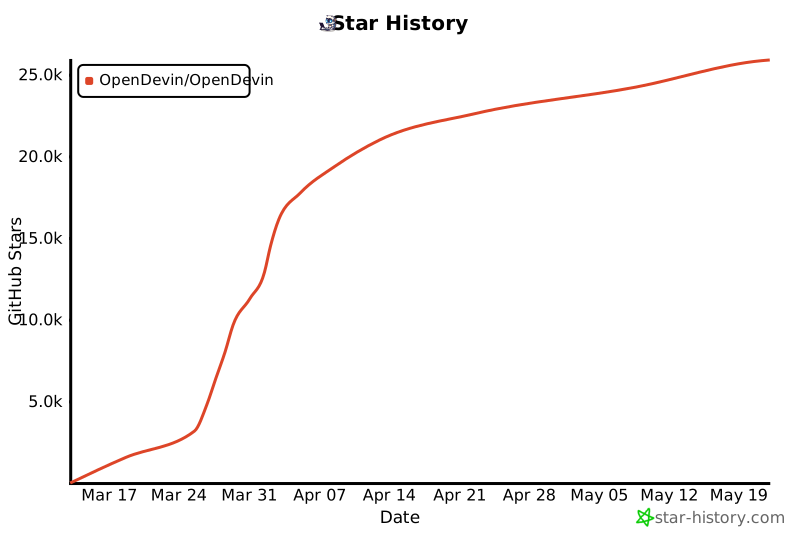](https://star-history.com/#OpenDevin/OpenDevin&Date)
|
||||
|
||||
## 🛠️ Built With
|
||||
|
||||
OpenDevin is built using a combination of powerful frameworks and libraries, providing a robust foundation for its development. Here are the key technologies used in the project:
|
||||
|
||||
       
|
||||
|
||||
Please note that the selection of these technologies is in progress, and additional technologies may be added or existing ones may be removed as the project evolves. We strive to adopt the most suitable and efficient tools to enhance the capabilities of OpenDevin.
|
||||
|
||||
<p align="right" style="font-size: 14px; color: #555; margin-top: 20px;">
|
||||
<a href="#readme-top" style="text-decoration: none; color: #007bff; font-weight: bold;">
|
||||
↑ Back to Top ↑
|
||||
</a>
|
||||
</p>
|
||||
|
||||
## 📜 License
|
||||
|
||||
Distributed under the MIT License. See [`LICENSE`](./LICENSE) for more information.
|
||||
|
||||
## 🙏 Acknowledgements
|
||||
<p align="right" style="font-size: 14px; color: #555; margin-top: 20px;">
|
||||
<a href="#readme-top" style="text-decoration: none; color: #007bff; font-weight: bold;">
|
||||
↑ Back to Top ↑
|
||||
</a>
|
||||
</p>
|
||||
|
||||
OpenHands is built by a large number of contributors, and every contribution is greatly appreciated! We also build upon other open source projects, and we are deeply thankful for their work.
|
||||
|
||||
For a list of open source projects and licenses used in OpenHands, please see our [CREDITS.md](./CREDITS.md) file.
|
||||
|
||||
## 📚 Cite
|
||||
|
||||
```
|
||||
@misc{openhands,
|
||||
title={{OpenHands: An Open Platform for AI Software Developers as Generalist Agents}},
|
||||
author={Xingyao Wang and Boxuan Li and Yufan Song and Frank F. Xu and Xiangru Tang and Mingchen Zhuge and Jiayi Pan and Yueqi Song and Bowen Li and Jaskirat Singh and Hoang H. Tran and Fuqiang Li and Ren Ma and Mingzhang Zheng and Bill Qian and Yanjun Shao and Niklas Muennighoff and Yizhe Zhang and Binyuan Hui and Junyang Lin and Robert Brennan and Hao Peng and Heng Ji and Graham Neubig},
|
||||
year={2024},
|
||||
eprint={2407.16741},
|
||||
archivePrefix={arXiv},
|
||||
primaryClass={cs.SE},
|
||||
url={https://arxiv.org/abs/2407.16741},
|
||||
}
|
||||
```
|
||||
[contributors-shield]: https://img.shields.io/github/contributors/opendevin/opendevin?style=for-the-badge
|
||||
[contributors-url]: https://github.com/OpenDevin/OpenDevin/graphs/contributors
|
||||
[forks-shield]: https://img.shields.io/github/forks/opendevin/opendevin?style=for-the-badge
|
||||
[forks-url]: https://github.com/OpenDevin/OpenDevin/network/members
|
||||
[stars-shield]: https://img.shields.io/github/stars/opendevin/opendevin?style=for-the-badge
|
||||
[stars-url]: https://github.com/OpenDevin/OpenDevin/stargazers
|
||||
[issues-shield]: https://img.shields.io/github/issues/opendevin/opendevin?style=for-the-badge
|
||||
[issues-url]: https://github.com/OpenDevin/OpenDevin/issues
|
||||
[license-shield]: https://img.shields.io/github/license/opendevin/opendevin?style=for-the-badge
|
||||
[license-url]: https://github.com/OpenDevin/OpenDevin/blob/main/LICENSE
|
||||
|
||||
73
agenthub/README.md
Normal file
@@ -0,0 +1,73 @@
|
||||
# Agent Framework Research
|
||||
|
||||
In this folder, there may exist multiple implementations of `Agent` that will be used by the framework.
|
||||
|
||||
For example, `agenthub/monologue_agent`, `agenthub/metagpt_agent`, `agenthub/codeact_agent`, etc.
|
||||
Contributors from different backgrounds and interests can choose to contribute to any (or all!) of these directions.
|
||||
|
||||
## Constructing an Agent
|
||||
|
||||
The abstraction for an agent can be found [here](../opendevin/agent.py).
|
||||
|
||||
Agents are run inside of a loop. At each iteration, `agent.step()` is called with a
|
||||
[State](../opendevin/state.py) input, and the agent must output an [Action](../opendevin/action).
|
||||
|
||||
Every agent also has a `self.llm` which it can use to interact with the LLM configured by the user.
|
||||
See the [LiteLLM docs for `self.llm.completion`](https://docs.litellm.ai/docs/completion).
|
||||
|
||||
## State
|
||||
The `state` contains:
|
||||
* A history of actions taken by the agent, as well as any observations (e.g. file content, command output) from those actions
|
||||
* A list of actions/observations that have happened since the most recent step
|
||||
* A [`plan`](https://github.com/OpenDevin/OpenDevin/blob/main/opendevin/plan.py), which contains the main goal
|
||||
* The agent can add and modify subtasks through the `AddTaskAction` and `ModifyTaskAction`
|
||||
|
||||
## Actions
|
||||
Here is a list of available Actions, which can be returned by `agent.step()`:
|
||||
- [`CmdRunAction`](../opendevin/action/bash.py) - Runs a command inside a sandboxed terminal
|
||||
- [`CmdKillAction`](../opendevin/action/bash.py) - Kills a background command
|
||||
- [`FileReadAction`](../opendevin/action/fileop.py) - Reads the content of a file
|
||||
- [`FileWriteAction`](../opendevin/action/fileop.py) - Writes new content to a file
|
||||
- [`BrowseURLAction`](../opendevin/action/browse.py) - Gets the content of a URL
|
||||
- [`AgentRecallAction`](../opendevin/action/agent.py) - Searches memory (e.g. a vector database)
|
||||
- [`AddTaskAction`](../opendevin/action/tasks.py) - Adds a subtask to the plan
|
||||
- [`ModifyTaskAction`](../opendevin/action/tasks.py) - Changes the state of a subtask
|
||||
- [`AgentThinkAction`](../opendevin/action/agent.py) - A no-op that allows the agent to add plaintext to the history (as well as the chat log)
|
||||
- [`AgentFinishAction`](../opendevin/action/agent.py) - Stops the control loop, allowing the user to enter a new task
|
||||
|
||||
You can use `action.to_dict()` and `action_from_dict` to serialize and deserialize actions.
|
||||
|
||||
## Observations
|
||||
There are also several types of Observations. These are typically available in the step following the corresponding Action.
|
||||
But they may also appear as a result of asynchronous events (e.g. a message from the user, logs from a command running
|
||||
in the background).
|
||||
|
||||
Here is a list of available Observations:
|
||||
- [`CmdOutputObservation`](../opendevin/observation/run.py)
|
||||
- [`BrowserOutputObservation`](../opendevin/observation/browse.py)
|
||||
- [`FileReadObservation`](../opendevin/observation/files.py)
|
||||
- [`FileWriteObservation`](../opendevin/observation/files.py)
|
||||
- [`UserMessageObservation`](../opendevin/observation/)
|
||||
- [`AgentRecallObservation`](../opendevin/observation/recall.py)
|
||||
- [`AgentErrorObservation`](../opendevin/observation/error.py)
|
||||
|
||||
You can use `observation.to_dict()` and `observation_from_dict` to serialize and deserialize observations.
|
||||
|
||||
## Interface
|
||||
Every agent must implement the following methods:
|
||||
|
||||
### `step`
|
||||
```
|
||||
def step(self, state: "State") -> "Action"
|
||||
```
|
||||
`step` moves the agent forward one step towards its goal. This probably means
|
||||
sending a prompt to the LLM, then parsing the response into an `Action`.
|
||||
|
||||
### `search_memory`
|
||||
```
|
||||
def search_memory(self, query: str) -> List[str]:
|
||||
```
|
||||
`search_memory` should return a list of events that match the query. This will be used
|
||||
for the `recall` action.
|
||||
|
||||
You can optionally just return `[]` for this method, meaning the agent has no long-term memory.
|
||||
9
agenthub/__init__.py
Normal file
@@ -0,0 +1,9 @@
|
||||
from dotenv import load_dotenv
|
||||
load_dotenv()
|
||||
|
||||
# Import agents after environment variables are loaded
|
||||
from . import monologue_agent # noqa: E402
|
||||
from . import codeact_agent # noqa: E402
|
||||
from . import planner_agent # noqa: E402
|
||||
|
||||
__all__ = ['monologue_agent', 'codeact_agent', 'planner_agent']
|
||||
21
agenthub/codeact_agent/README.md
Normal file
@@ -0,0 +1,21 @@
|
||||
# CodeAct-based Agent Framework
|
||||
|
||||
This folder implements the [CodeAct idea](https://arxiv.org/abs/2402.13463) that relies on LLM to autonomously perform actions in a Bash shell. It requires more from the LLM itself: LLM needs to be capable enough to do all the stuff autonomously, instead of stuck in an infinite loop.
|
||||
|
||||
A minimalistic example can be found at [research/codeact/examples/run_flask_server_with_bash.py](./examples/run_flask_server_with_bash.py):
|
||||
|
||||
```bash
|
||||
mkdir workspace
|
||||
PYTHONPATH=`pwd`:$PYTHONPATH python3 opendevin/main.py -d ./workspace -c CodeActAgent -t "Please write a flask app that returns 'Hello, World\!' at the root URL, then start the app on port 5000. python3 has already been installed for you."
|
||||
```
|
||||
|
||||
|
||||
Example: prompts `gpt-4-0125-preview` to write a flask server, install `flask` library, and start the server.
|
||||
|
||||
<img width="951" alt="image" src="https://github.com/OpenDevin/OpenDevin/assets/38853559/325c3115-a343-4cc5-a92b-f1e5d552a077">
|
||||
|
||||
<img width="957" alt="image" src="https://github.com/OpenDevin/OpenDevin/assets/38853559/68ad10c1-744a-4e9d-bb29-0f163d665a0a">
|
||||
|
||||
Most of the things are working as expected, except at the end, the model did not follow the instruction to stop the interaction by outputting `<execute> exit </execute>` as instructed.
|
||||
|
||||
**TODO**: This should be fixable by either (1) including a complete in-context example like [this](https://github.com/xingyaoww/mint-bench/blob/main/mint/tasks/in_context_examples/reasoning/with_tool.txt), OR (2) collect some interaction data like this and fine-tune a model (like [this](https://github.com/xingyaoww/code-act), a more complex route).
|
||||
4
agenthub/codeact_agent/__init__.py
Normal file
@@ -0,0 +1,4 @@
|
||||
from opendevin.agent import Agent
|
||||
from .codeact_agent import CodeActAgent
|
||||
|
||||
Agent.register("CodeActAgent", CodeActAgent)
|
||||
119
agenthub/codeact_agent/codeact_agent.py
Normal file
@@ -0,0 +1,119 @@
|
||||
import re
|
||||
from typing import List, Mapping
|
||||
|
||||
|
||||
from opendevin.agent import Agent
|
||||
from opendevin.state import State
|
||||
from opendevin.action import (
|
||||
Action,
|
||||
CmdRunAction,
|
||||
AgentEchoAction,
|
||||
AgentFinishAction,
|
||||
)
|
||||
from opendevin.observation import (
|
||||
CmdOutputObservation,
|
||||
AgentMessageObservation,
|
||||
)
|
||||
|
||||
from opendevin.llm.llm import LLM
|
||||
|
||||
SYSTEM_MESSAGE = """You are a helpful assistant. You will be provided access (as root) to a bash shell to complete user-provided tasks.
|
||||
You will be able to execute commands in the bash shell, interact with the file system, install packages, and receive the output of your commands.
|
||||
|
||||
DO NOT provide code in ```triple backticks```. Instead, you should execute bash command on behalf of the user by wrapping them with <execute> and </execute>.
|
||||
For example:
|
||||
|
||||
You can list the files in the current directory by executing the following command:
|
||||
<execute>ls</execute>
|
||||
|
||||
You can also install packages using pip:
|
||||
<execute> pip install numpy </execute>
|
||||
|
||||
You can also write a block of code to a file:
|
||||
<execute>
|
||||
echo "import math
|
||||
print(math.pi)" > math.py
|
||||
</execute>
|
||||
|
||||
When you are done, execute "exit" to close the shell and end the conversation.
|
||||
"""
|
||||
|
||||
INVALID_INPUT_MESSAGE = (
|
||||
"I don't understand your input. \n"
|
||||
"If you want to execute command, please use <execute> YOUR_COMMAND_HERE </execute>.\n"
|
||||
"If you already completed the task, please exit the shell by generating: <execute> exit </execute>."
|
||||
)
|
||||
|
||||
|
||||
def parse_response(response) -> str:
|
||||
action = response.choices[0].message.content
|
||||
if "<execute>" in action and "</execute>" not in action:
|
||||
action += "</execute>"
|
||||
return action
|
||||
|
||||
|
||||
class CodeActAgent(Agent):
|
||||
def __init__(
|
||||
self,
|
||||
llm: LLM,
|
||||
) -> None:
|
||||
"""
|
||||
Initializes a new instance of the CodeActAgent class.
|
||||
|
||||
Parameters:
|
||||
- instruction (str): The instruction for the agent to execute.
|
||||
- max_steps (int): The maximum number of steps to run the agent.
|
||||
"""
|
||||
super().__init__(llm)
|
||||
self.messages: List[Mapping[str, str]] = []
|
||||
|
||||
def step(self, state: State) -> Action:
|
||||
if len(self.messages) == 0:
|
||||
assert state.plan.main_goal, "Expecting instruction to be set"
|
||||
self.messages = [
|
||||
{"role": "system", "content": SYSTEM_MESSAGE},
|
||||
{"role": "user", "content": state.plan.main_goal},
|
||||
]
|
||||
updated_info = state.updated_info
|
||||
if updated_info:
|
||||
for prev_action, obs in updated_info:
|
||||
assert isinstance(prev_action, (CmdRunAction, AgentEchoAction)), "Expecting CmdRunAction or AgentEchoAction for Action"
|
||||
if isinstance(obs, AgentMessageObservation): # warning message from itself
|
||||
self.messages.append({"role": "user", "content": obs.content})
|
||||
elif isinstance(obs, CmdOutputObservation):
|
||||
content = "OBSERVATION:\n" + obs.content
|
||||
content += f"\n[Command {obs.command_id} finished with exit code {obs.exit_code}]]"
|
||||
self.messages.append({"role": "user", "content": content})
|
||||
else:
|
||||
raise NotImplementedError(f"Unknown observation type: {obs.__class__}")
|
||||
response = self.llm.completion(
|
||||
messages=self.messages,
|
||||
stop=["</execute>"],
|
||||
temperature=0.0,
|
||||
seed=42,
|
||||
)
|
||||
action_str: str = parse_response(response)
|
||||
self.messages.append({"role": "assistant", "content": action_str})
|
||||
|
||||
command = re.search(r"<execute>(.*)</execute>", action_str, re.DOTALL)
|
||||
if command is not None:
|
||||
# a command was found
|
||||
command_group = command.group(1)
|
||||
if command_group.strip() == "exit":
|
||||
return AgentFinishAction()
|
||||
return CmdRunAction(command = command_group)
|
||||
# # execute the code
|
||||
# # TODO: does exit_code get loaded into Message?
|
||||
# exit_code, observation = self.env.execute(command_group)
|
||||
# self._history.append(Message(Role.ASSISTANT, observation))
|
||||
else:
|
||||
# we could provide a error message for the model to continue similar to
|
||||
# https://github.com/xingyaoww/mint-bench/blob/main/mint/envs/general_env.py#L18-L23
|
||||
# observation = INVALID_INPUT_MESSAGE
|
||||
# self._history.append(Message(Role.ASSISTANT, observation))
|
||||
return AgentEchoAction(content=INVALID_INPUT_MESSAGE) # warning message to itself
|
||||
|
||||
|
||||
def search_memory(self, query: str) -> List[str]:
|
||||
raise NotImplementedError("Implement this abstract method")
|
||||
|
||||
2
agenthub/monologue_agent/.dockerignore
Normal file
@@ -0,0 +1,2 @@
|
||||
.envrc
|
||||
workspace
|
||||
8
agenthub/monologue_agent/README.md
Normal file
@@ -0,0 +1,8 @@
|
||||
# LLM control loop
|
||||
This is currently a standalone utility. It will need to be integrated into OpenDevin's backend.
|
||||
|
||||
## Usage
|
||||
```bash
|
||||
# Run this in project root
|
||||
./agenthub/monologue_agent/build-and-run.sh "write a bash script that prints 'hello world'"
|
||||
```
|
||||
9
agenthub/monologue_agent/TODO.md
Normal file
@@ -0,0 +1,9 @@
|
||||
# TODO
|
||||
There's a lot of low-hanging fruit for this agent:
|
||||
|
||||
* Strip `<script>`, `<style>`, and other non-text tags from the HTML before sending it to the LLM
|
||||
* Keep track of the working directory when the agent uses `cd`
|
||||
* Improve memory condensing--condense earlier memories more aggressively
|
||||
* Limit the time that `run` can wait (in case agent runs an interactive command and it's hanging)
|
||||
* Figure out how to run background processes, e.g. `node server.js` to start a server
|
||||
|
||||
4
agenthub/monologue_agent/__init__.py
Normal file
@@ -0,0 +1,4 @@
|
||||
from opendevin.agent import Agent
|
||||
from .agent import MonologueAgent
|
||||
|
||||
Agent.register("MonologueAgent", MonologueAgent)
|
||||
172
agenthub/monologue_agent/agent.py
Normal file
@@ -0,0 +1,172 @@
|
||||
from typing import List
|
||||
from opendevin.agent import Agent
|
||||
from opendevin.state import State
|
||||
from opendevin.llm.llm import LLM
|
||||
|
||||
from opendevin.action import (
|
||||
Action,
|
||||
NullAction,
|
||||
CmdRunAction,
|
||||
FileWriteAction,
|
||||
FileReadAction,
|
||||
AgentRecallAction,
|
||||
BrowseURLAction,
|
||||
AgentThinkAction,
|
||||
)
|
||||
|
||||
from opendevin.observation import (
|
||||
Observation,
|
||||
NullObservation,
|
||||
CmdOutputObservation,
|
||||
FileReadObservation,
|
||||
AgentRecallObservation,
|
||||
BrowserOutputObservation,
|
||||
)
|
||||
|
||||
import agenthub.monologue_agent.utils.prompts as prompts
|
||||
from agenthub.monologue_agent.utils.monologue import Monologue
|
||||
from agenthub.monologue_agent.utils.memory import LongTermMemory
|
||||
|
||||
MAX_MONOLOGUE_LENGTH = 20000
|
||||
MAX_OUTPUT_LENGTH = 5000
|
||||
|
||||
INITIAL_THOUGHTS = [
|
||||
"I exist!",
|
||||
"Hmm...looks like I can type in a command line prompt",
|
||||
"Looks like I have a web browser too!",
|
||||
"Here's what I want to do: $TASK",
|
||||
"How am I going to get there though?",
|
||||
"It seems like I have some kind of short term memory.",
|
||||
"Each of my thoughts seems to be stored in a JSON array.",
|
||||
"It seems whatever I say next will be added as an object to the list.",
|
||||
"But no one has perfect short-term memory. My list of thoughts will be summarized and condensed over time, losing information in the process.",
|
||||
"Fortunately I have long term memory!",
|
||||
"I can just perform a recall action, followed by the thing I want to remember. And then related thoughts just spill out!",
|
||||
"Sometimes they're random thoughts that don't really have to do with what I wanted to remember. But usually they're exactly what I need!",
|
||||
"Let's try it out!",
|
||||
"RECALL what it is I want to do",
|
||||
"Here's what I want to do: $TASK",
|
||||
"How am I going to get there though?",
|
||||
"Neat! And it looks like it's easy for me to use the command line too! I just have to perform a run action and include the command I want to run in the command argument. The command output just jumps into my head!",
|
||||
'RUN echo "hello world"',
|
||||
"hello world",
|
||||
"Cool! I bet I can write files too using the write action.",
|
||||
"WRITE echo \"console.log('hello world')\" > test.js",
|
||||
"",
|
||||
"I just created test.js. I'll try and run it now.",
|
||||
"RUN node test.js",
|
||||
"hello world",
|
||||
"It works!",
|
||||
"I'm going to try reading it now using the read action.",
|
||||
"READ test.js",
|
||||
"console.log('hello world')",
|
||||
"Nice! I can read files too!",
|
||||
"And if I want to use the browser, I just need to use the browse action and include the url I want to visit in the url argument",
|
||||
"Let's try that...",
|
||||
"BROWSE google.com",
|
||||
'<form><input type="text"></input><button type="submit"></button></form>',
|
||||
"I can browse the web too!",
|
||||
"And once I have completed my task, I can use the finish action to stop working.",
|
||||
"But I should only use the finish action when I'm absolutely certain that I've completed my task and have tested my work.",
|
||||
"Very cool. Now to accomplish my task.",
|
||||
"I'll need a strategy. And as I make progress, I'll need to keep refining that strategy. I'll need to set goals, and break them into sub-goals.",
|
||||
"In between actions, I must always take some time to think, strategize, and set new goals. I should never take two actions in a row.",
|
||||
"OK so my task is to $TASK. I haven't made any progress yet. Where should I start?",
|
||||
"It seems like there might be an existing project here. I should probably start by running `ls` to see what's here.",
|
||||
]
|
||||
|
||||
|
||||
class MonologueAgent(Agent):
|
||||
_initialized = False
|
||||
|
||||
def __init__(self, llm: LLM):
|
||||
super().__init__(llm)
|
||||
self.monologue = Monologue()
|
||||
self.memory = LongTermMemory()
|
||||
|
||||
def _add_event(self, event: dict):
|
||||
if "extras" in event and "screenshot" in event["extras"]:
|
||||
del event["extras"]["screenshot"]
|
||||
if 'args' in event and 'output' in event['args'] and len(event['args']['output']) > MAX_OUTPUT_LENGTH:
|
||||
event['args']['output'] = event['args']['output'][:MAX_OUTPUT_LENGTH] + "..."
|
||||
|
||||
self.monologue.add_event(event)
|
||||
self.memory.add_event(event)
|
||||
if self.monologue.get_total_length() > MAX_MONOLOGUE_LENGTH:
|
||||
self.monologue.condense(self.llm)
|
||||
|
||||
def _initialize(self, task):
|
||||
if self._initialized:
|
||||
return
|
||||
|
||||
if task is None or task == "":
|
||||
raise ValueError("Instruction must be provided")
|
||||
self.monologue = Monologue()
|
||||
self.memory = LongTermMemory()
|
||||
|
||||
output_type = ""
|
||||
for thought in INITIAL_THOUGHTS:
|
||||
thought = thought.replace("$TASK", task)
|
||||
if output_type != "":
|
||||
observation: Observation = NullObservation(content="")
|
||||
if output_type == "run":
|
||||
observation = CmdOutputObservation(content=thought, command_id=0, command="")
|
||||
elif output_type == "read":
|
||||
observation = FileReadObservation(content=thought, path="")
|
||||
elif output_type == "recall":
|
||||
observation = AgentRecallObservation(content=thought, memories=[])
|
||||
elif output_type == "browse":
|
||||
observation = BrowserOutputObservation(content=thought, url="", screenshot="")
|
||||
self._add_event(observation.to_dict())
|
||||
output_type = ""
|
||||
else:
|
||||
action: Action = NullAction()
|
||||
if thought.startswith("RUN"):
|
||||
command = thought.split("RUN ")[1]
|
||||
action = CmdRunAction(command)
|
||||
output_type = "run"
|
||||
elif thought.startswith("WRITE"):
|
||||
parts = thought.split("WRITE ")[1].split(" > ")
|
||||
path = parts[1]
|
||||
content = parts[0]
|
||||
action = FileWriteAction(path=path, content=content)
|
||||
elif thought.startswith("READ"):
|
||||
path = thought.split("READ ")[1]
|
||||
action = FileReadAction(path=path)
|
||||
output_type = "read"
|
||||
elif thought.startswith("RECALL"):
|
||||
query = thought.split("RECALL ")[1]
|
||||
action = AgentRecallAction(query=query)
|
||||
output_type = "recall"
|
||||
elif thought.startswith("BROWSE"):
|
||||
url = thought.split("BROWSE ")[1]
|
||||
action = BrowseURLAction(url=url)
|
||||
output_type = "browse"
|
||||
else:
|
||||
action = AgentThinkAction(thought=thought)
|
||||
self._add_event(action.to_dict())
|
||||
self._initialized = True
|
||||
|
||||
def step(self, state: State) -> Action:
|
||||
self._initialize(state.plan.main_goal)
|
||||
for prev_action, obs in state.updated_info:
|
||||
self._add_event(prev_action.to_dict())
|
||||
self._add_event(obs.to_dict())
|
||||
|
||||
state.updated_info = []
|
||||
|
||||
prompt = prompts.get_request_action_prompt(
|
||||
state.plan.main_goal,
|
||||
self.monologue.get_thoughts(),
|
||||
state.background_commands_obs,
|
||||
)
|
||||
messages = [{"content": prompt,"role": "user"}]
|
||||
resp = self.llm.completion(messages=messages)
|
||||
action_resp = resp['choices'][0]['message']['content']
|
||||
action = prompts.parse_action_response(action_resp)
|
||||
self.latest_action = action
|
||||
return action
|
||||
|
||||
def search_memory(self, query: str) -> List[str]:
|
||||
return self.memory.search(query)
|
||||
|
||||
14
agenthub/monologue_agent/utils/json.py
Normal file
@@ -0,0 +1,14 @@
|
||||
import json
|
||||
from json_repair import repair_json
|
||||
|
||||
def my_encoder(obj):
|
||||
if hasattr(obj, "to_dict"):
|
||||
return obj.to_dict()
|
||||
|
||||
def dumps(obj, **kwargs):
|
||||
return json.dumps(obj, default=my_encoder, **kwargs)
|
||||
|
||||
def loads(s, **kwargs):
|
||||
s_repaired = repair_json(s)
|
||||
return json.loads(s_repaired, **kwargs)
|
||||
|
||||
79
agenthub/monologue_agent/utils/memory.py
Normal file
@@ -0,0 +1,79 @@
|
||||
import chromadb
|
||||
from llama_index.core import Document
|
||||
from llama_index.core.retrievers import VectorIndexRetriever
|
||||
from llama_index.core import VectorStoreIndex
|
||||
from llama_index.vector_stores.chroma import ChromaVectorStore
|
||||
|
||||
from opendevin import config
|
||||
from . import json
|
||||
|
||||
embedding_strategy = config.get("LLM_EMBEDDING_MODEL")
|
||||
|
||||
# TODO: More embeddings: https://docs.llamaindex.ai/en/stable/examples/embeddings/OpenAI/
|
||||
# There's probably a more programmatic way to do this.
|
||||
if embedding_strategy == "llama2":
|
||||
from llama_index.embeddings.ollama import OllamaEmbedding
|
||||
embed_model = OllamaEmbedding(
|
||||
model_name="llama2",
|
||||
base_url=config.get_or_error("LLM_BASE_URL"),
|
||||
ollama_additional_kwargs={"mirostat": 0},
|
||||
)
|
||||
elif embedding_strategy == "openai":
|
||||
from llama_index.embeddings.openai import OpenAIEmbedding
|
||||
embed_model = OpenAIEmbedding(
|
||||
model="text-embedding-ada-002"
|
||||
)
|
||||
elif embedding_strategy == "azureopenai":
|
||||
from llama_index.embeddings.azure_openai import AzureOpenAIEmbedding # Need to instruct to set these env variables in documentation
|
||||
embed_model = AzureOpenAIEmbedding(
|
||||
model="text-embedding-ada-002",
|
||||
deployment_name=config.get_or_error("LLM_DEPLOYMENT_NAME"),
|
||||
api_key=config.get_or_error("LLM_API_KEY"),
|
||||
azure_endpoint=config.get_or_error("LLM_BASE_URL"),
|
||||
api_version=config.get_or_error("LLM_API_VERSION"),
|
||||
)
|
||||
else:
|
||||
from llama_index.embeddings.huggingface import HuggingFaceEmbedding
|
||||
embed_model = HuggingFaceEmbedding(
|
||||
model_name="BAAI/bge-small-en-v1.5"
|
||||
)
|
||||
|
||||
|
||||
class LongTermMemory:
|
||||
def __init__(self):
|
||||
db = chromadb.Client()
|
||||
self.collection = db.get_or_create_collection(name="memories")
|
||||
vector_store = ChromaVectorStore(chroma_collection=self.collection)
|
||||
self.index = VectorStoreIndex.from_vector_store(vector_store, embed_model=embed_model)
|
||||
self.thought_idx = 0
|
||||
|
||||
def add_event(self, event):
|
||||
id = ""
|
||||
t = ""
|
||||
if "action" in event:
|
||||
t = "action"
|
||||
id = event["action"]
|
||||
elif "observation" in event:
|
||||
t = "observation"
|
||||
id = event["observation"]
|
||||
doc = Document(
|
||||
text=json.dumps(event),
|
||||
doc_id=str(self.thought_idx),
|
||||
extra_info={
|
||||
"type": t,
|
||||
"id": id,
|
||||
"idx": self.thought_idx,
|
||||
},
|
||||
)
|
||||
self.thought_idx += 1
|
||||
self.index.insert(doc)
|
||||
|
||||
def search(self, query, k=10):
|
||||
retriever = VectorIndexRetriever(
|
||||
index=self.index,
|
||||
similarity_top_k=k,
|
||||
)
|
||||
results = retriever.retrieve(query)
|
||||
return [r.get_text() for r in results]
|
||||
|
||||
|
||||
40
agenthub/monologue_agent/utils/monologue.py
Normal file
@@ -0,0 +1,40 @@
|
||||
import traceback
|
||||
|
||||
import agenthub.monologue_agent.utils.json as json
|
||||
import agenthub.monologue_agent.utils.prompts as prompts
|
||||
|
||||
class Monologue:
|
||||
def __init__(self):
|
||||
self.thoughts = []
|
||||
|
||||
def add_event(self, t: dict):
|
||||
if not isinstance(t, dict):
|
||||
raise ValueError("Event must be a dictionary")
|
||||
self.thoughts.append(t)
|
||||
|
||||
def get_thoughts(self):
|
||||
return self.thoughts
|
||||
|
||||
def get_total_length(self):
|
||||
total_length = 0
|
||||
for t in self.thoughts:
|
||||
try:
|
||||
total_length += len(json.dumps(t))
|
||||
except TypeError as e:
|
||||
print(f"Error serializing thought: {e}")
|
||||
return total_length
|
||||
|
||||
def condense(self, llm):
|
||||
try:
|
||||
prompt = prompts.get_summarize_monologue_prompt(self.thoughts)
|
||||
messages = [{"content": prompt,"role": "user"}]
|
||||
resp = llm.completion(messages=messages)
|
||||
summary_resp = resp['choices'][0]['message']['content']
|
||||
self.thoughts = prompts.parse_summary_response(strip_markdown(summary_resp))
|
||||
except Exception as e:
|
||||
traceback.print_exc()
|
||||
raise RuntimeError(f"Error condensing thoughts: {e}")
|
||||
|
||||
def strip_markdown(markdown_json):
|
||||
# remove markdown code block
|
||||
return markdown_json.replace('```json\n', '').replace('```', '').strip()
|
||||
139
agenthub/monologue_agent/utils/prompts.py
Normal file
@@ -0,0 +1,139 @@
|
||||
from typing import List
|
||||
|
||||
from . import json
|
||||
|
||||
from opendevin.action import (
|
||||
action_from_dict,
|
||||
Action,
|
||||
)
|
||||
from opendevin.observation import (
|
||||
CmdOutputObservation,
|
||||
)
|
||||
|
||||
ACTION_PROMPT = """
|
||||
You're a thoughtful robot. Your main task is this:
|
||||
|
||||
%(task)s
|
||||
|
||||
Don't expand the scope of your task--just complete it as written.
|
||||
|
||||
This is your internal monologue, in JSON format:
|
||||
|
||||
%(monologue)s
|
||||
|
||||
|
||||
Your most recent thought is at the bottom of that monologue. Continue your train of thought.
|
||||
What is your next thought or action? Your response must be in JSON format.
|
||||
It must be an object, and it must contain two fields:
|
||||
* `action`, which is one of the actions below
|
||||
* `args`, which is a map of key-value pairs, specifying the arguments for that action
|
||||
|
||||
Here are the possible actions:
|
||||
* `read` - reads the content of a file. Arguments:
|
||||
* `path` - the path of the file to read
|
||||
* `write` - writes the content to a file. Arguments:
|
||||
* `path` - the path of the file to write
|
||||
* `content` - the content to write to the file
|
||||
* `run` - runs a command. Arguments:
|
||||
* `command` - the command to run
|
||||
* `background` - if true, run the command in the background, so that other commands can be run concurrently. Useful for e.g. starting a server. You won't be able to see the logs. You don't need to end the command with `&`, just set this to true.
|
||||
* `kill` - kills a background command
|
||||
* `id` - the ID of the background command to kill
|
||||
* `browse` - opens a web page. Arguments:
|
||||
* `url` - the URL to open
|
||||
* `recall` - recalls a past memory. Arguments:
|
||||
* `query` - the query to search for
|
||||
* `think` - make a plan, set a goal, or record your thoughts. Arguments:
|
||||
* `thought` - the thought to record
|
||||
* `finish` - if you're absolutely certain that you've completed your task and have tested your work, use the finish action to stop working.
|
||||
|
||||
%(background_commands)s
|
||||
|
||||
You MUST take time to think in between read, write, run, browse, and recall actions.
|
||||
You should never act twice in a row without thinking. But if your last several
|
||||
actions are all "think" actions, you should consider taking a different action.
|
||||
|
||||
Notes:
|
||||
* your environment is Debian Linux. You can install software with `apt`
|
||||
* your working directory will not change, even if you run `cd`. All commands will be run in the `/workspace` directory.
|
||||
* don't run interactive commands, or commands that don't return (e.g. `node server.js`). You may run commands in the background (e.g. `node server.js &`)
|
||||
|
||||
What is your next thought or action? Again, you must reply with JSON, and only with JSON.
|
||||
|
||||
%(hint)s
|
||||
"""
|
||||
|
||||
MONOLOGUE_SUMMARY_PROMPT = """
|
||||
Below is the internal monologue of an automated LLM agent. Each
|
||||
thought is an item in a JSON array. The thoughts may be memories,
|
||||
actions taken by the agent, or outputs from those actions.
|
||||
Please return a new, smaller JSON array, which summarizes the
|
||||
internal monologue. You can summarize individual thoughts, and
|
||||
you can condense related thoughts together with a description
|
||||
of their content.
|
||||
|
||||
%(monologue)s
|
||||
|
||||
Make the summaries as pithy and informative as possible.
|
||||
Be specific about what happened and what was learned. The summary
|
||||
will be used as keywords for searching for the original memory.
|
||||
Be sure to preserve any key words or important information.
|
||||
|
||||
Your response must be in JSON format. It must be an object with the
|
||||
key `new_monologue`, which is a JSON array containing the summarized monologue.
|
||||
Each entry in the array must have an `action` key, and an `args` key.
|
||||
The action key may be `summarize`, and `args.summary` should contain the summary.
|
||||
You can also use the same action and args from the source monologue.
|
||||
"""
|
||||
|
||||
|
||||
def get_summarize_monologue_prompt(thoughts):
|
||||
return MONOLOGUE_SUMMARY_PROMPT % {
|
||||
'monologue': json.dumps({'old_monologue': thoughts}, indent=2),
|
||||
}
|
||||
|
||||
def get_request_action_prompt(
|
||||
task: str,
|
||||
thoughts: List[dict],
|
||||
background_commands_obs: List[CmdOutputObservation] = [],
|
||||
):
|
||||
hint = ''
|
||||
if len(thoughts) > 0:
|
||||
latest_thought = thoughts[-1]
|
||||
if "action" in latest_thought:
|
||||
if latest_thought["action"] == 'think':
|
||||
if latest_thought["args"]['thought'].startswith("OK so my task is"):
|
||||
hint = "You're just getting started! What should you do first?"
|
||||
else:
|
||||
hint = "You've been thinking a lot lately. Maybe it's time to take action?"
|
||||
elif latest_thought["action"] == 'error':
|
||||
hint = "Looks like that last command failed. Maybe you need to fix it, or try something else."
|
||||
|
||||
bg_commands_message = ""
|
||||
if len(background_commands_obs) > 0:
|
||||
bg_commands_message = "The following commands are running in the background:"
|
||||
for command_obs in background_commands_obs:
|
||||
bg_commands_message += f"\n`{command_obs.command_id}`: {command_obs.command}"
|
||||
bg_commands_message += "\nYou can end any process by sending a `kill` action with the numerical `id` above."
|
||||
latest_thought = thoughts[-1]
|
||||
|
||||
return ACTION_PROMPT % {
|
||||
'task': task,
|
||||
'monologue': json.dumps(thoughts, indent=2),
|
||||
'background_commands': bg_commands_message,
|
||||
'hint': hint,
|
||||
}
|
||||
|
||||
def parse_action_response(response: str) -> Action:
|
||||
json_start = response.find("{")
|
||||
json_end = response.rfind("}") + 1
|
||||
response = response[json_start:json_end]
|
||||
action_dict = json.loads(response)
|
||||
if 'content' in action_dict:
|
||||
# The LLM gets confused here. Might as well be robust
|
||||
action_dict['contents'] = action_dict.pop('content')
|
||||
return action_from_dict(action_dict)
|
||||
|
||||
def parse_summary_response(response: str) -> List[dict]:
|
||||
parsed = json.loads(response)
|
||||
return parsed['new_monologue']
|
||||
4
agenthub/planner_agent/__init__.py
Normal file
@@ -0,0 +1,4 @@
|
||||
from opendevin.agent import Agent
|
||||
from .agent import PlannerAgent
|
||||
|
||||
Agent.register("PlannerAgent", PlannerAgent)
|
||||
26
agenthub/planner_agent/agent.py
Normal file
@@ -0,0 +1,26 @@
|
||||
from typing import List
|
||||
from .prompt import get_prompt, parse_response
|
||||
|
||||
from opendevin.agent import Agent
|
||||
from opendevin.action import AgentFinishAction
|
||||
from opendevin.llm.llm import LLM
|
||||
from opendevin.state import State
|
||||
from opendevin.action import Action
|
||||
|
||||
class PlannerAgent(Agent):
|
||||
def __init__(self, llm: LLM):
|
||||
super().__init__(llm)
|
||||
|
||||
def step(self, state: State) -> Action:
|
||||
if state.plan.task.state in ['completed', 'verified', 'abandoned']:
|
||||
return AgentFinishAction()
|
||||
prompt = get_prompt(state.plan, state.history)
|
||||
messages = [{"content": prompt, "role": "user"}]
|
||||
resp = self.llm.completion(messages=messages)
|
||||
action_resp = resp['choices'][0]['message']['content']
|
||||
action = parse_response(action_resp)
|
||||
return action
|
||||
|
||||
def search_memory(self, query: str) -> List[str]:
|
||||
return []
|
||||
|
||||
203
agenthub/planner_agent/prompt.py
Normal file
@@ -0,0 +1,203 @@
|
||||
import json
|
||||
from typing import List, Tuple, Dict, Type
|
||||
|
||||
from opendevin.controller.agent_controller import print_with_color
|
||||
from opendevin.plan import Plan
|
||||
from opendevin.action import Action, action_from_dict
|
||||
from opendevin.observation import Observation
|
||||
|
||||
from opendevin.action import (
|
||||
NullAction,
|
||||
CmdRunAction,
|
||||
CmdKillAction,
|
||||
BrowseURLAction,
|
||||
FileReadAction,
|
||||
FileWriteAction,
|
||||
AgentRecallAction,
|
||||
AgentThinkAction,
|
||||
AgentFinishAction,
|
||||
AgentSummarizeAction,
|
||||
AddTaskAction,
|
||||
ModifyTaskAction,
|
||||
)
|
||||
|
||||
from opendevin.observation import (
|
||||
NullObservation,
|
||||
)
|
||||
|
||||
ACTION_TYPE_TO_CLASS: Dict[str, Type[Action]] = {
|
||||
"run": CmdRunAction,
|
||||
"kill": CmdKillAction,
|
||||
"browse": BrowseURLAction,
|
||||
"read": FileReadAction,
|
||||
"write": FileWriteAction,
|
||||
"recall": AgentRecallAction,
|
||||
"think": AgentThinkAction,
|
||||
"summarize": AgentSummarizeAction,
|
||||
"finish": AgentFinishAction,
|
||||
"add_task": AddTaskAction,
|
||||
"modify_task": ModifyTaskAction,
|
||||
}
|
||||
|
||||
HISTORY_SIZE = 10
|
||||
|
||||
prompt = """
|
||||
# Task
|
||||
You're a diligent software engineer AI. You can't see, draw, or interact with a
|
||||
browser, but you can read and write files, and you can run commands, and you can think.
|
||||
|
||||
You've been given the following task:
|
||||
|
||||
%(task)s
|
||||
|
||||
## Plan
|
||||
As you complete this task, you're building a plan and keeping
|
||||
track of your progress. Here's a JSON representation of your plan:
|
||||
|
||||
%(plan)s
|
||||
|
||||
|
||||
%(plan_status)s
|
||||
|
||||
You're responsible for managing this plan and the status of tasks in
|
||||
it, by using the `add_task` and `modify_task` actions described below.
|
||||
|
||||
If the History below contradicts the state of any of these tasks, you
|
||||
MUST modify the task using the `modify_task` action described below.
|
||||
|
||||
Be sure NOT to duplicate any tasks. Do NOT use the `add_task` action for
|
||||
a task that's already represented. Every task must be represented only once.
|
||||
|
||||
Tasks that are sequential MUST be siblings. They must be added in order
|
||||
to their parent task.
|
||||
|
||||
If you mark a task as 'completed', 'verified', or 'abandoned',
|
||||
all non-abandoned subtasks will be marked the same way.
|
||||
So before closing a task this way, you MUST not only be sure that it has
|
||||
been completed successfully--you must ALSO be sure that all its subtasks
|
||||
are ready to be marked the same way.
|
||||
|
||||
If, and only if, ALL tasks have already been marked verified,
|
||||
you MUST respond with the `finish` action.
|
||||
|
||||
## History
|
||||
Here is a recent history of actions you've taken in service of this plan,
|
||||
as well as observations you've made. This only includes the MOST RECENT
|
||||
ten actions--more happened before that.
|
||||
|
||||
%(history)s
|
||||
|
||||
|
||||
Your most recent action is at the bottom of that history.
|
||||
|
||||
## Action
|
||||
What is your next thought or action? Your response must be in JSON format.
|
||||
|
||||
It must be an object, and it must contain two fields:
|
||||
* `action`, which is one of the actions below
|
||||
* `args`, which is a map of key-value pairs, specifying the arguments for that action
|
||||
|
||||
* `read` - reads the content of a file. Arguments:
|
||||
* `path` - the path of the file to read
|
||||
* `write` - writes the content to a file. Arguments:
|
||||
* `path` - the path of the file to write
|
||||
* `content` - the content to write to the file
|
||||
* `run` - runs a command on the command line in a Linux shell. Arguments:
|
||||
* `command` - the command to run
|
||||
* `background` - if true, run the command in the background, so that other commands can be run concurrently. Useful for e.g. starting a server. You won't be able to see the logs. You don't need to end the command with `&`, just set this to true.
|
||||
* `kill` - kills a background command
|
||||
* `id` - the ID of the background command to kill
|
||||
* `browse` - opens a web page. Arguments:
|
||||
* `url` - the URL to open
|
||||
* `think` - make a plan, set a goal, or record your thoughts. Arguments:
|
||||
* `thought` - the thought to record
|
||||
* `add_task` - add a task to your plan. Arguments:
|
||||
* `parent` - the ID of the parent task
|
||||
* `goal` - the goal of the task
|
||||
* `subtasks` - a list of subtasks, each of which is a map with a `goal` key.
|
||||
* `modify_task` - close a task. Arguments:
|
||||
* `id` - the ID of the task to close
|
||||
* `state` - set to 'in_progress' to start the task, 'completed' to finish it, 'verified' to assert that it was successful, 'abandoned' to give up on it permanently, or `open` to stop working on it for now.
|
||||
* `finish` - if ALL of your tasks and subtasks have been verified or abandoned, and you're absolutely certain that you've completed your task and have tested your work, use the finish action to stop working.
|
||||
|
||||
You MUST take time to think in between read, write, run, browse, and recall actions.
|
||||
You should never act twice in a row without thinking. But if your last several
|
||||
actions are all `think` actions, you should consider taking a different action.
|
||||
|
||||
What is your next thought or action? Again, you must reply with JSON, and only with JSON.
|
||||
|
||||
%(hint)s
|
||||
"""
|
||||
|
||||
def get_prompt(plan: Plan, history: List[Tuple[Action, Observation]]):
|
||||
plan_str = json.dumps(plan.task.to_dict(), indent=2)
|
||||
sub_history = history[-HISTORY_SIZE:]
|
||||
history_dicts = []
|
||||
latest_action: Action = NullAction()
|
||||
for action, observation in sub_history:
|
||||
if not isinstance(action, NullAction):
|
||||
history_dicts.append(action.to_dict())
|
||||
latest_action = action
|
||||
if not isinstance(observation, NullObservation):
|
||||
observation_dict = observation.to_dict()
|
||||
if "extras" in observation_dict and "screenshot" in observation_dict["extras"]:
|
||||
del observation_dict["extras"]["screenshot"]
|
||||
history_dicts.append(observation_dict)
|
||||
history_str = json.dumps(history_dicts, indent=2)
|
||||
|
||||
hint = ""
|
||||
current_task = plan.get_current_task()
|
||||
if current_task is not None:
|
||||
plan_status = f"You're currently working on this task:\n{current_task.goal}."
|
||||
if len(current_task.subtasks) == 0:
|
||||
plan_status += "\nIf it's not achievable AND verifiable with a SINGLE action, you MUST break it down into subtasks NOW."
|
||||
else:
|
||||
plan_status = "You're not currently working on any tasks. Your next action MUST be to mark a task as in_progress."
|
||||
hint = plan_status
|
||||
|
||||
latest_action_id = latest_action.to_dict()['action']
|
||||
|
||||
if current_task is not None:
|
||||
if latest_action_id == "":
|
||||
hint = "You haven't taken any actions yet. Start by using `ls` to check out what files you're working with."
|
||||
elif latest_action_id == "run":
|
||||
hint = "You should think about the command you just ran, what output it gave, and how that affects your plan."
|
||||
elif latest_action_id == "read":
|
||||
hint = "You should think about the file you just read, what you learned from it, and how that affects your plan."
|
||||
elif latest_action_id == "write":
|
||||
hint = "You just changed a file. You should think about how it affects your plan."
|
||||
elif latest_action_id == "browse":
|
||||
hint = "You should think about the page you just visited, and what you learned from it."
|
||||
elif latest_action_id == "think":
|
||||
hint = "Look at your last thought in the history above. What does it suggest? Don't think anymore--take action."
|
||||
elif latest_action_id == "recall":
|
||||
hint = "You should think about the information you just recalled, and how it should affect your plan."
|
||||
elif latest_action_id == "add_task":
|
||||
hint = "You should think about the next action to take."
|
||||
elif latest_action_id == "modify_task":
|
||||
hint = "You should think about the next action to take."
|
||||
elif latest_action_id == "summarize":
|
||||
hint = ""
|
||||
elif latest_action_id == "finish":
|
||||
hint = ""
|
||||
|
||||
print_with_color("HINT:\n" + hint, "INFO")
|
||||
return prompt % {
|
||||
'task': plan.main_goal,
|
||||
'plan': plan_str,
|
||||
'history': history_str,
|
||||
'hint': hint,
|
||||
'plan_status': plan_status,
|
||||
}
|
||||
|
||||
def parse_response(response: str) -> Action:
|
||||
json_start = response.find("{")
|
||||
json_end = response.rfind("}") + 1
|
||||
response = response[json_start:json_end]
|
||||
action_dict = json.loads(response)
|
||||
if 'contents' in action_dict:
|
||||
# The LLM gets confused here. Might as well be robust
|
||||
action_dict['content'] = action_dict.pop('contents')
|
||||
action = action_from_dict(action_dict)
|
||||
return action
|
||||
|
||||
5
build.sh
@@ -1,5 +0,0 @@
|
||||
#!/bin/bash
|
||||
set -e
|
||||
|
||||
cp pyproject.toml poetry.lock openhands
|
||||
poetry build -v
|
||||
22
compose.yml
@@ -1,22 +0,0 @@
|
||||
#
|
||||
services:
|
||||
openhands:
|
||||
build:
|
||||
context: ./
|
||||
dockerfile: ./containers/app/Dockerfile
|
||||
image: openhands:latest
|
||||
container_name: openhands-app-${DATE:-}
|
||||
environment:
|
||||
- SANDBOX_RUNTIME_CONTAINER_IMAGE=${SANDBOX_RUNTIME_CONTAINER_IMAGE:-ghcr.io/all-hands-ai/runtime:0.19-nikolaik}
|
||||
- SANDBOX_USER_ID=${SANDBOX_USER_ID:-1234}
|
||||
- WORKSPACE_MOUNT_PATH=${WORKSPACE_BASE:-$PWD/workspace}
|
||||
ports:
|
||||
- "3000:3000"
|
||||
extra_hosts:
|
||||
- "host.docker.internal:host-gateway"
|
||||
volumes:
|
||||
- /var/run/docker.sock:/var/run/docker.sock
|
||||
- ${WORKSPACE_BASE:-$PWD/workspace}:/opt/workspace_base
|
||||
pull_policy: build
|
||||
stdin_open: true
|
||||
tty: true
|
||||
@@ -1,282 +0,0 @@
|
||||
###################### OpenHands Configuration Example ######################
|
||||
#
|
||||
# All settings have default values, so you only need to uncomment and
|
||||
# modify what you want to change
|
||||
# The fields within each section are sorted in alphabetical order.
|
||||
#
|
||||
##############################################################################
|
||||
|
||||
#################################### Core ####################################
|
||||
# General core configurations
|
||||
##############################################################################
|
||||
[core]
|
||||
# API key for E2B
|
||||
#e2b_api_key = ""
|
||||
|
||||
# API key for Modal
|
||||
#modal_api_token_id = ""
|
||||
#modal_api_token_secret = ""
|
||||
|
||||
# Base path for the workspace
|
||||
workspace_base = "./workspace"
|
||||
|
||||
# Cache directory path
|
||||
#cache_dir = "/tmp/cache"
|
||||
|
||||
# Debugging enabled
|
||||
#debug = false
|
||||
|
||||
# Disable color in terminal output
|
||||
#disable_color = false
|
||||
|
||||
# Enable saving and restoring the session when run from CLI
|
||||
#enable_cli_session = false
|
||||
|
||||
# Path to store trajectories, can be a folder or a file
|
||||
# If it's a folder, the session id will be used as the file name
|
||||
#trajectories_path="./trajectories"
|
||||
|
||||
# File store path
|
||||
#file_store_path = "/tmp/file_store"
|
||||
|
||||
# File store type
|
||||
#file_store = "memory"
|
||||
|
||||
# List of allowed file extensions for uploads
|
||||
#file_uploads_allowed_extensions = [".*"]
|
||||
|
||||
# Maximum file size for uploads, in megabytes
|
||||
#file_uploads_max_file_size_mb = 0
|
||||
|
||||
# Maximum budget per task, 0.0 means no limit
|
||||
#max_budget_per_task = 0.0
|
||||
|
||||
# Maximum number of iterations
|
||||
#max_iterations = 100
|
||||
|
||||
# Path to mount the workspace in the sandbox
|
||||
#workspace_mount_path_in_sandbox = "/workspace"
|
||||
|
||||
# Path to mount the workspace
|
||||
#workspace_mount_path = ""
|
||||
|
||||
# Path to rewrite the workspace mount path to
|
||||
#workspace_mount_rewrite = ""
|
||||
|
||||
# Run as openhands
|
||||
#run_as_openhands = true
|
||||
|
||||
# Runtime environment
|
||||
#runtime = "eventstream"
|
||||
|
||||
# Name of the default agent
|
||||
#default_agent = "CodeActAgent"
|
||||
|
||||
# JWT secret for authentication
|
||||
#jwt_secret = ""
|
||||
|
||||
# Restrict file types for file uploads
|
||||
#file_uploads_restrict_file_types = false
|
||||
|
||||
# List of allowed file extensions for uploads
|
||||
#file_uploads_allowed_extensions = [".*"]
|
||||
|
||||
#################################### LLM #####################################
|
||||
# Configuration for LLM models (group name starts with 'llm')
|
||||
# use 'llm' for the default LLM config
|
||||
##############################################################################
|
||||
[llm]
|
||||
# AWS access key ID
|
||||
#aws_access_key_id = ""
|
||||
|
||||
# AWS region name
|
||||
#aws_region_name = ""
|
||||
|
||||
# AWS secret access key
|
||||
#aws_secret_access_key = ""
|
||||
|
||||
# API key to use (For Headless / CLI only - In Web this is overridden by Session Init)
|
||||
api_key = "your-api-key"
|
||||
|
||||
# API base URL (For Headless / CLI only - In Web this is overridden by Session Init)
|
||||
#base_url = ""
|
||||
|
||||
# API version
|
||||
#api_version = ""
|
||||
|
||||
# Cost per input token
|
||||
#input_cost_per_token = 0.0
|
||||
|
||||
# Cost per output token
|
||||
#output_cost_per_token = 0.0
|
||||
|
||||
# Custom LLM provider
|
||||
#custom_llm_provider = ""
|
||||
|
||||
# Embedding API base URL
|
||||
#embedding_base_url = ""
|
||||
|
||||
# Embedding deployment name
|
||||
#embedding_deployment_name = ""
|
||||
|
||||
# Embedding model to use
|
||||
embedding_model = "local"
|
||||
|
||||
# Maximum number of characters in an observation's content
|
||||
#max_message_chars = 10000
|
||||
|
||||
# Maximum number of input tokens
|
||||
#max_input_tokens = 0
|
||||
|
||||
# Maximum number of output tokens
|
||||
#max_output_tokens = 0
|
||||
|
||||
# Model to use. (For Headless / CLI only - In Web this is overridden by Session Init)
|
||||
model = "gpt-4o"
|
||||
|
||||
# Number of retries to attempt when an operation fails with the LLM.
|
||||
# Increase this value to allow more attempts before giving up
|
||||
#num_retries = 8
|
||||
|
||||
# Maximum wait time (in seconds) between retry attempts
|
||||
# This caps the exponential backoff to prevent excessively long
|
||||
#retry_max_wait = 120
|
||||
|
||||
# Minimum wait time (in seconds) between retry attempts
|
||||
# This sets the initial delay before the first retry
|
||||
#retry_min_wait = 15
|
||||
|
||||
# Multiplier for exponential backoff calculation
|
||||
# The wait time increases by this factor after each failed attempt
|
||||
# A value of 2.0 means each retry waits twice as long as the previous one
|
||||
#retry_multiplier = 2.0
|
||||
|
||||
# Drop any unmapped (unsupported) params without causing an exception
|
||||
#drop_params = false
|
||||
|
||||
# Modify params for litellm to do transformations like adding a default message, when a message is empty.
|
||||
# Note: this setting is global, unlike drop_params, it cannot be overridden in each call to litellm.
|
||||
#modify_params = true
|
||||
|
||||
# Using the prompt caching feature if provided by the LLM and supported
|
||||
#caching_prompt = true
|
||||
|
||||
# Base URL for the OLLAMA API
|
||||
#ollama_base_url = ""
|
||||
|
||||
# Temperature for the API
|
||||
#temperature = 0.0
|
||||
|
||||
# Timeout for the API
|
||||
#timeout = 0
|
||||
|
||||
# Top p for the API
|
||||
#top_p = 1.0
|
||||
|
||||
# If model is vision capable, this option allows to disable image processing (useful for cost reduction).
|
||||
#disable_vision = true
|
||||
|
||||
# Custom tokenizer to use for token counting
|
||||
# https://docs.litellm.ai/docs/completion/token_usage
|
||||
#custom_tokenizer = ""
|
||||
|
||||
# Whether to use native tool calling if supported by the model. Can be true, false, or None by default, which chooses the model's default behavior based on the evaluation.
|
||||
# ATTENTION: Based on evaluation, enabling native function calling may lead to worse results
|
||||
# in some scenarios. Use with caution and consider testing with your specific use case.
|
||||
# https://github.com/All-Hands-AI/OpenHands/pull/4711
|
||||
#native_tool_calling = None
|
||||
|
||||
[llm.gpt4o-mini]
|
||||
api_key = "your-api-key"
|
||||
model = "gpt-4o"
|
||||
|
||||
|
||||
#################################### Agent ###################################
|
||||
# Configuration for agents (group name starts with 'agent')
|
||||
# Use 'agent' for the default agent config
|
||||
# otherwise, group name must be `agent.<agent_name>` (case-sensitive), e.g.
|
||||
# agent.CodeActAgent
|
||||
##############################################################################
|
||||
[agent]
|
||||
|
||||
# whether the browsing tool is enabled
|
||||
codeact_enable_browsing = true
|
||||
|
||||
# whether the LLM draft editor is enabled
|
||||
codeact_enable_llm_editor = false
|
||||
|
||||
# whether the IPython tool is enabled
|
||||
codeact_enable_jupyter = true
|
||||
|
||||
# Name of the micro agent to use for this agent
|
||||
#micro_agent_name = ""
|
||||
|
||||
# Memory enabled
|
||||
#memory_enabled = false
|
||||
|
||||
# Memory maximum threads
|
||||
#memory_max_threads = 3
|
||||
|
||||
# LLM config group to use
|
||||
#llm_config = 'your-llm-config-group'
|
||||
|
||||
# Whether to use microagents at all
|
||||
#use_microagents = true
|
||||
|
||||
# List of microagents to disable
|
||||
#disabled_microagents = []
|
||||
|
||||
[agent.RepoExplorerAgent]
|
||||
# Example: use a cheaper model for RepoExplorerAgent to reduce cost, especially
|
||||
# useful when an agent doesn't demand high quality but uses a lot of tokens
|
||||
llm_config = 'gpt3'
|
||||
|
||||
#################################### Sandbox ###################################
|
||||
# Configuration for the sandbox
|
||||
##############################################################################
|
||||
[sandbox]
|
||||
# Sandbox timeout in seconds
|
||||
#timeout = 120
|
||||
|
||||
# Sandbox user ID
|
||||
#user_id = 1000
|
||||
|
||||
# Container image to use for the sandbox
|
||||
#base_container_image = "nikolaik/python-nodejs:python3.12-nodejs22"
|
||||
|
||||
# Use host network
|
||||
#use_host_network = false
|
||||
|
||||
# runtime extra build args
|
||||
#runtime_extra_build_args = ["--network=host", "--add-host=host.docker.internal:host-gateway"]
|
||||
|
||||
# Enable auto linting after editing
|
||||
#enable_auto_lint = false
|
||||
|
||||
# Whether to initialize plugins
|
||||
#initialize_plugins = true
|
||||
|
||||
# Extra dependencies to install in the runtime image
|
||||
#runtime_extra_deps = ""
|
||||
|
||||
# Environment variables to set at the launch of the runtime
|
||||
#runtime_startup_env_vars = {}
|
||||
|
||||
# BrowserGym environment to use for evaluation
|
||||
#browsergym_eval_env = ""
|
||||
|
||||
#################################### Security ###################################
|
||||
# Configuration for security features
|
||||
##############################################################################
|
||||
[security]
|
||||
|
||||
# Enable confirmation mode (For Headless / CLI only - In Web this is overridden by Session Init)
|
||||
#confirmation_mode = false
|
||||
|
||||
# The security analyzer to use (For Headless / CLI only - In Web this is overridden by Session Init)
|
||||
#security_analyzer = ""
|
||||
|
||||
#################################### Eval ####################################
|
||||
# Configuration for the evaluation, please refer to the specific evaluation
|
||||
# plugin for the available options
|
||||
##############################################################################
|
||||
4
config.toml.template
Normal file
@@ -0,0 +1,4 @@
|
||||
# This is a template. Run `cp config.toml.template config.toml` to use it.
|
||||
|
||||
LLM_API_KEY="<YOUR OPENAI API KEY>"
|
||||
WORKSPACE_DIR="./workspace"
|
||||
@@ -1,12 +0,0 @@
|
||||
# Docker Containers
|
||||
|
||||
Each folder here contains a Dockerfile, and a config.sh describing how to build
|
||||
the images and where to push them. These images are built and pushed in GitHub Actions
|
||||
by the `ghcr.yml` workflow.
|
||||
|
||||
## Building Manually
|
||||
|
||||
```bash
|
||||
docker build -f containers/app/Dockerfile -t openhands .
|
||||
docker build -f containers/sandbox/Dockerfile -t sandbox .
|
||||
```
|
||||
@@ -1,98 +0,0 @@
|
||||
ARG OPENHANDS_BUILD_VERSION=dev
|
||||
FROM node:21.7.2-bookworm-slim AS frontend-builder
|
||||
|
||||
WORKDIR /app
|
||||
|
||||
COPY ./frontend/package.json frontend/package-lock.json ./
|
||||
RUN npm install -g npm@10.5.1
|
||||
RUN npm ci
|
||||
|
||||
COPY ./frontend ./
|
||||
RUN npm run build
|
||||
|
||||
FROM python:3.12.3-slim AS backend-builder
|
||||
|
||||
WORKDIR /app
|
||||
ENV PYTHONPATH='/app'
|
||||
|
||||
ENV POETRY_NO_INTERACTION=1 \
|
||||
POETRY_VIRTUALENVS_IN_PROJECT=1 \
|
||||
POETRY_VIRTUALENVS_CREATE=1 \
|
||||
POETRY_CACHE_DIR=/tmp/poetry_cache
|
||||
|
||||
RUN apt-get update -y \
|
||||
&& apt-get install -y curl make git build-essential \
|
||||
&& python3 -m pip install poetry==1.8.2 --break-system-packages
|
||||
|
||||
COPY ./pyproject.toml ./poetry.lock ./
|
||||
RUN touch README.md
|
||||
RUN export POETRY_CACHE_DIR && poetry install --without evaluation,llama-index --no-root && rm -rf $POETRY_CACHE_DIR
|
||||
|
||||
FROM python:3.12.3-slim AS openhands-app
|
||||
|
||||
WORKDIR /app
|
||||
|
||||
ARG OPENHANDS_BUILD_VERSION #re-declare for this section
|
||||
|
||||
ENV RUN_AS_OPENHANDS=true
|
||||
# A random number--we need this to be different from the user's UID on the host machine
|
||||
ENV OPENHANDS_USER_ID=42420
|
||||
ENV SANDBOX_LOCAL_RUNTIME_URL=http://host.docker.internal
|
||||
ENV USE_HOST_NETWORK=false
|
||||
ENV WORKSPACE_BASE=/opt/workspace_base
|
||||
ENV OPENHANDS_BUILD_VERSION=$OPENHANDS_BUILD_VERSION
|
||||
ENV SANDBOX_USER_ID=0
|
||||
ENV FILE_STORE=local
|
||||
ENV FILE_STORE_PATH=/.openhands-state
|
||||
RUN mkdir -p $FILE_STORE_PATH
|
||||
RUN mkdir -p $WORKSPACE_BASE
|
||||
|
||||
RUN apt-get update -y \
|
||||
&& apt-get install -y curl ssh sudo
|
||||
|
||||
# Default is 1000, but OSX is often 501
|
||||
RUN sed -i 's/^UID_MIN.*/UID_MIN 499/' /etc/login.defs
|
||||
# Default is 60000, but we've seen up to 200000
|
||||
RUN sed -i 's/^UID_MAX.*/UID_MAX 1000000/' /etc/login.defs
|
||||
|
||||
RUN groupadd app
|
||||
RUN useradd -l -m -u $OPENHANDS_USER_ID -s /bin/bash openhands && \
|
||||
usermod -aG app openhands && \
|
||||
usermod -aG sudo openhands && \
|
||||
echo '%sudo ALL=(ALL) NOPASSWD:ALL' >> /etc/sudoers
|
||||
RUN chown -R openhands:app /app && chmod -R 770 /app
|
||||
RUN sudo chown -R openhands:app $WORKSPACE_BASE && sudo chmod -R 770 $WORKSPACE_BASE
|
||||
USER openhands
|
||||
|
||||
ENV VIRTUAL_ENV=/app/.venv \
|
||||
PATH="/app/.venv/bin:$PATH" \
|
||||
PYTHONPATH='/app'
|
||||
|
||||
COPY --chown=openhands:app --chmod=770 --from=backend-builder ${VIRTUAL_ENV} ${VIRTUAL_ENV}
|
||||
RUN playwright install --with-deps chromium
|
||||
|
||||
COPY --chown=openhands:app --chmod=770 ./microagents ./microagents
|
||||
COPY --chown=openhands:app --chmod=770 ./openhands ./openhands
|
||||
COPY --chown=openhands:app --chmod=777 ./openhands/runtime/plugins ./openhands/runtime/plugins
|
||||
COPY --chown=openhands:app --chmod=770 ./openhands/agenthub ./openhands/agenthub
|
||||
COPY --chown=openhands:app ./pyproject.toml ./pyproject.toml
|
||||
COPY --chown=openhands:app ./poetry.lock ./poetry.lock
|
||||
COPY --chown=openhands:app ./README.md ./README.md
|
||||
COPY --chown=openhands:app ./MANIFEST.in ./MANIFEST.in
|
||||
COPY --chown=openhands:app ./LICENSE ./LICENSE
|
||||
|
||||
# This is run as "openhands" user, and will create __pycache__ with openhands:openhands ownership
|
||||
RUN python openhands/core/download.py # No-op to download assets
|
||||
# Add this line to set group ownership of all files/directories not already in "app" group
|
||||
# openhands:openhands -> openhands:app
|
||||
RUN find /app \! -group app -exec chgrp app {} +
|
||||
|
||||
COPY --chown=openhands:app --chmod=770 --from=frontend-builder /app/build ./frontend/build
|
||||
COPY --chown=openhands:app --chmod=770 ./containers/app/entrypoint.sh /app/entrypoint.sh
|
||||
|
||||
USER root
|
||||
|
||||
WORKDIR /app
|
||||
|
||||
ENTRYPOINT ["/app/entrypoint.sh"]
|
||||
CMD ["uvicorn", "openhands.server.listen:app", "--host", "0.0.0.0", "--port", "3000"]
|
||||
@@ -1,4 +0,0 @@
|
||||
DOCKER_REGISTRY=ghcr.io
|
||||
DOCKER_ORG=all-hands-ai
|
||||
DOCKER_IMAGE=openhands
|
||||
DOCKER_BASE_DIR="."
|
||||
@@ -1,69 +0,0 @@
|
||||
#!/bin/bash
|
||||
set -eo pipefail
|
||||
|
||||
echo "Starting OpenHands..."
|
||||
if [[ $NO_SETUP == "true" ]]; then
|
||||
echo "Skipping setup, running as $(whoami)"
|
||||
"$@"
|
||||
exit 0
|
||||
fi
|
||||
|
||||
if [ "$(id -u)" -ne 0 ]; then
|
||||
echo "The OpenHands entrypoint.sh must run as root"
|
||||
exit 1
|
||||
fi
|
||||
|
||||
if [ -z "$SANDBOX_USER_ID" ]; then
|
||||
echo "SANDBOX_USER_ID is not set"
|
||||
exit 1
|
||||
fi
|
||||
|
||||
if [ -z "$WORKSPACE_MOUNT_PATH" ]; then
|
||||
# This is set to /opt/workspace in the Dockerfile. But if the user isn't mounting, we want to unset it so that OpenHands doesn't mount at all
|
||||
unset WORKSPACE_BASE
|
||||
fi
|
||||
|
||||
if [[ "$SANDBOX_USER_ID" -eq 0 ]]; then
|
||||
echo "Running OpenHands as root"
|
||||
export RUN_AS_OPENHANDS=false
|
||||
mkdir -p /root/.cache/ms-playwright/
|
||||
if [ -d "/home/openhands/.cache/ms-playwright/" ]; then
|
||||
mv /home/openhands/.cache/ms-playwright/ /root/.cache/
|
||||
fi
|
||||
"$@"
|
||||
else
|
||||
echo "Setting up enduser with id $SANDBOX_USER_ID"
|
||||
if id "enduser" &>/dev/null; then
|
||||
echo "User enduser already exists. Skipping creation."
|
||||
else
|
||||
if ! useradd -l -m -u $SANDBOX_USER_ID -s /bin/bash enduser; then
|
||||
echo "Failed to create user enduser with id $SANDBOX_USER_ID. Moving openhands user."
|
||||
incremented_id=$(($SANDBOX_USER_ID + 1))
|
||||
usermod -u $incremented_id openhands
|
||||
if ! useradd -l -m -u $SANDBOX_USER_ID -s /bin/bash enduser; then
|
||||
echo "Failed to create user enduser with id $SANDBOX_USER_ID for a second time. Exiting."
|
||||
exit 1
|
||||
fi
|
||||
fi
|
||||
fi
|
||||
usermod -aG app enduser
|
||||
# get the user group of /var/run/docker.sock and set openhands to that group
|
||||
DOCKER_SOCKET_GID=$(stat -c '%g' /var/run/docker.sock)
|
||||
echo "Docker socket group id: $DOCKER_SOCKET_GID"
|
||||
if getent group $DOCKER_SOCKET_GID; then
|
||||
echo "Group with id $DOCKER_SOCKET_GID already exists"
|
||||
else
|
||||
echo "Creating group with id $DOCKER_SOCKET_GID"
|
||||
groupadd -g $DOCKER_SOCKET_GID docker
|
||||
fi
|
||||
|
||||
mkdir -p /home/enduser/.cache/huggingface/hub/
|
||||
mkdir -p /home/enduser/.cache/ms-playwright/
|
||||
if [ -d "/home/openhands/.cache/ms-playwright/" ]; then
|
||||
mv /home/openhands/.cache/ms-playwright/ /home/enduser/.cache/
|
||||
fi
|
||||
|
||||
usermod -aG $DOCKER_SOCKET_GID enduser
|
||||
echo "Running as enduser"
|
||||
su enduser /bin/bash -c "${*@Q}" # This magically runs any arguments passed to the script as a command
|
||||
fi
|
||||
@@ -1,156 +0,0 @@
|
||||
#!/bin/bash
|
||||
set -eo pipefail
|
||||
|
||||
# Initialize variables with default values
|
||||
image_name=""
|
||||
org_name=""
|
||||
push=0
|
||||
load=0
|
||||
tag_suffix=""
|
||||
|
||||
# Function to display usage information
|
||||
usage() {
|
||||
echo "Usage: $0 -i <image_name> [-o <org_name>] [--push] [--load] [-t <tag_suffix>]"
|
||||
echo " -i: Image name (required)"
|
||||
echo " -o: Organization name"
|
||||
echo " --push: Push the image"
|
||||
echo " --load: Load the image"
|
||||
echo " -t: Tag suffix"
|
||||
exit 1
|
||||
}
|
||||
|
||||
# Parse command-line options
|
||||
while [[ $# -gt 0 ]]; do
|
||||
case $1 in
|
||||
-i) image_name="$2"; shift 2 ;;
|
||||
-o) org_name="$2"; shift 2 ;;
|
||||
--push) push=1; shift ;;
|
||||
--load) load=1; shift ;;
|
||||
-t) tag_suffix="$2"; shift 2 ;;
|
||||
*) usage ;;
|
||||
esac
|
||||
done
|
||||
# Check if required arguments are provided
|
||||
if [[ -z "$image_name" ]]; then
|
||||
echo "Error: Image name is required."
|
||||
usage
|
||||
fi
|
||||
|
||||
echo "Building: $image_name"
|
||||
tags=()
|
||||
|
||||
OPENHANDS_BUILD_VERSION="dev"
|
||||
|
||||
cache_tag_base="buildcache"
|
||||
cache_tag="$cache_tag_base"
|
||||
|
||||
if [[ -n $RELEVANT_SHA ]]; then
|
||||
git_hash=$(git rev-parse --short "$RELEVANT_SHA")
|
||||
tags+=("$git_hash")
|
||||
tags+=("$RELEVANT_SHA")
|
||||
fi
|
||||
|
||||
if [[ -n $GITHUB_REF_NAME ]]; then
|
||||
# check if ref name is a version number
|
||||
if [[ $GITHUB_REF_NAME =~ ^[0-9]+\.[0-9]+\.[0-9]+$ ]]; then
|
||||
major_version=$(echo "$GITHUB_REF_NAME" | cut -d. -f1)
|
||||
minor_version=$(echo "$GITHUB_REF_NAME" | cut -d. -f1,2)
|
||||
tags+=("$major_version" "$minor_version")
|
||||
tags+=("latest")
|
||||
fi
|
||||
sanitized_ref_name=$(echo "$GITHUB_REF_NAME" | sed 's/[^a-zA-Z0-9.-]\+/-/g')
|
||||
OPENHANDS_BUILD_VERSION=$sanitized_ref_name
|
||||
sanitized_ref_name=$(echo "$sanitized_ref_name" | tr '[:upper:]' '[:lower:]') # lower case is required in tagging
|
||||
tags+=("$sanitized_ref_name")
|
||||
cache_tag+="-${sanitized_ref_name}"
|
||||
fi
|
||||
|
||||
if [[ -n $tag_suffix ]]; then
|
||||
cache_tag+="-${tag_suffix}"
|
||||
for i in "${!tags[@]}"; do
|
||||
tags[$i]="${tags[$i]}-$tag_suffix"
|
||||
done
|
||||
fi
|
||||
|
||||
echo "Tags: ${tags[@]}"
|
||||
|
||||
if [[ "$image_name" == "openhands" ]]; then
|
||||
dir="./containers/app"
|
||||
elif [[ "$image_name" == "runtime" ]]; then
|
||||
dir="./containers/runtime"
|
||||
else
|
||||
dir="./containers/$image_name"
|
||||
fi
|
||||
|
||||
if [[ (! -f "$dir/Dockerfile") && "$image_name" != "runtime" ]]; then
|
||||
# Allow runtime to be built without a Dockerfile
|
||||
echo "No Dockerfile found"
|
||||
exit 1
|
||||
fi
|
||||
if [[ ! -f "$dir/config.sh" ]]; then
|
||||
echo "No config.sh found for Dockerfile"
|
||||
exit 1
|
||||
fi
|
||||
|
||||
source "$dir/config.sh"
|
||||
|
||||
if [[ -n "$org_name" ]]; then
|
||||
DOCKER_ORG="$org_name"
|
||||
fi
|
||||
|
||||
# If $DOCKER_IMAGE_SOURCE_TAG is set, add it to the tags
|
||||
if [[ -n "$DOCKER_IMAGE_SOURCE_TAG" ]]; then
|
||||
tags+=("$DOCKER_IMAGE_SOURCE_TAG")
|
||||
fi
|
||||
# If $DOCKER_IMAGE_TAG is set, add it to the tags
|
||||
if [[ -n "$DOCKER_IMAGE_TAG" ]]; then
|
||||
tags+=("$DOCKER_IMAGE_TAG")
|
||||
fi
|
||||
|
||||
DOCKER_REPOSITORY="$DOCKER_REGISTRY/$DOCKER_ORG/$DOCKER_IMAGE"
|
||||
DOCKER_REPOSITORY=${DOCKER_REPOSITORY,,} # lowercase
|
||||
echo "Repo: $DOCKER_REPOSITORY"
|
||||
echo "Base dir: $DOCKER_BASE_DIR"
|
||||
|
||||
args=""
|
||||
for tag in "${tags[@]}"; do
|
||||
args+=" -t $DOCKER_REPOSITORY:$tag"
|
||||
done
|
||||
|
||||
if [[ $push -eq 1 ]]; then
|
||||
args+=" --push"
|
||||
args+=" --cache-to=type=registry,ref=$DOCKER_REPOSITORY:$cache_tag,mode=max"
|
||||
fi
|
||||
|
||||
if [[ $load -eq 1 ]]; then
|
||||
args+=" --load"
|
||||
fi
|
||||
|
||||
echo "Args: $args"
|
||||
|
||||
# Modify the platform selection based on --load flag
|
||||
if [[ $load -eq 1 ]]; then
|
||||
# When loading, build only for the current platform
|
||||
platform=$(docker version -f '{{.Server.Os}}/{{.Server.Arch}}')
|
||||
else
|
||||
# For push or without load, build for multiple platforms
|
||||
platform="linux/amd64,linux/arm64"
|
||||
fi
|
||||
|
||||
echo "Building for platform(s): $platform"
|
||||
|
||||
docker buildx build \
|
||||
$args \
|
||||
--build-arg OPENHANDS_BUILD_VERSION="$OPENHANDS_BUILD_VERSION" \
|
||||
--cache-from=type=registry,ref=$DOCKER_REPOSITORY:$cache_tag \
|
||||
--cache-from=type=registry,ref=$DOCKER_REPOSITORY:$cache_tag_base-main \
|
||||
--platform $platform \
|
||||
--provenance=false \
|
||||
-f "$dir/Dockerfile" \
|
||||
"$DOCKER_BASE_DIR"
|
||||
|
||||
# If load was requested, print the loaded images
|
||||
if [[ $load -eq 1 ]]; then
|
||||
echo "Local images built:"
|
||||
docker images "$DOCKER_REPOSITORY" --format "{{.Repository}}:{{.Tag}}"
|
||||
fi
|
||||
@@ -1,124 +0,0 @@
|
||||
# syntax=docker/dockerfile:1
|
||||
|
||||
###
|
||||
FROM ubuntu:22.04 AS dind
|
||||
|
||||
# https://docs.docker.com/engine/install/ubuntu/
|
||||
RUN apt-get update && apt-get install -y \
|
||||
ca-certificates \
|
||||
curl \
|
||||
&& install -m 0755 -d /etc/apt/keyrings \
|
||||
&& curl -fsSL https://download.docker.com/linux/ubuntu/gpg -o /etc/apt/keyrings/docker.asc \
|
||||
&& chmod a+r /etc/apt/keyrings/docker.asc \
|
||||
&& echo \
|
||||
"deb [arch=$(dpkg --print-architecture) signed-by=/etc/apt/keyrings/docker.asc] https://download.docker.com/linux/ubuntu \
|
||||
$(. /etc/os-release && echo "$VERSION_CODENAME") stable" | tee /etc/apt/sources.list.d/docker.list > /dev/null
|
||||
|
||||
RUN apt-get update && apt-get install -y \
|
||||
docker-ce \
|
||||
docker-ce-cli \
|
||||
containerd.io \
|
||||
docker-buildx-plugin \
|
||||
docker-compose-plugin \
|
||||
&& rm -rf /var/lib/apt/lists/* \
|
||||
&& apt-get clean \
|
||||
&& apt-get autoremove -y
|
||||
|
||||
###
|
||||
FROM dind AS openhands
|
||||
|
||||
ENV DEBIAN_FRONTEND=noninteractive
|
||||
|
||||
#
|
||||
RUN apt-get update && apt-get install -y \
|
||||
bash \
|
||||
build-essential \
|
||||
curl \
|
||||
git \
|
||||
git-lfs \
|
||||
software-properties-common \
|
||||
make \
|
||||
netcat \
|
||||
sudo \
|
||||
wget \
|
||||
&& rm -rf /var/lib/apt/lists/* \
|
||||
&& apt-get clean \
|
||||
&& apt-get autoremove -y
|
||||
|
||||
# https://github.com/cli/cli/blob/trunk/docs/install_linux.md
|
||||
RUN curl -fsSL https://cli.github.com/packages/githubcli-archive-keyring.gpg | dd of=/usr/share/keyrings/githubcli-archive-keyring.gpg \
|
||||
&& chmod go+r /usr/share/keyrings/githubcli-archive-keyring.gpg \
|
||||
&& echo "deb [arch=$(dpkg --print-architecture) signed-by=/usr/share/keyrings/githubcli-archive-keyring.gpg] https://cli.github.com/packages stable main" | tee /etc/apt/sources.list.d/github-cli.list > /dev/null \
|
||||
&& apt-get update && apt-get -y install \
|
||||
gh \
|
||||
&& rm -rf /var/lib/apt/lists/* \
|
||||
&& apt-get clean \
|
||||
&& apt-get autoremove -y
|
||||
|
||||
# Python 3.12
|
||||
RUN add-apt-repository ppa:deadsnakes/ppa \
|
||||
&& apt-get update \
|
||||
&& apt-get install -y python3.12 python3.12-venv python3.12-dev python3-pip \
|
||||
&& ln -s /usr/bin/python3.12 /usr/bin/python
|
||||
|
||||
# NodeJS >= 18.17.1
|
||||
RUN curl -fsSL https://deb.nodesource.com/setup_18.x | bash - \
|
||||
&& apt-get install -y nodejs
|
||||
|
||||
# Poetry >= 1.8
|
||||
RUN curl -fsSL https://install.python-poetry.org | python3.12 - \
|
||||
&& ln -s ~/.local/bin/poetry /usr/local/bin/poetry
|
||||
|
||||
#
|
||||
RUN <<EOF
|
||||
#!/bin/bash
|
||||
printf "#!/bin/bash
|
||||
set +x
|
||||
uname -a
|
||||
docker --version
|
||||
gh --version | head -n 1
|
||||
git --version
|
||||
#
|
||||
python --version
|
||||
echo node `node --version`
|
||||
echo npm `npm --version`
|
||||
poetry --version
|
||||
netcat -h 2>&1 | head -n 1
|
||||
" > /version.sh
|
||||
chmod a+x /version.sh
|
||||
EOF
|
||||
|
||||
###
|
||||
FROM openhands AS dev
|
||||
|
||||
RUN apt-get update && apt-get install -y \
|
||||
dnsutils \
|
||||
file \
|
||||
iproute2 \
|
||||
jq \
|
||||
lsof \
|
||||
ripgrep \
|
||||
silversearcher-ag \
|
||||
vim \
|
||||
&& rm -rf /var/lib/apt/lists/* \
|
||||
&& apt-get clean \
|
||||
&& apt-get autoremove -y
|
||||
|
||||
WORKDIR /app
|
||||
|
||||
# cache build dependencies
|
||||
RUN \
|
||||
--mount=type=bind,source=./,target=/app/ \
|
||||
<<EOF
|
||||
#!/bin/bash
|
||||
make -s clean
|
||||
make -s check-dependencies
|
||||
make -s install-python-dependencies
|
||||
|
||||
# NOTE
|
||||
# node_modules are .dockerignore-d therefore not mountable
|
||||
# make -s install-frontend-dependencies
|
||||
EOF
|
||||
|
||||
#
|
||||
CMD ["bash"]
|
||||
@@ -1,57 +0,0 @@
|
||||
# Develop in Docker
|
||||
|
||||
> [!WARNING]
|
||||
> This is not officially supported and may not work.
|
||||
|
||||
Install [Docker](https://docs.docker.com/engine/install/) on your host machine and run:
|
||||
|
||||
```bash
|
||||
make docker-dev
|
||||
# same as:
|
||||
cd ./containers/dev
|
||||
./dev.sh
|
||||
```
|
||||
|
||||
It could take some time if you are running for the first time as Docker will pull all the tools required for building OpenHands. The next time you run again, it should be instant.
|
||||
|
||||
## Build and run
|
||||
|
||||
If everything goes well, you should be inside a container after Docker finishes building the `openhands:dev` image similar to the following:
|
||||
|
||||
```bash
|
||||
Build and run in Docker ...
|
||||
root@93fc0005fcd2:/app#
|
||||
```
|
||||
|
||||
You may now proceed with the normal [build and run](../../Development.md) workflow as if you were on the host.
|
||||
|
||||
## Make changes
|
||||
|
||||
The source code on the host is mounted as `/app` inside docker. You may edit the files as usual either inside the Docker container or on your host with your favorite IDE/editors.
|
||||
|
||||
The following are also mapped as readonly from your host:
|
||||
|
||||
```yaml
|
||||
# host credentials
|
||||
- $HOME/.git-credentials:/root/.git-credentials:ro
|
||||
- $HOME/.gitconfig:/root/.gitconfig:ro
|
||||
- $HOME/.npmrc:/root/.npmrc:ro
|
||||
```
|
||||
|
||||
## VSCode
|
||||
|
||||
Alternatively, if you use VSCode, you could also [attach to the running container](https://code.visualstudio.com/docs/devcontainers/attach-container).
|
||||
|
||||
See details for [developing in docker](https://code.visualstudio.com/docs/devcontainers/containers) or simply ask `OpenHands` ;-)
|
||||
|
||||
## Rebuild dev image
|
||||
|
||||
You could optionally pass additional options to the build script.
|
||||
|
||||
```bash
|
||||
make docker-dev OPTIONS="--build"
|
||||
# or
|
||||
./containers/dev/dev.sh --build
|
||||
```
|
||||
|
||||
See [docker compose run](https://docs.docker.com/reference/cli/docker/compose/run/) for more options.
|
||||
@@ -1,38 +0,0 @@
|
||||
#
|
||||
services:
|
||||
dev:
|
||||
privileged: true
|
||||
build:
|
||||
context: ${OPENHANDS_WORKSPACE:-../../}
|
||||
dockerfile: ./containers/dev/Dockerfile
|
||||
image: openhands:dev
|
||||
container_name: openhands-dev
|
||||
environment:
|
||||
- BACKEND_HOST=${BACKEND_HOST:-"0.0.0.0"}
|
||||
- SANDBOX_API_HOSTNAME=host.docker.internal
|
||||
#
|
||||
- SANDBOX_RUNTIME_CONTAINER_IMAGE=${SANDBOX_RUNTIME_CONTAINER_IMAGE:-ghcr.io/all-hands-ai/runtime:0.19-nikolaik}
|
||||
- SANDBOX_USER_ID=${SANDBOX_USER_ID:-1234}
|
||||
- WORKSPACE_MOUNT_PATH=${WORKSPACE_BASE:-$PWD/workspace}
|
||||
ports:
|
||||
- "3000:3000"
|
||||
extra_hosts:
|
||||
- "host.docker.internal:host-gateway"
|
||||
volumes:
|
||||
- /var/run/docker.sock:/var/run/docker.sock
|
||||
- ${WORKSPACE_BASE:-$PWD/workspace}:/opt/workspace_base
|
||||
# source code
|
||||
- ${OPENHANDS_WORKSPACE:-../../}:/app
|
||||
# host credentials
|
||||
- $HOME/.git-credentials:/root/.git-credentials:ro
|
||||
- $HOME/.gitconfig:/root/.gitconfig:ro
|
||||
- $HOME/.npmrc:/root/.npmrc:ro
|
||||
# cache
|
||||
- cache-data:/root/.cache
|
||||
pull_policy: never
|
||||
stdin_open: true
|
||||
tty: true
|
||||
|
||||
##
|
||||
volumes:
|
||||
cache-data:
|
||||
@@ -1,39 +0,0 @@
|
||||
#!/bin/bash
|
||||
set -o pipefail
|
||||
|
||||
function get_docker() {
|
||||
echo "Docker is required to build and run OpenHands."
|
||||
echo "https://docs.docker.com/get-started/get-docker/"
|
||||
exit 1
|
||||
}
|
||||
|
||||
function check_tools() {
|
||||
command -v docker &>/dev/null || get_docker
|
||||
}
|
||||
|
||||
function exit_if_indocker() {
|
||||
if [ -f /.dockerenv ]; then
|
||||
echo "Running inside a Docker container. Exiting..."
|
||||
exit 1
|
||||
fi
|
||||
}
|
||||
|
||||
#
|
||||
exit_if_indocker
|
||||
|
||||
check_tools
|
||||
|
||||
##
|
||||
OPENHANDS_WORKSPACE=$(git rev-parse --show-toplevel)
|
||||
|
||||
cd "$OPENHANDS_WORKSPACE/containers/dev/" || exit 1
|
||||
|
||||
##
|
||||
export BACKEND_HOST="0.0.0.0"
|
||||
#
|
||||
export SANDBOX_USER_ID=$(id -u)
|
||||
export WORKSPACE_BASE=${WORKSPACE_BASE:-$OPENHANDS_WORKSPACE/workspace}
|
||||
|
||||
docker compose run --rm --service-ports "$@" dev
|
||||
|
||||
##
|
||||
@@ -1,15 +0,0 @@
|
||||
# How to build custom E2B sandbox for OpenHands
|
||||
|
||||
[E2B](https://e2b.dev) is an [open-source](https://github.com/e2b-dev/e2b) secure cloud environment (sandbox) made for running AI-generated code and agents. E2B offers [Python](https://pypi.org/project/e2b/) and [JS/TS](https://www.npmjs.com/package/e2b) SDK to spawn and control these sandboxes.
|
||||
|
||||
|
||||
1. Install the CLI with NPM.
|
||||
```sh
|
||||
npm install -g @e2b/cli@latest
|
||||
```
|
||||
Full CLI API is [here](https://e2b.dev/docs/cli/installation).
|
||||
|
||||
1. Build the sandbox
|
||||
```sh
|
||||
e2b template build --dockerfile ./Dockerfile --name "openhands"
|
||||
```
|
||||
@@ -1,14 +0,0 @@
|
||||
# This is a config for E2B sandbox template.
|
||||
# You can use 'template_id' (785n69crgahmz0lkdw9h) or 'template_name (openhands) from this config to spawn a sandbox:
|
||||
|
||||
# Python SDK
|
||||
# from e2b import Sandbox
|
||||
# sandbox = Sandbox(template='openhands')
|
||||
|
||||
# JS SDK
|
||||
# import { Sandbox } from 'e2b'
|
||||
# const sandbox = await Sandbox.create({ template: 'openhands' })
|
||||
|
||||
dockerfile = "Dockerfile"
|
||||
template_name = "openhands"
|
||||
template_id = "785n69crgahmz0lkdw9h"
|
||||
@@ -1,12 +0,0 @@
|
||||
# Dynamically constructed Dockerfile
|
||||
|
||||
This folder builds a runtime image (sandbox), which will use a dynamically generated `Dockerfile`
|
||||
that depends on the `base_image` **AND** a [Python source distribution](https://docs.python.org/3.10/distutils/sourcedist.html) that is based on the current commit of `openhands`.
|
||||
|
||||
The following command will generate a `Dockerfile` file for `nikolaik/python-nodejs:python3.12-nodejs22` (the default base image), an updated `config.sh` and the runtime source distribution files/folders into `containers/runtime`:
|
||||
|
||||
```bash
|
||||
poetry run python3 openhands/runtime/utils/runtime_build.py \
|
||||
--base_image nikolaik/python-nodejs:python3.12-nodejs22 \
|
||||
--build_folder containers/runtime
|
||||
```
|
||||
@@ -1,7 +0,0 @@
|
||||
DOCKER_REGISTRY=ghcr.io
|
||||
DOCKER_ORG=all-hands-ai
|
||||
DOCKER_BASE_DIR="./containers/runtime"
|
||||
DOCKER_IMAGE=runtime
|
||||
# These variables will be appended by the runtime_build.py script
|
||||
# DOCKER_IMAGE_TAG=
|
||||
# DOCKER_IMAGE_SOURCE_TAG=
|
||||
@@ -1,43 +1,39 @@
|
||||
repos:
|
||||
- repo: https://github.com/pre-commit/pre-commit-hooks
|
||||
rev: v4.5.0
|
||||
rev: v3.2.0
|
||||
hooks:
|
||||
- id: trailing-whitespace
|
||||
exclude: docs/modules/python
|
||||
- id: end-of-file-fixer
|
||||
exclude: docs/modules/python
|
||||
- id: check-yaml
|
||||
- id: debug-statements
|
||||
- id: double-quote-string-fixer
|
||||
- id: requirements-txt-fixer
|
||||
|
||||
- repo: https://github.com/tox-dev/pyproject-fmt
|
||||
rev: 1.7.0
|
||||
- repo: https://github.com/hhatto/autopep8
|
||||
rev: v2.1.0
|
||||
hooks:
|
||||
- id: pyproject-fmt
|
||||
- repo: https://github.com/abravalheri/validate-pyproject
|
||||
rev: v0.16
|
||||
- id: autopep8
|
||||
|
||||
- repo: https://github.com/asottile/setup-cfg-fmt
|
||||
rev: v2.5.0
|
||||
hooks:
|
||||
- id: validate-pyproject
|
||||
- id: setup-cfg-fmt
|
||||
always_run: true
|
||||
pass_filenames: false
|
||||
|
||||
- repo: https://github.com/astral-sh/ruff-pre-commit
|
||||
# Ruff version.
|
||||
rev: v0.4.1
|
||||
rev: v0.3.3
|
||||
hooks:
|
||||
# Run the linter.
|
||||
- id: ruff
|
||||
entry: ruff check --config dev_config/python/ruff.toml
|
||||
types_or: [python, pyi, jupyter]
|
||||
args: [--fix]
|
||||
# Run the formatter.
|
||||
- id: ruff-format
|
||||
entry: ruff format --config dev_config/python/ruff.toml
|
||||
types_or: [python, pyi, jupyter]
|
||||
entry: ruff check --config dev_config/python/ruff.toml opendevin/ agenthub/
|
||||
always_run: true
|
||||
pass_filenames: false
|
||||
|
||||
- repo: https://github.com/pre-commit/mirrors-mypy
|
||||
rev: v1.9.0
|
||||
hooks:
|
||||
- id: mypy
|
||||
additional_dependencies:
|
||||
[types-requests, types-setuptools, types-pyyaml, types-toml]
|
||||
entry: mypy --config-file dev_config/python/mypy.ini openhands/
|
||||
additional_dependencies: [types-requests, types-setuptools]
|
||||
entry: mypy --config-file dev_config/python/mypy.ini opendevin/ agenthub/
|
||||
always_run: true
|
||||
pass_filenames: false
|
||||
|
||||
@@ -7,3 +7,5 @@ warn_unreachable = True
|
||||
warn_redundant_casts = True
|
||||
no_implicit_optional = True
|
||||
strict_optional = True
|
||||
|
||||
exclude = agenthub/monologue_agent/regression
|
||||
|
||||
@@ -1,26 +1,3 @@
|
||||
[lint]
|
||||
select = [
|
||||
"E",
|
||||
"W",
|
||||
"F",
|
||||
"I",
|
||||
"Q",
|
||||
"B",
|
||||
]
|
||||
|
||||
ignore = [
|
||||
"E501",
|
||||
"B003",
|
||||
"B007",
|
||||
"B009",
|
||||
"B010",
|
||||
"B904",
|
||||
"B018",
|
||||
]
|
||||
|
||||
[lint.flake8-quotes]
|
||||
docstring-quotes = "double"
|
||||
inline-quotes = "single"
|
||||
|
||||
[format]
|
||||
quote-style = "single"
|
||||
exclude = [
|
||||
"agenthub/monologue_agent/regression/",
|
||||
]
|
||||
20
docs/.gitignore
vendored
@@ -1,20 +0,0 @@
|
||||
# Dependencies
|
||||
/node_modules
|
||||
|
||||
# Production
|
||||
/build
|
||||
|
||||
# Generated files
|
||||
.docusaurus
|
||||
.cache-loader
|
||||
|
||||
# Misc
|
||||
.DS_Store
|
||||
.env.local
|
||||
.env.development.local
|
||||
.env.test.local
|
||||
.env.production.local
|
||||
|
||||
npm-debug.log*
|
||||
yarn-debug.log*
|
||||
yarn-error.log*
|
||||
@@ -1,48 +0,0 @@
|
||||
# Documentation Style Guide
|
||||
|
||||
## General Writing Principles
|
||||
|
||||
- **Clarity & Conciseness**: Always prioritize clarity and brevity. Avoid unnecessary jargon or overly complex explanations.
|
||||
Keep sentences short and to the point.
|
||||
- **Gradual Complexity**: Start with the simplest, most basic setup, and then gradually introduce more advanced
|
||||
concepts and configurations.
|
||||
|
||||
## Formatting Guidelines
|
||||
|
||||
### Headers
|
||||
|
||||
Use **Title Case** for the first and second level headers.
|
||||
|
||||
Example:
|
||||
- **Basic Usage**
|
||||
- **Advanced Configuration Options**
|
||||
|
||||
### Lists
|
||||
|
||||
When listing items or options, use bullet points to enhance readability.
|
||||
|
||||
Example:
|
||||
- Option A
|
||||
- Option B
|
||||
- Option C
|
||||
|
||||
### Procedures
|
||||
|
||||
For instructions or processes that need to be followed in a specific order, use numbered steps.
|
||||
|
||||
Example:
|
||||
1. Step one: Do this.
|
||||
2. Step two: Complete this action.
|
||||
3. Step three: Verify the result.
|
||||
|
||||
### Code Blocks
|
||||
|
||||
* Use code blocks for multi-line inputs, outputs, commands and code samples.
|
||||
|
||||
Example:
|
||||
```bash
|
||||
docker run -it \
|
||||
-e THIS=this \
|
||||
-e THAT=that
|
||||
...
|
||||
```
|
||||
@@ -1,41 +0,0 @@
|
||||
# Website
|
||||
|
||||
This website is built using [Docusaurus](https://docusaurus.io/), a modern static website generator.
|
||||
|
||||
### Installation
|
||||
|
||||
```
|
||||
$ yarn
|
||||
```
|
||||
|
||||
### Local Development
|
||||
|
||||
```
|
||||
$ yarn start
|
||||
```
|
||||
|
||||
This command starts a local development server and opens up a browser window. Most changes are reflected live without having to restart the server.
|
||||
|
||||
### Build
|
||||
|
||||
```
|
||||
$ yarn build
|
||||
```
|
||||
|
||||
This command generates static content into the `build` directory and can be served using any static contents hosting service.
|
||||
|
||||
### Deployment
|
||||
|
||||
Using SSH:
|
||||
|
||||
```
|
||||
$ USE_SSH=true yarn deploy
|
||||
```
|
||||
|
||||
Not using SSH:
|
||||
|
||||
```
|
||||
$ GIT_USER=<Your GitHub username> yarn deploy
|
||||
```
|
||||
|
||||
If you are using GitHub pages for hosting, this command is a convenient way to build the website and push to the `gh-pages` branch.
|
||||
14
docs/architecture/Architecture.md
Normal file
@@ -0,0 +1,14 @@
|
||||
|
||||
# System Architecture Overview
|
||||
|
||||
This is a high-level overview of the system architecture. The system is divided into two main components: the frontend and the backend. The frontend is responsible for handling user interactions and displaying the results. The backend is responsible for handling the business logic and executing the agents.
|
||||
|
||||

|
||||
|
||||
This Overview is simplified to show the main components and their interactions. For a more detailed view of the backend architecture, see the [Backend Architecture](#backend-architecture) section.
|
||||
|
||||
# Backend Architecture
|
||||
|
||||
*__Disclaimer__: The backend architecture is a work in progress and is subject to change. The following diagram shows the current architecture of the backend based on the commit that is shown in the footer of the diagram.*
|
||||
|
||||

|
||||
23
docs/architecture/README.md
Normal file
@@ -0,0 +1,23 @@
|
||||
# Process for updating the backend architecture diagram
|
||||
The generation of the backend architecture diagram is partially automated. The diagram is generated from the type hints in the code using the py2puml tool. The diagram is then manually reviewed, adjusted and exported to PNG and SVG.
|
||||
|
||||
## Prerequisites
|
||||
- Running python environment in which opendevin is executable (according to the instructions in the README.md file in the root of the repository)
|
||||
- [py2puml](https://github.com/lucsorel/py2puml) installed
|
||||
|
||||
## Steps
|
||||
1. Autogenerate the diagram by running the following command from the root of the repository:
|
||||
```py2puml opendevin opendevin > docs/architecture/backend_architecture.puml```
|
||||
|
||||
2. Open the generated file in a PlantUML editor, e.g. Visual Studio Code with the PlantUML extension or [PlantText](https://www.planttext.com/)
|
||||
|
||||
3. Review the generated PUML and make all necessary adjustments to the diagram (add missing parts, fix mistakes, improve positioning).
|
||||
*py2puml creates the diagram based on the type hints in the code, so missing or incorrect type hints may result in an incomplete or incorrect diagram.*
|
||||
|
||||
4. Review the diff between the new and the previous diagram and manually check if the changes are correct.
|
||||
*Make sure not to remove parts that were manually added to the diagram in the past and are still relevant.*
|
||||
|
||||
4. Add the commit hash of the commit that was used to generat the diagram to the diagram footer.
|
||||
|
||||
5. Export the diagram as PNG and SVG files and replace the existing diagrams in the `docs/architecture` directory. This can be done with (e.g. [PlantText](https://www.planttext.com/))
|
||||
|
||||

|
Before Width: | Height: | Size: 267 KiB After Width: | Height: | Size: 267 KiB |
222
docs/architecture/backend_architecture.puml
Normal file
@@ -0,0 +1,222 @@
|
||||
@startuml opendevin
|
||||
!pragma useIntermediatePackages false
|
||||
|
||||
class opendevin.action.agent.AgentEchoAction {
|
||||
content: str
|
||||
runnable: bool
|
||||
action: str
|
||||
}
|
||||
class opendevin.action.agent.AgentFinishAction {
|
||||
runnable: bool
|
||||
action: str
|
||||
}
|
||||
class opendevin.observation.AgentMessageObservation {
|
||||
role: str
|
||||
observation: str
|
||||
}
|
||||
class opendevin.action.agent.AgentRecallAction {
|
||||
query: str
|
||||
action: str
|
||||
}
|
||||
class opendevin.observation.AgentRecallObservation {
|
||||
memories: List[str]
|
||||
role: str
|
||||
observation: str
|
||||
}
|
||||
class opendevin.action.agent.AgentSummarizeAction {
|
||||
summary: str
|
||||
action: str
|
||||
}
|
||||
class opendevin.action.agent.AgentThinkAction {
|
||||
thought: str
|
||||
runnable: bool
|
||||
action: str
|
||||
}
|
||||
class opendevin.action.base.ExecutableAction {
|
||||
}
|
||||
class opendevin.action.base.NotExecutableAction {
|
||||
}
|
||||
class opendevin.observation.Observation {
|
||||
content: str
|
||||
}
|
||||
class opendevin.action.base.Action {
|
||||
}
|
||||
class opendevin.action.base.NullAction {
|
||||
action: str
|
||||
}
|
||||
class opendevin.action.bash.CmdKillAction {
|
||||
id: int
|
||||
action: str
|
||||
}
|
||||
class opendevin.action.bash.CmdRunAction {
|
||||
command: str
|
||||
background: bool
|
||||
action: str
|
||||
}
|
||||
class opendevin.action.browse.BrowseURLAction {
|
||||
url: str
|
||||
action: str
|
||||
}
|
||||
class opendevin.observation.BrowserOutputObservation {
|
||||
url: str
|
||||
status_code: int
|
||||
error: bool
|
||||
observation: str
|
||||
}
|
||||
class opendevin.action.fileop.FileReadAction {
|
||||
path: str
|
||||
action: str
|
||||
}
|
||||
class opendevin.observation.FileReadObservation {
|
||||
path: str
|
||||
observation: str
|
||||
}
|
||||
class opendevin.action.fileop.FileWriteAction {
|
||||
path: str
|
||||
contents: str
|
||||
action: str
|
||||
}
|
||||
class opendevin.observation.FileWriteObservation {
|
||||
path: str
|
||||
observation: str
|
||||
}
|
||||
class opendevin.action.tasks.AddTaskAction {
|
||||
parent: str
|
||||
goal: str
|
||||
subtasks: list
|
||||
action: str
|
||||
}
|
||||
class opendevin.action.tasks.ModifyTaskAction {
|
||||
id: str
|
||||
state: str
|
||||
action: str
|
||||
}
|
||||
abstract class opendevin.agent.Agent {
|
||||
_registry: Dict[str, Type[Agent]] {static}
|
||||
llm: LLM
|
||||
_complete: None
|
||||
}
|
||||
class opendevin.llm.llm.LLM {
|
||||
model: None
|
||||
api_key: None
|
||||
base_url: None
|
||||
_debug_dir: None
|
||||
_debug_idx: None
|
||||
_debug_id: None
|
||||
_completion: None
|
||||
}
|
||||
class opendevin.controller.agent_controller.AgentController {
|
||||
agent: Agent
|
||||
max_iterations: int
|
||||
workdir: str
|
||||
command_manager: CommandManager
|
||||
state: State
|
||||
plan: Plan
|
||||
callbacks: List[Callable]
|
||||
}
|
||||
class opendevin.observation.AgentErrorObservation {
|
||||
observation: str
|
||||
}
|
||||
class opendevin.controller.command_manager.CommandManager {
|
||||
directory: None
|
||||
shell: None
|
||||
}
|
||||
class opendevin.observation.NullObservation {
|
||||
observation: str
|
||||
}
|
||||
class opendevin.plan.Plan {
|
||||
main_goal: str {static}
|
||||
task: Task {static}
|
||||
main_goal: str
|
||||
task: None
|
||||
}
|
||||
class opendevin.state.State {
|
||||
plan: Plan
|
||||
iteration: int
|
||||
background_commands_obs: List[CmdOutputObservation]
|
||||
history: List[Tuple[Action, Observation]]
|
||||
updated_info: List[Tuple[Action, Observation]]
|
||||
}
|
||||
class opendevin.observation.CmdOutputObservation {
|
||||
command_id: int
|
||||
command: str
|
||||
exit_code: int
|
||||
observation: str
|
||||
}
|
||||
class opendevin.sandbox.sandbox.DockerInteractive {
|
||||
background_commands: Dict[int, BackgroundCommand] {static}
|
||||
instance_id: None
|
||||
instance_id: None
|
||||
workspace_dir: None
|
||||
workspace_dir: None
|
||||
workspace_dir: None
|
||||
timeout: int
|
||||
container_image: None
|
||||
container_name: None
|
||||
}
|
||||
class opendevin.observation.UserMessageObservation {
|
||||
role: str
|
||||
observation: str
|
||||
}
|
||||
class opendevin.plan.Task {
|
||||
id: str {static}
|
||||
goal: str {static}
|
||||
parent: Task | None {static}
|
||||
subtasks: List[Task] {static}
|
||||
id: None
|
||||
id: None
|
||||
parent: None
|
||||
goal: str
|
||||
subtasks: None
|
||||
}
|
||||
|
||||
class opendevin.server.session.Session {
|
||||
websocket: None
|
||||
controller: Optional[AgentController]
|
||||
agent: Optional[Agent]
|
||||
agent_task: None
|
||||
}
|
||||
|
||||
opendevin.action.base.ExecutableAction <|-- opendevin.action.agent.AgentEchoAction
|
||||
opendevin.action.base.NotExecutableAction <|-- opendevin.action.agent.AgentFinishAction
|
||||
opendevin.observation.Observation <|-- opendevin.observation.AgentMessageObservation
|
||||
opendevin.action.base.ExecutableAction <|-- opendevin.action.agent.AgentRecallAction
|
||||
opendevin.observation.Observation <|-- opendevin.observation.AgentRecallObservation
|
||||
opendevin.action.base.NotExecutableAction <|-- opendevin.action.agent.AgentSummarizeAction
|
||||
opendevin.action.base.NotExecutableAction <|-- opendevin.action.agent.AgentThinkAction
|
||||
opendevin.action.base.Action <|-- opendevin.action.base.ExecutableAction
|
||||
opendevin.action.base.Action <|-- opendevin.action.base.NotExecutableAction
|
||||
opendevin.action.base.NotExecutableAction <|-- opendevin.action.base.NullAction
|
||||
opendevin.action.base.ExecutableAction <|-- opendevin.action.bash.CmdKillAction
|
||||
opendevin.action.base.ExecutableAction <|-- opendevin.action.bash.CmdRunAction
|
||||
opendevin.action.base.ExecutableAction <|-- opendevin.action.browse.BrowseURLAction
|
||||
opendevin.observation.Observation <|-- opendevin.observation.BrowserOutputObservation
|
||||
opendevin.action.base.ExecutableAction <|-- opendevin.action.fileop.FileReadAction
|
||||
opendevin.observation.Observation <|-- opendevin.observation.FileReadObservation
|
||||
opendevin.action.base.ExecutableAction <|-- opendevin.action.fileop.FileWriteAction
|
||||
opendevin.observation.Observation <|-- opendevin.observation.FileWriteObservation
|
||||
opendevin.action.base.NotExecutableAction <|-- opendevin.action.tasks.AddTaskAction
|
||||
opendevin.action.base.NotExecutableAction <|-- opendevin.action.tasks.ModifyTaskAction
|
||||
opendevin.agent.Agent *-- opendevin.agent.Agent
|
||||
opendevin.agent.Agent *-- opendevin.llm.llm.LLM
|
||||
opendevin.controller.agent_controller.AgentController *-- opendevin.agent.Agent
|
||||
opendevin.observation.Observation <|-- opendevin.observation.AgentErrorObservation
|
||||
opendevin.observation.Observation <|-- opendevin.observation.NullObservation
|
||||
opendevin.plan.Plan *-- opendevin.plan.Task
|
||||
opendevin.state.State *-- opendevin.plan.Plan
|
||||
opendevin.state.State *-- opendevin.observation.CmdOutputObservation
|
||||
opendevin.state.State *-- opendevin.action.base.Action
|
||||
opendevin.state.State *-- opendevin.observation.Observation
|
||||
opendevin.observation.Observation <|-- opendevin.observation.CmdOutputObservation
|
||||
opendevin.sandbox.sandbox.DockerInteractive *-- opendevin.sandbox.sandbox.BackgroundCommand
|
||||
opendevin.observation.Observation <|-- opendevin.observation.UserMessageObservation
|
||||
opendevin.plan.Task *-- opendevin.plan.Task
|
||||
opendevin.server.session.Session *-- opendevin.controller.agent_controller.AgentController
|
||||
opendevin.server.session.Session *-- opendevin.agent.Agent
|
||||
opendevin.controller.agent_controller.AgentController -> opendevin.state.State
|
||||
opendevin.controller.agent_controller.AgentController -> opendevin.plan.Plan
|
||||
opendevin.controller.agent_controller.AgentController -> opendevin.controller.command_manager.CommandManager
|
||||
opendevin.controller.command_manager.CommandManager -> opendevin.sandbox.sandbox.DockerInteractive
|
||||
|
||||
footer Based on f3fda42; Generated by //py2puml//
|
||||
@enduml
|
||||

|
Before Width: | Height: | Size: 113 KiB After Width: | Height: | Size: 113 KiB |

|
Before Width: | Height: | Size: 42 KiB After Width: | Height: | Size: 42 KiB |
@@ -2,13 +2,13 @@
|
||||
|
||||
|
||||
node frontend as frontend{
|
||||
|
||||
|
||||
component App
|
||||
|
||||
package components{
|
||||
|
||||
|
||||
component Terminal
|
||||
|
||||
|
||||
component ChatInterface
|
||||
|
||||
component BannerSettings
|
||||
@@ -37,8 +37,8 @@ node frontend as frontend{
|
||||
|
||||
Terminal -[hidden]u-> ChatInterface
|
||||
ChatInterface -[hidden]u-> BannerSettings
|
||||
|
||||
|
||||
|
||||
|
||||
|
||||
interface "HTTP (:3001)" as HTTP
|
||||
HTTP - App
|
||||
@@ -50,13 +50,13 @@ node backend{
|
||||
component Server
|
||||
|
||||
'defined in server/server.py, port is defined at startup with uvicorn
|
||||
interface "Client WS\n(:3000/ws)" as client_socket
|
||||
interface "Client WS\n(:3000/ws)" as client_socket
|
||||
client_socket - Server
|
||||
|
||||
|
||||
|
||||
}
|
||||
node AgentController{
|
||||
|
||||
node AgentController{
|
||||
|
||||
}
|
||||
Server -d-> AgentController
|
||||
}
|
||||

|
Before Width: | Height: | Size: 14 KiB After Width: | Height: | Size: 14 KiB |
@@ -1,3 +0,0 @@
|
||||
module.exports = {
|
||||
presets: [require.resolve('@docusaurus/core/lib/babel/preset')],
|
||||
};
|
||||
@@ -1,107 +0,0 @@
|
||||
import type * as Preset from "@docusaurus/preset-classic";
|
||||
import type { Config } from "@docusaurus/types";
|
||||
import { themes as prismThemes } from "prism-react-renderer";
|
||||
|
||||
const config: Config = {
|
||||
title: "OpenHands",
|
||||
tagline: "Code Less, Make More",
|
||||
favicon: "img/logo-square.png",
|
||||
|
||||
// Set the production url of your site here
|
||||
url: "https://docs.all-hands.dev",
|
||||
baseUrl: "/",
|
||||
|
||||
// GitHub pages deployment config.
|
||||
organizationName: "All-Hands-AI",
|
||||
projectName: "OpenHands",
|
||||
trailingSlash: false,
|
||||
|
||||
onBrokenLinks: "throw",
|
||||
onBrokenMarkdownLinks: "warn",
|
||||
|
||||
// Even if you don't use internationalization, you can use this field to set
|
||||
// useful metadata like html lang. For example, if your site is Chinese, you
|
||||
// may want to replace "en" with "zh-Hans".
|
||||
i18n: {
|
||||
defaultLocale: 'en',
|
||||
locales: ['en', 'fr', 'zh-Hans'],
|
||||
localeConfigs: {
|
||||
en: {
|
||||
htmlLang: 'en-GB',
|
||||
},
|
||||
},
|
||||
},
|
||||
|
||||
markdown: {
|
||||
mermaid: true,
|
||||
},
|
||||
themes: ['@docusaurus/theme-mermaid'],
|
||||
presets: [
|
||||
[
|
||||
"classic",
|
||||
{
|
||||
docs: {
|
||||
path: "modules",
|
||||
routeBasePath: "modules",
|
||||
sidebarPath: "./sidebars.ts",
|
||||
exclude: [
|
||||
// '**/_*.{js,jsx,ts,tsx,md,mdx}',
|
||||
// '**/_*/**',
|
||||
"**/*.test.{js,jsx,ts,tsx}",
|
||||
"**/__tests__/**",
|
||||
],
|
||||
},
|
||||
blog: {
|
||||
showReadingTime: true,
|
||||
},
|
||||
theme: {
|
||||
customCss: "./src/css/custom.css",
|
||||
},
|
||||
} satisfies Preset.Options,
|
||||
],
|
||||
],
|
||||
themeConfig: {
|
||||
image: "img/docusaurus.png",
|
||||
navbar: {
|
||||
title: "OpenHands",
|
||||
logo: {
|
||||
alt: "OpenHands",
|
||||
src: "img/logo.png",
|
||||
},
|
||||
items: [
|
||||
{
|
||||
type: "docSidebar",
|
||||
sidebarId: "docsSidebar",
|
||||
position: "left",
|
||||
label: "User Guides",
|
||||
},
|
||||
{
|
||||
type: "docSidebar",
|
||||
sidebarId: "apiSidebar",
|
||||
position: "left",
|
||||
label: "Python API",
|
||||
},
|
||||
{
|
||||
type: 'localeDropdown',
|
||||
position: 'left',
|
||||
},
|
||||
{
|
||||
href: "https://all-hands.dev",
|
||||
label: "Company",
|
||||
position: "right",
|
||||
},
|
||||
{
|
||||
href: "https://github.com/All-Hands-AI/OpenHands",
|
||||
label: "GitHub",
|
||||
position: "right",
|
||||
},
|
||||
],
|
||||
},
|
||||
prism: {
|
||||
theme: prismThemes.oneLight,
|
||||
darkTheme: prismThemes.oneDark,
|
||||
},
|
||||
} satisfies Preset.ThemeConfig,
|
||||
};
|
||||
|
||||
export default config;
|
||||
111
docs/examples/LOCAL_LLM_GUIDE.md
Normal file
@@ -0,0 +1,111 @@
|
||||
# Local LLM Guide with Ollama server
|
||||
|
||||
## 0. Install Ollama:
|
||||
run the following command in a conda env with CUDA etc.
|
||||
|
||||
Linux:
|
||||
```
|
||||
curl -fsSL https://ollama.com/install.sh | sh
|
||||
```
|
||||
Windows or macOS:
|
||||
|
||||
- Download from [here](https://ollama.com/download/)
|
||||
|
||||
## 1. Install Models:
|
||||
Ollama model names can be found [here](https://ollama.com/library) (See example below)
|
||||
|
||||

|
||||
|
||||
Once you have found the model you want to use copy the command and run it in your conda env.
|
||||
|
||||
Example of llama2 q4 quantized:
|
||||
```
|
||||
conda activate <env_name>
|
||||
ollama run llama2:13b-chat-q4_K_M
|
||||
```
|
||||
|
||||
you can check which models you have downloaded like this:
|
||||
```
|
||||
~$ ollama list
|
||||
NAME ID SIZE MODIFIED
|
||||
llama2:latest 78e26419b446 3.8 GB 6 weeks ago
|
||||
mistral:7b-instruct-v0.2-q4_K_M eb14864c7427 4.4 GB 2 weeks ago
|
||||
starcoder2:latest f67ae0f64584 1.7 GB 19 hours ago
|
||||
```
|
||||
## 2. Run Ollama in CLI:
|
||||
This command starts up the ollama server that is on port `11434`
|
||||
|
||||
This will show the requests in CLI
|
||||
```
|
||||
conda activate <env_name>
|
||||
ollama serve
|
||||
```
|
||||
or
|
||||
|
||||
This will run with no output in the background
|
||||
```
|
||||
sudo systemctl start ollama
|
||||
```
|
||||
|
||||
If you see something like this:
|
||||
```
|
||||
Error: listen tcp 127.0.0.1:11434: bind: address already in use
|
||||
```
|
||||
This is not an error it just means the server is already running
|
||||
|
||||
To stop the server use:
|
||||
```
|
||||
sudo systemctl stop ollama
|
||||
```
|
||||
|
||||
For more info go [here](https://github.com/ollama/ollama/blob/main/docs/faq.md)
|
||||
|
||||
## 3. Follow the default installation of OpenDevin:
|
||||
```
|
||||
git clone git@github.com:OpenDevin/OpenDevin.git
|
||||
```
|
||||
or
|
||||
```
|
||||
git clone git@github.com:<YOUR-USERNAME>/OpenDevin.git
|
||||
```
|
||||
|
||||
then
|
||||
```
|
||||
cd OpenDevin
|
||||
```
|
||||
|
||||
## 4. Run setup commands:
|
||||
```
|
||||
make build
|
||||
make setup-config
|
||||
```
|
||||
|
||||
## 5. Modify config file:
|
||||
|
||||
- After running `make setup-config` you will see a generated file `OpenDevin/config.toml`.
|
||||
- Open this file and modify it to your needs based on this template:
|
||||
|
||||
```
|
||||
LLM_API_KEY="ollama"
|
||||
LLM_MODEL="ollama/<model_name>"
|
||||
LLM_EMBEDDING_MODEL="local"
|
||||
LLM_BASE_URL="http://localhost:<port_number>"
|
||||
WORKSPACE_DIR="./workspace"
|
||||
```
|
||||
Notes:
|
||||
- The API key should be set to `"ollama"`
|
||||
- The base url needs to be `localhost`
|
||||
- By default ollama port is `11434` unless you set it
|
||||
- `model_name` needs to be the entire model name
|
||||
- Example: `LLM_MODEL="ollama/llama2:13b-chat-q4_K_M"`
|
||||
|
||||
## 6. Start OpenDevin:
|
||||
|
||||
At this point everything should be set up and working properly.
|
||||
1. Start by running the ollama server using the method outlined above
|
||||
2. Run `make build` in your terminal `~/OpenDevin/`
|
||||
3. Run `make run` in your terminal
|
||||
4. If that fails try running the server and front end in sepparate terminals:
|
||||
- In the first terminal `make start-backend`
|
||||
- In the second terminal `make start-frontend`
|
||||
5. you should now be able to connect to `http://localhost:3001/` with your local model running!
|
||||
BIN
docs/examples/images/ollama.png
Normal file

|
After Width: | Height: | Size: 39 KiB |
@@ -1,406 +0,0 @@
|
||||
{
|
||||
"footer.title": {
|
||||
"message": "OpenHands"
|
||||
},
|
||||
"footer.docs": {
|
||||
"message": "Documents"
|
||||
},
|
||||
"footer.community": {
|
||||
"message": "Communauté"
|
||||
},
|
||||
"footer.copyright": {
|
||||
"message": "© {year} OpenHands"
|
||||
},
|
||||
"faq.title": {
|
||||
"message": "Questions Fréquemment Posées",
|
||||
"description": "FAQ Title"
|
||||
},
|
||||
"faq.description": {
|
||||
"message": "Questions Fréquemment Posées"
|
||||
},
|
||||
"faq.section.title.1": {
|
||||
"message": "Qu'est-ce qu'OpenHands ?",
|
||||
"description": "First Section Title"
|
||||
},
|
||||
"faq.section.highlight": {
|
||||
"message": "OpenHands",
|
||||
"description": "Highlight Text"
|
||||
},
|
||||
"faq.section.description.1": {
|
||||
"message": "est un ingénieur logiciel autonome qui peut résoudre des tâches d'ingénierie logicielle et de navigation web à tout moment. Il peut exécuter des requêtes en sciences des données, telles que \"Trouver le nombre de demandes de pull à l'repository OpenHands dans les derniers mois\", et des tâches d'ingénierie logicielle, comme \"Veuillez ajouter des tests à ce fichier et vérifier si tous les tests passent. Si ce n'est pas le cas, réparez le fichier.\"",
|
||||
"description": "Description for OpenHands"
|
||||
},
|
||||
"faq.section.description.2": {
|
||||
"message": "De plus, OpenHands est une plateforme et communauté pour les développeurs d'agents qui souhaitent tester et évaluer de nouveaux agents.",
|
||||
"description": "Further Description for OpenHands"
|
||||
},
|
||||
"faq.section.title.2": {
|
||||
"message": "Support",
|
||||
"description": "Support Section Title"
|
||||
},
|
||||
"faq.section.support.answer": {
|
||||
"message": "Si vous rencontrez un problème que d'autres utilisateurs peuvent également avoir, merci de le signaler sur {githubLink}. Si vous avez des difficultés à l'installation ou des questions générales, rejoignez-vous sur {discordLink} ou {slackLink}.",
|
||||
"description": "Support Answer"
|
||||
},
|
||||
"faq.section.title.3": {
|
||||
"message": "Comment résoudre un problème sur GitHub avec OpenHands ?",
|
||||
"description": "GitHub Issue Section Title"
|
||||
},
|
||||
"faq.section.github.steps.intro": {
|
||||
"message": "Pour résoudre un problème sur GitHub en utilisant OpenHands, envoyez une commande à OpenHands demandant qu'il suit des étapes comme les suivantes :",
|
||||
"description": "GitHub Steps Introduction"
|
||||
},
|
||||
"faq.section.github.step1": {
|
||||
"message": "Lisez l'issue https://github.com/All-Hands-AI/OpenHands/issues/1611",
|
||||
"description": "GitHub Step 1"
|
||||
},
|
||||
"faq.section.github.step2": {
|
||||
"message": "Cloner le dépôt et vérifier une nouvelle branche",
|
||||
"description": "GitHub Step 2"
|
||||
},
|
||||
"faq.section.github.step3": {
|
||||
"message": "Sur la base des instructions dans la description de l'issue, modifiez les fichiers pour résoudre le problème",
|
||||
"description": "GitHub Step 3"
|
||||
},
|
||||
"faq.section.github.step4": {
|
||||
"message": "Pousser le résultat à GitHub en utilisant la variable d'environnement GITHUB_TOKEN",
|
||||
"description": "GitHub Step 4"
|
||||
},
|
||||
"faq.section.github.step5": {
|
||||
"message": "Dites-moi le lien que je dois utiliser pour envoyer une demande de pull",
|
||||
"description": "GitHub Step 5"
|
||||
},
|
||||
"faq.section.github.steps.preRun": {
|
||||
"message": "Avant de lancer OpenHands, vous pouvez faire :",
|
||||
"description": "GitHub Steps Pre-Run"
|
||||
},
|
||||
"faq.section.github.steps.tokenInfo": {
|
||||
"message": "où XXX est un jeton GitHub que vous avez créé et qui a les autorisations pour pousser dans le dépôt OpenHands. Si vous n'avez pas d'autorisations de modification du dépôt OpenHands, vous devrez peut-être changer cela en :",
|
||||
"description": "GitHub Steps Token Info"
|
||||
},
|
||||
"faq.section.github.steps.usernameInfo": {
|
||||
"message": "où USERNAME est votre nom GitHub.",
|
||||
"description": "GitHub Steps Username Info"
|
||||
},
|
||||
"faq.section.title.4": {
|
||||
"message": "Comment OpenHands est-il différent de Devin ?",
|
||||
"description": "Devin Section Title"
|
||||
},
|
||||
"faq.section.openhands.linkText": {
|
||||
"message": "Devin",
|
||||
"description": "Devin Link Text"
|
||||
},
|
||||
"faq.section.openhands.description": {
|
||||
"message": "est un produit commercial par Cognition Inc., qui a servi d'inspiration initiale pour OpenHands. Les deux visent à bien faire le travail d'ingénierie logicielle, mais vous pouvez télécharger, utiliser et modifier OpenHands, tandis que Devin peut être utilisé uniquement via le site de Cognition. De plus, OpenHands a évolué au-delà de l'inspiration initiale, et est maintenant un écosystème communautaire pour le développement d'agents en général, et nous serions ravis de vous voir rejoindre et",
|
||||
"description": "Devin Description"
|
||||
},
|
||||
"faq.section.openhands.contribute": {
|
||||
"message": "contribuer",
|
||||
"description": "Contribute Link"
|
||||
},
|
||||
"faq.section.title.5": {
|
||||
"message": "Comment OpenHands est-il différent de ChatGPT ?",
|
||||
"description": "ChatGPT Section Title"
|
||||
},
|
||||
"faq.section.chatgpt.description": {
|
||||
"message": "ChatGPT vous pouvez accéder en ligne, il ne se connecte pas aux fichiers locaux et ses capacités d'exécution du code sont limitées. Alors qu'il peut écrire du code, mais c'est difficile à tester ou à exécuter.",
|
||||
"description": "ChatGPT Description"
|
||||
},
|
||||
"homepage.description": {
|
||||
"message": "Génération d'code AI pour l'ingénierie logicielle.",
|
||||
"description": "The homepage description"
|
||||
},
|
||||
"homepage.getStarted": {
|
||||
"message": "Commencer"
|
||||
},
|
||||
"welcome.message": {
|
||||
"message": "Bienvenue à OpenHands, un système d'IA autonome ingénieur logiciel capable d'exécuter des tâches d'ingénierie complexes et de collaborer activement avec les utilisateurs sur les projets de développement logiciel."
|
||||
},
|
||||
"theme.ErrorPageContent.title": {
|
||||
"message": "Cette page a planté.",
|
||||
"description": "The title of the fallback page when the page crashed"
|
||||
},
|
||||
"theme.BackToTopButton.buttonAriaLabel": {
|
||||
"message": "Retourner en haut de la page",
|
||||
"description": "The ARIA label for the back to top button"
|
||||
},
|
||||
"theme.blog.archive.title": {
|
||||
"message": "Archives",
|
||||
"description": "The page & hero title of the blog archive page"
|
||||
},
|
||||
"theme.blog.archive.description": {
|
||||
"message": "Archives",
|
||||
"description": "The page & hero description of the blog archive page"
|
||||
},
|
||||
"theme.blog.paginator.navAriaLabel": {
|
||||
"message": "Pagination des listes d'articles du blog",
|
||||
"description": "The ARIA label for the blog pagination"
|
||||
},
|
||||
"theme.blog.paginator.newerEntries": {
|
||||
"message": "Nouvelles entrées",
|
||||
"description": "The label used to navigate to the newer blog posts page (previous page)"
|
||||
},
|
||||
"theme.blog.paginator.olderEntries": {
|
||||
"message": "Anciennes entrées",
|
||||
"description": "The label used to navigate to the older blog posts page (next page)"
|
||||
},
|
||||
"theme.blog.post.paginator.navAriaLabel": {
|
||||
"message": "Pagination des articles du blog",
|
||||
"description": "The ARIA label for the blog posts pagination"
|
||||
},
|
||||
"theme.blog.post.paginator.newerPost": {
|
||||
"message": "Article plus récent",
|
||||
"description": "The blog post button label to navigate to the newer/previous post"
|
||||
},
|
||||
"theme.blog.post.paginator.olderPost": {
|
||||
"message": "Article plus ancien",
|
||||
"description": "The blog post button label to navigate to the older/next post"
|
||||
},
|
||||
"theme.blog.post.plurals": {
|
||||
"message": "Un article|{count} articles",
|
||||
"description": "Pluralized label for \"{count} posts\". Use as much plural forms (separated by \"|\") as your language support (see https://www.unicode.org/cldr/cldr-aux/charts/34/supplemental/language_plural_rules.html)"
|
||||
},
|
||||
"theme.blog.tagTitle": {
|
||||
"message": "{nPosts} tags avec « {tagName} »",
|
||||
"description": "The title of the page for a blog tag"
|
||||
},
|
||||
"theme.tags.tagsPageLink": {
|
||||
"message": "Voir tous les tags",
|
||||
"description": "The label of the link targeting the tag list page"
|
||||
},
|
||||
"theme.colorToggle.ariaLabel": {
|
||||
"message": "Basculer entre le mode sombre et clair (actuellement {mode})",
|
||||
"description": "The ARIA label for the navbar color mode toggle"
|
||||
},
|
||||
"theme.colorToggle.ariaLabel.mode.dark": {
|
||||
"message": "mode sombre",
|
||||
"description": "The name for the dark color mode"
|
||||
},
|
||||
"theme.colorToggle.ariaLabel.mode.light": {
|
||||
"message": "mode clair",
|
||||
"description": "The name for the light color mode"
|
||||
},
|
||||
"theme.docs.breadcrumbs.navAriaLabel": {
|
||||
"message": "Bouton de navigation des liens de la page",
|
||||
"description": "The ARIA label for the breadcrumbs"
|
||||
},
|
||||
"theme.docs.DocCard.categoryDescription.plurals": {
|
||||
"message": "1 élément|{count} éléments",
|
||||
"description": "The default description for a category card in the generated index about how many items this category includes"
|
||||
},
|
||||
"theme.docs.paginator.navAriaLabel": {
|
||||
"message": "Pages de documentation",
|
||||
"description": "The ARIA label for the docs pagination"
|
||||
},
|
||||
"theme.docs.paginator.previous": {
|
||||
"message": "Précédent",
|
||||
"description": "The label used to navigate to the previous doc"
|
||||
},
|
||||
"theme.docs.paginator.next": {
|
||||
"message": "Suivant",
|
||||
"description": "The label used to navigate to the next doc"
|
||||
},
|
||||
"theme.docs.tagDocListPageTitle.nDocsTagged": {
|
||||
"message": "Un document tagué|{count} documents tagués",
|
||||
"description": "Pluralized label for \"{count} docs tagged\". Use as much plural forms (separated by \"|\") as your language support (see https://www.unicode.org/cldr/cldr-aux/charts/34/supplemental/language_plural_rules.html)"
|
||||
},
|
||||
"theme.docs.tagDocListPageTitle": {
|
||||
"message": "{nDocsTagged} avec \"{tagName}\"",
|
||||
"description": "The title of the page for a docs tag"
|
||||
},
|
||||
"theme.docs.versionBadge.label": {
|
||||
"message": "Version: {versionLabel}"
|
||||
},
|
||||
"theme.docs.versions.unreleasedVersionLabel": {
|
||||
"message": "Ceci est la documentation de la prochaine version {versionLabel} de {siteTitle}.",
|
||||
"description": "The label used to tell the user that he's browsing an unreleased doc version"
|
||||
},
|
||||
"theme.docs.versions.unmaintainedVersionLabel": {
|
||||
"message": "Ceci est la documentation de {siteTitle} {versionLabel}, qui n'est plus activement maintenue.",
|
||||
"description": "The label used to tell the user that he's browsing an unmaintained doc version"
|
||||
},
|
||||
"theme.docs.versions.latestVersionSuggestionLabel": {
|
||||
"message": "Pour une documentation à jour, consultez la {latestVersionLink} ({versionLabel}).",
|
||||
"description": "The label used to tell the user to check the latest version"
|
||||
},
|
||||
"theme.docs.versions.latestVersionLinkLabel": {
|
||||
"message": "dernière version",
|
||||
"description": "The label used for the latest version suggestion link label"
|
||||
},
|
||||
"theme.common.editThisPage": {
|
||||
"message": "Éditer cette page",
|
||||
"description": "The link label to edit the current page"
|
||||
},
|
||||
"theme.common.headingLinkTitle": {
|
||||
"message": "Lien direct vers {heading}",
|
||||
"description": "Title for link to heading"
|
||||
},
|
||||
"theme.lastUpdated.atDate": {
|
||||
"message": " le {date}",
|
||||
"description": "The words used to describe on which date a page has been last updated"
|
||||
},
|
||||
"theme.lastUpdated.byUser": {
|
||||
"message": " par {user}",
|
||||
"description": "The words used to describe by who the page has been last updated"
|
||||
},
|
||||
"theme.lastUpdated.lastUpdatedAtBy": {
|
||||
"message": "Dernière mise à jour{atDate}{byUser}",
|
||||
"description": "The sentence used to display when a page has been last updated, and by who"
|
||||
},
|
||||
"theme.navbar.mobileVersionsDropdown.label": {
|
||||
"message": "Versions",
|
||||
"description": "The label for the navbar versions dropdown on mobile view"
|
||||
},
|
||||
"theme.NotFound.title": {
|
||||
"message": "Page introuvable",
|
||||
"description": "The title of the 404 page"
|
||||
},
|
||||
"theme.tags.tagsListLabel": {
|
||||
"message": "Tags :",
|
||||
"description": "The label alongside a tag list"
|
||||
},
|
||||
"theme.admonition.caution": {
|
||||
"message": "prudence",
|
||||
"description": "The default label used for the Caution admonition (:::caution)"
|
||||
},
|
||||
"theme.admonition.danger": {
|
||||
"message": "danger",
|
||||
"description": "The default label used for the Danger admonition (:::danger)"
|
||||
},
|
||||
"theme.admonition.info": {
|
||||
"message": "information",
|
||||
"description": "The default label used for the Info admonition (:::info)"
|
||||
},
|
||||
"theme.admonition.note": {
|
||||
"message": "remarque",
|
||||
"description": "The default label used for the Note admonition (:::note)"
|
||||
},
|
||||
"theme.admonition.tip": {
|
||||
"message": "astuce",
|
||||
"description": "The default label used for the Tip admonition (:::tip)"
|
||||
},
|
||||
"theme.admonition.warning": {
|
||||
"message": "prudence",
|
||||
"description": "The default label used for the Warning admonition (:::warning)"
|
||||
},
|
||||
"theme.AnnouncementBar.closeButtonAriaLabel": {
|
||||
"message": "Fermer",
|
||||
"description": "The ARIA label for close button of announcement bar"
|
||||
},
|
||||
"theme.blog.sidebar.navAriaLabel": {
|
||||
"message": "Navigation vers les articles récents du blog",
|
||||
"description": "The ARIA label for recent posts in the blog sidebar"
|
||||
},
|
||||
"theme.CodeBlock.copied": {
|
||||
"message": "Copié",
|
||||
"description": "The copied button label on code blocks"
|
||||
},
|
||||
"theme.CodeBlock.copyButtonAriaLabel": {
|
||||
"message": "Copier le code",
|
||||
"description": "The ARIA label for copy code blocks button"
|
||||
},
|
||||
"theme.CodeBlock.copy": {
|
||||
"message": "Copier",
|
||||
"description": "The copy button label on code blocks"
|
||||
},
|
||||
"theme.CodeBlock.wordWrapToggle": {
|
||||
"message": "Activer/désactiver le retour à la ligne",
|
||||
"description": "The title attribute for toggle word wrapping button of code block lines"
|
||||
},
|
||||
"theme.DocSidebarItem.expandCategoryAriaLabel": {
|
||||
"message": "Développer la catégorie '{label}' de la barre latérale",
|
||||
"description": "The ARIA label to expand the sidebar category"
|
||||
},
|
||||
"theme.DocSidebarItem.collapseCategoryAriaLabel": {
|
||||
"message": "Réduire la catégorie '{label}' de la barre latérale",
|
||||
"description": "The ARIA label to collapse the sidebar category"
|
||||
},
|
||||
"theme.NavBar.navAriaLabel": {
|
||||
"message": "Main",
|
||||
"description": "The ARIA label for the main navigation"
|
||||
},
|
||||
"theme.navbar.mobileLanguageDropdown.label": {
|
||||
"message": "Langues",
|
||||
"description": "The label for the mobile language switcher dropdown"
|
||||
},
|
||||
"theme.NotFound.p1": {
|
||||
"message": "Nous n'avons pas trouvé ce que vous recherchez.",
|
||||
"description": "The first paragraph of the 404 page"
|
||||
},
|
||||
"theme.NotFound.p2": {
|
||||
"message": "Veuillez contacter le propriétaire du site qui vous a lié à l'URL d'origine et leur faire savoir que leur lien est cassé.",
|
||||
"description": "The 2nd paragraph of the 404 page"
|
||||
},
|
||||
"theme.TOCCollapsible.toggleButtonLabel": {
|
||||
"message": "Sur cette page",
|
||||
"description": "The label used by the button on the collapsible TOC component"
|
||||
},
|
||||
"theme.blog.post.readMore": {
|
||||
"message": "Lire plus",
|
||||
"description": "The label used in blog post item excerpts to link to full blog posts"
|
||||
},
|
||||
"theme.blog.post.readMoreLabel": {
|
||||
"message": "En savoir plus sur {title}",
|
||||
"description": "The ARIA label for the link to full blog posts from excerpts"
|
||||
},
|
||||
"theme.blog.post.readingTime.plurals": {
|
||||
"message": "Une minute de lecture|{readingTime} minutes de lecture",
|
||||
"description": "Pluralized label for \"{readingTime} min read\". Use as much plural forms (separated by \"|\") as your language support (see https://www.unicode.org/cldr/cldr-aux/charts/34/supplemental/language_plural_rules.html)"
|
||||
},
|
||||
"theme.docs.breadcrumbs.home": {
|
||||
"message": "Page d'accueil",
|
||||
"description": "The ARIA label for the home page in the breadcrumbs"
|
||||
},
|
||||
"theme.docs.sidebar.collapseButtonTitle": {
|
||||
"message": "Réduire le menu latéral",
|
||||
"description": "The title attribute for collapse button of doc sidebar"
|
||||
},
|
||||
"theme.docs.sidebar.collapseButtonAriaLabel": {
|
||||
"message": "Réduire le menu latérale",
|
||||
"description": "The title attribute for collapse button of doc sidebar"
|
||||
},
|
||||
"theme.docs.sidebar.navAriaLabel": {
|
||||
"message": "Barre de navigation latérale des docs",
|
||||
"description": "The ARIA label for the sidebar navigation"
|
||||
},
|
||||
"theme.docs.sidebar.closeSidebarButtonAriaLabel": {
|
||||
"message": "Fermer la barre de navigation",
|
||||
"description": "The ARIA label for close button of mobile sidebar"
|
||||
},
|
||||
"theme.navbar.mobileSidebarSecondaryMenu.backButtonLabel": {
|
||||
"message": "← Retour au menu principal",
|
||||
"description": "The label of the back button to return to main menu, inside the mobile navbar sidebar secondary menu (notably used to display the docs sidebar)"
|
||||
},
|
||||
"theme.docs.sidebar.toggleSidebarButtonAriaLabel": {
|
||||
"message": "Ouvrir/fermer la barre de navigation",
|
||||
"description": "The ARIA label for hamburger menu button of mobile navigation"
|
||||
},
|
||||
"theme.docs.sidebar.expandButtonTitle": {
|
||||
"message": "Déplier le menu latéral",
|
||||
"description": "The ARIA label and title attribute for expand button of doc sidebar"
|
||||
},
|
||||
"theme.docs.sidebar.expandButtonAriaLabel": {
|
||||
"message": "Déployer le menu latérale",
|
||||
"description": "The ARIA label and title attribute for expand button of doc sidebar"
|
||||
},
|
||||
"theme.ErrorPageContent.tryAgain": {
|
||||
"message": "Réessayer",
|
||||
"description": "The label of the button to try again rendering when the React error boundary captures an error"
|
||||
},
|
||||
"theme.common.skipToMainContent": {
|
||||
"message": "Aller directement au contenu principal",
|
||||
"description": "The skip to content label used for accessibility, allowing to rapidly navigate to main content with keyboard tab/enter navigation"
|
||||
},
|
||||
"theme.tags.tagsPageTitle": {
|
||||
"message": "Tags",
|
||||
"description": "The title of the tag list page"
|
||||
},
|
||||
"theme.unlistedContent.title": {
|
||||
"message": "Page non répertoriée",
|
||||
"description": "The unlisted content banner title"
|
||||
},
|
||||
"theme.unlistedContent.message": {
|
||||
"message": "Cette page n'est pas répertoriée. Les moteurs de recherche ne l'indexeront pas, et seuls les utilisateurs ayant un lien direct peuvent y accéder.",
|
||||
"description": "The unlisted content banner message"
|
||||
}
|
||||
}
|
||||
@@ -1,14 +0,0 @@
|
||||
{
|
||||
"title": {
|
||||
"message": "Blog",
|
||||
"description": "The title for the blog used in SEO"
|
||||
},
|
||||
"description": {
|
||||
"message": "Blog",
|
||||
"description": "The description for the blog used in SEO"
|
||||
},
|
||||
"sidebar.title": {
|
||||
"message": "Articles récents",
|
||||
"description": "The label for the left sidebar"
|
||||
}
|
||||
}
|
||||
@@ -1,18 +0,0 @@
|
||||
{
|
||||
"version.label": {
|
||||
"message": "Next",
|
||||
"description": "The label for version current"
|
||||
},
|
||||
"sidebar.docsSidebar.category.🤖 Backends LLM": {
|
||||
"message": "🤖 Backends LLM",
|
||||
"description": "The label for category 🤖 Backends LLM in sidebar docsSidebar"
|
||||
},
|
||||
"sidebar.docsSidebar.category.🚧 Dépannage": {
|
||||
"message": "🚧 Dépannage",
|
||||
"description": "The label for category 🚧 Dépannage in sidebar docsSidebar"
|
||||
},
|
||||
"sidebar.apiSidebar.category.Backend": {
|
||||
"message": "Backend",
|
||||
"description": "The label for category Backend in sidebar apiSidebar"
|
||||
}
|
||||
}
|
||||
@@ -1,5 +0,0 @@
|
||||
|
||||
|
||||
# Documentation Python
|
||||
|
||||
La documentation apparaîtra ici après le déploiement.
|
||||
@@ -1,5 +0,0 @@
|
||||
{
|
||||
"items": ["python/python"],
|
||||
"label": "Backend",
|
||||
"type": "categorie"
|
||||
}
|
||||
@@ -1,28 +0,0 @@
|
||||
|
||||
|
||||
# À propos d'OpenHands
|
||||
|
||||
## Stratégie de recherche
|
||||
|
||||
La réplication complète d'applications de niveau production avec des LLM est une entreprise complexe. Notre stratégie implique :
|
||||
|
||||
1. **Recherche technique fondamentale :** Se concentrer sur la recherche fondamentale pour comprendre et améliorer les aspects techniques de la génération et de la gestion du code
|
||||
2. **Capacités spécialisées :** Améliorer l'efficacité des composants de base grâce à la curation des données, aux méthodes d'entraînement, et plus encore
|
||||
3. **Planification des tâches :** Développer des capacités pour la détection des bugs, la gestion des bases de code et l'optimisation
|
||||
4. **Évaluation :** Établir des métriques d'évaluation complètes pour mieux comprendre et améliorer nos modèles
|
||||
|
||||
## Agent par défaut
|
||||
|
||||
Notre Agent par défaut est actuellement le [CodeActAgent](agents), qui est capable de générer du code et de gérer des fichiers.
|
||||
|
||||
## Construit avec
|
||||
|
||||
OpenHands est construit en utilisant une combinaison de frameworks et de bibliothèques puissants, fournissant une base solide pour son développement. Voici les principales technologies utilisées dans le projet :
|
||||
|
||||
       
|
||||
|
||||
Veuillez noter que la sélection de ces technologies est en cours et que des technologies supplémentaires peuvent être ajoutées ou des technologies existantes peuvent être supprimées à mesure que le projet évolue. Nous nous efforçons d'adopter les outils les plus appropriés et les plus efficaces pour améliorer les capacités d'OpenHands.
|
||||
|
||||
## Licence
|
||||
|
||||
Distribué sous la [Licence](https://github.com/All-Hands-AI/OpenHands/blob/main/LICENSE) MIT.
|
||||
@@ -1,25 +0,0 @@
|
||||
|
||||
|
||||
# 🧠 Agent Principal et Capacités
|
||||
|
||||
## CodeActAgent
|
||||
|
||||
### Description
|
||||
|
||||
Cet agent implémente l'idée de CodeAct ([article](https://arxiv.org/abs/2402.01030), [tweet](https://twitter.com/xingyaow_/status/1754556835703751087)) qui consolide les **act**ions des agents LLM dans un espace d'action de **code** unifié à la fois pour la _simplicité_ et la _performance_.
|
||||
|
||||
L'idée conceptuelle est illustrée ci-dessous. À chaque tour, l'agent peut :
|
||||
|
||||
1. **Converser** : Communiquer avec les humains en langage naturel pour demander des clarifications, des confirmations, etc.
|
||||
2. **CodeAct** : Choisir d'effectuer la tâche en exécutant du code
|
||||
|
||||
- Exécuter n'importe quelle commande Linux `bash` valide
|
||||
- Exécuter n'importe quel code `Python` valide avec [un interpréteur Python interactif](https://ipython.org/). Ceci est simulé via une commande `bash`, voir le système de plugin ci-dessous pour plus de détails.
|
||||
|
||||

|
||||
|
||||
### Démo
|
||||
|
||||
https://github.com/All-Hands-AI/OpenHands/assets/38853559/f592a192-e86c-4f48-ad31-d69282d5f6ac
|
||||
|
||||
_Exemple de CodeActAgent avec `gpt-4-turbo-2024-04-09` effectuant une tâche de science des données (régression linéaire)_.
|
||||
@@ -1,50 +0,0 @@
|
||||
---
|
||||
sidebar_position: 4
|
||||
---
|
||||
|
||||
# 🏛️ Aperçu de l'Architecture Système
|
||||
|
||||
Voici un aperçu de haut niveau de l'architecture du système. Le système est divisé en deux composants principaux : le frontend et le backend. Le frontend est responsable de la gestion des interactions avec l'utilisateur et de l'affichage des résultats. Le backend est responsable de la gestion de la logique métier et de l'exécution des agents.
|
||||
|
||||

|
||||
|
||||
Cet aperçu est simplifié pour montrer les principaux composants et leurs interactions. Pour une vue plus détaillée de l'architecture du backend, consultez la section [Architecture du Backend](#backend-architecture-fr).
|
||||
|
||||
# Architecture du Backend {#backend-architecture-fr}
|
||||
|
||||
_**Avertissement**: L'architecture du backend est en cours de développement et est sujette à modifications. Le schéma suivant montre l'architecture actuelle du backend basée sur le commit indiqué dans le pied de page du schéma._
|
||||
|
||||

|
||||
|
||||
<details>
|
||||
<summary>Mise à jour de ce Schéma</summary>
|
||||
<div>
|
||||
La génération du schéma d'architecture du backend est partiellement automatisée.
|
||||
Le schéma est généré à partir des annotations de type dans le code en utilisant l'outil py2puml.
|
||||
Le schéma est ensuite revu manuellement, ajusté et exporté en PNG et SVG.
|
||||
|
||||
## Prérequis
|
||||
|
||||
- Un environnement Python dans lequel openhands est exécutable
|
||||
(selon les instructions du fichier README.md à la racine du dépôt)
|
||||
- [py2puml](https://github.com/lucsorel/py2puml) installé
|
||||
|
||||
## Étapes
|
||||
|
||||
1. Générez automatiquement le schéma en exécutant la commande suivante depuis la racine du dépôt :
|
||||
`py2puml openhands openhands > docs/architecture/backend_architecture.puml`
|
||||
|
||||
2. Ouvrez le fichier généré dans un éditeur PlantUML, par exemple Visual Studio Code avec l'extension PlantUML ou [PlantText](https://www.planttext.com/)
|
||||
|
||||
3. Révisez le PUML généré et apportez toutes les modifications nécessaires au schéma (ajoutez les parties manquantes, corrigez les erreurs, améliorez l'agencement).
|
||||
_py2puml crée le schéma à partir des annotations de type dans le code, donc les annotations de type manquantes ou incorrectes peuvent entraîner un schéma incomplet ou incorrect._
|
||||
|
||||
4. Examinez la différence entre le nouveau schéma et le précédent et vérifiez manuellement si les modifications sont correctes.
|
||||
_Assurez-vous de ne pas supprimer les parties ajoutées manuellement au schéma par le passé et qui sont toujours pertinentes._
|
||||
|
||||
5. Ajoutez le hash du commit qui a été utilisé pour générer le schéma dans le pied de page du schéma.
|
||||
|
||||
6. Exporte le schéma sous forme de fichiers PNG et SVG et remplacez les schémas existants dans le répertoire `docs/architecture`. Cela peut être fait avec (par exemple [PlantText](https://www.planttext.com/))
|
||||
|
||||
</div>
|
||||
</details>
|
||||
@@ -1,54 +0,0 @@
|
||||
|
||||
|
||||
# 🏛️ Architecture du Système
|
||||
|
||||
<div style={{ textAlign: 'center' }}>
|
||||
<img src="https://github.com/All-Hands-AI/OpenHands/assets/16201837/97d747e3-29d8-4ccb-8d34-6ad1adb17f38" alt="OpenHands System Architecture Diagram Jul 4 2024" />
|
||||
<p><em>Diagramme de l'Architecture du Système OpenHands (4 juillet 2024)</em></p>
|
||||
</div>
|
||||
|
||||
Ceci est une vue d'ensemble de haut niveau de l'architecture du système. Le système est divisé en deux composants principaux : le frontend et le backend. Le frontend est responsable de la gestion des interactions utilisateur et de l'affichage des résultats. Le backend est responsable de la gestion de la logique métier et de l'exécution des agents.
|
||||
|
||||
# Architecture du Frontend {#frontend-architecture-fr}
|
||||
|
||||

|
||||
|
||||
Cette vue d'ensemble est simplifiée pour montrer les principaux composants et leurs interactions. Pour une vue plus détaillée de l'architecture du backend, voir la section Architecture du Backend ci-dessous.
|
||||
|
||||
# Architecture du Backend {#backend-architecture-fr}
|
||||
|
||||
_**Avertissement** : L'architecture du backend est en cours de développement et est sujette à changement. Le diagramme suivant montre l'architecture actuelle du backend basée sur le commit indiqué dans le pied de page du diagramme._
|
||||
|
||||

|
||||
|
||||
<details>
|
||||
<summary>Mise à jour de ce Diagramme</summary>
|
||||
<div>
|
||||
La génération du diagramme d'architecture du backend est partiellement automatisée.
|
||||
Le diagramme est généré à partir des indications de type dans le code en utilisant l'outil py2puml. Le diagramme est ensuite manuellement revu, ajusté et exporté en PNG et SVG.
|
||||
|
||||
## Prérequis
|
||||
|
||||
- Environnement python fonctionnel dans lequel openhands est exécutable
|
||||
(selon les instructions du fichier README.md à la racine du dépôt)
|
||||
- [py2puml](https://github.com/lucsorel/py2puml) installé
|
||||
|
||||
## Étapes
|
||||
|
||||
1. Générer automatiquement le diagramme en exécutant la commande suivante depuis la racine du dépôt :
|
||||
`py2puml openhands openhands > docs/architecture/backend_architecture.puml`
|
||||
|
||||
2. Ouvrir le fichier généré dans un éditeur PlantUML, par ex. Visual Studio Code avec l'extension PlantUML ou [PlantText](https://www.planttext.com/)
|
||||
|
||||
3. Revoir le PUML généré et effectuer tous les ajustements nécessaires au diagramme (ajouter les parties manquantes, corriger les erreurs, améliorer le positionnement).
|
||||
_py2puml crée le diagramme en se basant sur les indications de type dans le code, donc des indications manquantes ou incorrectes peuvent entraîner un diagramme incomplet ou incorrect._
|
||||
|
||||
4. Revoir la différence entre le nouveau diagramme et le précédent et vérifier manuellement si les changements sont corrects.
|
||||
_S'assurer de ne pas supprimer des parties qui ont été ajoutées manuellement au diagramme par le passé et qui sont toujours pertinentes._
|
||||
|
||||
5. Ajouter le hash du commit qui a été utilisé pour générer le diagramme dans le pied de page du diagramme.
|
||||
|
||||
6. Exporter le diagramme sous forme de fichiers PNG et SVG et remplacer les diagrammes existants dans le répertoire `docs/architecture`. Cela peut être fait avec (par ex. [PlantText](https://www.planttext.com/))
|
||||
|
||||
</div>
|
||||
</details>
|
||||