mirror of
https://github.com/nod-ai/SHARK-Studio.git
synced 2026-01-11 23:08:19 -05:00
Compare commits
1 Commits
decomp
...
enable_cac
| Author | SHA1 | Date | |
|---|---|---|---|

|
6d6a9dcae8 |
5
.flake8
5
.flake8
@@ -1,5 +0,0 @@
|
||||
[flake8]
|
||||
count = 1
|
||||
show-source = 1
|
||||
select = E9,F63,F7,F82
|
||||
exclude = lit.cfg.py, apps/language_models/scripts/vicuna.py, apps/language_models/src/pipelines/minigpt4_pipeline.py, apps/language_models/langchain/h2oai_pipeline.py
|
||||
39
.github/workflows/nightly.yml
vendored
39
.github/workflows/nightly.yml
vendored
@@ -14,7 +14,7 @@ jobs:
|
||||
strategy:
|
||||
fail-fast: false
|
||||
matrix:
|
||||
python-version: ["3.11"]
|
||||
python-version: ["3.10"]
|
||||
|
||||
steps:
|
||||
- uses: actions/checkout@v2
|
||||
@@ -44,19 +44,31 @@ jobs:
|
||||
body: |
|
||||
Automatic snapshot release of nod.ai SHARK.
|
||||
draft: true
|
||||
prerelease: true
|
||||
prerelease: false
|
||||
|
||||
- name: Build Package
|
||||
shell: powershell
|
||||
run: |
|
||||
./setup_venv.ps1
|
||||
$env:SHARK_PACKAGE_VERSION=${{ env.package_version }}
|
||||
pip wheel -v -w dist . --pre -f https://download.pytorch.org/whl/nightly/cpu -f https://llvm.github.io/torch-mlir/package-index/ -f https://nod-ai.github.io/SRT/pip-release-links.html
|
||||
python process_skipfiles.py
|
||||
pyinstaller .\apps\stable_diffusion\shark_sd.spec
|
||||
mv ./dist/nodai_shark_studio.exe ./dist/nodai_shark_studio_${{ env.package_version_ }}.exe
|
||||
signtool sign /f c:\g\shark_02152023.cer /fd certHash /csp "eToken Base Cryptographic Provider" /k "${{ secrets.CI_CERT }}" ./dist/nodai_shark_studio_${{ env.package_version_ }}.exe
|
||||
|
||||
mv ./dist/shark_sd.exe ./dist/shark_sd_${{ env.package_version_ }}.exe
|
||||
signtool sign /f C:\shark_2023.cer /csp "eToken Base Cryptographic Provider" /k "${{ secrets.CI_CERT }}" ./dist/shark_sd_${{ env.package_version_ }}.exe
|
||||
pyinstaller .\apps\stable_diffusion\shark_sd_cli.spec
|
||||
mv ./dist/shark_sd_cli.exe ./dist/shark_sd_cli_${{ env.package_version_ }}.exe
|
||||
signtool sign /f C:\shark_2023.cer /csp "eToken Base Cryptographic Provider" /k "${{ secrets.CI_CERT }}" ./dist/shark_sd_cli_${{ env.package_version_ }}.exe
|
||||
|
||||
|
||||
# GHA windows VM OOMs so disable for now
|
||||
#- name: Build and validate the SHARK Runtime package
|
||||
# shell: powershell
|
||||
# run: |
|
||||
# $env:SHARK_PACKAGE_VERSION=${{ env.package_version }}
|
||||
# pip wheel -v -w dist . --pre -f https://download.pytorch.org/whl/nightly/torch -f https://llvm.github.io/torch-mlir/package-index/ -f https://nod-ai.github.io/SHARK-Runtime/pip-release-links.html
|
||||
|
||||
- uses: actions/upload-artifact@v2
|
||||
with:
|
||||
path: dist/*
|
||||
|
||||
- name: Upload Release Assets
|
||||
id: upload-release-assets
|
||||
uses: dwenegar/upload-release-assets@v1
|
||||
@@ -64,8 +76,7 @@ jobs:
|
||||
GITHUB_TOKEN: ${{ secrets.NODAI_INVOCATION_TOKEN }}
|
||||
with:
|
||||
release_id: ${{ steps.create_release.outputs.id }}
|
||||
assets_path: ./dist/nodai*
|
||||
#asset_content_type: application/vnd.microsoft.portable-executable
|
||||
assets_path: ./dist/*
|
||||
|
||||
- name: Publish Release
|
||||
id: publish_release
|
||||
@@ -81,7 +92,7 @@ jobs:
|
||||
strategy:
|
||||
fail-fast: false
|
||||
matrix:
|
||||
python-version: ["3.11"]
|
||||
python-version: ["3.10"]
|
||||
backend: [IREE, SHARK]
|
||||
|
||||
steps:
|
||||
@@ -104,7 +115,7 @@ jobs:
|
||||
echo "DATE=$(date +'%Y-%m-%d')" >> $GITHUB_ENV
|
||||
python -m pip install --upgrade pip
|
||||
python -m pip install flake8 pytest toml
|
||||
if [ -f requirements.txt ]; then pip install -r requirements.txt -f https://llvm.github.io/torch-mlir/package-index/ -f https://nod-ai.github.io/SRT/pip-release-links.html; fi
|
||||
if [ -f requirements.txt ]; then pip install -r requirements.txt -f https://llvm.github.io/torch-mlir/package-index/ -f https://nod-ai.github.io/SHARK-Runtime/pip-release-links.html; fi
|
||||
- name: Lint with flake8
|
||||
run: |
|
||||
# stop the build if there are Python syntax errors or undefined names
|
||||
@@ -120,7 +131,7 @@ jobs:
|
||||
source iree.venv/bin/activate
|
||||
package_version="$(printf '%(%Y%m%d)T.${{ github.run_number }}')"
|
||||
SHARK_PACKAGE_VERSION=${package_version} \
|
||||
pip wheel -v -w wheelhouse . --pre -f https://download.pytorch.org/whl/nightly/torch -f https://llvm.github.io/torch-mlir/package-index/ -f https://openxla.github.io/iree/pip-release-links.html
|
||||
pip wheel -v -w wheelhouse . --pre -f https://download.pytorch.org/whl/nightly/torch -f https://llvm.github.io/torch-mlir/package-index/ -f https://iree-org.github.io/iree/pip-release-links.html
|
||||
# Install the built wheel
|
||||
pip install ./wheelhouse/nodai*
|
||||
# Validate the Models
|
||||
@@ -144,7 +155,7 @@ jobs:
|
||||
source shark.venv/bin/activate
|
||||
package_version="$(printf '%(%Y%m%d)T.${{ github.run_number }}')"
|
||||
SHARK_PACKAGE_VERSION=${package_version} \
|
||||
pip wheel -v -w wheelhouse . --pre -f https://download.pytorch.org/whl/nightly/torch -f https://llvm.github.io/torch-mlir/package-index/ -f https://nod-ai.github.io/SRT/pip-release-links.html
|
||||
pip wheel -v -w wheelhouse . --pre -f https://download.pytorch.org/whl/nightly/torch -f https://llvm.github.io/torch-mlir/package-index/ -f https://nod-ai.github.io/SHARK-Runtime/pip-release-links.html
|
||||
# Install the built wheel
|
||||
pip install ./wheelhouse/nodai*
|
||||
# Validate the Models
|
||||
|
||||
162
.github/workflows/test-models.yml
vendored
Normal file
162
.github/workflows/test-models.yml
vendored
Normal file
@@ -0,0 +1,162 @@
|
||||
# This workflow will install Python dependencies, run tests and lint with a variety of Python versions
|
||||
# For more information see: https://help.github.com/actions/language-and-framework-guides/using-python-with-github-actions
|
||||
|
||||
name: Validate Models on Shark Runtime
|
||||
|
||||
on:
|
||||
push:
|
||||
branches: [ main ]
|
||||
paths-ignore:
|
||||
- '**.md'
|
||||
- 'shark/examples/**'
|
||||
pull_request:
|
||||
branches: [ main ]
|
||||
paths-ignore:
|
||||
- '**.md'
|
||||
- 'shark/examples/**'
|
||||
workflow_dispatch:
|
||||
|
||||
# Ensure that only a single job or workflow using the same
|
||||
# concurrency group will run at a time. This would cancel
|
||||
# any in-progress jobs in the same github workflow and github
|
||||
# ref (e.g. refs/heads/main or refs/pull/<pr_number>/merge).
|
||||
concurrency:
|
||||
group: ${{ github.workflow }}-${{ github.ref }}
|
||||
cancel-in-progress: true
|
||||
|
||||
jobs:
|
||||
build-validate:
|
||||
strategy:
|
||||
fail-fast: true
|
||||
matrix:
|
||||
os: [7950x, icelake, a100, MacStudio, ubuntu-latest]
|
||||
suite: [cpu,cuda,vulkan]
|
||||
python-version: ["3.10"]
|
||||
include:
|
||||
- os: ubuntu-latest
|
||||
suite: lint
|
||||
exclude:
|
||||
- os: ubuntu-latest
|
||||
suite: vulkan
|
||||
- os: ubuntu-latest
|
||||
suite: cuda
|
||||
- os: ubuntu-latest
|
||||
suite: cpu
|
||||
- os: MacStudio
|
||||
suite: cuda
|
||||
- os: MacStudio
|
||||
suite: cpu
|
||||
- os: icelake
|
||||
suite: vulkan
|
||||
- os: icelake
|
||||
suite: cuda
|
||||
- os: a100
|
||||
suite: cpu
|
||||
- os: 7950x
|
||||
suite: cpu
|
||||
- os: 7950x
|
||||
suite: cuda
|
||||
|
||||
runs-on: ${{ matrix.os }}
|
||||
|
||||
steps:
|
||||
- uses: actions/checkout@v3
|
||||
if: matrix.os != '7950x'
|
||||
|
||||
- name: Set Environment Variables
|
||||
if: matrix.os != '7950x'
|
||||
run: |
|
||||
echo "SHORT_SHA=`git rev-parse --short=4 HEAD`" >> $GITHUB_ENV
|
||||
echo "DATE=$(date +'%Y-%m-%d')" >> $GITHUB_ENV
|
||||
|
||||
- name: Set up Python Version File ${{ matrix.python-version }}
|
||||
if: matrix.os == 'a100' || matrix.os == 'ubuntu-latest' || matrix.os == 'icelake'
|
||||
run: |
|
||||
# See https://github.com/actions/setup-python/issues/433
|
||||
echo ${{ matrix.python-version }} >> $GITHUB_WORKSPACE/.python-version
|
||||
|
||||
- name: Set up Python ${{ matrix.python-version }}
|
||||
if: matrix.os == 'a100' || matrix.os == 'ubuntu-latest' || matrix.os == 'icelake'
|
||||
uses: actions/setup-python@v4
|
||||
with:
|
||||
python-version: '${{ matrix.python-version }}'
|
||||
#cache: 'pip'
|
||||
#cache-dependency-path: |
|
||||
# **/requirements-importer.txt
|
||||
# **/requirements.txt
|
||||
|
||||
- uses: actions/checkout@v2
|
||||
if: matrix.os == '7950x'
|
||||
|
||||
- name: Install dependencies
|
||||
if: matrix.suite == 'lint'
|
||||
run: |
|
||||
python -m pip install --upgrade pip
|
||||
python -m pip install flake8 pytest toml black
|
||||
|
||||
- name: Lint with flake8
|
||||
if: matrix.suite == 'lint'
|
||||
run: |
|
||||
# black format check
|
||||
black --version
|
||||
black --line-length 79 --check .
|
||||
# stop the build if there are Python syntax errors or undefined names
|
||||
flake8 . --count --select=E9,F63,F7,F82 --show-source --statistics --exclude lit.cfg.py
|
||||
# exit-zero treats all errors as warnings. The GitHub editor is 127 chars wide
|
||||
flake8 . --count --exit-zero --max-complexity=10 --max-line-length=127 --statistics --exclude lit.cfg.py
|
||||
|
||||
- name: Validate Models on CPU
|
||||
if: matrix.suite == 'cpu'
|
||||
run: |
|
||||
cd $GITHUB_WORKSPACE
|
||||
PYTHON=python${{ matrix.python-version }} IMPORTER=1 ./setup_venv.sh
|
||||
source shark.venv/bin/activate
|
||||
pytest --forked --benchmark --ci --ci_sha=${SHORT_SHA} --update_tank -k cpu
|
||||
gsutil cp ./bench_results.csv gs://shark-public/builder/bench_results/${DATE}/bench_results_cpu_${SHORT_SHA}.csv
|
||||
gsutil cp gs://shark-public/builder/bench_results/${DATE}/bench_results_cpu_${SHORT_SHA}.csv gs://shark-public/builder/bench_results/latest/bench_results_cpu_latest.csv
|
||||
|
||||
- name: Validate Models on NVIDIA GPU
|
||||
if: matrix.suite == 'cuda'
|
||||
run: |
|
||||
cd $GITHUB_WORKSPACE
|
||||
PYTHON=python${{ matrix.python-version }} BENCHMARK=1 IMPORTER=1 ./setup_venv.sh
|
||||
source shark.venv/bin/activate
|
||||
pytest --forked --benchmark --ci --ci_sha=${SHORT_SHA} --update_tank -k cuda
|
||||
gsutil cp ./bench_results.csv gs://shark-public/builder/bench_results/${DATE}/bench_results_cuda_${SHORT_SHA}.csv
|
||||
gsutil cp gs://shark-public/builder/bench_results/${DATE}/bench_results_cuda_${SHORT_SHA}.csv gs://shark-public/builder/bench_results/latest/bench_results_cuda_latest.csv
|
||||
# Disabled due to black image bug
|
||||
# python build_tools/stable_diffusion_testing.py --device=cuda
|
||||
|
||||
- name: Validate Vulkan Models (MacOS)
|
||||
if: matrix.suite == 'vulkan' && matrix.os == 'MacStudio'
|
||||
run: |
|
||||
cd $GITHUB_WORKSPACE
|
||||
PYTHON=python${{ matrix.python-version }} ./setup_venv.sh
|
||||
source shark.venv/bin/activate
|
||||
export DYLD_LIBRARY_PATH=/usr/local/lib/
|
||||
echo $PATH
|
||||
pip list | grep -E "torch|iree"
|
||||
pytest --ci --ci_sha=${SHORT_SHA} --local_tank_cache="/Volumes/builder/anush/shark_cache" -k vulkan --update_tank
|
||||
|
||||
- name: Validate Vulkan Models (a100)
|
||||
if: matrix.suite == 'vulkan' && matrix.os == 'a100'
|
||||
run: |
|
||||
cd $GITHUB_WORKSPACE
|
||||
PYTHON=python${{ matrix.python-version }} ./setup_venv.sh
|
||||
source shark.venv/bin/activate
|
||||
pytest --forked --benchmark --ci --ci_sha=${SHORT_SHA} --update_tank -k vulkan
|
||||
python build_tools/stable_diffusion_testing.py --device=vulkan
|
||||
|
||||
- name: Validate Vulkan Models (Windows)
|
||||
if: matrix.suite == 'vulkan' && matrix.os == '7950x'
|
||||
run: |
|
||||
./setup_venv.ps1
|
||||
pytest --benchmark -k vulkan -s
|
||||
type bench_results.csv
|
||||
|
||||
- name: Validate Stable Diffusion Models (Windows)
|
||||
if: matrix.suite == 'vulkan' && matrix.os == '7950x'
|
||||
run: |
|
||||
./setup_venv.ps1
|
||||
./shark.venv/Scripts/activate
|
||||
python build_tools/stable_diffusion_testing.py --device=vulkan
|
||||
86
.github/workflows/test-studio.yml
vendored
86
.github/workflows/test-studio.yml
vendored
@@ -1,86 +0,0 @@
|
||||
# This workflow will install Python dependencies, run tests and lint with a variety of Python versions
|
||||
# For more information see: https://help.github.com/actions/language-and-framework-guides/using-python-with-github-actions
|
||||
|
||||
name: Validate Shark Studio
|
||||
|
||||
on:
|
||||
push:
|
||||
branches: [ main ]
|
||||
paths-ignore:
|
||||
- '**.md'
|
||||
- 'shark/examples/**'
|
||||
pull_request:
|
||||
branches: [ main ]
|
||||
paths-ignore:
|
||||
- '**.md'
|
||||
- 'shark/examples/**'
|
||||
workflow_dispatch:
|
||||
|
||||
# Ensure that only a single job or workflow using the same
|
||||
# concurrency group will run at a time. This would cancel
|
||||
# any in-progress jobs in the same github workflow and github
|
||||
# ref (e.g. refs/heads/main or refs/pull/<pr_number>/merge).
|
||||
concurrency:
|
||||
group: ${{ github.workflow }}-${{ github.ref }}
|
||||
cancel-in-progress: true
|
||||
|
||||
jobs:
|
||||
build-validate:
|
||||
strategy:
|
||||
fail-fast: true
|
||||
matrix:
|
||||
os: [nodai-ubuntu-builder-large]
|
||||
suite: [cpu] #,cuda,vulkan]
|
||||
python-version: ["3.11"]
|
||||
include:
|
||||
- os: nodai-ubuntu-builder-large
|
||||
suite: lint
|
||||
|
||||
runs-on: ${{ matrix.os }}
|
||||
|
||||
steps:
|
||||
- uses: actions/checkout@v3
|
||||
|
||||
- name: Set Environment Variables
|
||||
run: |
|
||||
echo "SHORT_SHA=`git rev-parse --short=4 HEAD`" >> $GITHUB_ENV
|
||||
echo "DATE=$(date +'%Y-%m-%d')" >> $GITHUB_ENV
|
||||
|
||||
- name: Set up Python Version File ${{ matrix.python-version }}
|
||||
run: |
|
||||
echo ${{ matrix.python-version }} >> $GITHUB_WORKSPACE/.python-version
|
||||
|
||||
- name: Set up Python ${{ matrix.python-version }}
|
||||
uses: actions/setup-python@v4
|
||||
with:
|
||||
python-version: '${{ matrix.python-version }}'
|
||||
|
||||
- name: Install dependencies
|
||||
if: matrix.suite == 'lint'
|
||||
run: |
|
||||
python -m pip install --upgrade pip
|
||||
python -m pip install flake8 pytest toml black
|
||||
|
||||
- name: Lint with flake8
|
||||
if: matrix.suite == 'lint'
|
||||
run: |
|
||||
# black format check
|
||||
black --version
|
||||
black --check apps/shark_studio
|
||||
# stop the build if there are Python syntax errors or undefined names
|
||||
flake8 . --statistics
|
||||
# exit-zero treats all errors as warnings. The GitHub editor is 127 chars wide
|
||||
flake8 . --isolated --count --exit-zero --max-complexity=10 --max-line-length=127 \
|
||||
--statistics --exclude lit.cfg.py
|
||||
|
||||
- name: Validate Models on CPU
|
||||
if: matrix.suite == 'cpu'
|
||||
run: |
|
||||
cd $GITHUB_WORKSPACE
|
||||
python${{ matrix.python-version }} -m venv shark.venv
|
||||
source shark.venv/bin/activate
|
||||
pip install -r requirements.txt --no-cache-dir
|
||||
pip install -e .
|
||||
pip uninstall -y torch
|
||||
pip install torch==2.1.0+cpu -f https://download.pytorch.org/whl/torch_stable.html
|
||||
python apps/shark_studio/tests/api_test.py
|
||||
24
.gitignore
vendored
24
.gitignore
vendored
@@ -2,8 +2,6 @@
|
||||
__pycache__/
|
||||
*.py[cod]
|
||||
*$py.class
|
||||
*.mlir
|
||||
*.vmfb
|
||||
|
||||
# C extensions
|
||||
*.so
|
||||
@@ -159,7 +157,7 @@ cython_debug/
|
||||
# be found at https://github.com/github/gitignore/blob/main/Global/JetBrains.gitignore
|
||||
# and can be added to the global gitignore or merged into this file. For a more nuclear
|
||||
# option (not recommended) you can uncomment the following to ignore the entire idea folder.
|
||||
.idea/
|
||||
#.idea/
|
||||
|
||||
# vscode related
|
||||
.vscode
|
||||
@@ -170,8 +168,6 @@ shark_tmp/
|
||||
*.vmfb
|
||||
.use-iree
|
||||
tank/dict_configs.py
|
||||
*.csv
|
||||
reproducers/
|
||||
|
||||
# ORT related artefacts
|
||||
cache_models/
|
||||
@@ -182,23 +178,7 @@ generated_imgs/
|
||||
|
||||
# Custom model related artefacts
|
||||
variants.json
|
||||
/models/
|
||||
models/
|
||||
|
||||
# models folder
|
||||
apps/stable_diffusion/web/models/
|
||||
|
||||
# Stencil annotators.
|
||||
stencil_annotator/
|
||||
|
||||
# For DocuChat
|
||||
apps/language_models/langchain/user_path/
|
||||
db_dir_UserData
|
||||
|
||||
# Embeded browser cache and other
|
||||
apps/stable_diffusion/web/EBWebView/
|
||||
|
||||
# Llama2 tokenizer configs
|
||||
llama2_tokenizer_configs/
|
||||
|
||||
# Webview2 runtime artefacts
|
||||
EBWebView/
|
||||
|
||||
2
.gitmodules
vendored
2
.gitmodules
vendored
@@ -1,4 +1,4 @@
|
||||
[submodule "inference/thirdparty/shark-runtime"]
|
||||
path = inference/thirdparty/shark-runtime
|
||||
url =https://github.com/nod-ai/SRT.git
|
||||
url =https://github.com/nod-ai/SHARK-Runtime.git
|
||||
branch = shark-06032022
|
||||
|
||||
3
.style.yapf
Normal file
3
.style.yapf
Normal file
@@ -0,0 +1,3 @@
|
||||
[style]
|
||||
based_on_style = google
|
||||
column_limit = 80
|
||||
71
README.md
71
README.md
@@ -10,7 +10,7 @@ High Performance Machine Learning Distribution
|
||||
<summary>Prerequisites - Drivers </summary>
|
||||
|
||||
#### Install your Windows hardware drivers
|
||||
* [AMD RDNA Users] Download the latest driver (23.2.1 is the oldest supported) [here](https://www.amd.com/en/support).
|
||||
* [AMD RDNA Users] Download this specific driver [here](https://www.amd.com/en/support/kb/release-notes/rn-rad-win-22-11-1-mril-iree). Latest drivers may not work.
|
||||
* [macOS Users] Download and install the 1.3.216 Vulkan SDK from [here](https://sdk.lunarg.com/sdk/download/1.3.216.0/mac/vulkansdk-macos-1.3.216.0.dmg). Newer versions of the SDK will not work.
|
||||
* [Nvidia Users] Download and install the latest CUDA / Vulkan drivers from [here](https://developer.nvidia.com/cuda-downloads)
|
||||
|
||||
@@ -25,32 +25,18 @@ Other users please ensure you have your latest vendor drivers and Vulkan SDK fro
|
||||
|
||||
### Quick Start for SHARK Stable Diffusion for Windows 10/11 Users
|
||||
|
||||
Install the Driver from [Prerequisites](https://github.com/nod-ai/SHARK#install-your-hardware-drivers) above
|
||||
Install Driver from [Prerequisites](https://github.com/nod-ai/SHARK#install-your-hardware-drivers) above
|
||||
|
||||
Download the [stable release](https://github.com/nod-ai/shark/releases/latest)
|
||||
Download the latest .exe https://github.com/nod-ai/SHARK/releases.
|
||||
|
||||
Double click the .exe and you should have the [UI](http://localhost:8080/) in the browser.
|
||||
Double click the .exe and you should have the [UI]( http://localhost:8080/?__theme=dark) in the browser.
|
||||
|
||||
If you have custom models put them in a `models/` directory where the .exe is.
|
||||
If you have custom models (ckpt, safetensors) put in a `models/` directory where the .exe is.
|
||||
|
||||
Enjoy.
|
||||
|
||||
<details>
|
||||
<summary>More installation notes</summary>
|
||||
* We recommend that you download EXE in a new folder, whenever you download a new EXE version. If you download it in the same folder as a previous install, you must delete the old `*.vmfb` files with `rm *.vmfb`. You can also use `--clear_all` flag once to clean all the old files.
|
||||
* If you recently updated the driver or this binary (EXE file), we recommend you clear all the local artifacts with `--clear_all`
|
||||
Some known AMD Driver quirks and fixes with cursors are documented [here](https://github.com/nod-ai/SHARK/blob/main/apps/stable_diffusion/stable_diffusion_amd.md ).
|
||||
|
||||
## Running
|
||||
|
||||
* Open a Command Prompt or Powershell terminal, change folder (`cd`) to the .exe folder. Then run the EXE from the command prompt. That way, if an error occurs, you'll be able to cut-and-paste it to ask for help. (if it always works for you without error, you may simply double-click the EXE)
|
||||
* The first run may take few minutes when the models are downloaded and compiled. Your patience is appreciated. The download could be about 5GB.
|
||||
* You will likely see a Windows Defender message asking you to give permission to open a web server port. Accept it.
|
||||
* Open a browser to access the Stable Diffusion web server. By default, the port is 8080, so you can go to http://localhost:8080/.
|
||||
|
||||
## Stopping
|
||||
|
||||
* Select the command prompt that's running the EXE. Press CTRL-C and wait a moment or close the terminal.
|
||||
</details>
|
||||
|
||||
<details>
|
||||
<summary>Advanced Installation (Only for developers)</summary>
|
||||
@@ -68,7 +54,7 @@ cd SHARK
|
||||
|
||||
### Windows 10/11 Users
|
||||
|
||||
* Install the latest Python 3.11.x version from [here](https://www.python.org/downloads/windows/)
|
||||
* Install the latest Python 3.10.x version from [here](https://www.python.org/downloads/windows/)
|
||||
|
||||
* Install Git for Windows from [here](https://git-scm.com/download/win)
|
||||
|
||||
@@ -114,20 +100,21 @@ source shark.venv/bin/activate
|
||||
|
||||
#### Windows 10/11 Users
|
||||
```powershell
|
||||
(shark.venv) PS C:\g\shark> python .\apps\stable_diffusion\scripts\main.py --app="txt2img" --precision="fp16" --prompt="tajmahal, snow, sunflowers, oil on canvas" --device="vulkan"
|
||||
(shark.venv) PS C:\g\shark> python .\apps\stable_diffusion\scripts\txt2img.py --precision="fp16" --prompt="tajmahal, snow, sunflowers, oil on canvas" --device="vulkan"
|
||||
```
|
||||
|
||||
#### Linux / macOS Users
|
||||
```shell
|
||||
python3.11 apps/stable_diffusion/scripts/main.py --app=txt2img --precision=fp16 --device=vulkan --prompt="tajmahal, oil on canvas, sunflowers, 4k, uhd"
|
||||
python3.10 apps/stable_diffusion/scripts/txt2img.py --precision=fp16 --device=vulkan --prompt="tajmahal, oil on canvas, sunflowers, 4k, uhd"
|
||||
```
|
||||
|
||||
You can replace `vulkan` with `cpu` to run on your CPU or with `cuda` to run on CUDA devices. If you have multiple vulkan devices you can address them with `--device=vulkan://1` etc
|
||||
</details>
|
||||
|
||||
The output on a AMD 7900XTX would look something like:
|
||||
The output on a 7900XTX would like:
|
||||
|
||||
```shell
|
||||
```shell
|
||||
Stats for run 0:
|
||||
Average step time: 47.19188690185547ms/it
|
||||
Clip Inference time (ms) = 109.531
|
||||
VAE Inference time (ms): 78.590
|
||||
@@ -153,7 +140,7 @@ Find us on [SHARK Discord server](https://discord.gg/RUqY2h2s9u) if you have any
|
||||
This step sets up a new VirtualEnv for Python
|
||||
|
||||
```shell
|
||||
python --version #Check you have 3.11 on Linux, macOS or Windows Powershell
|
||||
python --version #Check you have 3.10 on Linux, macOS or Windows Powershell
|
||||
python -m venv shark_venv
|
||||
source shark_venv/bin/activate # Use shark_venv/Scripts/activate on Windows
|
||||
|
||||
@@ -167,10 +154,10 @@ python -m pip install --upgrade pip
|
||||
|
||||
### Install SHARK
|
||||
|
||||
This step pip installs SHARK and related packages on Linux Python 3.8, 3.10 and 3.11 and macOS / Windows Python 3.11
|
||||
This step pip installs SHARK and related packages on Linux Python 3.7, 3.8, 3.9, 3.10 and macOS Python 3.10
|
||||
|
||||
```shell
|
||||
pip install nodai-shark -f https://nod-ai.github.io/SHARK/package-index/ -f https://llvm.github.io/torch-mlir/package-index/ -f https://nod-ai.github.io/SRT/pip-release-links.html --extra-index-url https://download.pytorch.org/whl/nightly/cpu
|
||||
pip install nodai-shark -f https://nod-ai.github.io/SHARK/package-index/ -f https://llvm.github.io/torch-mlir/package-index/ -f https://nod-ai.github.io/SHARK-Runtime/pip-release-links.html --extra-index-url https://download.pytorch.org/whl/nightly/cpu
|
||||
```
|
||||
|
||||
### Run shark tank model tests.
|
||||
@@ -202,10 +189,10 @@ python ./minilm_jit.py --device="cpu" #use cuda or vulkan or metal
|
||||
<details>
|
||||
<summary>Development, Testing and Benchmarks</summary>
|
||||
|
||||
If you want to use Python3.11 and with TF Import tools you can use the environment variables like:
|
||||
If you want to use Python3.10 and with TF Import tools you can use the environment variables like:
|
||||
Set `USE_IREE=1` to use upstream IREE
|
||||
```
|
||||
# PYTHON=python3.11 VENV_DIR=0617_venv IMPORTER=1 ./setup_venv.sh
|
||||
# PYTHON=python3.10 VENV_DIR=0617_venv IMPORTER=1 ./setup_venv.sh
|
||||
```
|
||||
|
||||
### Run any of the hundreds of SHARK tank models via the test framework
|
||||
@@ -215,14 +202,14 @@ python -m shark.examples.shark_inference.resnet50_script --device="cpu" # Use g
|
||||
pytest tank/test_models.py -k "MiniLM"
|
||||
```
|
||||
|
||||
### How to use your locally built IREE / Torch-MLIR with SHARK
|
||||
|
||||
If you are a *Torch-mlir developer or an IREE developer* and want to test local changes you can uninstall
|
||||
the provided packages with `pip uninstall torch-mlir` and / or `pip uninstall iree-compiler iree-runtime` and build locally
|
||||
with Python bindings and set your PYTHONPATH as mentioned [here](https://github.com/iree-org/iree/tree/main/docs/api_docs/python#install-iree-binaries)
|
||||
for IREE and [here](https://github.com/llvm/torch-mlir/blob/main/development.md#setup-python-environment-to-export-the-built-python-packages)
|
||||
for Torch-MLIR.
|
||||
|
||||
How to use your locally built Torch-MLIR with SHARK:
|
||||
### How to use your locally built Torch-MLIR with SHARK
|
||||
```shell
|
||||
1.) Run `./setup_venv.sh in SHARK` and activate `shark.venv` virtual env.
|
||||
2.) Run `pip uninstall torch-mlir`.
|
||||
@@ -240,20 +227,15 @@ Now the SHARK will use your locally build Torch-MLIR repo.
|
||||
|
||||
## Benchmarking Dispatches
|
||||
|
||||
To produce benchmarks of individual dispatches, you can add `--dispatch_benchmarks=All --dispatch_benchmarks_dir=<output_dir>` to your pytest command line argument.
|
||||
To produce benchmarks of individual dispatches, you can add `--dispatch_benchmarks=All --dispatch_benchmarks_dir=<output_dir>` to your command line argument.
|
||||
If you only want to compile specific dispatches, you can specify them with a space seperated string instead of `"All"`. E.G. `--dispatch_benchmarks="0 1 2 10"`
|
||||
|
||||
For example, to generate and run dispatch benchmarks for MiniLM on CUDA:
|
||||
```
|
||||
pytest -k "MiniLM and torch and static and cuda" --benchmark_dispatches=All -s --dispatch_benchmarks_dir=./my_dispatch_benchmarks
|
||||
```
|
||||
The given command will populate `<dispatch_benchmarks_dir>/<model_name>/` with an `ordered_dispatches.txt` that lists and orders the dispatches and their latencies, as well as folders for each dispatch that contain .mlir, .vmfb, and results of the benchmark for that dispatch.
|
||||
|
||||
if you want to instead incorporate this into a python script, you can pass the `dispatch_benchmarks` and `dispatch_benchmarks_dir` commands when initializing `SharkInference`, and the benchmarks will be generated when compiled. E.G:
|
||||
|
||||
```
|
||||
shark_module = SharkInference(
|
||||
mlir_model,
|
||||
func_name,
|
||||
device=args.device,
|
||||
mlir_dialect="tm_tensor",
|
||||
dispatch_benchmarks="all",
|
||||
@@ -271,7 +253,7 @@ Output will include:
|
||||
- A .txt file containing benchmark output
|
||||
|
||||
|
||||
See tank/README.md for further instructions on how to run model tests and benchmarks from the SHARK tank.
|
||||
See tank/README.md for instructions on how to run model tests and benchmarks from the SHARK tank.
|
||||
|
||||
</details>
|
||||
|
||||
@@ -296,7 +278,7 @@ torch_mlir, func_name = mlir_importer.import_mlir(tracing_required=True)
|
||||
# SharkInference accepts mlir in linalg, mhlo, and tosa dialect.
|
||||
|
||||
from shark.shark_inference import SharkInference
|
||||
shark_module = SharkInference(torch_mlir, device="cpu", mlir_dialect="linalg")
|
||||
shark_module = SharkInference(torch_mlir, func_name, device="cpu", mlir_dialect="linalg")
|
||||
shark_module.compile()
|
||||
result = shark_module.forward((input))
|
||||
|
||||
@@ -319,17 +301,12 @@ mhlo_ir = r"""builtin.module {
|
||||
|
||||
arg0 = np.ones((1, 4)).astype(np.float32)
|
||||
arg1 = np.ones((4, 1)).astype(np.float32)
|
||||
shark_module = SharkInference(mhlo_ir, device="cpu", mlir_dialect="mhlo")
|
||||
shark_module = SharkInference(mhlo_ir, func_name="forward", device="cpu", mlir_dialect="mhlo")
|
||||
shark_module.compile()
|
||||
result = shark_module.forward((arg0, arg1))
|
||||
```
|
||||
</details>
|
||||
|
||||
## Examples Using the REST API
|
||||
|
||||
* [Setting up SHARK for use with Blender](./docs/shark_sd_blender.md)
|
||||
* [Setting up SHARK for use with Koboldcpp](./docs/shark_sd_koboldcpp.md)
|
||||
|
||||
## Supported and Validated Models
|
||||
|
||||
SHARK is maintained to support the latest innovations in ML Models:
|
||||
|
||||
@@ -1,179 +0,0 @@
|
||||
from turbine_models.custom_models import stateless_llama
|
||||
import time
|
||||
from shark.iree_utils.compile_utils import (
|
||||
get_iree_compiled_module,
|
||||
load_vmfb_using_mmap,
|
||||
)
|
||||
from apps.shark_studio.api.utils import get_resource_path
|
||||
import iree.runtime as ireert
|
||||
from itertools import chain
|
||||
import gc
|
||||
import os
|
||||
import torch
|
||||
from transformers import AutoTokenizer
|
||||
|
||||
llm_model_map = {
|
||||
"llama2_7b": {
|
||||
"initializer": stateless_llama.export_transformer_model,
|
||||
"hf_model_name": "meta-llama/Llama-2-7b-chat-hf",
|
||||
"stop_token": 2,
|
||||
"max_tokens": 4096,
|
||||
"system_prompt": """<s>[INST] <<SYS>>Be concise. You are a helpful, respectful and honest assistant. If a question does not make any sense, or is not factually coherent, explain why instead of answering something not correct. If you don't know the answer to a question, please don't share false information. <</SYS>>""",
|
||||
},
|
||||
"Trelis/Llama-2-7b-chat-hf-function-calling-v2": {
|
||||
"initializer": stateless_llama.export_transformer_model,
|
||||
"hf_model_name": "Trelis/Llama-2-7b-chat-hf-function-calling-v2",
|
||||
"stop_token": 2,
|
||||
"max_tokens": 4096,
|
||||
"system_prompt": """<s>[INST] <<SYS>>Be concise. You are a helpful, respectful and honest assistant. If a question does not make any sense, or is not factually coherent, explain why instead of answering something not correct. If you don't know the answer to a question, please don't share false information. <</SYS>>""",
|
||||
},
|
||||
}
|
||||
|
||||
|
||||
class LanguageModel:
|
||||
def __init__(
|
||||
self,
|
||||
model_name,
|
||||
hf_auth_token=None,
|
||||
device=None,
|
||||
precision="fp32",
|
||||
external_weights=None,
|
||||
use_system_prompt=True,
|
||||
):
|
||||
print(llm_model_map[model_name])
|
||||
self.hf_model_name = llm_model_map[model_name]["hf_model_name"]
|
||||
self.tempfile_name = get_resource_path("llm.torch.tempfile")
|
||||
self.vmfb_name = get_resource_path("llm.vmfb.tempfile")
|
||||
self.device = device
|
||||
self.precision = precision
|
||||
self.safe_name = self.hf_model_name.strip("/").replace("/", "_")
|
||||
self.max_tokens = llm_model_map[model_name]["max_tokens"]
|
||||
self.iree_module_dict = None
|
||||
self.external_weight_file = None
|
||||
if external_weights is not None:
|
||||
self.external_weight_file = get_resource_path(
|
||||
self.safe_name + "." + external_weights
|
||||
)
|
||||
self.use_system_prompt = use_system_prompt
|
||||
self.global_iter = 0
|
||||
if os.path.exists(self.vmfb_name) and (
|
||||
external_weights is None or os.path.exists(str(self.external_weight_file))
|
||||
):
|
||||
self.iree_module_dict = dict()
|
||||
(
|
||||
self.iree_module_dict["vmfb"],
|
||||
self.iree_module_dict["config"],
|
||||
self.iree_module_dict["temp_file_to_unlink"],
|
||||
) = load_vmfb_using_mmap(
|
||||
self.vmfb_name,
|
||||
device,
|
||||
device_idx=0,
|
||||
rt_flags=[],
|
||||
external_weight_file=self.external_weight_file,
|
||||
)
|
||||
self.tokenizer = AutoTokenizer.from_pretrained(
|
||||
self.hf_model_name,
|
||||
use_fast=False,
|
||||
use_auth_token=hf_auth_token,
|
||||
)
|
||||
elif not os.path.exists(self.tempfile_name):
|
||||
self.torch_ir, self.tokenizer = llm_model_map[model_name]["initializer"](
|
||||
self.hf_model_name,
|
||||
hf_auth_token,
|
||||
compile_to="torch",
|
||||
external_weights=external_weights,
|
||||
external_weight_file=self.external_weight_file,
|
||||
)
|
||||
with open(self.tempfile_name, "w+") as f:
|
||||
f.write(self.torch_ir)
|
||||
del self.torch_ir
|
||||
gc.collect()
|
||||
self.compile()
|
||||
else:
|
||||
self.tokenizer = AutoTokenizer.from_pretrained(
|
||||
self.hf_model_name,
|
||||
use_fast=False,
|
||||
use_auth_token=hf_auth_token,
|
||||
)
|
||||
self.compile()
|
||||
|
||||
def compile(self) -> None:
|
||||
# this comes with keys: "vmfb", "config", and "temp_file_to_unlink".
|
||||
self.iree_module_dict = get_iree_compiled_module(
|
||||
self.tempfile_name,
|
||||
device=self.device,
|
||||
mmap=True,
|
||||
frontend="torch",
|
||||
external_weight_file=self.external_weight_file,
|
||||
write_to=self.vmfb_name,
|
||||
extra_args=["--iree-global-opt-enable-quantized-matmul-reassociation"],
|
||||
)
|
||||
# TODO: delete the temp file
|
||||
|
||||
def sanitize_prompt(self, prompt):
|
||||
print(prompt)
|
||||
if isinstance(prompt, list):
|
||||
prompt = list(chain.from_iterable(prompt))
|
||||
prompt = " ".join([x for x in prompt if isinstance(x, str)])
|
||||
prompt = prompt.replace("\n", " ")
|
||||
prompt = prompt.replace("\t", " ")
|
||||
prompt = prompt.replace("\r", " ")
|
||||
if self.use_system_prompt and self.global_iter == 0:
|
||||
prompt = llm_model_map["llama2_7b"]["system_prompt"] + prompt
|
||||
prompt += " [/INST]"
|
||||
print(prompt)
|
||||
return prompt
|
||||
|
||||
def chat(self, prompt):
|
||||
prompt = self.sanitize_prompt(prompt)
|
||||
|
||||
input_tensor = self.tokenizer(prompt, return_tensors="pt").input_ids
|
||||
|
||||
def format_out(results):
|
||||
return torch.tensor(results.to_host()[0][0])
|
||||
|
||||
history = []
|
||||
for iter in range(self.max_tokens):
|
||||
st_time = time.time()
|
||||
if iter == 0:
|
||||
device_inputs = [
|
||||
ireert.asdevicearray(
|
||||
self.iree_module_dict["config"].device, input_tensor
|
||||
)
|
||||
]
|
||||
token = self.iree_module_dict["vmfb"]["run_initialize"](*device_inputs)
|
||||
else:
|
||||
device_inputs = [
|
||||
ireert.asdevicearray(
|
||||
self.iree_module_dict["config"].device,
|
||||
token,
|
||||
)
|
||||
]
|
||||
token = self.iree_module_dict["vmfb"]["run_forward"](*device_inputs)
|
||||
|
||||
total_time = time.time() - st_time
|
||||
history.append(format_out(token))
|
||||
yield self.tokenizer.decode(history), total_time
|
||||
|
||||
if format_out(token) == llm_model_map["llama2_7b"]["stop_token"]:
|
||||
break
|
||||
|
||||
for i in range(len(history)):
|
||||
if type(history[i]) != int:
|
||||
history[i] = int(history[i])
|
||||
result_output = self.tokenizer.decode(history)
|
||||
self.global_iter += 1
|
||||
return result_output, total_time
|
||||
|
||||
|
||||
if __name__ == "__main__":
|
||||
lm = LanguageModel(
|
||||
"Trelis/Llama-2-7b-chat-hf-function-calling-v2",
|
||||
hf_auth_token=None,
|
||||
device="cpu-task",
|
||||
external_weights="safetensors",
|
||||
)
|
||||
|
||||
print("model loaded")
|
||||
for i in lm.chat("hi, what are you?"):
|
||||
print(i)
|
||||
@@ -1,12 +0,0 @@
|
||||
import os
|
||||
import sys
|
||||
|
||||
|
||||
def get_available_devices():
|
||||
return ["cpu-task"]
|
||||
|
||||
|
||||
def get_resource_path(relative_path):
|
||||
"""Get absolute path to resource, works for dev and for PyInstaller"""
|
||||
base_path = getattr(sys, "_MEIPASS", os.path.dirname(os.path.abspath(__file__)))
|
||||
return os.path.join(base_path, relative_path)
|
||||
@@ -1,34 +0,0 @@
|
||||
# Copyright 2023 Nod Labs, Inc
|
||||
#
|
||||
# Licensed under the Apache License v2.0 with LLVM Exceptions.
|
||||
# See https://llvm.org/LICENSE.txt for license information.
|
||||
# SPDX-License-Identifier: Apache-2.0 WITH LLVM-exception
|
||||
|
||||
import logging
|
||||
import unittest
|
||||
from apps.shark_studio.api.llm import LanguageModel
|
||||
|
||||
|
||||
class LLMAPITest(unittest.TestCase):
|
||||
def testLLMSimple(self):
|
||||
lm = LanguageModel(
|
||||
"Trelis/Llama-2-7b-chat-hf-function-calling-v2",
|
||||
hf_auth_token=None,
|
||||
device="cpu-task",
|
||||
external_weights="safetensors",
|
||||
)
|
||||
count = 0
|
||||
for msg, _ in lm.chat("hi, what are you?"):
|
||||
# skip first token output
|
||||
if count == 0:
|
||||
count += 1
|
||||
continue
|
||||
assert (
|
||||
msg.strip(" ") == "Hello"
|
||||
), f"LLM API failed to return correct response, expected 'Hello', received {msg}"
|
||||
break
|
||||
|
||||
|
||||
if __name__ == "__main__":
|
||||
logging.basicConfig(level=logging.DEBUG)
|
||||
unittest.main()
|
||||
@@ -1,426 +0,0 @@
|
||||
from multiprocessing import Process, freeze_support
|
||||
import os
|
||||
import sys
|
||||
import logging
|
||||
from ui.chat import chat_element
|
||||
|
||||
if sys.platform == "darwin":
|
||||
os.environ["DYLD_LIBRARY_PATH"] = "/usr/local/lib"
|
||||
# import before IREE to avoid MLIR library issues
|
||||
import torch_mlir
|
||||
|
||||
# import PIL, transformers, sentencepiece # ensures inclusion in pysintaller exe generation
|
||||
# from apps.stable_diffusion.src import args, clear_all
|
||||
# import apps.stable_diffusion.web.utils.global_obj as global_obj
|
||||
|
||||
|
||||
def launch_app(address):
|
||||
from tkinter import Tk
|
||||
import webview
|
||||
|
||||
window = Tk()
|
||||
|
||||
# get screen width and height of display and make it more reasonably
|
||||
# sized as we aren't making it full-screen or maximized
|
||||
width = int(window.winfo_screenwidth() * 0.81)
|
||||
height = int(window.winfo_screenheight() * 0.91)
|
||||
webview.create_window(
|
||||
"SHARK AI Studio",
|
||||
url=address,
|
||||
width=width,
|
||||
height=height,
|
||||
text_select=True,
|
||||
)
|
||||
webview.start(private_mode=False, storage_path=os.getcwd())
|
||||
|
||||
|
||||
if __name__ == "__main__":
|
||||
# if args.debug:
|
||||
logging.basicConfig(level=logging.DEBUG)
|
||||
# required to do multiprocessing in a pyinstaller freeze
|
||||
freeze_support()
|
||||
# if args.api or "api" in args.ui.split(","):
|
||||
# from apps.stable_diffusion.web.ui import (
|
||||
# txt2img_api,
|
||||
# img2img_api,
|
||||
# upscaler_api,
|
||||
# inpaint_api,
|
||||
# outpaint_api,
|
||||
# llm_chat_api,
|
||||
# )
|
||||
#
|
||||
# from fastapi import FastAPI, APIRouter
|
||||
# import uvicorn
|
||||
#
|
||||
# # init global sd pipeline and config
|
||||
# global_obj._init()
|
||||
#
|
||||
# app = FastAPI()
|
||||
# app.add_api_route("/sdapi/v1/txt2img", txt2img_api, methods=["post"])
|
||||
# app.add_api_route("/sdapi/v1/img2img", img2img_api, methods=["post"])
|
||||
# app.add_api_route("/sdapi/v1/inpaint", inpaint_api, methods=["post"])
|
||||
# app.add_api_route("/sdapi/v1/outpaint", outpaint_api, methods=["post"])
|
||||
# app.add_api_route("/sdapi/v1/upscaler", upscaler_api, methods=["post"])
|
||||
#
|
||||
# # chat APIs needed for compatibility with multiple extensions using OpenAI API
|
||||
# app.add_api_route(
|
||||
# "/v1/chat/completions", llm_chat_api, methods=["post"]
|
||||
# )
|
||||
# app.add_api_route("/v1/completions", llm_chat_api, methods=["post"])
|
||||
# app.add_api_route("/chat/completions", llm_chat_api, methods=["post"])
|
||||
# app.add_api_route("/completions", llm_chat_api, methods=["post"])
|
||||
# app.add_api_route(
|
||||
# "/v1/engines/codegen/completions", llm_chat_api, methods=["post"]
|
||||
# )
|
||||
# app.include_router(APIRouter())
|
||||
# uvicorn.run(app, host="0.0.0.0", port=args.server_port)
|
||||
# sys.exit(0)
|
||||
#
|
||||
# Setup to use shark_tmp for gradio's temporary image files and clear any
|
||||
# existing temporary images there if they exist. Then we can import gradio.
|
||||
# It has to be in this order or gradio ignores what we've set up.
|
||||
# from apps.stable_diffusion.web.utils.gradio_configs import (
|
||||
# config_gradio_tmp_imgs_folder,
|
||||
# )
|
||||
|
||||
# config_gradio_tmp_imgs_folder()
|
||||
import gradio as gr
|
||||
|
||||
# Create custom models folders if they don't exist
|
||||
# from apps.stable_diffusion.web.ui.utils import create_custom_models_folders
|
||||
|
||||
# create_custom_models_folders()
|
||||
|
||||
def resource_path(relative_path):
|
||||
"""Get absolute path to resource, works for dev and for PyInstaller"""
|
||||
base_path = getattr(sys, "_MEIPASS", os.path.dirname(os.path.abspath(__file__)))
|
||||
return os.path.join(base_path, relative_path)
|
||||
|
||||
dark_theme = resource_path("ui/css/sd_dark_theme.css")
|
||||
|
||||
# from apps.stable_diffusion.web.ui import (
|
||||
# txt2img_web,
|
||||
# txt2img_custom_model,
|
||||
# txt2img_gallery,
|
||||
# txt2img_png_info_img,
|
||||
# txt2img_status,
|
||||
# txt2img_sendto_img2img,
|
||||
# txt2img_sendto_inpaint,
|
||||
# txt2img_sendto_outpaint,
|
||||
# txt2img_sendto_upscaler,
|
||||
## h2ogpt_upload,
|
||||
## h2ogpt_web,
|
||||
# img2img_web,
|
||||
# img2img_custom_model,
|
||||
# img2img_gallery,
|
||||
# img2img_init_image,
|
||||
# img2img_status,
|
||||
# img2img_sendto_inpaint,
|
||||
# img2img_sendto_outpaint,
|
||||
# img2img_sendto_upscaler,
|
||||
# inpaint_web,
|
||||
# inpaint_custom_model,
|
||||
# inpaint_gallery,
|
||||
# inpaint_init_image,
|
||||
# inpaint_status,
|
||||
# inpaint_sendto_img2img,
|
||||
# inpaint_sendto_outpaint,
|
||||
# inpaint_sendto_upscaler,
|
||||
# outpaint_web,
|
||||
# outpaint_custom_model,
|
||||
# outpaint_gallery,
|
||||
# outpaint_init_image,
|
||||
# outpaint_status,
|
||||
# outpaint_sendto_img2img,
|
||||
# outpaint_sendto_inpaint,
|
||||
# outpaint_sendto_upscaler,
|
||||
# upscaler_web,
|
||||
# upscaler_custom_model,
|
||||
# upscaler_gallery,
|
||||
# upscaler_init_image,
|
||||
# upscaler_status,
|
||||
# upscaler_sendto_img2img,
|
||||
# upscaler_sendto_inpaint,
|
||||
# upscaler_sendto_outpaint,
|
||||
## lora_train_web,
|
||||
## model_web,
|
||||
## model_config_web,
|
||||
# hf_models,
|
||||
# modelmanager_sendto_txt2img,
|
||||
# modelmanager_sendto_img2img,
|
||||
# modelmanager_sendto_inpaint,
|
||||
# modelmanager_sendto_outpaint,
|
||||
# modelmanager_sendto_upscaler,
|
||||
# stablelm_chat,
|
||||
# minigpt4_web,
|
||||
# outputgallery_web,
|
||||
# outputgallery_tab_select,
|
||||
# outputgallery_watch,
|
||||
# outputgallery_filename,
|
||||
# outputgallery_sendto_txt2img,
|
||||
# outputgallery_sendto_img2img,
|
||||
# outputgallery_sendto_inpaint,
|
||||
# outputgallery_sendto_outpaint,
|
||||
# outputgallery_sendto_upscaler,
|
||||
# )
|
||||
|
||||
# init global sd pipeline and config
|
||||
# global_obj._init()
|
||||
|
||||
def register_button_click(button, selectedid, inputs, outputs):
|
||||
button.click(
|
||||
lambda x: (
|
||||
x[0]["name"] if len(x) != 0 else None,
|
||||
gr.Tabs.update(selected=selectedid),
|
||||
),
|
||||
inputs,
|
||||
outputs,
|
||||
)
|
||||
|
||||
def register_modelmanager_button(button, selectedid, inputs, outputs):
|
||||
button.click(
|
||||
lambda x: (
|
||||
"None",
|
||||
x,
|
||||
gr.Tabs.update(selected=selectedid),
|
||||
),
|
||||
inputs,
|
||||
outputs,
|
||||
)
|
||||
|
||||
def register_outputgallery_button(button, selectedid, inputs, outputs):
|
||||
button.click(
|
||||
lambda x: (
|
||||
x,
|
||||
gr.Tabs.update(selected=selectedid),
|
||||
),
|
||||
inputs,
|
||||
outputs,
|
||||
)
|
||||
|
||||
with gr.Blocks(
|
||||
css=dark_theme, analytics_enabled=False, title="Shark Studio 2.0 Beta"
|
||||
) as sd_web:
|
||||
with gr.Tabs() as tabs:
|
||||
# NOTE: If adding, removing, or re-ordering tabs, make sure that they
|
||||
# have a unique id that doesn't clash with any of the other tabs,
|
||||
# and that the order in the code here is the order they should
|
||||
# appear in the ui, as the id value doesn't determine the order.
|
||||
|
||||
# Where possible, avoid changing the id of any tab that is the
|
||||
# destination of one of the 'send to' buttons. If you do have to change
|
||||
# that id, make sure you update the relevant register_button_click calls
|
||||
# further down with the new id.
|
||||
# with gr.TabItem(label="Text-to-Image", id=0):
|
||||
# txt2img_web.render()
|
||||
# with gr.TabItem(label="Image-to-Image", id=1):
|
||||
# img2img_web.render()
|
||||
# with gr.TabItem(label="Inpainting", id=2):
|
||||
# inpaint_web.render()
|
||||
# with gr.TabItem(label="Outpainting", id=3):
|
||||
# outpaint_web.render()
|
||||
# with gr.TabItem(label="Upscaler", id=4):
|
||||
# upscaler_web.render()
|
||||
# if args.output_gallery:
|
||||
# with gr.TabItem(label="Output Gallery", id=5) as og_tab:
|
||||
# outputgallery_web.render()
|
||||
|
||||
# # extra output gallery configuration
|
||||
# outputgallery_tab_select(og_tab.select)
|
||||
# outputgallery_watch(
|
||||
# [
|
||||
# txt2img_status,
|
||||
# img2img_status,
|
||||
# inpaint_status,
|
||||
# outpaint_status,
|
||||
# upscaler_status,
|
||||
# ]
|
||||
# )
|
||||
## with gr.TabItem(label="Model Manager", id=6):
|
||||
## model_web.render()
|
||||
## with gr.TabItem(label="LoRA Training (Experimental)", id=7):
|
||||
## lora_train_web.render()
|
||||
with gr.TabItem(label="Chat Bot", id=0):
|
||||
chat_element.render()
|
||||
## with gr.TabItem(
|
||||
## label="Generate Sharding Config (Experimental)", id=9
|
||||
## ):
|
||||
## model_config_web.render()
|
||||
# with gr.TabItem(label="MultiModal (Experimental)", id=10):
|
||||
# minigpt4_web.render()
|
||||
# with gr.TabItem(label="DocuChat Upload", id=11):
|
||||
# h2ogpt_upload.render()
|
||||
# with gr.TabItem(label="DocuChat(Experimental)", id=12):
|
||||
# h2ogpt_web.render()
|
||||
|
||||
# send to buttons
|
||||
# register_button_click(
|
||||
# txt2img_sendto_img2img,
|
||||
# 1,
|
||||
# [txt2img_gallery],
|
||||
# [img2img_init_image, tabs],
|
||||
# )
|
||||
# register_button_click(
|
||||
# txt2img_sendto_inpaint,
|
||||
# 2,
|
||||
# [txt2img_gallery],
|
||||
# [inpaint_init_image, tabs],
|
||||
# )
|
||||
# register_button_click(
|
||||
# txt2img_sendto_outpaint,
|
||||
# 3,
|
||||
# [txt2img_gallery],
|
||||
# [outpaint_init_image, tabs],
|
||||
# )
|
||||
# register_button_click(
|
||||
# txt2img_sendto_upscaler,
|
||||
# 4,
|
||||
# [txt2img_gallery],
|
||||
# [upscaler_init_image, tabs],
|
||||
# )
|
||||
# register_button_click(
|
||||
# img2img_sendto_inpaint,
|
||||
# 2,
|
||||
# [img2img_gallery],
|
||||
# [inpaint_init_image, tabs],
|
||||
# )
|
||||
# register_button_click(
|
||||
# img2img_sendto_outpaint,
|
||||
# 3,
|
||||
# [img2img_gallery],
|
||||
# [outpaint_init_image, tabs],
|
||||
# )
|
||||
# register_button_click(
|
||||
# img2img_sendto_upscaler,
|
||||
# 4,
|
||||
# [img2img_gallery],
|
||||
# [upscaler_init_image, tabs],
|
||||
# )
|
||||
# register_button_click(
|
||||
# inpaint_sendto_img2img,
|
||||
# 1,
|
||||
# [inpaint_gallery],
|
||||
# [img2img_init_image, tabs],
|
||||
# )
|
||||
# register_button_click(
|
||||
# inpaint_sendto_outpaint,
|
||||
# 3,
|
||||
# [inpaint_gallery],
|
||||
# [outpaint_init_image, tabs],
|
||||
# )
|
||||
# register_button_click(
|
||||
# inpaint_sendto_upscaler,
|
||||
# 4,
|
||||
# [inpaint_gallery],
|
||||
# [upscaler_init_image, tabs],
|
||||
# )
|
||||
# register_button_click(
|
||||
# outpaint_sendto_img2img,
|
||||
# 1,
|
||||
# [outpaint_gallery],
|
||||
# [img2img_init_image, tabs],
|
||||
# )
|
||||
# register_button_click(
|
||||
# outpaint_sendto_inpaint,
|
||||
# 2,
|
||||
# [outpaint_gallery],
|
||||
# [inpaint_init_image, tabs],
|
||||
# )
|
||||
# register_button_click(
|
||||
# outpaint_sendto_upscaler,
|
||||
# 4,
|
||||
# [outpaint_gallery],
|
||||
# [upscaler_init_image, tabs],
|
||||
# )
|
||||
# register_button_click(
|
||||
# upscaler_sendto_img2img,
|
||||
# 1,
|
||||
# [upscaler_gallery],
|
||||
# [img2img_init_image, tabs],
|
||||
# )
|
||||
# register_button_click(
|
||||
# upscaler_sendto_inpaint,
|
||||
# 2,
|
||||
# [upscaler_gallery],
|
||||
# [inpaint_init_image, tabs],
|
||||
# )
|
||||
# register_button_click(
|
||||
# upscaler_sendto_outpaint,
|
||||
# 3,
|
||||
# [upscaler_gallery],
|
||||
# [outpaint_init_image, tabs],
|
||||
# )
|
||||
# if args.output_gallery:
|
||||
# register_outputgallery_button(
|
||||
# outputgallery_sendto_txt2img,
|
||||
# 0,
|
||||
# [outputgallery_filename],
|
||||
# [txt2img_png_info_img, tabs],
|
||||
# )
|
||||
# register_outputgallery_button(
|
||||
# outputgallery_sendto_img2img,
|
||||
# 1,
|
||||
# [outputgallery_filename],
|
||||
# [img2img_init_image, tabs],
|
||||
# )
|
||||
# register_outputgallery_button(
|
||||
# outputgallery_sendto_inpaint,
|
||||
# 2,
|
||||
# [outputgallery_filename],
|
||||
# [inpaint_init_image, tabs],
|
||||
# )
|
||||
# register_outputgallery_button(
|
||||
# outputgallery_sendto_outpaint,
|
||||
# 3,
|
||||
# [outputgallery_filename],
|
||||
# [outpaint_init_image, tabs],
|
||||
# )
|
||||
# register_outputgallery_button(
|
||||
# outputgallery_sendto_upscaler,
|
||||
# 4,
|
||||
# [outputgallery_filename],
|
||||
# [upscaler_init_image, tabs],
|
||||
# )
|
||||
# register_modelmanager_button(
|
||||
# modelmanager_sendto_txt2img,
|
||||
# 0,
|
||||
# [hf_models],
|
||||
# [txt2img_custom_model, tabs],
|
||||
# )
|
||||
# register_modelmanager_button(
|
||||
# modelmanager_sendto_img2img,
|
||||
# 1,
|
||||
# [hf_models],
|
||||
# [img2img_custom_model, tabs],
|
||||
# )
|
||||
# register_modelmanager_button(
|
||||
# modelmanager_sendto_inpaint,
|
||||
# 2,
|
||||
# [hf_models],
|
||||
# [inpaint_custom_model, tabs],
|
||||
# )
|
||||
# register_modelmanager_button(
|
||||
# modelmanager_sendto_outpaint,
|
||||
# 3,
|
||||
# [hf_models],
|
||||
# [outpaint_custom_model, tabs],
|
||||
# )
|
||||
# register_modelmanager_button(
|
||||
# modelmanager_sendto_upscaler,
|
||||
# 4,
|
||||
# [hf_models],
|
||||
# [upscaler_custom_model, tabs],
|
||||
# )
|
||||
|
||||
sd_web.queue()
|
||||
# if args.ui == "app":
|
||||
# t = Process(
|
||||
# target=launch_app, args=[f"http://localhost:{args.server_port}"]
|
||||
# )
|
||||
# t.start()
|
||||
sd_web.launch(
|
||||
share=True,
|
||||
inbrowser=True,
|
||||
server_name="0.0.0.0",
|
||||
server_port=11911, # args.server_port,
|
||||
)
|
||||
@@ -1,298 +0,0 @@
|
||||
import gradio as gr
|
||||
import time
|
||||
import os
|
||||
from pathlib import Path
|
||||
from datetime import datetime as dt
|
||||
import json
|
||||
import sys
|
||||
from apps.shark_studio.api.utils import (
|
||||
get_available_devices,
|
||||
)
|
||||
from apps.shark_studio.api.llm import (
|
||||
llm_model_map,
|
||||
LanguageModel,
|
||||
)
|
||||
|
||||
|
||||
def user(message, history):
|
||||
# Append the user's message to the conversation history
|
||||
return "", history + [[message, ""]]
|
||||
|
||||
|
||||
language_model = None
|
||||
|
||||
|
||||
def create_prompt(model_name, history, prompt_prefix):
|
||||
return ""
|
||||
|
||||
|
||||
def get_default_config():
|
||||
return False
|
||||
|
||||
|
||||
# model_vmfb_key = ""
|
||||
|
||||
|
||||
def chat_fn(
|
||||
prompt_prefix,
|
||||
history,
|
||||
model,
|
||||
device,
|
||||
precision,
|
||||
download_vmfb,
|
||||
config_file,
|
||||
cli=False,
|
||||
):
|
||||
global language_model
|
||||
if language_model is None:
|
||||
history[-1][-1] = "Getting the model ready..."
|
||||
yield history, ""
|
||||
language_model = LanguageModel(
|
||||
model,
|
||||
device=device,
|
||||
precision=precision,
|
||||
external_weights="safetensors",
|
||||
external_weight_file="llama2_7b.safetensors",
|
||||
use_system_prompt=prompt_prefix,
|
||||
)
|
||||
history[-1][-1] = "Getting the model ready... Done"
|
||||
yield history, ""
|
||||
history[-1][-1] = ""
|
||||
token_count = 0
|
||||
total_time = 0.001 # In order to avoid divide by zero error
|
||||
prefill_time = 0
|
||||
is_first = True
|
||||
for text, exec_time in language_model.chat(history):
|
||||
history[-1][-1] = text
|
||||
if is_first:
|
||||
prefill_time = exec_time
|
||||
is_first = False
|
||||
yield history, f"Prefill: {prefill_time:.2f}"
|
||||
else:
|
||||
total_time += exec_time
|
||||
token_count += 1
|
||||
tokens_per_sec = token_count / total_time
|
||||
yield history, f"Prefill: {prefill_time:.2f} seconds\n Decode: {tokens_per_sec:.2f} tokens/sec"
|
||||
|
||||
|
||||
def llm_chat_api(InputData: dict):
|
||||
return None
|
||||
print(f"Input keys : {InputData.keys()}")
|
||||
# print(f"model : {InputData['model']}")
|
||||
is_chat_completion_api = (
|
||||
"messages" in InputData.keys()
|
||||
) # else it is the legacy `completion` api
|
||||
# For Debugging input data from API
|
||||
# if is_chat_completion_api:
|
||||
# print(f"message -> role : {InputData['messages'][0]['role']}")
|
||||
# print(f"message -> content : {InputData['messages'][0]['content']}")
|
||||
# else:
|
||||
# print(f"prompt : {InputData['prompt']}")
|
||||
# print(f"max_tokens : {InputData['max_tokens']}") # Default to 128 for now
|
||||
global vicuna_model
|
||||
model_name = InputData["model"] if "model" in InputData.keys() else "codegen"
|
||||
model_path = llm_model_map[model_name]
|
||||
device = "cpu-task"
|
||||
precision = "fp16"
|
||||
max_toks = None if "max_tokens" not in InputData.keys() else InputData["max_tokens"]
|
||||
if max_toks is None:
|
||||
max_toks = 128 if model_name == "codegen" else 512
|
||||
|
||||
# make it working for codegen first
|
||||
from apps.language_models.scripts.vicuna import (
|
||||
UnshardedVicuna,
|
||||
)
|
||||
|
||||
device_id = None
|
||||
if vicuna_model == 0:
|
||||
if "cuda" in device:
|
||||
device = "cuda"
|
||||
elif "sync" in device:
|
||||
device = "cpu-sync"
|
||||
elif "task" in device:
|
||||
device = "cpu-task"
|
||||
elif "vulkan" in device:
|
||||
device_id = int(device.split("://")[1])
|
||||
device = "vulkan"
|
||||
else:
|
||||
print("unrecognized device")
|
||||
|
||||
vicuna_model = UnshardedVicuna(
|
||||
model_name,
|
||||
hf_model_path=model_path,
|
||||
device=device,
|
||||
precision=precision,
|
||||
max_num_tokens=max_toks,
|
||||
download_vmfb=True,
|
||||
load_mlir_from_shark_tank=True,
|
||||
device_id=device_id,
|
||||
)
|
||||
|
||||
# TODO: add role dict for different models
|
||||
if is_chat_completion_api:
|
||||
# TODO: add funtionality for multiple messages
|
||||
prompt = create_prompt(model_name, [(InputData["messages"][0]["content"], "")])
|
||||
else:
|
||||
prompt = InputData["prompt"]
|
||||
print("prompt = ", prompt)
|
||||
|
||||
res = vicuna_model.generate(prompt)
|
||||
res_op = None
|
||||
for op in res:
|
||||
res_op = op
|
||||
|
||||
if is_chat_completion_api:
|
||||
choices = [
|
||||
{
|
||||
"index": 0,
|
||||
"message": {
|
||||
"role": "assistant",
|
||||
"content": res_op, # since we are yeilding the result
|
||||
},
|
||||
"finish_reason": "stop", # or length
|
||||
}
|
||||
]
|
||||
else:
|
||||
choices = [
|
||||
{
|
||||
"text": res_op,
|
||||
"index": 0,
|
||||
"logprobs": None,
|
||||
"finish_reason": "stop", # or length
|
||||
}
|
||||
]
|
||||
end_time = dt.now().strftime("%Y%m%d%H%M%S%f")
|
||||
return {
|
||||
"id": end_time,
|
||||
"object": "chat.completion" if is_chat_completion_api else "text_completion",
|
||||
"created": int(end_time),
|
||||
"choices": choices,
|
||||
}
|
||||
|
||||
|
||||
def view_json_file(file_obj):
|
||||
content = ""
|
||||
with open(file_obj.name, "r") as fopen:
|
||||
content = fopen.read()
|
||||
return content
|
||||
|
||||
|
||||
with gr.Blocks(title="Chat") as chat_element:
|
||||
with gr.Row():
|
||||
model_choices = list(llm_model_map.keys())
|
||||
model = gr.Dropdown(
|
||||
label="Select Model",
|
||||
value=model_choices[0],
|
||||
choices=model_choices,
|
||||
allow_custom_value=True,
|
||||
)
|
||||
supported_devices = get_available_devices()
|
||||
enabled = True
|
||||
if len(supported_devices) == 0:
|
||||
supported_devices = ["cpu-task"]
|
||||
supported_devices = [x for x in supported_devices if "sync" not in x]
|
||||
device = gr.Dropdown(
|
||||
label="Device",
|
||||
value=supported_devices[0],
|
||||
choices=supported_devices,
|
||||
interactive=enabled,
|
||||
allow_custom_value=True,
|
||||
)
|
||||
precision = gr.Radio(
|
||||
label="Precision",
|
||||
value="int4",
|
||||
choices=[
|
||||
# "int4",
|
||||
# "int8",
|
||||
# "fp16",
|
||||
"fp32",
|
||||
],
|
||||
visible=False,
|
||||
)
|
||||
tokens_time = gr.Textbox(label="Tokens generated per second")
|
||||
with gr.Column():
|
||||
download_vmfb = gr.Checkbox(
|
||||
label="Download vmfb from Shark tank if available",
|
||||
value=True,
|
||||
interactive=True,
|
||||
)
|
||||
prompt_prefix = gr.Checkbox(
|
||||
label="Add System Prompt",
|
||||
value=False,
|
||||
interactive=True,
|
||||
)
|
||||
|
||||
chatbot = gr.Chatbot(height=500)
|
||||
with gr.Row():
|
||||
with gr.Column():
|
||||
msg = gr.Textbox(
|
||||
label="Chat Message Box",
|
||||
placeholder="Chat Message Box",
|
||||
show_label=False,
|
||||
interactive=enabled,
|
||||
container=False,
|
||||
)
|
||||
with gr.Column():
|
||||
with gr.Row():
|
||||
submit = gr.Button("Submit", interactive=enabled)
|
||||
stop = gr.Button("Stop", interactive=enabled)
|
||||
clear = gr.Button("Clear", interactive=enabled)
|
||||
|
||||
with gr.Row(visible=False):
|
||||
with gr.Group():
|
||||
config_file = gr.File(label="Upload sharding configuration", visible=False)
|
||||
json_view_button = gr.Button(label="View as JSON", visible=False)
|
||||
json_view = gr.JSON(interactive=True, visible=False)
|
||||
json_view_button.click(
|
||||
fn=view_json_file, inputs=[config_file], outputs=[json_view]
|
||||
)
|
||||
submit_event = msg.submit(
|
||||
fn=user,
|
||||
inputs=[msg, chatbot],
|
||||
outputs=[msg, chatbot],
|
||||
show_progress=False,
|
||||
queue=False,
|
||||
).then(
|
||||
fn=chat_fn,
|
||||
inputs=[
|
||||
prompt_prefix,
|
||||
chatbot,
|
||||
model,
|
||||
device,
|
||||
precision,
|
||||
download_vmfb,
|
||||
config_file,
|
||||
],
|
||||
outputs=[chatbot, tokens_time],
|
||||
show_progress=False,
|
||||
queue=True,
|
||||
)
|
||||
submit_click_event = submit.click(
|
||||
fn=user,
|
||||
inputs=[msg, chatbot],
|
||||
outputs=[msg, chatbot],
|
||||
show_progress=False,
|
||||
queue=False,
|
||||
).then(
|
||||
fn=chat_fn,
|
||||
inputs=[
|
||||
prompt_prefix,
|
||||
chatbot,
|
||||
model,
|
||||
device,
|
||||
precision,
|
||||
download_vmfb,
|
||||
config_file,
|
||||
],
|
||||
outputs=[chatbot, tokens_time],
|
||||
show_progress=False,
|
||||
queue=True,
|
||||
)
|
||||
stop.click(
|
||||
fn=None,
|
||||
inputs=None,
|
||||
outputs=None,
|
||||
cancels=[submit_event, submit_click_event],
|
||||
queue=False,
|
||||
)
|
||||
clear.click(lambda: None, None, [chatbot], queue=False)
|
||||
87
apps/stable_diffusion/profiling_with_iree.md
Normal file
87
apps/stable_diffusion/profiling_with_iree.md
Normal file
@@ -0,0 +1,87 @@
|
||||
Compile / Run Instructions:
|
||||
|
||||
To compile .vmfb for SD (vae, unet, CLIP), run the following commands with the .mlir in your local shark_tank cache (default location for Linux users is `~/.local/shark_tank`). These will be available once the script from [this README](https://github.com/nod-ai/SHARK/blob/main/shark/examples/shark_inference/stable_diffusion/README.md) is run once.
|
||||
Running the script mentioned above with the `--save_vmfb` flag will also save the .vmfb in your SHARK base directory if you want to skip straight to benchmarks.
|
||||
|
||||
Compile Commands FP32/FP16:
|
||||
|
||||
```shell
|
||||
Vulkan AMD:
|
||||
iree-compile --iree-input-type=none --iree-hal-target-backends=vulkan --iree-vulkan-target-triple=rdna2-unknown-linux --iree-stream-resource-index-bits=64 --iree-vm-target-index-bits=64 /path/to/input/mlir -o /path/to/output/vmfb
|
||||
|
||||
# add --mlir-print-debuginfo --mlir-print-op-on-diagnostic=true for debug
|
||||
# use –iree-input-type=mhlo for tf models
|
||||
|
||||
CUDA NVIDIA:
|
||||
iree-compile --iree-input-type=none --iree-hal-target-backends=cuda --iree-stream-resource-index-bits=64 --iree-vm-target-index-bits=64 /path/to/input/mlir -o /path/to/output/vmfb
|
||||
|
||||
CPU:
|
||||
iree-compile --iree-input-type=none --iree-hal-target-backends=llvm-cpu --iree-stream-resource-index-bits=64 --iree-vm-target-index-bits=64 /path/to/input/mlir -o /path/to/output/vmfb
|
||||
```
|
||||
|
||||
|
||||
|
||||
Run / Benchmark Command (FP32 - NCHW):
|
||||
(NEED to use BS=2 since we do two forward passes to unet as a result of classifier free guidance.)
|
||||
|
||||
```shell
|
||||
## Vulkan AMD:
|
||||
iree-benchmark-module --module=/path/to/output/vmfb --function=forward --device=vulkan --input=1x4x64x64xf32 --input=1xf32 --input=2x77x768xf32 --input=f32=1.0 --input=f32=1.0
|
||||
|
||||
## CUDA:
|
||||
iree-benchmark-module --module=/path/to/vmfb --function=forward --device=cuda --input=1x4x64x64xf32 --input=1xf32 --input=2x77x768xf32 --input=f32=1.0 --input=f32=1.0
|
||||
|
||||
## CPU:
|
||||
iree-benchmark-module --module=/path/to/vmfb --function=forward --device=local-task --input=1x4x64x64xf32 --input=1xf32 --input=2x77x768xf32 --input=f32=1.0 --input=f32=1.0
|
||||
|
||||
```
|
||||
|
||||
Run via vulkan_gui for RGP Profiling:
|
||||
|
||||
To build the vulkan app for profiling UNet follow the instructions [here](https://github.com/nod-ai/SHARK/tree/main/cpp) and then run the following command from the cpp directory with your compiled stable_diff.vmfb
|
||||
```shell
|
||||
./build/vulkan_gui/iree-vulkan-gui --module=/path/to/unet.vmfb --input=1x4x64x64xf32 --input=1xf32 --input=2x77x768xf32 --input=f32=1.0 --input=f32=1.0
|
||||
```
|
||||
|
||||
</details>
|
||||
<details>
|
||||
<summary>Debug Commands</summary>
|
||||
|
||||
## Debug commands and other advanced usage follows.
|
||||
|
||||
```shell
|
||||
python txt2img.py --precision="fp32"|"fp16" --device="cpu"|"cuda"|"vulkan" --import_mlir|--no-import_mlir --prompt "enter the text"
|
||||
```
|
||||
|
||||
## dump all dispatch .spv and isa using amdllpc
|
||||
|
||||
```shell
|
||||
python txt2img.py --precision="fp16" --device="vulkan" --iree-vulkan-target-triple=rdna3-unknown-linux --no-load_vmfb --dispatch_benchmarks="all" --dispatch_benchmarks_dir="SD_dispatches" --dump_isa
|
||||
```
|
||||
|
||||
## Compile and save the .vmfb (using vulkan fp16 as an example):
|
||||
|
||||
```shell
|
||||
python txt2img.py --precision=fp16 --device=vulkan --steps=50 --save_vmfb
|
||||
```
|
||||
|
||||
## Capture an RGP trace
|
||||
|
||||
```shell
|
||||
python txt2img.py --precision=fp16 --device=vulkan --steps=50 --save_vmfb --enable_rgp
|
||||
```
|
||||
|
||||
## Run the vae module with iree-benchmark-module (NCHW, fp16, vulkan, for example):
|
||||
|
||||
```shell
|
||||
iree-benchmark-module --module=/path/to/output/vmfb --function=forward --device=vulkan --input=1x4x64x64xf16
|
||||
```
|
||||
|
||||
## Run the unet module with iree-benchmark-module (same config as above):
|
||||
```shell
|
||||
##if you want to use .npz inputs:
|
||||
unzip ~/.local/shark_tank/<your unet>/inputs.npz
|
||||
iree-benchmark-module --module=/path/to/output/vmfb --function=forward --input=@arr_0.npy --input=1xf16 --input=@arr_2.npy --input=@arr_3.npy --input=@arr_4.npy
|
||||
```
|
||||
|
||||
</details>
|
||||
1
apps/stable_diffusion/scripts/__init__.py
Normal file
1
apps/stable_diffusion/scripts/__init__.py
Normal file
@@ -0,0 +1 @@
|
||||
from apps.stable_diffusion.scripts.txt2img import txt2img_inf
|
||||
240
apps/stable_diffusion/scripts/telegram_bot.py
Normal file
240
apps/stable_diffusion/scripts/telegram_bot.py
Normal file
@@ -0,0 +1,240 @@
|
||||
import logging
|
||||
import os
|
||||
from models.stable_diffusion.main import stable_diff_inf
|
||||
from models.stable_diffusion.utils import get_available_devices
|
||||
from dotenv import load_dotenv
|
||||
from telegram import Update, InlineKeyboardButton, InlineKeyboardMarkup
|
||||
from telegram import BotCommand
|
||||
from telegram.ext import Application, ApplicationBuilder, CallbackQueryHandler
|
||||
from telegram.ext import ContextTypes, MessageHandler, CommandHandler, filters
|
||||
from io import BytesIO
|
||||
import random
|
||||
|
||||
log = logging.getLogger("TG.Bot")
|
||||
logging.basicConfig()
|
||||
log.warning("Start")
|
||||
load_dotenv()
|
||||
os.environ["AMD_ENABLE_LLPC"] = "0"
|
||||
TG_TOKEN = os.getenv("TG_TOKEN")
|
||||
SELECTED_MODEL = "stablediffusion"
|
||||
SELECTED_SCHEDULER = "EulerAncestralDiscrete"
|
||||
STEPS = 30
|
||||
NEGATIVE_PROMPT = (
|
||||
"Ugly,Morbid,Extra fingers,Poorly drawn hands,Mutation,Blurry,Extra"
|
||||
" limbs,Gross proportions,Missing arms,Mutated hands,Long"
|
||||
" neck,Duplicate,Mutilated,Mutilated hands,Poorly drawn face,Deformed,Bad"
|
||||
" anatomy,Cloned face,Malformed limbs,Missing legs,Too many"
|
||||
" fingers,blurry, lowres, text, error, cropped, worst quality, low"
|
||||
" quality, jpeg artifacts, out of frame, extra fingers, mutated hands,"
|
||||
" poorly drawn hands, poorly drawn face, bad anatomy, extra limbs, cloned"
|
||||
" face, malformed limbs, missing arms, missing legs, extra arms, extra"
|
||||
" legs, fused fingers, too many fingers"
|
||||
)
|
||||
GUIDANCE_SCALE = 6
|
||||
available_devices = get_available_devices()
|
||||
models_list = [
|
||||
"stablediffusion",
|
||||
"anythingv3",
|
||||
"analogdiffusion",
|
||||
"openjourney",
|
||||
"dreamlike",
|
||||
]
|
||||
sheds_list = [
|
||||
"DDIM",
|
||||
"PNDM",
|
||||
"LMSDiscrete",
|
||||
"DPMSolverMultistep",
|
||||
"EulerDiscrete",
|
||||
"EulerAncestralDiscrete",
|
||||
"SharkEulerDiscrete",
|
||||
]
|
||||
|
||||
|
||||
def image_to_bytes(image):
|
||||
bio = BytesIO()
|
||||
bio.name = "image.jpeg"
|
||||
image.save(bio, "JPEG")
|
||||
bio.seek(0)
|
||||
return bio
|
||||
|
||||
|
||||
def get_try_again_markup():
|
||||
keyboard = [[InlineKeyboardButton("Try again", callback_data="TRYAGAIN")]]
|
||||
reply_markup = InlineKeyboardMarkup(keyboard)
|
||||
return reply_markup
|
||||
|
||||
|
||||
def generate_image(prompt):
|
||||
seed = random.randint(1, 10000)
|
||||
log.warning(SELECTED_MODEL)
|
||||
log.warning(STEPS)
|
||||
image, text = stable_diff_inf(
|
||||
prompt=prompt,
|
||||
negative_prompt=NEGATIVE_PROMPT,
|
||||
steps=STEPS,
|
||||
guidance_scale=GUIDANCE_SCALE,
|
||||
seed=seed,
|
||||
scheduler_key=SELECTED_SCHEDULER,
|
||||
variant=SELECTED_MODEL,
|
||||
device_key=available_devices[0],
|
||||
)
|
||||
|
||||
return image, seed
|
||||
|
||||
|
||||
async def generate_and_send_photo(
|
||||
update: Update, context: ContextTypes.DEFAULT_TYPE
|
||||
) -> None:
|
||||
progress_msg = await update.message.reply_text(
|
||||
"Generating image...", reply_to_message_id=update.message.message_id
|
||||
)
|
||||
im, seed = generate_image(prompt=update.message.text)
|
||||
await context.bot.delete_message(
|
||||
chat_id=progress_msg.chat_id, message_id=progress_msg.message_id
|
||||
)
|
||||
await context.bot.send_photo(
|
||||
update.effective_user.id,
|
||||
image_to_bytes(im),
|
||||
caption=f'"{update.message.text}" (Seed: {seed})',
|
||||
reply_markup=get_try_again_markup(),
|
||||
reply_to_message_id=update.message.message_id,
|
||||
)
|
||||
|
||||
|
||||
async def button(update: Update, context: ContextTypes.DEFAULT_TYPE) -> None:
|
||||
query = update.callback_query
|
||||
if query.data in models_list:
|
||||
global SELECTED_MODEL
|
||||
SELECTED_MODEL = query.data
|
||||
await query.answer()
|
||||
await query.edit_message_text(text=f"Selected model: {query.data}")
|
||||
return
|
||||
if query.data in sheds_list:
|
||||
global SELECTED_SCHEDULER
|
||||
SELECTED_SCHEDULER = query.data
|
||||
await query.answer()
|
||||
await query.edit_message_text(text=f"Selected scheduler: {query.data}")
|
||||
return
|
||||
replied_message = query.message.reply_to_message
|
||||
await query.answer()
|
||||
progress_msg = await query.message.reply_text(
|
||||
"Generating image...", reply_to_message_id=replied_message.message_id
|
||||
)
|
||||
|
||||
if query.data == "TRYAGAIN":
|
||||
prompt = replied_message.text
|
||||
im, seed = generate_image(prompt)
|
||||
|
||||
await context.bot.delete_message(
|
||||
chat_id=progress_msg.chat_id, message_id=progress_msg.message_id
|
||||
)
|
||||
await context.bot.send_photo(
|
||||
update.effective_user.id,
|
||||
image_to_bytes(im),
|
||||
caption=f'"{prompt}" (Seed: {seed})',
|
||||
reply_markup=get_try_again_markup(),
|
||||
reply_to_message_id=replied_message.message_id,
|
||||
)
|
||||
|
||||
|
||||
async def select_model_handler(update, context):
|
||||
text = "Select model"
|
||||
keyboard = []
|
||||
for model in models_list:
|
||||
keyboard.append(
|
||||
[
|
||||
InlineKeyboardButton(text=model, callback_data=model),
|
||||
]
|
||||
)
|
||||
markup = InlineKeyboardMarkup(keyboard)
|
||||
await update.message.reply_text(text=text, reply_markup=markup)
|
||||
|
||||
|
||||
async def select_scheduler_handler(update, context):
|
||||
text = "Select schedule"
|
||||
keyboard = []
|
||||
for shed in sheds_list:
|
||||
keyboard.append(
|
||||
[
|
||||
InlineKeyboardButton(text=shed, callback_data=shed),
|
||||
]
|
||||
)
|
||||
markup = InlineKeyboardMarkup(keyboard)
|
||||
await update.message.reply_text(text=text, reply_markup=markup)
|
||||
|
||||
|
||||
async def set_steps_handler(update, context):
|
||||
input_mex = update.message.text
|
||||
log.warning(input_mex)
|
||||
try:
|
||||
input_args = input_mex.split("/set_steps ")[1]
|
||||
global STEPS
|
||||
STEPS = int(input_args)
|
||||
except Exception:
|
||||
input_args = (
|
||||
"Invalid parameter for command. Correct command looks like\n"
|
||||
" /set_steps 30"
|
||||
)
|
||||
await update.message.reply_text(input_args)
|
||||
|
||||
|
||||
async def set_negative_prompt_handler(update, context):
|
||||
input_mex = update.message.text
|
||||
log.warning(input_mex)
|
||||
try:
|
||||
input_args = input_mex.split("/set_negative_prompt ")[1]
|
||||
global NEGATIVE_PROMPT
|
||||
NEGATIVE_PROMPT = input_args
|
||||
except Exception:
|
||||
input_args = (
|
||||
"Invalid parameter for command. Correct command looks like\n"
|
||||
" /set_negative_prompt ugly, bad art, mutated"
|
||||
)
|
||||
await update.message.reply_text(input_args)
|
||||
|
||||
|
||||
async def set_guidance_scale_handler(update, context):
|
||||
input_mex = update.message.text
|
||||
log.warning(input_mex)
|
||||
try:
|
||||
input_args = input_mex.split("/set_guidance_scale ")[1]
|
||||
global GUIDANCE_SCALE
|
||||
GUIDANCE_SCALE = int(input_args)
|
||||
except Exception:
|
||||
input_args = (
|
||||
"Invalid parameter for command. Correct command looks like\n"
|
||||
" /set_guidance_scale 7"
|
||||
)
|
||||
await update.message.reply_text(input_args)
|
||||
|
||||
|
||||
async def setup_bot_commands(application: Application) -> None:
|
||||
await application.bot.set_my_commands(
|
||||
[
|
||||
BotCommand("select_model", "to select model"),
|
||||
BotCommand("select_scheduler", "to select scheduler"),
|
||||
BotCommand("set_steps", "to set steps"),
|
||||
BotCommand("set_guidance_scale", "to set guidance scale"),
|
||||
BotCommand("set_negative_prompt", "to set negative prompt"),
|
||||
]
|
||||
)
|
||||
|
||||
|
||||
app = (
|
||||
ApplicationBuilder().token(TG_TOKEN).post_init(setup_bot_commands).build()
|
||||
)
|
||||
app.add_handler(CommandHandler("select_model", select_model_handler))
|
||||
app.add_handler(CommandHandler("select_scheduler", select_scheduler_handler))
|
||||
app.add_handler(CommandHandler("set_steps", set_steps_handler))
|
||||
app.add_handler(
|
||||
CommandHandler("set_guidance_scale", set_guidance_scale_handler)
|
||||
)
|
||||
app.add_handler(
|
||||
CommandHandler("set_negative_prompt", set_negative_prompt_handler)
|
||||
)
|
||||
app.add_handler(
|
||||
MessageHandler(filters.TEXT & ~filters.COMMAND, generate_and_send_photo)
|
||||
)
|
||||
app.add_handler(CallbackQueryHandler(button))
|
||||
log.warning("Start bot")
|
||||
app.run_polling()
|
||||
331
apps/stable_diffusion/scripts/txt2img.py
Normal file
331
apps/stable_diffusion/scripts/txt2img.py
Normal file
@@ -0,0 +1,331 @@
|
||||
import os
|
||||
|
||||
if "AMD_ENABLE_LLPC" not in os.environ:
|
||||
os.environ["AMD_ENABLE_LLPC"] = "1"
|
||||
|
||||
import sys
|
||||
import json
|
||||
import torch
|
||||
import re
|
||||
import time
|
||||
from pathlib import Path
|
||||
from PIL import PngImagePlugin
|
||||
from datetime import datetime as dt
|
||||
from dataclasses import dataclass
|
||||
from csv import DictWriter
|
||||
from apps.stable_diffusion.src import (
|
||||
args,
|
||||
Text2ImagePipeline,
|
||||
get_schedulers,
|
||||
set_init_device_flags,
|
||||
utils,
|
||||
)
|
||||
|
||||
|
||||
@dataclass
|
||||
class Config:
|
||||
model_id: str
|
||||
ckpt_loc: str
|
||||
precision: str
|
||||
batch_size: int
|
||||
max_length: int
|
||||
height: int
|
||||
width: int
|
||||
device: str
|
||||
|
||||
|
||||
# This has to come before importing cache objects
|
||||
if args.clear_all:
|
||||
print("CLEARING ALL, EXPECT SEVERAL MINUTES TO RECOMPILE")
|
||||
from glob import glob
|
||||
import shutil
|
||||
|
||||
vmfbs = glob(os.path.join(os.getcwd(), "*.vmfb"))
|
||||
for vmfb in vmfbs:
|
||||
if os.path.exists(vmfb):
|
||||
os.remove(vmfb)
|
||||
# Temporary workaround of deleting yaml files to incorporate diffusers' pipeline.
|
||||
# TODO: Remove this once we have better weight updation logic.
|
||||
inference_yaml = ["v2-inference-v.yaml", "v1-inference.yaml"]
|
||||
for yaml in inference_yaml:
|
||||
if os.path.exists(yaml):
|
||||
os.remove(yaml)
|
||||
home = os.path.expanduser("~")
|
||||
if os.name == "nt": # Windows
|
||||
appdata = os.getenv("LOCALAPPDATA")
|
||||
shutil.rmtree(os.path.join(appdata, "AMD/VkCache"), ignore_errors=True)
|
||||
shutil.rmtree(os.path.join(home, "shark_tank"), ignore_errors=True)
|
||||
elif os.name == "unix":
|
||||
shutil.rmtree(os.path.join(home, ".cache/AMD/VkCache"))
|
||||
shutil.rmtree(os.path.join(home, ".local/shark_tank"))
|
||||
|
||||
|
||||
# save output images and the inputs corresponding to it.
|
||||
def save_output_img(output_img, img_seed):
|
||||
output_path = args.output_dir if args.output_dir else Path.cwd()
|
||||
generated_imgs_path = Path(output_path, "generated_imgs")
|
||||
generated_imgs_path.mkdir(parents=True, exist_ok=True)
|
||||
csv_path = Path(generated_imgs_path, "imgs_details.csv")
|
||||
|
||||
prompt_slice = re.sub("[^a-zA-Z0-9]", "_", args.prompts[0][:15])
|
||||
out_img_name = (
|
||||
f"{prompt_slice}_{img_seed}_{dt.now().strftime('%y%m%d_%H%M%S')}"
|
||||
)
|
||||
|
||||
img_model = args.hf_model_id
|
||||
if args.ckpt_loc:
|
||||
img_model = os.path.basename(args.ckpt_loc)
|
||||
|
||||
if args.output_img_format == "jpg":
|
||||
out_img_path = Path(generated_imgs_path, f"{out_img_name}.jpg")
|
||||
output_img.save(out_img_path, quality=95, subsampling=0)
|
||||
else:
|
||||
out_img_path = Path(generated_imgs_path, f"{out_img_name}.png")
|
||||
pngInfo = PngImagePlugin.PngInfo()
|
||||
|
||||
if args.write_metadata_to_png:
|
||||
pngInfo.add_text(
|
||||
"parameters",
|
||||
f"{args.prompts[0]}\nNegative prompt: {args.negative_prompts[0]}\nSteps:{args.steps}, Sampler: {args.scheduler}, CFG scale: {args.guidance_scale}, Seed: {img_seed}, Size: {args.width}x{args.height}, Model: {img_model}",
|
||||
)
|
||||
|
||||
output_img.save(out_img_path, "PNG", pnginfo=pngInfo)
|
||||
|
||||
if args.output_img_format not in ["png", "jpg"]:
|
||||
print(
|
||||
f"[ERROR] Format {args.output_img_format} is not supported yet."
|
||||
"Image saved as png instead. Supported formats: png / jpg"
|
||||
)
|
||||
|
||||
new_entry = {
|
||||
"VARIANT": img_model,
|
||||
"SCHEDULER": args.scheduler,
|
||||
"PROMPT": args.prompts[0],
|
||||
"NEG_PROMPT": args.negative_prompts[0],
|
||||
"SEED": img_seed,
|
||||
"CFG_SCALE": args.guidance_scale,
|
||||
"PRECISION": args.precision,
|
||||
"STEPS": args.steps,
|
||||
"HEIGHT": args.height,
|
||||
"WIDTH": args.width,
|
||||
"MAX_LENGTH": args.max_length,
|
||||
"OUTPUT": out_img_path,
|
||||
}
|
||||
|
||||
with open(csv_path, "a") as csv_obj:
|
||||
dictwriter_obj = DictWriter(csv_obj, fieldnames=list(new_entry.keys()))
|
||||
dictwriter_obj.writerow(new_entry)
|
||||
csv_obj.close()
|
||||
|
||||
if args.save_metadata_to_json:
|
||||
del new_entry["OUTPUT"]
|
||||
json_path = Path(generated_imgs_path, f"{out_img_name}.json")
|
||||
with open(json_path, "w") as f:
|
||||
json.dump(new_entry, f, indent=4)
|
||||
|
||||
|
||||
txt2img_obj = None
|
||||
config_obj = None
|
||||
schedulers = None
|
||||
|
||||
|
||||
# Exposed to UI.
|
||||
def txt2img_inf(
|
||||
prompt: str,
|
||||
negative_prompt: str,
|
||||
height: int,
|
||||
width: int,
|
||||
steps: int,
|
||||
guidance_scale: float,
|
||||
seed: int,
|
||||
batch_count: int,
|
||||
batch_size: int,
|
||||
scheduler: str,
|
||||
custom_model: str,
|
||||
hf_model_id: str,
|
||||
precision: str,
|
||||
device: str,
|
||||
max_length: int,
|
||||
save_metadata_to_json: bool,
|
||||
save_metadata_to_png: bool,
|
||||
):
|
||||
global txt2img_obj
|
||||
global config_obj
|
||||
global schedulers
|
||||
|
||||
args.prompts = [prompt]
|
||||
args.negative_prompts = [negative_prompt]
|
||||
args.guidance_scale = guidance_scale
|
||||
args.steps = steps
|
||||
args.scheduler = scheduler
|
||||
|
||||
# set ckpt_loc and hf_model_id.
|
||||
types = (
|
||||
".ckpt",
|
||||
".safetensors",
|
||||
) # the tuple of file types
|
||||
args.ckpt_loc = ""
|
||||
args.hf_model_id = ""
|
||||
if custom_model == "None":
|
||||
if not hf_model_id:
|
||||
return (
|
||||
None,
|
||||
"Please provide either custom model or huggingface model ID, both must not be empty",
|
||||
)
|
||||
args.hf_model_id = hf_model_id
|
||||
elif ".ckpt" in custom_model or ".safetensors" in custom_model:
|
||||
args.ckpt_loc = custom_model
|
||||
else:
|
||||
args.hf_model_id = custom_model
|
||||
|
||||
args.save_metadata_to_json = save_metadata_to_json
|
||||
args.write_metadata_to_png = save_metadata_to_png
|
||||
|
||||
dtype = torch.float32 if precision == "fp32" else torch.half
|
||||
cpu_scheduling = not scheduler.startswith("Shark")
|
||||
new_config_obj = Config(
|
||||
args.hf_model_id,
|
||||
args.ckpt_loc,
|
||||
precision,
|
||||
batch_size,
|
||||
max_length,
|
||||
height,
|
||||
width,
|
||||
device,
|
||||
)
|
||||
if config_obj != new_config_obj:
|
||||
config_obj = new_config_obj
|
||||
args.precision = precision
|
||||
args.batch_size = batch_size
|
||||
args.max_length = max_length
|
||||
args.height = height
|
||||
args.width = width
|
||||
args.device = device.split("=>", 1)[1].strip()
|
||||
args.use_tuned = True
|
||||
args.import_mlir = False
|
||||
set_init_device_flags()
|
||||
model_id = (
|
||||
args.hf_model_id
|
||||
if args.hf_model_id
|
||||
else "stabilityai/stable-diffusion-2-1-base"
|
||||
)
|
||||
schedulers = get_schedulers(model_id)
|
||||
scheduler_obj = schedulers[scheduler]
|
||||
txt2img_obj = Text2ImagePipeline.from_pretrained(
|
||||
scheduler_obj,
|
||||
args.import_mlir,
|
||||
args.hf_model_id,
|
||||
args.ckpt_loc,
|
||||
args.precision,
|
||||
args.max_length,
|
||||
args.batch_size,
|
||||
args.height,
|
||||
args.width,
|
||||
args.use_base_vae,
|
||||
args.use_tuned,
|
||||
)
|
||||
|
||||
if not txt2img_obj:
|
||||
sys.exit("text to image pipeline must not return a null value")
|
||||
|
||||
txt2img_obj.scheduler = schedulers[scheduler]
|
||||
|
||||
start_time = time.time()
|
||||
txt2img_obj.log = ""
|
||||
generated_imgs = []
|
||||
seeds = []
|
||||
img_seed = utils.sanitize_seed(seed)
|
||||
for i in range(batch_count):
|
||||
if i > 0:
|
||||
img_seed = utils.sanitize_seed(-1)
|
||||
out_imgs = txt2img_obj.generate_images(
|
||||
prompt,
|
||||
negative_prompt,
|
||||
batch_size,
|
||||
height,
|
||||
width,
|
||||
steps,
|
||||
guidance_scale,
|
||||
img_seed,
|
||||
args.max_length,
|
||||
dtype,
|
||||
args.use_base_vae,
|
||||
cpu_scheduling,
|
||||
)
|
||||
save_output_img(out_imgs[0], img_seed)
|
||||
generated_imgs.extend(out_imgs)
|
||||
seeds.append(img_seed)
|
||||
txt2img_obj.log += "\n"
|
||||
|
||||
total_time = time.time() - start_time
|
||||
text_output = f"prompt={args.prompts}"
|
||||
text_output += f"\nnegative prompt={args.negative_prompts}"
|
||||
text_output += f"\nmodel_id={args.hf_model_id}, ckpt_loc={args.ckpt_loc}"
|
||||
text_output += f"\nscheduler={args.scheduler}, device={device}"
|
||||
text_output += f"\nsteps={args.steps}, guidance_scale={args.guidance_scale}, seed={seeds}"
|
||||
text_output += f"\nsize={args.height}x{args.width}, batch-count={batch_count}, batch-size={args.batch_size}, max_length={args.max_length}"
|
||||
text_output += txt2img_obj.log
|
||||
text_output += f"\nTotal image generation time: {total_time:.4f}sec"
|
||||
|
||||
return generated_imgs, text_output
|
||||
|
||||
|
||||
if __name__ == "__main__":
|
||||
dtype = torch.float32 if args.precision == "fp32" else torch.half
|
||||
cpu_scheduling = not args.scheduler.startswith("Shark")
|
||||
set_init_device_flags()
|
||||
schedulers = get_schedulers(args.hf_model_id)
|
||||
scheduler_obj = schedulers[args.scheduler]
|
||||
seed = args.seed
|
||||
|
||||
txt2img_obj = Text2ImagePipeline.from_pretrained(
|
||||
scheduler_obj,
|
||||
args.import_mlir,
|
||||
args.hf_model_id,
|
||||
args.ckpt_loc,
|
||||
args.precision,
|
||||
args.max_length,
|
||||
args.batch_size,
|
||||
args.height,
|
||||
args.width,
|
||||
args.use_base_vae,
|
||||
args.use_tuned,
|
||||
)
|
||||
|
||||
for run in range(args.runs):
|
||||
if run > 0:
|
||||
seed = -1
|
||||
seed = utils.sanitize_seed(seed)
|
||||
|
||||
start_time = time.time()
|
||||
generated_imgs = txt2img_obj.generate_images(
|
||||
args.prompts,
|
||||
args.negative_prompts,
|
||||
args.batch_size,
|
||||
args.height,
|
||||
args.width,
|
||||
args.steps,
|
||||
args.guidance_scale,
|
||||
seed,
|
||||
args.max_length,
|
||||
dtype,
|
||||
args.use_base_vae,
|
||||
cpu_scheduling,
|
||||
)
|
||||
total_time = time.time() - start_time
|
||||
text_output = f"prompt={args.prompts}"
|
||||
text_output += f"\nnegative prompt={args.negative_prompts}"
|
||||
text_output += (
|
||||
f"\nmodel_id={args.hf_model_id}, ckpt_loc={args.ckpt_loc}"
|
||||
)
|
||||
text_output += f"\nscheduler={args.scheduler}, device={args.device}"
|
||||
text_output += f"\nsteps={args.steps}, guidance_scale={args.guidance_scale}, seed={seed}, size={args.height}x{args.width}"
|
||||
text_output += (
|
||||
f", batch size={args.batch_size}, max_length={args.max_length}"
|
||||
)
|
||||
# TODO: if using --runs=x txt2img_obj.log will output on each display every iteration infos from the start
|
||||
text_output += txt2img_obj.log
|
||||
text_output += f"\nTotal image generation time: {total_time:.4f}sec"
|
||||
|
||||
save_output_img(generated_imgs[0], seed)
|
||||
print(text_output)
|
||||
79
apps/stable_diffusion/shark_sd.spec
Normal file
79
apps/stable_diffusion/shark_sd.spec
Normal file
@@ -0,0 +1,79 @@
|
||||
# -*- mode: python ; coding: utf-8 -*-
|
||||
from PyInstaller.utils.hooks import collect_data_files
|
||||
from PyInstaller.utils.hooks import copy_metadata
|
||||
|
||||
import sys ; sys.setrecursionlimit(sys.getrecursionlimit() * 5)
|
||||
|
||||
datas = []
|
||||
datas += collect_data_files('torch')
|
||||
datas += copy_metadata('torch')
|
||||
datas += copy_metadata('tqdm')
|
||||
datas += copy_metadata('regex')
|
||||
datas += copy_metadata('requests')
|
||||
datas += copy_metadata('packaging')
|
||||
datas += copy_metadata('filelock')
|
||||
datas += copy_metadata('numpy')
|
||||
datas += copy_metadata('tokenizers')
|
||||
datas += copy_metadata('importlib_metadata')
|
||||
datas += copy_metadata('torchvision')
|
||||
datas += copy_metadata('torch-mlir')
|
||||
datas += copy_metadata('diffusers')
|
||||
datas += copy_metadata('transformers')
|
||||
datas += copy_metadata('omegaconf')
|
||||
datas += copy_metadata('safetensors')
|
||||
datas += collect_data_files('gradio')
|
||||
datas += collect_data_files('iree')
|
||||
datas += collect_data_files('google-cloud-storage')
|
||||
datas += collect_data_files('shark')
|
||||
datas += [
|
||||
( 'src/utils/resources/prompts.json', 'resources' ),
|
||||
( 'src/utils/resources/model_db.json', 'resources' ),
|
||||
( 'src/utils/resources/opt_flags.json', 'resources' ),
|
||||
( 'src/utils/resources/base_model.json', 'resources' ),
|
||||
( 'web/css/*', 'css' ),
|
||||
( 'web/logos/*', 'logos' )
|
||||
]
|
||||
|
||||
binaries = []
|
||||
|
||||
block_cipher = None
|
||||
|
||||
|
||||
a = Analysis(
|
||||
['web/index.py'],
|
||||
pathex=['.'],
|
||||
binaries=binaries,
|
||||
datas=datas,
|
||||
hiddenimports=['shark', 'shark.*', 'shark.shark_inference', 'shark_inference', 'iree.tools.core', 'gradio', 'apps'],
|
||||
hookspath=[],
|
||||
hooksconfig={},
|
||||
runtime_hooks=[],
|
||||
excludes=[],
|
||||
win_no_prefer_redirects=False,
|
||||
win_private_assemblies=False,
|
||||
cipher=block_cipher,
|
||||
noarchive=False,
|
||||
)
|
||||
pyz = PYZ(a.pure, a.zipped_data, cipher=block_cipher)
|
||||
|
||||
exe = EXE(
|
||||
pyz,
|
||||
a.scripts,
|
||||
a.binaries,
|
||||
a.zipfiles,
|
||||
a.datas,
|
||||
[],
|
||||
name='shark_sd',
|
||||
debug=False,
|
||||
bootloader_ignore_signals=False,
|
||||
strip=False,
|
||||
upx=True,
|
||||
upx_exclude=[],
|
||||
runtime_tmpdir=None,
|
||||
console=True,
|
||||
disable_windowed_traceback=False,
|
||||
argv_emulation=False,
|
||||
target_arch=None,
|
||||
codesign_identity=None,
|
||||
entitlements_file=None,
|
||||
)
|
||||
77
apps/stable_diffusion/shark_sd_cli.spec
Normal file
77
apps/stable_diffusion/shark_sd_cli.spec
Normal file
@@ -0,0 +1,77 @@
|
||||
# -*- mode: python ; coding: utf-8 -*-
|
||||
from PyInstaller.utils.hooks import collect_data_files
|
||||
from PyInstaller.utils.hooks import copy_metadata
|
||||
|
||||
import sys ; sys.setrecursionlimit(sys.getrecursionlimit() * 5)
|
||||
|
||||
datas = []
|
||||
datas += collect_data_files('torch')
|
||||
datas += copy_metadata('torch')
|
||||
datas += copy_metadata('tqdm')
|
||||
datas += copy_metadata('regex')
|
||||
datas += copy_metadata('requests')
|
||||
datas += copy_metadata('packaging')
|
||||
datas += copy_metadata('filelock')
|
||||
datas += copy_metadata('numpy')
|
||||
datas += copy_metadata('tokenizers')
|
||||
datas += copy_metadata('importlib_metadata')
|
||||
datas += copy_metadata('torchvision')
|
||||
datas += copy_metadata('torch-mlir')
|
||||
datas += copy_metadata('diffusers')
|
||||
datas += copy_metadata('transformers')
|
||||
datas += copy_metadata('omegaconf')
|
||||
datas += copy_metadata('safetensors')
|
||||
datas += collect_data_files('gradio')
|
||||
datas += collect_data_files('iree')
|
||||
datas += collect_data_files('google-cloud-storage')
|
||||
datas += collect_data_files('shark')
|
||||
datas += [
|
||||
( 'src/utils/resources/prompts.json', 'resources' ),
|
||||
( 'src/utils/resources/model_db.json', 'resources' ),
|
||||
( 'src/utils/resources/opt_flags.json', 'resources' ),
|
||||
( 'src/utils/resources/base_model.json', 'resources' ),
|
||||
]
|
||||
|
||||
binaries = []
|
||||
|
||||
block_cipher = None
|
||||
|
||||
|
||||
a = Analysis(
|
||||
['scripts/txt2img.py'],
|
||||
pathex=['.'],
|
||||
binaries=binaries,
|
||||
datas=datas,
|
||||
hiddenimports=['shark', 'shark.*', 'shark.shark_inference', 'shark_inference', 'iree.tools.core', 'gradio', 'apps'],
|
||||
hookspath=[],
|
||||
hooksconfig={},
|
||||
runtime_hooks=[],
|
||||
excludes=[],
|
||||
win_no_prefer_redirects=False,
|
||||
win_private_assemblies=False,
|
||||
cipher=block_cipher,
|
||||
noarchive=False,
|
||||
)
|
||||
pyz = PYZ(a.pure, a.zipped_data, cipher=block_cipher)
|
||||
|
||||
exe = EXE(
|
||||
pyz,
|
||||
a.scripts,
|
||||
a.binaries,
|
||||
a.zipfiles,
|
||||
a.datas,
|
||||
[],
|
||||
name='shark_sd_cli',
|
||||
debug=False,
|
||||
bootloader_ignore_signals=False,
|
||||
strip=False,
|
||||
upx=True,
|
||||
upx_exclude=[],
|
||||
runtime_tmpdir=None,
|
||||
console=True,
|
||||
disable_windowed_traceback=False,
|
||||
argv_emulation=False,
|
||||
target_arch=None,
|
||||
codesign_identity=None,
|
||||
entitlements_file=None,
|
||||
)
|
||||
8
apps/stable_diffusion/src/__init__.py
Normal file
8
apps/stable_diffusion/src/__init__.py
Normal file
@@ -0,0 +1,8 @@
|
||||
from apps.stable_diffusion.src.utils import (
|
||||
args,
|
||||
set_init_device_flags,
|
||||
prompt_examples,
|
||||
get_available_devices,
|
||||
)
|
||||
from apps.stable_diffusion.src.pipelines import Text2ImagePipeline
|
||||
from apps.stable_diffusion.src.schedulers import get_schedulers
|
||||
11
apps/stable_diffusion/src/models/__init__.py
Normal file
11
apps/stable_diffusion/src/models/__init__.py
Normal file
@@ -0,0 +1,11 @@
|
||||
from apps.stable_diffusion.src.models.model_wrappers import (
|
||||
SharkifyStableDiffusionModel,
|
||||
)
|
||||
from apps.stable_diffusion.src.models.opt_params import (
|
||||
get_vae,
|
||||
get_unet,
|
||||
get_clip,
|
||||
get_tokenizer,
|
||||
get_params,
|
||||
get_variant_version,
|
||||
)
|
||||
295
apps/stable_diffusion/src/models/model_wrappers.py
Normal file
295
apps/stable_diffusion/src/models/model_wrappers.py
Normal file
@@ -0,0 +1,295 @@
|
||||
from diffusers import AutoencoderKL, UNet2DConditionModel
|
||||
from transformers import CLIPTextModel
|
||||
from collections import defaultdict
|
||||
import torch
|
||||
import traceback
|
||||
import re
|
||||
import sys
|
||||
from apps.stable_diffusion.src.utils import (
|
||||
compile_through_fx,
|
||||
get_opt_flags,
|
||||
base_models,
|
||||
args,
|
||||
fetch_or_delete_vmfbs,
|
||||
preprocessCKPT,
|
||||
get_path_to_diffusers_checkpoint,
|
||||
fetch_and_update_base_model_id,
|
||||
)
|
||||
|
||||
|
||||
# These shapes are parameter dependent.
|
||||
def replace_shape_str(shape, max_len, width, height, batch_size):
|
||||
new_shape = []
|
||||
for i in range(len(shape)):
|
||||
if shape[i] == "max_len":
|
||||
new_shape.append(max_len)
|
||||
elif shape[i] == "height":
|
||||
new_shape.append(height)
|
||||
elif shape[i] == "width":
|
||||
new_shape.append(width)
|
||||
elif isinstance(shape[i], str):
|
||||
if "batch_size" in shape[i]:
|
||||
mul_val = int(shape[i].split("*")[0])
|
||||
new_shape.append(batch_size * mul_val)
|
||||
else:
|
||||
new_shape.append(shape[i])
|
||||
return new_shape
|
||||
|
||||
|
||||
# Get the input info for various models i.e. "unet", "clip", "vae".
|
||||
def get_input_info(model_info, max_len, width, height, batch_size):
|
||||
dtype_config = {"f32": torch.float32, "i64": torch.int64}
|
||||
input_map = defaultdict(list)
|
||||
for k in model_info:
|
||||
for inp in model_info[k]:
|
||||
shape = model_info[k][inp]["shape"]
|
||||
dtype = dtype_config[model_info[k][inp]["dtype"]]
|
||||
tensor = None
|
||||
if isinstance(shape, list):
|
||||
clean_shape = replace_shape_str(
|
||||
shape, max_len, width, height, batch_size
|
||||
)
|
||||
if dtype == torch.int64:
|
||||
tensor = torch.randint(1, 3, tuple(clean_shape))
|
||||
else:
|
||||
tensor = torch.randn(*clean_shape).to(dtype)
|
||||
elif isinstance(shape, int):
|
||||
tensor = torch.tensor(shape).to(dtype)
|
||||
else:
|
||||
sys.exit("shape isn't specified correctly.")
|
||||
input_map[k].append(tensor)
|
||||
return input_map
|
||||
|
||||
|
||||
class SharkifyStableDiffusionModel:
|
||||
def __init__(
|
||||
self,
|
||||
model_id: str,
|
||||
custom_weights: str,
|
||||
precision: str,
|
||||
max_len: int = 64,
|
||||
width: int = 512,
|
||||
height: int = 512,
|
||||
batch_size: int = 1,
|
||||
use_base_vae: bool = False,
|
||||
use_tuned: bool = False,
|
||||
):
|
||||
self.check_params(max_len, width, height)
|
||||
self.max_len = max_len
|
||||
self.height = height // 8
|
||||
self.width = width // 8
|
||||
self.batch_size = batch_size
|
||||
self.custom_weights = custom_weights
|
||||
if custom_weights != "":
|
||||
assert custom_weights.lower().endswith(
|
||||
(".ckpt", ".safetensors")
|
||||
), "checkpoint files supported can be any of [.ckpt, .safetensors] type"
|
||||
custom_weights = get_path_to_diffusers_checkpoint(custom_weights)
|
||||
self.model_id = model_id if custom_weights == "" else custom_weights
|
||||
self.precision = precision
|
||||
self.base_vae = use_base_vae
|
||||
self.model_name = (
|
||||
str(batch_size)
|
||||
+ "_"
|
||||
+ str(max_len)
|
||||
+ "_"
|
||||
+ str(height)
|
||||
+ "_"
|
||||
+ str(width)
|
||||
+ "_"
|
||||
+ precision
|
||||
)
|
||||
self.use_tuned = use_tuned
|
||||
if use_tuned:
|
||||
self.model_name = self.model_name + "_tuned"
|
||||
# We need a better naming convention for the .vmfbs because despite
|
||||
# using the custom model variant the .vmfb names remain the same and
|
||||
# it'll always pick up the compiled .vmfb instead of compiling the
|
||||
# custom model.
|
||||
# So, currently, we add `self.model_id` in the `self.model_name` of
|
||||
# .vmfb file.
|
||||
# TODO: Have a better way of naming the vmfbs using self.model_name.
|
||||
model_name = re.sub(r"\W+", "_", self.model_id)
|
||||
if model_name[0] == "_":
|
||||
model_name = model_name[1:]
|
||||
self.model_name = self.model_name + "_" + model_name
|
||||
|
||||
def check_params(self, max_len, width, height):
|
||||
if not (max_len >= 32 and max_len <= 77):
|
||||
sys.exit("please specify max_len in the range [32, 77].")
|
||||
if not (width % 8 == 0 and width >= 384):
|
||||
sys.exit("width should be greater than 384 and multiple of 8")
|
||||
if not (height % 8 == 0 and height >= 384):
|
||||
sys.exit("height should be greater than 384 and multiple of 8")
|
||||
|
||||
def get_vae(self):
|
||||
class VaeModel(torch.nn.Module):
|
||||
def __init__(self, model_id=self.model_id, base_vae=self.base_vae):
|
||||
super().__init__()
|
||||
self.vae = AutoencoderKL.from_pretrained(
|
||||
model_id,
|
||||
subfolder="vae",
|
||||
)
|
||||
self.base_vae = base_vae
|
||||
|
||||
def forward(self, input):
|
||||
if not self.base_vae:
|
||||
input = 1 / 0.18215 * input
|
||||
x = self.vae.decode(input, return_dict=False)[0]
|
||||
x = (x / 2 + 0.5).clamp(0, 1)
|
||||
if self.base_vae:
|
||||
return x
|
||||
x = x * 255.0
|
||||
return x.round()
|
||||
|
||||
vae = VaeModel()
|
||||
inputs = tuple(self.inputs["vae"])
|
||||
is_f16 = True if self.precision == "fp16" else False
|
||||
vae_name = "base_vae" if self.base_vae else "vae"
|
||||
shark_vae = compile_through_fx(
|
||||
vae,
|
||||
inputs,
|
||||
is_f16=is_f16,
|
||||
use_tuned=self.use_tuned,
|
||||
model_name=vae_name + self.model_name,
|
||||
extra_args=get_opt_flags("vae", precision=self.precision),
|
||||
)
|
||||
return shark_vae
|
||||
|
||||
def get_unet(self):
|
||||
class UnetModel(torch.nn.Module):
|
||||
def __init__(self, model_id=self.model_id):
|
||||
super().__init__()
|
||||
self.unet = UNet2DConditionModel.from_pretrained(
|
||||
model_id,
|
||||
subfolder="unet",
|
||||
)
|
||||
self.in_channels = self.unet.in_channels
|
||||
self.train(False)
|
||||
|
||||
def forward(
|
||||
self, latent, timestep, text_embedding, guidance_scale
|
||||
):
|
||||
# expand the latents if we are doing classifier-free guidance to avoid doing two forward passes.
|
||||
latents = torch.cat([latent] * 2)
|
||||
unet_out = self.unet.forward(
|
||||
latents, timestep, text_embedding, return_dict=False
|
||||
)[0]
|
||||
noise_pred_uncond, noise_pred_text = unet_out.chunk(2)
|
||||
noise_pred = noise_pred_uncond + guidance_scale * (
|
||||
noise_pred_text - noise_pred_uncond
|
||||
)
|
||||
return noise_pred
|
||||
|
||||
unet = UnetModel()
|
||||
is_f16 = True if self.precision == "fp16" else False
|
||||
inputs = tuple(self.inputs["unet"])
|
||||
input_mask = [True, True, True, False]
|
||||
shark_unet = compile_through_fx(
|
||||
unet,
|
||||
inputs,
|
||||
model_name="unet" + self.model_name,
|
||||
is_f16=is_f16,
|
||||
f16_input_mask=input_mask,
|
||||
use_tuned=self.use_tuned,
|
||||
extra_args=get_opt_flags("unet", precision=self.precision),
|
||||
)
|
||||
return shark_unet
|
||||
|
||||
def get_clip(self):
|
||||
class CLIPText(torch.nn.Module):
|
||||
def __init__(self, model_id=self.model_id):
|
||||
super().__init__()
|
||||
self.text_encoder = CLIPTextModel.from_pretrained(
|
||||
model_id,
|
||||
subfolder="text_encoder",
|
||||
)
|
||||
|
||||
def forward(self, input):
|
||||
return self.text_encoder(input)[0]
|
||||
|
||||
clip_model = CLIPText()
|
||||
shark_clip = compile_through_fx(
|
||||
clip_model,
|
||||
tuple(self.inputs["clip"]),
|
||||
model_name="clip" + self.model_name,
|
||||
extra_args=get_opt_flags("clip", precision="fp32"),
|
||||
)
|
||||
return shark_clip
|
||||
|
||||
# Compiles Clip, Unet and Vae with `base_model_id` as defining their input
|
||||
# configiration.
|
||||
def compile_all(self, base_model_id):
|
||||
self.inputs = get_input_info(
|
||||
base_models[base_model_id],
|
||||
self.max_len,
|
||||
self.width,
|
||||
self.height,
|
||||
self.batch_size,
|
||||
)
|
||||
compiled_unet = self.get_unet()
|
||||
compiled_vae = self.get_vae()
|
||||
compiled_clip = self.get_clip()
|
||||
|
||||
return compiled_clip, compiled_unet, compiled_vae
|
||||
|
||||
def __call__(self):
|
||||
# Step 1:
|
||||
# -- Fetch all vmfbs for the model, if present, else delete the lot.
|
||||
vmfbs = fetch_or_delete_vmfbs(
|
||||
self.model_name, self.base_vae, self.precision
|
||||
)
|
||||
if vmfbs[0]:
|
||||
# -- If all vmfbs are indeed present, we also try and fetch the base
|
||||
# model configuration for running SD with custom checkpoints.
|
||||
if self.custom_weights != "":
|
||||
args.hf_model_id = fetch_and_update_base_model_id(self.custom_weights)
|
||||
if args.hf_model_id == "":
|
||||
sys.exit("Base model configuration for the custom model is missing. Use `--clear_all` and re-run.")
|
||||
print("Loaded vmfbs from cache and successfully fetched base model configuration.")
|
||||
return vmfbs
|
||||
|
||||
# Step 2:
|
||||
# -- If vmfbs weren't found, we try to see if the base model configuration
|
||||
# for the required SD run is known to us and bypass the retry mechanism.
|
||||
model_to_run = ""
|
||||
if self.custom_weights != "":
|
||||
model_to_run = self.custom_weights
|
||||
assert self.custom_weights.lower().endswith(
|
||||
(".ckpt", ".safetensors")
|
||||
), "checkpoint files supported can be any of [.ckpt, .safetensors] type"
|
||||
preprocessCKPT(self.custom_weights)
|
||||
else:
|
||||
model_to_run = args.hf_model_id
|
||||
base_model_fetched = fetch_and_update_base_model_id(model_to_run)
|
||||
if base_model_fetched != "":
|
||||
print("Compiling all the models with the fetched base model configuration.")
|
||||
if args.ckpt_loc != "":
|
||||
args.hf_model_id = base_model_fetched
|
||||
return self.compile_all(base_model_fetched)
|
||||
|
||||
# Step 3:
|
||||
# -- This is the retry mechanism where the base model's configuration is not
|
||||
# known to us and figure that out by trial and error.
|
||||
print("Inferring base model configuration.")
|
||||
for model_id in base_models:
|
||||
try:
|
||||
compiled_clip, compiled_unet, compiled_vae = self.compile_all(model_id)
|
||||
except Exception as e:
|
||||
if args.enable_stack_trace:
|
||||
traceback.print_exc()
|
||||
print("Retrying with a different base model configuration")
|
||||
continue
|
||||
# -- Once a successful compilation has taken place we'd want to store
|
||||
# the base model's configuration inferred.
|
||||
fetch_and_update_base_model_id(model_to_run, model_id)
|
||||
# This is done just because in main.py we are basing the choice of tokenizer and scheduler
|
||||
# on `args.hf_model_id`. Since now, we don't maintain 1:1 mapping of variants and the base
|
||||
# model and rely on retrying method to find the input configuration, we should also update
|
||||
# the knowledge of base model id accordingly into `args.hf_model_id`.
|
||||
if args.ckpt_loc != "":
|
||||
args.hf_model_id = model_id
|
||||
return compiled_clip, compiled_unet, compiled_vae
|
||||
sys.exit(
|
||||
"Cannot compile the model. Please re-run the command with `--enable_stack_trace` flag and create an issue with detailed log at https://github.com/nod-ai/SHARK/issues"
|
||||
)
|
||||
89
apps/stable_diffusion/src/models/opt_params.py
Normal file
89
apps/stable_diffusion/src/models/opt_params.py
Normal file
@@ -0,0 +1,89 @@
|
||||
import sys
|
||||
from transformers import CLIPTokenizer
|
||||
from apps.stable_diffusion.src.utils import (
|
||||
models_db,
|
||||
args,
|
||||
get_shark_model,
|
||||
get_opt_flags,
|
||||
)
|
||||
|
||||
|
||||
hf_model_variant_map = {
|
||||
"Linaqruf/anything-v3.0": ["anythingv3", "v2_1base"],
|
||||
"dreamlike-art/dreamlike-diffusion-1.0": ["dreamlike", "v2_1base"],
|
||||
"prompthero/openjourney": ["openjourney", "v2_1base"],
|
||||
"wavymulder/Analog-Diffusion": ["analogdiffusion", "v2_1base"],
|
||||
"stabilityai/stable-diffusion-2-1": ["stablediffusion", "v2_1base"],
|
||||
"stabilityai/stable-diffusion-2-1-base": ["stablediffusion", "v2_1base"],
|
||||
"CompVis/stable-diffusion-v1-4": ["stablediffusion", "v1_4"],
|
||||
}
|
||||
|
||||
|
||||
def get_variant_version(hf_model_id):
|
||||
return hf_model_variant_map[hf_model_id]
|
||||
|
||||
|
||||
def get_params(bucket_key, model_key, model, is_tuned, precision):
|
||||
try:
|
||||
bucket = models_db[0][bucket_key]
|
||||
model_name = models_db[1][model_key]
|
||||
except KeyError:
|
||||
raise Exception(
|
||||
f"{bucket_key}/{model_key} is not present in the models database"
|
||||
)
|
||||
iree_flags = get_opt_flags(model, precision="fp16")
|
||||
return bucket, model_name, iree_flags
|
||||
|
||||
|
||||
def get_unet():
|
||||
variant, version = get_variant_version(args.hf_model_id)
|
||||
# Tuned model is present only for `fp16` precision.
|
||||
is_tuned = "tuned" if args.use_tuned else "untuned"
|
||||
if "vulkan" not in args.device and args.use_tuned:
|
||||
bucket_key = f"{variant}/{is_tuned}/{args.device}"
|
||||
model_key = f"{variant}/{version}/unet/{args.precision}/length_{args.max_length}/{is_tuned}/{args.device}"
|
||||
else:
|
||||
bucket_key = f"{variant}/{is_tuned}"
|
||||
model_key = f"{variant}/{version}/unet/{args.precision}/length_{args.max_length}/{is_tuned}"
|
||||
|
||||
bucket, model_name, iree_flags = get_params(
|
||||
bucket_key, model_key, "unet", is_tuned, args.precision
|
||||
)
|
||||
return get_shark_model(bucket, model_name, iree_flags)
|
||||
|
||||
|
||||
def get_vae():
|
||||
variant, version = get_variant_version(args.hf_model_id)
|
||||
# Tuned model is present only for `fp16` precision.
|
||||
is_tuned = "tuned" if args.use_tuned else "untuned"
|
||||
is_base = "/base" if args.use_base_vae else ""
|
||||
if "vulkan" not in args.device and args.use_tuned:
|
||||
bucket_key = f"{variant}/{is_tuned}/{args.device}"
|
||||
model_key = f"{variant}/{version}/vae/{args.precision}/length_77/{is_tuned}{is_base}/{args.device}"
|
||||
else:
|
||||
bucket_key = f"{variant}/{is_tuned}"
|
||||
model_key = f"{variant}/{version}/vae/{args.precision}/length_77/{is_tuned}{is_base}"
|
||||
|
||||
bucket, model_name, iree_flags = get_params(
|
||||
bucket_key, model_key, "vae", is_tuned, args.precision
|
||||
)
|
||||
return get_shark_model(bucket, model_name, iree_flags)
|
||||
|
||||
|
||||
def get_clip():
|
||||
variant, version = get_variant_version(args.hf_model_id)
|
||||
bucket_key = f"{variant}/untuned"
|
||||
model_key = (
|
||||
f"{variant}/{version}/clip/fp32/length_{args.max_length}/untuned"
|
||||
)
|
||||
bucket, model_name, iree_flags = get_params(
|
||||
bucket_key, model_key, "clip", "untuned", "fp32"
|
||||
)
|
||||
return get_shark_model(bucket, model_name, iree_flags)
|
||||
|
||||
|
||||
def get_tokenizer():
|
||||
tokenizer = CLIPTokenizer.from_pretrained(
|
||||
args.hf_model_id, subfolder="tokenizer"
|
||||
)
|
||||
return tokenizer
|
||||
3
apps/stable_diffusion/src/pipelines/__init__.py
Normal file
3
apps/stable_diffusion/src/pipelines/__init__.py
Normal file
@@ -0,0 +1,3 @@
|
||||
from apps.stable_diffusion.src.pipelines.pipeline_shark_stable_diffusion_txt2img import (
|
||||
Text2ImagePipeline,
|
||||
)
|
||||
@@ -0,0 +1,135 @@
|
||||
import torch
|
||||
from tqdm.auto import tqdm
|
||||
import numpy as np
|
||||
from random import randint
|
||||
from transformers import CLIPTokenizer
|
||||
from typing import Union
|
||||
from shark.shark_inference import SharkInference
|
||||
from diffusers import (
|
||||
DDIMScheduler,
|
||||
PNDMScheduler,
|
||||
LMSDiscreteScheduler,
|
||||
EulerDiscreteScheduler,
|
||||
EulerAncestralDiscreteScheduler,
|
||||
DPMSolverMultistepScheduler,
|
||||
)
|
||||
from apps.stable_diffusion.src.schedulers import SharkEulerDiscreteScheduler
|
||||
from apps.stable_diffusion.src.pipelines.pipeline_shark_stable_diffusion_utils import (
|
||||
StableDiffusionPipeline,
|
||||
)
|
||||
|
||||
|
||||
class Text2ImagePipeline(StableDiffusionPipeline):
|
||||
def __init__(
|
||||
self,
|
||||
vae: SharkInference,
|
||||
text_encoder: SharkInference,
|
||||
tokenizer: CLIPTokenizer,
|
||||
unet: SharkInference,
|
||||
scheduler: Union[
|
||||
DDIMScheduler,
|
||||
PNDMScheduler,
|
||||
LMSDiscreteScheduler,
|
||||
EulerDiscreteScheduler,
|
||||
EulerAncestralDiscreteScheduler,
|
||||
DPMSolverMultistepScheduler,
|
||||
SharkEulerDiscreteScheduler,
|
||||
],
|
||||
):
|
||||
super().__init__(vae, text_encoder, tokenizer, unet, scheduler)
|
||||
|
||||
def prepare_latents(
|
||||
self,
|
||||
batch_size,
|
||||
height,
|
||||
width,
|
||||
generator,
|
||||
num_inference_steps,
|
||||
dtype,
|
||||
):
|
||||
latents = torch.randn(
|
||||
(
|
||||
batch_size,
|
||||
4,
|
||||
height // 8,
|
||||
width // 8,
|
||||
),
|
||||
generator=generator,
|
||||
dtype=torch.float32,
|
||||
).to(dtype)
|
||||
|
||||
self.scheduler.set_timesteps(num_inference_steps)
|
||||
self.scheduler.is_scale_input_called = True
|
||||
latents = latents * self.scheduler.init_noise_sigma
|
||||
return latents
|
||||
|
||||
def generate_images(
|
||||
self,
|
||||
prompts,
|
||||
neg_prompts,
|
||||
batch_size,
|
||||
height,
|
||||
width,
|
||||
num_inference_steps,
|
||||
guidance_scale,
|
||||
seed,
|
||||
max_length,
|
||||
dtype,
|
||||
use_base_vae,
|
||||
cpu_scheduling,
|
||||
):
|
||||
# prompts and negative prompts must be a list.
|
||||
if isinstance(prompts, str):
|
||||
prompts = [prompts]
|
||||
|
||||
if isinstance(neg_prompts, str):
|
||||
neg_prompts = [neg_prompts]
|
||||
|
||||
prompts = prompts * batch_size
|
||||
neg_prompts = neg_prompts * batch_size
|
||||
|
||||
# seed generator to create the inital latent noise. Also handle out of range seeds.
|
||||
# TODO: Wouldn't it be preferable to just report an error instead of modifying the seed on the fly?
|
||||
uint32_info = np.iinfo(np.uint32)
|
||||
uint32_min, uint32_max = uint32_info.min, uint32_info.max
|
||||
if seed < uint32_min or seed >= uint32_max:
|
||||
seed = randint(uint32_min, uint32_max)
|
||||
generator = torch.manual_seed(seed)
|
||||
|
||||
# Get initial latents
|
||||
init_latents = self.prepare_latents(
|
||||
batch_size=batch_size,
|
||||
height=height,
|
||||
width=width,
|
||||
generator=generator,
|
||||
num_inference_steps=num_inference_steps,
|
||||
dtype=dtype,
|
||||
)
|
||||
|
||||
# Get text embeddings from prompts
|
||||
text_embeddings = self.encode_prompts(prompts, neg_prompts, max_length)
|
||||
|
||||
# guidance scale as a float32 tensor.
|
||||
guidance_scale = torch.tensor(guidance_scale).to(torch.float32)
|
||||
|
||||
# Get Image latents
|
||||
latents = self.produce_img_latents(
|
||||
latents=init_latents,
|
||||
text_embeddings=text_embeddings,
|
||||
guidance_scale=guidance_scale,
|
||||
total_timesteps=self.scheduler.timesteps,
|
||||
dtype=dtype,
|
||||
cpu_scheduling=cpu_scheduling,
|
||||
)
|
||||
|
||||
# Img latents -> PIL images
|
||||
all_imgs = []
|
||||
for i in tqdm(range(0, latents.shape[0], batch_size)):
|
||||
imgs = self.decode_latents(
|
||||
latents=latents[i : i + batch_size],
|
||||
use_base_vae=use_base_vae,
|
||||
cpu_scheduling=cpu_scheduling,
|
||||
)
|
||||
all_imgs.extend(imgs)
|
||||
|
||||
return all_imgs
|
||||
@@ -0,0 +1,206 @@
|
||||
import torch
|
||||
from transformers import CLIPTokenizer
|
||||
from PIL import Image
|
||||
from tqdm.auto import tqdm
|
||||
import time
|
||||
from typing import Union
|
||||
from diffusers import (
|
||||
DDIMScheduler,
|
||||
PNDMScheduler,
|
||||
LMSDiscreteScheduler,
|
||||
EulerDiscreteScheduler,
|
||||
EulerAncestralDiscreteScheduler,
|
||||
DPMSolverMultistepScheduler,
|
||||
)
|
||||
from shark.shark_inference import SharkInference
|
||||
from apps.stable_diffusion.src.schedulers import SharkEulerDiscreteScheduler
|
||||
from apps.stable_diffusion.src.models import (
|
||||
SharkifyStableDiffusionModel,
|
||||
get_vae,
|
||||
get_clip,
|
||||
get_unet,
|
||||
get_tokenizer,
|
||||
)
|
||||
from apps.stable_diffusion.src.utils import (
|
||||
start_profiling,
|
||||
end_profiling,
|
||||
)
|
||||
|
||||
|
||||
class StableDiffusionPipeline:
|
||||
def __init__(
|
||||
self,
|
||||
vae: SharkInference,
|
||||
text_encoder: SharkInference,
|
||||
tokenizer: CLIPTokenizer,
|
||||
unet: SharkInference,
|
||||
scheduler: Union[
|
||||
DDIMScheduler,
|
||||
PNDMScheduler,
|
||||
LMSDiscreteScheduler,
|
||||
EulerDiscreteScheduler,
|
||||
EulerAncestralDiscreteScheduler,
|
||||
DPMSolverMultistepScheduler,
|
||||
SharkEulerDiscreteScheduler,
|
||||
],
|
||||
):
|
||||
self.vae = vae
|
||||
self.text_encoder = text_encoder
|
||||
self.tokenizer = tokenizer
|
||||
self.unet = unet
|
||||
self.scheduler = scheduler
|
||||
# TODO: Implement using logging python utility.
|
||||
self.log = ""
|
||||
|
||||
def encode_prompts(self, prompts, neg_prompts, max_length):
|
||||
# Tokenize text and get embeddings
|
||||
text_input = self.tokenizer(
|
||||
prompts,
|
||||
padding="max_length",
|
||||
max_length=max_length,
|
||||
truncation=True,
|
||||
return_tensors="pt",
|
||||
)
|
||||
|
||||
# Get unconditional embeddings as well
|
||||
uncond_input = self.tokenizer(
|
||||
neg_prompts,
|
||||
padding="max_length",
|
||||
max_length=max_length,
|
||||
truncation=True,
|
||||
return_tensors="pt",
|
||||
)
|
||||
|
||||
text_input = torch.cat([uncond_input.input_ids, text_input.input_ids])
|
||||
|
||||
clip_inf_start = time.time()
|
||||
text_embeddings = self.text_encoder("forward", (text_input,))
|
||||
clip_inf_time = (time.time() - clip_inf_start) * 1000
|
||||
self.log += f"\nClip Inference time (ms) = {clip_inf_time:.3f}"
|
||||
|
||||
return text_embeddings
|
||||
|
||||
def decode_latents(self, latents, use_base_vae, cpu_scheduling):
|
||||
if use_base_vae:
|
||||
latents = 1 / 0.18215 * latents
|
||||
|
||||
latents_numpy = latents
|
||||
if cpu_scheduling:
|
||||
latents_numpy = latents.detach().numpy()
|
||||
|
||||
profile_device = start_profiling(file_path="vae.rdc")
|
||||
vae_start = time.time()
|
||||
images = self.vae("forward", (latents_numpy,))
|
||||
vae_inf_time = (time.time() - vae_start) * 1000
|
||||
end_profiling(profile_device)
|
||||
self.log += f"\nVAE Inference time (ms): {vae_inf_time:.3f}"
|
||||
|
||||
if use_base_vae:
|
||||
images = torch.from_numpy(images)
|
||||
images = (images.detach().cpu() * 255.0).numpy()
|
||||
images = images.round()
|
||||
|
||||
images = torch.from_numpy(images).to(torch.uint8).permute(0, 2, 3, 1)
|
||||
pil_images = [Image.fromarray(image) for image in images.numpy()]
|
||||
return pil_images
|
||||
|
||||
def produce_img_latents(
|
||||
self,
|
||||
latents,
|
||||
text_embeddings,
|
||||
guidance_scale,
|
||||
total_timesteps,
|
||||
dtype,
|
||||
cpu_scheduling,
|
||||
return_all_latents=False,
|
||||
):
|
||||
step_time_sum = 0
|
||||
latent_history = [latents]
|
||||
text_embeddings = torch.from_numpy(text_embeddings).to(dtype)
|
||||
text_embeddings_numpy = text_embeddings.detach().numpy()
|
||||
for i, t in tqdm(enumerate(total_timesteps)):
|
||||
step_start_time = time.time()
|
||||
timestep = torch.tensor([t]).to(dtype).detach().numpy()
|
||||
latent_model_input = self.scheduler.scale_model_input(latents, t)
|
||||
if cpu_scheduling:
|
||||
latent_model_input = latent_model_input.detach().numpy()
|
||||
|
||||
# Profiling Unet.
|
||||
profile_device = start_profiling(file_path="unet.rdc")
|
||||
noise_pred = self.unet(
|
||||
"forward",
|
||||
(
|
||||
latent_model_input,
|
||||
timestep,
|
||||
text_embeddings_numpy,
|
||||
guidance_scale,
|
||||
),
|
||||
send_to_host=False,
|
||||
)
|
||||
end_profiling(profile_device)
|
||||
|
||||
if cpu_scheduling:
|
||||
noise_pred = torch.from_numpy(noise_pred.to_host())
|
||||
latents = self.scheduler.step(
|
||||
noise_pred, t, latents
|
||||
).prev_sample
|
||||
else:
|
||||
latents = self.scheduler.step(noise_pred, t, latents)
|
||||
|
||||
latent_history.append(latents)
|
||||
step_time = (time.time() - step_start_time) * 1000
|
||||
# self.log += (
|
||||
# f"\nstep = {i} | timestep = {t} | time = {step_time:.2f}ms"
|
||||
# )
|
||||
step_time_sum += step_time
|
||||
|
||||
avg_step_time = step_time_sum / len(total_timesteps)
|
||||
self.log += f"\nAverage step time: {avg_step_time}ms/it"
|
||||
|
||||
if not return_all_latents:
|
||||
return latents
|
||||
all_latents = torch.cat(latent_history, dim=0)
|
||||
return all_latents
|
||||
|
||||
@classmethod
|
||||
def from_pretrained(
|
||||
cls,
|
||||
scheduler: Union[
|
||||
DDIMScheduler,
|
||||
PNDMScheduler,
|
||||
LMSDiscreteScheduler,
|
||||
EulerDiscreteScheduler,
|
||||
EulerAncestralDiscreteScheduler,
|
||||
DPMSolverMultistepScheduler,
|
||||
SharkEulerDiscreteScheduler,
|
||||
],
|
||||
import_mlir: bool,
|
||||
model_id: str,
|
||||
ckpt_loc: str,
|
||||
precision: str,
|
||||
max_length: int,
|
||||
batch_size: int,
|
||||
height: int,
|
||||
width: int,
|
||||
use_base_vae: bool,
|
||||
use_tuned: bool,
|
||||
):
|
||||
if import_mlir:
|
||||
# TODO: Delet this when on-the-fly tuning of models work.
|
||||
use_tuned = False
|
||||
mlir_import = SharkifyStableDiffusionModel(
|
||||
model_id,
|
||||
ckpt_loc,
|
||||
precision,
|
||||
max_len=max_length,
|
||||
batch_size=batch_size,
|
||||
height=height,
|
||||
width=width,
|
||||
use_base_vae=use_base_vae,
|
||||
use_tuned=use_tuned,
|
||||
)
|
||||
clip, unet, vae = mlir_import()
|
||||
return cls(vae, clip, get_tokenizer(), unet, scheduler)
|
||||
return cls(
|
||||
get_vae(), get_clip(), get_tokenizer(), get_unet(), scheduler
|
||||
)
|
||||
4
apps/stable_diffusion/src/schedulers/__init__.py
Normal file
4
apps/stable_diffusion/src/schedulers/__init__.py
Normal file
@@ -0,0 +1,4 @@
|
||||
from apps.stable_diffusion.src.schedulers.sd_schedulers import get_schedulers
|
||||
from apps.stable_diffusion.src.schedulers.shark_eulerdiscrete import (
|
||||
SharkEulerDiscreteScheduler,
|
||||
)
|
||||
51
apps/stable_diffusion/src/schedulers/sd_schedulers.py
Normal file
51
apps/stable_diffusion/src/schedulers/sd_schedulers.py
Normal file
@@ -0,0 +1,51 @@
|
||||
from diffusers import (
|
||||
LMSDiscreteScheduler,
|
||||
PNDMScheduler,
|
||||
DDIMScheduler,
|
||||
DPMSolverMultistepScheduler,
|
||||
EulerDiscreteScheduler,
|
||||
EulerAncestralDiscreteScheduler,
|
||||
)
|
||||
from apps.stable_diffusion.src.schedulers.shark_eulerdiscrete import (
|
||||
SharkEulerDiscreteScheduler,
|
||||
)
|
||||
|
||||
|
||||
def get_schedulers(model_id):
|
||||
schedulers = dict()
|
||||
schedulers["PNDM"] = PNDMScheduler.from_pretrained(
|
||||
model_id,
|
||||
subfolder="scheduler",
|
||||
)
|
||||
schedulers["LMSDiscrete"] = LMSDiscreteScheduler.from_pretrained(
|
||||
model_id,
|
||||
subfolder="scheduler",
|
||||
)
|
||||
schedulers["DDIM"] = DDIMScheduler.from_pretrained(
|
||||
model_id,
|
||||
subfolder="scheduler",
|
||||
)
|
||||
schedulers[
|
||||
"DPMSolverMultistep"
|
||||
] = DPMSolverMultistepScheduler.from_pretrained(
|
||||
model_id,
|
||||
subfolder="scheduler",
|
||||
)
|
||||
schedulers["EulerDiscrete"] = EulerDiscreteScheduler.from_pretrained(
|
||||
model_id,
|
||||
subfolder="scheduler",
|
||||
)
|
||||
schedulers[
|
||||
"EulerAncestralDiscrete"
|
||||
] = EulerAncestralDiscreteScheduler.from_pretrained(
|
||||
model_id,
|
||||
subfolder="scheduler",
|
||||
)
|
||||
schedulers[
|
||||
"SharkEulerDiscrete"
|
||||
] = SharkEulerDiscreteScheduler.from_pretrained(
|
||||
model_id,
|
||||
subfolder="scheduler",
|
||||
)
|
||||
schedulers["SharkEulerDiscrete"].compile()
|
||||
return schedulers
|
||||
143
apps/stable_diffusion/src/schedulers/shark_eulerdiscrete.py
Normal file
143
apps/stable_diffusion/src/schedulers/shark_eulerdiscrete.py
Normal file
@@ -0,0 +1,143 @@
|
||||
import sys
|
||||
import numpy as np
|
||||
from typing import List, Optional, Tuple, Union
|
||||
from diffusers import (
|
||||
LMSDiscreteScheduler,
|
||||
PNDMScheduler,
|
||||
DDIMScheduler,
|
||||
DPMSolverMultistepScheduler,
|
||||
EulerDiscreteScheduler,
|
||||
)
|
||||
from diffusers.configuration_utils import register_to_config
|
||||
from apps.stable_diffusion.src.utils import (
|
||||
compile_through_fx,
|
||||
get_shark_model,
|
||||
args,
|
||||
)
|
||||
import torch
|
||||
|
||||
|
||||
class SharkEulerDiscreteScheduler(EulerDiscreteScheduler):
|
||||
@register_to_config
|
||||
def __init__(
|
||||
self,
|
||||
num_train_timesteps: int = 1000,
|
||||
beta_start: float = 0.0001,
|
||||
beta_end: float = 0.02,
|
||||
beta_schedule: str = "linear",
|
||||
trained_betas: Optional[Union[np.ndarray, List[float]]] = None,
|
||||
prediction_type: str = "epsilon",
|
||||
):
|
||||
super().__init__(
|
||||
num_train_timesteps,
|
||||
beta_start,
|
||||
beta_end,
|
||||
beta_schedule,
|
||||
trained_betas,
|
||||
prediction_type,
|
||||
)
|
||||
|
||||
def compile(self):
|
||||
SCHEDULER_BUCKET = "gs://shark_tank/stable_diffusion/schedulers"
|
||||
BATCH_SIZE = args.batch_size
|
||||
|
||||
model_input = {
|
||||
"euler": {
|
||||
"latent": torch.randn(
|
||||
BATCH_SIZE, 4, args.height // 8, args.width // 8
|
||||
),
|
||||
"output": torch.randn(
|
||||
BATCH_SIZE, 4, args.height // 8, args.width // 8
|
||||
),
|
||||
"sigma": torch.tensor(1).to(torch.float32),
|
||||
"dt": torch.tensor(1).to(torch.float32),
|
||||
},
|
||||
}
|
||||
|
||||
example_latent = model_input["euler"]["latent"]
|
||||
example_output = model_input["euler"]["output"]
|
||||
if args.precision == "fp16":
|
||||
example_latent = example_latent.half()
|
||||
example_output = example_output.half()
|
||||
example_sigma = model_input["euler"]["sigma"]
|
||||
example_dt = model_input["euler"]["dt"]
|
||||
|
||||
class ScalingModel(torch.nn.Module):
|
||||
def __init__(self):
|
||||
super().__init__()
|
||||
|
||||
def forward(self, latent, sigma):
|
||||
return latent / ((sigma**2 + 1) ** 0.5)
|
||||
|
||||
class SchedulerStepModel(torch.nn.Module):
|
||||
def __init__(self):
|
||||
super().__init__()
|
||||
|
||||
def forward(self, noise_pred, sigma, latent, dt):
|
||||
pred_original_sample = latent - sigma * noise_pred
|
||||
derivative = (latent - pred_original_sample) / sigma
|
||||
return latent + derivative * dt
|
||||
|
||||
iree_flags = []
|
||||
if len(args.iree_vulkan_target_triple) > 0:
|
||||
iree_flags.append(
|
||||
f"-iree-vulkan-target-triple={args.iree_vulkan_target_triple}"
|
||||
)
|
||||
# Disable bindings fusion to work with moltenVK.
|
||||
if sys.platform == "darwin":
|
||||
iree_flags.append("-iree-stream-fuse-binding=false")
|
||||
|
||||
if args.import_mlir:
|
||||
scaling_model = ScalingModel()
|
||||
self.scaling_model = compile_through_fx(
|
||||
scaling_model,
|
||||
(example_latent, example_sigma),
|
||||
model_name=f"euler_scale_model_input_{BATCH_SIZE}_{args.height}_{args.width}"
|
||||
+ args.precision,
|
||||
extra_args=iree_flags,
|
||||
)
|
||||
|
||||
step_model = SchedulerStepModel()
|
||||
self.step_model = compile_through_fx(
|
||||
step_model,
|
||||
(example_output, example_sigma, example_latent, example_dt),
|
||||
model_name=f"euler_step_{BATCH_SIZE}_{args.height}_{args.width}"
|
||||
+ args.precision,
|
||||
extra_args=iree_flags,
|
||||
)
|
||||
else:
|
||||
self.scaling_model = get_shark_model(
|
||||
SCHEDULER_BUCKET,
|
||||
"euler_scale_model_input_" + args.precision,
|
||||
iree_flags,
|
||||
)
|
||||
self.step_model = get_shark_model(
|
||||
SCHEDULER_BUCKET, "euler_step_" + args.precision, iree_flags
|
||||
)
|
||||
|
||||
def scale_model_input(self, sample, timestep):
|
||||
step_index = (self.timesteps == timestep).nonzero().item()
|
||||
sigma = self.sigmas[step_index]
|
||||
return self.scaling_model(
|
||||
"forward",
|
||||
(
|
||||
sample,
|
||||
sigma,
|
||||
),
|
||||
send_to_host=False,
|
||||
)
|
||||
|
||||
def step(self, noise_pred, timestep, latent):
|
||||
step_index = (self.timesteps == timestep).nonzero().item()
|
||||
sigma = self.sigmas[step_index]
|
||||
dt = self.sigmas[step_index + 1] - sigma
|
||||
return self.step_model(
|
||||
"forward",
|
||||
(
|
||||
noise_pred,
|
||||
sigma,
|
||||
latent,
|
||||
dt,
|
||||
),
|
||||
send_to_host=False,
|
||||
)
|
||||
27
apps/stable_diffusion/src/utils/__init__.py
Normal file
27
apps/stable_diffusion/src/utils/__init__.py
Normal file
@@ -0,0 +1,27 @@
|
||||
from apps.stable_diffusion.src.utils.profiler import (
|
||||
start_profiling,
|
||||
end_profiling,
|
||||
)
|
||||
from apps.stable_diffusion.src.utils.resources import (
|
||||
prompt_examples,
|
||||
models_db,
|
||||
base_models,
|
||||
opt_flags,
|
||||
resource_path,
|
||||
)
|
||||
from apps.stable_diffusion.src.utils.sd_annotation import sd_model_annotation
|
||||
from apps.stable_diffusion.src.utils.stable_args import args
|
||||
from apps.stable_diffusion.src.utils.utils import (
|
||||
get_shark_model,
|
||||
compile_through_fx,
|
||||
set_iree_runtime_flags,
|
||||
map_device_to_name_path,
|
||||
set_init_device_flags,
|
||||
get_available_devices,
|
||||
get_opt_flags,
|
||||
preprocessCKPT,
|
||||
fetch_or_delete_vmfbs,
|
||||
fetch_and_update_base_model_id,
|
||||
get_path_to_diffusers_checkpoint,
|
||||
sanitize_seed,
|
||||
)
|
||||
18
apps/stable_diffusion/src/utils/profiler.py
Normal file
18
apps/stable_diffusion/src/utils/profiler.py
Normal file
@@ -0,0 +1,18 @@
|
||||
from apps.stable_diffusion.src.utils.stable_args import args
|
||||
|
||||
|
||||
# Helper function to profile the vulkan device.
|
||||
def start_profiling(file_path="foo.rdc", profiling_mode="queue"):
|
||||
if args.vulkan_debug_utils and "vulkan" in args.device:
|
||||
import iree
|
||||
|
||||
print(f"Profiling and saving to {file_path}.")
|
||||
vulkan_device = iree.runtime.get_device(args.device)
|
||||
vulkan_device.begin_profiling(mode=profiling_mode, file_path=file_path)
|
||||
return vulkan_device
|
||||
return None
|
||||
|
||||
|
||||
def end_profiling(device):
|
||||
if device:
|
||||
return device.end_profiling()
|
||||
37
apps/stable_diffusion/src/utils/resources.py
Normal file
37
apps/stable_diffusion/src/utils/resources.py
Normal file
@@ -0,0 +1,37 @@
|
||||
import os
|
||||
import json
|
||||
import sys
|
||||
|
||||
|
||||
def resource_path(relative_path):
|
||||
"""Get absolute path to resource, works for dev and for PyInstaller"""
|
||||
base_path = getattr(
|
||||
sys, "_MEIPASS", os.path.dirname(os.path.abspath(__file__))
|
||||
)
|
||||
return os.path.join(base_path, relative_path)
|
||||
|
||||
|
||||
def get_json_file(path):
|
||||
json_var = []
|
||||
loc_json = resource_path(path)
|
||||
if os.path.exists(loc_json):
|
||||
with open(loc_json, encoding="utf-8") as fopen:
|
||||
json_var = json.load(fopen)
|
||||
|
||||
if not json_var:
|
||||
print(f"Unable to fetch {path}")
|
||||
|
||||
return json_var
|
||||
|
||||
|
||||
# TODO: This shouldn't be called from here, every time the file imports
|
||||
# it will run all the global vars.
|
||||
prompt_examples = get_json_file("resources/prompts.json")
|
||||
models_db = get_json_file("resources/model_db.json")
|
||||
|
||||
# The base_model contains the input configuration for the different
|
||||
# models and also helps in providing information for the variants.
|
||||
base_models = get_json_file("resources/base_model.json")
|
||||
|
||||
# Contains optimization flags for different models.
|
||||
opt_flags = get_json_file("resources/opt_flags.json")
|
||||
98
apps/stable_diffusion/src/utils/resources/base_model.json
Normal file
98
apps/stable_diffusion/src/utils/resources/base_model.json
Normal file
@@ -0,0 +1,98 @@
|
||||
{
|
||||
"stabilityai/stable-diffusion-2-1": {
|
||||
"unet": {
|
||||
"latents": {
|
||||
"shape": [
|
||||
"1*batch_size",
|
||||
4,
|
||||
"height",
|
||||
"width"
|
||||
],
|
||||
"dtype": "f32"
|
||||
},
|
||||
"timesteps": {
|
||||
"shape": [
|
||||
1
|
||||
],
|
||||
"dtype": "f32"
|
||||
},
|
||||
"embedding": {
|
||||
"shape": [
|
||||
"2*batch_size",
|
||||
"max_len",
|
||||
1024
|
||||
],
|
||||
"dtype": "f32"
|
||||
},
|
||||
"guidance_scale": {
|
||||
"shape": 2,
|
||||
"dtype": "f32"
|
||||
}
|
||||
},
|
||||
"vae": {
|
||||
"latents" : {
|
||||
"shape" : [
|
||||
"1*batch_size",4,"height","width"
|
||||
],
|
||||
"dtype":"f32"
|
||||
}
|
||||
},
|
||||
"clip": {
|
||||
"token" : {
|
||||
"shape" : [
|
||||
"2*batch_size",
|
||||
"max_len"
|
||||
],
|
||||
"dtype":"i64"
|
||||
}
|
||||
}
|
||||
},
|
||||
"CompVis/stable-diffusion-v1-4": {
|
||||
"unet": {
|
||||
"latents": {
|
||||
"shape": [
|
||||
"1*batch_size",
|
||||
4,
|
||||
"height",
|
||||
"width"
|
||||
],
|
||||
"dtype": "f32"
|
||||
},
|
||||
"timesteps": {
|
||||
"shape": [
|
||||
1
|
||||
],
|
||||
"dtype": "f32"
|
||||
},
|
||||
"embedding": {
|
||||
"shape": [
|
||||
"2*batch_size",
|
||||
"max_len",
|
||||
768
|
||||
],
|
||||
"dtype": "f32"
|
||||
},
|
||||
"guidance_scale": {
|
||||
"shape": 2,
|
||||
"dtype": "f32"
|
||||
}
|
||||
},
|
||||
"vae": {
|
||||
"latents" : {
|
||||
"shape" : [
|
||||
"1*batch_size",4,"height","width"
|
||||
],
|
||||
"dtype":"f32"
|
||||
}
|
||||
},
|
||||
"clip": {
|
||||
"token" : {
|
||||
"shape" : [
|
||||
"2*batch_size",
|
||||
"max_len"
|
||||
],
|
||||
"dtype":"i64"
|
||||
}
|
||||
}
|
||||
}
|
||||
}
|
||||
21
apps/stable_diffusion/src/utils/resources/model_config.json
Normal file
21
apps/stable_diffusion/src/utils/resources/model_config.json
Normal file
@@ -0,0 +1,21 @@
|
||||
[
|
||||
{
|
||||
"stablediffusion/v1_4":"CompVis/stable-diffusion-v1-4",
|
||||
"stablediffusion/v2_1base":"stabilityai/stable-diffusion-2-1-base",
|
||||
"stablediffusion/v2_1":"stabilityai/stable-diffusion-2-1",
|
||||
"anythingv3/v1_4":"Linaqruf/anything-v3.0",
|
||||
"analogdiffusion/v1_4":"wavymulder/Analog-Diffusion",
|
||||
"openjourney/v1_4":"prompthero/openjourney",
|
||||
"dreamlike/v1_4":"dreamlike-art/dreamlike-diffusion-1.0"
|
||||
},
|
||||
{
|
||||
"stablediffusion/fp16":"fp16",
|
||||
"stablediffusion/fp32":"main",
|
||||
"anythingv3/fp16":"diffusers",
|
||||
"anythingv3/fp32":"diffusers",
|
||||
"analogdiffusion/fp16":"main",
|
||||
"analogdiffusion/fp32":"main",
|
||||
"openjourney/fp16":"main",
|
||||
"openjourney/fp32":"main"
|
||||
}
|
||||
]
|
||||
82
apps/stable_diffusion/src/utils/resources/model_db.json
Normal file
82
apps/stable_diffusion/src/utils/resources/model_db.json
Normal file
@@ -0,0 +1,82 @@
|
||||
[
|
||||
{
|
||||
"stablediffusion/untuned":"gs://shark_tank/sd_untuned",
|
||||
"stablediffusion/tuned":"gs://shark_tank/sd_tuned",
|
||||
"stablediffusion/tuned/cuda":"gs://shark_tank/sd_tuned/cuda",
|
||||
"anythingv3/untuned":"gs://shark_tank/sd_anythingv3",
|
||||
"anythingv3/tuned":"gs://shark_tank/sd_tuned",
|
||||
"anythingv3/tuned/cuda":"gs://shark_tank/sd_tuned/cuda",
|
||||
"analogdiffusion/untuned":"gs://shark_tank/sd_analog_diffusion",
|
||||
"analogdiffusion/tuned":"gs://shark_tank/sd_tuned",
|
||||
"analogdiffusion/tuned/cuda":"gs://shark_tank/sd_tuned/cuda",
|
||||
"openjourney/untuned":"gs://shark_tank/sd_openjourney",
|
||||
"openjourney/tuned":"gs://shark_tank/sd_tuned",
|
||||
"dreamlike/untuned":"gs://shark_tank/sd_dreamlike_diffusion"
|
||||
},
|
||||
{
|
||||
"stablediffusion/v1_4/unet/fp16/length_77/untuned":"unet_8dec_fp16",
|
||||
"stablediffusion/v1_4/unet/fp16/length_77/tuned":"unet_8dec_fp16_tuned",
|
||||
"stablediffusion/v1_4/unet/fp16/length_77/tuned/cuda":"unet_8dec_fp16_cuda_tuned",
|
||||
"stablediffusion/v1_4/unet/fp32/length_77/untuned":"unet_1dec_fp32",
|
||||
"stablediffusion/v1_4/vae/fp16/length_77/untuned":"vae_19dec_fp16",
|
||||
"stablediffusion/v1_4/vae/fp16/length_77/tuned":"vae_19dec_fp16_tuned",
|
||||
"stablediffusion/v1_4/vae/fp16/length_77/tuned/cuda":"vae_19dec_fp16_cuda_tuned",
|
||||
"stablediffusion/v1_4/vae/fp16/length_77/untuned/base":"vae_8dec_fp16",
|
||||
"stablediffusion/v1_4/vae/fp32/length_77/untuned":"vae_1dec_fp32",
|
||||
"stablediffusion/v1_4/clip/fp32/length_77/untuned":"clip_18dec_fp32",
|
||||
"stablediffusion/v2_1base/unet/fp16/length_77/untuned":"unet77_512_512_fp16_stabilityai_stable_diffusion_2_1_base",
|
||||
"stablediffusion/v2_1base/unet/fp16/length_77/tuned":"unet2base_8dec_fp16_tuned_v2",
|
||||
"stablediffusion/v2_1base/unet/fp16/length_77/tuned/cuda":"unet2base_8dec_fp16_cuda_tuned",
|
||||
"stablediffusion/v2_1base/unet/fp16/length_64/untuned":"unet64_512_512_fp16_stabilityai_stable_diffusion_2_1_base",
|
||||
"stablediffusion/v2_1base/unet/fp16/length_64/tuned":"unet_19dec_v2p1base_fp16_64_tuned",
|
||||
"stablediffusion/v2_1base/unet/fp16/length_64/tuned/cuda":"unet_19dec_v2p1base_fp16_64_cuda_tuned",
|
||||
"stablediffusion/v2_1base/vae/fp16/length_77/untuned":"vae77_512_512_fp16_stabilityai_stable_diffusion_2_1_base",
|
||||
"stablediffusion/v2_1base/vae/fp16/length_77/tuned":"vae2base_19dec_fp16_tuned",
|
||||
"stablediffusion/v2_1base/vae/fp16/length_77/tuned/cuda":"vae2base_19dec_fp16_cuda_tuned",
|
||||
"stablediffusion/v2_1base/vae/fp16/length_77/untuned/base":"vae2base_8dec_fp16",
|
||||
"stablediffusion/v2_1base/vae/fp16/length_77/tuned/base":"vae2base_8dec_fp16_tuned",
|
||||
"stablediffusion/v2_1base/vae/fp16/length_77/tuned/base/cuda":"vae2base_8dec_fp16_cuda_tuned",
|
||||
"stablediffusion/v2_1base/clip/fp32/length_77/untuned":"clip77_512_512_fp16_stabilityai_stable_diffusion_2_1_base",
|
||||
"stablediffusion/v2_1base/clip/fp32/length_64/untuned":"clip64_512_512_fp16_stabilityai_stable_diffusion_2_1_base",
|
||||
"stablediffusion/v2_1/unet/fp16/length_77/untuned":"unet77_512_512_fp16_stabilityai_stable_diffusion_2_1_base",
|
||||
"stablediffusion/v2_1/vae/fp16/length_77/untuned":"vae77_512_512_fp16_stabilityai_stable_diffusion_2_1_base",
|
||||
"stablediffusion/v2_1/vae/fp16/length_77/untuned/base":"vae2_8dec_fp16",
|
||||
"stablediffusion/v2_1/clip/fp32/length_77/untuned":"clip77_512_512_fp16_stabilityai_stable_diffusion_2_1_base",
|
||||
"anythingv3/v2_1base/unet/fp16/length_77/untuned":"av3_unet_19dec_fp16",
|
||||
"anythingv3/v2_1base/unet/fp16/length_77/tuned":"av3_unet_19dec_fp16_tuned",
|
||||
"anythingv3/v2_1base/unet/fp16/length_77/tuned/cuda":"av3_unet_19dec_fp16_cuda_tuned",
|
||||
"anythingv3/v2_1base/unet/fp32/length_77/untuned":"av3_unet_19dec_fp32",
|
||||
"anythingv3/v2_1base/vae/fp16/length_77/untuned":"av3_vae_19dec_fp16",
|
||||
"anythingv3/v2_1base/vae/fp16/length_77/tuned":"av3_vae_19dec_fp16_tuned",
|
||||
"anythingv3/v2_1base/vae/fp16/length_77/tuned/cuda":"av3_vae_19dec_fp16_cuda_tuned",
|
||||
"anythingv3/v2_1base/vae/fp16/length_77/untuned/base":"av3_vaebase_22dec_fp16",
|
||||
"anythingv3/v2_1base/vae/fp32/length_77/untuned":"av3_vae_19dec_fp32",
|
||||
"anythingv3/v2_1base/vae/fp32/length_77/untuned/base":"av3_vaebase_22dec_fp32",
|
||||
"anythingv3/v2_1base/clip/fp32/length_77/untuned":"av3_clip_19dec_fp32",
|
||||
"analogdiffusion/v2_1base/unet/fp16/length_77/untuned":"ad_unet_19dec_fp16",
|
||||
"analogdiffusion/v2_1base/unet/fp16/length_77/tuned":"ad_unet_19dec_fp16_tuned",
|
||||
"analogdiffusion/v2_1base/unet/fp16/length_77/tuned/cuda":"ad_unet_19dec_fp16_cuda_tuned",
|
||||
"analogdiffusion/v2_1base/unet/fp32/length_77/untuned":"ad_unet_19dec_fp32",
|
||||
"analogdiffusion/v2_1base/vae/fp16/length_77/untuned":"ad_vae_19dec_fp16",
|
||||
"analogdiffusion/v2_1base/vae/fp16/length_77/tuned":"ad_vae_19dec_fp16_tuned",
|
||||
"analogdiffusion/v2_1base/vae/fp16/length_77/tuned/cuda":"ad_vae_19dec_fp16_cuda_tuned",
|
||||
"analogdiffusion/v2_1base/vae/fp16/length_77/untuned/base":"ad_vaebase_22dec_fp16",
|
||||
"analogdiffusion/v2_1base/vae/fp32/length_77/untuned":"ad_vae_19dec_fp32",
|
||||
"analogdiffusion/v2_1base/vae/fp32/length_77/untuned/base":"ad_vaebase_22dec_fp32",
|
||||
"analogdiffusion/v2_1base/clip/fp32/length_77/untuned":"ad_clip_19dec_fp32",
|
||||
"openjourney/v2_1base/unet/fp16/length_64/untuned":"oj_unet_22dec_fp16_64",
|
||||
"openjourney/v2_1base/unet/fp32/length_64/untuned":"oj_unet_22dec_fp32_64",
|
||||
"openjourney/v2_1base/vae/fp16/length_77/untuned":"oj_vae_22dec_fp16",
|
||||
"openjourney/v2_1base/vae/fp16/length_77/untuned/base":"oj_vaebase_22dec_fp16",
|
||||
"openjourney/v2_1base/vae/fp32/length_77/untuned":"oj_vae_22dec_fp32",
|
||||
"openjourney/v2_1base/vae/fp32/length_77/untuned/base":"oj_vaebase_22dec_fp32",
|
||||
"openjourney/v2_1base/clip/fp32/length_64/untuned":"oj_clip_22dec_fp32_64",
|
||||
"dreamlike/v2_1base/unet/fp16/length_77/untuned":"dl_unet_23dec_fp16_77",
|
||||
"dreamlike/v2_1base/unet/fp32/length_77/untuned":"dl_unet_23dec_fp32_77",
|
||||
"dreamlike/v2_1base/vae/fp16/length_77/untuned":"dl_vae_23dec_fp16",
|
||||
"dreamlike/v2_1base/vae/fp16/length_77/untuned/base":"dl_vaebase_23dec_fp16",
|
||||
"dreamlike/v2_1base/vae/fp32/length_77/untuned":"dl_vae_23dec_fp32",
|
||||
"dreamlike/v2_1base/vae/fp32/length_77/untuned/base":"dl_vaebase_23dec_fp32",
|
||||
"dreamlike/v2_1base/clip/fp32/length_77/untuned":"dl_clip_23dec_fp32_77"
|
||||
}
|
||||
]
|
||||
84
apps/stable_diffusion/src/utils/resources/opt_flags.json
Normal file
84
apps/stable_diffusion/src/utils/resources/opt_flags.json
Normal file
@@ -0,0 +1,84 @@
|
||||
{
|
||||
"unet": {
|
||||
"tuned": {
|
||||
"fp16": {
|
||||
"default_compilation_flags": []
|
||||
},
|
||||
"fp32": {
|
||||
"default_compilation_flags": []
|
||||
}
|
||||
},
|
||||
"untuned": {
|
||||
"fp16": {
|
||||
"default_compilation_flags": [
|
||||
"--iree-preprocessing-pass-pipeline=builtin.module(func.func(iree-flow-detach-elementwise-from-named-ops,iree-flow-convert-1x1-filter-conv2d-to-matmul,iree-preprocessing-convert-conv2d-to-img2col,iree-preprocessing-pad-linalg-ops{pad-size=32}))"
|
||||
]
|
||||
},
|
||||
"fp32": {
|
||||
"default_compilation_flags": [
|
||||
"--iree-preprocessing-pass-pipeline=builtin.module(func.func(iree-flow-detach-elementwise-from-named-ops,iree-flow-convert-1x1-filter-conv2d-to-matmul,iree-preprocessing-convert-conv2d-to-img2col,iree-preprocessing-pad-linalg-ops{pad-size=16}))"
|
||||
]
|
||||
}
|
||||
}
|
||||
},
|
||||
"vae": {
|
||||
"tuned": {
|
||||
"fp16": {
|
||||
"default_compilation_flags": [],
|
||||
"specified_compilation_flags": {
|
||||
"cuda": [],
|
||||
"default_device": [
|
||||
"--iree-preprocessing-pass-pipeline=builtin.module(func.func(iree-flow-detach-elementwise-from-named-ops,iree-flow-convert-1x1-filter-conv2d-to-matmul,iree-preprocessing-convert-conv2d-to-img2col,iree-preprocessing-pad-linalg-ops{pad-size=32},iree-linalg-ext-convert-conv2d-to-winograd))"
|
||||
]
|
||||
}
|
||||
},
|
||||
"fp32": {
|
||||
"default_compilation_flags": [],
|
||||
"specified_compilation_flags": {
|
||||
"cuda": [],
|
||||
"default_device": [
|
||||
"--iree-preprocessing-pass-pipeline=builtin.module(func.func(iree-flow-detach-elementwise-from-named-ops,iree-flow-convert-1x1-filter-conv2d-to-matmul,iree-preprocessing-convert-conv2d-to-img2col,iree-preprocessing-pad-linalg-ops{pad-size=16},iree-linalg-ext-convert-conv2d-to-winograd))"
|
||||
]
|
||||
}
|
||||
}
|
||||
},
|
||||
"untuned": {
|
||||
"fp16": {
|
||||
"default_compilation_flags": [
|
||||
"--iree-preprocessing-pass-pipeline=builtin.module(func.func(iree-flow-detach-elementwise-from-named-ops,iree-flow-convert-1x1-filter-conv2d-to-matmul,iree-preprocessing-convert-conv2d-to-img2col,iree-preprocessing-pad-linalg-ops{pad-size=32}))"
|
||||
]
|
||||
},
|
||||
"fp32": {
|
||||
"default_compilation_flags": [
|
||||
"--iree-preprocessing-pass-pipeline=builtin.module(func.func(iree-flow-detach-elementwise-from-named-ops,iree-flow-convert-1x1-filter-conv2d-to-matmul,iree-preprocessing-convert-conv2d-to-img2col,iree-preprocessing-pad-linalg-ops{pad-size=16}))"
|
||||
]
|
||||
}
|
||||
}
|
||||
},
|
||||
"clip": {
|
||||
"tuned": {
|
||||
"fp16": {
|
||||
"default_compilation_flags": [
|
||||
"--iree-preprocessing-pass-pipeline=builtin.module(func.func(iree-preprocessing-pad-linalg-ops{pad-size=16}))"
|
||||
]
|
||||
},
|
||||
"fp32": {
|
||||
"default_compilation_flags": [
|
||||
"--iree-preprocessing-pass-pipeline=builtin.module(func.func(iree-preprocessing-pad-linalg-ops{pad-size=16}))"
|
||||
]
|
||||
}
|
||||
},
|
||||
"untuned": {
|
||||
"fp16": {
|
||||
"default_compilation_flags": [
|
||||
"--iree-preprocessing-pass-pipeline=builtin.module(func.func(iree-preprocessing-pad-linalg-ops{pad-size=16}))"
|
||||
]
|
||||
},
|
||||
"fp32": {
|
||||
"default_compilation_flags": [
|
||||
"--iree-preprocessing-pass-pipeline=builtin.module(func.func(iree-preprocessing-pad-linalg-ops{pad-size=16}))"
|
||||
]
|
||||
}
|
||||
}
|
||||
}
|
||||
}
|
||||
8
apps/stable_diffusion/src/utils/resources/prompts.json
Normal file
8
apps/stable_diffusion/src/utils/resources/prompts.json
Normal file
@@ -0,0 +1,8 @@
|
||||
[["A high tech solarpunk utopia in the Amazon rainforest"],
|
||||
["A pikachu fine dining with a view to the Eiffel Tower"],
|
||||
["A mecha robot in a favela in expressionist style"],
|
||||
["an insect robot preparing a delicious meal"],
|
||||
["A digital Illustration of the Babel tower, 4k, detailed, trending in artstation, fantasy vivid colors"],
|
||||
["Cluttered house in the woods, anime, oil painting, high resolution, cottagecore, ghibli inspired, 4k"],
|
||||
["A beautiful mansion beside a waterfall in the woods, by josef thoma, matte painting, trending on artstation HQ"],
|
||||
["portrait photo of a asia old warrior chief, tribal panther make up, blue on red, side profile, looking away, serious eyes"]]
|
||||
234
apps/stable_diffusion/src/utils/sd_annotation.py
Normal file
234
apps/stable_diffusion/src/utils/sd_annotation.py
Normal file
@@ -0,0 +1,234 @@
|
||||
import os
|
||||
import io
|
||||
from shark.model_annotation import model_annotation, create_context
|
||||
from shark.iree_utils._common import iree_target_map, run_cmd
|
||||
from shark.shark_downloader import (
|
||||
download_model,
|
||||
download_public_file,
|
||||
WORKDIR,
|
||||
)
|
||||
from shark.parser import shark_args
|
||||
from apps.stable_diffusion.src.utils.stable_args import args
|
||||
|
||||
|
||||
def get_device():
|
||||
device = (
|
||||
args.device
|
||||
if "://" not in args.device
|
||||
else args.device.split("://")[0]
|
||||
)
|
||||
return device
|
||||
|
||||
|
||||
# Download the model (Unet or VAE fp16) from shark_tank
|
||||
def load_model_from_tank():
|
||||
from apps.stable_diffusion.src.models import (
|
||||
get_params,
|
||||
get_variant_version,
|
||||
)
|
||||
|
||||
variant, version = get_variant_version(args.hf_model_id)
|
||||
|
||||
shark_args.local_tank_cache = args.local_tank_cache
|
||||
bucket_key = f"{variant}/untuned"
|
||||
if args.annotation_model == "unet":
|
||||
model_key = f"{variant}/{version}/unet/{args.precision}/length_{args.max_length}/untuned"
|
||||
elif args.annotation_model == "vae":
|
||||
is_base = "/base" if args.use_base_vae else ""
|
||||
model_key = f"{variant}/{version}/vae/{args.precision}/length_77/untuned{is_base}"
|
||||
|
||||
bucket, model_name, iree_flags = get_params(
|
||||
bucket_key, model_key, args.annotation_model, "untuned", args.precision
|
||||
)
|
||||
mlir_model, func_name, inputs, golden_out = download_model(
|
||||
model_name,
|
||||
tank_url=bucket,
|
||||
frontend="torch",
|
||||
)
|
||||
return mlir_model, model_name
|
||||
|
||||
|
||||
# Download the tuned config files from shark_tank
|
||||
def load_winograd_configs():
|
||||
device = get_device()
|
||||
config_bucket = "gs://shark_tank/sd_tuned/configs/"
|
||||
config_name = f"{args.annotation_model}_winograd_{device}.json"
|
||||
full_gs_url = config_bucket + config_name
|
||||
winograd_config_dir = f"{WORKDIR}configs/" + config_name
|
||||
print("Loading Winograd config file from ", winograd_config_dir)
|
||||
download_public_file(full_gs_url, winograd_config_dir, True)
|
||||
return winograd_config_dir
|
||||
|
||||
|
||||
def load_lower_configs():
|
||||
from apps.stable_diffusion.src.models import get_variant_version
|
||||
|
||||
variant, version = get_variant_version(args.hf_model_id)
|
||||
|
||||
config_bucket = "gs://shark_tank/sd_tuned/configs/"
|
||||
config_version = version
|
||||
if variant in ["anythingv3", "analogdiffusion"]:
|
||||
args.max_length = 77
|
||||
config_version = "v1_4"
|
||||
if args.annotation_model == "vae":
|
||||
args.max_length = 77
|
||||
device = get_device()
|
||||
config_name = f"{args.annotation_model}_{config_version}_{args.precision}_len{args.max_length}_{device}.json"
|
||||
full_gs_url = config_bucket + config_name
|
||||
lowering_config_dir = f"{WORKDIR}configs/" + config_name
|
||||
print("Loading lowering config file from ", lowering_config_dir)
|
||||
download_public_file(full_gs_url, lowering_config_dir, True)
|
||||
return lowering_config_dir
|
||||
|
||||
|
||||
# Annotate the model with Winograd attribute on selected conv ops
|
||||
def annotate_with_winograd(input_mlir, winograd_config_dir, model_name):
|
||||
if model_name.split("_")[-1] != "tuned":
|
||||
out_file_path = (
|
||||
f"{args.annotation_output}/{model_name}_tuned_torch.mlir"
|
||||
)
|
||||
else:
|
||||
out_file_path = f"{args.annotation_output}/{model_name}_torch.mlir"
|
||||
|
||||
with create_context() as ctx:
|
||||
winograd_model = model_annotation(
|
||||
ctx,
|
||||
input_contents=input_mlir,
|
||||
config_path=winograd_config_dir,
|
||||
search_op="conv",
|
||||
winograd=True,
|
||||
)
|
||||
|
||||
bytecode_stream = io.BytesIO()
|
||||
winograd_model.operation.write_bytecode(bytecode_stream)
|
||||
bytecode = bytecode_stream.getvalue()
|
||||
|
||||
with open(out_file_path, "w") as f:
|
||||
f.write(str(winograd_model))
|
||||
f.close()
|
||||
return bytecode, out_file_path
|
||||
|
||||
|
||||
def dump_after_mlir(input_mlir, model_name, use_winograd):
|
||||
if use_winograd:
|
||||
dump_after = "iree-linalg-ext-convert-conv2d-to-winograd"
|
||||
preprocess_flag = (
|
||||
"--iree-preprocessing-pass-pipeline='builtin.module"
|
||||
"(func.func(iree-flow-detach-elementwise-from-named-ops,"
|
||||
"iree-flow-convert-1x1-filter-conv2d-to-matmul,"
|
||||
"iree-preprocessing-convert-conv2d-to-img2col,"
|
||||
"iree-preprocessing-pad-linalg-ops{pad-size=32},"
|
||||
"iree-linalg-ext-convert-conv2d-to-winograd))' "
|
||||
)
|
||||
else:
|
||||
dump_after = "iree-preprocessing-pad-linalg-ops"
|
||||
preprocess_flag = (
|
||||
"--iree-preprocessing-pass-pipeline='builtin.module"
|
||||
"(func.func(iree-flow-detach-elementwise-from-named-ops,"
|
||||
"iree-flow-convert-1x1-filter-conv2d-to-matmul,"
|
||||
"iree-preprocessing-convert-conv2d-to-img2col,"
|
||||
"iree-preprocessing-pad-linalg-ops{pad-size=32}))' "
|
||||
)
|
||||
|
||||
device_spec_args = ""
|
||||
device = get_device()
|
||||
if device == "cuda":
|
||||
from shark.iree_utils.gpu_utils import get_iree_gpu_args
|
||||
|
||||
gpu_flags = get_iree_gpu_args()
|
||||
for flag in gpu_flags:
|
||||
device_spec_args += flag + " "
|
||||
elif device == "vulkan":
|
||||
device_spec_args = (
|
||||
f"--iree-vulkan-target-triple={args.iree_vulkan_target_triple} "
|
||||
)
|
||||
print("Applying tuned configs on", model_name)
|
||||
|
||||
run_cmd(
|
||||
f"iree-compile {input_mlir} "
|
||||
"--iree-input-type=tm_tensor "
|
||||
f"--iree-hal-target-backends={iree_target_map(device)} "
|
||||
f"{device_spec_args}"
|
||||
f"{preprocess_flag}"
|
||||
"--iree-stream-resource-index-bits=64 "
|
||||
"--iree-vm-target-index-bits=64 "
|
||||
f"--mlir-print-ir-after={dump_after} "
|
||||
"--compile-to=flow "
|
||||
f"2>{args.annotation_output}/dump_after_winograd.mlir "
|
||||
)
|
||||
|
||||
|
||||
# For Unet annotate the model with tuned lowering configs
|
||||
def annotate_with_lower_configs(
|
||||
input_mlir, lowering_config_dir, model_name, use_winograd
|
||||
):
|
||||
# Dump IR after padding/img2col/winograd passes
|
||||
dump_after_mlir(input_mlir, model_name, use_winograd)
|
||||
|
||||
# Annotate the model with lowering configs in the config file
|
||||
with create_context() as ctx:
|
||||
tuned_model = model_annotation(
|
||||
ctx,
|
||||
input_contents=f"{args.annotation_output}/dump_after_winograd.mlir",
|
||||
config_path=lowering_config_dir,
|
||||
search_op="all",
|
||||
)
|
||||
|
||||
# Remove the intermediate mlir and save the final annotated model
|
||||
os.remove(f"{args.annotation_output}/dump_after_winograd.mlir")
|
||||
if model_name.split("_")[-1] != "tuned":
|
||||
out_file_path = (
|
||||
f"{args.annotation_output}/{model_name}_tuned_torch.mlir"
|
||||
)
|
||||
else:
|
||||
out_file_path = f"{args.annotation_output}/{model_name}_torch.mlir"
|
||||
|
||||
bytecode_stream = io.BytesIO()
|
||||
tuned_model.operation.write_bytecode(bytecode_stream)
|
||||
bytecode = bytecode_stream.getvalue()
|
||||
|
||||
with open(out_file_path, "w") as f:
|
||||
f.write(str(tuned_model))
|
||||
f.close()
|
||||
return bytecode, out_file_path
|
||||
|
||||
|
||||
def sd_model_annotation(mlir_model, model_name, model_from_tank=False):
|
||||
device = get_device()
|
||||
if args.annotation_model == "unet" and device == "vulkan":
|
||||
use_winograd = True
|
||||
winograd_config_dir = load_winograd_configs()
|
||||
winograd_model, model_path = annotate_with_winograd(
|
||||
mlir_model, winograd_config_dir, model_name
|
||||
)
|
||||
lowering_config_dir = load_lower_configs()
|
||||
tuned_model, output_path = annotate_with_lower_configs(
|
||||
model_path, lowering_config_dir, model_name, use_winograd
|
||||
)
|
||||
elif args.annotation_model == "vae" and device == "vulkan":
|
||||
use_winograd = True
|
||||
winograd_config_dir = load_winograd_configs()
|
||||
tuned_model, output_path = annotate_with_winograd(
|
||||
mlir_model, winograd_config_dir, model_name
|
||||
)
|
||||
else:
|
||||
use_winograd = False
|
||||
if model_from_tank:
|
||||
mlir_model = f"{WORKDIR}{model_name}_torch/{model_name}_torch.mlir"
|
||||
else:
|
||||
# Just use this function to convert bytecode to string
|
||||
orig_model, model_path = annotate_with_winograd(
|
||||
mlir_model, "", model_name
|
||||
)
|
||||
mlir_model = model_path
|
||||
lowering_config_dir = load_lower_configs()
|
||||
tuned_model, output_path = annotate_with_lower_configs(
|
||||
mlir_model, lowering_config_dir, model_name, use_winograd
|
||||
)
|
||||
print(f"Saved the annotated mlir in {output_path}.")
|
||||
return tuned_model
|
||||
|
||||
|
||||
if __name__ == "__main__":
|
||||
mlir_model, model_name = load_model_from_tank()
|
||||
sd_model_annotation(mlir_model, model_name, model_from_tank=True)
|
||||
345
apps/stable_diffusion/src/utils/stable_args.py
Normal file
345
apps/stable_diffusion/src/utils/stable_args.py
Normal file
@@ -0,0 +1,345 @@
|
||||
import argparse
|
||||
from pathlib import Path
|
||||
|
||||
|
||||
def path_expand(s):
|
||||
return Path(s).expanduser().resolve()
|
||||
|
||||
|
||||
p = argparse.ArgumentParser(
|
||||
description=__doc__, formatter_class=argparse.ArgumentDefaultsHelpFormatter
|
||||
)
|
||||
|
||||
##############################################################################
|
||||
### Stable Diffusion Params
|
||||
##############################################################################
|
||||
|
||||
p.add_argument(
|
||||
"-p",
|
||||
"--prompts",
|
||||
action="append",
|
||||
default=[],
|
||||
help="text of which images to be generated.",
|
||||
)
|
||||
|
||||
p.add_argument(
|
||||
"--negative_prompts",
|
||||
nargs="+",
|
||||
default=[""],
|
||||
help="text you don't want to see in the generated image.",
|
||||
)
|
||||
|
||||
p.add_argument(
|
||||
"--steps",
|
||||
type=int,
|
||||
default=50,
|
||||
help="the no. of steps to do the sampling.",
|
||||
)
|
||||
|
||||
p.add_argument(
|
||||
"--seed",
|
||||
type=int,
|
||||
default=42,
|
||||
help="the seed to use.",
|
||||
)
|
||||
|
||||
p.add_argument(
|
||||
"--batch_size",
|
||||
type=int,
|
||||
default=1,
|
||||
choices=range(1, 4),
|
||||
help="the number of inferences to be made in a single `run`.",
|
||||
)
|
||||
|
||||
p.add_argument(
|
||||
"--height",
|
||||
type=int,
|
||||
default=512,
|
||||
help="the height of the output image.",
|
||||
)
|
||||
|
||||
p.add_argument(
|
||||
"--width",
|
||||
type=int,
|
||||
default=512,
|
||||
help="the width of the output image.",
|
||||
)
|
||||
|
||||
p.add_argument(
|
||||
"--guidance_scale",
|
||||
type=float,
|
||||
default=7.5,
|
||||
help="the value to be used for guidance scaling.",
|
||||
)
|
||||
|
||||
p.add_argument(
|
||||
"--max_length",
|
||||
type=int,
|
||||
default=64,
|
||||
help="max length of the tokenizer output, options are 64 and 77.",
|
||||
)
|
||||
|
||||
##############################################################################
|
||||
### Model Config and Usage Params
|
||||
##############################################################################
|
||||
|
||||
p.add_argument(
|
||||
"--device", type=str, default="vulkan", help="device to run the model."
|
||||
)
|
||||
|
||||
p.add_argument(
|
||||
"--precision", type=str, default="fp16", help="precision to run the model."
|
||||
)
|
||||
|
||||
p.add_argument(
|
||||
"--import_mlir",
|
||||
default=False,
|
||||
action=argparse.BooleanOptionalAction,
|
||||
help="imports the model from torch module to shark_module otherwise downloads the model from shark_tank.",
|
||||
)
|
||||
|
||||
p.add_argument(
|
||||
"--load_vmfb",
|
||||
default=True,
|
||||
action=argparse.BooleanOptionalAction,
|
||||
help="attempts to load the model from a precompiled flatbuffer and compiles + saves it if not found.",
|
||||
)
|
||||
|
||||
p.add_argument(
|
||||
"--save_vmfb",
|
||||
default=False,
|
||||
action=argparse.BooleanOptionalAction,
|
||||
help="saves the compiled flatbuffer to the local directory",
|
||||
)
|
||||
|
||||
p.add_argument(
|
||||
"--use_tuned",
|
||||
default=True,
|
||||
action=argparse.BooleanOptionalAction,
|
||||
help="Download and use the tuned version of the model if available",
|
||||
)
|
||||
|
||||
p.add_argument(
|
||||
"--use_base_vae",
|
||||
default=False,
|
||||
action=argparse.BooleanOptionalAction,
|
||||
help="Do conversion from the VAE output to pixel space on cpu.",
|
||||
)
|
||||
|
||||
p.add_argument(
|
||||
"--scheduler",
|
||||
type=str,
|
||||
default="SharkEulerDiscrete",
|
||||
help="other supported schedulers are [PNDM, DDIM, LMSDiscrete, EulerDiscrete, DPMSolverMultistep]",
|
||||
)
|
||||
|
||||
p.add_argument(
|
||||
"--output_img_format",
|
||||
type=str,
|
||||
default="png",
|
||||
help="specify the format in which output image is save. Supported options: jpg / png",
|
||||
)
|
||||
|
||||
p.add_argument(
|
||||
"--output_dir",
|
||||
type=str,
|
||||
default=None,
|
||||
help="Directory path to save the output images and json",
|
||||
)
|
||||
|
||||
p.add_argument(
|
||||
"--runs",
|
||||
type=int,
|
||||
default=1,
|
||||
help="number of images to be generated with random seeds in single execution",
|
||||
)
|
||||
|
||||
p.add_argument(
|
||||
"--ckpt_loc",
|
||||
type=str,
|
||||
default="",
|
||||
help="Path to SD's .ckpt file.",
|
||||
)
|
||||
|
||||
p.add_argument(
|
||||
"--hf_model_id",
|
||||
type=str,
|
||||
default="stabilityai/stable-diffusion-2-1-base",
|
||||
help="The repo-id of hugging face.",
|
||||
)
|
||||
|
||||
p.add_argument(
|
||||
"--enable_stack_trace",
|
||||
default=False,
|
||||
action=argparse.BooleanOptionalAction,
|
||||
help="Enable showing the stack trace when retrying the base model configuration",
|
||||
)
|
||||
|
||||
##############################################################################
|
||||
### IREE - Vulkan supported flags
|
||||
##############################################################################
|
||||
|
||||
p.add_argument(
|
||||
"--iree-vulkan-target-triple",
|
||||
type=str,
|
||||
default="",
|
||||
help="Specify target triple for vulkan",
|
||||
)
|
||||
|
||||
p.add_argument(
|
||||
"--vulkan_debug_utils",
|
||||
default=False,
|
||||
action=argparse.BooleanOptionalAction,
|
||||
help="Profiles vulkan device and collects the .rdc info",
|
||||
)
|
||||
|
||||
p.add_argument(
|
||||
"--vulkan_large_heap_block_size",
|
||||
default="4147483648",
|
||||
help="flag for setting VMA preferredLargeHeapBlockSize for vulkan device, default is 4G",
|
||||
)
|
||||
|
||||
p.add_argument(
|
||||
"--vulkan_validation_layers",
|
||||
default=False,
|
||||
action=argparse.BooleanOptionalAction,
|
||||
help="flag for disabling vulkan validation layers when benchmarking",
|
||||
)
|
||||
|
||||
##############################################################################
|
||||
### Misc. Debug and Optimization flags
|
||||
##############################################################################
|
||||
|
||||
p.add_argument(
|
||||
"--use_compiled_scheduler",
|
||||
default=True,
|
||||
action=argparse.BooleanOptionalAction,
|
||||
help="use the default scheduler precompiled into the model if available",
|
||||
)
|
||||
|
||||
p.add_argument(
|
||||
"--local_tank_cache",
|
||||
default="",
|
||||
help="Specify where to save downloaded shark_tank artifacts. If this is not set, the default is ~/.local/shark_tank/.",
|
||||
)
|
||||
|
||||
p.add_argument(
|
||||
"--dump_isa",
|
||||
default=False,
|
||||
action="store_true",
|
||||
help="When enabled call amdllpc to get ISA dumps. use with dispatch benchmarks.",
|
||||
)
|
||||
|
||||
p.add_argument(
|
||||
"--dispatch_benchmarks",
|
||||
default=None,
|
||||
help='dispatches to return benchamrk data on. use "All" for all, and None for none.',
|
||||
)
|
||||
|
||||
p.add_argument(
|
||||
"--dispatch_benchmarks_dir",
|
||||
default="temp_dispatch_benchmarks",
|
||||
help='directory where you want to store dispatch data generated with "--dispatch_benchmarks"',
|
||||
)
|
||||
|
||||
p.add_argument(
|
||||
"--enable_rgp",
|
||||
default=False,
|
||||
action=argparse.BooleanOptionalAction,
|
||||
help="flag for inserting debug frames between iterations for use with rgp.",
|
||||
)
|
||||
|
||||
p.add_argument(
|
||||
"--hide_steps",
|
||||
default=True,
|
||||
action=argparse.BooleanOptionalAction,
|
||||
help="flag for hiding the details of iteration/sec for each step.",
|
||||
)
|
||||
|
||||
p.add_argument(
|
||||
"--warmup_count",
|
||||
type=int,
|
||||
default=0,
|
||||
help="flag setting warmup count for clip and vae [>= 0].",
|
||||
)
|
||||
|
||||
p.add_argument(
|
||||
"--clear_all",
|
||||
default=False,
|
||||
action=argparse.BooleanOptionalAction,
|
||||
help="flag to clear all mlir and vmfb from common locations. Recompiling will take several minutes",
|
||||
)
|
||||
|
||||
p.add_argument(
|
||||
"--save_metadata_to_json",
|
||||
default=False,
|
||||
action=argparse.BooleanOptionalAction,
|
||||
help="flag for whether or not to save a generation information json file with the image.",
|
||||
)
|
||||
|
||||
p.add_argument(
|
||||
"--write_metadata_to_png",
|
||||
default=False,
|
||||
action=argparse.BooleanOptionalAction,
|
||||
help="flag for whether or not to save generation information in PNG chunk text to generated images.",
|
||||
)
|
||||
|
||||
##############################################################################
|
||||
### Web UI flags
|
||||
##############################################################################
|
||||
|
||||
p.add_argument(
|
||||
"--progress_bar",
|
||||
default=True,
|
||||
action=argparse.BooleanOptionalAction,
|
||||
help="flag for removing the pregress bar animation during image generation",
|
||||
)
|
||||
|
||||
p.add_argument(
|
||||
"--ckpt_dir",
|
||||
type=str,
|
||||
default="",
|
||||
help="Path to directory where all .ckpts are stored in order to populate them in the web UI",
|
||||
)
|
||||
|
||||
|
||||
p.add_argument(
|
||||
"--share",
|
||||
default=False,
|
||||
action=argparse.BooleanOptionalAction,
|
||||
help="flag for generating a public URL",
|
||||
)
|
||||
|
||||
p.add_argument(
|
||||
"--server_port",
|
||||
type=int,
|
||||
default=8080,
|
||||
help="flag for setting server port",
|
||||
)
|
||||
|
||||
##############################################################################
|
||||
### SD model auto-annotation flags
|
||||
##############################################################################
|
||||
|
||||
p.add_argument(
|
||||
"--annotation_output",
|
||||
type=path_expand,
|
||||
default="./",
|
||||
help="Directory to save the annotated mlir file",
|
||||
)
|
||||
|
||||
p.add_argument(
|
||||
"--annotation_model",
|
||||
type=str,
|
||||
default="unet",
|
||||
help="Options are unet and vae.",
|
||||
)
|
||||
|
||||
p.add_argument(
|
||||
"--use_winograd",
|
||||
default=False,
|
||||
action=argparse.BooleanOptionalAction,
|
||||
help="Apply Winograd on selected conv ops.",
|
||||
)
|
||||
|
||||
args, unknown = p.parse_known_args()
|
||||
461
apps/stable_diffusion/src/utils/utils.py
Normal file
461
apps/stable_diffusion/src/utils/utils.py
Normal file
@@ -0,0 +1,461 @@
|
||||
import os
|
||||
import gc
|
||||
import json
|
||||
from pathlib import Path
|
||||
import numpy as np
|
||||
from random import randint
|
||||
from shark.shark_inference import SharkInference
|
||||
from shark.shark_importer import import_with_fx
|
||||
from shark.iree_utils.vulkan_utils import (
|
||||
set_iree_vulkan_runtime_flags,
|
||||
get_vulkan_target_triple,
|
||||
)
|
||||
from shark.iree_utils.gpu_utils import get_cuda_sm_cc
|
||||
from apps.stable_diffusion.src.utils.stable_args import args
|
||||
from apps.stable_diffusion.src.utils.resources import opt_flags
|
||||
from apps.stable_diffusion.src.utils.sd_annotation import sd_model_annotation
|
||||
import sys, functools, operator
|
||||
from diffusers.pipelines.stable_diffusion.convert_from_ckpt import (
|
||||
load_pipeline_from_original_stable_diffusion_ckpt,
|
||||
)
|
||||
|
||||
|
||||
def get_vmfb_path_name(model_name):
|
||||
device = (
|
||||
args.device
|
||||
if "://" not in args.device
|
||||
else "-".join(args.device.split("://"))
|
||||
)
|
||||
extended_name = "{}_{}".format(model_name, device)
|
||||
vmfb_path = os.path.join(os.getcwd(), extended_name + ".vmfb")
|
||||
return [vmfb_path, extended_name]
|
||||
|
||||
|
||||
def _compile_module(shark_module, model_name, extra_args=[]):
|
||||
if args.load_vmfb or args.save_vmfb:
|
||||
[vmfb_path, extended_name] = get_vmfb_path_name(model_name)
|
||||
if args.load_vmfb and os.path.isfile(vmfb_path) and not args.save_vmfb:
|
||||
print(f"loading existing vmfb from: {vmfb_path}")
|
||||
shark_module.load_module(vmfb_path, extra_args=extra_args)
|
||||
else:
|
||||
if args.save_vmfb:
|
||||
print("Saving to {}".format(vmfb_path))
|
||||
else:
|
||||
print(
|
||||
"No vmfb found. Compiling and saving to {}".format(
|
||||
vmfb_path
|
||||
)
|
||||
)
|
||||
path = shark_module.save_module(
|
||||
os.getcwd(), extended_name, extra_args
|
||||
)
|
||||
shark_module.load_module(path, extra_args=extra_args)
|
||||
else:
|
||||
shark_module.compile(extra_args)
|
||||
return shark_module
|
||||
|
||||
|
||||
# Downloads the model from shark_tank and returns the shark_module.
|
||||
def get_shark_model(tank_url, model_name, extra_args=[]):
|
||||
from shark.parser import shark_args
|
||||
|
||||
# Set local shark_tank cache directory.
|
||||
shark_args.local_tank_cache = args.local_tank_cache
|
||||
|
||||
from shark.shark_downloader import download_model
|
||||
|
||||
if "cuda" in args.device:
|
||||
shark_args.enable_tf32 = True
|
||||
|
||||
mlir_model, func_name, inputs, golden_out = download_model(
|
||||
model_name,
|
||||
tank_url=tank_url,
|
||||
frontend="torch",
|
||||
)
|
||||
shark_module = SharkInference(
|
||||
mlir_model, device=args.device, mlir_dialect="linalg"
|
||||
)
|
||||
return _compile_module(shark_module, model_name, extra_args)
|
||||
|
||||
|
||||
# Converts the torch-module into a shark_module.
|
||||
def compile_through_fx(
|
||||
model,
|
||||
inputs,
|
||||
model_name,
|
||||
is_f16=False,
|
||||
f16_input_mask=None,
|
||||
use_tuned=False,
|
||||
extra_args=[],
|
||||
):
|
||||
from shark.parser import shark_args
|
||||
|
||||
if "cuda" in args.device:
|
||||
shark_args.enable_tf32 = True
|
||||
|
||||
mlir_module, func_name = import_with_fx(
|
||||
model, inputs, is_f16, f16_input_mask
|
||||
)
|
||||
|
||||
if use_tuned:
|
||||
if "vae" in model_name.split("_")[0]:
|
||||
args.annotation_model = "vae"
|
||||
mlir_module = sd_model_annotation(mlir_module, model_name)
|
||||
|
||||
shark_module = SharkInference(
|
||||
mlir_module,
|
||||
device=args.device,
|
||||
mlir_dialect="linalg",
|
||||
)
|
||||
|
||||
del mlir_module
|
||||
gc.collect()
|
||||
|
||||
return _compile_module(shark_module, model_name, extra_args)
|
||||
|
||||
|
||||
def set_iree_runtime_flags():
|
||||
vulkan_runtime_flags = [
|
||||
f"--vulkan_large_heap_block_size={args.vulkan_large_heap_block_size}",
|
||||
f"--device_allocator=caching",
|
||||
f"--vulkan_validation_layers={'true' if args.vulkan_validation_layers else 'false'}",
|
||||
]
|
||||
if args.enable_rgp:
|
||||
vulkan_runtime_flags += [
|
||||
f"--enable_rgp=true",
|
||||
f"--vulkan_debug_utils=true",
|
||||
]
|
||||
set_iree_vulkan_runtime_flags(flags=vulkan_runtime_flags)
|
||||
|
||||
|
||||
def get_all_devices(driver_name):
|
||||
"""
|
||||
Inputs: driver_name
|
||||
Returns a list of all the available devices for a given driver sorted by
|
||||
the iree path names of the device as in --list_devices option in iree.
|
||||
"""
|
||||
from iree.runtime import get_driver
|
||||
|
||||
driver = get_driver(driver_name)
|
||||
device_list_src = driver.query_available_devices()
|
||||
device_list_src.sort(key=lambda d: d["path"])
|
||||
return device_list_src
|
||||
|
||||
|
||||
def get_device_mapping(driver, key_combination=3):
|
||||
"""This method ensures consistent device ordering when choosing
|
||||
specific devices for execution
|
||||
Args:
|
||||
driver (str): execution driver (vulkan, cuda, rocm, etc)
|
||||
key_combination (int, optional): choice for mapping value for device name.
|
||||
1 : path
|
||||
2 : name
|
||||
3 : (name, path)
|
||||
Defaults to 3.
|
||||
Returns:
|
||||
dict: map to possible device names user can input mapped to desired combination of name/path.
|
||||
"""
|
||||
from shark.iree_utils._common import iree_device_map
|
||||
|
||||
driver = iree_device_map(driver)
|
||||
device_list = get_all_devices(driver)
|
||||
device_map = dict()
|
||||
|
||||
def get_output_value(dev_dict):
|
||||
if key_combination == 1:
|
||||
return f"{driver}://{dev_dict['path']}"
|
||||
if key_combination == 2:
|
||||
return dev_dict["name"]
|
||||
if key_combination == 3:
|
||||
return (dev_dict["name"], f"{driver}://{dev_dict['path']}")
|
||||
|
||||
# mapping driver name to default device (driver://0)
|
||||
device_map[f"{driver}"] = get_output_value(device_list[0])
|
||||
for i, device in enumerate(device_list):
|
||||
# mapping with index
|
||||
device_map[f"{driver}://{i}"] = get_output_value(device)
|
||||
# mapping with full path
|
||||
device_map[f"{driver}://{device['path']}"] = get_output_value(device)
|
||||
return device_map
|
||||
|
||||
|
||||
def map_device_to_name_path(device, key_combination=3):
|
||||
"""Gives the appropriate device data (supported name/path) for user selected execution device
|
||||
Args:
|
||||
device (str): user
|
||||
key_combination (int, optional): choice for mapping value for device name.
|
||||
1 : path
|
||||
2 : name
|
||||
3 : (name, path)
|
||||
Defaults to 3.
|
||||
Raises:
|
||||
ValueError:
|
||||
Returns:
|
||||
str / tuple: returns the mapping str or tuple of mapping str for the device depending on key_combination value
|
||||
"""
|
||||
driver = device.split("://")[0]
|
||||
device_map = get_device_mapping(driver, key_combination)
|
||||
try:
|
||||
device_mapping = device_map[device]
|
||||
except KeyError:
|
||||
raise ValueError(f"Device '{device}' is not a valid device.")
|
||||
return device_mapping
|
||||
|
||||
|
||||
def set_init_device_flags():
|
||||
if "vulkan" in args.device:
|
||||
# set runtime flags for vulkan.
|
||||
set_iree_runtime_flags()
|
||||
|
||||
# set triple flag to avoid multiple calls to get_vulkan_triple_flag
|
||||
device_name, args.device = map_device_to_name_path(args.device)
|
||||
if not args.iree_vulkan_target_triple:
|
||||
triple = get_vulkan_target_triple(device_name)
|
||||
if triple is not None:
|
||||
args.iree_vulkan_target_triple = triple
|
||||
print(
|
||||
f"Found device {device_name}. Using target triple {args.iree_vulkan_target_triple}."
|
||||
)
|
||||
elif "cuda" in args.device:
|
||||
args.device = "cuda"
|
||||
elif "cpu" in args.device:
|
||||
args.device = "cpu"
|
||||
|
||||
# set max_length based on availability.
|
||||
if args.hf_model_id in [
|
||||
"Linaqruf/anything-v3.0",
|
||||
"wavymulder/Analog-Diffusion",
|
||||
"dreamlike-art/dreamlike-diffusion-1.0",
|
||||
]:
|
||||
args.max_length = 77
|
||||
elif args.hf_model_id == "prompthero/openjourney":
|
||||
args.max_length = 64
|
||||
|
||||
# Use tuned models in the case of fp16, vulkan rdna3 or cuda sm devices.
|
||||
if (
|
||||
args.hf_model_id == "prompthero/openjourney"
|
||||
or args.ckpt_loc != ""
|
||||
or args.precision != "fp16"
|
||||
or args.height != 512
|
||||
or args.width != 512
|
||||
or args.batch_size != 1
|
||||
or ("vulkan" not in args.device and "cuda" not in args.device)
|
||||
):
|
||||
args.use_tuned = False
|
||||
|
||||
elif (
|
||||
"vulkan" in args.device
|
||||
and "rdna3" not in args.iree_vulkan_target_triple
|
||||
):
|
||||
args.use_tuned = False
|
||||
|
||||
elif "cuda" in args.device and get_cuda_sm_cc() not in ["sm_80"]:
|
||||
args.use_tuned = False
|
||||
|
||||
elif args.use_base_vae and args.hf_model_id not in [
|
||||
"stabilityai/stable-diffusion-2-1-base",
|
||||
"CompVis/stable-diffusion-v1-4",
|
||||
]:
|
||||
args.use_tuned = False
|
||||
|
||||
if args.use_tuned:
|
||||
print(f"Using tuned models for {args.hf_model_id}/fp16/{args.device}.")
|
||||
else:
|
||||
print("Tuned models are currently not supported for this setting.")
|
||||
|
||||
# set import_mlir to True for unuploaded models.
|
||||
if args.ckpt_loc != "":
|
||||
args.import_mlir = True
|
||||
|
||||
elif args.hf_model_id not in [
|
||||
"Linaqruf/anything-v3.0",
|
||||
"dreamlike-art/dreamlike-diffusion-1.0",
|
||||
"prompthero/openjourney",
|
||||
"wavymulder/Analog-Diffusion",
|
||||
"stabilityai/stable-diffusion-2-1",
|
||||
"stabilityai/stable-diffusion-2-1-base",
|
||||
"CompVis/stable-diffusion-v1-4",
|
||||
]:
|
||||
args.import_mlir = True
|
||||
|
||||
elif args.height != 512 or args.width != 512 or args.batch_size != 1:
|
||||
args.import_mlir = True
|
||||
|
||||
|
||||
# Utility to get list of devices available.
|
||||
def get_available_devices():
|
||||
def get_devices_by_name(driver_name):
|
||||
from shark.iree_utils._common import iree_device_map
|
||||
|
||||
device_list = []
|
||||
try:
|
||||
driver_name = iree_device_map(driver_name)
|
||||
device_list_dict = get_all_devices(driver_name)
|
||||
print(f"{driver_name} devices are available.")
|
||||
except:
|
||||
print(f"{driver_name} devices are not available.")
|
||||
else:
|
||||
for i, device in enumerate(device_list_dict):
|
||||
device_list.append(f"{device['name']} => {driver_name}://{i}")
|
||||
return device_list
|
||||
|
||||
set_iree_runtime_flags()
|
||||
|
||||
available_devices = []
|
||||
vulkan_devices = get_devices_by_name("vulkan")
|
||||
available_devices.extend(vulkan_devices)
|
||||
cuda_devices = get_devices_by_name("cuda")
|
||||
available_devices.extend(cuda_devices)
|
||||
available_devices.append("cpu")
|
||||
return available_devices
|
||||
|
||||
|
||||
def disk_space_check(path, lim=20):
|
||||
from shutil import disk_usage
|
||||
|
||||
du = disk_usage(path)
|
||||
free = du.free / (1024 * 1024 * 1024)
|
||||
if free <= lim:
|
||||
print(f"[WARNING] Only {free:.2f}GB space available in {path}.")
|
||||
|
||||
|
||||
def get_opt_flags(model, precision="fp16"):
|
||||
iree_flags = []
|
||||
is_tuned = "tuned" if args.use_tuned else "untuned"
|
||||
if len(args.iree_vulkan_target_triple) > 0:
|
||||
iree_flags.append(
|
||||
f"-iree-vulkan-target-triple={args.iree_vulkan_target_triple}"
|
||||
)
|
||||
|
||||
# Disable bindings fusion to work with moltenVK.
|
||||
if sys.platform == "darwin":
|
||||
iree_flags.append("-iree-stream-fuse-binding=false")
|
||||
|
||||
if "default_compilation_flags" in opt_flags[model][is_tuned][precision]:
|
||||
iree_flags += opt_flags[model][is_tuned][precision][
|
||||
"default_compilation_flags"
|
||||
]
|
||||
|
||||
if "specified_compilation_flags" in opt_flags[model][is_tuned][precision]:
|
||||
device = (
|
||||
args.device
|
||||
if "://" not in args.device
|
||||
else args.device.split("://")[0]
|
||||
)
|
||||
if (
|
||||
device
|
||||
not in opt_flags[model][is_tuned][precision][
|
||||
"specified_compilation_flags"
|
||||
]
|
||||
):
|
||||
device = "default_device"
|
||||
iree_flags += opt_flags[model][is_tuned][precision][
|
||||
"specified_compilation_flags"
|
||||
][device]
|
||||
return iree_flags
|
||||
|
||||
|
||||
def get_path_to_diffusers_checkpoint(custom_weights):
|
||||
path = Path(custom_weights)
|
||||
diffusers_path = path.parent.absolute()
|
||||
diffusers_directory_name = path.stem
|
||||
complete_path_to_diffusers = diffusers_path / diffusers_directory_name
|
||||
complete_path_to_diffusers.mkdir(parents=True, exist_ok=True)
|
||||
path_to_diffusers = complete_path_to_diffusers.as_posix()
|
||||
return path_to_diffusers
|
||||
|
||||
|
||||
def preprocessCKPT(custom_weights):
|
||||
path_to_diffusers = get_path_to_diffusers_checkpoint(custom_weights)
|
||||
if next(Path(path_to_diffusers).iterdir(), None):
|
||||
print("Checkpoint already loaded at : ", path_to_diffusers)
|
||||
return
|
||||
else:
|
||||
print(
|
||||
"Diffusers' checkpoint will be identified here : ",
|
||||
path_to_diffusers,
|
||||
)
|
||||
from_safetensors = (
|
||||
True if custom_weights.lower().endswith(".safetensors") else False
|
||||
)
|
||||
# EMA weights usually yield higher quality images for inference but non-EMA weights have
|
||||
# been yielding better results in our case.
|
||||
# TODO: Add an option `--ema` (`--no-ema`) for users to specify if they want to go for EMA
|
||||
# weight extraction or not.
|
||||
extract_ema = False
|
||||
print(
|
||||
"Loading diffusers' pipeline from original stable diffusion checkpoint"
|
||||
)
|
||||
pipe = load_pipeline_from_original_stable_diffusion_ckpt(
|
||||
checkpoint_path=custom_weights,
|
||||
extract_ema=extract_ema,
|
||||
from_safetensors=from_safetensors,
|
||||
)
|
||||
pipe.save_pretrained(path_to_diffusers)
|
||||
print("Loading complete")
|
||||
|
||||
|
||||
def load_vmfb(vmfb_path, model, precision):
|
||||
model = "vae" if "base_vae" in model else model
|
||||
precision = "fp32" if "clip" in model else precision
|
||||
extra_args = get_opt_flags(model, precision)
|
||||
shark_module = SharkInference(mlir_module=None, device=args.device)
|
||||
shark_module.load_module(vmfb_path, extra_args=extra_args)
|
||||
return shark_module
|
||||
|
||||
|
||||
# This utility returns vmfbs of Clip, Unet and Vae, in case all three of them
|
||||
# are present; deletes them otherwise.
|
||||
def fetch_or_delete_vmfbs(basic_model_name, use_base_vae, precision="fp32"):
|
||||
model_name = ["clip", "unet", "base_vae" if use_base_vae else "vae"]
|
||||
vmfb_path = [
|
||||
get_vmfb_path_name(model + basic_model_name)[0] for model in model_name
|
||||
]
|
||||
vmfb_present = [os.path.isfile(vmfb) for vmfb in vmfb_path]
|
||||
all_vmfb_present = functools.reduce(operator.__and__, vmfb_present)
|
||||
compiled_models = [None] * 3
|
||||
# We need to delete vmfbs only if some of the models were compiled.
|
||||
if not all_vmfb_present:
|
||||
for i in range(len(vmfb_path)):
|
||||
if vmfb_present[i]:
|
||||
os.remove(vmfb_path[i])
|
||||
print("Deleted: ", vmfb_path[i])
|
||||
else:
|
||||
for i in range(len(vmfb_path)):
|
||||
compiled_models[i] = load_vmfb(
|
||||
vmfb_path[i], model_name[i], precision
|
||||
)
|
||||
return compiled_models
|
||||
|
||||
|
||||
# `fetch_and_update_base_model_id` is a resource utility function which
|
||||
# helps maintaining mapping of the model to run with its base model.
|
||||
# If `base_model` is "", then this function tries to fetch the base model
|
||||
# info for the `model_to_run`.
|
||||
def fetch_and_update_base_model_id(model_to_run, base_model=""):
|
||||
variants_path = os.path.join(os.getcwd(), "variants.json")
|
||||
data = {model_to_run: base_model}
|
||||
json_data = {}
|
||||
if os.path.exists(variants_path):
|
||||
with open(variants_path, "r", encoding="utf-8") as jsonFile:
|
||||
json_data = json.load(jsonFile)
|
||||
# Return with base_model's info if base_model is "".
|
||||
if base_model == "":
|
||||
if model_to_run in json_data:
|
||||
base_model = json_data[model_to_run]
|
||||
return base_model
|
||||
elif base_model == "":
|
||||
return base_model
|
||||
# Update JSON data to contain an entry mapping model_to_run with base_model.
|
||||
json_data.update(data)
|
||||
with open(variants_path, "w", encoding="utf-8") as jsonFile:
|
||||
json.dump(json_data, jsonFile)
|
||||
|
||||
|
||||
# Generate and return a new seed if the provided one is not in the supported range (including -1)
|
||||
def sanitize_seed(seed):
|
||||
uint32_info = np.iinfo(np.uint32)
|
||||
uint32_min, uint32_max = uint32_info.min, uint32_info.max
|
||||
if seed < uint32_min or seed >= uint32_max:
|
||||
seed = randint(uint32_min, uint32_max)
|
||||
return seed
|
||||
70
apps/stable_diffusion/stable_diffusion_amd.md
Normal file
70
apps/stable_diffusion/stable_diffusion_amd.md
Normal file
@@ -0,0 +1,70 @@
|
||||
# Stable Diffusion optimized for AMD RDNA2/RDNA3 GPUs
|
||||
|
||||
Before you start, please be aware that this is beta software that relies on a special AMD driver. Like all StableDiffusion GUIs published so far, you need some technical expertise to set it up. We apologize in advance if you bump into issues. If that happens, please don't hesitate to ask our Discord community for help! Please be assured that we (Nod and AMD) are working hard to improve the user experience in coming months.
|
||||
If it works well for you, please "star" the following GitHub projects... this is one of the best ways to help and spread the word!
|
||||
|
||||
* https://github.com/nod-ai/SHARK
|
||||
* https://github.com/iree-org/iree
|
||||
|
||||
## Install this specific AMD Drivers (AMD latest may not have all the fixes).
|
||||
|
||||
### AMD KB Drivers for RDNA2 and RDNA3:
|
||||
|
||||
*AMD Software: Adrenalin Edition 22.11.1 for MLIR/IREE Driver Version 22.20.29.09 for Windows® 10 and Windows® 11 (Windows Driver Store Version 31.0.12029.9003)*
|
||||
|
||||
First, for RDNA2 users, download this special driver in a folder of your choice. We recommend you keep the installation files around, since you may need to re-install it later, if Windows Update decides to overwrite it:
|
||||
https://www.amd.com/en/support/kb/release-notes/rn-rad-win-22-11-1-mlir-iree
|
||||
|
||||
For RDNA3, the latest driver 23.1.2 supports MLIR/IREE as well: https://www.amd.com/en/support/kb/release-notes/rn-rad-win-23-1-2-kb
|
||||
|
||||
KNOWN ISSUES with this special AMD driver:
|
||||
* `Windows Update` may (depending how it's configured) automatically install a new official AMD driver that overwrites this IREE-specific driver. If Stable Diffusion used to work, then a few days later, it slows down a lot or produces incorrect results (e.g. black images), this may be the cause. To fix this problem, please check the installed driver version, and re-install the special driver if needed. (TODO: document how to prevent this `Windows Update` behavior!)
|
||||
* Some people using this special driver experience mouse pointer accuracy issues, especially if using a larger-than-default mouse pointer. The clicked point isn't centered properly. One possible work-around is to reset the pointer size to "1" in "Change pointer size and color".
|
||||
|
||||
## Installation
|
||||
|
||||
Download the latest Windows SHARK SD binary [492 here](https://github.com/nod-ai/SHARK/releases/download/20230203.492/shark_sd_20230203_492.exe) in a folder of your choice. If you want nighly builds, you can look for them on the GitHub releases page.
|
||||
|
||||
Notes:
|
||||
* We recommend that you download this EXE in a new folder, whenever you download a new EXE version. If you download it in the same folder as a previous install, you must delete the old `*.vmfb` files. Those contain Vulkan dispatches compiled from MLIR which can be outdated if you run a new EXE from the same folder. You can use `--clear_all` flag once to clean all the old files.
|
||||
* If you recently updated the driver or this binary (EXE file), we recommend you:
|
||||
* clear all the local artifacts with `--clear_all` OR
|
||||
* clear the Vulkan shader cache: For Windows users this can be done by clearing the contents of `C:\Users\%username%\AppData\Local\AMD\VkCache\`. On Linux the same cache is typically located at `~/.cache/AMD/VkCache/`.
|
||||
* clear the `huggingface` cache. In Windows, this is `C:\Users\%username%\.cache\huggingface`.
|
||||
|
||||
## Running
|
||||
|
||||
* Open a Command Prompt or Powershell terminal, change folder (`cd`) to the .exe folder. Then run the EXE from the command prompt. That way, if an error occurs, you'll be able to cut-and-paste it to ask for help. (if it always works for you without error, you may simply double-click the EXE to start the web browser)
|
||||
* The first run may take about 10-15 minutes when the models are downloaded and compiled. Your patience is appreciated. The download could be about 5GB.
|
||||
* If successful, you will likely see a Windows Defender message asking you to give permission to open a web server port. Accept it.
|
||||
* Open a browser to access the Stable Diffusion web server. By default, the port is 8080, so you can go to http://localhost:8080/?__theme=dark.
|
||||
|
||||
## Stopping
|
||||
|
||||
* Select the command prompt that's running the EXE. Press CTRL-C and wait a moment. The application should stop.
|
||||
* Please make sure to do the above step before you attempt to update the EXE to a new version.
|
||||
|
||||
# Results
|
||||
|
||||
<img width="1607" alt="webui" src="https://user-images.githubusercontent.com/74956/204939260-b8308bc2-8dc4-47f6-9ac0-f60b66edab99.png">
|
||||
|
||||
|
||||
Here are some samples generated:
|
||||
|
||||

|
||||
|
||||

|
||||
|
||||
|
||||
The output on a 7900XTX would like:
|
||||
|
||||
```shell
|
||||
Stats for run 0:
|
||||
Average step time: 47.19188690185547ms/it
|
||||
Clip Inference time (ms) = 109.531
|
||||
VAE Inference time (ms): 78.590
|
||||
|
||||
Total image generation time: 2.5788655281066895sec
|
||||
```
|
||||
|
||||
Find us on [SHARK Discord server](https://discord.gg/RUqY2h2s9u) if you have any trouble with running it on your hardware.
|
||||
15
apps/stable_diffusion/stable_diffusion_telegram_bot.md
Normal file
15
apps/stable_diffusion/stable_diffusion_telegram_bot.md
Normal file
@@ -0,0 +1,15 @@
|
||||
You need to pre-create your bot (https://core.telegram.org/bots#how-do-i-create-a-bot)
|
||||
Then create in the directory web file .env
|
||||
In it the record:
|
||||
TG_TOKEN="your_token"
|
||||
specifying your bot's token from previous step.
|
||||
Then run telegram_bot.py with the same parameters that you use when running index.py, for example:
|
||||
python telegram_bot.py --max_length=77 --vulkan_large_heap_block_size=0 --use_base_vae --local_tank_cache h:\shark\TEMP
|
||||
|
||||
Bot commands:
|
||||
/select_model
|
||||
/select_scheduler
|
||||
/set_steps "integer number of steps"
|
||||
/set_guidance_scale "integer number"
|
||||
/set_negative_prompt "negative text"
|
||||
Any other text triggers the creation of an image based on it.
|
||||
209
apps/stable_diffusion/web/css/sd_dark_theme.css
Normal file
209
apps/stable_diffusion/web/css/sd_dark_theme.css
Normal file
@@ -0,0 +1,209 @@
|
||||
|
||||
/* Overwrite the Gradio default theme with their .dark theme declarations */
|
||||
|
||||
:root {
|
||||
--color-focus-primary: var(--color-grey-700);
|
||||
--color-focus-secondary: var(--color-grey-600);
|
||||
--color-focus-ring: rgb(55 65 81);
|
||||
--color-background-primary: var(--color-grey-950);
|
||||
--color-background-secondary: var(--color-grey-900);
|
||||
--color-background-tertiary: var(--color-grey-800);
|
||||
--color-text-body: var(--color-grey-100);
|
||||
--color-text-label: var(--color-grey-200);
|
||||
--color-text-placeholder: var(--color-grey);
|
||||
--color-text-subdued: var(--color-grey-400);
|
||||
--color-text-link-base: var(--color-blue-500);
|
||||
--color-text-link-hover: var(--color-blue-400);
|
||||
--color-text-link-visited: var(--color-blue-600);
|
||||
--color-text-link-active: var(--color-blue-500);
|
||||
--color-text-code-background: var(--color-grey-800);
|
||||
--color-text-code-border: color.border-primary;
|
||||
--color-border-primary: var(--color-grey-700);
|
||||
--color-border-secondary: var(--color-grey-600);
|
||||
--color-border-highlight: var(--color-accent-base);
|
||||
--color-accent-base: var(--color-orange-500);
|
||||
--color-accent-light: var(--color-orange-300);
|
||||
--color-accent-dark: var(--color-orange-700);
|
||||
--color-functional-error-base: var(--color-red-400);
|
||||
--color-functional-error-subdued: var(--color-red-300);
|
||||
--color-functional-error-background: var(--color-background-primary);
|
||||
--color-functional-info-base: var(--color-yellow);
|
||||
--color-functional-info-subdued: var(--color-yellow-300);
|
||||
--color-functional-success-base: var(--color-green);
|
||||
--color-functional-success-subdued: var(--color-green-300);
|
||||
--shadow-spread: 2px;
|
||||
--api-background: linear-gradient(to bottom, rgba(255, 216, 180, .05), transparent);
|
||||
--api-pill-background: var(--color-orange-400);
|
||||
--api-pill-border: var(--color-orange-600);
|
||||
--api-pill-text: var(--color-orange-900);
|
||||
--block-border-color: var(--color-border-primary);
|
||||
--block-background: var(--color-background-tertiary);
|
||||
--uploadable-border-color-hover: var(--color-border-primary);
|
||||
--uploadable-border-color-loaded: var(--color-functional-success);
|
||||
--uploadable-text-color: var(--color-text-subdued);
|
||||
--block_label-border-color: var(--color-border-primary);
|
||||
--block_label-icon-color: var(--color-text-label);
|
||||
--block_label-shadow: var(--shadow-drop);
|
||||
--block_label-background: var(--color-background-secondary);
|
||||
--icon_button-icon-color-base: var(--color-text-label);
|
||||
--icon_button-icon-color-hover: var(--color-text-label);
|
||||
--icon_button-background-base: var(--color-background-primary);
|
||||
--icon_button-background-hover: var(--color-background-primary);
|
||||
--icon_button-border-color-base: var(--color-background-primary);
|
||||
--icon_button-border-color-hover: var(--color-border-secondary);
|
||||
--input-text-color: var(--color-text-body);
|
||||
--input-border-color-base: var(--color-border-primary);
|
||||
--input-border-color-hover: var(--color-border-primary);
|
||||
--input-border-color-focus: var(--color-border-primary);
|
||||
--input-background-base: var(--color-background-tertiary);
|
||||
--input-background-hover: var(--color-background-tertiary);
|
||||
--input-background-focus: var(--color-background-tertiary);
|
||||
--input-shadow: var(--shadow-inset);
|
||||
--checkbox-border-color-base: var(--color-border-primary);
|
||||
--checkbox-border-color-hover: var(--color-focus-primary);
|
||||
--checkbox-border-color-focus: var(--color-blue-500);
|
||||
--checkbox-background-base: var(--color-background-primary);
|
||||
--checkbox-background-hover: var(--color-background-primary);
|
||||
--checkbox-background-focus: var(--color-background-primary);
|
||||
--checkbox-background-selected: var(--color-blue-600);
|
||||
--checkbox-label-border-color-base: var(--color-border-primary);
|
||||
--checkbox-label-border-color-hover: var(--color-border-primary);
|
||||
--checkbox-label-border-color-focus: var(--color-border-secondary);
|
||||
--checkbox-label-background-base: linear-gradient(to top, var(--color-grey-900), var(--color-grey-800));
|
||||
--checkbox-label-background-hover: linear-gradient(to top, var(--color-grey-900), var(--color-grey-800));
|
||||
--checkbox-label-background-focus: linear-gradient(to top, var(--color-grey-900), var(--color-grey-800));
|
||||
--form-seperator-color: var(--color-border-primary);
|
||||
--button-primary-border-color-base: var(--color-orange-600);
|
||||
--button-primary-border-color-hover: var(--color-orange-600);
|
||||
--button-primary-border-color-focus: var(--color-orange-600);
|
||||
--button-primary-text-color-base: white;
|
||||
--button-primary-text-color-hover: white;
|
||||
--button-primary-text-color-focus: white;
|
||||
--button-primary-background-base: linear-gradient(to bottom right, var(--color-orange-700), var(--color-orange-700));
|
||||
--button-primary-background-hover: linear-gradient(to bottom right, var(--color-orange-700), var(--color-orange-500));
|
||||
--button-primary-background-focus: linear-gradient(to bottom right, var(--color-orange-700), var(--color-orange-500));
|
||||
--button-secondary-border-color-base: var(--color-grey-600);
|
||||
--button-secondary-border-color-hover: var(--color-grey-600);
|
||||
--button-secondary-border-color-focus: var(--color-grey-600);
|
||||
--button-secondary-text-color-base: white;
|
||||
--button-secondary-text-color-hover: white;
|
||||
--button-secondary-text-color-focus: white;
|
||||
--button-secondary-background-base: linear-gradient(to bottom right, var(--color-grey-600), var(--color-grey-700));
|
||||
--button-secondary-background-hover: linear-gradient(to bottom right, var(--color-grey-600), var(--color-grey-600));
|
||||
--button-secondary-background-focus: linear-gradient(to bottom right, var(--color-grey-600), var(--color-grey-600));
|
||||
--button-cancel-border-color-base: var(--color-red-600);
|
||||
--button-cancel-border-color-hover: var(--color-red-600);
|
||||
--button-cancel-border-color-focus: var(--color-red-600);
|
||||
--button-cancel-text-color-base: white;
|
||||
--button-cancel-text-color-hover: white;
|
||||
--button-cancel-text-color-focus: white;
|
||||
--button-cancel-background-base: linear-gradient(to bottom right, var(--color-red-700), var(--color-red-700));
|
||||
--button-cancel-background-focus: linear-gradient(to bottom right, var(--color-red-700), var(--color-red-500));
|
||||
--button-cancel-background-hover: linear-gradient(to bottom right, var(--color-red-700), var(--color-red-500));
|
||||
--button-plain-border-color-base: var(--color-grey-600);
|
||||
--button-plain-border-color-hover: var(--color-grey-500);
|
||||
--button-plain-border-color-focus: var(--color-grey-500);
|
||||
--button-plain-text-color-base: var(--color-text-body);
|
||||
--button-plain-text-color-hover: var(--color-text-body);
|
||||
--button-plain-text-color-focus: var(--color-text-body);
|
||||
--button-plain-background-base: var(--color-grey-700);
|
||||
--button-plain-background-hover: var(--color-grey-700);
|
||||
--button-plain-background-focus: var(--color-grey-700);
|
||||
--gallery-label-background-base: var(--color-grey-50);
|
||||
--gallery-label-background-hover: var(--color-grey-50);
|
||||
--gallery-label-border-color-base: var(--color-border-primary);
|
||||
--gallery-label-border-color-hover: var(--color-border-primary);
|
||||
--gallery-thumb-background-base: var(--color-grey-900);
|
||||
--gallery-thumb-background-hover: var(--color-grey-900);
|
||||
--gallery-thumb-border-color-base: var(--color-border-primary);
|
||||
--gallery-thumb-border-color-hover: var(--color-accent-base);
|
||||
--gallery-thumb-border-color-focus: var(--color-blue-500);
|
||||
--gallery-thumb-border-color-selected: var(--color-accent-base);
|
||||
--chatbot-border-border-color-base: transparent;
|
||||
--chatbot-border-border-color-latest: transparent;
|
||||
--chatbot-user-background-base: ;
|
||||
--chatbot-user-background-latest: ;
|
||||
--chatbot-user-text-color-base: white;
|
||||
--chatbot-user-text-color-latest: white;
|
||||
--chatbot-bot-background-base: ;
|
||||
--chatbot-bot-background-latest: ;
|
||||
--chatbot-bot-text-color-base: white;
|
||||
--chatbot-bot-text-color-latest: white;
|
||||
--label-gradient-from: var(--color-orange-400);
|
||||
--label-gradient-to: var(--color-orange-600);
|
||||
--table-odd-background: var(--color-grey-900);
|
||||
--table-even-background: var(--color-grey-950);
|
||||
--table-background-edit: transparent;
|
||||
--dataset-gallery-background-base: var(--color-background-primary);
|
||||
--dataset-gallery-background-hover: var(--color-grey-800);
|
||||
--dataset-dataframe-border-base: var(--color-border-primary);
|
||||
--dataset-dataframe-border-hover: var(--color-border-secondary);
|
||||
--dataset-table-background-base: transparent;
|
||||
--dataset-table-background-hover: var(--color-grey-700);
|
||||
--dataset-table-border-base: var(--color-grey-800);
|
||||
--dataset-table-border-hover: var(--color-grey-800);
|
||||
}
|
||||
|
||||
/* SHARK theme customization */
|
||||
|
||||
.gradio-container {
|
||||
background-color: var(--color-background-primary);
|
||||
}
|
||||
|
||||
.container {
|
||||
background-color: black !important;
|
||||
padding-top: 20px !important;
|
||||
}
|
||||
|
||||
#ui_title {
|
||||
padding: 10px !important;
|
||||
}
|
||||
|
||||
#top_logo {
|
||||
background-color: transparent;
|
||||
border-radius: 0 !important;
|
||||
border: 0;
|
||||
}
|
||||
|
||||
#demo_title {
|
||||
background-color: var(--color-background-primary);
|
||||
border-radius: 0 !important;
|
||||
border: 0;
|
||||
padding-top: 15px;
|
||||
padding-bottom: 0px;
|
||||
width: 350px !important;
|
||||
}
|
||||
|
||||
#demo_title_outer {
|
||||
border-radius: 0;
|
||||
}
|
||||
|
||||
#prompt_box_outer div:first-child {
|
||||
border-radius: 0 !important
|
||||
}
|
||||
|
||||
#prompt_box textarea {
|
||||
background-color: var(--color-background-primary) !important;
|
||||
}
|
||||
|
||||
#prompt_examples {
|
||||
margin: 0 !important;
|
||||
}
|
||||
|
||||
#prompt_examples svg {
|
||||
display: none !important;
|
||||
}
|
||||
|
||||
#ui_body {
|
||||
background-color: var(--color-background-secondary) !important;
|
||||
padding: 10px !important;
|
||||
border-radius: 0.5em !important;
|
||||
}
|
||||
|
||||
#img_result+div {
|
||||
display: none !important;
|
||||
}
|
||||
|
||||
footer {
|
||||
display: none !important;
|
||||
}
|
||||
0
apps/stable_diffusion/web/gradio/img2img_ui.py
Normal file
0
apps/stable_diffusion/web/gradio/img2img_ui.py
Normal file
0
apps/stable_diffusion/web/gradio/txt2img_ui.py
Normal file
0
apps/stable_diffusion/web/gradio/txt2img_ui.py
Normal file
264
apps/stable_diffusion/web/index.py
Normal file
264
apps/stable_diffusion/web/index.py
Normal file
@@ -0,0 +1,264 @@
|
||||
import os
|
||||
import sys
|
||||
from pathlib import Path
|
||||
import glob
|
||||
|
||||
if "AMD_ENABLE_LLPC" not in os.environ:
|
||||
os.environ["AMD_ENABLE_LLPC"] = "1"
|
||||
|
||||
if sys.platform == "darwin":
|
||||
os.environ["DYLD_LIBRARY_PATH"] = "/usr/local/lib"
|
||||
|
||||
|
||||
def resource_path(relative_path):
|
||||
"""Get absolute path to resource, works for dev and for PyInstaller"""
|
||||
base_path = getattr(
|
||||
sys, "_MEIPASS", os.path.dirname(os.path.abspath(__file__))
|
||||
)
|
||||
return os.path.join(base_path, relative_path)
|
||||
|
||||
|
||||
import gradio as gr
|
||||
from PIL import Image
|
||||
from apps.stable_diffusion.src import (
|
||||
prompt_examples,
|
||||
args,
|
||||
get_available_devices,
|
||||
)
|
||||
from apps.stable_diffusion.scripts import txt2img_inf
|
||||
|
||||
nodlogo_loc = resource_path("logos/nod-logo.png")
|
||||
sdlogo_loc = resource_path("logos/sd-demo-logo.png")
|
||||
|
||||
|
||||
demo_css = resource_path("css/sd_dark_theme.css")
|
||||
|
||||
|
||||
with gr.Blocks(title="Stable Diffusion", css=demo_css) as shark_web:
|
||||
with gr.Row(elem_id="ui_title"):
|
||||
nod_logo = Image.open(nodlogo_loc)
|
||||
logo2 = Image.open(sdlogo_loc)
|
||||
with gr.Row():
|
||||
with gr.Column(scale=1, elem_id="demo_title_outer"):
|
||||
gr.Image(
|
||||
value=nod_logo,
|
||||
show_label=False,
|
||||
interactive=False,
|
||||
elem_id="top_logo",
|
||||
).style(width=150, height=100)
|
||||
with gr.Column(scale=5, elem_id="demo_title_outer"):
|
||||
gr.Image(
|
||||
value=logo2,
|
||||
show_label=False,
|
||||
interactive=False,
|
||||
elem_id="demo_title",
|
||||
).style(width=150, height=100)
|
||||
|
||||
with gr.Row(elem_id="ui_body"):
|
||||
with gr.Row():
|
||||
with gr.Column(scale=1, min_width=600):
|
||||
with gr.Row():
|
||||
ckpt_path = (
|
||||
Path(args.ckpt_dir)
|
||||
if args.ckpt_dir
|
||||
else Path(Path.cwd(), "models")
|
||||
)
|
||||
ckpt_path.mkdir(parents=True, exist_ok=True)
|
||||
types = (
|
||||
"*.ckpt",
|
||||
"*.safetensors",
|
||||
) # the tuple of file types
|
||||
ckpt_files = ["None"]
|
||||
for extn in types:
|
||||
files = glob.glob(os.path.join(ckpt_path, extn))
|
||||
ckpt_files.extend(files)
|
||||
custom_model = gr.Dropdown(
|
||||
label=f"Models (Custom Model path: {ckpt_path})",
|
||||
value="None",
|
||||
choices=ckpt_files
|
||||
+ [
|
||||
"Linaqruf/anything-v3.0",
|
||||
"prompthero/openjourney",
|
||||
"wavymulder/Analog-Diffusion",
|
||||
"stabilityai/stable-diffusion-2-1",
|
||||
"stabilityai/stable-diffusion-2-1-base",
|
||||
"CompVis/stable-diffusion-v1-4",
|
||||
],
|
||||
)
|
||||
hf_model_id = gr.Textbox(
|
||||
placeholder="Select 'None' in the Models dropdown on the left and enter model ID here e.g: SG161222/Realistic_Vision_V1.3",
|
||||
value="",
|
||||
label="HuggingFace Model ID",
|
||||
)
|
||||
|
||||
with gr.Group(elem_id="prompt_box_outer"):
|
||||
prompt = gr.Textbox(
|
||||
label="Prompt",
|
||||
value="cyberpunk forest by Salvador Dali",
|
||||
lines=1,
|
||||
elem_id="prompt_box",
|
||||
)
|
||||
negative_prompt = gr.Textbox(
|
||||
label="Negative Prompt",
|
||||
value="trees, green",
|
||||
lines=1,
|
||||
elem_id="prompt_box",
|
||||
)
|
||||
with gr.Accordion(label="Advanced Options", open=False):
|
||||
with gr.Row():
|
||||
scheduler = gr.Dropdown(
|
||||
label="Scheduler",
|
||||
value="SharkEulerDiscrete",
|
||||
choices=[
|
||||
"DDIM",
|
||||
"PNDM",
|
||||
"LMSDiscrete",
|
||||
"DPMSolverMultistep",
|
||||
"EulerDiscrete",
|
||||
"EulerAncestralDiscrete",
|
||||
"SharkEulerDiscrete",
|
||||
],
|
||||
)
|
||||
with gr.Group():
|
||||
save_metadata_to_png = gr.Checkbox(
|
||||
label="Save prompt information to PNG",
|
||||
value=True,
|
||||
interactive=True,
|
||||
)
|
||||
save_metadata_to_json = gr.Checkbox(
|
||||
label="Save prompt information to JSON file",
|
||||
value=False,
|
||||
interactive=True,
|
||||
)
|
||||
with gr.Row():
|
||||
height = gr.Slider(
|
||||
384, 786, value=512, step=8, label="Height"
|
||||
)
|
||||
width = gr.Slider(
|
||||
384, 786, value=512, step=8, label="Width"
|
||||
)
|
||||
precision = gr.Radio(
|
||||
label="Precision",
|
||||
value="fp16",
|
||||
choices=[
|
||||
"fp16",
|
||||
"fp32",
|
||||
],
|
||||
visible=False,
|
||||
)
|
||||
max_length = gr.Radio(
|
||||
label="Max Length",
|
||||
value=64,
|
||||
choices=[
|
||||
64,
|
||||
77,
|
||||
],
|
||||
visible=False,
|
||||
)
|
||||
with gr.Row():
|
||||
steps = gr.Slider(
|
||||
1, 100, value=50, step=1, label="Steps"
|
||||
)
|
||||
guidance_scale = gr.Slider(
|
||||
0,
|
||||
50,
|
||||
value=7.5,
|
||||
step=0.1,
|
||||
label="CFG Scale",
|
||||
)
|
||||
with gr.Row():
|
||||
batch_count = gr.Slider(
|
||||
1,
|
||||
10,
|
||||
value=1,
|
||||
step=1,
|
||||
label="Batch Count",
|
||||
interactive=True,
|
||||
)
|
||||
batch_size = gr.Slider(
|
||||
1,
|
||||
4,
|
||||
value=1,
|
||||
step=1,
|
||||
label="Batch Size",
|
||||
interactive=True,
|
||||
)
|
||||
with gr.Row():
|
||||
seed = gr.Number(value=-1, precision=0, label="Seed")
|
||||
available_devices = get_available_devices()
|
||||
device = gr.Dropdown(
|
||||
label="Device",
|
||||
value=available_devices[0],
|
||||
choices=available_devices,
|
||||
)
|
||||
with gr.Row():
|
||||
random_seed = gr.Button("Randomize Seed")
|
||||
random_seed.click(
|
||||
None,
|
||||
inputs=[],
|
||||
outputs=[seed],
|
||||
_js="() => Math.floor(Math.random() * 4294967295)",
|
||||
)
|
||||
stable_diffusion = gr.Button("Generate Image")
|
||||
with gr.Accordion(label="Prompt Examples!", open=False):
|
||||
ex = gr.Examples(
|
||||
examples=prompt_examples,
|
||||
inputs=prompt,
|
||||
cache_examples=False,
|
||||
elem_id="prompt_examples",
|
||||
)
|
||||
|
||||
with gr.Column(scale=1, min_width=600):
|
||||
with gr.Group():
|
||||
gallery = gr.Gallery(
|
||||
label="Generated images",
|
||||
show_label=False,
|
||||
elem_id="gallery",
|
||||
).style(grid=[2], height="auto")
|
||||
std_output = gr.Textbox(
|
||||
value="Nothing to show.",
|
||||
lines=4,
|
||||
show_label=False,
|
||||
)
|
||||
output_dir = args.output_dir if args.output_dir else Path.cwd()
|
||||
output_dir = Path(output_dir, "generated_imgs")
|
||||
output_loc = gr.Textbox(
|
||||
label="Saving Images at",
|
||||
value=output_dir,
|
||||
interactive=False,
|
||||
)
|
||||
kwargs = dict(
|
||||
fn=txt2img_inf,
|
||||
inputs=[
|
||||
prompt,
|
||||
negative_prompt,
|
||||
height,
|
||||
width,
|
||||
steps,
|
||||
guidance_scale,
|
||||
seed,
|
||||
batch_count,
|
||||
batch_size,
|
||||
scheduler,
|
||||
custom_model,
|
||||
hf_model_id,
|
||||
precision,
|
||||
device,
|
||||
max_length,
|
||||
save_metadata_to_json,
|
||||
save_metadata_to_png,
|
||||
],
|
||||
outputs=[gallery, std_output],
|
||||
show_progress=args.progress_bar,
|
||||
)
|
||||
|
||||
prompt.submit(**kwargs)
|
||||
stable_diffusion.click(**kwargs)
|
||||
|
||||
shark_web.queue()
|
||||
shark_web.launch(
|
||||
share=args.share,
|
||||
inbrowser=True,
|
||||
server_name="0.0.0.0",
|
||||
server_port=args.server_port,
|
||||
)
|
||||
BIN
apps/stable_diffusion/web/logos/Nod_logo.png
Normal file
BIN
apps/stable_diffusion/web/logos/Nod_logo.png
Normal file

Binary file not shown.
|
After Width: | Height: | Size: 33 KiB |
BIN
apps/stable_diffusion/web/logos/nod-logo.png
Normal file
BIN
apps/stable_diffusion/web/logos/nod-logo.png
Normal file

Binary file not shown.
|
After Width: | Height: | Size: 10 KiB |
BIN
apps/stable_diffusion/web/logos/sd-demo-logo.png
Normal file
BIN
apps/stable_diffusion/web/logos/sd-demo-logo.png
Normal file

Binary file not shown.
|
After Width: | Height: | Size: 5.0 KiB |
@@ -129,12 +129,12 @@ pytest_benchmark_param = pytest.mark.parametrize(
|
||||
pytest.param(True, "cpu", marks=pytest.mark.skip),
|
||||
pytest.param(
|
||||
False,
|
||||
"cuda",
|
||||
"gpu",
|
||||
marks=pytest.mark.skipif(
|
||||
check_device_drivers("cuda"), reason="nvidia-smi not found"
|
||||
check_device_drivers("gpu"), reason="nvidia-smi not found"
|
||||
),
|
||||
),
|
||||
pytest.param(True, "cuda", marks=pytest.mark.skip),
|
||||
pytest.param(True, "gpu", marks=pytest.mark.skip),
|
||||
pytest.param(
|
||||
False,
|
||||
"vulkan",
|
||||
|
||||
@@ -1,88 +0,0 @@
|
||||
ARG IMAGE_NAME
|
||||
FROM ${IMAGE_NAME}:12.2.0-runtime-ubuntu22.04 as base
|
||||
|
||||
ENV NV_CUDA_LIB_VERSION "12.2.0-1"
|
||||
|
||||
FROM base as base-amd64
|
||||
|
||||
ENV NV_CUDA_CUDART_DEV_VERSION 12.2.53-1
|
||||
ENV NV_NVML_DEV_VERSION 12.2.81-1
|
||||
ENV NV_LIBCUSPARSE_DEV_VERSION 12.1.1.53-1
|
||||
ENV NV_LIBNPP_DEV_VERSION 12.1.1.14-1
|
||||
ENV NV_LIBNPP_DEV_PACKAGE libnpp-dev-12-2=${NV_LIBNPP_DEV_VERSION}
|
||||
|
||||
ENV NV_LIBCUBLAS_DEV_VERSION 12.2.1.16-1
|
||||
ENV NV_LIBCUBLAS_DEV_PACKAGE_NAME libcublas-dev-12-2
|
||||
ENV NV_LIBCUBLAS_DEV_PACKAGE ${NV_LIBCUBLAS_DEV_PACKAGE_NAME}=${NV_LIBCUBLAS_DEV_VERSION}
|
||||
|
||||
ENV NV_CUDA_NSIGHT_COMPUTE_VERSION 12.2.0-1
|
||||
ENV NV_CUDA_NSIGHT_COMPUTE_DEV_PACKAGE cuda-nsight-compute-12-2=${NV_CUDA_NSIGHT_COMPUTE_VERSION}
|
||||
|
||||
ENV NV_NVPROF_VERSION 12.2.60-1
|
||||
ENV NV_NVPROF_DEV_PACKAGE cuda-nvprof-12-2=${NV_NVPROF_VERSION}
|
||||
FROM base as base-arm64
|
||||
|
||||
ENV NV_CUDA_CUDART_DEV_VERSION 12.2.53-1
|
||||
ENV NV_NVML_DEV_VERSION 12.2.81-1
|
||||
ENV NV_LIBCUSPARSE_DEV_VERSION 12.1.1.53-1
|
||||
ENV NV_LIBNPP_DEV_VERSION 12.1.1.14-1
|
||||
ENV NV_LIBNPP_DEV_PACKAGE libnpp-dev-12-2=${NV_LIBNPP_DEV_VERSION}
|
||||
|
||||
ENV NV_LIBCUBLAS_DEV_PACKAGE_NAME libcublas-dev-12-2
|
||||
ENV NV_LIBCUBLAS_DEV_VERSION 12.2.1.16-1
|
||||
ENV NV_LIBCUBLAS_DEV_PACKAGE ${NV_LIBCUBLAS_DEV_PACKAGE_NAME}=${NV_LIBCUBLAS_DEV_VERSION}
|
||||
|
||||
ENV NV_CUDA_NSIGHT_COMPUTE_VERSION 12.2.0-1
|
||||
ENV NV_CUDA_NSIGHT_COMPUTE_DEV_PACKAGE cuda-nsight-compute-12-2=${NV_CUDA_NSIGHT_COMPUTE_VERSION}
|
||||
|
||||
FROM base-${TARGETARCH}
|
||||
|
||||
ARG TARGETARCH
|
||||
|
||||
LABEL maintainer "SHARK<stdin@nod.com>"
|
||||
|
||||
# Register the ROCM package repository, and install rocm-dev package
|
||||
ARG ROCM_VERSION=5.6
|
||||
ARG AMDGPU_VERSION=5.6
|
||||
|
||||
ARG APT_PREF
|
||||
RUN echo "$APT_PREF" > /etc/apt/preferences.d/rocm-pin-600
|
||||
RUN apt-get update && DEBIAN_FRONTEND=noninteractive apt-get install -y --no-install-recommends ca-certificates curl libnuma-dev gnupg \
|
||||
&& curl -sL https://repo.radeon.com/rocm/rocm.gpg.key | apt-key add - \
|
||||
&& printf "deb [arch=amd64] https://repo.radeon.com/rocm/apt/$ROCM_VERSION/ jammy main" | tee /etc/apt/sources.list.d/rocm.list \
|
||||
&& printf "deb [arch=amd64] https://repo.radeon.com/amdgpu/$AMDGPU_VERSION/ubuntu jammy main" | tee /etc/apt/sources.list.d/amdgpu.list \
|
||||
&& apt-get update && DEBIAN_FRONTEND=noninteractive apt-get install -y --no-install-recommends \
|
||||
sudo \
|
||||
libelf1 \
|
||||
kmod \
|
||||
file \
|
||||
python3 \
|
||||
python3-pip \
|
||||
rocm-dev \
|
||||
rocm-libs \
|
||||
rocm-hip-libraries \
|
||||
build-essential && \
|
||||
apt-get clean && \
|
||||
rm -rf /var/lib/apt/lists/*
|
||||
|
||||
RUN groupadd -g 109 render
|
||||
|
||||
RUN apt-get update && apt-get install -y --no-install-recommends \
|
||||
cuda-cudart-dev-12-2=${NV_CUDA_CUDART_DEV_VERSION} \
|
||||
cuda-command-line-tools-12-2=${NV_CUDA_LIB_VERSION} \
|
||||
cuda-minimal-build-12-2=${NV_CUDA_LIB_VERSION} \
|
||||
cuda-libraries-dev-12-2=${NV_CUDA_LIB_VERSION} \
|
||||
cuda-nvml-dev-12-2=${NV_NVML_DEV_VERSION} \
|
||||
${NV_NVPROF_DEV_PACKAGE} \
|
||||
${NV_LIBNPP_DEV_PACKAGE} \
|
||||
libcusparse-dev-12-2=${NV_LIBCUSPARSE_DEV_VERSION} \
|
||||
${NV_LIBCUBLAS_DEV_PACKAGE} \
|
||||
${NV_CUDA_NSIGHT_COMPUTE_DEV_PACKAGE} \
|
||||
&& rm -rf /var/lib/apt/lists/*
|
||||
|
||||
RUN apt install rocm-hip-libraries
|
||||
|
||||
# Keep apt from auto upgrading the cublas and nccl packages. See https://gitlab.com/nvidia/container-images/cuda/-/issues/88
|
||||
RUN apt-mark hold ${NV_LIBCUBLAS_DEV_PACKAGE_NAME}
|
||||
ENV LIBRARY_PATH /usr/local/cuda/lib64/stubs
|
||||
|
||||
@@ -1,41 +0,0 @@
|
||||
On your host install your Nvidia or AMD gpu drivers.
|
||||
|
||||
**HOST Setup**
|
||||
|
||||
*Ubuntu 23.04 Nvidia*
|
||||
```
|
||||
sudo ubuntu-drivers install
|
||||
```
|
||||
|
||||
Install [docker](https://docs.docker.com/engine/install/ubuntu/) and the post-install to run as a [user](https://docs.docker.com/engine/install/linux-postinstall/)
|
||||
|
||||
Install Nvidia [Container and register it](https://docs.nvidia.com/datacenter/cloud-native/container-toolkit/latest/install-guide.html). In Ubuntu 23.04 systems follow [this](https://github.com/NVIDIA/nvidia-container-toolkit/issues/72#issuecomment-1584574298)
|
||||
|
||||
|
||||
Build docker with :
|
||||
|
||||
```
|
||||
docker build . -f Dockerfile-ubuntu-22.04 -t shark/dev-22.04:5.6 --build-arg=ROCM_VERSION=5.6 --build-arg=AMDGPU_VERSION=5.6 --build-arg=APT_PREF="Package: *\nPin: release o=repo.radeon.com\nPin-Priority: 600" --build-arg=IMAGE_NAME=nvidia/cuda --build-arg=TARGETARCH=amd64
|
||||
```
|
||||
|
||||
Run with:
|
||||
|
||||
*CPU*
|
||||
|
||||
```
|
||||
docker run -it docker.io/shark/dev-22.04:5.6
|
||||
```
|
||||
|
||||
*Nvidia GPU*
|
||||
|
||||
```
|
||||
docker run --rm -it --gpus all docker.io/shark/dev-22.04:5.6
|
||||
```
|
||||
|
||||
*AMD GPUs*
|
||||
|
||||
```
|
||||
docker run --device /dev/kfd --device /dev/dri docker.io/shark/dev-22.04:5.6
|
||||
```
|
||||
|
||||
More AMD instructions are [here](https://docs.amd.com/en/latest/deploy/docker.html)
|
||||
@@ -24,22 +24,16 @@ def get_image(url, local_filename):
|
||||
shutil.copyfileobj(res.raw, f)
|
||||
|
||||
|
||||
def compare_images(new_filename, golden_filename, upload=False):
|
||||
def compare_images(new_filename, golden_filename):
|
||||
new = np.array(Image.open(new_filename)) / 255.0
|
||||
golden = np.array(Image.open(golden_filename)) / 255.0
|
||||
diff = np.abs(new - golden)
|
||||
mean = np.mean(diff)
|
||||
if mean > 0.1:
|
||||
if os.name != "nt" and upload == True:
|
||||
subprocess.run(
|
||||
[
|
||||
"gsutil",
|
||||
"cp",
|
||||
new_filename,
|
||||
"gs://shark_tank/testdata/builder/",
|
||||
]
|
||||
)
|
||||
raise AssertionError("new and golden not close")
|
||||
subprocess.run(
|
||||
["gsutil", "cp", new_filename, "gs://shark_tank/testdata/builder/"]
|
||||
)
|
||||
raise SystemExit("new and golden not close")
|
||||
else:
|
||||
print("SUCCESS")
|
||||
|
||||
|
||||
@@ -1,6 +1,5 @@
|
||||
#!/bin/bash
|
||||
|
||||
IMPORTER=1 BENCHMARK=1 NO_BREVITAS=1 ./setup_venv.sh
|
||||
IMPORTER=1 BENCHMARK=1 ./setup_venv.sh
|
||||
source $GITHUB_WORKSPACE/shark.venv/bin/activate
|
||||
python build_tools/stable_diffusion_testing.py --gen
|
||||
python tank/generate_sharktank.py
|
||||
python generate_sharktank.py
|
||||
|
||||
@@ -1,16 +1,13 @@
|
||||
import os
|
||||
from sys import executable
|
||||
import subprocess
|
||||
from apps.stable_diffusion.src.utils.resources import (
|
||||
get_json_file,
|
||||
)
|
||||
from datetime import datetime as dt
|
||||
from shark.shark_downloader import download_public_file
|
||||
from image_comparison import compare_images
|
||||
import argparse
|
||||
from glob import glob
|
||||
import shutil
|
||||
import requests
|
||||
|
||||
model_config_dicts = get_json_file(
|
||||
os.path.join(
|
||||
@@ -20,234 +17,51 @@ model_config_dicts = get_json_file(
|
||||
)
|
||||
|
||||
|
||||
def parse_sd_out(filename, command, device, use_tune, model_name, import_mlir):
|
||||
with open(filename, "r+") as f:
|
||||
lines = f.readlines()
|
||||
metrics = {}
|
||||
vals_to_read = [
|
||||
"Clip Inference time",
|
||||
"Average step",
|
||||
"VAE Inference time",
|
||||
"Total image generation",
|
||||
]
|
||||
for line in lines:
|
||||
for val in vals_to_read:
|
||||
if val in line:
|
||||
metrics[val] = line.split(" ")[-1].strip("\n")
|
||||
|
||||
metrics["Average step"] = metrics["Average step"].strip("ms/it")
|
||||
metrics["Total image generation"] = metrics["Total image generation"].strip("sec")
|
||||
metrics["device"] = device
|
||||
metrics["use_tune"] = use_tune
|
||||
metrics["model_name"] = model_name
|
||||
metrics["import_mlir"] = import_mlir
|
||||
metrics["command"] = command
|
||||
return metrics
|
||||
|
||||
|
||||
def get_inpaint_inputs():
|
||||
os.mkdir("./test_images/inputs")
|
||||
img_url = (
|
||||
"https://huggingface.co/datasets/diffusers/test-arrays/resolve"
|
||||
"/main/stable_diffusion_inpaint/input_bench_image.png"
|
||||
)
|
||||
mask_url = (
|
||||
"https://huggingface.co/datasets/diffusers/test-arrays/resolve"
|
||||
"/main/stable_diffusion_inpaint/input_bench_mask.png"
|
||||
)
|
||||
img = requests.get(img_url)
|
||||
mask = requests.get(mask_url)
|
||||
open("./test_images/inputs/image.png", "wb").write(img.content)
|
||||
open("./test_images/inputs/mask.png", "wb").write(mask.content)
|
||||
|
||||
|
||||
def test_loop(
|
||||
device="vulkan",
|
||||
beta=False,
|
||||
extra_flags=[],
|
||||
upload_bool=True,
|
||||
exit_on_fail=True,
|
||||
do_gen=False,
|
||||
):
|
||||
def test_loop(device="vulkan", beta=False, extra_flags=[]):
|
||||
# Get golden values from tank
|
||||
shutil.rmtree("./test_images", ignore_errors=True)
|
||||
model_metrics = []
|
||||
os.mkdir("./test_images")
|
||||
os.mkdir("./test_images/golden")
|
||||
get_inpaint_inputs()
|
||||
hf_model_names = model_config_dicts[0].values()
|
||||
tuned_options = [
|
||||
"--no-use_tuned",
|
||||
"--use_tuned",
|
||||
]
|
||||
import_options = ["--import_mlir", "--no-import_mlir"]
|
||||
prompt_text = "--prompt=cyberpunk forest by Salvador Dali"
|
||||
inpaint_prompt_text = (
|
||||
"--prompt=Face of a yellow cat, high resolution, sitting on a park bench"
|
||||
)
|
||||
if os.name == "nt":
|
||||
prompt_text = '--prompt="cyberpunk forest by Salvador Dali"'
|
||||
inpaint_prompt_text = (
|
||||
'--prompt="Face of a yellow cat, high resolution, sitting on a park bench"'
|
||||
)
|
||||
tuned_options = ["--no-use_tuned", "use_tuned"]
|
||||
if beta:
|
||||
extra_flags.append("--beta_models=True")
|
||||
extra_flags.append("--no-progress_bar")
|
||||
if do_gen:
|
||||
extra_flags.append("--import_debug")
|
||||
to_skip = [
|
||||
"Linaqruf/anything-v3.0",
|
||||
"prompthero/openjourney",
|
||||
"wavymulder/Analog-Diffusion",
|
||||
"dreamlike-art/dreamlike-diffusion-1.0",
|
||||
]
|
||||
counter = 0
|
||||
for import_opt in import_options:
|
||||
for model_name in hf_model_names:
|
||||
if model_name in to_skip:
|
||||
continue
|
||||
for use_tune in tuned_options:
|
||||
if (
|
||||
model_name == "stabilityai/stable-diffusion-2-1"
|
||||
and use_tune == tuned_options[0]
|
||||
):
|
||||
continue
|
||||
elif (
|
||||
model_name == "stabilityai/stable-diffusion-2-1-base"
|
||||
and use_tune == tuned_options[1]
|
||||
):
|
||||
continue
|
||||
elif use_tune == tuned_options[1]:
|
||||
continue
|
||||
command = (
|
||||
[
|
||||
executable, # executable is the python from the venv used to run this
|
||||
"apps/stable_diffusion/scripts/txt2img.py",
|
||||
"--device=" + device,
|
||||
prompt_text,
|
||||
"--negative_prompts=" + '""',
|
||||
"--seed=42",
|
||||
import_opt,
|
||||
"--output_dir="
|
||||
+ os.path.join(os.getcwd(), "test_images", model_name),
|
||||
"--hf_model_id=" + model_name,
|
||||
use_tune,
|
||||
]
|
||||
if "inpainting" not in model_name
|
||||
else [
|
||||
executable,
|
||||
"apps/stable_diffusion/scripts/inpaint.py",
|
||||
"--device=" + device,
|
||||
inpaint_prompt_text,
|
||||
"--negative_prompts=" + '""',
|
||||
"--img_path=./test_images/inputs/image.png",
|
||||
"--mask_path=./test_images/inputs/mask.png",
|
||||
"--seed=42",
|
||||
"--import_mlir",
|
||||
"--output_dir="
|
||||
+ os.path.join(os.getcwd(), "test_images", model_name),
|
||||
"--hf_model_id=" + model_name,
|
||||
use_tune,
|
||||
]
|
||||
)
|
||||
command += extra_flags
|
||||
if os.name == "nt":
|
||||
command = " ".join(command)
|
||||
dumpfile_name = "_".join(model_name.split("/")) + ".txt"
|
||||
dumpfile_name = os.path.join(os.getcwd(), dumpfile_name)
|
||||
with open(dumpfile_name, "w+") as f:
|
||||
generated_image = not subprocess.call(
|
||||
command,
|
||||
stdout=f,
|
||||
stderr=f,
|
||||
)
|
||||
if os.name != "nt":
|
||||
command = " ".join(command)
|
||||
if generated_image:
|
||||
model_metrics.append(
|
||||
parse_sd_out(
|
||||
dumpfile_name,
|
||||
command,
|
||||
device,
|
||||
use_tune,
|
||||
model_name,
|
||||
import_opt,
|
||||
)
|
||||
)
|
||||
print(command)
|
||||
print("Successfully generated image")
|
||||
os.makedirs("./test_images/golden/" + model_name, exist_ok=True)
|
||||
download_public_file(
|
||||
"gs://shark_tank/testdata/golden/" + model_name,
|
||||
"./test_images/golden/" + model_name,
|
||||
)
|
||||
test_file_path = os.path.join(
|
||||
os.getcwd(),
|
||||
"test_images",
|
||||
model_name,
|
||||
"generated_imgs",
|
||||
dt.now().strftime("%Y%m%d"),
|
||||
"*.png",
|
||||
)
|
||||
test_file = glob(test_file_path)[0]
|
||||
|
||||
golden_path = "./test_images/golden/" + model_name + "/*.png"
|
||||
golden_file = glob(golden_path)[0]
|
||||
try:
|
||||
compare_images(test_file, golden_file, upload=upload_bool)
|
||||
except AssertionError as e:
|
||||
print(e)
|
||||
if exit_on_fail == True:
|
||||
raise
|
||||
else:
|
||||
print(command)
|
||||
print("failed to generate image for this configuration")
|
||||
with open(dumpfile_name, "r+") as f:
|
||||
output = f.readlines()
|
||||
print("\n".join(output))
|
||||
exit(1)
|
||||
if os.name == "nt":
|
||||
counter += 1
|
||||
if counter % 2 == 0:
|
||||
extra_flags.append(
|
||||
"--iree_vulkan_target_triple=rdna2-unknown-windows"
|
||||
)
|
||||
else:
|
||||
if counter != 1:
|
||||
extra_flags.remove(
|
||||
"--iree_vulkan_target_triple=rdna2-unknown-windows"
|
||||
)
|
||||
if do_gen:
|
||||
prepare_artifacts()
|
||||
|
||||
with open(os.path.join(os.getcwd(), "sd_testing_metrics.csv"), "w+") as f:
|
||||
header = "model_name;device;use_tune;import_opt;Clip Inference time(ms);Average Step (ms/it);VAE Inference time(ms);total image generation(s);command\n"
|
||||
f.write(header)
|
||||
for metric in model_metrics:
|
||||
output = [
|
||||
metric["model_name"],
|
||||
metric["device"],
|
||||
metric["use_tune"],
|
||||
metric["import_mlir"],
|
||||
metric["Clip Inference time"],
|
||||
metric["Average step"],
|
||||
metric["VAE Inference time"],
|
||||
metric["Total image generation"],
|
||||
metric["command"],
|
||||
for model_name in hf_model_names:
|
||||
for use_tune in tuned_options:
|
||||
command = [
|
||||
"python",
|
||||
"apps/stable_diffusion/scripts/txt2img.py",
|
||||
"--device=" + device,
|
||||
"--prompt=cyberpunk forest by Salvador Dali",
|
||||
"--output_dir="
|
||||
+ os.path.join(os.getcwd(), "test_images", model_name),
|
||||
"--hf_model_id=" + model_name,
|
||||
use_tune,
|
||||
]
|
||||
f.write(";".join(output) + "\n")
|
||||
|
||||
|
||||
def prepare_artifacts():
|
||||
gen_path = os.path.join(os.getcwd(), "gen_shark_tank")
|
||||
if not os.path.isdir(gen_path):
|
||||
os.mkdir(gen_path)
|
||||
for dirname in os.listdir(os.getcwd()):
|
||||
for modelname in ["clip", "unet", "vae"]:
|
||||
if modelname in dirname and "vmfb" not in dirname:
|
||||
if not os.path.isdir(os.path.join(gen_path, dirname)):
|
||||
shutil.move(os.path.join(os.getcwd(), dirname), gen_path)
|
||||
print(f"Moved dir: {dirname} to {gen_path}.")
|
||||
command += extra_flags
|
||||
generated_image = not subprocess.call(
|
||||
command, stdout=subprocess.DEVNULL
|
||||
)
|
||||
if generated_image:
|
||||
print(" ".join(command))
|
||||
print("Successfully generated image")
|
||||
os.makedirs(
|
||||
"./test_images/golden/" + model_name, exist_ok=True
|
||||
)
|
||||
download_public_file(
|
||||
"gs://shark_tank/testdata/golden/" + model_name,
|
||||
"./test_images/golden/" + model_name,
|
||||
)
|
||||
test_file_path = os.path.join(
|
||||
os.getcwd(), "test_images", model_name, "generated_imgs"
|
||||
)
|
||||
test_file = glob(test_file_path + "/*.png")[0]
|
||||
golden_path = "./test_images/golden/" + model_name + "/*.png"
|
||||
golden_file = glob(golden_path)[0]
|
||||
compare_images(test_file, golden_file)
|
||||
else:
|
||||
print(" ".join(command))
|
||||
print("failed to generate image for this configuration")
|
||||
|
||||
|
||||
parser = argparse.ArgumentParser()
|
||||
@@ -256,29 +70,9 @@ parser.add_argument("-d", "--device", default="vulkan")
|
||||
parser.add_argument(
|
||||
"-b", "--beta", action=argparse.BooleanOptionalAction, default=False
|
||||
)
|
||||
parser.add_argument("-e", "--extra_args", type=str, default=None)
|
||||
parser.add_argument(
|
||||
"-u", "--upload", action=argparse.BooleanOptionalAction, default=True
|
||||
)
|
||||
parser.add_argument(
|
||||
"-x", "--exit_on_fail", action=argparse.BooleanOptionalAction, default=True
|
||||
)
|
||||
parser.add_argument("-g", "--gen", action=argparse.BooleanOptionalAction, default=False)
|
||||
|
||||
|
||||
if __name__ == "__main__":
|
||||
args = parser.parse_args()
|
||||
print(args)
|
||||
extra_args = []
|
||||
if args.extra_args:
|
||||
for arg in args.extra_args.split(","):
|
||||
extra_args.append(arg)
|
||||
test_loop(
|
||||
args.device,
|
||||
args.beta,
|
||||
extra_args,
|
||||
args.upload,
|
||||
args.exit_on_fail,
|
||||
args.gen,
|
||||
)
|
||||
if args.gen:
|
||||
prepare_artifacts()
|
||||
test_loop(args.device, args.beta, [])
|
||||
|
||||
@@ -1,14 +0,0 @@
|
||||
import os
|
||||
from sys import executable
|
||||
import subprocess
|
||||
from apps.language_models.scripts import vicuna
|
||||
|
||||
|
||||
def test_loop():
|
||||
precisions = ["fp16", "int8", "int4"]
|
||||
devices = ["cpu"]
|
||||
for precision in precisions:
|
||||
for device in devices:
|
||||
model = vicuna.UnshardedVicuna(device=device, precision=precision)
|
||||
model.compile()
|
||||
del model
|
||||
42
conftest.py
42
conftest.py
@@ -2,11 +2,9 @@ def pytest_addoption(parser):
|
||||
# Attaches SHARK command-line arguments to the pytest machinery.
|
||||
parser.addoption(
|
||||
"--benchmark",
|
||||
action="store",
|
||||
type=str,
|
||||
default=None,
|
||||
choices=("baseline", "native", "all"),
|
||||
help="Benchmarks specified engine(s) and writes bench_results.csv.",
|
||||
action="store_true",
|
||||
default="False",
|
||||
help="Pass option to benchmark and write results.csv",
|
||||
)
|
||||
parser.addoption(
|
||||
"--onnx_bench",
|
||||
@@ -42,13 +40,7 @@ def pytest_addoption(parser):
|
||||
"--update_tank",
|
||||
action="store_true",
|
||||
default="False",
|
||||
help="Update local shark tank with latest artifacts if model artifact hash mismatched.",
|
||||
)
|
||||
parser.addoption(
|
||||
"--force_update_tank",
|
||||
action="store_true",
|
||||
default="False",
|
||||
help="Force-update local shark tank with artifacts from specified shark_tank URL (defaults to nightly).",
|
||||
help="Update local shark tank with latest artifacts.",
|
||||
)
|
||||
parser.addoption(
|
||||
"--ci_sha",
|
||||
@@ -59,34 +51,12 @@ def pytest_addoption(parser):
|
||||
parser.addoption(
|
||||
"--local_tank_cache",
|
||||
action="store",
|
||||
default=None,
|
||||
default="",
|
||||
help="Specify the directory in which all downloaded shark_tank artifacts will be cached.",
|
||||
)
|
||||
parser.addoption(
|
||||
"--tank_url",
|
||||
type=str,
|
||||
default="gs://shark_tank/nightly",
|
||||
default="gs://shark_tank/latest",
|
||||
help="URL to bucket from which to download SHARK tank artifacts. Default is gs://shark_tank/latest",
|
||||
)
|
||||
parser.addoption(
|
||||
"--tank_prefix",
|
||||
type=str,
|
||||
default=None,
|
||||
help="Prefix to gs://shark_tank/ model directories from which to download SHARK tank artifacts. Default is nightly.",
|
||||
)
|
||||
parser.addoption(
|
||||
"--benchmark_dispatches",
|
||||
default=None,
|
||||
help="Benchmark individual dispatch kernels produced by IREE compiler. Use 'All' for all, or specific dispatches e.g. '0 1 2 10'",
|
||||
)
|
||||
parser.addoption(
|
||||
"--dispatch_benchmarks_dir",
|
||||
default="./temp_dispatch_benchmarks",
|
||||
help="Directory in which dispatch benchmarks are saved.",
|
||||
)
|
||||
parser.addoption(
|
||||
"--batchsize",
|
||||
default=1,
|
||||
type=int,
|
||||
help="Batch size for the tested model.",
|
||||
)
|
||||
|
||||
@@ -27,7 +27,7 @@ include(FetchContent)
|
||||
|
||||
FetchContent_Declare(
|
||||
iree
|
||||
GIT_REPOSITORY https://github.com/nod-ai/srt.git
|
||||
GIT_REPOSITORY https://github.com/nod-ai/shark-runtime.git
|
||||
GIT_TAG shark
|
||||
GIT_SUBMODULES_RECURSE OFF
|
||||
GIT_SHALLOW OFF
|
||||
|
||||
@@ -40,7 +40,7 @@ cmake --build build/
|
||||
*Prepare the model*
|
||||
```bash
|
||||
wget https://storage.googleapis.com/shark_tank/latest/resnet50_tf/resnet50_tf.mlir
|
||||
iree-compile --iree-input-type=auto --iree-vm-bytecode-module-output-format=flatbuffer-binary --iree-hal-target-backends=vulkan --iree-llvmcpu-embedded-linker-path=`python3 -c 'import sysconfig; print(sysconfig.get_paths()["purelib"])'`/iree/compiler/tools/../_mlir_libs/iree-lld --mlir-print-debuginfo --mlir-print-op-on-diagnostic=false --mlir-pass-pipeline-crash-reproducer=ist/core-reproducer.mlir --iree-llvmcpu-target-cpu-features=host -iree-vulkan-target-triple=rdna2-unknown-linux resnet50_tf.mlir -o resnet50_tf.vmfb
|
||||
iree-compile --iree-input-type=mhlo --iree-vm-bytecode-module-output-format=flatbuffer-binary --iree-hal-target-backends=vulkan --iree-llvm-embedded-linker-path=`python3 -c 'import sysconfig; print(sysconfig.get_paths()["purelib"])'`/iree/compiler/tools/../_mlir_libs/iree-lld --mlir-print-debuginfo --mlir-print-op-on-diagnostic=false --mlir-pass-pipeline-crash-reproducer=ist/core-reproducer.mlir --iree-llvm-target-cpu-features=host -iree-vulkan-target-triple=rdna2-unknown-linux --iree-stream-resource-index-bits=64 --iree-vm-target-index-bits=64 resnet50_tf.mlir -o resnet50_tf.vmfb
|
||||
```
|
||||
*Prepare the input*
|
||||
|
||||
@@ -65,18 +65,18 @@ A tool for benchmarking other models is built and can be invoked with a command
|
||||
see `./build/vulkan_gui/iree-vulkan-gui --help` for an explanation on the function input. For example, stable diffusion unet can be tested with the following commands:
|
||||
```bash
|
||||
wget https://storage.googleapis.com/shark_tank/quinn/stable_diff_tf/stable_diff_tf.mlir
|
||||
iree-compile --iree-input-type=auto --iree-vm-bytecode-module-output-format=flatbuffer-binary --iree-hal-target-backends=vulkan --mlir-print-debuginfo --mlir-print-op-on-diagnostic=false --iree-llvmcpu-target-cpu-features=host -iree-vulkan-target-triple=rdna2-unknown-linux stable_diff_tf.mlir -o stable_diff_tf.vmfb
|
||||
iree-compile --iree-input-type=mhlo --iree-vm-bytecode-module-output-format=flatbuffer-binary --iree-hal-target-backends=vulkan --mlir-print-debuginfo --mlir-print-op-on-diagnostic=false --iree-llvm-target-cpu-features=host -iree-vulkan-target-triple=rdna2-unknown-linux --iree-stream-resource-index-bits=64 --iree-vm-target-index-bits=64 stable_diff_tf.mlir -o stable_diff_tf.vmfb
|
||||
./build/vulkan_gui/iree-vulkan-gui --module-file=stable_diff_tf.vmfb --function_input=2x4x64x64xf32 --function_input=1xf32 --function_input=2x77x768xf32
|
||||
```
|
||||
VAE and Autoencoder are also available
|
||||
```bash
|
||||
# VAE
|
||||
wget https://storage.googleapis.com/shark_tank/quinn/stable_diff_tf/vae_tf/vae.mlir
|
||||
iree-compile --iree-input-type=auto --iree-vm-bytecode-module-output-format=flatbuffer-binary --iree-hal-target-backends=vulkan --mlir-print-debuginfo --mlir-print-op-on-diagnostic=false --iree-llvmcpu-target-cpu-features=host -iree-vulkan-target-triple=rdna2-unknown-linux vae.mlir -o vae.vmfb
|
||||
iree-compile --iree-input-type=mhlo --iree-vm-bytecode-module-output-format=flatbuffer-binary --iree-hal-target-backends=vulkan --mlir-print-debuginfo --mlir-print-op-on-diagnostic=false --iree-llvm-target-cpu-features=host -iree-vulkan-target-triple=rdna2-unknown-linux --iree-stream-resource-index-bits=64 --iree-vm-target-index-bits=64 vae.mlir -o vae.vmfb
|
||||
./build/vulkan_gui/iree-vulkan-gui --module-file=stable_diff_tf.vmfb --function_input=1x4x64x64xf32
|
||||
|
||||
# CLIP Autoencoder
|
||||
wget https://storage.googleapis.com/shark_tank/quinn/stable_diff_tf/clip_tf/clip_autoencoder.mlir
|
||||
iree-compile --iree-input-type=auto --iree-vm-bytecode-module-output-format=flatbuffer-binary --iree-hal-target-backends=vulkan --mlir-print-debuginfo --mlir-print-op-on-diagnostic=false --iree-llvmcpu-target-cpu-features=host -iree-vulkan-target-triple=rdna2-unknown-linux clip_autoencoder.mlir -o clip_autoencoder.vmfb
|
||||
iree-compile --iree-input-type=mhlo --iree-vm-bytecode-module-output-format=flatbuffer-binary --iree-hal-target-backends=vulkan --mlir-print-debuginfo --mlir-print-op-on-diagnostic=false --iree-llvm-target-cpu-features=host -iree-vulkan-target-triple=rdna2-unknown-linux --iree-stream-resource-index-bits=64 --iree-vm-target-index-bits=64 clip_autoencoder.mlir -o clip_autoencoder.vmfb
|
||||
./build/vulkan_gui/iree-vulkan-gui --module-file=stable_diff_tf.vmfb --function_input=1x77xi32 --function_input=1x77xi32
|
||||
```
|
||||
|
||||
@@ -21,7 +21,7 @@ endif()
|
||||
# Compile mnist.mlir to mnist.vmfb.
|
||||
set(_COMPILE_TOOL_EXECUTABLE $<TARGET_FILE:iree-compile>)
|
||||
set(_COMPILE_ARGS)
|
||||
list(APPEND _COMPILE_ARGS "--iree-input-type=auto")
|
||||
list(APPEND _COMPILE_ARGS "--iree-input-type=mhlo")
|
||||
list(APPEND _COMPILE_ARGS "--iree-hal-target-backends=llvm-cpu")
|
||||
list(APPEND _COMPILE_ARGS "${IREE_SOURCE_DIR}/samples/models/mnist.mlir")
|
||||
list(APPEND _COMPILE_ARGS "-o")
|
||||
|
||||
@@ -10,7 +10,9 @@ from utils import get_datasets
|
||||
|
||||
shark_root = Path(__file__).parent.parent
|
||||
demo_css = shark_root.joinpath("web/demo.css").resolve()
|
||||
nodlogo_loc = shark_root.joinpath("web/models/stable_diffusion/logos/nod-logo.png")
|
||||
nodlogo_loc = shark_root.joinpath(
|
||||
"web/models/stable_diffusion/logos/nod-logo.png"
|
||||
)
|
||||
|
||||
|
||||
with gr.Blocks(title="Dataset Annotation Tool", css=demo_css) as shark_web:
|
||||
@@ -21,11 +23,8 @@ with gr.Blocks(title="Dataset Annotation Tool", css=demo_css) as shark_web:
|
||||
value=nod_logo,
|
||||
show_label=False,
|
||||
interactive=False,
|
||||
show_download_button=False,
|
||||
elem_id="top_logo",
|
||||
width=150,
|
||||
height=100,
|
||||
)
|
||||
).style(width=150, height=100)
|
||||
|
||||
datasets, images, ds_w_prompts = get_datasets(args.gs_url)
|
||||
prompt_data = dict()
|
||||
@@ -38,7 +37,7 @@ with gr.Blocks(title="Dataset Annotation Tool", css=demo_css) as shark_web:
|
||||
with gr.Row(elem_id="ui_body"):
|
||||
# TODO: add ability to search image by typing
|
||||
with gr.Column(scale=1, min_width=600):
|
||||
image = gr.Image(type="filepath", height=512)
|
||||
image = gr.Image(type="filepath").style(height=512)
|
||||
|
||||
with gr.Column(scale=1, min_width=600):
|
||||
prompts = gr.Dropdown(
|
||||
@@ -74,7 +73,9 @@ with gr.Blocks(title="Dataset Annotation Tool", css=demo_css) as shark_web:
|
||||
with jsonlines.open(dataset_path + "/metadata.jsonl") as reader:
|
||||
for line in reader.iter(type=dict, skip_invalid=True):
|
||||
prompt_data[line["file_name"]] = (
|
||||
[line["text"]] if type(line["text"]) is str else line["text"]
|
||||
[line["text"]]
|
||||
if type(line["text"]) is str
|
||||
else line["text"]
|
||||
)
|
||||
|
||||
return gr.Dropdown.update(choices=images[dataset])
|
||||
@@ -100,7 +101,9 @@ with gr.Blocks(title="Dataset Annotation Tool", css=demo_css) as shark_web:
|
||||
prompt_data[image_name] = []
|
||||
prompt_choices = ["Add new"]
|
||||
prompt_choices += prompt_data[image_name]
|
||||
return gr.Image.update(value=img), gr.Dropdown.update(choices=prompt_choices)
|
||||
return gr.Image.update(value=img), gr.Dropdown.update(
|
||||
choices=prompt_choices
|
||||
)
|
||||
|
||||
image_name.change(
|
||||
fn=display_image,
|
||||
@@ -117,7 +120,12 @@ with gr.Blocks(title="Dataset Annotation Tool", css=demo_css) as shark_web:
|
||||
prompts.change(fn=edit_prompt, inputs=prompts, outputs=prompt)
|
||||
|
||||
def save_prompt(dataset, image_name, prompts, prompt):
|
||||
if dataset is None or image_name is None or prompts is None or prompt is None:
|
||||
if (
|
||||
dataset is None
|
||||
or image_name is None
|
||||
or prompts is None
|
||||
or prompt is None
|
||||
):
|
||||
return
|
||||
|
||||
if prompts == "Add new":
|
||||
@@ -126,7 +134,9 @@ with gr.Blocks(title="Dataset Annotation Tool", css=demo_css) as shark_web:
|
||||
idx = prompt_data[image_name].index(prompts)
|
||||
prompt_data[image_name][idx] = prompt
|
||||
|
||||
prompt_path = str(shark_root) + "/dataset/" + dataset + "/metadata.jsonl"
|
||||
prompt_path = (
|
||||
str(shark_root) + "/dataset/" + dataset + "/metadata.jsonl"
|
||||
)
|
||||
# write prompt jsonlines file
|
||||
with open(prompt_path, "w") as f:
|
||||
for key, value in prompt_data.items():
|
||||
@@ -153,7 +163,9 @@ with gr.Blocks(title="Dataset Annotation Tool", css=demo_css) as shark_web:
|
||||
return
|
||||
|
||||
prompt_data[image_name].remove(prompts)
|
||||
prompt_path = str(shark_root) + "/dataset/" + dataset + "/metadata.jsonl"
|
||||
prompt_path = (
|
||||
str(shark_root) + "/dataset/" + dataset + "/metadata.jsonl"
|
||||
)
|
||||
# write prompt jsonlines file
|
||||
with open(prompt_path, "w") as f:
|
||||
for key, value in prompt_data.items():
|
||||
@@ -216,7 +228,9 @@ with gr.Blocks(title="Dataset Annotation Tool", css=demo_css) as shark_web:
|
||||
# upload prompt and remove local data
|
||||
dataset_path = str(shark_root) + "/dataset/" + dataset
|
||||
dataset_gs_path = args.gs_url + "/" + dataset + "/"
|
||||
os.system(f'gsutil cp "{dataset_path}/metadata.jsonl" "{dataset_gs_path}"')
|
||||
os.system(
|
||||
f'gsutil cp "{dataset_path}/metadata.jsonl" "{dataset_gs_path}"'
|
||||
)
|
||||
os.system(f'rm -rf "{dataset_path}"')
|
||||
|
||||
return gr.Dropdown.update(value=None)
|
||||
|
||||
@@ -1,3 +1,3 @@
|
||||
# SHARK Annotator
|
||||
gradio==3.34.0
|
||||
gradio==3.15.0
|
||||
jsonlines
|
||||
|
||||
@@ -1,118 +0,0 @@
|
||||
# Overview
|
||||
|
||||
This document is intended to provide a starting point for profiling with SHARK/IREE. At it's core
|
||||
[SHARK](https://github.com/nod-ai/SHARK/tree/main/tank) is a python API that links the MLIR lowerings from various
|
||||
frameworks + frontends (e.g. PyTorch -> Torch-MLIR) with the compiler + runtime offered by IREE. More information
|
||||
on model coverage and framework support can be found [here](https://github.com/nod-ai/SHARK/tree/main/tank). The intended
|
||||
use case for SHARK is for compilation and deployment of performant state of the art AI models.
|
||||
|
||||
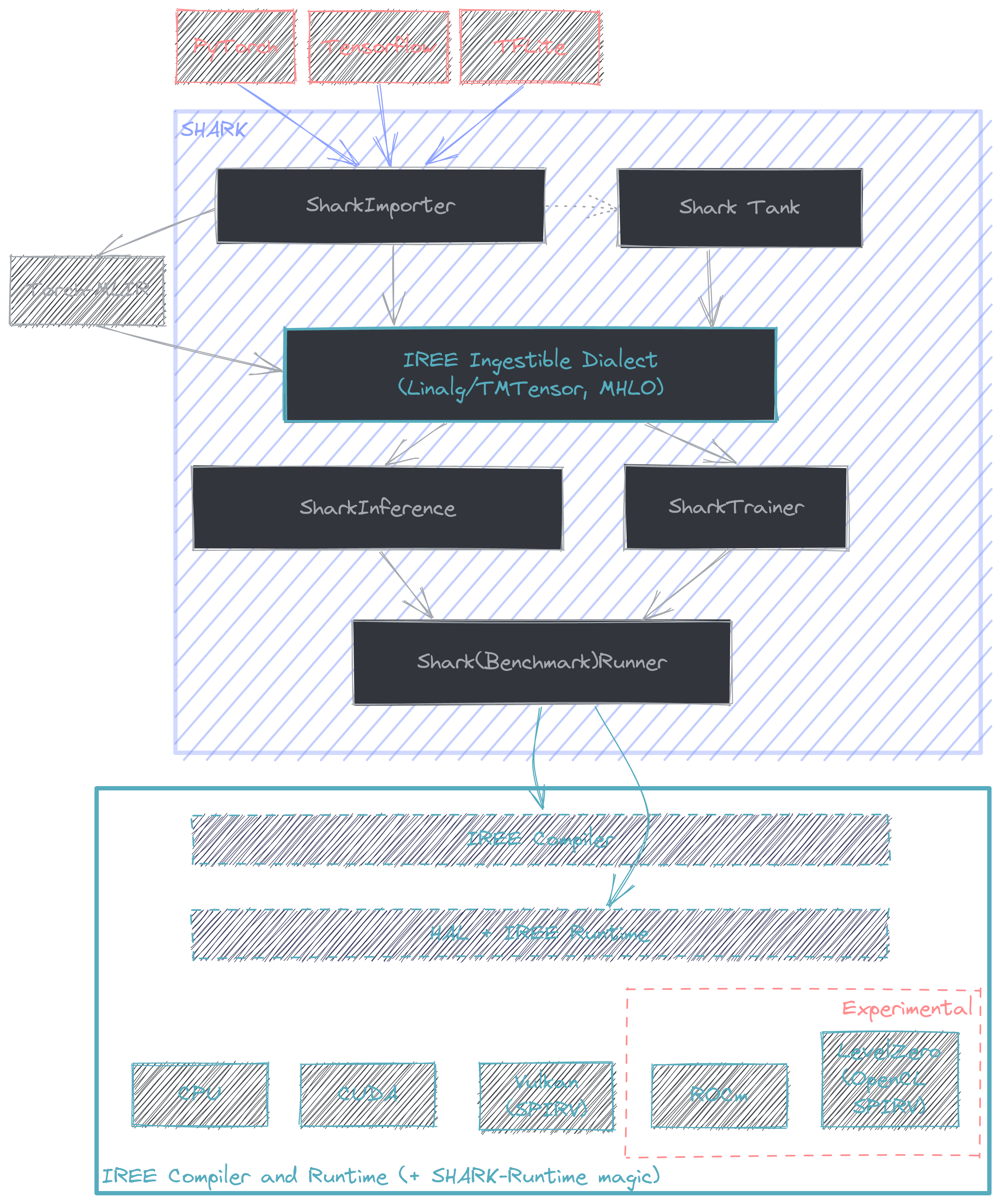
|
||||
|
||||
## Benchmarking with SHARK
|
||||
|
||||
TODO: Expand this section.
|
||||
|
||||
SHARK offers native benchmarking support, although because it is model focused, fine grain profiling is
|
||||
hidden when compared against the common "model benchmarking suite" use case SHARK is good at.
|
||||
|
||||
### SharkBenchmarkRunner
|
||||
|
||||
SharkBenchmarkRunner is a class designed for benchmarking models against other runtimes.
|
||||
TODO: List supported runtimes for comparison + example on how to benchmark with it.
|
||||
|
||||
## Directly profiling IREE
|
||||
|
||||
A number of excellent developer resources on profiling with IREE can be
|
||||
found [here](https://github.com/iree-org/iree/tree/main/docs/developers/developing_iree). As a result this section will
|
||||
focus on the bridging the gap between the two.
|
||||
- https://github.com/iree-org/iree/blob/main/docs/developers/developing_iree/profiling.md
|
||||
- https://github.com/iree-org/iree/blob/main/docs/developers/developing_iree/profiling_with_tracy.md
|
||||
- https://github.com/iree-org/iree/blob/main/docs/developers/developing_iree/profiling_vulkan_gpu.md
|
||||
- https://github.com/iree-org/iree/blob/main/docs/developers/developing_iree/profiling_cpu_events.md
|
||||
|
||||
Internally, SHARK builds a pair of IREE commands to compile + run a model. At a high level the flow starts with the
|
||||
model represented with a high level dialect (commonly Linalg) and is compiled to a flatbuffer (.vmfb) that
|
||||
the runtime is capable of ingesting. At this point (with potentially a few runtime flags) the compiled model is then run
|
||||
through the IREE runtime. This is all facilitated with the IREE python bindings, which offers a convenient method
|
||||
to capture the compile command SHARK comes up with. This is done by setting the environment variable
|
||||
`IREE_SAVE_TEMPS` to point to a directory of choice, e.g. for stable diffusion
|
||||
```
|
||||
# Linux
|
||||
$ export IREE_SAVE_TEMPS=/path/to/some/directory
|
||||
# Windows
|
||||
$ $env:IREE_SAVE_TEMPS="C:\path\to\some\directory"
|
||||
$ python apps/stable_diffusion/scripts/txt2img.py -p "a photograph of an astronaut riding a horse" --save_vmfb
|
||||
```
|
||||
NOTE: Currently this will only save the compile command + input MLIR for a single model if run in a pipeline.
|
||||
In the case of stable diffusion this (should) be UNet so to get examples for other models in the pipeline they
|
||||
need to be extracted and tested individually.
|
||||
|
||||
The save temps directory should contain three files: `core-command-line.txt`, `core-input.mlir`, and `core-output.bin`.
|
||||
The command line for compilation will start something like this, where the `-` needs to be replaced with the path to `core-input.mlir`.
|
||||
```
|
||||
/home/quinn/nod/iree-build/compiler/bindings/python/iree/compiler/tools/../_mlir_libs/iree-compile - --iree-input-type=none ...
|
||||
```
|
||||
The `-o output_filename.vmfb` flag can be used to specify the location to save the compiled vmfb. Note that a dump of the
|
||||
dispatches that can be compiled + run in isolation can be generated by adding `--iree-hal-dump-executable-benchmarks-to=/some/directory`. Say, if they are in the `benchmarks` directory, the following compile/run commands would work for Vulkan on RDNA3.
|
||||
```
|
||||
iree-compile --iree-input-type=none --iree-hal-target-backends=vulkan --iree-vulkan-target-triple=rdna3-unknown-linux benchmarks/module_forward_dispatch_${NUM}_vulkan_spirv_fb.mlir -o benchmarks/module_forward_dispatch_${NUM}_vulkan_spirv_fb.vmfb
|
||||
|
||||
iree-benchmark-module --module=benchmarks/module_forward_dispatch_${NUM}_vulkan_spirv_fb.vmfb --function=forward --device=vulkan
|
||||
```
|
||||
Where `${NUM}` is the dispatch number that you want to benchmark/profile in isolation.
|
||||
|
||||
### Enabling Tracy for Vulkan profiling
|
||||
|
||||
To begin profiling with Tracy, a build of IREE runtime with tracing enabled is needed. SHARK-Runtime (SRT) builds an
|
||||
instrumented version alongside the normal version nightly (.whls typically found [here](https://github.com/nod-ai/SRT/releases)), however this is only available for Linux. For Windows, tracing can be enabled by enabling a CMake flag.
|
||||
```
|
||||
$env:IREE_ENABLE_RUNTIME_TRACING="ON"
|
||||
```
|
||||
Getting a trace can then be done by setting environment variable `TRACY_NO_EXIT=1` and running the program that is to be
|
||||
traced. Then, to actually capture the trace, use the `iree-tracy-capture` tool in a different terminal. Note that to get
|
||||
the capture and profiler tools the `IREE_BUILD_TRACY=ON` CMake flag needs to be set.
|
||||
```
|
||||
TRACY_NO_EXIT=1 python apps/stable_diffusion/scripts/txt2img.py -p "a photograph of an astronaut riding a horse"
|
||||
|
||||
# (in another terminal, either on the same machine or through ssh with a tunnel through port 8086)
|
||||
iree-tracy-capture -o trace_filename.tracy
|
||||
```
|
||||
To do it over ssh, the flow looks like this
|
||||
```
|
||||
# From terminal 1 on local machine
|
||||
ssh -L 8086:localhost:8086 <remote_server_name>
|
||||
TRACY_NO_EXIT=1 python apps/stable_diffusion/scripts/txt2img.py -p "a photograph of an astronaut riding a horse"
|
||||
|
||||
# From terminal 2 on local machine. Requires having built IREE with the CMake flag `IREE_BUILD_TRACY=ON` to build the required tooling.
|
||||
iree-tracy-capture -o /path/to/trace.tracy
|
||||
```
|
||||
|
||||
The trace can then be viewed with
|
||||
```
|
||||
iree-tracy-profiler /path/to/trace.tracy
|
||||
```
|
||||
Capturing a runtime trace will work with any IREE tooling that uses the runtime. For example, `iree-benchmark-module`
|
||||
can be used for benchmarking an individual module. Importantly this means that any SHARK script can be profiled with tracy.
|
||||
|
||||
NOTE: Not all backends have the same tracy support. This writeup is focused on CPU/Vulkan backends but there is recently added support for tracing on CUDA (requires the `--cuda_tracing` flag).
|
||||
|
||||
## Experimental RGP support
|
||||
|
||||
TODO: This section is temporary until proper RGP support is added.
|
||||
|
||||
Currently, for stable diffusion there is a flag for enabling UNet to be visible to RGP with `--enable_rgp`. To get a proper capture though, the `DevModeSqttPrepareFrameCount=1` flag needs to be set for the driver (done with `VkPanel` on Windows).
|
||||
With these two settings, a single iteration of UNet can be captured.
|
||||
|
||||
(AMD only) To get a dump of the pipelines (result of compiled SPIR-V) the `EnablePipelineDump=1` driver flag can be set. The
|
||||
files will typically be dumped to a directory called `spvPipeline` (on Linux `/var/tmp/spvPipeline`. The dumped files will
|
||||
include header information that can be used to map back to the source dispatch/SPIR-V, e.g.
|
||||
```
|
||||
[Version]
|
||||
version = 57
|
||||
|
||||
[CsSpvFile]
|
||||
fileName = Shader_0x946C08DFD0C10D9A.spv
|
||||
|
||||
[CsInfo]
|
||||
entryPoint = forward_dispatch_193_matmul_256x65536x2304
|
||||
```
|
||||
@@ -1,75 +0,0 @@
|
||||
# Overview
|
||||
|
||||
This document is intended to provide a starting point for using SHARK stable diffusion with Blender.
|
||||
|
||||
We currently make use of the [AI-Render Plugin](https://github.com/benrugg/AI-Render) to integrate with Blender.
|
||||
|
||||
## Setup SHARK and prerequisites:
|
||||
|
||||
* Download the latest SHARK SD webui .exe from [here](https://github.com/nod-ai/SHARK/releases) or follow instructions on the [README](https://github.com/nod-ai/SHARK#readme)
|
||||
* Once you have the .exe where you would like SHARK to install, run the .exe from terminal/PowerShell with the `--api` flag:
|
||||
```
|
||||
## Run the .exe in API mode:
|
||||
.\shark_sd_<date>_<ver>.exe --api
|
||||
|
||||
## For example:
|
||||
.\shark_sd_20230411_671.exe --api --server_port=8082
|
||||
|
||||
## From a the base directory of a source clone of SHARK:
|
||||
./setup_venv.ps1
|
||||
python apps\stable_diffusion\web\index.py --api
|
||||
|
||||
```
|
||||
|
||||
Your local SD server should start and look something like this:
|
||||

|
||||
|
||||
* Note: When running in api mode with `--api`, the .exe will not function as a webUI. Thus, the address in the terminal output will only be useful for API requests.
|
||||
|
||||
### Install AI Render
|
||||
|
||||
- Get AI Render on [Blender Market](https://blendermarket.com/products/ai-render) or [Gumroad](https://airender.gumroad.com/l/ai-render)
|
||||
- Open Blender, then go to Edit > Preferences > Add-ons > Install and then find the zip file
|
||||
- We will be using the Automatic1111 SD backend for the AI-Render plugin. Follow instructions [here](https://github.com/benrugg/AI-Render/wiki/Local-Installation) to setup local SD backend.
|
||||
|
||||
Your AI-Render preferences should be configured as shown; the highlighted part should match your terminal output:
|
||||

|
||||
|
||||
|
||||
The [AI-Render README](https://github.com/benrugg/AI-Render/blob/main/README.md) has more details on installation and usage, as well as video tutorials.
|
||||
|
||||
## Using AI-Render + SHARK in your Blender project
|
||||
|
||||
- In the Render Properties tab, in the AI-Render dropdown, enable AI-Render.
|
||||
|
||||

|
||||
|
||||
- Select an image size (it's usually better to upscale later than go high on the img2img resolution here.)
|
||||
|
||||

|
||||
|
||||
- From here, you can enter a prompt and configure img2img Stable Diffusion parameters, and AI-Render will run SHARK SD img2img on the rendered scene.
|
||||
- AI-Render has useful presets for aesthetic styles, so you should be able to keep your subject prompt simple and focus on creating a decent Blender scene to start from.
|
||||
|
||||

|
||||
|
||||
## Examples:
|
||||
Scene (Input image):
|
||||
|
||||

|
||||
|
||||
Prompt:
|
||||
"A bowl of tangerines in front of rocks, masterpiece, oil on canvas, by Georgia O'Keefe, trending on artstation, landscape painting by Caspar David Friedrich"
|
||||
|
||||
Negative Prompt (default):
|
||||
"ugly, bad art, poorly drawn hands, poorly drawn feet, poorly drawn face, out of frame, extra limbs, disfigured, deformed, body out of frame, blurry, bad anatomy, blurred, watermark, grainy, tiling, signature, cut off, draft"
|
||||
|
||||
Example output:
|
||||
|
||||

|
||||
|
||||
|
||||
|
||||
|
||||
|
||||
|
||||
@@ -1,140 +0,0 @@
|
||||
# Overview
|
||||
|
||||
In [1.47.2](https://github.com/LostRuins/koboldcpp/releases/tag/v1.47.2) [Koboldcpp](https://github.com/LostRuins/koboldcpp) added AUTOMATIC1111 integration for image generation. Since SHARK implements a small subset of the A1111 REST api, you can also use SHARK for this. This document gives a starting point for how to get this working.
|
||||
|
||||
## In Action
|
||||
|
||||

|
||||
|
||||
## Memory considerations
|
||||
|
||||
Since both Koboldcpp and SHARK will use VRAM on your graphic card(s) running both at the same time using the same card will impose extra limitations on the model size you can fully offload to the video card in Koboldcpp. For me, on a RX 7900 XTX on Windows with 24 GiB of VRAM, the limit was about a 13 Billion parameter model with Q5_K_M quantisation.
|
||||
|
||||
## Performance Considerations
|
||||
|
||||
When using SHARK for image generation, especially with Koboldcpp, you need to be aware that it is currently designed to pay a large upfront cost in time compiling and tuning the model you select, to get an optimal individual image generation time. You need to be the judge as to whether this trade-off is going to be worth it for your OS and hardware combination.
|
||||
|
||||
It means that the first time you run a particular Stable Diffusion model for a particular combination of image size, LoRA, and VAE, SHARK will spend *many minutes* - even on a beefy machaine with very fast graphics card with lots of memory - building that model combination just so it can save it to disk. It may even have to go away and download the model if it doesn't already have it locally. Once it has done its build of a model combination for your hardware once, it shouldn't need to do it again until you upgrade to a newer SHARK version, install different drivers or change your graphics hardware. It will just upload the files it generated the first time to your graphics card and proceed from there.
|
||||
|
||||
This does mean however, that on a brand new fresh install of SHARK that has not generated any images on a model you haven't selected before, the first image Koboldcpp requests may look like it is *never* going finish and that the whole process has broken. Be forewarned, make yourself a cup of coffee, and expect a lot of messages about compilation and tuning from SHARK in the terminal you ran it from.
|
||||
|
||||
## Setup SHARK and prerequisites:
|
||||
|
||||
* Make sure you have suitable drivers for your graphics card installed. See the prerequisties section of the [README](https://github.com/nod-ai/SHARK#readme).
|
||||
* Download the latest SHARK studio .exe from [here](https://github.com/nod-ai/SHARK/releases) or follow the instructions in the [README](https://github.com/nod-ai/SHARK#readme) for an advanced, Linux or Mac install.
|
||||
* Run SHARK from terminal/PowerShell with the `--api` flag. Since koboldcpp also expects both CORS support and the image generator to be running on port `7860` rather than SHARK default of `8080`, also include both the `--api_accept_origin` flag with a suitable origin (use `="*"` to enable all origins) and `--server_port=7860` on the command line. (See the if you want to run SHARK on a different port)
|
||||
|
||||
```powershell
|
||||
## Run the .exe in API mode, with CORS support, on the A1111 endpoint port:
|
||||
.\node_ai_shark_studio_<date>_<ver>.exe --api --api_accept_origin="*" --server_port=7860
|
||||
|
||||
## Run trom the base directory of a source clone of SHARK on Windows:
|
||||
.\setup_venv.ps1
|
||||
python .\apps\stable_diffusion\web\index.py --api --api_accept_origin="*" --server_port=7860
|
||||
|
||||
## Run a the base directory of a source clone of SHARK on Linux:
|
||||
./setup_venv.sh
|
||||
source shark.venv/bin/activate
|
||||
python ./apps/stable_diffusion/web/index.py --api --api_accept_origin="*" --server_port=7860
|
||||
|
||||
## An example giving improved performance on AMD cards using vulkan, that runs on the same port as A1111
|
||||
.\node_ai_shark_studio_20320901_2525.exe --api --api_accept_origin="*" --device_allocator="caching" --server_port=7860
|
||||
|
||||
## Since the api respects most applicable SHARK command line arguments for options not specified,
|
||||
## or currently unimplemented by API, there might be some you want to set, as listed in `--help`
|
||||
.\node_ai_shark_studio_20320901_2525.exe --help
|
||||
|
||||
## For instance, the example above, but with a a custom VAE specified
|
||||
.\node_ai_shark_studio_20320901_2525.exe --api --api_accept_origin="*" --device_allocator="caching" --server_port=7860 --custom_vae="clearvae_v23.safetensors"
|
||||
|
||||
## An example with multiple specific CORS origins
|
||||
python apps/stable_diffusion/web/index.py --api --api_accept_origin="koboldcpp.example.com:7001" --api_accept_origin="koboldcpp.example.com:7002" --server_port=7860
|
||||
```
|
||||
|
||||
SHARK should start in server mode, and you should see something like this:
|
||||
|
||||

|
||||
|
||||
* Note: When running in api mode with `--api`, the .exe will not function as a webUI. Thus, the address or port shown in the terminal output will only be useful for API requests.
|
||||
|
||||
|
||||
## Configure Koboldcpp for local image generation:
|
||||
|
||||
* Get the latest [Koboldcpp](https://github.com/LostRuins/koboldcpp/releases) if you don't already have it. If you have a recent AMD card that has ROCm HIP [support for Windows](https://rocmdocs.amd.com/en/latest/release/windows_support.html#windows-supported-gpus) or [support for Linux](https://rocmdocs.amd.com/en/latest/release/gpu_os_support.html#linux-supported-gpus), you'll likely prefer [YellowRosecx's ROCm fork](https://github.com/YellowRoseCx/koboldcpp-rocm).
|
||||
* Start Koboldcpp in another terminal/Powershell and setup your model configuration. Refer to the [Koboldcpp README](https://github.com/YellowRoseCx/koboldcpp-rocm) for more details on how to do this if this is your first time using Koboldcpp.
|
||||
* Once the main UI has loaded into your browser click the settings button, go to the advanced tab, and then choose *Local A1111* from the generate images dropdown:
|
||||
|
||||

|
||||
|
||||

|
||||
|
||||
*if you get an error here, see the next section [below](#connecting-to-shark-on-a-different-address-or-port)*
|
||||
|
||||
* A list of Stable Diffusion models available to your SHARK instance should now be listed in the box below *generate images*. The default value will usually be set to `stabilityai/stable-diffusion-2-1-base`. Choose the model you want to use for image generation from the list (but see [performance considerations](#performance-considerations)).
|
||||
* You should now be ready to generate images, either by clicking the 'Add Img' button above the text entry box:
|
||||
|
||||

|
||||
|
||||
...or by selecting the 'Autogenerate' option in the settings:
|
||||
|
||||

|
||||
|
||||
*I often find that even if I have selected autogenerate I have to do an 'add img' to get things started off*
|
||||
|
||||
* There is one final piece of image generation configuration within Koboldcpp you might want to do. This is also in the generate images section of advanced settings. Here there is, not very obviously, a 'style' button:
|
||||
|
||||

|
||||
|
||||
This will bring up a dialog box where you can enter a short text that will sent as a prefix to the Prompt sent to SHARK:
|
||||
|
||||

|
||||
|
||||
|
||||
## Connecting to SHARK on a different address or port
|
||||
|
||||
If you didn't set the port to `--server_port=7860` when starting SHARK, or you are running it on different machine on your network than you are running Koboldcpp, or to where you are running the koboldcpp's kdlite client frontend, then you very likely got the following error:
|
||||
|
||||

|
||||
|
||||
As long as SHARK is running correctly, this means you need to set the url and port to the correct values in Koboldcpp. For instance. to set the port that Koboldcpp looks for an image generator to SHARK's default port of 8080:
|
||||
|
||||
* Select the cog icon the Generate Images section of Advanced settings:
|
||||
|
||||

|
||||
|
||||
* Then edit the port number at the end of the url in the 'A1111 Endpoint Selection' dialog box to read 8080:
|
||||
|
||||

|
||||
|
||||
* Similarly, when running SHARK on a different machine you will need to change host part of the endpoint url to the hostname or ip address where SHARK is running, similarly:
|
||||
|
||||

|
||||
|
||||
## Examples
|
||||
|
||||
Here's how Koboldcpp shows an image being requested:
|
||||
|
||||

|
||||
|
||||
The generated image in context in story mode:
|
||||
|
||||

|
||||
|
||||
And the same image when clicked on:
|
||||
|
||||

|
||||
|
||||
|
||||
## Where to find the images in SHARK
|
||||
|
||||
Even though Koboldcpp requests images at a size of 512x512, it resizes then to 256x256, converts them to `.jpeg`, and only shows them at 200x200 in the main text window. It does this so it can save them compactly embedded in your story as a `data://` uri.
|
||||
|
||||
However the images at the original size are saved by SHARK in its `output_dir` which is usually a folder named for the current date. inside `generated_imgs` folder in the SHARK installation directory.
|
||||
|
||||
You can browse these, either using the Output Gallery tab from within the SHARK web ui:
|
||||
|
||||

|
||||
|
||||
...or by browsing to the `output_dir` in your operating system's file manager:
|
||||
|
||||

|
||||
281
generate_sharktank.py
Normal file
281
generate_sharktank.py
Normal file
@@ -0,0 +1,281 @@
|
||||
# Lint as: python3
|
||||
"""SHARK Tank"""
|
||||
# python generate_sharktank.py, you have to give a csv tile with [model_name, model_download_url]
|
||||
# will generate local shark tank folder like this:
|
||||
# /SHARK
|
||||
# /gen_shark_tank
|
||||
# /albert_lite_base
|
||||
# /...model_name...
|
||||
#
|
||||
|
||||
import os
|
||||
import csv
|
||||
import argparse
|
||||
from shark.shark_importer import SharkImporter
|
||||
import subprocess as sp
|
||||
import hashlib
|
||||
import numpy as np
|
||||
from pathlib import Path
|
||||
from apps.stable_diffusion.src.models import (
|
||||
model_wrappers as mw,
|
||||
)
|
||||
from apps.stable_diffusion.src.utils.stable_args import (
|
||||
args,
|
||||
)
|
||||
|
||||
|
||||
def create_hash(file_name):
|
||||
with open(file_name, "rb") as f:
|
||||
file_hash = hashlib.blake2b()
|
||||
while chunk := f.read(2**20):
|
||||
file_hash.update(chunk)
|
||||
|
||||
return file_hash.hexdigest()
|
||||
|
||||
|
||||
def save_torch_model(torch_model_list):
|
||||
from tank.model_utils import (
|
||||
get_hf_model,
|
||||
get_vision_model,
|
||||
get_hf_img_cls_model,
|
||||
get_fp16_model,
|
||||
)
|
||||
|
||||
with open(torch_model_list) as csvfile:
|
||||
torch_reader = csv.reader(csvfile, delimiter=",")
|
||||
fields = next(torch_reader)
|
||||
for row in torch_reader:
|
||||
torch_model_name = row[0]
|
||||
tracing_required = row[1]
|
||||
model_type = row[2]
|
||||
is_dynamic = row[3]
|
||||
|
||||
tracing_required = False if tracing_required == "False" else True
|
||||
is_dynamic = False if is_dynamic == "False" else True
|
||||
|
||||
model = None
|
||||
input = None
|
||||
if model_type == "stable_diffusion":
|
||||
args.use_tuned = False
|
||||
args.import_mlir = True
|
||||
args.use_tuned = False
|
||||
args.local_tank_cache = WORKDIR
|
||||
|
||||
precision_values = ["fp16"]
|
||||
seq_lengths = [64, 77]
|
||||
for precision_value in precision_values:
|
||||
args.precision = precision_value
|
||||
for length in seq_lengths:
|
||||
model = mw.SharkifyStableDiffusionModel(
|
||||
model_id=torch_model_name,
|
||||
custom_weights="",
|
||||
precision=precision_value,
|
||||
max_len=length,
|
||||
width=512,
|
||||
height=512,
|
||||
use_base_vae=False,
|
||||
debug=True,
|
||||
sharktank_dir=WORKDIR,
|
||||
generate_vmfb=False,
|
||||
)
|
||||
model()
|
||||
continue
|
||||
if model_type == "vision":
|
||||
model, input, _ = get_vision_model(torch_model_name)
|
||||
elif model_type == "hf":
|
||||
model, input, _ = get_hf_model(torch_model_name)
|
||||
elif model_type == "hf_img_cls":
|
||||
model, input, _ = get_hf_img_cls_model(torch_model_name)
|
||||
elif model_type == "fp16":
|
||||
model, input, _ = get_fp16_model(torch_model_name)
|
||||
torch_model_name = torch_model_name.replace("/", "_")
|
||||
torch_model_dir = os.path.join(
|
||||
WORKDIR, str(torch_model_name) + "_torch"
|
||||
)
|
||||
os.makedirs(torch_model_dir, exist_ok=True)
|
||||
|
||||
mlir_importer = SharkImporter(
|
||||
model,
|
||||
(input,),
|
||||
frontend="torch",
|
||||
)
|
||||
mlir_importer.import_debug(
|
||||
is_dynamic=False,
|
||||
tracing_required=tracing_required,
|
||||
dir=torch_model_dir,
|
||||
model_name=torch_model_name,
|
||||
)
|
||||
mlir_hash = create_hash(
|
||||
os.path.join(
|
||||
torch_model_dir, torch_model_name + "_torch" + ".mlir"
|
||||
)
|
||||
)
|
||||
np.save(os.path.join(torch_model_dir, "hash"), np.array(mlir_hash))
|
||||
# Generate torch dynamic models.
|
||||
if is_dynamic:
|
||||
mlir_importer.import_debug(
|
||||
is_dynamic=True,
|
||||
tracing_required=tracing_required,
|
||||
dir=torch_model_dir,
|
||||
model_name=torch_model_name + "_dynamic",
|
||||
)
|
||||
|
||||
|
||||
def save_tf_model(tf_model_list):
|
||||
from tank.model_utils_tf import (
|
||||
get_causal_image_model,
|
||||
get_causal_lm_model,
|
||||
get_keras_model,
|
||||
get_TFhf_model,
|
||||
)
|
||||
import tensorflow as tf
|
||||
|
||||
visible_default = tf.config.list_physical_devices("GPU")
|
||||
try:
|
||||
tf.config.set_visible_devices([], "GPU")
|
||||
visible_devices = tf.config.get_visible_devices()
|
||||
for device in visible_devices:
|
||||
assert device.device_type != "GPU"
|
||||
except:
|
||||
# Invalid device or cannot modify virtual devices once initialized.
|
||||
pass
|
||||
|
||||
with open(tf_model_list) as csvfile:
|
||||
tf_reader = csv.reader(csvfile, delimiter=",")
|
||||
fields = next(tf_reader)
|
||||
for row in tf_reader:
|
||||
tf_model_name = row[0]
|
||||
model_type = row[1]
|
||||
|
||||
model = None
|
||||
input = None
|
||||
print(f"Generating artifacts for model {tf_model_name}")
|
||||
if model_type == "hf":
|
||||
model, input, _ = get_causal_lm_model(tf_model_name)
|
||||
if model_type == "img":
|
||||
model, input, _ = get_causal_image_model(tf_model_name)
|
||||
if model_type == "keras":
|
||||
model, input, _ = get_keras_model(tf_model_name)
|
||||
if model_type == "TFhf":
|
||||
model, input, _ = get_TFhf_model(tf_model_name)
|
||||
|
||||
tf_model_name = tf_model_name.replace("/", "_")
|
||||
tf_model_dir = os.path.join(WORKDIR, str(tf_model_name) + "_tf")
|
||||
os.makedirs(tf_model_dir, exist_ok=True)
|
||||
|
||||
mlir_importer = SharkImporter(
|
||||
model,
|
||||
input,
|
||||
frontend="tf",
|
||||
)
|
||||
mlir_importer.import_debug(
|
||||
dir=tf_model_dir,
|
||||
model_name=tf_model_name,
|
||||
)
|
||||
mlir_hash = create_hash(
|
||||
os.path.join(tf_model_dir, tf_model_name + "_tf" + ".mlir")
|
||||
)
|
||||
np.save(os.path.join(tf_model_dir, "hash"), np.array(mlir_hash))
|
||||
|
||||
|
||||
def save_tflite_model(tflite_model_list):
|
||||
from shark.tflite_utils import TFLitePreprocessor
|
||||
|
||||
with open(tflite_model_list) as csvfile:
|
||||
tflite_reader = csv.reader(csvfile, delimiter=",")
|
||||
for row in tflite_reader:
|
||||
print("\n")
|
||||
tflite_model_name = row[0]
|
||||
tflite_model_link = row[1]
|
||||
print("tflite_model_name", tflite_model_name)
|
||||
print("tflite_model_link", tflite_model_link)
|
||||
tflite_model_name_dir = os.path.join(
|
||||
WORKDIR, str(tflite_model_name) + "_tflite"
|
||||
)
|
||||
os.makedirs(tflite_model_name_dir, exist_ok=True)
|
||||
print(f"TMP_TFLITE_MODELNAME_DIR = {tflite_model_name_dir}")
|
||||
|
||||
# Preprocess to get SharkImporter input args
|
||||
tflite_preprocessor = TFLitePreprocessor(str(tflite_model_name))
|
||||
raw_model_file_path = tflite_preprocessor.get_raw_model_file()
|
||||
inputs = tflite_preprocessor.get_inputs()
|
||||
tflite_interpreter = tflite_preprocessor.get_interpreter()
|
||||
|
||||
# Use SharkImporter to get SharkInference input args
|
||||
my_shark_importer = SharkImporter(
|
||||
module=tflite_interpreter,
|
||||
inputs=inputs,
|
||||
frontend="tflite",
|
||||
raw_model_file=raw_model_file_path,
|
||||
)
|
||||
my_shark_importer.import_debug(
|
||||
dir=tflite_model_name_dir,
|
||||
model_name=tflite_model_name,
|
||||
func_name="main",
|
||||
)
|
||||
mlir_hash = create_hash(
|
||||
os.path.join(
|
||||
tflite_model_name_dir,
|
||||
tflite_model_name + "_tflite" + ".mlir",
|
||||
)
|
||||
)
|
||||
np.save(
|
||||
os.path.join(tflite_model_name_dir, "hash"),
|
||||
np.array(mlir_hash),
|
||||
)
|
||||
|
||||
|
||||
# Validates whether the file is present or not.
|
||||
def is_valid_file(arg):
|
||||
if not os.path.exists(arg):
|
||||
return None
|
||||
else:
|
||||
return arg
|
||||
|
||||
|
||||
if __name__ == "__main__":
|
||||
# Note, all of these flags are overridden by the import of args from stable_args.py, flags are duplicated temporarily to preserve functionality
|
||||
# parser = argparse.ArgumentParser()
|
||||
# parser.add_argument(
|
||||
# "--torch_model_csv",
|
||||
# type=lambda x: is_valid_file(x),
|
||||
# default="./tank/torch_model_list.csv",
|
||||
# help="""Contains the file with torch_model name and args.
|
||||
# Please see: https://github.com/nod-ai/SHARK/blob/main/tank/torch_model_list.csv""",
|
||||
# )
|
||||
# parser.add_argument(
|
||||
# "--tf_model_csv",
|
||||
# type=lambda x: is_valid_file(x),
|
||||
# default="./tank/tf_model_list.csv",
|
||||
# help="Contains the file with tf model name and args.",
|
||||
# )
|
||||
# parser.add_argument(
|
||||
# "--tflite_model_csv",
|
||||
# type=lambda x: is_valid_file(x),
|
||||
# default="./tank/tflite/tflite_model_list.csv",
|
||||
# help="Contains the file with tf model name and args.",
|
||||
# )
|
||||
# parser.add_argument(
|
||||
# "--ci_tank_dir",
|
||||
# type=bool,
|
||||
# default=False,
|
||||
# )
|
||||
# parser.add_argument("--upload", type=bool, default=False)
|
||||
|
||||
# old_args = parser.parse_args()
|
||||
|
||||
home = str(Path.home())
|
||||
WORKDIR = os.path.join(os.path.dirname(__file__), "gen_shark_tank")
|
||||
torch_model_csv = os.path.join(
|
||||
os.path.dirname(__file__), "tank", "torch_model_list.csv"
|
||||
)
|
||||
tf_model_csv = os.path.join(
|
||||
os.path.dirname(__file__), "tank", "tf_model_list.csv"
|
||||
)
|
||||
tflite_model_csv = os.path.join(
|
||||
os.path.dirname(__file__), "tank", "tflite", "tflite_model_list.csv"
|
||||
)
|
||||
|
||||
save_torch_model(torch_model_csv)
|
||||
save_tf_model(tf_model_csv)
|
||||
save_tflite_model(tflite_model_csv)
|
||||
192
inference/CMakeLists.txt
Normal file
192
inference/CMakeLists.txt
Normal file
@@ -0,0 +1,192 @@
|
||||
# Copyright 2021, NVIDIA CORPORATION & AFFILIATES. All rights reserved.
|
||||
#
|
||||
# Redistribution and use in source and binary forms, with or without
|
||||
# modification, are permitted provided that the following conditions
|
||||
# are met:
|
||||
# * Redistributions of source code must retain the above copyright
|
||||
# notice, this list of conditions and the following disclaimer.
|
||||
# * Redistributions in binary form must reproduce the above copyright
|
||||
# notice, this list of conditions and the following disclaimer in the
|
||||
# documentation and/or other materials provided with the distribution.
|
||||
# * Neither the name of NVIDIA CORPORATION nor the names of its
|
||||
# contributors may be used to endorse or promote products derived
|
||||
# from this software without specific prior written permission.
|
||||
#
|
||||
# THIS SOFTWARE IS PROVIDED BY THE COPYRIGHT HOLDERS ``AS IS'' AND ANY
|
||||
# EXPRESS OR IMPLIED WARRANTIES, INCLUDING, BUT NOT LIMITED TO, THE
|
||||
# IMPLIED WARRANTIES OF MERCHANTABILITY AND FITNESS FOR A PARTICULAR
|
||||
# PURPOSE ARE DISCLAIMED. IN NO EVENT SHALL THE COPYRIGHT OWNER OR
|
||||
# CONTRIBUTORS BE LIABLE FOR ANY DIRECT, INDIRECT, INCIDENTAL, SPECIAL,
|
||||
# EXEMPLARY, OR CONSEQUENTIAL DAMAGES (INCLUDING, BUT NOT LIMITED TO,
|
||||
# PROCUREMENT OF SUBSTITUTE GOODS OR SERVICES; LOSS OF USE, DATA, OR
|
||||
# PROFITS; OR BUSINESS INTERRUPTION) HOWEVER CAUSED AND ON ANY THEORY
|
||||
# OF LIABILITY, WHETHER IN CONTRACT, STRICT LIABILITY, OR TORT
|
||||
# (INCLUDING NEGLIGENCE OR OTHERWISE) ARISING IN ANY WAY OUT OF THE USE
|
||||
# OF THIS SOFTWARE, EVEN IF ADVISED OF THE POSSIBILITY OF SUCH DAMAGE.
|
||||
|
||||
cmake_minimum_required(VERSION 3.17)
|
||||
|
||||
project(sharkbackend LANGUAGES C CXX)
|
||||
|
||||
#
|
||||
# Options
|
||||
#
|
||||
|
||||
option(TRITON_ENABLE_GPU "Enable GPU support in backend" ON)
|
||||
option(TRITON_ENABLE_STATS "Include statistics collections in backend" ON)
|
||||
|
||||
set(TRITON_COMMON_REPO_TAG "main" CACHE STRING "Tag for triton-inference-server/common repo")
|
||||
set(TRITON_CORE_REPO_TAG "main" CACHE STRING "Tag for triton-inference-server/core repo")
|
||||
set(TRITON_BACKEND_REPO_TAG "main" CACHE STRING "Tag for triton-inference-server/backend repo")
|
||||
|
||||
if(NOT CMAKE_BUILD_TYPE)
|
||||
set(CMAKE_BUILD_TYPE Release)
|
||||
endif()
|
||||
|
||||
#
|
||||
# Dependencies
|
||||
#
|
||||
# FetchContent requires us to include the transitive closure of all
|
||||
# repos that we depend on so that we can override the tags.
|
||||
#
|
||||
include(FetchContent)
|
||||
|
||||
FetchContent_Declare(
|
||||
repo-common
|
||||
GIT_REPOSITORY https://github.com/triton-inference-server/common.git
|
||||
GIT_TAG ${TRITON_COMMON_REPO_TAG}
|
||||
GIT_SHALLOW ON
|
||||
)
|
||||
FetchContent_Declare(
|
||||
repo-core
|
||||
GIT_REPOSITORY https://github.com/triton-inference-server/core.git
|
||||
GIT_TAG ${TRITON_CORE_REPO_TAG}
|
||||
GIT_SHALLOW ON
|
||||
)
|
||||
FetchContent_Declare(
|
||||
repo-backend
|
||||
GIT_REPOSITORY https://github.com/triton-inference-server/backend.git
|
||||
GIT_TAG ${TRITON_BACKEND_REPO_TAG}
|
||||
GIT_SHALLOW ON
|
||||
)
|
||||
FetchContent_MakeAvailable(repo-common repo-core repo-backend)
|
||||
|
||||
#
|
||||
# The backend must be built into a shared library. Use an ldscript to
|
||||
# hide all symbols except for the TRITONBACKEND API.
|
||||
#
|
||||
configure_file(src/libtriton_dshark.ldscript libtriton_dshark.ldscript COPYONLY)
|
||||
|
||||
add_library(
|
||||
triton-dshark-backend SHARED
|
||||
src/dshark.cc
|
||||
#src/dshark_driver_module.c
|
||||
)
|
||||
|
||||
add_library(
|
||||
SharkBackend::triton-dshark-backend ALIAS triton-dshark-backend
|
||||
)
|
||||
|
||||
target_include_directories(
|
||||
triton-dshark-backend
|
||||
PRIVATE
|
||||
${CMAKE_CURRENT_SOURCE_DIR}/src
|
||||
)
|
||||
|
||||
list(APPEND CMAKE_MODULE_PATH "${PROJECT_BINARY_DIR}/lib/cmake/mlir")
|
||||
|
||||
add_subdirectory(thirdparty/shark-runtime EXCLUDE_FROM_ALL)
|
||||
|
||||
target_link_libraries(triton-dshark-backend PRIVATE iree_base_base
|
||||
iree_hal_hal
|
||||
iree_hal_cuda_cuda
|
||||
iree_hal_cuda_registration_registration
|
||||
iree_hal_vmvx_registration_registration
|
||||
iree_hal_dylib_registration_registration
|
||||
iree_modules_hal_hal
|
||||
iree_vm_vm
|
||||
iree_vm_bytecode_module
|
||||
iree_hal_local_loaders_system_library_loader
|
||||
iree_hal_local_loaders_vmvx_module_loader
|
||||
)
|
||||
|
||||
target_compile_features(triton-dshark-backend PRIVATE cxx_std_11)
|
||||
|
||||
|
||||
target_link_libraries(
|
||||
triton-dshark-backend
|
||||
PRIVATE
|
||||
triton-core-serverapi # from repo-core
|
||||
triton-core-backendapi # from repo-core
|
||||
triton-core-serverstub # from repo-core
|
||||
triton-backend-utils # from repo-backend
|
||||
)
|
||||
|
||||
if(WIN32)
|
||||
set_target_properties(
|
||||
triton-dshark-backend PROPERTIES
|
||||
POSITION_INDEPENDENT_CODE ON
|
||||
OUTPUT_NAME triton_dshark
|
||||
)
|
||||
else()
|
||||
set_target_properties(
|
||||
triton-dshark-backend PROPERTIES
|
||||
POSITION_INDEPENDENT_CODE ON
|
||||
OUTPUT_NAME triton_dshark
|
||||
LINK_DEPENDS ${CMAKE_CURRENT_BINARY_DIR}/libtriton_dshark.ldscript
|
||||
LINK_FLAGS "-Wl,--version-script libtriton_dshark.ldscript"
|
||||
)
|
||||
endif()
|
||||
|
||||
|
||||
|
||||
#
|
||||
# Install
|
||||
#
|
||||
include(GNUInstallDirs)
|
||||
set(INSTALL_CONFIGDIR ${CMAKE_INSTALL_LIBDIR}/cmake/SharkBackend)
|
||||
|
||||
install(
|
||||
TARGETS
|
||||
triton-dshark-backend
|
||||
EXPORT
|
||||
triton-dshark-backend-targets
|
||||
LIBRARY DESTINATION ${CMAKE_INSTALL_PREFIX}/backends/dshark
|
||||
RUNTIME DESTINATION ${CMAKE_INSTALL_PREFIX}/backends/dshark
|
||||
)
|
||||
|
||||
install(
|
||||
EXPORT
|
||||
triton-dshark-backend-targets
|
||||
FILE
|
||||
SharkBackendTargets.cmake
|
||||
NAMESPACE
|
||||
SharkBackend::
|
||||
DESTINATION
|
||||
${INSTALL_CONFIGDIR}
|
||||
)
|
||||
|
||||
include(CMakePackageConfigHelpers)
|
||||
configure_package_config_file(
|
||||
${CMAKE_CURRENT_LIST_DIR}/cmake/SharkBackendConfig.cmake.in
|
||||
${CMAKE_CURRENT_BINARY_DIR}/SharkBackendConfig.cmake
|
||||
INSTALL_DESTINATION ${INSTALL_CONFIGDIR}
|
||||
)
|
||||
|
||||
install(
|
||||
FILES
|
||||
${CMAKE_CURRENT_BINARY_DIR}/SharkBackendConfig.cmake
|
||||
DESTINATION ${INSTALL_CONFIGDIR}
|
||||
)
|
||||
|
||||
#
|
||||
# Export from build tree
|
||||
#
|
||||
export(
|
||||
EXPORT triton-dshark-backend-targets
|
||||
FILE ${CMAKE_CURRENT_BINARY_DIR}/SharkBackendTargets.cmake
|
||||
NAMESPACE SharkBackend::
|
||||
)
|
||||
|
||||
export(PACKAGE SharkBackend)
|
||||
|
||||
100
inference/README.md
Normal file
100
inference/README.md
Normal file
@@ -0,0 +1,100 @@
|
||||
# SHARK Triton Backend
|
||||
|
||||
The triton backend for shark.
|
||||
|
||||
# Build
|
||||
|
||||
Install SHARK
|
||||
|
||||
```
|
||||
git clone https://github.com/nod-ai/SHARK.git
|
||||
# skip above step if dshark is already installed
|
||||
cd SHARK/inference
|
||||
```
|
||||
|
||||
install dependancies
|
||||
|
||||
```
|
||||
apt-get install patchelf rapidjson-dev python3-dev
|
||||
git submodule update --init
|
||||
```
|
||||
|
||||
update the submodules of iree
|
||||
|
||||
```
|
||||
cd thirdparty/shark-runtime
|
||||
git submodule update --init
|
||||
```
|
||||
|
||||
Next, make the backend and install it
|
||||
|
||||
```
|
||||
cd ../..
|
||||
mkdir build && cd build
|
||||
cmake -DTRITON_ENABLE_GPU=ON \
|
||||
-DIREE_HAL_DRIVER_CUDA=ON \
|
||||
-DIREE_TARGET_BACKEND_CUDA=ON \
|
||||
-DMLIR_ENABLE_CUDA_RUNNER=ON \
|
||||
-DCMAKE_INSTALL_PREFIX:PATH=`pwd`/install \
|
||||
-DTRITON_BACKEND_REPO_TAG=r22.02 \
|
||||
-DTRITON_CORE_REPO_TAG=r22.02 \
|
||||
-DTRITON_COMMON_REPO_TAG=r22.02 ..
|
||||
make install
|
||||
```
|
||||
|
||||
# Incorporating into Triton
|
||||
|
||||
There are much more in depth explenations for the following steps in triton's documentation:
|
||||
https://github.com/triton-inference-server/server/blob/main/docs/compose.md#triton-with-unsupported-and-custom-backends
|
||||
|
||||
There should be a file at /build/install/backends/dshark/libtriton_dshark.so. You will need to copy it into your triton server image.
|
||||
More documentation is in the link above, but to create the docker image, you need to run the compose.py command in the triton-backend server repo
|
||||
|
||||
|
||||
To first build your image, clone the tritonserver repo.
|
||||
|
||||
```
|
||||
git clone https://github.com/triton-inference-server/server.git
|
||||
```
|
||||
|
||||
then run `compose.py` to build a docker compose file
|
||||
```
|
||||
cd server
|
||||
python3 compose.py --repoagent checksum --dry-run
|
||||
```
|
||||
|
||||
Because dshark is a third party backend, you will need to manually modify the `Dockerfile.compose` to include the dshark backend. To do this, in the Dockerfile.compose file produced, copy this line.
|
||||
the dshark backend will be located in the build folder from earlier under `/build/install/backends`
|
||||
|
||||
```
|
||||
COPY /path/to/build/install/backends/dshark /opt/tritonserver/backends/dshark
|
||||
```
|
||||
|
||||
Next run
|
||||
```
|
||||
docker build -t tritonserver_custom -f Dockerfile.compose .
|
||||
docker run -it --gpus=1 --net=host -v/path/to/model_repos:/models tritonserver_custom:latest tritonserver --model-repository=/models
|
||||
```
|
||||
|
||||
where `path/to/model_repos` is where you are storing the models you want to run
|
||||
|
||||
if your not using gpus, omit `--gpus=1`
|
||||
|
||||
```
|
||||
docker run -it --net=host -v/path/to/model_repos:/models tritonserver_custom:latest tritonserver --model-repository=/models
|
||||
```
|
||||
|
||||
# Setting up a model
|
||||
|
||||
to include a model in your backend, add a directory with your model name to your model repository directory. examples of models can be seen here: https://github.com/triton-inference-server/backend/tree/main/examples/model_repos/minimal_models
|
||||
|
||||
make sure to adjust the input correctly in the config.pbtxt file, and save a vmfb file under 1/model.vmfb
|
||||
|
||||
# CUDA
|
||||
|
||||
if you're having issues with cuda, make sure your correct drivers are installed, and that `nvidia-smi` works, and also make sure that the nvcc compiler is on the path.
|
||||
|
||||
|
||||
|
||||
|
||||
|
||||
39
inference/cmake/SharkBackendConfig.cmake.in
Normal file
39
inference/cmake/SharkBackendConfig.cmake.in
Normal file
@@ -0,0 +1,39 @@
|
||||
# Copyright 2021, NVIDIA CORPORATION & AFFILIATES. All rights reserved.
|
||||
#
|
||||
# Redistribution and use in source and binary forms, with or without
|
||||
# modification, are permitted provided that the following conditions
|
||||
# are met:
|
||||
# * Redistributions of source code must retain the above copyright
|
||||
# notice, this list of conditions and the following disclaimer.
|
||||
# * Redistributions in binary form must reproduce the above copyright
|
||||
# notice, this list of conditions and the following disclaimer in the
|
||||
# documentation and/or other materials provided with the distribution.
|
||||
# * Neither the name of NVIDIA CORPORATION nor the names of its
|
||||
# contributors may be used to endorse or promote products derived
|
||||
# from this software without specific prior written permission.
|
||||
#
|
||||
# THIS SOFTWARE IS PROVIDED BY THE COPYRIGHT HOLDERS ``AS IS'' AND ANY
|
||||
# EXPRESS OR IMPLIED WARRANTIES, INCLUDING, BUT NOT LIMITED TO, THE
|
||||
# IMPLIED WARRANTIES OF MERCHANTABILITY AND FITNESS FOR A PARTICULAR
|
||||
# PURPOSE ARE DISCLAIMED. IN NO EVENT SHALL THE COPYRIGHT OWNER OR
|
||||
# CONTRIBUTORS BE LIABLE FOR ANY DIRECT, INDIRECT, INCIDENTAL, SPECIAL,
|
||||
# EXEMPLARY, OR CONSEQUENTIAL DAMAGES (INCLUDING, BUT NOT LIMITED TO,
|
||||
# PROCUREMENT OF SUBSTITUTE GOODS OR SERVICES; LOSS OF USE, DATA, OR
|
||||
# PROFITS; OR BUSINESS INTERRUPTION) HOWEVER CAUSED AND ON ANY THEORY
|
||||
# OF LIABILITY, WHETHER IN CONTRACT, STRICT LIABILITY, OR TORT
|
||||
# (INCLUDING NEGLIGENCE OR OTHERWISE) ARISING IN ANY WAY OUT OF THE USE
|
||||
# OF THIS SOFTWARE, EVEN IF ADVISED OF THE POSSIBILITY OF SUCH DAMAGE.
|
||||
|
||||
include(CMakeFindDependencyMacro)
|
||||
|
||||
get_filename_component(
|
||||
SHARKBACKEND_CMAKE_DIR "${CMAKE_CURRENT_LIST_FILE}" PATH
|
||||
)
|
||||
|
||||
list(APPEND CMAKE_MODULE_PATH ${SHARKBACKEND_CMAKE_DIR})
|
||||
|
||||
if(NOT TARGET SharkBackend::triton-dshark-backend)
|
||||
include("${SHARKBACKEND_CMAKE_DIR}/SharkBackendTargets.cmake")
|
||||
endif()
|
||||
|
||||
set(SHARKBACKEND_LIBRARIES SharkBackend::triton-dshark-backend)
|
||||
1409
inference/src/dshark.cc
Normal file
1409
inference/src/dshark.cc
Normal file
File diff suppressed because it is too large
Load Diff
30
inference/src/libtriton_dshark.ldscript
Normal file
30
inference/src/libtriton_dshark.ldscript
Normal file
@@ -0,0 +1,30 @@
|
||||
# Copyright 2021, NVIDIA CORPORATION & AFFILIATES. All rights reserved.
|
||||
#
|
||||
# Redistribution and use in source and binary forms, with or without
|
||||
# modification, are permitted provided that the following conditions
|
||||
# are met:
|
||||
# * Redistributions of source code must retain the above copyright
|
||||
# notice, this list of conditions and the following disclaimer.
|
||||
# * Redistributions in binary form must reproduce the above copyright
|
||||
# notice, this list of conditions and the following disclaimer in the
|
||||
# documentation and/or other materials provided with the distribution.
|
||||
# * Neither the name of NVIDIA CORPORATION nor the names of its
|
||||
# contributors may be used to endorse or promote products derived
|
||||
# from this software without specific prior written permission.
|
||||
#
|
||||
# THIS SOFTWARE IS PROVIDED BY THE COPYRIGHT HOLDERS ``AS IS'' AND ANY
|
||||
# EXPRESS OR IMPLIED WARRANTIES, INCLUDING, BUT NOT LIMITED TO, THE
|
||||
# IMPLIED WARRANTIES OF MERCHANTABILITY AND FITNESS FOR A PARTICULAR
|
||||
# PURPOSE ARE DISCLAIMED. IN NO EVENT SHALL THE COPYRIGHT OWNER OR
|
||||
# CONTRIBUTORS BE LIABLE FOR ANY DIRECT, INDIRECT, INCIDENTAL, SPECIAL,
|
||||
# EXEMPLARY, OR CONSEQUENTIAL DAMAGES (INCLUDING, BUT NOT LIMITED TO,
|
||||
# PROCUREMENT OF SUBSTITUTE GOODS OR SERVICES; LOSS OF USE, DATA, OR
|
||||
# PROFITS; OR BUSINESS INTERRUPTION) HOWEVER CAUSED AND ON ANY THEORY
|
||||
# OF LIABILITY, WHETHER IN CONTRACT, STRICT LIABILITY, OR TORT
|
||||
# (INCLUDING NEGLIGENCE OR OTHERWISE) ARISING IN ANY WAY OUT OF THE USE
|
||||
# OF THIS SOFTWARE, EVEN IF ADVISED OF THE POSSIBILITY OF SUCH DAMAGE.
|
||||
{
|
||||
global:
|
||||
TRITONBACKEND_*;
|
||||
local: *;
|
||||
};
|
||||
1
inference/thirdparty/shark-runtime
vendored
Submodule
1
inference/thirdparty/shark-runtime
vendored
Submodule
Submodule inference/thirdparty/shark-runtime added at 7b82d90c72
@@ -1,66 +0,0 @@
|
||||
# This script will toggle the comment/uncommenting aspect for dealing
|
||||
# with __file__ AttributeError arising in case of a few modules in
|
||||
# `torch/_dynamo/skipfiles.py` (within shark.venv)
|
||||
|
||||
from distutils.sysconfig import get_python_lib
|
||||
import fileinput
|
||||
from pathlib import Path
|
||||
|
||||
# Temporary workaround for transformers/__init__.py.
|
||||
path_to_transformers_hook = Path(
|
||||
get_python_lib() + "/_pyinstaller_hooks_contrib/hooks/stdhooks/hook-transformers.py"
|
||||
)
|
||||
if path_to_transformers_hook.is_file():
|
||||
pass
|
||||
else:
|
||||
with open(path_to_transformers_hook, "w") as f:
|
||||
f.write("module_collection_mode = 'pyz+py'")
|
||||
|
||||
path_to_skipfiles = Path(get_python_lib() + "/torch/_dynamo/skipfiles.py")
|
||||
|
||||
modules_to_comment = ["abc,", "os,", "posixpath,", "_collections_abc,"]
|
||||
startMonitoring = 0
|
||||
for line in fileinput.input(path_to_skipfiles, inplace=True):
|
||||
if "SKIP_DIRS = " in line:
|
||||
startMonitoring = 1
|
||||
print(line, end="")
|
||||
elif startMonitoring in [1, 2]:
|
||||
if "]" in line:
|
||||
startMonitoring += 1
|
||||
print(line, end="")
|
||||
else:
|
||||
flag = True
|
||||
for module in modules_to_comment:
|
||||
if module in line:
|
||||
if not line.startswith("#"):
|
||||
print(f"#{line}", end="")
|
||||
else:
|
||||
print(f"{line[1:]}", end="")
|
||||
flag = False
|
||||
break
|
||||
if flag:
|
||||
print(line, end="")
|
||||
else:
|
||||
print(line, end="")
|
||||
|
||||
# For getting around scikit-image's packaging, laze_loader has had a patch merged but yet to be released.
|
||||
# Refer: https://github.com/scientific-python/lazy_loader
|
||||
path_to_lazy_loader = Path(get_python_lib() + "/lazy_loader/__init__.py")
|
||||
|
||||
for line in fileinput.input(path_to_lazy_loader, inplace=True):
|
||||
if 'stubfile = filename if filename.endswith("i")' in line:
|
||||
print(
|
||||
' stubfile = (filename if filename.endswith("i") else f"{os.path.splitext(filename)[0]}.pyi")',
|
||||
end="",
|
||||
)
|
||||
else:
|
||||
print(line, end="")
|
||||
|
||||
# For getting around timm's packaging.
|
||||
# Refer: https://github.com/pyinstaller/pyinstaller/issues/5673#issuecomment-808731505
|
||||
path_to_timm_activations = Path(get_python_lib() + "/timm/layers/activations_jit.py")
|
||||
for line in fileinput.input(path_to_timm_activations, inplace=True):
|
||||
if "@torch.jit.script" in line:
|
||||
print("@torch.jit._script_if_tracing", end="\n")
|
||||
else:
|
||||
print(line, end="")
|
||||
@@ -5,25 +5,8 @@ requires = [
|
||||
"packaging",
|
||||
|
||||
"numpy>=1.22.4",
|
||||
"torch-mlir>=20221021.633",
|
||||
"iree-compiler>=20221022.190",
|
||||
"iree-runtime>=20221022.190",
|
||||
]
|
||||
build-backend = "setuptools.build_meta"
|
||||
|
||||
[tool.black]
|
||||
include = '\.pyi?$'
|
||||
exclude = '''
|
||||
(
|
||||
/(
|
||||
| apps/stable_diffusion
|
||||
| apps/language_models
|
||||
| shark
|
||||
| benchmarks
|
||||
| tank
|
||||
| build
|
||||
| generated_imgs
|
||||
| shark.venv
|
||||
)/
|
||||
| setup.py
|
||||
)
|
||||
'''
|
||||
|
||||
@@ -1,3 +1,3 @@
|
||||
[pytest]
|
||||
addopts = --verbose -s -p no:warnings
|
||||
norecursedirs = inference tank/tflite examples benchmarks shark apps/shark_studio
|
||||
addopts = --verbose -p no:warnings
|
||||
norecursedirs = inference tank/tflite examples benchmarks shark
|
||||
|
||||
@@ -8,8 +8,19 @@ torchvision
|
||||
tqdm
|
||||
|
||||
#iree-compiler | iree-runtime should already be installed
|
||||
#these dont work ok osx
|
||||
#iree-tools-tflite
|
||||
#iree-tools-xla
|
||||
#iree-tools-tf
|
||||
|
||||
# TensorFlow and JAX.
|
||||
gin-config
|
||||
tensorflow-macos
|
||||
tensorflow-metal
|
||||
#tf-models-nightly
|
||||
#tensorflow-text-nightly
|
||||
transformers
|
||||
tensorflow-probability
|
||||
#jax[cpu]
|
||||
|
||||
# tflitehub dependencies.
|
||||
|
||||
@@ -1,21 +1,31 @@
|
||||
-f https://download.pytorch.org/whl/nightly/cpu/torch_nightly.html
|
||||
--pre
|
||||
|
||||
numpy>1.22.4
|
||||
numpy==1.22.4
|
||||
torchvision
|
||||
pytorch-triton
|
||||
torchvision
|
||||
tabulate
|
||||
|
||||
tqdm
|
||||
|
||||
#iree-compiler | iree-runtime should already be installed
|
||||
iree-tools-tflite
|
||||
iree-tools-xla
|
||||
iree-tools-tf
|
||||
|
||||
# Modelling and JAX.
|
||||
# TensorFlow and JAX.
|
||||
gin-config
|
||||
tensorflow==2.10.1
|
||||
keras==2.10
|
||||
#tf-models-nightly
|
||||
#tensorflow-text-nightly
|
||||
transformers
|
||||
diffusers
|
||||
#tensorflow-probability
|
||||
#jax[cpu]
|
||||
|
||||
|
||||
# tflitehub dependencies.
|
||||
Pillow
|
||||
|
||||
# Testing and support.
|
||||
@@ -23,10 +33,9 @@ lit
|
||||
pyyaml
|
||||
python-dateutil
|
||||
sacremoses
|
||||
sentencepiece
|
||||
|
||||
# web dependecies.
|
||||
gradio==3.44.3
|
||||
gradio
|
||||
altair
|
||||
scipy
|
||||
|
||||
|
||||
@@ -1,13 +1,6 @@
|
||||
-f https://download.pytorch.org/whl/nightly/cpu/torch_nightly.html
|
||||
-f https://openxla.github.io/iree/pip-release-links.html
|
||||
--pre
|
||||
|
||||
setuptools
|
||||
wheel
|
||||
|
||||
shark-turbine @ git+https://github.com/nod-ai/SHARK-Turbine.git@main
|
||||
turbine-models @ git+https://github.com/nod-ai/SHARK-Turbine#egg=turbine-models&subdirectory=python/turbine_models
|
||||
|
||||
# SHARK Runner
|
||||
tqdm
|
||||
|
||||
@@ -22,33 +15,15 @@ Pillow
|
||||
parameterized
|
||||
|
||||
# Add transformers, diffusers and scipy since it most commonly used
|
||||
#accelerate is now required for diffusers import from ckpt.
|
||||
accelerate
|
||||
transformers
|
||||
diffusers
|
||||
scipy
|
||||
ftfy
|
||||
gradio==4.8.0
|
||||
gradio
|
||||
altair
|
||||
omegaconf
|
||||
# 0.3.2 doesn't have binaries for arm64
|
||||
safetensors==0.3.1
|
||||
opencv-python
|
||||
scikit-image
|
||||
pytorch_lightning # for runwayml models
|
||||
tk
|
||||
pywebview
|
||||
sentencepiece
|
||||
py-cpuinfo
|
||||
tiktoken # for codegen
|
||||
joblib # for langchain
|
||||
timm # for MiniGPT4
|
||||
langchain
|
||||
einops # for zoedepth
|
||||
pydantic==2.4.1 # pin until pyinstaller-hooks-contrib works with beta versions
|
||||
safetensors
|
||||
|
||||
# Keep PyInstaller at the end. Sometimes Windows Defender flags it but most folks can continue even if it errors
|
||||
pefile
|
||||
pyinstaller
|
||||
|
||||
# For quantized GPTQ models
|
||||
optimum
|
||||
auto_gptq
|
||||
|
||||
@@ -1,348 +0,0 @@
|
||||
import requests
|
||||
from PIL import Image
|
||||
import base64
|
||||
from io import BytesIO
|
||||
|
||||
|
||||
def upscaler_test(verbose=False):
|
||||
# Define values here
|
||||
prompt = ""
|
||||
negative_prompt = ""
|
||||
seed = 2121991605
|
||||
height = 512
|
||||
width = 512
|
||||
steps = 50
|
||||
noise_level = 10
|
||||
cfg_scale = 7
|
||||
image_path = r"./rest_api_tests/dog.png"
|
||||
|
||||
# Converting Image to base64
|
||||
img_file = open(image_path, "rb")
|
||||
init_images = [
|
||||
"data:image/png;base64," + base64.b64encode(img_file.read()).decode()
|
||||
]
|
||||
|
||||
url = "http://127.0.0.1:8080/sdapi/v1/upscaler"
|
||||
|
||||
headers = {
|
||||
"User-Agent": "PythonTest",
|
||||
"Accept": "*/*",
|
||||
"Accept-Encoding": "gzip, deflate, br",
|
||||
}
|
||||
|
||||
data = {
|
||||
"prompt": prompt,
|
||||
"negative_prompt": negative_prompt,
|
||||
"seed": seed,
|
||||
"height": height,
|
||||
"width": width,
|
||||
"steps": steps,
|
||||
"noise_level": noise_level,
|
||||
"cfg_scale": cfg_scale,
|
||||
"init_images": init_images,
|
||||
}
|
||||
|
||||
res = requests.post(url=url, json=data, headers=headers, timeout=1000)
|
||||
|
||||
print(f"[upscaler] response from server was : {res.status_code} {res.reason}")
|
||||
|
||||
if verbose or res.status_code != 200:
|
||||
print(f"\n{res.json()['info'] if res.status_code == 200 else res.content}\n")
|
||||
|
||||
|
||||
def img2img_test(verbose=False):
|
||||
# Define values here
|
||||
prompt = "Paint a rabbit riding on the dog"
|
||||
negative_prompt = "ugly, bad art, poorly drawn hands, poorly drawn feet, poorly drawn face, out of frame, extra limbs, disfigured, deformed, body out of frame, blurry, bad anatomy, blurred, watermark, grainy, tiling, signature, cut off, draft"
|
||||
seed = 2121991605
|
||||
height = 512
|
||||
width = 512
|
||||
steps = 50
|
||||
denoising_strength = 0.75
|
||||
cfg_scale = 7
|
||||
image_path = r"./rest_api_tests/dog.png"
|
||||
|
||||
# Converting Image to Base64
|
||||
img_file = open(image_path, "rb")
|
||||
init_images = [
|
||||
"data:image/png;base64," + base64.b64encode(img_file.read()).decode()
|
||||
]
|
||||
|
||||
url = "http://127.0.0.1:8080/sdapi/v1/img2img"
|
||||
|
||||
headers = {
|
||||
"User-Agent": "PythonTest",
|
||||
"Accept": "*/*",
|
||||
"Accept-Encoding": "gzip, deflate, br",
|
||||
}
|
||||
|
||||
data = {
|
||||
"prompt": prompt,
|
||||
"negative_prompt": negative_prompt,
|
||||
"init_images": init_images,
|
||||
"height": height,
|
||||
"width": width,
|
||||
"steps": steps,
|
||||
"denoising_strength": denoising_strength,
|
||||
"cfg_scale": cfg_scale,
|
||||
"seed": seed,
|
||||
}
|
||||
|
||||
res = requests.post(url=url, json=data, headers=headers, timeout=1000)
|
||||
|
||||
res = requests.post(url=url, json=data, headers=headers, timeout=1000)
|
||||
|
||||
print(f"[img2img] response from server was : {res.status_code} {res.reason}")
|
||||
|
||||
if verbose or res.status_code != 200:
|
||||
print(f"\n{res.json()['info'] if res.status_code == 200 else res.content}\n")
|
||||
|
||||
# NOTE Uncomment below to save the picture
|
||||
|
||||
# print("Extracting response object")
|
||||
# response_obj = res.json()
|
||||
# img_b64 = response_obj.get("images", [False])[0] or response_obj.get(
|
||||
# "image"
|
||||
# )
|
||||
# img_b2 = base64.b64decode(img_b64.replace("data:image/png;base64,", ""))
|
||||
# im_file = BytesIO(img_b2)
|
||||
# response_img = Image.open(im_file)
|
||||
# print("Saving Response Image to: response_img")
|
||||
# response_img.save(r"rest_api_tests/response_img.png")
|
||||
|
||||
|
||||
def inpainting_test(verbose=False):
|
||||
prompt = "Paint a rabbit riding on the dog"
|
||||
negative_prompt = "ugly, bad art, poorly drawn hands, poorly drawn feet, poorly drawn face, out of frame, extra limbs, disfigured, deformed, body out of frame, blurry, bad anatomy, blurred, watermark, grainy, tiling, signature, cut off, draft"
|
||||
seed = 2121991605
|
||||
height = 512
|
||||
width = 512
|
||||
steps = 50
|
||||
noise_level = 10
|
||||
cfg_scale = 7
|
||||
is_full_res = False
|
||||
full_res_padding = 32
|
||||
image_path = r"./rest_api_tests/dog.png"
|
||||
|
||||
img_file = open(image_path, "rb")
|
||||
image = "data:image/png;base64," + base64.b64encode(img_file.read()).decode()
|
||||
img_file = open(image_path, "rb")
|
||||
mask = "data:image/png;base64," + base64.b64encode(img_file.read()).decode()
|
||||
|
||||
url = "http://127.0.0.1:8080/sdapi/v1/inpaint"
|
||||
|
||||
headers = {
|
||||
"User-Agent": "PythonTest",
|
||||
"Accept": "*/*",
|
||||
"Accept-Encoding": "gzip, deflate, br",
|
||||
}
|
||||
|
||||
data = {
|
||||
"prompt": prompt,
|
||||
"negative_prompt": negative_prompt,
|
||||
"image": image,
|
||||
"mask": mask,
|
||||
"height": height,
|
||||
"width": width,
|
||||
"steps": steps,
|
||||
"noise_level": noise_level,
|
||||
"cfg_scale": cfg_scale,
|
||||
"seed": seed,
|
||||
"is_full_res": is_full_res,
|
||||
"full_res_padding": full_res_padding,
|
||||
}
|
||||
|
||||
res = requests.post(url=url, json=data, headers=headers, timeout=1000)
|
||||
|
||||
print(f"[inpaint] response from server was : {res.status_code} {res.reason}")
|
||||
|
||||
if verbose or res.status_code != 200:
|
||||
print(f"\n{res.json()['info'] if res.status_code == 200 else res.content}\n")
|
||||
|
||||
|
||||
def outpainting_test(verbose=False):
|
||||
prompt = "Paint a rabbit riding on the dog"
|
||||
negative_prompt = "ugly, bad art, poorly drawn hands, poorly drawn feet, poorly drawn face, out of frame, extra limbs, disfigured, deformed, body out of frame, blurry, bad anatomy, blurred, watermark, grainy, tiling, signature, cut off, draft"
|
||||
seed = 2121991605
|
||||
height = 512
|
||||
width = 512
|
||||
steps = 50
|
||||
cfg_scale = 7
|
||||
color_variation = 0.2
|
||||
noise_q = 0.2
|
||||
directions = ["up", "down", "right", "left"]
|
||||
pixels = 32
|
||||
mask_blur = 64
|
||||
image_path = r"./rest_api_tests/dog.png"
|
||||
|
||||
# Converting Image to Base64
|
||||
img_file = open(image_path, "rb")
|
||||
init_images = [
|
||||
"data:image/png;base64," + base64.b64encode(img_file.read()).decode()
|
||||
]
|
||||
|
||||
url = "http://127.0.0.1:8080/sdapi/v1/outpaint"
|
||||
|
||||
headers = {
|
||||
"User-Agent": "PythonTest",
|
||||
"Accept": "*/*",
|
||||
"Accept-Encoding": "gzip, deflate, br",
|
||||
}
|
||||
|
||||
data = {
|
||||
"prompt": prompt,
|
||||
"negative_prompt": negative_prompt,
|
||||
"seed": seed,
|
||||
"height": height,
|
||||
"width": width,
|
||||
"steps": steps,
|
||||
"cfg_scale": cfg_scale,
|
||||
"color_variation": color_variation,
|
||||
"noise_q": noise_q,
|
||||
"directions": directions,
|
||||
"pixels": pixels,
|
||||
"mask_blur": mask_blur,
|
||||
"init_images": init_images,
|
||||
}
|
||||
|
||||
res = requests.post(url=url, json=data, headers=headers, timeout=1000)
|
||||
|
||||
print(f"[outpaint] response from server was : {res.status_code} {res.reason}")
|
||||
|
||||
if verbose or res.status_code != 200:
|
||||
print(f"\n{res.json()['info'] if res.status_code == 200 else res.content}\n")
|
||||
|
||||
|
||||
def txt2img_test(verbose=False):
|
||||
prompt = "Paint a rabbit in a top hate"
|
||||
negative_prompt = "ugly, bad art, poorly drawn hands, poorly drawn feet, poorly drawn face, out of frame, extra limbs, disfigured, deformed, body out of frame, blurry, bad anatomy, blurred, watermark, grainy, tiling, signature, cut off, draft"
|
||||
seed = 2121991605
|
||||
height = 512
|
||||
width = 512
|
||||
steps = 50
|
||||
cfg_scale = 7
|
||||
|
||||
url = "http://127.0.0.1:8080/sdapi/v1/txt2img"
|
||||
|
||||
headers = {
|
||||
"User-Agent": "PythonTest",
|
||||
"Accept": "*/*",
|
||||
"Accept-Encoding": "gzip, deflate, br",
|
||||
}
|
||||
|
||||
data = {
|
||||
"prompt": prompt,
|
||||
"negative_prompt": negative_prompt,
|
||||
"seed": seed,
|
||||
"height": height,
|
||||
"width": width,
|
||||
"steps": steps,
|
||||
"cfg_scale": cfg_scale,
|
||||
}
|
||||
|
||||
res = requests.post(url=url, json=data, headers=headers, timeout=1000)
|
||||
|
||||
print(f"[txt2img] response from server was : {res.status_code} {res.reason}")
|
||||
|
||||
if verbose or res.status_code != 200:
|
||||
print(f"\n{res.json()['info'] if res.status_code == 200 else res.content}\n")
|
||||
|
||||
|
||||
def sd_models_test(verbose=False):
|
||||
url = "http://127.0.0.1:8080/sdapi/v1/sd-models"
|
||||
|
||||
headers = {
|
||||
"User-Agent": "PythonTest",
|
||||
"Accept": "*/*",
|
||||
"Accept-Encoding": "gzip, deflate, br",
|
||||
}
|
||||
|
||||
res = requests.get(url=url, headers=headers, timeout=1000)
|
||||
|
||||
print(f"[sd_models] response from server was : {res.status_code} {res.reason}")
|
||||
|
||||
if verbose or res.status_code != 200:
|
||||
print(f"\n{res.json() if res.status_code == 200 else res.content}\n")
|
||||
|
||||
|
||||
def sd_samplers_test(verbose=False):
|
||||
url = "http://127.0.0.1:8080/sdapi/v1/samplers"
|
||||
|
||||
headers = {
|
||||
"User-Agent": "PythonTest",
|
||||
"Accept": "*/*",
|
||||
"Accept-Encoding": "gzip, deflate, br",
|
||||
}
|
||||
|
||||
res = requests.get(url=url, headers=headers, timeout=1000)
|
||||
|
||||
print(f"[sd_samplers] response from server was : {res.status_code} {res.reason}")
|
||||
|
||||
if verbose or res.status_code != 200:
|
||||
print(f"\n{res.json() if res.status_code == 200 else res.content}\n")
|
||||
|
||||
|
||||
def options_test(verbose=False):
|
||||
url = "http://127.0.0.1:8080/sdapi/v1/options"
|
||||
|
||||
headers = {
|
||||
"User-Agent": "PythonTest",
|
||||
"Accept": "*/*",
|
||||
"Accept-Encoding": "gzip, deflate, br",
|
||||
}
|
||||
|
||||
res = requests.get(url=url, headers=headers, timeout=1000)
|
||||
|
||||
print(f"[options] response from server was : {res.status_code} {res.reason}")
|
||||
|
||||
if verbose or res.status_code != 200:
|
||||
print(f"\n{res.json() if res.status_code == 200 else res.content}\n")
|
||||
|
||||
|
||||
def cmd_flags_test(verbose=False):
|
||||
url = "http://127.0.0.1:8080/sdapi/v1/cmd-flags"
|
||||
|
||||
headers = {
|
||||
"User-Agent": "PythonTest",
|
||||
"Accept": "*/*",
|
||||
"Accept-Encoding": "gzip, deflate, br",
|
||||
}
|
||||
|
||||
res = requests.get(url=url, headers=headers, timeout=1000)
|
||||
|
||||
print(f"[cmd-flags] response from server was : {res.status_code} {res.reason}")
|
||||
|
||||
if verbose or res.status_code != 200:
|
||||
print(f"\n{res.json() if res.status_code == 200 else res.content}\n")
|
||||
|
||||
|
||||
if __name__ == "__main__":
|
||||
import argparse
|
||||
|
||||
parser = argparse.ArgumentParser(
|
||||
description=(
|
||||
"Exercises the Stable Diffusion REST API of Shark. Make sure "
|
||||
"Shark is running in API mode on 127.0.0.1:8080 before running"
|
||||
"this script."
|
||||
),
|
||||
)
|
||||
parser.add_argument(
|
||||
"-v",
|
||||
"--verbose",
|
||||
action="store_true",
|
||||
help=(
|
||||
"also display selected info from the JSON response for "
|
||||
"successful requests"
|
||||
),
|
||||
)
|
||||
args = parser.parse_args()
|
||||
|
||||
sd_models_test(args.verbose)
|
||||
sd_samplers_test(args.verbose)
|
||||
options_test(args.verbose)
|
||||
cmd_flags_test(args.verbose)
|
||||
txt2img_test(args.verbose)
|
||||
img2img_test(args.verbose)
|
||||
upscaler_test(args.verbose)
|
||||
inpainting_test(args.verbose)
|
||||
outpainting_test(args.verbose)
|
||||

Binary file not shown.
|
Before Width: | Height: | Size: 4.5 KiB |
7
setup.py
7
setup.py
@@ -9,6 +9,11 @@ with open("README.md", "r", encoding="utf-8") as fh:
|
||||
|
||||
PACKAGE_VERSION = os.environ.get("SHARK_PACKAGE_VERSION") or "0.0.5"
|
||||
backend_deps = []
|
||||
if "NO_BACKEND" in os.environ.keys():
|
||||
backend_deps = [
|
||||
"iree-compiler>=20221022.190",
|
||||
"iree-runtime>=20221022.190",
|
||||
]
|
||||
|
||||
setup(
|
||||
name="nodai-SHARK",
|
||||
@@ -34,5 +39,7 @@ setup(
|
||||
install_requires=[
|
||||
"numpy",
|
||||
"PyYAML",
|
||||
"torch-mlir>=20221021.633",
|
||||
]
|
||||
+ backend_deps,
|
||||
)
|
||||
|
||||
@@ -1,54 +1,19 @@
|
||||
<#
|
||||
.SYNOPSIS
|
||||
A script to update and install the SHARK runtime and its dependencies.
|
||||
|
||||
.DESCRIPTION
|
||||
This script updates and installs the SHARK runtime and its dependencies.
|
||||
It checks the Python version installed and installs any required build
|
||||
dependencies into a Python virtual environment.
|
||||
If that environment does not exist, it creates it.
|
||||
|
||||
.PARAMETER update-src
|
||||
git pulls latest version
|
||||
|
||||
.PARAMETER force
|
||||
removes and recreates venv to force update of all dependencies
|
||||
|
||||
.EXAMPLE
|
||||
.\setup_venv.ps1 --force
|
||||
|
||||
.EXAMPLE
|
||||
.\setup_venv.ps1 --update-src
|
||||
|
||||
.INPUTS
|
||||
None
|
||||
|
||||
.OUTPUTS
|
||||
None
|
||||
|
||||
#>
|
||||
|
||||
param([string]$arguments)
|
||||
|
||||
if ($arguments -eq "--update-src"){
|
||||
git pull
|
||||
}
|
||||
|
||||
if ($arguments -eq "--force"){
|
||||
if (Test-Path env:VIRTUAL_ENV) {
|
||||
Write-Host "deactivating..."
|
||||
Deactivate
|
||||
}
|
||||
|
||||
if (Test-Path .\shark.venv\) {
|
||||
Write-Host "removing and recreating venv..."
|
||||
Remove-Item .\shark.venv -Force -Recurse
|
||||
if (Test-Path .\shark.venv\) {
|
||||
Write-Host 'could not remove .\shark-venv - please try running ".\setup_venv.ps1 --force" again!'
|
||||
exit 1
|
||||
}
|
||||
}
|
||||
}
|
||||
#Write-Host "Installing python"
|
||||
|
||||
#Start-Process winget install Python.Python.3.10 '/quiet InstallAllUsers=1 PrependPath=1' -wait -NoNewWindow
|
||||
|
||||
#Write-Host "python installation completed successfully"
|
||||
|
||||
#Write-Host "Reload environment variables"
|
||||
#$env:Path = [System.Environment]::GetEnvironmentVariable("Path","Machine") + ";" + [System.Environment]::GetEnvironmentVariable("Path","User")
|
||||
#Write-Host "Reloaded environment variables"
|
||||
|
||||
|
||||
# redirect stderr into stdout
|
||||
$p = &{python -V} 2>&1
|
||||
@@ -60,38 +25,21 @@ $version = if($p -is [System.Management.Automation.ErrorRecord])
|
||||
}
|
||||
else
|
||||
{
|
||||
# otherwise return complete Python list
|
||||
$ErrorActionPreference = 'SilentlyContinue'
|
||||
$PyVer = py --list
|
||||
# otherwise return as is
|
||||
$p
|
||||
}
|
||||
|
||||
# deactivate any activated venvs
|
||||
if ($PyVer -like "*venv*")
|
||||
{
|
||||
deactivate # make sure we don't update the wrong venv
|
||||
$PyVer = py --list # update list
|
||||
}
|
||||
Write-Host "Python version found is"
|
||||
Write-Host $p
|
||||
|
||||
Write-Host "Python versions found are"
|
||||
Write-Host ($PyVer | Out-String) # formatted output with line breaks
|
||||
if (!($PyVer.length -ne 0)) {$p} # return Python --version String if py.exe is unavailable
|
||||
if (!($PyVer -like "*3.11*") -and !($p -like "*3.11*")) # if 3.11 is not in any list
|
||||
{
|
||||
Write-Host "Please install Python 3.11 and try again"
|
||||
exit 34
|
||||
}
|
||||
|
||||
Write-Host "Installing Build Dependencies"
|
||||
# make sure we really use 3.11 from list, even if it's not the default.
|
||||
if ($NULL -ne $PyVer) {py -3.11 -m venv .\shark.venv\}
|
||||
else {python -m venv .\shark.venv\}
|
||||
python -m venv .\shark.venv\
|
||||
.\shark.venv\Scripts\activate
|
||||
python -m pip install --upgrade pip
|
||||
pip install wheel
|
||||
pip install -r requirements.txt
|
||||
pip install --pre torch-mlir torchvision torch --extra-index-url https://download.pytorch.org/whl/nightly/cpu -f https://llvm.github.io/torch-mlir/package-index/
|
||||
pip install --upgrade -f https://nod-ai.github.io/SRT/pip-release-links.html iree-compiler iree-runtime
|
||||
pip install --pre torch-mlir torch torchvision --extra-index-url https://download.pytorch.org/whl/nightly/cpu -f https://llvm.github.io/torch-mlir/package-index/
|
||||
pip install --upgrade -f https://nod-ai.github.io/SHARK-Runtime/pip-release-links.html iree-compiler iree-runtime
|
||||
Write-Host "Building SHARK..."
|
||||
pip install -e . -f https://llvm.github.io/torch-mlir/package-index/ -f https://nod-ai.github.io/SRT/pip-release-links.html
|
||||
pip install -e . -f https://llvm.github.io/torch-mlir/package-index/ -f https://nod-ai.github.io/SHARK-Runtime/pip-release-links.html
|
||||
Write-Host "Build and installation completed successfully"
|
||||
Write-Host "Source your venv with ./shark.venv/Scripts/activate"
|
||||
|
||||
@@ -2,10 +2,9 @@
|
||||
# Sets up a venv suitable for running samples.
|
||||
# e.g:
|
||||
# ./setup_venv.sh #setup a default $PYTHON3 shark.venv
|
||||
# Environment variables used by the script.
|
||||
# Environment Variables by the script.
|
||||
# PYTHON=$PYTHON3.10 ./setup_venv.sh #pass a version of $PYTHON to use
|
||||
# VENV_DIR=myshark.venv #create a venv called myshark.venv
|
||||
# SKIP_VENV=1 #Don't create and activate a Python venv. Use the current environment.
|
||||
# USE_IREE=1 #use stock IREE instead of Nod.ai's SHARK build
|
||||
# IMPORTER=1 #Install importer deps
|
||||
# BENCHMARK=1 #Install benchmark deps
|
||||
@@ -27,22 +26,15 @@ PYTHON_VERSION_X_Y=`${PYTHON} -c 'import sys; version=sys.version_info[:2]; prin
|
||||
echo "Python: $PYTHON"
|
||||
echo "Python version: $PYTHON_VERSION_X_Y"
|
||||
|
||||
if [ "$PYTHON_VERSION_X_Y" != "3.11" ]; then
|
||||
echo "Error: Python version 3.11 is required."
|
||||
exit 1
|
||||
fi
|
||||
|
||||
if [[ "$SKIP_VENV" != "1" ]]; then
|
||||
if [[ -z "${CONDA_PREFIX}" ]]; then
|
||||
# Not a conda env. So create a new VENV dir
|
||||
VENV_DIR=${VENV_DIR:-shark.venv}
|
||||
echo "Using pip venv.. Setting up venv dir: $VENV_DIR"
|
||||
$PYTHON -m venv "$VENV_DIR" || die "Could not create venv."
|
||||
source "$VENV_DIR/bin/activate" || die "Could not activate venv"
|
||||
PYTHON="$(which python3)"
|
||||
else
|
||||
echo "Found conda env $CONDA_DEFAULT_ENV. Running pip install inside the conda env"
|
||||
fi
|
||||
if [[ -z "${CONDA_PREFIX}" ]]; then
|
||||
# Not a conda env. So create a new VENV dir
|
||||
VENV_DIR=${VENV_DIR:-shark.venv}
|
||||
echo "Using pip venv.. Setting up venv dir: $VENV_DIR"
|
||||
$PYTHON -m venv "$VENV_DIR" || die "Could not create venv."
|
||||
source "$VENV_DIR/bin/activate" || die "Could not activate venv"
|
||||
PYTHON="$(which python3)"
|
||||
else
|
||||
echo "Found conda env $CONDA_DEFAULT_ENV. Running pip install inside the conda env"
|
||||
fi
|
||||
|
||||
Red=`tput setaf 1`
|
||||
@@ -50,7 +42,7 @@ Green=`tput setaf 2`
|
||||
Yellow=`tput setaf 3`
|
||||
|
||||
# Assume no binary torch-mlir.
|
||||
# Currently available for macOS m1&intel (3.11) and Linux(3.8,3.10,3.11)
|
||||
# Currently available for macOS m1&intel (3.10) and Linux(3.7,3.8,3.9,3.10)
|
||||
torch_mlir_bin=false
|
||||
if [[ $(uname -s) = 'Darwin' ]]; then
|
||||
echo "${Yellow}Apple macOS detected"
|
||||
@@ -68,12 +60,12 @@ if [[ $(uname -s) = 'Darwin' ]]; then
|
||||
fi
|
||||
echo "${Yellow}Run the following commands to setup your SSL certs for your Python version if you see SSL errors with tests"
|
||||
echo "${Yellow}/Applications/Python\ 3.XX/Install\ Certificates.command"
|
||||
if [ "$PYTHON_VERSION_X_Y" == "3.11" ]; then
|
||||
if [ "$PYTHON_VERSION_X_Y" == "3.10" ]; then
|
||||
torch_mlir_bin=true
|
||||
fi
|
||||
elif [[ $(uname -s) = 'Linux' ]]; then
|
||||
echo "${Yellow}Linux detected"
|
||||
if [ "$PYTHON_VERSION_X_Y" == "3.8" ] || [ "$PYTHON_VERSION_X_Y" == "3.10" ] || [ "$PYTHON_VERSION_X_Y" == "3.11" ] ; then
|
||||
if [ "$PYTHON_VERSION_X_Y" == "3.7" ] || [ "$PYTHON_VERSION_X_Y" == "3.8" ] || [ "$PYTHON_VERSION_X_Y" == "3.9" ] || [ "$PYTHON_VERSION_X_Y" == "3.10" ] ; then
|
||||
torch_mlir_bin=true
|
||||
fi
|
||||
else
|
||||
@@ -86,8 +78,7 @@ $PYTHON -m pip install --upgrade -r "$TD/requirements.txt"
|
||||
if [ "$torch_mlir_bin" = true ]; then
|
||||
if [[ $(uname -s) = 'Darwin' ]]; then
|
||||
echo "MacOS detected. Installing torch-mlir from .whl, to avoid dependency problems with torch."
|
||||
$PYTHON -m pip uninstall -y timm #TEMP FIX FOR MAC
|
||||
$PYTHON -m pip install --pre --no-cache-dir torch-mlir -f https://llvm.github.io/torch-mlir/package-index/ -f https://download.pytorch.org/whl/nightly/torch/
|
||||
$PYTHON -m pip install --pre --no-cache-dir torch-mlir -f https://llvm.github.io/torch-mlir/package-index/ -f https://download.pytorch.org/whl/nightly/torch/
|
||||
else
|
||||
$PYTHON -m pip install --pre torch-mlir -f https://llvm.github.io/torch-mlir/package-index/
|
||||
if [ $? -eq 0 ];then
|
||||
@@ -98,20 +89,20 @@ if [ "$torch_mlir_bin" = true ]; then
|
||||
fi
|
||||
else
|
||||
echo "${Red}No binaries found for Python $PYTHON_VERSION_X_Y on $(uname -s)"
|
||||
echo "${Yello}Python 3.11 supported on macOS and 3.8,3.10 and 3.11 on Linux"
|
||||
echo "${Yello}Python 3.10 supported on macOS and 3.7,3.8,3.9 and 3.10 on Linux"
|
||||
echo "${Red}Please build torch-mlir from source in your environment"
|
||||
exit 1
|
||||
fi
|
||||
if [[ -z "${USE_IREE}" ]]; then
|
||||
rm .use-iree
|
||||
RUNTIME="https://nod-ai.github.io/SRT/pip-release-links.html"
|
||||
RUNTIME="https://nod-ai.github.io/SHARK-Runtime/pip-release-links.html"
|
||||
else
|
||||
touch ./.use-iree
|
||||
RUNTIME="https://openxla.github.io/iree/pip-release-links.html"
|
||||
RUNTIME="https://iree-org.github.io/iree/pip-release-links.html"
|
||||
fi
|
||||
if [[ -z "${NO_BACKEND}" ]]; then
|
||||
echo "Installing ${RUNTIME}..."
|
||||
$PYTHON -m pip install --pre --upgrade --no-index --find-links ${RUNTIME} iree-compiler iree-runtime
|
||||
$PYTHON -m pip install --upgrade --find-links ${RUNTIME} iree-compiler iree-runtime
|
||||
else
|
||||
echo "Not installing a backend, please make sure to add your backend to PYTHONPATH"
|
||||
fi
|
||||
@@ -121,7 +112,7 @@ if [[ ! -z "${IMPORTER}" ]]; then
|
||||
if [[ $(uname -s) = 'Linux' ]]; then
|
||||
echo "${Yellow}Linux detected.. installing Linux importer tools"
|
||||
#Always get the importer tools from upstream IREE
|
||||
$PYTHON -m pip install --no-warn-conflicts --upgrade -r "$TD/requirements-importer.txt" -f https://openxla.github.io/iree/pip-release-links.html --extra-index-url https://download.pytorch.org/whl/nightly/cpu
|
||||
$PYTHON -m pip install --no-warn-conflicts --upgrade -r "$TD/requirements-importer.txt" -f https://iree-org.github.io/iree/pip-release-links.html --extra-index-url https://download.pytorch.org/whl/nightly/cpu
|
||||
elif [[ $(uname -s) = 'Darwin' ]]; then
|
||||
echo "${Yellow}macOS detected.. installing macOS importer tools"
|
||||
#Conda seems to have some problems installing these packages and hope they get resolved upstream.
|
||||
@@ -129,33 +120,35 @@ if [[ ! -z "${IMPORTER}" ]]; then
|
||||
fi
|
||||
fi
|
||||
|
||||
if [[ $(uname -s) = 'Darwin' ]]; then
|
||||
PYTORCH_URL=https://download.pytorch.org/whl/nightly/torch/
|
||||
else
|
||||
PYTORCH_URL=https://download.pytorch.org/whl/nightly/cpu/
|
||||
fi
|
||||
$PYTHON -m pip install --no-warn-conflicts -e . -f https://llvm.github.io/torch-mlir/package-index/ -f ${RUNTIME} -f https://download.pytorch.org/whl/nightly/torch/
|
||||
|
||||
$PYTHON -m pip install --no-warn-conflicts -e . -f https://llvm.github.io/torch-mlir/package-index/ -f ${RUNTIME} -f ${PYTORCH_URL}
|
||||
|
||||
if [[ $(uname -s) = 'Linux' && ! -z "${IMPORTER}" ]]; then
|
||||
if [[ $(uname -s) = 'Linux' && ! -z "${BENCHMARK}" ]]; then
|
||||
T_VER=$($PYTHON -m pip show torch | grep Version)
|
||||
T_VER_MIN=${T_VER:14:12}
|
||||
TORCH_VERSION=${T_VER:9:17}
|
||||
TV_VER=$($PYTHON -m pip show torchvision | grep Version)
|
||||
TV_VER_MAJ=${TV_VER:9:6}
|
||||
$PYTHON -m pip uninstall -y torchvision
|
||||
$PYTHON -m pip install torchvision==${TV_VER_MAJ}${T_VER_MIN} --no-deps -f https://download.pytorch.org/whl/nightly/cpu/torchvision/
|
||||
TV_VERSION=${TV_VER:9:18}
|
||||
$PYTHON -m pip uninstall -y torch torchvision
|
||||
$PYTHON -m pip install -U --pre --no-warn-conflicts triton
|
||||
$PYTHON -m pip install --no-deps https://download.pytorch.org/whl/nightly/cu117/torch-${TORCH_VERSION}%2Bcu117-cp310-cp310-linux_x86_64.whl https://download.pytorch.org/whl/nightly/cu117/torchvision-${TV_VERSION}%2Bcu117-cp310-cp310-linux_x86_64.whl
|
||||
if [ $? -eq 0 ];then
|
||||
echo "Successfully Installed torch + cu118."
|
||||
echo "Successfully Installed torch + cu117."
|
||||
else
|
||||
echo "Could not install torch + cu118." >&2
|
||||
echo "Could not install torch + cu117." >&2
|
||||
fi
|
||||
fi
|
||||
|
||||
if [[ -z "${NO_BREVITAS}" ]]; then
|
||||
$PYTHON -m pip install git+https://github.com/Xilinx/brevitas.git@dev
|
||||
if [[ ! -z "${ONNX}" ]]; then
|
||||
echo "${Yellow}Installing ONNX and onnxruntime for benchmarks..."
|
||||
$PYTHON -m pip install onnx onnxruntime psutil
|
||||
if [ $? -eq 0 ];then
|
||||
echo "Successfully installed ONNX and ONNX runtime."
|
||||
else
|
||||
echo "Could not install ONNX." >&2
|
||||
fi
|
||||
fi
|
||||
|
||||
if [[ -z "${CONDA_PREFIX}" && "$SKIP_VENV" != "1" ]]; then
|
||||
if [[ -z "${CONDA_PREFIX}" ]]; then
|
||||
echo "${Green}Before running examples activate venv with:"
|
||||
echo " ${Green}source $VENV_DIR/bin/activate"
|
||||
fi
|
||||
|
||||
|
||||
@@ -1,28 +0,0 @@
|
||||
import importlib
|
||||
import logging
|
||||
|
||||
from torch._dynamo import register_backend
|
||||
|
||||
log = logging.getLogger(__name__)
|
||||
|
||||
|
||||
@register_backend
|
||||
def shark(model, inputs, *, options):
|
||||
try:
|
||||
from shark.dynamo_backend.utils import SharkBackend
|
||||
except ImportError:
|
||||
log.exception(
|
||||
"Unable to import SHARK - High Performance Machine Learning Distribution"
|
||||
"Please install the right version of SHARK that matches the PyTorch version being used. "
|
||||
"Refer to https://github.com/nod-ai/SHARK/ for details."
|
||||
)
|
||||
raise
|
||||
return SharkBackend(model, inputs, options)
|
||||
|
||||
|
||||
def has_shark():
|
||||
try:
|
||||
importlib.import_module("shark")
|
||||
return True
|
||||
except ImportError:
|
||||
return False
|
||||
|
||||
@@ -15,7 +15,7 @@
|
||||
import torch
|
||||
from torch._decomp import get_decompositions
|
||||
from torch.fx.experimental.proxy_tensor import make_fx
|
||||
from torch.nn.utils import stateless
|
||||
from torch.nn.utils import _stateless
|
||||
|
||||
from torch import fx
|
||||
import tempfile
|
||||
|
||||
@@ -1,154 +0,0 @@
|
||||
import functools
|
||||
from typing import List, Optional
|
||||
import torch
|
||||
from torch.fx.experimental.proxy_tensor import make_fx
|
||||
from torch._functorch.compile_utils import strip_overloads
|
||||
from shark.shark_inference import SharkInference
|
||||
from torch._decomp import get_decompositions
|
||||
from torch.func import functionalize
|
||||
import io
|
||||
import torch_mlir
|
||||
|
||||
|
||||
# TODO: Control decompositions.
|
||||
def default_decompositions():
|
||||
return get_decompositions(
|
||||
[
|
||||
torch.ops.aten.embedding_dense_backward,
|
||||
torch.ops.aten.native_layer_norm_backward,
|
||||
torch.ops.aten.slice_backward,
|
||||
torch.ops.aten.select_backward,
|
||||
torch.ops.aten.norm.ScalarOpt_dim,
|
||||
torch.ops.aten.native_group_norm,
|
||||
torch.ops.aten.upsample_bilinear2d.vec,
|
||||
torch.ops.aten.split.Tensor,
|
||||
torch.ops.aten.split_with_sizes,
|
||||
torch.ops.aten.native_layer_norm,
|
||||
torch.ops.aten.masked_fill.Tensor,
|
||||
torch.ops.aten.masked_fill.Scalar,
|
||||
]
|
||||
)
|
||||
|
||||
|
||||
def _remove_nones(fx_g: torch.fx.GraphModule) -> List[int]:
|
||||
removed_indexes = []
|
||||
for node in fx_g.graph.nodes:
|
||||
if node.op == "output":
|
||||
assert (
|
||||
len(node.args) == 1
|
||||
), "Output node must have a single argument"
|
||||
node_arg = node.args[0]
|
||||
if isinstance(node_arg, (list, tuple)):
|
||||
node_arg = list(node_arg)
|
||||
node_args_len = len(node_arg)
|
||||
for i in range(node_args_len):
|
||||
curr_index = node_args_len - (i + 1)
|
||||
if node_arg[curr_index] is None:
|
||||
removed_indexes.append(curr_index)
|
||||
node_arg.pop(curr_index)
|
||||
node.args = (tuple(node_arg),)
|
||||
break
|
||||
|
||||
if len(removed_indexes) > 0:
|
||||
fx_g.graph.lint()
|
||||
fx_g.graph.eliminate_dead_code()
|
||||
fx_g.recompile()
|
||||
removed_indexes.sort()
|
||||
return removed_indexes
|
||||
|
||||
|
||||
def _returns_nothing(fx_g: torch.fx.GraphModule) -> bool:
|
||||
for node in fx_g.graph.nodes:
|
||||
if node.op == "output":
|
||||
assert (
|
||||
len(node.args) == 1
|
||||
), "Output node must have a single argument"
|
||||
node_arg = node.args[0]
|
||||
if isinstance(node_arg, tuple):
|
||||
return len(node_arg) == 0
|
||||
return False
|
||||
|
||||
|
||||
def _unwrap_single_tuple_return(fx_g: torch.fx.GraphModule) -> bool:
|
||||
"""
|
||||
Replace tuple with tuple element in functions that return one-element tuples.
|
||||
Returns true if an unwrapping took place, and false otherwise.
|
||||
"""
|
||||
unwrapped_tuple = False
|
||||
for node in fx_g.graph.nodes:
|
||||
if node.op == "output":
|
||||
assert (
|
||||
len(node.args) == 1
|
||||
), "Output node must have a single argument"
|
||||
node_arg = node.args[0]
|
||||
if isinstance(node_arg, tuple):
|
||||
if len(node_arg) == 1:
|
||||
node.args = (node_arg[0],)
|
||||
unwrapped_tuple = True
|
||||
break
|
||||
|
||||
if unwrapped_tuple:
|
||||
fx_g.graph.lint()
|
||||
fx_g.recompile()
|
||||
return unwrapped_tuple
|
||||
|
||||
|
||||
class SharkBackend:
|
||||
def __init__(
|
||||
self, fx_g: torch.fx.GraphModule, inputs: tuple, options: dict
|
||||
):
|
||||
self.fx_g = fx_g
|
||||
self.inputs = inputs
|
||||
self.shark_module = None
|
||||
self.device: str = options.get("device", "cpu")
|
||||
self.was_unwrapped: bool = False
|
||||
self.none_indices: list = []
|
||||
self._modify_fx_g()
|
||||
self.compile()
|
||||
|
||||
def _modify_fx_g(self):
|
||||
self.none_indices = _remove_nones(self.fx_g)
|
||||
self.was_unwrapped = _unwrap_single_tuple_return(self.fx_g)
|
||||
|
||||
def compile(self):
|
||||
gm = make_fx(
|
||||
functionalize(self.fx_g),
|
||||
decomposition_table=default_decompositions(),
|
||||
)(*self.inputs)
|
||||
gm.graph.set_codegen(torch.fx.graph.CodeGen())
|
||||
gm.recompile()
|
||||
strip_overloads(gm)
|
||||
ts_g = torch.jit.script(gm)
|
||||
mlir_module = torch_mlir.compile(
|
||||
ts_g, self.inputs, output_type="linalg-on-tensors"
|
||||
)
|
||||
bytecode_stream = io.BytesIO()
|
||||
mlir_module.operation.write_bytecode(bytecode_stream)
|
||||
bytecode = bytecode_stream.getvalue()
|
||||
from shark.shark_inference import SharkInference
|
||||
|
||||
shark_module = SharkInference(
|
||||
mlir_module=bytecode,
|
||||
device=self.device,
|
||||
mlir_dialect="tm_tensor",
|
||||
)
|
||||
shark_module.compile(extra_args=[])
|
||||
self.shark_module = shark_module
|
||||
|
||||
def __call__(self, *inputs):
|
||||
np_inputs = [x.contiguous().detach().cpu().numpy() for x in inputs]
|
||||
np_outs = self.shark_module("forward", np_inputs)
|
||||
if self.was_unwrapped:
|
||||
np_outs = [
|
||||
np_outs,
|
||||
]
|
||||
|
||||
if not isinstance(np_outs, list):
|
||||
res = torch.from_numpy(np_outs)
|
||||
return res
|
||||
|
||||
result = [torch.from_numpy(x) for x in np_outs]
|
||||
for r_in in self.none_indices:
|
||||
result.insert(r_in, None)
|
||||
result = tuple(result)
|
||||
return result
|
||||
@@ -1,25 +1,70 @@
|
||||
import torch
|
||||
import shark
|
||||
import torch_mlir
|
||||
import torch._dynamo as torchdynamo
|
||||
from shark.sharkdynamo.utils import make_shark_compiler
|
||||
|
||||
|
||||
def foo(x, a):
|
||||
if x.shape[0] > 3:
|
||||
return x + a
|
||||
else:
|
||||
return x + 3
|
||||
import warnings, logging
|
||||
|
||||
warnings.simplefilter("ignore")
|
||||
torchdynamo.config.log_level = logging.ERROR
|
||||
|
||||
|
||||
shark_options = {"device": "cpu"}
|
||||
compiled = torch.compile(foo, backend="shark", options=shark_options)
|
||||
torchdynamo.reset()
|
||||
|
||||
input = torch.ones(4)
|
||||
|
||||
x = compiled(input, input)
|
||||
@torchdynamo.optimize(
|
||||
make_shark_compiler(use_tracing=False, device="cuda", verbose=False)
|
||||
)
|
||||
def foo(t):
|
||||
return 2 * t
|
||||
|
||||
|
||||
example_input = torch.rand((2, 3))
|
||||
x = foo(example_input)
|
||||
print(x)
|
||||
|
||||
input = torch.ones(3)
|
||||
|
||||
x = compiled(input, input)
|
||||
torchdynamo.reset()
|
||||
|
||||
print(x)
|
||||
|
||||
@torchdynamo.optimize(
|
||||
make_shark_compiler(use_tracing=False, device="cuda", verbose=False)
|
||||
)
|
||||
def foo(a, b):
|
||||
x = a / (a + 1)
|
||||
if b.sum() < 0:
|
||||
b = b * -1
|
||||
return x * b
|
||||
|
||||
|
||||
print(foo(torch.rand((2, 3)), -torch.rand((2, 3))))
|
||||
|
||||
|
||||
torchdynamo.reset()
|
||||
|
||||
|
||||
@torchdynamo.optimize(
|
||||
make_shark_compiler(use_tracing=False, device="cuda", verbose=True)
|
||||
)
|
||||
def foo(a):
|
||||
for i in range(10):
|
||||
a += 1.0
|
||||
return a
|
||||
|
||||
|
||||
print(foo(torch.rand((1, 2))))
|
||||
|
||||
torchdynamo.reset()
|
||||
|
||||
|
||||
@torchdynamo.optimize(
|
||||
make_shark_compiler(use_tracing=False, device="cuda", verbose=True)
|
||||
)
|
||||
def test_unsupported_types(t, y):
|
||||
return t, 2 * y
|
||||
|
||||
|
||||
str_input = "hello"
|
||||
tensor_input = torch.randn(2)
|
||||
print(test_unsupported_types(str_input, tensor_input))
|
||||
|
||||
@@ -177,7 +177,7 @@ def compile_through_fx(model, inputs, mlir_loc=None):
|
||||
mlir_model = str(module)
|
||||
func_name = "forward"
|
||||
shark_module = SharkInference(
|
||||
mlir_model, device=args.device, mlir_dialect="linalg"
|
||||
mlir_model, func_name, device=args.device, mlir_dialect="linalg"
|
||||
)
|
||||
shark_module.compile()
|
||||
|
||||
|
||||
@@ -43,7 +43,9 @@ if __name__ == "__main__":
|
||||
minilm_mlir, func_name = mlir_importer.import_mlir(
|
||||
is_dynamic=False, tracing_required=True
|
||||
)
|
||||
shark_module = SharkInference(minilm_mlir)
|
||||
shark_module = SharkInference(
|
||||
minilm_mlir, func_name, mlir_dialect="linalg"
|
||||
)
|
||||
shark_module.compile()
|
||||
token_logits = torch.tensor(shark_module.forward(inputs))
|
||||
mask_id = torch.where(
|
||||
|
||||
@@ -54,7 +54,7 @@ if __name__ == "__main__":
|
||||
minilm_mlir, func_name = mlir_importer.import_mlir(
|
||||
is_dynamic=False, tracing_required=False
|
||||
)
|
||||
shark_module = SharkInference(minilm_mlir, mlir_dialect="mhlo")
|
||||
shark_module = SharkInference(minilm_mlir, func_name, mlir_dialect="mhlo")
|
||||
shark_module.compile()
|
||||
output_idx = 0
|
||||
data_idx = 1
|
||||
|
||||
@@ -6,7 +6,7 @@ mlir_model, func_name, inputs, golden_out = download_model(
|
||||
)
|
||||
|
||||
shark_module = SharkInference(
|
||||
mlir_model, device="cpu", mlir_dialect="tm_tensor"
|
||||
mlir_model, func_name, device="cpu", mlir_dialect="tm_tensor"
|
||||
)
|
||||
shark_module.compile()
|
||||
result = shark_module.forward(inputs)
|
||||
|
||||
@@ -1,18 +0,0 @@
|
||||
# SHARK LLaMA
|
||||
|
||||
## TORCH-MLIR Version
|
||||
|
||||
```
|
||||
https://github.com/nod-ai/torch-mlir.git
|
||||
```
|
||||
Then check out the `complex` branch and `git submodule update --init` and then build with `.\build_tools\python_deploy\build_windows.ps1`
|
||||
|
||||
### Setup & Run
|
||||
```
|
||||
git clone https://github.com/nod-ai/llama.git
|
||||
```
|
||||
Then in this repository
|
||||
```
|
||||
pip install -e .
|
||||
python llama/shark_model.py
|
||||
```
|
||||
@@ -1,72 +0,0 @@
|
||||
import torch
|
||||
import torch_mlir
|
||||
from shark.shark_inference import SharkInference
|
||||
from shark.shark_compile import shark_compile_through_fx
|
||||
from MEGABYTE_pytorch import MEGABYTE
|
||||
|
||||
import os
|
||||
|
||||
|
||||
class MegaModel(torch.nn.Module):
|
||||
def __init__(self):
|
||||
super().__init__()
|
||||
self.model = MEGABYTE(
|
||||
num_tokens=16000, # number of tokens
|
||||
dim=(
|
||||
512,
|
||||
256,
|
||||
), # transformer model dimension (512 for coarsest, 256 for fine in this example)
|
||||
max_seq_len=(
|
||||
1024,
|
||||
4,
|
||||
), # sequence length for global and then local. this can be more than 2
|
||||
depth=(
|
||||
6,
|
||||
4,
|
||||
), # number of layers for global and then local. this can be more than 2, but length must match the max_seq_len's
|
||||
dim_head=64, # dimension per head
|
||||
heads=8, # number of attention heads
|
||||
flash_attn=True, # use flash attention
|
||||
)
|
||||
|
||||
def forward(self, input):
|
||||
return self.model(input)
|
||||
|
||||
|
||||
megaModel = MegaModel()
|
||||
inputs = [torch.randint(0, 16000, (1, 1024, 4))]
|
||||
|
||||
# CURRENTLY IT BAILS OUT HERE BECAUSE OF MISSING OP LOWERINGS :-
|
||||
# 1. aten.alias
|
||||
shark_module, _ = shark_compile_through_fx(
|
||||
model=megaModel,
|
||||
inputs=inputs,
|
||||
extended_model_name="mega_shark",
|
||||
is_f16=False,
|
||||
f16_input_mask=None,
|
||||
save_dir=os.getcwd(),
|
||||
debug=False,
|
||||
generate_or_load_vmfb=True,
|
||||
extra_args=[],
|
||||
device="cuda",
|
||||
mlir_dialect="tm_tensor",
|
||||
)
|
||||
# logits = model(x)
|
||||
|
||||
|
||||
def print_output_info(output, msg):
|
||||
print("\n", msg)
|
||||
print("\n\t", output.shape)
|
||||
|
||||
|
||||
ans = shark_module("forward", inputs)
|
||||
print_output_info(torch.from_numpy(ans), "SHARK's output")
|
||||
|
||||
ans = megaModel.forward(*inputs)
|
||||
print_output_info(ans, "ORIGINAL Model's output")
|
||||
|
||||
# and sample from the logits accordingly
|
||||
# or you can use the generate function
|
||||
|
||||
# NEED TO LOOK AT THIS LATER IF REQUIRED IN SHARK.
|
||||
# sampled = model.generate(temperature = 0.9, filter_thres = 0.9) # (1, 1024, 4)
|
||||
@@ -13,7 +13,9 @@ arg0 = np.ones((1, 4)).astype(np.float32)
|
||||
arg1 = np.ones((4, 1)).astype(np.float32)
|
||||
|
||||
print("Running shark on cpu backend")
|
||||
shark_module = SharkInference(mhlo_ir, device="cpu", mlir_dialect="mhlo")
|
||||
shark_module = SharkInference(
|
||||
mhlo_ir, function_name="forward", device="cpu", mlir_dialect="mhlo"
|
||||
)
|
||||
|
||||
# Generate the random inputs and feed into the graph.
|
||||
x = shark_module.generate_random_inputs()
|
||||
@@ -21,11 +23,15 @@ shark_module.compile()
|
||||
print(shark_module.forward(x))
|
||||
|
||||
print("Running shark on cuda backend")
|
||||
shark_module = SharkInference(mhlo_ir, device="cuda", mlir_dialect="mhlo")
|
||||
shark_module = SharkInference(
|
||||
mhlo_ir, function_name="forward", device="cuda", mlir_dialect="mhlo"
|
||||
)
|
||||
shark_module.compile()
|
||||
print(shark_module.forward(x))
|
||||
|
||||
print("Running shark on vulkan backend")
|
||||
shark_module = SharkInference(mhlo_ir, device="vulkan", mlir_dialect="mhlo")
|
||||
shark_module = SharkInference(
|
||||
mhlo_ir, function_name="forward", device="vulkan", mlir_dialect="mhlo"
|
||||
)
|
||||
shark_module.compile()
|
||||
print(shark_module.forward(x))
|
||||
|
||||
@@ -1,73 +0,0 @@
|
||||
from transformers import AutoTokenizer, FlaxAutoModel
|
||||
import torch
|
||||
import jax
|
||||
from typing import Union, Dict, List, Any
|
||||
import numpy as np
|
||||
from shark.shark_inference import SharkInference
|
||||
import io
|
||||
|
||||
NumpyTree = Union[np.ndarray, Dict[str, np.ndarray], List[np.ndarray]]
|
||||
|
||||
|
||||
def convert_torch_tensor_tree_to_numpy(
|
||||
tree: Union[torch.tensor, Dict[str, torch.tensor], List[torch.tensor]]
|
||||
) -> NumpyTree:
|
||||
return jax.tree_util.tree_map(
|
||||
lambda torch_tensor: torch_tensor.cpu().detach().numpy(), tree
|
||||
)
|
||||
|
||||
|
||||
def convert_int64_to_int32(tree: NumpyTree) -> NumpyTree:
|
||||
return jax.tree_util.tree_map(
|
||||
lambda tensor: np.array(tensor, dtype=np.int32)
|
||||
if tensor.dtype == np.int64
|
||||
else tensor,
|
||||
tree,
|
||||
)
|
||||
|
||||
|
||||
def get_sample_input():
|
||||
tokenizer = AutoTokenizer.from_pretrained(
|
||||
"microsoft/MiniLM-L12-H384-uncased"
|
||||
)
|
||||
inputs_torch = tokenizer("Hello, World!", return_tensors="pt")
|
||||
return convert_int64_to_int32(
|
||||
convert_torch_tensor_tree_to_numpy(inputs_torch.data)
|
||||
)
|
||||
|
||||
|
||||
def get_jax_model():
|
||||
return FlaxAutoModel.from_pretrained("microsoft/MiniLM-L12-H384-uncased")
|
||||
|
||||
|
||||
def export_jax_to_mlir(jax_model: Any, sample_input: NumpyTree):
|
||||
model_mlir = jax.jit(jax_model).lower(**sample_input).compiler_ir()
|
||||
byte_stream = io.BytesIO()
|
||||
model_mlir.operation.write_bytecode(file=byte_stream)
|
||||
return byte_stream.getvalue()
|
||||
|
||||
|
||||
def assert_array_list_allclose(x, y, *args, **kwargs):
|
||||
assert len(x) == len(y)
|
||||
for a, b in zip(x, y):
|
||||
np.testing.assert_allclose(
|
||||
np.asarray(a), np.asarray(b), *args, **kwargs
|
||||
)
|
||||
|
||||
|
||||
sample_input = get_sample_input()
|
||||
jax_model = get_jax_model()
|
||||
mlir = export_jax_to_mlir(jax_model, sample_input)
|
||||
|
||||
# Compile and load module.
|
||||
shark_inference = SharkInference(mlir_module=mlir, mlir_dialect="mhlo")
|
||||
shark_inference.compile()
|
||||
|
||||
# Run main function.
|
||||
result = shark_inference("main", jax.tree_util.tree_flatten(sample_input)[0])
|
||||
|
||||
# Run JAX model.
|
||||
reference_result = jax.tree_util.tree_flatten(jax_model(**sample_input))[0]
|
||||
|
||||
# Verify result.
|
||||
assert_array_list_allclose(result, reference_result, atol=1e-5)
|
||||
@@ -1,6 +0,0 @@
|
||||
flax
|
||||
jax[cpu]
|
||||
nodai-SHARK
|
||||
orbax
|
||||
transformers
|
||||
torch
|
||||
@@ -8,7 +8,9 @@ mlir_model, func_name, inputs, golden_out = download_model(
|
||||
)
|
||||
|
||||
|
||||
shark_module = SharkInference(mlir_model, device="cpu", mlir_dialect="linalg")
|
||||
shark_module = SharkInference(
|
||||
mlir_model, func_name, device="cpu", mlir_dialect="linalg"
|
||||
)
|
||||
shark_module.compile()
|
||||
result = shark_module.forward(inputs)
|
||||
print("The obtained result via shark is: ", result)
|
||||
|
||||
Some files were not shown because too many files have changed in this diff Show More
Reference in New Issue
Block a user