mirror of
https://github.com/invoke-ai/InvokeAI.git
synced 2026-01-15 12:08:23 -05:00
Compare commits
1304 Commits
v5.0.1
...
ryan/conse
| Author | SHA1 | Date | |
|---|---|---|---|

|
109cbb8532 | ||
|
|
d88b59c5c4 | ||
|
|
1c7adb5c70 | ||
|
|
8da9d3bc19 | ||
|
|
d9c099bd3a | ||
|
|
a329588e5a | ||
|
|
e09cf64779 | ||
|
|
fc8cf224ca | ||
|
|
3e1ed18a1f | ||
|
|
9a84c85486 | ||
|
|
e6deaa2d2f | ||
|
|
5246b31347 | ||
|
|
b15dd00840 | ||
|
|
8808c36028 | ||
|
|
89b576f10d | ||
|
|
d7893a52c3 | ||
|
|
b9c45c3232 | ||
|
|
afc9d3b98f | ||
|
|
7ddc757bdb | ||
|
|
d8da9b45cc | ||
|
|
607d19f4dd | ||
|
|
32286f321c | ||
|
|
03f7bdc9f9 | ||
|
|
4df3d0861b | ||
|
|
974b4671b1 | ||
|
|
6b18f270dd | ||
|
|
85eb4f0312 | ||
|
|
67e948b50d | ||
|
|
d9a20f319f | ||
|
|
38d4863e09 | ||
|
|
cd7ba14adc | ||
|
|
e5b6beb24d | ||
|
|
0258b6a04f | ||
|
|
87fdcb7f6f | ||
|
|
d7ab464176 | ||
|
|
5eafe1ec7a | ||
|
|
548b3eddb8 | ||
|
|
5b42b7bd45 | ||
|
|
71b97ce7be | ||
|
|
b343f81644 | ||
|
|
4abfb35321 | ||
|
|
cba6528ea7 | ||
|
|
6a5cee61be | ||
|
|
bd8017ecd5 | ||
|
|
299eb94a05 | ||
|
|
fc4a22fe78 | ||
|
|
a167632f09 | ||
|
|
1321fac8f2 | ||
|
|
6a9de1fcf3 | ||
|
|
e5180c4e6b | ||
|
|
2619ef53ca | ||
|
|
bcd29c5d74 | ||
|
|
1b7bb70bde | ||
|
|
402dd840a1 | ||
|
|
7127040c3a | ||
|
|
ceb2498a67 | ||
|
|
d0bfa019be | ||
|
|
535e45cedf | ||
|
|
782ee7a0ec | ||
|
|
c579a218ef | ||
|
|
f4f7415a3b | ||
|
|
7d6c443d6f | ||
|
|
868e06eb8b | ||
|
|
40e4dbe1fb | ||
|
|
4815b4ea80 | ||
|
|
d77a6ccd76 | ||
|
|
3e860c8338 | ||
|
|
4f2ef7ce76 | ||
|
|
d7e9ad52f9 | ||
|
|
b6d7a44004 | ||
|
|
e18100ae7e | ||
|
|
ad0aa0e6b2 | ||
|
|
157b92e0fd | ||
|
|
fd838ad9d4 | ||
|
|
5e9227c052 | ||
|
|
94785231ce | ||
|
|
b46d7abfb0 | ||
|
|
9a0a226ce1 | ||
|
|
477d87ec31 | ||
|
|
8b4b0ff0cf | ||
|
|
6fd9b0a274 | ||
|
|
52fc5a64d4 | ||
|
|
a8bef59699 | ||
|
|
6d49ee839c | ||
|
|
0525f967c2 | ||
|
|
2855bb6b41 | ||
|
|
20acfc9a00 | ||
|
|
918f541af8 | ||
|
|
93e76b61d6 | ||
|
|
f692e217ea | ||
|
|
f2981979f9 | ||
|
|
ef970a1cdc | ||
|
|
5ee7405f97 | ||
|
|
e24e386a27 | ||
|
|
b06d61e3c0 | ||
|
|
6bf5b747ce | ||
|
|
7d6ab0ceb2 | ||
|
|
9692a36dd6 | ||
|
|
b0b699a01f | ||
|
|
a8b2c4c3d2 | ||
|
|
03944191db | ||
|
|
987c9ae076 | ||
|
|
6d7314ac0a | ||
|
|
80db9537ff | ||
|
|
6f926f05b0 | ||
|
|
61253b91f1 | ||
|
|
0148512038 | ||
|
|
d0f35fceed | ||
|
|
cefcb340d9 | ||
|
|
0fc538734b | ||
|
|
7214d4969b | ||
|
|
a83a999b79 | ||
|
|
f8a6accf8a | ||
|
|
f8ab414f99 | ||
|
|
c6795a1b47 | ||
|
|
0a8fc74ae9 | ||
|
|
dc54e8763b | ||
|
|
1b56020876 | ||
|
|
3f990393a1 | ||
|
|
97d56f7dc9 | ||
|
|
fe0ef2c27c | ||
|
|
65fcbf5f60 | ||
|
|
d3916dbdb6 | ||
|
|
55b13c1da3 | ||
|
|
7dc3e0fdbe | ||
|
|
a39bcf7e85 | ||
|
|
a7c72992a6 | ||
|
|
d30a9ced38 | ||
|
|
e0bfa6157b | ||
|
|
83ea6420e2 | ||
|
|
ce11a1952e | ||
|
|
e48dee4c4a | ||
|
|
712674b6dd | ||
|
|
de0043f443 | ||
|
|
d21506da6f | ||
|
|
a49894901a | ||
|
|
e7e26c8a93 | ||
|
|
9adcd2cc31 | ||
|
|
f9edd009f5 | ||
|
|
91a4160e36 | ||
|
|
9c9cec1b43 | ||
|
|
948ecf9333 | ||
|
|
1038f7bcab | ||
|
|
c7d9e2d62a | ||
|
|
11c3a2e15d | ||
|
|
9e3ca383ec | ||
|
|
bda83c2634 | ||
|
|
525cb38c71 | ||
|
|
a9a6720bad | ||
|
|
858bf9cf8c | ||
|
|
74a29c3735 | ||
|
|
6fc6be3aa0 | ||
|
|
174ea021a6 | ||
|
|
50b804e087 | ||
|
|
23270d7dfe | ||
|
|
39e6f6d53f | ||
|
|
c154d833b9 | ||
|
|
899a00af62 | ||
|
|
7c9ecdb362 | ||
|
|
4a5255611b | ||
|
|
b5b39db304 | ||
|
|
2cb5743cc5 | ||
|
|
64ee8d491e | ||
|
|
d70d48de45 | ||
|
|
3f8636330f | ||
|
|
0c2f96daf1 | ||
|
|
c9b2cce627 | ||
|
|
401fb392b8 | ||
|
|
594511cf4a | ||
|
|
d764aa4a2a | ||
|
|
ea34726329 | ||
|
|
9b615e0de7 | ||
|
|
a463e97269 | ||
|
|
b272d46056 | ||
|
|
4d5f74c05b | ||
|
|
dd09509dbd | ||
|
|
7fad4c9491 | ||
|
|
b820862eab | ||
|
|
c604a0956e | ||
|
|
9369b39a12 | ||
|
|
80f64abd1e | ||
|
|
37e3089457 | ||
|
|
fe09f2d27a | ||
|
|
e7e3f7e144 | ||
|
|
606d58d7db | ||
|
|
c76a448846 | ||
|
|
46133b5656 | ||
|
|
ac28370fd2 | ||
|
|
1e0552c813 | ||
|
|
e2451ef5ca | ||
|
|
443d838fd0 | ||
|
|
3a8a5442ea | ||
|
|
808e3770d3 | ||
|
|
2b441d6a2d | ||
|
|
58de93a89e | ||
|
|
1eede4315e | ||
|
|
8ea697d733 | ||
|
|
693d42661c | ||
|
|
41664f88db | ||
|
|
42f8d6aa11 | ||
|
|
5f41a69665 | ||
|
|
7da90a9b6b | ||
|
|
440185cc40 | ||
|
|
26edc71268 | ||
|
|
a4bed7aee3 | ||
|
|
5fcd76a712 | ||
|
|
516ffa641c | ||
|
|
d84adfd39f | ||
|
|
ac82f73dbe | ||
|
|
70811d0bd0 | ||
|
|
e0344a302c | ||
|
|
92b0d89b70 | ||
|
|
da213e4638 | ||
|
|
246b59f148 | ||
|
|
046d19446c | ||
|
|
040551d4fb | ||
|
|
f53da60b84 | ||
|
|
5a035dd19f | ||
|
|
f3b253987f | ||
|
|
25ff7918e8 | ||
|
|
09fc60acb0 | ||
|
|
6f55f2c723 | ||
|
|
03b815c884 | ||
|
|
9cecdd17eb | ||
|
|
6b0f7ab57c | ||
|
|
c805e38da2 | ||
|
|
2c1de0f07d | ||
|
|
261d5ab488 | ||
|
|
ca571cd7a9 | ||
|
|
4c94d41fa9 | ||
|
|
4036244ee9 | ||
|
|
d06232d9ba | ||
|
|
bacbdfb8fc | ||
|
|
59f42f4682 | ||
|
|
a636ac2899 | ||
|
|
bd478360d9 | ||
|
|
ac0db07649 | ||
|
|
b7132ce9e7 | ||
|
|
90f30e7748 | ||
|
|
6b86a66bc7 | ||
|
|
aa97e626e9 | ||
|
|
c90736093f | ||
|
|
0bff4ace1b | ||
|
|
5eb382074e | ||
|
|
46aa930526 | ||
|
|
3305bad0c2 | ||
|
|
13703d8f55 | ||
|
|
60d838d0a5 | ||
|
|
2a157a44bf | ||
|
|
d61b5833c2 | ||
|
|
c094838c6a | ||
|
|
2d334c8dd8 | ||
|
|
a6be26e174 | ||
|
|
f8c7adddd0 | ||
|
|
17da1d92e9 | ||
|
|
1cc57a4854 | ||
|
|
3993fae331 | ||
|
|
1446526d55 | ||
|
|
62c024e725 | ||
|
|
1e92bb4e94 | ||
|
|
db6398fdf6 | ||
|
|
ebd73a2ac2 | ||
|
|
8ee95cab00 | ||
|
|
d1184201a8 | ||
|
|
5887891654 | ||
|
|
765ca4e004 | ||
|
|
159b00a490 | ||
|
|
3fbf6f2d2a | ||
|
|
931fca7cd1 | ||
|
|
db84a3a5d4 | ||
|
|
ca8313e805 | ||
|
|
df849035ee | ||
|
|
8d97fe69ca | ||
|
|
9044e53a9b | ||
|
|
6012b0f912 | ||
|
|
bb0ed5dc8a | ||
|
|
021552fd81 | ||
|
|
be73dbba92 | ||
|
|
db9c0cad7c | ||
|
|
54b7f9a063 | ||
|
|
7d488a5352 | ||
|
|
4d7667f63d | ||
|
|
08704ee8ec | ||
|
|
5910892c33 | ||
|
|
46a09d9e90 | ||
|
|
df0c7d73f3 | ||
|
|
3905c97e32 | ||
|
|
0be796a808 | ||
|
|
7dd33b0f39 | ||
|
|
484aaf1595 | ||
|
|
c276b60af9 | ||
|
|
5d8dd6e26e | ||
|
|
5bca68d873 | ||
|
|
64364e7911 | ||
|
|
6565cea039 | ||
|
|
3ebd8d6c07 | ||
|
|
e970185161 | ||
|
|
fa5653cdf7 | ||
|
|
9a7b000995 | ||
|
|
3a27242838 | ||
|
|
8cfb032051 | ||
|
|
06a9d4e2b2 | ||
|
|
ed46acee79 | ||
|
|
b54463d294 | ||
|
|
faee79dc95 | ||
|
|
965cd76e33 | ||
|
|
e5e8cbf34c | ||
|
|
3412a52594 | ||
|
|
e01f66b026 | ||
|
|
53abdde242 | ||
|
|
94c088300f | ||
|
|
3741a6f5e0 | ||
|
|
059336258f | ||
|
|
2c23b8414c | ||
|
|
271cc52c80 | ||
|
|
20356c0746 | ||
|
|
e44458609f | ||
|
|
69d86a7696 | ||
|
|
56db1a9292 | ||
|
|
cf50e5eeee | ||
|
|
c9c07968d2 | ||
|
|
97d0757176 | ||
|
|
0f51b677a9 | ||
|
|
56ca94c3a9 | ||
|
|
28d169f859 | ||
|
|
92f71d99ee | ||
|
|
0764c02b1d | ||
|
|
081c7569fe | ||
|
|
20f6532ee8 | ||
|
|
b9e8910478 | ||
|
|
ded8391e3c | ||
|
|
e9dd2c396a | ||
|
|
0d86de0cb5 | ||
|
|
bad1149504 | ||
|
|
fda7aaa7ca | ||
|
|
85c616fa34 | ||
|
|
549f4e9794 | ||
|
|
ef8ededd2f | ||
|
|
1948ffe106 | ||
|
|
c70f4404c4 | ||
|
|
b157ae928c | ||
|
|
7a0871992d | ||
|
|
b38e2e14f4 | ||
|
|
7c0e70ec84 | ||
|
|
a89ae9d2bf | ||
|
|
ad1fcb3f07 | ||
|
|
87d74b910b | ||
|
|
7ad1c297a4 | ||
|
|
fbc629faa6 | ||
|
|
7baa6b3c09 | ||
|
|
53d482bade | ||
|
|
5aca04b51b | ||
|
|
ea8787c8ff | ||
|
|
cead2c4445 | ||
|
|
f76ac1808c | ||
|
|
f01210861b | ||
|
|
f757f23ef0 | ||
|
|
872a6ef209 | ||
|
|
4267e5ffc4 | ||
|
|
a69c5ff9ef | ||
|
|
3ebd8d7d1b | ||
|
|
1fd80d54a4 | ||
|
|
991f63e455 | ||
|
|
6a1efd3527 | ||
|
|
0eadc0dd9e | ||
|
|
481423d678 | ||
|
|
89ede0aef3 | ||
|
|
359bdee9c6 | ||
|
|
0e6fba3763 | ||
|
|
652502d7a6 | ||
|
|
91d981a49e | ||
|
|
24f61d21b2 | ||
|
|
eb9a4177c5 | ||
|
|
3c43351a5b | ||
|
|
b1359b6dff | ||
|
|
bddccf6d2f | ||
|
|
21ffaab2a2 | ||
|
|
1e969f938f | ||
|
|
9c6c86ee4f | ||
|
|
6b53a48b48 | ||
|
|
c813fa3fc0 | ||
|
|
a08e61184a | ||
|
|
a0d62a5f41 | ||
|
|
616c0f11e1 | ||
|
|
e1626a4e49 | ||
|
|
6ab891a319 | ||
|
|
492de41316 | ||
|
|
c064efc866 | ||
|
|
1a0885bfb1 | ||
|
|
e8b202d0a5 | ||
|
|
c6fc82f756 | ||
|
|
9a77e951d2 | ||
|
|
8bd4207a27 | ||
|
|
0bb601aaf7 | ||
|
|
2da25a0043 | ||
|
|
51d0931898 | ||
|
|
357b68d1ba | ||
|
|
d9ddb6c32e | ||
|
|
ad02a99a83 | ||
|
|
b707dafc7b | ||
|
|
02906c8f5d | ||
|
|
8538e508f1 | ||
|
|
8c333ffd14 | ||
|
|
72ace5fdff | ||
|
|
9b7583fc84 | ||
|
|
989eee338e | ||
|
|
acc3d7b91b | ||
|
|
49de868658 | ||
|
|
b1702c7d90 | ||
|
|
e49e19ea13 | ||
|
|
c9f91f391e | ||
|
|
4cb6b2b701 | ||
|
|
7d132ea148 | ||
|
|
1088accd91 | ||
|
|
8d237d8f8b | ||
|
|
0c86a3232d | ||
|
|
dbfb0359cb | ||
|
|
b4c2aa596b | ||
|
|
87e89b7995 | ||
|
|
9b089430e2 | ||
|
|
f2b0025958 | ||
|
|
4b390906bc | ||
|
|
c5b8efe03b | ||
|
|
4d08d00ad8 | ||
|
|
9b0130262b | ||
|
|
878093f64e | ||
|
|
d5ff7ef250 | ||
|
|
f36583f866 | ||
|
|
829bc1bc7d | ||
|
|
17c7b57145 | ||
|
|
6a12189542 | ||
|
|
96a31a5563 | ||
|
|
067747eca9 | ||
|
|
c7878fddc6 | ||
|
|
54c51e0a06 | ||
|
|
1640ea0298 | ||
|
|
0c32ae9775 | ||
|
|
fdb8ca5165 | ||
|
|
571faf6d7c | ||
|
|
bdbdb22b74 | ||
|
|
9bbb5644af | ||
|
|
e90ad19f22 | ||
|
|
0ba11e8f73 | ||
|
|
1cf7600f5b | ||
|
|
4f9d12b872 | ||
|
|
68c3b0649b | ||
|
|
8ef8bd4261 | ||
|
|
50897ba066 | ||
|
|
3510643870 | ||
|
|
ca9cb1c9ef | ||
|
|
b89caa02bd | ||
|
|
eaf4e08c44 | ||
|
|
fb19621361 | ||
|
|
9179619077 | ||
|
|
13cb5f0ba2 | ||
|
|
7e52fc1c17 | ||
|
|
7f60a4a282 | ||
|
|
3f880496f7 | ||
|
|
f05efd3270 | ||
|
|
79eb8172b6 | ||
|
|
7732b5d478 | ||
|
|
a2a1934b66 | ||
|
|
dff6570078 | ||
|
|
04e4fb63af | ||
|
|
83609d5008 | ||
|
|
2618ed0ae7 | ||
|
|
bb3cedddd5 | ||
|
|
5b3e1593ca | ||
|
|
2d08078a7d | ||
|
|
75acece1f1 | ||
|
|
a9db2ffefd | ||
|
|
cdd148b4d1 | ||
|
|
730fabe2de | ||
|
|
6c59790a7f | ||
|
|
0e6cb91863 | ||
|
|
a0fefcd43f | ||
|
|
c37251d6f7 | ||
|
|
2854210162 | ||
|
|
5545b980af | ||
|
|
0c9434c464 | ||
|
|
8771de917d | ||
|
|
122946ef4c | ||
|
|
2d974f670c | ||
|
|
75f0da9c35 | ||
|
|
5df3c00e28 | ||
|
|
b049880502 | ||
|
|
e5293fdd1a | ||
|
|
8883775762 | ||
|
|
cfadb313d2 | ||
|
|
b5cadd9a1a | ||
|
|
5361b6e014 | ||
|
|
ff346172af | ||
|
|
92f660018b | ||
|
|
1afc2cba4e | ||
|
|
ee8359242c | ||
|
|
f0c80a8d7a | ||
|
|
8da9e7c1f6 | ||
|
|
6d7a486e5b | ||
|
|
57122c6aa3 | ||
|
|
54abd8d4d1 | ||
|
|
06283cffed | ||
|
|
27fa0e1140 | ||
|
|
533d48abdb | ||
|
|
6845cae4c9 | ||
|
|
31c9acb1fa | ||
|
|
fb5e462300 | ||
|
|
2f3abc29b1 | ||
|
|
c5c071f285 | ||
|
|
93a3ed56e7 | ||
|
|
406fc58889 | ||
|
|
cf67d084fd | ||
|
|
d4a95af14f | ||
|
|
8c8e7102c2 | ||
|
|
b6b9ea9d70 | ||
|
|
63126950bc | ||
|
|
29d63d5dea | ||
|
|
a5f8c23dee | ||
|
|
7bb4ea57c6 | ||
|
|
75dc961bcb | ||
|
|
a9a1f6ef21 | ||
|
|
aa40161f26 | ||
|
|
6efa812874 | ||
|
|
8a683f5a3c | ||
|
|
f4b0b6a93d | ||
|
|
1337c33ad3 | ||
|
|
2f6b035138 | ||
|
|
4f9ae44472 | ||
|
|
c682330852 | ||
|
|
c064257759 | ||
|
|
8a4c629576 | ||
|
|
496b02a3bc | ||
|
|
7b5efc2203 | ||
|
|
a01d44f813 | ||
|
|
63fb3a15e9 | ||
|
|
4d0837541b | ||
|
|
999809b4c7 | ||
|
|
c452edfb9f | ||
|
|
ad2cdbd8a2 | ||
|
|
f15c24bfa7 | ||
|
|
d1f653f28c | ||
|
|
244465d3a6 | ||
|
|
c6236ab70c | ||
|
|
644d5cb411 | ||
|
|
bb0a630416 | ||
|
|
2148ae9287 | ||
|
|
42d242609c | ||
|
|
fd0a52392b | ||
|
|
e64415d59a | ||
|
|
1871e0bdbf | ||
|
|
3ae9a965c2 | ||
|
|
85932e35a7 | ||
|
|
41b07a56cc | ||
|
|
54064c0cb8 | ||
|
|
68284b37fa | ||
|
|
ae5bc6f5d6 | ||
|
|
6dc16c9f54 | ||
|
|
faa9ac4e15 | ||
|
|
d0460849b0 | ||
|
|
bed3c2dd77 | ||
|
|
916ddd17d7 | ||
|
|
accfa7407f | ||
|
|
908db31e48 | ||
|
|
b70f632b26 | ||
|
|
d07a6385ab | ||
|
|
68df612fa1 | ||
|
|
3b96c79461 | ||
|
|
89bda5b983 | ||
|
|
22bff1fb22 | ||
|
|
55ba6488d1 | ||
|
|
2d78859171 | ||
|
|
3a661bac34 | ||
|
|
bb8a02de18 | ||
|
|
78155344f6 | ||
|
|
391a24b0f6 | ||
|
|
e75903389f | ||
|
|
27567052f2 | ||
|
|
6f447f7169 | ||
|
|
8b370cc182 | ||
|
|
af583d2971 | ||
|
|
0ebe8fb1bd | ||
|
|
befb629f46 | ||
|
|
874d67cb37 | ||
|
|
19f7a1295a | ||
|
|
78bd605617 | ||
|
|
b87f4e59a5 | ||
|
|
1eca4f12c8 | ||
|
|
f1de11d6bf | ||
|
|
9361ed9d70 | ||
|
|
ebabf4f7a8 | ||
|
|
606f3321f5 | ||
|
|
3970aa30fb | ||
|
|
678436e07c | ||
|
|
c620581699 | ||
|
|
c331d42ce4 | ||
|
|
1ac9b502f1 | ||
|
|
3fa478a12f | ||
|
|
2d86298b7f | ||
|
|
009cdb714c | ||
|
|
9d3f5427b4 | ||
|
|
e4b17f019a | ||
|
|
586c00bc02 | ||
|
|
0f11fda65a | ||
|
|
3e75331ef7 | ||
|
|
be133408ac | ||
|
|
7e1e0d6928 | ||
|
|
cd3d8df5a8 | ||
|
|
24d3c22017 | ||
|
|
b0d37f4e51 | ||
|
|
3559124674 | ||
|
|
6c33e02141 | ||
|
|
8cf94d602f | ||
|
|
016a6f182f | ||
|
|
6fbc019142 | ||
|
|
26f95d6a97 | ||
|
|
40f7b0d171 | ||
|
|
4904700751 | ||
|
|
83538c4b2b | ||
|
|
eb7b559529 | ||
|
|
4945465cf0 | ||
|
|
7eed7282a9 | ||
|
|
47f0781822 | ||
|
|
88b8e3e3d5 | ||
|
|
47c3ab9214 | ||
|
|
d6d436b59c | ||
|
|
6ff7057967 | ||
|
|
e032ab1179 | ||
|
|
65bddfcd93 | ||
|
|
2d3ce418dd | ||
|
|
548d72f7b9 | ||
|
|
19837a0f29 | ||
|
|
483b65a1dc | ||
|
|
b85931c7ab | ||
|
|
9225f47338 | ||
|
|
bccac5e4a6 | ||
|
|
7cb07fdc04 | ||
|
|
b137450026 | ||
|
|
dc5090469a | ||
|
|
e0ae2ace89 | ||
|
|
269faae04b | ||
|
|
e282acd41c | ||
|
|
a266668348 | ||
|
|
3bb3e142fc | ||
|
|
6ac6d70a22 | ||
|
|
b0acf33ba5 | ||
|
|
b3eb64b64c | ||
|
|
95f8ab1a29 | ||
|
|
4e043384db | ||
|
|
0f5df8ba17 | ||
|
|
2826ab48a2 | ||
|
|
7ff1b635c8 | ||
|
|
dfb5e8b5e5 | ||
|
|
7259da799c | ||
|
|
965069fce1 | ||
|
|
90232806d9 | ||
|
|
81bc153399 | ||
|
|
c63e526f99 | ||
|
|
2b74263007 | ||
|
|
d3a82f7119 | ||
|
|
291c5a0341 | ||
|
|
bcb41399ca | ||
|
|
6f0f53849b | ||
|
|
4e7d63761a | ||
|
|
198c84105d | ||
|
|
2453b9f443 | ||
|
|
b091aca986 | ||
|
|
8f02ce54a0 | ||
|
|
f4b7c63002 | ||
|
|
a4629280b5 | ||
|
|
855fb007da | ||
|
|
d805b52c1f | ||
|
|
2ea55685bb | ||
|
|
bd6ff3deaa | ||
|
|
82dd53ec88 | ||
|
|
71d749541d | ||
|
|
48a57fc4b9 | ||
|
|
530e0910fc | ||
|
|
2fdf8fc0a2 | ||
|
|
91db9c9300 | ||
|
|
bc42205593 | ||
|
|
2e3cba6416 | ||
|
|
7852aacd11 | ||
|
|
6cccd67ecd | ||
|
|
a7a89c9de1 | ||
|
|
5ca8eed89e | ||
|
|
c885c3c9a6 | ||
|
|
d81c38c350 | ||
|
|
92d5b73215 | ||
|
|
097e92db6a | ||
|
|
84c6209a45 | ||
|
|
107e48808a | ||
|
|
47168b5505 | ||
|
|
58152ec981 | ||
|
|
c74afbf332 | ||
|
|
7cdda00a54 | ||
|
|
a74282bce6 | ||
|
|
107f048c7a | ||
|
|
a2486a5f06 | ||
|
|
07ab116efb | ||
|
|
1a13af3c7a | ||
|
|
f2966a2594 | ||
|
|
58bb97e3c6 | ||
|
|
34569a2410 | ||
|
|
a84aa5c049 | ||
|
|
acfa9c87ef | ||
|
|
f245d8e429 | ||
|
|
62cf0f54e0 | ||
|
|
5f015e76ba | ||
|
|
aebcec28e0 | ||
|
|
db1c5a94f7 | ||
|
|
56222a8493 | ||
|
|
b7510ce709 | ||
|
|
5739799e2e | ||
|
|
813cf87920 | ||
|
|
c95b151daf | ||
|
|
a0f823a3cf | ||
|
|
64e0f6d688 | ||
|
|
ddd5b1087c | ||
|
|
008be9b846 | ||
|
|
8e7cabdc04 | ||
|
|
a4c4237f99 | ||
|
|
bda3740dcd | ||
|
|
5b4633baa9 | ||
|
|
96351181cb | ||
|
|
957d591d99 | ||
|
|
75f605ba1a | ||
|
|
ab898a7180 | ||
|
|
c9a4516ab1 | ||
|
|
fe97c0d5eb | ||
|
|
6056764840 | ||
|
|
8747c0dbb0 | ||
|
|
c5cdd5f9c6 | ||
|
|
abc5d53159 | ||
|
|
2f76019a89 | ||
|
|
3f45beb1ed | ||
|
|
bc1126a85b | ||
|
|
380017041e | ||
|
|
ab7cdbb7e0 | ||
|
|
e5b78d0221 | ||
|
|
1acaa6c486 | ||
|
|
b0381076b7 | ||
|
|
ffff2d6dbb | ||
|
|
afa9f07649 | ||
|
|
addb5c49ea | ||
|
|
a112d2d55b | ||
|
|
619a271c8a | ||
|
|
909f2ee36d | ||
|
|
b4cf3d9d03 | ||
|
|
e6ab6e0293 | ||
|
|
66d9c7c631 | ||
|
|
fec45f3eb6 | ||
|
|
7211d1a6fc | ||
|
|
f3069754a9 | ||
|
|
4f43152aeb | ||
|
|
7125055d02 | ||
|
|
c91a9ce390 | ||
|
|
3e7b73da2c | ||
|
|
61ac50c00d | ||
|
|
c1201f0bce | ||
|
|
acdffac5ad | ||
|
|
e420300fa4 | ||
|
|
260a5a4f9a | ||
|
|
ed0c2006fe | ||
|
|
9ffd888c86 | ||
|
|
175a9dc28d | ||
|
|
5764e4f7f2 | ||
|
|
4275a494b9 | ||
|
|
a3deb8d30d | ||
|
|
aafdb0a37b | ||
|
|
56a815719a | ||
|
|
4db26bfa3a | ||
|
|
8d84ccb12b | ||
|
|
3321d14997 | ||
|
|
43cc4684e1 | ||
|
|
afa5a4b17c | ||
|
|
33c433fe59 | ||
|
|
9cd47fa857 | ||
|
|
32d9abe802 | ||
|
|
3947d4a165 | ||
|
|
3583d03b70 | ||
|
|
bc954b9996 | ||
|
|
c08075946a | ||
|
|
df8df914e8 | ||
|
|
33924e8491 | ||
|
|
7e5ce1d69d | ||
|
|
6a24594140 | ||
|
|
61d26cffe6 | ||
|
|
fdbc244dbe | ||
|
|
0eea84c90d | ||
|
|
e079a91800 | ||
|
|
eb20173487 | ||
|
|
20dd0779b5 | ||
|
|
b384a92f5c | ||
|
|
116d32fbbe | ||
|
|
b044f31a61 | ||
|
|
6c3c24403b | ||
|
|
591f48bb95 | ||
|
|
dc6e45485c | ||
|
|
829820479d | ||
|
|
48a471bfb8 | ||
|
|
ff72315db2 | ||
|
|
790846297a | ||
|
|
230b455a13 | ||
|
|
71f0fff55b | ||
|
|
7f2c83b9e6 | ||
|
|
bc85bd4bd4 | ||
|
|
38b09d73e4 | ||
|
|
606c4ae88c | ||
|
|
f666bac77f | ||
|
|
c9bf7da23a | ||
|
|
dfc65b93e9 | ||
|
|
9ca40b4cf5 | ||
|
|
d571e71d5e | ||
|
|
ad1e6c3fe6 | ||
|
|
21d02911dd | ||
|
|
43afe0bd9a | ||
|
|
e7a68c446d | ||
|
|
b9c68a2e7e | ||
|
|
371a1b1af3 | ||
|
|
dae4591de6 | ||
|
|
8ccb2e30ce | ||
|
|
b8106a4613 | ||
|
|
ce51e9582a | ||
|
|
00848eb631 | ||
|
|
b48430a892 | ||
|
|
f94a218561 | ||
|
|
9b6ed40875 | ||
|
|
26553dbb0e | ||
|
|
9eb695d0b4 | ||
|
|
babab17e1d | ||
|
|
d0a80f3347 | ||
|
|
9b30363177 | ||
|
|
89bde36b0c | ||
|
|
86a8476d97 | ||
|
|
afa0661e55 | ||
|
|
ba09c1277f | ||
|
|
80bf9ddb71 | ||
|
|
1dbc98d747 | ||
|
|
0698188ea2 | ||
|
|
59d0ad4505 | ||
|
|
074a5692dd | ||
|
|
bb0741146a | ||
|
|
1845d9a87a | ||
|
|
748c393e71 | ||
|
|
9bd17ea02f | ||
|
|
24f9b46fbc | ||
|
|
54b3aa1d01 | ||
|
|
d85733f22b | ||
|
|
aff6ad0316 | ||
|
|
61496fdcbc | ||
|
|
ee8975401a | ||
|
|
bf3260446d | ||
|
|
f53823b45e | ||
|
|
5cbe89afdd | ||
|
|
c466d50c3d | ||
|
|
d20b894a61 | ||
|
|
20362448b9 | ||
|
|
5df10cc494 | ||
|
|
da171114ea | ||
|
|
62919a443c | ||
|
|
ffcec91d87 | ||
|
|
0a96466b60 | ||
|
|
e48cab0276 | ||
|
|
740f6eb19f | ||
|
|
d1bb4c2c70 | ||
|
|
e545f18a45 | ||
|
|
e8cd1bb3d8 | ||
|
|
90a906e203 | ||
|
|
5546110127 | ||
|
|
73bbb12f7a | ||
|
|
dde54740c5 | ||
|
|
f70a8e2c1a | ||
|
|
fdccdd52d5 | ||
|
|
31ffd73423 | ||
|
|
3fa1012879 | ||
|
|
c2a8fbd8d6 | ||
|
|
d6643d7263 | ||
|
|
412e79d8e6 | ||
|
|
f939dbdc33 | ||
|
|
24a0ca86f5 | ||
|
|
95c30f6a8b | ||
|
|
ac7441e606 | ||
|
|
9c9af312fe | ||
|
|
7bf5927c43 | ||
|
|
32c7cdd856 | ||
|
|
bbd89d54b4 | ||
|
|
ee61006a49 | ||
|
|
0b43f5fd64 | ||
|
|
6c61266990 | ||
|
|
2d5afe8094 | ||
|
|
2430137d19 | ||
|
|
6df4ee5fc8 | ||
|
|
371742d8f9 | ||
|
|
5440c03767 | ||
|
|
358dbdbf84 | ||
|
|
5ec2d71be0 | ||
|
|
8f28903c81 | ||
|
|
73d4c4d56d | ||
|
|
a071f2788a | ||
|
|
d9a257ef8a | ||
|
|
23fada3eea | ||
|
|
2917e59c38 | ||
|
|
c691855a67 | ||
|
|
a00347379b | ||
|
|
ad1a8fbb8d | ||
|
|
f03b77e882 | ||
|
|
2b000cb006 | ||
|
|
af636f08b8 | ||
|
|
f8150f46a5 | ||
|
|
b613be0f5d | ||
|
|
a833d74913 | ||
|
|
02df055e8a | ||
|
|
add31ce596 | ||
|
|
7d7ad3052e | ||
|
|
3b16dbffb2 | ||
|
|
d8b0648766 | ||
|
|
ae64ee224f | ||
|
|
1251dfd7f6 | ||
|
|
804ee3a7fb | ||
|
|
fc5f9047c2 | ||
|
|
0b208220e5 | ||
|
|
916b9f7741 | ||
|
|
0947a006cc | ||
|
|
2c2df6423e | ||
|
|
c3df9d38c0 | ||
|
|
3790c254f5 | ||
|
|
abf46eaacd | ||
|
|
166548246d | ||
|
|
985dcd9862 | ||
|
|
b1df592506 | ||
|
|
a09a0eff69 | ||
|
|
e73bd09d93 | ||
|
|
6f5477a3f0 | ||
|
|
f78a542401 | ||
|
|
8613efb03a | ||
|
|
d8347d856d | ||
|
|
336e6e0c19 | ||
|
|
5bd87ca89b | ||
|
|
fe87c198eb | ||
|
|
69a4a88925 | ||
|
|
6e7491b086 | ||
|
|
3da8076a2b | ||
|
|
80360a8abb | ||
|
|
acfeb4a276 | ||
|
|
b33dbfc95f | ||
|
|
f9bc29203b | ||
|
|
cbe7717409 | ||
|
|
d6add93901 | ||
|
|
ea45dce9dc | ||
|
|
8d44363d49 | ||
|
|
9933cdb6b7 | ||
|
|
e3e9d1f27c | ||
|
|
bb59ad438a | ||
|
|
e38f5b1576 | ||
|
|
1bb49b698f | ||
|
|
fa1fbd89fe | ||
|
|
190ef6732c | ||
|
|
947cd4694b | ||
|
|
ee32d0666d | ||
|
|
bc8ad9ccbf | ||
|
|
e96b290fa9 | ||
|
|
b9f83eae6a | ||
|
|
9868e23235 | ||
|
|
0060cae17c | ||
|
|
56f0845552 | ||
|
|
da3f85dd8b | ||
|
|
7185363f17 | ||
|
|
ac08c31fbc | ||
|
|
ea54a2655a | ||
|
|
cc83dede9f | ||
|
|
8464fd2ced | ||
|
|
c3316368d9 | ||
|
|
8b2d5ab28a | ||
|
|
3f6acdc2d3 | ||
|
|
4aa20a95b2 | ||
|
|
2d82e69a33 | ||
|
|
683f9a70e7 | ||
|
|
bb6d073828 | ||
|
|
7f7d8e5177 | ||
|
|
f37c5011f4 | ||
|
|
bb947c6162 | ||
|
|
a654dad20f | ||
|
|
2bd44662f3 | ||
|
|
e7f9086006 | ||
|
|
5141be8009 | ||
|
|
eacdfc660b | ||
|
|
5fd3c39431 | ||
|
|
7daf3b7d4a | ||
|
|
908f65698d | ||
|
|
63c4ac58e9 | ||
|
|
8c125681ea | ||
|
|
118f0ba3bf | ||
|
|
b3b7d084d0 | ||
|
|
812940eb95 | ||
|
|
0559480dd6 | ||
|
|
d99e7dd4e4 | ||
|
|
e854181417 | ||
|
|
de414c09fd | ||
|
|
ce4624f72b | ||
|
|
47c7df3476 | ||
|
|
4289b5e6c3 | ||
|
|
c8d1d14662 | ||
|
|
44c588d778 | ||
|
|
d75ac56d00 | ||
|
|
714dd5f0be | ||
|
|
2f4d3cb5e6 | ||
|
|
b76555bda9 | ||
|
|
1cdd501a0a | ||
|
|
1125218bc5 | ||
|
|
683504bfb5 | ||
|
|
03cf953398 | ||
|
|
24c115663d | ||
|
|
a9e7ecad49 | ||
|
|
76f4766324 | ||
|
|
3dfc242f77 | ||
|
|
1e43389cb4 | ||
|
|
cb33de34f7 | ||
|
|
7562ea48dc | ||
|
|
83f4700f5a | ||
|
|
704e7479b2 | ||
|
|
5f44559f30 | ||
|
|
7a22819100 | ||
|
|
70495665c5 | ||
|
|
ca30acc5b4 | ||
|
|
8121843d86 | ||
|
|
bc0ded0a23 | ||
|
|
30f6034f88 | ||
|
|
7d56a8ce54 | ||
|
|
e7dc439006 | ||
|
|
bce5a93eb1 | ||
|
|
93e98a1f63 | ||
|
|
0f93deab3b | ||
|
|
3f3aba8b10 | ||
|
|
0b84f567f1 | ||
|
|
69c0d7dcc9 | ||
|
|
5307248fcf | ||
|
|
2efaea8f79 | ||
|
|
c1dfd9b7d9 | ||
|
|
c594ef89d2 | ||
|
|
563db67b80 | ||
|
|
236c065edd | ||
|
|
1f5d744d01 | ||
|
|
b36c6af0ae | ||
|
|
4e431a9d5f | ||
|
|
48a8232285 | ||
|
|
94007fef5b | ||
|
|
9e6fb3bd3f | ||
|
|
8522129639 | ||
|
|
15033b1a9d | ||
|
|
743d78f82b | ||
|
|
06a434b0a2 | ||
|
|
7f2fdae870 | ||
|
|
00be03b5b9 | ||
|
|
0f98806a25 | ||
|
|
0f1541d091 | ||
|
|
c49bbb22e5 | ||
|
|
7bd4b586a6 | ||
|
|
754f049f54 | ||
|
|
883beb90eb | ||
|
|
ad76399702 | ||
|
|
69773a791d | ||
|
|
99e88e601d | ||
|
|
4050f7deae | ||
|
|
0399b04f29 | ||
|
|
3b349b2686 | ||
|
|
aa34dbe1e1 | ||
|
|
ac2476c63c | ||
|
|
f16489f1ce | ||
|
|
3b38b69192 | ||
|
|
2c601438eb | ||
|
|
5d6a2a3709 | ||
|
|
1d7a264050 | ||
|
|
c494e0642a | ||
|
|
849b9e8d86 | ||
|
|
4a66b7ac83 | ||
|
|
751eb59afa | ||
|
|
f537cf1916 | ||
|
|
0cc6f67bb1 | ||
|
|
b2bf03fd37 | ||
|
|
14bc06ab66 | ||
|
|
9c82cc7fcb | ||
|
|
c60cab97a7 | ||
|
|
eda979341a | ||
|
|
b6c7949bb7 | ||
|
|
d691f672a2 | ||
|
|
8deeac1372 | ||
|
|
4aace24f1f | ||
|
|
b1567fe0e4 | ||
|
|
3953e60a4f | ||
|
|
3c46522595 | ||
|
|
63a2e17f6b | ||
|
|
8b1ef4b902 | ||
|
|
5f2279c984 | ||
|
|
e82d67849c | ||
|
|
3977ffaa3e | ||
|
|
9a8a858fe4 | ||
|
|
859944f848 | ||
|
|
8d1a45863c | ||
|
|
6798bbab26 | ||
|
|
2c92e8a495 | ||
|
|
216b36c75d | ||
|
|
8bf8742984 | ||
|
|
c78eeb1645 | ||
|
|
cd88723a80 | ||
|
|
dea6cbd599 | ||
|
|
0dd9f1f772 | ||
|
|
5d11c30ce6 | ||
|
|
a783539cd2 | ||
|
|
2f8f30b497 | ||
|
|
f878e5e74e | ||
|
|
bfc460a5c6 | ||
|
|
a24581ede2 | ||
|
|
56731766ca | ||
|
|
80bc4ebee3 | ||
|
|
745b6dbd5d | ||
|
|
c7628945c4 | ||
|
|
728927ecff | ||
|
|
1a7eece695 | ||
|
|
2cd14dd066 | ||
|
|
5872f05342 | ||
|
|
4ad135c6ae | ||
|
|
c72c2770fe | ||
|
|
e733a1f30e | ||
|
|
4be3a33744 | ||
|
|
1751c380db | ||
|
|
16cda33025 | ||
|
|
8308e7d186 | ||
|
|
c0aab56d08 | ||
|
|
1795f4f8a2 | ||
|
|
5bfd2ec6b7 | ||
|
|
a35b229a9d | ||
|
|
e93da5d4b2 | ||
|
|
a17ea9bfad | ||
|
|
3578010ba4 | ||
|
|
459cf52043 | ||
|
|
9bcb93f575 | ||
|
|
d1a0e99701 | ||
|
|
92b1515d9d | ||
|
|
36515e1e2a | ||
|
|
c81bb761ed | ||
|
|
1d4a58e52b | ||
|
|
62d12e6468 | ||
|
|
9541156ce5 | ||
|
|
eb5b6625ea | ||
|
|
9758e5a622 | ||
|
|
58eba8bdbd | ||
|
|
2821ba8967 | ||
|
|
2cc72b19bc | ||
|
|
8544ba3798 | ||
|
|
65fe79fa0e | ||
|
|
c99852657e | ||
|
|
ed54b89e9e | ||
|
|
d56c80af8e | ||
|
|
0a65a01db8 | ||
|
|
5f416ee4fa | ||
|
|
115c82231b | ||
|
|
ccc1d4417e | ||
|
|
5806a4bc73 | ||
|
|
734631bfe4 | ||
|
|
8d6996cdf0 | ||
|
|
965d6be1f4 | ||
|
|
e31f253b90 | ||
|
|
5a94575603 | ||
|
|
1c3d06dc83 | ||
|
|
09b19e3640 | ||
|
|
1e0a4dfa3c | ||
|
|
5a1ab4aa9c | ||
|
|
d5c872292f | ||
|
|
0d7edbce25 | ||
|
|
e20d964b59 | ||
|
|
ee95321801 | ||
|
|
179c6d206c | ||
|
|
ffecd83815 | ||
|
|
f1c538fafc | ||
|
|
ed88b096f3 | ||
|
|
a28cabdf97 | ||
|
|
db25be3ba2 | ||
|
|
3b9d1e8218 | ||
|
|
05d9ba8fa0 | ||
|
|
3eee1ba113 | ||
|
|
7882e9beae | ||
|
|
7c9779b496 | ||
|
|
5832228fea | ||
|
|
1d32e70a75 | ||
|
|
9092280583 | ||
|
|
96dd1d5102 | ||
|
|
969f8b8e8d | ||
|
|
ccb5f90556 | ||
|
|
4770d9895d | ||
|
|
aeb2275bd8 | ||
|
|
aff5524457 | ||
|
|
825c564089 | ||
|
|
9b97c57f00 | ||
|
|
4b3a201790 | ||
|
|
7e1b9567c1 | ||
|
|
56ef754292 | ||
|
|
2de99ec32d | ||
|
|
889e63d585 | ||
|
|
56de2b3a51 | ||
|
|
eb40bdb810 | ||
|
|
0840e5fa65 | ||
|
|
b79f2a4e4f | ||
|
|
76a533e67e | ||
|
|
188974988c | ||
|
|
b47aae2165 | ||
|
|
7105a22e0f | ||
|
|
eee4175e4d | ||
|
|
e0b63559d0 | ||
|
|
aa54c1f969 | ||
|
|
87fdea4cc6 | ||
|
|
53443084c5 | ||
|
|
8d2e5bfd77 | ||
|
|
05e285c95a | ||
|
|
25f19a35d7 | ||
|
|
01bbd32598 | ||
|
|
0e2761d5c6 | ||
|
|
d5b51cca56 | ||
|
|
a303777777 | ||
|
|
e90b3de706 | ||
|
|
3ce94e5b84 | ||
|
|
42e5ec3916 | ||
|
|
ffa00d1d9a | ||
|
|
1648a2af6e | ||
|
|
852e9e280a | ||
|
|
af72412d3f | ||
|
|
72f715e688 | ||
|
|
3b567bef3d | ||
|
|
3d867db315 | ||
|
|
a8c7dd74d0 | ||
|
|
2dc069d759 | ||
|
|
2a90f4f59e | ||
|
|
af5f342347 | ||
|
|
6dd53b6a32 | ||
|
|
0ca8351911 | ||
|
|
b14cbfde13 | ||
|
|
46dc633df9 | ||
|
|
d4a981fc1c | ||
|
|
e0474ce822 | ||
|
|
9e5ce6b2d4 | ||
|
|
98fa946f77 | ||
|
|
ef80d40b63 | ||
|
|
7a9f923d35 | ||
|
|
fd982fa7c2 | ||
|
|
df86ed653a | ||
|
|
0be8aacee6 | ||
|
|
4f993a4f32 | ||
|
|
0158320940 | ||
|
|
bb2dc6c78b | ||
|
|
80d7d69c2f | ||
|
|
1010c9877c | ||
|
|
8fd8994ee8 | ||
|
|
262c2f1fc7 | ||
|
|
150d3239e3 | ||
|
|
e49e5e9782 | ||
|
|
2d1e745594 | ||
|
|
b793328edd | ||
|
|
e79b316645 | ||
|
|
8297e7964c | ||
|
|
26832c1a0e | ||
|
|
c29259ccdb | ||
|
|
3d4bd71098 | ||
|
|
814be44cd7 | ||
|
|
d328eaf743 | ||
|
|
b502c05009 | ||
|
|
0f333388bb | ||
|
|
bc63e2acc5 | ||
|
|
ec7e771942 | ||
|
|
fe84013392 | ||
|
|
710f81266b | ||
|
|
446e2884bc | ||
|
|
7d9f125232 | ||
|
|
66bbd62758 | ||
|
|
0875e861f5 | ||
|
|
0267d73dfc | ||
|
|
c9ab7c5233 | ||
|
|
f06765dfba | ||
|
|
f347b26999 | ||
|
|
c665cf3525 | ||
|
|
8cf19c4124 | ||
|
|
f7112ae57b | ||
|
|
2bfb0ddff5 | ||
|
|
950c9f5d0c | ||
|
|
db283d21f9 | ||
|
|
70cca7a431 | ||
|
|
3c3938cfc8 | ||
|
|
4455fc4092 | ||
|
|
4b7e920612 | ||
|
|
433146d08f | ||
|
|
324a46d0c8 | ||
|
|
c4421241f6 | ||
|
|
43b417be6b | ||
|
|
4a135c1017 | ||
|
|
dd591abc2b | ||
|
|
0e65f295ac | ||
|
|
ab7fbb7b30 | ||
|
|
92aed5e4fc | ||
|
|
d9b0697d1f | ||
|
|
34a9409bc1 | ||
|
|
319d82751a | ||
|
|
9b90834248 | ||
|
|
a8957aa50d | ||
|
|
807f458f13 | ||
|
|
68dbe45315 | ||
|
|
bd3d1dcdf9 | ||
|
|
386c01ede1 |
1
.github/pull_request_template.md
vendored
1
.github/pull_request_template.md
vendored
@@ -19,3 +19,4 @@
|
||||
- [ ] _The PR has a short but descriptive title, suitable for a changelog_
|
||||
- [ ] _Tests added / updated (if applicable)_
|
||||
- [ ] _Documentation added / updated (if applicable)_
|
||||
- [ ] _Updated `What's New` copy (if doing a release after this PR)_
|
||||
|
||||
85
.github/workflows/typegen-checks.yml
vendored
Normal file
85
.github/workflows/typegen-checks.yml
vendored
Normal file
@@ -0,0 +1,85 @@
|
||||
# Runs typegen schema quality checks.
|
||||
# Frontend types should match the server.
|
||||
#
|
||||
# Checks for changes to files before running the checks.
|
||||
# If always_run is true, always runs the checks.
|
||||
|
||||
name: 'typegen checks'
|
||||
|
||||
on:
|
||||
push:
|
||||
branches:
|
||||
- 'main'
|
||||
pull_request:
|
||||
types:
|
||||
- 'ready_for_review'
|
||||
- 'opened'
|
||||
- 'synchronize'
|
||||
merge_group:
|
||||
workflow_dispatch:
|
||||
inputs:
|
||||
always_run:
|
||||
description: 'Always run the checks'
|
||||
required: true
|
||||
type: boolean
|
||||
default: true
|
||||
workflow_call:
|
||||
inputs:
|
||||
always_run:
|
||||
description: 'Always run the checks'
|
||||
required: true
|
||||
type: boolean
|
||||
default: true
|
||||
|
||||
jobs:
|
||||
typegen-checks:
|
||||
runs-on: ubuntu-22.04
|
||||
timeout-minutes: 15 # expected run time: <5 min
|
||||
steps:
|
||||
- name: checkout
|
||||
uses: actions/checkout@v4
|
||||
|
||||
- name: check for changed files
|
||||
if: ${{ inputs.always_run != true }}
|
||||
id: changed-files
|
||||
uses: tj-actions/changed-files@v42
|
||||
with:
|
||||
files_yaml: |
|
||||
src:
|
||||
- 'pyproject.toml'
|
||||
- 'invokeai/**'
|
||||
|
||||
- name: setup python
|
||||
if: ${{ steps.changed-files.outputs.src_any_changed == 'true' || inputs.always_run == true }}
|
||||
uses: actions/setup-python@v5
|
||||
with:
|
||||
python-version: '3.10'
|
||||
cache: pip
|
||||
cache-dependency-path: pyproject.toml
|
||||
|
||||
- name: install python dependencies
|
||||
if: ${{ steps.changed-files.outputs.src_any_changed == 'true' || inputs.always_run == true }}
|
||||
run: pip3 install --use-pep517 --editable="."
|
||||
|
||||
- name: install frontend dependencies
|
||||
if: ${{ steps.changed-files.outputs.src_any_changed == 'true' || inputs.always_run == true }}
|
||||
uses: ./.github/actions/install-frontend-deps
|
||||
|
||||
- name: copy schema
|
||||
if: ${{ steps.changed-files.outputs.src_any_changed == 'true' || inputs.always_run == true }}
|
||||
run: cp invokeai/frontend/web/src/services/api/schema.ts invokeai/frontend/web/src/services/api/schema_orig.ts
|
||||
shell: bash
|
||||
|
||||
- name: generate schema
|
||||
if: ${{ steps.changed-files.outputs.src_any_changed == 'true' || inputs.always_run == true }}
|
||||
run: make frontend-typegen
|
||||
shell: bash
|
||||
|
||||
- name: compare files
|
||||
if: ${{ steps.changed-files.outputs.src_any_changed == 'true' || inputs.always_run == true }}
|
||||
run: |
|
||||
if ! diff invokeai/frontend/web/src/services/api/schema.ts invokeai/frontend/web/src/services/api/schema_orig.ts; then
|
||||
echo "Files are different!";
|
||||
exit 1;
|
||||
fi
|
||||
shell: bash
|
||||
47
README.md
47
README.md
@@ -30,51 +30,12 @@ Invoke is available in two editions:
|
||||
|----------------------------------------------------------------------------------------------------------------------------|
|
||||
| [Installation and Updates][installation docs] - [Documentation and Tutorials][docs home] - [Bug Reports][github issues] - [Contributing][contributing docs] |
|
||||
|
||||
</div>
|
||||
# Installation
|
||||
|
||||
## Quick Start
|
||||
To get started with Invoke, [Download the Installer](https://www.invoke.com/downloads).
|
||||
|
||||
1. Download and unzip the installer from the bottom of the [latest release][latest release link].
|
||||
2. Run the installer script.
|
||||
For detailed step by step instructions, or for instructions on manual/docker installations, visit our documentation on [Installation and Updates][installation docs]
|
||||
|
||||
- **Windows**: Double-click on the `install.bat` script.
|
||||
- **macOS**: Open a Terminal window, drag the file `install.sh` from Finder into the Terminal, and press enter.
|
||||
- **Linux**: Run `install.sh`.
|
||||
|
||||
3. When prompted, enter a location for the install and select your GPU type.
|
||||
4. Once the install finishes, find the directory you selected during install. The default location is `C:\Users\Username\invokeai` for Windows or `~/invokeai` for Linux/macOS.
|
||||
5. Run the launcher script (`invoke.bat` for Windows, `invoke.sh` for macOS and Linux) the same way you ran the installer script in step 2.
|
||||
6. Select option 1 to start the application. Once it starts up, open your browser and go to <http://localhost:9090>.
|
||||
7. Open the model manager tab to install a starter model and then you'll be ready to generate.
|
||||
|
||||
More detail, including hardware requirements and manual install instructions, are available in the [installation documentation][installation docs].
|
||||
|
||||
## Docker Container
|
||||
|
||||
We publish official container images in Github Container Registry: https://github.com/invoke-ai/InvokeAI/pkgs/container/invokeai. Both CUDA and ROCm images are available. Check the above link for relevant tags.
|
||||
|
||||
> [!IMPORTANT]
|
||||
> Ensure that Docker is set up to use the GPU. Refer to [NVIDIA][nvidia docker docs] or [AMD][amd docker docs] documentation.
|
||||
|
||||
### Generate!
|
||||
|
||||
Run the container, modifying the command as necessary:
|
||||
|
||||
```bash
|
||||
docker run --runtime=nvidia --gpus=all --publish 9090:9090 ghcr.io/invoke-ai/invokeai
|
||||
```
|
||||
|
||||
Then open `http://localhost:9090` and install some models using the Model Manager tab to begin generating.
|
||||
|
||||
For ROCm, add `--device /dev/kfd --device /dev/dri` to the `docker run` command.
|
||||
|
||||
### Persist your data
|
||||
|
||||
You will likely want to persist your workspace outside of the container. Use the `--volume /home/myuser/invokeai:/invokeai` flag to mount some local directory (using its **absolute** path) to the `/invokeai` path inside the container. Your generated images and models will reside there. You can use this directory with other InvokeAI installations, or switch between runtime directories as needed.
|
||||
|
||||
### DIY
|
||||
|
||||
Build your own image and customize the environment to match your needs using our `docker-compose` stack. See [README.md](./docker/README.md) in the [docker](./docker) directory.
|
||||
|
||||
## Troubleshooting, FAQ and Support
|
||||
|
||||
@@ -105,7 +66,7 @@ Invoke features an organized gallery system for easily storing, accessing, and r
|
||||
### Other features
|
||||
|
||||
- Support for both ckpt and diffusers models
|
||||
- SD1.5, SD2.0, and SDXL support
|
||||
- SD1.5, SD2.0, SDXL, and FLUX support
|
||||
- Upscaling Tools
|
||||
- Embedding Manager & Support
|
||||
- Model Manager & Support
|
||||
|
||||
14
SECURITY.md
Normal file
14
SECURITY.md
Normal file
@@ -0,0 +1,14 @@
|
||||
# Security Policy
|
||||
|
||||
## Supported Versions
|
||||
|
||||
Only the latest version of Invoke will receive security updates.
|
||||
We do not currently maintain multiple versions of the application with updates.
|
||||
|
||||
## Reporting a Vulnerability
|
||||
|
||||
To report a vulnerability, contact the Invoke team directly at security@invoke.ai
|
||||
|
||||
At this time, we do not maintain a formal bug bounty program.
|
||||
|
||||
You can also share identified security issues with our team on huntr.com
|
||||
@@ -2,29 +2,42 @@
|
||||
|
||||
## Builder stage
|
||||
|
||||
FROM library/ubuntu:23.04 AS builder
|
||||
FROM library/ubuntu:24.04 AS builder
|
||||
|
||||
ARG DEBIAN_FRONTEND=noninteractive
|
||||
RUN rm -f /etc/apt/apt.conf.d/docker-clean; echo 'Binary::apt::APT::Keep-Downloaded-Packages "true";' > /etc/apt/apt.conf.d/keep-cache
|
||||
RUN --mount=type=cache,target=/var/cache/apt,sharing=locked \
|
||||
--mount=type=cache,target=/var/lib/apt,sharing=locked \
|
||||
apt update && apt-get install -y \
|
||||
git \
|
||||
python3-venv \
|
||||
python3-pip \
|
||||
build-essential
|
||||
build-essential \
|
||||
git
|
||||
|
||||
ENV INVOKEAI_SRC=/opt/invokeai
|
||||
ENV VIRTUAL_ENV=/opt/venv/invokeai
|
||||
# Install `uv` for package management
|
||||
COPY --from=ghcr.io/astral-sh/uv:0.5.5 /uv /uvx /bin/
|
||||
|
||||
ENV VIRTUAL_ENV=/opt/venv
|
||||
ENV PATH="$VIRTUAL_ENV/bin:$PATH"
|
||||
ENV INVOKEAI_SRC=/opt/invokeai
|
||||
ENV PYTHON_VERSION=3.11
|
||||
ENV UV_COMPILE_BYTECODE=1
|
||||
ENV UV_LINK_MODE=copy
|
||||
|
||||
ARG GPU_DRIVER=cuda
|
||||
ARG TARGETPLATFORM="linux/amd64"
|
||||
# unused but available
|
||||
ARG BUILDPLATFORM
|
||||
|
||||
WORKDIR ${INVOKEAI_SRC}
|
||||
# Switch to the `ubuntu` user to work around dependency issues with uv-installed python
|
||||
RUN mkdir -p ${VIRTUAL_ENV} && \
|
||||
mkdir -p ${INVOKEAI_SRC} && \
|
||||
chmod -R a+w /opt
|
||||
USER ubuntu
|
||||
|
||||
# Install python and create the venv
|
||||
RUN uv python install ${PYTHON_VERSION} && \
|
||||
uv venv --relocatable --prompt "invoke" --python ${PYTHON_VERSION} ${VIRTUAL_ENV}
|
||||
|
||||
WORKDIR ${INVOKEAI_SRC}
|
||||
COPY invokeai ./invokeai
|
||||
COPY pyproject.toml ./
|
||||
|
||||
@@ -32,25 +45,18 @@ COPY pyproject.toml ./
|
||||
# the local working copy can be bind-mounted into the image
|
||||
# at path defined by ${INVOKEAI_SRC}
|
||||
# NOTE: there are no pytorch builds for arm64 + cuda, only cpu
|
||||
# x86_64/CUDA is default
|
||||
RUN --mount=type=cache,target=/root/.cache/pip \
|
||||
python3 -m venv ${VIRTUAL_ENV} &&\
|
||||
# x86_64/CUDA is the default
|
||||
RUN --mount=type=cache,target=/home/ubuntu/.cache/uv,uid=1000,gid=1000 \
|
||||
if [ "$TARGETPLATFORM" = "linux/arm64" ] || [ "$GPU_DRIVER" = "cpu" ]; then \
|
||||
extra_index_url_arg="--extra-index-url https://download.pytorch.org/whl/cpu"; \
|
||||
elif [ "$GPU_DRIVER" = "rocm" ]; then \
|
||||
extra_index_url_arg="--extra-index-url https://download.pytorch.org/whl/rocm5.6"; \
|
||||
extra_index_url_arg="--extra-index-url https://download.pytorch.org/whl/rocm6.1"; \
|
||||
else \
|
||||
extra_index_url_arg="--extra-index-url https://download.pytorch.org/whl/cu121"; \
|
||||
fi &&\
|
||||
extra_index_url_arg="--extra-index-url https://download.pytorch.org/whl/cu124"; \
|
||||
fi && \
|
||||
uv pip install --python ${PYTHON_VERSION} $extra_index_url_arg -e "."
|
||||
|
||||
# xformers + triton fails to install on arm64
|
||||
if [ "$GPU_DRIVER" = "cuda" ] && [ "$TARGETPLATFORM" = "linux/amd64" ]; then \
|
||||
pip install $extra_index_url_arg -e ".[xformers]"; \
|
||||
else \
|
||||
pip install $extra_index_url_arg -e "."; \
|
||||
fi
|
||||
|
||||
# #### Build the Web UI ------------------------------------
|
||||
#### Build the Web UI ------------------------------------
|
||||
|
||||
FROM node:20-slim AS web-builder
|
||||
ENV PNPM_HOME="/pnpm"
|
||||
@@ -66,7 +72,7 @@ RUN npx vite build
|
||||
|
||||
#### Runtime stage ---------------------------------------
|
||||
|
||||
FROM library/ubuntu:23.04 AS runtime
|
||||
FROM library/ubuntu:24.04 AS runtime
|
||||
|
||||
ARG DEBIAN_FRONTEND=noninteractive
|
||||
ENV PYTHONUNBUFFERED=1
|
||||
@@ -83,17 +89,16 @@ RUN apt update && apt install -y --no-install-recommends \
|
||||
gosu \
|
||||
magic-wormhole \
|
||||
libglib2.0-0 \
|
||||
libgl1-mesa-glx \
|
||||
python3-venv \
|
||||
python3-pip \
|
||||
libgl1 \
|
||||
libglx-mesa0 \
|
||||
build-essential \
|
||||
libopencv-dev \
|
||||
libstdc++-10-dev &&\
|
||||
apt-get clean && apt-get autoclean
|
||||
|
||||
|
||||
ENV INVOKEAI_SRC=/opt/invokeai
|
||||
ENV VIRTUAL_ENV=/opt/venv/invokeai
|
||||
ENV VIRTUAL_ENV=/opt/venv
|
||||
ENV PYTHON_VERSION=3.11
|
||||
ENV INVOKEAI_ROOT=/invokeai
|
||||
ENV INVOKEAI_HOST=0.0.0.0
|
||||
ENV INVOKEAI_PORT=9090
|
||||
@@ -101,6 +106,14 @@ ENV PATH="$VIRTUAL_ENV/bin:$INVOKEAI_SRC:$PATH"
|
||||
ENV CONTAINER_UID=${CONTAINER_UID:-1000}
|
||||
ENV CONTAINER_GID=${CONTAINER_GID:-1000}
|
||||
|
||||
# Install `uv` for package management
|
||||
# and install python for the ubuntu user (expected to exist on ubuntu >=24.x)
|
||||
# this is too tiny to optimize with multi-stage builds, but maybe we'll come back to it
|
||||
COPY --from=ghcr.io/astral-sh/uv:0.5.5 /uv /uvx /bin/
|
||||
USER ubuntu
|
||||
RUN uv python install ${PYTHON_VERSION}
|
||||
USER root
|
||||
|
||||
# --link requires buldkit w/ dockerfile syntax 1.4
|
||||
COPY --link --from=builder ${INVOKEAI_SRC} ${INVOKEAI_SRC}
|
||||
COPY --link --from=builder ${VIRTUAL_ENV} ${VIRTUAL_ENV}
|
||||
@@ -115,7 +128,7 @@ WORKDIR ${INVOKEAI_SRC}
|
||||
|
||||
# build patchmatch
|
||||
RUN cd /usr/lib/$(uname -p)-linux-gnu/pkgconfig/ && ln -sf opencv4.pc opencv.pc
|
||||
RUN python3 -c "from patchmatch import patch_match"
|
||||
RUN python -c "from patchmatch import patch_match"
|
||||
|
||||
RUN mkdir -p ${INVOKEAI_ROOT} && chown -R ${CONTAINER_UID}:${CONTAINER_GID} ${INVOKEAI_ROOT}
|
||||
|
||||
|
||||
@@ -1,7 +1,7 @@
|
||||
# Copyright (c) 2023 Eugene Brodsky https://github.com/ebr
|
||||
|
||||
x-invokeai: &invokeai
|
||||
image: "local/invokeai:latest"
|
||||
image: "ghcr.io/invoke-ai/invokeai:latest"
|
||||
build:
|
||||
context: ..
|
||||
dockerfile: docker/Dockerfile
|
||||
|
||||
@@ -16,6 +16,9 @@ set -e -o pipefail
|
||||
|
||||
USER_ID=${CONTAINER_UID:-1000}
|
||||
USER=ubuntu
|
||||
# if the user does not exist, create it. It is expected to be present on ubuntu >=24.x
|
||||
_=$(id ${USER} 2>&1) || useradd -u ${USER_ID} ${USER}
|
||||
# ensure the UID is correct
|
||||
usermod -u ${USER_ID} ${USER} 1>/dev/null
|
||||
|
||||
### Set the $PUBLIC_KEY env var to enable SSH access.
|
||||
@@ -36,6 +39,8 @@ fi
|
||||
mkdir -p "${INVOKEAI_ROOT}"
|
||||
chown --recursive ${USER} "${INVOKEAI_ROOT}" || true
|
||||
cd "${INVOKEAI_ROOT}"
|
||||
export HF_HOME=${HF_HOME:-$INVOKEAI_ROOT/.cache/huggingface}
|
||||
export MPLCONFIGDIR=${MPLCONFIGDIR:-$INVOKEAI_ROOT/.matplotlib}
|
||||
|
||||
# Run the CMD as the Container User (not root).
|
||||
exec gosu ${USER} "$@"
|
||||
|
||||
@@ -39,7 +39,7 @@ It has two sections - one for internal use and one for user settings:
|
||||
|
||||
```yaml
|
||||
# Internal metadata - do not edit:
|
||||
schema_version: 4
|
||||
schema_version: 4.0.2
|
||||
|
||||
# Put user settings here - see https://invoke-ai.github.io/InvokeAI/features/CONFIGURATION/:
|
||||
host: 0.0.0.0 # serve the app on your local network
|
||||
@@ -83,6 +83,10 @@ A subset of settings may be specified using CLI args:
|
||||
- `--root`: specify the root directory
|
||||
- `--config`: override the default `invokeai.yaml` file location
|
||||
|
||||
### Low-VRAM Mode
|
||||
|
||||
See the [Low-VRAM mode docs][low-vram] for details on enabling this feature.
|
||||
|
||||
### All Settings
|
||||
|
||||
Following the table are additional explanations for certain settings.
|
||||
@@ -114,6 +118,10 @@ remote_api_tokens:
|
||||
|
||||
The provided token will be added as a `Bearer` token to the network requests to download the model files. As far as we know, this works for all model marketplaces that require authorization.
|
||||
|
||||
!!! tip "HuggingFace Models"
|
||||
|
||||
If you get an error when installing a HF model using a URL instead of repo id, you may need to [set up a HF API token](https://huggingface.co/settings/tokens) and add an entry for it under `remote_api_tokens`. Use `huggingface.co` for `url_regex`.
|
||||
|
||||
#### Model Hashing
|
||||
|
||||
Models are hashed during installation, providing a stable identifier for models across all platforms. Hashing is a one-time operation.
|
||||
@@ -181,3 +189,4 @@ The `log_format` option provides several alternative formats:
|
||||
|
||||
[basic guide to yaml files]: https://circleci.com/blog/what-is-yaml-a-beginner-s-guide/
|
||||
[Model Marketplace API Keys]: #model-marketplace-api-keys
|
||||
[low-vram]: ./features/low-vram.md
|
||||
|
||||
@@ -50,7 +50,7 @@ Applications are built on top of the invoke framework. They should construct `in
|
||||
|
||||
### Web UI
|
||||
|
||||
The Web UI is built on top of an HTTP API built with [FastAPI](https://fastapi.tiangolo.com/) and [Socket.IO](https://socket.io/). The frontend code is found in `/frontend` and the backend code is found in `/ldm/invoke/app/api_app.py` and `/ldm/invoke/app/api/`. The code is further organized as such:
|
||||
The Web UI is built on top of an HTTP API built with [FastAPI](https://fastapi.tiangolo.com/) and [Socket.IO](https://socket.io/). The frontend code is found in `/invokeai/frontend` and the backend code is found in `/invokeai/app/api_app.py` and `/invokeai/app/api/`. The code is further organized as such:
|
||||
|
||||
| Component | Description |
|
||||
| --- | --- |
|
||||
@@ -62,7 +62,7 @@ The Web UI is built on top of an HTTP API built with [FastAPI](https://fastapi.t
|
||||
|
||||
### CLI
|
||||
|
||||
The CLI is built automatically from invocation metadata, and also supports invocation piping and auto-linking. Code is available in `/ldm/invoke/app/cli_app.py`.
|
||||
The CLI is built automatically from invocation metadata, and also supports invocation piping and auto-linking. Code is available in `/invokeai/frontend/cli`.
|
||||
|
||||
## Invoke
|
||||
|
||||
@@ -70,7 +70,7 @@ The Invoke framework provides the interface to the underlying AI systems and is
|
||||
|
||||
### Invoker
|
||||
|
||||
The invoker (`/ldm/invoke/app/services/invoker.py`) is the primary interface through which applications interact with the framework. Its primary purpose is to create, manage, and invoke sessions. It also maintains two sets of services:
|
||||
The invoker (`/invokeai/app/services/invoker.py`) is the primary interface through which applications interact with the framework. Its primary purpose is to create, manage, and invoke sessions. It also maintains two sets of services:
|
||||
- **invocation services**, which are used by invocations to interact with core functionality.
|
||||
- **invoker services**, which are used by the invoker to manage sessions and manage the invocation queue.
|
||||
|
||||
@@ -82,12 +82,12 @@ The session graph does not support looping. This is left as an application probl
|
||||
|
||||
### Invocations
|
||||
|
||||
Invocations represent individual units of execution, with inputs and outputs. All invocations are located in `/ldm/invoke/app/invocations`, and are all automatically discovered and made available in the applications. These are the primary way to expose new functionality in Invoke.AI, and the [implementation guide](INVOCATIONS.md) explains how to add new invocations.
|
||||
Invocations represent individual units of execution, with inputs and outputs. All invocations are located in `/invokeai/app/invocations`, and are all automatically discovered and made available in the applications. These are the primary way to expose new functionality in Invoke.AI, and the [implementation guide](INVOCATIONS.md) explains how to add new invocations.
|
||||
|
||||
### Services
|
||||
|
||||
Services provide invocations access AI Core functionality and other necessary functionality (e.g. image storage). These are available in `/ldm/invoke/app/services`. As a general rule, new services should provide an interface as an abstract base class, and may provide a lightweight local implementation by default in their module. The goal for all services should be to enable the usage of different implementations (e.g. using cloud storage for image storage), but should not load any module dependencies unless that implementation has been used (i.e. don't import anything that won't be used, especially if it's expensive to import).
|
||||
Services provide invocations access AI Core functionality and other necessary functionality (e.g. image storage). These are available in `/invokeai/app/services`. As a general rule, new services should provide an interface as an abstract base class, and may provide a lightweight local implementation by default in their module. The goal for all services should be to enable the usage of different implementations (e.g. using cloud storage for image storage), but should not load any module dependencies unless that implementation has been used (i.e. don't import anything that won't be used, especially if it's expensive to import).
|
||||
|
||||
## AI Core
|
||||
|
||||
The AI Core is represented by the rest of the code base (i.e. the code outside of `/ldm/invoke/app/`).
|
||||
The AI Core is represented by the rest of the code base (i.e. the code outside of `/invokeai/app/`).
|
||||
|
||||
@@ -144,7 +144,7 @@ As you might have noticed, we added two new arguments to the `InputField`
|
||||
definition for `width` and `height`, called `gt` and `le`. They stand for
|
||||
_greater than or equal to_ and _less than or equal to_.
|
||||
|
||||
These impose contraints on those fields, and will raise an exception if the
|
||||
These impose constraints on those fields, and will raise an exception if the
|
||||
values do not meet the constraints. Field constraints are provided by
|
||||
**pydantic**, so anything you see in the **pydantic docs** will work.
|
||||
|
||||
@@ -287,8 +287,8 @@ new Invocation ready to be used.
|
||||
|
||||
Once you've created a Node, the next step is to share it with the community! The
|
||||
best way to do this is to submit a Pull Request to add the Node to the
|
||||
[Community Nodes](nodes/communityNodes) list. If you're not sure how to do that,
|
||||
take a look a at our [contributing nodes overview](contributingNodes).
|
||||
[Community Nodes](../nodes/communityNodes.md) list. If you're not sure how to do that,
|
||||
take a look a at our [contributing nodes overview](../nodes/contributingNodes.md).
|
||||
|
||||
## Advanced
|
||||
|
||||
|
||||
@@ -239,7 +239,7 @@ Consult the
|
||||
get it set up.
|
||||
|
||||
Suggest using VSCode's included settings sync so that your remote dev host has
|
||||
all the same app settings and extensions automagically.
|
||||
all the same app settings and extensions automatically.
|
||||
|
||||
##### One remote dev gotcha
|
||||
|
||||
|
||||
@@ -9,20 +9,20 @@ model. These are the:
|
||||
configuration information. Among other things, the record service
|
||||
tracks the type of the model, its provenance, and where it can be
|
||||
found on disk.
|
||||
|
||||
|
||||
* _ModelInstallServiceBase_ A service for installing models to
|
||||
disk. It uses `DownloadQueueServiceBase` to download models and
|
||||
their metadata, and `ModelRecordServiceBase` to store that
|
||||
information. It is also responsible for managing the InvokeAI
|
||||
`models` directory and its contents.
|
||||
|
||||
|
||||
* _DownloadQueueServiceBase_
|
||||
A multithreaded downloader responsible
|
||||
for downloading models from a remote source to disk. The download
|
||||
queue has special methods for downloading repo_id folders from
|
||||
Hugging Face, as well as discriminating among model versions in
|
||||
Civitai, but can be used for arbitrary content.
|
||||
|
||||
|
||||
* _ModelLoadServiceBase_
|
||||
Responsible for loading a model from disk
|
||||
into RAM and VRAM and getting it ready for inference.
|
||||
@@ -207,9 +207,9 @@ for use in the InvokeAI web server. Its signature is:
|
||||
|
||||
```
|
||||
def open(
|
||||
cls,
|
||||
config: InvokeAIAppConfig,
|
||||
conn: Optional[sqlite3.Connection] = None,
|
||||
cls,
|
||||
config: InvokeAIAppConfig,
|
||||
conn: Optional[sqlite3.Connection] = None,
|
||||
lock: Optional[threading.Lock] = None
|
||||
) -> Union[ModelRecordServiceSQL, ModelRecordServiceFile]:
|
||||
```
|
||||
@@ -363,7 +363,7 @@ functionality:
|
||||
|
||||
* Registering a model config record for a model already located on the
|
||||
local filesystem, without moving it or changing its path.
|
||||
|
||||
|
||||
* Installing a model alreadiy located on the local filesystem, by
|
||||
moving it into the InvokeAI root directory under the
|
||||
`models` folder (or wherever config parameter `models_dir`
|
||||
@@ -371,21 +371,21 @@ functionality:
|
||||
|
||||
* Probing of models to determine their type, base type and other key
|
||||
information.
|
||||
|
||||
|
||||
* Interface with the InvokeAI event bus to provide status updates on
|
||||
the download, installation and registration process.
|
||||
|
||||
|
||||
* Downloading a model from an arbitrary URL and installing it in
|
||||
`models_dir`.
|
||||
|
||||
* Special handling for HuggingFace repo_ids to recursively download
|
||||
the contents of the repository, paying attention to alternative
|
||||
variants such as fp16.
|
||||
|
||||
|
||||
* Saving tags and other metadata about the model into the invokeai database
|
||||
when fetching from a repo that provides that type of information,
|
||||
(currently only HuggingFace).
|
||||
|
||||
|
||||
### Initializing the installer
|
||||
|
||||
A default installer is created at InvokeAI api startup time and stored
|
||||
@@ -461,7 +461,7 @@ revision.
|
||||
`config` is an optional dict of values that will override the
|
||||
autoprobed values for model type, base, scheduler prediction type, and
|
||||
so forth. See [Model configuration and
|
||||
probing](#Model-configuration-and-probing) for details.
|
||||
probing](#model-configuration-and-probing) for details.
|
||||
|
||||
`access_token` is an optional access token for accessing resources
|
||||
that need authentication.
|
||||
@@ -494,7 +494,7 @@ source8 = URLModelSource(url='https://civitai.com/api/download/models/63006', ac
|
||||
|
||||
for source in [source1, source2, source3, source4, source5, source6, source7]:
|
||||
install_job = installer.install_model(source)
|
||||
|
||||
|
||||
source2job = installer.wait_for_installs(timeout=120)
|
||||
for source in sources:
|
||||
job = source2job[source]
|
||||
@@ -504,7 +504,7 @@ for source in sources:
|
||||
print(f"{source} installed as {model_key}")
|
||||
elif job.errored:
|
||||
print(f"{source}: {job.error_type}.\nStack trace:\n{job.error}")
|
||||
|
||||
|
||||
```
|
||||
|
||||
As shown here, the `import_model()` method accepts a variety of
|
||||
@@ -1364,7 +1364,6 @@ the in-memory loaded model:
|
||||
|----------------|-----------------|------------------|
|
||||
| `config` | AnyModelConfig | A copy of the model's configuration record for retrieving base type, etc. |
|
||||
| `model` | AnyModel | The instantiated model (details below) |
|
||||
| `locker` | ModelLockerBase | A context manager that mediates the movement of the model into VRAM |
|
||||
|
||||
### get_model_by_key(key, [submodel]) -> LoadedModel
|
||||
|
||||
|
||||
@@ -1,6 +1,6 @@
|
||||
# InvokeAI Backend Tests
|
||||
|
||||
We use `pytest` to run the backend python tests. (See [pyproject.toml](/pyproject.toml) for the default `pytest` options.)
|
||||
We use `pytest` to run the backend python tests. (See [pyproject.toml](https://github.com/invoke-ai/InvokeAI/blob/main/pyproject.toml) for the default `pytest` options.)
|
||||
|
||||
## Fast vs. Slow
|
||||
All tests are categorized as either 'fast' (no test annotation) or 'slow' (annotated with the `@pytest.mark.slow` decorator).
|
||||
@@ -33,7 +33,7 @@ pytest tests -m ""
|
||||
|
||||
## Test Organization
|
||||
|
||||
All backend tests are in the [`tests/`](/tests/) directory. This directory mirrors the organization of the `invokeai/` directory. For example, tests for `invokeai/model_management/model_manager.py` would be found in `tests/model_management/test_model_manager.py`.
|
||||
All backend tests are in the [`tests/`](https://github.com/invoke-ai/InvokeAI/tree/main/tests) directory. This directory mirrors the organization of the `invokeai/` directory. For example, tests for `invokeai/model_management/model_manager.py` would be found in `tests/model_management/test_model_manager.py`.
|
||||
|
||||
TODO: The above statement is aspirational. A re-organization of legacy tests is required to make it true.
|
||||
|
||||
|
||||
@@ -2,7 +2,7 @@
|
||||
|
||||
## **What do I need to know to help?**
|
||||
|
||||
If you are looking to help to with a code contribution, InvokeAI uses several different technologies under the hood: Python (Pydantic, FastAPI, diffusers) and Typescript (React, Redux Toolkit, ChakraUI, Mantine, Konva). Familiarity with StableDiffusion and image generation concepts is helpful, but not essential.
|
||||
If you are looking to help with a code contribution, InvokeAI uses several different technologies under the hood: Python (Pydantic, FastAPI, diffusers) and Typescript (React, Redux Toolkit, ChakraUI, Mantine, Konva). Familiarity with StableDiffusion and image generation concepts is helpful, but not essential.
|
||||
|
||||
|
||||
## **Get Started**
|
||||
@@ -12,7 +12,7 @@ To get started, take a look at our [new contributors checklist](newContributorCh
|
||||
Once you're setup, for more information, you can review the documentation specific to your area of interest:
|
||||
|
||||
* #### [InvokeAI Architecure](../ARCHITECTURE.md)
|
||||
* #### [Frontend Documentation](https://github.com/invoke-ai/InvokeAI/tree/main/invokeai/frontend/web)
|
||||
* #### [Frontend Documentation](../frontend/index.md)
|
||||
* #### [Node Documentation](../INVOCATIONS.md)
|
||||
* #### [Local Development](../LOCAL_DEVELOPMENT.md)
|
||||
|
||||
@@ -20,15 +20,15 @@ Once you're setup, for more information, you can review the documentation specif
|
||||
|
||||
If you don't feel ready to make a code contribution yet, no problem! You can also help out in other ways, such as [documentation](documentation.md), [translation](translation.md) or helping support other users and triage issues as they're reported in GitHub.
|
||||
|
||||
There are two paths to making a development contribution:
|
||||
There are two paths to making a development contribution:
|
||||
|
||||
1. Choosing an open issue to address. Open issues can be found in the [Issues](https://github.com/invoke-ai/InvokeAI/issues?q=is%3Aissue+is%3Aopen) section of the InvokeAI repository. These are tagged by the issue type (bug, enhancement, etc.) along with the “good first issues” tag denoting if they are suitable for first time contributors.
|
||||
1. Additional items can be found on our [roadmap](https://github.com/orgs/invoke-ai/projects/7). The roadmap is organized in terms of priority, and contains features of varying size and complexity. If there is an inflight item you’d like to help with, reach out to the contributor assigned to the item to see how you can help.
|
||||
1. Additional items can be found on our [roadmap](https://github.com/orgs/invoke-ai/projects/7). The roadmap is organized in terms of priority, and contains features of varying size and complexity. If there is an inflight item you’d like to help with, reach out to the contributor assigned to the item to see how you can help.
|
||||
2. Opening a new issue or feature to add. **Please make sure you have searched through existing issues before creating new ones.**
|
||||
|
||||
*Regardless of what you choose, please post in the [#dev-chat](https://discord.com/channels/1020123559063990373/1049495067846524939) channel of the Discord before you start development in order to confirm that the issue or feature is aligned with the current direction of the project. We value our contributors time and effort and want to ensure that no one’s time is being misspent.*
|
||||
|
||||
## Best Practices:
|
||||
## Best Practices:
|
||||
* Keep your pull requests small. Smaller pull requests are more likely to be accepted and merged
|
||||
* Comments! Commenting your code helps reviewers easily understand your contribution
|
||||
* Use Python and Typescript’s typing systems, and consider using an editor with [LSP](https://microsoft.github.io/language-server-protocol/) support to streamline development
|
||||
@@ -38,7 +38,7 @@ There are two paths to making a development contribution:
|
||||
|
||||
If you need help, you can ask questions in the [#dev-chat](https://discord.com/channels/1020123559063990373/1049495067846524939) channel of the Discord.
|
||||
|
||||
For frontend related work, **@psychedelicious** is the best person to reach out to.
|
||||
For frontend related work, **@psychedelicious** is the best person to reach out to.
|
||||
|
||||
For backend related work, please reach out to **@blessedcoolant**, **@lstein**, **@StAlKeR7779** or **@psychedelicious**.
|
||||
|
||||
|
||||
@@ -5,7 +5,7 @@ If you're a new contributor to InvokeAI or Open Source Projects, this is the gui
|
||||
## New Contributor Checklist
|
||||
|
||||
- [x] Set up your local development environment & fork of InvokAI by following [the steps outlined here](../dev-environment.md)
|
||||
- [x] Set up your local tooling with [this guide](InvokeAI/contributing/LOCAL_DEVELOPMENT/#developing-invokeai-in-vscode). Feel free to skip this step if you already have tooling you're comfortable with.
|
||||
- [x] Set up your local tooling with [this guide](../LOCAL_DEVELOPMENT.md). Feel free to skip this step if you already have tooling you're comfortable with.
|
||||
- [x] Familiarize yourself with [Git](https://www.atlassian.com/git) & our project structure by reading through the [development documentation](development.md)
|
||||
- [x] Join the [#dev-chat](https://discord.com/channels/1020123559063990373/1049495067846524939) channel of the Discord
|
||||
- [x] Choose an issue to work on! This can be achieved by asking in the #dev-chat channel, tackling a [good first issue](https://github.com/invoke-ai/InvokeAI/contribute) or finding an item on the [roadmap](https://github.com/orgs/invoke-ai/projects/7). If nothing in any of those places catches your eye, feel free to work on something of interest to you!
|
||||
@@ -22,15 +22,15 @@ Before starting these steps, ensure you have your local environment [configured
|
||||
2. Fork the [InvokeAI](https://github.com/invoke-ai/InvokeAI) repository to your GitHub profile. This means that you will have a copy of the repository under **your-GitHub-username/InvokeAI**.
|
||||
3. Clone the repository to your local machine using:
|
||||
|
||||
```bash
|
||||
git clone https://github.com/your-GitHub-username/InvokeAI.git
|
||||
```
|
||||
```bash
|
||||
git clone https://github.com/your-GitHub-username/InvokeAI.git
|
||||
```
|
||||
|
||||
If you're unfamiliar with using Git through the commandline, [GitHub Desktop](https://desktop.github.com) is a easy-to-use alternative with a UI. You can do all the same steps listed here, but through the interface. 4. Create a new branch for your fix using:
|
||||
|
||||
```bash
|
||||
git checkout -b branch-name-here
|
||||
```
|
||||
```bash
|
||||
git checkout -b branch-name-here
|
||||
```
|
||||
|
||||
5. Make the appropriate changes for the issue you are trying to address or the feature that you want to add.
|
||||
6. Add the file contents of the changed files to the "snapshot" git uses to manage the state of the project, also known as the index:
|
||||
|
||||
@@ -1,6 +1,6 @@
|
||||
# Tutorials
|
||||
|
||||
Tutorials help new & existing users expand their abilty to use InvokeAI to the full extent of our features and services.
|
||||
Tutorials help new & existing users expand their ability to use InvokeAI to the full extent of our features and services.
|
||||
|
||||
Currently, we have a set of tutorials available on our [YouTube channel](https://www.youtube.com/@invokeai), but as InvokeAI continues to evolve with new updates, we want to ensure that we are giving our users the resources they need to succeed.
|
||||
|
||||
@@ -8,4 +8,4 @@ Tutorials can be in the form of videos or article walkthroughs on a subject of y
|
||||
|
||||
## Contributing
|
||||
|
||||
Please reach out to @imic or @hipsterusername on [Discord](https://discord.gg/ZmtBAhwWhy) to help create tutorials for InvokeAI.
|
||||
Please reach out to @imic or @hipsterusername on [Discord](https://discord.gg/ZmtBAhwWhy) to help create tutorials for InvokeAI.
|
||||
|
||||
@@ -1,12 +1,10 @@
|
||||
# Dev Environment
|
||||
|
||||
To make changes to Invoke's backend, frontend, or documentation, you'll need to set up a dev environment.
|
||||
To make changes to Invoke's backend, frontend or documentation, you'll need to set up a dev environment.
|
||||
|
||||
If you just want to use Invoke, you should use the [installer][installer link].
|
||||
If you only want to make changes to the docs site, you can skip the frontend dev environment setup as described in the below guide.
|
||||
|
||||
!!! info "Why do I need the frontend toolchain?"
|
||||
|
||||
The repo doesn't contain a build of the frontend. You'll be responsible for rebuilding it every time you pull in new changes, or run it in dev mode (which incurs a substantial performance penalty).
|
||||
If you just want to use Invoke, you should use the [launcher][launcher link].
|
||||
|
||||
!!! warning
|
||||
|
||||
@@ -17,81 +15,66 @@ If you just want to use Invoke, you should use the [installer][installer link].
|
||||
## Setup
|
||||
|
||||
1. Run through the [requirements][requirements link].
|
||||
1. [Fork and clone][forking link] the [InvokeAI repo][repo link].
|
||||
1. Create an directory for user data (images, models, db, etc). This is typically at `~/invokeai`, but if you already have a non-dev install, you may want to create a separate directory for the dev install.
|
||||
1. Create a python virtual environment inside the directory you just created:
|
||||
|
||||
```sh
|
||||
python3 -m venv .venv --prompt InvokeAI-Dev
|
||||
```
|
||||
2. [Fork and clone][forking link] the [InvokeAI repo][repo link].
|
||||
|
||||
1. Activate the venv (you'll need to do this every time you want to run the app):
|
||||
3. Create an directory for user data (images, models, db, etc). This is typically at `~/invokeai`, but if you already have a non-dev install, you may want to create a separate directory for the dev install.
|
||||
|
||||
```sh
|
||||
source .venv/bin/activate
|
||||
```
|
||||
4. Follow the [manual install][manual install link] guide, with some modifications to the install command:
|
||||
|
||||
1. Install the repo as an [editable install][editable install link]:
|
||||
- Use `.` instead of `invokeai` to install from the current directory. You don't need to specify the version.
|
||||
|
||||
```sh
|
||||
pip install -e ".[dev,test,xformers]" --use-pep517 --extra-index-url https://download.pytorch.org/whl/cu121
|
||||
```
|
||||
- Add `-e` after the `install` operation to make this an [editable install][editable install link]. That means your changes to the python code will be reflected when you restart the Invoke server.
|
||||
|
||||
Refer to the [manual installation][manual install link]] instructions for more determining the correct install options. `xformers` is optional, but `dev` and `test` are not.
|
||||
- When installing the `invokeai` package, add the `dev`, `test` and `docs` package options to the package specifier. You may or may not need the `xformers` option - follow the manual install guide to figure that out. So, your package specifier will be either `".[dev,test,docs]"` or `".[dev,test,docs,xformers]"`. Note the quotes!
|
||||
|
||||
1. Install the frontend dev toolchain:
|
||||
With the modifications made, the install command should look something like this:
|
||||
|
||||
- [`nodejs`](https://nodejs.org/) (recommend v20 LTS)
|
||||
- [`pnpm`](https://pnpm.io/installation#installing-a-specific-version) (must be v8 - not v9!)
|
||||
```sh
|
||||
uv pip install -e ".[dev,test,docs,xformers]" --python 3.11 --python-preference only-managed --index=https://download.pytorch.org/whl/cu124 --reinstall
|
||||
```
|
||||
|
||||
1. Do a production build of the frontend:
|
||||
5. At this point, you should have Invoke installed, a venv set up and activated, and the server running. But you will see a warning in the terminal that no UI was found. If you go to the URL for the server, you won't get a UI.
|
||||
|
||||
```sh
|
||||
pnpm build
|
||||
```
|
||||
This is because the UI build is not distributed with the source code. You need to build it manually. End the running server instance.
|
||||
|
||||
1. Start the application:
|
||||
If you only want to edit the docs, you can stop here and skip to the **Documentation** section below.
|
||||
|
||||
```sh
|
||||
python scripts/invokeai-web.py
|
||||
```
|
||||
6. Install the frontend dev toolchain:
|
||||
|
||||
1. Access the UI at `localhost:9090`.
|
||||
- [`nodejs`](https://nodejs.org/) (v20+)
|
||||
|
||||
- [`pnpm`](https://pnpm.io/8.x/installation) (must be v8 - not v9!)
|
||||
|
||||
7. Do a production build of the frontend:
|
||||
|
||||
```sh
|
||||
cd <PATH_TO_INVOKEAI_REPO>/invokeai/frontend/web
|
||||
pnpm i
|
||||
pnpm build
|
||||
```
|
||||
|
||||
8. Restart the server and navigate to the URL. You should get a UI. After making changes to the python code, restart the server to see those changes.
|
||||
|
||||
## Updating the UI
|
||||
|
||||
You'll need to run `pnpm build` every time you pull in new changes. Another option is to skip the build and instead run the app in dev mode:
|
||||
You'll need to run `pnpm build` every time you pull in new changes.
|
||||
|
||||
Another option is to skip the build and instead run the UI in dev mode:
|
||||
|
||||
```sh
|
||||
pnpm dev
|
||||
```
|
||||
|
||||
This starts a dev server at `localhost:5173`, which you will use instead of `localhost:9090`.
|
||||
This starts a vite dev server for the UI at `127.0.0.1:5173`, which you will use instead of `127.0.0.1:9090`.
|
||||
|
||||
The dev mode is substantially slower than the production build but may be more convenient if you just need to test things out.
|
||||
The dev mode is substantially slower than the production build but may be more convenient if you just need to test things out. It will hot-reload the UI as you make changes to the frontend code. Sometimes the hot-reload doesn't work, and you need to manually refresh the browser tab.
|
||||
|
||||
## Documentation
|
||||
|
||||
The documentation is built with `mkdocs`. To preview it locally, you need a additional set of packages installed.
|
||||
The documentation is built with `mkdocs`. It provides a hot-reload dev server for the docs. Start it with `mkdocs serve`.
|
||||
|
||||
```sh
|
||||
# after activating the venv
|
||||
pip install -e ".[docs]"
|
||||
```
|
||||
|
||||
Then, you can start a live docs dev server, which will auto-refresh when you edit the docs:
|
||||
|
||||
```sh
|
||||
mkdocs serve
|
||||
```
|
||||
|
||||
On macOS and Linux, there is a `make` target for this:
|
||||
|
||||
```sh
|
||||
make docs
|
||||
```
|
||||
|
||||
[installer link]: ../installation/installer.md
|
||||
[launcher link]: ../installation/quick_start.md
|
||||
[forking link]: https://docs.github.com/en/pull-requests/collaborating-with-pull-requests/working-with-forks/fork-a-repo
|
||||
[requirements link]: ../installation/requirements.md
|
||||
[repo link]: https://github.com/invoke-ai/InvokeAI
|
||||
|
||||
@@ -34,11 +34,11 @@ Please reach out to @hipsterusername on [Discord](https://discord.gg/ZmtBAhwWhy)
|
||||
|
||||
## Contributors
|
||||
|
||||
This project is a combined effort of dedicated people from across the world. [Check out the list of all these amazing people](https://invoke-ai.github.io/InvokeAI/other/CONTRIBUTORS/). We thank them for their time, hard work and effort.
|
||||
This project is a combined effort of dedicated people from across the world. [Check out the list of all these amazing people](contributors.md). We thank them for their time, hard work and effort.
|
||||
|
||||
## Code of Conduct
|
||||
|
||||
The InvokeAI community is a welcoming place, and we want your help in maintaining that. Please review our [Code of Conduct](https://github.com/invoke-ai/InvokeAI/blob/main/CODE_OF_CONDUCT.md) to learn more - it's essential to maintaining a respectful and inclusive environment.
|
||||
The InvokeAI community is a welcoming place, and we want your help in maintaining that. Please review our [Code of Conduct](../CODE_OF_CONDUCT.md) to learn more - it's essential to maintaining a respectful and inclusive environment.
|
||||
|
||||
By making a contribution to this project, you certify that:
|
||||
|
||||
|
||||
@@ -209,7 +209,7 @@ checkpoint models.
|
||||
|
||||
To solve this, go to the Model Manager tab (the cube), select the
|
||||
checkpoint model that's giving you trouble, and press the "Convert"
|
||||
button in the upper right of your browser window. This will conver the
|
||||
button in the upper right of your browser window. This will convert the
|
||||
checkpoint into a diffusers model, after which loading should be
|
||||
faster and less memory-intensive.
|
||||
|
||||
|
||||
BIN
docs/features/cuda-sysmem-fallback.png
Executable file
BIN
docs/features/cuda-sysmem-fallback.png
Executable file

Binary file not shown.
|
After Width: | Height: | Size: 72 KiB |
129
docs/features/low-vram.md
Normal file
129
docs/features/low-vram.md
Normal file
@@ -0,0 +1,129 @@
|
||||
---
|
||||
title: Low-VRAM mode
|
||||
---
|
||||
|
||||
As of v5.6.0, Invoke has a low-VRAM mode. It works on systems with dedicated GPUs (Nvidia GPUs on Windows/Linux and AMD GPUs on Linux).
|
||||
|
||||
This allows you to generate even if your GPU doesn't have enough VRAM to hold full models. Most users should be able to run even the beefiest models - like the ~24GB unquantised FLUX dev model.
|
||||
|
||||
## Enabling Low-VRAM mode
|
||||
|
||||
To enable Low-VRAM mode, add this line to your `invokeai.yaml` configuration file, then restart Invoke:
|
||||
|
||||
```yaml
|
||||
enable_partial_loading: true
|
||||
```
|
||||
|
||||
**Windows users should also [disable the Nvidia sysmem fallback](#disabling-nvidia-sysmem-fallback-windows-only)**.
|
||||
|
||||
It is possible to fine-tune the settings for best performance or if you still get out-of-memory errors (OOMs).
|
||||
|
||||
!!! tip "How to find `invokeai.yaml`"
|
||||
|
||||
The `invokeai.yaml` configuration file lives in your install directory. To access it, run the **Invoke Community Edition** launcher and click the install location. This will open your install directory in a file explorer window.
|
||||
|
||||
You'll see `invokeai.yaml` there and can edit it with any text editor. After making changes, restart Invoke.
|
||||
|
||||
If you don't see `invokeai.yaml`, launch Invoke once. It will create the file on its first startup.
|
||||
|
||||
## Details and fine-tuning
|
||||
|
||||
Low-VRAM mode involves 3 features, each of which can be configured or fine-tuned:
|
||||
|
||||
- Partial model loading
|
||||
- Dynamic RAM and VRAM cache sizes
|
||||
- Working memory
|
||||
|
||||
Read on to learn about these features and understand how to fine-tune them for your system and use-cases.
|
||||
|
||||
### Partial model loading
|
||||
|
||||
Invoke's partial model loading works by streaming model "layers" between RAM and VRAM as they are needed.
|
||||
|
||||
When an operation needs layers that are not in VRAM, but there isn't enough room to load them, inactive layers are offloaded to RAM to make room.
|
||||
|
||||
#### Enabling partial model loading
|
||||
|
||||
As described above, you can enable partial model loading by adding this line to `invokeai.yaml`:
|
||||
|
||||
```yaml
|
||||
enable_partial_loading: true
|
||||
```
|
||||
|
||||
### Dynamic RAM and VRAM cache sizes
|
||||
|
||||
Loading models from disk is slow and can be a major bottleneck for performance. Invoke uses two model caches - RAM and VRAM - to reduce loading from disk to a minimum.
|
||||
|
||||
By default, Invoke manages these caches' sizes dynamically for best performance.
|
||||
|
||||
#### Fine-tuning cache sizes
|
||||
|
||||
Prior to v5.6.0, the cache sizes were static, and for best performance, many users needed to manually fine-tune the `ram` and `vram` settings in `invokeai.yaml`.
|
||||
|
||||
As of v5.6.0, the caches are dynamically sized. The `ram` and `vram` settings are no longer used, and new settings are added to configure the cache.
|
||||
|
||||
**Most users will not need to fine-tune the cache sizes.**
|
||||
|
||||
But, if your GPU has enough VRAM to hold models fully, you might get a perf boost by manually setting the cache sizes in `invokeai.yaml`:
|
||||
|
||||
```yaml
|
||||
# Set the RAM cache size to as large as possible, leaving a few GB free for the rest of your system and Invoke.
|
||||
# For example, if your system has 32GB RAM, 28GB is a good value.
|
||||
max_cache_ram_gb: 28
|
||||
# Set the VRAM cache size to be as large as possible while leaving enough room for the working memory of the tasks you will be doing.
|
||||
# For example, on a 24GB GPU that will be running unquantized FLUX without any auxiliary models,
|
||||
# 18GB is a good value.
|
||||
max_cache_vram_gb: 18
|
||||
```
|
||||
|
||||
!!! tip "Max safe value for `max_cache_vram_gb`"
|
||||
|
||||
To determine the max safe value for `max_cache_vram_gb`, subtract `device_working_mem_gb` from your GPU's VRAM. As described below, the default for `device_working_mem_gb` is 3GB.
|
||||
|
||||
For example, if you have a 12GB GPU, the max safe value for `max_cache_vram_gb` is `12GB - 3GB = 9GB`.
|
||||
|
||||
If you had increased `device_working_mem_gb` to 4GB, then the max safe value for `max_cache_vram_gb` is `12GB - 4GB = 8GB`.
|
||||
|
||||
### Working memory
|
||||
|
||||
Invoke cannot use _all_ of your VRAM for model caching and loading. It requires some VRAM to use as working memory for various operations.
|
||||
|
||||
Invoke reserves 3GB VRAM as working memory by default, which is enough for most use-cases. However, it is possible to fine-tune this setting if you still get OOMs.
|
||||
|
||||
#### Fine-tuning working memory
|
||||
|
||||
You can increase the working memory size in `invokeai.yaml` to prevent OOMs:
|
||||
|
||||
```yaml
|
||||
# The default is 3GB - bump it up to 4GB to prevent OOMs.
|
||||
device_working_mem_gb: 4
|
||||
```
|
||||
|
||||
!!! tip "Operations may request more working memory"
|
||||
|
||||
For some operations, we can determine VRAM requirements in advance and allocate additional working memory to prevent OOMs.
|
||||
|
||||
VAE decoding is one such operation. This operation converts the generation process's output into an image. For large image outputs, this might use more than the default working memory size of 3GB.
|
||||
|
||||
During this decoding step, Invoke calculates how much VRAM will be required to decode and requests that much VRAM from the model manager. If the amount exceeds the working memory size, the model manager will offload cached model layers from VRAM until there's enough VRAM to decode.
|
||||
|
||||
Once decoding completes, the model manager "reclaims" the extra VRAM allocated as working memory for future model loading operations.
|
||||
|
||||
### Disabling Nvidia sysmem fallback (Windows only)
|
||||
|
||||
On Windows, Nvidia GPUs are able to use system RAM when their VRAM fills up via **sysmem fallback**. While it sounds like a good idea on the surface, in practice it causes massive slowdowns during generation.
|
||||
|
||||
It is strongly suggested to disable this feature:
|
||||
|
||||
- Open the **NVIDIA Control Panel** app.
|
||||
- Expand **3D Settings** on the left panel.
|
||||
- Click **Manage 3D Settings** in the left panel.
|
||||
- Find **CUDA - Sysmem Fallback Policy** in the right panel and set it to **Prefer No Sysmem Fallback**.
|
||||
|
||||

|
||||
|
||||
!!! tip "Invoke does the same thing, but better"
|
||||
|
||||
If the sysmem fallback feature sounds familiar, that's because Invoke's partial model loading strategy is conceptually very similar - use VRAM when there's room, else fall back to RAM.
|
||||
|
||||
Unfortunately, the Nvidia implementation is not optimized for applications like Invoke and does more harm than good.
|
||||
@@ -50,11 +50,9 @@ title: Invoke
|
||||
|
||||
## Installation
|
||||
|
||||
The [installer script](installation/installer.md) is the easiest way to install and update the application.
|
||||
The [Invoke Launcher](installation/quick_start.md) is the easiest way to install, update and run Invoke on Windows, macOS and Linux.
|
||||
|
||||
You can also install Invoke as python package [via PyPI](installation/manual.md) or [docker](installation/docker.md).
|
||||
|
||||
See the [installation section](./installation/index.md) for more information.
|
||||
You can also install Invoke as [python package](installation/manual.md) or with [docker](installation/docker.md).
|
||||
|
||||
## Help
|
||||
|
||||
|
||||
@@ -4,7 +4,7 @@ title: Docker
|
||||
|
||||
!!! warning "macOS users"
|
||||
|
||||
Docker can not access the GPU on macOS, so your generation speeds will be slow. Use the [installer](./installer.md) instead.
|
||||
Docker can not access the GPU on macOS, so your generation speeds will be slow. Use the [launcher](./quick_start.md) instead.
|
||||
|
||||
!!! tip "Linux and Windows Users"
|
||||
|
||||
|
||||
@@ -1,36 +0,0 @@
|
||||
# Installation and Updating Overview
|
||||
|
||||
Before installing, review the [installation requirements](./requirements.md) to ensure your system is set up properly.
|
||||
|
||||
See the [FAQ](../faq.md) for frequently-encountered installation issues.
|
||||
|
||||
If you need more help, join our [discord](https://discord.gg/ZmtBAhwWhy) or [create a GitHub issue](https://github.com/invoke-ai/InvokeAI/issues).
|
||||
|
||||
## Automated Installer & Updates
|
||||
|
||||
✅ The automated [installer](./installer.md) is the best way to install Invoke.
|
||||
|
||||
⬆️ The same installer is also the best way to update Invoke - simply rerun it for the same folder you installed to.
|
||||
|
||||
The installation process simply manages installation for the core libraries & application dependencies that run Invoke.
|
||||
|
||||
Models, images, or other assets in the Invoke root folder won't be affected by the installation process.
|
||||
|
||||
## Manual Install
|
||||
|
||||
If you are familiar with python and want more control over the packages that are installed, you can [install Invoke manually via PyPI](./manual.md).
|
||||
|
||||
Updates are managed by reinstalling the latest version through PyPi.
|
||||
|
||||
## Developer Install
|
||||
|
||||
If you want to contribute to InvokeAI, you'll need to set up a [dev environment](../contributing/dev-environment.md).
|
||||
|
||||
## Docker
|
||||
|
||||
Invoke publishes docker images. See the [docker installation guide](./docker.md) for details.
|
||||
|
||||
## Other Installation Guides
|
||||
|
||||
- [PyPatchMatch](./patchmatch.md)
|
||||
- [Installing Models](./models.md)
|
||||
@@ -1,4 +1,10 @@
|
||||
# Automatic Install & Updates
|
||||
# Legacy Scripts
|
||||
|
||||
!!! warning "Legacy Scripts"
|
||||
|
||||
We recommend using the Invoke Launcher to install and update Invoke. It's a desktop application for Windows, macOS and Linux. It takes care of a lot of nitty gritty details for you.
|
||||
|
||||
Follow the [quick start guide](./quick_start.md) to get started.
|
||||
|
||||
!!! tip "Use the installer to update"
|
||||
|
||||
@@ -4,11 +4,11 @@
|
||||
|
||||
**Python experience is mandatory.**
|
||||
|
||||
If you want to use Invoke locally, you should probably use the [installer](./installer.md).
|
||||
If you want to use Invoke locally, you should probably use the [launcher](./quick_start.md).
|
||||
|
||||
If you want to contribute to Invoke, instead follow the [dev environment](../contributing/dev-environment.md) guide.
|
||||
If you want to contribute to Invoke or run the app on the latest dev branch, instead follow the [dev environment](../contributing/dev-environment.md) guide.
|
||||
|
||||
InvokeAI is distributed as a python package on PyPI, installable with `pip`. There are a few things that are handled by the installer and launcher that you'll need to manage manually, described in this guide.
|
||||
InvokeAI is distributed as a python package on PyPI, installable with `pip`. There are a few things that are handled by the launcher that you'll need to manage manually, described in this guide.
|
||||
|
||||
## Requirements
|
||||
|
||||
@@ -16,43 +16,39 @@ Before you start, go through the [installation requirements](./requirements.md).
|
||||
|
||||
## Walkthrough
|
||||
|
||||
1. Create a directory to contain your InvokeAI library, configuration files, and models. This is known as the "runtime" or "root" directory, and typically lives in your home directory under the name `invokeai`.
|
||||
We'll use [`uv`](https://github.com/astral-sh/uv) to install python and create a virtual environment, then install the `invokeai` package. `uv` is a modern, very fast alternative to `pip`.
|
||||
|
||||
The following commands vary depending on the version of Invoke being installed and the system onto which it is being installed.
|
||||
|
||||
1. Install `uv` as described in its [docs](https://docs.astral.sh/uv/getting-started/installation/#standalone-installer). We suggest using the standalone installer method.
|
||||
|
||||
Run `uv --version` to confirm that `uv` is installed and working. After installation, you may need to restart your terminal to get access to `uv`.
|
||||
|
||||
2. Create a directory for your installation, typically in your home directory (e.g. `~/invokeai` or `$Home/invokeai`):
|
||||
|
||||
=== "Linux/macOS"
|
||||
|
||||
```bash
|
||||
mkdir ~/invokeai
|
||||
cd ~/invokeai
|
||||
```
|
||||
|
||||
=== "Windows (PowerShell)"
|
||||
|
||||
```bash
|
||||
mkdir $Home/invokeai
|
||||
```
|
||||
|
||||
1. Enter the root directory and create a virtual Python environment within it named `.venv`.
|
||||
|
||||
!!! warning "Virtual Environment Location"
|
||||
|
||||
While you may create the virtual environment anywhere in the file system, we recommend that you create it within the root directory as shown here. This allows the application to automatically detect its data directories.
|
||||
|
||||
If you choose a different location for the venv, then you _must_ set the `INVOKEAI_ROOT` environment variable or specify the root directory using the `--root` CLI arg.
|
||||
|
||||
=== "Linux/macOS"
|
||||
|
||||
```bash
|
||||
cd ~/invokeai
|
||||
python3 -m venv .venv --prompt InvokeAI
|
||||
```
|
||||
|
||||
=== "Windows (PowerShell)"
|
||||
|
||||
```bash
|
||||
cd $Home/invokeai
|
||||
python3 -m venv .venv --prompt InvokeAI
|
||||
```
|
||||
|
||||
1. Activate the new environment:
|
||||
3. Create a virtual environment in that directory:
|
||||
|
||||
```sh
|
||||
uv venv --relocatable --prompt invoke --python 3.11 --python-preference only-managed .venv
|
||||
```
|
||||
|
||||
This command creates a portable virtual environment at `.venv` complete with a portable python 3.11. It doesn't matter if your system has no python installed, or has a different version - `uv` will handle everything.
|
||||
|
||||
4. Activate the virtual environment:
|
||||
|
||||
=== "Linux/macOS"
|
||||
|
||||
@@ -60,41 +56,48 @@ Before you start, go through the [installation requirements](./requirements.md).
|
||||
source .venv/bin/activate
|
||||
```
|
||||
|
||||
=== "Windows"
|
||||
=== "Windows (PowerShell)"
|
||||
|
||||
```ps
|
||||
.venv\Scripts\activate
|
||||
```
|
||||
|
||||
!!! info "Permissions Error (Windows)"
|
||||
5. Choose a version to install. Review the [GitHub releases page](https://github.com/invoke-ai/InvokeAI/releases).
|
||||
|
||||
If you get a permissions error at this point, run this command and try again.
|
||||
6. Determine the package package specifier to use when installing. This is a performance optimization.
|
||||
|
||||
`Set-ExecutionPolicy -ExecutionPolicy RemoteSigned -Scope CurrentUser`
|
||||
- If you have an Nvidia 20xx series GPU or older, use `invokeai[xformers]`.
|
||||
- If you have an Nvidia 30xx series GPU or newer, or do not have an Nvidia GPU, use `invokeai`.
|
||||
|
||||
The command-line prompt should change to to show `(InvokeAI)`, indicating the venv is active.
|
||||
7. Determine the `PyPI` index URL to use for installation, if any. This is necessary to get the right version of torch installed.
|
||||
|
||||
1. Make sure that pip is installed in your virtual environment and up to date:
|
||||
=== "Invoke v5 or later"
|
||||
|
||||
```bash
|
||||
python3 -m pip install --upgrade pip
|
||||
- If you are on Windows with an Nvidia GPU, use `https://download.pytorch.org/whl/cu124`.
|
||||
- If you are on Linux with no GPU, use `https://download.pytorch.org/whl/cpu`.
|
||||
- If you are on Linux with an AMD GPU, use `https://download.pytorch.org/whl/rocm6.1`.
|
||||
- **In all other cases, do not use an index.**
|
||||
|
||||
=== "Invoke v4"
|
||||
|
||||
- If you are on Windows with an Nvidia GPU, use `https://download.pytorch.org/whl/cu124`.
|
||||
- If you are on Linux with no GPU, use `https://download.pytorch.org/whl/cpu`.
|
||||
- If you are on Linux with an AMD GPU, use `https://download.pytorch.org/whl/rocm5.2`.
|
||||
- **In all other cases, do not use an index.**
|
||||
|
||||
8. Install the `invokeai` package. Substitute the package specifier and version.
|
||||
|
||||
```sh
|
||||
uv pip install <PACKAGE_SPECIFIER>=<VERSION> --python 3.11 --python-preference only-managed --force-reinstall
|
||||
```
|
||||
|
||||
1. Install the InvokeAI Package. The base command is `pip install InvokeAI --use-pep517`, but you may need to change this depending on your system and the desired features.
|
||||
If you determined you needed to use a `PyPI` index URL in the previous step, you'll need to add `--index=<INDEX_URL>` like this:
|
||||
|
||||
- You may need to provide an [extra index URL](https://pip.pypa.io/en/stable/cli/pip_install/#cmdoption-extra-index-url). Select your platform configuration using [this tool on the PyTorch website](https://pytorch.org/get-started/locally/). Copy the `--extra-index-url` string from this and append it to your install command.
|
||||
```sh
|
||||
uv pip install <PACKAGE_SPECIFIER>=<VERSION> --python 3.11 --python-preference only-managed --index=<INDEX_URL> --force-reinstall
|
||||
```
|
||||
|
||||
```bash
|
||||
pip install InvokeAI --use-pep517 --extra-index-url https://download.pytorch.org/whl/cu121
|
||||
```
|
||||
|
||||
- If you have a CUDA GPU and want to install with `xformers`, you need to add an option to the package name. Note that `xformers` is not strictly necessary. PyTorch includes an implementation of the SDP attention algorithm with similar performance for most GPUs.
|
||||
|
||||
```bash
|
||||
pip install "InvokeAI[xformers]" --use-pep517
|
||||
```
|
||||
|
||||
1. Deactivate and reactivate your venv so that the invokeai-specific commands become available in the environment:
|
||||
9. Deactivate and reactivate your venv so that the invokeai-specific commands become available in the environment:
|
||||
|
||||
=== "Linux/macOS"
|
||||
|
||||
@@ -102,17 +105,31 @@ Before you start, go through the [installation requirements](./requirements.md).
|
||||
deactivate && source .venv/bin/activate
|
||||
```
|
||||
|
||||
=== "Windows"
|
||||
=== "Windows (PowerShell)"
|
||||
|
||||
```ps
|
||||
deactivate
|
||||
.venv\Scripts\activate
|
||||
```
|
||||
|
||||
1. Run the application:
|
||||
10. Run the application, specifying the directory you created earlier as the root directory:
|
||||
|
||||
Run `invokeai-web` to start the UI. You must activate the virtual environment before running the app.
|
||||
=== "Linux/macOS"
|
||||
|
||||
!!! warning
|
||||
```bash
|
||||
invokeai-web --root ~/invokeai
|
||||
```
|
||||
|
||||
If the virtual environment is _not_ inside the root directory, then you _must_ specify the path to the root directory with `--root \path\to\invokeai` or the `INVOKEAI_ROOT` environment variable.
|
||||
=== "Windows (PowerShell)"
|
||||
|
||||
```bash
|
||||
invokeai-web --root $Home/invokeai
|
||||
```
|
||||
|
||||
## Headless Install and Launch Scripts
|
||||
|
||||
If you run Invoke on a headless server, you might want to install and run Invoke on the command line.
|
||||
|
||||
We do not plan to maintain scripts to do this moving forward, instead focusing our dev resources on the GUI [launcher](../installation/quick_start.md).
|
||||
|
||||
You can create your own scripts for this by copying the handful of commands in this guide. `uv`'s [`pip` interface docs](https://docs.astral.sh/uv/reference/cli/#uv-pip-install) may be useful.
|
||||
|
||||
@@ -97,16 +97,16 @@ Prior to installing PyPatchMatch, you need to take the following steps:
|
||||
sudo pacman -S --needed base-devel
|
||||
```
|
||||
|
||||
2. Install `opencv` and `blas`:
|
||||
2. Install `opencv`, `blas`, and required dependencies:
|
||||
|
||||
```sh
|
||||
sudo pacman -S opencv blas
|
||||
sudo pacman -S opencv blas fmt glew vtk hdf5
|
||||
```
|
||||
|
||||
or for CUDA support
|
||||
|
||||
```sh
|
||||
sudo pacman -S opencv-cuda blas
|
||||
sudo pacman -S opencv-cuda blas fmt glew vtk hdf5
|
||||
```
|
||||
|
||||
3. Fix the naming of the `opencv` package configuration file:
|
||||
|
||||
114
docs/installation/quick_start.md
Normal file
114
docs/installation/quick_start.md
Normal file
@@ -0,0 +1,114 @@
|
||||
# Invoke Community Edition Quick Start
|
||||
|
||||
Welcome to Invoke! Follow these steps to install, update, and get started creating.
|
||||
|
||||
## Step 1: System Requirements
|
||||
|
||||
Invoke runs on Windows 10+, macOS 14+ and Linux (Ubuntu 20.04+ is well-tested).
|
||||
|
||||
Hardware requirements vary significantly depending on model and image output size. The requirements below are rough guidelines.
|
||||
|
||||
- All Apple Silicon (M1, M2, etc) Macs work, but 16GB+ memory is recommended.
|
||||
- AMD GPUs are supported on Linux only. The VRAM requirements are the same as Nvidia GPUs.
|
||||
|
||||
!!! info "Hardware Requirements (Windows/Linux)"
|
||||
|
||||
=== "SD1.5 - 512×512"
|
||||
|
||||
- GPU: Nvidia 10xx series or later, 4GB+ VRAM.
|
||||
- Memory: At least 8GB RAM.
|
||||
- Disk: 10GB for base installation plus 30GB for models.
|
||||
|
||||
=== "SDXL - 1024×1024"
|
||||
|
||||
- GPU: Nvidia 20xx series or later, 8GB+ VRAM.
|
||||
- Memory: At least 16GB RAM.
|
||||
- Disk: 10GB for base installation plus 100GB for models.
|
||||
|
||||
=== "FLUX - 1024×1024"
|
||||
|
||||
- GPU: Nvidia 20xx series or later, 10GB+ VRAM.
|
||||
- Memory: At least 32GB RAM.
|
||||
- Disk: 10GB for base installation plus 200GB for models.
|
||||
|
||||
More detail on system requirements can be found [here](./requirements.md).
|
||||
|
||||
## Step 2: Download
|
||||
|
||||
Download the most launcher for your operating system:
|
||||
|
||||
- [Download for Windows](https://download.invoke.ai/Invoke%20Community%20Edition.exe)
|
||||
- [Download for macOS](https://download.invoke.ai/Invoke%20Community%20Edition.dmg)
|
||||
- [Download for Linux](https://download.invoke.ai/Invoke%20Community%20Edition.AppImage)
|
||||
|
||||
## Step 3: Install or Update
|
||||
|
||||
Run the launcher you just downloaded, click **Install** and follow the instructions to get set up.
|
||||
|
||||
If you have an existing Invoke installation, you can select it and let the launcher manage the install. You'll be able to update or launch the installation.
|
||||
|
||||
!!! warning "Problem running the launcher on macOS"
|
||||
|
||||
macOS may not allow you to run the launcher. We are working to resolve this by signing the launcher executable. Until that is done, you can either use the [legacy scripts](./legacy_scripts.md) to install, or manually flag the launcher as safe:
|
||||
|
||||
- Open the **Invoke-Installer-mac-arm64.dmg** file.
|
||||
- Drag the launcher to **Applications**.
|
||||
- Open a terminal.
|
||||
- Run `xattr -d 'com.apple.quarantine' /Applications/Invoke\ Community\ Edition.app`.
|
||||
|
||||
You should now be able to run the launcher.
|
||||
|
||||
## Step 4: Launch
|
||||
|
||||
Once installed, click **Finish**, then **Launch** to start Invoke.
|
||||
|
||||
The very first run after an installation or update will take a few extra moments to get ready.
|
||||
|
||||
!!! tip "Server Mode"
|
||||
|
||||
The launcher runs Invoke as a desktop application. You can enable **Server Mode** in the launcher's settings to disable this and instead access the UI through your web browser.
|
||||
|
||||
## Step 5: Install Models
|
||||
|
||||
With Invoke started up, you'll need to install some models.
|
||||
|
||||
The quickest way to get started is to install a **Starter Model** bundle. If you already have a model collection, Invoke can use it.
|
||||
|
||||
!!! info "Install Models"
|
||||
|
||||
=== "Install a Starter Model bundle"
|
||||
|
||||
1. Go to the **Models** tab.
|
||||
2. Click **Starter Models** on the right.
|
||||
3. Click one of the bundles to install its models. Refer to the [system requirements](#step-1-confirm-system-requirements) if you're unsure which model architecture will work for your system.
|
||||
|
||||
=== "Use my model collection"
|
||||
|
||||
4. Go to the **Models** tab.
|
||||
5. Click **Scan Folder** on the right.
|
||||
6. Paste the path to your models collection and click **Scan Folder**.
|
||||
7. With **In-place install** enabled, Invoke will leave the model files where they are. If you disable this, **Invoke will move the models into its own folders**.
|
||||
|
||||
You’re now ready to start creating!
|
||||
|
||||
## Step 6: Learn the Basics
|
||||
|
||||
We recommend watching our [Getting Started Playlist](https://www.youtube.com/playlist?list=PLvWK1Kc8iXGrQy8r9TYg6QdUuJ5MMx-ZO). It covers essential features and workflows, including:
|
||||
|
||||
- Generating your first image.
|
||||
- Using control layers and reference guides.
|
||||
- Refining images with advanced workflows.
|
||||
|
||||
## Other Installation Methods
|
||||
|
||||
- You can install the Invoke application as a python package. See our [manual install](./manual.md) docs.
|
||||
- You can run Invoke with docker. See our [docker install](./docker.md) docs.
|
||||
- You can still use our legacy scripts to install and run Invoke. See the [legacy scripts](./legacy_scripts.md) docs.
|
||||
|
||||
## Need Help?
|
||||
|
||||
- Visit our [Support Portal](https://support.invoke.ai).
|
||||
- Watch the [Getting Started Playlist](https://www.youtube.com/playlist?list=PLvWK1Kc8iXGrQy8r9TYg6QdUuJ5MMx-ZO).
|
||||
- Join the conversation on [Discord][discord link].
|
||||
|
||||
[discord link]: https://discord.gg/ZmtBAhwWhy
|
||||
@@ -1,90 +1,33 @@
|
||||
# Requirements
|
||||
|
||||
## GPU
|
||||
Invoke runs on Windows 10+, macOS 14+ and Linux (Ubuntu 20.04+ is well-tested).
|
||||
|
||||
!!! warning "Problematic Nvidia GPUs"
|
||||
## Hardware
|
||||
|
||||
We do not recommend these GPUs. They cannot operate with half precision, but have insufficient VRAM to generate 512x512 images at full precision.
|
||||
Hardware requirements vary significantly depending on model and image output size. The requirements below are rough guidelines.
|
||||
|
||||
- NVIDIA 10xx series cards such as the 1080 TI
|
||||
- GTX 1650 series cards
|
||||
- GTX 1660 series cards
|
||||
- All Apple Silicon (M1, M2, etc) Macs work, but 16GB+ memory is recommended.
|
||||
- AMD GPUs are supported on Linux only. The VRAM requirements are the same as Nvidia GPUs.
|
||||
|
||||
Invoke runs best with a dedicated GPU, but will fall back to running on CPU, albeit much slower. You'll need a beefier GPU for SDXL.
|
||||
!!! info "Hardware Requirements (Windows/Linux)"
|
||||
|
||||
!!! example "Stable Diffusion 1.5"
|
||||
=== "SD1.5 - 512×512"
|
||||
|
||||
=== "Nvidia"
|
||||
- GPU: Nvidia 10xx series or later, 4GB+ VRAM.
|
||||
- Memory: At least 8GB RAM.
|
||||
- Disk: 10GB for base installation plus 30GB for models.
|
||||
|
||||
```
|
||||
Any GPU with at least 4GB VRAM.
|
||||
```
|
||||
=== "SDXL - 1024×1024"
|
||||
|
||||
=== "AMD"
|
||||
- GPU: Nvidia 20xx series or later, 8GB+ VRAM.
|
||||
- Memory: At least 16GB RAM.
|
||||
- Disk: 10GB for base installation plus 100GB for models.
|
||||
|
||||
```
|
||||
Any GPU with at least 4GB VRAM. Linux only.
|
||||
```
|
||||
=== "FLUX - 1024×1024"
|
||||
|
||||
=== "Mac"
|
||||
|
||||
```
|
||||
Any Apple Silicon Mac with at least 8GB memory.
|
||||
```
|
||||
|
||||
!!! example "Stable Diffusion XL"
|
||||
|
||||
=== "Nvidia"
|
||||
|
||||
```
|
||||
Any GPU with at least 8GB VRAM.
|
||||
```
|
||||
|
||||
=== "AMD"
|
||||
|
||||
```
|
||||
Any GPU with at least 16GB VRAM. Linux only.
|
||||
```
|
||||
|
||||
=== "Mac"
|
||||
|
||||
```
|
||||
Any Apple Silicon Mac with at least 16GB memory.
|
||||
```
|
||||
|
||||
## RAM
|
||||
|
||||
At least 12GB of RAM.
|
||||
|
||||
## Disk
|
||||
|
||||
SSDs will, of course, offer the best performance.
|
||||
|
||||
The base application disk usage depends on the torch backend.
|
||||
|
||||
!!! example "Disk"
|
||||
|
||||
=== "Nvidia (CUDA)"
|
||||
|
||||
```
|
||||
~6.5GB
|
||||
```
|
||||
|
||||
=== "AMD (ROCm)"
|
||||
|
||||
```
|
||||
~12GB
|
||||
```
|
||||
|
||||
=== "Mac (MPS)"
|
||||
|
||||
```
|
||||
~3.5GB
|
||||
```
|
||||
|
||||
You'll need to set aside some space for images, depending on how much you generate. A couple GB is enough to get started.
|
||||
|
||||
You'll need a good chunk of space for models. Even if you only install the most popular models and the usual support models (ControlNet, IP Adapter ,etc), you will quickly hit 50GB of models.
|
||||
- GPU: Nvidia 20xx series or later, 10GB+ VRAM.
|
||||
- Memory: At least 32GB RAM.
|
||||
- Disk: 10GB for base installation plus 200GB for models.
|
||||
|
||||
!!! info "`tmpfs` on Linux"
|
||||
|
||||
@@ -92,26 +35,32 @@ You'll need a good chunk of space for models. Even if you only install the most
|
||||
|
||||
## Python
|
||||
|
||||
!!! tip "The launcher installs python for you"
|
||||
|
||||
You don't need to do this if you are installing with the [Invoke Launcher](./quick_start.md).
|
||||
|
||||
Invoke requires python 3.10 or 3.11. If you don't already have one of these versions installed, we suggest installing 3.11, as it will be supported for longer.
|
||||
|
||||
Check that your system has an up-to-date Python installed by running `python --version` in the terminal (Linux, macOS) or cmd/powershell (Windows).
|
||||
Check that your system has an up-to-date Python installed by running `python3 --version` in the terminal (Linux, macOS) or cmd/powershell (Windows).
|
||||
|
||||
<h3>Installing Python (Windows)</h3>
|
||||
!!! info "Installing Python"
|
||||
|
||||
- Install python 3.11 with [an official installer].
|
||||
- The installer includes an option to add python to your PATH. Be sure to enable this. If you missed it, re-run the installer, choose to modify an existing installation, and tick that checkbox.
|
||||
- You may need to install [Microsoft Visual C++ Redistributable].
|
||||
=== "Windows"
|
||||
|
||||
<h3>Installing Python (macOS)</h3>
|
||||
- Install python 3.11 with [an official installer].
|
||||
- The installer includes an option to add python to your PATH. Be sure to enable this. If you missed it, re-run the installer, choose to modify an existing installation, and tick that checkbox.
|
||||
- You may need to install [Microsoft Visual C++ Redistributable].
|
||||
|
||||
- Install python 3.11 with [an official installer].
|
||||
- If model installs fail with a certificate error, you may need to run this command (changing the python version to match what you have installed): `/Applications/Python\ 3.10/Install\ Certificates.command`
|
||||
- If you haven't already, you will need to install the XCode CLI Tools by running `xcode-select --install` in a terminal.
|
||||
=== "macOS"
|
||||
|
||||
<h3>Installing Python (Linux)</h3>
|
||||
- Install python 3.11 with [an official installer].
|
||||
- If model installs fail with a certificate error, you may need to run this command (changing the python version to match what you have installed): `/Applications/Python\ 3.10/Install\ Certificates.command`
|
||||
- If you haven't already, you will need to install the XCode CLI Tools by running `xcode-select --install` in a terminal.
|
||||
|
||||
- Follow the [linux install instructions], being sure to install python 3.11.
|
||||
- You'll need to install `libglib2.0-0` and `libgl1-mesa-glx` for OpenCV to work. For example, on a Debian system: `sudo apt update && sudo apt install -y libglib2.0-0 libgl1-mesa-glx`
|
||||
=== "Linux"
|
||||
|
||||
- Installing python varies depending on your system. On Ubuntu, you can use the [deadsnakes PPA](https://launchpad.net/~deadsnakes/+archive/ubuntu/ppa).
|
||||
- You'll need to install `libglib2.0-0` and `libgl1-mesa-glx` for OpenCV to work. For example, on a Debian system: `sudo apt update && sudo apt install -y libglib2.0-0 libgl1-mesa-glx`
|
||||
|
||||
## Drivers
|
||||
|
||||
@@ -175,7 +124,4 @@ An alternative to installing ROCm locally is to use a [ROCm docker container] to
|
||||
[ROCm Documentation]: https://rocm.docs.amd.com/projects/install-on-linux/en/latest/tutorial/quick-start.html
|
||||
[cuDNN support matrix]: https://docs.nvidia.com/deeplearning/cudnn/support-matrix/index.html
|
||||
[Nvidia Container Runtime]: https://developer.nvidia.com/container-runtime
|
||||
[linux install instructions]: https://docs.python-guide.org/starting/install3/linux/
|
||||
[Microsoft Visual C++ Redistributable]: https://learn.microsoft.com/en-US/cpp/windows/latest-supported-vc-redist?view=msvc-170
|
||||
[an official installer]: https://www.python.org/downloads/
|
||||
[CUDA Toolkit Downloads]: https://developer.nvidia.com/cuda-downloads
|
||||
|
||||
@@ -21,6 +21,7 @@ To use a community workflow, download the `.json` node graph file and load it in
|
||||
+ [Clothing Mask](#clothing-mask)
|
||||
+ [Contrast Limited Adaptive Histogram Equalization](#contrast-limited-adaptive-histogram-equalization)
|
||||
+ [Depth Map from Wavefront OBJ](#depth-map-from-wavefront-obj)
|
||||
+ [Enhance Detail](#enhance-detail)
|
||||
+ [Film Grain](#film-grain)
|
||||
+ [Generative Grammar-Based Prompt Nodes](#generative-grammar-based-prompt-nodes)
|
||||
+ [GPT2RandomPromptMaker](#gpt2randompromptmaker)
|
||||
@@ -40,6 +41,7 @@ To use a community workflow, download the `.json` node graph file and load it in
|
||||
+ [Metadata-Linked](#metadata-linked-nodes)
|
||||
+ [Negative Image](#negative-image)
|
||||
+ [Nightmare Promptgen](#nightmare-promptgen)
|
||||
+ [Ollama](#ollama-node)
|
||||
+ [One Button Prompt](#one-button-prompt)
|
||||
+ [Oobabooga](#oobabooga)
|
||||
+ [Prompt Tools](#prompt-tools)
|
||||
@@ -47,6 +49,7 @@ To use a community workflow, download the `.json` node graph file and load it in
|
||||
+ [BriaAI Background Remove](#briaai-remove-background)
|
||||
+ [Remove Background](#remove-background)
|
||||
+ [Retroize](#retroize)
|
||||
+ [Stereogram](#stereogram-nodes)
|
||||
+ [Size Stepper Nodes](#size-stepper-nodes)
|
||||
+ [Simple Skin Detection](#simple-skin-detection)
|
||||
+ [Text font to Image](#text-font-to-image)
|
||||
@@ -80,7 +83,7 @@ Note: These are inherited from the core nodes so any update to the core nodes sh
|
||||
|
||||
**Example Usage:**
|
||||
</br>
|
||||
<img src="https://github.com/skunkworxdark/autostereogram_nodes/blob/main/images/spider.png" width="200" /> -> <img src="https://github.com/skunkworxdark/autostereogram_nodes/blob/main/images/spider-depth.png" width="200" /> -> <img src="https://github.com/skunkworxdark/autostereogram_nodes/raw/main/images/spider-dots.png" width="200" /> <img src="https://github.com/skunkworxdark/autostereogram_nodes/raw/main/images/spider-pattern.png" width="200" />
|
||||
<img src="https://raw.githubusercontent.com/skunkworxdark/autostereogram_nodes/refs/heads/main/images/spider.png" width="200" /> -> <img src="https://raw.githubusercontent.com/skunkworxdark/autostereogram_nodes/refs/heads/main/images/spider-depth.png" width="200" /> -> <img src="https://raw.githubusercontent.com/skunkworxdark/autostereogram_nodes/refs/heads/main/images/spider-dots.png" width="200" /> <img src="https://raw.githubusercontent.com/skunkworxdark/autostereogram_nodes/refs/heads/main/images/spider-pattern.png" width="200" />
|
||||
|
||||
--------------------------------
|
||||
### Average Images
|
||||
@@ -141,6 +144,17 @@ To be imported, an .obj must use triangulated meshes, so make sure to enable tha
|
||||
**Example Usage:**
|
||||
</br><img src="https://raw.githubusercontent.com/dwringer/depth-from-obj-node/main/depth_from_obj_usage.jpg" width="500" />
|
||||
|
||||
--------------------------------
|
||||
### Enhance Detail
|
||||
|
||||
**Description:** A single node that can enhance the detail in an image. Increase or decrease details in an image using a guided filter (as opposed to the typical Gaussian blur used by most sharpening filters.) Based on the `Enhance Detail` ComfyUI node from https://github.com/spacepxl/ComfyUI-Image-Filters
|
||||
|
||||
**Node Link:** https://github.com/skunkworxdark/enhance-detail-node
|
||||
|
||||
**Example Usage:**
|
||||
</br>
|
||||
<img src="https://raw.githubusercontent.com/skunkworxdark/enhance-detail-node/refs/heads/main/images/Comparison.png" />
|
||||
|
||||
--------------------------------
|
||||
### Film Grain
|
||||
|
||||
@@ -307,7 +321,7 @@ View:
|
||||
**Node Link:** https://github.com/helix4u/load_video_frame
|
||||
|
||||
**Output Example:**
|
||||
<img src="https://raw.githubusercontent.com/helix4u/load_video_frame/main/_git_assets/testmp4_embed_converted.gif" width="500" />
|
||||
<img src="https://raw.githubusercontent.com/helix4u/load_video_frame/refs/heads/main/_git_assets/dance1736978273.gif" width="500" />
|
||||
|
||||
--------------------------------
|
||||
### Make 3D
|
||||
@@ -348,7 +362,7 @@ See full docs here: https://github.com/skunkworxdark/Prompt-tools-nodes/edit/mai
|
||||
|
||||
**Output Examples**
|
||||
|
||||
<img src="https://github.com/skunkworxdark/match_histogram/assets/21961335/ed12f329-a0ef-444a-9bae-129ed60d6097" width="300" />
|
||||
<img src="https://github.com/skunkworxdark/match_histogram/assets/21961335/ed12f329-a0ef-444a-9bae-129ed60d6097" />
|
||||
|
||||
--------------------------------
|
||||
### Metadata Linked Nodes
|
||||
@@ -390,10 +404,23 @@ View:
|
||||
|
||||
**Node Link:** [https://github.com/gogurtenjoyer/nightmare-promptgen](https://github.com/gogurtenjoyer/nightmare-promptgen)
|
||||
|
||||
--------------------------------
|
||||
### Ollama Node
|
||||
|
||||
**Description:** Uses Ollama API to expand text prompts for text-to-image generation using local LLMs. Works great for expanding basic prompts into detailed natural language prompts for Flux. Also provides a toggle to unload the LLM model immediately after expanding, to free up VRAM for Invoke to continue the image generation workflow.
|
||||
|
||||
**Node Link:** https://github.com/Jonseed/Ollama-Node
|
||||
|
||||
**Example Node Graph:** https://github.com/Jonseed/Ollama-Node/blob/main/Ollama-Node-Flux-example.json
|
||||
|
||||
**View:**
|
||||
|
||||
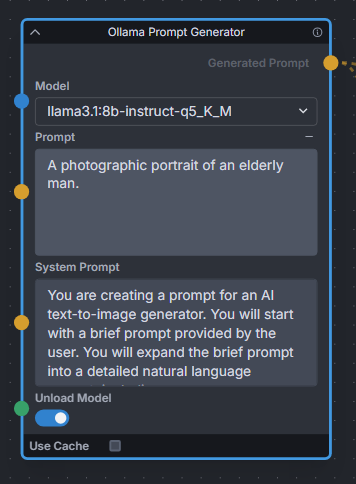
|
||||
|
||||
--------------------------------
|
||||
### One Button Prompt
|
||||
|
||||
<img src="https://github.com/AIrjen/OneButtonPrompt_X_InvokeAI/blob/main/images/background.png" width="800" />
|
||||
<img src="https://raw.githubusercontent.com/AIrjen/OneButtonPrompt_X_InvokeAI/refs/heads/main/images/background.png" width="800" />
|
||||
|
||||
**Description:** an extensive suite of auto prompt generation and prompt helper nodes based on extensive logic. Get creative with the best prompt generator in the world.
|
||||
|
||||
@@ -403,7 +430,7 @@ The main node generates interesting prompts based on a set of parameters. There
|
||||
|
||||
**Nodes:**
|
||||
|
||||
<img src="https://github.com/AIrjen/OneButtonPrompt_X_InvokeAI/blob/main/images/OBP_nodes_invokeai.png" width="800" />
|
||||
<img src="https://raw.githubusercontent.com/AIrjen/OneButtonPrompt_X_InvokeAI/refs/heads/main/images/OBP_nodes_invokeai.png" width="800" />
|
||||
|
||||
--------------------------------
|
||||
### Oobabooga
|
||||
@@ -456,7 +483,7 @@ See full docs here: https://github.com/skunkworxdark/Prompt-tools-nodes/edit/mai
|
||||
|
||||
**Workflow Examples**
|
||||
|
||||
<img src="https://github.com/skunkworxdark/prompt-tools/blob/main/images/CSVToIndexStringNode.png" width="300" />
|
||||
<img src="https://raw.githubusercontent.com/skunkworxdark/prompt-tools/refs/heads/main/images/CSVToIndexStringNode.png"/>
|
||||
|
||||
--------------------------------
|
||||
### Remote Image
|
||||
@@ -500,6 +527,16 @@ View:
|
||||
|
||||
<img src="https://github.com/Ar7ific1al/InvokeAI_nodes_retroize/assets/2306586/de8b4fa6-324c-4c2d-b36c-297600c73974" width="500" />
|
||||
|
||||
--------------------------------
|
||||
### Stereogram Nodes
|
||||
|
||||
**Description:** A set of custom nodes for InvokeAI to create cross-view or parallel-view stereograms. Stereograms are 2D images that, when viewed properly, reveal a 3D scene. Check out [r/crossview](https://www.reddit.com/r/CrossView/) for tutorials.
|
||||
|
||||
**Node Link:** https://github.com/simonfuhrmann/invokeai-stereo
|
||||
|
||||
**Example Workflow and Output**
|
||||
</br><img src="https://raw.githubusercontent.com/simonfuhrmann/invokeai-stereo/refs/heads/main/docs/example_promo_03.jpg" width="600" />
|
||||
|
||||
--------------------------------
|
||||
### Simple Skin Detection
|
||||
|
||||
@@ -594,7 +631,7 @@ See full docs here: https://github.com/skunkworxdark/XYGrid_nodes/edit/main/READ
|
||||
|
||||
**Output Examples**
|
||||
|
||||
<img src="https://github.com/skunkworxdark/XYGrid_nodes/blob/main/images/collage.png" width="300" />
|
||||
<img src="https://raw.githubusercontent.com/skunkworxdark/XYGrid_nodes/refs/heads/main/images/collage.png" />
|
||||
|
||||
|
||||
--------------------------------
|
||||
|
||||
@@ -99,7 +99,6 @@ their descriptions.
|
||||
| Scale Latents | Scales latents by a given factor. |
|
||||
| Segment Anything Processor | Applies segment anything processing to image |
|
||||
| Show Image | Displays a provided image, and passes it forward in the pipeline. |
|
||||
| Step Param Easing | Experimental per-step parameter easing for denoising steps |
|
||||
| String Primitive Collection | A collection of string primitive values |
|
||||
| String Primitive | A string primitive value |
|
||||
| Subtract Integers | Subtracts two numbers |
|
||||
|
||||
6
flake.lock
generated
6
flake.lock
generated
@@ -2,11 +2,11 @@
|
||||
"nodes": {
|
||||
"nixpkgs": {
|
||||
"locked": {
|
||||
"lastModified": 1690630721,
|
||||
"narHash": "sha256-Y04onHyBQT4Erfr2fc82dbJTfXGYrf4V0ysLUYnPOP8=",
|
||||
"lastModified": 1727955264,
|
||||
"narHash": "sha256-lrd+7mmb5NauRoMa8+J1jFKYVa+rc8aq2qc9+CxPDKc=",
|
||||
"owner": "NixOS",
|
||||
"repo": "nixpkgs",
|
||||
"rev": "d2b52322f35597c62abf56de91b0236746b2a03d",
|
||||
"rev": "71cd616696bd199ef18de62524f3df3ffe8b9333",
|
||||
"type": "github"
|
||||
},
|
||||
"original": {
|
||||
|
||||
@@ -34,7 +34,7 @@
|
||||
cudaPackages.cudnn
|
||||
cudaPackages.cuda_nvrtc
|
||||
cudatoolkit
|
||||
pkgconfig
|
||||
pkg-config
|
||||
libconfig
|
||||
cmake
|
||||
blas
|
||||
@@ -66,7 +66,7 @@
|
||||
black
|
||||
|
||||
# Frontend.
|
||||
yarn
|
||||
pnpm_8
|
||||
nodejs
|
||||
];
|
||||
LD_LIBRARY_PATH = pkgs.lib.makeLibraryPath buildInputs;
|
||||
|
||||
@@ -12,7 +12,7 @@ MINIMUM_PYTHON_VERSION=3.10.0
|
||||
MAXIMUM_PYTHON_VERSION=3.11.100
|
||||
PYTHON=""
|
||||
for candidate in python3.11 python3.10 python3 python ; do
|
||||
if ppath=`which $candidate`; then
|
||||
if ppath=`which $candidate 2>/dev/null`; then
|
||||
# when using `pyenv`, the executable for an inactive Python version will exist but will not be operational
|
||||
# we check that this found executable can actually run
|
||||
if [ $($candidate --version &>/dev/null; echo ${PIPESTATUS}) -gt 0 ]; then continue; fi
|
||||
@@ -30,10 +30,11 @@ done
|
||||
if [ -z "$PYTHON" ]; then
|
||||
echo "A suitable Python interpreter could not be found"
|
||||
echo "Please install Python $MINIMUM_PYTHON_VERSION or higher (maximum $MAXIMUM_PYTHON_VERSION) before running this script. See instructions at $INSTRUCTIONS for help."
|
||||
echo "For the best user experience we suggest enlarging or maximizing this window now."
|
||||
read -p "Press any key to exit"
|
||||
exit -1
|
||||
fi
|
||||
|
||||
echo "For the best user experience we suggest enlarging or maximizing this window now."
|
||||
|
||||
exec $PYTHON ./lib/main.py ${@}
|
||||
read -p "Press any key to exit"
|
||||
|
||||
@@ -245,6 +245,9 @@ class InvokeAiInstance:
|
||||
|
||||
pip = local[self.pip]
|
||||
|
||||
# Uninstall xformers if it is present; the correct version of it will be reinstalled if needed
|
||||
_ = pip["uninstall", "-yqq", "xformers"] & FG
|
||||
|
||||
pipeline = pip[
|
||||
"install",
|
||||
"--require-virtualenv",
|
||||
@@ -282,12 +285,6 @@ class InvokeAiInstance:
|
||||
shutil.copy(src, dest)
|
||||
os.chmod(dest, 0o0755)
|
||||
|
||||
def update(self):
|
||||
pass
|
||||
|
||||
def remove(self):
|
||||
pass
|
||||
|
||||
|
||||
### Utility functions ###
|
||||
|
||||
@@ -402,7 +399,7 @@ def get_torch_source() -> Tuple[str | None, str | None]:
|
||||
:rtype: list
|
||||
"""
|
||||
|
||||
from messages import select_gpu
|
||||
from messages import GpuType, select_gpu
|
||||
|
||||
# device can be one of: "cuda", "rocm", "cpu", "cuda_and_dml, autodetect"
|
||||
device = select_gpu()
|
||||
@@ -412,16 +409,22 @@ def get_torch_source() -> Tuple[str | None, str | None]:
|
||||
url = None
|
||||
optional_modules: str | None = None
|
||||
if OS == "Linux":
|
||||
if device.value == "rocm":
|
||||
url = "https://download.pytorch.org/whl/rocm5.6"
|
||||
elif device.value == "cpu":
|
||||
if device == GpuType.ROCM:
|
||||
url = "https://download.pytorch.org/whl/rocm6.1"
|
||||
elif device == GpuType.CPU:
|
||||
url = "https://download.pytorch.org/whl/cpu"
|
||||
elif device.value == "cuda":
|
||||
# CUDA uses the default PyPi index
|
||||
elif device == GpuType.CUDA:
|
||||
url = "https://download.pytorch.org/whl/cu124"
|
||||
optional_modules = "[onnx-cuda]"
|
||||
elif device == GpuType.CUDA_WITH_XFORMERS:
|
||||
url = "https://download.pytorch.org/whl/cu124"
|
||||
optional_modules = "[xformers,onnx-cuda]"
|
||||
elif OS == "Windows":
|
||||
if device.value == "cuda":
|
||||
url = "https://download.pytorch.org/whl/cu121"
|
||||
if device == GpuType.CUDA:
|
||||
url = "https://download.pytorch.org/whl/cu124"
|
||||
optional_modules = "[onnx-cuda]"
|
||||
elif device == GpuType.CUDA_WITH_XFORMERS:
|
||||
url = "https://download.pytorch.org/whl/cu124"
|
||||
optional_modules = "[xformers,onnx-cuda]"
|
||||
elif device.value == "cpu":
|
||||
# CPU uses the default PyPi index, no optional modules
|
||||
|
||||
@@ -206,6 +206,7 @@ def dest_path(dest: Optional[str | Path] = None) -> Path | None:
|
||||
|
||||
|
||||
class GpuType(Enum):
|
||||
CUDA_WITH_XFORMERS = "xformers"
|
||||
CUDA = "cuda"
|
||||
ROCM = "rocm"
|
||||
CPU = "cpu"
|
||||
@@ -221,11 +222,15 @@ def select_gpu() -> GpuType:
|
||||
return GpuType.CPU
|
||||
|
||||
nvidia = (
|
||||
"an [gold1 b]NVIDIA[/] GPU (using CUDA™)",
|
||||
"an [gold1 b]NVIDIA[/] RTX 3060 or newer GPU using CUDA",
|
||||
GpuType.CUDA,
|
||||
)
|
||||
vintage_nvidia = (
|
||||
"an [gold1 b]NVIDIA[/] RTX 20xx or older GPU using CUDA+xFormers",
|
||||
GpuType.CUDA_WITH_XFORMERS,
|
||||
)
|
||||
amd = (
|
||||
"an [gold1 b]AMD[/] GPU (using ROCm™)",
|
||||
"an [gold1 b]AMD[/] GPU using ROCm",
|
||||
GpuType.ROCM,
|
||||
)
|
||||
cpu = (
|
||||
@@ -235,14 +240,13 @@ def select_gpu() -> GpuType:
|
||||
|
||||
options = []
|
||||
if OS == "Windows":
|
||||
options = [nvidia, cpu]
|
||||
options = [nvidia, vintage_nvidia, cpu]
|
||||
if OS == "Linux":
|
||||
options = [nvidia, amd, cpu]
|
||||
options = [nvidia, vintage_nvidia, amd, cpu]
|
||||
elif OS == "Darwin":
|
||||
options = [cpu]
|
||||
|
||||
if len(options) == 1:
|
||||
print(f'Your platform [gold1]{OS}-{ARCH}[/] only supports the "{options[0][1]}" driver. Proceeding with that.')
|
||||
return options[0][1]
|
||||
|
||||
options = {str(i): opt for i, opt in enumerate(options, 1)}
|
||||
@@ -255,7 +259,7 @@ def select_gpu() -> GpuType:
|
||||
[
|
||||
f"Detected the [gold1]{OS}-{ARCH}[/] platform",
|
||||
"",
|
||||
"See [deep_sky_blue1]https://invoke-ai.github.io/InvokeAI/#system[/] to ensure your system meets the minimum requirements.",
|
||||
"See [deep_sky_blue1]https://invoke-ai.github.io/InvokeAI/installation/requirements/[/] to ensure your system meets the minimum requirements.",
|
||||
"",
|
||||
"[red3]🠶[/] [b]Your GPU drivers must be correctly installed before using InvokeAI![/] [red3]🠴[/]",
|
||||
]
|
||||
|
||||
@@ -68,7 +68,7 @@ do_line_input() {
|
||||
printf "2: Open the developer console\n"
|
||||
printf "3: Command-line help\n"
|
||||
printf "Q: Quit\n\n"
|
||||
printf "To update, download and run the installer from https://github.com/invoke-ai/InvokeAI/releases/latest.\n\n"
|
||||
printf "To update, download and run the installer from https://github.com/invoke-ai/InvokeAI/releases/latest\n\n"
|
||||
read -p "Please enter 1-4, Q: [1] " yn
|
||||
choice=${yn:='1'}
|
||||
do_choice $choice
|
||||
|
||||
@@ -40,6 +40,8 @@ class AppVersion(BaseModel):
|
||||
|
||||
version: str = Field(description="App version")
|
||||
|
||||
highlights: Optional[list[str]] = Field(default=None, description="Highlights of release")
|
||||
|
||||
|
||||
class AppDependencyVersions(BaseModel):
|
||||
"""App depencency Versions Response"""
|
||||
|
||||
@@ -5,9 +5,10 @@ from fastapi.routing import APIRouter
|
||||
from pydantic import BaseModel, Field
|
||||
|
||||
from invokeai.app.api.dependencies import ApiDependencies
|
||||
from invokeai.app.services.board_records.board_records_common import BoardChanges
|
||||
from invokeai.app.services.board_records.board_records_common import BoardChanges, BoardRecordOrderBy
|
||||
from invokeai.app.services.boards.boards_common import BoardDTO
|
||||
from invokeai.app.services.shared.pagination import OffsetPaginatedResults
|
||||
from invokeai.app.services.shared.sqlite.sqlite_common import SQLiteDirection
|
||||
|
||||
boards_router = APIRouter(prefix="/v1/boards", tags=["boards"])
|
||||
|
||||
@@ -30,7 +31,7 @@ class DeleteBoardResult(BaseModel):
|
||||
response_model=BoardDTO,
|
||||
)
|
||||
async def create_board(
|
||||
board_name: str = Query(description="The name of the board to create"),
|
||||
board_name: str = Query(description="The name of the board to create", max_length=300),
|
||||
is_private: bool = Query(default=False, description="Whether the board is private"),
|
||||
) -> BoardDTO:
|
||||
"""Creates a board"""
|
||||
@@ -115,6 +116,8 @@ async def delete_board(
|
||||
response_model=Union[OffsetPaginatedResults[BoardDTO], list[BoardDTO]],
|
||||
)
|
||||
async def list_boards(
|
||||
order_by: BoardRecordOrderBy = Query(default=BoardRecordOrderBy.CreatedAt, description="The attribute to order by"),
|
||||
direction: SQLiteDirection = Query(default=SQLiteDirection.Descending, description="The direction to order by"),
|
||||
all: Optional[bool] = Query(default=None, description="Whether to list all boards"),
|
||||
offset: Optional[int] = Query(default=None, description="The page offset"),
|
||||
limit: Optional[int] = Query(default=None, description="The number of boards per page"),
|
||||
@@ -122,9 +125,9 @@ async def list_boards(
|
||||
) -> Union[OffsetPaginatedResults[BoardDTO], list[BoardDTO]]:
|
||||
"""Gets a list of boards"""
|
||||
if all:
|
||||
return ApiDependencies.invoker.services.boards.get_all(include_archived)
|
||||
return ApiDependencies.invoker.services.boards.get_all(order_by, direction, include_archived)
|
||||
elif offset is not None and limit is not None:
|
||||
return ApiDependencies.invoker.services.boards.get_many(offset, limit, include_archived)
|
||||
return ApiDependencies.invoker.services.boards.get_many(order_by, direction, offset, limit, include_archived)
|
||||
else:
|
||||
raise HTTPException(
|
||||
status_code=400,
|
||||
|
||||
@@ -1,15 +1,16 @@
|
||||
# Copyright (c) 2023 Lincoln D. Stein
|
||||
"""FastAPI route for model configuration records."""
|
||||
|
||||
import contextlib
|
||||
import io
|
||||
import pathlib
|
||||
import shutil
|
||||
import traceback
|
||||
from copy import deepcopy
|
||||
from enum import Enum
|
||||
from tempfile import TemporaryDirectory
|
||||
from typing import List, Optional, Type
|
||||
|
||||
import huggingface_hub
|
||||
from fastapi import Body, Path, Query, Response, UploadFile
|
||||
from fastapi.responses import FileResponse, HTMLResponse
|
||||
from fastapi.routing import APIRouter
|
||||
@@ -19,7 +20,6 @@ from starlette.exceptions import HTTPException
|
||||
from typing_extensions import Annotated
|
||||
|
||||
from invokeai.app.api.dependencies import ApiDependencies
|
||||
from invokeai.app.services.config import get_config
|
||||
from invokeai.app.services.model_images.model_images_common import ModelImageFileNotFoundException
|
||||
from invokeai.app.services.model_install.model_install_common import ModelInstallJob
|
||||
from invokeai.app.services.model_records import (
|
||||
@@ -27,6 +27,7 @@ from invokeai.app.services.model_records import (
|
||||
ModelRecordChanges,
|
||||
UnknownModelException,
|
||||
)
|
||||
from invokeai.app.util.suppress_output import SuppressOutput
|
||||
from invokeai.backend.model_manager.config import (
|
||||
AnyModelConfig,
|
||||
BaseModelType,
|
||||
@@ -34,11 +35,16 @@ from invokeai.backend.model_manager.config import (
|
||||
ModelFormat,
|
||||
ModelType,
|
||||
)
|
||||
from invokeai.backend.model_manager.load.model_cache.model_cache_base import CacheStats
|
||||
from invokeai.backend.model_manager.load.model_cache.cache_stats import CacheStats
|
||||
from invokeai.backend.model_manager.metadata.fetch.huggingface import HuggingFaceMetadataFetch
|
||||
from invokeai.backend.model_manager.metadata.metadata_base import ModelMetadataWithFiles, UnknownMetadataException
|
||||
from invokeai.backend.model_manager.search import ModelSearch
|
||||
from invokeai.backend.model_manager.starter_models import STARTER_MODELS, StarterModel, StarterModelWithoutDependencies
|
||||
from invokeai.backend.model_manager.starter_models import (
|
||||
STARTER_BUNDLES,
|
||||
STARTER_MODELS,
|
||||
StarterModel,
|
||||
StarterModelWithoutDependencies,
|
||||
)
|
||||
|
||||
model_manager_router = APIRouter(prefix="/v2/models", tags=["model_manager"])
|
||||
|
||||
@@ -792,90 +798,52 @@ async def convert_model(
|
||||
return new_config
|
||||
|
||||
|
||||
@model_manager_router.get("/starter_models", operation_id="get_starter_models", response_model=list[StarterModel])
|
||||
async def get_starter_models() -> list[StarterModel]:
|
||||
class StarterModelResponse(BaseModel):
|
||||
starter_models: list[StarterModel]
|
||||
starter_bundles: dict[str, list[StarterModel]]
|
||||
|
||||
|
||||
def get_is_installed(
|
||||
starter_model: StarterModel | StarterModelWithoutDependencies, installed_models: list[AnyModelConfig]
|
||||
) -> bool:
|
||||
for model in installed_models:
|
||||
if model.source == starter_model.source:
|
||||
return True
|
||||
if (
|
||||
(model.name == starter_model.name or model.name in starter_model.previous_names)
|
||||
and model.base == starter_model.base
|
||||
and model.type == starter_model.type
|
||||
):
|
||||
return True
|
||||
return False
|
||||
|
||||
|
||||
@model_manager_router.get("/starter_models", operation_id="get_starter_models", response_model=StarterModelResponse)
|
||||
async def get_starter_models() -> StarterModelResponse:
|
||||
installed_models = ApiDependencies.invoker.services.model_manager.store.search_by_attr()
|
||||
installed_model_sources = {m.source for m in installed_models}
|
||||
starter_models = deepcopy(STARTER_MODELS)
|
||||
starter_bundles = deepcopy(STARTER_BUNDLES)
|
||||
for model in starter_models:
|
||||
if model.source in installed_model_sources:
|
||||
model.is_installed = True
|
||||
model.is_installed = get_is_installed(model, installed_models)
|
||||
# Remove already-installed dependencies
|
||||
missing_deps: list[StarterModelWithoutDependencies] = []
|
||||
|
||||
for dep in model.dependencies or []:
|
||||
if dep.source not in installed_model_sources:
|
||||
if not get_is_installed(dep, installed_models):
|
||||
missing_deps.append(dep)
|
||||
model.dependencies = missing_deps
|
||||
|
||||
return starter_models
|
||||
for bundle in starter_bundles.values():
|
||||
for model in bundle:
|
||||
model.is_installed = get_is_installed(model, installed_models)
|
||||
# Remove already-installed dependencies
|
||||
missing_deps: list[StarterModelWithoutDependencies] = []
|
||||
for dep in model.dependencies or []:
|
||||
if not get_is_installed(dep, installed_models):
|
||||
missing_deps.append(dep)
|
||||
model.dependencies = missing_deps
|
||||
|
||||
|
||||
@model_manager_router.get(
|
||||
"/model_cache",
|
||||
operation_id="get_cache_size",
|
||||
response_model=float,
|
||||
summary="Get maximum size of model manager RAM or VRAM cache.",
|
||||
)
|
||||
async def get_cache_size(cache_type: CacheType = Query(description="The cache type", default=CacheType.RAM)) -> float:
|
||||
"""Return the current RAM or VRAM cache size setting (in GB)."""
|
||||
cache = ApiDependencies.invoker.services.model_manager.load.ram_cache
|
||||
value = 0.0
|
||||
if cache_type == CacheType.RAM:
|
||||
value = cache.max_cache_size
|
||||
elif cache_type == CacheType.VRAM:
|
||||
value = cache.max_vram_cache_size
|
||||
return value
|
||||
|
||||
|
||||
@model_manager_router.put(
|
||||
"/model_cache",
|
||||
operation_id="set_cache_size",
|
||||
response_model=float,
|
||||
summary="Set maximum size of model manager RAM or VRAM cache, optionally writing new value out to invokeai.yaml config file.",
|
||||
)
|
||||
async def set_cache_size(
|
||||
value: float = Query(description="The new value for the maximum cache size"),
|
||||
cache_type: CacheType = Query(description="The cache type", default=CacheType.RAM),
|
||||
persist: bool = Query(description="Write new value out to invokeai.yaml", default=False),
|
||||
) -> float:
|
||||
"""Set the current RAM or VRAM cache size setting (in GB). ."""
|
||||
cache = ApiDependencies.invoker.services.model_manager.load.ram_cache
|
||||
app_config = get_config()
|
||||
# Record initial state.
|
||||
vram_old = app_config.vram
|
||||
ram_old = app_config.ram
|
||||
|
||||
# Prepare target state.
|
||||
vram_new = vram_old
|
||||
ram_new = ram_old
|
||||
if cache_type == CacheType.RAM:
|
||||
ram_new = value
|
||||
elif cache_type == CacheType.VRAM:
|
||||
vram_new = value
|
||||
else:
|
||||
raise ValueError(f"Unexpected {cache_type=}.")
|
||||
|
||||
config_path = app_config.config_file_path
|
||||
new_config_path = config_path.with_suffix(".yaml.new")
|
||||
|
||||
try:
|
||||
# Try to apply the target state.
|
||||
cache.max_vram_cache_size = vram_new
|
||||
cache.max_cache_size = ram_new
|
||||
app_config.ram = ram_new
|
||||
app_config.vram = vram_new
|
||||
if persist:
|
||||
app_config.write_file(new_config_path)
|
||||
shutil.move(new_config_path, config_path)
|
||||
except Exception as e:
|
||||
# If there was a failure, restore the initial state.
|
||||
cache.max_cache_size = ram_old
|
||||
cache.max_vram_cache_size = vram_old
|
||||
app_config.ram = ram_old
|
||||
app_config.vram = vram_old
|
||||
|
||||
raise RuntimeError("Failed to update cache size") from e
|
||||
return value
|
||||
return StarterModelResponse(starter_models=starter_models, starter_bundles=starter_bundles)
|
||||
|
||||
|
||||
@model_manager_router.get(
|
||||
@@ -888,3 +856,51 @@ async def get_stats() -> Optional[CacheStats]:
|
||||
"""Return performance statistics on the model manager's RAM cache. Will return null if no models have been loaded."""
|
||||
|
||||
return ApiDependencies.invoker.services.model_manager.load.ram_cache.stats
|
||||
|
||||
|
||||
class HFTokenStatus(str, Enum):
|
||||
VALID = "valid"
|
||||
INVALID = "invalid"
|
||||
UNKNOWN = "unknown"
|
||||
|
||||
|
||||
class HFTokenHelper:
|
||||
@classmethod
|
||||
def get_status(cls) -> HFTokenStatus:
|
||||
try:
|
||||
if huggingface_hub.get_token_permission(huggingface_hub.get_token()):
|
||||
# Valid token!
|
||||
return HFTokenStatus.VALID
|
||||
# No token set
|
||||
return HFTokenStatus.INVALID
|
||||
except Exception:
|
||||
return HFTokenStatus.UNKNOWN
|
||||
|
||||
@classmethod
|
||||
def set_token(cls, token: str) -> HFTokenStatus:
|
||||
with SuppressOutput(), contextlib.suppress(Exception):
|
||||
huggingface_hub.login(token=token, add_to_git_credential=False)
|
||||
return cls.get_status()
|
||||
|
||||
|
||||
@model_manager_router.get("/hf_login", operation_id="get_hf_login_status", response_model=HFTokenStatus)
|
||||
async def get_hf_login_status() -> HFTokenStatus:
|
||||
token_status = HFTokenHelper.get_status()
|
||||
|
||||
if token_status is HFTokenStatus.UNKNOWN:
|
||||
ApiDependencies.invoker.services.logger.warning("Unable to verify HF token")
|
||||
|
||||
return token_status
|
||||
|
||||
|
||||
@model_manager_router.post("/hf_login", operation_id="do_hf_login", response_model=HFTokenStatus)
|
||||
async def do_hf_login(
|
||||
token: str = Body(description="Hugging Face token to use for login", embed=True),
|
||||
) -> HFTokenStatus:
|
||||
HFTokenHelper.set_token(token)
|
||||
token_status = HFTokenHelper.get_status()
|
||||
|
||||
if token_status is HFTokenStatus.UNKNOWN:
|
||||
ApiDependencies.invoker.services.logger.warning("Unable to verify HF token")
|
||||
|
||||
return token_status
|
||||
|
||||
@@ -110,7 +110,7 @@ async def cancel_by_batch_ids(
|
||||
@session_queue_router.put(
|
||||
"/{queue_id}/cancel_by_destination",
|
||||
operation_id="cancel_by_destination",
|
||||
responses={200: {"model": CancelByBatchIDsResult}},
|
||||
responses={200: {"model": CancelByDestinationResult}},
|
||||
)
|
||||
async def cancel_by_destination(
|
||||
queue_id: str = Path(description="The queue id to perform this operation on"),
|
||||
|
||||
@@ -83,7 +83,7 @@ async def create_workflow(
|
||||
)
|
||||
async def list_workflows(
|
||||
page: int = Query(default=0, description="The page to get"),
|
||||
per_page: int = Query(default=10, description="The number of workflows per page"),
|
||||
per_page: Optional[int] = Query(default=None, description="The number of workflows per page"),
|
||||
order_by: WorkflowRecordOrderBy = Query(
|
||||
default=WorkflowRecordOrderBy.Name, description="The attribute to order by"
|
||||
),
|
||||
@@ -93,5 +93,5 @@ async def list_workflows(
|
||||
) -> PaginatedResults[WorkflowRecordListItemDTO]:
|
||||
"""Gets a page of workflows"""
|
||||
return ApiDependencies.invoker.services.workflow_records.get_many(
|
||||
page=page, per_page=per_page, order_by=order_by, direction=direction, query=query, category=category
|
||||
order_by=order_by, direction=direction, page=page, per_page=per_page, query=query, category=category
|
||||
)
|
||||
|
||||
@@ -59,11 +59,32 @@ logger.info(f"Using torch device: {torch_device_name}")
|
||||
|
||||
loop = asyncio.new_event_loop()
|
||||
|
||||
# We may change the port if the default is in use, this global variable is used to store the port so that we can log
|
||||
# the correct port when the server starts in the lifespan handler.
|
||||
port = app_config.port
|
||||
|
||||
|
||||
@asynccontextmanager
|
||||
async def lifespan(app: FastAPI):
|
||||
# Add startup event to load dependencies
|
||||
ApiDependencies.initialize(config=app_config, event_handler_id=event_handler_id, loop=loop, logger=logger)
|
||||
|
||||
# Log the server address when it starts - in case the network log level is not high enough to see the startup log
|
||||
proto = "https" if app_config.ssl_certfile else "http"
|
||||
msg = f"Invoke running on {proto}://{app_config.host}:{port} (Press CTRL+C to quit)"
|
||||
|
||||
# Logging this way ignores the logger's log level and _always_ logs the message
|
||||
record = logger.makeRecord(
|
||||
name=logger.name,
|
||||
level=logging.INFO,
|
||||
fn="",
|
||||
lno=0,
|
||||
msg=msg,
|
||||
args=(),
|
||||
exc_info=None,
|
||||
)
|
||||
logger.handle(record)
|
||||
|
||||
yield
|
||||
# Shut down threads
|
||||
ApiDependencies.shutdown()
|
||||
@@ -206,6 +227,7 @@ def invoke_api() -> None:
|
||||
else:
|
||||
jurigged.watch(logger=InvokeAILogger.get_logger(name="jurigged").info)
|
||||
|
||||
global port
|
||||
port = find_port(app_config.port)
|
||||
if port != app_config.port:
|
||||
logger.warn(f"Port {app_config.port} in use, using port {port}")
|
||||
@@ -217,18 +239,17 @@ def invoke_api() -> None:
|
||||
host=app_config.host,
|
||||
port=port,
|
||||
loop="asyncio",
|
||||
log_level=app_config.log_level,
|
||||
log_level=app_config.log_level_network,
|
||||
ssl_certfile=app_config.ssl_certfile,
|
||||
ssl_keyfile=app_config.ssl_keyfile,
|
||||
)
|
||||
server = uvicorn.Server(config)
|
||||
|
||||
# replace uvicorn's loggers with InvokeAI's for consistent appearance
|
||||
for logname in ["uvicorn.access", "uvicorn"]:
|
||||
log = InvokeAILogger.get_logger(logname)
|
||||
log.handlers.clear()
|
||||
for ch in logger.handlers:
|
||||
log.addHandler(ch)
|
||||
uvicorn_logger = InvokeAILogger.get_logger("uvicorn")
|
||||
uvicorn_logger.handlers.clear()
|
||||
for hdlr in logger.handlers:
|
||||
uvicorn_logger.addHandler(hdlr)
|
||||
|
||||
loop.run_until_complete(server.serve())
|
||||
|
||||
|
||||
@@ -15,6 +15,11 @@ custom_nodes_readme_path = str(custom_nodes_path / "README.md")
|
||||
shutil.copy(Path(__file__).parent / "custom_nodes/init.py", custom_nodes_init_path)
|
||||
shutil.copy(Path(__file__).parent / "custom_nodes/README.md", custom_nodes_readme_path)
|
||||
|
||||
# set the same permissions as the destination directory, in case our source is read-only,
|
||||
# so that the files are user-writable
|
||||
for p in custom_nodes_path.glob("**/*"):
|
||||
p.chmod(custom_nodes_path.stat().st_mode)
|
||||
|
||||
# Import custom nodes, see https://docs.python.org/3/library/importlib.html#importing-programmatically
|
||||
spec = spec_from_file_location("custom_nodes", custom_nodes_init_path)
|
||||
if spec is None or spec.loader is None:
|
||||
|
||||
@@ -4,6 +4,7 @@ from __future__ import annotations
|
||||
|
||||
import inspect
|
||||
import re
|
||||
import sys
|
||||
import warnings
|
||||
from abc import ABC, abstractmethod
|
||||
from enum import Enum
|
||||
@@ -62,6 +63,7 @@ class Classification(str, Enum, metaclass=MetaEnum):
|
||||
- `Prototype`: The invocation is not yet stable and may be removed from the application at any time. Workflows built around this invocation may break, and we are *not* committed to supporting this invocation.
|
||||
- `Deprecated`: The invocation is deprecated and may be removed in a future version.
|
||||
- `Internal`: The invocation is not intended for use by end-users. It may be changed or removed at any time, but is exposed for users to play with.
|
||||
- `Special`: The invocation is a special case and does not fit into any of the other classifications.
|
||||
"""
|
||||
|
||||
Stable = "stable"
|
||||
@@ -69,6 +71,7 @@ class Classification(str, Enum, metaclass=MetaEnum):
|
||||
Prototype = "prototype"
|
||||
Deprecated = "deprecated"
|
||||
Internal = "internal"
|
||||
Special = "special"
|
||||
|
||||
|
||||
class UIConfigBase(BaseModel):
|
||||
@@ -192,12 +195,19 @@ class BaseInvocation(ABC, BaseModel):
|
||||
"""Gets a pydantc TypeAdapter for the union of all invocation types."""
|
||||
if not cls._typeadapter or cls._typeadapter_needs_update:
|
||||
AnyInvocation = TypeAliasType(
|
||||
"AnyInvocation", Annotated[Union[tuple(cls._invocation_classes)], Field(discriminator="type")]
|
||||
"AnyInvocation", Annotated[Union[tuple(cls.get_invocations())], Field(discriminator="type")]
|
||||
)
|
||||
cls._typeadapter = TypeAdapter(AnyInvocation)
|
||||
cls._typeadapter_needs_update = False
|
||||
return cls._typeadapter
|
||||
|
||||
@classmethod
|
||||
def invalidate_typeadapter(cls) -> None:
|
||||
"""Invalidates the typeadapter, forcing it to be rebuilt on next access. If the invocation allowlist or
|
||||
denylist is changed, this should be called to ensure the typeadapter is updated and validation respects
|
||||
the updated allowlist and denylist."""
|
||||
cls._typeadapter_needs_update = True
|
||||
|
||||
@classmethod
|
||||
def get_invocations(cls) -> Iterable[BaseInvocation]:
|
||||
"""Gets all invocations, respecting the allowlist and denylist."""
|
||||
@@ -479,6 +489,26 @@ def invocation(
|
||||
title="type", default=invocation_type, json_schema_extra={"field_kind": FieldKind.NodeAttribute}
|
||||
)
|
||||
|
||||
# Validate the `invoke()` method is implemented
|
||||
if "invoke" in cls.__abstractmethods__:
|
||||
raise ValueError(f'Invocation "{invocation_type}" must implement the "invoke" method')
|
||||
|
||||
# And validate that `invoke()` returns a subclass of `BaseInvocationOutput
|
||||
invoke_return_annotation = signature(cls.invoke).return_annotation
|
||||
|
||||
try:
|
||||
# TODO(psyche): If `invoke()` is not defined, `return_annotation` ends up as the string "BaseInvocationOutput"
|
||||
# instead of the class `BaseInvocationOutput`. This may be a pydantic bug: https://github.com/pydantic/pydantic/issues/7978
|
||||
if isinstance(invoke_return_annotation, str):
|
||||
invoke_return_annotation = getattr(sys.modules[cls.__module__], invoke_return_annotation)
|
||||
|
||||
assert invoke_return_annotation is not BaseInvocationOutput
|
||||
assert issubclass(invoke_return_annotation, BaseInvocationOutput)
|
||||
except Exception:
|
||||
raise ValueError(
|
||||
f'Invocation "{invocation_type}" must have a return annotation of a subclass of BaseInvocationOutput (got "{invoke_return_annotation}")'
|
||||
)
|
||||
|
||||
docstring = cls.__doc__
|
||||
cls = create_model(
|
||||
cls.__qualname__,
|
||||
|
||||
@@ -1,98 +1,120 @@
|
||||
from typing import Any, Union
|
||||
from typing import Optional, Union
|
||||
|
||||
import numpy as np
|
||||
import numpy.typing as npt
|
||||
import torch
|
||||
import torchvision.transforms as T
|
||||
from PIL import Image
|
||||
from torchvision.transforms.functional import resize as tv_resize
|
||||
|
||||
from invokeai.app.invocations.baseinvocation import BaseInvocation, invocation
|
||||
from invokeai.app.invocations.fields import FieldDescriptions, Input, InputField, LatentsField
|
||||
from invokeai.app.invocations.fields import FieldDescriptions, ImageField, Input, InputField, LatentsField
|
||||
from invokeai.app.invocations.primitives import LatentsOutput
|
||||
from invokeai.app.services.shared.invocation_context import InvocationContext
|
||||
from invokeai.backend.stable_diffusion.diffusers_pipeline import image_resized_to_grid_as_tensor
|
||||
from invokeai.backend.util.devices import TorchDevice
|
||||
|
||||
|
||||
def slerp(
|
||||
t: Union[float, np.ndarray],
|
||||
v0: Union[torch.Tensor, np.ndarray],
|
||||
v1: Union[torch.Tensor, np.ndarray],
|
||||
device: torch.device,
|
||||
DOT_THRESHOLD: float = 0.9995,
|
||||
):
|
||||
"""
|
||||
Spherical linear interpolation
|
||||
Args:
|
||||
t (float/np.ndarray): Float value between 0.0 and 1.0
|
||||
v0 (np.ndarray): Starting vector
|
||||
v1 (np.ndarray): Final vector
|
||||
DOT_THRESHOLD (float): Threshold for considering the two vectors as
|
||||
colineal. Not recommended to alter this.
|
||||
Returns:
|
||||
v2 (np.ndarray): Interpolation vector between v0 and v1
|
||||
"""
|
||||
inputs_are_torch = False
|
||||
if not isinstance(v0, np.ndarray):
|
||||
inputs_are_torch = True
|
||||
v0 = v0.detach().cpu().numpy()
|
||||
if not isinstance(v1, np.ndarray):
|
||||
inputs_are_torch = True
|
||||
v1 = v1.detach().cpu().numpy()
|
||||
|
||||
dot = np.sum(v0 * v1 / (np.linalg.norm(v0) * np.linalg.norm(v1)))
|
||||
if np.abs(dot) > DOT_THRESHOLD:
|
||||
v2 = (1 - t) * v0 + t * v1
|
||||
else:
|
||||
theta_0 = np.arccos(dot)
|
||||
sin_theta_0 = np.sin(theta_0)
|
||||
theta_t = theta_0 * t
|
||||
sin_theta_t = np.sin(theta_t)
|
||||
s0 = np.sin(theta_0 - theta_t) / sin_theta_0
|
||||
s1 = sin_theta_t / sin_theta_0
|
||||
v2 = s0 * v0 + s1 * v1
|
||||
|
||||
if inputs_are_torch:
|
||||
v2 = torch.from_numpy(v2).to(device)
|
||||
|
||||
return v2
|
||||
|
||||
|
||||
@invocation(
|
||||
"lblend",
|
||||
title="Blend Latents",
|
||||
tags=["latents", "blend"],
|
||||
tags=["latents", "blend", "mask"],
|
||||
category="latents",
|
||||
version="1.0.3",
|
||||
version="1.1.0",
|
||||
)
|
||||
class BlendLatentsInvocation(BaseInvocation):
|
||||
"""Blend two latents using a given alpha. Latents must have same size."""
|
||||
"""Blend two latents using a given alpha. If a mask is provided, the second latents will be masked before blending.
|
||||
Latents must have same size. Masking functionality added by @dwringer."""
|
||||
|
||||
latents_a: LatentsField = InputField(
|
||||
description=FieldDescriptions.latents,
|
||||
input=Input.Connection,
|
||||
)
|
||||
latents_b: LatentsField = InputField(
|
||||
description=FieldDescriptions.latents,
|
||||
input=Input.Connection,
|
||||
)
|
||||
alpha: float = InputField(default=0.5, description=FieldDescriptions.blend_alpha)
|
||||
latents_a: LatentsField = InputField(description=FieldDescriptions.latents, input=Input.Connection)
|
||||
latents_b: LatentsField = InputField(description=FieldDescriptions.latents, input=Input.Connection)
|
||||
mask: Optional[ImageField] = InputField(default=None, description="Mask for blending in latents B")
|
||||
alpha: float = InputField(ge=0, default=0.5, description=FieldDescriptions.blend_alpha)
|
||||
|
||||
def prep_mask_tensor(self, mask_image: Image.Image) -> torch.Tensor:
|
||||
if mask_image.mode != "L":
|
||||
mask_image = mask_image.convert("L")
|
||||
mask_tensor = image_resized_to_grid_as_tensor(mask_image, normalize=False)
|
||||
if mask_tensor.dim() == 3:
|
||||
mask_tensor = mask_tensor.unsqueeze(0)
|
||||
return mask_tensor
|
||||
|
||||
def replace_tensor_from_masked_tensor(
|
||||
self, tensor: torch.Tensor, other_tensor: torch.Tensor, mask_tensor: torch.Tensor
|
||||
):
|
||||
output = tensor.clone()
|
||||
mask_tensor = mask_tensor.expand(output.shape)
|
||||
if output.dtype != torch.float16:
|
||||
output = torch.add(output, mask_tensor * torch.sub(other_tensor, tensor))
|
||||
else:
|
||||
output = torch.add(output, mask_tensor.half() * torch.sub(other_tensor, tensor))
|
||||
return output
|
||||
|
||||
def invoke(self, context: InvocationContext) -> LatentsOutput:
|
||||
latents_a = context.tensors.load(self.latents_a.latents_name)
|
||||
latents_b = context.tensors.load(self.latents_b.latents_name)
|
||||
if self.mask is None:
|
||||
mask_tensor = torch.zeros(latents_a.shape[-2:])
|
||||
else:
|
||||
mask_tensor = self.prep_mask_tensor(context.images.get_pil(self.mask.image_name))
|
||||
mask_tensor = tv_resize(mask_tensor, latents_a.shape[-2:], T.InterpolationMode.BILINEAR, antialias=False)
|
||||
|
||||
latents_b = self.replace_tensor_from_masked_tensor(latents_b, latents_a, mask_tensor)
|
||||
|
||||
if latents_a.shape != latents_b.shape:
|
||||
raise Exception("Latents to blend must be the same size.")
|
||||
raise ValueError("Latents to blend must be the same size.")
|
||||
|
||||
device = TorchDevice.choose_torch_device()
|
||||
|
||||
def slerp(
|
||||
t: Union[float, npt.NDArray[Any]], # FIXME: maybe use np.float32 here?
|
||||
v0: Union[torch.Tensor, npt.NDArray[Any]],
|
||||
v1: Union[torch.Tensor, npt.NDArray[Any]],
|
||||
DOT_THRESHOLD: float = 0.9995,
|
||||
) -> Union[torch.Tensor, npt.NDArray[Any]]:
|
||||
"""
|
||||
Spherical linear interpolation
|
||||
Args:
|
||||
t (float/np.ndarray): Float value between 0.0 and 1.0
|
||||
v0 (np.ndarray): Starting vector
|
||||
v1 (np.ndarray): Final vector
|
||||
DOT_THRESHOLD (float): Threshold for considering the two vectors as
|
||||
colineal. Not recommended to alter this.
|
||||
Returns:
|
||||
v2 (np.ndarray): Interpolation vector between v0 and v1
|
||||
"""
|
||||
inputs_are_torch = False
|
||||
if not isinstance(v0, np.ndarray):
|
||||
inputs_are_torch = True
|
||||
v0 = v0.detach().cpu().numpy()
|
||||
if not isinstance(v1, np.ndarray):
|
||||
inputs_are_torch = True
|
||||
v1 = v1.detach().cpu().numpy()
|
||||
|
||||
dot = np.sum(v0 * v1 / (np.linalg.norm(v0) * np.linalg.norm(v1)))
|
||||
if np.abs(dot) > DOT_THRESHOLD:
|
||||
v2 = (1 - t) * v0 + t * v1
|
||||
else:
|
||||
theta_0 = np.arccos(dot)
|
||||
sin_theta_0 = np.sin(theta_0)
|
||||
theta_t = theta_0 * t
|
||||
sin_theta_t = np.sin(theta_t)
|
||||
s0 = np.sin(theta_0 - theta_t) / sin_theta_0
|
||||
s1 = sin_theta_t / sin_theta_0
|
||||
v2 = s0 * v0 + s1 * v1
|
||||
|
||||
if inputs_are_torch:
|
||||
v2_torch: torch.Tensor = torch.from_numpy(v2).to(device)
|
||||
return v2_torch
|
||||
else:
|
||||
assert isinstance(v2, np.ndarray)
|
||||
return v2
|
||||
|
||||
# blend
|
||||
bl = slerp(self.alpha, latents_a, latents_b)
|
||||
assert isinstance(bl, torch.Tensor)
|
||||
blended_latents: torch.Tensor = bl # for type checking convenience
|
||||
blended_latents = slerp(self.alpha, latents_a, latents_b, device)
|
||||
|
||||
# https://discuss.huggingface.co/t/memory-usage-by-later-pipeline-stages/23699
|
||||
blended_latents = blended_latents.to("cpu")
|
||||
|
||||
TorchDevice.empty_cache()
|
||||
torch.cuda.empty_cache()
|
||||
|
||||
name = context.tensors.save(tensor=blended_latents)
|
||||
return LatentsOutput.build(latents_name=name, latents=blended_latents, seed=self.latents_a.seed)
|
||||
return LatentsOutput.build(latents_name=name, latents=blended_latents)
|
||||
|
||||
@@ -19,9 +19,9 @@ from invokeai.app.invocations.model import CLIPField
|
||||
from invokeai.app.invocations.primitives import ConditioningOutput
|
||||
from invokeai.app.services.shared.invocation_context import InvocationContext
|
||||
from invokeai.app.util.ti_utils import generate_ti_list
|
||||
from invokeai.backend.lora.lora_model_raw import LoRAModelRaw
|
||||
from invokeai.backend.lora.lora_patcher import LoRAPatcher
|
||||
from invokeai.backend.model_patcher import ModelPatcher
|
||||
from invokeai.backend.patches.layer_patcher import LayerPatcher
|
||||
from invokeai.backend.patches.model_patch_raw import ModelPatchRaw
|
||||
from invokeai.backend.stable_diffusion.diffusion.conditioning_data import (
|
||||
BasicConditioningInfo,
|
||||
ConditioningFieldData,
|
||||
@@ -63,29 +63,28 @@ class CompelInvocation(BaseInvocation):
|
||||
|
||||
@torch.no_grad()
|
||||
def invoke(self, context: InvocationContext) -> ConditioningOutput:
|
||||
tokenizer_info = context.models.load(self.clip.tokenizer)
|
||||
text_encoder_info = context.models.load(self.clip.text_encoder)
|
||||
|
||||
def _lora_loader() -> Iterator[Tuple[LoRAModelRaw, float]]:
|
||||
def _lora_loader() -> Iterator[Tuple[ModelPatchRaw, float]]:
|
||||
for lora in self.clip.loras:
|
||||
lora_info = context.models.load(lora.lora)
|
||||
assert isinstance(lora_info.model, LoRAModelRaw)
|
||||
assert isinstance(lora_info.model, ModelPatchRaw)
|
||||
yield (lora_info.model, lora.weight)
|
||||
del lora_info
|
||||
return
|
||||
|
||||
# loras = [(context.models.get(**lora.dict(exclude={"weight"})).context.model, lora.weight) for lora in self.clip.loras]
|
||||
|
||||
text_encoder_info = context.models.load(self.clip.text_encoder)
|
||||
ti_list = generate_ti_list(self.prompt, text_encoder_info.config.base, context)
|
||||
|
||||
with (
|
||||
# apply all patches while the model is on the target device
|
||||
text_encoder_info.model_on_device() as (cached_weights, text_encoder),
|
||||
tokenizer_info as tokenizer,
|
||||
LoRAPatcher.apply_lora_patches(
|
||||
context.models.load(self.clip.tokenizer) as tokenizer,
|
||||
LayerPatcher.apply_smart_model_patches(
|
||||
model=text_encoder,
|
||||
patches=_lora_loader(),
|
||||
prefix="lora_te_",
|
||||
dtype=text_encoder.dtype,
|
||||
cached_weights=cached_weights,
|
||||
),
|
||||
# Apply CLIP Skip after LoRA to prevent LoRA application from failing on skipped layers.
|
||||
@@ -95,6 +94,7 @@ class CompelInvocation(BaseInvocation):
|
||||
ti_manager,
|
||||
),
|
||||
):
|
||||
context.util.signal_progress("Building conditioning")
|
||||
assert isinstance(text_encoder, CLIPTextModel)
|
||||
assert isinstance(tokenizer, CLIPTokenizer)
|
||||
compel = Compel(
|
||||
@@ -103,6 +103,7 @@ class CompelInvocation(BaseInvocation):
|
||||
textual_inversion_manager=ti_manager,
|
||||
dtype_for_device_getter=TorchDevice.choose_torch_dtype,
|
||||
truncate_long_prompts=False,
|
||||
device=TorchDevice.choose_torch_device(),
|
||||
)
|
||||
|
||||
conjunction = Compel.parse_prompt_string(self.prompt)
|
||||
@@ -137,9 +138,7 @@ class SDXLPromptInvocationBase:
|
||||
lora_prefix: str,
|
||||
zero_on_empty: bool,
|
||||
) -> Tuple[torch.Tensor, Optional[torch.Tensor]]:
|
||||
tokenizer_info = context.models.load(clip_field.tokenizer)
|
||||
text_encoder_info = context.models.load(clip_field.text_encoder)
|
||||
|
||||
# return zero on empty
|
||||
if prompt == "" and zero_on_empty:
|
||||
cpu_text_encoder = text_encoder_info.model
|
||||
@@ -161,11 +160,11 @@ class SDXLPromptInvocationBase:
|
||||
c_pooled = None
|
||||
return c, c_pooled
|
||||
|
||||
def _lora_loader() -> Iterator[Tuple[LoRAModelRaw, float]]:
|
||||
def _lora_loader() -> Iterator[Tuple[ModelPatchRaw, float]]:
|
||||
for lora in clip_field.loras:
|
||||
lora_info = context.models.load(lora.lora)
|
||||
lora_model = lora_info.model
|
||||
assert isinstance(lora_model, LoRAModelRaw)
|
||||
assert isinstance(lora_model, ModelPatchRaw)
|
||||
yield (lora_model, lora.weight)
|
||||
del lora_info
|
||||
return
|
||||
@@ -177,11 +176,12 @@ class SDXLPromptInvocationBase:
|
||||
with (
|
||||
# apply all patches while the model is on the target device
|
||||
text_encoder_info.model_on_device() as (cached_weights, text_encoder),
|
||||
tokenizer_info as tokenizer,
|
||||
LoRAPatcher.apply_lora_patches(
|
||||
text_encoder,
|
||||
context.models.load(clip_field.tokenizer) as tokenizer,
|
||||
LayerPatcher.apply_smart_model_patches(
|
||||
model=text_encoder,
|
||||
patches=_lora_loader(),
|
||||
prefix=lora_prefix,
|
||||
dtype=text_encoder.dtype,
|
||||
cached_weights=cached_weights,
|
||||
),
|
||||
# Apply CLIP Skip after LoRA to prevent LoRA application from failing on skipped layers.
|
||||
@@ -191,6 +191,7 @@ class SDXLPromptInvocationBase:
|
||||
ti_manager,
|
||||
),
|
||||
):
|
||||
context.util.signal_progress("Building conditioning")
|
||||
assert isinstance(text_encoder, (CLIPTextModel, CLIPTextModelWithProjection))
|
||||
assert isinstance(tokenizer, CLIPTokenizer)
|
||||
|
||||
@@ -203,6 +204,7 @@ class SDXLPromptInvocationBase:
|
||||
truncate_long_prompts=False, # TODO:
|
||||
returned_embeddings_type=ReturnedEmbeddingsType.PENULTIMATE_HIDDEN_STATES_NON_NORMALIZED, # TODO: clip skip
|
||||
requires_pooled=get_pooled,
|
||||
device=TorchDevice.choose_torch_device(),
|
||||
)
|
||||
|
||||
conjunction = Compel.parse_prompt_string(prompt)
|
||||
@@ -220,7 +222,6 @@ class SDXLPromptInvocationBase:
|
||||
|
||||
del tokenizer
|
||||
del text_encoder
|
||||
del tokenizer_info
|
||||
del text_encoder_info
|
||||
|
||||
c = c.detach().to("cpu")
|
||||
|
||||
1563
invokeai/app/invocations/composition-nodes.py
Normal file
1563
invokeai/app/invocations/composition-nodes.py
Normal file
File diff suppressed because it is too large
Load Diff
@@ -1,7 +1,5 @@
|
||||
from typing import Literal
|
||||
|
||||
from invokeai.backend.util.devices import TorchDevice
|
||||
|
||||
LATENT_SCALE_FACTOR = 8
|
||||
"""
|
||||
HACK: Many nodes are currently hard-coded to use a fixed latent scale factor of 8. This is fragile, and will need to
|
||||
@@ -12,5 +10,3 @@ The ratio of image:latent dimensions is LATENT_SCALE_FACTOR:1, or 8:1.
|
||||
|
||||
IMAGE_MODES = Literal["L", "RGB", "RGBA", "CMYK", "YCbCr", "LAB", "HSV", "I", "F"]
|
||||
"""A literal type for PIL image modes supported by Invoke"""
|
||||
|
||||
DEFAULT_PRECISION = TorchDevice.choose_torch_dtype()
|
||||
|
||||
@@ -6,7 +6,6 @@ from PIL import Image
|
||||
from torchvision.transforms.functional import resize as tv_resize
|
||||
|
||||
from invokeai.app.invocations.baseinvocation import BaseInvocation, invocation
|
||||
from invokeai.app.invocations.constants import DEFAULT_PRECISION
|
||||
from invokeai.app.invocations.fields import FieldDescriptions, ImageField, Input, InputField
|
||||
from invokeai.app.invocations.image_to_latents import ImageToLatentsInvocation
|
||||
from invokeai.app.invocations.model import VAEField
|
||||
@@ -29,11 +28,7 @@ class CreateDenoiseMaskInvocation(BaseInvocation):
|
||||
image: Optional[ImageField] = InputField(default=None, description="Image which will be masked", ui_order=1)
|
||||
mask: ImageField = InputField(description="The mask to use when pasting", ui_order=2)
|
||||
tiled: bool = InputField(default=False, description=FieldDescriptions.tiled, ui_order=3)
|
||||
fp32: bool = InputField(
|
||||
default=DEFAULT_PRECISION == torch.float32,
|
||||
description=FieldDescriptions.fp32,
|
||||
ui_order=4,
|
||||
)
|
||||
fp32: bool = InputField(default=False, description=FieldDescriptions.fp32, ui_order=4)
|
||||
|
||||
def prep_mask_tensor(self, mask_image: Image.Image) -> torch.Tensor:
|
||||
if mask_image.mode != "L":
|
||||
@@ -65,6 +60,7 @@ class CreateDenoiseMaskInvocation(BaseInvocation):
|
||||
img_mask = tv_resize(mask, image_tensor.shape[-2:], T.InterpolationMode.BILINEAR, antialias=False)
|
||||
masked_image = image_tensor * torch.where(img_mask < 0.5, 0.0, 1.0)
|
||||
# TODO:
|
||||
context.util.signal_progress("Running VAE encoder")
|
||||
masked_latents = ImageToLatentsInvocation.vae_encode(vae_info, self.fp32, self.tiled, masked_image.clone())
|
||||
|
||||
masked_latents_name = context.tensors.save(tensor=masked_latents)
|
||||
|
||||
@@ -7,7 +7,6 @@ from PIL import Image, ImageFilter
|
||||
from torchvision.transforms.functional import resize as tv_resize
|
||||
|
||||
from invokeai.app.invocations.baseinvocation import BaseInvocation, BaseInvocationOutput, invocation, invocation_output
|
||||
from invokeai.app.invocations.constants import DEFAULT_PRECISION
|
||||
from invokeai.app.invocations.fields import (
|
||||
DenoiseMaskField,
|
||||
FieldDescriptions,
|
||||
@@ -76,11 +75,7 @@ class CreateGradientMaskInvocation(BaseInvocation):
|
||||
ui_order=7,
|
||||
)
|
||||
tiled: bool = InputField(default=False, description=FieldDescriptions.tiled, ui_order=8)
|
||||
fp32: bool = InputField(
|
||||
default=DEFAULT_PRECISION == torch.float32,
|
||||
description=FieldDescriptions.fp32,
|
||||
ui_order=9,
|
||||
)
|
||||
fp32: bool = InputField(default=False, description=FieldDescriptions.fp32, ui_order=9)
|
||||
|
||||
@torch.no_grad()
|
||||
def invoke(self, context: InvocationContext) -> GradientMaskOutput:
|
||||
@@ -131,6 +126,7 @@ class CreateGradientMaskInvocation(BaseInvocation):
|
||||
image_tensor = image_tensor.unsqueeze(0)
|
||||
img_mask = tv_resize(mask, image_tensor.shape[-2:], T.InterpolationMode.BILINEAR, antialias=False)
|
||||
masked_image = image_tensor * torch.where(img_mask < 0.5, 0.0, 1.0)
|
||||
context.util.signal_progress("Running VAE encoder")
|
||||
masked_latents = ImageToLatentsInvocation.vae_encode(
|
||||
vae_info, self.fp32, self.tiled, masked_image.clone()
|
||||
)
|
||||
|
||||
@@ -10,9 +10,12 @@ import torchvision.transforms as T
|
||||
from diffusers.configuration_utils import ConfigMixin
|
||||
from diffusers.models.adapter import T2IAdapter
|
||||
from diffusers.models.unets.unet_2d_condition import UNet2DConditionModel
|
||||
from diffusers.schedulers.scheduling_dpmsolver_multistep import DPMSolverMultistepScheduler
|
||||
from diffusers.schedulers.scheduling_dpmsolver_sde import DPMSolverSDEScheduler
|
||||
from diffusers.schedulers.scheduling_dpmsolver_singlestep import DPMSolverSinglestepScheduler
|
||||
from diffusers.schedulers.scheduling_tcd import TCDScheduler
|
||||
from diffusers.schedulers.scheduling_utils import SchedulerMixin as Scheduler
|
||||
from PIL import Image
|
||||
from pydantic import field_validator
|
||||
from torchvision.transforms.functional import resize as tv_resize
|
||||
from transformers import CLIPVisionModelWithProjection
|
||||
@@ -36,10 +39,10 @@ from invokeai.app.invocations.t2i_adapter import T2IAdapterField
|
||||
from invokeai.app.services.shared.invocation_context import InvocationContext
|
||||
from invokeai.app.util.controlnet_utils import prepare_control_image
|
||||
from invokeai.backend.ip_adapter.ip_adapter import IPAdapter
|
||||
from invokeai.backend.lora.lora_model_raw import LoRAModelRaw
|
||||
from invokeai.backend.lora.lora_patcher import LoRAPatcher
|
||||
from invokeai.backend.model_manager import BaseModelType, ModelVariantType
|
||||
from invokeai.backend.model_patcher import ModelPatcher
|
||||
from invokeai.backend.patches.layer_patcher import LayerPatcher
|
||||
from invokeai.backend.patches.model_patch_raw import ModelPatchRaw
|
||||
from invokeai.backend.stable_diffusion import PipelineIntermediateState
|
||||
from invokeai.backend.stable_diffusion.denoise_context import DenoiseContext, DenoiseInputs
|
||||
from invokeai.backend.stable_diffusion.diffusers_pipeline import (
|
||||
@@ -88,6 +91,7 @@ def get_scheduler(
|
||||
# possible.
|
||||
scheduler_class, scheduler_extra_config = SCHEDULER_MAP.get(scheduler_name, SCHEDULER_MAP["ddim"])
|
||||
orig_scheduler_info = context.models.load(scheduler_info)
|
||||
|
||||
with orig_scheduler_info as orig_scheduler:
|
||||
scheduler_config = orig_scheduler.config
|
||||
|
||||
@@ -103,6 +107,10 @@ def get_scheduler(
|
||||
if scheduler_class is DPMSolverSDEScheduler:
|
||||
scheduler_config["noise_sampler_seed"] = seed
|
||||
|
||||
if scheduler_class is DPMSolverMultistepScheduler or scheduler_class is DPMSolverSinglestepScheduler:
|
||||
if scheduler_config["_class_name"] == "DEISMultistepScheduler" and scheduler_config["algorithm_type"] == "deis":
|
||||
scheduler_config["algorithm_type"] = "dpmsolver++"
|
||||
|
||||
scheduler = scheduler_class.from_config(scheduler_config)
|
||||
|
||||
# hack copied over from generate.py
|
||||
@@ -410,6 +418,7 @@ class DenoiseLatentsInvocation(BaseInvocation):
|
||||
context: InvocationContext,
|
||||
control_input: ControlField | list[ControlField] | None,
|
||||
latents_shape: List[int],
|
||||
device: torch.device,
|
||||
exit_stack: ExitStack,
|
||||
do_classifier_free_guidance: bool = True,
|
||||
) -> list[ControlNetData] | None:
|
||||
@@ -451,7 +460,7 @@ class DenoiseLatentsInvocation(BaseInvocation):
|
||||
height=control_height_resize,
|
||||
# batch_size=batch_size * num_images_per_prompt,
|
||||
# num_images_per_prompt=num_images_per_prompt,
|
||||
device=control_model.device,
|
||||
device=device,
|
||||
dtype=control_model.dtype,
|
||||
control_mode=control_info.control_mode,
|
||||
resize_mode=control_info.resize_mode,
|
||||
@@ -510,6 +519,7 @@ class DenoiseLatentsInvocation(BaseInvocation):
|
||||
context: InvocationContext,
|
||||
t2i_adapters: Optional[Union[T2IAdapterField, list[T2IAdapterField]]],
|
||||
ext_manager: ExtensionsManager,
|
||||
bgr_mode: bool = False,
|
||||
) -> None:
|
||||
if t2i_adapters is None:
|
||||
return
|
||||
@@ -519,6 +529,10 @@ class DenoiseLatentsInvocation(BaseInvocation):
|
||||
t2i_adapters = [t2i_adapters]
|
||||
|
||||
for t2i_adapter_field in t2i_adapters:
|
||||
image = context.images.get_pil(t2i_adapter_field.image.image_name)
|
||||
if bgr_mode: # SDXL t2i trained on cv2's BGR outputs, but PIL won't convert straight to BGR
|
||||
r, g, b = image.split()
|
||||
image = Image.merge("RGB", (b, g, r))
|
||||
ext_manager.add_extension(
|
||||
T2IAdapterExt(
|
||||
node_context=context,
|
||||
@@ -541,14 +555,15 @@ class DenoiseLatentsInvocation(BaseInvocation):
|
||||
for single_ip_adapter in ip_adapters:
|
||||
with context.models.load(single_ip_adapter.ip_adapter_model) as ip_adapter_model:
|
||||
assert isinstance(ip_adapter_model, IPAdapter)
|
||||
image_encoder_model_info = context.models.load(single_ip_adapter.image_encoder_model)
|
||||
# `single_ip_adapter.image` could be a list or a single ImageField. Normalize to a list here.
|
||||
single_ipa_image_fields = single_ip_adapter.image
|
||||
if not isinstance(single_ipa_image_fields, list):
|
||||
single_ipa_image_fields = [single_ipa_image_fields]
|
||||
|
||||
single_ipa_images = [context.images.get_pil(image.image_name) for image in single_ipa_image_fields]
|
||||
with image_encoder_model_info as image_encoder_model:
|
||||
single_ipa_images = [
|
||||
context.images.get_pil(image.image_name, mode="RGB") for image in single_ipa_image_fields
|
||||
]
|
||||
with context.models.load(single_ip_adapter.image_encoder_model) as image_encoder_model:
|
||||
assert isinstance(image_encoder_model, CLIPVisionModelWithProjection)
|
||||
# Get image embeddings from CLIP and ImageProjModel.
|
||||
image_prompt_embeds, uncond_image_prompt_embeds = ip_adapter_model.get_image_embeds(
|
||||
@@ -598,6 +613,7 @@ class DenoiseLatentsInvocation(BaseInvocation):
|
||||
context: InvocationContext,
|
||||
t2i_adapter: Optional[Union[T2IAdapterField, list[T2IAdapterField]]],
|
||||
latents_shape: list[int],
|
||||
device: torch.device,
|
||||
do_classifier_free_guidance: bool,
|
||||
) -> Optional[list[T2IAdapterData]]:
|
||||
if t2i_adapter is None:
|
||||
@@ -613,44 +629,57 @@ class DenoiseLatentsInvocation(BaseInvocation):
|
||||
t2i_adapter_data = []
|
||||
for t2i_adapter_field in t2i_adapter:
|
||||
t2i_adapter_model_config = context.models.get_config(t2i_adapter_field.t2i_adapter_model.key)
|
||||
t2i_adapter_loaded_model = context.models.load(t2i_adapter_field.t2i_adapter_model)
|
||||
image = context.images.get_pil(t2i_adapter_field.image.image_name)
|
||||
image = context.images.get_pil(t2i_adapter_field.image.image_name, mode="RGB")
|
||||
|
||||
# The max_unet_downscale is the maximum amount that the UNet model downscales the latent image internally.
|
||||
if t2i_adapter_model_config.base == BaseModelType.StableDiffusion1:
|
||||
max_unet_downscale = 8
|
||||
elif t2i_adapter_model_config.base == BaseModelType.StableDiffusionXL:
|
||||
max_unet_downscale = 4
|
||||
|
||||
# SDXL adapters are trained on cv2's BGR outputs
|
||||
r, g, b = image.split()
|
||||
image = Image.merge("RGB", (b, g, r))
|
||||
else:
|
||||
raise ValueError(f"Unexpected T2I-Adapter base model type: '{t2i_adapter_model_config.base}'.")
|
||||
|
||||
t2i_adapter_model: T2IAdapter
|
||||
with t2i_adapter_loaded_model as t2i_adapter_model:
|
||||
with context.models.load(t2i_adapter_field.t2i_adapter_model) as t2i_adapter_model:
|
||||
total_downscale_factor = t2i_adapter_model.total_downscale_factor
|
||||
|
||||
# Resize the T2I-Adapter input image.
|
||||
# We select the resize dimensions so that after the T2I-Adapter's total_downscale_factor is applied, the
|
||||
# result will match the latent image's dimensions after max_unet_downscale is applied.
|
||||
t2i_input_height = latents_shape[2] // max_unet_downscale * total_downscale_factor
|
||||
t2i_input_width = latents_shape[3] // max_unet_downscale * total_downscale_factor
|
||||
|
||||
# Note: We have hard-coded `do_classifier_free_guidance=False`. This is because we only want to prepare
|
||||
# a single image. If CFG is enabled, we will duplicate the resultant tensor after applying the
|
||||
# T2I-Adapter model.
|
||||
#
|
||||
# Note: We re-use the `prepare_control_image(...)` from ControlNet for T2I-Adapter, because it has many
|
||||
# of the same requirements (e.g. preserving binary masks during resize).
|
||||
|
||||
# Assuming fixed dimensional scaling of LATENT_SCALE_FACTOR.
|
||||
_, _, latent_height, latent_width = latents_shape
|
||||
control_height_resize = latent_height * LATENT_SCALE_FACTOR
|
||||
control_width_resize = latent_width * LATENT_SCALE_FACTOR
|
||||
t2i_image = prepare_control_image(
|
||||
image=image,
|
||||
do_classifier_free_guidance=False,
|
||||
width=t2i_input_width,
|
||||
height=t2i_input_height,
|
||||
width=control_width_resize,
|
||||
height=control_height_resize,
|
||||
num_channels=t2i_adapter_model.config["in_channels"], # mypy treats this as a FrozenDict
|
||||
device=t2i_adapter_model.device,
|
||||
device=device,
|
||||
dtype=t2i_adapter_model.dtype,
|
||||
resize_mode=t2i_adapter_field.resize_mode,
|
||||
)
|
||||
|
||||
# Resize the T2I-Adapter input image.
|
||||
# We select the resize dimensions so that after the T2I-Adapter's total_downscale_factor is applied, the
|
||||
# result will match the latent image's dimensions after max_unet_downscale is applied.
|
||||
# We crop the image to this size so that the positions match the input image on non-standard resolutions
|
||||
t2i_input_height = latents_shape[2] // max_unet_downscale * total_downscale_factor
|
||||
t2i_input_width = latents_shape[3] // max_unet_downscale * total_downscale_factor
|
||||
if t2i_image.shape[2] > t2i_input_height or t2i_image.shape[3] > t2i_input_width:
|
||||
t2i_image = t2i_image[
|
||||
:, :, : min(t2i_image.shape[2], t2i_input_height), : min(t2i_image.shape[3], t2i_input_width)
|
||||
]
|
||||
|
||||
adapter_state = t2i_adapter_model(t2i_image)
|
||||
|
||||
if do_classifier_free_guidance:
|
||||
@@ -898,15 +927,14 @@ class DenoiseLatentsInvocation(BaseInvocation):
|
||||
# ext = extension_field.to_extension(exit_stack, context, ext_manager)
|
||||
# ext_manager.add_extension(ext)
|
||||
self.parse_controlnet_field(exit_stack, context, self.control, ext_manager)
|
||||
self.parse_t2i_adapter_field(exit_stack, context, self.t2i_adapter, ext_manager)
|
||||
bgr_mode = self.unet.unet.base == BaseModelType.StableDiffusionXL
|
||||
self.parse_t2i_adapter_field(exit_stack, context, self.t2i_adapter, ext_manager, bgr_mode)
|
||||
|
||||
# ext: t2i/ip adapter
|
||||
ext_manager.run_callback(ExtensionCallbackType.SETUP, denoise_ctx)
|
||||
|
||||
unet_info = context.models.load(self.unet.unet)
|
||||
assert isinstance(unet_info.model, UNet2DConditionModel)
|
||||
with (
|
||||
unet_info.model_on_device() as (cached_weights, unet),
|
||||
context.models.load(self.unet.unet).model_on_device() as (cached_weights, unet),
|
||||
ModelPatcher.patch_unet_attention_processor(unet, denoise_ctx.inputs.attention_processor_cls),
|
||||
# ext: controlnet
|
||||
ext_manager.patch_extensions(denoise_ctx),
|
||||
@@ -927,6 +955,7 @@ class DenoiseLatentsInvocation(BaseInvocation):
|
||||
@torch.no_grad()
|
||||
@SilenceWarnings() # This quenches the NSFW nag from diffusers.
|
||||
def _old_invoke(self, context: InvocationContext) -> LatentsOutput:
|
||||
device = TorchDevice.choose_torch_device()
|
||||
seed, noise, latents = self.prepare_noise_and_latents(context, self.noise, self.latents)
|
||||
|
||||
mask, masked_latents, gradient_mask = self.prep_inpaint_mask(context, latents)
|
||||
@@ -941,6 +970,7 @@ class DenoiseLatentsInvocation(BaseInvocation):
|
||||
context,
|
||||
self.t2i_adapter,
|
||||
latents.shape,
|
||||
device=device,
|
||||
do_classifier_free_guidance=True,
|
||||
)
|
||||
|
||||
@@ -964,37 +994,36 @@ class DenoiseLatentsInvocation(BaseInvocation):
|
||||
def step_callback(state: PipelineIntermediateState) -> None:
|
||||
context.util.sd_step_callback(state, unet_config.base)
|
||||
|
||||
def _lora_loader() -> Iterator[Tuple[LoRAModelRaw, float]]:
|
||||
def _lora_loader() -> Iterator[Tuple[ModelPatchRaw, float]]:
|
||||
for lora in self.unet.loras:
|
||||
lora_info = context.models.load(lora.lora)
|
||||
assert isinstance(lora_info.model, LoRAModelRaw)
|
||||
assert isinstance(lora_info.model, ModelPatchRaw)
|
||||
yield (lora_info.model, lora.weight)
|
||||
del lora_info
|
||||
return
|
||||
|
||||
unet_info = context.models.load(self.unet.unet)
|
||||
assert isinstance(unet_info.model, UNet2DConditionModel)
|
||||
with (
|
||||
ExitStack() as exit_stack,
|
||||
unet_info.model_on_device() as (cached_weights, unet),
|
||||
context.models.load(self.unet.unet).model_on_device() as (cached_weights, unet),
|
||||
ModelPatcher.apply_freeu(unet, self.unet.freeu_config),
|
||||
SeamlessExt.static_patch_model(unet, self.unet.seamless_axes), # FIXME
|
||||
# Apply the LoRA after unet has been moved to its target device for faster patching.
|
||||
LoRAPatcher.apply_lora_patches(
|
||||
LayerPatcher.apply_smart_model_patches(
|
||||
model=unet,
|
||||
patches=_lora_loader(),
|
||||
prefix="lora_unet_",
|
||||
dtype=unet.dtype,
|
||||
cached_weights=cached_weights,
|
||||
),
|
||||
):
|
||||
assert isinstance(unet, UNet2DConditionModel)
|
||||
latents = latents.to(device=unet.device, dtype=unet.dtype)
|
||||
latents = latents.to(device=device, dtype=unet.dtype)
|
||||
if noise is not None:
|
||||
noise = noise.to(device=unet.device, dtype=unet.dtype)
|
||||
noise = noise.to(device=device, dtype=unet.dtype)
|
||||
if mask is not None:
|
||||
mask = mask.to(device=unet.device, dtype=unet.dtype)
|
||||
mask = mask.to(device=device, dtype=unet.dtype)
|
||||
if masked_latents is not None:
|
||||
masked_latents = masked_latents.to(device=unet.device, dtype=unet.dtype)
|
||||
masked_latents = masked_latents.to(device=device, dtype=unet.dtype)
|
||||
|
||||
scheduler = get_scheduler(
|
||||
context=context,
|
||||
@@ -1010,7 +1039,7 @@ class DenoiseLatentsInvocation(BaseInvocation):
|
||||
context=context,
|
||||
positive_conditioning_field=self.positive_conditioning,
|
||||
negative_conditioning_field=self.negative_conditioning,
|
||||
device=unet.device,
|
||||
device=device,
|
||||
dtype=unet.dtype,
|
||||
latent_height=latent_height,
|
||||
latent_width=latent_width,
|
||||
@@ -1023,6 +1052,7 @@ class DenoiseLatentsInvocation(BaseInvocation):
|
||||
context=context,
|
||||
control_input=self.control,
|
||||
latents_shape=latents.shape,
|
||||
device=device,
|
||||
# do_classifier_free_guidance=(self.cfg_scale >= 1.0))
|
||||
do_classifier_free_guidance=True,
|
||||
exit_stack=exit_stack,
|
||||
@@ -1040,7 +1070,7 @@ class DenoiseLatentsInvocation(BaseInvocation):
|
||||
|
||||
timesteps, init_timestep, scheduler_step_kwargs = self.init_scheduler(
|
||||
scheduler,
|
||||
device=unet.device,
|
||||
device=device,
|
||||
steps=self.steps,
|
||||
denoising_start=self.denoising_start,
|
||||
denoising_end=self.denoising_end,
|
||||
|
||||
@@ -41,6 +41,7 @@ class UIType(str, Enum, metaclass=MetaEnum):
|
||||
# region Model Field Types
|
||||
MainModel = "MainModelField"
|
||||
FluxMainModel = "FluxMainModelField"
|
||||
SD3MainModel = "SD3MainModelField"
|
||||
SDXLMainModel = "SDXLMainModelField"
|
||||
SDXLRefinerModel = "SDXLRefinerModelField"
|
||||
ONNXModel = "ONNXModelField"
|
||||
@@ -52,7 +53,10 @@ class UIType(str, Enum, metaclass=MetaEnum):
|
||||
T2IAdapterModel = "T2IAdapterModelField"
|
||||
T5EncoderModel = "T5EncoderModelField"
|
||||
CLIPEmbedModel = "CLIPEmbedModelField"
|
||||
CLIPLEmbedModel = "CLIPLEmbedModelField"
|
||||
CLIPGEmbedModel = "CLIPGEmbedModelField"
|
||||
SpandrelImageToImageModel = "SpandrelImageToImageModelField"
|
||||
ControlLoRAModel = "ControlLoRAModelField"
|
||||
# endregion
|
||||
|
||||
# region Misc Field Types
|
||||
@@ -131,15 +135,19 @@ class FieldDescriptions:
|
||||
clip = "CLIP (tokenizer, text encoder, LoRAs) and skipped layer count"
|
||||
t5_encoder = "T5 tokenizer and text encoder"
|
||||
clip_embed_model = "CLIP Embed loader"
|
||||
clip_g_model = "CLIP-G Embed loader"
|
||||
unet = "UNet (scheduler, LoRAs)"
|
||||
transformer = "Transformer"
|
||||
mmditx = "MMDiTX"
|
||||
vae = "VAE"
|
||||
cond = "Conditioning tensor"
|
||||
controlnet_model = "ControlNet model to load"
|
||||
vae_model = "VAE model to load"
|
||||
lora_model = "LoRA model to load"
|
||||
control_lora_model = "Control LoRA model to load"
|
||||
main_model = "Main model (UNet, VAE, CLIP) to load"
|
||||
flux_model = "Flux model (Transformer) to load"
|
||||
sd3_model = "SD3 model (MMDiTX) to load"
|
||||
sdxl_main_model = "SDXL Main model (UNet, VAE, CLIP1, CLIP2) to load"
|
||||
sdxl_refiner_model = "SDXL Refiner Main Modde (UNet, VAE, CLIP2) to load"
|
||||
onnx_main_model = "ONNX Main model (UNet, VAE, CLIP) to load"
|
||||
@@ -192,6 +200,7 @@ class FieldDescriptions:
|
||||
freeu_s2 = 'Scaling factor for stage 2 to attenuate the contributions of the skip features. This is done to mitigate the "oversmoothing effect" in the enhanced denoising process.'
|
||||
freeu_b1 = "Scaling factor for stage 1 to amplify the contributions of backbone features."
|
||||
freeu_b2 = "Scaling factor for stage 2 to amplify the contributions of backbone features."
|
||||
instantx_control_mode = "The control mode for InstantX ControlNet union models. Ignored for other ControlNet models. The standard mapping is: canny (0), tile (1), depth (2), blur (3), pose (4), gray (5), low quality (6). Negative values will be treated as 'None'."
|
||||
|
||||
|
||||
class ImageField(BaseModel):
|
||||
@@ -243,6 +252,17 @@ class FluxConditioningField(BaseModel):
|
||||
"""A conditioning tensor primitive value"""
|
||||
|
||||
conditioning_name: str = Field(description="The name of conditioning tensor")
|
||||
mask: Optional[TensorField] = Field(
|
||||
default=None,
|
||||
description="The mask associated with this conditioning tensor. Excluded regions should be set to False, "
|
||||
"included regions should be set to True.",
|
||||
)
|
||||
|
||||
|
||||
class SD3ConditioningField(BaseModel):
|
||||
"""A conditioning tensor primitive value"""
|
||||
|
||||
conditioning_name: str = Field(description="The name of conditioning tensor")
|
||||
|
||||
|
||||
class ConditioningField(BaseModel):
|
||||
|
||||
49
invokeai/app/invocations/flux_control_lora_loader.py
Normal file
49
invokeai/app/invocations/flux_control_lora_loader.py
Normal file
@@ -0,0 +1,49 @@
|
||||
from invokeai.app.invocations.baseinvocation import (
|
||||
BaseInvocation,
|
||||
BaseInvocationOutput,
|
||||
Classification,
|
||||
invocation,
|
||||
invocation_output,
|
||||
)
|
||||
from invokeai.app.invocations.fields import FieldDescriptions, ImageField, InputField, OutputField, UIType
|
||||
from invokeai.app.invocations.model import ControlLoRAField, ModelIdentifierField
|
||||
from invokeai.app.services.shared.invocation_context import InvocationContext
|
||||
|
||||
|
||||
@invocation_output("flux_control_lora_loader_output")
|
||||
class FluxControlLoRALoaderOutput(BaseInvocationOutput):
|
||||
"""Flux Control LoRA Loader Output"""
|
||||
|
||||
control_lora: ControlLoRAField = OutputField(
|
||||
title="Flux Control LoRA", description="Control LoRAs to apply on model loading", default=None
|
||||
)
|
||||
|
||||
|
||||
@invocation(
|
||||
"flux_control_lora_loader",
|
||||
title="Flux Control LoRA",
|
||||
tags=["lora", "model", "flux"],
|
||||
category="model",
|
||||
version="1.1.0",
|
||||
classification=Classification.Prototype,
|
||||
)
|
||||
class FluxControlLoRALoaderInvocation(BaseInvocation):
|
||||
"""LoRA model and Image to use with FLUX transformer generation."""
|
||||
|
||||
lora: ModelIdentifierField = InputField(
|
||||
description=FieldDescriptions.control_lora_model, title="Control LoRA", ui_type=UIType.ControlLoRAModel
|
||||
)
|
||||
image: ImageField = InputField(description="The image to encode.")
|
||||
weight: float = InputField(description="The weight of the LoRA.", default=1.0)
|
||||
|
||||
def invoke(self, context: InvocationContext) -> FluxControlLoRALoaderOutput:
|
||||
if not context.models.exists(self.lora.key):
|
||||
raise ValueError(f"Unknown lora: {self.lora.key}!")
|
||||
|
||||
return FluxControlLoRALoaderOutput(
|
||||
control_lora=ControlLoRAField(
|
||||
lora=self.lora,
|
||||
img=self.image,
|
||||
weight=self.weight,
|
||||
)
|
||||
)
|
||||
99
invokeai/app/invocations/flux_controlnet.py
Normal file
99
invokeai/app/invocations/flux_controlnet.py
Normal file
@@ -0,0 +1,99 @@
|
||||
from pydantic import BaseModel, Field, field_validator, model_validator
|
||||
|
||||
from invokeai.app.invocations.baseinvocation import (
|
||||
BaseInvocation,
|
||||
BaseInvocationOutput,
|
||||
Classification,
|
||||
invocation,
|
||||
invocation_output,
|
||||
)
|
||||
from invokeai.app.invocations.fields import FieldDescriptions, ImageField, InputField, OutputField, UIType
|
||||
from invokeai.app.invocations.model import ModelIdentifierField
|
||||
from invokeai.app.invocations.util import validate_begin_end_step, validate_weights
|
||||
from invokeai.app.services.shared.invocation_context import InvocationContext
|
||||
from invokeai.app.util.controlnet_utils import CONTROLNET_RESIZE_VALUES
|
||||
|
||||
|
||||
class FluxControlNetField(BaseModel):
|
||||
image: ImageField = Field(description="The control image")
|
||||
control_model: ModelIdentifierField = Field(description="The ControlNet model to use")
|
||||
control_weight: float | list[float] = Field(default=1, description="The weight given to the ControlNet")
|
||||
begin_step_percent: float = Field(
|
||||
default=0, ge=0, le=1, description="When the ControlNet is first applied (% of total steps)"
|
||||
)
|
||||
end_step_percent: float = Field(
|
||||
default=1, ge=0, le=1, description="When the ControlNet is last applied (% of total steps)"
|
||||
)
|
||||
resize_mode: CONTROLNET_RESIZE_VALUES = Field(default="just_resize", description="The resize mode to use")
|
||||
instantx_control_mode: int | None = Field(default=-1, description=FieldDescriptions.instantx_control_mode)
|
||||
|
||||
@field_validator("control_weight")
|
||||
@classmethod
|
||||
def validate_control_weight(cls, v: float | list[float]) -> float | list[float]:
|
||||
validate_weights(v)
|
||||
return v
|
||||
|
||||
@model_validator(mode="after")
|
||||
def validate_begin_end_step_percent(self):
|
||||
validate_begin_end_step(self.begin_step_percent, self.end_step_percent)
|
||||
return self
|
||||
|
||||
|
||||
@invocation_output("flux_controlnet_output")
|
||||
class FluxControlNetOutput(BaseInvocationOutput):
|
||||
"""FLUX ControlNet info"""
|
||||
|
||||
control: FluxControlNetField = OutputField(description=FieldDescriptions.control)
|
||||
|
||||
|
||||
@invocation(
|
||||
"flux_controlnet",
|
||||
title="FLUX ControlNet",
|
||||
tags=["controlnet", "flux"],
|
||||
category="controlnet",
|
||||
version="1.0.0",
|
||||
classification=Classification.Prototype,
|
||||
)
|
||||
class FluxControlNetInvocation(BaseInvocation):
|
||||
"""Collect FLUX ControlNet info to pass to other nodes."""
|
||||
|
||||
image: ImageField = InputField(description="The control image")
|
||||
control_model: ModelIdentifierField = InputField(
|
||||
description=FieldDescriptions.controlnet_model, ui_type=UIType.ControlNetModel
|
||||
)
|
||||
control_weight: float | list[float] = InputField(
|
||||
default=1.0, ge=-1, le=2, description="The weight given to the ControlNet"
|
||||
)
|
||||
begin_step_percent: float = InputField(
|
||||
default=0, ge=0, le=1, description="When the ControlNet is first applied (% of total steps)"
|
||||
)
|
||||
end_step_percent: float = InputField(
|
||||
default=1, ge=0, le=1, description="When the ControlNet is last applied (% of total steps)"
|
||||
)
|
||||
resize_mode: CONTROLNET_RESIZE_VALUES = InputField(default="just_resize", description="The resize mode used")
|
||||
# Note: We default to -1 instead of None, because in the workflow editor UI None is not currently supported.
|
||||
instantx_control_mode: int | None = InputField(default=-1, description=FieldDescriptions.instantx_control_mode)
|
||||
|
||||
@field_validator("control_weight")
|
||||
@classmethod
|
||||
def validate_control_weight(cls, v: float | list[float]) -> float | list[float]:
|
||||
validate_weights(v)
|
||||
return v
|
||||
|
||||
@model_validator(mode="after")
|
||||
def validate_begin_end_step_percent(self):
|
||||
validate_begin_end_step(self.begin_step_percent, self.end_step_percent)
|
||||
return self
|
||||
|
||||
def invoke(self, context: InvocationContext) -> FluxControlNetOutput:
|
||||
return FluxControlNetOutput(
|
||||
control=FluxControlNetField(
|
||||
image=self.image,
|
||||
control_model=self.control_model,
|
||||
control_weight=self.control_weight,
|
||||
begin_step_percent=self.begin_step_percent,
|
||||
end_step_percent=self.end_step_percent,
|
||||
resize_mode=self.resize_mode,
|
||||
instantx_control_mode=self.instantx_control_mode,
|
||||
),
|
||||
)
|
||||
@@ -1,26 +1,42 @@
|
||||
from contextlib import ExitStack
|
||||
from typing import Callable, Iterator, Optional, Tuple
|
||||
from typing import Callable, Iterator, Optional, Tuple, Union
|
||||
|
||||
import einops
|
||||
import numpy as np
|
||||
import numpy.typing as npt
|
||||
import torch
|
||||
import torchvision.transforms as tv_transforms
|
||||
from PIL import Image
|
||||
from torchvision.transforms.functional import resize as tv_resize
|
||||
from transformers import CLIPImageProcessor, CLIPVisionModelWithProjection
|
||||
|
||||
from invokeai.app.invocations.baseinvocation import BaseInvocation, Classification, invocation
|
||||
from invokeai.app.invocations.fields import (
|
||||
DenoiseMaskField,
|
||||
FieldDescriptions,
|
||||
FluxConditioningField,
|
||||
ImageField,
|
||||
Input,
|
||||
InputField,
|
||||
LatentsField,
|
||||
WithBoard,
|
||||
WithMetadata,
|
||||
)
|
||||
from invokeai.app.invocations.model import TransformerField
|
||||
from invokeai.app.invocations.flux_controlnet import FluxControlNetField
|
||||
from invokeai.app.invocations.flux_vae_encode import FluxVaeEncodeInvocation
|
||||
from invokeai.app.invocations.ip_adapter import IPAdapterField
|
||||
from invokeai.app.invocations.model import ControlLoRAField, LoRAField, TransformerField, VAEField
|
||||
from invokeai.app.invocations.primitives import LatentsOutput
|
||||
from invokeai.app.services.shared.invocation_context import InvocationContext
|
||||
from invokeai.backend.flux.controlnet.instantx_controlnet_flux import InstantXControlNetFlux
|
||||
from invokeai.backend.flux.controlnet.xlabs_controlnet_flux import XLabsControlNetFlux
|
||||
from invokeai.backend.flux.denoise import denoise
|
||||
from invokeai.backend.flux.inpaint_extension import InpaintExtension
|
||||
from invokeai.backend.flux.extensions.inpaint_extension import InpaintExtension
|
||||
from invokeai.backend.flux.extensions.instantx_controlnet_extension import InstantXControlNetExtension
|
||||
from invokeai.backend.flux.extensions.regional_prompting_extension import RegionalPromptingExtension
|
||||
from invokeai.backend.flux.extensions.xlabs_controlnet_extension import XLabsControlNetExtension
|
||||
from invokeai.backend.flux.extensions.xlabs_ip_adapter_extension import XLabsIPAdapterExtension
|
||||
from invokeai.backend.flux.ip_adapter.xlabs_ip_adapter_flux import XlabsIpAdapterFlux
|
||||
from invokeai.backend.flux.model import Flux
|
||||
from invokeai.backend.flux.sampling_utils import (
|
||||
clip_timestep_schedule_fractional,
|
||||
@@ -30,10 +46,11 @@ from invokeai.backend.flux.sampling_utils import (
|
||||
pack,
|
||||
unpack,
|
||||
)
|
||||
from invokeai.backend.lora.conversions.flux_kohya_lora_conversion_utils import FLUX_KOHYA_TRANFORMER_PREFIX
|
||||
from invokeai.backend.lora.lora_model_raw import LoRAModelRaw
|
||||
from invokeai.backend.lora.lora_patcher import LoRAPatcher
|
||||
from invokeai.backend.flux.text_conditioning import FluxTextConditioning
|
||||
from invokeai.backend.model_manager.config import ModelFormat
|
||||
from invokeai.backend.patches.layer_patcher import LayerPatcher
|
||||
from invokeai.backend.patches.lora_conversions.flux_lora_constants import FLUX_LORA_TRANSFORMER_PREFIX
|
||||
from invokeai.backend.patches.model_patch_raw import ModelPatchRaw
|
||||
from invokeai.backend.stable_diffusion.diffusers_pipeline import PipelineIntermediateState
|
||||
from invokeai.backend.stable_diffusion.diffusion.conditioning_data import FLUXConditioningInfo
|
||||
from invokeai.backend.util.devices import TorchDevice
|
||||
@@ -44,7 +61,7 @@ from invokeai.backend.util.devices import TorchDevice
|
||||
title="FLUX Denoise",
|
||||
tags=["image", "flux"],
|
||||
category="image",
|
||||
version="3.0.0",
|
||||
version="3.2.2",
|
||||
classification=Classification.Prototype,
|
||||
)
|
||||
class FluxDenoiseInvocation(BaseInvocation, WithMetadata, WithBoard):
|
||||
@@ -69,14 +86,36 @@ class FluxDenoiseInvocation(BaseInvocation, WithMetadata, WithBoard):
|
||||
description=FieldDescriptions.denoising_start,
|
||||
)
|
||||
denoising_end: float = InputField(default=1.0, ge=0, le=1, description=FieldDescriptions.denoising_end)
|
||||
add_noise: bool = InputField(default=True, description="Add noise based on denoising start.")
|
||||
transformer: TransformerField = InputField(
|
||||
description=FieldDescriptions.flux_model,
|
||||
input=Input.Connection,
|
||||
title="Transformer",
|
||||
)
|
||||
positive_text_conditioning: FluxConditioningField = InputField(
|
||||
control_lora: Optional[ControlLoRAField] = InputField(
|
||||
description=FieldDescriptions.control_lora_model, input=Input.Connection, title="Control LoRA", default=None
|
||||
)
|
||||
positive_text_conditioning: FluxConditioningField | list[FluxConditioningField] = InputField(
|
||||
description=FieldDescriptions.positive_cond, input=Input.Connection
|
||||
)
|
||||
negative_text_conditioning: FluxConditioningField | list[FluxConditioningField] | None = InputField(
|
||||
default=None,
|
||||
description="Negative conditioning tensor. Can be None if cfg_scale is 1.0.",
|
||||
input=Input.Connection,
|
||||
)
|
||||
cfg_scale: float | list[float] = InputField(default=1.0, description=FieldDescriptions.cfg_scale, title="CFG Scale")
|
||||
cfg_scale_start_step: int = InputField(
|
||||
default=0,
|
||||
title="CFG Scale Start Step",
|
||||
description="Index of the first step to apply cfg_scale. Negative indices count backwards from the "
|
||||
+ "the last step (e.g. a value of -1 refers to the final step).",
|
||||
)
|
||||
cfg_scale_end_step: int = InputField(
|
||||
default=-1,
|
||||
title="CFG Scale End Step",
|
||||
description="Index of the last step to apply cfg_scale. Negative indices count backwards from the "
|
||||
+ "last step (e.g. a value of -1 refers to the final step).",
|
||||
)
|
||||
width: int = InputField(default=1024, multiple_of=16, description="Width of the generated image.")
|
||||
height: int = InputField(default=1024, multiple_of=16, description="Height of the generated image.")
|
||||
num_steps: int = InputField(
|
||||
@@ -87,6 +126,18 @@ class FluxDenoiseInvocation(BaseInvocation, WithMetadata, WithBoard):
|
||||
description="The guidance strength. Higher values adhere more strictly to the prompt, and will produce less diverse images. FLUX dev only, ignored for schnell.",
|
||||
)
|
||||
seed: int = InputField(default=0, description="Randomness seed for reproducibility.")
|
||||
control: FluxControlNetField | list[FluxControlNetField] | None = InputField(
|
||||
default=None, input=Input.Connection, description="ControlNet models."
|
||||
)
|
||||
controlnet_vae: VAEField | None = InputField(
|
||||
default=None,
|
||||
description=FieldDescriptions.vae,
|
||||
input=Input.Connection,
|
||||
)
|
||||
|
||||
ip_adapter: IPAdapterField | list[IPAdapterField] | None = InputField(
|
||||
description=FieldDescriptions.ip_adapter, title="IP-Adapter", default=None, input=Input.Connection
|
||||
)
|
||||
|
||||
@torch.no_grad()
|
||||
def invoke(self, context: InvocationContext) -> LatentsOutput:
|
||||
@@ -102,15 +153,6 @@ class FluxDenoiseInvocation(BaseInvocation, WithMetadata, WithBoard):
|
||||
):
|
||||
inference_dtype = torch.bfloat16
|
||||
|
||||
# Load the conditioning data.
|
||||
cond_data = context.conditioning.load(self.positive_text_conditioning.conditioning_name)
|
||||
assert len(cond_data.conditionings) == 1
|
||||
flux_conditioning = cond_data.conditionings[0]
|
||||
assert isinstance(flux_conditioning, FLUXConditioningInfo)
|
||||
flux_conditioning = flux_conditioning.to(dtype=inference_dtype)
|
||||
t5_embeddings = flux_conditioning.t5_embeds
|
||||
clip_embeddings = flux_conditioning.clip_embeds
|
||||
|
||||
# Load the input latents, if provided.
|
||||
init_latents = context.tensors.load(self.latents.latents_name) if self.latents else None
|
||||
if init_latents is not None:
|
||||
@@ -125,15 +167,45 @@ class FluxDenoiseInvocation(BaseInvocation, WithMetadata, WithBoard):
|
||||
dtype=inference_dtype,
|
||||
seed=self.seed,
|
||||
)
|
||||
b, _c, latent_h, latent_w = noise.shape
|
||||
packed_h = latent_h // 2
|
||||
packed_w = latent_w // 2
|
||||
|
||||
transformer_info = context.models.load(self.transformer.transformer)
|
||||
is_schnell = "schnell" in transformer_info.config.config_path
|
||||
# Load the conditioning data.
|
||||
pos_text_conditionings = self._load_text_conditioning(
|
||||
context=context,
|
||||
cond_field=self.positive_text_conditioning,
|
||||
packed_height=packed_h,
|
||||
packed_width=packed_w,
|
||||
dtype=inference_dtype,
|
||||
device=TorchDevice.choose_torch_device(),
|
||||
)
|
||||
neg_text_conditionings: list[FluxTextConditioning] | None = None
|
||||
if self.negative_text_conditioning is not None:
|
||||
neg_text_conditionings = self._load_text_conditioning(
|
||||
context=context,
|
||||
cond_field=self.negative_text_conditioning,
|
||||
packed_height=packed_h,
|
||||
packed_width=packed_w,
|
||||
dtype=inference_dtype,
|
||||
device=TorchDevice.choose_torch_device(),
|
||||
)
|
||||
pos_regional_prompting_extension = RegionalPromptingExtension.from_text_conditioning(
|
||||
pos_text_conditionings, img_seq_len=packed_h * packed_w
|
||||
)
|
||||
neg_regional_prompting_extension = (
|
||||
RegionalPromptingExtension.from_text_conditioning(neg_text_conditionings, img_seq_len=packed_h * packed_w)
|
||||
if neg_text_conditionings
|
||||
else None
|
||||
)
|
||||
|
||||
transformer_config = context.models.get_config(self.transformer.transformer)
|
||||
is_schnell = "schnell" in getattr(transformer_config, "config_path", "")
|
||||
|
||||
# Calculate the timestep schedule.
|
||||
image_seq_len = noise.shape[-1] * noise.shape[-2] // 4
|
||||
timesteps = get_schedule(
|
||||
num_steps=self.num_steps,
|
||||
image_seq_len=image_seq_len,
|
||||
image_seq_len=packed_h * packed_w,
|
||||
shift=not is_schnell,
|
||||
)
|
||||
|
||||
@@ -150,9 +222,12 @@ class FluxDenoiseInvocation(BaseInvocation, WithMetadata, WithBoard):
|
||||
"to be poor. Consider using a FLUX dev model instead."
|
||||
)
|
||||
|
||||
# Noise the orig_latents by the appropriate amount for the first timestep.
|
||||
t_0 = timesteps[0]
|
||||
x = t_0 * noise + (1.0 - t_0) * init_latents
|
||||
if self.add_noise:
|
||||
# Noise the orig_latents by the appropriate amount for the first timestep.
|
||||
t_0 = timesteps[0]
|
||||
x = t_0 * noise + (1.0 - t_0) * init_latents
|
||||
else:
|
||||
x = init_latents
|
||||
else:
|
||||
# init_latents are not provided, so we are not doing image-to-image (i.e. we are starting from pure noise).
|
||||
if self.denoising_start > 1e-5:
|
||||
@@ -165,22 +240,26 @@ class FluxDenoiseInvocation(BaseInvocation, WithMetadata, WithBoard):
|
||||
if len(timesteps) <= 1:
|
||||
return x
|
||||
|
||||
if is_schnell and self.control_lora:
|
||||
raise ValueError("Control LoRAs cannot be used with FLUX Schnell")
|
||||
|
||||
# Prepare the extra image conditioning tensor if a FLUX structural control image is provided.
|
||||
img_cond = self._prep_structural_control_img_cond(context)
|
||||
|
||||
inpaint_mask = self._prep_inpaint_mask(context, x)
|
||||
|
||||
b, _c, h, w = x.shape
|
||||
img_ids = generate_img_ids(h=h, w=w, batch_size=b, device=x.device, dtype=x.dtype)
|
||||
|
||||
bs, t5_seq_len, _ = t5_embeddings.shape
|
||||
txt_ids = torch.zeros(bs, t5_seq_len, 3, dtype=inference_dtype, device=TorchDevice.choose_torch_device())
|
||||
img_ids = generate_img_ids(h=latent_h, w=latent_w, batch_size=b, device=x.device, dtype=x.dtype)
|
||||
|
||||
# Pack all latent tensors.
|
||||
init_latents = pack(init_latents) if init_latents is not None else None
|
||||
inpaint_mask = pack(inpaint_mask) if inpaint_mask is not None else None
|
||||
img_cond = pack(img_cond) if img_cond is not None else None
|
||||
noise = pack(noise)
|
||||
x = pack(x)
|
||||
|
||||
# Now that we have 'packed' the latent tensors, verify that we calculated the image_seq_len correctly.
|
||||
assert image_seq_len == x.shape[1]
|
||||
# Now that we have 'packed' the latent tensors, verify that we calculated the image_seq_len, packed_h, and
|
||||
# packed_w correctly.
|
||||
assert packed_h * packed_w == x.shape[1]
|
||||
|
||||
# Prepare inpaint extension.
|
||||
inpaint_extension: InpaintExtension | None = None
|
||||
@@ -192,57 +271,184 @@ class FluxDenoiseInvocation(BaseInvocation, WithMetadata, WithBoard):
|
||||
noise=noise,
|
||||
)
|
||||
|
||||
with (
|
||||
transformer_info.model_on_device() as (cached_weights, transformer),
|
||||
ExitStack() as exit_stack,
|
||||
):
|
||||
assert isinstance(transformer, Flux)
|
||||
# Compute the IP-Adapter image prompt clip embeddings.
|
||||
# We do this before loading other models to minimize peak memory.
|
||||
# TODO(ryand): We should really do this in a separate invocation to benefit from caching.
|
||||
ip_adapter_fields = self._normalize_ip_adapter_fields()
|
||||
pos_image_prompt_clip_embeds, neg_image_prompt_clip_embeds = self._prep_ip_adapter_image_prompt_clip_embeds(
|
||||
ip_adapter_fields, context, device=x.device
|
||||
)
|
||||
|
||||
config = transformer_info.config
|
||||
cfg_scale = self.prep_cfg_scale(
|
||||
cfg_scale=self.cfg_scale,
|
||||
timesteps=timesteps,
|
||||
cfg_scale_start_step=self.cfg_scale_start_step,
|
||||
cfg_scale_end_step=self.cfg_scale_end_step,
|
||||
)
|
||||
|
||||
with ExitStack() as exit_stack:
|
||||
# Prepare ControlNet extensions.
|
||||
# Note: We do this before loading the transformer model to minimize peak memory (see implementation).
|
||||
controlnet_extensions = self._prep_controlnet_extensions(
|
||||
context=context,
|
||||
exit_stack=exit_stack,
|
||||
latent_height=latent_h,
|
||||
latent_width=latent_w,
|
||||
dtype=inference_dtype,
|
||||
device=x.device,
|
||||
)
|
||||
|
||||
# Load the transformer model.
|
||||
(cached_weights, transformer) = exit_stack.enter_context(
|
||||
context.models.load(self.transformer.transformer).model_on_device()
|
||||
)
|
||||
assert isinstance(transformer, Flux)
|
||||
config = transformer_config
|
||||
assert config is not None
|
||||
|
||||
# Determine if the model is quantized.
|
||||
# If the model is quantized, then we need to apply the LoRA weights as sidecar layers. This results in
|
||||
# slower inference than direct patching, but is agnostic to the quantization format.
|
||||
if config.format in [ModelFormat.Checkpoint]:
|
||||
model_is_quantized = False
|
||||
elif config.format in [
|
||||
ModelFormat.BnbQuantizedLlmInt8b,
|
||||
ModelFormat.BnbQuantizednf4b,
|
||||
ModelFormat.GGUFQuantized,
|
||||
]:
|
||||
model_is_quantized = True
|
||||
else:
|
||||
raise ValueError(f"Unsupported model format: {config.format}")
|
||||
|
||||
# Apply LoRA models to the transformer.
|
||||
# Note: We apply the LoRA after the transformer has been moved to its target device for faster patching.
|
||||
if config.format in [ModelFormat.Checkpoint]:
|
||||
# The model is non-quantized, so we can apply the LoRA weights directly into the model.
|
||||
exit_stack.enter_context(
|
||||
LoRAPatcher.apply_lora_patches(
|
||||
model=transformer,
|
||||
patches=self._lora_iterator(context),
|
||||
prefix=FLUX_KOHYA_TRANFORMER_PREFIX,
|
||||
cached_weights=cached_weights,
|
||||
)
|
||||
exit_stack.enter_context(
|
||||
LayerPatcher.apply_smart_model_patches(
|
||||
model=transformer,
|
||||
patches=self._lora_iterator(context),
|
||||
prefix=FLUX_LORA_TRANSFORMER_PREFIX,
|
||||
dtype=inference_dtype,
|
||||
cached_weights=cached_weights,
|
||||
force_sidecar_patching=model_is_quantized,
|
||||
)
|
||||
elif config.format in [ModelFormat.BnbQuantizedLlmInt8b, ModelFormat.BnbQuantizednf4b]:
|
||||
# The model is quantized, so apply the LoRA weights as sidecar layers. This results in slower inference,
|
||||
# than directly patching the weights, but is agnostic to the quantization format.
|
||||
exit_stack.enter_context(
|
||||
LoRAPatcher.apply_lora_sidecar_patches(
|
||||
model=transformer,
|
||||
patches=self._lora_iterator(context),
|
||||
prefix=FLUX_KOHYA_TRANFORMER_PREFIX,
|
||||
dtype=inference_dtype,
|
||||
)
|
||||
)
|
||||
else:
|
||||
raise ValueError(f"Unsupported model format: {config.format}")
|
||||
)
|
||||
|
||||
# Prepare IP-Adapter extensions.
|
||||
pos_ip_adapter_extensions, neg_ip_adapter_extensions = self._prep_ip_adapter_extensions(
|
||||
pos_image_prompt_clip_embeds=pos_image_prompt_clip_embeds,
|
||||
neg_image_prompt_clip_embeds=neg_image_prompt_clip_embeds,
|
||||
ip_adapter_fields=ip_adapter_fields,
|
||||
context=context,
|
||||
exit_stack=exit_stack,
|
||||
dtype=inference_dtype,
|
||||
)
|
||||
|
||||
x = denoise(
|
||||
model=transformer,
|
||||
img=x,
|
||||
img_ids=img_ids,
|
||||
txt=t5_embeddings,
|
||||
txt_ids=txt_ids,
|
||||
vec=clip_embeddings,
|
||||
pos_regional_prompting_extension=pos_regional_prompting_extension,
|
||||
neg_regional_prompting_extension=neg_regional_prompting_extension,
|
||||
timesteps=timesteps,
|
||||
step_callback=self._build_step_callback(context),
|
||||
guidance=self.guidance,
|
||||
cfg_scale=cfg_scale,
|
||||
inpaint_extension=inpaint_extension,
|
||||
controlnet_extensions=controlnet_extensions,
|
||||
pos_ip_adapter_extensions=pos_ip_adapter_extensions,
|
||||
neg_ip_adapter_extensions=neg_ip_adapter_extensions,
|
||||
img_cond=img_cond,
|
||||
)
|
||||
|
||||
x = unpack(x.float(), self.height, self.width)
|
||||
return x
|
||||
|
||||
def _load_text_conditioning(
|
||||
self,
|
||||
context: InvocationContext,
|
||||
cond_field: FluxConditioningField | list[FluxConditioningField],
|
||||
packed_height: int,
|
||||
packed_width: int,
|
||||
dtype: torch.dtype,
|
||||
device: torch.device,
|
||||
) -> list[FluxTextConditioning]:
|
||||
"""Load text conditioning data from a FluxConditioningField or a list of FluxConditioningFields."""
|
||||
# Normalize to a list of FluxConditioningFields.
|
||||
cond_list = [cond_field] if isinstance(cond_field, FluxConditioningField) else cond_field
|
||||
|
||||
text_conditionings: list[FluxTextConditioning] = []
|
||||
for cond_field in cond_list:
|
||||
# Load the text embeddings.
|
||||
cond_data = context.conditioning.load(cond_field.conditioning_name)
|
||||
assert len(cond_data.conditionings) == 1
|
||||
flux_conditioning = cond_data.conditionings[0]
|
||||
assert isinstance(flux_conditioning, FLUXConditioningInfo)
|
||||
flux_conditioning = flux_conditioning.to(dtype=dtype, device=device)
|
||||
t5_embeddings = flux_conditioning.t5_embeds
|
||||
clip_embeddings = flux_conditioning.clip_embeds
|
||||
|
||||
# Load the mask, if provided.
|
||||
mask: Optional[torch.Tensor] = None
|
||||
if cond_field.mask is not None:
|
||||
mask = context.tensors.load(cond_field.mask.tensor_name)
|
||||
mask = mask.to(device=device)
|
||||
mask = RegionalPromptingExtension.preprocess_regional_prompt_mask(
|
||||
mask, packed_height, packed_width, dtype, device
|
||||
)
|
||||
|
||||
text_conditionings.append(FluxTextConditioning(t5_embeddings, clip_embeddings, mask))
|
||||
|
||||
return text_conditionings
|
||||
|
||||
@classmethod
|
||||
def prep_cfg_scale(
|
||||
cls, cfg_scale: float | list[float], timesteps: list[float], cfg_scale_start_step: int, cfg_scale_end_step: int
|
||||
) -> list[float]:
|
||||
"""Prepare the cfg_scale schedule.
|
||||
|
||||
- Clips the cfg_scale schedule based on cfg_scale_start_step and cfg_scale_end_step.
|
||||
- If cfg_scale is a list, then it is assumed to be a schedule and is returned as-is.
|
||||
- If cfg_scale is a scalar, then a linear schedule is created from cfg_scale_start_step to cfg_scale_end_step.
|
||||
"""
|
||||
# num_steps is the number of denoising steps, which is one less than the number of timesteps.
|
||||
num_steps = len(timesteps) - 1
|
||||
|
||||
# Normalize cfg_scale to a list if it is a scalar.
|
||||
cfg_scale_list: list[float]
|
||||
if isinstance(cfg_scale, float):
|
||||
cfg_scale_list = [cfg_scale] * num_steps
|
||||
elif isinstance(cfg_scale, list):
|
||||
cfg_scale_list = cfg_scale
|
||||
else:
|
||||
raise ValueError(f"Unsupported cfg_scale type: {type(cfg_scale)}")
|
||||
assert len(cfg_scale_list) == num_steps
|
||||
|
||||
# Handle negative indices for cfg_scale_start_step and cfg_scale_end_step.
|
||||
start_step_index = cfg_scale_start_step
|
||||
if start_step_index < 0:
|
||||
start_step_index = num_steps + start_step_index
|
||||
end_step_index = cfg_scale_end_step
|
||||
if end_step_index < 0:
|
||||
end_step_index = num_steps + end_step_index
|
||||
|
||||
# Validate the start and end step indices.
|
||||
if not (0 <= start_step_index < num_steps):
|
||||
raise ValueError(f"Invalid cfg_scale_start_step. Out of range: {cfg_scale_start_step}.")
|
||||
if not (0 <= end_step_index < num_steps):
|
||||
raise ValueError(f"Invalid cfg_scale_end_step. Out of range: {cfg_scale_end_step}.")
|
||||
if start_step_index > end_step_index:
|
||||
raise ValueError(
|
||||
f"cfg_scale_start_step ({cfg_scale_start_step}) must be before cfg_scale_end_step "
|
||||
+ f"({cfg_scale_end_step})."
|
||||
)
|
||||
|
||||
# Set values outside the start and end step indices to 1.0. This is equivalent to disabling cfg_scale for those
|
||||
# steps.
|
||||
clipped_cfg_scale = [1.0] * num_steps
|
||||
clipped_cfg_scale[start_step_index : end_step_index + 1] = cfg_scale_list[start_step_index : end_step_index + 1]
|
||||
|
||||
return clipped_cfg_scale
|
||||
|
||||
def _prep_inpaint_mask(self, context: InvocationContext, latents: torch.Tensor) -> torch.Tensor | None:
|
||||
"""Prepare the inpaint mask.
|
||||
|
||||
@@ -284,10 +490,244 @@ class FluxDenoiseInvocation(BaseInvocation, WithMetadata, WithBoard):
|
||||
# `latents`.
|
||||
return mask.expand_as(latents)
|
||||
|
||||
def _lora_iterator(self, context: InvocationContext) -> Iterator[Tuple[LoRAModelRaw, float]]:
|
||||
for lora in self.transformer.loras:
|
||||
def _prep_controlnet_extensions(
|
||||
self,
|
||||
context: InvocationContext,
|
||||
exit_stack: ExitStack,
|
||||
latent_height: int,
|
||||
latent_width: int,
|
||||
dtype: torch.dtype,
|
||||
device: torch.device,
|
||||
) -> list[XLabsControlNetExtension | InstantXControlNetExtension]:
|
||||
# Normalize the controlnet input to list[ControlField].
|
||||
controlnets: list[FluxControlNetField]
|
||||
if self.control is None:
|
||||
controlnets = []
|
||||
elif isinstance(self.control, FluxControlNetField):
|
||||
controlnets = [self.control]
|
||||
elif isinstance(self.control, list):
|
||||
controlnets = self.control
|
||||
else:
|
||||
raise ValueError(f"Unsupported controlnet type: {type(self.control)}")
|
||||
|
||||
# TODO(ryand): Add a field to the model config so that we can distinguish between XLabs and InstantX ControlNets
|
||||
# before loading the models. Then make sure that all VAE encoding is done before loading the ControlNets to
|
||||
# minimize peak memory.
|
||||
|
||||
# Calculate the controlnet conditioning tensors.
|
||||
# We do this before loading the ControlNet models because it may require running the VAE, and we are trying to
|
||||
# keep peak memory down.
|
||||
controlnet_conds: list[torch.Tensor] = []
|
||||
for controlnet in controlnets:
|
||||
image = context.images.get_pil(controlnet.image.image_name)
|
||||
|
||||
# HACK(ryand): We have to load the ControlNet model to determine whether the VAE needs to be run. We really
|
||||
# shouldn't have to load the model here. There's a risk that the model will be dropped from the model cache
|
||||
# before we load it into VRAM and thus we'll have to load it again (context:
|
||||
# https://github.com/invoke-ai/InvokeAI/issues/7513).
|
||||
controlnet_model = context.models.load(controlnet.control_model)
|
||||
if isinstance(controlnet_model.model, InstantXControlNetFlux):
|
||||
if self.controlnet_vae is None:
|
||||
raise ValueError("A ControlNet VAE is required when using an InstantX FLUX ControlNet.")
|
||||
vae_info = context.models.load(self.controlnet_vae.vae)
|
||||
controlnet_conds.append(
|
||||
InstantXControlNetExtension.prepare_controlnet_cond(
|
||||
controlnet_image=image,
|
||||
vae_info=vae_info,
|
||||
latent_height=latent_height,
|
||||
latent_width=latent_width,
|
||||
dtype=dtype,
|
||||
device=device,
|
||||
resize_mode=controlnet.resize_mode,
|
||||
)
|
||||
)
|
||||
elif isinstance(controlnet_model.model, XLabsControlNetFlux):
|
||||
controlnet_conds.append(
|
||||
XLabsControlNetExtension.prepare_controlnet_cond(
|
||||
controlnet_image=image,
|
||||
latent_height=latent_height,
|
||||
latent_width=latent_width,
|
||||
dtype=dtype,
|
||||
device=device,
|
||||
resize_mode=controlnet.resize_mode,
|
||||
)
|
||||
)
|
||||
|
||||
# Finally, load the ControlNet models and initialize the ControlNet extensions.
|
||||
controlnet_extensions: list[XLabsControlNetExtension | InstantXControlNetExtension] = []
|
||||
for controlnet, controlnet_cond in zip(controlnets, controlnet_conds, strict=True):
|
||||
model = exit_stack.enter_context(context.models.load(controlnet.control_model))
|
||||
|
||||
if isinstance(model, XLabsControlNetFlux):
|
||||
controlnet_extensions.append(
|
||||
XLabsControlNetExtension(
|
||||
model=model,
|
||||
controlnet_cond=controlnet_cond,
|
||||
weight=controlnet.control_weight,
|
||||
begin_step_percent=controlnet.begin_step_percent,
|
||||
end_step_percent=controlnet.end_step_percent,
|
||||
)
|
||||
)
|
||||
elif isinstance(model, InstantXControlNetFlux):
|
||||
instantx_control_mode: torch.Tensor | None = None
|
||||
if controlnet.instantx_control_mode is not None and controlnet.instantx_control_mode >= 0:
|
||||
instantx_control_mode = torch.tensor(controlnet.instantx_control_mode, dtype=torch.long)
|
||||
instantx_control_mode = instantx_control_mode.reshape([-1, 1])
|
||||
|
||||
controlnet_extensions.append(
|
||||
InstantXControlNetExtension(
|
||||
model=model,
|
||||
controlnet_cond=controlnet_cond,
|
||||
instantx_control_mode=instantx_control_mode,
|
||||
weight=controlnet.control_weight,
|
||||
begin_step_percent=controlnet.begin_step_percent,
|
||||
end_step_percent=controlnet.end_step_percent,
|
||||
)
|
||||
)
|
||||
else:
|
||||
raise ValueError(f"Unsupported ControlNet model type: {type(model)}")
|
||||
|
||||
return controlnet_extensions
|
||||
|
||||
def _prep_structural_control_img_cond(self, context: InvocationContext) -> torch.Tensor | None:
|
||||
if self.control_lora is None:
|
||||
return None
|
||||
|
||||
if not self.controlnet_vae:
|
||||
raise ValueError("controlnet_vae must be set when using a FLUX Control LoRA.")
|
||||
|
||||
# Load the conditioning image and resize it to the target image size.
|
||||
cond_img = context.images.get_pil(self.control_lora.img.image_name)
|
||||
cond_img = cond_img.convert("RGB")
|
||||
cond_img = cond_img.resize((self.width, self.height), Image.Resampling.BICUBIC)
|
||||
cond_img = np.array(cond_img)
|
||||
|
||||
# Normalize the conditioning image to the range [-1, 1].
|
||||
# This normalization is based on the original implementations here:
|
||||
# https://github.com/black-forest-labs/flux/blob/805da8571a0b49b6d4043950bd266a65328c243b/src/flux/modules/image_embedders.py#L34
|
||||
# https://github.com/black-forest-labs/flux/blob/805da8571a0b49b6d4043950bd266a65328c243b/src/flux/modules/image_embedders.py#L60
|
||||
img_cond = torch.from_numpy(cond_img).float() / 127.5 - 1.0
|
||||
img_cond = einops.rearrange(img_cond, "h w c -> 1 c h w")
|
||||
|
||||
vae_info = context.models.load(self.controlnet_vae.vae)
|
||||
return FluxVaeEncodeInvocation.vae_encode(vae_info=vae_info, image_tensor=img_cond)
|
||||
|
||||
def _normalize_ip_adapter_fields(self) -> list[IPAdapterField]:
|
||||
if self.ip_adapter is None:
|
||||
return []
|
||||
elif isinstance(self.ip_adapter, IPAdapterField):
|
||||
return [self.ip_adapter]
|
||||
elif isinstance(self.ip_adapter, list):
|
||||
return self.ip_adapter
|
||||
else:
|
||||
raise ValueError(f"Unsupported IP-Adapter type: {type(self.ip_adapter)}")
|
||||
|
||||
def _prep_ip_adapter_image_prompt_clip_embeds(
|
||||
self,
|
||||
ip_adapter_fields: list[IPAdapterField],
|
||||
context: InvocationContext,
|
||||
device: torch.device,
|
||||
) -> tuple[list[torch.Tensor], list[torch.Tensor]]:
|
||||
"""Run the IPAdapter CLIPVisionModel, returning image prompt embeddings."""
|
||||
clip_image_processor = CLIPImageProcessor()
|
||||
|
||||
pos_image_prompt_clip_embeds: list[torch.Tensor] = []
|
||||
neg_image_prompt_clip_embeds: list[torch.Tensor] = []
|
||||
for ip_adapter_field in ip_adapter_fields:
|
||||
# `ip_adapter_field.image` could be a list or a single ImageField. Normalize to a list here.
|
||||
ipa_image_fields: list[ImageField]
|
||||
if isinstance(ip_adapter_field.image, ImageField):
|
||||
ipa_image_fields = [ip_adapter_field.image]
|
||||
elif isinstance(ip_adapter_field.image, list):
|
||||
ipa_image_fields = ip_adapter_field.image
|
||||
else:
|
||||
raise ValueError(f"Unsupported IP-Adapter image type: {type(ip_adapter_field.image)}")
|
||||
|
||||
if len(ipa_image_fields) != 1:
|
||||
raise ValueError(
|
||||
f"FLUX IP-Adapter only supports a single image prompt (received {len(ipa_image_fields)})."
|
||||
)
|
||||
|
||||
ipa_images = [context.images.get_pil(image.image_name, mode="RGB") for image in ipa_image_fields]
|
||||
|
||||
pos_images: list[npt.NDArray[np.uint8]] = []
|
||||
neg_images: list[npt.NDArray[np.uint8]] = []
|
||||
for ipa_image in ipa_images:
|
||||
assert ipa_image.mode == "RGB"
|
||||
pos_image = np.array(ipa_image)
|
||||
# We use a black image as the negative image prompt for parity with
|
||||
# https://github.com/XLabs-AI/x-flux-comfyui/blob/45c834727dd2141aebc505ae4b01f193a8414e38/nodes.py#L592-L593
|
||||
# An alternative scheme would be to apply zeros_like() after calling the clip_image_processor.
|
||||
neg_image = np.zeros_like(pos_image)
|
||||
pos_images.append(pos_image)
|
||||
neg_images.append(neg_image)
|
||||
|
||||
with context.models.load(ip_adapter_field.image_encoder_model) as image_encoder_model:
|
||||
assert isinstance(image_encoder_model, CLIPVisionModelWithProjection)
|
||||
|
||||
clip_image: torch.Tensor = clip_image_processor(images=pos_images, return_tensors="pt").pixel_values
|
||||
clip_image = clip_image.to(device=device, dtype=image_encoder_model.dtype)
|
||||
pos_clip_image_embeds = image_encoder_model(clip_image).image_embeds
|
||||
|
||||
clip_image = clip_image_processor(images=neg_images, return_tensors="pt").pixel_values
|
||||
clip_image = clip_image.to(device=device, dtype=image_encoder_model.dtype)
|
||||
neg_clip_image_embeds = image_encoder_model(clip_image).image_embeds
|
||||
|
||||
pos_image_prompt_clip_embeds.append(pos_clip_image_embeds)
|
||||
neg_image_prompt_clip_embeds.append(neg_clip_image_embeds)
|
||||
|
||||
return pos_image_prompt_clip_embeds, neg_image_prompt_clip_embeds
|
||||
|
||||
def _prep_ip_adapter_extensions(
|
||||
self,
|
||||
ip_adapter_fields: list[IPAdapterField],
|
||||
pos_image_prompt_clip_embeds: list[torch.Tensor],
|
||||
neg_image_prompt_clip_embeds: list[torch.Tensor],
|
||||
context: InvocationContext,
|
||||
exit_stack: ExitStack,
|
||||
dtype: torch.dtype,
|
||||
) -> tuple[list[XLabsIPAdapterExtension], list[XLabsIPAdapterExtension]]:
|
||||
pos_ip_adapter_extensions: list[XLabsIPAdapterExtension] = []
|
||||
neg_ip_adapter_extensions: list[XLabsIPAdapterExtension] = []
|
||||
for ip_adapter_field, pos_image_prompt_clip_embed, neg_image_prompt_clip_embed in zip(
|
||||
ip_adapter_fields, pos_image_prompt_clip_embeds, neg_image_prompt_clip_embeds, strict=True
|
||||
):
|
||||
ip_adapter_model = exit_stack.enter_context(context.models.load(ip_adapter_field.ip_adapter_model))
|
||||
assert isinstance(ip_adapter_model, XlabsIpAdapterFlux)
|
||||
ip_adapter_model = ip_adapter_model.to(dtype=dtype)
|
||||
if ip_adapter_field.mask is not None:
|
||||
raise ValueError("IP-Adapter masks are not yet supported in Flux.")
|
||||
ip_adapter_extension = XLabsIPAdapterExtension(
|
||||
model=ip_adapter_model,
|
||||
image_prompt_clip_embed=pos_image_prompt_clip_embed,
|
||||
weight=ip_adapter_field.weight,
|
||||
begin_step_percent=ip_adapter_field.begin_step_percent,
|
||||
end_step_percent=ip_adapter_field.end_step_percent,
|
||||
)
|
||||
ip_adapter_extension.run_image_proj(dtype=dtype)
|
||||
pos_ip_adapter_extensions.append(ip_adapter_extension)
|
||||
|
||||
ip_adapter_extension = XLabsIPAdapterExtension(
|
||||
model=ip_adapter_model,
|
||||
image_prompt_clip_embed=neg_image_prompt_clip_embed,
|
||||
weight=ip_adapter_field.weight,
|
||||
begin_step_percent=ip_adapter_field.begin_step_percent,
|
||||
end_step_percent=ip_adapter_field.end_step_percent,
|
||||
)
|
||||
ip_adapter_extension.run_image_proj(dtype=dtype)
|
||||
neg_ip_adapter_extensions.append(ip_adapter_extension)
|
||||
|
||||
return pos_ip_adapter_extensions, neg_ip_adapter_extensions
|
||||
|
||||
def _lora_iterator(self, context: InvocationContext) -> Iterator[Tuple[ModelPatchRaw, float]]:
|
||||
loras: list[Union[LoRAField, ControlLoRAField]] = [*self.transformer.loras]
|
||||
if self.control_lora:
|
||||
# Note: Since FLUX structural control LoRAs modify the shape of some weights, it is important that they are
|
||||
# applied last.
|
||||
loras.append(self.control_lora)
|
||||
for lora in loras:
|
||||
lora_info = context.models.load(lora.lora)
|
||||
assert isinstance(lora_info.model, LoRAModelRaw)
|
||||
assert isinstance(lora_info.model, ModelPatchRaw)
|
||||
yield (lora_info.model, lora.weight)
|
||||
del lora_info
|
||||
|
||||
|
||||
89
invokeai/app/invocations/flux_ip_adapter.py
Normal file
89
invokeai/app/invocations/flux_ip_adapter.py
Normal file
@@ -0,0 +1,89 @@
|
||||
from builtins import float
|
||||
from typing import List, Literal, Union
|
||||
|
||||
from pydantic import field_validator, model_validator
|
||||
from typing_extensions import Self
|
||||
|
||||
from invokeai.app.invocations.baseinvocation import BaseInvocation, Classification, invocation
|
||||
from invokeai.app.invocations.fields import InputField, UIType
|
||||
from invokeai.app.invocations.ip_adapter import (
|
||||
CLIP_VISION_MODEL_MAP,
|
||||
IPAdapterField,
|
||||
IPAdapterInvocation,
|
||||
IPAdapterOutput,
|
||||
)
|
||||
from invokeai.app.invocations.model import ModelIdentifierField
|
||||
from invokeai.app.invocations.primitives import ImageField
|
||||
from invokeai.app.invocations.util import validate_begin_end_step, validate_weights
|
||||
from invokeai.app.services.shared.invocation_context import InvocationContext
|
||||
from invokeai.backend.model_manager.config import (
|
||||
IPAdapterCheckpointConfig,
|
||||
IPAdapterInvokeAIConfig,
|
||||
)
|
||||
|
||||
|
||||
@invocation(
|
||||
"flux_ip_adapter",
|
||||
title="FLUX IP-Adapter",
|
||||
tags=["ip_adapter", "control"],
|
||||
category="ip_adapter",
|
||||
version="1.0.0",
|
||||
classification=Classification.Prototype,
|
||||
)
|
||||
class FluxIPAdapterInvocation(BaseInvocation):
|
||||
"""Collects FLUX IP-Adapter info to pass to other nodes."""
|
||||
|
||||
# FLUXIPAdapterInvocation is based closely on IPAdapterInvocation, but with some unsupported features removed.
|
||||
|
||||
image: ImageField = InputField(description="The IP-Adapter image prompt(s).")
|
||||
ip_adapter_model: ModelIdentifierField = InputField(
|
||||
description="The IP-Adapter model.", title="IP-Adapter Model", ui_type=UIType.IPAdapterModel
|
||||
)
|
||||
# Currently, the only known ViT model used by FLUX IP-Adapters is ViT-L.
|
||||
clip_vision_model: Literal["ViT-L"] = InputField(description="CLIP Vision model to use.", default="ViT-L")
|
||||
weight: Union[float, List[float]] = InputField(
|
||||
default=1, description="The weight given to the IP-Adapter", title="Weight"
|
||||
)
|
||||
begin_step_percent: float = InputField(
|
||||
default=0, ge=0, le=1, description="When the IP-Adapter is first applied (% of total steps)"
|
||||
)
|
||||
end_step_percent: float = InputField(
|
||||
default=1, ge=0, le=1, description="When the IP-Adapter is last applied (% of total steps)"
|
||||
)
|
||||
|
||||
@field_validator("weight")
|
||||
@classmethod
|
||||
def validate_ip_adapter_weight(cls, v: float) -> float:
|
||||
validate_weights(v)
|
||||
return v
|
||||
|
||||
@model_validator(mode="after")
|
||||
def validate_begin_end_step_percent(self) -> Self:
|
||||
validate_begin_end_step(self.begin_step_percent, self.end_step_percent)
|
||||
return self
|
||||
|
||||
def invoke(self, context: InvocationContext) -> IPAdapterOutput:
|
||||
# Lookup the CLIP Vision encoder that is intended to be used with the IP-Adapter model.
|
||||
ip_adapter_info = context.models.get_config(self.ip_adapter_model.key)
|
||||
assert isinstance(ip_adapter_info, (IPAdapterInvokeAIConfig, IPAdapterCheckpointConfig))
|
||||
|
||||
# Note: There is a IPAdapterInvokeAIConfig.image_encoder_model_id field, but it isn't trustworthy.
|
||||
image_encoder_starter_model = CLIP_VISION_MODEL_MAP[self.clip_vision_model]
|
||||
image_encoder_model_id = image_encoder_starter_model.source
|
||||
image_encoder_model_name = image_encoder_starter_model.name
|
||||
image_encoder_model = IPAdapterInvocation.get_clip_image_encoder(
|
||||
context, image_encoder_model_id, image_encoder_model_name
|
||||
)
|
||||
|
||||
return IPAdapterOutput(
|
||||
ip_adapter=IPAdapterField(
|
||||
image=self.image,
|
||||
ip_adapter_model=self.ip_adapter_model,
|
||||
image_encoder_model=ModelIdentifierField.from_config(image_encoder_model),
|
||||
weight=self.weight,
|
||||
target_blocks=[], # target_blocks is currently unused for FLUX IP-Adapters.
|
||||
begin_step_percent=self.begin_step_percent,
|
||||
end_step_percent=self.end_step_percent,
|
||||
mask=None, # mask is currently unused for FLUX IP-Adapters.
|
||||
),
|
||||
)
|
||||
89
invokeai/app/invocations/flux_model_loader.py
Normal file
89
invokeai/app/invocations/flux_model_loader.py
Normal file
@@ -0,0 +1,89 @@
|
||||
from typing import Literal
|
||||
|
||||
from invokeai.app.invocations.baseinvocation import (
|
||||
BaseInvocation,
|
||||
BaseInvocationOutput,
|
||||
Classification,
|
||||
invocation,
|
||||
invocation_output,
|
||||
)
|
||||
from invokeai.app.invocations.fields import FieldDescriptions, Input, InputField, OutputField, UIType
|
||||
from invokeai.app.invocations.model import CLIPField, ModelIdentifierField, T5EncoderField, TransformerField, VAEField
|
||||
from invokeai.app.services.shared.invocation_context import InvocationContext
|
||||
from invokeai.backend.flux.util import max_seq_lengths
|
||||
from invokeai.backend.model_manager.config import (
|
||||
CheckpointConfigBase,
|
||||
SubModelType,
|
||||
)
|
||||
|
||||
|
||||
@invocation_output("flux_model_loader_output")
|
||||
class FluxModelLoaderOutput(BaseInvocationOutput):
|
||||
"""Flux base model loader output"""
|
||||
|
||||
transformer: TransformerField = OutputField(description=FieldDescriptions.transformer, title="Transformer")
|
||||
clip: CLIPField = OutputField(description=FieldDescriptions.clip, title="CLIP")
|
||||
t5_encoder: T5EncoderField = OutputField(description=FieldDescriptions.t5_encoder, title="T5 Encoder")
|
||||
vae: VAEField = OutputField(description=FieldDescriptions.vae, title="VAE")
|
||||
max_seq_len: Literal[256, 512] = OutputField(
|
||||
description="The max sequence length to used for the T5 encoder. (256 for schnell transformer, 512 for dev transformer)",
|
||||
title="Max Seq Length",
|
||||
)
|
||||
|
||||
|
||||
@invocation(
|
||||
"flux_model_loader",
|
||||
title="Flux Main Model",
|
||||
tags=["model", "flux"],
|
||||
category="model",
|
||||
version="1.0.4",
|
||||
classification=Classification.Prototype,
|
||||
)
|
||||
class FluxModelLoaderInvocation(BaseInvocation):
|
||||
"""Loads a flux base model, outputting its submodels."""
|
||||
|
||||
model: ModelIdentifierField = InputField(
|
||||
description=FieldDescriptions.flux_model,
|
||||
ui_type=UIType.FluxMainModel,
|
||||
input=Input.Direct,
|
||||
)
|
||||
|
||||
t5_encoder_model: ModelIdentifierField = InputField(
|
||||
description=FieldDescriptions.t5_encoder, ui_type=UIType.T5EncoderModel, input=Input.Direct, title="T5 Encoder"
|
||||
)
|
||||
|
||||
clip_embed_model: ModelIdentifierField = InputField(
|
||||
description=FieldDescriptions.clip_embed_model,
|
||||
ui_type=UIType.CLIPEmbedModel,
|
||||
input=Input.Direct,
|
||||
title="CLIP Embed",
|
||||
)
|
||||
|
||||
vae_model: ModelIdentifierField = InputField(
|
||||
description=FieldDescriptions.vae_model, ui_type=UIType.FluxVAEModel, title="VAE"
|
||||
)
|
||||
|
||||
def invoke(self, context: InvocationContext) -> FluxModelLoaderOutput:
|
||||
for key in [self.model.key, self.t5_encoder_model.key, self.clip_embed_model.key, self.vae_model.key]:
|
||||
if not context.models.exists(key):
|
||||
raise ValueError(f"Unknown model: {key}")
|
||||
|
||||
transformer = self.model.model_copy(update={"submodel_type": SubModelType.Transformer})
|
||||
vae = self.vae_model.model_copy(update={"submodel_type": SubModelType.VAE})
|
||||
|
||||
tokenizer = self.clip_embed_model.model_copy(update={"submodel_type": SubModelType.Tokenizer})
|
||||
clip_encoder = self.clip_embed_model.model_copy(update={"submodel_type": SubModelType.TextEncoder})
|
||||
|
||||
tokenizer2 = self.t5_encoder_model.model_copy(update={"submodel_type": SubModelType.Tokenizer2})
|
||||
t5_encoder = self.t5_encoder_model.model_copy(update={"submodel_type": SubModelType.TextEncoder2})
|
||||
|
||||
transformer_config = context.models.get_config(transformer)
|
||||
assert isinstance(transformer_config, CheckpointConfigBase)
|
||||
|
||||
return FluxModelLoaderOutput(
|
||||
transformer=TransformerField(transformer=transformer, loras=[]),
|
||||
clip=CLIPField(tokenizer=tokenizer, text_encoder=clip_encoder, loras=[], skipped_layers=0),
|
||||
t5_encoder=T5EncoderField(tokenizer=tokenizer2, text_encoder=t5_encoder),
|
||||
vae=VAEField(vae=vae),
|
||||
max_seq_len=max_seq_lengths[transformer_config.config_path],
|
||||
)
|
||||
@@ -1,19 +1,26 @@
|
||||
from contextlib import ExitStack
|
||||
from typing import Iterator, Literal, Tuple
|
||||
from typing import Iterator, Literal, Optional, Tuple
|
||||
|
||||
import torch
|
||||
from transformers import CLIPTextModel, CLIPTokenizer, T5EncoderModel, T5Tokenizer
|
||||
|
||||
from invokeai.app.invocations.baseinvocation import BaseInvocation, Classification, invocation
|
||||
from invokeai.app.invocations.fields import FieldDescriptions, Input, InputField
|
||||
from invokeai.app.invocations.fields import (
|
||||
FieldDescriptions,
|
||||
FluxConditioningField,
|
||||
Input,
|
||||
InputField,
|
||||
TensorField,
|
||||
UIComponent,
|
||||
)
|
||||
from invokeai.app.invocations.model import CLIPField, T5EncoderField
|
||||
from invokeai.app.invocations.primitives import FluxConditioningOutput
|
||||
from invokeai.app.services.shared.invocation_context import InvocationContext
|
||||
from invokeai.backend.flux.modules.conditioner import HFEncoder
|
||||
from invokeai.backend.lora.conversions.flux_kohya_lora_conversion_utils import FLUX_KOHYA_CLIP_PREFIX
|
||||
from invokeai.backend.lora.lora_model_raw import LoRAModelRaw
|
||||
from invokeai.backend.lora.lora_patcher import LoRAPatcher
|
||||
from invokeai.backend.model_manager.config import ModelFormat
|
||||
from invokeai.backend.patches.layer_patcher import LayerPatcher
|
||||
from invokeai.backend.patches.lora_conversions.flux_lora_constants import FLUX_LORA_CLIP_PREFIX
|
||||
from invokeai.backend.patches.model_patch_raw import ModelPatchRaw
|
||||
from invokeai.backend.stable_diffusion.diffusion.conditioning_data import ConditioningFieldData, FLUXConditioningInfo
|
||||
|
||||
|
||||
@@ -22,7 +29,7 @@ from invokeai.backend.stable_diffusion.diffusion.conditioning_data import Condit
|
||||
title="FLUX Text Encoding",
|
||||
tags=["prompt", "conditioning", "flux"],
|
||||
category="conditioning",
|
||||
version="1.1.0",
|
||||
version="1.1.1",
|
||||
classification=Classification.Prototype,
|
||||
)
|
||||
class FluxTextEncoderInvocation(BaseInvocation):
|
||||
@@ -41,7 +48,10 @@ class FluxTextEncoderInvocation(BaseInvocation):
|
||||
t5_max_seq_len: Literal[256, 512] = InputField(
|
||||
description="Max sequence length for the T5 encoder. Expected to be 256 for FLUX schnell models and 512 for FLUX dev models."
|
||||
)
|
||||
prompt: str = InputField(description="Text prompt to encode.")
|
||||
prompt: str = InputField(description="Text prompt to encode.", ui_component=UIComponent.Textarea)
|
||||
mask: Optional[TensorField] = InputField(
|
||||
default=None, description="A mask defining the region that this conditioning prompt applies to."
|
||||
)
|
||||
|
||||
@torch.no_grad()
|
||||
def invoke(self, context: InvocationContext) -> FluxConditioningOutput:
|
||||
@@ -54,54 +64,53 @@ class FluxTextEncoderInvocation(BaseInvocation):
|
||||
)
|
||||
|
||||
conditioning_name = context.conditioning.save(conditioning_data)
|
||||
return FluxConditioningOutput.build(conditioning_name)
|
||||
return FluxConditioningOutput(
|
||||
conditioning=FluxConditioningField(conditioning_name=conditioning_name, mask=self.mask)
|
||||
)
|
||||
|
||||
def _t5_encode(self, context: InvocationContext) -> torch.Tensor:
|
||||
t5_tokenizer_info = context.models.load(self.t5_encoder.tokenizer)
|
||||
t5_text_encoder_info = context.models.load(self.t5_encoder.text_encoder)
|
||||
|
||||
prompt = [self.prompt]
|
||||
|
||||
with (
|
||||
t5_text_encoder_info as t5_text_encoder,
|
||||
t5_tokenizer_info as t5_tokenizer,
|
||||
context.models.load(self.t5_encoder.text_encoder) as t5_text_encoder,
|
||||
context.models.load(self.t5_encoder.tokenizer) as t5_tokenizer,
|
||||
):
|
||||
assert isinstance(t5_text_encoder, T5EncoderModel)
|
||||
assert isinstance(t5_tokenizer, T5Tokenizer)
|
||||
|
||||
t5_encoder = HFEncoder(t5_text_encoder, t5_tokenizer, False, self.t5_max_seq_len)
|
||||
|
||||
context.util.signal_progress("Running T5 encoder")
|
||||
prompt_embeds = t5_encoder(prompt)
|
||||
|
||||
assert isinstance(prompt_embeds, torch.Tensor)
|
||||
return prompt_embeds
|
||||
|
||||
def _clip_encode(self, context: InvocationContext) -> torch.Tensor:
|
||||
clip_tokenizer_info = context.models.load(self.clip.tokenizer)
|
||||
clip_text_encoder_info = context.models.load(self.clip.text_encoder)
|
||||
|
||||
prompt = [self.prompt]
|
||||
|
||||
clip_text_encoder_info = context.models.load(self.clip.text_encoder)
|
||||
clip_text_encoder_config = clip_text_encoder_info.config
|
||||
assert clip_text_encoder_config is not None
|
||||
|
||||
with (
|
||||
clip_text_encoder_info.model_on_device() as (cached_weights, clip_text_encoder),
|
||||
clip_tokenizer_info as clip_tokenizer,
|
||||
context.models.load(self.clip.tokenizer) as clip_tokenizer,
|
||||
ExitStack() as exit_stack,
|
||||
):
|
||||
assert isinstance(clip_text_encoder, CLIPTextModel)
|
||||
assert isinstance(clip_tokenizer, CLIPTokenizer)
|
||||
|
||||
clip_text_encoder_config = clip_text_encoder_info.config
|
||||
assert clip_text_encoder_config is not None
|
||||
|
||||
# Apply LoRA models to the CLIP encoder.
|
||||
# Note: We apply the LoRA after the transformer has been moved to its target device for faster patching.
|
||||
if clip_text_encoder_config.format in [ModelFormat.Diffusers]:
|
||||
# The model is non-quantized, so we can apply the LoRA weights directly into the model.
|
||||
exit_stack.enter_context(
|
||||
LoRAPatcher.apply_lora_patches(
|
||||
LayerPatcher.apply_smart_model_patches(
|
||||
model=clip_text_encoder,
|
||||
patches=self._clip_lora_iterator(context),
|
||||
prefix=FLUX_KOHYA_CLIP_PREFIX,
|
||||
prefix=FLUX_LORA_CLIP_PREFIX,
|
||||
dtype=clip_text_encoder.dtype,
|
||||
cached_weights=cached_weights,
|
||||
)
|
||||
)
|
||||
@@ -111,14 +120,15 @@ class FluxTextEncoderInvocation(BaseInvocation):
|
||||
|
||||
clip_encoder = HFEncoder(clip_text_encoder, clip_tokenizer, True, 77)
|
||||
|
||||
context.util.signal_progress("Running CLIP encoder")
|
||||
pooled_prompt_embeds = clip_encoder(prompt)
|
||||
|
||||
assert isinstance(pooled_prompt_embeds, torch.Tensor)
|
||||
return pooled_prompt_embeds
|
||||
|
||||
def _clip_lora_iterator(self, context: InvocationContext) -> Iterator[Tuple[LoRAModelRaw, float]]:
|
||||
def _clip_lora_iterator(self, context: InvocationContext) -> Iterator[Tuple[ModelPatchRaw, float]]:
|
||||
for lora in self.clip.loras:
|
||||
lora_info = context.models.load(lora.lora)
|
||||
assert isinstance(lora_info.model, LoRAModelRaw)
|
||||
assert isinstance(lora_info.model, ModelPatchRaw)
|
||||
yield (lora_info.model, lora.weight)
|
||||
del lora_info
|
||||
|
||||
@@ -3,6 +3,7 @@ from einops import rearrange
|
||||
from PIL import Image
|
||||
|
||||
from invokeai.app.invocations.baseinvocation import BaseInvocation, invocation
|
||||
from invokeai.app.invocations.constants import LATENT_SCALE_FACTOR
|
||||
from invokeai.app.invocations.fields import (
|
||||
FieldDescriptions,
|
||||
Input,
|
||||
@@ -24,7 +25,7 @@ from invokeai.backend.util.devices import TorchDevice
|
||||
title="FLUX Latents to Image",
|
||||
tags=["latents", "image", "vae", "l2i", "flux"],
|
||||
category="latents",
|
||||
version="1.0.0",
|
||||
version="1.0.1",
|
||||
)
|
||||
class FluxVaeDecodeInvocation(BaseInvocation, WithMetadata, WithBoard):
|
||||
"""Generates an image from latents."""
|
||||
@@ -38,10 +39,26 @@ class FluxVaeDecodeInvocation(BaseInvocation, WithMetadata, WithBoard):
|
||||
input=Input.Connection,
|
||||
)
|
||||
|
||||
def _estimate_working_memory(self, latents: torch.Tensor, vae: AutoEncoder) -> int:
|
||||
"""Estimate the working memory required by the invocation in bytes."""
|
||||
# It was found experimentally that the peak working memory scales linearly with the number of pixels and the
|
||||
# element size (precision).
|
||||
out_h = LATENT_SCALE_FACTOR * latents.shape[-2]
|
||||
out_w = LATENT_SCALE_FACTOR * latents.shape[-1]
|
||||
element_size = next(vae.parameters()).element_size()
|
||||
scaling_constant = 1090 # Determined experimentally.
|
||||
working_memory = out_h * out_w * element_size * scaling_constant
|
||||
|
||||
# We add a 20% buffer to the working memory estimate to be safe.
|
||||
working_memory = working_memory * 1.2
|
||||
return int(working_memory)
|
||||
|
||||
def _vae_decode(self, vae_info: LoadedModel, latents: torch.Tensor) -> Image.Image:
|
||||
with vae_info as vae:
|
||||
estimated_working_memory = self._estimate_working_memory(latents, vae_info.model)
|
||||
with vae_info.model_on_device(working_mem_bytes=estimated_working_memory) as (_, vae):
|
||||
assert isinstance(vae, AutoEncoder)
|
||||
latents = latents.to(device=TorchDevice.choose_torch_device(), dtype=TorchDevice.choose_torch_dtype())
|
||||
vae_dtype = next(iter(vae.parameters())).dtype
|
||||
latents = latents.to(device=TorchDevice.choose_torch_device(), dtype=vae_dtype)
|
||||
img = vae.decode(latents)
|
||||
|
||||
img = img.clamp(-1, 1)
|
||||
@@ -53,6 +70,7 @@ class FluxVaeDecodeInvocation(BaseInvocation, WithMetadata, WithBoard):
|
||||
def invoke(self, context: InvocationContext) -> ImageOutput:
|
||||
latents = context.tensors.load(self.latents.latents_name)
|
||||
vae_info = context.models.load(self.vae.vae)
|
||||
context.util.signal_progress("Running VAE")
|
||||
image = self._vae_decode(vae_info=vae_info, latents=latents)
|
||||
|
||||
TorchDevice.empty_cache()
|
||||
|
||||
@@ -44,9 +44,8 @@ class FluxVaeEncodeInvocation(BaseInvocation):
|
||||
generator = torch.Generator(device=TorchDevice.choose_torch_device()).manual_seed(0)
|
||||
with vae_info as vae:
|
||||
assert isinstance(vae, AutoEncoder)
|
||||
image_tensor = image_tensor.to(
|
||||
device=TorchDevice.choose_torch_device(), dtype=TorchDevice.choose_torch_dtype()
|
||||
)
|
||||
vae_dtype = next(iter(vae.parameters())).dtype
|
||||
image_tensor = image_tensor.to(device=TorchDevice.choose_torch_device(), dtype=vae_dtype)
|
||||
latents = vae.encode(image_tensor, sample=True, generator=generator)
|
||||
return latents
|
||||
|
||||
@@ -60,6 +59,7 @@ class FluxVaeEncodeInvocation(BaseInvocation):
|
||||
if image_tensor.dim() == 3:
|
||||
image_tensor = einops.rearrange(image_tensor, "c h w -> 1 c h w")
|
||||
|
||||
context.util.signal_progress("Running VAE")
|
||||
latents = self.vae_encode(vae_info=vae_info, image_tensor=image_tensor)
|
||||
|
||||
latents = latents.to("cpu")
|
||||
|
||||
59
invokeai/app/invocations/image_panels.py
Normal file
59
invokeai/app/invocations/image_panels.py
Normal file
@@ -0,0 +1,59 @@
|
||||
from pydantic import ValidationInfo, field_validator
|
||||
|
||||
from invokeai.app.invocations.baseinvocation import (
|
||||
BaseInvocation,
|
||||
BaseInvocationOutput,
|
||||
Classification,
|
||||
invocation,
|
||||
invocation_output,
|
||||
)
|
||||
from invokeai.app.invocations.fields import InputField, OutputField
|
||||
from invokeai.app.services.shared.invocation_context import InvocationContext
|
||||
|
||||
|
||||
@invocation_output("image_panel_coordinate_output")
|
||||
class ImagePanelCoordinateOutput(BaseInvocationOutput):
|
||||
x_left: int = OutputField(description="The left x-coordinate of the panel.")
|
||||
y_top: int = OutputField(description="The top y-coordinate of the panel.")
|
||||
width: int = OutputField(description="The width of the panel.")
|
||||
height: int = OutputField(description="The height of the panel.")
|
||||
|
||||
|
||||
@invocation(
|
||||
"image_panel_layout",
|
||||
title="Image Panel Layout",
|
||||
tags=["image", "panel", "layout"],
|
||||
category="image",
|
||||
version="1.0.0",
|
||||
classification=Classification.Prototype,
|
||||
)
|
||||
class ImagePanelLayoutInvocation(BaseInvocation):
|
||||
"""Get the coordinates of a single panel in a grid. (If the full image shape cannot be divided evenly into panels,
|
||||
then the grid may not cover the entire image.)
|
||||
"""
|
||||
|
||||
width: int = InputField(description="The width of the entire grid.")
|
||||
height: int = InputField(description="The height of the entire grid.")
|
||||
num_cols: int = InputField(ge=1, default=1, description="The number of columns in the grid.")
|
||||
num_rows: int = InputField(ge=1, default=1, description="The number of rows in the grid.")
|
||||
panel_col_idx: int = InputField(ge=0, default=0, description="The column index of the panel to be processed.")
|
||||
panel_row_idx: int = InputField(ge=0, default=0, description="The row index of the panel to be processed.")
|
||||
|
||||
@field_validator("panel_col_idx")
|
||||
def validate_panel_col_idx(cls, v: int, info: ValidationInfo) -> int:
|
||||
if v < 0 or v >= info.data["num_cols"]:
|
||||
raise ValueError(f"panel_col_idx must be between 0 and {info.data['num_cols'] - 1}")
|
||||
return v
|
||||
|
||||
@field_validator("panel_row_idx")
|
||||
def validate_panel_row_idx(cls, v: int, info: ValidationInfo) -> int:
|
||||
if v < 0 or v >= info.data["num_rows"]:
|
||||
raise ValueError(f"panel_row_idx must be between 0 and {info.data['num_rows'] - 1}")
|
||||
return v
|
||||
|
||||
def invoke(self, context: InvocationContext) -> ImagePanelCoordinateOutput:
|
||||
x_left = self.panel_col_idx * (self.width // self.num_cols)
|
||||
y_top = self.panel_row_idx * (self.height // self.num_rows)
|
||||
width = self.width // self.num_cols
|
||||
height = self.height // self.num_rows
|
||||
return ImagePanelCoordinateOutput(x_left=x_left, y_top=y_top, width=width, height=height)
|
||||
@@ -13,7 +13,7 @@ from diffusers.models.autoencoders.autoencoder_kl import AutoencoderKL
|
||||
from diffusers.models.autoencoders.autoencoder_tiny import AutoencoderTiny
|
||||
|
||||
from invokeai.app.invocations.baseinvocation import BaseInvocation, invocation
|
||||
from invokeai.app.invocations.constants import DEFAULT_PRECISION, LATENT_SCALE_FACTOR
|
||||
from invokeai.app.invocations.constants import LATENT_SCALE_FACTOR
|
||||
from invokeai.app.invocations.fields import (
|
||||
FieldDescriptions,
|
||||
ImageField,
|
||||
@@ -26,6 +26,7 @@ from invokeai.app.services.shared.invocation_context import InvocationContext
|
||||
from invokeai.backend.model_manager import LoadedModel
|
||||
from invokeai.backend.stable_diffusion.diffusers_pipeline import image_resized_to_grid_as_tensor
|
||||
from invokeai.backend.stable_diffusion.vae_tiling import patch_vae_tiling_params
|
||||
from invokeai.backend.util.devices import TorchDevice
|
||||
|
||||
|
||||
@invocation(
|
||||
@@ -49,7 +50,7 @@ class ImageToLatentsInvocation(BaseInvocation):
|
||||
# NOTE: tile_size = 0 is a special value. We use this rather than `int | None`, because the workflow UI does not
|
||||
# offer a way to directly set None values.
|
||||
tile_size: int = InputField(default=0, multiple_of=8, description=FieldDescriptions.vae_tile_size)
|
||||
fp32: bool = InputField(default=DEFAULT_PRECISION == torch.float32, description=FieldDescriptions.fp32)
|
||||
fp32: bool = InputField(default=False, description=FieldDescriptions.fp32)
|
||||
|
||||
@staticmethod
|
||||
def vae_encode(
|
||||
@@ -98,7 +99,7 @@ class ImageToLatentsInvocation(BaseInvocation):
|
||||
)
|
||||
|
||||
# non_noised_latents_from_image
|
||||
image_tensor = image_tensor.to(device=vae.device, dtype=vae.dtype)
|
||||
image_tensor = image_tensor.to(device=TorchDevice.choose_torch_device(), dtype=vae.dtype)
|
||||
with torch.inference_mode(), tiling_context:
|
||||
latents = ImageToLatentsInvocation._encode_to_tensor(vae, image_tensor)
|
||||
|
||||
@@ -117,6 +118,7 @@ class ImageToLatentsInvocation(BaseInvocation):
|
||||
if image_tensor.dim() == 3:
|
||||
image_tensor = einops.rearrange(image_tensor, "c h w -> 1 c h w")
|
||||
|
||||
context.util.signal_progress("Running VAE encoder")
|
||||
latents = self.vae_encode(
|
||||
vae_info=vae_info, upcast=self.fp32, tiled=self.tiled, image_tensor=image_tensor, tile_size=self.tile_size
|
||||
)
|
||||
|
||||
@@ -9,6 +9,7 @@ from invokeai.app.invocations.fields import FieldDescriptions, InputField, Outpu
|
||||
from invokeai.app.invocations.model import ModelIdentifierField
|
||||
from invokeai.app.invocations.primitives import ImageField
|
||||
from invokeai.app.invocations.util import validate_begin_end_step, validate_weights
|
||||
from invokeai.app.services.model_records.model_records_base import ModelRecordChanges
|
||||
from invokeai.app.services.shared.invocation_context import InvocationContext
|
||||
from invokeai.backend.model_manager.config import (
|
||||
AnyModelConfig,
|
||||
@@ -17,6 +18,12 @@ from invokeai.backend.model_manager.config import (
|
||||
IPAdapterInvokeAIConfig,
|
||||
ModelType,
|
||||
)
|
||||
from invokeai.backend.model_manager.starter_models import (
|
||||
StarterModel,
|
||||
clip_vit_l_image_encoder,
|
||||
ip_adapter_sd_image_encoder,
|
||||
ip_adapter_sdxl_image_encoder,
|
||||
)
|
||||
|
||||
|
||||
class IPAdapterField(BaseModel):
|
||||
@@ -55,10 +62,14 @@ class IPAdapterOutput(BaseInvocationOutput):
|
||||
ip_adapter: IPAdapterField = OutputField(description=FieldDescriptions.ip_adapter, title="IP-Adapter")
|
||||
|
||||
|
||||
CLIP_VISION_MODEL_MAP = {"ViT-H": "ip_adapter_sd_image_encoder", "ViT-G": "ip_adapter_sdxl_image_encoder"}
|
||||
CLIP_VISION_MODEL_MAP: dict[Literal["ViT-L", "ViT-H", "ViT-G"], StarterModel] = {
|
||||
"ViT-L": clip_vit_l_image_encoder,
|
||||
"ViT-H": ip_adapter_sd_image_encoder,
|
||||
"ViT-G": ip_adapter_sdxl_image_encoder,
|
||||
}
|
||||
|
||||
|
||||
@invocation("ip_adapter", title="IP-Adapter", tags=["ip_adapter", "control"], category="ip_adapter", version="1.4.1")
|
||||
@invocation("ip_adapter", title="IP-Adapter", tags=["ip_adapter", "control"], category="ip_adapter", version="1.5.0")
|
||||
class IPAdapterInvocation(BaseInvocation):
|
||||
"""Collects IP-Adapter info to pass to other nodes."""
|
||||
|
||||
@@ -70,7 +81,7 @@ class IPAdapterInvocation(BaseInvocation):
|
||||
ui_order=-1,
|
||||
ui_type=UIType.IPAdapterModel,
|
||||
)
|
||||
clip_vision_model: Literal["ViT-H", "ViT-G"] = InputField(
|
||||
clip_vision_model: Literal["ViT-H", "ViT-G", "ViT-L"] = InputField(
|
||||
description="CLIP Vision model to use. Overrides model settings. Mandatory for checkpoint models.",
|
||||
default="ViT-H",
|
||||
ui_order=2,
|
||||
@@ -111,9 +122,11 @@ class IPAdapterInvocation(BaseInvocation):
|
||||
image_encoder_model_id = ip_adapter_info.image_encoder_model_id
|
||||
image_encoder_model_name = image_encoder_model_id.split("/")[-1].strip()
|
||||
else:
|
||||
image_encoder_model_name = CLIP_VISION_MODEL_MAP[self.clip_vision_model]
|
||||
image_encoder_starter_model = CLIP_VISION_MODEL_MAP[self.clip_vision_model]
|
||||
image_encoder_model_id = image_encoder_starter_model.source
|
||||
image_encoder_model_name = image_encoder_starter_model.name
|
||||
|
||||
image_encoder_model = self._get_image_encoder(context, image_encoder_model_name)
|
||||
image_encoder_model = self.get_clip_image_encoder(context, image_encoder_model_id, image_encoder_model_name)
|
||||
|
||||
if self.method == "style":
|
||||
if ip_adapter_info.base == "sd-1":
|
||||
@@ -147,7 +160,10 @@ class IPAdapterInvocation(BaseInvocation):
|
||||
),
|
||||
)
|
||||
|
||||
def _get_image_encoder(self, context: InvocationContext, image_encoder_model_name: str) -> AnyModelConfig:
|
||||
@classmethod
|
||||
def get_clip_image_encoder(
|
||||
cls, context: InvocationContext, image_encoder_model_id: str, image_encoder_model_name: str
|
||||
) -> AnyModelConfig:
|
||||
image_encoder_models = context.models.search_by_attrs(
|
||||
name=image_encoder_model_name, base=BaseModelType.Any, type=ModelType.CLIPVision
|
||||
)
|
||||
@@ -159,7 +175,11 @@ class IPAdapterInvocation(BaseInvocation):
|
||||
)
|
||||
|
||||
installer = context._services.model_manager.install
|
||||
job = installer.heuristic_import(f"InvokeAI/{image_encoder_model_name}")
|
||||
# Note: We hard-code the type to CLIPVision here because if the model contains both a CLIPVision and a
|
||||
# CLIPText model, the probe may treat it as a CLIPText model.
|
||||
job = installer.heuristic_import(
|
||||
image_encoder_model_id, ModelRecordChanges(name=image_encoder_model_name, type=ModelType.CLIPVision)
|
||||
)
|
||||
installer.wait_for_job(job, timeout=600) # Wait for up to 10 minutes
|
||||
image_encoder_models = context.models.search_by_attrs(
|
||||
name=image_encoder_model_name, base=BaseModelType.Any, type=ModelType.CLIPVision
|
||||
|
||||
@@ -12,7 +12,7 @@ from diffusers.models.autoencoders.autoencoder_kl import AutoencoderKL
|
||||
from diffusers.models.autoencoders.autoencoder_tiny import AutoencoderTiny
|
||||
|
||||
from invokeai.app.invocations.baseinvocation import BaseInvocation, invocation
|
||||
from invokeai.app.invocations.constants import DEFAULT_PRECISION, LATENT_SCALE_FACTOR
|
||||
from invokeai.app.invocations.constants import LATENT_SCALE_FACTOR
|
||||
from invokeai.app.invocations.fields import (
|
||||
FieldDescriptions,
|
||||
Input,
|
||||
@@ -34,7 +34,7 @@ from invokeai.backend.util.devices import TorchDevice
|
||||
title="Latents to Image",
|
||||
tags=["latents", "image", "vae", "l2i"],
|
||||
category="latents",
|
||||
version="1.3.0",
|
||||
version="1.3.1",
|
||||
)
|
||||
class LatentsToImageInvocation(BaseInvocation, WithMetadata, WithBoard):
|
||||
"""Generates an image from latents."""
|
||||
@@ -51,17 +51,60 @@ class LatentsToImageInvocation(BaseInvocation, WithMetadata, WithBoard):
|
||||
# NOTE: tile_size = 0 is a special value. We use this rather than `int | None`, because the workflow UI does not
|
||||
# offer a way to directly set None values.
|
||||
tile_size: int = InputField(default=0, multiple_of=8, description=FieldDescriptions.vae_tile_size)
|
||||
fp32: bool = InputField(default=DEFAULT_PRECISION == torch.float32, description=FieldDescriptions.fp32)
|
||||
fp32: bool = InputField(default=False, description=FieldDescriptions.fp32)
|
||||
|
||||
def _estimate_working_memory(
|
||||
self, latents: torch.Tensor, use_tiling: bool, vae: AutoencoderKL | AutoencoderTiny
|
||||
) -> int:
|
||||
"""Estimate the working memory required by the invocation in bytes."""
|
||||
# It was found experimentally that the peak working memory scales linearly with the number of pixels and the
|
||||
# element size (precision). This estimate is accurate for both SD1 and SDXL.
|
||||
element_size = 4 if self.fp32 else 2
|
||||
scaling_constant = 960 # Determined experimentally.
|
||||
|
||||
if use_tiling:
|
||||
tile_size = self.tile_size
|
||||
if tile_size == 0:
|
||||
tile_size = vae.tile_sample_min_size
|
||||
assert isinstance(tile_size, int)
|
||||
out_h = tile_size
|
||||
out_w = tile_size
|
||||
working_memory = out_h * out_w * element_size * scaling_constant
|
||||
|
||||
# We add 25% to the working memory estimate when tiling is enabled to account for factors like tile overlap
|
||||
# and number of tiles. We could make this more precise in the future, but this should be good enough for
|
||||
# most use cases.
|
||||
working_memory = working_memory * 1.25
|
||||
else:
|
||||
out_h = LATENT_SCALE_FACTOR * latents.shape[-2]
|
||||
out_w = LATENT_SCALE_FACTOR * latents.shape[-1]
|
||||
working_memory = out_h * out_w * element_size * scaling_constant
|
||||
|
||||
if self.fp32:
|
||||
# If we are running in FP32, then we should account for the likely increase in model size (~250MB).
|
||||
working_memory += 250 * 2**20
|
||||
|
||||
# We add 20% to the working memory estimate to be safe.
|
||||
working_memory = int(working_memory * 1.2)
|
||||
return working_memory
|
||||
|
||||
@torch.no_grad()
|
||||
def invoke(self, context: InvocationContext) -> ImageOutput:
|
||||
latents = context.tensors.load(self.latents.latents_name)
|
||||
|
||||
use_tiling = self.tiled or context.config.get().force_tiled_decode
|
||||
|
||||
vae_info = context.models.load(self.vae.vae)
|
||||
assert isinstance(vae_info.model, (AutoencoderKL, AutoencoderTiny))
|
||||
with SeamlessExt.static_patch_model(vae_info.model, self.vae.seamless_axes), vae_info as vae:
|
||||
|
||||
estimated_working_memory = self._estimate_working_memory(latents, use_tiling, vae_info.model)
|
||||
with (
|
||||
SeamlessExt.static_patch_model(vae_info.model, self.vae.seamless_axes),
|
||||
vae_info.model_on_device(working_mem_bytes=estimated_working_memory) as (_, vae),
|
||||
):
|
||||
context.util.signal_progress("Running VAE decoder")
|
||||
assert isinstance(vae, (AutoencoderKL, AutoencoderTiny))
|
||||
latents = latents.to(vae.device)
|
||||
latents = latents.to(TorchDevice.choose_torch_device())
|
||||
if self.fp32:
|
||||
vae.to(dtype=torch.float32)
|
||||
|
||||
@@ -87,7 +130,7 @@ class LatentsToImageInvocation(BaseInvocation, WithMetadata, WithBoard):
|
||||
vae.to(dtype=torch.float16)
|
||||
latents = latents.half()
|
||||
|
||||
if self.tiled or context.config.get().force_tiled_decode:
|
||||
if use_tiling:
|
||||
vae.enable_tiling()
|
||||
else:
|
||||
vae.disable_tiling()
|
||||
|
||||
@@ -5,6 +5,7 @@ from PIL import Image
|
||||
from invokeai.app.invocations.baseinvocation import BaseInvocation, Classification, InvocationContext, invocation
|
||||
from invokeai.app.invocations.fields import ImageField, InputField, TensorField, WithBoard, WithMetadata
|
||||
from invokeai.app.invocations.primitives import ImageOutput, MaskOutput
|
||||
from invokeai.backend.image_util.util import pil_to_np
|
||||
|
||||
|
||||
@invocation(
|
||||
@@ -148,3 +149,55 @@ class MaskTensorToImageInvocation(BaseInvocation, WithMetadata, WithBoard):
|
||||
mask_pil = Image.fromarray(mask_np, mode="L")
|
||||
image_dto = context.images.save(image=mask_pil)
|
||||
return ImageOutput.build(image_dto)
|
||||
|
||||
|
||||
@invocation(
|
||||
"apply_tensor_mask_to_image",
|
||||
title="Apply Tensor Mask to Image",
|
||||
tags=["mask"],
|
||||
category="mask",
|
||||
version="1.0.0",
|
||||
)
|
||||
class ApplyMaskTensorToImageInvocation(BaseInvocation, WithMetadata, WithBoard):
|
||||
"""Applies a tensor mask to an image.
|
||||
|
||||
The image is converted to RGBA and the mask is applied to the alpha channel."""
|
||||
|
||||
mask: TensorField = InputField(description="The mask tensor to apply.")
|
||||
image: ImageField = InputField(description="The image to apply the mask to.")
|
||||
invert: bool = InputField(default=False, description="Whether to invert the mask.")
|
||||
|
||||
def invoke(self, context: InvocationContext) -> ImageOutput:
|
||||
image = context.images.get_pil(self.image.image_name, mode="RGBA")
|
||||
mask = context.tensors.load(self.mask.tensor_name)
|
||||
|
||||
# Squeeze the channel dimension if it exists.
|
||||
if mask.dim() == 3:
|
||||
mask = mask.squeeze(0)
|
||||
|
||||
# Ensure that the mask is binary.
|
||||
if mask.dtype != torch.bool:
|
||||
mask = mask > 0.5
|
||||
mask_np = (mask.float() * 255).byte().cpu().numpy().astype(np.uint8)
|
||||
|
||||
if self.invert:
|
||||
mask_np = 255 - mask_np
|
||||
|
||||
# Apply the mask only to the alpha channel where the original alpha is non-zero. This preserves the original
|
||||
# image's transparency - else the transparent regions would end up as opaque black.
|
||||
|
||||
# Separate the image into R, G, B, and A channels
|
||||
image_np = pil_to_np(image)
|
||||
r, g, b, a = np.split(image_np, 4, axis=-1)
|
||||
|
||||
# Apply the mask to the alpha channel
|
||||
new_alpha = np.where(a.squeeze() > 0, mask_np, a.squeeze())
|
||||
|
||||
# Stack the RGB channels with the modified alpha
|
||||
masked_image_np = np.dstack([r.squeeze(), g.squeeze(), b.squeeze(), new_alpha])
|
||||
|
||||
# Convert back to an image (RGBA)
|
||||
masked_image = Image.fromarray(masked_image_np.astype(np.uint8), "RGBA")
|
||||
image_dto = context.images.save(image=masked_image)
|
||||
|
||||
return ImageOutput.build(image_dto)
|
||||
|
||||
@@ -40,7 +40,7 @@ class IPAdapterMetadataField(BaseModel):
|
||||
|
||||
image: ImageField = Field(description="The IP-Adapter image prompt.")
|
||||
ip_adapter_model: ModelIdentifierField = Field(description="The IP-Adapter model.")
|
||||
clip_vision_model: Literal["ViT-H", "ViT-G"] = Field(description="The CLIP Vision model")
|
||||
clip_vision_model: Literal["ViT-L", "ViT-H", "ViT-G"] = Field(description="The CLIP Vision model")
|
||||
method: Literal["full", "style", "composition"] = Field(description="Method to apply IP Weights with")
|
||||
weight: Union[float, list[float]] = Field(description="The weight given to the IP-Adapter")
|
||||
begin_step_percent: float = Field(description="When the IP-Adapter is first applied (% of total steps)")
|
||||
@@ -147,6 +147,10 @@ GENERATION_MODES = Literal[
|
||||
"flux_img2img",
|
||||
"flux_inpaint",
|
||||
"flux_outpaint",
|
||||
"sd3_txt2img",
|
||||
"sd3_img2img",
|
||||
"sd3_inpaint",
|
||||
"sd3_outpaint",
|
||||
]
|
||||
|
||||
|
||||
|
||||
@@ -1,5 +1,5 @@
|
||||
import copy
|
||||
from typing import List, Literal, Optional
|
||||
from typing import List, Optional
|
||||
|
||||
from pydantic import BaseModel, Field
|
||||
|
||||
@@ -10,14 +10,12 @@ from invokeai.app.invocations.baseinvocation import (
|
||||
invocation,
|
||||
invocation_output,
|
||||
)
|
||||
from invokeai.app.invocations.fields import FieldDescriptions, Input, InputField, OutputField, UIType
|
||||
from invokeai.app.invocations.fields import FieldDescriptions, ImageField, Input, InputField, OutputField, UIType
|
||||
from invokeai.app.services.shared.invocation_context import InvocationContext
|
||||
from invokeai.app.shared.models import FreeUConfig
|
||||
from invokeai.backend.flux.util import max_seq_lengths
|
||||
from invokeai.backend.model_manager.config import (
|
||||
AnyModelConfig,
|
||||
BaseModelType,
|
||||
CheckpointConfigBase,
|
||||
ModelType,
|
||||
SubModelType,
|
||||
)
|
||||
@@ -67,11 +65,6 @@ class CLIPField(BaseModel):
|
||||
loras: List[LoRAField] = Field(description="LoRAs to apply on model loading")
|
||||
|
||||
|
||||
class TransformerField(BaseModel):
|
||||
transformer: ModelIdentifierField = Field(description="Info to load Transformer submodel")
|
||||
loras: List[LoRAField] = Field(description="LoRAs to apply on model loading")
|
||||
|
||||
|
||||
class T5EncoderField(BaseModel):
|
||||
tokenizer: ModelIdentifierField = Field(description="Info to load tokenizer submodel")
|
||||
text_encoder: ModelIdentifierField = Field(description="Info to load text_encoder submodel")
|
||||
@@ -82,6 +75,15 @@ class VAEField(BaseModel):
|
||||
seamless_axes: List[str] = Field(default_factory=list, description='Axes("x" and "y") to which apply seamless')
|
||||
|
||||
|
||||
class ControlLoRAField(LoRAField):
|
||||
img: ImageField = Field(description="Image to use in structural conditioning")
|
||||
|
||||
|
||||
class TransformerField(BaseModel):
|
||||
transformer: ModelIdentifierField = Field(description="Info to load Transformer submodel")
|
||||
loras: List[LoRAField] = Field(description="LoRAs to apply on model loading")
|
||||
|
||||
|
||||
@invocation_output("unet_output")
|
||||
class UNetOutput(BaseInvocationOutput):
|
||||
"""Base class for invocations that output a UNet field."""
|
||||
@@ -139,78 +141,6 @@ class ModelIdentifierInvocation(BaseInvocation):
|
||||
return ModelIdentifierOutput(model=self.model)
|
||||
|
||||
|
||||
@invocation_output("flux_model_loader_output")
|
||||
class FluxModelLoaderOutput(BaseInvocationOutput):
|
||||
"""Flux base model loader output"""
|
||||
|
||||
transformer: TransformerField = OutputField(description=FieldDescriptions.transformer, title="Transformer")
|
||||
clip: CLIPField = OutputField(description=FieldDescriptions.clip, title="CLIP")
|
||||
t5_encoder: T5EncoderField = OutputField(description=FieldDescriptions.t5_encoder, title="T5 Encoder")
|
||||
vae: VAEField = OutputField(description=FieldDescriptions.vae, title="VAE")
|
||||
max_seq_len: Literal[256, 512] = OutputField(
|
||||
description="The max sequence length to used for the T5 encoder. (256 for schnell transformer, 512 for dev transformer)",
|
||||
title="Max Seq Length",
|
||||
)
|
||||
|
||||
|
||||
@invocation(
|
||||
"flux_model_loader",
|
||||
title="Flux Main Model",
|
||||
tags=["model", "flux"],
|
||||
category="model",
|
||||
version="1.0.4",
|
||||
classification=Classification.Prototype,
|
||||
)
|
||||
class FluxModelLoaderInvocation(BaseInvocation):
|
||||
"""Loads a flux base model, outputting its submodels."""
|
||||
|
||||
model: ModelIdentifierField = InputField(
|
||||
description=FieldDescriptions.flux_model,
|
||||
ui_type=UIType.FluxMainModel,
|
||||
input=Input.Direct,
|
||||
)
|
||||
|
||||
t5_encoder_model: ModelIdentifierField = InputField(
|
||||
description=FieldDescriptions.t5_encoder, ui_type=UIType.T5EncoderModel, input=Input.Direct, title="T5 Encoder"
|
||||
)
|
||||
|
||||
clip_embed_model: ModelIdentifierField = InputField(
|
||||
description=FieldDescriptions.clip_embed_model,
|
||||
ui_type=UIType.CLIPEmbedModel,
|
||||
input=Input.Direct,
|
||||
title="CLIP Embed",
|
||||
)
|
||||
|
||||
vae_model: ModelIdentifierField = InputField(
|
||||
description=FieldDescriptions.vae_model, ui_type=UIType.FluxVAEModel, title="VAE"
|
||||
)
|
||||
|
||||
def invoke(self, context: InvocationContext) -> FluxModelLoaderOutput:
|
||||
for key in [self.model.key, self.t5_encoder_model.key, self.clip_embed_model.key, self.vae_model.key]:
|
||||
if not context.models.exists(key):
|
||||
raise ValueError(f"Unknown model: {key}")
|
||||
|
||||
transformer = self.model.model_copy(update={"submodel_type": SubModelType.Transformer})
|
||||
vae = self.vae_model.model_copy(update={"submodel_type": SubModelType.VAE})
|
||||
|
||||
tokenizer = self.clip_embed_model.model_copy(update={"submodel_type": SubModelType.Tokenizer})
|
||||
clip_encoder = self.clip_embed_model.model_copy(update={"submodel_type": SubModelType.TextEncoder})
|
||||
|
||||
tokenizer2 = self.t5_encoder_model.model_copy(update={"submodel_type": SubModelType.Tokenizer2})
|
||||
t5_encoder = self.t5_encoder_model.model_copy(update={"submodel_type": SubModelType.TextEncoder2})
|
||||
|
||||
transformer_config = context.models.get_config(transformer)
|
||||
assert isinstance(transformer_config, CheckpointConfigBase)
|
||||
|
||||
return FluxModelLoaderOutput(
|
||||
transformer=TransformerField(transformer=transformer, loras=[]),
|
||||
clip=CLIPField(tokenizer=tokenizer, text_encoder=clip_encoder, loras=[], skipped_layers=0),
|
||||
t5_encoder=T5EncoderField(tokenizer=tokenizer2, text_encoder=t5_encoder),
|
||||
vae=VAEField(vae=vae),
|
||||
max_seq_len=max_seq_lengths[transformer_config.config_path],
|
||||
)
|
||||
|
||||
|
||||
@invocation(
|
||||
"main_model_loader",
|
||||
title="Main Model",
|
||||
|
||||
@@ -1,43 +1,4 @@
|
||||
import io
|
||||
from typing import Literal, Optional
|
||||
|
||||
import matplotlib.pyplot as plt
|
||||
import numpy as np
|
||||
import PIL.Image
|
||||
from easing_functions import (
|
||||
BackEaseIn,
|
||||
BackEaseInOut,
|
||||
BackEaseOut,
|
||||
BounceEaseIn,
|
||||
BounceEaseInOut,
|
||||
BounceEaseOut,
|
||||
CircularEaseIn,
|
||||
CircularEaseInOut,
|
||||
CircularEaseOut,
|
||||
CubicEaseIn,
|
||||
CubicEaseInOut,
|
||||
CubicEaseOut,
|
||||
ElasticEaseIn,
|
||||
ElasticEaseInOut,
|
||||
ElasticEaseOut,
|
||||
ExponentialEaseIn,
|
||||
ExponentialEaseInOut,
|
||||
ExponentialEaseOut,
|
||||
LinearInOut,
|
||||
QuadEaseIn,
|
||||
QuadEaseInOut,
|
||||
QuadEaseOut,
|
||||
QuarticEaseIn,
|
||||
QuarticEaseInOut,
|
||||
QuarticEaseOut,
|
||||
QuinticEaseIn,
|
||||
QuinticEaseInOut,
|
||||
QuinticEaseOut,
|
||||
SineEaseIn,
|
||||
SineEaseInOut,
|
||||
SineEaseOut,
|
||||
)
|
||||
from matplotlib.ticker import MaxNLocator
|
||||
|
||||
from invokeai.app.invocations.baseinvocation import BaseInvocation, invocation
|
||||
from invokeai.app.invocations.fields import InputField
|
||||
@@ -65,191 +26,3 @@ class FloatLinearRangeInvocation(BaseInvocation):
|
||||
def invoke(self, context: InvocationContext) -> FloatCollectionOutput:
|
||||
param_list = list(np.linspace(self.start, self.stop, self.steps))
|
||||
return FloatCollectionOutput(collection=param_list)
|
||||
|
||||
|
||||
EASING_FUNCTIONS_MAP = {
|
||||
"Linear": LinearInOut,
|
||||
"QuadIn": QuadEaseIn,
|
||||
"QuadOut": QuadEaseOut,
|
||||
"QuadInOut": QuadEaseInOut,
|
||||
"CubicIn": CubicEaseIn,
|
||||
"CubicOut": CubicEaseOut,
|
||||
"CubicInOut": CubicEaseInOut,
|
||||
"QuarticIn": QuarticEaseIn,
|
||||
"QuarticOut": QuarticEaseOut,
|
||||
"QuarticInOut": QuarticEaseInOut,
|
||||
"QuinticIn": QuinticEaseIn,
|
||||
"QuinticOut": QuinticEaseOut,
|
||||
"QuinticInOut": QuinticEaseInOut,
|
||||
"SineIn": SineEaseIn,
|
||||
"SineOut": SineEaseOut,
|
||||
"SineInOut": SineEaseInOut,
|
||||
"CircularIn": CircularEaseIn,
|
||||
"CircularOut": CircularEaseOut,
|
||||
"CircularInOut": CircularEaseInOut,
|
||||
"ExponentialIn": ExponentialEaseIn,
|
||||
"ExponentialOut": ExponentialEaseOut,
|
||||
"ExponentialInOut": ExponentialEaseInOut,
|
||||
"ElasticIn": ElasticEaseIn,
|
||||
"ElasticOut": ElasticEaseOut,
|
||||
"ElasticInOut": ElasticEaseInOut,
|
||||
"BackIn": BackEaseIn,
|
||||
"BackOut": BackEaseOut,
|
||||
"BackInOut": BackEaseInOut,
|
||||
"BounceIn": BounceEaseIn,
|
||||
"BounceOut": BounceEaseOut,
|
||||
"BounceInOut": BounceEaseInOut,
|
||||
}
|
||||
|
||||
EASING_FUNCTION_KEYS = Literal[tuple(EASING_FUNCTIONS_MAP.keys())]
|
||||
|
||||
|
||||
# actually I think for now could just use CollectionOutput (which is list[Any]
|
||||
@invocation(
|
||||
"step_param_easing",
|
||||
title="Step Param Easing",
|
||||
tags=["step", "easing"],
|
||||
category="step",
|
||||
version="1.0.2",
|
||||
)
|
||||
class StepParamEasingInvocation(BaseInvocation):
|
||||
"""Experimental per-step parameter easing for denoising steps"""
|
||||
|
||||
easing: EASING_FUNCTION_KEYS = InputField(default="Linear", description="The easing function to use")
|
||||
num_steps: int = InputField(default=20, description="number of denoising steps")
|
||||
start_value: float = InputField(default=0.0, description="easing starting value")
|
||||
end_value: float = InputField(default=1.0, description="easing ending value")
|
||||
start_step_percent: float = InputField(default=0.0, description="fraction of steps at which to start easing")
|
||||
end_step_percent: float = InputField(default=1.0, description="fraction of steps after which to end easing")
|
||||
# if None, then start_value is used prior to easing start
|
||||
pre_start_value: Optional[float] = InputField(default=None, description="value before easing start")
|
||||
# if None, then end value is used prior to easing end
|
||||
post_end_value: Optional[float] = InputField(default=None, description="value after easing end")
|
||||
mirror: bool = InputField(default=False, description="include mirror of easing function")
|
||||
# FIXME: add alt_mirror option (alternative to default or mirror), or remove entirely
|
||||
# alt_mirror: bool = InputField(default=False, description="alternative mirroring by dual easing")
|
||||
show_easing_plot: bool = InputField(default=False, description="show easing plot")
|
||||
|
||||
def invoke(self, context: InvocationContext) -> FloatCollectionOutput:
|
||||
log_diagnostics = False
|
||||
# convert from start_step_percent to nearest step <= (steps * start_step_percent)
|
||||
# start_step = int(np.floor(self.num_steps * self.start_step_percent))
|
||||
start_step = int(np.round(self.num_steps * self.start_step_percent))
|
||||
# convert from end_step_percent to nearest step >= (steps * end_step_percent)
|
||||
# end_step = int(np.ceil((self.num_steps - 1) * self.end_step_percent))
|
||||
end_step = int(np.round((self.num_steps - 1) * self.end_step_percent))
|
||||
|
||||
# end_step = int(np.ceil(self.num_steps * self.end_step_percent))
|
||||
num_easing_steps = end_step - start_step + 1
|
||||
|
||||
# num_presteps = max(start_step - 1, 0)
|
||||
num_presteps = start_step
|
||||
num_poststeps = self.num_steps - (num_presteps + num_easing_steps)
|
||||
prelist = list(num_presteps * [self.pre_start_value])
|
||||
postlist = list(num_poststeps * [self.post_end_value])
|
||||
|
||||
if log_diagnostics:
|
||||
context.logger.debug("start_step: " + str(start_step))
|
||||
context.logger.debug("end_step: " + str(end_step))
|
||||
context.logger.debug("num_easing_steps: " + str(num_easing_steps))
|
||||
context.logger.debug("num_presteps: " + str(num_presteps))
|
||||
context.logger.debug("num_poststeps: " + str(num_poststeps))
|
||||
context.logger.debug("prelist size: " + str(len(prelist)))
|
||||
context.logger.debug("postlist size: " + str(len(postlist)))
|
||||
context.logger.debug("prelist: " + str(prelist))
|
||||
context.logger.debug("postlist: " + str(postlist))
|
||||
|
||||
easing_class = EASING_FUNCTIONS_MAP[self.easing]
|
||||
if log_diagnostics:
|
||||
context.logger.debug("easing class: " + str(easing_class))
|
||||
easing_list = []
|
||||
if self.mirror: # "expected" mirroring
|
||||
# if number of steps is even, squeeze duration down to (number_of_steps)/2
|
||||
# and create reverse copy of list to append
|
||||
# if number of steps is odd, squeeze duration down to ceil(number_of_steps/2)
|
||||
# and create reverse copy of list[1:end-1]
|
||||
# but if even then number_of_steps/2 === ceil(number_of_steps/2), so can just use ceil always
|
||||
|
||||
base_easing_duration = int(np.ceil(num_easing_steps / 2.0))
|
||||
if log_diagnostics:
|
||||
context.logger.debug("base easing duration: " + str(base_easing_duration))
|
||||
even_num_steps = num_easing_steps % 2 == 0 # even number of steps
|
||||
easing_function = easing_class(
|
||||
start=self.start_value,
|
||||
end=self.end_value,
|
||||
duration=base_easing_duration - 1,
|
||||
)
|
||||
base_easing_vals = []
|
||||
for step_index in range(base_easing_duration):
|
||||
easing_val = easing_function.ease(step_index)
|
||||
base_easing_vals.append(easing_val)
|
||||
if log_diagnostics:
|
||||
context.logger.debug("step_index: " + str(step_index) + ", easing_val: " + str(easing_val))
|
||||
if even_num_steps:
|
||||
mirror_easing_vals = list(reversed(base_easing_vals))
|
||||
else:
|
||||
mirror_easing_vals = list(reversed(base_easing_vals[0:-1]))
|
||||
if log_diagnostics:
|
||||
context.logger.debug("base easing vals: " + str(base_easing_vals))
|
||||
context.logger.debug("mirror easing vals: " + str(mirror_easing_vals))
|
||||
easing_list = base_easing_vals + mirror_easing_vals
|
||||
|
||||
# FIXME: add alt_mirror option (alternative to default or mirror), or remove entirely
|
||||
# elif self.alt_mirror: # function mirroring (unintuitive behavior (at least to me))
|
||||
# # half_ease_duration = round(num_easing_steps - 1 / 2)
|
||||
# half_ease_duration = round((num_easing_steps - 1) / 2)
|
||||
# easing_function = easing_class(start=self.start_value,
|
||||
# end=self.end_value,
|
||||
# duration=half_ease_duration,
|
||||
# )
|
||||
#
|
||||
# mirror_function = easing_class(start=self.end_value,
|
||||
# end=self.start_value,
|
||||
# duration=half_ease_duration,
|
||||
# )
|
||||
# for step_index in range(num_easing_steps):
|
||||
# if step_index <= half_ease_duration:
|
||||
# step_val = easing_function.ease(step_index)
|
||||
# else:
|
||||
# step_val = mirror_function.ease(step_index - half_ease_duration)
|
||||
# easing_list.append(step_val)
|
||||
# if log_diagnostics: logger.debug(step_index, step_val)
|
||||
#
|
||||
|
||||
else: # no mirroring (default)
|
||||
easing_function = easing_class(
|
||||
start=self.start_value,
|
||||
end=self.end_value,
|
||||
duration=num_easing_steps - 1,
|
||||
)
|
||||
for step_index in range(num_easing_steps):
|
||||
step_val = easing_function.ease(step_index)
|
||||
easing_list.append(step_val)
|
||||
if log_diagnostics:
|
||||
context.logger.debug("step_index: " + str(step_index) + ", easing_val: " + str(step_val))
|
||||
|
||||
if log_diagnostics:
|
||||
context.logger.debug("prelist size: " + str(len(prelist)))
|
||||
context.logger.debug("easing_list size: " + str(len(easing_list)))
|
||||
context.logger.debug("postlist size: " + str(len(postlist)))
|
||||
|
||||
param_list = prelist + easing_list + postlist
|
||||
|
||||
if self.show_easing_plot:
|
||||
plt.figure()
|
||||
plt.xlabel("Step")
|
||||
plt.ylabel("Param Value")
|
||||
plt.title("Per-Step Values Based On Easing: " + self.easing)
|
||||
plt.bar(range(len(param_list)), param_list)
|
||||
# plt.plot(param_list)
|
||||
ax = plt.gca()
|
||||
ax.xaxis.set_major_locator(MaxNLocator(integer=True))
|
||||
buf = io.BytesIO()
|
||||
plt.savefig(buf, format="png")
|
||||
buf.seek(0)
|
||||
im = PIL.Image.open(buf)
|
||||
im.show()
|
||||
buf.close()
|
||||
|
||||
# output array of size steps, each entry list[i] is param value for step i
|
||||
return FloatCollectionOutput(collection=param_list)
|
||||
|
||||
@@ -4,7 +4,13 @@ from typing import Optional
|
||||
|
||||
import torch
|
||||
|
||||
from invokeai.app.invocations.baseinvocation import BaseInvocation, BaseInvocationOutput, invocation, invocation_output
|
||||
from invokeai.app.invocations.baseinvocation import (
|
||||
BaseInvocation,
|
||||
BaseInvocationOutput,
|
||||
Classification,
|
||||
invocation,
|
||||
invocation_output,
|
||||
)
|
||||
from invokeai.app.invocations.constants import LATENT_SCALE_FACTOR
|
||||
from invokeai.app.invocations.fields import (
|
||||
BoundingBoxField,
|
||||
@@ -18,6 +24,7 @@ from invokeai.app.invocations.fields import (
|
||||
InputField,
|
||||
LatentsField,
|
||||
OutputField,
|
||||
SD3ConditioningField,
|
||||
TensorField,
|
||||
UIComponent,
|
||||
)
|
||||
@@ -426,6 +433,17 @@ class FluxConditioningOutput(BaseInvocationOutput):
|
||||
return cls(conditioning=FluxConditioningField(conditioning_name=conditioning_name))
|
||||
|
||||
|
||||
@invocation_output("sd3_conditioning_output")
|
||||
class SD3ConditioningOutput(BaseInvocationOutput):
|
||||
"""Base class for nodes that output a single SD3 conditioning tensor"""
|
||||
|
||||
conditioning: SD3ConditioningField = OutputField(description=FieldDescriptions.cond)
|
||||
|
||||
@classmethod
|
||||
def build(cls, conditioning_name: str) -> "SD3ConditioningOutput":
|
||||
return cls(conditioning=SD3ConditioningField(conditioning_name=conditioning_name))
|
||||
|
||||
|
||||
@invocation_output("conditioning_output")
|
||||
class ConditioningOutput(BaseInvocationOutput):
|
||||
"""Base class for nodes that output a single conditioning tensor"""
|
||||
@@ -521,3 +539,23 @@ class BoundingBoxInvocation(BaseInvocation):
|
||||
|
||||
|
||||
# endregion
|
||||
|
||||
|
||||
@invocation(
|
||||
"image_batch",
|
||||
title="Image Batch",
|
||||
tags=["primitives", "image", "batch", "internal"],
|
||||
category="primitives",
|
||||
version="1.0.0",
|
||||
classification=Classification.Special,
|
||||
)
|
||||
class ImageBatchInvocation(BaseInvocation):
|
||||
"""Create a batched generation, where the workflow is executed once for each image in the batch."""
|
||||
|
||||
images: list[ImageField] = InputField(min_length=1, description="The images to batch over", input=Input.Direct)
|
||||
|
||||
def __init__(self):
|
||||
raise NotImplementedError("This class should never be executed or instantiated directly.")
|
||||
|
||||
def invoke(self, context: InvocationContext) -> ImageOutput:
|
||||
raise NotImplementedError("This class should never be executed or instantiated directly.")
|
||||
|
||||
338
invokeai/app/invocations/sd3_denoise.py
Normal file
338
invokeai/app/invocations/sd3_denoise.py
Normal file
@@ -0,0 +1,338 @@
|
||||
from typing import Callable, Optional, Tuple
|
||||
|
||||
import torch
|
||||
import torchvision.transforms as tv_transforms
|
||||
from diffusers.models.transformers.transformer_sd3 import SD3Transformer2DModel
|
||||
from torchvision.transforms.functional import resize as tv_resize
|
||||
from tqdm import tqdm
|
||||
|
||||
from invokeai.app.invocations.baseinvocation import BaseInvocation, Classification, invocation
|
||||
from invokeai.app.invocations.constants import LATENT_SCALE_FACTOR
|
||||
from invokeai.app.invocations.fields import (
|
||||
DenoiseMaskField,
|
||||
FieldDescriptions,
|
||||
Input,
|
||||
InputField,
|
||||
LatentsField,
|
||||
SD3ConditioningField,
|
||||
WithBoard,
|
||||
WithMetadata,
|
||||
)
|
||||
from invokeai.app.invocations.model import TransformerField
|
||||
from invokeai.app.invocations.primitives import LatentsOutput
|
||||
from invokeai.app.invocations.sd3_text_encoder import SD3_T5_MAX_SEQ_LEN
|
||||
from invokeai.app.services.shared.invocation_context import InvocationContext
|
||||
from invokeai.backend.flux.sampling_utils import clip_timestep_schedule_fractional
|
||||
from invokeai.backend.model_manager.config import BaseModelType
|
||||
from invokeai.backend.sd3.extensions.inpaint_extension import InpaintExtension
|
||||
from invokeai.backend.stable_diffusion.diffusers_pipeline import PipelineIntermediateState
|
||||
from invokeai.backend.stable_diffusion.diffusion.conditioning_data import SD3ConditioningInfo
|
||||
from invokeai.backend.util.devices import TorchDevice
|
||||
|
||||
|
||||
@invocation(
|
||||
"sd3_denoise",
|
||||
title="SD3 Denoise",
|
||||
tags=["image", "sd3"],
|
||||
category="image",
|
||||
version="1.1.0",
|
||||
classification=Classification.Prototype,
|
||||
)
|
||||
class SD3DenoiseInvocation(BaseInvocation, WithMetadata, WithBoard):
|
||||
"""Run denoising process with a SD3 model."""
|
||||
|
||||
# If latents is provided, this means we are doing image-to-image.
|
||||
latents: Optional[LatentsField] = InputField(
|
||||
default=None, description=FieldDescriptions.latents, input=Input.Connection
|
||||
)
|
||||
# denoise_mask is used for image-to-image inpainting. Only the masked region is modified.
|
||||
denoise_mask: Optional[DenoiseMaskField] = InputField(
|
||||
default=None, description=FieldDescriptions.denoise_mask, input=Input.Connection
|
||||
)
|
||||
denoising_start: float = InputField(default=0.0, ge=0, le=1, description=FieldDescriptions.denoising_start)
|
||||
denoising_end: float = InputField(default=1.0, ge=0, le=1, description=FieldDescriptions.denoising_end)
|
||||
transformer: TransformerField = InputField(
|
||||
description=FieldDescriptions.sd3_model, input=Input.Connection, title="Transformer"
|
||||
)
|
||||
positive_conditioning: SD3ConditioningField = InputField(
|
||||
description=FieldDescriptions.positive_cond, input=Input.Connection
|
||||
)
|
||||
negative_conditioning: SD3ConditioningField = InputField(
|
||||
description=FieldDescriptions.negative_cond, input=Input.Connection
|
||||
)
|
||||
cfg_scale: float | list[float] = InputField(default=3.5, description=FieldDescriptions.cfg_scale, title="CFG Scale")
|
||||
width: int = InputField(default=1024, multiple_of=16, description="Width of the generated image.")
|
||||
height: int = InputField(default=1024, multiple_of=16, description="Height of the generated image.")
|
||||
steps: int = InputField(default=10, gt=0, description=FieldDescriptions.steps)
|
||||
seed: int = InputField(default=0, description="Randomness seed for reproducibility.")
|
||||
|
||||
@torch.no_grad()
|
||||
def invoke(self, context: InvocationContext) -> LatentsOutput:
|
||||
latents = self._run_diffusion(context)
|
||||
latents = latents.detach().to("cpu")
|
||||
|
||||
name = context.tensors.save(tensor=latents)
|
||||
return LatentsOutput.build(latents_name=name, latents=latents, seed=None)
|
||||
|
||||
def _prep_inpaint_mask(self, context: InvocationContext, latents: torch.Tensor) -> torch.Tensor | None:
|
||||
"""Prepare the inpaint mask.
|
||||
- Loads the mask
|
||||
- Resizes if necessary
|
||||
- Casts to same device/dtype as latents
|
||||
|
||||
Args:
|
||||
context (InvocationContext): The invocation context, for loading the inpaint mask.
|
||||
latents (torch.Tensor): A latent image tensor. Used to determine the target shape, device, and dtype for the
|
||||
inpaint mask.
|
||||
|
||||
Returns:
|
||||
torch.Tensor | None: Inpaint mask. Values of 0.0 represent the regions to be fully denoised, and 1.0
|
||||
represent the regions to be preserved.
|
||||
"""
|
||||
if self.denoise_mask is None:
|
||||
return None
|
||||
mask = context.tensors.load(self.denoise_mask.mask_name)
|
||||
|
||||
# The input denoise_mask contains values in [0, 1], where 0.0 represents the regions to be fully denoised, and
|
||||
# 1.0 represents the regions to be preserved.
|
||||
# We invert the mask so that the regions to be preserved are 0.0 and the regions to be denoised are 1.0.
|
||||
mask = 1.0 - mask
|
||||
|
||||
_, _, latent_height, latent_width = latents.shape
|
||||
mask = tv_resize(
|
||||
img=mask,
|
||||
size=[latent_height, latent_width],
|
||||
interpolation=tv_transforms.InterpolationMode.BILINEAR,
|
||||
antialias=False,
|
||||
)
|
||||
|
||||
mask = mask.to(device=latents.device, dtype=latents.dtype)
|
||||
return mask
|
||||
|
||||
def _load_text_conditioning(
|
||||
self,
|
||||
context: InvocationContext,
|
||||
conditioning_name: str,
|
||||
joint_attention_dim: int,
|
||||
dtype: torch.dtype,
|
||||
device: torch.device,
|
||||
) -> Tuple[torch.Tensor, torch.Tensor]:
|
||||
# Load the conditioning data.
|
||||
cond_data = context.conditioning.load(conditioning_name)
|
||||
assert len(cond_data.conditionings) == 1
|
||||
sd3_conditioning = cond_data.conditionings[0]
|
||||
assert isinstance(sd3_conditioning, SD3ConditioningInfo)
|
||||
sd3_conditioning = sd3_conditioning.to(dtype=dtype, device=device)
|
||||
|
||||
t5_embeds = sd3_conditioning.t5_embeds
|
||||
if t5_embeds is None:
|
||||
t5_embeds = torch.zeros(
|
||||
(1, SD3_T5_MAX_SEQ_LEN, joint_attention_dim),
|
||||
device=device,
|
||||
dtype=dtype,
|
||||
)
|
||||
|
||||
clip_prompt_embeds = torch.cat([sd3_conditioning.clip_l_embeds, sd3_conditioning.clip_g_embeds], dim=-1)
|
||||
clip_prompt_embeds = torch.nn.functional.pad(
|
||||
clip_prompt_embeds, (0, t5_embeds.shape[-1] - clip_prompt_embeds.shape[-1])
|
||||
)
|
||||
|
||||
prompt_embeds = torch.cat([clip_prompt_embeds, t5_embeds], dim=-2)
|
||||
pooled_prompt_embeds = torch.cat(
|
||||
[sd3_conditioning.clip_l_pooled_embeds, sd3_conditioning.clip_g_pooled_embeds], dim=-1
|
||||
)
|
||||
|
||||
return prompt_embeds, pooled_prompt_embeds
|
||||
|
||||
def _get_noise(
|
||||
self,
|
||||
num_samples: int,
|
||||
num_channels_latents: int,
|
||||
height: int,
|
||||
width: int,
|
||||
dtype: torch.dtype,
|
||||
device: torch.device,
|
||||
seed: int,
|
||||
) -> torch.Tensor:
|
||||
# We always generate noise on the same device and dtype then cast to ensure consistency across devices/dtypes.
|
||||
rand_device = "cpu"
|
||||
rand_dtype = torch.float16
|
||||
|
||||
return torch.randn(
|
||||
num_samples,
|
||||
num_channels_latents,
|
||||
int(height) // LATENT_SCALE_FACTOR,
|
||||
int(width) // LATENT_SCALE_FACTOR,
|
||||
device=rand_device,
|
||||
dtype=rand_dtype,
|
||||
generator=torch.Generator(device=rand_device).manual_seed(seed),
|
||||
).to(device=device, dtype=dtype)
|
||||
|
||||
def _prepare_cfg_scale(self, num_timesteps: int) -> list[float]:
|
||||
"""Prepare the CFG scale list.
|
||||
|
||||
Args:
|
||||
num_timesteps (int): The number of timesteps in the scheduler. Could be different from num_steps depending
|
||||
on the scheduler used (e.g. higher order schedulers).
|
||||
|
||||
Returns:
|
||||
list[float]: _description_
|
||||
"""
|
||||
if isinstance(self.cfg_scale, float):
|
||||
cfg_scale = [self.cfg_scale] * num_timesteps
|
||||
elif isinstance(self.cfg_scale, list):
|
||||
assert len(self.cfg_scale) == num_timesteps
|
||||
cfg_scale = self.cfg_scale
|
||||
else:
|
||||
raise ValueError(f"Invalid CFG scale type: {type(self.cfg_scale)}")
|
||||
|
||||
return cfg_scale
|
||||
|
||||
def _run_diffusion(
|
||||
self,
|
||||
context: InvocationContext,
|
||||
):
|
||||
inference_dtype = TorchDevice.choose_torch_dtype()
|
||||
device = TorchDevice.choose_torch_device()
|
||||
|
||||
transformer_info = context.models.load(self.transformer.transformer)
|
||||
|
||||
# Load/process the conditioning data.
|
||||
# TODO(ryand): Make CFG optional.
|
||||
do_classifier_free_guidance = True
|
||||
pos_prompt_embeds, pos_pooled_prompt_embeds = self._load_text_conditioning(
|
||||
context=context,
|
||||
conditioning_name=self.positive_conditioning.conditioning_name,
|
||||
joint_attention_dim=transformer_info.model.config.joint_attention_dim,
|
||||
dtype=inference_dtype,
|
||||
device=device,
|
||||
)
|
||||
neg_prompt_embeds, neg_pooled_prompt_embeds = self._load_text_conditioning(
|
||||
context=context,
|
||||
conditioning_name=self.negative_conditioning.conditioning_name,
|
||||
joint_attention_dim=transformer_info.model.config.joint_attention_dim,
|
||||
dtype=inference_dtype,
|
||||
device=device,
|
||||
)
|
||||
# TODO(ryand): Support both sequential and batched CFG inference.
|
||||
prompt_embeds = torch.cat([neg_prompt_embeds, pos_prompt_embeds], dim=0)
|
||||
pooled_prompt_embeds = torch.cat([neg_pooled_prompt_embeds, pos_pooled_prompt_embeds], dim=0)
|
||||
|
||||
# Prepare the timestep schedule.
|
||||
# We add an extra step to the end to account for the final timestep of 0.0.
|
||||
timesteps: list[float] = torch.linspace(1, 0, self.steps + 1).tolist()
|
||||
# Clip the timesteps schedule based on denoising_start and denoising_end.
|
||||
timesteps = clip_timestep_schedule_fractional(timesteps, self.denoising_start, self.denoising_end)
|
||||
total_steps = len(timesteps) - 1
|
||||
|
||||
# Prepare the CFG scale list.
|
||||
cfg_scale = self._prepare_cfg_scale(total_steps)
|
||||
|
||||
# Load the input latents, if provided.
|
||||
init_latents = context.tensors.load(self.latents.latents_name) if self.latents else None
|
||||
if init_latents is not None:
|
||||
init_latents = init_latents.to(device=device, dtype=inference_dtype)
|
||||
|
||||
# Generate initial latent noise.
|
||||
num_channels_latents = transformer_info.model.config.in_channels
|
||||
assert isinstance(num_channels_latents, int)
|
||||
noise = self._get_noise(
|
||||
num_samples=1,
|
||||
num_channels_latents=num_channels_latents,
|
||||
height=self.height,
|
||||
width=self.width,
|
||||
dtype=inference_dtype,
|
||||
device=device,
|
||||
seed=self.seed,
|
||||
)
|
||||
|
||||
# Prepare input latent image.
|
||||
if init_latents is not None:
|
||||
# Noise the init_latents by the appropriate amount for the first timestep.
|
||||
t_0 = timesteps[0]
|
||||
latents = t_0 * noise + (1.0 - t_0) * init_latents
|
||||
else:
|
||||
# init_latents are not provided, so we are not doing image-to-image (i.e. we are starting from pure noise).
|
||||
if self.denoising_start > 1e-5:
|
||||
raise ValueError("denoising_start should be 0 when initial latents are not provided.")
|
||||
latents = noise
|
||||
|
||||
# If len(timesteps) == 1, then short-circuit. We are just noising the input latents, but not taking any
|
||||
# denoising steps.
|
||||
if len(timesteps) <= 1:
|
||||
return latents
|
||||
|
||||
# Prepare inpaint extension.
|
||||
inpaint_mask = self._prep_inpaint_mask(context, latents)
|
||||
inpaint_extension: InpaintExtension | None = None
|
||||
if inpaint_mask is not None:
|
||||
assert init_latents is not None
|
||||
inpaint_extension = InpaintExtension(
|
||||
init_latents=init_latents,
|
||||
inpaint_mask=inpaint_mask,
|
||||
noise=noise,
|
||||
)
|
||||
|
||||
step_callback = self._build_step_callback(context)
|
||||
|
||||
step_callback(
|
||||
PipelineIntermediateState(
|
||||
step=0,
|
||||
order=1,
|
||||
total_steps=total_steps,
|
||||
timestep=int(timesteps[0]),
|
||||
latents=latents,
|
||||
),
|
||||
)
|
||||
|
||||
with transformer_info.model_on_device() as (cached_weights, transformer):
|
||||
assert isinstance(transformer, SD3Transformer2DModel)
|
||||
|
||||
# 6. Denoising loop
|
||||
for step_idx, (t_curr, t_prev) in tqdm(list(enumerate(zip(timesteps[:-1], timesteps[1:], strict=True)))):
|
||||
# Expand the latents if we are doing CFG.
|
||||
latent_model_input = torch.cat([latents] * 2) if do_classifier_free_guidance else latents
|
||||
# Expand the timestep to match the latent model input.
|
||||
# Multiply by 1000 to match the default FlowMatchEulerDiscreteScheduler num_train_timesteps.
|
||||
timestep = torch.tensor([t_curr * 1000], device=device).expand(latent_model_input.shape[0])
|
||||
|
||||
noise_pred = transformer(
|
||||
hidden_states=latent_model_input,
|
||||
timestep=timestep,
|
||||
encoder_hidden_states=prompt_embeds,
|
||||
pooled_projections=pooled_prompt_embeds,
|
||||
joint_attention_kwargs=None,
|
||||
return_dict=False,
|
||||
)[0]
|
||||
|
||||
# Apply CFG.
|
||||
if do_classifier_free_guidance:
|
||||
noise_pred_uncond, noise_pred_cond = noise_pred.chunk(2)
|
||||
noise_pred = noise_pred_uncond + cfg_scale[step_idx] * (noise_pred_cond - noise_pred_uncond)
|
||||
|
||||
# Compute the previous noisy sample x_t -> x_t-1.
|
||||
latents_dtype = latents.dtype
|
||||
latents = latents.to(dtype=torch.float32)
|
||||
latents = latents + (t_prev - t_curr) * noise_pred
|
||||
latents = latents.to(dtype=latents_dtype)
|
||||
|
||||
if inpaint_extension is not None:
|
||||
latents = inpaint_extension.merge_intermediate_latents_with_init_latents(latents, t_prev)
|
||||
|
||||
step_callback(
|
||||
PipelineIntermediateState(
|
||||
step=step_idx + 1,
|
||||
order=1,
|
||||
total_steps=total_steps,
|
||||
timestep=int(t_curr),
|
||||
latents=latents,
|
||||
),
|
||||
)
|
||||
|
||||
return latents
|
||||
|
||||
def _build_step_callback(self, context: InvocationContext) -> Callable[[PipelineIntermediateState], None]:
|
||||
def step_callback(state: PipelineIntermediateState) -> None:
|
||||
context.util.sd_step_callback(state, BaseModelType.StableDiffusion3)
|
||||
|
||||
return step_callback
|
||||
66
invokeai/app/invocations/sd3_image_to_latents.py
Normal file
66
invokeai/app/invocations/sd3_image_to_latents.py
Normal file
@@ -0,0 +1,66 @@
|
||||
import einops
|
||||
import torch
|
||||
from diffusers.models.autoencoders.autoencoder_kl import AutoencoderKL
|
||||
|
||||
from invokeai.app.invocations.baseinvocation import BaseInvocation, Classification, invocation
|
||||
from invokeai.app.invocations.fields import (
|
||||
FieldDescriptions,
|
||||
ImageField,
|
||||
Input,
|
||||
InputField,
|
||||
WithBoard,
|
||||
WithMetadata,
|
||||
)
|
||||
from invokeai.app.invocations.model import VAEField
|
||||
from invokeai.app.invocations.primitives import LatentsOutput
|
||||
from invokeai.app.services.shared.invocation_context import InvocationContext
|
||||
from invokeai.backend.model_manager.load.load_base import LoadedModel
|
||||
from invokeai.backend.stable_diffusion.diffusers_pipeline import image_resized_to_grid_as_tensor
|
||||
from invokeai.backend.util.devices import TorchDevice
|
||||
|
||||
|
||||
@invocation(
|
||||
"sd3_i2l",
|
||||
title="SD3 Image to Latents",
|
||||
tags=["image", "latents", "vae", "i2l", "sd3"],
|
||||
category="image",
|
||||
version="1.0.0",
|
||||
classification=Classification.Prototype,
|
||||
)
|
||||
class SD3ImageToLatentsInvocation(BaseInvocation, WithMetadata, WithBoard):
|
||||
"""Generates latents from an image."""
|
||||
|
||||
image: ImageField = InputField(description="The image to encode")
|
||||
vae: VAEField = InputField(description=FieldDescriptions.vae, input=Input.Connection)
|
||||
|
||||
@staticmethod
|
||||
def vae_encode(vae_info: LoadedModel, image_tensor: torch.Tensor) -> torch.Tensor:
|
||||
with vae_info as vae:
|
||||
assert isinstance(vae, AutoencoderKL)
|
||||
|
||||
vae.disable_tiling()
|
||||
|
||||
image_tensor = image_tensor.to(device=TorchDevice.choose_torch_device(), dtype=vae.dtype)
|
||||
with torch.inference_mode():
|
||||
image_tensor_dist = vae.encode(image_tensor).latent_dist
|
||||
# TODO: Use seed to make sampling reproducible.
|
||||
latents: torch.Tensor = image_tensor_dist.sample().to(dtype=vae.dtype)
|
||||
|
||||
latents = vae.config.scaling_factor * latents
|
||||
|
||||
return latents
|
||||
|
||||
@torch.no_grad()
|
||||
def invoke(self, context: InvocationContext) -> LatentsOutput:
|
||||
image = context.images.get_pil(self.image.image_name)
|
||||
|
||||
image_tensor = image_resized_to_grid_as_tensor(image.convert("RGB"))
|
||||
if image_tensor.dim() == 3:
|
||||
image_tensor = einops.rearrange(image_tensor, "c h w -> 1 c h w")
|
||||
|
||||
vae_info = context.models.load(self.vae.vae)
|
||||
latents = self.vae_encode(vae_info=vae_info, image_tensor=image_tensor)
|
||||
|
||||
latents = latents.to("cpu")
|
||||
name = context.tensors.save(tensor=latents)
|
||||
return LatentsOutput.build(latents_name=name, latents=latents, seed=None)
|
||||
93
invokeai/app/invocations/sd3_latents_to_image.py
Normal file
93
invokeai/app/invocations/sd3_latents_to_image.py
Normal file
@@ -0,0 +1,93 @@
|
||||
from contextlib import nullcontext
|
||||
|
||||
import torch
|
||||
from diffusers.models.autoencoders.autoencoder_kl import AutoencoderKL
|
||||
from einops import rearrange
|
||||
from PIL import Image
|
||||
|
||||
from invokeai.app.invocations.baseinvocation import BaseInvocation, invocation
|
||||
from invokeai.app.invocations.constants import LATENT_SCALE_FACTOR
|
||||
from invokeai.app.invocations.fields import (
|
||||
FieldDescriptions,
|
||||
Input,
|
||||
InputField,
|
||||
LatentsField,
|
||||
WithBoard,
|
||||
WithMetadata,
|
||||
)
|
||||
from invokeai.app.invocations.model import VAEField
|
||||
from invokeai.app.invocations.primitives import ImageOutput
|
||||
from invokeai.app.services.shared.invocation_context import InvocationContext
|
||||
from invokeai.backend.stable_diffusion.extensions.seamless import SeamlessExt
|
||||
from invokeai.backend.util.devices import TorchDevice
|
||||
|
||||
|
||||
@invocation(
|
||||
"sd3_l2i",
|
||||
title="SD3 Latents to Image",
|
||||
tags=["latents", "image", "vae", "l2i", "sd3"],
|
||||
category="latents",
|
||||
version="1.3.1",
|
||||
)
|
||||
class SD3LatentsToImageInvocation(BaseInvocation, WithMetadata, WithBoard):
|
||||
"""Generates an image from latents."""
|
||||
|
||||
latents: LatentsField = InputField(
|
||||
description=FieldDescriptions.latents,
|
||||
input=Input.Connection,
|
||||
)
|
||||
vae: VAEField = InputField(
|
||||
description=FieldDescriptions.vae,
|
||||
input=Input.Connection,
|
||||
)
|
||||
|
||||
def _estimate_working_memory(self, latents: torch.Tensor, vae: AutoencoderKL) -> int:
|
||||
"""Estimate the working memory required by the invocation in bytes."""
|
||||
# It was found experimentally that the peak working memory scales linearly with the number of pixels and the
|
||||
# element size (precision).
|
||||
out_h = LATENT_SCALE_FACTOR * latents.shape[-2]
|
||||
out_w = LATENT_SCALE_FACTOR * latents.shape[-1]
|
||||
element_size = next(vae.parameters()).element_size()
|
||||
scaling_constant = 1230 # Determined experimentally.
|
||||
working_memory = out_h * out_w * element_size * scaling_constant
|
||||
|
||||
# We add a 20% buffer to the working memory estimate to be safe.
|
||||
working_memory = working_memory * 1.2
|
||||
return int(working_memory)
|
||||
|
||||
@torch.no_grad()
|
||||
def invoke(self, context: InvocationContext) -> ImageOutput:
|
||||
latents = context.tensors.load(self.latents.latents_name)
|
||||
|
||||
vae_info = context.models.load(self.vae.vae)
|
||||
assert isinstance(vae_info.model, (AutoencoderKL))
|
||||
estimated_working_memory = self._estimate_working_memory(latents, vae_info.model)
|
||||
with (
|
||||
SeamlessExt.static_patch_model(vae_info.model, self.vae.seamless_axes),
|
||||
vae_info.model_on_device(working_mem_bytes=estimated_working_memory) as (_, vae),
|
||||
):
|
||||
context.util.signal_progress("Running VAE")
|
||||
assert isinstance(vae, (AutoencoderKL))
|
||||
latents = latents.to(TorchDevice.choose_torch_device())
|
||||
|
||||
vae.disable_tiling()
|
||||
|
||||
tiling_context = nullcontext()
|
||||
|
||||
# clear memory as vae decode can request a lot
|
||||
TorchDevice.empty_cache()
|
||||
|
||||
with torch.inference_mode(), tiling_context:
|
||||
# copied from diffusers pipeline
|
||||
latents = latents / vae.config.scaling_factor
|
||||
img = vae.decode(latents, return_dict=False)[0]
|
||||
|
||||
img = img.clamp(-1, 1)
|
||||
img = rearrange(img[0], "c h w -> h w c") # noqa: F821
|
||||
img_pil = Image.fromarray((127.5 * (img + 1.0)).byte().cpu().numpy())
|
||||
|
||||
TorchDevice.empty_cache()
|
||||
|
||||
image_dto = context.images.save(image=img_pil)
|
||||
|
||||
return ImageOutput.build(image_dto)
|
||||
108
invokeai/app/invocations/sd3_model_loader.py
Normal file
108
invokeai/app/invocations/sd3_model_loader.py
Normal file
@@ -0,0 +1,108 @@
|
||||
from typing import Optional
|
||||
|
||||
from invokeai.app.invocations.baseinvocation import (
|
||||
BaseInvocation,
|
||||
BaseInvocationOutput,
|
||||
Classification,
|
||||
invocation,
|
||||
invocation_output,
|
||||
)
|
||||
from invokeai.app.invocations.fields import FieldDescriptions, Input, InputField, OutputField, UIType
|
||||
from invokeai.app.invocations.model import CLIPField, ModelIdentifierField, T5EncoderField, TransformerField, VAEField
|
||||
from invokeai.app.services.shared.invocation_context import InvocationContext
|
||||
from invokeai.backend.model_manager.config import SubModelType
|
||||
|
||||
|
||||
@invocation_output("sd3_model_loader_output")
|
||||
class Sd3ModelLoaderOutput(BaseInvocationOutput):
|
||||
"""SD3 base model loader output."""
|
||||
|
||||
transformer: TransformerField = OutputField(description=FieldDescriptions.transformer, title="Transformer")
|
||||
clip_l: CLIPField = OutputField(description=FieldDescriptions.clip, title="CLIP L")
|
||||
clip_g: CLIPField = OutputField(description=FieldDescriptions.clip, title="CLIP G")
|
||||
t5_encoder: T5EncoderField = OutputField(description=FieldDescriptions.t5_encoder, title="T5 Encoder")
|
||||
vae: VAEField = OutputField(description=FieldDescriptions.vae, title="VAE")
|
||||
|
||||
|
||||
@invocation(
|
||||
"sd3_model_loader",
|
||||
title="SD3 Main Model",
|
||||
tags=["model", "sd3"],
|
||||
category="model",
|
||||
version="1.0.0",
|
||||
classification=Classification.Prototype,
|
||||
)
|
||||
class Sd3ModelLoaderInvocation(BaseInvocation):
|
||||
"""Loads a SD3 base model, outputting its submodels."""
|
||||
|
||||
model: ModelIdentifierField = InputField(
|
||||
description=FieldDescriptions.sd3_model,
|
||||
ui_type=UIType.SD3MainModel,
|
||||
input=Input.Direct,
|
||||
)
|
||||
|
||||
t5_encoder_model: Optional[ModelIdentifierField] = InputField(
|
||||
description=FieldDescriptions.t5_encoder,
|
||||
ui_type=UIType.T5EncoderModel,
|
||||
input=Input.Direct,
|
||||
title="T5 Encoder",
|
||||
default=None,
|
||||
)
|
||||
|
||||
clip_l_model: Optional[ModelIdentifierField] = InputField(
|
||||
description=FieldDescriptions.clip_embed_model,
|
||||
ui_type=UIType.CLIPLEmbedModel,
|
||||
input=Input.Direct,
|
||||
title="CLIP L Encoder",
|
||||
default=None,
|
||||
)
|
||||
|
||||
clip_g_model: Optional[ModelIdentifierField] = InputField(
|
||||
description=FieldDescriptions.clip_g_model,
|
||||
ui_type=UIType.CLIPGEmbedModel,
|
||||
input=Input.Direct,
|
||||
title="CLIP G Encoder",
|
||||
default=None,
|
||||
)
|
||||
|
||||
vae_model: Optional[ModelIdentifierField] = InputField(
|
||||
description=FieldDescriptions.vae_model, ui_type=UIType.VAEModel, title="VAE", default=None
|
||||
)
|
||||
|
||||
def invoke(self, context: InvocationContext) -> Sd3ModelLoaderOutput:
|
||||
transformer = self.model.model_copy(update={"submodel_type": SubModelType.Transformer})
|
||||
vae = (
|
||||
self.vae_model.model_copy(update={"submodel_type": SubModelType.VAE})
|
||||
if self.vae_model
|
||||
else self.model.model_copy(update={"submodel_type": SubModelType.VAE})
|
||||
)
|
||||
tokenizer_l = self.model.model_copy(update={"submodel_type": SubModelType.Tokenizer})
|
||||
clip_encoder_l = (
|
||||
self.clip_l_model.model_copy(update={"submodel_type": SubModelType.TextEncoder})
|
||||
if self.clip_l_model
|
||||
else self.model.model_copy(update={"submodel_type": SubModelType.TextEncoder})
|
||||
)
|
||||
tokenizer_g = self.model.model_copy(update={"submodel_type": SubModelType.Tokenizer2})
|
||||
clip_encoder_g = (
|
||||
self.clip_g_model.model_copy(update={"submodel_type": SubModelType.TextEncoder2})
|
||||
if self.clip_g_model
|
||||
else self.model.model_copy(update={"submodel_type": SubModelType.TextEncoder2})
|
||||
)
|
||||
tokenizer_t5 = (
|
||||
self.t5_encoder_model.model_copy(update={"submodel_type": SubModelType.Tokenizer3})
|
||||
if self.t5_encoder_model
|
||||
else self.model.model_copy(update={"submodel_type": SubModelType.Tokenizer3})
|
||||
)
|
||||
t5_encoder = (
|
||||
self.t5_encoder_model.model_copy(update={"submodel_type": SubModelType.TextEncoder3})
|
||||
if self.t5_encoder_model
|
||||
else self.model.model_copy(update={"submodel_type": SubModelType.TextEncoder3})
|
||||
)
|
||||
|
||||
return Sd3ModelLoaderOutput(
|
||||
transformer=TransformerField(transformer=transformer, loras=[]),
|
||||
clip_l=CLIPField(tokenizer=tokenizer_l, text_encoder=clip_encoder_l, loras=[], skipped_layers=0),
|
||||
clip_g=CLIPField(tokenizer=tokenizer_g, text_encoder=clip_encoder_g, loras=[], skipped_layers=0),
|
||||
t5_encoder=T5EncoderField(tokenizer=tokenizer_t5, text_encoder=t5_encoder),
|
||||
vae=VAEField(vae=vae),
|
||||
)
|
||||
198
invokeai/app/invocations/sd3_text_encoder.py
Normal file
198
invokeai/app/invocations/sd3_text_encoder.py
Normal file
@@ -0,0 +1,198 @@
|
||||
from contextlib import ExitStack
|
||||
from typing import Iterator, Tuple
|
||||
|
||||
import torch
|
||||
from transformers import (
|
||||
CLIPTextModel,
|
||||
CLIPTextModelWithProjection,
|
||||
CLIPTokenizer,
|
||||
T5EncoderModel,
|
||||
T5Tokenizer,
|
||||
T5TokenizerFast,
|
||||
)
|
||||
|
||||
from invokeai.app.invocations.baseinvocation import BaseInvocation, Classification, invocation
|
||||
from invokeai.app.invocations.fields import FieldDescriptions, Input, InputField
|
||||
from invokeai.app.invocations.model import CLIPField, T5EncoderField
|
||||
from invokeai.app.invocations.primitives import SD3ConditioningOutput
|
||||
from invokeai.app.services.shared.invocation_context import InvocationContext
|
||||
from invokeai.backend.model_manager.config import ModelFormat
|
||||
from invokeai.backend.patches.layer_patcher import LayerPatcher
|
||||
from invokeai.backend.patches.lora_conversions.flux_lora_constants import FLUX_LORA_CLIP_PREFIX
|
||||
from invokeai.backend.patches.model_patch_raw import ModelPatchRaw
|
||||
from invokeai.backend.stable_diffusion.diffusion.conditioning_data import ConditioningFieldData, SD3ConditioningInfo
|
||||
from invokeai.backend.util.devices import TorchDevice
|
||||
|
||||
# The SD3 T5 Max Sequence Length set based on the default in diffusers.
|
||||
SD3_T5_MAX_SEQ_LEN = 256
|
||||
|
||||
|
||||
@invocation(
|
||||
"sd3_text_encoder",
|
||||
title="SD3 Text Encoding",
|
||||
tags=["prompt", "conditioning", "sd3"],
|
||||
category="conditioning",
|
||||
version="1.0.0",
|
||||
classification=Classification.Prototype,
|
||||
)
|
||||
class Sd3TextEncoderInvocation(BaseInvocation):
|
||||
"""Encodes and preps a prompt for a SD3 image."""
|
||||
|
||||
clip_l: CLIPField = InputField(
|
||||
title="CLIP L",
|
||||
description=FieldDescriptions.clip,
|
||||
input=Input.Connection,
|
||||
)
|
||||
clip_g: CLIPField = InputField(
|
||||
title="CLIP G",
|
||||
description=FieldDescriptions.clip,
|
||||
input=Input.Connection,
|
||||
)
|
||||
|
||||
# The SD3 models were trained with text encoder dropout, so the T5 encoder can be omitted to save time/memory.
|
||||
t5_encoder: T5EncoderField | None = InputField(
|
||||
title="T5Encoder",
|
||||
default=None,
|
||||
description=FieldDescriptions.t5_encoder,
|
||||
input=Input.Connection,
|
||||
)
|
||||
prompt: str = InputField(description="Text prompt to encode.")
|
||||
|
||||
@torch.no_grad()
|
||||
def invoke(self, context: InvocationContext) -> SD3ConditioningOutput:
|
||||
# Note: The text encoding model are run in separate functions to ensure that all model references are locally
|
||||
# scoped. This ensures that earlier models can be freed and gc'd before loading later models (if necessary).
|
||||
|
||||
clip_l_embeddings, clip_l_pooled_embeddings = self._clip_encode(context, self.clip_l)
|
||||
clip_g_embeddings, clip_g_pooled_embeddings = self._clip_encode(context, self.clip_g)
|
||||
|
||||
t5_embeddings: torch.Tensor | None = None
|
||||
if self.t5_encoder is not None:
|
||||
t5_embeddings = self._t5_encode(context, SD3_T5_MAX_SEQ_LEN)
|
||||
|
||||
conditioning_data = ConditioningFieldData(
|
||||
conditionings=[
|
||||
SD3ConditioningInfo(
|
||||
clip_l_embeds=clip_l_embeddings,
|
||||
clip_l_pooled_embeds=clip_l_pooled_embeddings,
|
||||
clip_g_embeds=clip_g_embeddings,
|
||||
clip_g_pooled_embeds=clip_g_pooled_embeddings,
|
||||
t5_embeds=t5_embeddings,
|
||||
)
|
||||
]
|
||||
)
|
||||
|
||||
conditioning_name = context.conditioning.save(conditioning_data)
|
||||
return SD3ConditioningOutput.build(conditioning_name)
|
||||
|
||||
def _t5_encode(self, context: InvocationContext, max_seq_len: int) -> torch.Tensor:
|
||||
assert self.t5_encoder is not None
|
||||
prompt = [self.prompt]
|
||||
|
||||
with (
|
||||
context.models.load(self.t5_encoder.text_encoder) as t5_text_encoder,
|
||||
context.models.load(self.t5_encoder.tokenizer) as t5_tokenizer,
|
||||
):
|
||||
context.util.signal_progress("Running T5 encoder")
|
||||
assert isinstance(t5_text_encoder, T5EncoderModel)
|
||||
assert isinstance(t5_tokenizer, (T5Tokenizer, T5TokenizerFast))
|
||||
|
||||
text_inputs = t5_tokenizer(
|
||||
prompt,
|
||||
padding="max_length",
|
||||
max_length=max_seq_len,
|
||||
truncation=True,
|
||||
add_special_tokens=True,
|
||||
return_tensors="pt",
|
||||
)
|
||||
text_input_ids = text_inputs.input_ids
|
||||
untruncated_ids = t5_tokenizer(prompt, padding="longest", return_tensors="pt").input_ids
|
||||
assert isinstance(text_input_ids, torch.Tensor)
|
||||
assert isinstance(untruncated_ids, torch.Tensor)
|
||||
if untruncated_ids.shape[-1] >= text_input_ids.shape[-1] and not torch.equal(
|
||||
text_input_ids, untruncated_ids
|
||||
):
|
||||
removed_text = t5_tokenizer.batch_decode(untruncated_ids[:, max_seq_len - 1 : -1])
|
||||
context.logger.warning(
|
||||
"The following part of your input was truncated because `max_sequence_length` is set to "
|
||||
f" {max_seq_len} tokens: {removed_text}"
|
||||
)
|
||||
|
||||
prompt_embeds = t5_text_encoder(text_input_ids.to(TorchDevice.choose_torch_device()))[0]
|
||||
|
||||
assert isinstance(prompt_embeds, torch.Tensor)
|
||||
return prompt_embeds
|
||||
|
||||
def _clip_encode(
|
||||
self, context: InvocationContext, clip_model: CLIPField, tokenizer_max_length: int = 77
|
||||
) -> Tuple[torch.Tensor, torch.Tensor]:
|
||||
prompt = [self.prompt]
|
||||
|
||||
clip_text_encoder_info = context.models.load(clip_model.text_encoder)
|
||||
with (
|
||||
clip_text_encoder_info.model_on_device() as (cached_weights, clip_text_encoder),
|
||||
context.models.load(clip_model.tokenizer) as clip_tokenizer,
|
||||
ExitStack() as exit_stack,
|
||||
):
|
||||
context.util.signal_progress("Running CLIP encoder")
|
||||
assert isinstance(clip_text_encoder, (CLIPTextModel, CLIPTextModelWithProjection))
|
||||
assert isinstance(clip_tokenizer, CLIPTokenizer)
|
||||
|
||||
clip_text_encoder_config = clip_text_encoder_info.config
|
||||
assert clip_text_encoder_config is not None
|
||||
|
||||
# Apply LoRA models to the CLIP encoder.
|
||||
# Note: We apply the LoRA after the transformer has been moved to its target device for faster patching.
|
||||
if clip_text_encoder_config.format in [ModelFormat.Diffusers]:
|
||||
# The model is non-quantized, so we can apply the LoRA weights directly into the model.
|
||||
exit_stack.enter_context(
|
||||
LayerPatcher.apply_smart_model_patches(
|
||||
model=clip_text_encoder,
|
||||
patches=self._clip_lora_iterator(context, clip_model),
|
||||
prefix=FLUX_LORA_CLIP_PREFIX,
|
||||
dtype=clip_text_encoder.dtype,
|
||||
cached_weights=cached_weights,
|
||||
)
|
||||
)
|
||||
else:
|
||||
# There are currently no supported CLIP quantized models. Add support here if needed.
|
||||
raise ValueError(f"Unsupported model format: {clip_text_encoder_config.format}")
|
||||
|
||||
clip_text_encoder = clip_text_encoder.eval().requires_grad_(False)
|
||||
|
||||
text_inputs = clip_tokenizer(
|
||||
prompt,
|
||||
padding="max_length",
|
||||
max_length=tokenizer_max_length,
|
||||
truncation=True,
|
||||
return_tensors="pt",
|
||||
)
|
||||
|
||||
text_input_ids = text_inputs.input_ids
|
||||
untruncated_ids = clip_tokenizer(prompt, padding="longest", return_tensors="pt").input_ids
|
||||
assert isinstance(text_input_ids, torch.Tensor)
|
||||
assert isinstance(untruncated_ids, torch.Tensor)
|
||||
if untruncated_ids.shape[-1] >= text_input_ids.shape[-1] and not torch.equal(
|
||||
text_input_ids, untruncated_ids
|
||||
):
|
||||
removed_text = clip_tokenizer.batch_decode(untruncated_ids[:, tokenizer_max_length - 1 : -1])
|
||||
context.logger.warning(
|
||||
"The following part of your input was truncated because CLIP can only handle sequences up to"
|
||||
f" {tokenizer_max_length} tokens: {removed_text}"
|
||||
)
|
||||
prompt_embeds = clip_text_encoder(
|
||||
input_ids=text_input_ids.to(TorchDevice.choose_torch_device()), output_hidden_states=True
|
||||
)
|
||||
pooled_prompt_embeds = prompt_embeds[0]
|
||||
prompt_embeds = prompt_embeds.hidden_states[-2]
|
||||
|
||||
return prompt_embeds, pooled_prompt_embeds
|
||||
|
||||
def _clip_lora_iterator(
|
||||
self, context: InvocationContext, clip_model: CLIPField
|
||||
) -> Iterator[Tuple[ModelPatchRaw, float]]:
|
||||
for lora in clip_model.loras:
|
||||
lora_info = context.models.load(lora.lora)
|
||||
assert isinstance(lora_info.model, ModelPatchRaw)
|
||||
yield (lora_info.model, lora.weight)
|
||||
del lora_info
|
||||
@@ -1,9 +1,11 @@
|
||||
from enum import Enum
|
||||
from pathlib import Path
|
||||
from typing import Literal
|
||||
|
||||
import numpy as np
|
||||
import torch
|
||||
from PIL import Image
|
||||
from pydantic import BaseModel, Field
|
||||
from transformers import AutoModelForMaskGeneration, AutoProcessor
|
||||
from transformers.models.sam import SamModel
|
||||
from transformers.models.sam.processing_sam import SamProcessor
|
||||
@@ -23,12 +25,31 @@ SEGMENT_ANYTHING_MODEL_IDS: dict[SegmentAnythingModelKey, str] = {
|
||||
}
|
||||
|
||||
|
||||
class SAMPointLabel(Enum):
|
||||
negative = -1
|
||||
neutral = 0
|
||||
positive = 1
|
||||
|
||||
|
||||
class SAMPoint(BaseModel):
|
||||
x: int = Field(..., description="The x-coordinate of the point")
|
||||
y: int = Field(..., description="The y-coordinate of the point")
|
||||
label: SAMPointLabel = Field(..., description="The label of the point")
|
||||
|
||||
|
||||
class SAMPointsField(BaseModel):
|
||||
points: list[SAMPoint] = Field(..., description="The points of the object")
|
||||
|
||||
def to_list(self) -> list[list[int]]:
|
||||
return [[point.x, point.y, point.label.value] for point in self.points]
|
||||
|
||||
|
||||
@invocation(
|
||||
"segment_anything",
|
||||
title="Segment Anything",
|
||||
tags=["prompt", "segmentation"],
|
||||
category="segmentation",
|
||||
version="1.0.0",
|
||||
version="1.1.0",
|
||||
)
|
||||
class SegmentAnythingInvocation(BaseInvocation):
|
||||
"""Runs a Segment Anything Model."""
|
||||
@@ -40,7 +61,13 @@ class SegmentAnythingInvocation(BaseInvocation):
|
||||
|
||||
model: SegmentAnythingModelKey = InputField(description="The Segment Anything model to use.")
|
||||
image: ImageField = InputField(description="The image to segment.")
|
||||
bounding_boxes: list[BoundingBoxField] = InputField(description="The bounding boxes to prompt the SAM model with.")
|
||||
bounding_boxes: list[BoundingBoxField] | None = InputField(
|
||||
default=None, description="The bounding boxes to prompt the SAM model with."
|
||||
)
|
||||
point_lists: list[SAMPointsField] | None = InputField(
|
||||
default=None,
|
||||
description="The list of point lists to prompt the SAM model with. Each list of points represents a single object.",
|
||||
)
|
||||
apply_polygon_refinement: bool = InputField(
|
||||
description="Whether to apply polygon refinement to the masks. This will smooth the edges of the masks slightly and ensure that each mask consists of a single closed polygon (before merging).",
|
||||
default=True,
|
||||
@@ -55,7 +82,12 @@ class SegmentAnythingInvocation(BaseInvocation):
|
||||
# The models expect a 3-channel RGB image.
|
||||
image_pil = context.images.get_pil(self.image.image_name, mode="RGB")
|
||||
|
||||
if len(self.bounding_boxes) == 0:
|
||||
if self.point_lists is not None and self.bounding_boxes is not None:
|
||||
raise ValueError("Only one of point_lists or bounding_box can be provided.")
|
||||
|
||||
if (not self.bounding_boxes or len(self.bounding_boxes) == 0) and (
|
||||
not self.point_lists or len(self.point_lists) == 0
|
||||
):
|
||||
combined_mask = torch.zeros(image_pil.size[::-1], dtype=torch.bool)
|
||||
else:
|
||||
masks = self._segment(context=context, image=image_pil)
|
||||
@@ -83,14 +115,13 @@ class SegmentAnythingInvocation(BaseInvocation):
|
||||
assert isinstance(sam_processor, SamProcessor)
|
||||
return SegmentAnythingPipeline(sam_model=sam_model, sam_processor=sam_processor)
|
||||
|
||||
def _segment(
|
||||
self,
|
||||
context: InvocationContext,
|
||||
image: Image.Image,
|
||||
) -> list[torch.Tensor]:
|
||||
def _segment(self, context: InvocationContext, image: Image.Image) -> list[torch.Tensor]:
|
||||
"""Use Segment Anything (SAM) to generate masks given an image + a set of bounding boxes."""
|
||||
# Convert the bounding boxes to the SAM input format.
|
||||
sam_bounding_boxes = [[bb.x_min, bb.y_min, bb.x_max, bb.y_max] for bb in self.bounding_boxes]
|
||||
sam_bounding_boxes = (
|
||||
[[bb.x_min, bb.y_min, bb.x_max, bb.y_max] for bb in self.bounding_boxes] if self.bounding_boxes else None
|
||||
)
|
||||
sam_points = [p.to_list() for p in self.point_lists] if self.point_lists else None
|
||||
|
||||
with (
|
||||
context.models.load_remote_model(
|
||||
@@ -98,7 +129,7 @@ class SegmentAnythingInvocation(BaseInvocation):
|
||||
) as sam_pipeline,
|
||||
):
|
||||
assert isinstance(sam_pipeline, SegmentAnythingPipeline)
|
||||
masks = sam_pipeline.segment(image=image, bounding_boxes=sam_bounding_boxes)
|
||||
masks = sam_pipeline.segment(image=image, bounding_boxes=sam_bounding_boxes, point_lists=sam_points)
|
||||
|
||||
masks = self._process_masks(masks)
|
||||
if self.apply_polygon_refinement:
|
||||
@@ -141,9 +172,10 @@ class SegmentAnythingInvocation(BaseInvocation):
|
||||
|
||||
return masks
|
||||
|
||||
def _filter_masks(self, masks: list[torch.Tensor], bounding_boxes: list[BoundingBoxField]) -> list[torch.Tensor]:
|
||||
def _filter_masks(
|
||||
self, masks: list[torch.Tensor], bounding_boxes: list[BoundingBoxField] | None
|
||||
) -> list[torch.Tensor]:
|
||||
"""Filter the detected masks based on the specified mask filter."""
|
||||
assert len(masks) == len(bounding_boxes)
|
||||
|
||||
if self.mask_filter == "all":
|
||||
return masks
|
||||
@@ -151,6 +183,10 @@ class SegmentAnythingInvocation(BaseInvocation):
|
||||
# Find the largest mask.
|
||||
return [max(masks, key=lambda x: float(x.sum()))]
|
||||
elif self.mask_filter == "highest_box_score":
|
||||
assert (
|
||||
bounding_boxes is not None
|
||||
), "Bounding boxes must be provided to use the 'highest_box_score' mask filter."
|
||||
assert len(masks) == len(bounding_boxes)
|
||||
# Find the index of the bounding box with the highest score.
|
||||
# Note that we fallback to -1.0 if the score is None. This is mainly to satisfy the type checker. In most
|
||||
# cases the scores should all be non-None when using this filtering mode. That being said, -1.0 is a
|
||||
|
||||
@@ -22,6 +22,7 @@ from invokeai.app.services.shared.invocation_context import InvocationContext
|
||||
from invokeai.backend.spandrel_image_to_image_model import SpandrelImageToImageModel
|
||||
from invokeai.backend.tiles.tiles import calc_tiles_min_overlap
|
||||
from invokeai.backend.tiles.utils import TBLR, Tile
|
||||
from invokeai.backend.util.devices import TorchDevice
|
||||
|
||||
|
||||
@invocation("spandrel_image_to_image", title="Image-to-Image", tags=["upscale"], category="upscale", version="1.3.0")
|
||||
@@ -102,7 +103,7 @@ class SpandrelImageToImageInvocation(BaseInvocation, WithMetadata, WithBoard):
|
||||
(height * scale, width * scale, channels), dtype=torch.uint8, device=torch.device("cpu")
|
||||
)
|
||||
|
||||
image_tensor = image_tensor.to(device=spandrel_model.device, dtype=spandrel_model.dtype)
|
||||
image_tensor = image_tensor.to(device=TorchDevice.choose_torch_device(), dtype=spandrel_model.dtype)
|
||||
|
||||
# Run the model on each tile.
|
||||
pbar = tqdm(list(zip(tiles, scaled_tiles, strict=True)), desc="Upscaling Tiles")
|
||||
@@ -116,9 +117,7 @@ class SpandrelImageToImageInvocation(BaseInvocation, WithMetadata, WithBoard):
|
||||
raise CanceledException
|
||||
|
||||
# Extract the current tile from the input tensor.
|
||||
input_tile = image_tensor[
|
||||
:, :, tile.coords.top : tile.coords.bottom, tile.coords.left : tile.coords.right
|
||||
].to(device=spandrel_model.device, dtype=spandrel_model.dtype)
|
||||
input_tile = image_tensor[:, :, tile.coords.top : tile.coords.bottom, tile.coords.left : tile.coords.right]
|
||||
|
||||
# Run the model on the tile.
|
||||
output_tile = spandrel_model.run(input_tile)
|
||||
@@ -151,15 +150,12 @@ class SpandrelImageToImageInvocation(BaseInvocation, WithMetadata, WithBoard):
|
||||
|
||||
return pil_image
|
||||
|
||||
@torch.inference_mode()
|
||||
@torch.no_grad()
|
||||
def invoke(self, context: InvocationContext) -> ImageOutput:
|
||||
# Images are converted to RGB, because most models don't support an alpha channel. In the future, we may want to
|
||||
# revisit this.
|
||||
image = context.images.get_pil(self.image.image_name, mode="RGB")
|
||||
|
||||
# Load the model.
|
||||
spandrel_model_info = context.models.load(self.image_to_image_model)
|
||||
|
||||
def step_callback(step: int, total_steps: int) -> None:
|
||||
context.util.signal_progress(
|
||||
message=f"Processing tile {step}/{total_steps}",
|
||||
@@ -167,7 +163,7 @@ class SpandrelImageToImageInvocation(BaseInvocation, WithMetadata, WithBoard):
|
||||
)
|
||||
|
||||
# Do the upscaling.
|
||||
with spandrel_model_info as spandrel_model:
|
||||
with context.models.load(self.image_to_image_model) as spandrel_model:
|
||||
assert isinstance(spandrel_model, SpandrelImageToImageModel)
|
||||
|
||||
# Upscale the image
|
||||
@@ -200,15 +196,12 @@ class SpandrelImageToImageAutoscaleInvocation(SpandrelImageToImageInvocation):
|
||||
description="If true, the output image will be resized to the nearest multiple of 8 in both dimensions.",
|
||||
)
|
||||
|
||||
@torch.inference_mode()
|
||||
@torch.no_grad()
|
||||
def invoke(self, context: InvocationContext) -> ImageOutput:
|
||||
# Images are converted to RGB, because most models don't support an alpha channel. In the future, we may want to
|
||||
# revisit this.
|
||||
image = context.images.get_pil(self.image.image_name, mode="RGB")
|
||||
|
||||
# Load the model.
|
||||
spandrel_model_info = context.models.load(self.image_to_image_model)
|
||||
|
||||
# The target size of the image, determined by the provided scale. We'll run the upscaler until we hit this size.
|
||||
# Later, we may mutate this value if the model doesn't upscale the image or if the user requested a multiple of 8.
|
||||
target_width = int(image.width * self.scale)
|
||||
@@ -221,7 +214,7 @@ class SpandrelImageToImageAutoscaleInvocation(SpandrelImageToImageInvocation):
|
||||
)
|
||||
|
||||
# Do the upscaling.
|
||||
with spandrel_model_info as spandrel_model:
|
||||
with context.models.load(self.image_to_image_model) as spandrel_model:
|
||||
assert isinstance(spandrel_model, SpandrelImageToImageModel)
|
||||
|
||||
iteration = 1
|
||||
|
||||
@@ -22,8 +22,8 @@ from invokeai.app.invocations.fields import (
|
||||
from invokeai.app.invocations.model import UNetField
|
||||
from invokeai.app.invocations.primitives import LatentsOutput
|
||||
from invokeai.app.services.shared.invocation_context import InvocationContext
|
||||
from invokeai.backend.lora.lora_model_raw import LoRAModelRaw
|
||||
from invokeai.backend.lora.lora_patcher import LoRAPatcher
|
||||
from invokeai.backend.patches.layer_patcher import LayerPatcher
|
||||
from invokeai.backend.patches.model_patch_raw import ModelPatchRaw
|
||||
from invokeai.backend.stable_diffusion.diffusers_pipeline import ControlNetData, PipelineIntermediateState
|
||||
from invokeai.backend.stable_diffusion.multi_diffusion_pipeline import (
|
||||
MultiDiffusionPipeline,
|
||||
@@ -194,25 +194,25 @@ class TiledMultiDiffusionDenoiseLatents(BaseInvocation):
|
||||
context.util.sd_step_callback(state, unet_config.base)
|
||||
|
||||
# Prepare an iterator that yields the UNet's LoRA models and their weights.
|
||||
def _lora_loader() -> Iterator[Tuple[LoRAModelRaw, float]]:
|
||||
def _lora_loader() -> Iterator[Tuple[ModelPatchRaw, float]]:
|
||||
for lora in self.unet.loras:
|
||||
lora_info = context.models.load(lora.lora)
|
||||
assert isinstance(lora_info.model, LoRAModelRaw)
|
||||
assert isinstance(lora_info.model, ModelPatchRaw)
|
||||
yield (lora_info.model, lora.weight)
|
||||
del lora_info
|
||||
|
||||
# Load the UNet model.
|
||||
unet_info = context.models.load(self.unet.unet)
|
||||
|
||||
device = TorchDevice.choose_torch_device()
|
||||
with (
|
||||
ExitStack() as exit_stack,
|
||||
unet_info as unet,
|
||||
LoRAPatcher.apply_lora_patches(model=unet, patches=_lora_loader(), prefix="lora_unet_"),
|
||||
context.models.load(self.unet.unet) as unet,
|
||||
LayerPatcher.apply_smart_model_patches(
|
||||
model=unet, patches=_lora_loader(), prefix="lora_unet_", dtype=unet.dtype
|
||||
),
|
||||
):
|
||||
assert isinstance(unet, UNet2DConditionModel)
|
||||
latents = latents.to(device=unet.device, dtype=unet.dtype)
|
||||
latents = latents.to(device=device, dtype=unet.dtype)
|
||||
if noise is not None:
|
||||
noise = noise.to(device=unet.device, dtype=unet.dtype)
|
||||
noise = noise.to(device=device, dtype=unet.dtype)
|
||||
scheduler = get_scheduler(
|
||||
context=context,
|
||||
scheduler_info=self.unet.scheduler,
|
||||
@@ -226,7 +226,7 @@ class TiledMultiDiffusionDenoiseLatents(BaseInvocation):
|
||||
context=context,
|
||||
positive_conditioning_field=self.positive_conditioning,
|
||||
negative_conditioning_field=self.negative_conditioning,
|
||||
device=unet.device,
|
||||
device=device,
|
||||
dtype=unet.dtype,
|
||||
latent_height=latent_tile_height,
|
||||
latent_width=latent_tile_width,
|
||||
@@ -239,6 +239,7 @@ class TiledMultiDiffusionDenoiseLatents(BaseInvocation):
|
||||
context=context,
|
||||
control_input=self.control,
|
||||
latents_shape=list(latents.shape),
|
||||
device=device,
|
||||
# do_classifier_free_guidance=(self.cfg_scale >= 1.0))
|
||||
do_classifier_free_guidance=True,
|
||||
exit_stack=exit_stack,
|
||||
@@ -264,7 +265,7 @@ class TiledMultiDiffusionDenoiseLatents(BaseInvocation):
|
||||
|
||||
timesteps, init_timestep, scheduler_step_kwargs = DenoiseLatentsInvocation.init_scheduler(
|
||||
scheduler,
|
||||
device=unet.device,
|
||||
device=device,
|
||||
steps=self.steps,
|
||||
denoising_start=self.denoising_start,
|
||||
denoising_end=self.denoising_end,
|
||||
|
||||
@@ -1,7 +1,8 @@
|
||||
from abc import ABC, abstractmethod
|
||||
|
||||
from invokeai.app.services.board_records.board_records_common import BoardChanges, BoardRecord
|
||||
from invokeai.app.services.board_records.board_records_common import BoardChanges, BoardRecord, BoardRecordOrderBy
|
||||
from invokeai.app.services.shared.pagination import OffsetPaginatedResults
|
||||
from invokeai.app.services.shared.sqlite.sqlite_common import SQLiteDirection
|
||||
|
||||
|
||||
class BoardRecordStorageBase(ABC):
|
||||
@@ -39,12 +40,19 @@ class BoardRecordStorageBase(ABC):
|
||||
|
||||
@abstractmethod
|
||||
def get_many(
|
||||
self, offset: int = 0, limit: int = 10, include_archived: bool = False
|
||||
self,
|
||||
order_by: BoardRecordOrderBy,
|
||||
direction: SQLiteDirection,
|
||||
offset: int = 0,
|
||||
limit: int = 10,
|
||||
include_archived: bool = False,
|
||||
) -> OffsetPaginatedResults[BoardRecord]:
|
||||
"""Gets many board records."""
|
||||
pass
|
||||
|
||||
@abstractmethod
|
||||
def get_all(self, include_archived: bool = False) -> list[BoardRecord]:
|
||||
def get_all(
|
||||
self, order_by: BoardRecordOrderBy, direction: SQLiteDirection, include_archived: bool = False
|
||||
) -> list[BoardRecord]:
|
||||
"""Gets all board records."""
|
||||
pass
|
||||
|
||||
@@ -1,8 +1,10 @@
|
||||
from datetime import datetime
|
||||
from enum import Enum
|
||||
from typing import Optional, Union
|
||||
|
||||
from pydantic import BaseModel, Field
|
||||
|
||||
from invokeai.app.util.metaenum import MetaEnum
|
||||
from invokeai.app.util.misc import get_iso_timestamp
|
||||
from invokeai.app.util.model_exclude_null import BaseModelExcludeNull
|
||||
|
||||
@@ -55,11 +57,18 @@ def deserialize_board_record(board_dict: dict) -> BoardRecord:
|
||||
|
||||
|
||||
class BoardChanges(BaseModel, extra="forbid"):
|
||||
board_name: Optional[str] = Field(default=None, description="The board's new name.")
|
||||
board_name: Optional[str] = Field(default=None, description="The board's new name.", max_length=300)
|
||||
cover_image_name: Optional[str] = Field(default=None, description="The name of the board's new cover image.")
|
||||
archived: Optional[bool] = Field(default=None, description="Whether or not the board is archived")
|
||||
|
||||
|
||||
class BoardRecordOrderBy(str, Enum, metaclass=MetaEnum):
|
||||
"""The order by options for board records"""
|
||||
|
||||
CreatedAt = "created_at"
|
||||
Name = "board_name"
|
||||
|
||||
|
||||
class BoardRecordNotFoundException(Exception):
|
||||
"""Raised when an board record is not found."""
|
||||
|
||||
|
||||
@@ -8,10 +8,12 @@ from invokeai.app.services.board_records.board_records_common import (
|
||||
BoardRecord,
|
||||
BoardRecordDeleteException,
|
||||
BoardRecordNotFoundException,
|
||||
BoardRecordOrderBy,
|
||||
BoardRecordSaveException,
|
||||
deserialize_board_record,
|
||||
)
|
||||
from invokeai.app.services.shared.pagination import OffsetPaginatedResults
|
||||
from invokeai.app.services.shared.sqlite.sqlite_common import SQLiteDirection
|
||||
from invokeai.app.services.shared.sqlite.sqlite_database import SqliteDatabase
|
||||
from invokeai.app.util.misc import uuid_string
|
||||
|
||||
@@ -144,7 +146,12 @@ class SqliteBoardRecordStorage(BoardRecordStorageBase):
|
||||
return self.get(board_id)
|
||||
|
||||
def get_many(
|
||||
self, offset: int = 0, limit: int = 10, include_archived: bool = False
|
||||
self,
|
||||
order_by: BoardRecordOrderBy,
|
||||
direction: SQLiteDirection,
|
||||
offset: int = 0,
|
||||
limit: int = 10,
|
||||
include_archived: bool = False,
|
||||
) -> OffsetPaginatedResults[BoardRecord]:
|
||||
try:
|
||||
self._lock.acquire()
|
||||
@@ -154,17 +161,16 @@ class SqliteBoardRecordStorage(BoardRecordStorageBase):
|
||||
SELECT *
|
||||
FROM boards
|
||||
{archived_filter}
|
||||
ORDER BY created_at DESC
|
||||
ORDER BY {order_by} {direction}
|
||||
LIMIT ? OFFSET ?;
|
||||
"""
|
||||
|
||||
# Determine archived filter condition
|
||||
if include_archived:
|
||||
archived_filter = ""
|
||||
else:
|
||||
archived_filter = "WHERE archived = 0"
|
||||
archived_filter = "" if include_archived else "WHERE archived = 0"
|
||||
|
||||
final_query = base_query.format(archived_filter=archived_filter)
|
||||
final_query = base_query.format(
|
||||
archived_filter=archived_filter, order_by=order_by.value, direction=direction.value
|
||||
)
|
||||
|
||||
# Execute query to fetch boards
|
||||
self._cursor.execute(final_query, (limit, offset))
|
||||
@@ -198,23 +204,32 @@ class SqliteBoardRecordStorage(BoardRecordStorageBase):
|
||||
finally:
|
||||
self._lock.release()
|
||||
|
||||
def get_all(self, include_archived: bool = False) -> list[BoardRecord]:
|
||||
def get_all(
|
||||
self, order_by: BoardRecordOrderBy, direction: SQLiteDirection, include_archived: bool = False
|
||||
) -> list[BoardRecord]:
|
||||
try:
|
||||
self._lock.acquire()
|
||||
|
||||
base_query = """
|
||||
SELECT *
|
||||
FROM boards
|
||||
{archived_filter}
|
||||
ORDER BY created_at DESC
|
||||
"""
|
||||
|
||||
if include_archived:
|
||||
archived_filter = ""
|
||||
if order_by == BoardRecordOrderBy.Name:
|
||||
base_query = """
|
||||
SELECT *
|
||||
FROM boards
|
||||
{archived_filter}
|
||||
ORDER BY LOWER(board_name) {direction}
|
||||
"""
|
||||
else:
|
||||
archived_filter = "WHERE archived = 0"
|
||||
base_query = """
|
||||
SELECT *
|
||||
FROM boards
|
||||
{archived_filter}
|
||||
ORDER BY {order_by} {direction}
|
||||
"""
|
||||
|
||||
final_query = base_query.format(archived_filter=archived_filter)
|
||||
archived_filter = "" if include_archived else "WHERE archived = 0"
|
||||
|
||||
final_query = base_query.format(
|
||||
archived_filter=archived_filter, order_by=order_by.value, direction=direction.value
|
||||
)
|
||||
|
||||
self._cursor.execute(final_query)
|
||||
|
||||
|
||||
@@ -1,8 +1,9 @@
|
||||
from abc import ABC, abstractmethod
|
||||
|
||||
from invokeai.app.services.board_records.board_records_common import BoardChanges
|
||||
from invokeai.app.services.board_records.board_records_common import BoardChanges, BoardRecordOrderBy
|
||||
from invokeai.app.services.boards.boards_common import BoardDTO
|
||||
from invokeai.app.services.shared.pagination import OffsetPaginatedResults
|
||||
from invokeai.app.services.shared.sqlite.sqlite_common import SQLiteDirection
|
||||
|
||||
|
||||
class BoardServiceABC(ABC):
|
||||
@@ -43,12 +44,19 @@ class BoardServiceABC(ABC):
|
||||
|
||||
@abstractmethod
|
||||
def get_many(
|
||||
self, offset: int = 0, limit: int = 10, include_archived: bool = False
|
||||
self,
|
||||
order_by: BoardRecordOrderBy,
|
||||
direction: SQLiteDirection,
|
||||
offset: int = 0,
|
||||
limit: int = 10,
|
||||
include_archived: bool = False,
|
||||
) -> OffsetPaginatedResults[BoardDTO]:
|
||||
"""Gets many boards."""
|
||||
pass
|
||||
|
||||
@abstractmethod
|
||||
def get_all(self, include_archived: bool = False) -> list[BoardDTO]:
|
||||
def get_all(
|
||||
self, order_by: BoardRecordOrderBy, direction: SQLiteDirection, include_archived: bool = False
|
||||
) -> list[BoardDTO]:
|
||||
"""Gets all boards."""
|
||||
pass
|
||||
|
||||
@@ -1,8 +1,9 @@
|
||||
from invokeai.app.services.board_records.board_records_common import BoardChanges
|
||||
from invokeai.app.services.board_records.board_records_common import BoardChanges, BoardRecordOrderBy
|
||||
from invokeai.app.services.boards.boards_base import BoardServiceABC
|
||||
from invokeai.app.services.boards.boards_common import BoardDTO, board_record_to_dto
|
||||
from invokeai.app.services.invoker import Invoker
|
||||
from invokeai.app.services.shared.pagination import OffsetPaginatedResults
|
||||
from invokeai.app.services.shared.sqlite.sqlite_common import SQLiteDirection
|
||||
|
||||
|
||||
class BoardService(BoardServiceABC):
|
||||
@@ -47,9 +48,16 @@ class BoardService(BoardServiceABC):
|
||||
self.__invoker.services.board_records.delete(board_id)
|
||||
|
||||
def get_many(
|
||||
self, offset: int = 0, limit: int = 10, include_archived: bool = False
|
||||
self,
|
||||
order_by: BoardRecordOrderBy,
|
||||
direction: SQLiteDirection,
|
||||
offset: int = 0,
|
||||
limit: int = 10,
|
||||
include_archived: bool = False,
|
||||
) -> OffsetPaginatedResults[BoardDTO]:
|
||||
board_records = self.__invoker.services.board_records.get_many(offset, limit, include_archived)
|
||||
board_records = self.__invoker.services.board_records.get_many(
|
||||
order_by, direction, offset, limit, include_archived
|
||||
)
|
||||
board_dtos = []
|
||||
for r in board_records.items:
|
||||
cover_image = self.__invoker.services.image_records.get_most_recent_image_for_board(r.board_id)
|
||||
@@ -63,8 +71,10 @@ class BoardService(BoardServiceABC):
|
||||
|
||||
return OffsetPaginatedResults[BoardDTO](items=board_dtos, offset=offset, limit=limit, total=len(board_dtos))
|
||||
|
||||
def get_all(self, include_archived: bool = False) -> list[BoardDTO]:
|
||||
board_records = self.__invoker.services.board_records.get_all(include_archived)
|
||||
def get_all(
|
||||
self, order_by: BoardRecordOrderBy, direction: SQLiteDirection, include_archived: bool = False
|
||||
) -> list[BoardDTO]:
|
||||
board_records = self.__invoker.services.board_records.get_all(order_by, direction, include_archived)
|
||||
board_dtos = []
|
||||
for r in board_records:
|
||||
cover_image = self.__invoker.services.image_records.get_most_recent_image_for_board(r.board_id)
|
||||
|
||||
@@ -4,6 +4,7 @@
|
||||
from __future__ import annotations
|
||||
|
||||
import copy
|
||||
import filecmp
|
||||
import locale
|
||||
import os
|
||||
import re
|
||||
@@ -12,7 +13,6 @@ from functools import lru_cache
|
||||
from pathlib import Path
|
||||
from typing import Any, Literal, Optional
|
||||
|
||||
import psutil
|
||||
import yaml
|
||||
from pydantic import BaseModel, Field, PrivateAttr, field_validator
|
||||
from pydantic_settings import BaseSettings, PydanticBaseSettingsSource, SettingsConfigDict
|
||||
@@ -24,8 +24,6 @@ from invokeai.frontend.cli.arg_parser import InvokeAIArgs
|
||||
INIT_FILE = Path("invokeai.yaml")
|
||||
DB_FILE = Path("invokeai.db")
|
||||
LEGACY_INIT_FILE = Path("invokeai.init")
|
||||
DEFAULT_RAM_CACHE = 10.0
|
||||
DEFAULT_VRAM_CACHE = 0.25
|
||||
DEVICE = Literal["auto", "cpu", "cuda", "cuda:1", "mps"]
|
||||
PRECISION = Literal["auto", "float16", "bfloat16", "float32"]
|
||||
ATTENTION_TYPE = Literal["auto", "normal", "xformers", "sliced", "torch-sdp"]
|
||||
@@ -35,24 +33,6 @@ LOG_LEVEL = Literal["debug", "info", "warning", "error", "critical"]
|
||||
CONFIG_SCHEMA_VERSION = "4.0.2"
|
||||
|
||||
|
||||
def get_default_ram_cache_size() -> float:
|
||||
"""Run a heuristic for the default RAM cache based on installed RAM."""
|
||||
|
||||
# On some machines, psutil.virtual_memory().total gives a value that is slightly less than the actual RAM, so the
|
||||
# limits are set slightly lower than than what we expect the actual RAM to be.
|
||||
|
||||
GB = 1024**3
|
||||
max_ram = psutil.virtual_memory().total / GB
|
||||
|
||||
if max_ram >= 60:
|
||||
return 15.0
|
||||
if max_ram >= 30:
|
||||
return 7.5
|
||||
if max_ram >= 14:
|
||||
return 4.0
|
||||
return 2.1 # 2.1 is just large enough for sd 1.5 ;-)
|
||||
|
||||
|
||||
class URLRegexTokenPair(BaseModel):
|
||||
url_regex: str = Field(description="Regular expression to match against the URL")
|
||||
token: str = Field(description="Token to use when the URL matches the regex")
|
||||
@@ -96,15 +76,20 @@ class InvokeAIAppConfig(BaseSettings):
|
||||
log_format: Log format. Use "plain" for text-only, "color" for colorized output, "legacy" for 2.3-style logging and "syslog" for syslog-style.<br>Valid values: `plain`, `color`, `syslog`, `legacy`
|
||||
log_level: Emit logging messages at this level or higher.<br>Valid values: `debug`, `info`, `warning`, `error`, `critical`
|
||||
log_sql: Log SQL queries. `log_level` must be `debug` for this to do anything. Extremely verbose.
|
||||
log_level_network: Log level for network-related messages. 'info' and 'debug' are very verbose.<br>Valid values: `debug`, `info`, `warning`, `error`, `critical`
|
||||
use_memory_db: Use in-memory database. Useful for development.
|
||||
dev_reload: Automatically reload when Python sources are changed. Does not reload node definitions.
|
||||
profile_graphs: Enable graph profiling using `cProfile`.
|
||||
profile_prefix: An optional prefix for profile output files.
|
||||
profiles_dir: Path to profiles output directory.
|
||||
ram: Maximum memory amount used by memory model cache for rapid switching (GB).
|
||||
vram: Amount of VRAM reserved for model storage (GB).
|
||||
lazy_offload: Keep models in VRAM until their space is needed.
|
||||
max_cache_ram_gb: The maximum amount of CPU RAM to use for model caching in GB. If unset, the limit will be configured based on the available RAM. In most cases, it is recommended to leave this unset.
|
||||
max_cache_vram_gb: The amount of VRAM to use for model caching in GB. If unset, the limit will be configured based on the available VRAM and the device_working_mem_gb. In most cases, it is recommended to leave this unset.
|
||||
log_memory_usage: If True, a memory snapshot will be captured before and after every model cache operation, and the result will be logged (at debug level). There is a time cost to capturing the memory snapshots, so it is recommended to only enable this feature if you are actively inspecting the model cache's behaviour.
|
||||
device_working_mem_gb: The amount of working memory to keep available on the compute device (in GB). Has no effect if running on CPU. If you are experiencing OOM errors, try increasing this value.
|
||||
enable_partial_loading: Enable partial loading of models. This enables models to run with reduced VRAM requirements (at the cost of slower speed) by streaming the model from RAM to VRAM as its used. In some edge cases, partial loading can cause models to run more slowly if they were previously being fully loaded into VRAM.
|
||||
ram: DEPRECATED: This setting is no longer used. It has been replaced by `max_cache_ram_gb`, but most users will not need to use this config since automatic cache size limits should work well in most cases. This config setting will be removed once the new model cache behavior is stable.
|
||||
vram: DEPRECATED: This setting is no longer used. It has been replaced by `max_cache_vram_gb`, but most users will not need to use this config since automatic cache size limits should work well in most cases. This config setting will be removed once the new model cache behavior is stable.
|
||||
lazy_offload: DEPRECATED: This setting is no longer used. Lazy-offloading is enabled by default. This config setting will be removed once the new model cache behavior is stable.
|
||||
device: Preferred execution device. `auto` will choose the device depending on the hardware platform and the installed torch capabilities.<br>Valid values: `auto`, `cpu`, `cuda`, `cuda:1`, `mps`
|
||||
precision: Floating point precision. `float16` will consume half the memory of `float32` but produce slightly lower-quality images. The `auto` setting will guess the proper precision based on your video card and operating system.<br>Valid values: `auto`, `float16`, `bfloat16`, `float32`
|
||||
sequential_guidance: Whether to calculate guidance in serial instead of in parallel, lowering memory requirements.
|
||||
@@ -162,6 +147,7 @@ class InvokeAIAppConfig(BaseSettings):
|
||||
log_format: LOG_FORMAT = Field(default="color", description='Log format. Use "plain" for text-only, "color" for colorized output, "legacy" for 2.3-style logging and "syslog" for syslog-style.')
|
||||
log_level: LOG_LEVEL = Field(default="info", description="Emit logging messages at this level or higher.")
|
||||
log_sql: bool = Field(default=False, description="Log SQL queries. `log_level` must be `debug` for this to do anything. Extremely verbose.")
|
||||
log_level_network: LOG_LEVEL = Field(default='warning', description="Log level for network-related messages. 'info' and 'debug' are very verbose.")
|
||||
|
||||
# Development
|
||||
use_memory_db: bool = Field(default=False, description="Use in-memory database. Useful for development.")
|
||||
@@ -171,10 +157,15 @@ class InvokeAIAppConfig(BaseSettings):
|
||||
profiles_dir: Path = Field(default=Path("profiles"), description="Path to profiles output directory.")
|
||||
|
||||
# CACHE
|
||||
ram: float = Field(default_factory=get_default_ram_cache_size, gt=0, description="Maximum memory amount used by memory model cache for rapid switching (GB).")
|
||||
vram: float = Field(default=DEFAULT_VRAM_CACHE, ge=0, description="Amount of VRAM reserved for model storage (GB).")
|
||||
lazy_offload: bool = Field(default=True, description="Keep models in VRAM until their space is needed.")
|
||||
max_cache_ram_gb: Optional[float] = Field(default=None, gt=0, description="The maximum amount of CPU RAM to use for model caching in GB. If unset, the limit will be configured based on the available RAM. In most cases, it is recommended to leave this unset.")
|
||||
max_cache_vram_gb: Optional[float] = Field(default=None, ge=0, description="The amount of VRAM to use for model caching in GB. If unset, the limit will be configured based on the available VRAM and the device_working_mem_gb. In most cases, it is recommended to leave this unset.")
|
||||
log_memory_usage: bool = Field(default=False, description="If True, a memory snapshot will be captured before and after every model cache operation, and the result will be logged (at debug level). There is a time cost to capturing the memory snapshots, so it is recommended to only enable this feature if you are actively inspecting the model cache's behaviour.")
|
||||
device_working_mem_gb: float = Field(default=3, description="The amount of working memory to keep available on the compute device (in GB). Has no effect if running on CPU. If you are experiencing OOM errors, try increasing this value.")
|
||||
enable_partial_loading: bool = Field(default=False, description="Enable partial loading of models. This enables models to run with reduced VRAM requirements (at the cost of slower speed) by streaming the model from RAM to VRAM as its used. In some edge cases, partial loading can cause models to run more slowly if they were previously being fully loaded into VRAM.")
|
||||
# Deprecated CACHE configs
|
||||
ram: Optional[float] = Field(default=None, gt=0, description="DEPRECATED: This setting is no longer used. It has been replaced by `max_cache_ram_gb`, but most users will not need to use this config since automatic cache size limits should work well in most cases. This config setting will be removed once the new model cache behavior is stable.")
|
||||
vram: Optional[float] = Field(default=None, ge=0, description="DEPRECATED: This setting is no longer used. It has been replaced by `max_cache_vram_gb`, but most users will not need to use this config since automatic cache size limits should work well in most cases. This config setting will be removed once the new model cache behavior is stable.")
|
||||
lazy_offload: bool = Field(default=True, description="DEPRECATED: This setting is no longer used. Lazy-offloading is enabled by default. This config setting will be removed once the new model cache behavior is stable.")
|
||||
|
||||
# DEVICE
|
||||
device: DEVICE = Field(default="auto", description="Preferred execution device. `auto` will choose the device depending on the hardware platform and the installed torch capabilities.")
|
||||
@@ -250,9 +241,9 @@ class InvokeAIAppConfig(BaseSettings):
|
||||
)
|
||||
|
||||
if as_example:
|
||||
file.write(
|
||||
"# This is an example file with default and example settings. Use the values here as a baseline.\n\n"
|
||||
)
|
||||
file.write("# This is an example file with default and example settings.\n")
|
||||
file.write("# You should not copy this whole file into your config.\n")
|
||||
file.write("# Only add the settings you need to change to your config file.\n\n")
|
||||
file.write("# Internal metadata - do not edit:\n")
|
||||
file.write(yaml.dump(meta_dict, sort_keys=False))
|
||||
file.write("\n")
|
||||
@@ -525,9 +516,35 @@ def get_config() -> InvokeAIAppConfig:
|
||||
]
|
||||
example_config.write_file(config.config_file_path.with_suffix(".example.yaml"), as_example=True)
|
||||
|
||||
# Copy all legacy configs - We know `__path__[0]` is correct here
|
||||
# Copy all legacy configs only if needed
|
||||
# We know `__path__[0]` is correct here
|
||||
configs_src = Path(model_configs.__path__[0]) # pyright: ignore [reportUnknownMemberType, reportUnknownArgumentType, reportAttributeAccessIssue]
|
||||
shutil.copytree(configs_src, config.legacy_conf_path, dirs_exist_ok=True)
|
||||
dest_path = config.legacy_conf_path
|
||||
|
||||
# Create destination (we don't need to check for existence)
|
||||
dest_path.mkdir(parents=True, exist_ok=True)
|
||||
|
||||
# Compare directories recursively
|
||||
comparison = filecmp.dircmp(configs_src, dest_path)
|
||||
need_copy = any(
|
||||
[
|
||||
comparison.left_only, # Files exist only in source
|
||||
comparison.diff_files, # Files that differ
|
||||
comparison.common_funny, # Files that couldn't be compared
|
||||
]
|
||||
)
|
||||
|
||||
if need_copy:
|
||||
# Get permissions from destination directory
|
||||
dest_mode = dest_path.stat().st_mode
|
||||
|
||||
# Copy directory tree
|
||||
shutil.copytree(configs_src, dest_path, dirs_exist_ok=True)
|
||||
|
||||
# Set permissions on copied files to match destination directory
|
||||
dest_path.chmod(dest_mode)
|
||||
for p in dest_path.glob("**/*"):
|
||||
p.chmod(dest_mode)
|
||||
|
||||
if config.config_file_path.exists():
|
||||
config_from_file = load_and_migrate_config(config.config_file_path)
|
||||
|
||||
@@ -8,7 +8,7 @@ import time
|
||||
import traceback
|
||||
from pathlib import Path
|
||||
from queue import Empty, PriorityQueue
|
||||
from typing import Any, Dict, List, Literal, Optional, Set
|
||||
from typing import TYPE_CHECKING, Any, Dict, List, Literal, Optional, Set
|
||||
|
||||
import requests
|
||||
from pydantic.networks import AnyHttpUrl
|
||||
@@ -28,11 +28,13 @@ from invokeai.app.services.download.download_base import (
|
||||
ServiceInactiveException,
|
||||
UnknownJobIDException,
|
||||
)
|
||||
from invokeai.app.services.events.events_base import EventServiceBase
|
||||
from invokeai.app.util.misc import get_iso_timestamp
|
||||
from invokeai.backend.model_manager.metadata import RemoteModelFile
|
||||
from invokeai.backend.util.logging import InvokeAILogger
|
||||
|
||||
if TYPE_CHECKING:
|
||||
from invokeai.app.services.events.events_base import EventServiceBase
|
||||
|
||||
# Maximum number of bytes to download during each call to requests.iter_content()
|
||||
DOWNLOAD_CHUNK_SIZE = 100000
|
||||
|
||||
|
||||
@@ -1 +0,0 @@
|
||||
from .events_base import EventServiceBase # noqa F401
|
||||
|
||||
@@ -4,6 +4,7 @@ from fastapi_events.handlers.local import local_handler
|
||||
from fastapi_events.registry.payload_schema import registry as payload_schema
|
||||
from pydantic import BaseModel, ConfigDict, Field
|
||||
|
||||
from invokeai.app.services.model_install.model_install_common import ModelInstallJob, ModelSource
|
||||
from invokeai.app.services.session_processor.session_processor_common import ProgressImage
|
||||
from invokeai.app.services.session_queue.session_queue_common import (
|
||||
QUEUE_ITEM_STATUS,
|
||||
@@ -18,7 +19,7 @@ from invokeai.backend.model_manager.config import AnyModelConfig, SubModelType
|
||||
|
||||
if TYPE_CHECKING:
|
||||
from invokeai.app.services.download.download_base import DownloadJob
|
||||
from invokeai.app.services.model_install.model_install_common import ModelInstallJob
|
||||
from invokeai.app.services.model_install.model_install_common import ModelInstallJob, ModelSource
|
||||
|
||||
|
||||
class EventBase(BaseModel):
|
||||
@@ -422,7 +423,7 @@ class ModelInstallDownloadStartedEvent(ModelEventBase):
|
||||
__event_name__ = "model_install_download_started"
|
||||
|
||||
id: int = Field(description="The ID of the install job")
|
||||
source: str = Field(description="Source of the model; local path, repo_id or url")
|
||||
source: ModelSource = Field(description="Source of the model; local path, repo_id or url")
|
||||
local_path: str = Field(description="Where model is downloading to")
|
||||
bytes: int = Field(description="Number of bytes downloaded so far")
|
||||
total_bytes: int = Field(description="Total size of download, including all files")
|
||||
@@ -443,7 +444,7 @@ class ModelInstallDownloadStartedEvent(ModelEventBase):
|
||||
]
|
||||
return cls(
|
||||
id=job.id,
|
||||
source=str(job.source),
|
||||
source=job.source,
|
||||
local_path=job.local_path.as_posix(),
|
||||
parts=parts,
|
||||
bytes=job.bytes,
|
||||
@@ -458,7 +459,7 @@ class ModelInstallDownloadProgressEvent(ModelEventBase):
|
||||
__event_name__ = "model_install_download_progress"
|
||||
|
||||
id: int = Field(description="The ID of the install job")
|
||||
source: str = Field(description="Source of the model; local path, repo_id or url")
|
||||
source: ModelSource = Field(description="Source of the model; local path, repo_id or url")
|
||||
local_path: str = Field(description="Where model is downloading to")
|
||||
bytes: int = Field(description="Number of bytes downloaded so far")
|
||||
total_bytes: int = Field(description="Total size of download, including all files")
|
||||
@@ -479,7 +480,7 @@ class ModelInstallDownloadProgressEvent(ModelEventBase):
|
||||
]
|
||||
return cls(
|
||||
id=job.id,
|
||||
source=str(job.source),
|
||||
source=job.source,
|
||||
local_path=job.local_path.as_posix(),
|
||||
parts=parts,
|
||||
bytes=job.bytes,
|
||||
@@ -494,11 +495,11 @@ class ModelInstallDownloadsCompleteEvent(ModelEventBase):
|
||||
__event_name__ = "model_install_downloads_complete"
|
||||
|
||||
id: int = Field(description="The ID of the install job")
|
||||
source: str = Field(description="Source of the model; local path, repo_id or url")
|
||||
source: ModelSource = Field(description="Source of the model; local path, repo_id or url")
|
||||
|
||||
@classmethod
|
||||
def build(cls, job: "ModelInstallJob") -> "ModelInstallDownloadsCompleteEvent":
|
||||
return cls(id=job.id, source=str(job.source))
|
||||
return cls(id=job.id, source=job.source)
|
||||
|
||||
|
||||
@payload_schema.register
|
||||
@@ -508,11 +509,11 @@ class ModelInstallStartedEvent(ModelEventBase):
|
||||
__event_name__ = "model_install_started"
|
||||
|
||||
id: int = Field(description="The ID of the install job")
|
||||
source: str = Field(description="Source of the model; local path, repo_id or url")
|
||||
source: ModelSource = Field(description="Source of the model; local path, repo_id or url")
|
||||
|
||||
@classmethod
|
||||
def build(cls, job: "ModelInstallJob") -> "ModelInstallStartedEvent":
|
||||
return cls(id=job.id, source=str(job.source))
|
||||
return cls(id=job.id, source=job.source)
|
||||
|
||||
|
||||
@payload_schema.register
|
||||
@@ -522,14 +523,14 @@ class ModelInstallCompleteEvent(ModelEventBase):
|
||||
__event_name__ = "model_install_complete"
|
||||
|
||||
id: int = Field(description="The ID of the install job")
|
||||
source: str = Field(description="Source of the model; local path, repo_id or url")
|
||||
source: ModelSource = Field(description="Source of the model; local path, repo_id or url")
|
||||
key: str = Field(description="Model config record key")
|
||||
total_bytes: Optional[int] = Field(description="Size of the model (may be None for installation of a local path)")
|
||||
|
||||
@classmethod
|
||||
def build(cls, job: "ModelInstallJob") -> "ModelInstallCompleteEvent":
|
||||
assert job.config_out is not None
|
||||
return cls(id=job.id, source=str(job.source), key=(job.config_out.key), total_bytes=job.total_bytes)
|
||||
return cls(id=job.id, source=job.source, key=(job.config_out.key), total_bytes=job.total_bytes)
|
||||
|
||||
|
||||
@payload_schema.register
|
||||
@@ -539,11 +540,11 @@ class ModelInstallCancelledEvent(ModelEventBase):
|
||||
__event_name__ = "model_install_cancelled"
|
||||
|
||||
id: int = Field(description="The ID of the install job")
|
||||
source: str = Field(description="Source of the model; local path, repo_id or url")
|
||||
source: ModelSource = Field(description="Source of the model; local path, repo_id or url")
|
||||
|
||||
@classmethod
|
||||
def build(cls, job: "ModelInstallJob") -> "ModelInstallCancelledEvent":
|
||||
return cls(id=job.id, source=str(job.source))
|
||||
return cls(id=job.id, source=job.source)
|
||||
|
||||
|
||||
@payload_schema.register
|
||||
@@ -553,7 +554,7 @@ class ModelInstallErrorEvent(ModelEventBase):
|
||||
__event_name__ = "model_install_error"
|
||||
|
||||
id: int = Field(description="The ID of the install job")
|
||||
source: str = Field(description="Source of the model; local path, repo_id or url")
|
||||
source: ModelSource = Field(description="Source of the model; local path, repo_id or url")
|
||||
error_type: str = Field(description="The name of the exception")
|
||||
error: str = Field(description="A text description of the exception")
|
||||
|
||||
@@ -561,7 +562,7 @@ class ModelInstallErrorEvent(ModelEventBase):
|
||||
def build(cls, job: "ModelInstallJob") -> "ModelInstallErrorEvent":
|
||||
assert job.error_type is not None
|
||||
assert job.error is not None
|
||||
return cls(id=job.id, source=str(job.source), error_type=job.error_type, error=job.error)
|
||||
return cls(id=job.id, source=job.source, error_type=job.error_type, error=job.error)
|
||||
|
||||
|
||||
class BulkDownloadEventBase(EventBase):
|
||||
|
||||
@@ -110,15 +110,26 @@ class DiskImageFileStorage(ImageFileStorageBase):
|
||||
except Exception as e:
|
||||
raise ImageFileDeleteException from e
|
||||
|
||||
# TODO: make this a bit more flexible for e.g. cloud storage
|
||||
def get_path(self, image_name: str, thumbnail: bool = False) -> Path:
|
||||
path = self.__output_folder / image_name
|
||||
base_folder = self.__thumbnails_folder if thumbnail else self.__output_folder
|
||||
filename = get_thumbnail_name(image_name) if thumbnail else image_name
|
||||
|
||||
if thumbnail:
|
||||
thumbnail_name = get_thumbnail_name(image_name)
|
||||
path = self.__thumbnails_folder / thumbnail_name
|
||||
# Strip any path information from the filename
|
||||
basename = Path(filename).name
|
||||
|
||||
return path
|
||||
if basename != filename:
|
||||
raise ValueError("Invalid image name, potential directory traversal detected")
|
||||
|
||||
image_path = base_folder / basename
|
||||
|
||||
# Ensure the image path is within the base folder to prevent directory traversal
|
||||
resolved_base = base_folder.resolve()
|
||||
resolved_image_path = image_path.resolve()
|
||||
|
||||
if not resolved_image_path.is_relative_to(resolved_base):
|
||||
raise ValueError("Image path outside outputs folder, potential directory traversal detected")
|
||||
|
||||
return resolved_image_path
|
||||
|
||||
def validate_path(self, path: Union[str, Path]) -> bool:
|
||||
"""Validates the path given for an image or thumbnail."""
|
||||
|
||||
@@ -20,7 +20,7 @@ from invokeai.app.services.invocation_stats.invocation_stats_common import (
|
||||
NodeExecutionStatsSummary,
|
||||
)
|
||||
from invokeai.app.services.invoker import Invoker
|
||||
from invokeai.backend.model_manager.load.model_cache import CacheStats
|
||||
from invokeai.backend.model_manager.load.model_cache.cache_stats import CacheStats
|
||||
|
||||
# Size of 1GB in bytes.
|
||||
GB = 2**30
|
||||
|
||||
@@ -3,18 +3,20 @@
|
||||
|
||||
from abc import ABC, abstractmethod
|
||||
from pathlib import Path
|
||||
from typing import List, Optional, Union
|
||||
from typing import TYPE_CHECKING, List, Optional, Union
|
||||
|
||||
from pydantic.networks import AnyHttpUrl
|
||||
|
||||
from invokeai.app.services.config import InvokeAIAppConfig
|
||||
from invokeai.app.services.download import DownloadQueueServiceBase
|
||||
from invokeai.app.services.events.events_base import EventServiceBase
|
||||
from invokeai.app.services.invoker import Invoker
|
||||
from invokeai.app.services.model_install.model_install_common import ModelInstallJob, ModelSource
|
||||
from invokeai.app.services.model_records import ModelRecordChanges, ModelRecordServiceBase
|
||||
from invokeai.backend.model_manager import AnyModelConfig
|
||||
|
||||
if TYPE_CHECKING:
|
||||
from invokeai.app.services.events.events_base import EventServiceBase
|
||||
|
||||
|
||||
class ModelInstallServiceBase(ABC):
|
||||
"""Abstract base class for InvokeAI model installation."""
|
||||
|
||||
@@ -9,7 +9,7 @@ from pathlib import Path
|
||||
from queue import Empty, Queue
|
||||
from shutil import copyfile, copytree, move, rmtree
|
||||
from tempfile import mkdtemp
|
||||
from typing import Any, Dict, List, Optional, Tuple, Type, Union
|
||||
from typing import TYPE_CHECKING, Any, Dict, List, Optional, Tuple, Type, Union
|
||||
|
||||
import torch
|
||||
import yaml
|
||||
@@ -20,7 +20,6 @@ from requests import Session
|
||||
|
||||
from invokeai.app.services.config import InvokeAIAppConfig
|
||||
from invokeai.app.services.download import DownloadQueueServiceBase, MultiFileDownloadJob
|
||||
from invokeai.app.services.events.events_base import EventServiceBase
|
||||
from invokeai.app.services.invoker import Invoker
|
||||
from invokeai.app.services.model_install.model_install_base import ModelInstallServiceBase
|
||||
from invokeai.app.services.model_install.model_install_common import (
|
||||
@@ -57,6 +56,10 @@ from invokeai.backend.util.catch_sigint import catch_sigint
|
||||
from invokeai.backend.util.devices import TorchDevice
|
||||
from invokeai.backend.util.util import slugify
|
||||
|
||||
if TYPE_CHECKING:
|
||||
from invokeai.app.services.events.events_base import EventServiceBase
|
||||
|
||||
|
||||
TMPDIR_PREFIX = "tmpinstall_"
|
||||
|
||||
|
||||
@@ -438,9 +441,10 @@ class ModelInstallService(ModelInstallServiceBase):
|
||||
variants = "|".join(ModelRepoVariant.__members__.values())
|
||||
hf_repoid_re = f"^([^/:]+/[^/:]+)(?::({variants})?(?::/?([^:]+))?)?$"
|
||||
source_obj: Optional[StringLikeSource] = None
|
||||
source_stripped = source.strip('"')
|
||||
|
||||
if Path(source).exists(): # A local file or directory
|
||||
source_obj = LocalModelSource(path=Path(source))
|
||||
if Path(source_stripped).exists(): # A local file or directory
|
||||
source_obj = LocalModelSource(path=Path(source_stripped))
|
||||
elif match := re.match(hf_repoid_re, source):
|
||||
source_obj = HFModelSource(
|
||||
repo_id=match.group(1),
|
||||
|
||||
@@ -7,7 +7,7 @@ from typing import Callable, Optional
|
||||
|
||||
from invokeai.backend.model_manager import AnyModel, AnyModelConfig, SubModelType
|
||||
from invokeai.backend.model_manager.load import LoadedModel, LoadedModelWithoutConfig
|
||||
from invokeai.backend.model_manager.load.model_cache.model_cache_base import ModelCacheBase
|
||||
from invokeai.backend.model_manager.load.model_cache.model_cache import ModelCache
|
||||
|
||||
|
||||
class ModelLoadServiceBase(ABC):
|
||||
@@ -24,7 +24,7 @@ class ModelLoadServiceBase(ABC):
|
||||
|
||||
@property
|
||||
@abstractmethod
|
||||
def ram_cache(self) -> ModelCacheBase[AnyModel]:
|
||||
def ram_cache(self) -> ModelCache:
|
||||
"""Return the RAM cache used by this loader."""
|
||||
|
||||
@abstractmethod
|
||||
|
||||
@@ -18,7 +18,7 @@ from invokeai.backend.model_manager.load import (
|
||||
ModelLoaderRegistry,
|
||||
ModelLoaderRegistryBase,
|
||||
)
|
||||
from invokeai.backend.model_manager.load.model_cache.model_cache_base import ModelCacheBase
|
||||
from invokeai.backend.model_manager.load.model_cache.model_cache import ModelCache
|
||||
from invokeai.backend.model_manager.load.model_loaders.generic_diffusers import GenericDiffusersLoader
|
||||
from invokeai.backend.util.devices import TorchDevice
|
||||
from invokeai.backend.util.logging import InvokeAILogger
|
||||
@@ -30,7 +30,7 @@ class ModelLoadService(ModelLoadServiceBase):
|
||||
def __init__(
|
||||
self,
|
||||
app_config: InvokeAIAppConfig,
|
||||
ram_cache: ModelCacheBase[AnyModel],
|
||||
ram_cache: ModelCache,
|
||||
registry: Optional[Type[ModelLoaderRegistryBase]] = ModelLoaderRegistry,
|
||||
):
|
||||
"""Initialize the model load service."""
|
||||
@@ -45,7 +45,7 @@ class ModelLoadService(ModelLoadServiceBase):
|
||||
self._invoker = invoker
|
||||
|
||||
@property
|
||||
def ram_cache(self) -> ModelCacheBase[AnyModel]:
|
||||
def ram_cache(self) -> ModelCache:
|
||||
"""Return the RAM cache used by this loader."""
|
||||
return self._ram_cache
|
||||
|
||||
@@ -78,15 +78,14 @@ class ModelLoadService(ModelLoadServiceBase):
|
||||
self, model_path: Path, loader: Optional[Callable[[Path], AnyModel]] = None
|
||||
) -> LoadedModelWithoutConfig:
|
||||
cache_key = str(model_path)
|
||||
ram_cache = self.ram_cache
|
||||
try:
|
||||
return LoadedModelWithoutConfig(_locker=ram_cache.get(key=cache_key))
|
||||
return LoadedModelWithoutConfig(cache_record=self._ram_cache.get(key=cache_key), cache=self._ram_cache)
|
||||
except IndexError:
|
||||
pass
|
||||
|
||||
def torch_load_file(checkpoint: Path) -> AnyModel:
|
||||
scan_result = scan_file_path(checkpoint)
|
||||
if scan_result.infected_files != 0:
|
||||
if scan_result.infected_files != 0 or scan_result.scan_err:
|
||||
raise Exception("The model at {checkpoint} is potentially infected by malware. Aborting load.")
|
||||
result = torch_load(checkpoint, map_location="cpu")
|
||||
return result
|
||||
@@ -109,5 +108,5 @@ class ModelLoadService(ModelLoadServiceBase):
|
||||
)
|
||||
assert loader is not None
|
||||
raw_model = loader(model_path)
|
||||
ram_cache.put(key=cache_key, model=raw_model)
|
||||
return LoadedModelWithoutConfig(_locker=ram_cache.get(key=cache_key))
|
||||
self._ram_cache.put(key=cache_key, model=raw_model)
|
||||
return LoadedModelWithoutConfig(cache_record=self._ram_cache.get(key=cache_key), cache=self._ram_cache)
|
||||
|
||||
@@ -16,7 +16,8 @@ from invokeai.app.services.model_load.model_load_base import ModelLoadServiceBas
|
||||
from invokeai.app.services.model_load.model_load_default import ModelLoadService
|
||||
from invokeai.app.services.model_manager.model_manager_base import ModelManagerServiceBase
|
||||
from invokeai.app.services.model_records.model_records_base import ModelRecordServiceBase
|
||||
from invokeai.backend.model_manager.load import ModelCache, ModelLoaderRegistry
|
||||
from invokeai.backend.model_manager.load.model_cache.model_cache import ModelCache
|
||||
from invokeai.backend.model_manager.load.model_loader_registry import ModelLoaderRegistry
|
||||
from invokeai.backend.util.devices import TorchDevice
|
||||
from invokeai.backend.util.logging import InvokeAILogger
|
||||
|
||||
@@ -81,11 +82,12 @@ class ModelManagerService(ModelManagerServiceBase):
|
||||
logger.setLevel(app_config.log_level.upper())
|
||||
|
||||
ram_cache = ModelCache(
|
||||
max_cache_size=app_config.ram,
|
||||
max_vram_cache_size=app_config.vram,
|
||||
lazy_offloading=app_config.lazy_offload,
|
||||
logger=logger,
|
||||
execution_device_working_mem_gb=app_config.device_working_mem_gb,
|
||||
enable_partial_loading=app_config.enable_partial_loading,
|
||||
max_ram_cache_size_gb=app_config.max_cache_ram_gb,
|
||||
max_vram_cache_size_gb=app_config.max_cache_vram_gb,
|
||||
execution_device=execution_device or TorchDevice.choose_torch_device(),
|
||||
logger=logger,
|
||||
)
|
||||
loader = ModelLoadService(
|
||||
app_config=app_config,
|
||||
|
||||
@@ -15,6 +15,7 @@ from invokeai.app.util.model_exclude_null import BaseModelExcludeNull
|
||||
from invokeai.backend.model_manager.config import (
|
||||
AnyModelConfig,
|
||||
BaseModelType,
|
||||
ClipVariantType,
|
||||
ControlAdapterDefaultSettings,
|
||||
MainModelDefaultSettings,
|
||||
ModelFormat,
|
||||
@@ -85,7 +86,7 @@ class ModelRecordChanges(BaseModelExcludeNull):
|
||||
|
||||
# Checkpoint-specific changes
|
||||
# TODO(MM2): Should we expose these? Feels footgun-y...
|
||||
variant: Optional[ModelVariantType] = Field(description="The variant of the model.", default=None)
|
||||
variant: Optional[ModelVariantType | ClipVariantType] = Field(description="The variant of the model.", default=None)
|
||||
prediction_type: Optional[SchedulerPredictionType] = Field(
|
||||
description="The prediction type of the model.", default=None
|
||||
)
|
||||
|
||||
@@ -378,6 +378,9 @@ class DefaultSessionProcessor(SessionProcessorBase):
|
||||
self._poll_now()
|
||||
|
||||
async def _on_queue_item_status_changed(self, event: FastAPIEvent[QueueItemStatusChangedEvent]) -> None:
|
||||
# Make sure the cancel event is for the currently processing queue item
|
||||
if self._queue_item and self._queue_item.item_id != event[1].item_id:
|
||||
return
|
||||
if self._queue_item and event[1].status in ["completed", "failed", "canceled"]:
|
||||
# When the queue item is canceled via HTTP, the queue item status is set to `"canceled"` and this event is
|
||||
# emitted. We need to respond to this event and stop graph execution. This is done by setting the cancel
|
||||
@@ -436,7 +439,9 @@ class DefaultSessionProcessor(SessionProcessorBase):
|
||||
poll_now_event.wait(self._polling_interval)
|
||||
continue
|
||||
|
||||
self._invoker.services.logger.debug(f"Executing queue item {self._queue_item.item_id}")
|
||||
self._invoker.services.logger.info(
|
||||
f"Executing queue item {self._queue_item.item_id}, session {self._queue_item.session_id}"
|
||||
)
|
||||
cancel_event.clear()
|
||||
|
||||
# Run the graph
|
||||
|
||||
@@ -16,6 +16,7 @@ from pydantic import (
|
||||
from pydantic_core import to_jsonable_python
|
||||
|
||||
from invokeai.app.invocations.baseinvocation import BaseInvocation
|
||||
from invokeai.app.invocations.fields import ImageField
|
||||
from invokeai.app.services.shared.graph import Graph, GraphExecutionState, NodeNotFoundError
|
||||
from invokeai.app.services.workflow_records.workflow_records_common import (
|
||||
WorkflowWithoutID,
|
||||
@@ -51,11 +52,7 @@ class SessionQueueItemNotFoundError(ValueError):
|
||||
|
||||
# region Batch
|
||||
|
||||
BatchDataType = Union[
|
||||
StrictStr,
|
||||
float,
|
||||
int,
|
||||
]
|
||||
BatchDataType = Union[StrictStr, float, int, ImageField]
|
||||
|
||||
|
||||
class NodeFieldValue(BaseModel):
|
||||
|
||||
@@ -1,3 +1,4 @@
|
||||
from copy import deepcopy
|
||||
from dataclasses import dataclass
|
||||
from pathlib import Path
|
||||
from typing import TYPE_CHECKING, Callable, Optional, Union
|
||||
@@ -159,6 +160,10 @@ class LoggerInterface(InvocationContextInterface):
|
||||
|
||||
|
||||
class ImagesInterface(InvocationContextInterface):
|
||||
def __init__(self, services: InvocationServices, data: InvocationContextData, util: "UtilInterface") -> None:
|
||||
super().__init__(services, data)
|
||||
self._util = util
|
||||
|
||||
def save(
|
||||
self,
|
||||
image: Image,
|
||||
@@ -185,6 +190,8 @@ class ImagesInterface(InvocationContextInterface):
|
||||
The saved image DTO.
|
||||
"""
|
||||
|
||||
self._util.signal_progress("Saving image")
|
||||
|
||||
# If `metadata` is provided directly, use that. Else, use the metadata provided by `WithMetadata`, falling back to None.
|
||||
metadata_ = None
|
||||
if metadata:
|
||||
@@ -221,7 +228,7 @@ class ImagesInterface(InvocationContextInterface):
|
||||
)
|
||||
|
||||
def get_pil(self, image_name: str, mode: IMAGE_MODES | None = None) -> Image:
|
||||
"""Gets an image as a PIL Image object.
|
||||
"""Gets an image as a PIL Image object. This method returns a copy of the image.
|
||||
|
||||
Args:
|
||||
image_name: The name of the image to get.
|
||||
@@ -233,11 +240,15 @@ class ImagesInterface(InvocationContextInterface):
|
||||
image = self._services.images.get_pil_image(image_name)
|
||||
if mode and mode != image.mode:
|
||||
try:
|
||||
# convert makes a copy!
|
||||
image = image.convert(mode)
|
||||
except ValueError:
|
||||
self._services.logger.warning(
|
||||
f"Could not convert image from {image.mode} to {mode}. Using original mode instead."
|
||||
)
|
||||
else:
|
||||
# copy the image to prevent the user from modifying the original
|
||||
image = image.copy()
|
||||
return image
|
||||
|
||||
def get_metadata(self, image_name: str) -> Optional[MetadataField]:
|
||||
@@ -290,15 +301,15 @@ class TensorsInterface(InvocationContextInterface):
|
||||
return name
|
||||
|
||||
def load(self, name: str) -> Tensor:
|
||||
"""Loads a tensor by name.
|
||||
"""Loads a tensor by name. This method returns a copy of the tensor.
|
||||
|
||||
Args:
|
||||
name: The name of the tensor to load.
|
||||
|
||||
Returns:
|
||||
The loaded tensor.
|
||||
The tensor.
|
||||
"""
|
||||
return self._services.tensors.load(name)
|
||||
return self._services.tensors.load(name).clone()
|
||||
|
||||
|
||||
class ConditioningInterface(InvocationContextInterface):
|
||||
@@ -316,21 +327,25 @@ class ConditioningInterface(InvocationContextInterface):
|
||||
return name
|
||||
|
||||
def load(self, name: str) -> ConditioningFieldData:
|
||||
"""Loads conditioning data by name.
|
||||
"""Loads conditioning data by name. This method returns a copy of the conditioning data.
|
||||
|
||||
Args:
|
||||
name: The name of the conditioning data to load.
|
||||
|
||||
Returns:
|
||||
The loaded conditioning data.
|
||||
The conditioning data.
|
||||
"""
|
||||
|
||||
return self._services.conditioning.load(name)
|
||||
return deepcopy(self._services.conditioning.load(name))
|
||||
|
||||
|
||||
class ModelsInterface(InvocationContextInterface):
|
||||
"""Common API for loading, downloading and managing models."""
|
||||
|
||||
def __init__(self, services: InvocationServices, data: InvocationContextData, util: "UtilInterface") -> None:
|
||||
super().__init__(services, data)
|
||||
self._util = util
|
||||
|
||||
def exists(self, identifier: Union[str, "ModelIdentifierField"]) -> bool:
|
||||
"""Check if a model exists.
|
||||
|
||||
@@ -363,11 +378,15 @@ class ModelsInterface(InvocationContextInterface):
|
||||
|
||||
if isinstance(identifier, str):
|
||||
model = self._services.model_manager.store.get_model(identifier)
|
||||
return self._services.model_manager.load.load_model(model, submodel_type)
|
||||
else:
|
||||
_submodel_type = submodel_type or identifier.submodel_type
|
||||
submodel_type = submodel_type or identifier.submodel_type
|
||||
model = self._services.model_manager.store.get_model(identifier.key)
|
||||
return self._services.model_manager.load.load_model(model, _submodel_type)
|
||||
|
||||
message = f"Loading model {model.name}"
|
||||
if submodel_type:
|
||||
message += f" ({submodel_type.value})"
|
||||
self._util.signal_progress(message)
|
||||
return self._services.model_manager.load.load_model(model, submodel_type)
|
||||
|
||||
def load_by_attrs(
|
||||
self, name: str, base: BaseModelType, type: ModelType, submodel_type: Optional[SubModelType] = None
|
||||
@@ -392,6 +411,10 @@ class ModelsInterface(InvocationContextInterface):
|
||||
if len(configs) > 1:
|
||||
raise ValueError(f"More than one model found with name {name}, base {base}, and type {type}")
|
||||
|
||||
message = f"Loading model {name}"
|
||||
if submodel_type:
|
||||
message += f" ({submodel_type.value})"
|
||||
self._util.signal_progress(message)
|
||||
return self._services.model_manager.load.load_model(configs[0], submodel_type)
|
||||
|
||||
def get_config(self, identifier: Union[str, "ModelIdentifierField"]) -> AnyModelConfig:
|
||||
@@ -462,6 +485,7 @@ class ModelsInterface(InvocationContextInterface):
|
||||
Returns:
|
||||
Path to the downloaded model
|
||||
"""
|
||||
self._util.signal_progress(f"Downloading model {source}")
|
||||
return self._services.model_manager.install.download_and_cache_model(source=source)
|
||||
|
||||
def load_local_model(
|
||||
@@ -484,6 +508,8 @@ class ModelsInterface(InvocationContextInterface):
|
||||
Returns:
|
||||
A LoadedModelWithoutConfig object.
|
||||
"""
|
||||
|
||||
self._util.signal_progress(f"Loading model {model_path.name}")
|
||||
return self._services.model_manager.load.load_model_from_path(model_path=model_path, loader=loader)
|
||||
|
||||
def load_remote_model(
|
||||
@@ -509,6 +535,8 @@ class ModelsInterface(InvocationContextInterface):
|
||||
A LoadedModelWithoutConfig object.
|
||||
"""
|
||||
model_path = self._services.model_manager.install.download_and_cache_model(source=str(source))
|
||||
|
||||
self._util.signal_progress(f"Loading model {source}")
|
||||
return self._services.model_manager.load.load_model_from_path(model_path=model_path, loader=loader)
|
||||
|
||||
|
||||
@@ -702,12 +730,12 @@ def build_invocation_context(
|
||||
"""
|
||||
|
||||
logger = LoggerInterface(services=services, data=data)
|
||||
images = ImagesInterface(services=services, data=data)
|
||||
tensors = TensorsInterface(services=services, data=data)
|
||||
models = ModelsInterface(services=services, data=data)
|
||||
config = ConfigInterface(services=services, data=data)
|
||||
util = UtilInterface(services=services, data=data, is_canceled=is_canceled)
|
||||
conditioning = ConditioningInterface(services=services, data=data)
|
||||
models = ModelsInterface(services=services, data=data, util=util)
|
||||
images = ImagesInterface(services=services, data=data, util=util)
|
||||
boards = BoardsInterface(services=services, data=data)
|
||||
|
||||
ctx = InvocationContext(
|
||||
|
||||
@@ -35,7 +35,7 @@ class Migration11Callback:
|
||||
|
||||
def _remove_convert_cache(self) -> None:
|
||||
"""Rename models/.cache to models/.convert_cache."""
|
||||
self._logger.info("Removing .cache directory. Converted models will now be cached in .convert_cache.")
|
||||
self._logger.info("Removing models/.cache directory. Converted models will now be cached in .convert_cache.")
|
||||
legacy_convert_path = self._app_config.root_path / "models" / ".cache"
|
||||
shutil.rmtree(legacy_convert_path, ignore_errors=True)
|
||||
|
||||
|
||||
@@ -0,0 +1,382 @@
|
||||
{
|
||||
"name": "SD3.5 Text to Image",
|
||||
"author": "InvokeAI",
|
||||
"description": "Sample text to image workflow for Stable Diffusion 3.5",
|
||||
"version": "1.0.0",
|
||||
"contact": "invoke@invoke.ai",
|
||||
"tags": "text2image, SD3.5, default",
|
||||
"notes": "",
|
||||
"exposedFields": [
|
||||
{
|
||||
"nodeId": "3f22f668-0e02-4fde-a2bb-c339586ceb4c",
|
||||
"fieldName": "model"
|
||||
},
|
||||
{
|
||||
"nodeId": "e17d34e7-6ed1-493c-9a85-4fcd291cb084",
|
||||
"fieldName": "prompt"
|
||||
}
|
||||
],
|
||||
"meta": {
|
||||
"version": "3.0.0",
|
||||
"category": "default"
|
||||
},
|
||||
"id": "e3a51d6b-8208-4d6d-b187-fcfe8b32934c",
|
||||
"nodes": [
|
||||
{
|
||||
"id": "3f22f668-0e02-4fde-a2bb-c339586ceb4c",
|
||||
"type": "invocation",
|
||||
"data": {
|
||||
"id": "3f22f668-0e02-4fde-a2bb-c339586ceb4c",
|
||||
"type": "sd3_model_loader",
|
||||
"version": "1.0.0",
|
||||
"label": "",
|
||||
"notes": "",
|
||||
"isOpen": true,
|
||||
"isIntermediate": true,
|
||||
"useCache": true,
|
||||
"nodePack": "invokeai",
|
||||
"inputs": {
|
||||
"model": {
|
||||
"name": "model",
|
||||
"label": "",
|
||||
"value": {
|
||||
"key": "f7b20be9-92a8-4cfb-bca4-6c3b5535c10b",
|
||||
"hash": "placeholder",
|
||||
"name": "stable-diffusion-3.5-medium",
|
||||
"base": "sd-3",
|
||||
"type": "main"
|
||||
}
|
||||
},
|
||||
"t5_encoder_model": {
|
||||
"name": "t5_encoder_model",
|
||||
"label": ""
|
||||
},
|
||||
"clip_l_model": {
|
||||
"name": "clip_l_model",
|
||||
"label": ""
|
||||
},
|
||||
"clip_g_model": {
|
||||
"name": "clip_g_model",
|
||||
"label": ""
|
||||
},
|
||||
"vae_model": {
|
||||
"name": "vae_model",
|
||||
"label": ""
|
||||
}
|
||||
}
|
||||
},
|
||||
"position": {
|
||||
"x": -55.58689609637031,
|
||||
"y": -111.53602444662268
|
||||
}
|
||||
},
|
||||
{
|
||||
"id": "f7e394ac-6394-4096-abcb-de0d346506b3",
|
||||
"type": "invocation",
|
||||
"data": {
|
||||
"id": "f7e394ac-6394-4096-abcb-de0d346506b3",
|
||||
"type": "rand_int",
|
||||
"version": "1.0.1",
|
||||
"label": "",
|
||||
"notes": "",
|
||||
"isOpen": true,
|
||||
"isIntermediate": true,
|
||||
"useCache": false,
|
||||
"nodePack": "invokeai",
|
||||
"inputs": {
|
||||
"low": {
|
||||
"name": "low",
|
||||
"label": "",
|
||||
"value": 0
|
||||
},
|
||||
"high": {
|
||||
"name": "high",
|
||||
"label": "",
|
||||
"value": 2147483647
|
||||
}
|
||||
}
|
||||
},
|
||||
"position": {
|
||||
"x": 470.45870147220353,
|
||||
"y": 350.3141781644303
|
||||
}
|
||||
},
|
||||
{
|
||||
"id": "9eb72af0-dd9e-4ec5-ad87-d65e3c01f48b",
|
||||
"type": "invocation",
|
||||
"data": {
|
||||
"id": "9eb72af0-dd9e-4ec5-ad87-d65e3c01f48b",
|
||||
"type": "sd3_l2i",
|
||||
"version": "1.3.0",
|
||||
"label": "",
|
||||
"notes": "",
|
||||
"isOpen": true,
|
||||
"isIntermediate": false,
|
||||
"useCache": true,
|
||||
"nodePack": "invokeai",
|
||||
"inputs": {
|
||||
"board": {
|
||||
"name": "board",
|
||||
"label": ""
|
||||
},
|
||||
"metadata": {
|
||||
"name": "metadata",
|
||||
"label": ""
|
||||
},
|
||||
"latents": {
|
||||
"name": "latents",
|
||||
"label": ""
|
||||
},
|
||||
"vae": {
|
||||
"name": "vae",
|
||||
"label": ""
|
||||
}
|
||||
}
|
||||
},
|
||||
"position": {
|
||||
"x": 1192.3097009334897,
|
||||
"y": -366.0994675072209
|
||||
}
|
||||
},
|
||||
{
|
||||
"id": "3b4f7f27-cfc0-4373-a009-99c5290d0cd6",
|
||||
"type": "invocation",
|
||||
"data": {
|
||||
"id": "3b4f7f27-cfc0-4373-a009-99c5290d0cd6",
|
||||
"type": "sd3_text_encoder",
|
||||
"version": "1.0.0",
|
||||
"label": "",
|
||||
"notes": "",
|
||||
"isOpen": true,
|
||||
"isIntermediate": true,
|
||||
"useCache": true,
|
||||
"nodePack": "invokeai",
|
||||
"inputs": {
|
||||
"clip_l": {
|
||||
"name": "clip_l",
|
||||
"label": ""
|
||||
},
|
||||
"clip_g": {
|
||||
"name": "clip_g",
|
||||
"label": ""
|
||||
},
|
||||
"t5_encoder": {
|
||||
"name": "t5_encoder",
|
||||
"label": ""
|
||||
},
|
||||
"prompt": {
|
||||
"name": "prompt",
|
||||
"label": "",
|
||||
"value": ""
|
||||
}
|
||||
}
|
||||
},
|
||||
"position": {
|
||||
"x": 408.16054647924784,
|
||||
"y": 65.06415352118786
|
||||
}
|
||||
},
|
||||
{
|
||||
"id": "e17d34e7-6ed1-493c-9a85-4fcd291cb084",
|
||||
"type": "invocation",
|
||||
"data": {
|
||||
"id": "e17d34e7-6ed1-493c-9a85-4fcd291cb084",
|
||||
"type": "sd3_text_encoder",
|
||||
"version": "1.0.0",
|
||||
"label": "",
|
||||
"notes": "",
|
||||
"isOpen": true,
|
||||
"isIntermediate": true,
|
||||
"useCache": true,
|
||||
"nodePack": "invokeai",
|
||||
"inputs": {
|
||||
"clip_l": {
|
||||
"name": "clip_l",
|
||||
"label": ""
|
||||
},
|
||||
"clip_g": {
|
||||
"name": "clip_g",
|
||||
"label": ""
|
||||
},
|
||||
"t5_encoder": {
|
||||
"name": "t5_encoder",
|
||||
"label": ""
|
||||
},
|
||||
"prompt": {
|
||||
"name": "prompt",
|
||||
"label": "",
|
||||
"value": ""
|
||||
}
|
||||
}
|
||||
},
|
||||
"position": {
|
||||
"x": 378.9283412440941,
|
||||
"y": -302.65777497352553
|
||||
}
|
||||
},
|
||||
{
|
||||
"id": "c7539f7b-7ac5-49b9-93eb-87ede611409f",
|
||||
"type": "invocation",
|
||||
"data": {
|
||||
"id": "c7539f7b-7ac5-49b9-93eb-87ede611409f",
|
||||
"type": "sd3_denoise",
|
||||
"version": "1.0.0",
|
||||
"label": "",
|
||||
"notes": "",
|
||||
"isOpen": true,
|
||||
"isIntermediate": true,
|
||||
"useCache": true,
|
||||
"nodePack": "invokeai",
|
||||
"inputs": {
|
||||
"board": {
|
||||
"name": "board",
|
||||
"label": ""
|
||||
},
|
||||
"metadata": {
|
||||
"name": "metadata",
|
||||
"label": ""
|
||||
},
|
||||
"transformer": {
|
||||
"name": "transformer",
|
||||
"label": ""
|
||||
},
|
||||
"positive_conditioning": {
|
||||
"name": "positive_conditioning",
|
||||
"label": ""
|
||||
},
|
||||
"negative_conditioning": {
|
||||
"name": "negative_conditioning",
|
||||
"label": ""
|
||||
},
|
||||
"cfg_scale": {
|
||||
"name": "cfg_scale",
|
||||
"label": "",
|
||||
"value": 3.5
|
||||
},
|
||||
"width": {
|
||||
"name": "width",
|
||||
"label": "",
|
||||
"value": 1024
|
||||
},
|
||||
"height": {
|
||||
"name": "height",
|
||||
"label": "",
|
||||
"value": 1024
|
||||
},
|
||||
"steps": {
|
||||
"name": "steps",
|
||||
"label": "",
|
||||
"value": 30
|
||||
},
|
||||
"seed": {
|
||||
"name": "seed",
|
||||
"label": "",
|
||||
"value": 0
|
||||
}
|
||||
}
|
||||
},
|
||||
"position": {
|
||||
"x": 813.7814762740603,
|
||||
"y": -142.20529727605867
|
||||
}
|
||||
}
|
||||
],
|
||||
"edges": [
|
||||
{
|
||||
"id": "reactflow__edge-3f22f668-0e02-4fde-a2bb-c339586ceb4cvae-9eb72af0-dd9e-4ec5-ad87-d65e3c01f48bvae",
|
||||
"type": "default",
|
||||
"source": "3f22f668-0e02-4fde-a2bb-c339586ceb4c",
|
||||
"target": "9eb72af0-dd9e-4ec5-ad87-d65e3c01f48b",
|
||||
"sourceHandle": "vae",
|
||||
"targetHandle": "vae"
|
||||
},
|
||||
{
|
||||
"id": "reactflow__edge-3f22f668-0e02-4fde-a2bb-c339586ceb4ct5_encoder-3b4f7f27-cfc0-4373-a009-99c5290d0cd6t5_encoder",
|
||||
"type": "default",
|
||||
"source": "3f22f668-0e02-4fde-a2bb-c339586ceb4c",
|
||||
"target": "3b4f7f27-cfc0-4373-a009-99c5290d0cd6",
|
||||
"sourceHandle": "t5_encoder",
|
||||
"targetHandle": "t5_encoder"
|
||||
},
|
||||
{
|
||||
"id": "reactflow__edge-3f22f668-0e02-4fde-a2bb-c339586ceb4ct5_encoder-e17d34e7-6ed1-493c-9a85-4fcd291cb084t5_encoder",
|
||||
"type": "default",
|
||||
"source": "3f22f668-0e02-4fde-a2bb-c339586ceb4c",
|
||||
"target": "e17d34e7-6ed1-493c-9a85-4fcd291cb084",
|
||||
"sourceHandle": "t5_encoder",
|
||||
"targetHandle": "t5_encoder"
|
||||
},
|
||||
{
|
||||
"id": "reactflow__edge-3f22f668-0e02-4fde-a2bb-c339586ceb4cclip_g-3b4f7f27-cfc0-4373-a009-99c5290d0cd6clip_g",
|
||||
"type": "default",
|
||||
"source": "3f22f668-0e02-4fde-a2bb-c339586ceb4c",
|
||||
"target": "3b4f7f27-cfc0-4373-a009-99c5290d0cd6",
|
||||
"sourceHandle": "clip_g",
|
||||
"targetHandle": "clip_g"
|
||||
},
|
||||
{
|
||||
"id": "reactflow__edge-3f22f668-0e02-4fde-a2bb-c339586ceb4cclip_g-e17d34e7-6ed1-493c-9a85-4fcd291cb084clip_g",
|
||||
"type": "default",
|
||||
"source": "3f22f668-0e02-4fde-a2bb-c339586ceb4c",
|
||||
"target": "e17d34e7-6ed1-493c-9a85-4fcd291cb084",
|
||||
"sourceHandle": "clip_g",
|
||||
"targetHandle": "clip_g"
|
||||
},
|
||||
{
|
||||
"id": "reactflow__edge-3f22f668-0e02-4fde-a2bb-c339586ceb4cclip_l-3b4f7f27-cfc0-4373-a009-99c5290d0cd6clip_l",
|
||||
"type": "default",
|
||||
"source": "3f22f668-0e02-4fde-a2bb-c339586ceb4c",
|
||||
"target": "3b4f7f27-cfc0-4373-a009-99c5290d0cd6",
|
||||
"sourceHandle": "clip_l",
|
||||
"targetHandle": "clip_l"
|
||||
},
|
||||
{
|
||||
"id": "reactflow__edge-3f22f668-0e02-4fde-a2bb-c339586ceb4cclip_l-e17d34e7-6ed1-493c-9a85-4fcd291cb084clip_l",
|
||||
"type": "default",
|
||||
"source": "3f22f668-0e02-4fde-a2bb-c339586ceb4c",
|
||||
"target": "e17d34e7-6ed1-493c-9a85-4fcd291cb084",
|
||||
"sourceHandle": "clip_l",
|
||||
"targetHandle": "clip_l"
|
||||
},
|
||||
{
|
||||
"id": "reactflow__edge-3f22f668-0e02-4fde-a2bb-c339586ceb4ctransformer-c7539f7b-7ac5-49b9-93eb-87ede611409ftransformer",
|
||||
"type": "default",
|
||||
"source": "3f22f668-0e02-4fde-a2bb-c339586ceb4c",
|
||||
"target": "c7539f7b-7ac5-49b9-93eb-87ede611409f",
|
||||
"sourceHandle": "transformer",
|
||||
"targetHandle": "transformer"
|
||||
},
|
||||
{
|
||||
"id": "reactflow__edge-f7e394ac-6394-4096-abcb-de0d346506b3value-c7539f7b-7ac5-49b9-93eb-87ede611409fseed",
|
||||
"type": "default",
|
||||
"source": "f7e394ac-6394-4096-abcb-de0d346506b3",
|
||||
"target": "c7539f7b-7ac5-49b9-93eb-87ede611409f",
|
||||
"sourceHandle": "value",
|
||||
"targetHandle": "seed"
|
||||
},
|
||||
{
|
||||
"id": "reactflow__edge-c7539f7b-7ac5-49b9-93eb-87ede611409flatents-9eb72af0-dd9e-4ec5-ad87-d65e3c01f48blatents",
|
||||
"type": "default",
|
||||
"source": "c7539f7b-7ac5-49b9-93eb-87ede611409f",
|
||||
"target": "9eb72af0-dd9e-4ec5-ad87-d65e3c01f48b",
|
||||
"sourceHandle": "latents",
|
||||
"targetHandle": "latents"
|
||||
},
|
||||
{
|
||||
"id": "reactflow__edge-e17d34e7-6ed1-493c-9a85-4fcd291cb084conditioning-c7539f7b-7ac5-49b9-93eb-87ede611409fpositive_conditioning",
|
||||
"type": "default",
|
||||
"source": "e17d34e7-6ed1-493c-9a85-4fcd291cb084",
|
||||
"target": "c7539f7b-7ac5-49b9-93eb-87ede611409f",
|
||||
"sourceHandle": "conditioning",
|
||||
"targetHandle": "positive_conditioning"
|
||||
},
|
||||
{
|
||||
"id": "reactflow__edge-3b4f7f27-cfc0-4373-a009-99c5290d0cd6conditioning-c7539f7b-7ac5-49b9-93eb-87ede611409fnegative_conditioning",
|
||||
"type": "default",
|
||||
"source": "3b4f7f27-cfc0-4373-a009-99c5290d0cd6",
|
||||
"target": "c7539f7b-7ac5-49b9-93eb-87ede611409f",
|
||||
"sourceHandle": "conditioning",
|
||||
"targetHandle": "negative_conditioning"
|
||||
}
|
||||
]
|
||||
}
|
||||
Some files were not shown because too many files have changed in this diff Show More
Reference in New Issue
Block a user